From the FasterSkier archive — posts syndicated from athletes’ and coaches’ own blogs between 2004 and 2012, kept online as published. Current coverage is at fasterskier.com.

Tag: Bob Thompson

  • Western Canada Cup #3 and #4: Déjà Vu

    Western Canada Cup #3 and #4: Déjà Vu

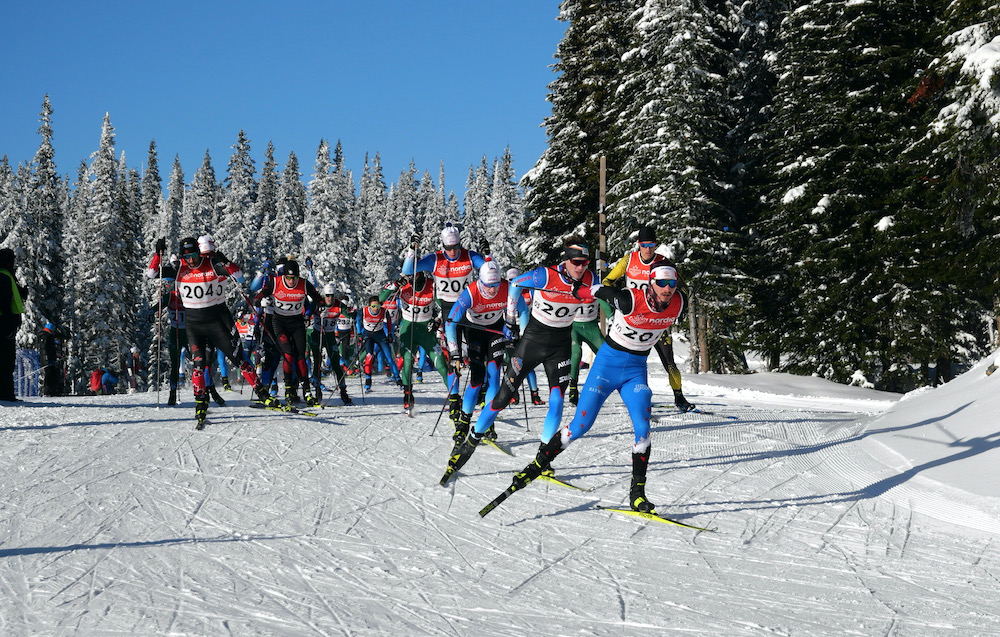
    Rémi Drolet leads out the first mass start of the season. (Photo: Peggy Hung)

    Race, rinse, repeat. The Western Canada Cup series returned to Sovereign Lake for race days 3 and 4 of the new season.

    Originally scheduled for Rossland, BC, the event had to be moved after an ‘atmospheric river’ event delivered warm rain to almost all southern BC trail systems on December 1st. Sovereign Lake was the least damaged, able to hold WCC #1 and #2 on the 4th and 5th as scheduled. By December 11th, skiing conditions were much improved and the racers were primed to go again. 

    The organizing committee was a little less primed, with four chiefs unavailable, along with many of the 180 volunteers from the previous weekend. With some timely help from Nordiq Canada, it all came together. Next Gen coach Eric de Nys (a Vernon resident) could be seen moving V-boards with High Performance Manager Joel Jaques (from three ski areas to the south in Penticton) while Al Maddox shortened his vacation to fill in as Technical Delegate.

    Despite hosting major events on the two previous weekends, the club was able to find enough volunteers to make it work.

    While there was still plenty of rust on display, more athletes were getting more things right than last weekend.

    Saturday: 5km/10km Classic Interval Start

    The weather gods delivered one of everything for Saturday’s classic, with fresh snow, strong winds, a brief blizzard during wax testing, before settling for overcast race conditions with firm tracks that occasionally filled with dry blowing snow at -4C.

    On the flat 2.5km course, there were enough skiers lapping to keep the tracks packed. This is the first time this course has been used for the open categories and it has a distinctly different feel to the traditional 5km loop. Eliminating much of the climbing, the new course turns downhill halfway up the first A-climb at the 5km mark, before skipping the second A-climb entirely. 

    Dartmouth’s Jasmine Drolet took the win in 17:22.0, matching her result from last Sunday with an overall win, in addition to topping the U20 list. AWCA’s Olivia Bouffard-Nesbitt was 3.0 back in second ahead of teammates Laurence Dumais in third (+47.1) and Beth Granstrom in fourth (+1:00.8).

    “Definitely not my favourite race,” Jasmine Drolet told FasterSkier, despite preferring classic technique. “I tend to prefer the longer races but still good and a good effort out there.”

    “I was happy with it,” Bouffard-Nesbitt explained after the race. “It was unusual for us to start so late at one [pm]. It was sunny this morning, beautiful, mild. We showed up to the racecourse this afternoon and it was blizzarding, so windy. And then it cleared up for our race. So it was fun to do 5km.”

    “It’s definitely quite a bit different than the five km [course]: it’s less climbing and more flat,” Dumais told FasterSkier. “Which is in my favour, because I’m better at double polling, so it was good.”

    In the men’s 10km, Black Jack’s Rémi Drolet matched his sister’s achievement, finishing in 30:37.2, edging out Foothills junior teammates Tom Stephen by 4.7 seconds and Xavier McKeever by 7.0. AWCA’s Jack Carlyle (39.2 back) and Hardwood’s Scott Hill (54.3 behind) completed the senior podium.

    “It was a pretty good day,” Stephen explained. “Not a course that favours me, but I still pushed hard and I’m happy with the results.”

    Asked about ski and wax choices, Stephen said “the coaches were really accommodating today because they tested my skis before we got here, because we had such a late start. So that was nice, a lot less stress than having to get here and test all the skis with the new tracks and stuff like that.”

    McKeever enjoyed the ‘new’ course.

    “I felt really strong with the double pole, there was a lot of double poling on this course. That really played into my favour.”

    McKeever also broke down how the course skied during the race.

    “Overall, there’s some good climbs. there’s two good climbs in there for sure. But once again, it’s it’s a lot of double pole. So I’d say in that sense, it’s like fairly flat overall. There’s like gradual sections, but yeah, you definitely can’t get caught off guard.”

    There were 112 finishers. The smaller field was a result of only two age groups (open and U20) and road closures affecting some teams.

    Sunday: 10km/15km Mass Start Free

    Sunday was a great day of skiing, with snow clouds blowing away in the morning for a sunny afternoon of mass start racing on the traditional Upper World Cup 5km course that older racers know so well.
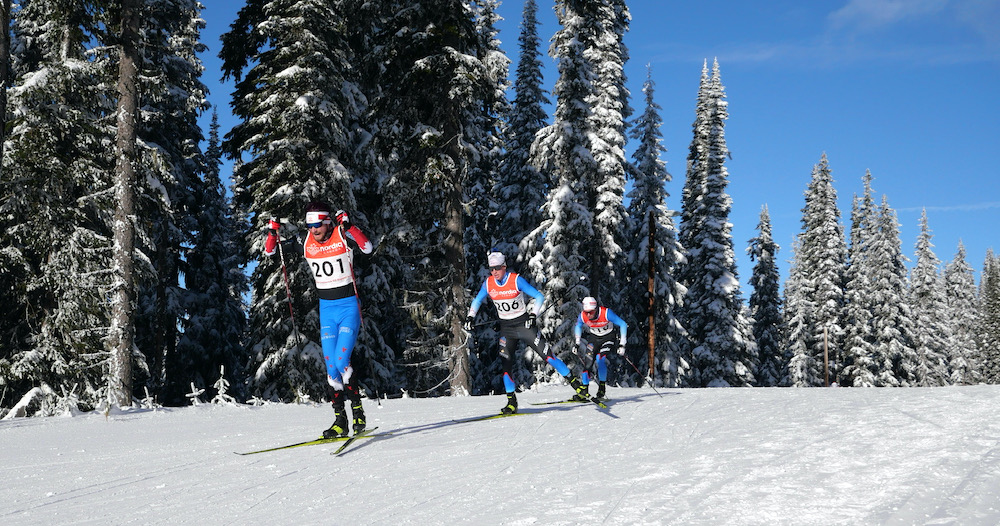
    Rémi Drolet leads Xav McKeever and Tom Stephen at the end of lap 2. (Photo: Peggy Hung)

    The men raced first, with a very tactical first lap before the action began on the second of three laps. 

    On the third lap, McKeever attacked on the ‘wall’ climb to get a gap he would not relinquish in the final 1.x km. With only one small climb left, racers need either a gap at the top of the wall or confidence in their final sprint.

    McKeever took his first open win in 37:22.3, 1.2 seconds clear of fellow U20 Tom Stephen. Carlyle passed a fading Rémi Drolet to take third, 21.0 seconds behind, while Bob Thompson narrowly missed out on fourth, finishing 40.0 back.

    “I was really happy with my race and how I skied both tactically and technically, so overall, [it was a] good day,” McKeever said after collecting his first senior win at age 18.

    He continued that he “couldn’t really have asked for anything better from a start [to the season], but we’ve just got to keep putting in the work, keep training hard.”

    Stephen, in his last year as a U20, was more philosophical.

    “I’m definitely feeling a little tired,” Stephen said. “There’s a lot of racing back to back for me. But yeah, I think it went well. I’m happy with the result.”

    On his approach to racing, Stephen explained how the weather factored into his race plan.

    “I think I was pretty smart in the tactics part. There were a lot of people throwing down sprints halfway through trying to break away and then easing up because the wind plays a big factor into it.”

    Carlyle also enjoyed the day: “It was good, super fun to ski in the pack and do a mass start race and it felt like Real Racing was back.”

    “I didn’t really think too much about how to win I just kind of wanted to like make their day as hard as I possibly could,” Carlyle continued. “The way it played out was going into the second last climb, I guess it would have been the like the super steep hill [the wall], Xav just had so much speed. So much speed. So Tom and I are kind of standing still and that’s pretty impressive.”
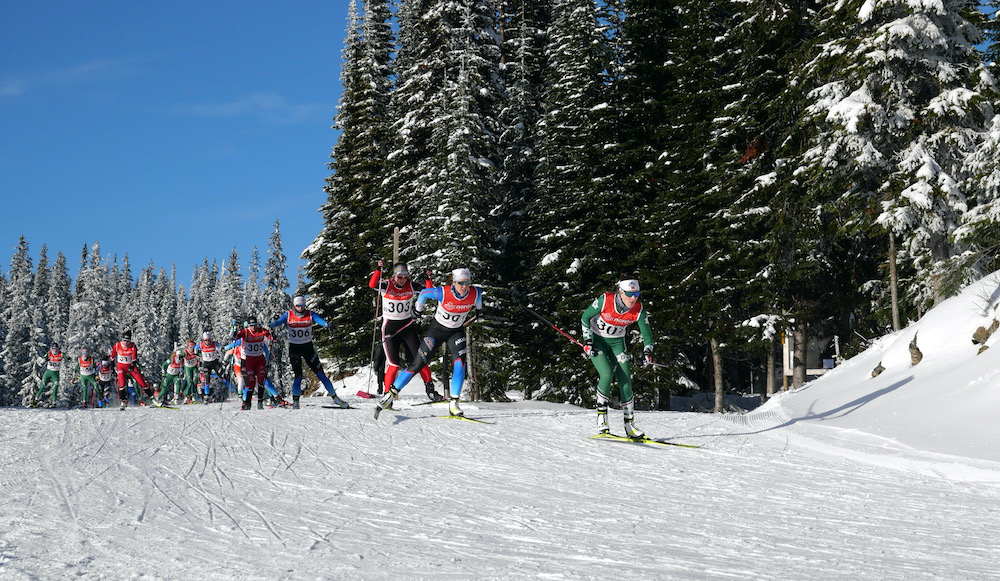
    Jasmine Drolet stretches out the group at the start of the 10km. (Photo: Peggy Hung)

    Shortly after the top men finished, the women began their first mass start of the season with two laps of the same course. Jasmine Drolet strung the group out quickly, opening passing opportunities for lower ranked skiers like Bouffard-Nesbitt who would quickly join the action at the front. After the pandemic break, the points list is a much less useful guide to current performance, but today there was no difficulty to pass on the wide opening climb with room to skate four abreast for over a kilometre.

    Bouffard-Nesbitt finished alone in 29:04.4.

    “It was really good. I love mass starts and I’m so happy that sovereign decided to host a mass start race today,” she said. “The conditions were the best they’ve been in the last two weeks. It was a great day.”

    Jasmine Drolet took second, 12.4 seconds back, followed by fellow U20 Marielle Ackermann from Kimberly in third (+21.0), and Granstrom in fourth (+26.5).

    Jasmine Drolet leads a large pack near the end of lap 1. (Photo: Peggy Hung)

    “It was pretty chill for the first lap,” Bouffard-Nesbitt said. “I didn’t feel that I needed to lead especially, [since] I’m pretty confident in my sprint. So I was happy just to follow and then, yeah, on the second lap, I started to have fun playing around, going to the front a little bit and pushing the downhills and unfortunately, as Jasmine might tell you if you interview her, she had a fall before the last two climbs. That was too bad and that’s where my gap opened up. I just pushed it from there.”

    Jasmine Drolet did include her fall in her post race comments, reflecting on an experience that was “Pretty hard. That’s all, really hard.”

    “A little bit frustrating,” Drolet continued. “I mean, I lead a lot of the race, which is not really what I wanted, but then fell and couldn’t catch up again. So a little bit frustrating, but that’s how mass starts are.”

    She fell on the one tricky corner on the course, a fast hairpin that becomes challenging as the lactate builds in the legs.

    The pandemic has made student life easier, with distanced exams that can be done anywhere. Easier, but not easy, with a large number of athletes needing a quiet space to write exams Sunday evening after the racing was done. Ackermann was one of those student athletes who rushed away before FasterSkier could catch up with her.

    In addition to all the racing, there were bets to be settled.
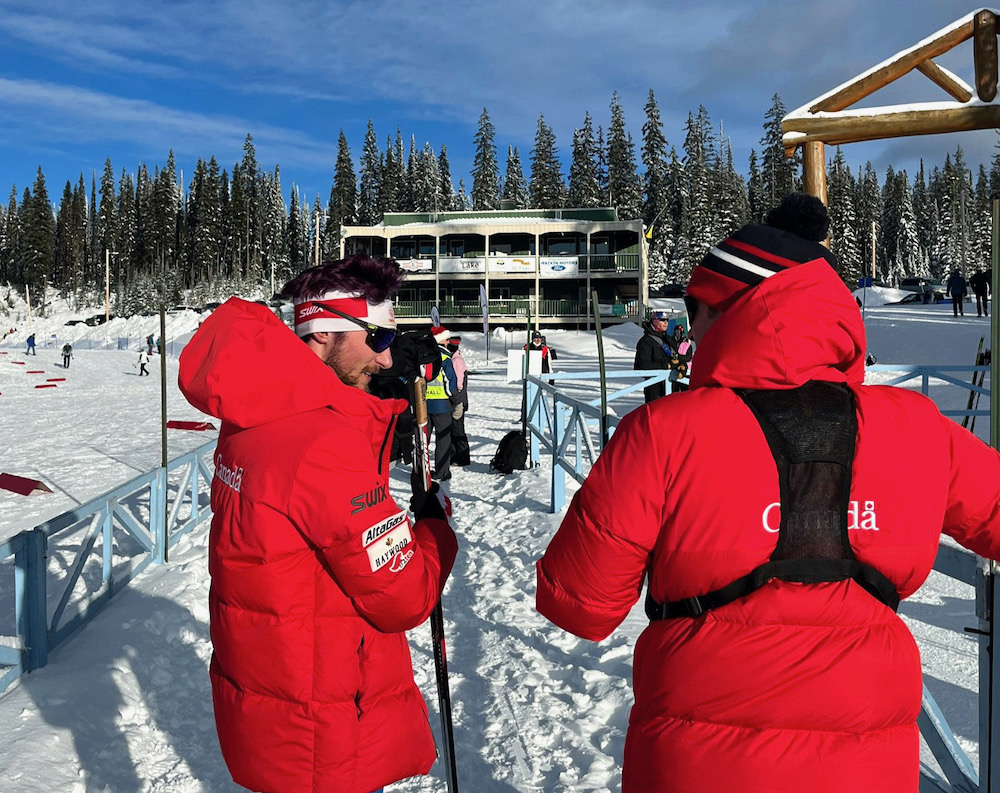
    Rémi Drolet explains his new purple hair to Next Gen coach Eric de Nys.

    This writer entered a casual masters program mass start classic race on Saturday morning, using the same course as the elite skiers used in the afternoon. The finish times were very different, but I am still smiling days later. To twist up Joni Mitchell, “you don’t know what you’ve got til it’s back!”

    Photo Galleries:

    Doug Stephen (VR45 Photography): Interval, Mass Start.

  • Western Canada Cup #1: Back to the Bibs

    Western Canada Cup #1: Back to the Bibs

    Olivia Bouffard-Nesbitt starts the first FIS race in Canada in 20 months.

    Racing returned to Canada after a lost season, and there are plenty of storylines to follow.

    This weekend, The Sovereign Lake Nordic Centre in Vernon, BC hosted a freestyle sprint and a classic 10/15-kilometer individual start. It sounds so familiar, a re-run of the annual NorAm kickoff with a new Western Canada Cup name.

    Travel to the venue became more challenging when a November 13th ‘atmospheric river’ destroyed the two main highways between Vancouver and Vernon. The two alternate routes reopened fairly quickly, but only for commercial traffic. This created an unusual situation where athletes from Vancouver had to fly while athletes from Manitoba (two time zones east) were able to drive.

    Official training on Friday was lightning fast.

    Another atmospheric river on December 1st brought record heat to the region, with a high of 16C in Vernon, well above the old 7C record. A timely cold snap saved the snow base, albeit with extremely fast glide for Thursday and Friday training. The sprint course was changed from the 2005 World Cup loop to a safer and slower variation.

    Despite border restrictions, a number of U.S. teams attended. Dartmouth made their annual trip from Vermont, joined this time by Green Mountain Valley School and Stratton Mountain School (not the post-graduate SMS T2 team; they went to Duluth). Methow Valley Nordic Ski Education Foundation sent a much smaller team than usual, but Sugar Bowl Academy in California helped to make up the numbers (and took a few medals home too).

    Further reaching by geography, Brazil and Portugal each had one woman racing, who were discussing plans to earn quota spots for the 2026 Olympics. Throw in the second ever Mexican National Championships and you have the makings of a great weekend.

    Saturday Freestyle Sprint

    Two themes dominated the sprint day: smiles and rust. With only a few athletes having raced the previous season (World U20/U23 and World Cup athletes), the excitement of racing again was visible everywhere. 

    The rust was also on display. Athletes regretted their layering choices. Enthusiasm led to extremely aggressive starts and ragged finishes. Many athletes forgot to allow time to collect timing chips on the way to the start. More forgot that it takes extra time to show the ‘fully vaccinated’ wristband to be eligible to start. Quite a few discovered that the wristband should not be on your watch arm, because the wristband is covered by a sleeve locked in place by the watch strap resulting in a longer delay. A wristband that is applied so that it can’t be transferred to another person also can’t be moved to the other wrist for day two. Lessons learned, or re-learned, for many skiers.

    National Team Development Centre Thunder Bay (NDC TBay) athlete Julian Smith summed up the first day back for FasterSkier.

    “Yeah, first day racing in Canada in a long time,” he said. “My last race was the American Birkebeiner in February 2020. So that’s pretty fun to put the bib on, really push the body and race with all our friends out here. The organizers here at the Nordic Center did a great job. And everyone was doing their job well and it ran really smoothly.”

    Behind the scenes, there were also a few learning and re-learning moments for the 180 volunteers running the event.

    Nonetheless, race morning dawned with a steady snowfall at -4C that provided great skiing and slower racing.

    Olivia Bouffard-Nesbitt was the top seed and became the first person to race for points in Canada in twenty months.

    Pre-race speculation had a changing of the guard, with the young athletes expected to displace the known entities, and most athletes feeling confident in their preparation with very little evidence to back it up.

    Bouffard-Nesbitt, who trains with Alberta World Cup Academy (AWCA), justified her #1 bib by winning the 1.3km qualifier in 2:59.69, 2.31 seconds ahead of Kimberly’s U20 Marielle Ackermann. Shaylynn Lowen (NDC TBay) skied to third (+6.54).

    In the heats, Ackermann comfortably won each U20 round to take the win while Bouffard-Nesbitt showed her experience to dominate the senior heats.

    Bouffard-Nesbitt, like most of the skiers, was visibly thrilled to be back on course.

    “Oh, it was really good,” she said, before laughing. “It was rusty! It kind of felt like the first race back in two years. But every heat got progressively better. Quarter was better than the [qualification] and then better after that, so yeah, it was great.”

    Sovereign’s own Hannah Mehain got stronger through the heats to take second place, ahead of Dartmouth’s Callie Young.

    “I felt maybe not quite as snappy in the qualifiers,” Mehain told FasterSkier. “But it improved for the day and I just felt better and better .”

    As the American east and Eastern Intercollegiate Skiing Association (EISA) faced COVID restrictions that limited race opportunities, Young was in a similar boat to the Canadian women in terms of lack of high-level racing opportunities. She also shared her feelings on the sprint day.

    “I didn’t have my best qualifier, this is my second day at altitude,” Young said. “So it was kind of tough. But when I get into the heats, it’s always so fun and competitive.”


    On the same course NDC TBay’s Smith was clearly the strongest of the men, winning the qualifier and all three heats. Xavier McKeever and Tom Stephen, qualifying 2nd and 6th, both chose to race up in senior, resulting in some hard fought heats. McKeever and Stephen are both members of the national team and train with Foothills Nordic Ski Club in Calgary.

    “It was really fun,” said Smith after his race. “It was a blast for the body to do what it’s supposed to do, what I’ve been training it to do, so that was really fun.”

    Smith was one of the few who answered the tactics question with something other than how much fun it was to be racing again.

    “In the final, it kind of slowed down at about the first third. And I just tried to go when everyone else started to go and got a bit of a gap and in the end, was able to hold the lead. So that was really fun.”

    In the end, the juniors found themselves enrolled in the Locke School of Heat Tactics, with Black Jack’s Julien Locke using guile to take second in the final after qualifying 7th.

    AWCA’s Bob Thompson gapped NDC TBay’s Pierre Grall-Johnson on the climb to complete the podium.  

    World U20 relay silver medallist teammates McKeever, Rémi Drolet, and Stephen were 5th, 6th, and 7th, while Olivier Léveillé was away in Lillehammer. Though age and experience filled the podium, Grall-Johnson-Johnson was the first U23 athlete showing that the younger skiers are putting the pressure on.

    Sprint Results: Qualification, Heats, Final, U18/U16 Mass Start.


    10km/15km Classic Individual Start

    The race of truth was also the race of discovery as many athletes re-discovered why pre-race routines exist. Sunday dawned clear and cold, rising to -11C for the men’s start at 9am. With yesterday’s new snow packed hard, there was no difficulty in finding grip with hard wax, but not everyone found the glide necessary on a 5km loop that is flat and fast by World Cup standards.

    Rémi Drolet, just returned from racing Continental Cups in Muonio and Gällivare, skied a consistent race to take the win in 39:06.1, setting the fastest time in all three laps.

    Stephen was second, 39.6 behind, moving up on the final lap.

    “It was really good,” Stephen said. “It’s my first 15k back this season because I’ve been coming back from injury. And it went really well, it went just like I planned it, so really happy with it.”

    Interval starts are more exciting than they used to be.

    “Oh, it’s so fun,” Smith added. “I haven’t done something like this with this many people in a long time.”

    AWCA’s Jack Carlyle skied a very strong first 5km lap before struggling with the cold after a mistake choosing baselayers, finishing third at 49.2 back.

    “I made a rookie mistake and did not wear enough layers and froze halfway through the race,” Carlyle explained once he was warm again. “But I had great skis. And for the first bit of the race, I had great feelings. So yeah. Happier where the body is just need to remember not to make silly mistakes.”

    McKeever recovered from a slower first lap, moving up from 7th to finish 4th at 1:06.8 behind.

    “I was really lucky to start my season off in Europe, with a couple of victories in Finland and Sweden. And I was really happy with how they went, especially after last year being a really tough year for myself,” he said. “So overall, I’m pretty stoked to just be back at it.”

    “The sprint yesterday, I think went really well. Today, I was just missing a bit of gas. I feel I didn’t feel awesome, awesome, but it’s just nice to get out there and race again in Canada. And we have more next weekend.”


    Jasmine Drolet stepped up the sibling rivalry with a win in the 10km in 30:38.9. Now in her first year at Dartmouth, she made up for missing the sprint with a steady performance.

    “Definitely a shock to the system,” she told FasterSkier. “But I’m glad to have gotten it over with and to be in racing season now.”

    Back in Canada after her first semester in the Ivy League, she was adjusting to the changes.

    “I was nervous before [the race]. Changing training, and changing coaches and everything, but now, I feel confident that my training this fall was good. The US is maybe a little bit different than Canada, but not very different. It’s a lot of work to juggle school and skiing full time, but it’s manageable.”

    Bouffard-Nesbitt finished in second place, 41.4 back, with a fast first split.

    Another full-time student, Mehain was third at 1:09.7, just holding off a fast finishing Beth Granstrom.

    “I had a great day,” Mehain said. “It’s really fun to be out racing again, seeing everybody. I pushed fairly hard on that course for the classic 10k and had a lot of fun.”

    Distance Results: Interval Start, Full Weekend.

    Mexican National Championships

    Karla Schleske Shepard is the first female National Champion for Mexico. (Photo: Peggy Hung)

    This is the second National Championship for Mexico, with the first held in Canmore at Canadian nationals in 2019. Starting a ski program in a country without snow or a skiing tradition is hard, even without a pandemic disrupting progress. This year, there were six men and one woman competing.

    Jonathan Soto Moreno won both days, capping a year where he also earned a Beijing quota spot for Mexico at World Championships.

    Karla Schleske Shepard, a former heptathlete who represented Mexico at the PanAm games, became the first ever female champion after learning to ski in February 2021.

    What’s Next?

    December 11th and 12th has both the Eastern Canada Cup #1 at Nakkertok and the Western Canada Cup #2.

    The major storm that threatened the first weekend at Sovereign did even more damage in Rossland, forcing Black Jack’s Organizing Committee to cancel. WCC #2 will now be held at the backup venue, Sovereign Lake, with details forthcoming.

    With continued highway closures in BC and additional border restrictions related to the omicron variant, many travel plans will change. Both ECC #1 and WCC #2 may have smaller fields as US teams react to the increased friction at the border.

    NDC TBay, based in arguably the east/west centre of the country, is headed for the eastern Canada Cups. This will allow some comparison between the two series and give ski fans something to debate during the Christmas break.

    All will be made clear in Canmore on January 6th to 11th, when trials for OWG, U20/U23 World championships, and World Cup Period 4 will bring together the top athletes from the entire country.

    Photo Galleries: Doug Stephen (VR45 Photography): Sprints, Distance


  • Bolshunov Four for Four in Distance Wins; Norris Earns Season Best Result in 24th

    Bolshunov Four for Four in Distance Wins; Norris Earns Season Best Result in 24th

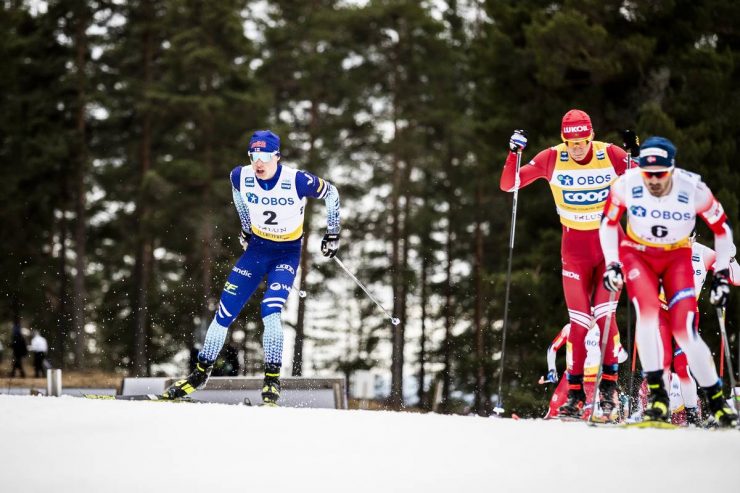
    Hans Christer Holund of Norway leading down the ribbon of white. A low snow year in Falun, Sweden. (Photo: NordicFocus)

    Around and around they go. Due to lack of snow in Falun, Sweden, the men again wheeled their way around a manmade ribbon of snow, skating six icy 2.5-kilometer laps. Reduced from 30 to the 15 k distance and without the long, steep climb for which the course is usually known, how athletes would fare was yet to be determined.  

    The 2.5-kilometer track of Falun in a low snow year. (Photo: Screenshot FIS Broadcast)

    Along the way, two sets of 15 bonus points were available for the top ten skiers to sprint past the 6.7 and 11.7 checkpoints. It was at the first checkpoint that things began to spread out.

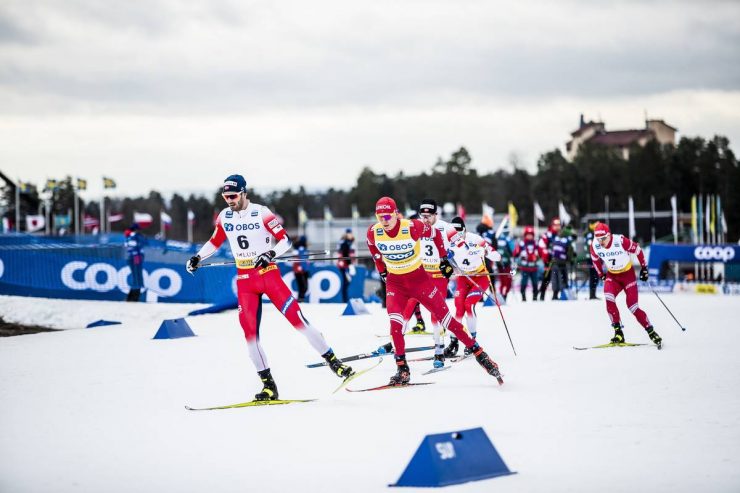
    Overall World Cup and distance points leader, Alexander Bolshunov of Russia, dropped into a tuck on the downhill, accelerating past the Norwegians Hans Christer Holund, Simen Hegstad Krüger, Finn Hågen Krogh, and Sjur Røthe who had taken turns in the lead. Behind Bolshunov in blue Lycra sat the newly minted skate contender Iivo Niskanen of Finland. Known historically as a classic specialist, Niskanen has shown marked improvements in his skate results this season, including a second place finish in the freestyle distance event in Nové Město. 

    Alexander Bolshunov (center) primes himself to charge for the sprint bonus, surging past Iivo Niskanen (bib 2) and Hans Christer Holund (bib 6). (Photo: NordicFocus)

    Like a slinky, the pack caught back up to Bolshunov, who relaxed and allowed the Norwegians to get to work again at the front. In a tuck or free skating, the group headed down the longest descent of the course, halfway through the lap. As the course bent to the left, the leader, Røthe, began to step turn, pushing off his right ski and leaning into the curve. As his ski left the ground, it pushed the tips of Bolshunov’s skis together, sending him to the snow (and almost to the grass) between a set of v boards. The Russian hopped back up, quickly regaining lost ground on the lead pack. 

    At the 10 k mark, only 8 seconds separated the top ten. But after the second bonus sprint, where Bolshunov again slingshot around the Norwegian leaders out of the downhill to grab the full 15 points, the field began to spread out.

    A sea of red: the top six Norwegian and Russian athletes head into the final lap of the 15 k freestyle in Falun. (Photo: NordicFocus)


    Bolshunov pushed the front of the pack, trying to break free of Røthe, Holund, and Krüger. His Russian teammates Ivan Yakimushkin and Andrey Melnichenko maintaining contact from a few seconds behind.

    In the final lap, Bolshunov tried to break free, but Røthe matched his every move. Holund and Krüger fell off the pace and were overtaken by the chasing Russians. Rounding a downhill turn inside the final kilometer, Krüger caught a ski in the loose granular snow and was sent to the ground, no longer in the hunt for the third step of the podium. 

    Rocketing out of the downhill with less than 500 meters to go, Røthe soared past Bolshunov in a tuck to take the lead over the final roller before the stadium. 

    09.02.2020, Falun, Sweden (SWE):<br /> Sjur Roethe (NOR), Alexander Bolshunov (RUS), (l-r) - FIS world cup cross-country, 15km men, Falun (SWE). www.nordicfocus.com. © Modica/NordicFocus. Every downloaded picture is fee-liable.
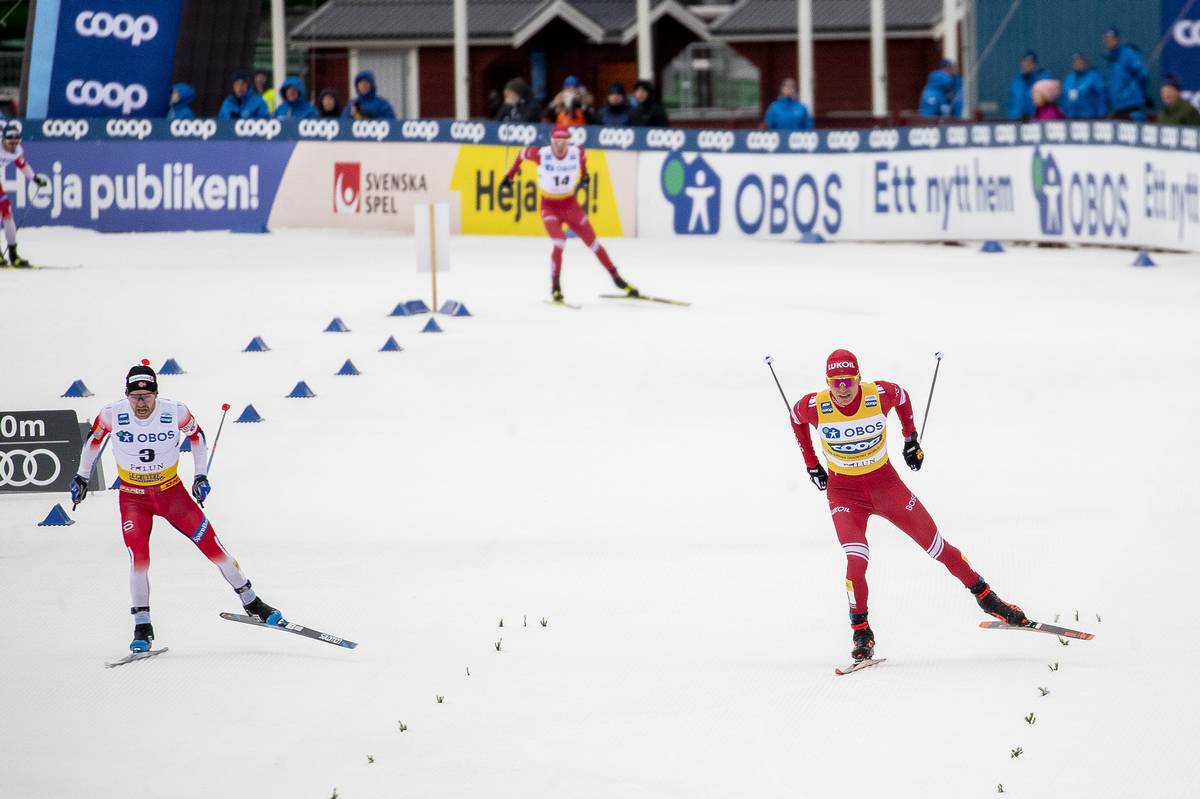
    Down to the final meters, Alexander Bolshunov (right) and Sjur Røthe sprint for home in the 15 k skate in Falun. (Photo: NordicFocus)

    It came down to the final sprint, and Røthe was outmatched. Bolshunov snuck back around, powering his skis down the track. He created enough of a gap that his victory was certain, and he threw his arms up in the air to celebrate. It was the Russian’s fourth consecutive distance win, and sixth of the season.

    Yakimushkin was next across the line for third (+9.7), followed by Melnichenko in fourth (+10.5) and Holund in fifth (+11.0). The twenty-three-year-old Yakimushkin was 2nd in the event in Toblach, Italy during Tour de Ski and also 2nd at Russian National champs in April 2019.

    With today’s result, Bolshunov looks untouchable at the top of the distance standings with 924 points. Røthe sits in second with 596. Bolshunov also leads the overall by over 400 points ahead of the injured boxer, Johannes Høsflot Klæbo.

    Alexander Bolshunov (RUS) and Sjur Røthe (NOR) exchange congratulations after an exciting finish in Falun. (Photo: NordicFocus)

    “It was a really hard race because the Norwegian team made good tactics,” Bolshunov told FIS through a translator at the finish. “They always sent someone in front to run the race, so I have to always close some gaps on them and make the most of the bonuses to take maximum points there. Then to make the harder pace on the last lap and to make a good fight with Sjur Røthe at the finish lane.” 

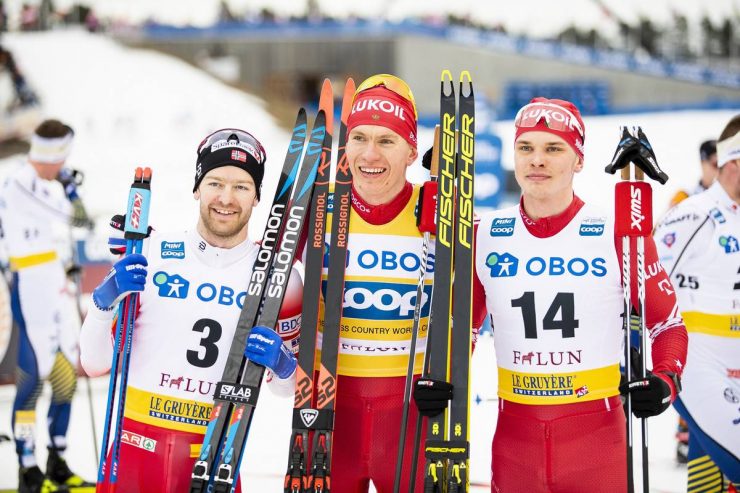
    The men’s distance podium in Falun. From left to right, Sjur Røthe (NOR), Alexander Bolshunov (RUS), and Ivan Yakimushkin (RUS). (Photo: NordicFocus)

    Leading the way for North America, David Norris (USST) skied to a season best result of 24th (+1:22.4). The Fairbanks native has landed in the top-30 on two other occasions this season: 28th in the skiathlon in Obserstdorf, 27th in the 15 k free in Nové Město. He also skied the 30th fastest time of day in the 15 k classiic pursuit in Nové Město and the final hill climb of the Tour de Ski. 

    For much of the race, Norris hovered inside the top-20, looking to match or improve upon his career best result of 16th, which was achieved in a 15 k skate in Falun last March.

    David Norris tucks in behind Sergey Ustiugov (RUS) heading down the ribbon of snow in Falun. (Photo: NordicFocus)

    In a post-race interview, shares that he did not originally plan to compete in Falun, sitting out the 30k instead to focus on the upcoming FIS Ski Tour 2020. He also reflects on his race, how mass starts affect the energy moderation strategy he has been honing, and his outlook heading into the distance-focused tour. 

    Post-race interview with David Norris

    Benjamin Lustgarten (CGRP) was next for the U.S. in 60th (+3:21.0) followed by Ian Torchia (SMST2) in 65th (+3:37.7), and Kevin Bolger (USST) in 68th (+3:59.1).

    Post-race interview with U.S. World Cup Coach Matt Whitcomb

    Ian Torchia climbs with the pack in Falun. (Photo: NordicFocus)

    Evan Palmer-Charette was the top Canadian athlete in 52nd (+2:45.8), followed by Alexis Dumas in 64th (+3:33.3), Bob Thompson 67th (+3:45.5), and Ricardo Izquierdo-Bernier 74th (+5:36.7). 

    Men’s 15 k Results | Overall World Cup Standings | Distance Standings

  • Norway’s Golberg and Valnes Go 1-2 in Falun Classic Sprint: Bolshunov Third

    Norway’s Golberg and Valnes Go 1-2 in Falun Classic Sprint: Bolshunov Third

    Erik Valnes of Norway (bib 1) and teammate Pål Golberg (bib 2), and Lauri Vuorinen of Finland, (l-r) during the quarterfinals of the classic sprint in Falun, Sweden. (Photo: NordicFocus)

    Thousands of spectators, slate skies, and a manmade loop of snow laid down in the otherwise green-brown Falun, Sweden ski stadium greeted the World Cup on Saturday. After a weekend hiatus last week, racers contested a 1.4-kilometer classic sprint in one of Sweden’s skiing epicenters.

    The main World Cup sprint star, Johannes Høsflot Klæbo, was absent. The twenty-three-year-old Klæbo broke two fingers last week. According to Norwegian broadcaster NRK, he will be reevaluated on Feb. 13. The fingers were broken while Klæbo and a group of friends were using a “boxing machine”. The game involved hitting a padded area that measures the force of impact. Klæbo’s gloved hand slipped off the pad and struck a hard surface adjacent to the pad.

    Although considered a lock in classic sprints, Klæbo has won nine of the last 10 World Cup classic sprints — including five in a row — this would be a day for another skier to claim the win on a course featuring two significant climbs and twisting banked turns on the descents.


    Erik Valnes of Norway notched the fastest qualifying time in 2:51:15, followed by teammate Pål Golberg 0.26 seconds back. Overall World Cup leader, Russia’s Alexander Bolshunov (23), the person who could pad his overall World Cup lead with Klæbo out, qualified in third (+0.51). 

    Alexander Bolshunov charging during the classic sprint in Faklun., Sweden. (Photo: NordicFocus)

    In the quarterfinals, it looked like the yellow overall leader’s bib had instilled special powers on Bolshunov. He won the third heat in 2:53.47. Although in a different lineup with five other skiers creating the context, Italy’s Federico Pellegrino won the second quarterfinal in a markedly slower time of 2:59.23. 

    The first semifinal featured Pellegrino, Bolshunov, Golberg, and Valnes as the main contenders. As the semi to watch, Bolshunov was the thoroughbred out of the gates. He led the double pole army of six over the top of the first hill as he began to string out the field. He then led the classic-run up the second climb, with Pellegrino, Valnes, and Golberg following in order over the top. 

    Again, Bolshunov hung on over the top with three other skiers towed along. Pellegrino eventually grabbed the lead on the final climb as he moved ahead of Bolshunov. Pellegrino won the speedy semi in 2:50.41, with Bolshunov in second (+0.10), Golberg in third (+0.40), and Valnes in fourth (+1.64). Golberg and Valnes would advance to the final as lucky losers. 

    Federico Pellegrino during the classic sprint in Falun, Sweden. Pellegrino placed fourth overall. (Photo: NordicFocus)

    Bolshunov blazed ahead in the final. His double poling was peerless. His tempo up the first major climb was a mirror of his semi where he was first over the top and forced others to gap up.  

    On the second climb at 1:45, Bolshunov crested the hill in first with the others chasing. On the descent, with a long glide out lasting nearly 12 seconds, Bolshunov was caught as the leading foursome ran into the final hill before the finish. 

    Golberg led the charge followed by Valnes with Bolshunov and Pellegrino trailing a few meters back in third and fourth.

    Downt the line it was Golberg for the win in 2:51.83. Valnes was second (+0.52), Bolshunov third (+0.92), and Pellegrino fourth (+2.40). Norway’s Håvard Solås Taugbøl placed fifth (+9.74), and Sweden’s Teodor Petterspon sixth (+49.48).  

    “My feeling was good today but I had a really tough semi final,” Golberg told FIS after the race. “So I expected the final to be tough as well so my tactic was to follow Alexander Bolshunov and fortunately I ended up with a bit more power. We had five Rossignol skis in the finals so something was definitely right today.”

    Pål Golberg (NOR) for the classic sprint win in Falun, Sweden. (Photo: NordicFocus)


    Bolshunov, who leads the overall with no threat from Klæbo in the near future, he was disappointed with his day. “I am not too happy with today’s result as I was expecting more of myself,” Bolshunov told FIS. “But something did not work out as I was not able to speed up more and go away from my opponents and therefore it would have been good for me if there would have been one more heat so that I could have pulled everything out or maybe if the course would have been longer, then I might have pulled it off.”

    No North American men qualified for the heats. Canada’s Bob Thompson was the top North American in 43rd. Alexis Dumas placed 62nd and Ricardo Izquierdo-Bernier 64th.

    Logan Hannaman (APU) and Kevin Bolger (USST), finished 52nd and 53rd, respectively. Ben Saxton (SMST2) raced to 55th.  

    According to U.S. World Cup Coach Matt Whitcomb, Simi Hamilton is recovering from a back injury and will miss this weekend of World Cup racing. 

    Post-race interview with U.S. World Cup Coach Matt Whitcomb

    “There is no painting any way other than what it is, it was just a bad day,” said Whitcomb.

    Britain’s Andrew Young qualified for the heats which was a career first in a classic sprint. He placed 19th overall. 

    Qualifier results | Final sprint results

    The men’s classic sprint podium from Falun, Sweden:
    Erik Valnes (NOR) in second, Pål Golberg (NOR) first, and Alexander Bolshunov (RUS) third, (l-r). (Photo: NordicFocus)
  • Klæbo Runs Away with Oberstdorf Classic Sprint Win

    Klæbo Runs Away with Oberstdorf Classic Sprint Win

    Sunday’s men’s 1.5-kilometer classic sprint course in Oberstdorf, Germany deserves some recognition. Site of the 2021 FIS Nordic Ski World Championships, racers were offered a glimpse into how the world’s foremost sprinter, Johannes Høsflot Klæbo of Norway, would navigate it’s kicker climbs, steep descents, and roughly three minute and thirty-second effort. 

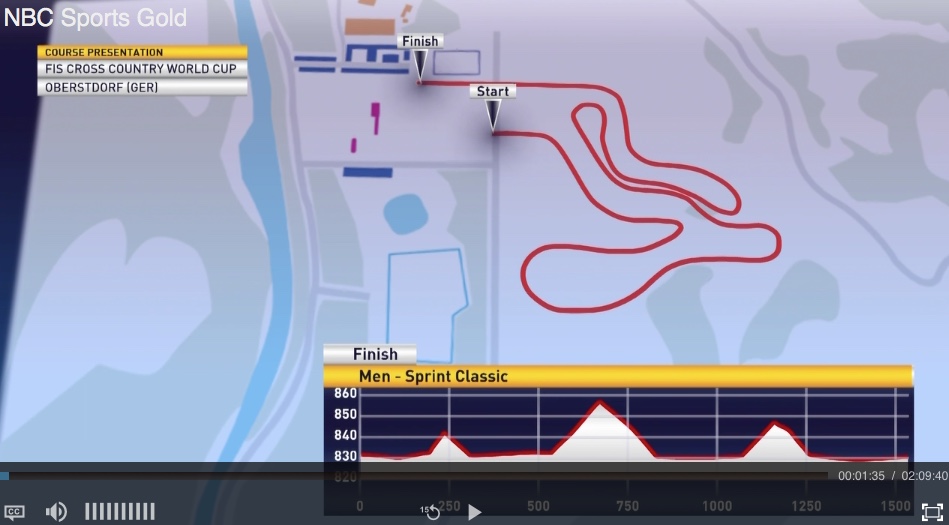
    The sprint course offered three distinct climbs, one at 0.2 k, the largest at 0.52 k, and the third starting at 1.1 k. The descents mirrored the inclines of the ascents and offered little respite or recovery for skiers near their engine’s redline. 

    Men’s Oberstdorf sprint course. (Photo: Screenshot NBC Gold)

    We are focusing on Klæbo, despite the other twenty-nine skiers in the heats, because he was simply a master of pacing, a master of conserving energy on the three-climb course, and freakish in his ability to run away from his five competitors in the final.

    Klæbo qualified in first. The margin back to Erik Valnes of Norway in second was 2.72 seconds. Pål Golberg, the third-fastest qualifier was 5.03 seconds back. There were big-time gaps back to the field of qualifiers. 

    Johannes Høsflot Klæbo crushing the men’s sprint qualifier in Oberstdorf, Germany. (Photo: NordicFocus)

    Valnes and Klæbo opted for the first quarterfinal. It was here that Klæbo played his tactical hand. He was in no hurry on this endurance sprint course to move to the front and pull others along in his wake. Klæbo sat in fourth on the second hill as Valnes was the heat’s workhorse. Klæbo appeared relaxed, not itching to move to the front. Klæbo moved to third around 2:00 minutes as they crested the course’s highpoint. The third hill, as most sprinters appeared on fumes, is where Valnes and Klæbo pulled ahead. Over the top, the duo glided into a 20-meter lead. Down the stretch, Valnes poled ahead for the quarterfinal win as Klæbo pulled up, stopped poling several meters before the finish — as if he were checking out for a lunch break.

    The third hill would be Klæbo’s charm.

    Along with Valnes in the first semifinal were Italy’s Federico Pellegrino (4th qualifier), Golberg, Håvard Solås Taugbøl also of Norway  (5th qualifier), and Russia’s Sergey Ardashev. This would be the semifinal to watch. 

    Again, Klæbo played the conservation of energy tactic. Up the second climb, Golberg, Taugbøl, Valnes, and Pellegrino strode four across with Klæbo lurking a meter back. The second hill was in the rearview mirror around the two-minute mark. It’s approximately another twenty seconds of descent and working flat before the next decisive climb. 

    As the skiers approached the base at 2:26, Klæbo and Valnes ramped up – they pulled away as they ski-ran up and over the top. Klæbo had been sitting behind Valnes, sucking up in his draft into the final straight. There, Klæbo pulled around his teammate for the semifinal win.      

    Federico Pellegrino of Italy pushing over the top in the Oberstdorf, Germany classic sprint. (Photo: NordicFocus)

    The final featured Klæbo, Valnes, Golberg, Pellegrino, and Oskar Svensson of Sweden and Russia’s Gleb Retivykh. Really, for Klæbo, this was essentially a rematch of his semi.

    Again, Klæbo was cautious from the start. There was no real earnestness to shoot to the front. His show would come later. There was only patience from an athlete who knew he could pounce late in the game. 

    Pellegrino, on the second climb, began to accelerate. He ran outside the tracks in what looked less like a decisive move, and more a burst to position himself tactically in front over the top. For his part, Klæbo matched Pellegrino and strode up alongside the Italian. 

    At 2:35 at the base of the final climb, Klæbo unleashed. It was textbook Klæbo-running. He was gone with a near 20 meter gap over the top. By the finish line, Klæbo looked to put 10 more meters on his competition as he won in 3:29.46. Golberg was second (+1.99), Valnes third (+2.37), and Pellegrino fourth (+3:06).

    In yesterday’s 30 k skiathlon, Klæbo registered a rare DNF (did not finish) as he pulled from the competition. 

    “I think the sprint was much better than the 30 k yesterday,” Klæbo told FIS after the race.  “Yesterday was a really terrible day and today was a bit better. In the end, it was really cool to win here. Yah, I think my shape isn’t the best  but I am really happy to find the win here and to have the Norwegian guys here.

    “I think it was a really good decision yesterday to jump off after 15 k I think, it was really nice to fight for a win today. And for sure I am really looking for the World Championship here next year.”

    What was clear after today was that Klæbo had mastered the course. Anything can happen in a year. And anything can go down in a sprint – broken poles, clipped skis, or slide out on a corner. This much was true exiting Oberstdorf: it will be Klæbo’s race to lose at the 2021 World Championships.

    It was a down day for the American men. No skiers qualified for the heats. Simi Hamilton placed 32nd overall and was +15.94 in qualification. Andy Newell was 41st (+17.48), Tyler Kornfield 55th (+20.88), and Noel Keeffe 64th (+25.33).

    Simi Hamilton during the Oberstdorf, Germany classic sprint qualifier. (Photo: NordicFocus)


    Andy Newell during the sprint qualifier in Oberstdorf, Germany. (Photo: NordicFocus)

    For Canada, Bob Thompson placed 54th and was +20.14 in the qualifier, Paul Grall-Johnson was 58th (+21.74), and Graham Ritchie 61st (+22.92). 

    World Cup Standings Shakedown 

    Coming out of Oberstdorf on the men’s side, Russia’s Alexander Bolshunov remains in command. In first overall with 1457 points, Bolshunov has a 235 point lead on second place Klæbo for the overall lead. Sunday, Bolshunov earned 36 World Cup points after placing seventh overall, Klæbo earned 100 points for the sprint win. If you are keeping score at home, you will note 140 points for Bolshunov’s win in Saturday’s 30 k skiathlon. On yesterday’s course, racers had four opportunities to score bonus points – Bolshunov snatched up 40 of them during the race.    

    Alexander Bolshunov of Russia in the yellow bib. He leads the overall World Cup. He placed 7th on Sunday’s classic sprint in Oberstdorf, Germany. (Photo: NordicFocus)

    Klæbo leads the sprint overall with 350 points. This was Klæbo’s fifth sprint win of the season. He has won every sprint entered thus far. He skipped the skate sprints in Planica, Slovenia and Dresden, Germany.

    The World Cup takes a break next weekend and restarts in Falun, Sweden with a classic sprint on February 8.  

    Men’s qualification results | Final results | World Cup overall standings | World Cup sprint standings

    All Norway in the men’s classic sprint podium in Oberstdorf, Germany: Pål Golberg in second, Johannes Hoesflot Klaebo first, and Erik Valnes third. (Photo: NordicFocus)
  • Canadian Racing Rundown: Westerns, Pragelato, and Lausanne

    Canadian Racing Rundown: Westerns, Pragelato, and Lausanne

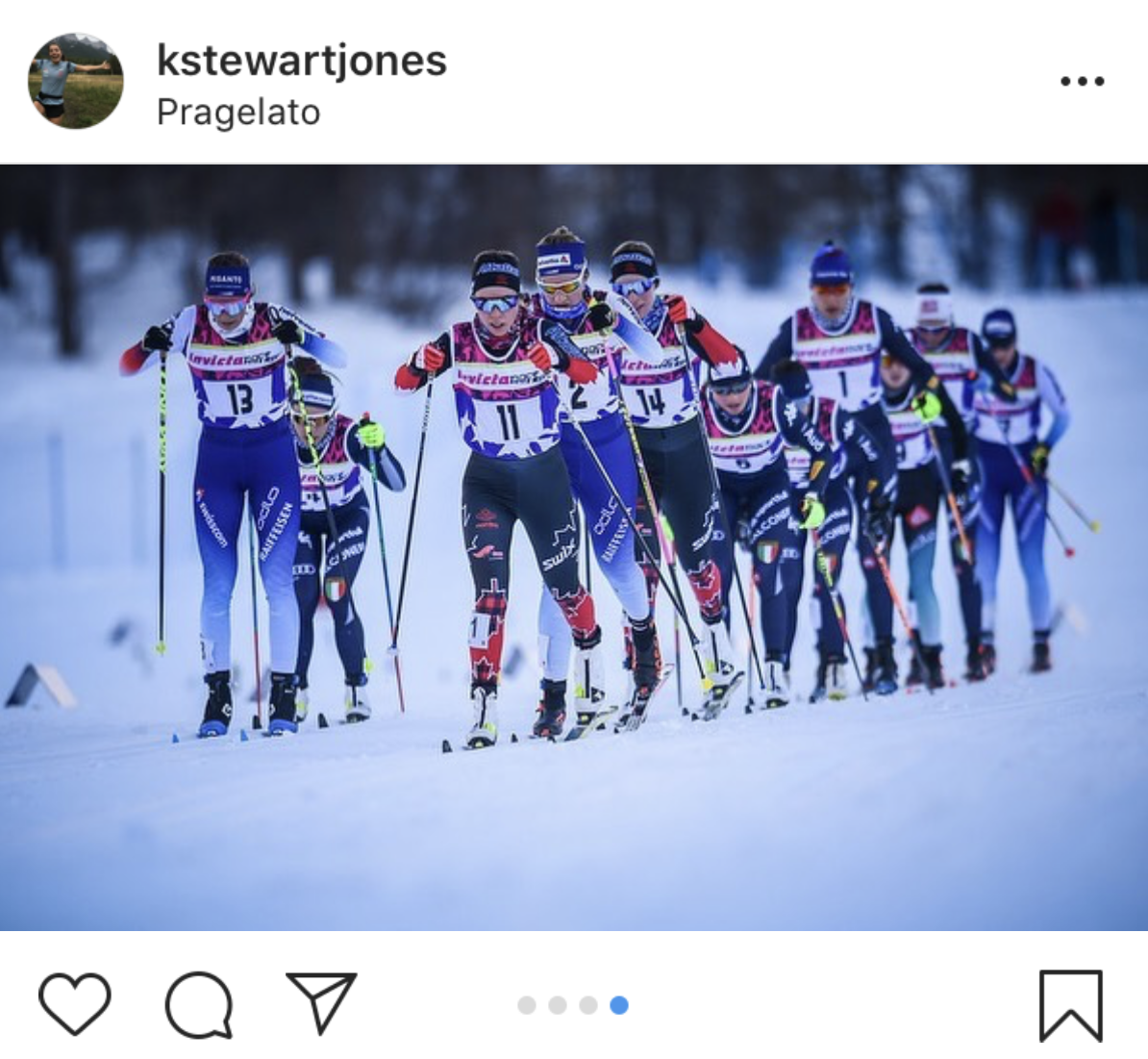
    Katherine Stewart-Jones leads the mass start on the way to a Canadian 1-2 at the OPA Cup in Pragelato, Italy. (Photo: Athlete Instagram, credited to @damianobenedettophoto)
    Katherine Stewart-Jones leads the mass start on the way to a Canadian 1-2 at the OPA Cup in Pragelato, Italy. (Photo: Athlete Instagram, credited to @damianobenedettophoto)

    Canada took a step back from the World Cup circuit this weekend and focussed attention into development series. As the country tries to build momentum in a post Alex Harvey world, the focus has moved away from World Cup podiums and towards a consistent presence in the top 30. The road to the World Cup goes through local and regional races on the way to national/continental races.

    One of the development challenges in Canada is size. The second largest country has roughly the same population as California. Skiers from Newfoundland live closer to Holmenkollen than Whistler Olympic Park.

    The Continental Cup series in each FIS ‘continent’ is the top level race series below the World Cup. Canada has the NorAm series. The USA has the SuperTour series. France, Germany, Italy, Slovenia, Switzerland, and Austria share the OPA Cup series. This distribution of ‘continents’ may seem odd, but remember that the combined land area of the OPA countries is equal to British Columbia and Nova Scotia. Canada has three more time zones separating those two provinces.

    As part of an effort to reduce travel demands on developing skiers in Canada, Nordiq Canada has been making changes. For the second year in a row, Westerns is not a NorAm event, but a regional event (albeit for a region larger than continental Europe). While this eliminates one east/west flight for eastern-based skiers, western athletes from Saskatchewan, Manitoba, Nunavut, North West Territories, and the Yukon still have a flight to pay for.

    8 young Canadians are in Lausanne, Switzerland, for the Youth Olympic Games. Another 8 were in Pragelato, Italy, for an OPA Cup event, where two Canadians won. If you know someone who doesn’t think winning an OPA Cup is a big deal, listen to what Devon Kershaw and Jess Cockney think in the latest podcast. Cockney may ‘only’ have four top 10 results on the World Cup before he ‘retired’, but he did win a combined NorAm/SuperTour earlier this season.

    As Cockney reminded us in the podcast, development comes in cycles. It is hard to remember that ten years ago Norway needed to borrow a biathlete to make a mens relay team for the Olympics, the same Olympics when Canada had four different men with top 10 individual finishes. The glory of being at the top of the roller coaster comes with an unseen cost of getting a big machine up a steep hill. This weekend was part of that climb.

    Western Canada Cup, Whistler Olympic Park

    Russell Kennedy leads the A final out of a corner that Petra Majdic remembers well from the 2010 Olympics. (Photo: Weisheng Wang)
    Russell Kennedy leads the A final out of a corner that Petra Majdič remembers well from the 2010 Olympics. (Photo: Weisheng Wang)

    Western Canadians was held at Whistler Olympic Park, with over 250 athletes competing for titles under a slightly changed name: Western Canada Cup. Record-setting snow storms and very challenging driving conditions should make for some good stories from the athletes who completed the trip.

    The embedded videos are the full-length interviews by Nordiq Canada’s Jeff Ellis. Social media has edited versions.

    On a spectacularly sunny Friday, AWCA’s Annika Richardson won the 1.3km classic sprint on a course that will bring back Olympic memories for older fans. Richardson’s 3:16.95 put her 1.45 seconds ahead of Benita Peiffer and 2.11 seconds clear of Elizabeth Elliott which made an all-AWCA podium. Peiffer and Elliot are in their final season of U20.

    Bragg Creek’s Sebastien Boehmler-Dandurand edged out Canmore’s Russell Kennedy by 0.28 seconds to win the men’s 1.3km in 2:41.37. Telemark’s Gareth Williams grabbed third at 1.90 seconds, well ahead of his brother Ian in 4th who claimed the top U20 finish.

    On Saturday, WOP showed the changeable weather with falling snow and soft tracks after a heavy overnight snowfall. In the men’s 15km classic interval start, Kennedy confirmed his favourite status with a win in 46:57.6, 45.3 seconds clear of Gareth Williams. AWCA’s Jack Carlyle grabbed the bronze at 1:20.3 back. Ian Williams was again 4th overall to take the U20 win.

    In the women’s 10km, Emily Nishikawa showed why she was Canada’s top distance skier on the World Cup last season with a 35:42.4 time. Sprint winner Richardson claimed second, 2:51.4 back followed by AWCA teammate Sadie White at 3:09.0 Whitehorse’s Amanda Thomson was 5th at 3:45.5 to take the U20 title.

    Sunday continued the domination by the favourites. Nishikawa won the 15km free mass start in 43:06, 2:07.6 ahead of Elliott and 2:13.8 ahead of Revelstoke’s Gina Cinelli.

    In the men’s 15km, Kennedy snatched a second win in 37:29.4, 1.6 seconds ahead of Gareth Williams and 19.4 seconds ahead of Carlyle.

    “It is fun to be back in Canada and see how well people are skiing here!,” Kennedy wrote to FasterSkier. “Whistler is so pretty but it is super tricky with weather. Always unpredictable but really good for testing skis I don’t use that much.”

    While the regional field may not have been as deep as MSA will be, the return of Nishikawa and Kennedy from World Cup period 1 gave nearly 300 athletes a good vision into what the next level of competition looks like.

    Results: Full Weekend, Sprint Qualification, Sprint Heats, Interval Classic, Mass Start

    The organizing committee has photo galleries.

    OPA Cup, Pragelato, Italy

    Dahria Beatty wins the OPA Cup ahead of Katherine Stewart-Jones. (Photo: Beatty's Instagram)
    Dahria Beatty wins the OPA Cup ahead of Katherine Stewart-Jones. (Photo: Beatty’s Instagram)

    While the western athletes were at the 2010 Olympic venue, eight Canadians made the trek to the 2006 Olympic venue to compete in the OPA cup. Dahria Beatty won the Saturday’s mass start 15km classic in 49:09.0, 8.1 seconds ahead of teammate Katherine Stewart-Jones. Italy’s Sara Pellegrini was third at 38.7.

    In the men’s 30km, Antoine Cyr edged out Bob Thompson for 22nd place at 5:56.1 back from winner Paolo Ventura who won in 1:26.36.3.

    On Sunday, Stewart-Jones moved up, taking first in the 5km free in 14:03.5, 5.2 seconds ahead of Italy’s Elisa Brocard and 10.4 seconds ahead of Beatty in third.

    “Being on the podium for both races is a huge confidence booster going into next weekend’s World Cup races, especially because the courses in Pragelato are World Cup level,” Stewart-Jones wrote in an email. “With Dahria also on the podium the last two days I couldn’t be more excited with how well our Canadian Women’s team is performing.”

    Stewart-Jones is targeting the Scando Tour, starting in Åre, Sweden, on February 18th and ending in Trondheim, Norway, on the 23rd.

    “The courses here in Pragelato are awesome which made for some good hard racing this weekend,” Beatty wrote after her third OPA podium of the season.
    “I had only done one distance race this season before this weekend so it was really good for me to get some high caliber race kilometres in. My distance skiing is feeling strong right now so I am excited to do a few distance World Cups in the next month and do some classic skiing since Saturday was also my first classic race of the year.”

    Canadian men recovering from the 30km classic in Pragelato's OPA Cup. (Photo: Erik Bråten)
    Canadian men recovering from the 30km classic in Pragelato’s OPA Cup. (Photo: Erik Bråten)

    In the men’s 10km, Cyr was again top Canadian, finishing 23rd, 1:38.2 behind France’s Jean Tiberghien who won in 24:05.1.

    Thompson is a sprinter by preference and was in Pragelato with Oberstdorf’s sprint in mind.

    “The main focus for me this weekend was to get some longer really hard work in, which a 1.5 hour 30k definitely accomplished,” Thompson wrote. “I think the OPA’s are a great chance to find near World Cup level racing and for those who are looking to get a bit more experience at that level they are a great challenge for those looking to make a jump in their racing.”

    The OPA cup is a continental cup series (like the NorAm and SuperTour) and the field is studded with athletes who move up and down between the World Cup and this series. The athletes best known to North Americans would probably be France’s Richard Jouve (8th here) and Italy’s Elisa Brocard (12th and 2nd).

    Head coach Erik Bråten is with the team until Oberstdorf and back to Canada briefly for MSA Trials. He is excited with the progress this season and happy with the visit to Pragelato.

    “What I take away is that we have some young athletes that is getting great race experience outside of North America, and a couple of girls that really showed a high level even in a tough training week.”

    Results: Full Weekend, Women’s 15km C, Men’s 30km C, Women’s 5km F, Men’s 10km F

    Youth Olympic Games, Lausanne, Switzerland

    The YOG started off with a ‘cross country cross’ event including obstacles on Saturday, followed by the more traditional events: Sprints Saturday, classic mass starts Tuesday, and a mixed relay on Wednesday. The American athletes outshone the Canadians over the obstacles on the first day, taking 4th in each gender before working up to podiums on Tuesday. Full results for the event are here.

    While this is an important event in young athlete’s lives’ and there have been some great individual results, fans and media alike have to be careful not to apply expectations and pressure to the developing minds in those developing bodies.

  • Dresden Team Sprint Rundown

    Dresden Team Sprint Rundown

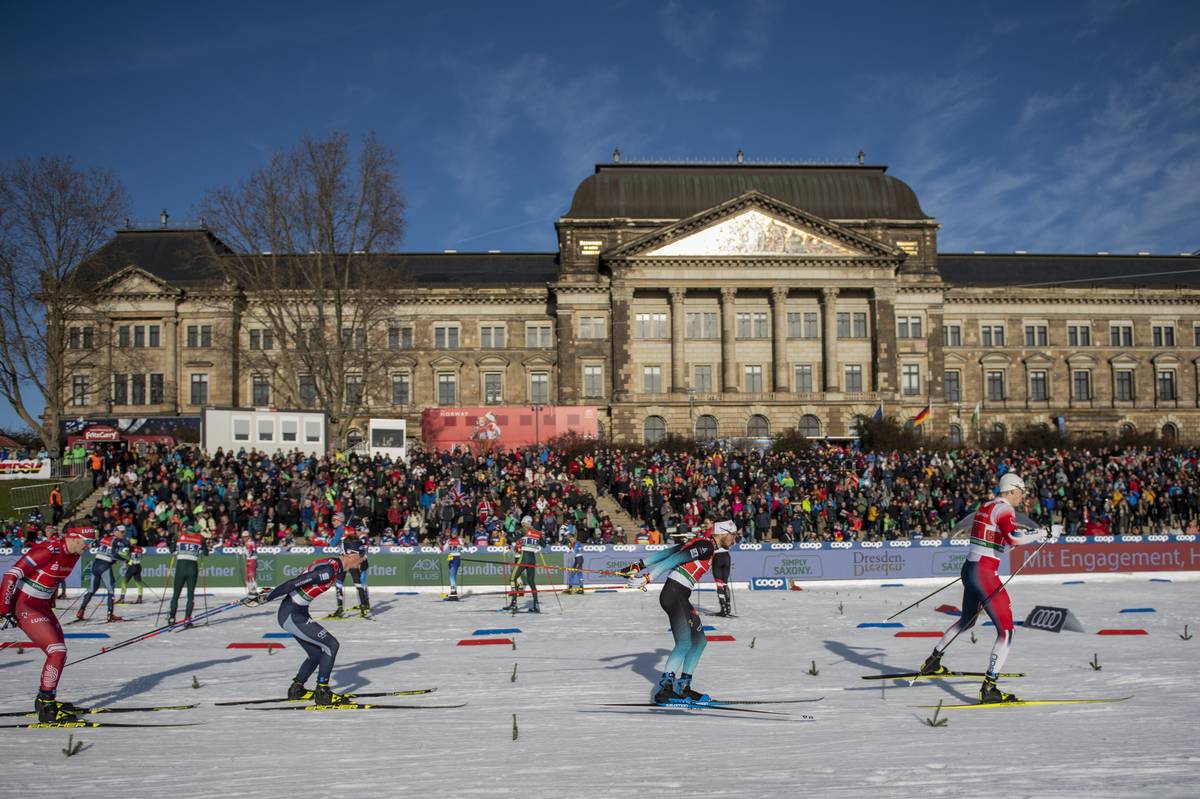
    Spectators gather in Dresden, Germany to watch the team sprint. (Photo: NordicFocus)

    It was dizzying in Dresden for the skate team sprints. The man-made loop of lightning-fast snow had skiers going literally round and round for a total of 11 exchanges between teammates. Each skier skated a single 0.7-kilometer lap, for a total of 7.8 k. Each skier raced six laps. Turn your head dizzy.

    Maja Dahlqvist (bib 15) and teammate Linn Svahn maintain their lead in the final laps of the Dresden team sprint. (Photo: NordicFocus)

    The Women’s Final

    The finals consisted of ten teams. Sweden I animated the race with its display of pull ahead speed late in the race. Sweden I featured Maja Dahlqvist, who won this event last year with Stina Nillson. This year, Dahlqvist and Linn Svahn, yesterday’s skate sprint winner, had the pleasure of burning plenty of matches in Dresden. 

    Sweden I’s tactics were clear: late in the race, with several exchanges remaining, apply speed to the front, separate from the pack, and position themselves for the win. According to FIS, that has been somewhat easy for Sweden to do of late: Sweden has won seven of the last eight women’s team sprint World Cup events. This includes the last five in succession. 

    So it was today, as Dahlqvist tagged to Svahn on the final lap with a 0.8-second gap on Switzerland I’s Nadine Faehndrich. Norway I came through 3.6 seconds back, and Sweden II another 0.4 seconds behind. 

    That was the race.  Faehndrich was able to close down and give Svahn a scare at the line for a photo-finish. 

    The finish line item read: Sweden I in first at 15:43.7, Switzerland I second (+0.09), and Sweden II third (+3.27). 

    The U.S. team of Julia Kern and Sophie Caldwell placed fifth overall (+6.61). The U.S. pairing advanced out of the semis after placing third behind Norway I in first and Switzerland I’s Laurien Van Der Graaf and Nadine Faehndrich. 

    Canada I’s Katharine Stewart-Jones and Dahria Beatty placed third in the second semi-final — in a photo finish with Germany I for second —  and did not advance as a lucky loser. In the team sprint format, the two top teams advance, with the six remaining spots in the final given to the next six fastest teams via lucky loser spots. Canada I placed 11th on the day. 

    Canada II’s Maya Macisaac-Jones and Katherine Weaver were 23rd overall.

    Women’s Team Sprint Results

    Laurien Van Der Graaff (SUI), Nadine Faehndrich (SUI), Maja Dahlqvist (SWE), Linn Svahn (SWE), Evelina Settlin (SWE), Linn Soemskar (SWE), (l-r) take the podium positions. (Photo: NordicFocus)

    The Men’s Final

    Looking for some smooth skiing technique cues for high speed skate skiing? Look no further than the Frenchman crossing the line in first on Sunday for France I. Lucas Chanavat — paired with Jay Renaud — was the kinesthetic perfection of coaches advising – and sometimes commanding —  athletes to ski big and tall.  

    Lucas Chanavat (bib 1) put on a clinic this weekend in Dresden, Germany. (Photo: NordicFocus)

    On Dresden’s quick 0.7 oval loop and deteriorating snow, Chanavat was simply big and smooth and just enough faster than the others.

    In an event that saw five teams on the final tag within 1.4 seconds, France did not exactly have this Dresden team sprint nailed shut.

    With the front five teams out of trouble, they came into the final straight drag race style. As noted, France I pipped in for the win. Sweden I’s Marcus Grate and Johan Haeggström were second (+0.09), and Russia I’s Andrey Krasnov and Gleb Retivykh third (+0.18). Norway I’s Håvard Solås Taugbøl and Sindre Bjørnestad Skar were fourth (+0.56).  

    Great Britain’s James Cluget and Andrew Young were eighth overall (+7.07). 

    Canada I’s Graham Ritchie and Bob Thompson were 14th overall, with Canada II 20th. For the U.S., JC Schoonmaker, a junior skier for the University of Anchorage Alaska, and Kevin Bolger were paired. They placed 21st for the day. 

    Men’s Results

    Marcus Grate (SWE), Johan Haeggstroem (SWE), Renaud Jay (FRA), Lucas Chanavat (FRA), Andrey Krasnov (RUS), Gleb Retivykh (RUS), (l-r) earn top honors in the men’s team sprint. (Photo: NordicFocus)
  • Nakkertok NorAm Weekend Round Up

    Nakkertok NorAm Weekend Round Up

    Katherine Stewart-Jones leads a sprint heat on her way to domination. (Photo: Robert Smith)
    Katherine Stewart-Jones leads a sprint heat on her way to domination. (Photo: Robert Smith)

    The NorAm circuit moved east to the Nakkertok trails for three days of racing jointly hosted by Nakkertok Nordic, Club Skinouk, Chelsea Nordiq, and Kanata Nordic. Friday featured classic sprints, Saturday interval start free, and Sunday interval start classic.

    The event was also the Candy Cane Cup for the younger categories, as well as Ontario Cup 1 and Coupe Québec 1. 374 athletes in the U16, U18, and Open categories competed on Friday with many more younger athletes racing Saturday and Sunday.

    Nordiq Canada’s Jeff Ellis was there and has once again shared the full-length post-race interviews. Photographer Robert Smith has galleries for each day, so keep scrolling.

    Nakkertok had over 3km of trail open thanks to their snowmaking, with a 2.5km loop used for the distance races.

    The 'NakkerTrak' at NakkerTok before the 2019 NorAm weekend. (Photo: Nakkertok)
    The ‘NakkerTrak’ at Nakkertok before the 2019 NorAm weekend. (Photo: Natural Fitness Labs)

    On the women’s side, it was the KSJ show, with home-grown national team member Katherine Stewart-Jones winning all three days.

    In the sprint, Stewart-Jones finished in 3:19.96, comfortably ahead of AWCA’s Maya MacIsaac-Jones and RMR’s Katie Weaver at 2.43 and 3.93 seconds back respectively. The podium trio were the top three qualifiers, but in reverse order.

    Stewart-Jones steamrolled the field in the free 5km, 36.8 seconds ahead of Laura Leclair in second and 39.9 seconds before Cendrine Browne, both of CNEPH.

    The trend continued on Sunday, with Stewart-Jones finishing the classic 10km in 28:52.1, 1:18.1 ahead of Skibec’s Andrée-Anne Théberge and 1:29.8 ahead of AWCA’s Annika Richardson.

    Antoine Cyr leads Julien Locke in the interval start classic. (Photo: Robert Smith)
    Antoine Cyr leads Julien Locke in the interval start classic. (Photo: Robert Smith)

    For the men, Hardwood’s Bob Thompson kicked the weekend off with a sprint victory in 3:12.71, followed by national team member Antoine Cyr at 0.36 seconds and his CNEPH teammate Antoine Briand at 0.63.

    On Saturday, Cyr won the free 10km in 22:10.4, 20.9 seconds ahead of Fondeurs Laurentide’s Ricardo Izquierdo-Bernier and 32.8 seconds clear of Team R.A.D.’s Evan Palmer-Charrette.

    Palmer-Charrette stepped up to finish the weekend on top of the podium, winning the 10km classic in 24:43.8. National team member Julian Smith was second at 6.2 seconds followed by Cyr at 14.4 seconds.

    Results: Full Weekend, Sprint Qualifier, Sprint Heats, Interval Free, Interval Classic.

    For many Canadians this season, the big focus is on the Mt. Sainte Anne (MSA) NorAm in January, which is the Junior and U23 World Championship trials. That series is also a path to World Cup starts. As a result, a number of athletes chose the nearer of the two December NorAm races and skipped the other to reduce travel. Over 30 western Canadians drove to Sun Valley for the SuperTour event instead of flying to Nakkertok.

    “I think that it’s good for younger athletes to chase high competition for development,” Stewart-Jones wrote in response. “It makes more sense for them to travel less too. This year, for most of the younger athletes and even a lot of the older ones, the focus is on trials in MSA in January so there is a lot of time to prepare for their optimal race performance.”

    Stewart-Jones moved from Nakkertok to Canmore this training year, resulting in new training partners and a new personal coach, national team head coach Erik Bråten. That also meant returning to Nakkertok required two extra flying days and the associated illness risk.

    “If I hadn’t been trying to get the COC spot locked up for the rest of the season I would have most likely gone to Sun Valley too.”

    There is a complicated calculus to getting World Cup starts in Canada. The COC leader gets FIS-guaranteed starts and financial support from the host organization for each race weekend. Keeping the COC leader bib for the season would mean more and cheaper time on the World Cup for Stewart-Jones. Dahria Beatty and Emily Nishikawa chose to race period 1 in Europe instead, with Beatty qualifying for the next WC trip selection by placing 25th in the Davos sprint on Saturday.

    Photo galleries from Robert Smith are here.

    Video interviews are by Nordiq Canada’s Jeff Ellis. Audio interview courtesy the LOC.

    Post sprint race interview with Stewart Jones (below)

    Post skate race interview with Stewart Jones (below)

    Post classic race interview with Stewart Jones (below)

    Thompson talks sprinting and his season (below)

    Cyr talks about finally getting the win and the leader’s bib (below)

    Palmer-Charrette is happy to get the win (below)

  • Frozen Thunder – King’s Court Sprints (Press Release)

    Frozen Thunder – King’s Court Sprints (Press Release)

    Junior Tyson Green (Caledonia) outsprints Mark Arendz (NPST) in a King's Court heat. (Photo: @NordiqCanada instagram)
    Junior Tyson Green (Caledonia) outsprints Mark Arendz (NPST) in a third round King’s Court heat. (Photo: @NordiqCanada instagram)

    Nordiq Canada hosted the annual kick-off to the race season at Canmore Nordic Centre on November 13th. The ‘Nordiq Thunder’ races are an opportunity to put on a bib and test fitness and are not being used for trip selection this year. The full press release follows the two winner’s interviews, below. Results for both days are on zone4.ca

    https://www.instagram.com/p/B40wGtHpSSF/

    https://www.instagram.com/p/B40xk4_pfD8/

    — Press Release —

    CANMORE, Alta.—Antoine Briand and Maya MacIsaac-Jones were crowned the king and queen of the annual Nordiq Thunder King’s Court Sprints on Wednesday in Canmore, Alta.

    Born just two days apart, the 24-year-olds hammered the pace up and down hills on the challenging 1.4-kilometre track throughout the qualifying round, and in each of the three head-to-head heats, under a blue-sky morning at the Canmore Nordic Centre.

    The unique King’s Court race is a no knockout format that gives athletes opportunities to race – handling category sizes of nine-to-24 racers in three rounds, with up to four athletes per heat. The goal of the format is to have athletes compete against a variety of similarly skilled racers, men and women mixed in each heat, that benefits skill development. By the final round, the fastest athletes are generally competing in the all men and all women’s final, with the slower athletes in the lower finals.

    That certainly held true on Wednesday for both men’s and women’s brackets.

    Racing on skate skis for the qualifying round and in the final, Briand of Sept-Iles, Que., was the fastest qualifier leading the men into the senior head-to-head heats. After struggling to find his top gear in the first round, Briand put the pedal down in the second and final heat where he edged out Olympian and three-time World Cup medallist, Andrew Newell of the United States, for top spot on the podium. Bob Thompson, of Thunder Bay, Ont., placed third.

    “In some ways this means nothing and, in some ways, it means everything. I am happy to win today,” said Briand. “It was an interesting battle. I played it wise going fast on the flats and the downhill. I wanted to do good and win today. It was important for my confidence to get this one.”

    A motivated Maya MacIsaac-Jones was determined to kick her season off with a strong start. Qualifying in second spot, the Athabasca, Alta. resident put her summer training to the test with a hard-fought battle through the women’s heats where she went head-to-head with National Ski Team member, Dahria Beatty of Whitehorse, in the final two rounds.

    While Beatty led the Canadian duo into the finishing stretch in the second round, it was MacIsaac-Jones who double-poled relentlessly to make up the ground and edge the Olympian at the line.

    “That format is so great in terms of getting ready for the race season and having a good tune-up,” said MacIsaac-Jones. “I think it is one of the best formats for sprinting out there. You have to go as hard as you can in every heat, and you aren’t saving anything for the final. It is perfect.”

    A rematch was set for the senior women’s final.

    Beatty and MacIsaac-Jones were quick off the start line, darting up the steep climb out of the stadium. Playing chase around the rolling terrain, it was the determined MacIsaac-Jones taking the lead this time on the final downhill, and she never looked back, securing her spot on the golden step of the senior women’s podium.

    “I had a lot of fire in me this training season. It definitely is what is keeping me in this racing season. Things have been feeling really good overall this year. Today is another check mark on everything that I’ve been doing in training is working so far.”

    Joe Davies, of Whistler, B.C., was the top junior men’s sprinter. Jasmine Drolet, of Rossland, B.C., opened up a sizeable gap to handily win the junior women’s title.

    Nordiq Canada is holding its annual season-opening race series for the majority of the nation’s male and female cross-country skiers, thanks to the Canmore Nordic Centre’s annual snow preservation project, Frozen Thunder.

    In an effort to provide Canada’s Nordic athletes with the ability to train on snow at home in October and early November, the Frozen Thunder initiative stored enough snow under a thick layer of sawdust to insulate it over the summer months, allowing them to cover the 1.4-kilometre of trail.

    Modeled after snow preservation projects in Europe, the Canmore Nordic Centre was the first to take on the project in North America – and is subsequently the first to open its trails on the continent each year – providing another critical resource for Canada’s high-performance Nordic sports.

    Complete Results: https://zone4.ca/event/2019/NordiqThunder/

    Nordiq Canada is the governing body of para-nordic and cross-country skiing in Canada, which is the nation’s optimal sport and recreational activity with more than one million Canadians participating annually. Its 60,000 members include athletes, coaches, officials and skiers of all ages and abilities. With the support of its valued corporate partners – Haywood Securities Inc., AltaGas, Swix and Lanctôt Sports– along with the Government of Canada, Canadian Olympic Committee, Canadian Paralympic Committee, Own the Podium and B2Ten, Nordiq Canada develops Olympic, Paralympic and world champions. For more information on Nordiq Canada, please visit us at www.nordiqcanada.ca.


  • Canadian Nationals: Two Day Pursuit and WCF Qualification

    Canadian Nationals: Two Day Pursuit and WCF Qualification

    Dahria Beatty (left) and Katherine Stewart-Jones chasing hard in the pursuit. (Photo: Doug Stephen)
    Dahria Beatty (left) and Katherine Stewart-Jones chasing hard in the pursuit. (Photo: Doug Stephen)

    This article has been updated to correct an interpretation of the selection criteria.

    Day two of nationals was day two of the pursuit at Nakkertok trails in Gatineau, Québec. The two-day pursuit format (classic interval start on day one, free technique pursuit start day two) was held for the second time at nationals. With both national titles and starts at World Cup Finals in Québec City up for grabs, it was always going to be an exciting day.

    Lenny Valjas (CNST) justified his decision to come back to race in Canada with a second national title, out-sprinting the pack to finish the 10km+15km pursuit in 1:08.18.6. Philippe Boucher (CNEPH) turned in the fastest time of the day to take second, 0.7 seconds behind, and 0.3 seconds ahead of teammate Alexis Dumas.

    Lenny Valjas wins the pursuit, ahead of Phillipe Boucher, Alexis Dumas, and Rémi Drolet. (Photo: Doug Stephen)
    Lenny Valjas wins the pursuit, ahead of Phillipe Boucher, Alexis Dumas, and Rémi Drolet. (Photo: Doug Stephen)

    Rémi Drolet (Black Jack) was top junior in 4th place, 4.4 seconds back.

    “On the last little bit of the 7.5k loop, on the flats, I decided to attack early before the final sprint hill,” Valjas told the LOC after the race, “because some of those young guys are so quick. I couldn’t trust myself on just the last hill, so I made them hurt with a couple km to go. It worked out, we all had a fun sprint up the last sprint hill into the finish.”

    “No tactics for me today,” Boucher wrote. “I pushed hard from the start to the finish. I was targeting the best time of the day so I would qualify for World cups finals and become the national champion.”

    The early group of eight shrank as Boucher pushed the pace and Valjas struggled to cling on. Dumas described it best: “They was not a lot of tactic today, Philippe Boucher was just too strong. The only thing I could do was following him and hope for the best in the sprint finish at the end.”

    Skiing with the final four until the very end, Drolet battled cramps on the second lap.

    “On the final hill, I had a lot of trouble moving, but I still managed to stay pretty close to the front and finished in 4th,” Drolet said after the race. “I was really happy about how I fought, considering everything else.”

    Neither Boucher nor Dumas were fans of the pursuit format when it was brought back earlier in the season. As both have been on the podium at both editions, maybe they will grow to like it more.

    “After the results I’ve got in the pursuit this year, I can only enjoy them,” Boucher wrote when asked if he still prefers mini-tours to pursuits.

    Wednesday’s race featured two 5km classic loops in great conditions. Valjas was happy to get his win with nearly even lap times.

    “Today was great,” Valjas told the LOC after the race. “I’m excited to be out here, and seeing all the kids. It’s a little bit of inspiration for me to be leading into the last World Cup in my career.”

    Asked about edging out the 18 year old Drolet in the interval start, Valjas said “You’ve got to be on your A game to beat him, and I’m happy I got him, but he’s the future. I’m happy to see the young guys nipping at my heels.”

    Drolet was happy with his classic race, finishing 9.9 seconds behind Valjas despite skiing his second lap 21 seconds slower than the first.

    “Perhaps if I had paced the race better, I could have had a slightly better performance,” Drolet wrote in an email. “The course profile, however, does allow you to go really hard a lot of the time since there are usually long downhills after the climbs.”

    Bob Thompson was third in the classic, which qualified him for World Cup Finals.

    “I feel I am in a good place to have some great results this week,” Thompson wrote. “This was my first medal as a senior man so I’m really happy to finally be in top form again to finish the year. Very excited about World Cup finals!”

    ***

    Dahria Beatty leads Emily Nishikawa towards the finish. (Photo: Doug Stephen)
    Dahria Beatty leads Emily Nishikawa towards the finish. (Photo: Doug Stephen)

    Dahria Beatty (CNST) put in the fastest time of the day to win the women’s 5km+10km pursuit in 40:50.8, completing Thursday’s two 5km skate laps in 26:45.8. Beatty and Katherine Stewart-Jones (CNST) worked together to catch Emily Nishikawa (CNST) just before the finish, with Beatty pulling clear for the win ahead of Nishikawa (7.3 seconds) and Stewart-Jones (9.8 seconds).

    “Emily skied a really strong race and we were trailing her by between 7 and 15 seconds almost the entire race,” Beatty wrote in an email to FasterSkier. “Working together gave Katherine and I a slight advantage and I was able to finally close the gap on the second last downhill. After that we were on the sprint course and my mind went into sprint mode and I was able to open up a small gap.”

    Beatty shared her tactical plan after her second place in the pursuit’s day one classic race. “Tomorrow the goal will be to try to catch those 8 seconds off the start and race with Emily.” 

    Stewart-Jones had a similar tactical plan, but executed it better. “I wanted to catch Dahria as fast as possible because I knew it would be much easier if we worked together. I was able to do that and we skied together most of the race,” Stewart-Jones wrote. “Dahria broke away with one hill to go and I caught Emily but she had me at the finish line!”

    Emily Nishikawa winning the 5km classic at nationals. (Photo: Doug Stephen)
    Emily Nishikawa winning the 5km classic at nationals. (Photo: Doug Stephen)

    CNST’s Cendrine Browne was unable to close the gap and had a lonely ski in 4th, finishing 1:17.7 back. Sadie White (NTDC TBay) delivered the 5th fastest time of the day to move from 12th to 5th at 2:45.6 back.

    Nishikawa earned her lead by winning the classic race Wednesday.

    “I  am really happy with my race today,” she wrote about her win. “It is always an honour to win a national title. Racing here at Nakkertok is so awesome and seeing so many young skiers out is really inspiring.”

    Stewart-Jones was happy with her 3rd in the classic race on her home trails, but not as happy with her pacing.

    “I started off hard because I knew it would be a quick race,” she wrote, “but I think that I probably could have paced it better.”

    There were a lot of athletes enjoying the atmosphere at Nakkertok. There were 215 junior boys and juvenile boys, 185 junior girls and juvenile girls, 107 junior men and senior men, 76 junior women and senior women who finished the pursuit.

    Qualifying for World Cup Finals

    Twelve athletes have already qualified, leaving seventeen spots to be decided at nationals: 8 men and 9 women.

    The criteria says that the top Canadian in each of the freestyle sprint, then individual start classic, then pursuit, then time-of-day from the pursuit will be selected in that order. As there are more spots, the sequence will be repeated for 2nd place, 3rd place, until all spots are allocated. Athletes who have already qualified are skipped over. Clear and simple? Not exactly, but it became clearer with results from three of the four events.

    On the women’s side, the first four places were filled by pre-qualified athletes in all three events. The selection order becomes the first five women in Saturday’s A final, then not Anne-Marie Petitclerc (5th in classic and top junior, but not eligible according to CCC), then White (5th in pursuit), the sixth placed sprinter, then Hannah Mehain (6th in classic). These respective athletes have earned their WCF start, assuming CCC’s interpretation is the same.

    If anyone in the top six on Saturday has already qualified, the seventh place sprinter is selected, followed by Annika Richardson (8th in time-of-day counts as 7th because Germany’s Julie Richter isn’t eligible). Having fun yet? CCC will announce the final selection on Sunday.

    For the men, we have seven pre-selected and eight spots to go. The first five sprinters on Saturday, along with Philippe Boucher (1st in time-of-day), Alexis Dumas (3rd in pursuit), and Bob Thompson (3rd in classic) are locked in. The sixth place sprinter and Ricardo Izquierdo-Bernier (6th in time-of-day) are waiting on someone higher in the list making the A final.

    Results: Classic, Pursuit, Time of Day, Full Week

    Photo Galleries: Doug Stephen: Classic, Pursuit,  LOC: Classic, Pursuit

  • Wednesday Rundown: Canadian Nationals

    Wednesday Rundown: Canadian Nationals

    Rémi Drolet (bib 13, left) caught Angus Foster at the line to finish second. (Photo: 2019 Canadian Ski Championships)
    Rémi Drolet (bib 13, left) caught Angus Foster at the line to finish second. (Photo: Rob Smith)

    Canadian Ski Championships, better known as ‘nationals’, kicked off today at the Nakkertok trails in Québec with individual start classic racing.

    342 men started the 10km and 293 women started the 5km, both using the same 5km loop on an overcast day at -8C. The field is more stacked than usual, with only two athletes (Alex Harvey and Jack Carlyle) in Europe right now.

    Lenny Valjas (CNST) won the 10km in 25:09.3, 9.9 seconds ahead of Rémi Drolet (Black Jack) and 15.7 seconds ahead of Bob Thompson (NTDC TBay). As Drolet is a junior, host club skier Antoine Cyr (Skinouk) took third place on the senior podium at 16.8 seconds back.

    In the second half of the two-day pursuit on Thursday, Thompson will lead a group of seven chasing down the two leaders.

    Nishikawa winning the individual start and another national title. (Photo: 2019 Canadian Ski Championships)
    Nishikawa winning the individual start and another national title. (Photo: Rob Smith)

    In the women’s 5km, Emily Nishikawa (CNST) continued her strong season with another national title, finishing in 13:58.0. Dahria Beatty (CNST) took seconds at 7.7 back, followed by Nakkertok local Katherine Stewart-Jones (CNST) at 12.4. Cendrine Browne (CNST) left herself some work to do on Thursday at 41.2 seconds in fourth.

    Four results from nationals are being used to select 17 athletes for the World Cup Finals in Québec City on March 22nd to 24th. The top finishers in Saturday’s free technique sprint, today’s interval start, Thursday’s pursuit, and the pursuit time of day will be selected in rotation to fill the roster. This selection process will be explained in more detail tomorrow, when most of the possible permutations will be eliminated by actual results.

    mrelaxa

    Twelve athletes have already been named to the World Cup Final team:

    • Alex Harvey, Lenny Valjas, Emily Nishikawa, Dahria Beatty based on World Cup or Olympic results.
    • Katherine Stewart-Jones and Jack Carlyle (AWCA) as COC leaders.
    • Cendrine Browne, Maya MacIsaac-Jones (CNST), Russell Kennedy (Team R.A.D.), Scott Hill (Hardwood), and Evan Palmer-Charrette (Team R.A.D.) by qualifying for World Championships.
    • Rémi Drolet with a top ten at World Juniors.

    There are 8 places for men and 9 for women to be earned at Nationals.

    Interval start results

    Photo Galleries: Doug Stephen


    Lenny Valjas adds another national title to his collection. (Photo: 2019 Canadian Ski Championships)
    Lenny Valjas adds to his national title collection. (Photo: Rob Smith)
  • Back Where It All Started, Klæbo Wins Otepää Classic Sprint; Newell 15th

    Back Where It All Started, Klæbo Wins Otepää Classic Sprint; Newell 15th

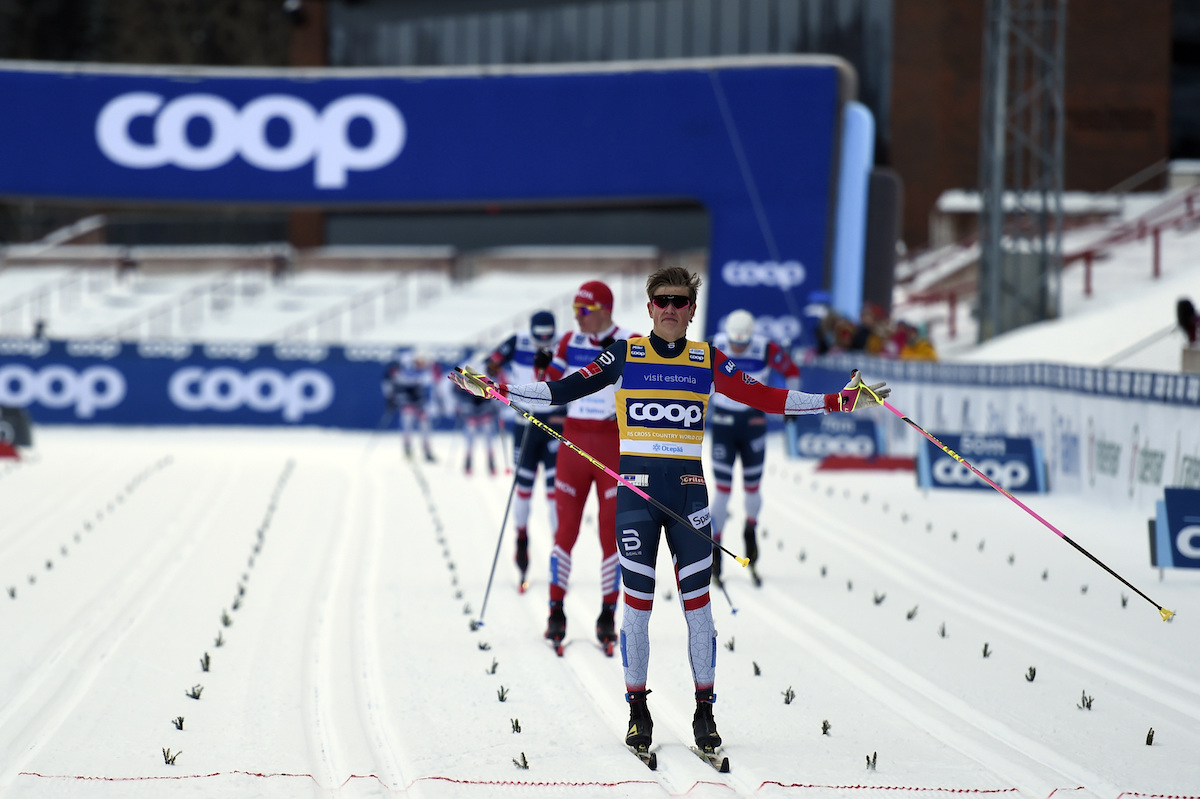
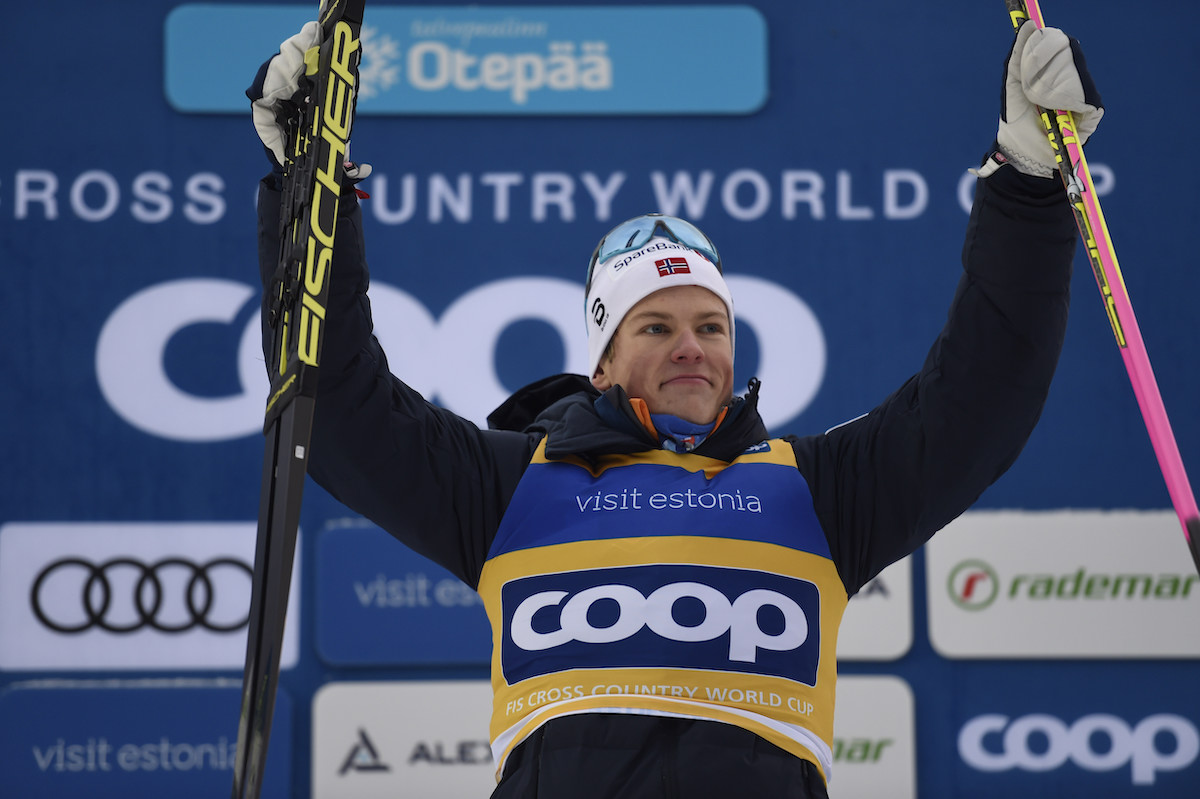
    Norway’s Johannes Høsflot Klæbo winner of the men’s 1.6-kilometer classic sprint final on Saturday in Otepää, Estonia. (Photo: Fischer/Nordic Focus)

    If Norway’s Johannes Høsflot Klæbo felt any nostalgia stepping out onto the men’s 1.6-kilometer classic sprint course in Otepää, Estonia–it is where he earned his first World Cup sprint victory back in 2017–it by no means slowed the 22 year old down.

    After winning Saturday’s qualifier in a time of 3:21.99, Klæbo went on to win both his quarter and semi. He eventually crossed the final first in a time of 3:20.05 to complete his sweep of the day’s rounds.

    “It’s very cool to win here again,” Klæbo said during an interview with the International Ski Federation (FIS) after the race. “And I have a grandpa who is living here so that’s even better now, so I want to enjoy this.”

    With the win, his 18th individual World Cup victory (12th in sprint), Klæbo could be on his way to his most winningest season yet. Last winter he departed the World Cup with 10 wins total. Thanks to a strong Tour de Ski and a few sprint races this year, Klæbo has already accumulated six individual victories in the 2018/2019 season.

    The win this Saturday came in good company, as he raced the six man final with four other Norwegians: Pål Golberg, Eirik Brandsdal, Mattis Stenshagen and  Erik Valnes. Alexander Bolshunov was the lone non-Norwegian to make the final.
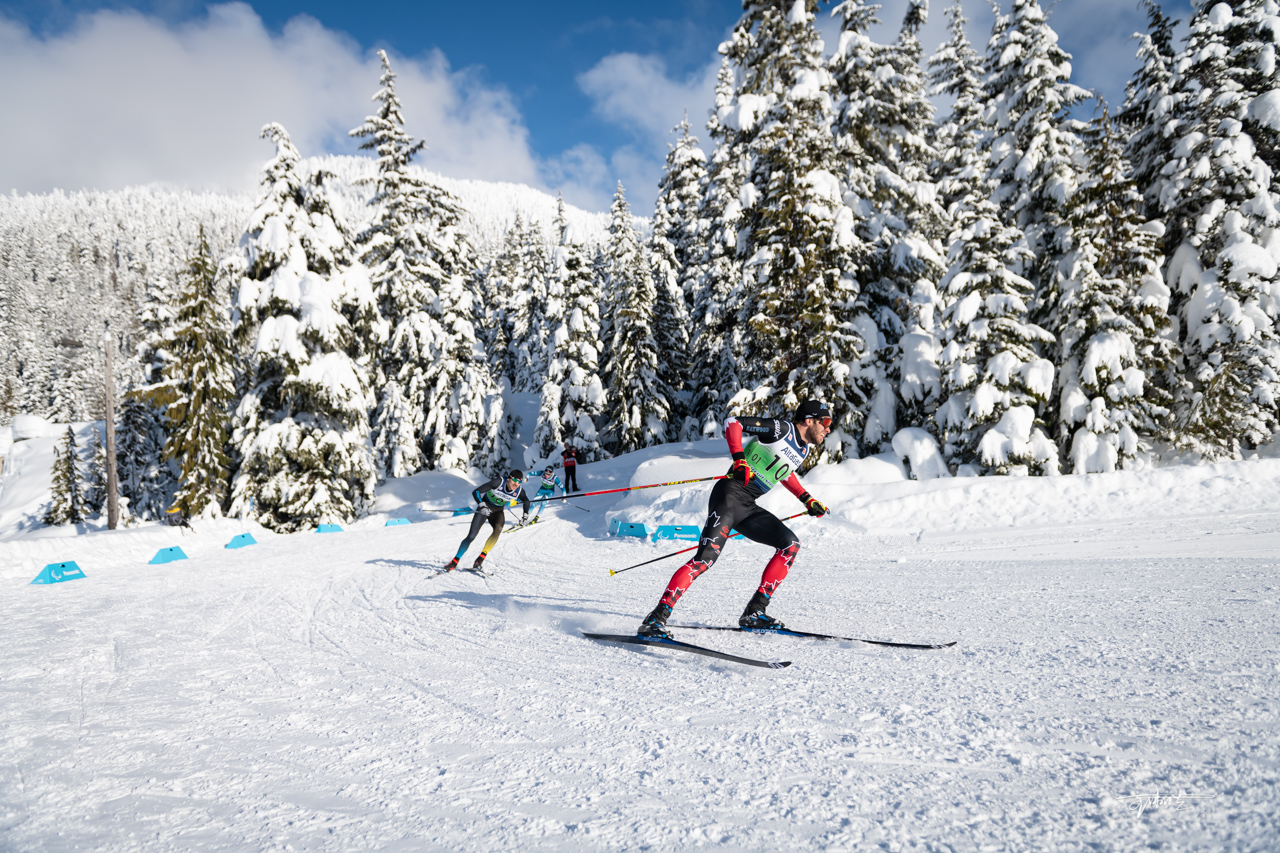
    American Andy Newell (bib 26) racing the first quarterfinal of the the men’s 1.6-kilometer classic sprint final on Saturday in Otepää, Estonia. (Photo: NBC Gold screenshot)

    Pitted against each other, Bolshunov appeared to be the only one in the final willing to challenge Klæbo. The two went head-to-head in the first major course climb, and by the following series of downhill S-turns, Bolshunov had positioned himself in the front. A brief double-pole section found Bolshunov and Klæbo side-by side once again, with Brandsdal and Stenshagen just behind.

    As the six finalists geared up for the second major climb, a steep nearly vertical pitch that forced all racers to herringbone, Klæbo maneuvered to the outside right of Bolshunov. Using a quick, herringbone clip that almost made his skis look like a fish out of water, Klæbo passed Bolshunov by the top of the ascent.

    After two double poles at the crest of the hill, Klæbo was tucked and descending back toward the stadium. His skis proved unmatchable by the Russian’s and by the bottom of the hill, he had put close to two meters on Bolshunov. Another meter behind Bolshunov was Golberg.

    With no foreseeable challenge to the win, Klæbo double poled breezily to the finishing stretch and crossed first, arms outstretched in his signature celebratory gesture.

    Norway’s Johannes Høsflot Klæbo (yellow bib) crossing first in the men’s 1.6-kilometer classic sprint final on Saturday in Otepää, Estonia. (Photo: Fischer/Nordic Focus)

    Bolshunov crossed second (+1.51) for his seventh World Cup podium of the season.

    In a lunge to the line, Golberg claimed third (+2.53) over Brandsdal in fourth (+2.57). Stenshagen crossed fifth (+7.69) and Valnes sixth (+11.99).

    Rounding out the top ten was Norwegian Sindre Bjørnestad Skar in seventh, Sweden’s Viktor Thorn in eighth, Norway’s Sondre Turvoll Fossli in ninth and Italy’s Federico Pellegrino in tenth.

    The U.S. had two men qualify, with Erik Bjornsen qualifying in 23rd (+8.20) and Andy Newell 26th (+8.75). Newell went on to race the first quarterfinal with Klæbo. Avoiding a crash from Russia’s Andrey Sobakarev in the herringbone hill, Newell crossed the quarterfinal in third to end the day in 15th overall.

    American Erik Bjornsen (bib 23) racing the first quarterfinal of the the men’s 1.6-kilometer classic sprint final on Saturday in Otepää, Estonia. (Photo: NBC Gold screenshot)

    Bjornsen, who was slotted into the second quarterfinal, jockeyed for position throughout his heat, taking aggressive lines during the course’s sweeping S-turns to move from fifth to third. He dropped back once again in the herringbone hill and crossed his heat in fifth for 24th overall.

    “I was happy to qualify well today,” Bjornsen wrote in an email. “This season hasn’t gone as well as I hoped but I think I can turn things around before world champs. Today was a step in the right direction. Positioning was quite important in the second half of the course. Unfortunately I wasn’t where I needed to be before the steep climb.”

    The U.S. Ski Team’s Kevin Bolger during his qualifier
    on Saturday in in Otepää, Estonia. (Photo: Fischer/Nordic Focus)

    Also racing for the U.S., American Kevin Bolger finished in 41st (+13.13) and Ben Saxton in 44th (+14.16). Len Valjas racing for Canada finished in 43rd (+13.61) and Bob Thompson, also for Canada, placed 51st (+15.96).

    Results: Qualifier | Final
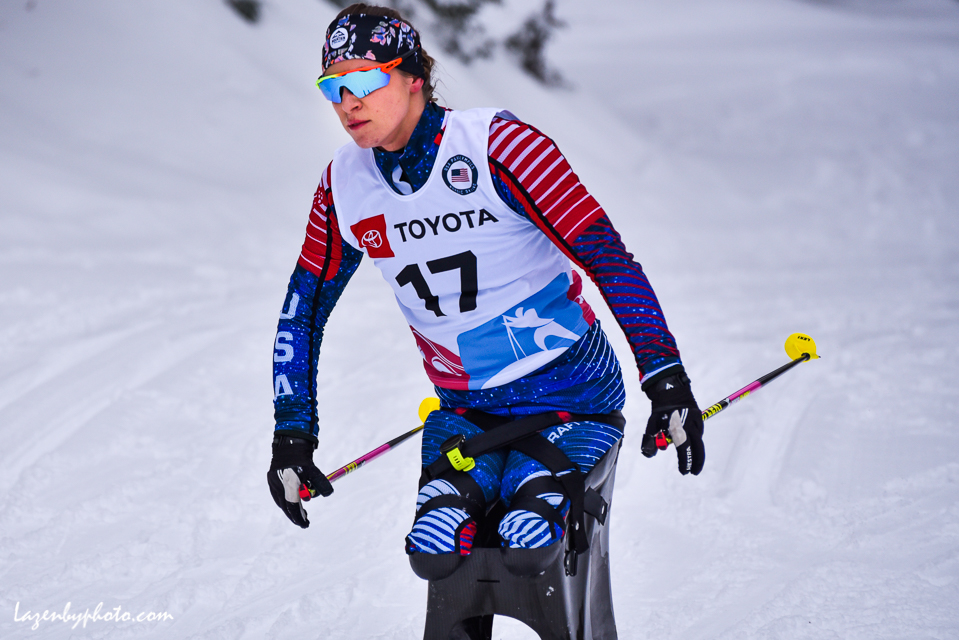
  • Saturday Race Rundown: Otepää Classic Sprints and Beyond (Updated 2x)

    Saturday Race Rundown: Otepää Classic Sprints and Beyond (Updated 2x)

    It’s on and it’s over — the World Cup classic sprints in Otepää, Estonia. (Photo: @fiscrosscountry Instagram screenshot)

    FIS World Cup Otepää, Estonia 1.3 k / 1.6 Classic Sprint

    Starting the day’s performance benchmarks off was Stina Nilsson of Sweden with the fastest qualifier in the women’s 1.3-kilometer classic sprint in Otepää on Saturday. She stopped the clock in 3:07.62 minutes.

    The U.S. Ski Team’s (USST) Jessie Diggins was the top-qualifying North American in 18th (+5.37). Sadie Bjornsen (USST) qualified 20th (+5.71), and Ida Sargent 27th (+8.38).

    On a course rewarding patience and technical skiing know how, Norway’s Maiken Caspersen Falla won the overall in 3:05:16 minutes. Russia’s Natalia Nepryaeva placed second (+1.40), and Maja Dahlqvist of Sweden third (+5.78). Also from Sweden, Jonna Sundling, who fell at around the 1:30 mark in the final, placed fourth (+8.12), with Slovenia’s Katja Visnar fifth (+23.22).

    Nilsson placed second to Falla in the first semi-final, but did not start the final. Nilsson had won the last four World Cup sprints, all in skate, coming into Otepää.

    Bjornsen looked strong in the fifth heat, yet stepping around the right hand turn before the final straight she fell taking out several other skiers. Bjornsen was given a yellow card for obstruction. She ended up 22nd overall. 

    Diggins placed second to Falla in the second heat to advance to the first semi. She was eliminated after finishing in sixth (+3.68). Diggins placed 12th overall. 

    Sargent finished third in the third heat, to place 15th overall.

    U.S. athlete  Rosie Brennan (APU) finished 45th (+15.81).

    Dahria Beatty (CNST) was the only Canadian entered. She placed 44th overall (+15.79)

    Qualification Results | Results 

    Norway’s Johannes Høsflot Klæbo was the fastest qualifier for the men in the 1.6 k classic sprint with a time of 3:21.99 minutes.

    The young Norwegian seems on form as he swept his heat, semi, and final on his way to the win. Klæbo won the final in 3:20.05 minutes. Alexander Bolshunov of Russia, the only non-Norwegian in the final, was second (+1.51), and Pål Golberg third (+2.53). Rounding out the final three spots in the final were Eirik Brandsdal in fourth (+2.57), Mattis Stenshagen in fifth (+7.69), and Erik Valnes in sixth (+11.99).

    For the U.S., Erik Bjornsen (USST) was the fastest qualifying North American in 23rd (+8.2), Andy Newell (SMS T2) 26th (+8.75).

    Bjornsen was knocked out of the rounds after placing fifth in the second heat. He placed 24th overall. Newell ended up third in the first heat, 2.99 seconds in back of Klæbo. Newell, in his second World Cup sprint of the season, placed 15th in the final standings.

    Kevin Bolger (USST) finished in 41st (13.13), Ben Saxton (SMS T2) 44th (+14.16), and Ben Lustgarten (CGRP) 63rd (+23.04).

    For Canada, Lenny Valjas (CNST) was 43rd (+13.61), and Bob Thompson 51st (+15.96).

    Men’s Qualification Results | Men’ Results

    ***

    The stadium setup for Saturday's interval start classic. (Photo: A. Ian Aitken)
    The stadium setup for Saturday’s interval start classic. (Photo: Ian Aitken)

    Worlds Selections/NorAms/Coupe Québec, Bishop’s University, Québec

    Day two of the NorAm weekend was interval start classic, with very cold conditions delaying the start and simplifying the ski preparations.

    Katherine Stewart-Jones (CNST) topped her Friday 2nd place with a clear win in the 10km, finishing in 28:51.6 with the fastest time on all three laps. Cendrine Browne (CNST) was second at 30.8 behind. Zoë Williams (Nakkertok) was third at 1:53.5, just pulling clear of Frédérique Vézina (CNEPH) by 3.1 seconds with a fast final lap.

    In the men’s 15km, Scott Hill (Hardwood) bounced back from a slow start to the season with a well-timed victory to join Stewart-Jones on the World Championships team. Hill was fastest on the last three of four 3.75km laps to win in 36:59.7, 9.0 seconds ahead of a fading Russell Kennedy (Team R.A.D.). Graham Nishikawa (CPNST), here training for his role as Brian McKeever‘s guide, held onto third at 38.0 seconds, just 3.2 seconds ahead of a fast finishing Dominique Moncion-Groulx (Nakkertok).

    There are two more automatic selections for World Championship available on Sunday in the mass start skate races (20km for women, 30km for men). With cold temperatures and heavy overnight snow predicted, it should be an exciting end to the weekend.

    Classic Results, Full Weekend (including live timing for Sunday)

    ***

    IBU World Cup Ruhpolding, Germany 4 x 6 k Relay

    The teams from France, Norway and Germany claimed the positions at the top of the podium on Saturday in the women’s 4 x 6-kilometer relay in Ruhpolding, Germany, cheered on by over avid 25,000 fans lining the course.

    France with Julia Simon, Anaïs Bescond, Justine Braisaz and Anaïs Chevalier stayed in the top group all race mainly due to the best shooting performance of the day, at times with a lead of over half a minute. On the anchor leg, Chevalier defended her narrow lead through three loops and two shooting stages to the finish line in a time of 1:09:27.7 hours, with no penalty and just four spares. According to an IBU press release, it was their first win since 1994 at this venue with a long tradition on the biathlon competition calendar, which has undergone a slight redesign for this season to add stands and make a downhill section less tricky.

    Behind the French women, Norway with a team comprised of the reactivated veteran Synnøve Solemdal, Ingrid Landmark Tandrevold, Tiril Eckhoff and anchor Marte Olsbu Røiseland was second, with Røiseland narrowing the gap to Chevalier on the final loop from 21 to seconds but not quite catching up to finish 11.5 seconds back (with no penalty and seven spare rounds). The home team from Germany with Vanessa Hinz, Laura Dahlmeier, Franziska Preuss and Denise Herrmann was third, after the fast Herrmann was unable to catch the leaders when she needed all three spares in the final shooting to clear her targets (+23.4, with no penalty and nine spares).

    Over a minute behind the podium finishers, the fourth team crossing the line were the 2018 PyeongChang Olympic relay silver medalists from Sweden around anchor Hanna Öberg (+1:29, with no penalty and nine spares).

    For the North American teams it was a race with many ups and downs.

    Canada began the race with Sarah Beaudry, who moved the team as high as sixth thanks to a clean shooting performance in her standing shooting stage after she had required two spares in prone. She then lost time to the top teams on the track to exchange in 13th position (+54.5 sec). Emma Lunder then managed to bring the team back up to sixth position but she also needed two spares in prone and followed that up with a clean standing stage, tagging off in seventh place right behind Sweden (individually her leg was the fifth-fastest). Megan Bankes kept up with the teams around her on the course and slightly improved to fifth position less than a minute back, but then missed two targets in her standing stage and could not clean with her spares. She skied a single penalty lap (0+1, 1+3). She tagged anchor Rosanna Crawford in 10th position (+2:14), who then herself added a penalty in her prone stage.

    At the site of her podium finish a year ago and coming off a 27th place in the sprint earlier this week, the Canadian team leader then needed two spares in the standing stage and ultimately came to the finish in 12th position (+3:01.6), with two penalties and 13 spare shots for the team.

    For US Biathlon, Clare Egan began the race and recorded a clean prone stage to move the team up all the way to third position coming into the standing shooting stage despite a broken pole. She then missed three targets and ran out of spares and skied two penalty laps.

    That set the team back quite far, exchanging in 19th position (+1:26.6). Susan Dunklee needed four spares in her shooting stages but avoided another penalty (0+1, 0+3) to exchange in 12th position (+1:47.3).

    Rounding out the team after being called back up to the World Cup from the second-tier IBU Cup following solid performances in Duszniki Zdroj, Poland, Joanne Reid only needed one spare in each of her shooting stages (0+1, 0+1) to tag off in 15th position. In her second time anchoring a relay this season, Deedra Irwin – who had recorded her first clean shooting performance in a race in Poland a week ago – then required all her spares to clear her targets in the prone shooting before achieving another clean standing shooting stage. She crossed the line in 16th position, 4:06.0 back, with two penalties and 12 spare shots for the team.

    Races in Ruhpolding conclude on Sunday with mass starts for the women and men. US Biathlon’s Sean Doherty is scheduled to be lone North American starter for the elite men’s field (though Canada’s Christian Gow would be the next one up from a reserve list in case of an illness), while Egan and Dunklee are qualified for the women.

    Results Women’s 4×6-kilometer Relay


  • Spills and Thrills as Norway I wins Men’s Team Sprint in Dresden

    Spills and Thrills as Norway I wins Men’s Team Sprint in Dresden

    The men’s team sprint podium from the Dresden, Germany World Cup team sprint: From left to right, Norway II in second, Norway I first, and Russia I third. (Photo: fis-ski.com screenshot)

    A strip of imported snow along the Elbe river, iconic architectural reminders of old-world Europe’s city-scape in Dresden, Germany, Lycra, speedy skiers, and teams of two: all the ingredients for the men’s 1.6-kilometer freestyle team sprint.

    With tight pack skiing a function of the the relatively flat Dresden ski loop, the ten teams in the final attempted to play stay-out-of-trouble-skiing for the six total laps. But with a crowded tag area and tight corners where skiers abruptly bled speed, mix ups and tumbles occasionally picked skiers out of the front scrum.

    Coming into the final tag, 8 k into the race, the top-seven teams came through the time check all within 2.63 seconds of one another.

    Norway II, Italy I, Russia II, Norway I, France I, Russia I, and Great Britain sped through with the remaining three teams in the finals, Switzerland I, Austria I, and Australia I within closing distance to the leaders.

    Intermittently contracting and spreading out, no decisive moves to splinter the group materialized until the last lap.

    In the team sprint, it’s not simply the fastest one or two lap skier who prevails — each athlete, during their three respective legs (each leg consisted of three laps), was required to mentally focus and push the boundaries of their aerobic and anaerobic engines for 4.8 k total.

    On that last lap, the pull away move was simple enough. 

    Leading much of the final k was Norway I’s Sindre Bjørnestad Skar, the winner of Saturday’s skate sprint in Dresden. Skar kept out trouble, positioning himself at the front. He then shifted into a sixth or seventh gear no other skier could match.

    Up to the point Skar began to channel his reserve of booster-fuel, it appeared it could have been one of several teams across the line first. But approximately 4.6 k into Skar’s pathway to the finish line, his top effort was simply too much. he was on another level of endurance-sprint fitness as he closed out the win. 

    Skar along with his teammate Erik Valnes won the final in 22:38.72 minutes. 

    Sindre Bjørnestad Skar in front to finish first for Norway I during the Dresden, Germany World Cup team sprint on Sunday. (Photo: ZDF screenshot)

    But behind Skar, a four team whirlwind charged down together on the finish. A photo-finish captured the moment to decide the final standings. In second (+0.75) was Norway II’s Pål Golberg and Eirik Brandsdal, Russia I’s Artem Maltsev and Gleb Retivykh third (+0.80).

    Fourth place, 1.01 seconds back, went to Roland Schaad and Jovian Hediger of Switzerland. Russia II’s Andrey Krasnov and Alexander Terentev were fifth (+1.04).

    Great Britains’s James Clugnet and Andrew Young placed sixth (+3.17).

    Right in the middle of the the finishing lane mix, possibly fighting for podium scraps was Italy’s Federico Pellegrino. He appeared to catch his tip on another skiers ski-tail and took a spill. He and teammate Dietmar Nöckler placed 10th in the 10 team final. The Italian duo won last season’s team sprint in Dresden.


    https://www.youtube.com/watch?v=5AkfrAn3dBg&feature=youtu.be

    Canada’s Bob Thompson and Len Valjas placed seventh (+2.46) in the first semi-final and did not advance to the final. It was the same fate for the only U.S. team entered in the men’s team sprint. Andy Newell and Erik Bjornsen placed 10th (+3.66) in the second semi, and failed to make the finals.

    Canada placed 15th in the final standings, the U.S. 19th.

    In bib 15, the U.S. Ski Team’s Erik Bjornsen navigates the crowds during Dresden, Germany’s team sprint on Sunday. (Photo: Garrott Kuzzy)

    Results

  • Sunday Race Rundown: Dresden Team Sprints & Oberhof Relays (Updated 2 x)

    Sunday Race Rundown: Dresden Team Sprints & Oberhof Relays (Updated 2 x)

    Racing in bib 4 for the U.S., Julia Kern keeps pace in the women’s team sprint during the Dresden, Germany World Cup on Sunday. (Photo: Garrott Kuzzy).

    FIS World Cup Dresden, Germany 6 x 1.6 k Freestyle Team Sprint

    The first World Cup team sprint of the season was run amidst drizzle and the Dresden, Germany city-scape as the women raced a total of six 1.6-kilometer laps.

    Round and round on the looping course, the pace was a mix of tactically subdued speeds with sustained bursts of energy to break the pack.

    After all the speed changes and exchanges with one athlete tagging off to the next, it came down to a 1.11 second difference between first place Sweden I and the three closet teams chasing from behind that ended in a photo finish.

    Sweden I’s Stina Nilsson and Maja Dahlqvist won in a time of 24:02.5 minutes. Sweden II’s Ida Ingemarsdotter and Jonna Sundling placed second (+1.11), and Norway I, with Eide Mari and Maiken Caspersen Falla in third (+1.11).

    U.S. I, featuring Julia Kern and Sophie Caldwell placed fourth (+1.11) after the photo finish was reviewed.

    The U.S. entered a second team, consisting of Ida Sargent and Hannah Halvorsen. That duo contested the first semi-final, the same semi as U.S. I, but did not advance after placing fourth (+5.44). The top-three teams from each semi advance to the final, along with the next four fastest teams which are the combined “lucky losers”. Today, the second semi was the faster of the two. The four lucky loser team advancing to the final all originated from the second semi.

    Sargent and Halvorsen ended up 11th overall.

    No Canadian team was entered in the race.

    Semi-Final Results | Final Results

    In the men’s 6 x 1.6 k skate team sprint race, Norway I and Norway II took the top two podium spots.

    In a lunge at the line, Norway I’s Erik Valnes and Sindre Bjørnestad Skar won the final in 22:38.72 minutes. Pål Golberg and Eirik Brandsdal of Norway II placed second (+0.75) and Russia I’s Artem Maltsev and Gleb Retivykh third (+0.80).

    Canada’s Bob Thompson and Len Valjas placed seventh (+2.46) in the first semi-final and did not advance to the final. It was the same fate for the only U.S. team entered in the men’s team sprint. Andy Newell and Erik Bjornsen placed 10th (+3.66) in the second semi, and failed to make the finals.

    Canada placed 15th in the final standings, the U.S. 19th.

    Men’s Semi-final Results | Final Results


    ***

    IBU World Cup Oberhof, Germany 4 x 6 k / 4 x 7.5 k Relay

    In the women’s 4 x 6 k relay, Russia placed first in a time of 1:18:46.4 hours. Evgeniya Pavlova, Margarita Vasileva, Larisa Kuklina, and Ekaterina Yurlova-Percht made up the team that used eight spares on their way to the win.

    Germany placed second (+33.5) with two penalty loops and 10 spare rounds. Karolin Horchler, Franziska Hildebrand, Franziska Preuss, and Denise Hermann comprised Germany’s second place team that had two penalties while using 10 spares. The Czech Republic’s Lucie Charvatova, Veronika Vitkova, Marketa Davidova, and Eva Puskarcikova placed third (+36.7) with 1 penalty loop and six spares.

    The top spot for the podium came down to the final leg, when Yurlova-Percht pulled out the win when Hermann skied two penalty loops. The Russian used three spares but escaped with no penalties to take the lead out of the shooting range on the final ski loop.

    Susan Dunklee, Clare Egan, Joanne Reid, and Emily Dreissigacker all represented the U.S.  and placed 12th (+5:35.8) while skiing five penalty loops and using 16 spares.

    Canada’s Sarah Beaudry, Emma Lunder, Megan Bankes, and Rosanna Crawford finished in 13th (+5:58.8) with four penalty loops and 15 spares.

    Women’s Relay Results

    Russian also claimed the men’s relay, winning in a time of 1:20:54.3 hours. The winning team of Maxim Tsvetkov, Evgeniy Garanichev, Dmitry Malyshko, and Alexander Loginov skied no penalty laps and used six spares on their way to victory.

    Antonin Guigonnat, Simon Desthieux, Quentin Fillon Maillet, and Martin Fourcade raced for France. The French team placed second (+1:01.1) while skiing a single penalty lap and using eight spares.

    Austria’s Tobias Eberhard, Simon Eder, Dominik Landertinger and Julian Eberhard placed third (+2:18.6) with one penalty lap and using seven spares.

    Canada’s Scott Gow, Christian Gow, Jules Burnotte, and Brendan Green and the U.S. team of Leif Nordgren, Sean Doherty, Travis Cooper, and Max Durtschi were eventually lapped. Neither team was given an official finishing time.

    Canada was ranked 18th in the final standings, the U.S. 19th.

    For both relays today, the snowy weather and tough course conditions made for a strenuous day of shooting and skiing.

    Men’s Relay Results

  • Saturday Race Rundown: Dresden and Oberhof (Updated)

    Dresden, Germany looking good for the city sprints. (Photo: @skiweltcupdresden Instagram screenshot)

    FIS World Cup Dresden, Germany 1.6 k Freestyle Sprint

    The city of Dresden resting alongside the River Elbe hosted a 1.6-kilometer freestyle sprint for the second year running.

    Hannah Falk of Sweden, last year’s sprint winner in Dresden, won the qualifier in a time of 3:41.85 minutes. The U.S. Ski Team’s (USST) Sophie Caldwell was the second fastest qualifier (+0.49), with Falk’s teammate, Stina Nilsson, qualifying in third (+0.80).

    Canada’s Dahria Beatty placed 20th (+8.72) in qualification, while Julia Kern (USST D-Team) in her first European based World Cup qualified in 23rd (+10.84).

    Both Beatty and Kern were eliminated in the first heat which was won by Nilsson in 3:43.87. Beatty placed third (+1.18), Kern fourth (+1.25).

    Beatty ended the day in 16th place overall, Kern 19th.

    Caldwell advanced to the finals where she finished in fifth place, 2.61 seconds behind the day’s sprint winner Nilsson. Nilsson won the final in 3:48.49 minutes. It was an all Sweden podium as Maja Dahlqvist placed second (+0.24) and Jonna Sundling third (+0.54).

    No other North American women advanced to the heats.

    Hannah Halvorsen (USST D-Team) racing in her first World Cup placed 35th overall. Ida Sargent (USST) placed 38th, first time World Cup participant Hailey Swirbul (USST D-Team) 41st.

    Fifty-two women started Saturday’s sprint.

    Women’s Qualification | Women’s Final Results

    For the men, Italy’s Federico Pellegrino qualified first in 3:21.12 minutes. Britain’s Andrew Young was second fastest (+0.47), and Gleb Retivykh third (+1.27).

    In his return to World Cup skiing after racing the domestic circuit, American Andy Newell was the highest ranked North American in qualification, placing 19th (+5.58). Kevin Bolger (USST) qualified in 28th (+6.76).

    Newell and Bolger both raced the third heat where they were eliminated from the rounds. Newell placed fifth (+1.31), Bolger sixth (+1.45) in the third heat, which was won by Richard Jouve of France in 3:28:24.

    In the final standings, Newell ranked 25th, Bolger 29th overall.

    The race was won by Norway’s Sindre Bjørnestad Skar in 3:25.95 minutes. Retivykh placed second (+0.11), and Erik Valnes of Norway third (+2.83).

    Erik Bjornsen (USST) finished in 33rd (+7.43), Simi Hamilton (USST) did not start due to illness.

    For Canada, Bob Thompson placed 32nd overall, Lenny Valjas 47th (+9.55).

    Sixty-three men began the qualifier.

    Men’s Qualification | Men’s Results

    ***

    IBU World Cup Oberhof, Germany  10 k / 12.5 k Pursuit

    In the women’s pursuit Lisa Vittozzi of Italy, who was the first skier off today as she won Thursday’s sprint, also won the 10 k pursuit in a time of 32:32.9 minutes. Vittozzi had two penalties (0+1+1+0) on her way to the win.

    Anastasiya Kuzmina of Slovakia was second with four penalties (2+1+1+0), 14.5 seconds back. Kuzmina was the seventh starter, and began the race 30 seconds behind Vittozzi. Anaïs Chevalier of France place third (+27.9, 2+1+2+0). Chevalier was the second starter, beginning with a five second deficit.

    Susan Dunklee of the US Biathlon Team had a season best result, placing seventh overall (+1:01.2). Dunklee was the 10th starter, setting off 41 seconds back. Dunklee had five penalties (2+1+1+1) on her way to seventh place.

    Also for the U.S., Clare Egan, who place 13th in the sprint, fell back to 33rd in the pursuit after skiing seven penalty laps.

    For Canada, Emma Lunders placed 39th (+3:31.4) with six penalties on her day. Rosanna Crawford placed 52nd (+5:23.4) also with six penalties.

    Results

    In the men’s pursuit, Norway’s Johannes Thingnes Bø claimed the win in a time of 34:29.8 after three missed shots (0+1+1+1).

    Arnd Peiffer of Germany place second on Saturday, finishing 15.1 seconds back from Bø after one penalty (1+0+0+0). Italy’s Lucas Hofer snagged the third and final podium, finishing 15.8 seconds behind the winner after shooting clean.

    Two North Americans competed on Saturday, with American Sean Doherty finishing in 18th (+2:29.9) after skiing two penalties (2+0+0+0). Canadian Christian Gow also skied into the top 30, finishing in 27th (+2:57.4). Gow had two misses (1+0+0+1).

    Results

  • Saturday Race Rundown: Val di Fiemme’s Stage 6 of the TdS in the Spotlight

    Saturday Race Rundown: Val di Fiemme’s Stage 6 of the TdS in the Spotlight

    Norway’s Ingvild Flugstad Østberg leading a four-deep chase group on her way to winning Stage 6 of the Tour de Ski — a 10 k classic mass start. (Photo: ZDF screenshot)

    FIS World Cup Stage 5 Tour de Ski 10 k/15 k Mass Start Classic Val di Fiemme, Italy

    Women’s Report | Men’s Report

    The clear outcome from the women’s 10-kilometer classic mass start was Norway’s Ingvild Flugstad Østberg’s fitness. The TdS leader began the day with a 35.4 second lead on second overall skier Natalia Nepryaeva of Russia. The time back to Nepryaeva at the end of Stage 6 only grew.

    Østberg’s form became evident around the 6.2 k mark when she inexorably pulled away from a group that included Russians Nepryaeva, Yulia Belorukova, Anastasia Sedova, and Finland’s Krista Pärmäkoski.

    Østberg went on to a solo win in a time of 29:24.4 minutes. Nepryaeva placed second (+10.0), Sedova third (+10.8), and Pärmäkoski fourth (+12.5).

    Belorukova ended up in fifth (+39.7), followed by Norway’s Heidi Weng in sixth (+1:10.0), and U.S. skier Jessie Diggins seventh (+1:19.3).

    Diggins began the day third overall in the Tour, 1:22.6 minutes behind Østberg.

    Canada’s Emily Nishikawa, who began the day in bib 28, placed 25th (+2:47.3).

    After factoring in time bonuses, Østberg now leads the TdS by 53.4 seconds over second overall skier Nepryaeva. Pärmäkoski jumped to third (+2:13.1), with Diggins dropping to sixth in the overall, 3:07.9 back. 

    Thirty-two women began Stage 6 of the Tour de Ski (TdS) in Val di Fiemme, Italy.

    Results | Overall Tour Standings After Six Stages


    Italy’s Francesco de Fabiani leads Norway’s Johannes Høsflot Klæbo during Stage 6 of the Tour de Ski — a 15 k classic mass start in Val di Fiemme, Italy. (Photo: ZDF screenshot.)

    In the men’s 15 k classic mass start, the race was a big opportunity for a results shakedown. Johannes Høsflot Klæbo of Norway came into the race as the overall leader, with a slight 5.4 second lead on Russia’s Sergey Ustiugov who began Stage 6 second overall in the TdS.

    Klæbo will retain the overall lead after a tactical Stage 6 where he won the race in 40:52.6 minutes. Francesco de Fabiani of Italy placed second (+0.6), and Russia’s Alexander Bolshunov third (+2.6). Bolshunov had been third overall, prior to today’s stage, 1:18.2 behind Klæbo.

    For de Fabiani, it was his second TdS podium — he also placed second in the Tour’s Stage 4 15 k classic mass start in Oberstdorf, Germany.

    Ustiugov placed 16th (+42) in today’s stage after skiing through the 10 k time check in 20th place, 5.3 seconds back. By 11.4 k, Ustiugov was 20.4 seconds behind the front group of skiers that included Bolshunov and Klæbo.

    After Stage 6, with only the Alpe Cermis climb to go, Klæbo sits in first overall, 1:20.4 minutes up on second overall skier Ustiugov. Bolshunov is third overall (+1:43.8), and de Fabiani fourth (+2:40.5).

    No Canadian men started the race as Alex Harvey, Lenny Valjas, and Bob Thompson all left the Tour after Stage 5.

    Ben Lustgarten (CGRP) for the U.S., is the only remaining North American male. He placed 44th (+5:31.7).

    Men’s Results | Men’s Overall TdS Standings After Stage 6


  • Klæbo and Ustiugov Duel in Oberstdorf;  Klæbo Prevails at the Line

    Klæbo and Ustiugov Duel in Oberstdorf; Klæbo Prevails at the Line

    The men’s podium from Stage 5 of the Tour de Ski (Photo: (l-r) Russia’s Sergey Ustiugov in second, Norway’s Johannes Høsflot Klæbo in first, and Alexander Bolshunov of Russia in third. Fischer/Nordic Focus)

    The crux of today’s Tour de Ski (TdS) Stage 5 15-kilometer freestyle pursuit came down to a simple yet taxing pulse of energy. That move occurred well into a race as the day’s main narrative was established by the two charging off-the-front.

    Norway’s Johannes Høsflot Klæbo began the pursuit in the blue bib as the Tour’s overall leader. Under overcast skies, free from the snowstorm that pummeled Stage 4, Klæbo started 15 seconds ahead of the Tour’s second overall skier, Russia’s Sergey Ustiugov. With fewer than 2 k clicked off, the Klæbo-Ustiugov link up had occurred. Rather than get bogged down in a slowed down cat and mouse tactic, the two worked together, most often with Ustiugov pulling Klæbo along, to gain time on the chasing field.

    The closest any skier came to the two leaders was Russia’s Alexander Bolshunov — he started in bib 3, 46 seconds back. The twenty-two-year-old Bolshunov skied alone for the race, never making ground on the two skiers ahead and keeping an approximate 30-second buffer from those trying to suck up from behind.

    Over six laps of the 2.5 k course, Klæbo and Ustiugov kept the pacing just high enough to ensure Bolshunov could not gap-up and just “cat and mouse” enough as to test one other here and there with bursts of speed and slow tempo dances of pacing.

    Russia’s Sergey Ustiugov (bib 2) and Norway’s Johannes Høsflot Klæbo play “speed up” tactics during the Tour de Ski’s Stage 5. (Photo: Fischer/Nordic Focus)

    Nothing shook out for either skier until Klæbo shifted into a higher gear over the top of the final hill. The move was a burst, but didn’t initially look like anything decisive; just a classic work over the hilltop effort every junior skier has burned into their synapses by a vocal coach.

    Over the top, Klæbo simply looked like he would carry slightly more speed into the descent then Ustiugov. The gap was five meters, sometimes slightly more, but nothing insurmountable for the Russian as the finish line approached.

    Klæbo put in an effort in the final 100 meters –  Ustiugov V2’d in an attempt to close down on the Norwegian while Klæbo free-skated. There was time for Klæbo to turn around and give Ustiugov a stare before sliding across the line, taking the win in 35:07.5 minutes.

    It was Klæbo’s third stage win of the TdS after winning the Stage 1 and Stage 3 skate sprints.

    Russia’s Sergey Ustiugov and Norway’s Johannes Høsflot Klæbo play “slow down” tactics during the Tour de Ski’s Stage 5. (Photo: fis-ski.com screenshot)

    “It was really tough,” Klæbo told the International Ski Federation (FIS) after the race. “Sergey is in very good shape and I think we were going very fast all the way. And in the third lap, I was really tired, but I think he was too. I am very proud to be able to win 15 k in skate, it is my first victory there so I am very happy. Both of us were so stiff in our legs, it was really hard. So we tried, and we stopped again, and we tried some more. It was really tough on the last uphill there. A really cool race and a nice fight between me and Sergey.”

    According to FIS, the 15 k skate has been a non-podium event for Klæbo. On the World Cup, his best 15 k skate placing was a 10th place during the 2017 season in Toblach, Italy. That 15 k skate was an interval start format. (Klæbo also placed 12th in this season’s TdS Stage 2 15 k skate individual start race.)

    Norway’s Johannes Høsflot Klæbo takes the Stage 5 win over Russia’s Sergey Ustiugov in the final straight. (Photo: Fischer/Nordic Focus)

    In his first career TdS, Klæbo will be heading into Saturday’s Stage 6 15 k classic mass start with a 5.4 second lead over Ustiugov, who sits second in the TdS overall standings. The final stage of the TdS will be Sunday’s traditional Alpe Cermis climb in Val di Fiemme, Italy. 

    Bolshunov remains third in the overall, yet he moves farther back in time to Klæbo after today’s stage – 1:18.2 minutes now separate him from the Norwegian.

    Canada’s Alex Harvey began the day in bib 14, 2:27 minutes behind Klæbo. At the race mid-point, Harvey skied in a group containing Swiss star Dario Cologna, Norway’s Sjur Røthe, Martin Johnsrud Sundby, and Russian Denis Spitsov.

    By 11.9 k, Harvey had lost contact with the Cologna/Sundby group. Harvey ended his pursuit in 22nd, 3:11.6 minutes back.

    Also for Canada, Lenny Valjas (CNST) was 53rd (+8:10.6) and Bob Thompson 55th (+9:41.0).

    Ben Lustgarten (CGRP) for the U.S., the only remaining U.S. male in the TdS, placed 54th (+8:38.2).

    Men’s Results| Men’s TdS Overall Standings After Stage 5

    Len Valjas of Canada during Stage 5 of the Tour de Ski. (Photo: Fischer/Nordic Focus)
  • Thursday Race Rundown: Tour de Ski and U.S. Nationals (Updated 2 x)

    Thursday Race Rundown: Tour de Ski and U.S. Nationals (Updated 2 x)

    Norway’s Johannes Høsflot Klæbo won today’s TdS Stage 5 15 k skate pursuit in Oberstdorf, Germany. (Photo: NBC Gold screenshot)

    FIS World Cup Tour de Ski Stage 5 15 k/10k Freestyle Pursuit Oberstdorf, Germany

    Men’s Report | Women’s Report 

    Today’s Tour de Ski (TdS) Stage 5 15-kilometer freestyle pursuit in Oberstdorf, Germany began and ended simply enough: Norway’s Johannes Høsflot Klæbo wearing the Tour’s blue leader’s bib started first with a 15 second lead over second overall skier Russia’s Sergey Ustiugov.  

    By 2 k into the race, the pair had linked up and ceded no time to the 63 chasers. Klæbo put in a burst of speed over the last hill and carried a several meter gap into the finish straight to win the pursuit in 35:07.5 minutes. Ustiugov placed second (+0.4), with his teammate Alexander Bolshunov third (+1:08.4).

    Norway’s Johannes Høsflot Klæbo turns before the finish to stare down Russia’s Sergey Ustiugov in today’s TdS Stage 5 15 k skate pursuit in Oberstdorf, Germany. (Photo: NBC Gold screenshot)

    Canada’s Alex Harvey, the best placed North American, was 22nd (+3:11.6). Lenny Valjas (CNST) placed 53rd (+8:10.6) and Bob Thompson 55th (+9:41.0).

    Ben Lustgarten (CGRP) for the U.S., the only remaining U.S. male in the TdS, placed 54th (+8:38.2).

    Men’s Results | Men’s TdS Overall Standings After Stage 5

    The women’s podium from Stage 5 of the 2018/2019 Tour de Ski’s 10 k skate pursuit. From left to right, Russia’s Natalia Nepryaeva was second, Norway’s Ingvild Flugstad Østberg first, and Jessie Diggins of the U.S.third. (Photo: fis-ski.com screenshot)

    As the leader of the women’s TdS Norway’s Ingvild Flugstad Østberg never looked stressed in today’s 10 k skate pursuit. Østberg left the start with a 24 second lead over Russia’s Natalia Nepryaeva and beat her by 30.4 seconds for the win. Østberg won in a time of 26:21.2 minutes, Nepryaeva placed second, and the U.S. Ski Team’s (USST) Jessie Diggins was third (+1:12.6).

    Diggins out-lunged Russia’s Yulia Belorukova across the finish line for a photo finish. Belorukova was 0.1 seconds behind Diggins as she placed fourth.

    Diggins raced the fastest time of day on course, skiing the 10 k in 26:07 minutes.

    Østberg retains the TdS leader bib, with a 35.4 second lead on second overall Nepryaeva, and a 1:22.6 minute lead on third overall Diggins.

    Sadie Bjornsen (USST) placed 11th in today’s pursuit (+4:07.8). Bjornsen is also 11th overall in the TdS standings but will exit after today’s stage to focus on upcoming World Cups.

    Canada’s Emily Nishikawa placed 30th (+7:26.1).

    Women’s Results | Women’s TdS Overall Standings After Stage 5

    ***

    U.S. Cross-Country Ski Championships Craftsbury, Vermont 10 k/15 k Classic Interval Start

    Today was the first day of racing at the U.S. Cross-Country Ski Championships in Craftsbury, Vermont. The women began with a 10-kilometer classic interval start race.

    Caitlin Patterson (CGRP) won in a time of 30:44.7 minutes, while Jessica Yeaton (APU/Australian National Team) placed second in 31:05.5, and Kaitlynn Miller (CGRP) was third in 31:22.1.

    Julia Kern (SMS-T2) was fourth overall and the third American in 31:33.9 minutes.

    Women’s Results

    In the men’s 15 k classic race, Kyle Bratrud (SMS T2) won his third career national title. He stopped the clock in 41:41.8 minutes. Adam Martin (CGRP) placed second in a time of 42:12.8. Kris Freeman (Caldwell Sport), took third in 42:27.6. Freeman “retired” last season, but still remains in form and podium worthy.

    Men’s Results

    ***

    U.S. Paralympics Nordic Nationals Craftsbury, Vermont


    Dan Cnossen on his way to winning the men’s middle distance national title at the Paralympic Nordic Nationals at Craftsbury, Vermont. (Photo: John Lazenby)

    Also at the Craftsbury Outdoor Center on Thursday, the middle distance race was held for the first event at the Paralympic Nordic Nationals. Dan Cnossen won the race in 25:09.9 minutes. Cnossen is based outside of Boston but trains frequently in Craftsbury both as a sit-skier and biathlete.

    “It was good, a really good course I thought,” Cnossen told FasterSkier in Craftsbury. “The grooming was good, but the conditions were a bit tough due to the snowfall. I love racing at Craftsbury, I’ve done the majority of my training in the last few years here. I think they undoubtedly put on the best venue. It is nice for me to come here. I am also a New England athlete.”

    Asked about his tactics, Cnossen said the overnight snowfall changed his perception of the course.

    “The course speed Yesterday during course inspection the conditions were a really fast and I was a little nervous about how it would go today but then with this snowfall it changed things a lot and I am a bit more of a climber and focus on that. Sometimes as sit skiers our poles sink a little deep in the softer snow so I was trying to pole in a light way, but not want to lose the power.”

    Aaron Pike placed second, and Canada’s Yves Bourque was third.

    Men’s Para-Nordic Results

    Oksana Masters won the women’s 5 k event at the Paralympics Nordic Nationals in Craftsbury, Vermont. (Photo: John Lazenby)

    In the women’s event, Oksana Masters won the 5 k race in 19:38.9 minutes.

    “This was a fun course. …. Yesterday was a lot icier and then today it was definitely a lot softer but it was cool because there was still a lot of technical components which often doesn’t happen in para-sport or para-courses sometimes for nationals,” Masters said. “So that was cool. It had a lot of climbs, a lot of fun downhills.”

    Kendall Gretsch was second, and Lyne Marie Bilodeau was third.

    Women’s Results

  • Tuesday Race Rundown from Val Müstair, Switzerland (TdS Stage 3)

    Tuesday Race Rundown from Val Müstair, Switzerland (TdS Stage 3)

    Sophie Caldwell (right) and Jessie Diggins (left) about to cross the finish line in a photo finish during Tuesday’s Stage 3 Tour de Ski skate sprint in Val Müstair, Switzerland. Caldwell placed second, Diggins third. (Photo: NBC Gold screenshot)

    FIS World Cup Tour de Ski Stage 3 1.4 k Freestyle Sprint Val Müstair, Switzerland

    Women’s Race Report | Men’s Race Report

    In the third stage of the Tour de Ski (TdS), there was no doubt who was in control after the qualifier. Sweden’s Stina Nilsson, who skied the fastest qualification time in 3:30.52, won the 1.4 k freestyle sprint in Val Müstair, Switzerland on Tuesday.

    Nilsson made a clean sweep of her quarterfinal, semi-final, and the final on her way to the win. In a photo finish for second and third, the U.S. Ski Team’s (USST) Sophie Caldwell placed second (+2.27) while teammate Jessie Diggins placed third (+2.27).

    Both Caldwell and Diggins advanced from the first semi-final, won by Nilsson. Caldwell placed second in the semi, Diggins third, as she advanced as a lucky loser.

    Caldwell was the fourth fastest qualifier (+2.15). Diggins qualified in 15th (+6.73).

    Diggins now leads the TdS by 1.1 seconds over Norway’s Ingvild Flugstad Østberg. Østberg placed fourth in Tuesday’s sprint.

    Teammate Sadie Bjornsen qualified in sixth (+3.40), but ran out of real estate down the stretch in the second quarterfinal where she ended up third and did not advance. Bjornsen placed 13th overall.

    For Canada, Dahria Beatty placed 39th and Emily Nishikawa 48th.

    Women’s Qualification | Women’s Results | Women’s TdS Standing after Three Stages


    A familiar look: Johannes Høsflot Klæbo of Norway crosses the line in first during the Tour de Ski’s Stage 3 skate sprint in Val Müstair, Switzerland. (Photo: NBC Gold screenshot)

    For the men, it was another opportunity for Norway’s Johannes Høsflot Klæbo to raise his arms and grandstand across the line in the men’s final. Klæbo won the final in 3:03.78 minutes with a 2.35-second margin over second place skier Federico Pellegrino from Italy. Sergey Ustiugov of Russia finished third on the day (+3.07).

    Klæbo now leads the TdS overall by 12.0 seconds over second place Ustiugov. Alexander Bolshunov from Russia sits in third overall after finishing seventh in the Stage 3 sprint.

    Simi Hamilton (USST) qualified in sixth (+4.30) and ended up 13th overall in the sprint. Teammate Kevin Bolger (USST) placed 34th, as he missed qualifying for the heats by less than one second. Ben Lustgarten (CGRP)placed 77th. Erik Bjornsen (USST) did not start today’s stage.

    For Canada, Alex Harvey was 37th overall, Bob Thompson 62nd, and Lenny Valjas 72nd.

    Men’s Qualification | Men’s Results | Men’s TdS Standings after Three Stages

    People looking for a discreet, adult conversation after a long day often turn to quality phone sex because it offers private talk, clear pricing, and experienced partners without awkward sign-ups.