From the FasterSkier archive — posts syndicated from athletes’ and coaches’ own blogs between 2004 and 2012, kept online as published. Current coverage is at fasterskier.com.
BOZEMAN, Mont. — On June 2, local non-profit Crosscut Mountain Sports Center (CMSC) announced closing on the long- awaited acquisition of Bohart Ranch in Bridger Canyon. This landmark deal represents a commitment to continuing the Nordic skiing legacy at Bohart Ranch that Bozeman residents have cherished since the 1980s.
“After nearly sixty years of skiing in Bridger Canyon, it’s really special to see this legacy of mountain recreation continue,” said Cliff Montagne, longtime Bozeman resident and CMSC Board member. “It’s an honor to have a role in this once-in-a-lifetime project.”
Bohart Ranch is one of two iconic Bridger Canyon properties that CMSC plans to assemble in 2017. When conjoined, this iconic property will comprise over 500 acres adjacent to the Bridger Bowl Ski Area, and will include a network of trails for non-motorized outdoor recreation and mountain sports.
Hal Stanley, CMSC Board member who grew up skiing at Bridger Bowl, sees this project as the Nordic equivalent. “CMSC has everything it takes to be as successful and as important to the Gallatin Valley as Bridger Bowl has been,” said Stanley. “I’m excited to give back to the community and look forward to working with other community members who want to help shape this vision.”
While CMSC has raised close to half of the funds necessary to acquire the two properties through cash donations and pledges, there remains the need for continued philanthropic support. CMSC plans to exercise on their remaining Crosscut Ranch purchase agreement by year-end, with the aim to start designing new facilities in 2018.
“It is the generous support of the Bozeman community that has allowed us to take this major first step, and this support is critical to ultimately see this project through. Investing in Bohart Ranch is an investment in outdoor recreation now and for future generations,” said Lowell Bailey, CMSC’s Executive Director. “Now that we own the land, we can truly begin to think about how to design a venue that will best serve the community for decades to come. We look forward to working closely with Bridger Bowl and other partners to create a mountain venue that serves all ages and abilities.”
In 2017, CMSC’s focus will be on maintaining Bohart Ranch’s Nordic ski trails and connecting this network to new trails on Crosscut Ranch. Together, these properties will encompass a total of over 50 kilometers of groomed, tracked trails for skate and classic skiing. Bohart Ranch will be the home-site for both the Bridger Biathlon Club (BBC) and U.S. Paralympic Nordic and Biathlon Teams.
“I grew up training at places like Lone Mountain Ranch where community members and Olympic hopefuls overlapped on the ski trails everyday,” said Kari Swenson, former U.S. Biathlon Team member and BBC Board member. “That’s unique, and it’s a valuable experience for novices and experts alike. I look forward to working to help deliver the Crosscut Mountain Sports Center vision on behalf of our community.”
Jean MacInnes with Erika and Lowell Bailey at Bohart Ranch
(Press release)
BOZEMAN, Mont. (March 3) — Local non-profit Bridger Biathlon Club (BBC), in partnership with another community non- profit, the Crosscut Mountain Sports Center (CMSC), today exercised an option to purchase the 270-acre Bohart Ranch Cross-Country Ski Center property in Bridger Canyon. BBC and CMSC aim to carry on the Nordic ski legacy established by Bohart Ranch owner, Jean MacInnes.
The iconic Bohart Ranch property has been operating as a cross-country ski center since the 1980’s, and along with neighboring Bridger Bowl Ski Area, has helped define Bozeman as a mountain ski town. MacInnes established the Bohart Biathlon Club in 1994, and hosted the U.S. Summer National Biathlon Championships in 1995. This history is rooted in the present-day Bridger Biathlon Club, which MacInnes has generously supported by helping renovate Bohart’s biathlon venue with new state-of-the-art targets, installing a storage building for training equipment, and leasing the facility to BBC for $1 per year.
Lowell Bailey (center) receiving Gold Medal at Biathlon World Championships
BBC is working with the Crosscut Mountain Sports Center to raise the funds required for the Bohart Ranch acquisition. CMSC’s board is comprised of four Bozeman locals – Cliff Montagne, Hal Stanley, Stuart Jennings and Eric Love – and led by Lowell Bailey who serves as its Executive Director. Bailey is a member of the U.S. Biathlon Team and has been competing on the World Cup circuit and internationally since 1999. In February 2017, Bailey won a gold medal at the Biathlon World Championships in Hochfilzen, Austria, making him the first American to win a World title in the sport of biathlon. He has competed in the last three Winter Olympic Games and as the defending World Champion, was the first U.S. athlete from any sport named to the 2018 U.S. Olympic Team in PyeongChang, South Korea.
As an Athlete Representative for the International Biathlon Union, Lowell was appointed to the advisory
committee on anti-doping and has been a leading voice in advocating for clean sport in the fight
against doping.
“Over the past two decades I’ve had the opportunity to experience some of the best recreation centers in the world, and the Crosscut Mountain Sports Center site has the potential to rival all of them,” said Bailey. “The beauty and wildness of the Bridger Mountains, combined with the proximity to Bozeman’s beloved Bridger Bowl, make for the perfect venue for the Crosscut Mountain Sports Center.”
Former biathlete and life-long Bozeman resident Stuart Jennings said, “Our vision is to work with the community to build a recreational asset that will provide easy access to the trails and mountains for outdoor enthusiasts of all ages and athletic abilities. CMSC is committed to providing families with top-notch outdoor education and environmental programs that connect kids with nature, and where children can learn and develop outdoor skills to last a lifetime, as well as provide a world-class Nordic and biathlon venue for everyone from energetic novices to Olympic hopefuls.”
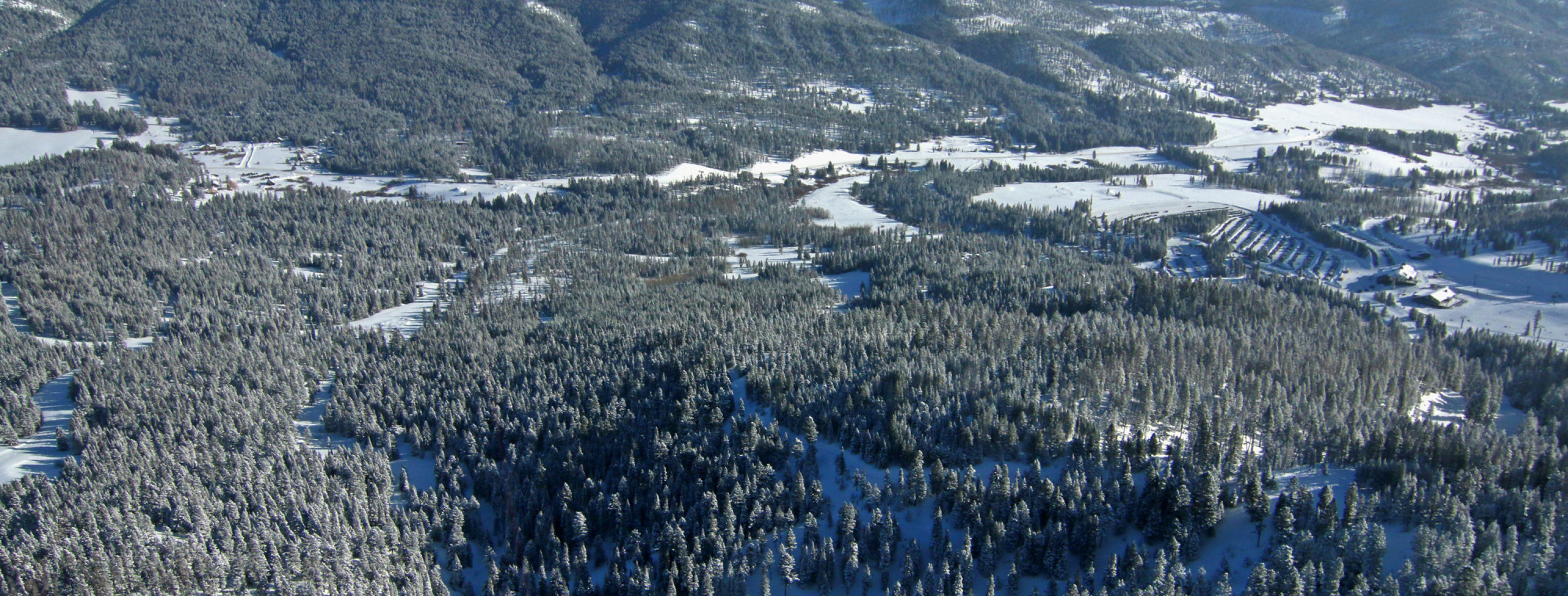
Crosscut and Bohart Ranches labeled red; Bridger Bowl blue; USFS green
After the Winter Olympics next year, Bailey will be relocating to Bozeman with his wife Erika and daughter Ophelia to lead the Crosscut Mountain Sports Center and continue his service on the Bridger Biathlon Club board, alongside volunteer board members Carol Smith, Kari Swenson, Stuart Jennings, Brian Wadsworth, Jim Sites and Eric Love.
The Crosscut Mountain Sports Center also maintains an exclusive purchase agreement providing for the acquisition of the 259-acre Crosscut Ranch located directly between Bridger Bowl and Bohart Ranch, and envisions unifying the Bohart and Crosscut properties into a single 500+ acre recreational asset on behalf of the Bozeman community. Bailey is working with the BBC and CMSC boards to raise the remaining funds needed to complete this ambitious project, and is committed to working closely with community leaders to create a mountain sports venue that will attract and sustain healthy families for generations to come. To learn more or to make a tax-deductible contribution, please contact CMSC at info@crosscutmt.org.
***
Crosscut Mountain Sports Center is a non-profit community organization committed to conserving the 500+ acres adjacent to Bridger Bowl Ski Area to provide year-round recreational access and athletic opportunities for human-powered mountain sports, with a special focus on empowering youth in skiing and biathlon. To learn more, visit: www.crosscutmt.org
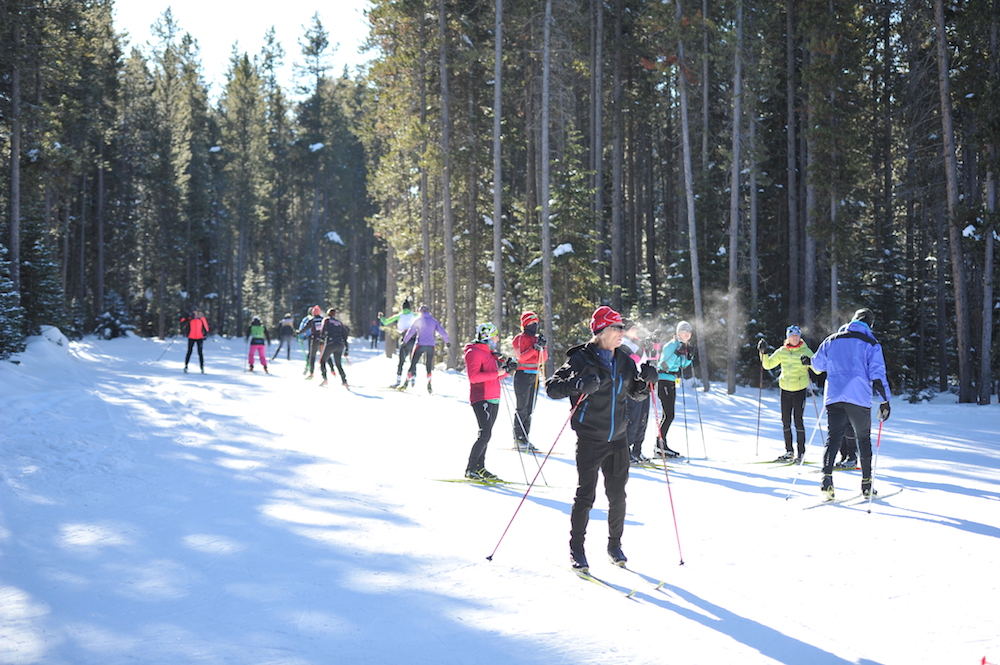
Skiers on the Rendezvous Ski Trails in West Yellowstone, Mont., during last year’s Yellowstone Ski Festival. (Photo: 2015 YSF)
Note: This article has been updated to reflect a more accurate elevation difference between the trailheads at Bohart Ranch and the Rendezvous Ski Trails.
The opening U.S. SuperTour races of the 2016/2017 ski season scheduled to take place next weekend, Dec. 3 and Dec. 4 in Bozeman Mont., at Bohart Ranch were recently canceled and rescheduled for West Yellowstone, located 90 miles south and at roughly 600 feet higher in elevation in Montana.
Due to lack of snow at Bohart, the races were called off on Thursday and moved to West Yellowstone as of Friday, where there is approximately 25 kilometers of trails open at the Rendezvous Ski Trails. Though the Bozeman-based Bridger Ski Foundation (BSF) said it was ready to host the races, not enough snow coverage caused the organization to cancel.
“We wait to postpone the decision until yesterday, Thursday, but didn’t get the snow we expected from that last storm,” Dragan Danevski, BSF’s head nordic coach and program director, said on the phone Friday.
Danevski indicated that BSF and West Yellowstone race organizers communicated after the cancelation regarding potentially moving the races.
“We were working back and forth with their organizing committees and ours,” Danevski said. “I just officially heard that West Yellowstone organizing committee agreed to host the SuperTours we couldn’t.”
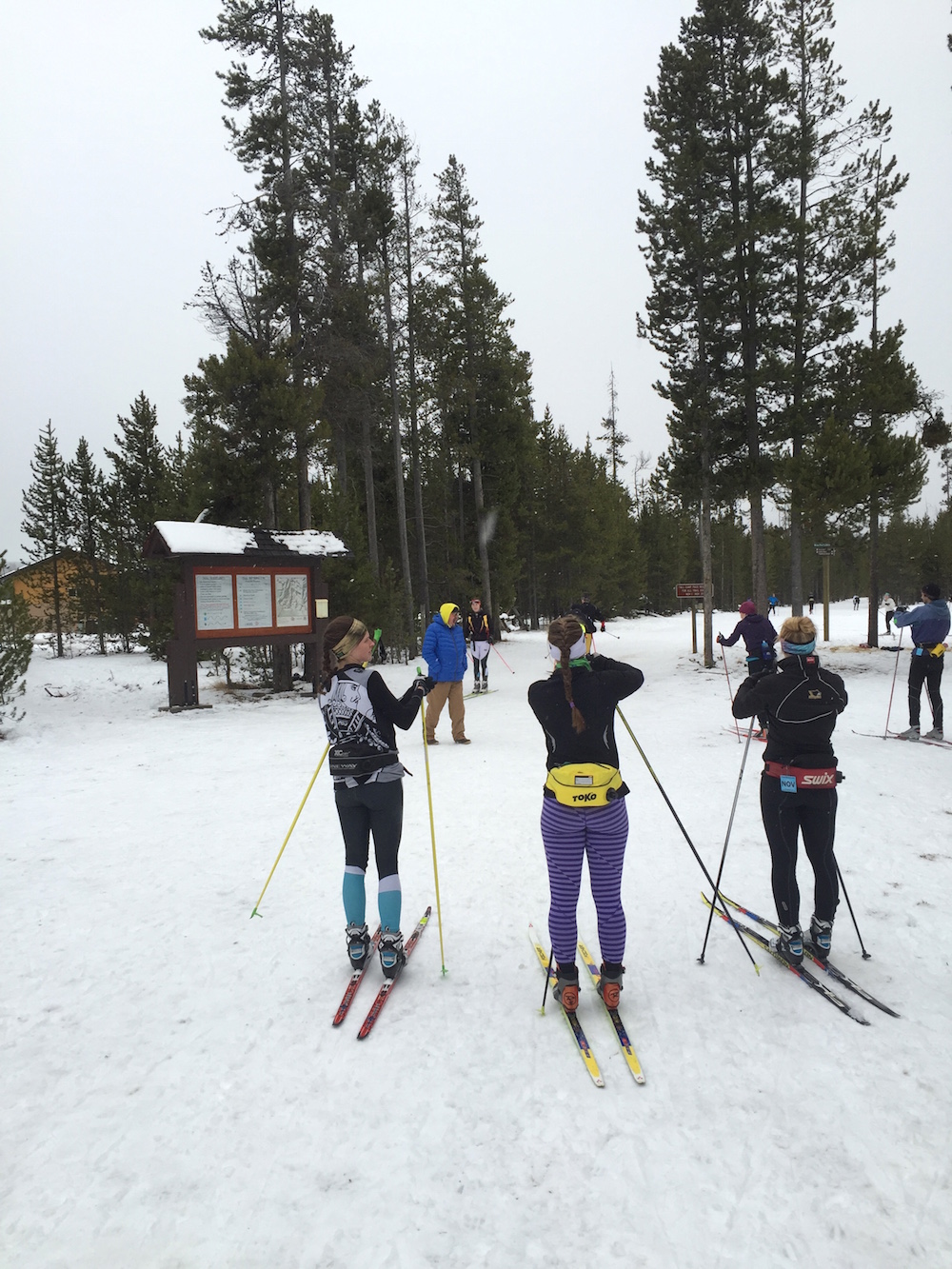
Skiers at the trailhead of the Rendezvous Ski Trails in West Yellowstone, Mont., on Monday, Nov. 21, 2016. (Photo: FBD)
The races will keep the same format and remain on their scheduled dates, with freestyle sprints on Saturday, Dec. 3, and 10/15 k classic on Sunday, Dec. 4.
In terms of the U.S. Ski Team using these races for scoring and consideration purposes for 2017 World Championships, it doesn’t appear this will change anything.
“West Yellowstone just agreed to take the weekend of SuperTour racing today. Same formats,” U.S. Ski Team Head Coach Chris Grover wrote in an email on Friday night.
Asked how this affects out-of-town athletes’ travel plans, Alaska Pacific University (APU) skier Reese Hanneman said that aside from “the logistical headache,” it’s not too different.
“Big thanks to the people in West Yellowstone for taking them over. From a racing standpoint, not what we were expecting but nothing we haven’t seen before,” Hanneman, last season’s SuperTour sprint leader, wrote. “I personally think it’s a pretty solid sprint course, I have had good results there so I am stoked!”
On the Canadian side, it’s taken a bit more reshuffling. Cross Country Canada (CCC) intended to use Bozeman as its NorAm opener as well as selection races, but West Yellowstone’s altitude of nearly 6,700 feet is “too high to use it as a selection race for the Canadian team – will not count for the FIS COC series,” CCC High Performance Director Tom Holland wrote in an email Friday night.
Now instead of considering an athlete’s best three results out of seven race days, CCC will consider three out of five races to help select its World Championships team and Continental Cup leader World Cup spots.
“Bozeman was going to be a really fun race series I am a little bummed because I thought it was good to have two races that were points for both Canada and USA it would have been an amazing field,” Russell Kennedy of the Canmore-based Team R.A.D. wrote in an email on Friday night.
“That being said it was pretty easy for me to cancel my plans and put my focus to [the second NorAm in] Silver Star [Dec. 10-11]. I have also been focusing on getting everything prepped for this weekend of racing so it hasn’t sunk in too much,” he added. “The selection looks like it is changed slightly but it shouldn’t impact us too much. I am super pumped to get my season underway and look forward to all the American competition in Silver Star.”
“I feel bad even though it’s just weather,” Danevski said. “I feel bad that we had to cancel because we were so excited to have the SuperTour in Bozeman and whole club and volunteers were excited, but the weather didn’t cooperate.”
Corrine Malcolm (standing in Nuun hat) with some of her athletes after a Bridger Biathlon Club practice this summer. (Photo courtesy of Corrine Malcolm)
Corrine Malcolm has one word to describe the Bridger Biathlon Club: momentum.
“It has gained a lot of momentum,” she said of the fledgling program based in Bozeman, Montana. “It’s a really big ball of energy and momentum. It’s pretty cool to be part of.”
Malcolm, a former national team biathlete who just finished her bachelors degree at Montana State, was hired as the club’s first paid coach this summer. That represented another big step for a program which began less than three years ago.
“It started when two boys came home from school when they were eight years old and told their parents they wanted to be biathletes,” Malcolm explained. “I think the parents were like, okay, what is that? But it was great. These two dads said, all right, let’s ask some questions and figure this out and start something.”
The two boys are now 11 and have recruited a lot of friends into biathlon; the two dads, Eric Love and Jim Sites, are the club’s directors.
The Bridger Biathlon Club boasts 32 kids enrolled in Malcolm’s summer program this year. She runs three practices a week, some based at a gym and others on the shooting range.
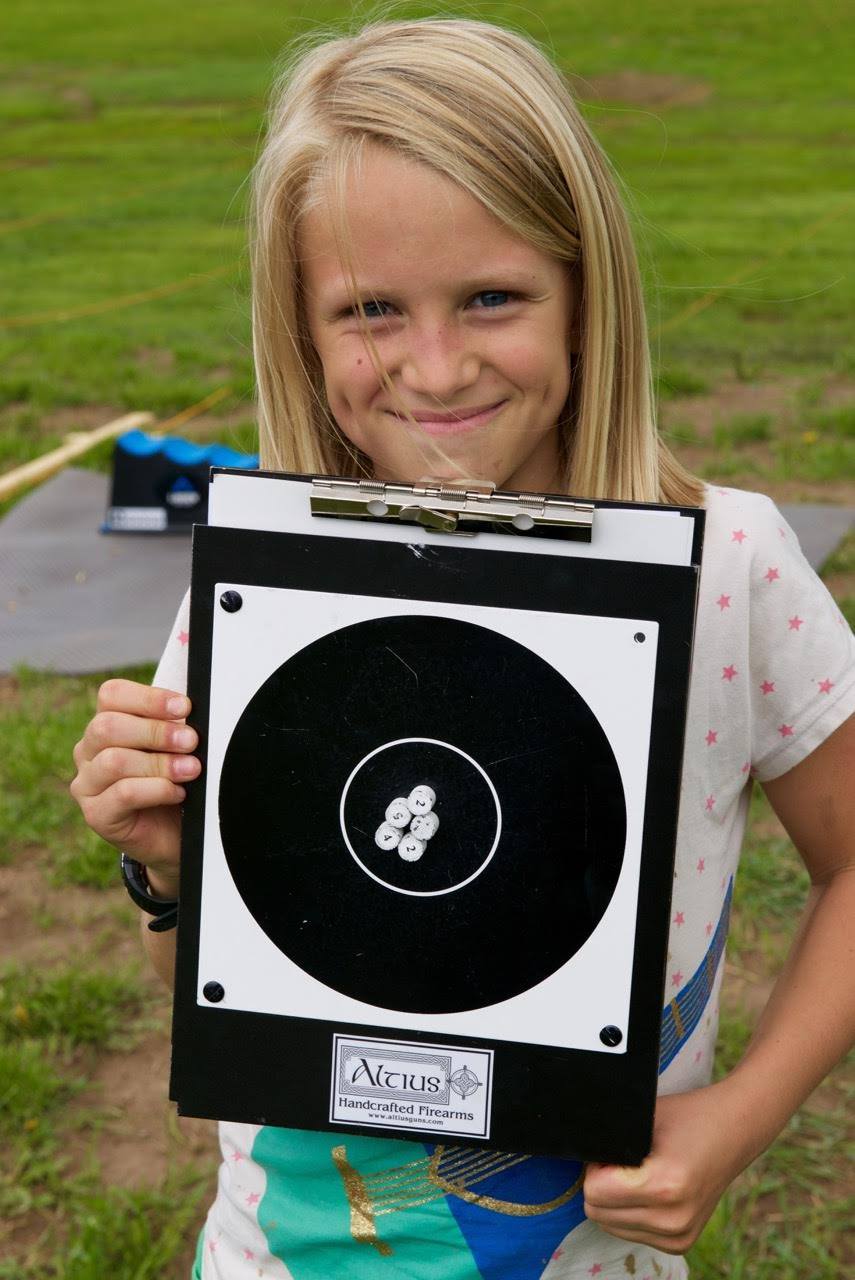
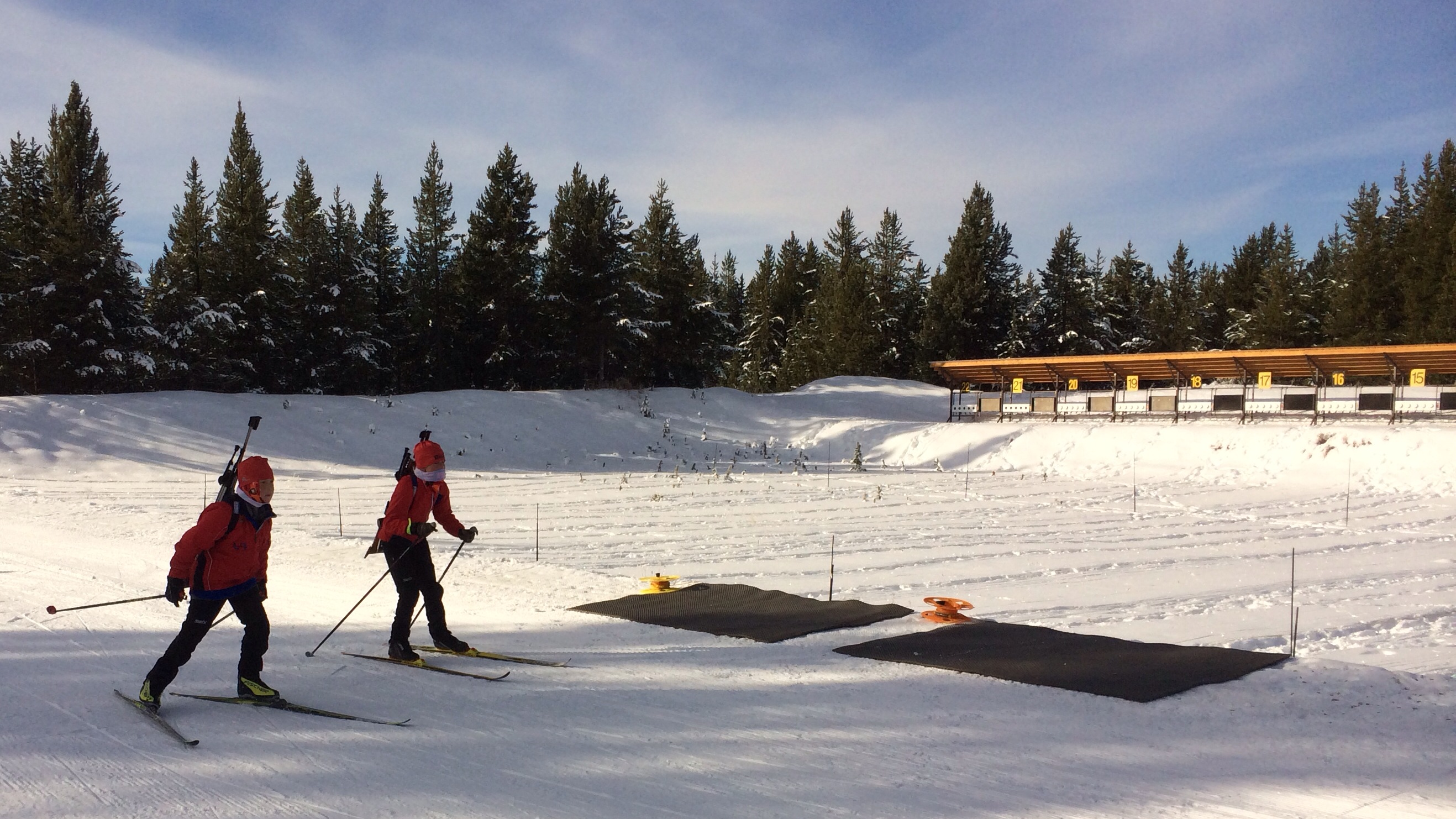
A happy young biathlete with very precise shooting. (Photo: Doug Hartnett)
The athletes have a variety of different backgrounds, from some who are more interested in simply biking farther than they’ve ever gone or hiking a seemingly unattainable peak, to others who are keen to race in biathlon. Malcolm’s goal is to motivate them all.
“It’s definitely a program that’s designed to be inclusive and welcoming and not to weed out all the kids that aren’t competitive,” she said. “Although the program is inclusive, ultimately we want to prepare the kids who want to race, to be ready to race. Kids that might not want to race right now, we want to make sure that if that changes they are comfortable in that situation.”
Already she has seen success and growth from some of her young charges. Two weeks ago Bozeman hosted the Big Sky State Games, and most of the kids participated in not one but two biathlon races.
“It’s been cool in the last six weeks to have kids who in other programs would probably be considered unathletic or uncoordinated or uncompetitive, who would be weeded out because they don’t want the competitive pressure,” she said. “We had a summer biathlon race and almost all of them raced. It was so cool to watch them grow and really go for it… The kids did a running biathlon race in the morning and a mountain bike biathlon race in the afternoon, and just didn’t want to stop. It was pretty sweet.”
With some as young as nine years old and others in the J2 category for skiing, there’s a variety of skill levels in the group. One of the oldest athletes, Ariana Woods, went to U.S. National Championships in Truckee, California, in March, and won a silver medal in the girls’ sprint.
That can make it challenging to match ability levels. Malcolm tries to put groups together as best she can at practice and relies on the club’s still-strong volunteer crew to make it work.
The start of a bike biathlon race in West Yellowstone, Montana, this summer. (Photo courtesy of Corrine Malcolm)
“I have parent volunteers helping, board members who are former biathletes, and also a former high-level competition shooter helping,” she said. “We do a really good job of herding 20 kids with rifles. It’s good to limit the number of kids on the range at one time, maybe only six to eight kids. The others run or bike and we rotate them through.”
Looking Ahead
Malcolm will start an accelerated PhD program at Simon Fraser University in Vancouver, British Columbia, in 2016, studying biomedical physiology and kinesiology. Until then, she’s on board as the club’s coach and plans to run fall and winter training programs that are more robust than the Sunday practices the club offered the previous year.
What shape those programs will take is still up in the air. As an athlete who came from a running and cross-country skiing background herself before starting biathlon, Malcolm doesn’t want to demand one-sport fidelity from athletes. And having competed in biathlon at a high level, she knows that it’s also crucial to be a strong cross-country skier.
“By no means is biathlon big enough for junior athletes to only be racing biathlon,” Malcolm said. “And if those kids want to be competitive, they need to be great nordic skiers too.”
Ariana Woods is one of the first athletes who has had to navigate this question of how to train for both skiing and biathlon, simply because she’s the oldest. She has been part of the Bridger Ski Foundation’s large and successful junior program, and Malcolm sees no reason for that to change.
Ariana Woods on her way to second place in the girls’ sprint at 2015 U.S. Biathlon National Championships. (Photo: Mark Nadell/Macbeth Graphics)
Woods plans to go to World Youth and Junior Championship Trials in December to try to represent the U.S. abroad, and to do so she’ll need to ski fast. So Malcolm hopes that the biathlon offerings can complement Bridger Ski Foundation’s program, and that the two clubs can share some athletes who have diverse athletic interests.
“My vision is that it’s part of the mountain culture and the ski community here, which does mean that it’s a joint effort,” Malcolm said. “Bozeman doesn’t need two ski teams… I have no intention to steal or poach children. It should be about the kids, and everyone should do what’s best for the kids and the ski community. So we need to come together in the ski community.”
Progress So Far
An expanded winter program will be the next step in what is looking like a very fast evolution of the Bridger Biathlon Club. Last winter, the club ran an all-volunteer program, mostly on Sundays at Bohart Ranch. The previous autumn, they offered a gun safety certification program that is part of the U.S. Biathlon Association’s curriculum, again staffed by volunteers, this time including some former high-level competition shooters.
There have been infrastructure changes, too. Last year the club installed new targets that made biathlon training truly viable at Bohart Ranch for the first time in nearly a decade. And the club has now launched a $10 million fundraising campaign to buy Bohart Ranch and the adjacent Crosscut Ranch and merge them into one nordic center for the Bozeman community to use.
Young athletes competing at the Big Sky State Games. (Photo courtesy of Corrine Malcolm)
“There’s twelve really good points on the range,” Malcolm said. “When I was here starting to get into biathlon in 2010 or so, all we could use were two targets tucked up above Jane’s Gate, and you had to cross a giant gully to get to the targets and pull ropes.”
Although biathlon took a dive in popularity in the Big Sky mountain town in the 2000’s, it actually has a rich biathlon legacy. World Championships medalist Kari Swenson is a member of the board, along with fellow former U.S. biathletes Brian Wadsworth and Stuart Jennings. Other past top-level competitors like Clarissa Werre also help out with the club.
Those former biathletes, as well as other volunteers, were initially the whole coaching and support network for the club. This spring they began to think about hiring a coach, and Malcolm happened to contact them at the same time. Until this spring, she said, she had been so buried in school that while she always meant to help out with the club it just didn’t happen.
“I actually reached out to them this spring when I realized that I would be graduating in May instead of August,” she explained. “I was wondering if they wanted a coach. I think I was hired on the spot, which was pretty fun. I sat down with a couple of their board members and all of a sudden we had a summer program.”
With the progress from two kids coming home from school three years ago and mentioning biathlon to their parents, through the club’s incorporation as a nonprofit in February 2014, to infrastructure improvements and the hiring of its first coach, the trajectory is looking impressive.
As she tries to put together a fall and winter program, Malcolm thinks that things will only get bigger.
“It’s a program that has monumental potential for growth,” she concluded.
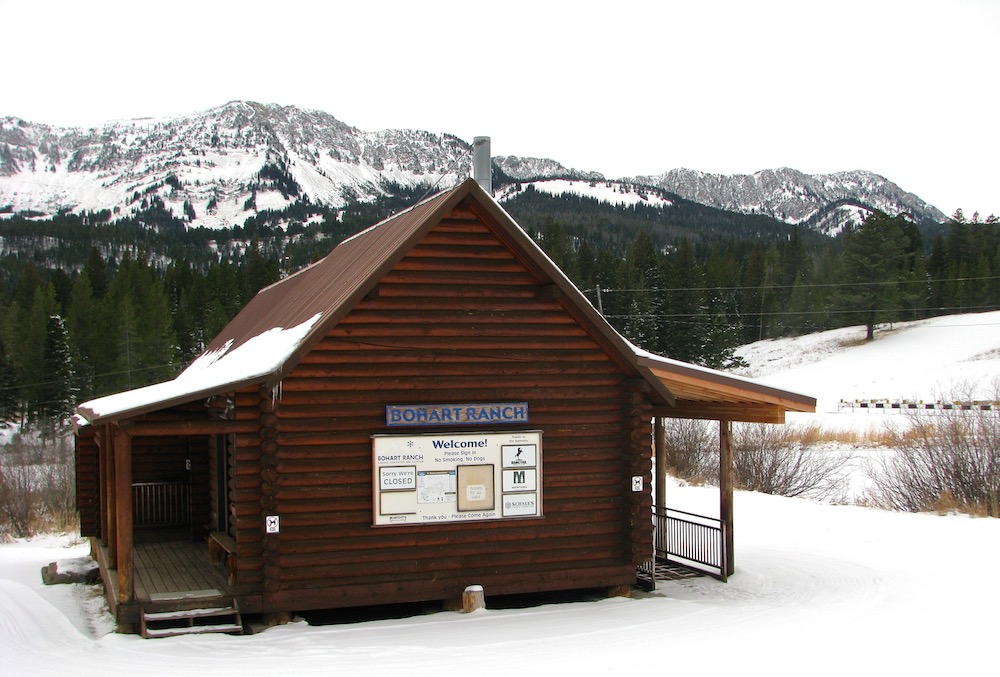
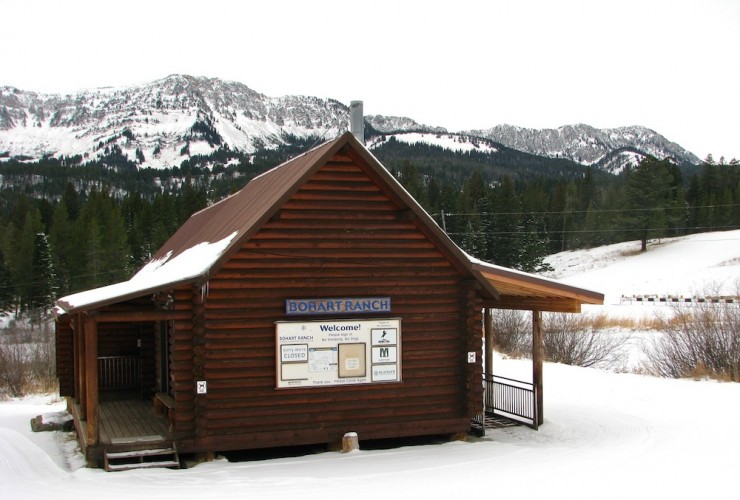
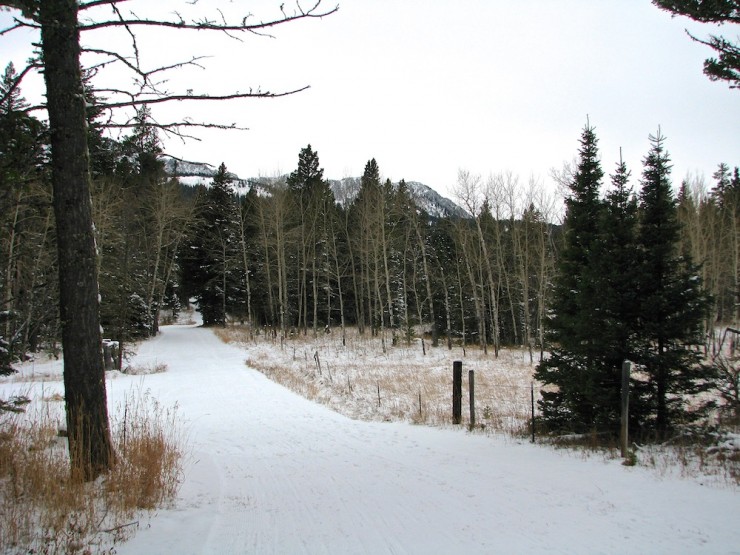
One of the trailside cabins at Bohart Ranch in Bozeman, Mont., as seen early last winter.
If the deals go down, two legendary ski areas in Bozeman, Mont., could merge into a single, state-of-the art nordic center that would also offer dryland recreation opportunities as soon as fall 2017. The Bridger Biathlon Club (BBC) has acquired exclusive options to purchase both the 276-acre Bohart Ranch and the adjacent, long-dormant 259-acre Crosscut Ranch.
All it takes is money — and a vision. Established in February 2014, the non-profit BBC will launch a fundraising campaign later this year with a goal of raising $10 million dollars over the next three years to buy the two properties. Once raised, a portion of the funds will go toward renovating existing facilities and upgrading infrastructure to make these historic ranches more accessible to the public, according to BBC Director Eric Love.
“This [would be] a legacy transaction,” Love said in a phone interview. “We’re aiming to unite those two properties into a single expanded recreational resource.”
BBC Marketing Director Katie Smith cited the 2014 Winter Olympics in Sochi, Russia, as a spur to interest in biathlon in Bozeman. Smith added that biathlon has deep roots in Bozeman, as it is the home of Kari Swenson, a bronze medalist with the U.S. women’s relay team at 1986 Biathlon World Championships.
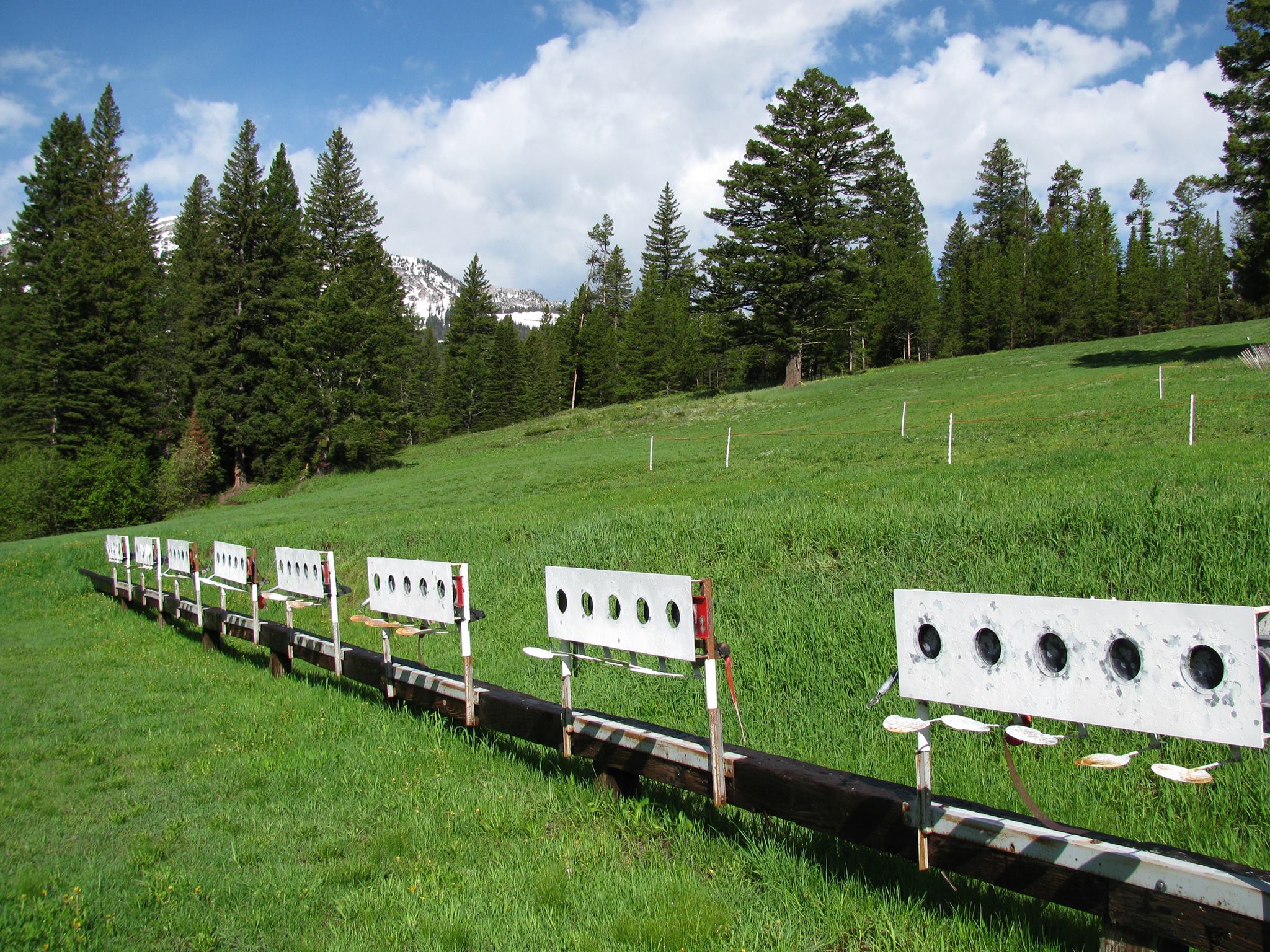
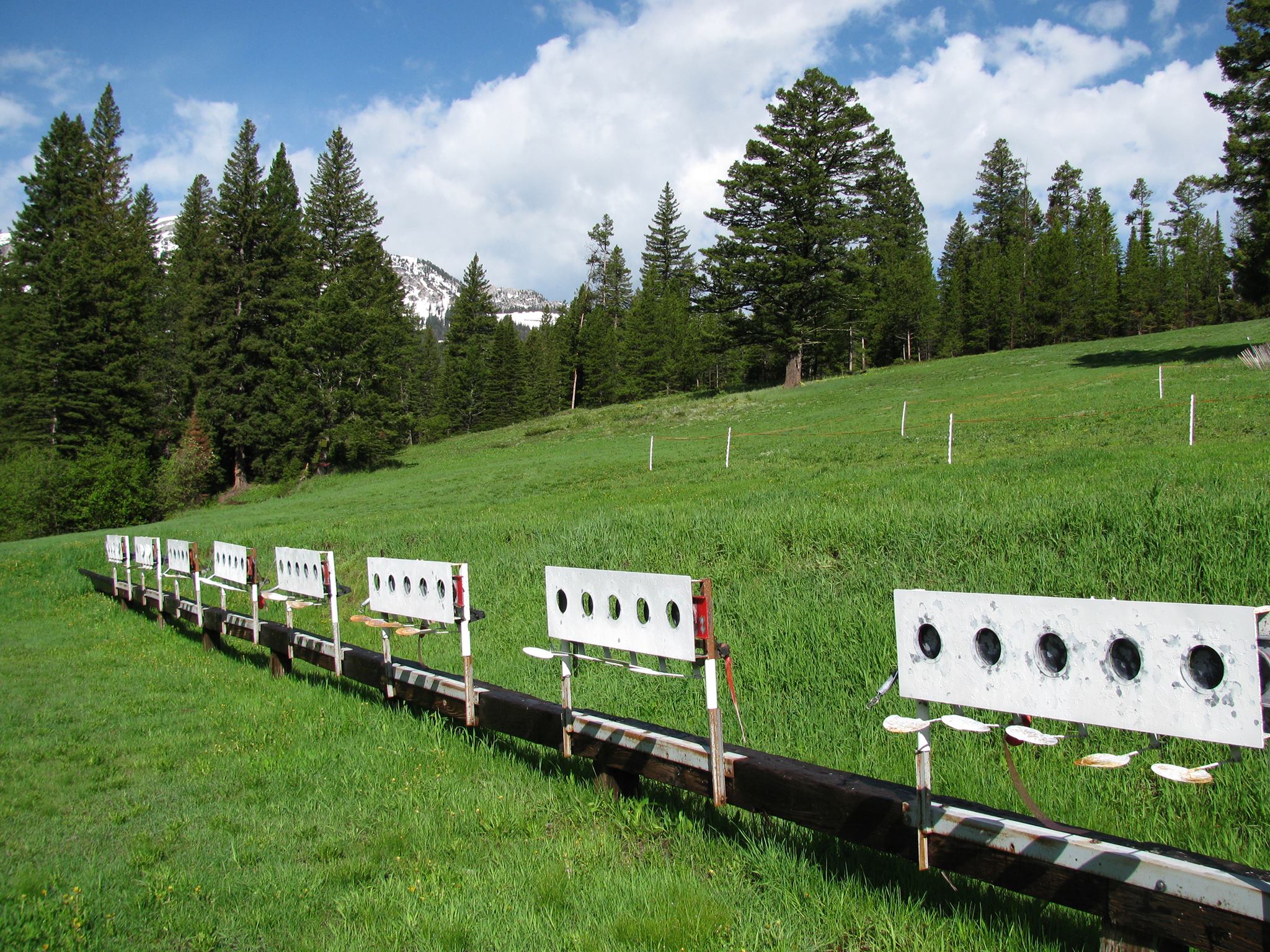
The biathlon range at Bohart Ranch in Bozeman, Mont. was installed in 1989 at the height of the sport in the small mountain town. In 2014, the Bridger Biathlon Club upgraded its 12-point range by installing new targets from Finland. (Photo: Bridger Biathlon Club)
In a year, Smith said the BBC was able to raise enough money to renovate its biathlon range at Bohart. According to Love, the new Kurvinen range, made and shipped from Finland, cost about $36,000 dollars.
Smith credited generous donors and volunteers who helped assemble the 12-station range when it arrived. BBC’s fundraising success got them thinking big. The club’s goal is to raise enough money to exercise the options on Bohart and Crosscut in three years.
If and when BBC buys the two ski centers, the purchase prices will remain confidential, Smith said.
Sixteen miles from Bozeman, Bohart Ranch has 30 kilometers of trails on 276 acres of fee-title land. Situated between Bohart and the Bridger Bowl alpine ski area, Crosscut Ranch is an additional 259 acres. The combination of the two could make for 50 to 60 kilometers of total trails.
Last December, Bohart was the scene for the second weekend of the U.S. SuperTour, hosting a classic sprint and distance race. Bohart has also hosted NCAA events and the 2002 U.S. nationals prior to the 2002 Winter Olympics in Salt Lake City, Utah.
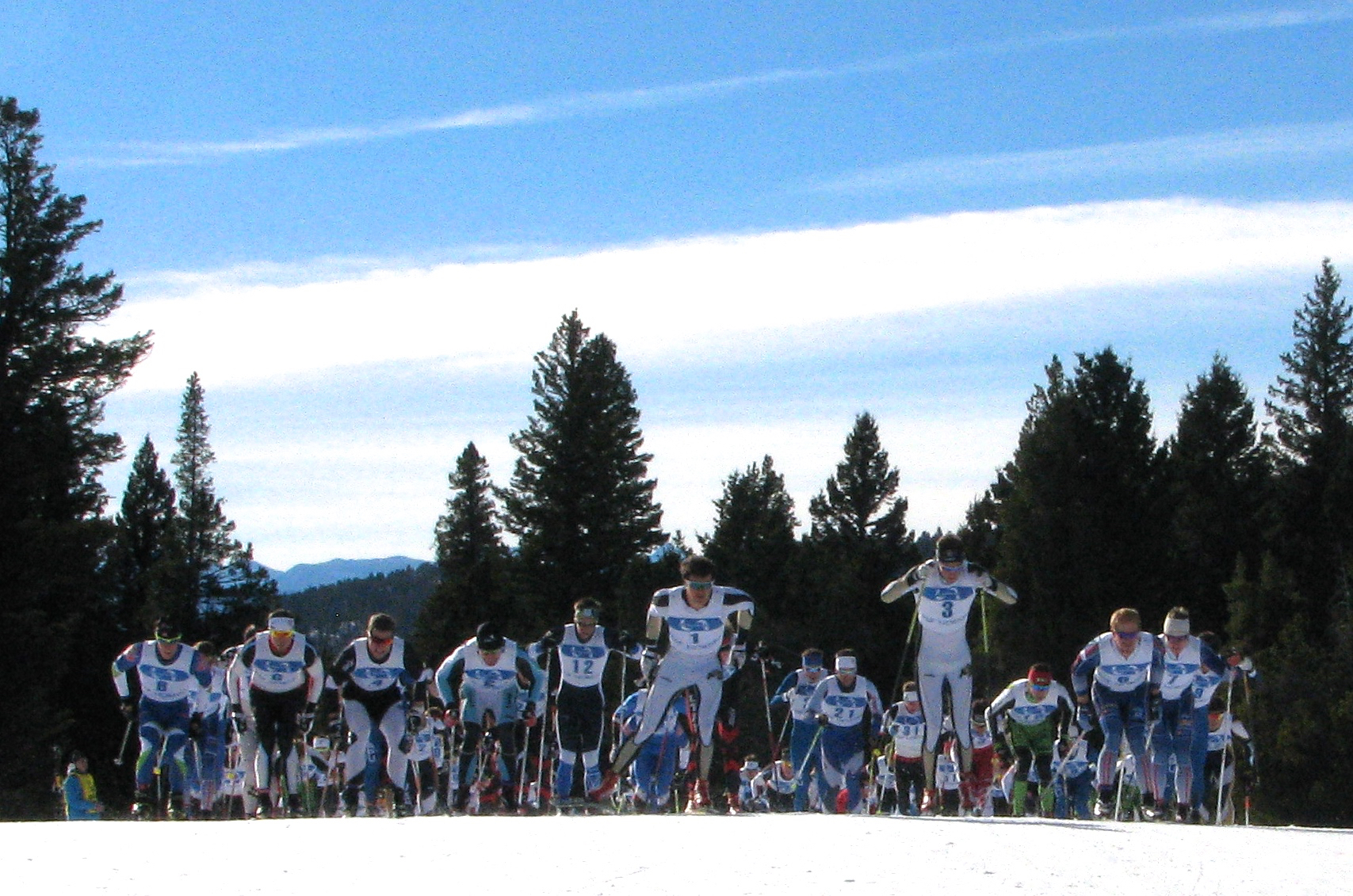
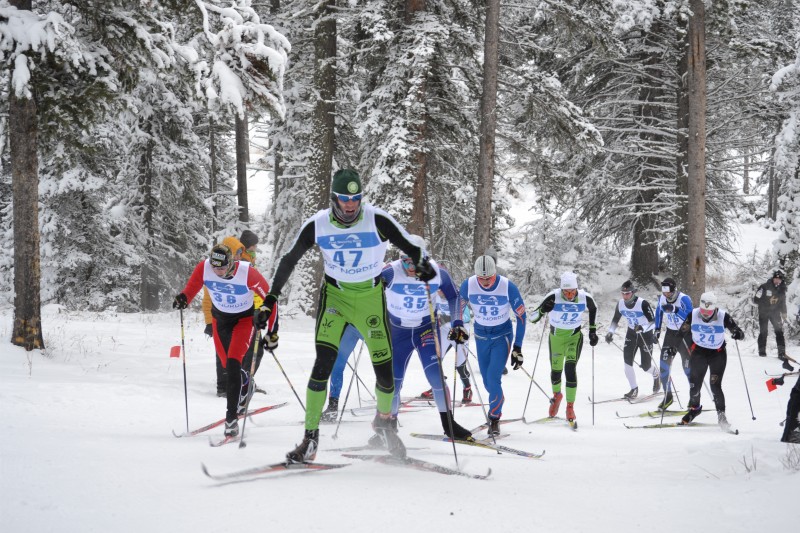
The start of the men’s SuperTour 15 k classic mass start at Bohart Ranch near Bozeman, Mont., last December.
“Various people approached us, but we were waiting to find the right person to carry on our vision and philosophy,” said Bohart co-owner Jean MacInnes. She and her son, Chris Myers, have co-owned and run Bohart Ranch for 27 years.
“It’s a community service,” she continued. “We have excellent trails here. We help the MSU [Montana State University] ski team, Bridger Ski Foundation. We have something called Eagle Mount that takes place here.”
According to Eagle Mount Executive Director Mary Peterson, Eagle Mount is a Bozeman-based nonprofit that “provides therapeutic recreation to people with disabilities and children with cancer.” Two seasons ago, 37 participants and 46 volunteers took part in cross-country skiing and snowshoe programs at Bohart.
MacInnes said that the original Crosscut Ranch ski center was about 80 acres and went out of business in 1987 after five years. What is now referred to as Crosscut Ranch is the original ski area packaged with additional land parcels to attract developers, she said.
An aerial view of Crosscut Ranch in Bozeman, Mont. (Photo: Outlaw Partners/Concierge Auctions)
“It’s a bit of a misnomer,” she said of the Crosscut name that now includes the entire 259-acre tract.
Unsuccessfully marketed by a realtor with an asking price of $16 million, Crosscut was sold at auction to the Jackson Financial Group in March 2014. The Bozeman Daily Chronicle cited a local person who speculated that it sold for $4.1 million dollars. That figure is unconfirmed.
More Than a Nordic Center
In December 2014, Myers opened about 15 k of Crosscut’s trail system, which hadn’t seen grooming or maintenance in more than 20 years. While these trails were wide enough for skating, some needed additional work in order to accommodate a snow cat.
A groomed trail at Crosscut Ranch in Bozeman, Mont. (Photo: Outlaw Partners/Concierge Auctions)
For 2015/2016, BBC hopes to reopen additional Crosscut trails and establish connectors between the two networks. Last winter, it re-established and groomed about five kilometers of Crosscut trails, and is currently aiming to add at least another 5 k next season. According to Love, the trails will be open to the public for activities like mountain biking this summer.
“There’s really interesting terrain at Crosscut,” Smith said. “It’s perfect for beginners and for experienced skiers who want to train a specific skill.”
By contrast, Bohart is hilly. “Combined, the two ski centers will give a lot of terrain variation,” Smith said.
“Historically, this [Crosscut] area has been used as a nordic center,” Love said. “The bones are all there.”
Asked about possible improvements, Love explained that the stadiums could be expanded. “On the Crosscut property, there’s potential to put in a world-class stadium,” he said.
In a follow-up email, he wrote, “We recognize the potential of re-locating BBC’s current new 12-point range at Bohart to Crosscut and perhaps even expanding it to 24 or 30 points.”
At present, BBC is studying options for improving the combined ski centers. Its board, made up of Swenson, Carol Smith, Stuart Jennings, and Brian Wadsworth, assembled a design team to illustrate what a green venue would look like. The team consists of nationally renowned architect Jonathan Foote, sustainable-green-building designer Kath Williams, and Ben Lloyd and Trip Lewton of Comma-Q Architecture in Bozeman.
Love expects the design study to be complete in late May, after which BBC will reach out to the Bozeman outdoor community for input and finalize a fundraising plan.
The properties will be available for more than just skiing: BBC is looking to provide year-round recreation opportunities. Some of these are already in place: Bohart already offers Frisbee golf and mountain biking in the summer. Love was excited about the possibility of offering side-by-side cross-country and alpine venues within 30 minutes of a major airport.
While Smith acknowledged that $10 million is an ambitious number, she’s optimistic because of BBC’s success in raising money to purchase the biathlon range.
“We’re going to rely on more than the cross-country community,” she said. “People see a lot of value in preserving these two pieces of land that are so important to Bozeman’s culture.”
“Once assembled, this will be a nordic ski destination unlike anywhere else in the U.S.,” Love said.
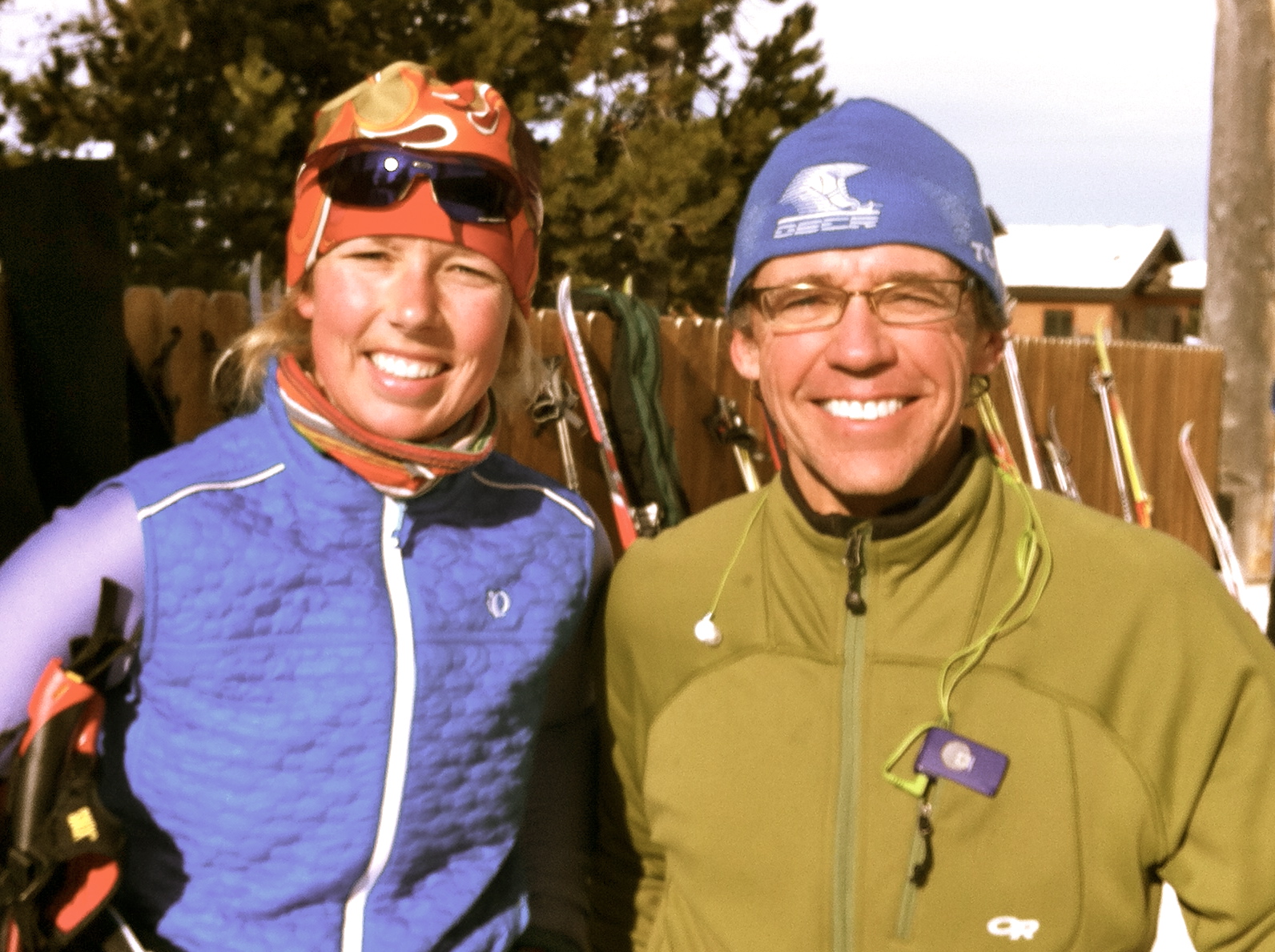
FasterSkier contributor Mark Vosburgh (r) with editor Alex Kochon last Thanksgiving 2013 in West Yellowstone, Mont.
I have been following the Central Ski Association’s CXC Academy training program since last January, so when I traveled to the Yellowstone Ski Festival this Thanksgiving, I was eager to see how my preparations would translate to skiing on snow.In my enthusiasm, I skied long and hard from day one, eagerly testing my limits. As with past years at West, I was utterly exhausted at the end of each day and pretty much toast by the end of the week. Additionally, I believed my high-intensity early season training would be the winning formula for improving my racing results this season.
Early season skiing at the 2014 West Yellowstone Ski Festival as pictured on Nov. 24. (Photo: Lander Karath)
Then, on my last night at the festival, I attended Scott Johnston’s lecture: Capacity Training vs. Utilization Training; making an informed decision. As I listened, my confidence in my training approach was shaken.
Johnston, coach of the Methow Olympic Development Program, climber and former U.S. Ski Team member, said that he has seen many athletes whose training habits result in a phenomena called Aerobic Deficiency Syndrome (ADS). With ADS, athletes are forced to rely on inefficient high-intensity anaerobic energy pathways for even slow paced workouts.
In the lecture, Johnson looked out at the conference room full of fit, dedicated skiers and said he guessed that many, and possibly most of the attendees fit into this category.
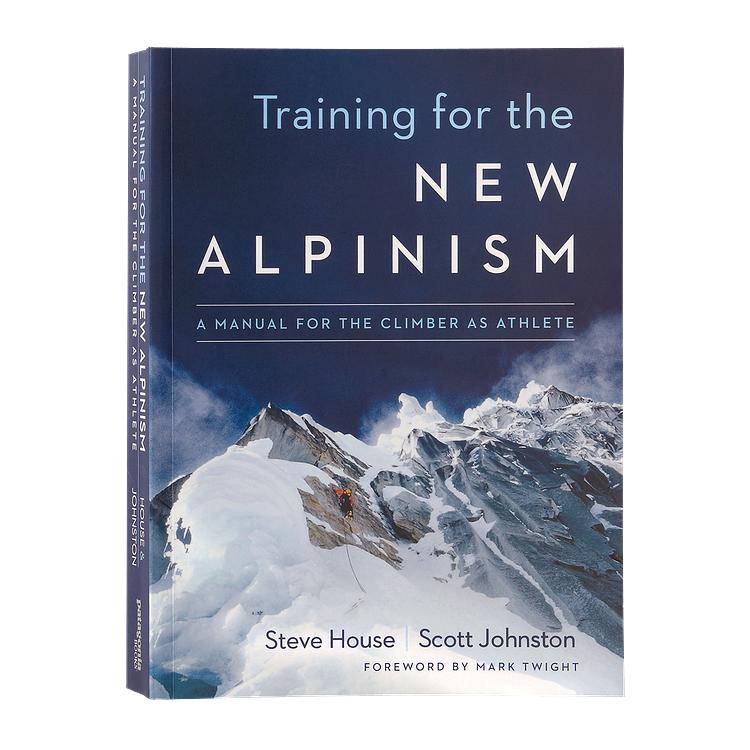
Intrigued, I followed up the lecture by reading Johnston’s book,“Training for the New Alpinism: a Manual for the Climber as Athlete,” co-authored with mountaineer Steve House. In the book, Johnston goes into detail on the importance of proper aerobic training.Starting with the familiar concept of training zones, Johnston points out that the vast bulk of training, for athletes at all levels, should be done in Zone 1 (below the aerobic threshold). He states, “The better developed the aerobic base, the faster you can move for extended periods.”
“The better developed the aerobic base, the faster you can move for extended periods.” — Scott Johnston, Methow Olympic Development Program head coach
He points out that even world-class endurance (defined as efforts lasting around two minutes or longer) athletes, including 800-meter runners, excel by developing a huge aerobic base before adding the high-intensity work needed to peak for competition.
“Training for the New Alpinism: a Manual for the Climber as Athlete” by Scott Johnston and Steve House
Johnston goes on to explain the mistake that I (and apparently many others) make. For many of us, our Zone 1 workouts are mistakenly performed at intensities too high to give us the aerobic system benefits that are intended.”Harder is not better when it comes to development of your aerobic threshold,” he stresses.Johnston says that part of the problem is that Zone 1 aerobic training may feel too easy and too slow to be beneficial, a problem that worsens as we do more and more high-intensity training. Without physiological testing to identify our aerobic threshold, we are left with a variety of methods including perceived exertion to heart-rate monitoring to gauge our intensity. In the real world, many of us overestimate the effort required to effectively train our aerobic energy systems. As a result, our aerobic capacity can actually decrease.
The symptoms of improperly training our aerobic base include not being able to ski without breathing hard, and prematurely tapping into our high-powered, but short-lived anaerobic energy reserves.Johnston points out that “long slow distance” aerobic training is better described as “long easy distance” training. As our aerobic base develops, we should be able to ski faster and faster on our long distance days while not losing the feeling of “easy” effort.
Scott Johnston (r) with Olympian Torin Koos in 2010. (Courtesy photo)
Another symptom of improper aerobic training was what I experienced at West Yellowstone. Since I trained too hard on my long easy days and warm-ups, I was simply too tired to effectively train during my harder Zone 3, 4 and 5 workouts. My exhaustion at the end of the week should have been a red flag my training was unsustainable, given my inadequately developed aerobic energy system.
In his lecture and in his book, Johnston provides a prescription and practical methods to avoid Aerobic Deficiency Syndrome. If you are unable to get a laboratory test to find your aerobic threshold heart rate, Johnston recommends starting to exercise slowly while breathing through your nose only.
“As you increase intensity/speed, note the point at which this nose breathing becomes noisy and labored,” he notes. This is the upper limit of Zone 1 (your aerobic threshold).
Brian Gregg (Team Gregg/Madshus) racing to second in the SuperTour 15 k freestyle in late November in West Yellowstone, Mont. (Photo: Toko)
In his lecture, Johnston described coaching 2014 U.S. Olympian Brian Gregg and prescribing months of long distance aerobic base training at an effort where Gregg would breathe only through his nose. At first, Gregg found it very challenging to stay at this low intensity, and joked that he felt like training with “a bag over his head” because he was embarrassed that he was running so slowly.
With time, Gregg’s aerobic capacity increased to the point where he could easily click off mile after mile at a faster pace while maintaining Johnston’s nose-breathing limit. Johnston credits Gregg’s improved aerobic capacity as setting the stage for Gregg’s eventual selection to the 2014 U.S. Olympic team.
My experience with the nose-breathing method mirrors Johnston’s description in the book: “For some of you this (Zone 1) will be the hardest zone to train in. You may find that you can barely jog or can only hike uphill very slowly … before you must begin mouth breathing … and your heart-rate climbs … right through Zone 2 and into Zone 3.”
In my experiment with the CXC Academy training plan, I realize that I should have paid more attention to the information on training zones. While the information is provided in the plan, I skimmed over it. It took me hearing Johnson’s lecture and reading his book to jar me into recognizing my two major (but common) training mistakes. Johnson summarized these mistakes in an Outside Online interview:
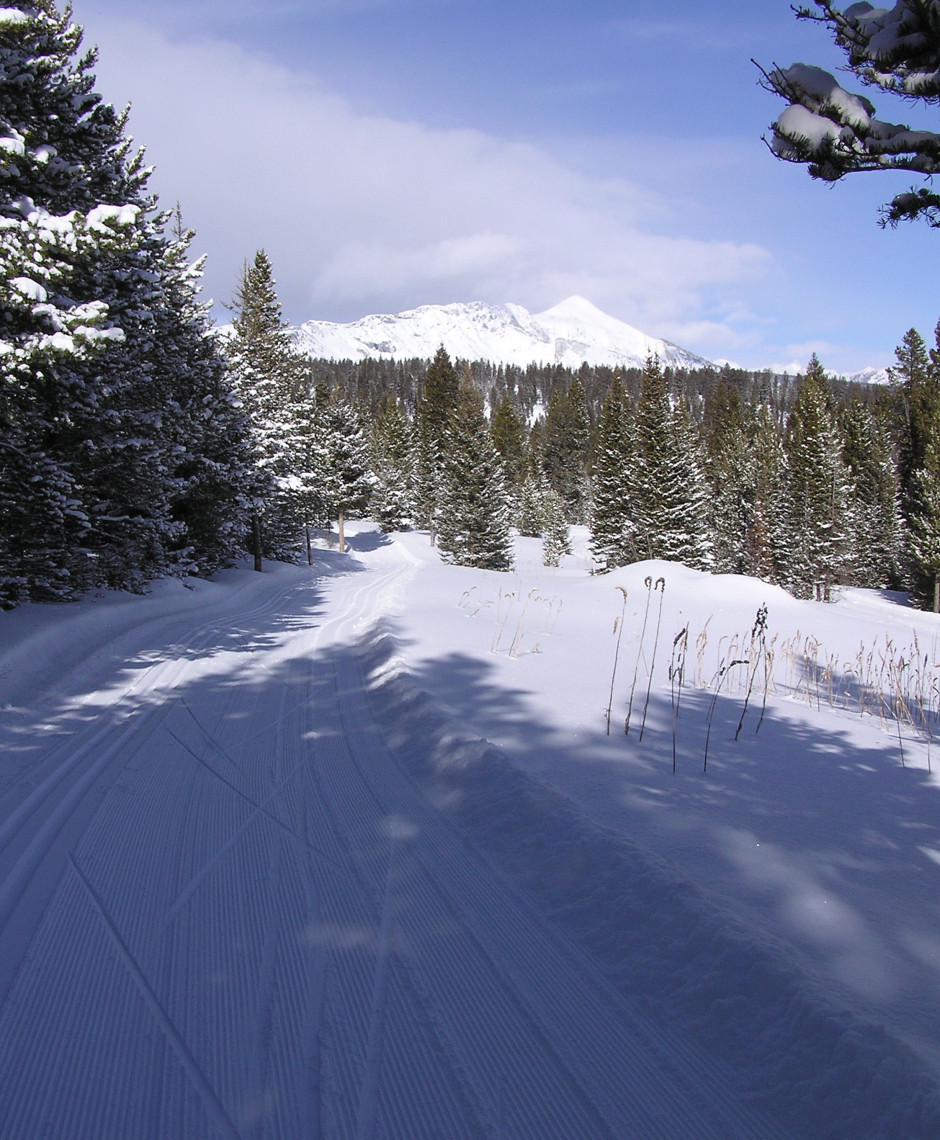
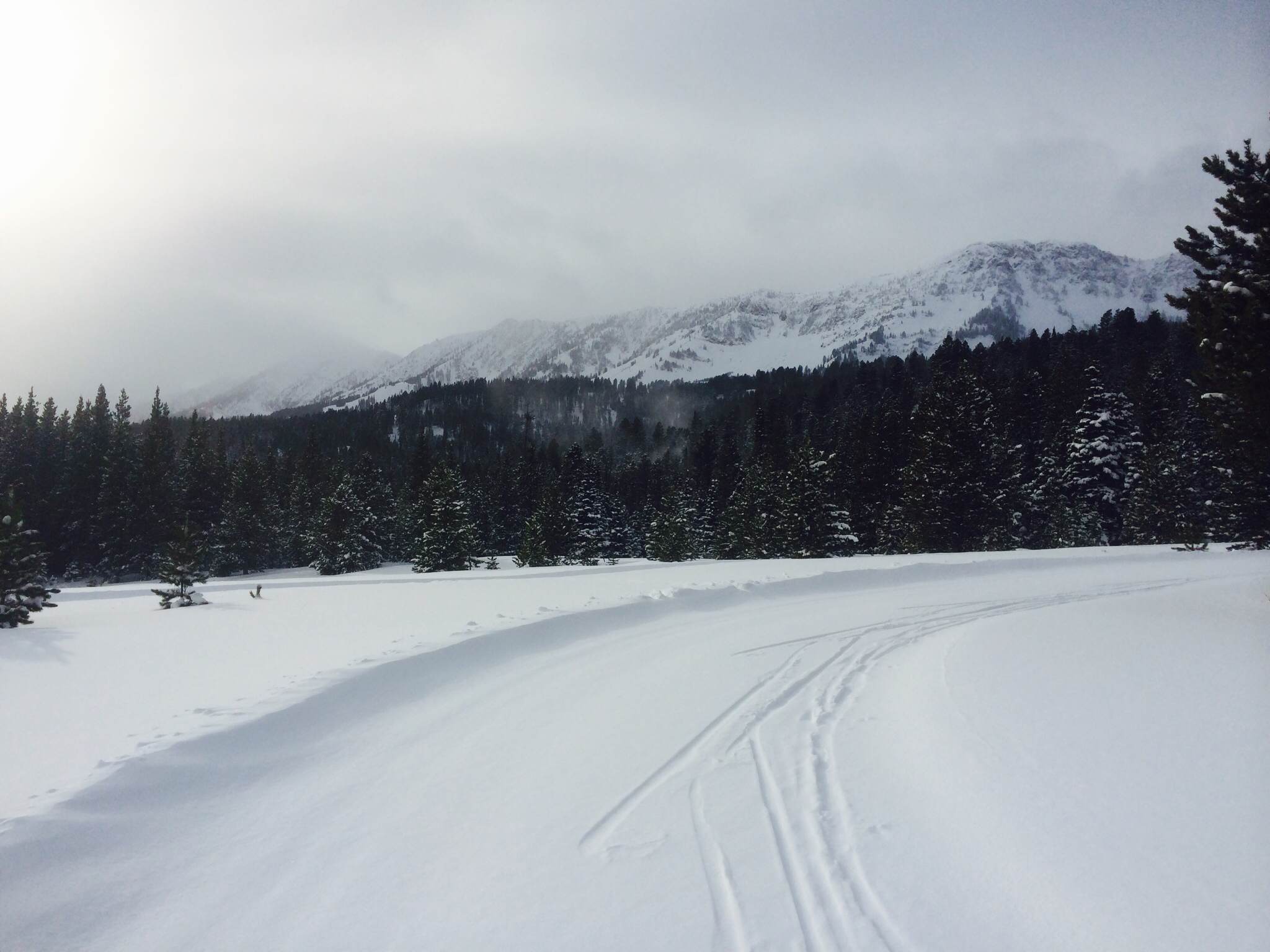
Fresh tracks this winter at Bohart ranch near Bozeman, Mont. (Photo: Mark Vosburgh)
“Most people, regardless of sport, train basic aerobic endurance too hard or fast. This happens for two primary reasons. The first is that this intensity level ‘feels like training’ because it feels moderately hard. Secondly, many people are time-limited in their training and imagine that they can make up for the duration of training by increasing the intensity.”
So now, armed with good information, I’m back on track with my training plan. I credit the CXC Academy training plan for a steep change improvements in my ski specific strength and ski technique.
Now, I’m looking forward to improving my aerobic capacity. On my CXC Academy prescribed Zone 1 over-distance days at Montana’s Bohart Ranch and Seeley Lake trails, I’ll be skiing easy, breathing through my nose, and avoiding the temptation to put a bag over my head!
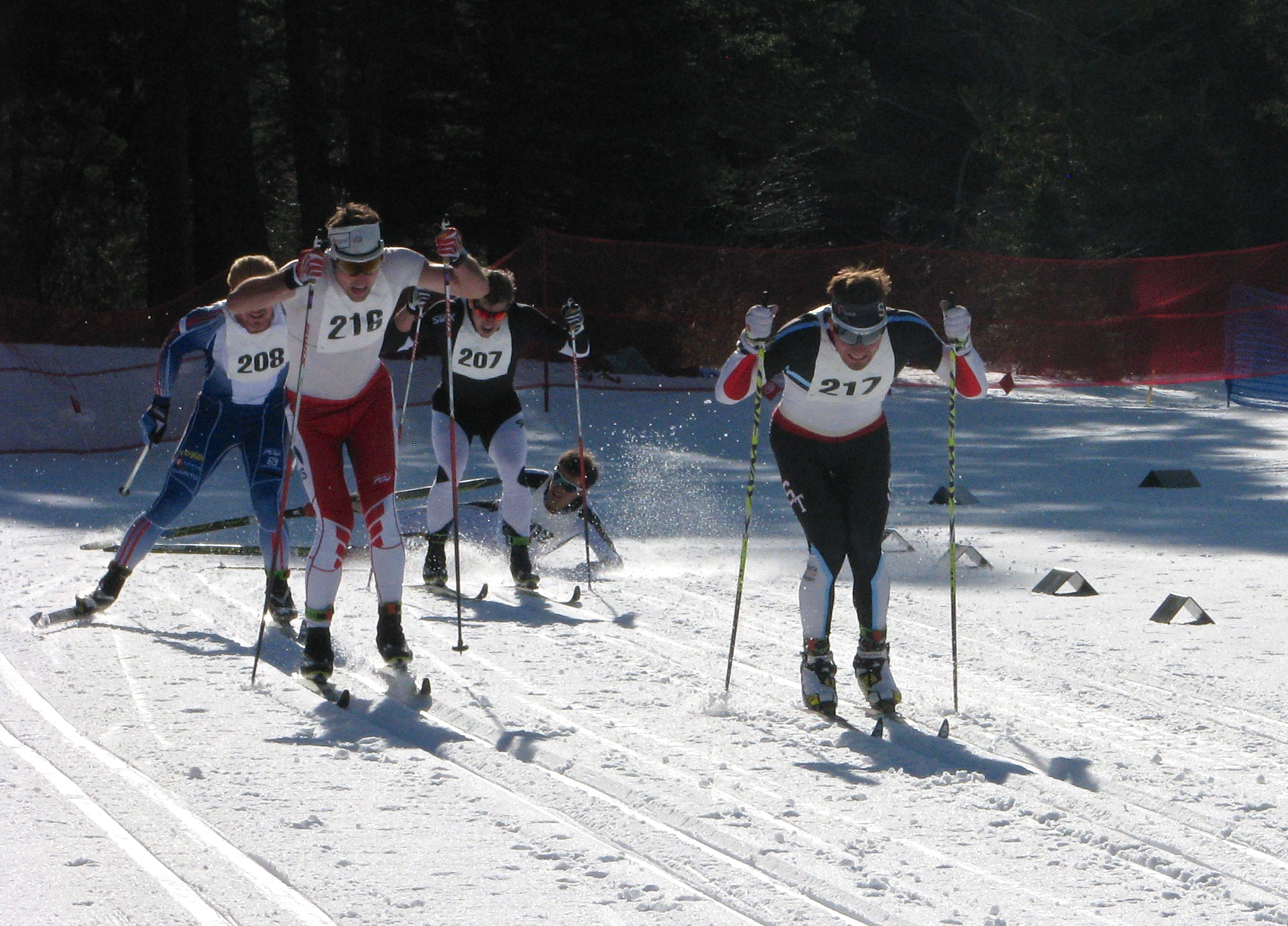
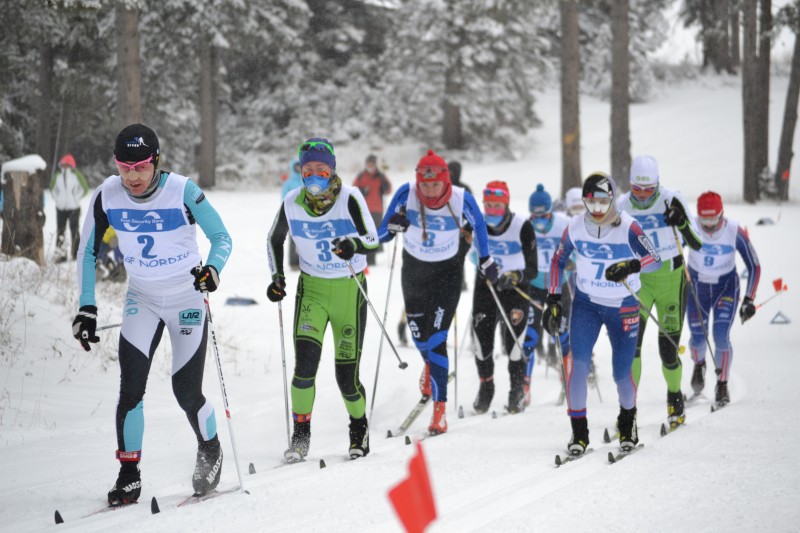
With temperatures above 40 degrees Fahrenheit, the men take off in Sunday’s SuperTour 15 k classic mass start at Bohart Ranch near Bozeman, Mont.
BOZEMAN, Mont. — In yet another thrilling men’s SuperTour finish, Mads Strøm of the University of Colorado outsprinted Miles Havlick of the Sun Valley Ski Education Foundation (SVSEF) Gold Team on Sunday to win the men’s 15-kilometer classic mass start at Bohart Ranch.
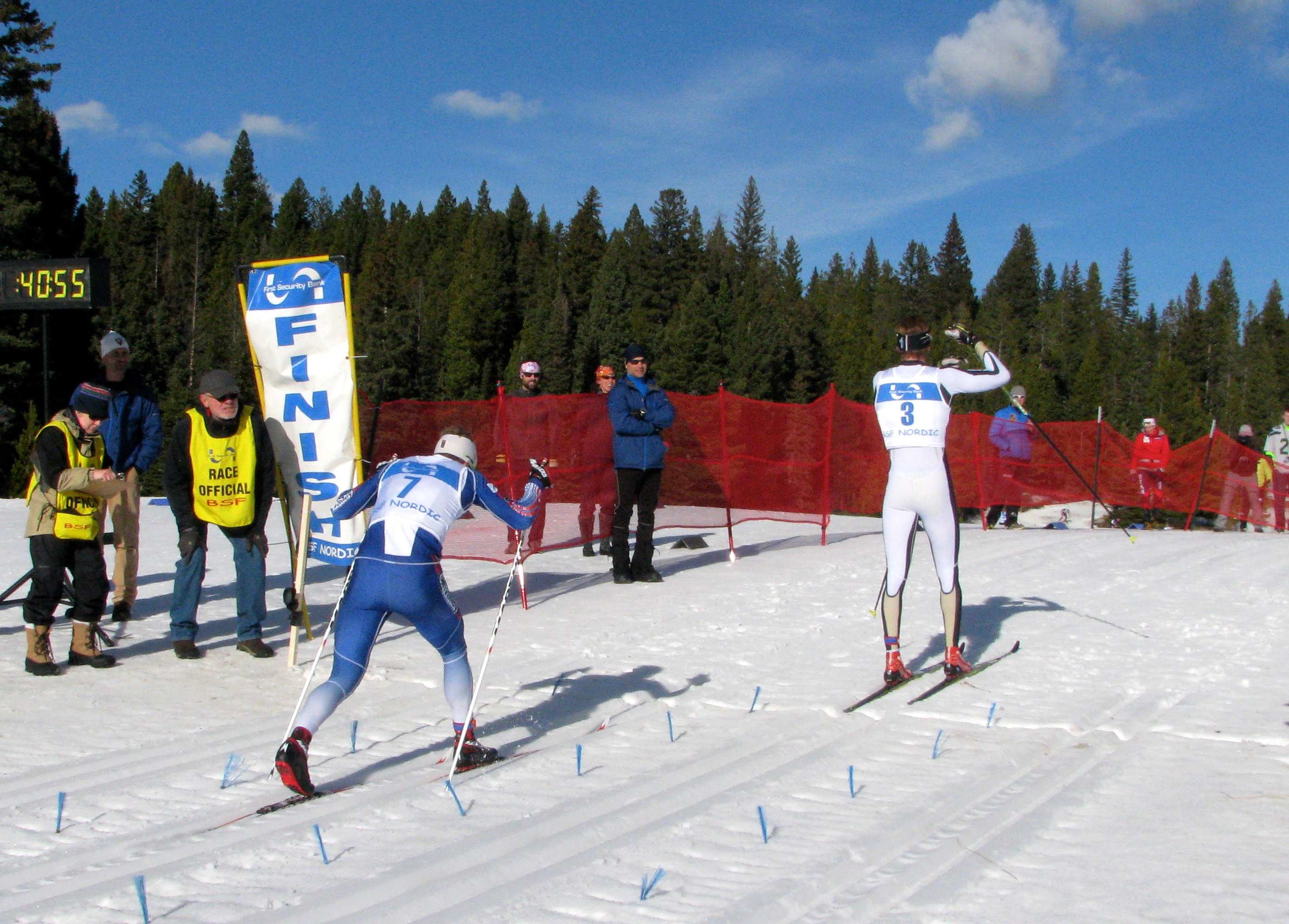
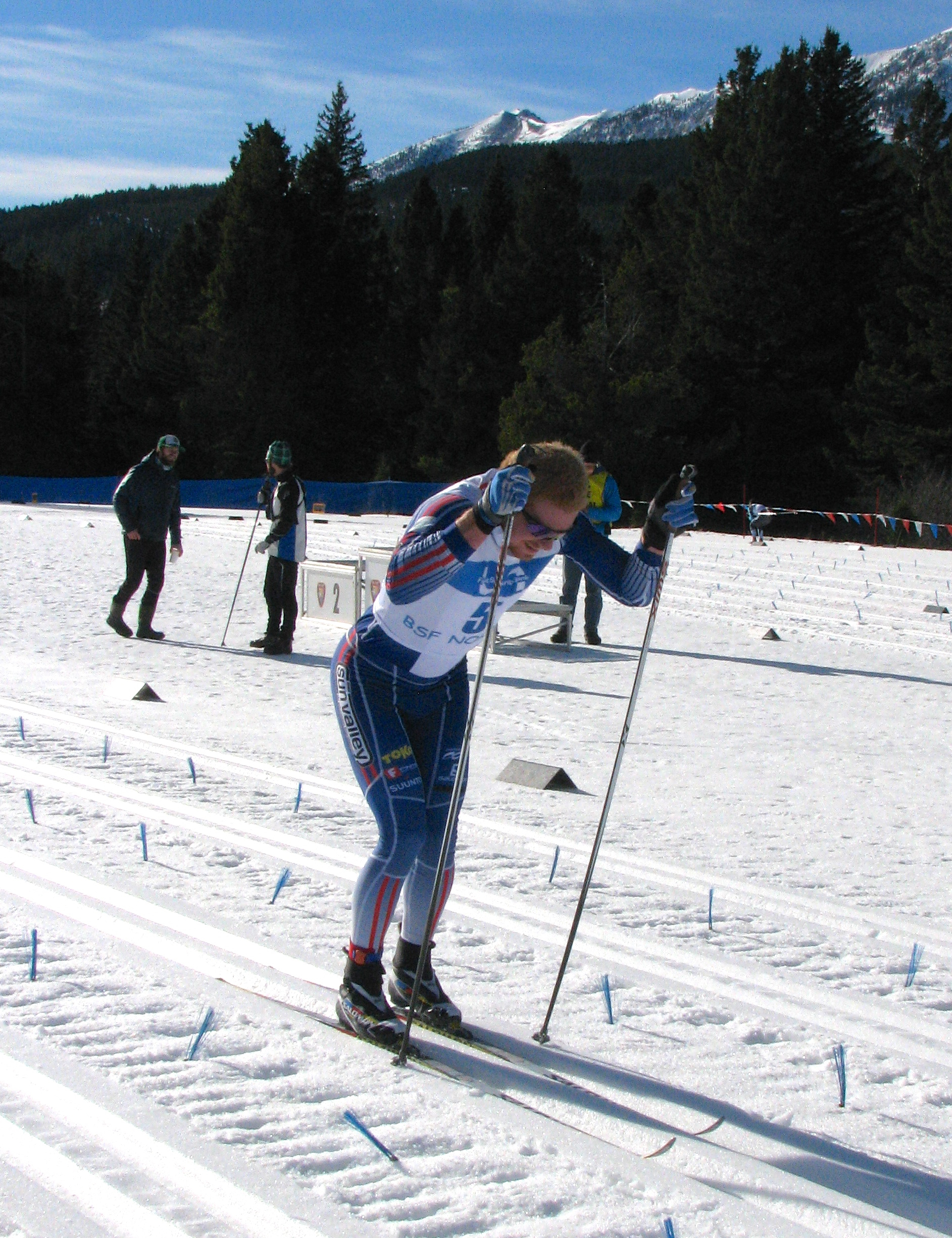
Strøm finished fast and icy three-lap course in 40:55.3, holding off Havlick by 0.7 seconds. Havlick’s teammate Matt Gelso racked up another SuperTour podium in third (+9.9), after placing third in Saturday’s classic sprint. Brian Gregg (Team Gregg/Madshus) finished 27.4 seconds back in fourth.
Kris Freeman (Team Freebird), who was fourth in Saturday’s sprint, finished another 10 seconds back in fifth. Strøm’s CU teammate, Rune Ødegård, placed sixth (+48.4) after starting the final 5 k lap in second.
Havlick jumped out to an early lead and held it for most of the race, entering the last lap 8 seconds ahead of the chase group of Ødegård, Freeman, Gregg and Gelso. Strøm was 15 seconds behind.
Mads Strøm (CU) celebrates after winning the men’s SuperTour 15 k classic mass start near Bozeman, Mont., while Miles Havlick (SVSEF) finishes 0.7 seconds behind.
“I noticed my skis were running pretty well, better than other guys in the pack, so I just decided to pick up the pace and see what would happen,” Havlick said of the first 10 k.
However, Havlick felt the gap closing throughout the last 5 k, and was caught by Strøm as they entered the stadium.
“I was hoping I could get him at the finish, because I know I have a pretty good finishing speed,” Havlick said. “But this time he got me.”
Strøm said that while he was “struggling” through the first two laps, his double poling was strong and he felt his confidence grow throughout the race. By the final lap, he was warmed up and ready to make his move.
“With four kilometers left I got the killer instinct and just tried to win. I double poled as much as I could – that’s one of my strongest strides,” the 23-year-old Strøm said.
As Gelso and Havlick began to pull away down the final stretch, Strøm hung with them, double poling past Gelso and catching Havlick on the final hill. He then passed Havlick in the stadium and held him off in a furious sprint to the finish.
After a disappointing result in Saturday’s sprint — when Gelso and Havlick beat him in the quarterfinals — Strøm was “really satisfied” with the result. “I feel great,” he said.
Gelso skied a strong final lap, separating himself from Gregg, Freeman and Ødegård while trying to catch his teammate.
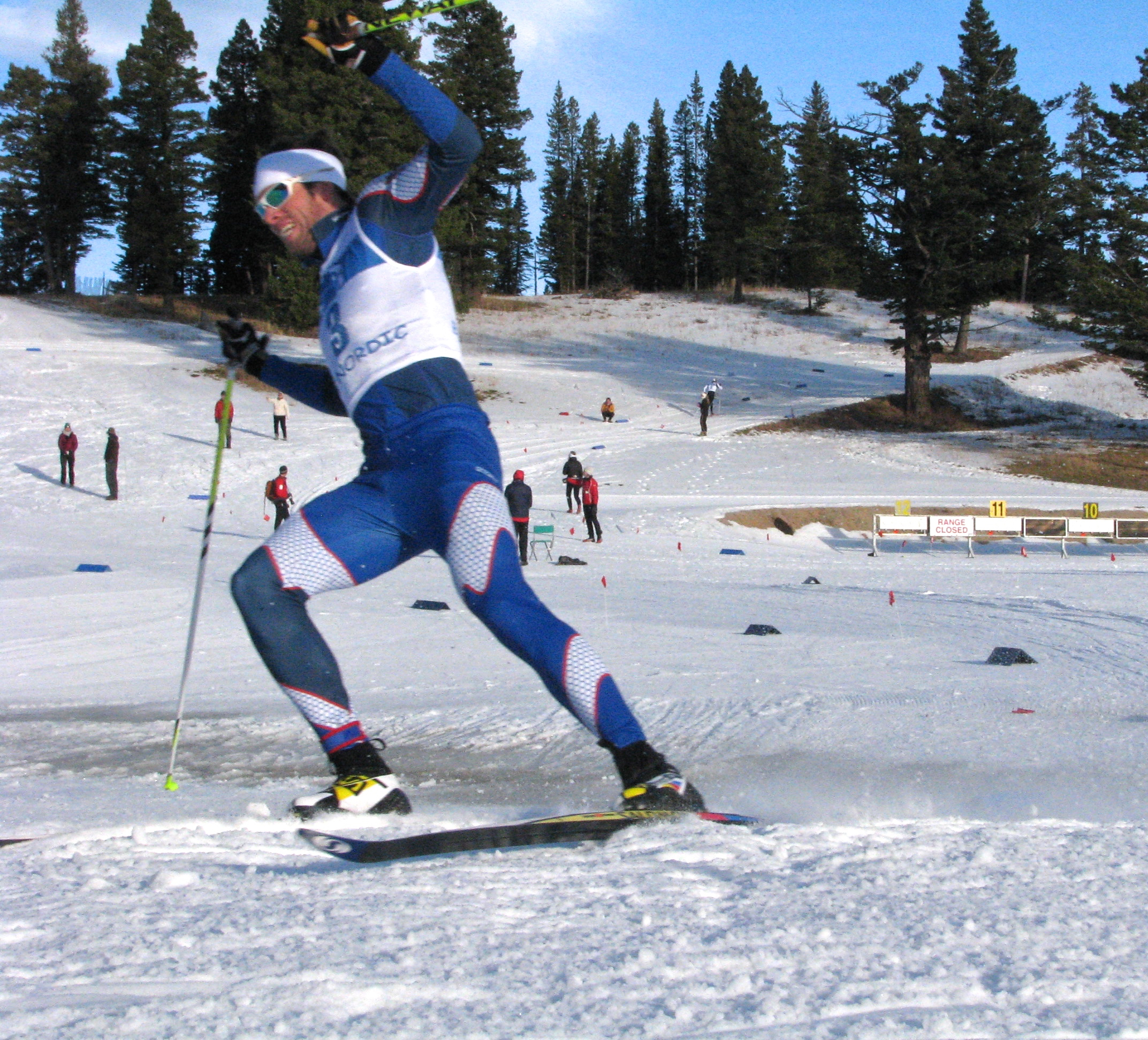
Matt Gelso (SVSEF) double poles through the stadium on his way to his second third-place finish of the weekend in the men’s SuperTour 15 k classic mass start near Bozeman, Mont.
“I was feeling pretty good, my skis were really fast, and I threw down hard to try to catch Miles,” Gelso explained. “But I did it such that I would gap the people I was with, so that I wouldn’t drag everybody up to my teammate. I made a conscious effort to go hard.”
However, Gelso did bring Strøm along with him.
“He’s good at conserving, sitting in and then going hard when it’s important,” Gelso explained.
After racing through slushy snow on Saturday, Gelso enjoyed the firmer conditions, saying the course was much faster than during the sprint. However, he noted that the racers had to be incredibly careful on some sections and corners, especially where the previously wet snow had been groomed.
In those places, “the corduroy got melted in so it was like smooth ice, and that was a little bit scary,” he said. “You can’t hold a plastic edge in that.”
Meanwhile, the course was kinder to Havlick than it was on Saturday — “I definitely wanted to stay on my feet today,” he said. Havlick fell during his sprint semifinal of the sprint and missed advancing to the final.
Havlick was excited about what he called “the first really good result for the season.”
“It’s a confidence builder,” said the former NCAA champion in the 20 k. “I know my form is coming around.”
The next SuperTour races take place Jan. 4-10 at U.S. nationals in Houghton, Mich.
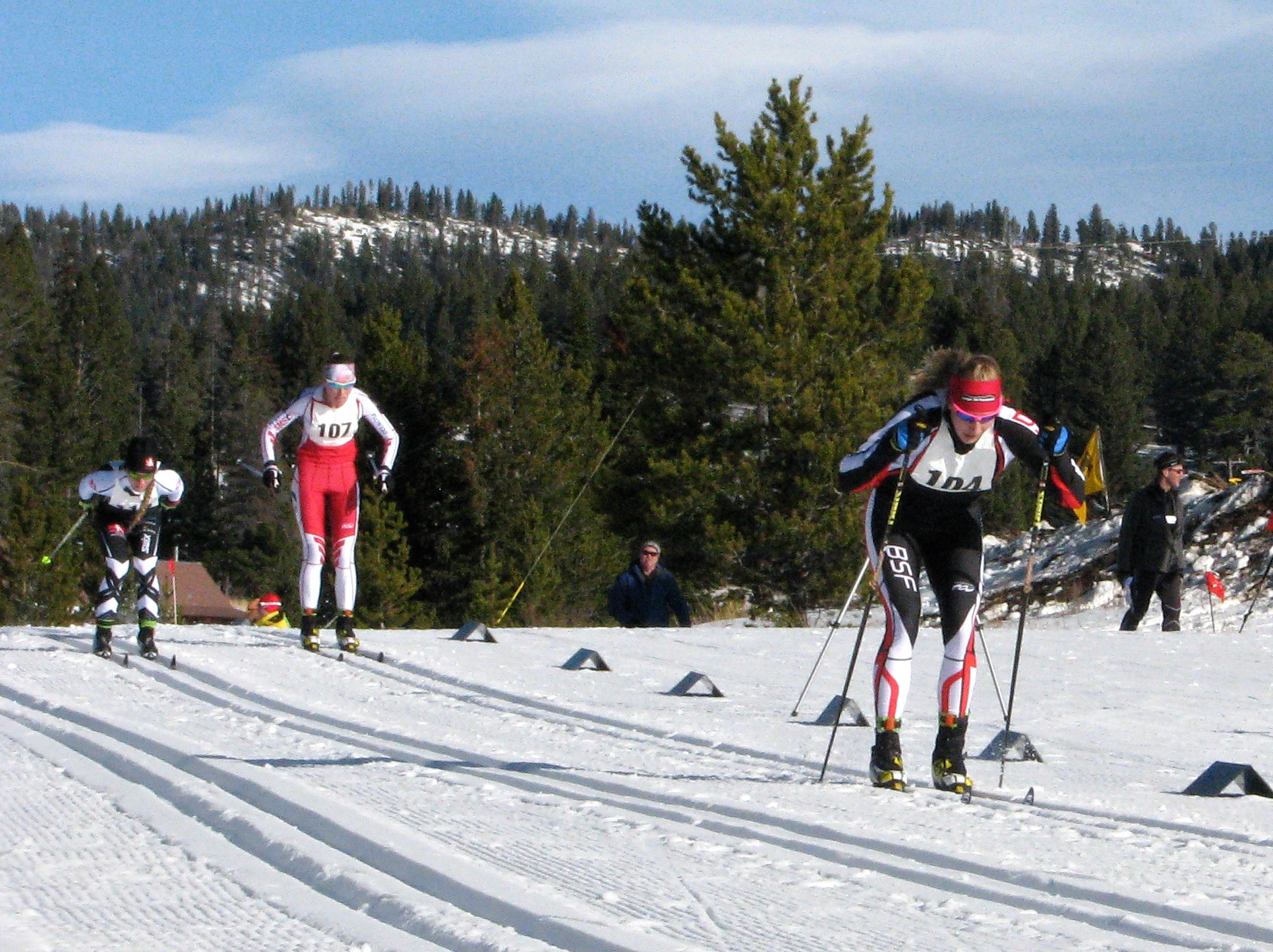
Jennie Bender of the local Bridger Ski Foundation (r) leads Stratton’s Erika Flowers (second from l) and Cendrine Browne (l) into the stadium during the second quarterfinal of the women’s 1.5 k SuperTour classic sprint at Bohart Ranch near Bozeman, Mont. Bender went on to place second to APU’s Rosie Brennan in the women’s final.
BOZEMAN, Mont. — On a 45-degree day with spring-like conditions, Rosie Brennan of Alaska Pacific University (APU) cruised to first place in the women’s 1.5-kilometer classic-sprint final at Bohart Ranch on Saturday, the first day of the Bozeman SuperTour.
While 26-year-old Brennan crossed the line in 3:55.83, a small crowd cheered for Jennie Bender of the local Bridger Ski Foundation (BSF) as she powered her way to second, 5.4 seconds behind Brennan, for her second-straight podium in as many SuperTour sprints. Caitlin Patterson (Craftsbury Green Racing Project) took the final podium spot in third, 9.44 seconds back.
Patterson placed fourth in last weekend’s SuperTour 10 k skate in West Yellowstone, Mont., the distance opener of the season, which Brennan won. Rounding out the final was Russian Natalia Naryshkina (CXC Team) in fourth (+17.35) and Alysson Marshall (Alberta World Cup Academy/National Development Team) – who won last week’s West Yellowstone SuperTour skate sprint – in fifth (+17.40). Becca Rorabaugh (APU) was relegated to last in the final and sixth overall based on a jury decision.
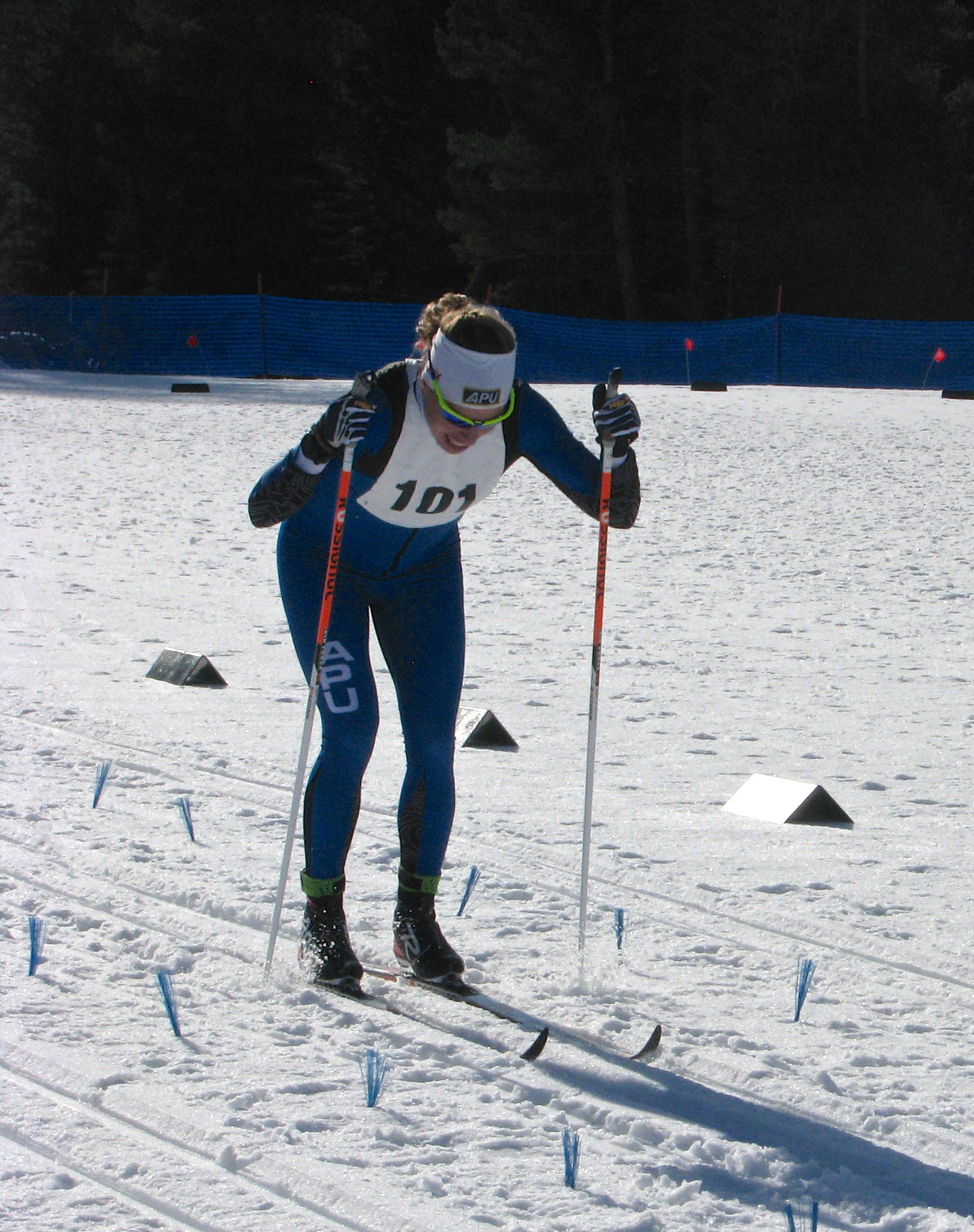
Rosie Brennan (APU) double poling to first in the women’s SuperTour classic-sprint final at Bohart Ranch near Bozeman, Mont.
Unofficial results following the race had listed Rorabaugh in fourth after Patterson. But a jury decision relegated her to last in the final for sixth.
According to Rorabaugh, she found that it was faster skiing outside the tracks and was double poling between the tracks through the upper stadium.
“As I was double poling next to the tracks, I turned too aggressively into the upper hill, and course officials decided it was worth bringing up,” she wrote in an email. “The funny part is that it wasn’t advantageous for me; in retrospect I should have been striding to try and accelerate into the hill. People say you learn something new every day, and now I really know how I should ski that transition!”
“Since technical limits aren’t actually the ones that we’re supposed to push as skiers, and I crossed the line on that one, it makes sense that I was relegated to the back of the A final,” she added.
After the clear-cut win, Brennan said her strength is “working the uphill sections,” and the difficult, hilly Bohart course certainly played to her advantage. She explained her strategy was to use her strengths “to tire people out and then just go for it.”
Brennan’s tactics were effective, as she was the top qualifier by 0.53 seconds over Marshall in 3:51, and Brennan went on to win her quarterfinal and semifinal. In the final, she grabbed the lead from the start and maintained it throughout the race, while none of the other skiers could match her speed and strength.
Brennan said she had fast skis and was not too worried about being caught on the course’s downhill sections, which included a steep hill halfway through the course that was immediately followed by a sharp, precarious curve. This curve gave skiers trouble throughout the day, particularly during the qualifier before the sun rose over the mountains and icy patches were still present.
Patterson was one of those skiers who had a close call.
“In my qualifier, I went way past the V-board and didn’t make the turn very well,” she said. “I think two people had to jump out of my way.”
Patterson managed to qualify in 11th before successfully navigating her way to the final (after placing second to Brennan in the quarterfinal and third behind Brennan and Bender, respectively, in the much-faster semifinal). After all that, Patterson was satisfied with third.
“I’m getting a lot better at sprinting than I used to be, and typically it wasn’t exactly my forte,” she said. “But I had a good fight with the other competitors and I’m pretty happy with how I did.”
Patterson recalled being in fifth or sixth after the first downhill and going into the first uphill, but switched tracks and passed a few others on the inside of a corner. By the time the group reached the halfway point – the tall hill before the steep downhill section – Patterson was third behind Bender, and the two would remain in those positions through the finish.
Ultimately, no one was able to catch Brennan.
“[She] was really good today, just about untouchable,” Patterson said.
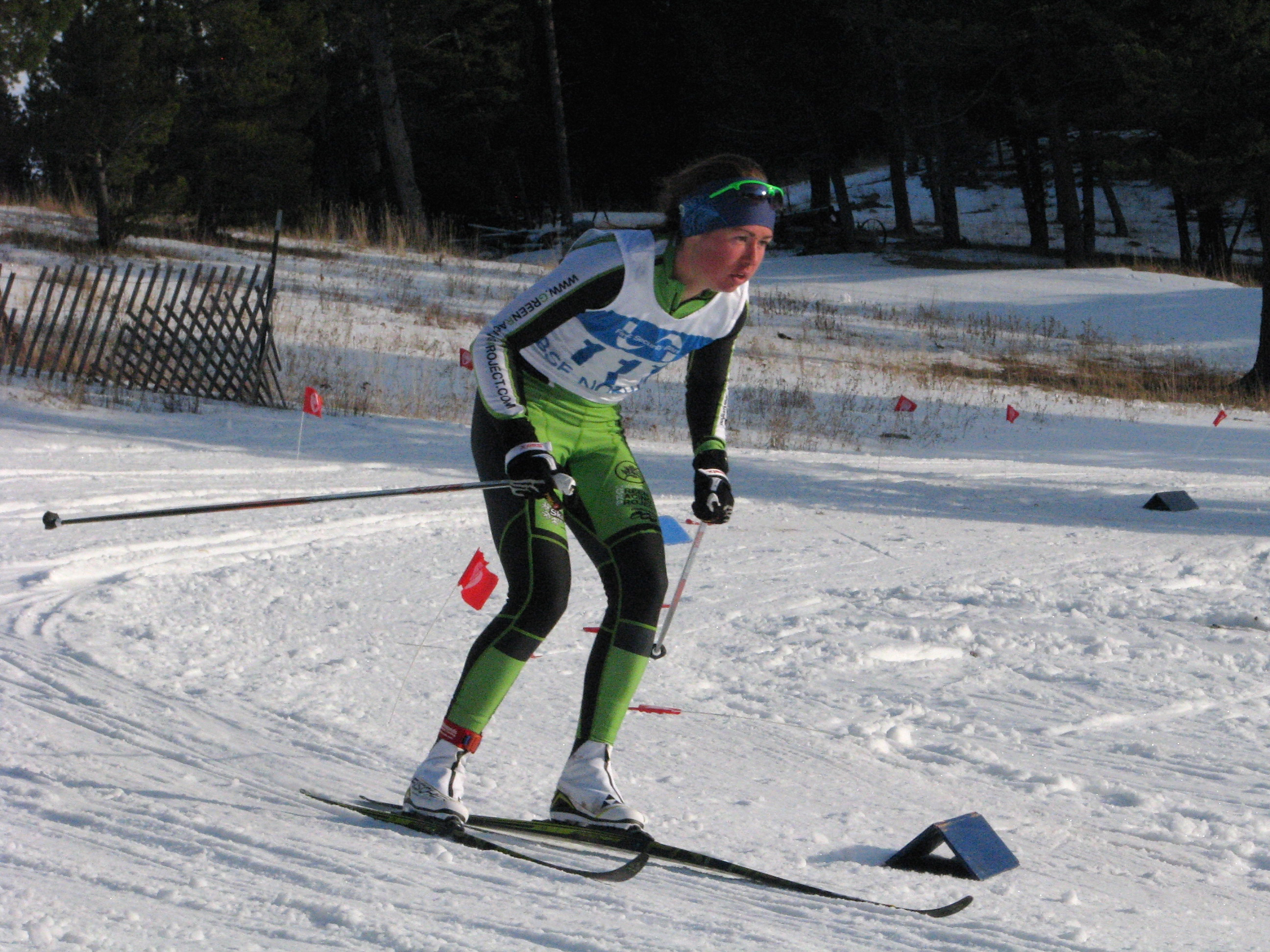
Caitlin Patterson (Craftsbury Green Racing Project) in qualifying. She went on to place third in the women’s Bozeman SuperTour classic-sprint final.
Bender was excited about her second-place result and said she’s looking forward to “battling it out” with Brennan in the future. “She’s looking strong, and I was psyched about how our final heat flew,” Bender said.
Starting on the outside, she said she was “boxed out” right away and pushed to the back of the pack. However, she “punched it on the first hill” and spent the rest of the race trying keep up with Brennan.
Unsurprisingly, there was a lot of hometown enthusiasm at the finish for Bender. “It’s so fun with all the home crew … a lot of people cheering me on, that means a lot,” she said, smiling.
Despite her strong finish, she explained that she has a lot of work to do moving forward, and that there is always something she can change or improve upon.
“I was psyched about today, but it’s just the tip of the iceberg,” she said.
The Bozeman SuperTour continues on Sunday with the 10 and 15 k classic races at Bohart Ranch.
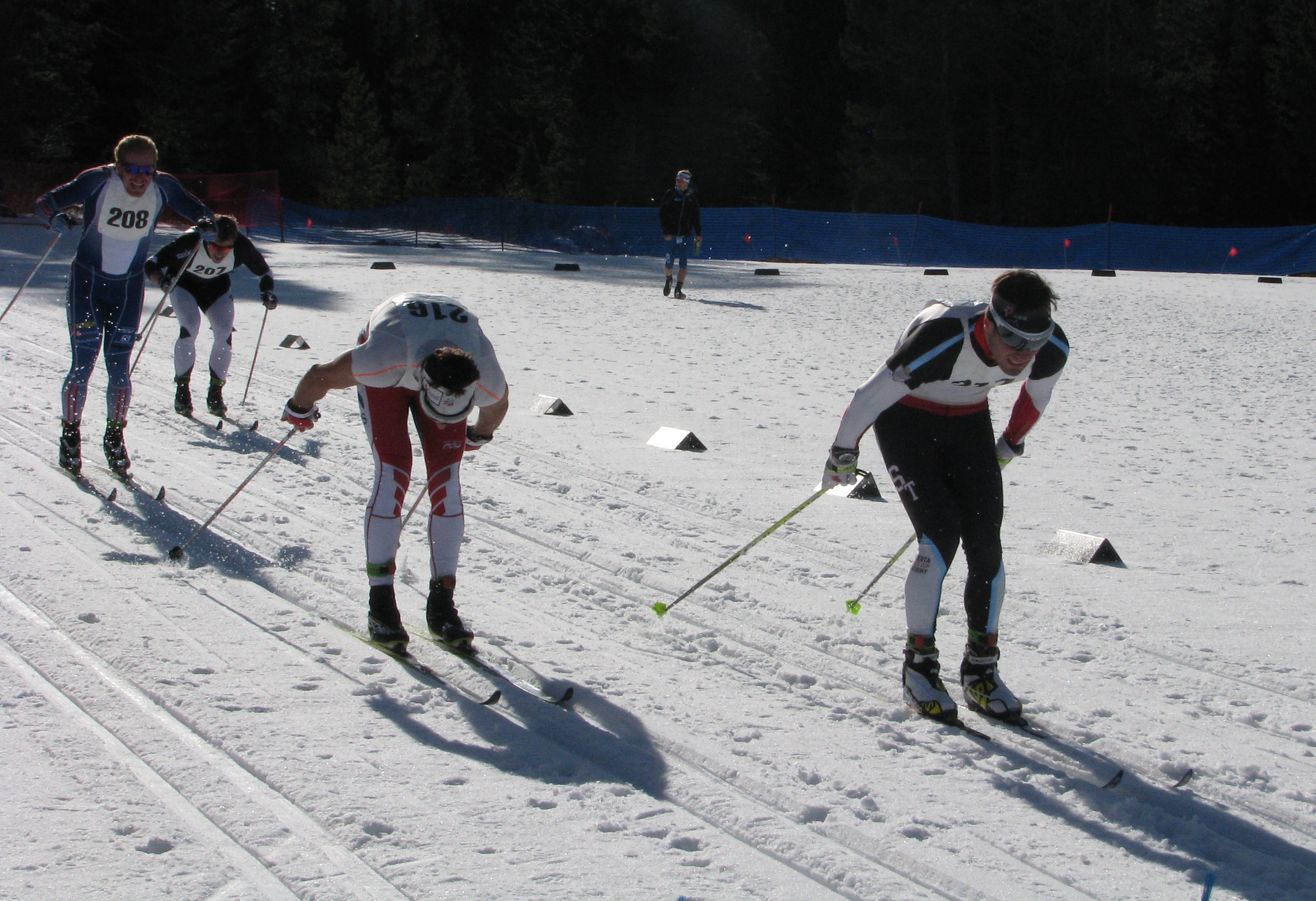
Canada’s Patrick Stewart-Jones (r) holds a narrow lead over Ben Saxton (second from l), Matt Gelso (l), Kris Freeman (third from l) while charging to the finish in the men’s SuperTour classic sprint final in Bozeman, Mont. Ødegård fell while rounding the final curve.
BOZEMAN, Mont. —In a race that was undecided until the final seconds, Canadian Patrick Stewart-Jones of the Alberta World Cup Academy (AWCA) narrowly outlunged Ben Saxton of the Stratton Mountain School (SMS) T2 Team and U.S. Ski Team to win the 1.5-kilometer men’s SuperTour sprint-classic final at Bohart Ranch on Saturday.
With the sun out and temperatures rising to 45-degrees Fahrenheit for the afternoon rounds, Stewart-Jones conquered the soft, slushy course in 3:26.22 minutes. Just 0.11 seconds later, Saxton took second after racing alongside the Canadian to the finish.
Matt Gelso, of the Sun Valley Ski Education Foundation (SVSEF) Gold Team, followed last weekend’s SuperTour distance win in West Yellowstone, Mont., by landing on the podium again, finishing a close third, 1.37 seconds behind Stewart-Jones.
Four-time Olympian Kris Freeman (Team Freebird) placed fourth (+2.58), while the West Yellowstone skate-sprint winner, Dakota Blackhorse-von Jess (Bend Endurance Academy), finished fifth (+7.26). Rune Malo Ødegård (University of Colorado) rounded out the final in sixth (+23.11).
Russell Kennedy (Canmore Nordic Ski Club) managed to stay upright on this icy curve, though others were not so lucky during the men’s SuperTour sprint classic at Bohart Ranch near Bozeman, Mont. Kennedy placed 19th overall.
After the race, the 23-year-old Stewart-Jones said he was “ecstatic” about his first SuperTour win. In the West Yellowstone skate sprint on Nov. 28, he placed 27th.
“Qualifiers didn’t go so great this morning. I probably used the wrong pair of skis, and maybe wasn’t quite ready to go,” he explained.“I just had to fight every round in the heats. But any day you win is a really good day.”
Eric Packer of Alaska Pacific University (APU) won the qualifier in 3:13.76. Stewart-Jones ranked 17th, 10.6 seconds behind Packer, before finishing second in both his quarterfinal and semifinal behind Blackhorse-von Jess and Saxton, respectively.
“Every race today I felt better and better,”Stewart-Jones said.
The final was tight throughout, with the top four skiers — Stewart-Jones, Saxton, Gelso and Freeman — staying close together on the large climb halfway through the course. Stewart-Jones was in no rush to take the lead, later explaining he looked for “the easiest ways to get by people without having to fight too much for it.”
Upon reaching the horseshoe curve about a hundred meters before the finish line, Stewart-Jones and Saxton were shoulder-to-shoulder and lunged for first, with Gelso just a ski length behind.
Saxton said was happy with his “tactical skiing” throughout the day – he qualified in 16th (+10.48) and won both his quarterfinal and semifinal.
“I opted to tuck behind instead of push it and swing wide, and that ended up costing me more than swinging wide would have,” Saxton said. “He ended up getting me by just a boot.”
Patrick Stewart-Jones edges out Ben Saxton (third from l), while Kris Freeman (second from l) and Matt Gelso (l) challenge for third near the finish of the men’s SuperTour classic sprint final in Bozeman, Mont.
Regardless, the 21-year-old explained he was “psyched” with a second-place finish and was happy for the quality racing.
“Everybody had good skis, good effort, good tactics and there were no mix-ups,” he said.
Gelso had not been in a sprint final since winning the Bozeman SuperTour skate sprint two years ago (he was 10th last weekend in West Yellowstone), and said he was “super happy” with his “solid sprint result” — especially as usually excels more in distance racing.
In the final, the 26-year-old stayed in the back of the pack until the approach to the stadium, when he pushed his way into third while double-poling up the final hill. However, he said he “didn’t ski the last corner tactically very well,” and fell behind Stewart-Jones and Saxton during the final stretch to the finish line.
“That was my bad,” Gelso said. “But all in all, it was a pretty good day.”
Gelso also mentioned the difficult conditions, saying they produced a number of crashes, particularly on a treacherous corner that came after a steep downhill halfway through the course.
“People get knocked off balance for a second or two … and they don’t move on,” he said.
That is what happened to fellow Sun Valley Gold Team skier Miles Havlick, Gelso said. After qualifying in third and winning his quarterfinal, Havlick fell on the corner during the second semifinal and could not recover, finishing fifth, 13 seconds behind Freeman.
Then, in the final, Ødegård fell while rounding the final curve and trying to challenge the leaders.
“There was just punchy, squirrelly skiing,” Gelso said.
Though he was happy with his win, Stewart-Jones is looking for bigger things in the future. Racing well here, he explained, means a better shot at racing at a World Cup in Europe.
“When you do well like this, it always bodes well for trying to get those [national-team] spots to go overseas,” he said. “Hopefully that’ll happen.”
The Bozeman SuperTour continues Sunday with 10 and 15 k classic races at Bohart Ranch.
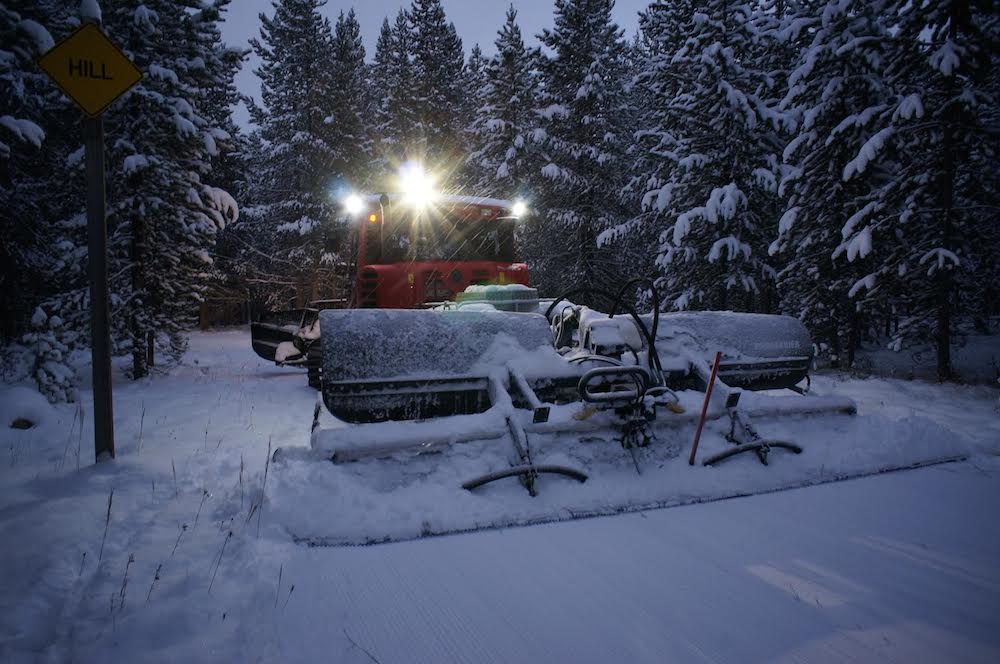
West Yellowstone’s PistenBully goes out for its maiden voyage of the 2014/2015 winter season on the Rendezvous Ski Trails on Friday, Nov. 14, in West Yellowstone, Mont. “8+ [inches] and still falling,” Yellowstone Ski Festival Program Director Moira Dow wrote in an email. (Photo: Moira Dow)It has been an unseasonably warm and dry fall in Southwest Montana, with highs well above freezing and no snow events, but race directors are feeling better after the arrival of the first winter weather of the season.
The area plays host to two USSA SuperTour events in the coming weeks — at the Yellowstone Ski Festival on Nov. 28-29 in West Yellowstone, Mont., and at Bohart Ranch Cross Country Ski Center on Dec. 6-7 — and race organizers are confident about the snow situation, particularly in West Yellowstone.
According to Moira Dow, program director for the Yellowstone Ski Festival (YSF), there were 8 inches of snow at the Rendezvous Ski Trails as of Nov. 16. This is enough to hold the scheduled skate races at the trails, but in the event of a lack of snow, the races would be moved to a plateau six miles from West Yellowstone. As of Sunday, there was a base of 19 inches on the plateau, and according to the National Weather Service (NWS) temperatures should remain below freezing for the next seven days, preventing any significant snowmelt.
Dow explained that while it is difficult to drive to the plateau — which is usually reserved for snowmobilers — it is well set-up for hosting skiers. Two years ago, YSF organizers moved the races to the plateau, substituting two point-to-point races (a skate prologue and 9-kilometer individual skate race) in place of the scheduled full-fledged sprint and looping 10/15 k individual race. The plateau, however, isn’t as accommodating to spectators, and without a range, it is unable to host biathlon events.
Both of this year’s cross-country races are scheduled as freestyle, so organizers won’t have to worry about having enough snow to set tracks.
“We plan for the worst-case scenario and hope for the best-case scenario,” Dow said.
Fortunately, it looks like Dow and the YSF will not have to worry about the worst-case scenario. The NWS predicts a large-scale Pacific trough to move through the area over this coming weekend, bringing accumulating snow to West Yellowstone. In addition, temperatures are expected to peak at 30 degrees on Thursday and Friday before falling to near 20 by the weekend. The six-to-10 day outlook looks favorable as well, with temperatures remaining below normal and precipitation above normal — meaning snow should keep falling.
The six-to-10 day outlook looks favorable as well, with temperatures remaining below normal and precipitation above normal — meaning snow should keep falling.
A look at one of the ski trails on Tuesday, Nov. 18, at Bohart Ranch near Bozeman, Mont.
However, conditions are less favorable at Bohart Ranch, located at 6100 feet elevation and 16 miles northeast of Bozeman, Mont. Bohart “has five or six inches of snow,” said ski instructor John Skemp, and is currently closed to skiers. The center also does not have snowmaking capabilities (nor does West Yellowstone).
Dragan Danevski, nordic program director for the Bridger Ski Foundation, remains optimistic. Three weeks remain until the SuperTour races, and “every snow we get from now on will stick” due to the frozen ground, Danevski said over the phone.
He explained that the sprint course only requires about four inches of snow before it can be groomed with a snowmobile roller.
Fortunately, as in West Yellowstone, the forecast looks favorable for additional accumulating snow at Bohart Ranch. The same system affecting West Yellowstone will bring a good chance of snow to Bohart Ranch, while the NWS calls for a high of 32 on Thursday before highs fall to the upper 20s by next week.
“We depend on nature,” Danevski said, and it looks like in Southwest Montana, skiers will get some help from nature in the next couple weeks.
One of the trailside cabins at Bohart Ranch in Bozeman, Mont.
The biathlon range at Bohart Ranch in Bozeman, Mont. was installed in 1989 at the height of the sport in the small mountain town. The Bridger Biathlon Club is attempting to bring biathlon back to Bozeman and is starting by installing new targets from Norway. (Photo: Bridger Biathlon Club)
If you’ve been to Bohart Ranch in recent years, you’ve likely seen the Biathlon range nestled on the doorstep of the Bozeman, Mont., ski area. If you looked closely it would become apparent that the targets have had little use in recent history. They are mostly used for summer competition, and serve as a reminder of what had been.
The targets weren’t always as weathered. Biathlon in Bozeman was booming in the in 1980s. With renowned Olympic-level athletes such as Kari Swenson training in the area and a club based at Bohart Ranch, it seemed as if Bozeman was becoming a U.S. biathlon hub in the west.
However, the biathlon surge in Montana did not last. Biathlon in Bozeman began to diminish in the final decade of the twentieth century as cross-country skiing became more popular. By the time the 2000’s hit there was hardly any support for biathletes in the small Montana town.
Alex Love and Ben Sites train in West Yellowstone with the founders of the Bridger Biathlon Club in 2013. They are two of 45 potential athletes for the new ski club. (Photo: Bridger Biathlon Club)
Fast-forward to 2014, where a group of locals is attempting to change the absence of biathlon in Bozeman. Starting with a fundraiser in the fall of 2013, the newly formed Bridger Biathlon Club has already made major ground in bringing biathlon back.
The club’s goal is to provide a top-tier training program for biathletes of all abilities that hosts national and regional races. The club also plans to sustain a biathlon culture in Bozeman by maintaining facilities and equipment in addition to creating enthusiasm within the community.
While their goals are lofty, the club is tackling on task at a time.
The first item on the agenda is replacing the ghosts-of-biathlon-past and installing new state-of-the-art targets from Norway. The new targets are set to be installed in the fall of 2014 will carry a plaque to commemorate the late Peter Hale with who passed away in 2013.
Once the new targets are in place, the next undertaking is to build a club from the ground up.
According to the Bridger Biathlon Club’s marketing and public relations director, Katie Smith, the task of finding future biathletes in Bozeman is already off to a good start.
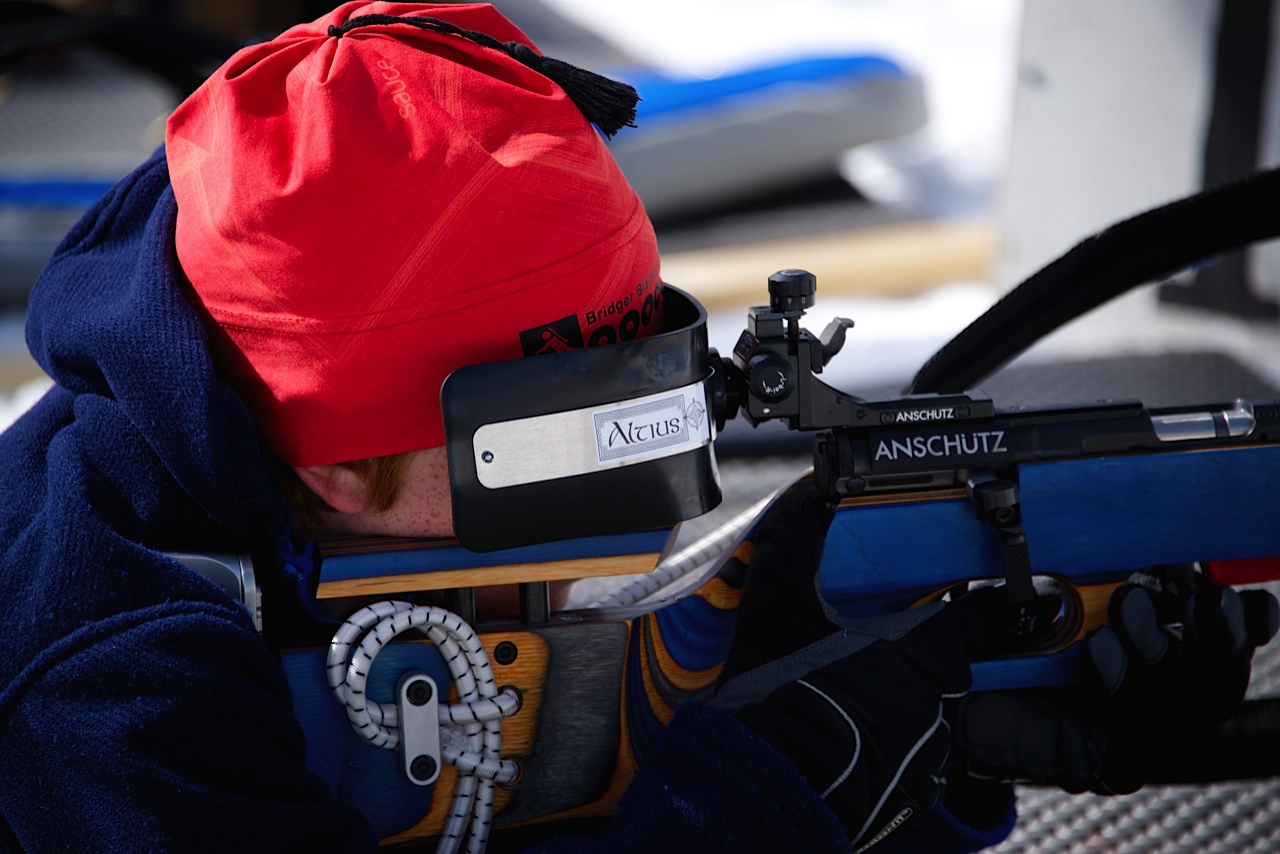
Alex Love prepares his rifle while training in West Yellowstone, Mont. in 2013. Love is one of the junior athletes who will train with the Bridger Biathlon Club in the fall of 2014. (Photo: Bridger Biathlon Club)
“A total of 45 kids, ages 8 to 14 have reached out to the Bridger Biathlon Club to express their strong interest in participating in a training program this coming season,” Smith said in an interview.
To ensure these skiers have no barriers of entry the sport, the Bridger Biathlon Club has already purchased rifles, ammo, and other equipment. As of this fall, the club will be without a head coach, but will be lead by those who started the club.
“BBC board members Stuart Jennings, Brain Wadsworth and Kari Swenson are leading the effort to establish BBC’s training program, and will be volunteering their time to coach BBC’s team,” said Smith.
Not only will the club be supporting new athletes in the upcoming season, it will also be hosting a series of U.S. Biathlon Association (USBA) races.
According to Smith the 2014/2015 national schedule has yet to be finalized, but the plan is to have two national races at Bohart during the season. The races will be held in conjunction with the USBA races in West Yellowstone, Mont.
The hope is to create a series of races in Montana, where athletes stay in Bozeman and travel between Bohart and West Yellowstone.
USBA President and CEO, Max Cobb, is excited with the prospects of a new club building in Bozeamn.
“It is great that biathlon is again blossoming in Bozeman,” Cobb wrote to FasterSkier. “For many years there were athletes coming out of the Bozeman area and making national teams. I hope that this rise in interest and the new facilities there will usher in a new generation of Bozeman biathletes and step by step we may once again see some on the national teams.”
Cobb said that he hoped the increased interest in biathlon would help spur an new wave of the sport in the Rocky Mountain region. Cobb sited efforts lead by the Casper Mountain Biathlon Club and it’s Board President Rob Rosser, as well as the recently upgraded facilities in West Yellowstone as signs that the region was ready for growth in the sport.
Once established at the local and national level the Bridger Biathlon Club hopes that it will continue to grow.
“We want to see the club grow exponentially. In the next five years we want to see a full training program where we have junior’s elite and masters,” Smith said.
For now, however, those in the club are excited that the sport they love is making an attempt to resurface in Bozeman.
“It’s time that biathlon came back to Bozeman. There is enough interest and there are a lot of kids out there who are excited about it. You can’t get more biathlon than Montana: Skiing and shooting at targets,” Smith said.
Caitlin Gregg (2) leads the women’s SuperTour 10 k classic mass start on Sunday in Bozeman, Mont. She went on to place third behind Chelsea Holmes (7), who won by 43.4 seconds, and Caitlin Patterson (3), who placed second. (Photo: Anya Caldwell Bean)
To say Sunday’s 10- and 15-kilometer classic mass start races in Bozeman, Mont., were cold would be an understatement. With the temperature hovering just above the legal racing limit of -4 degrees Fahrenheit, racers adorned their warmest gear, wore breathing masks, and covered their faces with tape in order to protect themselves from the frigid conditions.
In addition to braving subzero temperatures, racers had to ski an extremely difficult and technical course at Bohart Ranch.
“The course is tough,” said Dragan Danevski, race organizer and Bridger Ski Foundation (BSF) Head Coach, said in a press release. “But we expect athletes to prove their preparation for competing in the Olympics.”
Chelsea Holmes with a significant lead on the last lap of the women’s 10k (Photo: Anya Caldwell Bean)
Many did just that. In the women’s 10 k, Chelsea Holmes of the Sun Valley Ski Education Foundation Gold Team (SVSEF) won by a commanding 43 seconds in 34:23.5. Caitlin Patterson of the Craftsbury Green Racing Project (CGRP) placed second and Caitlin Gregg (Team Gregg/Madshus) followed in third (+1:08.1).
Rounding out the top six were Kate Fitzgerald of Alaska Pacific University (APU) in fourth, Bozeman native Erika Flowers of the Stratton Mountain School T2 Team (SMST2) in fifth, and Becca Rorabaugh (APU) in sixth.
An Alaska native, Holmes had fun despite the temperatures and tried to prevent the weather from distracting her from the race.
“No one’s psyched to be so cold, but I just try to put it out of my mind and focus on what’s at hand,” she wrote in an email. “Really, it’s the coaches, techs and volunteers that bear the brunt of the cold with all that standing around!”
Sunday’s SuperTour race came after Saturday’s classic sprint was first delayed, then canceled due to temperatures between -10 and -20 Fahrenheit. Organizers decided to push Sunday’s distance races back by three hours and were prepared to shorten them in case of even colder temperatures. Fortunately, Mother Nature complied.
Best known as a distance skier, Holmes wrote that she had looked forward to the classic sprint and was disappointed that it had been canceled. However, with a SuperTour win under her belt, she’s off to a good start this season.
Gordon Vermeer makes his way up the first climb in the men’s 15k mass start (Photo: Anya Caldwell Bean)
The men’s 15 k was much tighter, with Russian Dmitriy Ozerskiy of Central Cross Country (CXC) edging out Miles Havlick (SVSEF) by 1.5 seconds for the win in 44:47.7.
lacing third through sixth were Patrick Johnson (Far West), Matt Liebsch (XC United/Team StrongHeart), Brian Gregg (Team Gregg/Madshus), and Reese Hanneman (APU), respectively.
Gregg and Liebsch competed in the Bozeman SuperTour after going 1-2 in the Canadian NorAm at Sovereign Lake, B.C., on Saturday. They were able to make it to Bozeman via chartered plane that was funded by donations.
In an email, Hanneman wrote that BSF did an “incredible job” with Sunday’s races and was impressed with the high quality of the tracks and course. He felt the weather was bearable, but “probably on the lower limit of what was reasonable.”
For some, the racing in the cold wasn’t worth the risk. Annie Pokorny (SMST2) decided to sit forgo the race after having trouble breathing earlier in the week.
“During my warmup, I decided to save my lungs for the next few weeks of training,” she wrote. “Even at a legal temperature, it wasn’t safe for me, so I’m happy with that decision.” She wasn’t the only one, as roughly 20 racers opted not to start. Seventeen senior women completed the 10 k, and 33 senior men raced the 15 k. US Ski Team member Erik Bjornsen (APU) did not start.
The next round of SuperTour races will be at Solder Hollow in Midway, Utah, as part of the U.S. Cross Country Championships from Jan. 4 through 10.
Michael Sinnott (SVSEF) and Sam Tarling (Dartmouth) racing in the Bozeman SuperTour at Bohart Ranch in 2011. The venue is being considered to host the freestyle sprint originally scheduled for West Yellowstone. Photo: Evan Dethier.
Due to the lamentable conditions in West Yellowstone, there’s a chance that the SuperTour freestyle sprint originally scheduled here this weekend will end up taking place at Bohart Ranch instead. The Bozeman venue is already set to hold a SuperTour classic sprint and mass start on December 1 and 2.
Bridger Ski Foundation director and race organizer Dragen Danevski said on Tuesday that he was confident Bohart could pull off a third race, which is being proposed for Thursday before the classic events. When conditions prompt a last-minute schedule addition like this one, however, several things have to fall into place for it to be possible.
Number one, the conditions in Bozeman have to improve like they’re expected to. With temperatures in the high 40s on Tuesday, what snow Bohart did have last week is currently melting. However, the air is supposed to get back below freezing and stay there early next week, with more snow in the forecast for several days.
Given cooperative weather, Bohart has several course options. The original, newly-homologated sprint course is one. The other is a trail higher up in the meadow that has cooler temperatures and longer-lasting snow.
“It will be better if we can race on the original sprint course and not on the B course,” Danevski said. Heats could be possible, “but it would be difficult. The start and finish is narrower, and the course itself will be very difficult.”
If expected snowfall becomes an actuality, Danevski thinks Bohart will be able to use the original sprint course without a problem. As an added precaution, BSF also owns snowmaking equipment and is willing to loan it to Bohart to lay a good base for the earlier SuperTour. The only question is whether Bohart has people to do the work.
“Bohart has the water source and we can provide the pipes and all that, but for them it will be lots of work,” Danevski said. “We (BSF) have volunteers and some paid people; they don’t have the manpower.”
Snowmaking is an option, but it’s a lot to pull off within a week and a half. Danevski, who is also in West Yellowstone this week coaching his own athletes, has been on the phone with Bohart every day making plans.
Logistics become chaotic when a race changes venues and hosts, and is a factor Danevski considers as he determines what he wants to take on.
“Registration fees and all that can be messy. People are registered [in West Yellowstone], but this would be cancelled,” he said. “Racers will not want to pay again. I expressed my frustration with that. What happened in the past is we had three races and didn’t have prize money for the prologue. People got upset.
Danevski says he can host the additional race, but that competitors would have to adjust their expectations.
“I told [USST Nordic Director] Joey Caterinichio we could do it but I don’t want coaches and athletes to start coming to BSF saying, ‘Where is the prize money?’” he said.
If coaches and athletes want to pay for all three races, Danevski thinks he could offer purses for each race. “But if they say, ‘Oh, we already paid once in West,’ we probably will not be able to provide prizes for three races.’”
The available options will likely be a major topic of discussion at the coaches meeting in West Yellowstone on Wednesday night. As a coach, Danevski very much wants to see full sprints in Montana this first period of the SuperTour, and to help make it possible at Bohart.
“I think if we would like to develop sprinters and good skiers, we should have full sprints. A prologue is only one third of the race,” he said.
As an organizer at the same time, however, “We’ll have to kill ourselves to make this possible.”
American biathlete Casey Smith at 2011 World Youth and Junior Championships in Nove Mesto, Czech Republic. Smith, one of the top U.S. juniors, is a student at Montana State University. Photo: Judy Geer.
Note: This is the last piece in a three-part series following several groups of biathletes as they negotiate the college question. Part one featured five top juniors who took a detour through college before returning to the international stage, whilepart two looked at USBA’s 2007-2010 Development Team.
In November, 2011, Casey Smith was named Junior Biathlete of the Year for 2011 by the United States Biathlon Association (USBA). In a European country, that might mean a pat on the back from a coach at practice, perhaps an honorary celebration thrown by an athlete’s club, or maybe an added bargaining chip in sponsorship negotiations.
Smith, though, barely even has a club. The Winthrop, Washington, native, who turned 20 in February, was in the midst of his sophomore year at the Montana State University (MSU), where he jumps in time trials with the college’s ski team and otherwise trains primarily by himself. There is no coach, and “practice” doesn’t seem like the right word for a solo rollerski.
“[The award] helped me do some more fundraising, I guess, because it adds something else to your resume,” Smith told FasterSkier in an interview this spring.
That fundraising, along with lots of planning and motivation, helped Smith get to Europe three times during the 2011-2012 season. Once there, Smith is finally part of a team – Team USA.
“There’s lots of support from USBA and the coaches,” he said.
First, Smith raced in the junior division of Open European Championships in Brezno, Slovakia, where his best finish was 15th in the individual. A few weeks later he competed as a junior for the first time at World Youth and Junior Championships (he had twice represented the U.S. as a youth), notching a top finish of 31st. At the end of the season, Smith made one more trip for Swedish National Championships and to do an exchange at the National Sports Academy in Ostersund.
“The kids there were surprised that [some of us] don’t really have teams that we train with regularly,” Smith said after talking with the Swedes. “They definitely have a lot more opportunities. They had three biathlon coaches, so for one thing they have coaches to work with at the range every day.”
Not only does Smith not have a coach to work with in Bozeman, but he estimates that only about half of the targets at Bohart Ranch’s range are actually functional (a local masters group, headed by Madshus rep Peter Hale, is helping fix it up). In 2012 he did, however, have more company than before: World Junior teammates Sam Dougherty and Kelly Kjorlien enrolled at MSU and trained through their freshman year The three traveled together to this year’s Championships in Kontiolahti, Finland.
“I like it here in the West, and I think I’m doing okay with what I’m working with,” Smith said. “I have a couple of coaches that I work with here in Washington, for my training plan and my skiing technique, so that helps a lot.”
Smith plans to continue training at MSU for another season, his last as a junior. Once a senior, he hopes to make the national team outright, although he admits it might take a few years. Still, he thinks he can do it.
But even if Smith’s training is working, it’s certainly not the ideal situation – and the lack of options available to even juniors identified as the very best highlight a struggles both USBA and the athletes themselves face in trying to develop internationally-successful seniors.
Kids These Days
While not going to college may once have been the norm for American juniors, times have changed. USBA no longer supports a development team, meaning that the transition to senior status can be tough. And the junior national team is no longer well-funded, either.
“There’s a few camps that I can go to,” Smith said of what he earned by being named to the junior national team. “But you don’t have to be on the junior national team to do that. That’s about it, really. There’s not a whole lot of benefits, I don’t think, other than that you’re named to the team.”
He is not, for example, has provided with either funding or coaching. The team has a Midwestern Regional Coach, Vladimir Cervenka, who is based out of Grand Rapids, Minnesota. It also has an Eastern Regional Coach in Olympic gold medlaist Algis Shalna, who lives in Burlington, Vermont. There is no Western Regional Coach to provide support for Smith either at home in Washington or at school in Bozeman, or for anyone in the Rockies or Alaska.
Cook, who spent several years at the University of Utah. Photo: NordicFocus/USBA.
And there’s no suggestion that juniors to move to a central location to train together, as has sometimes been the case in the past. For instance, current senior national team member Annelies Cook remembers making her own decision about college. She said she had a lot of options.
“I went through this process of, am I going to go to college?” she told FasterSkier last fall. “Do I do a postgrad at some place like the Green Mountain Valley School? I decided that it would be pretty cool to go be with the junior biathlon team in Duluth. They had started a new thing where they split the men and the women up, so there was a group of us [girls] who ended up moving out to Duluth to train.”
These days, there’s no residential program in Duluth, and there’s also not a biathlon coach at Green Mountain Valley School. The only real program accepting postgraduate biathletes is the Maine Winter Sports Center.
As a result, a large number of top juniors from the past few years’ World Youth and Junior Championships teams have chosen the college route: Ethan Dreissigacker, Hilary McNamee, and Carly Wynn are at Dartmouth College, Addie Byrne is at Harvard, Meagan Toussaint skied for the University of Maine Presque Isle, and Brynden Manbeck for Saint Scholastica, to name a few, in addition to the crew in Bozeman.
“I never really considered deferring from college to focus on biathlon, frankly because I didn’t think there was enough competition in the U.S. to make it worth focusing just on biathlon,” said Dreissigacker, who has competed in several more World Junior Championships as a college student. “I was mostly just planning on skiing in college. The great thing about biathlon is that it is skiing – you just get to shoot also! So it never made sense to me that one might be required to ‘not focus on skiing’ in order to focus on biathlon.”
Dreissigacker did take a winter term off of Dartmouth, but it wasn’t to race in the U.S. – he spent a large chunk of that season traveling in Europe, competing against superior athletes and gaining experience. With Smith’s three trips across the Atlantic this past season, the Montana-based junior has a similar goal.
“If you want good competition for biathlon, there’s not really any in the U.S.,” Smith said. “There’s two or three other good kids that you’ll go race against at a NorAm, but they’re the same ones every time, and you can pretty much know where you’re going to place. But you go over to Europe and there’s fifty kids, and five seconds can be a couple of places, rather than a minute at some of the races over here. I’ve tried to get over to Europe and do as many races as I can.”
Why Not Skip Class?
But not all of Dreissigacker and Smith’s compatriots see college as the best springboard for their flight to Europe. Despite the lack of resources, a number of athletes have found a way to dedicate themselves to biathlon.
They are following in the steps of recent Olympians Jay Hakkinen, Jeremy Teela, and Tim Burke, who between them have several World Cup podiums, dozens of top-tens, and Burke’s stint in the yellow leader’s bib in December 2009. Tracy and Lanny Barnes followed similar paths, with Lanny placing 23rd at the 2010 Vancouver Games for the best Olympic result ever by an American woman.
“I’m of the mindset that if you want to be a world-class biathlete or skier, it pays to put school on the side for at least a little while,” 23-year-old national team member Leif Nordgren told FasterSkier in the fall.
He’s one of a group of young biathletes who went full bore through their junior years and into the senior ranks. That includes Wynn Roberts, who made the 2010 Olympics at age 21; Roberts has since lost national team status and is now supported through the National Guard. It also includes 24-year-old Russell Currier, who has raced for the Maine Winter Sports Center throughout his career. In 2012, Currier had two sixth-place finishes on the World Cup, and has since joined Nordgren on USBA’s “A” team.
It was a surprising path for Nordgren, who didn’t make the first World Youth and Junior Championships squad until his senior year of high school. He had been touring colleges and planning to ski race, but after the trip to Martell, Italy, he decided to focus on biathlon full-time for a year and see what happened.
Nordgren (L) with Lars Berger of Norway at 2011 World Championships. Photo: NordicFocus/USBA.
“At first my parents were shocked that I’d even consider skipping school,” he said. “I started training with the junior national team all summer, thinking I was just going for a year. That winter I won a bronze medal at Junior World Championships in Ruhpolding, Germany, and I figured that I could actually be good at biathlon if I continued.”
Nordgren received a few World Cup starts in each of the next two seasons, and then had his first full season on the circuit in 2011. He doesn’t think that he could have made it to the sport’s top level so fast, scored World Cup points that season, or had his three top-30 finishes at World Championships if he had gone to college.
“I guarantee that both skiing and school would have suffered,” he said. “Now, I can put all my energy into being a world class biathlete. The ages from 17 to 25 are some of the most important ones for physiological development.”
Fellow Minnesotan Raleigh Goessling hasn’t made it to the World Cup yet, but he agreed with Nordgren that delaying college had made a difference in his career.
“I realized that I was very motivated to train for biathlon and not motivated to attend class,” he said of his senior year in high school. “If I went directly to school, I would have compromised my academic performance and college experience. I know this isn’t the case for everyone, but I’m very happy with my decision. During my two postgraduate years at the Maine Winter Sports Center I learned a lot about what it means to be an athlete, how to function independently, and how to conduct myself professionally.”
A College Coach’s Dream
Each of the more than a dozen biathletes contacted by FasterSkier for this series – some of whom don’t have degrees, others who went straight to college, and still others who postponed school for several years but now have diplomas – said, like Goessling, that they knew they had made the right choice.
They suggested that it was an individual choice, and that different athletes need different environments to succeed. With only a minority of top juniors taking postgraduate years to focus on biathlon (Goessling was joined by Ben Greenwald and Andrea Mayo), more and more biathletes seem to be comfortable with the challenges of combining education and athletics – parly because the vast majority of teams available to older junior skiers and biathletes are associated with colleges.
“Now with the lack of support at the national level, it might become more of an important question,” former University of Utah coach Eli Brown said in an interview. “There’s a huge resource in college skiing. It’s always a drive of mine to stick that almost, but not quite, perfect puzzle piece into the development pipeline.”
Ethan Dreissigacker racing at 2012 World Youth and Junior Championships. Photo: Judy Geer.
College coaches have in many cases welcomed biathletes with open arms; Brown, who coached Annelies Cook during her college years, was speaking about nordic sports in general, not only nordic skiing. Part of Brown’s enthusiasm came from a certain amount of selfishness. He wanted to recruit the fastest team that he could, and adding a high-level biathlete to his roster helped with that goal.
“I knew Annelies, I’d seen her ski,” he said. “I’d been around biathlon [at the] Maine Winter Sports Center and I knew her attitude and work ethic would rub off on the group. She’s literally – well not literally, I guess, because of NCAA rules, but unofficially – a professional athlete, and brought that lifestyle to the whole group, which I think raises the level a little bit.”
Former University of Vermont coach Al Serrano said the same thing of Lowell Bailey, who earned two NCAA podiums during his time as a college skier: “He is a huge asset to any team and a coach’s dream.” And Dartmouth coach Cami Thompson, who worked with Olympians Carolyn Bramante and Laura Spector, had the same sentiment, despite the fact that the pair focused on biathlon during the winters; Bramante raced one full season of carnivals, while Spector did just half a season (in her first race, she was third).
“The pros are that when you have a high-level athlete, anytime they’re training with your team it’s a good thing, whether it’s how they ski technically or that they’re pushing your team in workouts, or just that they’re thinking outside of what we’re normally doing,” Thompson said. “It gets people thinking about what else is out there in skiing.
“And from the con side I’m not even really sure there’s really that much of a con.”
Embracing the Challenge
But as longtime observers of cyclical changes in development funding, coaches have a different perspective on how their programs can help athletes into their 20’s, and see that college can be a benefit for the athletes, not just for the teams. Serrano, for example, discussed how Bailey had been able to forget about the long-term pressures associated with the Olympic cycle and focus on smaller, incremental goals and having fun with his sport.
“Mix it up for a little while,” Brown agreed. “As we all know it’s a game of attrition. If you can still be doing it when you’re 30, you’re probably going to be doing all right. There’s a value to having balance in your life, being part of a team, training hard, and using [a college team] as a stepping stone.”
And just as elite biathletes can be assets to a college team, there is plenty the shooters can learn from their skiing teammates as well; the exchange goes both ways, and both Cook and 2006 Olympian Carolyn Bramante said that they had gone to school with the deliberate intention of gaining ski speed.
“I didn’t think that I was a fast skier,” Cook said looking back at her 2006 decision to go to Utah. “I felt like shooting was my strength, and I thought, well maybe if I just ski for a while, I will become a better skier, and then I can come back and be a better biathlete all around.”
It worked, and she suggested that biathletes should have no qualms about picking a fast college ski team and trying to learn as much as they could.
Kelly Kjorlien, now at MSU, representing the U.S. last season. Photo: Judy Geer.
“I know there’s the whole European/American college debate, but the way that it affected me was really positive,” she said. “I had experienced athletes to train with and they were good, and fast, and I had someone to chase and really good people around me to watch and learn from. So I’ve benefitted a lot from that.”
Coaches and athletes alike admit that the college route can be tough. For instance, only a few universities have access to a range, and in many places shooting practice requires a long drive.
“The biggest challenge is getting in combo workouts, with shooting and skiing,” Dreissigacker said. “There’s a place to shoot and a place to ski, but there’s no place in the Hanover area to do both together. There is a great biathlon venue in Jericho, Vermont that’s about 80 minutes away, so I can train there occasionally on weekends.”
In Bozeman, the trio of racers has to drive 16 miles to the range, which Dougherty said adds a lot to the time commitment of a normal college skier. Both athletes said that UVM would probably be the best location to be a biathlete – and regional coach Algis Shalna does work with a number of college-aged athletes there – but it’s difficult to sync with the varsity team, which is small and focused on winning races.
“Their ski team doesn’t seem to have the flexibility that we have at Dartmouth,” Dreissigacker said. “I think that maintaining a flexible connection with skiing is key for developing biathletes in the U.S., because in order to compete with the Europeans in biathlon you have to have to be one of the faster skiers in the U.S. as well. Luckily I get great support from [Dartmouth coach] Ruff Patterson and Algis Shalna, and both are flexible enough to let me work with the other.”
With so few biathlon races on the calendar, travel to competition can be even more arduous, especially during an academic term. Biathletes even describe the question of whether a campus is gun-friendly or has easily available off-campus housing as considerations. And, of course, there’s the lack of institutional support for biathlon.
But the benefits, such as scholarship money, may equal or outweigh those costs – if an athlete is prepared to work hard and plan carefully.
“You can definitely be competitive [as an American], you just have to be self-motivated,” Smith said of his current situation. “There are more people [in European programs], especially in the youth category, so the athlete doesn’t have to have as much self-discipline to go out and train on their own every day… they just have to show up.”
That discipline, he said, can be an advantage.
“I think in the long run, if you can keep going and keep up your motivation, it will make you a better athlete in the end.”
After years as a careful observer of the sport, Brown agreed.
“We operate in sports where there’s not much depth at all, especially compared to Europe,” he said. “In the U.S., [biathlon] results are separated by minutes. I think it was a really smart move by Lowell and Annelies to get in a place where they can really be pushed.”
Is Montana The New Biathlon Mecca?
Recently, it seems that another option is emerging for biathletes who are leaving high school: already at three, the Bozeman biathlon scene appears to expect more growth. Althogh elite nordic athletes have flocked to Bozeman for years, it’s still a surprising place for a biathlon boom. Bohart’s ten-point range is only open two days a week at this point, and the always-available two-point range is squirreled away in the “back forty,” according to Smith.
But a number of biathletes already had connections to the area, and others are making some. Corinne Malcolm, who spent two years at MSU before beginning biathlon and making it onto the national team, is reportedly considering a returning to Bozeman in some capacity. 2010 Olympian Laura Spector is taking organic chemistry there this summer. And the group has a fledgling website, Biathlon Elite, which lists Kyle Rutar of Casper, Wyoming, and Erik Rupert of Duluth, Minnesota, as team members.
It’s a bid to market themselves and snag some more resources – perhaps club funding from the university, to start with – and if they succeed, it will be an significant development in the short history of collegiate biathlon.
Sam Dougherty shooting in the youth men's individual race at 2011 World Junior Championships. Photo: Judy Geer.
But even if it doesn’t, the athletes know that they are lucky to have training partners, something that most of their predecessors who went to college lacked. Even at Dartmouth, Dreissigacker is currently the only one pursuing biathlon seriously, despite the presence of McNamee and Wynn.
“We don’t have a local shooting coach per se, but we try and stay in close contact with our hometown and national coaches for advice,” Dougherty said of the Montana group. “Both Casey and Kelly have been on the national and international biathlon circuit much longer than I have, and it’s great to be able to learn from them and apply their knowledge and experience to my biathlon training.”
Smith appreciates the company: “It is way better than the [first] year, because there’s people to go shooting with, and it’s easier to motivate yourself when you have others,” he said.
Both Smith and Dougherty touted the involvement of Hale, the Madshus representative, who spent five years on the U.S. biathlon team when he was himself a competitor. Hale’s main role in the scene is to organize a masters group in Bozeman, but he has also helped galvanize support for range improvements.
“Mr. Hale has been really great to us, and wants us to get the most out of biathlon while we’re here,” Dougherty said. “We feel like there are a lot of people here in our corner, which makes everything much more pleasant and feasible.”
What Does the Future Hold?
Several of the country’s most promising biathletes – Sean Doherty, Anna Kubek, and Tara Geraghty-Moats – are actually still youths, meaning that they don’t have to make the college decision quite yet. But when they do, will they have any more options than today’s juniors?
Maybe, or maybe not. Given current conditions in the biathlon world, today’s youth competitors may find themselves at UVM, Dartmouth, the growing MSU training group, or somewhere that offers scholarship money. The other options are limited to the Maine Winter Sports Center and going it alone.
“I feel like the junior programs are a little bit weak around the country right now, and that’s a major problem,” said Cook. “How do you develop young biathletes and how do you keep them interested, and how do you give them a coach and a place to live? I definitely think that’s a reason for biathletes to turn to college.”
Geraghty-Moats, who focused on nordic combined as a younger athlete and has been homeschooled for most of her career, isn’t on a standard path, but she thinks that college may factor in at some point.
Geraghty-Moats on the range at Swedish Nationals. Photo courtesy of Per Nilsson.
“At the moment I’m working on getting my Associate’s Degree at Community College of Vermont,” she said. “It’s possible I’ll transfer those credits and do my last two years of college years at UVM. “But for next winter I plan on keeping biathlon as my main focus. I’ve gone from never having shot a rifle to being 18th at World Juniors in not quite two years. I’m big on short term goals and taking things one step at a time – I’ll figure out how I can gracefully transition from being a junior a to a senior in a few years.”
For young biathletes who choose the college route, there may be another powerful ally in their corner: USBA President and CEO Max Cobb, a Dartmouth graduate himself who said that being a student-athlete was a formative experience. While acknowledging that his organization isn’t doing the best job with development – with their small budget, the team has chosen to focus on high performance – he said he hoped to make college an easier option for biathletes who want a degree.
“Being able to pursue sport and college together is fantastic,” Cobb told FasterSkier. “I think that’s a great opportunity for every young, talented athlete that’s coming along, and the important thing is to try to find that balance, to have your eyes wide open as to how your commitment to college academics does or does not affect your Olympic aspirations… The question for us is, how do we make the next Lowell Baileys better in terms of the kinds of training they can keep up with while they’re studying? It’s a long-term push for us. It’s not something we’re going to solve in the next six months.”
And in the end, doing so would give his athletes more long-term career options. Today’s juniors mostly say that they are committed to getting an education – “if I took time off from college, it would be too hard for me to return and finish my degree, which is very important to me,” Dougherty said – which USBA understands. Cobb pointed out that the average medalist at the 2006 Olympics was 32 years old, and most people don’t want to start college after they retire in their mid-30’s.
“That a college education is widely known to be a really important part of one’s preparation for life, whether you’re a full-time athlete on a track to make the Olympic team or not,” he said.
USBA’s commitment to that talking point will likely be tested in the next two years. Spector, who after competing in the Vancouver Olympics went on to have a breakthrough season in 2011 and collect her first World Cup top-20, has said that she “plans to not ever in the future be just solely an athlete.” Though still a member of the national team, she will not attend any camps this summer, and has not decided the extent of her involvement the rest of the year; the women’s coach, Jonne Kahkonen, has expressed frustration with the inability to work with Spector when she is outside the national team system.
But in the end, say some, if athletes are talented and motivated, all roads just might lead to Rome.
“The big question you have to go back to is to compare Lowell and Tim [Burke], in terms of development and making that choice or not making that choice, and then compare Andy Newell and Torin Koos,” said Brown. “They’re almost the same athlete in the end, totally different path. It’s hard to really quantify if those decisions were negative or positive in terms of just results.”
Photographer Stuart Jennings shares his perspective from Saturday’s closely-contested NCAA Championships classical mass start races at Bohart Ranch, Montana. Holly Hart also captured video (above) of the nail-biter photo finish between Amy Glen (UVM) and Sophie Caldwell (Dartmouth).
The men’s pack early on.
Climbing.
Miles Havlick (UU) pulling away.
Sjur Prestseater (UNM) and Franz Bernstein (UVM) leading the train.
Michael Schallinger (MSU)
Miles Havlick (UU)
David Norris (MSU)
Rune Oedegaard (CU) at the front of the charge.
David Norris (MSU)
Franz Bernstein (UVM) leading Eric Packer (Dartmouth).
Amy Glen (UVM) leading Sophie Caldwell (Dartmouth) in the final meters.
The pack.
Maria Graefnings (UU) and Annie Hart (Dartmouth) at the front.
Joanne Reid (CU)
Eliska Hajkova (CU)
Steffi Hiemer (UAA)
Maria Graefnings (UU)
Annie Pokorny (Middlebury)
Beth Taylor (Bates)
Rose Kemp (UU)
Annie Hart (Dartmouth) leading up a hill.
Early in the women’s 15 k.
Annie Hart (Dartmouth) leading the pack.
Sophie Caldwell (Dartmouth)
Erika Flowers (Dartmouth)
Ase Carlson (MSU)
Linn Klaesson (UNM)
Caroline Carpenter (SLU)
Beth Taylor (Bates), Elizabeth Izzo (UNH), Laura Rombach (UAA)
Former UVM skier Amy Glen, who won an NCAA title in the 15 k classic race on March 9 at Bohart Ranch in Bozeman, Mont.