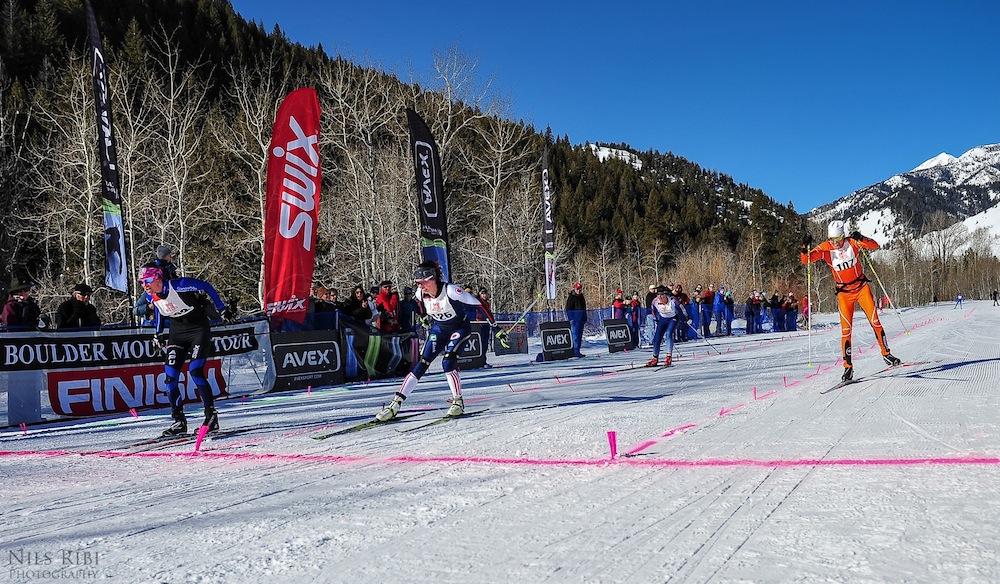
Tag: Boulder Mountain Tour

  • “Coming Together Gives Us All A Lift.” The Power And Purpose Of Bob Rosso

    “Coming Together Gives Us All A Lift.” The Power And Purpose Of Bob Rosso

    TR factor.

    It’s facing all of us. It is just that not all of us factor in time remaining in our day-to-day lives.

    For Bob Rosso, the TR factor has been a constant and longtime motivator in how he lives his life. And since receiving a diagnosis of dementia three years ago, Rosso leans hard into this formula, endeavoring to live, love, and enjoy life. We could say even more than he did before, but it is impossible. If enthusiasm has a poster boy, it is Bob Rosso – in full color.

    Now 75, Bob’s energy and zest for life remain at a full boil for a myriad of friends and interests. Or, in the phraseology and philosophy of Spinal Tap, “These go to 11.”

    Born and raised in Southern California, Bob grew up on Lido Island in Newport Beach.

    He recounts, “At that time, it was a classic little beach community. We, my older brother and younger sister were outside swimming and surfing day in and out. I did a little school on the side. I was an average high school student. I think I was playing so hard and doing so many sports in high school that I did not do as well as when I went to college. I really took off then.”

    Drawn to Long Beach State to compete for famed coach Don Gambrill, Bob became an All-American swimmer. Now in the Hall of Fame, Gambrill’s stable of swimmers is a veritable Calumet, with nine-time Olympic champion Mark Spitz, Matt Biondi, and Sharon Stouder-Clark, among others.

    Bob’s maternal grandfather founded Meeks Bay Resort at Lake Tahoe, and the family would spend every summer there. In the 50s and 60s, California’s wide-open lands offered glorious opportunities for skiing, climbing, hiking, surfing, and biking, and Bob embraced all of them, including rock climbing in Yosemite in the 60s. He funded his forays as a lifeguard on the Pacific Ocean for ten years during high school and college and working in a ski shop.

    “To this day, I cannot go someplace where I am not watching the water. It’s an instinctive thing. You never lose that sense of watching the ocean. I have had quite a few rescues when I have been somewhere else because people aren’t aware of what causes the currents and pushes you out,” Bob says.

    Bob was lured away from Southern California by the promise of an uncrowded winter nirvana replete with powder skiing and babes – in that order.

    A lifeguard I worked with took the winter off and came back raving about Sun Valley. The powder skiing and lack of crowds appealed to me because I am a non-crowd type of guy,” Bob recounts.

    “I came up in the fall of 1971 and found a house for three other guys who would join me. I walked into the Country Kitchen, which was owned by Bob Doan and was kind of a hippie health food restaurant and started off as a dishwasher and ended up as a cook. Rob Kiesel and Bob Gorton of Boise started Snug Mountaineering, so I got a job with them, too.”

    In the early seventies, alpine ski racer turned nordic skier Rob Kiesel of Ogden was in lockstep with the famed Leif Odmark in changing the alpine-centric ski culture of Sun Valley to include cross-country skiing. Odmark founded the Sun Valley Cross Country Ski Center, and Kiesel approached the nascent Sun Valley Ski Education Foundation about expanding their junior ski program to include a cross-country ski program. He tapped his young climbing buddy, Bob, as his assistant coach.

    “I didn’t know anything about cross-country skiing at the time, including how to ski, but it was a whole lot of fun. A lot of the kids we had then still live in the community. That was 1972. Bridget (Sewell) Kapala nicknamed me Hummingbird Man because I was all over the place. I could never sit still,” Bob says with a laugh.

    You could say Bob hit the love lottery when he met Kate Karges, a student at Colorado State University in Fort Collins, who was camping with a friend in Adams Gulch when she and Bob met in the summer of 1972. They began dating, eventually marrying in 1977, and went on to have one son, Stephen, who is now a lineman for Lower Valley Power in Jackson Hole.
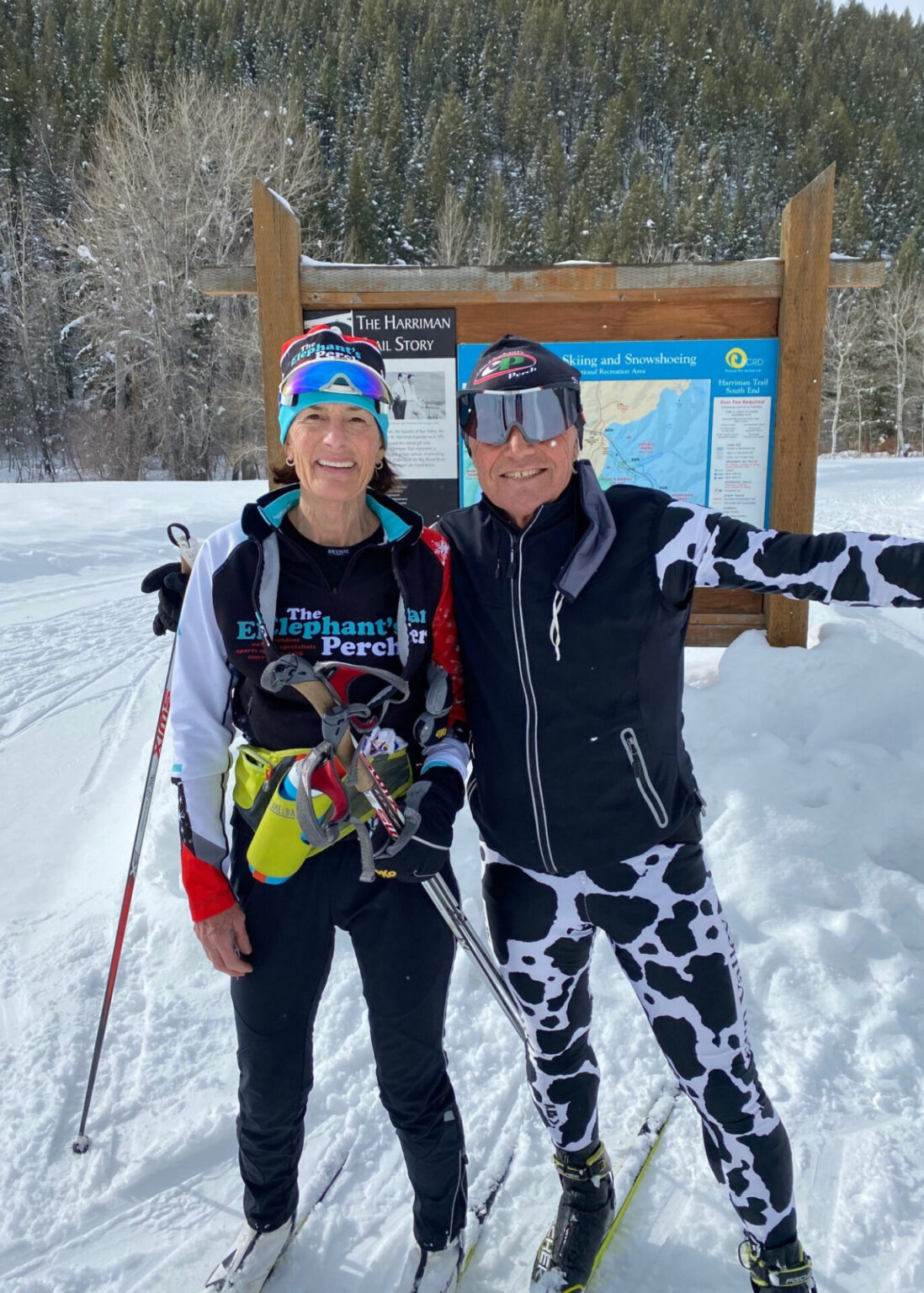
    Kate and Bob Rosso participating in the 2021 Virtually Amazing Zions Bank Boulder Mountain Tour. Photos by Nils Ribi.

    Another endeavor Kiesel talked Bob into being part of was helping organize a race that turned out to be the Boulder Mountain Tour.

    “We set a classic ski course with a snowmobile along the berm on the highway. It was a complete blizzard the first year. You had to cross the highway five or six times, and it took three or four hours to complete the race,” he recounts.

    As with any labor of love, Bob has served in every possible role and worked every aspect of the race from Chief of Course, to board member, to construction of the finish area, to storing tents, equipment and water jugs at The Perch. There is not an facet of the race – then or now – that do not have Bob’s fingerprints on it. He even won the race in 1974.

    Once, while enjoying a post-event beer at El Torito Restaurant in Elkhorn, where Kate worked, Bob’s life took another fortuitous turn.

    “I was drinking a few post-race beers with Jim Bombard, the K2 rep at the time, and he said, ‘you have to open your own business.’ That planted the seed. That was early winter of 1975. We put together some money in two or three months and opened The Elephant’s Perch on April 1, 1976.”

    The pair drove to The North Face in San Francisco (they were friends of the men that started the company), loaded up $20,000 worth of climbing and mountaineering gear in the back of their truck, and never looked back. Well, maybe a bit, as the winter of 1977 was so dry the Boulder Mountain Tour wasn’t held, and 1978 wasn’t much snowier. But conditions – both weather-and-business wise – improved throughout the years, and in the 46 years the Rossos owned The Perch, it evolved into an iconic and valued fixture in the Ketchum community.

    Personally, Bob was and is a pillar of the community. A member of the Blaine County Recreation District’s board of directors for 20 years, he can count among his accomplishments permitting and building the bike path that spans 20 miles, Harriman Trail (in partnership with the US Forest Service), and the purchase and saving of historic Galena Lodge.

    Over the years, the Perch played host to upward of 20 events a year fueled largely by Bob’s interests. These include the Adams Gulch Fun Run, Backcountry Run, Shop to the Top, 10-Mile Run, Pin Binding Downhill, Classic Backwards Boulder Mountain Tour, Prairie Creek Snowmaker, Chamber Pot Relays, Baldy Snowshoe Challenge, Tri-Elephant-A-Thon Triathlon, Nappy’s Wednesday Night Rides, Town to Summit Road Race, South Valley Century Ride, Stanley to Lowman Overnight Tour, Ronde Von Ketchum 120k Bike Tour, Wagon Days Criterium, and sponsorship of the Boulder Mt. Tour, Galena Grinder and Snowball Special Fat Bike Race.
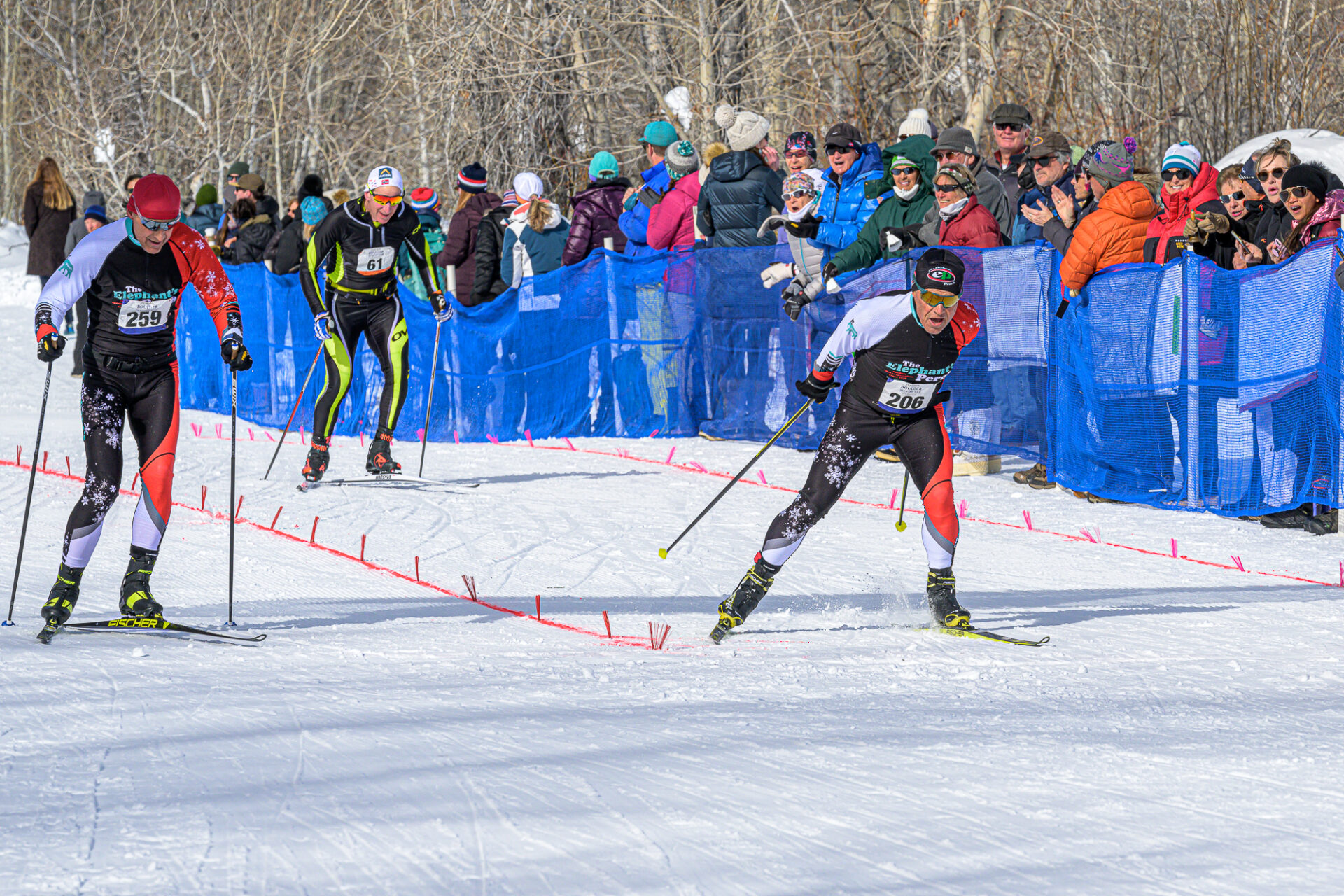
    Bob (right) and pal Kris Thoreson on the homestretch of the 2022 Zions Bank BMT.

    About six or seven years ago, Bob, Kate, and a few staff members began noticing differences in Bob. He needed help on the cash registers to ring up customers, or he would forget the steps to open the email. Trying to organize the events The Perch sponsored annually, such as the Adam’s Gulch Fun Run or Backcountry Run, became unwieldy.

    “There was a little bit of a dropoff,” Kate says. “His memory wasn’t quite as sharp. It took him longer to do things.”

    As with other highly-intelligent people who are able to compensate in other areas to deflect their cognitive decline, it wasn’t immediately apparent to Bob and Kate that he was in the early stages of dementia. In July of 2019, the pair attended a lecture on Alzheimer’s disease at St. Luke’s. They crossed paths with Randy Vawdrey, a certified nurse practitioner and researcher from Pocatello, who would be a key player in Bob’s efforts to stave off his memory decline.

    “He said that since Bob has both APO genes for dementia and Alzheimer’s, something could have triggered this,” Kate said. “Bob had two shoulder surgeries and general anesthesias before this…Randy said it could be a possibility.”

    They began working with Vawdrey and credited him and Dr. Amy Drumm in the Wood River Valley with – all things considered – the very good shape Bob is in now.

    “Some of the people diagnosed at the same time as Bob are not speaking right now. With Bob, there has been some decline, but it has leveled off. He takes a million supplements and tries to follow a Keto diet. Physically he is good,” Kate says. “I would say he can do more than 90 percent of what he could do. He is able to travel, and he is pretty happy, which isn’t always the case for people with dementia.

    Bob is succinct. “Hopefully, I am more in the moment. I am not upset about it – ever. This is how life is. This is what you sign up for.”

    Always a willing participant around the house with cooking, cleaning, and doing his own laundry, Bob endeavors to still try and help as much as possible. The pair recount when Bob recently filled up their fancy coffee grinder, and Kate made herself a cup of coffee.

    “It was really crappy coffee, and I took a closer look and realized the grinder was full of dog food. It doesn’t happen all the time, but when it does, you can’t help but laugh,” Kate says.

    They both say socialization is essential and seek out the company of friends regularly.

    “We were just in Boise with good friends from Southern California who have been friends for 50 years. We laughed so hard we couldn’t breathe. Those are the kinds of things that plug you in,” Bob says.

    As one of the founders and first organizer of the Boulder Mountain Tour, we felt it more than fitting to honor Bob at the event’s 50th anniversary on February 4, 2023. The fact that we are still skiing down the Harriman Trail on the first Saturday in February is primarily due to the efforts and inspiration of Bob Rosso.

    “What I love about the Boulder is the power of the race,” Bob says. “You have racers from the area, from Boise, from all over the United States, and they come together and have this unified experience, and the energy grows and grows into this very powerful thing.

    “Coming together gives us all a lift.”

  • A Beginner’s Guide: The Boulder Mountain Tour

    A Beginner’s Guide: The Boulder Mountain Tour


    Sponsored Content

    A certain amount of pre-race nerves can be beneficial. A sharpened central nervous system can rev the body for a 34-kilometer skate race. But the jitters can distract. There’s the possibility of low-quality sleep. Time wasted on variables out of your control, or, perhaps, beyond your budgetary control — cross-country ski racing can get pricey fast. 

    In this guide, catering to BMT neophytes, we attempt to take the edge off and foster fun in your race day experience. 

    New to the BMT? Have fun. (Photo: BMT)


    For starters, the BMT is considered a skate race. But really, if you are new to skating and want to classic ski instead, you can do that. The BMT groomers set a single classic track for all 34 k. You are welcome to stride this event. You’ll just be categorized as a skater – no classic specific division here. The BMT also welcomes adaptive athletes. That goes for the full 34 k version or the Half Boulder 15 k. 

    In our attempt to render a many-moving-parts race down to a few key items, here are the basic rules. 

    Rule Number One: The Altitude

    The race begins at Galena Lodge sitting at 7,400 feet in elevation. For denizens of Leadville, Colorado (think 10,150 feet), or any other high mountain locale, 7,400 feet may not elicit even a small gasp. That said, err on the side of caution if you are heading to Sun Valley from a lower altitude.

    We are not so much concerned with altitude sickness as we are with potentially red-lining the engine out of the starting gates. 

    Up at Galena, there’s no massive hill to climb. However, a short climb near the start could present problems. Skiers reach the hill shortly before linking up with the Harriman trail — that’s the main trail artery racers take to the finish line. Rev too much out the gate, and you risk pushing yourself into leg-burn territory. And without proper acclimatization, you’ll bump beyond the redline sooner than you would at lower elevations. 

    How should you acclimatize? One idea is to arrive three days before the race goes down on Saturday, Feb. 1. Three nights in Sun Valley affords an athlete ample time to adjust to lower oxygen concentrations. We are not talking Everest here. But fun is fun and no one wants to be gasping.  

    On the other hand, you could try to “beat” the altitude. Arrive Friday, race Saturday, and cross fingers. Either way, don’t start the race too hot. Build into it. 

    Rule Two: Stay Warm

    Subzero is not how you want to feel. “Don’t get to the start so early you are a Popsicle when you start,” Morgan Arritola, former speedy skier (U.S. Ski Team member and former Sun Valley local), said. “Wear a ton of clothes and leave them. You will get them back. Use hand warmers, toe warmers, etc. if need be. Cold muscles just don’t work well so give yourself every opportunity to have a great race.”

    Like any other place in the Rockies, it can get cold. If the weather forecast predicts winds and an Arctic chill, plan ahead. Invest in a good wind-proof base layer — top and bottom if it looks brrrrr cold. If you have not already taken the plunge, buy a pair of wind briefs. These can be priceless. Enough said.   

    Rule Two: Stay Ahead with Nutrition 

    Arritola reminds folks to carry their own sports drink and fuel. The organizers provide three aid stations with liquid and solid nutrition. But Arritola wisely notes that self-sufficiency affords new racers unfamiliar with how their body might respond to an on-snow race effort the luxury of having fuel whenever they might need it. Sometimes aid stations can be busy. If you are feeling spry and want to keep the pace up, you’ll have food handy if you ski on by. 

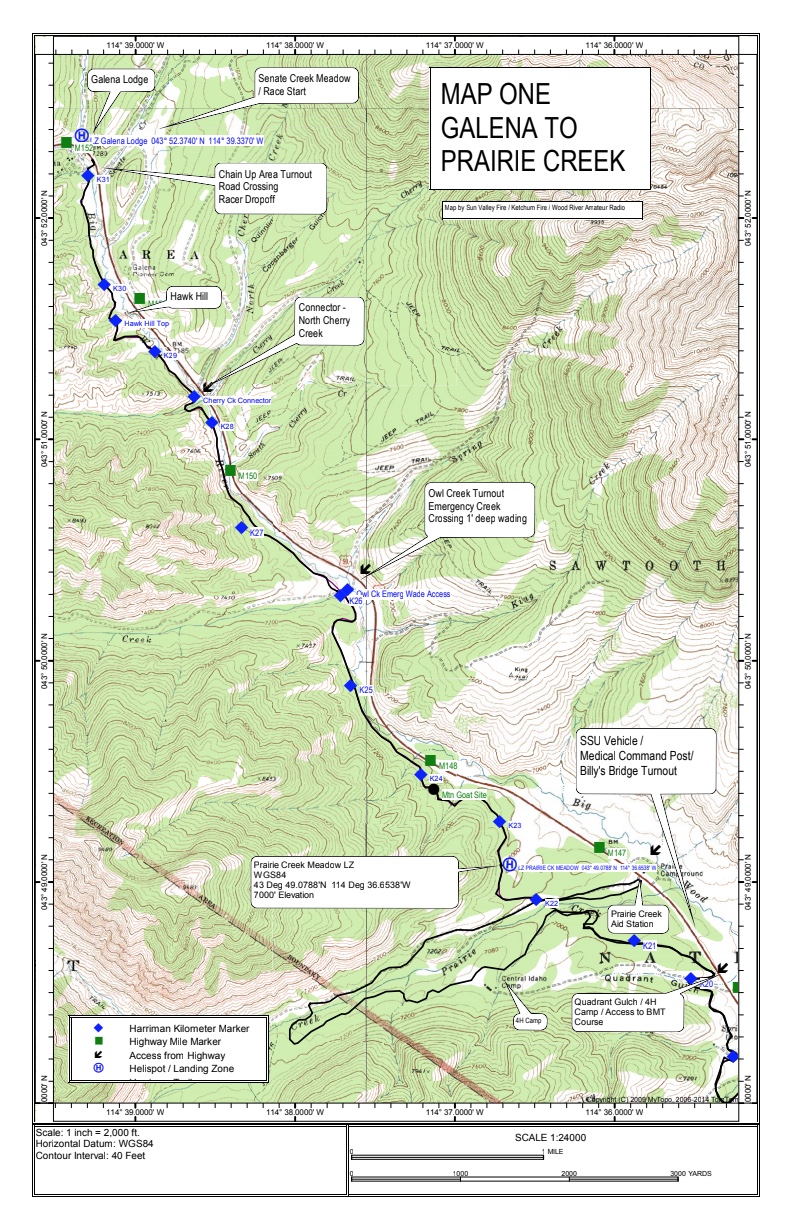
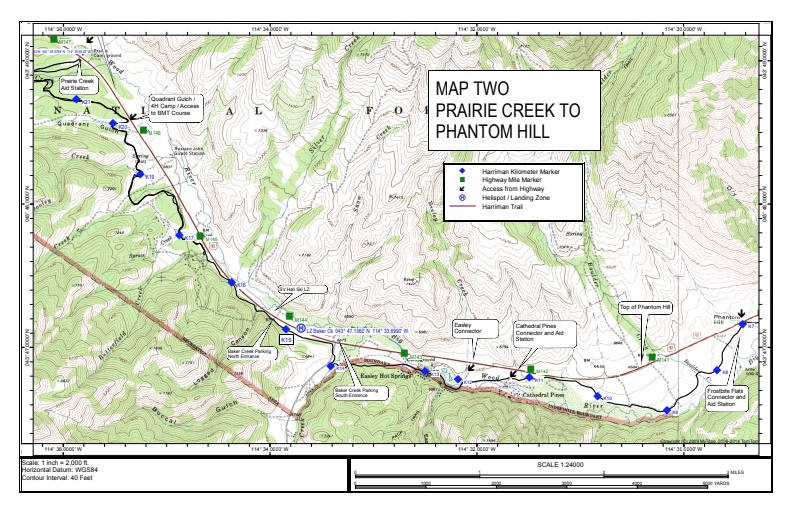
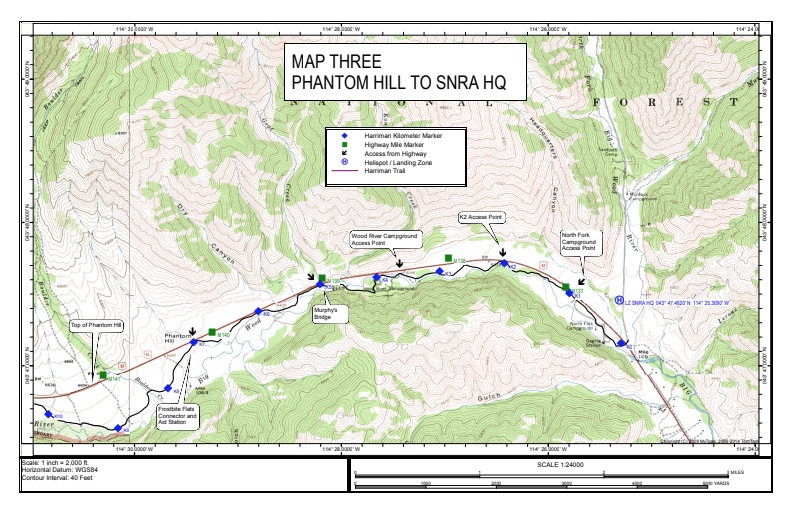
    Rule Three: Break Down the Course into Three Distinct Parts  (See Course Topo Map)

    It seems every discipline likes a tidy construct of breaking things into threes. The BMT course is no different. The rule of thirds, in this case, applies to three distinct parts of the course. (On the course maps, K 30, for example, means 30 kilometers remaining to the finish.) 


    Galena to Prairie Creek

    This section takes skiers from the start to the Prairie Creek aid station. Here, at the aid station, if you are racing the full BMT, you’ll have 22 k to go.

    Back to the start at Galena. We’ve already mentioned this, but it’s worth hearing again: don’t start too hot. There’s something else to keep in mind, as this is a mass start event (although skiers are seeded in waves). Stay chill. Stay upright. Keep poles, skis, and the body intact. 

    “The start can be chaos. Expect it. Don’t let people skiing in close proximity get you in a panic,” advises Arritola. “I would ‘shorten’ my technique to make sure your poles don’t get stepped on or broken, or your skis skied over. You want to stay upright. Think of it like a game of Frogger and be ready to react.”

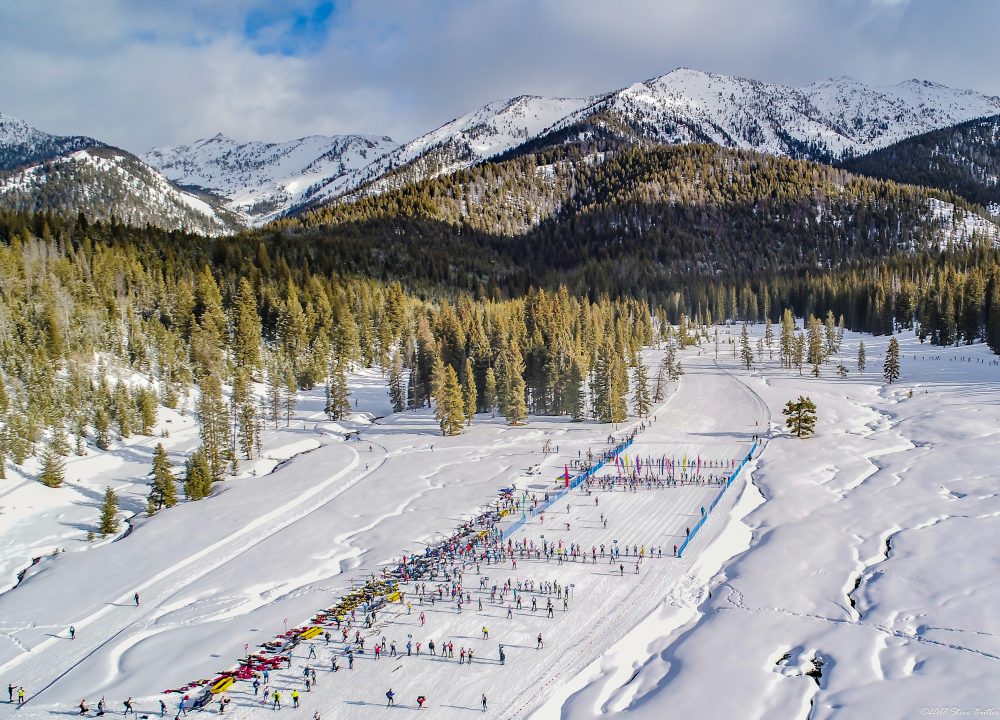
    The start area of the BMT near Galena Lodge. The course runs slightly uphill from the start towards the mountains. It then takes a hard right to remain on the edge of the meadow. (Photo: BMT)

    Another BMT veteran and retired professional cross-country skier who resides in Sun Valley, Matt Gelso, said skiers about to merge onto the Harriman trail, a few kilometers after the start, should remain aware. The stream of skiers must cross the main road heading up to Galena Pass. The makeshift road crossing can become sugary snow. First-timers should note that snow conditions across the road can feel less stable underfoot. Stay heads up, Gelso noted. The trail leading into the road crossing also pinches down. Skiers can become bottle-necked there. The wise thing to do when approaching the crossing is to check your speed and be aware of the scrum around you. 

    Post-road crossing, you’re skiing on the main Harriman trail. It’s still a long down valley stretch to the finish.

    The next feature you can expect some action is Hawk Hill with 29.5 ks to go. This can be a punchy climb for many, meaning you’ll be transitioning from V2 to V1 — hill-climbing mode. Expect the mass of skiers around you to get backed up. Although not for too long. Hawk Hill is a few hundred meters in length, don’t freak out about being blocked and start wasting energy trying to move around the jam, it’s wise to stay calm and keep the pace sustainable. 

    Over the crest, as skiers gain speed, Arritola reminded us that exercising caution can be more efficient in the long-term. “If you have to slow down, it’s better to slow down early so you carry some speed out of the bottom of the hill.” 

    The feed station at Prairie Creek is the next heads-up area. Around 21.7 k remaining, skiers might bunch again in the run-up to the feed station. “There is nothing really technical but people panicking for feeds, poles flying all over, etc. can make it a challenge,” Arritola said.

    Post-feed, some skiers can get caught off guard by the climb that begins after the Prairie Creek aid station. It’s nothing totally lung-busting, but it is a climb where Gelso said he’s seen many skiers fall off. That’s coming from someone who many times was the instigator. In other words, he’s done the dropping. So keep the pace tempered here.   


    Prairie to Phantom Hill

    This section runs from roughly kilometer 21 to kilometer 7. Arritola calls this terrain “pretty casual.” Emerging skiers, those becoming proficient in riding a flat ski, will rely on V2 and V2 alternate here. “Try and relax and get into a rhythm,” advises Arritola. 

    The terrain begins to open up after at K 20. Think skiing through wide-open meadows, riparian zone shrubs, and snow-covered sage. With the widening of the valley and sparser tree cover comes exposure. Colder temperatures and steady headwinds are not uncommon. If the forecast calls for frigid air and a stiff breeze, this is where the wind briefs come into play. (Thank you BMT beginner’s guide.)

    The gradual long climb near K 19. Inattentive skiing here might get you gapped. (Photo: BMT)

    Another low-cost high-reward piece of clothing is the now ubiquitous Buff or neck-gaiter. Hard to believe that not such a long time ago, Buffs were odd-looking. Now they are part of the essential cross-country costume. The Buff comes in handy on this section as an extra insulating piece. In fact, on the course map, you’ll note an important landmark: Frostbite Flat around K 7. Be prepared. Stay warm.

    Back to the course. At K 19, across from the Russian John Guard Station, skiers engage with another hill. Nothing too steep. But if you are in race mode, meaning you are fighting for places and are feeling good, “is it a spot where inattentive skiing will get you gapped,” Gelso explained. “It’s not really that people try to get gaps there, it just happens. It’s unassuming, but it bites people.” 

    There’s your fair warning for the terrain near K 19.


    Phantom Hill to SNRA (The Finish)

    “Again, this is a very gentle grade, mostly V2 and V2 alternate,” Arritola said. “If you can get in a group with a steady pace that can be a good way to save a little energy. This section can also be very, very cold along the river. It just depends on the year but sitting in behind people can help if it is cold. Otherwise, enjoy the ride home and cross the finish line with nothing left!”

    Arritola brings up a great point. With the valley widening after K 14, it might be time to find a draft or a group to work with. Use others strategically in the event of a headwind. And, if you are feeling nimble and strong, why not take a chance and pull in front. But, and this is a big reminder, don’t pull for too long. The object is to have a good experience and come back for more with a BMT under your belt. 

    Before we forget, don’t be fooled by this common BMT axiom: “It’s a downhill course”. Those are foolish words to race and pace by.

    Don’t get lulled into thinking gravity is your unabashed friend. Yes, this is a trending downhill race, as it loses 1,150 feet in elevation. It is a working course. Trending downhill does not mean you’ll be in a tuck or “resting” for any significant amount of time. 

    This is a 34 k race at altitude. 

    Which is a reminder of something else Gelso mentioned. If this is your first time at the BMT, or your first go at a long-range skate race and you are coming from another sport, say road cycling, where real-time race data like power and heart rate often dictate effort, ‘take your heart rate monitor off,” said Gelso. 

    If you are ready, it may be time to go hard. But it also might be time to hear the snow under your skis and to revel in the down valley spectacle that is the BMT. 

    Waxing and Skis

    Skiing can be fickle. Good skis, good wax, bad skis, bad wax are things you’ll surely hear about as you bus up to Galena. Try to tune that out. Our advice: find a pair of skis you enjoy skiing on. A pair that remains stable underfoot in most conditions.

    Cold snow is not uncommon in the Big Wood River Valley. Having a ski that glides in cold conditions can add to the fun factor. But if you don’t have a cold specific ski, wait a year, then maybe take the ski-quiver dive. Either way, prep your skis with a hard green wax, and then throw a mid-cold blue paraffin on top. 

    That’s basic, but it should get you from Galena to SNRA with a smile. Keep in mind though, cold cold snow is slow slow snow. 

    What if it calls for warm conditions, trending towards freezing or over? That’s where having a local shop buff your skis might pay dividends. This is not the beginner’s guide to really mine the depths of ski flex, wax, grinds, and structure. In fact, if you don’t know what these terms are yet — good on you. If you enjoy the BMT, you’ll be knee-deep in cross-country skiing nomenclature soon. Email us, we can send you in the right direction. 

    But, if it looks warm, the most basic thing is to add a violet paraffin wax to your bases. If you want to get more exotic, then it’s time for the experts. That will cost some coin, but some smiles have a price.   

    The BMT is also not a one pony event. The week-long run-up to the BMT is an amazing opportunity for the neophyte cross-country ski racer to go deep. 

    On January 25, the locals throw a benefit party to support the local trails. 

    Wednesday, January 29 features the NordicTown USA Sprints followed by a Kickoff Party and Sprint Awards. Trust us — you’ll love this. 

    Thursday January 30 is time for the SVSEF Gold Team Race Clinic. This is free to BMT participants, but priceless if you are looking for some technique cues. 

    Friday, January 31, Race Bag/Packet Pickup and BMT Expo

    Saturday, February 1 — BMT race day.

    Saturday, February 1 BMT Block Party and Awards Bash (Ketchum Town Square).

    Sunday, February 2 Demo Day and Barbecue at the Sun Valley Nordic Center.

    You can find a detailed Sun Valley Nordic Festival schedule here


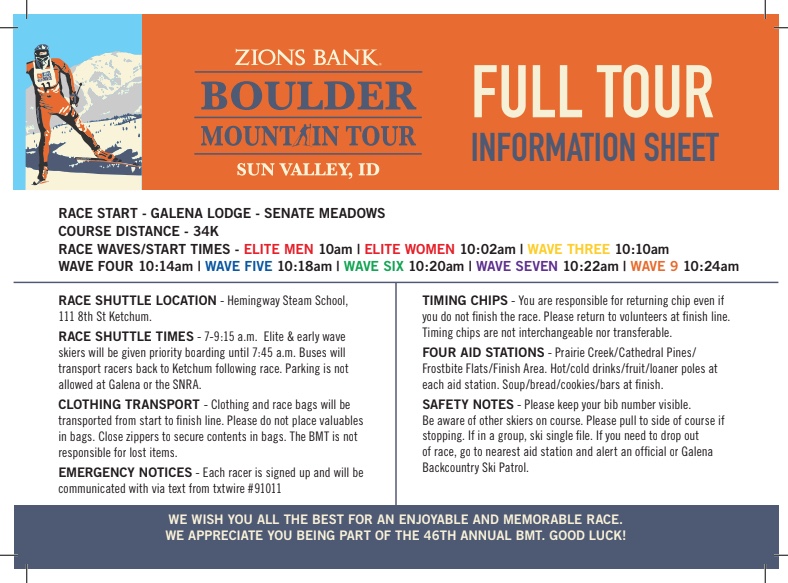
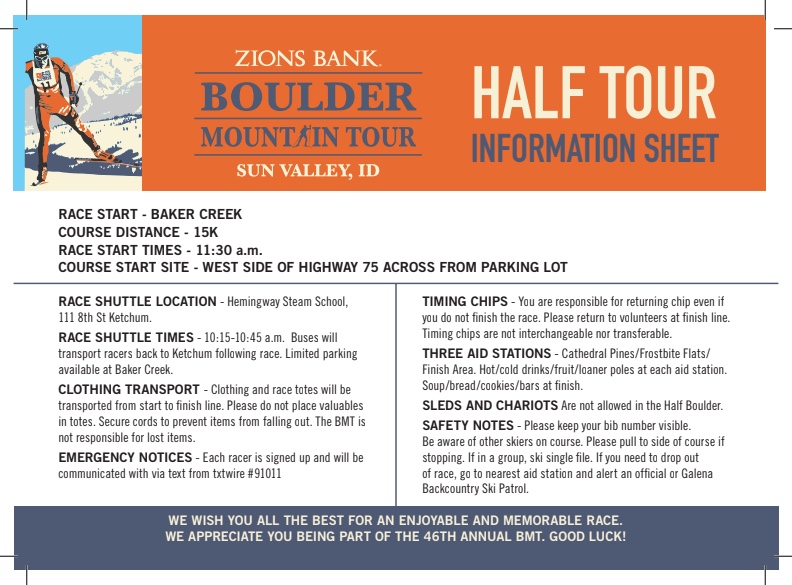
    Basic Schedules for the Full and Half Boulder Mountain Tours

  • A New Start For the Methow Valley in its Quest for a Signature Race

    A New Start For the Methow Valley in its Quest for a Signature Race

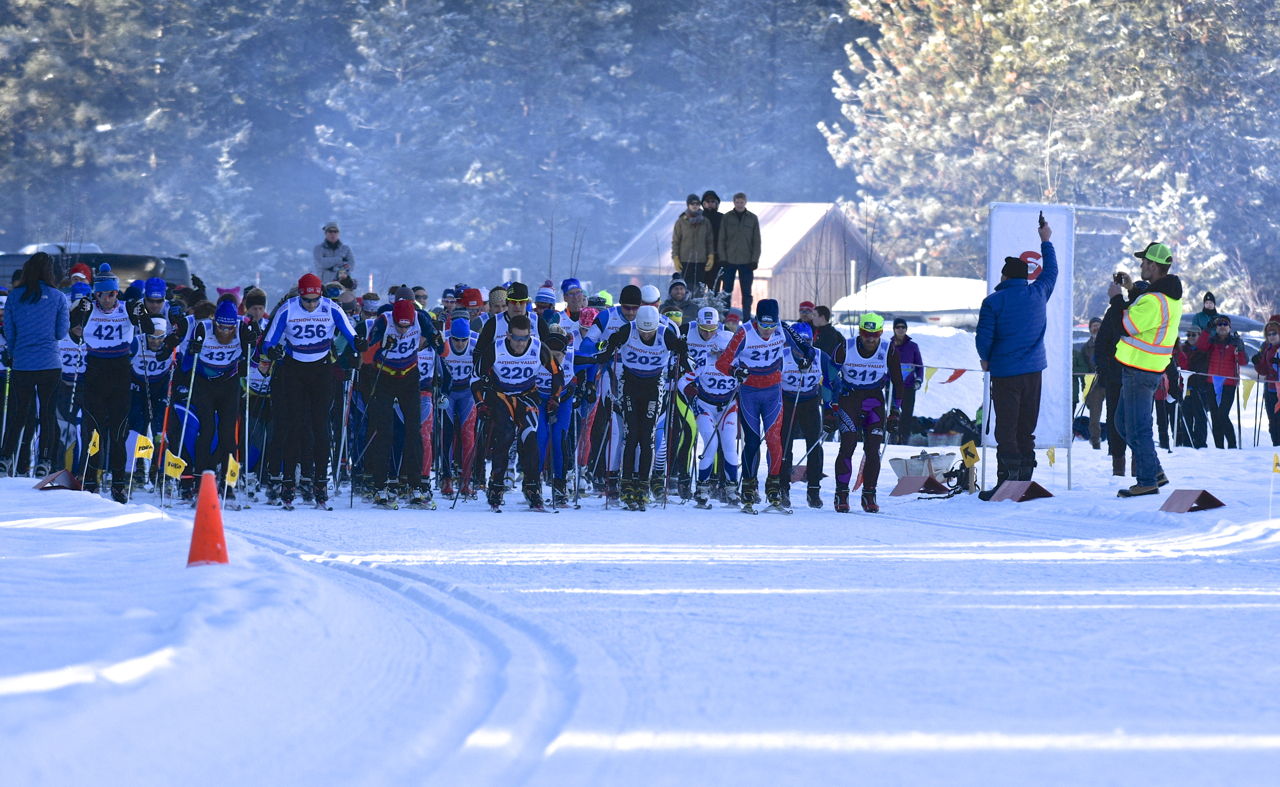
    Ready, set, go: racers at the start of the skate portion of the 2018 Methow Pursuit. (Photo: Methow Trails)

    Washington’s Methow Valley is the literal end of the road in winter. There’s one way in from the south.  There’s route 20, a sinuous side spur plunging down from Omak in the Okanogan Highlands to the Methow’s eastern edge. Otherwise, travel by car terminates just beyond Mazama — the small town nestled in the valley’s north.   

    The Methow’s charm remains its solitude and mellowed pace. Despite the wifi and cell service, there’s the real sense of being unplugged.

    For nordic skiers, that remoteness coupled with the Methow’s epic skiing make it paradise. Regionally, it’s hard to argue any other nordic ski destination matches the raw number of kilometers, terrain, and vibe etched into the Methow’s DNA.  

    Despite those travel brochure-worthy qualities, the cadre of skiers residing in the region have struggled to create a signature cross-country race event. By signature event, we’re talking races like Sun Valley’s Boulder Mountain Tour, Craftsbury’s storied marathon, and the behemoth American Birkebeiner which stands alone in terms of its draw.

    “In the early 90’s is when I think the Methow Pursuit first started,” said Kent Murdoch, a long time Methow skier who bounces between homes outside Seattle and the Methow. “The first iteration of that long distance race was a point to point from Cub Creek, up and over the Rendezvous pass, and dropping down into Mazama to finish.”

    That 42 kilometer skate race featured gut-punching climbs matched with a never-ending technical descent. The second day’s classic pursuit threaded from Mazama to Winthrop on the hallmark Community trail.

    “It was essentially a double pole race,” added Murdoch. “But it was pretty popular for the people that are established racers that knew about it.”

    Periodically, stakeholders within the community have attempted to recreate the concept of a must-race event. In a place defined in winter as much as the Methow is by nordic skiing, one would assume a marathon type race there would be an annual pilgrimage for many.

    That is not to say efforts failed. It is to say a rethink was due if success is measured by drawing a broad spectrum of the nordic community.

    “I knew the event had struggled over the years and as I dove into planning for it, I quickly realized why,” said Adrienne Schaefer, the Partnership Manager for Methow Trails. “In an effort to have something for everyone, the event had grown into a somewhat complicated format, which was fine for skiers who were familiar with racing but seemed hard to navigate for someone who had never entered a race and didn’t actually know what a loppet even was. Numbers for last year’s Pursuit were close to 70 on Saturday and around 35 on Sunday. It was clear that something needed to change.”

    Last spring, the race reboot began.  

    “We had just completed our Sunflower Marathon, Half Marathon and Relay and had 1,100 runners at the event,” Schaefer said. “The question was, why not just do a winter version of the Sunflower?”

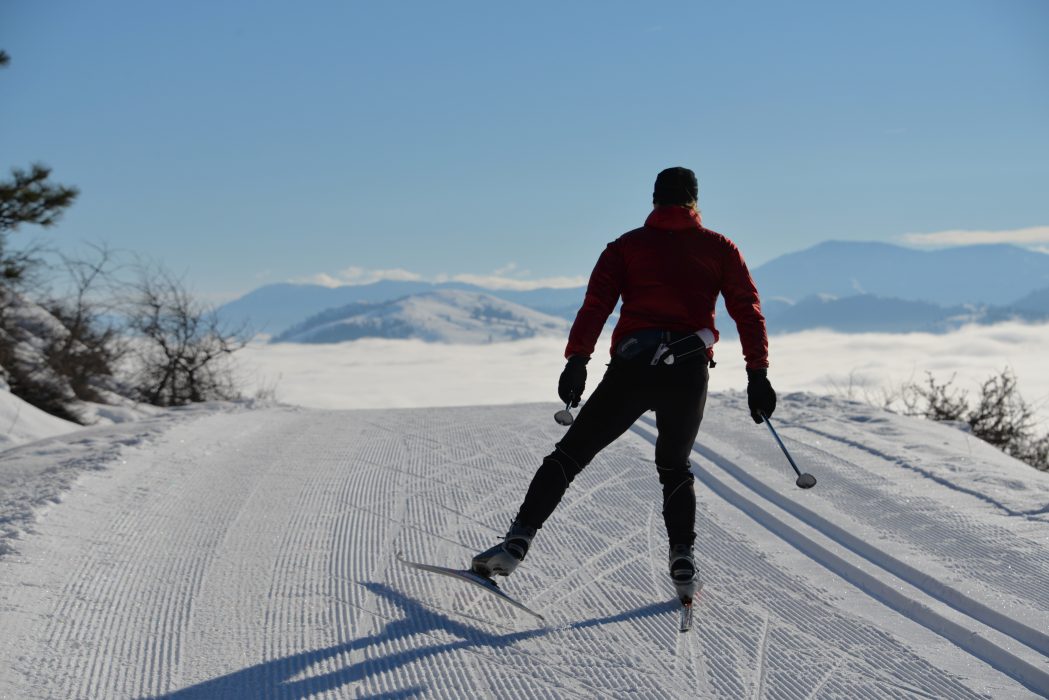
    Skiing above the fog and under a big sky in the Methow Valley. (Photo: Methow Trails)

    The Sunflower is a five-leg trail running race connecting Mazama on the valley’s north end to Twisp in the south. Participants have the option of running the marathon solo or as part of a relay team. Relay teams consist of two to five participants. The half-marathon starts near Mazama and shares the same finish as the marathon. The end result is a race with enough options to draw the hardcore and recreationist.

    What Schaefer saw in the success of the Sunflower was its accessibility. A concept easily applied to the cross-country ski version of the event.

    Murdoch was equally invested in formulating a successful winter-edition model of the Sunflower.

    “The area really warrants putting something like this on,” Murdoch said. “A few friends and I have been envisioning this for a few years and I am now on the Board for the ski team. I Have taken this as my main focus to not just build this race but eventually a week-long festival with multiple events. We want to appeal to people of all ages and skill levels.”

    On January 26, the Methow’s inaugural Ski to the Sun Marathon and Relay kicks off.

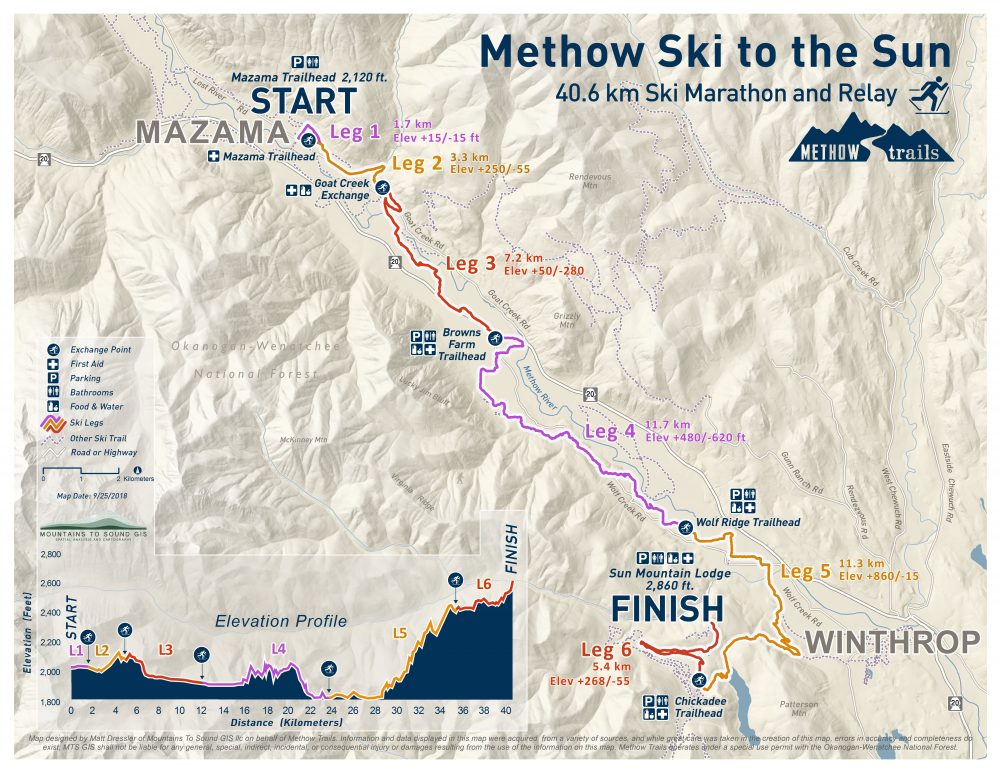
    Valley local Laura McCabe, a timeless podium magnet and herself fond of burly skis, along with Murdoch worked to piece together a course appealing to all comers. Beginning in Mazama, the envisioned course runs a solid 40.6 k for individual skiers. The relay is broken into six segments – teams may have between two to six members.

    For the first quarter, the race route streams the middle of the valley floor. At the end of the third leg, at 13 k, the course turns towards the west and trends to the rolling hills buffering the valley’s flanks. After approximately 28 k, the climbing begins towards the finish at Sun Mountain Lodge.

    “It is very skiable,” Murdoch added. “There is nothing in it that is, I think, that is going to turn anyone away purely based on difficulty. And it doesn’t have the technical descents. So technically it should be doable for a very large group of people. And for the people that are not interested in the climb, it is possible to get on a relay team. I think some of the legs are only 2 to 3 kilometers and are totally flat. So there is something for everyone.”

    Course map and profile : Methow Ski to the Sun Marathon and Relay.

    For skiers on the sharp end of the race, keen on fast splits and podiums, Murdoch believes the race will deliver. For those with an affinity for warm drinks and food as they tick off kilometers, organizers plan to staff numerous feed zones along the course to keep participants comfortable. In an appeal to families, racers 17 and under race for free.  The race is freestyle technique, but skiers may skate or classic. 

    “We know this is not going to happen overnight,” Murdoch said of the Methow’s desire to cement itself on the race circuit with the Ski to the Sun Marathon and Relay. “The basic answer to why we lack a signature event is that I don’t think we ever set out, in the beginning, to envision a course and the post-race dinner and award ceremonies and marketing especially. This is new to all of us. How to go about that. In previous years it was never really intended to be that kind of event. Now we have the energy.”

  • Testing, Choosing Race Skis & Positive Self-Talk

    (Complete e-blast)

    Nick Hendrickson racing at the Tour of China earlier this winter.

    Testing and Choosing Race Skis at the Boulder Mountain Tour 2017

    On a typical day in the Wood River Valley, you can pretty much bet on sunny days, cold nights, firm new snow and amazing grooming. But so far, this hasn’t been a typical year in Ketchum. Last week it didn’t seem to stop snowing, with about 20 inches accumulating on Friday and Saturday, it made for some interesting ski testing, and racing!

    Testing

    Whatever skis you may have in your bag, make sure the skis you test are all zeroed (same wax and prep on all). Test skis the day before race day on conditions that you think will mimic race conditions (as best as possible). The BMT is unique because the start and finish could be very different conditions, choose a spot to test skis that is going to give you an idea of what the snow will be up high at the start, and down at the finish. You can always test at multiple locations if you’re really keen, just be careful to not overthink things. This brings us to probably the most important part of ski testing, choosing which ski to race on.

    If you have a good quiver of skis, chances are you’ll have two pairs of skis that feel similar on testing day. This is when you go with your gut feeling. If you’re thinking that one ski feels better than the other, but just a little bit…choose the better ski! In the end, if your skis are really so similar, it will not make or break your race. Take the skis that feel slightly better and wax those up for race day. Another option is to race wax both pairs and test them the morning of the race on the course when you know what the weather and grooming is looking like on the race course. Whatever ski you end up choosing, be committed to that ski!

    Nick Hendrickson, 2016 Boulder Mountain Tour Champion

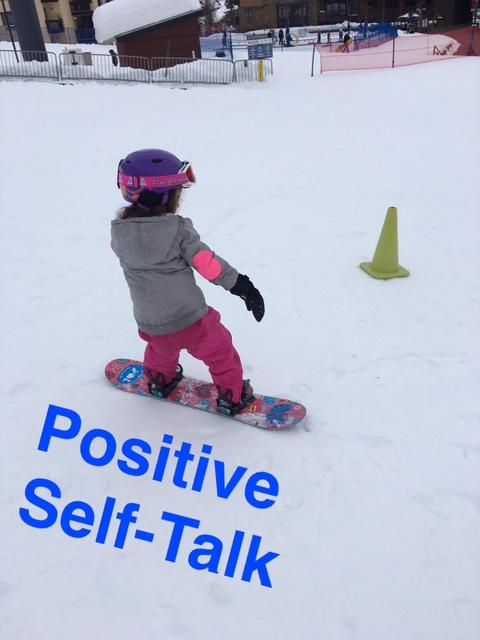
    This is an excellent article written for SBX racers, but should be read by anyone who wants to improve at anything and have a positive experience

    Self-Talk
    By Cody Brown
    Head SBX Coach SSWSC

    One of the most important yet often overlooked aspects of mental game and success in athletics is, “Self-Talk.” In this eblast we will review the key concepts and the role self-talk plays in athletic performance.

    With every new athlete that enters my program one of the first things we actively eliminate is negative self-talk. I often hear negative self-talk in response to feedback that is being provided to athletes. It usually sounds something like, “I am just not good at that technique” or “I just can’t do that.” The first thing that I do when I hear this kind of negativity is cut the athlete off to stop the negative self-talk. Then reframe the statement and try it again. The new statement would sound something like, “I am improving that technique,” or “that is something that I am working on getting better at.” If an athlete is verbally condemning their performance, it is almost a guarantee they are mentally doing it as well.

    The underlying principle behind self-talk and its effect on athletic performance is simple. Your sub-conscious mind is indifferent to results and is essentially programed by your conscious mind. One of the first psychologists to explain this notion was Maxwell Maltz in his book ‘Psycho-Cybernetics’ . For example, if you persistently say (verbally or mentally), “I am not good at pumping transitions” that is exactly what your sub-conscious mind is going to produce. If you reinforce to your sub-conscious mind positive statements such as “I am working on getting better at pumping transitions,” you will, over time produce that desired result. A rule of thumb if you find yourself negatively criticizing yourself is, in order to eliminate one negative thought, you need to mentally or verbally say a reframed positive statement four times. One technique many athletes use is a “power statement”. If they catch themselves being negatively critical of their performance mid-run, they can force out the negativity by mentally saying the power statement of their choice four times immediately after. This statement can be as simple as “my technique is excellent” or “I ride with power and finesse.”

    This also applies to outside influences as well. I make a conscious effort to speak to my athletes the same way I want them to speak to themselves. For instance, if an athlete is speed checking or slowing down before a jump, I will resist the temptation to say “don’t speed check!” But rather tell the athlete to “eliminate the speed check” or “after the first feature point it straight into the jump.” It is subtle but effective.

    To sum up self-talk in three simple steps:

    • Listen: Pay attention to what you are saying to yourself.
    • Reframe: If negative, reframe the statement to be positive.
    • Reinforce: Repeat the positive reframed statement.
    • Achieving your goals is a process, so be nice to yourself and enjoy the journey.

    USA Nordic signs strategic partnership with Toko

    Park City, January 15, 2017

    “USA Nordic is very pleased to announce that we will be working with Toko as our exclusive glove supplier for the Nordic Combined Team’s cross country racing for the 2017 season,” said Bill Demong, Executive Director of USA Nordic. “Toko has a long, distinguished history as one of the premiere Nordic brands and we are very excited to be working with their committed team.”

    Toko US Brand Manager Ian Harvey commented, “Bryan Fletcher lives in Heber, Utah close to me and I have been impressed with him and his other teammates’ professionalism and commitment. It is my pleasure to support them.”

    “Switching to Toko was a fantastic opportunity,” stated Taylor Fletcher, one of the top athletes on the USA Nordic Combined team. “The gloves have a great warmth to weight ratio. Due to their European sizing, the size increments are smaller such that we can achieve a perfect fit. I appreciate the personal touch that Ian has given the gloves as well as to our team”.

    USA Nordic is the parent organization for USA Nordic Combined and USA Ski Jumping and is based in Park City, Utah. To stay connected with all of the USA Nordic Combined athletes, please visit www.usanordic.org and subscribe to our newsletter!

    USA Nordic’s Bryan Fletcher, a top Nordic Combined skier wearing Toko profi gloves in Winter Warrior color

    (Complete e-blast)

  • Boulder Mountain Tour Wax Reports

    Toko logo

    (Original e-blast)

    Boulder Mountain Tour Wax Reports

    Team Gregg - logo

    BMT Co-Ed Team Sprint

    In our underlayer test we found LF Red to be the best. We ran a HF Blue/Red mix with Red JetStream 2.0 powder covered with Red JetStream 2.0 block.

    BMT

    We spent the week before the race testing in an inch or two of fresh snow and our ski results were consistent with the published Toko tip of using a slightly stiffer ski with a finer grind. We again found success with the same HF Blue/Red mix as in the sprint. JetStream Red 2.0 was a great powder choice since it has such an incredible range, although we both felt that our skis were fastest the final 15km. We top coated with a block roto corked in as well as liquid.

    Sun Valley SEF logo

    Testing up at Galena Lodge on Friday conditions were new soft snow with temperatures in the mid twenties, just a couple degrees cooler than were forecast for race day of the Boulder Mountain Tour. We found Toko LF Red running better than black waxes for a base layer, and HF Red also running very well. So that’s what we ran for base layers. The Red has a great broad range, and mixing yellow and AX134 in wasn’t helping. We received around another foot of wet snow overnight which made for one of the most challenging BMT’s ever! We powdered the skis morning of, with many of our athletes opting for White/Clear base skis. Toko Red Helix 2.0 won our top coat test which made for an easy last step after adding a broken structure.

    — Chris Mallory
    Sun Valley Gold Team Coach

    Why did we recommend avoiding soft skis in the Boulder Mountain Tour although the conditions were soft?

    When new snow is soft and dry, soft skis are generally very good. However when the new snow is wet and soft, there are other considerations to take into account. In soft new wet snow, two major considerations are flotation and moisture management.

    In new soft snow, when a person pushes off (skating), it is common for the skis to sink into the snow creating a braking effect and a huge energy loss. Using a stiffer ski (or at least avoiding a soft ski) minimizes this issue because it provides a stronger and wider platform that is less likely to sink and result in energy and speed loss.

    Unless new snow has a strong glaze or a strong moisture film on top, it is very sensitive to structure (especially in the mountain west). We have had this snow all winter and have gained a lot of experience with it. In addition to by using structure, moisture can also be managed by using a very hydrophobic wax (HF, JetStream, and HelX) and also a stiffer ski which reduces contact of the base on the snow. For this reason in these conditions, a ski with more camber was advantageous.

    I saw many people doing glide outs next to one another while tucking. In this deep loose new snow, this is not an effective way of comparing skis because the stiffer ski will almost certainly be much better when the camber is being worked (while skiing and pushing off). A softer ski would probably have been close in its gliding properties, but overall would have been poor comparatively.

    (Complete Toko e-blast)

  • After Mid-Season Reset, Caitlin Gregg Racing for Birkie History

    After Mid-Season Reset, Caitlin Gregg Racing for Birkie History

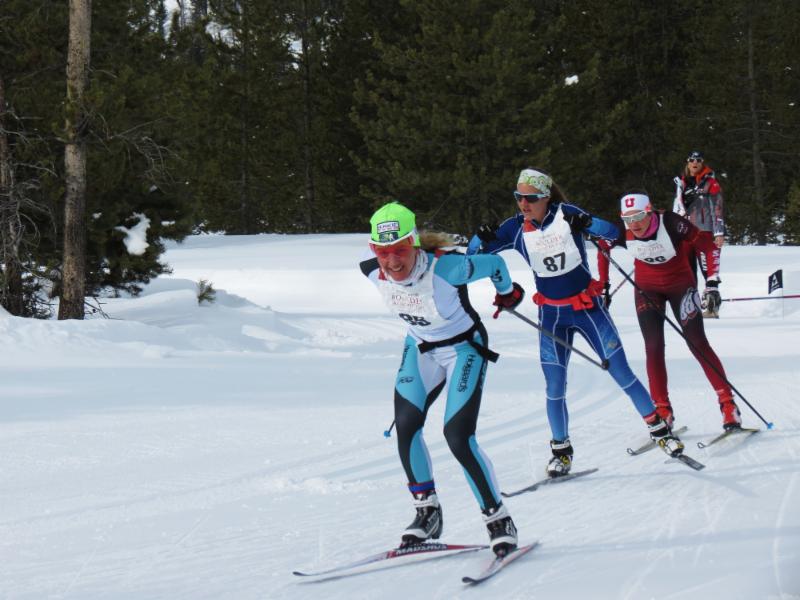
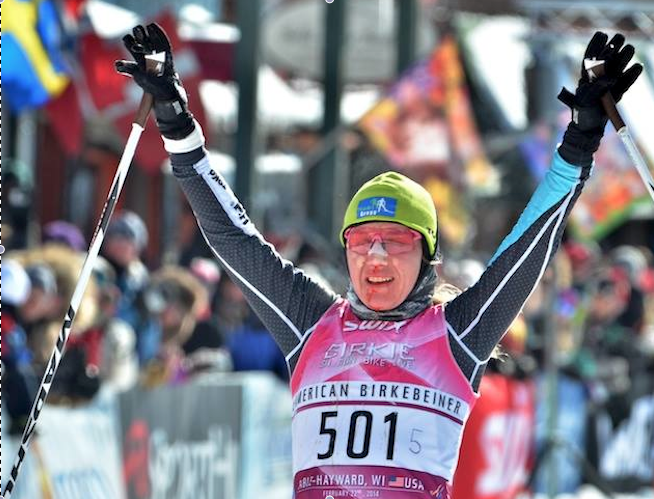
    Caitlin Gregg en route to winning the Boulder Mountain Tour in Sun Valley, Idaho, earlier this month.
    Caitlin Gregg (Team Gregg/U.S. Ski Team) en route to winning the Boulder Mountain Tour in Sun Valley, Idaho, earlier this month. (Photo: Toko)

    After winning World Championships bronze in 2015 and, after years of racing, a U.S. Ski Team nomination come spring, Caitlin Gregg nonetheless found herself out of sorts when the World Cup kicked off in November.

    “Basically since the first weekend on the World Cup I just felt off,” Gregg said in an interview on Wednesday. “I couldn’t really figure out what it was. I had some races where there were good moments, but I just wasn’t able to put it together and I didn’t feel like myself. I felt like something needed to be reset.”

    There were good moments: the classic leg of a skiathlon in Lillehammer, or parts of races in the Tour de Ski. Competing in the grueling ten-day race series for the first time, Gregg hoped that as the races piled up she would feel better and better in comparison to the field.

    But by the time the Tour was finished, and she crossed the line at the top of the Alpe Cermis in 42nd place overall out of 43 women’s finishers, Gregg was ready to do something differently.

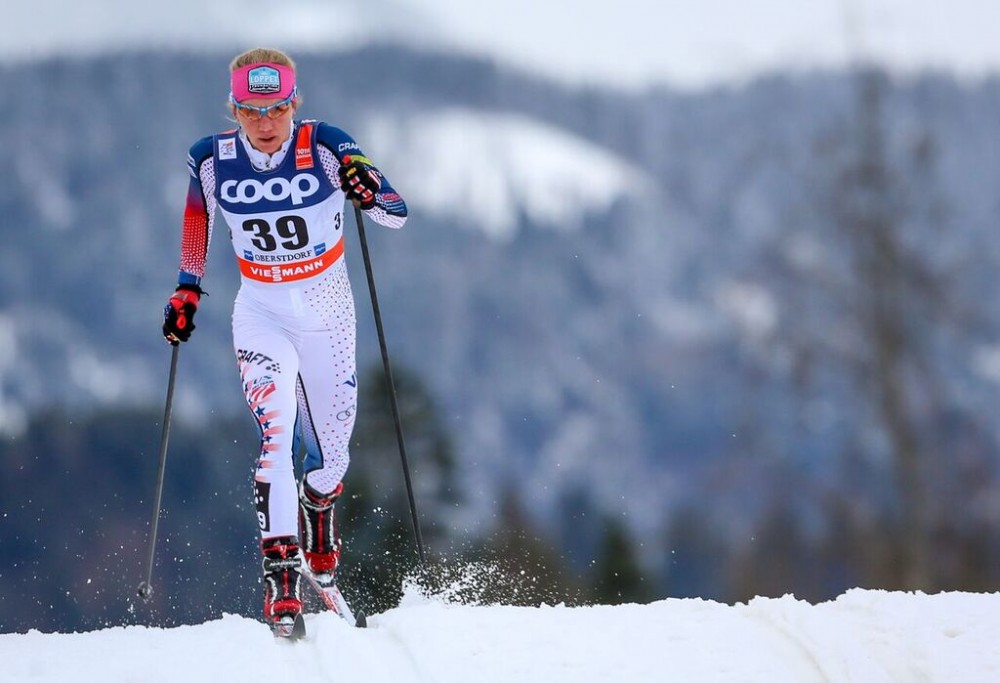
    Caitlin Gregg racing to 49th in the 10 k classic mass start at Stage 5 of the Tour de Ski in Oberstdorf, Germany. (Photo: Marcel Hilger)
    Caitlin Gregg racing to 49th in the 10 k classic mass start at Stage 5 of the Tour de Ski in Oberstdorf, Germany. (Photo: Marcel Hilger)

    “I made a tough decision – well, tough but not tough – to come back to the U.S.,” the Vermonter-turned-Minnesotan explained. “Tough in the sense that it’s always hard to leave opportunities for World Cup starts behind, but not so tough because I’m on the ‘B’ team and any extra day I’m over there, I’m paying for it.”

    While the other American finishers from the Tour headed to Seiser Alm, a high-elevation training site in Tyrolian Italy, Gregg went home to North Minneapolis.

    “I thought it would give me a good boost mentally and would give me the strength I needed for the next month of training,” Gregg said. “So I spent two weeks at home, and I worked at the Boys and Girls Club and skied with my Loppet Nordic Racing teammates and recharged, and then hit the ground running with my training.”

    It seems to have worked.

    “Since then, everything has been really good,” a relieved Gregg said. “My heart rates and lactates are back to normal and my energy feels great, so I’m pretty psyched.”

    The Greggs traveled to Wisconsin, mecca of the American Birkebeiner, to support the Birkie Tour; Caitlin’s husband Brian won the Seely Hills Classic.

    Then while Brian headed East for SuperTour racing, picking up three top-10’s in Lake Placid, N.Y., and Craftsbury, Vt., Caitlin Gregg stuck in the Midwest. She entered and won the Three Rivers Rennet in Bloomington, Minn., where she was fourth overall, and trained with her old friends.

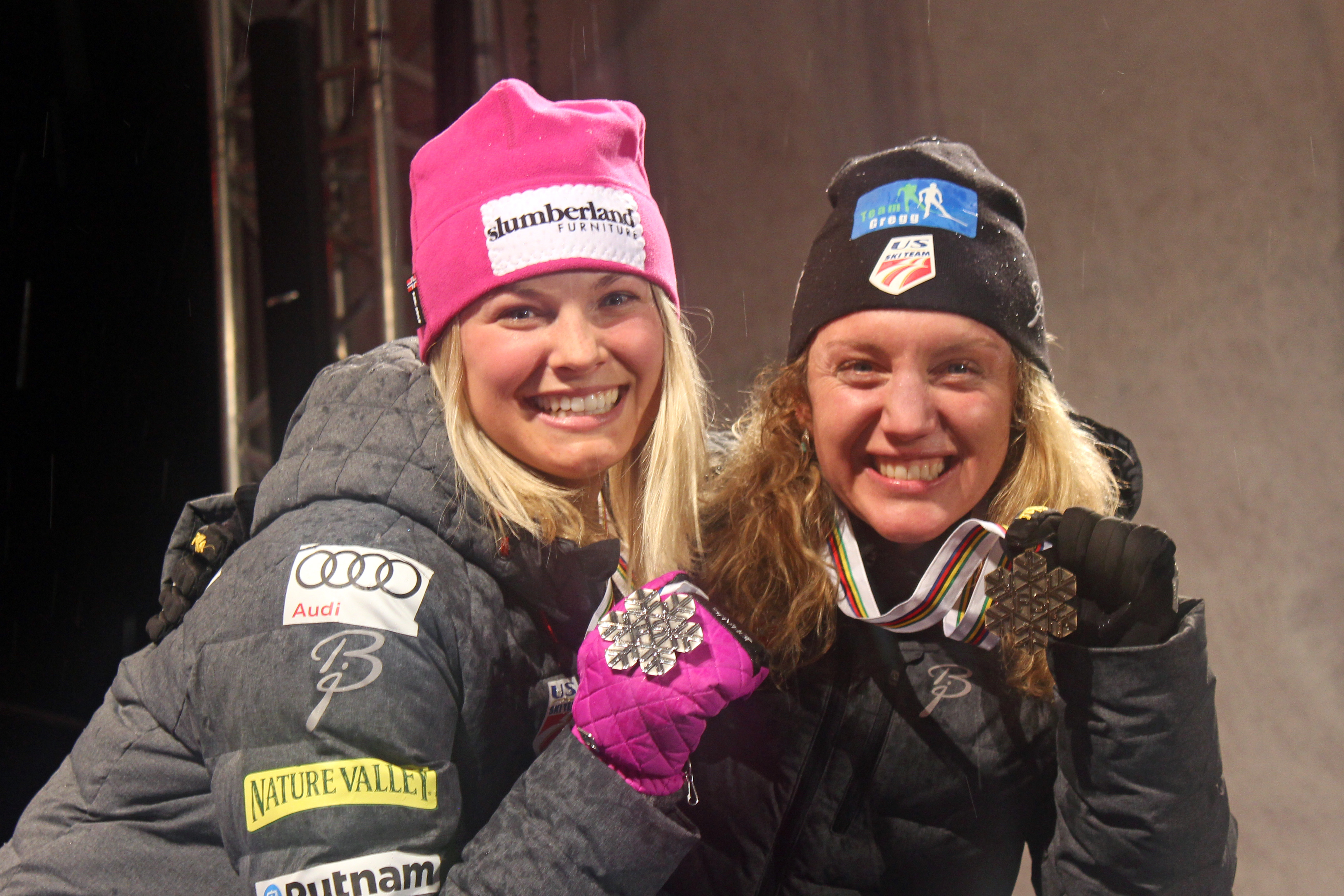
    Americans Jessie Diggins (l) and Caitlin Gregg (r) hold up their silver and bronze medals from the 10 k freestyle at the 2015 FIS Nordic World Ski Championships in Falun, Sweden.
    Americans Jessie Diggins (l) and Caitlin Gregg (r) hold up their silver and bronze medals from the 10 k freestyle at the 2015 FIS Nordic World Ski Championships in Falun, Sweden.

    “I think I’m a unique athlete in the sense that so much of my career has been through community involvement,” she said. “Not just financial support – that for sure – but honestly, I’ve trained with more juniors and masters than I have with elite racers. Whether it’s early morning intervals or training in the dark, or doing a local citizens’ race, that’s where I get my energy.”

    She also made a detour to race, and win, the Boulder Mountain Tour in Sun Valley, first training at elevation in Frisco, Colorado.

    Gregg is hoping that energy will carry her to another Birkie win on Saturday, and then on to the Ski Tour Canada, the final period of World Cup racing for the season.

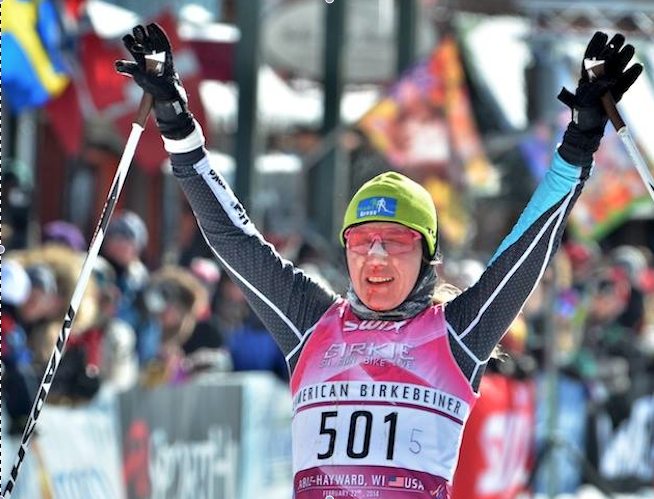
    “This year is big because I’m tied with an [Austrian] guy named Manfred Nagel for the most Birkie wins,” Gregg explained. “I think if I win I will be the all-time winningest, which is pretty cool. So I’m going to keep trying to do that for the rest of my life – they’re going to have to pull me off the Birkie trail some day. I’m actually standing on the trail right now.”

    Gregg won her third Birkie title in 2014, and missed the event the next year in preparation for World Champs – ultimately a successful move. But coming back to the race is clearly beyond exciting for one of its biggest cheerleaders.

    “The Birkie is huge because of the community,” Gregg said. “We’ve spent years here in Hayward… I know some elite racers on the World Cup don’t quite get it. But I think it is an event that brings home why people get excited for us when we have international success on the World Cup. Skiers here are psyched to be on your same equipment, or to know what your latest modes of training are, or the heart rate variability stuff, or what your drink mix is for the Birkie. It really brings home the sense that there’s an awesome ski community here.”

    Caitlin Gregg, winner of a particularly frigid 2014 Birkie. (Photo: American Birkebeiner Foundation)
    Caitlin Gregg, winner of a particularly frigid 2014 Birkie. (Photo: American Birkebeiner Foundation)

    In the end, Gregg plans for this to be one more season where the Birkie fits in well with her World Cup racing goals.

    “It’s funny because the Birkie motto is Ski, Run, Bike, Live, and it really is part of my life,” she said. “Sometimes the Birkie is what elite racers do when they are done with their careers. I like that Brian and I have been able to integrate it into our international careers – and other athletes too, like Holly Brooks, Tad Elliott, and Matt Liebsch. It’s not just something that you do when you’re done racing.”

    And after Saturday’s race, whatever the outcome, she will focus intensely on recovering and preparing for Canada.

    “For the first time maybe in my career, I feel like my age comes into play as a benefit,” Gregg laughed. “I don’t think a 50 k takes as much out of me as someone who is in their early 20’s. Finally there’s a perk to being old and having a zillion hours underneath me!”

    But seriously.

    “My training leading up to this race has been good, and it’s going to be a fast year this year with the conditions,” she said of possible post-marathon fatigue.
    So I think it’s not going to be a problem. I’ve talked to a lot of coaches and gotten some good insight into what to do afterwards for recovery.”

  • Chris Hall: Getting Bold for the Boulder

    Boulder Moutain TourWith the 2016 Boulder Mountain Tour just weeks away, it is not too early to start getting race skis ready for their final layer of race wax before the big day. Doing a little work on your skis now makes a big difference in time spent waxing the night before the race. Below are some tips to save time, energy and stress the night before the BMT.

    1. Clean and brush your skis well. Brushing your skis after every ski does a good job of removing dirt and old wax from the ski base structure. However, it does not completely clean the base. It is the dirt and other foreign contaminates that cannot be seen which the brush misses. Using a Glide Wax remover, like the I84 Glide Wax remover will completely clean the ski base. And, it is more efficient and effective than hot scraping. Make sure to use a separate nylon brush for your Glide Wax Cleaner.
    1. Saturate the ski base with the 6 line. Looking at the long-term weather forecast, the temperatures and snow conditions should be ideal for the 6 line. So, after ski training, it will help to rewax your skis with either CH6X or LF6X. The race day recommendation will probably be HF6X. By waxing with the 6 line prior to the race, the ski bases will have the correct hardness of wax saturated into the pores. This eliminates the need for under layers like graphite.
    1. Clean brushes and sharp scrapers. The basic tools like brushes and scrapers need to be in good working order. Make sure to have clean brushes that do not have bent bristles or are filled with wax. If the bristles are bent, it might be time to invest in a new brush. Keep your wax scrapers sharp. Use fine grit sandpaper to sharpen them or purchase a scraper sharpener (T0408 or T410).
  • U.S. Masters 2013 Team Named

    The 2013 AXCS National Masters overlaid on the Boulder Mountain Tour weekend in Sun Valley, Idaho, wrapped up on Saturday, February 2 with the naming of the honorary 2013 U.S. Masters XC Ski Team.

    Based on the top individual in each masters age group, the team is selected using a modified World Cup point system over the best 2 of 2 individual events at the National Masters. The skiers named to the U.S. Masters XC Ski Team will all receive a distinctive uniform piece from Podiumwear — the official sponsor of the Masters Team.

    2013 U.S. Masters XC Ski Team

    2013 Men’s Team

    • M1 — Jan Spurkland & Kurt Wolff
    • M2 — Joe Jensen
    • M3 — Jason Travis
    • M4 — Eric Jensen
    • M5 — Barry Makarewitz
    • M6 — Jon Engen
    • M7 — Peter Harris
    • M8 — Del Pletcher
    • M9 — Andy Andrews
    • M10 — Richard Hunt
    • M10 — Norm Clark
    • M12 — Charley French

    2013 Women’s Team

    • F1 — Megan Spurkland
    • F3 — Karen Oppenheimer
    • F4 — Jennifer Ziegler
    • F5 — Elizabeth Youngman
    • F6 — Katie Meyer
    • F7 — Janet Conway
    • F8 — Gabriele Anderson
    • F9 — Grace Dyck

    Congratulations to all the 2013 U.S. Masters XC Ski Team honorees for their outstanding results at the NM2013!

  • Ellefson Reclaims Boulder Mountain Tour; Fritz Kicks in First Title

    Ellefson Reclaims Boulder Mountain Tour; Fritz Kicks in First Title

    Sylvan Ellefson (SSCV Team HomeGrown) outsprinted a dozen Boulder Mountain Tour competitors to take the win in the 32 k event in Sun Valley, Idaho, on Saturday. Photo: Sun Valley Nordic Festival.
    Sylvan Ellefson (SSCV Team HomeGrown) outsprinted a dozen Boulder Mountain Tour competitors to take the win in the 32 k event in Sun Valley, Idaho, on Saturday. Photo: Sun Valley Nordic Festival.

    There are some races that are just fun to be a part of no matter the outcome, and the annual Boulder Mountain Tour in Sun Valley, Idaho, is one of them. Against a picturesque backdrop, blue skies and on a downhill 32 k course, it’s hard not to be happy to be racing the BMT.

    It certainly helps to win, too, particularly in the dramatic way the final hundred meters unfolded for both the men’s and women’s elite races on Saturday. Sylvan Ellefson (Ski & Snowboard Club Vail Team HomeGrown) and Lauren Fritz (Alaska Pacific University) each outkicked a charging field to take home the overall titles; Ellefson for a repeat of his 2011 victory and Fritz in her first appearance at the Tour.

    “Today is just such a fun race,” Ellefson said. “I think everyone enters it and goes in with this good feeling, especially with the sun up this morning. Everyone on the front line, we’re good buds, so it’s fun to be out there skiing against people who are fast and are also your friends.”

    A friendly field didn’t stop the race from coming down to a vicious finish, however. On a mostly downhill course that narrows in the last few kilometers, passing is near impossible if a pack still exists late in the race. This year a dozen or so men were still tightly packed when the course narrowed — Sun Valley’s Matt Gelso attempted a breakaway but was reeled back in — and everyone prepared themselves for a sprint to the line.

    “I was actually really surprised that we had as many on our group as we did at the finish,” Ellefson said. “But I think that just speaks to the depth of the field out here.”

    Ellefson sat patiently in the group through the final sprint preem about 7.5 k from the finish, and still through 4 k to go when Gelso broke away.

    “He gapped the group and for a bit I was starting to get nervous, because no one was really chasing him that hard,” Ellefson said of Gelso’s breakaway.

    On a late climb the Vail native took matters into his own hands and put on a surge to catch up to Gelso, spurred by good skis and an affinity for altitude skiing.

    “I pushed hard over the hill, got in a low tuck, got to the front of the pack, because I’d been sitting in fifth, and just tried to chase him down as much as possible,” Ellefson said.

    He caught and passed Gelso with 3 k to go and skied from the front for the rest of the race — a risky move on a fast course.

    “It was completely nerve racking, because you look back and see all these great sprinters behind you and you’re just like, “Ho man, here we go,’” Ellefson said. “Everyone was stepping on each other’s poles jockeying for position and your adrenaline is just rushing. It was exciting coming into the final 100 m. It doesn’t open up until the last bit so all of a sudden it’s just a horse race ‘til the finish.”

    Ellefson crossed the finish line 0.5 seconds ahead of Mark Iverson (Alaska Pacific University); Peter Kling (APU) took third 0.3 behind his teammate. The top twelve men were packed within the same six seconds at the finish.

    Since Ellefson hadn’t seen many of the top domestic racers since nationals, he wasn’t entirely sure what to expect from the Tour. It’s a course that suits him — a net loss in elevation, and he thinks of himself as a heavier skier — but he knew it would be a tough field.

    “Since I wasn’t in the Midwest for those SuperTours, seeing all those results you’re like, ‘All right, this guy’s skiing good and this guy’s skiing good,’ and pretty much all those guys except for [Torin] Koos were here so I knew all those guys are on good form right now. So I had no idea what to expect today,” Ellefson said.

    Though the Boulder Mountain Tour is a hugely popular marathon (668 men and women finished) and he was happy to be on top of the results against a talented field, Ellefson is most encouraged by the way the sprint finish turned out. Plagued by fatigue on the World Cup and at U.S. Nationals in the early season, he’s glad to see he can outsprint the best on the domestic circuit again.

    “It’s hard to judge on a course like this, because it’s all down or flat, so it’s hard to say where my fitness is,” Ellefson said. “I guess what you could take out of it is that coming into the final 100 meters it was just a full blown sprint, so my finishing speed is good. Which I’m happy with.”


    Lauren Fritz (Alaska Pacific Universyt) won the women's Boulder Mountain Tour by a tenth of a second over Corrine Malcolm. Photo: Sun Valley Nordic Festival.
    Lauren Fritz (Alaska Pacific Universyt) won the women’s Boulder Mountain Tour by a tenth of a second over Corrine Malcolm. Photo: Sun Valley Nordic Festival.

    Fritz Puts on Strong Finishing Kick to Win Debut Tour

    The women’s 32 k was as much of a nail-biter as the men’s, not with the same number of contenders but still with a dramatic final sprint. As in the men’s race, a lead pack eventually separated and did not break apart by the time the trail opened up at the end. Lauren Fritz (Alaska Pacific University), in her first year racing the event, outkicked Corrine Malcolm (U.S. Biathlon) by a breathtaking 0.1 seconds to finish in 1:18:57. Brooke Hovey (Ketchum, ID) took third only 0.4 seconds behind Malcolm and Alexa Turzian (Sun Valley Ski Education Foundation) finished fourth in the photo finish (+1.1).

    “I’m definitely happy with it, especially considering I fell twice during the race,” Fritz said.

    Despite the falls, the BMT course was relatively forgiving — after each incident Fritz lost contact with the leaders but the downhill course and some efficient skiing enabled her pull back within reach without burying herself.

    “I took myself out after the first preem a little around halfway, I think, and that kinda sucked,” Fritz said. “I thought I was done for, but managed to catch back up to the pack and luckily they didn’t take off right when I caught back on, so I caught my breath a little bit.”

    When the lead group was still four women strong on a narrow, windy section of the course in the last 5 k, Fritz knew it would be a battle. As a sprint-specialist she was fairly certain she could outkick the other three women.

    “I was pretty confident,” Fritz said. “I’ve had a lot of successes in sprinting and tend to have a good kick at the end of races, so I knew I could beat most if not all of them if it came down to a sprint finish. Which is why I was glad I could tag back onto the pack after I fell, because I knew once I was back in there it was like, ‘OK, now I know I can have a good finish.’”

    When the four of them came out of the woods Fritz picked a good lane, put her head down and lunged to take the win by a hair.

    Though assured of her sprint ability, Fritz entered the race unsure of what the course would even look like. It was her first time at the BMT and she hadn’t previewed the entire trail system before lining up for the start on Saturday.

    “I basically didn’t know what to expect because I only got to preview a couple of sections of the trails this week, so I didn’t have any idea of where the trail went other than the couple place I looked at,” she said. “Alexa and Brooke had done it before, so I was just going to follow them when they went and do what they did and hope it turned out well.”

    The women’s field was a tad less deep at the top end than the men’s and Fritz said the pace was pretty manageable. When she considered how her BMT result stacks up against her other distance races, she took this into account along with downhill nature of the course.

    “I mean I definitely felt pretty good; the snow is really fast and the pace is pretty fast,” she said. “But the effort wasn’t — I wasn’t hanging on for dear life. You weren’t really pushing the pace that hard it seems, because it didn’t seem like anyone would be able to drop anyone by going harder, just because it was so fast.”

    After her debut at Nordic Town USA’s premier ski race, Fritz was enthusiastic about the Tour and the festival.

    “It was fun!” she said.


    Complete Boulder Mountain Tour Results

  • After Double Victory at Boulder Mountain Tour and City of Lakes, Liebsch Readies for Birkie

    After Double Victory at Boulder Mountain Tour and City of Lakes, Liebsch Readies for Birkie


    Matt Liebsch (Team Strong Heart/Team Birkie) won the Boulder Mountain Tour last Saturday in Sun Valley, Idaho by 12.4 seconds. Photo: Chris Hall (Fischer/Swix).

    In the absence of a SuperTour last weekend, many elite skiers on the domestic circuit chose to contest one of several marathons taking place around the country—notably the Boulder Mountain Tour on Saturday in Sun Valley, Idaho and the City of Lakes Loppet in Minneapolis, Minn. on Sunday. You didn’t have to take a close look at the results to notice that at least one person entered both races: Matt Liebsch (Team Strong Heart/Team Birkie) won the 32 k in Sun Valley and the 17 k in Minneapolis the next day.

    “It was a little bit much, but I think it was fun,” said Liebsch after he’d returned home.

    Liebsch’s plan was always to do the City of Lakes, but he made the last-minute decision to add a week of training in Sun Valley to the mix in light of the lack of real snow he’s been able to train on this winter. At this point in the season, he estimated he’s skied on natural snow only 14 days, a stark reality that many skiers in the U.S. are facing this year.

    The race-hopping would have perhaps seemed more reasonable if he’d been able to fly to Minneapolis on Saturday after the BMT like he’d planned, but Liebsch’s plane out of Salt Lake City got delayed until 4:00 am on Sunday morning. The gun went off at the City of Lakes Loppet at 12:30 pm.

    Liebsch had about 90 minutes from the time he arrived in Wirth Park to the start of his race—plenty of time to warm up, but not under the most ideal of circumstances of rest and recovery from the 32 k he’d finished just hours before.

    “The whole thing was a blur,” said Liebsch of his weekend on Tuesday afternoon.

    With a week to adjust to the altitude in Sun Valley, he had figured he stood a good chance of winning. Liebsch was also coming off an overall win at Tour de Twin Cities, and was clearly in good shape.

    Despite successfully navigating the week-long tour, however, he’d never dealt with a plane ride between back-to-back races before.

    “Sunday was more of a question mark,” said Liebsch. He told himself that two races in as many days were nothing compared to something like the Tour de Ski.

    “I definitely got a little tired on Sunday; I didn’t have that same pop,” he said.

    Liebsch on his way to victory in Sun Valley. Photo: Chris Hall (Fischer/Swix).

    Liebsch skied to a comfortable 12.4-second victory at the Boulder Mountain Tour over Lars Flora (APU) despite bonking in the final few kilometers.

    The next day, he barely held off Brian Gregg (CXC) over five laps in Minneapolis.

    “Then Monday I was back at work for a full day, and today I took the kids all morning. I took two full days off training after this crazy weekend.”

    That’s the other unique thing about Liebsch: while most of his competitors at the top of the U.S. racing circuit only have their own well-being to keep track of, Liebsch has a wife, Marybeth, and two young kids to think about every time he decides to skip a week of work at Gear West and go race.

    “Some elite skiers can do the couch surfing thing all season long, but I have to think about groceries for a family of four and a mortgage,” said Liebsch.

    Every racing decision he makes is therefore a financial choice in addition to an athletic one. Some may stop training as seriously once they have other obligations, but Liebsch only uses it as extra motivation.

    Before he left for a week of training in Sun Valley in preparation for the BMT, he sat down with his wife to discuss the trip. She pointed out to him that to make it a financially reasonable, Liebsch had to come in first or second.

    “If I’d tanked, it would have put our family in a difficult position,” said Liebsch. “That problem makes me dig a little deeper at times. When you’re skiing to put food on the table for your family, that can give you access to a whole other level…during a race.

    “I think it’s made me a better ski racer—I have to be a little bit more focused to balance finances, training, work and family. In Sun Valley it was all training—I didn’t know what to do with myself.”

    Now that another weekend of racing is behind him, Liebsch’s focus is the upcoming American Birkebeiner in Hayward, Wisc. He was ninth in the 50 k freestyle last winter, but knows that he’s in much better shape this year. The biggest race in the U.S. is less than three hours from his house, and at seven times the payout of a SuperTour win (first is $7,500), presents a big opportunity for return on the time and effort Liebsch has invested in his racing this season.

    That, and it’s the Birkie. As a skier from the Midwest, victory in front of thousands of other racers and spectators would carry more weight than any of the results Liebsch has yet posted this winter. With thoughts of his family motivating him, he’s hoping for big things.

    Boulder Mountain Tour Results.

    City of Lakes Loppet Results.


  • Boulder Mountain Tour Puts Up $13,000 in Prize Money

    The Boulder Mountain Tour (BMT), along with the Sun Valley Nordic Festival has secured a substantial prize money package. With the help of the city of Sun Valley, nearly $13,000 in prize money will be paid to the top ten finishers in the men’s and women’s races for the 2011 BMT–as well as the second annual Thursday night co-ed sprint relays in downtown Ketchum, ID.

    The BMT is the centerpiece of the nine-day Sun Valley Nordic Festival, highlighting the fantastic nordic skiing opportunities in the Ketchum-Sun Valley area. This year, the BMT will feature a Half Boulder of 15 k, as well as an expanded field for the elite skiers. There is still a maximum cap on the total number of elite wave skiers of one hundred men and one hundred women.

    The Sun Valley Nordic Festival will run from Saturday, January 29th, through Sunday, February 6th, with the BMT being staged on the 5th. Visit www.BoulderMountainTour.com and www.SVNordicFestival.com for registration and information.

    Source: Boulder Mountain Tour

  • Tips From the Winner – How to Ski a Marathon

    Tips From the Winner – How to Ski a Marathon

    Zack Simons stretching for the win over U of U skier Didrik Smith.
    Zack Simons stretching for the win over U of U skier Didrik Smith.

    By Zack Simons, 2010 Boulder MT Tour Champion

    This past weekend marked another spectacular weekend in Ketchum, Idaho- home of the Boulder Mountain Tour.  The BMT is an exceptional race. The weather is typically perfect, the snow abundant and the scenery is unbeatable.  The 32km, point-to-point course, trends downhill and the gradual terrain provides ample challenge for the novice and an exciting, high-speed finish for many of the country’s top racers.

    This past weekend I skied my 6th Boulder Mountain Tour and successfully defended my title from the previous year, my third BMT victory thus far. As a marathon specialist, I’d like to offer a few ideas on how to maximize your potential the next time you line up for a long distance event.

    The front pack at around 3km which has been very stretched out due the course having narrowed there.
    The front pack at around 3km which has been very stretched out due the course having narrowed there.

    Conserve-

    Conservation is the name of the game in marathon skiing. You want to use as little energy as possible over the course of the race so that when it comes time to sprint, you still have plenty of power. Anytime I am skiing behind someone, I find ways to use less energy.   Sometimes this means tuck-skating to give my arms a rest.  Other times it means moving right or left relative to the person in front of me in order to stay out of a headwind/cross wind.

    Madshus/Oregon XC Marshall Greene leading the pack, just before Baker, which has been whittled down to 6.
    Madshus/Oregon XC Marshall Greene leading the pack, just before Baker, which has been whittled down to 6.

    Positioning-

    Positioning is crucial in marathons. It is only a matter of time before the field breaks up. Once those gaps are formed, it will be nearly impossible to bridge to the next group ahead of you.   Get a good warm-up in before the race and start aggressively. Keep your eyes up and watch for gaps forming in front of you. If you have the energy, jump those gaps as soon as they start to appear. As you near the finish, move forward in your group and try to avoid being passed.  If there are only three lanes into the finish, you will not win the sprint from fourth place.

    Steinbock Racing's Andrew Johnson leading the pack at Prarie Creek.
    Steinbock Racing's Andrew Johnson leading the pack at Prarie Creek.

    Passing-

    Passing people takes a lot of energy but done in the right place, you can limit your expenditures. I like to try to pass on downhills. The best way to do this is to give yourself a little room over the crest of a hill and accelerate as you go over the top.  Stay in your competitor’s draft as long as possible and slingshot around your competition with little effort. If done right, you can pass several people in one quick shot.

    Zack Simons and U of U skier Didrik Smith approach the line.
    Zack Simons and U of U skier Didrik Smith approach the line.

    Sprinting-

    Most marathons will come down to a sprint, one way or another. While natural speed and power play a big part, the ability to hold your technique together throughout the homestretch is critical. I work on finish speed year-round, once a week. Below is an example of my speed workout.

    Carl Swenson competing for Steinbock Racing made the trip from southern New Hampshire.
    Carl Swenson competing for Steinbock Racing made the trip from southern New Hampshire.

    Marathon Speed Workout-

    I like to find a nice downhill that leads into a couple hundred meters of flat.  I use the downhill to get up to speed without having to work too hard. Once I hit the flat I do 12 seconds of sprinting.  Early in the season, I start with efforts around 75% and 8 repetitions.  This allows me to focus on using perfect technique.  Once I feel like I can hold it together at 75% I will step it up to 80-85%, and so on…  I like to do this workout after a few hours of distance skiing and later in the year, after an interval workout.  This will force your body to learn to sprint late in a race.

    Good luck and have fun in your next marathon adventure!

    Andrew Johnson kept the tempo high for Zack the last few kms and gave him a nice leadout helping him to the win.
    Andrew Johnson kept the tempo high for Zack the last few kms and gave him a nice leadout helping him to the win.

    Zack Simons of Steinbock Racing is a former American Birkebeiner Champion and three-time winner of the Boulder Mountain Tour. This year he and teammate Andrew Johnson worked masterfully together to defend his title.  Steinbock Racing and their latest addition, Carl Swenson, chose Toko HF Blue covered with Toko Jetstream blue enroute to 1st, 5th and 8th place.

    Comments on waxing during the Midwest SuperTour races by CXC Head Coach Bryan Fish.  CXC dominated the podiums.

    The last two weeks have been polar opposites in conditions.  The weekend of the 23rd included pouring rain and temperature in the mid-30’s.  The overnight lows for last weekend (Jan 30th) plummeted to near 20 below zero.  The temperature Thursday night sunk to 26 degrees below zero.  Cold is all relative – right??  This past weekend was clear, sunny, low humidity and no wind.  I’d like to consider last weekend a “warm-cold.”  The sun beat down on us and resulted in conditions that seemed a lot warmer than the thermometer registered.  On the contrary, I spent the night of Saturday, January 23rd skiing through episodes of torrential downpours, which left me damp and cold to the core.  Good thing I brought rain gear.

    Following are some recommendations in these more challenging situations:

    Weekend of the 23rd:

    We tested base glide and pure fluor.  The snow was wet, old and dirty.  We are alarmed to find that the warmest waxes were not the fastest.  Toko HF Grey (moly) outperformed the mixture of HF yellow and HF grey mixed 1:1.  HF grey was utilized all weekend as our base.  We found the same in the top coats.  We had an identical tie in the speed trap between Jet Stream red and Jet Stream old snow when tested on Friday afternoon.  JS old is the product from years past.  The new Jet Stream yellow created for wet conditions was not in the ballpark, which goes to show that testing is always necessary.

    I kept my fingers crossed for rain for the classic race.  It seems counter-intuitive to hope for rain, but one can find waxes that work in wet, dirty and old snow.  The waxes are few, but they do exist.  The forecast was for rain turning to snow, which presents the greatest waxing challenge.   Typically waxes can not be found in these scenarios and hence a good pair of zero skis are required.  We waxed both zero skis and klister skis for each athlete to cover our bases.  We typically only wax 1 pair of skis for each athlete.  We were “lucky” for the weather to remain wet and we were able to find kick.  Toko silver klister is excellent is these conditions.  We had to add orange and multiviola to silver to speed it up, but we had plenty of kick in these adverse conditions.

    Weekend of the 30th:

    Glide is the major concern in cold conditions – glide as it relates to both classic and skate events.  Kick is relatively easy to conquer, so the emphasis was to develop good glide.  I am often asked, “Is it a pure Fluoro day?”  My continual answer is, “It is ALWAYS a pure Fluoro day.”  At least this is true for the past 4 years of coaching with CXC Elite/ CXC Team Vertical Limit.  We have found in testing that there exists pure fluorine that is faster than base paraffin regardless of temperature or humidity.  Therefore, our question is not IF, but WHICH fluorine will present optimal results.

    We had received a foot of snow last week.  The snow set up firm and relatively fast for cold condition.  We tested bases and found that Toko HF blue alone was quite slow.  However, the blend of HF blue with a high percentage of Toko X Cold powder resulted in our top performer.  This is a common blend for us when temperatures plummet.  Jet Stream blue powder was the quickest powder on Saturday and we found that fluorine in a block form rotocorked atop the powder accelerated our skis.  We covered JS blue powder with JS blue block.

    Best wishes,

    Bryan