From the FasterSkier archive — posts syndicated from athletes’ and coaches’ own blogs between 2004 and 2012, kept online as published. Current coverage is at fasterskier.com.

Tag: Boulder Nordic Junior Racing Team

  • Wednesday Workout: Guiding Junior Athletes With Adam St. Pierre

    Wednesday Workout: Guiding Junior Athletes With Adam St. Pierre

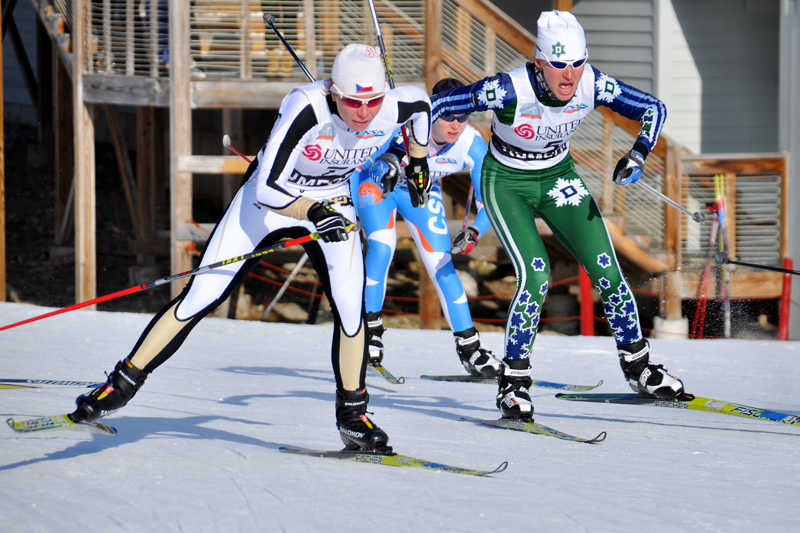
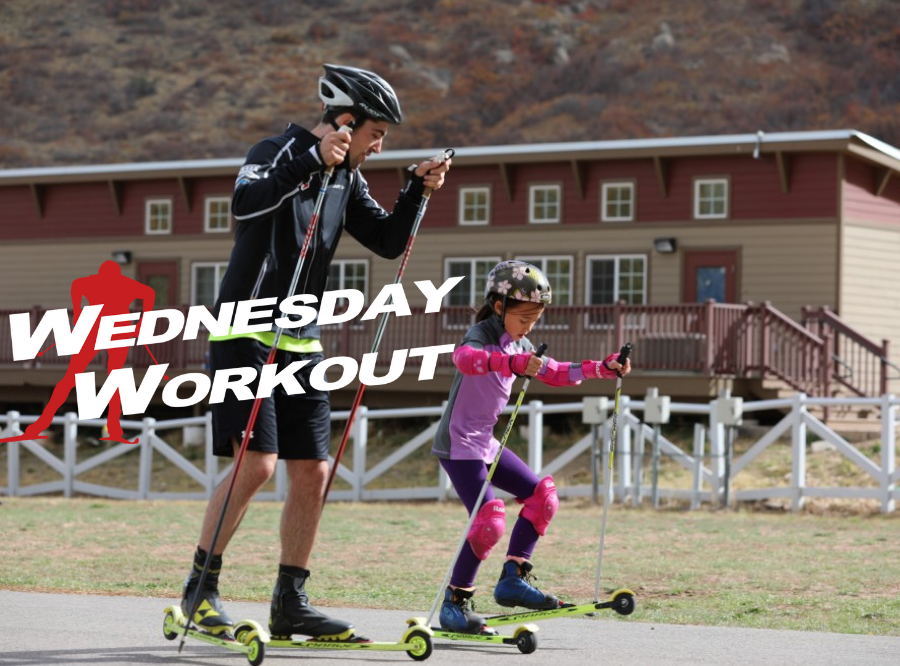
    Ben Saxton (SMST2) skis with a junior athlete during a past USST annual training camp in Park City, Utah. (Photo: Liz Arky)

    This Wednesday Workout includes guidance from Boulder Nordic Junior Race Team (BNJRT) Head Coach Adam St. Pierre. After earning a BS in Physics and Biochemistry while skiing for Colby College in Maine, St Pierre earned a masters in Kinesiology and Exercise Science at the University of New Hampshire. While in graduate school, he was the assistant ski coach to Marty Hall at Bowdoin College and has since coached all age groups. His primary role at BNJRT is working with high school aged athletes, although he has also coached the U14 development program, and also runs a private coaching business, ASTP Coaching, where he works with adult athletes, primarily in trail and ultra running. St. Pierre is also the Rocky Mountain representative to the USSA Sport Committee, instructs coaching development courses including the USSA Level 100 course, and assists with coaching at regional and national junior camps. He is currently in Anchorage, AK leading the Rocky Mountain Nordic Team at Junior Nationals trip. Additionally, he is the parent of two skiers aged five and two. In this Wednesday Workout, St. Pierre shares insight into guiding junior athletes as they progress through their career as a skier.

    Adam St. Pierre is the head coach of the Boulder Nordic Junior Race Team. (Photo: bnjrt.net)

    “Is it okay for my child to start training for skiing?” “How much training is appropriate at this age?” Whether they come from the parent of an eager U14 athlete chomping at the bit to qualify for junior nationals someday, the eager parent of a U14 athlete hoping to groom their child for elite skiing, or somewhere in between, these questions certainly make the “frequently asked” list for many junior coaches. Add to the complexity of the answer the physical development of the athlete, their list of other sports, and their dedication to skiing, and the response quickly becomes “it depends.” When it comes to blossoming U14 and younger skiers, St. Pierre likes to differentiate between formal training and general exercise.

    “Training is exercise with a purpose,” he said in a call. “Exercise for the sake of exercise is good, it’s good for health, it’s good for all that stuff, but then training is when you have that goal or that long-range plan. So I think exercise is important as a youth. I don’t know if I would call what 8, 9, 10 year olds are doing training, although I guess if you want to go real general, if the purpose is to improve ski technique or improve skills, then I guess its training.

    “But I think it’s important that young kids exercise a lot, whether that’s hiking, playing soccer, running around in the backyard, whatever they do,” he continued. “But from a training perspective, the younger the start [of skiing], the more likely it is that you will pick up the movements well and quickly and be able to really perfect them.”

    The agility, balance, and coordination developed in other sports build an athletic foundation with age, and experience sliding on snow and enjoying winter helps to develop a love of the sport, both of which are essential components to excelling in or simply sticking with skiing long term.

    “Kids need to be exposed to skiing as young as possible, but they can probably hold off until 10, 12, maybe even 14 years old until they do specific training as long as they have a good multilateral background that includes cross-country skiing, maybe even downhill skiing and ice skating, just a variety of sliding sports,” St. Pierre concluded.

    As an athlete transitions from skiing purely for enjoyment to a more focused and performance-based training program, it is important for a coach to look beyond the skier’s chronological age, i.e., how old they are, to both the athlete’s biological age and training age. Biological age refers to the individual’s physical development including whether they have reached puberty, while training age refers to the number of years the athlete has participated actively in cross country skiing.

    “There’s always the giant U14 or the tiny U16, and I think the training for those types of athletes is different, what they’re biologically ready for,” said St. Pierre. “I think the physical age or the biological age usually is pretty straight forward, you can tell based on their size and the way they move, but I think the training age is also fairly easy to tell. You can tell how proficient a skier is just by looking at them and if they’re able to have coordinated movements and ski with good technique. Even if they’re relatively new to the sport, it shows that they have a pretty adept handle on it.”

    With these considerations, a coach can begin to write a training plan that is appropriate for that particular skier, as one size does not fit all. High volume and VO2 max efforts do not create the same response in a prepubescent athlete, so it is best to allocate time instead to shorter efforts that foster good technique and balance while skiing fast. These efforts also help the athlete acclimate to harder physical exertion than they might have previously experienced.

    “I think it’s really important to include training for the individual,” St. Pierre expressed. “An athlete pre-puberty isn’t going to respond as well to 4 x 10min threshold intervals just because they don’t have the hormonal milieu to really adapt to those intervals, whereas they may be better off doing something shorter and faster to work on the neuromuscular component of how to move fast.”

    At the onset of puberty, most adolescents hit a rapid growth spurt and begin to accrue lean muscle mass. Prior to puberty, this muscle mass is much harder to put on. This should be taken into account in writing a junior plan, but that is not to say that strength training should be avoided completely until puberty.

    “Strength training is the other big one where the late bloomers or the athletes that are a little later to puberty – strength training for them doesn’t have the same effect for them as an athlete that is surging with hormones,” explained St. Pierre. “But they can still make the neuromuscular gains even if they are not growing bigger muscles.”

    He concluded, “So I think that a lot of the training is the same, it just takes on a slightly different goal depending on their chronological age or their age in the sport.”

    Once an athlete is at an age and stage of their development as a skier to begin to include strength training, St. Pierre advises including strength training on a regular basis if possible, but acknowledges that due to time constraints and travel to and from a practice venue, it is not always possible after the dryland season ends.

    “If you look at the research, the ideal is two strength sessions a week for males and three for females,” he explained. The difference in frequency is due to the differing levels of testosterone which sparks muscle growth in response to the workout. “But that just doesn’t fit in logistically with many of the athletes that I work with because they have school and they have jobs and they have music lessons and many of them are really accomplished students and they just don’t have the time.

    “I really prioritize on-snow training,” he continued. “I’m not willing to sacrifice an afternoon where we can go skiing to go do strength. I think strength is important, but I think on-snow training is the most important thing for junior athletes, really maximizing that time on snow.”

    Adam St. Pierre seen with the 2018 Junior National team from the Rocky Mountain division. (Photo: Rocky Mountain Nordic)

    Perhaps unique to this generation of kids, it is not uncommon for a young athlete to compete in a variety of sports year-round, sometimes multiple sports within one season. While this benefits athlete development in the early years, it can make truly excelling in any of the sports a challenge as an athlete moves through their high school years.

    “There are kids that at 10 or 12 years old that decide they want to be ski racers – whether that’s some outside pressure, parental pressure, peer pressure, or because they saw Jessie Diggins ski and they decided that’s what they want to do – and I think that’s awesome and we should nurture those athletes. But I think there’s also athletes that run cross country, and they ski, and they cycle, and if they want to compete in all of those sports or in a variety of sports through their high school years. I think that’s great, but I think for elite performance, they need to pick one that is the primary.”

    For ski racing, St. Pierre feels this choice needs to take place early in their high school career for most athletes.

    “I think it’s important for athletes to know and prioritize one sport over the other, but I also think it’s important that they participate in a variety of complimentary sports and activities. Usually around high school is when that prioritization has to occur if an athlete wants to be competitive in one sport, I think prior to that, you can have an athlete that plays soccer, and golfs, and swims, and skis all fairly equally.”

    In an ideal world, athletes that chose to prioritize cross country skiing should be able to fully invest themselves in training by strength training regularly while also putting in the volume and interval training needed to enhance their performance. But, time and resources often inhibit this from being a reality for many athletes.

    “The ultimate consideration for any athlete is time. Any competitive athlete would love to have 20 or 30 hours a week to train, but very few do. At the junior level, with school and other considerations, 10 to 14 hours a week is kind of a big ask… I like to structure as much training as can be tolerated, then the level that can be tolerated is largely dependent on their age, their training background, and their dedication to the sport.”

    Looking at the weekly hours an athlete has available, a coach divides training time between low intensity volume training, technique work, and strength training. As St. Pierre mentioned, for BNJRT athletes who drive 45 minutes each way to ski, strength training in the gym often falls to the backburner during the winter in order to maximize time on snow. During his training sessions, he always includes some technique work regardless of the goal of the session for fitness.

    “You can never separate technique from endurance,” he said. “If you’re skiing, there’s got to be some technique there. I like to take the first 20 – 30 minutes of practice and have a focus, maybe it’s a handful of drills or a quick technique progression as part of the warm up, then we go into the day’s workout which might just be an easy ski or it might be an interval workout.”

    He elaborated, “I’ll pick a loop with a specific [technique] focus, so we’ll warm up for that focus, then on that loop I’m able to see the kids repeatedly, so I’m able to give them feedback and make corrections.”

    While structured training is essential to becoming a competitive skier, it is important not to forget that fostering a love of skiing is essential for retaining youth in the sport, which will ultimately make for better skiers.

    fordrinkers

    “I also think it’s important at least every other week to just let the kids go ski and have fun,” said St. Pierre. “Talk about boys and girls and school and parents, whatever else they do when they’re out of earshot of the coaches.”

    Lastly, St. Pierre reflected on the mistakes he notices his junior skiers making most commonly. Unsurprisingly, it can be a challenge for adolescents to reign it in for level 1, especially with eager to improve skiers. However, this might not be as big of a concern as it might be for an older athlete putting in a larger number of training hours.

    “To train a sufficient volume requires the bulk of that training to be easy,” reasoned St. Pierre. “I think a lot of juniors make the mistake of training too hard too frequently, this is especially true for our kids at altitude just because it’s hard to move forward uphill at an easy intensity… but if they’re not really training a ton of volume, that’s not really as big a mistake as it is if they’re really dedicated and really training. So often it’s the young athletes, the U14’s or U16’s maybe that are chasing around the older kids, and I think that’s not necessarily a bad thing. But once they’re U18 or U20, they should have a pretty solid idea of what easy feels like and hopefully have the fitness base to maintain easy while putting in that volume.

    “I think the converse is also true,” he continued. “I think some athletes are scared to go above level 1 that they end up compromising their technique and skiing poorly and ingraining really bad habits. So I think it’s important that athletes have a balance between not killing themselves every day but also not ingraining poor technique habits by waddling around on their skis.”
  • Eliška Albrigtsen (Formerly Hájková) Heading Three CXC Programs

    Eliška Albrigtsen (Formerly Hájková) Heading Three CXC Programs

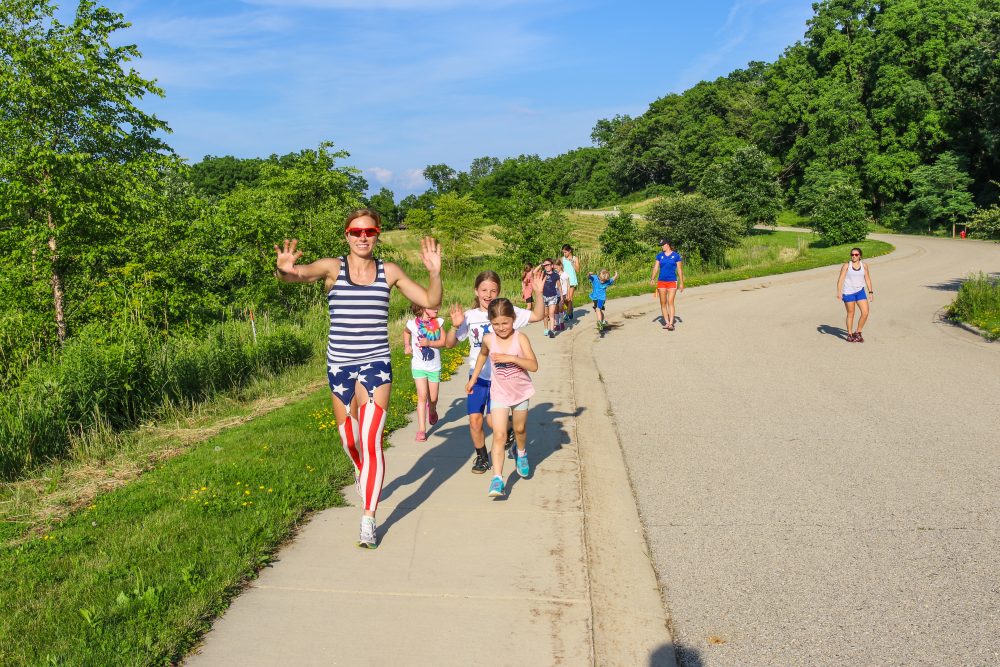
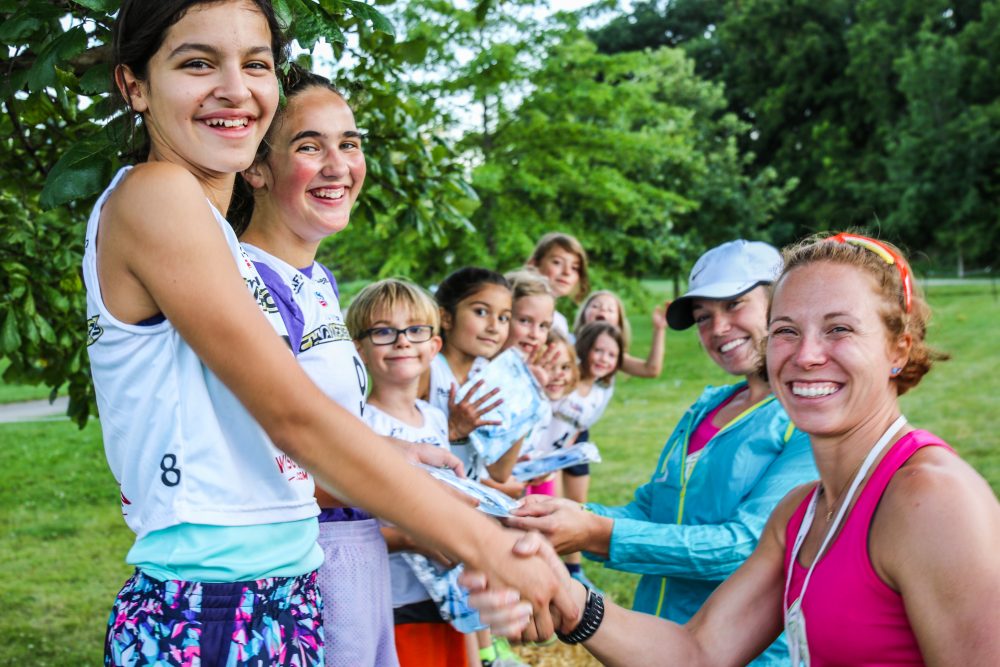
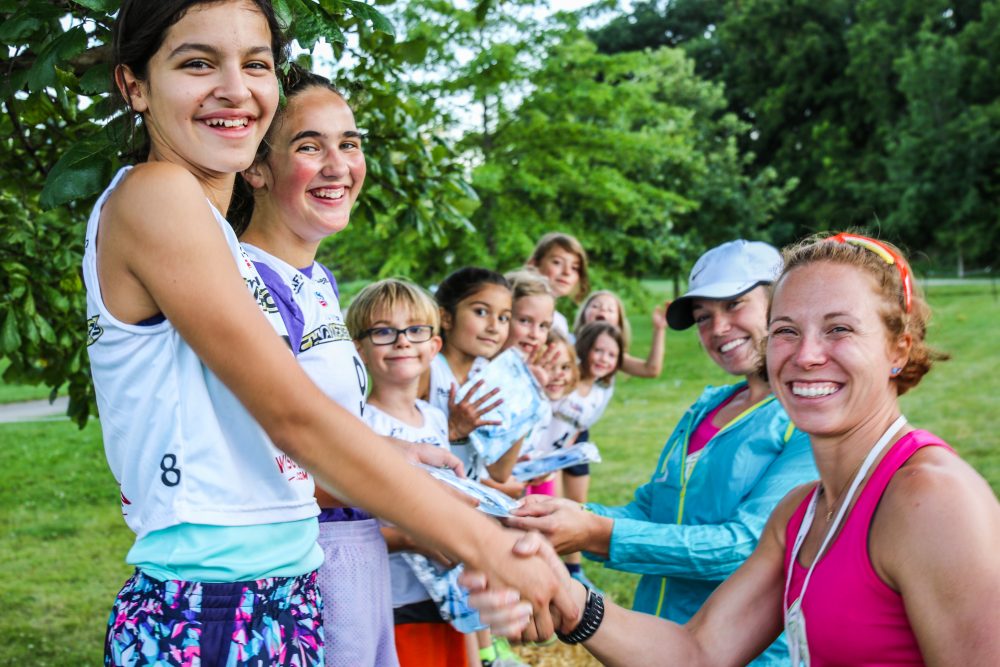
    Eliška Hájek Albrigtsen (formerly Hájková, front right) with Madison Nordic Ski Club’s Trail Kids this summer.(Photo: Tobias Hájek Albrigtsen)

    Many mornings, Eliška Hájek Albrigtsen’s husband, Tobias Albrigtsen, has to peel her out of bed. Living the life of an early bird like her spouse is nowhere near the top of her list — partly because she spends most nights prodding her hubby awake as he finishes his work, partly because she is strung out between four jobs of her own.

    Being in charge of three ski programs while assisting a fourth is not where the 29 year old envisioned herself when she moved to Madison, Wisconsin, this past June to work for Central Cross Country (CXC). But a lot can change over the course of a summer and for Albrigtsen (formerly Hájková), a lot did.

    After relocating to the Badger State’s capital from Lake Tahoe, California, to serve as CXC’s Community Olympic Development Director, Albrigtsen’s responsibilities began to accrue.

    It started with the addition of coaching CXC’s online master’s program. Then she had an interest in helping with CXC’s Paralympic and adaptive athletes. Finally, in late August, Andy Keller left his head-coaching position with the CXC Team to join Northern Michigan University (NMU) as an assistant coach, and Albrigtsen was in a prime spot to take over the reins. 

    “When Andy took the assistant coaching job at NMU, it was kind of natural that I got the CXC Team head coach position,” Albrigtsen, a Czech Republic native, said during a recent phone interview. “For me, it’s not like a big promotion, it’s just more stuff to do while I still do all the stuff I was doing before. I have a lot of responsibilities all of a sudden that I didn’t start with.”

    Among those responsibilities, she has been busy making informative videos for CXC Academy under the job title of Community Olympic Development Coach.

    Getting stuff done — and a lot of it, efficiently — seems to be somewhat second nature for Albrigtsen. Back in 2016, she placed sixth in the senior women’s distance race at U.S. nationals, despite having three jobs and indicating that the only training she had done in preparation was with her Boulder Nordic Junior Racing Team (BNJRT) athletes during practice sessions.

    While attending the University of Colorado-Boulder (CU), she finished in the top 10 of 45 out of 48 races over the course of her college career, according to a CU press release, all while maintaining above a 3.5 grade-point average.

    Eliska Hajkova (CU), racing against Sophie Caldwell (Dartmouth) and Corey Stock (CSU) during a sprint semifinal in 2012. Hajkova graduated in 2013 and after marrying, changed her last name to Hájek Albrigtsen. (Photo: James Doucett)

    After three seasons coaching the BNJRT in Colorado, Albrigtsen moved to Kings Beach at the north end of Lake Tahoe last year, where the juggling act continued. There, she served as the head coach for Tahoe XC, while also volunteering with the Auburn Ski Club’s elite athletes, taught private ski lessons for Tahoe Donner, coached an online master’s program, and once again raced U.S. nationals, placing 12th in the 20 k classic mass start. 

    She’s also raced more than two dozen World Cups, most recently in 2014.

    Though Albrigtsen indicates that she “never stops officially training or racing” this year might be a little different as it will be her first season coaching senior elite skiers. Still, the idea of more challenging practice sessions is enough to draw her in, even if it means scaling back her training a bit. As a coach she brings not only race experience, but the empathy and understanding of an athlete.

    “With U14 kids, I mean, I was challenging them, but I was not getting challenged,” she reflected. “I think being challenged as a coach, being able to hang out with your athletes, you really see and you can really feel their pain. When you’re right on their butts and doing every exercise, you can see, ‘OK, I know that in the Level 4 on the fifth minute, during the sixth interval you died, so let’s figure that out.’ I think that’s one of my powers, that I can really be there when it’s happening.”

    When asked of her strengths as a coach, CXC Executive Director Yuriy Gusev was quick to respond.

    “Her racing experience, number one,” he said on the phone. “And [she’s] just very energetic and hardworking and organized.”

    Albrigtsen will work with three CXC Team skiers this winter: Felicia Gesior, Kyle Bratrud and Sam Elfstrom. All three graduated from NMU, are currently based out of Marquette, Michigan, and will set their focus on the first few SuperTour races and U.S. nationals before re-evaluating their season goals. The fourth CXC Team member, Nichole Bathe (who graduated from the University of Alaska Fairbanks) remains on roster, but headed to Europe earlier this fall to train in Norway with a goal of making the 2018 Winter Olympic Games for Great Britain’s national team.

    Until the first week of SuperTour racing in early December, the amount of time the other three CXC elite skiers and Albrigtsen work together will depend on the athletes. Albrigtsen wanted to keep the summer and fall schedule fairly flexible so her athletes would not feel restricted in the amount of paid work or fundraising they could accomplish while training for the upcoming season.

    For example, Gesior made a trip to Madison earlier this fall for a training session on CXC’s rollerski treadmill with Albrigtsen, but will spend most the next few weeks training in Marquette and preparing for a fundraiser she’s organizing: the Bergkönig trail run on Nov. 11. The event features 10 k, 5 k and 1 k races and was originally created by Maria Stuber and Bryan Cook in an effort to raise money for local cross-country skiers looking to continue their ski careers post-college.

    Gesior also works as a substitute teacher in Marquette, and most of her training this summer and fall has been with the NMU women’s team. Similarly, Bratrud and Elfstrom train with the NMU men’s team.

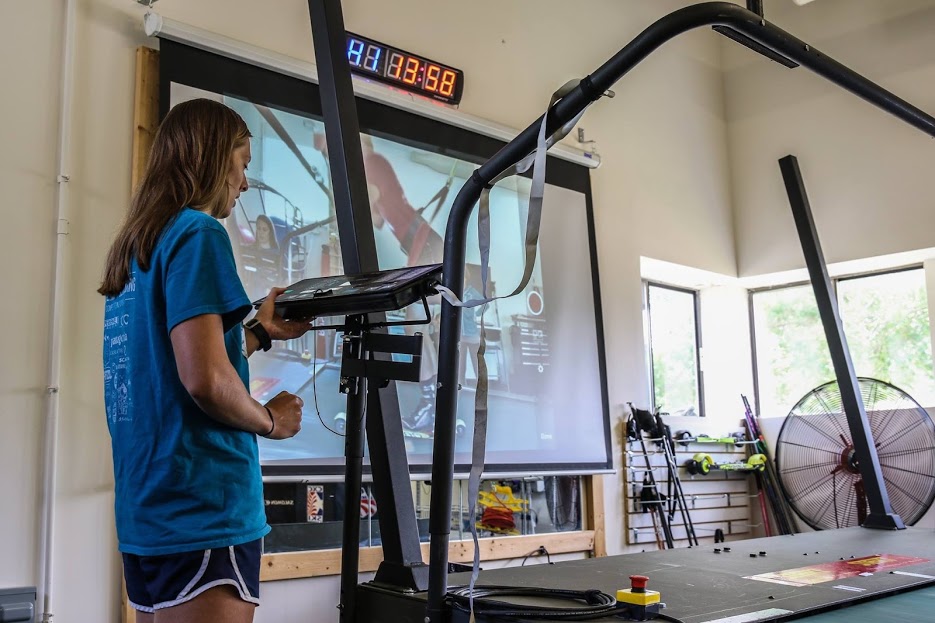
    Felicia Geisor of the CXC Team prepares to hop on the treadmill in early September. (Courtesy photo)

    “I think that’s OK that they follow [NMU],” Albrigtsen said, “That’s kind of the program that really took them where they are and they have something to top it. They don’t train like college skiers; I mean, it’s their job right now so they do train more. But the base is very similar and [NMU Head Coach] Sten [Fjeldheim] is being really nice about allowing them to train with them. Not all college coaches are that way, so we’re definitely really lucky.”

    According to Gusev, partnerships like the one CXC has with NMU and other programs in the Midwest are the reason for CXC’s expansion. Over the last decade, he said CXC has grown from a $50,000-dollar organization to a million-dollar one.

    “It’s all of those partnerships,” Gusev said of the CXC programs’ continued growth. “They’re incredible organizations so we’re able to work with all of them together and help them work together.”

    The organization hopes to continue its expansion with the addition of a $12-million-dollar training complex just outside the Madison suburb of Middleton, Wisconsin, which is currently in the planning stages. The facility would not only include a competition venue, but snowmaking equipment, a lit rollerski loop, and 30,000-square-foot facility open for recreational use as well.

    The idea behind the complex, Gusev indicated, would be to provide CXC athletes with a training venue, while simultaneously encouraging community members to get outside and active, using skiing as an example. The center already has one complex, the CXC Center of Excellence in Madison, complete with rollerski treadmill. 

    “With the CXC Team, our number-one goal is to support the athletes that need the support. That’s as simple as that,” Gusev said. “But overall, our goal as an organization is to grow the sport at all levels.”

    To Albrigtsen, the new facility is another reason Madison and CXC seemed like a good choice for her and her husband, Tobias, who is CXC’s media and communications coordinator, when moving from Tahoe to the Midwest. That, and the cost of living. 

    “We always talk about what can Midwest offer that other regions can’t. We don’t have the mountains, we don’t have the best winters, but what we really have is the best quality of life,” Albrigtsen said.

    “You can live much cheaper here than anywhere else in U.S. and still make somewhat good money,” she continued. “Not everybody, especially in the U.S., there’s maybe 10-15 people who can do this professionally and get paid being skiers, otherwise you have to work and that’s something Midwest does have to offer. You can have a normal life and be a skier. You can do it here.”

    While Albrigtsen’s “normal life” is somewhat busier than others might prefer, she is in no way deterred.

    “I am a total sport addict, and I think every coach has to be, otherwise it’s not really worth it,” she said. “Tobias and I, we’re just trying to do what we love and give something back.”

    Give something back, and get a little training in at the same time, even if it’s in between her multiple jobs.

    “My motivation is also to fit in my jeans, wearing tight dresses,” Albrigtsen added with a laugh. “I have a five-year-younger husband so I have to take care of myself.” 

    Eliska Hájek Albrigtsen (formerly Hajkova) leading a Fourth of July run with Madison Nordic Ski Club’s Trail Kids this summer. (Photo: Tobias Albrigtsen)
  • Wednesday Workout: Track Workout Progressions with Boulder Nordic Juniors

    Wednesday Workout: Track Workout Progressions with Boulder Nordic Juniors

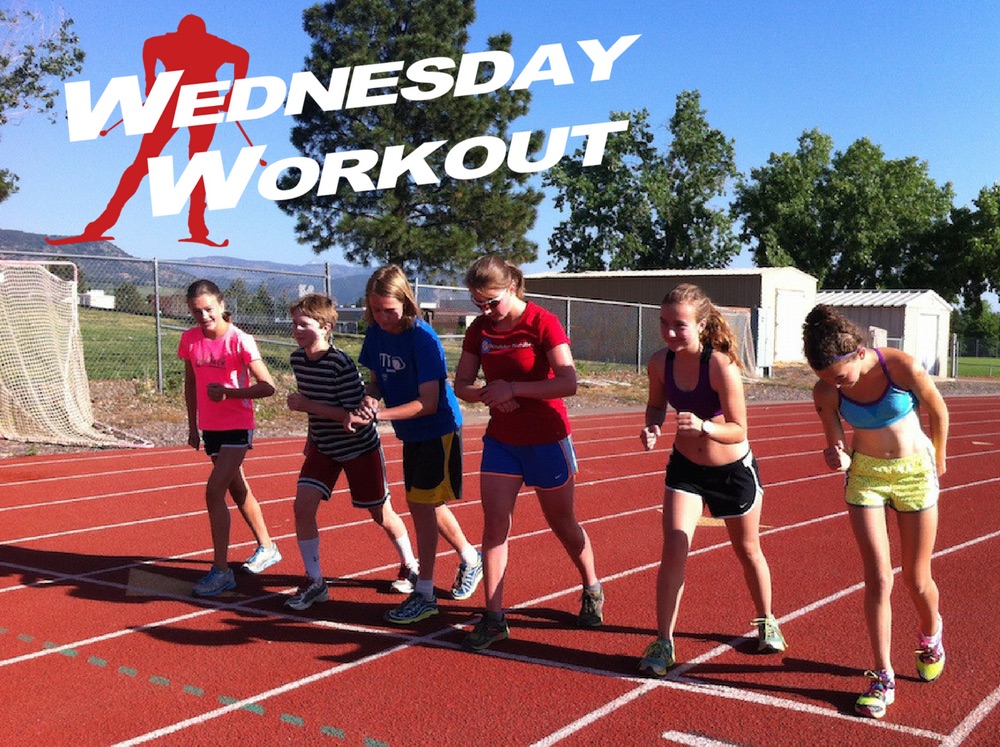
    Boulder Nordic Junior Racing Team (BNJR) athletes prepare for the start of a 3,000-kilometer running time trial on the track in 2013. (Photo: Adam St. Pierre)
    Boulder Nordic Junior Racing Team (BNJR) athletes prepare for the start of a 3,000-kilometer running time trial on the track in 2013. (Photo: Adam St.Pierre)

    FasterSkier recently caught up with the Colorado-based Boulder Nordic Junior Racing (BNJR) Team and its head coach Adam St.Pierre for a workout tailored to junior skiers, but sure to improve pacing and get hearts racing for athletes of all ages.

    ***

    The national team athlete, the college competitor, the up-and-coming junior, the still-got-it master — if there is one training tool most of these nordic skiers know of, it’s the 3,000-kilometer time trial on the track.

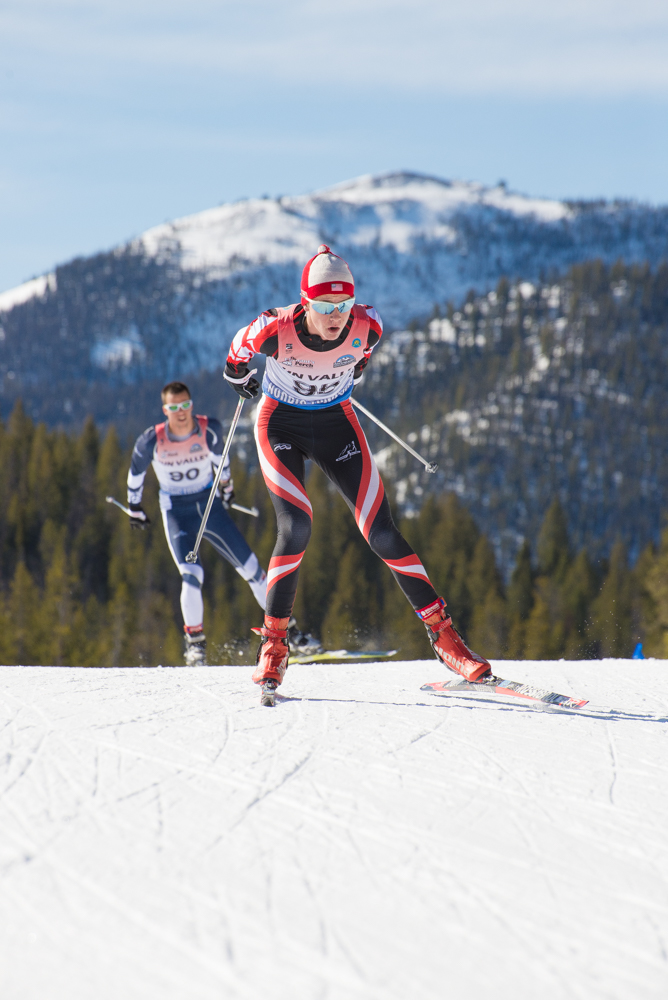
    Boulder Nordic Junior racer, Emil Graf competing at this past season Junior Nationals Qualifier in Soldier Hollow, Utah. (Photo:  David Pickner davidpicknerphotography.com)
    Boulder Nordic Junior racer, Emil Graf competing at Spring Series in Sun Valley, Idaho. (Photo: David Pickner/davidpicknerphotography.com)

    However, while 3 k times are certainly a useful method of comparing an athlete’s baseline fitness at multiple levels, Boulder Nordic Junior Racing (BNJR) Team’s head coach Adam St.Pierre indicates the performance test is merely Step 1 for junior skiers looking to further develop.

    “If you look at how many juniors in particular just go out at the start of a 5 k race and are just cooked within the first k, by putting them on a track and teaching them how small the changes in effort are to achieve different paces is a pretty powerful tool,” St.Pierre said on the phone from Boulder, Colo.

    For St.Pierre, the 3 k is not just a test of fitness at summer’s onset and fall’s closure, but also a tool for teaching athletes to pace and track their progress. Using his athletes’ spring 3 k time trial results, he computes his athletes per 100-meter pace, which is the pace his athletes then base all of their summer and fall interval times off of.

    “What a lot of athletes end up discovering is that the per 100 meter pace of a 3 k isn’t that hard,” St. Pierre said. “They say, ‘But I went out way faster than that,’ and I say ‘Yeah, you did, then you slowed down.’ So using a performance metric to determine your workloads is ideal.”

    Another reason St.Pierre likes to have his juniors hit the track regularly? The opportunity for coaching surveillance and the occasional interval.

    “I think it’s important, too, that you see your coach isn’t just some out of shape old dude,” St.Pierre said. “With the track, I have the ability to hop in and run by someone for a lap or an interval or half a lap, whatever it takes to help them hit their targets.”

    The Workout

    Purpose: Complete a progression of track workouts over the summer in order to improve pacing. Indicators of improvement are times from a 3 k time trial at the beginning of the summer compared to 3 k time trial times run by the end of the fall, as well as an increase in the number of repeats athletes can complete during each consecutive track workout.

    Warmup: 20-30 minutes

    • 5 minutes running off the track
    • “Wake up muscles” next by doing a series of lunges: forward, backward, and lateral; follow up with squats
    • 4 laps around the track
    • High knees, butt kicks, karaoke and skips during straight aways, jog corners
    • “Do each drill forwards and backwards!” St.Pierre said.
    • 50- to 100-meter barefoot strides/accelerations

    *(St.Pierre’s favorite) set: 400-meter repeats for 30 minutes at 3 k race pace

    Recovery equals the same amount of time as interval or until heart rate returns to Level 1

    Sample progression (all done at 3 k race pace):

    • Week 1: 200-meter repeats for 3-5 k
    • Week 2: 300-meter repeats for 3-5 k
    • Week 3: 400-meter repeats for 3-5 k  

    (Continue adding until you reach 1,000-meter repeats for 5-7 k)

    Cool down: 15-20 minutes

    • 5-10 minutes of aerobic running
    • 5-10 minutes core circuit
    • Static stretching

    Total time: 90 minutes

    *An athlete must complete a 3 k time trial on the track in order to calculate their ideal interval effort and pace (St.Pierre takes an athlete’s per 100-meter time based off their 3 k time.

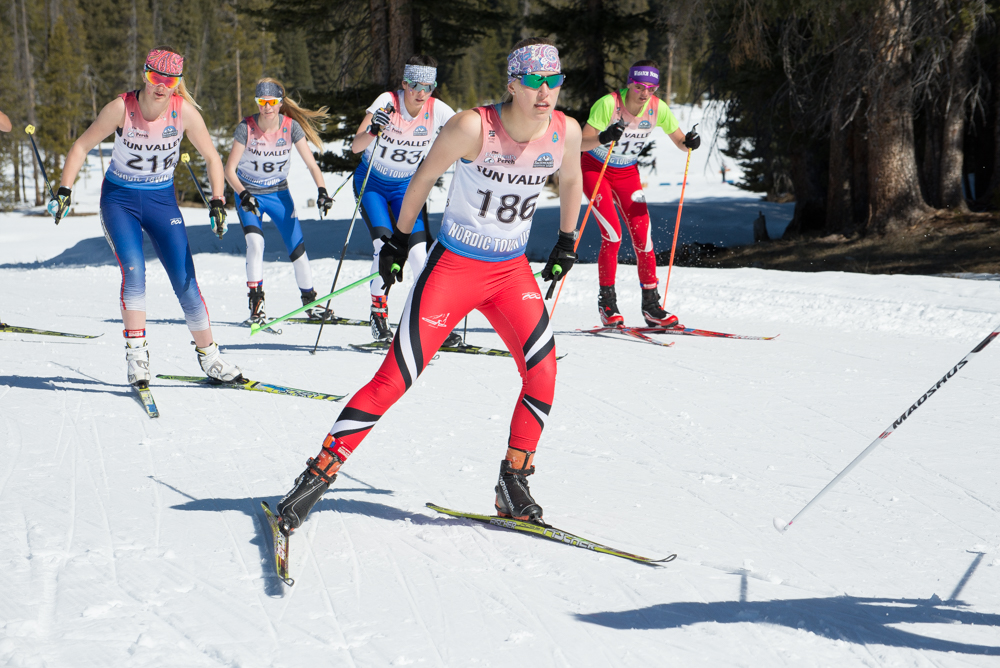
    Emily Picker bib 186 competing at Spring Series in Sun Valley, Idaho. (Photo:  David Pickner davidpicknerphotography.com)
    Emily Picker bib 186 competing at Spring Series in Sun Valley, Idaho. (Photo: David Pickner/davidpicknerphotography.com)

    BNJR Coach and Athlete Advice:

    1. Work up to what you want. “I enjoy this track workout because it helps me get used to doing a 3 k, and pushing hard for that long by working up to that,” BNJR skier Emily Pickner wrote in an email. “Intervals are easier for me to do because they are usually shorter, so by the time we get to the 3 k, I can look at it as all the intervals put together.”
    2. Mobility is a must. “Lots of skiers run like robots!” St.Pierre wrote in an email indicating that in order to reap the complete benefits of the track workout, “include some drills within the warm-up to elevate your HR [heart rate], increase your range of motion and improve your run mechanics.”
    3. Use the race to break down the pace. Going out too hard is a game all too familiar with nordic athletes, junior and senior racers alike. “Basing paces on 3 k time makes them an accurate estimate of what you can do,” Emil Graf, another BNJR racer, wrote in an email. “Trust the goal paces … Also, make sure to set a solid 3 k time at the beginning.”
    4. Progress takes patience. “I think the overarching philosophy for my training and coaching is just progress over time,” St.Pierre said. “Regularly checking that you are improving and then being willing to make changes if you want — sometimes those changes are you need to train more and sometimes those changes are you need to train less, or re-prioritize — that’s an important concept.”
  • Argentina’s Lannes, Now Boulder Nordic Junior Coach, Readies for His Last World Champs

    Argentina’s Lannes, Now Boulder Nordic Junior Coach, Readies for His Last World Champs

    In August, Carlos Lannes tied for first in the 2014 Ushuaia Loppet with fellow Argentine Olympian Federico Cichero.  (Photo: Rogelio Espinosa) http://blogs.fasterskier.com/marathons/2014/08/13/delayed-ushuaia-loppet-marked-by-high-winds-wet-snow/
    In August, Carlos Lannes tied for first in the 2014 Ushuaia Loppet with fellow Argentine Olympian Federico Cichero in Ushuaia, Argentina. (Photo: Rogelio Espinosa)

    FasterSkier’s coverage of the 2015 FIS Nordic World Ski Championships in Falun, Sweden, is brought to you by the generous support of L.L. Bean, now featuring a complete line of Kikkan Randall training wear.

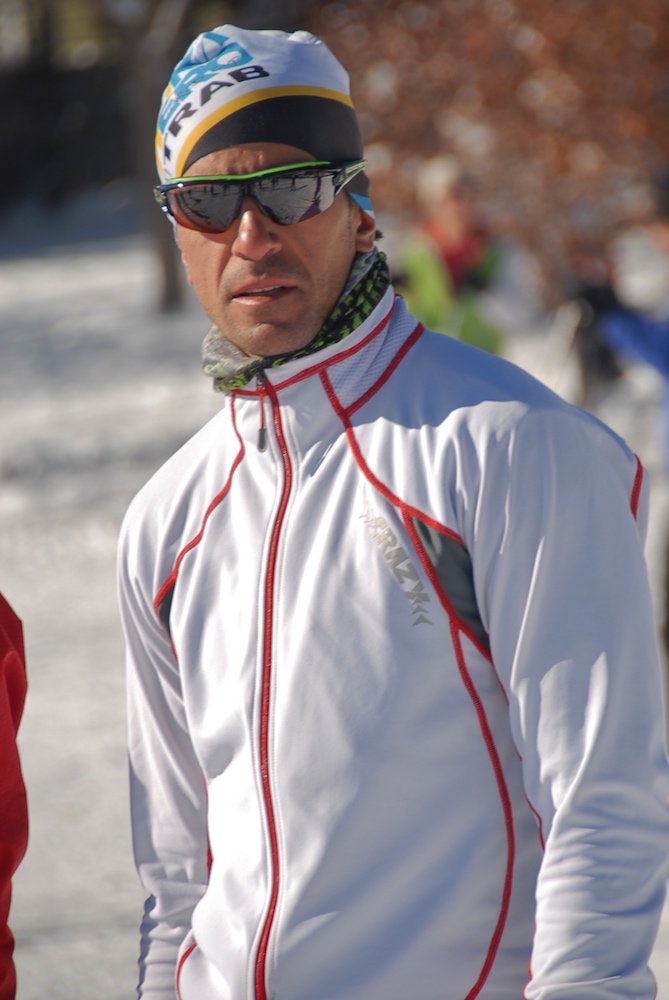
    Carlos Lannes has seen the world, and he’s been around when it comes to cross-country skiing. Leading up to his fourth-and-final World Championships, the 36-year-old Argentine Olympian, who now lives and coaches in Boulder, Colo., provided a glimpse of his journey as a international competitor over the years.

    Born in Ushuaia, Argentina, Lannes started skiing for his home nation before moving to Spain around age of 20 to continue his professional pursuit of racing. About seven years later, he joined the Spanish Civil Guard Team, and in 2010, he qualified for the Winter Olympics in Vancouver, British Columbia, where he placed 82nd in the 15-kilometer freestyle. Just over a year ago, Lannes moved to Colorado, where he has been coaching the Boulder Nordic Junior Racing Team (BNJRT) this winter.

    This afternoon in Falun, Sweden, Lannes was listed to compete in the men’s 10 k freestyle qualifying race, with the top 10 men from that race earning starts in the distance events at 2015 Nordic World Ski Championships: the skiathlon, freestyle individual start and mass start (as well as the classic-sprint qualifier, which all competitors automatically have the opportunity to race).

    ***

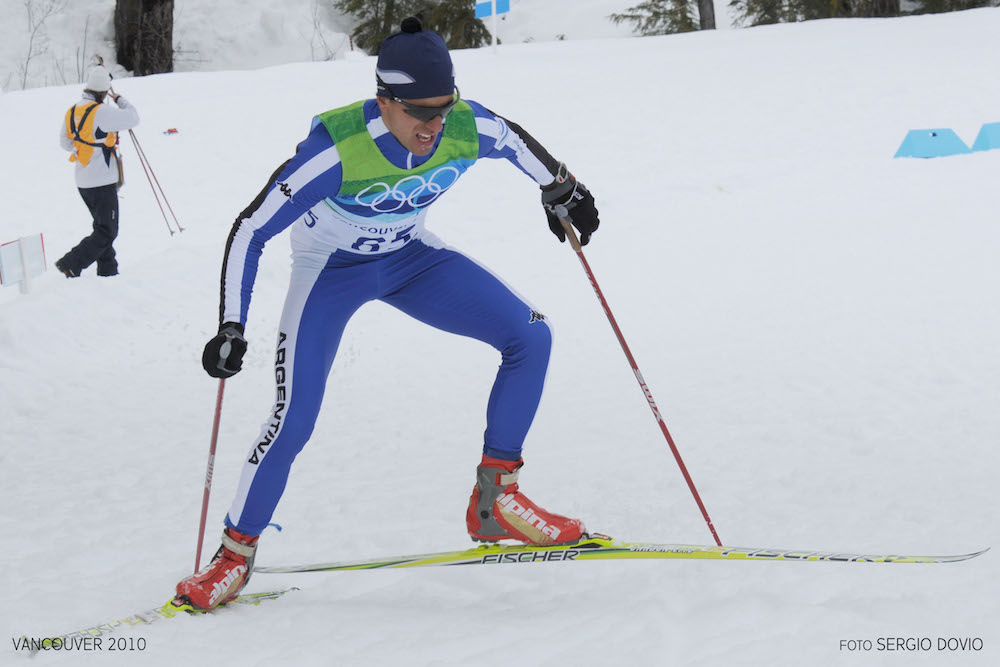
    Carlos Lannes racing for Argentina at the 2010 Winter Olympics in Vancouver, British Columbia. (Photo: Sergio Dovio)
    Carlos Lannes racing for Argentina at the 2010 Winter Olympics in Vancouver, British Columbia. (Photo: Sergio Dovio)

    FasterSkier: Can you tell us about your early days in Argentina, who influenced you there and how you learned to ski?

    Carlos Lannes: I was born in Argentina, where my passion and devotion for the sport of cross-country skiing began. I started practicing this sport thanks to a winter sports development program in my hometown, Ushuaia, which is also named the World’s End, being the southernmost city in the world. As I grew up, this is also where I began to compete in national and provincial races, obtaining my first results.

    Looking back at this early stage of my life in Argentina, there were a lot of important people throughout my career in cross-county skiing and to whom I owe all of my respect and will always be thankful for the valuable impact they had in my life. I cannot name one single person that inspired me to pursue a career in this sport. However, I was very inspired by the numerous cross-country skiers at the time when I was living in Argentina, pushing and motivating me and my fellow skiers and friends to learn and train harder, to compete, and to follow our dreams.

    FS: When and why did you move to Spain? Who persuaded you to do so and whom did you ski with there?

    The Spanish Biathlon National Team, which Carlos Lannes trained with, including Diego Ruiz (a three-time Olympian and one of Spain's top cross-country skiers), Ismael Bouza and Pablo Bouzas. (Courtesy photo)
    The Spanish Biathlon National Team, which Carlos Lannes trained with, including Diego Ruiz (a three-time Olympian and one of Spain’s top cross-country skiers), Ismael Bouza and Pablo Bouzas. (Courtesy photo)

    CL: In 1999, my passion for cross-country skiing drove me to travel and move to Spain, close to the countries that have shown to be the best in this sport — such as Sweden and Norway — and in the hopes of fulfilling my dream of participating in the Olympic Winter Games. I was also highly motivated by other Olympic athletes, such as Luis Argel and Martin Bianchi, who invited me to take the opportunity to train and pursue my career in Europe.

    In my early beginning living in Spain, I lived in a small valley, Val d’Aran, in the Catalan region. This is where I was given the opportunity to work and train and begin to grow as an athlete in Spain. My first club in Spain was CAEI, where I began to compete and allowing me to obtain my first results in the national circuit.

    In 2006, my improved results and skiing level in the Spanish cross-country skiing competitions opened the doors for me to be a part of the Spanish Civil Guard Team. Therefore, I moved to Jaca, Aragon, and began to ski in one of the best teams in Spain, which allowed me to compete at a higher level, alongside many excellent athletes who have represented Spain in the Winter Olympics.

    This prestigious team is a benchmark for young athletes in Spain and I will always be thankful for the opportunity to be able to grow professionally, as well as personally, in this highly valued institution. Without the help of the Spanish Civil Guard, I might not have been able to participate in the Vancouver Winter Games, since they generously provided me with permits for training and days away from work, for different races in preparation for the games.

    Born in Argentina, Carlos Lannes moved to Spain to train for more than a decade before representing Argentina at the Vancouver Olympics and three World Championships. He'll compete at his fourth World Championships in Falun, Sweden, this week. (Courtesy photo)
    Born in Argentina, Carlos Lannes moved to Spain to train for more than a decade before representing Argentina at the Vancouver Olympics and three World Championships. He’ll compete at his fourth World Championships in Falun, Sweden, this week. (Courtesy photo)

    FS: How was your Olympic experience, and how were you funded and supported as an athlete pursuing that dream?

    CL: In 2010, I participated in the Vancouver Winter Olympic Games, which was one of the most gratifying experiences of my life as a skier. Prior to the games, I also had the great opportunity to train with the Spanish National Team, who supported me in many aspects, including traveling, skiman services, helping me in my training program and periodization, among other things. They gave me the opportunity to be a part of a national team, which was a great learning experience for me in my career. At the same time, the Argentinian Federation supported me when competing internationally, such as for the World Championships and at the Winter Olympics in Vancouver.

    FS: Who did you learn from along the way? 

    CL: During my time in Europe as a competing athlete, I had the great pleasure to share with other great teams and athletes from all over the world. In particular, after the games in 2010, I had the great pleasure of training and learning from the Rastelli family and Polisportiva Le Prese, in Sondalo, Italy, where I have been very fortunate to train with one of the best group of trainers and young athletes in Italy. Coming from a country where cross-country skiing is a minority sport, I have been blessed to be given the opportunities that I have had and to have achieved all that I have.

    FS: Where did you meet your wife, and why did you move to Boulder? 

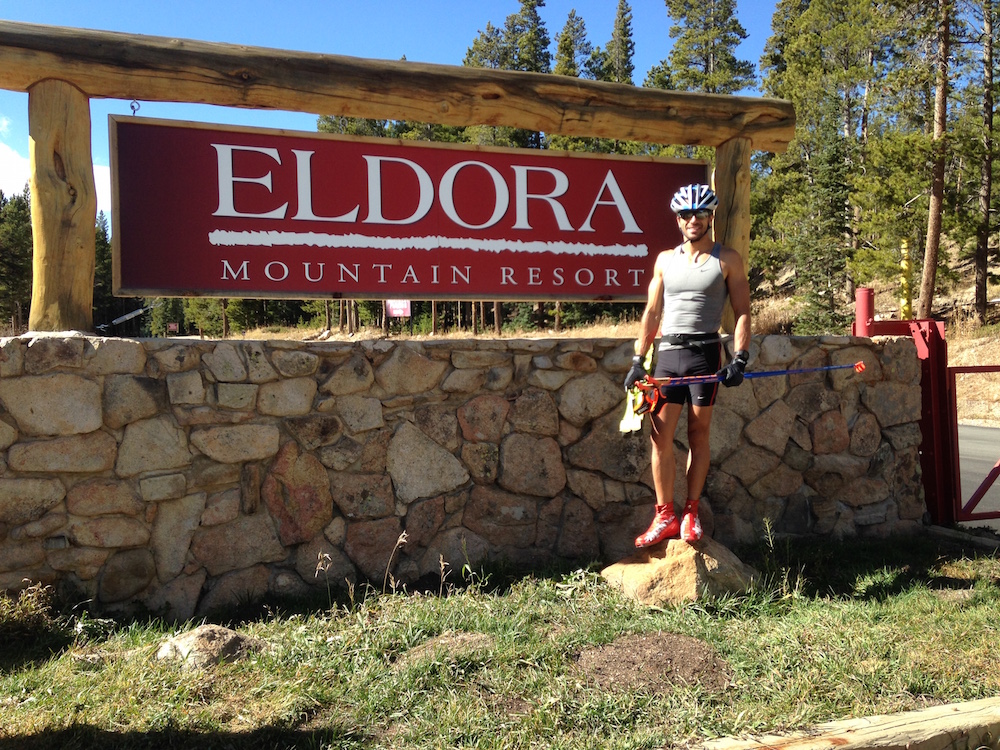
    Carlos Lannes during a dryland workout at Eldora in Nederland, Colorado, last year. (Courtesy photo)
    Carlos Lannes during a dryland workout at Eldora in Nederland, Colorado, last year. (Courtesy photo)

    CL: My wife and I met in Spain some years back, during a trip she made to Europe with her sister and a friend, and in 2012, we got married and I began my masters in the Spanish Olympic Committee. My wife was born in Toronto, Canada, however, her family is from Uruguay, Argentina’s neighboring country, where she spent part of her life growing up. For this reason, we share a very similar culture and values.

    Last year, as I finished my studies, my wife and I decided to come to the United States from Spain to live closer to our family, take advantage of improving my English, and have the opportunity to share my experiences with the younger athletes in BNJRT. We moved in May 2014, and settled in Superior, a small town close to Boulder, Colorado.

    FS: How do you like coaching juniors?

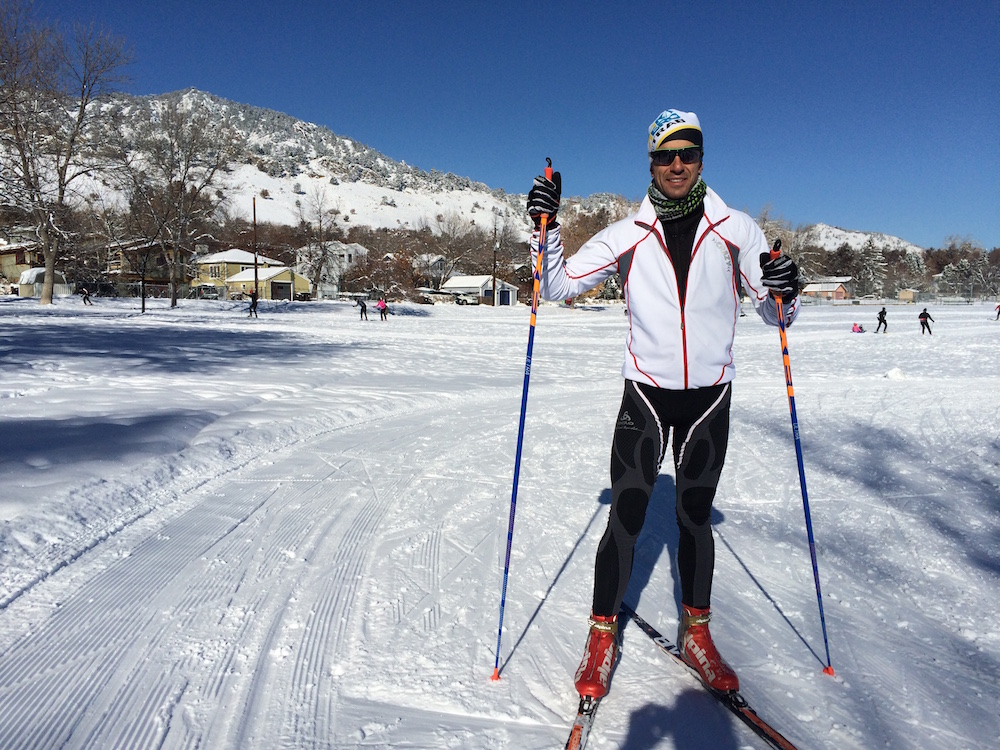
    Carlos Lannes, now a coach with the Boulder Nordic Junior Racing Team, skiing last November near Boulder, Colo. (Courtesy photo)
    Carlos Lannes, now a coach with the Boulder Nordic Junior Racing Team, skiing last November near Boulder, Colo. (Courtesy photo)

    CL: I sincerely appreciate the opportunities that I have been given, Head Coach, Adam St. Pierre, and BNJRT. It is a true pleasure and with great pride that I help coach the young talented athletes and I am involved in their improvement in a sport that is my true passion, and that with great perseverance has led me to open doors on both sides of the Atlantic.

    FS: Why have you decided that Falun would be your last World Championships as a competitor, and what you hoping to do there? Who will help support you?

    CL: I decided that Falun will be my last World Championship because is time to pass on my experiences and skills on to others in a new and exciting period of my life. My support staff will include my friend and Italian skiman and Head Coach Ivan Rastelli, as well as Martin Bianchi, former Olympic skier, and close friend Mattia Pazzola. I can only hope that my dedication and hard work throughout the years will serve to inspire all the young athletes to be all that they can be and fulfill their own dreams in the sport of cross-country skiing.