Tag: breakfast

  • Eric Packer: From Incremental Gains to World Cup Starts

    Len Valjas (Canadian World Cup Team) after placing 38th in the freestyle sprint the day before: "Now that my lungs are feeling a bit better I just don't have the snap. I'm stuck doing Zone 3 so it's frustrating, especially to be at home it's even worse ... but there's nothing I can do. I'm stuck. ... It's still a good day. ... It was a sweet event. I wished I could've raced a bit more."
    American Eric Packer (r) leads Canada’s Len Valjas (l) during the men’s 15 k freestyle pursuit at Stage 4 of the 2016 Ski Tour Canada in Quebec City in March. Packer placed 68th on the day. (Photo: FlyingPointRoad.com/NNF)

    Eric Packer is back home. The 26-year-old Anchorage native is in his third year of training with Alaska Pacific University (APU), after heading East for college at Dartmouth and following that with a two-year stint on the Vermont-based Stratton Mountain School (SMS) T2 Team. Now he’s back in Alaska for good, training with the APU men and enjoying the benefits of this environment.

    “We had a great summer of training with the whole [APU] team,” Packer said in a recent phone interview from Alaska. (Note: He’s currently in Europe on the World Cup circuit.) 

    “I feel really lucky to be part of this group of guys that’s really pushing the boundaries forward. Everybody’s looking really good, and I’m really excited to see what the team can do. I personally feel like I’ve made some big improvements. I’ve trained more than I ever have, and was more consistent throughout the entire summer than I ever have been before. So feeling really positive about that.”

    Packer reflected that the APU training facility on Eagle Glacier outside Girdwood, Alaska, is a key part of his estival endeavors. “Getting up on the glacier is a big component of that,” Packer said. “We had three really productive camps, with about 75 hours on snow. That really helped getting back on snow. I was having a conversation, I think, with Reese [Hanneman], and it was three-quarters of the way through the ski before he realized that it’s like technically our first ski. It’s like, ‘Oh yeah, this is the first ski.’ So that was kind of cool – just like having that contact with snow throughout the summer really makes the transition super easy, and that’s nice.”
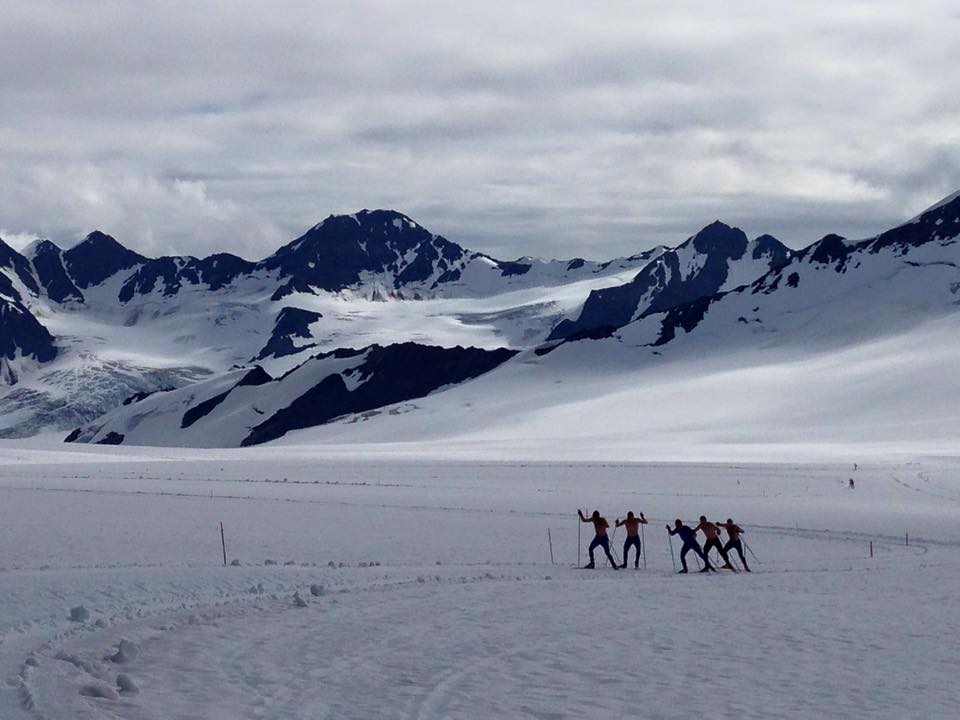
    The APUNSC men pushing each other during the final workout of our recent Eagle Glacier training camp. (Photo: Zuzanna Rogers)
    The APU men on Eagle Glacier in summer 2015. (Photo: Zuzanna Rogers)

    While Packer was not logging 25 hours per week on snow for the entire summer, he did credit volume training for his steadily increasing fitness.

    Rather than a quantum leap, Packer identified the incremental gains that most athletes at his level are looking for. “Just every year chipping away at uphill running times, chipping away at ski bounding times,” Packer observed. “You never really see a big jump, but it’s just, every month, trying to get two, three, five seconds faster. And I felt like this year was a good continuation of the past few years – I saw a lot of improvements, just kind of across the board generally. … I’m feeling pretty good with that, where the base fitness is.”

    Packer said that he “was just able to train consistently through the whole summer, so I was really happy with that.”

    But that’s not a given after last summer, in June 2015, when Packer had a scary fall in the Chugach Mountains near Anchorage that left him falling off “a small vertical drop of 10-15” feet, then “tumbl[ing] head over heels down steep rocky terrain” for another 60 feet or so. “I had no control in the fall,” Packer wrote about the incident, “which was a really scary feeling, but I remember being pretty sure I was not going to survive.”

    The story has a happy ending: As Packer previously explained, “In terms of my actual injuries, I was incredibly fortunate for as bad as the fall was, I somehow managed to not break any bones, which still amazes me to this day.” Nonetheless, Packer said, “I was so banged up that I stayed home for a week with no training. Once I got the clearance from my doctor and PT to resume light activity, all I could do were easy walks.”

    Going through the injury and recovery process last year “definitely did” change his outlook for this year, Packer said. “It impacted my approach to last season, and I think this summer I just felt really lucky that I was injury-free, and was able to train at full capacity all summer long and not have any setbacks like that. It was definitely one of those moments where you take a step back, and kind of reflect on everything, and reflect on how lucky you are to be a ski racer, to be able-bodied and healthy and all those sorts of things. I have a history of ankle sprains; for the first time in six years I didn’t have a serious ankle sprain. Didn’t fall off any cliffs this time.”

    Packer planned to put that consistent training and improved fitness to the test in Europe; he had Period 1 World Cup start rights for 2016/2017 by virtue of being last season’s domestic SuperTour leader.

    But he didn’t think it would be easy. “Racing World Cups, Period 1 in Europe, is really tough,” Packer said before he left for northern Scandinavia. “There’s no question about that. It’s probably the hardest competition that you’ll see all year in terms of depth of the field.”

    (Packer’s comments seemed prescient a week later, when, in the season’s first World Cup race, Norway put two skiers on the podium it hadn’t planned on starting.)

    Nonetheless, Packer was “very excited” for his first World Cup races in Europe; he had previously raced in Europe and on the World Cup last season in Canada, but this marked his first overseas World Cup. “The Ski Tour Canada was obviously amazing and really a cool racing experience,” Packer enthused, “but getting to race at classic venues, in Finland and Norway and Switzerland, that’s really the dream. So I’m looking forward to it.”
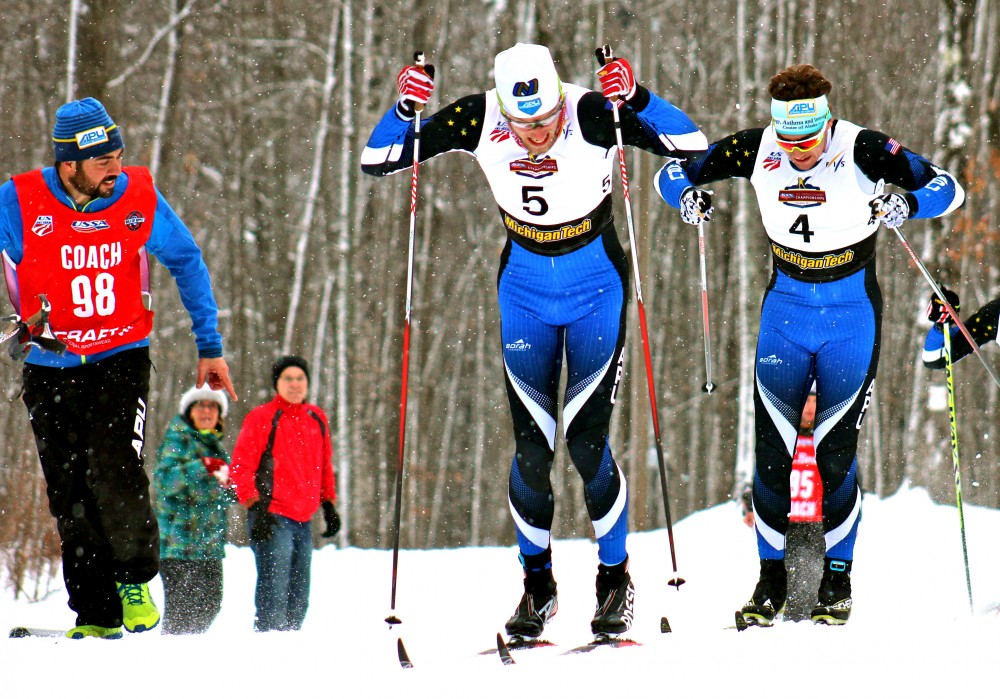
    APU head coach Erik Flora (98) runs alongside his athletes Eric Packer (5) and Reese Hanneman during (4) the final of the men's 1.5 k classic sprint at U.S. nationals in Houghton, Mich., in January 2016. (Photo: Christopher Schmidt)
    APU head coach Erik Flora (98) runs alongside his athletes Eric Packer (5) and Reese Hanneman during (4) the final of the men’s 1.5 k classic sprint at U.S. nationals in Houghton, Mich., in January 2016. (Photo: Christopher Schmidt)

    Packer, who spoke with FasterSkier before leaving for Europe and racing in Ruka, said that he had two goals for his time in the opening swing of the World Cup season.

    “My main goal is to take advantage of the opportunity to get, potentially, nine World Cup starts, and build as much experience as I can over the next month, and also learn the venues, and learn the cadence of World Cup racing,” he said. “And just really … have my eyes and ears open, and learn as much as possible. And learn from what I’m seeing other competitors doing – tactically, technically, that sort of thing. So that’s the first goal.”

    “And the second goal,” he continued, “is to take each race as it comes. … I know that there will likely be tough days, but I’m just focused on taking each race, each day individually, and trying to give it my best shot in each one. It only takes one good day. So that’s really what I’m looking for, is to take advantage of the opportunity and give it my best on each day. Make the people back home proud.”

    By the “cadence” of World Cup racing, Packer explained, he meant “building comfort and familiarity with that routine. To the point that you have a system where you can be focused on preparing for the race, and not get distracted by all of the other things surrounding the race.”

    As an example, Packer cited the races at Gatineau this March: “At the World Cup venue there, they had a warmup track that was probably an 800-meter run from the wax cabin. And then the area that you actually accessed the course and accessed the start was yet a different location; that was probably like a 300- to 400-meter run. You’ve got ski boots on. And so just figuring out how to warm up, and then get on course.”
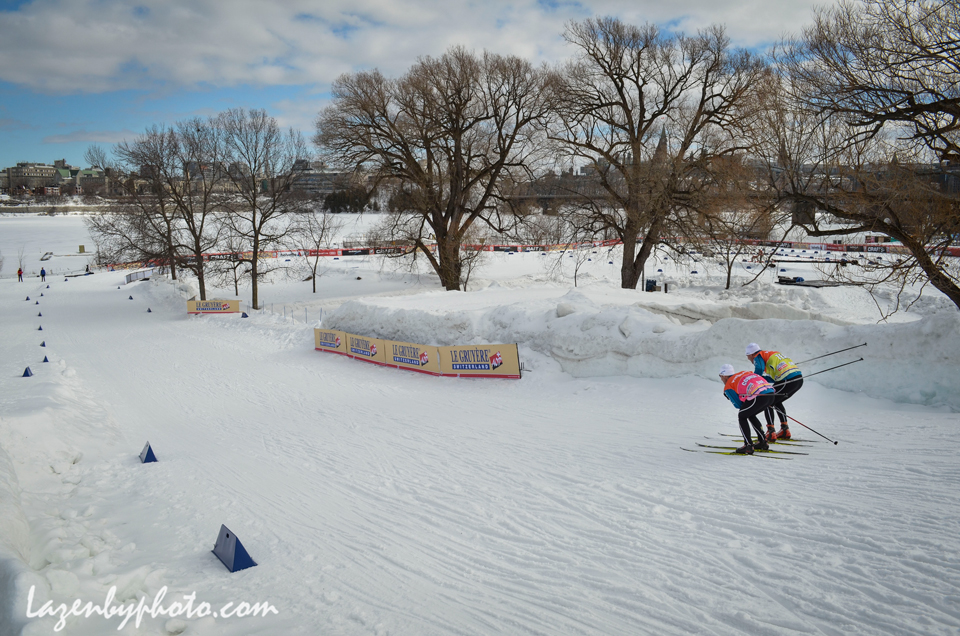
    A little wax testing on Gatineau's 1.7 k sprint course, with the start/finish area visible at the upper right. (Photo: John Lazenby/lazenbyphoto.com)
    A little wax testing on Gatineau’s 1.7 k sprint course, with the start/finish area visible at the upper right. (Photo: John Lazenby/lazenbyphoto.com)

    “More generally,” he said, the cadence involves “just figuring out the racing logistics, and getting used to the extra hurdles that exist at the World Cup level in the race-day routine, that’s a big goal, too. So that you get to the point where you’re focused on the racing, and you’re doing the optimum warmup and everything, and working within the constraints of that World Cup atmosphere.”

    When asked about his overall goals for the season, Packer hesitated to look much past Period 1 of the World Cup, although he acknowledged that World Championships in Lahti, Finland, were on his radar. “I would definitely be excited to qualify for Lahti, and that is one of the goals for the season,” Packer said. “I would say, right now my focus is first on Period 1, and doing my best there, and then I will reevaluate once that’s over.”

    Regarding possibilities for the second half of the winter, he reiterated, “It’s really hard to tell right now. There’s so many different potential paths through the winter. Definitely hoping to be racing in Europe, that’s always the goal. But if not, I would certainly like to come back and give the [American] Birkie my best shot, so there’s many different options there.”

    (Packer has raced the Birkie once before, in 2014, finishing 22nd overall.)

    But he was glad to look back to what he identified as the highlight of his ski career to date.

    Winning Nationals last year,” was his immediate answer. “That was just – and not actually winning, but coming into the finish with Reese and with Tyler together,” Packer said, referring to his APU teammates Hanneman and Tyler Kornfield. “And having that moment of like, ‘Wow, we have three of us here in contention, and being part of that group.’”

    Packer continued: “And [APU head coach Erik] Flora was running next to us, and he was like swinging his arm around like a windmill, and just so excited. And then at the same time my childhood coach, Jan Buron from [Alaska] Winter Stars, and my college coach, Ruff Patterson, were both there at the finish. So kind of that moment of having everybody who’s been involved in my skiing from seventh grade all the way through now, and coming into the finish with my two teammates – that was a really special moment.

    Eric Packer racing in the Ski Tour Canada in March 2016, with the beard in full late-winter flourish. (Photo: FlyingPointRoad.com/NNF)
    Eric Packer racing in the Ski Tour Canada in March 2016, with the beard in full late-winter flourish. (Photo: FlyingPointRoad.com/NNF)

    “It was pretty fun. I got a big hug from Flora, then got a big hug from Jan, got a big hug from Ruff – it was a cool moment, for sure. It will definitely be a special moment for me.”

    Finally, Packer looked back more recently, to what he’d had for breakfast that morning, then once more ahead, to his plans for hirsute management over the course of the winter.

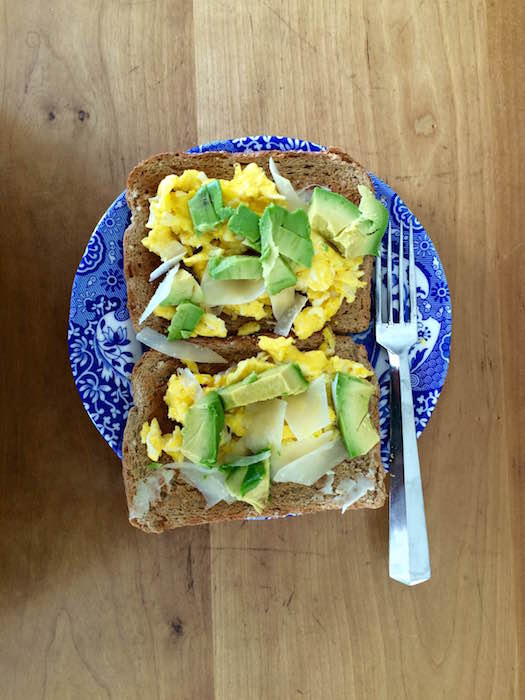
    “I had two pieces of toast, with avocado, and a fried egg on top of that; a cup of coffee, with just a little bit of half-and-half, no sugar; and a banana,” Packer explained, with the precision of someone whose Dartmouth degree is in mechanical engineering.

    And as for the facial hair? “So last winter,” recalled Packer, who was previously recognized with Bearded Honorable Mention #1: The Lumberjack in FasterSkier’s West Yellowstone beards roundup of Nov. 2015, “I went with the ‘grow it all season’ approach. I think I’m going to take a step back from that this year, and keep it more in check. We’ll see. You never know; it has a mind of its own.”
  • What SMS Elite Skiers Eat for Breakfast

    What SMS Elite Skiers Eat for Breakfast

    For the second installment of “What Elite Skiers Eat for Breakfast“, we asked Stratton Mountain School (SMS) athletes to share a photo of a typical breakfast for a weekday training day and describe what they eat. Here’s what they told us:

    Which elite nordic team (in the U.S., Canada or elsewhere) would you like to hear from next for our breakfast series? Leave your recommendations in the comments section below!

    .

  • What Elite Skiers Eat for Breakfast (Hint: More Than You Do)

    What Elite Skiers Eat for Breakfast (Hint: More Than You Do)

    “When you wake up in the morning, Pooh,” said Piglet at last, “what’s the first thing you say to yourself?”

    “What’s for breakfast?” said Pooh. “What do you say, Piglet?”

    “I say, I wonder what’s going to happen exciting today?” said Piglet.

    Pooh nodded thoughtfully.

    “It’s the same thing,” he said.

    — A.A. Milne, Winnie-the-Pooh

    Breakfast, as you learned in elementary school (or more recently from Ryan Gosling), is The Most Important Meal of the Day. That’s likely true for anyone. It is emphatically true for skiers.  Whether you’re training once a day or three times a day, 100 hours a year or 1,000, it all starts with breakfast. If training is the foundation for racing, and proper nutrition is the foundation for proper training, then it logically follows that breakfast is the foundation for, well, everything.

    Kikkan Randall in the kitchen "getting ready and fueled" in the fall of 2014. (Photo: Twitter)
    Kikkan Randall in the kitchen “getting ready and fueled” in the fall of 2014. (Photo: Twitter)

    Certain types of breakfast tend to get all the press. Pretty much everyone is a fan of second breakfast. J.R.R. Tolkien explains that hobbits eat second breakfast as the second of their six daily meals – after (first) breakfast and before elevenses. Thomas Mann, in The Magic Mountain, ups the ante, discussing not only second breakfast but also, remarkably, third breakfast. Robert McCloskey, in the seminal 1941 children’s book Make Way for Ducklings, underscores that second breakfast is best in the animal kingdom as well; his Mr. and Mrs. Mallard follow around the late-morning duck boat until they get “another breakfast, better than the first.”  Everyone, it seems, is a fan of second breakfast.

    There is no question that everyone is a fan of pancakes (and their close relative, the waffle).  Turning from early-20th-century literature to the modern institution of the 21st-century skier blog, it is clear that there could not be a skier blog – or maybe even skiers – without pancakes or waffles.

    Sophie Caldwell has a rest day and makes blueberry waffles. Jessie Diggins spends the summer making apple pancakes, and Christmas eating French toast. Annie Pokorny, waxing philosophical, brought us the remarkable (and compelling) “5 Reasons Waffles are a Philosophically Valid Way to Organize One’s Life.” And Noah Hoffman – well, Noah makes pancakes, including but not limited to blueberry pancakes, thick whole-grain pancakes, gluten-free pumpkin pancakes, Zach Caldwell’s putative-pancakes crepes recipe, pancakes à la Skratch Labs, pancakes in Bend, and pancakes in Anchorage.

    And a generation earlier, before the term blog had even been invented, Luke Bodensteiner, at the time a struggling Olympic hopeful, wrote in Endless Winter: An Olympian’s Journal of downing 18 (!) “steaming hot buttermilk pancakes” one morning in September 1993, then crushing a 50-kilometer rollerski followed by a 12-mile run. Plus ça change.

    This is not an article about second breakfast.  Nor is it even an article about pancakes.  This is an article about what athletes eat for real breakfast on real weekdays. Training day or rest day, at home or abroad, every elite athlete has a food that they’re comfortable with. And once they’ve found it, they tend to eat that food every. single. day. (Except for Lex Treinen, who wrote that he “never actually [has] the same breakfast every day,” but he’s an outlier among the athletes surveyed for this article.) If ski racing is, ultimately, about controlling the things you can control and trying to get a good outcome from the things you cannot, then breakfast becomes one more thing that can be effectively controlled.

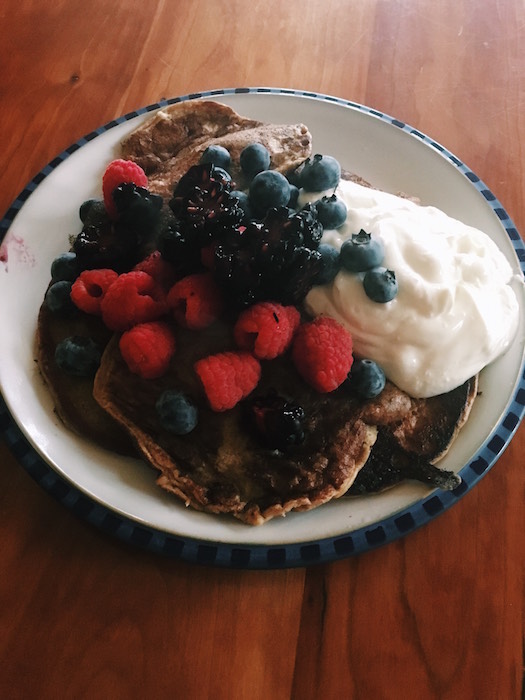
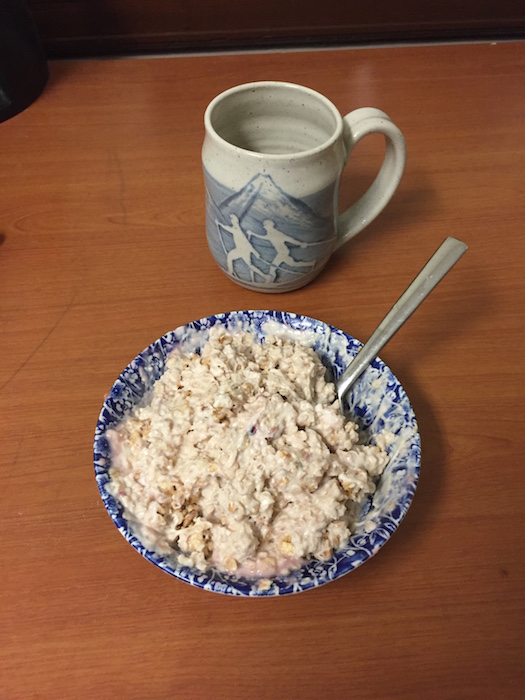
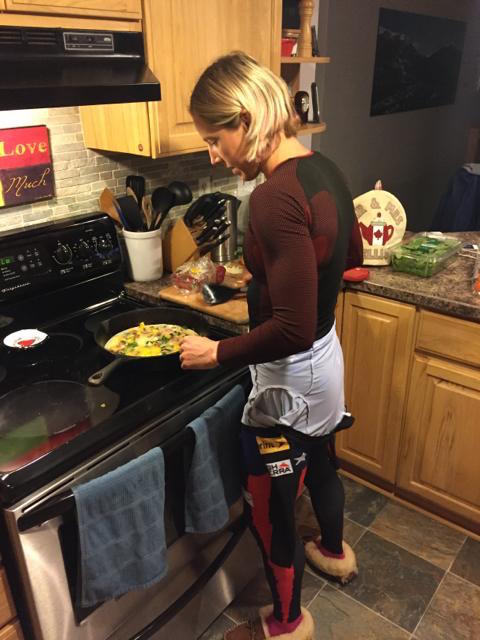
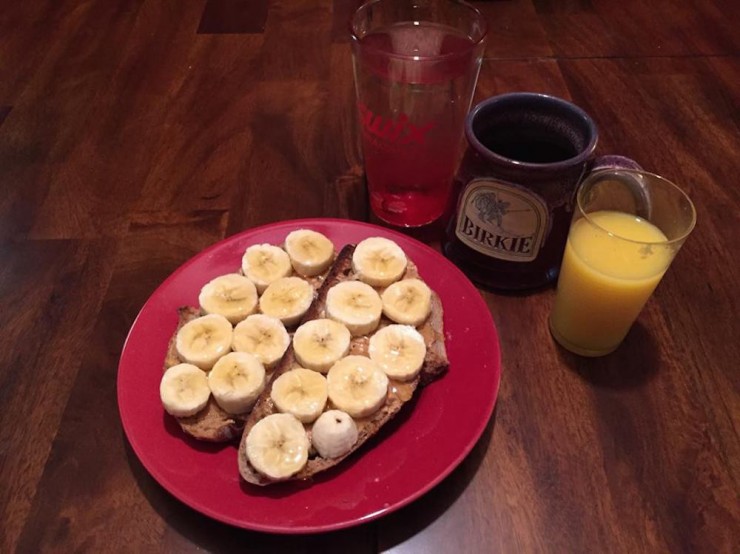
    Starting with Alaska, we asked skiers with the Alaska Pacific University Nordic Ski Center elite team to share an honest picture of their average breakfast for a weekday training day and describe what they eat. Here’s what they told us:

  • The Hungry Skier: Pumpkin and Maple-Nut Oatmeal

    The Hungry Skier: Pumpkin and Maple-Nut Oatmeal

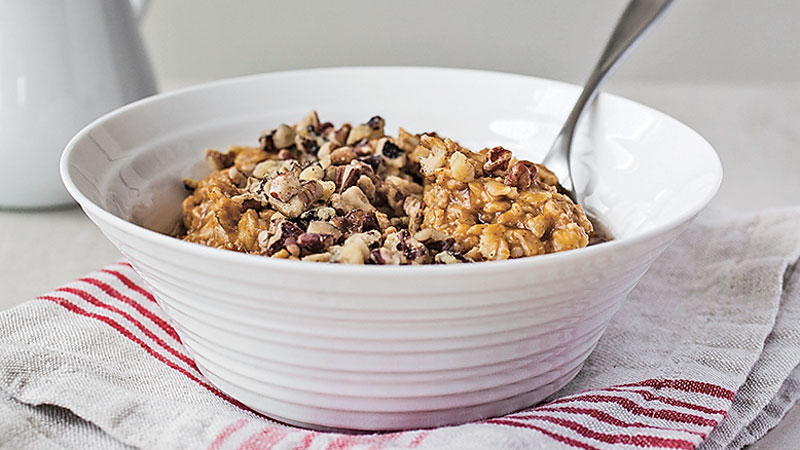
    "This fun twist on a familiar breakfast incorporates three energy-packed foods—nuts, vegetables, and whole grains—into a high-carb meal that's ideal for heavy training days," according to Outside Magazine. "Servings: 2, cooking time: 15 minutes"
    “This fun twist on a familiar breakfast incorporates three energy-packed foods—nuts, vegetables, and whole grains—into a high-carb meal that’s ideal for heavy training days,” according to Outside. “Servings: 2, cooking time: 15 minutes”

    It’s that time of year, and we’ve got a quick-and-easy recipe from scratch for the time-crunched athlete, courtesy of Outside Magazine. If you’re a pumpkin freak, this breakfast dish could be right up your alley. Either way, it’s a spiced-up alternative to traditional oatmeal for those autumn mornings.

    Servings: 2

    Time: 15 minutes

    Ingredients:

    • 3/4 cup canned pumpkin
    • 1.2 teaspoon salt
    • 1 1/2 cups rolled oats (also called old-fashioned oats)
    • 1 tablespoon pumpkin-pie spice
    • 2 tablespoons pecans, chopped
    • 2 tablespoons maple syrup

    Directions:

    1. Combine pumpkin and salt with three cups of water in a small saucepan and bring to a boil.
    2. Add oats and pumpkin-pie spice. When mixture starts to bubble, reduce heat to low. Stir occasionally until oats are cooked and thickened, about eight minutes.
    3. Top with pecans and maple syrup.

    Nutrition per serving:

    • 362 calories
    • 9 grams fat
    • 63 grams carbohydrates
    • 11 grams dietary fiber
    • 10 grams protein

    For more healthy recipes for the time-crunched athlete, click here.

  • The Hungry Skier: Oat Bran with Cherries & Almonds

    The Hungry Skier: Oat Bran with Cherries & Almonds

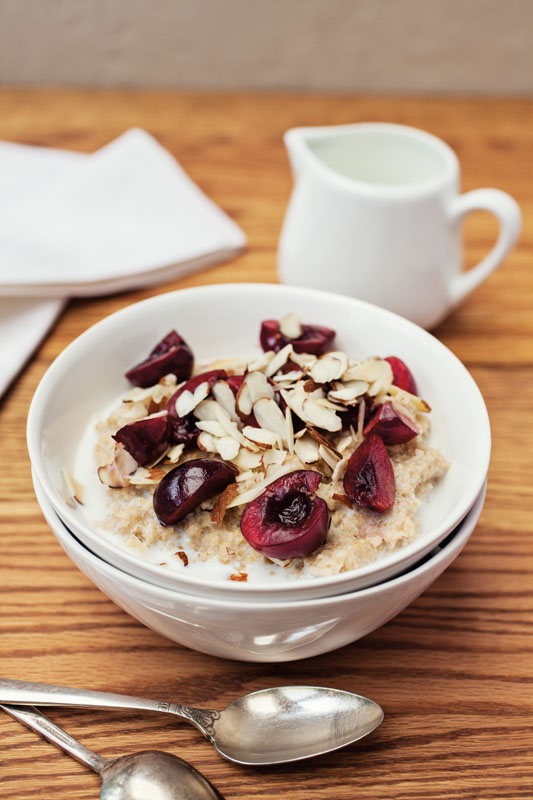
    Oat Bran with Cherries and Almonds (Republished with permission of VeloPress from Racing Weight Cookbook. Try more recipes at www.racingweightcookbook.com)
    Oat Bran with Cherries and Almonds (Republished with permission of VeloPress from Racing Weight Cookbook. Try more recipes at www.racingweightcookbook.com)

    Good Monday morning! Hungry? We’ve got you covered. Try this “Oat Bran with Cherries & Almonds” recipe from the Racing Weight Cookbook by Matt Fitzgerald and Georgie Fear. We asked them to highlight one of their favorites from the book, so here it is from page 41. To see your favorite dishes featured, email info@fasterskier.com with the subject line: “Recipe.”

    For more great recipes, check out the best from our readers — recognized last week in Rottefella’s Ultimate Refueling Contest.

    OAT BRAN WITH CHERRIES & ALMONDS

    2 SERVINGS // 15 MINUTES HC R V

    • 3 cups water
    • 1½ cups oat bran
    • pinch of salt
    • 2 teaspoons vanilla extract
    • 2 teaspoons sugar
    • 2 cups fresh or frozen cherries
    • 2 tablespoons (½ oz.) almonds, slivered
    • milk (optional)

    1. In a saucepan, bring water to a boil over medium-high heat. Add oat bran and cook uncovered until the mixture begins to thicken, 5–10 minutes. Stir periodically to keep oat bran from sticking to the pan.

    2. While oat bran is cooking, cut each cherry in half and remove pit with a paring knife.

    3. Season oat bran with salt, vanilla, and sugar and stir to blend. Remove from heat and divide between two bowls. Top with cherries and almonds and a splash of your favorite milk, if desired.

    Per serving: 422 calories, 10 g fat, 74 g total carbohydrate, 13 g dietary fiber, 15 g protein

    TIP: Save time by combining water, oat bran, salt, vanilla, and sugar in a microwave-safe bowl. Microwave for 90 seconds, stir, and microwave for an additional 90 seconds. Let rest a few minutes before topping and serving.

    DQS COUNT (per serving) FRUITS 1 WHOLE GRAINS 1 NUTS & SEEDS 1

  • Fueling on the Go

    Fueling on the Go

    This is the first article in a four-part series on eating to perform while balancing life and training demands. The information provided here is from the Norwegian organization “Sunn Jenteidrett,” which published the “Eat Smart” cookbook and resource guide on nutrition and training. Sunn Jenteidrett is dedicated to increase the awareness about nutrition and performance among young athletes, and is a joint effort of the Norwegian Ski Association, Norwegian Orienteering Association and Norwegian Track and Field Association, backed by the Olympics Development Center.

    Eat at least four meals per day. Never go more than three to four hours between eating. Fill in with snacks to avoid going on empty and maintain steady energy throughout the day. All main meals should consist of carbohydrates, proteins and fats, all of which supply energy to the body.

    A quick run-down of some important food groups here:

    Dairy supplies both proteins, carbs, calcium and other important nutrients. Photo: Inge Scheve

    Carbohydrates – the most important energy source for athletes. In order to get enough carbs, start the day with oatmeal, thick slices of bread, or cereals. Crackers and crisp breads are lighter and thinner, and supply less carbs.

    Choose whole grains – pick cereals and breads that are high in whole grains and low in sugar. It’s easy: look for whole grain up high and added sugars low on the ingredients list. Whole grains keep you full longer, keeps your blood sugar levels more even, and contain more vitamins and minerals than refined grains.

    Proteins – Try to include at least one source of protein with your breakfast. Toast with just jam and a glass of juice contain no significant protein sources. If you add a glass of milk, make your oatmeal with milk (or pour milk over it), or eat your toast with some ham or cheese, you’ve significantly improved this meal.

    Calcium – Crucial for strong bones! Milk and dairy products are the most important sources of this mineral. Three servings of dairy product per day will cover your recommended daily intake for calcium. One serving is a piece of bread with cheese, a small container of yogurt (4 oz.), or a glass of milk (8 oz.). Additionally, milk and dairy contribute other important nutrients and minerals.

    Fruits and vegetables – “Five a day” is still a good rule of thumb. Try to eat two servings of fruit and three servings of vegetables per day, and more is a bonus! Make sure you have fruit and/or vegetables at every meal, including breakfast. Drink a glass of juice, or use sliced veggies as garnish for sandwiches. Add fruit or berries to your oatmeal or cereal. Not only is this healthy, but it contributes to variation and adds color to your morning routine.

    So how do you turn all of these good intentions into action?

    The number-one rule for getting healthy food onto the table is having the right stuff on hand. Make sure your kitchen is stocked with the basics.

    Dry stuff: All-purpose flour, whole wheat flour, oatmeal, cereals, sugar, pasta, rice and noodles, sauce and soup mix, dry yeast, taco shells, flour tortillas, nuts and raisins, salt and pepper, as well as spices like thyme, basil, oregano, cinnamon

    Cans, jars and bottles: Pasta sauce, canned tomatoes and tomato paste, corn, beans, olive oil and canola oil, Tabasco sauce, sweet chili sauce, soy sauce, ketchup, honey, beef/chicken/vegetable broth

    In the freezer: bake-off rolls and bread, pita bread, vegetables, ground beef, frozen berries

    In the fridge: Ham/lean lunch meat, bacon, milk, low fat sour cream, plain yogurt, eggs, cheese, butter, sundried tomatoes, pesto, orange juice/apple juice

    Vegetables: Onions, leeks, carrots, broccoli, lettuce, cucumber, bell pepper, tomatoes, ginger and garlic

    Get started: Building a great breakfast

    Breakfast is the most important meal of the day – it’s been said before and it will be said again. Do not skip breakfast, no matter how much of a hurry you’re in. It’s your first chance to fill your fuel tanks with energy for training, school, work and other activities. Even if you have an early workout, make sure you ingest something before heading out the door. If you have trouble eating anything substantial right before a morning workout, try oatmeal with extra water – letting it boil a little longer to absorb the extra liquid makes the grains easier to digest.

    Good Morning Oatmeal (Photo courtesy of brodogkorn.no)

    Here are some options:

    • Oatmeal in any way you like it – add chopped apples, sprinkles of cinnamon, globs of jam or jelly, or raisins and chopped almonds… Be inspired!
    • Cereal and yogurt – check your cereal: Many store-bought cereals are high in added sugars. Look for varieties with little added sugar, and sweeten things up by adding fresh or dried fruit, a little honey, or vanilla yogurt (instead of plain).

    Recipe: Christine Helle’s Muesli (Helle is a nutritionist with the Olympic Development Center in Oslo, Norway)

    Make the muesli the night before, and add fresh fruit and berries when you eat it the next morning. This muesli is great for those who struggle to eat on race mornings, and it also makes a good snack to bring to the race venue for some extra energy before the event – or even as recovery fuel after a race or a hard workout. Use whatever fruit you have – the varieties listed below are suggestions.

    What you need:

    • 1 Cup mixed grains (rye, spelt, wheat)
    • 1 Cup oatmeal (not quick oats)
    • ¾ -1 Cup apple juice
    • 2 Cups yogurt (honey or fruit sweetened)
    • 1 apple, shredded
    • 1 banana, sliced
    • ¾ Cups fresh berries or fresh cut-up fruit
    • ¾ C milk

    What you do:

    • The night before – mix grains, oats, juice and yogurt in a large bowl. Add a shredded apple (or a handful of raisins and chopped almonds). Mix well, and set in the fridge until the next morning
    • In the morning – Slice the banana and dice other fruits if you choose to use them. Carefully fold the fruit and milk into the fridge mixture. This recipe makes four servings.
  • Get An Egg-cellent Start To The Day

    Get An Egg-cellent Start To The Day

    If I know it’s going to be a big day, I make sure I have a solid breakfast. People always say that it’s the most important meal of the day and that’s true. When you wake up in the morning, you probably haven’t eaten in at least 8 hours. Your glucose stores will be depleted, which are the main energy source of the body. A lot of people tell me, “I’m not hungry,” or “I don’t have time for breakfast,” but it’s one of those things you should probably be making time for, especially if you’re training.

    Some consequences of skipped breakfast are short attention span, lack of alertness, longer reaction time, decreased productivity, low blood sugar, even a short temper. This is one of my favorites and one of my dad’s go-to breakfasts.

    Broccoli and Bean Omelet

    Ingredients:

    – One whole egg + one egg white – I used whole eggs and keep the second yolk for something else but you can also use egg whites that come in cartons

    – Cheese – I used part-skim mozzarella but use the cheese of your choice

    – Veggies or other add-ins of your choice – I did broccoli and black beans but you can put in anything from carrots to zucchini to peppers or tofu

    Directions:

    1. In a pan over medium heat, crack eggs and scramble.
    2. Add in veggies, beans and cheese
    3. Cook thoroughly – you can either flip it and keep it omelet-style or break it up for more of a scrambled eggs looking breakfast
    4. Enjoy. I toasted up some bread for a little bit of a carb addition and sliced up an apple to round out my breakfast.

    Eggs – Nature’s Little Protein Powerfoods

    – Eggs contain iron, which is very important, especially for female athletes. It carries oxygen to the cells.

    – They also one of few foods that naturally contain Vitamin D, which strengthens bones and teeth. It might also help protect against certain cancers and auto-immune diseases.

    – Eggs are high in selenium, which is an antioxidant to prevent the breakdown of body tissue.

    – One egg provides half your daily requirement of choline, an essential nutrient that plays a role in brain function and development.

    They are also protein powerhouses. They provide all nine essential amino acids that the body cannot make on its own. Amino acids are the building blocks of all protein and help in the development of muscle.