From the FasterSkier archive — posts syndicated from athletes’ and coaches’ own blogs between 2004 and 2012, kept online as published. Current coverage is at fasterskier.com.

Tag: brent knight

  • APU Coach Strabel Makes Mount Marathon His Own, Tops 32-Year-Old Record (Updated)

    APU Coach Strabel Makes Mount Marathon His Own, Tops 32-Year-Old Record (Updated)

    Eric Strabel chasing down 2013 Mount Marathon Race (Photo: Dave Blanchet)
    Eric Strabel chasing down Wylie Mangelsdorf, a college senior, and Rickey Gates (front) at the 2013 Mount Marathon Race on July 4 in Seward, Alaska. (Photo: Dave Blanchet)

    Note: This race recap has been updated to include comments from Ann Spencer, the third woman and Alaska Winter Stars skier.

    Mount Marathon isn’t one of those races you can wake up the morning before and decide you’re going to do. People spend years trying to get into the fabled Fourth of July hill climb, a 3,022-foot ascent up and terrifying trek back down to the town of Seward, Alaska.

    In 86 years, the grueling 3.5-mile race has grown to selectively award 350 senior entries to senior men and women, and another 250 juniors, evenly divided by gender. If you finish 10 Mount Marathons, you’re considered a veteran, which is one way to get in. Junior races don’t count toward that. Win it the year before or make the top 10 in your age group, you’re also in. Try your luck with a lottery some people have spent more than a decade trying to get registered through, or pay at least a grand for one of 10 auctioned entries.
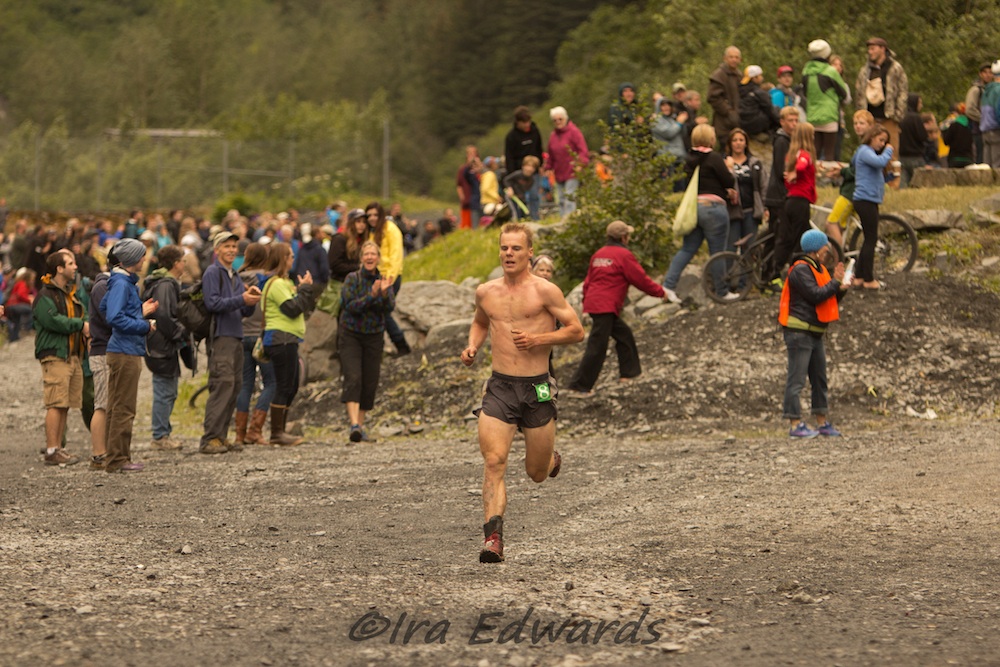
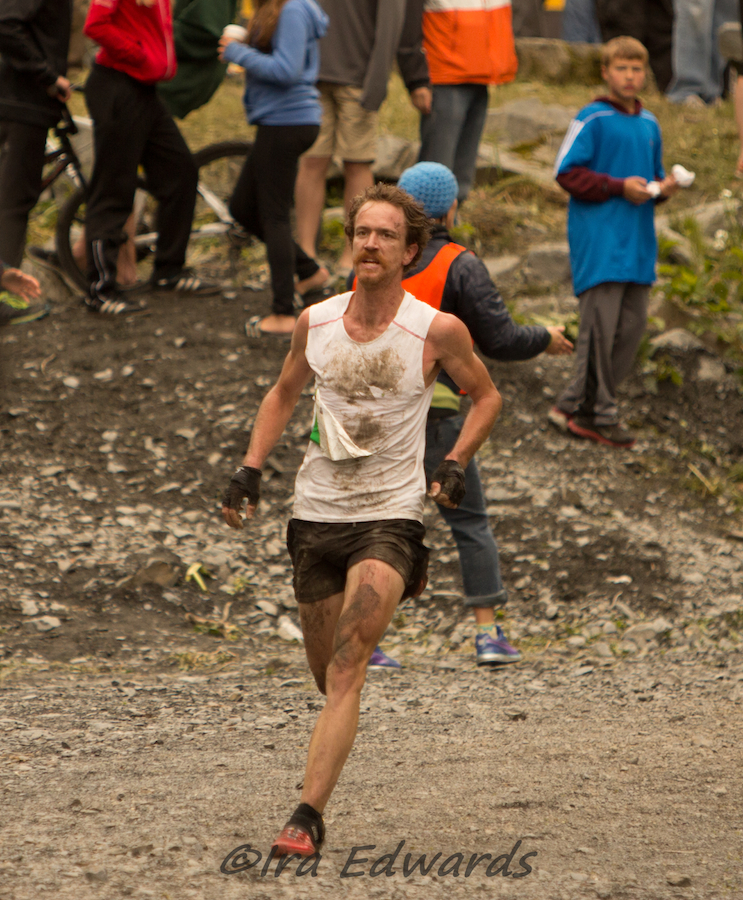
    Eric Strabel, who coaches the APU university and junior nordic teams and assists with the elite team, coming off the mountain to win the 2013 Mount Marathon on July 4 in Seward, Alaska. It was his second victory in three years and he broke a 32-year-old course record by 26 seconds. (Photo: Ira Edwards/roosterskier.com)
    Eric Strabel, who coaches the APU university and junior nordic teams and assists with the elite team, coming off the mountain to win the 2013 Mount Marathon on July 4 in Seward, Alaska. It was his second victory in three years and he broke a 32-year-old course record by 26 seconds. (Photo: Ira Edwards/roosterskier.com)

    Two years ago, Alaska Pacific University (APU) nordic coach Eric Strabel won Mount Marathon. It was a goal he had more or less been working toward since he was 11, and in 2011, he achieved it.

    Last year, he finished eighth – not what he was hoping for. APU’s university coach and elite-team assistant, Strabel decided to recommit to the race he grew up doing and spent the next 12 months getting ready for his 20th consecutive Mount Marathon.

    “For the first time, I was ready to commit to 12 months of specific training for the extreme demands of the race,” Strabel, 31, wrote in an email.

    He reasoned climbing was his problem and increased his uphill training while decreasing the distance covered in each workout.

    “I have a higher disposition of fast twitch muscle fiber than what is ideal for mountain running so I needed to build up a monstrous aerobic engine before I started to do anything close to race pace for longer than 30 seconds,” he explained. “Looking back, one of the biggest keys of the training was having more than twenty 1 hour sustained low to mid level 3 efforts on steep grades before ever letting myself push my heart rate over 90% of max. … Sustained assertive steep hiking and running really works wonders for building hip and leg strength and endurance for skiing!”

    Sounds pretty technical for a guy who placed third in this year’s 50-kilometer Tour of Anchorage ski marathon without doing much ski training beyond coaching, or someone trying to break the Mount Marathon course record without a watch.

    “Wearing a watch distracts me. And it should be unnecessary,” Strabel explained. “I should already know by race day what I need to be doing and how I should be moving to have my best speed. Nevertheless, I did ask a couple people how the time was looking at landmarks to know what was possible.”

    Strabel’s speed came from within on July 4 in the 86th annual Mount Marathon Race – and with the help of a commentator’s words before the start. The announcer said the morning rain and lack of snow (for traction) would make for slower conditions, ultimately eliminating a shot at the 32-year-old course record (43 minutes, 21 seconds) set by Olympic nordic skier Bill Spencer.

    “[That] gave me kind of a chip on my shoulder and added more fuel to the fire,” Strabel wrote. “The record has been such a legend, that even the thought of breaking it has been presumptuous, but with the growing level of competition and preparation, a handful of us were starting to believe it was possible over the last couple of years.”
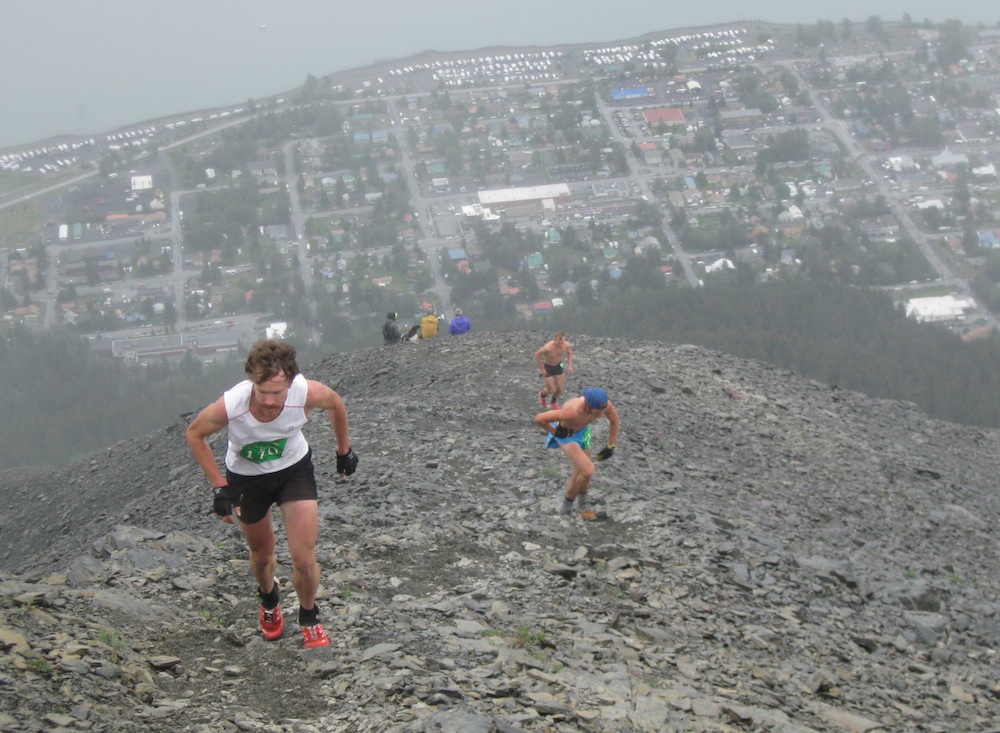
    Rickey Gates leads the men's race up Mount Marathon on July 4 high above Seward, Alaska, while Wylie Mangelsdorf (r) and Eric Strabel keep him in sight. (Photo: Dave Blanchet)
    Rickey Gates leads the men’s race up Mount Marathon on July 4 high above Seward, Alaska, while Wylie Mangelsdorf (r) and Eric Strabel keep him in sight. (Photo: Dave Blanchet)

    Last Thursday, amid drier conditions than the previous women’s race, Strabel did it, pushing himself to win it 42:55. Nine seconds later, runner-up Rickey Gates, a multiple-time member of the U.S. Mountain Running Team, crossed the line in record time as well.

    Both saw their times on the big clock, but neither wore a watch to confirm nor thought it was possible.

    “When I got to the finish line and saw the 42 minutes and change, I thought what Eric Strabel thought, that something went wrong with the timing,” Gates, 32, said on the phone Saturday after flying home to San Francisco.

    “For a few minutes after the race it felt like after a serious accident, everyone’s kind of quiet and a little bit confused, and you’re kind of piecing together information but you’re not quite sure what to believe,” he said. “It felt like that, but when we finally got information that the clock was right, then it finally settled in. Eric gave me a huge hug; he’s really a gentleman and a gracious competitor and said it wouldn’t have happened without the two of us battling it out like that.

    “I certainly wouldn’t have run that fast without him either,” Gates continued. “It’s one of those second-place finishes that I can imagine going any better.”

    This is coming from a man, albeit a Mount Marathon newcomer, who’s won trail races around the world, including one in Antarctica and the Canadian Death Race, and is headed to Europe for the 65 k Ice Trail race in Val d’Isère, France, on Sunday. After that, Gates will compete in back-to-back 32 k races in Italy and Switzerland, then return to his home state of Colorado in late September for the Ultra Race of Champions (UROC) 100 k in Vail.

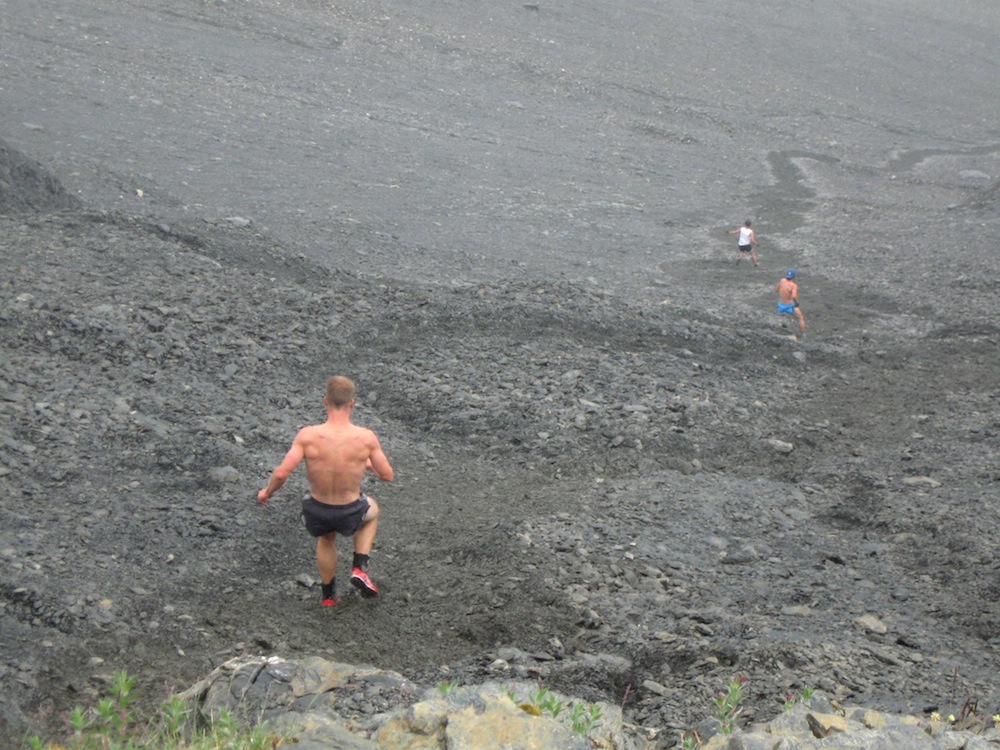
    Six weeks ago, Gates rode his 2002 BMW F650 Dakar motorcycle from San Francisco to Alaska, flying to Colorado for a wedding before settling back in around Seward (he’s getting a friend to drive his bike back). There, Gates trained with local high-school runners on the slopes of Mount Marathon, getting to know the terrain and how locals tackle it.
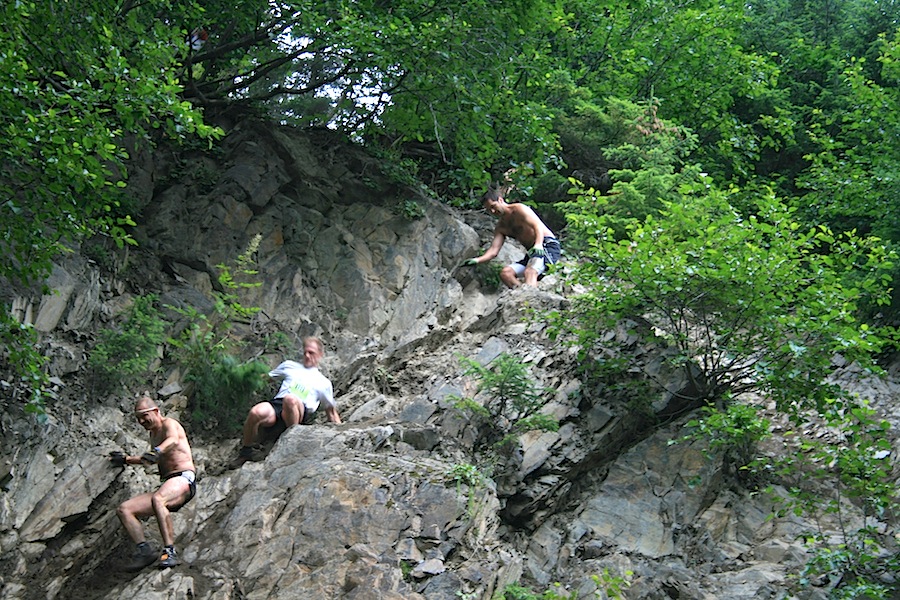
    Racers navigate the cliffs along Mount Marathon, a 3,022-foot peak, during the 2010 edition of the race in Seward, Alaska. (Photo: Lauren Fritz)
    Racers navigate the cliffs along Mount Marathon, a 3,022-foot peak, during the 2010 edition of the race in Seward, Alaska. (Photo: Lauren Fritz)

    “It was cool to see a high school cross-country team out there on the course actually dialing in little five-five foot drops and maneuvering cliffs,” Gates said. “Of course they’re high schoolers and they don’t think anything of it.”

    Less than a week before the race, Gates did a time trial up the agonizing climb. He clocked in around 51 minutes. “Muscles hurt on me that have never hurt before,” he told the Anchorage Daily News. He later told FasterSkier it’s one of the shortest yet hardest races he’s ever done.

    On Thursday, Gates didn’t worry about time, just about winning – or coming as close to doing so as possible.  His mother, Trish Gates (formerly Schultz), finished second in the 1969 Mount Marathon, but was quick to point out there were only two women in the race. She had been working at a fish-packing plant at the time, had a week off and decided to give it a go.

    “It’s the only race that she’s ever run, she never run one before then and she’s never done one since then,” Gates said of his mom, who flew to Alaska to watch him last week. “Being a traveling hippy, they were offering free meals to whoever did the race. The salmon weren’t running yet so she had a week.”
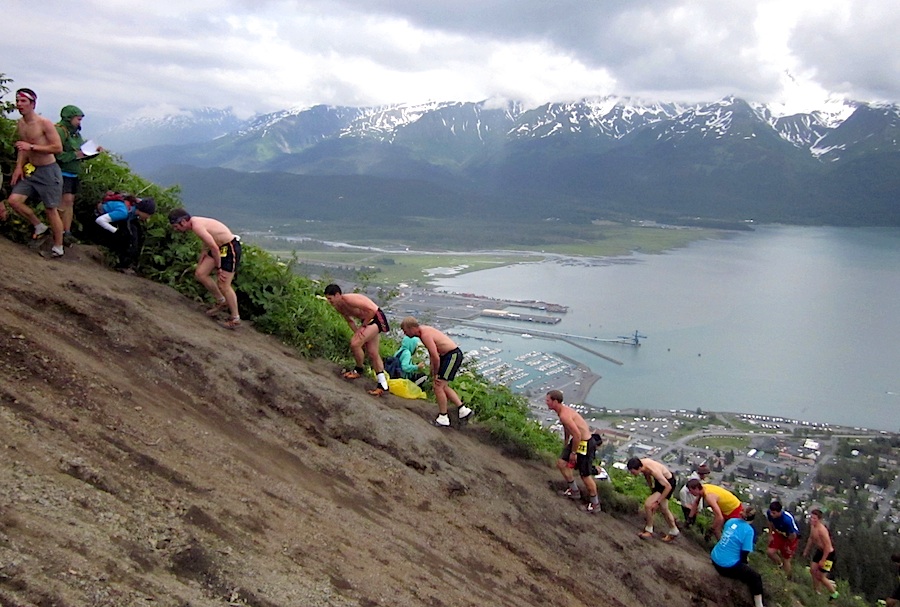
    Racers ascent the 3,022-foot Mount Marathon above Seward, Alaska, at the 2011 edition of the hill climb. (Photo: Lauren Fritz)
    Racers ascent the 3,022-foot Mount Marathon above Seward, Alaska, at the 2011 edition of the hill climb. (Photo: Lauren Fritz)

    Knowing she did the race was cool, but when he heard how technical and gut-wrenching it was, Gates started to respect her even more. He spent the last five years dreaming of racing Mount Marathon, and tweaked his schedule to make it happen this year.

    Jetting toward the top of the three-thousand-foot peak, Gates was the first to the turnaround point just over 1 ½ miles in. The third man to the halfway mark (behind Wylie Mangelsdorf, a Principia College senior, in second), Strabel passed both Mangelsdorf and Gates on the descent.

    “I’m not the strongest downhiller,” Gates said. “I ran 11 minutes down that thing, which isn’t bad, but I knew I wasn’t going to run 10 minutes down it which Eric did.”

    At the base of the mountain before a half-mile stretch along a road to the finish, Gates in second place looked up to see where Strabel was. Then, he crashed, dislocating his shoulder and spending several seconds on the ground.
    2013 Mount Marathon runner-up Rickey Gates shortly after a crash dislocated his shoulder at the mountain base a half mile before the finish on July 4 in Seward, Alaska. (Photo: Ira Edwards/roosterskier.com)
    2013 Mount Marathon runner-up Rickey Gates shortly after a crash dislocated his shoulder at the mountain base a half mile before the finish on July 4 in Seward, Alaska. (Photo: Ira Edwards/roosterskier.com)

    “I just caught my foot on something or nothing at all and just went down really hard in front of 10,000 people,” Gates said. He stood up, popped it back in, and proceeded to cut an estimated 20-second deficit to finish 9 seconds behind Strabel.

    “There’s a lot to be said about adrenaline,” Gates said. “If I’d had not fallen I still don’t think I would’ve gotten him.”

    According to Strabel, catching Gates, which he did about two-thirds of the way down, wasn’t easy. He strategically attacked the final cliff section before the road, thinking Gates would be less familiar with it and thus not as fast.

    “As it turned out, a lot of the cushion that I built by the base of the mountain was due to Rickey stumbling, catching himself and dislocating a problem shoulder, and quickly resetting it himself,” Strabel explained. “I did look back twice early on the road to know that he was making up serious ground so I had to gather a sprint over the last 90 seconds whether my body was capable of it or not.

    “I was incredibly relieved at the finish,” he continued. “The only other thought I had over the final seconds of the race was of the large display clock that came into focus. I had completely set aside thoughts of a record for most of the race. I recall seeing it ticking through the 42:30’s and remember struggling to think if a time in the 42’s was faster than 43:21. That was how far down Rickey had pushed my brain function.”

    That night, Strabel, Gates and other finishers celebrated with a night out on the town, where Gates lost his rental-car keys. All in all, the trip went as well as Gates could’ve imagined, he said, except for a couple blips.

    “I’d appreciate it if my shoulder didn’t really hurt really bad right now and if I didn’t lose my rental-car keys at 4 o’clock in the morning,” Gates said.

    Other Top Skiers

    Longtime APU skier Brent Knight, 29, placed fifth in the men’s race – four years after he led the 2009 Mount Marathon then collapsed near the finish from dehydration. He was hospitalized in Seward, where he received five liters of IV fluid.
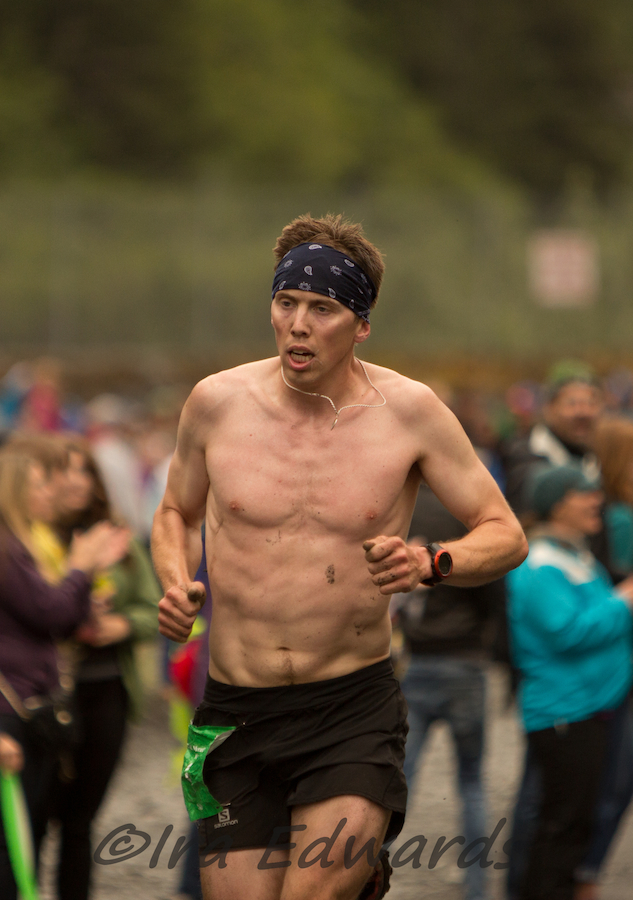
    Brent Knight, 29, en route to a fourth-place finish at the 2013 Mount Marathon Race on July 4 in Seward, Alaska. (Photo: Ira Edwards/roosterskier.com)
    Brent Knight, 29, en route to a fourth-place finish at the 2013 Mount Marathon Race on July 4 in Seward, Alaska. (Photo: Ira Edwards/roosterskier.com)

    Knight returned to the race in 2010 and took fourth, was second to Strabel in 2011, and placed sixth behind winner Matt Novakovich in 2012.

    “It’s hard to describe the feeling you get when you are surrounded by 30,000 people in what could be the gnarliest sub hour race out there,” Knight wrote in an email.

    The first time he watched the race as a kid, the air was hazy from nearby fires. Knight watched as the men’s leader turned the corner at the top of a long hill before the finish.

    “The sun combined with smoky haze created a dull orange backdrop to a lean mountain runner covered in blood and mud,” he wrote. “Eye of the Tiger was playing over the loud speakers and I think that memory of the whole scene was etched in as one of the most awesome events I’ve ever witnessed. Now years later and multiple Mt. Marathon finishes later, I still get this overwhelming feeling like I’ve just saved the world from devastation or something. The roar of the spectators makes you feel like you’re a gladiator in the ancient [Coliseum].”

    That’s why he calls the race “addicting.” This year, Knight lost some ground at the leaders along the ascent, and by the top, he realized how fast they were going.

    “I didn’t think it was record fast, but I thought it might be close,” he wrote. “Matias [Saari, who placed third] closed in and passed me a 1/4 way down the mountain and I decided to put comfort aside (if there was any) to hang on him.”

    Knight lost about 15 seconds to Saari after the “gut,” which he described as an extremely technical creek bed with multiple cliffs before the bottom of the mountain, but made up about 10 seconds on the road.

    “It’s hard to cover ground that fast when it feels like you’ve been run through a meat grinder,” Knight wrote. “Had I run a minute faster, I would have been competing for 3rd in a time that would have easily been a winning time any of the past 32 years. This race, this year, was the toughest field I’ve ever competed against.

    “I’m a skier that loves to be a mountain runner,” he added. “I’ll find my way to the front … Perhaps next year or the year after that or the next. Strabel set a new mark to fight for this year.”
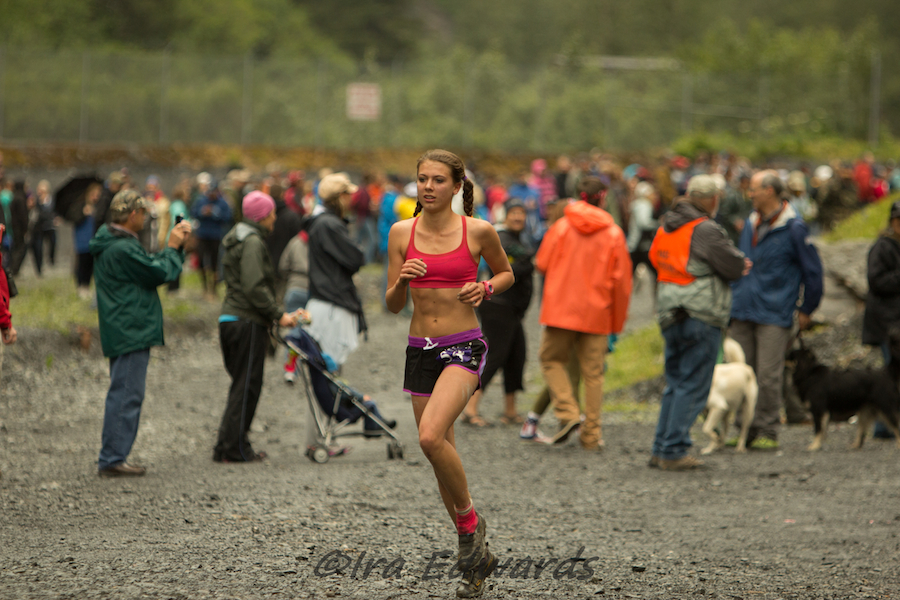
    Alaska Winter Stars skier Ann Spencer, 18, racing to third place in her first year as a senior at the 2013 Mount Marathon on July 4 in Seward, Alaska. (Photo: Ira Edwards/roosterskier.com)
    Alaska Winter Stars skier Ann Spencer, 18, racing to third place in her first year as a senior at the 2013 Mount Marathon on July 4 in Seward, Alaska. (Photo: Ira Edwards/roosterskier.com)

    In the women’s race, Christy Marvin, a 32-year-old mother of three, won in 53:20. A race newcomer but well-known local runner, she was the first rookie to win since Toby Schwoerer took the men’s title in 2004.

    Allison Barnwell placed second just under two minutes later, and 18-year-old Ann Spencer of the Alaska Winter Stars placed third (56:15) in her first year as a senior.

    In an email, she explained it was her fourth Mount Marathon (after three junior races), but first time racing the whole mountain.

    “I was definitely not expecting to do so well,” Spencer wrote. “I was aiming for a top 20 finish with a time under 1:05. Hill climbs are definitely my strength.”

    Accepted at the University of Vermont, Spencer planned to defer a year to continue skiing and training in Anchorage to better prepare herself for college racing.

    Fresh off a training camp on Eagle Glacier, APU Elite Team skier Lauren Fritz, 25, placed fourth (57:57) among the senior women. Last year, she was second in Mount Marathon to teammate and 2010 Olympian Holly Books.

    “There was a lot of pressure going into this year’s race … which is tough because there isn’t a lot of room for improvement and a lot of room for disappointment,” Fritz wrote in an email. “I really wanted to win, of course, and I had as good of a shot as any, with Holly and Kikkan [Randall] both skipping this year’s race. There are always top contenders though, and this year was no different.”
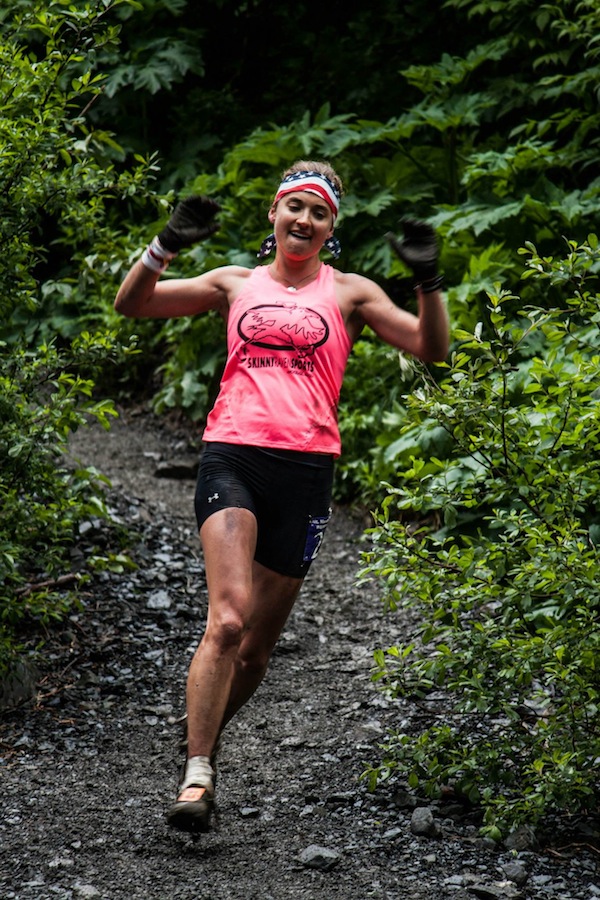
    Lauren Fritz racing back down to Seward, Alaska, for fourth in the 2013 Mount Marathon Race on July 4. (Photo: Cole Deal)
    Lauren Fritz racing back down to Seward, Alaska, for fourth place in the 2013 Mount Marathon Race on July 4. (Photo: Cole Deal)

    Meanwhile, Fritz has dealt with chronic tightness in her calf muscle for the last couple years. Skating in slush on Eagle Glacier last week didn’t help.

    “I knew going into the race that it would probably bother me, but there wasn’t much I could do about it,” she explained. “I tried to warm up well but it still flared up during the race. It was raining throughout the morning, including during the race a little bit, so it was a lot muddier than I’ve ever raced it, so there was a lot of slipping and grabbing for tree branches or plant roots or whatever you could hold onto to keep from sliding backwards. Really not ideal conditions for fast times, plus the slipping put more stress on my lower legs.”

    Just before tree line about halfway up, her calves got the best of her and she lost contact with Barnwell, Spencer and Sheryl Loan, who ended up seventh. Marvin led from the start, but was not too far in front of the chase pack at the top, according to Fritz.

    “I rounded the turn-around rock, I thought ‘OK, here we go, I’ll be done in less than 15 minutes,’” she wrote. “Just let the legs go on autopilot. It’s impossible to describe how your legs feel as you start the descent and it’s really just best not to think about how they feel and just go.

    “It is actually crazy, and unless you’ve put yourself through the torture you don’t realize how incredibly fun and satisfying it is to be able to accomplish something like this mountain,” she continued. “Still, it is an inherently dangerous race … I usually have one of the top descent times in the women’s race, but this year I did try to not let myself get too out of control on the downhill that would lead to me getting hurt. I LOVE this race, and always plan to come back, but there is a lot at stake this ski season and I recognized that. I wanted to win and I gave it my best effort, but this race isn’t the focus of my racing career right now.”

    In her seventh Mount Marathon, Fritz nabbed her fifth-consecutive top 10 and posted the sixth-fastest downhill time.

    “I’m still pretty happy,” she wrote. “Mt. Marathon is definitely the Olympics of Alaska and I’ll definitely be back to hunt down the coveted winner’s cup.”
    Results | Race video

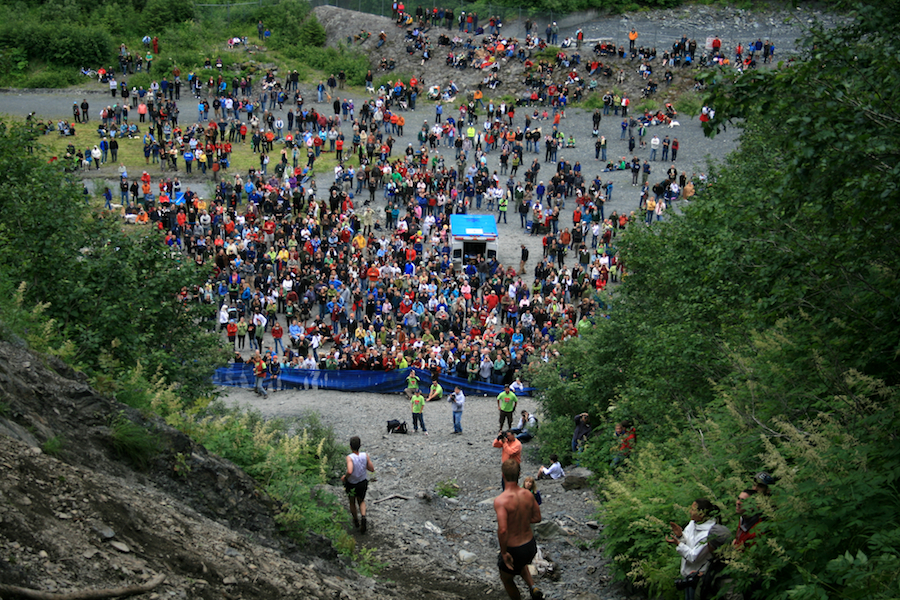
    The scene from above at the 2010 Mount Marathon Race in Seward, Alaska. (Photo: Lauren Fritz)
    The view from above at the 2010 Mount Marathon Race in Seward, Alaska. (Photo: Lauren Fritz)
  • Gregg Sprints for Owl Creek Title; DeYong Demolishes in Aspen

    Gregg Sprints for Owl Creek Title; DeYong Demolishes in Aspen

    Brian Gregg (CXC) claiming the 2013 Owl Creek Chase on Sunday in Aspen, Colo. Photo: Mike Hoffman.
    Brian Gregg (CXC) claiming the 2013 Owl Creek Chase on Sunday in Aspen, Colo. Photo: Mike Hoffman.

    ASPEN, Colo. — The Owl Creek Chase is not a race to be entered lightly. The 21 k course is a taxing point-to-point that starts at the Snowmass Cross Country Center, traverses the slopes of Buttermilk and comes out at the Aspen Valley Ski & Snowboard Club after thousands of feet of long, grueling climbs and dizzying descents. Race favorites describe it as a survivor’s course; murderously challenging. Go too hard, too early, and it will bury you.

    It should come as no surprise that Central Cross Country’s Brian Gregg and Sun Valley Ski Education Foundation’s Nicole DeYong conquered such terrain. Both skiers are notorious climbers and well-acclimated altitude racers, and have learned from experience what it takes to outlast at Owl Creek.

    “Owl Creek can be pretty painful if you go too far under,” Gregg said. “The last time I was here…the wheels just came off. I don’t think I’ve ever hurt that bad.”

    This year Gregg made sure to prepare himself accordingly for the 8,000-foot height and daunting course profile. He and his wife, Caitlin, have been staying with family in Eagle, Colo., for weeks to train high in preparation. They both skipped the classic races on Saturday to save up for the main event, unlike many of their competitors.

    On Sunday it paid off, and Brian outsprinted Sylvan Ellefson (Ski & Snowboard Club Vail Team HomeGrown) by eight seconds to finish in 1:02:04.4 in sunny, hard-packed conditions. Mike Sinnott (SVSEF) took third (+1:23).

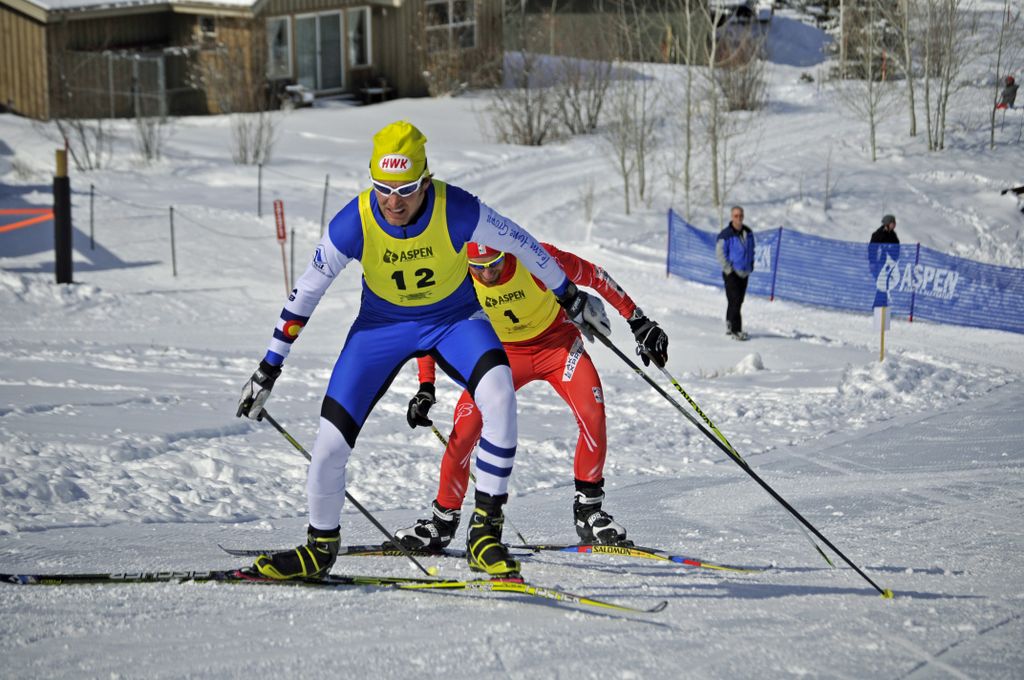
    Sylvan Ellefson (SSCV) leading Gregg up one of the last few climbs. Photo: Mike Hoffman.
    Sylvan Ellefson (SSCV) leading Gregg up one of the last few climbs. Photo: Mike Hoffman.

    You read that right — in a sprint finish, Gregg outsprinted the field. The CXC veteran has been working particularly hard on his closing kick all year with his coach Scott Johnston and the Methow Olympic Development squad to turn himself into a better all-around skier.

    “I’ve done a lot of workouts where we’ll ski 800 meters or something and sprint as hard as we can the last 300 meters to work on that finishing speed,” Gregg said. “It’s always been a weakness of mine, so I got to focus on that this summer and now I’m seeing it come together in the race season.”

    It took a full 20 k of intelligent skiing for Gregg to be in a position to kick it in at the end, for the preceding kilometers and broke many a strong skier. The race began at a controlled pace; Brent Knight (Alaska Pacific University) fell in the opening seconds and the leaders waited considerately for him to catch back on. When the lead pack developed, Gregg, Ellefson, Sinnott, Knight and Matt Gelso (SVSEF) helped each other conserve energy and rotated turns setting the pace at the front.

    Ellefson and Gregg eventually broke away before the halfway mark and continued to switch in and out of lead duty as they came into the final 5 k on the Aspen trails.

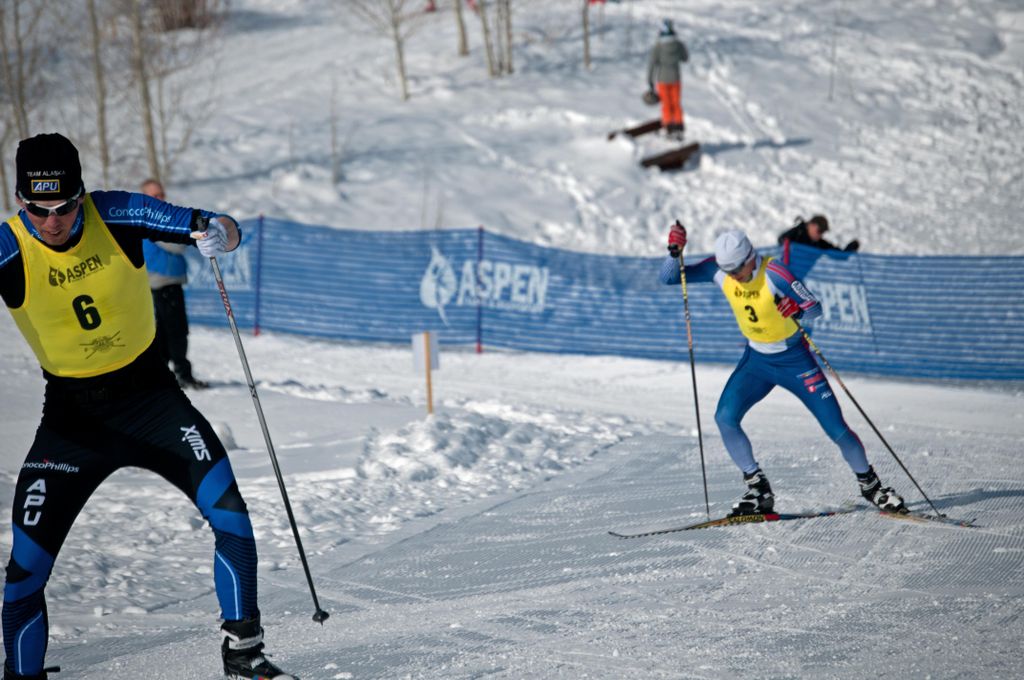
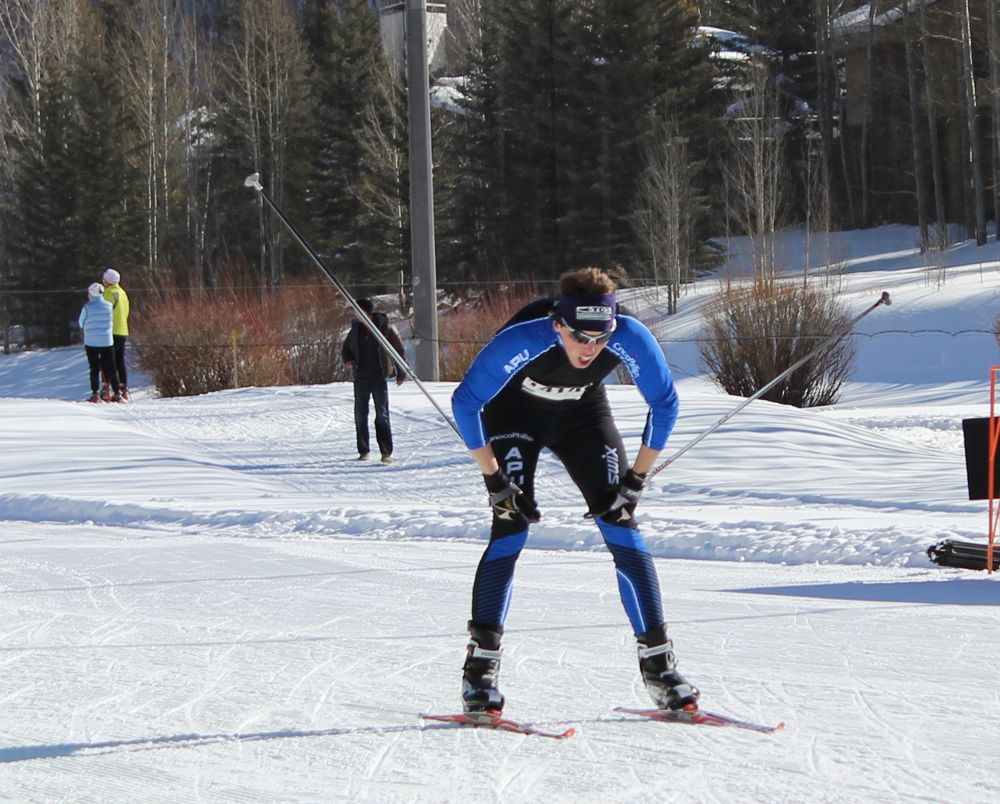
    Brent Knight (APU) battles a climb as MIke Sinnott (SVSEF) gains ground from behind. Photo: Mike Hoffman.
    Brent Knight (APU) battles a climb as MIke Sinnott (SVSEF) gains ground from behind. Photo: Mike Hoffman.

    “I kind of pulled it in I guess to keep away third and fourth, but also keep the pace high so no win would come too easy,” Ellefson said. “But I think I led a little bit more than I wanted to that last 5 k. I don’t know if it was the three races beforehand or what, but my legs just couldn’t do it in the last 200 meters.”

    A minute back, Sinnott gained back a deficit on Knight to claim bronze. At such a suffer-fest of a race, he was happy to hang on to a podium spot.

    “I was fighting with those guys for a while, and then once you crack on this course you go backwards fast,” Sinnott said. “I saw a big chase pack coming so I was happy to hang onto third — those sharks were coming up behind me pretty quick.

    “It’s a beautiful course, really fun, but so murderously painful. It just hurts. It’s about who’s toughest and who can survive, and I was not the survivor today.”

    Knight finished 0.3 seconds behind Sinnott for fourth. Colin Rodgers (SVSEF), a coach at most races, took fifth after a 30-second break in the field. Patrick Johnson (SVSEF) was sixth, 29 seconds behind Rodgers.

    Though the course is a lung-burner, most finishers looked happy as they crossed the finish line under the Aspen sun.

    “I love this course, it’s one of my favorites,” Ellefson said. “I was expecting to be skiing in six inches of powder this morning and was not looking forward to that, so when the tracks were firm this morning it was good vibes today.”

    Complete results.


    Nicole DeYong (SVSEF), a competition team coach for Sun Valley, claimed the Owl Creek Chase by two minutes on Sunday in Aspen, Colo. Photo: Mike Hoffman.
    Nicole DeYong (SVSEF), a competition team coach for Sun Valley, claimed the Owl Creek Chase by two minutes on Sunday in Aspen, Colo. Photo: Mike Hoffman.

    The women’s race played out much like the men’s in the beginning — the course practically requires a comfortable early pace. No one wants to blow up too early at Owl Creek. But in the end DeYong won by a whopping two minutes over Lenka Palanova (Boulder Nordic Junior Race Team).

    “From many years of experience I’ve discovered it’s good to just kind of sit back for a little bit and find a good rhythm,” DeYong said. “I was feeling pretty tired and sore this morning, so I just wanted to play it conservatively.”

    DeYong won Owl Creek once before in 2010 — in fact it’s the only race she’s ever won. She no longer races full time and doesn’t put too much pressure on results, and on Sunday she just hoped hoped for a good feeling after racing the 5 k classic the day before.

    The pace went out “comfortably.” Palanova, DeYong, Alexa Turzian (SVSEF), Rosie Brennan (APU) Erika Flowers (SMS T2) and Caitlin Gregg (CXC) splintered off from the rest of the field as the course wound around a hilly Snowmass golf course in the first 5 k.

    Palanova drew first blood at the front of the train, not content to sit back at a leisurely pace.

    Lenka Palanova (BNJRT) finishing second at Owl Creek for the second year in a row. Photo: Mike Hoffman.
    Lenka Palanova (BNJRT) finishing second at Owl Creek for the second year in a row. Photo: Mike Hoffman.

    “I didn’t want them to play the tactical game,” she said. “When I realized they were going a little bit too slow I just went for it.”

    Palanova pulled at the front for most of the first kilometers in an attempt to separate the women from the girls, but when the group reached the first major downhill it became clear that DeYong had extremely fast skis. Once DeYong got in a tuck and zoomed away from the field, most figured the race was pretty much over.

    “After we crested the first pass Nicole had ridiculous skis, and pretty much just tucked away from us and that was the end of that,” Brennan said.

    Gregg and Brennan attempted to follow her, but DeYong was skiing on another level.

    “The skis were running so well I just decided to go with it,” DeYong said. “I was praying for a good feeling in the body and I had it.”

    Behind her, attempts to close her breakaway were futile.

    “I was kind of dumb and tried to go really hard to catch back up, because I thought it’d be easier if I could draft, but I just spend the whole time trying to catch up instead of actually resting,” Brennan said.

    At Owl Creek it can be a death sentence to go too hard too early, and Brennan said she paid the price at the end, gradually losing time on DeYong as Palanova closed in from behind.

    “I don’t know if Rosie started getting tired or I started getting faster, but I caught her before the last 5 k,” Palanova said.

    The BNJRT coach and former Colorado University star kept an even pace as she moved around the last few kilometers, expecting Brennan to be right behind her. When Palanova realized there was no one in sight, she thought, “‘Oh, I should maybe hammer.’ So I did,” she said. “But I think I was more lucky than anything else at that point, because I didn’t have much left.”

    DeYong. Photo: Mike Hoffman.
    DeYong. Photo: Mike Hoffman.

    Up front, meanwhile, DeYong created an insurmountable gap. She put on an early surge when she came into the final kilometers at the Aspen Valley course, forgetting about one of the last hills. Somehow, she still found enough energy to keep up the pace and took the win by a two-minute margin.

    “I forgot you have to go all the way around and back down, and it some ways I think that was good for me, that I forgot the whole second half of the [final 5 k],” DeYong said with a laugh. “I don’t know if strategically I would have raced the way I did had I known what I was doing.”

    While it’s out of the ordinary for junior team coaches to take the top two spots in a SuperTour, DeYong and Palanova in aren’t exactly surprises at the top of these particular results. They both know the Owl Creek Creek course well, have an affinity for long, gradual climbs and ski most of the year at altitude. It takes a different kind of skiing this high up, and both women are practiced at it.

    “If you are able to suffer through it, you’re going to do well,” Palanova said. “I think at the end the move I did at the beginning was maybe good, because maybe that made them tired… But who knows, most of these girls aren’t used to skiing at high altitude.”

    Brennan confirmed that Owl Creek was a beast of a course.

    “I was hoping it would be easier this year because I’m in better shape, but I don’t think it matters how good of shape you’re in for this race, it’s just really hard,” she said. “Very challenging… It’s an unusual course, it’s not something you see every time, so it’s fun to mix it up.”

    Fourteen seconds behind Brennan, Flowers took fourth. Gregg finished fifth (+3:10) and Tammy Jacques (Steamboat Springs) was sixth (+3:34).

    Women’s results.

    Special thanks to Mike Hoffman for taking photos so that this reporter could ski in the citizen’s race.

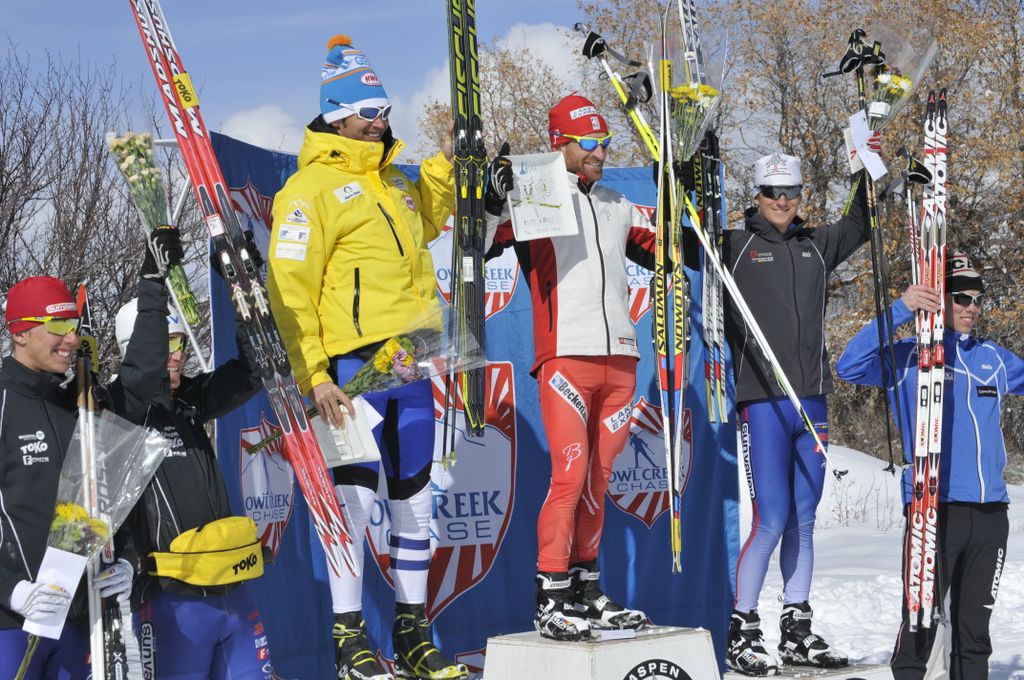
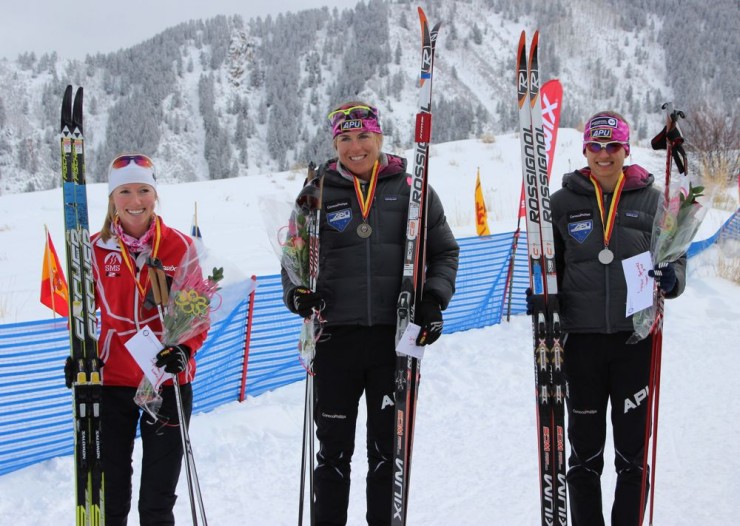
    Men's Owl Creek podium: 1. Brian Gregg (CXC), 2. Sylvan Ellefson (SSCV), 3. Mike Sinnott (SVSEF), 4. Brent Knight (APU), 5. Colin Rodgers (SVSEF), 6. Patrick Johnson (SVSEF). Photo: Mike Hoffman.
    Men’s Owl Creek podium: 1. Brian Gregg (CXC), 2. Sylvan Ellefson (SSCV), 3. Mike Sinnott (SVSEF), 4. Brent Knight (APU), 5. Colin Rodgers (SVSEF), 6. Patrick Johnson (SVSEF). Photo: Mike Hoffman.
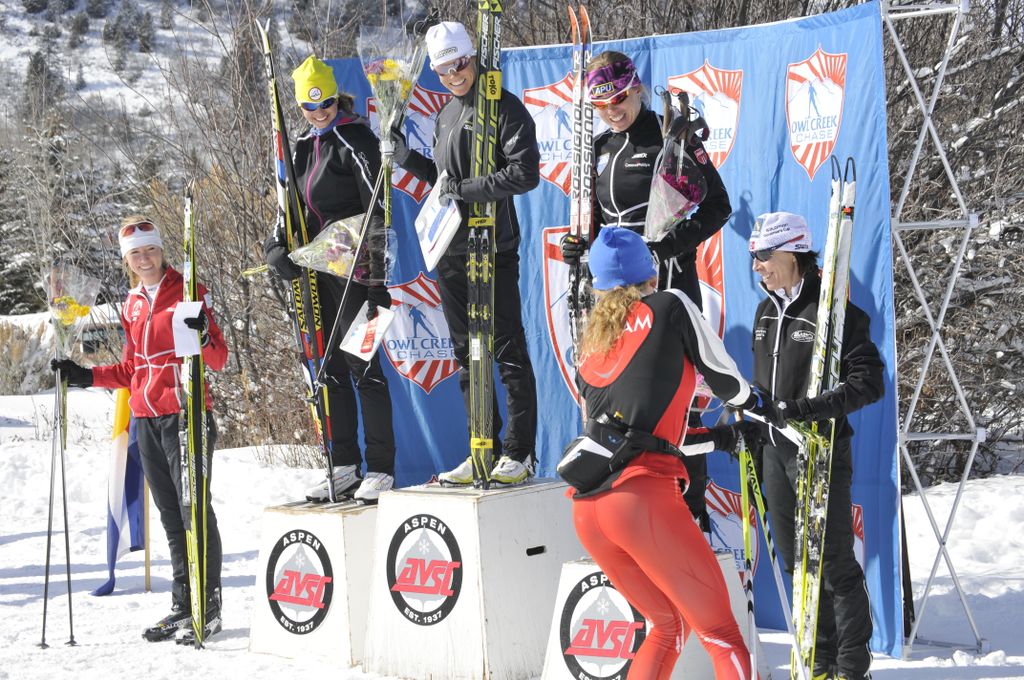
    Women's Owl Creek podium: 1. Nicole DeYong (SVSEF), 2. Lenka Palanova (BNJRT), 3. Rosie Brennan (APU), 4. Erika Flowers (SMS T2), 5. Caitlin Gregg (CXC), 6. Tammy Jacques. Photo: Mike Hoffman.
    Women’s Owl Creek podium: 1. Nicole DeYong (SVSEF), 2. Lenka Palanova (BNJRT), 3. Rosie Brennan (APU), 4. Erika Flowers (SMS T2), 5. Caitlin Gregg (CXC), 6. Tammy Jacques. Photo: Mike Hoffman.


  • Johnson Makes Podium Debut with Aspen Win; Brennan Prevails in Women’s Classic

    Johnson Makes Podium Debut with Aspen Win; Brennan Prevails in Women’s Classic

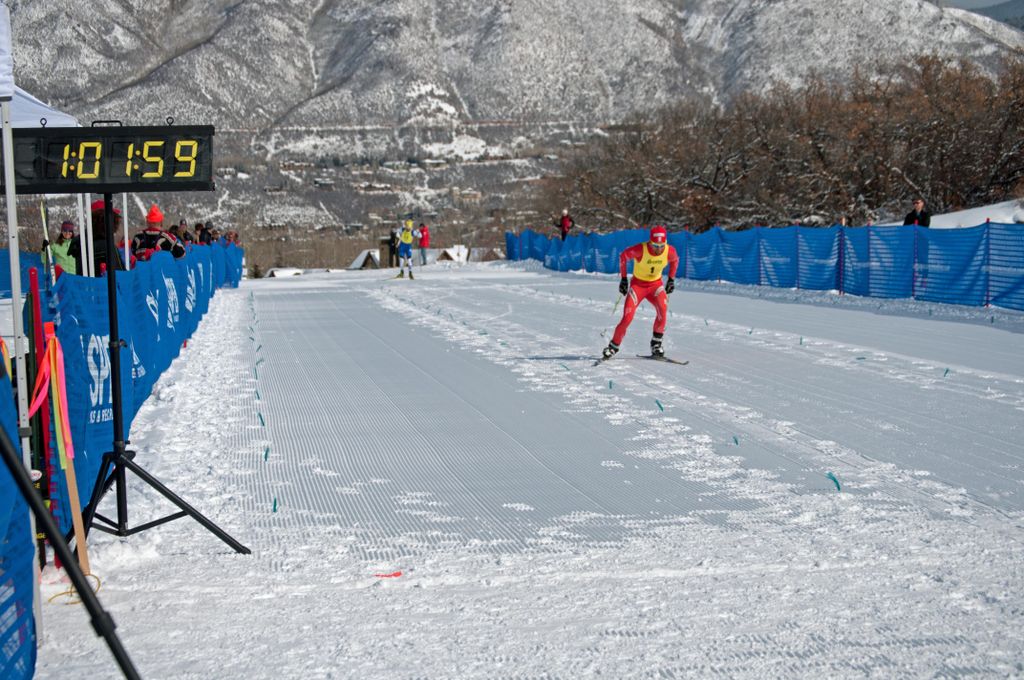
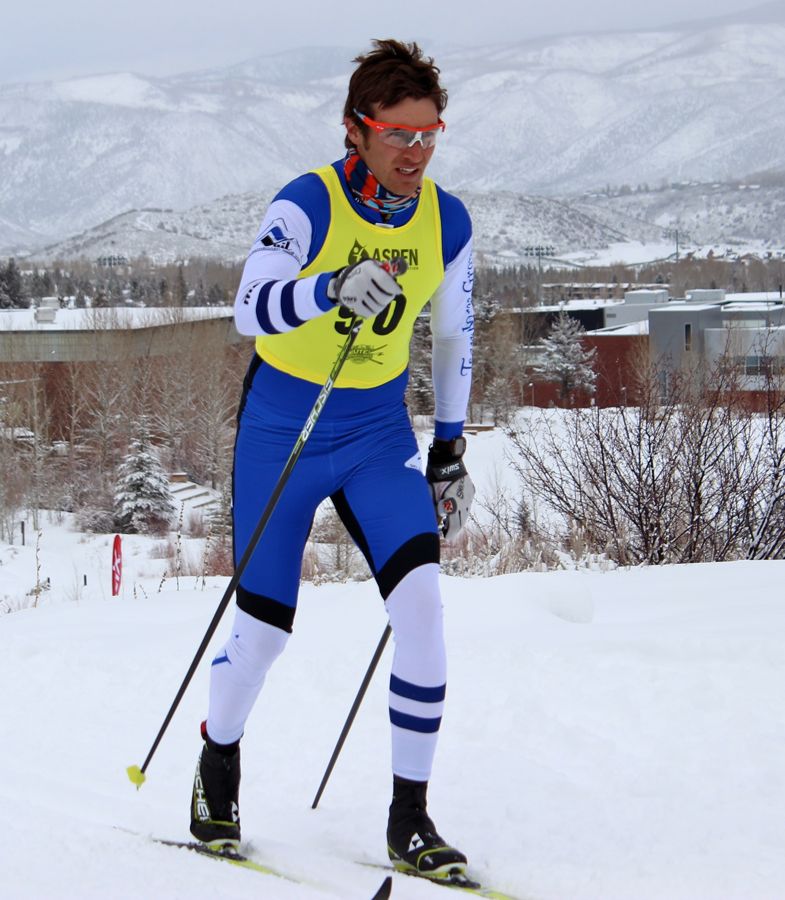
    Patrick Johnson (SVSEF) en route to winning the 10 k classic at the Aspen, Colo., SuperTour on Saturday.
    Patrick Johnson (SVSEF) en route to winning the 10 k classic at the Aspen, Colo., SuperTour on Saturday.

    ASPEN, Colo. — As Nemo shook the East with buckets of snow, the winter gods smiled upon the Rockies, too, with inches of heavy flakes on Saturday morning as the Aspen SuperTour got underway. The powder was a blessing for a state that’s had a mediocre winter, but for the handful of nordic skiers that braved the storm in spandex and a race bib it was a daunting environment in which to line up for one classic race, let alone the two in one day.

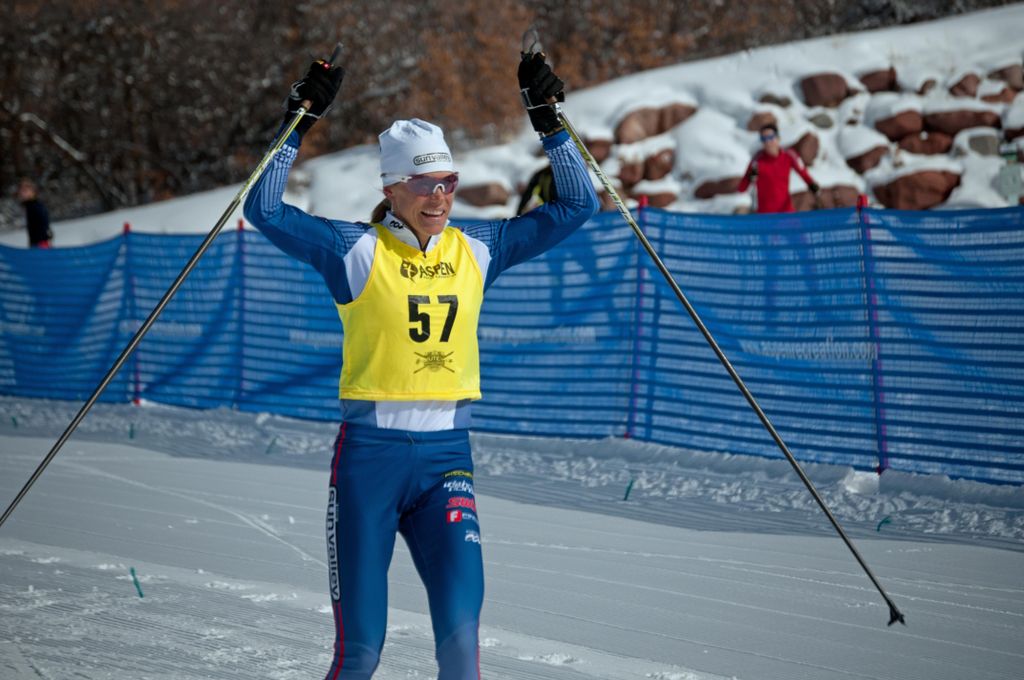
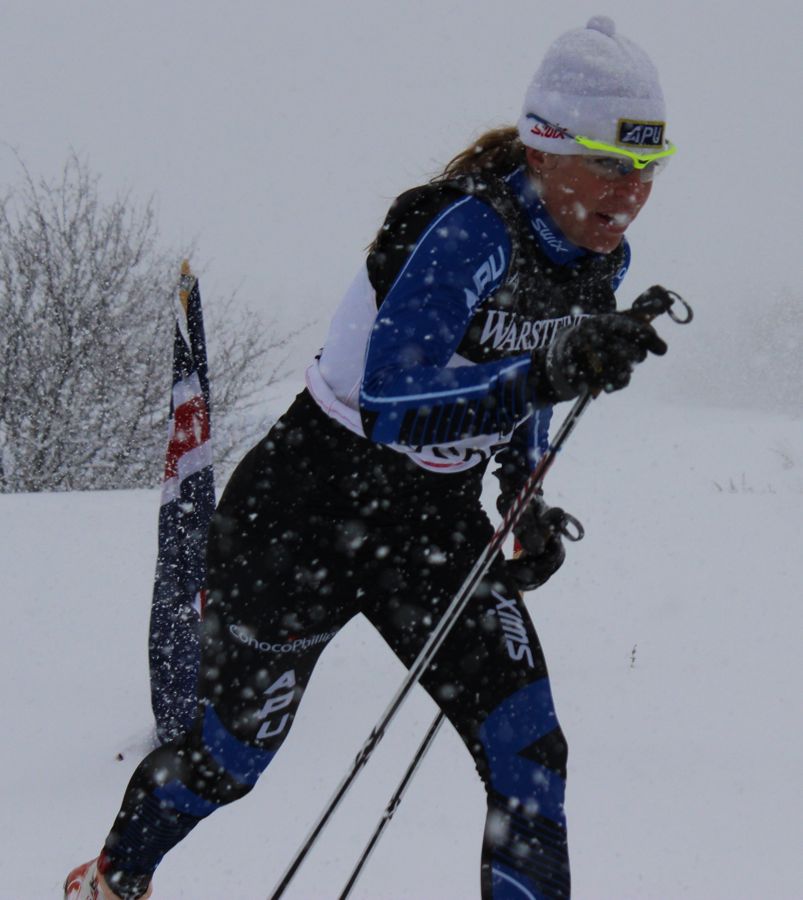
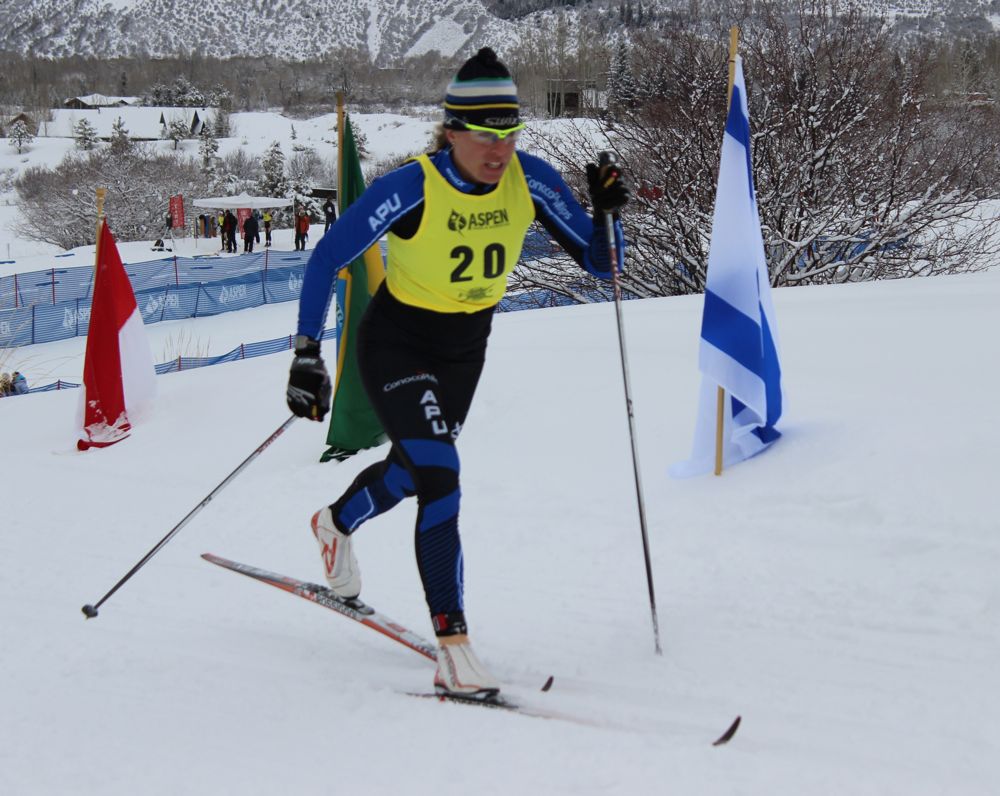
    Rosie Brennan (APU) skiing to a sprint prologue win in dense snowfall.
    Rosie Brennan (APU) skiing to a sprint prologue win in dense snowfall.

    “This morning was rough,” said Alaska Pacific University’s Rosie Brennan. “You couldn’t see anything. The tracks were washed out and my skis weren’t kicking very well, so it was sort of a struggle.”
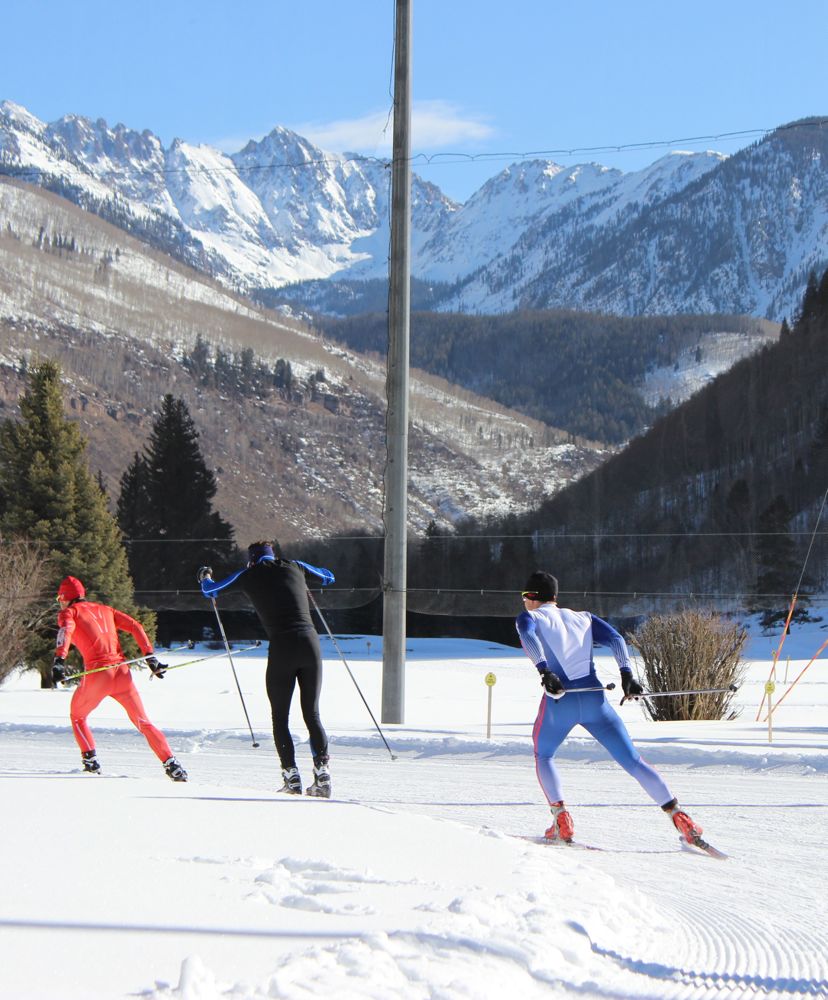
    It was a sparse field that braved the conditions for the classic sprint qualifier, which preceded the individual distance event, but the adaptable skiers prevailed. Brennan won the 1 k prologue in 4:26, 13 seconds ahead of teammate Lauren Fritz (APU). Erika Flowers (SMS T2) finished third (+0:20) and five elite women finished the race in total as inches of snow piled up in the tracks.

    The men’s race was equally vicious. “It was very slow,” said Mike Sinnott (Sun Valley Ski Education Foundation). “I think I came to a stop a couple times. It was a brutal, painful sprint, and I don’t think anyone felt like the were sprinting.”
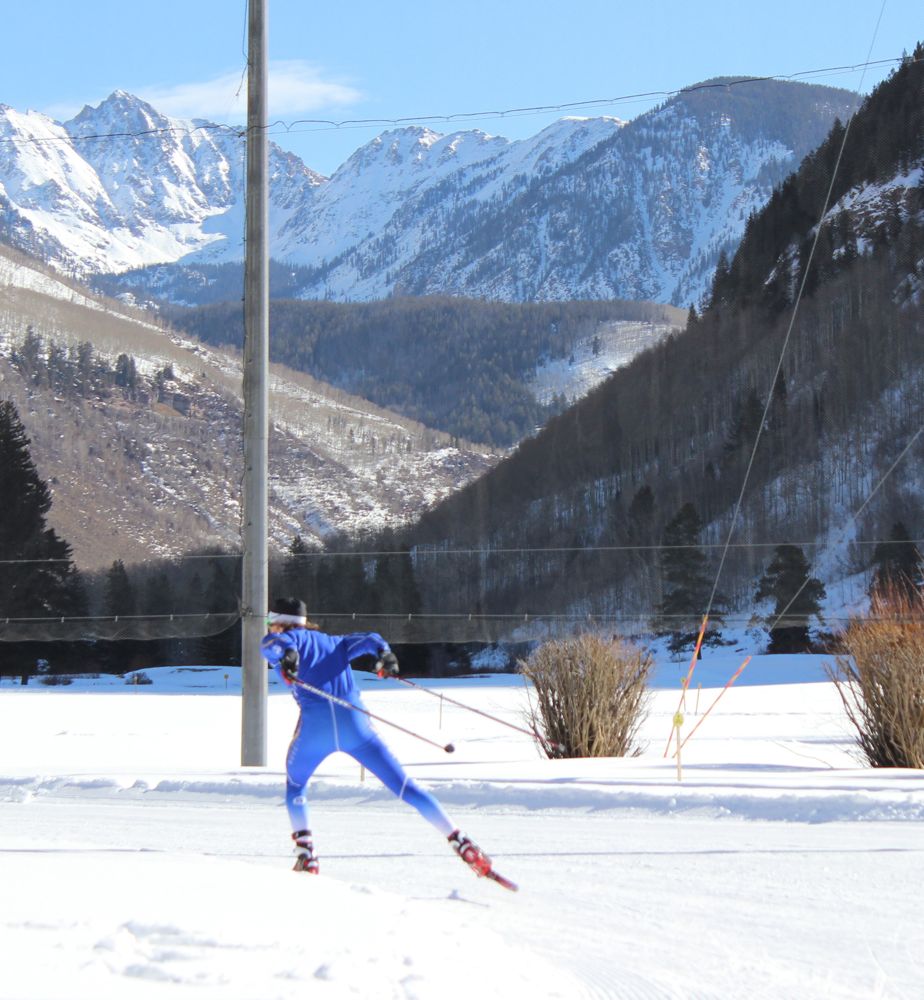
    Sinnott took the prologue win in 3:40, seven seconds ahead of Sylvan Ellefson (Ski & Snowboard Club Vail Team HomeGrown). Peter Kling (APU) took third (+0:14).


    After toughing it trough a kilometer of powder at 8,000 feet skiers had two hours to gear up for round two, a 5/10 k individual start classic. A Pisten Bully smoothed out the course in between events, and right on cue the skies ceased cleared as starters began to line up again.

    Thanks to high elevation, a hilly course and slightly soft tracks, the second event of the day belonged to the mentally tough. Patrick Johnson (SVSEF), still in his first season out of college, landed his first career SuperTour podium and gold medal all at once, taking the men’s 10 k by six seconds over Ellefson.

    Johnson laps through the field.
    Johnson laps through the field.

    “I think today it was slow conditions and you just had to ski smoothly, and I’m not really much of a sprinter so it was more of a distance skier’s course,” Johnson said. “I think that’s what helped make it a good day for me.”

    The Middlebury College alum has been generally happy with his racing this season — he was fifth in the 15 k at US Nationals — but has skied just shy of breaking through to top of the results.

    “It’s always been just sort of waiting to get that few extra seconds that can move you up on the list,” Johnson said. “It came through today.”

    He had never raced in Aspen before Saturday, but now that he’s collected his first win at the nordic center Johnson feels pretty good about the venue.

    “I really like it, obviously,” he said.

    While Johnson was having the race of his life, Ellefson salvaged a painful race to finish just six seconds out of first. The Vail native had raced a 10 k and the prologue in the 24 hours preceding the classic event and started to pay the price.

    Sylvan Ellefson (SSCV) climbing.
    Sylvan Ellefson (SSCV) climbing.

    “I was pretty tired from the sprint,” he said. “Just because all of the snow we got, the sprint felt like I was going 10 k pace, so it was a little bit confusing out there.”

    Ellefson knew he wasn’t skiing spectacularly as he moved around the hilly course, but minimized the damage by reminding himself he was in good shape.

    “I had an internal battle with myself at the 5 k mark,” he said. “I was like, ‘Man, I’m locking up everywhere, I’m not feeling super great, but I know my fitness is good right now so I just have to work with what I have.’”

    Over the remaining 5 k Ellefson brought himself back to a “good mental state” and closed a 15-second deficit on Johnson to finish just six seconds behind him. At relatively relaxed race where teams help each other with wax support, Ellefson was impressed with the victor’s effort.

    “I’m really excited for Patrick Johnson,” Ellefson said, nodding in his direction. “It’s his first podium and first SuperTour win.”

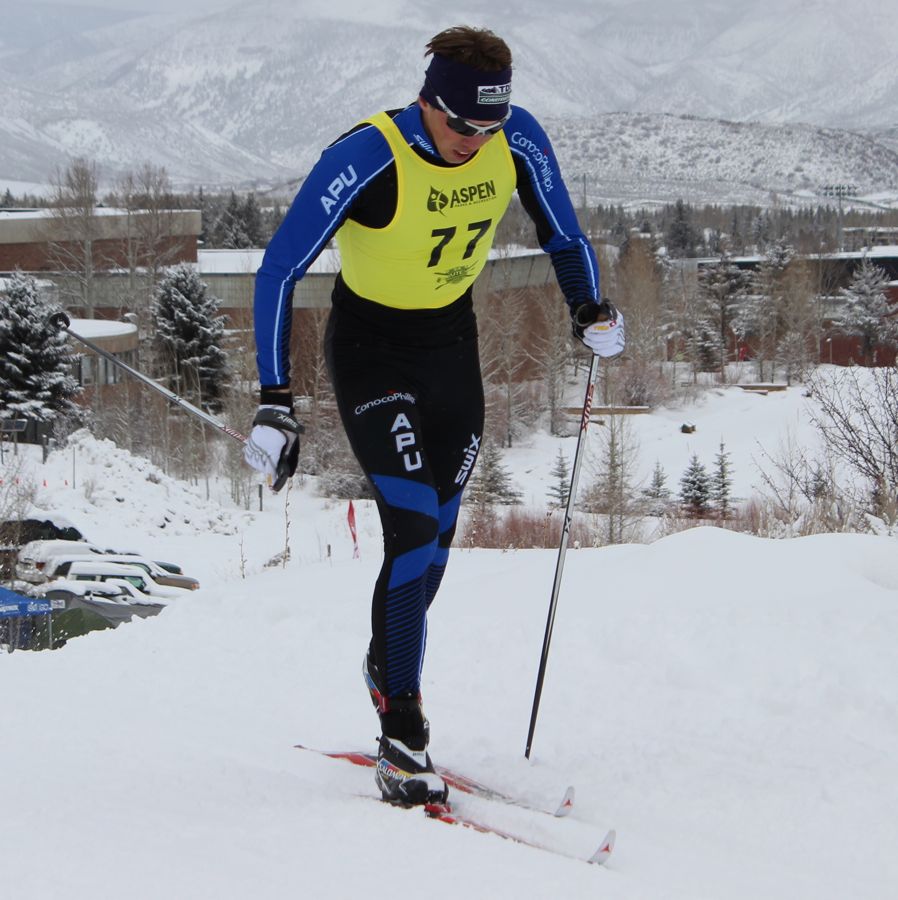
    Brent Knight (APU) continued a strong run of recent SuperTours to finish third, 41 seconds off Johnson’s mark. In a season he characterizes as consistent, he was pleased to put together a strong classic result the day after a punishing 10 k skate in Vail on Friday.

    “I’m super happy with the result,” Knight said. “I raced about as smart as I could. I’ve been in and out of altitude all season and…I think it’s really made a difference, learning how to ski more consistently and learning how to race smart up here.”

    Brent Knight.
    Brent Knight.

    Though there have been many SuperTours at elevation this season, Knight considers 8,000 feet to be a world away from a place like Sun Valley, Idaho, which is a few thousand feet lower.

    “In Aspen and Vail it’s a whole other beast,” he said. “When you’re racing up here if you cross the red line, you’re toast. So up here it’s more just playing with that fine line. The guy who can sit right under that red line the whole time is the guy that’s going to win, generally.”


    ***

    In the women’s 5 k Brennan followed up her prologue victory with a seven-second victory over Nicole DeYong (SVSEF), and Flowers repeated as the bronze-medalist (+1:01).

    Brennan taking her second SuperTour win in two hours.
    Brennan taking her second SuperTour win in two hours.

    For those who are counting, Brennan has now racked up five wins this season. Though the Park City, Utah, native spent the past week at home she noted how difficult racing is at Aspen’s elevation.

    “Even though I grew up at altitude I’ve found that 8,000 feet is the tipping point where I no longer have the comfort that I do a 6,000 feet,” she said. “So I was definitely hurting a lot out there… Doing three races in a row [here] takes it all out of you and I’m just focused on recovery and making sure it doesn’t crush me for later on.”

    Though the field was only 29 women strong — “Am I racing right now?” Brennan recalled thinking — it was fairly strong at the top end. On what was a slow 5 k course, DeYoung came within striking distance of the win.

    “I actually like this course and I’ve raced it quite a few times,” DeYoung said. “I’ve learned from racing here before to pace yourself and just to ski smooth and relaxed and I felt like I was able to maintain it the whole way and finish strong. That’s what I was hoping for.”

    DeYong no longer considers herself a racer as most of her time is spent coaching the Sun Valley competition team, but she stays active enough to enjoy herself and do well at a race most of the field considers daunting. Her last race appearance was at the season opener in West Yellowstone, Mont.

    Nicole DeYoung, 2nd.
    Nicole DeYong, 2nd.

    “Someone asked me if I was coming back into racing and I was like, the problem with that is if I do that I have expectations, mostly on myself, and then it seems to go downhill,” DeYong said. “So I’m just here for fun, just because I enjoy skiing.”

    Flowers, who took third having never before raced in Colorado, was on board with DeYong’s thoughts on Aspen.

    “I liked it, except that it’s really hard,” Flowers said. “You’re breathing hard from your first kick…but it’s fun, it’s so nice here. When we were skiing the [Owl Creek] course easy the other day it was so sunny.”

    The 21 k Owl Creek Chase, the weekend’s main event, starts on Sunday at 11:00 a.m. MT.

    Sprint prologue results

    5/10 k classic results not yet posted; check back here.


  • Greggs Conquer 10 k Free at Vail Mountain Games

    Greggs Conquer 10 k Free at Vail Mountain Games

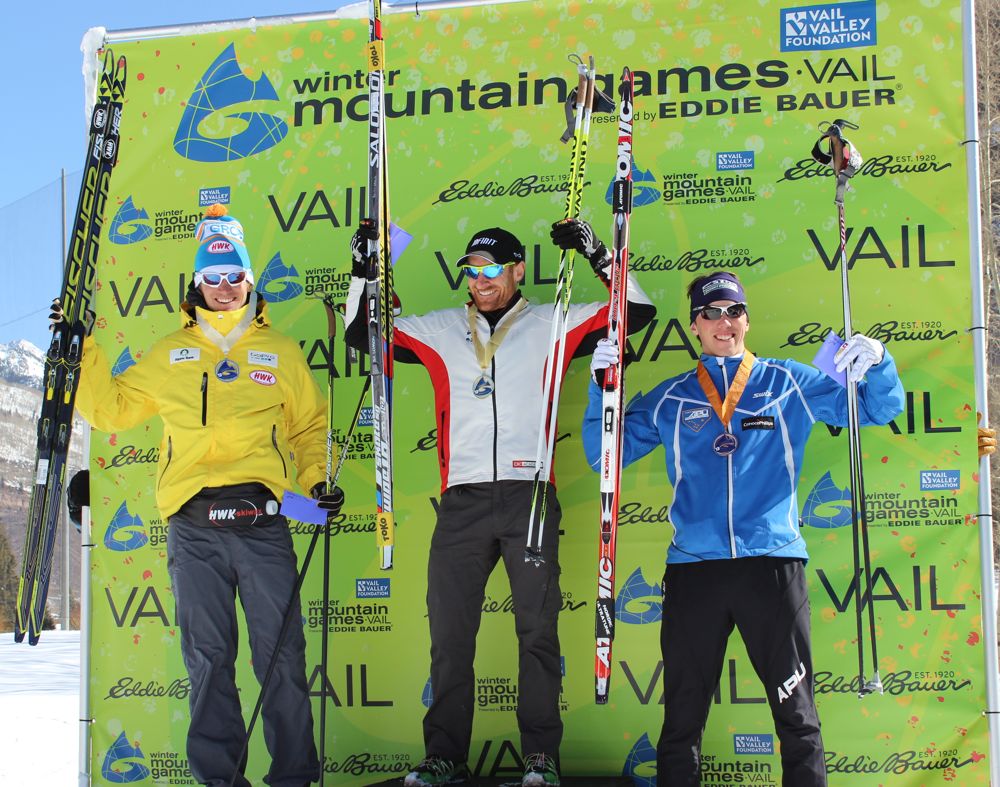
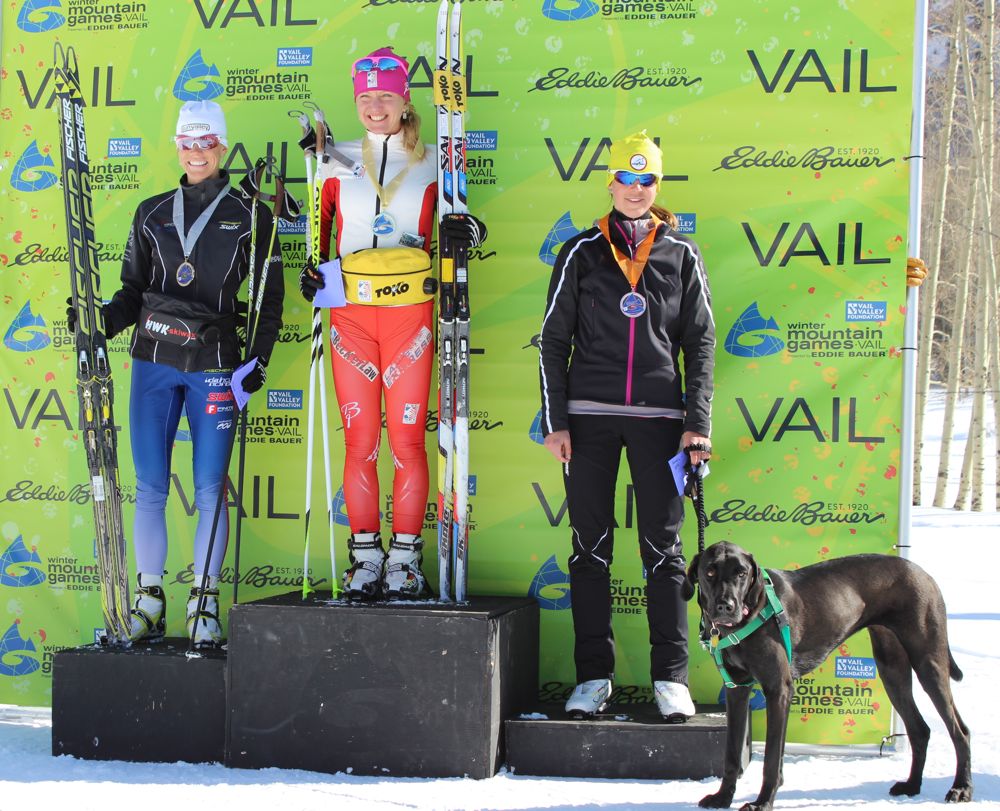
    VAIL, Colo. — Brian and Caitlin Gregg, Central Cross Country’s husband-and-wife duo, doubled up to sweep the men’s and women’s 10 k freestyle at the Vail Mountain Games on Friday. The pair have been training in the Rockies all week to get ready for the Aspen SuperTour and the altitude training clearly paid off. The Greggs posted their first double victory earlier this season in the final stage of the Tour de Twin Cities, and with another set of gold medals in the trophy case they’re feeling pretty good.

    The mass start freestyle event at the Mountain Games was one of a handful of snow sport competitions on the schedule at the popular Vail Mountain event; its proximity to the Aspen SuperTour along with a healthy purse size attracted a decently competitive field. Sylvan Ellefson (Ski & Snowboard Club Vail Team HomeGrown) took second to Gregg, 12 seconds back, and Brent Knight (Alaska Pacific University) finished third (+0:25).

    Caitlin Gregg bested Nicole DeYoung (Sun Valley Ski Education Foundation) by 20 seconds; Lenka Palanova (Boulder Nordic Junior Race Team) took third (+0:42).

    Results


  • Gregg, Brooks Start Strong in Ski to Sea Relay (Updated)

    Gregg, Brooks Start Strong in Ski to Sea Relay (Updated)

    Note: This article has been updated to reflect the correct time between Holly Brooks and Alysson Marshall, and include quotes from Pate Neumann.

    One was a native. Another was a ringer.

    Both Brian Gregg and Holly Brooks found themselves at the front of the pack in the first of the Ski to Sea seven-leg relay on Sunday in northern Washington.

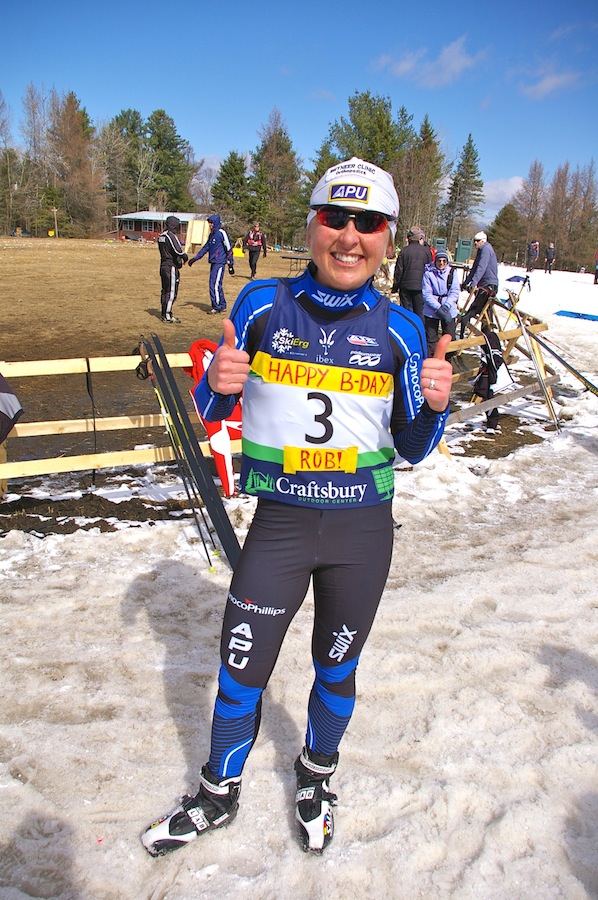
    The U.S. Ski Team's newest member Holly Brooks (Alaska Pacific University) gives her husband, Rob, a birthday shout-out after finishing fourth in the 30 k freestyle mass start at U.S. Distance Nationals on March 30 in Craftsbury, Vt.

    Like several cross-country skiers at the U.S. and Canadian team camps in Bend, Ore., last week, Brooks drove more than seven hours to Bellingham, Wash., to take part in the 91-mile race.

    For the second straight year, she completed the four-mile nordic leg at the Mt. Baker Ski Area. That race was followed by a 2.5-mile downhill ski/snowboard, 8-mile run, 42-mile road bike, 18.5-mile canoe, 13-mile mountain bike and 3.5-mile kayak (usually around five miles, but shortened this year because of wind).

    Last year, Brooks competed in the family division with her husband, father, uncle, two brothers, sister and sister-in-law as team “Aint no big deal.” This time around, the 30-year-old took it a little more seriously.

    Awarded the “top gun” after the 2011 Ski to Sea, Brooks said she was recruited back to race for the newly formed Team Fast and Female in an effort to dethrone the 12-time competitive women’s champ: Boundary Bay Brewery. On Sunday, the Boundary Bay females clinched their 13th straight title, but not without a run from Brooks and a few of her seven teammates.

    Brooks was the top woman in the nordic race. Gregg of Winthrop, Wash., was the overall winner. Born about 150 miles east of Bellingham, Gregg estimated this was his 10th Ski to Sea.

    “Who wouldn’t want to do a cross-country ski race in late May?” Gregg wrote in an email. Not long before, he injured his wrist mountain biking and reviewed the X-rays with a trusted orthopedist in a coffee shop on his way to the race.

    “It swelled up about the size of a baseball and has been pretty tender,” Gregg wrote. “The x-rays show that nothing is broken and we think it is just a slight ligament tear.”

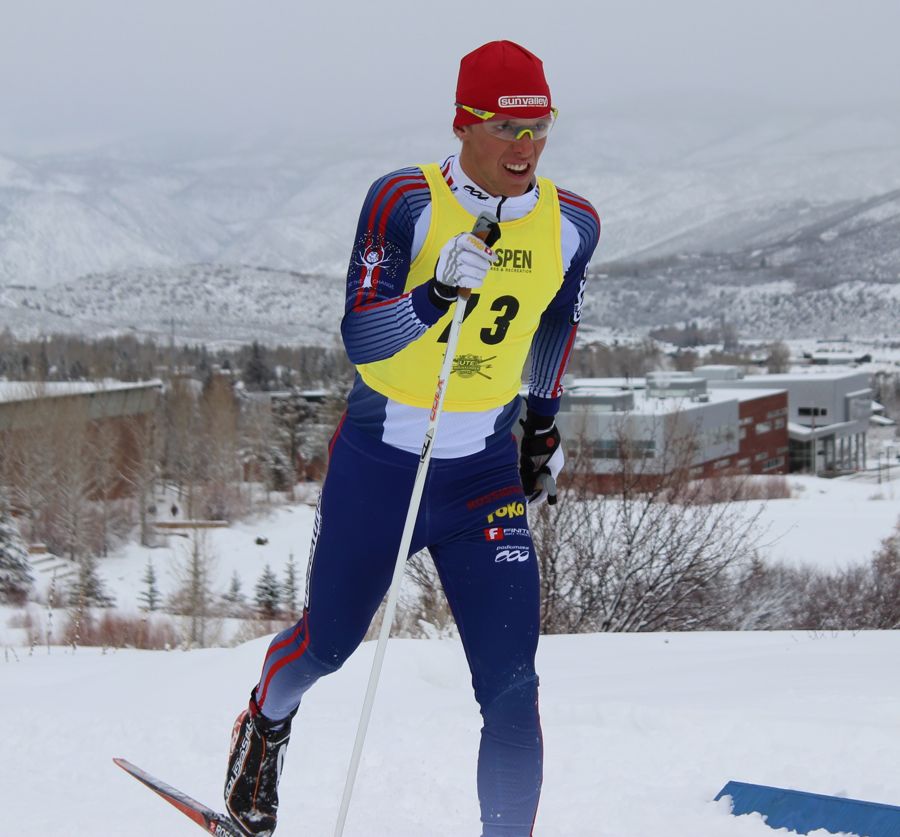
    Brian Gregg racing for CXC on his way to placing 28th in the freestyle sprint at U.S. Cross Country Nationals on Jan. 3 in Rumford, Maine. Photo: Toko.

    He wore a brace at the race.

    “The pain is pretty minimal,” Gregg wrote. “Skiing with the brace helps protect it.”

    Gregg finished the hilly 6.5-kilometer leg in soft conditions in 17:37, one minute and 11 seconds off his winning time last year. His team, Barron Heating, went on to win the overall title.

    Another Washington native, 2010 Olympian Torin Koos followed Gregg’s lead and clocked the fastest downhill ski for Barron. The team’s kayaker, Zsolt Szadovski, anchored the victory after its mountain biker, Colin Cares, took a wrong turn and lost the lead.

    Team Aeromech Takes Flight, which included nordic skier Matt Liebsch of Minnesota, placed second. Liebsch initially finished fourth and the team climbed to first when its mountain biker, Steve Fisher, capitalized on Cares’ mistake on near the end of the sixth leg.

    Szadovski regained control and sealed Barron’s 10th win since 1996, according to The Bellingham Herald. It was Gregg’s second year on the competitive-open team.

    “The other guys on the team are really fast and it is fun to follow their competitive seasons throughout the year and catch up on Ski to Sea weekend,” Gregg wrote. “The team battle is extra exciting because Alaska Airlines puts up a round trip plane ticket for each member of the winning team. I follow the entire race on the radio and with the splits online.”

    For him, the race is a family affair that brings him back to the mountains. The night before the relay each year, Gregg and his relatives camp on Mount Baker, giving him a taste of the terrain he misses while living in Minnesota.

    “Normally I would prefer not to sleep in a tent before the race but the mountains are so cool at dusk and dawn that it is totally worth it,” Gregg wrote.

    Back for More

    Two months after last year’s Ski to Sea, Brooks signed up for another at the request of race organizer and supporter, Tony Velasco. According to Brooks, Velasco assembled eight teams and she agreed to join Fast and Female.

    After Brooks put the team in first, downhill skier Jessie Young kept the momentum going, finishing 2-½ minutes ahead of the second woman from Boundary Bay.

    “I had quite the head start,” Young told the Herald. “My cross-country skier kicked some ass.”

    Brooks finished 1 minute and 7 seconds ahead of Boundary Bay’s nordic runner-up Alysson Marshall, a Canadian senior development skier, in 19:59. Fast and Female’s runner fell two minutes off her time from last year while another Canadian, Brooke Gosling, made up three minutes for Boundary Bay, overtaking Fast and Female for good.

    Despite remaining close through the transition, Fast and Female’s road biker wasn’t able to catch the draft that Boundary Bay’s did.

    “Ours had to do an individual 42 mile [time trial] which is tough!” Brooks wrote in an email. “From there it was a bit downhill and the girls from Boundary Bay spanked us. Maybe next year?!”

    Other Nordic Notables

     Brent Knight of Alaska Pacific University finished second, 10 seconds behind Gregg in 17:47, and Pate Neumann (Canmore Nordic Ski Club) was third in 17:58.

    “The race was really fun,” Neumann wrote in an email after competing in his first Ski to Sea with Team Northwest Sleep Solutions, which finished 10th.

    He was recruited by the team in its second year in the relay. Last year, Neumann did the Snow to Surf adventure relay race on Vancouver Island, which he said was similar to the Ski to Sea.

    “The course was a challenging … ‘figure 8’ loop with some monster climbs,” Neumann wrote about Sunday’s race. “Conditions were great with tons of snow and a relatively hard track. I think the best part of the race was the atmosphere. The whole town gets involved and everyone is cheering for you. It is fun having some of the top Super Tour and NorAm racers on the start line, it gives the race some serious excitement. It is also great to catch up with racing friends you haven’t seen for a while and hear about their spring adventures”


    Ski to Sea nordic leg results

    Overall team results