Tag: Brett Denney

  • Bryan Fletcher, Billy Demong Post Season Bests at First-Ever Nordic Combined Triple in Seefeld

    Bryan Fletcher, Billy Demong Post Season Bests at First-Ever Nordic Combined Triple in Seefeld

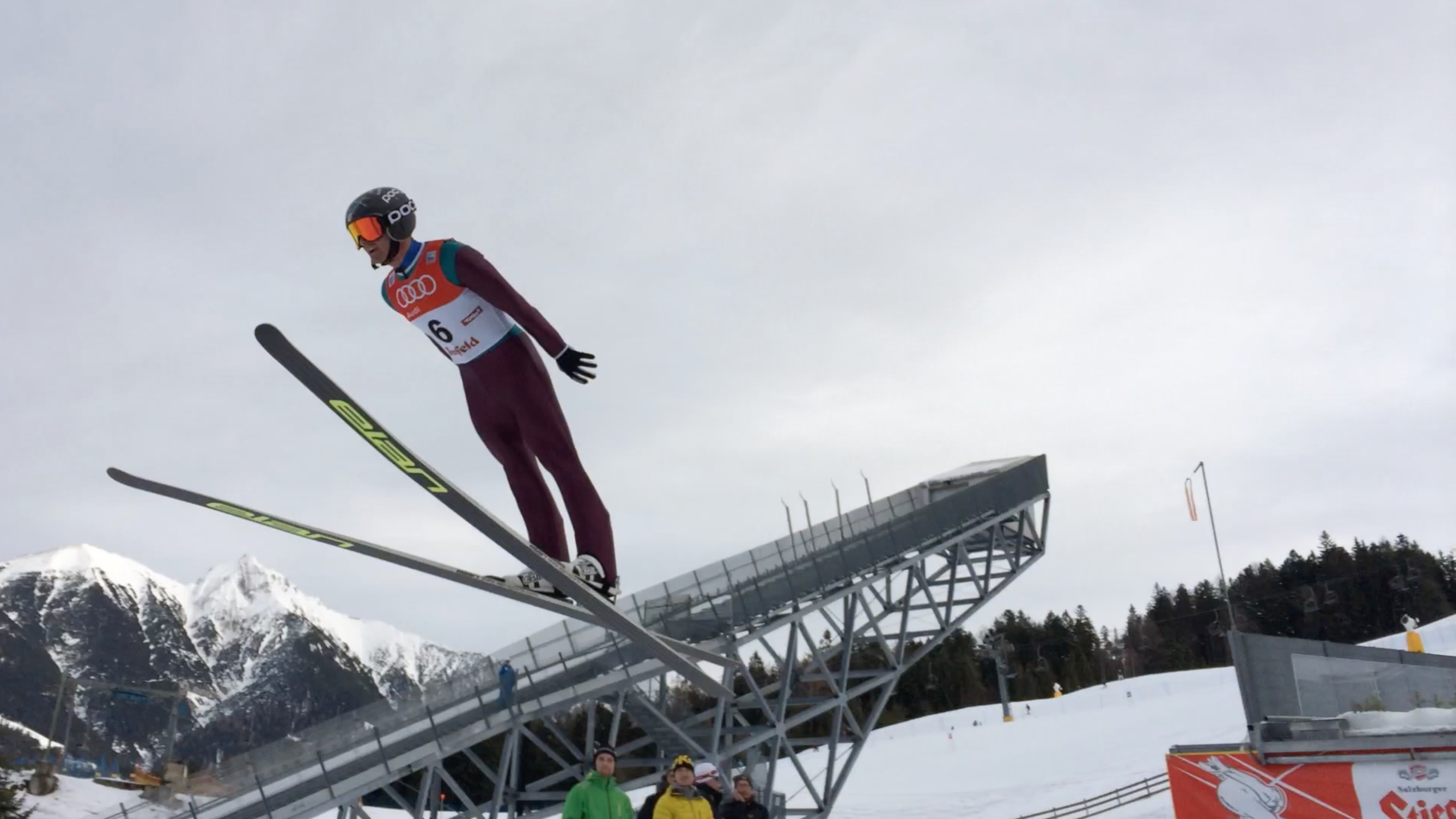
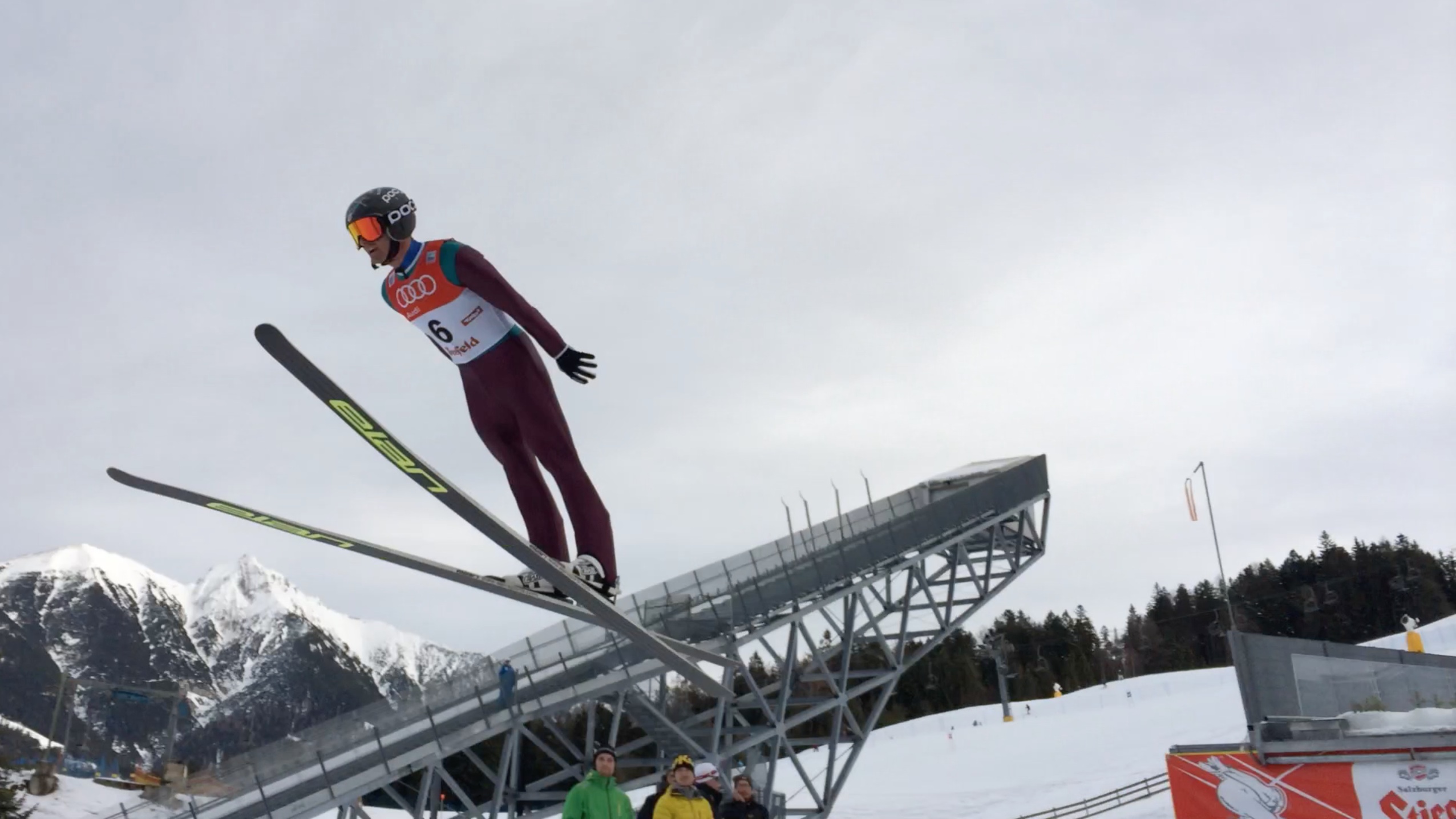
    Bryan Fletcher (U.S. Nordic Combined) jumping to ninth on Day 2 of the Nordic Combined World Cup Triple in Seefeld, Austria. Fletcher improved to sixth in the 10 k. (Photo: Fast Big Dog)
    Bryan Fletcher (U.S. Nordic Combined) jumping to ninth on Day 2 of the Nordic Combined World Cup Triple in Seefeld, Austria. Fletcher improved to sixth in the 10 k. (Photo: Fast Big Dog)

    Billed as the premier nordic-combined event of the season, the first-ever Nordic Combined Triple ended up being a perfect platform for American Bryan Fletcher to produce his best results of the season. From Jan. 17-19  in Seefeld, Austria, there were three consecutive days of competition with a total of four competition jumps and three races of 5-, 10- and 15-kilometers on Friday, Saturday, and Sunday, respectively.

    “Simply put, I was happy with all three of my races this weekend,” Fletcher wrote in an email after he ended up a season-best fifth overall. “Each day I improved a bit and ended with perhaps my best performance on Sunday!”
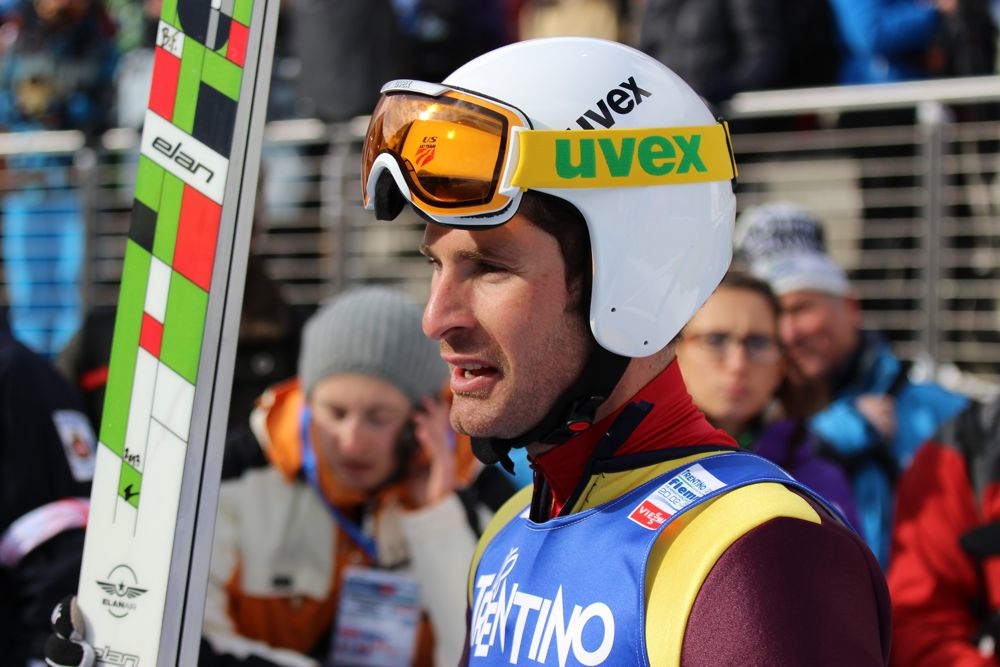
    Bryan Fletcher after posting the 19th best jump on the normal hill Friday at the World Championships opener in Predazzo, Italy.
    Bryan Fletcher at last year’s World Championships in Predazzo, Italy.

    He has plenty of reason to be happy, skiing his way to a season-best sixth in Friday’s opening prologue, ranking 11th in the jump and skiing the 16th -fastest 5 k to finish 25.2 seconds behind German winner Eric Frenzel, who won all three races for the Triple title.

    Fletcher repeated his performance on Saturday, with the ninth-best jump and 10th-fastest 10 k time to place sixth (+57.4 behind Frenzel), and then improved one spot in Sunday’s pursuit-style competition to finish the weekend in fifth (+47.6), after the seventh-best jump and seventh-fastest 15 k.

    It has been a season of steady improvement for Fletcher, with this weekend’s results in Seefeld putting him into 11th place in the overall World Cup standings, tied with Lukas Klapfer of Austria, which makes Fletcher the top-ranked North American.

    Fellow U.S. Ski Team member Bill Demong also had a strong weekend, finishing a season-best eighth (+27.0) on Friday with a 17th ranked jump and a 12th-fastest ski, despite breaking a pole in the 5 k. On Saturday, Demong ended up 12th (+1:39.6), with the 20th -best jump and eighth-fastest ski. On Sunday, he wrapped up the Triple in 11th , after jumping to 22nd and starting the 15 k race 3:42 minutes back. Demong skied the third-fastest time of the day, making up nearly two minutes to finish 1:54.7 back from Frenzel. Demong’s strong results come despite some bad luck, with Friday’s broken pole “costing him a podium opportunity,” and a “not great” jump on Sunday putting him farther behind for the race.

    “Even though I had my best race of the year on Sunday I was only able to move up to 11th place,” Demong wrote in an email. “I like that [the distances] changed every day but certainly my strength is in longer distances,” he continued. “It was awesome to do 15 k again, though!”
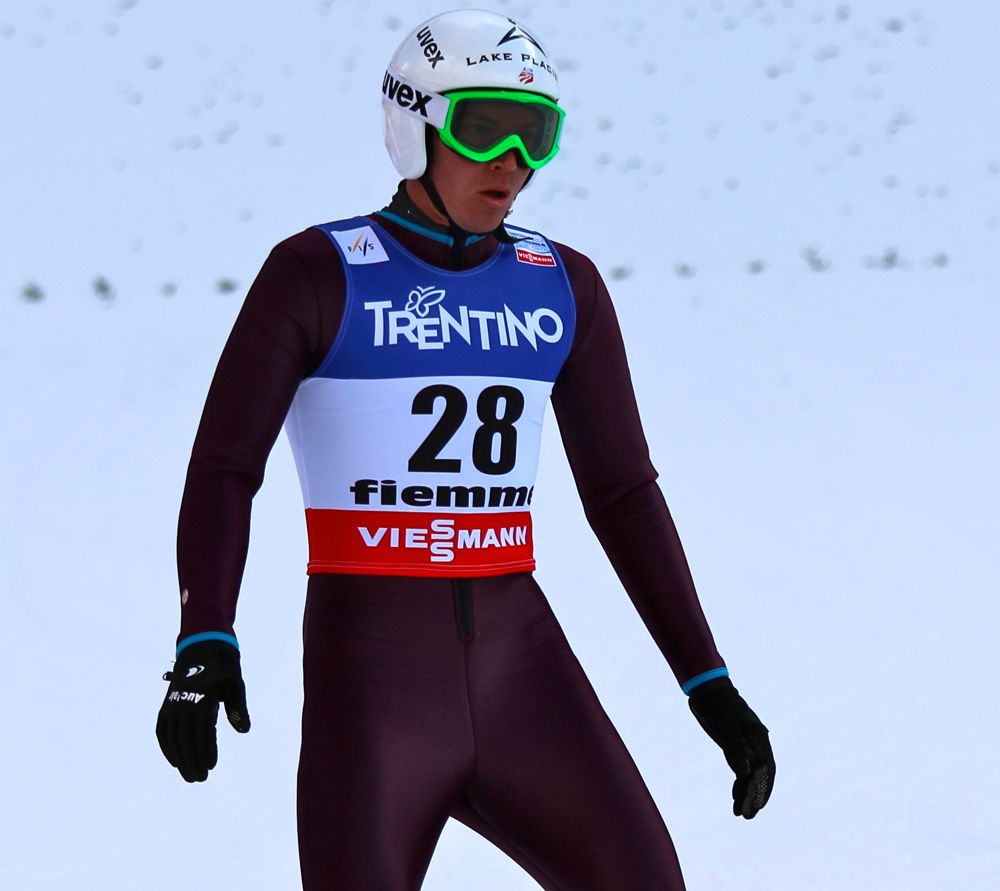
    Billy Demong at 2013 World Championships in Predazzo, Italy.
    Billy Demong at 2013 World Championships in Predazzo, Italy.

    The weekend’s results put Demong into 22nd in the overall World Cup standings, tied with Austria’s Mario Stecher.

    Frenzel won each race of the weekend and finished in first overall, extending his lead in the overall World Cup standings. Haavard Klemetsen of Norway finished second (+21.2) in the Triple and fellow Norwegian Magnus Moan placed third (+29.1).

    Both Fletcher and Demong were pleased with the new race format.

    “I like that it is different, it adds pressure with the mini-tour format I hope they continue offering new events like this,” Demong wrote, while Fletcher called it a “nice change of pace from our normal schedule.”

    Both skiers also felt that the increased importance of skiing, due to the longer distances, catered to their strengths.

    “The distance increase each day made the competitions progressively harder and allowed the stinger skiers to show their strength” Fletcher wrote in an email. “Each day it was easy for me to improve. Our training is concrete and so each day I felt better than the previous day.”

    When asked how Seefeld’s results will translate to the coming Olympics in Sochi, Russia, both skiers became a bit more circumspect.

    “I don’t think this weekend’s results are anything suggestive,” Fletcher wrote. “The Olympics are a different animal and anything can happen.”

    Demong is cautiously optimistic, saying that preparations were going well. “I’ve had my best jumps in years, maybe ever, but I need to get it out in competition for sure. Cross country is going well and I’m looking forward to putting on the finishing touches and peaking!”

    Both skiers are training in Park City, Utah, and will head to Germany shortly before the Olympics to train and break up the travel. They will focus on speed work to train and create a fitness peak just in time for the Olympics. They head to Sochi on Feb. 6th. Both men are optimistic, but Fletcher is the more cautious of the two.

    “I think that the best is yet to come,” Demong wrote, “I like that, while I’m not the favorite, I’m on everyone’s radar.”

    “We will just have to see what happens when we get there,” Fletcher wrote.

    Americans Taylor Fletcher and Brett Denney competed on the first day of the Seefeld Triple, finishing in 56th (+1:54.5) and 63rd (+2:37.1), respectively, just outside the top 50 required to advance to Day 2.

    Results: FridaySaturday | Sunday | Overall World Cup

    Videos: Seefeld Prep | Day 1 | Day 2 | Day 3
  • World Cup Prep with U.S. NoCo: Cryotherapy Before Seefeld Triple (Video)

    World Cup Prep with U.S. NoCo: Cryotherapy Before Seefeld Triple (Video)

    SEEFELD, Austria — Get up close and personal with three members of U.S. Nordic Combined and Canadian Wesley Savill as they share their first oh-so-cold experience with cryotherapy — essentially a cold sauna at temperatures around -110 degrees Celsius (-166 Fahrenheit) without the dangers of moisture, humidity and windchill.

    “We’re about to get very, very cold,” Taylor Fletcher says to the camera.

    “The science of it is a little shaky; we’re not sure it actually benefits you in any way,” Brett Denney adds. “But it’s more of a team-bonding thing, having a bunch of dudes naked together in a really cold room is gonna help morale a lot I think.”

    For the record, they don’t actually get naked, and Denney wears a sweater.

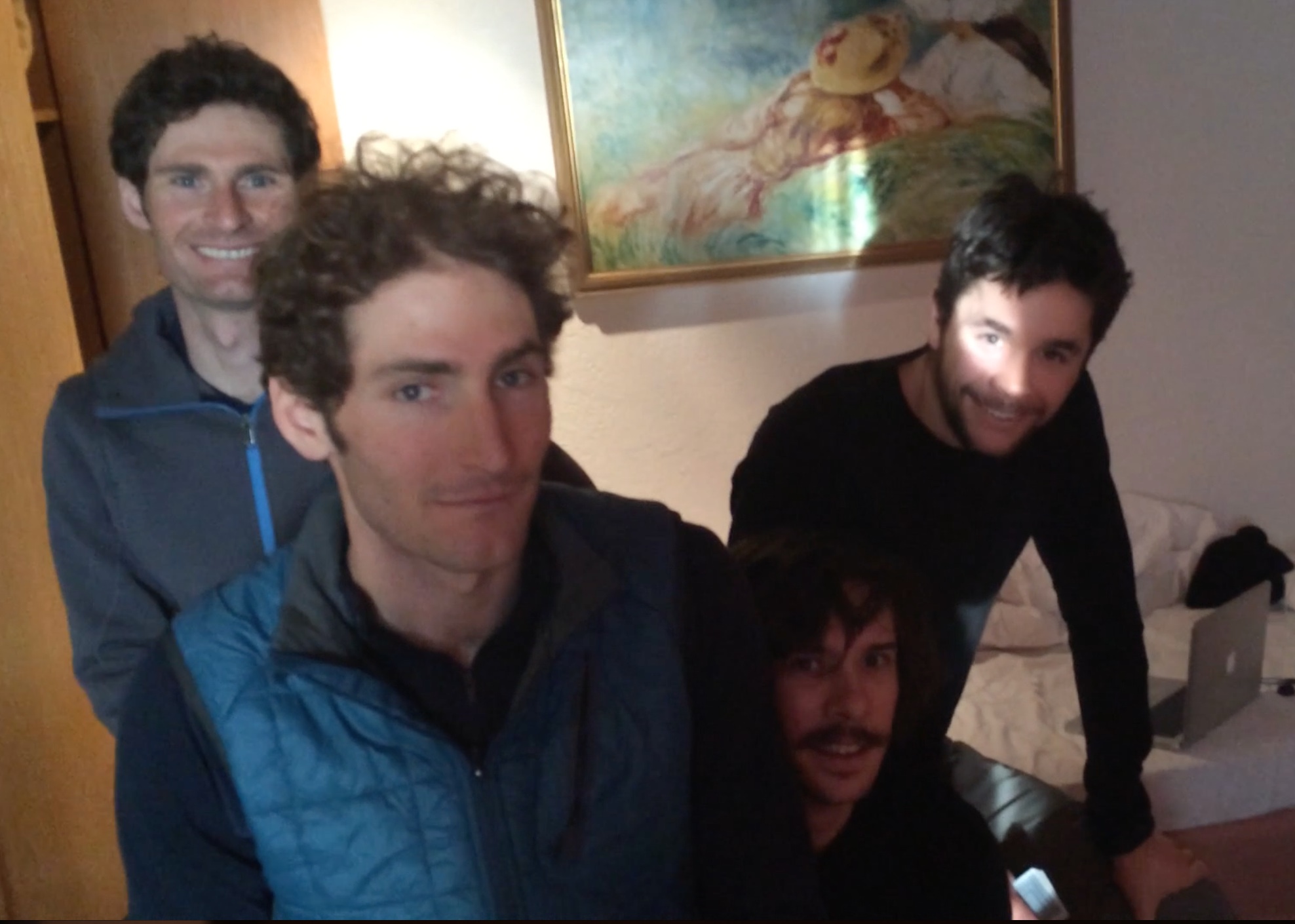
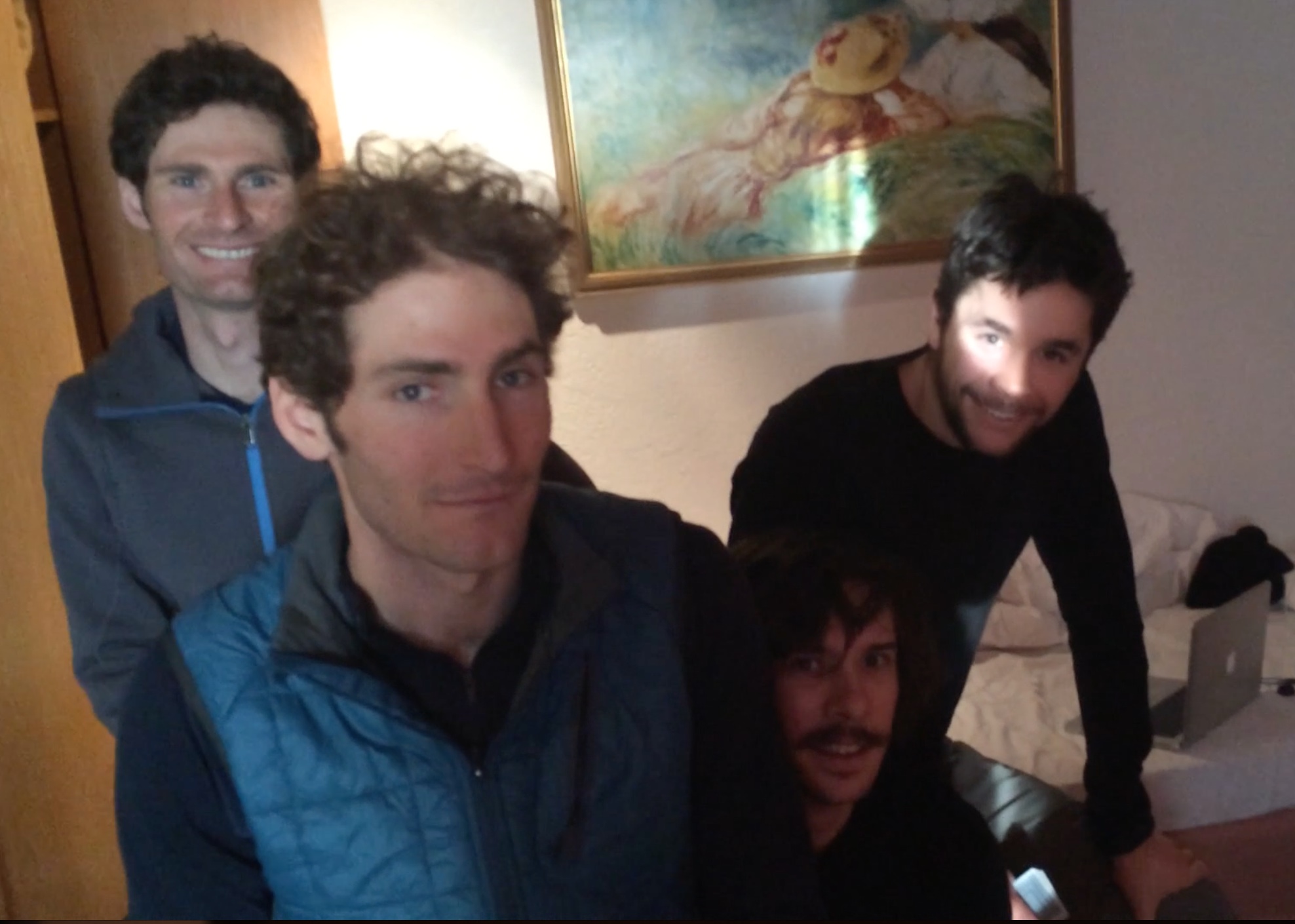
    U.S. Nordic Combined's Bryan Fletcher (l), Taylor Fletcher and Brett Denney (second from r) and Canadian Wesley Savill (r) after their first cryotherapy session in Seefeld, Austria. (Photo: Fast Big Dog)
    U.S. Nordic Combined’s Bryan Fletcher (l), Taylor Fletcher and Brett Denney (second from r) and Canadian Wesley Savill (r) after their first cryotherapy session in Seefeld, Austria. (Photo: Fast Big Dog)

    “Cryotherapy has been around for a while, mostly in the form of ice baths and contrast baths, and this is the latest iteration,” reporter Fast Big Dog (FBD) explains. “The current scientific literature is still mixed on the benefits, though there is a lot of anecdotal evidence from athletes that it is beneficial in recovery.

    “We all use ice baths and contrast baths, but this is the first time any of us have done cryo.  Lots of European special jumpers use it regularly, so we thought we’d give it a try.  Plus, there was a good looking girl at the front desk who kept undressing me with her eyes and I like that.”

    The technician was a good sport and helps film while five of the guys try it out.

    The session takes 10 minutes from start to finish, starting with 30 seconds in a -17 Celsius (1.4 Fahrenheit) “meat locker” pre-chamber, followed by a minute in -57 Celsius (-70 Fahrenheit), and finally, three minutes in -113 Celsius (171 Fahrenheit). Participants listen to music and are encouraged to move around.

    “At the end of the day we all felt like the process mimicked the effects of a good contrast bath session,” FBD writes. “Anecdotally I had crashed in the morning ski at about 100 kph and my neck was all jacked up and after the cryo session I felt right as rain! I believe that the session may have also averted a traumatic brain injury as Billy D said I was totally out of it at lunch following my crash and by the afternoon not even a lawsuit could shut me up.”

    So what’s all this for? The first Nordic Combined World Cup Triple, starting Friday, of course!

    “This is a brand new event on the Nordic Combined World Cup circuit,” explains FBD. “This event is sort of like a pursuit that is based on three days of racing. The first day all competitors jump, then race a 5k. Based on these results, the field is cut to 50 athletes. The second day has one jump, followed by a 10k ski. Based on this results of this second day, the field is then cut to 30. On the final day, there are two jumps, which both count, then a 15k ski which is handicapped by the first 2 days time back as well: the first man across the line wins the overall. All three events are held in Seefeld, Austria.”

    While the longer-term effects of their cryotherapy session are yet to be discovered, the 27-year-old Bryan Fletcher said, “I think I’m a hundred years younger.”

    Trouble viewing video? Click here.
  • For Lodwick, ‘Passion Still Burns’ for Sixth Olympics, Will Be First American to Do So in Sochi

    For Lodwick, ‘Passion Still Burns’ for Sixth Olympics, Will Be First American to Do So in Sochi

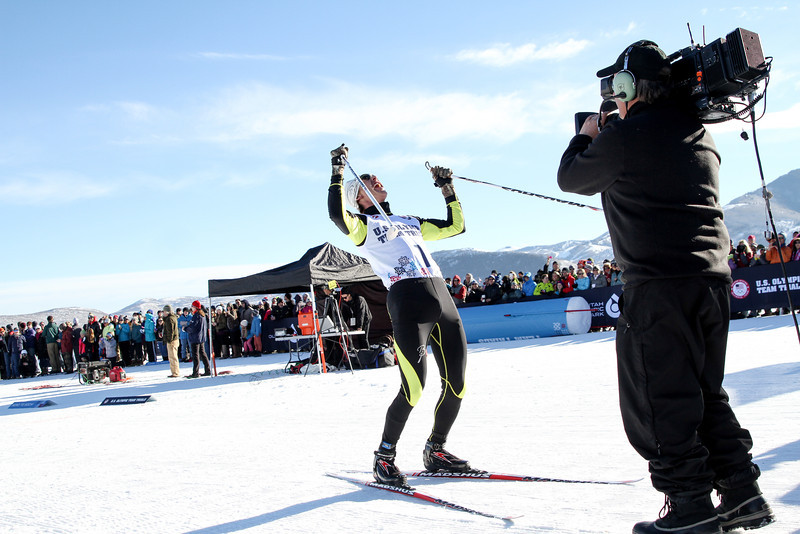
    Todd Lodwick (U.S. Nordic Combined) celebrates a clear-cut victory at 2014 U.S. Nordic Combined Olympic Team Trials at Utah Olympic Park on Dec. 28 in Park City, Utah. First in the jump, Lodwick beat teammate Bryan Fletcher by 17 seconds for the victory, which secured his bid for his sixth Olympics, the most of any American in the Winter Games. (Photo: Sarah Brunson/U.S. Ski Team)
    Todd Lodwick (U.S. Nordic Combined) celebrates a clear-cut victory at 2014 U.S. Nordic Combined Olympic Team Trials at Utah Olympic Park on Dec. 28 in Park City, Utah. First in the jump, Lodwick beat teammate Bryan Fletcher by 17 seconds for the victory, which secured his bid for his sixth Olympics, the most of any American in the Winter Games. (Photo: Sarah Brunson/U.S. Ski Team)

    Todd Lodwick hadn’t felt nerves like he experienced last Saturday in a long time.

    Seventeen years old at his first Olympics in 1994 in Lillehammer, Norway, Lodwick, now 37, was about to see if he could make his sixth Olympic team at the U.S. Nordic Combined 2014 trials on Dec. 28. If he came out on top of the individual 10-kilometer competition in Park City, he’d also make history as the first American to qualify for six Winter Olympics.

    “That’s always on the mind, to break the record books,” Lodwick said on the phone Dec. 30. He was on a personal business trip in the south and planned to return to Steamboat Springs, Colo., Jan. 2 before leaving for Europe on Jan. 6.

    Really, though, Lodwick wanted to prove again to himself and to everyone with an Olympic dream or any kind of lifelong aspirations, that it was possible.

    “For me, I think it was that I’m one of the top athletes in the world and that I’m out there to win,” Lodwick said. “And to solidify the hard work that I’ve been putting in and know that I am still capable of some great things. That passion still burns hot inside of me and it’s something that I wanted to do.

    “It’s not only my doing that got me here,” he said, crediting his sponsors, “teammates and coaches and family and friends that believe in me and believe in my whole journey.”

    With some 5,000 people at Utah Olympic Park (UOP) watching him and nine others compete in the coveted Gold Cup trial, Lodwick posted the best jump of 95.5 meters, giving him a 36-second headstart on teammate Billy Demong in the 10 k, also at UOP in Park City.

    Lodwick not only extended his gap on Demong, a four-time Olympian and 2010 Olympic gold medalist, on the four-lap course, but he held off teammate Bryan Fletcher — just as hungry for a guaranteed Olympic spot — by 17.3 seconds. Lodwick won the winner-takes-all competition in 25:27.6 to prequalify for the 2014 Games in Sochi, Russia. Fletcher placed second, and Demong was third, 56.1 seconds back.

    Eighth in the jump, Taylor Fletcher rose to fourth, 23.4 seconds behind Demong. Adam Loomis of the U.S. Nordic Combined B-team was fifth and his teammates Brett Denney, Nick Hendrickson and Michael Ward placed sixth through eighth, respectively. Ben Berend (Steamboat Springs Winter Sports) finished ninth and teammate Tyler Smith was 10th.

    “It feels pretty good,” Lodwick said two days after. “I put a lot of pressure on myself just like the rest of the athletes and knew that there was some big stuff on the line. … Going to these Games is something that’s always been on my mind since I started to pursue it. I knew it took a lot of hard work.”

    He said he was able to do so because of teammates “that push me as hard as they do and coaches that support me.”

    “If I touch one kid to help them achieve their dream, then I consider my career a success.” — Todd Lodwick, after winning U.S. Olympic trials to prequalify for 2014 Sochi Games

    Lodwick became the first of potentially five U.S. Nordic Combined athletes to qualify for the Olympics. The rest of the team will be decided based off world rankings through Jan. 19, with a complete team naming set for Jan. 22.

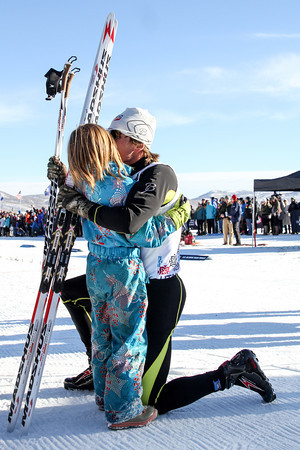
    Todd Lodwick and his 8-year-old daughter embrace after Lodwick won the Gold Cup U.S. Olympic trials on Dec. 28 in Park City, Utah, to qualify for his sixth Olympics -- unprecedented among U.S. Winter Olympians.  (Photo: Sarah Brunson/U.S. Ski Team)
    Todd Lodwick and his 8-year-old daughter embrace after Lodwick won the Gold Cup U.S. Olympic trials on Dec. 28 in Park City, Utah, to qualify for his sixth Olympics — unprecedented among U.S. Winter Olympians.
    (Photo: Sarah Brunson/U.S. Ski Team)

    As soon as he finished, Lodwick’s 8-year-old daughter ran up and gave him a huge hug.

    “She’s probably one of my biggest supporters,” he said. “I’m doing it for my kids. For me [it’s to] show them that dad still has it and can still kick butt. With my son, he’s five and he has some special needs and providing for him is something that I care deeply about. We have a bond that is very special.”

    His oldest understands what’s going on, and as she celebrated with him last Saturday, she enjoyed being in the limelight, just like her dad, Lodwick said.

    “This being my last competition ever in the states, I couldn’t have asked for anything more,” Lodwick said. “I was blown away by the volunteers and the setup crew, the people that dedicated so much time to putting on such an amazing event, and we all had a blast doing it. That was one of the best events that we’ve had in the states in a very, very long time.”

    For Lodwick, it was the start of a pre-Olympic sendoff he can enjoy in the next month leading up to the Olympics. It also confirmed that he’s once again in the best shape of his life.

    “Everyone [was] out there to compete at their best; a few of us had a victory in mind,” he said. “Bill, having it be his adopted home hill and home state, he was rested and training so I think he went into knowing he was the favorite.”

    Bryan Fletcher has led the team this season on the World Cup, notching three individual top 10-results and a program-best fourth with Lodwick in the team sprint Dec. 14 in Ramsau, Austria.

    The oldest guy on the team, Lodwick said this year will be his last, complete with two decades worth of Olympics and U.S. Ski Team experiences.

    “I’m 37 years old and do I feel like I’m capable of going to another Olympic Games when I’m 41? Sure,” he said. “But I think I’m ready to move on.”

    “I still believe in myself,” he said. “Dreams can come true if you work hard enough. … All this work isn’t for nothing and the time spent, sweating and wanting to throw up and legs cramping, looking back on that and knowing that I never gave up on my dream that lives in every single kid that watches on TV. If I touch one kid to help them achieve their dream, then I consider my career a success.”

    And it doesn’t have to be sports related, he said.

    “First step is to dream big and you have to do that to be successful,” Lodwick explained. “And you have to believe in yourself wholeheartedly.”

    He proved that at 2009 World Championships, winning two individual golds, and setting his sights on the 2010 Olympics in Vancouver, B.C. There, he won a silver medal in the 4 x 7.5 k team event. A year later at 2011 World Championships, he decided to commit to three more years and make a run for his sixth Olympics.

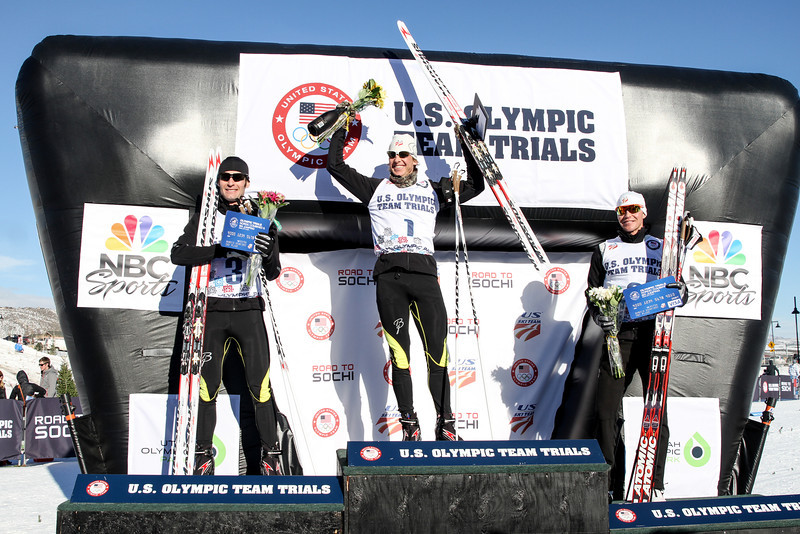
    (From left to right) The 2014 U.S. Nordic Combined Olympic Team Trials podium on Dec. 28 in Park City, Utah, with runner-up Bryan Fletcher, winner Todd Lodwick and Billy Demong in third. (Photo: Sarah Brunson/U.S. Ski Team)
    (From left to right) The 2014 U.S. Nordic Combined Olympic Team Trials podium on Dec. 28 in Park City, Utah, with runner-up Bryan Fletcher, winner Todd Lodwick and Billy Demong in third. (Photo: Sarah Brunson/U.S. Ski Team)

    One of the biggest difference-makers over the years has been the growth and success of the U.S. Nordic Combined team, he said. Last February at 2013 World Championships in Val di Fiemme, Italy, Lodwick, Demong, and the Fletcher brothers earned America’s first medal (bronze) in the team event.

    “I can’t thank Dave Jarrett enough,” Lodwick said. “He has made … sure that we are the best in the world. We started believing in ourselves and came together as a team. Going into these Games we’re going to feed off the inspiration that we had in 2010 and the success we had at World Championships. We rise to the occasion more often than not and surprise the heck out of people.”

    The U.S. Olympic quota is currently four, but they’re hoping to take five men to the Games if they can get five to rank in the World Cup top 50. Before the Olympic trials last month, Demong won two Continental Cup competitions in Park City to secure the team’s fifth World Cup quota spot, allowing them to bring another man over to Europe and try to score some World Cup points.

    “We rise to the occasion more often than not and surprise the heck out of people.” — Lodwick

    A couple U.S. Ski Team members are in Chaikovskiy, Russia, this weekend competing for those points, with Taylor Fletcher placing sixth and Denney finishing 32nd in Saturday’s normal hill/10 k.

    Starting next weekend, Lodwick and the rest of the U.S. A-team will get back to the World Cup in Chaux Neuve, France, then Seefeld, Austria, before heading back to Park City for a two-week training block at altitude for the rest of January. On Feb. 1, they’ll head back to Europe for a brief jumping camp in Oberstdorf, Germany, before heading to Sochi on the sixth.

    Trials results

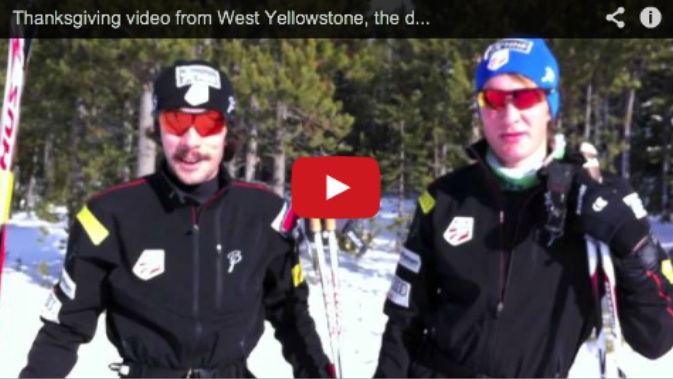
  • Pre-SuperTour, Thanksgiving Day Video

    Pre-SuperTour, Thanksgiving Day Video

    WEST YELLOWSTONE, Mont. — Some of the most competitive skiers in the U.S. SuperTour circuit give thanks and express appreciation for friends and family before, during and after their Thanksgiving Day ski sessions. The first SuperTour of the season starts Friday with the 1.3-kilometer skate sprint at the Rendezvous Ski Trails in West Yellowstone. On Saturday, hundreds of skiers will take part in the 10/15 k distance skate races.

    “Super thankful for my family, friends, and my wife Sarah (we haven’t been able to spend a Thanksgiving together yet),” said Sylvan Ellefson of Ski & Snowboard Club Vail/Team HomeGrown (whose video interview was inadvertently lost).

    “Thankful for blue skis, fast ski tracks, and great November mustaches!” Ellefson added. “I’m really excited to get this ski season going and I know everyone else is pretty antsy as well!”

  • Demong Gets It Done in Placid with Ninth National Title; Van and Alexander Dominate Ski Jumping

    Demong Gets It Done in Placid with Ninth National Title; Van and Alexander Dominate Ski Jumping

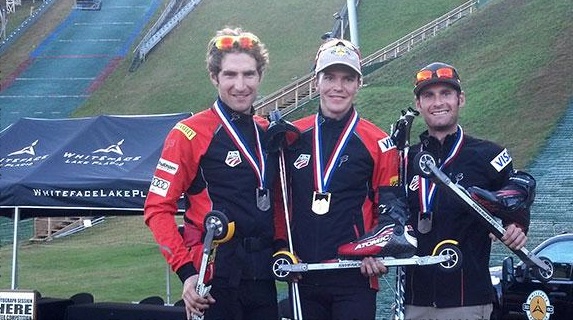
    Olympic Champion Billy Demong shares the podium with teammates Taylor and Bryan Fletcher after winning his ninth career U.S. title. (Photo: USST/ORDA-Jon Lundin)
    U.S. Nordic Combined’s Billy Demong (c) shares the podium with teammates Taylor (l) and Bryan Fletcher after winning his ninth national at U.S. Nordic Combined Championships on Sunday in Lake Placid, N.Y. (Photo: USST/ORDA-Jon Lundin)

    Consistency is key when it comes to nordic combined. Third in the morning jump at the U.S. Nordic Combined Championships on Sunday in Lake Placid, N.Y., national-team staple Billy Demong went on to win the 10-kilometer rollerski with the third-fastest time at the Olympic Jumping Complex, holding off teammates Bryan and Taylor Fletcher by 11 seconds in 25:47.8.

    According to Steamboat Today, Demong started 16 seconds behind jump leader Todd Lodwick, another U.S. Nordic Combined veteran. Lodwick started four seconds ahead of Aleck Gantick and ultimately placed fifth after Demong, Bryan Fletcher, Taylor Fletcher and Brett Denney, respectively. Bryan and Taylor started nearly a minute behind in seventh and eighth, respectively.

    Taylor passed his brother and edged him for second by 0.3 seconds. Denney finished 31.1 seconds behind Demong in fourth and Lodwick was fifth (+1:14.5), reportedly slowed by asthma.

    It was Demong’s ninth national title in what may very well be his last U.S. championships. The 33-year-old Lake Placid-area native plans to retire after the 2014 Sochi Olympics.

    “No doubt, this was my best race of this summer,” Demong said in a U.S. Ski Team press release. “This was a solid start to where I want to be right now.”

    Most threatened by the idea of Lodwick sprinting to the finish or Taylor Fletcher catching him and skiing away, Demong said he tried to ski his own race.

    “I just wanted to ski an even split and stay just 10 to 15 seconds in front of [Taylor] so he didn’t have the opportunity to break away from me,” he explained. “It seemed like that worked out. He pulled within 10 seconds of the last lap, but I had enough energy to hold that gap to the finish line.”

    Best of all, Demong said the dryland results indicate that the team’s in good shape overall.

    “There were four to five guys who could have won so I think that our team is exceptionally strong, even stronger than four years ago,” he said. “That’s the most important thing to me.”

    The U.S. Nordic Combined squad is headed to Europe on Monday for its final overseas training camp before the World Cup season starts next month.

    “We had some good results,” head coach Dave Jarrett told Steamboat Today. “It was difficult conditions and this hill is hard. We didn’t do very well jumping, but we have jumped well here, so this was just one of those days.”

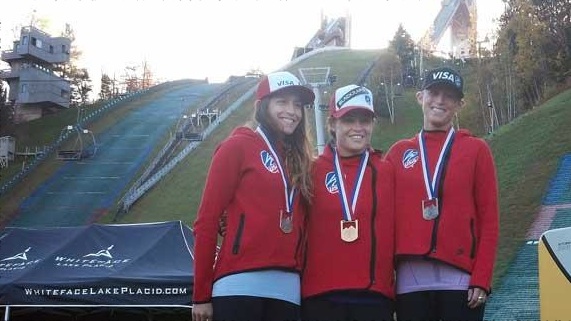
     2009 World Champion Lindsey Van celebrates her U.S. Ski Jumping title along with teammates Jessica Jerome and Alissa Johnson in Lake Placid. (ORDA-Jon Lundin)

    2009 World Champion Lindsey Van (c) celebrates her U.S. Ski Jumping title along with teammates Jessica Jerome and Alissa Johnson on Sunday in Lake Placid, N.Y. (Photo: USST/ORDA-Jon Lundin)

    Van, Alexander Take Jump Titles

    Also on Sunday in Lake Placid, 2009 world champion Lindsey Van (Women’s Ski Jumping USA) and Nick Alexander (USA Ski Jumping) notched national titles on the K90 Olympic normal hill at the U.S. Ski Jumping Championships. For Van, it was her 16th title and Alexander’s second.

    “This validates all of the hard work that I’ve been putting in all this summer,” Alexander said in a U.S. Ski Team press release. “Now I just have to appreciate today and work even harder heading into the wintertime.”

    “I had fun today and jumping is about fun,” Van said. “I started jumping well a couple of weeks ago. It’s nice as I was struggling a couple of years. It was nice to feel the rhythm of ski jumping again.”

    Earlier this summer, U.S. Women’s Ski Jumping world champion Sarah Hendrickson, who is recovering from knee surgery and did not compete on Saturday, and USA Ski Jumping’s Nick Fairall won the large hill competitions in Park City, Utah.

    Van tallied the two longest jumps of the weekend of 92.0 and 96.5 meters to top teammate Jessica Jerome, who was second, and Alissa Johnson in third. Alexander soared 99 meters on both rounds, the longest of any man, to beat teammates Fairall in second and Anders Johnson in third.

    Video from WPTZ News Channel 5

    Results

  • NoCo: Bryan Fletcher top American in Schonach (GER) World Cup

    Austria dominated the podium as Nordic Combined World Cup action continued in Germany. Felix Gottwald took first place clocking in 24:38.4, Mario Stecher was 15.6 seconds behind in second place, and Bernhard Gruber in third, 16.2 seconds behind Gottwald. Jason Lamy-Chappuis (FRA) who was first after the jumping, ended in 11th place overall.

    Gottwald made a strong move on the last major climb of the course to open up a gap on his teammates and Jan Schmid (NOR).

    Bryan Fletcher jumped well and started the cross-country in ninth place and 55 seconds behind Lamy-Chappuis, ready to battle the world for the podium. But the course wanted it differently, and rather than plucking racers off along the way, Fletcher damaged a pole early and played catch up from the 1K mark. He dropped to 31, almost two minutes behind the winner.

    “Today was a bit bittersweet. I had a good jump and was very happy with my starting position. However I quickly ran into problems on the cross country,” Bryan Fletcher said to FasterSkier in an email.

    “About 1 kilometer into the race I broke the basket on my pole. It was in the worst spot for it to happen. I had to ski almost another kilometer without a pole before I could get one. So that fried me quick. Afterwards I had to spend two laps recovering and relaxing before I could start working my way back up again,” Fletcher explained. However, Fletcher is moving on.

    “Oh well, bad luck happens and my focus is now on Seefeld,” Fletcher said, taking away the highlight of the day: a good jump.

    “I have a lot of confidence in my skiing so I am sure that with a good jump, I can be in there again.  Today was just a very frustrating day, but it happens to everyone.

    Rain and warm weather also added their share of challenges for the racers, especially on the cross-country course.

    “The conditions were soft and warm, quite a change from out previous races. The course is pretty muddy but the organizers have done a good job keeping the course and the jump hill in good shape for the competitions with all the rain that has happened,” Fletcher said.

    Tomorrow the US Nordic Combined team is entering the World Cup team competition, before moving on to the next World Cup events in Seefeld (AUT) January 14 to 16.

    “For the team comps tomorrow I just want to have some fun and see what we as a team can accomplish. I will also be looking at how I can compare individually as well. It will be a good chance to work on some fine-tuning in competition before Seefeld,” Fletcher concluded.

    The other Americans were Taylor Fletcher in 56th (3:18 behind), Brett Denney in 58th (3:45.4 behind) and Eric Camerota in 60th (3:58.8 behind). Complete results.

  • US Nordic Combined Back on the Road

    It’s time to get back to business for the US Nordic Combined team. After a few weeks of training in Park City, the crew is aiming for new World Cup competitions this weekend in Schonach (GER).

    “Training over Christmas was good and relaxing, which is always nice. Anyways, it feels good to be back on the road, and I’m excited to get back to racing. I obviously want to pick up right where I left off,” Bryan Fletcher said in an email to FasterSkier.

    The US crew pretty much hit the ground running, as usual, after touchdown in Europe. A Tuesday arrival called for Wednesday intensity and Thursday recovery before the preliminary rounds start on Friday.

    “We hammered out some intervals on Wednesday. Today is a rest day. People are feeling good and ready to go, but the course is a tough one,” Fletcher said, adding that the weather could turn things even more interesting by race day, unless it gets colder again.

    “Conditions were good here until now, however they are supposed to get warm here over the next couple days. Today it might rain,” Fletcher said.

    Wet is never good for skiers, and make things particularly challenging for jumping as well as suctiony on the cross-country course. But regardless, Fletcher is excited to get on with business.

    “I am feeling ready. I am trusting that the work has been done and that I can restart right where I left off in the last comps,” Fletcher said.

    For the World Cups in Schonach, the US Nordic Combined team is fielding four racers:  Eric Camerota, Brett Denny, Taylor Fletcher and Bryan Fletcher, led by USST Coach Chris Gilbertson. Saturday features a standard individual race, while Sunday’s event is a team competition.

    Head coach Dave Jarrett will join the group after the weekend with the rest of the US athletes. Based on the competitions this weekend, Jarrett will divide the group into two, where one crew will proceed to the next World Cup events in Seefeld (AUT) while the other group will defend the Stars & Stripes at the COC races in Klingenthal (GER).

  • U.S. Nordic Combined Wants to “Keep It Rolling”

    U.S. Nordic Combined Wants to “Keep It Rolling”

    Johnny Spillane (l) and Billy Demong (center) celebrate their medals in the individual normal hill event at the 2010 Olympic Games. U.S. National Team Head Coach Dave Jarrett hopes to see more scenes like this one at the 2011 World Championships in Oslo.

    With their dominating performances at the 2010 Olympics, Billy Demong, Johnny Spillane, and Todd Lodwick have welded their names to the sport of nordic combined like Bill Koch did to cross-country skiing. But if Head Coach Dave Jarrett has his way over the next few years, they won’t be the only ones people remember.

    After taking three silvers and a gold from the Games, the team’s main focus for 2011 is winning more medals—they want three at the World Championships in Oslo. But there’s a long-term goal as well: grooming the next generation to take over when the Big Three retire. That means more travel, more racing, and more experience for the team’s developing athletes.

    “It’s kind of a double-edged sword for a coach to have the depth at the top,” Jarrett said.

    “Bill and Todd and Johnny are very good ambassadors for our sport, and they do tremendous help with development for the younger guys,” he said. But, he added, “it makes it a bigger challenge for somebody to reach the top of the team.”

    Like last year, Demong, Spillane, and Lodwick are the only athletes named to the nordic combined A-Team for 2010-2011, and those three will get the World Cup starts they need to be in shape for Oslo. But the six-member B-Team—brothers Eric and Brett Camerota, Bryan and Taylor Fletcher, Brett Denney, and Nick Hendrickson—will attend a healthy share of competitions themselves.

    Despite the medals in Vancouver, Jarrett said that the program’s budget stayed flat for the upcoming year. But the team did get extra funding for several new initiatives from the U.S. Ski and Snowboard Association—essentially internal grants for things like camps and trips—and Jarrett said that money will mean that the team can provide enough support both for its top-level athletes, and those still developing.

    “Everyone’s going to say they can use more, but we are able, right now, to do just about everything that we need to do,” Jarrett said. “We got almost all the big initiatives we asked for, and that enabled us to do basically everything…at the level that we can get service to the best guys, and also prepare Taylor and Nick and those guys as best we can, too.”

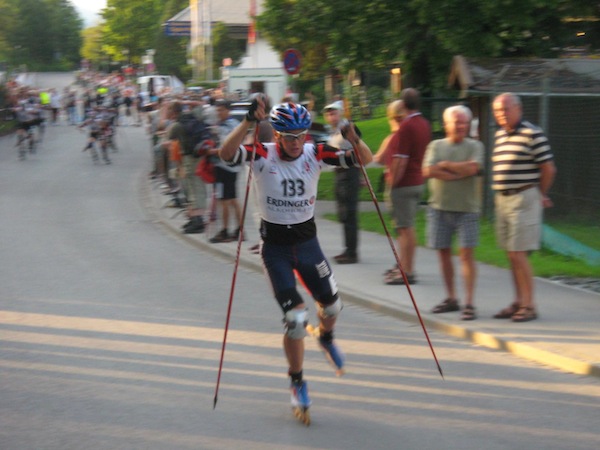
    Billy Demong racing in a Grand Prix race in Europe in 2008. While Demong is racing on inline skates, this year's competitions will be held on rollerskis.

    The team’s season will start with the Grand Prix competitions in Europe—essentially a summer version of the World Cup. Instead of racing on snow, athletes jump off plastic ramps and rollerski around city streets.

    In the past, the Grand Prix races have used inline skates instead of rollerskis, which put the Americans at a disadvantage. (According to Jarrett, the skates are an Austrian and German thing.) As a result, the team’s commitment to the summer races has been inconsistent—they’ve shown up with a mix of elite and developing athletes, or sometimes not at all.

    “It’s not worth it to spend a month training on rollerblades just for four or five races,” Jarrett said.

    But this year, the circuit switched to rollerskis, and accordingly, the U.S. will field a full squad. Unlike in prior summers, the trip will consist solely of B-Team skiers, to get them more experience in Europe and to “start closing the gap,” Jarrett said.

    According to Fletcher, it’s not just the racing that’s important at the summer events.

    “I think it’s just the atmosphere of being over there, being in the competition circuit, seeing what other teams are doing and seeing how they’re racing,” he said. “It’s something that can definitely help me.”

    The Big Three will sit out the summer competitions, but as the winter season gets underway, they will ease back onto the World Cup circuit. But the U.S. only has slots for four athletes at each competition, which means that the B-Team will get fewer starts.

    Lodwick, though, will be focusing his efforts on World Championships in late February, and he will do most of his racing domestically until then—leaving the door open a little bit wider for the B-Team. Just like the summer races, the winter World Cup starts are crucial for the team’s younger athletes, Jarrett says—they need those experiences to ensure that the sport doesn’t fall off the radar when the Big Three retire.

    “In order to keep our program moving forward…we need to have other guys being successful, too,” he said.

    “Todd’s World Cup start will be pretty much open for most of the year,” Jarrett said. “So there’s a bit more impetus and more opportunity for the Nick Hendricksons, the Fletchers, the Camerota brothers to step up and score points.”

    Race organizers pay the travel expenses for the top-50 ranked athletes in the world, and Jarrett said that he wants to see five of his team members in that group by the start of World Championships. That means that two athletes from the B-Team will have to up their game, placing in the top 30 consistently, or even the top 20.

    “In the Camerota brothers, we know those guys are perfectly capable, both on the jumping hill and skiing, to be in there,” Jarrett said. “Our expectation is for those guys to really step up and become full-fledged World Cup skiers.”

    As for the Big Three, Jarrett acknowledged that it might be tough to get them to buckle down again on the day-in, day-out training and racing after the cathartic experience of the Games. But he said the team has adopted a mantra to keep them focused: “The Olympics are over.”

    “We have new goals now,” Jarrett said.

    Demong has committed to racing through Sochi in 2014, and his training over the next four years will be geared towards achieving strong results there. But he has also made clear his commitment to working with his younger teammates–helping them step up to the next level.

    “Ultimately, his goal is to have to fight to even make the team—that we’ve brought the next generation of guys up to the level where they’re beating Bill out of the spot,” Jarrett said.

    Lodwick and Spillane have the same attitude toward the developing athletes, Jarrett said, but those two also see the sport as a profession.

    There’s money on the line every time they pull on a bib, since FIS pays the top 20 finishers at each World Cup—roughly $5,000 for a win, down to $500 for twentieth. That, Jarrett said, should help keep Lodwick and Spillane sharp.

    “There’s money to be made out there, but it’s only getting made by doing well, and they know that,” Jarrett said. “They want to continue the lifestyle and continue the momentum they’ve started, and they want to keep it rolling.”

    As long as Lodwick, Spillane, and Demong continue to race, it will be tough for the B-Team to break onto the scene. But Fletcher said he thinks that’s a good thing.

    “You definitely need the top guys on the World Cup as much as possible, to get the press, the results, and stuff like that,” he said. “Then, it gives the guys below them something to push for.”