Tag: Brian Bushey

  • Hedegart Emerges From the Fog to Win Holmenkollen 50 k as Klæbo’s Absence Reshuffles the Distance Globe

    Hedegart Emerges From the Fog to Win Holmenkollen 50 k as Klæbo’s Absence Reshuffles the Distance Globe

    This coverage is made possible through the generous support of Marty and Kathy Hall and A Hall Mark of Excellence Award. To learn more about A Hall Mark of Excellence Award, or to learn how you can support FasterSkier’s coverage, please contact info@fasterskier.com.

    The start of the Holmenkollen Men’s 50 k Freestyle in Oslo, Norway. (Photo: Authamayou/NordicFocus)

    For nearly two hours on Saturday, 77 men disappeared into a stubborn curtain of fog that clung to the hillsides above Oslo, their figures swallowed by the mist somewhere between the stadium and the high point at Frognerseteren. When it was over, only one emerged with his arms in the air, and it was the one freestyle specialist who had been topping shorter freestyle distance races most of the season.

    Einar Hedegart, the 24-year-old former biathlete who only committed fully to cross-country skiing in November, surged past Harald Oestberg Amundsen in the final meters to win the Holmenkollen 50 k Freestyle in 1:51:38.2 — his first victory on cross-country skiing’s most storied stage, in just his seventh World Cup start.

    “This is the greatest feeling I’ve ever had,” Hedegart said after the finish. “This is just a nostalgia stadium. [A] legendary race, almost all my heroes have won this race, and especially Petter Northug. This might be the reason why I’ve been so motivated my whole life to be a cross-country skier.”

    Einar Hedegart (NOR) celebrates winning Norway’s most iconic race. www.nordicfocus.com. (Photo: Authamayou/NordicFocus)

    But the result that will echo loudest across the sport happened away from Oslo. Johannes Hoesflot Klaebo, the overall World Cup leader, was home nursing a mild concussion from a hard crash in the Drammen sprint two days earlier. Klaebo, who has already compiled a nearly perfect season, winning the Tour de Ski, all six Olympic races, secured the FIS Overall Crystal Globe, the FIS Sprint Crystal Globe, and only needed to keep racing the remaining distance races to take the clean sweep of the season with the FIS Distance Crystal Globe. BUT his absence from the start line meant zero points scored in the distance standing today. And with Amundsen’s second-place finish today, the distance crystal globe race was blown wide open: Amundsen now leads the distance standings by three points, 939 to 936, with two distance races remaining at the World Cup Finals in Lake Placid.

    Klaebo posted to Instagram yesterday: “Took a fall yesterday and hit my head pretty hard, but luckily everything is all good in the hood. Ended up with a concussion, so I’ll take some days off from both training and the internet just to make sure everything settles properly. Only got one head, so have to take good care of it.”

    He had been scheduled to fly to the United States on Sunday, but will now stay in Norway for a few extra days, hoping to recover in time for Lake Placid.

    Einar Hedegart (NOR) emerges from the fog to take the win. (Photo: Nordnes/NordicFocus)
    A Race Defined by Fog

    The Holmenkollen 50 k — first raced in 1888, a fixture of the World Cup since 1982, and a race that draws an estimated 100,000 fans to the forested hills above Oslo — returned to the calendar Saturday after a one-year absence. For the first time, the men’s and women’s 50 k races were held on the same day, the women starting 45 minutes behind the men in a format designed to create an all-day spectacle. The fog, however, had other ideas. Conditions were so thick that spectators along the course could hear the racers before they could see them.

    The course — six laps of 8.3 km with 334 meters of climbing per lap — was firm and fast after overnight salting despite an air temperature of 5.0°C. The salted, compact surface was ideal for skating, and the winning time of 1:51:38 came in roughly four minutes faster than the last time the Holmenkollen 50 k was contested in freestyle.

    Harald Oestberg Amundsen (NOR) on his way to second place. (Photo: Authamayou/NordicFocus)

    Through the first three laps, the race unfolded as a cautious tactical affair. A large pack of roughly 40 skiers stayed together, with Martin Loewstroem Nyenget, Mattis Stenshagen, and Federico Pellegrino taking turns at the front. The first athlete to make a decisive tactical move was Iver Tildheim Andersen, who changed skis early at the stadium after the third lap while the rest of the pack continued through. The fresh skis gave Andersen a burst, and when the lead group stopped for their own ski exchange one lap later, he suddenly found himself alone at the front with a roughly 15-second advantage.

    “Just stick with the field as long as possible and then hopefully be in position when the group starts swarming,” Hedegart said of his plan. “But today I was really offside, like 70 percent of the race. So I was lucky that no one took a gap.”

    The chase group — reduced to roughly eight athletes, all Norwegian once France’s Victor Lovera fell off the pace — gradually closed on Andersen through the fifth lap, with Hedegart, Simen Hegstad Krueger, Amundsen, Nyenget, Andreas Fjorden Ree, and Kasper Andersson Herland trading pulls at the front. By the time the group reached the final lap, they had swallowed Andersen, and the race became a question of who had saved enough for the final kilometers.

    Simen Hegstad Krueger (NOR) tried his best to get away for the win. (Photo: Authamayou/NordicFocus)
    Krueger’s Late Charge and Hedegart’s Final Kick

    Krueger, who was celebrating his 33rd birthday the day before, was omitted from the Norwegian Olympic team despite multiple Olympic medals in his career and was the winner of the last freestyle Holmenkollen 50 k. He drove the pace through the final lap. He pushed hard over the climbs near the iconic Holmenkollen church, stringing out the group and shedding Andersen off the back. But Krueger couldn’t sustain the pressure all the way to the finish, and as the group of seven came around the final corner and up the short, steep ramp before the descent into the home stretch, the sprint was on.

    Amundsen launched first, throwing everything he had at the final few hundred meters. But Hedegart, who had looked labored at points earlier in the race, found a gear no one could match. He came alongside Amundsen, took the lead in front of the grandstand crowd, and raised his fist in celebration as he skied across the line.

    “I felt, like, better,” Hedegart said of his position in the back of the pack through much of the race. “So I was just laying in the field, and I had to remind myself he did the same,” he added, referring to his idol Northug, whose trademark move was stalking from behind before unleashing a devastating sprint.

    Harald Oestberg Amundsen (NOR), Mattis Stenshagen (NOR), and Martin Loewstroem Nyenget (NOR), (l-r) stayed in the lead pack. (Photo: Authamayou/NordicFocus)

    Hedegart crossed in 1:51:38.2. Amundsen finished four-tenths of a second behind. Nyenget was third at +1.1. Ree took fourth (+1.5), followed by Herland (+2.1), Krueger (+3.0), Moseby (+4.8), and Andersen (+16.8) after his brave solo effort. Norway swept the top eight positions.

    France’s Lovera was the first non-Norwegian in ninth (+48.1), followed by AIN athlete Savelii Korostelev in 10th (+1:24.2).

    Zak Ketterson (USA) led the way for the Americans in the chase pack racing for 11th place; he ultimately finished 18th. (Photo: Authamayou/NordicFocus)
    Ketterson Fights for 11th in His Adopted Home

    Zak Ketterson, who spent the summer and fall living and training in Oslo, found himself in the thick of a battle for 11th place, a fight he learned about from coaches stationed along the fog-shrouded course.

    “I had heard from coaches on the side of the trail that our pack was fighting for 11th, and that was super cool,” Ketterson said. “I actually felt pretty fresh at the end and thought my finishing sprint would be pretty good, but I didn’t time it well and got really boxed in on the last couple turns into the finish.”

    Ketterson ultimately finished 18th (+1:54.2), part of a chase pack that came across the line within seconds of each other. He said everyone in the group knew a sprint was coming on the final lap.

    The fog made the tactical picture nearly impossible to read. “I couldn’t see more than 10 meters in front of me,” Ketterson said. “It definitely made it difficult to assess where I was relative to the leaders in the later laps. It also made some of the corners feel way sketchier because you couldn’t really choose an optimal line with such limited visibility.”

    For Ketterson, the race carried personal significance beyond the result. Having trained on the Holmenkollen course through the Norwegian summer and fall, he knew every climb and descent intimately. “This is definitely one of the most iconic and cool races we get to do,” he said. “It was especially special for me this year since I trained on this course all summer and fall living in Oslo. The highlight was definitely having my wife Julie and her family out there cheering me on.”

    What made the performance all the more impressive was the state of his body coming in. “I honestly feel like I am really running on fumes,” Ketterson said. “To be honest, I was not sure if I would even start this race in the morning. I felt so bad, and honestly, my body has felt super up and down in the last few weeks. I’m really curious to see how my body responds to this race. I was pleasantly surprised by how decent it felt, but I feel like the next week could go either way. Especially with the international travel tomorrow.”

    Brian Bushey (USA) gaining experience on his way to 59th place. (Photo: Authamayou/NordicFocus)
    The Rest of the North Americans

    Hunter Wonders was 45th (+5:46.9), Kevin Bolger was 48th (+6:51.3), and Brian Bushey was 59th (+12:24.9).

    Canada’s Xavier McKeever finished 41st (+5:11.4), while Thomas Stephen was 43rd (+5:18.1).

    Harald Oestberg Amundsen (NOR) takes over the FIS Distance Globe lead with just two distance races remaining. (Photo: Authamayou/NordicFocus)
    Distance Globe: Three Points

    The ramifications of Saturday’s race land squarely on the crystal globe picture. Before the race, Klaebo held a 128-point lead over Amundsen in the distance standings and a 636-point lead in the overall. With Klaebo watching from home, Amundsen’s 131-point haul (including bonus points) vaulted him into the distance lead: Amundsen now sits at 939 points, three ahead of Klaebo’s 936. Nyenget climbed to 914 in third.

    Klaebo’s overall World Cup lead, at 2,071 points to Amundsen’s 1,566, remains secure with a 505-point cushion. But the distance globe — awarded to the season’s best across distance events only — will come down to the final two races: a 10 k Classic Interval Start and a 20 k Freestyle Mass Start in Lake Placid, March 20-22.

    If Klaebo can travel to Lake Placid and race, he’ll have every opportunity to reclaim the lead. If the concussion keeps him out, the distance globe is likely to belong to Amundsen.

    Kasper Andersson Herland (NOR), who finished fifth, celebrates with Einar Hedegart (NOR), (l-r) at the finish of the Holmenkollen. (Photo: Authamayou/NordicFocus)
    A Star Made for This Stage

    Hedegart’s career trajectory is one of the season’s best stories. A junior biathlon world champion who struggled with his shooting, he drifted toward cross-country skiing after a surprising second-place finish at the Holmenkollen World Cup last season. He spent the summer training with a cross-country team while bringing his rifle to every camp, undecided. In November, after winning the popular pre-World Cup cross-country race in Beitostoelen, Norway, by a wide margin and missing eight of 20 shots in a biathlon event, he committed to leaving the rifle at home.

    Since then: an Olympic bronze in the 10 k Freestyle behind Klaebo, a team sprint gold partnered with Klaebo, victories in the Engadin Marathon, and now the Holmenkollen 50 k — a distance he had never raced at the World Cup level. He was asked whether his approach of sitting back resembled Northug’s famous stalking tactics.

    “Yeah, I felt like Petter,” Hedegart said. “So I was just lying in the field, and I had to remind myself he did the same.”

    For a race that dates to 1888, that has been won by the sport’s mythical stars, and that is contested before the King of Norway in a stadium surrounded by 100,000 fans, there is no small amount of weight to what happened Saturday at the Holmenkollen. Hedegart is, by every measure, now a cross-country skier.

    The season concludes with the World Cup Finals in Lake Placid, New York, March 20-22. Three races remain. The distance globe is separated by three points. And the world waits to see whether Klaebo can make it to the start line.


    Holmenkollen Men’s 50 k Freestyle FINAL RESULTS

    FIS Men’s Crystal Globe SPRINT STANDINGS
    FIS Men’s Crystal Globe DISTANCE STANDINGS
    FIS Men’s Crystal Globe OVERALL STANDINGS


    Love Stories Like This? Help Keep Them Coming.

    Feature stories like this one take time, access, and care to produce. If you value thoughtful storytelling and independent ski journalism, please consider becoming a Voluntary Subscriber. Your support directly fuels the work we do to cover the people, places, and moments that make our sport special.

    Join the FasterSkier community!


    Harald Oestberg Amundsen (NOR), Andreas Fjorden Ree (NOR), and Martin Loewstroem Nyenget (NOR), (l-r) share the Holmenkollen 50 k Freestyle in Oslo, Norway. (Photo: Authamayou/NordicFocus)
  • NENSA Summer Series Kicks Off with Lost Nation Roll and Some On-Snow Action

    NENSA Summer Series Kicks Off with Lost Nation Roll and Some On-Snow Action

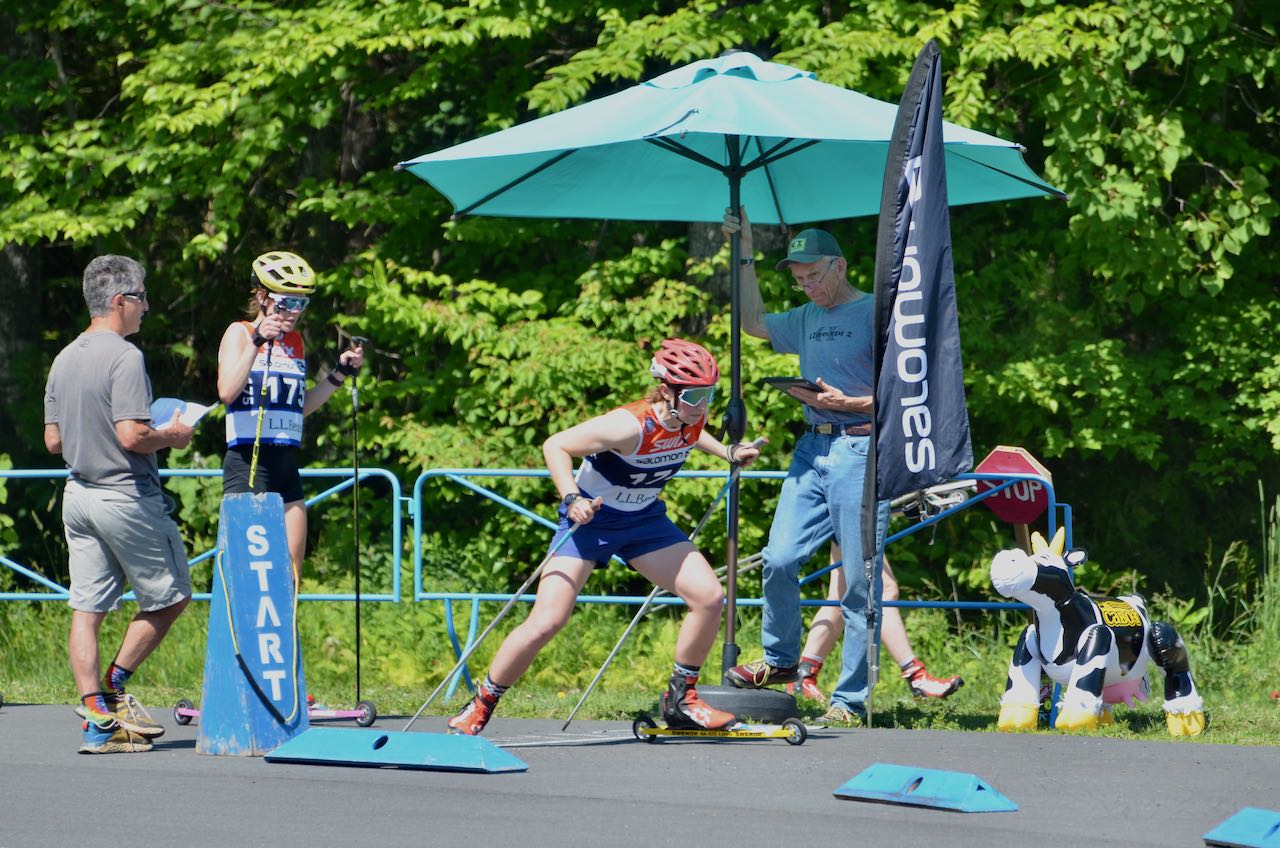
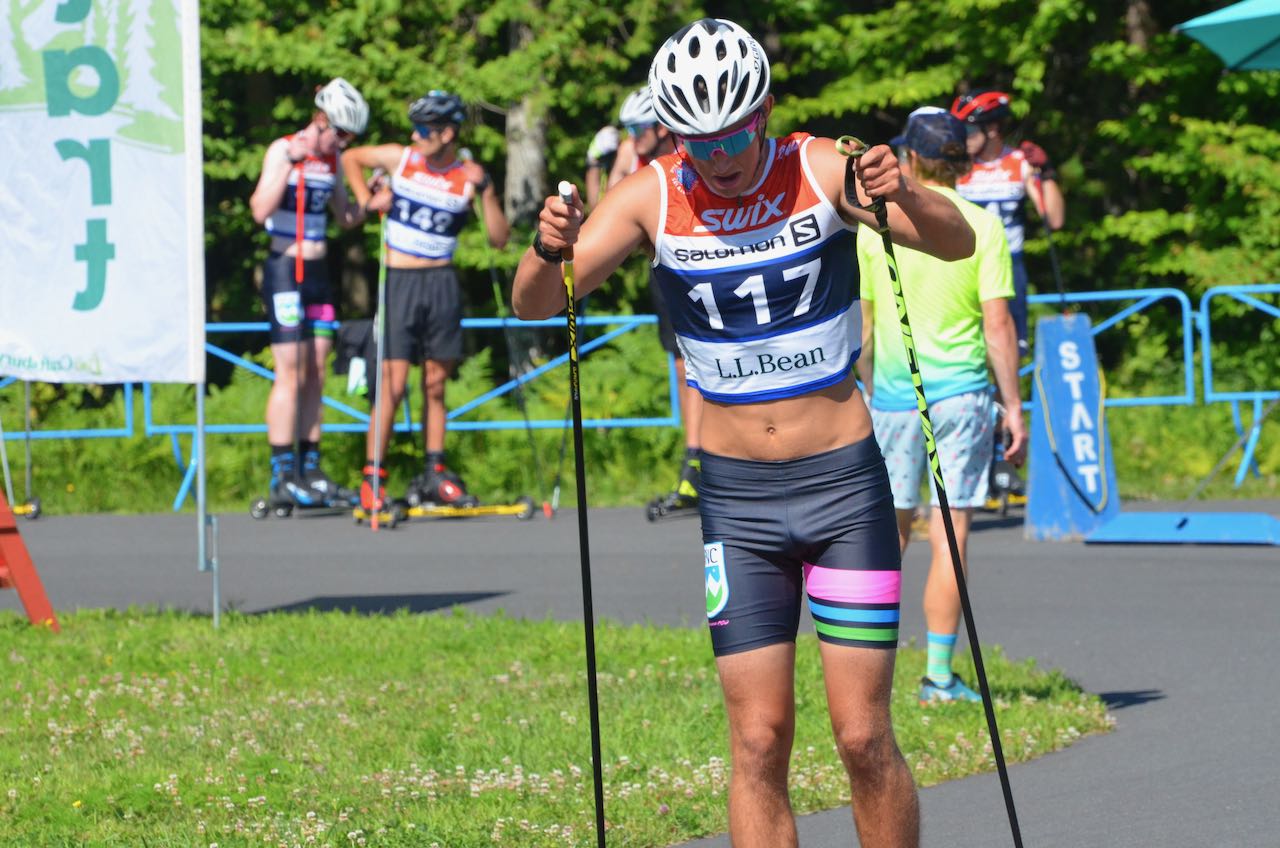
    The 2022 NENSA Summer Series hosted its first rollerski race of the season at the beginning of July. The Lost Nation Roll took place at the Craftsbury Outdoor Center on July 3rd, and by all accounts, was a huge success. Both men and women raced 10 k in an interval start format on the Outdoor Center’s paved rollerski loop

    Charging out of the start gate, Quincy Massey-Bierman (Middlebury College) heads out for 10 k (Photo: Paul Bierman)

    Coinciding with the Eastern Regional Elite Group (REG) camp, around 40 top Eastern juniors boosted the race attendance numbers. NENSA’s Competitive Program Director, Justin Beckwith, explained that this year’s edition was the third open event they’ve co-hosted with Craftsbury and it was the best attended. Beckwith said, “It’s exciting to see the community out cheering and of course to have elites from CGRP (Craftsbury Green Racing Project) and SMST2 (Stratton Mountain T2), with three [U.S.] Ski Teamers in the mix, Ben [Ogden], Will [Koch] and Sydney [Palmer-Leger].” As Lost Nation Roll was the first race out of the seven in the NENSA series, it was also the debut moment for the podium cheese provided by Cabot, which was certainly a highlight. 

    Geo Debrosse of Mansfield Nordic Club gets underway in the open men’s 10 k (Photo: Paul Bierman)

    On the men’s side, Ogden (SMST2) topped the podium, finishing in a time of 23:25.3. Brian Bushey (University of Utah) came in second, +11.9 seconds behind Ogden. Finn Sweet (Craftsbury Ski Club/UVM) completed the podium, in third place (+13). The 6 k U16 boys competition was won by Micah Bruner of SMS (13:04.9).

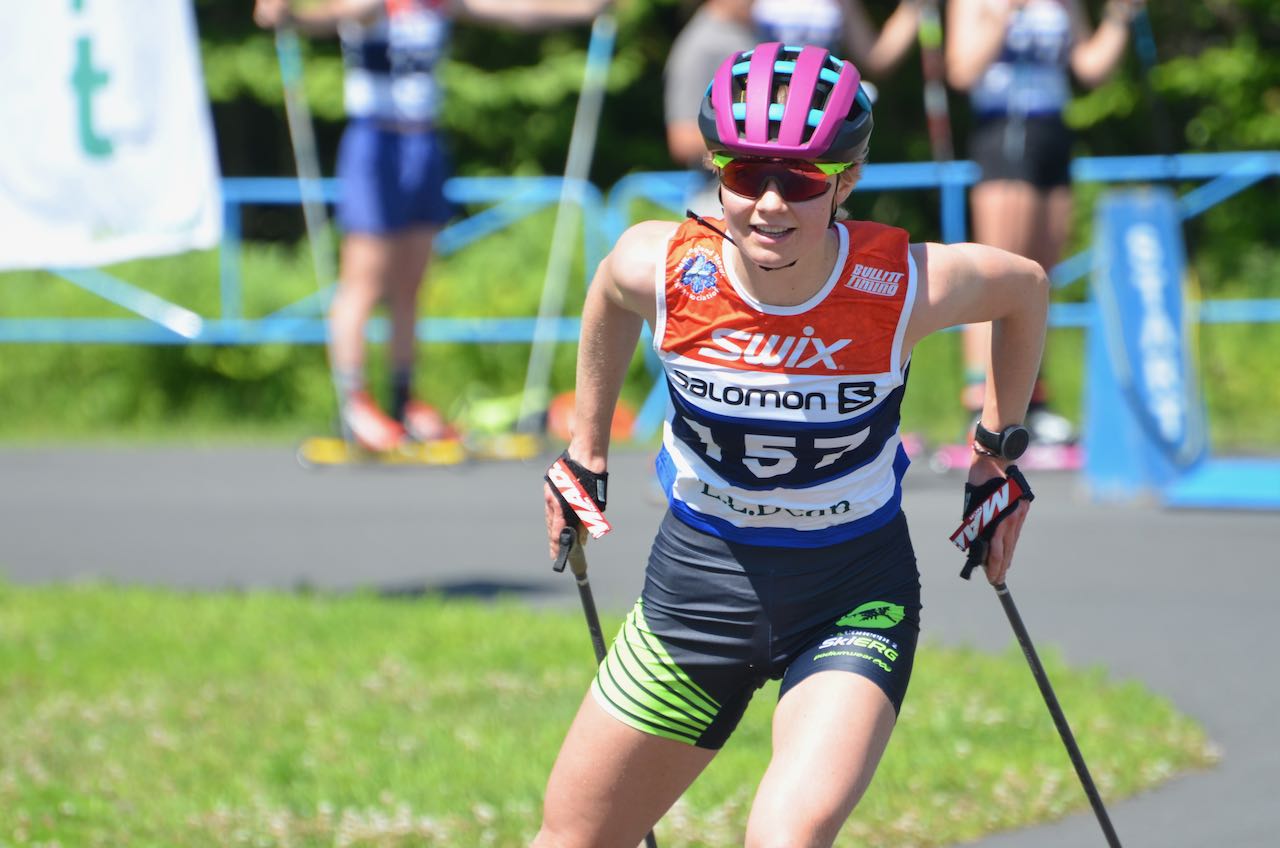
    For the women, Margie Freed of CGRP took top honors, with a finish time of 26:29.6. Behind her, Evelina Sutro of SMST2 finished second (26:55). In third position, Kelsey Dickinson, also of CGRP, finished in 27:04.7. Ruth Krebs, skiing for Craftsbury Ski Club, won the U16 girls race in 15:39.3. 

    Margie Freed (CGRP) topped the podium in the Lost Nation Roll 10 k (Photo: Paul Bierman)

    Beckwith extended thanks to the race hosts, saying, “Craftsbury’s track and their amazing community / race crew make hosting a race easy and fun.” 

    Up next in the series is the first of three hill climbs, the Rollins Roll up Mt. Kearsarge in Warner, New Hampshire on August 21st. About the upcoming event Beckwith said, “While we know we will have a strong junior showing we are really hoping to boost masters participation in our three hill climbs throughout the series (Rollins, Climb to the Castle, and Mt. Greylock).” As incentive, Beckwith explained that there will be a special overall prize for the best two of three placements for masters from Allagash Brewing

    Taking place the same day as the Lost Nation Roll, was NENSA’s second Learn-to-Roll event of the 2022 summer season. Spearheaded by NENSA Youth & Introductory Program Director, Kait Miller, the clinic provided an opportunity for any skier looking to try their hand at rollerskiing for the first time. 

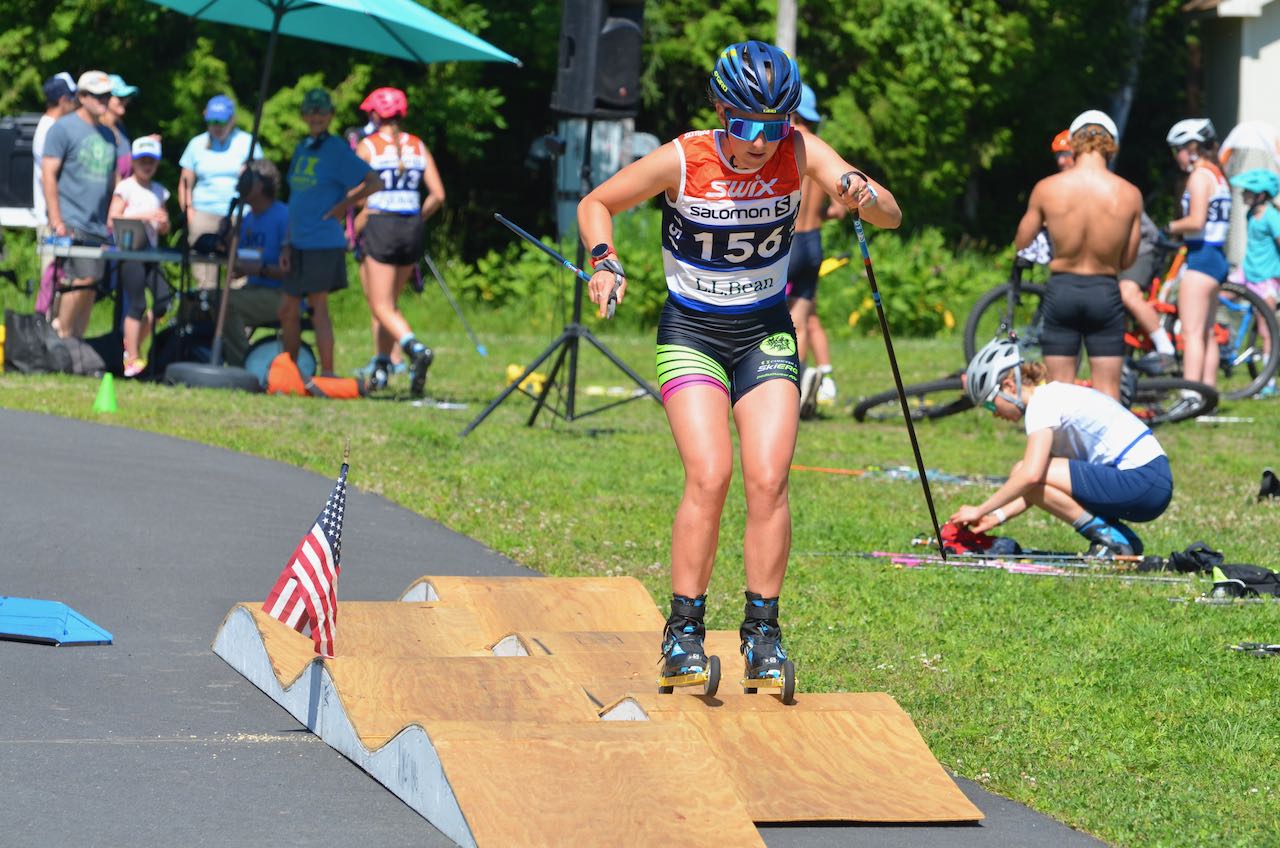
    Kelsey Dickinson (CGRP) navigates course obstacles on her way to a third-place finish in the open women’s race (Photo: Paul Bierman)

    Miller explained that over the course of the summer she hopes to add a few more Learn-to-Roll opportunities in combination with scheduled rollerski races. She said, “So far the Lost Nation Roll is the only event we’ve done this with and it seems to be a good format with some clinic participants showing up early to watch the races.” 

    Capping off an action-packed day, skiers headed to Craftsbury village for a little time on natural snow. Emerging from Craftsbury’s summer snow storage, the strip was fashioned into a jump course which saw some great aerial moves. 

    Full results from the Lost Nation Roll race can be found here. More information on upcoming NENSA rollerski events are available here.

  • World Juniors: Canada puts two in top ten as Russia sweeps 5/10 k classic; Will Koch top American in 13th

    The 2022 FIS Junior/U23 World Ski Championships trip has been made possible through support from the National Nordic Foundation (NNF), which has identified this invaluable opportunity for developing athletes as one of its “Pillar Projects”. You can support the NNF and the next generations of America’s top skiers by making a donation here.

    Friday at 2022 FIS Junior World Ski Championships in Lygna, Norway, marked the phase that Steve Fuller, on site to take photographs qua Flying Point Road, calls “the ‘groundhog’s day’ stage” of the championships. “Things are happening so fast that you’re not quite able to get caught up with each day before you get up and do it all over again,” Fuller wrote on Instagram.

    Will Koch races to 13th in the 10 k classic during the 2022 Junior World Ski Championships in Lygna, NOR. (Photo: John McColgan)

    Undeterred, the Americans headed out on course Friday morning for their seventh and eighth races in four days. The coaches and wax techs (see the back row in the lead picture of the relay story) prepped skis for their eighth championship race within less than 72 hours. At the end of the day, Russia took a combined four out of six podium spots; Canadian skiers Xavier McKeever and Jasmine Drolet placed sixth and eighth, respectively; and Will Koch and Sydney Palmer-Leger led the way for the Americans in 13th and 19th.

    Women’s 5 k Classic

    Let’s back up. The women again had the day’s first race, a 5-kilometer interval-start classic. The first starter headed out on course, over a single lap of yesterday’s 5 k course, at 11 a.m. The official results describe conditions as somewhere between moderate and perfect: air temp of -2 C, snow temp of -3 C. Skies were overcast for the women’s race, but the sun came out for the men; as USST Development Team Coach Greta Anderson told FasterSkier later Friday, conditions sped up noticeably by the afternoon.

    82 starters later, Dariya Nepryaeva, who started at the sharp end of the field in bib no. 80, had logged the day’s fastest time, crossing the line in 14:30.1. She was closely followed by her compatriot, Elizabeta Bekisheva, in second, 2.9 seconds back. Emma Kirkeberg Mørk of Norway was close behind for third, 4.0 seconds back.

    Sydney Palmer-Leger skis into the top-20 in the 5 k classic during the 2022 Junior World Ski Championships in Lygna, NOR. (Photo: flyingpointroad.com)

    The day’s fastest North American finisher, and fastest Jasmine in the field, was Jasmine Drolet of Revelstoke, B.C., in eighth, 21.5 seconds back. She was followed in the North American standings by American Sydney Palmer-Leger (University of Utah/Park City, Utah) in 19th (+51.3), and Canadian Jasmine Lyons in 26th (+1:03.3).

    “I felt pretty good. I really like classic skiing and my goal was to give it all I had,” said Drolet in a press release from Nordiq Canada. “You only ski the lap once, so the key was to just go hard the whole time. We had amazing conditions, perfect for classic skiing so it was a good day.”

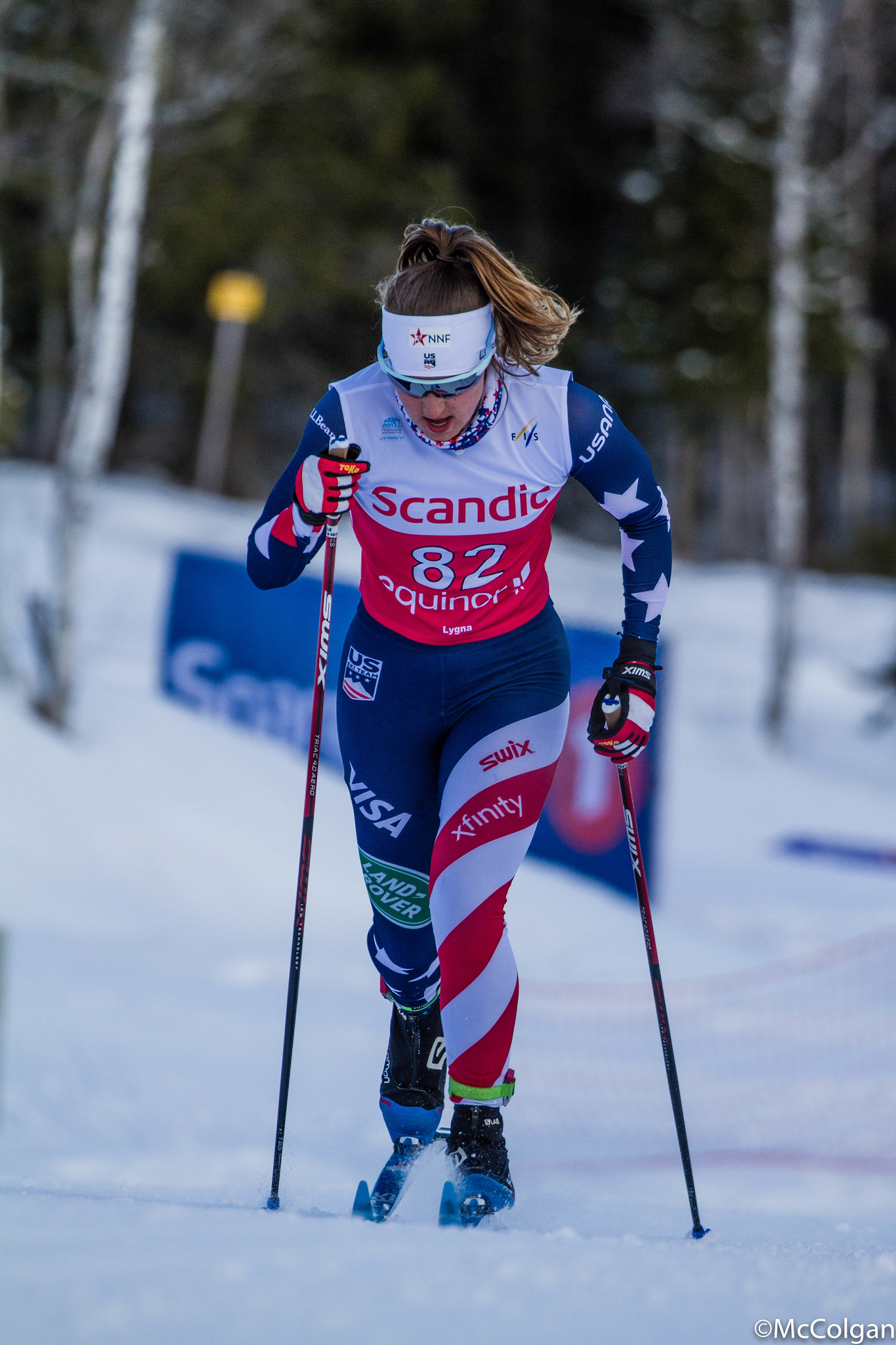
    Behind Lyons were the two Ninas, Nina Schamberger (Summit Nordic Ski Club/Leadville, Colorado) in 31st (+1:14.2) and Nina Seemann (Dartmouth Ski Team/Craftsbury, Vermont) in 36th (+1:23.0). Annie McColgan (University of Vermont/Bend, Oregon) was 40th (+1:27.3). Canadian athletes Sarah Cullinan (44th, +1:34.2) and Tory Audet (59th, +2:08.2) followed.


    Annie McColgan races the 5 k classic in Lygna, NOR, her first start of the 2022 Junior World Ski Championships. (Photo: John McColgan)

    McColgan radiated enthusiasm when she talked with FasterSkier following her first race at these championships. “It was nice to have everyone cheering out there, and my parents were here so it was really, really fun. It was really cool,” McColgan said.

    McColgan also provided insights on the course, describing it as “a really interesting 5k” with plenty of rolling terrain, but not many opportunities for recovery. “There’s a lot of steep little hills that you just have to be really good at… But it also is 16 minutes long. So you kind of have to make that balance [with energy expenditure]. And then the final climb was so brutal.”

    Men’s 10 k Classic

    The men again had the day’s second race, starting a two-lap, 10 k interval-start classic race at 1 p.m. local time. Taking athletes’ distance points as an informal form chart, in a field with 101 athletes the podium finishes came, relatively unsurprisingly, from bibs no. 90, no. 100, and no. 101. The gold medal on Friday went to Russian Saveliy Korostelev, the penultimate athlete on the course. Korostelev posted the fastest split time at 3 kilometers, at 5 kilometers, and at 8 kilometers, crossing the finish line in 26:15.8.

    Will Koch leads the American junior men with a 13th place finish in the 10 k classic during the 2022 Junior World Ski Championships in Lygna, NOR. (Photo: flyingpointroad.com)

    Korostelev enjoyed a hefty advantage over silver-medal finisher Niko Anttola of Finland, who finished 21.4 seconds back. Anttola ranked one to eight seconds behind Alexander Ivshin of Russia at all intermediate checkpoints, but skied the final two kilometers just barely faster. When Ivshin, the day’s final starter, crossed the line, he had fallen 0.8 seconds behind Anttola and had to settle for third.

    Put another way, Russia came within a second of going 1–2 in both the men’s and women’s races. They instead had to settle for first and second in the women’s race, and first and third in the men’s.

    Shortly behind the podium, Xavier McKeever of Canmore, Alberta, skied a strong race to finish sixth, 52.4 seconds back of Korostelev and roughly 30 seconds off the podium. It was McKeever’s best international result since, well, Tuesday, when he was fifth in the men’s 30 k mass start skate. McKeever’s sixth today tied Palmer-Leger’s sixth, from Tuesday’s women’s 15 k skate, for the second-best North American individual result of these championships.

    “I am stoked to be in the top-10 again,” McKeever told Nordiq Canada in a press release. “I was getting splits that I was close to the podium in the first lap, but I just couldn’t keep the high pace that I started with. Honestly, I feel like the podium is still a fair bit away, but today just motivates me more to make the steps toward being able to contend for a medal. … I have been able to build my confidence over the course of this season. After last year, it was instrumental for me to refocus on putting in the hard work each and every day, which I think has helped me race with more confidence than ever before.”

    McKeever was followed by his countrymen Max Hollman (Thunder Bay) in 17th (+1:28.8), Derek Deuling (Whitehorse) in 19th (+1:31.5), and Thomas Stephen (Calgary) in a tie for 26th (+1:40.0).

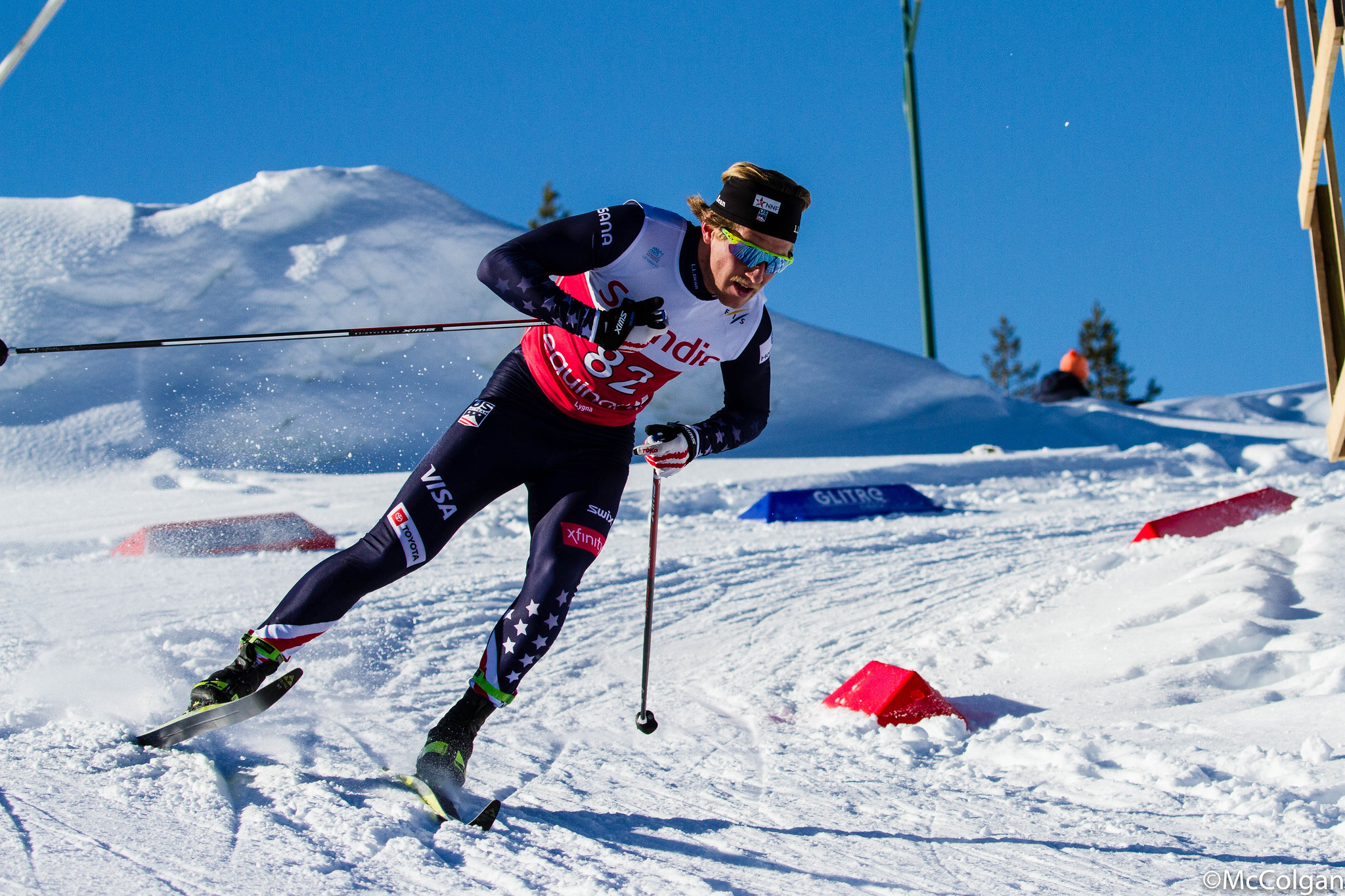
    Brian Bushey races the 10 k classic during the 2022 Junior World Ski Championships in Lygna, NOR. (Photo: John McColgan)

    Will Koch (University of Colorado/Peru, Vermont) led the way for the Americans, finishing in 13th (+1:23.4). He was followed by Alex Maurer (University of Colorado/Anchorage, Alaska), also 26th (+1:40.0); Brian Bushey (University of Utah/Waitsfield, Vermont) in 36th (+2:00.2); and Finn Sweet (University of Vermont/Waterbury, Vermont) in 47th (+2:11.3).

    Thoughts from the coach

    Greta Anderson is in Lygna at her third World Juniors as a coach or tech, her first since assuming her current coaching position with the U.S. Ski Team. (Disclosure, Anderson was this reporter’s coach in APU Masters in 2014–15, and has remained a close personal friend ever since.)

    Asked what she saw about today’s races, Anderson noted, “They were really fun to watch. Between FIS live timing and back split, the radios were pretty lively. One thing I did learn this year, and this is more than I’ve seen in the past, is that our athletes – every single one has the raw speed to compete at this level. We’re working on the durability portion of it. I think the top athletes in these races often are running negative splits in a big way; I would have to sit down and look at percentages. I’m sure we’ll do that at some point in time. But you know, the speed is there early on, we have very good placement, and then we need to figure out how to speed up just a little bit more. But that’s, you know, that’s been a big step for us as a country.

    “Will Koch, obviously very, very strong today. Brian Bushey came out on the top end of ten places being within four seconds, or eight places within four seconds maybe. So you know, really phenomenal. … Annie McColgan had her first ever World Juniors race today. And that’s always really fun and special to watch. I think often athletes come away seeing like, ‘wow, there’s another level,’ and it can be really motivating for the following year.”

    Sydney Palmer-Leger leads the junior women during the 5 k interval start classic. (Photo: John McColgan)

    Turning to Schamberger, Anderson observed that the 16-year-old has “had a pretty heavy week of racing so far. She’s had three starts, and the first day was not what she wanted. And the second day she had the gift of getting redemption the very next day, which I think is one of the best things athletes can have. And she was really happy with how she skied the relay, a big smile on her face. And then a really good race today. It’s fun to watch athletes – the moment that they realize they’re skiing at that level. Because we know they can do it, and we watch it, but that aha moment of ‘Oh, okay, in the world, this is where I am.’ That moment is really cool. It’s one of my favorite parts of my job for sure.”

    Anderson also described the environment at the venue more broadly, highlighting the effects of vocal parental support. “There’s quite a few parents here from the U.S.,” she said.

    “And Americans are really loud compared to other countries, and it’s probably taken as obnoxious, but I really appreciate it. We can always hear the Americans. It’s fun to stand by them and listen to them get all excited. Next to the parents during the relay is one of my favorite places to stand.”

    In that vein, Anderson concluded, “I look around, and I’m so proud to be an American coach. I’m so proud of the American skiers; there’s not a single other nation I would – I’m really glad that I work for our staff. And I think our athletes are really glad that they ski for the U.S.A. I don’t think they look around and think, like, ‘I wish I was on that team,’ or, ‘I wonder what that team is up to.’ We’re definitely in that, ‘We’re Americans and we’re here to beat you. Or at least die trying’ mode. And that’s pretty fun.”

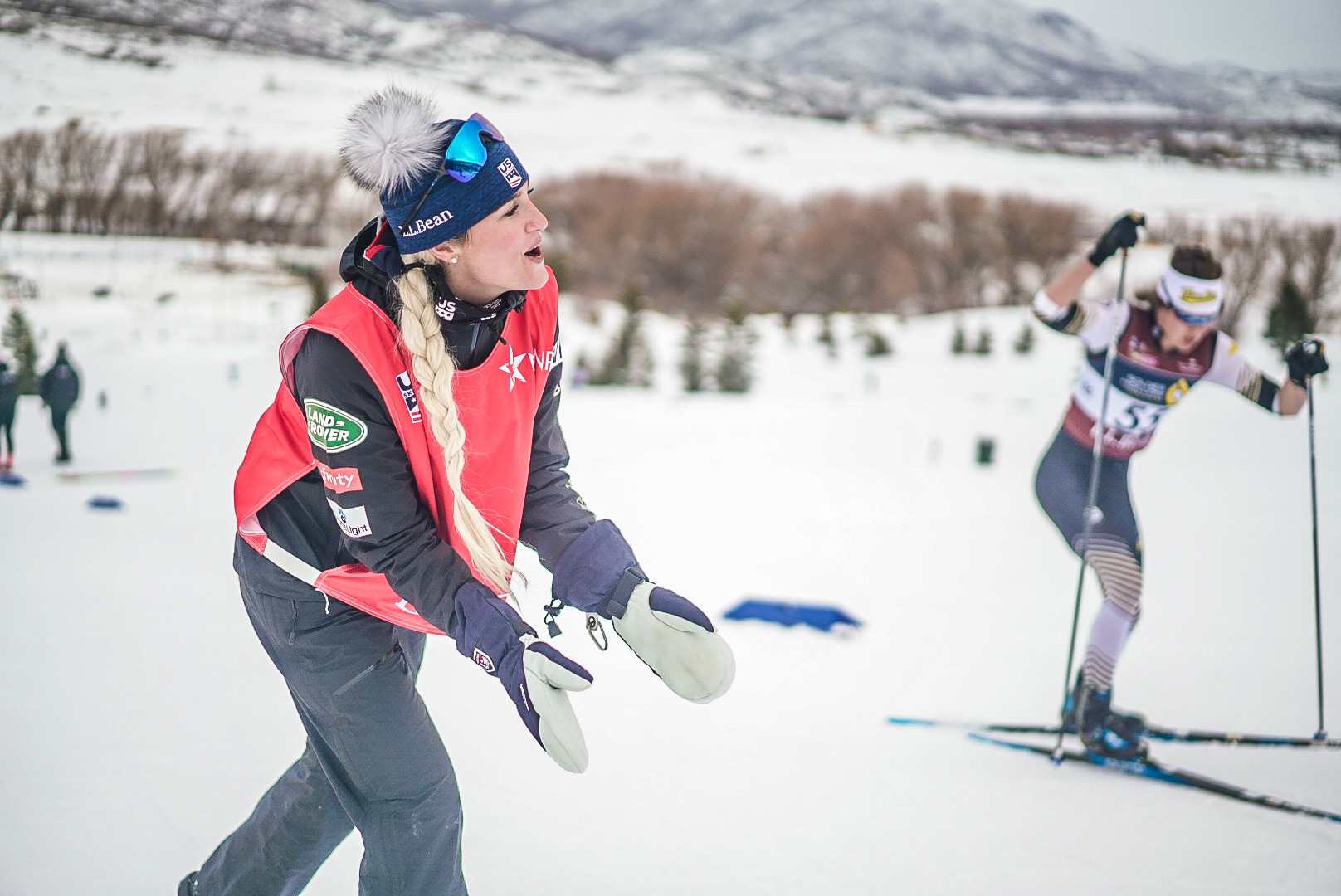
    U.S. Ski and Snowboard Development Team Coach Greta Anderson encourages athletes during the men’s 30k distance race during the 2022 U.S. Cross Country Championships in Soldier Hollow. (Photo: Tobias Albrigtsen / @untraceableg)

    Racing continues tomorrow with skate sprints for U23 athletes, both genders, before wrapping up Sunday with both men’s and women’s U20 skate sprints and the U23 mixed relay, sending athletes and techs out with three races, two techniques, and a combined sixteen sprint heats on the final day of racing. Groundhog’s Day, indeed.

    Today’s results: women | men

    World Juniors links and information:

    Home page and general info | race program | results and live timing (all races) | streaming (only for Thursday through Sunday’s races, purchase required)

  • Exciting Relay Day 2 at World Juniors with US Women 5th and US Men on the Podium in 3rd

    Coaches, support staff, and athletes celebrate a bronze medal in the men’s 4 x 5 k relay. Staff, left to right: Greta Anderson (front left), Bryan Fish (back left), Dr. Katie Eichten (partially obscured), Olof Hedberg, Pat O’Brien, Julia Hayes (middle row, blue NNF hat), Paul Smith, Anson Moxness, Lizzie Larkins, August Teague, Jack Novak. (Photo: flyingpointroad.com)

    The 2022 FIS Junior/U23 World Ski Championships trip has been made possible through support from the National Nordic Foundation (NNF), which has identified this invaluable opportunity for developing athletes as one of its “Pillar Projects”. You can support the NNF and the next generations of America’s top skiers by making a donation here

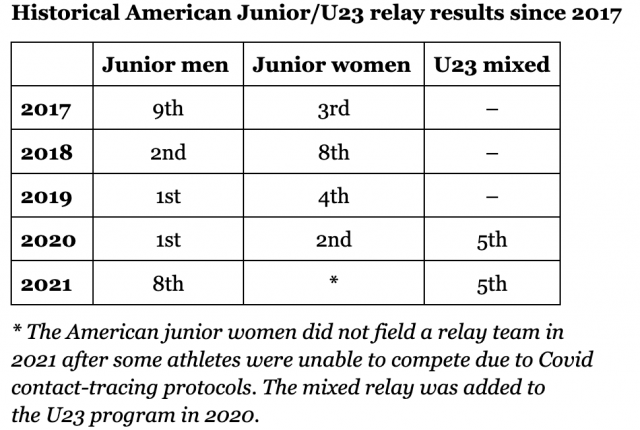
    LYGNA, NOR — The second event of the week for 2022 FIS Junior World Ski Championships, and perhaps the most highly anticipated, was the men’s and women’s relays. It was in the relay in 2017 when the US women broke onto the podium on home turf at Soldier Hollow, Utah, starting a cascade of strong American performances in the World Juniors relay. The next year, in Goms, Switzerland, it was the men who landed on the podium with an historic second-place finish, which they then one-upped the next two years to bring home gold from Lahti in 2019 and Oberwiesenthal in 2020. The US women also finished on the podium in 2020, in second place. 

    After a little lapse in 2021, when the US junior women were not even able to field a team due to Covid contact-tracing protocols, both the men’s and women’s teams were ready to fight today.

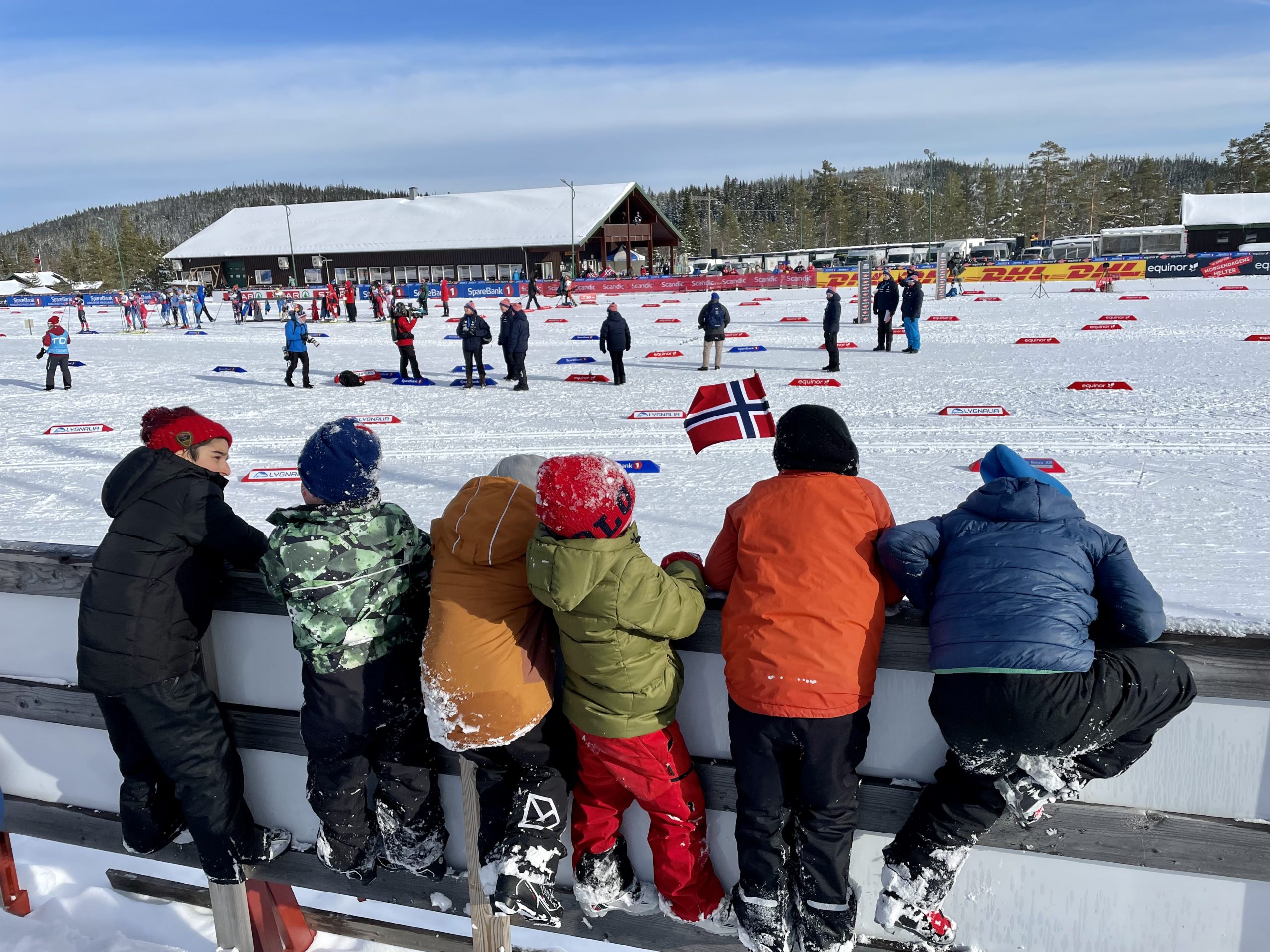
    First up was the women’s 4 x 3.3 k, which featured separate courses for the classic and skate legs. As the women warmed up and made final preparations, the stadium filled with eager spectators in the form of young schoolchildren. As the announcer explained, one of the event sponsors had paid for the transportation of hundreds of local school kids to the venue each day. Thus as the start gun went off, it was to the chorus of many small voices shouting “heia, heia!” and many waving Norwegian flags.

    Enthusiastic young fans prepare for the start of the women’s 4 x 3.3 k relay (photo: Ella Hall)

    Skiing the scramble leg for the US team was Kate Oldham (Aspen Valley Ski Club/Carbondale, Colorado). “It was really fast,” she shared afterwards, “everyone went out really hot, it was fun just trying to ski with the best.” Oldham finished her 3.3 k in a time of 10:03.5 and tagged off to her teammate, Samatha Smith in eighth position. 

    Kate Oldham skis the first leg of the women’s 4 x 3.3 k relay in Lygna, NOR. (Photo: flyingpointroad.com)

    As Russia started to pull away at the front, Smith (Sun Valley Ski Education Foundation/Sun Valley, Idaho) worked to gain ground on the others, moving the team up to fifth place at the completion of her leg. From there, Nina Schamberger (Summit Nordic Ski Club/Leadville, Colorado) took over as the technique switched to skate. Schamberger closed on the Swiss team, who was sitting in fourth, just ahead.

    As the skiers entered the final climb, dubbed “waffle hill,” a pack had formed with Russia still out front. “I definitely tried to pace it like a sprint and just really push myself and try to use the downhills to recover as best I could,” explained Schamberger, “but it was definitely very painful but short enough because you were able to push as hard as you could the whole time.”

    Kate Oldham tags Samatha Smith during the junior women’s 4 x 3.3 k relay. (Photo: flyingpointroad.com)

    For the final leg, Schamberger tagged Sydney Palmer-Leger (University of Utah/Park City, Utah), handing off in seventh place. Up front, Norwegian anchor Anna Heggen was closing the gap to the Russian, Elizaveta Bekisheva and the two entered the stadium together, leading to a sprint finish and lunge which ultimately went in favor of the host nation. The Germans were next in third, +35.4 behind. Palmer-Leger picked off two places on her leg to land the US women in fifth, +1:14.7.

    “It was really windy out there and you just try to push every little part because there’s no rest until the end,” said Palmer-Leger. 

    For three of the four athletes on the US team, this was their first time competing in a relay. When asked if they practiced exchanges at all they said, “it was pretty much just winging it.” Palmer-Leger elaborated saying, “It was pretty smooth, it’s a really short course and just taking a few seconds in the tagging is not going to do much. You don’t want to crash or mess up the hand-off because then that’s 30 seconds so, yeah you kinda just look back and double-pole and then wait for them to tag you.”

    The junior women’s 3 x 3 k relay team: Sydney Palmer-Nina Schamberger, Samantha Smith, and Kate Oldham (l – r). (Photo: flyingpointroad.com)

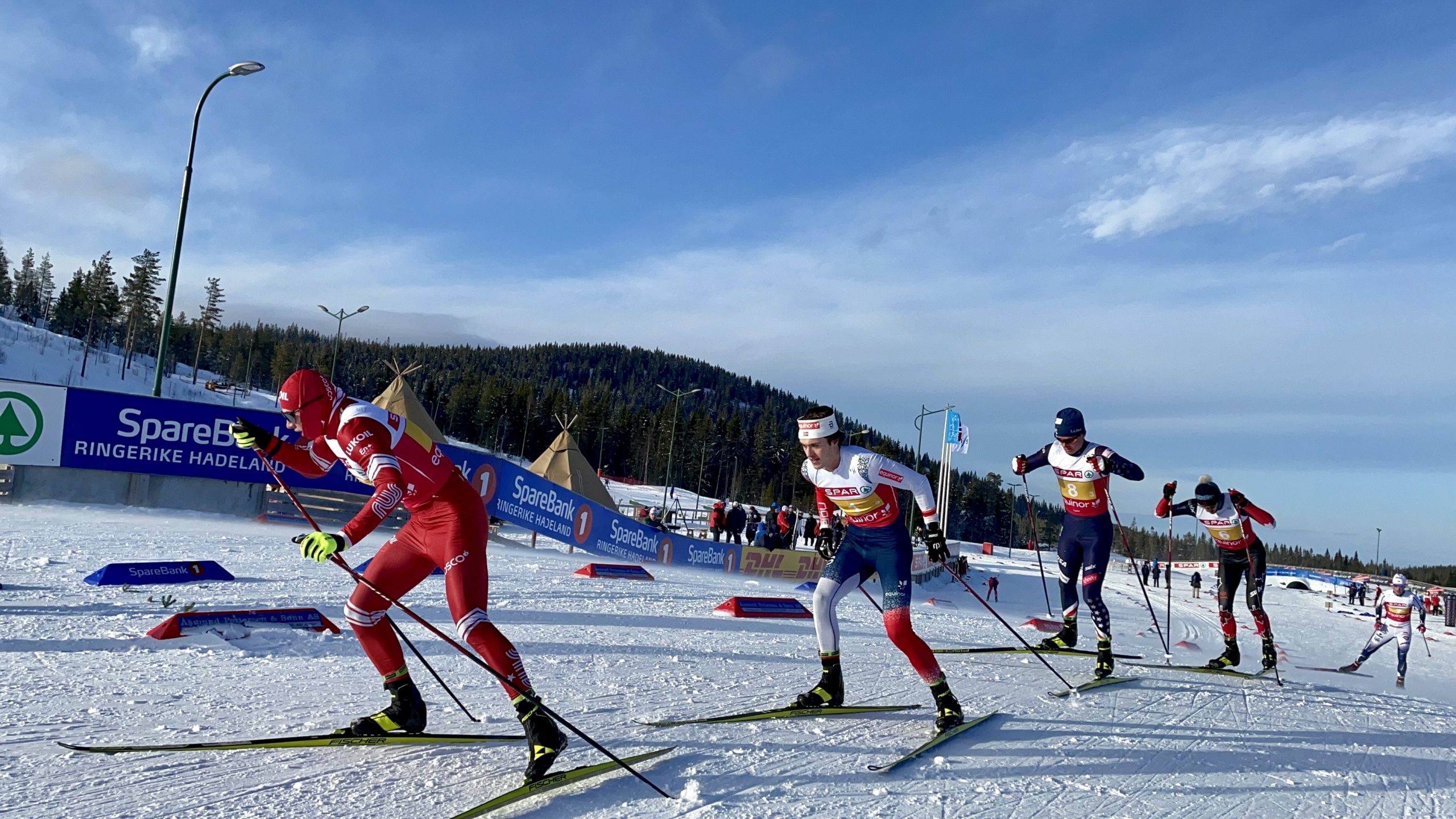
    With the women’s race complete, it was time for the men to line up, the race for them a 4 x 5 k with each leg skiing two 2.5 k loops. For the US, Michael Earnhart (APU Nordic Ski Center/Eagle River, Alaska) took the scramble leg. After the first 2.5 k it seemed that Swedish skier Måns Skoglund had broken away but the pack hunted him down as they exited the stadium for the second time, Earnhart tucked in behind Team Norway. Entering the stadium for the second of their two laps, Skoglund (SWE) had again gained a slight lead, with teams Russia and Japan in second and third. Behind them, Earnhart was leading the chase to close them down.

    Into the first exchange, the gaps had closed and Brian Bushey (University of Utah/Waitsfield, Vermont) took over for Team USA. 

    Brian Bushey skis the second leg of the junior men’s 4 x 5 k relay in Lygna, NOR. (Photo: flyingpointroad.com)

    Heading out into a ripping headwind, it was Sweden, Japan, Russia, and the US, being chased by Norway. As they descended into the stadium for the first time, there were still four teams up front, though Japan had dropped and Norway had joined. This time with the wind blowing in their favor, the skiers all chose to stay outside the tracks. “The first lap, coming through, I saw everyone hop out of the tracks so that’s when I decided to,” explained Bushey. “It was definitely faster.”

    As Russia started to pull away slightly, Norway and the US were slightly detached at the start of the second lap of leg two. Canada was closing in on them and by the time they entered the exchange zone, they were a group of four, behind Russia, the US tagging in second position with Team Canada on their tails. 

    Switching to skate, Walker Hall (University of Utah/Winthrop, Wash.) took over for the US and over the course of his first lap closed the gap to Russia, bringing the lead pack up to five nations. Letting the Russian break the wind, the others slotted in behind as Sweden began to fade.

    Nikita Denisov (RUS), Elde Holmbœ (NOR), Walker Hall (USA) and Sasha Masson (CAN) head out for the final lap of leg three as Sweden starts to fade. (Photo: Ella Hall)

    Canada too dropped off the pace, leaving Hall and Nikolai Elde Holmbœ of Norway skiing together. Up the steep “waffle hill,” Hall pulled away from the Norwegian, leaving the front three teams all separated by some seconds as they executed the final exchange. 

    Will Koch (University of Colorado/Peru, Vermont) took the anchor leg for the US. He was soon caught by Aleksander Elde Holmbœ of Norway, the two of them skiing together with Russia off the front. In a scene that brought to mind Rosie Brennan’s efforts in the Olympic 30 k, though admittedly lasting a much shorter duration, Koch tried to get the Norwegian to take on some of the lead work as they headed straight into a bracing wind.

    “As soon as that Norwegian caught me, I almost tried to stop and let him by,” said Koch, “but he didn’t want to lead either so he kinda stopped with me, but we luckily didn’t get caught by anyone.”

    At this point, they were well clear of Team Canada, who was in fourth position. 

    Will Koch races Norway’s Aleksander Elde Holmbœ during the anchor leg of the men’s 4 x 5 k relay. (Photo: flyingpointroad.com)

    Passing through the stadium, with only the “waffle hill” remaining, Koch had the lead, though he was overtaken by Holmbœ (NOR). The Norwegian seemed to have pulled away, but Koch put in a surge. This move was answered by Norway, and when they came into view on the descent, Norway had maintained its lead. “It came down to just a final sprint over the last hill!” said Koch afterwards.

    Team Russia took gold in a time of 49:16.4, followed +21.8 seconds later by Norway. The US was close behind in bronze-medal position, +22.4 back. 

    “I think we definitely wanted to get on the podium, that was a huge [goal], it would have been fun to win but we’re really stoked with bronze,” concluded Koch. Adding to that Hall said, “Yeah, I think just going out, and skiing the best we could.” Bushey echoed that sentiment saying, “Yeah, we all just had to ski our best.”

    The bronze medal winning junior men’s relay team: Walker Hall, Brian Bushey, Will Koch and Michael Earnhart. (l-r) (Photo: flyingpointroad.com)

    To the fans following along at home, the boys said “We love you guys, it would not be possible without all of you! Thanks for the support, thank you NNF, go USA!”

    The program now switches to U23 competition for a day with a 10/15 k classic race on Thursday. The juniors will resume racing on Friday. 

    Results: women’s relay | men’s relay


    World Juniors links and information:

    Home page and general info | race program | results and live timing (all races) | streaming (only for Thursday through Sunday’s races, purchase required)

  • The 2022 FIS Junior World Ski Championships kick off in Lygna, NOR with 15/30 k skate

    The 2022 FIS Junior/U23 World Ski Championships trip has been made possible through support from the National Nordic Foundation (NNF), which has identified this invaluable opportunity for developing athletes as one of its “Pillar Projects”. You can support the NNF and the next generations of America’s top skiers by making a donation here


    LYGNA, NOR — Originally scheduled to take place in Zakopane, Poland but moved to Lygna, Norway, the 2022 FIS Junior World Ski Championships kicked off a week of competition on Tuesday. Situated roughly an hour north of Oslo at around 2,000 ft, the Lygna stadium could be described crudely as the middle-of-nowhere. But that would be vastly underselling the venue that hosted the Norwegian National Championships in 2019, which features a stout race course and offers classic Norwegian countryside charm. 

    The first event on the schedule was the 15 k skate mass start for the women and a 30 k skate mass start for the men. The women went first, completing three laps of a 5 k loop. Toeing the line for the US were Sydney Palmer-Leger (University of Utah/Park City, Utah), Samantha Smith (Sun Valley Ski Education Foundation/Sun Valley, Idaho), Nina Schamberger (Summit Nordic Ski Club/Leadville, Colorado), and Kate Oldham (Aspen Valley Ski Club/Carbondale, Colorado). 

    “This is my third World Juniors,” said Palmer-Leger, “I was in Lahti, my first one. [It’s] definitely the best World Juniors I’ve been to right now, it’s kinda chill, the last couple years are intense. You know, the first World Juniors you don’t know what to expect and now I’m the one with the most experience, being over in Europe so it’s kind of fun to know what I’m doing a little bit.” 

    Sydney Palmer-Leger leads the women’s 15 k mass start skate during the 2022 Junior World Ski Championships in Lygna, NOR. (Photo: flyingpointroad.com)

    Palmer-Leger spent the first part of the season racing Period I of the World Cup with the US Ski Team, including skiing the scramble leg for the second US relay team in Lillehammer. Speaking to the course here in Lygna, Palmer-Leger said, “It’s a pretty hard course, there’s not a whole lot of rest in the first part but, it’s fun, there’s a lot of V1 the first part.” Last year at World Juniors in Vuokatti, Finland, several of the junior US women were not able to compete due to Covid-contact tracing protocols. Palmer-Leger was one of those unlucky few and she explained, “This is my second mass start at World Juniors because last year Novie [McCabe] and I were quarantined. This is my last year as a junior, so that’s really fun.”

    15 k later, Palmer-Leger was the first finisher for the US in sixth position, with Helen Hoffman of Germany, Lisa Eriksson of Sweden, and Tuva Brusveen-Jensen of Norway finishing first through third respectively. “It’s sort of difficult doing these races because girls are not very relaxed,” Palmer-Leger explained, “and you’re stepping on each others poles and skis, and [the course] is really tight [in some places], and it goes from a a gradual downhill into a pretty steep uphill and girls sometimes will just stop and it’s like the accordion effect and I got stuck in the middle a bunch of times and luckily I didn’t break any poles. A bunch of Russians broke poles and some of our girls broke poles. I went down once but didn’t break anything.” 

    After this strong start to the week, she concluded “I’m really excited. Being in Norway is amazing.”

    The next US finisher was youngster Samantha Smith. Smith is just 16 years old and the 15 k was her first-ever World Juniors race. She finished in 11th (+1:11.3) behind race winner Hoffmann (GER). Kate Oldham was also competing for the first time at World Juniors and posted a top-thirty finish in 27th place (+3:09.5). Nina Schamberger is also 16 years old and the 15 k was her first World Juniors race. She finished in 41st, +4:04.1 back. 

    Michael Earnhart (left) and Walker Hall (right) race the 30 k skate during the 2022 Junior World Ski Championships in Lygna, NOR. (Photo: flyingpointroad.com)

    Moving right along, the men were soon on the start-line, ready for their six laps. Starting at 3pm local time, the temperature was dropping as a slight wind picked up. Competing for the US was Michael Earnhart (APU Nordic Ski Center/Eagle River, Alaska), Walker Hall (University of Utah/Winthrop, Wash.), Brian Bushey (University of Utah/Waitsfield, Vermont), and Alexander Maurer (University of Colorado/Anchorage, Alaska). 

    “Last year was my first [World Juniors] but this year is the first year I felt like I had a chance to get top 10 and everything, last year I was like ‘well I’ll be happy if I get top 30’” said Earnhart, after the race. In a competition where Russians took the top four finish positions, Earnhart managed to achieve that goal in the first race of the week, finishing in 10th (+2:33.5). 

    Talking through his race he said, “ the first half of the race I was just trying not to break equipment, trying not to fall, kinda trying to have fun you know, it’s fun skiing in a pack so I was just trying to stay relaxed. I got pushed a little ways back, I think I was back to 20th or 30th at some points but I just stayed relaxed. Then, on the fourth lap it started to string out and I was like, ‘Ok, I’ve got to get in a better position, get up there.’ Going into the last lap, I think I was in 12th and I knew that top ten gets you on the US ski team and I really wanted that, so I was just looking at 10th. I was like, ‘He’s right there. I gotta keep going.’ He got a little tired and I was hungry so…”

    Earnhart pre-qualified for World Juniors this year by achieving a sub-50 FIS points result in the 15 k skate mass start Super Tour in Cable, WI earlier this season. He explained, “I did the 30 k at Nationals because I pre-qualified for this, just for the simple [reason], ‘I need more 30k experience.’” 

    Michael Earnhart leads the American junior men in the 30 k mass start skate during the 2022 Junior World Ski Championships in Lygna, NOR. (Photo: flyingpointroad.com)

    Also pre-qualifying for World Juniors in the same event, Brian Bushey finished his day in 16th position, +3:46.5 behind the top Russian, Alexander Ivshin. This in spite of the fact that as Earnhart put it, “Bushey took a big tumble, it’s a learning experience for sure.” 

    Speaking of learning experiences, Walker Hall was having one out on the course as he made his first World Juniors appearance, racing his first-ever 30 k. “My legs were so tired after like 10 k,” he said at the finish. He landed just outside the top-thirty, coming 31st, +6:01.7 back. Rounding out the U.S. finishers, Alexander Maurer finished 36th, +6:48.9 out, also making his first World Juniors appearance. 

    Racing continued Wednesday with the women’s and men’s relay events. Coverage of that event to follow. 

    World Juniors links and information:

    Home page and general info | race program | results and live timing (all races) | streaming (only for Thursday through Sunday’s races, purchase required)

  • Covering Juniors and Some Fine Youth Olympic Games Performances

    Covering Juniors and Some Fine Youth Olympic Games Performances

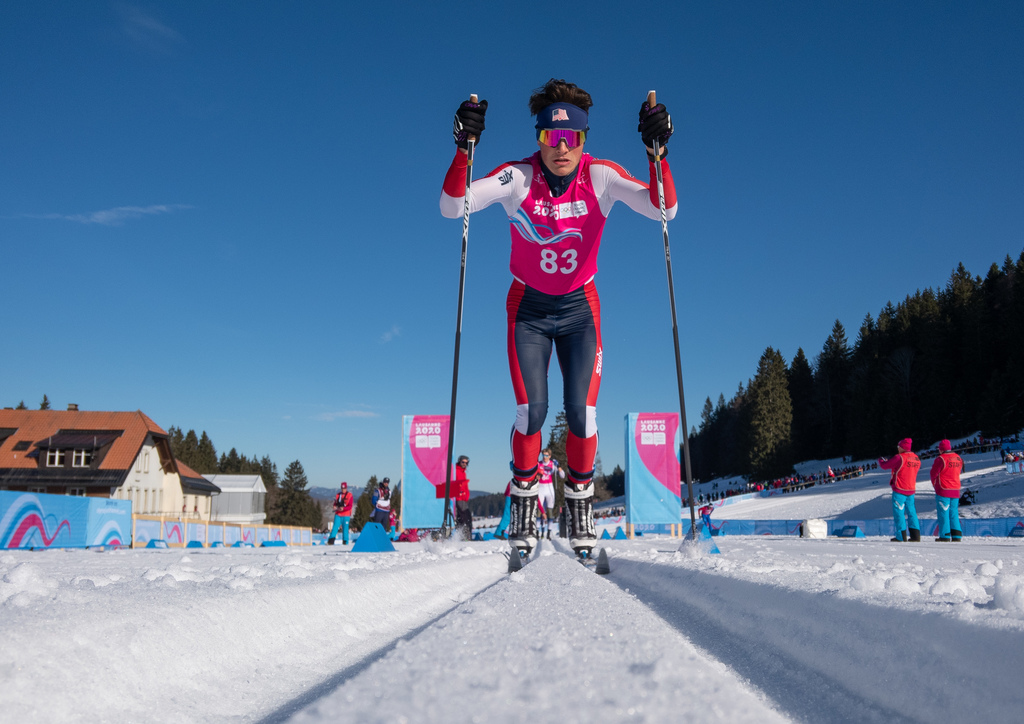
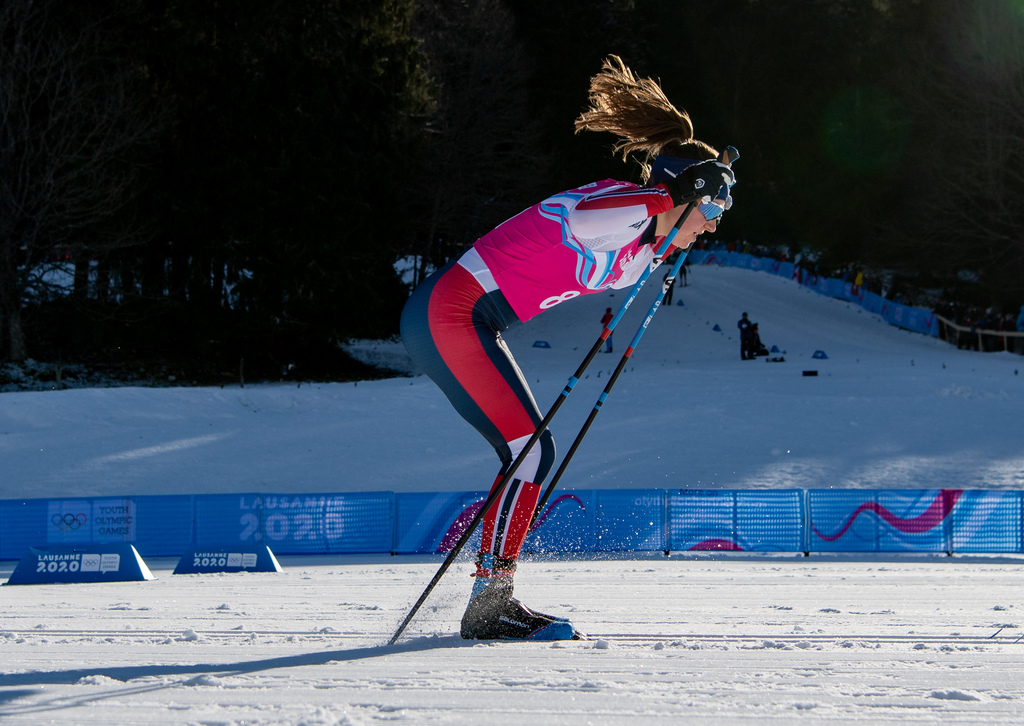
    The news coming out of Lausanne, Switzerland this week was reaffirming for competitive U.S. skiing: at the Winter Youth Olympics two American junior skiers podiumed and one had a near miss in fourth. Kendall Kramer, out of Fairbanks, Alaska placed third (+20.6) in the 5 k individual classic while Sydney Palmer-Leger of Sun Valley, Idaho was fourth (+27.6). Will Koch of Peru, Vermont placed third in the 10 k individual classic. 

    The results speak of individual drive, community support, and a U.S. pipeline rife with talent. 

    U.S. skier Kendall Kramer during the cross free at the 2020 Winter Youth Olympic Games, Lausanne, Switzerland. (Photo: OIS/Chloe Knott)

    These performances came down earlier this week. But here at FasterSkier, we have been discussing how we cover juniors in the sport for several weeks. The key component for us is balancing news with respecting the nature of teenagers in a high pressure sport. 

    Just take a moment at races with live timing and vibrant cell coverage or Wi-Fi, and you’ll see parents, athletes, and coaches often glued to their phones. Live timing is perhaps as scalpel-like as it comes. It’s easy to get caught up in a game where the result is the story.

    Juniors are not professional athletes. In the case of disappointment, in the case of feeling too much pressure, what support systems are in place for junior athletes? We’ve been thinking about the answers to these questions.    

    We all know these teens are more than their results. 

    Here is the title of the International Ski Federation’s lead story on the men’s 10 k individual skate race from the Youth Olympics: Tregubov Wins Gold, son of Legend Finishes in Third

    We know “Son of Legend” has a name — that would be Will Koch. And he has his own narrative that is his to tell. The story in Lausanne was beautiful. The legend Bill Koch, the only male American to win an individual Olympic medal (1976 Winter Games 30 k silver), is on hand to watch his son Will achieve his own goals. It’s a dream narrative. A proud moment for both.

    Will Koch (USA) during the 10 k classic at the 2020 Youth Olympic Games in Lausanne, Switzerland. Koch placed third in the event. (Photo: OIS/Joel Marklund)

    Let’s reflect. While covering the sport at FasterSkier, we hear many stories. Most prominent, and frankly the easiest to relay, are those falling into the tidy box of a podium result. Who doesn’t love that? The harder ones, and we hear about these as well, are those of athletes falling through the pipeline’s cracks for some reason or another. Maybe the gift of DNA didn’t align precisely. Maybe the athlete struggled with the social-emotional aspects of a high pressure medals-matter environment. It is complex. As we were reminded in a group phone conversation yesterday on the topic of juniors, “success early does not guarantee success late”.

    Sydney Palmer-Leger of the U.S. during the 5 k classic at the 2020 Winter Youth Olympic Games, Lausanne, Switzerland. (Photo: OIS/Joel Marklund.)

    Imagine for a moment a teenager in this high stakes game we call sport? That’s what we have been trying to do. Sometimes the outcome here at FasterSkier will be less than perfect. But we are and have been thinking about how we effectively cover junior athletes. The results in Lausanne just made it more acute. 

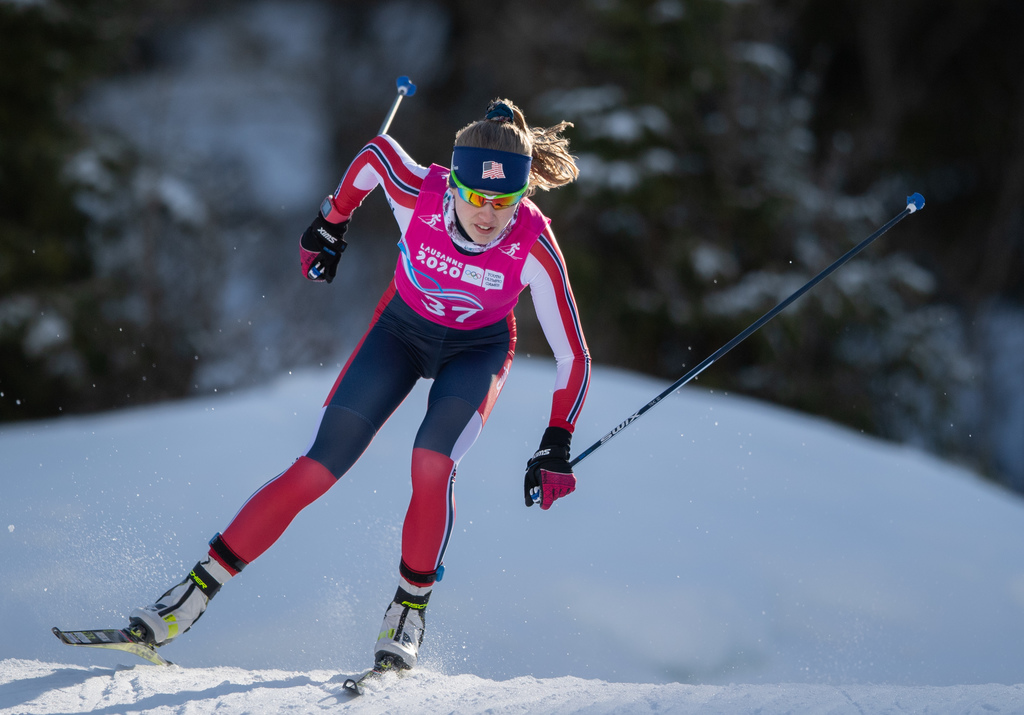
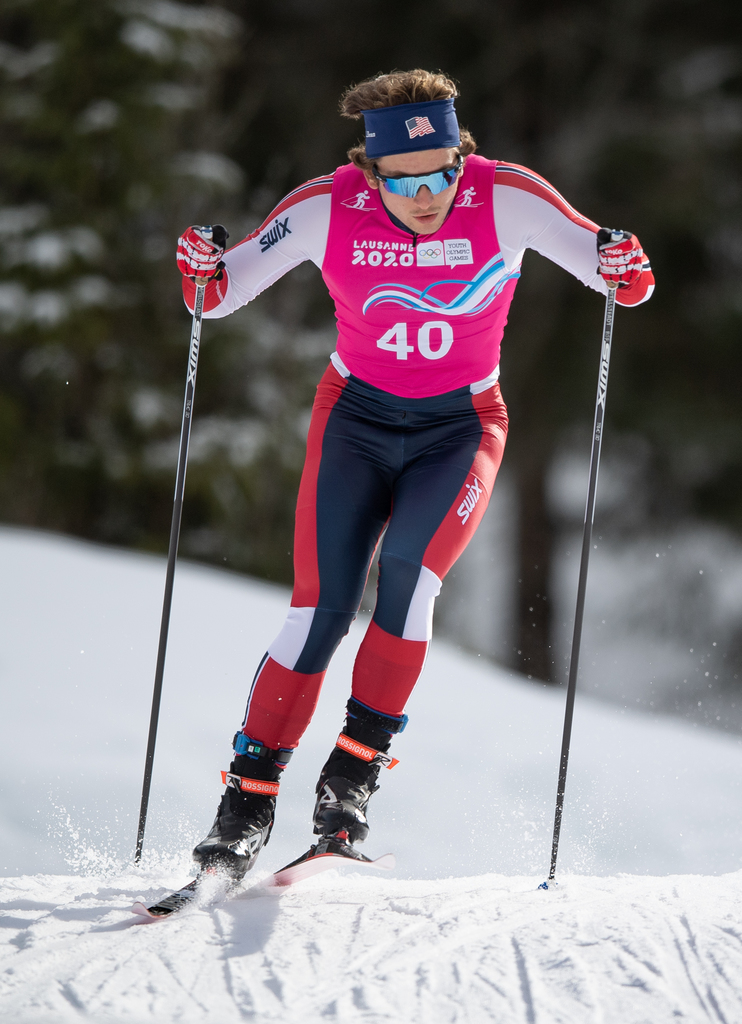
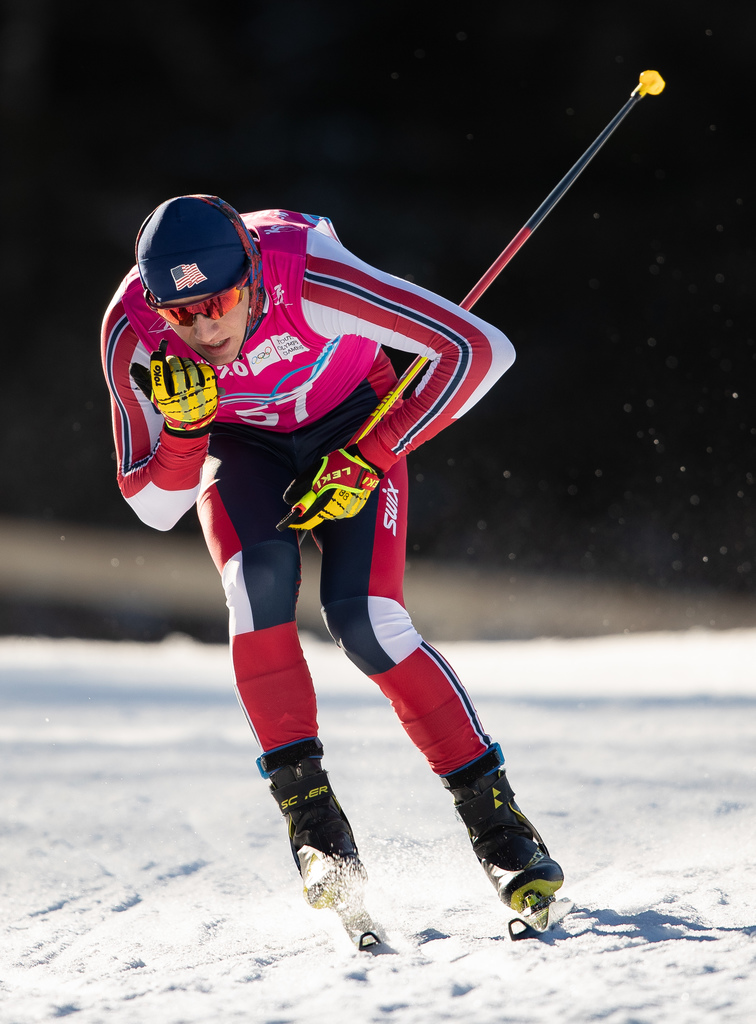
    Which reminds us to celebrate Kramer, Ledger-Palmer, and Koch. And to celebrate Nina Seemann, Brian Bushey, and Kai Mittelsteadt who also represented the U.S. in Lausanne.

    Boy’s YOG 10 k classic results | Girl’s YOG 5 k classic results

    Nina Seemann of the U.S.competes in the women’s skate cross at the 2020 Winter Youth Olympic Games, Lausanne, Switzerland. (Photo: OIS/Joel Marklund)


    Kai Mittelsteadt of the U.S. during the men’s cross qualification the 2020 Winter Youth Olympic Games, Lausanne, Switzerland. (Photo: OIS/Joel Marklund)


    Brian Bushey during the skate sprint at the 2020 Winter Youth Olympic Games, Lausanne, Switzerland. (Photo: OIS/Dylan Burns)