
Tag: Brian Knutson

  • Wooden-Skis, Pine-Tar Test World Cups Planned for 2016/2017

    Wooden-Skis, Pine-Tar Test World Cups Planned for 2016/2017

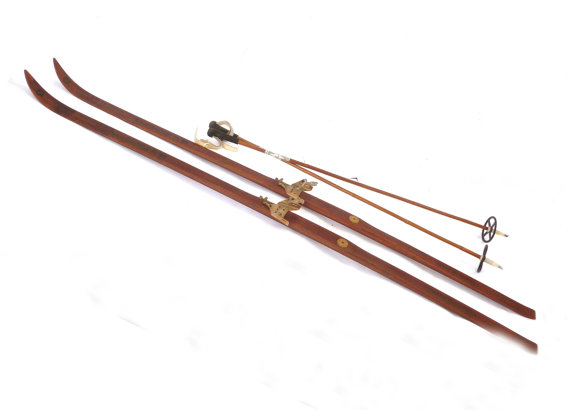
    The FIS Cross Country World Cup is bringing back wooden skis this year and making them a requirement for two of the stops on the circuit, along with bamboo poles and pine tar. This could be part of a growing trend to eliminate modern high-tech waxes, skis and poles, and its causing a ruckus. (Photo: Etsy)
    The FIS Cross Country World Cup is bringing back wooden skis this year and making them a requirement for two of the stops on the circuit, along with bamboo poles and pine tar. This could be part of a growing trend to eliminate modern high-tech waxes, skis and poles, and its causing a ruckus. (Photo: Etsy)

    Longer, slower, wider. That could be the slogan for future World Cup seasons based on the outcome of the International Ski Federation (FIS) Cross Country Committee’s spring meeting. According to a press release, as part of a test event this coming season in 2016/2017, World Cup competitors will be required to use wood skis and bamboo poles for two of the stops on the circuit and a total of five days of racing.

    For ski prep, modern high-tech waxes will also be banned for these World Cups. Only pine tar and non-fluorinated klister and hard wax will be permissible.

    “FIS is concerned about the rising cost of competing on the World Cup and at the Olympics,” FIS Cross Country Racing Director Petter Menagerie said in an interview. “It’s our hope that this will trickle down to the club level as well.”

    The test events, including all three days of the season-opening Ruka Triple mini tour in Kuusamo, Finland, and Holmenkollen 30/50-kilometer classic races in Oslo, Norway, later in the season, are also expected to boost television ratings and build hype for the pre-Olympic year.

    But according to a source who requested anonymity, the real reason for the wooden-ski mandate is FIS’s consternation over the success of athletes double poling to podiums in distance classic races. That hypothesis could not be confirmed by press time.
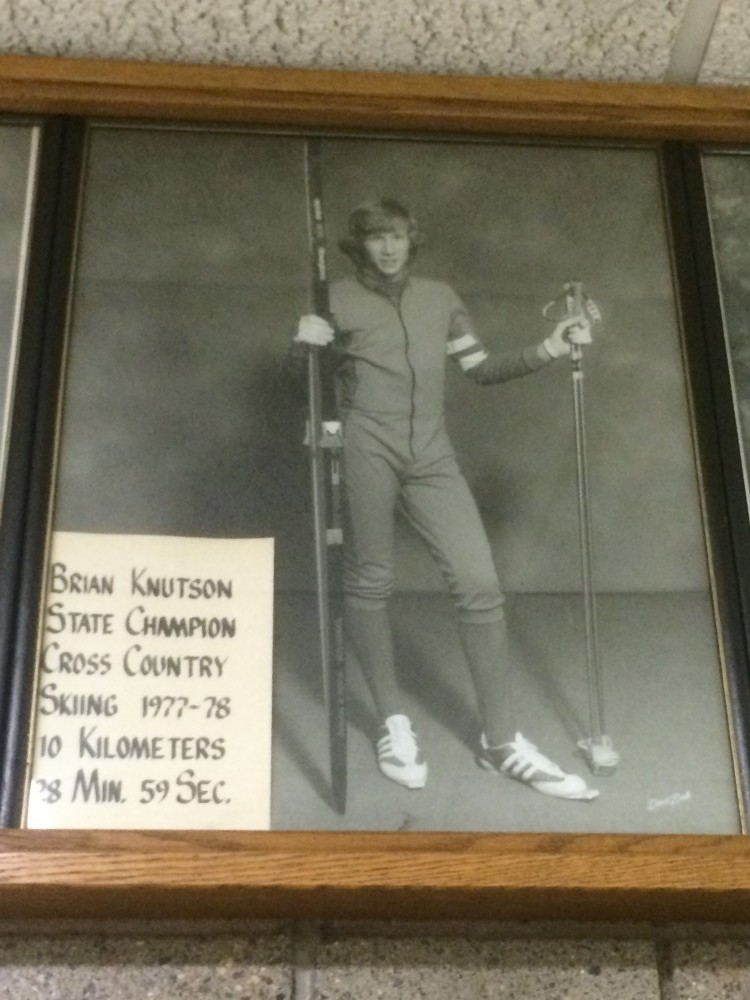
    Minnesota state champion Brian Knutson with his race-winning gear from the 1977/1978 season (Photo: Matt Liebsch)
    Minnesota state champion Brian Knutson with his race-winning gear from the 1977/1978 season (Photo: Matt Liebsch)

    The announcement caught the industry by surprise.

    A spokesperson for Fischer Sports said the company was “aware of the rule changes and researching the most state-of-the-art methods to comply with the new rules.”

    Asked when consumers could expect a prototype, the spokesperson said, “We’re on it.”

    Woodski roller ski president Peter Breu admitted that he has been in negotiations with unnamed ski companies wishing to learn of the magic of Woodski’s laminated roller ski shafts.

    “I won’t name names, but you would know them all, and they are all dying to learn what we know about the qualities of wood…,’ ” Breu said.

    “As a nordic buyer at Gear West, this new rule change has me concerned,” said Matt Liebsch, director of nordic sales and service at Gear West in Long Lake, Minn. “At SIA [SnowSports Industries America], I was not shown any wood skis but luckily our owner, Brian Knutson, has a garage full of old wooden racing skis. I have been fielding calls daily from top World Cup teams inquiring about buying the pair he won the Minnesota State meet on back in 1978.  At this time Brian is still unwilling to sell that pair and his childhood memories attached with it.”

    Athletes are taking novel approaches to fill their quivers for next season. U.S. Ski Team member Sophie Caldwell has asked her grandfather John Caldwell to give her his skis from the 1952 Winter Olympics. But she’s had to fight with John Caldwell’s nephew Zach, who wants the same skis to test stone grinds.

    1960 Olympian Joe Pete Wilson announced that he plans to sell sell his quiver of wooden skis on eBay to the highest bidder. Sites like Etsy and Craigslist are also reportedly preparing for increased demand in antique equipment.
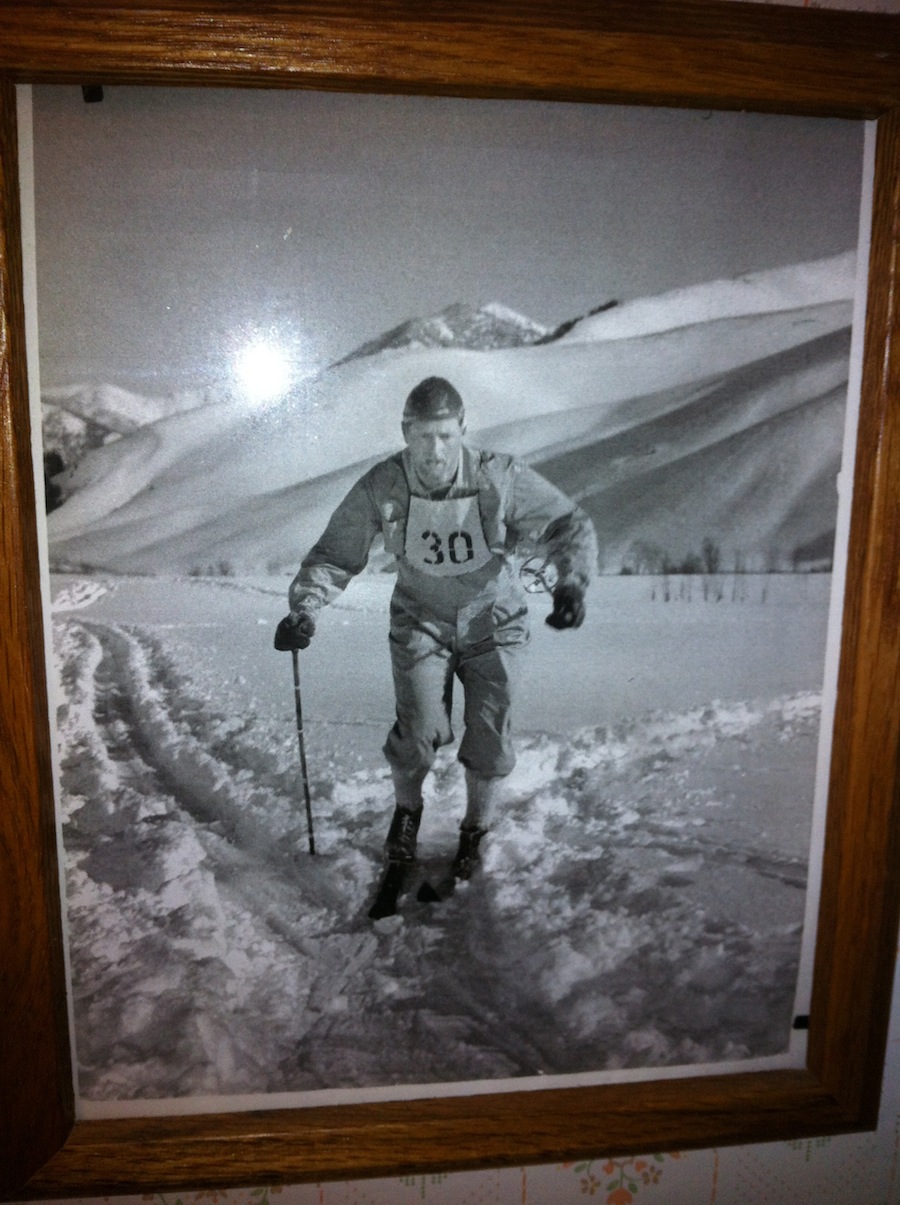
    Chummy Broomhall, a 1948 and 1952 Olympian born in Mexico, Maine, and a member of the Chisholm Ski Club since the 1930's, is seen here on his "skinny" skis. While FIS Cross Country is making similar wooden skis a requirement for test events this season, some wonder if they'll eliminate grooming technology from the World Cup as well.
    Chummy Broomhall, a 1948 and 1952 Olympian born in Mexico, Maine, and a member of the Chisholm Ski Club in Rumford, Maine, since the 1930s, is seen here on his “skinny” skis. While FIS Cross Country is making similar wooden skis a requirement for test events this season, some wonder if they’ll eliminate grooming technology from the World Cup as well.

    In Farmington, Maine, the Maine Ski Hall of fame was burglarized on Thursday night. Thieves stole several pairs of wood cross-country and jumping skis. In Finland last week, the Lahti Ski Museum was broken into and Laasanen antique skis were stolen.

    FIS Nordic Combined is anticipated to initiate similar test events in its World Cups.

    “I’m all about making the sport simpler, but there’s also something to be said about evolving technology,” U.S. Nordic Combined Head Coach Dave Jarrett said. “Safety on the [jump] hill should be a primary concern. Are we really going to go back to the dark ages?”

    The International Biathlon Union (IBU) has not yet indicated it will go down this road.

    “For sure, retro is a thing,” said US Biathlon’s Lowell Bailey, a member of the IBU athlete advisory committee. “But wooden skis? How are you going to skate on those? What’s next, black-powder biathlon?”

    But US Biathlon President and CEO Max Cobb had a different take.

    “Wood skis are a great idea, at least for the novelty factor if nothing else,” he commented. “I think biathlon should take it further, at least for one of the World Cups, to pay homage to its origins. At the next IBU general meeting, I’m going to recommend black-powder muskets in place of the current biathlon rifles, and buckskin race suits and coonskin caps!”

    FIS did not confirm whether there would also be a limit on the number of skis an athlete can carry around on the World Cup circuit. However, in an effort to make the sport greener, competitors will only be offered a single replacement pole to be used for the entire season. This could mean many athletes competing with only a single pole during the second half of the season — and for the designated World Cups, it will have to be bamboo.

    “I think the bamboo-pole requirement is a great way to help keep the traditional stride and glide technique alive although I will miss the strength and lightness of carbon fiber poles,” Brian Gregg wrote in an email.

    With its line of tar-based kick waxes, Finland’s Start appears to be the best-situated for the new regulations. Gallium, Holmenkol and Swix are reportedly joining forces in a lawsuit against the pine-tar rule, to be heard in the Court of Arbitration for Sport.
  • Ski Fit at Gear West – Get Your Requests In Now

    Ski Fit at Gear West – Get Your Requests In Now

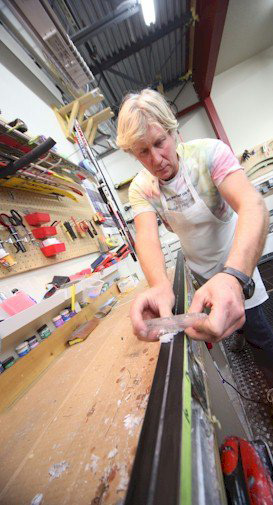
    Store owner Brian Knutson – ski fit legend.

    At its most basic level, “ski fit” can be defined as finding a ski that is of correct length and stiffness. This baseline is something you should be able to obtain at any reputable ski shop. But what does a Gear West ski fit entail that makes us so much different that the baseline? We use our hands, eyes, 3 flex benches, and a one-of-a kind ski flex test analyzer to distinguish us a leader and innovator. We have close to a hundred combined years of ski fitting experience and are never satisfied until we have found your new favorite pair of skis.

    Matt Liebsch assembling his Fischer Carbonlite race fleet November, 2011.

    Like many years in the past, we are currently working with our suppliers to obtain the very best quality skis for our customers. Our leadership in the industry allows us to make certain that only the highest quality skis are carried at Gear West. This summer we will be working with and travelling to national and international race departments to score the highest level of race quality skis.

    So what is this “quality” that keeps getting mentioned?

    Quality is a term that can be misleading when it comes to skis and ski fit. What are we talking about when it comes to quality?

    • The quality of materials that comprise a ski?
    • The quality of matched skis? The quality of base or base finish?
    • The quality of manufacturing or finish or graphics?

    In my opinion, quality is how fast a ski is when gliding on snow, how well it kicks and how easy it is to ski on. I want the fastest ski possible when I am racing but stability and ease of use also play a part.

    So back to our baseline length and flex.

    • When it comes to length we typically suggest longest ski possible that you can still ski on comfortably. All things equal, a longer ski is generally a faster ski. For example, just ask Tad Elliott why he is now on 192 cm skate skis vs 187 cm skis. The one caveat to this is, some ski manufacturers are better at building certain lengths of skis. A few years ago, Salomon produced some very high quality skis in 187cm skate and 201cm classic. Production batches and day to day (even hour to hour) quality at the factory can play a factor in this as well. We at Gear West know our inventory very well, and work with our ski manufacturers to ensure only the highest quality.
    • Flex – this is the fuzzy area. So, what’s with all the numbers on skis these days? Basically, they help determine if the skis are matched and give a baseline on how stiff the ski is. No flex number I have ever seen gives a quantitative value of flex. If they did, I wouldn’t have a job! Truth is, ski companies don’t want you to know there is a difference in quality of flex. They would like consumers to believe that one $600 ski is equivalent to the same $600 ski at another ski shop! That is not the case, and is it is also the reason Gear West spends considerable time and money maintaining the largest high quality ski selection in North America.

    So what does this all mean to you, the skier? Well, if I were a consumer of Nordic racing skis, I would find a shop that not only has your baseline fit covered but also understands the “quality” involved in the ski fitting process.

    Josh Doebbert – Gear West Flex Specialist using the one-of-a-kind Gear West Flex Tester to determine a perfect fit.


    With that said, I invite you to be involved in the process! As mentioned earlier, I am working with national and international racing departments to find the best skis for Gear West’s inventory.

    If you are in the market for a high level racing ski from Fischer, Rossignol, Salomon or Atomic, we encourage you to fill out a ski request form. Getting your name in the hat early on ensures that we will keep your personal needs in mind, putting the world’s inventory at your fingertips and therefore guaranteeing the absolute highest quality imaginable!

    Click HERE to submit a ski request form.