Tag: Brian Olsen

  • Gay Junior and College Skiers Face a Community of Acceptance and Solitude

    Gay Junior and College Skiers Face a Community of Acceptance and Solitude

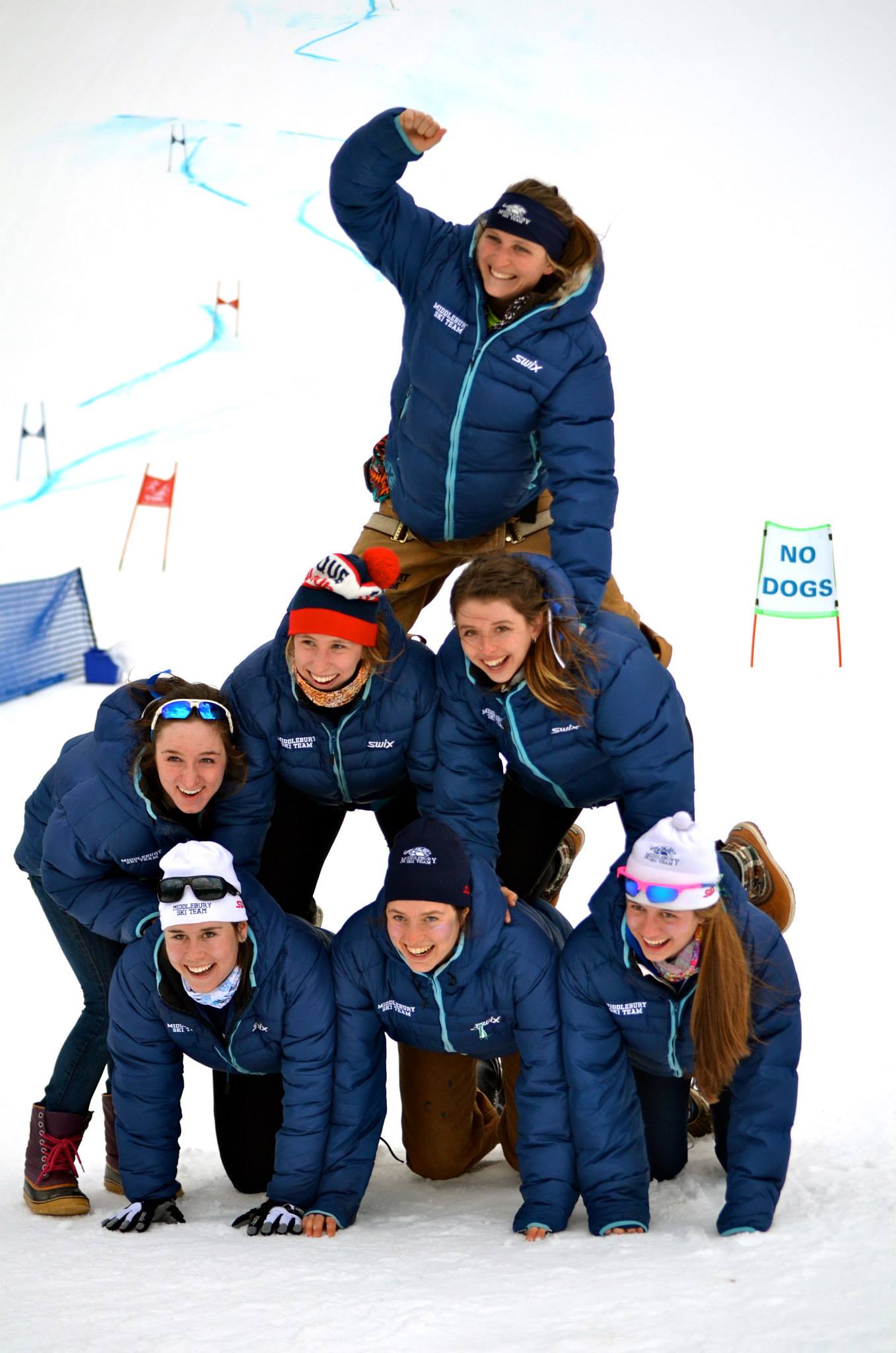
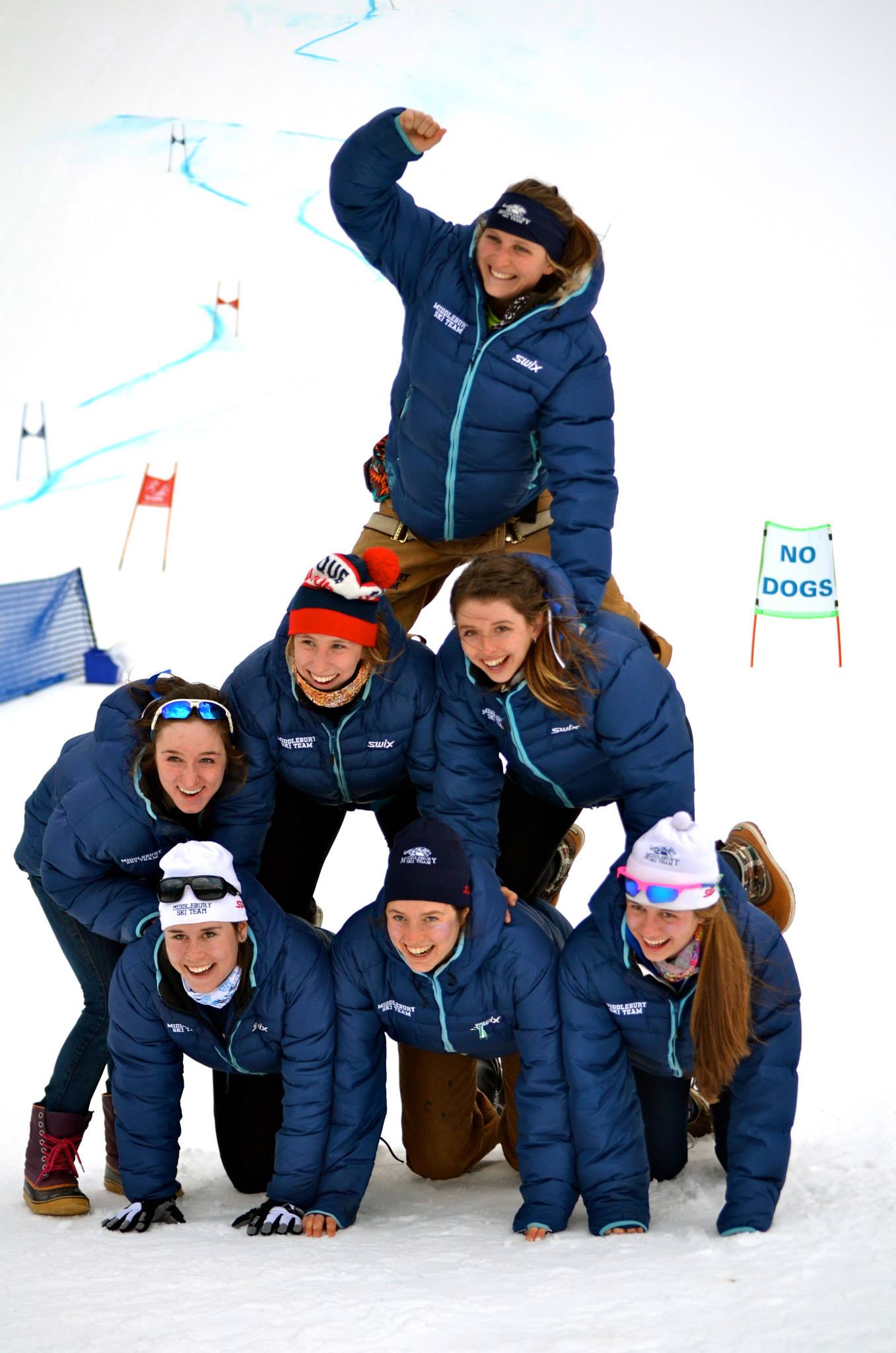
    Emily Attwood celebrates her final college ski race atop a pyramid of her Middbury College teammates. (Photo: Stella Holt)
    Emily Attwood celebrates her final college ski race atop a pyramid of her Middbury College teammates in February of 2014. (Photo: Stella Holt)

    Editor’s note: Growing up as a gay male in the ski community, I always wondered what the experience was like for other junior and college-aged LGBT skiers like myself. The opportunity arose for me this summer when FasterSkier’s editor-at-large, Chelsea Little, published an interview with 2006 Olympic biathlete Brian Olsen. The interview sparked my exploration into the many positives and some of the challenges that arise as a young, gay athlete in the skiing world. Hearing these individuals’ personal accounts has been very inspiring and educating and it is my hope that you, the reader, will be able to appreciate and relate, whatever your experiences may be.    
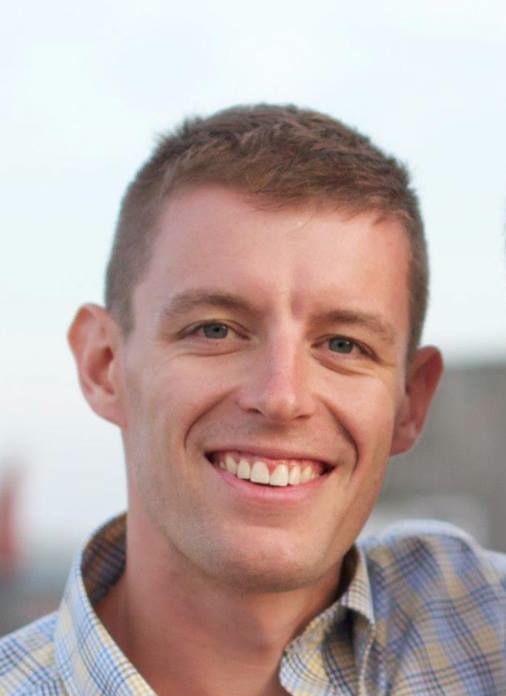
    Jack Nelson came out as gay to his Williams College teammates in 2005. Not only did his openness create a strong team environment, but Nelson also had the best season of his college career. (Photo: Jack Nelson)
    Jack Nelson came out as gay to his Williams College teammates in 2005. Not only did his openness create a strong team environment, but Nelson also had the best season of his college career. (Photo: Jack Nelson)

    Jack Nelson was a sophomore at Williams College when he realized he was gay. The Hanover, N.H. native struggled with the internal realization, but when he accepted that he was attracted to men there was never a question as to whether he would tell his family-like team.

    So when the Williams’ skiers gathered for New Year’s dinner while at a training camp in Quebec, Nelson made an announcement to the team: he was gay.

    Nelson was met with both admiration and support from his teammates. Head coach Bud Fisher gave Nelson a big hug and his teammates offered him congratulations on his bravery and honesty.

    In the weeks following, Nelson said the bond with his teammates only grew stronger and being gay became a non-issue as his teammates and friends saw him as a well-rounded person rather than a gay male.

    Armed with newfound confidence from both his self-acceptance and the welcoming nature of his teammates, Nelson skied to his best season in his four years at the New England college.

    “That was the best ski season I had at Williams. I was just so much more relaxed and comfortable with who I was,” he said.

    An Accepting Community

    Experiences similar to Nelson’s can be found scattered throughout the nordic community. Given the close family-like bonds often developed during the hundreds of hours of training, it’s not surprising that nordic skiers are supportive of their teammates, whatever their identity may be.

    Bridger Ski Foundation coach and former Harvard skier Tanner Wiegand knew he was gay at the age of 13 and came out to his team when he was a sophomore in high school. Like Nelson, his peers were incredibly supportive.

    Wiegand found that the encouraging environment of his ski community gave him the extra confidence needed to discover who he truly was.

    “Being gay in the ski world didn’t scare me like it did in other spheres of my life,” he explained.
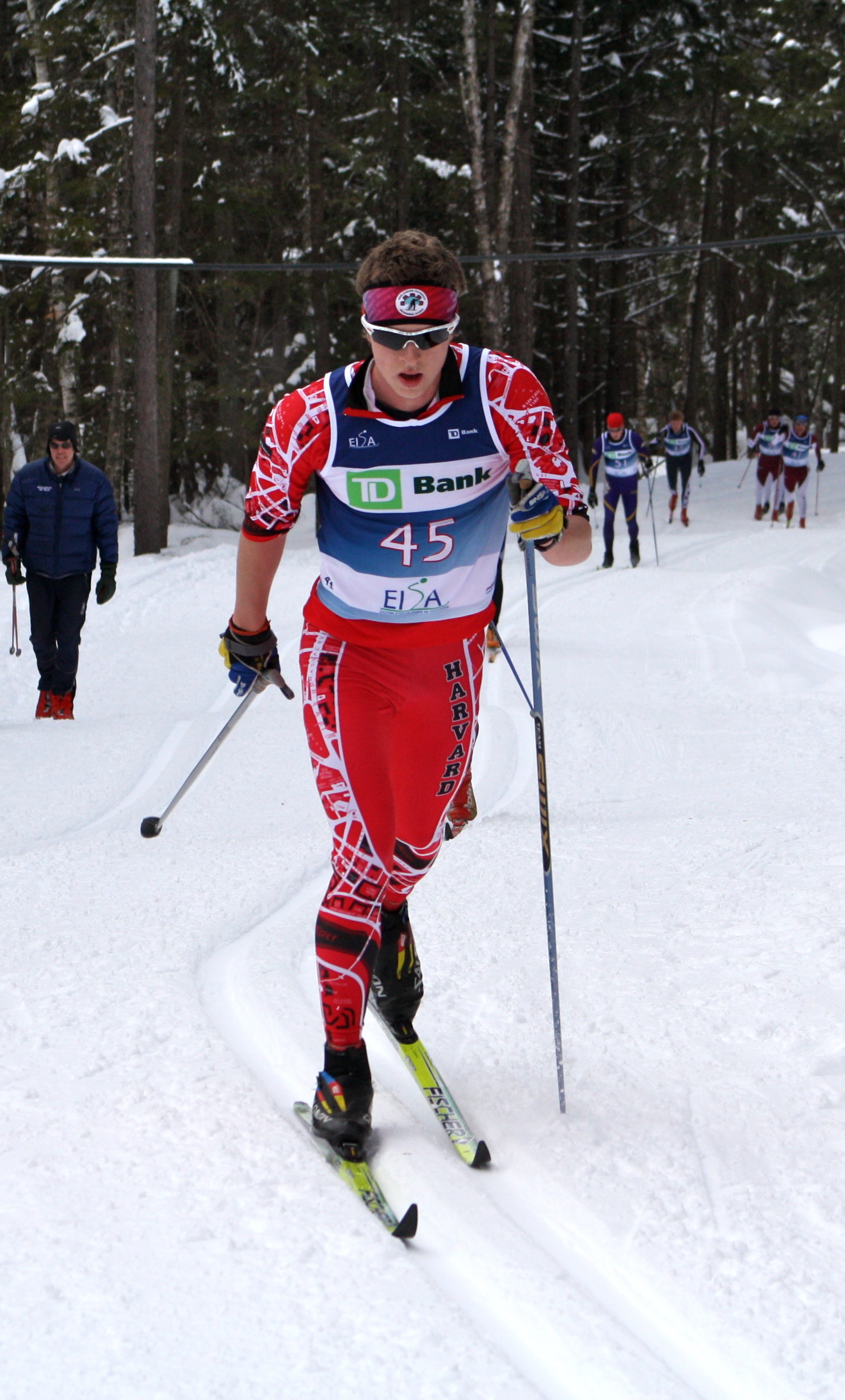
    Tanner Wiegand, a 2014 graduate of Harvard University, races in an EISA college carnival in this undated photo. (Photo: Tanner Wiegand)
    Tanner Wiegand, a 2014 graduate of Harvard University, races in an EISA college carnival in this undated photo. (Photo: Tanner Wiegand)

    Wiegand believes that there were several reasons behind his self-assurance in the ski community, including the co-ed nature of the sport and the tendency of nordic skiers to be more liberal and educated.

    University of Utah alumnus and 2003 NCAA Champion Ryan Quinn has another theory to add. He believes that most endurance sports share the same sense of acceptance.

    “I think the culture of individual endurance sports (skiing, running, triathlon, etc.) lends itself to individuality and acceptance of differences. Those sports attract the kind of people who tend to be introspective and independent,” he said.

    The Alaska-native came out to his team in 2005 and is also author of the acclaimed coming of age book, The Fall. He said that while coming out was a difficult process, it was easier to do so in the college skiing community because of its size and modest visibility.

    “There’s not a lot of media attention; there’s no money at stake. So it’s a less complicated environment to come out in than say on an SEC football team,” he said.

    Emily Attwood, a recent graduate from Middlebury College, had little difficulty being gay in the ski community. However, at a LGBT awareness meeting for the athletic department at the small Vermont school she began to realize that her experience as a nordic skier and cross-country runner was unique.

    “It was interesting to hear the commentary from other sports. I think that we’re lucky in the culture of skiing, because the people are so open,” she said. “It’s not that other sports aren’t like that, but someone on a lacrosse or hockey team has a lot more difficulty coming out in that environment.”

    The Challenges of Being a LGBT Athlete

    When Kate came out to her college team they were nothing but supportive. Both her friends and fellow skiers were intrigued by what it meant to be a lesbian and while it was sometimes annoying, they showed their support by incessantly asking about the love-life for the newly-out skier.

    However, when Kate – who wished to use a false name – sat down with her coach during one of their regular meetings, she was confronted by something that she would never forget.

    Sitting across from her coach, Kate was told that she was drawing too much attention to her sexuality and making the team uncomfortable.

    Kate, whose nature was to be exceptionally friendly and embracing, had no idea what her coach was talking about: she had never done or said anything inappropriate and her teammates had been anything but uncomfortable about her sexuality.

    The assumption of the coach that she was somehow acting inappropriately because she was around a team of fellow women was extremely hurtful to Kate, both in terms of her relationship with the team and her self-esteem.

    However, after investigating the situation further the coach soon realized the mistake and apologized to Kate for the way that she was treated.

    Kate believes that the coach never meant to single her out because of her sexuality, but due to a lack of education and experience regarding such delicate situations, it was handled in the worst possible way.

    Both Kate and the coach were able to treat the incident as a learning experience and move on. Today, the two are very close and are still in constant communication.

    While an experience such as Kate’s is a rare occurrence in skiing, it demonstrates that difficulties are still present for LGBT athletes in endurance sports.

    One of nordic skiing’s attributes that can make acceptance second-nature is often the sport’s greatest challenge: its small size.
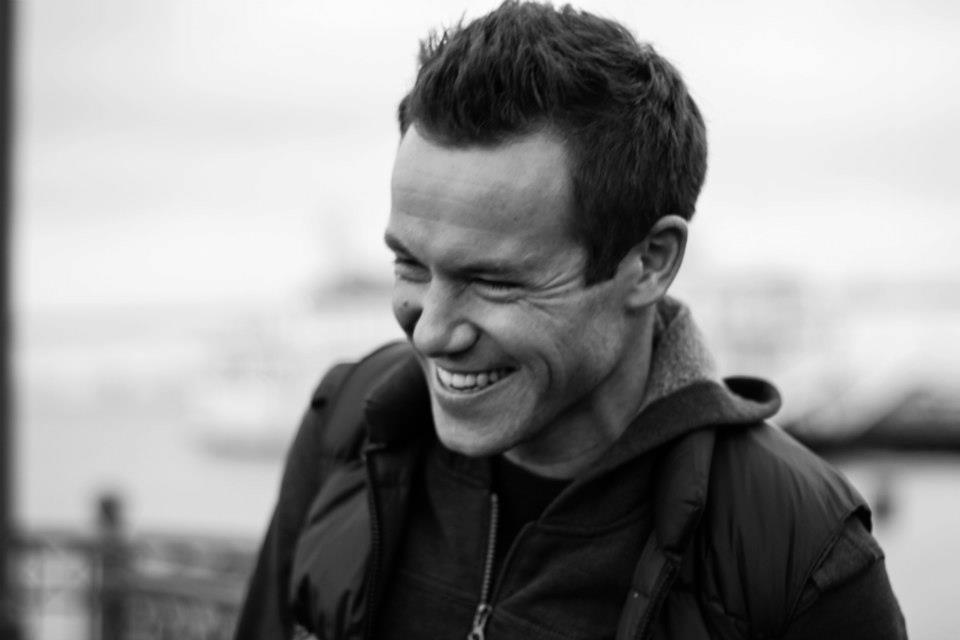
    Ryan Quinn, a 2003 NCAA Champion who skied for the University of Utah, believes that one of the biggest barriers for gay athletes is awareness. (Photo: Ryan Quinn)
    Ryan Quinn, a 2003 NCAA Champion who skied for the University of Utah, believes that one of the biggest barriers for gay athletes is awareness. (Photo: Ryan Quinn)

    Gay nordic skiers can feel as if they are the only LGBT person in the community. Given that nordic skiing is frequently a central part of an athlete’s social life, the absence of others with the same identity can be solitary.

    For an athlete who is thinking about coming out, this isolation can often be a hindrance in the process.

    “I think the biggest barrier still is awareness,” said Quinn. “Most straight people continue to just assume that everyone else around them is straight. And for a closeted athlete wrestling with the unknown of coming out, that can be interpreted as intolerance when in fact it’s just oblivion.”

    Quinn said that such an interpretation coupled with a fear of the unknown caused him great anxiety before he told his teammates.

    “When you’re in the closet facing the unknown, your mind really goes to the worst possible scenario more often than not,” he said. “So I was scared and nervous and wasn’t able to form any rational expectation.”

    While his coming out was a positive experience, Quinn said that he guessed many in the community went through a similar fear.

    The size of the community can be equally challenging once a gay skier is open with his or her sexuality.

    During his experience as a junior, Wiegand felt excluded due to his sexuality on certain occasions. It was unintentional but the contrast was stark: his straight friends were free to be themselves and act on any adolescent urges they experienced, while Wiegand didn’t always have the opportunity to participate in his straight friends youthful bliss.

    “Certain rites of passage were closed to me growing up gay in the ski world. Junior Nationals’ dances were never more than a chance to dance with my girl friends. I didn’t get to hold hands with someone special on long van rides, nor was I kissed for the first time at West [Yellowstone] Camp,” he explained. “These experiences and explorations of sexuality that were open to my teammates were inaccessible to me not because I feared recourse for engaging in them, but because I swam nearly alone in a very small pond.”

    A New Era 

    Nelson looks back on his college experience as one of the best times of his life and he still remains in touch with many of the teammates he came out to at the New Year’s dinner many years ago.

    With the changing atmosphere in the United States in regards to acceptance of LGBT individuals, Nelson thinks that it will become easier for nordic skiers to accept who they are and share their identity with their teammates.
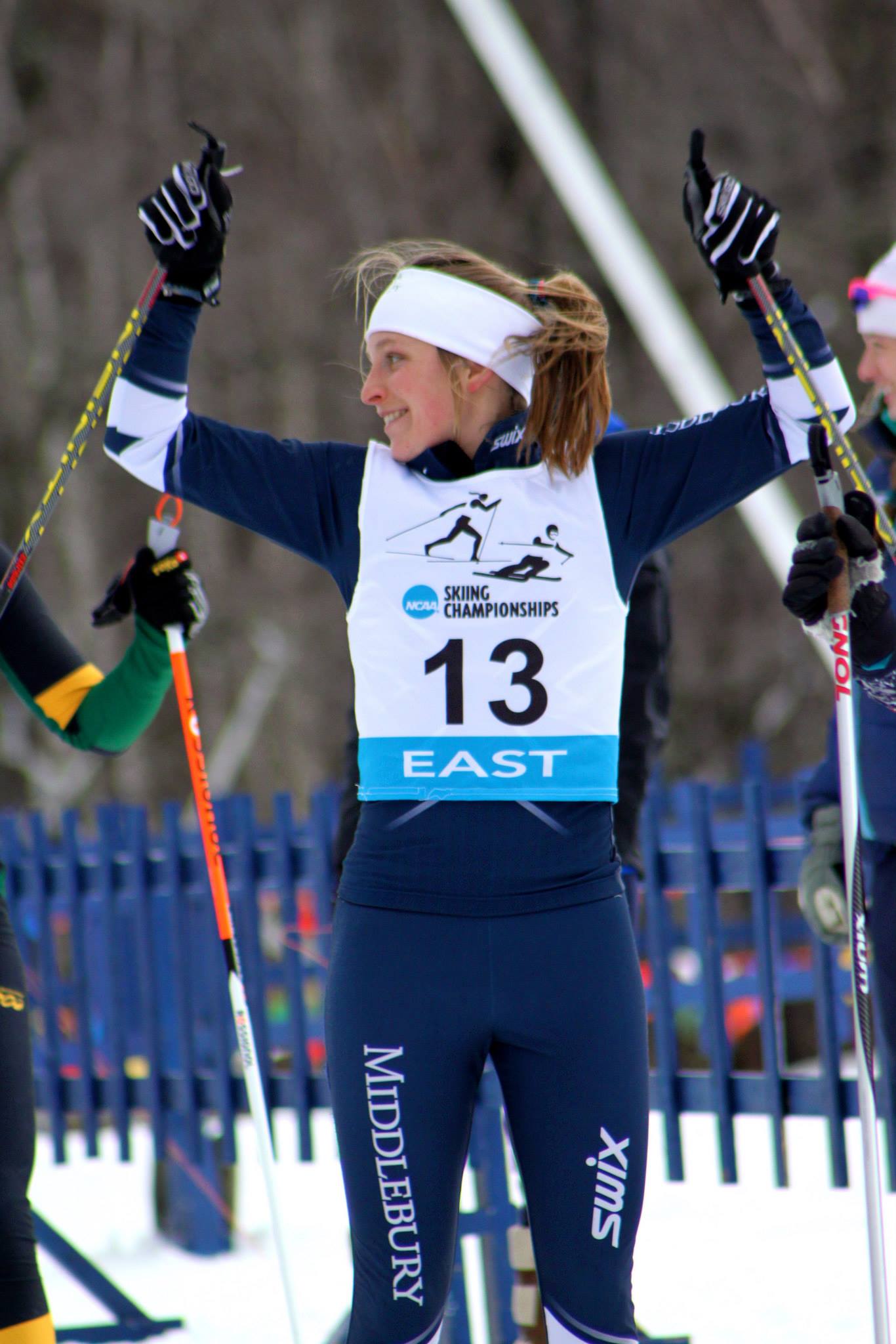
    Emily Attwood celebrates after crossing the finish line at the 2014 EISA Championships in Ripton, Vermont. (Photo: Stella Holt)
    Emily Attwood celebrates after crossing the finish line at the 2014 EISA Championships in Ripton, Vermont. (Photo: Stella Holt)

    “The acceptance of LGBT people, especially in athletics, has changed so quickly. It’s shocking,” he said. “All it takes is for someone’s friend or family member to come out and that changes their outlook. I’ve seen that happen in a lot of different segments in society, including sports so I think the situation now is improving.

    Quinn agreed, stressing that responsibility falls equally on gay athletes and their straight counterparts to make sure that they’re creating a welcoming environment for fellow LGBT athletes.

    “I think gay athletes have the responsibility to be true to themselves and come out, which is the single best way to counter homophobic stereotypes,” he said. “But their straight teammates, coaches, and friends also have a responsibility to foresee that not everyone is just like them and to create an environment that projects acceptance and individuality rather than take it for granted.”

    Attwood believes that being gay is on its way to becoming a non-issue in the sport.

    “Being gay is just like being anything else, and it takes time for acceptance,” she said. “There are identity issues for everyone, and coming out is one of those issues. Having conversations and unraveling people’s experiences is the only way to initiate more acceptance and make it a more encompassing community.”

    While challenges of misunderstanding may be a reality for LGBT skiers both now and in the future, it is apparent that the nordic ski community is well on its way to creating an embracing and tolerant environment. The small numbers and lack of diversity may be speed bumps on the road to complete ease for LGBT skiers, but it is evident that this tight knit community has the ability to overcome its downfalls and ensure that anyone, regardless of their identity, has a place on the trails.

  • Olympic Biathlete Brian Olsen: Elite & Olympic Teams Should Say ‘You Can Play,’ Promote Inclusivity for LGBT Athletes

    Olympic Biathlete Brian Olsen: Elite & Olympic Teams Should Say ‘You Can Play,’ Promote Inclusivity for LGBT Athletes

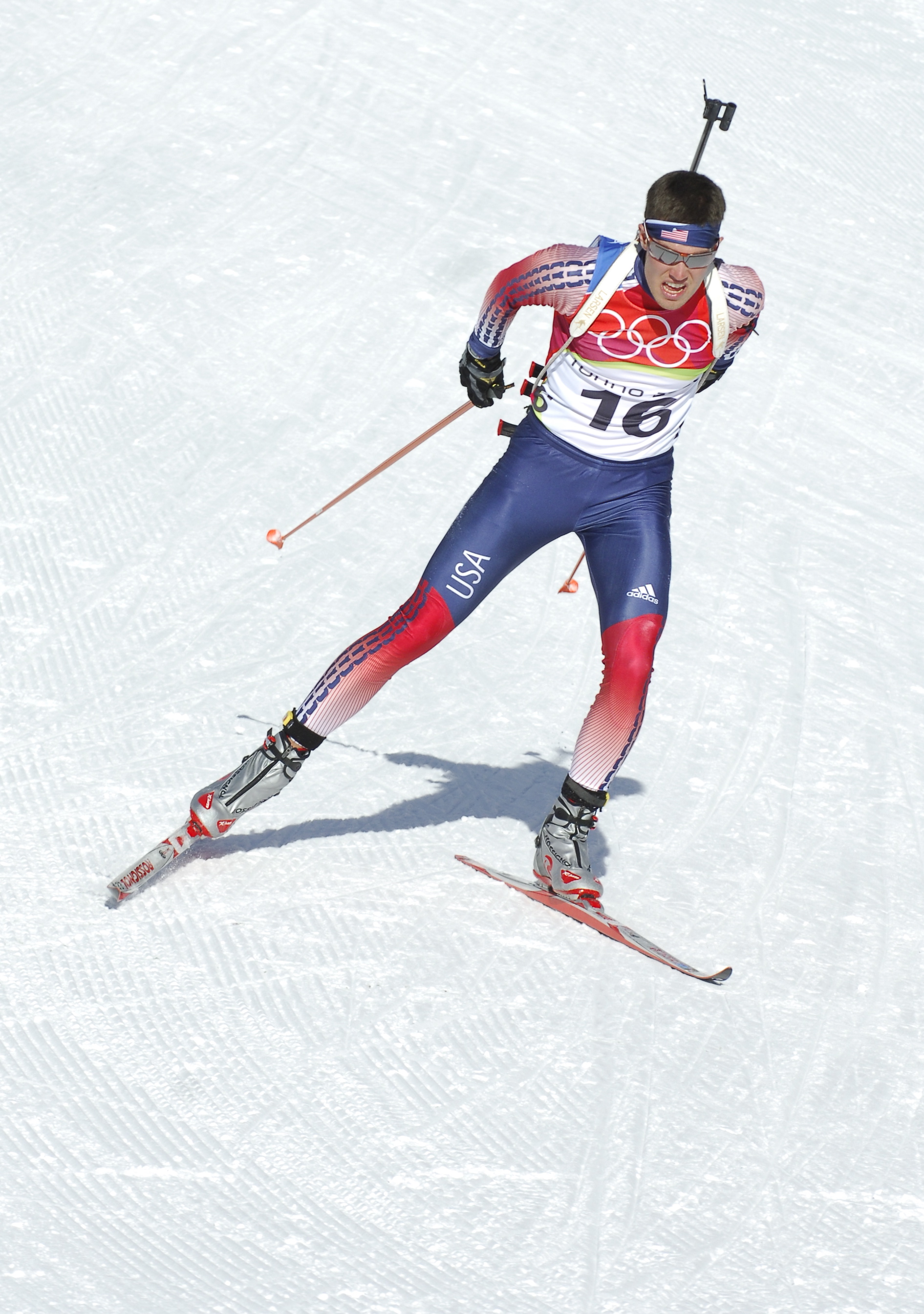
    Brian Olsen, at age 22, competing in a test race at the 2006 Olympics in Torino. Now retired as from racing, he is an athlete representative both to USBA's board and to the USOC's Athletes' Advisory Council.
    Brian Olsen, at age 22, competing in a test race at the 2006 Olympics in Torino. Now retired as from racing, he is an athlete representative both to USBA’s board and to the USOC’s Athletes’ Advisory Council.

    Brian Olsen has worn a lot of hats in the nordic community. He’s moved from Minnesota to the Maine Winter Sports Center, where he trained as a junior; to the University of Vermont, where he got a bachelor’s degree in geography; ran the now-defunct frozenbullet.com biathlon website; went to the 2006 Olympics; joined the National Guard biathlon program (and served a tour in Afghanistan); and then began working as an athlete representative first to the U.S Biathlon Association Board and then to the USOC Athletes’ Advisory Council (AAC).

    ­This winter, for instance, found him taking time off from a masters degree at the University of Utah to work as the USOC’s Athlete Services Coordinator for the Mountain Cluster at the Olympics in Sochi, Russia.

    “I’ve always been interested in the administration of sport – things like team selection, recruiting and developing athletes, and marketing,” Olsen told FasterSkier in an e-mail interview from his current home on Lake Tahoe (he’ll soon move to Seattle to start an MBA program).

    “As an athlete, these things affected me directly, but I realized that my focus should be on training hard and racing well,” he wrote. “Few athletes have energy to spare for attending Board meetings and reviewing their sports’ high performance plans. They should be out training or taking naps instead. Once I retired, I wanted to take on that burden now that my life wasn’t train-eat-sleep-repeat 365 days a year.”

    Olsen has recently added another thing to his list: advocating for gay, lesbian, bisexual, and transgender athletes in Olympic sports. Now that he’s no longer competing, he feels that he can be an advocate to an extent that would take a toll on current athletes who need to focus on performance instead. At the recent AAC meeting in May, Olsen teamed up with former NFL player Wade Davis to talk about LGBT inclusion and the You Can Play initiative, which seeks to

    “[ensure] equality, respect and safety for all athletes, without regard to sexual orientation… guarantee that athletes are given a fair opportunity to compete, judged by other athletes and fans alike, only by what they contribute to the sport or their team’s success… [and] challenge the culture of locker rooms and spectator areas by focusing only on an athlete’s skills, work ethic and competitive spirit.”

    Olsen, who is gay, was not out when he was competing in biathlon, and says that it did affect his performance and his decision to leave the sport at a relatively young age compared to many career athletes.

    The athlete reps, from all the Olympic sports plus many non-Olympic sports as well, had a positive response to the talk.

    “My sense is that AAC members are, in general, very supportive of moving forward about tackling diversity and LGBTQ issues,” Middlebury skiing head coach Andrew Johnson, who is an at-large athlete rep, wrote in an e-mail. “Hard to say how things will move forward at the NGB level – I think in general elite sports tend to be a little late in adopting issues that are perceived as social or political in nature. Scant resources tend to be spread pretty thin and directed specifically at performance-oriented agendas. What Brian did really well in his presentation is demonstrate that this is an issue that affects performance, particularly in terms of retaining athletes in sport, athletes’ ability to carry out training/competition in healthy and supportive environments, etc.”

    Sarah Konrad, a 2006 Olympian in both skiing and biathlon who now chairs the AAC, agreed.

    “Brian’s presentation was very effective, honest, and passionate, and drew a lot of interest from individual AAC members who want to get involved with You Can Play now,” Konrad told FasterSkier. “Pretty cool stuff, with a very positive reception. People had heard about it before, as we had a presentation from Hudson Taylor [the founder of Athlete Ally] in January. Hudson’s presentation was much more promotional than Brian’s. Brian’s came across much better, because it was his own story, and from the heart.”

    We caught up with Olsen last month to talk about what he believes the biggest issues are facing LGBT athletes in Olympic sports, what differentiates these situations from college sports where there are often liberal campus communities and big support networks, and why he picked now to get active.

    The interview has been edited and condensed.

    FasterSkier: The Nordic community seems like a very open, liberal community –do you have any comments about why it might not be leading the way on LGBT inclusiveness at the elite level?

    BO: The Nordic community is truly a great group of people who together enjoy a really beautiful set of disciplines. While we probably tend more towards the liberal side on social issues, I think that our sport culture is still fairly traditional, stemming from the Nordic region from where it originated. We tend to be a bit more private, a bit more suspicious of those seeking attention, and like in most sports, we’re very unwilling to share our doubts, struggles, and weaknesses. I suspect that most people in Nordic skiing view sexual orientation and gender identity as a personal matter, and that asking someone about it would be prying too deeply, and would make that person uncomfortable. So, we don’t talk about it.

    There’s a difference in my mind between being privately and publicly out. A privately out person has told the people who matter most to them that they are LGBT. Someone who is publicly out has made it public knowledge through the media. There are very few publicly out Olympic or Paralympic-level skiers. The role models who kids are looking up to are at this level of our sport; they are the ones who have the notoriety to drive the conversation. This conversation isn’t happening. We seem non-existent, invisible, without a voice.

    I’m speaking up because there aren’t any other recent U.S. Winter Olympians who are publicly out as LGBT and talking about it openly, especially in skiing. I’m going against the Nordic grain of making public a personal matter, but if I don’t, then I fear that another kid just like me will have to go through the same struggle that I did. I’m hoping our sport will open up and demonstrate its support for diversity, and that in turn encourages currently-competing skiers to come out and be themselves. At that point, with those role models for the next generation out and open, the conversation drives itself and there’s less of a need for interviews like this.

    FS:  Would it have made a difference to you when you were competing, to be able to see someone more like you succeeding at a high level – to have role models who were gay or lesbian?

    BO: That’s really the crux of the issue. We aspire towards dreams that we see people like us achieving. Just like American kids are growing up now believing they can win World Cups in biathlon, cross-country skiing, and Nordic combined because they see the likes of Tim Burke, Kikkan Randall, and Billy Demong doing so, so too do kids who are LGBT need to see role models like them on the podium if they’re going to feel confident they can also climb up there.

    As a teenager, the image I saw of gay men was the typical stereotype. It wasn’t of an athlete. And it certainly wasn’t of a skier with an Olympic medal in his teeth. I couldn’t relate my strongly-held identity as an athlete to what I was seeing, but also, I couldn’t think away the feelings I had being attracted to guys. Therein lies the circle of confusion, self-hate, and depression in which I wasted so much energy.

    The spring before the 2005/06 Olympic season began, I wrote in my training log at age 21:

    “I believe that coming out could damage my performances in sport, a place where my self-confidence lies. I don’t want this contaminating that.  What I do know for sure is that half of my life, I’ve grappled with this topic and decision. Simply put, being gay and living in the stereotype for that lifestyle seems to not fulfill the basic reasons for living. In biathlon, I fear there would be repercussions, mostly indirect and behind my back. A large issue is that I have absolutely no role models, at least whom I know. This is a challenge. Yes, so if it’s a challenge, then I need a plan. I need to think about that. I do know that I need help and someone to go through this with. But what if this all turns out to be a hoax? What if I really have some mental disorder?”

    See, it’s not just a team climate issue, it’s also a self-acceptance one. In this struggle, you’re not just scared your teammates, coaches, sponsors, and fans will reject you, you’re also rejecting yourself before you even let anyone else in on your secret. Having successful role models who are LGBT is crucial to that second part because it helps young athletes accept themselves by giving them examples of athletes whom they can respect foremost for their athletic achievements.

    It’s really the thought of these struggling athletes that frames how I’m approaching this entire issue; they’re ultimately the audience I’m trying to reach and encourage to be true to themselves.

    FS: When did you decide that you would make speaking out about the challenges of LGBTQ athletes a priority?

    BO: Last August, on the morning I was to deliver a presentation to the bobsled, skeleton, and luge teams to prep them for what to expect in Sochi, I read several op-ed pieces calling for the U.S. to boycott the Games, for the event to be moved elsewhere, or to be cancelled outright. I was so mad. I remembered how long and arduous my journey was to Torino. It wasn’t fair for other athletes to be deprived of the pinnacle of their careers.

    But then I saw the videos of kids being taunted and beaten in Russia, of foreigners being arrested. I read the text of the Russian laws enacted just months earlier, basically outlawing anyone LGBT from being themselves. I remembered my Russian professor’s experience being beaten nearly to death in Moscow by the KGB for being assumed gay.

    That morning, I just didn’t know what to think, or what was right. I didn’t know how I would respond to athletes wondering what they should do in Sochi. It felt like my identities were colliding. There weren’t any easy answers.

    I concluded that there was very little that I could do in the 6 months leading up to Sochi, but I realized that I could speak out publicly and in so doing help other athletes who are LGBT or questioning know they are not alone. If I couldn’t help make things right in Sochi, I could at least help make things right in U.S. Olympic & Paralympic sport.

    FS:  How did you get involved with You Can Play?

    BO: I researched different organizations working to end homophobia in sport and to promote better inclusion of athletes who are LGBT into their teams. Ultimately, a friend introduced me to two of the You Can Play founders in Denver last fall. The organization helps teams from the high school to professional level create and distribute videos emphasizing that they support their teammates, no matter who they are. I was really stoked about their simple, positive message. It resonated with me, and I felt it would resonate within the Olympic & Paralympic movement.

    FS: Were the athlete reps interested in your AAC presentation?

    BO: The response was so moving. I was so insanely nervous beforehand, I didn’t know what to expect. I’ve spoken to the council in the past, and I know several of the other athlete reps well. I was fine talking abstractly about the issue, but when it came time to say why it affected me personally, I took a long pause before saying, “I’m gay, and this was my experience.” I’d never told a group that before.

    Several reps came up to Wade and me after our presentation interested in creating videos within their sports, and finding resources for their teams that will help initiate discussion. I’m working hard to gather and draft these resources to pass back to them.

    FS: Do you think that the USOC is taking this seriously and doing as much as it can be?

    BO: The USOC Board of Directors added non-discrimination on the basis of sexual orientation to the Code of Conduct last October and its leadership has been supportive of LGBT rights. I think the Sochi Games really brought LGBT issues to the forefront over the past year, but the conversation became about LGBT rights in general, and perhaps this took attention away from improving the culture within our sports here at home.

    We also have a visibility problem: there are just so few U.S. Olympians and Paralympians who are LGBT. I think the USOC and NGBs, and all the staff and coaches in these organizations, everyone wants to do the right thing. But we are far behind the progress made in college sports by the NCAA and in professional sports by many of the pro leagues.

    What the USOC could do is take a greater leadership role in this realm by persuading NGBs to adopt non-discrimination policies on sexual orientation and gender identity, and coordinating resources. These policy changes help initiate discussions among administrators, sponsors, officials, and coaches, helping them ask one another:

    “What can we do better to support all of our athletes? Would a person who is LGBT feel comfortable being fully open in our sport? How are we going to react when it happens?”

    On a second front, the USOC could also leverage the change and cause a similar impact internationally with the IOC and International Federations, like FIS and IBU. The LGBT rights (and human rights) record of a potential host country should be considered alongside the technical and financial details of the bid city. Gender identity policies governing the participation of transgender athletes are in dire need of being examined, standardized, and updated. These international organizations hold the power over these initiatives, but the U.S. should play a leading role in gathering support for change.

    FS: It’s already very emotionally taxing to be an Olympic sport athlete, with so much travel and time spent away from family and friends. How much harder is it to be doing that if you are gay or lesbian and haven’t come out?

    BO: All athletes are dealing with stress, and part of what separates us from our competitors is how we cope with it. Trying to figure out who I was, making sense of what I was feeling, and keeping it all hidden definitely added a significant amount of stress to what is already a high-pressure sport. Having left home at age 16, contact with my family was limited [and] the travel schedule was so intense that non-sport friendships very difficult to make and keep. So it was my teammates, competitors, coaches, and others around me in the sport world that I relied upon for support. But those relationships were really strained by the shame I felt for who I was. All of this sort of exacerbated the feeling of being alone in this struggle.

    Sport became my sanctuary in many ways because when I was training and especially when I was racing, my mind was focused on my performance, and giving it everything. That’s what I loved so much about shooting: everything else in the world disappeared, life was reduced to mechanical fundamentals. And for usually six hours a day of training, my brain didn’t have the blood sugar for worrying.

    When I had a bad result or an injury, that’s when I was more susceptible to the sleepless nights, deeper self-doubt, and depression. To coaches, it seemed like I was just worried about my results, but internally, I was also fighting for my identity as an athlete, which is what usually gave me self-esteem. My coaches and sport psychology training helped me bounce back for the next race, but I never solved the underlying identity crisis until after I retired.

    Ultimately, I was trapped by the Don’t Ask, Don’t Tell policy of the U.S. Army. In January 2007, I declined my World Championship spot and enlisted in the National Guard, flying home early from Europe to go through Basic Training. I had to make a conscious choice at that point that I would be closeted for the foreseeable future. But, my motivation to win a medal, and to have the financial support from the Army to do so, seemed more important than an identity and the associated feelings that I was struggling to even acknowledge to myself.

    Over the next year, my inner struggle only became more intense, and it made me pull even further away from my teammates and coaches. My training, and in turn, my race results suffered. I felt isolated and sport was feeling less rewarding.  I started to see other options outside of sport as more attractive. When I went back to college to finish my degree, I started meeting friends outside of sport, including guys who were like me. Even though it meant giving up my dream to win a medal, and moving out of a sport that had been central to my life for a decade and been really all that I’d known, I started to feel like I belonged more with the friends I was meeting. I felt liberated to be the real me, I began to accept who I was, and gradually I left the sport I loved, at least as an athlete.

    FS: What do you think can be done to make LGBTQ athletes more comfortable?

    BO: Talk about it! Make it clear in your language and actions that if someone on your team came out, that you’d still accept them. The fact of the matter is you won’t see the LGBT of teammates on their sleeves. It’s a silent and invisible identity, which is why the whole idea of “coming out” is both necessary and scary.

    Since you can’t see us, just assume that someone on your team is LGBT. Assume that when you say fag, faggot, gay, tranny, or similar words, that someone is offended. Assume that when you joke around with your teammates in a homoerotic way, presuming everyone is straight, that you are confusing someone. This kind of vocabulary and activity builds on other things we’ve heard since childhood, and it reinforces the idea in our heads that being LGBT is bad, that it won’t be accepted on the team, that you’ll treat us differently if we admit who we are.

    Similarly, we must break the silence and the don’t ask, don’t tell policy that continues to pervade sport. Again, there is so much that we have heard in childhood, and still hear around us today, that makes us feel like we can’t be both an athlete and LGBT. For a few more years, until there are more out athletes to serve as our role models, we need your help imagining that when we came out to you and the rest of the team, that nothing will change in how you treat us.

    Coaches can help lead this effort by incorporating LGBT topics into annual reviews with athletes and staff of team codes of conduct. Walk through scenarios, such as how the team would react to a teammate coming out. Talk freely about everyone’s questions, concerns, and apprehension. Make it clear what language and behavior is unacceptable, and as a group commit to enforcing the standard with one another in a constructive way.

    One easy way to demonstrate your team’s commitment to inclusion of teammates who are not just LGBT, but who are of any marginalized identity (race, ethnicity, national origin, religion, gender, age, income, disability, sexual orientation, or gender identity), is to create a short video of your group speaking to the simple concept that it’s the performance of athletes that matters to you, not their identities. The preparation and production of the video will naturally require your team to talk about the issues. The resulting product will help athletes in your sport who are different see that they have allies, at least in your team, who will accept them. A few of these videos could be really powerful in making the relatively homogenous disciplines of skiing, and the people in them, seem more accepting and accessible.

  • Soldier Hollow Announces Richard Hodges as Executive Director

    Soldier Hollow Announces Richard Hodges as Executive Director

    (Press release)

    Hodges will lead Soldier Hollow, reaffirming its place as North America’s premier Nordic venue

    Richard Hodges (Photo: Linkedin)
    Richard Hodges (Photo: LinkedIn)

    Midway – Utah (June 25, 2014) The Soldier Hollow Legacy Foundation (SHLF) is excited to announce the hiring of Richard Hodges as its new Executive Director effective July 1, 2014. Hodges will oversee the execution of the foundation’s bold strategy to build upon its current financial stability and continue building regain its place as the premier cross-country ski and biathlon venue in North America and become a year-round tourism and event magnet for the Heber Valley.

    “Richard brings to this position a contagious passion for Nordic sports,” said Brian Olsen, newly-elected Chairman of the Board and 2006 Olympian. “He brings a compelling vision for re-invigorating the venue’s facilities, its programming, and its ties with the Heber Valley community.”

    A past member of the foundation’s Board of Directors, Hodges has 10 years of experience as the volunteer President of The Utah Nordic Alliance (TUNA), the largest cross-country ski organization in Utah. In that position, he grew the organization’s membership, event participation, and revenues, and assisted smaller ski clubs with becoming financially stable.

    Hodges has stated that his immediate priorities are to listen to the ideas and feedback of the foundation’s many stakeholders, from employees to long-time Soldier Hollow users. “I very much look forward to working with local business and community leaders in Midway and Heber Valley to help expand Soldier Hollow’s presence and profile,” said Hodges.

    With sport central to the foundation’s mission, Hodges looks to build deeper and even stronger ties with regional and national sports organizations, such as the U.S. Ski & Snowboard Association and the U.S. Biathlon Association. The goal is to ensure that the venue is contributing to the athlete development pipelines of these sports by recruiting and developing new talent and providing a world-class training and competition venue for elite athletes.

    Outside of the ski world, Hodges has been in the transportation sector as an accomplished project manager, economist, and, most recently, private consultant. He has worked for and in support of government entities such as the Utah Transit Authority, which will serve him well leading a foundation holding the concession contract with the State of Utah to operate the Soldier Hollow venue: “Our long-term partnership with Utah State Parks ensures that together we provide great opportunities for the community,” he said.

    Having worked as an event volunteer and advisor to the Salt Lake Organizing Committee since the early days of what would later become Soldier Hollow, Hodges experience with the venue runs deep. The foundation’s first and current Executive Director, Howard Peterson, will remain as a consultant through September providing Hodges with continuity and expert advice after having served in the position for more than a decade. “I am honored and privileged to have the opportunity to work with Soldier Hollow’s world-class staff to carry forward the Olympic and sport legacy that Howard has built,” concluded Hodges.

    About Soldier Hollow Legacy Foundation (SHLF): A non-profit 501(c)(3) corporation based in Midway, Utah, SHLF oversees the facilities and programming of the Soldier Hollow venue, which hosted the cross-country skiing, biathlon, and Nordic combined events during the 2002 Salt Lake Winter Olympic & Paralympic Games. Today, Soldier Hollow is a year-round facility focused on recreational, youth, and elite level cross-country skiing, biathlon and other related sports programs. Soldier Hollow also provides winter snow tubing and hosts multiple events during the summer. At all times, the organization and its staff work to promote the Olympic and Paralympic ideals, and expand opportunities for people in the communities it serves.

  • In Uniquely Democratic Process, Nordic Athletes Well-Represented in Flagbearing Choice

    In Uniquely Democratic Process, Nordic Athletes Well-Represented in Flagbearing Choice

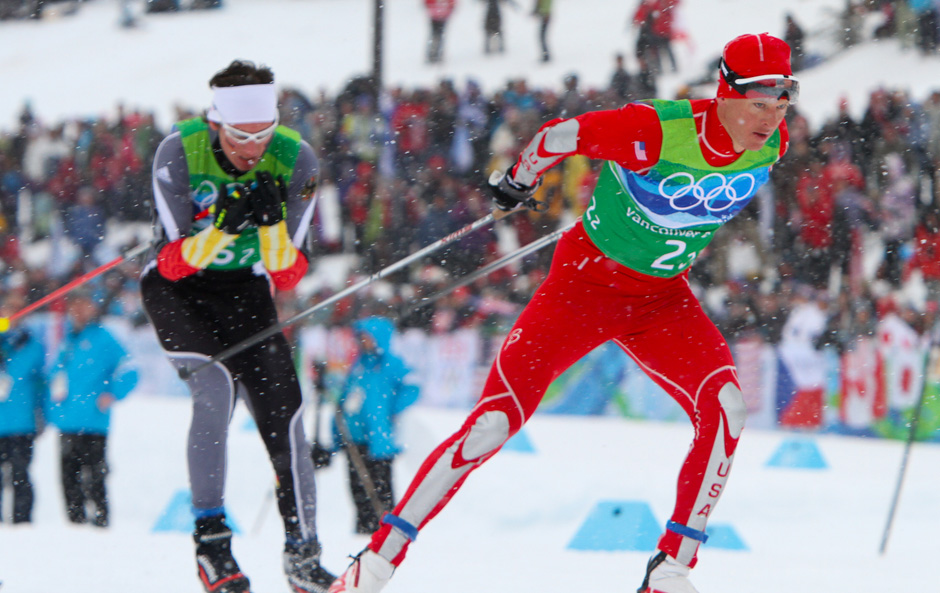
    Todd Lodwick (right) competing in the Vancouver Olympics, where he earned a silver medal in the team event.
    Todd Lodwick (right) competing in the Vancouver Olympics, where he earned a silver medal in the team event. Lodwick carried the American flag at the 2014 Opening Ceremonies.

    SOCHI, Russia – Before the Olympics, the NBC website put up a poll for the American public: who did they think should carry the United States flag at the opening ceremonies?

    Bobsledder Chris Fogt topped the voting, with cross-country skier Kikkan Randall coming in second. But while it was a nice assessment of fan opinion, the poll had very little to do with the actual nomination process.

    Todd Lodwick, a nordic combined skier making his sixth Olympic appearance, was eventually chosen for the honor.

    “The election of the U.S. flag bearer is one of the few parts of the U.S. Olympic Team that remains private to the athletes,” said Brian Olsen, a former biathlete who is one of two main U.S. Olympic Committee Athlete Services Coordinators in Sochi.

    He is in charge of the Endurance and Mountain Cluster athletes, and Jamie Hagerman oversees athletes in the Coastal Cluster. Together, they arranged a voting process so that the Olympic athletes themselves could choose who would lead them into Fisht Arena on opening night.

    The first step in the process is nominating athletes to vote on.

    “Any accredited athlete was welcome to nominate another athlete to carry the flag,” Olsen explained. “We did not impose a restriction on the number of nominees.”

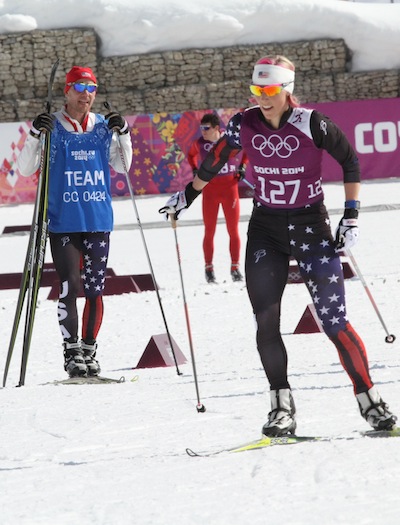
    Kikkan Randall, here training at the Olympic venue, was nominated by fellow athletes to carry the U.S. flag at opening ceremonies.
    Kikkan Randall, here training at the Olympic venue, was nominated by fellow athletes to carry the U.S. flag at opening ceremonies.

    Randall was nominated, although she wasn’t sure who had picked her. She described the feeling when she was called up and told the news.

    “The support, goodwill and respect I’ve felt from my fellow Olympians this time around has been really special,” Randall wrote in an e-mail. “I think everyone understands the journey it’s taken for us in cross country to get to this level where we are actually contenders, and there is a pretty cool energy around the team being felt from so many realms. It’s great to finally see cross country getting more attention and consideration amongst the whole U.S. team!”

    Next, all the nominees have to be contacted to see if they would actually be willing to do the job. Although Randall did not attend opening ceremonies as she felt the timing would disrupt her preparation for the actual racing coming up, she confirmed that if she’d been picked, she definitely would have gone.

    “It was an incredible honor to be considered in the election for flag bearer,” she wrote. “If I had been elected to carry the flag I definitely would have gone down there.”

    Not all the nominees were reachable, so a few were removed from the pool before voting even began.

    Then, the voting itself.

    “By tradition, each national governing body (NGB) received one vote in the election,” Olsen explained. “It was up to each NGB to select the athlete team representatives who were involved in the process, and which athlete team representative was to submit the ballot on behalf of all of its athletes.”

    The biathlon team chose Susan Dunklee to represent them; the U.S. Ski and Snowboard Association (USSA) was not represented by a nordic athlete.

    “It was the sort of thing where it was during the guys’ practice, so it was going to have to be one of us girls calling in,” Dunklee laughed. “They just asked me to do it.”

    She sat down with her team and went over the list of nominees, and they discussed why or why not each athlete would be a good candidate before making a list of their favorites. Dunklee then rang in to a conference call set up by Olsen.

    The athlete representatives listened to brief talks by the people who had nominated each of the possible flagbearers, and then got down to it. The voting was a ranked runoff process: each representative made a list of the order of their choices and e-mailed it in to Olsen and Hagerman, who then compiled the points and removed the lowest-ranked nominee before giving a new list to repeat the process. In the end, only Lodwick remained.

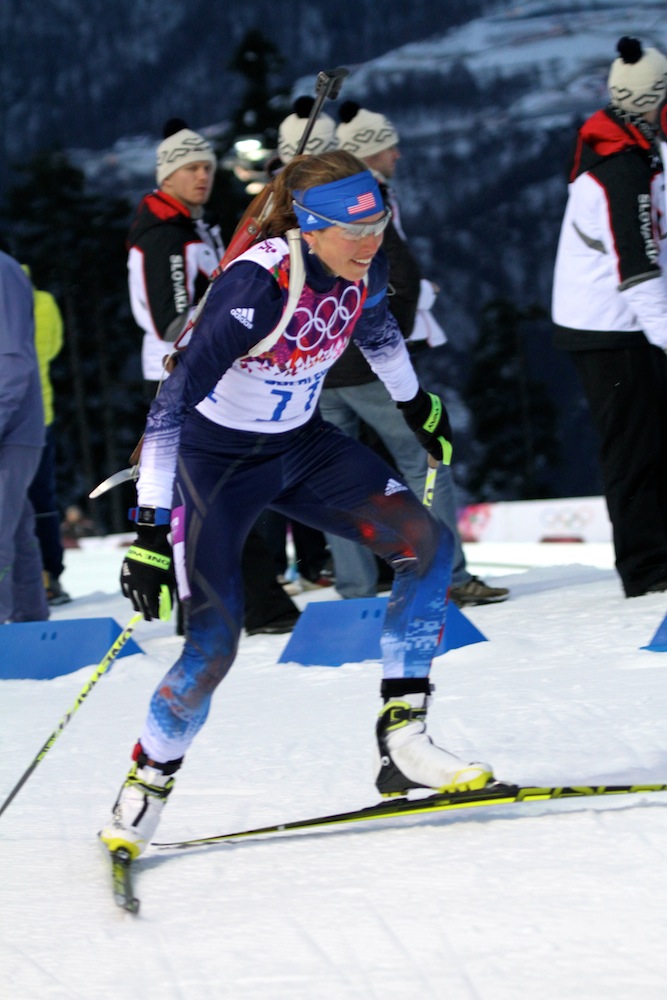
    Susan Dunklee in her first race of the Olympics.
    Susan Dunklee in her first race of the Olympics.

    In between rounds, there was no lobbying on behalf of a favorite athlete. Dunklee said that the athlete representatives kept their votes secret throughout the whole process and did not discuss their reasoning with each other.

    Dunklee said that she was happy with the process for two reasons: first, athlete input was taken into account, and second, the ranked process produced the candidate that most athletes agreed upon, although not all NGB’s showed up at the voting.

    “A lot of countries, the Olympic organization just picks somebody,” Dunklee said. “But we have a very democratic process, which is cool… and it’s great that it’s the rank system. I think you have more of a consensus when you get to the end.”

    Her one criticism of the system is that not all NGB’s are created equal. For instance, USSA comprises alpine skiing, freestyle skiing, snowboarding, cross country skiing, and nordic combined – many disciplines and many athletes who wouldn’t necessarily make the same choices.

    She suggested that in the future, maybe voting could be done by sport rather than NGB.

    “It seems so strange to me that USSA, when you have such a wide variety of sports represented, would only get one vote,” Dunklee said. “It seems like some of those sports wouldn’t get a voice at all. It would be interesting to see if that could be changed for future Games.”

    Either way, this time it worked out for the nordic world. Lodwick was the fourth nordic athlete in history to carry the U.S. flag in opening ceremonies: cross country skier Rolf Monsen, originally from Norway, had the honor in 1936. There was a long break until biathlete Lyle Nelson carried the flag in 1988 and cross country skier Bill Koch in 1992.

    “The American flag represents so much, so to be voted on by the athletes themselves was a true honor,” Lodwick told the Olympic News Service.