From the FasterSkier archive — posts syndicated from athletes’ and coaches’ own blogs between 2004 and 2012, kept online as published. Current coverage is at fasterskier.com.

Tag: Bruksvallarna

  • Johaug and Tønseth take Beitostølen, Norway Classic Openers

    Johaug and Tønseth take Beitostølen, Norway Classic Openers

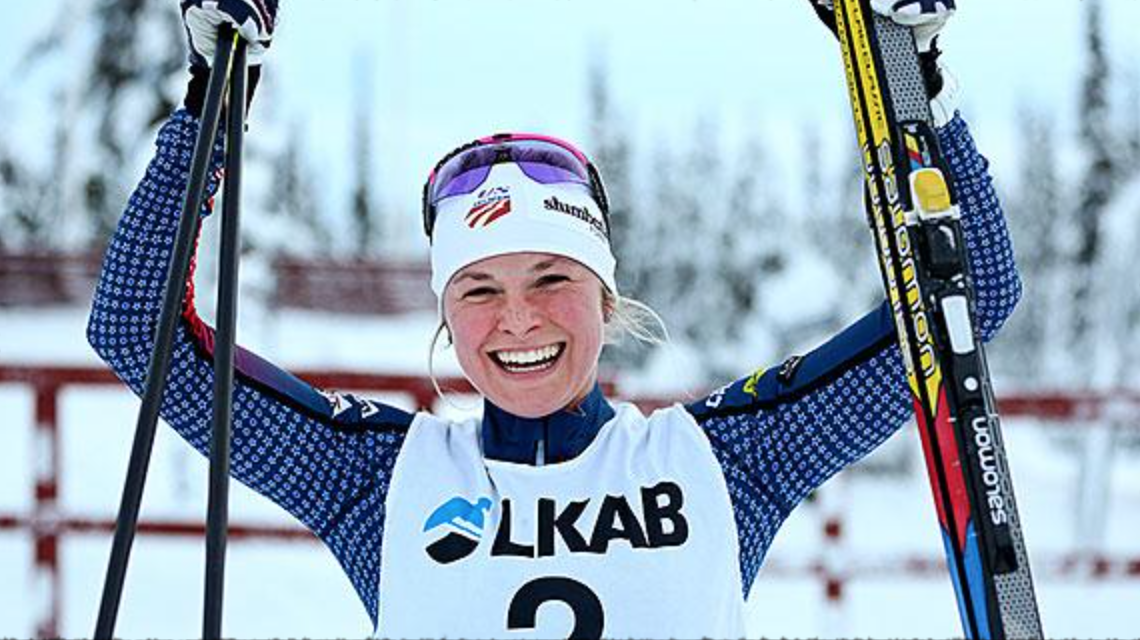
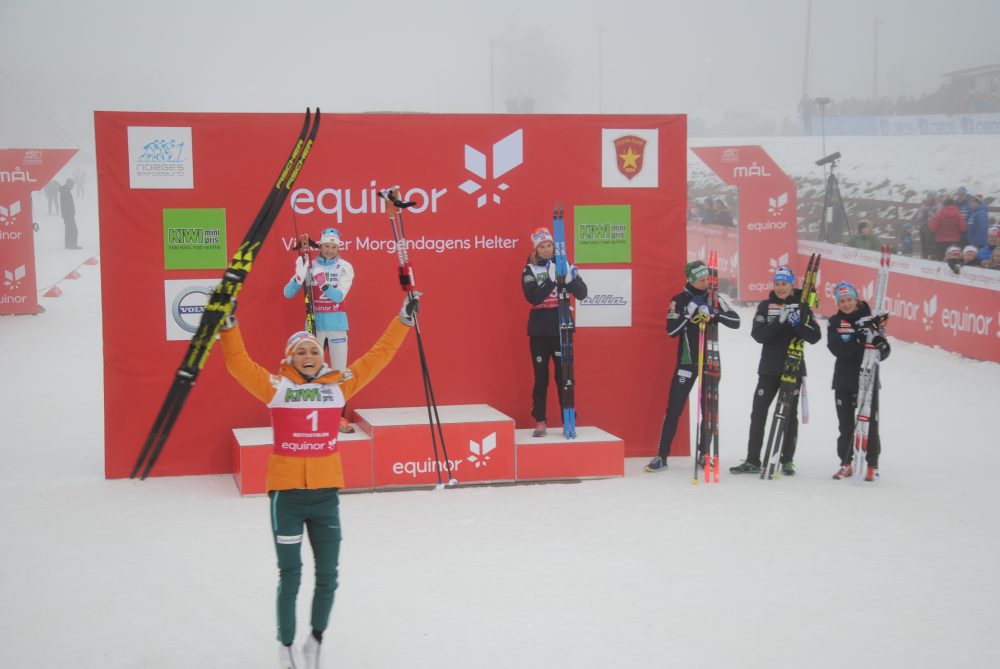
    She’s back. Therese Johaug celebrates after winning the 2018 FIS 10-kilometer classic in Beitostølen, Norway.

    After an 18 month suspension for a positive out of competition positive doping test, during which Norway’s thirty-year-old Therese Johaug could build hour upon hour of base fitness and fine tune the engine with no race-stress, she arrived in Beitostølen, Norway on Friday and didn’t skip a beat.

    In temperatures hovering around 32 degrees Fahrenheit, and low-level clouds descending on the course, Johaug established herself as the early season favorite amongst a deep Norwegian National Team in Beitostølen’s FIS season opener 10-kilometer classic race.

    As the 52nd starter in a 60-skier field, Johaug never let off the throttle.

    The race was tight at the 1-kilometer time check, with national team skier Ingvild Flugstad Østberg marking the fastest time over Johaug by only 0.9 seconds. With nine kilometers to go, it was all Johaug, as she clocked the fastest times at the remaining checkpoints.

    Up by 4.3 seconds at 2.2k, the time back to the second fastest skier grew to 15.5 seconds at the race’s midpoint for Johaug. By the finish, Johaug did as she has done many times before, winning by a comfortable margin. She won in 25:42.6 minutes. Østberg, who ranked third in the World Cup overall last season, placed second (+23.9). Kari Øyre Slind was third (+59.8)
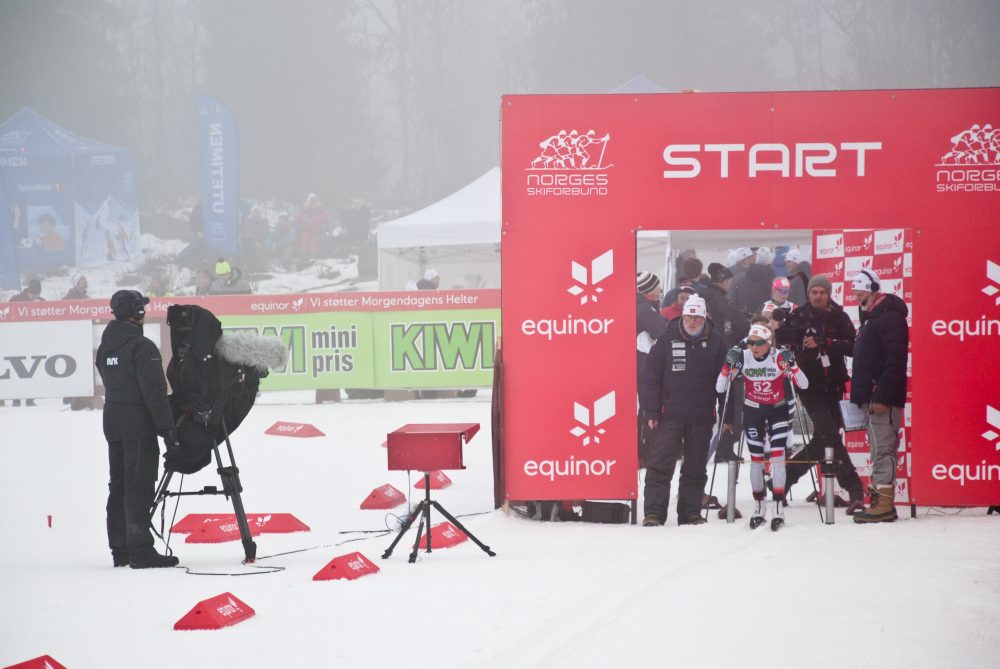
    Therese Johaug ready to start it all over again after her 18-month suspension.

    “It was special being here today,” Johaug told Norwegian broadcaster NRK according to a translation. “It feels incredible to back in the xc family again. To come up here and meet all the people that I’ve been skiing with for so many years, hear the cries from the crowds out in the course and the splits, it was a special feeling. It was so much. I was nervous before the start, but when I got started I really didn’t want it to end. I could have skied an extra lap.”

    The opening Beitostølen FIS races are the early season proving grounds for Norway’s elite cross-country athletes. The top-10 in the women’s race was riddled with names World Cup fans are familiar with.

    Astrid Uhrenholdt Jacobsen skied to fourth (+1:21.3), Haga Ragnhild fifth (+1:33.1), Anna Svendsen sixth (+1:42.8), and Heidi Weng, winner of last seasons overall World Cup finished seventh (+1:58.7).

    Annika Taylor, a former University of New Hampshire skier now skiing for Great Britain, raced her way to 21st (+3:49.3). 

    In similar conditions, the men raced a 15 k classic. Like the women’s field, it was a Norwegian who’s who of elite class skiers. But unlike Johaug setting an increasing time margin over any contenders, the men’s race was tight, separated by only 15 seconds for the top-five skiers 5 k into the race.

    At that point, with Didrik Tønseth in first and Emil Iversen in second, only a sliver of time, 0.1 seconds, differentiated the two. Martin Johnsrud Sundby and Johannes Høsflot Klæbo were gapped by 12.2 and 12.7 seconds respectively, as they skied through the time check in third and fourth place. Sjur Røthe came through in fifth (+15.8).

    Iversen, in bib 141, kept it close, setting the initial times to beat. Tønseth started three skiers back in bib 144. Through 10k, the two were still evenly matched: with Tønseth up by 3.4 seconds over Iversen.

    The men’s 15 k classic podium for the 2018 FIS opener in Beitostølen, Norway. Didrik Tønseth (NOR) in first, Norway’s Emil Iversen (left) in second, and Sjur Røthe (right) of Norway third.

    Tønseth won the race in 36:08.6 minutes, with his winning margin of 12.4 seconds over the second place Iversen only solidified in the closing kilometers. Røthe gradually moved up and finished third (+29.3).

    Sundby skied to fourth (+37.5), Hans Christer Holund fifth (+1:07.4), and Klæbo sixth (+1:17.5). British skier Andrew Musgrave finished seventh (+1:26.3). Musgrave is historically a stronger skate skier.

    One hundred and forty-three skiers finished the men’s race.

    Of note, thirty-two-year-old Petter Northug Jr., now a seemingly timeless presence on the Norwegian ski scene, was disqualified for classic technique violations. Prior to his DQ, Northug had been skiing in the top-20 for much of the race. Sundby was given a verbal warning for a classic technique violation.

    Several Canadians raced the 15 k classic. Russell Kennedy was the best placed Canadian finishing tied for 23rd (+2:37.6). Brian McKeever was 68th (+4:06.6), Ryan Jackson 110th (+5:39.1), Maks Zechel 113th (+5:56.5).

    Racing continues Saturday with a skate sprint.

    Beitostølen Women’s 10 k classic results | Beitostølen Men’s 15 k classic results


  • Friday Rundown: Beitostølen FIS Opening Race and More

    Friday Rundown: Beitostølen FIS Opening Race and More


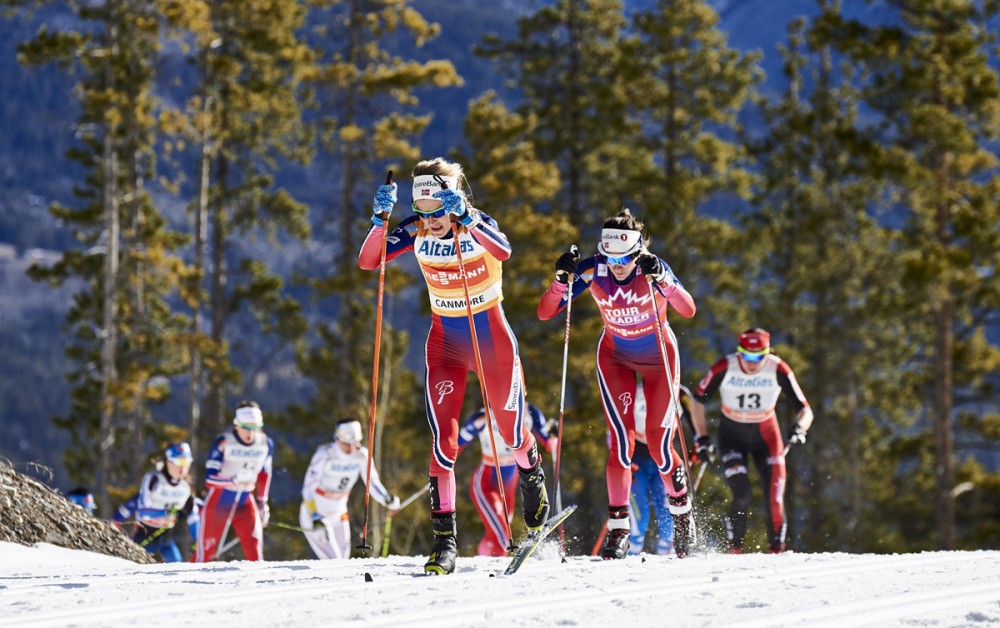
    Norwegians Therese Johaug and Heidi Weng, (l-r) during the 2016 women’s 15 k skiathlon in Canmore, Alberta. (Photo: Fischer/NordicFocus)

    Welcome to The Rundown, your quick primer of need-to-know information about the day’s racing. We’ll be updating this digest as the day goes on with additional results, photos and quotes. The Rundown is NOT a race report; stay tuned for complete race reports later today with interviews from the day’s top racers.

    ***

    FIS cross-country Beitostølen, Norway: 10 k/15 k classic

    The race results are in from today’s 10-kilometer individual start classic FIS race in Beitostølen, Norway. The first of the season Beito races are used as a test pad for Norwegian athletes to gauge fitness and for some to make the rare jump to a coveted and scarce World Cup start. 

    Off of her suspension for using a banned substance, Norway’s Therese Johaug skied like she’d never been gone. Johaug was suspended for 18 months due to her violation.

    Johaug fired off the 10 k winning in 25:42.6 minutes. Ingvild Flugstad Østberg was second (+23.9). Rounding out the podium was Kari Øyre Slind in third (+59.8).

    Astrid Uhrenholdt Jacobsen skied to fourth (+1:21.3), Haga Ragnhild fifth (+1:33.1), Anna Svendsen sixth (+1:42.8), and winner of last seasons overall World Cup, Heidi Weng finished seventh (+1:58.7).

    The men skied a 15 k classic race Friday in Beitostølen. Didrik Tønseth won in a time of 36:08.6 minutes. In second was Emil Iversen (+12.4), while Sjur Røthe placed third (+29.3).

    Martin Johnsrud Sundby skied to fourth (+37.5), Hans Christer Holund fifth (+1:07.4), and Johannes Høsflot Klæbo sixth (+1:17.5).

    British skier, although based in Norway, Andrew Musgrave finished seventh (+1:26.3).

    One hundred and forty-three skiers finished the men’s race. Of note, Petter Northug Jr., now a seemingly timeless presence on the Norwegian ski scene, was disqualified for technique violations.

    buy temovate online


    Several Canadians raced the 15 k classic. Russell Kennedy was the best placed Canadian finishing tied for 23rd (+2:37.6). Brian McKeever was 68th (+4:06.6), Ryan Jackson 110th (+5:39.1), Maks Zechel 113th (+5:56.5).

    Beitostølen Women’s 10 k classic results | Beitostølen Men’s 15 k classic results 
     

    ***

    Bruksvallarna, Sweden cross-country: 5 k/10 k freestyle

    In Bruksvallarna, Sweden FIS racing began with a 5 k freestyle for the women. Three of Sweden’s star skiers took the podium spots. Ebba Andersson won the tight race in 9:57.1 minutes, finishing only 2.6 seconds ahead of second place skier Charlotte Kalla. Known for her sprinting prowess, Hanna Falk was third (+15.7).

    One hundred and twelve skiers finished the race.

    For the men, after skating 10 k, the race was a tie for first. Sweden’s Jens Burman and Karl-Johan Westberg skied the fastest time. Both crossed the line in 19:11.0 minutes for the win. Japanese skier Keishin Yoshida placed third (+9.5).

    Daniel Rickardsson, of Sweden, skied to fourth (+12.9).

    Women’s results | Men’s results
     

  • More Early Racing as Cologna, Kylloenen, and Van Der Graaf Get Wins

    More Early Racing as Cologna, Kylloenen, and Van Der Graaf Get Wins

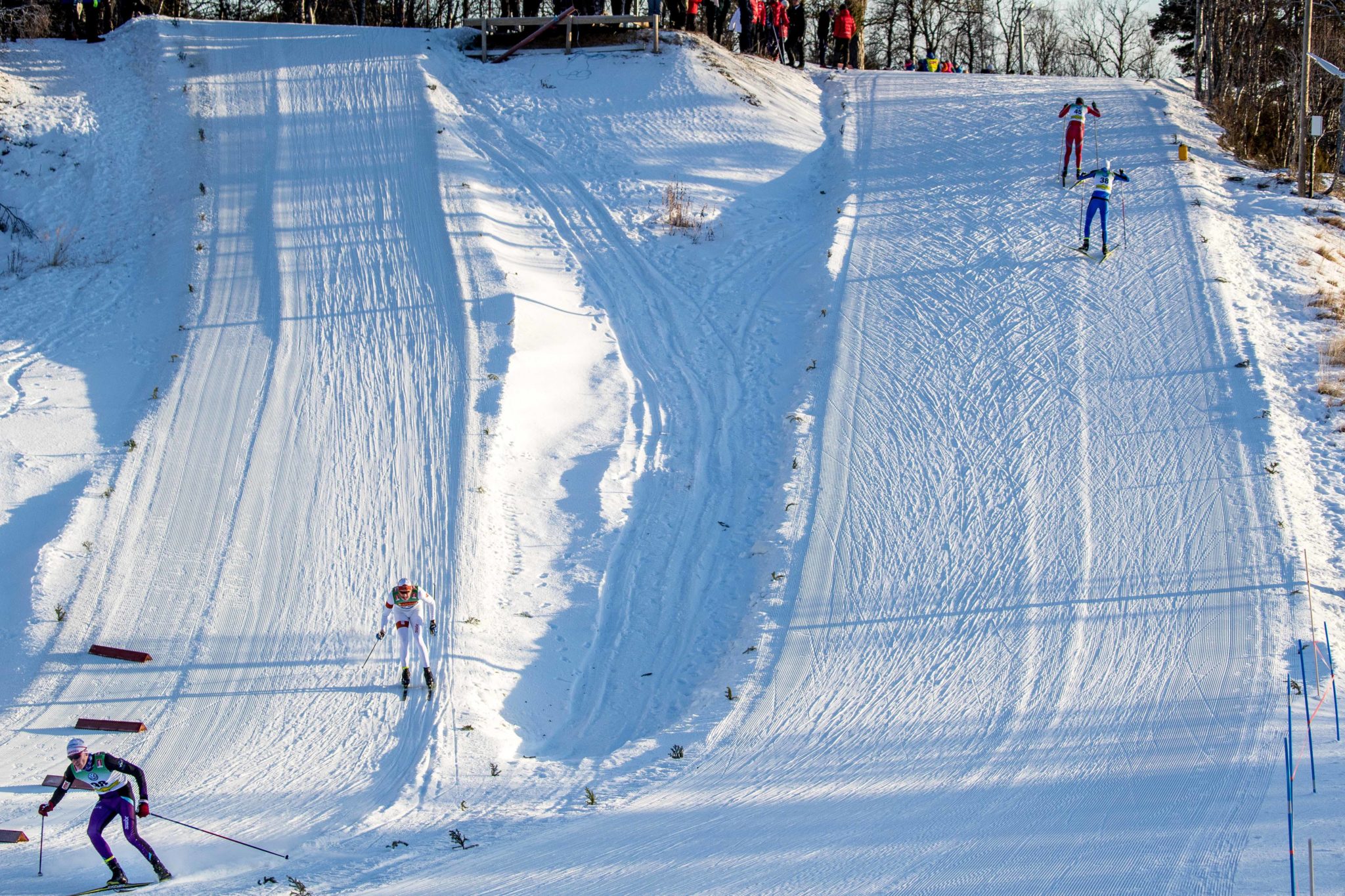
    Racers navigate a steep climb and descent on the race loop at Bruksvallarna on Saturday. (Photo: Jocke Lagercrantz/Bruksvallsloppet.se)

    The World Cup season draws ever-closer as season-opening races continued this weekend in Sweden, Finland, and Switzerland.

    In Muonio, Finland, a long weekend of racing wrapped up with 10 and 15 k skate races. Finland’s Anne Kylloenen took the win in the women’s 10 k, besting Emilie Kristoffersen of Norway by 8.2 seconds. Kylloenen’s national-team teammates Laura Mononen and Aino-Kaisa Saarinen took third (+14.0) and fourth (+17.1), respectively. Merete Myrseth, a Norwegian skier who competed for the University of Utah on the NCAA circuit last season, finished 17th, +57.1.

    In the men’s 15 k, Alexey Chervotkin of Russia took a 13.8-second win over Iivo Niskanen of Finland. Denis Spitzov of Russia was third, +17.5, and University of Utah alum Snorri Einarsson fourth, +21.2. Einarsson is competing for Iceland. Graham Nishikawa of Canada finished 19th, +1:14.4, and Brian McKeever 40th, + 2:05.3.

    Finishing sixth (+37.0) was Maxim Vylegzhanin of Russia, who made his second flower ceremony of the weekend. The International Olympic Committee (IOC) decided on Thursdayto strip the Russian skier of three silver medals from the 2014 Olympics for doping violations and ban him from all future Olympic Games. However, the International Ski Federation (FIS) has not yet taken any action since he and five other skiers were banned from the IOC, meaning that all six athletes are currently free to take part in non-Olympic ski competitions. FIS has not yet responded to a request for comment about Vylegzhanin’s continued competition.

    https://www.instagram.com/p/BbZO7VFFYpg/

    In Bruksvallarna, Sweden, Sunday meant skate sprinting, and Norwegians took both the men’s and women’s wins. In the men’s race, Paal Troean Aune bested countryman Even Northug in the final, with Anton Persson the only Swede on the podium in third. None of the top sprinters from either country competed. Jack Carlyle of Canada finished 60th, 19.4 seconds behind Aune’s qualifying time.

    In the women’s sprint, Wenche Aune Snildalsli took the win over four Swedes: Emma Thalin, Moa Olsson, Jackline Lockner, and Wilma Joensson were next across the line, and Latvia’s Patricija Eiduka finished sixth.

    A large contingent of international racers has also been training in Davos, Switzerland, where organizers have a lengthy saved-snow loop covering some of the same terrain which will host the World Cup in mid-December. On Friday and Saturday, the Swiss competed with the German and Italian teams in sprint and distance races, with a few individual athletes from other countries attending as well.

    In Friday’s sprints, Laurien Van Der Graaf came out on top for the home team, besting Germany’s Laura Gimmler and Steffi Boehler in the ‘A’ final after Gimmler had won beat her by 1.59 seconds in the qualifier. Fourth place went to Sandra Ringwald, also of Germany, and fifth to Ilaria Debertolis of Italy. In the men’s sprint Thomas Bing claimed the win for Germany, skiing away Switzerland’s Erwan Kaeser by more than two seconds. Giacomo Gabrielli and Stefan Zelger of Italy were third and fourth, and Janosch Brugger of Germany rounded out the ‘A’ final in fifth.

    https://www.instagram.com/p/BbUYGpgl2V_/

    In Saturday’s distance races, Katerina Smutna – racing for the Czech Republic after taking a break for several years to focus on a long-distance marathon career – won the three-lap, 10.5 k competition by just three seconds over Katharina Hennig of Germany, with Boehler another 12.2 seconds back in third. Van Der Graaf finished fourth, + 27.1, and Debertolis fifth, +39.6.

    In the men’s four-lap race, covering 14 k, Swiss Olympic gold medalist Dario Cologna took a commanding 26.6-second win over Russia’s Ilia Chernousov. Jonas Dobler of Germany claimed third, +33.8, with Giandomenico Salvadori of Italy fourth (+59.2), narrowly beating out Livio Bieler of Switzerland (+1:00.9).

    Chernousov could soon become an Olympic champion like Cologna. Vylegzhanin’s disqualification from the 2014 Olympics, along with that of Alexander Legkov, leaves Chernousov to inherit a gold medal in the 50 k freestyle, where he initially finished third. He has not been named in any of the doping investigations by the World Anti-Doping Agency or the International Olympic Committee. In fact, a Russian ski coach recently claimed that Chernousov had turned whistleblower and informed against his Russian teammate, but Chernousov has denied that allegation.

    https://www.instagram.com/p/BbW9TxXnxwI

    Results
    Bruksvallarna

    Women’s sprint qualifier – final

    Men’s sprint qualifier – final

    Muonio

    Women’s & men’s skate distance races

    Davos

    Sprint races (one document, men & women / qualifier & heats)

    Distance races

  • Finns, Russians, Norwegians & Swede Nab Early-Season Wins; Vylegzhanin Competes Despite IOC Ban

    Finns, Russians, Norwegians & Swede Nab Early-Season Wins; Vylegzhanin Competes Despite IOC Ban

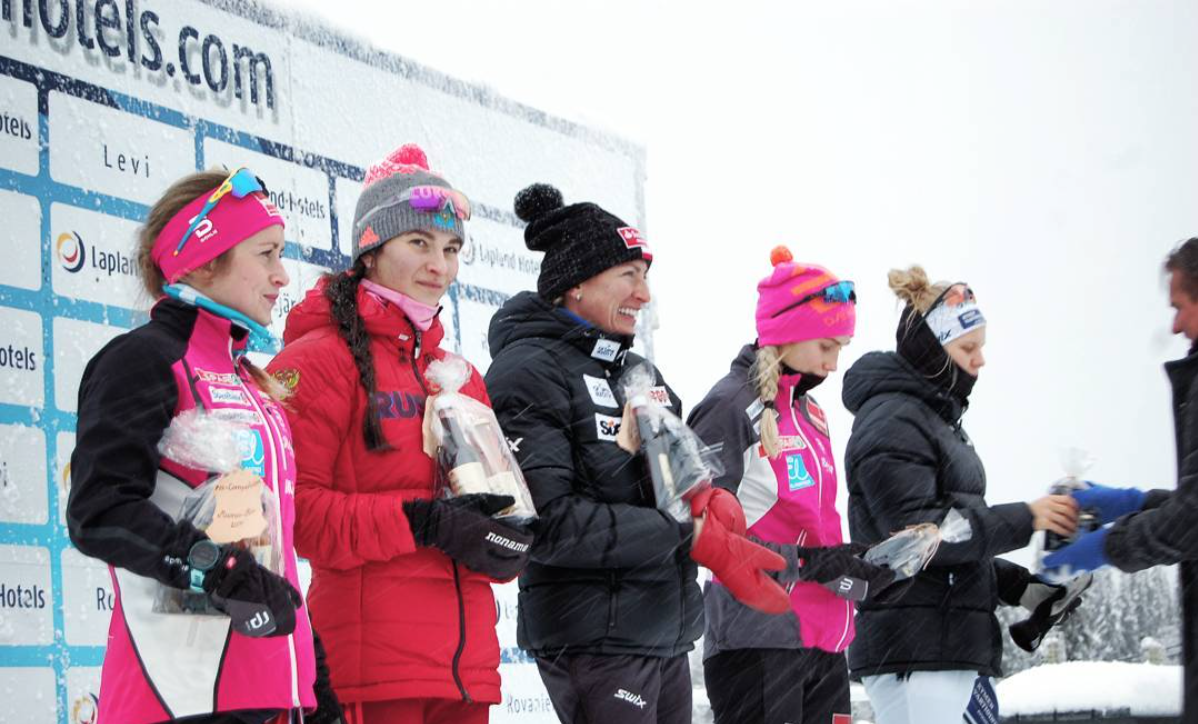
    (l-r) Anna Svendsen of Norway, Natalia Nepryaeva of Russia, Justyna Kowalczyk of Poland, Lovise Heimdal of Norway, and Leena Nurmi of Finland receive prizes after rate women’s classic sprint in Muonio, Finland, on Friday. (Photo: Ski Muonio/Instagram)

    FIS races are already being contested in Finland and Sweden this weekend, with most top Scandinavian racers sitting out but a few national-team members and others picking up their first victories of the season.

    The competitions in Muonio, Finland, drew the most diverse field, including racers from Norway, Russia, Japan, China, Canada, Estonia, and Slovakia, among other countries. In the men’s classic sprint on Friday, the home team got a win from Ristomatti Hakola; he and Russia’s Alexander Bolshunov went 1-2 in both the qualifier and the final. Russia’s Andrey Parfenov rounded out the podium. In the women’s sprint, Anna Svendsen took the win over Russia’s Natalia Nepryaeva, with Justyna Kowalczyk of Poland finishing third.

    On Saturday, racers moved up in distance. In the 10 k classic, Bolshunov – a U23 World Champion last season – bested Russian teammate Alexey Chervotkin by 20.6 seconds, with Andrey Sobakarev making it a sweep another 21.6 seconds back. Brian McKeever and Graham Nishikawa of Canada finished 56th (+2:10.6) and 63rd (+2:18.5), respectively.

    Also in the men’s race was Maxim Vylegzhanin. The International Olympic Committee (IOC) decided on Thursday to strip the Russian skier of three silver medals from the 2014 Olympics for doping violations and ban him from all future Olympic Games. However, the International Ski Federation (FIS) has not yet taken any action since he and five other skiers were banned from the IOC, meaning that all six athletes are currently free to take part in non-Olympic ski competitions. In a press release, FIS stated that “the next steps will be the review by the FIS Doping Panel of the six verdicts upon the receipt of the reasoned decisions” but did not provide a time frame for these decisions.

    In the women’s 5 k classic, Finland’s Krista Parmakoski posted an 18.4-second win over Nepryaeva, with Kowalczyk third again, +24.2.

    Bruksvallarna, Sweden, hosted races on Saturday as well, with a primarily Swedish and Norwegian field but some other racers as well. Norway’s Chris Andre Jespersen topped the 15 k skate, posting a 31.4-second win over Simon Lageson of Sweden. Norwegian Tore Leren was third, +53.1. Canada’s Jack Carlyle finished 38th, +2:29.5. Petter Northug and his brother Even were in Bruksvallarna this week but decided at the last minute not to race, with Northug making his debut in Beitøstolen, Norway, next weekend instead.

    In the women’s 10 k skate, Swedish national team member Emma Wiken bested Lina Korsgren – a long-distance specialist who finished eighth in the Visma Ski Classics standings last season – by 9.8 seconds. Berit Mogstad of Norway finished third, +15.3 seconds.

    https://www.instagram.com/p/BbW-cRsn14l/

    Results
    Muonio

    Classic sprint: men’s qualifier – men’s final – women’s qualifier – women’s final

    Classic distance: men’s 10 k – women’s 5 k

    Bruksvallarna

    Skate distance: men’s 15 k – women’s 10 k

  • Out of ‘Sheer Luck’ Kershaw Able to Race in Gällivare, Wins 15 k

    Out of ‘Sheer Luck’ Kershaw Able to Race in Gällivare, Wins 15 k

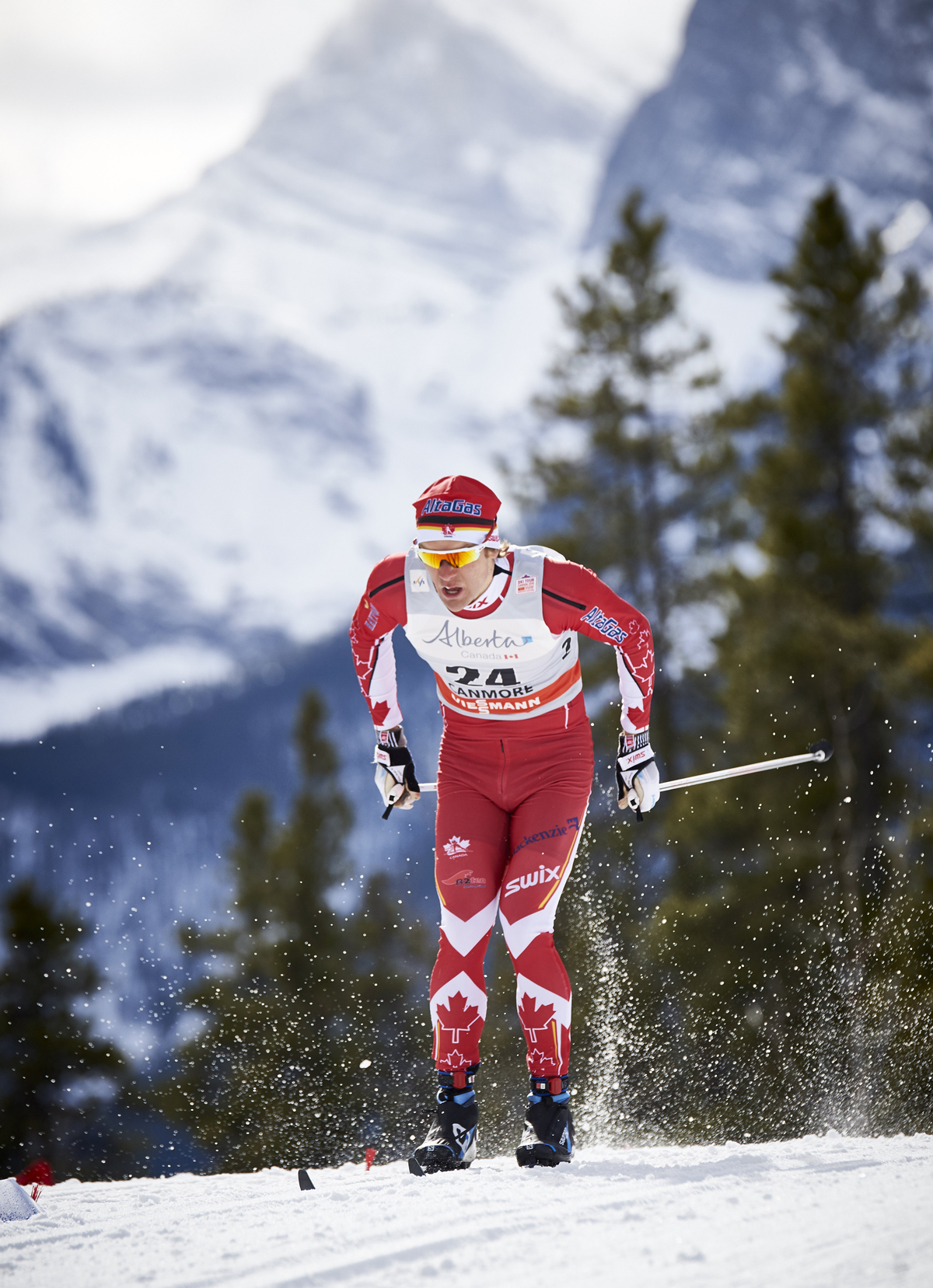
    Devon Kershaw (Canadian World Cup Team) competing in the classic sprint at the Ski Tour Canada on March 8 in Canmore, Alberta. (Photo: Fischer/NordicFocus)
    Devon Kershaw (Canadian World Cup Team) competing in the classic sprint at the 2016 Ski Tour Canada in March in Canmore, Alberta. (Photo: Fischer/NordicFocus)

    When race organizers in Gällivare, Sweden, decided to change the date of their pre-World Cup race series by a week, Canada’s Devon Kershaw lucked out. For the past couple of seasons, most of the Canadian World Cup Team has spent their final days before the start of the race season skiing and competing in Gällivare.

    Once again, the team planned to travel 100 kilometers north of the Arctic Circle for a pre-World Cup camp, booking their plane tickets to Sweden for the week of Nov. 19 — when the city’s races were originally slated to take place.

    However, due to a scheduling conflict with Sweden’s annual early season races in Bruksvallarna, the Gällivare race dates moved up a weekend, leaving only one of Canada’s cross-country athletes the option to race in Gällivare.

    “Since I am based in Oslo, it was just sheer luck that we hadn’t booked my flight yet (from Oslo up here to Gällivare) when those changes took place,” Kershaw, who lives just outside of Oslo, Norway, with his wife Kristin Størmer Steira, wrote in an email. “So I asked to come up a few days earlier than the team to get a chance to race.”

    With the help of Canadian head wax tech Yves Bilodeau, who lives in France and was able to join Kershaw, the 33-year-old Kershaw won Sunday’s 15 k classic individual start in 35:18, besting the runner-up, Petr Knop of the Czech Republic, by a minute. Michal Novak, also of the Czech Republic, placed third, (+1:05).

    Though only 11 senior men entered Sunday’s 15 k, which wasn’t an International Ski Federation (FIS) sanctioned race, Kershaw indicated that from his standpoint, putting on a race bib and bringing his body back into racing was important.  

    “Being a slow-starter at times with regards to World Cup period #1 in my career (I have never been on the podium on the World Cup prior to Christmas) the biggest focus was just to put a bib on and blow out the cobwebs,” Kershaw wrote. “It’s nice to get nervous, test skis properly, and go through a whole routine around an organized race. In the race itself I focus on skiing technically well, being present and just being as efficient as I can be when my body is screaming to stop.”

    Kershaw explained that he lucked out even more with getting into the Gällivare races, as they would be his only opportunity to for a preseason on-snow race this season.

    “Time trials are great workouts, but for me I really believe that nothing replicates racing and have always have benefited from getting in some ‘lower key’ races before starting off on the World Cup,” he wrote. “This season [the Gällivare 15 k] will be the only race I get to do before the World Cup starts.”

    In a post-race interview, Kershaw told Langd.se that he benefited from some summer training with Norway’s Martin Johnsrud Sundby and Sweden’s Martin Johansson, who lives in Norway. On Sunday, Kershaw took control of the race early, leading the first of four 3.75 k laps by more than 20 seconds over his nearest competitor.

    “It was amazingly good conditions today, the body responded as it should and the skis were really good,” he said.

    Kershaw arrived in Sweden late last Friday and will remain there until the rest of the Canadian World Cup team (except Alex Harvey, U25 Team skier Cendrine Browne and coach Louis Bouchard, who are training in Davos, Switzerland) joins him on Nov. 23. Then they’ll drive as a group to Kuusamo, Finland, where the opening World Cup will be held Nov. 26-27.

    “Of course it would perhaps be nice to start the year with really competitive races in Beitostølen or Bruksvallarna (like we have done many times in the past), but with our budget having been absolutely decimated these last couple years it’s no longer realistic and/or viable,” Kershaw wrote. “The fact that we can en-masse drive to Kuusamo for the World Cups saves our team bundles of money that we can then use to support the World Cup racing as best we can.”

    Results

  • Weekend Roundup: Preseason Tuneups; Next Stop, World Cup

    Weekend Roundup: Preseason Tuneups; Next Stop, World Cup

    In the U.S. Ski Team's first race of the 2015/2016 season, Jessie Diggins led a 1-2 U.S. finish with teammate Sophie Caldwell finishing second. Here Diggins is shown celebrating her FIS classic sprint win on Saturday in Gällivare, Sweden. (Photo: USSA/Stefan Nieminen)
    Jessie Diggins of the U.S. Ski Team won both races in last weekend in Gällivare, Sweden, leading a 1-2 U.S. women’s finish in the classic sprint with teammate Sophie Caldwell on Saturday, and sharing the podium with Caitlin Gregg, who was third in the 10 k skate on Sunday. (Photo: USSA/Stefan Nieminen)

    A win is a win: especially when it’s north of the Arctic Circle in chilly conditions and in the first races of the season.

    Jessie Diggins started 2015/2016 off with back-to-back wins at the International Ski Federation (FIS) races in Gällivare, Sweden, topping the podium in both the classic sprint and 10-kilometer freestyle.

    Above all, the U.S. Ski Team member said the races were confidence boosting and a good way to take inventory on “what else needs to be improved, as well as a good reminder of warmups, race routines, and testing skis.”

    On Day 1 of the cross-country races in Gällivare, Diggins and her teammate Sophie Caldwell captured first and second, respectively, in the classic sprint.

    “I want to walk up to the start line of a classic race with that same confidence in myself that I have at the start of every skate race,” Diggins said after Saturday’s sprint.

    “I don’t care if it’s a World Cup or a local club race. Having three of the six podiums was just a lot of fun,” U.S. women’s coach Matt Whitcomb said on Saturday, after Andy Newell finished second in the men’s sprint.

    On Sunday, two American women again reached the podium, with Diggins in first and Caitlin Gregg in third. In the men’s 15 k freestyle, Canada had two in the top four, with Alex Harvey in second and Devon Kershaw in fourth.

    “That … was probably my best individual-start skate race in 1.5 years,” Kershaw remarked.

    Norway's Petter Northug racing to a 10 k classic win on Nov. 20 in Bruksvallarna, Sweden. He did so in a custom suit with the Swedish colors. (Photo: AdaMedia Med Mera/@adamedmera)
    Norway’s Petter Northug racing to a 10 k classic win on Nov. 20 in Bruksvallarna, Sweden. He did so in a custom suit with the Swedish colors. (Photo: AdaMedia Med Mera/@adamedmera)

    About 900 kilometers south in Bruksvallarna, Sweden, Petter Northug ruffled feathers on Day 1 of the three-day FIS race series. He won Friday’s 10 k classic by 36 seconds while wearing a Swedish-national-team-like suit. Meanwhile, Sweden’s Charlotte Kalla won the women’s 5 k classic by 25 seconds.

    The next day, Kalla won again — this time by 36 seconds in the 10 k freestyle. Led by Niklas Dyrhaug, the Norwegian men swept the Bruksvallarna 15 k skate podium.

    Finally on Sunday, Stina Nilsson put the kibosh on Kalla’s streak as the 22-year-old Nilsson won the women’s skate sprint. Kalla placed second, and in the men’s sprint, Norway’s Havard Solås Taugbøl, 22, won by 0.09 seconds over Sweden’s Karl-Johan Westberg.

    For the first time, the US Biathlon team logged some pre-World Cup race starts, traveling to Sjusjøen, Norway, to do so. In Saturday’s sprint, the American men all finished in the top 30. Tim Burke led them in 13th.

    “Today was definitely a solid team performance,” Burke explained. “Our entire men’s team is at a very high level…”

    At one point, American Susan Dunklee ranked first in the women’s sprint after cleaning the first stage, but missed four in standing and ended up 21st.

    “My ski shape feels a little sharper than it usually does in November,” she wrote.

    Less than four seconds back, her teammate Annelies Cook was 25th. Canadian Megan Tandy (formerly Heinicke) was 23rd with 90-percent shooting. Italy’s Dorothea Wierer won the race with clean shooting.

    In Sunday’s mass start, the lone American competing, Leif Nordgren finished 19th with six penalties on a windy day. Tandy placed 40th in the women’s race with seven penalties.

    “I was disappointed for sure since it was such a good opportunity against tough competition, but considering the conditions, I’ll get over it quick!” Nordgren wrote.

    The men’s sprint winner from the day before, Germany’s Simon Schempp won the mass start as well, by fewer than six seconds over Norwegian Alexander Os of Team Feskslo — or fish guts.

    Ukraine’s Juliya Dzhyma cleaned the final stage to win the women’s mass start.


    FIS Cross Country races, Gällivare, Sweden

    Saturday’s classic sprint: women’s report | men’s report

    Sunday’s 10/15 k freestyle: women’s report | men’s report

    FIS Cross Country races, Bruksvallarna, Sweden

    Friday’s 5/10 k classic: men’s report | women’s report

    Saturday’s 10/15 k freestyle: report

    Sunday’s freestyle sprint: report

    Norwegian Biathlon Association races, Sjusjøen, Norway

    Saturday’s 7.5/10 k sprints: men’s report | women’s report

    Sunday’s 12.5/15 k mass starts: report

  • Nilsson Ousts Kalla for Bruksvallarna Sprint Win; Taugbøl Tops Swedes in Men’s Race

    Nilsson Ousts Kalla for Bruksvallarna Sprint Win; Taugbøl Tops Swedes in Men’s Race

    Stina Nilsson celebrates at 2013 Junior World Championships in Liberec, Czech Republic. The Swede won gold in both the individual freestyle sprint and team relay in Liberec. (Photo: Liberec2013)
    Stina Nilsson celebrates at 2013 Junior World Championships in Liberec, Czech Republic. The Swede won gold in both the individual freestyle sprint and team relay in Liberec. (Photo: Liberec2013)

    Stina Nilsson sent a pretty clear message Sunday: Charlotte Kalla isn’t the only Swede to watch out for this season. The three-time silver medalist at 2015 World Championships (in the classic sprint, freestyle team sprint and team relay), Nilsson, 22, prevented Kalla’s weekend sweep of the International Ski Federation (FIS) races in Bruksvallarna, Sweden, winning Sunday’s freestyle sprint ahead of Kalla in second.

    “It was a good race and my tactics worked. I’m really pleased,” Nilsson told Sydsvenskan.se, according to a translation. “The best thing was that I had to make four good races and get used to the high speed.”

    Nilsson, who placed second to Kalla in the 10 k freestyle on Saturday, was pleased about the progress she made this offseason.

    “I have become more durable and can withstand longer distances,” she explained.

    Sweden's Charlotte Kalla racing to gold in the 10 k freestyle individual start at 2015 World Championships in Falun, Sweden. (Photo: Fischer/NordicFocus)
    Sweden’s Charlotte Kalla racing to gold in the 10 k freestyle individual start at 2015 World Championships in Falun, Sweden. This past weekend, she won the first two FIS races of the season in Bruksvallarna, Sweden, and placed second in Sunday’s skate sprint. (Photo: Fischer/NordicFocus)

    While nobody likes to lose, Kalla, a 28-year-old 2015 world champion in the 10 k skate, was gracious after the race. She reached the final as a lucky loser after finishing fourth in her semifinal. Ida Ingemarsdotter fell short in the semis and did not advance.

    The favorite to win, Falk moved to the front of the final around a long outside corner, but found herself fourth coming toward the finish. Nilsson entered the stadium first to win easily, while Kalla held off Falk by one-hundredth of a second, according to VG.

    “I have competed three consecutive days in Bruksvallarna and to [finish with] a sprint race was important,” Kalla told Sydsvenskan. “I am super happy with second place in the final with so many talented skiers … [but] the races here did not have the same [level of competition] as the World Cup. Then, the heat will be on from the quarterfinals.”

    Forty three women raced in Bruksvallarna on Sunday, hailing from five different countries (Sweden, Slovenia, Norway, Latvia, and Great Britain).

    After qualifying in second, 0.93 seconds behind Sweden’s qualifier winner Linn Sömskar, Falk reached the podium. Behind her in the all-Swedish final, Jonna Sundling placed fourth, Maja Dahlqvist was fifth and Sömskar finished sixth.

    In the men’s race, 22-year-old Norwegian Havard Solås Taugbøl upset the Swedes on their home turf, beating Karl-Johan Westberg, of Sweden’s Boraas ski club, by millimeters.

    According to VG, coming into the homestretch, it appeared Westberg had won it ahead of Swedish national-team member Teodor Peterson. But Taugbøl knew differently: “It was me! It was me!” he shouted across the finish. And it was: he edged Westberg by nine-hundredths of a second. Peterson was third, 0.23 seconds back.

    “It’s nice to get a win so early in the season,” Taugbøl told VG. “I’m not used to beating people like [Sweden’s Emil] Jönsson and Peterson and stuff.”

    The qualifying winner, Simon Persson of Sweden placed fourth (+0.47), Jönsson finished fifth (+1.12), and 20-year-old Even Northug of Norway placed sixth (+7.06). Northug lost contact with the leaders early and entered the stadium after them, yet sixth was a big jump from his 15 k freestyle finish on Saturday, when he was 76th.

    “I thought he was the best in classical, but he is also good in skating,” Taugbøl said of Even, Petter Northug’s youngest brother.

    Northug’s other younger brother, Tomas Northug, 25, led his semifinal into the stadium, but soon found himself in third behind Jönsson and Persson. He ended up fifth and did not advance to the final, while Taugbøl narrowly made it through as a lucky loser in third in that heat.

    Nearly 100 men competed in the sprint from seven different nations (including Slovakia, Italy, Australia, and Iceland).

    Results:

    Women’s final | Qualifying

    Men’s final | Qualifying

  • Dyrhaug and Norwegians Sweep Bruks 15 k, But Kalla Leads Swedes to Podium in Women’s Race

    Dyrhaug and Norwegians Sweep Bruks 15 k, But Kalla Leads Swedes to Podium in Women’s Race

    Niklas Dyrhaug (2nd from left) and Norwegian teammates after winning the 4 x 10 k relay at 2015 World Championships in Falun, Sweden. Back in Sweden this weekend, Petter Northug (second from right) won Friday's 10 k classic, and Dyrhaug followed up with a victory in Saturday's 15 k skate in Bruksvallarna.
    Niklas Dyrhaug (2nd from left) and Norwegian teammates after winning the 4 x 10 k relay at 2015 World Championships in Falun, Sweden. Back in Sweden this weekend, Petter Northug (second from right) won Friday’s 10 k classic, and Dyrhaug followed up with a victory in Saturday’s 15 k skate in Bruksvallarna.

    With less bravado then Petter Northug’s win provided the day before, Norway still stole host country Sweden’s thunder on Saturday in Bruksvallarna, where Norwegian men swept the podium in the 15 k skate race.

    Niklas Dyrhaug claimed the win by 2.9 seconds over Daniel Myrmæl Helgestad, a relatively unknown 28-year-old with just a handful of World Cup starts to his name. Chris Andre Jespersen placed third, +9.8.

    “I never expect it, but I was hoping to be fighting for the victory today,” Dyrhaug told media after the race.

    The Swedish effort was led by Anders Svanebo. The boyfriend of Charlotte Kalla and a rollerski World Champion, Svanebo stated before this season that he wanted to also focus on winter competitions this season. He made the Swedish “A” team for the first time in May.

    Dyrhaug and Svanebo ended up skiing a substantial part of the end of the race together thanks to the loop length.

    “I had thought that I would get help from him, but it ended up that I took three turns instead,” Svanebo told Expressen.se.

    “I got good help from Anders Svanebo, I have to thank him,” Dyrhaug said to Sweden’s SVT broadcaster.

    With some of the top Swedes sitting out the race – Marcus Hellner is competing at home in FIS races in Gällivare with the American, Canadian, and Russian men, and Calle Halfvarsson is sick – it was not completely surprising that Norway would dominate the day.

    Charlotte Kalla, here racing in the relay at 2015 World Championships, took another big win in the Bruksvallarna FIS races on Saturday.
    Charlotte Kalla, here racing in the relay at 2015 World Championships, took another big win in the Bruksvallarna FIS races on Saturday.

    But some top Norwegians weren’t racing either. With Northug sitting the day out and teammates like Martin Johnsrud Sundby and Sjur Røthe, who had won the previous weekend in Beitostolen, Norway, it was a strong but not complete team by Norway.

    Dyrhaug still managed to get in a jab at the Swedes, even if it was more subtle than what Northug had said the day before.

    “It was good to get started, although the shape was a bit ‘crappy’ today,” he told Norway’s VG newspaper. “I was heavy today, some more weighed down than I had hoped for. Luckily this was a relatively unimportant race. I must raise my level if I will be with [the leaders] next weekend.”

    The message? Winning in Bruksvallarna won’t cut it on the World Cup.

    Sweden did have the last laugh in the women’s 10 k, however, as Svanebo’s partner Kalla took a 35.8-second win over teammate Stina Nilsson. Ida Ingemarsdotter was third, +1:03.7, and Slovenia’s Lea Einfalt was the only non-Swede to break into the top ten, placing sixth (+1:30.2).

    Kalla told SVT that she was happy she could focus entirely on her own race and not be distacted.

    “It was nice to start early in the seeded field and do my own race,” she said.

    That will change next weekend, when Kalla goes to the World Cup and faces top international skiers for the first time this season. While Dyrhaug and some teammates came to Bruksvallarna, none of the Norwegian national team women made the same trip.

    Racing continues in Bruksvallarna on Sunday with freestyle sprint competitions.

    Results: men / women

  • Outspoken Northug Hits Several Nerves After Bruks 10 k Classic Win

    Outspoken Northug Hits Several Nerves After Bruks 10 k Classic Win

    Petter Northug Jr., in Falun, Sweden. (Photo: FIS/NordicFocus)
    Petter Northug Jr. at 2015 World Championships in Falun, Sweden. (Photo: FIS/NordicFocus)

    Petter Northug Jr. took it upon himself to stir up some drama in Sweden on Friday when he won the Bruksvallarna 10-kilometer classic race, in, you guessed it, Sweden.

    The 29-year-old Norwegian won the 10 k International Ski Federation (FIS) race by 36.1 seconds over Sweden’s Jimmie Johnsson, of the AXA Sports Club. Northug did so without any trouble as none of the men in the 180-plus field came close to him throughout the individual start. By 3 k, he was nearly 6 seconds up on the next-fastest man, Johnsson. Throughout the race, he continued to widen the gap to competitors like Simon Andersson of Sweden and Chris Andre Jespersen, Northug’s teammate on the Norwegian World Cup team.

    If it wasn’t enough of a jab that he wore a race suit that distinctly displayed Sweden’s colors and flag, Northug told Norwegian press the win meant nothing to him. If he’d raced similarly in Beitostølen, Norway, last week (which had a slightly longer 15 k classic), he wouldn’t have finished in the top 10, he told NRK. He won Friday’s 10 k in 23:43.3.

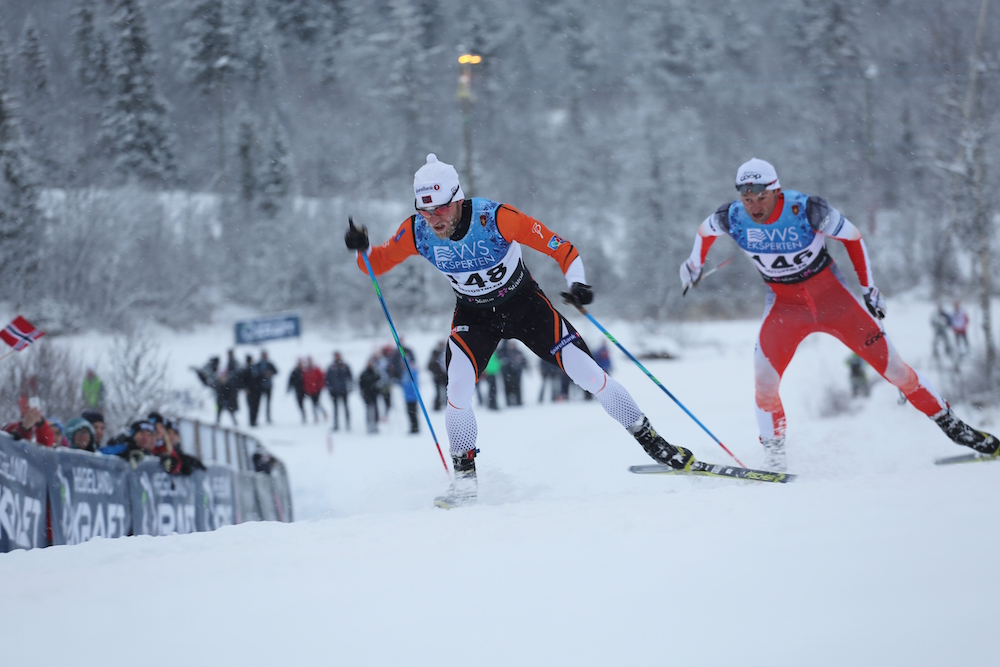
    Martin Johnsrud Sundby (148) leads fellow Norwegian national-team member Petter Northug during the 15 k freestyle FIS race in Beitostølen, Norway. Sundby went on to win by 47 seconds and Northug was a minute back in fourth. (Photo: Eirik Lund Røer/SKIsport)
    Petter Northug (r) chases Norwegian teammate Martin Johnsrud Sundby during last weekend’s 15 k freestyle FIS race in Beitostølen, Norway. Sundby went on to win by 47 seconds and Northug was a minute back in fourth. (Photo: Eirik Lund Røer/SKIsport)

    But he didn’t race the Beitostølen 15 k classic, and this marked his first win in two race weekends this season (he was second to Norwegian teammate Eirik Brandsdal in the Beitostølen classic sprint last weekend). There, he raced in a red-and-white suit with the name of his main sponsor, Coop, on his leg.

    In Bruksvallarna, he wore another suit with the Coop logo — one custom-made by Bjørn Dæhlie — with Sweden’s white, blue and yellow.

    “Some look at this with hatred, but I don’t judge anyone,” Northug told NRK, according to a translation. “People are allowed to think what they want.”

    Despite feeling lack he lacked “a little punch” early in the race, Northug closed hard in the final the kilometers on Friday. At the finish, where he knocked Johnsson — the sixth starter — out of the leader’s spot (Northug started 158th), Northug made a point not to celebrate.

    “It’s just training here; it means nothing that I won the race,” he told VG.

    “It would be as if I was celebrating beating my brother in a running race, and he was three and I was 14,” he said, according to a rough translation.

    The fact of the matter is Johnsson, 30, is actually older than Northug, and so is 31-year-old Martin Johansson of IFK Mora, who placed third 38.1 seconds back and 2 seconds out of second.

    Two-tenths of a second from the podium was Norway’s 22-year-old Mikael Gunnulfsen (Oern IF) in fourth, and Jespersen, 32, placed fifth (+ 38.6). In second at one point, Andersson ended up sixth (+39.9).

    In all-too-personal news, Northug’s coach, Stig Rune Kveen, told Aftonbladet that Northug is actually half-Swedish. His parents, John and May, apparently conceived him at the Bruksvallarna mountain race in April 1985. Therefore, thereto…

    Swedish sprinter Emil Jönsson, who placed 15th (+1:03.4), was all for Northug becoming a full-blown Swedish citizen.

    “He is most welcome. We can offer food and shelter,” he told Expressen. “We may need him.”

    Racing continues in Bruksvallarna with the 10/15 k freestyle on Saturday and freestyle sprints on Sunday.

    Results

  • Kalla Wins Bruksvallarna 5 k by 25 Seconds; Henriksson Rebounds to Third

    Kalla Wins Bruksvallarna 5 k by 25 Seconds; Henriksson Rebounds to Third

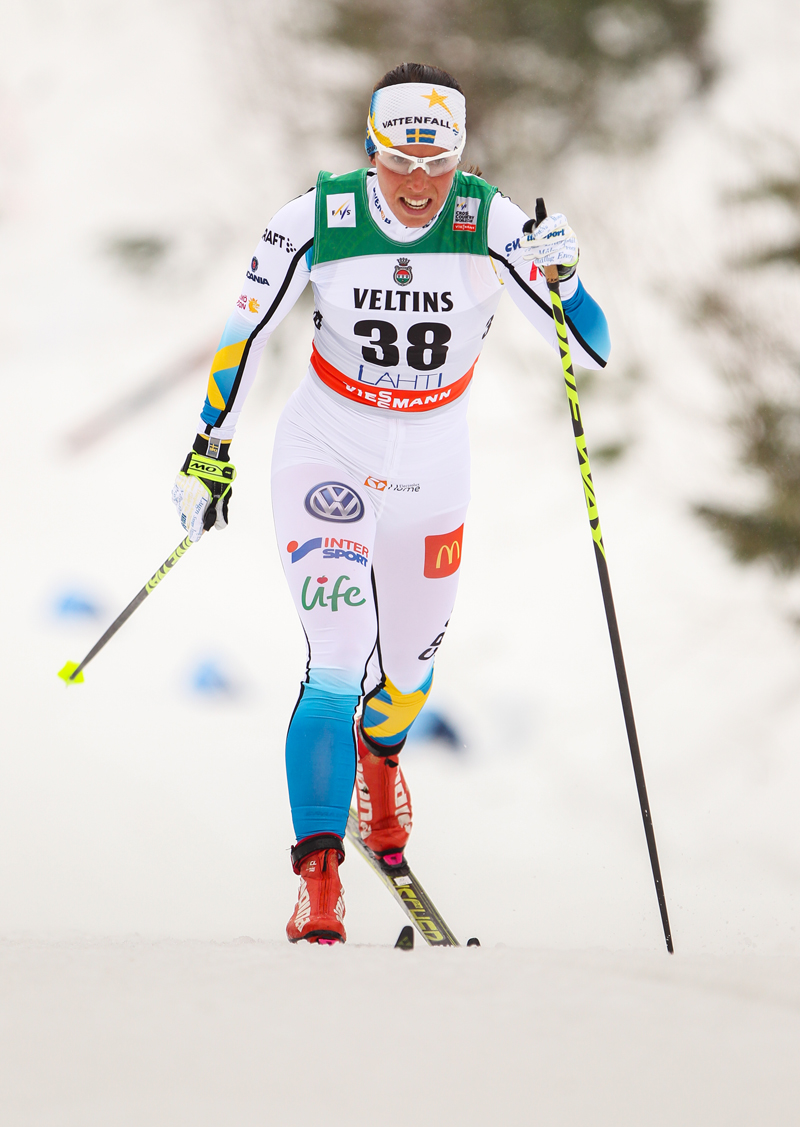
    Charlotte Kalla racing to third in the Lahti World Cup 10 k freestyle in Finland last March. (Photo: Fischer/NordicFocus)
    A world champion in the 10 k freestyle at 2015 World Championships last February, Charlotte Kalla is shown racing to third in the Lahti World Cup 10 k classic in Finland last March. (Photo: Fischer/NordicFocus)

    Charlotte Kalla. Ida Ingemarsdotter. Those two names in first and second in Sweden’s first International Ski Federation (FIS) race of the season — the women’s 5-kilometer classic in Bruksvallarna — were more or less expected.

    But Sofia Henriksson in third? The 21-year-old Swede hadn’t raced in nearly a year, coming off a hand injury and eating disorder. Leading up to U23 World Championships last season, she had been told she was “too thin and not allowed to go,” she wrote on her blog. “It seemed at first that everything collapsed.”

    Yet on Friday, she finished 29.8 seconds behind 2015 world champion Kalla, the winner in 12:18.6. Another Swedish-national team member, Ingemarsdotter was 25.6 seconds back in second and 4.2 seconds ahead of Henriksson in third.

    While Ingemarsdotter held off Henriksson for the lead late in the race, Kalla ultimately topped them both, leading at every checkpoint. By 1.4 k, Kalla was already 12.5 seconds faster than Ingemarsdotter. At 3 k, she was nearly 25 seconds up on Ingemarsdotter in second. Meanwhile, their teammate Hanna Falk sat in third, but Henriksson edged Falk in the second half of the race. Henriksson finished 1.9 seconds ahead of Falk — who placed fourth — for her first podium since placing second in the Bruksvallarna 5 k classic last year.

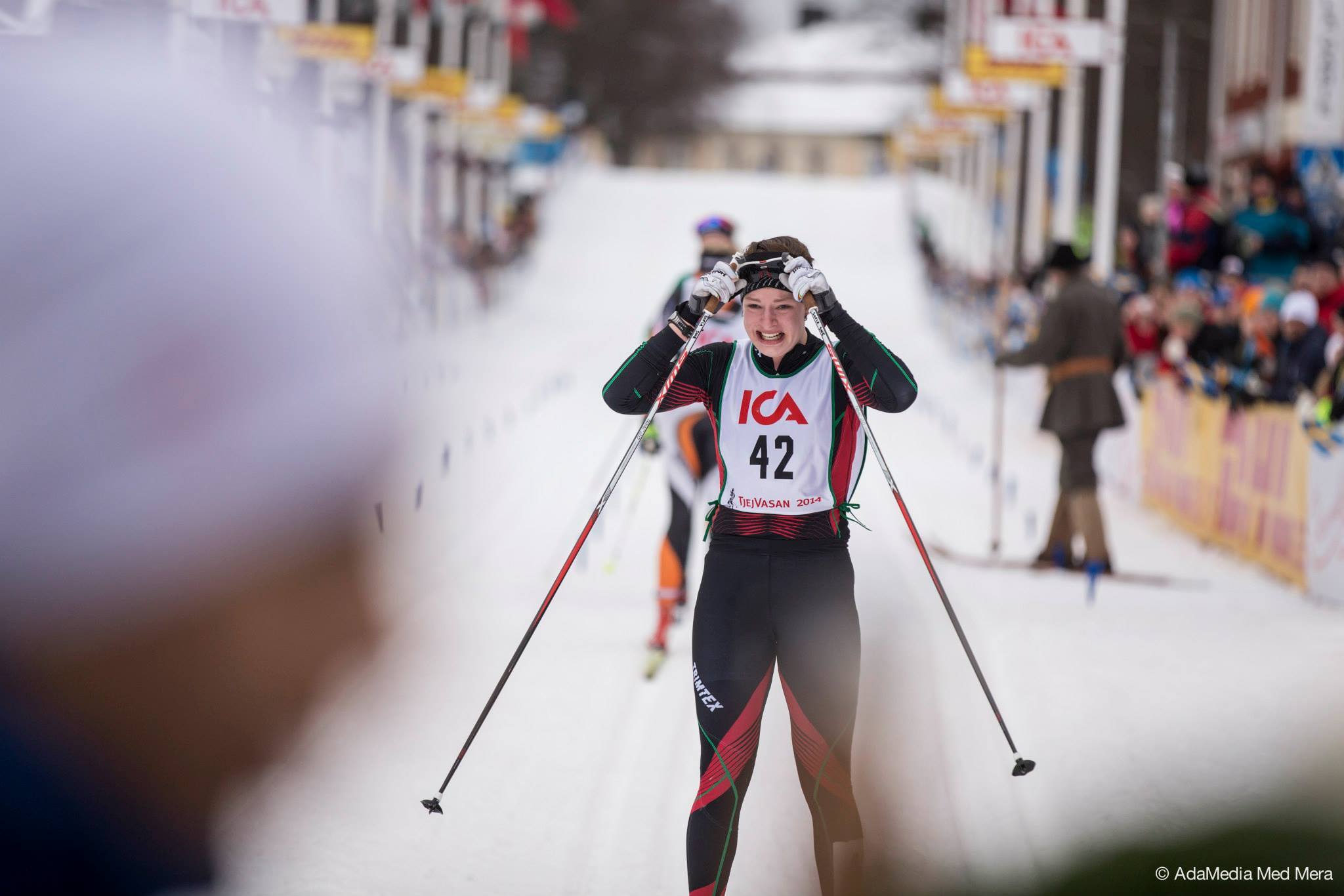
    Sofia Henriksson sheds tears at the finish of last year's Tjejvasan, an annual all-female event in Sweden, which she won. (Photo: Hälsningar Adam)
    A teary-eyed Sofia Henriksson of Sweden at the finish of the Tjejvasan, an annual all-female event in Sweden, which she won in 2013. (Photo: Adam Alexander Johansson)

    After the race, Henriksson wrote a blog with the English title: “Comeback”.

    “There are many emotions that move inside me right now,” she began, according to a translation. “Above all, I feel joy and thanks largely to be back [racing]. Today’s race was my first since the middle of January. The 10 months outside racing have been a journey for me with both ups and downs and many emotional challenges.”

    Her main focus had been to feel good on skis. Despite a tremendous amount of nerves in her first international start since December at the Davos World Cup last year, she felt she succeeded at that.

    “I also got frequent updates on how I was doing in relation to the other skiers, but then many of the really [fast] girls started behind me, it was initially difficult to assess the splits,” Henriksson explained.

    Sofia Henriksson (SWE), racing to ninth in the Davos World Cup 10 k classic in Switzerland in December 2014.
    Sofia Henriksson acing to ninth in the Davos World Cup 10 k classic in Switzerland last December. That was her last race before the Bruksvallarna 5 k classic FIS race on Friday.

    She never imagined placing in the top three.

    “It was only a short while after the finish I could rejoice over my third place, a position I before could only dream about,” she added.

    Most importantly, this result gave her hope for this season. “I’ve found it’s important to maintain good balance and also keep the focus on training,” she wrote.

    As for Kalla, Swedish women’s coach Mattias Persson told Aftonbladet she is “better trained than ever.”

    Kalla, 28, led a Swedish sweep of the top 15. Sixty-four women finished the 5 k, representing either Sweden, Norway, Slovenia, Croatia, or Great Britain.

    Results

  • Biathlete Lindström Tops Swedish Ski Field in Bruks 15 k; Kalla Dominant in 52-Second Win

    Biathlete Lindström Tops Swedish Ski Field in Bruks 15 k; Kalla Dominant in 52-Second Win

    Frederik Lindström racing at a biathlon World Cup in 2012. Today, he raced without a rifle on his back for the first time in six years - and came out on top. Photo: Fischer/nordicfocus.com.
    Frederik Lindström racing at a biathlon World Cup in 2012. Today, he raced without a rifle on his back for the first time in six years – and came out on top. Photo: Fischer/nordicfocus.com.

    Yesterday it was 0.4 seconds, today 0.7 – Calle Halfvarsson just can’t seem to pull out a win in Bruksvallarna, though he can get darn close.

    In Saturday’s 15 k freestyle competition in the Swedish mountains, Halfvarsson was left in second place behind Fredrik Lindström, a World Championships medalist from Sweden’s biathlon team.

    “I’m not surprised that Fredrik was so fast,” Halfvarsson told Swedish newspaper Aftonbladet. “He was second behind me once at a junior championships in Falun. He’s really good at skating… he would not be bad to have on a relay team.”

    Lindström said that it was his first cross country race since he was a junior (in fact, his first FIS race since that 2008 championships in Falun).

    “I’m in a bit of a shock actually,” he told Swedish newspaper Expressen, according to a translation. “It felt good to race…. but yes, it feels weird.”

    Because he had no FIS points, Lindström had an early seed in the race. Some concluded must have been an advantage before the hundreds of racers skied over and degraded the snow. But Johan Olsson, yesterday’s winner in the 10 k classic, disagreed.

    “One should not take anything away from him,” he told Aftonbladet. “I have been honestly beaten today.”

    For Lindström, entering the competition was part of a deliberate strategy to prepare for this year’s biathlon season. He is in an unusual position in that Sweden’s two other stars, Olympic gold medalist Björn Ferry and two-time World Championships medalist Carl Johan Bergman, both retired at the end of last season.

    Thus Lindström, despite being only 25 years old, finds himself as the most veteran member of his team and lost valuable training and race partners.

    Tackling the ski field, he hopes, will make up for this in some sense.

    “I was keen to do my best,” he told Expressen. “What I’ve had as a goal is to take the best shooters’ help and improve my shooting, and take the best skiers to improve my skiing.”

    Yet he was humble, if teasing, when communicating with fans before the race.

    “If you have nothing planned today, then I think you should watch the ski races in Bruksvallarna,” he tweeted.

    Others were confident of his success: Ferry said that if Lindström didn’t make the top five, he’d eat his own hat.

    Daniel Richardsson finished third, +6.0, with Martin Johansson and Olsson fourth and fifth, +20.7 and +22.0, respectively. Petr Novak of the Czech Republic was the only non-Swede to break into the top ten, finishing ninth.

    Canadian Paralympic gold medalist Brian McKeever placed 45th, +2:33.

    In the women’s 10 k freestyle, Charlotte Kalla came back from a big win in the 5 k classic with another victory, this time by 52 seconds over Maria Rydqvist. Anna Haag placed third for the second day in a row; former Colorado University standout Maria Graefnings placed fifth, just 15 seconds off the podium.

    “I’m pretty confident in what I can do here,” Kalla told Aftonbladet. “But I had to work harder today. Yesterday was easier.

    Racing continues in Bruksvallarna tomorrow with classic sprints.

    Results: men & women

  • Drama in Bruksvallarna: Olsson Capitalizes on Announcer Error; Jönsson and Haag Swap Chips

    Drama in Bruksvallarna: Olsson Capitalizes on Announcer Error; Jönsson and Haag Swap Chips

    Sweden's Johan Olsson three years ago at the 2011 World Cup opener in Sjusjøen, Norway. (Photo: Inge Scheve)
    Sweden’s Johan Olsson three years ago at the 2011 World Cup opener in Sjusjøen, Norway. (Photo: Inge Scheve)

    The first race of the season is a good one to get the kinks out. You don’t have to tell that to a few top contenders in Friday’s International Ski Federation (FIS) races in Bruksvallarna, Sweden.

    Not only did Johan Olsson snatch the victory by less than half a second in a season-opening 10-kilometer classic race, but husband-wife duo Emil Jönsson and Anna Haag swapped timing chips and caused a lot of commotion in the timing shack.

    Calle Halfvarsson dominated the men’s 10-kilometer classic race, but lost out on first by four-tenths of a second. The stadium announcer, Kjell-Erik Eriksson, took the blame.

    “As a speaker, I generally have a good handle on everybody’s times,” Eriksson wrote on his website, Sweski.com.

    Swede's Calle Halfvarsson (front) edges Italy's Federico Pellegrino for the win in the individual skate sprint at the 2013/2014 Tour de Ski in Oberhof, Germany. (Photo: Felgenhauer/NordicFocus)
    Swede’s Calle Halfvarsson (front) edges Italy’s Federico Pellegrino for the win in the individual skate sprint at the 2013/2014 Tour de Ski in Oberhof, Germany. In a 2014/2015 opening FIS Race on Friday in Bruksvallarna, Halfvarsson missed out on first by 0.4 seconds. (Photo: Felgenhauer/NordicFocus)

    “I was sure Calle was going to win when he came into the stadium. At the last turn, he was clearly in the lead. Johan Olsson was 11 seconds behind, and at one point he was 18 seconds behind. That’s why I called out Calle as the winner as early as the start of the final straight stretch,” he explained.

    “Calle wanted to give the spectators a little extra, he slowed down and just rolled across the finish, but that cost him the victory. Johan Olsson raced the last straight stretch as if it was an individual sprint race, and he won by less than half a second. … I take the blame for that, if it helps people sleep better tonight.”

    Halfvarsson, 25, assumed full responsibility, telling Aftonbladet that it was “ridiculous” of himself. “It’s my fault,” he said, according to a translation.

    “I was leading by 20 seconds and thought I could [lollygag] towards the finish. I thought I’d be cool and it was a bit cocky to slide into the finish,” he said.

    Olsson, 34, said he felt a little sorry for Halfvarsson.

    “I was in the stadium when I heard that Kjell-Erik said Calle stopped [skiing],” he told SportExpressen. “So I realized that I could pick on him with a hefty spurt.”

    He added that he was a bit surprised with his result.

    “It feels really nice,” he said, according to a translation. “You can ask my teammates — they know I have not been in shape. It’s almost as if I was starting to wonder if I did something wrong. But when the bib number goes on … it felt a lot better.”

    Friday’s winner in Beitostølen, Martin Johnsrud Sundby had this to say in response to Olsson’s supposed poor form: “Has Johan Olsson ever claimed to be feel fit and prepared ahead of a race? WTF,” Sundby he told SportExpressen. “The day he does, the rest of us might as well not even bother to start.”

    Sweden swept the top 18 with Lars Nelsson finishing third, 22.5 seconds behind Olsson and 22.1 behind Halfvarsson. Daniel Richardsson was another 5.6 seconds back in fourth and Jesper Modin took fifth, 7.9 seconds later.

    “Has Johan Olsson ever claimed to be feel fit and prepared ahead of a race? WTF. The day he does, the rest of us might as well not even bother to start.” — Norway’s Martin Johnsrud Sundby, reacting to Olsson’s statement after his Bruksvallarna win, after Sundby won Friday’s FIS opener in Beitostølen, Norway

    ***

    Emil Jonsson and Anna Haag trying the Americans' strength plan in the summer of 2011. (Photo: Kikkan Randall/Liz Stephen)
    Emil Jonsson and Anna Haag trying the Americans’ strength plan in the summer of 2011. (Photo: Kikkan Randall/Liz Stephen)

    Apparently Jönsson and Haag are so connected that they even share timing chips, causing a major mixup for the timing crew.

    Jönsson had marked the chips with each their names, but he inadvertently switched the chips so that they had the wrong name. Haag discovered the mistake after finishing and was mostly just happy not to get DQed. However, she got no splits skiing with Jönsson chip, Eriksson noted. Jönsson was not listed as starting or finishing — but the results did not indicate a disqualification, either.

    Haag ended up third in the women’s 5 k classic, 50.4 seconds behind Swedish national teammate Charlotte Kalla — the winner in 16:04.4 — and 13.4 seconds back from 20-year-old runner-up Sophia Henriksson.

    Kalla, who strained a back muscle a few weeks ago, said she wasn’t sure how she’d fare heading into Friday’s race.

    She was pleased with her result.

    “It feels great to start off the season in this way,” Kalla told Aftonbladet.

    Sofia Henriksson sheds tears at the finish of last year's Tjejvasan, an annual all-female event in Sweden, which she won. (Photo: Hälsningar Adam)
    Sofia Henriksson sheds tears at the finish of last year’s Tjejvasan, an annual all-female event in Sweden, after skiing in the lead pack but missing a top finish because of a pileup. (Photo: Adam Alexander Johansson)

    “Today I felt like I got the answer I hoped for,” she added, according to a rough translation. “I thought it went well in skiing. I had good skis and took hold. I knew that there were some parts where you can earn on kick-double poling so I tried to find the pressure there too. It’s one of my strengths.”

    A first-year senior with Piteå Elit, Henriksson found herself surprised with her performance.

    “I knew that I can go well in a classic race, but not quite this good,” she told Skidzonen.

    “I didn’t have much courage, but I bet it all and it went really well,” she added. “It is important to get the confidence directly and of course fun with this kind of start.”

    A 17-year-old junior, Sweden’s Ebba Andersson also surprised in 10th.

    Sweden filled the top five with Emma Wiken in fourth, 51.1 behind Kalla, and Sara Lindborg in fifth (+53.4). Switzerland’s Seraina Boner was sixth.

    ***

  • Finding Serenity in Bruksvallarna: A Snow-Seeking Citizen Skier Amongst the National Teams

    Finding Serenity in Bruksvallarna: A Snow-Seeking Citizen Skier Amongst the National Teams

    Early morning in Bruksvallarna. Photo: Simon Evans.
    Early morning in Bruksvallarna. Photo: Simon Evans.

    About the author: Simon Evans is a British postdoctoral researcher in the Animal Ecology department of Uppsala University’s Evolutionary Biology Center, and an avid skier. In 2013, his second year in Sweden (and thus his second year skiing), he finished the 90 k Vasaloppet in five hours and 57 seconds, placing him 692nd of the 15,800 total participants. Unsurprisingly, he was the first Brit. He is now planning a long-distance bike trip in northwestern Canada.

    Uneasy in the icy conditions, I move out of the tracks for the steep downhill route that leads – via a tunnel that I am going to have to negotiate at speed – to the relative tranquility of the flatter tracks alongside the river. It’s my first time on skis for the winter and I am aware how conspicuously I look like Bambi as I struggle to portray myself as anything other than Horrendously Misplaced Brit, a characterisation my Swedish friends – schooled to ski from a young age – so often amuse themselves with. On this occasion, though, I was out of the door and clipping in my boots whilst they slept off our late arrival the previous evening. The result is an absence of sympathetic, friendly faces to turn to for reassurance, as far more accomplished skiers – Charlotte Kalla, Jörgen Brink and the Thunell brothers, to name a few – effortlessly glide past, seemingly immune to the difficulties I face, and clad in bright kit that boldly pronounces their national allegiances. My confidence takes a battering and after a couple of short loops I beat a hasty retreat to the safety of the lodge, consoling myself with unconvincing mutterings about “the wrong kick wax”. But how did a guy raised in a seaside town in southern England come to be sharing the tracks with some of the sport’s biggest names?

    Bruksvallarna 1I moved to Sweden two years ago, having completed my PhD in the UK and been offered a job at Uppsala University, a small city about an hour north of Stockholm. Eager to make the most of what Scandinavia has to offer, and having been a keen runner, cyclist and university rower, the decision to take up cross-country skiing was an easy one. So it was that within a month of arriving in Sweden, I found myself in one of Uppsala’s sports stores worrying how a complete novice – and an appropriately impoverished graduate to boot – can justify spending several thousand kronor on a couple of thin planks and some flimsy carbon fibre poles.

    Yet, as you probably already know from your own experience if you’re visiting this website, cross-country skiing is an enormously enriching pastime, so it didn’t take long before I was hooked. For someone with a marked sensitivity to the cold (and an accompanying hatred of being chilly), this speaks loudly of just how enjoyable Nordic skiing is. The weekends of my first winter were spent tracing circles across a frozen lake, the only place where the marginal snow depth of that year didn’t pose a threat to the precious base of my skis. As my second winter approached, my local ski shop’s friendly assistant, endlessly plagued by my questions on glide waxes, optimal skier weight and the rolling resistance of roller-ski wheels, pushed a pamphlet for the local ski club into my hands. I tentatively attended my first training session a few weeks later and, whilst my self-taught technique raised much amusement (“your technique is about 40 years out of date”, somebody eventually ventured to tell me), everyone was welcoming. My technique remains pretty rough, but I at least know now what I should be striving (and striding) for.

    Now, with my second year of skiing behind me and my third winter in Scandinavia approaching, I joined a few club mates for an early-season trip to Bruksvallarna,in the Swedish mountains. Being decidedly less fashionable than their Alpine counterparts, Sweden’s ski resorts offer much better value for money, and my share of our lodge cost me 800 kr for four nights. This, for a lodge that was sited less than fifty metres from the tracks. And – this being Scandinavia – equipped with its own sauna.

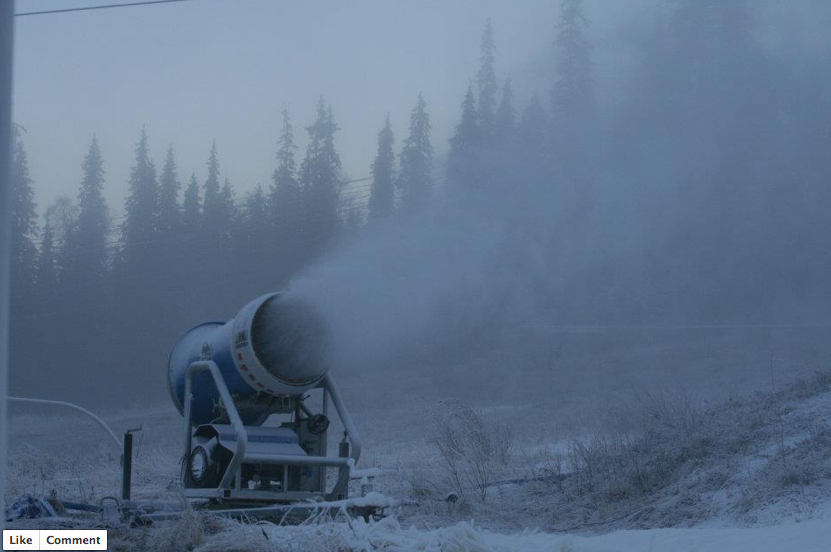
    Bruksvallarna 4We arrived a week after the snow in Funasfjällen, the umbrella name for the five neighbouring skiing resorts that have interlinked their ski trails and other aspects of their organisation, to create what is, in effect, a meta-resort. Whilst the other centres were yet to start preparing trails, at Bruksvallarna (or ‘Bruks’, as it’s generally called by those in the know) the snow machines had been working overtime to create thick trails in advance of the opening FIS races scheduled for the following weekend, from which Sweden would choose its World Cup team. There were thus a couple of fairly technical loops open and in heavy use, by both national teams and serious club skiers who were eager to get in some early training on the white stuff before it arrives in places like Mora.

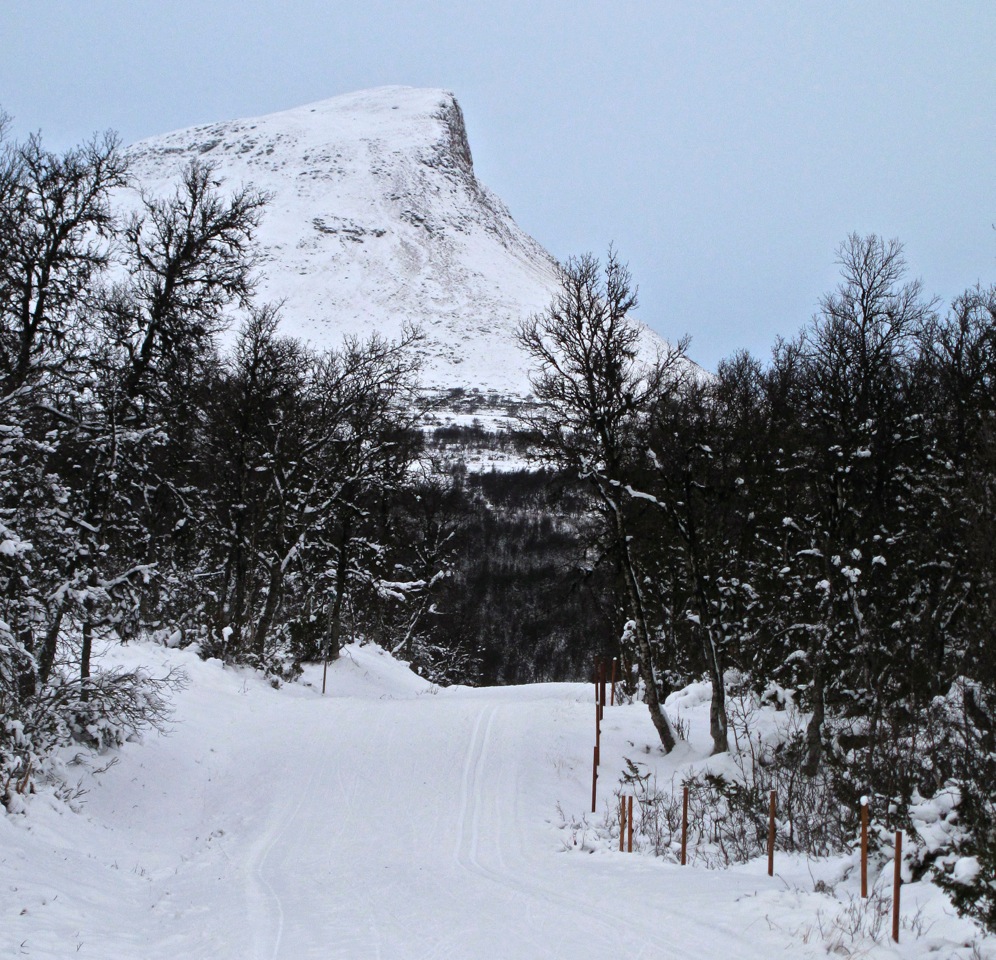
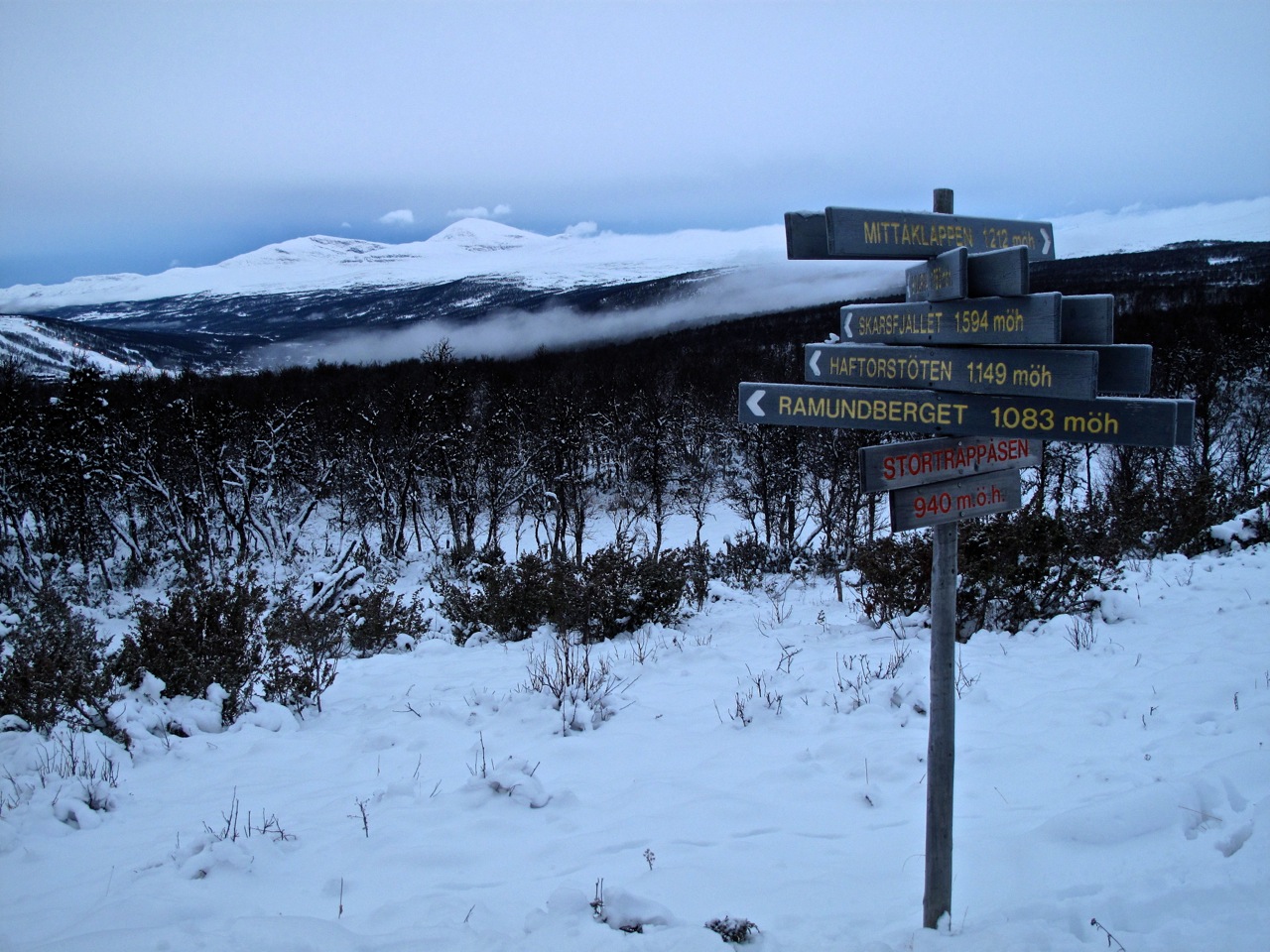
    Alongside these loops, there was also a trail open that led up the slope overshadowing Bruks, which climbs steadily for perhaps 5 k. The high plateau and offers great views of the ski slopes of Ramundsberget, the northernmost of the five resorts that nestles into the head of the valley. The Mittåkläppen trail then descends into a depression in the plateau, terminating at a river crossing some 11k from Bruks. After my ‘Bambi’ moment and a cup of tea in the chalet to restore my bravado, it was up the mountain that I fled, where I could remind myself how to ski without feeling embarrassed in front of more accomplished practitioners. More relaxed, having found myself alone on the trail, with the aggressively undulating terrain of the trail loops down in the valley replaced by a satisfyingly elongated ascent (for some reason, I love going uphill), my limbs started cooperating. And the views from the ridge top are pretty special, more than enough to draw a smile on my face as I sucked in the pleasingly cold air and tried to focus on the technical flaws my club’s coaches had highlighted during the autumn’s roller-skiing. Here, on snow rather than a rural road, the skis slid near effortlessly with each heave of my quads or push on my poles. Having earlier arrived back at the chalet in a state of intimidation (at both skiing and skiers), I returned in a state of reverie, that feeling of wonderful bliss that accompanies many ski outings. And for me, that’s one of the greatest features of this addictive sport, that the simple act of a training ‘run’ takes me into some stunning terrain, beautiful scenery that I am immersed in as I traverse the landscape.

    So it was that I largely abandoned the valley tracks over the next few days and instead pursued the vistas that the ridgetop track presented. I’d set my alarm to rouse me while it was still dark, distractedly eat some breakfast as I gazed out of the window at the oncoming daybreak, and then dash up the mountainside so as to be above the treeline as the colours of dawn were thrown over the peaks and gradually spilled down the slopes. By the time I’d made it to the trailhead and was on my way back, the sun would be flirting with the horizon.

    It was still very early to be skiing, and we were lucky that fresh snow fell in the days before we arrived. We enjoyed two good days but on the third the wind turned, bringing warmer air that forced the mercury up and the thin covering of snow on the Mittåkläppen accordingly began to subside. As long as the accumulated efforts of the snow machines left the valley tracks unaffected, I persisted with my morning routine (although now armed with universal klister), eager to get my fix of mountain sunrise. However, with a lot of debris on the snow and the tracks barely existing, I struggled for grip on the long ascent out of the valley. So I unexpectedly began the next phase of my development as a nordic skier: skating. And this proved something of a revelation, for I discovered that freestyle is not necessarily the brash upstart I had assumed it to be. Rather, it had a serene rhythm all of its own.

    This unplanned introduction to a whole new dimension of skiing challenges would make the long drive into the mountains worthwhile on its own. But when placed alongside the confidence regained, the friendships made and the household names spotted, our short break in the early season snow was even better than I had hoped.

    Now, back in the flatlands of Uppsala, with the mountains and skiable tracks of Bruksvallarna far beyond the horizon, my clubmates wait impatiently for the arrival of snow. As for me, I’ve got more pressing concerns: which skate skis should I buy?

    Bruksvallarna 3

  • Weekly Roundup: Season Kickoffs

    Liz Stephen (l) with Justyna Kowalczyk (POL) and Russia’s Yulia Tchekaleva (r) on the podium on Sunday in Muonio, Finland. Kowalczyk won the FIS 10 k skate race by 4.46 seconds over Stephen. (Holly Brooks courtesy photo)

    After months of training and anticipation, the nordic sports opened their seasons around the world this weekend with races around the world. Established veterans had several dominating performances, but there were new faces on the podiums as well, signaling that when World Cup racing starts next weekend, things could be pretty interesting.

    In Bruksvallarna, Sweden, the Swedish, Canadian, and Slovenian national teams butted heads in a three-day race series. One of the biggest surprises was Swedish 23-year-old Emma Wiken taking a 2.4-second win over Charlotte Kalla on the first day of racing. But otherwise, Sweden’s top stars prevailed, with Daniel Richardsson, Johan Olsson, Teodor Peterson, and Ida Ingemarsdotter taking wins and Kalla returning to completely decimate the women’s field in the 10 k skate. Canada had strong performances as well, with Alex Harvey placing fourth in the 10 k classic, Ivan Babikov third in the 15 k skate, and Chandra Crawford second in the skate sprint. Katja Visnar of Slovenia also stepped on the podium in the sprint.

    To the northeast in Muonio, Finland, even more national teams tried out their racing legs. Finland was joined by Russia, the United States, the Czech Republic, Poland, Kazakhstan, Japan, and Germany in a three-race series. Justyna Kowalczyk of Poland swept the women’s competitions, and was at her most dominant in a 29-second win in Saturday’s 5 k classic. For the men, Alexey Poltoranin of Kazakhstan took two victories before Matti Heikkinen of Finland bested the field in the 15 k skate. The U.S. had several top performances, headlined by Liz Stephen‘s second-place finish in the 10 k skate, just 4.6 seconds down on Kowalczyk; Holly Brooks and Jessie Diggins also made the top ten. But Kris Freeman also placed fourth in the men’s classic race, and Andy Newell and Ida Sargent both made the sprint finals.

    Meanwhile, Beitostolen, Norway, was hosting the opening races for both skiers and biathletes. The women’s races were characterized by familiar Norwegian faces on top of the podium: Maiken Caspersen Falla in the sprint, Therese Johaug in the two distance races, and Tora Berger dominating the biathlon competitions. Perhaps the biggest surprise was Marit Bjørgen‘s two losses to Johaug, including a 50-second blowout in the classic race. Petter Northug won on Friday before falling in the sprint final, leaving Anders Glørsen to take the win, while Chris Andre Jespersen skied to a huge victory on Sunday. World Champion Martin Fourcade of France won Saturday’s biathlon sprint, before sitting out Sunday’s mass start and leaving the victory to Erlen Bjøntegaard.

    Finally, the U.S. race season began in Fairbanks with the Tour de Ski Fairbanks, a three-day series culminating in pursuit races on Sunday. Designed to be a meet for University of Alaska Anchorage and University of Alaska Fairbanks skiers, the weekend consisted of prologues on Friday, classic mass starts on Saturday, which included sprint preems, and then skate pursuits on Sunday. Logan Hanneman and Raphaela Sieber, both from UAF, picked up the overall titles, although Viktor Braenmaark and Marine Dusser (UAA) had the fastest ski times on Sunday and Rebecca Konieczny (UAF) won the women’s prologue.

    Elsewhere on the site, we previewed the upcoming race seasons – nordic combined, biathlon, the U.S. and Canadian World Cup squads – and conditions and potential start lists for on upcoming races at West Yellowstone and Canmore. Finally, we checked in with Canadian biathlete Nathan Smith as his team made their final World Cup preparations, interviewed APU coach Erik Flora, reviewed the history of Olympic anti-doping efforts, and examined why U.S. skiers no longer have free phone service in Europe.

    Here’s a roundup of race reports and results.

    Bruksvallarna, Sweden: Friday 5/10 k classic | Saturday 10/15 k skate | Sunday skate sprints | results

    Muonio, Finland: Friday classic sprints | Saturday 5/10 k classic | Sunday 10/15 k skate | results: here from race organizers (scroll down for earlier races), eventually here on FIS

    Beitostolen, Norway: Friday 10k skate & 15k skate | Saturday classic sprints | Saturday biathlon sprints | Sunday 10/15 k classic | Sunday biathlon mass starts | biathlon results | ski results

    Fairbanks, Alaska: Friday blog post  |  Saturday blog post  | Sunday blog post  | results will eventually be posted here.


  • Johan Olsson Paces to Bruksvallarna Victory; Using New Tactics, Babikov Surges to Third

    Johan Olsson Paces to Bruksvallarna Victory; Using New Tactics, Babikov Surges to Third

    Ivan Babikov (CAN) racing to third in the 15 k skate in Bruksvallarna, Sweden on Saturday. Photo courtesy of Babikov/Salomon.

    Devon Kershaw had a good start in Bruksvallarna, Sweden today. So did Daniel Richardsson. But in the end, for both the Swedes and the Canadians, it was steady pacing that garnered skiers a top finish: Johan Olsson bested Richardsson for the win, and Ivan Babikov placed third for Canada while Kershaw faded to tenth.

    At 4.6 k into the 15 k, interval-start skate race, the second competition in the opening series of FIS races, Richardsson had an 11-second lead over Kershaw, with Olsson another two seconds back. Babikov was tenth, 21 seconds out of the lead.

    And yet Olsson, if anything, picked up the pace and was unstoppable over the last half of the race.

    “I did my own race, and it felt good,” Olsson told Sweden’s TV4. “It was nice to go first in the seeded field. I’ve been away a lot and haven’t had so many training races, so I haven’t had any direct comparison to the others yet. It was nice that it went well today.”

    Richardsson, who won Friday’s 10 k classic race, also seemed happy with the result; traditionally he has been stronger in the classic technique.

    For Babikov, the slow start and strong finish were all part of his plan.

    “I tried new tactics today,” he told FasterSkier in a phone interview. “The goal was to start really conservative for the first lap, and not thrash it, just to ski and glide. I tried to save as much power and energy as I could for the last few laps. And it worked really well I think… I didn’t know it was going to be that hard. The snow is pretty fast, so I thought it would be a fast 15 k, but it ended up that lots of people got tired on the last laps and maybe started too fast.”

    Kershaw was one of those – “I licked chode”, he tweeted after the race – and told FasterSkier that the large workload he’s had in training for the last few weeks was clearly still affecting his ability to go hard. He was impressed with Babikov’s control.

    “I want to say how psyched I am for Babs though- he was great today,” Kershaw wrote at the end of an e-mail to FasterSkier describing his race. “Paced it perfectly and was really, really moving that last lap. I’m impressed. He’s been notorious for slow starts to seasons, too, and to have a race like that so early in the year, on a course that was pretty rolling (read: not epically difficult which is Babs terrain!) is a very, very good sign. It was awesome to see.”

    Babikov said that as far as the tactics test went, he was likely to use the same approach to next weekend’s 15 k skate in Gällivare, the first World Cup of the season. He was optimistic about his chances there, and not concerned about the time back from Olsson.

    “Of course I’m happy with the race in total, because I’m on the podium and those two guys – Johan Olsson is potentially the winner for next weekend, too,” Babikov said. “He won last year’s opener in Sjusjøn in Norway, and he’s always been strong. And Richardsson is a really good skier, too. And I beat quite a few good guys too, Hellner was back there somewhere, so I’m really happy with my race, for sure.”

    Babikov had a few other advantages, as well. He was the very last starter in the field, which he said played in his favor on a crowded course; for the first two laps, he was constantly passing large groups of skiers, and some parts of the course were quite narrow. There was even a tunnel narrow enough that racers could only double-pole, “so if you’re stuck behind somebody you have to wait until it opens at the end,” Babikov said. By the last lap, the course had cleared out and he had more room to run.

    He also lapped with Olsson and had the chance to ski a loop with the eventual winner.

    “I was pretty relaxed behind him, which gave me some good confidence, and I could use that on the last lap,” Babikov reported.

    All in all, he said, he is in “good form at this moment.”

    The same could not be said for Kershaw – or Sweden’s star skier Marcus Hellner, who finished ninth, one place ahead of the Canadian and well over a minute behind Olsson. Although Hellner didn’t have Kershaw’s strong start, he experienced a similar fade at the end.

    “I’m not sure how Hellner raced, but for him to be ninth in a 15 k skate race… It must be one of his worst 15 k skate races ever,” Kershaw wrote. “You know he’ll be a different person next weekend on his home courses of Gallivare.”

    Kershaw hoped that he would, too, with another week to recover from his training load.

    “I am and have been training very hard these last weeks, which is pretty normal for me this time of year,” Kershaw wrote. “Of course, last year I’m not even sure I was top 30 in this race, but it doesn’t feel good to get the floor wiped with you. Apparently it takes some time to digest that workload, but I am hoping that next weekend in Gallivare goes WAY better than it did today. I’ll try and take the small positives out of this effort, and move forward.”

    His fast pace early – Kershaw actually led at 1.8 k – was deliberate, he said, and he hadn’t taken into account how tired his body was. After feeling good and expecting to be able to hold the pace, he found that quite the opposite was true. Coming down the last hill into the finish, Kershaw bent over and put his hands on his knees, trying to steady his shaky legs.

    “I was feeling pretty good for that first part, skiing big/smooth which is how I wanted to attack the course,” he wrote. “I felt relaxed and was hitting the technique well, but… I was on fumes with one lap to go, and I was able to hold on a bit until the 11.8 k mark when things got really, really ugly. In those last 3 k I was running on empty – legs like concrete and I couldn’t recover, let alone attack… I lost oodles of time and it was a big effort for sure.”

    Kershaw and Babikov were the only non-Swedes to break into the top ten; Lars Nelson placed fourth, the third Swede for a second day in a row, and likely won himself a start in next weekend’s World Cup. Anton Lindblad was fifth and Martin Johansson sixth.

    The lone remaining Canadian, last year’s NorAm winner Kevin Sandau, placed 36th.

    Results

  • Harvey, Crawford Break Up Swedish Sweep in Bruksvallarna

    Canadian Alex Harvey racing to a 10th-place finish in last year’s 15 k skate race on Nov. 12 in Bruksvallarna, Sweden. On Friday, Harvey was fourth in the 2012 Bruksvallarna FIS opener. (Photo: Erik Wickström)

    In and around Scandinavia on Friday morning, several nordic races kicked off the season. While the International Ski Federation (FIS) events in Bruksvallarna, Sweden, were among some of the shortest, few likely complained about a 5- and 10-kilometer classic race at this point in the year.

    It’s November. The World Cup races start in a week. Let’s just get the kinks out.

    Several skiers across Europe tweeted about their legs feeling a little syrupy, which essentially translates to mean slow. The winners of Friday’s races in Bruksvallarna, Sweden’s Daniel Richardsson and Emma Wikén, were pleased with how their bodies responded for the tune up – the first of three races on the western edge of Sweden (near Norway) this weekend.

    Richardsson topped more than 140 competitors in the men’s 10 k, winning in 22:15.3. Seeing how most of the field was Swedish, he led his nation’s sweep of the top three, with Marcus Hellner finishing 5.2 seconds behind in second and Lars Nelson placing third (+6.3).

    Canadian Alex Harvey ended Sweden’s run by beating out Calle Halfvarsson for fourth and was the only non-Swede in the top 17. Harvey finished 8.7 seconds back, about 8 seconds ahead of Halfvarsson, who started fast and remained strong through 7.5 k.

    In an email, Harvey wrote that he felt good about the race despite losing some time over the first two or three kilometers. He wasn’t entirely confident in his choice of skis and had better pair he could’ve used, but the Canadians always race on new skis in Bruksvallarna, he added. It’s just tradition.

    “I didn’t have much expectations, just wanted to get the race feeling back and ski well technically in classic,” Harvey wrote. “I’ve been doing quite a bit of training lately so I knew I wasn’t gonna be 100% but I’m happy to be that close to the lead.”

    Snow conditions were fast and “the tracks were bomber,” he wrote. “It was actually fairly easy for the ‘not so good’ classic skiers to kick their skis. The first half of the loop was pretty much all climbing, then a long downhill and some short ups and downs toward the end of the lap.”

    Canadian head coach Justin Wadsworth said on the phone that he was happy with the team’s performances, which included Chandra Crawford placing eighth and Perianne Jones finishing 14th  out of 77 in the women’s 5 k. The only other Canadian man who raced, Kevin Sandau was 34th.

    “It always takes me a hard race or two before the body gets comfortable racing,” Sandau wrote in an email. “I was happy with today’s race, hard effort and looking especially forward to tomorrow’s 15km (a bit longer which I like).”

    “It’s always good when you’ve only been here a week and can have some solid distance results,” Wadsworth said, “and a good sign that everyone’s base level fitness is there.”

    He said the field wasn’t quite as competitive as it was there last year, when the Norwegians and other international skiers came to Bruksvallarna to get on snow (for one race; the others were canceled). So the middle of the pack was a bit weaker, but the top men and women remained as strong as ever, he added.

    “It’s the first real race of the year, you have to know that it’s big in that sense,” he said. “Everyone’s trained for it all summer and now you want to see where you are. For sure, there’s more nervousness probably than there is the rest of the season because of all the unknowns. Everyone trained hard this last week, too.”

    For Richardsson, 30, the win was a positive outcome after a rollerski accident derailed some of his training. According to Langd.se, he fell rollerskiing this summer and ran as an alternative. Leading up to Friday’s race, he had mostly eased back into skate skiing.

    “This was the first substantial speed [test] in classic for a long time,” Richardsson said in the translated interview. “Glad it went so well, but it was hard.” Hellner and Nelson challenged him to the finish.

    ***

    In the women’s race, the 23-year-old Wikén, who recently made Sweden’s A-team, edged teammate and Bruksvallarna’s defending champ Charlotte Kalla by 2.4 seconds in 12:33.1. Another national-team member, Ida Ingemarsdotter was third (+9.3), and Sweden filled up the top seven. Crawford was eighth (+33.7) and Jones 14th (+37.5).

    Somewhat surprised after beating Kalla for the first time, Wikén told op.se she felt great.

    “I do not think I have gone as fast as the 5 km classic before,” she said in the translated interview. “That’s really the biggest race I had hoped for before the weekend.”

    Teammates and coaches noted Wikén’s progress in training, but Friday’s race confirmed it. “I’ve seen her work so it is no surprise,” Ingemarsdotter said.

    Kalla said Wikén must have come on strong at the finish, yet was pleased with her own performance considering she’s still training hard.

    Another notable top finisher, Sofia Bleckur struggled with a rheumatic disease, which primarily affects the body’s joints and bones, this summer and fall. She pulled off fourth ahead of Anna Haag and Stina Nilsson, who were two tenths of a second apart in fifth and sixth. Sara Lindborg was seventh, 5.9 seconds ahead of Crawford.

    Before the start, Crawford wasn’t sure what to expect. She came down with a cold nearly two weeks ago just before flying to Sweden. As she started to feel better, she ramped up the training, which didn’t feel great.

    “I felt pretty rough going into it,” she said on the phone. “I had a lot of process goals for today, not results-based, that I wanted to accomplish. I wanted to cross finish line and say to myself and coaches, ‘I did all these things really well,’ all the technical goals and effort goals. That’s what I focused on because I’ve been feeling pretty stiff.”

    At the same time, her skis felt great and it was good to get racing again, she said. “It’s been a long hard training season,” she said.

    While she probably wouldn’t do Saturday’s 10 k skate, she was looking forward to Sunday’s skate sprint. Most of the Canadians planned to do one or two of the three races, she said.

    “Ida [Ingemarsdotter] is the one to watch for Sunday so [I’m] looking to bomb around with her,” she said. “Having done that Swedish camp with the Americans, it’s good to be back in Sweden.”

    Jones was the only other Canadian woman to race Friday, and was pleased with placing 14th. Wadsworth said she had been coping with some fatigue leading up to it.

    “I just wanted to put out a solid effort and ski well,” Jones wrote in an email. “I haven’t done much for the last few weeks so I was really happy with how it went. It was a really fun feeling to put that bib on and race again, the body felt good, our skis were amazing, it was nice to get things rolling today!”

    In future races, she’s going to try to start faster and attack the downhills more.

    “I wanted to start hard because most of the uphills were in the first half of the race,” she wrote. “I guess I didn’t quite start as hard as I thought!”

    Alysson Marshall was supposed to start for Canada, but stayed back in Östersund, Sweden, to recover from a cold. Wadsworth said Devon Kershaw and Ivan Babikov would race Saturday’s 15 k skate, and Dasha Gaiazova, Crawford, Jones and Harvey would race Sunday’s sprint.

    — Audrey Mangan contributed reporting

     Results: Women’s 5 k | Men’s 10 k

  • Canadians Choose Sweden for Skiing, Coffee; Australian Picks Canmore

    Canadians Choose Sweden for Skiing, Coffee; Australian Picks Canmore

    Canadian World Cup team member Chandra Crawford (r) leads her national-team training group during a workout on Frozen Thunder at the Canmore Nordic Centre a few weeks ago in Canmore, Alberta. (Cross Country Canada photo/CCCski.com)

    This week, World Cup cross-country skiers across North America are checking their lists, checking them twice, loading up on supplies and then cutting their luggage in half to prepare for a long season over in Europe.

    The Canadian national team is headed over to Sweden next Wednesday on Nov. 7, about 2 ½ weeks before the World Cup opens in Gällivare, Sweden. Meanwhile, several U.S. Ski Team members are flying to Finland within the next week or so.

    For the past two seasons, the Canadian World Cup Team has chosen to spend its final prep period in Östersund in central Sweden on the country’s fifth largest lake. Two of the team’s wax techs – Micke Book and Peter Thor – live there, and apparently, the athletes love it.

    “We’ve been other places in the past and it seems like they like the atmosphere and the vibe in Östersund,” women’s coach Eric de Nys said on the phone Tuesday. “There’s a good coffee shop that’s always a big hit when you’re trying to adjust to the jet lag and whatnot for the first week anyways.”

    Head coach Justin Wadsworth explained in an email they stay on the course at Camp Södergren, which is a group of cabins owned by Anders Södergren and Thomas Alsgaard.

    “It’s a lot more south then Muonio [Finland], [Gällivare], Kiruna,” he wrote. “So it’s warmer, lighter and close to some great early season races in Bruksvallarna.”

    On Nov. 16-18, the Canadians will compete in FIS races in Bruksvallarna, Sweden, about 200 kilometers southwest of Östersund. De Nys said they’ll pick them individually, with some athletes taking part in the 5/10 k classic, others in the 10/15 k skate, and some in the skate sprint. A few might do them all.

    “We’ll just see where everyone’s at when we actually get over there, what kind of form they’re in and do some fine-tuning for the race season,” de Nys said.

    Just over three weeks out from start of the World Cup, de Nys said the team’s in good shape following some quality time on snow at Frozen Thunder in Canmore, Alberta. Next Wednesday, the entire team will leave Canada with the exception of Ivan Babikov and Dasha Gaiazova, who will travel to Sweden a week later.

    “Ivan has a family; he can’t spend as much time away as the others can,” de Nys said. “Dasha just got into Canmore [Monday] night. She’s been in Quebec area training so she just wants to have a little bit more time to prepare before going overseas.”

    An Australian Addition

    Also in Canmore, two-time Australian Olympian Esther Bottomley has been spending her preseason at Frozen Thunder. According to de Nys, the 29-year-old World Cup skier is staying with Amanda Ammar, who skis for the Canmore Nordic Centre and trains regularly with the women’s World Cup team. He was happy to invite Bottomley to join them.

    “We’ve always had a pretty good standing agreement with Australia/New Zealand just to say, you know, come up here when it fits,” he said. “She’s joined us here for a few workouts and kind of considered her part of the team.”

    Bottomley will remain in town for the Canmore NorAm Dec. 1-2, travel to Quebec City for the World Cup sprints the following week, and fly back for the Canmore World Cup Dec. 13-16.

    “She has a plan coming from her Australian coach so sometimes she’s [like], ‘I’m joining you guys today,’ or ‘Nope, I’m gonna do this today,’ ” de Nys said. “It works out great as another female to have around and it makes the group a little bigger. That’s always good.”

  • With Athletes Arriving Daily, Scandinavian Races Will Be Crowded

    With Athletes Arriving Daily, Scandinavian Races Will Be Crowded

    Members of the Craftsbury Green Racing Project training in Muonio, Finland. Photo: CGRP.

    Whether or not the Beitostølen World Cup gets canceled, there will be races in Scandinavia this weekend. But they will be fewer, and snow scarcity across the map is forcing remaining race organizers to get creative. Muonio, Finland and Bruksvallarna, Sweden each have three kilometers or less of the artificial stuff — snow guns can only compensate so much for nature. One thing’s for certain out on the course this weekend: it will be crowded.

    For Cross Country Canada’s (CCC) development athletes currently in Sweden with the national team for the first of the new convergence trips, plans for early European racing exposure could be completely derailed. With only 2.5 k of spotty manmade snow, race organizers have eliminated Friday’s race and limited the 15 k on Saturday to 230 men and the 10 k on Sunday to 120 women, with start rights going to skiers with the highest FIS rankings.

    Depending on how many athletes show up, convergence athletes may end up going home without seeing a single race.

    “I really hope they can race,” said head coach Justin Wadsworth. “Hopefully they’ll get one race in Bruksvallarna.”

    If they don’t, Wadsworth isn’t sure whether it will be worth keeping them in Europe until the next FIS races November 19 – 20 in Rovaniemi, Finland. “It’s not looking good,” he said, “It’s also warm up there.”

    Athletes planning on heading to FIS races in Muonio, Finland found out today that they won’t have to worry about a cutoff, but the decision presents its own challenge: a very crowded course. As of today, there were only 3 k open. Muonio race organizer Heikki Kivinen confirmed that the cutoff was off the table, and noted that there would be “very many” racers starting Friday (qualifier-only classic sprint), Saturday (5/10 k skate) and Sunday (5/10 k classic).

    CGRP head coach Pepa Miloucheva reported via email no one knows what the current entrant count is, as more athletes and teams have been arriving every day. But a crowded course hasn’t dampened her team’s spirits. USST/CGRP’s Ida Sargent, for one, is looking forward to getting races under her belt.

    “I think it will be a valuable racing experience because there are so many fast skiers here,” said Sargent in an email. “It’s still early November and [these are] our first races of the year, so I’m more looking to put on a bib and do a few races.”

    — Kieran Jones contributed reporting.

  • Season Opener

    Three days ago the team travelled from the awesome city of Ostersund to the not so awesome village of Bruksvallarna. Bruks is a tiny little town in Northern Sweden with a population of a couple hundred. There is a hotel, a small grocery store, and xc ski trails… and thats about it.
    Today was the first race of the season for me. It was a skate sprint against a pretty tough field. I qualified in 11th place. I was happy with my Qualifier result. It was a pretty flat course which meant there was almost no rest at all. The rest of the Canadians also skied well, 5 of the 7 men qualified for the heats as well as our two girls (Chandra and Dasha).
    Since the course was so narrow and winding, it was very important to get the hole shot at the start of the heats. I was able to move through the quarter and semi-finals very easily using this strategy. I took the lead in both heats and just skied my own race in the front of the pack and made it to the A-final! I was so pumped to race in the final with my teammate Devon Kershaw. This morning I would have never guessed that I would have made it this far.
    The A-Final was loaded with some of the worlds best ski racers(Emil Jonsson, Jesper Modin, Devon Kershaw, Richardsen, Onda). I think I was the only one there that has not won a medal on the world cup. I wasn’t able to get the hole shot in this heat, I had the worst lane choice and these guys are fast! I skied the whole race in 6th until the last steep climb where I passed two skiers as they got tangled and sprinted with Devon Kershaw to see who would take the bronze. I wasn’t able to get ahead of Devon so I ended up in 4th. Devon and I both agreed that the skis were a major part of our success today. The wax techs had those skis dialled in!

    I had so much fun racing today, I couldn’t have asked for anything more. This was a great start to the season and I cant wait until my next race next weekend in Rovaniemi,  Finland.
    Sorry for the lack of photos, I will try to track some down…
    Here is an article written by Fasterskier.com
    canadians-surprise-swedes-in-season-opener

    click here for results
    RESULTS

    This was the view from our hotel in Ostersund. This is a nice water tower with a killer restaurant on the top floor where we ate our first night.