From the FasterSkier archive — posts syndicated from athletes’ and coaches’ own blogs between 2004 and 2012, kept online as published. Current coverage is at fasterskier.com.

Tag: Bryan Cook

  • A Boom for Bikes, Bullish on Cross-Country Skiing

    A Boom for Bikes, Bullish on Cross-Country Skiing

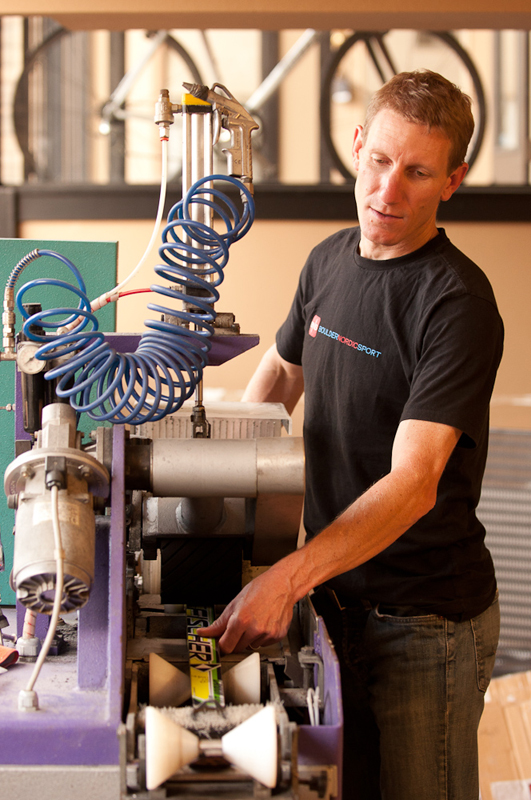
    Boulder Nordic Sport’s Nathan Schultz.

    When the country began shutting down in March, sporting good retailers initially shuddered. It appeared many if not all sectors of the economy would bottom out.

    “Everything was dicey in February and starting early March,” said Boulder Nordic Sport (BNS) founder Nathan Schultz about the onset of the Covid-19 pandemic. I was about to head off to Italy for the World Masters to wax there. Everybody in the Midwest was getting ready for the World Cup. And then everything got canceled. Things got serious really fast.”

    Early on, Schultz decided to curtail BNS operations. He advised his employees to take advantage of the Federal Government’s Paycheck Protection Program (PPP) until he and his advisors could settle on a long-term plan of action.

    For BNS and many ski purveyors, March can be a lucrative month – a time to create some financial padding before the dry season. By April, ski and winter accessory sales normally dip as the sun tracks higher in the sky. It’s a timeworn business cycle.

    “This March and April were scary,” said Schultz who noted his March revenues dipped roughly 75 percent.“And in April, people were still kind of holed up and April is not usually a big month for us. But to have it go from a little bit to nothing is pretty hard. We were definitely scared about the end on the ski side.”

    Back in 2018, Schultz merged BNS with Boulder Cycle Sport – a Boulder based specialty bike shop. Schultz’s close proximity to the bike side of the outdoor retail market was a front seat for the unexpected: a run on bikes during the pandemic’s onset.

    In March and April, Boulder Cycle Sport’s bike staff agreed to reduce their hours by 50 percent. Doomsday scenarios were not so far fetched. But as the mercury rose and Colorado’s front range greened-up, Boulder’s denizens, known for their high output energy, became stir crazy like the rest of the nation under lock down. Schultz recounted, “everybody started riding bikes because that was all they could do. It went from zero to 500 percent.” With the uptick in sales, the bike staff transitioned to full time and any interested ski employees were offered hours on the bike side of the business. The experience in Boulder was no anomaly. Bike sales blew up across the nation. Mainstream media outlets reported that wait times for new bikes could be months. From kid-bikes, cruisers, road and gravel bikes, to fat tire steeds, they all were in high demand.

    “The United States is facing a severe bicycle shortage,” was one noteworthy sentence from a May 18 article in The New York Times.

    This was true for Boulder Cycle Sport where zero to 500 meant they could sell bikes as fast as they received them. According to Schultz, May, June, and July were all “crazy good”. “It went from ‘super scary’, to ‘wow are we going to be able to survive this?’ to ‘this is amazing we are selling everything that we have.’”

    Boulder Cycle Sport does not simply cater to the high-end customer looking to drop 10 k on electronic shifting and featherweight carbon. “We definitely have everything,” added Schultz. “We want to be the neighborhood bike shop. So, we have all types of bikes.”

    That bike spectrum spans starter kids bikes, to mid-price commuters, along with a full menu of price points for customers seeking an entry-level or pro-level race bike. No matter, the low, middle, and high end of the bike market was selling out. With brisk sales coupled with factory closures, supply chain disruptions became a common topic. Some bike models remain hard to come by as are some spare parts. “It is at the point right now in the bike world where the supply has been nearly exhausted,” said Schultz.

    The exhaustion of the supply chain does not necessarily mean bike manufacturers will full-tilt-boogie ramp up production to meet demand. In an article and radio piece for Marketplace, Chris Rodgers, a supply chain analyst for S & P Market Intelligence said this: “The [bike] industry wasn’t running with lots of spare capacity to start with. What the industry doesn’t want to do is double its capacity to meet the increased demand, and then we turn round in the winter or next year when everyone’s got a bike and suddenly you’re left with a factory that’s too big and machinery or staff that aren’t being used anymore.”

    In the short-run, we may see bike shortages persist as manufacturers remain cautious and steady in what could become a massive boom-bust cycle.

    Retailers like BNS-Boulder Cycle Sport sell skis too. They know that as cycling use decreases during the winter, ski use increases. Needless to say, they have been informed by the cycling industry’s vagaries. That has shop owners like Schultz consumed with positioning themselves with just enough gear to meet a potential surge in demand for cross-country ski equipment.

    Schultz received a positive data point early on. “On the rollerski side of things, it picked way up, about twice what it normally is,” Schultz said. “And it seems like more and more people are coming to us early and they are saying we want to get into nordic skiing this year and we don’t want to miss out. They are coming in at the end of August instead of October and November when they usually show up.”
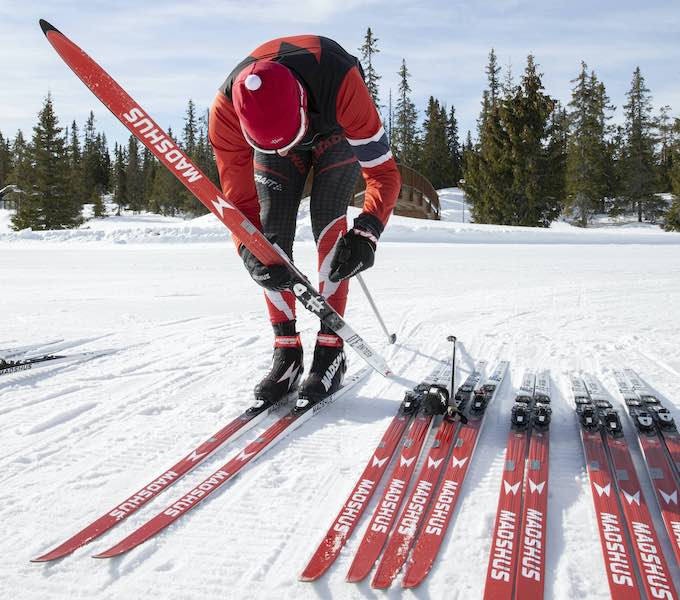
    Testing Madshus newest high end ski, the Redline 3.0 at Sjusjøen (NOR) this spring. Photo: Stefano Zatta/Madshus

    The conversations on and off the record here at FasterSkier are the same regarding a potential boom in cross-country ski sales – bullish. One reason for the optimism is alpine areas are now revealing their winter operating procedures. Nationwide they include policies like online reservations for parking and skiing, limited if any food service, and a concerted effort to remain open and profitable by enforcing social distancing the moment a skier arrives, to the moment they leave. Industry wide, these are considered some of the best-practices to ensure financial viability and skier safety.

    “People are going to be looking for other winter sports,” said Schultz. “Even if the alpine world were normal, I think the nordic world would still be blowing up because people are looking for a way to get outside and away from people. Backcountry skiing and nordic skiing are great opportunities to do that.”

    Cross-country ski shops are figuratively grabbing the bull by the horns as they expect a similar dynamic to the bike industry: an increase in gear sales. However, there’s the hope that supply chains remain fluid. In other words, well supplied.

    “The ski industry has had time to anticipate this, everybody I’ve talked to, they are bullish, they have raised production a huge amount and they are all in it,” Schultz said. “What we have been doing is we have been placing backup orders to bulk up and if we don’t sell what we think we will, we will probably modify those orders a little bit. I think all of those vendors are expecting it is going to be a big year and they are probably going to run out of product and they are trying to balance that equation — not get too bullish and have too much inventory because that kills. That is the biggest killer of retail, but we still need to have enough that we don’t run out.”


     The Supply Side
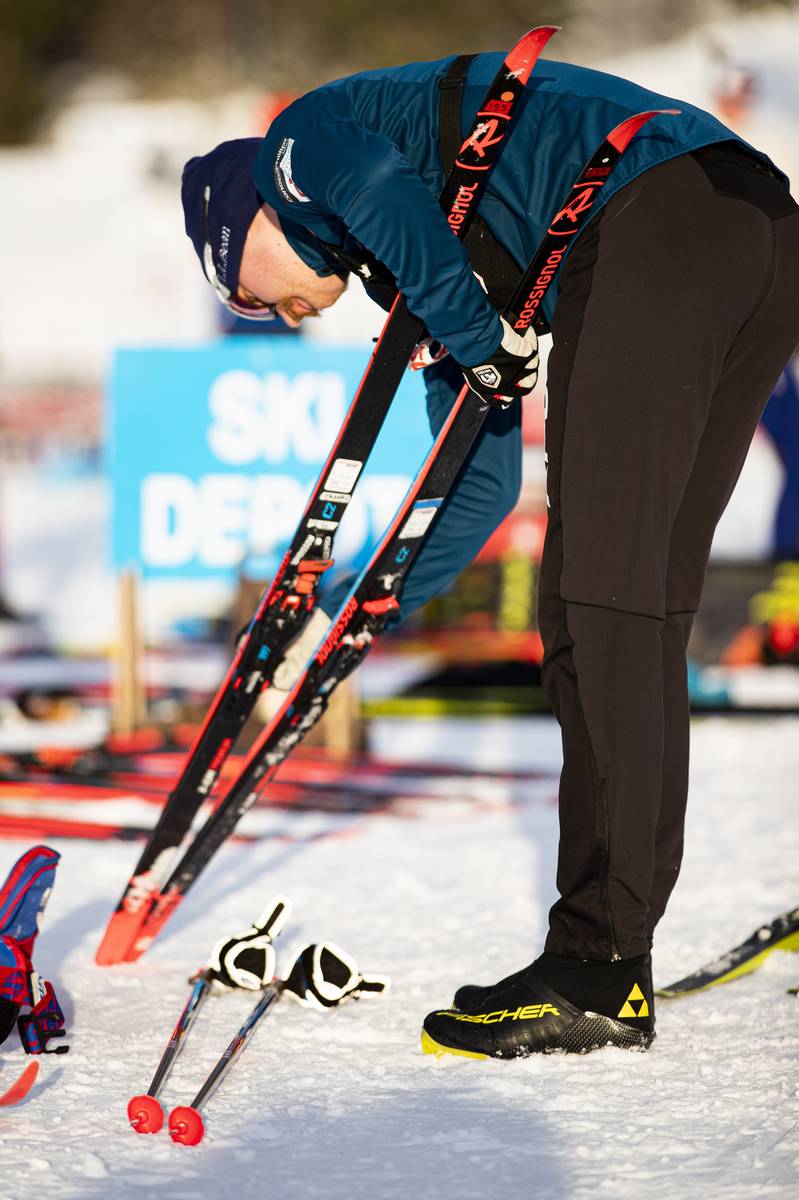
     

    Lillehammer, Norway World Cup, a USA Technician working on Rossignol Skis. (Photo: Nordic Focus)

    “It is going to be an interesting year, from what we are seeing from the cross-country side, which I am sure you will hear from everybody, everybody is betting on nordic,” explained Jeff Courter, Nordic Category Manager for Group Rossignol North America.

    Courter said he expects all segments of the nordic category to grow, yet the greatest increase is expected to come from entry and mid-price point models. The same trend as in the bike market.

    Pre-season orders for skis are received almost a year in advance of the following winter. Skis for 2020-2021 were likely pre-ordered in the fall of 2019. That allows suppliers like Rossignol, Fischer, and Madshus, all of which were contacted for this story, to ensure the raw materials for ski production are secured and demand is met.

    “We have multiple factories in various parts of Europe,” Courter said. “The difficult thing with us, as I am sure most of the other suppliers are coming up against this too, with all of this massive increase in demand the problem is that the timing of this is a bit off. We have to put in all of our orders almost, not quite, a year ago, last fall over the course of last winter. All of our orders were in with the factories before all of the lock downs when the quarantine happened and, of course, now, the subsequent massive increase in demand.”

    Courter said that Rossignol was able to keep production going through August, a time when much of Europe normally shuts down for holiday. “Since everyone already had six weeks off in the spring, all of our factories kept working to catch up and gain ground to be back where we should be in terms of delivery date and also just availability of product,” said Courter.

    For now, sourcing materials for skis has not been an issue for Rossignol. The same can be said for Fischer. Steve Reeder, Fischer’s National Sales Manager for Nordic Skiing in the U.S. said in many ways Fischer’s supply chain is almost totally vertically integrated. Reeder used the example of their wood core skis as evidence.

    “The wood core skis are built in our Ukrainian factory and that is literally a tree to ski factory, there is a wood mill on-site,” said Reeder. “You pull in the driveway and giant logs are being fed into a building where they are turning them into sheets for cores.”

    Fischer’s higher-end skis, those with more complicated builds like the Speedmax which offers a lighter “Air Core”, are fabricated at Fischer’s plant in Ried im Innkreis, Austria.

    Globalization has become the norm. Ski companies, which also produce boots, are well versed in navigating complex supply chains when sourcing material from outside their vertical chain. “Base material, that is probably one of the things they have to buy,” said Reeder. “I believe we have a good supply of that on hand. Most of that is Central European sourcing so there were not big concerns. We do some boots constructed in Europe, but we do a good chunk in the Far East, Indonesia, Cambodia, and those facilities got all of their componentry out the door and on the way to the factory before things shut down in Europe. So they were actually in very good shape and we have had stellar delivery on those products this year.”

    Lenzerheide, Switzerland World Cup: Sweden’s
    Ebba Andersson tests her Fischer fleet. (Photo: Nordic Focus)

    Like Rossignol, Fischer took preseason orders for this winter’s stock nearly a year ago. Reeder also expects Fischer to have mid-season reorder capabilities for most of their lines. For some product, Reeder said stock vaporized in August when under normal circumstances he would have a supply buffer well into January. Fischer is now considering options to increase its production capacity on select models.

    Norway based Madshus is known to operate a nimble factory able to produce small-batch ski runs. Bryan Cook, U.S. Sales Manager for Madshus, says they too are positioned to prevent ski scarcity.

    The autumnal equinox just passed. In the market for news skis? This is often the time to begin sniffing around as dealers swap out spring and summer gear for snow sliding options. Time will tell if ski shops experience a supply pinch like bike retailers. It appears ski manufacturers have read the tea leaves. Optimism reigns. For now, it seems that optimism will be met with a solid supply of skis as the cross-country segment looks for a boost in sales.


     

  • Pivot Point: Imagining Skiing During the Pandemic

    Pivot Point: Imagining Skiing During the Pandemic

    Stadium in Ruka, Finland. (Photo: Nordic Focus)

    Over two days in March, the North American World Cup races were cancelled. Amid rising health concerns, NCAA Championships also shut down after one race; Junior Nationals after two races. Canadian National Championships never got off the ground. After the abrupt end of winter, people are trying to assess how the pandemic will affect the coming winter.

    In The Atlantic, Juliette Kayyem posits that “From a public health perspective, the pandemic will not end for another 18 months.”  She speculates that it may take 18 months to develop a suitable vaccine, which must then be distributed. How will this affect ski racing as we have come to know it?

    While this metric pertains to alpine resorts, it’s stark any way you slice it: with spring break looming or in full swing, alpine lodging occupancy dropped 54% from March 2019 when alpine resorts began closing.

    “The timing of it couldn’t be better for the ski industry,” said Zach Caldwell, proprietor of Caldwell Sport. “We lost the tail end of the season. That was a big bummer. We had most of the season and it was a good one.  We in the industry have the luxury of being able to sit back, observe, and see what happens, and wait to finalize plans.”

    If one can extrapolate from one retailer’s experience, sales cratered in March after a strong start to the year. Matt Liebsch, a co-owner of Pioneer Midwest in Minnesota, concurs.  Pioneer did very well at the beginning of the year, but saw March sales fall off as social distancing set in.

    “We had really good growth in January and February,” Liebsch said. Pioneer finished March down thirty percent in revenue compared to last year. Prior to coronavirus, Liebsch said, Pioneer would sell two to six pairs of race skis each day. “We’re at zero right now. When you shelter in place, I think that means you park your money in place. The virus has thrown things off.”

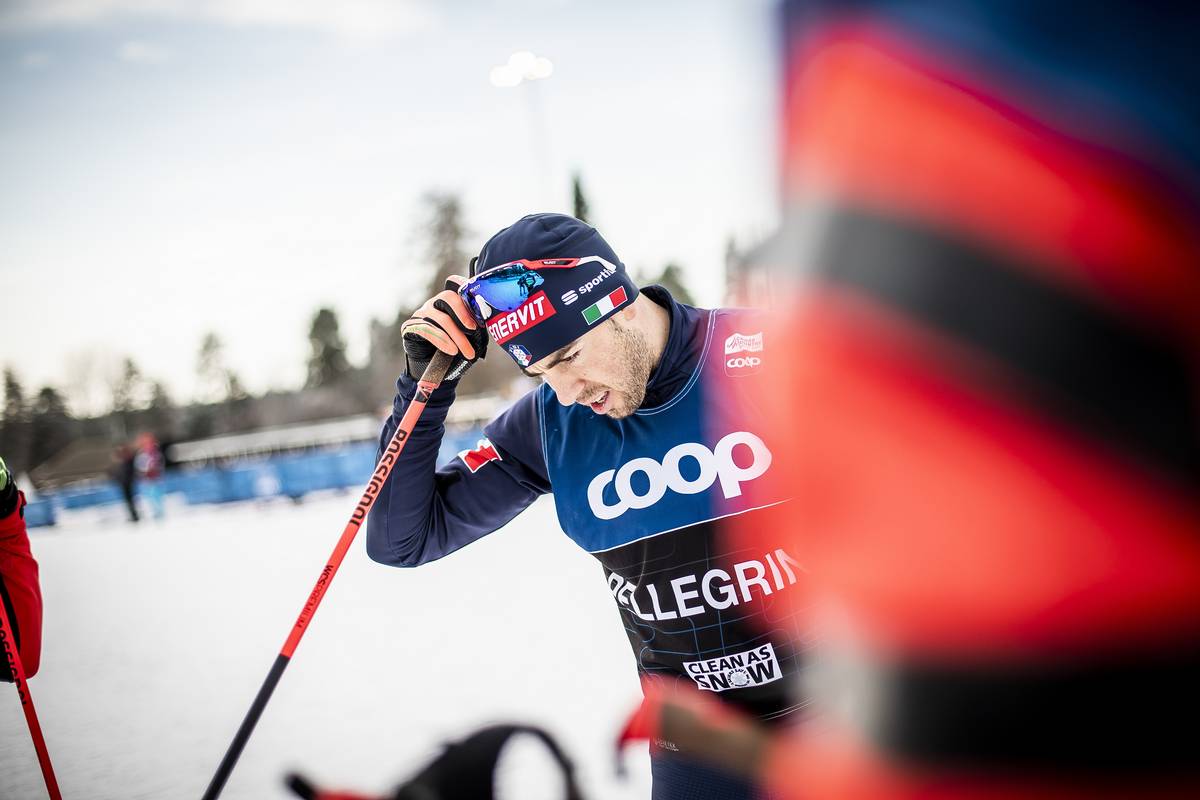
    Federico Pellegrino of Italy testing skis in Falun, Sweden. (Photo: NordicFocus)

    According to Jeff Courter, Rossignol North America’s nordic category manager, the bulk of its sales to retailers were complete by the time social distancing became the new normal.

    “For any major ski brand industry-wide, [the pandemic] hit at a time where the majority of sales had really happened already. We missed out on a lot of opportunities to capitalize on spring sales and spring break. We’re trying to help our retailers in North America to try and get through the times,” Courter said. He added that spring break sales can help retailers clear out inventory so they can prepare for the coming year.

    Typically, Liebsch makes two trips a year to Europe for custom ski picking as well as pre-ordering skis to sell off the rack. He said that bulk pre-season orders from manufacturers were generally due to vendors between late February and late March. They’re shipped to arrive in the U.S. between mid August and mid October. “That’s all in the books. It’s kind of a shot in the dark.”

    “We try to [work with] our discerning, race-oriented customers that want a wet ski or a better ski than what they have in September, October,” said Liebsch. “That clears my plate for [recreational skiers] and the start of [Minnesota’s] high school race season in November and December. I don’t get to talk about grinds, race wax, or camber construction. I’m explaining to mom and dad the difference between a classic ski and a skate ski.”

    “The majority of our orders [for the coming year] have already come in by mid-March,” Rossignol’s Courter said. “But anyone – not just us – any ski company in general, once we get a little farther into this, and kind of see how things lay out for the fall, some of the smaller retailers may have to make some adjustments to what they thought about bringing in.”

    While most retailers have ordered skis for the coming season, it’s not known how the pandemic will affect manufacturing schedules. Citing the safety of its staff and their families, Courter said that one of Rossignol’s main factories, located in Spain, had closed down for safety reasons in early April. It’s scheduled to reopen on May 4.

    Looking for ways to get back on schedule, Courter said that Rossi facilities would be running three shifts. Normally, their ski production is done by July. At present, this year they plan on making skis through August.

    “The majority of the factories that we work with have been able to stay open,” Courter said. He added that one factory had experienced a slowdown as some raw materials haven’t been delivered.

    Bryan Cook, Madshus USA sales manager, wrote in an email, “Generally, we are constantly producing skis with the majority happening between the months of December and April. This means that we are just about wrapping up all of our preseason orders for the coming season. We then look to ship the skis, via ocean, between the months of June and September, as most dealers request their product to be in store between September and November.”

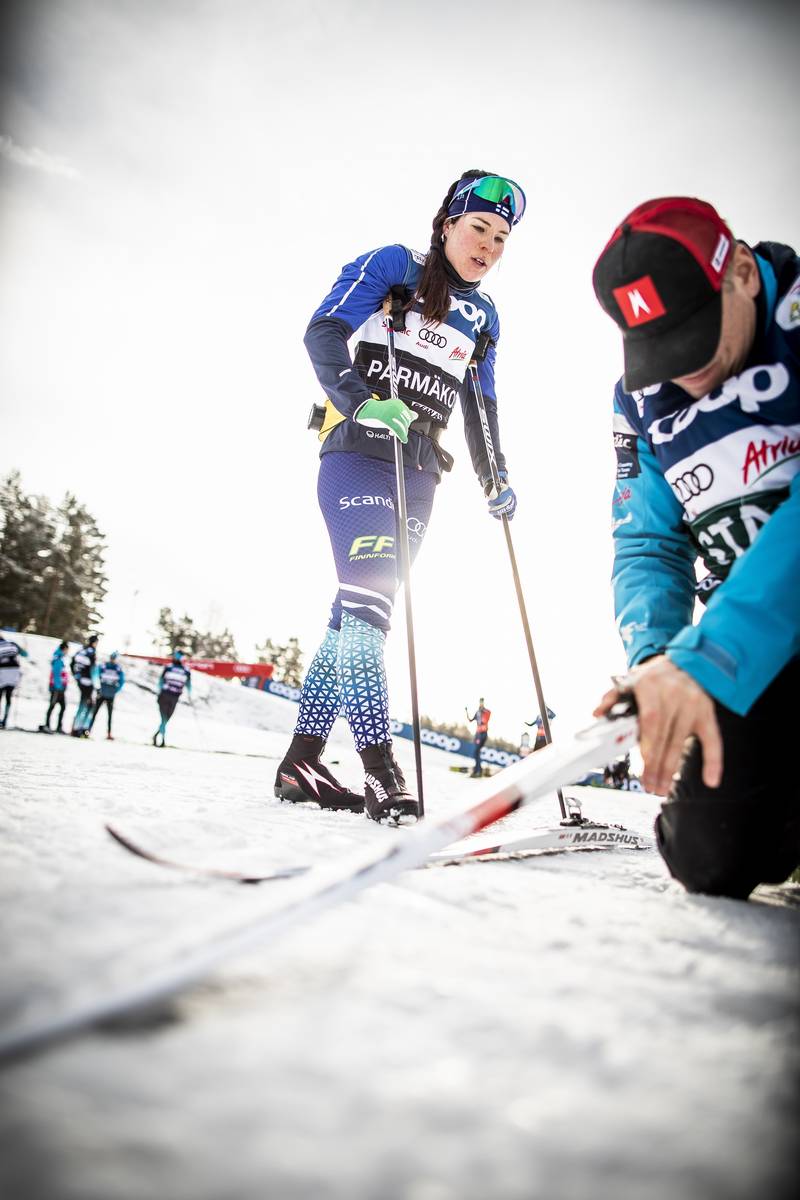
    Krista Pärmäkoski of Finland testing skis in Falun, Sweden. (Photo: Nordic Focus)

    Zach Caldwell, proprietor of Vermont’s Caldwell Sport, also travels to Europe to pick skis. Speaking on April 13, he said the Austrian companies he works with underwent a mandatory shutdown, but are opening back up. According to Caldwell, they’re ready to schedule ski picking. While the ski companies seemed optimistic, Caldwell is waiting to see what happens when social distancing is relaxed.

    “I can get to a ski factory and interact with about three people and pick the skis I need. What I do need to be able to do is travel. And that’s not something I’m willing to do right now, even if it was wide open. Once the international travel piece looks OK, there’s nothing standing between me and picking skis for people,” Caldwell said.

    For both Caldwell and Liebsch, races next winter pose a bigger question than shipping schedules. How will the possibility, even the likelihood, of continued social distancing affect racing next winter?

    “But both the competitive aspect and social aspect of competition is what drives a lot of our sport,” Caldwell said. “We’re going to lose a lot of people if we shut that off for a year. I think there are ways to prepare for a season of distancing measures, and that’s a bigger story from my perspective than what does the industry look like.”

    “The biggest issue that I have is the prospect for racing next season,” he added. He’s concerned about the feasibility of having several hundred competitors, plus coaches and family, at Eastern Cups. [The Eastern Cup races are the New England qualifying races for Junior Nationals.]

    Concerned about the impact social distancing may have on racing, Caldwell wrote to the New England Nordic Ski Association [NENSA], urging them to consider alternatives to traditional races.
    “We should be making plans to ensure that there are competitive and social outlets for racers absent the ability to run [traditional race formats],” Caldwell said. “NENSA could put together a combination between Strava and NASTAR where they put standardized courses at touring centers and drop off chip timing. Develop an app that people can subscribe to and pay an entry fee with a head tax to check out a chip and go ski a course.  Have the touring center handicap the snow speed with a ski trap and generate a score, generate a region wide points list and share it on social media.”

    “There are a lot of models that can perpetuate that, absent an Eastern Cup circuit or a Craftsbury Marathon or whatever,” he added. “We as a sport need to be thinking about this because we’ve got a lot of lead time to prepare for this. We need to be thinking about that. One thing we can’t do is Zwift. We don’t have that technology in skiing.”

    The wheels have been turning in New England when it comes to developing contingency plans. “This year is not going to look like anything we’ve ever had.” Amie Smith, Executive Director of NENSA, told FasterSkier.

    “We’re saying, ‘what can it look like? What opportunities can we give our membership? How can we keep everyone connected during this time of sheltering at home?’” Smith acknowledged Caldwell’s email to NENSA, but didn’t touch on it directly.

    Normally, NENSA conducts a regional elite group (REG) camp for juniors at Stratton Mountain School at the end of June.  That’s been postponed to the end of August. Meanwhile, NENSA is devising ways to have a virtual camp instead. They are also planning virtual coaching clinics.

    As for the coming winter, Smith asked, “Can we even gather? If crowds are limited to 50, we are going to have to totally change how we do Eastern Cups. It won’t be business as usual.”

    Insofar as recreational skiing goes, Smith posited, “Would ski centers be able to open their lodges? How could they safely collect trail fees?” (Faster Skier contacted several ski centers for this article, but none responded.)

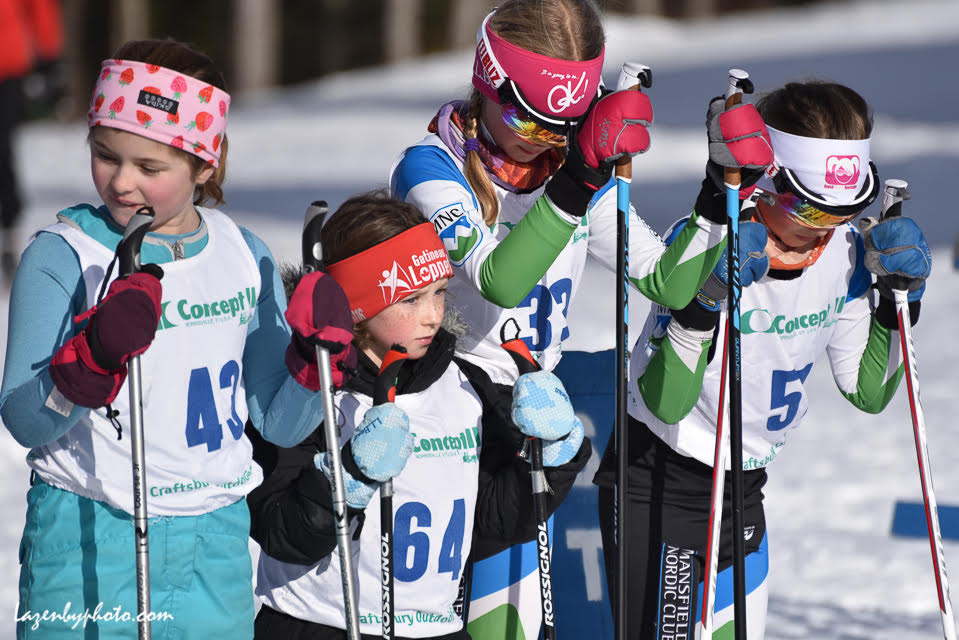
    Some of the young skiers at the NENSA Eastern Cup in Craftsbury, Vermont. Young and old are welcome at the NENSA Eastern Cups. (Photo: John Lazenby)

    “It’s not going to look like our normal race season, but hopefully we can have some great training, coaching education, race opportunities,” she said. “But we totally don’t know what that will look like. We need to have alternatives and ideas of how that would look. Will race starts be a minute apart?  Will they be two minutes?

    “Our staff is in a good place, we’re excited to see what we can put together and keep everyone engaged and feeling like there’s still a community,” Smith said. “Because I do hope we come out the other side, and that there will be a day when we don’t have to keep 6 or 9 or 15 feet apart, and that we can go back to doing our normal racing. But I don’t think that’s going to be next season.”

    For the near term, it appears that business as usual on the race front and storefront is over.

    The investment of early-season dollars and time as it relates to inventory will have to wait a bit longer to determine how the pandemic evolves and the gradual release of social distancing requirements. “I’m thinking we can still rebound and have a great winter next year, if we’ve got snow,” Liebsch said. “I’m confident that I’ll be ski picking in September,” Liebsch concluded. “If I’m not, the whole world has big issues.”

  • Wednesday Workout: Making a Mountain King with Felicia Gesior

    Wednesday Workout: Making a Mountain King with Felicia Gesior

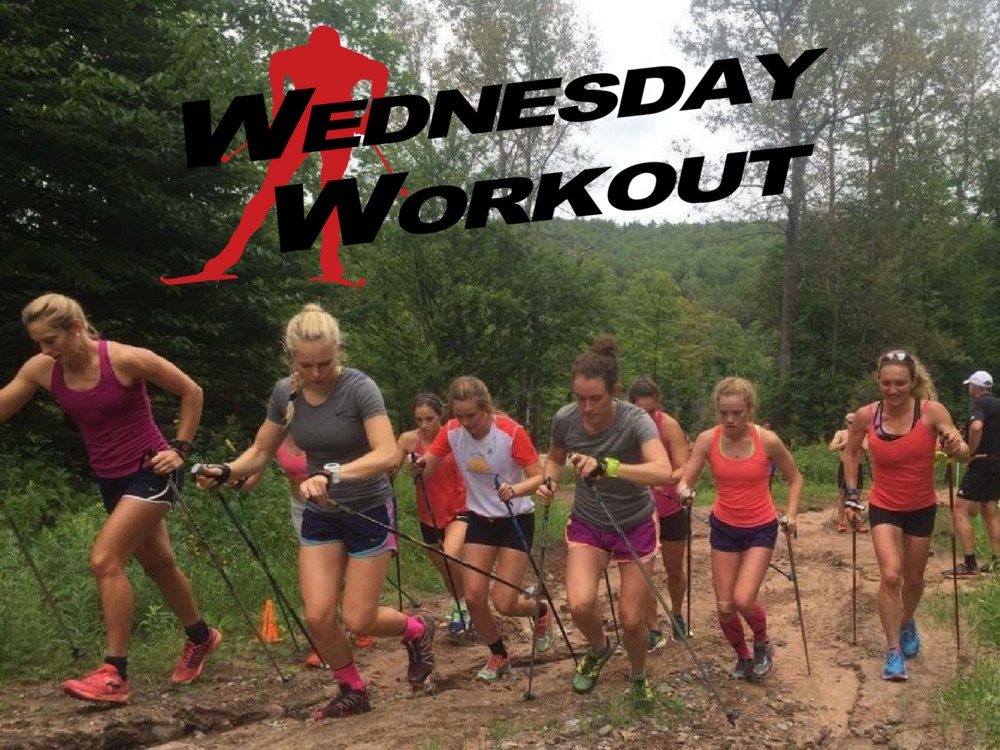
    NMU alumnae Felicia Gesior (far left) and Caitlin Gregg (far right, blue shoes) during a fall training session with the Northern Michigan University (NMU) women’s ski team in 2016. (Courtesy photo)

    This week’s Wednesday Workout comes from Central Cross Country (CXC) Team member Felicia Gesior. In her second year with CXC, Gesior, 24, is currently working on coordinating the Bergkönig Trail Run, an annual event that began six years ago to raise money for post-collegiate CXC skiers. Race registration and information can be found here.

    ***

    Bergkönig. In German, it translates to “mountain king”. In 2011, it translated to the perfect name for the trail run Northern Michigan University (NMU) alums Maria Stuber and Bryan Cook were launching in an effort to fund their ski racing with Central Cross Country (CXC).

    Both Stuber and Cook had been brainstorming a name to make the event, with 5- and 10-kilometer races, stand out from others in the mid-eastern Wisconsin area. Intending to email her brother for an outsider’s opinion, Stuber explained she accidentally sent a message to a “random guy” by the name of Thomas Stuber hailing from Germany. Thomas immediately informed Maria that she had the incorrect Stuber, but not before suggesting the trail run be called Bergkönig. In lieu of the erroneous email, the Bergkönig bank account and Bergkönig Trail Run began.

    “Our goal was to give back to the local community, raise money for our winters, and create some awareness for the sport,” Stuber explained in an email to FasterSkier. “After a few years it became a big race and we felt fortunate to be able to rely on it for financial support every year.  It was one of the factors that allowed up to keep ski racing as long as we did … something we are really proud of. We didn’t want to see it go away after we were done racing so we kept doing it for a couple years and put the money in a bank account to help future skiers with similar aspirations that needed funding.”

    Felicia Geisor (CXC Team) at 2017 U.S. nationals in Soldier Hollow in January. (Courtesy photo)

    One of those future skiers included CXC’s Felicia Gesior. Five years after the inaugural Bergkönig, Gesior, originally from Waukesha, Wisconsin, qualified for the 2016 U23 World Skiing Championships in Rasnov, Romania, and the Bergkönig extended its connections beyond Germany and the continental U.S. That year, it granted Gesior a round-trip plane ticket to get her to Romania.

    “It was SO COOL for us to be able to send Felicia that check!” Stuber wrote.

    This year, Gesior, a 2016 NMU graduate now in her second season with CXC, will be in charge of coordinating the very race that helped her get to U23 Worlds. Proceeds from this race will help cover her travel and ski expenses as well as go toward that “Bergkönig Scholarship Fund that will assist future generations of Wisconsin Skiers pursuing Olympic dreams after college,” the event’s website states.  

    Stuber, head nordic coach at the College of St. Scholastica, and Cook have stepped back this fall, though they both plan to drive down from Duluth, Minnesota, for the event. The race is scheduled for Nov. 11 in Delafield, Wisconsin, on the hilly trails of Lapham State Park, a course Gesior, Stuber and Cook all trained on as Peak Nordic skiers in high school.

    “Many of the [Peak Nordic] coaches are the same today as they were when I was in high school and they went way above and beyond to support me throughout my entire career,” Stuber noted. “We are all so proud of this place that we would go to great lengths to see Felicia represent us at the highest level of U.S. skiing.”

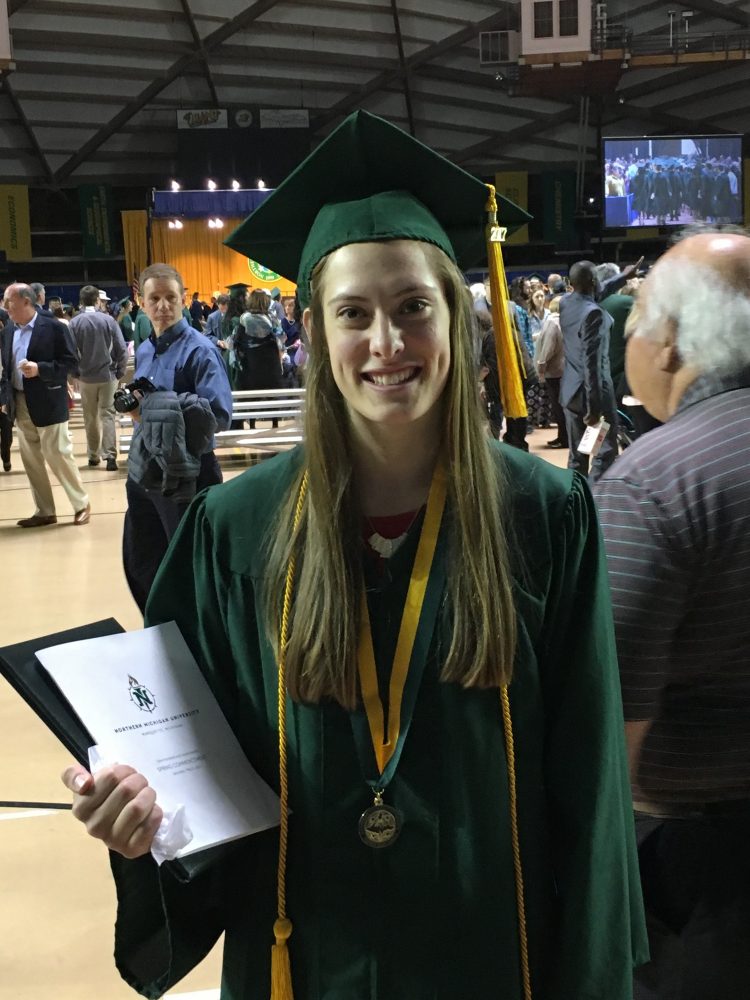
    Felicia Geisor on graduation day at Northern Michigan University in the spring of 2017. (Courtesy photo)

    Gesior has been training in Marquette, Michigan, this summer and fall under the guidance of the CXC Team’s new head coach Eliška Hájek Albrigtsen. Most of Gesior’s goals revolve around U.S. SuperTour races and U.S. nationals in January. She views being an American woman on the domestic race circuit as “an exciting time” with “everyone pushing to new levels.”

    “Every time I have the opportunity, like at U.S. nationals, to race against those elite girls that’s just excellent because they’re pushing the whole field,” Gesior said on the phone last month.

    When she isn’t training, Gesior substitute teaches at local schools in Marquette. The work not only serves as a supplemental income, but also as way for her to stay connected to her post-skiing career — she has a degree in education from NMU. She also plans to help with CXC’s ‘Nordic Rocks’ for Schools program, an initiative that aims to get more youth involved with nordic skiing.

    “That’s one of CXC’s major goals is to get Nordic Rocks in more of the schools. My relationship is getting it into Marquette this year,” Gesior explained, adding that the program has donated up to 30 pairs of nordic skis to more than 200 elementary schools.

    “Kids can put them on with their snow boots and then they can walk literally from the gym outside to the door … You can imagine all these little kids, it’s hilarious,” she said. “So that’s just another side thing where I can connect my two passions together.”

    Beyond training and teaching, the Bergkönig will be the most forthcoming of Gesior’s fall focus, along with the Level 4 ski-walking intervals she recommends as race prep for the Bergkönig trail’s hills. May the best Mountain King win.

    The Workout: “Marquette Mountain Repeats”

    Type: Level 4 Ski Walking Intervals

    The workout should be hard to complete with a focus on an elevated heart rate and mental fortitude. Gesior usually incorporates this workout into her plan towards the end of her summer training cycle and and continues doing it once a week through the fall.

    She suggested doing this workout without ski poles to prevent building up too much lactate while climbing.

    “The best part about this workout is that you do not get as much lactate build up as you might on a bounding workout because you don’t have poles in your arms,” Gesior wrote in an email. “Instead, you can push your heart without building up too much lactate. This is a good workout during a week that you don’t want to necessarily build lactate but still want to get in a hard effort.”

    Terrain: Small alpine hill (should take 4-5 minutes to ascend; Geisor recommends no more than 6 minutes)

    Warmup: 20-25 minutes jogging with a couple minutes of Level 3 toward the end of the warmup followed by strides

    The set: 5-8 x 4-minute ascents; off time is amount of time it takes to descend the hill

    The first 4-minute set should be done at the high end of a Level 3 pace. Each consecutive set should be done slightly faster.

    “This workout is an interval ski walking workout so you ski walk up the hill swinging your arms as if you are classic skiing and you should be going at Level 3-plus into Level 4,” Gesior explained.

    Cool down: 20-30 minutes easy jogging

    Total time: 1.5  to 2 hours

    Gesior’s Golden Rules: 

    1. Record; don’t get wrecked. Since each ascent should be faster than the previous one, Gesior indicated that recording times should not be overlooked, nor should going to hard from the start. “It is important to keep track of your times on each interval because you want to have your last ones be faster than your first ones,” she wrote. “You want to do the first one starting in L-3 and then you go for a faster time on each consecutive interval. The majority of the intervals are done in Level 4 and you should strive to push the pass towards the end of each interval as well as the last few intervals in your set.”
    2. Make mental note. Don’t be afraid to use the intervals as practice for pushing past negative thoughts that might pay visit during competitions. “You should be focusing on your mental toughness that you tap into during races,” she wrote. “You should remember to use good ski walking technique in your legs as well as using your arms as if you were striding.”
  • Stuber Takes Over at St. Scholastica: Program is ‘On the Verge of Something Huge’

    Stuber Takes Over at St. Scholastica: Program is ‘On the Verge of Something Huge’

    Maria Stuber has spent the last three years coaching at the Aspen Valley Ski and Snowboard Club in Colorado. (Courtesy photo)
    Maria Stuber has spent the last three years coaching at the Aspen Valley Ski and Snowboard Club in Colorado. (Courtesy photo)

    Ever since the College of St. Scholastica began its NCAA ski team, the face of the program has been one man: head coach Chad Salmela. Over the last decade, his squad notched its first men’s and women’s team wins and saw its first NCAA Skiing Championship qualifiers. And on the way, he changed the lives of dozens of young athletes.

    Now Salmela is shifting roles at the college and will coach the cross-country running team. Taking the reins of the ski team is a new coach coach who is just as excited to build on the program’s burgeoning legacy in Duluth, Minn.

    Maria Stuber, a Wisconsin native, has developed her coaching chops over several assignments, most recently in Colorado with the Aspen Valley Ski and Snowboard Club (AVSC). In three seasons with the club, Stuber increased the size of the team and worked with a variety of athletes, from those who just picked up skiing in high school to those who competed in Europe.

    “At AVSC, coaches made sure we were encouraging brand new skiers to jump into the sport at any age,” she wrote in an email. “If you decided to join our high school team you get to train right alongside the best athletes in the country… This environment gives every athlete the opportunity to make a quick jump and be the best skier they can be. It can be so fun when it works, as our top male skier last year didn’t get into the sport until he was a sophomore in high school.”

    Stuber (second from left) with AVSC athletes. (Courtesy photo)
    Stuber (second from left) with AVSC athletes. (Courtesy photo)

    That attitude seems to be a perfect match for the College of St. Scholastica (CSS), a school which sent two men to NCAA’s in 2012 and two women in 2015 – but which also has a development team and provides growth opportunities for skiers coming in with a variety of backgrounds.

    “Chad didn’t really impact my ski career, he started it,” Paul Schommer, an NCAA All-American in 2014 now pursuing elite biathlon, told FasterSkier this spring.

    “CSS is unique in that it has a development team serving this purpose at the college level,” Stuber wrote. “Kids with college skiing aspirations that are not quite ready to make that jump can come and work hard, get faster, and have the opportunity to reach the same level as the top junior national athletes we recruit.”

    Taking athletes from those two tracks, Saint Scholastica has built teams that compete with the best in the NCAA Central division.

    And international success is on the radar too: grad Anita Kirvesniemi made the sprint heats in season-opening FIS racing in Muonio, Finland, last season; Schommer has caught the eye of the U.S. biathlon team; and current team member Kelsey Dickinson, who pursued biathlon full time for a year at the Maine Winter Sports Center, was back competing again at U.S. Rollerski Biathlon Championships.

    “CSS wants to be a competitive team in the Central Collegiate Ski Associaion conference,” Stuber explained. “In order to do that, we need to be competitive at the national level. What’s really cool about skiing in 2016 is that you need to have international ambitions to be competitive at the national level.”

    Salmela used sports science and lab testing to make that happen, and it’s one of the opportunities that drew Stuber to the program. She received a masters degree in exercise science from Northern Michigan University and relishes a data-based approach.

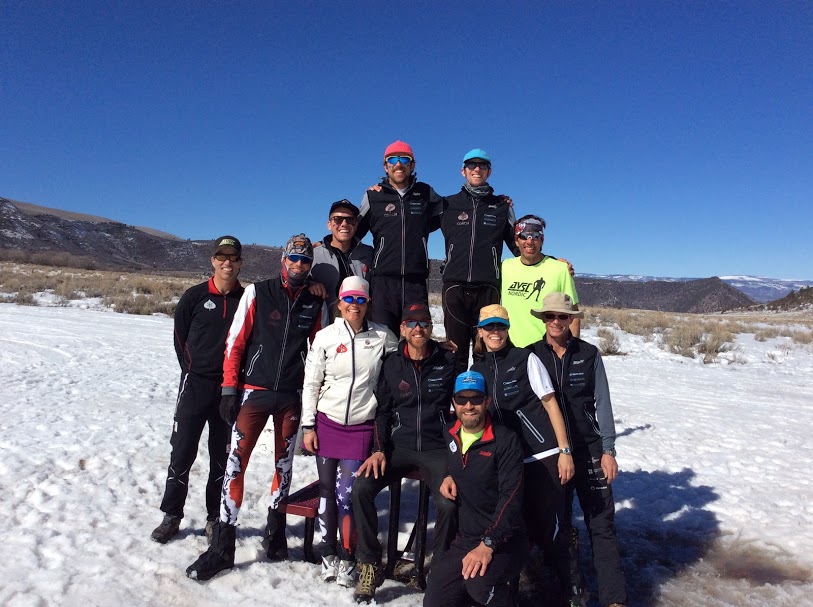
    Tuber with the rest of the AVSC staff last year. "I love these people!" she wrote. (Courtesy photo)
    Stuber with the rest of the AVSC staff last year. “I love these people!” she wrote. (Courtesy photo)

    “I love that St. Scholastica’s training is all based on science and sound research,” Stuber wrote. “The college has an exercise science lab and the professors are willing to share the space and knowledge with coaches to give the student-athletes more opportunities for success.”

    But more than anything, she is pleased to be part of a framework which will make it possible to integrate running and skiing into a cohesive college athletic career. In explaining his job shift, Salmela was clear that he wanted to see more – and smoother – crossover between the two sports at St. Scholastica, for those athletes who have dual ambitions.

    “The biggest program draws for me at CSS are Chad & Don Olson’s (athletic director’s) vision to create a collegiate endurance sport epicenter where student-athletes can choose to pursue xc running, skiing or both at a very high level,” Stuber wrote. “Linking endurance sports together will create well rounded, big picture athletes that have the support of a bigger peer group and more coaches and resources. I think CSS is on the verge of something huge.”

    Stuber has seen how a variety of teams achieve success. First, as an athlete: she captained the Northern Michigan University (NMU) ski team for three years.

    “My time at NMU had a huge impact on my life path and decision to pursue a career in ski coaching,” Stuber explained. “The running and skiing coaches there, Sten Fjeldheim and Jenny Ryan, have both contributed significantly to my coaching philosophy, training methodology and personal values. They have continued to be mentors, advocates and references for me as I find my way. I will feel extremely proud to consider Sten and Jenny peers and to go up against the Wildcats in December and I hope that they feel like a part of our success at CSS. They both know me well enough to not expect any mercy from us on the trails.”

    Hailey Swirbul of the Aspen Valley Ski Club races the anchor leg while guiding the American team to eighth place in the 4 x 3.3 k relay at the Junior World Championships in Almaty, Kazakhstan, in 2015. (Photo: Logan Hannneman)
    Hailey Swirbul of the Aspen Valley Ski Club races the anchor leg while guiding the American team to eighth place in the 4 x 3.3 k relay at the Junior World Championships in Almaty, Kazakhstan, in 2015. (Photo: Logan Hannneman)

    After college, Stuber raced for the Central Cross Country (CXC) Elite Team and then the Craftsbury Green Racing Project. In her senior career, Stuber was a runner-up at U.S. National Championships in 2009.

    But since retiring from competition, Stuber has been consumed by coaching. She began her career at Alverno College in Wisconsin, before taking over as head men’s and women’s cross-country running coach for Southern Vermont College for two years. Under her leadership, the men’s squad had their best team results ever.

    At AVSC, where the roster eventually neared 200 skiers, Stuber led a team of other coaches. Every year the club sent skiers to Junior National Championships as well as to World Junior Championships or the J1 Scandinavian Cup trip.

    “I will never forget our amazing coaching staff at AVSC that welcomed me to the community that they had carefully built over the past 20+ years,” Stuber wrote. “There is no other ski club in the country with the amazing mix of background, knowledge, energy, perspective and compassion. Working with this group of people will be a life-long career highlight for me… I am so proud of the club’s growing numbers and participation in Carbondale, Glenwood Springs and Aspen.  The way these three communities work together towards a common goal in Nordic skiing is phenomenal.”

    AVSC runs summer training programs and last season organized an end-of-winter race event called Tour de Sea which drew junior skiers from all over Colorado, as well as rave reviews.

    Stuber and Cook (second and third from right) with AVSC staff at a competition this winter. (Courtesy photo)
    Stuber and Cook (second and third from right) with AVSC staff at a competition this winter. (Courtesy photo)

    It was difficult for her to decide whether to uproot herself from the Roaring Fork Valley, where she and husband Bryan Cook had just bought a condo. They had been “very happy” in the Elk Mountains.

    “We were not feeling 100% certain that we had made the right call until Monday when the CSS announcement was made,” Stuber wrote. “For days straight my phone and email were pinging and beeping non-stop with messages from friends, family, former teammates, fellow coaches and upcoming Midwest skiers and parents from clinics past. The Midwest ski community is a truly special group of people that we are incredibly proud to be a part of. During our racing careers, we leaned on this community for support and they delivered for us big time. I think we missed the Midwest ski culture more than we knew.”

    The couple will move in the first week of September and Stuber is looking forward to getting started with her new team; Cook will enter an MBA program at St. Scholastica.

    And besides the general homecoming, Stuber knows that the athletes she will be working with in Duluth – as well as those on the teams her skiers compete against – embody the same characteristics of the community which is welcoming her back.

    “The CCSA is definitely a powerhouse Nordic conference…. consistently dominating at the US National Championship and NCAA Championship,” Stuber wrote. “The CCSA attracts down-to-earth athletes that want to be great skiers and are willing to work hard to get there. This intrinsic motivation is a recipe for making fast cross country skiers. Midwest kids are tough and they are backed by outstanding club coaches that are looking at the big picture. I can’t imagine a better atmosphere for athlete development.”

  • Love and Marriage for Several U.S., Canadian Skiers

    Love and Marriage for Several U.S., Canadian Skiers

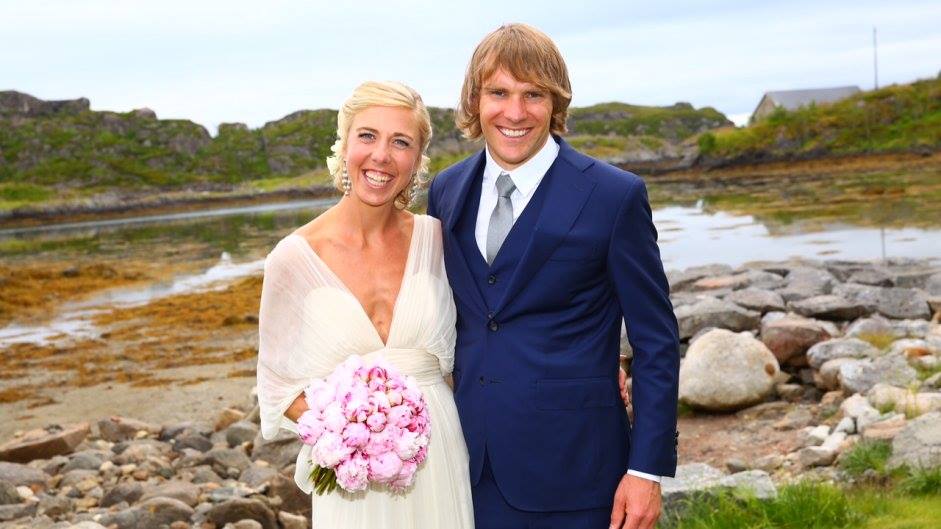
    Skiers have been wearing a lot of white lately — or variations thereof. This past weekend, Canadian World Cup Team member Devon Kershaw and his Norwegian girlfriend, three-time Olympian Kristin Størmer Steira, tied the knot in Lofoten, Norway, where Steira has family ties.

    Kristin Størmer Steira, of Norway, and Devon Kershaw, of Canada, were married last weekend in Lofoten, Norway. (Photo: CCC/Facebook)
    Kristin Størmer Steira, of Norway, and Devon Kershaw, of Canada, were married last weekend in Lofoten, Norway. (Photo: CCC/Facebook)

    Steira’s teammates, including Marit Bjørgen, Therese Johaug and Ingrid Flugstad Østberg, made the trip to the northern islands for the wedding, along with Canadian skiers Alex Harvey, Jess Cockney, Graham Nishikawa, Drew Goldsack, and Phil Widmer.

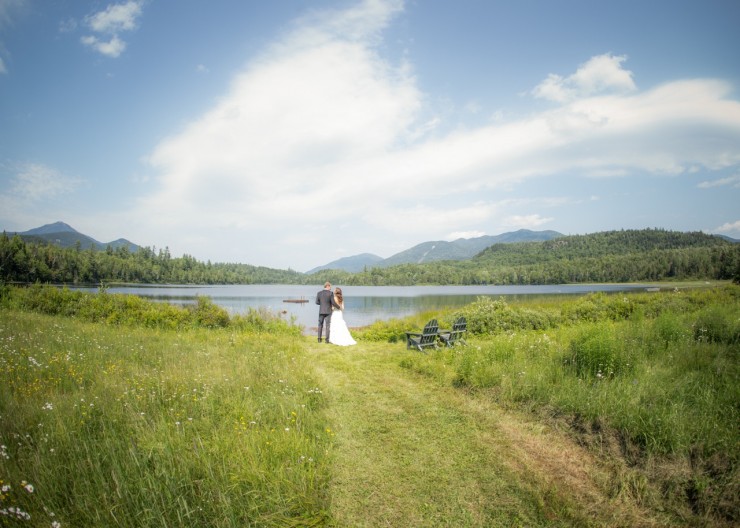
    On July 11, US Biathlon’s Lowell Bailey wed Erika Edgley at Connery Pond (photos above) in North Elba, N.Y., then held a reception in front of the house where Bailey grew up in Lake Placid. Edgley is also from Lake Placid. They celebrated with about 120 guests from “all over the world,” Bailey explained in an email. “Americans, Brits, Germans!”

    Bailey recently arrived in Stavanger, Norway, for the Blink Summer Ski Festival — a three-day series of rollerski races, starting this Thursday and ending Saturday. His teammates Leif Nordgren and Susan Dunklee also plan to participate.

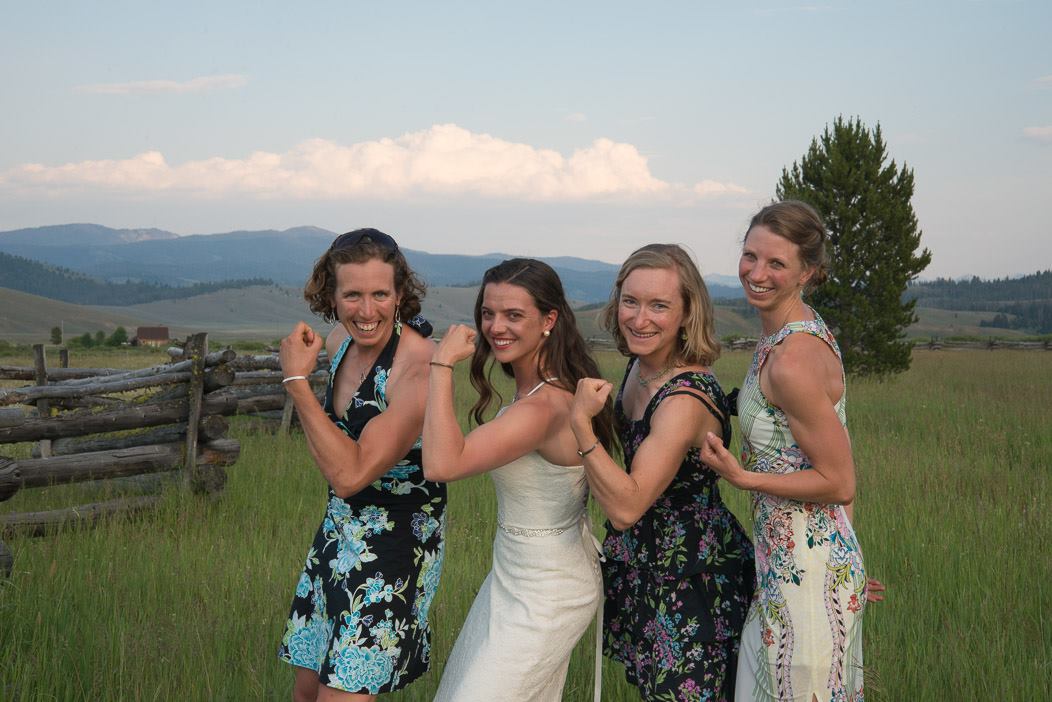
    Sara Studebaker (second from l) married Zach Hall in mid July and celebrated with friends and former US Biathlon teammates Susan Dunklee (l), Hannah Dreissigacker (second from r), and Annelies Cook (r) in Stanley, Idaho. (Photo: Sara Studebaker/Facebook)
    Sara Studebaker (second from l) married Zach Hall in mid July and celebrated with friends and former US Biathlon teammates Susan Dunklee (l), Hannah Dreissigacker (second from r), and Annelies Cook (r) in Stanley, Idaho. (Photo: Sara Studebaker/Facebook)

    Also this month, former U.S. biathlete Sara Studebaker married another retired biathlete and current ski coach, Zach Hall, with her 2014 Olympic relay teammates Dunklee, Hannah Dreissigacker and Annelies Cook by her side in Stanley, Idaho.

    And on July 18 near Canmore, Alberta, Canadian biathlete and Olympian Scott Perras married Jodi Etcheverry, a former biathlete, at a lakeside ceremony.

    Longtime sweethearts, former U.S. skiers and now development coaches, Maria Stuber and Bryan Cook recently wed in their native Wisconsin.

  • Now in Green, Stuber and Cook Settling into Vermont

    Now in Green, Stuber and Cook Settling into Vermont

    Bryan Cook and Maria Stuber outside Izabella's Eatery in Bennington, Vt., on Nov. 1, 2011. The former CXC racers relocated from the Midwest to the area earlier last year and joined the Craftsbury Green Racing Project.

    BENNINGTON, Vt. – Inside an organic lunch spot in downtown Bennington, two Wisconsin natives glanced at an oversized chalkboard filled with sandwich options.

    A moment later, they turned to each other to confirm they had made up their minds. Maria Stuber and Bryan Cook hadn’t lived in the area long, yet they already figured out the basics.

    Bennington,  southern Vermont’s largest city, wasn’t huge, but it had more going on than the hamlet of North Petersburg, N.Y. There, the ski-racing couple rented a loft about 15 minutes away.

    “It’s like an intersection,” Cook said, sitting at a corner table in the small restaurant. He smiled at Stuber and they added it was good for rollerskiing.

    The location also provided plenty of options. Born and bred in the Midwest, the two 28-year-olds said being within about 20 minutes of Williamstown, Mass., and Albany, N.Y., gave them a chance to explore the East.

    After all, that was Stuber’s intention when she decided to accept South Vermont College’s job offer just over a year ago and coach its cross-country running team. With an off-season in 2011/2012, without the World Championships or Olympics to train for, Stuber figured the timing was right and moved to Vermont last January. Cook said he was ready to move as well since most of their close friends from Northern Michigan University had already done so.

    “I really wanted to find something that I could do that would allow me to continue skiing, but not just fundraise my life away,” said Stuber, who spent three years with the Central Cross Country (CXC) Elite Team after graduating NMU in 2007.

    “I just thought it would be a good time to figure out a situation where I could use my college degree and also continue ski racing,” she said of her Master’s in exercise science and Bachelor’s in physiology. “I thought cross-country running coaching would be perfect, and I pretty much just looked at all the jobs in the country that were available in places where it snowed.”

    Despite training full time with CXC, Stuber started coaching in 2008, first at several programs in the Midwest and later on an individual basis. She went on to volunteer with the NMU running teams and CXC Adaptive Program while racing competitively. She won silver at the 2009 U.S. Nationals in the team sprint with Caitlin Compton Gregg, finished fourth at the 2010 American Birkebeiner and was fifth at the Birkie’s 50-kilometer skate race last year.

    Stuber’s significant other since her freshman or sophomore year of college, Cook was also fifth in last year’s Birkie after placing second in Wisconsin’s celebrated ski marathon three years ago. He earned a World Cup start in Canmore, Alberta, in 2010 as a longtime standout on the SuperTour circuit.

    Craftsbury
    Bryan Cook (Craftsbury Green Racing Project) races to an eighth-place finish in the classic sprint at an Eastern Cup race in Craftsbury, Vt., on Dec. 17, 2011. Photo by Kris Dobie.

    A member of the CXC Elite Team since its inception in 2006, Cook took a year off to pursue his studies in 2008. He said the team was similarly understanding of the situation this time.

    Last season, Stuber spent the better part of the winter flying all over the country to meet CXC at races. Cook stayed in Wisconsin until the season ended in April. At that point, they both knew the move and departure from CXC was final.

    “Our initial plan was to still be on their marathon team, but then we started looking at the reality of the costs of flying all the time,” Stuber said.

    Stuber and Cook also realized a change in funding distribution would leave the CXC marathon team with less to offer. They considered alternatives and met with Craftsbury Green Racing Project (CGRP) coach Pepa Miloucheva last year. She presented an option that was hard to refuse.

    For the first time in the three-year existence of the GRP, Craftsbury Outdoor Center founders Judy Geer and Dick Dreissigacker decided to take on long-term training partners. In an email, Geer called Stuber and Cook their “guinea pigs.” They were expected to contribute to the Outdoor Center’s mission of elite racing and environmental sustainability, but at a lower level than their seven GRP teammates, who lived at the center.

    “We realize that a full-time residency program may not be the right fit for every skier,” Geer wrote. “We wanted to explore some other structures. Maria had a job coaching [cross-country] running, but still wanted to train and race and we respected that.”

    Throughout the summer, Stuber said she made the 3 ¼-hour drive north several times from her full-time job in Bennington to Craftsbury, Vt. There, she led running camps and clinics with three-time Olympian Lynn Jennings, the Outdoor Center’s head running coach.

    Cook wanted to extend Craftsbury’s single-track network for mountain bikers, but said he was lucky to land a job that unfortunately occupied most of his summer. Without any previous experience waiting tables, he said an upscale restaurant in North Bennington, Pangaea Lounge, took a chance and hired him as a server. He liked it.

    The dinner shift gave him mornings off and the early part of the afternoon to train, and Cook said he intended to find more time in the fall, winter and spring to visit Craftsbury. Fortunately, their agreement with the center was both loose and flexible.

    Cook said it was as simple as each side wanting to help the other. The two Wisconsin transplants needed a team, and Geer and Dreissigacker wanted to extend the GRP’s reach. Cook and Stuber will represent Craftsbury at the Birkie this year, likely with at least a few of their teammates.

    In early November, the two flew back to the Midwest for a brief stint in Delafield, Wis., to hold their third annual 5- and 10-k Mountain King Run as a fundraiser. There, several of their close friends surprised them, registering with fake names and racing in costume to show their support. Because the race had grown to surpass their needs, Stuber and Cook said they were making Peak Nordic Ski Club a beneficiary. Regardless, any bit helped when it came to covering their skiing expenses.

    “One of the dynamics to being part time is you get part-time support, part-time racing opportunities,” Cook said.

    For example, he referred to the GRP’s trip to Finland in late October, in which its full-time athletes raced in Muonio. Regardless, Stuber could not have gone because of her coaching obligations.

    In early November, she brought a few of her Southern Vermont athletes to the NCAA New England regional. It was the first time the college made an appearance at that level since 2003. Two of Stuber’s female runners, Olivia Botteron and Loni Masiero, set school records with the fourth- and fifth-fastest 6 k times, respectively, in Southern Vermont history. Two men, Hesbon Ogeka and Michael Regland, ran personal bests.

    Craftsbury
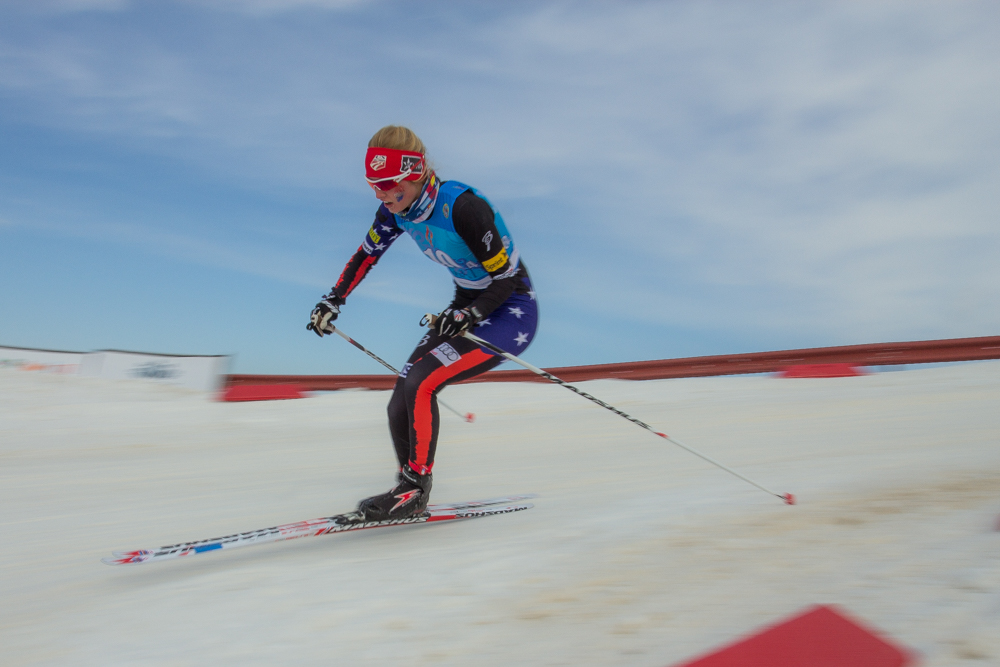
    Maria Stuber (CGRP) races to a second-place finish in the classic sprint at an Eastern Cup race in Craftsbury, Vt., on Dec. 17. She also placed second in the 5 k freestyle race that followed on Dec. 18. Photo by Kris Dobie.

    Stuber said the team’s season-long improvement was rewarding, and she hoped to recruit a roster full of competitive runners for next fall. One of the smallest schools in the NCAA with about 600 students, Southern Vermont wasn’t always known for its Division III athletics. Stuber wanted to make it one of the top two teams in the New England Collegiate Conference.

    “It was a lot more work than I anticipated,” she said at the end of the season. “This year was pretty busy, jam-packed, but it’s good. It’s a good time for me to do it.”

    While Stuber ran three to four times a week with the team, she said the training wasn’t ideal. The best part of the job was it’s flexibility in the off-season, and as soon as she wrapped up last fall, she amplified her rollerski training considerably.

    When they could, Stuber and Cook said they coordinated their workouts. Cook found a valuable summer training partner in U.S. Ski Team veteran Andy Newell, who lives 15 minutes north of Bennington in Shaftsbury, Vt. Stuber said she trained with her good friend Aubrey Smith, the assistant coach of the Williams College nordic team.

    “We’ve been working all the angles we can to get people to train with,” Stuber said.

    As of late January, their plan had played out about as well as they could have expected. Before the season started in November, Cook said they were focused on getting settled and “trying to see what the East has.” They weren’t entirely sure which races they would do.

    Four weeks ago at U.S. Nationals in Rumford, Maine, Stuber started off with the fourth-fastest time in the freestyle sprint. She went on to place 10th in the sprint, and recently nabbed third in a SuperTour 10 k skate race in Minneapolis.

    “I don’t have any doubt that I’ve made the right move,” Stuber wrote in an email. “I needed a little bit of a life change and moving to Vermont and taking a full-time job was definitely that. Busy is not a bad thing when you enjoy what you do.”

    Cook started the season with an Eastern Cup win in Craftsbury (where Stuber was second on the same day). He went on to notch his second-best result at nationals, finishing fifth in the 15 k freestyle. Perhaps he was already getting used to the East.

    “I really like the Midwest, but at the same time, coming here and just the terrain with the Green Mountains, it’s different. It’s really nice,” he said. “Maria’s job was a really good opportunity so it was kind of like, ‘Hey, take your opportunities when you get them.’ ”

    “I don’t know if we’re lifers, but we’ll be here a while,” Stuber said with a smile.

  • Liebsch Clinches Tour Title With Strong Finish in Pursuit

    Liebsch Clinches Tour Title With Strong Finish in Pursuit

    Matt Liebsch (Team Strong Heart/Team Birkie) on his way to winning the Tour de Twin Cities on Sunday. Photo: Alex Wain/Team Birkie.

    After five races over the course of nine days and never once relinquishing his lead, Matt Liebsch (Team StrongHeart/Team Birkie) took home the overall victory in the Tour de Twin Cities on Sunday after crossing the line first in the 20 k freestyle pursuit at Green Acres. Pat O’Brien (CGRP), with the help of Saturday’s bonus sprint, claimed second in the inaugural Tour. Karl Nygren (CXC) took third after a series of consistent performances.

    “I’ve had this [Tour] on my radar for a while because it’s in my hometown,” said Liebsch on Sunday. “I was really happy [to win].”

    Though he was first across the line, Liebsch’s was the second-fastest elapsed time of the day to Brenton Knight’s (APU), who climbed his way from the 10th starting position at 36 seconds back to end in second in the pursuit with an elapsed time of 49:46.1.

    Starters left the gate at intervals based on Saturday’s classic race; Liebsch trailed Dylan McGuffin a second, and a handful of other top skiers worked their way into the mix to make the race play out like a mass-start.

    McGuffin took off from the line and took a lap for Liebsch to reign in.

    “I wasn’t feeling super peppy after the mosh-pit crash from yesterday,” said Liebsch. “I wanted to take it easy, since I knew I didn’t need a lot of points. I just wanted to do what I needed to secure the overall.”

    With two wins and a second, Liebsch entered Sunday’s race with a considerable lead in the Tour standings, which were based off of SuperTour points.

    On lap two, the paced had slowed, and the lead pack gres to a group of about ten skiers, with more athletes gaining.

    “One of our coaches said we were going at a pedestrian pace on the third lap—I don’t know, it felt good to me!” said Liebsch.

    At the prompting of his coach on the sidelines, Liebsch said he began to turn up the heat on the fourth lap.

    “I hit the gas pretty hard, and I think those other guys who’d worked hard to catch back up hadn’t quite recovered, and they popped away off the back,” he said.

    Bryan Cook (CGRP), who was the third athlete over the line on Sunday, hung onto the quickened pace for a brief period.

    “Matt made a big move with around three and a half laps to go and I was the only one to stay with him,” Cook wrote in an email. “We skied together for about a lap and a half before I just couldn’t keep up with his pace.”

    Knight, a late starter, took advantage of being in the chase position and managed to make gains on the leaders as others began to fade. By the end of the second lap he had caught the back of the front pack.

    “Unfortunately that wasn’t a whole lot of rest time—that’s when Bryan Cook and Matt Liebsch took off,” said Knight.

    Knight felt like he still had enough gas in the tank to go with them, and moved around a few more people until he passed Cook to get in second, where he stayed for the remainder of the race.

    After crossing the line, Knight didn’t immediately know that he’d posted the fastest elapsed time of the day.

    “I didn’t even see [Liebsch] on the last long climb—I was like, ‘Okay well, I’ll go for the second-fastest time,’” Knight recalled. “Then [after the finish] Matt said he saw me coming down the hill.”

    The men's 20 k pursuit podium: 1. Liebsch 2. Knight 3. Cook. Photo: Bruce Wain/Team Birkie.

    With the extra five points for skiing the fastest 20 k, Knight ended fourth in the overall Tour, which came with an $800 payout.

    “I wouldn’t have been winning any money unless I won, basically. It’s what you’re shooting or, but I was more shooting for doing what I could do,” said Knight.

    The top-heavy points system, coupled with the intermediate preem on Saturday, put O’Brien in position for second in the Tour overall despite being sick over the weekend and finishing eighth in the 20 k. His second-place in the sprint prologue on Wednesday was his top result of the week.

    “It’s definitely different with points rather than time [-based scoring],” said O’Brien. “Whether you win by a minute or a second, it doesn’t matter, if you’re getting the same points for it. A timed tour values consistency more; if you’re way off in one race, you could be totally out of it.”

    With two back-to-back wins out of the gate last weekend, Liebsch set himself up well for the Tour title, but he knew he had to stay consistently near the top to come away with it.

    “It was kind of stressful trying to be on for an entire nine day period, and looking at points, saying, ‘Oh, I need to do this good, keep racing this fast,’” Liebsch said. “You don’t want your body to have an off day.”

    “I can’t imagine doing the Tour de Ski, that’s got to be crazy.”

    Tour de Twin Cities final standings

    20 k pursuit elapsed time results (from which points were awarded)

    Overall pursuit results

    The men's Tour podium: 1. Liebsch 2. O'Brien 3. Nygren. Photo: Bruce Wain/Team Birkie.
  • Elliott Wins 15 k; Team HomeGrown Takes Hold at Nationals

    The men's 15 k freestyle podium at U.S. Nationals: No. 1 Tad Elliott (center), No. 2 Matt Liebsch (l), No. 3 Sylvan Ellefson (r)

    RUMFORD, Maine – Aside from their “bro” talk and Colorado slang, Team HomeGrown knows how to get serious when it counts.

    It might not seem that way when its athletes, like U.S. Ski Team members Tad Elliott and Noah Hoffman, jokingly hold hands. Most of Team HomeGrown thinks every race is “awesome” and “pretty sweet,” even if it isn’t their strength. That’s just their attitude.

    No. 1 Tad Elliott (Team Homegrown) racing to a first-place finish in the men's 15 k freestyle individual start at U.S. Nationals at Black Mountain on Thursday. Photo by Flying Point Road Photography/NNF

    In its third season as part of Ski and Snowboard Club Vail, the team’s quiet intensity comes out on the course. During the 15 k freestyle individual start at the 2012 U.S. Cross Country Championships on Thursday, head coach Dan Weiland said he didn’t give splits to all his racers; he saw several internalize the news from the stadium loudspeaker at Black Mountain.

    The laid-back approach paired with fast skis and faster racers worked for Team HomeGrown, as Elliott won the 15 k in 30:18.8 and one of the team’s founders Sylvan Ellefson finished third, 7.1 seconds back.

    For Elliott as the first starter, feedback was critical. About two laps into the race with two to go, the 23-year-old heard he was in third. Hoffman was leading at the time and Ellefson was second.

    Rather than feel flustered, the news put Elliott at ease.

    “That’s pretty motivating to know that your teammates are sweeping the podium at that point,” Elliott said.

    Even his coaches lost their cool a little bit.

    “They were really fired up when that was going on,” Elliott said.

    Ultimately, Matt Liebsch (Team Strong Heart/Team Birkie) kicked especially hard on the last two laps and finished second (+2.6). After battling a cold since the weekend and missing Tuesday’s sprint, Liebsch said he found “fifth gear” heading into the last 3.26 k lap. He also heard his wife’s voice in his head telling him to go.

    “I was skiing for them today and really digging hard,” Liebsch said of his wife, Mary Beth, and two young children at his home in Minneapolis. “They’re sacrificing as a family for me to ski race.”

    Matt Liebsch (Team Strong Heart/Team Birkie) skiing to the finish. Photo: Flying Point Road.

    Hovering in the top 10 for most of the race, he had no idea he was second to Elliott.

    “(It) was my plan to put myself in a position that I’m in it to go for it,” Liebsch said. “I’m real happy with that.”

    After leading for the first half of the race, Hoffman placed fourth. He said he tried to ski consistently and work on cues – such as getting better traction on the new manmade snow – but suffered near the end.

    “I was hurting on the last lap in a big way,” Hoffman said.

    While he preferred not to hear splits, Ellefson said it helped to know how his teammates were doing.

    “I was going anywhere from first to fourth and getting splits a couple seconds ahead of Tad, a couple seconds behind Tad,” Ellefson said. “It’s comforting knowing that your teammates are up there.”

    While he specifically tried to ski harder from the start and was second for nearly the first two laps, Ellefson said his legs tired in the second half. He was able to hang on and ski the last 3 k strong, he said.

    Elliott also said he felt it near the finish, especially after conquering the infamous “High School Hill” four times. But for the defending 30 k national champion, the 15 k was short.

    Sylvan Ellefson (SSCV/Team HomeGrown skiing up the lap hill. Photo: Flying Point Road.

    “I wanted to go out hard here at sea level on a fast course and see if I could hold on,” said Elliott, who placed 29th in the 15 k classic at U.S. Nationals last year. “I was hurting by the end.”

    After solid individual results in Tuesday’s freestyle sprint – with Elliott notching one of his best qualifying results in 16th – Team HomeGrown’s near sweep of the podium on Thursday proved it was on the right track.

    Weiland credited Boulder Nordic Sport (BNS) for helping wax their skis. He and fellow SSCV coach Eric Pepper applied four layers to each of the six-person team’s several pairs of skis last night, and Roger Knight and his BNS crew added two or three topcoats to each at 5:30 Thursday morning.

    “It takes a lot of work,” Weiland said. “We had good skis, but we have three great athletes, too.”

    Coming from Vail, Colo., some 8,000 feet above sea level, Weiland said the hard course at an elevation of about 1,000 feet suited his athletes.

    “If it was flat and superfast then we might be in trouble, but these guys like the hills,” Weiland said. “I think it shows that you can do it (live and train at altitude). There’s people that don’t think it’s possible, but here’s a good reason why it is possible.”

    2012 U.S. Nationals
    U.S. Ski Team and Team HomeGrown racer Noah Hoffman attacks a climb during the U.S. Nationals men's 15 k skate on Thursday at Black Mountain in Rumford, Maine. He finished fourth. Photo: Flying Point Road

    A new addition to the Craftsbury Green Racing Program, Bryan Cook was fifth. After starting 15 seconds ahead of Liebsch, he said the eventual runner-up caught him near the start of the third lap, and he managed to stay with him until the finish.

    The result exceeded Cook’s expectations since the former Central Cross Country (CXC) racer, who recently moved to train in Vermont, had fewer early season races under his belt than usual.

    “I guess I didn’t really have any goals coming into this one,” Cook said. “It sounds weird but I wanted to do well, like a top 10 I guess would be what I was looking for.”

    Matt Gelso of the Sun Valley Ski Education Foundation was sixth, Brenton Knight (Alaska Pacific University) placed seventh, David Norris (Alaska Winter Stars) was eighth, Patrick Johnson (Middlebury) was ninth, and Brian Gregg (CXC) finished 10th.

    Men’s Results.


    All Flying Point Road photography proceeds will be donated to the National Nordic Foundation (NNF).

  • Preview: Freeman Headlines U.S. 50 K Champs., But Others Lurk

    Preview: Freeman Headlines U.S. 50 K Champs., But Others Lurk

    Noah Hoffman (L) training with Kris Freeman in Sun Valley on Friday.

    Kris Freeman (USST) will be the odds-on favorite to win Saturday’s U.S. national championship in the 50 k classic. But the way his last two seasons wrapped up, just making it to the start line in Sun Valley, ID, is a victory in and of itself.

    In late March, 2009, Freeman was recuperating from surgery on his legs to relieve the debilitating symptoms of exertional compartment syndrome; he had been forced to end his season in February.

    The same thing happened last year—Freeman’s last race was the Olympic 50 k on February 28, and he didn’t make it to the finish. This time, it was a weakened immune system that felled him, thanks to complications from type one diabetes.

    2011 has been an improvement, even if Freeman didn’t make hit his big goals of a World Cup podium and peaking for World Championships. He raced all the way through the end of the season, finally concluding his European campaign last weekend in Sweden.

    “This is a lot better,” he said. “I’m still standing, and it’s March, which is nice.”

    Having notched several World Cup top-10’s this season, Freeman is the obvious headliner for the 50 k, the last of five U.S. national championship races held this year.

    The previous four were in Rumford, ME, in January, but the 50 k is always left until the end of the season. Saturday’s race is the first in a series in Sun Valley; a four-stage mini-tour will follow next week.

    Last year’s season-ending races were held in northern Maine, and while the athletes there were welcomed by the surrounding community, they were also greeted by unseasonably cold, single-digit temperatures.

    This year couldn’t be a bigger contrast. On Friday, skiers in Sun Valley were training under brilliant sunshine, with temperatures in the high 30’s putting everyone in a good mood.

    A view of the 7.2-kilometer loop that will be used for the U.S. 50 k championship in Idaho on Saturday.

    Along with the fine weather, some 50 men have arrived in Sun Valley to contest Saturday’s 50 k, and a half-dozen could make Freeman’s life very difficult, especially since he’s just five days removed from Europe and “pretty jet-lagged.”

    The biggest threat is probably Freeman’s teammate, Noah Hoffman, who turned some heads when he stuck with the lead pack through three-fifths of the 50 k at the World Championships earlier this month. He got sick the week after, and hasn’t raced since, but he told FasterSkier on Friday that he has recovered, and is feeling good.

    Another pair of athletes will be racing on the rebound, too—the two Alaskan elder statesmen of James Southam and Lars Flora, who both ski for APU.

    Flora had a strong start to his season, but got sick toward the tail end of his campaign in Europe, finally starting to come around in Sweden last weekend. Southam, on the other hand, will be trying to bounce back from a number of disappointing races in the early season, and at the national championships in Maine. Both own a handful of U.S. titles, and will be looking to add to their collection.

    Flora returned to North American at the same time as Freeman, but Southam has the advantage of having been in Sun Valley for a week. Especially with the course lying at an altitude of 6,600 feet, that won’t hurt, and his body, Southam said, is “starting to come around.”

    “This is the first race this year that I feel like kind of suits my skills,” he said. “So I’m looking forward to it.”

    Those men will be the heavy hitters of the 50 k—as Southam put it, “I think there’s four of us.”

    There are some others that could make a splash, tough. Stefan Kuhn, a Canadian, is in Sun Valley; he won the U.S. 50 k championships in Fairbanks in 2009, beating both Southam and Hoffman.

    Kuhn has history on his side—Canadians have actually been on top in the last three U.S. 50 k championships, with Ivan Babikov winning in 2008 and 2010. (Canadians can win the race, and the prize money, but the U.S. title goes to the first American across the line.)

    Other faces in the lead group could include those of Glenn Randall and Leif Zimmermann (BSF), along with Bryan Cook and Brian Gregg (CXC), Mike Sinnott (SVSEF), and Canadians Brent McMurtry and Kevin Sandau.

    The race will be held on a 7.2-kilometer loop at Sun Valley’s Lake Creek trails, which are situated on a wide-open hillside between the creek bed and the Smoky Mountains.

    The loop meanders alongside the creek for a few kilometers before veering into the hillside for its first big ascent. Then, a downhill and some rolling terrain takes athletes into the second climb, which is steeper and, at 50 vertical meters, at the legal limit set by the International Ski Federation, according to Chris Mallory, the Sun Valley coach who designed it.

    Those two stiff climbs will quickly sort out the athletes who aren’t having good days, as well as those with bad skis.

    “You can’t fake your way out there,” Southam said.

    Situated directly above the stadium, that second hill is the last good place to make a move—afterwards, the course drops back down precipitously for 800 meters, before a final sprint for the line.

    Those climbs will likely be where the race is won and lost, but don’t expect to see Freeman attacking them from the gun. In Sun Valley, according to his coach Zach Caldwell, Freeman is like “Petter Northug in a World Cup.”

    While Freeman won’t want to wait for a sprint, Caldwell said, “it’s up to everyone else to try to get rid of him.”

    The race, like most 50 k’s, will probably end up becoming a battle of attrition, with a small pack of the strongest men breaking away from the rest in the middle of the race. From there, though, it’s anybody’s guess what happens—whether Freeman struggles with jet lag, or whether Southam will finally find what it takes to win. As Freeman put it, “you can’t plan a 50 k too much.”

  • Gundersen, Compton Win the Birkebeiner; Uhl, Bender are tops at Classic Birkie

    Gundersen, Compton Win the Birkebeiner; Uhl, Bender are tops at Classic Birkie

    The 2011 Birkebeiner (Photo: Brett Morgan)

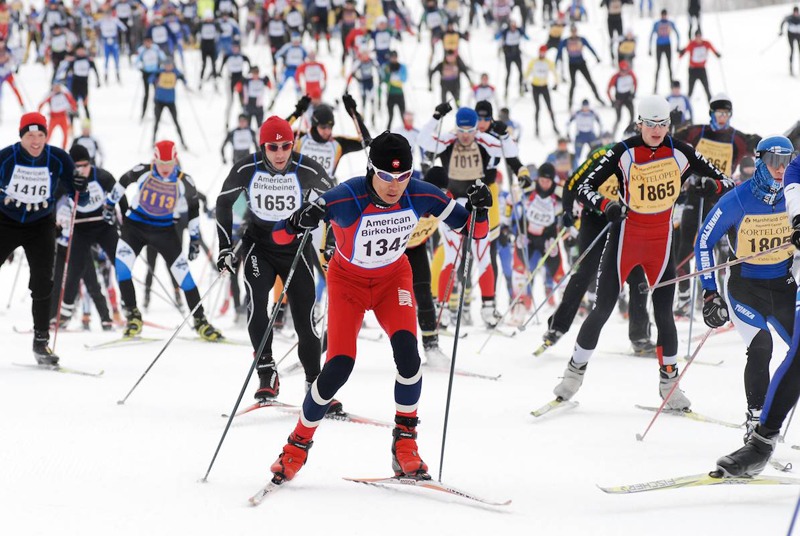
    The 38th annual American Birkebeiner, held in sub-zero and single-digit temperatures with record particpation, saw two sprint finishes to crown the men’s and women’s Birkie freestyle champions and a pair of UVM alums ski to sizable victories in the Birkie Classic on Saturday.

    Norwegian Tore Martin Gundersen won the 50K Birkie Freestyle race with a time of 2:00:32.8, furiously outsprinting his nearest opponent, Benoit Chauvet of France, by less than a second.  Twenty seconds later, third through twelve places were decided in less than ten seconds.  Andrey Tyuterev of St. Petersburg, Russia took the final spot on the podium in thir dplace.  Bryan Cook of CXC was the top American in fifth overall, with CXC teammate Brian Gregg the second American in seventh place.

    In her first Birkebeiner, Caitlin Compton of CXC broke the women’s 50K Freestyle course record today and took first place with a winning time of 2:15:26.0.  APU’s Morgan Smuth and XC Oregon’s Evelyn Dong kept it close all the way to the line finishing just three and eight seconds off Compton’s pace for second and third place, with the top three finishers all dipping beneath the previous course record set by Rebecca Dussault in 2010.

    “It was great to see [Caitlin] take the win, as she led a lot of the race and really pushed the pace in the last 10k,” said Smyth, who was racing in her first 50K.  “She did a lot of the work, it was a well deserved win.”

    Finishing alongside its freestyle counterpart, the Birkie Classic was contested, and saw two University of Vermont alums picking up victories.  2010 Birkie Classic Champion Jerguen Uhl (VTXC) defended his title, pulling ahead of Karl Nygren (CXC) and Eric Wolcott (CXC).

    Uhl’s former UVM teammate Jennie Bender, skiing for CXC, grabbed the women’s Birkie Classic title by an impressive seven minutes over Kerrie Fabius of Thunder Bay, Ontario.  Hilary Patzer of St. Paul, Minnesota took third, another minute and 40 seconds back.

    “It was great!” Bender told FasterSkier of her first ski marathon. “My wax was great… it was definitely abrasive, but the CXC coaches did a great job.  I skied with a lot of the men and kind of jockeyed back and forth.  It was freezing outside, but it felt pretty awesome.”

    Ned Zuelsdorff, Executive Director of the American Birkebeiner Ski Foundation, said skiers from 19 foreign nations, including Latvia, Israel and Denmark, and 47 U.S states, including Hawaii, North Carolina and Alaska, had great conditions for the 38th anniversary event.

    Honorary Starter, John Schmitt, the voice of Birkie for 19 years welcomed the largest field of skiers ever in the American Birkebeiner’s 38-year history. He sent over 8,850 skiers on their way beginning at 8:00 a.m.

    Temps hovered around 10 degrees below zero at the start as 21 waves of skiers left the starting gates.

    The American Birkebeiner is modeled after the Norwegian Birkebeiner Rennet, which in turn was inspired by the historic rescue of the infant who would become a celebrated king, Haakon Haakonsson IV. The race symbolically re-creates the flight of the prince, carried on skis by warriors called birkebeiners for their protective birch bark leggings.

    Long time friends Gale Otterholt and Marv Franson assumed the roles Torstein and Skervald, the Birkebeiner warriors who rescued the infant Prince Haakon (H?-ken). Otterholt a retired pharmacist and college professor and has completed 33 Birkies and also from Eau Claire, Franson, a retired Dean and Electronics Instructor, has skied 34 Birkies.

    Long time Birkie skier and friend of the Warriors, Gretchen Lindgren, dressed as Inga from Varteig, mother of Prince Haakon, while her grandchild Finnley assumed the role of the cherished prince.

    The men dressed in full Birkebeiner regalia including helmets, shields and their wooden skis skied to the finish line to the clang of cowbells from the thousands of spectators who lined Hayward’s Main Street.

    Gretchen skied the full 54 kilometers dressed in a traditional Norwegian dress and cloak, on wooden skis and carried Prince Haakon on her back for the trip up Hayward’s Main Street.

    “The historic re-enactment, fast race course and the largest field ever made the Birkie’s 38th anniversary one for the books,” Zuelsdorff said. “We couldn’t be more pleased.”

    For race day results, log on to www.birkie.com.

  • Hoffman Crushes Field in European Send Off

    Hoffman Crushes Field in European Send Off

    Noah Hoffman (USST) – 1st Place

    Noah Hoffman hadn’t won a major domestic race in…well even he wasn’t sure…maybe the Owl Creek Chase two or three years ago, Junior Nationals…?

    But the youngest member of the US Ski Team, who has had considerable success racing in Europe, left no doubt about who would stand on the top of the podium on a cold snowy day in Lake Placid. This was in fact his first significant US victory since the Owl Creek Chase in 2008.

    Hoffman skied to a 58 second win over Brian Gregg (CXC Elite) in the men’s 15km freestyle SuperTour in Lake Placid, New York. Alex Howe (UVM) finished a surprising third, capping an excellent weekend for the Catamounts.

    The day dawned frigidly cold with clear skies and temperatures below zero. But by the time the first man took to the course at 11:30 in the interval start race, clouds had moved in, light snow was falling and the course had transitioned from squeaky slow to a more reasonable speed.

    Friday’s 10km classic winner, Lars Flora (APU) made a game-time decision not to race. After arriving at the venue, Flora made the call, opting not to take any chances with his health. The overall SuperTour leader has a flight to Europe tomorrow, a potential World Cup start spot waiting in Estonia, and a berth on the US World Championship team to worry about.

    With James Southam (APU) also scratching, Hoffman entered the race as a clear favorite, despite the fact that the event did not align with his strengths.

    “It was about as hard of a skate race that you could make for me,” Hoffman said in the finish area. “There were four ghosts in front of me, soft conditions and a flat course – everything I would not ask for.”

    But the 21-year-old from Aspen, Colorado was in control from the start. He hit the first climb with impressive snap and never faltered, skiing with an intensity that showcased his impressive engine.

    The course was quite flat, with only several steep short climbs, and a seemingly endless section of gradual twisty terrain. There was little rest and transitions aplenty.

    “This is the stuff I have really been focusing on,” Hoffman said, noting that he has always been strong at V1. “I’m really happy that it seems to be working.”

    Brian Gregg (CXC Elite) – 2nd Place

    Pacing was key, and Hoffman did an excellent job, turning in lap splits of 12:43, 13:01, and 13:04.

    “You have to make sure you keep it at a sustainable level, because if you blow up, you can blow up really hard on this course,” Hoffman said, noting the lack of opportunities to recover.

    At the eight-kilometer mark, Hoffman held a 34 second lead on Gregg, a margin that would only grow.

    Gregg, who missed a spot on the World Championships team, posted his best Continental Cup result of the year, just bettering his 3rd place in the 10km classic, this fall in West Yellowstone.

    “I really like to climb, but it is fun to have variety,” Gregg said in reference to the course.

    With so little rest, Gregg, like Hoffman, pointed to the need to staying controlled.

    “Pacing was key. If you went out hard, there were only a few places to recover. It was hard,” Gregg continued, before adding, “It was a day for skiing really big and relaxed. It was really fast.”

    Gregg’s plan was to try to negative split the three-lap course. He didn’t quite succeed, but was close – 13:03, 13:21, and 13:21.

    The event combined the SuperTour with an EISA Collegiate Carnival, giving the East’s top college skiers a chance to mix it up with some of the top domestic racers. And overall the students fared quite well.

    Howe followed up teammate Scott Patterson’s podium performance in the classic race with one of his own. Throw in two fifth place races by Scott’s sister Caitlin, and UVM had quite a weekend.

    “It went really well. I was happy with the way I was skiing, my skis were running really well, and it was a great course,” Howe said.

    “I like the transitions a lot – all the corners and ups and downs.”

    Alex Howe (UVM) – 3rd place

    Unlike Hoffman and Gregg, however, Howe’s pacing may not have been ideal. The UVM junior completed his first 5km lap less than four seconds down on Hoffman, but was 33 seconds slower on his second lap and a minute off his first lap pace on his last circuit.

    Colin Rodgers (SVSEF) started slowly, ranking back in 11th after 5km, but rode a strong second lap up the standings to place 4th overall. He was less than two seconds up on Bryan Cook (CXC Elite) in 6th. This was Rodger’s top SuperTour finish in a distance race.

    Cook nailed the pacing, turning virtually identical splits across the board. Patterson, on the other hand, went the other direction, dropping from 5th after the first lap all the way down to 20th.

    With US Nationals over, the SuperTour headed to the Midwest, and World Junior/U23 Championships just over a week away, athletes and coaches were furiously packing skis and waxing equipment.

    Hoffman flies to Finland on Sunday for a short preparation camp prior to the start of the U23 Championships, meeting the rest of the team there. Gregg is headed back home to continue on the SuperTour circuit, and Howe will be racing the collegiate junket for the remainder of the season.

    Hoffman is looking to be on the podium in Estonia – the site of World Juniors and U23 Championships, and feels he is in a good place with his fitness.

    “I’m very happy with my energy and how I feel. I’m psyched to go race in Europe,” he said.

    Men’s SuperTour 15km Freestyle – Results

    Colin Rodgers (SVSEF) – 4th Place
  • Training update.

    Hey everybody, I wanted to let you know what I have been up to lately.  Summer always flies by so fast, but I have been able to get in a lot of diverse training.  My training has been going really well, and I am back living in Wisconsin!  Yup, I just moved down to Delafield, […]

  • Summertime.

    It is great to be back training, and this is what I have been up to so far this training season:

    The end of the awesome 32 mile Keweenaw Chain Drive in Houghton, MI. (brockit photo)

    A week later in the 24 mile Superior Bike Fest in Marquette, MI. (Dennis Loy photo)

    Always fun to race with my […]

  • CXC Gears up for 2011

    Big changes to the team roster and the coaching staff are this spring’s news for the Central Cross-Country Ski Association (CXC). 18 athletes and three coaches will comprise the 2011 team for one of North America’s largest and fastest-growing clubs.

    Vacating the post of head coach that he held since the formation of CXC in 2006, Bryan Fish has accepted a position with the US Ski Team (USST) as Continental Cup coach. Jason Cork will be stepping in to fill this void, bringing his experience with Durango Nordic Ski Club, Michigan Tech University, and recent J1 and World Junior Championships coaching staffs to the job. Gus Kaeding, a former CXC athlete, will be stepping up as the team’s elite development coach this season.

    Under Bryan Fish, CXC sent its first athlete to the Olympics in Garrott Kuzzy

    Olympian and CXC athlete Garrott Kuzzy is optimistic about the changes in coaching staff, saying “I see the changes as positive, all the way around; we’ve now got three great coaches, four if you include Igor Badamshin, instead of just one.”

    Turnover among athletes is similarly high. A notable loss to the team comes with the departure of Rebecca Dussault, who along with her husband has taken an internship position at an organic farm in Colorado for the year and is pregnant with her third child, due January 19. Also leaving the team are decorated skiers Kristina Owen, Kelly Chaudoin and Audrey Weber.

    The men’s team will be headed by Kuzzy, who will continue to work with CXC after a parallel stint with the USST. Notable newcomers include Santiago Octariz, who represented University of Wisconsin-Green Bay last year as the lone NCAA All-American from the central region, and Tad Elliott, a National Champion and U23 World Championships team member. (Elliott raced for CXC’s marathon squad last year; this year he will be a full member.)

    Filling out the remaining spots on the men’s team are Brian Gregg, Karl Nygren, Eric Wolcott, Matt Liebsch, Bryan Cook, Andre Watt, Ben Lannin, and Doug DeBold.

    Caitlin Compton and Bryan Cook do a strength workout Photo: CXC

    There is an Olympian among the CXC women as well, as Minneapolis resident Caitlin Compton joins the roster. Other new additions are former University of Vermont standout Jennie Bender and Canadian Brooke Gosling. Maria Stuber, who had six top-5 SuperTour results in 2010, returns for another year with the squad, as will JoJo Winters and Melissa Schwartz. Jessie Diggins will be joining the squad full-time this year following her high school graduation.

    The roster is an impressive hybridization of veteran and newcomer. “It’s going to be an ideal mix of skiers. I can’t wait to start working with our ‘new additions’—some of the strongest skiers on the circuit,” says Kuzzy, “The vets will have more to learn from them than they will from us!”

    The CXC association has enjoyed rapid growth and huge success since it was founded only four short years ago. The program now encompasses not only the elite Vertical Limit team but juniors, masters, and educational opportunities.

    The team’s schedule is structured such that athletes participate in a ten- to fourteen-day camp every few weeks and train at home over the weeks between camps. CXC is currently in the midst of their first summer training camp of the season, located in the Saint Croix Valley of Minnesota.