From the FasterSkier archive — posts syndicated from athletes’ and coaches’ own blogs between 2004 and 2012, kept online as published. Current coverage is at fasterskier.com.
Convened for the first time since the pandemic, USSS’s biennial coaches National Coaches’ Symposium brings focus to US Skiing’s progress, and highlights the ever-evolving nature of the sport.
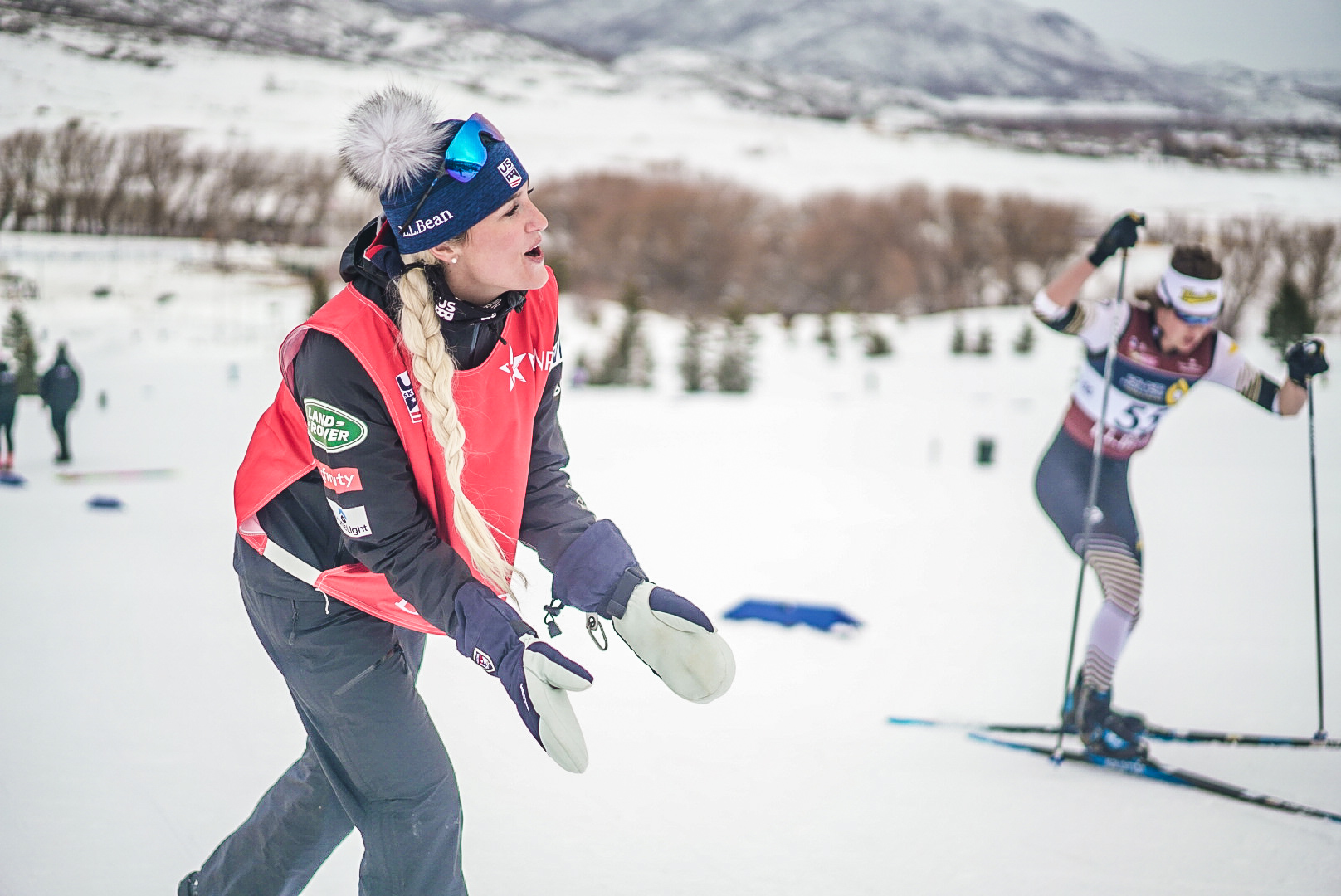
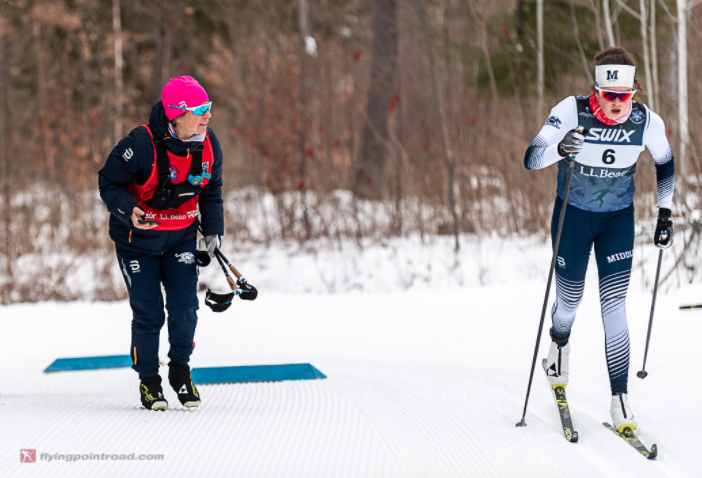
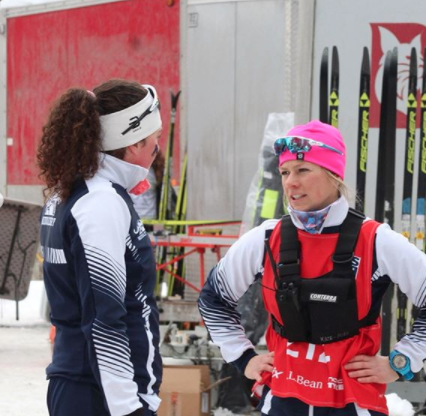
U.S. Ski and Snowboard Development Team Coach Greta Anderson encourages athletes during the men’s 30k distance race during the 2022 U.S. Cross Country Championships in Soldier Hollow. (Photo: Tobias Albrigtsen / @untraceableg)
Last held in 2019, the US Ski and Snowboard’s National Coaches’ Symposium has traditionally provided insight into program priorities and training philosophies of those coaches working directly with the US Ski Team. With in-person conventions having been interrupted by the Covid pandemic, this season’s re-convening of the two-day Coaches’ Symposium represented a welcome return to the dialogue that has typically benefitted the Nordic skiing community. The virtual venue ostensibly helped reduce attendance costs for coaches, but also spoke to a key theme of accessibility and collaboration touched on as a strength of contemporary US skiing throughout the conference.
Friday
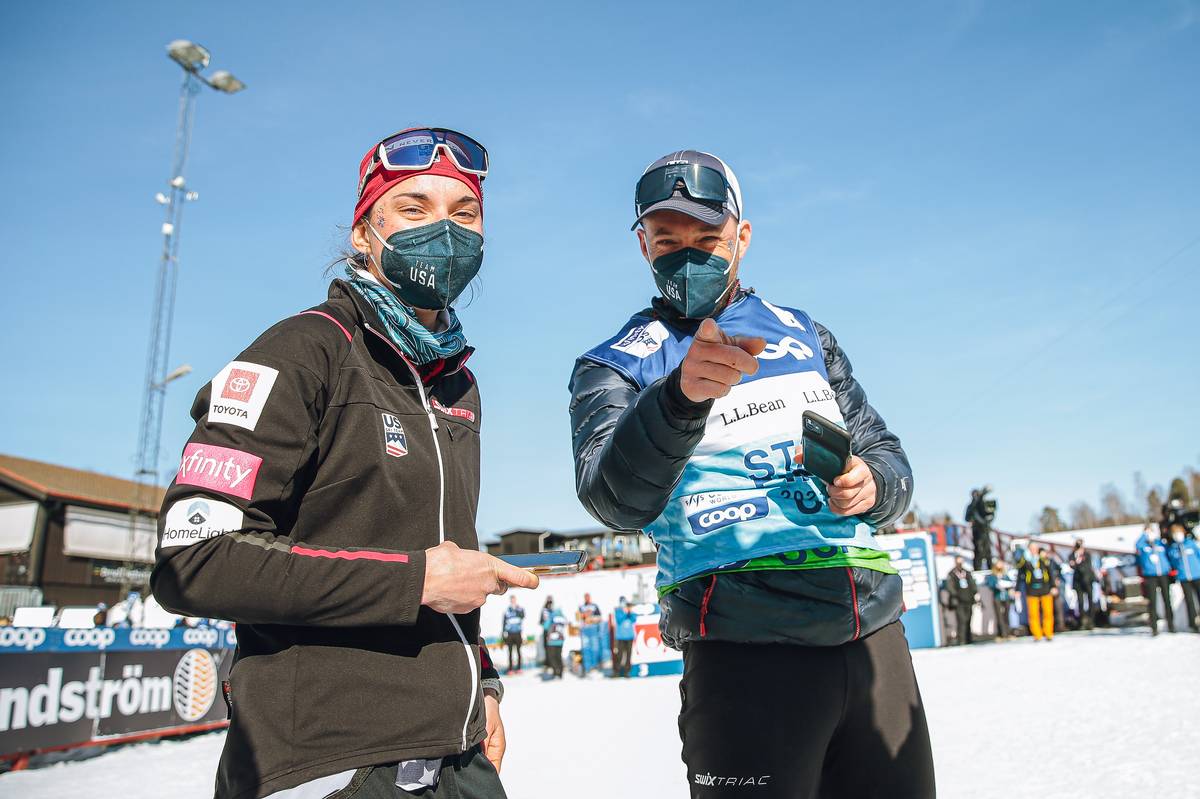
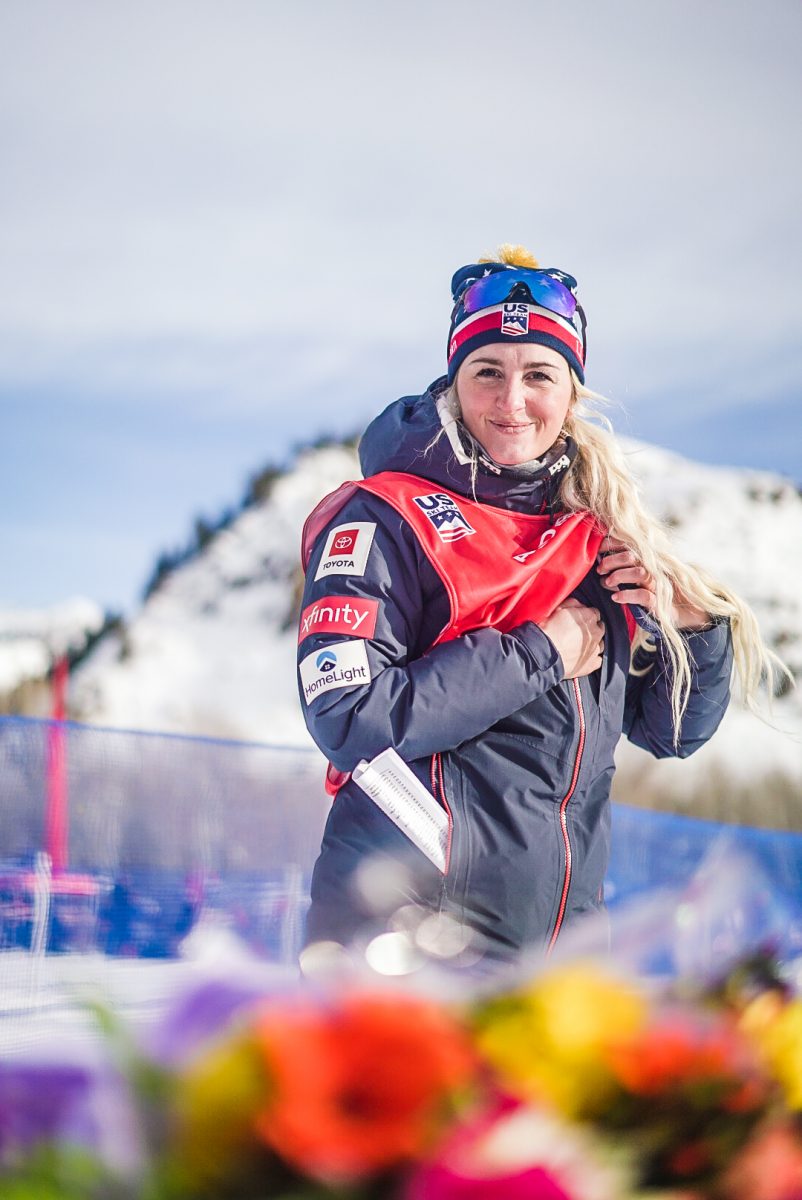
U.S. Ski Team head coach Matt Whitcomb (right) and Julia Kern course-side during the 4 x 5 k mixed relay amidst the 2021-2022 World Cup Finals in Falun, SWE. (Photo: NordicFocus)
Friday’s program began with an introduction from US Ski Team Sport Development Director, Bryan Fish. “There’s 138 people on the call right now,” Fish said, which reminded attendees that the audience was larger than could have fit into the Center of Excellence in Park City where previous symposiums had convened. There was much important information that presenters were to convey, and many eager listeners had gathered to hear it.
Dr. Hans Kristian Stadheim
Friday’s keynote speaker was Dr. Hans Kristian Stadheim, the current British National Team Endurance Performance Director, and a coach long-renowned for his intricate and scientific approach to endurance as it specifically applies to nordic skiing. As Matt Whitcomb commented in his introduction of Dr. Stadheim, “when you’re at the World Cup, Hans stands out as the one who’s really digging into what makes [ski training and racing] work.”
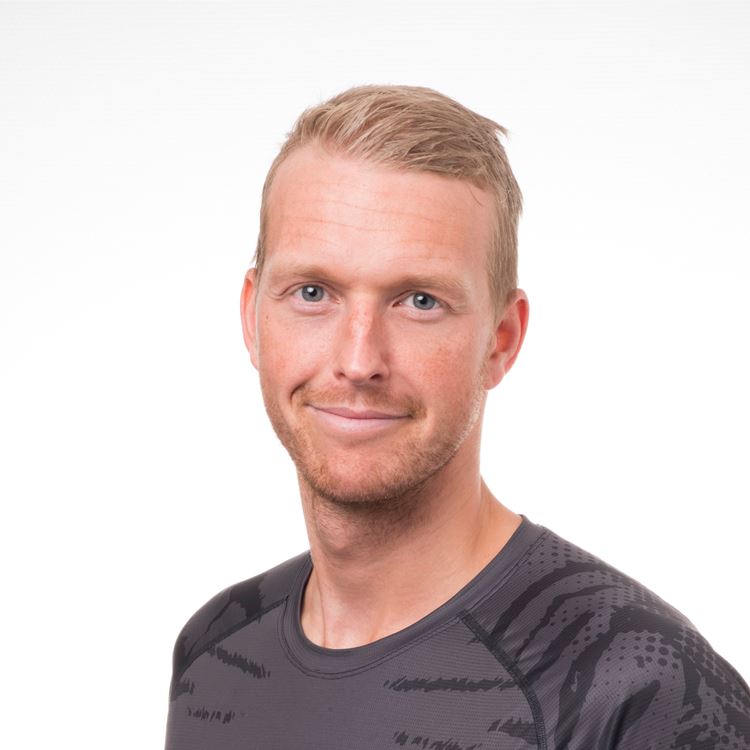
Hans Kristian Stadheim, current Director for the British National Ski Team. (Photo: Courtesy Image).
Stadheim’s presentation, “The Norwegian training method and experiences working with British team,” discussed the evidence behind current trends in nordic ski training, including the principles behind Norway’s dominance that Stadheim applied to building an elite program in Britain. He used his coaching with Simen Hegstad Krüger (NOR) as a case study for pointing out the training trajectory that the Norweigans follow for fostering a skier from junior to Olympic champion. The big takeaway from this example was that, “[The Norwegian] method is a gradual increase in training load with stress on limiting high volume at an early age.”
That point fueled a lively Q and A facilitated by Matt Whitcomb, which focused on implications for coaches working with junior and college athletes. Stadheim—along with useful addendums from Whitcomb—provided thoughts on balancing Threshold and VO2 max work, recovery metrics, and fitting individualized training into a team environment. Key recommendations included:
Intensity work for juniors should focus heavily on increasing VO2 max.
Recovery should be gauged dynamically using analytical tools and athlete perception.
Building a national program requires retention of a robust base of athletes from the junior level through to higher levels of competition.
The remainder of Friday’s program featured discussions and demonstrations by medical and training staff members of the US Ski Team. Jen Kimball and Tschana Schillier, alongside Luke Jager, demonstrated mobility and strength movements that target particular weaknesses seen in cross-country athletes. Dr. Heather Cichanowski and Dr. Tod Olin detailed the medical community’s interest in the high occurrence of respiratory issues among competitive skiers, chiefly asthma and vocal cord dysfunction. Then, Jessica LaRoche wrapped up the program with a talk on athlete wellness.
Saturday
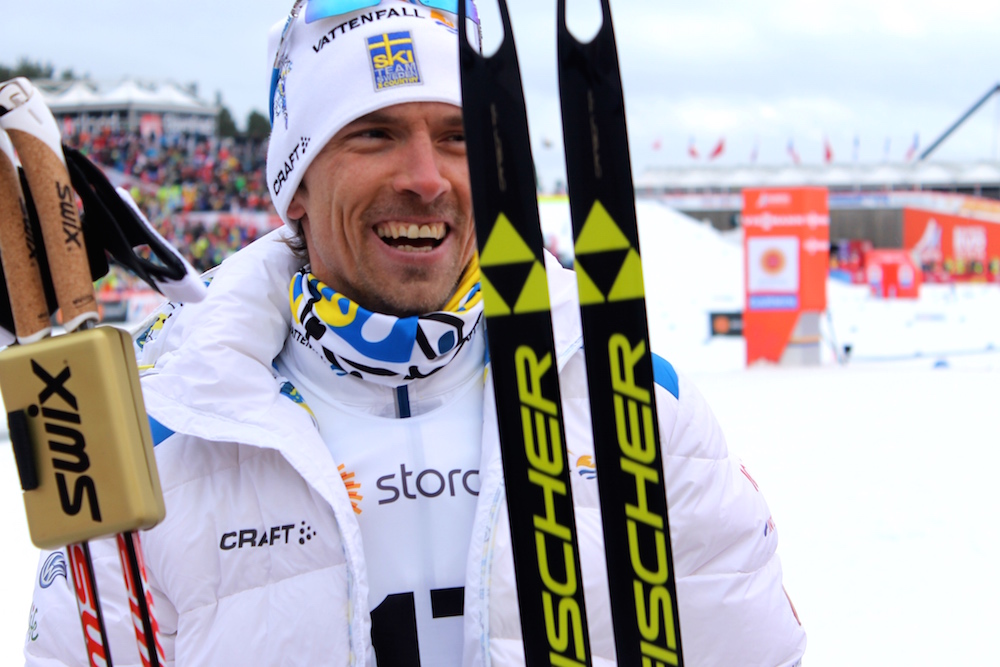
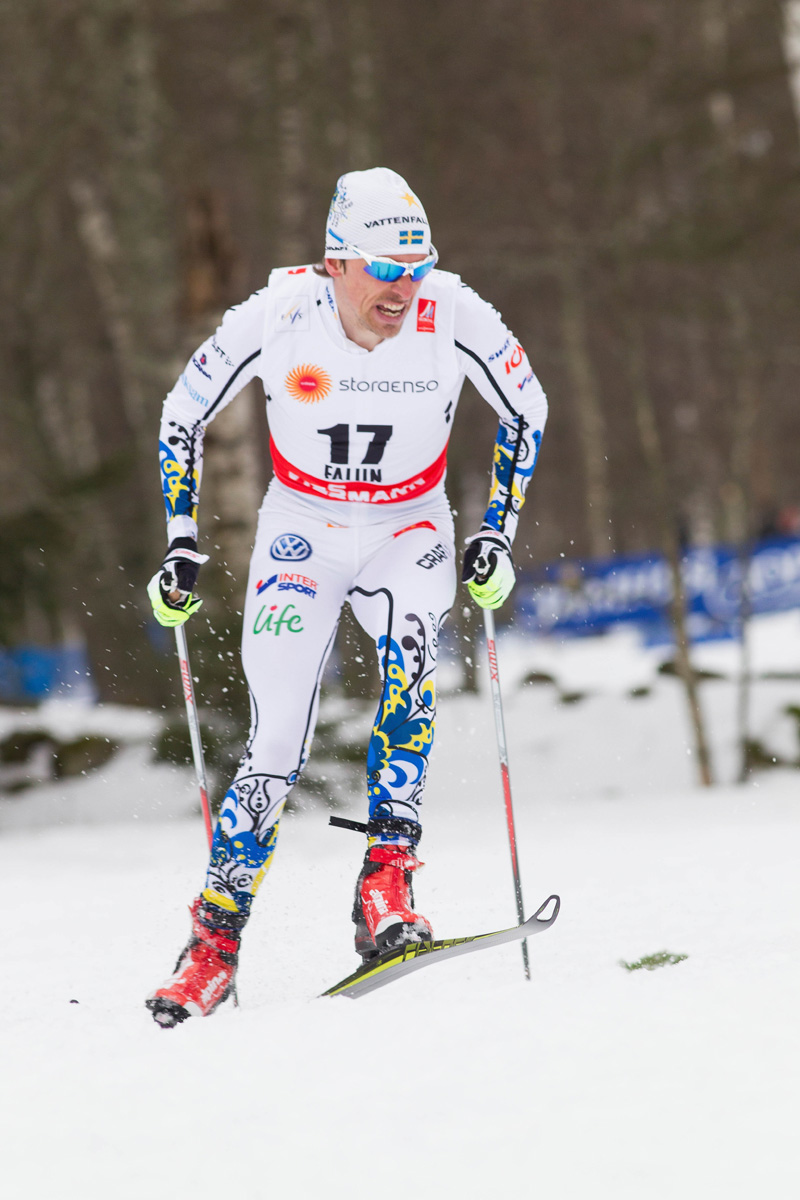
Johan Olsson smiles after winning the 15 k freestyle at the 2015 FIS Nordic World Ski Championships in Falun, Sweden. (Photo: NordicFocus).
Johan Olsson
Saturday’s presentations began with a keynote from Swedish skiing legend Johan Olsson. Since his retirement in 2015, Olsson has developed a career as a TV contributor to Swedish National Television’s (SVT) ski coverage. From a career that included fourteen Olympic and World Championship medals (2nd only to Gunde Svan in the history of Swedish skiing), Olsson shared anecdotes that illustrated breakthroughs in his approach to ski racing, with a special focus on mental preparation. Olsson’s career took place prior to the detailed focus on mental preparation and wellness in training that are common at the elite level today. His anecdotes, therefore, illustrated an innovative individual approach that soon saw parts become common in competitive skiing today.
Johan Olsson during the 2015 World Championships in Falun, Sweden. Olsson won the 15 k skate in Falun. (Photo: NordicFocus)
In one anecdote, Olsson detailed how his development of a dedicated mental approach to racing grew out of his own treatment for anxiety. After a disappointing 15k Classic at 2009 World Championships, Olsson’s wife Anna (also an accomplished Swedish skier) prescribed a self-imposed grieving period for him. “You have until 6pm tonight to be sad,” she said. “But then you will come to dinner and be the same positive Johan you always are.” Olsson popped in a cassette tape of “the saddest Neil Young songs I could find” and went about devising psychological strategies not unlike those found in Sport Psychology books today. A year later—at the 2010 Vancouver Olympics—Olsson’s charge in his relay leg saw Team Sweden win Gold in the event for the first time since Calgary in 1988. It was the culmination of a persistent application of techniques he had devised while wallowing in the saddest songs of Neil Young who—in an ironic twist—was seen passing through the crowd while Olsson stood atop the Olympic podium. Full circle, indeed.
Bryan Fish
Bryan Fish described trends in training and development philosophy on which he and US Ski and Snowboard are currently focused. Fish’s presentation implicitly conveyed the strong progress US Skiing has made, as well as identifying next steps. Strong points identified include a philosophy towards “not training the most, but training really well,” an emphasis on strength training, and a spirit of collaboration among US Ski Team programs, local clubs, and regional associations.
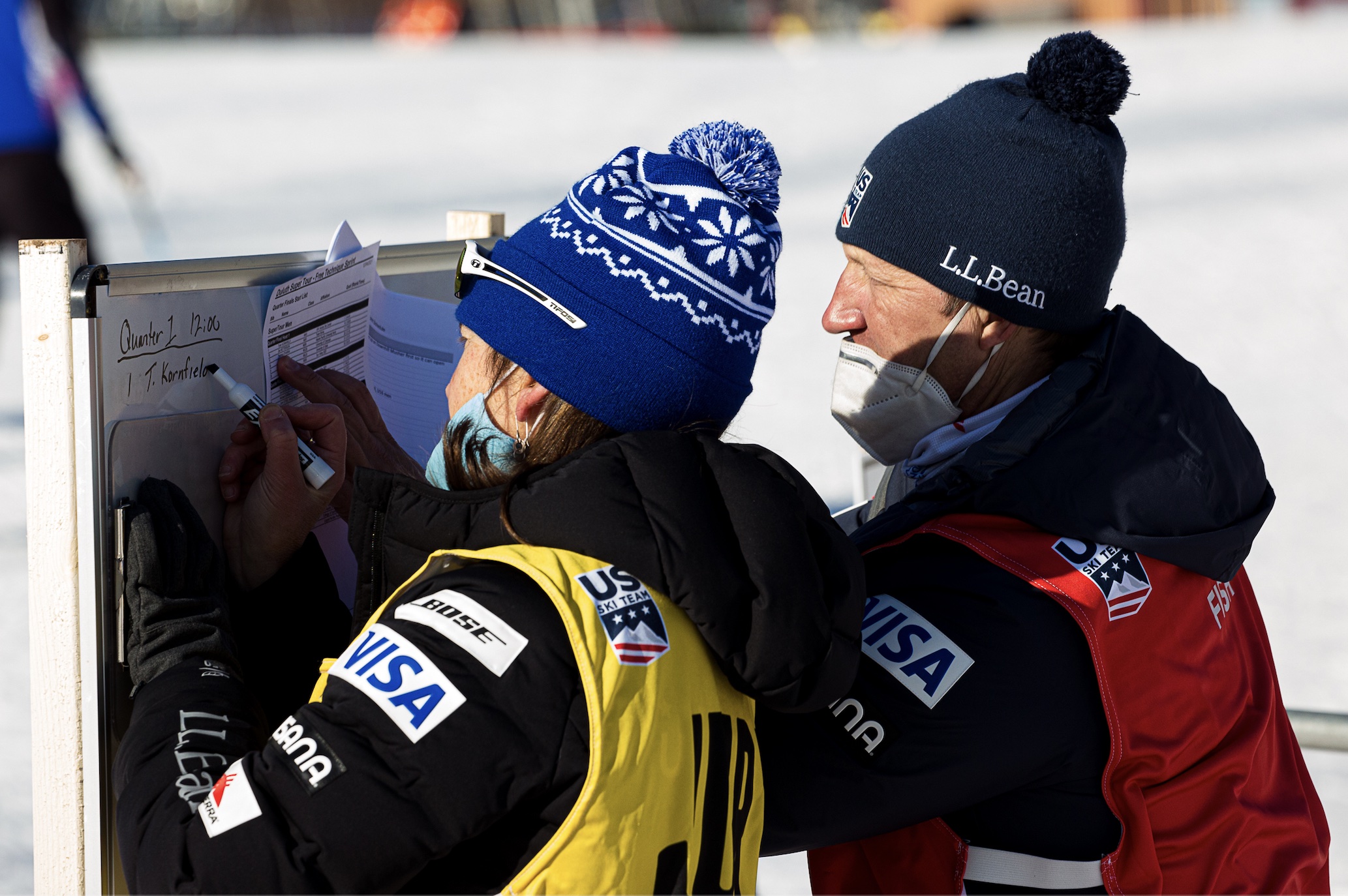
Bryan Fish, U.S. Ski and Snowboard Sport XC Development Manager, at a SuperTour in Duluth last December. (Photo: Jordan Woods/Woods Creek Productions)
Greta Anderson
What Bryan Fish had described as US Ski Team’s “holistic approach” was a continued focus during Greta Anderson’s presentation. Anderson spoke in detail on the number of athletes being reached by international trips, national training/elite groups, and regional elite groups. She further emphasized the ways each region uniquely incorporates its ski resources into this developmental program. For example, Eastern collegiate coaches played active roles in the Eastern/Midwestern U16 camp. In the Midwest, Team Birkie pros and U14 Dream Camp both expanded the region’s Regional Elite Group camp to more skiers. Anderson reiterated that these types of partnerships with clubs and programs feeding the US’ national development pathway were likely to continue. Matt Whitcomb quickly followed with an appeal to mobilize the US skiing community through the National Nordic Foundation, which will hold its annual Drive to 25 from November 21st-25th this year.
US Ski and Snowboard Cross Country D-Team head coach Greta Anderson supports athletes during the Sun Valley SuperTour races in January. (Photo: Tobias Albrigtsen / @untraceableg)
Jason Cork
In the final presentation of the symposium, Jason Cork narrowed US skiing’s development focus from the entire system to just one athlete: Jessie Diggins. In a candid and entertaining talk that considered the ethereal mix of trust, knowledge, and competence required in the coach-athlete relationship, Cork delved into the minutiae of training numbers, and how data derived from Diggins’ training logs reveals pertinent information about peaking. He rattled off Diggins’ history-making results in a casual tone, while being much more serious about the types of workouts, training cycles, and long-term trajectories that led to World Cup Overall wins and Olympic medals. Those accomplishments would tend to suggest that American skiing is doing things right, and that this symposium was a valuable opportunity to describe the knowledge, the practice, and the craft of bringing those performances about.
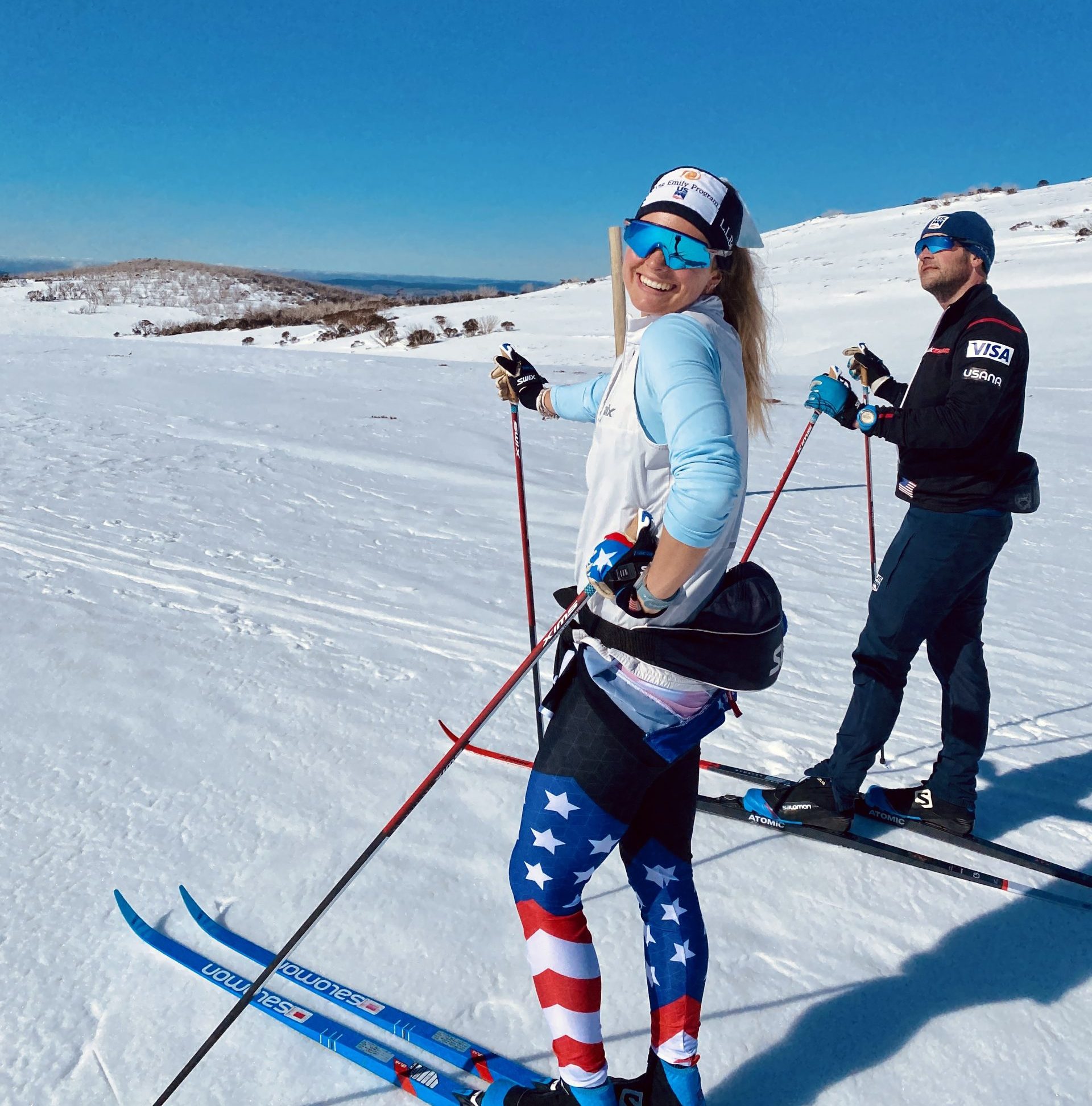
Jason Cork and Jessie Diggins out on a sunny day in Australia last August. Cork has worked with Diggins for 12 seasons, stretching back to their time on the CXC Elite Team. (Photo: Julia Kern)
“Let’s let this knowledge radiate out to our athletes,” said Bryan Fish in closing out US Ski and Snowboard’s first-ever virtual coaching symposium. It was a call-to-action that resonated on Zoom screens across America, leaving a whole community of coaches ready for the demanding season to come.
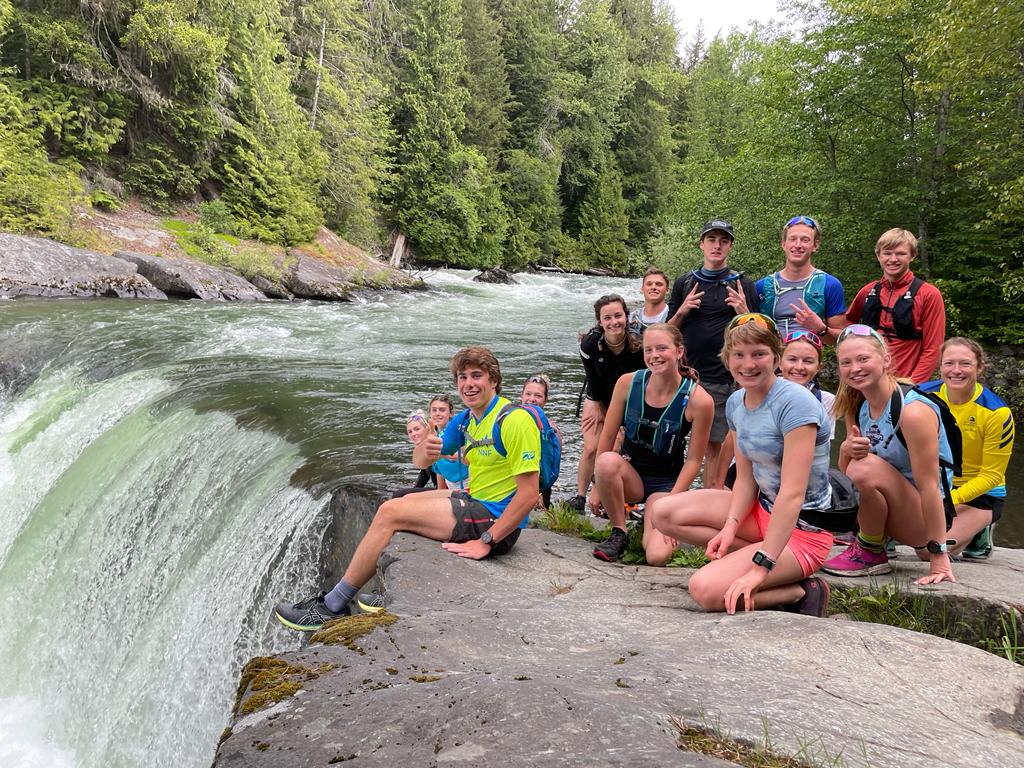
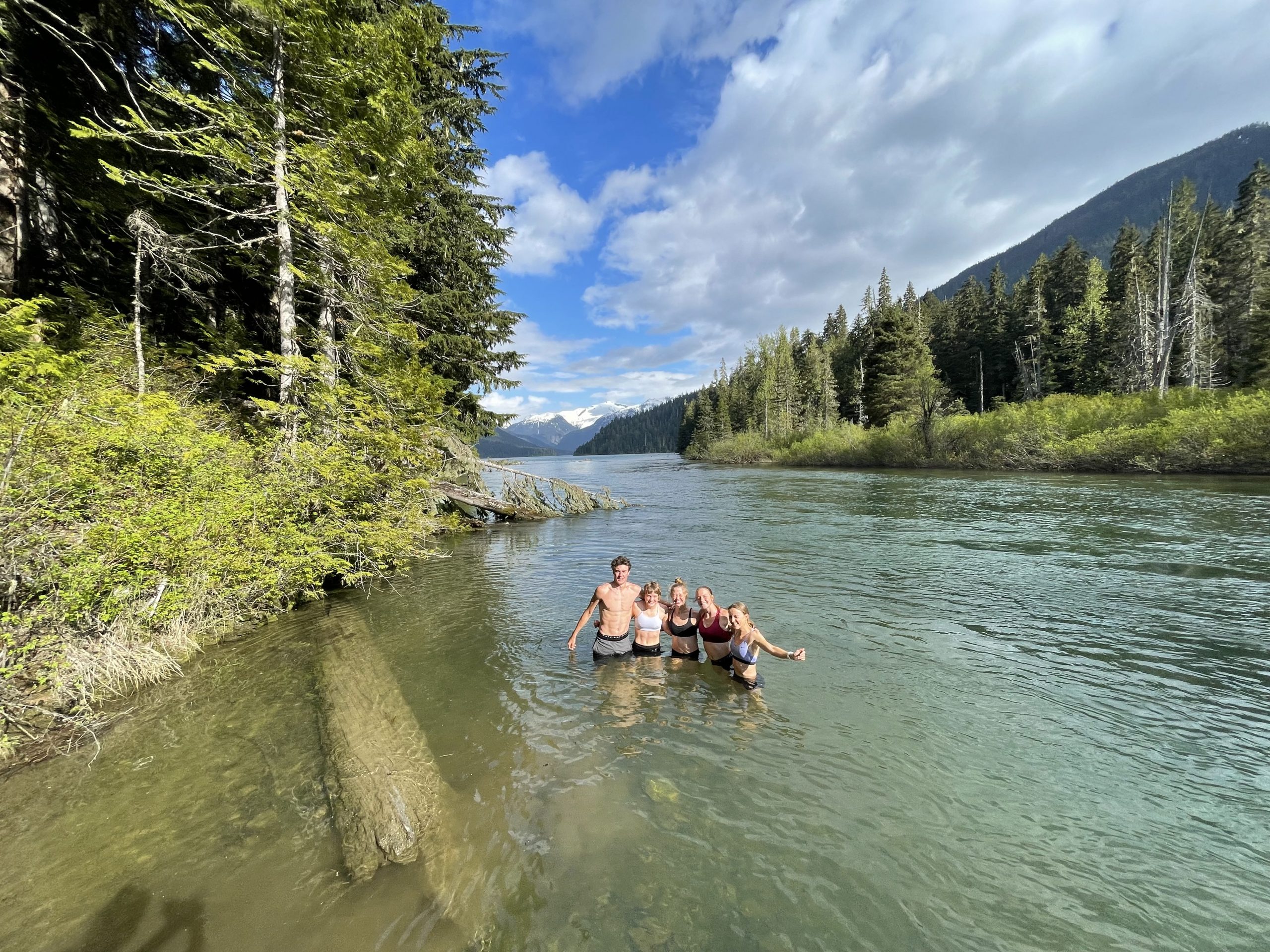
After an untold number of bear sightings and many hours of quality training, the U18 National Training Group (NTG) camp wrapped up in Whistler, B.C. the third week of June. The first of the National Nordic Foundations (NNF) Summer Series, the goals of the camp were twofold: the first was to give these athletes a chance to meet and train together, particularly since the annual U18 Nordic Nations Cup trip was canceled in January due to high COVID-19 cases in Norway; the second was to familiarize the athletes with the venue and living environment in Whistler, as it will be the site of the upcoming 2023 Junior/U23 World Ski Championships in January.
The camp’s attendees earned a spot on this trip after selection by the U.S. Ski & Snowboard (USSS) based on their performances at last year’s Senior Nationals in Soldier Hollow, UT and/or other USSS sanctioned races. Hailing from all over the country, 13 athletes made their way to Canada for a week of training and exploration.
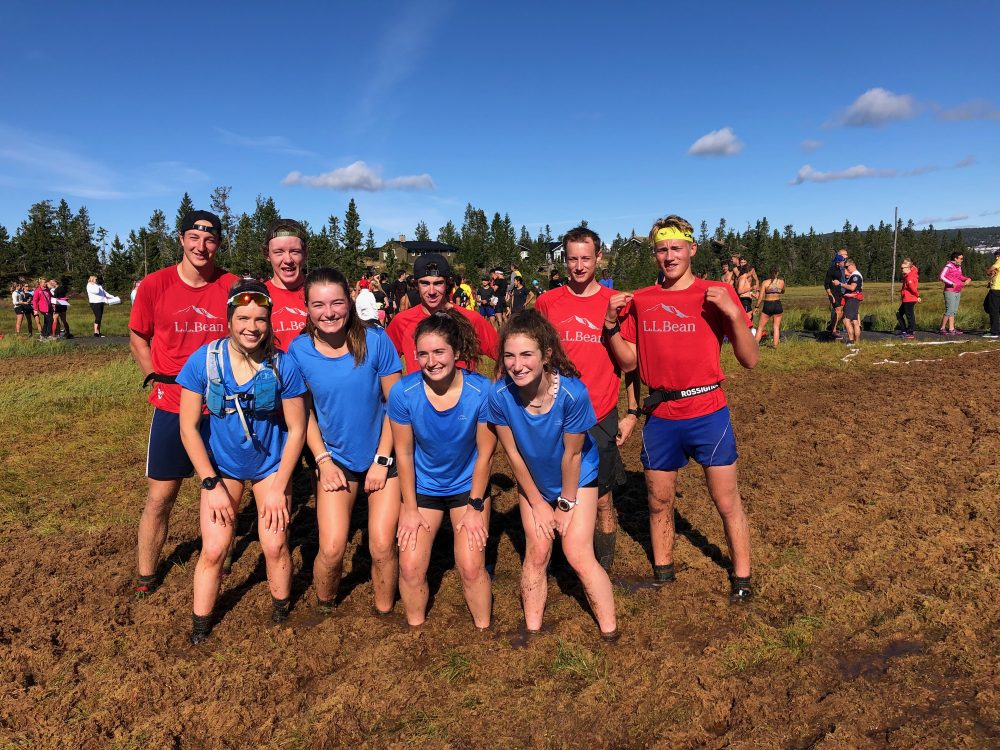
Group shot of the 13 athletes from around the US who participated in the U18 NTG camp in Whistler, BC (Photo: Bryan Fish)
U.S. Ski & Snowboard Cross-Country Sport Development Manager Bryan Fish, explained in an email what this might mean for the American juniors. “Our teams have become very good at traveling well and executing overseas, however our first Junior World Ski Championship medals became a reality in 2017 when Park City, UT hosted Jr Worlds. Those home-field championships helped spark the successful trajectory of USA cross-country skiing. We are trying to build a similar positive environment for these 2023 Championships.”
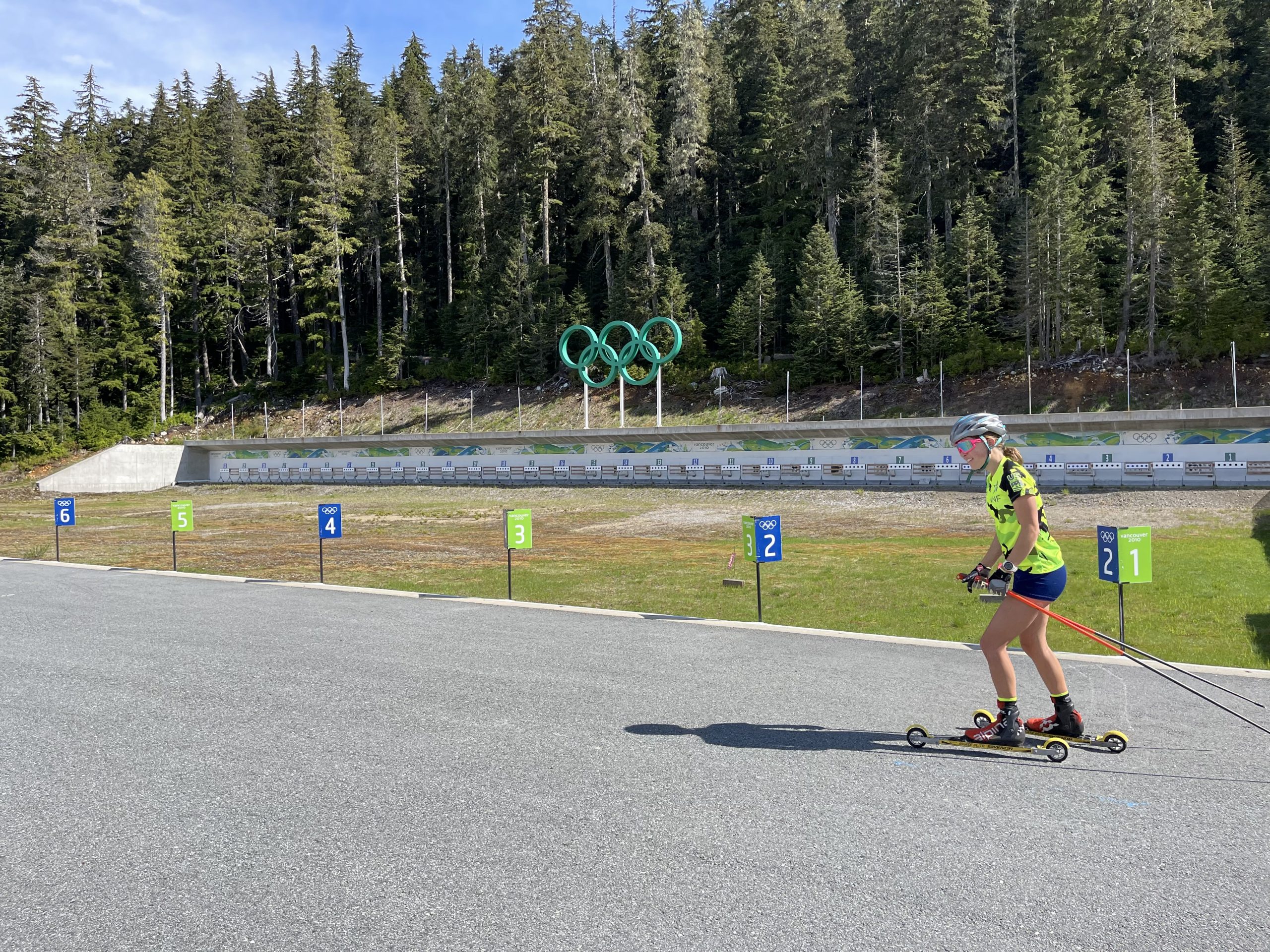
Getting familiar with the trails at the Whistler Olympic Park before 2023 Jr World Championships (Photo: Greta Anderson)
In addition to Fish, the camp’s coaching staff was comprised of U.S. Development Team Coach Greta Anderson, Alex Jospe from Stratton Mountain School, and Naomi Kiekintveld from Alaska Pacific University Nordic Ski Center.
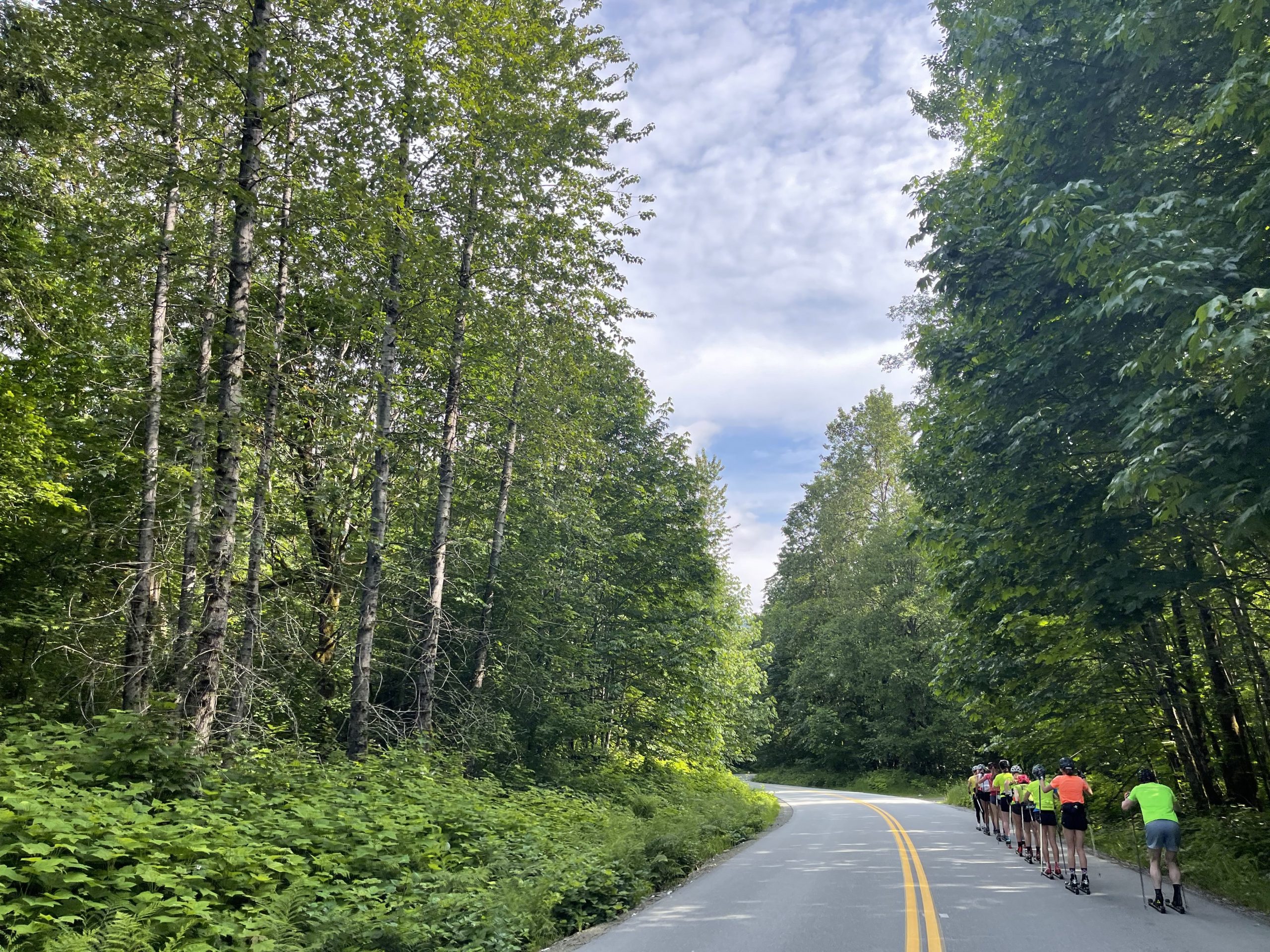
After the recent conclusion of the NTG camp, Fish felt that the camp’s objectives had been achieved. He wrote, “the camp successfully achieved the goals of familiarizing ourselves with all aspects of the venue, the race courses, and the living arrangements. It was a great group of athletes which made for positive and motivating training sessions. The Whistler rollerski track is on a portion of the Jr World race courses, so we spent a great deal of time getting comfortable on the track at speed to understand how the course flows.”
Through collaboration with Nordiq Canada, the joint U.S./Canadian Spring National cross-country Championships were also held in Whistler in March, which Fish explained, “provide[d] our athletes with true on-snow race experience on these courses.”
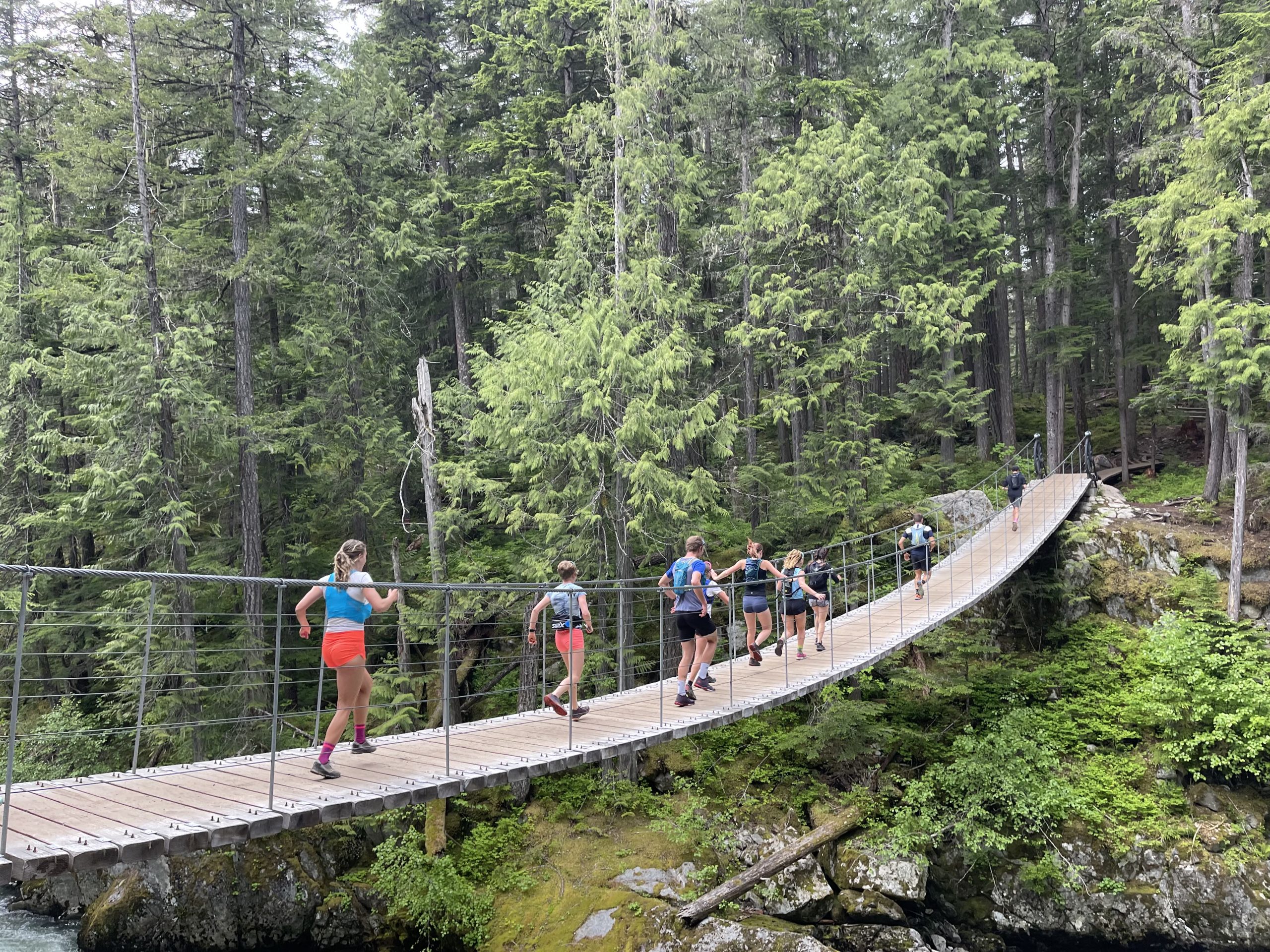
Exploring the area outside of the Whistler Olympic Park and getting some training (Photo: Greta Anderson)
As for the athletes’ perspective, in a blog post written for NNF, Midwest junior Cooper Camp reflected that for him, “one of the most valuable parts about this camp was being able to ski with the best juniors in the nation. Not only being able to get quality training in with each other, but also skiing behind others and learning from what they do, is one of the biggest benefits from camps like these.”
Campers head out for a long run (Photo: Greta Anderson)
Although the athletes have returned home to their respective clubs, there may be more opportunities for them to train together before the summer is over with both Regional and National Elite Group camps still to come. As to who will be returning to Whistler to represent the U.S. at the Jr/U23 World Ski Championships starting January 27th, 2023, both athletes and fans will have to wait until the conclusion of Senior Nationals (Houghton, MI) at the beginning of January before the team will be announced.
Campers cooling off after a day of training (Photo: Greta Anderson)
For an on-the-ground look at the recent camp, a recap video made by coach Alex Jospe, can be found here.
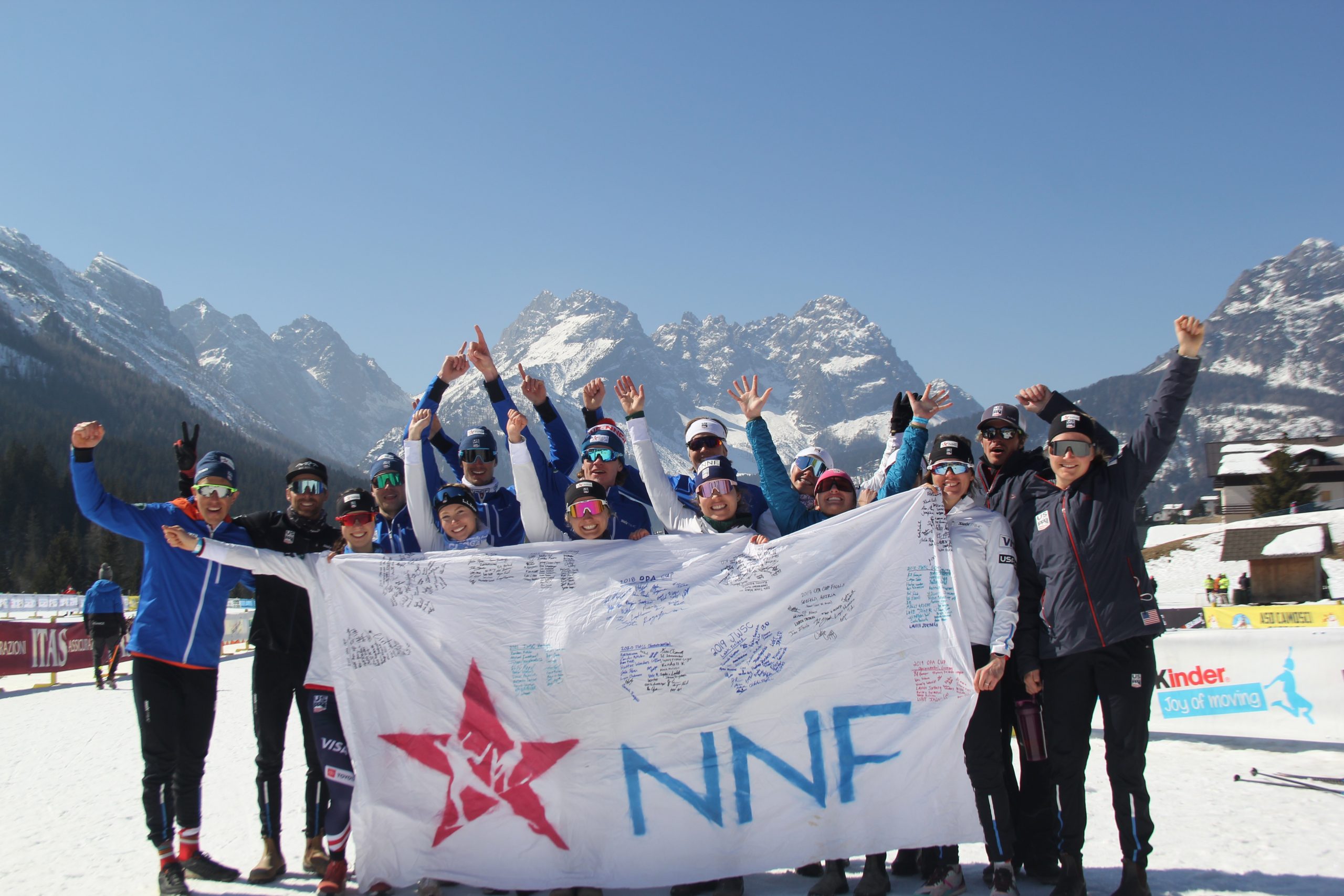
While World Cup Finals were underway in mid-March in Falun, Sweden, a second contingent of top American skiers was lining up roughly 2,000 kilometers south to race in the OPA Cup Finals in Sappada, Italy. Located along the northern edge of Italy near the Austrian border, the small town is nestled among the spectacular, jagged massifs of the Italian Dolomites, roughly an hour’s drive east of Toblach, which typically hosts the final stages of the Tour de Ski. The team spent the week prior to competition training in Toblach, which features similarly spectacular views, along with the benefits of the delicious food and drink one might expect when traveling in Italy.
For those unfamiliar with the OPA Cup, it is an international race series featuring predominantly European athletes racing just below the World Cup level. The US Ski & Snowboard development program typically facilitates a trip to OPA Cup Finals to provide athletes who may not have earned World Cup starts the opportunity to experience high level competition overseas. Qualification is based on national rankings, beginning with those racing on the World Cup, and proceeding through the top domestic racers, depending on declines. Often, there is overlap between the teams for the FIS Junior/U23 World Ski Championship teams and the OPA Cup teams, which may conveniently allow some athletes to prolong their stay in Europe and attend both events.
“Generally the trip is geared toward athletes that are a bit older, who either have had World Cup starts or on track for that,” explained US Ski Team Development Team coach Greta Anderson.
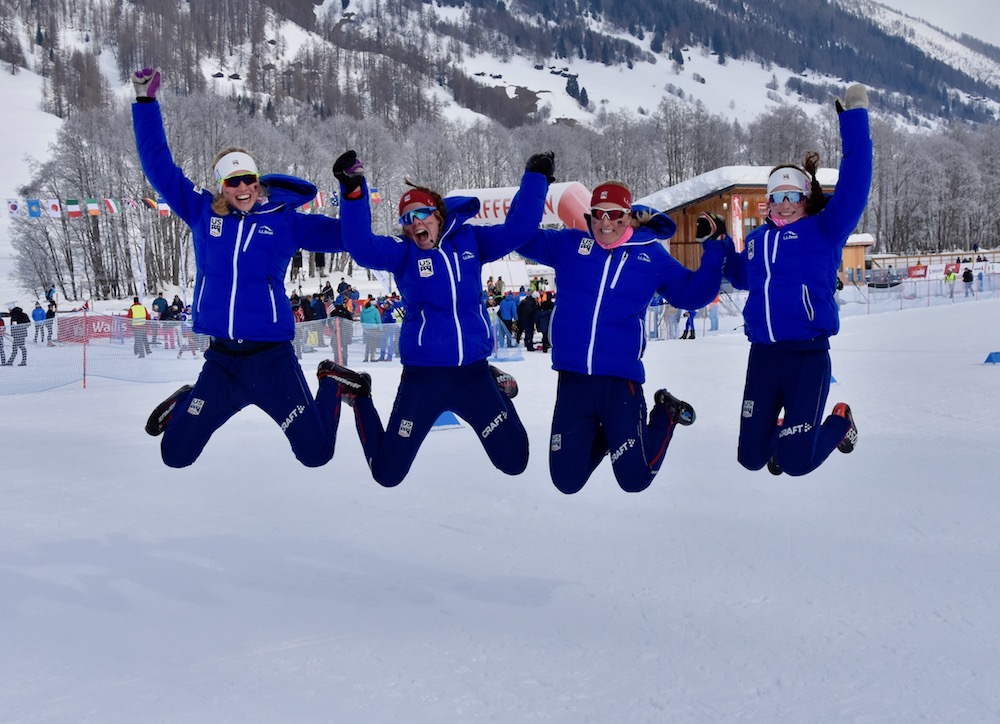
The American OPA Cup Finals team celebrates fast races and bluebird days in Sappada, Italy. (Photo: Bryan Fish/NNF)
Identifying it on its list of “Pillar Projects”, the National Nordic Foundation (NNF) helps subsidize the cost of the trip for the qualified athletes. The trip can accommodate up to 16 skiers, who are generally kept to an approximately even male to female ratio through the qualification criteria. This year, due to conflicting schedules and a number of declines, thirteen athletes attended, with nine women and four men.
In alphabetical order, the senior men included: Braden Becker (CGRP), Logan Diekmann (BSF Pro), Finn O’Connell (BSF Pro), Karl Schultz (SVSEF). Senior women included: Mariah Bredal (BSF Pro), Margie Freed (CGRP), Alex Lawson (CGRP), Hannah Rudd (BSF Pro), Becca Rorabaugh (APU), Lina Sutro (SMS T2), and Alayna Sonnesyn (SMS T2).
Finn O’Connell (2nd from L) alongside Braden Becker (L), Karl Shulz (2nd from R), and Logan Diekmann (R) at OPA Cup Finals
in March 2022. O’Connell was recently named to the US Ski Team for the 2022-23 season. (Photo: Alayna Sonnesyn)
SMS T2 teammates Alayna Sonnesyn and Lina Sutro show their love for Sappada during the Opa Cup Finals trip. (Photo courtesy of Alayna Sonnesyn)
This year, two U20 athletes headed from World Juniors in Lygna, NOR to Italy along with D-Team coaches Anderson and Bryan Fish: Kate Oldham (Aspen Valley Ski Club) and Annie McColgan (UVM).
“It’s pretty cool that we have more racers that are racing professionally or post collegiately than, I think, ever in the US, and they have more clubs and places to choose from,” said Anderson. “There were several athletes that, especially because racing was shut down on the East Coast last year and I happened to be in Alaska and wasn’t wasn’t traveling very much before I took this job, it was kind of the first time I’ve gotten to work with them, or the first time I’ve gotten to work with them in three or four years. So it was really cool to get to know Alayna Sonnesyn a little better and Lina Sutro a little better, and Margie Freed and Alex Lawson, who I’ve seen race many times, but it was the first time I’ve gotten to really work with them and get to know them. The same with Braden Becker and Karl Schultz… So it was a pleasure on the trip to get to work with some new athletes that have come through different development systems and are excited about and ready to make that next step. And this racing circuit is a really good opportunity for that.”
Anderson took the lead with organizing the trip and supporting athletes, working alongside US Ski & Snowboard Cross Country Sport Development Manager and long-time OPA Finals trip lead coach Bryan Fish. The wax support staff included BSF Pro Team head coach Andy Newell, former APU athlete and current staff member Peter Kling, and Jackson Hole comp team coach Jon Filardo.
US Ski & Snowboard Cross Country D-Team head coach Greta Anderson supports athletes during the Sun Valley SuperTour races in January. (Photo: Tobias Albrigtsen / @untraceableg)
Anderson identified the OPA Finals trip as a key development opportunity for a number of reasons: though perhaps lower pressure than World Cup, it’s a professional race circuit with small but competitively dense fields, athletes race aggressively and tactically in a style younger athletes who have not yet raced at this level may not have experienced, and it offers the opportunity for an athlete to dial in some of the small but significant factors details that support success adapting to a new and different environment following long international travel.
“Bryan’s been doing [the OPA Cup Finals] trip for a long time,” Anderson said. “So Peter Kling, who was on a coaching staff, and Becca Rorabaugh, they were like, ‘I’m pretty sure that we were on Bryan’s first ever OPA Cup trip.’ And it used to be that we started at the bottom of the results sheet and started looking upward for names. And right now we’re starting at the top and we don’t have to look very far down.”
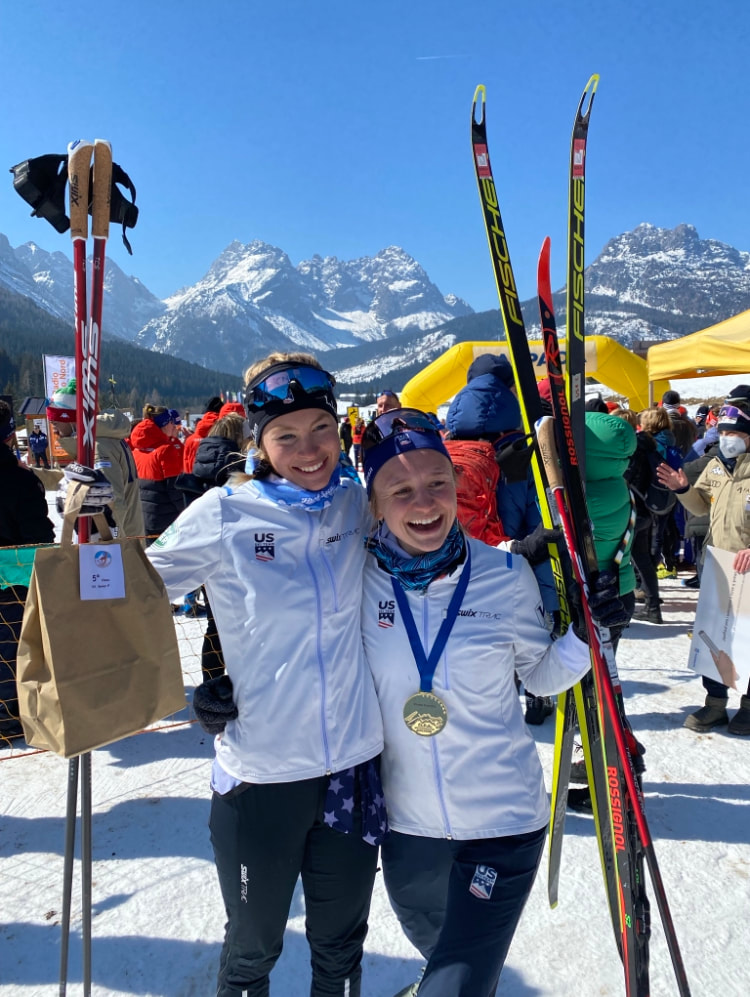
In two days of racing, the US had seven top-10 finishes, with another set of athletes finishing well-within the top-20. Highlighting the US team was SMS T2’s Sonnesyn, who took third in the 10 k classic on Saturday the 12th, and won the 10 k skate the following day.
Alayna Sonnesyn (SMS T2) takes the win in the 10 k skate at Opa Cup Finals in Sappada, ITA, with Mariah Bredal (BSF Pro) finishing just behind in fifth. (Photo courtesy of Alayna Sonnesyn)
“It’s pretty special,” Anderson said of the performances in Sappada. “It’s awesome to get to see that. For Alayna to start a race and say like, ‘What’s my plan to try to win this?’ It’s not just, ‘Hey, we’re here to participate and learn,’ but ‘Hey, we’re here to participate and learn but also we’re going to try to win.’ And I think, with that comes — not only from staff but from racers — this level of professionalism. Okay, we’re going to select skis. We’re going to make sure we’re organized and in a good place. Where can we be? Where can we do feeds? How can we set you up to have the success you need to have?
“It just feels like a really good time to be an American ski racer.”
After winning two of the first five SuperTour races this season, and finishing on the podium in each of the others, Sonnesyn was offered starts at the Tour de Ski, where she hoped she could achieve strong enough international results to qualify for the Olympic Team. But these goals did not come to fruition; Sonnesyn struggled to find the same race sensations while on the World Cup and tap into the fitness she knew was still there, which was reflected in results below her expectations. She shared her disappointment openly on her blog and social media, providing a relatable and important example to her followers that the pro-skier journey is not immune to bumps in the road.
“My experience on the World Cup this year – it was quite demoralizing, to be honest,” said Sonnesyn in a call from the airport as she was on her way to SuperTour Finals in Whistler. “And then, after the Tour de Ski, I got COVID. And it just really put a damper on the whole winter for me. And I started questioning like, ‘Okay, am I fit? And I like, can I race? Well, like, what have I been training for? This is really bad timing with COVID, too.’ So I was just pretty down. But then I was able to have really great SuperTour races, back in January and February, and then to be able to race internationally again in Italy. It wasn’t a World Cup, but it was still very high level of racing. So to have it go so well kind of reaffirmed to me that I belong on the international stage. And I definitely needed that, a little bit, just to give myself more confidence moving forward and motivation as well. So I’m really excited about the races and how they went and what I did to prepare for them and kind of my mental attitude around them, too.”
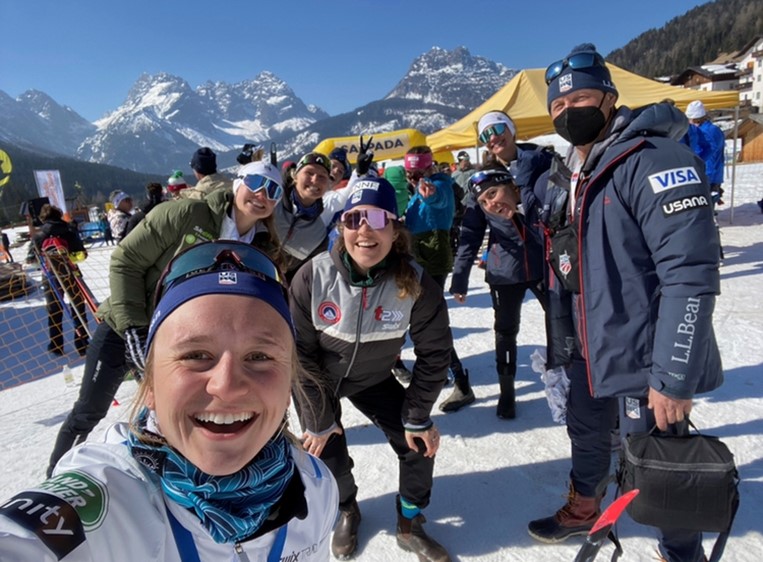
A selfie in Sappada: the American team prepares for race day at Opa Cup Finals. (Photo: Alayna Sonnesyn)
As she reflected on the trip and her experiences racing internationally over the last few seasons, Sonnesyn echoed Anderson’s sentiments about the progression of the American team at the event.
“Compared to my first OPA Cup trip, which was in 2018, I think there were maybe two or three top 10 performances. And they were exciting, but for the most part, it was kind of like, ‘We’re just here to get the experience. We’re not really sure what we’re doing.’ And I think that the way the US is developing right now, the way that new courses are being built in Cable or Duluth, or wherever it is – they are preparing us better for racing internationally. And I think that was shown in the results that we had in Sappada. And it was just so exciting during that 10 k skate on Sunday to cross the finish line in first, and then turn around and see a ton of my other US teammates come in right behind me. That’s not something that was happening four years ago. So I think we are really developing and that is a huge thanks to so many different people and so many reasons, but it’s exciting to see.”
Sonnesyn also spoke to the importance these international opportunities have provided her specifically, speaking from the perspective of what she dubbed a “bubble athlete” who has oscillated between World Cup and domestic racing over the last four seasons. She got her first World Cup starts in Quebec in March, 2019, and has been offered starts beginning in Period 2 each season since. Though this is a key stepping stone in the process toward consistent World Cup racing, she expressed that bubble athletes can have a challenging time planning seasons in advance and need to be prepared to adapt quickly to more frequent overseas travel.
“I think that every single experience that an athlete has going and racing internationally, and traveling, and competing at that higher level, it all adds up to be super beneficial and a great learning experience. For example, I have gotten really great at overcoming jet lag, which the first couple of international trips I went on, I had no idea how to handle. I tried my best to do what I could, but it’s hard. And also to know what little things you want from home, like after being in Europe for four or five weeks, what do you really want from the US?
“And then also, how do you work in a new environment? A lot of times, if you’re going over to the World Cup, sometimes you’re provided a wax tech or sometimes not, or you have to bring your own, but you have to be willing to work with whoever you get.”
Sonnesyn explained that on the Sappada trip, she had worked with each of the techs before, but on her first trip in 2018, it was her first experience working with those wax staff members. Given the importance of ski choice and wax, working together effectively is imperative to an athlete’s success, but it requires dialogue and practice.
“Being ready to communicate effectively with the staff, what do you need? How do you want your skis prepared? What do you need from a hotel? All those things seem like such small little details, but they really add up with the more experiences you have.”
Alayna Sonnesyn races in Oberstdorf, Germany during the 2021/22 Tour de Ski. (Photo: NordicFocus)
She also spoke to the differences in the style of racing between the US and her international experiences, and how a trip like Sappada better athletes for what they might encounter should they be offered a World Cup start down the line.
“When it comes to racing: the courses in Europe are very challenging and very technical. Downhills, uphills, flats – whatever it is, there’s a lot of it, and you have to be ready to go for it. And then the competitors are fierce. They know how to be aggressive in a race, and you have to know how to hold your own. So it just helps to have that experience to understand how you approach the race. How aggressive are you going to be? How are you going to pace the race? How are you going to handle others around you?”
With the highest levels of competition for our sport happening across the pond, it is easy to understand why opportunities like the OPA Cup trip provide an essential bridge for developing athletes. But it is not simply the facilitation of this trip that has led to marked improvement for the American team.
“I think we’re open to change right now,” Anderson said as she reflected on her key takeaways from the experience in Italy and her first season coaching the D-Team. “I think the US, in a year with COVID, and lots of challenges logistically and politically in the world, we handle those changes better than almost any other country does. And I think that’s really shown here.”
Alex Lawson skates to 7th in the 10 k skate during OPA Cup Finals in Sappada, ITA. (Photo: Bryan Fish / NNF)
While the OPA Cup crew was putting together a very solid day in the 10/15 k skate, the team of Rosie Brennan, Zak Ketterson, Scott Patterson, and Jessie Diggins had taken the win in the thrilling 4 x 5 k mixed relay in Falun. As the team in Sappada mingled near the finish to support the final racers as they skied through, Anderson said that a Swiss national team coach walked over and showed them the World Cup result on the phone.
Layered on top of the broader success at the OPA Cup Finals, Anderson expressed that this opened her athletes’ eyes to what might be possible for them in the years to come also. In particular, the Falun results of Zak Ketterson, a newcomer to the World Cup who ended his debut season with a 15th place finish in the 15 k skate and a mixed relay win.
“[The guys racing at OPA Cup] are like, ‘Oh, man, I beat Zak sometimes’, or ‘I’m right with him’, ‘I trained with him in college.’ The level of confidence that brings… ‘Maybe maybe I can do that too.’”
Moreover, Anderson expressed that this relay gold medal speaks to the equity of skiing in the US. “That we have good female athletes, and we have good male athletes, and we have a good balance of the two, and teams that are mutually supportive of each other,” she said. “Not every country has that.”
Boiling down the experience and her feelings as the season wraps up, Anderson concluded, “I have nothing but good things to say about our athletes right now. I’m really impressed with them. They handle the change better than anyone, and I think as a staff and from an organizational perspective, we’re trying to keep up, remove barriers, make sure they’re supported. And we’re open to trying new things, and it seems that we’re excelling in places where we’re willing to experiment and get our feet wet.”
Kate Oldham (AVSC) races the 10k classic during Opa Cup Finals in Sappada, ITA. (Photo: Bryan Fish / NNF)
Providing additional insights from the perspective of an OPA Cup Finals first-timer, FasterSkier also heard from U20 athlete Kate Oldham, who trains with the Aspen Valley Ski & Snowboard Club (AVSC) and competes for Middlebury College. Oldham took 11th place in both the 10 k classic and skate in the junior women’s category.
“Sappada was incredible,” Oldham wrote. “In congruence with the pre-camp in Toblach, the OPA Cup trip was unforgettable… My favorite ski to-date was on a long ski over the pass from Cortina to Toblach, stopping midway for trail side pastries and cappuccinos! Being with a group of older athletes was a valuable change from the World Junior trip because each team member brought new energy and experience to the group. Between that and the gelato shop next door to our hotel, the trip couldn’t have gotten much better!
Enjoying a cappuchino and pastry fueling stop while skiing from Cortina to Toblach. (Photo: Kate Oldham)
BSF Pro Teammates Hannah Rudd (left) and Mariah Bredal (right) sip cappuchinos while skiing from Cortina to Toblach during the Opa Finals pre-camp. (Photo: Kate Oldham)
“One of the things I think are most valuable about training and racing camps is the exposure to coaches and athletes outside one’s home team. For years I have been seeking out opportunities to attend regional and national camps that would bring new perspectives, training groups, and social dynamics to push me and help me adapt my own training method while making friends from schools and clubs all over the country. This winter I was lucky enough to have both my club coach and a group of skilled and passionate wax technicians/trip leaders selected from all around the US to lead the trips to Junior World Championships and OPA Cup finals. I know that over the six years I’ve been skiing competitively I have developed the competence to independently navigate high-level skiing events, but having techs to guide me through the process at the international level was extremely helpful, particularly when one of them I had worked closely with for those six years of training and racing.
“With new coaches come new perspectives. Another set of eyes, a different experience, or a new phrase can be all it takes for the pieces of new advice to click into place. Or maybe a coach has a different perspective on the bigger picture of skiing that resonates with you unlike the philosophy you previously knew… which of the infinitely wide range of mindsets in ski racing works best for you? Which one reminds you why you love ski racing? Which one helps you stay motivated through the hardest parts of the season when the last thing you want to do is get out the door for training? Which one eases the heartbreak of coming so close to a goal but falling short despite your hardest effort? Without a doubt, cross country skiing is a delicate balance of internal and external factors, but having great teammates and coaches like the ones I got to know and work with in Europe this winter is certainly a key ingredient to the recipe for success in the lifelong pursuit of excellence on the race course and off.”
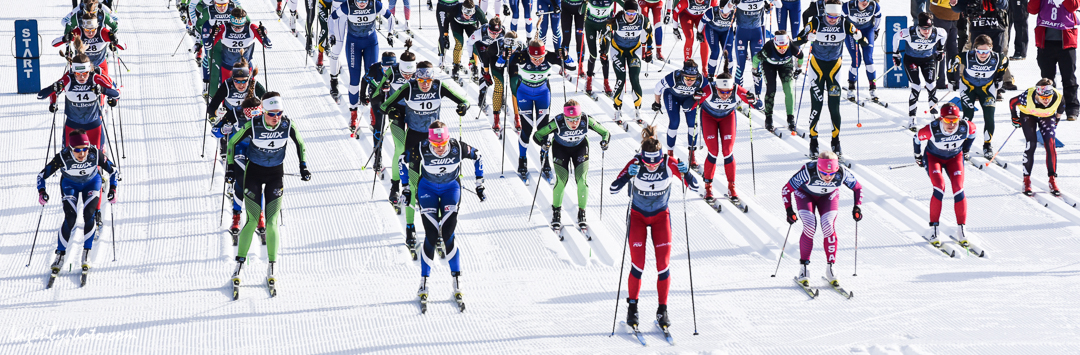
The start of the women’s 30 k classic mass start at 2018 U.S. Distance Nationals in Craftsbury, Vt. (Photo: John Lazenby/Lazenbyphoto.com)
On short notice in October, the International Ski Federation (FIS) reversed its fluoro wax ban for the upcoming season. Bryan Fish, Cross Country Sport Development Manager for U.S. Ski & Snowboard, explained this was termed a “delayed implementation”. What had been expected to be a fluoro-free racing scene at the FIS level, became a business as usual wax policy for 2020-2021. In short, fluoros, C8 or otherwise, are allowed at FIS sanctioned events. The FIS fluoro ban won’t come into effect until at least summer 2021. Stay tuned.
In the meantime, U.S. Ski & Snowboard will implement a fluoro ban for all disciplines at its sanctioned events this season. “We see the future and we know that for health concerns about the product, we have implemented a fluorocarbon-free policy,” said Fish.
The policies, though opposite in their allowances, are clear. But things get muddy when events are sanctioned by both FIS and U.S. Ski & Snowboard. Fluoros or no fluoros? Testing or not? Penalize an athlete for violating the rule or not?
These are not simply thought experiments.
As part of its E-blasts, TOKO sent emails last week that raised several of those questions. It also raised awareness for an upcoming dilemma for those seeking to earn FIS points and NRL points, or National Rankings List points used for U.S. Ski & Snowboard national rankings. The TOKO emails listed all the U.S. events where fluoros are allowed. This was a comprehensive FIS sanctioned race list that linked back to the FIS cross-country race calendar.
It’s easy to see how there might be confusion. According to Toko, three of the venues on the list of FIS sanctioned races are in fact fluoro free venues: Wirth Park, the Michigan Tech Trails, and the Craftsbury Outdoor Center. FasterSkier has reported on the Outdoor Center’s initiatives in the past.
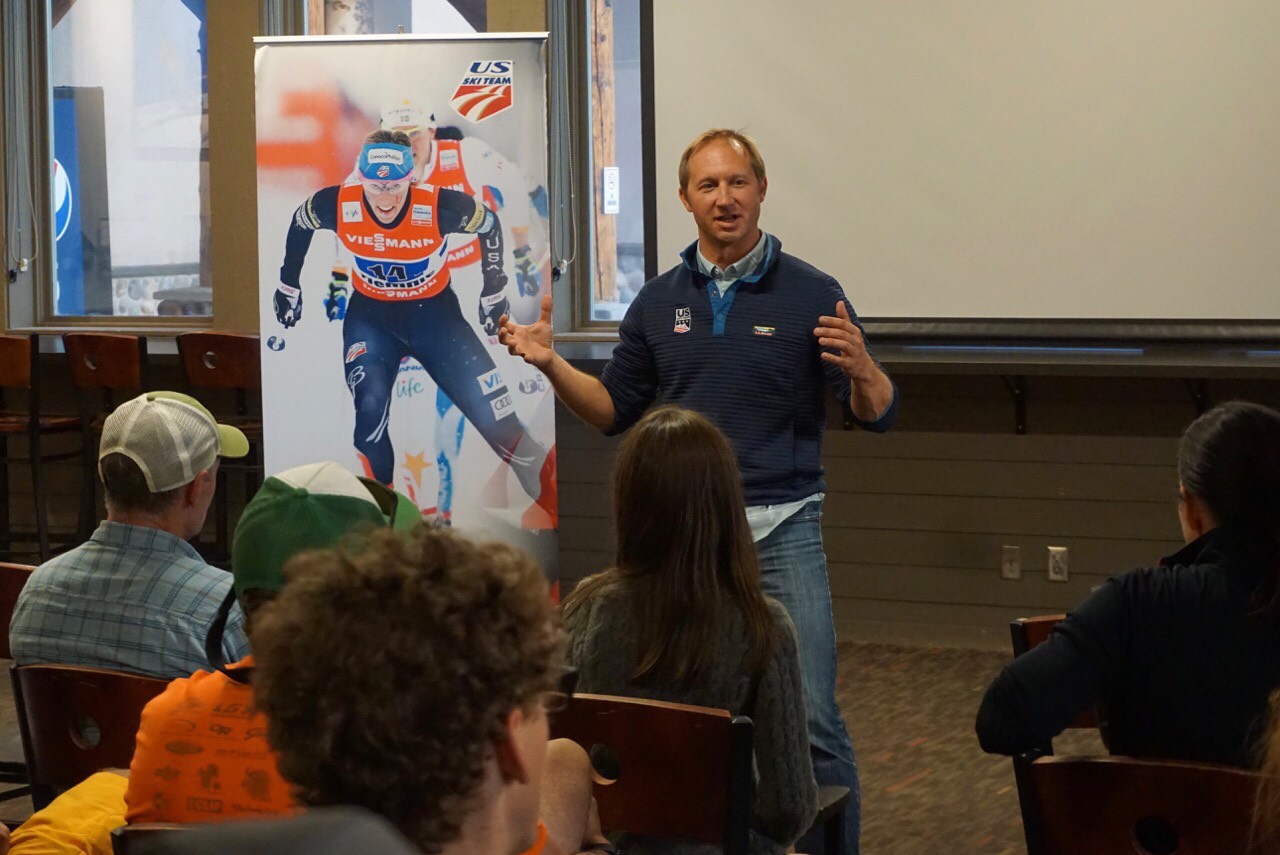
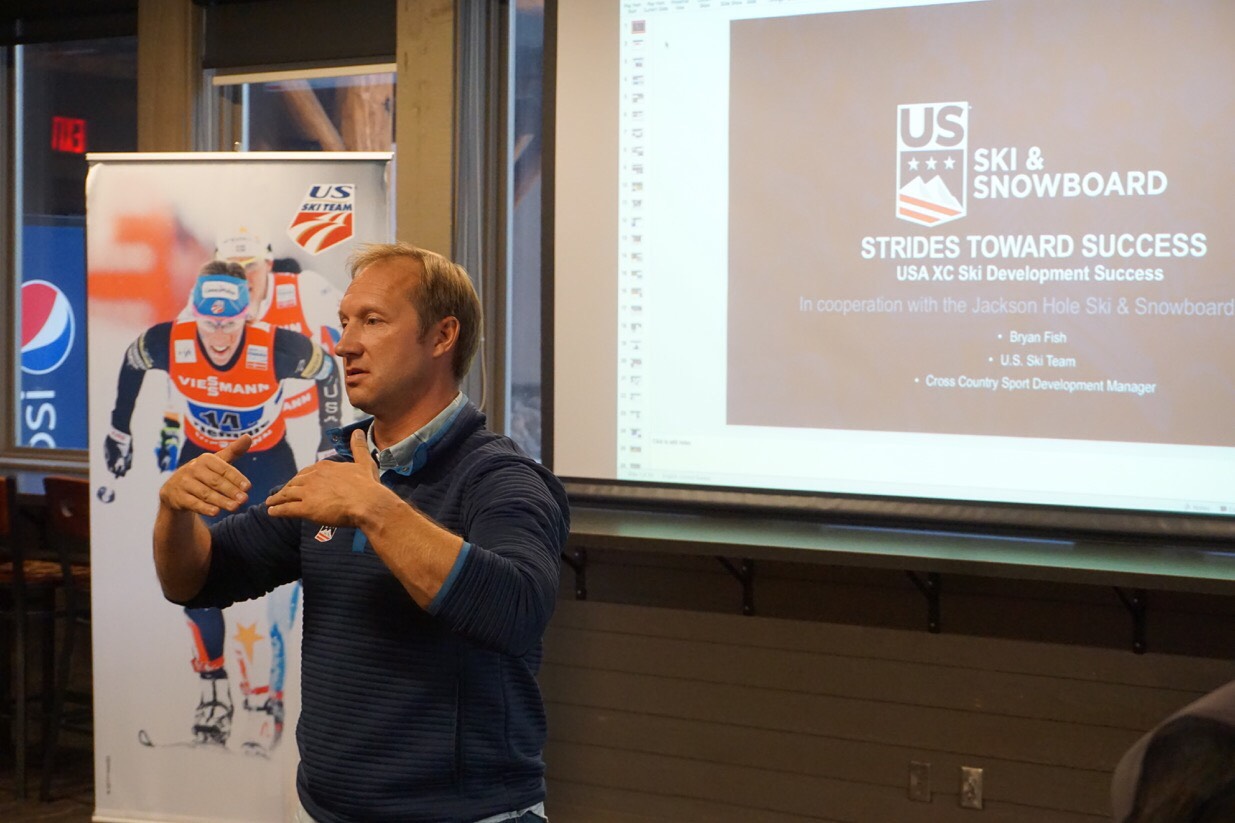
Bryan Fish, U.S. Ski & Snowboard’s cross country sport development manager, delivering a presentation in Jackson, Wyoming. (Photo: Nancy Leon/Jackson Hole Nordic)
Last week, Fish said U.S. Ski & Snowboard is in the process of developing guidance on the differences between FIS and U.S. Ski & Snowboard sanctioned events. Fish also explained a document in the works would help clarify how athletes can, for example, can remove fluoros from ski bases and how skis might be tested this season at U.S. Ski & Snowboard races.
Here’s the thing: In the hierarchy of governing bodies, FIS trumps U.S. Ski & Snowboard. If a race were both FIS sanctioned and U.S. Ski & Snowboard sanctioned, a skier “caught” with fluoros on their bases could not be legally disqualified. FIS allows fluoros.
“We cannot force anybody to do anything,” said Fish. “We do sanction events and we ask people to follow the rules. … That means that in FIS events no repercussions can be handed down for an individual that competed in a FIS event and used fluorocarbon wax because that is policy.”
“We’ve been preparing for nearly a year to work in a fluoro free world,” said Ollie Burruss, nordic race director at the Craftsbury Outdoor Center. “And then we got a complete reversal handed down from the International Governing Body (IGB) at the 11th hour.”
In the recent past, as the culture shifted towards fluoro free waxing, the Outdoor Center made exceptions for using fluorinated waxes on its trails. This was the case when it hosted SuperTour events last year. Coming into this season, regardless of race and sanctioning body, no fluoros. According to Burruss, that is still the plan.
A common argument against policies banning fluoros is the lack of testing. Testing is expensive. The cost-prohibitive process often allows for only a few pairs of skis to be tested at any particular event. When delegitimizing fluoro bans, many ask why have a rule that cannot be enforced?
Burruss said in places like New England no quandary exists when it comes to using or not.
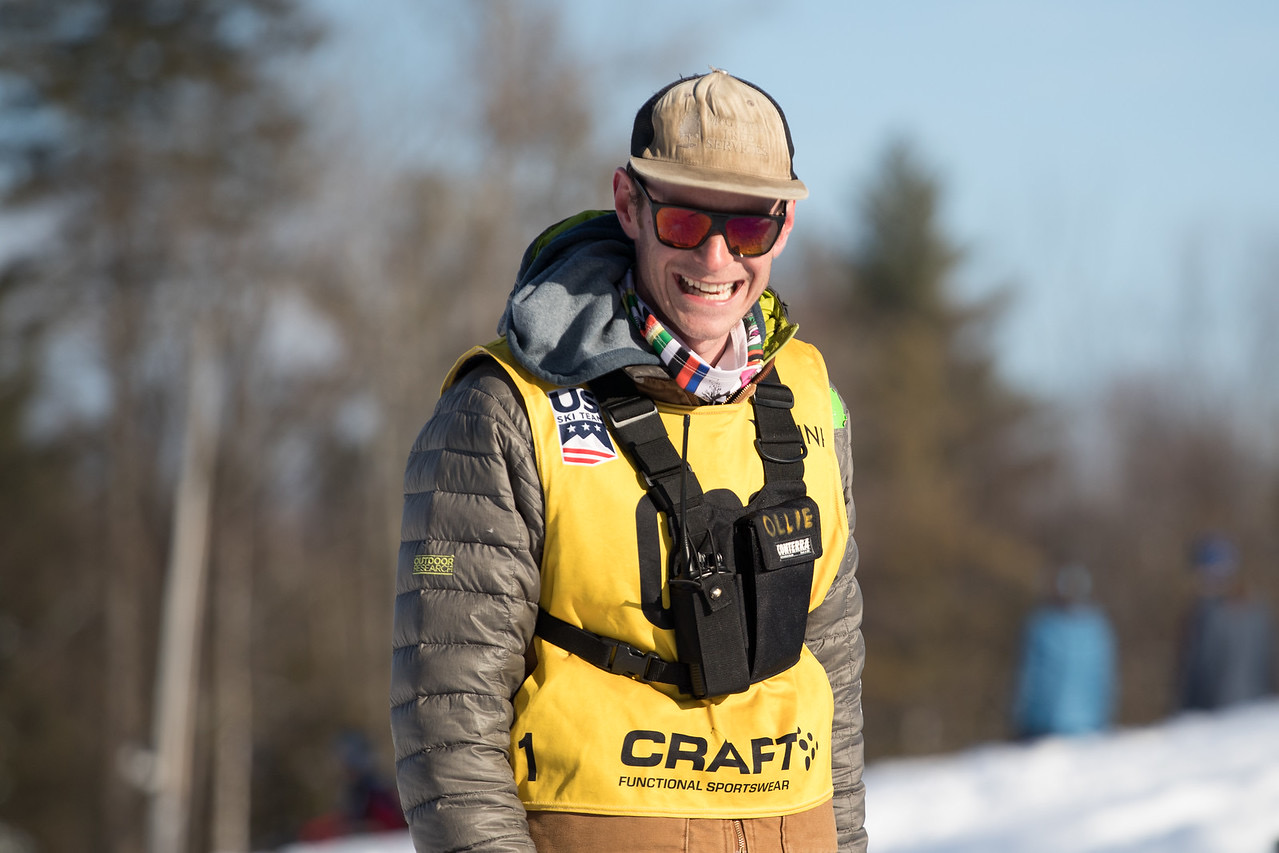
Ollie Burruss, chief of competition at the 2019 US Nationals in Craftsbury. (Photo: Craftsbury Outdoor Center)
“All summer, we weren’t planning on testing,” said Burruss. “And so the Outdoor Center had a policy that we wrote last year, you know about it, we made exceptions to that policy for the SuperTour that we hosted. So going into this year we still have this venue wide policy. We’re not going to test every pair of skis that come into the venue. We are going to make a set of guidelines and policies that we ask all of our guests to follow.
“We don’t have a community in New England where it’s fraught with suspicion, backstabbing, and people trying to one up each other. We really have, I think, a really tight-knit supportive ski community. And so when we planned on having FIS racing, we weren’t going to test. We were more concerned about how to safely hold an event during a pandemic. That was way more of my concern than whether or not someone was going to use fluoros.”
In Burruss’ estimation, racing at the Outdoor Center is de facto fluoro free. And for now, the Outdoor Center’s races are still listed on the FIS calendar. The Outdoor Center asks you not to use fluoros. That decision, according to Burruss, will be based on trust and a hardened value system relying on people doing the right thing, not necessarily the fastest thing.
“So basically what I’m what I’m getting at is if you violate that, if you go against that, you’re cheating,” Burruss added. “And so what we are telling people is, ‘we can’t stop you from cheating.’ We’re not going to make your cheating no longer cheating. That rubs me the wrong way. That is not the sport that I want to be a part of.”
The logic is not circuitous. It seems to trend from A to B, then C. As stated, the Outdoor Center did not have the capacity to suitably test for fluoros either way. Burruss has also not been informed by U.S. Ski & Snowboard that the ski governing body can police fluoro use at the Vermont venue with testing. So Burruss sees no contradiction for the Outdoor Center’s races remaining both FIS and U.S. Ski & Snowboard sanctioned.
Thomas Smith, Head Coach at Michigan Tech emailed that the races at the Tech venues would remain fluoro-free but would remove the FIS sanctioning.
“Through discussion and consultation amongst our MTU Race OC and US Ski Team staff, we have decided to remove the FIS sanctioning of our MTU January 2-3 Regional Championship ski race event. We will maintain US Ski & Snowboard (USSS) sanctioning of this event,” stated an email sent Wednesday morning.
“We believe the most important leadership stance for us to take as a public research institution is to ban the use of fluorinated wax at the Michigan Tech Trails to protect and promote a healthy competitive environment for our event participants, our trails, and our community. By removing FIS sanctioning from this event, this allows us to place a fluoro ban for this race event, and all race events we are hosting for the 2020-21 season. As US Ski & Snowboard has banned the use of fluorinated waxes from all USSS sanctioned events for the 2020-21 season, we will still maintain USSS sanctioning for this January 2-3 event with a fluorinated wax ban,” noted the email.
“What I will say is this, if a venue wants to be fluorocarbon-free, then we encourage them to host U.S. Ski & Snowboard sanctioned events because you can implement a fluorocarbon-free policy there and we can have a deterrent and test at that event,” said Fish.
Fish said he was concerned for athletes who might be competing at dual sanctioned events if the use of fluoros would incur no repercussions. Although Fish did not comment on this specifically, FIS events include points for scoring world rank, which is relevant in the run-up to the Olympics. And recently, U.S. Ski Team nominations have also been pinned to world rank. FIS points will matter. This only adds to the depth of the sanctioning morass.
Speaking on behalf of U.S. Ski & Snowboard, Fish was clear about the reasoning for implementing the fluoro ban now. “We want to focus on health, we want to focus on the safety of our environment and that is why U.S. Ski and Snowboard has implemented this policy and done it this year. … We want to move forward because we know it is the right thing to do. We know that fluorocarbon products that are used in some waxes are not healthy for humans and they are not healthy for the environment. We want to move forward on that piece sooner rather than later. It is clearly a hard decision to make. But I think it is the right decision.”
Fish continued that races sanctioned solely by U.S. Ski & Snowboard provide an enforceable and consistent playing field.
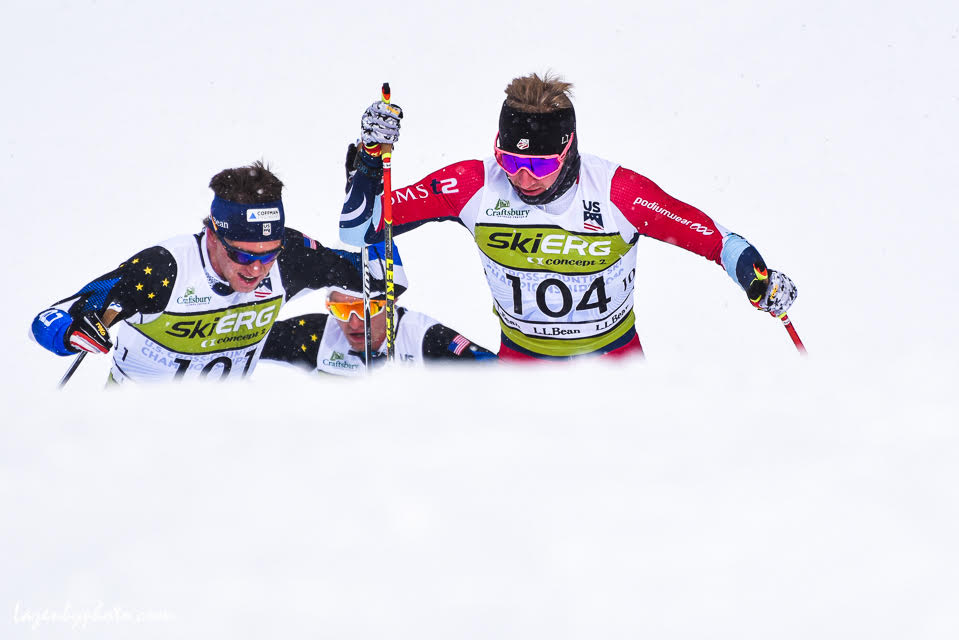
In Bib 104, SMS T2 skier Kyle Bratrud crests a hill during the men’s 30 k skate mass start at the 2019 U.S. Nationals in Craftsbury, VT. (Photo: John Lazenby)
The expectation that clubs, coaches, and skiers toss the fluoros may have been premature. Venues like the Craftsbury Outdoor Center are ahead of the curve. As it appears, so too is U.S. Ski & Snowboard when considering the timeline to wean racing off of speed chemicals. The FIS “delayed implementation” policy is a wrench in the U.S. fluoro free movement.
Buruss would like the following message to be loud and clear if people decide to race: “These are complicated times, pay attention to the rules at each venue.” One choice is to take the approach of faith in others that Burruss puts forth. Another is to wait for the threat of testing and punishment to force a behavior change.
This all comes down in an environment undeniably tenuous as urban and rural communities experience an increase in Covid-19 cases. Either way, according to the number of FIS sanctioned races in the U.S., opportunities to dip into the chemical speed-basket this season are plentiful.
As the current US Ski Team lineup raises the bar for what’s possible on the World Cup, the next generation of skiers lays the foundation to build upon their accomplishments. See it to be it. Success breeds success. Pick your preferred phrasing.
Consequently, the talent pool tracking toward the national development program has been flooded like never before and U.S. Ski & Snowboard has stepped up its support in response.
“We have more junior and Under-23 athletes achieving the U.S. Ski Team standard,” explained sport development manager Bryan Fish in an email. “It is clear we are strengthening as a nation at our development ranks. This is reflected in awards such as the FIS Marc Hodler award where we were second only to Norway at 2020 Junior World Ski Championships after being a USA record-setting 4th in 2019. Hence, we have a growing USST D Team. This growing team needs more support and attention.”
Kate Barton joins the U.S. Ski & Snowboard D-Team as head coach, following four years as the assistant coach at Middlebury College. (Photo: Athletics.Middlebury.edu)
The most recent addition to the development program is former assistant coach at Middlebury College Kate Barton, who will lead the charge as Development and D-Team Head Coach. Barton will replace Bernie Nelson, who stepped down after the inaugural year of the position.
Fish explained that the restructuring and head coach position facilitates more direct and consistent support to D-Team athletes throughout the year. Barton will also have the capacity to work with developing athletes at events like the National Training Group (NTG) camp for top performers at Junior Nationals. Her role frees Fish up to focus his attention on development infrastructure, provide coach education at the club level, and other domestic tasks. He will still support Barton at domestic camps and at international events such as the World Junior Ski Championships and U23 World Championships.
Barton’s selection for the position was made with input from her predecessor, Nelson, and the roster of D-Team athletes, as well as from Cami Thompson Graves, head coach at Dartmouth College and Chair of the U.S. Ski & Snowboard Sport Committee. Barton received positive feedback and recommendation across the board.
Fish explained that he and Nelson had a strong working relationship and that although COVID-19 has interrupted the intended team schedule, Barton has seamlessly stepped into her new role, bringing her own set of strengths and skills to continue the support athletes have received within the new development program structure.
“Kate has worked in many national junior domestic camps and international development projects in the past, so she has a firsthand understanding of our ski community, development structure, team culture, and the standards necessary to be competitive at the international level,” wrote Fish. “I have worked alongside Kate over the past ten years at National Under-16 camps. She is positive, motivating, collaborative, organized, and has a great rapport with athletes and coaches, alike. These are critical qualities that will make Kate successful as the U.S. Ski Team Development and D-Team coach.”
FasterSkier connected with Barton via email to learn more about her background and philosophy as a coach and how she will translate that into her new role as D-Team Head Coach.
Newly appointed USST D-Team Head Coach Kate Barton spent four years as the assistant coach at Middlebury College. (Photo: Instagram @middnordic)
“Authenticity, passion, and principle provide a foundation for my philosophy as a coach and help to guide me,” wrote Barton. “I think it’s important to be authentic in your pursuits and be comfortable being yourself. Everyone is different and skiing is a unique, individual sport within the context of a team. If you can build strong relationships within a team then you can also trust and learn from one another and as a result, increase your chances of being successful.
“I am passionate about Nordic skiing; I love to ski,” she continued. “I want to cultivate a love for this lifelong sport in the athletes on our team. I think part of my job as a coach is to stoke this love for the sport, and for me, that comes from promoting a healthy balance between taking yourself seriously and having fun and enjoying the process. Finally, I think it’s important to be principled. I have to remind myself of this sometimes. But if you’re willing to be critical of yourself and others you can learn and move forward together. As a coach, I’m always trying to find a balance between providing direct feedback and maintaining the patience to let my athletes learn in their own time.”
Barton spent four years working with the Middlebury Program. Before returning to her alma mater in 2016, she was the head coach at Burke Mountain Academy in Vermont for five years. She also spent a year as the head coach of the Jackson Hole Ski Club in 2010.
An accomplished athlete in her own right, Barton graduated from Middlebury College in 2009 as a dual sport athlete in skiing and lacrosse. Demonstrating both talent and leadership potential, she made the NCAA championship team each of her four years and captained the team to an 8th place finish her senior year. In addition, she competed in two semifinal rounds of the NCAA Tournament in lacrosse.
Barton explained that these experiences were formative in her transition to coaching.
“Many of the lessons I learned from my time as a competitive skier were things not to do,” she wrote. “I competed in a variety of sports competitively growing up and was lucky enough to compete as a skier and a lacrosse player through college, two very different but valuable experiences. Most of all, I was lucky enough to be surrounded by some passionate, veteran coaches throughout my entire ski coaching career who were willing to let me tag along and soak up experiences, but who also pushed me to be independent and take on roles outside my comfort zone.”
Through coaching three U18 National Teams at the U23 World Ski Championships as well as for Team New England at Junior Nationals and working at U18 national and regional summer camps, Barton has had the opportunity to work with many of the D-Team athletes. She has also coached at multiple international junior trips to Norway and Sweden.
“One of the coolest things about the ski world is how small it is, and even if I haven’t worked with all of these athletes directly, I’ve been watching them compete for many years. I remember observing this crew race a humid uphill TT at U16 camp many years ago. Even as U16 athletes, it was crystal clear how willing and genuinely excited they were to push limits and grow together, all while having a good deal of fun.”
The athlete she has had the most experience working with is newly nominated 20-year-old Sophia Laukli, who currently attends Middlebury College.
“I’m lucky to be sharing my rookie season with Sophia and I’m excited for the challenge of getting to know a couple of new faces as well.”
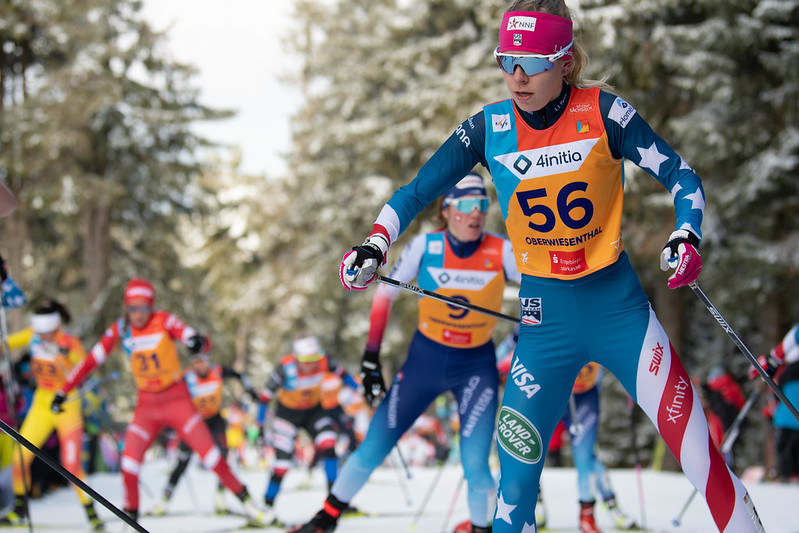
Sophia Laukli (bib 56) skied to 5th overall in the junior women’s 15 k mass start skate at 2020 Junior Worlds. (Photo: Doug Stephen)
The 2020-21 D-Team has a record 11 members. Both Fish and Barton commented on the goals for the program as they work together to support these athletes and continue to foster the national development program.
“‘Working together’ are the keywords here,” responded Fish “We have athletes with the desire, work ethic, and skills to succeed at the highest level of our sport. These athletes have a good understanding of what they need to be successful. This is thanks to our strong clubs, school programs, and strong divisional/ regional support. Kate and I both have a strong background coaching at the club and collegiate ranks, so this will aid in working with these athletes and their local programs to support their individual needs.
“It all starts with the question to the athletes and programs as how can we best support? What can we provide in addition? One common goal is that we continue to build upon the strong USA Team culture that we are bringing to our international trips each year. It is a huge asset when you know your teammates are contributing to your success and have your back. We will need to be creative in continuing to develop our team culture when working together in summer projects is a challenge.”
Barton’s response focused primarily on laying the groundwork for successful coach-athlete relationships, which she identifies as learning about each of her athletes individually and establishing a relationship. This requires collaboration and communication with both the athlete and their club or collegiate coach.
“As a new member of the team, the most important thing is to start to get to know this crew as athletes and as people. I want to coach this team in a way where they get to know me, too. We haven’t had a chance to work together in person yet, given the current state of the world, but I hope we’re starting to build relationships that will make our work at future training camps and competitions more enjoyable and productive. This job has already been rewarding because of the work I get to collaborate with the club coaches of each of these athletes. I’m excited to serve as a resource for any coach willing to get on board and help to push U.S. skiing forward.
“I am most looking forward to the opportunity to learn first-hand from this group of athletes,” she continued. “The D-Team is a special group of motivated individuals. They are stoked to continue to push US skiing forward. I can’t wait to see how they do it, to help them pursue their goals and dreams, and of course to provide some guidance and share my knowledge and experience along the way.”
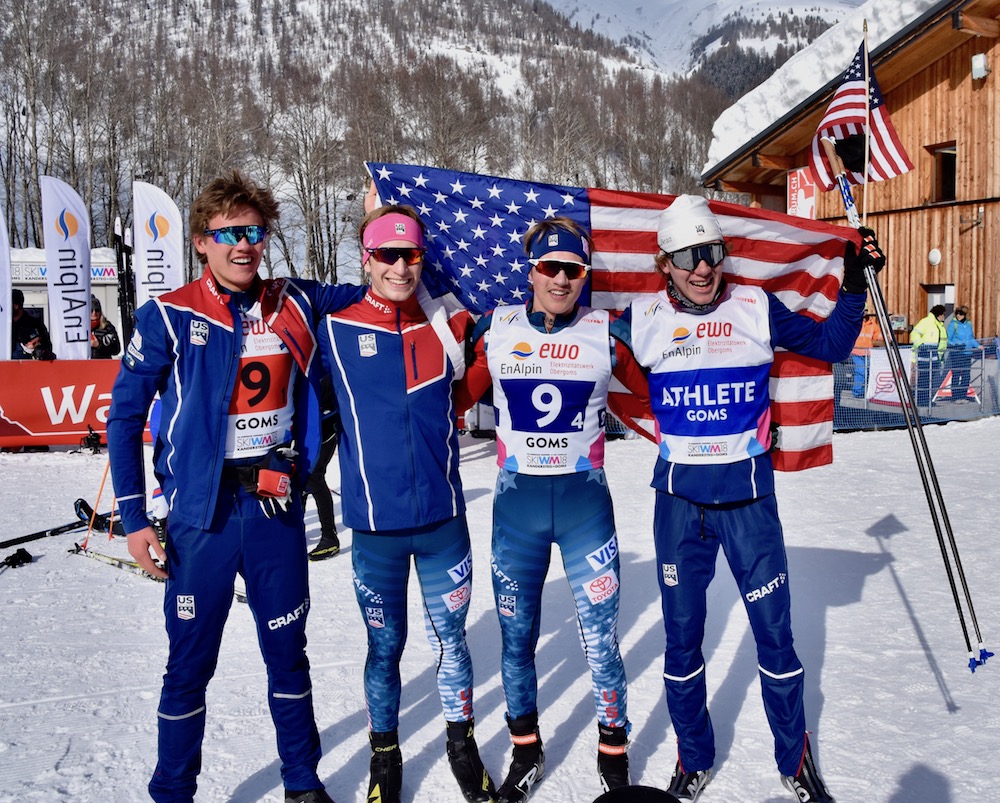
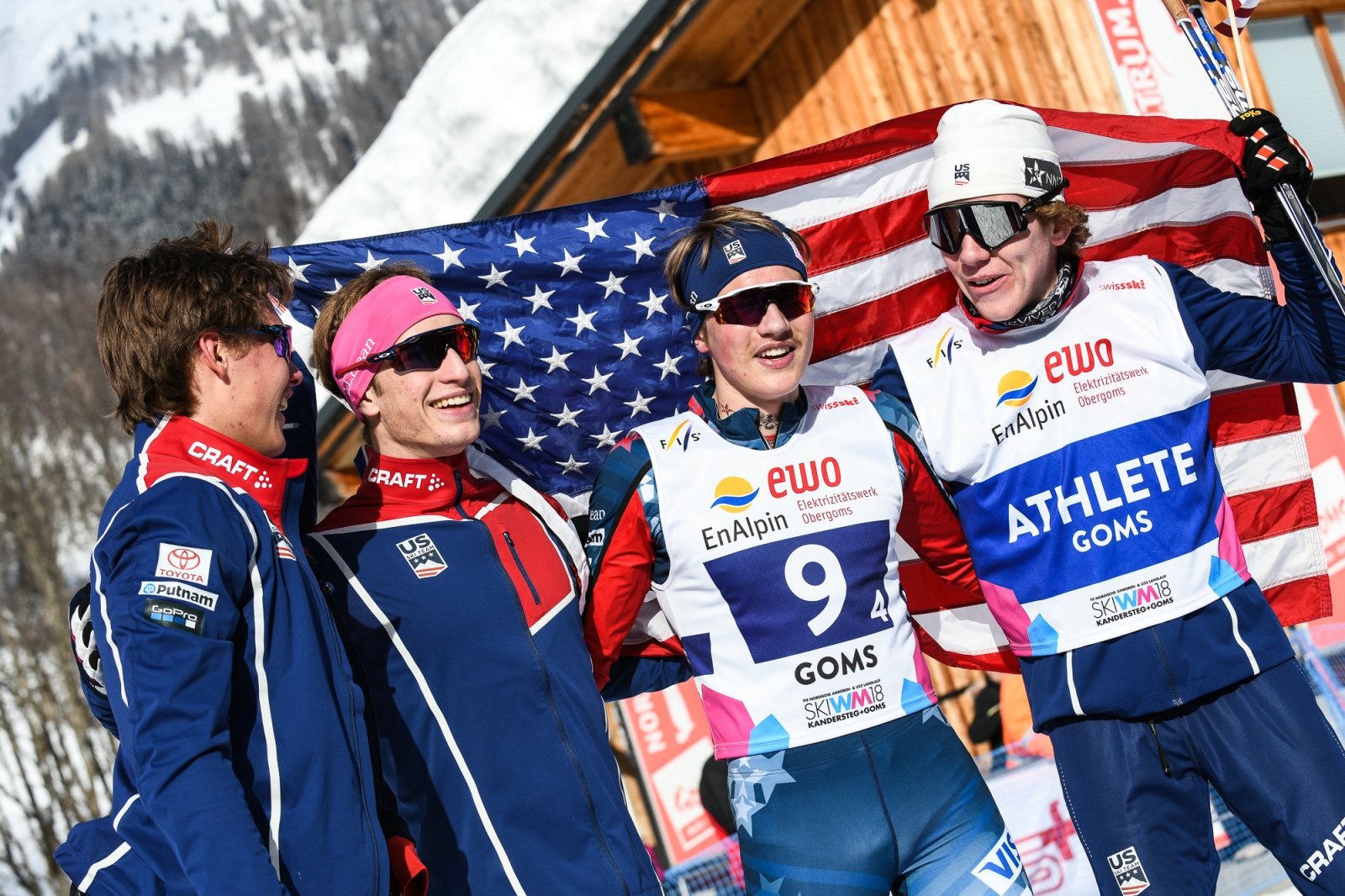
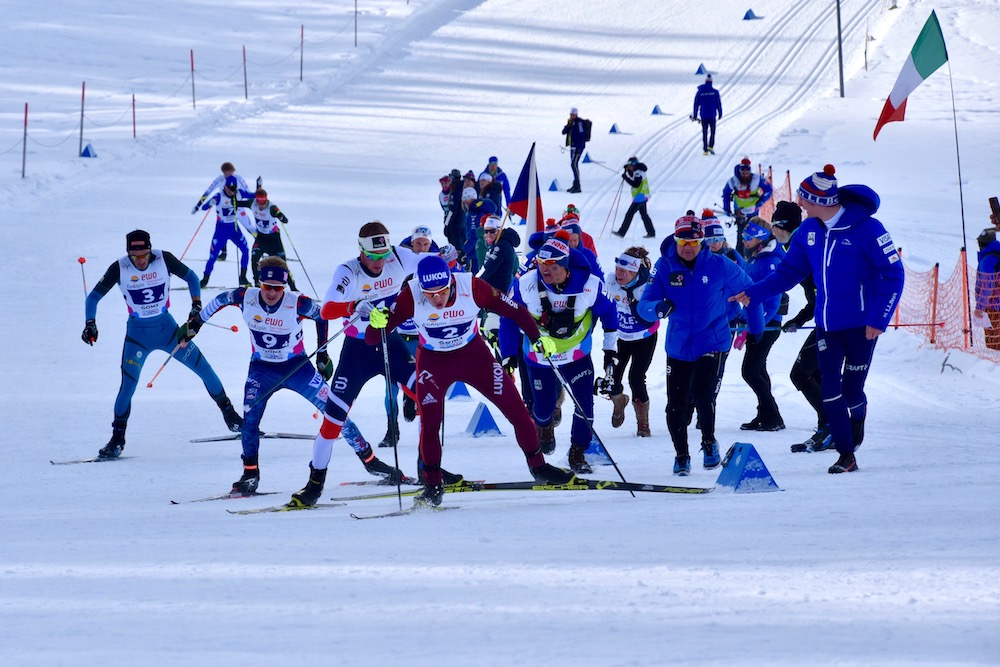
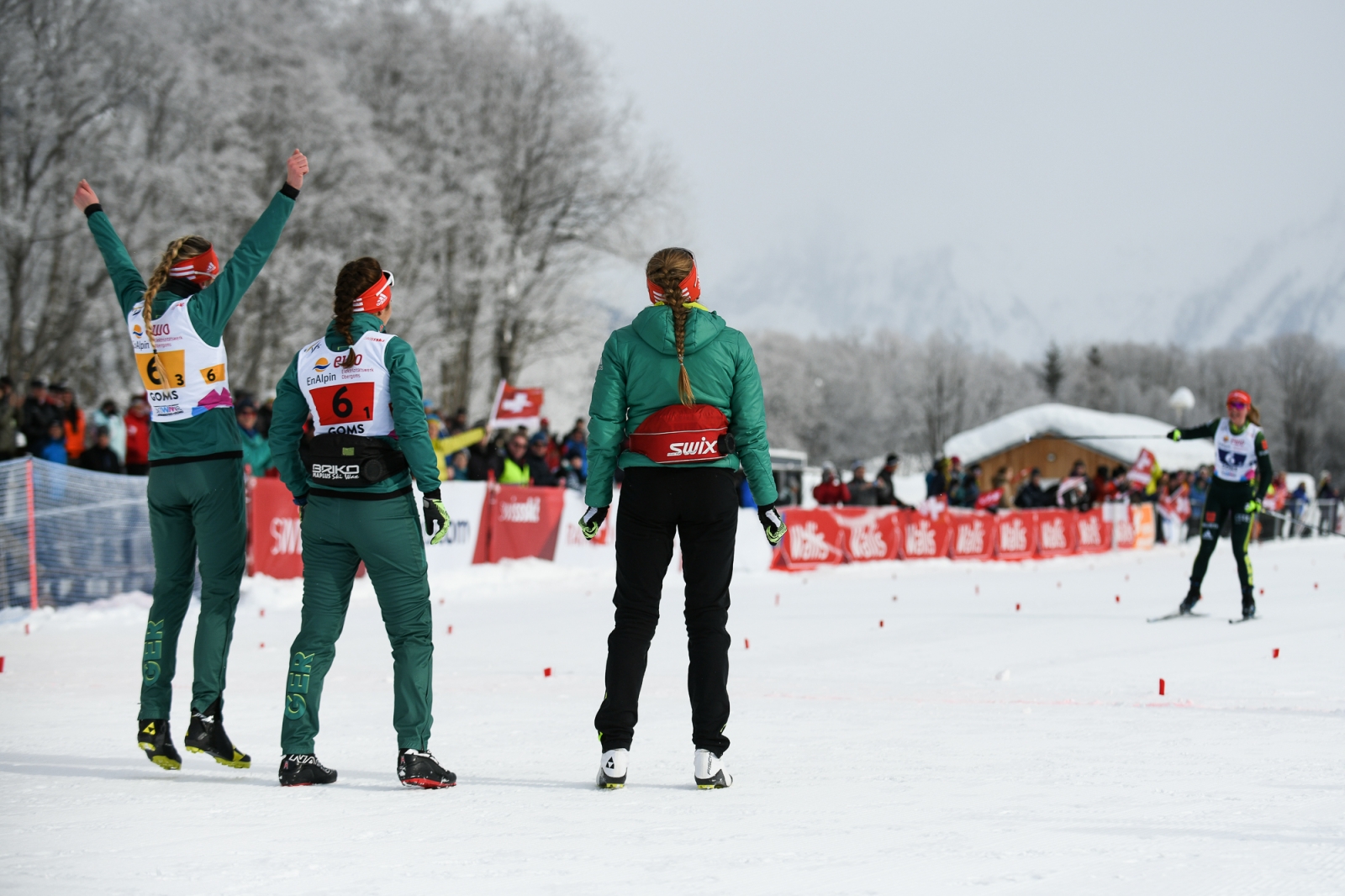
The U.S. men’s silver-medal relay on Saturday at 2018 Junior World Championships in Goms, Switzerland, with (from left to right) Luke Jager, Hunter Wonders, Gus Schumacher, and Ben Ogden. (Photo: Julia Kern)
Finally Barton was asked the challenging question regarding how to best support the mental and physical wellness of athletes who are navigating the pressures that come with elite level sport at a young age. In addition to the stress of training, many of the D Team athletes are also balancing academic demands on top of their training while facing significant transitions in their lives as they advance from high school through college.
“I think relationship building is our most important tool. My most successful coaching relationships have always been built on open and honest communication. I hope to build this culture within the D Team and beyond. We’ll try to break down the stigma that we have to wait until we’re in a time of need or crisis to ask for help. This community is incredibly supportive and there are many resources to help facilitate athlete development. My goal is to get to know a wide variety of young athletes in the US and to help them balance those demands and stressors they face as developing athletes. I don’t believe any of the athletes on the D Team are as fast (yet!) as they need to be, as they want to be, or as they can be, so I hope we’ll work together to build a good foundation on which to continue to develop. We will focus on the process and not just our performance because everyone fails a few times on their way to greatness.”
Hosting a World Cup gives the host country an extra 10 ‘nations group’ starts. (Photo: Doug Stephen)
Canada is moving into a new era in skiing. An era with less World Cup podiums and more emphasis on developing future podium athletes.
“Train at what you want to be good at. If its climbing, climb. If it is chess, play chess. Ski training has many elements of course, but in the end the best training to race fast is to race.” — Erik Bråten, National Team Head Coach
In the near future, more Canadians will spend more time racing in North America. The trip criteria is clear that any athlete who wants to stay on the World Cup all season has to demonstrate multiple top 12 finishes. Team selection follows the same path.
For this season, there are six World Cup race days in North America. Canada gets ten Nations Group start positions for the five race days hosted in Canada plus a bonus of another ten Nations Group starts in Minnesota. With these starts available, Nordiq Canada (NC) seems very comfortable skipping the first two World Cup weekends in Ruka and Lillehammer. Three Canadians, however, Emily Nishikawa, Dahria Beatty, and Russell Kennedy, will race in Davos and Planica. Smaller than usual teams are expected again in the new year.
The overall picture is three less World Cup weekends than last season, and fewer athletes all the way through. That doesn’t mean less racing, but it does mean less travel.
The era when the top US skiers came up to Canada to improve their FIS points seems to have ended. At that time, US skiers were excited to find more competitive events to push them harder. For the last few years, it has been Canadian skiers who are happy to get pushed out of the top five by foreigners.
For the last few years, Canada and the US have cooperated to increase the level at select weekends with joint NorAm/SuperTour events. While this adds work for the organizers, the athletes have universally been excited to reach across the border. Both NC and US Ski & Snowboard (USSA) seem happy with the development potential.
“It’s a lot cheaper to race south of the border than fly to Europe”, NC’s new Events Coordinator Jeff Ellis told FasterSkier, explaining that it was cheaper for both athletes and the team. The shorter trips also allow more days training at home where the athletes have a higher level of support.
“Merging a select few Canadian and American Continental Cup events helps strengthen the competitive field,” USSA’s Bryan Fish wrote in an email to FasterSkier. “Both the Scandinavian Cup and Alpen (OPA) Cup have eight nations involved in their respective Continental Cup series. Their robust competitive fields are a strong method of preparing their next generation.”
For 2020, NC decided to hold nationals right after the World Cup Finals in Canmore. Scheduling nationals three days later and six hours drive away at Sovereign Lake makes it possible for all the top Canadians to attend which raises the level of competition and gives younger athletes more exposure to senior level speed.
The same factors were also important when USSA was planning SuperTour finals.
“Most of North America’s strongest World Cup athletes remain in Europe for a majority of the season so they have the best chance to succeed at the World Cup level,” Fish wrote. “This is critical for their success on World Cup, however that can leave a gap in competitive strength in North America.”
Combining SuperTour finals and Canadian nationals into a single event will raises the level of competition. It also creates another opportunity for younger athletes to combine in a single trip a full week of racing and the chance to be trailside at the World Cup.
In the future, NC may revisit other European series as a way to add more rungs to the ladder to the World Cup. “Having development trips to Europe, and doing other kinds of racing could be interesting: If it’s OPA cup, or Scandinavian cup, or whatever it is.” Bråten said.
Kikkan Randall (bib #52) might have had her first classic day of the season on a race course, but the real action was in the younger categories.
There is also a push to add more races in every region. Tier 2 events like the Sovereign Open, might draw a few big names, like Caitlin Gregg, on their way to the opening NorAm/SuperTour the following weekend in Canmore. But, the main goal of the event was to provide one or two extra race days for 300 young regional skiers.
The National Team is committed to a hands-on approach. They are modeling best-practices and enhancing institutional knowledge by working directly with clubs at lower levels of the development pyramid. Recently, Bråten, along with some National Team athletes, assisted with club youth and masters programs during an on-snow camp at Sovereign Lake before the NorAm/SuperTour kickoff. High Performance Manager Joel Jaques, who is also the waxing lead for Canada, hosted a waxing talk and demo for the local coaches and athletes. (The FIS announcement claiming they will implement a fluoro ban next season came four days before the demo and changed the planned content, as applying powders will not be required next season.)
Another (apparent) first this season is having full National Team members who are outside the Canadian system. Sam Hendry attends the University of Utah and Rémi Drolet studies at Harvard.
Sam Hendry leads Graham Ritchie in the 10km free. (Photo: Doug Stephen)
“This has provided me with some awesome opportunities and an incredible team,” Hendry wrote during Nordiq Thunder. “It was really nice for me to have the chance to come home and ski on snow in Frozen Thunder especially with the lack of snow in Utah.”
Utah is a perennial powerhouse — winning the NCAA team title in 2017 and 2019. Utah is (relatively speaking) close to Canmore, which makes it easier for Hendry to connect with his home team.
“Sam is at Utah, so he has a personal coach, but I’m communicating with Miles [Havlick, Utah’s coach],” Bråten said, “and we have a good relationship.”
Harvard might be a top school for physics, but it is less well known as a skiing centre.
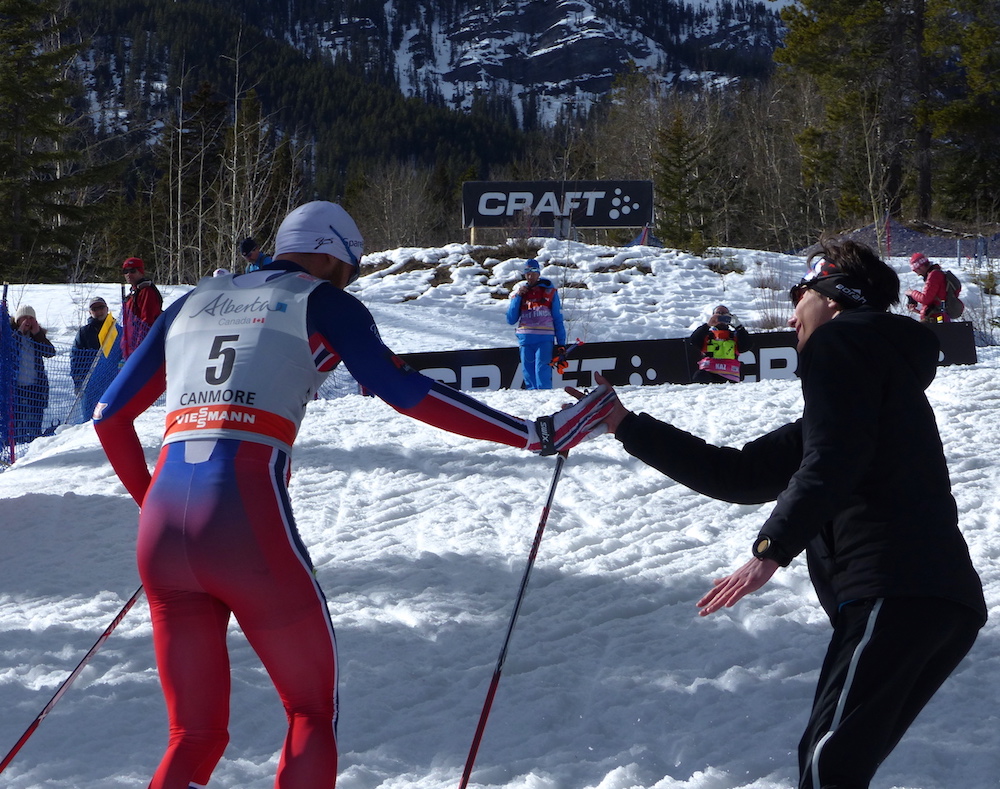
Time Machine: Petter Northug (NOR) (l) high fives Rémi Drolet (spectator) as he finishes his final lap during the men’s 1.5 k classic sprint at the Ski Tour Canada on Tuesday in Canmore. (Photo: Peggy Hung)
“On paper, Rémi is by far the best skier [at Harvard],” Bråten told FasterSkier, “but I think he sees that value of having that team around.”
Those paper results include ranking 7th of 23 North Americans in the 2019 World Cup final mini-tour in Québec, narrowly edging out American Gus Schumacher as the top overall junior.
“At Harvard, we are lucky to be led by head coach Christopher City and assistant coach Jefferson Tucker, ” Drolet said. “They are fantastic people, as well as coaches, and I have very much enjoyed working with both of them this fall. I am also continuing to work very closely with my coach at Black Jack, Dave Wood, and I am also talking regularly with Canadian National Team head coach Erik Bråten. I have to say that it is interesting to be working with four different coaches, but things have been going well so far, and everyone seems happy to collaborate in making sure my preparation for the season is as good as it can be!”
While Canadians view Harvard as a more expensive education than local universities or full-ride scholarships at NCAA schools, Drolet explained the reality at one of the top-ranked physics programs in the world.
“As an Ivy League school, Harvard College offers neither academic nor athletic scholarships. However, they do offer financial aid scholarships which ensures that all Harvard students pay what their families can afford without going into debt.
“This program has worked out very well in allowing me to pursue an education, which from the outside, is often viewed as having an excessively high price tag.”
Drolet has an ambitious racing calendar, which doesn’t include Nationals even though it is just four hours drive from his hometown.
“The college racing circuit starts for real in mid-January with the Harvard Carnival. Afterwards, I will be racing at the UVM Carnival/Supertour in Craftsbury, followed by the Canadian World Junior Trials Races at Mt. Sainte-Anne.”
The easiest path to qualify for World Cup starts is a top result in Mt Ste Anne, as that weekend has two routes to selection.
“If all goes well at trials, I will hopefully be headed to Germany for the World Junior Championships after racing at a few more Carnivals,” continued Drolet. “I would also be very happy to qualify for some more World Cup starts during the North American circuit at the end of the season, and if there is time for it all, I would love to go to the NCAA Skiing Championships in Bozeman, Montana.”
While this might sound easier than the full NorAm/SuperTour schedule, it’s coupled with demanding academics.
“Training long hours at university while attempting to stay competitive with all of the students who may not have such a major commitment outside of school is certainly a challenge, but it is one that Harvard has allowed me to meet successfully so far.”
Asked about the National Team working with US schools going forward, Bråten had a simple answer.
“This is one of the questions where I will be most likely listening more than I’m speaking when we take a decision.”
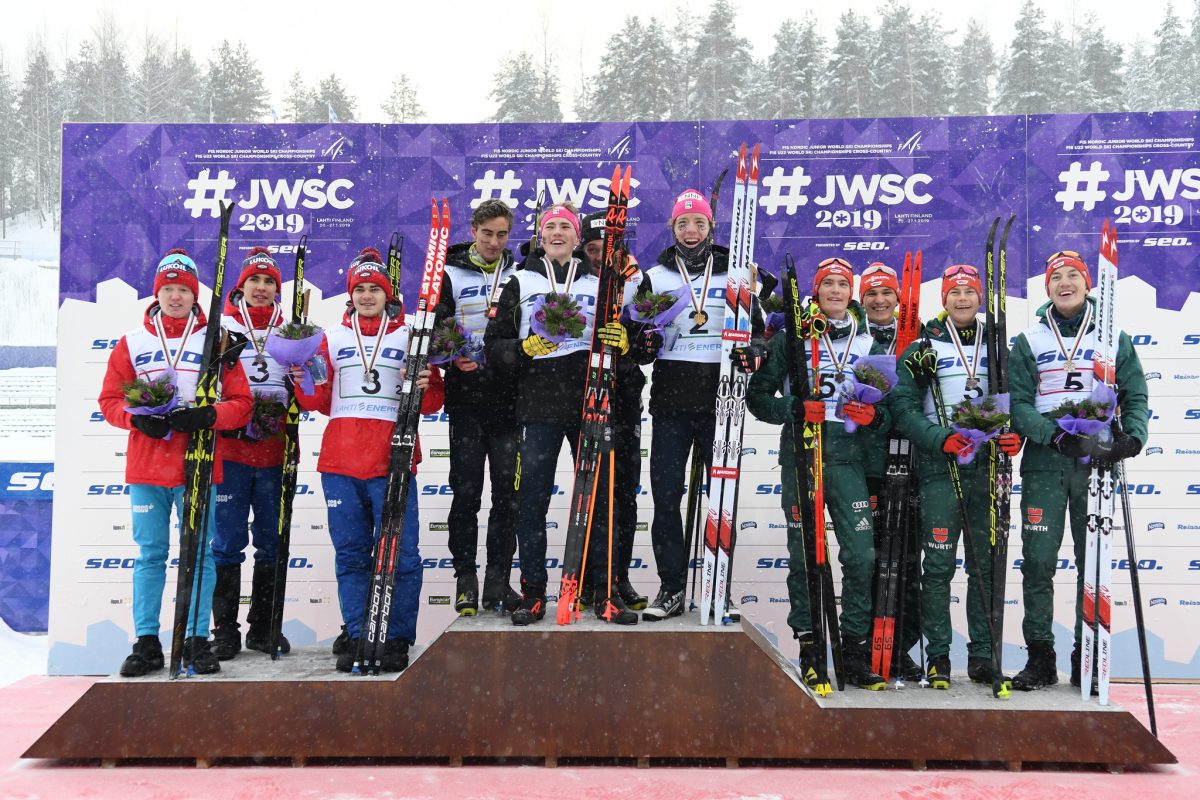
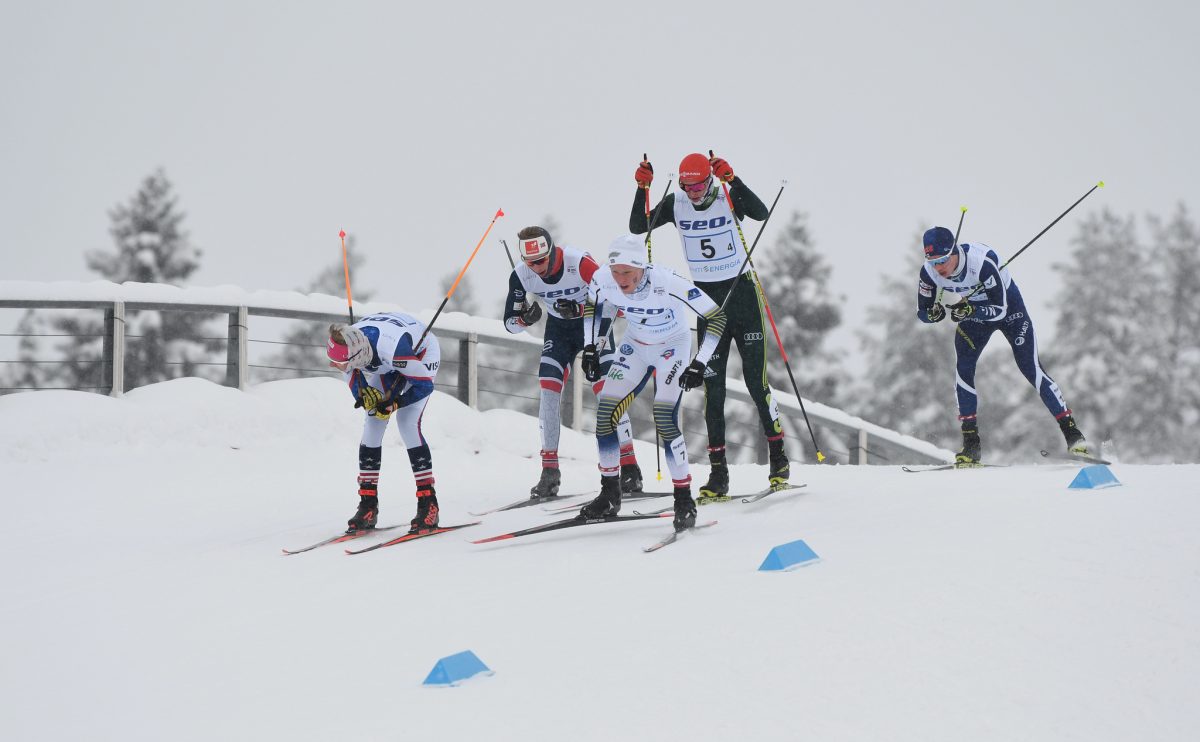
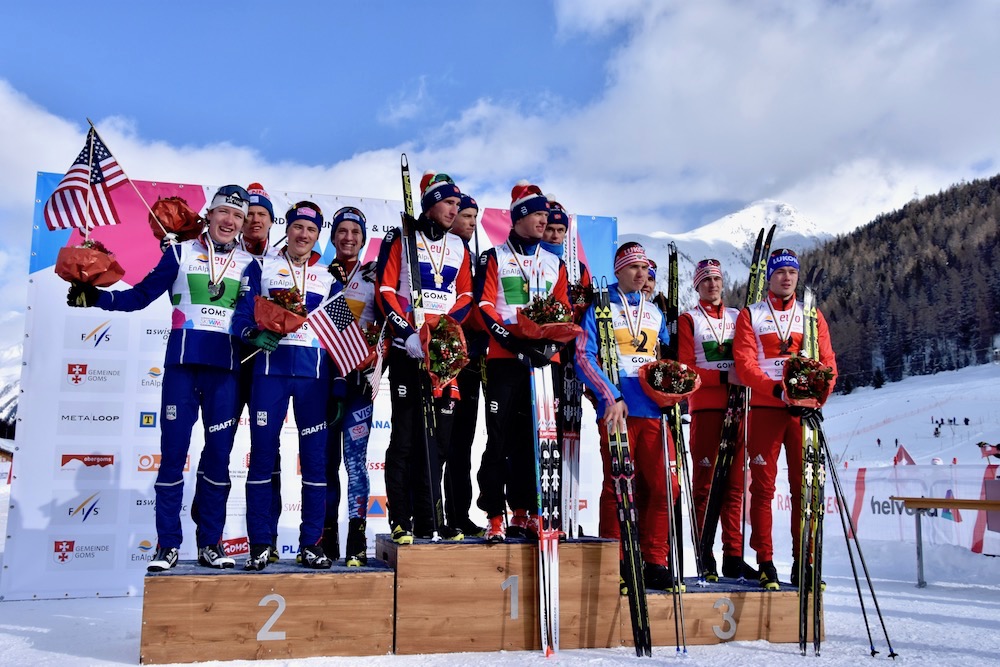
Lahti, Finland U20 World Champion 4 x 5 k relay podium: From left to right, Russian in third place, U.S. in first, and Germany in second. (Photo: Doug Stephen)
Nordic skiing doesn’t exactly come to mind when considering the X’s and O’s of sport.
Those who don’t ski on Saturdays or Sundays might be familiar with football’s schematics. The arrows, the diagrams, the dense playbooks. Basketball has symbolism: X’s in the key, plays for a pick and roll, defensive shifts from zone to man-to-man coverage.
The cross-country analog, and maybe this is a stretch, is the line-up for the 4 x (add a distance) relay. Where do you place the aerobic powerhouse or the kid who might just box out another team from taking a key position? Does the big-motor ski the scramble leg or the anchor? Or maybe somewhere in between?
“We talked to the skiers all week and asked how the courses were for skiing and if the courses were hard — they’re kind of shorter steeper climbs and then faster downhills, so sometimes it’s a little harder to get away,” the U.S. Ski Team’s Development Coach Gus Kaeding told FasterSkier in a call on Saturday. “So we figured with the strength of the field and 5 k for the men, it was going to be hard to make or break a point whether it was us or another team.”
Kaeding’s calculus, made in consideration with other U.S. coaches along on the trip, including former D-Team coach and current Cross Country Sport Development Manager Bryan Fish, was to keep the U.S. in touch with the front pack, and at times, leading it.
“We kind of talked with each of the guys separately and kind of talked about tactics, but one strength we felt our team had, was just simply the depth,” Kaeding said of the U.S. foursome.
On the surface, the Xs and Os manifest most starkly with the lineup. For the U.S., Luke Jager skied the first classic leg, Ben Ogden the second. The skate legs were handled by Johnny Hagenbuch and Gus Schumacher. Three of the four had been here before. At last year’s World Juniors in Goms, Switzerland, Jager, Ogden, Hunter Wonders and Gus Schumacher skied to a sensational second in the 4 x 5 k relay. With Hagenbuch in place of Wonders, who is now at U23 Worlds, on paper at least there was no loss in capacity.
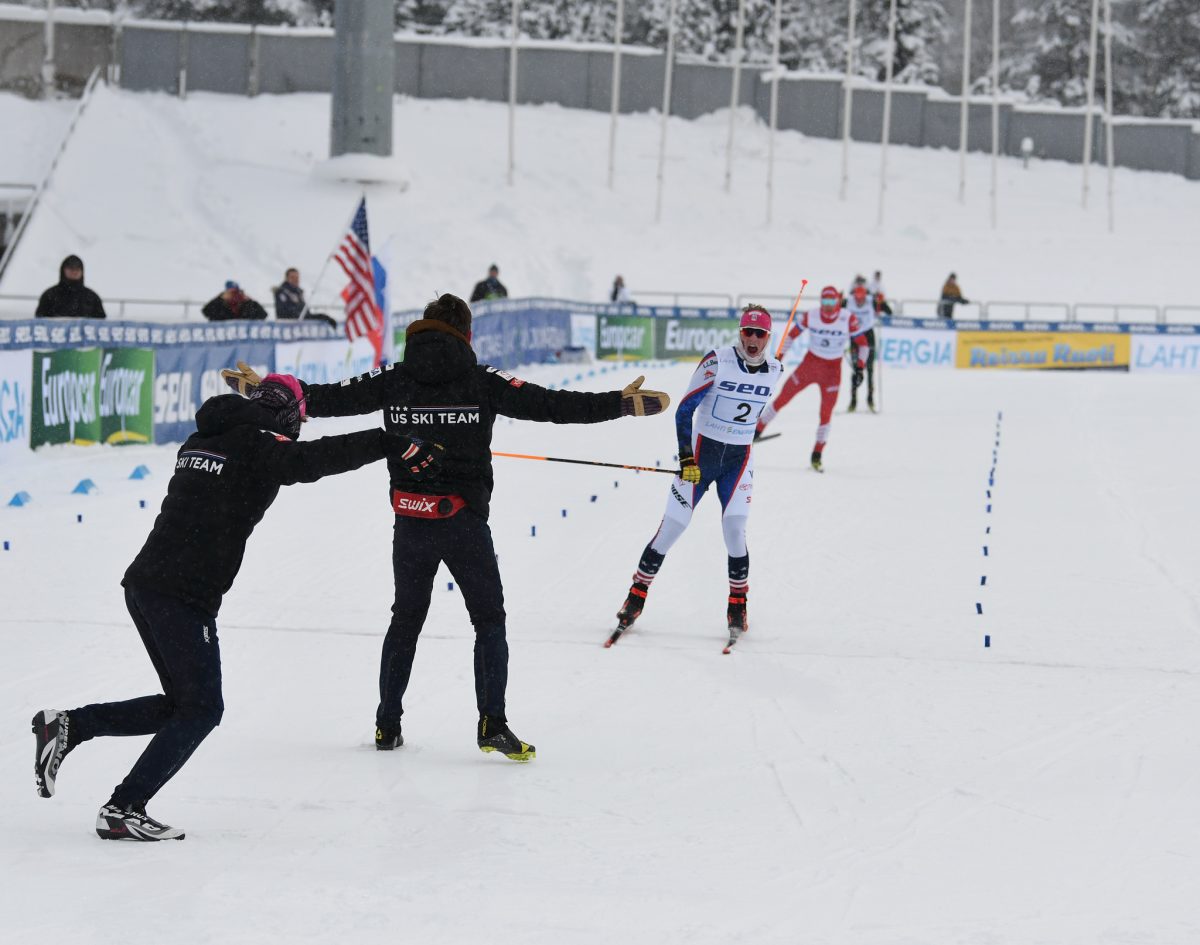
Tag #1, Luke Jager to Ben Ogden (bib 2) in the U20 men’s 4 x 5 k relay at Junior Worlds in Lahti, Finland. (Photo: Doug Stephen)
“Looking at all the other teams, we kind of knew everyone else had a weak link at some point. We wanted to stay near the front and make sure when we were going up against that weak link, and we were pushing the pace enough to make them pay for it,” said Kaeding. “And that worked over the course of the race.”
Around the 3.5 k mark of Jager’s scramble leg, the U.S. skier upped the pace. Evident from the drop-off, many teams paid the price in oxygen debt. Jager’s initial surge wasn’t a “snap” for chasing teams. But it was enough of a push that at the 5 k mark when Jager tagged to Ogden, the U.S. handed off in first, followed closely by France and Norway less than a second back. Germany, in fourth place at this point, was ten seconds back.
“Each guy executed their individual game plan to perfection,” Kaeding continued. “I know Luke wanted to start out conservatively in the pack and then make a hard move, in the end, he did that. Ben did the same. Each was able to come in with the lead, which wasn’t necessarily meant to break, it was just meant to give an easy exchange and then allow the next skier just a little time to kind of ski into the race. And that’s exactly what they did.”
Like Jager, Ogden helped make and sustain a separation. When Ogden came through the tag zone in first, Germany was 2.2 seconds back, Norway 2.6. The next closest team, Sweden, dangled 15.9 seconds behind in a train including France, Russia, and Finland.
Johnny Hagenbuch skiing in third place during the third leg of the U20 men’s 4 x 5 k relay at Junior Worlds in Lahti, Finland. (Photo: Doug Stephen)
Hagenbuch stayed true to the team’s formula: ski near the front and don’t cede position. He too kept the team in gold medal contention when he tagged Schumacher in third, 2.0 seconds behind Germany in first and Norway in second (+0.6).
“Then they left it up to Gus … who skied a really smart anchor and bought his time, and bought his time,” Kaeding said of Schumacher’s anchor leg. “He led a little bit when the pace needed to be pushed so others didn’t catch. And it was pretty obvious through the race that the Russians were coming.”
At 16.1 k, with 3.9 k remaining in Schumacher’s effort, Russia was approximately 10 seconds behind the U.S. By 19 k Russia had nearly made contact to the U.S., skiing 2.8 seconds behind the first place U.S. team.
“Gus went with about a kilometer, a kilometer and half to go,” Kaeding said of Schumacher’s chess match. “I’m sure that was really hard for Terentev [Russia’s anchor leg skier] as he had just made contact and to see Gus go. And he held that three-second, four-second gap all the way until the finish. So he had the confidence that he could outsprint one of the best sprinters in the world and had the distance chops to be able to push the pace the entire way. It was pretty cool to see those guys really set out a plan and execute it to perfection.”
Gus Schumacher leads the group of five during the U20 men’s 4 x 5 k relay at Junior Worlds in Lahti, Finland. (Photo: Doug Stephen)
From Schumacher’s eyes, the gamesmanship was tense. With Norway slowing the pace and Germany upping it, Sweden, Russia, and Finland made contact with the three front teams.
“So by 2.5 k into my leg, we were all together in a group and I was definitely a little nervous because there were some great sprinters in that group,” Schumacher told FasterSkier in a call.
Despite skiing a classic sprint, a 15 k skate, and a 30 k classic mass start (in which he placed fourth overall), Schumacher said his focus on the relay remained.
“I for sure did not forget about the relay at all this week,” Schumacher said matter of factly. “I definitely tried to visualize the best outcome. I visualized a lot of different outcomes as well. Winning and coming from the back and stuff like that.”
Gus Schumacher and the U.S. team in for the win during the U20 men’s 4 x 5 k relay at Junior Worlds in Lahti, Finland. (Photo: Doug Stephen)
The vision in the last kilometer was clear and straight ahead. In any other parallel universe where Russia maybe hangs on, or Schumacher comes from the back, that simply did not play out in the here and now in Lahti.
45:34.7 was the winning time for the U.S. Russia placed second (+3.8), German third (+6.3).
45:34.7 minutes, a finishing time these young men will not soon forget as they evolve as athletes and tell tales of their historic win.
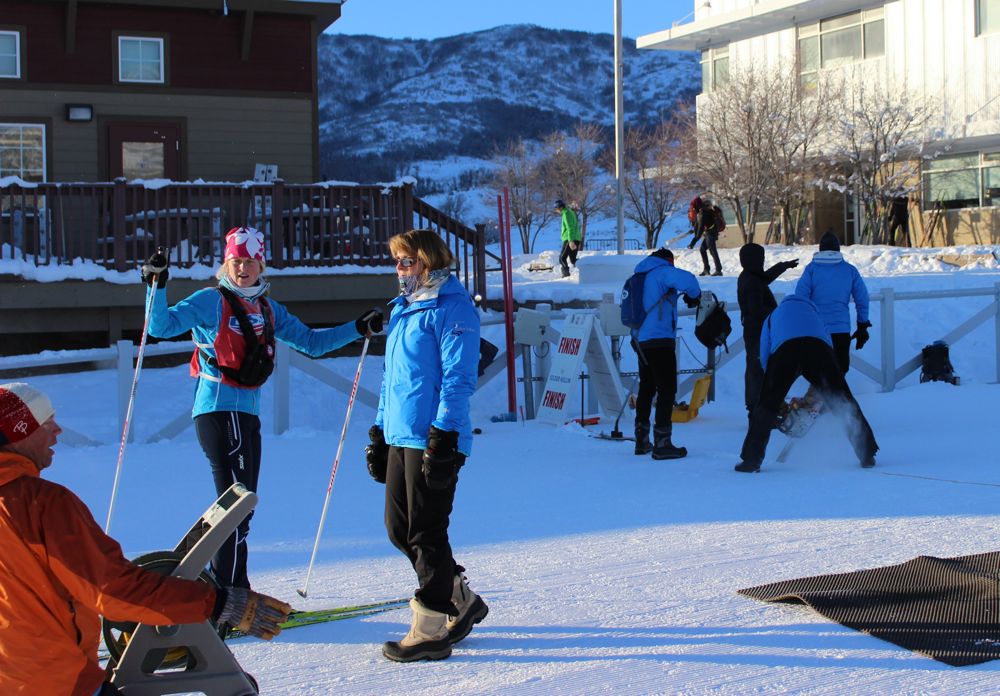
Technical delegate Eileen Carey (left) talking with race volunteers at an event at Soldier Hollow in Midway, Utah, in 2013.
This article comes from Alan Watson, a certified TD and head of the cross-country section of the Pacific Northwest Ski Association (PNSA).
Here’s the straight and simple request: U.S. Ski and Snowboard needs Technical Delegates (TD). Before we go any further, let’s give a brief rundown of what that means.
U.S. Ski and Snowboard rules require each sanctioned race to have a jury which ensures that the race is fair, safe and conducted according to the rules. (Sanctioned races are also referred to as “NRL races”, which stands for National Ranking List because those races are used to calculate USSA points). The jury does much more than decide cases of discipline or other disputes. They review all aspects of the race before, during, and after, trying to make sure that everything will go as smoothly and properly as possible.
For most NRL races the jury consists of three officials: the Technical Delegate (TD), an assistant Technical Delegate (TDA), and the Chief of Competition, and for bigger races like a SuperTour or National Championships the jury normally includes two additional members. That means each race needs at least two, and sometimes four for bigger races, trained technical delegates to serve on the jury. Of course, it doesn’t hurt when the Chief of Competition is a trained and certified TD as well.
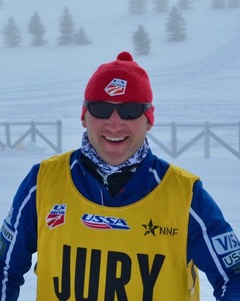
Jury member, Level 2 certified TD, and U.S. Ski and Snowboard Cross-Country Sport Development Manager Bryan Fish. (Photo: Courtesy of Al Pokorny)
The TD and the TDA are appointed by and represent U.S. Ski and Snowboard. The idea is that they will be independent of the race organization, and will represent U.S. Ski and Snowboard in overseeing the race. In cases where the race organization might be tempted to ignore the rules, either from naivety or from thinking they have a better way, the jury is responsible for keeping things on track. The jury may suspend or modify certain rules if necessary for safety or to make a better race, as long as the intent of the rules is honored.
The jury’s work begins well before the race date. Shortly after being assigned to a race in the fall, the TD contacts the TDA and the race organizers and begins an ongoing dialogue. In most cases the relationship between the TD and the race organization is cooperative and supportive, with the TD providing advice, answering questions, and interpreting the rules. The TD inquires about and verifies all aspects of the race, including the schedule, the course and stadium, grooming, timing, medical plans, and results. Although this list is not comprehensive, it provides a general idea of the TD’s responsibilities.
On arrival at the race venue, the TD inspects the course before official training and helps decide the placement of tracks and technique zones as well as safety precautions. During the race, the TD typically monitors the stadium area while the TDA monitors the rest of the course.
When all goes well the TD can be proud of being part of a job well done. The happy faces of racers after an event are a reward well worth the time and effort involved. But sometimes awkward or difficult situations can arise which the jury has to address. Perhaps one racer changed lanes improperly and obstructed another racer, or a racer broke a pole in a race and publicly expressed his frustration in unseemly language, or the timer failed to promptly resolve close finishes at the end of each heat. When these things occur the jury’s reward is knowing that they confronted the issue thoroughly and reasonably.
Both the TD and TDA are required to be trained and certified by U.S. Ski and Snowboard. The process normally begins with a two-day training session. After passing a written exam, a candidate becomes a Level 1 TD which allows him or her to be appointed as a TDA. After serving as a TDA in at least two races, and being recommended by the TD of each, a Level 1 TD can advance to Level 2.
A Level 2 TD is allowed to be appointed TD or TDA at any NRL race. A similar but more involved process allows a Level 2 TD to advance to Level 3, which allows him or her to serve as TD or TDA at FIS races in addition to NRLs.
In the western US, we typically have a TD and Race Organizer conference every other year. This serves as the initial training for TD candidates and as continuing education for certified TDs, as well as training for race organizers. The most recent conference was held in West Yellowstone in late November 2018. About 25 of people attended, with eight different attendees and two outside speakers leading the discussions on various aspects of race organization and officiating.
Dr. Al Pokorny, a certified Technical Delegate at a local Spokane, Washington race. The headgear is not official TD attire. (Photo: Courtesy Al Pokorny.
Normally the TD comes from a locale different from the race location, and if possible the TDA is local. TDs and TDAs receive travel, lodging, and food expenses plus a small per diem, so it is in the financial interest of the host club to recruit a local to become certified and act as the TDA.
Senior TDs serve as TD assignors. It can be difficult for an assignor to find enough available TDs to cover all the races on a given weekend. If a TD cannot be found for a race, entrants will not get points for that race. A few years ago all the certified TDs in the Intermountain Division had retired, partly because a whole cohort that got involved before the 2002 Olympics at Soldier Hollow began to age out at the same time. So it is important to recruit new blood into the pipeline and to encourage their development.
If you are interested in helping our sport by getting into the TD world, contact your division’s assignor:
Bryan Fish, U.S. Ski & Snowboard’s cross country sport development manager, delivering a presentation called “Strides of Success – The Key Factors in USA XC Ski Development Success” on Sept. 15 at the Snow King Sports & Events Center in Jackson, Wyoming. (Photo: Nancy Leon/Jackson Hole Nordic)
JACKSON, Wyoming — Last last month, U.S. Ski & Snowboard announced that Bryan Fish had been promoted to cross country sport development manager. FasterSkier sat down with Fish on Sept. 14 at Jackson Hole’s Center for the Arts, where he was leading a Level 200 coaching clinic, to learn more about this transition and how his new position will support the national development program. He also provided insight into the development program’s philosophy and goals for the coming years.
Fish originally joined U.S. Ski & Snowboard as the cross-country development head coach in 2010, after starting the Central Cross Country (CXC) Elite Team in Wisconsin and coaching there for four years. Before that, he was head nordic coach at his alma mater, the University of Wisconsin-Green Bay, from 1998 to 2006. During his last eight years with the national team, he has been the primary development coach and spearheaded sport education to create resources for club coaches and athletes nationwide. As U.S. nordic skiing at the elite level has steadily improved, the development program for juniors has grown and evolved in response.
“I think people look at it and they see this monumental upward trend, but it’s been kind of a slow steady progression,” Fish, 43, said. “It’s been really fun to be a part of. … You just see the whole community collectively raising the bar, and it’s been really exciting to be a part of that.”
U.S. Ski Team Development Coach Bryan Fish gets some glitter from by Hailey Swirbul at 2015 Junior World Championships in Almaty, Kazakhstan (Photo: Julia Kern)
Fish’s new role will include many of his previous responsibilities while reducing certain aspects of his former position, which made it more difficult for him to focus on the development program itself.
“What we really did is took a look and evaluated ‘what are our strengths as a staff?’ How do we need to structure our sport in a way that optimizes our staff and optimizes our resources?’ ” he reflected. “So a lot of things that I was doing previously are very similar to what I am doing now.”
Additionally, a sport consultant who will be based year-round in Park City will be hired to take over office-based work such as uniforming, helping with the competition guide, and data analysis through points at the SuperTour and Junior Nationals. This person, who Fish said will be hired in the coming weeks, will devote about 80 to 85 percent of their time to cross country and the remainder to the all-sport needs of U.S. Ski & Snowboard.
“One of my strengths is working with the athletes in the field, and we want to maintain some consistency with the international competitions like Junior World Ski Championships, World U23’s, OPA Cup as well as some of the national-level junior camps that we do in the summer,” Fish said. “I will still continue to do that.
“I will no longer support World Cup,” he continued. “I’ll be a little more domestic, so I’ll be at West Yellowstone, I’ll be at Silver Star, and that actually was a plan regardless of whether I took this new position or not because the dynamic of our World Cup team and our whole national team is a lot more on the development side.”
Fish’s approach to leading the development program is focused on process goals, creating opportunities for athletes in all regions and at all levels, and providing club coaches with tools to create successful programs. He hopes to develop a systematic process for juniors to excel in skiing that’s both clear and transparent.
“One of the things I’ve been trying to focus on … is taking a deeper look at those steps from what I’ll say, cradle to grave, or from youth all the way to elite, and we’re continuing to recognize and understand that there are gaps in areas, but most importantly, it’s really important that we divide and conquer,” he said. “What I mean by that is that we’re working with our divisions, we’re working with our regions, because they do a lot of the junior racing and youth development, and we do a lot of the national and above. It’s really making sure that we have affiliation agreements with each division and I’ve been looking through those as well and making sure that there’s a clear path and opportunities for junior athletes.”
In order to gauge the success of this approach and the development of junior athletes, Fish offers an approach that is not solely based on results; in fact, success in competition is only one of the three aspects involved.
“Number one: are we growing?” he asked rhetorically. “Growth does not mean membership growth; it just means, do we have more skiers? The second thing is retention. Are we retaining the skiers? And number three is performance. Are we getting better?”
In order for these three components of growth to be possible, opportunities for athletes of all ages and abilities must be available. He described another three-step model for developing programming at any level.
“One is developing a passion for outdoor endurance athletics, number two is developing a culture of training, and then we can develop a culture of performance,” he said. “And even at that high point, a culture of performance, they need to still have that passion for outdoor endurance. So if we’re doing our job, we’re providing opportunities. So we’re making sure that there are appropriate venues, there are events — it doesn’t necessarily mean competition, but there are different events, and that there are programming, and we need to have all three of those pieces.”
Bryan Fish delivering a presentation called “Strides Toward Success: The Key Factors in USA XC Ski Development Success” on Sept. 15 at the Snow King Sports & Events Center in Jackson, Wyoming. (Photo: Nancy Leon/Jackson Hole Nordic)
Fish refers to these opportunities as part of a “pathway” for athletes, versus using the phrase “pipeline”, which is used by the U.S. Olympic Committee. He adds, “I’m not a big fan of the term ‘pipeline’. … When you think pipeline, it has one path, it goes in this pipe and this little trickle comes out the other end.”
To him, the word “pathway” implies that there are many entry points that can lead to success in skiing, especially when one’s individual goals are taken into consideration.
Fish emphasized that access to quality programming from a young age is essential to the success of U.S. skiing as a whole. He said coach education is crucial to this aspect of creating valuable opportunities for youth, as are the clubs that plant the seeds for success and are most responsible for cultivating a love of the sport.
“I wish U.S. Ski & Snowboard had the capacity to do more at a younger age, but we have to focus our efforts and really be strategic with the resources that we have,” he said. “What we are trying to do is be very transparent about that and say, ‘OK, these things we can do, these things we need you guys to do, clubs and coaches, how can we help you?’ One of the resources we are trying to provide is this coaching education, which we take real seriously, to have some common ground.”
Programming should also be similar across the country.
“We want to make sure that a skier in California is somewhat similar in level to the athlete in Maine and getting the same opportunities,” he said.
In his time with U.S. Ski & Snowboard, Fish has assisted in the development of resources for coaches, such as the Level 100 and 200 certification programs. However, in recent years, his focus has shifted away from some of the minutiae of technique and physiology toward a more pedagogical approach, which he hopes to continue to spread in his new role.
“What we wanted to do is go, ‘OK, here is our scaffolding, here are some best practices in the community for all these different things,’ ” he explained. “We’ve tried to be less detailed as it relates to nuances of technique, but instead ‘here is how you teach technique’… We all might teach it slightly different, but I hope that we can come back to our educational platform and say, ‘OK, we can all agree on that,’ and then from that we can be creative as coaches with our different age groups and resources that we have within a community.”
Fish also stated that partnership with coaches and technicians from around the country fills essential gaps in support at international junior competitions, in turn providing valuable professional development opportunities for the club staff.
“The coaching staff on the national team has been more open to having open training and have more club coaches come on trips, and for me, that collaboration is really important,” he said. “When I go to Junior Worlds, I am the only national team person, all other staff is club coaches. As time has gone by, with that collaboration and bringing more coaches and technicians over internationally and working together with them, we’ve created that trust. And we’ve also seen coaches and techs like Andrew Morehouse and Tim Baucom are now full-time wax techs [for the national team].”
Training camps are another powerful tool, Fish said.
“There’s no more powerful coach than other strong teammates and an environment of training,” he said. “A perfect example of that is our last camp that we just came from in Norway, the International Junior Camp.
“When you’re around other athletes of a similar level, the bar just raises,” he continued. “What I noticed was that it was hard on everybody, but when its hard on everybody and everybody’s doing it, it becomes normal. They’re not all stressed out and they’re not all questioning themselves. They’re just like, well, everybody else is doing it were all in the same boat here; we’re all pretty tired.”
He added that Molly Gellert said it best when she posted a photo of herself on Facebook with Sofia Shomento, an Austrian coach, and athletes from Norway and Finland smiling with their arms around each other after the last training session of the camp. The photo caption reads “Don’t let the smiles deceive you, camp was so freaking hard.”
Asked about the dilemma some athletes face when choosing whether to ski in college or take a post-graduate year, Fish said that decision should not be viewed as black and white, and it should reflect the athlete’s individual strengths and goals. Though he is often in support of a post-grad year, he understands that not all athletes at that age are mature enough to handle the transition being a full-time athlete and still need an additional outlet, such as taking classes or a part-time job.
“I look at it from a perspective of ‘what are the opportunities?’ ” he said. “When I was a college coach, I always said, ‘You need three things if this college to be right for you: the school needs to be right for you, the coach needs to be right for you, and the team needs to be right for you.’ I think you could build upon that to say, ‘Is part-time school the right approach for you?’ I really encourage athletes and their families to really identify and think deeply about what might be the right path for them. There’s no one right pathway.”
Earlier this month from Aug. 2-8, nine top American junior athletes had the opportunity to participate in the largest International Junior Camp to date. In total, 146 athletes and 37 coaches from nearly 20 nations gathered in Sjusjøen, Norway, for a week of training and collaboration. The camp offered athletes the opportunity to gain confidence by training with the best junior skiers in the world against whom they will soon be competing, and to learn from the prestigious Norwegian development team training methods.
To make the trip, athletes needed to be born in either 1999 or 2000 and have the lowest ranking on the FIS Distance and/or Sprint World Ranking list. The U.S. sent Gus Schumacher, Ti Donaldson, Noel Keeffe, Ben Ogden, and Wyatt Gebhart on the men’s side, and for the women, Sofia Shomento, Mae Chalmers, Abby Jarzin, and Molly Gellert. Two coaches joined the group: Bryan Fish, cross country sport development manager at U.S. Ski & Snowboard, and Maria Stuber, head coach at the College of St. Scholastica, and the National Nordic Foundation (NNF) partially subsidized the trip.
2018 International Junior Camp attendees: – Armenia
– Austria
– Bosnia/Herzegovina
– Belarus
– Canada
– China
– Czech Republic
– Estonia
– Italy
– Finland
– Japan
– Korea
– Latvia
– Norway
– Slovenia
– Slovakia
– Spain
– Sweden
– U.S.
The format of the camp was similar to what U.S. juniors might experience at an elite national camp; a large emphasis on volume (18-25 training hours), with some intensity, technique and strength mixed in. For most workouts, all the athletes trained together as one large group, only dividing into smaller groups for time trials or activities held in spaces that could not hold the nearly 200 attendees.
The camp opened with back-to-back time trials, beginning with a classic sprint event featuring “King’s Court” style heats, meaning that from each heat, the top skier moved up in the seeds and the last skier moved down. Each skier competed in four rounds of sprints plus the qualifier, one round more than in a typical sprint. The most notable result for the U.S. was a victory for Schumacher in the men’s final, and on the women’s side, an eighth-place finish for Gellert.
In the 10- and 15-kilometer distance races, the Americans continued to show their strength with another win for Schumacher and another eighth-place finish for Gellert.
“Local hero – Joergen Lippert from Lillehammer joined in on the 15 km freestyle race,” Fish explained. “This was a great measuring stick for the men since Joergen medaled in all four races last year at Junior Worlds (2018 Junior Worlds – 1 gold, 1 silver, and 2 bronze). At the 5km split, Lippert was leading, Ben Ogden was 2nd and Gus Schumacher 6th. Haavard Moseby took the lead after 10km. At 12km Haavard and Gus were tied, then Gus surged to edge Haavard for the second day in a row.”
Molly Gellert striding in the sprint heats at the 2018 International Junior Camp in Sjusjøen, Norway. (Photo: Maria Stuber)
To take advantage of the unique terrain on the plateau around Sjusjøen, the group also participated in a 3 1/2- to 5-hour run crossing through several bogs, and a set of Level 4 bog intervals, which was reported to be the hardest workout of the entire camp. These 3-5 minute intervals were run in mud up to or above athletes knees, making it a full-body challenge to move forward through the course.
“Running through that stuff as hard as you can is incredibly hard,” Stuber told FasterSkier. “People were breathing at the end of those intervals harder than you ever hear, besides maybe the best athletes in the world in a 5- to 10-kilometer distance kind of race.”
Another highlight was getting to meet and hear from Olympic gold medalists Johannes Høsflot Klæbo, Ragnild Haga, and Astrid Uhrenholdt Jacobsen, who shared insight into the aspects of their training and development they felt have led to their success.
The U.S. coaches contributed to the camp by leading an agility workout, as this has been creatively emphasized in their own programs with positive results. Fish reportedly traveled with his own set of cones and plenty of sidewalk chalk to ensure they could set up a high-quality course.
“It was really fun to have the rest of the world interested in what we’re doing with agility,” said Stuber.
Ben Ogden (second from r) in the middle of a bog interval at the 2018 International Junior Camp in Sjusjøen, Norway. (Photo: Maria Stuber)
Apart from the training benefits, the U.S. development program considered the experience of collaborating with top athletes in this age group to be invaluable, as it showed how hard their international competition is working.
“In the U.S. when you’re a top athlete you feel like you’re working pretty darn hard, and this kind of shows them that, yeah, they’re working hard, but the kids that they want to be competing against are also working really hard,” Stuber said.
She added that the U.S. athletes were well-prepared for the camp, as all performed very well throughout the week despite the demanding training schedule.
“We fit in, we go there and see that we’re doing the right things, and we bring these kids back with the confidence that they can do this and the motivation to keep at it and work harder,” Stuber said.
It was noteworthy to the coaches that the U.S. is finally recognized as a nation that can train and compete with the best athletes in the world — a testament to the growth and success of the U.S. Ski Team at all levels over the last ten years.
“Going into this, I was expecting to just be learning a ton and less of a contributor,” Stuber said. “It was really cool to get there and feel like the U.S. was very much a country where people wanted to know what we were doing. Norway is clearly ahead, but otherwise, I think the U.S. had to say as much as any other place, which was a really eye-opening surprise for me.”
This is the third time that the U.S. has attended Norway’s International Junior Camp (also in 2015 and 2016), and American juniors will continue to make the trip biennially to maintain collaboration with other countries in the coming years. According to the U.S. coaches, because of the cost of the camp and the fact that it is similar each year, they plan to only attend every other year so they have a “fresh” group of athletes each time.
Americans during a muddy training session at the 2018 International Junior Camp earlier this month in Sjusjøen, Norway. (Front row, l to r) Abby Jarzin, Mae Chalmers, Sophie Shomento, Molly Gellert, and Noel Keeffe. (Back row, l to r) Ben Ogden, Wyatt Gebhart, Ty Donaldson, Gus Schumacher. (Photo: Maria Stuber)
Bryan Fish (yellow jacket) coaching American athletes in Norway this summer. (Photo: Maria Stuber)
(Press release)
PARK CITY, Utah (August 30, 2018) U.S. Ski & Snowboard has announced that Bryan Fish has been promoted to the position of Cross Country Sport Development Manager. This is a new position and includes many of Bryan’s current duties at U.S. Ski & Snowboard, in addition to the key domestic and development responsibilities held by former Nordic Domestic Program Director Robert Lazzaroni. U.S. Ski and Snowboard will not fill that role but will hire a coordinator to assist Fish as he takes on his new role.
“This is an exciting time for the U.S. Cross Country Ski Team, and promoting Bryan Fish to fill the this new role could not come at a better time,” said U.S. Ski & Snowboard Chief of Sport Luke Bodensteiner. “Bryan has done great work as the development coach and the team is now seeing the positive outcomes of his well-orchestrated strategy. He has been a large contributor to the strong results we are seeing at Junior Worlds and most recently at the International Junior Camp in Norway. With these added responsibilities, Bryan will continue to be the driving force with the development pipeline and become a larger player in the national cross country scene.”
Bryan Fish (Photo: Lincoln Benedict/L.L. Bean)
Bryan’s new role as Sport Development Manager is unique in that it will allow Fish to continue to coach in camps and lead trips including Junior World Ski Championships and OPA Cup. Sustainability has been built in these programs and it is important that this consistency for the athletes continues.
“Thanks to U.S. Ski & Snowboard for offering me the opportunity to expand my support to the Cross Country community,” Fish said. “As the Cross Country Development Coach, I have focused on collaborating with our ski community to build out the development system. We have worked together with coaches, clubs, divisions, and regions to fill in structural gaps with needed programming. We have also made significant strides in building a stronger national development system. The preparation and performance of our athletes at every level is proof we are moving in the right direction. I am excited to place a greater focus on establishing a clear pathway as we move ahead.”
Based in Park City, Utah, Fish assumes his new role effective immediately and will be actively seeking an additional hire to assist in in this new role.
Gus Kaeding coaching at 2012 World Juniors in Erzurum, Turkey.
The newest hire to the U.S. Ski Team (USST) coaching ranks is 34-year-old Gus Kaeding. Kaeding is a newly minted MBA as of 2017 and is fresh off a gig with the U.S. Olympic Committee based out of Colorado Springs. Kaeding was a junior skier at the Stratton Mountain School (SMS), skied collegiately at Northern Michigan University, and coached at Central Cross Country and went on to become head coach of the SMST2 Team prior to studying for his master’s.
Although a core New Englander, Kaeding has settled in Park City, Utah, home of U.S. Ski and Snowboard, where he’ll wear two hats.
“I have two jobs and work in two different departments,” Kaeding said on the phone on June 20. “One part is with the cross-country ski team, and it is because we have increased demand in our development ranks. … The second part of my job is essentially a sport-science data role and it is across the entire U.S. Ski and Snowboard organization. Eventually, that role will be to implement a data management program to help organize athlete data — whether it be race data, testing data, or simply just contact data. And it involves setting up the structures to do that which is something that sounds easier than it actually is.”
Coach Gus Kaeding (c) serving as starter during a team-sprint workout at that U.S. Ski Team women’s camp last month in Lake Placid, N.Y.
This season’s development team has expanded from four to seven athletes. With the near doubling in size of the D-team, Kaeding was brought on as part of the USST’s decision to place more resources in support of its younger skiers. The A and B teams saw the departure of Kikkan Randall (retired), Liz Stephen (retired), and Andy Newell (non-World Cup race focus), and Rosie Brennan. Kevin Bolger was the only new addition.
National governing bodies often prioritize after an Olympic quadrennial. Adding Kaeding to help evolve the robust foundation laid down by longtime development coach Bryan Fish is nothing seismic.
“[Kaeding] has been hired as a D-team coach specifically to help nurture and shepherd this group of athletes through the next few years of their development,” USST Head Coach Chris Grover told FasterSkier this spring. Kaeding will report directly to Grover as it relates to his D-team cross-country coaching.
In terms of his primary function with the D-team, Kaeding described it as meeting the specific needs of the seven D-team athletes. That could entail anything from on-the-ground coaching and assistance during camps to helping facilitate better communication between an athlete’s primary coach and the national team.
“In the short term, these athletes have goals,” Kaeding said. “And I am relatively comfortable saying my goal is to help them achieve their goals. Ultimately, the goal is to convert these athletes to the B and the A team.”
Ben Ogden racing to third in a 10 k classic FIS race last December in Craftsbury, Vermont. (Photo: Julia Kern/Ben Ogden Instagram)
New to the D-team is Ben Ogden, and he’s a good example of how Kaeding sees his job as a facilitator between the many coaches involved with a specific skier. The 18-year-old Ogden trained with the USST this spring in Bend, Oregon. He then settled at home in Vermont to train with SMST2 coach Patrick O’Brien. He’ll matriculate this fall as a freshman at the University of Vermont and train with coach Patrick Weaver.
“The most important aspect with my job with Ben is to be very proactive with communication,” Kaeding said. “I think in the past, and I have been on the other side of the coin, too. when I was coaching at Stratton and we had development team athletes, one of the areas I struggled with when trying to talk to the U.S. Ski Team was communication. Basically, it was not really anyone’s job, whether I had Skyler Davis or Paddy Caldwell. They all had a different person to go to, and it was different from camp to camp and race to race. So it got a little hard. Things fell through the cracks. My first and foremost job is to not let things fall through the cracks.”
Shepherding D-team athletes is one core responsibility for Kaeding. When in Park City at the USST Center of Excellence, Kaeding will be spearheading a project that will begin collecting data on athletes and their performance. Further along, he’ll help create an interface to manage and communicate that information.
He explained that U.S. Ski & Snowboard is in its nascent phase of proprietary data collection and management.
“The best practice is to seek out a question that you want to answer and then decide what data you need to answer that question,” Kaeding said of how he is approaching the project. “And we are so in the infancy of this process we don’t even know what question we are trying to answer right now.”
He explained that their data collection will most likely involve a mix of athlete-specific GPS and heart-rate information. In the near term, Kaeding foresees the low-hanging fruit of data management as something smaller scale than implementing a program-wide U.S. Ski & Snowboard data collection and analyses initiative.
“Right now, there are much easier wins,” he said. “So like this data-management system, it sounds sexy, but sometimes the biggest wins are just the small things. Like, you can have a dashboard for a particular athlete. This is like a notepad where all the athletes, coaches, sport psychologist, maybe they have a strength trainer — and they can see maybe this athlete had a bad race two days ago. Should that affect how they make their strength plan because they are probably 2000 miles away and may be unable to talk to their coach? Or if it’s a sport psych, maybe they should be addressing a particular issue with this athlete that the coaches brought up.”
On the job since May, Kaeding has begun to collect and organize past training logs from D-team athletes. Part of his work has been comparing that data with training information from Norway’s development team. As part of his outreach, Kaeding provided a summary of the USST D-team men’s training hours and intensity ranges from ages 15-18. The bottom row of Table 1 includes data (averaged) from Norway’s development team.
(While he does not have complete data from the USST D-team women yet, he explained that their total hours would be slightly lower. Further, it is unclear if the Norwegian data is an aggregate of both men and women. Kaeding also clarified L5 training. “Everyone records Level 5 slightly differently, so take that column with a grain of salt.”)
Table 1: Average training hours for USST D-team male athletes broken down by age, compared to an average for Norway’s D-team skiers. (Courtesy: Gus Kaeding/USST)
“USA skiers are doing slightly less L1, but replacing it with L2,” Kaeding noted in an email about Table 1’s data. “We are doing more strength and less L4 training. As you can see from the above hours breakdown, [Norway] is actually doing almost twice the L4 training on average.”
The second table from Kaeding compares Norway’s and the USA’s D-team (men only) training by percent of average total time, ages 15-18, in specific training zones.
Table 2: Percent breakdown of total time in specific training zones for USST D-team and Norwegian D-team. (Courtesy: Gus Kaeding/USST)
Kaeding related that back when he first learned Norwegian juniors were training relatively high hours, it came as a surprise.
“I was pretty shocked at how much their juniors were training, frankly,” Kaeding said. “I think that is just what it takes there. I mean, they see the athletes that are having success on the World Cup level and they are training a lot and it is a competitive field there, and so they are working hard at a young age. Basically the message is, you can be as talented as you want but even the most talented athletes are working hard.”
He added that skier retention is a USST priority. One aspect of retention, according to Kaeding, is ensuring that that training is fun. Table 1, for example, does not show the multi-sport approach many D-team athletes have taken while acquiring their training hours.
“Some of these guys like to ride bikes a lot,” Kaeding said. “So at a young age, they are doing bike races in the summer. They are doing swimming races. They are not just going out and cranking on rollerskis eight days a week and just kind of getting bored out there. They are mixing it up. Doing whatever they are interested in. But they are all active people and are working hard doing what they like to do, and that is what jumped out to me.”
And although the data show USST D-team athletes are putting in the hard work, Kaeding will emphasize age-appropriate fun as part of the development of high performing juniors.
“The younger athletes have a little bit more freedom,” he said. “That’s where having two people on the development staff allows us to tailor the training more specifically to their needs. I am hoping to have a little bit more fun and do some of the activities that maybe aren’t as appropriate for older skiers as the winter draws near. So that is a discussion we are having now, and we will probably look at more closely next year.”
U.S. support staff after their team’s double podium in the women’s freestyle sprint at 2017 Nordic World Championships in Lahti, Finland. (From left to right) J.P. Laurin, Chris Grover, Tim Baucom, Andrew Morehouse, Patrick Moore, and Oleg Ragilo. (Photo: John Lazenby/Lazenbyphoto.com)
BEND, Oregon — Late last month, FasterSkier reached out to U.S. Ski Team (USST) Head Coach Chris Grover to discuss the team’s recent nominations.
The original range of topics was fairly narrow, the new iteration of the USST athletes and staff. Grover, however, ventured into the realm of how the USST will be modifying its criteria for team selection before the start of the 2018/2019 competition season. The criteria Grover discussed in the following Q & A, conducted over the phone on May 22, dealt with future USST nominations: not championship-team selection criteria. In other words, the rewritten criteria he discussed will have to do with the objective benchmarks an athlete must meet to be named to the USST D-team, B-team, and A-team, respectively. Beyond the objective criteria, Grover noted that coach’s discretion will remain an instrument of some future team nominations.
FasterSkier: OK, let’s jump in and discuss the U.S. Ski Team’s A-team roster.
Chris Grover: First of all, let me say one thing that we have been working on now for perhaps eight months, is trying to create new selection criteria to the U.S. Ski Team. And Gus Kaeding, who is a new staff member for us, someone that we just hired in the last few weeks, who came out of business school last year after coaching before that. He has actually been crunching the data for us. He took a bunch of statistics courses when he was in business school. So he kind of volunteered to come and start helping us try to figure out how to make a much more objective selection criteria. As you know, right now we have criteria where it is often about 50/50 in terms of athletes who make the objective criteria and athletes that are selected through discretion. And our goal is to create selection criteria for the 2019/2020 season that we put in place this summer, or at least before the ski season begins when the selection criteria would start. It is much more objective. It shows pathways not only at the very high end and not only in terms of a junior worlds medal but all along the different potential ages and potential athletes.
So that is coming together. We are still working on it. It will probably be tied to an athlete’s world rank at different ages, but our goal is to take a lot of the guesswork out of future selections. We couldn’t have put it in place this year because the selection criteria was already published as of last year and we cannot retroactively go back once the selection period is opened and apply new criteria. We can only apply it in years moving forward, but I am really excited to get to a point where the guesswork for athletes and coaches, for parents, is taken out of it. And ideally those people can look at criteria before a ski season and go, “If I do this, then I will be nominated to the U.S. Ski Team.” That said, I envision that there will always be discretionary picks that we make. There will always be people for whatever reason that come on late in the season.
Like, for example, their world ranks doesn’t mesh with what their current potential is. They have outstanding results that for whatever reason we didn’t see coming. So I envision that there will be discretionary selections going forward, but our goal is to make it so that there are many fewer discretionary selections and it is much more objective and clear-cut. I am excited to put something in place and something that we will be pushing out to the team hopefully later this summer or the very early fall at the latest.
A U.S. Ski Team selection is different than say a championship selection. It won’t go to, let’s say, a committee like our U.S. Ski and Snowboard cross-country committee. We will probably push it around to some athletes reps but it won’t go to a greater community. Because at the end of the day, this is the U.S. Ski Team and it is not necessarily the same as qualifying for World Juniors or the U23 or the World Cup or the World Championships. It is a little bit of a different deal. And the selection, basically, it needs to reflect the goals of the organization. And the goals of the organization are to win medals at the highest levels in the sport.
That didn’t answer your question. The question was something about the A-team.
American Jessie Diggins (5) leading the pack up an early climb with Norway’s Kathrine Rolsted Harsem and Marit Bjørgen just behind during the women’s 10 k classic mass start at 2018 World Cup Finals in Falun, Sweden. (Photo: Fischer/NordicFocus)
FS: Back to the A-team. It’s quite impressive as it stands. An Olympic gold medalist in Jessie Diggins, third overall ranked World Cup women’s sprinter Sophie Caldwell, sixth-ranked overall skier Sadie Bjornsen, highly ranked sprinter Ida Sargent, and one dude, Simi Hamilton, who was 17th in the final World Cup sprint rankings.
CG: So the A-team athletes. That is objective. They make the team based on being top 30 in the world in either sprint or distance. They were all clear A-team selections based on the team nomination criteria. I am not quite sure yet if we will keep that exact standard going forward. We may. We also are really diving into this new data and seeing what we can find out. So, all those athletes qualify objectively. And then, the only other athlete that qualified objectively was Hailey Swirbul because she was an individual medalist two times over at World Junior Championships.
FS: Let’s jump to the D-team then. Some renominations. There’s Ian Torchia, Julia Kern, Hannah Halvorsen and Katharine Ogden. Then the newest members — Hailey Swirbul, Ben Ogden, and Gus Schumacher. Seven total. Is this the largest D-team you have had for awhile?
CG: For sure the largest D-team in at least in the past decade. And really, I mean, obviously, we are very excited because the results, just World Junior results alone, with this group of athletes has surpassed any group of athletes that we have ever had come through the ranks of the U.S. Ski Team.
These D-team results for many of these athletes are better than those of any of our A-teamers ever were able to accomplish at the World Junior Championships. And obviously, we have gone from 2016 at World Juniors having never had a medal at the World Junior Championships to now having five medals as a nation. So it is a super exciting step forward. We are really excited to have all these new faces as part of the team.
And this is why we have hired Gus Kaeding. He has been hired as a D-team coach specifically to help nurture and shepherd this group of athletes through the next few years of their development.
FS: Does Bryan Fish’s job change? Does the job description change as it relates to these specific athletes?
CG: Absolutely. The challenge that we had is that for Bryan, for one coach to effectively manage seven athletes at a high level is pretty daunting as it is. Bryan has so many other tasks already, including basically creating all the materials for our coaches education and then implementing the clinics and certification conferences as well as running all of our development summer camp opportunities REG, NEG, NTG … assisting at the U16 elite camp and then also trying to coordinate efforts between the NNF and what we are doing and the American Birkie Foundation, which is coming on as a supporter as well. And then winter trips and what he is doing to oversee the Super Tour, it was just too much. It was too much for one person to handle and we needed some help. And the greatest need with all these incoming younger athletes was certainly with the D-team squad.
FS: I believe this is Ian Torchia’s third year on the D-Team.
CG: That sounds right to me.
FS: Do you normally have a sort of “statute of limitations” on D-Team membership?
CG: Yeah, we really should. In Ian’s case, he had mono the year before last and then kind of was coming back this year and a little bit inconsistent with results. But I think that challenge that you just alluded to really speaks to why we need different selection criteria, why we need more objective selection criteria. Because athletes at some point should be moving. Either they are moving off the D-team or they are moving up to the B-team or moving up to the A-team. But they have to have movement after a few years. And the same goes for B-team athletes, but it is really unclear. I mean, right now, we don’t have any sort of clarity as to what those markers might be. And so that is why it is critical for us to figure a more concrete pathway for athletes so that they know the expectation. So you know, Ian, I would expect with his age he is probably going to have to be on the B-team next year if he is going to continue to be on the national team. So I am hoping with these new criteria that we create and define that pathway or at least define the expectations, I should say.
FS: So the new criteria, those expectations as they relate to the D-team, would have be to SuperTour-specific unless these athletes have start rights because they have earned them?
American Hailey Swirbul (University of Alaska Anchorage) leads Norway’s Lone Johansen up a climb during the second half of the women’s 10 k skiathlon at 2018 Junior World Championships in Goms, Switzerland. Swirbul placed third for her second individual podium of the championships. (Photo: JWSC2018.ch)
CG: I think that is why we are really looking at world rank for athletes. This is probably the most helpful thing as opposed to how they did on SuperTour, how they did on World Cup, how they did at the U23 World Championships, what happens at the NCAA Championships. That is the challenge for us, especially in North America being somewhat removed from where a lot of the racing is happening, a lot of the international racing obviously being in Europe. That is the challenge. World rank is going to help us identify that picture in a more meaningful way.
FS: Does that mean a reliance on FIS points?
CG: The difference is between using straight-up FIS points and world rank is that with FIS points, you can have very low FIS points but there could be one hundred people packed in there between you and zero FIS points. But with world rank, it gives us a finite amount of people that are below you or above you.
FS: So then as I am understanding the world ranking, this is then some sort of proprietary ranking that you will have?
CG: The way Gus has approached this, is that he is taking a look at every medalist at the Olympics and the World Championships in the past ten years. He has retraced the development path of those medalists. We are including not only those that have medaled in individual events but those who have medaled in team events. And then retracing kind of what their pathway is. And then perhaps we are going to give a plus-minus, a little 80th-percentile type adjustment to it, that allows for some leeway for an athlete. For example, coming from North America where maybe the pathway is slightly different than it is for European athletes. What we are basically trying to identify are the pathways for an athlete to win an Olympic medal or a World Championship medal and clarifying where you need to be. What are the markers at different ages? And that will help guide as to what the right world rank is for a given athlete to make the team.
And yes, there are always going to be a few outliers. That is why still need some discretion built in there. Once we have selection criteria in place then an athlete will be able to identify what their world ranking is and know how they fit into that selection or don’t fit into it.
FS: Anything more about the D-team that we should chat about?
CG: I don’t think any additional comments on the D-team. We are just excited to have such a talented group. There are lots of other athletes we have been looking very closely at who we anticipate as potential D-team members in the next year, but I wanted to see them basically make another small step forward before some sort of team nomination was implemented. That is where this new selection criteria is really going to help us out. Right now, it is selecting athletes via discretion and it is a judgment call on every one of these guys. That is not ideal from our perspective and it is not ideal from the athletes’ perspective.
FS: On to the B-team. Rosie Brennan was obviously not renominated. So it’s status quo with Erik Bjornsen, Paddy Caldwell, and Scott Patterson with the lone new addition of Kevin Bolger.
CG: With Rosie, we did not renominate her simply because she had been on that B-team position for awhile and hadn’t been making the step forward, hadn’t been making the objective criteria. That said, none of the guys made the objective criteria, either. But that is kind of normal of a B-team athlete, and that’s the challenge. That is where the main challenge is for us — to be able to identify those athletes especially when they are post-U23 athletes but they aren’t quite skiing consistent top-30 on World Cup — and be able to identify which athletes are still on the path to making forward progress. We named the others on discretion: Erik, Scott and Paddy because they were making forward progress on the World Cup. And then Kevin obviously had one of the best entrances to the World Cup of any U.S. athlete in history. So he really showed up and he did exactly what he needs to do to demonstrate that he absolutely has a ton of potential.
That was an easier call for us. The questions with the B-team and discretionary choices go back to why we need to create a new selection criteria.
FS: It’s within an athlete’s right to advocate for themselves. Did you get any pushback in terms of Rosie not meeting objective criteria?
CG: I’d say Rosie was very magnanimous about the decision and very professional about the decision. And for Rosie, and just like any of these athletes who kind of fall on the edge of making objective criteria, we absolutely still believe in them. They are invited to camps. We want to be able to work with them. They are going to be invited to competitions. We are going to be inviting many athletes to come and ski and fill World Cup start spots. So we want to be able to provide an opportunity for these athletes and Rosie is absolutely no exception. She is one of our best distance skiers in the country. We want to find opportunities to help her improve and make a step forward and we need to create an objective selection criteria that identifies that pathway and what the demands are better for athletes like her.
Scott Patterson (101) leads Adam Martin (110), Simi Hamilton (114) and others during the men’s 50 k classic mass start at 2018 U.S. Distance Nationals in Craftsbury, Vt. (Photo: John Lazenby/Lazenbyphoto.com)
FS: Looking at the athletes on the B-team, Scott Patterson obviously had a killer Olympics and a great Holmenkollen 50 k. Was that in the forefront of your mind with regards to his renomination to the B-team?
CG: Yeah, and he had a pretty rough start to the year. According to him, he had a pretty serious setback in the middle of the summer around an ultrarunning race that he was doing in Montana. And it really set him back and he struggled during World Cup Period 1. He seemed to come into his form during the Olympics. Scott actually skied quite well in the spring. Unfortunately, in the first distance race of the World Cup Finals, he and Erik both went down and they struggled to recover in a high-paced race in Falun. But I think Scott is definitely beginning to demonstrate what his potential was from the Olympics onward.
FS: Paddy Caldwell had some impressive time-of-day pursuit results early on in the season.
CG: He, unfortunately, got sick at one point during the Tour de Ski and he got sick during the Olympics. He definitely had some setbacks. But, overall, he skied quite well for a young athlete, the youngest of the group — being his first full year of World Cup. He would need to take a step forward this next year. Now he has a year under his belt. Now he is going to have to start scoring some points and those points are going to need to come from events that are beyond simply having a fast time of day split in a pursuit. But, that is going to be the step I am guessing in order to get whatever world rank he is going to need for this new selection criteria. That is what it is going to take.
FS: I believe Paddy is not here in Bend. That said, Paddy decided to remain in Europe and compete in and finish the Tour de Ski. Does it look like he would do the full complement of the Tour de Ski again?
CG: I am not sure. It is a real challenge around the Tour de Ski versus U.S. nationals. Because we have a selection criteria, although we have not implemented a new selection criteria, and we have not created the new selection criteria yet for the World Championships in Seefeld. But we have had a selection criteria for the last two years which has, obviously, two pathways: one being U.S. National Championships and SuperTour and the other being World Cup, including the Tour de Ski.
That makes it a real challenge. For those athletes that are on World Cup during Period 1, it makes it really hard to decide whether they should go back to U.S. nationals to qualify or whether they should go to the Tour de Ski. We are going to be encouraging probably anyone who is not really skiing well during World Cup Period 1, to go back to U.S. nationals and race at U.S. nationals and try to create a very robust selection process at U.S. nationals.
So you are right, Paddy is not here in Bend, he is doing finals at Dartmouth right now. So we have not had a chance to talk through those scenarios quite yet. One thing that for sure we are going to change about the selection criteria, and this is something to discuss with the community at the Cross Country Committee meetings in Park City, is that we are going to remove the final stage of the Tour de Ski from the championships selection period for distance athletes, and for sprinters as well. The distance period for selection will close on the day prior to the final climb. That has been a point of contention, as you know, within the community. Are we selecting the right athletes by having athletes who are racing uphill in skate? From my personal perspective, the athletes who have done well in that are the athletes that you want on a major championship team. They are aerobic engine skaters. But it is no problem from my perspective to remove that stage and hopefully remove some of the contentious feelings about that particular event.
So I don’t know exactly what [Paddy’s] plan will be yet. U.S. nationals versus a Tour de Ski. I think for a lot of these athletes, including him, we are going to see how people are skiing during Period 1 and whether it makes sense to ski the Tour de Ski or whether it makes sense to go back to U.S. nationals.
FS: Does that mean the USST will establish real concrete criteria as to whether or not someone would come back to U.S. nationals or remain on the World Cup?
CG: No. That is really challenging. If you create concrete criteria or something like that, then it probably needs to be blind to the athlete’s age and experience, but should it really be the same for an athlete who is 22 years old versus an athlete who is 34 years old? I don’t think it ever should. I think it is always important that there is some sort of coach’s discretion that is left that can contribute to making that decision because a younger athlete who might have ten or twelve years of World Cup ahead of them certainly can benefit perhaps from that experience more than an older athlete who might at the end of their career.
I think the heartache in the community comes when people think that we are looking at that decision as in prior to having qualified for the major championships instead of long-term development. And I can tell you from our staff perspective when we are making decisions like that, we are looking at two things. One: can the athlete contribute to outstanding results on World Cup? In this case, begin the Tour de Ski immediately? And second: is this athlete a U.S. athlete that we are trying to really develop for the future who would very much benefit from having this stage and experience and experience at these particular venues at this time?
CG: If he had raced the end of the Tour de Ski, had he raced those last couple of distances races, he may have made the B-team criteria. But one of his biggest goals for last season was to represent the U.S. in the team sprint in PyeongChang and to fight for a medal, so he was very focused on that. And that is why he stopped the Tour de Ski when he did, in order to get ready to race in Dresden. That was the one team sprint on the calendar last year. So he wanted to have the experience. Just from the aerobic as well as anaerobic and the tactical side of that as well. That was his real focus last year. And team sprint, for some of our key men, will continue to be one thing that we absolutely target and it probably remains one of our best chances at a medal.
FS: You are obviously still here. The assumption might have been that at the end of an Olympic cycle, a very successful cycle, that perhaps you would step down. Can you talk about your decision-making process to remain with the U.S. Ski Team?
CG: First of all. We are extremely lucky to have the staff that we have and one that has been as effective as they have been and as loyal as they have been. That goes not only for the coaching staff but also for our service team staff and also for so many of the volunteer providers that we utilize every year.
We have a handful of docs, PT’s, massage therapist — all of who we go back to year after year and ask for weeks and weeks of their time away from work, away from their paying work, away from family, and we ask them to volunteer their time and they keep coming back. We are incredibly lucky to have a staff that we have been able to retain. For Matt [Whitcomb], he came on in 2006, so I think he is going into his 13th year with the team. Jason [Cork] and Bryan [Fish] both came on the year right after 2010, I want to say 2011-2012, somewhere in that range. We have had a lot of longevity. Oleg Ragilo, who is our head technician, is back and he has been, I don’t know how many years he has been with the team, quite a few. He has been with us twice actually.
Also, Jean-Pascal Laurin, Tim Baucom, and Andrew Morehouse, all of those guys are returning. We do have one change on the service team. And that is that Marek Sander, who had been Kikkan [Randall’s] and Andy [Newell’s] tech, has decided to go back to Estonian biathlon which is where he came from when we hired him. Instead, we are hiring Eli Brown. Eli, people will know, he’s a former head coach of the University of Utah, but has been somebody that has been volunteering his time at least the last three major championships plus some World Cup racing for us as a technician.
And so we have just hired him to replace Marek as one of our technicians. So our staff is quite similar, obviously, we brought on Gus as well.
From left to right: Coach Matt Whitcomb with Sadie Bjornsen and Sophie Caldwell in Seefeld, Austria, last winter. (Photo: Garrott Kuzzy / LumiExperiences.com)
The other change that we are going to have, it’s a little bit of a job title change for Matt. Obviously, Matt has been our women’s coach. This year we have him in place to work with both men and women. So that Jason Cork, Matt and myself all basically work as a team with all of the World Cup athletes. We felt like we needed to change some of our setup in order to accommodate the needs of the team. We had some veterans that retired last year. When you have a smaller quote-unquote, “core”, at least the U.S. Ski Team on the World Cup level, we need to be more versatile in terms of helping and being able to help both men and women on a daily basis. And be more versatile with what our job requirements and our job titles are.
So we have some small changes there, but in general, we are really lucky to have everyone coming back. I think in terms of my own continued work with the national team, I will most likely continue until my family says stop and or until I don’t feel like the athletes are getting what they need out of my leadership. So, either one of those two things will be my cue to step down.
FS: For example, Jason Cork is out there testing skis with Jessie Diggins prior to races. I understand why she is a huge investment and the return on investment is important to the team, too. I understand why she might get a lot of resources. And it sounds like Matt is Simi’s coach and that has been going on for a year plus maybe. That said, as things might look from say Cork, Matt, and you redefining roles, how might that look different on the ground during race day?”
CG: It won’t look so different. Like you just alluded to, we are a smaller team. Well, I should say, we are starting to be a fairly big team. We are a smaller ski nation in terms of what our total imprint is on the World Cup and what our budget is perhaps, at least compared to our biggest competitors. Because our budget is so small compared to a Norway or a Russia, everybody, as you know, on our staff tends to do everything. And that is why job titles don’t always really make the most sense. We can give ourselves a title, but everybody ends up once in awhile cleaning some klister at the end of the day. That is just part of the nature of our program. So someone like Jason, he is spending a lot of time in the wax truck. Not only actually helping Jessie but as a key part of our service team as someone who helps Oleg with the overall organization of what we are doing on a daily basis. So someone like Jason is going to be in the wax truck quite a bit. And then also have coaching duties. Matt will be in the wax truck quite a bit less and have a lot more on the coaching duty side. I am going to have a lot of logistical work on a daily basis as well as a lot of staff management and athlete management type task, as well as some coaching duties.
But it is pretty hard to define those more specifically. They definitely change from day to day and week to week. The three of us are trying to basically cover all bases at that World Cup level.
The U.S. men’s silver-medal relay at 2018 Junior World Championships in Goms, Switzerland, with (from left to right) Luke Jager, Hunter Wonders, Gus Schumacher, and Ben Ogden. (Photo: JWSC2018.ch)
(Note: This article has been updated to include comments from Americans Ben Loomis, Luke Jager and Gus Schumacher.)
Junior World Championships (Goms, Switzerland): Men’s and women’s relays
Two individual medals and a relay podium. That’s how the U.S. team fared this week at Junior World Championships in terms of a medal count, but the significance of its breakthroughs go way beyond the hardware.
Hailey Swirbul became the most successful American nordic skier at Junior World Championships with a silver and a bronze in the two women’s distance races. Then, on Saturday, the U.S. men took their turn in the spotlight, racing to second and almost first in the 4 x 5-kilometer relay for the best relay finish by an American team at Junior Worlds. Last year, the U.S. women placed third at 2017 Junior Worlds at Soldier Hollow in Midway, Utah.
Luke Jager started the team off on Saturday as the first classic leg, putting the U.S. men in sixth at the first exchange, 14 seconds behind Sweden in first.
While Sweden dropped to second on the next leg, the U.S. continued to move up, with Ben Ogden racing to fourth, 8.5 seconds out of first, behind Norway, Russia and France, respectively.
On the first freestyle leg, Hunter Wonders held the U.S. in fourth and tagged anchor Gus Schumacher in fourth, 31.3 seconds out of first. Norway continued to lead with France, and Russia skied about 5 seconds back in third with 5 k to go.
Schumacher then skied the fastest anchor leg to race up to second, passing France and finally Russia in the finishing straight, as he crossed the line 2.2 seconds behind Norway’s Jørgen Lippert — who eased up in the finish and secured the Norwegian gold with a total time of 50:04.2 minutes.
The men’s 4 x 5 k relay podium at 2018 Junior World Championships with Norway (c) in first, the U.S. (l) in second (Ben Ogden, Luke Jager, Gus Schumacher, Hunter Wonders), and Russia (r) in third. (Photo: Julia Kern)
The U.S. placed second, 3.3 seconds ahead of Russia in third (+5.5), and France finished fourth (+29.6).
Norway’s winning team included two men who won individual golds this week, Harald Østberg Amundsen (in the 20 k skiathlon) and Jon Rolf Skamo Hope (10 k classic), as well as Håvard Moseby and Lippert (who took bronze in two races).
Russia’s team was made up of Kirill Kilivnyuk, Sergey Ardashev, Yaroslav Rybochkin, and Alexander Terentev. Team France was Camille Laude, Hugo Lapels, Tom Mancini, and Pierre Tichit.
Canada placed 11th (+3:12.8) with Antoine Cyr, Ritchie Graham, Felix Longpre, and Etienne Hebert. Sixteen teams contested the men’s relay on the final day of Junior Worlds in Goms.
American Luke Jager (9) skiing with Norway’s Harald Østberg Amundsen (1), France’s Camille Laude (3), and Sweden’s Jacob Nystedt (8) during the first leg of the men’s 4 x 5 k relay on Saturday at 2018 Junior World Championships in Goms, Switzerland. (Photo: Julia Kern)
In an email, Jager, who turned 18 last month, explained that he was grateful for the opportunity to race at his first Junior Worlds.
“I barely qualified for this trip after a tough week in Anchorage so my options for starts were super limited,” Jager wrote. “I got the sprint start last week which was pretty horrendous and then a guaranteed spot on the relay team. So I had the whole week to prepare and rest. Watching the boys all week we realized that a medal could be possible and we started targeting that super closely.”
But over the last week, Jager hadn’t been feeling well.
“I was feeling really really bad in the days following the sprint and could barely get out and ski for 60 minutes each day,” he recalled. “I had actually told [U.S. Ski Team Development Coach Bryan] Fish that if I continued to feel as bad as I had been I was gonna sit out the relay. But I started feeling better and better throughout the week and was feeling really good this morning.”
He had previously asked Fish if he could ski the scramble leg.
“Bryan was stoked about it too so that decision was easy,” Jager explained. “This group of dudes is perfect for each leg of a relay so we barely even needed to discuss order. I am definitely a stronger classic skier so I was stoked to be able to get some redemption for my poor form in the last month.”
Schumacher, 17, explained he found out the relay order on Friday night and “really started to get excited about it,” he wrote in an email. “We had some foreign friends say that they thought we could do well so that really helped confidence.”
From the gun, Jager expected a fast pace and pushed to put himself in the lead group while trying to conserve energy and avoid any tangles He locked onto Norway’s Amundsen and by the last climb on the second lap, found that the group was beginning to string out.
“I was thankfully able to hold on just enough to maintain connection with the leaders and put Ben in a position where he could do his thing,” Jager wrote. “I would have liked to be a little further up in the group when I tagged off to Ben but the Swedes’ first skier had done so much damage in the last minutes that we were all in single file and pretty much in survival mode up the last climb.”
Russia’s Alexander Terentev leading Norway’s Jørgen Lippert, American Gus Schumacher (9), and France’s Pierre Tichit (3) up a climb in the final leg of the men’s 4 x 5 k relay at 2018 Junior World Championships in Goms, Switzerland. (Photo: Julia Kern)
Fast-forward to Schumacher getting tagged in fourth in the final exchange, 31.5 seconds behind Norway in first, 30.9 seconds behind France in second, and 26.2 seconds behind Russia in third. Despite the gap, he believed he could close it.
“I definitely thought those three were in reach, and I wanted to catch them, if for no other reason than to keep clear of 5th and 6th,” Schumacher wrote. “I focused on really holding steady for the first 2k, then starting to push more, and I was able to catch that lead pack and then recover with them for the last sprint, which did end up really hurting.”
While he had distanced himself from France and secured third by the final hill, he hadn’t anticipated catching Russia or Norway.
“By the time I got through the downhill corner, however, I was closing fast on the Russian and realized I was right there,” Schumacher wrote. “I popped around the last corner and was almost even with Russia, then after a few seconds of sprinting I pulled ahead and he slowed down and I knew I had it.”
While Jager explained he’s not one to get very nervous about racing, Saturday was completely different.
“… Watching the rest of the race progress was one of the most nerve wracking experiences of my life,” he wrote. “When Hunter tagged off to Gus I knew we were really really gonna be in the fight for a medal. I’ve been racing Gus for most of my life and I know when that kid is gonna throw down and produce a miracle and I could see it…
“This is something this group of guys has been dreaming of and training for for a really long time now,” he added. “To be able to watch that dream come into fruition today was indescribable. Probably the best day of my life since Cole Morgan added me on Snapchat. We came here this year to show the world that US skiing is the real deal and that we’re here to stay and I think we did that. To be able to be a piece of that history was an honor.”
“Experiencing the podium here has been so cool,” Schumacher wrote. “I thought it was possible, but actually getting it feels amazing. This whole trip has been really cool even without this success, it’s such an amazing place and the team is tight. I think individually I anticipated results maybe a little better, but this seems about right, and as a team I think we all surprised ourselves. Together we can make some big waves.”
Germany Wins Women’s Relay; U.S. 8th
In the women’s 4 x 3.3 k relay earlier on Saturday, Germany took the win by 8.6 seconds over Russia with a winning time of 39:17.4. Sweden finished third, 47.5 seconds out of first.
Germany’s Alexandra Danner, Celine Mayer and Lisa Lohmann await their teammate Anna-Maria Dietz at the finish of the women’s 4 x 3.3 k relay on Saturday at 2018 Junior World Championships in Goms, Switzerland. Germany placed first and Russia finished second, 8.6 seconds later. (Photo: JWSC2018.ch)
Germany (Alexandra Danner, Celine Mayer, Lisa Lohmann, Anna-Maria Dietz) improved from third on the first leg, to second on the second and third legs, and final first on Dietz’s anchor leg.
Russia (Polina Nekrasova, Hristina Matsokina, Nina Dubotolkina, Maya Yakunina) led the race from the first through the third and final exchange, before slipping to second at the finish.
Sweden (Tua Dahlgren, Frida Karlsson, Alicia Persson, Johanna Hagström) rebounded from 13th and more than a minute and a half back at the first exchange to tag in fourth and 28 seconds out of first thanks to Karlsson’s fastest second-leg time. By the final exchange, they were up to third and they held that position to the finish.
The U.S. women’s 4 x 3.3 k relay at 2018 Junior World Championships, with (from left to right) Hailey Swirbul, Kathleen O’Connell, Hannah Halvorsen, and Molly Gellert. They placed eighth on Saturday. (Photo: Julia Kern)
The U.S. placed eighth (+1:08.1) with Kathleen O’Connell, Swirbul, Molly Gellert, and Hannah Halvorsen. After O’Connell put them in eighth and about a minute back on the first leg, Swirbul skied them up to sixth with the second-fastest second leg, 30.1 seconds out of first. Gellert held onto that position on the first skate leg, but Halvorsen slipped two places on the anchor leg to finish eighth.
Canada finished 15th (+4:47.8) out of 16 teams with Hannah Mehain, Natalie Hynes, Annika Richardson, and Alexandra Racine.
Slovenia’s Vid Vrhovnik (3) celebrates his win in the last nordic-combined competition of 2018 Junior World Championships, the individual normal hill/5 k, on Saturday in Kandersteg, Switzerland, while the Czech Republic’s Jan Vytrval, Austria’s Dominik Terzer and American Ben Loomis (r) battle for second. (Photo: JWSC2018.ch)
Nordic Combined Junior World Championships (Kandersteg, Switzerland): Normal hill/5 k Gundersen
In the final nordic-combined competition of Junior Worlds, American Ben Loomis nearly notched his second podium of the week, missing it by one-tenth of a second in fourth place.
American Ben Loomis (7) leads Austria’s Johannes Lamparter during Saturday’s 5 k at 2018 Nordic Combined Junior World Championships in Kandersteg, Switzerland. Loomis went on to place fourth and Lamparter finished eighth. (Photo: Romina Eggert)
Slovenia’s 18-year-old Vid Vrhovnik won the individual normal hill/5 k Gundersen by 4.9 seconds over Austria’s Dominik Terzer. After posting the third-best jump on the 106-meter hill, Vrhovnik started the 5 k race 6 seconds behind Germany’s Luis Lehnert in first. Terzer jumped to second and started just 4 seconds behind, while the Czech Republic’s Jan Vytrval jumped to fourth and started 10 seconds back. Loomis jumped to seventh (just as he did on Tuesday before racing to third place) and started 27 seconds out of first.
“I was happy with my jump being closer in time to the front,” Loomis wrote in an email about his his jump, which put him about 10 seconds closer to the leaders than on Tuesday. “I didn’t feel quite as lucky with the wind. I was hoping to jump around the top 5, but 7th, only 27sec back was good, too.”
Over the two-lap 5 k, Vrhovnik battled with Terzer, while Lehnert slipped to seventh at the finish, 23.5 seconds behind. The Slovenian took the win by nearly five seconds over Terzer in 11:28.8, and Vytrval outlunged Loomis for third place (+5.4). Loomis placed fourth (+5.5), well ahead of Norway’s Einar Lurås Oftebro in fifth (+18.4).
Ben Loomis (USA Nordic) on the last day of 2018 Nordic Combined Junior World Championships in Kandersteg, Switzerland. He jumped to seventh and moved up to fourth in the 5 k. (Photo: Romina Eggert)
“I was able to catch places 3-6 on the first lap and ski with them through the beginning of the second lap,” Loomis wrote. “Towards the end of second lap I closed down on second place (Jan Vytral) with Dominik Terzer. On the last corner we packed up in positions 2-4.
“The finish started with a sharp downhill corner followed by a quick stretch less than 100 meters,” he continued. “I came into the finishing lanes in second but unfortunately took the wrong line and was passed by Dominik and never quite caught Jan in front of me.”
While he had been hoping for another podium, Loomis acknowledged that he was pleased to ski the fastest race time and “be battling at the front”.
“Overall I am leaving Switzerland with my goals accomplished and feeling satisfied,” he wrote. “It would have been nice to walk away with a double podium but I am still very happy with how to week went. This week has been a huge confidence booster going into the Olympics next week. I am very excited to represent my country and enjoy my time at the games. I am looking to have fun, take in experience and not overthink the results.”
Also for the U.S., Stephen Schumann placed 18th (+1:18.6), up one place from 19th in the jump, Jared Shumate finished 40th (+3:05.7), up from 48th in the jump, and Tucker Hoefler was 55th (+5:50.5), after jumping to 55th.
The podium at Saturday’s Nordic Combined World Cup in Hakuba, Japan, with Japan’s Akito Watabe (c) in first, Norway’s Jan Schmid (l) in second and Germany’s Manuel Faißt (r) in third. (Photo: FIS/Flawia Krawczyk)
Nordic Combined World Cup (Hakuba, Japan): Large hill/10 k Gundersen
Many of the winter-sports World Cups were off this weekend before the Olympics start in earnest a week from today in PyeongChang, South Korea, but not nordic combined, which had a World Cup stop in Hakuba, Japan.
There, local hero Akito Watabe took the win in 24:14.6 minutes, a whopping 1:12.6 minutes clear of Norway’s Jan Schmid in second. Germany’s Manuel Faißt placed third, 1:22 back, and Estonia’s Kristjan Ilves finished 52 seconds later in fourth (+2:14).
The lone American competing in Saturday’s 10 k Gundersen, Ben Berend achieved his first individual World Cup top 30, placing 23rd (+4:31.7) after jumping to 16th on Hakuba’s 134-meter large hill.
Watabe led from the beginning of the day after jumping to first, ahead ofIlves in second, Faißt in third, and Schmid in fourth. Watabe started the 10 k with a 16-second head start on Ilves, while Faisst started 52 seconds out of first and Schmid started 1:08 behind.
Berend started the 10 k with a 2:36 deficit to first, with five others within 10 seconds of him. His teammate Adam Loomis did not start the 10 k after jumping to 38th.
Another individual large hill/10 k Gundersen will be held on Sunday in Hakuba. The first nordic combined competition in PyeongChang, the individual normal hill/10 k, is set for Wednesday, Feb. 14.
The men’s 15 k freestyle podium at 2018 Eastern Canadian Championships in Gatineau, Quebec, with Jack Hegman (c) in first, David Norris (l) in second and Tad Elliott (r) in third. (Photo: Rob Smith)
NorAm Eastern Canadian Championships (Gatineau, Quebec): 10/15 k freestyle
Americans swept the podium in both the men’s and women’s freestyle individual starts on Saturday at Eastern Canadian Championships in races that count toward both NorAm and SuperTour standings.
According to unofficial results, Jack Hegman, of the Sun Valley Ski Education Foundation (SVSEF), won the men’s 15 k by 9.1 seconds over David Norris, of Alaska Pacific University (APU), in 35:44.9. Tad Elliott (Ski Club Vail) placed third (+38.7) just ahead of the top Canadian, Jack Carlyle, of the Alberta World Cup Academy (AWCA), in fourth (+41.7).
The U.S. occupied eight of the top 10 in the men’s race, with Kevin Bolger (SVSEF) in fifth (+45.0), Ben Lustgarten, of the Craftsbury Green Racing Project (CGRP) in sixth (+52.3), Brian Gregg (Team Gregg/LNR/CXC) in seventh (+57.0), Rogan Brown (SVSEF) in eighth (+58.1), Canada’s Scott Hill (Barrie Cross Country) in ninth (+1:14.7), and Eric Packer (APU) in 10th (+1:18.6).
The women’s 10 k freestyle podium at 2018 Eastern Canadian Championships in Gatineau, Quebec, with Rosie Frankowski (c) in first, Becca Rorabaugh (l) in second and Erika Flowers (r) in third. (Photo: Rob Smith)
After placing second in a 10 k freestyle at last weekend’s SuperTour in Craftsbury, Vermont, Rosie Frankowski (APU) won the women’s 10 k freestyle on Saturday in Gatineau by more than 30 seconds in 27:07.3. Her teammate Becca Rorabaugh (who won the Craftsbury 10 k skate as well as Friday’s classic sprint in Gatineau) placed second (+37.1) on Saturday, and Erika Flowers placed third (+1:26.4) for the third-straight race.
Frédérique Vézina, of the Pierre-Harvey National Training Centre, led the Canadians in fourth (+1:46.2), while America Liz Guiney (CGRP) placed fifth (+1:52.2), and Olivia Bouffard-Nesbitt (Rocky Mountain Racers) finished sixth (+1:56.4).
Also in the top 10, Kaitlynn Miller (CGRP) placed seventh (+1:57.8), Felicia Geisor (CXC Team) was eighth (+2:18.5), Zoë Williams (Carleton University) ninth (+2:39.6) and Annika Hicks (AWCA) 10th (+2:43.4).
Eastern Canadian Championships conclude Sunday with 10/15 k classic pursuits at the Nakkertok Nordic Ski Centre.
The women’s 5 k classic podium at 2018 Junior World Championships in Goms, Switzerland, with American Hailey Swirbul (r) in second, Russia’s Polina Nekrasova (c) in first, and Finland’s Anita Korva (l) in third. (Photo: JWSC2018.ch)
(This article has been updated to reflect that American Hailey Swirbul was in second for most of Tuesday’s 5 k race, not over one minute back as previously reported based on a live timing error. It has also been updated to include comments from Americans Hailey Swirbul, Ben Loomis, Stephen Schumann, and Gus Schumacher, Canada’s Antoine Cyr, University of Alaska Anchorage nordic head coach Andrew Kastning, and U.S. Ski Team Development Coach Bryan Fish.)
Junior World Championships (Goms, Switzerland): 5/10 k classic
Hailey Swirbul became the second American cross-country skier to earn an individual medal at Junior World Championships and first to take silver (Katharine Ogden claimed bronze in last year’s skiathlon) in the women’s 5-kilometer classic individual start on Tuesday in Goms, Switzerland.
Swirbul, a 19-year-old University of Alaska Anchorage sophomore, also tallied the best American finish at a Junior/U23 World Championships since Jessie Diggins earned silver in 2014 in the freestyle sprint. It was Swirbul’s second medal the last two Junior Worlds after she teamed up with Hannah Halvorsen, Julia Kern, and Ogden to take bronze in last year’s relay.
Going into this week’s championships, Swirbul, a Colorado native, explained she was aiming for a top 10 in one of the distance races. U.S. Ski Team Development Coach Bryan Fish pointed out that she wasn’t sure she’d feel up to racing on Tuesday.
“She had been feeling under the weather so she didn’t come up and ski yesterday,” Fish said on the phone Tuesday. “It was a little bit of a shock to Hailey herself that she skied so fast because there was some contemplation of whether she would race or not.”
“I made it a goal to stay relaxed and ski the race I would ski in a lower pressure race,” Swirbul wrote in an email. “I often find that I, and others, change their good race habits when at a high pressure event, so I was hoping to pace the race evenly and not start out too fast.
“The key for interval starts for me is to only think about skiing smoothly and powerfully for the first few kilometers of the race, and I’ve been discovering that that usually leads to decent splits throughout my race,” she continued.
She ended up racing to second place on Tuesday in the second race of 2018 Junior World Championships. The 61st starter (out of 84), Swirbul skied in second for most of the race, just behind Russia’s Polina Nekrasova, according toFish.
“She was basically tied for second and really had a strong second half of the course, and really skied solid in particular the last kilometer,” Fish said. “Always in the top five for sure, and well within striking distance [of the podium].”
The women’s 5 k classic podium at 2018 Junior World Championships in Goms, Switzerland, with American Hailey Swirbul (r) in second, Russia’s Polina Nekrasova (c) in first, and Finland’s Anita Korva (l) in third. (Photo: Bryan Fish)
She initially crossed the finish line in first place, more than a minute faster than the previous race leader. Her time remained faster than all but one of the women who started behind her — as Russia’s Polina Nekrasova (bib 71) took the win in 13:58.7 minutes, 14.4 seconds ahead of Swirbul.
Finland’s Anita Korva started 77th and finished third, 25.4 seconds out of first.
The Czech Republic’s Barbora Havlickova (bib 81) followed in fourth (+26.8), and Norway’s Kristine Stavås Skistad (bib 67) finished fifth (+31.9), and France’s Laura Chamiot-Maitra (bib 83) placed sixth (+34.9).
“… I honestly had no idea I was in the running for the podium during my race, because about 20 girls had yet to finish, so it wasn’t until the last girls came in that I knew I claimed a spot!” Swirbul wrote.
“It was a special moment when I ran down off of the course and I knew her split,” Fish said of Swirbul’s finishing time. “I knew she was sitting in second and they kept announcing and kept announcing, and I told her, ‘You will be second today,’ and it was kind of a combination facial expression of shock and elation. She really couldn’t believe it, but [I said], ‘You’ve got a big enough gap over third place and no one’s catching you.’
“It’s our best Junior Worlds result ever,” Fish added. “Last year was the first individual medal we had ever won or team medal at Junior Worlds and to follow that up with a silver is incredible.
“She was obviously on our podium relay last year, but she came in from U.S. nationals skiing well, qualified very high and she skied incredibly well today,” he explained. “Very fluid stride and did a great job shifting gears and doing a bit more running during the second half of the course.”
“The result hasn’t hit me yet,” Swirbul wrote. “It was beyond what I expected, so my brain is still catching up to the reality! I’ve been dreaming of racing how I know I could for the past 3 years or so, and this season has finally been my chance to break through. I’m so fortunate that things aligned for me on the day that really counted. I couldn’t have done it without Bryan Fish’s unwavering belief in us athletes, and my mom and dad’s support all these years, of course.”
Fish emphasized that while snow conditions have been “very, very good” and “very stable” in Goms, which received 1 1/2 meters (nearly 5 feet) of snow a week and a half ago, the waxing had been a bit challenging due to a temperature range of around -9 degrees to 5 degrees Celsius each day.
“I’m sure there were some teams on klister, some on klister covered with hard wax,” he said of Tuesday’s classic race. “Our techs did a really good job and they were clever with what they came up with when I heard what they were trying. … They’ve been right in the ballpark the last few days and I think they really dialed it in today, and it was impressive kick and glide. To get a podium you ned to have everything going right and I definitely think we had the skis in our favor.”
Halvorsen was the second-best American in 22nd on Tuesday, 1:10.1 out of first, Kathleen O’Connell finished 38th (+1:33.5) and Hannah Rudd was 59th (+2:24.1).
Canada’s Natalie Hynes placed 36th (+1:30.5), Hannah Mehain was 45th (+1:53.3) and Annika Richardson was 67th (+2:53.7). Catherine Reed-Metayer did not finish.
Hailey Swirbul (University of Alaska Anchorage) navigating a downhill while racing to second place in the women’s 5 k classic at 2018 Junior World Championships in Goms, Switzerland. (Photo: JWSC2018.ch)
Andrew Kastning, head coach of the University of Alaska Anchorage (UAA) nordic team, stayed up late the night before Alaska time to watch three UAA skiers (Swirbul, Rudd and Hynes) race on the Junior World Championships livestream.
“Hailey has made classic technique a priority since she stepped on UAA’s campus because that’s where she had the most potential for gain,” Kastning wrote in an email on Tuesday. “She has been working hard on a more powerful and smooth stride on the uphills while getting over elbow pain when double poling. The course looked like it played well to her strengths and that strategy.
“I saw one clip of her entering the big climb and could see that she was relaxed and striding really well,” he continued. “I knew then she was going to have a really good race.”
He noticed that the course had some intimidating downhills and corners, but he knew Swirbul wouldn’t have a problem navigating them.
“Hailey has a solid alpine skiing background and I figured if anyone would be willing to straight line the descents and flatten the corners then a massive amount of time could be saved,” Kastning wrote. “Hailey must have done that because she put 47 seconds on a Russian she was tied with at the high point. I was sort wondering if I was dreaming at moments and had to refrain from yelling and screaming because I’d wake up three daughters and a wife if I did. What a night, what a day. Seawolf Nation and USA are very proud this morning.”
Ogden 7th, Cyr 12th
In the men’s 10 k classic that followed, the excitement continued for Team USA, with 17-year-old Ben Ogden, of the Stratton Mountain School, racing to seventh in his Junior World Championships debut.
The men’s 10 k classic podium at 2018 Junior World Championships in Goms, Switzerland, with Norway’s Jon Rolf Skamo Hope (c) in first, Russia’s Sergey Ardashev (l) in second and Norway’s Jørgen Lippert (r) in third. (Photo: JWSC2018.ch)
Ogden started 72nd and crossed the finish line in first, 16.6 seconds faster than previous race leader Alexander Terentev of Russia. Six later starters ultimately bumped Ogden to seventh, and Norway’s Jon Rolf Skamo Hope took the win in 24:58.8, 40.5 seconds ahead of Ogden.
Russia’s Sergey Ardashev placed second, 9 seconds back, and Norway’s Jørgen Lippert reached the podium in third (+27.9). Norway put four in the top five and Russia had two in the top six, making Ogden the first non-Norwegian or non-Russian male finisher on the day.
According to race splits, Ogden skied an extremely consistent race, clocking the eighth, ninth or 10th fastest times throughout the 10 k.
Canada’s Antoine Cyr placed 12th (+1:07.7) in the second race of his career at Junior World Championships. Two days ago, he finished 30th in the freestyle sprint. Cyr, 19, started 78th and also skied a consistent race, hanging mostly within the top 12 throughout it.
“I knew that classic 10 km was good race for me,” Cyr wrote in an email. “On a good day I was hoping for top 30 but the course was hard and I knew that if I played it smart and paced myself I would be happy with my race.”
He focused on skiing powerfully on his first lap, with big strides and strong double poling, and tried to attack the A-climb and “punchy climb towards the end of the loop” on the second and last lap.
“A top 12 for us in Canada means a lot and with a 25th place in the [skate sprint qualifier] and a 12th place today I think it makes me realize that I have my place on the world level scene,” Cyr wrote. “… This race was a good redemption after my crash in the sprint. I am really happy with the results !!”
Gus Schumacher notched his second top 20 of the week in 17th (after placing 19th in the skate sprint), finishing 1:19.1 out first first, Hunter Wonders placed 22nd (+1:39.1), and Canyon Tobin was 37th (+2:17.2) for the U.S.
In an email, Schumacher, of Alaska Winter Stars, explained he had been aiming for a top 10.
“For this race I really focused on keeping the first quarter super relaxed and then picking it up after that,” he wrote of his pacing. “During the race I felt like I raced the first lap well but somewhere on the second lap I must’ve pushed just a little too hard and gone over my threshold, because I really faltered in the middle of that one on the big sprint hill. Other than that I felt like I skied the flats and most of the gradual uphills well, especially before 7.5k.”
Overall he added that he was “fairly satisfied … but I know that I can do better and that kind of hurts me. I just didn’t feel like I had the spark that I normally have towards the end of a race like this.” Moving forward, he had similar goals for the skiathlon and was excited for the relay.
Canada’s Etienne Hebert finished 44th (+2:42.3), Ty Godfrey was 57th (+3:29.5), and Felix Longpre 58th (+3:29.7) out of 96 finishers.
“It’s really exciting when you look at our day in general,” Fish noted. “We had two young boys with 2000 birth years; there was only three boys in the top 40 that had a 2000 year of birth and we had two. … That’s just really exciting for U.S. skiing in general, that we have athleetes showing up not just to participate, but to really perform.”
The men’s individual normal hill/10 k Gundersen podium at the first Day of Nordic Combined Junior World Championships in Kandersteg, Switzerland, with American Ben Loomis (r) in third, the Czech Republic’s Ondrej Pazout (c) in first, and Norway’s Einar Lurås Oftebro (l) in second. (Photo: Josh Parker)
Nordic Combined Junior World Championships (Kandersteg, Switzerland): Normal hill/10 k Gundersen
In the first competition of 2018 Nordic Combined Junior World Championships in Kandersteg, Switzerland (about 75 kilometers west of Goms), American Ben Loomis achieved the first podium of his career in his fifth Junior Worlds (counting his first in straight-up ski jumping), racing to third in the individual normal hill/10 k Gundersen on Tuesday.
Ben Loomis (USA Nordic) jumping to seventh on Tuesday at 2018 Nordic Combined Junior World Championships in Kandersteg, Switzerland. He went on to place third in the 10 k for his first Junior Worlds medal. (Photo: Josh Parker)
Loomis, a 19-year-old U.S. Nordic Combined national team member who grew up in Wisconsin, was recently selected to compete at his first Olympics next month in PyeongChang, South Korea. In an email, Loomis explained he found out just over a week ago, which motivated him to compete at a high level, but it didn’t change his plans or goals for his last Junior Worlds.
“My focus of the winter has always been the Junior World championships so my Olympic nomination has not changed my training in the last few weeks,” he wrote. “Going into this week, and for the last 2 years now my goal was always a podium finish.”
He started out Tuesday by jumping to seventh on the 106-meter “normal” hill, then started the 10 k race 38 seconds out of first.
“The hill here in Kandersteg is very new which is nice because it feels similar to other modern jumps,” Loomis explained. “I was satisfied with my competition jump but not 100% happy. There are still a few things I need to fix on the technical side of my jumping.”
The Czech Republic had the two best jumpers on the day, with Ondrej Pazout leading after the jump portion, followed by his teammate Jan Vytrval in second. Pazout started the 10 k with an 11-second head start on Vytrval and ended up holding off his challengers to secure gold, finishing first in 22:58.3. Norway’s Einar Lurås Oftebro raced from 10th after the jump to second at the finish, just 2.3 seconds behind Pazout, with the second-fastest 10 k time.
Loomis passed four skiers to finish third, 8.3 seconds out of first, with the third-fastest time. Norway’s Johannes Lamparter slipped from third to fourth overall (+16.2), and Vytrval finished fifth (+21.6).
“I knew with a good race a podium was still possible from 38 seconds back,” Loomis wrote. “The track here is really tough with technical decent which leaves good opportunity to make up time.”
Working within a group, he caught up to third place on the first of four laps and was up to second on the second lap.
American Ben Loomis (7) racing with Norway’s Einar Lurås Oftebro (l) during the 10 k Gundersen on Tuesday at 2018 Nordic Combined Junior World Championships in Kandersteg, Switzerland. Loomis went on to finish third for his first Junior Worlds medal and Oftebro placed second. (Photo: Josh Parker)
“We had 5 or 6 guys in this group and on the 3rd lap I took the lead,” Loomis explained. “Towards the last hill on the 4th lap, I made a move alongside Einar Oftebro. Einar was strong on the last stretch and able to beat me as well as almost catching the leader Ondra.
“Taking a step on the podium was an excellent feeling today,” he added. “I have been working very hard, especially towards this specific race for a long time now. Accomplishing this is a huge relief and very motivating for the future.”
The U.S. had two in the top 15 with Stephen Schumann in 13th (+1:29.1). Schumann was 29th after the jump and started the 10 k 1:47 out of first, then posted the fifth-fastest course time to pick off 16 places.
“Going into today I was really just hoping to put together a solid jump and a good race and hopefully finish within the top 10 like last year,” Schumann wrote in an email. “Unfortunately I did not have the jump I was hoping for. I was about 1 meter late off the end of the take off, taking away some of the power and height that my legs otherwise would have given me. Luckily the conditions on the hill were pretty consistent today so I knew about where I would be standing after jumping going into the race.”
Given his starting position, he believed a top 15 was within reach. He ended up catching Italy’s Aaron Kostner, who started 27th, and the two worked together to catch one group after another.
“I felt pretty good but he got me on the last lap,” Schumann wrote of Kostner, who finished about 20 seconds ahead of him in 11th place. “But over all it was a pretty good race and I finished with the 5th fastest time. Behind Aaron with the 4th fastest.
“Overall I feel that had I had a little bit better jump on the hill I could have contended for a top 10 maybe top 5 but was happy with my race and my 13th place finish,” he added. “Coming across the line I was pretty sure Ben had finished in the top 5 at least, as I could see him going up the last hill as I was staring down it. But when I actually crossed the line and saw him I could tell he had gotten to the podium and I was psyched for him, went and gave him a hug and congratulated him.”
Looking ahead to the rest of the week, Schumann’s hoping for a medal in the 4 x 5 k team event.
“And personally I hope to finish in the top 10 in the 5km race with a better jump and another solid race,” he wrote.
Also for the U.S., Jared Shumate placed 35th (+4:06.3), up from 49th in the jump, and Tucker Hoefler was 51st (+6:37.4), up from 53rd.
Scott Patterson (Alaska Pacific University/U.S. Ski Team) racing to first in the men’s 15-kilometer freestyle individual start on Wednesday at 2018 U.S. Cross Country Championships in Anchorage, Alaska.
(Note: This article has been updated to include comments from Noah Hoffman.)
ANCHORAGE, Alaska — It was a day of homecomings and returns at snowy Kincaid Park for the first day of the 2018 U.S. Cross Country Championships. Scott Patterson returned to his childhood training grounds with a convincing victory, Noah Hoffman returned to racing at U.S. nationals with second, and Matt Liebsch returned to the nationals podium with third in the men’s 15-kilometer freestyle individual start on Wednesday afternoon. All of them overcame notably difficult conditions to do so.
While there were several strong contenders in the field of 181 starters, many had tabbed Patterson, of Alaska Pacific University (APU), and Hoffman, affiliated with Ski & Snowboard Club Vail (SSCV), among the favorites coming in. They weren’t wrong, given both the pair’s recent World Cup experience and their domestic history at this distance.
For both athletes in the top echelon of U.S. men’s distance skiing, the 15 k race has long been their bailiwick. Coming into this week’s races, Patterson, of the U.S. Ski Team B-team, had reached the podium in six of his last eight 15 k races at the SuperTour or national championships level (plus wins in two competitive Alaskan 15 k FIS races in that time). While Hoffman, a former U.S. Ski Team member, has raced in this country less frequently over the past several years, he had achieved that mark in three of his last four domestic 15 k races. For a pair of high-training volume athletes with remarkable aerobic capacity, there is clearly something about this distance that lets them do well.
Noah Hoffman racing to second in the men’s 15-kilometer freestyle individual start on Wednesday at 2018 U.S. Cross Country Championships in Anchorage, Alaska. It was his first January nationals appearance since 2012.
On Wednesday, Hoffman did well, but Patterson did better.
“I was impressed by him and happy to see him skiing so well, I mean he handled the condition and that course really well and…he has trained a bunch, but you know I also think that I can ski at that level and I didn’t do that yesterday,” Hoffman said on the phone on Thursday. “In that sense there is more out there, but I am definitely satisfied with second place, I think it sets me up well for going into Sunday in terms of like qualifying for the Olympic team or just having a good week in general.”
Starting in bib 215 in the middle of the A-seed group, nine spots after Hoffman in bib 206, Patterson led wire-to-wire throughout the six-lap race. After one lap, his time advantage over Hoffman was 7.9 seconds. After two laps, it was up to 11.8 seconds. Patterson’s edge grew steadily from there – 24.1 seconds at three laps, then 41.4 seconds at four laps, then 52.2 seconds through five laps.
Patterson received an early clue he was having a good day when he passed Kyle Bratrud, of Central Cross Country (CXC), during the first lap.
“The full confirmation came from my coach, Erik Flora, just after the first lap when he gave me a split that I was leading,” Patterson wrote in a post-race email to FasterSkier. “From there it was mostly just building time against the clock rather than any competitor specifically.”
Patterson finished in 36:33.7. Hoffman was 55.2 seconds back in second.
The first lap saw more variability for several skiers, with some eventual top-10 finishers ranking as low as 28th after their first time around the course. Liebsch, representing Pioneer Midwest, was in seventh after Lap 1. But by the end of Lap 2, Liebsch was up to third overall, and he held that position all the way to the finish.
Matt Liebsch (Pioneer Midwest) racing to third in the men’s 15 k freestyle on Wednesday at the 2018 U.S. Cross Country Championships in Anchorage, Alaska. It was his first U.S. nationals appearance in two years and his first national podium since placing second in 2012 in a 15 k freestyle in Rumford, Maine.
Liebsch finished 21.3 seconds back from Hoffman in second, and 1:16.5 behind Patterson in first. Liebsch nipped fourth-place finisher Rogan Brown (Sun Valley Ski Education Foundation) by 3.7 seconds for the final podium spot.
The rest of the top 10 went to Tad Elliott (SSCV) in fifth (+1:24.4, Gus Schumacher (Alaska Winter Stars) in sixth (+1:27.7), Brian Gregg (CXC/LNR/Team Gregg) in seventh (+1:31.3), Jack Hegman (SVSEF) in eighth (+1:36.0), Benjamin Ogden (Stratton Mountain School) in ninth (+1:42.1), and Adam Martin (Craftsbury Green Racing Project) in 10th (+1:44.2).
Conditions for Wednesday’s race were markedly different from the “firm and fast” courses observed last week. Temperatures above 40 degrees Fahrenheit during the day on Tuesday softened the top few inches of manmade snow on the snowmaking loop and left two to three inches of soft slush on the course’s first main uphill. Above-freezing temperatures Tuesday night, some light rain and a steady snowfall at temperatures hovering around 31.5 degrees all day Wednesday, made for a challenging race.
For the men, that came after 147 women did four laps each in the day’s first race. Then the men skied a cumulative thousand-plus laps in the day’s second race. By the end of the day on Wednesday, the day’s final starters pushed to glide through four to five inches of slush on the first climb, Gong Hill.
Despite the conditions, or maybe even because of them, U.S. Ski Development Coach Bryan Fish said that Wednesday’s race courses were a worthy test for American athletes being chosen for international championship teams.
“I think it was actually good that it snowed,” Fish told FasterSkier in person after the race. “Not only for the long-term of the whole week, but also the fact that the course – just due to the fact that the limited amount of snow, they weren’t able to run it on a fully homologated course. So what I think this did, at least from my perspective, is that it was much harder because of the snow conditions. And I think that creates a better environment to pick the right athletes to go onto these championship courses that they’ll be racing in Europe and in PyeongChang.”
“The conditions were definitely tricky,” Patterson observed. “Yesterday for our prerace training we had crazy ice and wind in classic Anchorage Chinook style, but even then the forecasts were calling for something different today. Looking out the window in the morning, I knew it was going to be interesting with snow rapidly accumulating and a temperature around 35 degrees.”
“There were definitely some rough patches with soft deep snow,” Patterson wrote, referring to Wednesday’s race. “Also in many places, maintaining speed meant staying in the skied-in lane. Thus passing was difficult in some areas. Overall, racing fast was about getting through the tough areas quickly but not burning too much energy. Then really focus on the other areas where I could ski hard and put time into people. These conditions didn’t make the skis feel super fast, but I think the APU techs did a great job with the conditions out there to give me some of the fastest skis in the race.”
Patterson was the only athlete in the men’s race whose overall pace exceeded that of the fastest woman’s lap in the day’s first race, as continued snowfall made the course ski harder for everyone.
Despite the weather, Patterson wrote to FasterSkier, he felt confident going into Wednesday’s race.
“But I was also expecting a tight battle with Noah Hoffman and maybe some others,” he wrote. “We had been racing at quite a similar level on the World Cup, but I think the combination of home course advantage and a bit of rough travel for Noah tipped the scale in my favor.”
(Hoffman recently posted, in a series of Instagram video updates chronicling his travel misadventures, that it took him over 24 hours to successfully leave Hartford as he attempted to fly to Alaska, and that it ultimately took him 56 hours to travel to Anchorage from Putney, Vermont, by plane. “16 hours short of the drive time,” Hoffman wrote.)
“Scott was world-class today,” Hoffman said, according to a U.S. nationals press release. “I hope he can bring that back to Europe and I hope to be there with him.”
“You know I continue to feel that I am really looking for my skiing to click,” Hoffman later said during a phone conversation with FasterSkier. “I am really looking to figure out how to ski as well as I had in the past and as I know how… if I am skiing the way that I can, I am going to have all the opportunities I want…everything else really falls into place if that goal does.”
Hoffman hopes to qualify for PyeongChang, but still remains most concerned with his skiing, believing that performances will follow once he clicks in.
“I am just focused on trying to put together a representative effort of my fitness because I continue to believe that I am one of the fittest athletes in the world, and that the skiing that I did in 2013-14 wasn’t some miracle or some fluke, I want to give myself more opportunities to prove that, but that’s the goal,” Hoffman continued. :So making teams, and the politics of all of it, is really not, not what I am caught up in. I am focused on trying to ski as well as I can and as I have. I skied best in the world I know I can do that, its been a long time, and its been extremely frustrating, but that continues to be the focus. You got to focus on skiing fast and that’s all you can control.”
“Overall I felt quite good,” Patterson wrote. “I was getting a lot of good information and splits from my coaches so I had a good understanding of the race the whole time. I kept the pace steady throughout and made sure to work with the conditions instead of fighting against the tricky snow.”
Patterson had more support out there than just his coaches, on a day when the large parking lots at Kincaid filled to capacity and parked vehicles lined the road up the hill from the stadium at some points.
“Racing at home is always special,” the 25-year-old Patterson wrote, “both in terms of fans and having the home-course advantage. I have raced at Kincaid more than any other place in the world and I feel like I know how to ski well there. It does have its tricks that take some time to learn. In addition to that, there are the fans. The first time up to the course high point or the Gong Hill, I felt like every person on the sidelines was cheering for me. There were several instances where I would recognize someone’s voice and start to try and figure out who it was before going back to focusing on the race. It’s even more special with all the Olympic hype today.”
It was his second national title after winning the 15 k classic two years ago in Houghton, Michigan. Patterson, who attended high school in Anchorage, had more experience at Kincaid than anyone else on the podium, but Liebsch is also a fan of the city’s biggest cross-country ski area.
“I’ve always raced really well here,” Liebsch, 34, told FasterSkier on the phone Wednesday evening. “This is my third time up here, and I’ve had a third, a fourth, and a third. So I like racing at sea level; Kincaid seems to be good to me. So when I saw that Nationals was here this year, I was like, ‘Oh, I gotta go to that for sure.’ ”
Liebsch most recently made a U.S. nationals podium in 2012 at Rumford. This was also the last time, before Wednesday, that Hoffman raced at the full-fledged U.S. nationals in January; he has competed at U.S. Distance Nationals (an annual 50 k mass start) in the spring several times since then. (This season, Hoffman raced Period 1 of the World Cup. After not being offered a start spot in the Tour de Ski, he chose to come to U.S. nationals instead. Patterson was offered a Tour de Ski start spot, but declined that in favor of coming to nationals.)
“When I saw that [nationals were in Anchorage] I got really excited to try to train well this summer,” he said. “I never really stopped training. Sometimes I’m exercising, sometimes I’m training. I actually trained this year. Last year I exercised.”
(He later mused, “I’m less than 20 months removed from World Cup racing, so everyone thinks that I just rolled over and died. But I kept training, and I kind of had it in the back of my mind that I may take another swing, see what happens.”)
Liebsch came to Anchorage “with the expectation to win today,” he said. But he was quick to credit Patterson for his dominant performance: “Obviously Scott just sent it,” Liebsch said. “Scott was on his own planet today.”
For “everyone else” in the race, Liebsch said of the challenging and variable conditions, “it was kind of like you had to ski relaxed, and just kind of let the ski scoot along on the snow. Because there were like trenches, and then there was like mashed potatoes, and then there was like new snow. It was kind of weird.”
So what happens next? Short-term, Liebsch does not plan to contest Friday’s sprint, so he’s going to go skiing at Hatcher Pass instead.
He also has big technique plans, with an eye to qualifying for the upcoming Olympics in PyeongChang.
“I have a chance to probably go ski in Korea, potentially, after the points reshuffle from today,” Liebsch said. “They’re going to have to take a bunch of domestic guys, I think, and … I think I’m in the mix. If I can figure out how to classic ski between now and Sunday, it could be real exciting.”
Patterson has comparable goals in advance of Sunday’s 30 k classic mass start.
“For PyeongChang, today’s race feel like it puts me in the driver’s seat for the distance spots. Through the early season SuperTour, no one really stood out above the rest for distance races. Today, Noah Hoffman and I showed that we might not have scored many World Cup points, but we are still forces domestically. The 30k classic on Sunday will be my other big focus to get an Olympic spot.”
Two Juniors in the Top 10
https://www.instagram.com/p/BdgdIgbB92S/
While there was a separate podium ceremony on Wednesday for the top-three junior boys (after athletes of all ages raced together), you don’t have to go too far down the results sheet to find the top-three finishers under age 20: Gus Schumacher (Alaska Winter Stars) was sixth overall, Ben Ogden (Stratton Mountain School) was ninth, and Hunter Wonders (APU) was 21st. Schumacher and Ogden are still U18 skiers; Wonders is a U20.
Schumacher’s sixth overall is a quantum leap from his previous best finish at a U.S. nationals: he was 43rd in the 15 k classic at Houghton in Jan. 2016.
“I guess I wasn’t expecting this specific result,” Schumacher, 17, wrote to FasterSkier, “but I knew that on home snow I could possibly put up a pretty fast time and be competitive with the seniors.”
As for his mindset in conditions like those found on Wednesday, Schumacher wrote, “I guess my approach is that it’s the same for everyone and as long as I don’t get freaked out I can race as well as normal. So the goal is really to stay calm and try to adjust my technique in warmup to be more efficient.
“I was super stoked about today’s race,” he continued. “I think it is a great sign for the future, hopefully I can keep this pace up!”
Count Fish, the development coach, among those also stoked about Wednesday’s race. Fish is attending U.S. nationals for a number of reasons, he explained, including to help support the naming of various international championship teams (Junior Worlds team, U23 team, and the U18 Nations Trip team). And while he looks at results, to be sure, it’s more than just that.
“We’re also looking at results versus age as well,” Fish said. “And not only the result itself, but what were the times, and what were the time gaps. … Really exciting to see a couple of young men, like Gus Schumacher and Ben Ogden, sixth and ninth. And those two were back and forth. And I had Ben as high as eighth, and Gus in 10th, and Gus had an incredibly fast last lap, to put time not only into the other juniors but into the whole field, to finish sixth overall. So that was really exciting to see, to have two young athletes like that finish that high.”
Ben Ogden and Bill Harmeyer during double-pole speeds at the 2017 Junior NTG Camp earlier this month at Soldier Hollow in Midway, Utah. (Photo: Bryan Fish)
For this week’s workout, we asked for a specific-strength workout from this year’s Junior National Training Group (NTG) Camp, which was held Aug. 2-15 near Park City, Utah. One of three coaches at the camp, Maria Stuber (head nordic coach at the College of St. Scholastica), shared the following, which she described as an “old-school endurance strength workout.” She led the camp with two U.S. Ski Team (USST) staff members, development coach Bryan Fish and World Cup wax technician Tim Baucom. Eighteen athletes attended — 10 men and eight women — all under the age of 21.
Lauren Jortberg and Nicole Schneider doing double-pole speeds at the 2017 Junior NTG Camp earlier this month at Soldier Hollow in Midway, Utah. (Photo: Bryan Fish)
“The U24’s are invited to other U.S. Ski Team camps like our October camp and our May Bend camp,” Fish explained in an email.
The goal of this month’s camp was “to get our very best together to train and learn from one another,” he wrote. “These are athletes that are already or very well may soon be on the U.S. Ski Team, so building a healthy and positive training environment for these athletes is critical. Secondly, building an environment where these athletes push each other yet trust one another is critical. Many of these athletes have already traveled overseas together and continuing to strengthen their comfort and focus toward how we can support, lean on and succeed together – as a group, as a nation, as a team.
“Third, we want to provide these athletes with meaningful feedback,” Fish continued. “The athletes work with our high performance department at U.S. Ski & Snowboard to learn what individual items they are already strong as well as windows of opportunities for improvement.”
The primary focus was to provide a “strong training environment,” he wrote, while also testing athletes in areas like strength, power and mobility with a protocol similar to the U.S. Ski Team.
Throughout the two-week camp, there was an abundance of rollerskiing and threshold ski walking/bounding, as well as strength work.
“One question that commonly comes up is why such workouts are becoming less familiar or possibly less utilized in coaches’ training plans,” Fish wrote, referring to specific strength. “I think it is because more programs are incorporating this type of effort into classic sprint training sessions. That being said … [this workout develops] many important technical and physical skills.”
Stuber explained that the workout emphasizes repetition “to work out technique issues and to feel efficiency differences,” she wrote. “It is also a fun social workout because the whole team stays in one place and you can have a good time with rivalries and inter squad competition. “
The workout: Specific Strength on Skis
20-minute warmup
Followed by:
8 x 30 seconds single stick
6 x 30 seconds core-only double pole
8 x 30 seconds double pole
20-minute cool down
“We did not harp on technique too much and let the athletes think and discover what was working best to move across the ground with the group,” Stuber noted. “We had video on an iPad for those who wanted to see what they looked like and if the changes they were feeling were showing up on camera.
“There were a lot of blisters,” she added. “Gloves are recommended for this workout.”
The Alaska REG participants near the start of the Hatcher Pass Road climb during their final session of the 2017 Alaska REG camp, held July 12-16 in Anchorage and Palmer. (Photo: Alasdair Tutt)
The following Regional Elite Group (REG) camp recap was submitted by NSCF-FXC Interim Head Coach Alasdair Tutt. FasterSkier encourages coaches and athletes from any regional offseason camps (dryland or on-snow, in the U.S., Canada or abroad) to submit their own recaps and photos to info@fasterskier.com. The Western and Eastern REG camps took place last month in Utah and Vermont, respectively.
***
On July 12, 16 athletes gathered at Hillside Ski Area in Anchorage for the 2017 Alaska REG camp, kicking off five days of testing and training. The first day was in Anchorage before heading north to Palmer for the remainder of the camp.
The camp was led by U.S. Ski Team Development Coach Bryan Fish who was joined over the week by Ja Dorris and Stan Carrick of Alaska Nordic Racing (ANR), Eric Strabel and Sam Sterling of Alaska Pacific University (APU), Jan Buron of Alaska Winter Stars (AWS), and Alasdair Tutt of Nordic Ski Club of Fairbanks – Fairbanks XC (NSCF-FXC).
Addison Gibson (ANR) on course during the agility time trial where she posted the fastest time of the day. (Photo: Bryan Fish)
The first test was the infamous Gasline time-trial uphill run, a regular test for the Anchorage-based teams and previous REG camps. The course saw the athletes wind up beside an alpine run before appearing out onto the road overlooking the sea. The fastest times were set by Ti Donaldson and Kendall Kramer, both of the NSCF-FXC program. That afternoon, athletes were led through a strength workout by Bryan at the Alaska Pacific University gym.
Day 2 brought the agility test at Colony Middle School in Palmer and with it some of the more exciting and competitive testing of the camp. The fastest combined times (best two of three) were set by Addison Gibson (ANR) and Donaldson.
That afternoon, our grand plans for bounding drills were mostly foundered by a huge lightning storm that came in over Hatcher Pass that had us running back to the cabin to find a river where the lawn had once been, now occupied by a moose cow and two calves.
It was game on for some head-to-head double pole sprints just below the Government Peak Recreation Area trails in Fishhook, Alaska. Athletes raced in a king’s court format both up and downhill. (Photo: Alasdair Tutt)
On the third day, we had much better luck with our weather and a double-pole time trial was on the menu as our final test of the camp. Over a 970-meter course on Mountain Trails Road, the athletes were sent to chase down their best performances leading to three athletes being separated by only one second each. The best times were again set by Kramer and Donaldson of Fairbanks. That afternoon we braved the growing afternoon traffic with a rollerski up Hatcher Pass Road with some technique work at key points along the road.
Some highlights of the remainder of the camp were: an over-distance workout on the Reed Lakes Trail, where athletes were fortunate enough to avoid several brown bears in the vicinity who were harassing hikers (or being harassed), a critical viewing of the new Spiderman movie in which we decided Spiderman exhibited a great example of how the Central Governor Theory could be applied in a superhero scenario, and a final day classic rollerski up the Hatcher Pass Road.
Four REG skiers at Upper Reed Lake in the Hatcher Pass area during an over-distance workout on the second-to-last day of the 2017 Alaska REG camp earlier this month. (Photo: Alasdair Tutt)
The following recap was written by Justin Beckwith, competitive program director for the New England Nordic Ski Association (NENSA) and a coach at this year’s Eastern Regional Elite Group (REG) camp, which took place in late June in Waitsfield, Vt. FasterSkier encourages coaches and athletes from any regional offseason camps (dryland or on-snow, in the U.S., Canada or abroad) to submit their own recaps and photos to info@fasterskier.com. The Western REG camp also took place last month in Utah.
***
During the last week in June, the Eastern Regional Camp was held at the Green Mountain Valley School (GMVS) in Waitsfield, Vt. Thirty-four athletes came together for a week of training and testing as a part of the U.S. development programming. Twenty-three Junior National skiers, ages under-18 (U18) to U20, from throughout New England and New York were joined by 12 U16 skiers who participated in a separate but parallel camp.
U.S. Ski Team Development Coach Bryan Fish was joined by Colin Rodgers and Katrina Howe from GMVS, Rob Bradlee (CSU), Nathan Alsobrook (Bowdoin), Jake Barton (Craftsbury), Kathy Maddock (Dublin/CSU) and Justin Beckwith from NENSA. The staff was bolstered throughout the week by several club and collegiate coaches who joined for individual sessions. One of the highlights of camp was Olympic Day, where Olympians Dorcas Wonsavage (’88,’92,’94), Pat Weaver (’98,’02) and Noah Hoffman (’14) visited the group during a skate session in Jericho to help lead technique stations and imparted inspirational words to end the day.
A skier at the Eastern REG camp last month gets some air during an agility test at the Green Mountain Valley School in Waitsfield, Vt. (Photo: Justin Beckwith/Vimeo screenshot)
This year’s agility test was spiced up with two curved step-up ramps and a Slip ‘N Slide, complete with tiki torches to mark the finish line. Skiers got a taste of continuous pursuit formats by removing their skis and poles in a transition box before running and diving over the refreshing finish line. Ben Ogden and Mae Chalmers, both from Stratton, took top honors with the two fastest combined times.
The second test for camp was the uphill run, which was staged again at Mad River Glen. The course was adapted from previous years to use slightly faster uphill terrain. Several athletes were heard saying it was the hardest effort they had done so far this year – going all out for just over ten minutes up the main work road on the mountain. Ben Ogden again took the win on the men’s side and was joined by Rena Schwartz (GMVS), who took a decisive victory in the women’s race by over a minute.
The final test pitted the athletes against the Plunkton Road 800-meter double pole test. Overall times were quite impressive this year and it is clear that clubs are pushing hard to improve this component of their training. Again Ben Ogden and Rena Schwartz topped their respective fields with convincing wins and Ogden tied the second fastest historical time for over ten years of results on this course.
Athletes and coaches alike will remember an awesome week of training with rather cool and perfect temperatures in the Mad River Valley. The Green Mountain Valley School hosted an excellent camp with tasty food and well organized logistics. NENSA would like to thank all of those who made this camp such a great success!
A Slip ‘N Slide and tiki torches marked the finish of the agility test at this year’s Eastern REG camp at the Green Mountain Valley School in Waitsfield, Vt. (Photo: Justin Beckwith/Vimeo screenshot)
All 34 Western REG participants and U.S. Ski Team Development Coach Bryan Fish after L3 intervals at Soldier Hollow in Midway, Utah. (All photos: Mike Elliott)
The following recap was written with the help of Mike Elliott, director for the Western Regional Elite Group (REG) camp, which took place June 17-24 in Park City, Utah. FasterSkier encourages coaches and athletes from any regional offseason camps (dryland or on-snow, in the U.S., Canada or abroad) to submit their own recaps and photos to info@fasterskier.com.
***
For seven days in June, 34 athletes (17 women and 17 men) from five western U.S. divisions (Rocky Mountain, Intermountain, Far West, Pacific Northwest, and High Plains) came together in Park City, Utah, for the annual Western REG (Regional Elite Group) camp in Park City, Utah.
With the help of U.S. Ski Team coaches Matt Whitcomb and Bryan Fish, a staff of nine led the camp, including Gus Johnson (Auburn Ski Club), Dan Weiland (Ski and Snowboard Club Vail), Greta Anderson (Steamboat Springs Winter Sports Club), Paul Smith (Sun Valley Ski Educational Foundation), Molly Susla (Crested Butte Nordic Team), Pierre Niess (Leavenworth Winter Sports Club), Bill Hokanson (Wasatch Nordic Ski Academy), Mike Elliott (Rocky Mountain Nordic), and camp chef Nancy Elliott (Durango Nordic Ski Club).
An over-distance classic ski from Pine Canyon to Empire Pass out of Midway, Utah. Inspired by the U.S. Ski Team women who wear matching socks for relays, the camp’s male athletes bought pink shorts at the outlets in Kimball Junction to show their unity. “Coaches, however, did not make the purchase of pink shorts,” camp director Mike Elliott explained. (Courtesy photo)
According to camp director Mike Elliott, athletes were selected based on two factors which were weighed equally, 50/50: their final USSA points at the end of last season and their best two out of three races at 2017 Junior Nationals.
The first training session of the week was held at the infamous Agony Hill next to the University of Utah Hospital in Salt Lake City. Peter Wolter of Sun Valley posted the winning time for the men and Novie McCabe (Methow Valley Nordic Ski Club) was the fastest woman to the top.
In the agility sprint, Sarah Morgan, of Park City’s Wasatch Nordic Ski Academy, claimed first for the women and James Schoonmaker (Auburn Ski Club) was the fastest man. Another Wasatch skier, Madison “Maddie” Morgan won the double-pole time trial, along with Evan Barbier of Steamboat Springs.
“Working with such talented young skiers is so much fun and rewarding,” Elliott wrote in an email. “We often left the lodging facility at 6:30am or 7am to beat the heat. The athletes were always on time and motivated and organized with the proper training equipment. There was a high degree of Esprit de Corps among all the participants. They competed in the three events that were timed, and they supported each other in the other training sessions. Some of the skiers had a goal to qualify for the National Elite Group training camp scheduled later in Park City.”
Of the skiers that attended this year’s camp, several were Junior National medalists, including Wolter, McCabe, Maddie Morgan, Haydn Halvorsen, Sydney Palmer-Leger, Sofia Shomento, and Marin Coletta. Another multiple medalist, Johnny Hagenbuch was scheduled to attend this year’s Western REG, but broke his leg the weekend before the camp, Elliott explained.
An over-distance classic ski from Pine Canyon to Empire Pass out of Midway, Utah, at the 2017 Western REG camp in June. (Photo: Mike Elliott)