From the FasterSkier archive — posts syndicated from athletes’ and coaches’ own blogs between 2004 and 2012, kept online as published. Current coverage is at fasterskier.com.
At the World Championships last winter, a slushy, rutted corner near the finish line became a proving ground for precision and poise. The turn was taking down skiers all week — an icy edge here, a soft patch there — the kind of technical trap that can shake even the most seasoned racers.
On the U.S. team’s final course preview, Jessie Diggins, Julia Kern, Rosie Brennan, and newcomer Kate Oldham took turns testing different lines. It was part of their customary pre-race ritual — playful, low-stakes, but essential.
“And you know,” Kern recalls, “when we do race prep, we make sure anyone who wants can join. I think those moments are really cool. Like this year, Kate [Oldham] at World Champs — we did race prep together, Jessie, her, and I, and maybe Rosie too. We were practicing that final corner because it was so slushy and tricky, and Kate ended up being the best one out of all of us in that corner.”
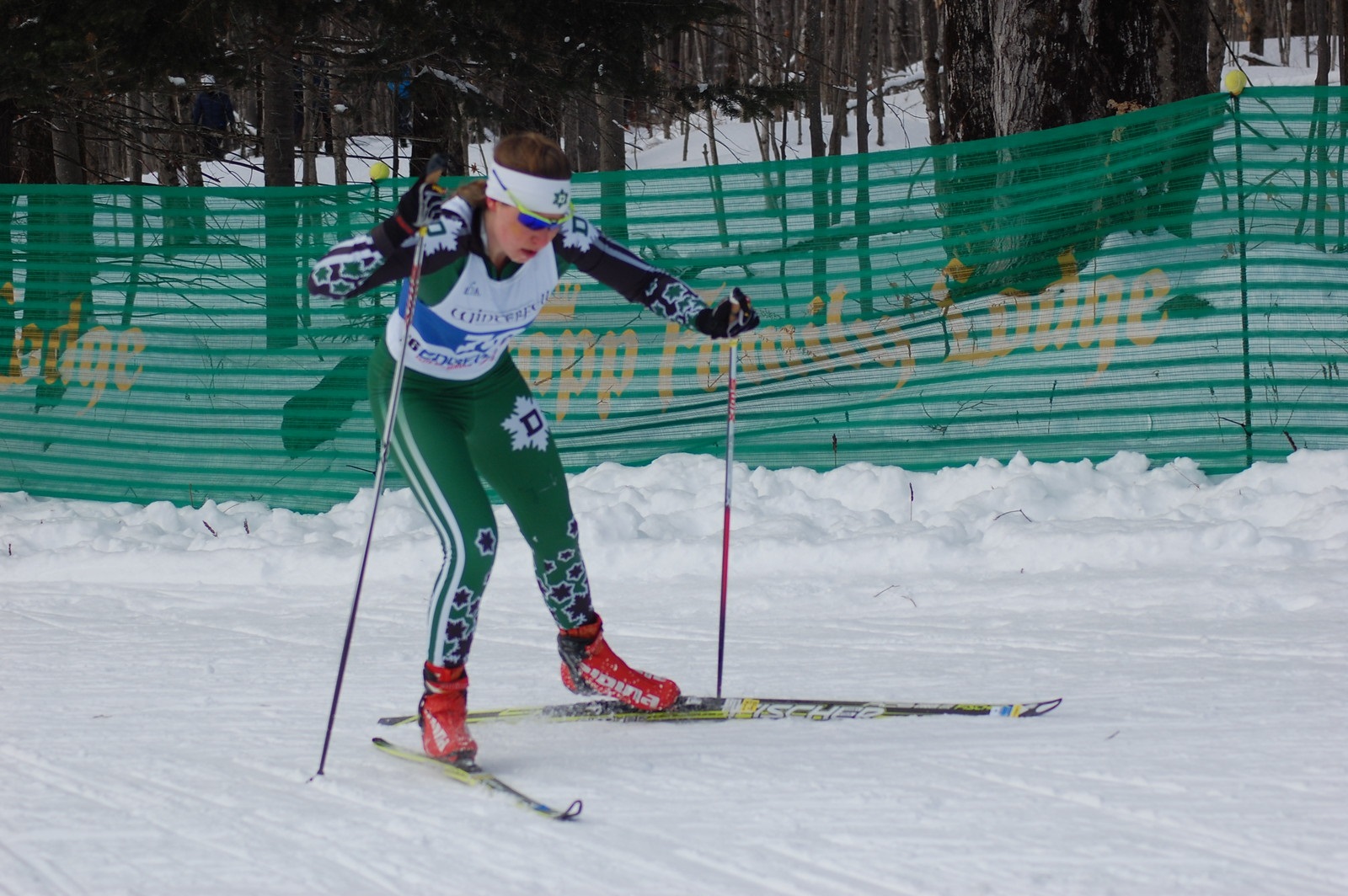
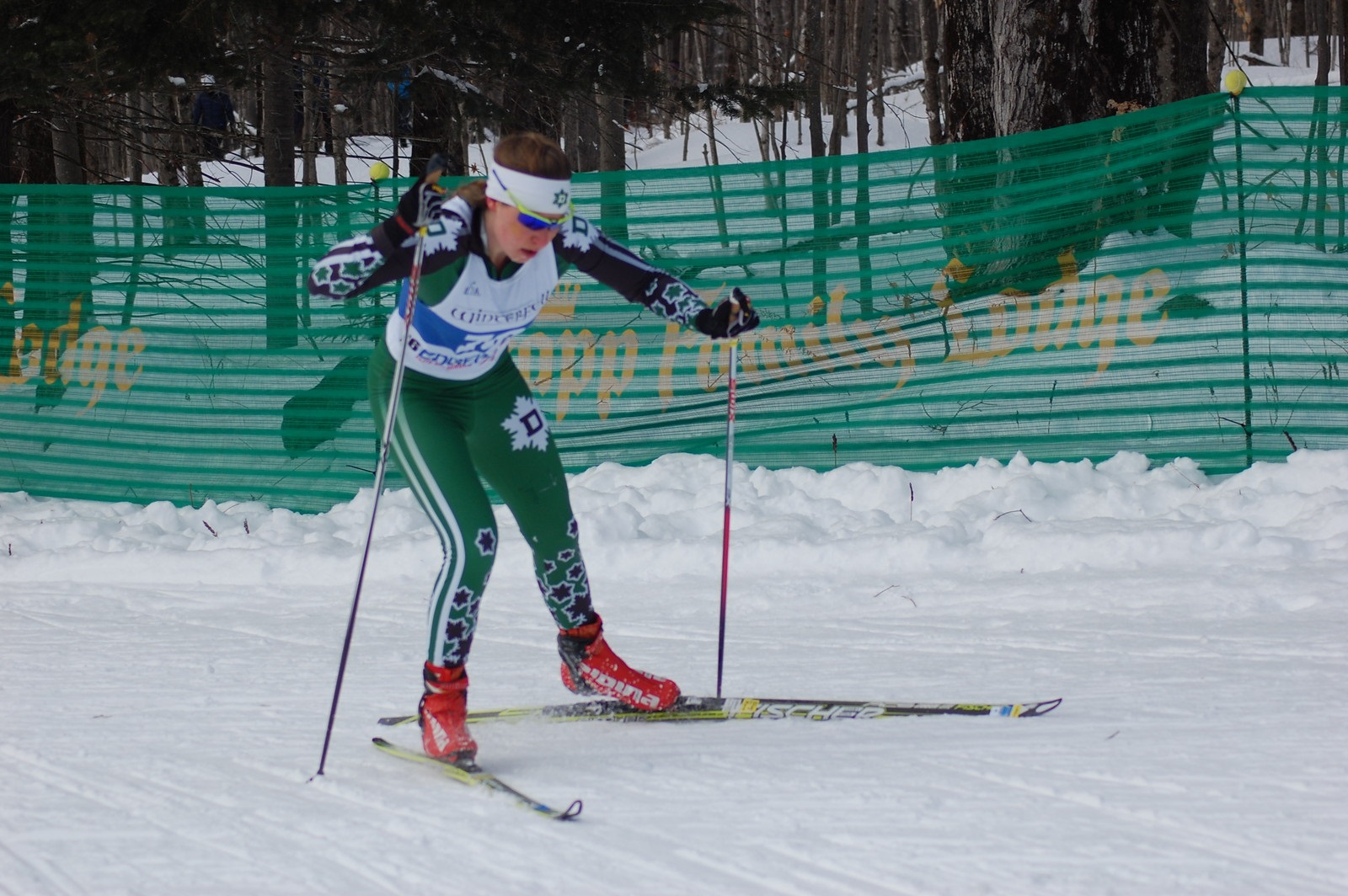
Kate Oldham (USA) during the Individual Sprint at the FIS Cross-Country Ski Championships in Trondheim (NOR) last season. (Photo: Modica/NordicFocus)
It was a small moment, but it spoke volumes — the rookie demonstrating to her mentors not through bravado but through calm instinct and feel. For Oldham, it was proof that she belonged.
“Pre-race days are really fun,” she says. “It’s a time to try stuff out in a low-stakes way. You don’t necessarily want to be experimenting once the heats start, so we’ll trade off who goes in front and see how different approaches work. That corner was taking people down left and right — and none of them were Americans, so that was cool.”
For the team, it was just one corner on one course. For Oldham, it was the quiet confirmation that her precision and poise could stand alongside the best in the world — that she could carve her own line through the sport.
From Carbondale to the World
Oldham, who was recently named to the U.S. Ski Team, grew up in Carbondale, Colorado. In this mountain town, Nordic skiing runs through the community as naturally as snowmelt through the Roaring Fork Valley. “My parents just introduced me to it as a little kid,” she recalls. “We played sharks and minnows on skis.” She skied with the Aspen Valley Ski Club (AVSC) development team, more for fun than ambition—until a trip to West Yellowstone changed everything.
Her dad was helping the high-school team with meals, and Kate got to tag along. “I thought they were the coolest kids ever,” she laughs. “I got a little taste of what it was like to train more seriously—but in a really low-stress way. I could ski when I wanted to, hang out with my dad when I didn’t. I just started liking it more and more.”
By freshman year, she had joined AVSC’s National Comp Team, with coach August Teague guiding her progression. “He had a big hand in shaping my love for training and the structure that cross-country skiing brings to your life,” she says. “I love being able to map things out and plan.”
Teague’s wife, Kara LaPoint, became another key influence. “She’s a pro triathlete and just a really badass person,” Oldham says. “We love training together when I’m home.” From the AVSC coaches to her parents to the national-team staff she works with now, Oldham has always been surrounded by people who bring joy and perspective to the grind of elite sport. “The whole community fuels my fire,” she says.
Oldham recharging back home with good friend Kara LaPoint. (Photo: Courtesy Photo)
The College Shift
Oldham began her college career at Middlebury but transferred to Montana State after two semesters, drawn by the environment and energy of Bozeman. She completed a degree in environmental studies with a minor in sustainability. “I absolutely loved MSU,” she says. “Being in Bozeman just fit me.”
The NCAA circuit gave her a crash course in balancing intensity and independence. “It’s extremely competitive now—good skiers in every region,” she says. “You’re racing against Scandinavians, Europeans, all kinds of strong athletes. It’s a great way to get better.”
Equally valuable was learning to juggle priorities. “That balance between school, life, and skiing teaches you communication and time management,” she says. “It’s the same skill set you need later, navigating different coaches and support staff.”
Oldham’s affection for the Bobcats remains strong. “I’m still really close with the team. Sometimes I’ll text my old coach, Sam Benzing—’Hey, do you remember what we were doing at this time last year?‘ They’re always willing to help, and I’m super grateful for that.”
Oldham celebrates making First Team All-American at the 2024 NCAA Championship. (Photo: Courtesy Photo)
A Pro’s Life in Bozeman
When she graduated, Oldham decided to stay in Bozeman and train with Andy Newell and the Bridger Ski Foundation. “Andy’s a great mix of laid-back and professional,“she says. “He’s flexible with what I want to do but still really on top of things.”
Without classes or side jobs, Oldham has ramped up her training—but carefully. “We’ve been cognizant not to make big changes when what I’ve been doing has been working,“she says. “There’s already a lot of change in an Olympic year. I wanted to keep what I could the same.”
Her days follow a rhythm familiar to many full-time athletes: morning training, lunch, laptop chores, a second session, and quiet evenings. “I like to have a routine, but I also adjust based on life,“she says. “That’s a good skill, especially once you’re on the World Cup. Travel, fatigue, sickness—you have to be adaptable.”
This summer included a mix of Bozeman training and U.S. Ski Team camps. “It’s nice to get new perspectives, new venues, and then come home for family time,“she says. “I love riding my bike, hanging out with my family—just that balance.”
Oldham’s focus on recovery is equally pragmatic. “A lot of my body care happens in the gym—PT and strength work. Tschana [Schiller], our strength coach, does a great job keeping us balanced and mostly injury-free,“she says. “Then it’s good food, good sleep, and time to unwind. It’s simple, but it adds up.”
Oldham and BSF teammate Emma Albrecht. (Photo: Courtesy Photo)
Lessons from the Veterans
One of the most significant changes this past year was joining a national team full of skiers she grew up watching on TV. “It’s wild,“she admits. “They’re all so different in great ways. Seeing them up close, you realize—they’re real pros. It’s their job. But they’re also incredibly humble and welcoming.”
She has learned as much from how Diggins, Kern, and Brennan think about training as from what they do. “They all pay close attention to what they need on a given day,“Oldham says. “At a camp, they might all have slightly different plans. Not because they’re doing something special, but because they know what works for them. They balance that with the team sessions so everyone gets what they need.”
It’s a lesson she wishes she’d known earlier. “Even though it’s scary sometimes, it’s okay to be confident in yourself and your plan,“she says. “Doing what you need is a huge asset. Trusting yourself can be hard, but it’s worth it.”
That self-trust carries into her goals for the season. “Obviously, I’d love to make the Olympic team,“she says. “That would be an incredible experience. But I’d also be really happy with some top-30s on the World Cup.”
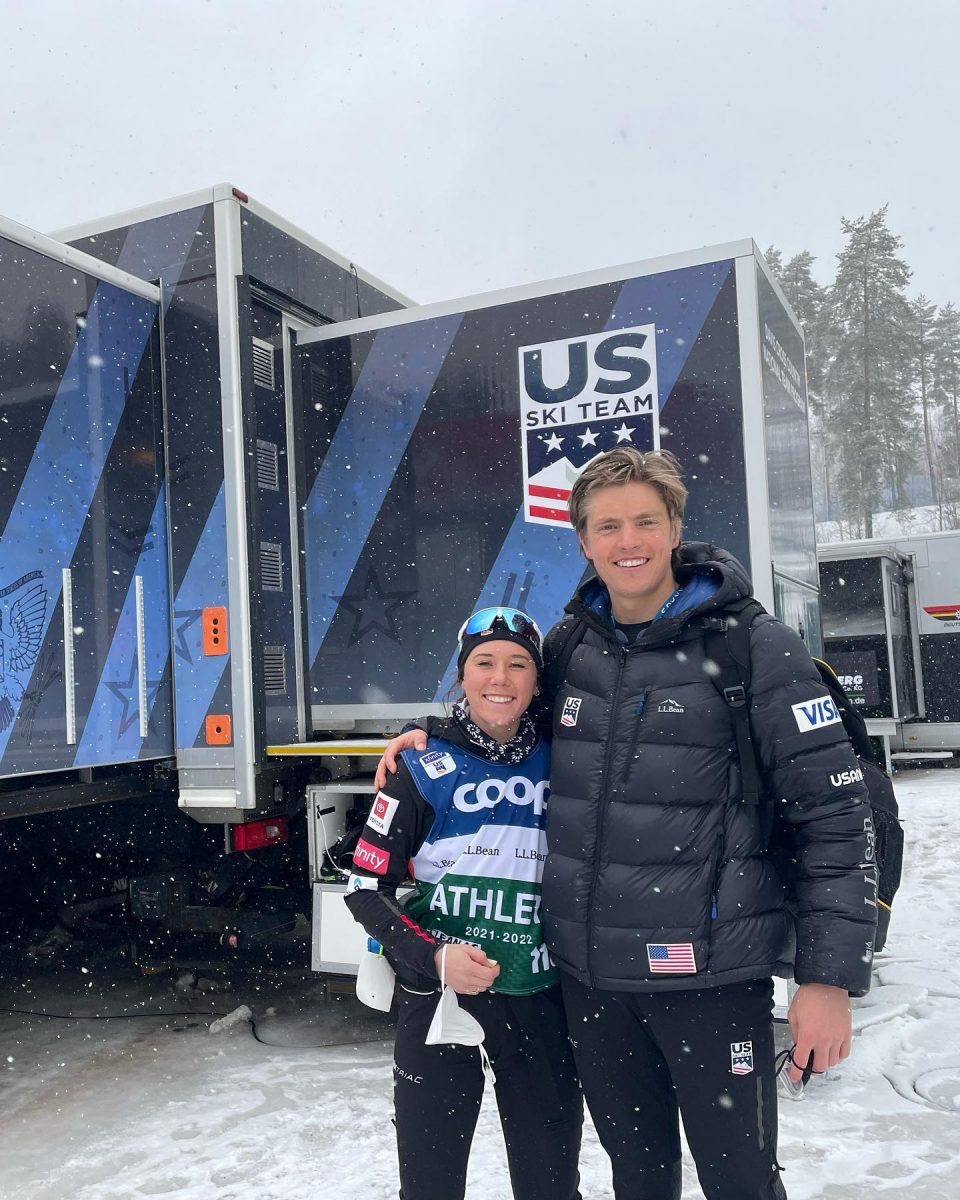
After spending time with Kate, it quickly becomes apparent that she is cooler than most of us. (Photo: Courtesy Photo)
More importantly, she wants to manage the grind. “I learned a lot last year, and I’m still figuring out what I need to stay happy and motivated through a long season of travel,“she says. “That’s a big process goal—dialing in what works for me.”
She’s also been working on how she handles the inevitable rough patches. “My tendency can be to isolate when something goes wrong,“she says. “But I’m learning to use my support team. There are people who want to help, and when I let them in, they always have a great perspective. Sometimes it’s just someone saying, ‘What did you learn today?‘That can shift the whole mindset.”
Looking Ahead
Oldham envisions a long career—but only if she keeps loving it. “I want to love skiing forever,“she says. “As long as my body’s healthy and I’m enjoying it, I’ll keep going. But not at the expense of that joy.”
Her advice to the younger version of herself, and to the next generation coming up through AVSC, is simple. “Don’t count yourself out,“she says. “So much can happen in a race that you don’t expect. Sticking with it is the only way to find out. Enjoy it, and pay attention to the relationships you build along the way—they’re what you take with you.”
Kate and her father, Nelson, out on a hike. (Photo: Courtesy Photo)
The Roots That Keep Her Grounded
When she’s not training or racing, Oldham gravitates back to Carbondale, where her family’s restaurant—Dos Gringos Burritos—is about to turn twenty-five. She’s been part of it since before she can remember. “I’ve been around it my whole life,“she says. “It’s a pretty important staple in our town, and my parents are huge role models for me.”
Working at the restaurant keeps her connected to real life. “The service industry teaches you a lot,“she says. “Everyone should do it once—how to deal with people, how to work hard behind the scenes. It grounds you.”
Her go-to order? “The summer salad wrap,“she says instantly. “But after twenty-three years of hanging around the place, you have to keep it fresh.”
Outside the restaurant, she finds calm in the same things that shaped her childhood: horses, bikes, and the Colorado mountains. “I grew up around horses and hope to return to that life after skiing,“she says. “Being outside, cooking, baking—it’s all part of keeping balance.”
That balance, she’s learning, is the fundamental foundation of confidence. It’s not just about speed through a corner or times on a results sheet—it’s about knowing where you came from and who you are when the racing stops.
Oldham loves getting outside, especially on horses. (Photo: Courtesy Photo)
Love Stories Like This? Help Keep Them Coming.
Feature interviews like this one take time, access, and care to produce. If you value thoughtful storytelling and independent ski journalism, please consider becoming a Voluntary Subscriber. Your support directly fuels the work we do to cover the people, places, and moments that make our sport special.
In the spring of 2020, the Bridger Ski Foundation (BSF) launched a new professional racing team, led by Andy Newell, who spent nearly two decades on the U.S. Ski Team as a staple and leader of the American men’s program. Launching early in the pandemic, the BSF Pro Team had few opportunities to show their strength in the first race season, but they came on strong in 2021-22. During U.S. Nationals in Soldier Hollow in January, the BSF Pro Team had at least one athlete in the top-10 in each race, except the men’s 30 k skate, with podium performances by Mariah Bredal in the 10-kilometer classic (3rd) and Logan Diekmann (2nd) in the 1.3 k skate sprint.
After growing up in Vermont and developing as a skier at the Stratton Mountain School, and later training with the SMS T2 elite team through most of his professional career, Newell moved to Bozeman, MT in 2018 with his wife and former SMS T2 teammate Erika Flowers, who had grown up in Bozeman and taken a job there. Both at a transitional point in their ski careers, Newell would continue to pursue World Cup skiing for another two seasons, while Flowers continued to train with her sights more focused on domestic racing.
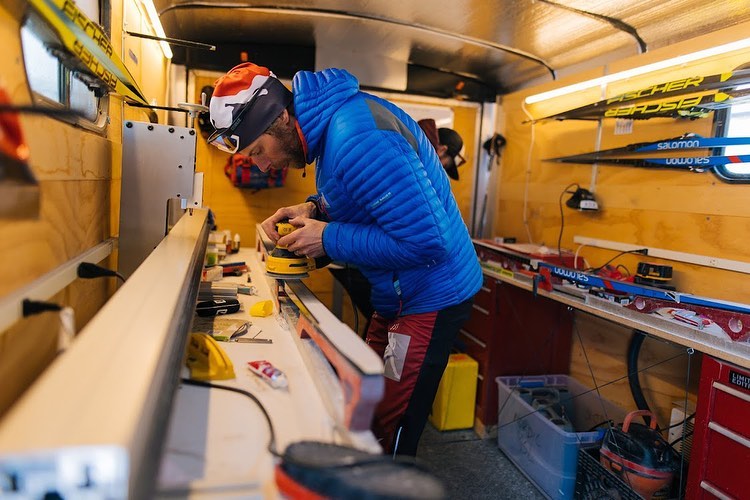
Inside the wax cabin, Andy Newell prepares skis for his athletes during the 2022 U.S. Cross-Country Championships in Soldier Hollow, UT. (Photo: Arlin Ladue / BSF Pro Team)
Over the last four years, this transition has seen Newell race his final World Cup events and officially leave professional ski racing behind, only to launch and support the thriving BSF Pro Team, alongside his online coaching business, Nordic Team Solutions. In this interview, which took place on Friday, June 3rd, Newell provides insights into this transition from athlete to coach, while also adding behind-the-scenes details of getting the Pro Team off the ground. He also speaks to the challenges of elite training groups, their role in supporting the trajectory of U.S. skiing at the international level, and what’s in store for the BSF crew this summer.
This interview has been lightly edited for length and clarity.
FasterSkier/Rachel Perkins: Starting with the timeline, in the spring of 2018, both you and Erika started to transition to ‘retirement-lite‘. And at that point, you were already talking about doing some coaching and working in athlete development. Is that when you guys moved to Bozeman? And from there, what was the evolution of your relationship with the BSF program?
Andy Newell: Well, I was actually still on the U.S. Ski Team in 2018, but we did move to Bozeman that year. I was still racing essentially full time, but at that time I started a business, Nordic Team Solutions, and with that, I launched a summer training program where I was coaching college kids, so summer of 2019 was my first year where I was kind of stepping more into a formal coaching role. Which for me felt natural because I’ve always kind of participated in and loved the whole training camp vibe.
Growing up at Stratton, Sverre [Caldwell] always had these amazing summer camps for juniors that I participated in my entire life. And then, as I became an older athlete and a U.S. Ski Team athlete, I would actually help with some of these training camps as well. And then in my years with the U.S. Ski Team, I had this program that I started calling “speed camps,” which a lot of people might remember. We would host these free clinics around the country that would coincide with the U.S. Ski Team training camp. Basically we would reach out and have a bunch of juniors come and join us for an afternoon of rollerskiing and agility courses and fun stuff like that.
So to me, it felt like a natural progression to take that a step further – once I launched the Nordic Team Solutions business, where I was running the website, to then pair that with a summer college training group. So my first year here in Bozeman, I actually ran that group independently from BSF… so I was actually not part of BSF in that first year of 2019. I was planning to race some World Cups, did race some World Cups in 2019-20, and then COVID put a quick end to our season when we were getting ready to race in Quebec and Minneapolis.
I had planned on those being my final World Cup races as a professional, to go out racing in Quebec and in Minneapolis and had spent all year preparing for those specific races. And sure enough, they were canceled. So it was like, ‘Surprise! You’re officially retired now.’ And at that point is when I signed on with Bridger Ski Foundation to be the elite team coach.
BSF Pro Team athlete Hannah Rudd races the classic sprint qualifier during a post-U.S. Nationals SuperTour event. (Photo: Arlin Ladue / BSF Pro Team)
FS: The announcement of your hiring went out in April 2020 – which kind of feels like a lifetime ago, but it also seems like it would have been a somewhat challenging time to launch a new elite team. Was the foundation already there with the BSF program or was this the onset of the elite team program?
AN: There was an elite team in 2018, but it disbanded because the coach, Rogan Brown, went on to [coach at Denver University], and there were only a handful of athletes here in Bozeman at the time. So in 2019, there was no elite team tied in with BSF, and then in 2020 when I was hired, it was essentially my job to kind of relaunch this program, and to make it a successful program.
There’s no reason why BSF should not have a successful elite team. The Bridger Ski Foundation has been around for over 70 years. It’s very well established here in Bozeman; we have a great pool of young athletes that participate in the youth skiing program – hundreds of athletes.
Andrew Morehouse was signed on as the new nordic director in 2019, and then I came on in 2020. And we shared a vision that, in order [for BSF] to be a premier club, we should have an elite team. And then basically, I had free reign to kind of do what I wanted, which I’m super grateful for – that BSF has kind of given me the ability to choose the team makeup the way I see is best, and to choose how I run the program.
We work closely with the juniors and Andrew Morehouse and the youth programs in town, so I very much have taken the model that I learned growing up at Stratton and tried to implement that here in Bozeman.
At that point [in 2020], I basically just got on the phone and started calling some different athletes that I had met or worked with through NTG camps. The US Ski Team in 2018 and 2019 would hire me to come to NTG camps or development team camps – that was part of my business as well – so I started reaching out to different athletes and mentioning to them that we were going to start a new team here in Bozeman. So I was able to recruit nine athletes initially to come to the team, which was great.
Here’s a preview of the 2021-22 BSF Pro Team. Note that one of the original 2020-21 athletes, Leah Lange, stepped back from her racing career after the team’s first season to begin coaching in Big Sky, MT.
BSF Pro Team athlete Finn O’Connell welcomes his teammate to the line during the U.S. Cross-Country Championships in Soldier Hollow, UT. (Photo: Arlin Ladue / BSF Pro Team)
FS: Can you say more about getting the team off the ground?
AN: So we launched [the Pro Team] in 2020 in the midst of COVID, which – there were so many unknowns and unique circumstances to try to convince these athletes to move to Bozeman and train here in the midst of all that was going on. And we essentially only had very unofficial racing our first season of 2020-21. Kind of a mismash of some official races, some non-official. But in hindsight, it was a nice opportunity for us to just build a team and spend a lot of time training with one another.
When you name a team like this as a coach, you have no idea what type of team culture or team vibe there’s going to be – you’re bringing all these different athletes from different colleges or different programs around the country. You want to create a team that really acts and feels like a team and you have no idea what type of form that’s going to take. So in hindsight, to have that COVID year where we just spent a lot of time training with one another, building the team here in Bozeman, was nice to lay that foundation so that we could have what was a very successful season last year in 2021-22.
FS: You’ve still got Nordic Team Solutions going on also. Has your work there shifted in any way and how do you balance your time between both of those?
AN: It has shifted in that, my first few years with NTS, I would actually hire [myself] out and go to more training camps. As I mentioned, I would help the U.S. Ski Team out with some of their NTG camps, or I would be hired by a club to go do a two or three-day training camp with them. And that has pretty much stopped, because my priority time-wise is with the BSF Pro Team. So I don’t travel so much for any other coaching duties, I mostly just travel to training camps with the BSF Team and work with them here in Bozeman.
But I do still run the website, which is a great resource for training information for ski clubs, high school coaches, college coaches, or any individual that’s looking to learn more about training. I still run that [program] on a weekly basis and in published training plans and right strength plans for various individuals.
BSF Pro Team athletes (l-r) Hannah Rudd, Mariah Bredal, and Erika Flowers celebrate Bredal’s third place finish in the 10 k classic during the 2022 U.S. Cross-Country Championships in Soldier Hollow, UT. (Photo: Arlin Ladue / BSF Pro Team)
FS: In terms of Bozeman: you spent most of your career based in Vermont, though Erika has roots in Bozeman. How have you found that setting for leading this Pro Team and what are your thoughts on the training environment there?
AN: The environment for training is fantastic here in Bozeman; we have access to mountains, access to a long season of skiing. We’re just an hour and a half away from West Yellowstone where we often have early FIS races, or we’re within driving distance of Sun Valley, Canmore, all these other places that historically have early-season racing. The rollerskiing is quite good here and there’s already a great support network within the Bridger Ski Foundation community.
What is tough, with any elite team, is the fundraising aspect. I actually rebranded it as a Pro Team for a reason, because I want these athletes to be not scraping by, but to be actually making money while pursuing their dreams of being an Olympic-level racer. I think they deserve that, and I think that’s what all professional skiers deserve in the U.S.
But it’s taken us some time to get there, and we’re not there yet. Fundraising is a huge part of my job on a yearly basis; we essentially have to fundraise from scratch all the money that it’s going to cost to travel around the country, or travel to Europe with these athletes who are making World Cup or World Championships. All the wax, all the hotels, all the logistics – all of that falls on a single program budget, basically.
And I think there’s a huge potential for that in Bozeman. Bozeman is one of the fastest-growing towns in the U.S. and there are a lot of new businesses here, so I think our fundraising potential is huge. But given the fact that we started in COVID, and we’ve only been here for two years, we’re still trying to figure that piece out. And so that’s a place where we still have room to grow.
And I would encourage anyone out there who’s reading this to realize the importance of these pro teams that we have in the country… We have Stratton, we have Craftsbury, we now have the Birkie Team, we have Sun Valley. And these clubs are essentially responsible for the development of the US Ski Team. This is the club model that we have adopted. Now, you know, it’s now been 30 years since we’ve, more or less, adopted this model. And we’re not getting any money from the U.S. Ski Team to develop these athletes. These clubs are and are all self-funded. APU is a little different since it’s tied in with the university.
Unless you have a massive endowment or some other amazing bankroll that I am not familiar with, these pro teams and elite teams are fundraising their entire budgets on a yearly basis. Every single year, you have to raise the amount of money to send these [athletes] to these races. And that’s challenging, but it’s a hugely important piece of our development, because we wouldn’t have the U.S. Ski Team that we have now – we wouldn’t have the depth or the success on the U.S. Ski Team level – if we didn’t have these clubs as feeder programs. So I think it’s important that people help support these teams.
BSF Pro Team athletes Lauren Jortberg and Logan Diekmann earn their first World Cup starts in Lahti, FIN in Mar. 2022. (Photo: BSF Pro Team)
FS: Looking back over the last few years, what are some of the indicators of success that you look at in identifying what’s going well for the program? And what are some of your objectives in terms of heading into the next few seasons?
AN: That’s a great question. The goal we have here with the Pro Team is international success, and that means I don’t bring someone onto the BSF pro team [whose only] ambitions are racing SuperTour and winning the Birkie, although those are amazing achievements. Those are, for sure, stepping stones in our development. But my goal is to put people on the U.S. Ski Team, and to qualify people for World Championships and Olympics.
So international success is what we strive for, and that’s how we measure our season, and how folks are doing. Last year alone, we had three athletes achieve their first ever national podiums in Soldier Hollow. We actually qualified four different athletes for World Cup, although two of them – Finn O’Connell and Mariah Bredal – did not get to start there because they were canceled. But both Logan Diekmann and Lauren Jortberg started their first ever World Cups, which is great. We finished the year with Logan Diekmann as the overall sprint champion on the SuperTour. Finn O’Connell was the second best ranked distance skier on the SuperTour, and he also qualified for the U.S. Ski Team [as a B-Team member]. So for us, that was a solid year, and I was very proud of the way the team performed and much of the team, if not half the team, was able to have personal bests and be called up for some type of international racing, whether that was through World Cup or Opa Cup, and that’s exactly what you know I want to do. That’s my mission: to get these kids into those big international races and have them perform well.
FS: Can you speak a little bit about the depth of the team, too? Momentum seems like an important thing with elite or pro teams. Just having that critical mass of athletes that are on the same level, or have similar objectives. Is that something that you’re seeing with the BSF crew?
AN: Yeah, absolutely. I think the phrase ‘critical mass’ is for sure something that you see with these pro teams. I mean, it’s hard to deny the Jessie Diggins/Julia Kern effect that Stratton has right now. That’s a huge draw to their program.
I think, for us, considering we started with zero members of the U.S. Ski Team on our pro team, and now we have one B-Team member – I’ve just been really excited with our success so far and how the team has stayed driven and motivated and helps push one another. That’s why I do this job – I love the team environment. That’s what I lived in my entire life; I was on the U.S. Ski Team from when I was 18 years old until I was almost 36 years old.
So the concept, the feeling of being part of a team, where people are genuinely supportive of one another you share in the training process and learning process, and you’re pushing one another, that’s the most valuable and successful scenario you can have. So I’ve been glad that we’ve somehow been able to find that nice mix of motivated individuals that genuinely get along and have fun with one another, and are able to travel the country and have put together successful race weekends.
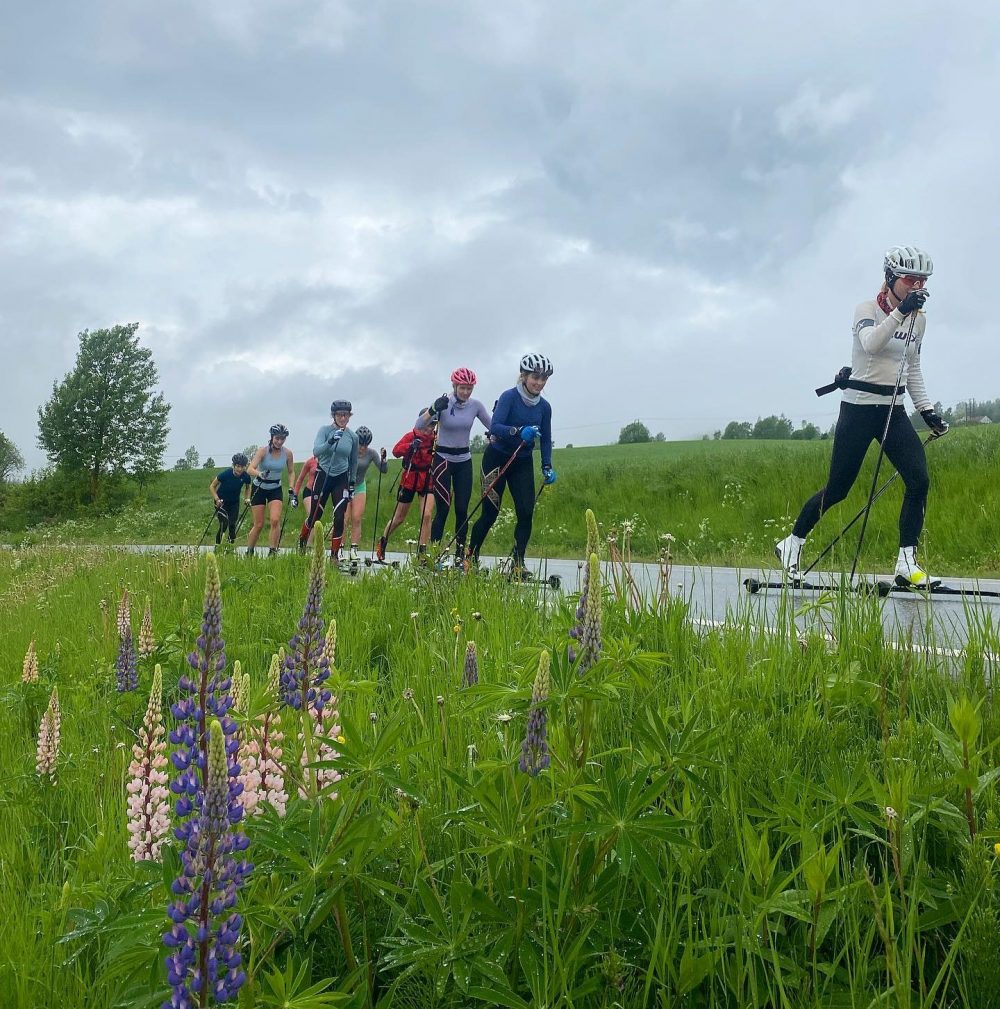
The BSF Pro Team out for a rollerski during a June 2022 camp in Lillehammer and Sjusjøen, Norway. (Photo: BSF Pro Team)
FS: Last program question: what’s new and what’s on deck for this summer? You mentioned that you guys are heading to Norway. What other summer/fall camps or projects are you guys working?
AN: [Starting with the team roster:] so far this year, we’ve added Sarah Goble to our squad squad. She’ll be a new athlete with us next year. We also have her brother Reid Goble on the team, who has been great. I think those two have a ton of potential.
We did lose Lauren [Jortberg] to Stratton – and you know how these clubs work, it’s a very friendly exchange. I’m sure we’ll find ways to collaborate, and that’s honestly what I find a lot of value in is elite teams collaborating with one another. Last year, we did a bunch of training camps with Sun Valley [Gold Team]. We joined Stratton and Sun Valley in Lake Placid training camp. We did some camps in the Midwest where we’ve had overlap with some Birkie athletes. And so I’ll continue to do that this year.
We are scheduled to go to Norway next week for a two-week camp where we’ll be in Sjusjøen for five days, and then on Sognefjellet ski fields for five days. We’ll try to overlap with some fast foreign skiers while we’re there and try to learn from some folks over there, and we’re bringing a handful of college skiers with the Pro Team as well on that trip. After that, we’ll be back here in Bozeman for the main summer training block and that’s when we do our BSF college training group as well. That runs through the end of June and into the first week of August.
So we have a solid six-week block of training here in Bozeman, which has been the staple of the BSF program the last couple years – having this really competitive college training group. It’s been so fun to see that program grow and see the success of the college training group. The first year with BSF, we had folks like Sophia Laukli on the team, and so many talented individuals. It was great to see them develop here in Bozeman and then have such amazing seasons that winter. So we’ll continue that program where for six weeks we’ll have a team of 12 collegiate athletes that join the Pro Team on daily training all the way through August.
After the summer training group ends, we’re planning to head to the Midwest for another training camp, like we did last year. We try to get to low-altitude in August. Right now we’re looking at Marquette as our training destination, and we’ll try to collaborate with Team Birkie on some sessions out there. And then we’ll be going to Park City camp in October, like we always do, to join the many clubs from around the country and the U.S. Ski Team for their [fall] camp. And then we’ll probably get on snow early here in Montana or in BC as the snow flies.
FS: How much crossover is there between the collegiate group that you have joining in the summer and the Montana State University (MSU) program?
AN: Historically there are not many MSU kids that stay in town [over the summer]. This year I think we have two MSU kids in the college training group, so that’s great. If there are MSU athletes in town, we try to prioritize them to get them onto the team to keep them within the community. But a lot of college kids go home, whether it’s Alaska or back east or the Midwest. But we do have some good crossover and I have a good relationship with Adam St. Pierre and the university. We use their facilities all the time – we just did a round of testing on the rollerski treadmill at MSU – so it’s handy to have those types of resources nearby.
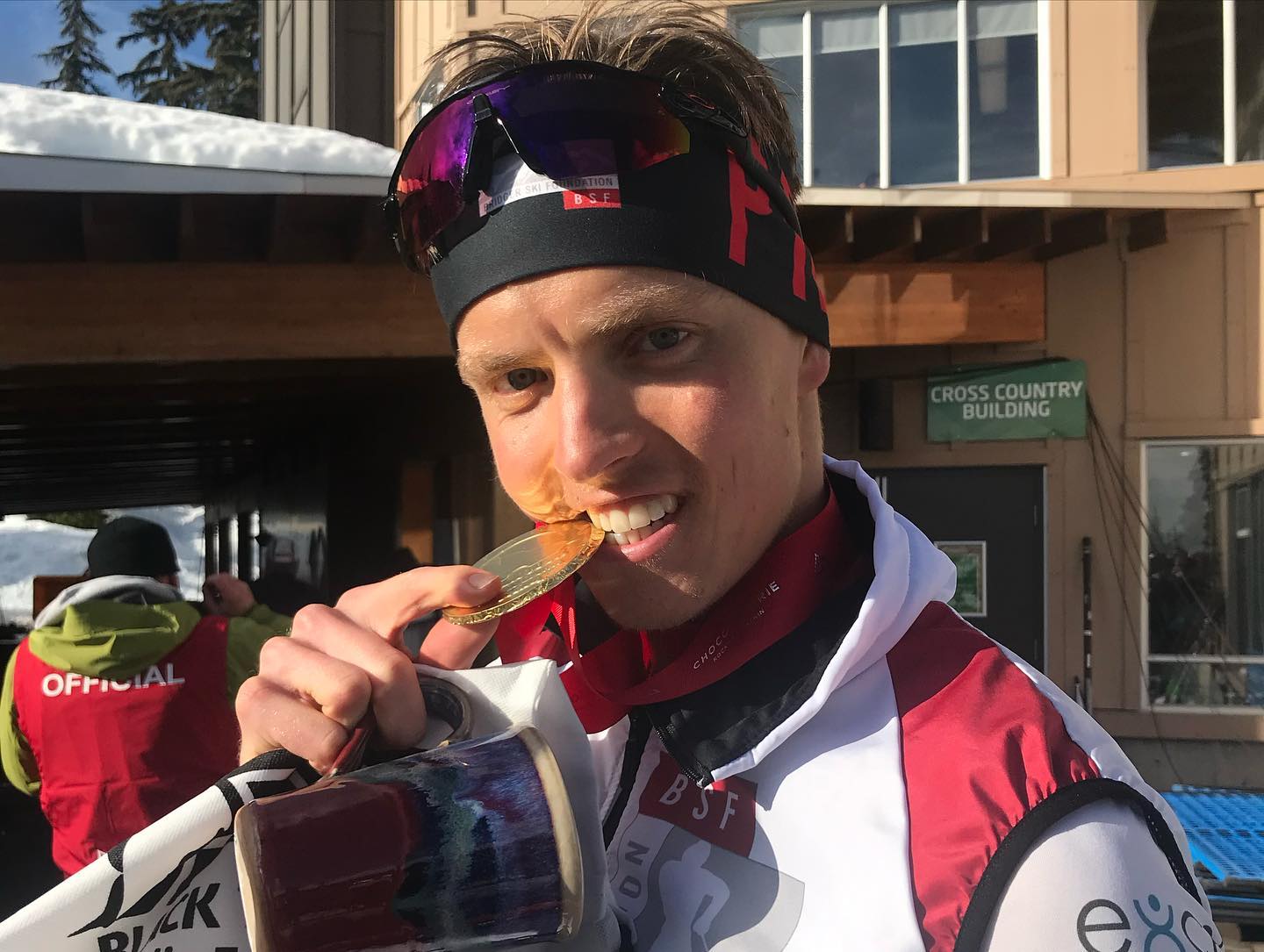
Logan Diekmann bites his medal after finishing second in the US SuperTour standings in the classic sprint in Whistler, BC during Canadian Nationals/US SuperTour finals in Mar. 2022. (Photo: BSF Pro Team)
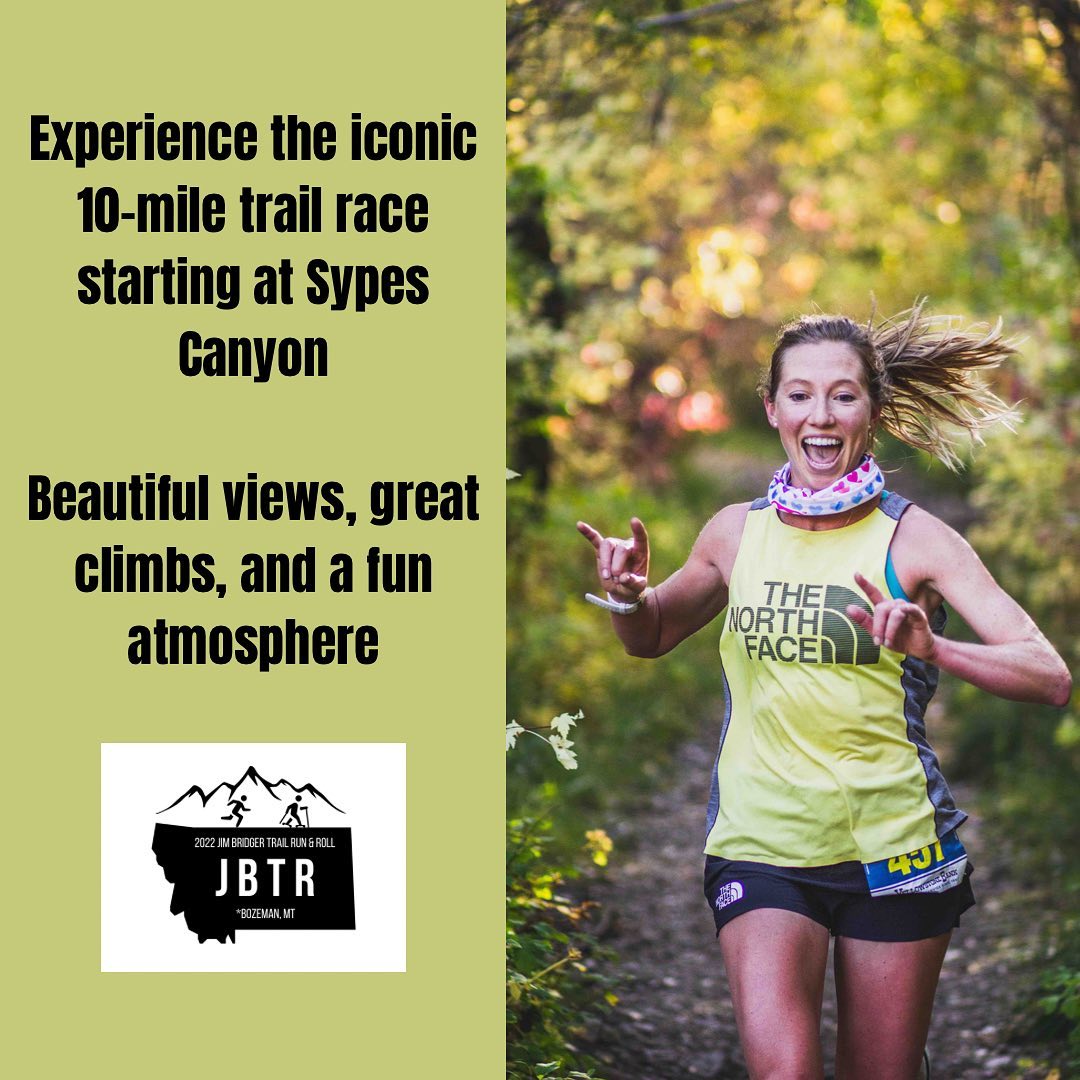
FS: I know you’ve also got the Jim Bridger Trail Run coming up this summer, and there is a new rollerski race component. Can you share more information on that?
AN: We’re doing our first ever Jim Bridger Rollerski Race at the end of July, which is paired with our annual trail run. I’ve been working with the town of Bozeman to shut down a city block behind where the MSU campus is, and we’re going to be hosting a crit-style rollerski race on the weekend in downtown Bozeman.
We have prize money for that, and we’re getting some great sponsors on board. So that’ll be a cool event.
FS: Can you also talk about how that event supports the BSF Pro Team?
Yeah, absolutely. Like I mentioned, we as a Pro Team essentially need to raise $150,000 each year just to get the [athletes] to all the races and try to cover their expenses. That is a travel budget, a wax budget, everything – and that needs to be raised on an annual basis. For us, the Jim Bridger Trail Run is one of our biggest fundraisers.
It’s an incredible amount of work. It’s a weird part of my job to be a coach, but also an event organizer. There’s a lot of weird things that go into being a ski coach. But, if we can make the Jim Bridger event big and successful, we can actually raise a lot of money for our budget. So that’s why we put so much attention and effort into it. It’s also a good chance for us to partner with local sponsors to raise money for the Pro Team, because all proceeds from these events go directly to the Pro Team.
So historically, it’s just been a trail run, but this year I wanted to add a rollerski event for a couple reasons. One: I think it’s a huge development tool for BSF. We have so many talented youth skiers in this town. I want them to kind of be exposed to this type of high-level rollerski racing that we see in Europe. We see it all over Norway and Sweden and Germany; we need to have high-level rollerski races here in the U.S. So my secondary goal is to have this be an annual thing, where people know there’s going to be a quality rollerski race that’s super exciting to watch, fun to participate in, there’s going to be prize money and sponsors, so we can make it an annual thing and have it tied in with all the different clubs throughout the West. I’m hoping teams from Sun Valley, Park City, and all over the West will bring their athletes here to compete in this rollerski race on July 30th in downtown Bozeman.
FS: And they’re staggered, right? So people could do both theoretically?
AN: Exactly. The rollerski race is on Saturday, running races are on Sunday. The running race is 10 miles, but we also have a 5k option for the younger kids. And we have U16, U18, U20 and open class for the rollerski race. Swix and Salomon are sponsors of the event, and we’ll be getting a race rollerski fleet from Swix, so these are going to be matched rollerskis for the open men and women, so it’s going to be a legit rollerski race.
We’re hoping to livestream it too. TBD on that, but check the BSF Facebook page for live streaming.
Coaches: Andy Newell (Nordic Pro Team), Hannah Cole (Post Grad Team)
Current roster: Finn O’Connell, Graham Houtsma, Hannah Rudd, Lauren Jortberg, Leah Lange, Logan Diekmann, Mariah Bredal, Reid Goble, Simon Zink, Erika Flowers
Who’s still on this team, or otherwise involved in American skiing, from when we did this in 2012: No one; Torin Koos and Leif Zimmermann haven’t raced in years, though the third athlete on that team, Sawyer Kesselheim, was the guide for Paralympian Jake Adicoff in Adicoff’s silver-medal performance in the B3 classification 10-kilometer classic in PyeongChang
Bridger Ski Foundation athletes, 2021. (photo: courtesy BSF)
Top results last season: While the SuperTour obviously didn’t happen, BSF sent a strong team to the American Birkebeiner, the closest anyone came to a nationwide domestic field last year. BSF athletes came away with a combined four top-10 finishes in the skate race, including O’Connell in 4th, Flowers in 5th, Jortberg in 7th, and Rudd in 9th. Graham was 12th in this race, and Diekmann 23rd. In the classic race, O’Connell was 11th and Diekmann 15th. O’Connell had a pair of podium finishes in Sun Valley in March 2021, against a loaded regional field with multiple RMISA athletes, and was third in a RMISA race in January. Diekmann tied for first in a RMISA sprint qual in January, while Jortberg was second among the women. Flowers was 6th in a separate January RMISA race. Finally, going back to the ill-fated spring of 2020, Diekmann was scheduled to make his World Cup debut in the Québec City sprints before the races were cancelled, while Flowers was among the starters for the women.
Andy Newell, Bridger Ski Foundation coach, 2021. (photo: courtesy BSF)
Coach’s comments: Andy Newell wrote:
“Off-season training for us has been super fun and productive. I’m really proud of the way the team has come tougher over the past year and a half. It’s always a risk when you create a new team from scratch, you never know what kind of team dynamic will play out. But this group does an amazing job working together, pushing one another, while also showing authentic support. We have a lot of fun.
BSF athletes on snow in Bend, May 2021. (photo: courtesy BSF)
“Our summer preparation started in May with our first ever team Bend camp with the US Ski Team. During the months of June and July we try to focus on solid, steady team training here in Bozeman alongside the BSF collegiate group and comp teams. This is an important time for the Pro Team to connect with the community and the younger members of the BSF club. Since then we have tried to prioritize high quality training camps each month. In August we had a great low altitude training camp in Cable, Wisconsin, an intensity camp with rollerski TT’s in Lake Placid in September, and our annual October training camp with the US Ski Team. I think because last season was so isolating we’ve tried to collaborate with the other elite teams as much as possible and have had a fun time working with Sun Valley, SMS, Team Birkie and others.
“The Pro Team is itching to get on snow and get the season started. We will travel to Canmore in mid-November for more on-snow training and TT’s, then focus on our final preparations for the first SuperTours in the Midwest. The athletes have big goals this year so everyone is excited to return to a legit race calendar. Although we need to prioritize SuperTour racing our ultimate goal with this team is to get everyone racing in Europe whether that’s in World Cup starts, U23s, or other championship races.
Bridger Ski Foundation athletes, 2021. (photo: courtesy BSF)
BOZEMAN, MT – Bridger Ski Foundation is pleased to announce that Andy Newell is their new Nordic Elite Team Coach, effective April 1, 2020.
He’ll work with the competitive Nordic racers, collegiate skiers, and the incoming Elite Team to help these athletes bridge the gap between domestic racing and international success. “BSF is excited to rebuild the Nordic Elite Team under the leadership of four-time Olympian Andy Newell,” said BSF Nordic Program Director Andrew Morehouse.
Andy Newell, BSF Nordic Elite Team coach. (Photo: BSF)
Newell said, “I’m thrilled to start this full-time coaching position with the Bridger Ski Foundation and work even more closely with the ski community here in Bozeman. We have incredible ski training and racing resources in Montana, which is a real draw for me. In addition, I think BSF has the potential to be the strongest ski club in the US.”
Morehouse and Newell are excited to team up with a vision that will give cross country skiers a clear development pipeline from introductory youth racing all the way up to the Olympic level. “More importantly,” says Newell, “ we see the value in a positive and supportive ski culture that helps bring a community together, creating life-long outdoor enthusiasts. My goal is to ensure all BSF skiers have the opportunity to reach their potential in a professional and fun training environment.”
The BSF Elite Team is a community-supported Olympic development program that gives serious athletes the support they need to pursue their dreams. The new Elite Team will focus on the highest level of competition here in the U.S. while trying to qualify for international competitions such as U23 World Championships and World Cups.
Morehouse added, “I see this program as an important pillar on which BSF can build a culture of community engagement, healthy lifestyles, and pursuit of athletic excellence. I believe that under Andy’s leadership, it will have tremendous benefits to our Junior and Adult programs as well as the Bozeman Nordic community as a whole.”
Newell is a four-time Olympian and spent 16 years racing with the U.S. Ski Team with multiple World Cup podiums in that time. Considered to be one of the best technical skiers in the world, he’s regarded for teaching technique to skiers of all ages, and he has run a successful coaching program for the last two years called Nordic Team Solutions, which he’ll continue to operate, offering support to skiers around the world.
“Andy brings a wealth of knowledge and experience to the program, as well as a passion for building a strong Nordic community in Bozeman,” said Morehouse. “I’m excited to work with him to strengthen our connections within the community while developing world-class athletes.”
In addition, Newell will bring his Nordic Team Solutions summer collegiate training group under the umbrella of BSF this summer, working with some of the best collegiate skiers in the country. Newell said, “These athletes will be in Bozeman from June to August and will be working alongside the Elite Team and BSF junior programs.”
Morehouse also plans to begin building up a post-grad (PG) team, providing a space where high school graduates can continue their athletic development before heading off to college.
I see this as a long-term position for me, and I can’t wait to do everything I can to support these athletes,” said Newell. “BSF is already a very established club with a great record, which makes me even more excited to start this role.”
ABOUT BRIDGER SKI FOUNDATION
Bridger Ski Foundation is a nonprofit community ski organization, with programs for Nordic, Alpine, Freestyle, and Freeskiing, based in Bozeman, Montana. They also groom an incredible community trail system of 70+km of trails, all under a voluntary trail pass system. BSF is a Gold-Certified Club by U.S. Ski & Snowboard.
Evan Weiss, new executive director of the Bridger Ski Foundation
(Press release)
BOZEMAN, Montana — A huge welcome to Evan Weiss, BSF’s new executive director, who started on July 9. Evan has been spending his first days at BSF meeting with BSF’s program directors, board, and staff, and learning the ins and outs of the club’s programs.
Rebekah Bunting, president of the BSF board, noted, “Evan is a bright, energetic and well-qualified individual. I look forward to seeing him infuse those qualities in BSF as our new Executive Director.”
Most recently, Evan was the head coach for the Snow Summit Race Team at Big Bear Mountain in California. A former U.S. Ski Team member, he has more than a decade of experience in athletic program management and brings a diverse skillset to the table, from managing financial operations to raising money and developing programs.
Evan skied on the U.S. Alpine Ski Team from 1999 to 2006 and was a three-time NCAA All American at Dartmouth College. As the head alpine coach at Western State College and then University of Nevada, Reno, he led recruiting efforts and managed student athletes. During a five-year tenure as the program director and head coach at Alpental Snoqualmie Ski Education Foundation in Washington, he managed a successful youth alpine program, boosting membership and athlete retention and developing a scholarship program.
Evan and his wife, Lauren Summers, recently relocated to Bozeman. Lauren also grew up alpine racing and currently works in cancer research. They plan to take full advantage of Bozeman’s beautiful mountains and rivers. “Bozeman has a great tradition of winter sport with outstanding venues and a community that is engaged in skiing,” Evan noted. “I’m looking forward to helping the BSF programs continue to succeed and to bring new energy into the fundraising and capital projects that will take this team to the next levels.”
REACHING OUT
Evan is looking forward to meeting parents, athletes and friends of BSF. He encourages BSF members to reach out. “We’re working on our strategic plan and U.S. Ski & Snowboard club recertification, so I’d love to meet people before the snow flies,” he said. He can be reached at evan.weiss@bridgerskifoundation.org. Or call the BSF office (406-587-2445) and set up a meeting.
Evan succeeds former Executive Director Swithin McGrath, who resigned in December 2017 for personal and family reasons. From December through July, board members Pat Flowers and Rebekah Bunting served as interim executive directors. A huge thanks to Pat and Rebekah for their hard work during the transition.
Bridger Ski Foundation is a nonprofit ski club providing educational and competitive programs in Nordic, Freestyle, Freeskiing, Snowboarding and Alpine skiing. They also groom an incredible network of Community Nordic Trails in Bozeman. www.bridgerskifoundation.org
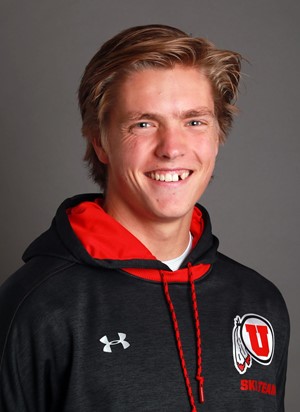
Logan Diekmann (University of Utah Ski Team) racing last winter. (Photo: The University of Utah Athletics/Logan Diekmann Instagram)
This week, FasterSkier caught up with Bozeman, Montana, native Logan Diekmann, who’s entering his junior year at the University of Utah. Diekmann, 21, is spending this summer training in Salt Lake City, taking summer classes toward a degree in mechanical engineering.
Diekmann grew up in Bozeman, skiing with the Bridger Ski Foundation (BSF) through elementary, middle and high school. After graduating as Bozeman High School’s valedictorian in 2015, he took a gap year with BSF. He applied to a number of schools, with the University of Utah eventually winning out.
His first season as a Utes skier, he qualified for NCAA Championships as a team alternate. Earlier that year, he had two top-15 finishes and a fourth place in the Seawolf Invite freestyle sprint.
This past January, Diekmann advanced to the heats for the first time at U.S. senior nationals, placing 14th overall in the skate sprint. His college racing progressed from there, as he notched five top-10’s and eight top-15’s on the Rocky Mountain Intercollegiate Ski Association (RMISA) circuit.
“There was a lot of improvement from a fitness standpoint and from racing maturity standpoint,” Diekmann reflected on last season.
While he was not selected to travel to 2018 NCAA Championships, he was pleased with his improvement from his freshman to sophomore years.
“I mean, I was definitely disappointed not getting to go to NCAA’s this year, but looking back on the season, there were a lot of good takeaways,” he said. “My FIS points dropped 125 at the start of the season down to 73 by the end of the season.”
According to Diekmann, much of this development came from his summer training sessions with Salt Lake City native and recent Montana State University graduate, Karsten Hokanson, as well as his Utah teammates.
“Freshman year alone, training with guys who were four to six years older than me was kind of eye opening and hard and super challenging,” he said. “I get to ski with some of the Norway and Sweden and Europe’s second-tier national skiers that didn’t get to race the Olympics. I mean, I’ve definitely never been pushed the way I have here.”
Many of his current college teammates hail from Scandinavia, which he views as a positive, though there is some controversy over college ski teams pulling foreign athletes, particularly when it comes to NCAA’s.
“I think if I was not an athlete on the [NCAA Division 1] circuit, I would be kind of frustrated with the situation,” Diekmann said. “I’d be like, ‘What the hell? These foreign skiers are coming in and they’re taking eight of the All-American spots at NCAA’s. It takes spots away from domestic skiers who are trying to ski in college, which is super tough.
“So I understand where other people are coming from when they have issues with it,” he continued. “But as an athlete, I think that there are very few downsides for me personally because I do get to train with really fast skiers who have skied on the national level in Europe or the world level on the World Cup. The insight they have and the training advice they have is pretty cool.”
A five-time Junior Nationals competitor, Diekmann also qualified for and raced at 2017 Junior World Championships in Midway, Utah. There, he placed 27th in the classic sprint.
This summer, he’s training with conglomerate of skiers, including Utah teammates Leah Lange and Jacob Engström, Hokanson, Daniel Fisher, Dartmouth’s Taryn Hunt-Smith, Brenna Egan of the University of New Mexico, and Ben Berend of the U.S. Nordic Combined Team.
“There’s always somebody to train with, which is sweet,” Diekmann said. “It’s not ideal not having a coach, but Karsten’s dad, Bill, used to coach the Wasatch team up in Park City, so he joins us for workouts occasionally, too, and can give technique advice and take video.”
Asked to share his favorite workout, Diekmann chose hill repeats, which he does with Hokanson at least once a month at Sugar House Park in Salt Lake City.
“It’s so simple; you can do it anywhere — I mean, out your backdoor if you’re in the right spot,” Diekmann said. “The other nice thing about this is you get a combo of hard L4 [Level 4] intensity, but you’re also getting in snappy, quick bounding that really activates those fast-twitch muscles that keeps you speedy and focuses on power.”
The Workout: Level 4 hill-bounding repeats/intervals
Terrain: Uphill, about 40 meters in length
“Not super steep, but steep enough that you can bound pretty hard,” Diekmann explained.
Warmup: 35 minutes with Level 3 interspersed toward end
The set: 4 x 10 hill repeats
Should take about 20 seconds to get uphill
Walk back downhill (heart rate won’t get below 150 bpm by the time you get back down)
Usually takes about one minute to bound up and walk back down
“It’s a nice way to incorporate L3 and L4 into one set of intervals,” Diekmann said.
BOZEMAN, MT – For the second year, Bozeman will be the site of the World Para Nordic Skiing NorAm & U.S. Paralympics Nordic Skiing Sit Ski Nationals. Sit skiers from across the country as well as locally will compete for World Para Nordic Skiing international racing points, for national titles, and the field will include several athletes favored to medal at the 2018 Winter Paralympics in PyeongChang, South Korea.
The Bridger Ski Foundation (BSF) will host two days of racing on Saturday and Sunday for the athletes right in town on the Sunset Hills trails, based out of Lindley Center. In addition, Crosscut Mountain Sports Center will host a biathlon race for the athletes on Friday.
Spectators are encouraged, and the athletes and coaches will also present a Sit Ski Demonstration for the public at noon on Saturday at Lindley Center.
Friday, January 5 at Crosscut
3:00 p.m. Biathlon sprint
Saturday, January 6 at Sunset Hills (Lindley Center)
10:00 a.m. Sprint Qualifications, followed by semis and finals
12:00 p.m. Sit Ski Demonstration & Clinic, open to the public.
Sunday, January 7 at Sunset Hills (Lindley Center)
10:00 a.m. Mid Distance Races
The Road to the 2018 Games
Bozeman is now the primary winter training facilities for the Paralympic Nordic Skiing program. Athletes from the U.S. Paralympics Nordic Ski Team, including World Champion Oksana Masters and 2010 Games medalist Andy Soule, have been living and training in Bozeman again this winter. Other “local” athletes include Aaron Pike, a member of the 2016 Rio Summer Games Team in wheelchair racing, and Kendal Gretsch, World Champion in triathlon who recently made the switch to Nordic skiing.
The National Team athletes will depart Bozeman for a World Cup competition in Oberried, Germany, on January 16 and then return to spend the majority of February training in Bozeman in preparation for the 2018 Games, which begin on March 9 in PyeongChang, South Korea.
A huge thanks to Murdoch’s Ranch & Home Supply for stepping up to be BSF’s local title sponsor of the Para Nordic Skiing NorAm event.
The event is sanctioned by the International Paralympic Committee (IPC). As a World Para Nordic Skiing NorAm event, athletes from any nation are invited to participate, and those with an international competition license can score important IPC points, which can be used to qualify for the Paralympic Winter Games.
Bridger Ski Foundation is a nonprofit ski club offering educational and competitive programs in Nordic, Freestyle, Freeskiing, and Alpine skiing. They also groom an incredible network of Community Nordic Trails in Bozeman. www.bridgerskifoundation.org
BSF seeks a qualified and motivated individual to fill the Executive Director position within a well established and growing community nonprofit organization. BSF’s location in Bozeman, Montana provides an optimal environment for success in our three skiing disciplines (Alpine, Freestyle/Freeskiing, Nordic). Salary DOE.
MISSION, GOALS AND VALUES
Bridger Ski Foundation is a nonprofit community organization formed over 80 years ago and based in Bozeman, Montana. In 2015 BSF was recognized by the United State Ski Association as a Gold Certified Club. Our mission is to inspire a lifelong love of skiing, athletic excellence and personal growth. Our goal is to create opportunities through educational and competitive programs in Alpine, Freestyle and Nordic skiing, and to groom cross country ski trails in the Bozeman community. Our statement of values drives the organization:
Maximize Athlete Potential: We provide programs that assist each athlete in reaching his/her potential.
Quality Programs: We provide quality programs, training and venues that support athletic excellence and personal growth. We strive to maintain an environment that is fun and enriching.
High Caliber Coaching: We attract, retain and develop directors, coaches, and staff of the highest caliber, both personally and professionally. We provide ongoing training and learning opportunities for them.
Affordability: We are committed to affordable and accessible learn-to-ski programs and seek community support and scholarships to help athletes as they move up the pipeline.
Academics: We build relationships with the school system and work with participants so they can excel in their sport and school.
Safe Sport: We apply best practices to maximize the safety of our participants.
Volunteers: We cultivate and grow positive relationships with BSF volunteers.
Community Relations: We promote positive, productive relationships with the local community, community partners and supporters of BSF.
Culture and Sportsmanship: We expect all athletes, parents, coaches, volunteers, and employees to exhibit exceptional sportsmanship and contribute to the BSF culture and broader community.
EXECUTIVE DIRECTOR JOB DESCRIPTION
The Executive Director (ED) leads the Bridger Ski Foundation. You are expected to align and move the entire organization to achieve BSF’s mission and values. The ED reports to the BSF Board. You provide daily and long term, strategic leadership and management of BSF operations, including fundraising, finance, marketing/communications, administration, policy and procedures and athletic programs. You manage the Program Director in each of the 3 disciplines, the grooming coordinator for the Nordic trails program, the Development Director, the Marketing/Communications Director and Finance/Administrative personnel.
Essential Duties and Responsibilities:
You are expected to translate the mission and values into BSF operations, and update strategic direction with the Board annually. You will prepare an annual budget, manage the finances (with Finance manager) and review status with the Board monthly. You will work with the Development Director to plan and achieve annual fundraising goals. You will work with the Marketing and Communications Director to develop strategic community marketing and communications program. You will work with Program Directors to prepare program business plans and budgets, as well as annual capital plans designed to support long-term program and venue requirements. You will provide direction and oversight to Program Directors as needed. We expect Program Directors to be responsible for additional coach staffing, coach development, athlete development, inputs to budgets, operation of budgets, coordination with volunteer event organizers (i.e., race committees) and vision for the discipline. You will maintain and establish administrative and staff policies and procedures as needed.
You will conduct annual performance evaluations for Program Directors, Development Director, and administrative/finance staff. You will work to maintain solid relationships with community partners, and foster a growing and vibrant club membership and alumni.
You will oversee Nordic grooming operations,
coordinate scholarship programs, ensure compliance with applicable state nonprofit laws and IRS charitable regulations.
Essential Skills, Knowledge, Abilities and Background:
Excellent management and leadership expertise along with outstanding communication skills (written, verbal, public, new media).
Experience in fundraising is a must. Experience in planning, organizing and managing organizational systems and processes. Experience in managing people, programs, and working with a variety of constituents. Nonprofit experience and ski competition/industry experience are also beneficial.
HOW TO APPLY:
Apply by emailing resume to office@bridgerskifoundation.org. In your email please insert in the SUBJECT line: ATTN: Pat Flowers.
Former Dartmouth skier Corey Stock racing at the 2015 UVM Carnival two years ago. (Photo: Silke Hynes)
In an effort to showcase the North Americans competing at this week’s International Ski Federation (FIS) 2017 USANA Nordic Junior World Championships and U23 Cross Country World Championships at Soldier Hollow in Midway, Utah, we asked those qualifying athletes several questions about themselves — actually, we had them fill in the blanks. Here we have 22-year-old Corey Stock, of the Bridger Ski Foundation, who’s representing the U.S. at her first U23 Worlds Championships after competing at Junior Worlds in 2012 and 2013.
***
“My full name is Corey Stock, but you can call me Corey. I was born in Lincoln, Mass., raised in Lincoln, and one thing you should know about my hometown is it is the town where Paul Revere was captured.
I started cross-country skiing when I could walk, thanks to trails my brother would tromp down in our backyard (back when it snowed in Boston). I currently train in Bozeman, Mont., with BSF [Bridger Ski Foundation].
If I’m not skiing, you might find me listening to NPR podcasts while remarking on what a gorgeous day it is. If I had to pick a favorite book, it would be ‘Green Eggs and Ham’ by Dr. Seuss.
One of the things I’m most excited about for U23/Junior Worlds at Soldier Hollow is hosting the rest of the world in the USA! One race I’m especially targeting there is the classic sprint.
The best advice anyone ever gave me about skiing or racing was when Sophie Caldwell told me that I will race fastest when I am happy! One of the best race memories I have is Soldier Hollow JNs 2012.
If I could meet one World Cup skier, it would be Anna Haag.
12. If I don’t end up being a professional skier, I’ll probably be… turns out that I am a professional skier! Hopefully I’ll go to business school post-skiing.
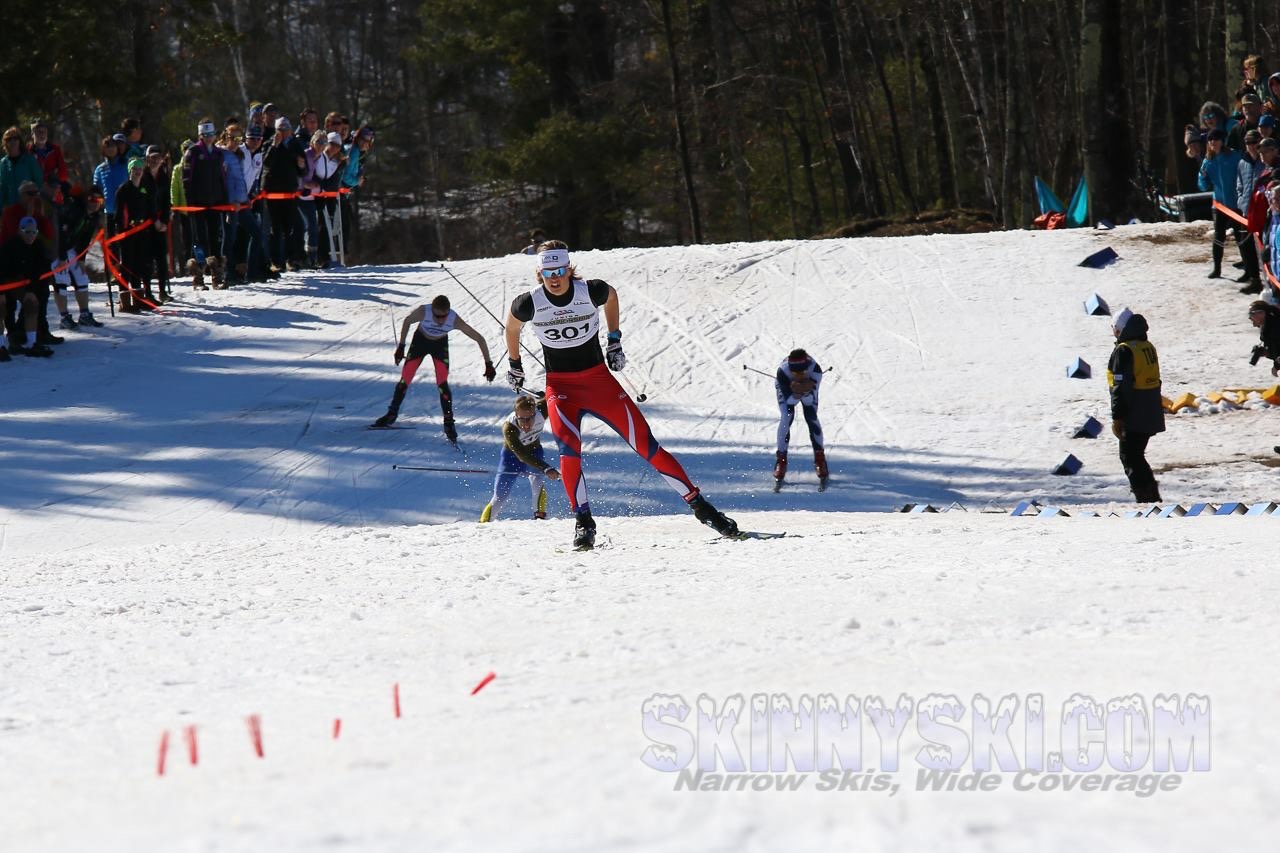
Logan Diekmann (Utah Ski Team) coming down the finishing stretch of the 2016 Junior National skate sprint in Cable, Wis. (Photo: Logan Diekmann/SkinnySki.com)
In an effort to showcase the North Americans competing at this week’s International Ski Federation (FIS) 2017 USANA Nordic Junior World Championships and U23 Cross Country World Championships at Soldier Hollow in Midway, Utah, we asked those qualifying athletes several questions about themselves — actually, we had them fill in the blanks. Here we have 19-year-old Logan Diekmann, of the University of Utah who’s representing the U.S. at his first Junior Worlds. On Monday, Day 1 of the championships, he qualified for the classic-sprint heats in 23rd.
***
“My full name is Logan Diekmann but you can call me Logan, or Logie Bear, I don’t really care. I was born in Seattle, raised in Bozeman, Mont., and one thing you should know about my hometown is that people don’t work and ski when they can, they ski and work if they must.
University of Utah freshman Logan Diekmann (Courtesy photo)
I started cross-country skiing when I was a child, thanks to my parents and the Bridger Ski Foundation. I currently train in Salt Lake City with the Utah Ski Team.
If I’m not skiing, you might find me squeezing in a 30 min. nap among training, classes, and homework. If I had to pick a favorite book, it would be ‘The Martian‘.
One of the things I’m most excited about for Junior Worlds at Soldier Hollow is repping the stars and stripes on my home course. One race I’m especially targeting there is the classic sprint.
The best advice anyone ever gave me about skiing or racing was ‘hard work pays off.‘ One of the best race memories I have is the classic 10 k mass start at JN’s in Truckee CA where I earned my first national title.
If I could meet one World Cup skier, it would be Alexey Poltoranin.
If I don’t end up being a professional skier, I’ll probably be bored out of my mind without any training to do.
I’m missing five days of school to be here, and my teachers are probably thinking, ‘Haha, good luck making up my 5 lectures, 2 quizzes, a midterm, and 12 pre-lectures.‘
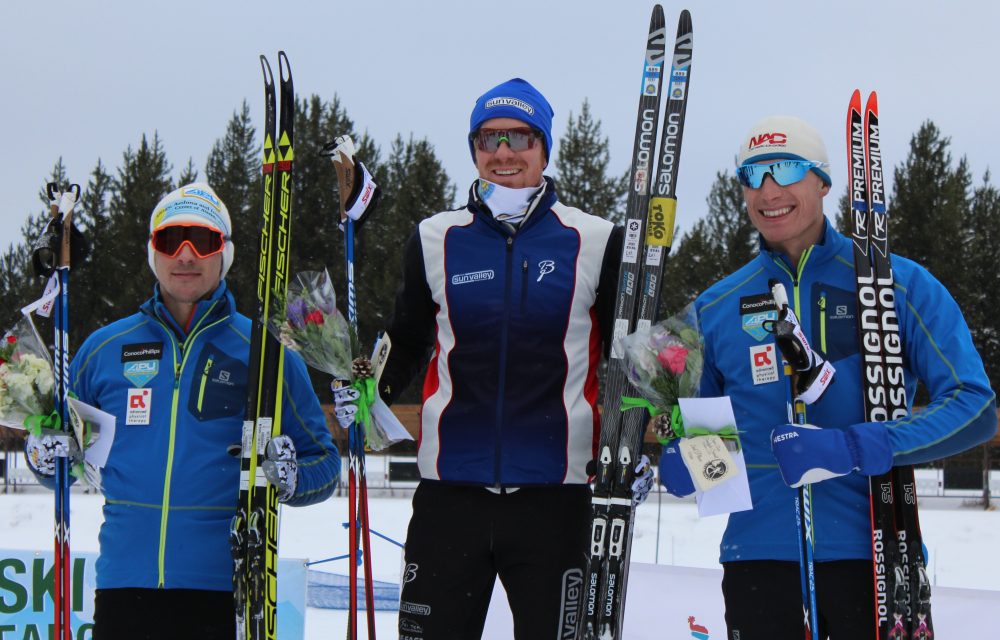
From left to right: Saturday’s third-place finisher Reese Hanneman (APU), winner Matt Gelso (SVSEF) and runner-up Tyler Kornfield (APU) on the podium at the men’s SuperTour 1.3-kilometer freestyle sprint on Saturday in West Yellowstone, Mont.
WEST YELLOWSTONE, Mont. — With a little less than a kilometer left, the pack started to panic. Saturday marked the first SuperTour sprint of the season and the gap Sun Valley Ski Education Foundation (SVSEF) Gold Team veteran Matt Gelso had put on the five other skiers in the men’s sprint final was not getting smaller.
The winner of last year’s SuperTour sprint season opener, Reese Hanneman of Alaska Pacific University (APU), saw the nearly 15-meter lead Gelso had established halfway through the 1.3-kilometer men’s freestyle sprint final heat as a sign.
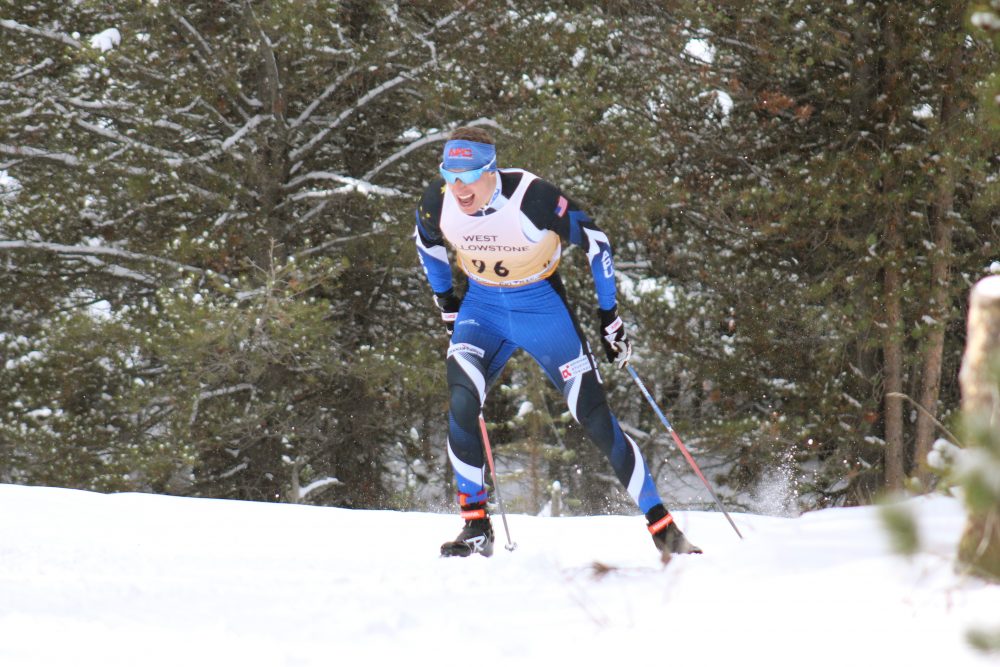
Tyler Kornfield (APU) racing during the qualifier of the men’s SuperTour 1.3-kilometer freestyle sprint on Saturday in West Yellowstone, Mont.
“I was in third or fourth thinking, ‘Uh, OK, we better start closing this down,’” Hanneman said during an in-person, post-race interview.
“Basically in the final it was five sprinters and then Matt,” Hanneman said. “So I think he knew that he had to go out like … and then I think none of us thought that [Gelso] could hold it all the way. … It was really impressive skiing by him to just go for it the whole time.”
Yet, as Gelso began to climb the final hill of the course on the Rendezvous Ski Trails, he proved his gap on the other five finalists would take a strong challenge to beat. Hanneman pushed around Morgan, Saxton and Blackhorse-von Jess, while racing behind his teammate Kornfield. The two APU racers began gaining on Gelso, but not soon enough.
With 100 meters to go, Gelso, a 28-year-old SuperTour regular best known for his distance skiing, left the two sprint champions chasing, and crossed the finish line first in a time of 2:36.85 for his first SuperTour sprint win.
“I was pretty fired up,” Gelso said after. “I didn’t know going into the semifinal and final if [leading from the start] was going to still work … but I had the body and the skis to stay consistent with my plan.”
Crossing 1.94 seconds after Gelso was Kornfield, who indicated that his second-place finish was his best performance on the West Yellowstone sprint course since the start of his sprint career.
“The first year [I raced] here I didn’t even qualify,” Kornfield said after. “This is the first year I’ve moved on from the quarters…[last year] I got taken out and I took Eric Packer out too.”
“I think none of us thought that [Gelso] could hold it all the way … It was really impressive skiing by him to just go for it the whole time.”— Reese Hanneman (APU), on Matt Gelso’s sprint performance Saturday
The final podium finisher for the day was Hanneman, finishing 2.27 seconds after Gelso and 0.33 seconds out of second place.
“I didn’t feel that good in the qualifier,” Hanneman said. “I was skiing a couple gears lower than I needed to be but then I started feeling better in the heats … I think after today I’ll definitely wake up and feel a little bit better.”
The final three finishers included Saxton in fourth (+5.1), Morgan in fifth (+5.34) and Blackhorse-von Jess in sixth (+22.85).
In the women’s 1.3 k freestyle sprint, it was Jennie Bender of the Bridger Ski Foundation (BSF), who took first, besting SMST2’s Erika Flowers and Annie Hart.
Bender, 28, started the day by winning the women’s qualifier in 3:08.76, holding off Hart by three hundredths of a second.
“My goal is to do better in qualifying, and I did that today, so that was a big win for me,” Bender said. “I love this course and I hope to repeat last year, get back to Europe and race some World Cups.”
From left to right: Saturday’s third-place finisher Annie Hart (SMST2), winner Jennie Bender (BSF), and runner-up Erika Flowers (SMST2) on the podium at the women’s SuperTour 1.3-kilometer freestyle sprint in West Yellowstone, Mont.
After winning the qualifier, Bender’s course time only got faster. She won her quarterfinal in 3:08.24 and her semifinal in 3:06.86. By the time she finished the women’s final in first, she had covered the 1.3 k course in 3:04.78, almost four seconds faster than her qualifying time.
With a strong headwind challenging many of the racers who chose to lead, Bender decided in her final to follow the other finalists for the first half of the course before making her move.
“There’s a lot of wind happening so … you kind of have to play with the wind and whether or not you want to be the only one blocking it or not,” Bender said of the heats. “I led my quarter, and I was like ‘Holy sh*t, I took all the wind myself!’ so I was trying to kind of mess around with sitting behind people the next two heats, and that felt way better.”
While Bender’s plan for the final was to tuck in and conserve for the first half, then surge to the front in the second half, Hart decided to lead out of the start.
“Because we had some big headwinds [today] … the debate was whether to lead or follow,” Hart said. “I went into the rounds and decided to lead most of them, because I ski better generally when I kind of feel like I’m in control.”
Hart skied at the front of the pack up until the course’s last climb, where her teammate Flowers passed her on the right side and Bender cruised by on her left.
“I just, one, didn’t have much energy left, and two, there really wasn’t anywhere to go,” Hart said of her attempt to hold onto the lead. “I typically don’t do very well in West Yellowstone, so this year was by far the best first race I have had … I will take it.”
Jennie Bender (1) of the Bridger Ski Foundation leading her semifinal during the women’s 1.3-kilometer freestyle sprint on Saturday in West Yellowstone, Mont.
Rounding the final turn, Bender took the inside lane while Flowers remained to the far outside left. The two raced head-to-head through the final 100 meters, lunging to the line for a photo finish.
Bender was eventually awarded the win and Flowers took second by a mere 0.09 seconds. Hart crossed in third, 1.94 seconds behind Bender.
“I needed a lane, so I moved outside early and zoomed up the hill as fast as I could, and then into the finish,” Flowers said of final move up the course’s last climb. “I don’t think I quite realized I was as close to Jennie as I was until about ten feet from the finish line. It was exciting, I’ve never thought of myself as a sprinter, so it was fun to do well.”
“She was behind me the whole time until that hill,” Bender said of Flowers. “And you just save so much energy, due to headwind, so I think that helped both of us. It’s funny, we talked about it before our quarter — she was in my quarter, I was like, ‘it’s better drafting,’ and it worked out!
“I feel pretty fit compared to previous years, I would say, and I’m hoping for a good season,” Bender concluded.
Also in the final was Hannah Halvorsen of the Sugar Bowl Ski Academy and U.S. Ski Team in fourth (+2.0), APU’s Chelsea Holmes in fifth (+3.86), and University of Colorado-Boulder (CU) skier Petra Hyncicova in sixth (+4.53).
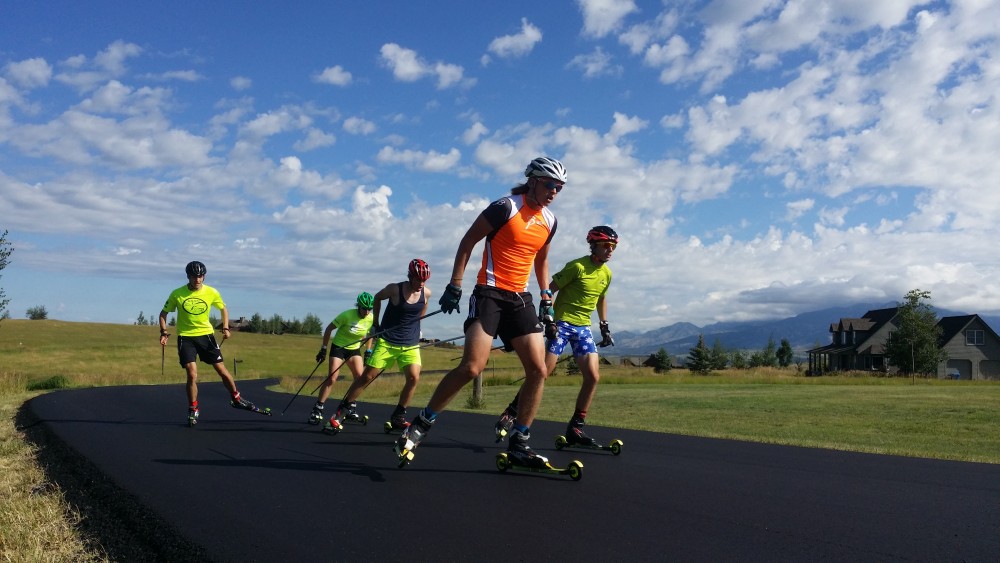
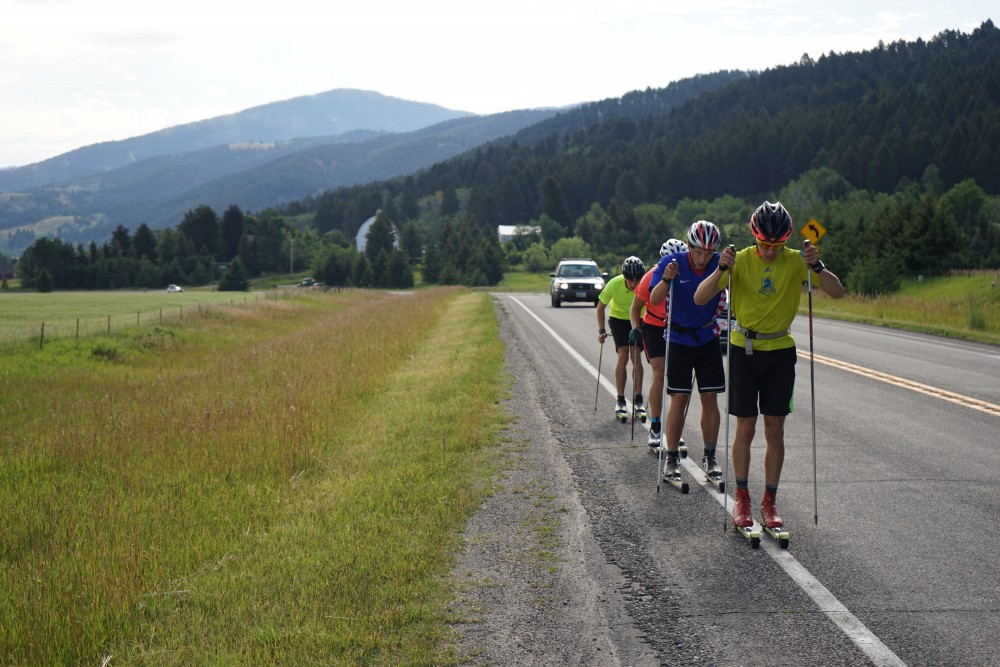
(From left to right) BSF skiers Silas Talbot, Jennie Bender, Paul Everett, Logan Diekmann, and Max LaChance during a rollerski in Bozeman, Mont. (Photo: Austin Caldwell)
The pale wood grain of a wax trailer’s interior walls and the sound of a power-tool firing up can only hold one’s attention for so long, especially if that someone has the coaching gene. As the grandson of John Caldwell, a former U.S. Ski Team (USST) head coach, and son of Sverre Caldwell, the Stratton Mountain School (SMS) nordic director and head coach, it may be no surprise that John — who goes by his middle name of Austin — Caldwell, also heard the call to coach.
After spending this past winter working for Caldwell Sport as a wax technician, Austin, a 24-year-old Dartmouth grad, wanted a challenge and change. Not only in his work, to include a greater focus on interactions with athletes, but in his whereabouts as well.
“I really enjoyed working with Zach and Amy [Caldwell] wax-teching last year,” Austin said on the phone while in Bozeman, Mont. “But part of me wanted to spread my wings a bit and try some new place outside of the east and outside of Vermont where I’ve lived all my life.”
Austin, Sophie and Isabel Caldwell (l-r) during their Christmas visit to Europe in 2013 to see Sophie race on the World Cup circuit. (Photo: Sophie Caldwell/sophiecaldwell.blogspot.com)
Growing up in Peru, Vt., alongside his two sisters Isabel and Sophie Caldwell (the latter of which is a USST member), skiing was not just what Austin spent his spare time doing. It was the family mealtime topic of choice; it was how vacations were spent with relatives — his uncle Tim Caldwell, a four-time Olympian, and cousins are all avid nordic skiers as well.
Surrounded by skiing his entire life, Austin did not want to give it up anytime soon. When the head coaching position for the Bridger Ski Foundation (BSF) elite nordic program opened up and his cousin, Anya Caldwell-Bean, BSF’s U18/U20 junior coach, told him of the opening, he saw an opportunity to not only stay involved with skiing, but further himself and his experiences in it.
“I loved wax-teching last year, that was really fun, but I also enjoyed coaching in the past for junior skiers,” Austin said. “My dad is a coach and I’ve always been interested in coaching … so now I get to coach and wax tech.”
Stepping into his new role and responsibilities as the head coach for the BSF elite team — his first coaching position of this caliber — Austin is aware of the challenges that rest ahead for himself and his athletes. Prior to this year, his work with athletes involved coaching juniors last year in Putney, Vt., and at SMS youth summer camps over the past five years.
“I have gained most of my understanding of coaching from my relationships with Sverre, Ruff Patterson, and Zach and Amy Caldwell,” Austin wrote in an email, referring to his father, college coach, and first cousin once removed (and his wife), respectively. “Those four have been great mentors and in the process they have taught me almost everything I know about skiing.”
Bridger Ski Foundation (BSF) 2016/2017 Roster:
Elite Team Jennie Bender
Silas Talbot
Nick Power
PG/Collegiate
Paul Everett
Max LaChance
Nick Matelich Summer Collegiate
Noah Anderson
Logan Diekmann
Currently eight athletes will work with him during the summer and throughout the season. Three athletes, Jennie Bender, Silas Talbot and Nick Power comprise the elite team, and five others make up the post-graduate crew, with a few of them heading to college in the fall and being replaced with new post grads for the upcoming school year.
“We’ll have some kids taking classes and then partway through the winter, people will be going different ways depending on how they do [during the season],” Austin explained. “So that will be, as far as managing at that point, that will be one of the bigger challenges.
“But I think it’s something all teams face,” he added. “Just having kids at different levels and different age groups as well.”
On a personal level, Austin admits one of his biggest adjustments so far has been learning Bozeman’s trails and rollerskiing roads, as well as not getting the team or team van lost in Montana’s mountains.
“For me, I guess the biggest challenge that everyone has been helping me with is finding my way around Bozeman and finding new routes for rollerskiing,” Austin said. “Every week I’ve been trying kind of to add a new place to rollerski … because it’s important to switch it up.”
“I plan on staying in the ski world for as long as I can, so far BSF and Bozeman have been great and I plan on remaining here for the coming years.” — Austin Caldwell on becoming BSF’s elite head coach
But even if navigating Bozeman has been a bit of a learning process during the beginning stages of his coaching career, the city and a well-established elite program were two of the draws that pulled Austin to apply and eventually take the position.
“Having a strong program in place and being in Bozeman were the two main factors [why I considered working with BSF],” Austin said. “I also talked with Dragan [Danevski, BSF’s head coach and program director] and with my cousin Anya and it just seemed like it would be a good fit.”
With the goal to remain involved with skiing for as long as possible, Bozeman and BSF struck Austin as the ideal program and place to be a part of.
“I plan on staying in the ski world for as long as I can, so far BSF and Bozeman have been great and I plan on remaining here for the coming years,” he wrote in an email.
Danevski respectfully declined to comment on Austin’s hiring. In the last two years, the BSF elite team has weathered several coaching transitions, most recently with the departure of Bernie Nelson — the team’s coach since the fall of 2014.
In his first season as an elite head coach and with eight athletes to oversee, his greatest ambition involves pushing his athletes to their full potential. Talbot, 23, Austin’s former classmate, co-captain and fraternity brother at Dartmouth College, and now an athlete for the BSF elite team, saw the transition to having Austin as a coach as uniquely strong.
“For myself, it has been hugely beneficial to have Austin coaching because he knows my athletic background so well,” Talbot, originally from Anchorage, Alaska, wrote in an email. “He already knows my strengths and weaknesses (which are especially prevalent in the dryland season), and so there is no need to build up the trust and/or understanding between us from scratch. In short, having someone I know well as a coach makes the adjustment to the new program — something that for many after college is a tough step — much easier.”
Bridger Ski Foundation elite and post-graduate athletes during a classic rollerski in Bozeman, Mont. From left to right: Max LaChance, Nick Power, Logan Diekmann, and Silas Talbot. (Photo: Austin Caldwell)
Entering her fourth year on the BSF elite team, Bender also found Austin a positive addition to BSF and the greater Bozeman area.
“Austin waxed for me during the last few World Cups at the Canadian Tour this past March, and I was instantly impressed with his professionalism,” Bender wrote in an email. “Austin taking the head Elite/PG coach position is a great attribution to not only BSF, but to the Bozeman ski community as a whole.”
So far, Austin too, cannot ask more of his athletes and training group. The higher level of focus and preparation he finds evident with the BSF elite and PG level athletes gives him confidence in the season and performances to come.
“I think the key to success is having a group that motivates each other and pushes each other,” Austin said. “And I’m very excited about this training group we have going into the summer. They’re all working very hard and they’ve come together really well. It’s like they’ve been training together a lot longer than three weeks … everyone in this group is always trying to push the limits and do everything they can do to get better.”
HOUGHTON, Mich. — The last day of racing at U.S. Cross Country Championships on the Michigan Tech Trails wrapped up last Saturday, Jan. 9, with the 1.5-kilometer classic sprint. At the end of the day, Alaska Pacific University’s Eric Packer and Craftsbury Green Racing Project’s Kaitlynn Miller both walked away with their first U.S. national title. From the qualifier, to the rounds, to the podium ceremony, FasterSkier provides the day’s top moments in photos. Special thanks to Christopher Schmidt.
Photo: Alaska Pacific University skier Eric Packer celebrates after crossing the line in first ahead of teammate Reese Hanneman during the men’s 1.5 k classic sprint on Saturday at U.S. nationals in Houghton, Mich. (Photo credit: Christopher Schmidt)
Photo: Didrik Elset of Michigan Tech University chose to double pole on skate skis from qualifier, shown here, all the way to the final during the men’s 1.5 k classic sprint on Saturday at U.S. nationals in Houghton, Mich. Elset went on to place third overall.
Photo: Cole Morgan racing for the University of Vermont during the qualifier for the men’s 1.5 k classic sprint on Saturday at U.S. nationals in Houghton, Mich. Morgan ultimately finished in eighth overall.
Photo: (left to right) Alaska Pacific University’s Reese Hanneman, Canadian Julien Locke of Team Black Jack, Håkon Hjelstuen of Lyn Ski, Didrik Elset of Michigan Tech University, Tyler Korfield of Alaska Pacific University, and Logan Hanneman, also of Alaska Pacific University, crest the top of a climb during their semi-final of the men’s 1.5 k classic sprint on Saturday in Houghton, Mich. Hanneman and Elset advanced automatically to the final, while Hjelstuen and Kornfield moved on as the two lucky losers. (Photo credit: Christopher Schmidt)
Photo: (left to right) Kris Freeman of Team Freebird and Scott Patterson of Alaska Pacific University follow Alaska Pacific University skier Eric Packer and Canadian Julien Locke of Team Black Jack during their quarterfinal of he men’s 1.5 k classic sprint on Saturday at U.S. nationals in Houghton, Mich. Packer raced to an overall first place, while Locke went on to place tenth.
Photo: Gaspard Cuenot tucking during his semi-final of the men’s 1.5 k classic sprint on Saturday at U.S. nationals in Houghton Mich. Cuenot raced to an overall ninth. (Photo credit: Christopher Schmidt)
Photo: (right to left) Reese Hanneman of Alaska Pacific University leads Michigan Tech University Didrik Elset, Canadian Julien Locke of Team Black Jack, and younger brother Logan Hanneman, also of Alaska Pacific University during the first semi-final of the men’s 1.5 k classic sprint race on Saturday at U.S. nationals in Houghton, Mich. (Photo credit: Christopher Schmidt)
Photo: (right to left) Dakota Blackhorse-von Jess of the Bend Endurance Academy Eric Packer of Alaska Pacific University, and Cole Morgan of the University of Vermont round a corner during the men’s 1.5 k classic sprint race on Saturday at U.S. nationals in Houghton, Mich. Blackhorse-von Jess advanced to the final as did Packer. Packer ultimately won first place overall, while Blackhorse-von Jess skied to a fifth place finish in the final and Morgan finished in eighth. (Photo credit: Christopher Schmidt)
The start of the men’s classic sprint final (from left to right), with Didrik Elset of Michigan Tech, Dakota Blackhorse-von Jess of Bend Endurance Academy ), Tyler Kornfield (APU), and Reese Hanneman (APU) at the start of the final for the men’s 1.5 k classic sprint on Saturday at U.S. nationals in Houghton, Mich. (Photo: Christopher Schmidt)
APU head coach Erik Flora (98) runs alongside his athletes Eric Packer (5) and Reese Hanneman during (4) the final of the men’s 1.5 k classic sprint at U.S. nationals in Houghton, Mich., in January 2016. (Photo: Christopher Schmidt)
Photo: (left to right) Alaska Pacific University skier Eric Packer double poles to his first ever U.S. nationals championship title, ahead of teammate Tyler Kornfield, Bend Endurance Academy racer Dakota Blackhorse-von Jess, Lyn Ski racer Håkon Hjelstuen, Alaska Pacific University skier Reese Hanneman during the final of the men’s 1.5 k classic sprint race on Saturday at U.S. nationals in Houghton, Mich. (Photo credit: Christopher Schmidt)
Photo: Alaska Pacific University’s Eric Packer (center) is all smiles as he stands at the top of the podium next to second place finisher and teammate Reese Hanneman (r) and third place finisher Didrik Elset of Michigan Tech University after the men’s 1.5 k classic sprint on Saturday at U.S. nationals in Houghton, Mich.
Photo: Katharine Ogden skiing for Stratton Mountain School during the qualifier for the women’s 1.5 k classic sprint race on Saturday at 2016 U.S. nationals in Houghton, Mich.
Photo: (left to right) Sun Valley Ski Education Foundation skier Deedra Irwin, Stratton Mountain School racers Katharine Ogden and Erika Flowers, along with Dartmouth College racer Corey Stock, Bridger Ski Foundation’s Jennie Bender and Northern Michigan skier Nicole Schneider striding up the first climb in their quarterfinal of the women’s 1.5 k classic sprint on Saturday at U.S. nationals in Houghton, Mich. Aer advancing to the semi-final and final, Bender raced to a third place finish overall, while Ogden took eighth. (Photo: Christopher Schmidt)
Photo: (left to right) Northern Michigan University’s Sarah Bezdicek and Felicia Gesior, stride up a climb behind Heather Mooney of the Craftsbury Green Racing Project and Alaska Pacific University’s Jessica Yeaton during their quarterfinal of the women’s 1.5 k classic sprint on Saturday at U.S. nationals in Houghton, Mich. Mooney raced to a tenth place finish overall; Gesior took ninth. (Photo credit: Christopher Schmidt)
Photo: Craftsbury Green Racing Project skier Liz Guiney (center) makes her way around a corner ahead of Northern Michigan University’s Lea Buenter (r), University of Alaska Fairbanks skier Nicole Bathe and Stratton Mountain School racer Julia Kern during their quarterfinal of the women’s 1.5 k classic sprint on Saturday at U.S. nationals in Houghton, Mich. Guiney advanced to the semifinal and finished the day in seventh overall. (Photo credit: Christopher Schmidt)
Photo: (left to right) Stratton Mountain School skier Anne Hart strides up a climb ahead of CXC racer Natalia Naryskina, and Alaska Pacific University’s Becca Rorabaugh during their semi-final of the women’s 1.5 k classic sprint on Saturday at U.S. nationals in Houghton, Mich. All three women advanced to the final, where Hart placed second overall, Naryskina sixth, and Rorabaugh fifth. (Photo credit: Christopher Schmidt)
Photo: (right to left) Kaitlynn Miller of the Craftsbury Green Racing Project corners the final turn into the finishing stretch ahead of Bridger Ski Foundation athlete Jennie Bender and CGRP skier Caitlin Patterson during their semi-final of the women’s 1.5 k class sprint on Saturday at U.S. nationals in Houghton, Mich. (Photo credit: Christopher Schmidt)
Photo: (left to right) Craftsbury Green Racing Project skier, Kaitlynn Miller out sprints Alaska Pacific University’s Becca Rorabaugh, Bridger Ski Foundation’s Jennie Bender, and Stratton Mountain School skier Anne Hart during the final 100-meters of the final for the women’s 1.5 k classic sprint on Saturday at U.S. nationals in Houghton, Mich. Miller took first, while Hart placed second, Bender third, and Rorabaugh fifth. (Photo credit: Christopher Schmidt)
Photo: (left to right) Anne Hart of Stratton Mountain School along with Craftsburu Green Racing Project Kaitlynn Miller and Bridger Ski Foundation athlete on top the women’s 1.5 k classic sprint podium on Saturday at U.S. nationals in Houghton, Mich. (Photo credit: Christopher Schmidt)
Photo: (left to right) Kaitlynn Miller of the Craftsbury Green Racing Project stands with teammates Heather Mooney and Liz Guiney after winning her first championship title in the women’s 1.5 k classic sprint on Saturday at U.S. nationals in Houghton, Michigan. Mooney raced to a tenth place finish overall and Guiney finished seventh. (Photo credit: Christopher Schmidt)
HOUGHTON, Mich. — Day 2 of the U.S. Cross Country Championships took place Monday with the 1.5-kilometer freestyle sprint on the Michigan Tech Trails. Past national sprint champs Jennie Bender and Reese Hanneman racked up another title each after dominating all day, from the qualifier to the finals.
Racing resumes Thursday with the 20/30 k freestyle mass starts and ends Saturday with the classic sprint.
Left to right: Chelsea Holmes of Alaska Pacific University goes head-to-head with Jennie Bender of the Bridger Ski Foundation, Mary Rose of the Sun Valley Ski Education Foundation and Liz Guiney of the Craftsbury Green Racing Project in the final uphill push of their quarterfinal during the women’s 1.5 k freestyle sprint on Monday at U.S. nationals in Houghton Mich.
Andrea Dupont of Rocky Mountain Racers leads Deedra Irwin of the Sun Valley Ski Education Foundation, Sarah Bezdicek of Northern Michigan University, Becca Rorabaug of Alaska Pacific University, Heather Mooney of the Craftsbury Green Racing Project, and Taryn Hunt-Smith of Dartmouth College during their quarterfinal of the women’s 1.5 k freestyle sprint on Monday at U.S. nationals in Houghton Mich. Rorabaugh went on to place eighth overall. (Photo: Christopher Schmidt)
Left to right: Sarah Bezdicek of Northern Michigan University heading into the last stretch with Heather Mooney of the Craftsbury Green Racing Project, Deedra Irwin of the Sun Valley Ski Education Foundation, Andrea Dupont of Rocky Mountain Racers, Becca Rorabaug of Alaska Pacific University, and Taryn Hunt-Smith of Dartmouth College during their quarterfinal of the women’s 1.5 k freestyle sprint on Monday at U.S. nationals in Houghton Mich. Rorabaugh went on to place eighth overall.
Front, left to right: Craftsbury Green Racing Project skier Caitlin Patterson and Stratton Mountain School racer Anne Hart lead (second row, left to right) Rosie Frankowski of Alaska Pacific University, CanadianTeam Hardwood athlete Jennifer Jackson, PCNSC/Sun Valley Ski Education Foundation racer Leah Lange, and University of Northern Michigan’s Felicia Gesior during their quarterfinal of the women’s 1.5 k freestyle sprint on Monday at U.S. nationals in Houghton Mich. Hart went on to place second overall, Patterson third. (Photo: Christopher Schmidt)
Craftsbury Green Racing Project Kaitlynn Miller takes charge, ahead of Northern Michigan University’s Vivian Hett, and Dartmouth College skier Emily Hannah during their quarterfinal of the women’s 1.5 k freestyle sprint on Monday at U.S. nationals in Houghton Mich. (Photo: Christopher Schmidt)
Left to right: Canadian Jennifer Jackson of Team Hardwood, Craftsbury Green Racing Project skier Liz Guiney, Alaska Pacific University racer Becca Rorabaugh, Northern Michigan University’s Sarah Bezdicek, Stratton Mountain School’s Anne Hart, and Bridger Ski Foundation’s Jennie Bender coming into the first downhill of the women’s 1.5 k freestyle sprint on Monday at U.S. nationals in Houghton Mich. Bender ultimately took first overall, Hart second, Guiney seventh overall, Rorabaugh ninth, Jackson tenth, and Bezdicek in eleventh overall.
Front, left to right: Erika Flowers of Stratton Mountain School and Jessica Yeaton of Alaska Pacific University pacing the downhill ahead of Sugar Bowl Academy skier Hannah Halvorsen and Boulder Nordic Junior Racing Teams Eliska Hajkova during their quarterfinal of the women’s 1.5 k freestyle sprint on Monday at U.S. nationals in Houghton Mich. Flowers went on to finish sixth overall and Halvorsen took fifth. (Photo: Christopher Schmidt)
Right to left: Craftsbury Green Racing Project racer Caitlin Patterson corners ahead of teammate Kaitlynn Miller, Sugar Bowl Academy ski racer Hannah Halvorsen, and Stratton Mountain School skier Erika Flowers during their semi-final of the women’s 1.5 k freestyle sprint on Monday at U.S. nationals in Houghton Mich. (Photo: Christopher Schmidt)
Craftsbury Green Racing Project skier Caitlin Patterson (Bib No. 6) pushes into the final climb while teammate Kaitlynn Miller (Bib No. 13) and Sugar Bowl Academy skier Hannah Halvorsen (Bid No. 12), as well as Rocky Mountain Racer’s Andrea Dupont during the semi-final of the women’s 1.5 k freestyle sprint on Monday at U.S. nationals in Houghton Mich. Patterson went on to place third overall, Halvorsen fifth, Miller fourth, and Dupont in twelfth.
Left to right: Caitlin Patterson of the Craftsbury Green Racing Project, Jennie Bender of the Bridger Ski Foundation, Anne Hart of the Stratton Mountain School, Erika Flowers, also of the Stratton Mountain School, Hannah Halvorsen of Sugar Bowl Academy, and Kaitlynn Miller of the Craftsbury Green Racing Project off the starting line of the final for the women’s 1.5 k freestyle sprint on Monday at U.S. nationals in Houghton Mich.
Front, left to right: Anne Hart of Stratton Mountain School and Bridger Ski Foundation’s Jennie Bender duke it out towards the finish line while (back, left to right Kaitlynn Miller of Craftsbury Green Racing Project, Caitlin Patterson also of the Craftsbury Green Racing Project, Stratton Mountain School ski racer Erika Flowers, and Sugar Bowl Academy skier Hannah Halvorsen race to the finish during the final of the women’s 1.5 k freestyle sprint on Monday at U.S. nationals in Houghton Mich. (Photo: Christopher Schmidt)
Left to right: University of Alaska Fairbanks’ Isaac Lammers skis in front of Alaska Pacific University’s Reese Hanneman, Michigan Tech University’s Didrik Elset, Loppet Nordic Racer Zak Ketterson, Bridger Ski Foundation’s Akeo Maifeld-Carrucci, and Skinouk Quebec Ski Team’s Alexis Turgeon during their quarterfinal of the men’s 1.5 k freestyle sprint on Monday at U.S. nationals in Houghton, Mich. (Photo: Christopher Schmidt)
Left to right: Alaska Pacific University’s Reese Hanneman races in front of Skinouk Quebec Ski Team’s Alexis Turgeon, Bridger Ski Foundation’s Akeo Maifeld-Carrucci, Loppet Nordic Racer Zak Ketterson, and Michigan Tech University’s Didrik Elset during their quarterfinal of the men’s 1.5 k freestyle sprint on Monday at U.S. nationals in Houghton, Mich.
Right to left: David Norris of Alaska Pacific University leads Brian Gregg of Team Gregg/Madshus, Canadian Kevin Sandau of the Alberta World Cup Academy, Dakota Blackhorse-von Jess of the Bend Endurance Academy, and teammate Thomas O’Harra of Alaska Pacific University during their quarterfinal of the men’s 1.5 k freestyle sprint on Monday at U.S. nationals in Houghton, Mich. Blackhorse von-Jess advanced through the rounds to place second overall, and Gregg also advanced to the semi, ultimately finishing the day in eighth overall.
Left to right: Overall third place finisher Julien Locke of Team Black Jack, leads Stratton Mountain School skier Paddy Caldwell and two Canadian NDC Thunder Bay athletes Evan Palmer-Charrette and Michael Somppi around the final corner of their quarterfinal heat during the men’s 1.5 k freestyle sprint on Monday at U.S. nationals in Houghton Mich. Somppi went on to place eighth overall and Palmer-Charrette placed sixth overall.
Right to left: Alaska Pacific University’s Logan Hanneman in front of Ski and Snowboard Club Vail’s Tad Elliot, Bridger Ski Foundation’s Nick Michaud, Alaska Winter Stars’ Silas Talbot, and Michigan Tech’s Gaspard Cuenot during their quarterfinal of the men’s 1.5 k freestyle sprint on Monday at U.S. nationals in Houghton Mich. Logan Hanneman went on to finish ninth overall and Talbot finished in an overall tenth. (Photo: Christopher Schmidt)
Fredrick Schwencke of Northern Michigan University (l) leads Miles havlick of the Sun Valley Ski Education Foundation, Haakon Hjjelstuen of Lyn Ski, Scott Patterson of Alaska Pacific University, and Canadian Patrick Stewart-Jones during their quarterfinal of the men’s 1.5 k freestyle sprint on Monday at U.S. nationals in Houghton, Mich. Schwencke finished in a career best fourth overall, while Havlick took the overall fifth place spot.
Left to right: NDC Thunder Bay athlete Michael Somppi in front of Alaska Pacific University’s Reese Hanneman, Bend Endurance Academy’s Dakota Blackhorse-von Jess, Team Gregg/Madshus Brian Gregg, Alaska Winter Stars’ Silas Talbot, and Michigan Tech skier Didrik Elset during their semi-final of the men’s 1.5 k freestyle sprint on Monday at U.S. nationals in Houghton, Mich. (Photo: Christopher Schmidt)
Left to right: Northern Michigan University’s Fredrick Schwencke, Alaska Pacific University racer Eric Packer, NDC Thunder Bay’s Evan Palmer-Charrette, Team Black Jack’s Julien Locke head into the final stretch of their semi-final during the men’s 1.5 k freestyle sprint on Monday at U.S. nationals in Houghton Mich.
Eric Packer of Alaska Pacific University (center) leads two Canadian skiers, Evan Palmer Charrette of NDC Thunder Bay (l) and Julien Locke of Team Black Jack during the their semi-final of the men’s 1.5 k freestyle sprint on Monday at U.S. nationals in Houghton, Mich. Packer placed eleventh overall, while Palmer-Charrette took sixth and Locke claimed his first U.S. national’s podium in third.
APU’s Reese Hanneman (Bib No. 101) leads Bend Endurance Academy’s Dakota Blackhorse-von Jess (Bib No. 104) as well as (back: left to right) Miles Havlick (SVSEF), Evan Palmer-Charrette (NDC Thunder Bay), Fredrick Schwencke (NMU), and Julien Locke (Team Black Jack) during the final of the men’s 1.5 k freestyle sprint on Monday at U.S. nationals in Houghton, Mich.
Left to right: Alaska Pacific University Reese Hanneman bests Team Black Jack’s Julien Locke and Bend Endurance Academy’s Dakota Blackhorse-von Jess during the final of the men’s 1.5 k freestyle sprint on Monday at U.S. nationals in Houghton, Mich. (Photo: Christopher Schmidt)
WEST YELLOWSTONE, Mont. — The Yellowstone Ski Festival in West Yellowstone, Mont. came to a close last Saturday, Nov. 28, but the action from the first SuperTour races of the season lives on in the following highlight photos.
Jennie Bender (Bridger Ski Foundation) gets ready to gun it during the women’s SuperTour 1.3 k sprint qualifier on Nov. 27 in West Yellowstone, Mont. Bender went on to win the qualifier in 2:59.3, and eventually the final as well in 2:50.51. (Photo: Ian Harvey/Toko)
Hannah Halvorsen (Sugar Bowl Academy) racing to third during qualifying for the women’s SuperTour 1.3 k freestyle sprint in November 2015 in West Yellowstone, Mont. Halvorsen went on to edge out AWCA’s Dahria Beatty for second place overall, 4.31 seconds behind race winner, Jennie Bender.
Canada’s Dahria Beatty (Alberta World Cup Academy/U23 National Development Team) leads (from r to l) Annie Hart (SMST2), Annie Pokorny (SMST2) and Deedra Irwin (SVSEF) during their quarterfinal in the women’s SuperTour 1.3 k freestyle sprint in West Yellowstone, Mont. Beatty went on to place third in the final, 5.06 seconds back from race winner Bender (not shown).
Jennie Bender (BSF) dominated the women’s SuperTour 1.3 k freestyle sprint straight from the qualifier through to the final in West Yellowstone, Mont. She’s shown winning the final here.
(From l to r) Canada’s Dahria Beatty (Alberta World Cup Academy/U23 National Development Team) and Chelsea Holmes (APU) battle it out with Hannah Halvorsen (Sugar Bowl Academy) for the podium behind Jennie Bender (not shown) in the women’s final on Nov. 27 in West Yellowstone, Mont. Halvorsen went on to place second, 4.31 seconds after Bender. Beatty took third, (+4.56), University of Colorado-Boulder’s Petra Hyncincova (back left) took fifth (+6.6) and MSU’s Cambria McDermott came in sixth (+6.65).
Reese Hanneman (APU) waits in anticipation to start the men’s SuperTour 1.3 k freestyle sprint on Nov. 27 in West Yellowstone, Mont. (Photo: Ian Harvey/Toko)
Dakota Blackhorse-von Jess (Bend Endurance Academy) during qualifying at the men’s SuperTour 1.3 k freestyle sprint on Nov. 27 in West Yellowstone, Mont. Blackhorse-von Jess advanced all the way to the final where he placed third, 1.89 seconds back from race winner, Logan Hanneman (APU). (Photo: Ian Harvey/Toko).
APU’s Logan Hanneman (r) wins the men’s SuperTour 1.3 k freestyle sprint final over older brother Reese Hanneman (APU) by 0.53 seconds on Nov. 27 in West Yellowstone, Mont. (Photo: Ian Harvey/Toko)
The Hanneman brothers Reese (l) and Logan hug after taking the top two spots on the podium in the men’s SuperTour 1.3 k freestyle sprint final on Nov. 27 in West Yellowstone Mont. Logan won and Reese placed second, 0.53 seconds behind his younger brother.
Mads Strøm of the University of Colorado-Boulder (r) leads Brian Gregg (Team Gregg/Madshus) during the men’s SuperTour 15 k freestyle race in West Yellowstone, Mont.
Brian Gregg after winning the men’s SuperTour 15 k freestyle individual start race on Nov. 28 in West Yellowstone, Mont.
Matt Liebsch (Gear West/Salomon) finished second overall in the men’s SuperTour 15 k freestyle race on Nov. 28 in West Yellowstone, Mont. He was 5.5 seconds behind his training partner and friend, Brian Gregg (not shown).
Scott Patterson leads APU teammate Tyler Kornfield during the men’s SuperTour 15 k freestyle on Nov. 28 in West Yellowstone, Mont. Patterson finished third overall, 13.3 seconds back from race winner Brian Gregg (not shown). (Photo: Ian Harvey/Toko)
Scott Patterson (APU) leads Oscar Friedman (Dartmouth) and others during the men’s SuperTour 15 k freestyle race on Nov. 28 in West Yellowston, Mont. Patterson went on to take third overall; Friedman was 13th.
Canadians Kevin Sandau (Alberta World Cup Academy) (l) and Knute Johnsgaard (Whitehorse/AWCA) race to fifth and sixth, respectively during the men’s SuperTour 15 k freestyle race on Nov. 28 in West Yellowstone, Mont. Tad Elliott (Ski and Snowboard Vail) placed 15th overall.
Ben Lustgarten (SVSEF) (r) races to seventh in the men’s SuperTour 15 k freestyle on Nov. 28 in West Yellowstone, Mont. Lex Treinen (APU) went on to place 10th overall.
Rogan Brown (SVSEF) starting his second lap of the men’s SuperTour 15 k freestyle on Nov. 28 in West Yellowstone, where he went on to place eighth overall. (Photo: Ian Harvey/Toko)
Matt Gelso (SVSEF) leads Eric Packer (APU) and Nick Hendrickson (University of Utah) during the men’s SuperTour 15 k freestyle race on Nov. 28 in West Yellowstone, Mont. Gelso went on to finish ninth.
Katharine Ogden during her first lap of the 10 k course during the women’s SuperTour 10 k freestyle race on Saturday in West Yellowstone, Mont. Ogden carried her momentum through to the finish and placed first overall.
Chelsea Holmes (APU) (r) races to a second place finish in the women’s SuperTour 10 k freestyle individual start on Saturday in West Yellowstone, Mont. Sloan Storey (l) chases her down to place 10th overall.
Emilie Cedervaern (University of New Mexico) during the first lap of the women’s SuperTour 10 k freestyle race in West Yellowstone, Mont. Cedervaern finished third, 35.6 seconds back from winner Katharine Ogden (not shown).
Jennie Bender (BSF) races to fourth in the women’s SuperTour 15 k freestyle race on Nov. 28, a day after winning the women’s SuperTour 1.3 k freestyle sprint in West Yellowstone, Mont. (Photo: Ian Harvey/Toko)
(From r to l) University of Utah skiers Veronika Mayerhofer, Sloan Storey and Josefin Nilsson get a team train going, while Annika Landis (SVSEF) and Katharine Ogden (SMST2/USST) set their sights on the pack. Ogden went on to win the individual start, Mayerhofer placed fifth (+45.2) and was Storey 10th (+1.01).
Caitlin Patterson (CGRP) racing to sixth in the women’s SuperTour 10 k freestyle race on Nov. 28 in West Yellowstone, Mont. (Photo: Ian Harvey/Toko)
Rosie Frankowski (APU) leads Annie Hart (SMST2) during the second lap of the women’s SuperTour 10 k freestyle race on Nov. 28 in West Yellowstone, Mont. Frankowski placed seventh, and Hart was 14th. (Photo: Ian Harvey/Toko)
WEST YELLOWSTONE, Mont. — For the past couple years, it’s been somewhat of a tradition for FasterSkier to catch up with racers on the Rendezvous Ski Trails on Thanksgiving, the day before the season kicks off with the U.S. SuperTour races. We ask them what they’re thankful for. This year, the most popular answer was resoundingly, “Snow!”
WEST YELLOWSTONE, Mont.– While the Yellowstone Ski Festival crew is plenty busy grooming the trails with the fresh snow fall Wednesday, many skiers are also busy grooming their upper lip. In the spirit of no-shave “Movember,” FasterSkier decided to rank the top mustaches found out on the trails. Ranking decisions were made based off the official rules according to the Movember Foundation, as well as an individual’s responses, and overall look.
The photo gallery shows our picks for the Top 10 Movember Men. This is followed by the Top Five Movember Women*, abbreviated because of the number of women who participated*. The gallery is rounded out with the top-three Bearded Honorable Mentions.
Why this ‘stache: “I’m just a poor college student and I can’t afford a razor,” said Parr. “I’ve been working on this for quite a while, not going to lie, I cheated a little bit. Started this back in June to prepare for this month. It’s a big month, there’s Yellowstone races, you have to show up and look tough and having facial hair is a big part of that,” added Dubay.
Why this ‘stache: “I thought it looked pretty good.”
Why this ‘stache: “Been growing it since November first. Started as a full beard, then I went to a goatee for a couple days. A lot of people didn’t like that, now I have handle bars,” said Michaud. “It’s really thick and full,” voiced Diekmann.
Why this ‘stache: “First, it started because a professor called me out last year for not having a mustache during November. That was number one. And then two, coming out to Montana from Minnesota, I’m thinking, I gotta get that ski bro..pretty laid back look.”
Why this ‘stache: “It’s been a very important month preparing for this moment.”
Why this ‘stache: “I had a big beard up until three or four days ago. We had a fundraiser for our team, it’s call Nordic Fest, a nordic themed dinner/silent auction. At the end of the night, someone had the idea [that] we could auction off shaving my beard. People threw up money like crazy and we raised over $600.00 for it. Now I’ve got this mustache.”
Why this ‘stache: “You can use the mustache to double check the kick wax of the day. For example, I’m using Extra Blue today to wax my mustache and it’s clearly the right wax for the day.”
Why this ‘stache: “It started on a hunting trip in September. It got hearty enough, that I had more than I ever had before, so I figured I just had to keep it going. I made a deal with the girlfriend that I could keep it until I got home from the SuperTours this fall. I look mean, but it makes the ‘stache look better that way.”
Why this ‘stache: “It reminds me of Colonel Mustard,” said Bean. “I don’t really know…,” Guiney reflected.
Why this ‘stache: “It’s a classic.”
Why this ‘stache: “It’s a modern twist on a classic ‘stache.”
Why this ‘stache: I chose this mustache because it has attitude, but it’s also business-like, which is how I feel I try to ski. You want to take what you’re doing seriously, but not take yourself too seriously, [and] I feel like ‘No Shave November’ really encapsulates that lifestyle.”
Why this look: “Oh, I just always have a beard.”
Why this look: “I really don’t like my facial shape. So it’s sort of to make an illusion that I have a better shape than I have.”
Why this look: “It didn’t really happen on purpose or anything. Starting in October I felt like I’d try it out, and that’s all there really is to it.”
Along with getting the history behind the facial hair, FS asked athletes about their race goals for the weekend and beyond:
Annie Pokorny (SMST2): “Be one of the top girls going into the season.”
Sloan Storey (University of Utah): “Just getting back into it, waking my body up, and having fun.”
Liz Guiney (CGRP): “Get the first races out of the way and have fun.”
Miles Havlick (SVSEF): “Should be a good weekend to get into the racing routine.”
Chris Parr (Unaffiliated): “To try and not to shave … I’m hoping I can hold off, it’s tempting.”
Joe Dubay (Unaffiliated): “I’m going to try not to let the icicles on my beard get too out of control.”
Nicholas Michaud (BSF): “Have the best mustache in the A-final on Friday.”
Eric Packer (APU): “First race of the year you’re always trying to put down a good effort and practice all of the things you worked on over the summer. My biggest goal is to go out there and ski really well.”
Akeo Maifeld-Carucci (BSF): “Make sure my mustache is looking real good at the finish.”
Reese Hanneman (APU): “I’m focusing on the sprint and hoping for an elite podium.”
WEST YELLOWSTONE, Mont.–The list of athletes and clubs is seemingly endless. Skiers from from the elite to the novice cruise the Rendezvous Ski Trails at the 2015 Yellowstone Ski Festival. Though the range of abilities varies greatly from athlete to athlete, one point of contact connects all festival skiers together: Thor Godar.
“I am working for the entire week and I am the pass checker at the main entrance point,” said Godar, the one-way stop for all nordic skiers attending the event. “I’ve been doing this for about ten years; this is my 22nd fall festival. … I’m planning on having my ashes scattered somewhere on the trails. I just haven’t decided [which trail] yet.”
Thor Godar (l), Yellowstone Ski Festival trail-pass checker and West Yellowstone native, chats with Bridger Ski Foundation skier Jennie Bender on Tuesday at the trailhead of the Rendezvous Ski Trails.
That’s dedication in it’s truest form. While most individuals attending the ski festival hit the trails in the morning, head out around 11 for lunch, and return again for the late afternoon, Godar remains at the trailhead from when athletes first arrive until their final departure, for the whole week.
“I have over boots, over gortex hiking boots. I have fleece lined jeans, and I believe I have three coats,” he said after examining his layers of protection for the long hours standing outside. “No matter what I wear on my hands my fingers get cold because I have Raynaud’s syndrome,” he added.
Eight hours in the cold is plenty long, regardless. However, with close to 4,000 people estimated to attend the festival, Godar’s time does not go unwarranted.
“Last year our best estimate was about 4,000 [skiers]. But it’s hard to know how to count them because most people are skiing twice a day and some of them have been here for three weeks already,” he reflected, “I’m going to say 4,000…But I’m the only one who looks them all in the eye.”
Montana State University nordic team captains Cambria McDermott and Lina Hultin in the stadium at the Rendezvous Ski Trails during the Yellowstone Ski Festival in late November.
While the occasional forgotten trail pass may induce Godar’s moralizing look, for the most part, he feels trails users appreciate his service.
“Some of them are very grateful that I’m here every year and they know me. Some of them probably hate my guts because I ask to see their passes — most of the high-end people are in a desperate rush to get to the trail,” he said. “So I would say that it varies. But, I’m kinda famous.”
Despite his claim to fame, Godar deems his return to the festival gates is all part of the atmosphere.
“It’s my favorite week of the year. It’s like a family reunion of a large highly dysfunctional family,” he said. “Everybody knows everybody else and people are hugging all over the trails, some of them propose marriage on the trails and, I love it.
“I’m a highly paid professional, but I might even do it for nothing,” he added.
Bernie Nelson (l) coaching Australian national-team skier, Alaska Pacific University member and former MSU athlete Jessica Yeaton (r) at the 2015 World Championships in Falun, Sweden. (Photo: Bernadette Nelson)
“I don’t think that there being a lack of [elite] female coaches has anything to do with entry into the sport,” she said in a recent in-person interview. “I think it’s more that the lifestyle is not the most glamorous.
“Sleeping in bunk beds, sleeping on couches, sleeping in different tiny little rooms”, as she describes it, “coaches just put 150 percent into what they’re doing. And then they go home and collect themselves because next weekend, they’re doing it again.”
The copious amounts of coffee and early mornings spent doing hot laps in the dark is not a job for the weak at heart. Still, if the profession doesn’t include fancy hotels and plush king-size beds, what keeps Nelson, and other nordic coaches like her, going? According to Nelson, one word: passion.
“I don’t think that there is a single [nordic] coach out there — young, old, grumpy, not grumpy — who doesn’t truly love skiing,” she said. “I think that passion drives most coaches. Let’s be honest, coaches don’t start coaching for the salary. Coaches coach because they love coaching, or they love skiing, or they love teaching, or there’s something that they are passionate about in the sport.”
“Let’s be honest, coaches don’t start coaching for the salary. Coaches coach because they love coaching, or they love skiing, or they love teaching, or there’s something that they are passionate about in the sport.” — Bernie Nelson, head coach of the BSF Elite and postgrad teams
But what does this passion look like? For Nelson, who turns 25 on Tuesday, it’s five years of ski coaching — one year at Montana State University (MSU) as a student assistant coach, followed by two years there as an assistant coach, and a year as the Bridger Ski Foundation (BSF) PG and Elite Team head coach — as well as over 10 years of competitive ski racing. It’s also a lot of time.
“I put thought into each session and I put thought into each individual at each session,” Nelson said.
Bridger Ski Foundation athletes:
Elite Team
Akeo Maifeld-Carucci
Jennie Bender
Nicholas Michaud
Full-time PG
Max LaChance
Logan Diekmann
College PG
Mitch Harris
Cameron Bobb
Henry Trowbridge
Erin Bolger
Paul Everett
Ben Grodner
Sam Nelson
Sarah Lyle
With a total of 13 athletes and close to 12 sessions a week, Nelson’s passion for coaching invariably means a lot of time dedicated to people other than herself. It also means looking to others.
“I try not to get stuck in just nordic,” she said. “I love hearing about what other people are doing in our sport, but also I love hearing what other coaches are doing in other sports because I think you can take those components, think about them and implement them when they need to be implemented. It’s more tools in your toolbox.”
A native of Truckee, Calif., she added that a bit of time in the race bib isn’t unwarranted as a coach.
“I think it’s so important to race every now and again, because it reminds you how much it hurts, how nervous you get, and all the different feelings that your athletes have,” Nelson said.
Being a nordic skier, Nelson explained that “it’s fun to tie up the competitive laces” and experience “the pain that’s replaced with euphoria” every once in a while. Especially when running on four hours of sleep with a legion of race skis to wax.
Part of the passion Nelson exhibits stems from those who coached her. “A lot of my coaching principles are rooted deeply in [Far West Nordic Head Coach] Ben Grasseschi’s approach to skiing,” she said. “Ben taught me not only how to love the sport and nordic skiing as an athletic endeavor, but also to love what you’re doing when you’re doing it.”
Nelson’s work with coaches, such as Grasseschi and former MSU assistant Chad Anderson, gave her what she called “perspective.” The perspective of not just a coach, but an athlete and mentor.
“Coaching is complex,” BSF Head Coach and Program Director Dragan Danevski said in a recent phone interview. “One coach needs to have different abilities: understanding physiology, understanding psychology, understanding waxing, organizational skills with athletes, races, and trips. These abilities come with experience and you need somebody willing to take on that challenge. Somebody who has enthusiasm, energy, and motivation. I believe Bernie is that person.”
Bernie at a Glance:
-Name: Bernie Nelson -Nickname: Bern -Age: One day shy of a quarter century! -Hometown: Truckee, Calif. -Education: B.S. in Community Health, Montana State University -Current Profession: BSF Postgraduate and Elite Team Head Nordic Coach -Interests/Hobbies: Skiing, skiing, skiing, mostly in the downhill direction. Running, Mountain Biking, General life training to keep up with Dak [Dakota Blackhorse-von Jess] -Most Bad-A** Moment: Snowshoeing in Yellowstone Park with my mom. -Most Embarrassing Moment: Getting arrested in Yellowstone Park while snowshoeing with my mom. It was a mix up and I still don’t like snowshoeing. -Self-Identified Spirit Animal: Bear -Favorite Music Jam: Eric Church. But the team loves the Greatest Hits of Elton John CD.
Along with coaches, Nelson’s experience with team sports has influenced her coaching style.
“The biggest thing I bring to skiing is the idea of team and feeling a part of something that’s bigger than yourself,” she said. “There’s something to be said about digging deep and pushing past your point of comfort and really burying yourself in the pain, but there’s also something really enlightening about doing it for yourself and doing it for the people that are right next to you, whether you are on the same team or not.”
During an in-person interview, Michaud — the newest BSF Elite team member who hails from Maine — said that even after one summer with Nelson, he learned “there’s always more in the tank.”
“Working with Bernie, you learn a lot about the power of positive attitude and energy,” said Maifeld-Carucci, a recent Harvard graduate and also first-year BSF Elite Team member.
For Nelson, having that sort of positive impact on her athletes remains the most important part of her coaching. One of her goals for the BSF program includes “helping motivated and committed BSF athletes discover their athletic potential, believe in their potential and supporting them as they develop from domestic racing to the highest level of the sport,” she explained.
Nelson’s passion as a coach stems largely from the people she coaches.
“What makes me love coaching, is to not only see my athletes’ athletic development, but also to see their development as a person,” she said. “My goal in and out for the last five years that I’ve been coaching is to have my athletes not only leave as better skiers, but as better people.”
***
About the Author: Gabby Naranja considers herself a true Mainer, having grown up in the northernmost part of the state playing hockey and roofing houses with her five brothers. She recently graduated from Bates College where she ran cross country, track, and nordic skied and is excited to work with FasterSkier.
Bozeman’s ski club awarded the prestigious Gold Certification from the national governing body of skiing and snowboarding.
Bridger Ski Foundation was just named a Gold Certified Podium Club and applauded by the U.S. and Ski Association for serving the entire community. Their Alpine, Nordic, and Freestyle programs serve more than 500 youth and adults each year, and their community trails program grooms public cross country trails at five venues in Bozeman.
BOZEMAN, Mont. — Bozeman’s ski club, the Bridger Ski Foundation (BSF), just received the highest honor possible from the U.S. Ski and Snowboard Association (USSA). Bridger Ski Foundation was named a Gold Certified Podium Club, becoming one of 17 clubs nationwide with this designation, and the only one in Montana.
The USSA’s podium-level certification process involves a rigorous self-study and peer review of best principles and practices for ski and snowboard clubs. After months of BSF compiling documentation and application information, USSA conducted an onsite visit in Bozeman in February. On May 13, at the Annual USSA Club Excellence Conference in Park City, Utah, BSF was awarded Gold Certification. Bridger Ski Foundation staff and board members were on hand to receive the award. The Gold level is intended for clubs that are Best in the World, according to USSA.
USSA in awarding Gold to BSF, said what sets BSF apart as a Gold Club is, “BSF is an excellent example of a club that serves the entire community and is recognized as one of the most important community partners in Bozeman, MT. Building on a rich history of volunteerism, in 2010 BSF engaged in a comprehensive organizational overhaul with the intention of restructuring governance and leadership, running a more professional organization, and streamlining operations and fundraising. Professional and well-established program leadership in three sports (Alpine, Cross Country, Freestyle) and the coordination of a major trails program whereby the organization grooms ski trails at five venues for its cross-country program and the community set BSF apart.”
Bridger Ski Foundation Executive Director Swithin McGrath said, “It was terrific working with our whole community and USSA on our club certification. The Gold Certification is a great validation of what we’re doing for the athletes and community and provides a platform to build on for the future.”
Bridger Ski Foundation’s roots go back to 1936, when Bozeman’s first ski club was formed. The grassroots sentiment—that skiing is a life-long, community-driven activity in Bozeman—is still alive and well today.
Bridger Ski Foundation Board President Susan Carstensen said, “The certification is a result of everything the parents, volunteers, coaches, staff and community has worked on over the last 79 years.”
For BSF, the certification is about more than just an award. The USSA’s Club Development Program is designed to give clubs a clear roadmap to become stronger organizations. This is a strategic part of USSA’s plan to support the more than 400 clubs in every corner of the country.
ABOUT BRIDGER SKI FOUNDATION
Bridger Ski Foundation is a nonprofit community ski club based in Bozeman, Montana, that inspires a lifelong love of skiing, athletic excellence, and personal growth. They create opportunities through education and competitive programs in Alpine, Freestyle, and Nordic skiing, and they groom cross-country ski trails in the Bozeman community. www.bridgerskifoundation.org
ABOUT USSA
The U.S. Ski and Snowboard Association (USSA) is the national governing body of Olympic skiing and snowboarding. It is the parent organization of the U.S. Ski Team, U.S. Snowboarding and U.S. Freeskiing. Developed to facilitate participation in national and international competition, the Olympic sports organization provides structure for competitive skiing and snowboarding. From grassroots programs to governance of sport, management of rules, competitions and athletic rankings, the USSA oversees athletic pipelines for development in the sports. With a vision to make the USA the best in the world in Olympic skiing and snowboarding, the USSA provides leadership and direction for tens of thousands of young skiers and snowboarders who share an Olympic dream while maintaining a strong adherence to core values. The USSA, established in 1905, operates out of the national training and education facility, the Center of Excellence, in Park City, UT. www.ussa.org