
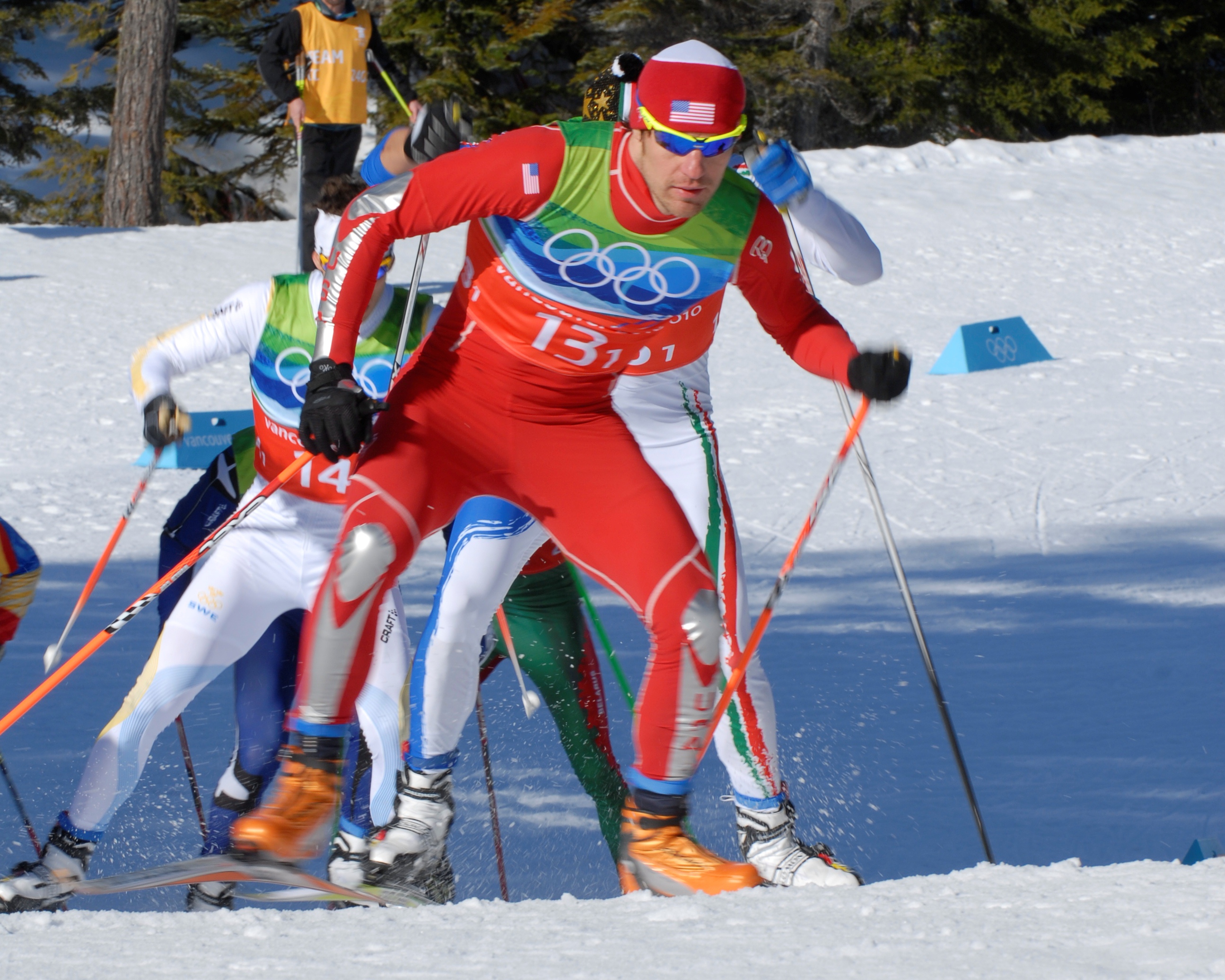

GÅLÅ, Norway – Cold weather is not the only thing that can clutter up the race routine, as Torin Koos of the Methow Olympic Development Project (MODT) experienced at a domestic Norwegian sprint race on Saturday morning. While frigid temperatures delayed the start for an hour, the fact that the coaches’ meeting was in Norwegian only caused additional problems for the former US Ski Team racer.
“Probably the most exciting, or frustrating, part of the day for me came three minutes before the start,” Koos told FasterSkier, explaining that he had asked about timing chips at the coaches’ meeting. However, something got lost in translation, and Koos still needed one. That made for an unusual last-minute warm-up.
“There was definitely some miscommunication, and I had to get my best steeplechase on right before my start, running from the start gate to the second story of a building, then back. I made it just in the nick of time, but probably skied the prologue with a bit too much adrenaline!”
Turns out adrenaline might not be the best prerace cocktail for Koos. He was 11th in the qualifier, which both Koos and MODT coach Scott Johnston felt was less than what Koos is capable of. However, you only need to qualify to advance to the rounds, and with the skis and wax nailed, Koos calmed down from the morning’s rat race and worked the 1,848-meter sprint course to his advantage.
“In the rounds, I felt quite good and was staying out of trouble and moving through the quarters and semis with hard but in control efforts,” Koos said. In the final heat, he was racing against Sindre Wiig Nordby from Team Sector Alarm for the top of the podium (ed. one of the top private Norwegian elite development teams).
“I came into the final uphill in third place, when Sindre Wiig Nordby made a monster push off the front. I came off the climb in second, and then fought to get into Sindre’s draft over the last rollers,” Koos said, noting that he almost had it nailed. “With 100meters to go, I came around Sindre. Seventy-five meters to go I was in the lead, but in the last 50 or so he powered back a meter or two to take the victory.”
Koos was still content about his second place, especially considering the traveling he’s had to do, as well as the cold and the early season. Stain Hallen was third, Britain’s Andrew Musgrave fourth, Martin Hammer fifth and Tobias Dahl Fenre was sixth in the final heat.
“Before coming over to Norway, I thought it’d be quite special to win a Norwegian Cup. This time, I was very close. Also, every week I’m getting better and better, and with this, the stoke is high for the real part of the season that awaits me,” Koos told FasterSkier.
On track
From coach Scott Johnston’s perspective, the Gålå sprint race was a good indication of what Koos has to offer, and a confirmation that he has learned a trick or two himself in the wax trailer.
“Temps were very cold, and the start was postponed three times before finally getting off at 11, after the TD held the thermometer in his armpit and was able to read -17.5C. I was psyched when they decided not cancel because I knew we finally had good skis,” Johnston said, noting that he secretly felt like he won the lottery with the race still a go.
“I pretty much nailed it, and for a change, Torin had as good skis as anyone on the course. While I’d like to take some credit it may have been more luck than skill. The chemists at Toko had as much to do with our success today as I did,” Johnston explained.
Steady progression
While Johnston was pleased that Koos qualified despite the hurdles, the ever-critical coach always finds something to improve on.
“Torin’s qualifier was still not up to snuff again, and he finished 11th. The good news is that the speed and endurance are both there in good measure,” Johnston said, pointing out that the basic premises for success are there.
“His ability to ski with, or out-ski, the fastest qualifier of the day has been in evidence during each race,” Johnston said of the three events Koos has raced so far on the “2010 MOD Tour de Scandinavia.”
At his season opener at Beitostolen two weeks ago, Koos was already showing signs of promise, despite not nailing the wax until the heats, Johnston said.
“At Beito, he managed to make a big move from fifth place to come even with the fastest qualifier and eventual winner, [John Kristian] Dahl, before getting pinched into third in the last corners to the finish,” he said.
Last weekend in Finland, Koos out-skied the fastest qualifier in two heats. Only in the final, with a change in strategy, did he get boxed into fourth. This weekend, Koos was sharper yet, despite his 11th place in the qualifier.
On Saturday, Johnston said, the fastest qualifier–who was 7.7 seconds ahead of Koos–and the eventual race winner was in each of Koos’s three heats.
“Torin won the quarterfinal…was two meters back in second place in the semifinal, and only six inches back in final,” Johnston said, noting that the field was setting a wicked pace from the start.
“To give some idea of the speed being skied in these races, [Saturday’s] very intelligent course was 1,848 meters, and the typical time, per kilometer, of the qualifier and heats was 1 minute and 36 seconds. That’s right: 1:36!”
Koos will head back to Washington soon, but he still has another week in Europe, in which he travels to Duesseldorf, Germany, for next weekend’s World Cup sprint races.