From the FasterSkier archive — posts syndicated from athletes’ and coaches’ own blogs between 2004 and 2012, kept online as published. Current coverage is at fasterskier.com.

Tag: Burke

  • Over Before It Really Began: Burke and Sweetser Part Ways

    Over Before It Really Began: Burke and Sweetser Part Ways

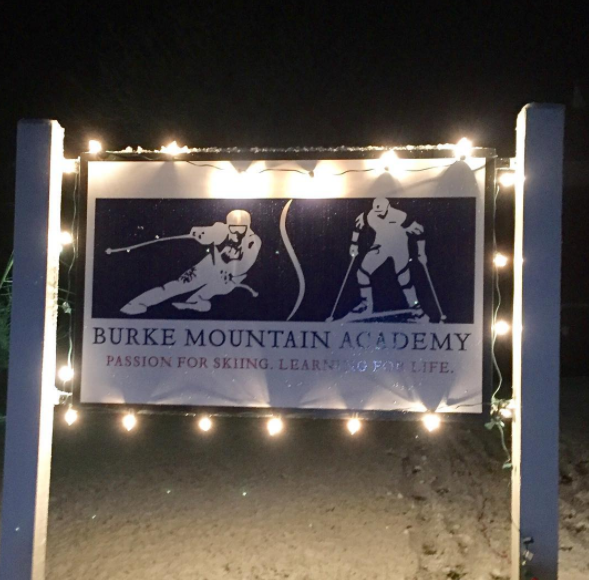
    The logo for Burke Mountain Academy in East Burke, Vt., shows both alpine and nordic ski racers side by side in this photo from December 2016. (Photo: @BurkeMountainAcademy/Instagram)

    A recently promised revival of the nordic program at Vermont’s Burke Mountain Academy (BMA) now seems to be on hold, following a recent change in leadership and what appears to be the school’s subsequent decision to cut ties with its recently hired nordic coach Will Sweetser. As the first day of the 2017/2018 school year approaches in less than a month, Sweetser remains in Wyoming, far from northern Vermont. And the school remains without a publicly announced plan for the future for its nordic ski program.

    Revival and retreat?

    For several months earlier this year, the future of nordic skiing at a private school in northern Vermont that describes itself as “the preeminent ski academy” was bright. A press release on the BMA site, dated March 7, proclaimed, “BMA Revives Nordic Program with Olympic-Level Coach.”

    The school announced that Sweetser had been hired as head nordic coach “effective immediately in preparation for the 2017-2018 academic year.” Then-Head of School Jory Macomber enthused about the school’s “revived Nordic program,” and said that the school had “always … aim[ed] at delivering world class alpine and Nordic racers.”

    Two months later, on May 9, the Facebook page for BMA Nordic announced “The first camp of the new era,” to be held in late June, reflecting this nordic revival.

    Later that month, Sweetser was featured in a May 26 article on FasterSkier. “We felt really welcomed there,” Sweetser said of the Burke community. He dismissed concerns that the school’s nordic program had lain fallow during the 2016/2017 season (there were “no athletes and no coaches” on the nordic side that year), saying that “the board of directors seemed totally disinclined to let nordic die, so I feel like there is a tremendous support for nordic at the school.”

    Sweetser appears to have been employed by BMA as recently as late June. An archived version of the school’s coaching staff website (archived on June 21) lists Sweetser as head nordic coach. (The same URL, burkemtnacademy.org/skiing/nordic/coaching-staff/, now redirects to a site ending in skiing/alpine/coaching-staff/. This page lists 17 different coaches, none of them with an explicit nordic affiliation. The total student body at Burke Mountain Academy is 66 kids. The school claims nine “teaching faculty” and 16 “coaching/athletic staff” on its website.)
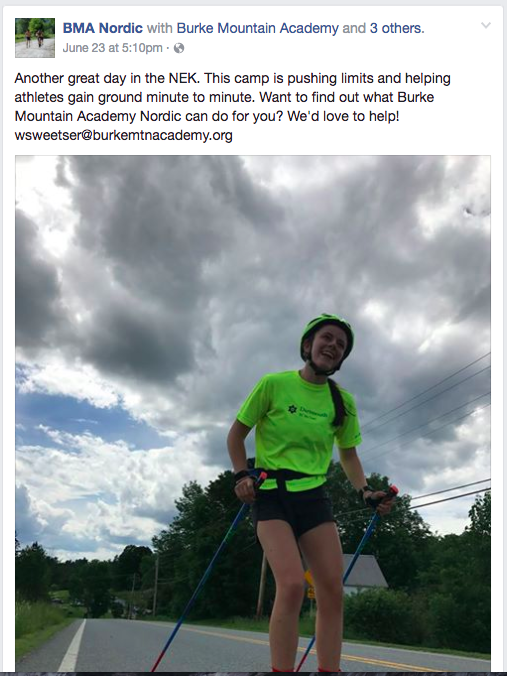
    June 23 screenshot from BMA Nordic Facebook page. 

    As of June 22, Sweetser was still listed (in both the cached and current versions of the site) as running the BMA Nordic Assessment Camp, held on the Burke campus from June 21-25. And a June 23 Facebook post for BMA Nordic asked, “Want to find out what Burke Mountain Academy Nordic can do for you? We’d love to help!” while giving Sweetser’s BMA email address as the point of contact.

    There have been no updates on the BMA Nordic Facebook page since June 25, when a post described the final day of the Nordic Assessment Camp and looked to the future: “Great finish to a fantastic camp. Yoga, hike up Burke Mountain and some planning for the future. Thanks BMA (especially Dave, our chef), can’t wait to come back!”

    If something then happened between Sweetser and BMA that led to or reflected a relationship souring, it happened fast. FasterSkier spoke with Sweetser by phone less than three weeks later, last Friday, July 14.

    “I am no longer employed by Burke Mountain Academy,” Sweetser told FasterSkier at that time. “And I can’t comment further,” he added, alluding to the possibility of pending litigation.

    No comment from Burke Mountain Academy

    FasterSkier spoke with BMA Director of Development & Communications Jodi Flanagan on Friday afternoon. “I don’t have information on that,” Flanagan said by phone when asked about Sweetser’s employment status. She pledged to provide contact information for someone who could answer these questions.

    Flanagan subsequently provided an email address for Head of School Willy Booker. She stated that Booker was traveling in Europe, but would be glad to answer questions for this story. 

    FasterSkier emailed Booker last Friday (evening European time), and again on Tuesday, with a number of questions. On Wednesday, Booker wrote back, in full, “Thank you for your note. I’m traveling abroad with limited access to email. I will respond upon my return the first week of August.”

    Phone messages left with a number of other coaches within the BMA athletic program were not returned.

    Turnover at the top

    After what the school has described as “15 years of stable leadership” under a single man, BMA has seen at least four different leaders within the last thirteen months.
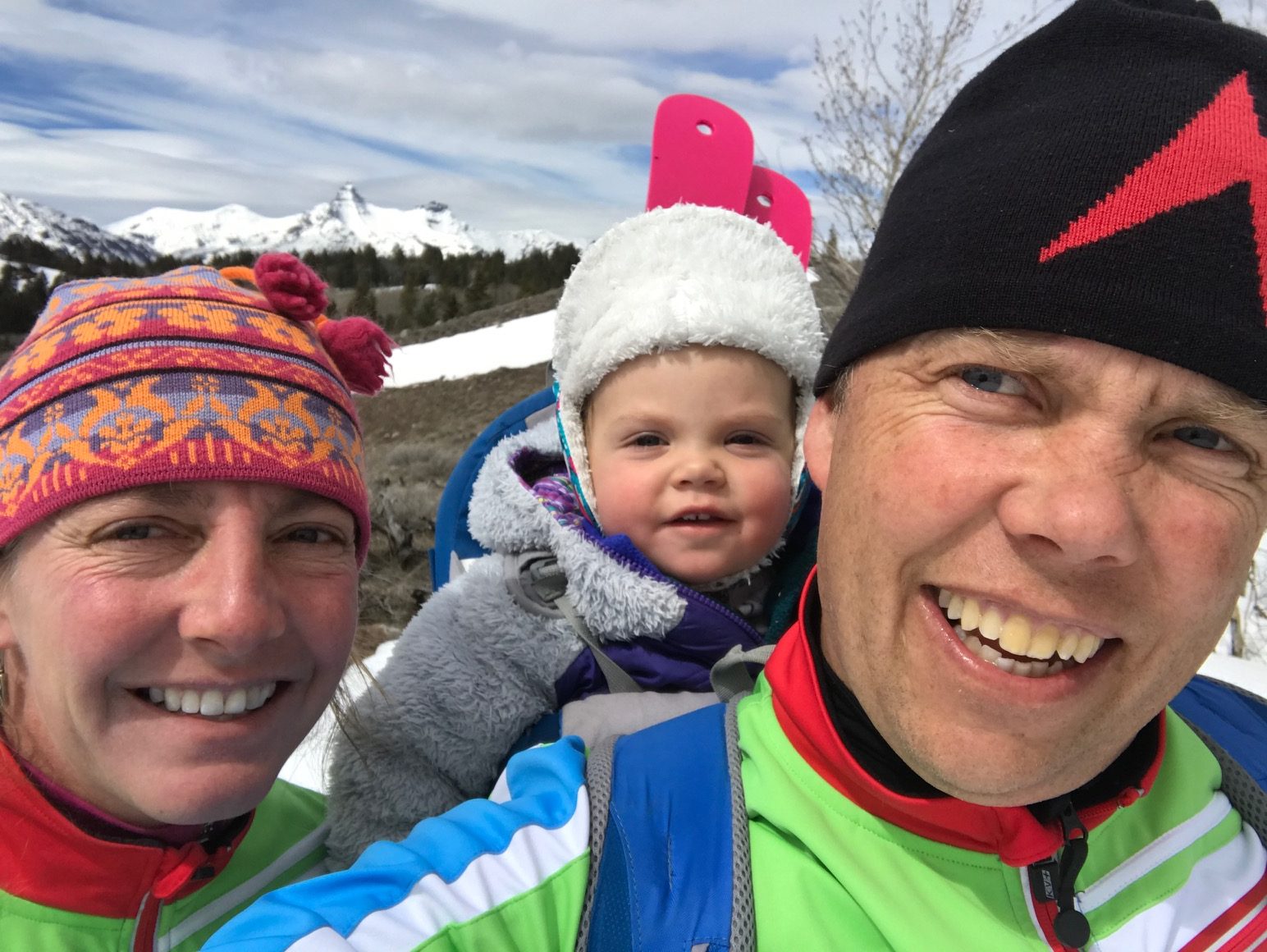
    Will Sweetser with his wife Sarah Dominick and their 1-year-old daughter, Aesklyn, near their home in Cody, Wyo. (Courtesy photo)

    Former Headmaster Kirk Dwyer left that position effective June 2016, the school announced a full year in advance, vacating a position he had held since 2000. Dwyer was followed by Macomber, in a position that by this point had the job title of head of school. But less than ten months later Macomber was on his way out; a BMA press release dated April 13, 2017, said that he was resigning for “personal reasons.” Steve Berlack was announced as interim head of school for the next few months. 

    Two months later, a June 2 press release announced the school’s fourth leader in roughly a year, Booker. The press release stated that Booker would be the next head of school “effective July 31, 2017.” In practice, Booker is currently listed on the BMA staff directory as head of school, and was media representative Flanagan’s recommendation for an appropriate person to answer FasterSkier’s questions about Sweetser and the school’s nordic program.

    Sweetser “started having conversations with Burke in late February,” he told FasterSkier, and accepted the position at BMA on “March 3 or 4.” Macomber was the BMA head of school at the time that Sweetser would have been discussing his potential employment with the school. By the time Sweetser was no longer employed by BMA in late June or early July, first Berlack and then Booker had assumed that role.

    Booker gave only the polite placeholder response quoted above to a follow-up email asking whether there is any connection between a change in school leadership and a change in Sweetser’s employment status.

    What happens next

    As Sweetser intimated, there may be litigation between the parties in the future. As of Tuesday afternoon, docket searches suggested that no case involving Sweetser and BMA had been filed in either Vermont state or federal court. (There are numerous steps that often precede the filing of a formal civil lawsuit, such as letters between the parties and attempts to reach a settlement without resorting to litigation.)

    The future of the BMA nordic program, which dates back over 30 years and counts U.S. Ski Team athletes Liz Stephen and Ida Sargent and NCAA champion Sam Tarling as its most prominent alumni, is also unclear.

    Sweetser said in May that “Priority number one” for his first year there was “to recruit.” He added, “My first priority is rekindling that core group [of nordic athletes]. We do have interest. Two kids are committed to coming and I am in discussions with several others that I think we will start the year between four and six athletes for next year. My goal is to have enough athletes on campus to have a consistent group of somewhere between 18 to 24 athletes. I recognize that is going to take a while, but that will be a program that is several coaches, full-age cohort in both men’s and women’s high school ages. I am very optimistic about the potential.”

    (FasterSkier has been unable to contact any athletes who were recruited to BMA for nordic skiing with Sweetser this fall. If you would like to speak with FasterSkier about this, you may email gavin (at) fasterskier.com.)

    This potential comes with a steep price tag: annual tuition at BMA is over $55,000 for 2017/2018 (down to $42,000 for a day student needing tuition alone, sans room and board). “Approximately one third” of the 66-person student body received financial aid in 2016/2017.

    The fall semester for the 2017/2018 academic year begins on Aug. 14. 

  • Q&A: Burke New Head Coach Will Sweetser

    Q&A: Burke New Head Coach Will Sweetser

    Will Sweetser snaps a selfie with his wife Sarah Dominick and their 1-year-old daughter, Aesklyn, near their home in Cody, Wyo. Sweetser recently accepted a position as head coach of Burke Mountain Academy’s nordic program in East Burke, Vt. (Courtesy photo)

    If you are from New England, you’ve probably heard of Will Sweetser. Originally from Auburn, Maine, Sweetser, 47, has been coaching nordic for the last 25 years. He skied for Dartmouth and coached at Bates College, the Jackson Hole Ski Club, Carrabassett Valley Academy, and Rangeley Lakes Ski Club before spending 15 years with Maine Winter Sports Center (MWSC) from 2000-2015. He started with MWSC as a cross-country coach and evolved into its competitive programs director, but in 2015, MWSC announced its Olympic Development Team was being restructured. It changed its name to the Outdoor Sports Institute and expanded its mission to four seasons of outdoor sports in Maine.

    With a baby on the way, Sweetser and his wife, Sarah Dominick, a former assistant nordic coach at Bowdoin College, decided to leave their home in Stockholm, Maine, and move west to Cody, Wyo. There, the two started a post-grad, gap-year program called Mountain Endurance Sports, which also offered personalized coaching services and an online ski store. Last season in its second year, the program had two post-grads, Lance McKenney and Daniel Streinz. McKenney placed 20th in the classic sprint at 2017 Junior World Championships in Utah, and according to Sweetser, Streinz ended the season with the best International Ski Federation (FIS) point ranking of any junior man in the U.S.

    In March, the Burke Mountain Academy in East Burke, Vt., announced Sweetser would be returning back to New England to serve as its new head nordic coach. He said he accepted the job in early March and with his wife Sarah and their one-and-a-half-year-old daughter, Aesklyn, the family of three planned to head East in June for the first training camp of the season at Burke.

    FasterSkier caught up with Sweetser on the phone earlier this month from his current home in Cody.

    ***

    FasterSkier: What drew you to Burke and back to New England?

    Will Sweetser: My wife and I spent 20 years in Maine, and I grew up in Maine. I love the East, really, I’m a Mainer through and through, but certainly New England has been my home. My wife and I did something very similar to this 20 years ago, we moved out West after I had been coaching for a while in the East, in order to try to race, and we made it about a similar amount of time, about two years. I guess I would say my wife loves the trees, she misses them, that’s part of it.

    Part of the move out here was to get a break after MWSC and to get a chance to be with family. I mean, I was constantly putting in 60 to 75 hour weeks at MWSC, so it was a good opportunity for me to change things up. I looked at jobs over those two years and had conversations with a number of different options, and Burke has been the best fit for us. Part of the attraction is that it is a very small rural town, it feels like a lot like where we just were in Maine, at the same time, I can drive an hour and 15 minutes and be in Hanover, where I could drive an hour fifteen in northern Maine and still be absolute nowhere.

    It’s a good change for us, but it preserves a lot of the things we really loved about Maine, while offering us an opportunity. … We were looking for a place to raise our daughter, the opportunity to raise her somewhere the strive for excellence is real so that was a big draw. And last, it seems like a great fit for both of us to be able to work there when the time is right with our family. We felt really welcomed there.


    FS: How difficult of a decision was that?

    WS: Like I said, I had other job offers; I interviewed at other places the last two years. It was pretty easy for us to decide that those things weren’t right. … It wasn’t a difficult decision, every time you move it’s a big deal, so we wanted to make sure the fit was right. We spent quite a bit of time there looking things over, and we tried to do a good job making that decision with our eyes wide open, so we spent a better part of a week on campus, and I went back and visited again.


    FS: When did the hiring process start and how long did it take?

    WS: It was all pretty quick. I started having conversations with Burke in late February, and we went and visited the last couple days of February and first couple days of March and I accepted a position March 3 or 4. We knew that we were looking for something, I talked to groups in Canada, and I interviewed for two other positions while I was out East, but I was recruiting for Burke by the time JN’s [Junior Nationals] started [in March].


    FS: What are your key priorities in your first year at Burke and what is the status of its nordic program?

    WS: Priority number one is to recruit. I don’t know if you know the history of Burke, but it’s a longstanding nordic program, for over 30 years they’ve had a nordic program, and they produced some excellent skiers, from people like [U.S. Ski Team members] Liz Stephen and Ida Sargent, [and Ford Sayre’s] Sam Tarling a little after them. Heading into this with them having had no athletes and no coaches last year, essentially the program was dead. In name it was not dead, and they have always had a nordic skier on their school logo, and the board of directors seemed totally disinclined to let nordic die, so I feel like there is a tremendous support for nordic at the school.

    My first priority is rekindling that core group. We do have interest. Two kids are committed to coming and I am in discussions with several others that I think we will start the year between four and six athletes for next year. My goal is to have enough athletes on campus to have a consistent group of somewhere between 18 to 24 athletes. I recognize that is going to take a while, but that will be a program that is several coaches, full-age cohort in both men’s and women’s high school ages. I am very optimistic about the potential. There are a lot of great things that Burke has to offer, such as skiing on campus, which I think is a big plus, so we are looking at homologating a couple of race courses right there. We are going to grow a fairly robust gap-year program, and we will have a pretty extensive camp schedule coming up. I will run one camp this summer and then see where that leads us.


    Will Sweetser, former MWSC competitive programs director, holding Welly Ramsey, whom he coached for six years at the MWSC, during a season-ending team ski in April 2015 in Fort Kent, Maine. (Photo: Facebook/Welly Ramsey)

    FS: How is the Burke position different than your position at Maine Winter Sports Center?

    WS: Well, one, it’s vastly less travel. I am going to spend, I don’t even want to guess the number of fewer miles I am going to drive, but a significant amount. The proximity of other strong programs is just outstanding. One of the things that makes New England the strongest region in the nation is that we have such a strong club system, thanks in large part to NENSA [New England Nordic Ski Association], but the proximity to GMVS [Green Mountain Valley School] and Stratton and Craftsbury is just great. I think it is excellent that all those programs are in Vermont, not too far from one another and can bang heads, and for that matter, [NENSA Head Cross-Country Coach] Margaret [Maher’s] program over at Lake Placid, and then the rekindling of the Dublin School if you go a little further out. I think that if you drew a radius around [Vermont’s] upper valley, you really get to some super-strong programs.

    Some of the other things that I think will really help Burke and that I did not have access to at MWSC is I got access to snowmaking both at Burke and at Craftsbury and I think I am going to be able to capitalize on that. And it will be different in that my duties are different. My role at MWSC was in no way shape or form confined to coaching junior racers. Almost the whole time I was there, I had extensive other duties: community building, facilities management. It’s not like those things are going to go away, but it’s all right there, which is really different from driving across the whole state of Maine trying to grow those things. It is much more ‘grow it at home’ and I will have a lot more contact hours with athletes than I have ever been able to have.


    FS: Will Mountain Endurance Sports continue and if so in what capacity?

    WS: It will happen in a modified iteration, the latest iteration. We are still working on the ins and outs of where to keep the business. It very well may change name, certainly we will continue to retail and do team sales for Maplus wax and Rex Ski Wax, we are working on details with how our arrangement with KV+ will move forward, and as far as the coaching goes, no, we are not going to do a gap-year program anymore — that’s going to be Burke — but I will continue a coaching relationship with some athletes who are older than high school. I am still talking with several athletes that I have worked with in the past about their athletic future. I am for sure working with Austin Huneck, who was with me for two gap years with MWSC then he was a standout freshman at the University of New Mexico two years ago, spent last year in Sweden not ski racing, but now he is coming back to ski racing. I am working with him as his coach, and somehow, he and a few other guys are going to be part of, I don’t know what to call it yet, maybe like a Burke Mountain training group, something like that.  It’s not a full senior program yet, but give me a few years.


    FS: What has kept you coaching and in the sport for the last 25 years?

    WS: It was really at Dartmouth where I developed a passion for skiing and I coached first. I was a writing major. I was writing and coaching, and then I was teaching English and coaching, and then it turned out I could make a better living coaching. But more than that, I lost a brother to drugs in 1998 and since then I have been pretty motivated to help kids make better choices, and I have been doing that through skiing ever since then, so that’s a lot of what has kept me in it. That is my driving passion: working with kids and helping them make good decisions, and that was a big piece of MWSC. And the other piece is that my wife and I have done this for essentially all our adult lives, we really enjoy the lifestyle, the people we get to work with are fantastic. It’s a great way to travel and it’s a great way see other parts of the world. We really enjoy just being outdoors and being fit. Even two years ago, I wasn’t coaching essentially, we were out in the mountains hiking, skiing, doing all the things you do for ski training, just because we love them, so it’s a really easy fit for us, and we look forward to sharing more of those things with people who are passionate about those at Burke. The Burke community is really motivated.


    FS: Do you know where you will be living yet when you move in June?

    WS: We don’t know; we would like to know. I am hoping by the time I go to run this camp in June that I will know and I will be able to look at where we will live and then can pack appropriately. We are leaving a lot of our stuff here. Cody is not a ski town, but its a great place to train for skiing. The elevation is excellent, the climate is excellent, the mountain biking is growing in leaps and bounds, so the trail system is fantastic right in town. Cody sits at 5,000 feet and the mountains around it goes up to 12,000 feet. If everything goes as well as we think it’s going to go, I am sure we will have a permanent location at Burke in a few years. For now, I anticipate that we will live near or on campus.

    We are looking forward to being back. It really does feel like our family. The New England ski family feels like our family. Even on the circuit the last two years, we have been astonished by the continued support we get from New England, even when we lived out here, so it really does feel like a homecoming for us.

  • Another Scandinavian Trip in the Books: A Burke Tale

    Another Scandinavian Trip in the Books: A Burke Tale

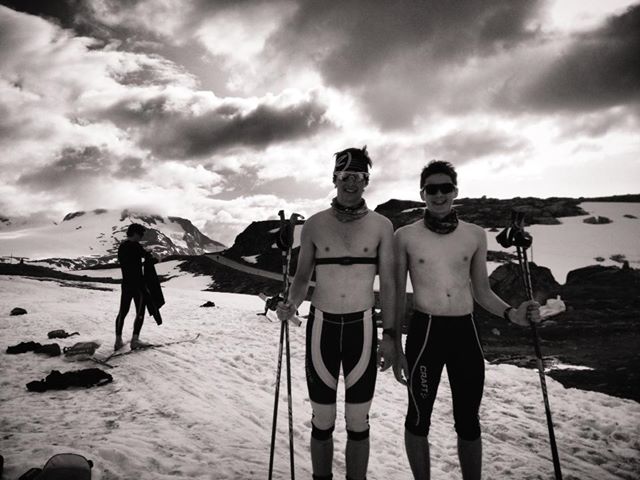
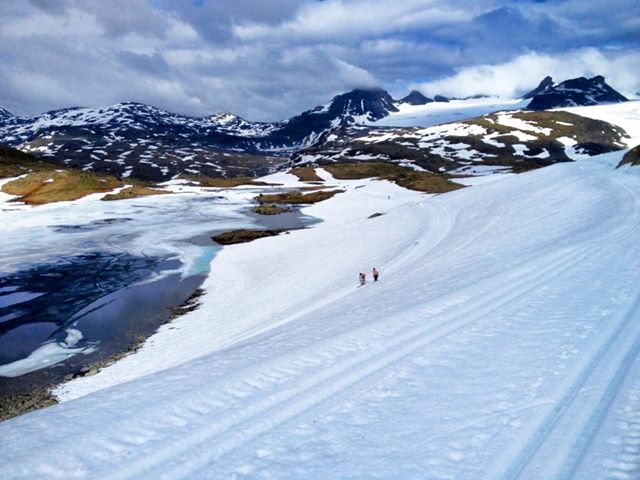
    Warren Taylor (l) and Charlie Greenberg skiing at Sognefjell glacier in Norway during Burke Mountain Academy's recent annual Scandinavian training camp. (All photos courtesy of Kate Barton and Koby Gordon)
    Warren Taylor (l) and Charlie Greenberg skiing at Sognefjell glacier in Norway during Burke Mountain Academy’s recent Scandinavian trip from June 11-July 1. (All photos courtesy of Kate Barton and Koby Gordon)

    By Warren Taylor | Burke Mountain Academy

    Editor’s Note: The following is a firsthand account from 17-year-old Warren Taylor, an incoming senior at Burke Mountain Academy in East Burke, Vt., who recently returned from his third trip to the academy’s annual Scandinavian nordic-training camp.

    I first went to Sweden and Norway two years ago with Pete Phillips, Matt Johnson and a big group of skiers, and the next year with Kate Barton and Simi Hamilton. This year, with Kate, my coach at Burke, we were there for just under three weeks, arriving on June 11th and flying out July 1st. I have done camps with Burke for around four years now, but this past year was my first as a student there.

    ***

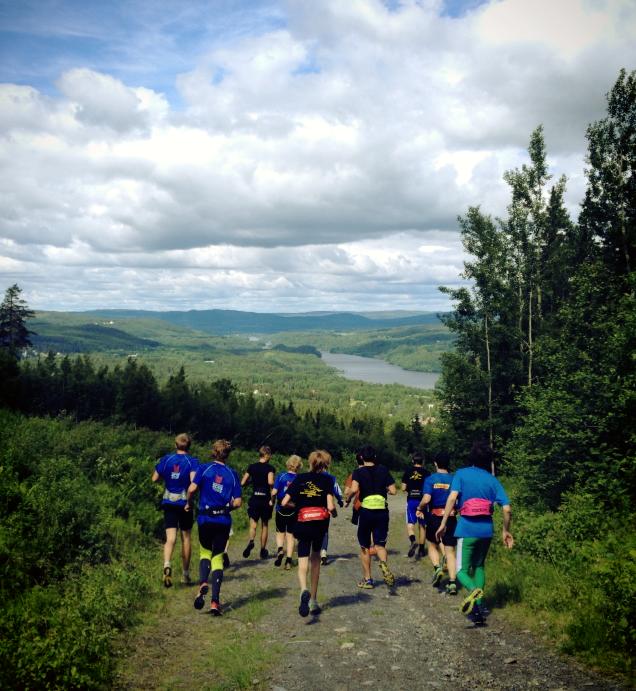
    Burke nordic skiers running down to the start of the Hallsta Test in Sweden. (All photos courtesy of Kate Barton and Koby Gordon)
    Burke skiers running down to the start of the Hallsta Test in Sweden during its annual Scandinavian training camp.


    I’m not much of a city boy, but I did my best to guide us out of Stockholm. The multitude of unmarked one-way streets almost sealed our defeat. After finding the E4 highway, we headed north to Sollefteå. Tim Regan, Koby Gordon, Charlie Greenberg, Kate Barton, and I had all made it to Sweden.

    Arriving in Sollefteå, we were a little disappointed that the go-kart track so heavily advertised looked like it had been abandoned years before. We instead took an early night before starting a five-day camp with the Sollefteå Skidgymnasium. This training camp took place at a five-star hotel right next to a seven-kilometer rollerski track overlooking the town. Next to the hotel was a pair of old wooden ski jumps built far off the ground and swaying in the wind above the trees.

    We started the camp with short running intervals and a strength session where Robin Bryntesson, a former Swedish national team skier, impressed us all with his uncanny ability to walk around on his hands and balance on just one. After a few days of rollerskiing, an orienteering race and a brutal race down the river in the least hydrodynamic boat imaginable (pretty much a square dock), we did the famed Hallsta Test.

    The two-kilometer uphill-running test went from the town straight up and past the hotel, almost to the very top of the mountain. We were told the record was 7:50, and even Swedish World Champion Johan Olsson was never able to break it. This was one of the tougher tests I’ve done, but I felt surprisingly good, getting a time of 10:09, just beat out by the younger coaches and a Swede named Jacob who was also my roommate during the camp.

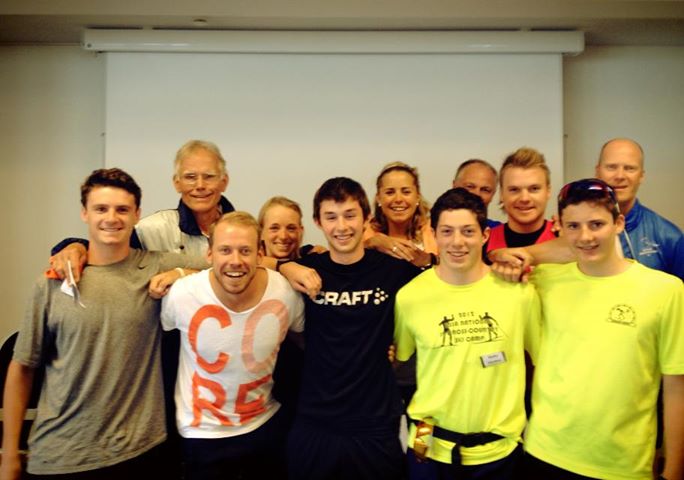
    Us, Emil, Liz, Anna, and coaches - Bengt, Tony, Robin, and Per-Ola
    Us with Emil, Liz, Anna, and coaches Bengt, Tony, Robin, and Per-Ola.

    Later in the week we saw U.S. national team skier Liz Stephen, who came up with Sweden’s Anna Haag and Emil Jönsson to do a 30 k skate time trial on the rollerski track. When we had a chance to talk with them, Emil jokingly told us that he had been putting in around 200 hours of training per month, but he had just gotten his ticket to Sochi, so now he wouldn’t have to train at all.

    After a three-hour run through marshes, a few technique sessions with the Swedish coaches, and a nice afternoon in town playing some volleyball and basketball, the camp ended. We headed right to a town in northern Sweden called Östersund for a night of camping and a short roller ski before we went up to Bruksvallarna, a small town in northwestern Sweden that borders Norway.

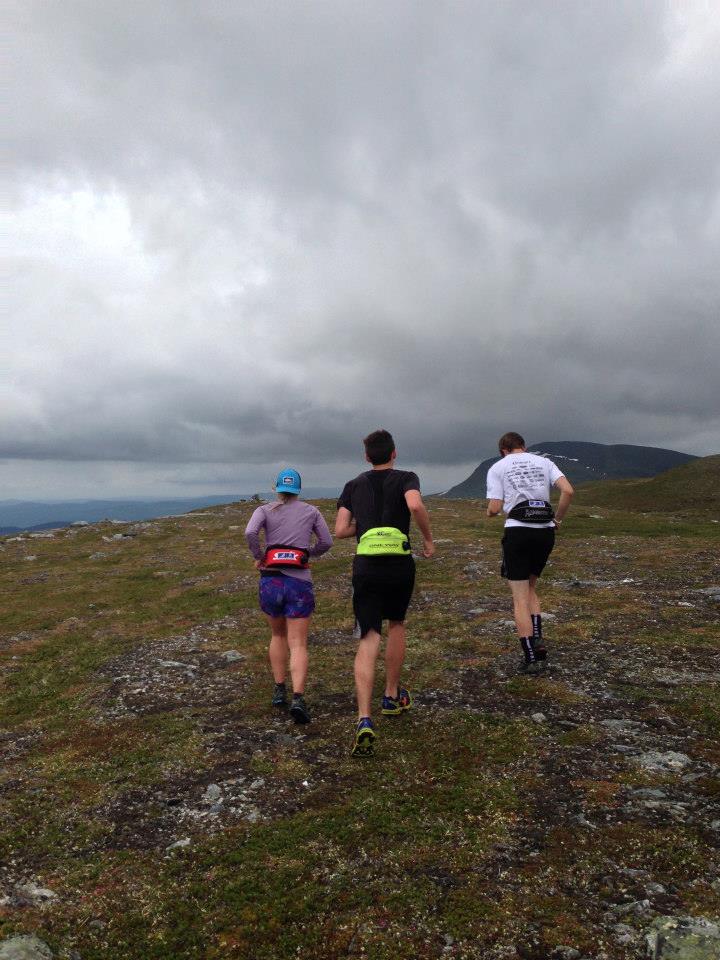
    Burke Mountain Academy skiers during a 4 1/2-hour run near Bruksvallarna, Sweden. (All photos courtesy of Kate Barton and Koby Gordon)
    Burke Mountain Academy skiers during a 4 1/2-hour run near Bruksvallarna, Sweden.

    We tried to find something to do on Midsummer, a national holiday for the longest day of the year at Östersund, but the guy at a tourist center directed us to a church up in the hills where he said there would be festivities. Unfortunately, the only thing going on was a Swedish sermon that felt quite uncomfortable to us as foreigners who didn’t speak the language. We had all heard about some crazy parties during this holiday, but the town was empty and we went to bed wondering where on earth the Swedish population had gone.

    Bruksvallarna was a ghost town as well, and we searched in vain for its “downtown.” We eventually found that there was no downtown, just a little grocery store across from our cabin that did not open at all the first day, forcing us to drive half an hour to the next town over.

    The next day we went out for an epic 4 1/2-hour run in the mountains up the road from our little cabin. We waded through knee-deep marshes and climbed through brambles and bushes out to a lake that we saw in the horizon from the first peak we climbed.

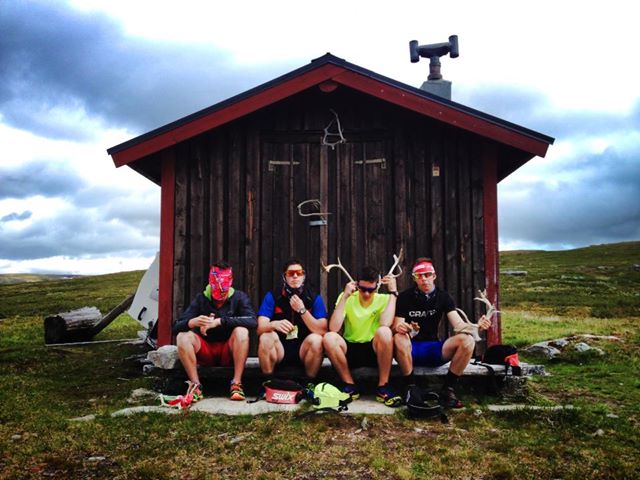
    On the way back, we stopped by a small red building that we picked out in the distance. A little goat path ran along the patches of snow to this house, and we could see people hiking along it. It turned out to be a fully functional and a surprisingly nice waffle house at the top of a mountain.

    Little cabin by the lake we ran to (with antlers we found along the way). (All photos courtesy of Kate Barton and Koby Gordon)
    Little cabin by the lake we ran to (with antlers we found along the way).

    I can honestly say I’ve never had a tastier waffle, probably because I ate it after four hours of running and hiking.

    Unfortunately, we were only in Bruksvallarna for a day and a half, but we were all excited to drive west to the snow in Norway at Sognefjell. Although it poured during our first ski, I stopped noticing it after a while, just glad to be back on snow. However, afterwards I did notice how unbelievably wet all my clothes were.

    We spent two nights camping near the longest fjord in Norway with a glacial waterfall running next to the campground. We then moved to a hotel I would argue is one of the best hotels on the planet. An all you can eat buffet, skiing all day, a drying room for all our clothes, and famous skiers at every corner. What more do you need?

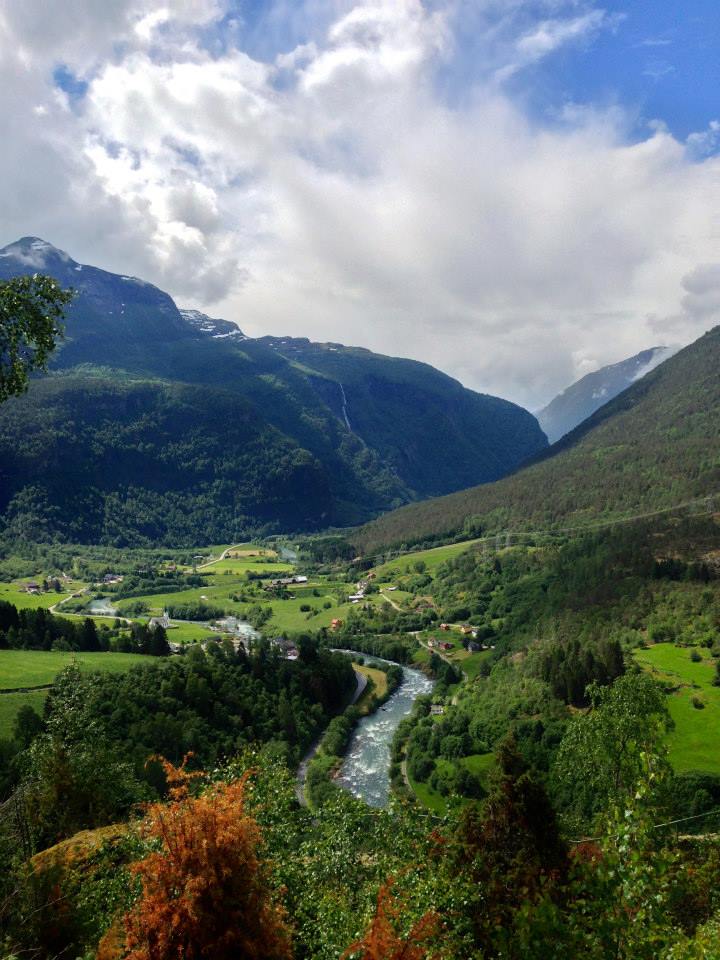
    Our drive down to the fjord. (All photos courtesy of Kate Barton and Koby Gordon)
    Our drive down to the fjord

    We had three glory days at the glacier before heading back to the U.S. All we did was pile hours, sleep, and eat too much brown cheese. We encountered plenty of sun, making all but one of the skis radiant and rainless. Although the trails were deteriorating quickly as the snow melted, workers did a fantastic job of rerouting the trails so we were able to keep skiing on a 7 k loop.

    After those three days, we began our odyssey back to the U.S. Following a seven-hour drive to Oslo, we camped on a soccer field by the highway. One more six-hour drive to Stockholm and we were halfway home.

    We walked around the city for an afternoon and saw a sweet Red Bull competition. People were trying desperately to fly cardboard planes as far as they could off a ramp into the water flowing through Stockholm. Unfortunately, we did have some trouble finding our way back to the van.

    I’ll miss the sunny days by the fjord, the scenic mountain runs in Bruksvallarna, the people I met, and, of course, the brown cheese at Sognefjell.

    All the training and technique gains made during this trip will push me forward as I continue to ski. Hopefully I’ll be back next year to experience it all again.

     Sognefjell Glacier Skiing!  (All photos courtesy of Kate Barton and Koby Gordon)
    Sognefjell Glacier Skiing!
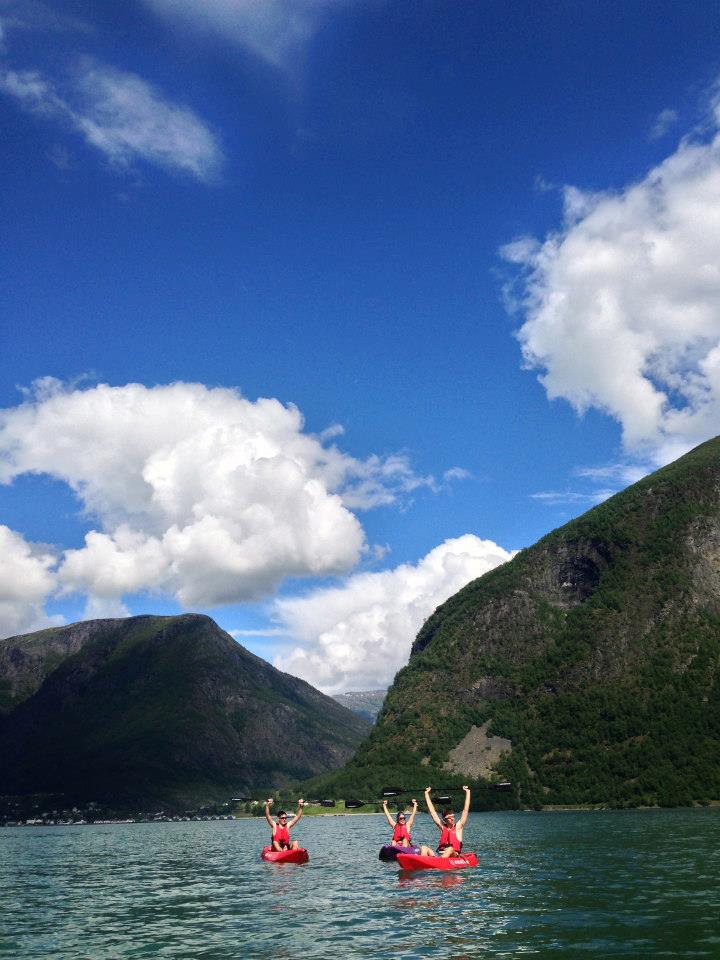
    Sunny kayak in the fjord  (All photos courtesy of Kate Barton and Koby Gordon)
    Sunny kayak in the fjord
  • US Ski Team Gives Back

    US Ski Team Gives Back

    Burke Mountain Academy’s Nordic Christmas Camp was made special by the presence and enthusiastic help of US Ski Team Coach Matt Whitcomb and athlete Liz Stephen. Both Liz and Matt are Burke alumnae; Liz as a student and Matt as the former Head Nordic Coach. Each is also deeply committed toyoung athletes all across the country improve and enjoy the challenging ride of a cross country skier. Matt was with the camp for the first Eastern Cup JOQ’s, and when he wasn’t waxing skis he was greeting and encouraging starters toeing the line at the great venue at Trapp Family Lodge near Stowe, Vermont. After the Stowe races, the camp moved back to Burke, and more BMA alumnae joined to help. Harry Poole, Kirsten Gill, and Caitlin Curran, all attending Bates College, and Paul Smith from UVM were working one-on-one with each camper. Matt and Liz provided good humored, personal, and seriously focused help to all the athletes.

    It was great start to what we hope will be a BMA Christmas Tradition.

    Thanks to the US Ski Team for giving staff and team the chance to work with us, Matt and Liz for coming back to Burke on their holiday time, and all the alumnae athletes for giving time back to Burke and to kids getting into the sport. And, of course to the juniors who signed up to race with us and see what BMA was all about.

    Pete Phillips is the Head Coach of Burke Mountain Academy