From the FasterSkier archive — posts syndicated from athletes’ and coaches’ own blogs between 2004 and 2012, kept online as published. Current coverage is at fasterskier.com.

Tag: burlington

  • Rooted in Vermont: Tabor Greenberg’s Steady Rise from the Mad River Valley to the U.S. Ski Team

    Rooted in Vermont: Tabor Greenberg’s Steady Rise from the Mad River Valley to the U.S. Ski Team

    The hills above Moretown are the kind that teach you to move without thinking about it: long grades through maple and birch, a tangle of dirt roads, a thousand sneaky rollers perfect for running shoes or a classic stride. From the valley floor, you can see Sugarbush and Mad River Glen, their lifts still in October and their trails crisscrossed by hikers who’ll be skiers in a few short weeks. This is the terrain that shaped Tabor Greenberg, and it’s never been far from him. He grew up here, learned to love motion here, and now—a few towns and a handful of highway exits away—wears UVM green while settling into his sophomore year and his first season as a member of the U.S. Cross-Country Ski Team.

    He smiles about the small details—like the tiny airfield that doubles as the local ski area where he first wore Nordic skis—and shrugs at the big ones, the ones that make headlines. He’s Vermont in that way: spare with words, long on work. “I’ve been skiing my whole life,” he says, recalling the first slip-on-your-boots skis and the BKL weekends that threaded winters together.

    Tabor Greenberg at the 2024 Junior Nationals in Lake Placid, New York.  (Photo: courtesy of Olympic Regional Development Authority / Phillip Belena)

    His dad was an alpine racer who transitioned to Nordic skiing after sustaining injuries; the family kept everyone in motion, engaging in hiking and running in the summer, as well as soccer and lacrosse.

    By seventh grade, Greenberg had joined GMVS, stepping into a team culture that combined high standards with a sense of play. Older athletes, such as Brian Bushy and Josh Valentine, became the big brothers who made training feel like a privilege rather than a chore. “Their enthusiasm always made the workouts more fun,” he says. “Seeing them go to U18s in Estonia or Youth Olympics, I didn’t even know what those things were at first. I just saw them going to Europe to do these bigger races and thought, ‘That seems fun.’ I want to do that.”

    That is as close to a “secret formula” as you’ll get from him. There’s no magic threshold session in his story; it’s a years-long accumulation of good days outside with people he liked being around. “Most of my motivation comes from that,” he says of the lifestyle—then adds, almost apologetically, that he’s built the discipline to do the work even when motivation lags.

    A tough first year—and a reset

    College arrived with promise and some hard lessons. Greenberg’s first season at UVM was marred by extended illness. He red-shirted, raced sparingly, and spent too many days horizontal. “I struggled being sick all season,” he says. “So this year it’s mainly been just trying to stay healthy—good recovery, sleeping a lot, staying hydrated, having a good connection to doctors if something does come up.”

    UVM’s Head Coach, Patrick Weaver, doesn’t sugarcoat it. “Tabor’s first year was undoubtedly a tough transition, as he came in dealing with an extended illness that he struggled with throughout the year, so he essentially ended up not racing for UVM at all,” Weaver says. “This year he has come back in great shape and stayed healthy so far, so that’s been great—to see what he can do as a healthy person.”

    Weaver sees something else, too: a young athlete who changes the room simply by how he works. “He works extremely hard, and it’s his work ethic that’s been a valuable asset to the team,” says Weaver. “Leading by example like this helps bring up the overall level of the team.”

    And there’s the local angle that still means something in Burlington. “Having a Vermonter on the team is super important for the program. Having a fast Vermonter on the team is even better,” Weaver says. “We felt very fortunate that Tabor wanted to stay in Vermont and represent UVM and the state. This is something he’s super proud of, which is really fun to see.”

    Engineering the comeback

    Ask Greenberg about academics, and he answers as matter-of-factly as he does about training. He’s a mechanical engineering major, plotting a five-year path that allows the academic load to align with travel and race blocks. “I can do 12 credits a semester instead of 15 or 16 for the most part,” he explains. “It should ease the load a bit… hopefully manageable while traveling.”

    If the men’s U.S. Ski Team has a surprising number of engineers, Greenberg doesn’t read much into it. The field simply makes sense to him, a way to invest time in “quality concepts” while keeping a door open for life after skiing. But it’s easy to see the overlap when he talks technique: leaning farther into the hill in both V1 and V2, getting the arms forward, experimenting with double-pole positions, learning to find “forward without actually getting the feet up,” and keeping his shoulders relaxed while playing with different hip-drive patterns. He’s not obsessing over new lifts in the weight room—”not really,” he says when asked about special gym work—so much as building a better mental model and then holding those shapes during long skis.

    And there’s a plan behind the plan. Greenberg still consults with longtime coach Colin Rogers while working daily with Weaver. “Especially when I’m not at school, my plan is I kind of run it by both Colin and Patrick,” he says. “Going into races, I’ll make a plan that makes sense to both of them.” The dual-mentorship model mirrors the arc of other Vermonters who’ve succeeded after leaving UVM, and it’s part of why Weaver talks about schedules and guardrails. The U.S. Ski Team opens doors—camps, resources, broader input—but also adds travel and volume. “With all the other opportunities available, it is challenging to create a schedule that ensures a student-athlete does not overextend themselves,” Weaver says. “We’re working on it to ensure he can excel academically and still maintain a high level of performance in skiing.”

    The day the D Team call came

    The call confirming his spot on the U.S. Ski Team didn’t arrive with a trumpet solo; it found Greenberg on a beach in Mexico. He was decompressing after a winter that had felt like a dead end. “I was pretty unhappy with skiing at the moment,” he admits. Then teammate Murphy Kimball texted to say his points might have slipped him under the sub-400 distance-racing criterion. “Later, Kristen [Bourne] called me,” Greenberg says. He already knew by then, and his reaction was classic Tabor—pleased but unsentimental. “It’s cool to be on the national team, but it’s not really, like, a game-changer. On the D Team, now you race World Cups and see there is still work to do.”

    That pragmatism tracks with how the spot was earned. Last year, sick more often than healthy, he raced only eight or nine times. But when he did line up healthy, he made it count—most notably at the Cable SuperTour 20k classic mass start, where he finished fifth in a front group on a good points day. Those points, stacked with a handful of other starts, slid him inside the threshold.

    U.S. Head Coach Matt Whitcomb sees a different kind of threshold in Greenberg, one that’s about temperament and fit. “This kid, he’s a really special kid,” Whitcomb says. “He takes a little bit to get to know. He’s a little quiet, but what I learned from his coaches is that he is always listening. You might be having a meeting with him, and he’s kind of looking off to the side a little bit, and you think you’ve lost him. And then there’s this little pause, and he’ll come right back at you with just the most on-point question.” Whitcomb calls that attentiveness a key to belonging on a team where the banter never stops. “Our guys rip on each other all day—in the right way, the loving way—and I see Tabor instantly plugging into the men’s team already.”

    It’s not just the ear; it’s the engine. Whitcomb points to Greenberg’s anchor leg on the 2023 U18 relay—”he came from way behind and caught Norway in the stadium”—as a marker of racecraft and mindset. “Tabor’s that kind of competitor,” Whitcomb says. “He’s a hunter, both literally and figuratively.” The literal part showed up at the team’s Utah camp; the figurative part is the one that matters in March.

    Vermont pride, Vermont places

    Greenberg didn’t choose UVM because he was unaware of other options available. He did the homework, looked West, and still chose home. “Growing up in Vermont, we’d go to an Eastern Cup that overlapped with Carnival, and it was always the UVM guys winning,” he says. “When I was younger, I was like, these guys are the best there is then… I really enjoyed the venues here more than out West. I kind of just had a gut feeling this was the right place.”

    Ask him where he’d send an out-of-state friend to understand his Vermont, and he has a ready list: Trapp Family Lodge when the snow is deep; Mad River Glen on a powder day; the Long Trail from Lincoln Gap to Appalachian Gap and on to Waterbury when the leaves go red and gold. He’s not performing here; this is simply the life that restores him. Between classes and training blocks, he’ll thread in a bit of fishing, the occasional bow-hunting session if the calendar allows. In Utah, he saw a pair of bucks at 250 yards and later walked to within 80 before choosing—wisely—not to take the shot; he hadn’t practiced enough. “It’s definitely peaceful,” he says of being in the woods, then stops short of over-claiming the performance benefits. “I don’t know if there’s that much of a correlation.”

    Maybe he doesn’t have to draw the line. Anyone who’s tried to race well knows that a happy athlete is a better one, and his habits read like a local’s guide to contentment: early bedtimes, long skis, ridge-line hikes, a few casts before dinner.

    Goals, set quietly

    Greenberg’s target list for the season is crisp: Junior Worlds, NCAAs in Bozeman, and—if the form and selection break right—a World Cup start in Lake Placid. “Same game plan no matter what,” he says. “Ski fast.” The sequencing matters: peak well for Nationals and you put your Junior Worlds case on solid footing; hold fitness and you can ride the rhythm into March.

    For now, he trains with the UVM group and will tweak the plan as winter approaches. “Right now it’s pretty similar to everyone else,” he says. “In the winter, I’ll try to work in a few bigger weeks or blocks that’ll help me get ready for that March racing period.” If the path sounds simple, that’s the point. When you’ve just dug yourself out of a year of being sick, you don’t complicate success.

    What coaches see

    Whitcomb’s portrait is of a listener who processes information quickly and competes more intensely. “Thoughtful,” “very funny,” “great technician,” “great competitor”—words that land differently because they’re delivered with the caution of a coach who doesn’t over-praise. Whitcomb is equally quick to underscore the growth curve ahead. Greenberg absorbed a challenging year, he says, and handled the reset maturely. “He was very smart in his buildup this year, and he’s brought himself back to a very high quality level of training,“ Whitcomb says. “It’s going to be a fun career to watch.”

    The thing about top-30s

    The U.S. men’s program now has a new normal—medals and crystal-globe chases—but Whitcomb is adamant that the sport’s middle rungs still matter. A first World Cup top-30 for a young American is still a scene, a bus-wide celebration. “When a guy like Tabor or Lucas Wilmot gets their first top-30, it will be just as exciting for the team as someone, on that same day, on the podium,“ Whitcomb says. That’s the context for Greenberg’s ambitions: real, reachable steps on a ladder that’s higher than it used to be.

    The Vermont through-line

    It’s not nostalgia to suggest that place still matters in American skiing; it’s simply observation. Vermont has sent a steady stream of athletes into the national team pipeline, and UVM is a key contributor to that current. Greenberg is another link in that chain, one who still resembles the kid who ran those ridges, played those pickup games, followed older teammates into bigger arenas, and filled in the knowledge with discipline.

    Then there’s the image that may say more about him than the résumé line: a kid in Utah walking a buck into 80 yards and passing on the shot because the practice wasn’t there yet. It’s not caution; it’s calibration. It’s someone who knows the difference between wanting and being ready.

    If you’re looking for a template, that might be it. A Vermont upbringing that made movement a joyful experience. A high school program that made hard work fun. A first college season that reminded him that things can go sideways. A reset that prioritized health and attention to detail. Two coaches who trade notes and coordinate calendars so a student-athlete can keep a broader life in balance. And an athlete who understands he needs to put in lots of hard work to be ready to take the shot when it presents itself.


    Love Stories Like This? Help Keep Them Coming.

    Feature interviews like this one take time, access, and care to produce. If you value thoughtful storytelling and independent ski journalism, please consider becoming a Voluntary Subscriber. Your support directly fuels the work we do to cover the people, places, and moments that make our sport special.

    Join the FasterSkier community.


  • From Olympian to Coach to Mentor: Patrick Weaver, the Quiet Architect of UVM’s Ski Culture

    From Olympian to Coach to Mentor: Patrick Weaver, the Quiet Architect of UVM’s Ski Culture

    The first time you meet Patrick Weaver, you might not realize you’re talking to one of the most quietly influential coaches in American skiing. There’s no bravado, no self-promotion. Just an easy Vermont calm — a man who measures his words the same way his athletes measure their training: carefully, purposefully, with feel.

    On a fall morning, the UVM Nordic team threads through the mist at the Craftsbury Outdoor Center, the quiet hum of rollerskis against asphalt echoing in the distance. Weaver watches from the side, hands in his jacket pockets, hat pulled low. He doesn’t bark instructions. He doesn’t need to. The rhythm of his teams speaks for itself.

    Wilmington, Vermont’s Sophomore Luke Rizio. (Photo: Philip Belena/EISA)


    “I always say it’s not the individuals that make the team fast — it’s the team that makes the individuals fast,” he says. “Once they believe that, the motivation takes care of itself.”

    For nearly twenty years, that philosophy has shaped the University of Vermont into one of the most respected programs in NCAA skiing — not through hype or heavy recruiting, but through a culture of trust, humility, and balance.

    Lessons in Motion

    Weaver’s path to coaching wasn’t linear. It’s more like a relay through decades of ski mentors who left their fingerprints on his philosophy.

    “I never had one coach through my whole career,” he says. “There were a lot of influential people — high school, Stratton, college, the national team. I just learned to take things from each of them.”

    He spent a post-graduate year at Stratton Mountain School under Sverre Caldwell before skiing for Cory Schwartz at UNH — a relationship that would define his sense of what a team could feel like.

    “Cory was probably the most influential,” he says. “The way he ran that program — it was a family. I took that with me when I came to UVM.”

    After college, Weaver worked under a rotating cast of national and international coaches: Gordon Lange, Christer Skog, Sten Fjeldheim, Torbjørn Karlsen. Each brought a different rhythm to training. The mosaic of ideas shaped the adaptable style he’s known for today.

    “There’s not one way to coach,” Weaver says. “And because of my background, I’m not a ‘my way or the highway’ coach. I’ve seen too many ways that work.”

    Patrick Weaver racing in the 15 k Classic at the 2002 Olympics in Soldier Hollow, Utah. Weaver finished in 16th place. (Photo: UNH Ski Team)

    The Season He Cut His Hours

    In 2002, the year of his second Olympics, Weaver did something radical. He trained less.

    After years of logging 800-plus-hour seasons, he realized the grind was killing his joy. So he cut down to 600 hours — just one session a day, mornings only.

    “I was kind of burned out,” he says. “I’d dread the afternoon workouts. I loved the sport, but I wasn’t feeling good anymore. When I stopped doing the PM sessions, I felt better — I started looking forward to training again.”

    It’s a story he still tells his athletes, not as dogma but as permission. Permission to rest. Permission to find balance.

    “I’m never afraid to tell an athlete to train less,” he says. “Sometimes that’s the thing that gets them going faster.”

    That season became a turning point — not just in Weaver’s career, but in his view of what performance really means. It was the seed of a coaching style rooted not in metrics, but in intuition.

    Ben Ogden celebrates after sweeping the 2022 NCAA Championships in Midway, Utah. Ogden became 1 of only 4 skiers (alongside US Ski Team teammates Novie McCabe and Sophia Laukli) to win an NCAA Championship and represent the US at the Olympics in the same season. (Photo: Tobias Albrigtsen / @untraceableg)

    Coaching Ben Ogden — and the Art of Listening

    If Weaver’s name is not immediately known outside the NCAA world, it should be. One of his former athletes — UVM graduate Ben Ogden — is now one of the most dynamic racers on the World Cup circuit. Their partnership, built over seven years, is the epitome of Weaver’s coaching DNA: patient, collaborative, and deeply human.

    “I’m not Ben’s day-to-day coach,” he explains. “He’s got great people at Stratton and the U.S. Ski Team. But we talk — a lot. Strategy, planning, recovery, the big picture. And it’s never me saying, ‘Do this.’ We talk it through and find what makes sense logically.”

    That logic isn’t written in a spreadsheet. There are no lactate meters, no elaborate testing protocols.

    “We’re very unscientific,” Weaver says with a grin. “Ben appreciates the go-with-the-flow training plan. It’s all feel-based. If it feels good, we go with it.”

    The two share what they call the “Gus Workout” — a set of smooth, fast intervals inspired by Gus Schumacher. “It’s not about killing yourself,” Weaver says. “It’s about moving fast with good technique.”

    It’s fitting that one of America’s most promising World Cup athletes traces his development back to a coach who believes that skiing, at its best, is about rhythm and relationship more than data and drive.

    The UVM Way

    Weaver took over the Catamount program with a straightforward goal: strip away the clutter.

    “When I first got here, I just explored,” he says. “I found training venues close to campus — trails and loops that were right here. We stopped driving hours to ski. It simplified everything and gave athletes more time to recover.”

    That ethos — local, focused, efficient — defines UVM’s identity. Training isn’t glamorous, but it’s deliberate. The team atmosphere is close-knit, even familial. “There’s nothing special about UVM,” Weaver jokes, “and that’s what makes it special.”

    He points to the campus support network — trainers, nutritionists, sports psychologists, and strength coaches all under one roof — as one of the program’s hidden advantages. “It’s on par with professional teams,” he says. “The athletes can see everyone they need in one day.”

    That infrastructure helps athletes stay healthy, grounded, and balanced — which, for Weaver, is the real key to longevity.

    “We’ve had international athletes come in liking skiing, and they leave loving it,” he says. “That’s when I know we’ve done something right.”

    Junior Owen Young (Anchorage, Alaska) and Sophomore Fin Bailey (Peru, Vermont). (Photo: Phillip Belena/EISA)

    Through Change and Uncertainty

    Weaver has been around long enough to see college skiing evolve from a regional stepping stone to a legitimate World Cup pipeline. He’s also watched it collide with new realities: NIL money, early recruitment, the escalating costs of youth development.

    “When I was at UNH, I was training 500 hours a year and thought that was a lot,” he says. “Now I’ve got athletes training 700 or 800 hours — and managing school on top of it.”

    That dedication, he says, is a sign of progress — but also a warning.

    “Kids are training more and more at a younger age,” he says. “Sometimes it worries me. Are they doing it because they want to, or because they’re being told to?”

    He worries, too, about the economic side. The college landscape, reshaped by NIL and revenue sharing, could make Olympic sports harder to sustain.

    “We’re fundraising to pay athletes while big schools make $200 million a year off TV deals,” Weaver says. “It’s hard to see how that’s sustainable.”

    He laughs softly when asked what NCAA skiing looks like fifteen years from now. “I hope we’re still here,” he says. “I really do.”

    The Long Game

    If the world of college skiing is shifting underfoot, Weaver’s motivation remains rooted in something simple: people. Every year brings a new roster, a new set of personalities, a new chance to start fresh.

    “You do something long enough, it’s hard to stay motivated,” he admits. “But each fall I get new athletes, new relationships. First-year students I barely know become seniors I can’t believe are leaving. That cycle keeps it exciting.”

    He pauses, then adds, almost to himself:

    “Maybe that’s what success really is — watching them fall in love with skiing all over again.”

    UVM Sophomore Rose Horning from Leadville, Colorado. (Photo: Phillip Belena/EISA)


    Vermont’s Quiet Legacy

    Weaver doesn’t measure his legacy in NCAA titles or Olympic appearances, though UVM has had plenty of both. He measures it in the quiet mornings at Craftsbury, Jericho, or Sleepy Hollow, where athletes rediscover why they started skiing in the first place.

    He doesn’t see himself as a gatekeeper of results but as a caretaker of culture — one that prizes simplicity, joy, and belonging in a sport that often forgets how to slow down.

    In a world obsessed with metrics, Weaver’s story is a reminder: sometimes the best architectures of success are invisible — built in the space between workouts, in trust, and in the quiet confidence that skiing, at its best, should always be fun.

    “The best thing I can do,” he says, “is help people love the sport.”

    Coach Weaver chats with his first-year from St. Paul, MN, Hanna Koch. (Photo: Philip Belena/EISA)


  • NENSA Announces Rollerski Tour with Ludvig Sognen Jensen

    (Press release)

    Cross country skiing is an international sport, and with that in mind NENSA is very excited to announce that we are bringing Ludvig Sognen Jensen to New England for a week of high visibility rollerski events. Known to some by his social media handle @luddeyo, Jensen is the world’s fastest cross country skier in the new discipline of supersprint racing.

    His arrival in Boston on August 6th will kick off a week of events across the northeast including a stop at the U16 national camp in Lake Placid, NY where Ludvig will train with the U16s and face off head to head in a “celebrity deathmatch” sprint with Andy Newell on August 8th. Luddeyo will then make at stop on the afternoon of August 10th to the Burlington VT waterfront to set a NASTAR-like sprint course and time that athletes are welcome try to get as close to as they can! He will also make a guest of honor appearance at our App Gap Challenge rollerski race in Fayston, Vermont on August 11. There will be autograph sessions at High Peaks Cyclery in Lake Placid on August 8, and at the SkiRack in Burlington, VT on August 10.

    Ludvig’s agent Steffen Aabel tells us “​the absolutely [most fun] thing about working with Ludvig is to push our national sport forward with supersprint, where I can be witness to and support the pioneering work he puts down. Therefore it is incredibly cool to be able to announce that we together have created a collaboration that is part of developing sport on another continent.”

    The announcement of Ludvig’s visit is part of NENSA’s push to fill a gap in the programming available to US skiers in the off season. Earlier this summer we announced our partnership with Swenor Rollerskis, as well as our continued collaboration with SWIX in supporting our summer and fall NENSA Rollerski Race Series. This series will bring together elites, juniors, and masters to strengthen our ski community, and NENSA Competitive Director Justin Beckwith is also creating a bridge to Europe and international competition with the inclusion of Ludvig at the App Gap Challenge.

    There will be five races in the 2018 NENSA Rollerski Race Series. Athletes will be ranked by their best 3 of 5 placements, with senior athletes vying for a cash purse graciously provided by Marty and Kathy Hall. (1st: $500, 2nd: $300, 3rd: $200) ​T​he top skiers from pre-registration (lowest US Ski & Snowboard / FIS points) will race on NENSA’s matched sets of Swenor Rollerskis. Depending on race formats skis will be provided to the ​top-ten​ or ​top-twenty​ skiers of each gender. For more information please visit ​http://www.nensa.net/rollerski​ and for questions email ​justin@nensa.net​ and t​om@nensa.net​.

  • Under 23 Questions with Bill Harmeyer

    American Bill Harmeyer (University of Vermont) racing the first leg of the men's 4 x 5 k relay on the last day of 2017 Junior World Championships at Soldier Hollow. After he tagged off in sixth, his team went on to finish ninth. (Photo: FlyingPointRoad.com)
    American Bill Harmeyer (University of Vermont) racing the first leg of the men’s 4 x 5 k relay on the last day of 2017 Junior World Championships at Soldier Hollow. After he tagged off in sixth, his team went on to finish ninth. (Photo: FlyingPointRoad.com)

    In an effort to showcase the North Americans competing at this past week’s International Ski Federation (FIS) 2017 USANA Nordic Junior World Championships and U23 Cross Country World Championships at Soldier Hollow in Midway, Utah, we asked those qualifying athletes several questions about themselves — actually, we had them fill in the blanks. Here we have 19-year-old Bill Harmeyer, of the University of Vermont, who represented the U.S. at his first Junior Worlds.

    To start the week, Harmeyer reached the semifinals of the men’s classic sprint to place 12th in his first Junior Worlds race. He went on to finish 29th in the 10 k freestyle on Friday, and ninth in the men’s 4 x 5 k relay on Sunday.

    ***

    “My full name is Bill Harmeyer, but you can call me Bill. I was born in Burlington, Vt., raised in Underhill, Vt., and one thing you should know about my hometown is the mountain biking is sweet.

    I started cross-country skiing when I was three or four, thanks to Mom and Dad, my main sponsors and the real MVPs. I currently train in Burlington with the University of Vermont Ski Team.

    If I’m not skiing, you might find me in the library, pretending to study. If I had to pick a favorite book, it would be ‘Casino Royale‘.

    One of the things I’m most excited about for Junior Worlds at Soldier Hollow is everything, especially racing at Soldier Hollow again. One race I’m especially targeting there is the classic sprint.

    The best advice anyone ever gave me about skiing or racing was ‘the plan is always changing’ – Ben Husaby.

    One of the best race memories I have is sprinting to the line with Henry, my twin brother, and Ben Hegman when we were 11 years old at the Silver Fox Trot in Hanover, NH. Came down to a photo finish, which I lost.

    If I could meet one World Cup skier, it would be Charlotte Kalla.

    If I don’t end up being a professional skier, I’ll probably be a nurse.

    I’m missing seven days of school to be here, and my teachers are probably thinking, ‘He better show up to office hours.’

  • Under 23 Questions with Alayna Sonnesyn

    Alayna Sonnesyn (University of Vermont) racing to 33rd in the women's 10 k freestyle at 2017 U23 World Championships at Soldier Hollow in Midway, Utah. (Photo: FlyingPointRoad.com)
    Alayna Sonnesyn (University of Vermont) racing to 33rd in the women’s 10 k freestyle at 2017 U23 World Championships at Soldier Hollow in Midway, Utah. (Photo: FlyingPointRoad.com)

    In an effort to showcase the North Americans competing at this week’s International Ski Federation (FIS) 2017 USANA Nordic Junior World Championships and U23 Cross Country World Championships at Soldier Hollow in Midway, Utah, we asked those qualifying athletes several questions about themselves — actually, we had them fill in the blanks. Here we have 20-year-old Alayna Sonnesyn, of the University of Vermont, who’s representing the U.S. at her first U23 Worlds. On Thursday, she finished 33rd in the women’s 10 k freestyle. She’s listed as a starter for Saturday’s 20 k skiathlon.

    ***

    “My full name is Alayna Sonnesyn, but you can call me Alayna. I was born in Plymouth, Minn., raised in Plymouth, and one thing you should know about my hometown is it’s in the land of the lakes (donchya know?).

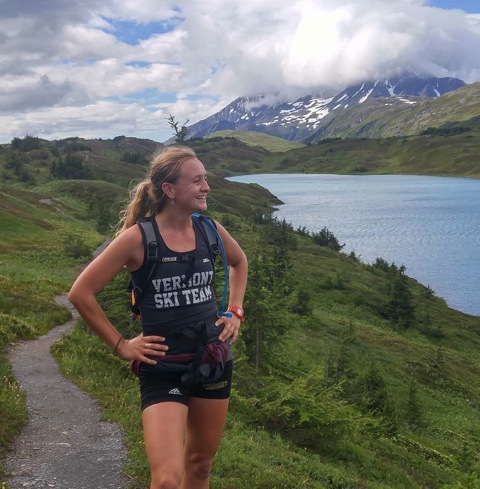
    UVM's Alayna Sonnesyn during a trail run in Seward, Alaska, last summer. (Courtesy photo)
    UVM’s Alayna Sonnesyn during a trail run in Seward, Alaska, last summer. (Courtesy photo)

    I started cross-country skiing when I was three, thanks to my parents. I currently train in Burlington, Vt., with the University of Vermont.

    If I’m not skiing, you might find me studying chemistry. If I had to pick a favorite book, it would be ‘The Outlander‘.

    One of the things I’m most excited about for U23/Junior Worlds at Soldier Hollow is it’s in AMERICA! One race I’m especially targeting there is the skiathlon.

    The best advice anyone ever gave me about skiing or racing was have fun. One of the best race memories I have is skiing at my cabin with my family.

    If I could meet one World Cup skier, it would be Heidi Weng.

    If I don’t end up being a professional skier, I’ll probably be a pharmacist.

    I’m missing six days of school to be here, and my professors are probably thinking, ‘Good luck.’

  • Under 23 Questions with Tucker Hoefler

    Under 23 Questions with Tucker Hoefler

    Tucker Hoefler (Park City Nordic Ski Club/U.S. Nordic Combined development group) jumping at Junior Worlds trials this year. (Photo: Clint Jones)
    Tucker Hoefler (Park City Nordic Ski Club) jumping at Junior Worlds trials this year. (Photo: Clint Jones)

    In an effort to showcase the North Americans competing at this week’s International Ski Federation (FIS) 2017 USANA Nordic Junior World Championships and U23 Cross Country World Championships at Soldier Hollow in Midway, Utah, we asked those qualifying athletes several questions about themselves — actually, we had them fill in the blanks. Here we have 18-year-old Tucker Hoefler, of the Park City Nordic Ski Club and U.S. Nordic Combined development group, who’s representing the U.S. at his first Junior Worlds.

    ***

    “My full name is Tucker Greer Hoefler but you can call me Tucki or Slat Rat. I was born in Burlington, Vt., raised in Williston, Vt., and the one thing you should know about my hometown is the liberal agenda and The Sox.

    I started skiing when I was in the womb, and jumping when I was 10, thanks to my dad who forced me into the sport. I currently train in Park City, Utah, with the Park City Nordic Ski Club/ USA NoCo Development.

    If I’m not skiing, you might find me brapping a sled, skinning a peak, or climbing a rock. If I had to pick a favorite book, it would be the Toyota Highlander Owners Manual.

    American Tucker Hoefler at a Nordic Combined Youth Cup last year in Trondheim, Norway. (Photo: Paul Loomis)
    American Tucker Hoefler at a Nordic Combined Youth Cup last year in Trondheim, Norway. (Photo: Paul Loomis)

    One of the things I’m most excited about for U23/Junior Worlds at Soldier Hollow is driving 27 minutes from my house to the race course. One race I’m especially targeting there is the NoCo 5 k.

    The best advice anyone ever gave me about skiing or racing was ‘Don’t make me look bad’  – Coach. One of the best race memories I have is almost getting 2nd at two World Junior Qualifiers this year.

    If I could meet one World Cup skier, it would be Sabina Berend’s sister.

    If I don’t end up being a professional skier, I’ll probably be a ski bum living alone in a cabin in Montana.

    I’m missing zero days of school to be here, and my teachers are probably thinking, ‘I’m surprised Tucker was able to graduate this fall.‘

    You can follow me on Instagram @tuckerhoefler.”

  • Kelly Brush Century Ride Ready to Roll Sept. 8

    Kelly Brush Century Ride Ready to Roll Sept. 8

    KELLY BRUSH CENTURY RIDE READY TO ROLL SEPTEMBER 8 

    RIDERS SUPPORT ADAPTIVE SPORTS, SPINAL CORD INJURY PREVENTION

    Kelly Brush at the start of last year’s Kelly Brush Century Ride powered by VBT Bicycling and Walking Vacations. Now in its seventh year, the charity ride is the largest of its type in Vermont with over 700 bicyclists and two dozen handcyclists participating. This year’s ride is Sept. 8 in Middlebury, Vt.

    BURLINGTON, Vt. (Aug. 22, 2012) — Vermont’s largest charity bike ride, the Kelly Brush Century Ride powered by VBT Bicycle and Walking Vacations, rolls on Sept. 8 in Middlebury Vt. The seventh annual ride benefits adaptive athletes and supports spinal cord injury prevention.

    In addition to being the largest ride of its type in the state, the event is one of New England’s largest for adaptive athletes using handcycles. Bicyclists and handcyclists who participate raise funds to help adaptive athletes with spinal cord injuries experience the benefits of sports. The ride has funded grants for adaptive equipment for skiing, cycling, bowling, rowing and even scuba diving.

    “Kelly Brush Century Ride participants have made it possible for the Kelly Brush Foundation to purchase over 40 pieces of adaptive athletic equipment for adaptive athletes with financial limitations,” said Kelly Brush Foundation President Charlie Brush.

    “While each piece of equipment ranges from $3,500 to $6,000, the quality of life improvement for the athletes is immeasurable.”

    Last year, over 700 riders and 24 handcyclists raised more than $275,000 for the Kelly Brush Foundation.

    The ride also supports the foundation’s mission to improve ski racing safety. Funds raised by riders have helped the foundation purchase over 400 miles of safety netting for ski race courses across the country and have supported a national campaign to improve race course safety.

    The scenic route through the Champlain Valley starts at Middlebury College and heads along the lake, winding through Charlotte and Shelburne before looping back.

    Riders can chose to ride 25, 50 or 100 mile routes. New for this year is a 25-mile loop. Previous years’ 25-mile course was a point-to-point ride that required a shuttle back to the start.  Also new this year, riders earn Patagonia clothing by reaching fundraising milestones.

    The ride features five fully stocked water/fuel stops including food from sponsors Hammer Nutrition and Brueggers Bagels. Riders also enjoy a post-ride BBQ and raffle.

    The ride was started by the Middlebury College Ski Team as a way to raise money to buy an adaptive mono-ski for team member Kelly Brush, who was paralyzed as the result of a ski racing crash. Brush and her family later founded a non-profit, and the ride was opened to the public.

    In addition to members of the Middlebury College Ski Team, the ride sees strong participation from area ski academies, including Green Mountain Valley School and Stratton Mountain School.

    Online registration is open through midnight Wednesday, Sept. 5. Day of event registration is also available. To register online visit: www.kellybrushfoundation.org

    The Kelly Brush Century Ride powered by VBT Bicycling and Walking Vacations is made possible thanks to the generosity of participants and sponsors including: VBT Bicycling and Walking Vacations, Shearer Audi, Sugarbush Resort, KeyBank, Saatchi & Saatchi, World Cup Supply and others.

    About the foundation: The Kelly Brush Foundation is a non-profit organization dedicated to improving ski racing safety, enhancing the quality of life for those with spinal cord injury(SCI) through providing adaptive sports equipment, advancing scientific research on SCI and supporting the U.S. Adaptive Ski Team.  Kelly Brush, together with her family, started the foundation in 2006 after she sustained a severe spinal cord injury while racing in NCAA Div. 1 competition as a member of the Middlebury College Ski Team in Vermont. The Kelly Brush Foundation affirms Kelly’s ongoing commitment to live life on her own terms and better the lives of others living with SCI.