From the FasterSkier archive — posts syndicated from athletes’ and coaches’ own blogs between 2004 and 2012, kept online as published. Current coverage is at fasterskier.com.

Tag: Caitlin Compton

  • From the Archives: CXC Lake Placid Training Camp Report, October 2008

    From the Archives: CXC Lake Placid Training Camp Report, October 2008

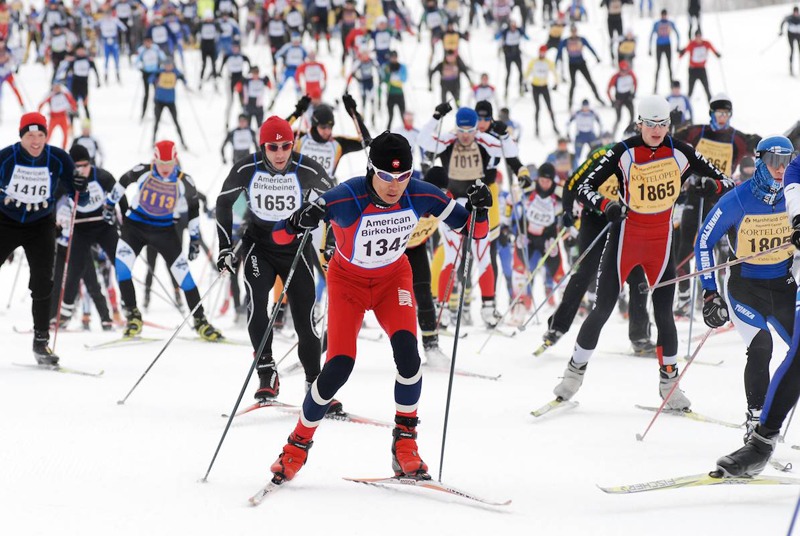
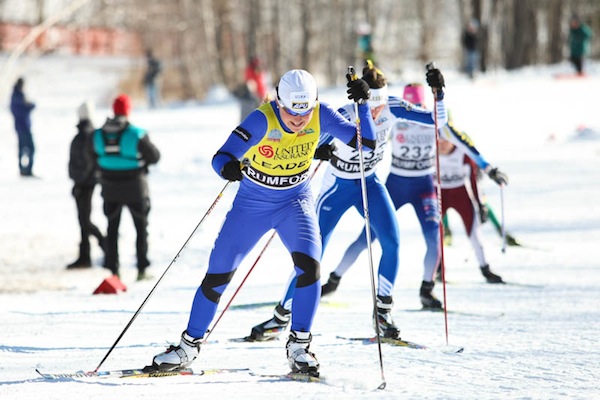
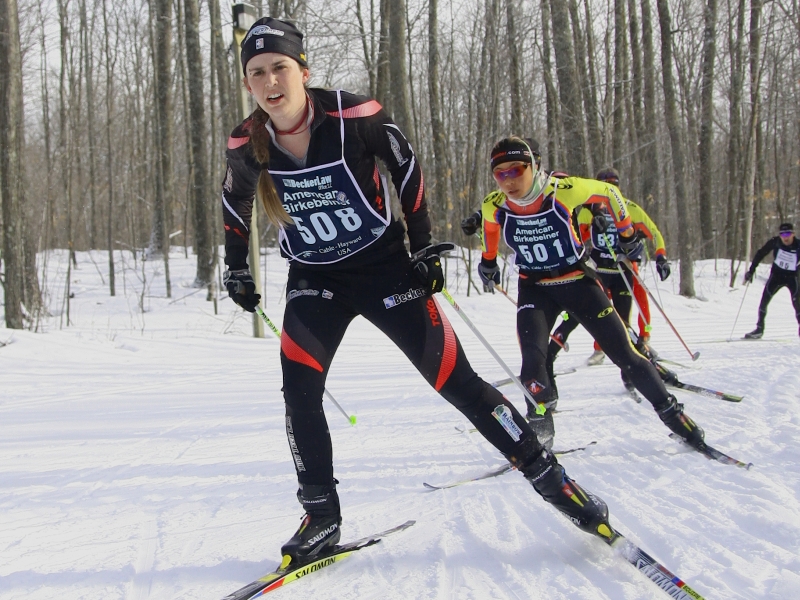
    Author Kristina Owen races in the 2009 American Birkebeiner ahead of Evelyn Dong.

    The following article was originally published on FasterSkier on October 15, 2008. It was written by CXC (Central Cross Country Skiing) athletes Kristina Owen and Heather Zimmerman. Roughly contemporary photos have been added for this reprinting; the pictures that originally appeared with this article are no longer available.

    The piece is simultaneously from very much another era, yet also completely timeless. On the one hand, “Caitlin Compton” now has a different last name; Jessie Diggins, who had recently turned 17, would go on to do things even more impressive than win the junior division of the Climb to the Castle rollerski race; the article’s authors last competed in FIS races in 2011 (Owen) and 2009 (Zimmerman). On the other hand, in October 2008 skiers enjoyed the fall foliage, did hard doublepole efforts, and benefited from having athletes from multiple clubs together in one place for head-to-head competition. A quick perusal of social media shows that New England fall colors are still a thing, and that athletes from multiple clubs (including that obscure junior, Jessie Diggins) still come together in Lake Placid for fall training. 13 years later, some seasonal rhythms of American skiing remain very much the same.
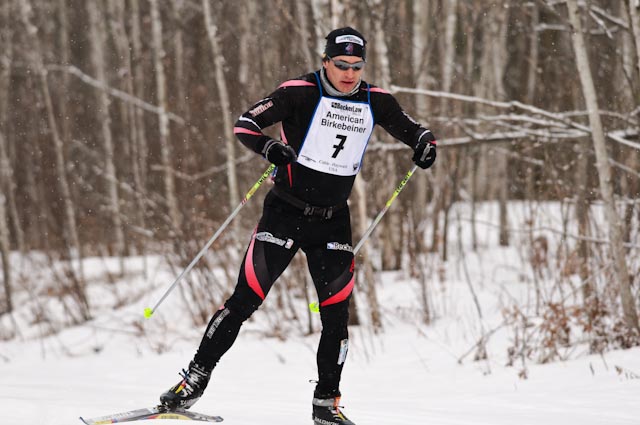
    Matt Liebsch coming up the final hill on his way to victory in the 2009 American Birkebeiner.

    CXC Elite Team – Lake Placid Training Camp Report

    The CXC Elite Team recently completed a two week monthly camp in Lake Placid, NY. We stayed and trained at the Olympic Training Center, which provided an ideal environment to make huge gains in both fitness and technique.

    The weather was excellent for the first couple days: chilly, but clear skies. “The only problem with the weather was that is was cool enough that none of the boys took off their shirts,” Caitlin Compton mentioned with a smile. After a few days of such perfect training weather, the team’s luck broke and it started raining; beautiful miserable cold rain. The training continued as planned, but between workouts the hallways were filled with the smells of damp and drying athletic apparel.

    One of the team’s favorite workouts at this annual camp is an over-distance run in Adirondack Park. We are able to take advantage of great trails up mountains with gorgeous panoramic views. This year the men’s team made it to the summit of Mt. Colden, but disaster struck on the way down. Matt Liebsch, Midwest born and bred, was unused to the speed on the steep rocky descent. He went down hard with a nasty ankle sprain. His teammates carried him out, but the injury was camp ending and he returned to the Midwest for recovery.

    Leaves in the Lake Placid region were in their peak foliage and so was the CXC Elite Team’s performance during the second week. The highlight came at the culmination of the camp, with the Whiteface rollerski race. However, there was a lot of work to be done, both intensity and volume, before the race arrived.
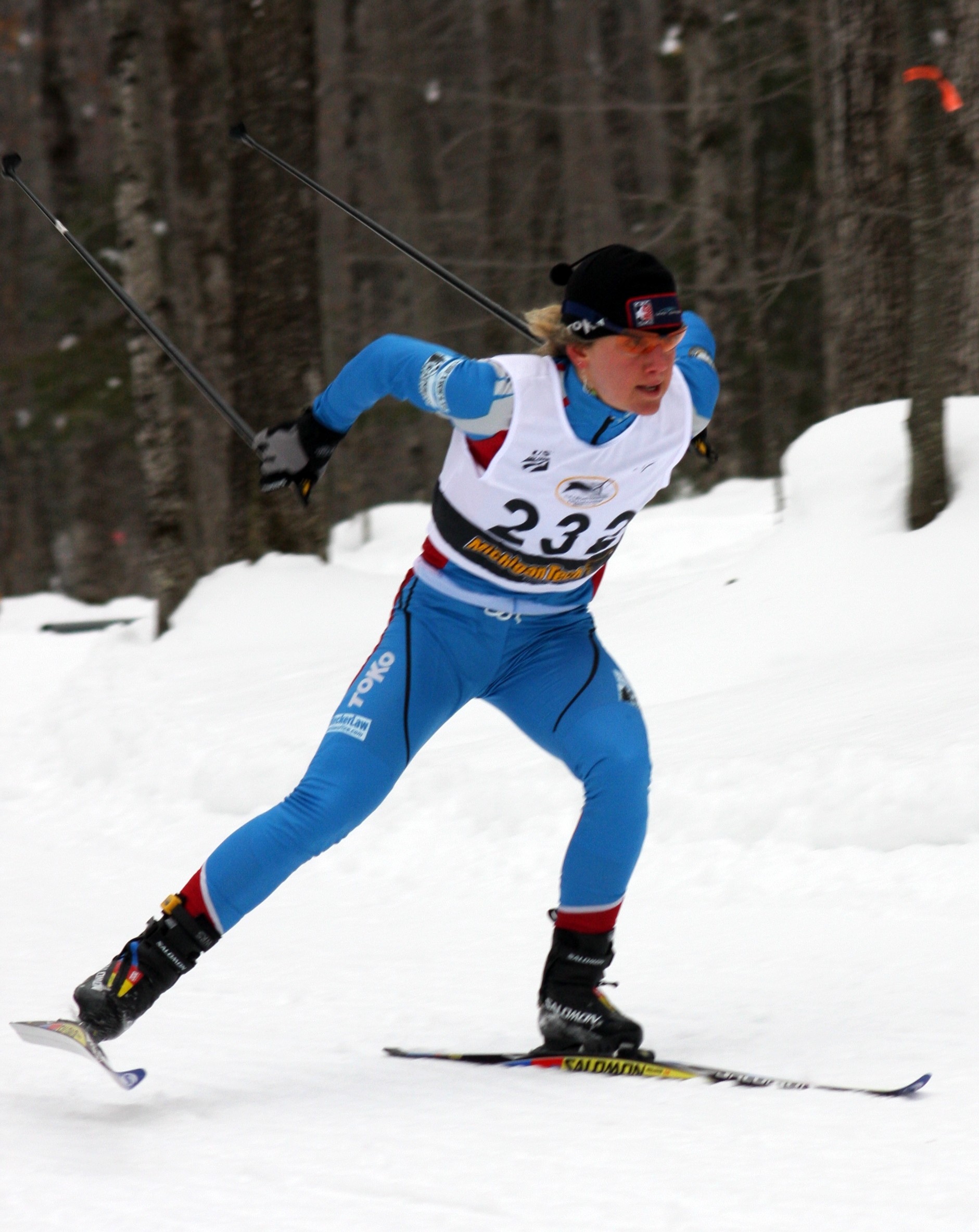
    Caitlin Compton sprinting at US Nationals in 2008 in Houghton, Michigan.

    The workload wasn’t the only thing increasing during the second week of camp. The Olympic Training Center was overtaken by Nordic athletes. CXC Elite was joined by their Junior Development Program athletes and coaches, as well as the Sun Valley team, the USST, various NENSA athletes, and some of the region’s collegiate racers. CXC Elite Team was able to frequently take advantage of the large athlete gathering, as all the groups came together for some of the workouts. The best example of this was a hard double pole workout up a long gradual hill. The men did two sets of 3×4 minutes, with a ten minute break between sets, while the women concentrated their efforts to 3 1/2 minutes. It was a great workout and the added numbers definitely helped in ramping up the intensity!

    The camp was also notably included the first competition of the year between CXC and their friendly rivals, Sun Valley. Last year Sun Valley pulled out a narrow victory in overall points. This year CXC was off to a good lead, with a win in an inter-team soccer match. The competition was fierce, but CXC’s greater numbers this year gave them the edge to pull off the victory.

    CXC Team continued to utilize the hilly terrain in the area, traveling to Whiteface Mountain for a ski walking workout on the lower trails. Some of the team returned to the mountain later in the week for an evening hike, lured in by the fresh snow that covered the top.

    Our second week contained not only some good intensity efforts but also a lot of volume. By Sunday most of the team had completed at least three ODs. All the mileage made us feel as though we had really gotten to know the Lake Placid area!
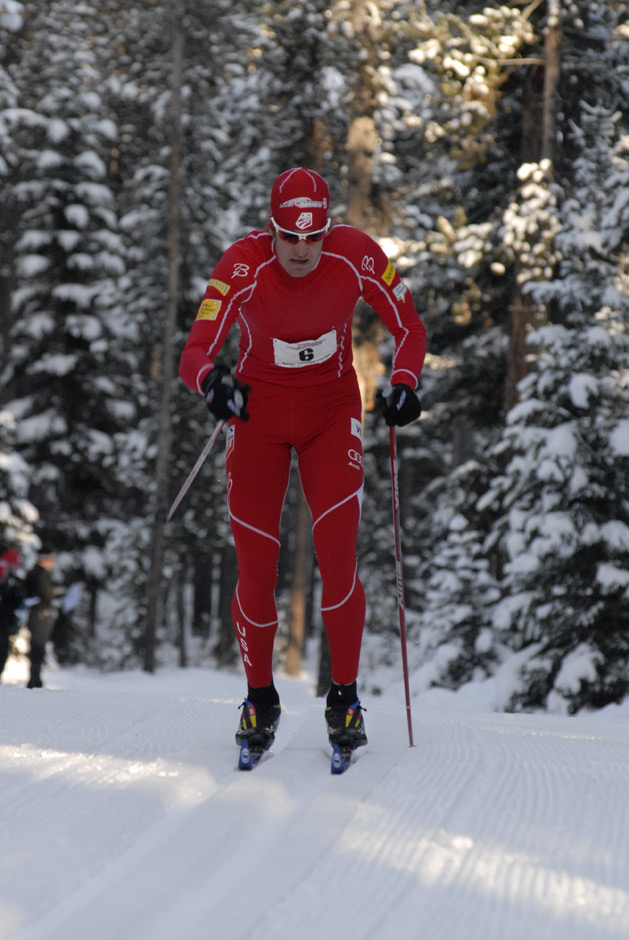
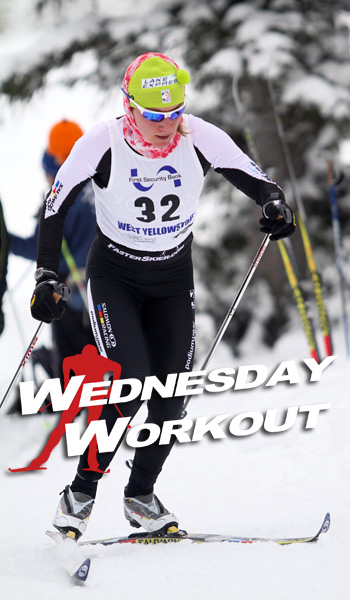
    Garrott Kuzzy (CXC Team Vertical Limit/US Ski Team) races the sprint in West Yellowstone, November 2009. (Photo: Win Goodbody)

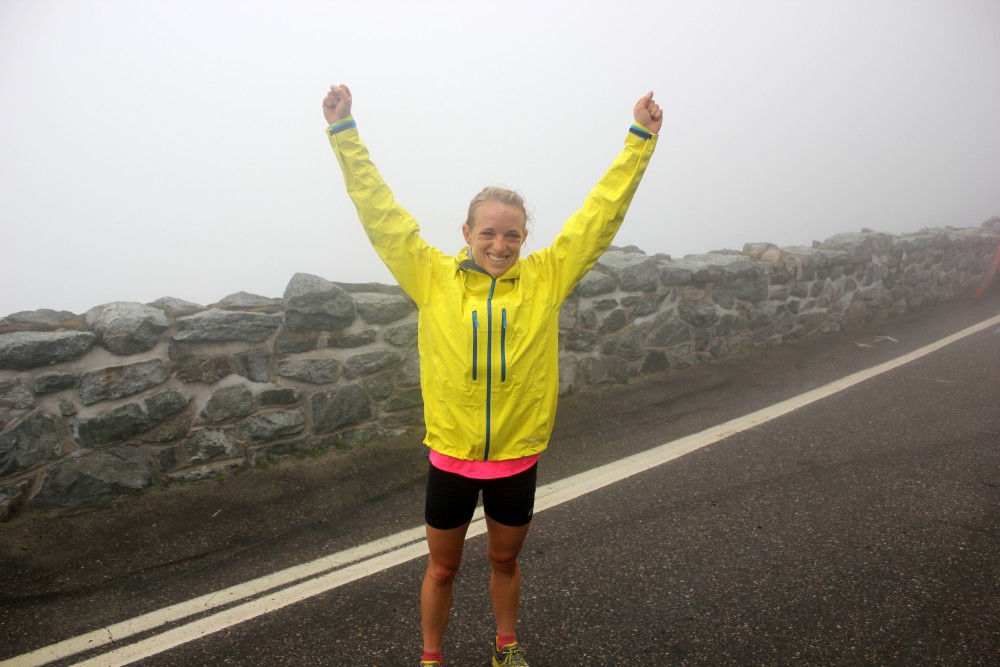
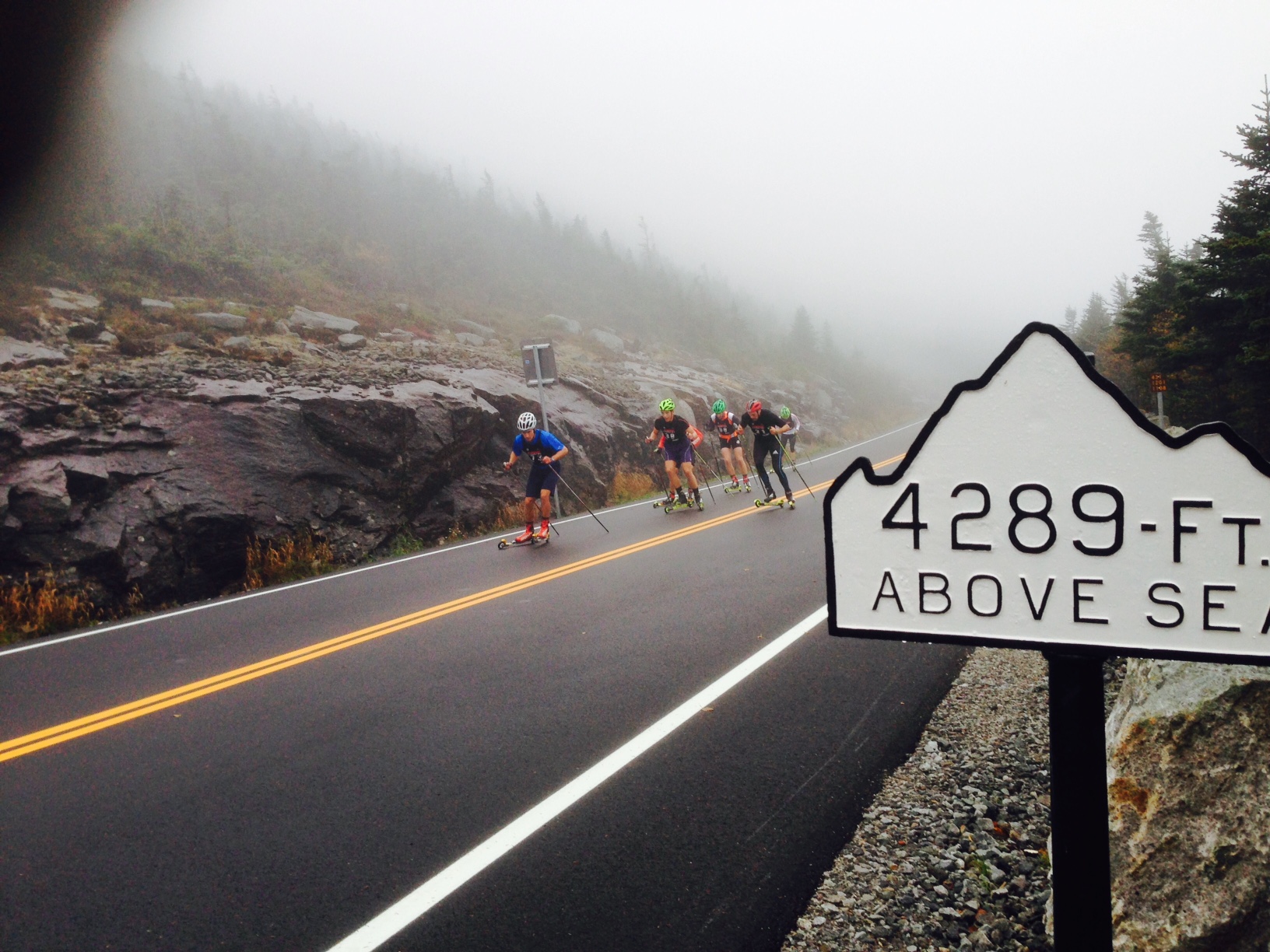
    The camp ended with a grand finale, the Whiteface Mountain rollerski race! After testing ourselves on the area’s hills for the previous two weeks, what better way to finish up than a five mile, steep uphill race. Of coarse, mother nature decided to throw a few additional hurdles in our path before we began. The top of the toll road was too icy for skiing so the race was moved slightly down the hill. However, despite the alterations, the course still proved to be plenty challenging! Despite being tired, CXC athletes turned in some impressive results. Caitlin Compton led the way, winning the women’s race. CXC Junior Devo Program Jessie Diggins had a very impressive showing as well, placing 5th overall and winning the junior category. On the men’s side Garrott Kuzzy led the charge with a notable 4th place finish, followed closely by Brian Gregg in 6th.

    Sufficiently exhausted by this final effort the team departed Lake Placid. This was the team’s final two week dryland training camp. Athletes will now have the next four weeks at home before leaving for West Yellowstone, early snow, and the beginning of the Supertour circuit!

    We will be ready!!

    Related reading:

    “Central Cross Country Skiing Announces CXC Elite Team For The 2008-2009 Season,” FasterSkier, June 2008
  • Climb to the Castle Archive: Top Results from the Last 10 Years

    Climb to the Castle Archive: Top Results from the Last 10 Years

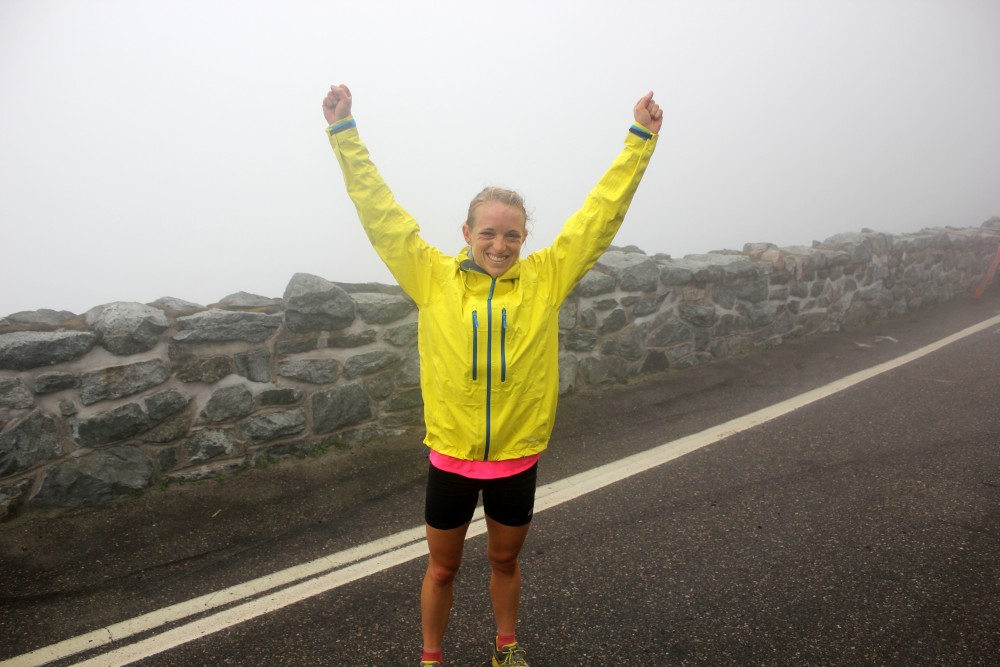
    Liz Stephen celebrates her win and new course record at the 2014 Climb to the Castle. Stephen clocked her fastest time and fifth win at Whiteface Mountain despite a strong headwind and exhaustion at the end of the U.S. Ski Team's training camp in Lake Placid, N.Y.
    Liz Stephen celebrating her win and new course record at the 2014 Climb to the Castle. Stephen has the most women’s wins in 10 years of the Climb, winning five of those races, and also holds the women’s course record.

    For the last decade, the Climb to the Castle has been a fall staple in northeastern New York. It’s been a circled on the calendars of the U.S. Ski Team and US Biathlon national team almost every year since its inception and attracts 75 to 100 no-joke skiers to Wilmington (near Lake Placid, N.Y.) each year.

    Following the 10th annual rollerski race up Whiteface Mountain’s toll road, a five-mile grind with an average 8 percent grade, we thought it would be worth looking at course records and some of the climb’s legendary winners.

    ***

    Most wins: Liz Stephen (5), Duncan Douglas (3)

    Course records: Duncan Douglas (34:56.6) 2007, Liz Stephen (41:50) 2014

    ***

    Paddy Caldwell (black shirt, yellow helmet) of the U.S. Ski Team D-team and SMST2 Team chases Rogan Brown (l) around mile four of five in  Sunday’s Climb to the Castle up Whiteface Mountain in Wilmington, N.Y. Caldwell won the race, followed by biathletes Russell Currier and Tim Burke in second and third, respectively. Brown (SVSEF) placed fourth and Kyle Bratrud (CXC) was fifth. (Photo: Tim Cowan)
    Paddy Caldwell (black shirt, yellow helmet) of the U.S. Ski Team D-team and SMST2 Team chases Rogan Brown (l) around mile four at the 2015 Climb to the Castle. Caldwell won the race, followed by biathletes Russell Currier and Tim Burke in second and third, respectively. Brown (SVSEF) placed fourth and Kyle Bratrud (CXC) was fifth. (Photo: Tim Cowan)

    2007:

    Date: Oct. 13

    Notes: sunny/cold; 25 degrees F

    Men’s top 3:

    1. Duncan Douglas (34:56.6)
    2. Kris Freeman (37:09.1)
    3. Noah Hoffman (38:38.9)

    Women’s top 3:

    1. Liz Stephen (47:22.9)
    2. Morgan Arritola (47:48.8)
    3. Dorcas Wonsavage (49:12.7)

    Complete results


    2008:

    Date: Oct. 6

    Notes: *Shortened course; athletes did not reach summit because of snow.

    Men:

    1. Duncan Douglas (32:26.44*)
    2. Kris Freeman (34:22.90*)
    3. Noah Hoffman (36:56.87*)

    Women:

    1. Caitlin Compton (45:19.91*)
    2. Morgan Arritola (45:27.89*)
    3. Liz Stephen (45:52.83*)

    Results: Men | Women

    Video


    2009: 

    Date: Oct. 7

    Men:

    1. Taylor Fletcher (39:11.54)
    2. Nick Hendrickson (39:25.40)
    3. Kris Freeman (39:49.97)

    Women:

    1. Morgan Arritola (50:54.85)
    2. Liz Stephen (51:09.57)
    3. Ida Sargent (51:23.85)

    Results: Men | Women

    Report | Video


    2010: 

    Date: Oct. 8

    Notes: Clear weather

    Men:

    1. Kris Freeman (38:37)
    2. Noah Hoffman (39:16)
    3. Ben Sim (40:32)

    Women:

    1. Laura Spector (46:58)
    2. Morgan Arritola (48:02)
    3. Liz Stephen (48:43)

    Results: Men | Women

    Women’s report | Men’s video


    2011:

    Date: Sept. 17

    Men:

    1. Kris Freeman (36:18)
    2. Tim Burke (36:29)
    3. Noah Hoffman (37:03)

    Women:

    1. Liz Stephen (44:50)
    2. Ida Sargent (46:14)
    3. Tara Geraghty-Moats (47:43)

    Results: Men | Women

    Womens’ report | Men’s report | Video | Photos


    2012: 

    Date: Sept. 15

    Men:

    1. Tad Elliott (39:28)
    2. Pat O’Brien (39:38)
    3. Julian Dorais (39:46)

    Women:

    1. Liz Stephen (43:33)
    2. Jessie Diggins (48:38)
    3. Ida Sargent (48:55)

    Results: Men | Women

    Women’s report | Men’s report | Notes & Quotes


    2013:

    Date: Sept. 15

    Men:

    1. Tim Burke (37:13)
    2. Simi Hamilton (39:59)
    3. Karl Nygren (40:04)

    Women:

    1. Liz Stephen (42:04)
    2. Caitlin Gregg (45:21)
    3. Ida Sargent (47:19)

    Results: Men | Women

    Report


    2014:

    Date: Sept. 6

    Men:

    1. Tim Burke (38:19)
    2. Russell Currier (39:02)
    3. Welly Ramsey (40:01)

    Women:

    1. Liz Stephen (41:50)
    2. Caitlin Gregg (45:25)
    3. Katharine Ogden (48:12)

    Results: Men | Women

    Report


    2015: 

    Date: Sept. 20

    Men:

    1. Patrick Caldwell (37:05.2)
    2. Russell Currier (37:10.2)
    3. Tim Burke (37:16.7)

    Women:

    1. Mary Rose (45:15.1)
    2. Annelies Cook (45:47.1)
    3. Hannah Dreissigacker (47:21.0)

    Results: Men | Women

    Report


    2016:

    Date: Sept. 18

    Men:

    1. Duncan Douglas (37:15.6)
    2. Russell Currier (37:23.9)
    3. Paul Schommer (40:18.2)

    Women:

    1. Hannah Rieders (55:03.1)
    2. Anna Lehmann (55:18.8)
    3. Madeline Rieders (56:26.4)

    Results: Men | Women

    Report

  • Wednesday Workout: Throwback ‘Responding to the Unexpected’ with Caitlin (Compton) Gregg

    Wednesday Workout: Throwback ‘Responding to the Unexpected’ with Caitlin (Compton) Gregg

    2010 U.S. Olympian Caitlin Compton, now Caitlin Gregg, racing in West Yellowstone in November 2010.
    2010 U.S. Olympian Caitlin Compton, now Caitlin Gregg, racing in West Yellowstone in November 2010.

    Remember the Pro Workout? As you may or may not have already figured out, the Wednesday Workout is our weekly reincarnation. This week, we bring back a Pro Workout of the past, which features advice from Caitlin Gregg of Team Madshus/Gregg, formerly Caitlin Compton of Central Cross Country (CXC), from December 2010. See the original here.

    ***

    [Circa December 2010, by Topher Sabot] In the past, our “Pro Workout” series has featured a single training session from an elite North American skier, but this week CXC’s Caitlin Compton gives us a slightly different take.

    Instead of detailing a favorite workout, Compton addresses an oft-ignored aspect of race preparation – the ability to respond to challenging and unexpected circumstances.

    Over the past several years, major North American events have been disrupted by everything from volcanic eruptions to frigid temperatures to low snow.

    This is all part of being an outdoor endurance athlete, Compton explains, but how you respond can have a major impact on your success.

    “You need to have the ability to be flexible and to understand that there are some things you can’t control,” Compton says. “But there are tons of options. The beauty of cross-country skiing is that we do lots of cross-training in the offseason.”

    This variety means that skiers can easily turn to alternative training methods when plans need to be changed.

    Compton keeps her body in running form with regular jogs throughout the ski season, meaning she can easily throw in a significant foot session – even intervals – without experiencing any soreness.

    And while training indoors is often a last resort for skiers, a local gym can be a perfect fallback plan if weather forces you off the trails.

    “There is always a chance that conditions may be less than ideal for a huge event,” says Compton, noting that many athletes expect that the biggest races will automatically have perfect skiing – something that rarely comes to pass, be it U.S. nationals or the Olympics.

    So an athlete’s response to less than ideal circumstances throughout the year can be an important part of her preparation.

    “A good way to approach an alternate workout is to think, ‘if this comes up again, I will be ready,’” explains Compton.

    “The approach is the most important,” she continues. “The goal is to not let it affect you and mentally stay positive, and look at it as an opportunity to practice and have fun overcoming the adversity.”

    She also points out that workouts within two weeks of a competition will not have a significant impact on fitness, so you aren’t going to make or break your big event with a specific session.

    Compton gives a very recent example, describing how she and [former] CXC teammate Jessie Diggins were forced to adapt when they arrived at the 2011 U.S. nationals venue in Rumford on Wednesday.

    A middle school race and a lack of snow meant there was not much skiing to be had – and none suitable for race skis. The women had not brought rock skis to the venue, so they made a quick decision.

    “We had both been running, so we switched into our running shoes and went out there. We made the most of it, had fun and left the day, maybe without the same specificity of a ski workout, but with something accomplished, and our heads still psyched for the upcoming event.”

    Diggins was even able to stick to her plan of doing level 3 intervals, with Compton providing support.

    But Compton notes that this is a learned skill and one that must be practiced. Years of experience help, and over time the situations that cause stress become just another part of life as a ski racer.

    And says Compton, freaking out will just make you more tired, and that will certainly not make you race faster.

    Several years ago, when at a biathlon training camp in Torsby, Sweden, Compton was faced with highly memorable circumstances. Despite being in Scandinavia during the midwinter, in a town that is home to one of the world’s few indoor ski tunnels, there was nowhere to ski.

    The weather was beautiful, but against all odds, there was little snow on the ground. Compton ended up doing combo intervals (shooting and skiing) on a quarter kilometer of snow shoveled by her coach around the range, and during her stay mixed in running intensity as well.

    “Not ideal for that time of year,” Compton reminisced, but it ended up being fun.”

    And as with so many things, sharing the challenging experiences with teammates is one more potential positive.

    “I have definitely learned in my years of skiing that nothing ever goes perfectly. You just have to make the most of it and roll with it,” says Compton.

  • Gundersen, Compton Win the Birkebeiner; Uhl, Bender are tops at Classic Birkie

    Gundersen, Compton Win the Birkebeiner; Uhl, Bender are tops at Classic Birkie

    The 2011 Birkebeiner (Photo: Brett Morgan)

    The 38th annual American Birkebeiner, held in sub-zero and single-digit temperatures with record particpation, saw two sprint finishes to crown the men’s and women’s Birkie freestyle champions and a pair of UVM alums ski to sizable victories in the Birkie Classic on Saturday.

    Norwegian Tore Martin Gundersen won the 50K Birkie Freestyle race with a time of 2:00:32.8, furiously outsprinting his nearest opponent, Benoit Chauvet of France, by less than a second.  Twenty seconds later, third through twelve places were decided in less than ten seconds.  Andrey Tyuterev of St. Petersburg, Russia took the final spot on the podium in thir dplace.  Bryan Cook of CXC was the top American in fifth overall, with CXC teammate Brian Gregg the second American in seventh place.

    In her first Birkebeiner, Caitlin Compton of CXC broke the women’s 50K Freestyle course record today and took first place with a winning time of 2:15:26.0.  APU’s Morgan Smuth and XC Oregon’s Evelyn Dong kept it close all the way to the line finishing just three and eight seconds off Compton’s pace for second and third place, with the top three finishers all dipping beneath the previous course record set by Rebecca Dussault in 2010.

    “It was great to see [Caitlin] take the win, as she led a lot of the race and really pushed the pace in the last 10k,” said Smyth, who was racing in her first 50K.  “She did a lot of the work, it was a well deserved win.”

    Finishing alongside its freestyle counterpart, the Birkie Classic was contested, and saw two University of Vermont alums picking up victories.  2010 Birkie Classic Champion Jerguen Uhl (VTXC) defended his title, pulling ahead of Karl Nygren (CXC) and Eric Wolcott (CXC).

    Uhl’s former UVM teammate Jennie Bender, skiing for CXC, grabbed the women’s Birkie Classic title by an impressive seven minutes over Kerrie Fabius of Thunder Bay, Ontario.  Hilary Patzer of St. Paul, Minnesota took third, another minute and 40 seconds back.

    “It was great!” Bender told FasterSkier of her first ski marathon. “My wax was great… it was definitely abrasive, but the CXC coaches did a great job.  I skied with a lot of the men and kind of jockeyed back and forth.  It was freezing outside, but it felt pretty awesome.”

    Ned Zuelsdorff, Executive Director of the American Birkebeiner Ski Foundation, said skiers from 19 foreign nations, including Latvia, Israel and Denmark, and 47 U.S states, including Hawaii, North Carolina and Alaska, had great conditions for the 38th anniversary event.

    Honorary Starter, John Schmitt, the voice of Birkie for 19 years welcomed the largest field of skiers ever in the American Birkebeiner’s 38-year history. He sent over 8,850 skiers on their way beginning at 8:00 a.m.

    Temps hovered around 10 degrees below zero at the start as 21 waves of skiers left the starting gates.

    The American Birkebeiner is modeled after the Norwegian Birkebeiner Rennet, which in turn was inspired by the historic rescue of the infant who would become a celebrated king, Haakon Haakonsson IV. The race symbolically re-creates the flight of the prince, carried on skis by warriors called birkebeiners for their protective birch bark leggings.

    Long time friends Gale Otterholt and Marv Franson assumed the roles Torstein and Skervald, the Birkebeiner warriors who rescued the infant Prince Haakon (H?-ken). Otterholt a retired pharmacist and college professor and has completed 33 Birkies and also from Eau Claire, Franson, a retired Dean and Electronics Instructor, has skied 34 Birkies.

    Long time Birkie skier and friend of the Warriors, Gretchen Lindgren, dressed as Inga from Varteig, mother of Prince Haakon, while her grandchild Finnley assumed the role of the cherished prince.

    The men dressed in full Birkebeiner regalia including helmets, shields and their wooden skis skied to the finish line to the clang of cowbells from the thousands of spectators who lined Hayward’s Main Street.

    Gretchen skied the full 54 kilometers dressed in a traditional Norwegian dress and cloak, on wooden skis and carried Prince Haakon on her back for the trip up Hayward’s Main Street.

    “The historic re-enactment, fast race course and the largest field ever made the Birkie’s 38th anniversary one for the books,” Zuelsdorff said. “We couldn’t be more pleased.”

    For race day results, log on to www.birkie.com.

  • USSA SuperTour: CXC Teammates Kuzzy and Compton Win Skate Races

    Garrott Kuzzy (CXC). Photo: Hallie Herz.

    In the men’s race, a large group of CXC skiers plus comeback kid Adam Kates (Big Thunder) skied together as a pack from the start. The group made a substantial gap to the rest of the field on the first climb, and from then on the race was determined.

    “We had a good solid group going, and once we started climbing we pulled to the front and kept the pace. There was no playing games here, pretty much pedal to the medal the whole time,” said Garrott Kuzzy (CXC) who finished in 39:38.5 and won the race by almost 10 seconds to Brian Gregg (CXC) in second place (39:48.1). Adam Kates rounded out the podium in third place, two seconds behind Gregg.

    “It was the CXC freight train, and Adam Kates, the Canadian coach, also did a lot of work,” Kuzzy said, noting that it was a hard race for everyone. Kates was the only non-CXC-skier among the top six finishers.

    “There was not a whole lot of sprinting to the finish. People were pretty happy to be done at that point,” Kuzzy recalled.

    Kuzzy explained that details and margins determined the race.

    “It was a couple of minor moves on my part, having my teammates up there and good boards, for sure. And lots of people cheering along the course always helps,” Kuzzy said.

    Can’t stop a train

    Race director and head coach at Michigan Tech Joe Haggenmiller saw the CXC train in action from the sideline.

    “Nobody was really able to close in on the gap. It broke down to about 10 guys, and Kates was in that pack. Then a few more fell off after that,” Haggenmiller said to FasterSkier.

    Haggenmiller added that there were six guys in the pack that came to the finish together. Kuzzy was the first to cross the finish line, and had a 10-second margin to his teammate Brian Gregg in second. But only 22 seconds separated the next five racers, with Kates being the only variety in the race uniform. Santi Ocariz was fourth (39:52.8), Matt Liebsch fifth (40:03.4) and Bryan Cook sixth (40:20.6).

    Winner of Friday’s sprint and yesterday’s 10K classic, Michael Sinnott (Sun Valley Ski Education Foundation Olympic Development Team), was starting to notice the cost of the two first victories. He was seventh in the 15K skate, clocking in at 41:02.5.

    “My race was okay. I was quite tired,” Sinnott admitted.

    But there are USSA SuperTour points awarded for seventh place, so Sunday’s effort still knocked another 14 points off Lars Flora’s overall SuperTour lead. Sinnott’s goal for the season is to win the overall SuperTour, and over the course of the weekend, Sinnott was able to gain 74 points on Flora (Alaska Pacific University Nordic Ski Club), who now only has a 23-point lead: 297 to Sinnott’s 274.

    Caitlin Compton (CXC) racing at the U.S. National Championships.

    Compton in charge

    In the women’s race, there was little suspense after Caitlin Compton (CXC) took the lead, which she did early on.

    “Caitlin hammered it out today. She had a pretty big gap and skied much of the race by herself,” Haggenmiller said.

    Compton finished the brutal 10K course in 31:38.6. Teammate Maria Stuber, the winner of Saturday’s classic race, was second, finishing more than a minute behind (32:50.7) and Carolyn Freeman (UWGB) skied into third place for her second podium this weekend, recording a time of 33:38.5. Freeman was second in the classic race yesterday.

    With firm tracks and some new, squeaky snow, the conditions were solid for all the racers.

    “I was probably not the fastest conditions in the world out there, but it was definitely fair,” Haggenmiller said.

    Complete results here.

  • SuperTour: Sinnott Continues to Dominate Podium, Stuber Wins Womens

    SuperTour: Sinnott Continues to Dominate Podium, Stuber Wins Womens

    Mike Sinnott striding at the 2011 US Nationals classic sprint. Photo, flyingpointroad.com.

    Michael Sinnott (Sun Valley Ski Education Foundation Olympic Development Team) won the 10K individual start classic race Saturday in 29 minutes and 35.2 seconds. Adam Kates (Big Thunder) in second place was just over a second behind, crossing the finish in 29:36.5. Garrott Kuzzy (CXC) was third, clocking in at 29:37.5.

    “I could definitely feel the sprint from yesterday, but I felt pretty good,” Sinnott said to FasterSkier after the race. His strategy for the race was to focus on skiing smoothly and keep the tempo up through the double-pole sections in early part of the course.

    “The course has a lot of transitions, so I tried to make sure I skied well,” he said.

    After Saturday’s victory, Sinnott earned another 30 points for the SuperTour series, and is now only 37 points behind Lars Flora (Alaska Pacific University Nordic Ski Club) for the overall lead.

    “The goal is to get ahead of Lars (Flora). I want to have a buffer on Lars so I don’t have to sweat too much when the SuperTour hits home later this season,” the Sun Valley skier explained.

    Surprise comeback

    While Sinnott certainly was among the favorites on the start list and didn’t disappoint, Canadian Adam Kates (Big Thunder) came out of left field and raced straight into second place in the men’s 10K classic.

    “I heard it was tight. I was one of the first skiers out so I didn’t know how tight it was,” Sinnott said. “When I finished I had a mental idea of how I had done, and I knew it was tight.”

    “I would categorize him as at least a semi-retired skier, coaching with one of the Thunder Bay programs. He just decided to jump in the race earlier this week and then we see him on the leader board at 7.5K. But Mikey (Sinnott) was able to come back and take the lead again,” race director Joe Haggenmiller of Michigan Tech said.

    Maria Stuber

    Stuber tops women

    Maria Stuber of CXC won the women’s 5K individual start classic race in 17 minutes and 48.3 seconds, leaving her a comfortable 5-second margin down to Carolyn Freeman (UWGB) in second place (17:52.7) Yesterday’s sprint winner Christina Turman (Northern Michigan University) was third in 17:53.

    “I had no idea that I won when I finished. I thought I heard someone said I was second,” Stuber said to FasterSkier, explaining that it was a nice surprise.

    For Stuber, the classic victory was particularly tasty, as she has worked hard for a long time to make progress on her technique.

    “It was fun to finally feel that my classic skiing in coming along, since that has been a weakness of mine,” Stuber said. “I think the work I did last year is paying off now, and I did a ton of work on it.”

    Stuber also noted that with a course as technical and full of transitions as the one at Michigan Tech, it was a benefit to know be familiar with the terrain ahead of time.

    “I’ve raced this course literally a million times in college. You have to go out hard to go all the way. Knowing the course is for sure a big benefit anytime, but especially here where you have to go out so hard,” Stuber explained.

    Sunday: Mass Start Skate

    The SuperTour concludes the stop at Michigan Tech with mass start skate races Sunday, 10K for the women and 15K for the men. And Sinnott is ready to continue the surge.

    “The mass start should be fun. You never know what happens, there is always an element of chaos in a mass start,” Sinnott said, adding that he thinks his chances for the podium are decent. “I think a lot of people are starting to feel a little worn down by now, and others might feel a bit more worn down than I do right now,” he concluded.

    Haggenmiller predicts that Sinnott and Kuzzy will be fighting for the podium, and that Brian Gregg (CXC) and Santi Ocariz (CXC), who was fourth in the classic race, will be right up there as well.

    “And apparently Adam Kates too, his form ain’t too bad either,” Haggenmiller added.

    Stuber is also excited for Sunday’s skate race.

    “The skate race will be good. It’s my favorite technique. It should be a good one,” Stuber said, adding that her strategy is to open hard to be with the front pack and then stay there and see what everybody does. She suspects that her biggest contender will be teammate Caitlin Compton.

    “Caitlin will be back on her game again tomorrow so I probably won’t control much of it,” Stuber said with a laugh. “She’ll have a good one.”

    The forecast calls for a little more snow during the race, but nothing that should cause the wax tech to lose any sleep.

    “When it’s skating, it doesn’t get as tense in the wax room when it snows,” Haggenmiller said.

    The mass start skate races start at 9:30 am with the men’s SuperTour race, and continues with the women’s SuperTour race at 11:15 am.

    Complete results from Saturday’s classic races here.

  • USSA SuperTour Goes to Michigan Tech for the Midwest Grand Prix

    Featuring NCAA qualifiers, Super Junior Olympic qualifiers for both the Great Lakes and the Midwest regions, high school, youth, masters and citizen racing, the Midwest Grand Prix in Houghton, Mich., boasts fields of more than 400 racers.

    Friday features classic sprint races for both men and women. The sprint will consist of qualifiers only, not heats. Saturday the action continues with 5K classic interval start for women, while the men do 10K. The SuperTour concludes on Sunday with 10K/15K skate mass start races. Additionally there are classic and skate races of various distances for high school, youth, masters, citizen and adaptive skiers on both Saturday and Sunday, making sure volunteers and race organizers won’t have time to get bored.

    All the races will take place on the Michigan Tech Nordic Training Center, the host of the 2007 and 2008 US Senior Nationals, which features your standard tough FIS homologated courses, says race director Joe Haggenmiller, the head coach for nordic sports at Michigan Tech.

    Haggenmiller points out Chris Cook (Steinbock Racing) and Michael Sinnott (Sun Valley Ski Education Foundation) as some of the strong contenders in the starting lineup. Last weekend’s podium sweepers Caitlin Compton (CXC) and teammate Garrott Kuzzy are also back for more.  Stay tuned.

    Event details and schedules here.

  • Compton and Kuzzy Complete Weekend SuperTour Sweep

    Different day, different distance and different technique, but the results were the same. CXC Elite teammates Caitlin Compton and Garrott Kuzzy won the 10/15km classic mass start events on the second day of the SuperTour Mayor’s Cup.

    The duo also took top honors in Saturday’s 5/10km freestyle race.

    Compton skied to a solid 20 second victory over UAF’s Raphaela Sieber in the women’s race. The weekend was also a CCSA collegiate event and midwest junior olympic qualifier.

    Maria Stuber (CXC Elite), second to Compton on Saturday, rounded out the podium, eight seconds behind Sieber.

    The 25-year-old Sieber, a native of Germany, won the college race while improving upon her third place in the 5k.

    The college women made up a significant portion of the field, and packed the top of the results sheet.

    Christina Turman (NMU) placed fourth overall and second in the college race, and another UAF skier, Theresia Schnurr rounded out the podium with a sixth in the overall

    Kristina Owen placed fifth on the day and after that it was all about the collegiate skiers – they took the next 12 spots.

    Kailey Mucha, an OJ from the UNiversity of Wisonconsin Green Bay was the top junior finisher in 9th overall. Sharmilla Ahmed took honors as the first J1, crossing the line in an impressive 19th overall, less than a minute out of the top-10.

    Kuzzy Best Again

    Garrott Kuzzy bested Steinbock Racing’s Chris Cook by eight seconds in the men’s 15km event. Cook won a hard fought sprint to the line, just edging Kuzzy’s CXC teammate, Karl Nygren.

    The fight for second came down to final meters with five skiers in contention. Just 1.8 seconds separated second and sixth places.
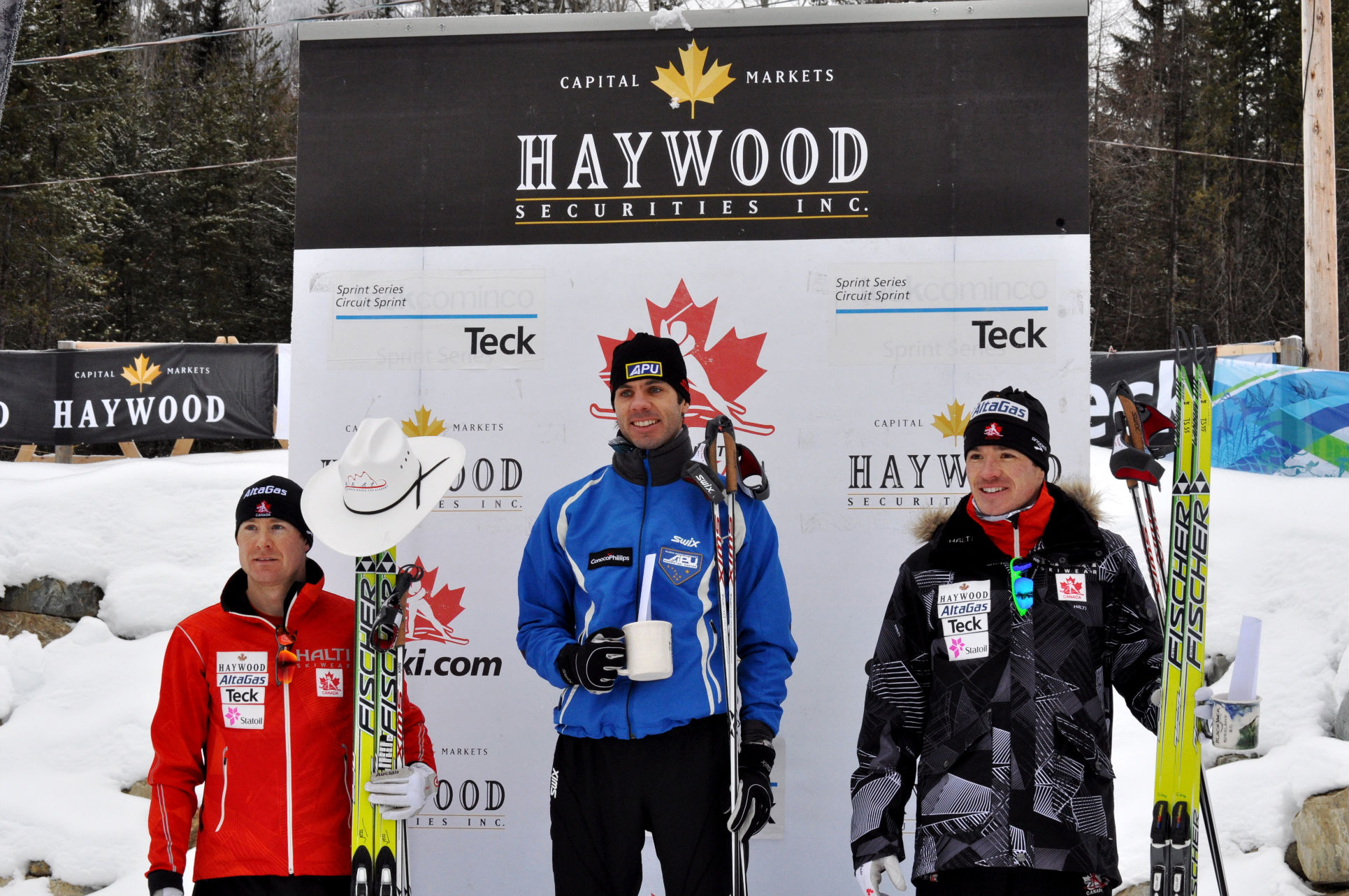
    CXC men again dominated the top of the results sheet. In addition to Kuzzy and Nygren, Bryan Cook was fourth, Santi Ocariz sixth and Matt Liebsh seventh.

    Mike Sinnott (SVSEF) placed fifth.

    Northern Michigan UNiversity teammates Martin Banerud and Andy Liebner placed eight and ninth respectively, and took the top two spots in the CCSA collegiate race. John Parry (UAF), 10th overall, was the third college skier.

    Edward Gurny (UWGB) was the first junior across the line in 25th and Benjamin Saxton in 28th led the J1 category.

    SuperTour racing continues next weekend with the Midwest Grand Prix in Houghton, MI.

    Two days of racing include a classic sprint qualifier, a 5/a0km classic, and 10/15km freestyle mass start.

    Complete Results

  • Kuzzy, Compton Lead CXC in SuperTour Domination

    Whether or not home-course advantage has much impact in cross-country skiing, the CXC Elite Team had no problem defending their local snow.

    SuperTour racing moved to the Midwest for the Mayor’s Challenge – two days of racing in Minneapolis, Minnesota.

    Last week combined an EISA collegiate carnival with the Lake Placid SuperTour, and this week was similar, swapping out the Central Collegiate Ski Association (CCSA) for the EISA.

    The races are also Junior Olympic Qualifiers for the Midwest division, making for a very large field.

    Saturday’s schedule features a 5/10km individual start freestyle race on a sunny, but cold day, and the story was CXC from start to finish.

    The elite race team based in the Midwest took the top two spots in both the men’s and the women’s races behind strong performances from Garrott Kuzzy and Caitlin Compton.

    Kuzzy posted a four second victory over teammate Matt Leibsch, winning with a time of 23:05. Sylvan Ellefson (SSCV Team Homegrown) was third, 22 seconds behind Kuzzy.

    “I felt strong today, like I was really able to pin it from start to finish,” Kuzzy wrote in an email to FasterSkier. “Skis were great, too, considering the cold snow,” he continued.

    Bryan Cook, also of CXC, placed fourth, just ahead of brother Chris Cook (Steinbock Racing). Overall the CXC men took five of the top-8 spots.

    Of the top finishers, only Bryan Cook and Mike Sinnott (SVSEF) who was 5th, raced last weekend in Lake Placid.

    The Midwestern collegiate men did not fare quite as well as their eastern counterparts. Ray Sabo (UAF) was the top college skier in ninth place. UVM skiers Scott Patterson and Alex Howe cracked the podium on successive days in Placid, and three collegiate skiers ranked in the top-10 in each race.

    Kuzzy coming of a US Nationals in which he twice cracked the top-10, but was likely looking for more, hadn’t raced since then.

    “I had no idea what to expect going into the race,” Kuzzy said. “I’ve been walking across the street to the Wirth Trails [race site] every day for the past two weeks, so needless to say, I knew the course pretty well and was ready to race after a couple weeks off after Nationals.

    “We were missing some fast skiers today, but I’m happy with how the race went.”

    In the collegiate standings, Sabo was followed on the podium by NMU teammates Andy Liebner and Martin Banerud. The duo placed 12th and 13th respectively.

    Canadian Jimmy Gunka (C-NDC Thunder Bay) led the juniors, placing 22nd overall.

    Compton Tops Women’s Field

    Caitlin Compton matched teammate Kuzzy’s place, but topped him in the margin of victory department. The 2010 Olympian, who was recently left of the World Championship team, skied to a 30 second victory over Maria Stuber (CXC).

    “I felt great today,” Compton wrote in an email to FasterSkier. “I took last weekend off to teach a ski clinic here in the Twin Cities. It was perfect timing because I got train with my local groups and on my local trails before these races.”

    Compton, a stronger skater, placed fourth in the US Nationals 20km freestyle, but struggled in the classic distance race. She skied clear of Stuber who hung around the east to contest the SuperTours in Lake Placid where she twice cracked the top-6.

    Raphaela Sieber gave UAF the collegiate victory in both the men’s and women’s event, placing third overall. She led a strong college contingent, with collegiate skiers taking seven of the top-10 spots.

    Carloyn Freeman (UWGB) placed second in the college race and fourth overall. She was followed by former CXC skier Kristina Owen in fifth, and Alice Flanders (MTU), in sixth overall, rounded out the collegiate podium. Flanders was also the top junior in the competition.

    Overall 163 women and 224 men (including the J2 race) competed on the day. Racing continues on Sunday with a 10/15km mass start classic.

    Temperatures are expected to remain on the chilly side, but according to Kuzzy, the skiing is great.

    “The snow and skiing in Minneapolis is the best I can ever remember and the organizers pulled off a great race for all 500+ skiers, including RT Rybak, the Mayor of Minneapolis (hence “Mayor’s Challenge”).”

    Compton concurred, adding “The skiing was incredible! The courses were very challenging and the trails are in phenomenal condition.”

    Complete Results

  • Discretion Plays Big Role in Worlds Selections, But No Outcry

    Brian Gregg (CXC) just missed qualifying for the 2011 World Championships team.

    Just before the U.S. Ski and Snowboard Association (USSA) named its team traveling to the 2011 World Championships in Oslo, Brian Gregg got a voicemail from U.S. Ski Team Head Coach Chris Grover.

    Gregg, a strong domestic skier on CXC’s Team Vertical Limit, was ranked eighth nationally, and had a shot—albeit a small one—at being selected to the group heading to Worlds. But the news from Grover was disappointing: Gregg’s results had been good, but not outstanding, and he wouldn’t be going.

    Fourteen athletes got the nod for Norway, but a “handful” of others who didn’t still got calls from USSA to inform them of their plight, Grover said. And at least three of them—Gregg, his teammate Caitlin Compton, and Leif Zimmermann (Bridger Ski Foundation)—said that they didn’t take issue with the decisions.

    “I think the process they have is good and fair,” Gregg said in an interview. “I knew, going into [last week’s] U.S. Nationals, that I needed to be on the podium, and doing very well in those races. And so, not having done so, I’m not necessarily surprised.”

    Before the call from Grover, though, Gregg couldn’t be sure of his fate, thanks to the intricacies of the selection system.

    That system is laid out in a USSA document containing three tiers of guidelines. At the top are objective criteria, which give athletes ranked high up in the World Cup standings an automatic spot on the American worlds team; that’s how Kris Freeman, Andy Newell, Liz Stephen, and Kikkan Randall qualified.

    The next criteria is discretion—meaning that outside those first few skiers, Grover and other USSA staff had a free hand to choose the rest of the athletes they felt would be racing fastest in Oslo.

    The third tier of guidelines called for selections to be based on skiers’ national rankings. But according to USSA Nordic Director John Farra, those rankings are primarily used as a “tool,” to aid in discretionary picks—especially since the list used by USSA, the “NRL,” includes results from up to 12 months ago.

    Caitlin Compton (CXC) racing at the U.S. National Championships.

    “The NRL can be a good tool, but it also has some weaknesses, because it is over a year,” he said.

    The prime example of those weaknesses were embodied in the case of Compton, who was ranked third in the country—ahead of World Championships team nominees Ida Sargent (Craftsbury), Liz Stephen (USST), Morgan Arritola (USST), and others. Compton had good points races in the second half of last season, at the Canmore World Cup and at SuperTour Finals in Maine, but she didn’t match those results this fall.

    In an interview, Compton said that she knew that there was still a possibility she could be named to the team, but at the same time, she recognized that her training this year had not quite been “world-class caliber.”

    “Obviously, I really want to go, but there’s a part of me that realizes there are other athletes, right now, that are more qualified, and could potentially have better results,” Compton said. “The girls that were named were completely deserving—there’s no doubt in my mind that they made a really good decision.”

    How It Plays Out

    The NRL was a hot topic last season, when it was one of the criteria involved in the selection of the 2010 U.S. Olympic team.

    It was clear that athletes were still eyeing it closely—Compton, for example, noted that she had “really good points.”

    While most of the top athletes on the men’s and women’s lists were indeed selected, Grover said that he and his staff weren’t relying on the NRL as a baseline. Given that fact, Grover said that the criteria may need to be revisited next spring by USSA’s cross-country committee.

    “The selection criteria that we have had for a while, in its current form…it’s been working quite well,” he said. “However, I would say this is the first time that, perhaps, it’s not working 100 percent as well as it should, and people are carrying over points from the previous year that aren’t performing perhaps to the same standard.”

    For this season, Grover said, he and his staff started with a list of the events at the Oslo championships, and filled it in with the athletes they felt are most qualified—beginning with the ones who made the team based on their World Cup results.

    “That’s what we’re looking at first. The next thing that we’re looking at is, ‘what are the events? And, who are the key athletes we want to start in those events,” Grover said. “We’re not going to a national ranking list in order to fill spots.”

    In Compton’s case, despite her third place standing on the NRL, Farra said that there was a chance that the U.S. team might not have been able to find her an event to compete in—especially since each country only gets four starts per race.

    “You look at the depth of this women’s group, and their ability to go between sprint and distance,” Farra said, “all of a sudden, she’s realizing, ‘I might be going to Norway for two weeks and just being a cheerleader.’ And that’s not something she wants to do.”

    On the other hand, there was 19-year-old Jessie Diggins, who was ranked ninth on the list, but who on Sunday won a national championship in the skate sprint in Rumford—complete with a two-second victory in the qualifier.

    For Diggins, Grover said, the Oslo trip offers a good chance for her to get some experience at a championship environment—which applies to some of the other younger athletes on the trip, as well. But Grover maintained that none of the skiers on the team had been named without results to back them up.

    “It’s great to bring athletes there in order to get experience for the future, but at the same time, they have to be skiing fast,” he said. “If they’re not skiing fast, then there’s much better development avenues for them…Yes, we went down, and we got some younger skiers that we want to give that experience to, but those younger skiers were beating the guys that were ahead of them on the points list.”

    One of those athletes was Gregg, 26, who was passed over despite being ranked higher than 21-year-old Noah Hoffman (USST).

    Going into last week’s national championships, Gregg said that he knew he would have to be in a strong position relative to

    Leif Zimmermann racing in West Yellowstone. Photo, WIn Goodbody.

    Hoffman after the four events in Maine, since “it’s easy to see that the national team sees a lot of potential in Noah.”

    In the end, though, Hoffman came out ahead of Gregg in both distance races. And while Gregg maintained that results over the last year could be parsed many different ways, he said that ultimately, “they’re bringing the fastest guys.”

    Zimmermann said he didn’t take issue with USSA’s selections, either. In fact, he said, “that’s the team I would probably pick, too.”

    Zimmermann did, however, note that big events can be challenging for younger athletes, citing his own experience at the 2006 Olympic Games in Torino, when he was 23 years old.

    “It’s a great experience, and you do learn a lot. It’s just tough to try to go there and perform,” he said. “With all those other distractions, sometimes it is hard to race to the top of your ability…but that’s not a bad thing if you go into it with the mindset of getting experience.”

  • Fast and Female at Gould Academy is a Success

    Fast and Female at Gould Academy is a Success

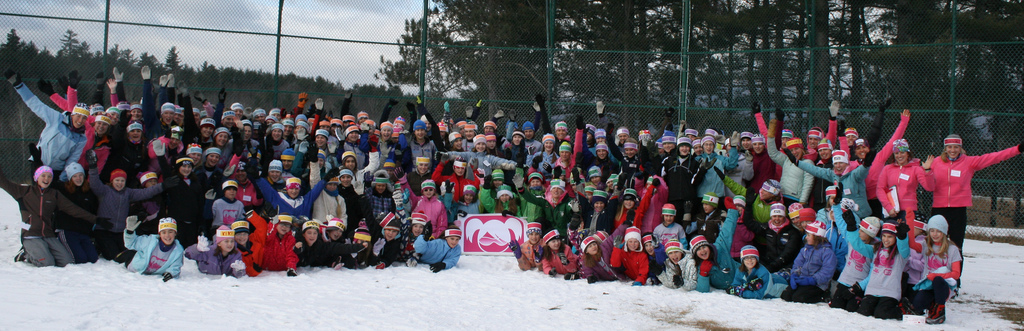
    Fast & Female Group Photo at Gould Academy. Photo courtesy of NENSA

    Calgary, Alberta/Bethel, Maine – Fast and Female’s third annual US X-Country Ski Festival held on Sunday, January 9 in Bethel, Maine will go down in history as a tremendous success.  Hosted by Gould Academy, the event saw 140 girls from Maine, Vermont, and New Hampshire between the ages of 9 to 19 years old take part in a day of inspiration with female Olympic ambassadors and US Cross-Country Ski Team athletes Caitlin Compton, Morgan Arritola and Holly Brooks, along with many more female athletes from around the United States, fresh off of competing at the US National Championships in nearby Rumford, Maine.

    Autographs on t-shirts were a popular request! Photo courtesy of NENSA
    “Hosting a Fast and Female event surpassed my expectations with everyone involved bringing amazing energy,” said Gould Academy Head Nordic Coach Jeremy Nellis following the event. “You couldn’t have asked for a better group volunteers and ambassadors.  It was clear that they believed in the mission and I believe they inspired other women to lead a healthy and active lifestyle.  The smiling faces of all those girls will stay with me forever.”

    After being held for two consecutive years in Anchorage, Alaska, the 2011 Annual US X-Country Ski Festival traveled to Gould Academy in Bethel, Maine to synchronize with the US Nationals that took place in Rumford, Maine from January 2 to 8.

    In keeping with the highly successful signature Fast and Female day camps, the 2011 X-Country Ski Festival featured a complete day of team building activities, on-snow drills, an inspirational lunch, yoga, and dancing.  The event was geared towards girls with past cross-country skiing experience at both the racing and non-racing levels.

    “Thank you for organizing such a successful and empowering event,” said James Demer, parent of a participant and coach of the Falmouth Nordic Ski Team. “My daughter Ava had a really great time and it seemed that all involved did as well!”

    Holly Brooks (APU) & Lauren Jacobs (Craftsbury GRP) take questions from Fast and Female participants. Photo courtesy of NENSA

    This event was made possible thanks to the generous contribution of local sponsors and supporters including Gould Academy, who supplied the venue and lunches for all participants, the New England Nordic Ski Association (NENSA), the Maine Winter Sports Center, as well as Fast and Female’s national program supporters, including Best Buy, Buff, Lululemon Athletica and Cold-FX.   Additionally, 15 volunteers and 32 group leaders offered valuable time to ensure the girls had an outstanding experience.

    “The purpose of Fast and Female is to inspire girls to stay committed to the active and healthy lifestyle by putting them in direct contact with leading female sports role models,” said Marie-Hélène (M&H) Thibeault, Executive Director for Fast and Female and ex-alpine ski racer who evolved at Burke Mountain Academy and Dartmouth College. “Girls are six times more likely to drop out of sports than boys, so we feel it’s key to counter this phenomenon by delivering fun, non-competitive, and empowering programming that makes girls realize that sport is a tremendous vehicle for both athletic and personal growth,” she added.  Thibeault also specified that all participants received a Fast and Female t-shirt as well as a yoga mat generously donated by Lululemon Athletica.

    Dartmouth's Erika Flowers, sporting lots of pink, leads a game. Photo courtesy of NENSA

    Founded in 2005, Fast and Female is a non-profit organization based in Canmore, Alberta, Canada and dedicated to the empowerment through sport of young women.  Started by the 2006 Olympic gold medalist Chandra Crawford, Fast and Female operates across Canada and the US and currently reaches out to girls in the sports of Cross-Country Skiing, Biathlon, Alpine Skiing, Triathlon, and Cycling.

    Fast and Female’s expansion into the US was made possible in 2009 thanks to the friendship and collaboration between Crawford and Kikkan Randall, an Alaska-born cross-country World Cup medalist.  Since 2009, Randall has hosted two Annual US X-Country Ski Festivals in her hometown of Anchorage, Alaska, reaching a total of more than 300 girls.  In 2010, the State of Maine hosted a highly successful regional Fast and Female event and this year’s event marks the first Annual US X-Country Festival to be held outside of Alaska.

    For the event photo montage, visit: http://www.facebook.com/#!/fastandfemale

    For full event pictures, visit: http://www.flickr.com/groups/nensa/.

    The next Fast and Female event in the USA will be held on January 29, 2011 in Alaska. On this special occasion, Kikkan Randall and Holly Brooks will host more than 200 young female ski enthusiasts for an afternoon of skiing and inspirational presentation. For more information concerning this event, please visit www.fastandfemale.com.

  • Stephen Stomps Her Way to 20 K Victory

    Stephen Stomps Her Way to 20 K Victory

    Liz Stephen on her way to the finish of the women's 20 k in Rumford. Photo, Kris Dobie.

    The Alaska Pacific University women’s team was finally dethroned on Thursday—but it took a world-class athlete to do it.

    After Holly Brooks and Sadie Bjornsen took the first two races of this week’s U.S. National Championships in Rumford, the U.S. Ski Team’s Liz Stephen finally broke up the monopoly with a persuasive win in the women’s 20 k.

    Liz Stephen on course in the women's 20 k. Photo, Kris Dobie.

    Brooks preserved her squad’s pride by placing second, 58 seconds down, while Morgan Arritola (USST) was third.

    Just 24 hours removed from a disappointing finish in Wednesday’s classic race, Stephen was back where she belonged on Thursday, and she wasted no time in establishing herself at the front of the race on a crisp, sunny day in Rumford.

    She started 30 seconds behind her teammate Arritola, closed down the gap in just over five kilometers, and kept on charging, skiing with a quick, energetic tempo.

    “She blew past me—she was moving fast, and I figured I needed to ski my own race so I didn’t blow up,” Arritola said.

    Thursday’s race was Arritola’s last one in Rumford; she flies home Friday. After her second consecutive third-place finish, she said that she was satisfied—even if she had hoped to ski a bit better.

    Arritola had a “hell of a travel schedule” to get from the World Cup in Europe to her home in Idaho in late December, then back to Maine five days later.

    “I’m ready to go home…and get kind of settled into some training,” she said. “I went hard, and that’s all I can ask for right now.”

    “Hard” was still enough to crack the podium, though. Thanks to some steady pacing, Arritola made up a 30-second deficit to

    CXC's Caitlin Compton at the finish. Photo, Kris Dobie.

    CXC’s Caitlin Compton, who faded after a blistering start to finish fourth.

    Compton’s first two laps were the fastest of all 76 starters, but Stephen was just getting rolling, and she had plenty of time—the women made seven trips around the 2.7-kilometer course.

    Stephen’s performance was a sharp contrast to her lackluster 10th-place finish on Wednesday, which left her a minute and a half behind APU’s Sadie Bjornsen—all the more surprising given that Stephen was coming off a career result a few weeks ago on the World Cup.

    On Thursday, things were back to normal—Brooks was the only woman who could come within a minute of Stephen’s time.

    She said that the technique and distance of the skate race suited her—but also added that she simply felt better.

    Stephen’s coach with the U.S. Ski Team, Matt Whitcomb, had no explanation for the turnaround—but he said that she didn’t make any big changes between the two days.

    “The body’s a crazy thing,” Whitcomb said. “She just didn’t show up with the ideal fitness yesterday. The plan going into today

    Holly Brooks driving a train of women during Thursday's 20 k skate race.

    was to show up with confidence, show up angry, leave happy.”

    With the win, Stephen added to her tally of national titles, but neither she nor organizers knew just where it stood. The one thing Stephen did know, though, was that she would relish it.

    “You have to soak in the good days,” she said.

    Brooks, who finished second, said that the 2.7-kilometer loop left her with no time to relax. She said she knew to go out hard after discussing the course with her teammate James Southam, who couldn’t overcome a slow start in the men’s race.

    “It was a 20 k where you just have to charge, the whole time,” she said. “I think the people who went out really conservatively probably regretted it.”

    Brooks also said that she was fueled by her frustration with a poor race on Wednesday. She finished seventh that day, and her reversal on Thursday mirrored Stephen’s.

    “I’m sure she was trying to make up for yesterday, as I was I,” Brooks said. “I think both of us came out here ready to land on the podium today, after a disappointing race.”

    Link to results.

    Morgan Arritola climbing. Photo, flyingpointroad.com.
  • Caitlin Compton: Racing is the Easiest Part of My Life

    CXC skier Caitlin Compton entered the first part of this season with a thinner training base than usual. Not expecting greatness before Nationals, she got off to a slow start in West Yellowstone, but turned up the heat in the recent mini-tour in Rossland, British Colombia.

    “The first part of the race season has been really good. I didn’t know what to expect since I had not trained as much as I normally do, and planned on working my way into the season, ski into race shape,” Compton said, whose dryland season differed from that of her competitors.

    “After the Olympics and a lot of time away from home, I was left without a lot of resources financially, so I just had to do a lot of work locally,” said Compton, who spent her summer working with the project “In the Arena,” which helps underprivileged inner-city kids.

    While rewarding, her work didn’t leave Compton much time to focus on her own training. Having done no dryland camps and only training with a local group of athletes, she has been surprised about how well her racing has gone in the early season.

    “How I was racing at the end there was a good indication,” said Compton, speaking of her performance at the recent Nor-Am mini-tour in Rossland, British Colombia, the weekend before Christmas. She is currently ranked third in the country on the third USSA points list, and feels on track for the US Senior Nationals in Rumford, Maine, next week.

    Peaking later

    “In the past, I’ve tended to peak early. Now I’ll peak later in the season. I’ve done more training than before, once we got on snow,” Compton said, explaining that this year, November and December have been some of her biggest training months with a focus on volume and longer intervals.

    Caitlin Compton racing in in the 2010 Olympics.

    “It’s been great to work with the CXC coaches while on the road. They’ve really helped me fine-tune my technique. I’ve followed their training plan, and that has worked well for me in the winter time. They provide a lot of wax support, and my skis have been rocket fast, and that makes me feel really confident going into races with them,” Compton explained.

    Now Compton will switch into shorter, faster work, and she’s ready to get to it. “I’m pretty fired up about Nationals. We did some testing last week looking at recovery and such, and I feel like I‘ve made a lot of progress…I love training, but I definitely love racing,” said Compton, who doesn’t get too nervous about competing. “Racing is easy. Other parts of my life are a lot more nerve-wracking. Racing is the easiest thing. You just put your head down and stay positive…You have to separate the result sheets from who you are. You can’t be too concerned about results. They go up and down. And you can’t look at each race individually, you have to see the whole picture, and honestly look at your life and see what you can improve.”

    Season depends on Nationals

    While Compton hopes to race fast enough at Nationals to nail down a ticket to the 2011 World Championships in Oslo in February, in its absence, she will focus on the American Birkebeiner as a primary season goal.

    But making the Worlds team is all based on results in Rumford. In order to race fast at Nationals, Compton knows what to do.

    “I just need to keep doing what I’ve been doing, not change anything drastic.”

  • Pro Workout: Responding to Adversity with Caitlin Compton

    Pro Workout: Responding to Adversity with Caitlin Compton

    In the past, our “Pro Workout” series has featured a single training session from an elite North American skier, but this week CXC’s Caitlin Compton gives us a slightly different take.

    Instead of detailing a favorite workout, Compton addresses an oft-ignored aspect of race preparation – the ability to respond to challenging and unexpected circumstances.

    Over the past several years, major North American events have been disrupted by everything from volcanic eruptions to frigid temperatures to low snow.

    This is all part of being an outdoor endurance athlete, Compton explains, but how you respond can have a major impact on your success.

    “You need to have the ability to be flexible and to understand that there are some things you can’t control,” Compton says. “But there are tons of options. The beauty of cross-country skiing is that we do lots of cross-training in the off-season.”

    Compton racing in West Yellowstone

    This variety means that skiers can easily turn to alternative training methods when plans need to be changed.

    Compton keeps her body in running form with regular jogs throughout the ski season, meaning she can easily throw in a significant foot session – even intervals – without experiencing any soreness.

    And while training indoors is often a last resort for skiers, a local gym can be a perfect fallback plan if weather forces you off the trails.

    “There is always a chance that conditions may be less than ideal for a huge event,” says Compton, noting that many athletes expect that the biggest races will automatically have perfect skiing – something that rarely comes to pass, be it US Nationals or the Olympics.

    So an athlete’s response to less than ideal circumstances throughout the year can be an important part of her preparation.

    “A good way to approach an alternate workout is to think, ‘if this comes up again, I will be ready,’” explains Compton.

    “The approach is the most important,” she continues. “The goal is to not let it affect you and mentally stay positive, and look at it as an opportunity to practice and have fun overcoming the adversity.”

    She also points out that workouts within two weeks of a competition will not have a significant impact on fitness, so you aren’t going to make or break your big event with a specific session.

    Compton gives a very recent example, describing how she and CXC teammate Jessie Diggins were forced to adapt when they arrived at the 2011 US Nationals venue in Rumford on Wednesday.

    A middle school race and a lack of snow meant there was not much skiing to be had – and none suitable for race skis. The women had not brought rock skis to the venue, so they made a quick decision.

    “We had both been running, so we switched into our running shoes and went out there. We made the most of it, had fun and left the day, maybe without the same specificity of a ski workout, but with something accomplished, and our heads still psyched for the upcoming event.”

    Diggins was even able to stick to her plan of doing level 3 intervals, with Compton providing support.

    But Compton notes that this is a learned skill and one that must be practiced. Years of experience help, and over time the situations that cause stress become just another part of life as a ski racer.

    And says Compton, freaking out will just make you more tired, and that will certainly not make you race faster.

    Several years ago, when at a biathlon training camp in Torsby, Sweden, Compton was faced with highly memorable circumstances. Despite being in Scandinavia during the midwinter, in a town that is home to one of the world’s few indoor ski tunnels, there was nowhere to ski.

    The weather was beautiful, but against all odds, there was little snow on the ground. Compton ended up doing combo intervals (shooting and skiing) on a quarter kilometer of snow shoveled by her coach around the range, and during her stay mixed in running intensity as well.

    “Not ideal for that time of year,” Compton reminisced, but it ended up being fun.”

    And as with so many things, sharing the challenging experiences with teammates is one more potential positive.

    “I have definitely learned in my years of skiing that nothing ever goes perfectly. You just have to make the most of it and roll with it,” says Compton.

  • U.S. Nationals: Women’s Preview

    U.S. Nationals: Women’s Preview

    Arritola racing at the Vancouver Olympics.

    With 15 titles over the past decade, Kikkan Randall has turned the U.S. National Championships into something of a one-woman show.

    In the 2010 edition, which was held in her hometown of Anchorage, she swept all four events—collecting nearly $5,000 en route to wins in two distance races and a pair of sprints.

    This year, the country’s fastest women will assemble at Black Mountain in Rumford, ME. But when the first event of the championships kicks off on January 2, Randall will be 3,000 miles away, competing in the Tour de Ski in Germany. Her absence should make for a wide-open series of races, with the cream of the domestic crop facing off against Randall’s teammates from the World Cup circuit.

    Headliners will include U.S. Ski Team members Liz Stephen and Morgan Arritola; Dartmouth College’s sprint phenom Ida Sargent; domestic stalwart Caitlin Compton; and a deep contingent from powerhouse Alaska Pacific University (APU).

    “I think it will be a really great opportunity for other people to kind of step up…and take the reins,” said APU’s Holly Brooks.

    The Races

    The 2011 championship program for the women is identical to the one from 2010—and to 2009, for that matter, although that series was truncated due to cold.

    Stephen was left disappointed after last season; will she take out her frustration on the domestic field?

    The schedule is essentially a sprint sandwich: a classic sprint kicks things off on January 2, which is followed by two distance races—a 10 k classic and a 20 k mass start freestyle—on January 4 and 6. A skate sprint closes out the event on January 8.

    The winner of each race will take home $1,200, with $600 awarded for second place, and $300 for third. While that top prize is $450 more than is typically awarded for a victory on the domestic circuit, the SuperTour, the payout is only half as deep.

    There’s more than just cash on the line, though: all four races will be scored to the U.S. Ski and Snowboard Association’s National Ranking List, which can play into the selection of the American team for the 2011 World Ski Championships, in late February in Norway.

    In addition, the races will help serve as qualifiers for the U.S. teams heading to the U-23 and World Junior Championships in Estonia in late January—as well as an annual junior trip to Scandinavia.

    The Athletes

    Nationals will mark the first time this season that the country’s best women—with the exception of Randall—will all appear on the same start list.

    Sargent leading Magda Genuin (ITA) in the FIS skate sprint in Muonio, Finland.

    For the last two months, that field has been split between the U.S. and Europe. The domestic athletes raced over three weekends in Montana and Canada, while Stephen and Arritola, along with Sargent, have competed mainly on the World Cup.

    “None of us have gotten a chance to race those, and so I think everyone’s looking forward to it,” Brooks said. “It’ll be great to have a full field.”

    Below, we offer a quick rundown of the competitors.

    U.S. Ski Team member Liz Stephen is coming off her best-ever World Cup result, which came in France earlier this month, but her form has been inconsistent this fall. She followed a strong race in the World Cup opening weekend in Sweden with three mediocre results, before turning things around in France. A distance specialist, Stephen plans to skip the first sprint, and as a strong skater, look for her best effort to come in the 20 k freestyle mass start.

    Morgan Arritola, Stephen’s teammate, is also a distance specialist, and she skied to a personal best earlier this month as well. Her form, though, has been even more inconsistent than Stephen’s: until her 19th-place finish in France, she had failed to break the top 45 in her five previous World Cup starts this year. If she can keep riding her recent fitness through Rumford, she’ll be a threat to win either distance race. If she can’t, she’ll have trouble cracking the podium.

    Brooks racing in West Yellowstone.

    After running neck-and-neck with stars Justyna Kowalczyk and Petra Majdic in an early-season sprint race, Ida Sargent (Craftsbury/Dartmouth) proceeded to finish 33rd in her World Cup sprint debut in Finland in November—the top American result on the day, ahead of Randall. Sargent will head into Rumford as the favorite for both sprint events, although a recent car accident left her with a concussion and some neck problems. “My training hasn’t been ideal these past few weeks, but I’m making a full recovery,” she wrote in an e-mail.

    After finishing on the podium in seven of the nine domestic races she entered this fall, Holly Brooks will lead the charge of the stacked APU women’s team. In an interview, Brooks said that she would be racing all four events in Rumford—and she will be a threat to win each of them. Brooks is high up on the latest edition of the National Ranking List, putting her in good position to qualify for the U.S. World Championships team, but she said she’s not taking anything for granted. “Anything can happen at nationals,” she said.

    Sadie Bjornsen and Kate Fitzgerald are APU’s two other biggest podium threats. After her first domestic win in Canada earlier this month, Bjornsen could be Sargent’s toughest challenger in the sprint races. Fitzgerald, meanwhile, made a big jump in the off-season, which culminated in a win in her first domestic distance race of the year in Montana.

    CXC’s Caitlin Compton got off to a slow start to her season, but her skiing came around as the domestic circuit moved to Canada in December. A 2010 Olympian and an owner of multiple U.S. championships, Compton’s best results will likely come in the two skate events. Her teammate, 19-year-old Jessie Diggins, has achieved some breakthrough results this fall, and with her win in a mini-tour in Rossland earlier this month, her fitness appears to be still improving.

  • Thumbs Up For Mini-Tour Format

    Thumbs Up For Mini-Tour Format

    After the Nor-Am mini-tour in Rossland, British Columbia, last weekend, racers from both sides of the border raved about the event as an exciting change of pace where all racers – sprinters and distance skiers alike – have a fair chance to fight for the overall title. Contributing to the positive reviews was the excellent job that the organizers and volunteers put down to make it fun, fair and entertaining.

    Stefan Kuhn (Canmore Nordic) takes the victory over fellow Canadian Drew Goldsack (Rocky Mountain Racers). Photo: Rob Whitney.

    “I love the mini-tour – fun to watch and great to ski in. It adds a lot of excitement for us racers and a great challenge as well. I don’t know if you can do anything much better. The Rossland ski community had done a great job organizing and made a 3-day race series go very smoothly and was lots of fun,” Stefan Kuhn (NTS) said in an email to FasterSkier. The overall men’s tour winner also thought the sprints were factored fairly into the overall results.

    “You get a 60-second bonus if you win and down from there, and that is a lot,” Kuhn said.

    The overall women’s winner, Jessie Diggins (CXC) also enjoyed the format.

    “I think the mini-tour was really fun. The way it was set up made the last day pretty exciting since you knew exactly where you were in terms of the overall tour standings during the race,” Diggins said in an email to FasterSkier.

    On the World Cup, some European racers have complained that a mini-tour is not worth the effort for sprint specialists. That was not an issue for the Nor-Am racers that FasterSkier spoke with. If anything, Diggins thinks the sprints may have been weighted a little too heavily, though it was not a problem for her.

    “Because the 5km skate was so fast, the girls who weren’t sprinters weren’t given as much of a chance for the overall tour,” Diggins said.

    Good mix of sprint and distance

    “I really enjoyed the mini-tour format. I think it’s a great way to give both sprinters and distance skiers a chance to mix it up together,” Drew Goldsack (NTS) said in an email to FasterSkier. Going into the event, Goldsack was a bit concerned about the sprints being given too much emphasis. But in practice, he thought the concept worked out fairly for all.

    “On paper I thought that the sprint was maybe weighted too heavily but…it actually worked out perfectly. I think it was partly due to the fact that we had distance skiers sprinting better than usual and sprinters skiing distance better than usual, but it worked out well and made for some exciting racing.”

    Goldsack, who was third overall, had one single complaint.

    “The only thing I’d like to see better is the prize money; it seemed a little chincey for three hard days of racing. $700.00 for the win isn’t bad, but $400.00 for second and $250.00 for third place seems a bit low to me,” Goldsack said.

    Great format but keep it reasonable

    Brooks racing in Rossland (Photo: Rob Whitney)

    Holly Brooks (APUNSC) thinks the mini-tour format is both entertaining and fair, especially on the Nor-Am circuit where there are fewer specialists than on the World Cup. She also thinks the bonuses for the sprints helped even out any discrepancies.

    “Especially in the women’s field, the sprinters and the distance racers are the same people anyway, and the bonuses awarded for the sprints were huge, so I think the format was fair. I think on the World Cup there is more of a difference because the racers are more specialized,” Brooks said to FasterSkier.

    “We train so hard all year and make so many sacrifices. We train to race, and this is it. For me, this was a good intensity block before nationals. There were good interesting courses, and you have to be really versatile with this format that includes sprint, skate and classic,” Brooks said, but added that she doesn’t want organizers to go bananas with the concept just because the first one was a hit.

    “I hope they keep mixing it into the schedule, but I wouldn’t like to see all race weekends turn into mini-tours,” Brooks said, noting that one or two of them per year could be a reasonable amount.

    “Mini-tours are hard on both racers and organizers. There are more logistics and it’s easy to make mistakes, and it makes it complicated for everyone,” she said.

    Just a good, hard weekend

    “Overall I think the mini-tour format is really good. I wished they had them at the start of my career. I have always enjoyed racing different formats and distances,” Lars Flora (APUNSC) said. The only thing he would like more of was hills, even on the last day.

    “The time bonuses seem to play out fairly between sprint and distance racing. The only thing I would change is adding a hill climb at the end of Sunday’s race. It would have been fun to finish with a classic hill climb,” Flora said.

    Caitlin Compton (CXC) also thoroughly enjoyed the Rossland experience, both for the variety and for the rigor. For Compton, the mini-tour was also an opportunity to test her own limits.

    “I knew that Saturday’s 5K skate would be my better event, but I also wanted to see how my fitness was through the entire weekend. I was pleased to find that my energy and quickness was still there (on Sunday), if not higher than the days before,” Compton said, noting that Diggins had reserves nobody else could match.

    Mixed feelings on the World Cup

    US Ski Team’s Kikkan Randall, who is on the FIS Athlete Commission for cross-country skiing, said in an interview with FasterSkier earlier this season that she has mixed feelings about the mini-tour concept. On one hand, Randall likes the idea of cross-country capitalizing on the increased TV-viewership that comes with these tour type events. On the flip side, Randall is concerned that by adding the overall time component and with each individual stage only worth half World Cup points, the sprint race is being devalued. She is also skeptical to adding a longer event weekend to the early World Cup season.

    “I also feel that with an already packed ‘Period I’ racing schedule, it is better to have two races instead of three this early in the year to allow for a little more training during the week and thus better longevity through the season,” Randall said.

    Among the Norwegians, some of the sprinters left Kuusamo after the opening sprint event of the “Tour de Opening” in November. Ola Vigen Hattestad and Kuusamo sprint winner John Kristian Dahl were among those who left early. Dahl dislikes the mini-tour, and was happy to explain why.

    “We get more points for regular WC sprint races than we do here, there is a packed schedule with a lot of races before the end of the year, and we have important races in Düsseldorf (GER) already next weekend. To do three races here takes an incredible toll (on the racers), and it seems a little oddly placed,” Dahl said to the Norwegian TV station NRK.

    The mini-tour in Kuusamo consisted of three competitions. Sprint on Friday, individual start classic on Saturday and pursuit/handicap start skate on Sunday. Only the overall winners will be listed as World Cup winners for the event. The sprint winners were awarded only 50 points compared to the normal 100 points.

    “It’s no secret that the mini-tour robs some of the status from the sprinters. For me as a sprint specialist, this is not great,” said Ola Vigen Hattestad.

    According to Vegard Ulvang, the Cross-Country Committee Chairman, this year the mini-tour is a test-event and it will be evaluated in the spring as to whether to make the Kuusamo “Tour de Opening” a permanent part of the World Cup calendar.

    As for the Nor-Am mini-tour, it seems like the athletes are giving the format a thumbs up, at least after the Rossland experience last weekend.

  • Diggins Wins Women’s Nor-Am minitour After Rocket Performance Sunday

    Diggins Wins Women’s Nor-Am minitour After Rocket Performance Sunday

    Holly Brooks (APUNSC) was leading the overall Nor-Am mini-tour in Rossland, BC, Sunday morning and was the first skier out of the gate in the women’s 10K classic race. She was ahead by 7.3 seconds after winning the 5K skate on Saturday by 11 seconds over Sadie Bjornsen (APUNSC), and placing third in the sprint Friday. But when Jessie Diggins (CXC Elite) passed her on the last lap, there was nothing she could do. Diggins, who started in third place, 19.1 seconds behind Brooks on Sunday, was able to widen the gap and won both Sunday’s stage and the overall mini-tour title.

    “Sadie (Bjornsen) caught me on the big uphill after the first lap. We skied together for a long time; most of that second lap, and then Jessie (Diggins) basically blew by us. Then Sadie gapped me a little bit. I was able to hold off Perianne Jones and stay on the podium for the aggregate,” Brooks said.

    “I much rather be one of the chaser than being chased. You’ve got to ski fast, because you don’t know where people are. It makes it hard to ski smooth, and easy to get bad technique, forget long strides and skiing smooth,” Brooks said.

    “The race today felt awesome! I went into today’s race without a strong race plan – I didn’t really know what to expect since I haven’t done many races in this format” Jessie Diggins said in an email to FasterSkier, explaining that her plan was simply to ski fast.

    “I definitely like to chase people down more than I like being chased, so I wanted to focus on trying to catch the leaders and not on all the people trying to catch me! I ended up catching Holly (Brooks) and Sadie (Bjornsen) at the start of the second lap, and when I passed them on a downhill I just decided to go for it and see what happened, hoping they wouldn’t reel me back in. And I got lucky and had a great race,” Diggins said.

    Diggins explained that the dumping snow made for some tricky conditions, not only on the waxing side of operations, but also for the racers on the course.

    “The conditions were really interesting, since it was snowing hard and although some of the tracks had been skied in, there were definitely a few spots where it was advantageous to switch lanes,” Diggins noted.

    Diggins also contributes her success to the CXC coaches.

    “I’m beyond impressed with our coaches; they absolutely nailed the wax and my skis felt like they were on fire. They’ve also been helping me a lot with my classic technique this year and I feel like it’s all starting to come together. It’s weird because I’ve always considered myself a better skater, but today made me feel more confident in my ability to hold my classic technique together.”

    Feeling the toll

    Sadie Bjornsen (APUNSC) was almost surprised to beat Brooks in the classic race, and maintain her second place overall. She was 7.3 seconds behind Brooks at the start, and was in second place overall after the first two stages.

    “Warming up I knew I was going to have to work for this race,” Bjornsen said to FasterSkier, explaining that a 3-day mini-tour on top of the longest racing stretch in her career so far was starting to take a toll on her. While Bjornsen was surprised that she was able to catch and hold Brooks, she had not accounted for Diggins.

    “It was a really close race with like 50 girls going out in two minutes, and none of us wanted to look back. So it was quite a surprise when Jessie (Diggins) came by us so quickly. We tried to stay with her, but she as on a roll,” Bjornsen said.

    Caitlin Compton (CXC) was also impressed with her teammate.

    “I think Diggins put a ton of time on everyone that second lap. I saw her as she crested the hill and then never again,” Compton said.

    “My strategy was to catch the girls ahead of me. When I realized I wasn’t going to catch Perriane (Jones), I realized that there were still a ton of girls behind me chasing me down! So my focused shifted to holding them off for the last half of the second lap. I was happy to cross the line without giving up any places. Overall, a solid classic day for me,” Compton concluded. She was in fifth place after stage one and two, and started 36.8 seconds behind Brooks on Sunday morning, and finished fifth overall for the aggregate after an eighth place in the classic race.

    Organizers and volunteers shine

    While snow was falling throughout the weekend, the racers all chime in on how great the organizers were and how well maintained and prepped the courses were.

    “Black Jack did a great job with the event and the courses were in great shape,” Compton said.

    Diggins also noticed the effort the organizers had put into making the mini-tour a smooth, fun experience for everyone involved, from racers to spectators and support staff.

    “What I do know was that the volunteers out there this weekend made it so nice – the courses were very clearly marked, there was a sweet DJ playing, and the people at the start and finish were friendly and helpful. It was just a fun weekend,” Diggins said.

    Complete results here.

    Women's overall podium: Jessie Diggins (CXC), Sadie Bjornsen (APUNSC), Holly Brooks (APUNSC), Perianne Jones (NTS) and Caitlin Compton (CXC). Photo courtesy of Rob Whitney
  • Brooks Takes Fast and Furious 5k in Rosland, Sets Up Exciting Final

    Brooks Takes Fast and Furious 5k in Rosland, Sets Up Exciting Final

    Holly Brooks (APU) racing in Rossland on Saturday. Photo courtesy of Rob Whitney.

    Holly Brooks (APU) followed up her second place in Friday’s sprint with an 8.2-second victory over Jessie Diggins (CXC Elite) in the women’s 5 k freestyle on the second day of the Rossland NorAm mini-tour.

    With extremely fast conditions, Brooks flew around the course in just over 12 minutes.

    “I knew it was going to be fast,” said Brooks, “but I didn’t know it would be that fast.”

    Diggins’ CXC teammate, Caitlin Compton, finished third, just one tenth of a second out of second place.

    “It almost felt like a prologue instead of a distance race,” Brooks said. “I’m not even sure what to classify it.”

    With such a quick loop, racers had to put the pedal down from the get-go.

    “Strategically I knew there was no time to wait, and no reason to save anything. A lot of the early climbs were followed by some nice, long, restful downhills,” Brooks said.

    Compton found the conditions to her liking, and in fact, she described the day as ideal.

    “A 5 k skate, fast conditions—that is pretty much my ideal race,” she said. “I could race those anytime!”

    The women's podium.

    Compton has been building into the season, looking to be racing her fastest later in the year, but she said she is beginning to come into form.

    “I felt like I was back in my race zone—definitely one of my better races,” she said.

    After Kate Fitzgerald and Sadie Bjornsen, both of APU, finished 4th and 5th respectively, Perianne Jones of the Canadian National B-Team broke up the APU/CXC/American monopoly at the top of the results sheet.

    Second through fifth places were separated by a mere 3.2 seconds, setting up an exciting battle in Sunday’s 10 k classic pursuit final.

    Brooks will start with a 7.3 second lead over teammate Bjornsen, winner of Friday’s sprint and fifth in the freestyle, while Diggins is another 12 seconds behind in third.

    Jones sits in fourth, 24 seconds back, and Compton fifth at 37 seconds.

    “Honestly, I was hoping that I would have a bigger lead, but the course and the conditions did not allow for that,” said Brooks. “I know I will be going out tomorrow with a big target on my back, and some good skiers following me.”

    Compton is looking at the 10 k classic as a good indicator of her fitness, as the discipline is not her strong suit.

    She has nearly 30 seconds on her closest pursuer, so will be forward, not back.

    “I love chasing people down, so I am really looking forward to tomorrow,” she said.

    Brooks pointed out that because the pursuit will also be scored as an individual race, it could make for some interesting tactics.

    Usually, in such pursuit-start events, all that matters is who crosses the line first. But with points at a premium for World Championships qualification, sitting back and waiting for the final sprint may not be a wise strategy.

    “The people who are starting a little further back, and are out of the prize money for the aggregate time, may be more aggressive…going for an individual result,” Brooks said.

    Either way, it should make an exciting day of racing, with a number of small packs set up in the overall standings.

    New snow has fallen since the completion of the skate race, which will likely make the classic event slower.

    “Everyone is pretty excited to race this hunting-style pursuit format,” said Brooks. “It should be some great head-to-head racing.”

    Link to full results.

    Overall mini-tour standings.

  • Whirlwind Day for Brooks at Sovereign Lake

    Whirlwind Day for Brooks at Sovereign Lake

    Holly Brooks won the Nor-Am women's 10K skate individual start at Sovereign Lake, British Columbia, December 12. (Photo courtesy of Robert Whitney)

    Silver Star, BRITISH COLUMBIA: While Holly Brooks knew she was ahead the whole time in Sunday’s 10 k freestyle Nor-Am, she had no idea by how much, or if it was going to last.

    “I was getting good splits, but I didn’t know where anyone was, really,” Brooks told FasterSkier. “I felt like I had a good race, but knowing that Caitlin [Compton] and Brooke Gosling was right behind me definitely provided motivation for the fire,” Brooks explained.

    “I never looked back, but every time I came to a hill and heard people cheering, I was listening closely to hear of they were cheering for Holly or cheering for Holly and Caitlin. I didn’t hear Caitlin, so that was good,” Brooks said, adding that she likes the course at Sovereign Lake.

    “I had good races here last year, and I like these courses. They seem to suit my style of skiing,” she said.

    Even with almost a foot of new snow falling overnight and into the morning, Brooks said that the trails were amazing.

    “I can’t believe how good shape the trails were. The trails were fantastic. I’m really impressed. The groomers must have been out there pretty much all night long, so a big ‘thank you’ to all of those guys,” she said.

    But while the skiing was sweet and the victory tasted great, especially after what Brooks didn’t consider her best sprint Saturday, coming back to the team house after the race was anything but a celebration. In fact, it was more like a second race, Brooks said.

    “We had less than an hour to move out of our unit before the next occupants were moving in,” Brooks said, explaining that there was a snafu with the team’s reservation.

    But packing up camp after spending 10 days in the house is not easily done in an hour. Let alone just after finishing on a hard race course. “All I wanted to do was come back, have a shower, eat, and lay on my back for a while, and then we find out we have less than an hour to entirely move out. It was crazy,” Brooks said, noting that four hours after her race, she was still wearing her spandex.

    However, her group got relocated and reunited with the rest of the APU team members, and spent the night in Silver Star. The team moves on to Rossland, BC, to prepare for the upcoming Nor-Am mini-tour there next weekend. Brooks is already excited for the race.

    “I’m pretty excited to be racing right now. I’ve been training for a long time and I’m mentally ready to race,” she said.

  • With Skate Win, Fitzgerald Upstages Favorites in West Yellowstone

    With Skate Win, Fitzgerald Upstages Favorites in West Yellowstone

    Alaska Pacific University's Kate Fitzgerald on her way to the win in Friday's 10 k skate in West Yellowstone.

    You had to look hard, but the signs were there.

    Over the past two years, Kate Fitzgerald’s results had been steadily progressing, topping out with a 14th place at last year’s U.S. Nationals. A few weeks ago, she was nearly as fast as 2010 Olympian Holly Brooks in a time trial with her club, Alaska Pacific University (APU). And in Thursday’s double sprint qualifier, she finished third and fifth.

    Still, no one expected Fitzgerald’s victory in the 10 k skate race in West Yellowstone on Friday. Not least herself.

    “Surprised? Yeah, I’m surprised,” she said afterwards. “I didn’t think I was going to win.”

    But win she did, by a single second over Brooks, and by nine more over third-place Maria Graefnings, a Swedish import skiing for the University of Utah. XC Oregon’s Kristina Strandberg and Sugar Bowl Academy’s Chelsea Holmes rounded out the top five.

    While Fitzgerald didn’t enter the day as a total unknown, it seemed more likely that the race would belong to Brooks, Thursday’s double winner, or to fellow Olympian Caitlin Compton (CXC), whose best results have come in the freestyle technique.

    Holly Brooks in the SuperTour leader's bib, on her way to second. Photo, Win Goodbody.

    But according to CXC Head Coach Jason Cork, Compton is recovering from illness and shut things down mid-race, while Brooks said that she hasn’t yet found her top gear this season.

    “I think I just need to be able to hurt a little bit more—push that upper limit,” she said.

    Instead, it was the 22-year-old Fitzgerald, who, as Brooks put it, “skied out of her mind,” with a smooth, deliberate tempo and a stony, determined race face.
    “I knew she was coming, and she had some breakthrough races yesterday,” Brooks said. “People should watch out for her all season.”

    According to Erik Flora, her coach at APU, Fitzgerald has skied with the club since she was 17, when she would make a 45-minute drive into Anchorage five days a week for training sessions. Since then, she has graduated from the APU junior program to the club’s elite team.

    Her rise, Flora said, has been a product of years of hard work—making the slow progression through top-50’s, top 20s, top 15s.

    “She’s just a very straightforward, hard-working athlete…It’s not the traditional route of podiums when you’re young, and podiums when you get older. It’s like this coming from behind, and just having an exceptional response to training,” Flora said. “Every year, she’s just taken a big jump up in the field.”

    This season, Flora said that his high expectations for Fitzgerald were for a top five finish, and “she just blew through that.”

    Fitzgerald didn’t have a whole lot to say about her race Friday, other than that two trips up West Yellowstone’s Telemark Hill made for a tough course. Like Flora, she chalked up her improvement to nothing more than “training really hard.”

    But if Fitzgerald was taciturn, Flora more than made up for it with his own enthusiasm. Pausing to collect himself, and to wipe away a tear, he rated Fitzgerald’s result on Friday as “one of my top experiences, so far, as a coach.”

    “I was just beside myself,” he said. “Coaching, you have your experiences that just totally knock you off your feet. That’s it.”

    Link to full results.