From the FasterSkier archive — posts syndicated from athletes’ and coaches’ own blogs between 2004 and 2012, kept online as published. Current coverage is at fasterskier.com.
Team Birkie athletes at Soldier Hollow, Christian Gostout, Ingrid Thyr, Jordan Schuster and Zak Ketterson (left to right). (Photo: Team Birkie)
At the end of October, Team Birkie headed west for three-weeks. Leaving the midwest in search of a higher altitude training venue and snow, they headed first to Park City, UT, then north to Canmore, Alberta, where winter has already settled in.
Coach Caitlin Gregg had several objectives for the camp, primarily related to training time above sea-level. Her first goal for the team was to get in a three-week altitude block, in order to learn how the Team Birkie athletes respond at higher elevation to guide preparations for the races at altitude coming up this season, including U.S. Nationals at Soldier Hollow and the Super Tour stop in Sun Valley, ID. Gregg explained the second objective for this camp was to give the athletes time at the Soldier Hollow venue to familiarize themselves with the trails and race course, as well as to experience some higher altitude living in Park City.
In the second phase of camp, Team Birkie headed to Canmore, Alberta to take advantage of the early-season Frozen Thunder ski track while continuing to train at altitude, this time with higher intensity sessions and races on snow. The time in Canmore not only offered the athletes early-season snow time but also provided Gregg and assistant coach Leo Hipp with the opportunity to learn as much as possible about the athlete’s individual fleets of skis so they feel prepared when race waxing and guiding selection in the competition season.
Skis on snow in Canmore. Athletes Christian Gostout, Ingrid Thyr Andrew Millan, Zak Ketterson, Tony Mathie and Jordan Schuster (l-r). (Photo: Team Birkie)
For all six of the athletes who travelled to Canmore, this was their first time on snow this season. Although the only trail open was a 2.5k loop, Gregg shared that they took advantage of the opportunity to work on refining technique and got in lots of ski testing. As athlete Ingrid Thyr said, “Ski selection and waxing can play a huge role in racing, so this was a great opportunity to spend a couple of weeks dialing those things in with my coaches.”
Team Birkie member, Zak Ketterson shared that his personal goal for this camp was to put in plenty of quality training hours on snow in preparation for the upcoming races.
“Getting on snow this time of year can be really difficult, so I definitely try to not waste the opportunity when I have it,” wrote Ketterson. “The more time you have on snow before the first races, the better. Skiing on snow is just different enough from roller skiing that it can be a bit of a transition at first.”
In addition to technique work, Gregg prepared very specific goals for the team’s intensity sessions and race prep that are hard to mimic with dryland training.
Zak Ketterson capitalizing on snow time at Frozen Thunder (photo: Team Birkie)
Travel between the US and Canada is a bit more involved these days, thanks to COVID protocols and procedures. The team flew from Salt Lake to Canada and was required to present proof of vaccination and a negative PCR test within 72 hours of departure. In spite of this, Gregg said, “We were lucky and the travel process on both ends of the trip was very smooth.”
In addition to the snow loop provided by the Canmore Nordic Centre for Frozen Thunder, Nordiq Canada put on two race events in which 100 athletes from Canada and the U.S. participated. The first being a 5/10 k classic and the second a 10/15k skate. For Team Birkie’s Christian Gostout, these races were about learning.
Gostout had COVID in September and had to take a substantial amount of time off to recover.
“Because of this,” he explained, “I came into the camps without a lot of rest, so I was prioritizing good performance and execution of our key sessions (intervals etc.) while being quite weary of volume and fatigue outside of these sessions.”
The two time trial events in Canmore provided the opportunity to re-learn how to embrace the discomfort of racing.
“I didn’t bother to look at results until well after both,” said Gostout, “I went into the first race knowing I was going to make lots of mistakes, but that I would learn from them. I definitely did make said mistakes, but I felt surprisingly good while racing! My next goal was to correct for the things I had done wrong the second day, and see if I could improve the quality of my race. I did manage to execute certain things better on day two, but the camp fatigue finally caught up with me, so the performance as a whole wasn’t great. The overall experience has me optimistic for the upcoming races.”
Christian Gostout competing in one of the time trial events at Frozen Thunder in Canmore, AB. (Photo: Anna Sellers)
For Ketterson, he approaches any race effort with the same mentality, regardless of the type of competition.
“Even if these races weren’t super ‘important’ from a season standpoint, I still try to go into any race with a similar attitude,” he wrote. “I view these races as some of the best practice I can get for the races I am really training for. I would be lying if I said I didn’t care about them, because I definitely do. Any race I do I will try to put my best foot forward because racing is a skill that gets better with practice.”
Zak Ketterson pushing hard at Frozen Thunder (Photo: Anna Sellers)
Racing and training aside, the three weeks resulted in different highlights for everyone. Gostout shared that a classic ski the team did up towards Lake Moraine was a favorite, saying, “It finally felt like winter, and I was just skiing for the joy of being out. Those kinds of days can’t be beat.”
Team Birkie heads up the snowy road in wintery conditions (Photo: Team Birkie)
Ketterson wrote that a personal highlight from the trip for him was watching coach Caitlin Gregg do some hard skate intervals on her birthday.
“Caitlin has really embraced her head coaching role this year — so much so that it can be easy to forget that she is still an incredibly fit skier,” he wrote. “I thought it was really cool to see Caitlin flying around the course and watching people’s expressions as she skied by. I am sure they were probably hoping she wouldn’t be doing the races.”
Coach Caitlin Gregg videos athlete Zak Ketterson during a rollerski session this summer (Photo: Caitlin Gregg)
Gregg reminisced that as an athlete traveling to Park City and Canmore was one of her favorite camps and now as a coach she loved it even more. Gregg said, “The high quality training in both locations was exactly what we needed and we now have an off week before our final preparations for the start of the season in Duluth, MN in only a few weeks.”
With the first Super Tour happening December 4-5th, the race season is just around the corner. Looking ahead in the upcoming season, the Team Birkie athletes have a range of goals.
Gostout wrote, “You have to go all out and dream big when an Olympic year comes around, so I do want to have strong early season races in the December Super Tours and at US Nationals. Even more so because the early races will be in the Midwest, and Team Birkie has the opportunity to showcase our success to our local community.”
Ketterson stated that his main goal is to make the Olympics in Beijing starting in February.
“I know that is a goal for a lot of skiers this year and most of them are working really hard for it, just like me,” said Ketterson. “At the end of the day, I just want to improve every year because skiing is a long-term type of game and I know that hard work pays off — if not this season, then eventually. All I can do is my best, and I have been trying to do that every day.”
Returning home after three weeks at altitude, the team is taking some time for rest and recovery before the race season kicks off in earnest. As Ketterson said, “My focus now is on staying healthy and getting my body and equipment dialed for the start of the season. There is still a lot of work to be done before the first races, but I am confident that Team Birkie and I will be ready when the time comes.”
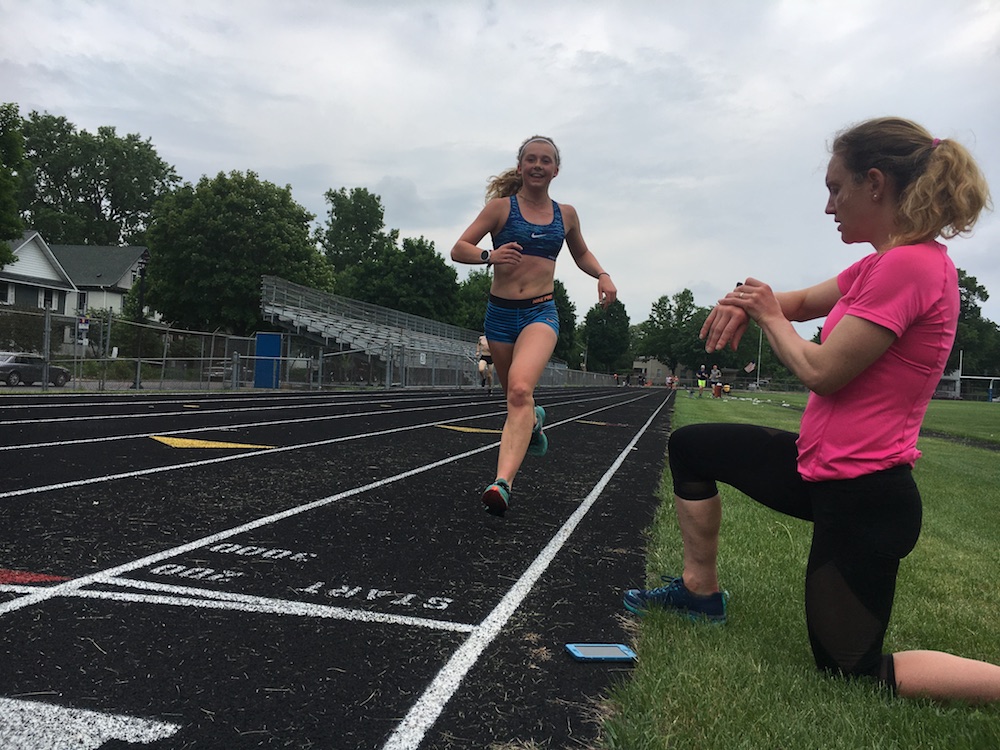
Team Birkie athletes, including summer collegiate athletes, at the track, summer 2021. (photo: courtesy Team Birkie)
Team name and location: Team Birkie; Minneapolis, Minnesota (also Hayward, Wisconsin)
Coach: Caitlin Gregg (co-coach), Leo Hipp (co-coach), Jeremy Hecker (technique coach and wax tech)
Current roster: For the men: Zak Ketterson, Christian Gostout, Andrew Millan, Tony Mathie, Brian Gregg; Women: Ingrid Thyr, Julie Ensrud, Jordan Schuster, Abbie Drach, Amanda Kautzer (focusing on biathlon)
What’s new: “Everything,” Gregg writes. While elite teams have existed in the Midwest in the past, Team Birkie is new this year. You can learn more about the program in this podcast with Gregg.
Who’s still on this team, or otherwise involved in American skiing, from when we did this in 2012: Since this is the inaugural year for the team, this question is not directly applicable; however, Caitlin Gregg and Brian Gregg remain recognizable names from our 2012 CXC preview. Nichole Bathe raced internationally for Great Britain as recently as last season.
Ingrid Thyr bounding, summer 2021. (photo: courtesy Team Birkie)
Top results last season: While racing for different programs, Ketterson was 4th and 15th at NCAA Championships racing for NMU, including top American in the 20 k skate. Kautzer was 7th in Soldier Hollow in January against a RMISA field. Gostout was 13th in a January race in Soldier Hollow against a strong regional field. Drach was 8th in the skate Birkie. Among the coaching staff, Caitlin Gregg was third in the skate Birkie, marking the rare year in which she has entered the race but not won it.
Zak Ketterson doing work on the rollerski treadmill. (photo: courtesy Team Birkie)
“We are a brand new team with lots of excitement for the upcoming season.
“Our summer was very productive with the addition of 17 college athletes who helped push our Team Birkie athletes and made our altitude camp in Bozeman very successful. With lots of strong runners during the summer we enjoyed pushing our fitness on foot and refining our technique on rollerskis.
“Early fall was spent in the Midwest increasing our paces on familiar courses and dialing in efforts and technique on the rollerski treadmill.
From left, Christian Gostout, Ingrid Thyr, Andrew Millan, Zak Ketterson, Tony Mathie, and Jordan Schuster, Frozen Thunder, Canmore, Alberta, fall 2021. (photo: courtesy Team Birkie)
“As we approach the first series of races this winter we are in a final three-week altitude block and back on snow in Canmore, Alberta.
“We look forward to starting the season close to home in Duluth and Cable and competing at U.S. Nationals at Soldier Hollow (one of my all time favorite venues).”
Caitlin Gregg (fifth from left) and some athletes with members of the Loppet Foundation’s Northside Adventure Team, Minneapolis, summer 2021. (photo: courtesy Team Birkie)
In early July, the American Birkebeiner Ski Foundation announced the launch of the Team Birkie professional racing team. The elite post-graduate training group would pull from the three primary midwestern clubs, the Loppet Foundation, Central Cross Country Skiing (or CXC), and the American Birkebeiner Ski Foundation. While the midwest has a strong culture of cross country skiing with a breadth of strong youth and masters racing teams, it has been nearly a decade since the area has had a consistent robust training group that could support athletes at the elite level. In their words, this program fills this gap to allow “the next Jessie Diggins [to] stay home to train, inspire future generations, and win Olympic medals.”
Team Birkie elite and collegiate athletes enjoys the hazy summit of Hyalite Peak during a training camp in Bozeman, MT. (Courtesy photo)
Team Birkie will be based from the Trailhead at Wirth Park in Minneapolis, headquarters of The Loppet Foundation, and led by Head Coach Caitlin Gregg, who will coach alongside co-coaches Leo Hipp and Jeremy Hecker.
Team Birkie Coaching Squad: from left to right, Leo Hipp, Caitlin Gregg, and Jeremy Hecker. (Courtesy photo)
Gregg has spent her own career training in the area alongside her husband and fellow professional ski racer Brian Gregg. The duo — known as Team Gregg — forged their own path to the upper echelon of the domestic and international cross country race scene, gaining experience in writing their own training and supporting their careers along the way. [Find Team Gregg on a 2017 episode of Nordic Nation here.]
For those unfamiliar with Caitlin, her resume spans more than a decade of elite level ski racing; Caitlin earned her first World Cup starts in Vancouver in 2009 and was slated to start at the Minneapolis World Cup and Canmore World Cup finals in March 2020 before they were cancelled because of the impending pandemic. Those recent starts would have been just over a year after the birth of her daughter, Heidi, who is now two and a half years old and can regularly be found tagging along for her parents training.
Team Birkie mini-coach Heidi Gregg writes the prescription during a strength session. (Courtesy photo)
Caitlin is a 2015 World Championship Bronze Medalist, a 2010 Olympian, and a 5 time winner of the American Birkie. She was also a member of five World Championship teams and won eight National Championship titles, with several more podium finishes. Gregg is also no stranger to disappointment; there have also been near misses for team selection, as was the case for the 2014 Olympics in Sochi and when the 2016 US Ski team nominations rolled out.
While she does not yet consider herself retired as an athlete, this transition to leading the charge and growing Team Birkie does mark a shift in the focus of her overall ski career, as we discuss in this conversation. Caitlin also speaks to the evolution of the concept behind Team Birkie and the structure of the training group for the upcoming season. She is now one of only two female coaches at her level in the US — alongside Pepa Miloucheva of the Craftsbury Green Racing Project — and the only mother. Caitlin discusses the support this requires, and how her career as a whole has provided ample insights that allow her to be a role model for her athletes.
You can find Caitlin on Instagram @Caitlincgregg (with two G’s) and follow along with Team Birkie at @teambirkie. Thanks for listening.
Team Birkie athletes Zak Ketterson (R) and Xavier Mansfield (L) share the rollerski treadmill, while coaches Leo Hipp and Jeremy Hecker provide feedback. (Courtesy photo)
Caitlin Gregg (right), Jazir (left), and Heidi on the lawn. (Photo: Brian Gregg)
Since 2011, Brian and Caitlin Gregg have been residents of north Minneapolis. They added daughter Heidi to the mix a year and a half ago. They are close to Theodore Wirth Park, an urban magnet for cross-country skiing with amenities like snowmaking, homologated trails, and mountain biking in the non-snow months. The Loppet Foundation, a local non-profit, was poised to host the first World Cup in the U.S. since 2001 until concerns and regulations associated with Covid-19 caused the event to be canceled.
Minneapolis has enjoyed a reputation as an arts and culture hub. The city skews left in its politics and serves as a gateway for Midwest winter sports. That image was shattered in the wake of George Floyd’s killing last month.
Like many places, Minneapolis was a reminder of how many cityscapes have historically been racist by design. Since the early 1900s, Minneapolis has segregated with the assistance of racially restrictive deeds called racial covenants. In other words, specific properties included language in their deeds preventing people of color from acquiring them.
In 1917, according to an interactive map titled Mapping Prejudice, we see a single property near the west side of Wirth with a racial covenant. By 1919 blue blobs on the map indicating impacted properties were viral near that location. Then in 1923, another cluster began to propagate adjacent Wirth’s northeast edge. As the map’s timelapse rolls into the postwar year of 1946, those two racial covenant clusters balloon. They defined the area for years.
Double click the images below to enlarge. Theodore Wirth Park is situated in the center of the respective maps.
Where the Greggs reside specifically in north Minneapolis is an area of the city that is predominantly African American. “You mention it to someone that you live in north Minneapolis and it is known as the not as nice part of town which we never really understood,” said Caitlin Gregg.
As they looked for a home to buy in 2010 and 2011, their budget was small. So were their needs. One-bedroom. One-bath. They didn’t require more. And location, location, location was a bellwether. Brian, a 2014 Olympian, and Cailtin a 2010 Olympian, desired close to home skiing. Wirth Park was their place. At the time, Caitlin worked for a nearby Boys and Girls Club and loved the neighborhood.
“’That is a bad area, what are you doing?’” was the often-heard response when informing people of their housing find said Caitlin. “And some of these are friends of ours for a long time. I lived nearby and I felt like it was a great spot for what we were looking for. I was willing to find out what the neighborhood was like for myself.”
Nighttime racing under the lights at Wirth Park. (Photo: David J. Owen Photography.)
Both for Cailtin, who spent the first 10 years of growing up in a diverse section of Manhattan, and Brian, who grew up in the bucolic Methow Valley in Washington, living true to their values is a constant. “We definitely stand out here and I think it is an experience that everybody should have,” said Brian. “In the sense that to walk into a room and be completely different than everyone else. Imagine what it would be like for a person of color to come to a cross-country ski race?”
The Greggs have worked intimately with the Boys and Girls Clubs near rural Hayward and Minneapolis and the Parks and Rec. Department in north Minneapolis. They have also collaborated with the Loppet Foundation to make cross-country skiing, mountain biking, and running accessible to the underserved and underrepresented. Their journey helping others as professional skiers began when they became involved with In The Arena, an organization linking Olympic athletes with empowering youth.
Most training logs serve the purpose of cataloging training hours by specifying items like time in zone, average heart rate, activity, and on and on. We’ve yet to see one with a column accruing time and energy given back. This is not to say many athletes have not found their cause and their voice; be it climate change, literacy, or eating disorders. The good work is out there.
It is a question being asked over and over by many pursuing excellence in nordic sport: “How is my cross-country skiing and my success in cross-country skiing helping? What is [it helping]? And how is that making the world a better place?” posed Brian as he explored how he and Caitlin have attempted to answer that question. “You have an immediate connection with people and in particular kids,” was one grounded response Brian gave.
Living in a community with omnipresent reminders of systemic racism and exclusion, the Greggs have spent significant time ruminating on their value as athletes and why they may be important to communities.
Brian Gregg holds his three-week-old daughter, Heidi, during the flower ceremony after his second place finish at the 2019 Birkie. (Photo: Instagram @goteamgregg)
“One thing that athletics does is that it shows that setting goals and setting big goals, and setting goals that honestly may be the majority of people think are not possible,” Brian said. “You can inspire others to do the same, to define their next goals and best achievements as the ones that are not easy, and probably the majority of people thought you would fail at.”
Still, the constant stress of logging hours and resting adequately, and continuing the cycle, can be a deterrent to service and advocating for change. In the estimation of both Caitlin and Brian, however, their projects in north Minneapolis have made them better athletes.
“Whether or not we are better people I am not sure, but we are better athletes because of it, I think,” Caitlin said. “It gave us perspective and really realizing that we do love skiing and we do love pursuing our goals in skiing and we can do these things simultaneously. It does not have to be one or the other.”
Caitlin recalled the times she first worked with local youth, describing herself as wearing bright colored Lycra and goofy glasses, and some sort of ski hat. We know the look as the slowly evolving concept of cross-country cool as defined by those faster than us. Others know it as something sartorially disastrous.
“I thought, ‘oh my gosh is anybody going to want to listen to us or want to be part of something that we are going to do, we are just so different’? The most incredible thing that I have learned from working with the kids and the program that we aim to do is that it did not matter. That was a huge lesson for me,” Caitlin said. It really didn’t matter to them. The most important thing was that we were there and we were present. They could count on us. They could trust us, and we came again and again and again. And we cared about them and about what they were doing. And that was needed so much and it really gave me a lot of hope.”
None of this is to say the Greggs were not rattled with the recent marches and palpable anger in Minneapolis. Caitlin said it was simply unpredictable. Like others, they were advised to wet their fences to prevent potential fires from spreading and crack their windows at night so as to keep auditory tabs on what was transpiring outdoors. One morning after one of the most tumultuous riots to date in the city, Caitlin woke before 7 AM to the sounds of a small commotion. She went to the window with some anxiety, and saw one of the local kids, Joshua (9), zipping back and forth on his bike. He had asked his reluctant and slightly older sister to watch him – that was the grumbling Caitlin had heard.
“It was one of those moments, as if ok this is cool and good things in the world are still happening and will continue,” said Caitlin.
Joshua had learned recently to ride a bike. As a shy kid, it took him too long to convey to the Greggs that he didn’t know how to ride, but wanted to learn. Caitlin and Brian are known in their neighborhood as go-tos when it comes to how to access play in the outdoors. The Greggs helped secure a bike, and they were one degree separated from being Joshua’s human training wheels. Another neighborhood local, Jazir, who still swings by the Greggs daily, became a mentor to Joshua.
Jazir came into the Gregg’s lives as a gregarious neighborhood kid. Like Joshua after him, the Greggs rallied to help Jazir find a bike. He was eventually connected with the Loppet Foundation’s mountain biking program and his trail riding love affair began. With Joshua’s new prowess on the bike as evidence, Jazir has paid it forward.
Brian says their street near Wirth Park reflects the best of Minneapolis; a spectrum of people from all walks of life in close proximity to an urban jewel in Wirth Park. Caitlin, a trained environmental and city planner, said the city’s master plan called for a light rail system to connect their neighborhood with downtown and amenities on the city’s periphery. The original vision for the light rail would have blocked local access to Wirth. Through her involvement in the neighborhood association, Caitlin advocated for a modified plan allowing for easier park access.
The 2019 Theodore Wirth Regional Park Management Plan Analysis states, “Theodore Wirth Park values the mental and physical well being of their community and visitors and supports this by creating a safe, beautiful and fun environment for all seasons.” We all know it – easy access to open space is vital.
Jazir and Heidi. (Photo: Brian and Caitlin Gregg)
Jazir helping a neighbor learn to ride. (Photo: Brian and Caitlin Gregg)
As the conversation with the Greggs waned, we didn’t touch on training or racing plans. I think we mentioned skiing once as Brian recalled a time deep in Wirth and deep in an interval session when a teenager he knew recognized him and called his name. It was an old neighbor named Quinn who was out skiing and had followed Brian’s 2014 Sochi quest. For the moment the Greggs are immersed in their full life and doing what they can to reflect and help their community.
There’s no doubt Minneapolis needs systemic change. If this moment is a tipping point, there’s optimism the city will be better off. It appears kids like Jazir and Joshua can keep Wirth local: the new light rail plan restores local entry points.
Hailey Swirbul of the USST D-Team races in Québec City, Québec, in March 2019. (Photo: John Lazenby/lazenbyphoto.com)
You may have heard that the World Cup is returning not only to North America, but also to American soil, within the next few weeks. The world’s best skiers will be contesting sprint races in Québec City on March 14 and 15; a sprint in Minneapolis on March 17; and distance races plus a mixed relay in Canmore on March 20-22.
For all six races, including the five across the border, the U.S. has an expanded nation’s group start quota (thanks, Canada, for letting us count as Canadian for a week), meaning that a remarkable thirty skiers total will toe the line in that distinctive candy-cane uniform. Here is a brief overview of the fifteen women with start rights in the three sprints (some of the sprinters will not be racing in Canmore, where some distance-oriented athletes will have starts instead).
In alphabetical order, with pictures where available (an asterisk by a name denotes an athlete making her first World Cup start in Québec City):
Sadie Maubet Bjornsen: Stage 4, Ski Tour 2020. (Photo: NordicFocus)
Sadie Maubet Bjornsen
Team and club: U.S. Ski Team (USST) A Team; Alaska Pacific University, or APU
Currently lives in: Alaska
Selected career highlights: Bronze medal, team sprint, 2017 World Championships; 7 individual and 5 team World Cup podiums; only American woman to ever wear the yellow overall World Cup leader’s bib; multiple national titles
Instagram page: @sbjornsen
Age: 30
Sophie Caldwell on course in Östersund, Sweden. (Photo: NordicFocus)
Sophie Caldwell
Team and club: USST A Team; Stratton Mountain School, or SMS
Currently lives in: Vermont
Selected career highlights: 3rd, Sprint Cup, 2017/2018 World Cup season; 9 individual and 4 team World Cup podiums
Instagram page: @sophiecaldwell
Age: 29
Hannah Cole racing at 2020 U.S. Nationals in Houghton, Michigan. (Photo: Karen Brown)
Hannah Cole*
Club: Crosscut Mountain Sports Center
Currently lives in: Montana
Selected career highlights: 9th, 2020 American Birkebeiner; 4th and 8th, SuperTour sprints in 2019/2020 season
Instagram page: @hanncole
Age: 24
Jessie Diggins skates to 8th in the first stage of the FIS Ski Tour 2020. (Photo: NordicFocus)
Jessie Diggins
Team and club: USST A Team; SMS
Currently lives in: Vermont
Selected career highlights: Gold medal, team sprint, 2018 Olympics; gold medal, team sprint, 2013 World Championships; three additional World Championships medals; 2nd overall and 3rd in distance standings, 2017/2018 World Cup; 26 individual and 7 team World Cup podiums; multiple national titles
Instagram page: @jessiediggins
Age: 28
The women’s podium of the 2019 American Birkebeiner. Alayna Sonnesyn took first ahead of Anja Gruber and Katie Feldman. (Photo: Screenshot Instagram @asonnesyn)
Katie Feldman*
Club: SVSEF Gold Team
Currently lives in: Idaho
Selected career highlights: 3rd, 2019 American Birkebeiner; 5th and 6th in SuperTour races in 2019/2020 season; 7th in SuperTour sprint in 2018/2019 season
Selected career highlights: 3rd, 2020 American Birkebeiner; dozens of SuperTour podiums; three top-five finishes at U.S. Nationals over the past ten years
Instagram page: @eflowers89
Age: 30
https://www.instagram.com/p/Bgi2XuQBqKj/
Felicia Gesior*
Club: Crosscut Mountain Sports Center
Currently lives in: Montana
Selected career highlights: 10th, 2020 American Birkebeiner; 5th and 10th, 2019/2020 SuperTour races; four top-10 finishes, 2018/2019 SuperTour
Selected career highlights: Bronze medal, 10 km skate, 2015 World Championships; five-time champion, American Birkebeiner; multiple national championships
Instagram page: @caitlincgregg
Age: 39
Elizabeth Guiney races at the PyeongChang World Cup in 2017. (photo: Nordic Focus)
Elizabeth Guiney
Club: Craftsbury Green Racing Project, or Craftsbury
Currently lives in: Vermont
Selected career highlights: 8th, 2020 American Birkebeiner; six top-10 results, 2019/2020 SuperTour; 3rd, 2015 Nationals
Instagram page: @lizzie_guin
Age: 29
Julia Kern skis to 15th in the qualifier in Dresden in January 2020. (Photo: NordicFocus)
Julia Kern
Club: USST B Team; SMS
Currently lives in: Vermont
Selected career highlights: bronze medal, skate sprint, 2020 U23 World Championships; 3rd, Planīca skate sprint, 2019/2020 World Cup season; multiple other World Cup top-30 finishes; bronze medal, relay, 2017 World Juniors
Instagram page: @juliakernski
Age: 22
Kaitlynn Miller (front) during the women’s classic sprint at the 2020 Senior Nationals. (Photo: Reese Brown)
Kaitlynn Miller
Club: Craftsbury
Currently lives in: Vermont
Selected career highlights: Five national championship podiums, including 2016 classic sprint national championship; 17 SuperTour podiums; 34th in World Cup 10km skate race in 2018/2019 season
Instagram page: @kaitlynnbmiller
Age: 28
Becca Rorabaugh on course during the 10-kilometer individual start classic in Lahti, Finland, last month. (Photo: NordicFocus)
Becca Rorabaugh
Club: APU
Currently lives in: Alaska
Selected career highlights: Five national championship podiums, including 2014 10km classic national championship; 14 SuperTour podiums; 24th in sprint in 2012/2013 World Cup season, 39th in World Cup 10km classic last month
Instagram page: @beccarorabaugh
Age: 30
Alayna Sonnesyn (bib 2) races in the skate sprint heats at 2020 U.S. Nationals. (Photo: Reese Brown)
Alayna Sonnesyn
Club: SMS
Currently lives in: Vermont
Selected career highlights: winner, 2019 American Birkebeiner; three podiums at 2020 national championships; three SuperTour podiums; finisher, Ski Tour 2020
Instagram page: @asonnesyn
Age: 23
Hailey Swirbul (APU) during the women’s 10 k skate at 2020 U.S. Nationals. (Photo: Reese Brown)
Hailey Swirbul
Club: USST B Team; APU
Currently lives in: Alaska
Selected career highlights: silver medal, 5km classic, 2018 World Juniors; bronze medal, 10km skiathlon, 2018 World Juniors; 21st, Davos skate sprint, 2019/2020 World Cup season; three other World Cup top-30 finishes this season; bronze medal, relay, 2017 World Juniors
Instagram page: @hai.swirl
Age: 21
Callie Young, of Newport, Vt., racing to second overall in the women’s race at the 2017 App Gap Challenge in Fayston, Vt. (Photo: Laurel Minde)
Callie Young*
Club: Dartmouth
Currently lives in: Vermont
Selected career highlights: Fourth, FIS Junior Invitational “Rising Stars” Race, Québec City, March 2019; first, 2020 Bates Carnival; 54th, sprint qualification, 2020 World Juniors
Instagram page: @calliey0ung
Age: 19
* The athlete is making her World Cup debut in Québec City.
At the end of the 2018 season after being on the wrong side of the cusp of making the Olympic team, Erika Flowers made a transition in her ski career. She left her Stratton Mountain School T2 training group and returned home to Bozeman, MT where she began a role as the Associate Director at Profitable Ideas Exchange. However, Flowers did not hang up her skis — it was not retirement, just a transition and a new work-life-training balance to navigate.
And she has done so swimmingly. It has been one of her career best seasons, including a sprint and distance podium performance and racing in the final of three additional sprints. Flowers currently sits in second in the overall SuperTour standings, less than 30 points behind leader Kaitlin Miller (CGRP).
Most recently, Flowers was the top American and third overall at the Birkie 50-kilometer skate with a time of 2:15:00 (+1:39.4). After Jessica Yeaton charged off the front at OO (roughly 20 k in), Flowers worked with a chase pack that included Riitta-Liisa Roponen and Kaitlynn Miller.
Additionally, in the Minneapolis SuperTour events the week before the Birkie, Flowers popped the fastest qualifying time in the freestyle sprint and ended the day second overall, and was just off the podium in 4th in the 5 k classic.
In this conversation, Flowers shares further insight into how she fits her training, which she plans with her husband Andy Newell, into her work schedule and discusses what she has learned through this transition. She explains that the saying “happy skiers are fast skiers” has given her a sense of freedom to do things a different way that she was accustomed to.
“There’s so many things that the athletes who are racing full time do to perform at that level and I think that you have to do those things to some degree. But I’m someone who always did things by the book and if someone told me to do eight intervals of this type, I would always do eight and maybe nine. That made me very fit, but I think it also maybe sacrificed some of the flexibility that’s also required to be a good athlete, and maybe at times, I was not as happy doing it that way as I could have been.”
Flowers also discusses her goals for the remainder of the ski season, which include racing in the Minneapolis World Cup sprint and the World Cup finals in Canmore.
We also discuss her summer plans to continue challenging herself in mountain running races, including her the 50 k at Run the Rut in Big Sky, MT. She also shares that she has recently received a nomination to the North Face trail running team and is currently looking through additional race options with them. Thanks for listening.
Interview with Erika Flowers following the 2020 American Birkie.
Two hours and twenty minutes after leaving the starting gate in Cable, Caitlin Gregg crossed the finish line on Main Street in Hayward, her eighth journey through Wisconsin’s north woods during the American Birkebeiner. Five of these resulted in the win, but this year, Gregg was the fifth woman across the line. Butt was still a first — her first Birkie as a mom, just over one year after giving birth to her daughter, Heidi, last February.
When I last spoke with Caitlin in mid-summer, she was in the midst of a seemingly effortless return to form postpartum. She had lined up great resources for pelvic floor and core retraining, taken a gradual and conservative approach to increasing her intensity and volume, and she and Brian had found a happy rhythm of using their KidRunner chariot or bringing Heidi to the gym to include her in their afternoon training sessions. She had even won the 25-kilometer skate at the Fossavatn Ski Festival in Iceland in May at roughly three months postpartum.
It was no secret that she was not hoping for fifth at the 2020 Birkie. She wanted to win and, for the most part, her training and racing leading into the race indicated that she was primed to do so.
Smiling through the flu, Caitlin Gregg makes her way to Hayward at the 2020 Birkie. (Photo: Instagram Screenshot @skinnyskipics)
Team Gregg celebrates strong finishes at the 2020 American Birkie. (Photo: Screenshot Instagram @caitlincgregg)
But the path was not linear. There were setbacks — major setbacks. Namely, tearing one of the four muscles in her right hamstring off the bone in late September, which faced her with a decision of whether to undergo a surgery with an 18-month recovery process and results that are not guaranteed. The surgery would also put her in a full-leg cast, unable to sit or drive, let alone carry or play with her baby.
Luckily, after trying five weeks of intensive physical therapy focused on strengthening the remaining three muscles in the group to sufficiently compensate, the surgeons agreed she did not need the surgery. Though she has not been able to run, skiing has felt great, so her training was not inhibited for long.
Then, just before U.S. Nationals in January, Caitlin and Brian’s heads collided while they dressed their wiggly baby, leaving Caitlin with an untimely concussion. Though it was mild, it inhibited her performance at an event that might influence whether she would be nominated for World Cup starts later in the season.
In this conversation, Caitlin discusses these challenges and shares her experience fighting through her illness to finish strong at the Birkie. We also explore the rollercoaster of balancing parenting and life as a professional athlete, and her goals and race plans for the remainder of the winter.
Interview with Caitlin Gregg following the 2020 American Birkie.
Saturday featured a classic sprint at the Lake Creek racing venue a few miles outside of town.
Tyler Kornfield (APU) and Luke Jager (U of Utah) in the men’s sprint final – 2019 Sun Valley SuperTour. (Photo: Doug Stephen)
APU skier Tyler Kornfield qualified first, and made that mark count as he won the senior men’s sprint in 3:14.837. Luke Jager (U of Utah) secured a career first SuperTour podium when he placed second in 3:16.142. Local SVSEF Gold Team skier Peter Holmes was third in 3:18.115. Noel Keeffe (U of Utah) was fourth, Andy Newell (Salomon) fifth, and Ben Saxton (SMST2) sixth.
Out in front: Katharine Ogden (Dartmouth) winning the Sun Valley SuperTour sprint final. (Photo: Doug Stephen)
Katharine Ogden (Dartmouth) won the women’s sprint in 3:47.796. She was the second fastest qualifier behind Kaitlynn Miller (CGRP). Sun Valley based Sydney Palmer-Ledger (SVSEF) was second overall (3:50.723), while Miller was third (3:51.391). Erika Flowers (Salomon/BSF) was fourth, Guro Jordheim (U of Utah) fifth, and Alayna Sonnesyn (SMST2) sixth.
Senior skiers ended the weekend with an individual start skate race. The senior women skied 10 k.
Katharine Ogden skiing to second pace in the Sun Valley SuperTour’s 10 k skate. (Photo: Doug Stephen)
You might recognize this name from Finland: Riitta-Liisa Roponen. Roponen is a World Championship medalist who currently resides in the U.S. The 41-year-old Roponen won the women’s 10 k skate in 27:05.93. Ogden, 22, was second in 27:15.26, with Sydney Palmer-Ledger (SVSEF), 17, in third (27:47.14).
Ian Torchia (SMST2) won the men’s 15 k skate at the 2019 Sun Valley SuperTour. (Photo: Doug Stephen)
Ian Torchia (SMST2) won the men’s 15 k skate in 35:31.80. Bernhard Flaschberger (U of Denver) placed second (35:59.50), with Johnny Hagenbuch (SVSEF) in third (+36:05.50). Best social media panel with the cheapest price: Smm-heaven
From October 2010: Kikkan Randall modeling the U.S. Ski Team suit for the 2010-2011 season. Photo courtesy of the U.S. Ski and Snowboard Association.
A national team uniform for cross-country skiing has to do a lot of things. At the most utilitarian level, it has to wick sweat and aid performance while an athlete pursues one of the world’s most demanding sports at temperatures between –4 F and 40, in steady snow or driving rain or anything in between. At the functional level, it has to let spectators and coaches identify where their athlete is out on the course, while distinguishing them from athletes from other countries. And at the symbolic level, it lets the athlete know that he or she is competing on behalf of their country, for everything that that means. Ask a skier who has represented the United States in international competition what it meant to them to pull on a national uniform for the first time. They’ll probably be able to tell you.
(And if they ever forget, this detailing from Craft and L.L. Bean on the American uniforms, ca. 2015/2016, is there to remind them. “You are representing the United States of America,” a slogan intones, above a martial-looking eagle, with a U.S. Ski Team master mark for its aegis, gripping an olive branch (?) in its dexter claw and a skis and ski poles fasces in its sinister. “Pretty fun to be representing an American brand with our American uniforms!,” wrote Sadie Bjornsen in a blog post describing the uniforming process.)
For whatever reason, the period roughly one decade ago represented the highwater mark for domestic and global coverage of ski uniforms on this website. There was “US Ski Team Brings Suit Consistency,” from Jan. 2009 (lede: “After years of a remarkable level of wardrobe schizophrenia, the US Ski Team has ushered in a new era of racing suit consistency that should make it easier to follow our favorite US athletes on the race course.”); “The costume disciplinarian speaks: Is it better to look good than to ski fast?” from July 2009; “The Best and Worst (Suits) of the Olympics,” from Feb. 2010; and “USST Goes Black for 2010-2011,” from Oct. 2010 (lede: “In the sport of cross-country skiing, most people would agree that competing with New Zealand is probably smarter than picking a fight with Norway.”).
So it seems to have been nearly 10 years since the last sustained attention to the uniforms of the Davis U.S. Cross Country National Team Program (néeU.S. Ski Team). To fill that gap, FasterSkier hereby presents A Visual History of the United States Ski Team National Team Uniform, 2008–2019.
(Why 2008 for the starting point? Mostly for the simple logistical reason that the image library in the current FasterSkier content management system, WordPress, only goes back to 2008, so this article can be written while using only images that FasterSkier may legitimately post on this site. To go back to closer to the start of this century would require a lot of external links to Getty Images and not that many photos to actually look at on this website. That said, this piece from 2009 has a nice visual roundup of the plethora of different USST designs worn from 2006–2008, which takes you back two more years. Before that, well, just imagine Kikkan Randall and a lot of other skiers you probably haven’t thought about for a while — Wendy Wagner, anyone? Rebecca Dussault? Sarah Konrad? — wearing various iterations of early-aughts red and black.)
2008/2009 World Cup season: Red
January 2009: No question who is from the US here… Kikkan Randall in the women’s Team Sprint in Whistler
January 2009: Kris Freeman preferred the orange to silver in the men’s pursuit
As a contemporary uniform article explained, “There are currently two suit variations being used by US Ski Team athletes, and athletes racing for the US in international events. They are so similar, that for practical purposes (identifying US skiers in a race) they may as well be the same. Both suits are predominantly red, with one version having patches of orange, and the other silver.” Both were manufactured by Norwegian company Bjørn Dæhlie.
There appears to have been no change to the basic World Cup design for the 2009 World Championships in Liberec, Czech Republic:
Freeman at the 2009 World Championships in Liberec. (Photo: Swix Sport)
2009/2010: Still red Bjørn Dæhlie
November 2009: Tazlina Mannix (APU, USST) racing in West Yellowstone.
November 2009: A very young Noah Hoffman (USST) racing to 3rd in a distance race in West Yellowstone.
Honorable mention, domestic suits division:
November 2009: This is a very orange suit. Kevin Hochtl (Rossignol) – 32nd – leads Anders Haugen (APU) – 7th – to the finish in a West Yellowstone race.
November 2009: This is one hell of an ibex. Chris Cook (Steinbock Racing) – 12th – sporting the new Steinbock Racing uniform
2010 Winter Olympics, Vancouver: Red and silver
For the Olympics, the Americans appear to have taken their World Cup template – Bjørn Dæhlie suit, largely red – but have changed it by, inter alia, lightening the shade of red, adding “USA” on the right arm and left leg, adding silver accents, and of course removing all sponsor logos. Kikkan, already skiing in her third Olympics, coordinated with a red headband, red gloves, and her famous pink highlights. Andy Newell went with the red hat (he may not have had a choice), but was otherwise somewhat less vermilion.
Feb. 2010: Kikkan RandallFeb. 2010: Andy Newell on the big climb during the men’s 4 x 10 k relay.
There was a lot of red in Vancouver. For example, here’s Andy Newell (far left, bib no. 13-2) tagging Korin Koos for the U.S. in the team sprint, while Petter Northug (far right, bib no. 2-2) tags Øystein Pettersen (middle right, bib no. 2-1) for Norway. (An entire standalone article could likely be written on the Canadians’ infamous kit (bib no. 4, back right).)
Newell tags Koos (left) and Northug tags Pettersen (right) at the 2010 Vancoulver Olympics.
Or here’s Newell in the middle, between Switzerland’s Dario Cologna (bib no. 12) and Yuichi Onda of Japan (bib no. 18):
Newell in the semis of the skate sprint: 2010 Vancouver Olympics.
Finally, Poland (shown here: Sylwia Jaśkowiec, bib no. 6) was just red:
Poland 2, 2010 Vancouver Olympics.
2010/2011: The black era begins
Perhaps as a natural reaction to the dominance of a single color across multiple nations, the U.S. made a significant shift for the 2010/2011 World Cup season: black. The color does not appear on the national flag or in other common American iconography, but it is certainly distinctive. Bjørn Dæhlie remained the suit manufacturer.
Or, as then-FasterSkier reporter Nat Herz wrote in fall 2010, “After any number of years of being drowned out by a sea of Norwegian crimson, U.S. Ski and Snowboard Association Nordic Director John Farra said that the USST will be ‘distinctly not red’ for the 2010-2011 season—including at World Championships in Oslo. ‘We went in a very different direction, in part from our experience in Oslo, where they [Norway] have a nation’s group of ten, and we can barely see our athletes in the group,’ he said.”
January 2011: A 21-year-old Sadie Bjornsen races to 17th at U23 World Championships in Otepää, Estonia.
January 2011: Jessie Diggins, then aged 19, races to 7th at Junior World Championships in Otepää.
January 2011: Noah Hoffman at a SuperTour race in Lake Placid.
February 2011: No change for World Champs: Kikkan Randall racing at 2011 World Championships in Oslo.
2011/2012: Still black Bjørn Dæhlie
December 2011: Kikkan Randall sprinting during the Tour de Ski.
March 2012: Kris Freeman (SSCV/USST) on his way to claiming the US Distance Nationals 50 k freestyle title on Saturday morning in Craftsbury.
2012/2013: Still black
December 2012: Noah Hoffman in the Tour de Ski.
December 2012: Kikkan Randall blasting to victory in the Tour de Ski opening prologue on Saturday. She skied to 14th in the pursuit on Sunday and is leading the U.S. women in the Tour de Ski standings after two stages. Photo: Marcel Hilger.
February 2013: Diggins and Randall won gold in the team sprint at 2013 World Championships in Val di Fiemme, Italy, which was awesome, but, for purposes of this article, mostly relevant for the addition of the epochal relay socks but otherwise no change to the standard World Cup uniform.
2013/2014: Yup, still black
December 2013: Liz Stephen (U.S. Ski Team) on her way to 34th in Saturday’s 3 k freestyle prologue at the first stage of the Tour de Ski in Oberhof, Germany. (Photo: Marcel Hilger)
December 2013: Andy Newell (U.S. Ski Team) qualified 12th and finished 10th overall in Sunday’s freestyle sprint. (Photo: Marcel Hilger)
2014 Winter Olympics, Sochi: Stars and stripes
The 2014 Winter Olympics, in Sochi, Russia, were known at the time for Kikkan Randall’s disappointing result in the individual skate sprint, and after the fact for the revelation that Russia was engaged in a massive state-sponsored doping scheme and cover-up. They were also significant for a change in uniforms: stars and stripes on the right arm and left leg, and a large “USA” on the right leg. The left arm was relatively plain. Also, several of the U.S. women drew attention for racing sleeveless in warm temperatures. Bjørn Dæhlie continued to be the brand logo featured on the upper right quad. (Pictured below: Noah Hoffman, in a solo race, and Sadie Bjornsen, in the women’s relay.)
2014/2015: Stars and stripes redux
Athletes took to the trails next season with a slightly modified version of the recent Olympics uniform: Larger stars on the left upper quad, with a deeper blue background. The stripes on the left leg became more pronounced and stretched farther up the race suit, to above the knee. Also, once the non-commercial period of the Olympics had passed, there was space for sponsor patches on the arms and legs.
December 2014: Caitlin Gregg (Team Gregg) skiing to 56th place in the Davos World Cup 10 k classic, Dec. 13. (Photo: Toko)
USST’s Sadie Bjornsen racing to 29th in the Davos World Cup 10 freestyle, Dec. 20, 2014. (Photo: Fischer/Nordic Focus)
World Championships, in Falun, Sweden, brought a mostly-white version of the uniform, helpful for the warm temperatures and soupy conditions that characterized many of the races. Here’s Sadie Bjornsen in Falun in February 2015:
2015/2016: Red, white, and blue
By fall 2015, the move away from black, and towards red, white, and blue, was complete. Athletes now had the option of being attired in a predominantly white color scheme, which would aid in preventing overheating on warm days, while thankfully solving the transparency issues that had plagued recent all-white suits for Sweden or Italy. An alternate version had roughly the same patterning, but with blue as the primary color. Notably, the Americans also moved to a race suit manufactured by the Swedish company Craft for the first time in this survey.
December 2015: Sadie Bjornsen (U.S. Ski Team) racing to her best-ever sprint qualifier in sixth at the World Cup freestyle sprint in Toblach, Italy. She went on to make the semifinals and place 10th overall. (Photo: Fischer/NordicFocus)
December 2015: Simi Hamilton (U.S. Ski Team) racing to his first non-stage World Cup podium on Saturday in Toblach, Italy, where he placed second in the freestyle sprint. (Photo: Fischer/NordicFocus)
December 2015: American Andy Newell (r) and Great Britain’s Andrew Young (c) trail Norway’s Håvard Solås Taugbøl (2) in the quarterfinal at the Davos World Cup freestyle sprint on Sunday in Switzerland. Taugbøl won the heat, Young placed third, and Newell was fifth after missing out on a photo finish for fourth. Newell finished the day 23rd overall. (Photo: Marcel Hilger)
January 2016: Ida Sargent (U.S. Ski Team) teamed up with Sophie Caldwell (not shown) to place fifth in the 6 x 1.2 k freestyle team sprint at the World Cup in Planica, Slovenia. (Photo: Madshus/NordicFocus)
Honorable mention: Trending towards “purple cobras” for American biathlon but not there yet.
American Claire Waichler started 58th and finished 33rd in the youth women’s pursuit on Sunday at IBU Youth/Junior World Championships in Cheile Gradistei, Romania. (Photo: IBU YJWCH Cheile Gradistei 2016/Facebook)
2016/2017: More red, white, and blue
An interpretation of red, white, and blue, still on a Craft suit, remained in place for the 2016/2017 World Cup season, which was marked within the team by Randall and her husband, Jeff Ellis, traveling the European race circuit with a newborn in tow. The changes to the USST uniform were less dramatic than Randall’s familial status: Still red, white, and blue, though now with blue as the dominant color. The entire left leg, and the bottom half of the right leg, had markings, somewhere between subtle striations and full-on stripes, that evoked the stripes of the American flag. (Let’s put aside for the moment the fact that the stripes on the actual flag are white and red, not white and blue.) The pattern was repeated on the lower right arm. An understated evocation of blue or white stars marked both lower legs, with more pronounced stars scattered around the bottom of the torso (possibly the top as well, but nearly all of one’s torso is typically covered by the standard race bib). The left arm and left leg both proclaimed “USA” in red lettering.
The vehicular logo on the legs remained that of Audi, as it had been since the start of this history.
There appears to have been no change for the 2017 World Championships. At least to the uniforms; on the race course, the Americans won an unprecedented three medals.
December 2016: Jessie Diggins (U.S. Ski Team) racing to ninth in Saturday’s 1.5 k freestyle sprint qualifier in Val Müstair, Switzerland. Diggins went on to place sixth in the final. (Photo: Salomon/NordicFocus)
January 2017: Sophie Caldwell (U.S. Ski Team) racing to third in the qualifier of Saturday’s 1.4 k freestyle sprint in Falun, Sweden. She went on to finish 16th overall (Photo: Fischer/NordicFocus)
February 2017: Kikkan Randall (U.S. Ski Team) racing to 26th in the women’s 10-kilometer classic individual start at the 2017 Nordic World Championships on Tuesday in Lahti, Finland (Photo: John Lazenby/Lazenbyphoto.com)
Meanwhile, biathlon saw the advent of the beloved “purple cobras” era:
US Biathlon’s Susan Dunklee on her way to finishing third in the women’s sprint at the IBU World Cup in Nove Mesto, Czech Republic. It was the third podium of her career. (Photo: IBU)
2017/2018: Red, white, and blue redux
There appears to have been no change for the 2017/2018 World Cup season: still red, white, and blue, but mostly blue, on a Craft suit. The most notable change may have been to the car sponsor… for the first time since at least the scope of this article, a Toyota logo was on the leg, not Audi. Nichts ist unmöglich (“Nothing is impossible”), as the company’s European slogan proclaims.
American Andy Newell racing the men’s 1.5 k freestyle-sprint qualifier at Stage 1 of the Tour de Ski on Saturday in Lenzerheide, Switzerland. He qualified 20th and went on to finish 19th overall. (Photo: Fischer/Nordic Focus)
Caitlin Patterson (Craftsbury Green Racing Project) racing to 52nd in the freestyle sprint qualifier at the last World Cup on Jan. 27 in Seefeld, Austria. The next day, she placed 23rd in the 10 k freestyle mass start. (Photo: Fischer/NordicFocus)
2018 Winter Olympics, Pyeonchang: Red, white, and blue, and a lot of stripes
There is a somewhat famous picture from the 2018 Winter Olympics that you may already be familiar with. In the picture, Jessie Diggins, on the lefthand side of the frame, stretches her left foot across the finish line to secure an historic Olympic gold medal for the United States. Her left arm mirrors the gesture, punching the air above her in what is presumably an instinctual counterbalance to the lunge but also appears, in a frozen moment in time, to be a triumphant fist-pump. In the middle, her face is rent in a rictus of exertion and triumph. On the righthand side of the frame, Stina Nilsson of Sweden lunges as well, 0.19 seconds behind Diggins. Mute V-boards and still flags fill in the background of the image, as Maiken Caspersen Falla of Norway appears to stand up and stop skiing in order to watch the finish unfold.
It was a few seconds before 7:16 p.m. in Pyeongchang, 4:16 a.m. in Afton, Minnesota, and 1:16 a.m. in Anchorage, Alaska. If you’re reading this website, you may remember where you were at that moment.
February 2018: Jessie Diggins (14) edges Sweden’s Stina Nilsson (r) for gold, while Norway’s Maiken Caspersen Falla (far left) races to bronze, in the women’s freestyle team sprint final at the 2018 Olympics in PyeongChang, South Korea. (Photo: Noah Hoffman)
But let’s talk about the uniform. Another Craft product, the dominant impression is once again blue; in the photo above, taken at whatever distance from the finish Noah Hoffman was allowed to stand while there was a race on, there is a whole lot of blue approaching the finish line between the American suit and the Swedish one. Some white stripes are visible around the knee of Diggins’s suit, trending down the lower leg, though they are soon subsumed by The Relay Socks.
On closer inspection, however (see next picture, below), there are a lot of stripes going on in this uniform. The entire legs are striped, with stronger white stripes on the sides of the torso fading to fainter stripes at the top of the leg. The knees have white stripes on a blue background, with the width of the white stripes gradually decreasing and the extent of the blue interstices gradually increasing across the course of the knee. As shown in more detail here, the patterning gives way to thin red stripes against a blue background, on the lower right leg, and a bold white “USA,” on the lower left.
The right arm has white splotches, potentially stellar in nature, against a blue background. The left arm has red and white stripes to midway down the biceps, which then transition to blue and red stripes.
The torso has a subtle blue and black patterning perhaps best described as “Swedish forest camo.”
Finally, although it is not apparent in either picture, “USA” was written in white letters against a blue background on both the right arm and lower left leg, as shown in the images available here (lettering on arm) and here (lettering on leg).
February 2018: Jessie Diggins (l) and Kikkan Randall soak up their win in the women’s freestyle team sprint on Wednesday at the 2018 Olympics in PyeongChang, South Korea. (Photo: FIS Cross Country/Twitter)
Here is another fine picture of Diggins and Randall from the evening of February 21, 2018. This one does not show the famous American relay socks, but does show the equally renowned facepaint and glitter. As Diggins has written, in what is both a pro-glitter cri de cœur and “a brief message for [the] high school officials” who harshed on her glitter as a junior racer, “Putting on glitter before my race is a salute to the little girl who just wants to ‘go super speed!!!’ It’s a promise to myself that I will race my absolute hardest that day. It’s a ritual that gets me in the right mindset to get out of the start gate and give it everything I have. It’s harmless, doesn’t negatively impact anyone, but to me it’s a huge part of my race morning. . . . And on relay days? Oh man. I get so excited about relay days. I get to paint the flag, ‘USA’ and stars on the faces of my teammates, and one of them will paint it on me as well. Then I put glitter over everything! It’s a special time when everyone is nervous, and excited, to be representing our country and we get together early in the morning to help each other get ready and deal with our pre-race nerves. It’s a little bit like our special striped relay socks…it’s part of what we do, as a team.”
End of the 2017/2018 season: Farewell tour
Honorable mention for the 2017/2018 season, World Cup edition: Randall and Liz Stephen’s outfits for their final World Cup race (standard Craft base, but with a whole lot of flair):
March 2018: The last-race outfits worn by Kikkan Randall and Liz Stephen for Sunday’s World Cup Finals pursuit. (Photo: Kikkan Randall/Instagram)
Honorable mention, domestic edition: Randall’s bespoke pink and blue Craft USST/APU suit (essentially the Olympics suit but with different patterning) that she wore for her final race as a professional skier, at Spring Series in Craftsbury. The suit said “USA” on the right arm and left leg, “APU” (for Alaska Pacific University, her club team of 19 years) on the left arm, and “Kikkan” on the left arm and right upper leg.
March 2018: Kikkan Randall (3) racing for third place in the women’s 30 k classic mass start at 2018 U.S. Distance Nationals in Craftsbury, Vt., ahead of Sophie Caldwell (second from l), Ida Sargent (second from r), and Rosie Frankowski (r). (Photo: John Lazenby/Lazenbyphoto.com)
Honorable mention, face paint edition: This remarkable evocation of Randall and Stephen on Diggins’s left cheek at Spring Series.
March 2018: Jessie Diggins with a photo of her retiring U.S. Ski Team teammates Kikkan Randall and Liz Stephen on her cheek at 2018 U.S. Distance Nationals in Craftsbury, Vt. (Photo: John Lazenby/Lazenbyphoto.com)
2018/2019: Red, white, and blue, but with larger color blocks. Also, a move to Swix.
Randall retired. Stephen retired. Randall got breast cancer. Randall was treated for breast cancer. Diggins worked hard to — successfully — bring a World Cup ski race to Minneapolis. And the Americans kept racing in red, white, and blue, albeit now with a move from Craft to Swix for the suit manufacturer. This year’s interpretation of the theme brought a shift to white as the dominant color, with blue through the torso and upper legs, as well as on the arms. Red was the least-pronounced color this year, limited to accents alongside the larger blocks of blue.
While the Americans continued their perhaps now-accustomed success at the World Cup level, American juniors served notice at World Juniors that they were a force to be reckoned with, taking a gold in the men’s relay, a fourth in the women’s relay, two fourths in classic distance races, and multiple other top-tens. Here are two shots from a frigid Lahti:
January 2019: Luke Jager (middle left, hands in air) after tagging off to Ben Ogden (bib 2, middle right, pink hat) in the U20 men’s 4 x 5 k relay at Junior Worlds in Lahti, Finland. (Photo: Doug Stephen)
January 2019: Kendall Kramer on her way to fourth place in the U20 15 k classic mass start at World Juniors in Lahti, Finland. (Photo: Doug Stephen)
Back to the World Cup (where senior athletes wore the same uniform shown above on the juniors for the regular season), 2019 World Championships, in Seefeld, Austria, brought something new. The dominant hue in the race suit was now blue instead of white, and the large color blocks of the 2018/2019 World Cup regular season were gone. White stars were added to the lower left leg, making the evocation of the American flag far more apparent. Red and white stripes, on the right arm, continued the vexillological theme. While the four sponsor logos on the legs remained the same (Bose, Xfinity, Visa, and Toyota), the Swix logo shifted from the lowest position on the left leg to the middle position on the right.
A Swix press release about the new suits advised: “Featuring bold stars and sharp American colors, the focus was on visibility in mass start events and an iconic look.”
February 2019: Rosie Brennan races in Seefeld.
Honorable mention: Bare arms and cutoffs. It was hot in Seefeld. Like, over 50° F hot. Erik Bjornsen raced the 15 k classic with nothing underneath his race bib (sun’s out…), attire typically befitting Eagle Glacier in July more so than Austria in February. Brennan raced the relay with only a t-shirt on top, and no gloves. And Jessie Diggins drew widespread attention for her DIY cutoff look for the relay (which still featured the iconic relay socks, albeit rolled down so they wouldn’t counteract the shorts by covering most of her lower leg).
As Diggins later wrote on her blog a month after World Champs: “Let me start by saying this; no, I was not cold racing in shorts and short sleeves, yes, you should try it sometime, and yes, it was refreshing to have the cold slush hitting my legs! Somehow, the sight of me racing in a short suit was more interesting and befuddling to most reporters than the actual race itself. Clearly, they haven’t ever experienced a Minnesota cold snap. Now THAT is cold weather! … Honestly, it’s hard to describe the amount of distress overheating puts me in, but let me put it this way; racing is already one of the most painful things you can do. If I have to deal with being incredibly uncomfortable, dizzy, and feeling my body start to shut down because I’m way too hot, it becomes even harder to continue pushing my body to the limit, because it’s already that much closer to the limit! And besides, everyone needed the laughs by the time we got to the end of the races.”
Erik Bjornsen of the U.S. skiing to 17th overall during the 15 k classic at the 2019 World Championships in Seefeld, Austria. (Photo: John Lazenby/lazenbyphoto.com)
Rosie Brennan of the U.S. during the third leg of the 2019 World Championship 4 x 5 k relay in Seefeld, Austria. (Photo: John Lazenby/lazenbyphoto.com)
Custom race suit for Jessie Diggins of the U.S. She anchored the fifth place U.S. team during the 2019 World Championship 4 x 5 k relay in Seefeld, Austria. (Photo: John Lazenby/lazenbyphoto.com)
2019/2020: Candy cane stripes!
Finally, the start of this season brought the dawn of what has variously been called the “candy cane stripes” or “barber pole stripes” suit (#wellactually a barber’s pole historically has alternating red and blue stripes, not just red stripes as on the current U.S. suit). The left leg features red and white stripes, in a color-appropriate rendition of the American flag. The right leg has white stars on a blue background, again in patterning true to the actual flag. The stars are repeated on the left arm, and the stripes are briefly evoked on the right.
The car sponsor has once again changed, this time to Land Rover.
Here’s Kelley Roche, Soft Goods Product Manager for Swix Sport US, explaining the backstory for this year’s suit design in an email to FasterSkier: “Swix worked with Garen Riedel who owns his own design firm, Riedel Creative in New York. Garen worked closely with the athletes to design a suit that graphically works and they were excited to compete in. The goal is to design a suit that you can pick out of the pack and immediately and know it is a US athlete! This is important for the fan but really important for the coaches who support the athlete during the race. We ended up going with an asymmetric design, a continuation of the Seefeld suit design from 2019 and a retro reference to some of the suits of old, leveraging the iconic and patriotic American flag color palette with a slight color fade across the body.”
Roche added that the suit itself is made out of mesh, which in addition to being flexible and breathable “acts likedimples on a golf ball, balancing the lift and drag of the athlete.”
December 2019: Erik Bjornsen during the skate leg of the 2019 30 k skiathlon in Lillehammer, Norway. (Photo: NordicFocus)
December 2019: Lillehammer, Norway (NOR): Rosie Brennan (USA). (Photo: NordicFocus)
If you have read this far: For one, congratulations. For another, there is a wealth of historical material available in the FasterSkier archives. If you would have any interest in future compilations with a different focus — American biathlon, say, or best and worst of domestic American race suits over the past decade — please comment below, or email the author directly: gavin (at) fasterskier (dot) com. Thanks, and thanks for reading.
A scenic train ride in the men’s 15km individual start on Sunday. Wyatt Gebhardt of CU Boulder leads the way. (Photo: Doug Stephen)
Updated with more quotes.
The first three race days of both the NorAm and SuperTour series are complete and the athletes and coaches are digesting the lessons.
It was free sprints Friday, classic distance Saturday, and interval start free technique distance on Sunday. The men started the Sunday with a four lap 15km followed by the women doing a 3 lap 10km.
CGRP’s Ben Lustgarten nailed the pacing to win Sunday’s race in 42:56.0, just 0.8 seconds ahead of AWCA’s Jack Carlyle and 8.0 seconds clear of APU’s Hunter Wonders. Lustgarten was 37th at the first split and 10th after one lap before getting the fastest 3rd and 4th lap. Carlyle won the first two laps but faded to earn the 10th fastest final lap.
Nordiq Canada provided the full length interviews; shortened versions are also on @nordiqcanada’s Instagram.
For the women, Caitlin Gregg showed that she is still on the top of her game, easily winning the 10km in 29:55.6. Saturday’s winner Katharine Ogden (Dartmouth) was 23.4 seconds back to complete her medal set with one of each. National team member Katherine Stewart-Jones was third at 1:00.6, after scoring second on both previous days.
This was Gregg’s second race weekend after the birth of daughter Heidi ten months earlier and a hamstring injury that caused her to miss the NYC Marathon in November.
Caitlin Gregg climbing to victory in the 10km free. (Photo: Doug Stephen)
“Today was good confirmation that my fitness is on track after having a baby 10 months ago,” Gregg wrote to FasterSkier. “My goals are still day by day and week by week but I would love to represent the USA at the Theodore Wirth World Cup in March and of course the Birkie is always a big focus of my training.”
Gregg has always lived outside the normal development system, earning her first World Championship medal before her first national team nomination. This is Gregg’s year to get training priority, while husband Brian works full time as a financial advisor and takes the supporting role, with daughter Heidi leading the sleep-deprivation program.
The day by day goals are the result of Gregg’s hamstring injury, which is a complete rupture of the hamstring tendon from the ischial tuberosity (sit bone).
“All 3 muscles have detached but I have had an amazing team of doctors, surgeons and PT’s who have made the impossible possible this season!”
Medical consensus is that the hamstring will have to be surgically reattached, resulting in months of very limited mobility. Gregg’s hope is to delay that until after SuperTour finals and the Vasaloppet.
Stewart-Jones was the top Canadian all three days.
“Overall I am pretty happy with the racing, especially the sprint: I’ve worked really hard at improving my skate technique and I felt way more smooth than last season,” she wrote at the end of the weekend. “I felt really tired today but I pushed as hard as I could considering.”
That tired result was third place, after taking second on Friday and Saturday.
Russell Kennedy raced Friday and Saturday as part of his preparation for Europe.
“I am feeling good. I am fit but not peaking just yet. I have a lot of racing under my belt and a good sense of what is fast and what isn’t. Now just need to put the pieces together in Davos,” he wrote.
“I was working on my pacing on Saturday and it’s close. Davos is high and a steady course. I need to be ready for a hard last lap but also be able to hang on a good ride. I am hopeful with one more race on Thursday I will be in form for Davos.”
Kennedy’s Davos teammates Dahria Beatty and Emily Nishikawa skipped the Canmore races to test themselves at an OPA Cup in Slovenia. Beatty took bronze behind Slovenia’s Katja Visnar in the skate sprint Saturday while Nishikawa was 10th in the 10km free won by Italy’s Elisa Brocard on Sunday.
Depth of Field
One of the primary goals of combining NorAm and SuperTour races is to gather a deeper, more competitive field.
A secondary goal for Canadian Head Coach Erik Bråten is to find out if there is “a lot of sea between the boats.”
“It’s not just a number,” Bråten explained, “not even to see if we are winning or not, but to see where are the gaps. Is it two people at the top, then a huge gap to the next Canadian?”
Katherine Stewart-Jones tightening her hold on the NorAm leaders bib on her way to a third consecutive top Canadian result. (Photo: Doug Stephen)
In the top-30 of the women’s sprint qualifier, there were 12 Canadians, 13 Americans, and five Europeans. Cutting it another way, we have four U20’s, four U18’s, and eight NCAA athletes. Counting full time students is more difficult, but it is probably about 12. After removing the 71 U20 and U18 athletes from the qualification results, there are only 37 senior athletes competing for 30 places in the heats. If these were divided into separate NorAm and SuperTour events, every athlete would automatically qualify for heats.
For the men’s sprint qualifier, there are 14 Canadians, 12 Americans, and 4 Europeans. There was a single U20, two U18’s, and six NCAA athletes. There are 80 U20 and U18 athletes and 71 seniors, which creates a lot more pressure for the men to perform in the qualifier.
AWCA’s Jack Carlyle had good results moved down the sheet by the invading SuperTour athletes, with his 5th and 2nd places scoring 2nd and 1st on a virtual Canadian-only podium.
“I’m a big fan of the combined Super Tour/NorAm weekend,” Carlyle wrote. “High level competition is always a good thing, and having the best of Canada and the US is the way to do that.”
Stewart-Jones has spent more time on the NorAm podium than Carlyle, but had a similar answer about the bigger challenge.
“I love it. It’s always fun to have more competition.”
While you might expect junior national team member Anna Pryce who qualified 4th to want to ‘race up’ in senior heats instead of winning all three heats in U20, the choice was not hers, as Nordiq Canada’s Jeff Ellis explained.
“We currently have the option to let juniors race up and if they qualify for the Open heats they would race up. If they failed to make the top 30 they would still have the ability to race in the U20 heats. In Canmore we did not offer that option because the U20 category contained the athletes trying to qualify for the [Youth Olympic Games].”
At NorAms that aren’t explicitly part of a trip qualification, allowing the fastest U20’s to ‘race up’ creates closer more competitive heats for both age groups.
Attentive readers will notice that Canada has officially shifted away from named age groups in favour of the FIS-preferred U20, U18, etc. As habits are hard to change, the old names including ‘Junior Women’ and ‘Junior Girls’ are still visible in places. These names will eventually disappear, possibly as slowly as Kuusamo (Ruka), Ladies (Women), Take a break and learn new facts! The free spin is a game on a slot without deposit money. You can see these titles on the internet: free spins, bonus spins, and free spins. Free spins can be won while playing for real money. This is also called "free play" – a bonus game on the slot. The second type of free spins is an online casino marketing event to attract customers, virtual money for bets without the possibility of withdrawal. The classification is as follows: for registration, deposit, and action. Sometimes it can be extra 50 free spins for special slot machines . Don’t hesitate to try it and maybe you will be the next big winner. Cross Country Canada (Nordiq Canada), Lab City (Menihek), and SilverStar (Sovereign Lake).
The ‘B’ finals are also gone for this season. They were added back after the World Cup eliminated them, with the rationale that it would give a third heat to six more athletes in the four categories. As with the World Cup, nobody wants to watch a B final, few athletes want to race one, and eliminating four ‘B’ finals makes a shorter day for the officials and volunteers.
Doug Stephen has photo galleries for sprint, classic, and free. Athletes can download full-resolution images for their use if they credit ‘Doug Stephen’ or @vr45photography.
Sam Hendry brought his University of Utah teammates home to race. (Photo: Doug Stephen)
Hosting a World Cup gives the host country an extra 10 ‘nations group’ starts. (Photo: Doug Stephen)
Canada is moving into a new era in skiing. An era with less World Cup podiums and more emphasis on developing future podium athletes.
“Train at what you want to be good at. If its climbing, climb. If it is chess, play chess. Ski training has many elements of course, but in the end the best training to race fast is to race.” — Erik Bråten, National Team Head Coach
In the near future, more Canadians will spend more time racing in North America. The trip criteria is clear that any athlete who wants to stay on the World Cup all season has to demonstrate multiple top 12 finishes. Team selection follows the same path.
For this season, there are six World Cup race days in North America. Canada gets ten Nations Group start positions for the five race days hosted in Canada plus a bonus of another ten Nations Group starts in Minnesota. With these starts available, Nordiq Canada (NC) seems very comfortable skipping the first two World Cup weekends in Ruka and Lillehammer. Three Canadians, however, Emily Nishikawa, Dahria Beatty, and Russell Kennedy, will race in Davos and Planica. Smaller than usual teams are expected again in the new year.
The overall picture is three less World Cup weekends than last season, and fewer athletes all the way through. That doesn’t mean less racing, but it does mean less travel.
The era when the top US skiers came up to Canada to improve their FIS points seems to have ended. At that time, US skiers were excited to find more competitive events to push them harder. For the last few years, it has been Canadian skiers who are happy to get pushed out of the top five by foreigners.
For the last few years, Canada and the US have cooperated to increase the level at select weekends with joint NorAm/SuperTour events. While this adds work for the organizers, the athletes have universally been excited to reach across the border. Both NC and US Ski & Snowboard (USSA) seem happy with the development potential.
“It’s a lot cheaper to race south of the border than fly to Europe”, NC’s new Events Coordinator Jeff Ellis told FasterSkier, explaining that it was cheaper for both athletes and the team. The shorter trips also allow more days training at home where the athletes have a higher level of support.
“Merging a select few Canadian and American Continental Cup events helps strengthen the competitive field,” USSA’s Bryan Fish wrote in an email to FasterSkier. “Both the Scandinavian Cup and Alpen (OPA) Cup have eight nations involved in their respective Continental Cup series. Their robust competitive fields are a strong method of preparing their next generation.”
For 2020, NC decided to hold nationals right after the World Cup Finals in Canmore. Scheduling nationals three days later and six hours drive away at Sovereign Lake makes it possible for all the top Canadians to attend which raises the level of competition and gives younger athletes more exposure to senior level speed.
The same factors were also important when USSA was planning SuperTour finals.
“Most of North America’s strongest World Cup athletes remain in Europe for a majority of the season so they have the best chance to succeed at the World Cup level,” Fish wrote. “This is critical for their success on World Cup, however that can leave a gap in competitive strength in North America.”
Combining SuperTour finals and Canadian nationals into a single event will raises the level of competition. It also creates another opportunity for younger athletes to combine in a single trip a full week of racing and the chance to be trailside at the World Cup.
In the future, NC may revisit other European series as a way to add more rungs to the ladder to the World Cup. “Having development trips to Europe, and doing other kinds of racing could be interesting: If it’s OPA cup, or Scandinavian cup, or whatever it is.” Bråten said.
Kikkan Randall (bib #52) might have had her first classic day of the season on a race course, but the real action was in the younger categories.
There is also a push to add more races in every region. Tier 2 events like the Sovereign Open, might draw a few big names, like Caitlin Gregg, on their way to the opening NorAm/SuperTour the following weekend in Canmore. But, the main goal of the event was to provide one or two extra race days for 300 young regional skiers.
The National Team is committed to a hands-on approach. They are modeling best-practices and enhancing institutional knowledge by working directly with clubs at lower levels of the development pyramid. Recently, Bråten, along with some National Team athletes, assisted with club youth and masters programs during an on-snow camp at Sovereign Lake before the NorAm/SuperTour kickoff. High Performance Manager Joel Jaques, who is also the waxing lead for Canada, hosted a waxing talk and demo for the local coaches and athletes. (The FIS announcement claiming they will implement a fluoro ban next season came four days before the demo and changed the planned content, as applying powders will not be required next season.)
Another (apparent) first this season is having full National Team members who are outside the Canadian system. Sam Hendry attends the University of Utah and Rémi Drolet studies at Harvard.
Sam Hendry leads Graham Ritchie in the 10km free. (Photo: Doug Stephen)
“This has provided me with some awesome opportunities and an incredible team,” Hendry wrote during Nordiq Thunder. “It was really nice for me to have the chance to come home and ski on snow in Frozen Thunder especially with the lack of snow in Utah.”
Utah is a perennial powerhouse — winning the NCAA team title in 2017 and 2019. Utah is (relatively speaking) close to Canmore, which makes it easier for Hendry to connect with his home team.
“Sam is at Utah, so he has a personal coach, but I’m communicating with Miles [Havlick, Utah’s coach],” Bråten said, “and we have a good relationship.”
Harvard might be a top school for physics, but it is less well known as a skiing centre.
Time Machine: Petter Northug (NOR) (l) high fives Rémi Drolet (spectator) as he finishes his final lap during the men’s 1.5 k classic sprint at the Ski Tour Canada on Tuesday in Canmore. (Photo: Peggy Hung)
“On paper, Rémi is by far the best skier [at Harvard],” Bråten told FasterSkier, “but I think he sees that value of having that team around.”
Those paper results include ranking 7th of 23 North Americans in the 2019 World Cup final mini-tour in Québec, narrowly edging out American Gus Schumacher as the top overall junior.
“At Harvard, we are lucky to be led by head coach Christopher City and assistant coach Jefferson Tucker, ” Drolet said. “They are fantastic people, as well as coaches, and I have very much enjoyed working with both of them this fall. I am also continuing to work very closely with my coach at Black Jack, Dave Wood, and I am also talking regularly with Canadian National Team head coach Erik Bråten. I have to say that it is interesting to be working with four different coaches, but things have been going well so far, and everyone seems happy to collaborate in making sure my preparation for the season is as good as it can be!”
While Canadians view Harvard as a more expensive education than local universities or full-ride scholarships at NCAA schools, Drolet explained the reality at one of the top-ranked physics programs in the world.
“As an Ivy League school, Harvard College offers neither academic nor athletic scholarships. However, they do offer financial aid scholarships which ensures that all Harvard students pay what their families can afford without going into debt.
“This program has worked out very well in allowing me to pursue an education, which from the outside, is often viewed as having an excessively high price tag.”
Drolet has an ambitious racing calendar, which doesn’t include Nationals even though it is just four hours drive from his hometown.
“The college racing circuit starts for real in mid-January with the Harvard Carnival. Afterwards, I will be racing at the UVM Carnival/Supertour in Craftsbury, followed by the Canadian World Junior Trials Races at Mt. Sainte-Anne.”
The easiest path to qualify for World Cup starts is a top result in Mt Ste Anne, as that weekend has two routes to selection.
“If all goes well at trials, I will hopefully be headed to Germany for the World Junior Championships after racing at a few more Carnivals,” continued Drolet. “I would also be very happy to qualify for some more World Cup starts during the North American circuit at the end of the season, and if there is time for it all, I would love to go to the NCAA Skiing Championships in Bozeman, Montana.”
While this might sound easier than the full NorAm/SuperTour schedule, it’s coupled with demanding academics.
“Training long hours at university while attempting to stay competitive with all of the students who may not have such a major commitment outside of school is certainly a challenge, but it is one that Harvard has allowed me to meet successfully so far.”
Asked about the National Team working with US schools going forward, Bråten had a simple answer.
“This is one of the questions where I will be most likely listening more than I’m speaking when we take a decision.”
The “First Tracks” series highlights the pregnancy, postpartum, and parenting experiences of noteworthy athletes in cross-country skiing in various stages of their professional careers. The sharing of these experiences can benefit athletes in any stage of their career, whether they are an elite or recreational skier, by demonstrating that it is very possible to return to skiing, competition, and an active lifestyle with a growing family. The series will include the physical challenges of being an athlete during and after pregnancy, balancing family life with skiing, and the joy that starting a family can bring. You can read Part 1 of Caitlin’s story here.
Caitlin and Brian Gregg meet their daughter, Heidi, who was born on February 5th, 2019. (Photo: @caitlincgregg)
Heidi Mowgli Gregg was born February 5th, 2019. Caitlin’s mind did shift toward recovery and getting back to training, but not immediately.
“Honestly, I was so grateful that the delivery went well. I think I had so much fear about delivering on the blood thinners that once that went by I was in such a good place and so excited.”
Brian was only able to take five days off surrounding the delivery, then needed to go back to work full-time, but Caitlin still received plenty of support in her transition to new motherhood.
“I was really lucky because my mother-in-law came and she stayed with us for three weeks in the beginning, which was awesome.”
Brian’s mother helped round the clock, helping Caitlin get the rest and care that she needed. Caitlin recounted that it was particularly special to have her help since her own mother had passed away in the fall of 2017. After her mother-in-law left, Caitlin’s closest friend from high school flew out to offer her continued support for a couple of additional weeks.
She felt further supported by the women in the local ski community.
“All of the moms in our ski community stepped up and everyone brought meals and little tidbits of advice. That was incredible. I feel very lucky that I had such good support and I think that was key.”
As her body healed, Caitlin felt the itch to begin exercising again but did her best to temper her enthusiasm.
“After the blood clot and I felt confident that I could train, I was able to do a lot of activity for the majority of my pregnancy. But after the delivery, I was really, really encouraged by a lot of people – athletes, non-athletes, my strength coach – to be patient in coming back.”
Brian Gregg holds his three-week-old daughter, Heidi, during the flower ceremony after his second place finish at the 2019 Birkie. (Photo: Instagram @goteamgregg)
For the first five weeks, Caitlin only went for short walks and otherwise rested and spent time with Heidi. During that time, they cheered for Brian while he raced to second place in the Birkie. While the weeks passed quickly, she struggled with the change of pace.
“For me, the hardest part about recovery was for sure being patient and sitting still for five weeks. But at the same time, you have a new baby and everything is so exciting.”
During that time, she continued to use her FitSplint, no longer to support her large belly during training, but as the postpartum core is like a deflated balloon, the band helped make up for the loss in stability during her walks and general movement.
“I wore [the FitSplint] for the first couple of weeks walking and I thought it was really helpful to be there when I knew that my abs weren’t quite ready yet to be supporting my body and as things were transitioning and shifting after the delivery.”
As Heidi arrived at the peak of an incredible winter for skiers in the Midwest, it was hard for Caitlin not to test the waters and get back on her skis.
“It was probably the snowiest February we’ve had in Minnesota, so all the natural snow trails were open and the skiing was awesome. I remember Brian said, ‘Oh my gosh, let’s go out for a ski.’”
She was leery of how her newly postpartum hips and loose core would handle skiing but decided the conditions were too good to pass up.
Team Gregg snaps a photo to capture Caitlin’s first ski postpartum. Brian carried their newborn daughter Heidi zipped inside his jacket in an Ergo carrier. (Photo: Instagram @goteamgregg)
“We went out and literally five minutes into the ski, I was like, ‘This is too much. I feel like Jell-O, this is just not fun,’” she laughed. “So we took a bunch of pictures and went home, and I waited another month or more before trying to ski again.”
Before jumping into heavy training, Caitlin prioritized rehabilitating her core and pelvic floor muscles so her body could function and move properly before being under heavy stress. She began following a program from the MUTU System, which focused on pelvic floor stabilization, and reactivating and strengthening her core from the inside outward. As she progressed through the program, she gradually added other types of training back in.
“I started lifting again at about six weeks, and I walked, and then I was able to start skiing again, and the skiing felt so good. Then, I was very patient with the running and would walk-run, so walk for five minutes then run for a minute and gradually increase until I could do a mile, then a couple of miles.”
While advice for high-level training during pregnancy is limited, more information on athletic recovery is becoming available. Caitlin expressed gratitude for the active women and professional athletes who have spoken out about the challenges with postpartum recovery and how to overcome them and was grateful to learn from both their successes and failures.
“I had great advice and resources [for recovery]. From reading about Marit Bjorgen who maybe came back a little bit too quickly when she did start training again and had two pelvic stress fractures, I knew that calcium was super important. And I read that when you’re breastfeeding, you’re more at risk for gestational osteoporosis.”
Overall, Caitlin was happy with the steps she took to return to training and competing and believes that being conservative, patient, and addressing the underlying small insufficiencies that can create larger problems down the road.
“On the flip side, you’re now a mom and you have a lot of things going on. So there were times when I was like, ‘Wow, I feel really good, but I am WAY more busy than I was before.’”
As far as the conversation about goals for the future, Caitlin described an open-minded approach. They are thrilled with their new addition to the family, but finding time to fit in training full-time is a juggling act. In the mornings, a shared nanny comes to their house to take Heidi from 6:30 until 11:30. During that time, Caitlin is working for the Loppet Foundation leading and training with the Loppet Nordic Racing collegiate program.
Caitlin and Brian Gregg demonstrate how they make their afternoon training work with an infant. (Photo: Instagram @goteamgregg)
In the afternoons, Team Gregg tries to include Heidi in their afternoon sessions. Sometimes she is in the gym with them – Caitlin endearingly called her as a “gym rat” – and sometimes she joins them on a run. These sessions look different than before, but she enjoys including Heidi in their lifestyle.
“Maybe you start lifting and she starts fussing. So then you go and take a little break. You hang out with her, and maybe you nurse, or you bounce her around, or you show her the mirror. Or sometimes, she’s your weight and you’re doing goblet squats with Heidi – she thinks it’s hilarious. You find ways to be super creative.
“We took on this concept where we didn’t know what our lives would be like after Heidi came, so we really dove in with trying to make it kind of an adventure with Heidi,” she continued. “Again, following Kikkan and Holly and other moms we saw, they were bringing their kids out for ski adventures or hikes, so that was something that we were looking forward to.”
Brian and Caitlin Gregg tow their daughter both skiing and running with the KidRunner. (Photo: Instagram @goteamgregg)
“One of our favorite things to do has been to go on a big family run or adventure and bring Heidi. She’s done it either on Brian’s chest, or in the KidRunner, and we’ve been able to bring her into the mountains and all over, which has been really fun.”
These sessions look different than before, but Caitlin describes Heidi as an easy-going and happy baby who has so far loved joining them, even for 20 plus mile runs with Brian.
“So we’ve been trying to do what we did before, except we both have jobs and we have Heidi, which means we don’t get nearly enough sleep,” she concluded with a laugh. “But it’s pretty fun.”
In early May, when Heidi was just three months old, the Gregg Family headed to Iceland to race the 25-kilometer freestyle and the 50 k classic two days later at the Fossavatn Ski Festival.
Apart from racing so soon postpartum, Caitlin felt trepidation around the idea of international travel with a three-month-old.
“I was kind of on the fence about Iceland. It seemed like a really fun adventure, but then right before, I got really nervous about what we were about to undertake.”
Because they were trying to accommodate Brian’s work schedule, they had left Minneapolis on a red-eye flight Tuesday night, arriving midday Wednesday in Iceland then racing Thursday.
“I’d say the one thing that I completely didn’t think about was that we had a three-month-old, so we weren’t going to sleep at all the night before the flight, and then I was sort of used to, ‘Okay, maybe you don’t get a great night sleep on the plane.’ But we were entertaining a newborn on the plane, so we had no sleep for two days. We were absolute zombies.”
Unsure of how to navigate the child-care aspect of racing internationally, Caitlin reached out to her family.
“The biggest thing that helped was that we had my sister come.”
Her sister, who lives in southern California, tried skiing for the first time that winter while visiting a pregnant Caitlin in Minneapolis. Caitlin explained that while her sister was excited to try skiing again and to spend time with Heidi while they raced, she also wanted to check out some of the tourist destinations in Iceland, like the Blue Lagoon. The foursome headed to the hot springs shortly after their arrival to Iceland.
“So we went to the Blue Lagoon where Brian and I proceeded to just pass out and fall asleep,” she laughed. “And my sister was like, ‘What is wrong with them?’”
The power nap seemed to be effective as Caitlin went on to win the 25 k skate race the next day.
“I think there is a lot of adrenaline [at races] and I had been skate skiing all winter, so I actually felt really good in the skate race,” she said.
Tongues out for first place at the Fossavatn 25 k in Isafjordur, Iceland. (Photo: Instagram @caitlincgregg)
She also took third in the classic marathon, though she did not feel as strong there. Despite the lack of sleep and stress of international travel with an infant, which she felt they underestimated, she and Brian enjoyed racing with different expectations and tried to laugh about the hilarity of their situation rather than dwell on how exhausting and challenging it was.
“All in all, I thought we did awesome,” she laughed as she thought back on the trip overall. “I will say it changed my entire perspective on sleep before a race or time-management before a race.”
Since the Fossavatn, Caitlin has enjoyed hopping into a few running races and will continue to do so as she trains for the 2020 Birkie.
“I think my attitude has been that everything now is new PR’s. Maybe I’ll never hit the same level as I was at before being a mom, but everything now is like, ‘Oh, it’s my PR as a mom.’ And I think that’s really fun, and a good way for me not to put too much pressure on myself and have an open mind that anything can happen. Sometimes I surprise myself, and sometimes I’m like, ‘Yup. That’s not that good.’”
Caitlin has enjoyed the process of seeking out resources during after pregnancy and learning as much as she can about perinatal exercise. Rather than seeing pregnancy as a setback to her athletic career, she described the overall journey as “an exploration” and focuses on what she can learn from the experience. Her postpartum body is different and responds differently to training than before, but she doesn’t see the changes as negative.
“I think the biggest thing that I’ve noticed is that I maybe need to slow down a bit and be more aware of ‘How’s my body doing? How are my muscle imbalances?’ All of a sudden, all of these smaller details seem more important before. Maybe it’s because of all the talk about pelvic floor health and the core training, and maybe it’s because of having to take a step back and rebuild my fitness from the ground up. I think all of a sudden, the training has taken on a new challenge and a new fun element for me, so I’ve been having a really good time training. I can’t say that I go out every day and think to myself that I’m stronger or more fit than before or going to set PR’s or things like that, but it’s fun to see the subtle differences. I can’t exactly pinpoint what they are, but they’re different.”
Some days, Caitlin feels like she can tap into her “mom strength” and nail a workout, other days that is not the case, especially after a rough night of sleep. As she looks to the future, she wants to continue to enjoy the exploration or her limits, while acknowledging that her priorities are now shifted. The mobile app runs faster than the desktop version, consumes less power, is specially designed for a small smartphone screen, and takes into account the architecture of the mobile gadget. In addition, the mobile parimatch app has extensive functionality with many additional options. The mobile app has a user-friendly interface, high performance, and multilingual support.
“I’m going to be very open-minded. I’m having fun training and the majority of the time, I feel really good. At the end of the day, I want to be the best mom that I can be and lead by example for Heidi. It’s a neat challenge.”
Similar to the way Holly Brooks is becoming certified to offer coaching for expectant parents to help them emotionally prepare for the lifestyle change, Caitlin’s experience has inspired her to continue learning about pre and postnatal training with the hope of offering coaching to other female athletes that want to pursue athletic goals after pregnancy.
“I’m really fascinated about all of the prenatal and postnatal training and exercise and that I’d really like to dive in. I’m going to start doing more coaching and training, and I would really love to specialize in women who are pre and postnatal and help guide them through how I found my path with it so that they can be successful during their pregnancy and afterward and reach their goals. There’s so much out there, but it’s so hard to track it all down. I’d like to become a resource. There’s a whole world of creative solutions for all things revolving around fitness and new moms.”
The “First Tracks” series highlights the pregnancy, postpartum, and parenting experiences of noteworthy athletes in cross-country skiing in various stages of their professional careers. The sharing of these experiences can benefit athletes in any stage of their career, whether they are an elite or recreational skier, by demonstrating that it is very possible to return to skiing, competition, and an active lifestyle with a growing family. The series will include the physical challenges of being an athlete during and after pregnancy, balancing family life with skiing, and the joy that starting a family can bring. So far, this series has highlighted Kikkan Randall (Part 1 | Part 2) and Holly Brooks (Part 1 | Part 2).
In October, 2018, FasterSkier spoke with Caitlin and Brian Gregg, the Olympian husband and wife dyad of Team Gregg, about the transitions in both of their lives following the PyeongChang Olympics. The couple had also recently announced that they were expecting a baby girl in February of 2019.
Caitlin and Brian Gregg announced their pregnancy on social media in August 2018. (Photo: Instagram @caitlincgregg)
At the time of the interview, Caitlin was about 24 weeks pregnant and undergoing treatment for the blood clots that she had experienced early on in the pregnancy. Brian was working full time in finance while completing coursework to become a financial planner, in addition to training. He has since placed second in the 2019 Birkie and passed both the Series 7 and Series 66 exams, certifying him as an investment advisor or securities agent.
In this conversation, Caitlin shared a deeper look into how the blood clots impacted her both physically and emotionally and recounts her training during pregnancy and her recovery postpartum.
For Olympic caliber athletes, conception can include tracking more than just the cycles of mother-to-be; the quadrennial cycle of the Olympics is also taken into account. Caitlin explained that she and Brian had always hoped to have a family of their own. The Greggs have cherished their work as mentors of kids ages 6 – 13 for the In-the-Arena Organization, a nonprofit which connects at-risk youth in their community with elite athlete mentors, as well as their time coaching juniors at the Loppet Foundation. However, before embarking on the journey to create their own family, they wanted to first explore their limits as athletes and also take advantage of the opportunities to race internationally.
“We wanted to see if we could get the training, racing, and travel bug out of our system first,” Caitlin explained in a call. “So after the 2018 Olympics, we decided, ‘Okay, this is when we’re going to try.’”
She elaborated that they were mentally prepared that the conception process might not be simple, based on the experiences of her former Olympic teammate, Holly Brooks, and other friends who had shared their difficulties. While optimistic, the Greggs were open-minded to all possibilities of what “a family” might look like, including adoption or simply continuing to be mentors and role models for lots of children without one of their own.
The Greggs approached the 2018 season with the goal of competing together at the Olympics in PyeongChang and their race performances landed them both on the cusp. However, neither were selected for the team. Caitlin
went on to win her fifth Birkie, then the couple wrapped up their season competing at Canadian Nationals.
While parenting roles can be shared, there is no denying that the creation of a baby takes a much greater role on the mother than the father. In any pregnancy, there are plenty of unknowns, especially in regard to how much training an elite athlete might be able to sustain while gestating. Caitlin explained that while she was eager to have a baby, the idea of being pregnant and putting her athletic goals aside for an indefinite amount of time was daunting.
“Initially, I mentioned to Brian that as soon as we found out about the Olympics [it would be time], meaning if we didn’t make the Olympics, we would start trying. And then I got kind of cold feet and I kept saying, ‘Oh, you know, the Birkie is coming up and I don’t think I want to be pregnant for the Birkie,’ and ‘Oh, there’s Grandma’s Marathon, I’ve always wanted to run a marathon.’”
As she was encroaching on “advanced maternal age”, Brian gently nudged her that they may not want to delay the process for too much longer. They began “trying”, but as the timeline of when she might become pregnant was vague, she continued to train, focusing on marathon-specific road running. Despite not cutting back, Caitlin fell pregnant quickly and the Greggs found out that they were expecting a baby girl just two weeks before the next Birkie.
“We realize that we are really fortunate. I was 37 at the time, training a lot. I had kind of convinced myself it wasn’t going to happen [right away], which maybe then took the pressure off, so that was the caveat to it all.”
Caitlin captioned this photo: “regnancy…from the first couple of weeks to the last couple of weeks!!! I am in awe of what the female body can do! From pushing the limits of physical capacity to growing another human…I am humbled and proud to be a woman! Here’s to many more years of being fearless and spreading my passions to our daughter.” (Photo: Instagram @caitlincgregg)
The Greggs were “super excited” that they were on their way to a family so quickly. As Grandma’s Marathon in Duluth, MN was imminent and Caitlin was still feeling like herself, she decided to race but switched to the half, finishing in 1:31:38, an average pace of about 7 minutes per mile. A few weeks later, after a long car ride back from Thunder Bay, Ontario where she had cheered for Brian in a rollerski race, Caitlin felt a sharp pain in her calf, which was later diagnosed as a blood clot.
“What I think I’ve learned about pregnancy is that if it isn’t one thing, there’s another thing. Everyone has good and bad experiences. For us, getting pregnant wasn’t a problem, but then I developed blood clots in my left leg, which was really scary for me.”
During the first trimester of pregnancy, women are in a hypercoagulable state as their blood volume increases by 40 to 50 percent to support the growing baby. This change in blood volume also increases cardiac output — essentially how hard the heart is working — and the likelihood of developing a blood clot. A blood clot poses a threat to both the mother and the baby, as the risks include heart attack, stroke, pulmonary embolism, and miscarriage.
Her doctors started her on anti-clotting medications, which she learned to inject into her belly twice each day throughout the pregnancy and for the first six weeks postpartum. She immediately reached out to the ski community, contacting Holly Brooks about her experiences with high-risk pregnancy and Kikkan Randall, who had experienced a blood clot in 2008. She recounted that their support and advice were essential in helping her through the stressful news.
“[Talking to them] was key for me to have a much better experience overall.”
“I went from feeling great and being able to do everything I was doing before and coaching and having fun, to really scared, like ‘Oh my goodness, what does this blood clot mean? I don’t want it to dislodge or embolize or anything like that.’ And my doctors really couldn’t tell me if I should train, if I shouldn’t train, if activity was good – because, in theory, activity helps circulate the blood, but at what point is the clot stabilized? So there were a couple of weeks that were pretty nerve-wracking where I couldn’t get answers and didn’t know what I was supposed to do.”
Caitlin recalled talking with her doctors and reading as much as possible before coming to the decision to take two weeks completely off, during which the clot would stabilize and the medication she was taking would dissolve the clot, though not fully. It was an abrupt change, but for better or worse, the anxiety she felt about her health kept her mind off the training hours.
“For me, those two weeks were a combination of being very scared and anxious about what the blood clot meant, which overrode the, ‘Oh my gosh, I’m not training.’ Then as I started training again, there were a lot of unknowns going forward as to, ‘Okay, what does this mean with the blood thinners?’ And I kept trying to be optimistic about it and say, ‘Oh, I can probably keep doing things and just be conscientious.’ But what the doctors said, ‘You can’t ride a bike. You can’t rollerski.’ And not because of the pregnancy, but because the risk of falling while on blood thinners was so dangerous.”
She explained that it would not be the road rash or scrapes from a fall that would cause problems. Rather, if she took a hard fall on her abdomen or hit her head, there would be a very high risk of internal bleeding.
Though pregnancy and training while pregnant were shaping up much differently than she envisioned, the need to cut back did not take as much of an emotional toll as she thought. It simply required a change in approach.
“When everything was great at the beginning, I was like, ‘I’m going to have this awesome summer of fun adventures while pregnant.’ And all of a sudden it was like, ‘Whoa, I’m going to have to navigate things differently now.’”
Though biking and rollerskiing were cut out, she continued to run and bound. She also sought out a strength training coach, Andrea Claassen, who specializes in working with prenatal athletes to ensure that she was moving in ways that were safe for her changing body.
She also joined Blooma, a group that offers pilates, yoga, and barre classes for expecting and postpartum women in addition to childbirth education classes and body work. Adding new faces to her support system helped prevent Caitlin from feeling as though she was missing out on the training partners she might otherwise be logging hours with.
“That was awesome because all of a sudden I had a new community that I could exercise with,” she said. “And some of the groups that I had been training with here in the twin cities, I could still run and bound with them. So that helped normalize what I was hoping for in my pregnancy.”
Caitlin Gregg demonstrates a hanging row with her pregnancy “weight vest”. (Photo: Instagram @caitlincgregg)
As her belly grew and her body changed, Caitlin became conscious of her exercise routine in hopes of avoiding diastasis recti, or the separation of the rectus abdominis muscles. Grateful for the professional athletes who have spoken out about this topic, including professional runner Stephanie Bruce and Olympic Gold Medalist in Triathlon Gwen Jorgensen, Caitlin was aware that strategies and devices existed to reduce the strain on these muscles during exercise.
“One of the strategies I used was the FitSplint to help alleviate that expansion, especially when I’m training and trying to really give my body as much support as I could.”
Designed by Celeste Goodson of ReCORE Fitness, a pre and postnatal trainer who experienced diastasis recti herself, the FitSplint band wraps snugly under and around the belly, lifting gently to relieve some pressure on the bladder and strain on the low back. The band also reduces bouncing and offers structural support, relieving the abdominal muscles from some of the work they would otherwise be responsible for.
Caitlin wore the band daily from 17 weeks onward. She especially felt it benefitted her during running or bounding sessions but used it regardless of the activity. She also explained that she changed the types of exercises she was doing while strength training to avoid moves that heavily recruited the core.
“I really worked with my strength coach to really avoid any ab work that would put strain on those muscles and to sort of let the abs that I had disappear so that there wasn’t that extra force there.”
While reducing training did not have much emotional toll, Caitlin did struggle with the lifestyle change from traveling regularly for training and racing to suddenly needing to stay put in Minneapolis.
“One of the things that was really different for me was that I was unable to travel as much as I had envisioned. That was something I was really excited about – being on the road and supporting Brian while he was racing. That was tough, for sure. I missed that part of our life, for the last twelve years what we’ve been doing together. I had to tell myself that I could do it in the future and be patient.”
She recalled missing Brian while he was away and also the experience of being in different places and taking part in events.
As the weeks ticked by and winter approached, running became more and more uncomfortable for Caitlin. Luckily, in early November, temperatures in the Midwest dropped and snow began to fall. To the week, when Caitlin was ready to retire her running shoes, she was able to slip into ski boots and begin skate skiing on a 400 meter loop.
Caitlin Gregg loved being able to skate ski on natural snow during the later months of her pregnancy with her daughter Heidi, born February 2019. (Photo: Instagram @caitlincgregg)
“I was just on cloud nine. It felt so great to skate ski. I was a little nervous to classic ski because I was unsure with my balance with my belly and kicking, and I just didn’t want to mess around with hitting an oak leaf and falling.”
Because she has spent so much of her life skiing, she and her doctors agreed that it was safe so long as she took it easy and remained confident that she wouldn’t fall.
“The motion was just so perfect and it was nice to mix it up again and be back moving how I love to move.”
Caitlin was thankful that both she and her baby were healthy throughout pregnancy, despite being labeled high-risk because of her age and the blood clot. She explained that blood thinners can sometimes cause babies to have a low birth weight, but at each of the regular growth checks, baby Gregg measured perfectly. Because of the medication she was taking, her doctors advised scheduling an induction at 38.5 weeks. This allowed her medical team to gradually wean her off the blood thinners in time for the delivery without prolonging the amount of time she was without the medication.
“I was really scared about the delivery on the blood thinners,” she recalled.
Most women experience some apprehension about delivery, but Caitlin felt especially concerned since if she went into labor earlier than her induction date, the blood thinners would still be in her system, increasing the likelihood of severe bleeding.
“At that point, I had a lot of friends who were pregnant that [delivered] early, and that was what I was most scared about. What if she decides to come a week or two early?”
Though she had confidence in her doctors and in the advice they provided, that remained her biggest fear. However, as the date of the induction drew near, Caitlin felt no signs of impending labor.
Caitlin Gregg seen “nesting” in the nursery in the final days before the birth of her daughter, Heidi, who arrived in February 2019. (Photo: Instagram @caitlincgregg)
“She wasn’t ready,” she laughed. “She had no intention of coming out, so we went in for a scheduled induction, which was kind of different knowing that you are just going to pack your bags and head to the hospital at a specific time to have a baby. For people who like schedules, that’s great.”
One of the many pregnancy resources Caitlin sought out was a doula who helped her and Brian understand their options for pain management during the birth. Caitlin was apprehensive about getting an epidural, as there is a slightly increased risk of needing a c-section among other risks. She was also concerned about simply having a needle placed in her spine. Ultimately, her priority was delivering a healthy baby and remaining healthy herself throughout the birth.
As she thought about her birth plan, Caitlin found herself reading about the birth experiences of other athletes who had shared their stories, eventually finding an article in Runner’s World by pro runner Lauren Fleshman. Here’s an excerpt:
“My goal was to have a natural labor. Not to be on some moral high ground against the use of medical technology, but because I wanted to know what it felt like. Call it old-fashioned curiosity. Part of my job as a pro athlete is believing in my body’s ability to do amazing things, and I wanted to test its limits. Experiencing a natural birth was a challenge and an opportunity to feel a bond to all the women around the world since the beginning of time. But when talking to my doulas, I made one thing clear: I’m not interested in heroics. If I’m having what’s considered an average birth experience, I want to be coached to persevere, but if things move toward the extreme, I’m open to the help of modern medicine.”
Reading this section helped Caitlin to reflect on her own response to pain and helped her become comfortable with the idea of getting an epidural to help her relax during labor.
“As athletes, we have very strong pelvic floors, and that can be really hard to release,” she explained. “So one of the things I thought a lot about is this concept of, ‘When I feel pain, do I tense up or do I relax?’ And I definitely am someone who when I am racing or training hard, when things get tough, I grit my teeth and try to push through it. That’s just my mentality. So what we talked with our doula about is that childbirth is the opposite. As soon as you feel that pain, you need to relax and let it go.”
When she went in for her induction, her plan was to see how her body responded to the pitocin and to labor, then ask for the epidural when she felt that she needed it.
“As soon as I started getting to the point where every contraction I started fighting it, and I was gritting my teeth and trying to be tough, I knew that it wasn’t going to work, I needed the epidural. And I had no qualms requesting it and I think that was the best decision I made.”
However, there was a chance that she would not be able to have the epidural because of the anti-clotting medication. If the concentration of the blood thinners remaining in her body was above a certain level, it would be unsafe for an epidural to be administered since it could cause a spinal epidural hematoma, a bleed inside the spinal canal which can cause an injury to the spinal cord, potentially resulting in paralysis. Luckily, when the doctors tested her before delivery, the concentration was at a safe level.
“So there were a couple of things that had to come together at the right moment. I couldn’t be too far dilated or too far along. I couldn’t be too anticoagulated. So when they came in and said, ‘Alright, you’re in a good spot. Do you want the epidural?’ And I was like, ‘YES!’”
Because she was able to relax and allow her body to progress through labor comfortably, neither she nor the baby showed any signs of distress. She also expressed that the epidural contributed to a positive overall experience.
“It took away so much anxiety. I had anxiety about the needle and the side effects, but in the moment, it helped me be more present.”
Stay tuned for Part 2 of this conversation in which Caitlin discusses her recovery from pregnancy and birth and Team Gregg’s adventures navigating parenthood, travel, and training.
David Norris (APU) and Luke Jager (University of Utah) (very small skiers on trail in center background) ski up Archangel Road, Talkeetna Mountains, Alaska, on May 1, 2019. (photo: Gavin Kentch)
If you’re reading this website, you’re probably well aware that the nordic skiing training year begins on May 1. In a sport where most races happen between November and March, and demand of athletes that they repeatedly race to the point of nearly losing consciousness, the preparation for race season had better start a long time before that. As the well-worn, but accurate, saying has it, skiers are made in the summer.
Embracing the start of May – either May 1 per se, or a conveniently located Monday a few days on either side of that date – as Skier’s New Year is nothing new. Indeed, here’s Luke Bodensteiner, at the time a struggling Olympic hopeful, in the opening lines of his book Endless Winter: An Olympian’s Journal, describing a training day 26 years ago this week: “Monday, May 3: Salt Lake City, Utah. This is it. Training begins today for the 1994 ski racing season. The focus this year is on the Winter Olympics to be held in Norway in February, but the season won’t end until the final races are over in April. … It isn’t like I ever really stopped training, but now instead of pick-up basketball and soccer, back-country alpine skiing and the odd midnight kayak trip with my roommates, training has to get serious. … My little black wristwatch suddenly rules my day.”
Or here’s a notably ambitious Cory Smith, in the ur-skier blog “Somewhere Between Obscurity and Oblivion,” writing on April 26, 1999, while acknowledging that he was doing so five days earlier than custom and generic expectation would suggest: “April 26: Yes, I know that it is still April, but I am writing in my May journal. That is because today is the official start of the 1999-2000 training year. To preserve a sense of continuity it is just easier to assume that May is the first month of the year and squeeze a couple extra April days into the month. I hope this doesn’t screw up your crop planting or biological clock or anything. So what did I do to kick off the year? I went for a run. I know, it’s not very exciting, but you have to start somewhere. Besides, I am only supposed to be training 8-12 hours per week this month, so I shouldn’t do too much the first day. But at last I am underway and ready to prepare for an even better winter next year.”
Or here’s Noah Hoffman, writing on April 30, 2014, in a post entitled, “Start of the Training Year”: “Today was my first scheduled training day of the year. … I started my two hour double pole outdoor roller ski session (Double poling is the only outdoor roller skiing I’m allowed to do right now.) before 7 a.m.” (Andhere’s the follow-up, from May 1: “I am SORE today! Yesterday was my first real training day of the year. It was all upper body based (with a two hour double pole and strength), and now I can barely lift my arms.”)
While Instagram has largely replaced blogs (or a book (!)) as the platform of choice, the message has changed far less than the medium: Early May is perpetually a time for new beginnings, new hopes, big plans, and maybe a self-effacing crack about being out of shape or needing to go find one’s rollerskis. Here is a look at how an unscientifically selected group of athletes marked the occasion online, with the only emphasis being on athletes who were posting about new training rather than about new sponsors (corporate sponsors being more characteristic of European skiers than their impoverished American counterparts):
(per Strava link in bio: splits of 3:06, 2:59, 2:56, 2:55, 3:01, 2:59, 2:57, 3:03, with 80-90 seconds recovery. 2:55/km is a 4:42 mile pace, for those of us who measure skiing in km but running in mi. And what were you doing at 8:47 a.m. Saturday morning?)
Team Gregg, Brian and Caitlin Gregg, out for an easy recovery ski together. (Courtesy photo)
This week, we’re featuring a workout from the training logs of Team Gregg. These days, husband and wife Brian and Caitlin Gregg are adjusting to life, training and bodily changes as Caitlin is pregnant with their first child (a girl), due in early February. Read the full story here.
Caitlin sent us the following “trailheading” workout, in reference to starting and ending a workout with someone else, which is how they often train together.
***
One of the challenges in training and racing is that it is often challenging to find training partners at the same speed and ability as yourself.I would argue that the best training partner is one who is just slightly faster than you.Brian and I have been blessed with opportunity to be a married couple who have both competed in the Olympics.
Here are a few ways we get creative to maximize our workouts and fun:
Every training partner can offer somethingand we enjoy large training groups.If you don’t have a training group, take it upon yourself to organize one.Utilize a loop so that the group can kind of stay together.If you are really searching, our neighbor’s house is for sale and you can join one of the many each cross-country ski groups in the Twin Cities.
Utilize different ski speeds as equalizers.On snow, put the slower person on the fast Redlines.If you are rollerskiing, give the person who is in the best race shape the slow, soft wheels.Using various rollerski wheels is a great way to prepare yourself for various snow conditions.
Brian and Caitlin Gregg enjoying the fruits (and added weight) of their workout during a hike this summer. Brian carried the watermelon in a backpack to slow him down. (Courtesy photo)
Another tool we use is a weight vest.For intervals, Brian will wear a weight vest and we can ski side by side pushing each other.This summer, I had Brian carry a watermelon during a hike so that we could relate, plus it was delicious.
In preparation for the 2015 World Championships, at 9,000 feet in Colorado we would Jetstream bloc my skis so that I could be skiing at speeds more similar to sea level.Plus, Brian and I could do intervals together.
Although Brian and I might have the same duration for an interval, he will start behind me with the goal of trying to catch me by the end while my goal is to try and hold him off. This also works really well for speed sessions.
Sample Workout: Team Gregg Husband/ Wife Intervals
We have a great hill in Afton, Minnesota, that Brian and I try and get out to about once a week in the fall. It’s steep and long (for the Midwest) but you can also safely ski down between repeats.
Warmup: Ski easy for 30 minutes with 15- to 20-second pickups. We usually start our warmup at the same time, but gradually over the 30 minutes, we separate and meet up again to do some pickups. We then do a set of pickups where Brian starts behind me and we try to finish the pickups together.
Intervals: The workout is usually 5-8 x 4-5 minutes (with 3-4 minutes recovery) depending on how we are feeling and what our goal for week is. Brian will either put slower wheels on or wear a weight vest for the session. I will either put faster skis on or start a little before him.
Brian Gregg snaps a selfie during a workout with his wife, Caitlin. (Courtesy photo)
The Game (Goal): If it’s just the two of us, we try and make the intervals more fun and exciting by challenging each other to get to the top first, but also try to maintain or drop our times from the start of the session to the end. For example, getting to the top first on the first interval but then falling back or skiing slower each subsequent interval isn’t the goal.We focus on negative splitting each interval in the set, which requires good discipline early on.
Cool down: We usually ski the cool down together and reflect on the session. Since we are out there together, we don’t always have feedback the way someone watching or filming the entire session from the sidelines would, but we can still be observant of how the other person is moving and offer some technique cues.
After the session: It’s been incredibly fun to travel the world training and racing together as a married couple. We are extremely lucky that we have both been able to follow our dreams. There are still added challenges to this approach, though… One of the hardest parts of finishing a hard race or interval session together is that we are both exhausted at the same time, which means that there has to be some way of deciding who is going to cook or do the dishes at the end of the night. This is where we put high stakes on who executes a workout better or has a better result at a race. The winner gets to relax on the couch while the loser has to wash and dry! Just kidding; we do the dishes together 😉
Brian and Caitlin Gregg (Team Gregg) out for a rollerski. (Courtesy photo)
Caitlin Gregg rocking her baby “bump” while 20 weeks pregnant at the Loppet Foundation’s Trail Loppet, an “urban trail run”, on Sept. 21 in Minneapolis, Minnesota. She and her husband Brian are expecting their first child in early February. (Courtesy photo)
The questions started rolling in this spring. How’s training going? Are you going for 2019 World Championships? What’s the plan for next winter?
When you’re Caitlin and Brian Gregg, Olympians and local superstars in the Midwest, it’s hard to keep your athletic profile on the DL. Since buying a house on Theodore Wirth Park seven years ago, the couple has immersed themselves in the greater Minneapolis community — both in and out of skiing. They’ve raced, coached and worked out alongside skiers of all levels. They’ve bolstered the Loppet Foundation and its Loppet Nordic Racing program while chasing their own athletic dreams. And for the most part, they’ve achieved everything they set out for.
But not making the Olympics last winter was a blow for both Caitlin and Brian. They had both been on the edge — the infamous bubble — but didn’t make the 20-person cut for PyeongChang.
And by Brian’s calculations, at least one of them should have.
“The naming of the 2018 Olympic Team was a surprise to me,” Brian wrote in an email to FasterSkier in late September. “After Caitlin made the team in 2010 and myself in 2014 it was our dream to both be competing in 2018. I did not expect to see so many discretionary selections and I had expected to see Eric Packer on the Olympic Team, and I thought I would be as well if they took as many as 20 athletes. I am happy to see that we took a full team of athletes, although it was hard to see us not fill all of our distance men’s starts. I believe the criteria and the selection committee failed our athletes. I still believe we have room to improve our team selection and this year is better than last year, although we still have improvements to make.”
Despite feeling that he and Packer ranked high enough on the U.S. Ski Team’s 2018 Olympic points list to make the cut, Brian wasn’t bitter. And he’s still planning to race this winter. But life for the Greggs is different this year.
Caitlin Gregg (501) winning her fifth American Birkebeiner last February in Hayward, Wisconsin, while skiing alongside her husband Brian Gregg (13), who placed 22nd in the elite men’s skate race. (Photo: ABSF/James Netz)
For one, Brian has been working full time in financial services and taking night classes to become a certified financial planner. In a major step toward that, he passed the six-hour Series 7 exam two weeks ago.
That has meant less training, which he didn’t necessarily see as a detriment. In various running races this spring, summer and fall, Brian won the City Trails Loppet (a 10-mile urban trail run in St. Paul Park, Minnesota), finishing just ahead of his good friend Matt Liebsch, then ran a 1:12:43-hour road half marathon (Grandma’s Marathon) in June in Duluth, Minnesota, won the Loppet Foundation’s Trail Loppet half marathon (in 1:20:34) on Sept. 21, and placed seventh in the Birkie Trail Run Festival’s half marathon (1:24:00) on Sept. 28.
“Now that I’m training a little less on the days where I don’t get out to do a workout, one of my big inspirations is my friend, Matt Liebsch,” Brian said on the phone in late August. “Seeing him not make the [Olympic] team in 2014, that was disappointing, but seeing how much fun he has in the sport, and we still train together four some-odd days a week. … Not all of our times are getting slower; you keep chipping away and pushing yourself.
“It’s good for your general mental health,” Brian added, referring to skiing as a lifestyle more than a job. “I just like it and I think the more people we can get into this sport and doing it, the world’s a better place that way.”
Caitlin agreed.
“We both love the sport and we’re in a really fortunate scenario; it’s pretty neat to have a husband-wife Olympic duo,” she said on the phone while sitting with Brian at his office. “It definitely happens, but the fact that we’ve been able to support each other through that is pretty cool.”
“It’s good for your general mental health. … I think the more people we can get into this sport and doing it, the world’s a better place that way.” — Brian Gregg on cross-country skiing
Caitlin and Brian Gregg are expecting their first child on Feb. 9, two weeks before the 2019 American Birkebeiner. (Courtesy photo)
While the two halves of Team Gregg are used to supporting each other at North American ski races — including an annual assortment of SuperTours and U.S. nationals — Caitlin has been doing more coaching and sideline cheering so far this year. While she had originally planned to keep her pregnancy a secret early on, Caitlin said that it became tough to dodge the training questions.
On Aug. 10, they posted an “expansion of Team Gregg” baby announcement on their Facebook page. During their Aug. 22 interview with FasterSkier, Caitlin was 16 weeks pregnant. And as of this week, now 22 weeks along, she’s past the halfway point. They’re expecting their first child — a girl — on Feb. 9, exactly two weeks before the 2019 American Birkebeiner (a ski marathon Caitlin has won a record-setting five times).
“I told her she has two weeks to get ready and in shape,” Brian jested.
“I was like, ‘Uh, yeah,’ ” Caitlin replied.
***
It’s a girl! Brian (r) and Caitlin Gregg (beneath pink confetti/candy) discovered the gender of their baby, due Feb. 9, 2019, at a gender-reveal party in August. (Courtesy photo)
The gender-reveal party (with a piñata filled with pink candy), a baby shower her high-school athletes threw her (with diapers filled with melted chocolate bars), it was all new to Caitlin.
So was the news of a blood clot in her leg in early July. During their six-hour drive home from Thunder Bay, Ontario, where Brian had competed in Canada Day rollerski races while Caitlin cheered him on, Caitlin started feeling pain in her left calf. It worsened and she went to see her doctor, which revealed she had two blood clots in her calf. She was immediately put on blood thinners and instructed not to bike, rollerski or do anything with a heightened risk of falling.
“That was super scary,” she reflected. “… The doctors were like, ‘That’s really weird, you’re the last person we thought this would happen to; you’re so young and active.’ So we haven’t gotten any answers yet as to whether it’s an underlying [condition]. … There are a couple other genetic disorders you can have, inherited blood-clotting disorders that I just never knew about, potentially, [for] my entire career. I’ll get tested for those after the pregnancy, but one of the big bummers is that I have to be on blood thinners for the remainder of the pregnancy.”
She immediately remembered Kikkan Randall’s blood clot scare in 2008 and decided to call her former U.S. teammate, a 2018 Olympic gold medalist.
“She took a good 45 minutes and just talked to me and told me about her scenario and how it was for her and what she had to go through and all of the kind of different aspects of blood clots and the pregnancy and how everything turned out great, so that was super reassuring,” Caitlin said.
While their experiences were different (Randall had two surgeries to remove a recurring blood clot in her leg well before she became pregnant in 2015), Caitlin was comforted by their conversation. Two days after they spoke, Randall announced her breast-cancer diagnosis on July 11 on social media. She had never mentioned it to Caitlin.
“To me, that was the epitome of a class act,” Caitlin said. “She didn’t once change the subject and say, ‘Don’t worry, that’s nothing,’ or belittle my fears or anxieties. She just listened and was super awesome and great mentor and very much present in what I was dealing with, so I immediately wrote her and said that was amazing, thank you so much, and I wished her the best.”
For the duration of her pregnancy, Caitlin will take two shots of blood thinners each day. In addition to her exercise limitations, she’s also been advised not to fly or take long road trips for the time being.
“For me, because the dose is so high … [the doctors are] more worried about internal bleeding and almost not knowing it, is the bigger thing,” she said. “I can still ride a stationary bike, and I can do a lot of exercises. I just have to make sure the risk of that falling — so mountain biking, riding a bike outside, rollerskiing — are kind of the big no-nos. … But I’m really looking forward to skiing on snow, especially on super-soft, powdery stuff. … Honestly other than that, pregnancy has been awesome.”
In June, Caitlin, about six weeks pregnant, ran the same Grandma’s half marathon as Brian, finishing 19 minutes behind him in 1:31:38. In an effort to qualify for the 2019 New York City Marathon, the two had registered for the 13.1-mile road race before discovering that Caitlin was pregnant. Caitlin decided to run in what she called “Level 3” while being mindful of her heart rate and feeds during the race. She said she felt “awesome,” and their finishing times did the trick, qualifying them for next year’s NYC Marathon.
Since then, she’s scaled back the racing, instead entering running races with a goal of “jogging/ walking/ pole hiking them”.
Meanwhile, Brian has been getting out for workouts whenever he has time and plans to race at least the first period of the SuperTour circuit this coming season. In an effort to qualify for his first World Championships, he is focusing on strong performances in the 15-kilometer freestyle at the Sovereign Lake SuperTour/NorAm in December in British Columbia, and the U.S. nationals distance races in early January in Craftsbury, Vermont.
“My training volume is hugely reduced this year, but I have been hitting all of my intensity sessions,” Brian wrote in an email. “My primary focus is on preparing to support my family and my baby girl, but my passion for ski training and racing will never go away.
Coach Caitlin Gregg (r) timing Sarah Olsen, a Loppet Nordic Racing junior skier, during a time trial this past spring. (Courtesy photo)
While Caitlin won’t likely be able to travel to Canada and New England to support Brian at those races, she expects to stay busy at home while working with sponsors, like Madshus, as well as the Loppet Foundation. In addition to coaching 12 college skiers this summer, Caitlin was hired as the Loppet Foundation’s director of adult programming. She’s also an assistant coach with the foundation’s year-round Trail Kids program.
“We’re both staying super busy, which I think is exhausting in a lot of ways, but it’s also really fun because it brings a lot of balance,” she said.
“Sometimes it’s good to not have a lot of time to analyze your training session,” Brian said. “You’re sort of like, ‘I’ve got an hour and a half. I’m going to just try to get everything done in this hour and a half, and then I’m going right to class or school or working with this kids.’ ”
The two are also adjusting to spending less time together. While they didn’t necessarily work out alongside each other, the Greggs frequently start and finish at the same place, which Caitlin described as “trailheading”.
“Basically you drive to the same location and say, ‘All right, I’ll see you in two hours,’ ” she said. “There are some times when [we would] play around with rollerski speed wheels … or Brian uses a weight vest and that works pretty well.”
During a summer hike on the Birkie Trail, Brian wore a backpack with a watermelon inside. Caitlin guessed it weighed 40 pounds.
“It wasn’t that big of a watermelon,” Brian quipped.
But when they’re not exercising, they’re working — which has become more full time for both of them.
“We went from spending 24 hours a day together, 360 days a year or whatever — there was maybe a couple days or weeks where one of us would be somewhere else. Now Brian’s at the office all day or I’m out coaching,” Caitlin said.
“I feel like I haven’t seen her for weeks,” Brian added.
Yet they’re still having fun, and they’re still loving their ski-driven lives in the Twin Cities. Late last month, news broke that Minneapolis will host a 2020 World Cup race at Theodore Wirth Park, right outside their door.
“Caitlin moved to North Minneapolis 10 years ago and the bulk of her training leading up to the 2010 Olympics and her 2015 World Championship medal were on the trails at Wirth,” Brian explained, referring to Caitlin’s bronze medal in the 10 k freestyle at 2015 World Championships. “I won my first Super Tour at Wirth and we strategically purchased our house 7 years ago next to Wirth because of the great training opportunities.
“It has been incredible to be a part of the amazing Midwest ski community and the growth of the Loppet Foundation,” he added. “One of the major goals of the Loppet Foundation is to promote health and wellness with underprivileged youth and families. We share this passion and it is just amazing to see our small community based organization grow … We have a large group of junior skiers and I would love to see those kids representing our home club in the World Cup, but you better believe we will be keeping those kids honest and going for a spot ourselves.”
Brian and Caitlin Gregg with their baby’s first “singlet”. According to Caitlin, TNC Endurance stands for Team Nichole Coaching. “I worked with Nicole Porath for my training plan for Grandma’s marathon (which was going awesome) and then she helped guide me with the switch to the half-marathon and how to run it once I found out I was pregnant! She is an Olympic Marathon Trials competitor and mother of two. It was/ has been really fun working with her on some running training. I am excited to work with her after the baby is born too!” (Courtesy photo)
As of last month, the Greggs are living debt-free in their home. They literally jogged to the bank before work one morning to sign the final paperwork.
In another “Team Gregg style” exercise session, they ran three miles for ice cream, then ran home. They’ve been known to run to farmer’s markets as well.
Brian vouched for Caitlin’s “intense food cravings” in the first trimester, like the ramen noodles she wanted for breakfast one morning.
“I don’t think I’ve ever seen her have a bowl of ramen in her life,” he said.
“A couple days later I was like, ‘Please take it out of the house, I can’t look at it,’ ” Caitlin said with a laugh.
While life is busy as usual for the Greggs, they’ve both welcomed the transition from “full-time athlete status” to additional work and soon-to-be parenting responsibilities.
“We’re super psyched, we’re having a lot of fun,” Caitlin said. “It helps when you don’t have so much time to think about where you were this time last year or overanalyze your training and just get out and do what you can and be thankful.”
“I’m excited the ski trail comes by the office so I’ll be able ski to work on a good snow day,” Brian said.
Asked what’s kept them in the sport this long, both were quick to answer. They absolutely love it.
“We both are very goal-oriented, but the bottom line is we have an awesome community here and we have so much fun getting out and having such great company, no matter what the level of the company is,” Caitlin said of skiing with people of all ages and abilities. “We get excited having people to push us and push other people and really kind of show that you can make it a lifestyle and make it fun and continue no matter what you’re doing.”
Katherine-Stewart Jones (193) of NTDC Thunder Bay soaks up her win in the women’s 30 k classic mass start on Saturday at 2018 Canadian Ski Nationals in Thunder Bay, Ontario, just 2.3 seconds ahead of Annika Hicks (AWCA) in second. (Photo: Doug Stephen)
(Note: This article has been corrected to reflect that Evan Palmer-Charrette won his second national title last weekend.)
2018 Canadian Ski Nationals (Thunder Bay, Ontario): 30/50 k classic mass starts
On the final day of racing at Canadian Ski Nationals in Thunder Bay, two National Team Development Centre (NTDC) Thunder Bay athletes topped the podium on their local trails at the Lappe Nordic Centre on Saturday. Katherine Stewart-Jones and Evan Palmer-Charrette won national titles in the women’s 30-kilometer and men’s 50 k classic mass starts, respectively.
Stewart-Jones, 22, who is also a Canadian National U25 Team member, won the women’s 30 k for her first national title by 2.3 seconds over Annika Hicks of the Alberta World Cup Academy (AWCA) with a time of 1:33:50.7 hours. NTDC Thunder Bay had two women on the podium with Alannah Maclean finishing third, 10.2 seconds behind her teammate. Stewart-Jones had previously placed second in the freestyle sprint last Wednesday at nationals.
“Am I happy or am I happy????” Stewart-Jones, 22, wrote on Instagram following her win “Beyond stoked to finally get a National Champs Title in the 30km”
Stewart-Jones also started the week with a win in the classic team sprint with Nakkertok club teammate Zoë Williams on March 10.
Also in the top 10 of Saturday’s 30 k, Olivia Bouffard-Nesbitt of Rocky Mountain Racers (RMR) raced to fourth (+18.3), Frédérique Vézina of the Pierre-Harvey National Training Centre (CNEPH) placed fifth (+19.2), American Caitlin Gregg finished sixth (+1:25.5), Sadie White (NTDC Thunder Bay) was seventh (+2:48.3), Williams (Nakkertok) eighth (+3:40.4), Laurence Dumais (AWCA) ninth (+4:30.4), and Katie Weaver (Hollyburn) 10th (+6:47.7).
Jack Carlyle (l) of the AWCA and Ryan Jackson (81) of BXC leading the men’s field in Saturday’s 50 k classic mass start on the last day of 2018 Canadian Ski Nationals in Thunder Bay, Ontario. (Photo: Doug Stephen)
In the men’s 50 k, Palmer-Charrette, 23, who grew up racing at Lappe Nordic, tallied his second-straight podium (after placing third in the skate sprint) with a win in 2:16:44.1. The national title was his second after Palmer-Charrette was the top Canadian in last year’s classic sprint at nationals in Canmore. On Saturday, he finished 9.8 seconds ahead of Scott Hill of Barrie Cross Country (BXC) in second place, and BXC had two on the podium with Ryan Jackson in third (+14.6).
The top three separated from the rest of the pack, with Julian Smith (NTDC Thunder Bay) finishing 2:40.1 back in fourth, Michael Somppi (AWCA) following in fifth (+2:45.2), then Bob Thompson (NTDC Thunder Bay) in seventh (+2:57.2), Andy Shields (Lappe Nordic) in seventh (+3:13.6), Alexis Dumas (CNEPH) in eighth (+3:20.6), Jack Carlyle (AWCA) in ninth (+3:21.9) and Jess Cockney (AWCA/Canadian World Cup Team) in 10th (+5:20.5).
Jess Cockney (396) after winning the men’s 15 k freestyle pursuit at 2018 Canadian Ski Nationals, ahead of Ty Godfrey (l), Michael Somppi (r) and Evan Palmer-Charrette (second from r) in Thunder Bay, Ontario. (Photo: Doug Stephen)
Canadian Ski Nationals (Thunder Bay, Ontario): Freestyle pursuits and sprints
Ski Nationals continued Tuesday and Wednesday at Lappe Nordic in Thunder Bay, with 10- and 15-kilometer freestyle pursuits (based on Sunday’s 5/10 k classic interval starts) followed by sprints.
Jess Cockney (396) leading the men’s 15 k freestyle pursuit on Tuesday at 2018 Canadian Ski Nationals in Thunder Bay, Ontario. He went on to win the pursuit as well as the freestyle sprint the next day. (Photo: Doug Stephen)
On Tuesday, Jess Cockney of the Canadian World Cup Team and Alberta World Cup Academy (AWCA) raced to first in the men’s 15 k freestyle pursuit, up from sixth after the 10 k classic. His cumulative time for the two races was 1:04:06.7 hours, just 1.2 seconds ahead of Ty Godfrey of Team R.A.D. in second. (Godfrey previously placed ninth in the 10 k classic.) Michael Somppi, who grew up skiing with Lappe Nordic and now trains with the AWCA, completed the podium in third, 2 seconds behind Cockney, after placing 10th in the classic race.
Just behind Somppi, another local skier Evan Palmer-Charrette, of Lappe Nordic and the National Team Development Centre (NTDC) Thunder Bay, placed fourth in the pursuit (+2.8). Antoine Cyr and Alexis Dumas, both of the Pierre-Harvey National Training Centre (CNEPH), finished together in fifth (+11.5) and sixth (+11.6), respectively, ahead of Knute Johnsgaard (World Cup Team) in seventh (+13.4), Scott Hill of Barrie Cross Country (BXC) in eighth (+16.3), Reed Godfrey (Team R.A.D.) in ninth (+31.8), and Ryan Jackson (BXC) in 10th (+38.9).
The fastest 15 k skate time of the day was clocked by Somppi in 36:54.5. Ty Godfrey had the second fastest time of day, just 0.2 seconds back, while Cockney’s freestyle time ranked third fastest (+4.9).
Olivia Bouffard-Nesbitt (Rocky Mountain Racers) racing to second overall (first Canadian) in the women’s 10 k freestyle pursuit on Tuesday for her second national title of the week at 2018 Canadian Ski Nationals in Thunder Bay, Ontario. (Photo: Doug Stephen)
American Caitlin Gregg, of Central Cross Country (CXC), Team Gregg and Loppet Nordic Racing, won the women’s 10 k freestyle pursuit by more than a minute in 43:12.4, after placing second in the 5 k classic. The winner of Sunday’s classic race, Olivia Bouffard-Nesbitt of Rocky Mountain Racers (RMR) scored her second-straight title as the first Canadian in the pursuit, placing second overall, 1:03.4 behind Gregg. Annika Hicks (AWCA) was the second Canadian in third overall (+1:16.3), up from fifth in the classic race.
Gregg clocked the fastest 10 k skate time in 27:51.6, while Vézina was second fastest on the day, 1:06.5 back. Hicks had the third-fastest time, 1:07.3 back from Gregg.
On Wednesday, Cockney racked up his second-straight national title with a victory in the 1.4 k freestyle sprint final. Cockney edged Andy Shields (Lappe Nordic) by 0.83 seconds for the win in 2:39.87. Just three-hundredths of a second behind Shields, Palmer-Charrette reached the podium in third (+0.86), Somppi followed in fourth (+2.14), Julian Smith (NTDC Thunder Bay/National U25 Team) finished fifth (+4.3) and Sebastien Boehmler-Dandurand (Stefan Kuhn HP Team) placed sixth (+11.81).
Shields won the qualifier to start the day in 2:44.54, while Cockney was the second-fastest men’s qualifier, 1.39 seconds off Shields’s time. Shields went on to win his quarterfinal and place second in the first semifinal, while Cockney was second to Smith in both the fourth quarterfinal and second semifinal.
Maya MacIsaac-Jones (l) and Katherine Stewart-Jones (r) go head to head for the win in the women’s freestyle sprint final on Wednesday at 2018 Canadian Ski Nationals in Thunder Bay, Ontario. MacIsaac-Jones won it by 0.05 seconds. (Photo: Doug Stephen)
MacIsaac-Jones won the women’s skate-sprint final in 3:06:68, five-hundredths of a second ahead of Stewart-Jones in second. In a race for third, Maclean took it (+4.82), ahead of Gregg in fourth (+5.01). Hicks placed fifth (+7.22) and Zoë Williams (Nakkertok) was sixth (+9.12).
MacIsaac-Jones topped the women’s qualifier by 5.78 seconds in 3:12.87. Mathilde Petitjean of Club Nordique Mont Sainte-Anne (C.N.M.S.A.) qualified second, and Maclean was 6.42 seconds back in third.
MacIsaac-Jones then won the first quarterfinal and placed second to Stewart-Jones in the first semifinal. Stewart-Jones finished second to Bouffard-Nesbitt in the second quarterfinal, and Maclean won the second semifinal over Gregg, after finishing second to Gregg in the fifth quarterfinal.
Nationals conclude with 30/50 k classic mass starts on Saturday.
Patrick Stewart-Jones (l), skiing for his club team Nakkertok, and Scott Hill (r) of Barrie Cross Country (BXC) going head to head in the men’s classic team sprint on Saturday at Canadian Ski Nationals in Thunder Bay, Ontario. Nakkertok won and BXC placed second. (Photo: Doug Stephen)
Canadian Ski Nationals (Thunder Bay, Ontario): Team sprints + 5/10 k classic
Canada’s 2018 Ski Nationals opened this past weekend at Lappe Nordic in Thunder Bay, Ontario, with classic team sprints on Saturday followed by 5- and 10-kilometer classic interval starts on Sunday.
Nakkertok topped the podium in both the open men’s and women’s team sprints. In the men’s final, Nakkertok’s Dominique Moncion-Groulx and Patrick Stewart-Jones won by 1.95 seconds over Barrie Cross Country (BXC) in 14:50.79. BXC’s Ryan Jackson and Scott Hill teamed up for second place, and Skibec’s Alexis Morin and Antoine Brand raced to third (+2.57).
Katherine Stewart-Jones (22), skiing for her club team Nakkertok, while leading Annika Richardson (Hollyburn Ski Club) and Mathilde Petitjean (r) of C.N.M.S.A. during the women’s classic team sprint at 2018 Canadian Ski Nationals in Thunder Bay, Ontario. (Photo: Doug Stephen)
The Stewart-Jones family was also a big winner on Saturday, with Nakkertok’s Zoë Williams and Katherine Stewart-Jones (Patrick’s sister) racing to first in the women’s final in 13:04.72. They finished 2.37 seconds ahead of Katie Weaver and Annika Richardson of the Hollyburn Ski Club in second place, and Marie Corriveau and Mathilde Petitjean of Club Nordique Mont-Sainte-Anne (C.N.M.S.A.) raced to third (+7.42).
On Day 2 and the first official day of Canadian Ski Nationals, Hill (BXC) took his second-straight win of the weekend, topping the men’s 10 k classic with a time of 26:45.1 for his first senior national title. He finished 7.2 seconds faster than Alexis Dumas, of the Pierre-Harvey National Training Centre (CNEPH) in second, and an early race leader, Knute Johnsgaard of the Canadian World Cup Team, placed third (+12.0)
Johnsgaard clocked the fastest split at the race’s halfway point, while Hill’s 5 k time was almost 10 seconds slower. But over the final 5 k, Hill’s lap time was nearly 22 seconds faster than Johnsgaard’s. Dumas skied a consistent race, with the fourth-fastest first lap and second-fastest second lap.
Knute Johnsgaard (Canadian World Cup Team) racing to third in the men’s 10 k classic on Sunday at Canadian Ski Nationals in Thunder Bay, Ontario. (Photo: Doug Stephen)
Jackson (BXC) finished fourth (+14.7), and Jess Cockney of the Alberta World Cup Academy (AWCA) and Canadian World Cup Team placed fifth (+22.2). Leading the National Team Development Centre (NTDC) Thunder Bay on its home trails was Evan Palmer-Charrette in sixth (+24.8), and Lappe Nordic’s Michael Somppi (AWCA) placed seventh (+29.1). Gareth Williams of Telemark Nordic and the Canadian U25 Team finished eighth (+39.5), American Brian Gregg (CXC/Team Gregg/Loppet Nordic Racing) was ninth (+44.7), and Jack Carlyle (AWCA) 10th (+49.5).
Olivia Bouffard-Nesbitt of Rocky Mountain Racers (RMR) collected her first senior national title with a 13.3-second victory in the women’s 5 k classic. She finished in 15:07.5, ahead of American Caitlin Gregg (CXC/Team Gregg/LNR) in second, while Katherine Stewart-Jones (NTDC Thunder Bay) was the second Canadian and third overall (+17.9).
NTDC Thunder Bay had two in the top four with Alannah Maclean in fourth (+19.8). Annika Hicks (AWCA) followed in fifth (+22.2), Frédérique Vézina (CNEPH) was sixth (+30.8), Sophie Carrier-Laforte (Skinouk) seventh (+33.0), Maya MacIsaac-Jones (RMR/Canadian U25 Team) eighth (+37.4), Laura Leclair (CNEPH) ninth (+58.1), and Williams (Nakkertok) 10th (+1:07.2).
Nationals continue Tuesday with 10/15 k freestyle pursuits, followed by skate sprints on Wednesday and 30/50 k classic mass starts on Saturday.
The elite women’s skate podium at the 2018 American Birkebeiner on Saturday in Hayward, Wisconsin, with Caitlin Gregg (c) in first, Sweden’s Maria Gräfnings (l) in second and Chelsea Holmes (r) in third. (Photo: American Birkebeiner Ski Foundation 2018)
Caitlin Gregg has raced the American Birkebeiner enough times — and won it more than anyone else — that she’s got the course down pat. Powerline, Big Bertha, High Point, Heckler’s, OO, Gravel Pit, Mosquito Brook, B*tch Hill, Hatchery, the lake, the bridge, the Main Street finish.
But the conditions and the competition, that’s something that changes from year to year. The elite racers were among the first to start the 50-kilometer American Birkebeiner (“Birkie”) skate races on Saturday, giving them the edge in terms of firmer conditions over nearly 13,000 other racers behind them, but it was still not the fastest Birkie on record after six inches of new snow had fallen the day before.
But away they went, jetting out of the Birkie’s new start line and embarking on the 50 k point-to-point course from Cable to Hayward, Wisconsin. The elite women’s skate race started at 8:30 a.m. followed by the elite men 20 minutes later.
While the women remained in a large pack for the first 15 k or so, according to Gregg, they were down to six around 20 k.
“I think this is one of the strongest fields that I’ve ever seen at the American Birkebeiner for the women,” Gregg recalled in a post-race press conference. “A lot of really fast ladies, a lot of depth, and so it was a pretty high-paced race the whole time. There were definitely five of us in that top six group taking leads and doing pulls, and we definitely worked together to kind of separate ourselves from the field behind us.”
Three of those racers fell of the pace, which left Gregg, Sweden’s Maria Gräfnings, and Chelsea Holmes contending for the win. Gregg, 37, races for the Central Cross Country (CXC) Team, Loppet Nordic Racing and Team Gregg. Gräfnings, 32, is a former University of Utah skier, and Holmes, 31, races for Alaska Pacific University (APU).
Just over 2 kilometers before the finish, as the three were skiing across Lake Hayward, the elite men’s race leaders caught them. Typically, the top elite women finish before the men.
“I could hear another snowmobile, and I knew what that meant, and I kind of looked around at the women and I said, ‘Oh, the men are coming,’ ” Gregg reflected. “… When they caught us, it was actually kind of a surprise because a couple went by, and then they just kept coming.”
The lead pack of men was still close to 30 strong at that point, just 2 k before the finish.
“It was the weirdest thing I’ve even experienced in a race, where you just have this consistent line of guys coming and it was actually, really great,” Gregg continued. “Because the women, we raced our own race, we jumped in towards the back of that pack, but we stayed in our own pack.
“At one point, I suggested maybe we should move over for the men,” she added. “I like these ladies; they were like, ‘NO. They can go around us. They can figure it out. We’re doing our own thing.’ So I thought that was pretty cool.”
Gräfnings had been leading when the men caught them.
“And then I thought ‘Now I can go with them,’ but, no, they were going really fast,” Gräfnings said at the press conference. “So, then I was leading the pack, the women’s, and I guess I was getting really tired when I was doing that…”
Caitlin Gregg (501) winning her fifth American Birkebeiner on Saturday in Hayward, Wisconsin, while skiing alongside her husband Brian Gregg (13), who placed 22nd in the elite men’s skate race. (Photo: American Birkebeiner Ski Foundation 2018)
Gregg took the lead just before the Birkie’s International Bridge and went on to hold off Gräfnings and Holmes for the win in 2:23:30.3 hours. Gräfnings finished second, 2.5 seconds back, while Holmes placed third (+3.8).
“I was like, ‘No, I can’t give up this. I have to really try to sprint then,’ ” Gräfnings recalled. “I’m glad I could get the second place.”
Gregg won the last American Birkebeiner contested in 2016 (last year’s race was canceled due to low snow) in 2:22:44. With Saturday’s win, she has most Birkie wins of any racer, male or female, with five victories (2011, 2013, 2014, 2016, and 2018).
“I’m trying to set the bar pretty high for the next person to come along and break that [record], so it feels amazing to win my fifth,” said Gregg, who lives in Minneapolis, Minnesota. “The conditions were absolutely perfect today. The course was just in amazing shape and just beautiful out there, and this is definitely one of my favorite races, that’s why I keep coming back. Everything about it, between the organization and the volunteers makes this a special event for so many people, but, for myself, especially. So yeah, I was really happy year to be able to race again and feel good and really fight for the win.”
Gräfnings said was pleased with her own race and glad to return to the U.S.
“I was studying in the University of Utah and now I’m back in America and it’s so fun to meet a lot of friends and it’s really special for me,” she said.
Holmes had previously raced the Birkie in 2014 and placed fifth, 3:45 minutes behind Gregg. She struggled with the cold and suffered in that race, she explained at the press conference.
Caitlin Gregg celebrates her fifth American Birkebeiner win on Saturday after winning the women’s 50 k skate race by 2.5 seconds over Sweden’s Maria Gräfnings in second place. (Photo: RJ Ochmann)
“I was very worried today about surviving with enough feeds and being warm enough,” Holmes said. “In the beginning, it’s a strange feeling because it always feels a little bit slow, like a very different race pace than even a 30 k that you do at other times, and especially with less climbing, which, I miss the hills a little bit … so that’s a little bit hard for me sometimes to sit in. But I think we shared the lead fairly well.
“It was … good for me always to remember to relax and be patient because even when you have 25 k, you’re only halfway there,” Holmes continued. “So it’s a unique experience, the 50 k, because sometimes it feels like you’re not working that much, and I felt quite good. And then when I got five meters from the finish line, my legs just, I basically walked across the line. So, clearly I was very tired, but that’s how it goes.”
France’s Aurelie Dabudyk was the fourth woman across the line, 28.7 seconds behind Gregg, Anja Gruber of Bozeman, Montana, placed fifth (+2:44.6), and Erika Flowers of the Stratton Mountain School (SMS) T2 Team finished sixth (+3:30.1). Also in the top 10 were Liz Guiney of the Craftsbury Green Racing Project (CGRP) in seventh (+5:33.8), Hallie Grossman (CGRP) in eighth (+8:03), Hannah Bettendorf of Duluth, Minnesota, in ninth (+8:19.2), and masters skier Laura McCabe of Winthrop, Washington, in 10th (+8:20.6).
The Birkie is the fifth of seven races on the 2018 FIS Worldloppet Cup calendar. Dabudyk now leads the overall standings by just 10 points over Gräfnings in second. In her first Worldloppet race of the year, Gregg ranks seventh.
In the men’s overall standings, France occupies the top four with Gerard Agnellet in first, just 1 point ahead of Ivan Perrillat Boiteux in second, and 120 points clear of Loic Guigonnet in third. Adrien Mougel ranks fourth, another 2 points behind, and Norway’s Anders Gløersen breaks up the French sweep in fifth, 3 points behind Mougel.
Norris Makes the Move, Gløersen Takes the Win
Norway’s Anders Gløersen winning the American Birkebeiner elite men’s 50 k skate race on Saturday in Hayward, Wisconsin. (Photo: American Birkebeiner Ski Foundation 2018)
Gløersen won the Birkie elite men’s skate race on Saturday in 2:02.29.6, just 1.9 seconds ahead of Perrillat Boiteux in second and 3.4 seconds ahead of American Kyle Bratrud (CXC Team) in third.
After as many as 30 men stayed together up until the last 2 kilometers, the men’s pack began to string out after coming off the lake. According to Bratrud, it was David Norris who made the defining move at that point in the race. Norris had launched a similar attack two years ago, just before the bridge, to win the 2016 Birkie.
“He started to string it out a bit and six or seven of us started to pull away from a line of about 30 of us,” Bratrud recalled at the press conference. “That’s kind of what led us to the break and ultimately to the sprint.”
The top-10 men were within eight seconds of first, with Mougel finishing fourth (+4.4), Norris losing his lead and ending up fifth (+5.1), France’s Bastien Poirrier placing sixth (+5.5), and Agnellet following in seventh (+5.7). France had six in the top 11 with Guigonnet in eighth (+6.6) and Benoit Chauvet in 11th (+13.3). Americans Ben Lustgarten (CGRP) finished ninth (+7.0) and Jack Hegman of the Sun Valley Ski Education Foundation (SVSEF) placed 10th (+7.2).
“It was a great race,” Gløersen, 31, said at the press conference. “Perfect conditions and nice weather. And it was a difficult to know how to do because I don’t know so many of the American skiers here, and I know the French guys … I had to watch out for them. So I just tried to stay in front of the big group to be ready if someone made an attack. It seemed like it was difficult to get away, and I was just glad when it was one kilometer left.”
After Norris’s attack, Gløersen made a point to follow him.
“I got the perfect position on the bridge here, just was number two and then had the perfect position going into the final 300 meters,” he said.
Asked about passing the women late in the race, he said it didn’t affect the men’s race too much.
“If it’s snowing, then it could make a difference because then you have the women making way, and when you pass them it’s going to be slower,” Gløersen said. “But today was quite good conditions so it was just fun to see when they catch them and to see who was in the group, but other than that, it doesn’t affect us much.”
The elite men’s skate podium at the 2018 American Birkebeiner in Hayward, Wisconsin, with Norway’s Anders Gløersen (c) in first, France’s Ivan Perrillat Boiteux (l) in second and American Kyle Bratrud (r) in third. (Photo: American Birkebeiner Ski Foundation 2018)
While both Gløersen and Perrillat Boiteux are marathon regulars, this was the first American Birkebeiner for both of them.
“The Birkie was a great race, well organized, and I loved it,” Perrillat Boiteux, 32, said through a translator at the press conference.
Bratrud, 25, was born in Eden Prairie, Minnesota, and attended Northern Michigan University, yet this was his first Birkie. According to the FIS database, it was also his first marathon. Asked about skiing in such a large group for most of the 50 k race, he said it was a new experience, but it was likely because the field was so competitive.
“There’s a ton of strong guys there and no one really wanted to pull the other person to a victory,” Bratrud said. “So it was a lot of kind of cat and mouse and looking at each other and people made moves, but with so many strong skiers, it was hard for anyone to get away.”
In the 55 k Birkie Classic, Minnesota native Ben Saxton (SMST2) edged Cole Morgan (SVSEF) by 1.5 seconds at the finish for the win in 2:47:35.9. Mathias Rolid of Marquette, Michigan, followed in third (+6.1).
Wisconsin native Felicia Gesior (CXC Team) won the women’s classic race by more than 10 minutes in 3:08:07.3. Brandy Stewart of Bozeman placed second (+10:54.8) and Josie Nelson of Medicine Lake, Minnesota, reached the podium in third (+11:20.9).
$$$
While the Birkie’s 50 k skate race is part of the FIS Worldloppet Cup and reserves most of its prize money for first- through sixth-place finishers in both the elite men’s and women’s skate races (with $7,500 dollars for each winner), the 55 k Birkie Classic awards $1,000 to its men’s and women’s winners.
This year, there were also two $500 sprint bonuses in the Birkie skate race, which were awarded to the first male and female competitors to reach the intermediate sprint checkpoints. According to Gregg, the first “prime” was about 2 1/2 or 3 kilometers into the race, and the second came just before 20 k.
“I was curious how aggressive the women would be to go for those [sprint] primes and they were very aggressive, very fun,” Gregg said. “I think the first prime kind of set the tone and kind of strung things out a little bit.”



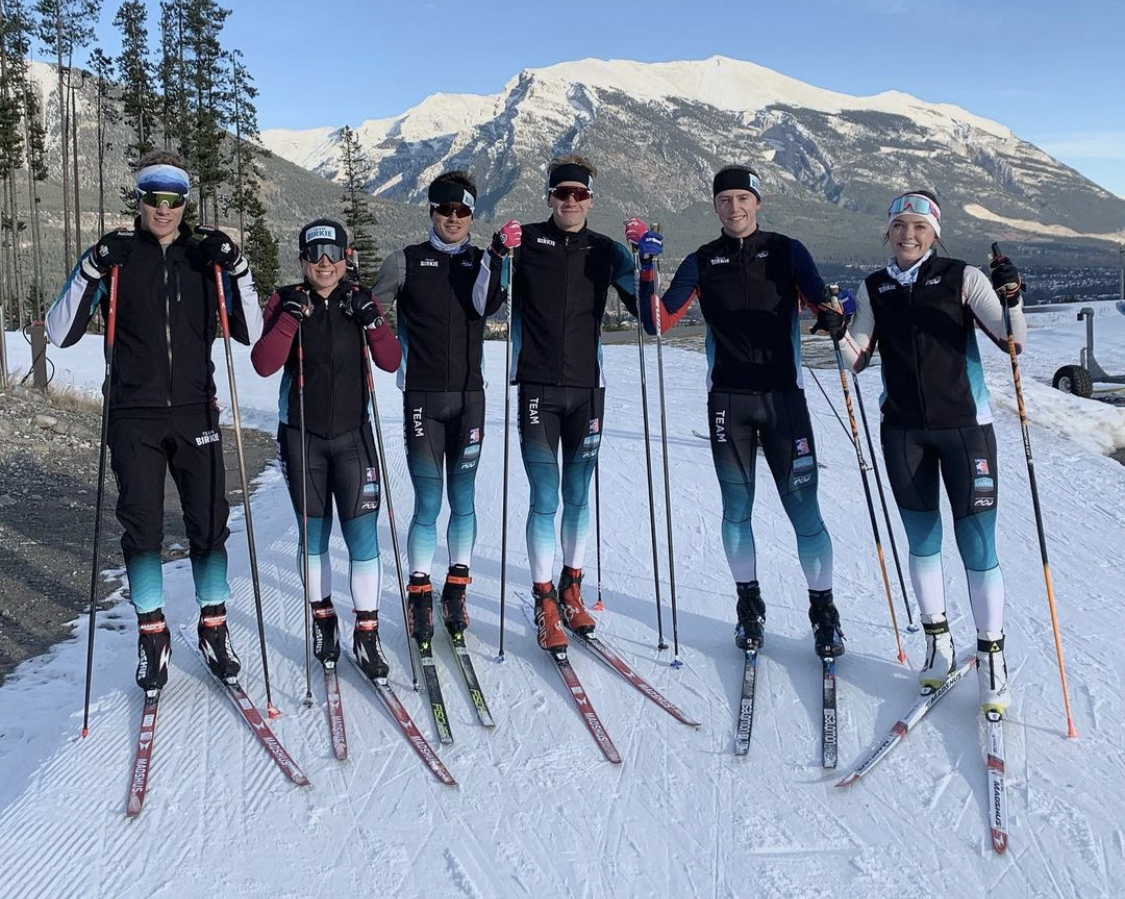

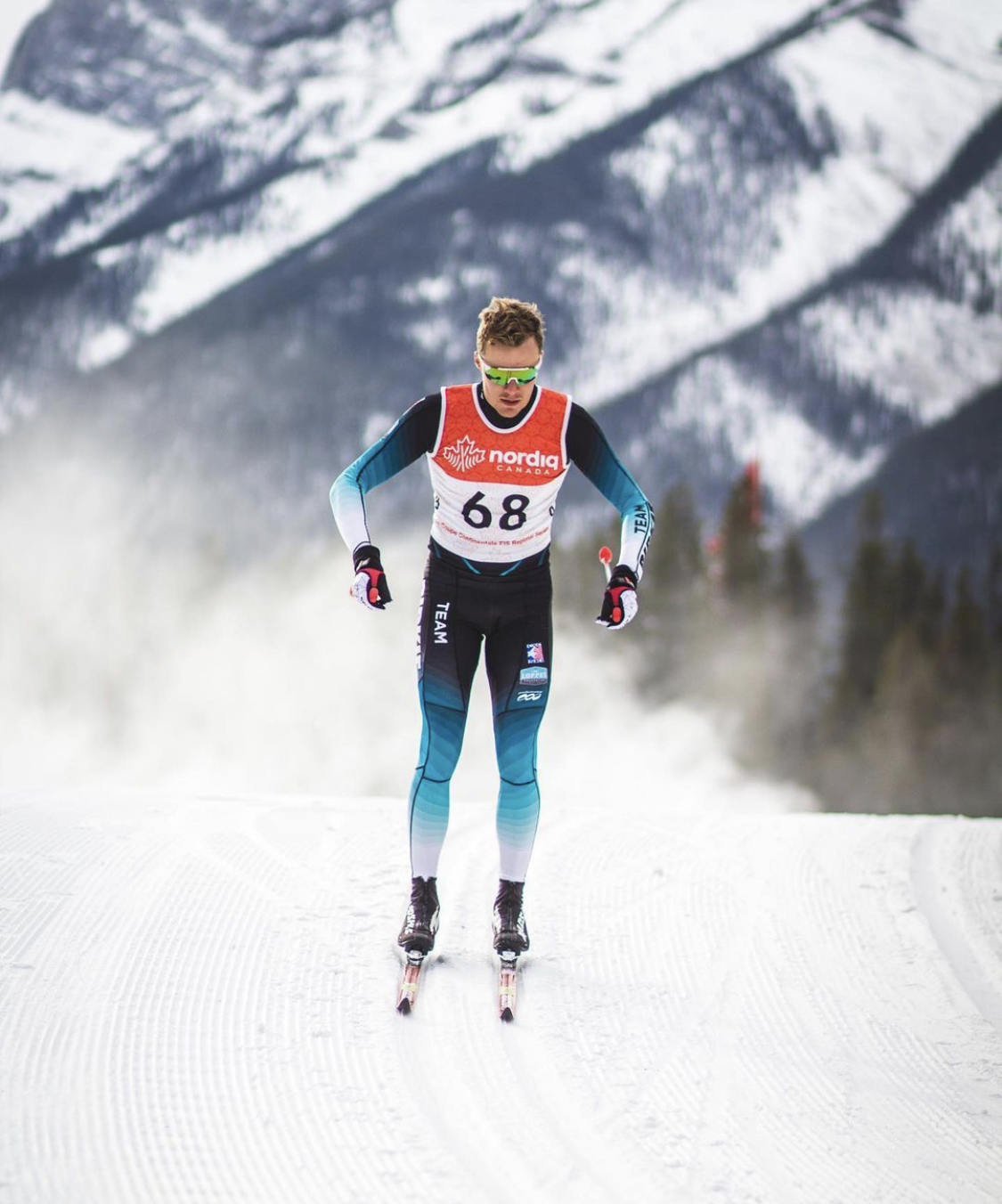
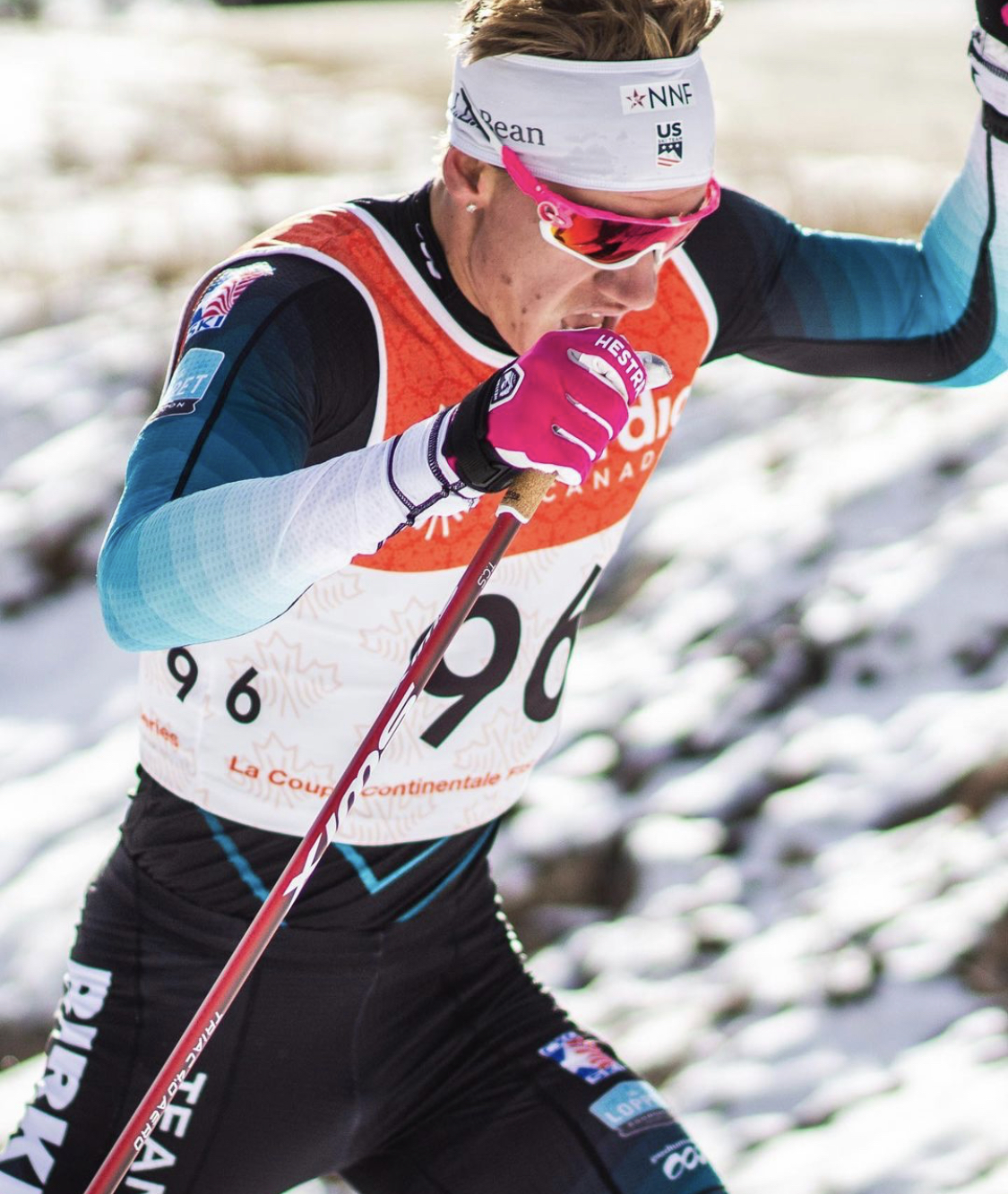

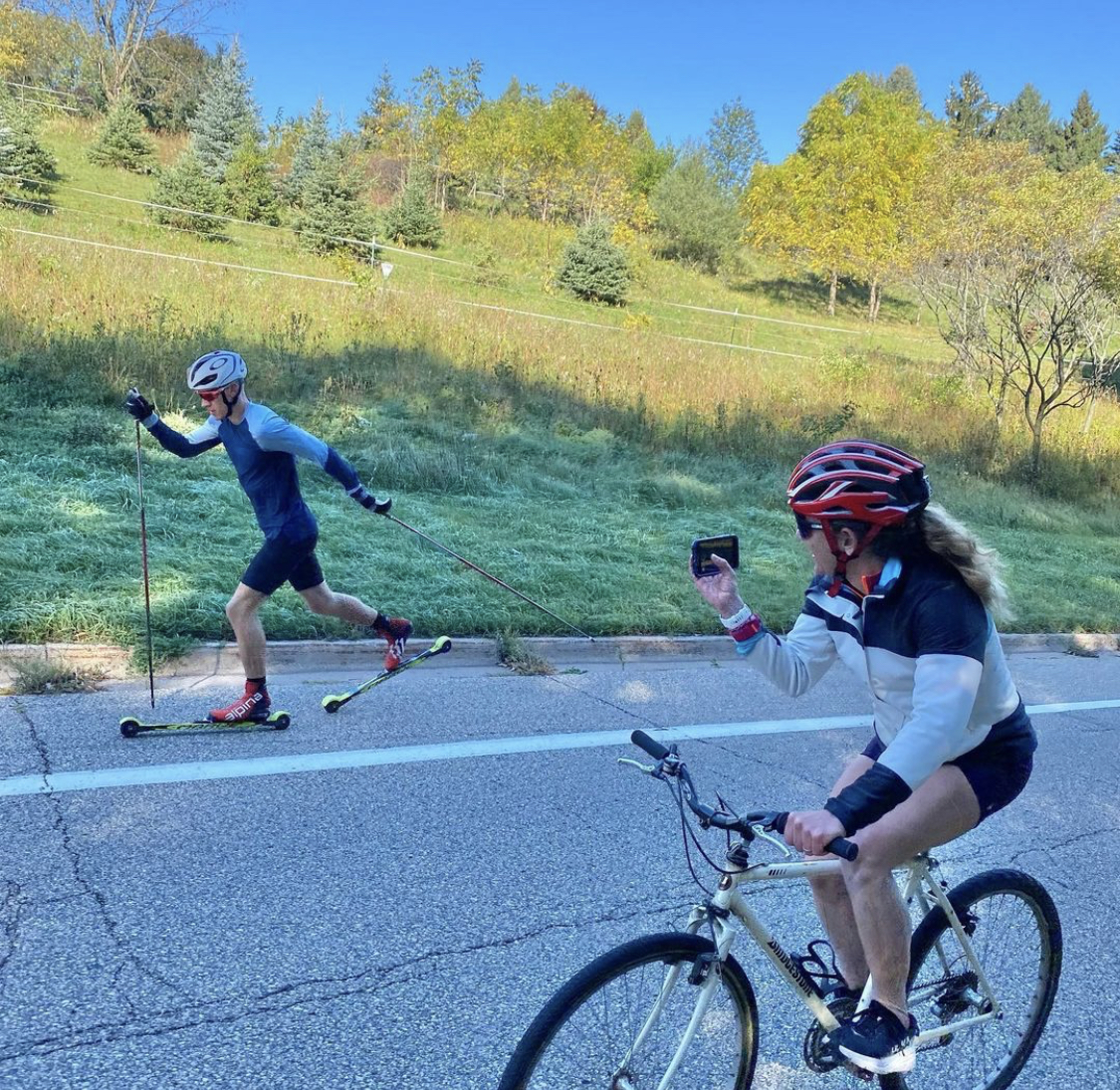

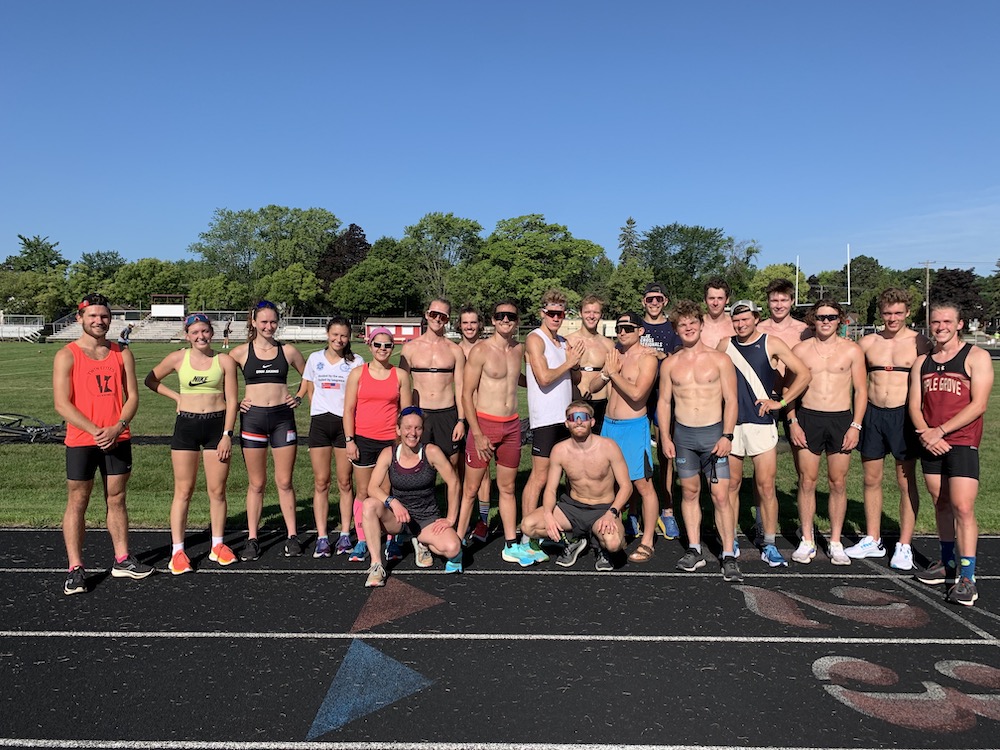
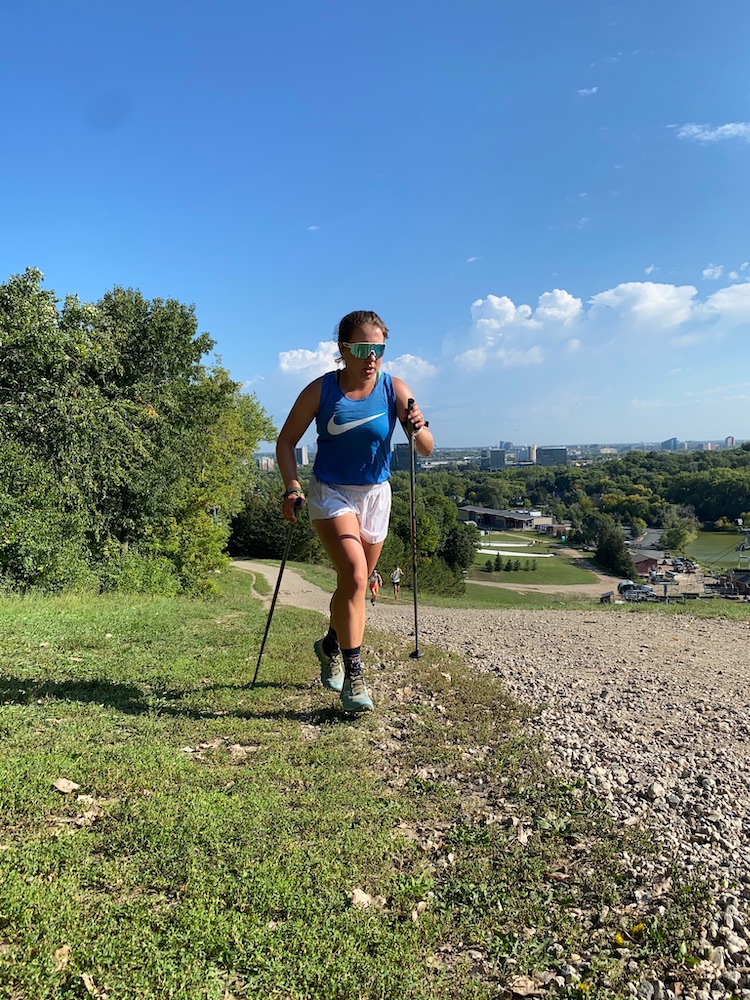
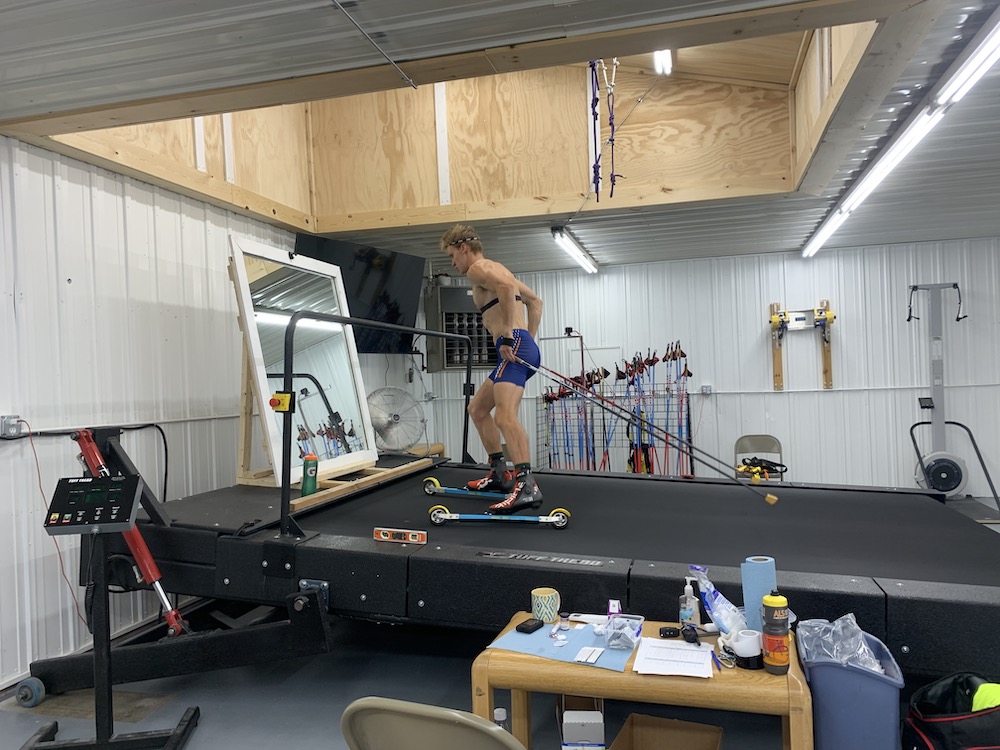
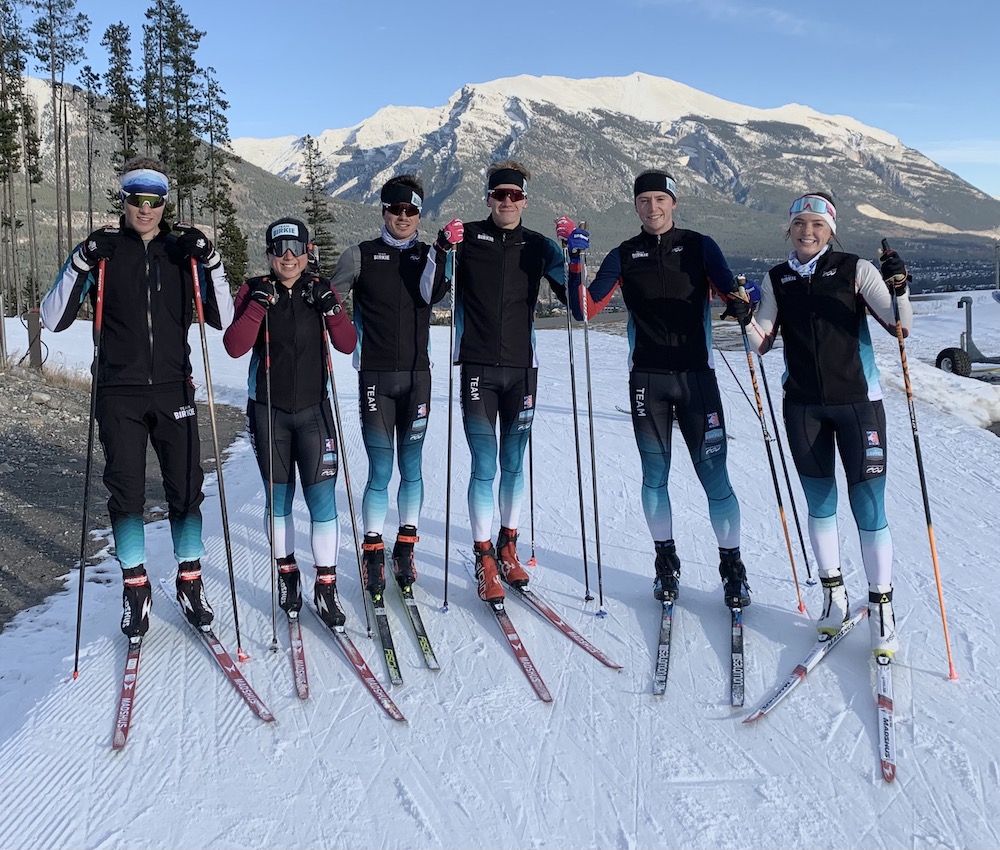
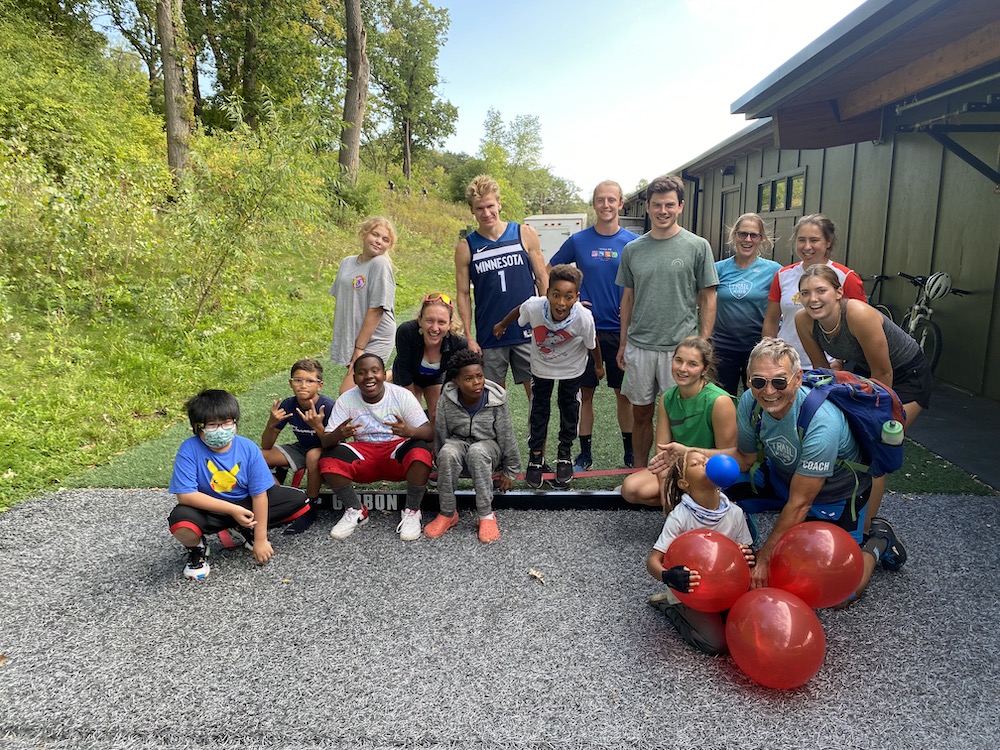


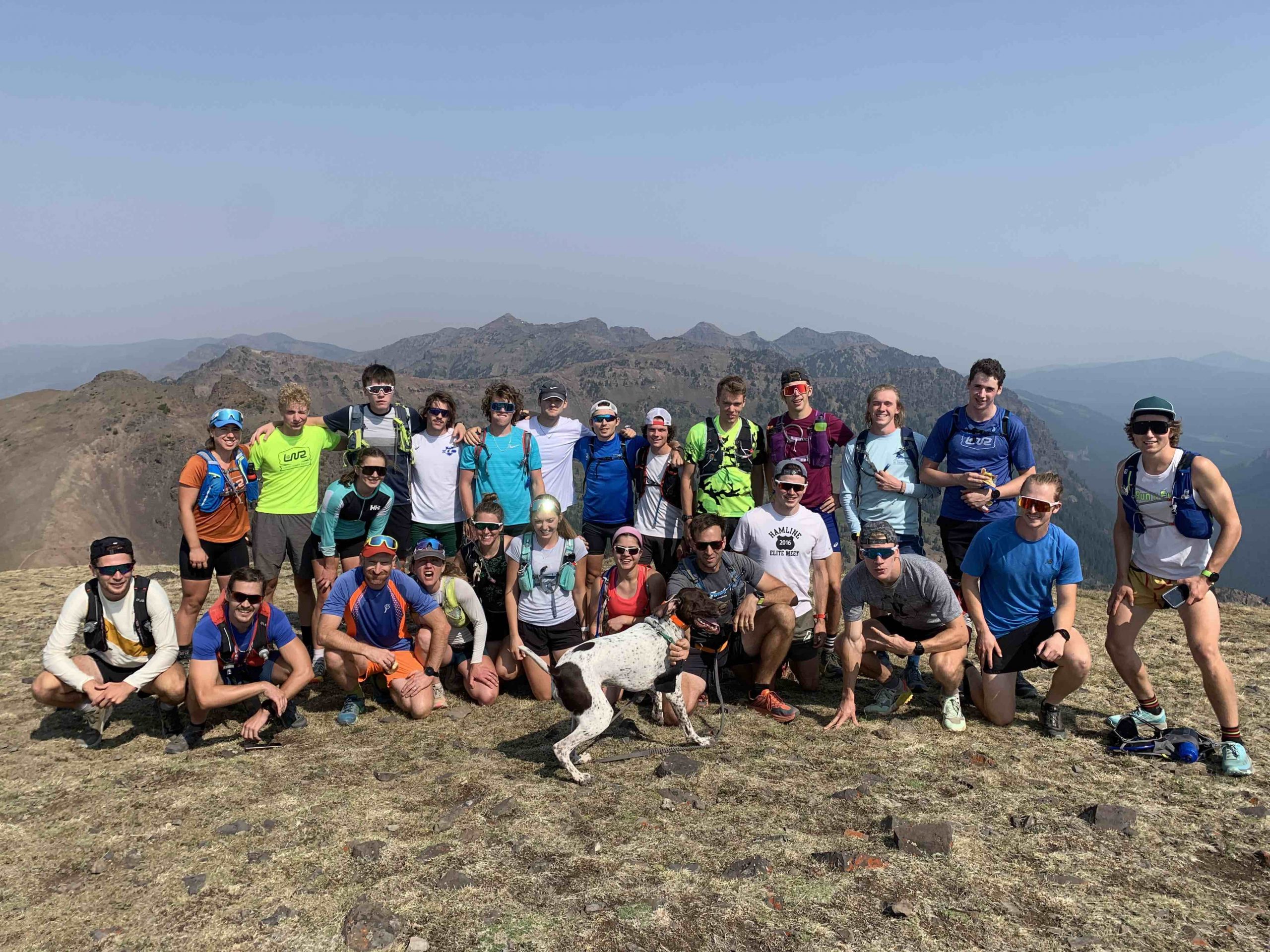
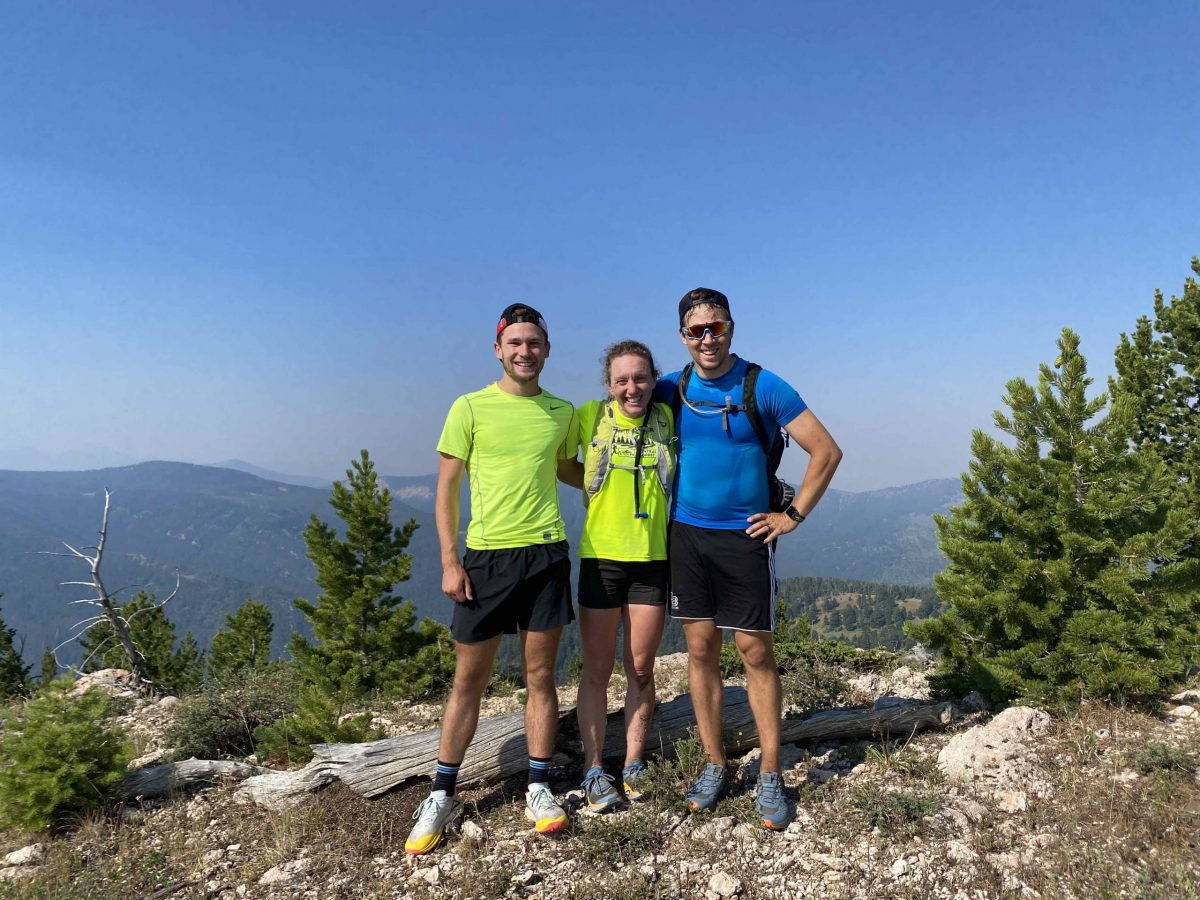
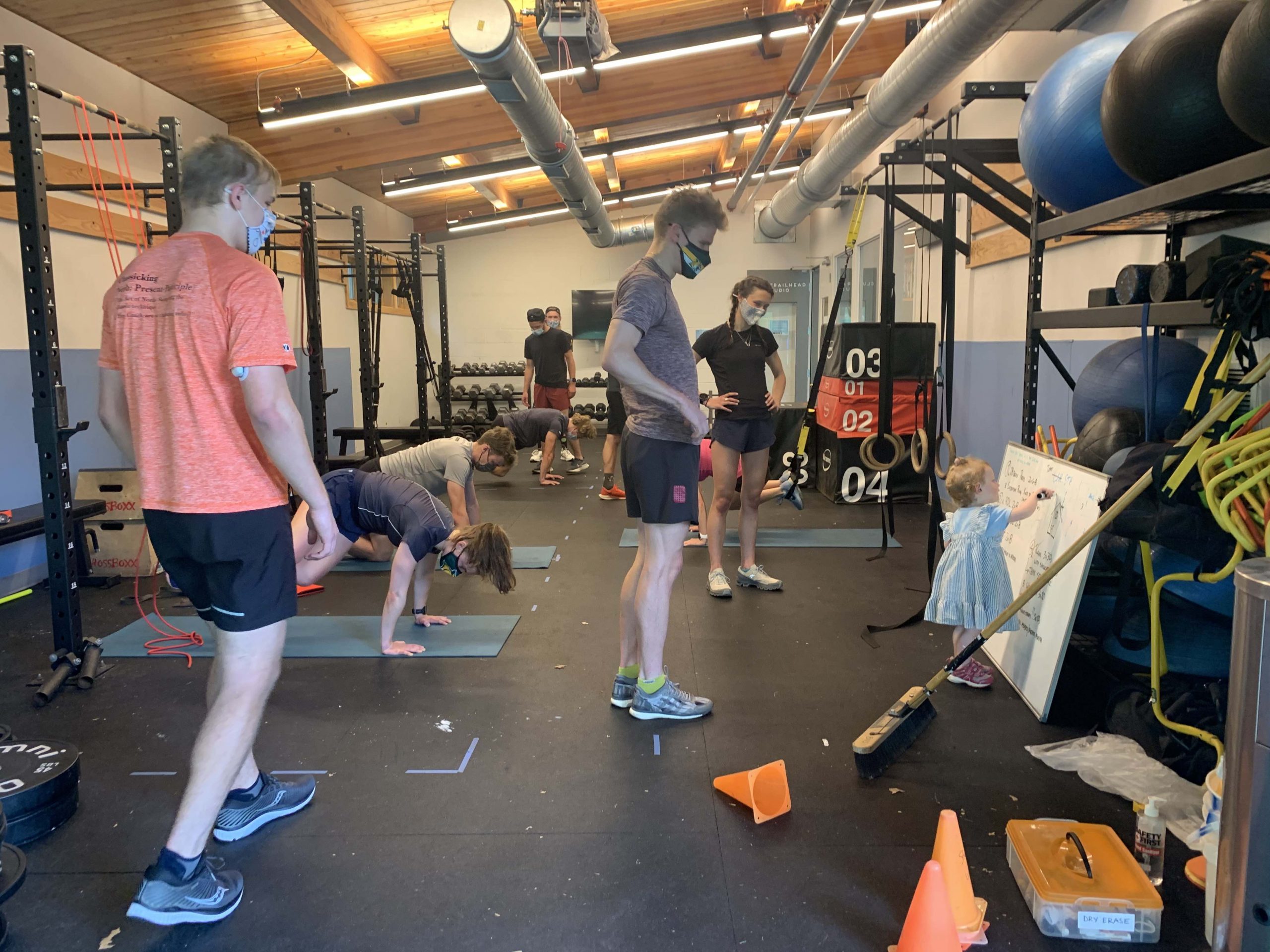
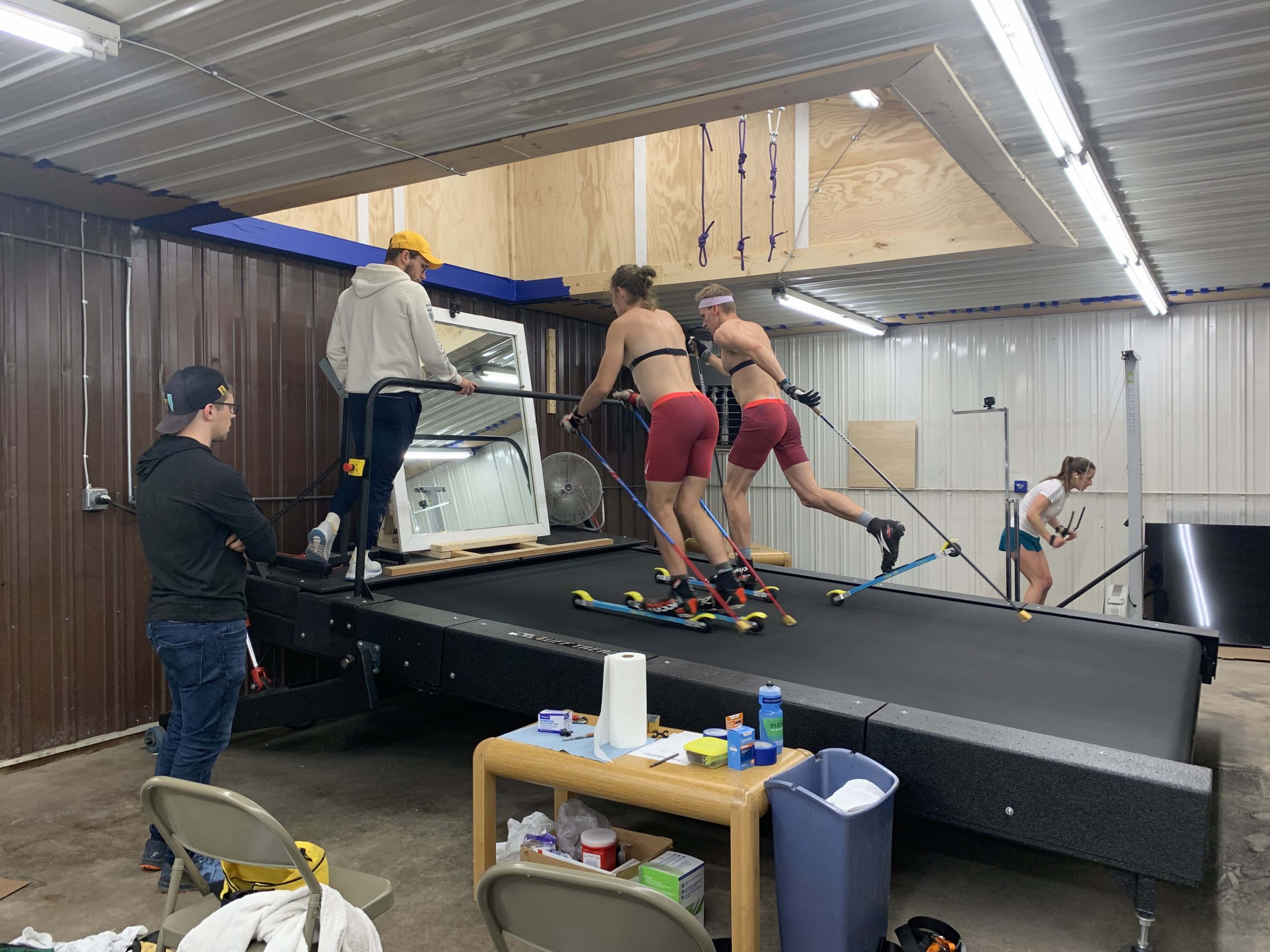

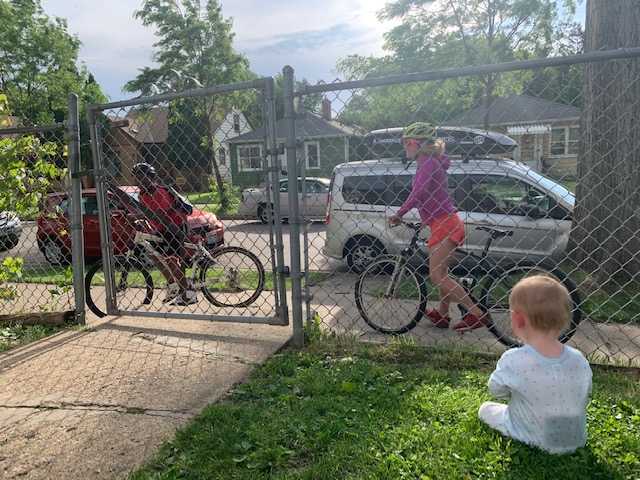
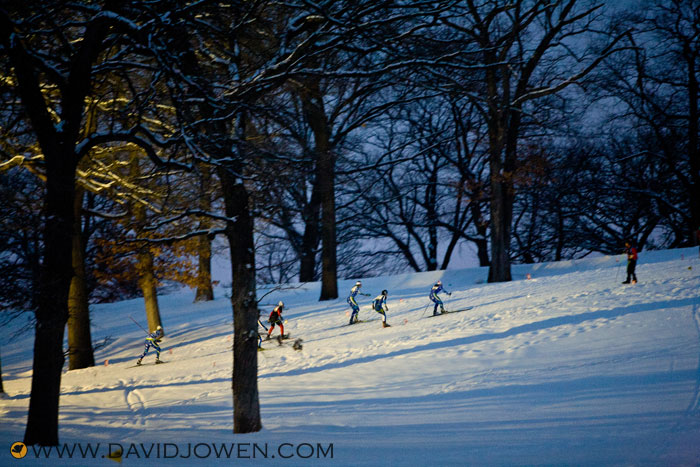


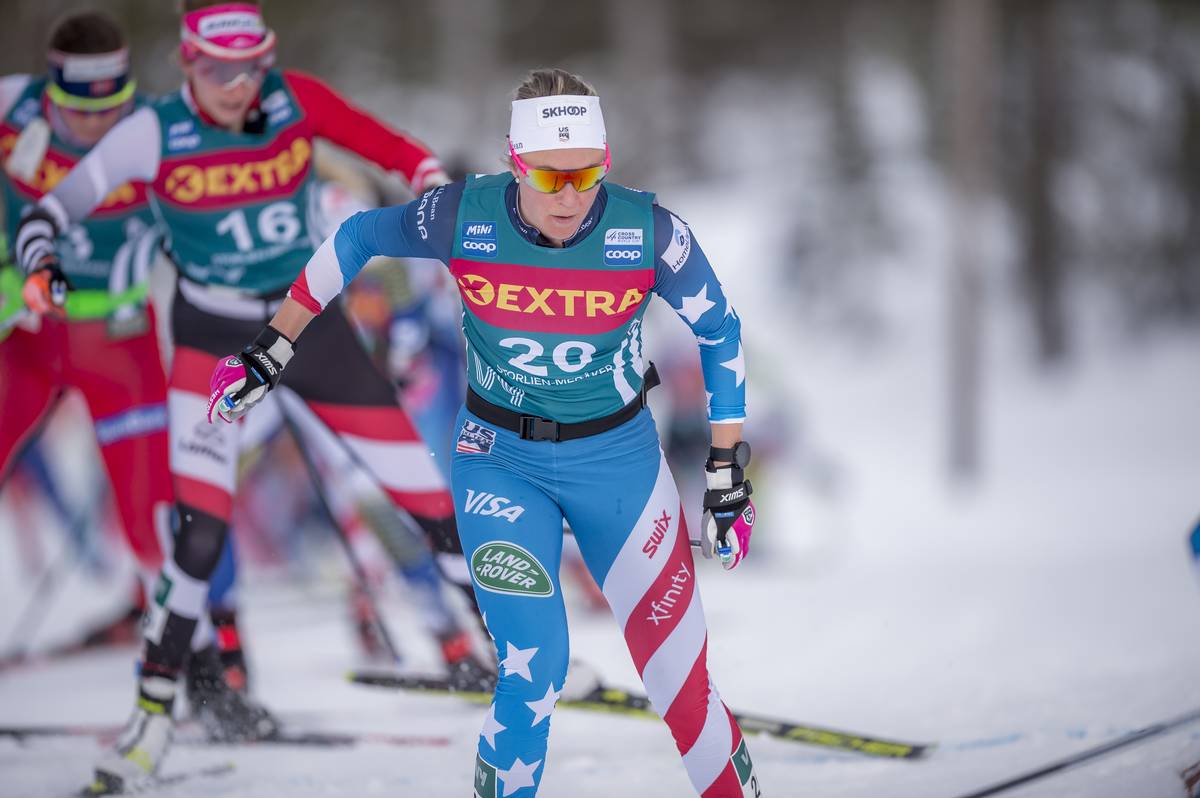


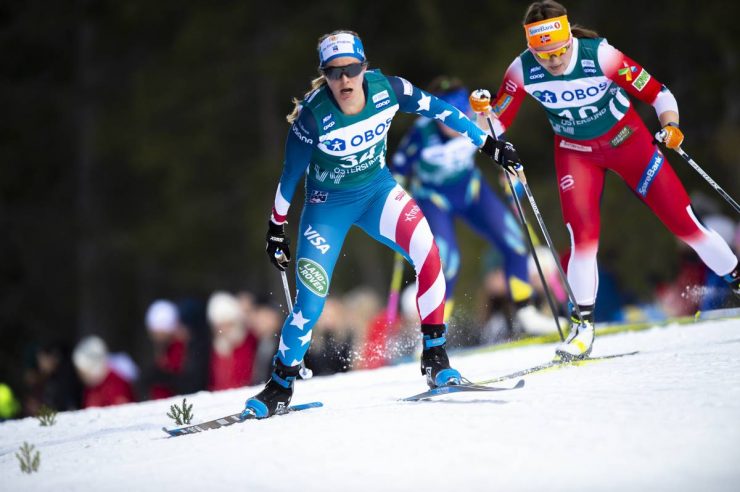
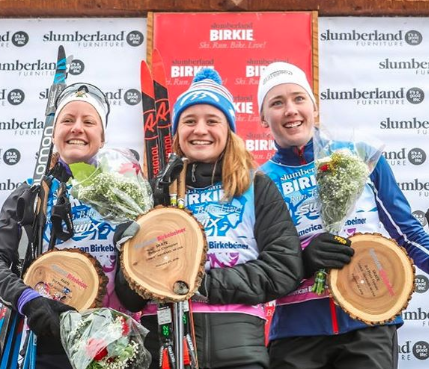

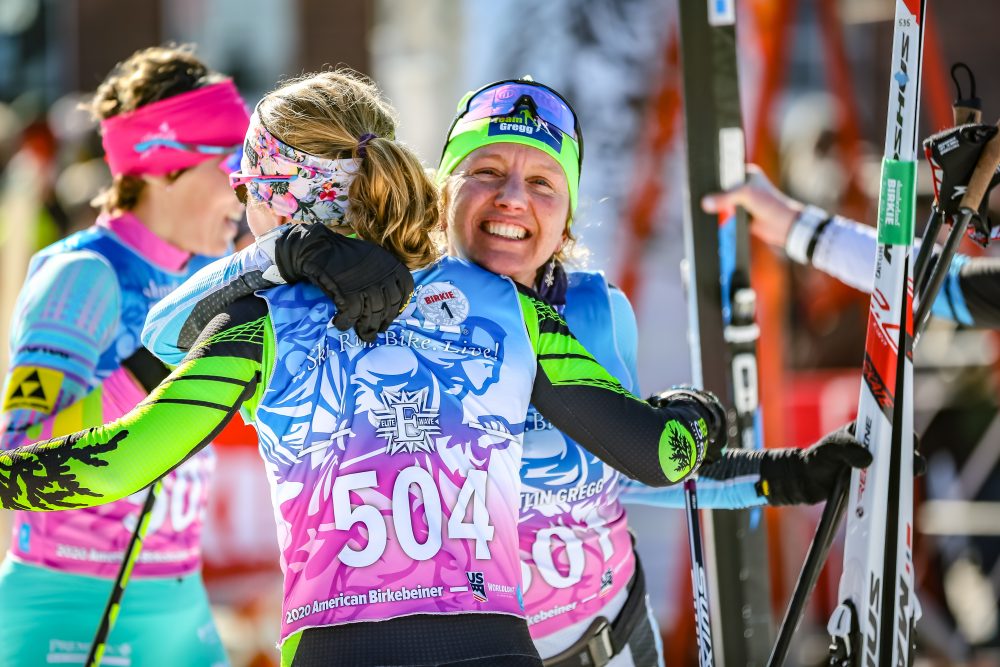

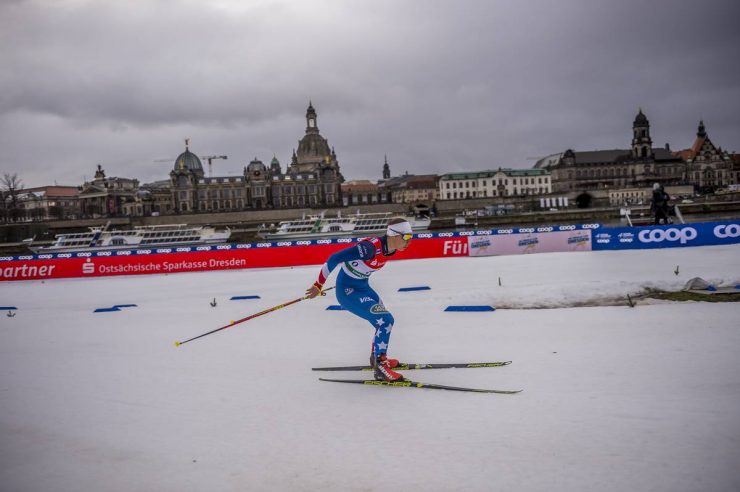
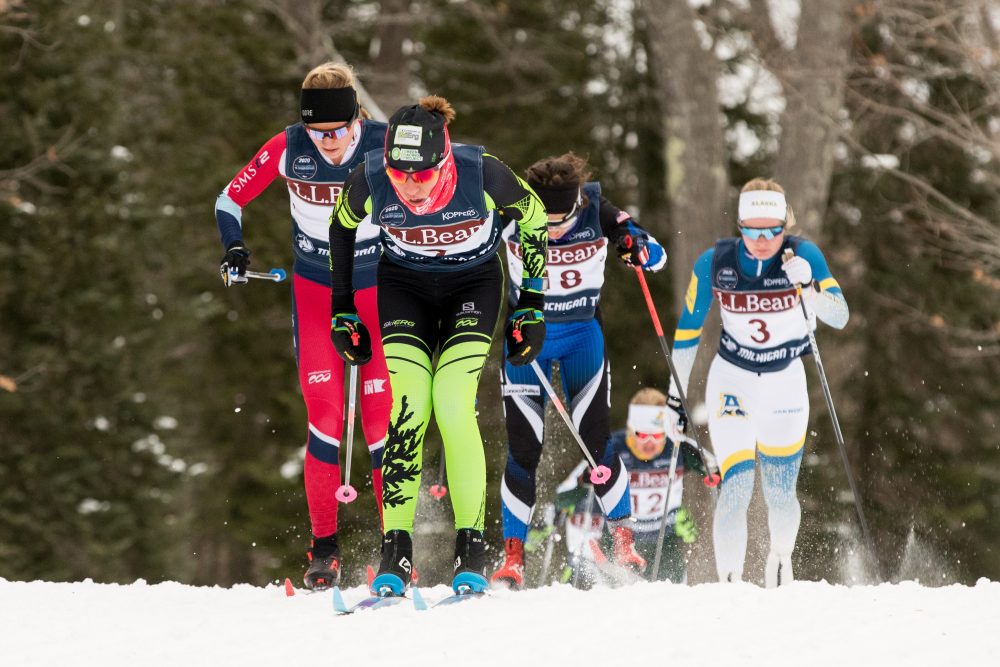
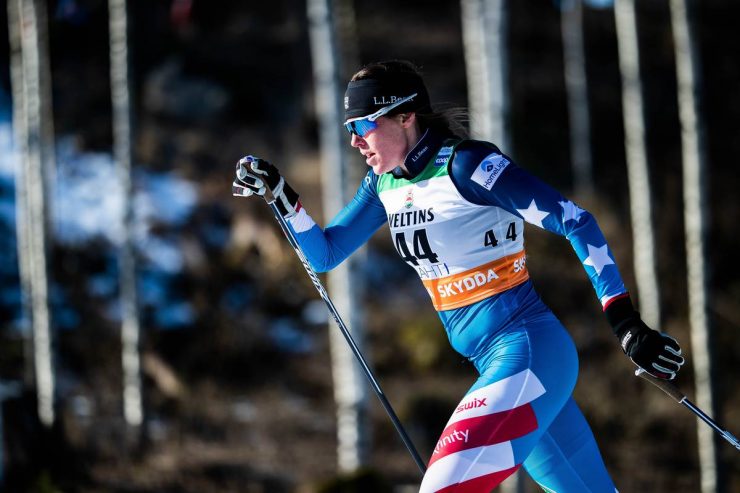
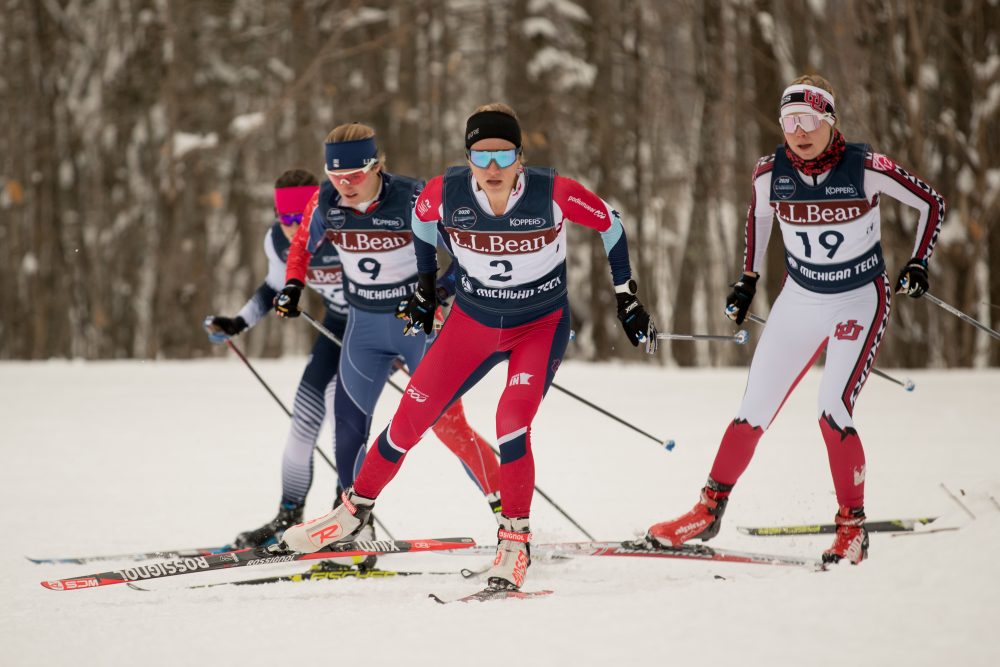
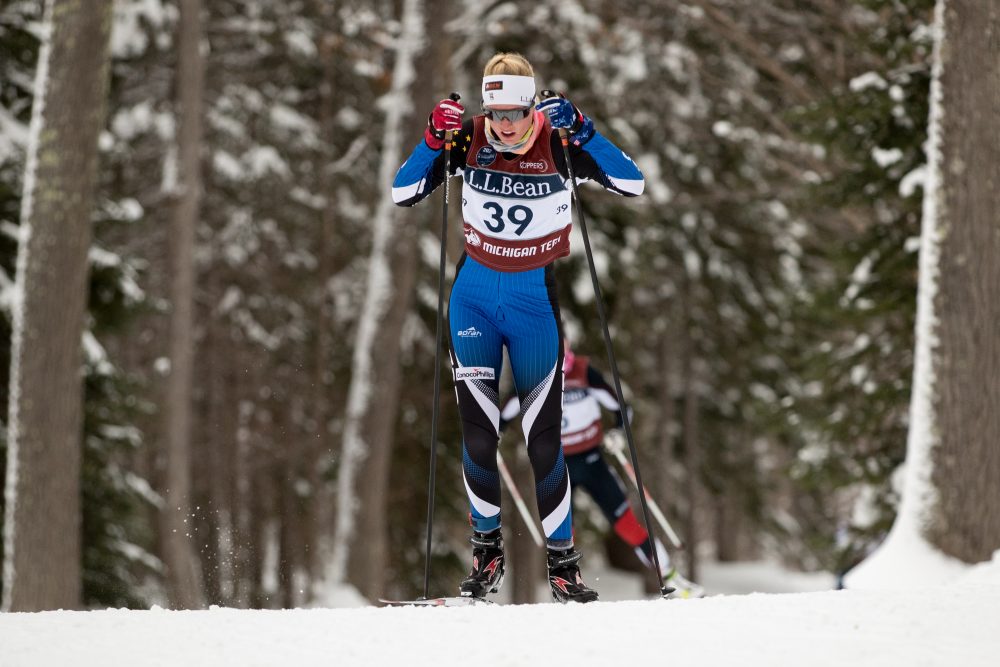
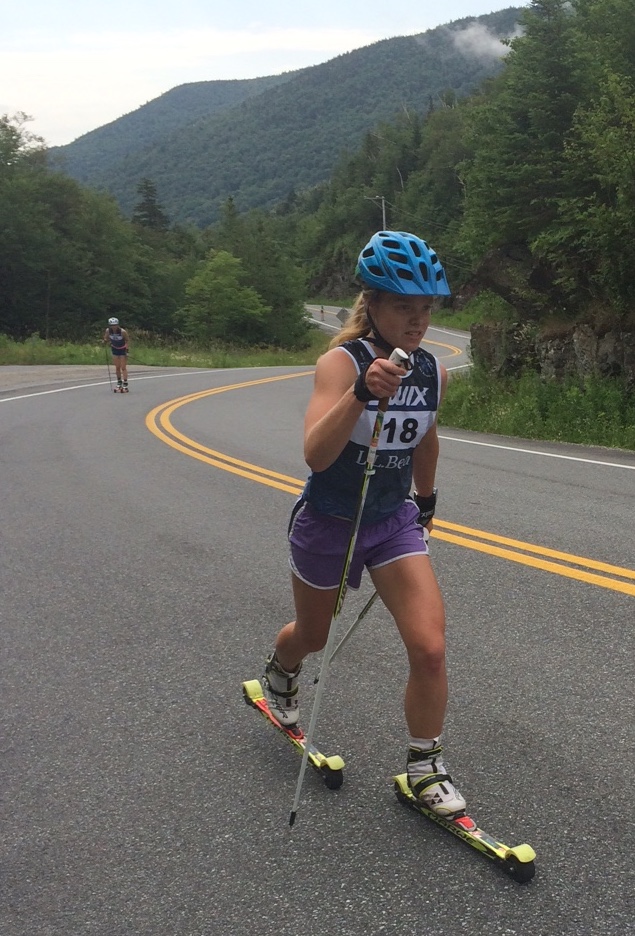
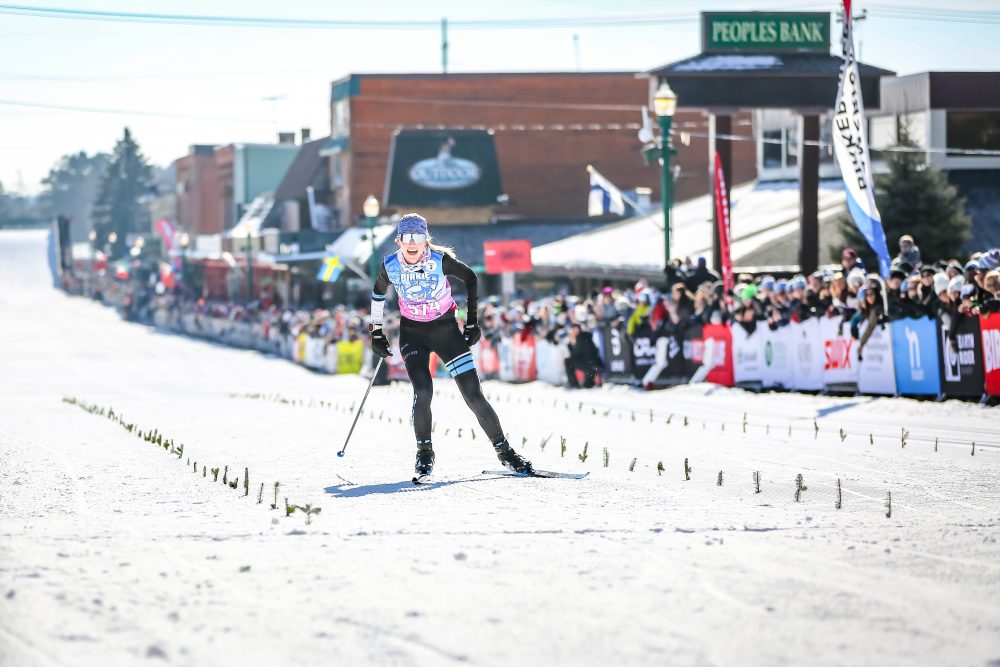


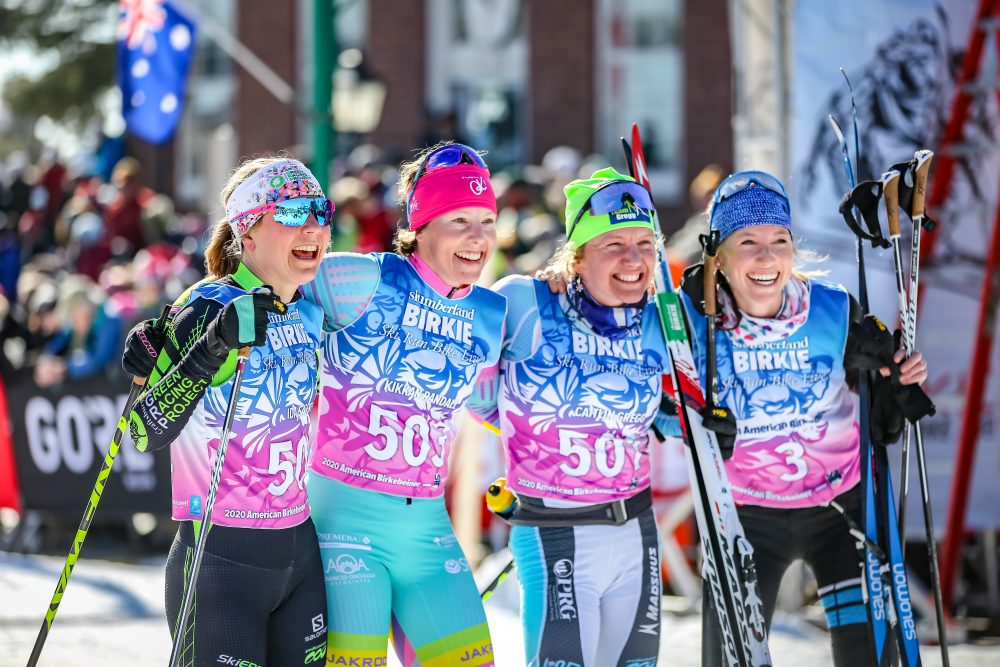

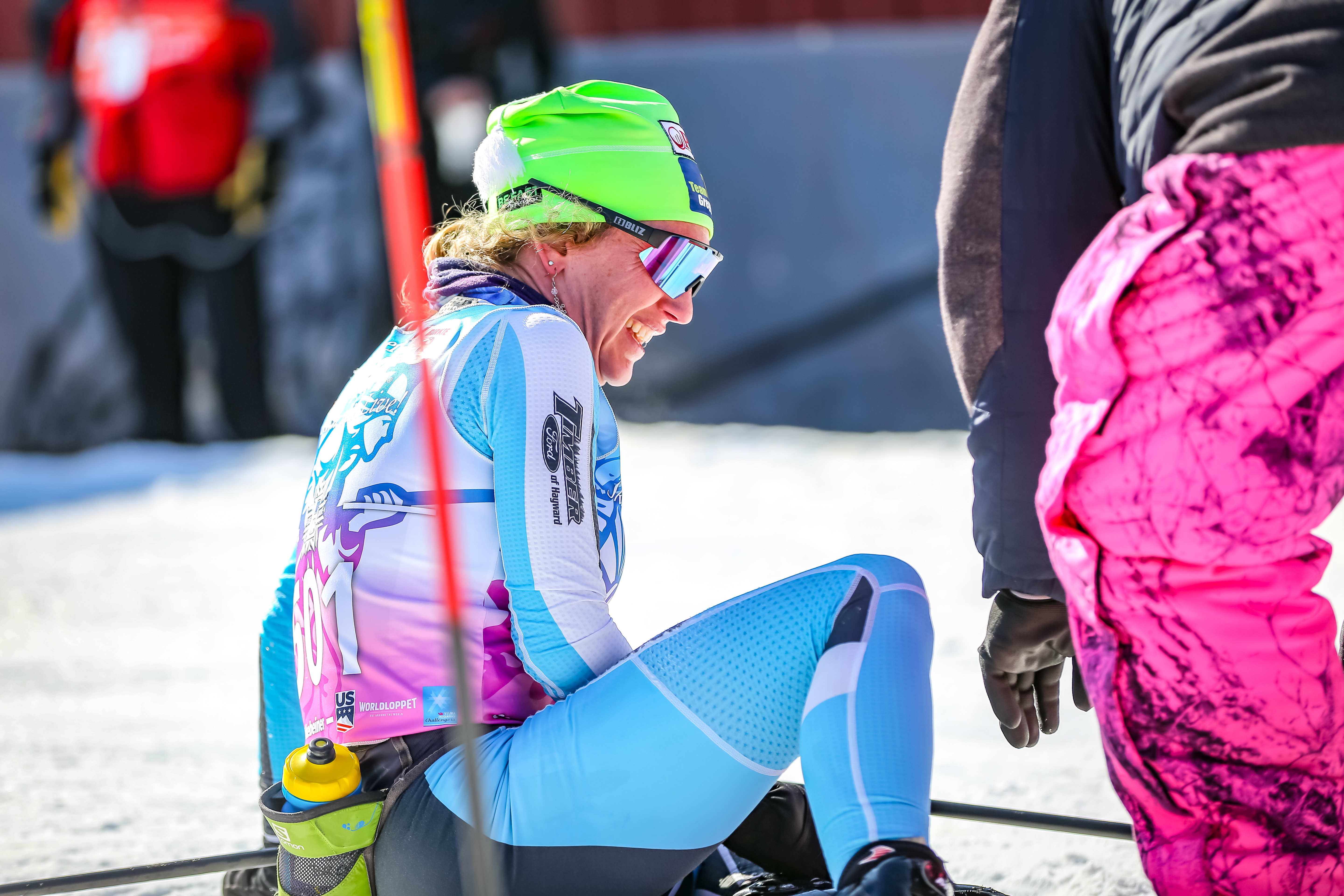


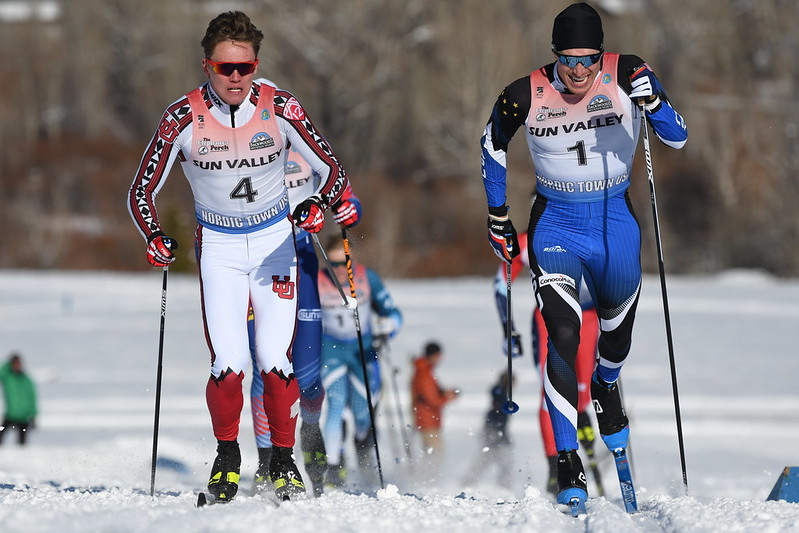
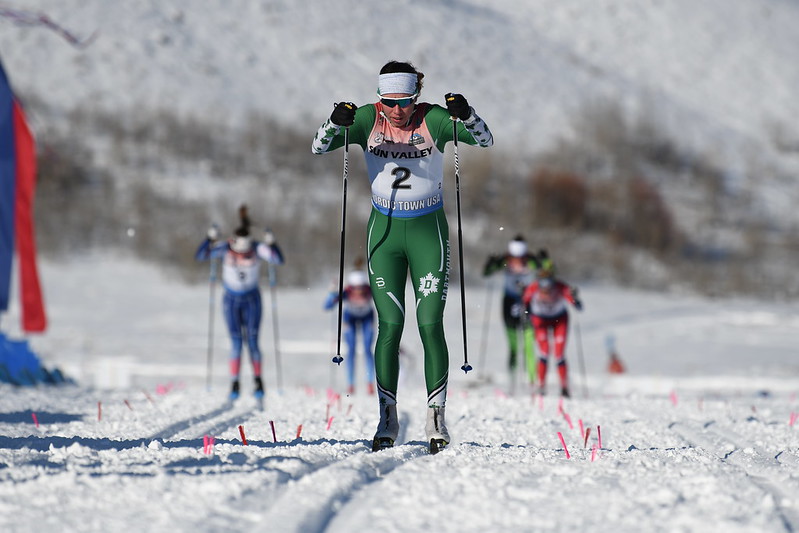
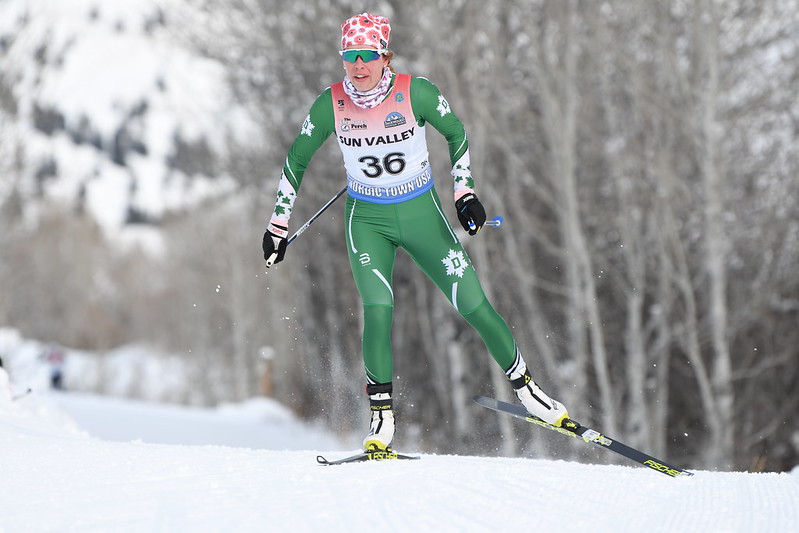
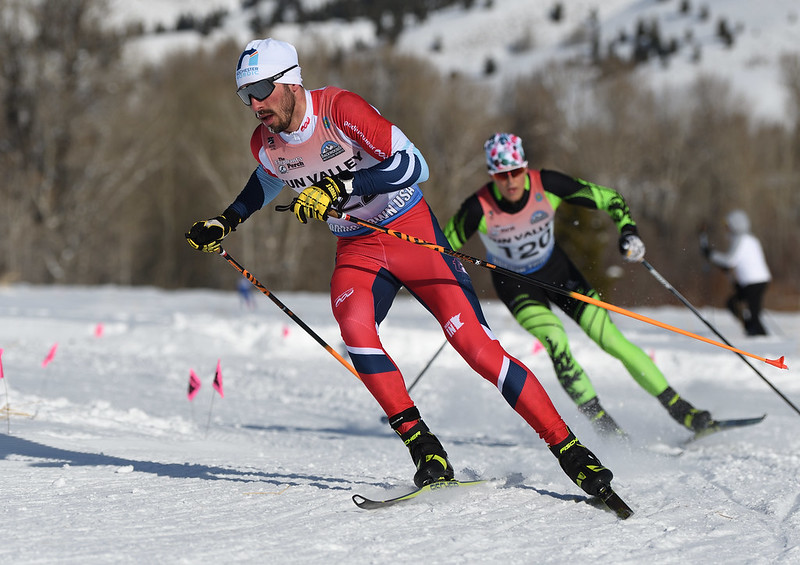

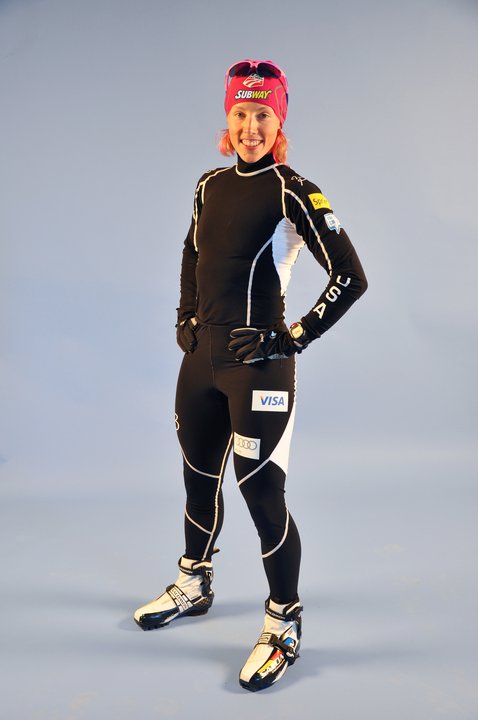

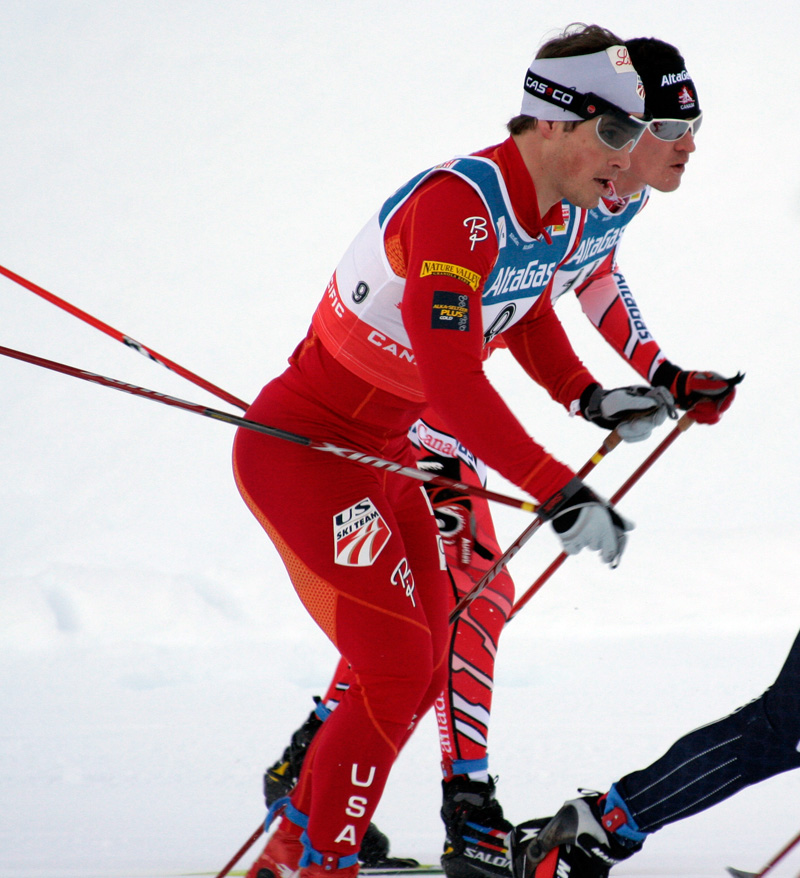
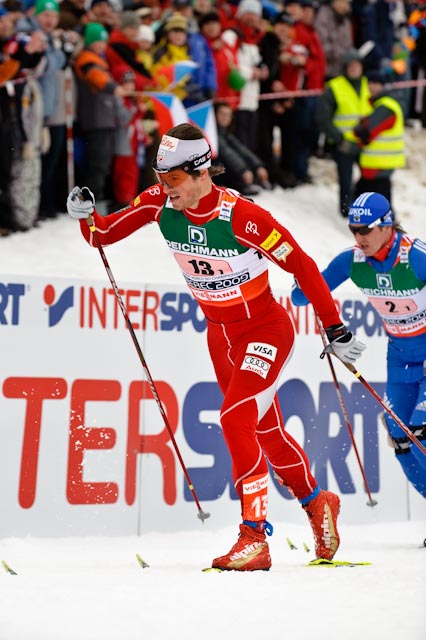
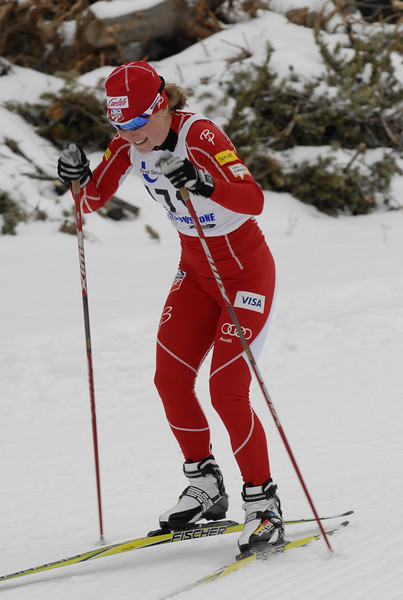
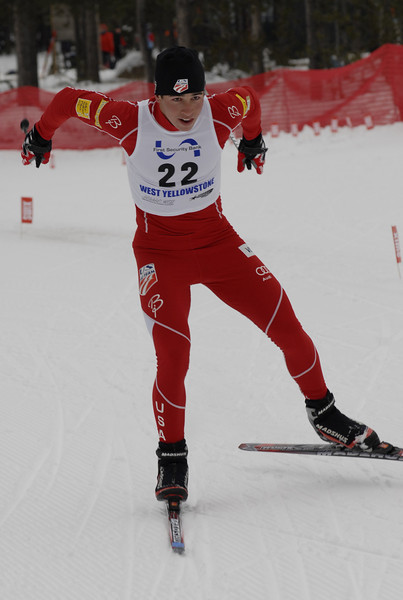
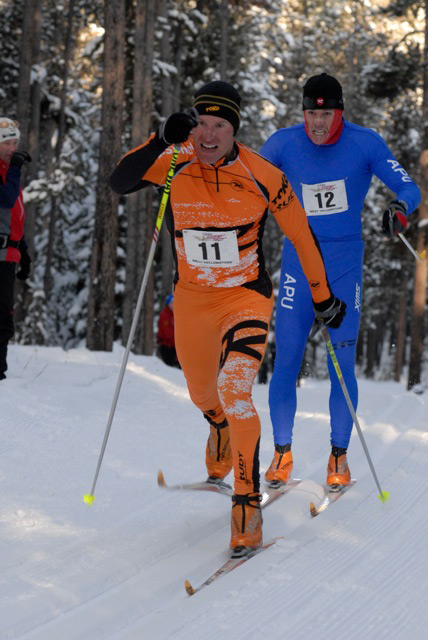
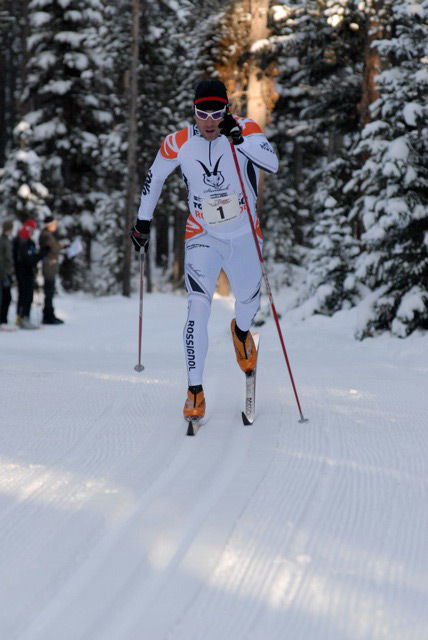
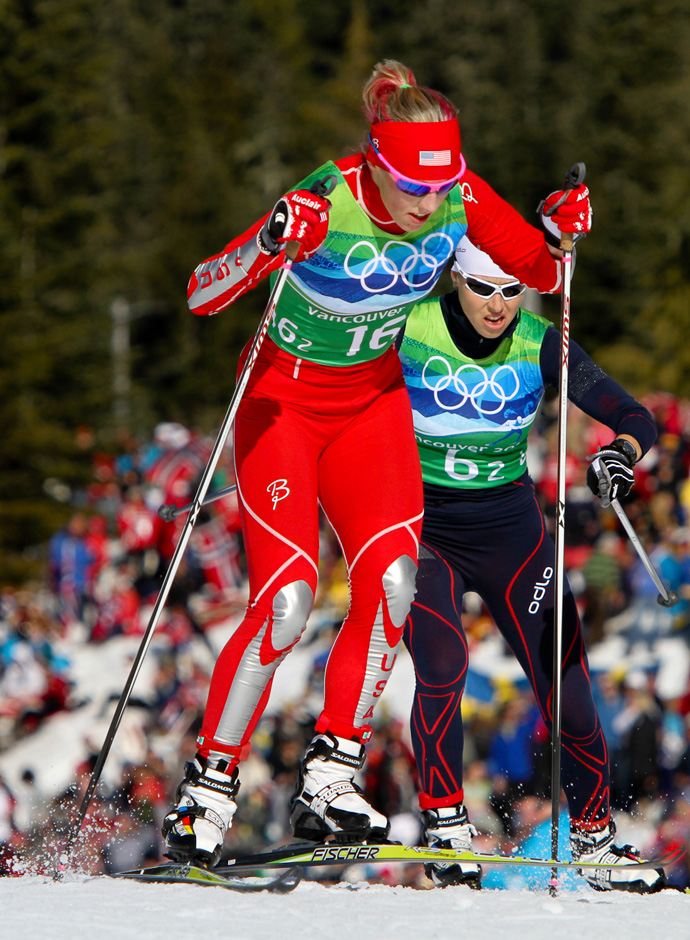
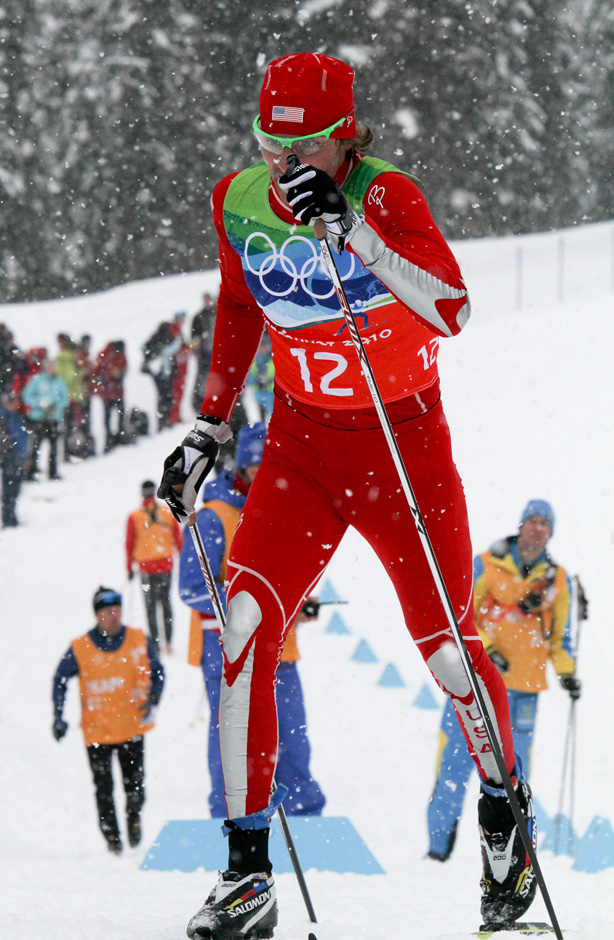
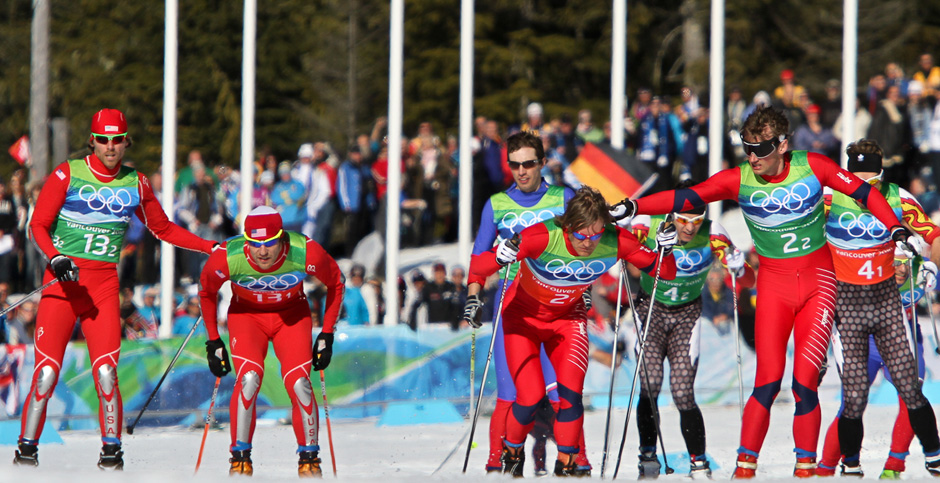
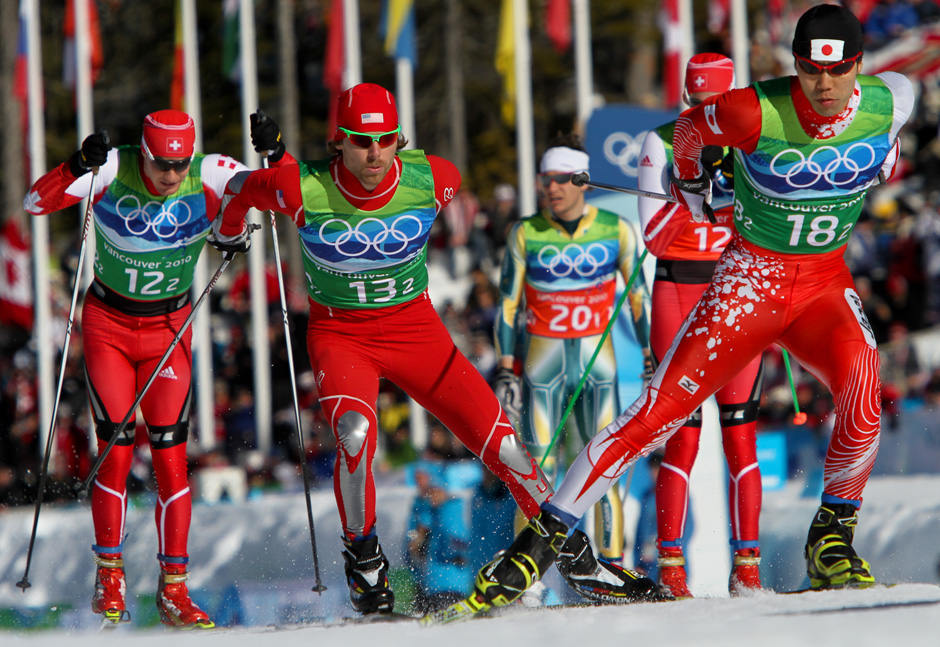
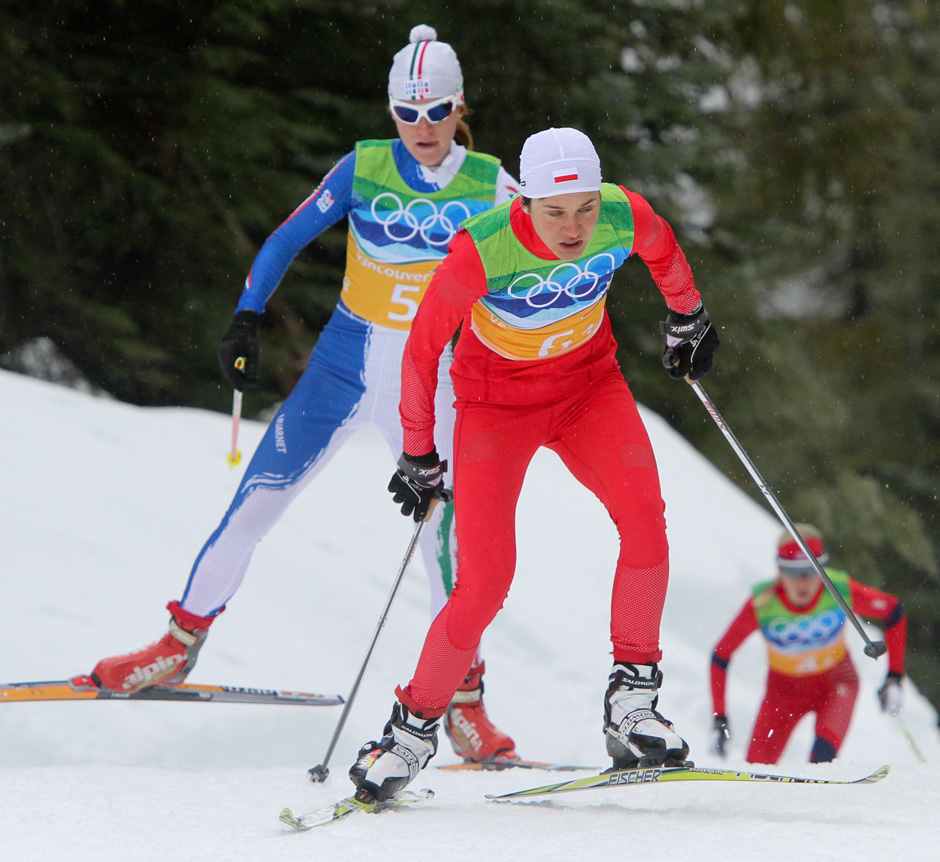
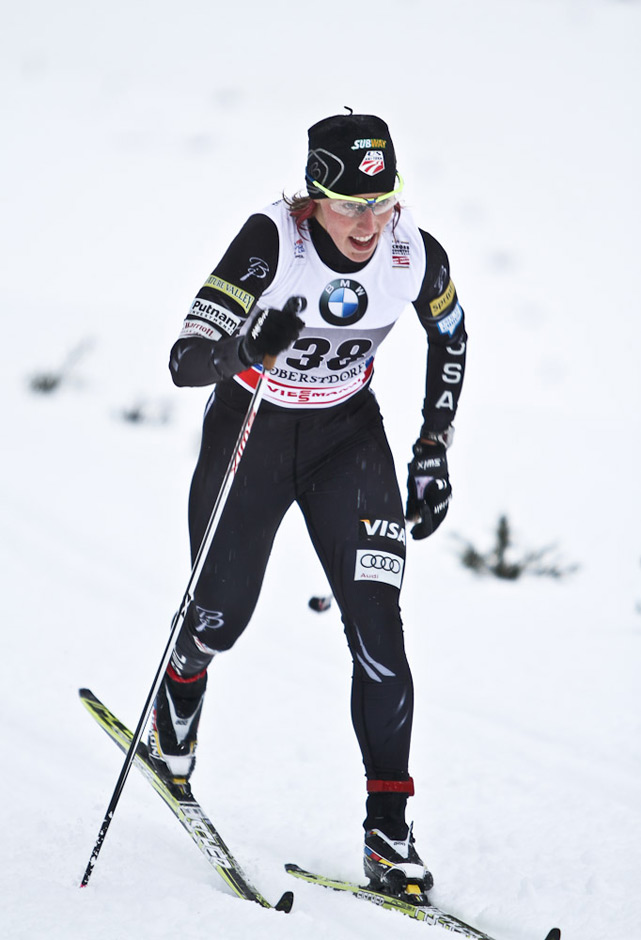
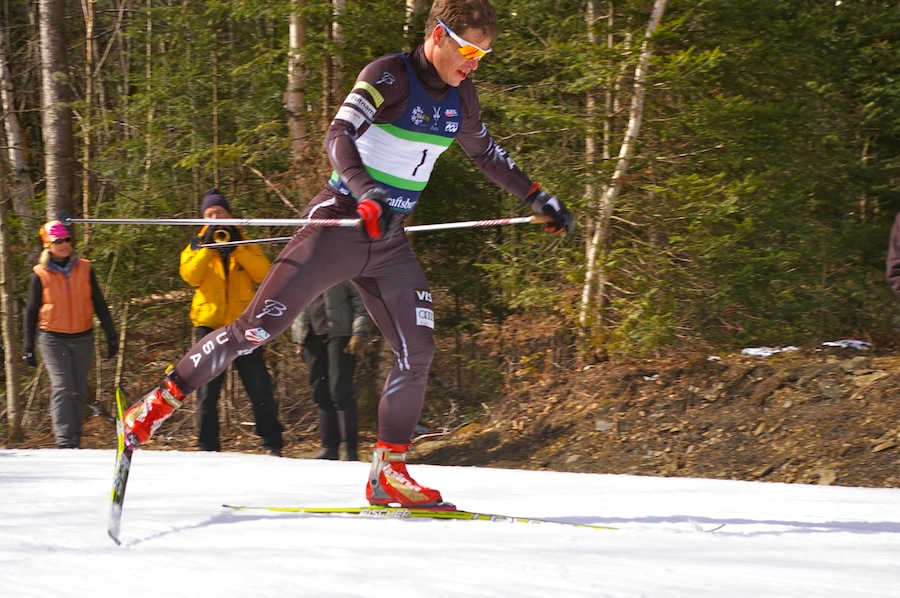
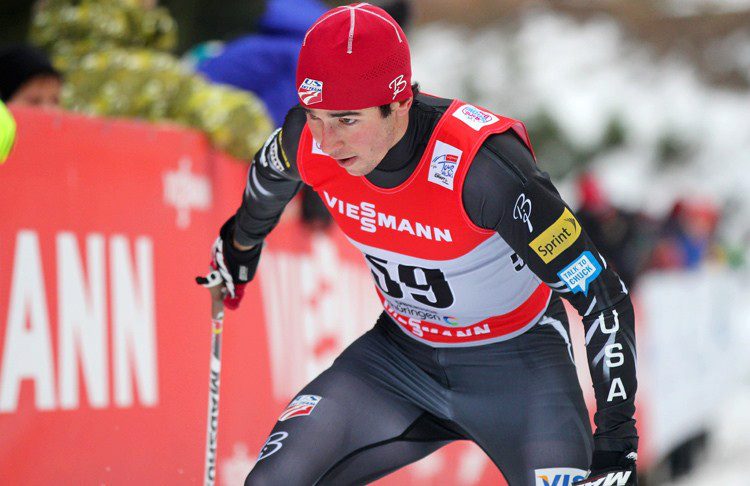
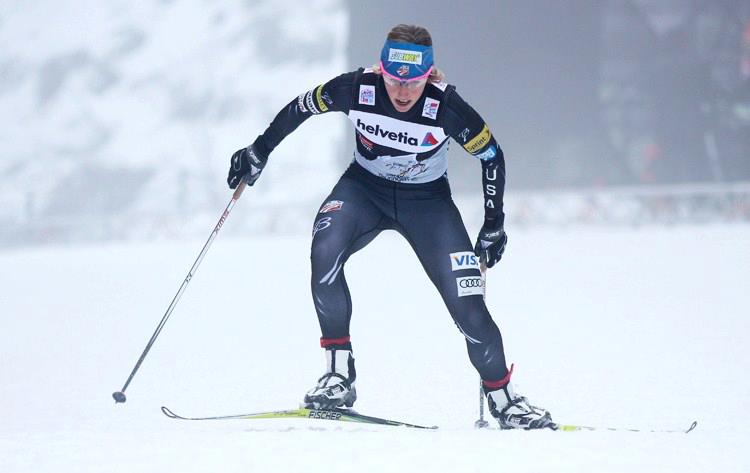
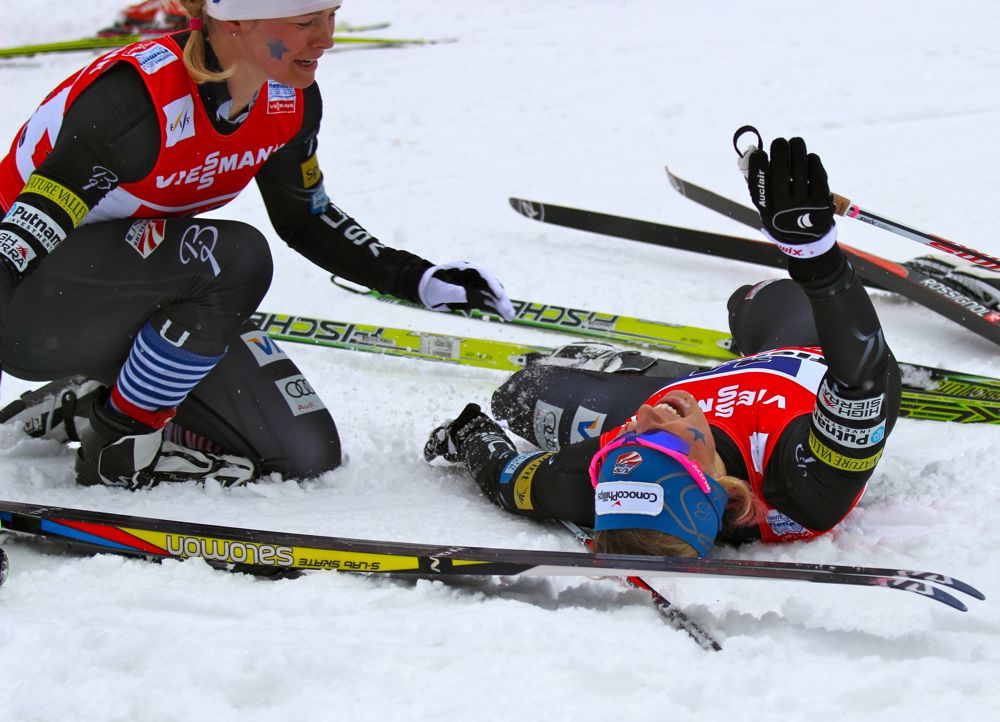
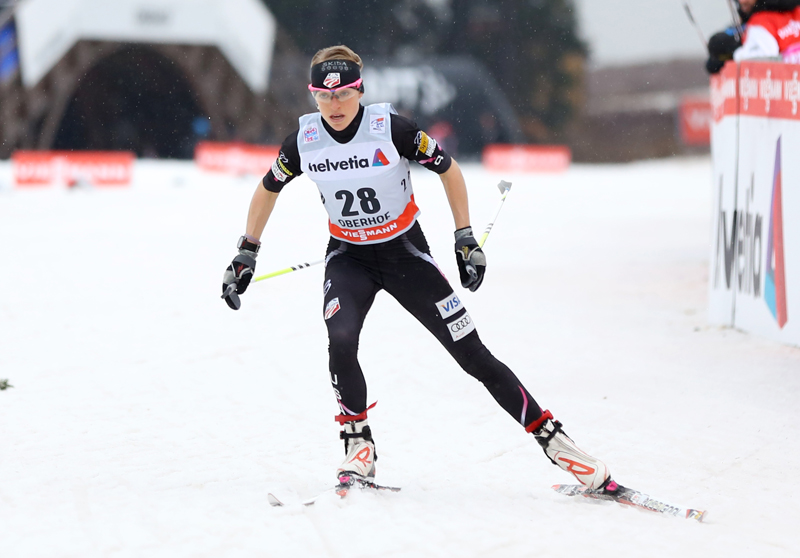
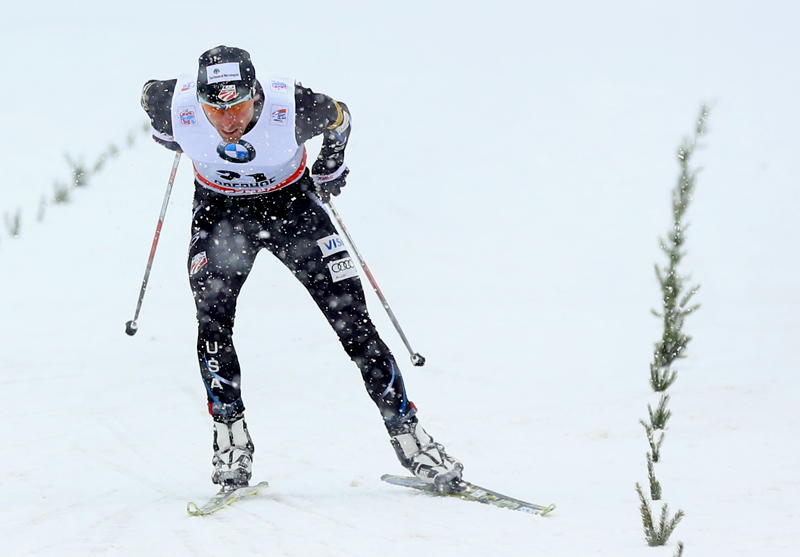
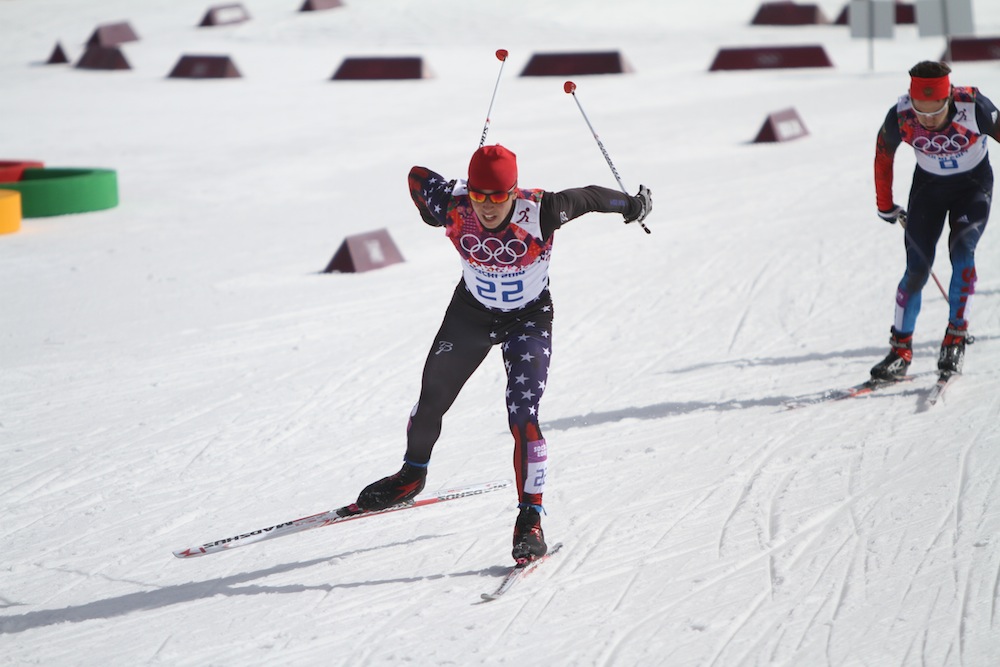
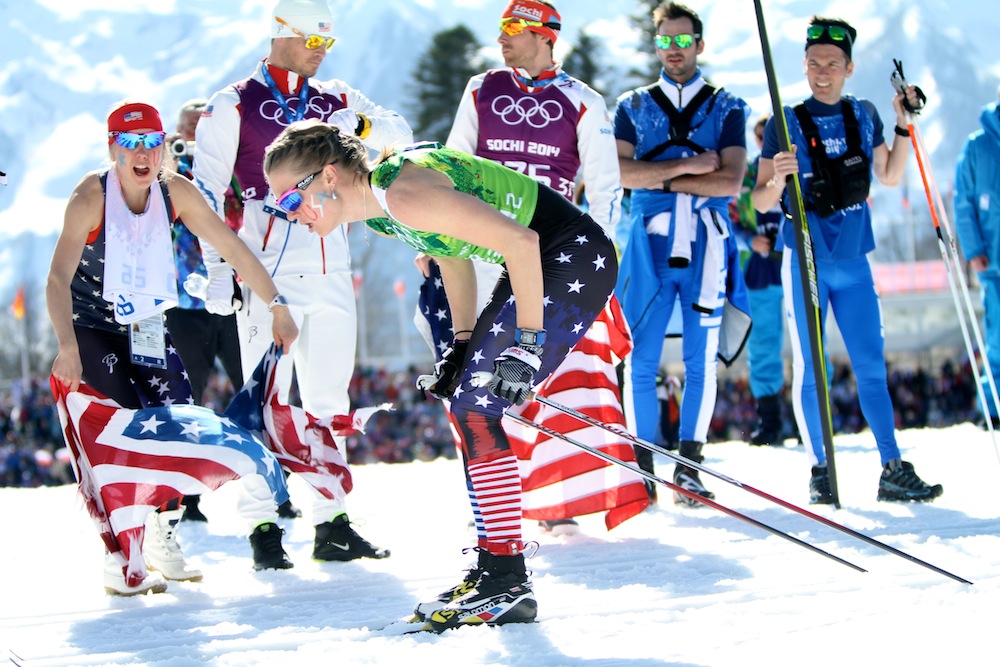
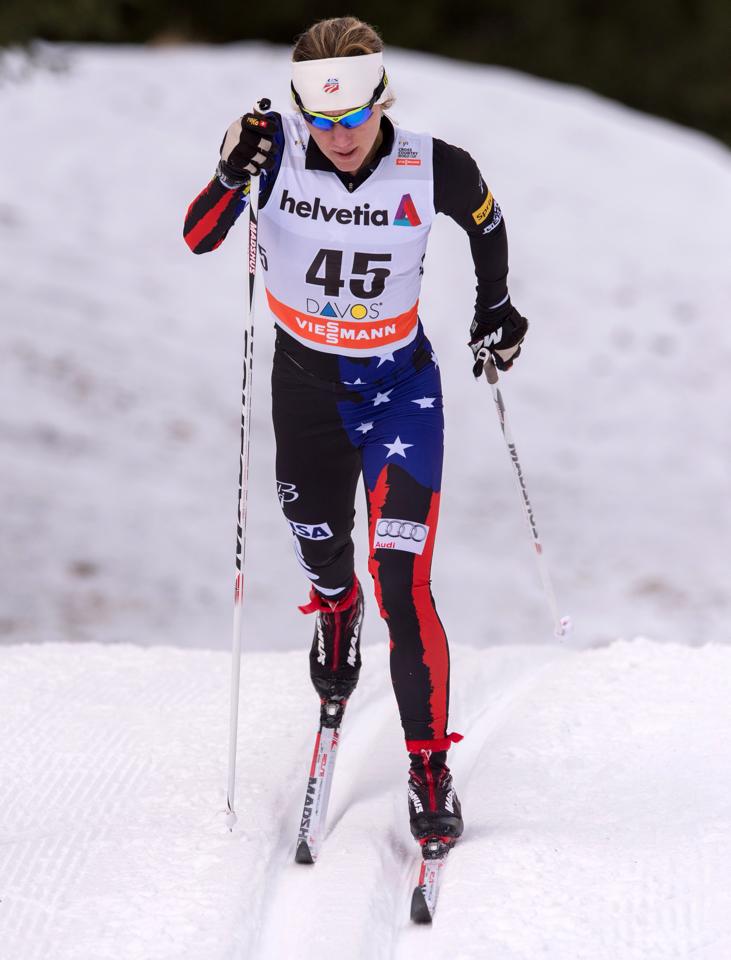
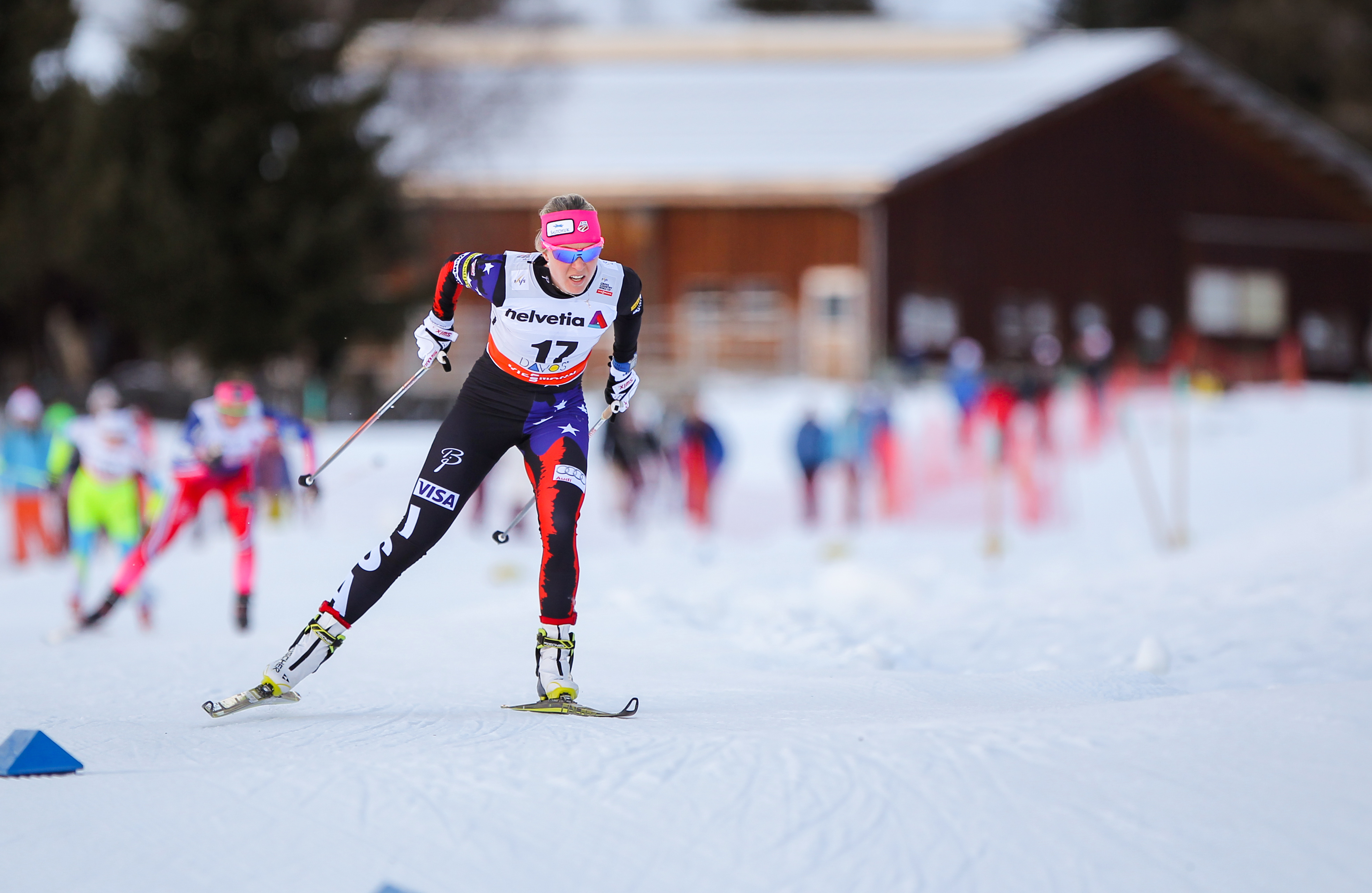
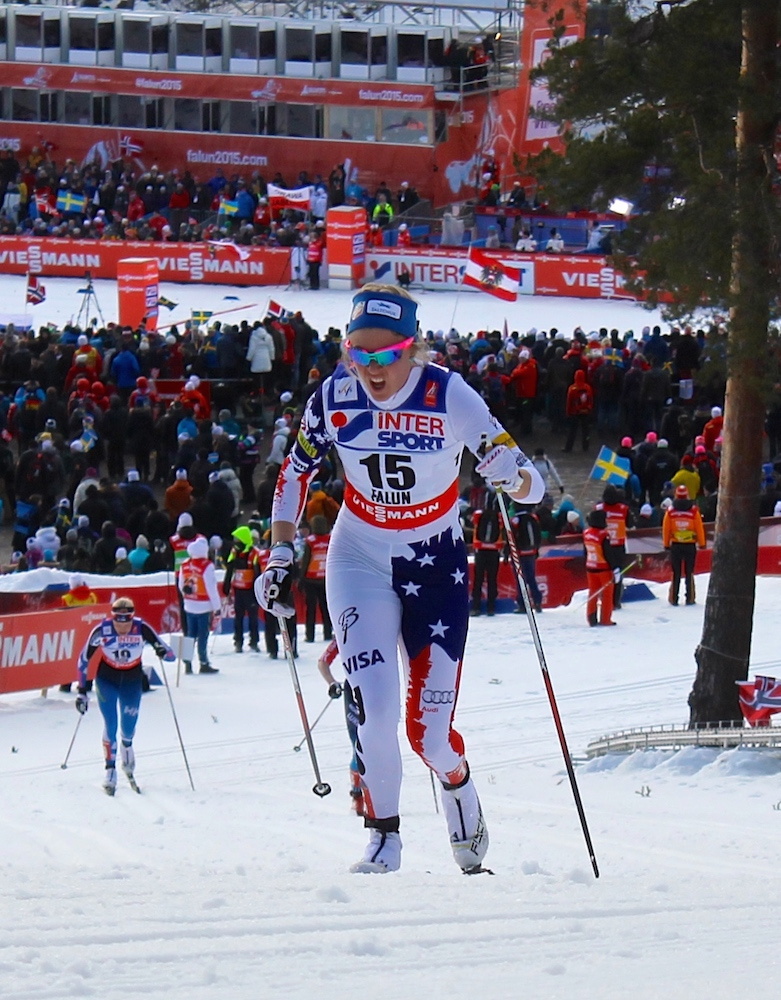
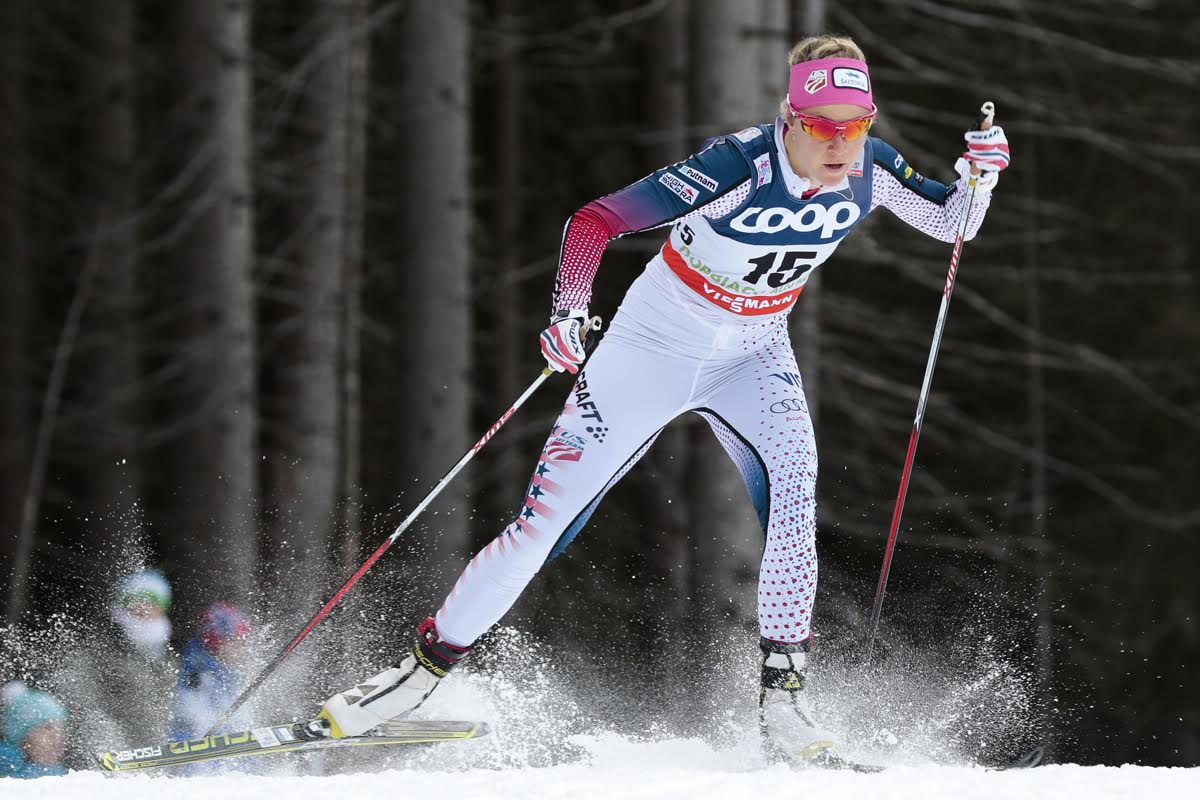
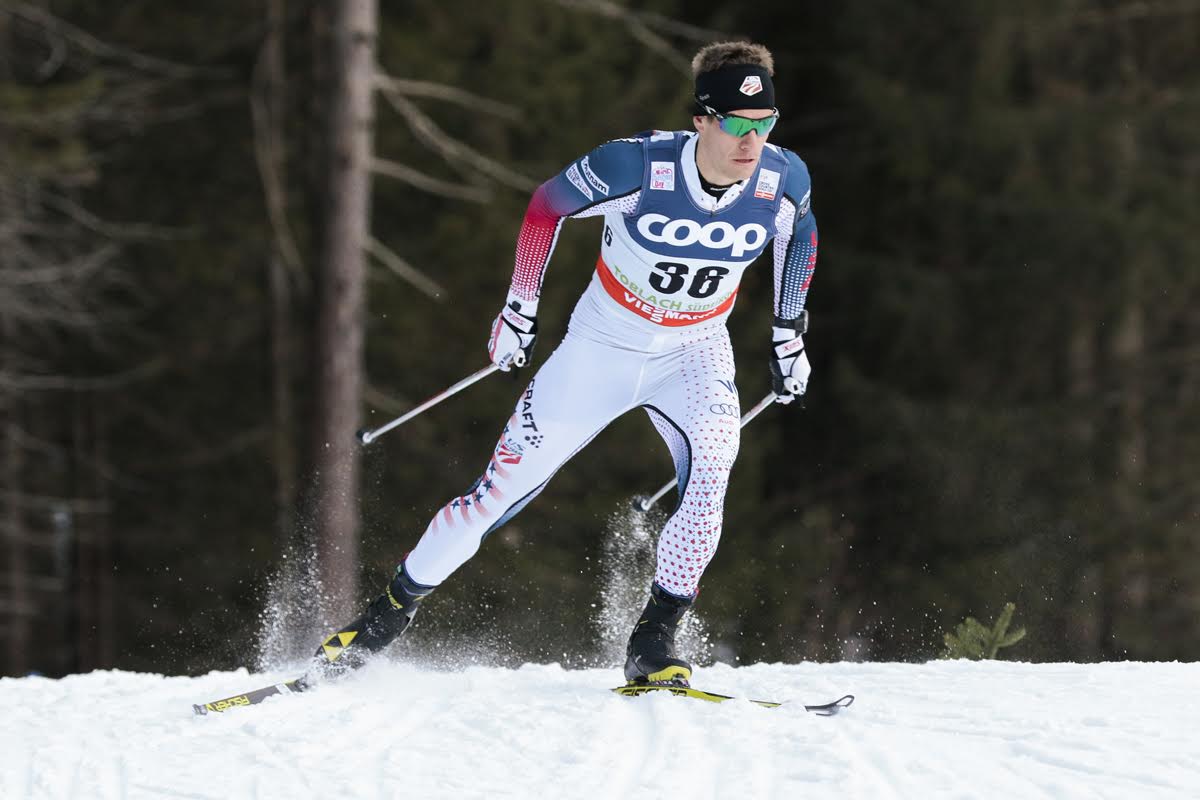
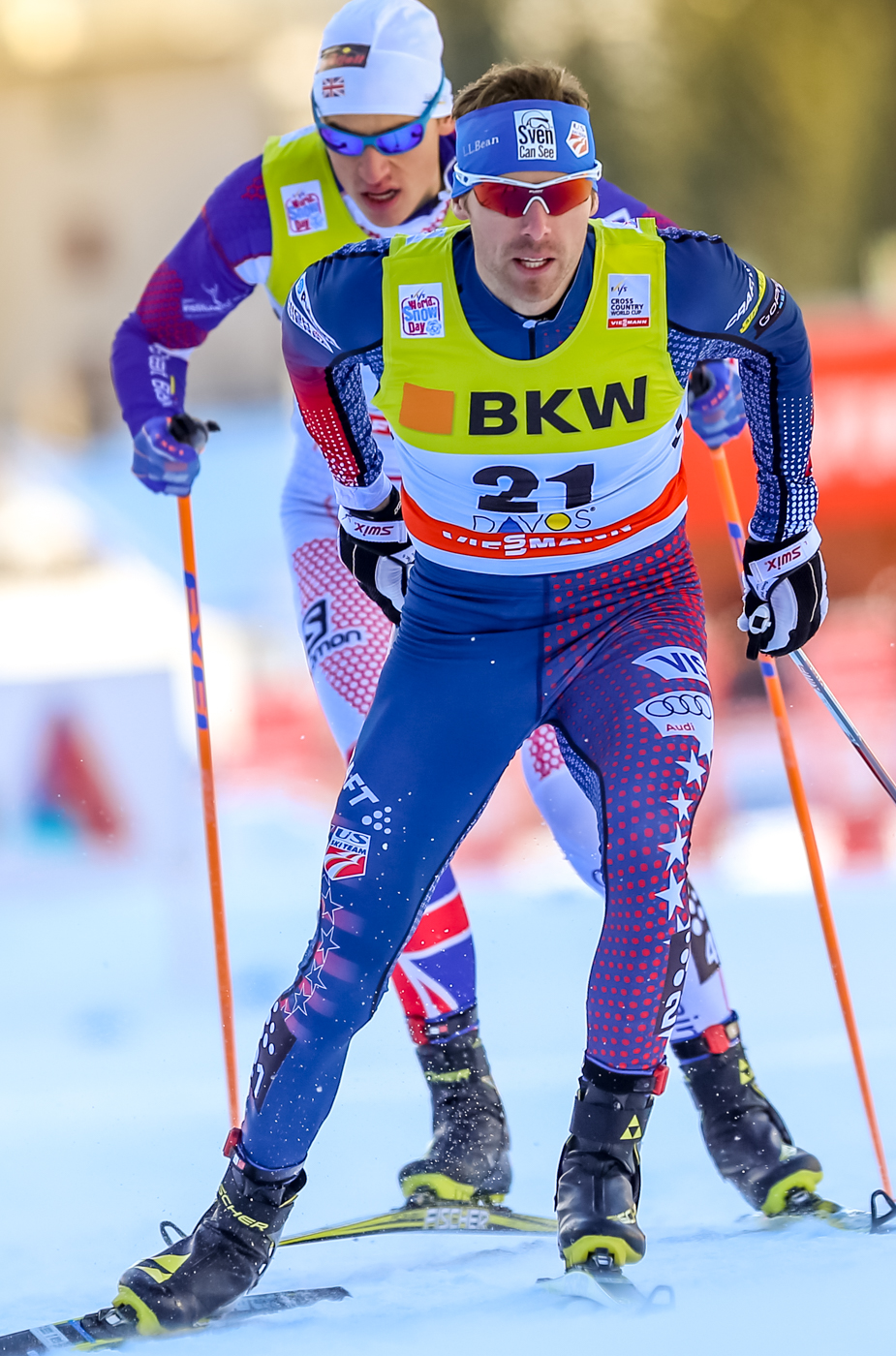
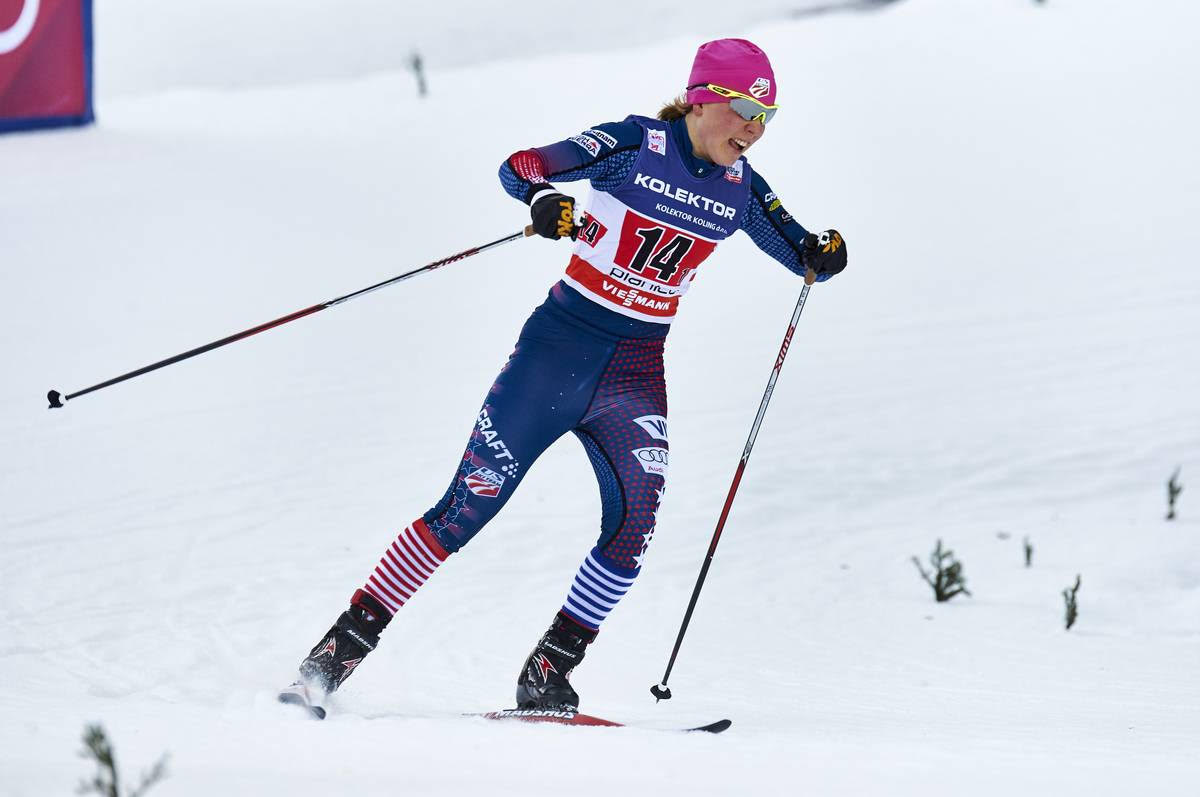

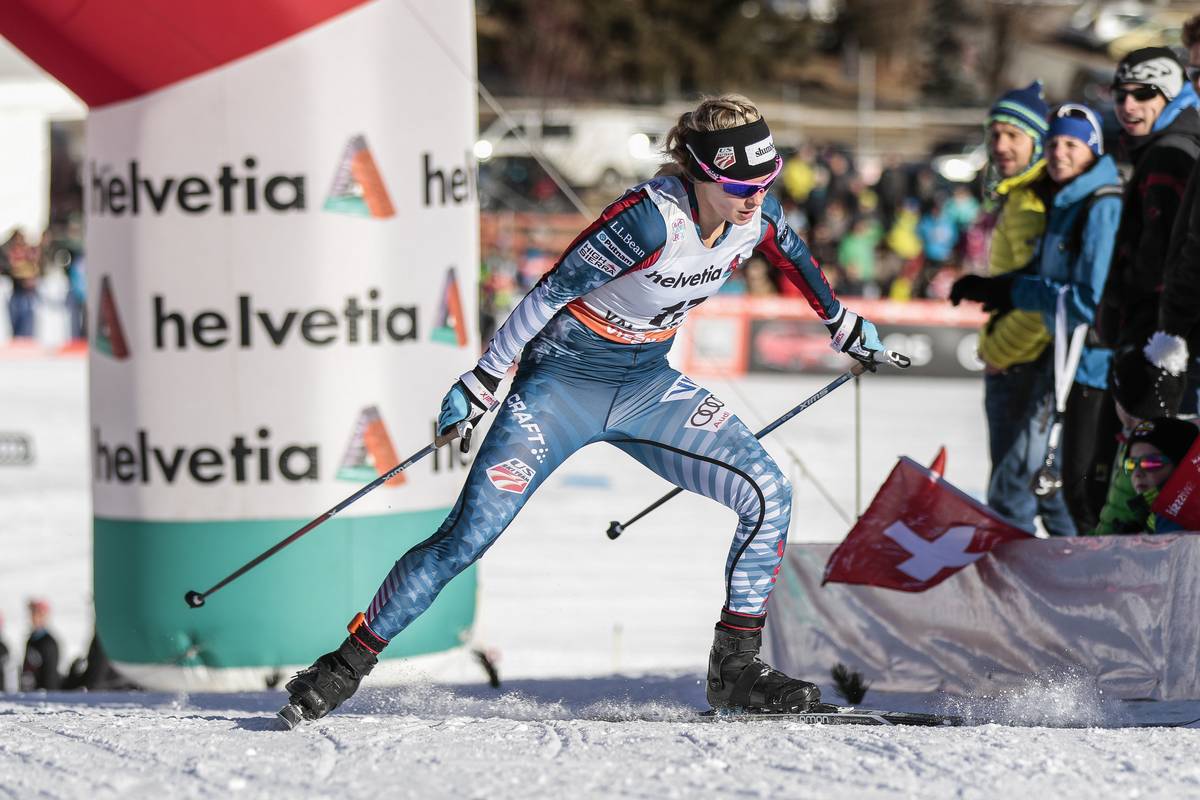
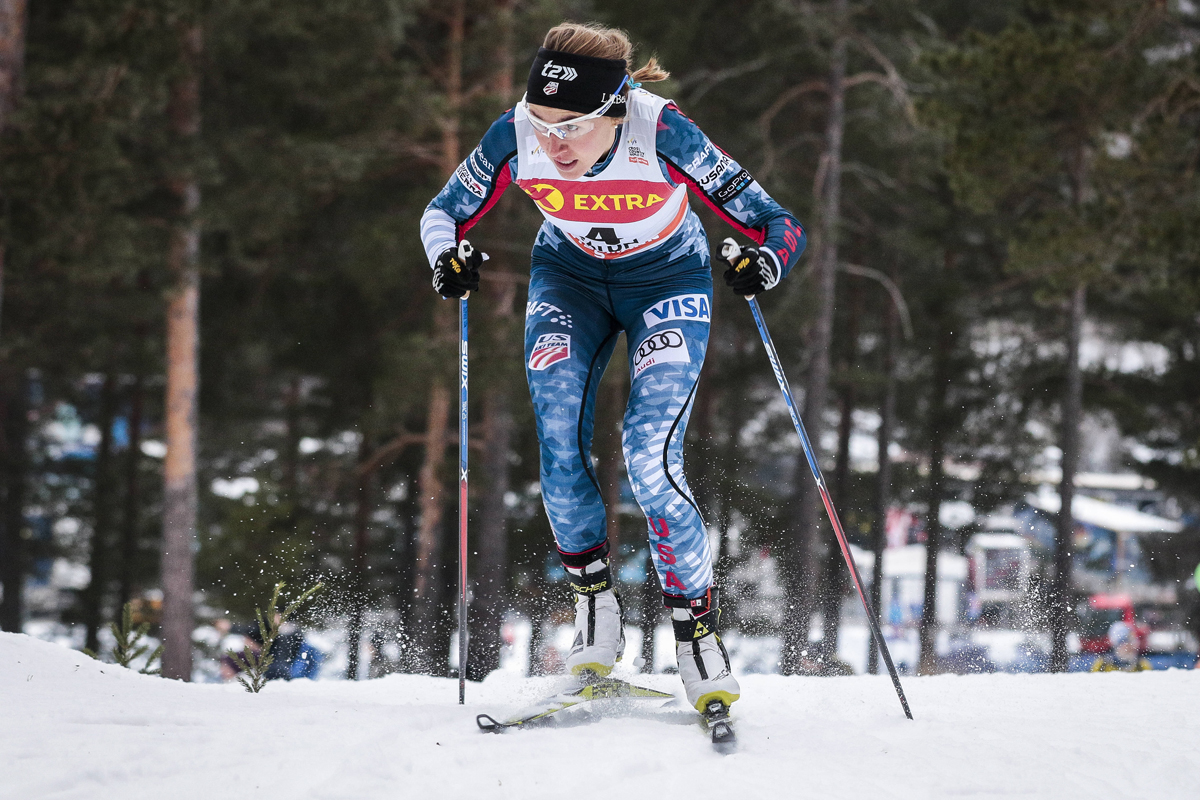

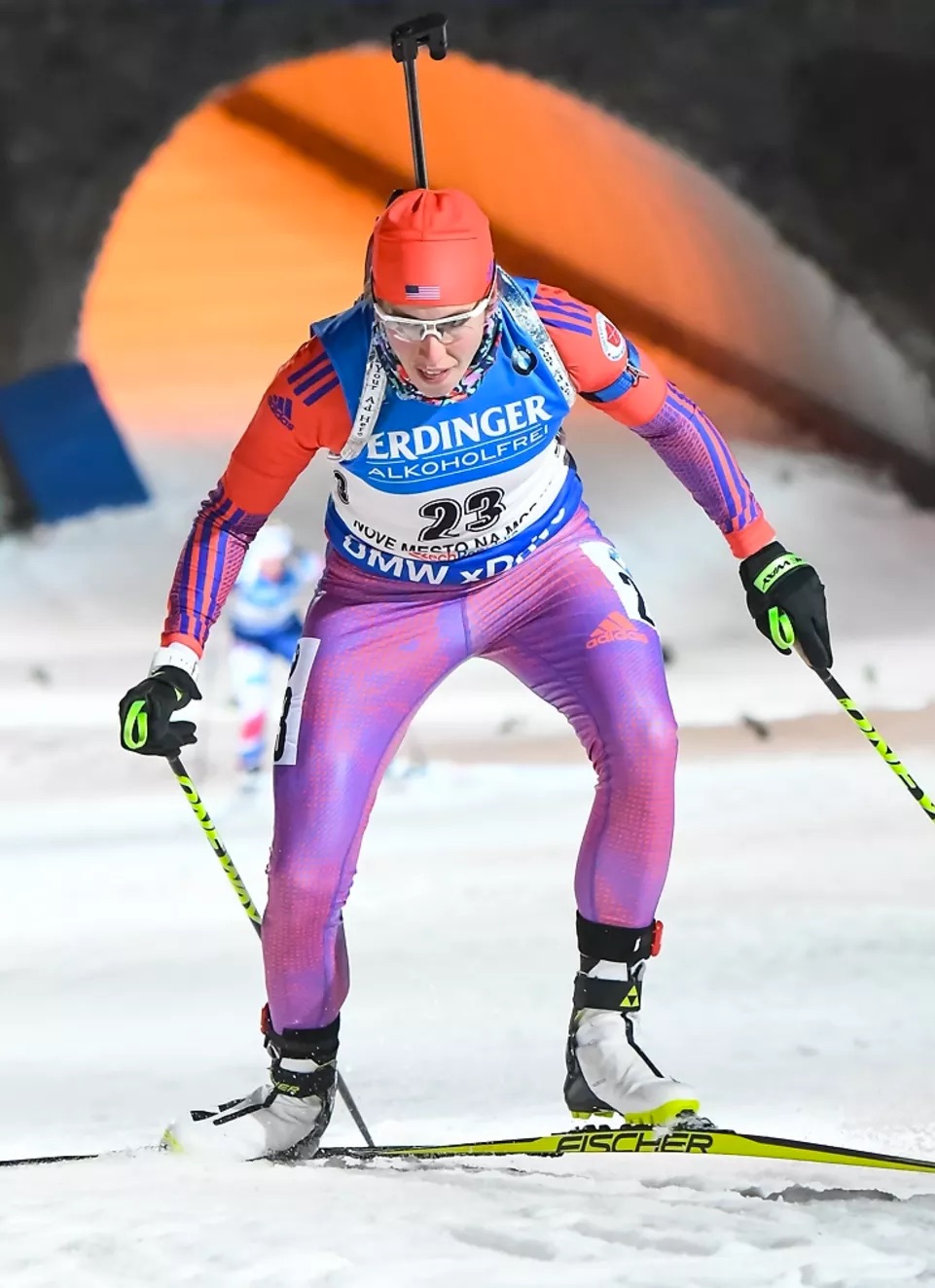
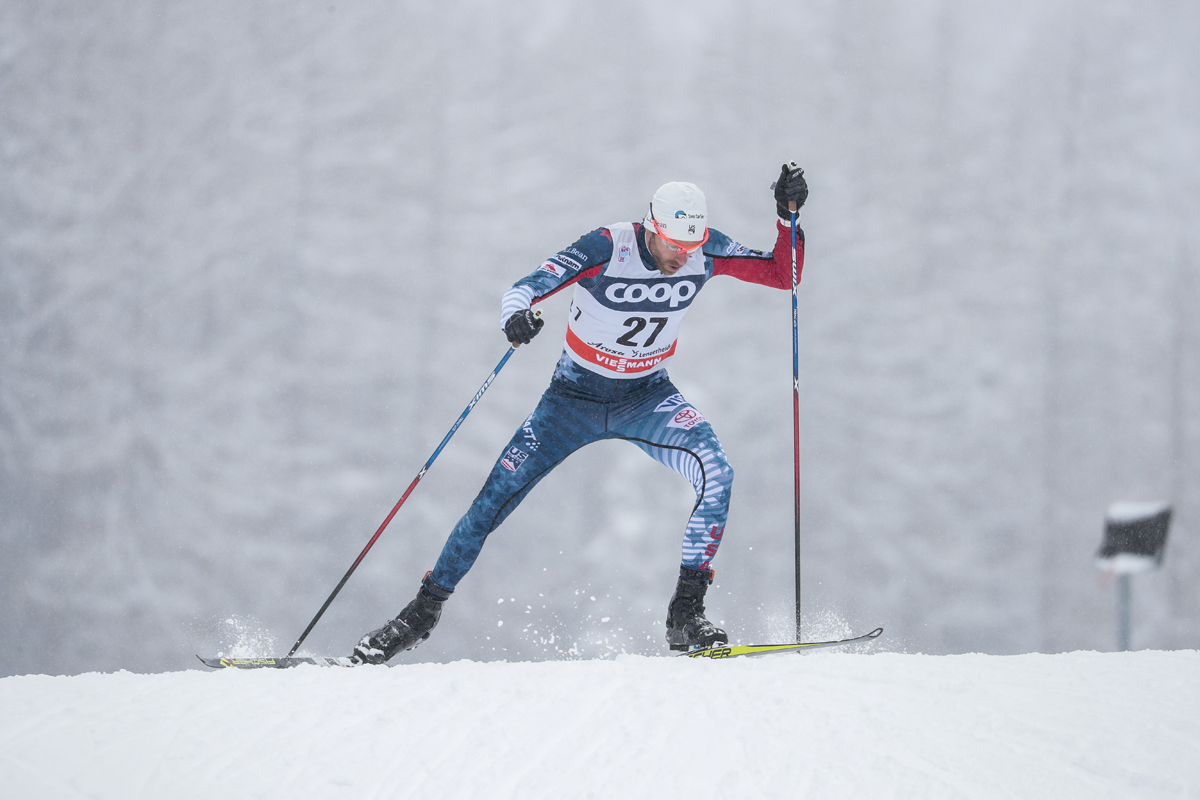
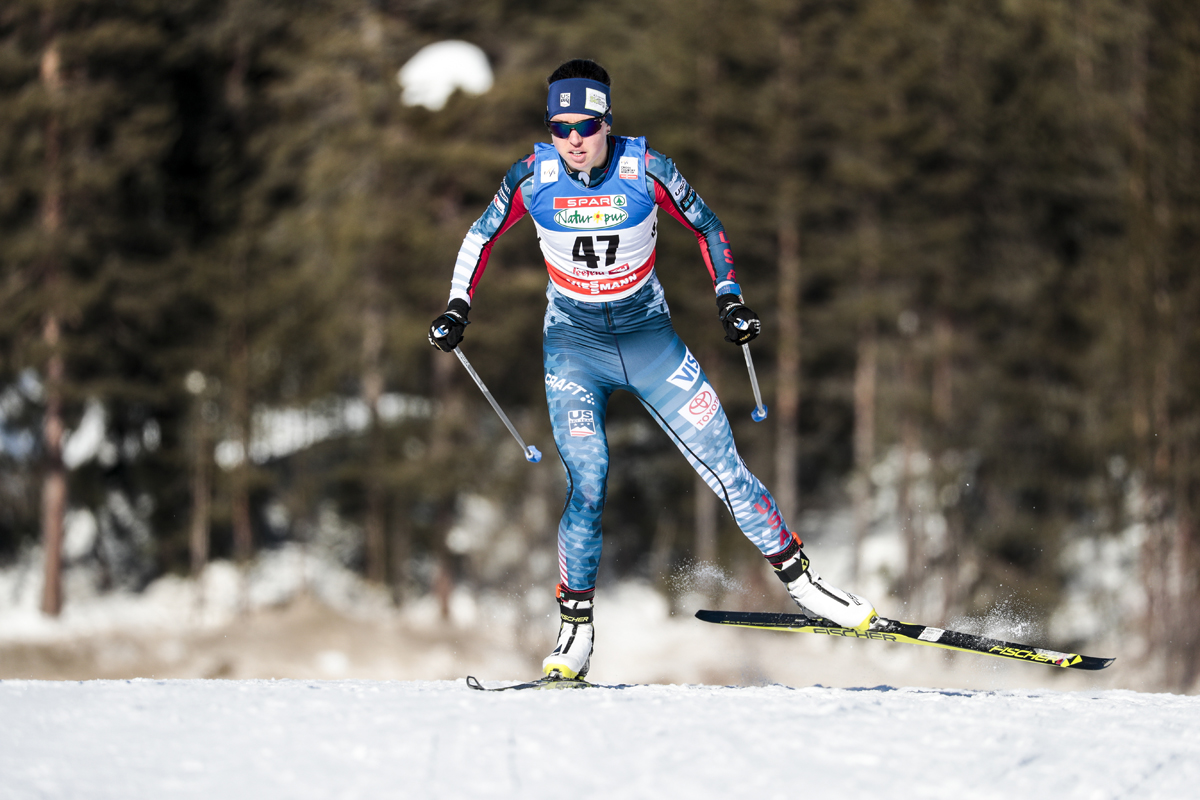
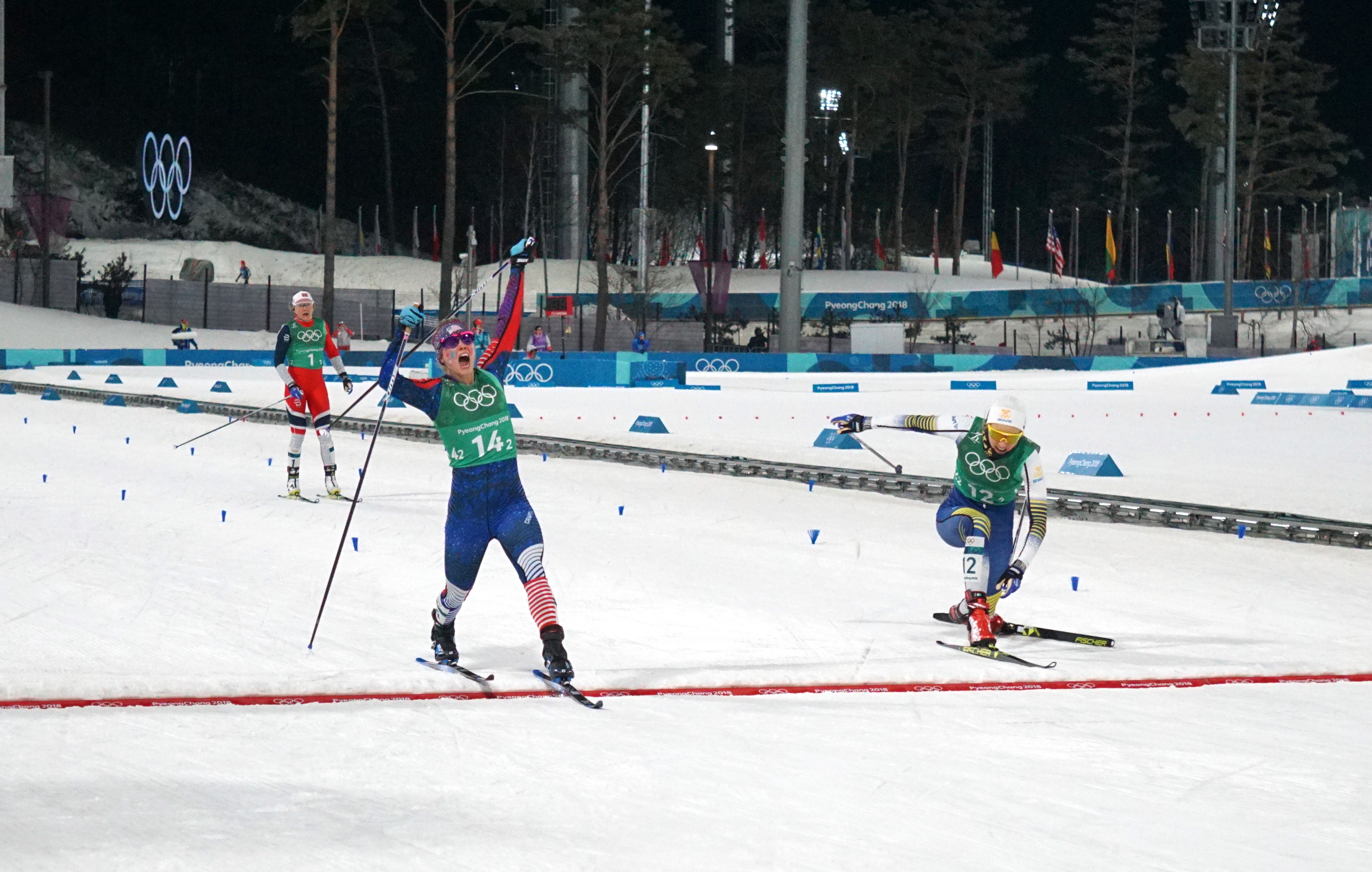
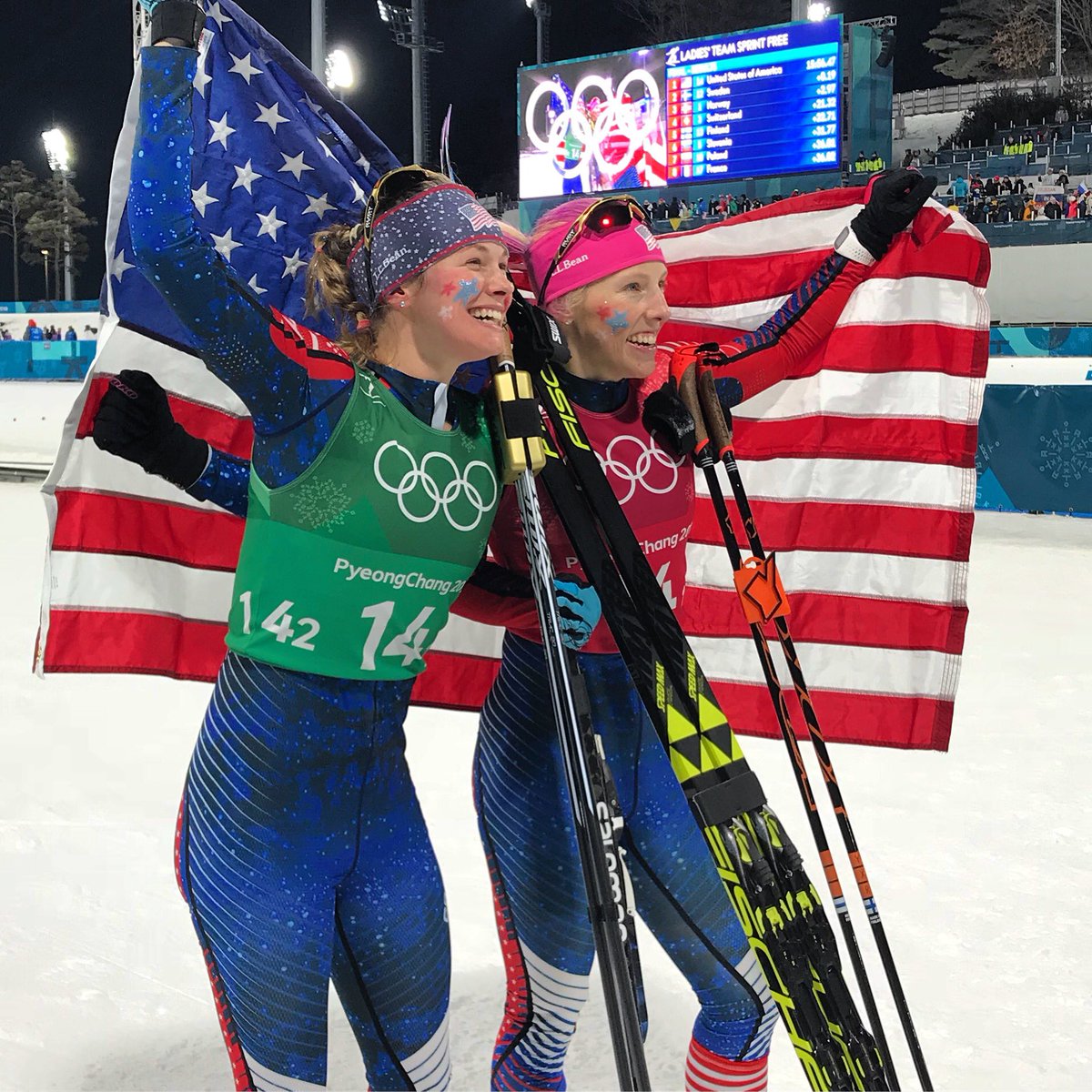
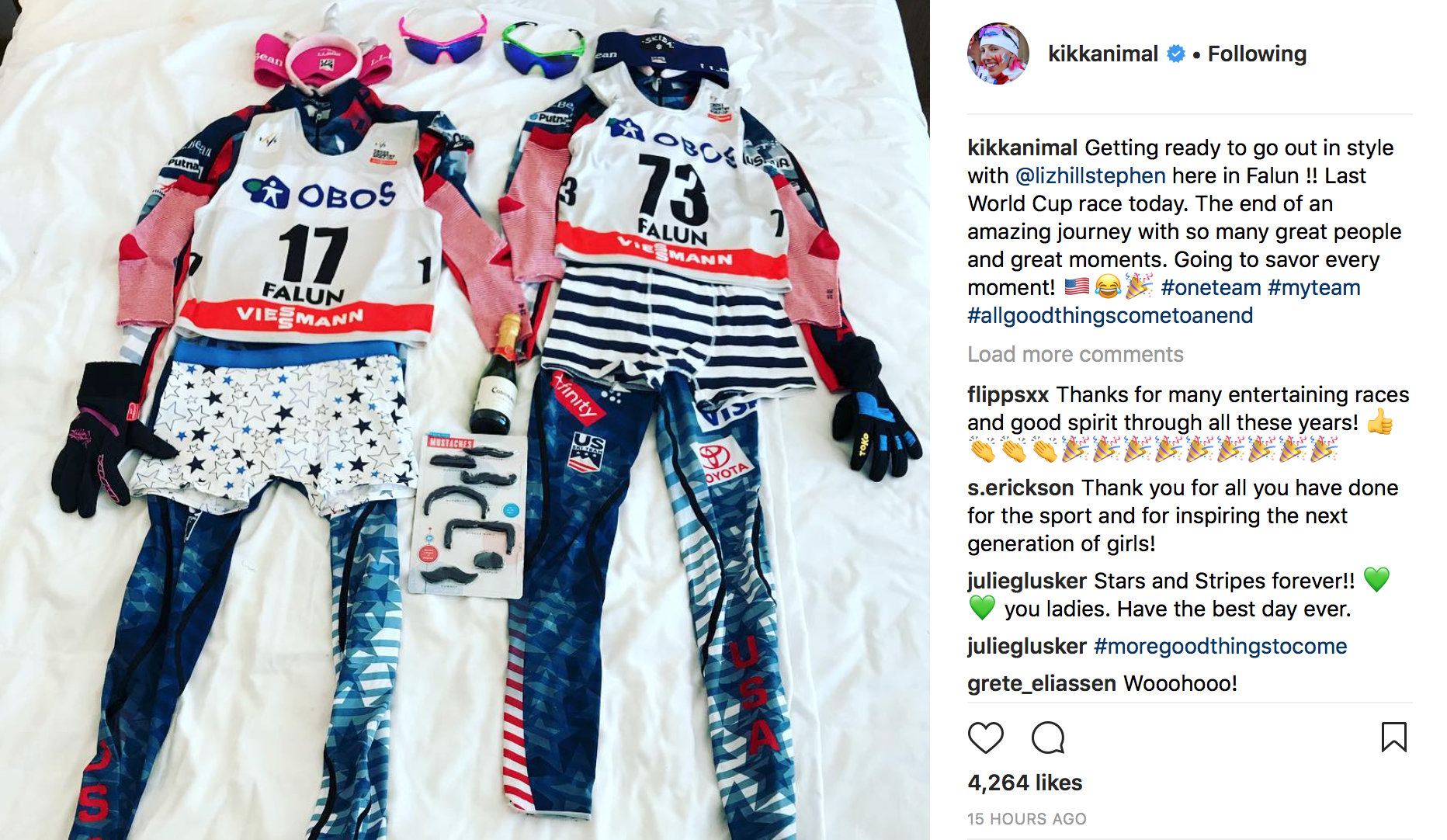
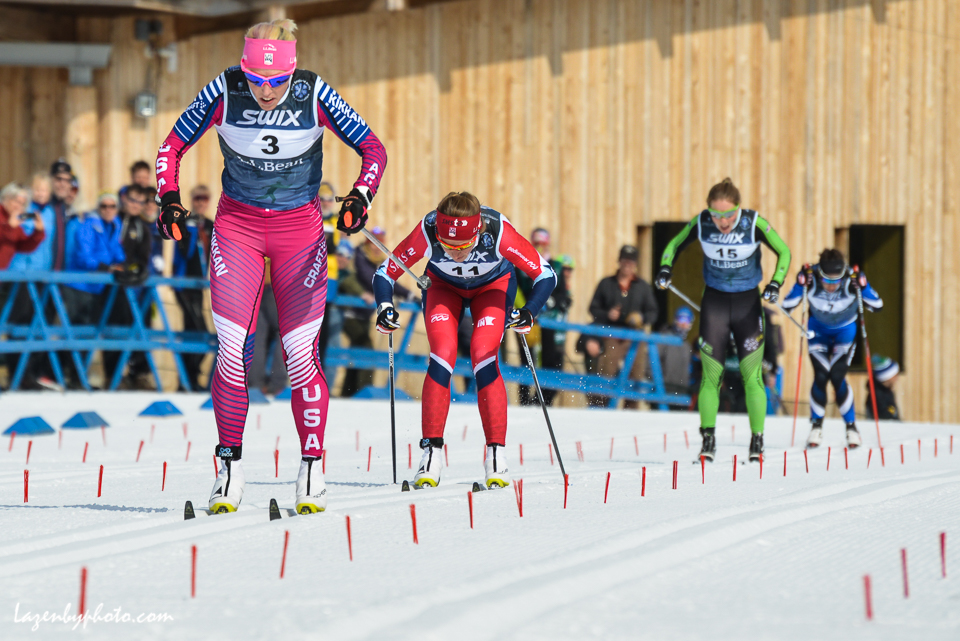
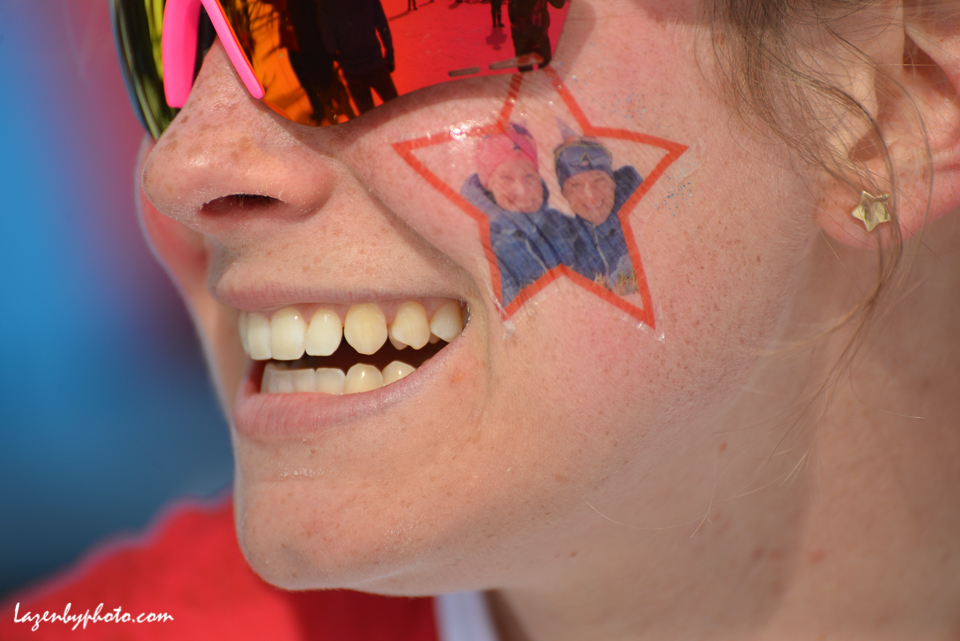

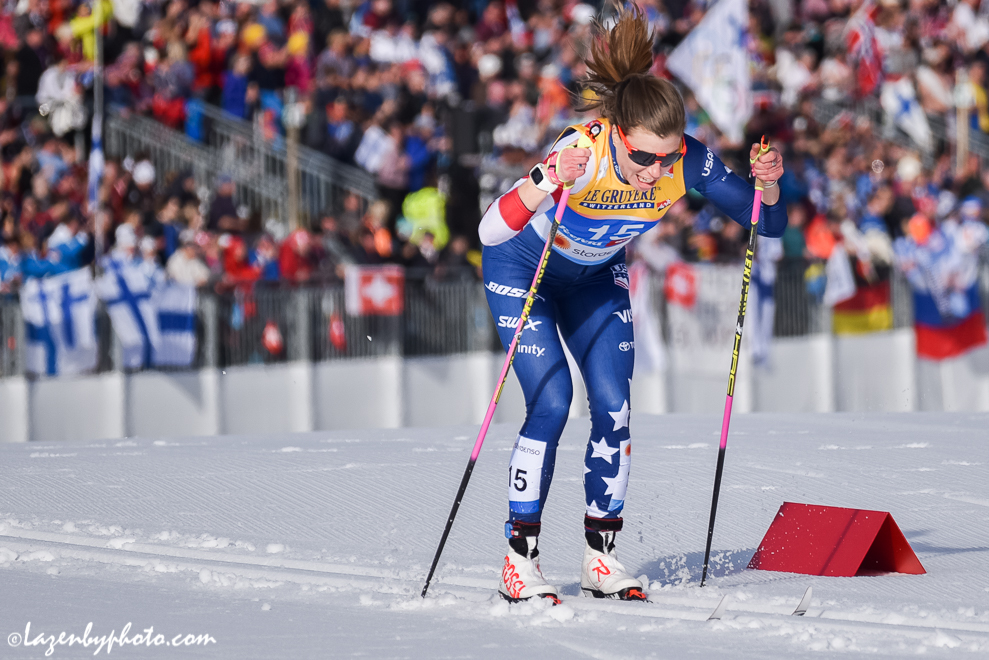

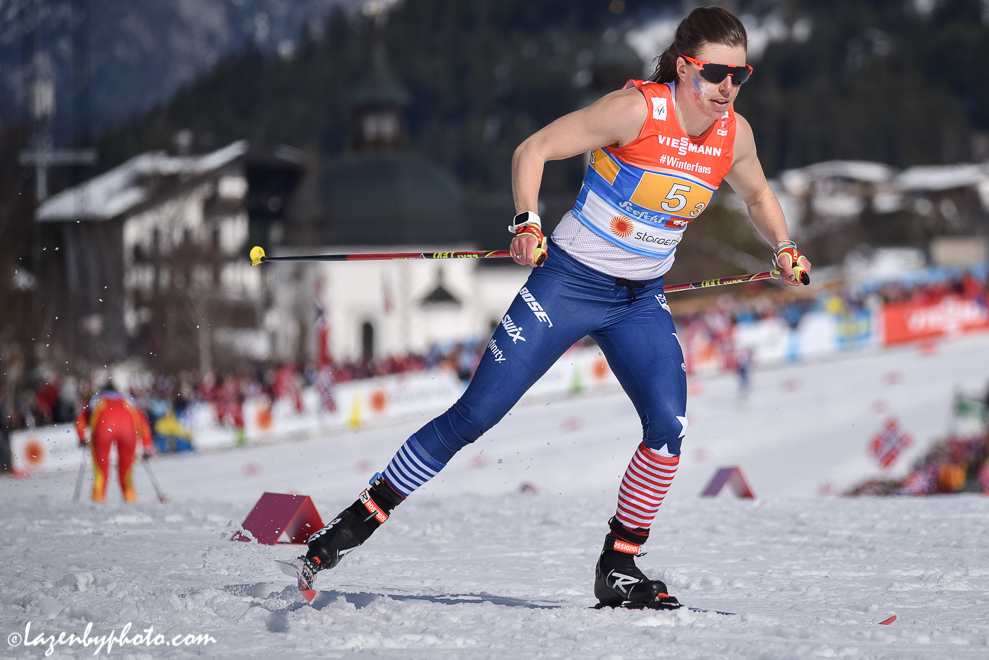
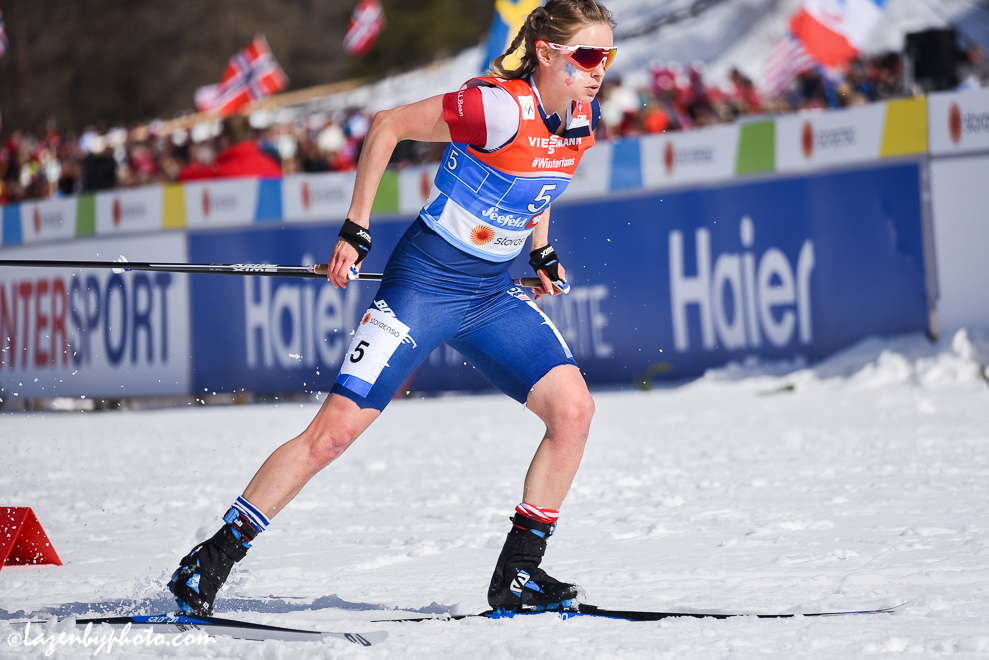
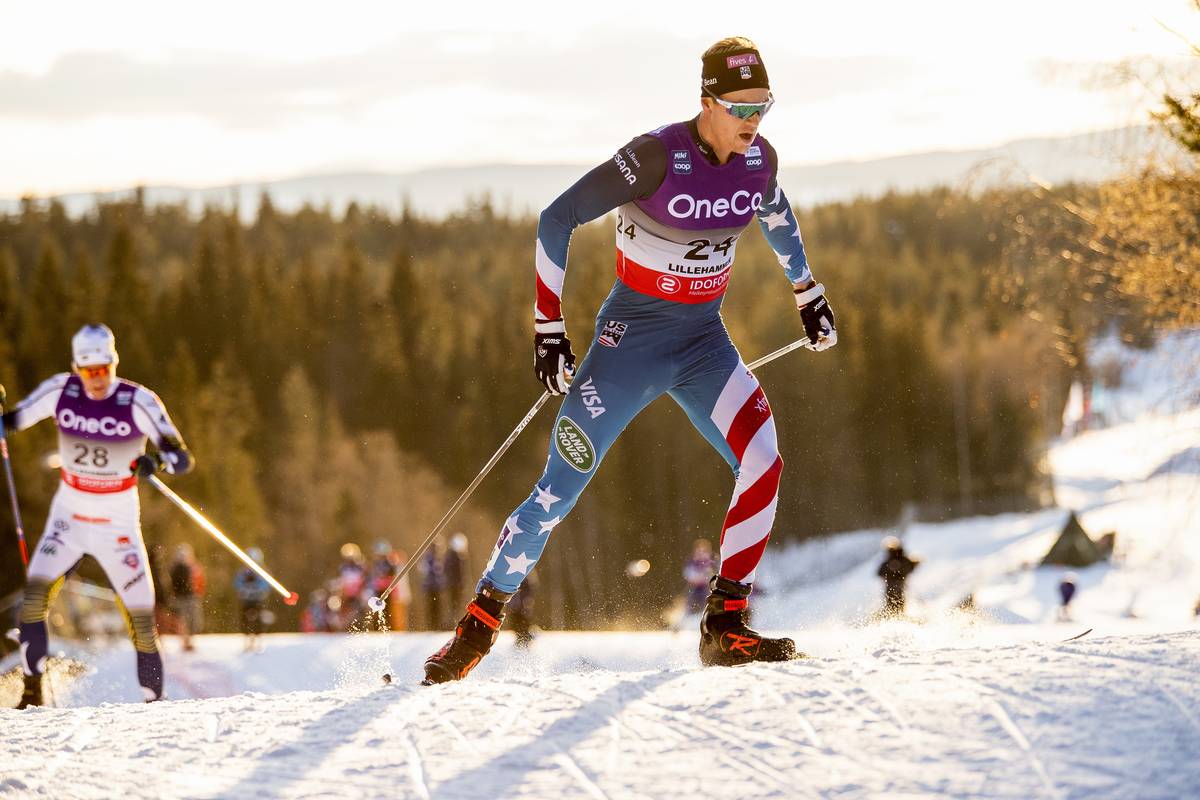
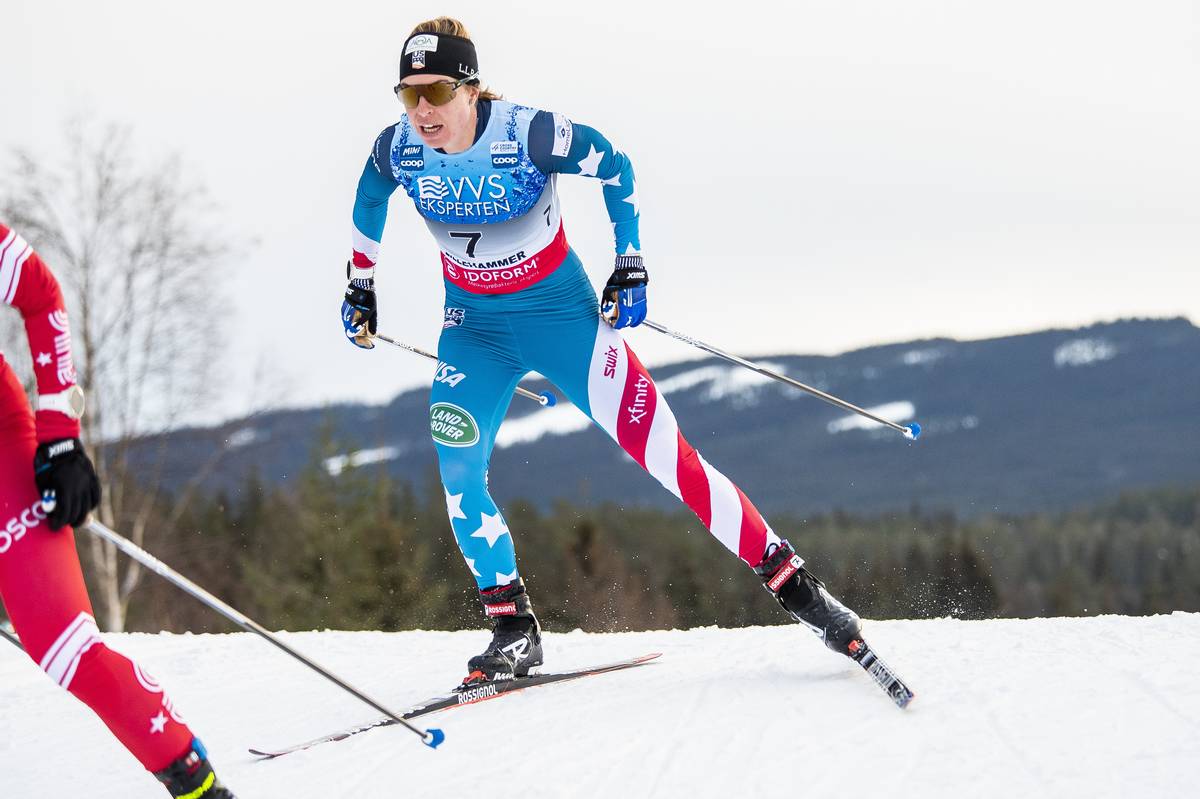

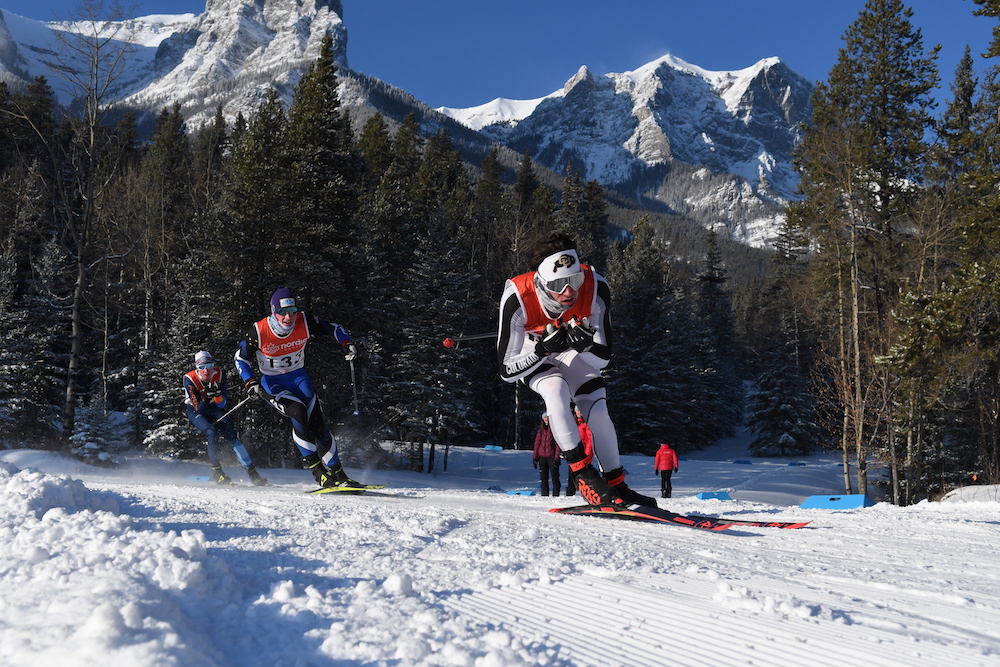
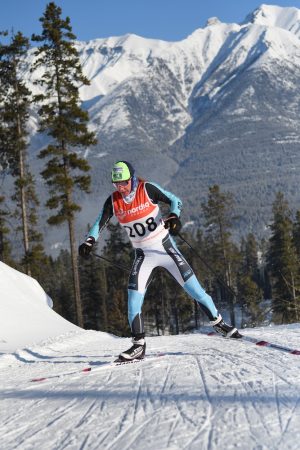
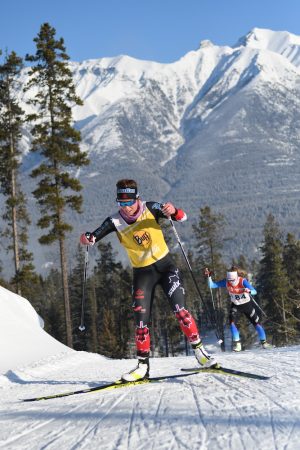
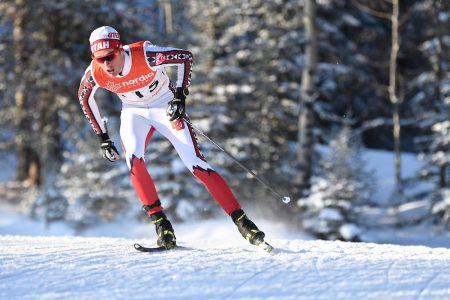

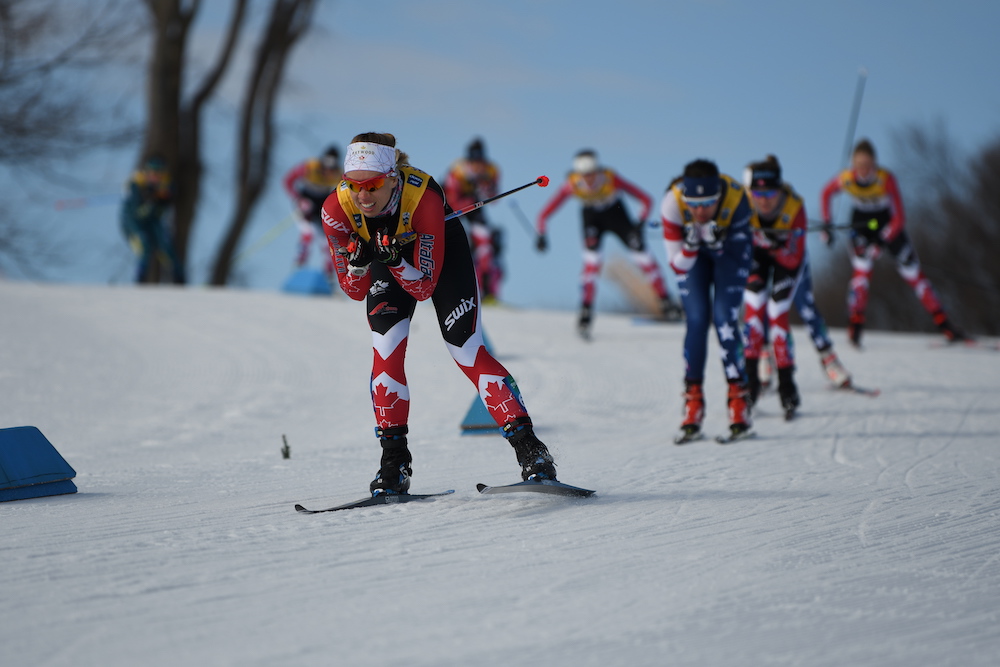
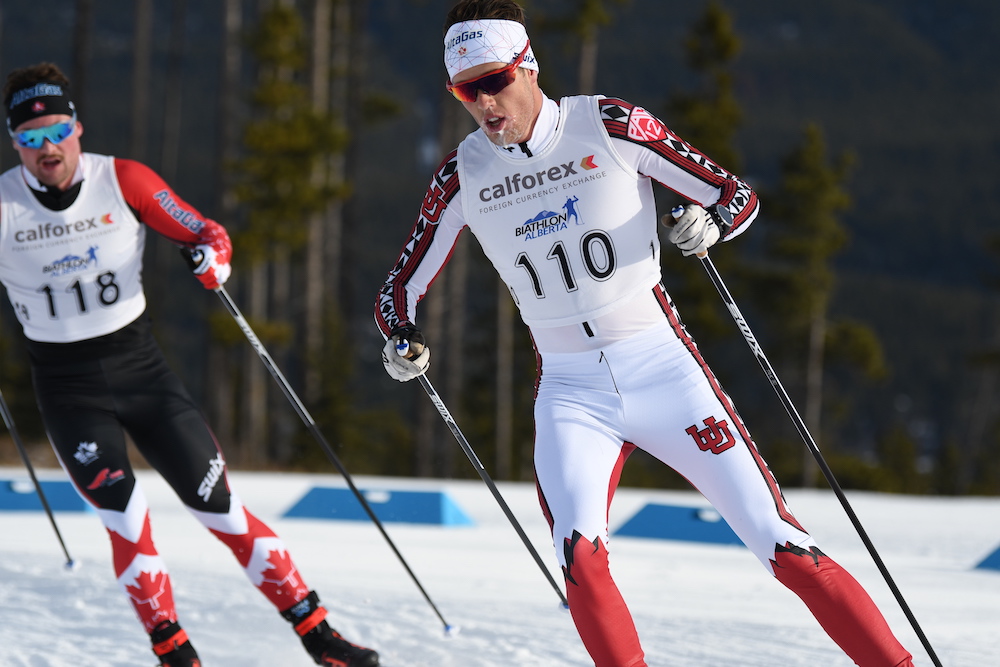
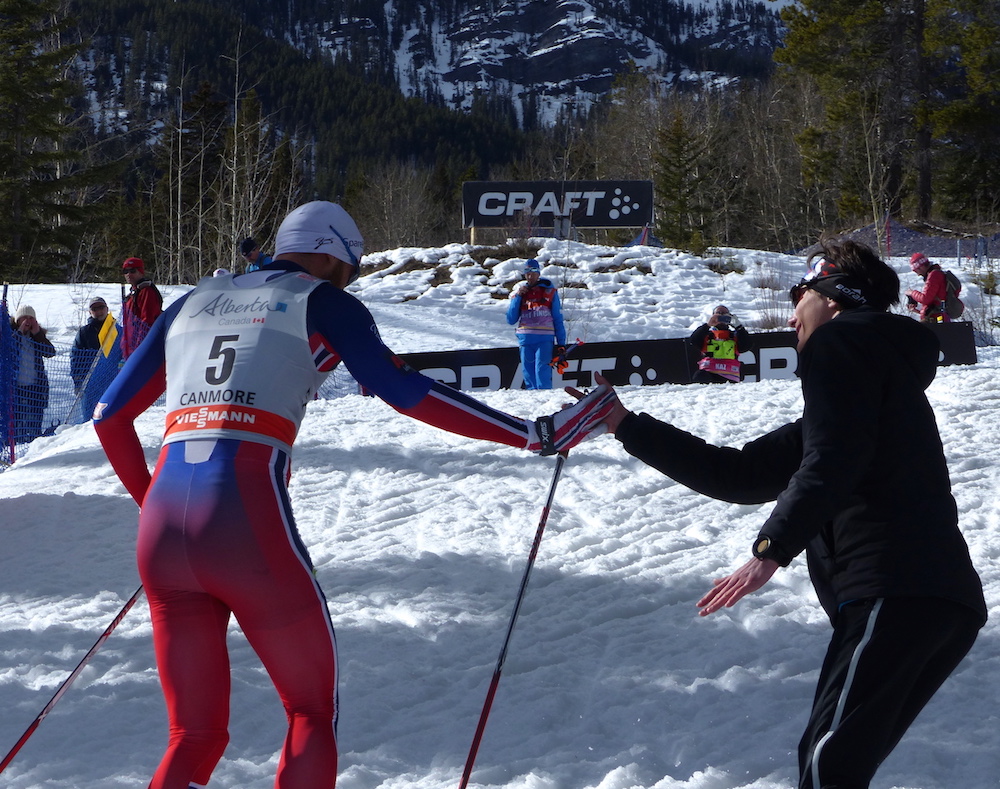

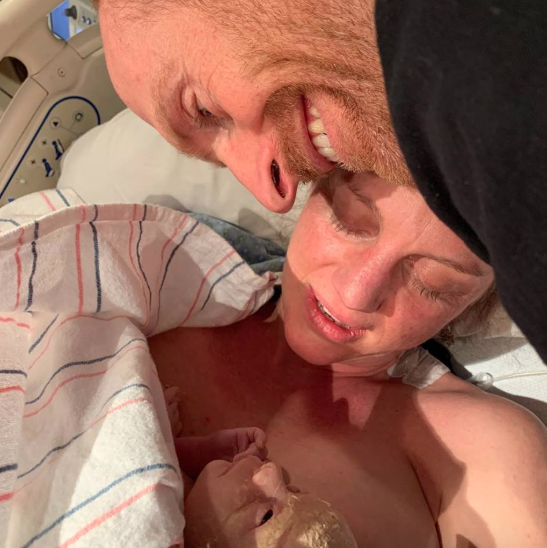

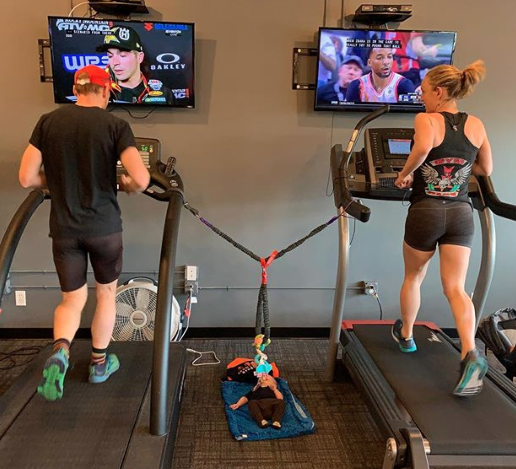
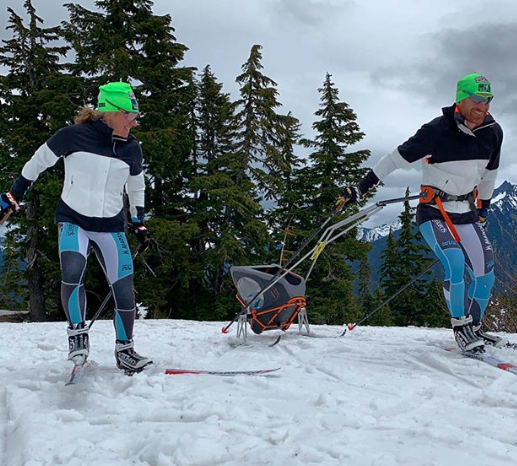
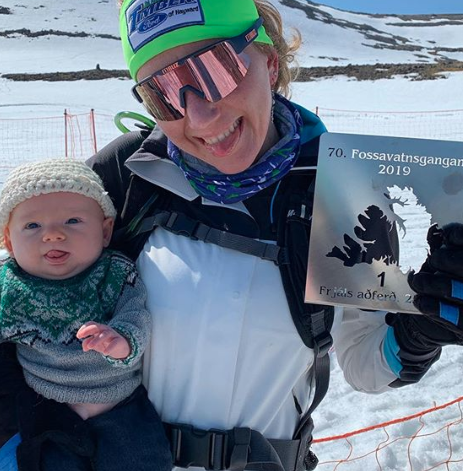
![First Tracks as a New Parent: Caitlin Gregg [Part 1]](https://cms.fasterskier.com/wp-content/blogs.dir/1/files/2019/08/Screen-Shot-2019-08-03-at-2.53.11-PM.png)