Tag: Callaghan Valley

  • Western Canadian Championships at Whistler: Notes & Quotes

    Western Canadian Championships at Whistler: Notes & Quotes

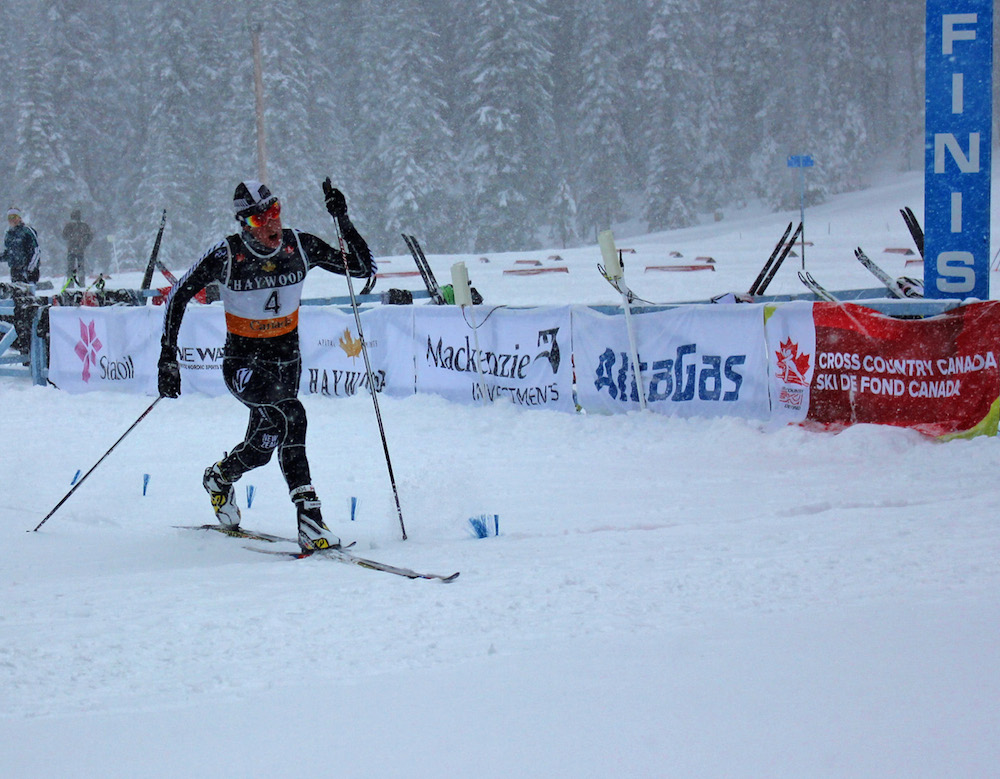
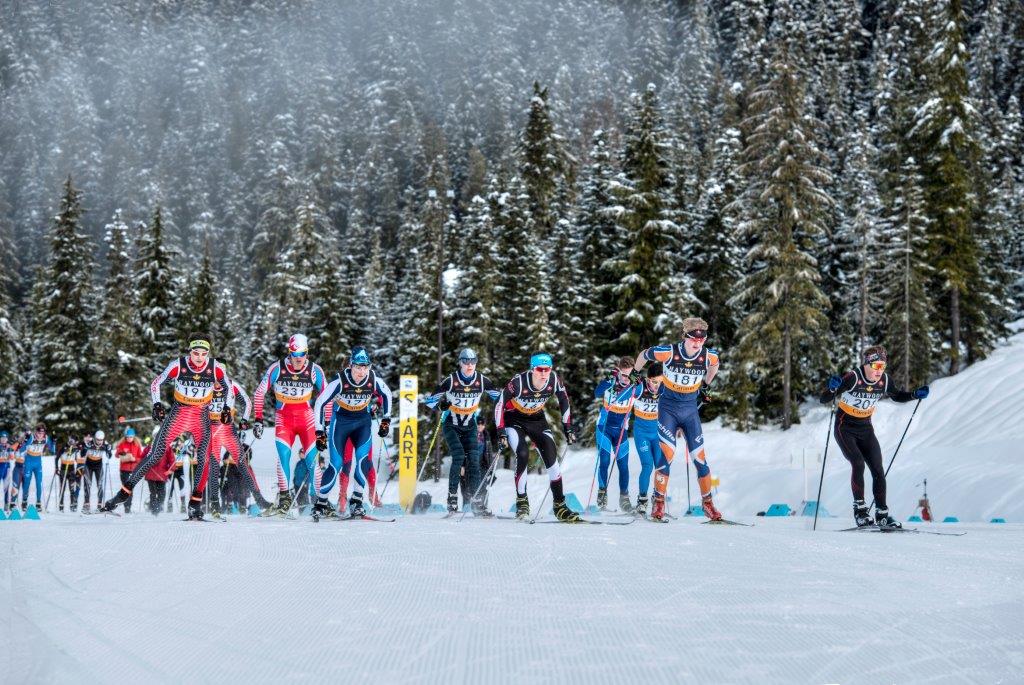
    Start of the junior boys 3 x 5 k relay on Sunday, Jan. 22, at NorAm Western Canadian Championships at Whistler Olympic Park in Callaghan Valley, B.C. (Photo: Callaghan Valley XC)
    Start of the junior boys 3 x 5 k relay on Sunday, Jan. 22, at NorAm Western Canadian Championships at Whistler Olympic Park in Callaghan Valley, B.C. (Photo: Callaghan Valley XC)

    Last Friday through Sunday, Jan. 20-22, Whistler Olympic Park (WOP) in the Callaghan Valley hosted the NorAm Western Canadian Championships. More than 600 racers attended, making it the largest event the venue has held since 2013 Canadian nationals.

    Western Canadian Championships opened Friday with the men’s and women’s 1.2-kilometer freestyle sprints, which national-team members Jess Cockney and Dahria Beatty won, respectively.

    On Saturday, Emily Nishikawa (Canadian World Cup B-team) won the women’s 10 k classic interval start, and Andy Shields of Lappe Nordic took the men’s 15 k classic win.

    Sunday was team day, with three-person freestyle relays (men’s 3 x 7.5 k and women’s 3 x 5 k) — an event added per the athletes’ request. While a relatively small number of teams participated in the open (elite-level) category (the turnout affected by preparation for U23/Junior World Championships, as well as some athletes departing for the World Cup), 146 total teams competed in the relays. The open victories went to Ontario (Bob Thompson, Jack Carlyle and Shields) in the men’s 3 x 7.5 k and B.C. (Katie Weaver, Anna Goodwin and Hannah Mehain) in the women’s 3 x 5 k.

    Here are comments from some of the podium finishers each day:

    Friday’s freestyle sprints

    Results: Qualifier | Heats

    Dahria Beatty (Alberta World Cup Academy/Canadian U25 Team), 1st overall (2nd in qualifying):

    “It’s always amazing racing at Callaghan on a sunny day. Such a beautiful venue. My qualifier was a bit chaotic feeling, but I was able to calm things down and ski a strong second half of the course in my heats.”

    Olivia Bouffard-Nesbitt (Alberta World Cup Academy/NST U25 Team), 2nd overall (1st in qualifying):

    “I was really happy to secure another win in the qualifier today. I felt like that was really important for me to do after missing the races in Soldier Hollow, so I’m happy I was able to do that.

    “Today was a very tactical race. I think the recipe was — you didn’t want to be leading going into the second to last corner, but you definitely wanted to be leading going into the last corner. The final was really played out in that second last corner and the straight away that followed. Up to that point there were basically three of us battling to get into that ideal second spot. I didn’t have a perfect second-last corner, but felt really strong on the straight away. I moved into second going into the final corner and that’s how I finished the race.

    “All things considered I can only be extremely happy with how the season has gone so far! I’m very happy that my race shape is better than I expected, and other than that little speed bump of sickness during US Nationals, I think I’m going to be well prepared by the time I get to mix it up with everyone over seas!”

    Katherine Stewart-Jones (NTDC Thunder Bay/NST U25 Team), 3rd overall (8th in qualifying):

    “I was quite happy with my racing today. My qualifier was not the best, I felt like I didn’t ski that well technically. In the heats I think I skied well tactically, skiing at the back from the start and making my way up. So far my season has been good, I’m feeling more and more ready to tackle on the races at U23 World Champs.”

    Jess Cockney (Canadian World Cup B-team), 1st overall (2nd in qualifying):

    “I was really happy with today. The course is very short and over before you know it making it really important to start fast. Tactically I tried to be conservative in the final and I made my move on the final downhill which thankfully worked out for the best. I feel as though I’m finding a rhythm this season leading towards big races and looking forward to fine tuning the plan for the rest of the year’s chances. Especially excited for the [World Cup] finals in QC [Quebec City]!”

    Julien Locke (Alberta World Cup Academy), 2nd overall (10th in qualifying):

    “We lucked out with a beautiful day for racing at WOP. After skiing in a snow storm on Friday, it was a pleasant surprise to arrive to blue skies and hard tracks.

    “My day started off on a poor note with some bad luck in the qualifier, first a broken pole and then a crash near the end. However, the legs felt great and I was excited to race the heats. Despite the small field, the race was pretty fast in all of the rounds. We were racing on the short 1.2km course here in Whistler which has a very gentle profile, so the speed was high the entire way. The final started relatively quickly. I stayed near the front and then took the inside to move into the lead around the last downhill corner. However, Jess Cockney came by me in a tuck with good speed and carried it to the finish. I felt good and was skiing well, but had to settle for 2nd today.

    “I’m off to Korea tomorrow. I will compete in the Korean National Championships at the Alpensia Resort in Pyongchang in advance of the World Cups at the same venue.”

    Saturday’s 10/15 k classic 

    Results

    Andy Shields (Lappe Nordic), 1st:

    “It’s been great to be battling for wins again after racing against hyper-competitive fields since the start of the season. Obviously happy to get the win today. Jesse and I were both on soft, short pocket classic skis with klister for today’s 15km. Seemed to be the winning skis today. I stayed at altitude in Utah all last week and it was great prep for this weekend.

    “Next up for me are Eastern Canadian champs [Feb. 3-5]. Hopefully I can hit some more podiums.”

    Emily Nishikawa (Alberta World Cup Academy/NST World Cup B-team), 1st:

    “I was happy to have a good race yesterday.  I felt good, which is a good sign as I prepare for World Champs.  There was some tricky waxing conditions, typical of Callaghan Valley, so I did my best to make my skis work in all sections of the course, but struggled with icing up a little bit in the third lap.  But overall I am happy with how I skied and look forward to getting back to Europe soon to join up with my teammates who are doing exceptionally well right now. It is inspiring to watch them!

    Beatty, 2nd:

    “I paced it well. It was hard waxing conditions so you really had to make your skis work for you and I felt I did a good job of that.

    “I am already back in Canmore now to start my U23 World Champs prep so I won’t be doing the relay tomorrow.”

    Maya MacIssac-Jones (Alberta World Cup Academy/NST U25 Team), 3rd:

    “I am really happy with my race today. I’ve been struggling to get into race shape this season and today was the first distance race where I felt as if I could push hard instead of just trying to survive. I’m always working on becoming more of an “all-around” skier, and for my first NorAm podium this year to be in a distance race is really cool!

    “I think the biggest difference between this race and my other distance races this season was my mental approach. I really just tried to focus on skiing in the moment, approaching every section of the course with a ‘what is the fastest way I can race this part’ instead of worrying about pacing or saving energy for the end.

    “I haven’t been very happy with my season to date. I set some big goals for myself this year, and thus far I haven’t been meeting them. That being said, this weekend things started to feel much better, and I’m feeling a lot more confident heading into U23 Championships next week!”

    Sunday’s freestyle relays
    Results

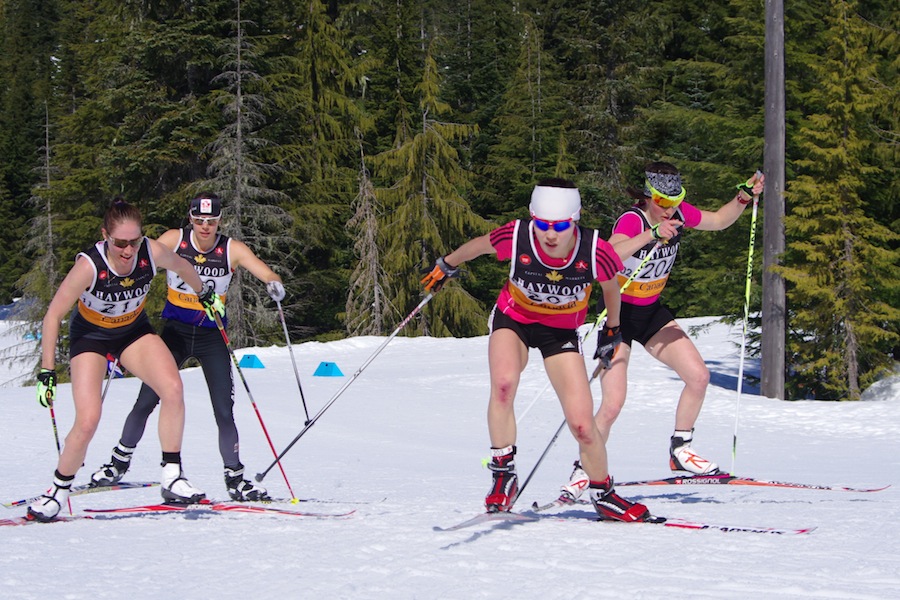
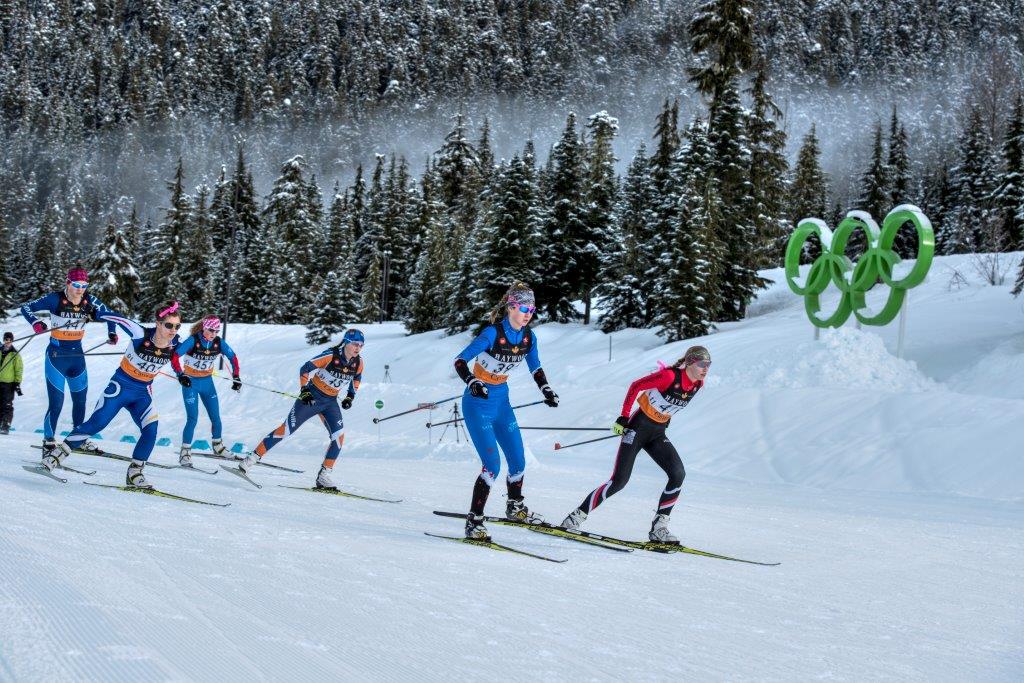
    The junior girls 3 x 5 k relay on Jan. 22 at NorAm Western Canadian Championships at Whistler Olympic Park in Callaghan Valley, B.C. (Photo: Callaghan Valley XC)
    The junior girls 3 x 5 k relay on Jan. 22 at NorAm Western Canadian Championships at Whistler Olympic Park in Callaghan Valley, B.C. (Photo: Callaghan Valley XC)

    Bob Thompson (NTDC Thunder Bay), 1st in men’s 4 x 7.5 k with Team Ontario (Thompson, Jack Carlyle & Shields):

    “This weekend was starting to feel more like my normal NorAm race form, I am hoping to still find a bit more as I was missing the pace for the semi final but felt my distance was very close to where I want it to be. Conditions made waxing tricky and my tech did an amazing job but the course was behaving fairly different with the grip even just from the hill out of the stadium to the top of the course just on the 2.5km loop

    “I think the relay was definitely a success. I haven’t done one since my first nationals in 2006 at Lappe. It’s unfortunate the athletes who needed to be in Canmore for the pre Worlds Camp couldn’t attend or those that did come out couldn’t stay but that was decided it was what was best for them. And while the open categories weren’t that large, a reality of the size of our country and the cost of travel, the younger age groups looked like they had large fields and really enjoyed themselves, which is always great to see. I really blew up halfway through but it was great to then really want to cheer and watch how the rest of the race developed, I think we need more team events like this through the regular season, not just one at nationals.”

    MacIsaac-Jones (didn’t race):

    “I think relays are a great, and I absolutely think they should be done at this level again. I think they are a great way to keep people having fun and engaged in the sport.

    “In the future, having a mixed relay (men and women on the same team) might be better because there sometimes aren’t enough people from both genders from each province to fill a relay team. Unfortunately, Westerns this year was really close to U23/Junior World Champs, which I think contributed to there not being many athletes in the open categories. If Westerns had been later in the year I would guess more athletes would have raced the relay.”

    — Gerry Furseth contributed reporting

  • Friday Rundown: Antholz & Whistler (Updated)

    Friday Rundown: Antholz & Whistler (Updated)

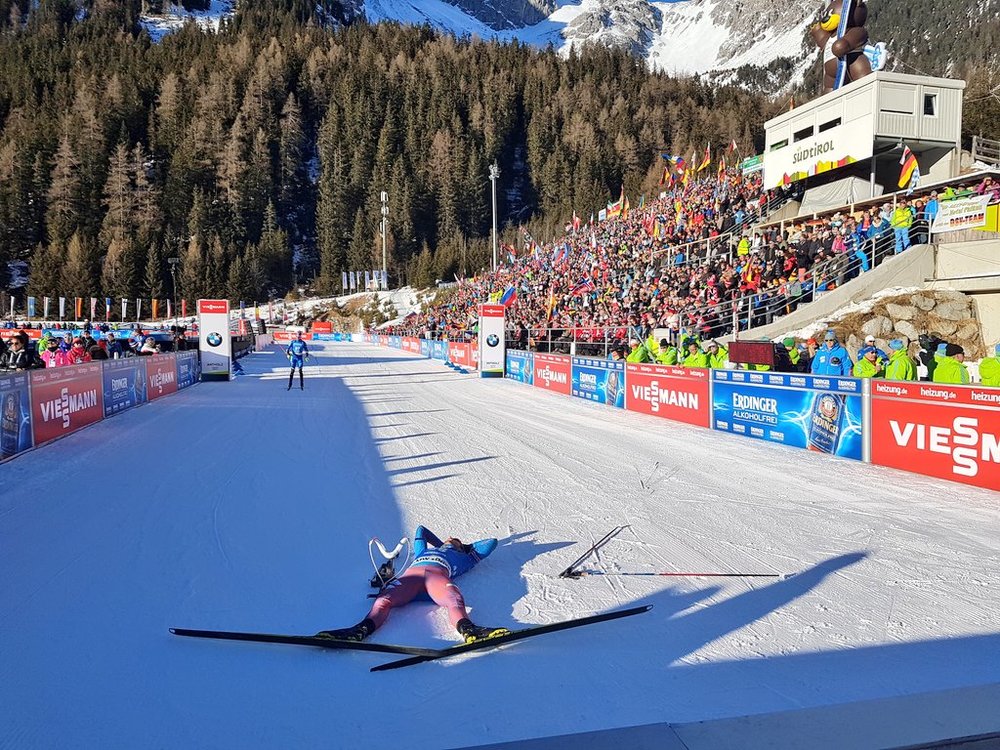
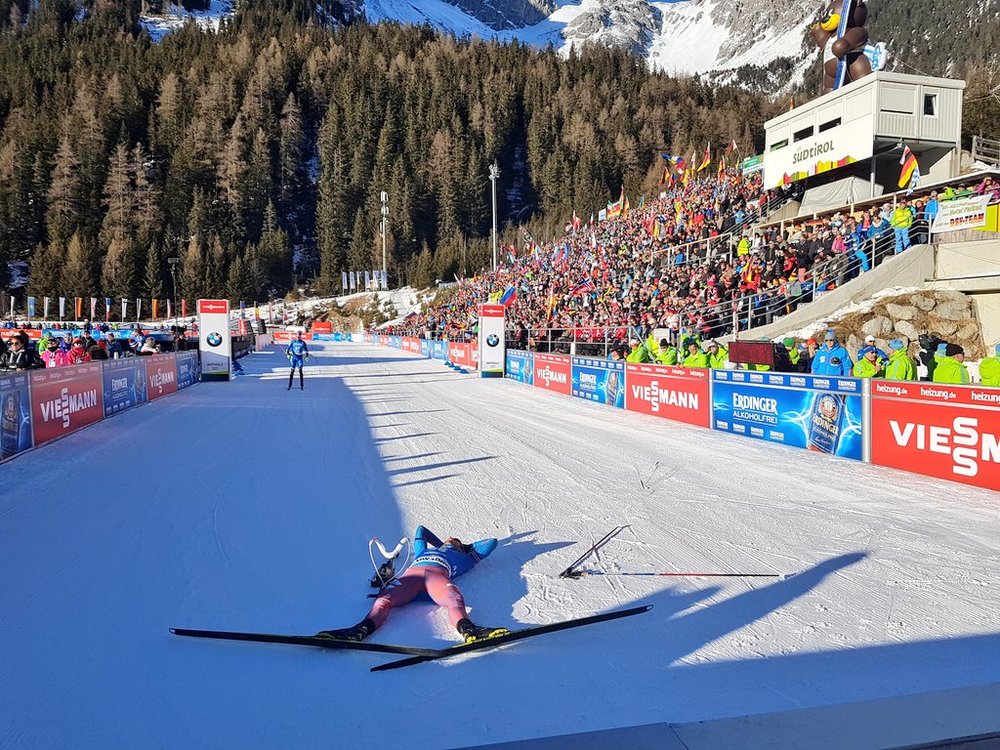
    Russia's Anton Shipulin after winning the men's 20 k individual at the IBU World Cup on Friday in Antholz, Italy. (Photo: IBU/Twitter)
    Russia’s Anton Shipulin after winning the men’s 20 k individual at the IBU World Cup on Friday in Antholz, Italy. (Photo: IBU/Twitter)

    NorAm Western Canadian Championships (Whistler, B.C.): Freestyle sprints

    [UPDATED] On Friday, the first day of the NorAm Western Canadian Championships at Whistler Olympic Park in Callaghan Valley, British Columbia, Dahria Beatty and Jess Cockney topped the women’s and men’s 1.2-kilometer freestyle sprint A-finals, respectively.

    Beatty, of the Alberta World Cup Academy (AWCA) and Canada’s National U25 Team, started the day by qualifying in second, 0.31 seconds behind her fellow AWCA and U25 Team member, Olivia Bouffard-Nesbitt, who won the qualifier in 2:59.9.

    Both Bouffard-Nesbitt and Beatty went on to win both their quarterfinal and semifinals before facing off in the A-final, where Beatty edged her teammate by 0.74 seconds. Beatty crossed the line in 3:02.89, Bouffard-Nesbitt took second and Katherine Stewart-Jones (NTDC Thunder Bay/NST U25 Team) raced from fifth to third in the finishing stretch for the final spot on the podium, 1.09 seconds behind Beatty.

    In the men’s sprint, Cockney, of the Canada’s World Cup B-team, originally qualified second, just eight-hundredths of a second behind Dominique Moncion-Groulx (AWCA), who won the qualifier in 2:37.42.

    While Moncion-Groulx advanced to the A-final with a second-place finish in his quarterfinal (behind Julien Locke, of the AWCA and U25 Team) and third place in his semifinal (behind Locke and Lappe Nordic’s Andy Shields, respectively), Cockney won both his quarterfinal and semifinal before winning the final in 2:33.56.

    Locke took second, 0.81 seconds back, and Moncion-Groulx finished the day in third (+1.86). Just 0.17 seconds off the podium, Shields placed fourth.

    The three-day Western Canadian Championships continue with 10/15 k classic interval starts on Saturday and freestyle relays on Sunday.

    Results: Qualifier | Heats

    ***

    IBU World Cup (Antholz, Italy): Men’s 20 k individual

    Race report

    Russia’s Anton Shipulin took his first win of the season and five U.S. men scored points in the top 40 of the International Biathlon Union (IBU) World Cup men’s 20-kilometer individual on Friday in Antholz, Italy.

    Lowell Bailey led the U.S. in 10th, one place off his season-best ninth. He finished 1:39.1 minutes behind Shipulin with a single miss (0+0+0+1) in the last stage, which ultimately took him out of contention for a podium.

    Shipulin missed one as well, but in the third shooting (0+0+1+0) and posted the fastest time at the finish, besting France’s Martin Fourcade (0+1+1+0) by 41 seconds. Ukraine’s Sergey Semenov was an early leader in bib 16 and hung on for third (+56.8) with one penalty (0+0+0+1). Norway’s Ole Einar Bjørndalen recorded his best result of 2016/2017 in fourth (+1:04.9) with one penalty (0+0+1+0), and Germany’s Simon Schempp followed in fifth (+1:09.8) with two misses (0+1+0+1).

    The second North American in the top 20, Canada’s Scott Gow achieved a career best in 17th (+2:37.7) with one penalty (0+0+1+0).

    In his fourth World Cup race this season, American Leif Nordgren finished 29th (+4:00.1) with two misses (1+1+0+0). And then there was 24-year-old Paul Schommer in his World Cup debut, who raced to 33rd (+4:16.6) and cleaned three stages. Schommer had two penalties in his first standing stage (0+2+0+0) but finished the race without another miss.

    Also for the U.S., Tim Burke followed Schommer in 34th (+4:36.5) with four penalties (0+1+1+2), and Sean Doherty was 36th (+4:41.6) with three misses (1+1+0+1).

    Canada’s Brendan Green finished 75th (+7:09.6) with six penalties (2+1+2+1), and teammate Christian Gow clocked the same time in 76th (+7:09.6) with four penalties (0+2+0+2). Macx Davies did not start.

    Currently ranked 16th in the overall World Cup standings, Bailey is listed on the provisional start list for Sunday’s 15 k mass start. Scott Gow also made the 30-man list based on his result on Friday. On Saturday, the men will race a 4 x 7.5 k relay. Start lists for the relay were not immediately available.

    Results | Men’s mass start (provisional start list)

  • Sigge’s P’ayak Cancelled Because of Low Snow

    Sigge's Payak

    Despite a lot of snow dancing over the last two weeks, Mother Nature did not cooperate and organizers of the Sigge’s P’ayak made the difficult decision to cancel event for this year.

    “Although there is some snow and skiing ongoing at the venue, we cannot hold a quality event on the limited terrain available,” said event chair Dirk Rohde. The loppet was scheduled for February 28, with the kids’ and youth event on Sunday, March 1, 2015.

    Given the continued warm forecast, the organizing committee opted not to reschedule the event for later in March.

    “It’s very disappointing to have to cancel, and we waited as long as we could to make the decision,” said Rohde. “It’s very unusual for the Callaghan Valley to not have snow at this time of year, and we believe this is an anomoly.”

    The Sigge’s P’ayak had over 430 registrations, which Rohde considered a good signup given the low snow season prior to February 1.

    “We’d like to thank the staff at Whistler Olympic Park for trying to keep the course open for us. The warm weather undermined all their hard work,” said Rohde.

    It is the largest loppet in BC, and has been attracting a significant following. The Sigge’s P’ayak is also a qualifier for the US Birkebeiner event in Wisconsin.

    For more information, go to www.payak.ca or check out the Twitter feed @payakentsut. Dirk Rohde can be reached at 604 942-6410.

  • Let It Snow: Despite Weather Woes, First Two NorAms in the Bag

    Let It Snow: Despite Weather Woes, First Two NorAms in the Bag

    Kris Freeman on his way to winning the 30 k freestyle interval start by more than a minute and a half on Dec. 20 at the Sovereign Lake NorAm in Vernon, B.C. (Photo: Frances Weeks)
    Kris Freeman on his way to winning the 30 k freestyle interval start by more than a minute and a half on Dec. 20 at the Sovereign Lake NorAm in Vernon, B.C. (Photo: Frances Weeks)

    Canada’s NorAm circuit is what the International Ski Federation (FIS) calls a Continental Cup series, similar to the U.S. SuperTour.  The name NorAm is short for North American, a hold-over from when Canada and the U.S. had a combined race series.  These races are critical to the elite racers, with guaranteed World Cup starts, national-team positions, and trips to Junior/U23 World Championships in Almaty, Kazakhstan, on the line.

    Or to put it another way, it would take a major event to cancel a NorAm race — like perhaps a record-breaking storm in a unusually snowless early season.

    As organizing committees secured the final details for the first two NorAm weekends, a major storm was expected to bring heavy rain to most of southern British Columbia.

    By the end of the four-day storm, a Vancouver suburb had declared a state of emergency, heavy rain at 12-degree Celsius (54 Fahrenheit) had closed numerous ski resorts across B.C. (including Whistler Blackcomb). Seattle set weather records, and 220,000 people were without power in California.

    While all this was going on, organizers in La Clusaz, France, canceled their World Cup and later moved it to Davos, Switzerland, a venue which had previously avoided canceling its original race weekend because of a huge snow-moving effort largely funded by a retired alpine skier.

    Black Jack Ski Club

    The start of the women's 7.5 k classic at the Black Jack NorAm on Dec. 13 in Rossland, B.C. ( Saturday’s 11 k classic individual start at the NorAm opener in Rossland, B.C. (Photo: Fresh Cafe & apres/Facebook)
    The start of the women’s 7.5 k classic interval start at the Black Jack NorAm opener on Dec. 13 in Rossland, B.C. (Photo: Fresh Cafe & apres/Facebook)

    The first NorAm weekend this year was scheduled for Dec. 13-14, hosted by the Black Jack Ski Club in Rossland, B.C. Outside the province, Black Jack is best known as the club that produced George Grey (top-10 finisher at the 2010 Olympics) and the current home of long-time national team coach Dave Wood.

    When low snow, warm weather and predicted rain made the club’s homologated courses unsuitable for skiing, the club decided to move the opening races up to the biathlon trails, more than 200 meters (650 feet) higher in elevation. As the four-day storm progressed, the freezing level was up to 2,000 meters (6,500 feet) in the area, well above the 1400-meter(4,590-foot) elevation of the biathlon trails.

    When rain made the sprint loop unskiable two days before the race, the organizing committee didn’t give up. Club members, neighbours and team coaches spent hours shoveling snow onto the course. When another wave of rain destroyed the sprint course overnight, the organizing committee switched to two individual-start classic distance races and volunteers headed out again to shovel more snow onto the distance course.

    After four days of rain and a move to a higher venue without electricity or a timing building, the races were held. Generators provided power, live results were available on the internet and the event was generally agreed to be up to the Continental Cup standard.  Some 140 official volunteers plus an unknown number of shovelers made this possible.

    “We estimate we did about 130 man-hours of shovelling this week,” Chief of Competition Ian Sibbald wrote in an email.

    Unsolicited athlete quotes from the Black Jack NorAm

    “The volunteer base is incredible.  That is an astounding number [of volunteers] since only 3,500 people live in Rossland. Given the lack of snow, the conditions were great.” — Kris Freeman (Team Freebird)

    “Conditions were good! A few twigs poking through here and there, but tracks were fast and hard. Big thanks to the volunteers and organizing committee for working hard to run these races!” — Michael Somppi (Alberta World Cup Academy/Canadian Development Team)

    “Conditions were remarkable, especially considering the challenging weather the Black Jack Ski Club has been dealt. One would hardly know that though skiing the course, unless you look closely and notice all the shoveling marks on the side of the trail.” — Brian Gregg (Team Gregg/Madshus)

    “Conditions were much better than I expected, the organizers and groomers did an amazing job making the race happen with tough conditions and the tracks today were great!” — Alysson Marshall (AWCA/National Development Team)

    “Conditions today were amazing considering the weather … The race organizers and many volunteers from the town have worked hard to get a good track to make these races happen.” — Andrea Dupont (Rocky Mountain Racers)

    “The crew at Black Jack did an amazing job on the course, it was close to perfect considering what they had to work with. The tracks were great, I was very impressed.” — Dahria Beatty (AWCA/National U23 Team)

    “The course held together exceptionally well, due to the work of the volunteers and the slightly colder weather that appeared day of.” — Jennie Bender (Bridger Ski Foundation)

    Callaghan Valley Cross-Country

    Callaghan Valley Cross-Country (CVXC), the host of the second NorAm weekend, isn’t so much a ski club as it is a consortium of four clubs based in the Vancouver/Whistler area: Nordic Racers, Whistler Nordics, Hollyburn Jackrabbits, and Spud Valley Nordic. Squamish Nordic contributes, as do a number of other clubs from the province. For higher-level events, volunteers from other clubs commonly join in, either to add expertise to help the host club earn the event, or gain experience and knowledge so their own club can host similar events in the future.

    Scheduled the weekend before the holiday break, CVXC was on track with 85 volunteers with two weeks to go. Snow is rarely a problem at Whistler Olympic Park. In 2010, no provision for snow making was made and the Olympics were held on natural snow despite a seven-week block of rain that ended a week before the Olympics started.

    With very little snow and the forecast of the storm earlier this month, the organizing committee had to make a decision to commit, cancel or move the NorAm races with 12 days to go. On decision day, 100 millimetres (4 inches) of rain was forecast for the race venue.

    At this point, much of the sponsorship money had been spent, hundreds of volunteer hours had been invested, and teams had booked lodging and flights well in advance.

    With heavy rain falling at the venue, few people were surprised when organizers announced they were moving the races to Sovereign Lake in Vernon, B.C.

    Once the decision was made, the logistical headache began. The new venue is more than 400-kilometers away, which meant the existing volunteers wouldn’t be sleeping at home. Many of the teams had booked flights leaving Vancouver on Sunday night.  With two mountain passes and six-driving hours separating Sovereign from the airport, there wouldn’t be time to hold the planned events on Sunday.  Moving the races to Friday and Saturday solved the travel problem, but made the volunteer issue more difficult.

    At this level of competition, there are strict rules about roles and responsibilities. The assistant technical delegate, Sharon Clarke, was no longer eligible, as the new host was her home club. Clarke and the chief of competition, Sherryl Yeager, swapped roles before tackling the rest of the changes.

    “Having to change the event at such a late date due to weather is heartbreaking,” Yeager, also the CVXC vice chair, explained in an email. “All the work that went into planning, arranging sponsors, maps, courses, setting up run sheets, the race notice, registration, accommodation, food, the website and more is largely of no use.”

    Andrew Pohl of the New Zealand Ski Team crossing the line in 15th in the men's  NorAm 30 k freestyle interval start on Dec. 20 at Sovereign Lake, B.C. (Photo: Frances Weeks)
    Andrew Pohl of the New Zealand Ski Team crossing the line in 15th in the men’s NorAm 30 k freestyle interval start on Dec. 20 at Sovereign Lake, B.C. (Photo: Frances Weeks)

    Sovereign Lake Nordic Club

    Sovereign Lake is a perennial NorAm host, using trails built for a World Cup event in 2005. The trail system is interconnected with Silver Star Mountain Resort, which leaves most visitors a bit confused. In recent years, the division is simple: race at Sovereign, sleep at Silver Star, ski at both.

    Sovereign was hosting a CPL race (one level below Continental Cup) when the possibility of moving the NorAm was raised. With 80 volunteers on site, it was easy for the organizers to quickly find out how many might be available for a potential NorAm and make the commitment to offer the venue.

    The shift from Saturday/Sunday to Friday/Saturday was essential for the teams, but difficult for the organizers. More of the CVXC volunteers were unable to help and many of the Sovereign volunteers were unable to get a day off work at short notice.

    Without a sprint in the first NorAm weekend of racing, Sovereign’s first day became a classic sprint, requiring another rewrite of the race notice. Ultimately, the merged organizing committee was able to get about 100 volunteers over the two days, including some from neighboring clubs.

    Several racers generally viewed the event as a typical NorAm, with more comments on the challenges of heavily falling snow than the logistical obstacles of the event move.

    While athletes, coaches, families, and race-day volunteers have moved on, the two organizing committees are sorting out how to share the entry fees and sponsorship money to cover their extra expenses.

    The Result

    After two weekends and four races, more individuals volunteered than raced.  Athletes got crucial early season race time into their legs.  Several athletes have positioned themselves to race in Europe later this season.

    Was it all worth it? Dahria Beatty, Raphaël Couturier, Annah Hanthorn, and Philippe Boucher pre-qualified for Junior/U23 World Championships in early February in Almaty, and based on his NorAm results, Patrick Stewart-Jones earned his spot at the World Cup sprint in Otepää, Estonia, from Jan. 17-18.

  • Wednesday Workout: Max Aerobic Speed Intervals with Colin Foley

    Wednesday Workout: Max Aerobic Speed Intervals with Colin Foley

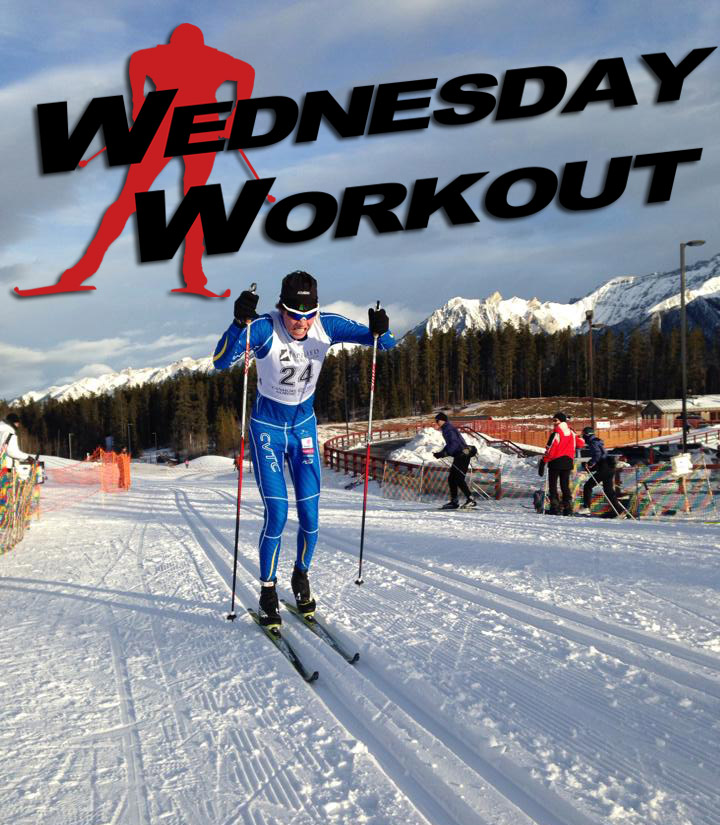
    Colin Foley (Callaghan Valley Training Centre) racing. (Courtesy photo)
    Colin Foley (Callaghan Valley Training Centre) racing. Foley, 18, likes time-based interval workouts that mimic sprint qualifiers, like max aerobic speed at 15-second intervals. (Courtesy photo)

    This week’s workout brought to you by Colin Foley, 18, of the Callaghan Valley Training Centre in British Columbia. Want to submit your own go-to workout? Email alex@fasterskier.com.

    After years of ski training it seems like I’ve done any variety of intensity workouts. From VO2 max to speed, to tempo to you name it, it’s almost a rare event when we do the same intensity breakdown!  Anyway, we did a great workout recently in practice: max aerobic speed at 15-second intervals, it’s something that we’ve done a few times and I really hope we do more in the future.

    The workout: Time-based interval workout, with four intervals of 3 minutes and even rest (3 minutes) in between. We did them at Zone 4, or just as hard as you can maintain for the 3-minute interval.

    Warmup: We warmed up as a group with a 30-minute easy classic ski.  To warm up properly, we stuck to the flatter trails between the stadiums at Whistler Olympic Park for the first 10 minutes then went into some hillier terrain for the last 20 minutes and regrouped in the cross-country stadium at Whistler Olympic Park.

    Interval start: While lots of intervals can be done as a large group (there are 9 on my team), we chose to do this set of intervals in a 15-second interval start format. I really liked this format because it made the workout feel like a sprint qualification … four times!

    When you are doing intervals as a group it’s often easier to push yourself because you have your teammates there at your side, and you don’t want them to get away.  I really like the 15-second interval start format of these intervals because it really helped me practice pushing to the max when I don’t have somebody there at my side.

    “When you are doing intervals as a group it’s often easier to push yourself because you have your teammates there at your side, and you don’t want them to get away.” — Colin Foley

    We definitely have some stronger and weaker “sprinters” on our team, so our coach mixed up the order of our interval start from interval to interval.

    Colin Foley (CVTC) warming up. (Courtesy photo)
    Colin Foley (CVTC) warming up. (Courtesy photo)

    Rest/recovery: In between the intervals we tried to recover as much as possible.  For me, this meant skating easily around the stadium.  We were doing the harder sets on the hills of the sprint course, just outside of the cross country stadium so it was easier to come back (and also hear our coach call the end of the set).

    Result: We do these intervals to increase the amount of time that we can push ourselves at our maximum aerobic output.  I have really found that this has helped my sprint qualifiers this year.

    Post-workout: After the final interval we did a long cool down, but not before we first had some good nutrition.  For us, that’s a bottle of a protein drink and some hydration drink (we also have energy drops if we were feeling a bit hungry).

    We skied for about an hour, this time sticking to rolling terrain (the Madeley Creek Loop at Whistler Olympic Park is great for a longer cool down like this).

    Then it was back to the van, back to our homes in the Whistler Athletes Village (now known as Cheakamus) and a proper lunch and rest.

    We enjoyed being home in Whistler for a few weeks and getting in some good training before heading off to more NorAm competitions and, eventually, Canadian Nationals.

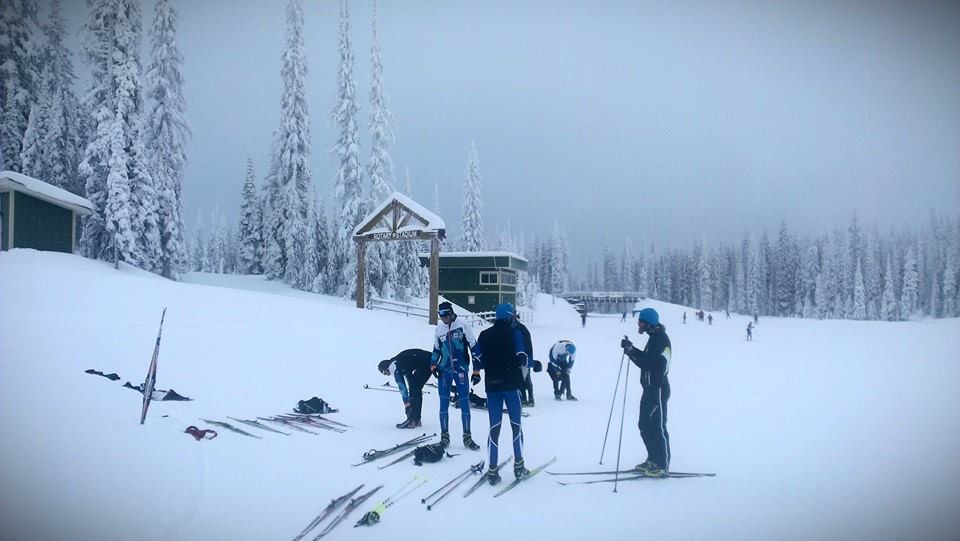
    Callaghan Valley Training Centre team prep (Courtesy photo)
    The Callaghan Valley Training Centre team preps for one of its workouts. (Courtesy photo)


  • The Four: Callaghan Valley Training Centre

    The Four: Callaghan Valley Training Centre

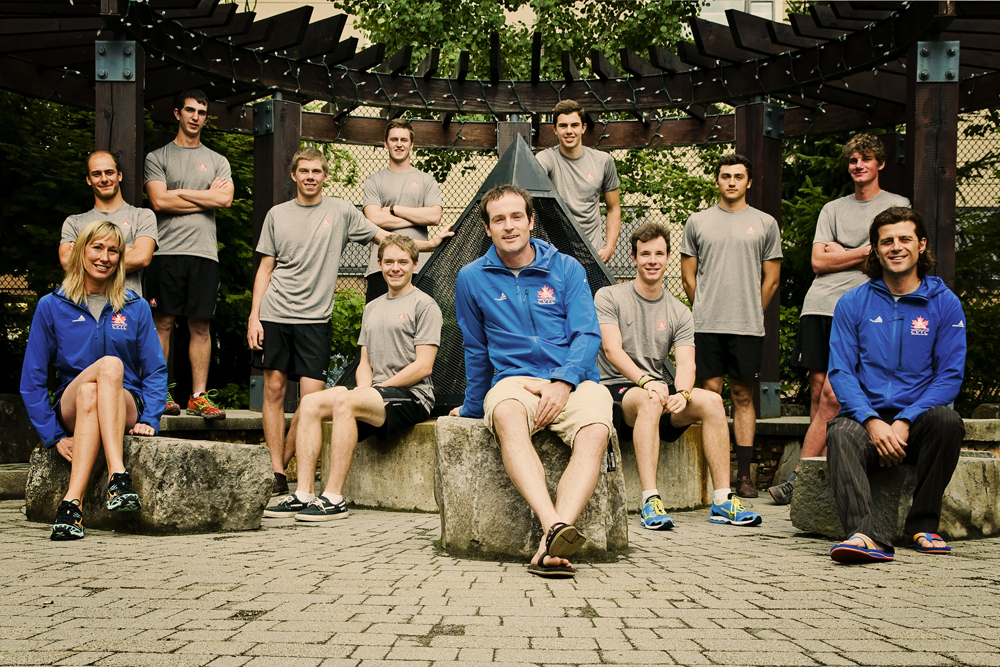
    The 2013/2014 Callaghan Valley Training Centre team, including head coach Chris Manhard (c), assistant coach Maria Lundgren (l) and wax tech Graham Maclean (r). (Photo: CVTC)
    The 2013/2014 Callaghan Valley Training Centre team, including head coach Chris Manhard (c), assistant coach Maria Lundgren (l) and wax tech Graham Maclean (r). (Photo: Ashley Nagy Ouellette/CVTC)

    Note: This is the first of four previews providing an inside look at Canada’s national training centres and their respective senior teams this season. We asked coaches to tell us what’s new, whom to look out for, and the outlook on the winter ahead.

    Team: Callaghan Valley Training Centre (CVTC)

    Coaches: Chris Manhard (head coach), Maria Lundgren (assistant coach), Graham Maclean (wax tech), Shannon Thompson (mental performance coach)

    Athletes: Martin Schrama, Paul Dupuis, Geoffrey Richards, Sebastien Dandurand, Andrew Avis, Sam Morris, Liam Patterson, Colin Foley, Benjamin Osorio

    No women because there weren’t enough applicants, according to Callaghan Valley’s marketing and communications director Magi Scallion.

    “It just so happens that in the past couple years we’ve not had enough female applicants to create a reasonable female training group,” she wrote in an email. “We would love to have more females on the team and are just waiting for the right opportunity and critical mass.”

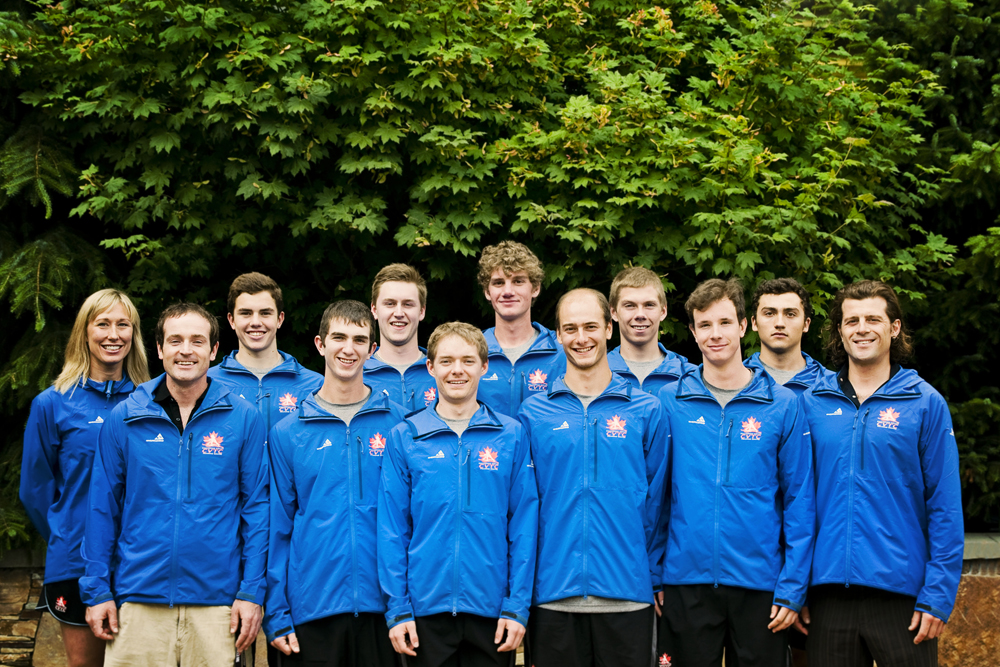
    The faces of the Callaghan Valley Training Centre. (Courtesy photo)
    The faces of the Callaghan Valley Training Centre. (Photo: Ashley Nagy Ouellete/CVTC)

    Who’s new: Avis (from Goderich, Ontario) “Andrew is relatively new to the sport of cross country skiing as he came from a boxing and hockey background,” Scallion explained. “He’s fitting in really well and seeing some big improvements in training this year.”

    Morris (West Vancouver, B.C.) “… A tenacious competitor and really enjoying the team dynamic,” she added. “He’s one of the younger members of the team but certainly not scared of taking leadership or duking it out with the older boys in time trials.”

    Patterson (Thunder Bay, Ontario). “Thunder Bay is a real hotbed of skiing and Liam’s got some great experience and talent,” Scallion wrote. “He’s had some injuries and has not be able to run as much as the rest of the team, but is getting healthy quickly and is looking forward to a great winter.”

    Foley (Ottawa) “… Very talented and driven,” according to Scallion. “We’re enjoying having his skill and passion around. Technique is a major focus for him this training season.”

    Osorio (Huntsville)  “Ben joins the U23 squad of the CVTC and is really enjoying training in a focused environment,” she wrote. “He’s going to see some big improvements this winter.”

    Who’s missing: Yannick Lapierre and Sebastien Townsend (accepted at Alberta World Cup Academy in Canmore); Stefan Sander-Green (returned to hometown of Kimberley, B.C., and is training with local club there); Colin Ferrie (living in Kimberley, training with BlackJack Ski Club and head coach Dave Wood out of Rossland, B.C.); Fred Weaver (off to school)

    Top results last season:

    At 19, Dandurand, who previously excelled in nordic combined, earned three bronzes in each of the junior distance races at Canadian nationals in Whistler, B.C. Earlier in the season, he topped the NorAm junior podium at Western Canadian Championships in Grand Prairie, Alberta, where he won the skate sprint and 30 k freestyle pursuit for third overall in the mini tour. He also made the podium at the Ottawa NorAm, placing third as a junior in the 15 k skate.

    Another junior, Dupuis, 20, was fourth in the NorAm skate sprint in Grand Prairie, and placed fifth in the 15 k classic there and classic sprint at the NorAm in Thunder Bay.

    As a senior, Richards, 21, pulled off a top 20 in the classic sprint at Canadian Nationals and nabbed 10th in the Sovereign Lake NorAm 15-kilometer classic mass start early last season.  Also 21, Schrama was in the top 25 at three NorAms last season.

    Coach’s comments:

    Everybody is in great shape and great spirits following a pretty hard training camp throughout September,” Scallion wrote, based on conversations with coach Manhard.

    In early July, the team got together and down to business in Whistler, B.C., then flew to Park City for a camp later that month. Its athletes spent September touring British Columbia (plus a week on the Haig Glacier in Alberta), and later this month, they’ll head back to Canmore for a week on snow at Frozen Thunder before returning to Whistler for more skiing, weather permitting. In November, they’ll ski some more at Silver Star in Vernon, B.C., before the race season starts.

    “Our goals this season are to qualify as many athletes as possible for U23 and World Junior Championships,” Scallion wrote, noting the team’s relative youth in its fourth season since its inception in 2010. “Medals at national championships are also important.

    “One of our major focuses is team cohesion and having a positive, energizing, supportive team atmosphere,” she added. “We’re carefully monitoring this and our mental coach, Shannon, has been very useful to this regard.”

    Bonus: For more on the CVTC, check out their introductory video.

  • At Long Last: Canadian Season Wrap (Video)

    At Long Last: Canadian Season Wrap (Video)

    Japan's Chisa Obayashi (second from r) leads after crashing early in Saturday's 30 k freestyle mass start at Canadian Nationals in Whistler, B.C. Eventual winner, Bettina Gruber of Switzerland (r), runner-up Zina Kocher (l) and Heidi Widmer (second from l) follow. (Photo: Martin Kaiser)
    Japan’s Chisa Obayashi (second from r) leads after crashing early in the 30 k freestyle mass start at 2013 Canadian Nationals in Whistler, B.C. Eventual winner, Bettina Gruber of Switzerland (r), runner-up Zina Kocher (l) and Heidi Widmer (second from l) follow. (Photo: Martin Kaiser)

    WHISTLER, B.C. — Wondering how your favorite Canadian skier is feeling about last season? We asked many of them at Canadian Ski Nationals in late March. Here is the final product of our efforts: a montage of interviews with some of the best (at least the ones at nationals) talking about their seasons and final races in Callaghan Valley.

    Like this? Check out our “Bits from Canmore” video from the Alberta World Cup in December.

  • Elite Team Preview: Callaghan Valley TC

    Elite Team Preview: Callaghan Valley TC

    Members of the Callaghan Valley Training Centre hike up the Haig Glacier near Canmore, Alberta, during a high-low camp in July. (Photo by Geoffrey Richards)

    This is the fourth and final preview in a quick-and-dirty series about Canadian national-training centres. We asked coaches to send their 2012/2013 rosters and tell us what’s new for the coming season. Teams were presented in no particular order.

    Team: Callaghan Valley Training Centre (CVTC)

    Coaches: Chris Manhard (head coach), Graham Maclean (assistant/wax tech), Maria Lundgren (administrator/part-time coach), Neil Manhard (part-time wax tech)

    Senior roster: Geoffrey Richards, Yannick Lapierre, Martin Schrama and Sébastien Townsend

    Who’s new: Townsend and Lapierre (from Nakkertok)

    Who’s missing: Colin Abbott (Yukon Elite Squad), Jeff Kerkovius (back to university), Jeff Wood (University of British Columbia), Adriene Underhill (retired), Kajsa Heyes (ankle surgery), Olivia Nesbitt (Rocky Mountain Racers)

    Callaghan Valley skiers during a daily hike up to the Haig Glacier at a Yo-Yo training camp in July near Canmore, Alberta. (Photo by Geoffrey Richards)

    Top results last season: Shortly after his 20th birthday, Richards won the junior men’s 15 k skate race at Canadian Ski Nationals in Mont Sainte-Anne, Quebec, by about a minute. He had previously placed second in the junior men’s 1.4 k skate sprint at nationals, and was 16th in the pursuit at the Junior World Ski Championships in Erzurum, Turkey.

    Kerkovius notched silver at nationals in the junior men’s 10 k classic race, just ahead of Schrama, who was third.

    A CVTC junior squad member, Stefan Sander-Green was the second Canadian in the junior men’s 30 k classic mass start at nationals and fourth overall after two Norwegians.

    Abbott had what coach Manhard called an “excellent year as U23,” finishing ninth at nationals in the open men’s 50 k classic mass start and consistently placing within the top 20 on the NorAm circuit. Originally from Whitehorse, he’s returning to his roots in the Yukon Territory.

    Coach’s comment: “New and notable seems to be a emergence of a gentleman’s club,” Manhard wrote in an email, adding, “(this term I use very loosely).”

    With four men on its senior roster and five junior males, this team doesn’t have a single woman, and Manhard explained why.

    “With one coach for a centre, it was very difficult balancing the boys training and social environment and the girls training and social environment,” he wrote. “With only the boys to manage it has given me more of an opportunity focus on each athlete do a better job.”

    He went on to state that a smaller team has been “far more manageable this year,” and he’s pleased with the group: “[They’re] very close in abilities and they work well in training to push each other every session.”

    In the program’s third year as a national-training centre (based in Whistler, B.C.), Manhard commented on how far it’s come and the struggles it has endured.

    “When I moved to Whistler, I was the first person in the athlete village (Olympic Village) and to see it now is quite amazing,” he wrote. “Creating the centre has been wonderful and stressful. There always seems to be more to add to the program and getting to know the Whistler locals has been slow so most of the time it tends to be the athletes and me.”

    Team members live in athlete townhouses about 20 seconds away from Manhard’s home, making for “24-7 immersion,” he wrote.

    “The rest of the training centres coaches have been very helpful and supportive in every way,” he added. “If I am having a problem with anything, I know that I can phone either the national team or training centre coaches and discuss the issues and options. I am happy where the training centre has made it to and despite a few setbacks along the way, the centre has grown tremendously and I am very happy to see where it is now.”

    This season, Manhard’s especially impressed with his junior skiers and is excited to see who will lead them once racing starts.

    “[Former nordic-combined skier Sebastien] Dandurand has been the skating leader in time trials and [Paul] Dupuis has been the double pole champion so far,” he wrote. “The seniors have stepped up their game, but Geoffrey continues to lead the pack in the time trials.”

    However, Manhard didn’t overlook Townsend, who’s coming off an arm injury from last season and missed most of the time trials.

    Extras:

    The Callaghan Valley team starting their backpacking trip up Mount Assiniboine on the Great Divide of the British Columbia/Alberta border. (Photo by Geoffrey Richards)

    The CVTC started its training season with a week of skiing at Callaghan Country Lodge in Callaghan Valley, B.C., according to Richards. In July, they completed two Yo-Yo sessions at lower and higher altitudes between Canmore, Alberta, and the nearby Haig Glacier. They also spent a few days backpacking and running along Mount Assiniboine on the Great Divide.

    “Training so far this summer has been amazing,” Richards wrote in a message. “For me, the best season so far, Chris has really stepped this up this year and taken us to lots of cool new places to train.”

    On a coaching note, when it comes to the role of Maclean (also a national-team wax technician), Manhard explained he is part-time and mostly involved with camps, early season work, and equipment management.

    “He will be on the world cup for part of the winter and he is helping manage the tech side of Sochi [Olympics in 2014],” Manhard wrote. “We sit down at the beginning of the year and go over where my needs are the greatest for support and he fills in where possible.”

    Lundgren could be working nearly full time next year to offset the seasonal absence of Maclean, but she recently had a child and has mostly been on administrative leave.

    ***

    Other previews: Alberta World Cup AcademyNDC Thunder Bay | Pierre-Harvey NTC

    CVTC skiers hiking out on their last day of backpacking at Mount Assiniboine on the British Columbia/Alberta border. (Photo by Geoffrey Richards)
  • Buoyed By Trust Fund, Callaghan Valley Readies for Future

    Buoyed By Trust Fund, Callaghan Valley Readies for Future

    Women competing in the individual sprint at Whistler Olympic Park during the 2010 Olympic Games.

    This article is the third in a series looking at the use of cross-country ski venues left behind by the Winter Olympics. The first two were on Utah’s Soldier Hollow and New York’s Lake Placid.

    After a Winter Olympics where nordic skiing took center stage, Whistler Olympic Park (WOP), 77 miles north of Vancouver, British Columbia, faces the future with optimism, but with plans that are still murky.

    Cleaning up the detritus of the 2010 Games, including grandstands, transformers, cameras and approximately 150 kilometers of fiber optic cable, WOP is preparing for life after the Olympics. Cushioned with government funding, WOP is developing plans to transform itself into a major tourist destination and training center.

    Like Lake Placid’s Mount Van Hoevenberg, WOP is part of an umbrella organization that manages other legacy venues from the 2010 Winter Olympics. But unlike Mount Van Hoevenberg, or Utah’s Soldier Hollow, WOP is a beneficiary of a trust fund that will help pay operating expenses for the near- or medium-term future.

    As the venue for cross-country, nordic combined, biathlon and ski jumping at the 2010 Winter Olympics, WOP hosted fully one-third of all the events at the Games. Last February, billions of TV viewers tuned in to watch top athletes ski at one of the world’s first “green” cross-country venues.

    Situated to minimize disturbance of old-growth forest and wetlands, WOP shoehorned 14 kilometers of cross-country and biathlon trails, three technical buildings and an 11,000-square-foot ski lodge into a single square kilometer. Three technical buildings went up 400 meters apart. The lodge is built to LEED Silver Certification for green buildings. The square kilometer is a thirty percent smaller footprint than originally designed.

    Forty kilometers of additional trails link to the 14 kilometers of race trails used for the Games, with six kilometers lighted for night skiing. In addition, WOP’s trail system connects with neighboring Callaghan Country’s 40 kilometers of trails, making for a nearly 100-kilometer network available to skiers.

    A Legacy in Mind

    More athletes racing at the Olympics in Whistler.

    On June 1, 2010, Whistler 2010 Sport Legacies (WSL), a not-for-profit organization, took over management of WOP from the Vancouver Organizing Committee (VANOC). WSL also operates the Whistler Sliding Centre, which hosted luge, bobsled and skeleton, as well as the Whistler Athlete Centre, which offers housing and strength and conditioning facilities to developing athletes training in the Whistler area.

    “Legacy programming was going on since the day VANOC started,” said Georgia Manhard, a member of Cross Country British Columbia’s board of directors. She said that VANOC was already planning for the post-Olympic future even as it developed its bid for the 2010 Games.

    The Whistler venues are funded in part by the 2010 Games Operating Trust (GOT), a second non-profit that was founded shortly after Vancouver won the right to host the 2010 Olympics. The Canadian federal government and the B.C. provincial government each contributed $55 million Canadian to the trust as seed money, which in turn disbursed funding to the venues in 2007, 2008 and 2009.

    But WSL isn’t the trust’s only beneficiary. According to Chairman James Bruce, GOT also supports the Olympic speed skating oval in Richmond: 80 percent of the trust’s principal is split evenly between supporting WSL and the speed skating arena. Money from the remaining 20 percent is held aside as a contingency fund.

    Each year, Bruce said, GOT distributes up to five percent of the average three-year balance of the fund to its two beneficiaries. Like the larger economy, the trust lost money in the stock market in calendar year 2008, but it realized an approximately 14 percent return on investments in 2009.  Bruce said that it was reasonable to expect a positive return on the trust’s investments over the long term.

    Anticipating Growth

    Keith Bennett, WSL’s president and CEO, said that it’s “difficult to say right now” what proportion of the nordic center’s operating budget will come from ticket sales, and what proportion will come from GOT funding. But his goal is to generate 50 percent of WOP’s revenue from ticket sales, equipment rentals, and food service.

    According to Bennett, WOP had approximately 40,000 visitors in the winter of 2008-2009, the year preceding the Games. That figure, though, included elite athletes who arrived to participate in pre-Olympic events in all the disciplines: cross-country, biathlon, jumping and nordic combined. For the coming winter, Bennett is planning on 25,000 visitors, with a goal of 50,000 by 2014; he said the organization would target “new Canadians” and youth.

    Bennett’s numbers contrast markedly with post-Olympic tourism numbers projected in the planning stages for the Olympics. In an article published on the

    Athletes training on rollerskis at Whistler Olympic Park in 2009. Photo courtesy of TeamToday.org.

    website XCOttawa.com in 2004, Tom McCarthy noted that the pre-Games master plan called for 60,000 visitors to WOP within three years of the Olympics, growing to 75,000 by 2015.

    Bennett acknowledged the discrepancy, but stressed that he wanted to develop 50,000 “paying skier visits,” at $20 per person, each winter. He distinguished between paid visits and visits by “carded athletes”: Canadian national team, junior national team and development team athletes aren’t charged for trail passes.  With virtually no publicity, Bennett added, WOP has already attracted 5,000 to 6,000 visitors this summer.

    By comparison, according to information obtained by FasterSkier, approximately 40,000 skiers visited Sovereign Lake last winter, another cross-country area in British Columbia. In the eastern U.S., according to the New York Olympic Regional Development Authority’s just-released annual report, Lake Placid’s Mount van Hoevenberg attracted 30,000 skiers in 2009-2010. According to the document, that was an all-time record for attendance.

    Reaching Out

    As part of its effort to increase visits to the Callaghan Valley, WSL has three areas of focus:  attracting aspiring elite athletes, recruiting new people to the sport of cross-country skiing, and reaching out to area clubs.

    “We see [the clubs] as a really important part of delivering nordic skiing to the community,” said John Heilig, WOP’s manager of nordic sport.

    WSL is negotiating with the province of British Columbia to modify the terms of its lease, in order to build cabins for some of the clubs—especially those that come from outside Whistler.

    Based at Cypress Bowl, on the outskirts of Vancouver, Hollyburn Jackrabbit Ski Club runs youth programs for everyone from five-year-old beginners through aspiring junior racers. While Cypress is close to most members, club president Dirk Rohde said that anyone involved in Hollyburn’s race program skis at Callaghan Valley. “It’s a couple-hour drive, but the training is worth it,” he said.

    Hollyburn organizes one or two races each season at Callaghan Valley. “They have facilities and equipment to run an event properly,” Rohde said. Callaghan’s venue is especially suited to bigger races, Rohde added—those at the regional level or above. He noting, in contrast, that Cypress Bowl used a makeshift stadium—often a tent or an awning would suffice as the technical building.

    WOP only charges a nominal fee for clubs to host events, and the venue also retained a number of wax trailers from the Olympics that it makes available. However, club members do not receive discounts on trail passes.

    A Magnet for Development

    Based in Whistler, the Callaghan Valley Training Centre (CVTC) is one of Canada’s national athlete development programs. In the scheme of Cross Country Canada (the country’s governing body for cross-country skiing), CVTC’s mission is to prepare local and regional juniors for national-level competition.

    Canadians George Grey and Alex Harvey celebrate their 3rd place finish in the team sprint in the 2009 pre-Olympic World Cup in Whistler.

    Chris Manhard, CVTC’s head coach, said that WSL “have been exceptional” in their support of his organization.  The training center’s seven skiers lodge in the Whistler Athlete Center for a nominal fee.  And whenever possible, Manhard said, WSL hires athletes for part-time positions, to help them defray training expenses.

    WOP is also continuing an outreach program that focuses on school groups from local areas. A supplier provided WOP with rental equipment—skis, poles and boots—with the proviso that the gear would be used in such an initiative.

    “We’re trying to engage all the local communities,” Heilig said.  He specified the Sea-to-Sky corridor as a target, which encompasses the towns of Pemberton, Squamish and Whistler, but Heilig also said that groups have come from as far away as Vancouver.

    WOP charges a nominal fee to offset the costs:  $12 Canadian covers equipment rental, a lesson and a trail pass. In the winter of 2008-2009, the program saw 62 percent growth over the previous winter, with 1,762 kids participating.  (Figures weren’t available for the ’09-’10 season.)

    In addition to their own outreach effort, WOP is also signed on with the Canadian Ski Council’s (CSC’s) SnowPass program.  After registering through the CSC website, any child in grades four and five is eligible for three free trail passes at WOP.

    Each program is a piece of the puzzle.  As Bennett acknowledged, WOP “will have to develop skier visits that don’t exist right now. Part of our job is to cultivate that.”

  • Man vs. Wild: Zach Caldwell Takes On the 2010 Olympic Venue

    Man vs. Wild: Zach Caldwell Takes On the 2010 Olympic Venue

    Zach Caldwell examining a ski this fall. Photo courtesy of Zach Caldwell and Erik Nilsson
    Zach Caldwell examining a ski this fall. Photo courtesy of Zach Caldwell and Erik Nilsson

    Editor’s Note: Portions of this article were removed at the request of the US Ski Team, which believed that sensitive information included in the piece could impact its medal chances.  FasterSkier does not generally grant such requests and will not do so in the future, and we would not have done so if we believed the material in the article to be of critical import to the skiing community.  While we did not agree that the information was cause for concern, given the stakes and the potential to compromise access for the Olympic Games, we decided to err on the side of caution and grant the request.

    The U.S. Ski Team has a secret weapon that could help it win a medal at the 2010 Olympics.

    Drugs? Hormones? Nope. It’s Zach Caldwell’s Tazzari stonegrinding machine.

    Caldwell, a Boulder-based ski technician, has been working quietly for the last three winters on a project under the auspices of U.S. Ski Team Head Coach Pete Vordenberg. Caldwell’s job: to develop a set of stonegrinds that will give the eleven Americans in Whistler an edge on their competition.

    Stonegrinding is an esoteric art, practiced at a high level by only a few people in the U.S. The process involves applying different patterns, called structures, to the base of athletes’ skis by passing them over a rotating circular stone. Different structures are designed to interface with specific snow conditions to help the skis move faster.

    The cross country ski venue for the Games, in the Callaghan Valley, is known for its erratic weather conditions,  which means that good grinds could make a big difference. There’s a chance that Caldwell’s work–focused specifically on developing grinds for the Olympics—could turn out to be the difference between an average day and the podium for one of the Americans.

    We caught up with Caldwell during his son’s karate class in mid-January, as he prepared to travel to Whistler for some final preparation and testing.

    FasterSkier: How did you end up with this contract working on grinds?

    Zach Caldwell: My wife got a job coaching a development program up [in the Callaghan Valley], and to make a long story short, Pete [Vordenberg] learned that I was going to be there and called me up and proposed that we put something together. He scared up some funding with the help of the U.S.O.C., and we basically put together a three-year contract.

    I started on it when the snow flew in 2007. I started just trying to work with some really basic stuff, like testing brands against linear grind

    Nilsson (l) and Caldwell (r) grinding skis, fall 2009. Photo courtesy of Zach Caldwell and Erik Nilsson
    Erik Nilsson (l) and Caldwell (r) grinding skis, fall 2009. Photo courtesy of Zach Caldwell and Erik Nilsson

    frequencies—how many lines per centimeter do we want on the snow? Is it 18, 20, 22? And some really basic textural things, trying to find ingredients rather than recipes—does this snow like eggs or milk?—so that I knew what I had to work with, and what kinds of parameters we could build into the grinds.

    Year two, we started to work on some recipes. We’ve had a lot of time, and not even close to enough.

    FS: Is it unprecedented for a team to be testing grinds for a big event this far in advance? Or does this kind of happen all the time? Are there other teams that have been out there testing?

    ZC: I wish I could answer that. What I can tell you is that the Norwegians have had some people over testing. This is like the Norwegian Olympic Committee, not the Norwegian National Team, that had people testing. They were there for quite a while last year, four to six weeks or something like that. I would say the Norwegians probably have the second most time testing on snow, behind us. I can’t really comment on what other people have done. Lillehammer was a pretty long time ago—grinding was relatively young, so I don’t know if [the Norwegians] were that involved with it then. At Torino I would assume the Italians would be working intensively there because they’ve always been at the front edge of that type of thing.

    It’s not a common thing [to develop grinds for a specific location], because at most World Cup venues you don’t have time to respond. What are you testing for if you don’t have time on site? Most teams aren’t hauling grinders around with them. The World Cup, in terms of service, is not terribly much different than the college circuit, where you go to a venue and you do what you can with the tools you have. They have more expertise and  more tools for sure, but at no point on the World Cup is anyone trying to control all the variables and bringing them to bear on one event. It’s generally trying to hit a pretty big target with each solution…by getting in the ballpark in a bunch of different areas. It would be nice if all this was applicable to something beyond the 2010 Olympics, but it’s not, and it probably won’t ever be. It’s a good learning experience, but if you want to talk about an exercise in belly button examination [this project] is focused on one small thing as you can possibly get. It makes me better at what I do, but it’s not like I can take the specific lessons learned at the Callaghan Valley anywhere else in the world.

    Erik Nilsson (who assists Caldwell with testing) grinding a pair of hole skis. Photo courtesy of Zach Caldwell and Erik Nilsson
    Nilsson (who assists Caldwell with testing) grinding a pair of hole skis. Photo courtesy of Zach Caldwell and Erik Nilsson

    FS: How do you go about creating a grind? I’m guessing that it’s more complicated than just sitting around drawing patterns on a sheet of paper. Are you using a computer program, mostly?

    ZC: I wish I could give you something that was scientifically verifiable—a method that was foolproof logic. In the end, it’s really not that way. An alarming amount of it is sitting around with a piece of paper. A lot of times I’ll wake up in the morning and say ‘Hey, I got something. I should try this.’ Most of the best creative work happens away from the snow and away from the grinder. I’m a little too embarrassed to admit how much of my time is occupied by thinking about skis. It’s not that cool a thing to be thinking about all the time. When I started grinding skis in 2002, I figured it would take me four years to reach saturation. And here it is eight years later, and I’m way more involved than I anticipated being, and the whole sport has completely consumed me.

    I spend a lot of time just thinking about it. It is more creative than it is scientific. Let’s not confuse what I’m doing with science. When you rigorously test it is, but it’s not a controlled set of circumstances. The most important lessons are lessons of adaptability and limiting liability, and being able to change quickly and anticipate things. And so the most valuable part is me being there, and just knowing the venue and how volatile it can be. I don’t have a knockout punch right now—it’s not like in my back pocket we have a grind that’s going to win a gold medal. In some ways, the testing this year has been a little bit discouraging—a lot of stuff that we relied on last year isn’t winning the tests.

    Two years ago I spent the first few months there making skis slow, because it’s so counter to expectations. Even last year I could see something new, and it would take me a week and half to react to it. When we’ve been up there, we see a change in weather, and we get confused in one way and we react the next day, so that’s what the testing has brought us.

    FS: So, you have an assistant, Erik Nilsson, doing a lot of the testing for you this year, since you’re in Boulder now?

    ZC: For this season, because I’m so divided in my time, I’m mostly in Boulder here. We spent the week up [in Whistler] in early December and then I was up there again over New Year’s and early January.

    [Erik and I] have done a lot of work together, and he’s the guy who’s been putting a lot of hours in the snow.

    We’re running speed traps. The challenge this year is that the competition venue is closed, so we can’t even get on the race trails. We decided early on this year—[John] Farra and Pete [Vordenberg]—those guys said, ‘well, can we learn enough to make it worth it?’ And the answer was definitely yes, and in hindsight, it remains definitely yes.

    The place we’re running the speed trap is definitely suspect a little bit. You ski it, and you come over the crest of the final hill and you feel the air moisten. It’s colder and higher moisture. Things are running funny in the speed trap, so we’re counting more on feeling than we have in the past couple of years, particularly for testing skating solutions. Because we need grinds that will produce speed on a whole race course, it doesn’t matter how fast they are on a glazed track, for example—it’s how fast they go around in a  loop.

    FS: You must have a whole lot of skis that you use for testing.

    ZC: We’re actively running two well-managed fleets—one that’s eight and one that’s nine pairs. In order to get good data, 20 pairs is too much, but we’ve done it—I’ve had Erik out there testing 20 pairs of skis.

    We’ve done some cooperative testing [with Fischer in Austria]. A typical speed trap test we’re running close to 20 pairs, but in groups. We’re really focused inside one group at a time. I met with those Fischer guys last June, and they built me test skis last year based on specifications I requested.

    FS: Is there anyone out there that you’re able to get guidance from on this stuff? Is there even anyone else in the country that has enough expertise to be able to help you?

    ZC: There are a large handful, anyway, of people in the world who are more experienced than me, and who have more high-level, practical-level race experience. If you ever get the chance to go to a ski factory and speak with the engineers that work with the materials and design and build the products, it’s pretty humbling. You realize that we take what they give us and play like kids in a sandbox—it’s amazing what they’re able to do.

    When you look at the Finnish waxing team and the consistency of the astonishingly good classic skis they put out there in different conditions, there’s no question that there are people who are way ahead of me. If there’s any advantage we have here, it’s some sense of the chaos coming at us.

    I haven’t met most of the people in the world that are doing this at a super-high level. I’m pleased and proud that I’ve got grinds that are doing well on the World Cup, that are competitive. It’s been really rewarding working with the Fischer guys and the U.S. Ski Team, and I’ve learned a huge amount. I have learned more in the past two and a half years as part of this project than I had since I started grinding. It has put me in contact  with people that have completely changed my work, and the way I work and the way I look at things.

    FS: So, at the Olympics, how is the grinding going to work? Are you going to take the team’s skis and grind all of them in the next few weeks?

    ZC: The focus is going to be on continuity. We have a really good World Cup service team. Cast your mind back and ask yourself when the last time the Americans had bad skis on the World Cup. We have the luxury of having a relatively small team of athletes—I would not want to be in charge of the Norwegian service program. We have a lot more flexibility, and we can afford to be a lot more nimble and personalized than those guys. We’re not going to try to reinvent that at all. My job up there is to try to provide perspective, experience, and added value to what those guys start with.

    Nilsson testing skis at the Olympic biathlon venue. Check out those flakes! Photo courtesy of Zach Caldwell and Erik Nilsson
    Nilsson testing skis at the Olympic biathlon venue. Check out those flakes! Photo courtesy of Zach Caldwell and Erik Nilsson

    I haven’t even started testing wax at the Callaghan Valley. We have a good wax testing team—you don’t want to be throwing a whole bunch of wild cards in at the Olympics. It’s like cooking: you need to know your ingredients and your materials. Part of it has to do with access to skis and brands. Kris and Kikkan and Andy are all on Fischer, and we’ve worked really closely with Fischer so we’re in a really good position to support those guys. I know really clearly what we’re looking for from Fischer for those conditions. We have to the ability to put grinds on the night before the race; we don’t have the ability to do it right at the venue. We’ll be doing a lot of re-grinding.

    The really cool thing about our service team is that we’ve got two Swedes, Peter Johansson and Jokke Augustsson. These are two guys with the most professional attitude and the least ego tied up in it that I have ever seen, and I think the success of the last couple seasons has had come down to their willingness to work inside the system and with the athletes and the materials we bring to it. The head coach is there cleaning klister and sweeping the floor at the end of the day—it’s that kind of team.

    The difference at the Olympics is going to be made very much in the way that it was made at World Championships last year. It’s going to be made in the working procedures and the attitude of the team just willing to provide service. Everyone has to be willing to carry bags and shovel snow, and there’s nobody on the U.S. team that thinks they’re above that. It’s just a really hard working group, with very few egos standing in the way.

    FS: Tough question, but is there any way you can quantify the advantage that you’ve given the U.S. Ski Team? Have you given them a definite advantage?

    ZC: There are one or two things that we’re doing…that I don’t think anyone else is doing.  And they work. It’s not that they’re like a knockout punch every day up there.

    I believe in our athletes, and as much as I would love to come out looking like a hero—and I would love the service team to as well—I would prefer that we have a level playing field, and to give them the opportunity to go out there and win a medal by virtue of what they put in.

    So, the advantage is that hopefully we are better prepared than most teams to deal with unpredictable and really difficult conditions, but as I say, there’s no guarantee of that. It’s like having a malaria shot—that’s our advantage. We go into the jungle and we’ve got our shot—maybe we’re not going to die, maybe we are. It’s really easy to be overconfident in that place.

    Classic skis lined up for a test in December. Photo courtesy of Zach Caldwell and Erik Nilsson
    Classic skis lined up for a test in December. Photo courtesy of Zach Caldwell and Erik Nilsson