From the FasterSkier archive — posts syndicated from athletes’ and coaches’ own blogs between 2004 and 2012, kept online as published. Current coverage is at fasterskier.com.

Tag: Calle Halfversson

  • Norway Wins 10th Consecutive Gold Medal in Men’s 4 x 10k Relay; Americans Finish 9th

    Norway Wins 10th Consecutive Gold Medal in Men’s 4 x 10k Relay; Americans Finish 9th

    Johannes Høsflot Klæbo of Norway anchoring Norway to the 4 x 10 k relay win at the 2019 World Championships in a Norwegian fan filled Seefeld, Austria. (Photo: John Lazenby/lazenbyphoto.com)

    While a temperature in the upper thirties would not normally classify as cool to a ski racer, it was a welcome break from the blazing sun and upper 50’s that have been ever-present in the 2019 Nordic World Ski Championships in Seefeld, Austria. Light rain peppered the athletes in the 4 x 10-kilometer relay, continuing to keep things challenging for the wax techs.

    The relay is a testament to both a nation’s depth and strategy, a chess match and a horse race. As was seen in the women’s relay, the selection and placement of athletes decide how the race will evolve, but these decisions are made without the knowledge  of an opponent’s line up.

    In their quest for a tenth consecutive gold medal in the event, Norway chose the line up of Emil Iversen, Martin Johnsrud Sundby, Sjur Røthe, and as the closer, their sprint champion, Johannes Høsflot Klæbo. Røthe and Sundby sit in second and third respectively in the World Cup distance rankings, while Iversen has shown that he is an “all-arounder” who can respond to many dynamic racing scenarios. Sundby also brings experience to the team as he was a member of the gold medal team in both 2011 and 2017. After winning the overall Tour de Ski, Klæbo has shown that he can be a force in distance races but is most known for his closing speed and sprint prowess, which would come in handy should the race come down to the final meters.
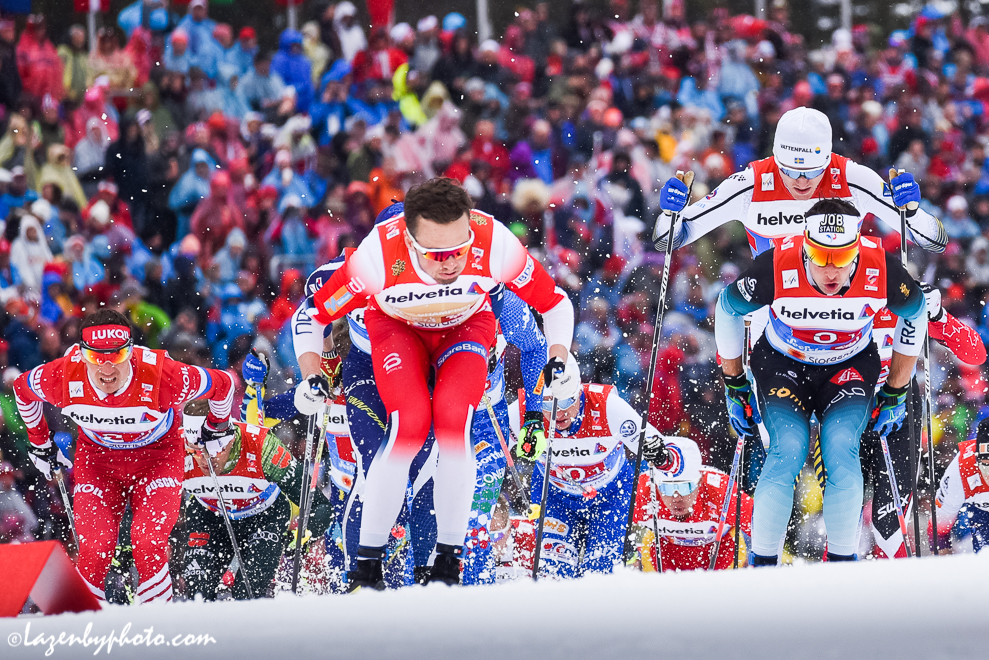
    Scramble leg of the men’s 4 x 10 k relay at the 2019 World Championships in Seefeld, Austria. (Photo: John Lazenby/lazenbyphoto.com)

    As the race unfolded, it was unclear which nations’ tactics would trump the others. In the first leg, the men slowly began to string out, but the lead exchanged hands several times. Russia’s Andrey Larkov made an early run but was marked by Erik Bjornsen of the US who also spent time at the front. Despite slipping a bit on the climbs, Iversen, who was on harries, skied near the front throughout, entering the stadium first to tag his teammate. At the first exchange, Norway, Russia, and Germany were all within one second of each other, with the US in fourth fading into a chase pack with Sweden and France.

    skelaxin buy online

    As the second leg began, Sweden’s Calle Halfvarsson surged to catch the leaders within the first kilometer, unwilling to lose sight of a possible 29th World Championship relay medal for Sweden. With him was Iivo Niskanen of Finland, Scott Patterson of the US, and Maurice Manificat of France.
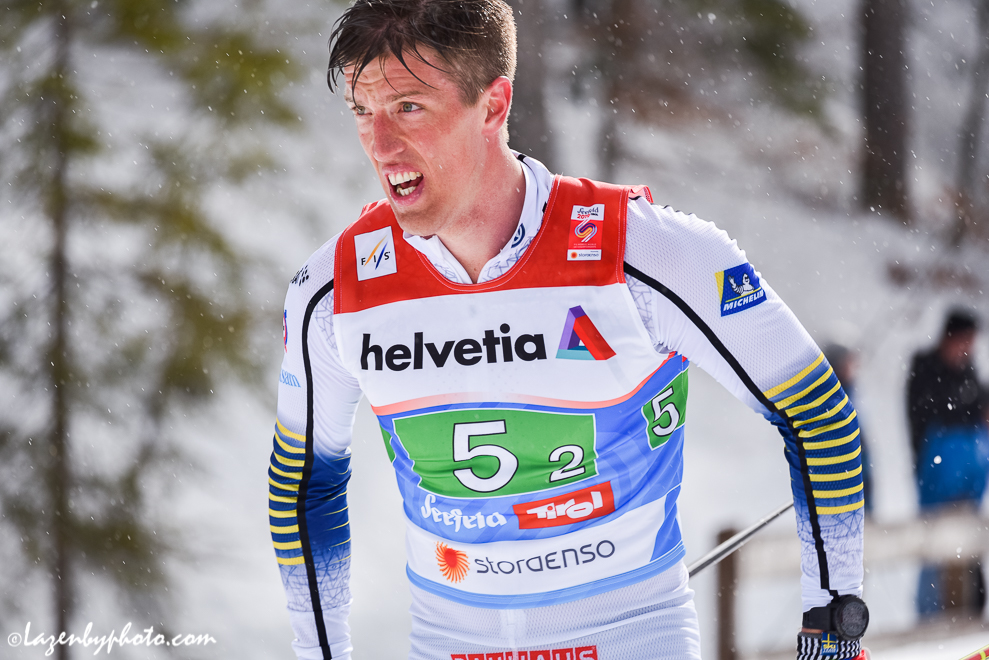
    Sweden’s Calle Halfvarsson during the men’s 4 x 10 k relay at the Seefeld, Austria World Championships. (Photo: John Lazenby/lazenbyphoto.com)

    While the rain picked up, Niskanen charged to the front and began to string things out in a fashion reminiscent of his performance in the 30 k skiathlon. Sundby stuck with the Finn, and was closely tailed by Alexander Bessmertnykh of Russia. The three skiers atop the podium after Wednesday’s 15 k reunited on the relay tracks.

    Halfvarsson began slipping on the hills and was unable to hold onto the pace, falling back a few seconds behind the leaders at first, then fading to nearly 30 seconds back by the end of his leg. Likewise, France, Germany and the US began to lose touch, dropping behind by over 30 seconds by the next exchange.

    However, as the first skate leg began, Jens Burman of Sweden followed Halfvarsson’s lead with yet another powerful surge to reconnect with the lead pack, closing the gap from 27 seconds at the exchange, to just two seconds at the 2.5 k checkpoint. Also rapidly making up ground, Clement Parisse of France gained 22 seconds on the leaders within the first lap. Unfortunately for Sweden, Burman seemed to burn a few too many matches in his charge, and in the second half of his leg, he fell back again almost as rapidly as he had advanced. He was overtaken by Parisse who did manage to light a fire for France, drawing to within eight seconds of the bronze medal before his final exchange to French sprinter Richard Jouve.

    At the front, Alexander Bolshunov of Russia and Røthe hammered their final lap, separating themselves from the field in yet another Norway vs. Russia battle for gold. The men entered the stadium together with a gap of more than 20 seconds on the Finn who sat in third. Bolshunov tagged Sergey Ustiugov to face Klæbo for their final World Championship duel, mano a mano.

    Russia’s Sergey Ustiugov leads Norway’s Johannes Høsflot Klæbo of Norway as they race the fourth leg of the 4 x 10 k relay at the 2019 World Championships in Seefeld, Austria. (Photo: John Lazenby/lazenbyphoto.com)

    In their last matchup in the sprint at the onset of the championships, Ustiugov pushed Klæbo after a tangle in the semifinals robbed the Russian of his momentum. After the heat, the men were seen in a heated shouting match where Ustiugov again pushed Klæbo and gave him an antagonizing pat on the cheek. He was issued a yellow card for obstruction and was disqualified for unsportsmanlike conduct, while Klæbo went on to win the gold. The two were also rivals throughout the Tour de Ski, where Ustiugov nearly caught the exhausted Norwegian leader in the final hill climb, but ultimately ran out of time and finished second.

    As they took to the course in the final leg, this much was clear: the Russian did not want to hand the victory over to his opponent. Ustiugov dictated the pace with the Norwegian tucked in behind him. They did not take turns, rather, Ustiugov held fast at the front. But, as they entered their third and final lap of the course, Ustiugov’s fatigue began to become evident, and Klæbo had plenty left in his tank to capitalize on the moment.
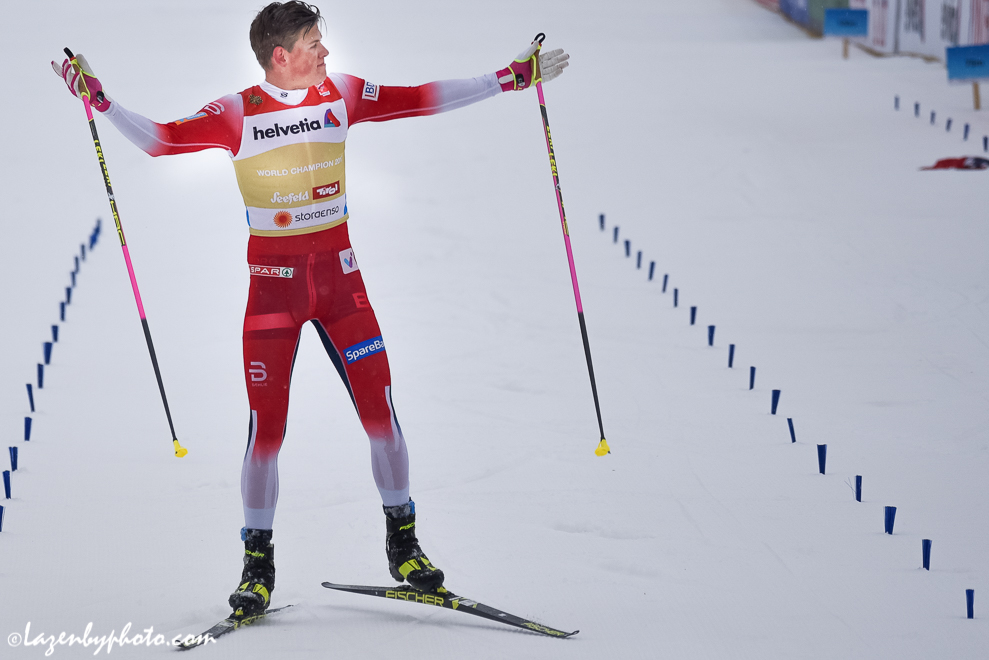
    Johannes Høsflot Klæbo of Norway in what has become his iconic gesture when crossing the line as a winner. Once again it was an opportunity for the arms being outstretched as Klæbo anchored Norway to the 4 x 10 k relay win at the 2019 World Championships. (Photo: John Lazenby/lazenbyphoto.com)

    The Norwegian surged to the front and did not lay off the gas, leaving Russia trailing behind, desperately trying to keep it together for silver. Klæbo cruised through the lap with enough room to begin his celebration well before the finish. He stopped the clock at a time of 1:42:32.1, 38 seconds ahead of Russia.

    “It was a really hard race, and I think the conditions now is really tough, but I think all of us had very good skis today and the waxing team and the guys helping us did a very good job,” Klæbo told the International Ski Federation (FIS) after the race. “So its very cool to stand here with those guys and take the gold medal. It’s unbelievable.”

    For both Klæbo and Sundby, this is the second gold medal of the championships. Sundby earned the long-awaited first individual medal of his career in the 15k classic just two days prior.

    “This is a different kind of emotional,” Sundby told FIS as he compared his wins. “But for the team, this is the most important. This is the race we’ve been thinking about since we started training in May, so for the team and for Norway, I think this is emotional for the nation. And for us, we are such good of a group, so to be able to do this together and of course for Johannes to destroy Russia on the last leg, that was amazing.”
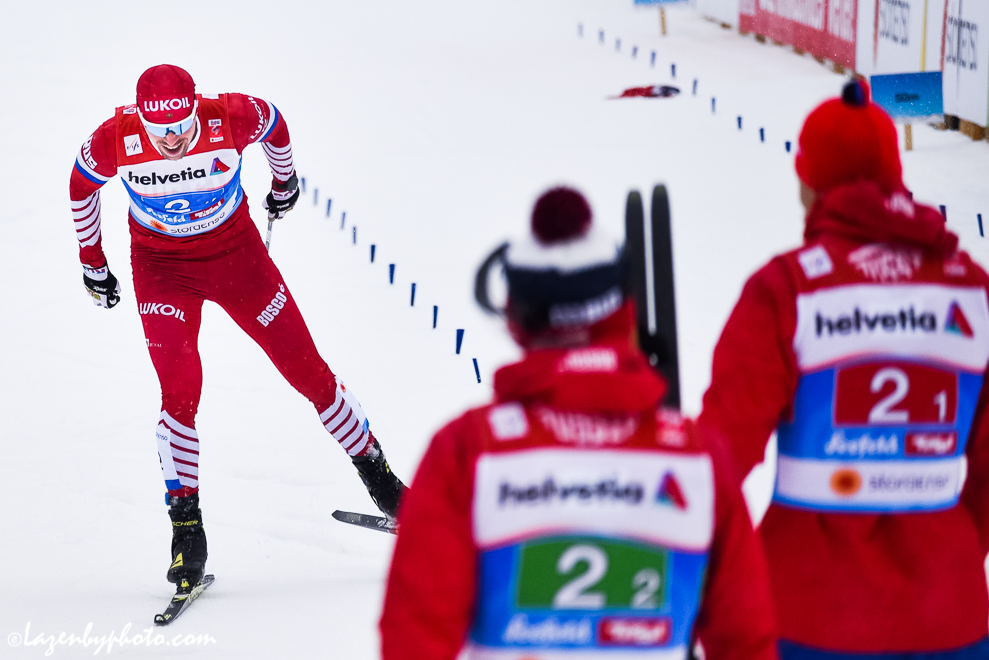
    Sergey Ustiugov of Russia coming in for second overall during the men’s 4 x 10 k relay at the 2019 World Championships in Seefeld, Austria. (Photo: John Lazenby/lazenbyphoto.com)

    Behind the racers in red, a battle for bronze was underway between France and Finland. With a gap ahead and behind, Jouve and Perttu Hyvarinen had duked it out for nearly 8 k. With less than a kilometer to go, the men came to a standstill, neither willing to break the wind for the other in the last descent. Not wanting to be caught by the teams chasing behind, Hyvarinen conceded and took the lead. Rounding the last corner into the stadium, Jouve rocketed around the Finn, no pole skating with lightning fast tempo toward the line to win bronze, 1.8 seconds ahead of Finland.

    After a strong start, the American team fell back in the pack. Patterson tagged David Norris in 7th to ski the first skate leg for the US, and the team was in 9th at the final tag to Kyle Bratrud. The team ended the day in 9th (+4:06.4).

    Canada’s Alex Harvey, Scott James Hill, Evan Palmer-Charrette, and Lenny Valjas placed 12th (+7:05.5).

    “We started off the morning on the wrong foot because Simi, who was going to be our anchor, woke up with a sore throat,” explained Chris Grover in a call. “After that, it went pretty well. Awesome opening leg for Erik… had a really great leg, had really good skis, felt like glide was excellent.”

    “We were excited that Erik was able to put together yet another really strong classic leg, and also another really strong lead off relay leg,” he continued. “He’s almost always our lead off person in the relay, and this time might have been the closest he’s been to the leader coming in. So that was great.”
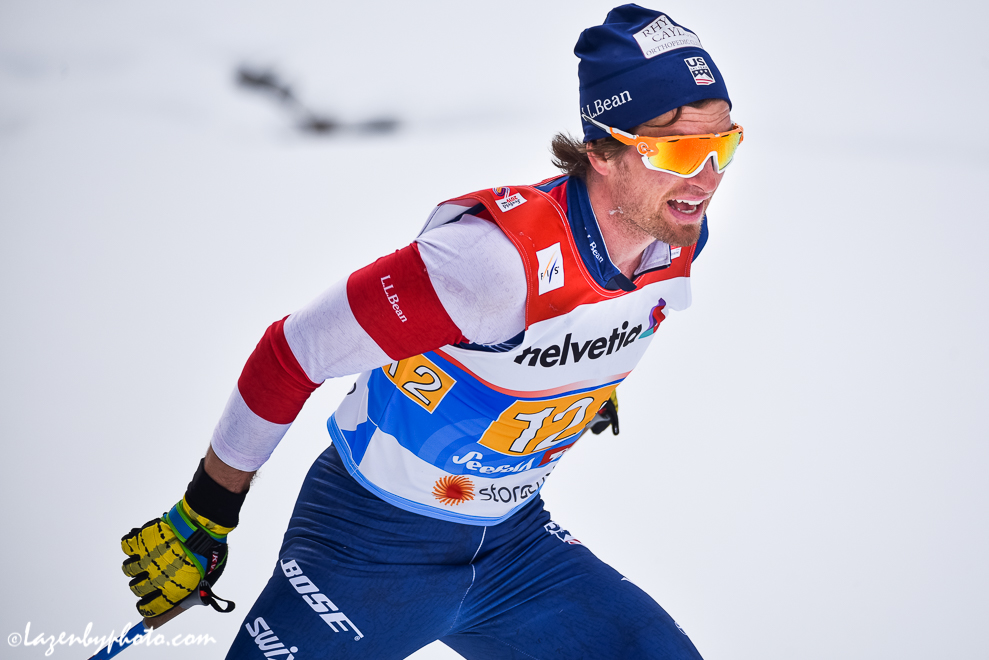
    Erik Bjornsen of the U.S. during the men’s 4 x 10 k relay at the 2019 World Championships in Seefeld, Austria. (Photo: John Lazenby/lazenbyphoto.com)

    Bjornsen was also pleased with his leg; despite a less than ideal starting position, he was able to advance through the pack into a better position to execute his race plan.

    buy revia online

    “I was trying to make sure to be in position for when the pace kind of turned up,” explained Bjornsen in a call. “And it actually took a little longer than I was expecting, but then on the last lap about halfway through on one of the big hills it started notching up and Russia made a big surge and I was able to jump right behind Larkov and kind of chase him on the big sprint climb. So I felt like I was able to play with the group and ski near the front, didn’t have the attack that I wanted on the last climb, but I saw by the splits that I was 5 seconds off the leader at the end, so I was pretty happy with that. I felt like I was able to compete with the best.”

    While Patterson could not maintain contact with the leaders, he skied his leg with grit

    “Another really solid leg out of Scott [Patterson], to go out and kind of close that gap that was presented to him,” said Grover. “At one point he said ‘Yeah, I got a little bit caught behind when the leaders broke.’ But at the same time, I think we recognize that the guys that broke away, Sundby, Bessmertnykh, and Niskanen, were the three guys that were on the podium in the 15k classic a few days before. So I think Scott recognized it was really hard for him to keep that pace. But he did a really good job when he was at his max really holding technique together and skiing really well.”

    Scott Patterson of the U.S. during the men’s 4 x 10 k relay at the 2019 World Championships in Seefeld, Austria. (Photo: John Lazenby/lazenbyphoto.com)

    Though he lost additional places, Grover also felt that Norris skied a strong leg.

    “For a while, he was catching a ride with Dario Cologna who was skiing up from behind him, and David [Norris] held with him for a little bit, but then that pace was too hard for him. He fell off that and had to regroup a bit.
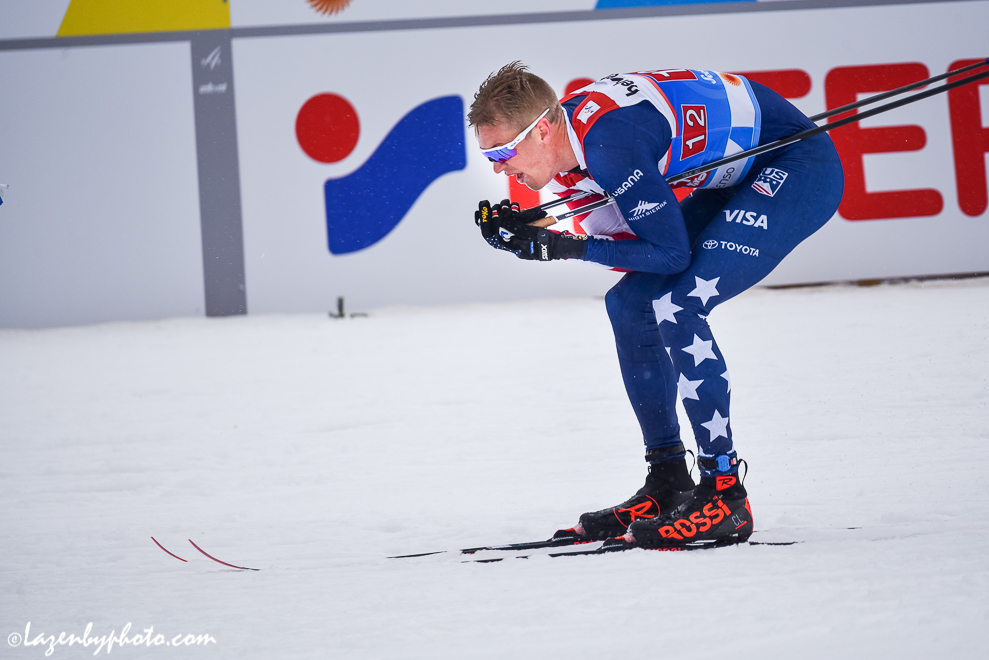
    David Norris of the U.S. during the men’s 4 x 10 k relay at the 2019 World Championships in Seefeld, Austria. (Photo: John Lazenby/lazenbyphoto.com)

    “By that time, the spread between teams was so big that Kyle started a minute or so behind, and had a minute or so to go to the person that was behind him,” Grover continued. “So, unfortunately, he skied by himself the whole time, which is not that conducive to having a fast leg, but he skied really well. Seemed like he was moving pretty good and skiing with great technique.

    “Overall, it was a really solid day for those guys with some absolute highlight coming at the beginning,” he concluded.

    The 9th place finish marks improvement for the team, as they finished 11th in the event two years ago in Lahti.

    “I think for the most part the relay team is satisfied with our performance today,” wrote Patterson in an email. “Unless we win though, there are also little things that each of us wished had gone a little better. Erik skied a great leg and I am proud of the performances of our whole team. While there were 8 teams in front of us that I would have like to beat, we also did manage to beat some good teams. It is always fun to come together as a group and see what we can do.”

    While the weather might not have been well received by all parties, the Americans didn’t seem to mind. In fact, they felt it may have been a benefit in many ways.

    “Honestly, I’m a little excited about the rain,” Patterson told FIS before the race. “Everyone else gets miserable and you just have to enjoy the other’s misery.”

    After the race, he still had an overall favorable opinion on the weather.

    “It was a nice variation from the heat of the 15k,” he wrote. “However, I will also admit that I was pretty cold and miserable myself while hanging out in the rain for the skate legs of the relay.”
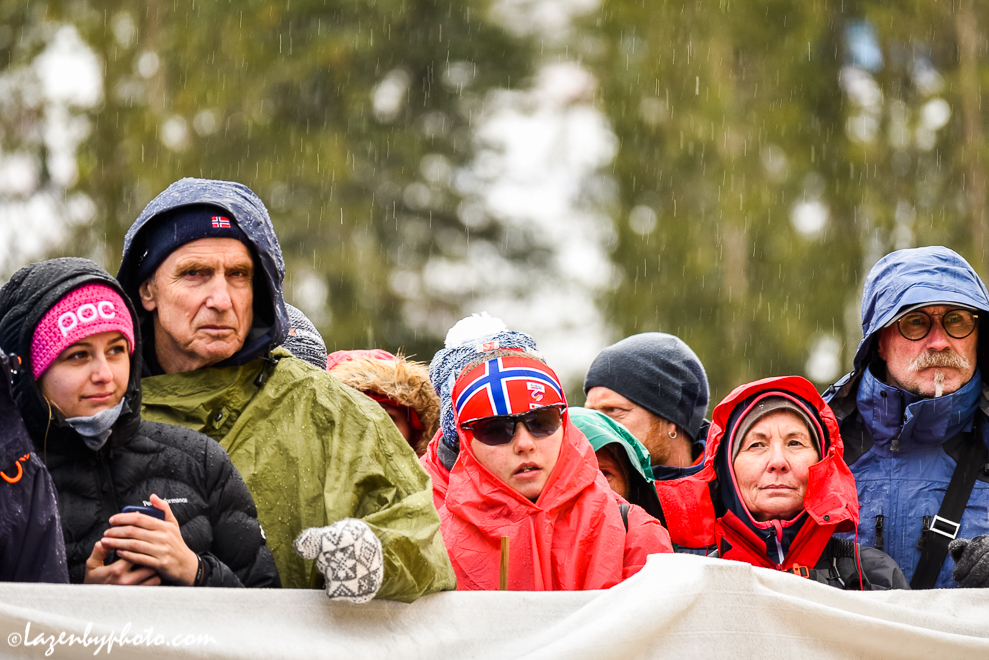
    Wet and looking dour: wet fans during the men’s 4 x 10 k relay at the 2019 World Championships in Seefeld, Austria. (Photo: John Lazenby/lazenbyphoto.com)

    Bjornsen also shared that he enjoyed the rain and thought it helped speed up the tracks.

    “Once you start racing in the rain, you don’t even notice,” he laughed. “It was fun.”

    From a waxing perspective, it was felt that the grey skies and moisture affected the course evenly. So while it was still a challenge for waxers, it was at least consistent conditions throughout the course.

    “It was a bit more uniform than in the past where we had a sunny side and a shady side,” Grover shared. “The cloud cover helped make things more uniform out there, which may have helped some of the teams get closer in the hunt for the right wax. Because, unfortunately, it just seems like a lot of the days we’ve seen some big discrepancies in skis, where some of the bigger nations just have incredible skis and everyone else is trying to figure out how to solve the puzzle with not quite as much manpower.”

    The World Championships in Seefeld conclude with a women’s 30k Saturday, followed by the men’s 50k on Sunday.

    Men’s Results

  • Hamilton Takes Eighth in Val Müstair Skate Sprint; Harvey Knocked Out in Quarterfinals

    Hamilton Takes Eighth in Val Müstair Skate Sprint; Harvey Knocked Out in Quarterfinals

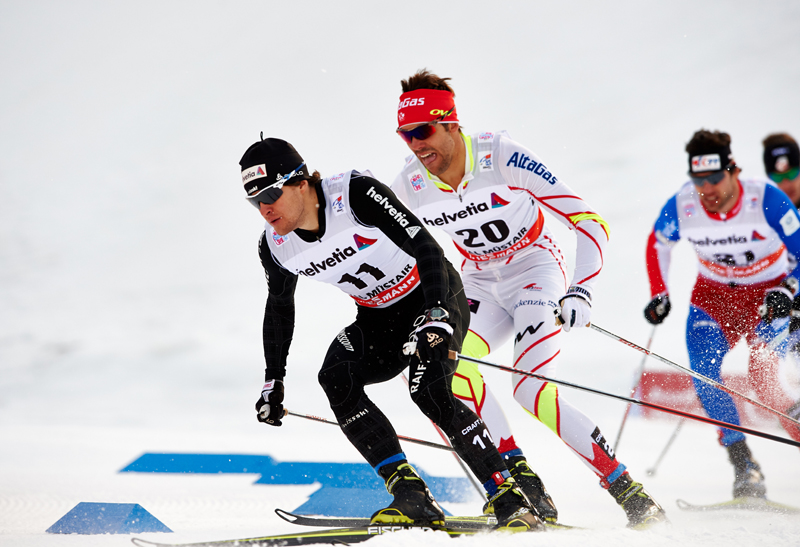
    Roman Furger (SUI) is followed by Len Valjas (CAN), (l-r) in quarterfinal action in Val Mustair (SUI). (photo: Fischer/Nordic Focus)
    Roman Furger (SUI) is followed by Len Valjas (CAN), (l-r) in quarterfinal action in Val Mustair (SUI). (photo: Fischer/Nordic Focus)

    It looked like Canada’s Alex Harvey would easily advance to the semifinals of Tuesday’s Tour de Ski 1.4 k freestyle sprint in Val Müstair, Switzerland. But by making what Harvey called a “rookie mistake,” Harvey allowed Sweden’s Simon Andersson catch him in the final stretch and outlunge him to take second in their quarterfinal heat.

    Going around the final corner, Harvey – who was second in Sunday’s stage, a 15 k classic pursuit – controlled the second-place position behind Sweden’s Calle Halfvarsson.

    “I thought I was second for sure, so I looked on the left to see if anybody was coming. I thought that nobody was coming so I started easing up a little bit, which is the last thing you need to do. I mean, the first thing you learn as a ski racer is to ski over the line,” Harvey explained over the phone.

    Until the final moments, the 26-year-old raced well, especially after being caught behind an early crash by Germany’s Thomas Bing. He stayed behind but within striking distance of the leaders, then made his move on the steep hill before the descent to the stadium, where he went from fifth to second.

    “I kind of messed it all up in the last 50 m. So that was really dumb of me,” he said. He ended up 0.23 seconds behind Halfvarsson, who won the heat in 3:17.43. Andersson finished 0.16 seconds behind.

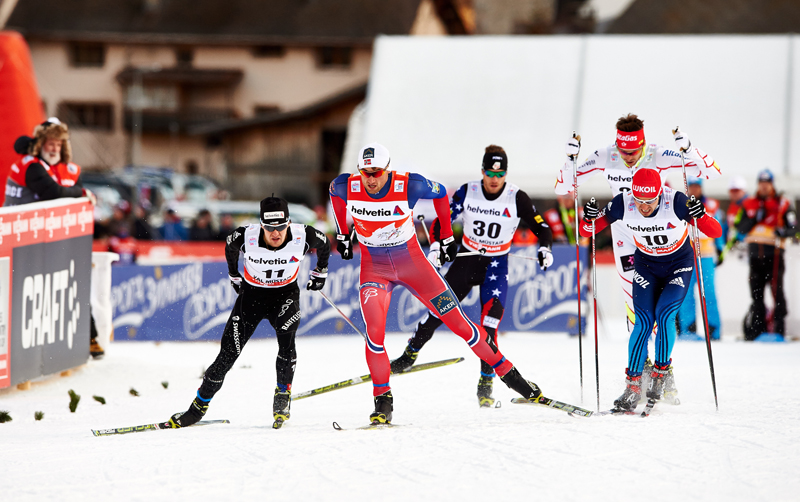
    Petter Northug (NOR) controls the pace during the a quarterfinal heat with Len Valjas (CAN), Simeon Hamilton (USA), Ilia Chernousov (RUS) (l-r) following behind. (photo: Fischer/Nordic Focus)
    Petter Northug (NOR) controls the pace during the a quarterfinal heat with Len Valjas (CAN), Simeon Hamilton (USA), Ilia Chernousov (RUS) (l-r) following behind. (photo: Fischer/Nordic Focus)

    Meanwhile, American Simi Hamilton – who won last year’s Tour freestyle sprint in Lenzerheide, Switzerland – was the lone American to qualify, making it through to the rounds even after suffering a crash on an icy corner during qualification. He qualified in 30th (+8.53), just 0.04 seconds ahead of the 31st place skiers.

    A year after winning in Lenzerheide, Hamilton said he was not putting any extra pressure on himself.

    “A ski race is a ski race,” he said over the phone. “This is a totally different course, much longer, and I think when you try to compare one day to another day it never works out very well because everything changes so quickly.”

    About the crash in the qualifier, Hamilton said he was on the ground for a few moments, but fortunately his skis were still pointed downhill. He explained that there was probably one place were a skier could crash on the course and not lose much time, and he happened to fall at that spot.

    Hamilton then skied a strong quarterfinal in the fastest heat of the day. He spent most of the first lap in back of his heat, before making his move in the descent to the stadium and challenging Dusan Kozisek of the Czech Republic and the leader, Northug. Northug won the heat in 3:13.51, and Kozisek outlunged Hamilton for second (+0.60). Though Hamilton took third (+0.65), he made it to the semifinals as a lucky loser.

    In his semifinal heat, the 27-year-old maintained a position just behind the leaders for most of the race, but despite his final push he finished the heat in fourth, 1.69 seconds behind Russia’s Evgeniy Belov (3:16:20). He ended up eighth overall, and is 52nd overall on the Tour.

    Hamilton said in the semifinal he was trying to replicate his tactic of hanging in the back and trying to make a move during the second lap.

    “I felt really relaxed heading into that second lap and when I tried to make another move my body just felt a little bit flatter than it had in the quarterfinal, and I wasn’t able to put in quite the surge that I needed to or wanted to,” he explained.

    Despite the feeling of flatness, Hamilton is excited about his fitness, saying today’s result is not an indication of where his body is now.

    “I think it’s a fluke flat day and I’m looking forward to more racing to come soon,” he said.

    American teammate Andy Newell had a frustrating day, finishing 83rd out of 83 finishers in qualifying after crashing ironically in the same corner which had taken his teammate Hamilton down.

    “When he came through on his split I think he was in fifth or so,” USSA Cross Country Head Coach Chris Grover said over the phone. “But he spun out on an icy berm on the top corner of the course, unfortunately, and then he tried to get up and basically ended up into the signage so his day was over.”

    Newell was actually the last skier left on the course so, had he not crashed, would have knocked Hamilton out of the quarterfinals, as Hamilton was sitting in 30th.

    “[This is] so disappointing for Andy because he looked really good, and he is of course just having such a disastrous Tour right now,” Grover said.

    “It sucks because it has been so hard for me trying to score points on the World Cup this year. I am pretty frustrated with that,” Newell told FasterSkier. However, he at least was happy that Hamilton was not bumped out of the quarterfinal.

    “We still had one person in the heats. It was kind of a lose, lose situation on that one.”

    Canadian Devon Kershaw, who had a disappointing first two stages in Oberstdorf, qualified in 19th, 7.76 seconds behind top qualifier and Tour leader Petter Northug of Norway (3:10.60).

    Kershaw stayed in the back of the pack during his quarterfinal heat, which was won by Poland’s Maciej Starega (3:16.24), and was never able to make a move in order to challenge the leaders. He finished the heat in fifth, 3.19 behind Starega, and ended up 22nd overall. However, this was his best finish on the Tour and his best overall result in a World Cup race since finishing 14th in the Ruka, Finland, 15 k classic distance race on Nov. 30.

    Canadian Lenny Valjas qualified in 20th, but struggled with the pace of his quarterfinal heat – the fastest heat of the day, which Northug won. Valjas finished it in sixth (+3.74), and was 28th overall.

    “It was good to qualify for the heats, but I wanted a little more,” Valjas said to Cross Country Canada. “I went out really fast today, and just had nothing left up the final hill. I just didn’t have the energy today, but I gave it all I had.”

    Valjas has dealt with a cold throughout the week, and has decided to pull out of the Tour’s remaining four races.

    Results

    Tour de Ski overall standings

  • Krogh Proves Superior in Davos Sprint, Earns First World Cup Victory

    Krogh Proves Superior in Davos Sprint, Earns First World Cup Victory

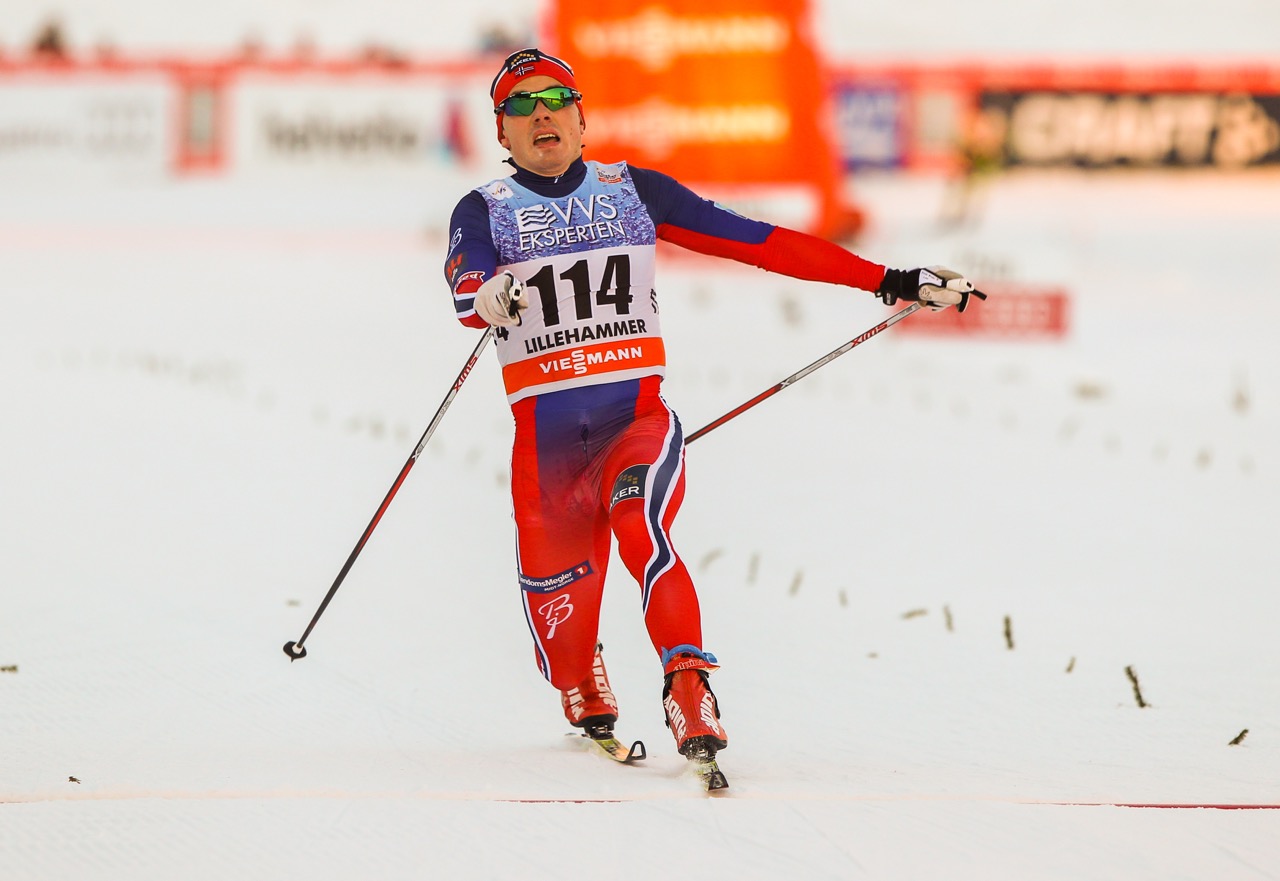
    Finn Hågen Krogh lunging in Saturday's 10 k freestyle individual start. He ended up second, just 2.2 seconds behind Norwegian teammate Martin Johnsrud Sundby. (Photo: Fischer/NordicFocus)
    Finn Hågen Krogh lunging in last week’s 10 k freestyle individual start in Lillehammer. In Sunday’s freestyle sprint in Davos, Switzerland the 24-year-old earned his first true World Cup victory. (Photo: Fischer/NordicFocus)

    Finn Hågen Krogh had what he called a perfect race Sunday in Davos, Switzerland.

    After placing third in the qualification round of the 1.3 k freestyle sprint, the Norwegian rapidly progressed through his quarterfinal, semifinal, and ultimately the final to earn his first World Cup victory.

    Krogh won the freestyle sprint in the Lillehammer mini tour earlier in Decemeber, but as the race was a Stage World Cup, he had yet to win a true World Cup until Sunday.

    Speeding around a relatively short course on the high-altitude trials of Davos, Krogh sustained a pattern of starting hard off the front to lead the majority of each race. Many skiers would try to hold their own against the up-and-coming Norwegian, but they often paid the price.

    In the final, Krogh fought to earn a spot at the front of six men despite a strong challenge from Calle Halfvarsson of Sweden. As the meters progressed Krogh and Halfvarsson left the remaining competitors behind, but by the time they entered the second lap of the sprint course, Halfvarsson’s energy was spent and the other men overtook him. With Halfvarsson out of the way the race was Krogh’s.

    Although fellow Norwegians Anders Gløersen and Eirik Brandsdal gained on Krogh in the final meters, there were no challenges to his strength as he crossed the line with a time of 2:18.16. Gløerson and Brandsdal placed second and third, 0.62 and 1.07 seconds behind their teammate.

    In a post race interview with FIS, Krogh said the key to his success was his fitness. “It was a perfect race. I am in a great shape. My tactic was to ski in the front and control the race. It is amazing to win a World Cup,” he said.

    The race marked another Norwegian podium sweep – a regular occurrence so far in the 2015 season. After the Davos World Cup, Norway has won 12 of 14 races and earned 34 of 42 podium positions.

    In a post-race interview Gløerson told FIS that he felt pressure heading into Sunday’s race because of the success his team has experienced in the prior weeks.

    “So many of our guys have skied well this year. I felt under pressure to do a good result today. I think I was lucky. I found a good rhythm and I am very satisfied with today,” he said.

    The final corner leading into the stadium proved troublesome for several skiers including Brandsdal. As he entered the turn, he tripped and almost fell. Brandsdal was forced to the outside of the corner as he attempted to stay on his feet, losing momentum into the stadium. While he was disappointed in his tactical error, Brandsdal said he was proud of his teammates and the Norwegian podium sweep.

    “I was angry about myself about how I skied the last curve. I wanted the victory so much that I lost my head. I am proud of my teammates, they did a great job. I felt strong but the finish did not work as I hoped,” he said to FIS.

    Federico Pelligrino of Italy also fell victim to the corner. Pelligrino skied a strong qualifier for the fastest time of the day, and, like Krogh, maneuvered his way to a win in his quarterfinal. In the semifinal however, Pelligrino made a wrong move on the corner and moved from second position to last.

    The remaining men in the final were Alexey Petukov of Russia (+1.35), Halfvarsson (+2.06), and Norweigian Tomas Northug (+2.29). Northug, the younger brother of the famed Petter Northug, earned his second-best World Cup result after finishing sixth. His best result is a fifth place from a March 2013 Stage World Cup classic sprint in Stockholm, Sweden.

    Petter Northug finished his day in 19th position after what some commentators called an obstruction by Brandsdal in his quarterfinal. Northug placed fourth in the quarterfinal.

    Rounding out the top-ten, were Martii Jyhae of Finalnd, Baptiste Gross of France, Maciej Starega of Poland, Ola Vigen Hattestad of Norway, Pellegrino, and Joeri Kindschi of Switzerland.

    The top North American finish of the day came from Lenny Valjas who qualified in 10th position and eventually placed 13th. It was the first time in roughly a year-and-a-half that Valjas qualified in a sprint, after earning several podium spots in 2012 and 2013 World Cups. Andy Newell was the only other North American in the finals and placed 15th.

    After the weekend of World Cup racing, Martin Johnsrud Sundby of Norway is the overall World Cup points leader with 491 points. Sundby placed 31st position in the sprint, missing qualification by 0.06 seconds. Inching towards Sundby is Krogh, who currently sits in second place with 409 points. Halfvarsson is ranked third with 275 points.

    The World Cup returns to Davos next weekend as scheduled races in Las Clusaz, France were cancelled due to poor snow conditions. With another freestyle sprint planned for Sunday, competitors will have a chance to either defend their results or improve.

    Men’s results

  • Tour de Ski Stage Two Photo Gallery

    Tour de Ski Stage Two Photo Gallery

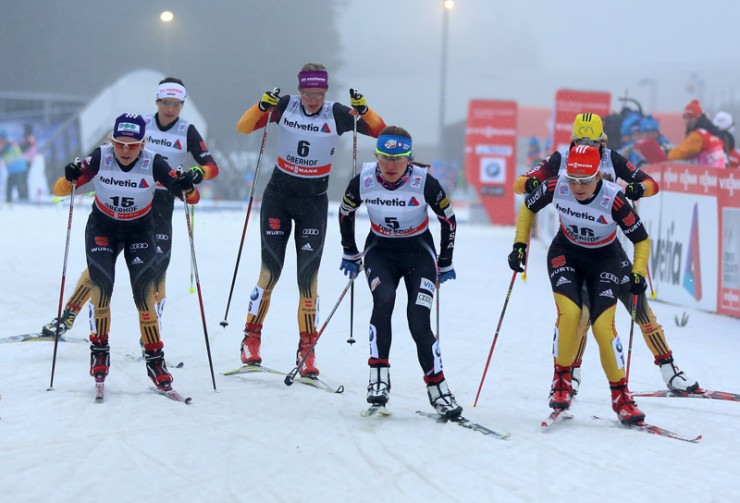
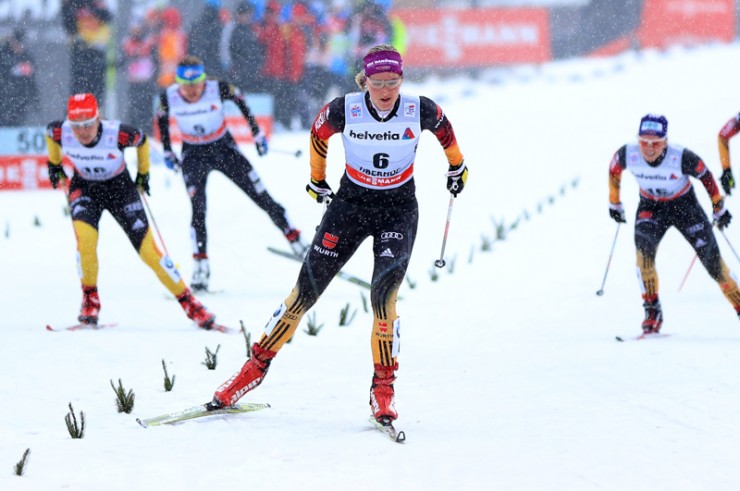
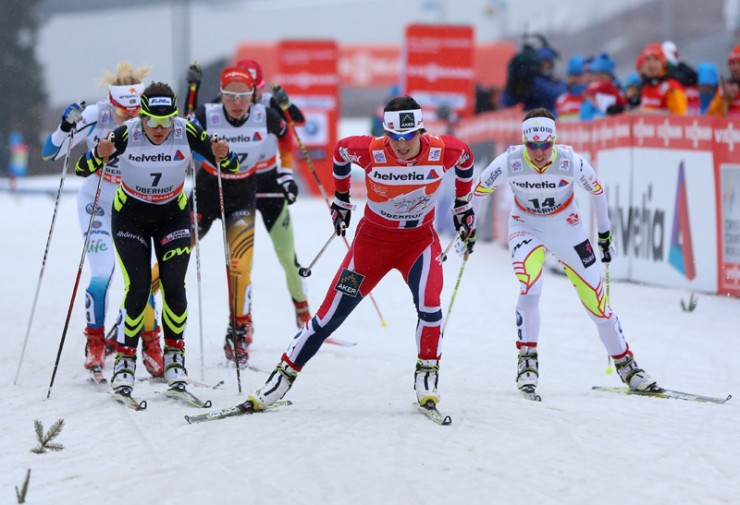
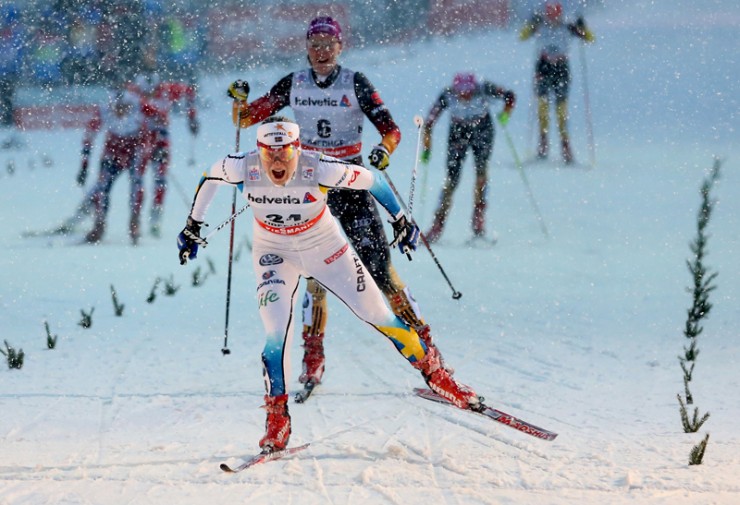
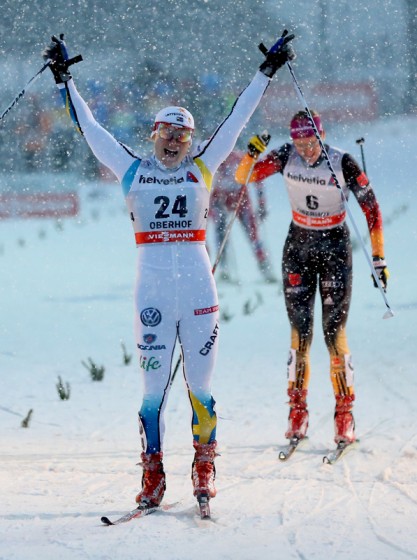
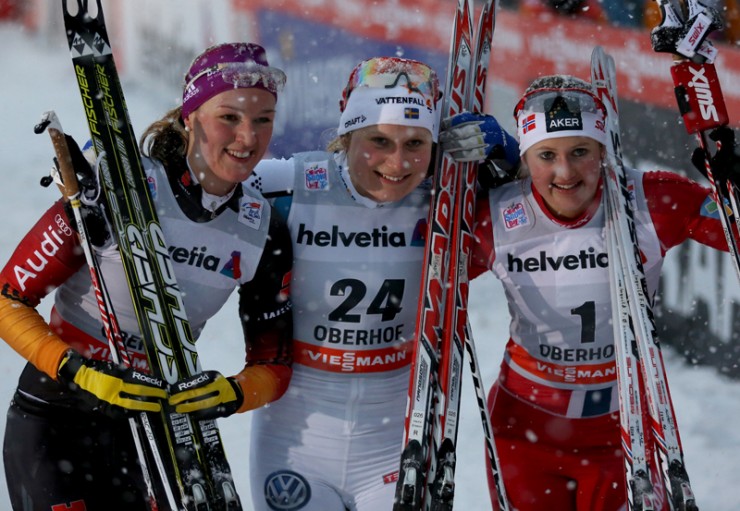
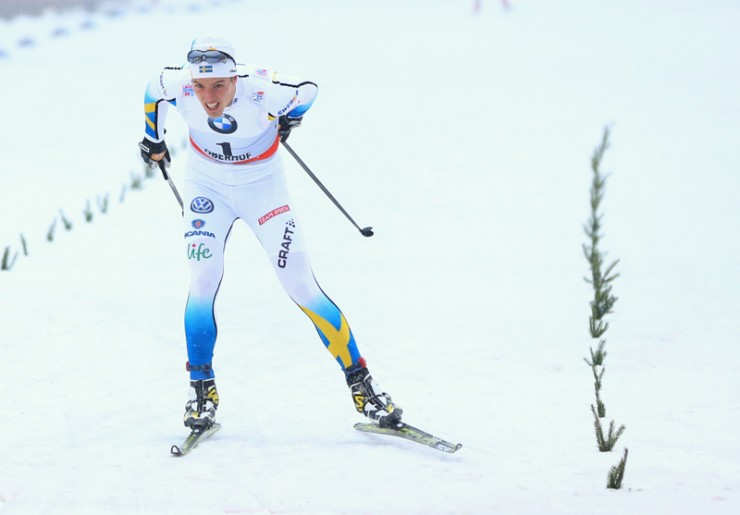
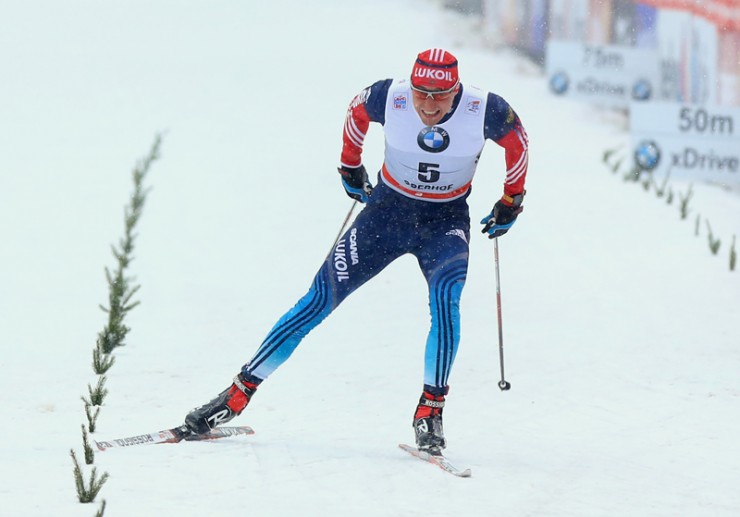
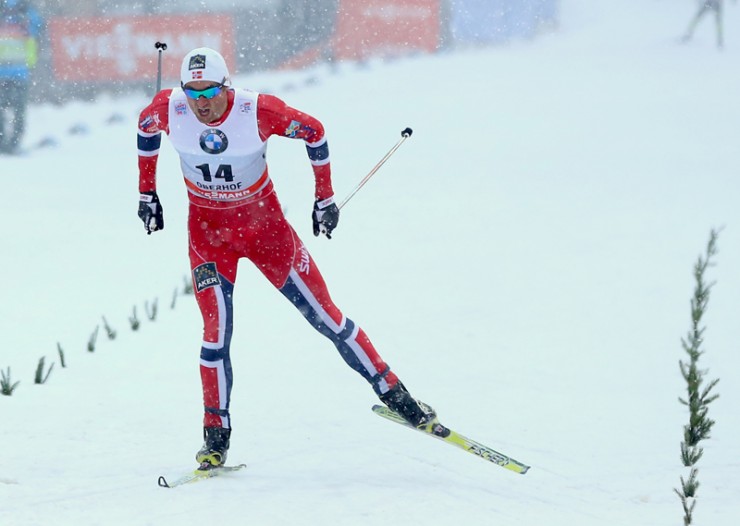
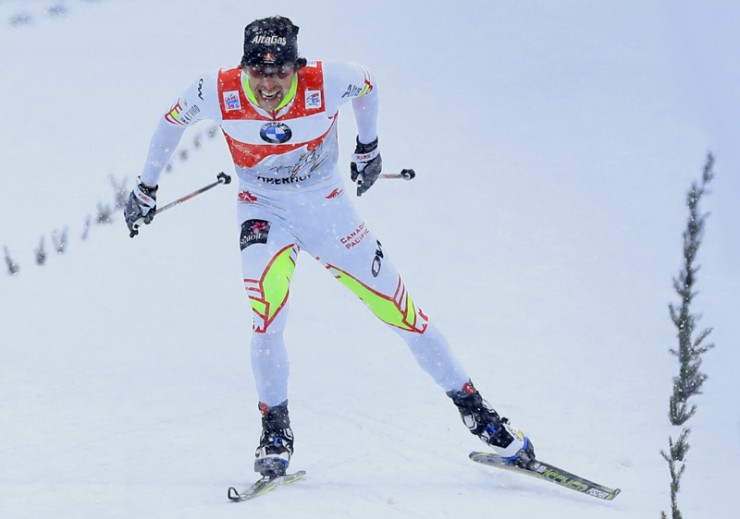
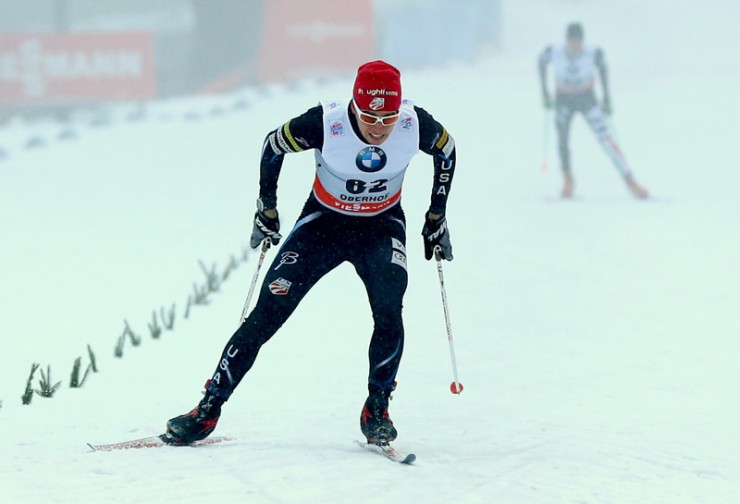
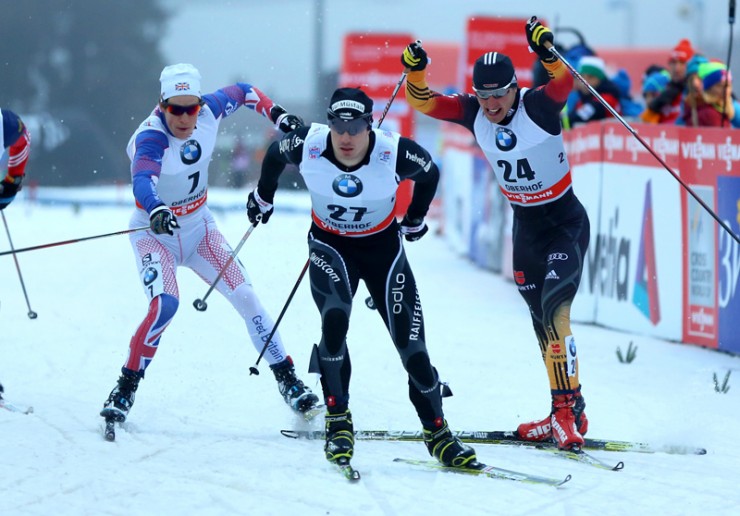
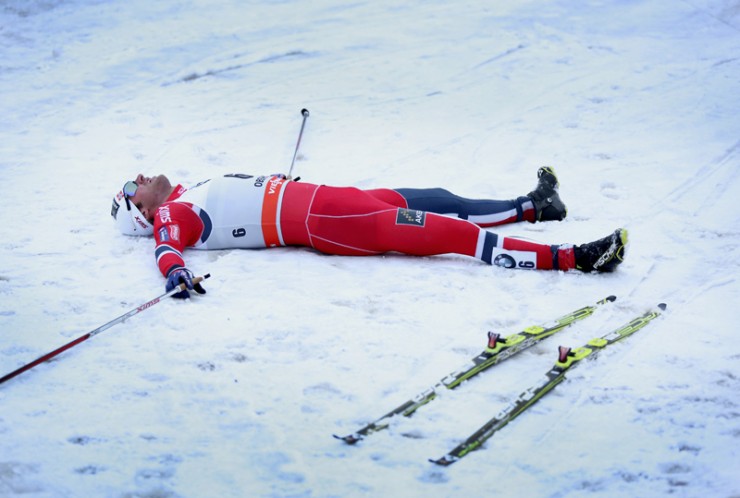
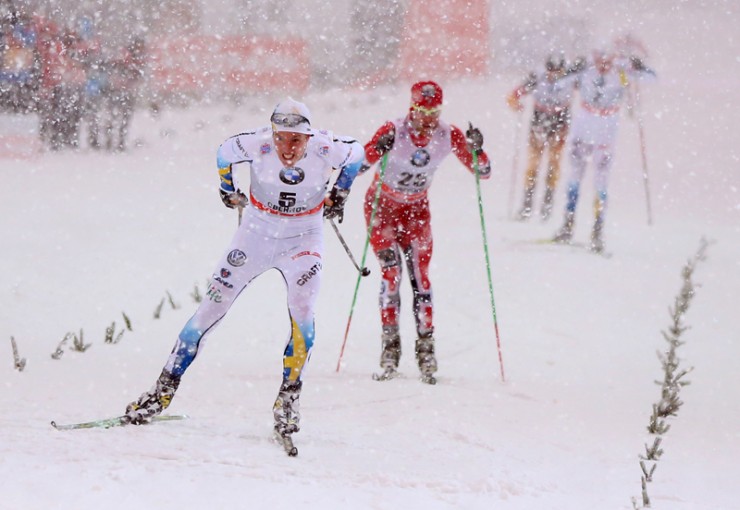
    Check out photos from Sunday’s freestyle sprint in Oberhof, Germany, the second stage of the 2013/2014 Tour de Ski.

    Want to know what happened? Check it out here: Men’s Report | Women’s Report | American Report | Canadian Report

    Results: Men | Women

  • Norwegian Men Go One-Two in Tight Finish; USA Strong in 11th

    With the Norwegian women taking the top two spots earlier in the day in the 4×5 k, the Norwegian men had the bar for success set high for their four-man relay effort.

    Northug getting it done in Sjusjoen (Photo: flyingpointroad.com)

    As always, Petter Northug Jr. was anchoring Norway I, supported to Eldar Roenning and Finn Haagan Krogh on classic skis, while Lars Berger, biathlete, brother of Tora Berger, and occasionally cross-country relay selection skied third in the 4×10 k race in Sjusjøen, Norway, on Sunday.
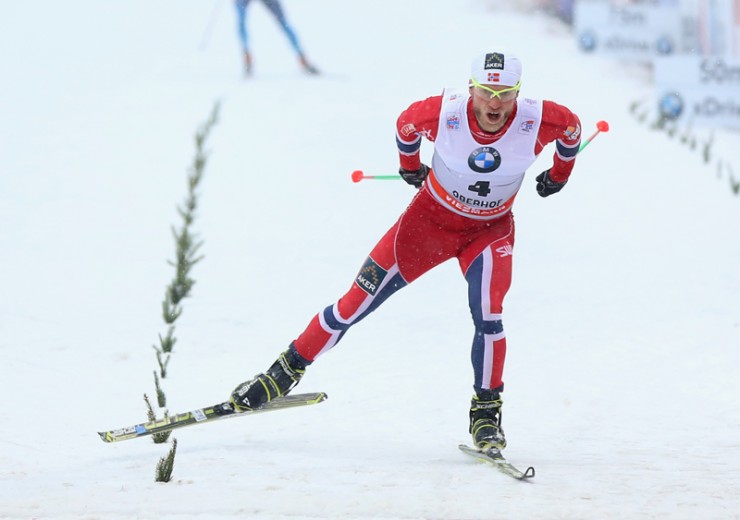
    Held on 2.5 k loops of man-made snow, the tracks quickly became extremely icy and hard.

    While Norway I had a slight advantage in the form of Northug’s traditional anchor-leg superhuman efforts, it was obvious that the men were not going to have as clear a path to the finish line as their female counterparts.

    Ultimately, the result was the same, as Norway I took the gold medal in a tight finish. In a surprise turn of events, Norway III emerged from the finish-line sprint with silver medal, while the Swedes picked up the bronze, narrowly edging out the French.

    Russia I and II as well as France pushed the pace on what is usually a fairly sedate opening leg of the relay, forcing the field to work, and whittling away several teams.

    As they rounded the corner into the exchange zone, the main pack was down to just six, with another six teams hanging close inside of 15 seconds, including the Americans, kept competitive with a strong leg by Andy Newell.

    The lead pack on the second leg (Photo: Liz Stephen)

    The major players on the outside were Switzerland, where Toni Livers dropped 46 seconds to the leaders, while Germany I employed Andy Kuehne — who could be seen running up hills on his skis — to finish the leg dead last, over a minute and 30 seconds back of the lead.

    Under strong efforts by a variety of teams including Russia I, using Maxim Vylegzhanin, the French who tapped Maurice Manificat, and Finlands’ Sami Jauhojaervi, the main pack was reduced to six teams, including Norway I with Krogh.

    Norway III, up until that point in the hunt, was let down by unknown quantity Ronny Fredrik Ansnes who dropped them out of the lead group and almost 30 seconds back of Russia I when the teams switched to the skate leg.

    Russia I, France, Finland, Norway I, Sweden and Italy all came into the exchange within five seconds, while Switzerland’s Dario Cologna, the Czech Republic, and American Kris Freeman making up a smaller chase pack, around 30 seconds off the pace.

    It took a massive effort for Cologna to draw back into the group – he skied the fastest second leg of the day by 13 seconds, blowing by Canada’s Ivan Babikov who broke a pole and was struggling as a result.

    With Sweden’s Daniel Rickardsson tagging off to Johan Olsson, winner of Saturday’s 15 k skate, fireworks appeared in the offing for the third leg, especially with the history between Norway and Sweden in the relay.

    But the Swede who was so strong on Saturday didn’t seem to be in the same world-class form. After leading for the first 5 k, Olsson could be seen looking around and motioning for someone else to come to the front.

    However, Olsson was mostly ignored, until Lars Berger of chief rival Norway I stepped up at 7 k and turned up the pace. Berger was matched by everyone, especially Roland Clara who was skiing third for Italy. Clara, who picked up a bronze medal on Saturday finishing just shy of Northug for silver, put in an attack in the last 700 meters on a steep uphill, managing only to shake Russia I in the form of Sergey Turychev before the third and final exchange.

    Roughly 30 seconds back of the lead pack, USA’s Tad Elliott attacked his small group of Morten Eilifsen (NOR III) and Remo Fischer (SUI), and then was attacked in turn, as Norway III and the Swiss handed off 44 seconds back, and Elliott handed off to Simi Hamilton 53 seconds behind the leaders.

    Heading into the fourth leg, it was clear that Northug hadn’t had a sudden urge to change his tactics. Immediately after taking the tag, the firebrand Norwegian pulled up to let the five others go by, slotting himself in the pack second from the back.

    The pace then dropped considerably, letting Curdin Perl (SUI) and Sjur Roethe (NOR III) claw back their considerable deficit. It was obvious for a long way out that the race had turned into an 8-way shootout at the finish line for just three medals.

    At that point, Northug does what he does best, unleashing his unparalleled finishing kick to get clear of the pack to pick up the gold medal for Norway I.

    But the surprise was Roethe, who stormed from 8th and a 44 second deficit to deliver a silver medal for Norway III, and secure the one-two finish for the second relay of the day.
    “I’m happy to be on the podium today,” said Roethe in an interview after the race.
    “The last leg was a tactical one but at the end I pushed hard and could take the second spot for our team.”

    Sweden’s Calle Halfvarsson made a valiant effort to break up the Norwegian party, but the young Swede – who opened his season with a career-best World Cup finish in 4th on Saturday – couldn’t find enough speed to get past the red suits.

    “In the last uphill I was behind and lost a bit the connection,” Halfvarsson said in a post-race interview with FIS Ski.

    “I had to pass all for the finish sprint and that was not so easy… I am satisfied with my race but for sure I was a bit nervous before and during it.”

    Left empty-handed at the finish line were the French, who finished fourth, just ahead of Russia I. Finland finished sixth, barely holding off the hard-charging Norway II, who placed biathlete Emil Hegle Svendsen on the anchor leg. Svendsen came from 12th spot, nearly two minutes back to have a shot, which gives you an idea of just how slowly the lead pack was going on the final leg.

    USA anchorman Simi Hamilton dropped just two spots, one to Ilya Chernousov (RUS II) and the other to Svendsen, to end the Americans day in a solid 11th.

    Canadian opening-leg specialist Devon Kershaw appeared strong in the early going, until a collision popped his ski off his foot, and put him to the ground.

    Kershaw has provided plenty of first-leg fireworks in the past, but his fall and resulting time loss put the Canadians in a deep hole early, while Babikov broke a pole and never managed to find his rhythm. Graham Nishikawa skated the third leg, but by the time he received the tag they Canadians were out of the running, and the Canadians failed to start their fourth skier, sprinter Len Valjas.