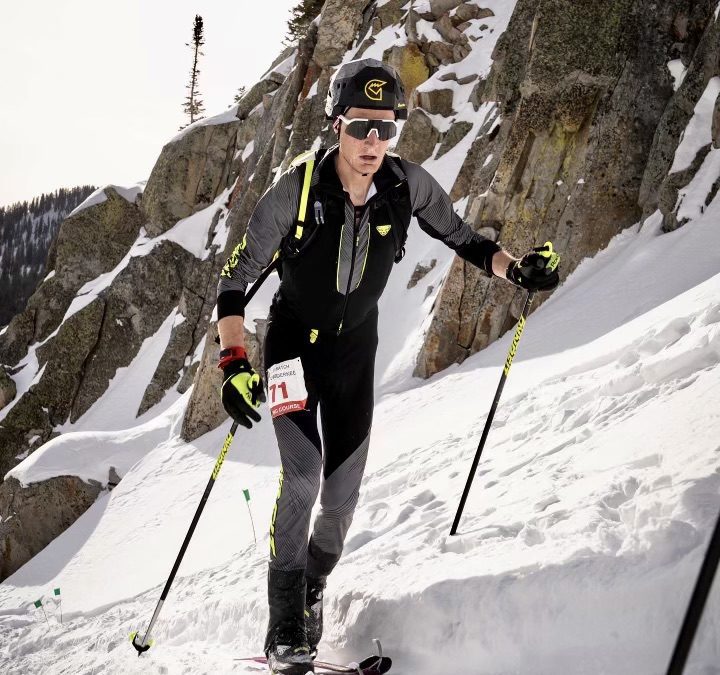
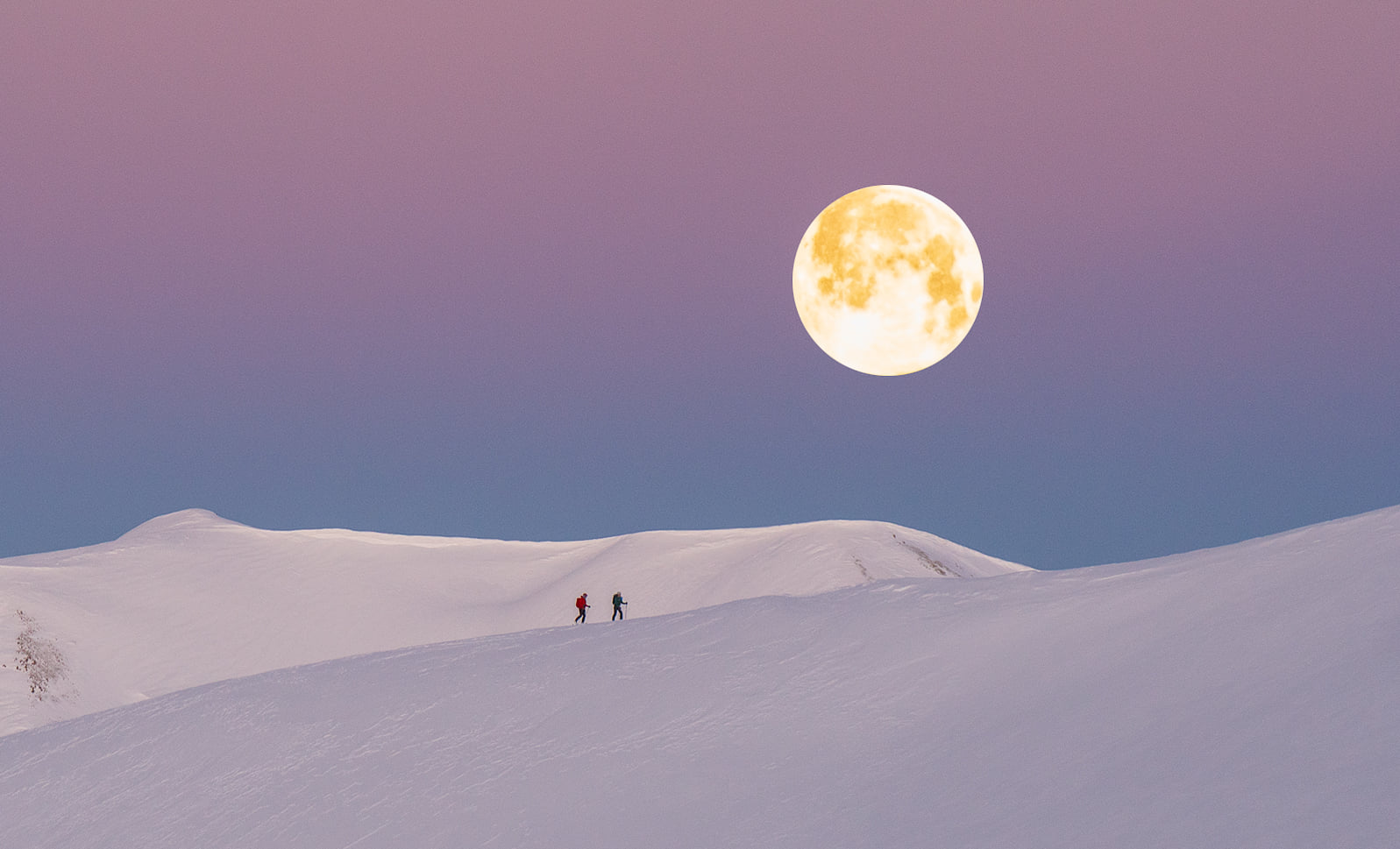
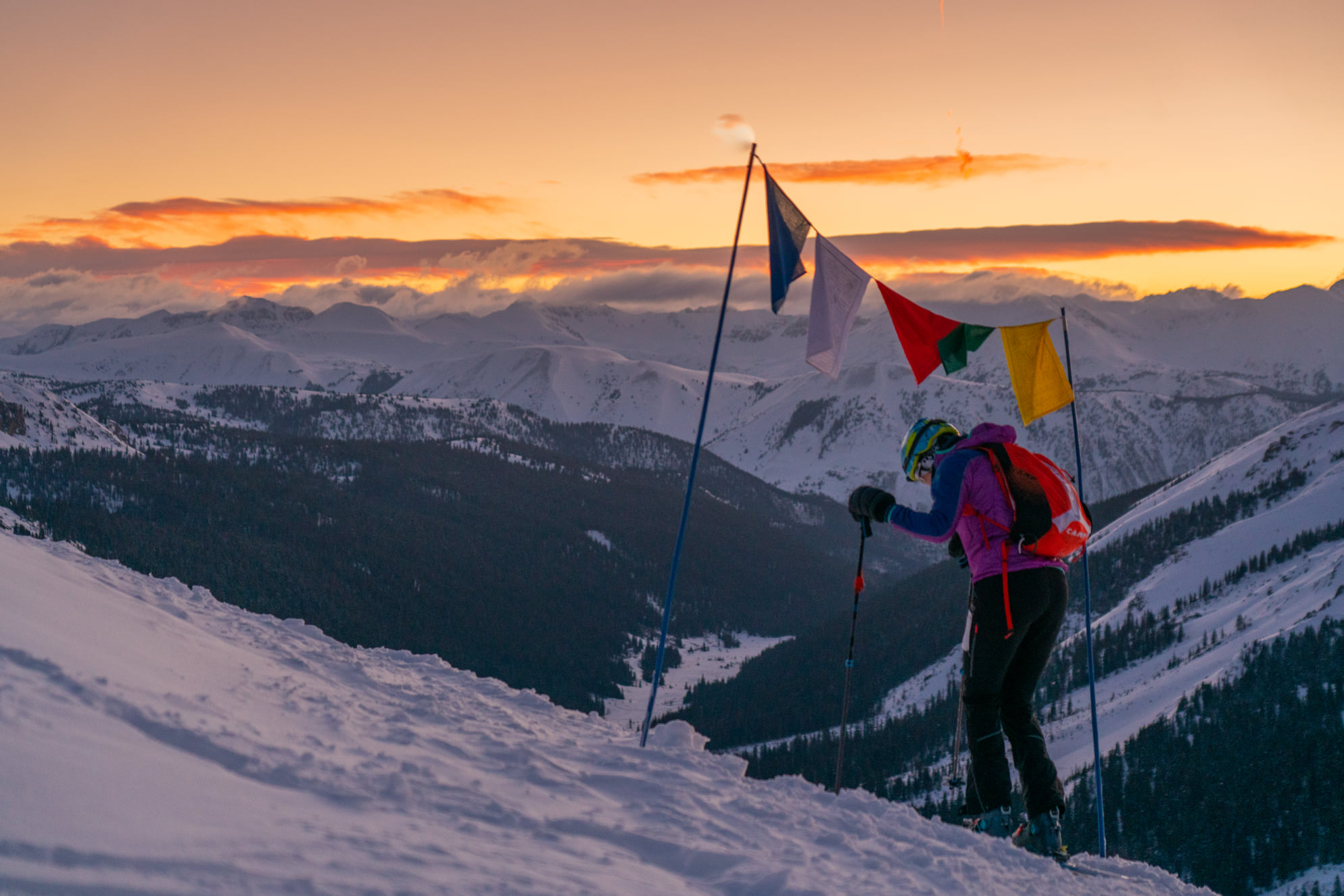
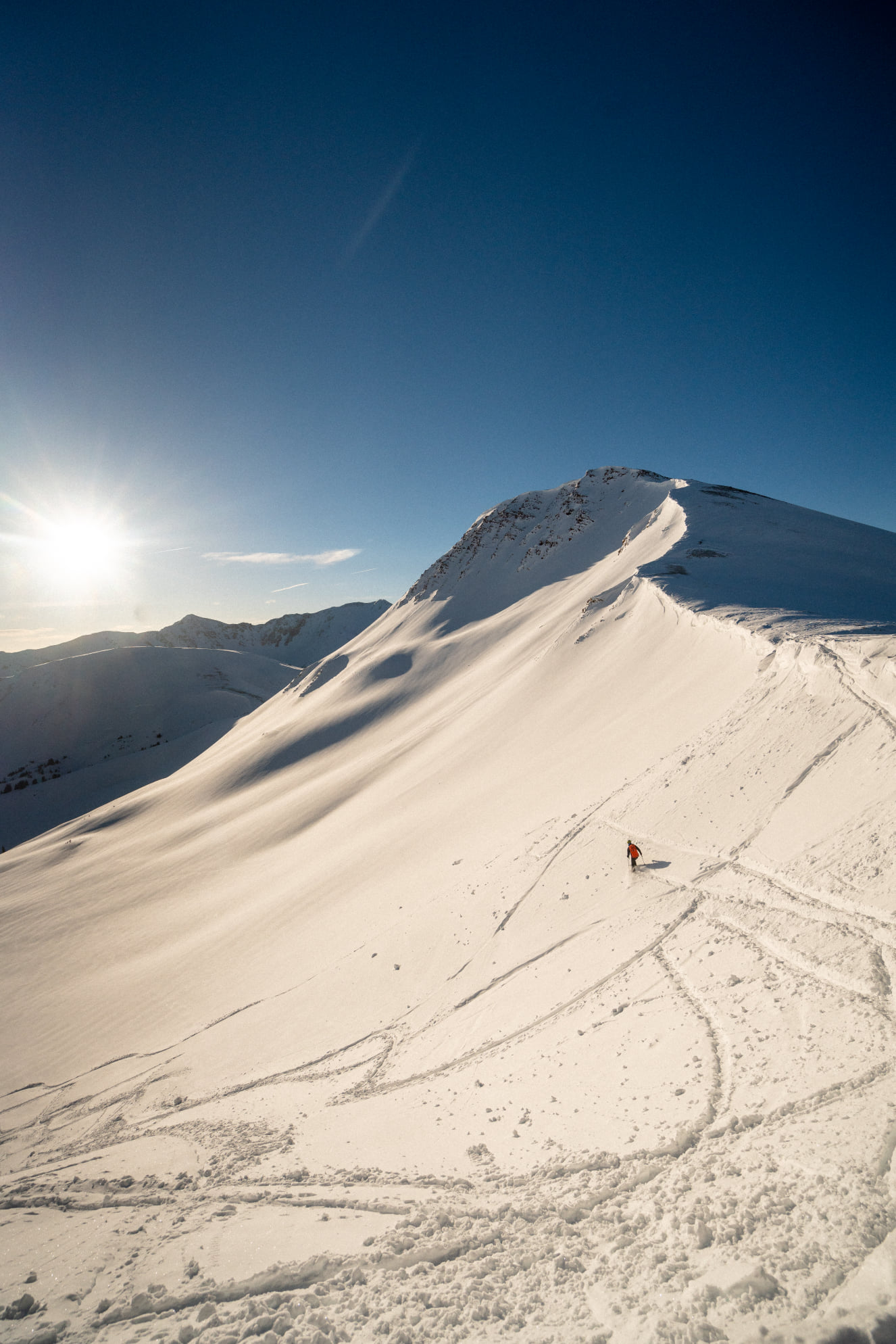
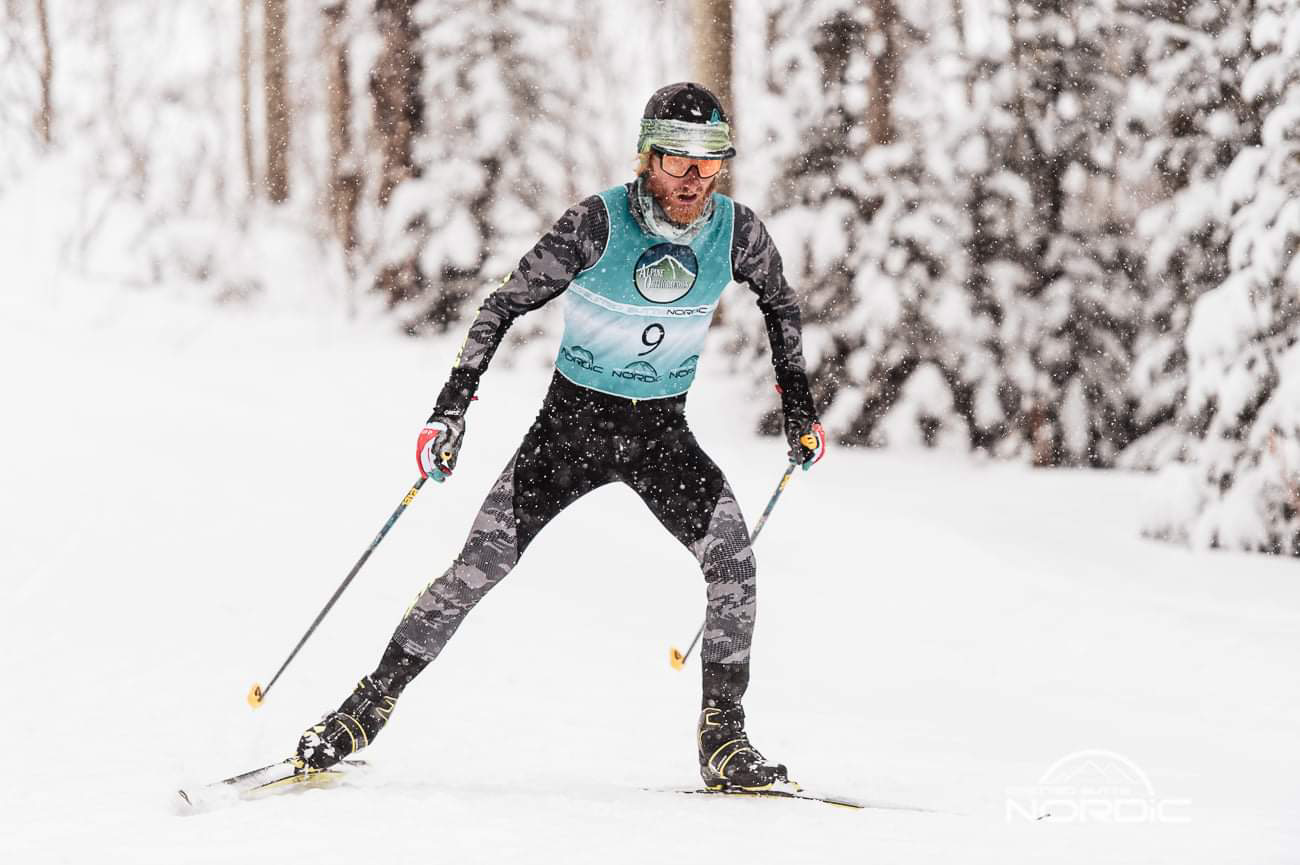
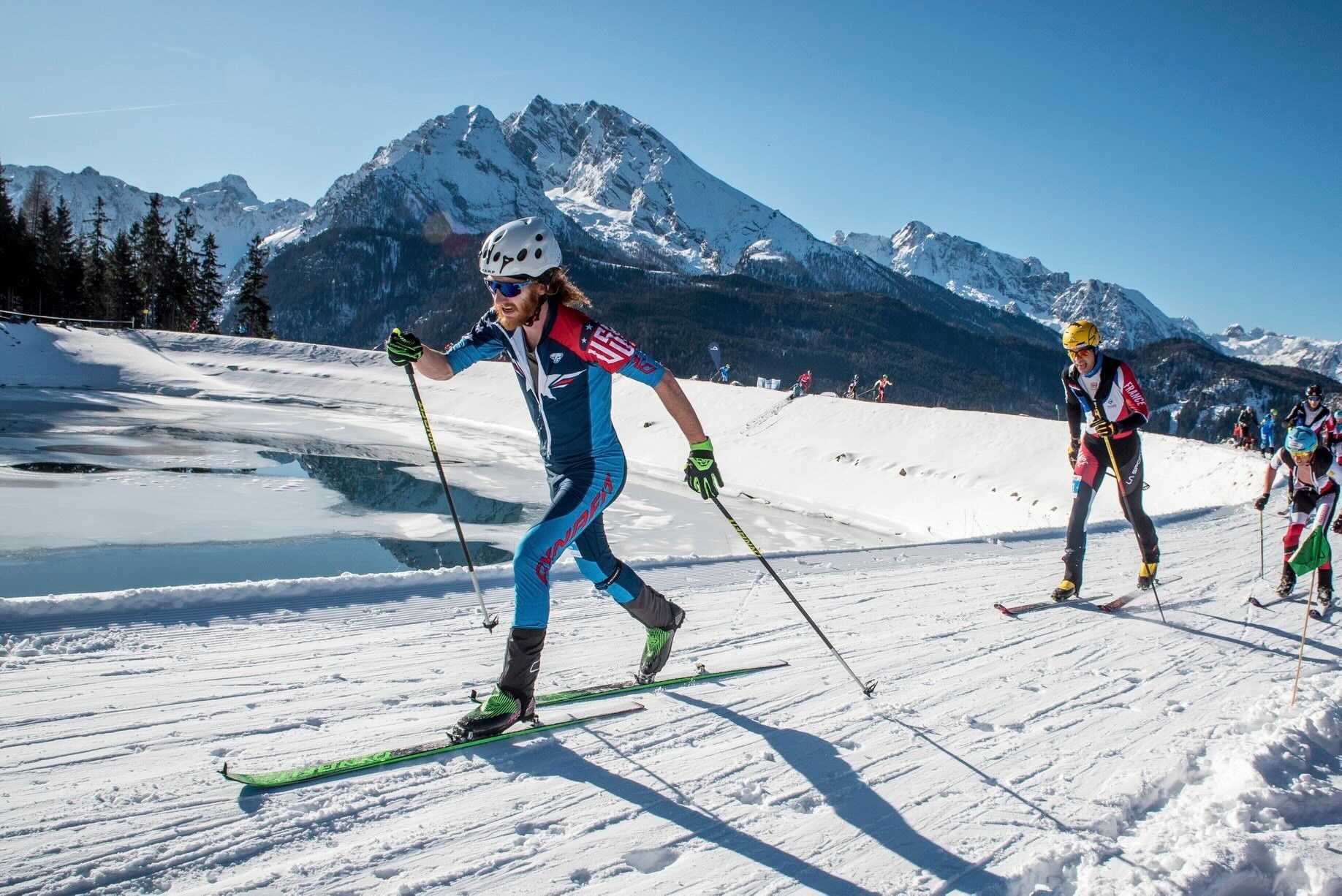
“Skimo” will be the newest Olympic ski discipline when it premiers at the 2026 Milan-Cortina Games. In 2022, those ready to represent the USA are bringing what they learned from their Nordic skiing background to higher peaks, steeper downhills, and techier technique.
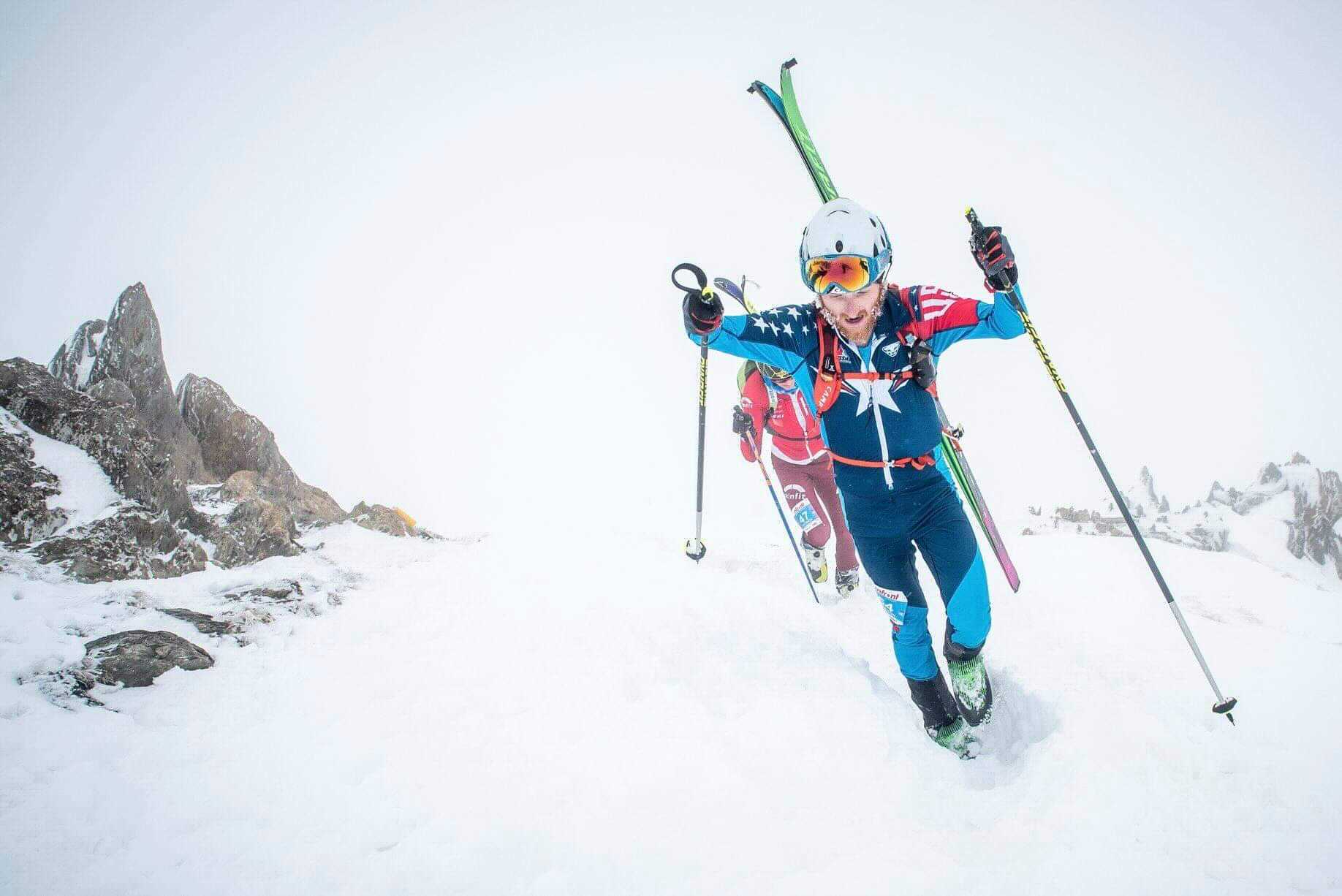
The details of ski mountaineering are dizzying. Take the little challenges unique to each discipline of skiing, amalgamate them together into one race, and you’re left with “Skimo,” which may or may not serve as a euphemism for the discipline. In cross-country, the FIS recommends that courses don’t cross the 6,000 feet (~2000 m) elevation mark. Skimo revels in regularly sending its participants from that level up to 12,000-13,000ft (~3,600m-3,900m) and down again. In between the uphills are tricky, technical descents on off-piste terrain normally reserved for extreme events most likely sponsored by Red Bull (in fact, they’re already on it). Skimo is the kind of challenge that usually comes packaged in a ski movie tour program, matched to jump cuts and a generic EDM track, with proceeds benefiting “the next generation of shredders,” or something like that.
For the endurance skier, it is an extreme sport. Breathtaking scenery, the emotive challenge of man versus the harsh environment – turned up to its most stark proportions. Up until now it has remained on the periphery of the world of winter sports, born in the French Alps a generation ago and for the most part having stayed there.
Last summer though, the International Olympic Committee (IOC) added Ski Mountaineering to its program for the 2026 Milano-Cortina Winter Games, which started to turn a few eyes towards who might be the first Skimo star to find themselves in the NBC prime-time slot reserved four years down the line.
So, what stretch of the United States is home to those that are quietly, surely, plodding their way up and down mountain passes in preparation for the Olympics in 2026? Bozeman to Missoula, Anchorage to Fairbanks, maybe Durango to Aspen?
Turns out, they’re more likely running the 700ft-850 ft of elevation between Eau Claire, Wisconsin and Duluth, Minnesota.
Somewhere up there, near-ish to where a little rise on US-53 gives way to views of Lake Superior, Cam Smith responds to my email.
The Athlete Leading the Way
Cam Smith is at his family’s cabin in Gordon, Wisconsin. Like many who find retreat Up North in Wisconsin, he is from Illinois. Rockford, to be exact. A town that’s probably best known for being the next stop on I-90 West of Chicago, and for wearing a kind of flat, banal vision of American life on its sleeve with pride. Last winter, while skiing in Crested Butte, Colorado, Cam and I were talking over our shared Midwestern roots when he stopped mid-stride to declare his hometown’s motto to me: “Rockford doesn’t suck, you do!”
That scene in Crested Butte, for all intents and purposes, is where I was introduced to Cam, and by extension, the world of Skimo too. At that juncture in December 2021, he was eyeing up the International Ski Mountaineering Federation’s (IMSF) upcoming World Cup, to be held in Andorra in January. But it wasn’t until after I saw him perform a one-man monologue about the importance of pushing through the finish-line – complete with skis, poles, and jackets strewn around as props – that I got a glimpse into his place as a rising star in the Skimo world.
Murray Banks, coaching alongside Cam and I, and observing this performance, turned to me and asked through a laugh, “can you believe he’s one of the most serious athletes in the world?” In truth, it wasn’t exactly clear at that moment.
A few weeks later, Cam Smith went to Andorra and earned U.S. Skimo’s first-ever IMSF World Cup podium, taking 3rd place in Comapedrosa. When I picked up the local newspaper, I found the same big grin, that weeks before had accompanied Cam’s skit, staring back at me from a podium in Europe. By making it to that podium, Smith was the first non-European to medal on the international Skimo circuit, which started a full calendar of racing in 2008. It was a breakthrough for Smith, and for the sport in North America.
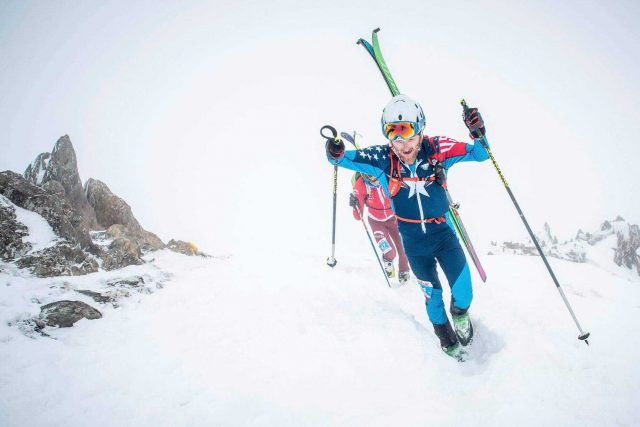
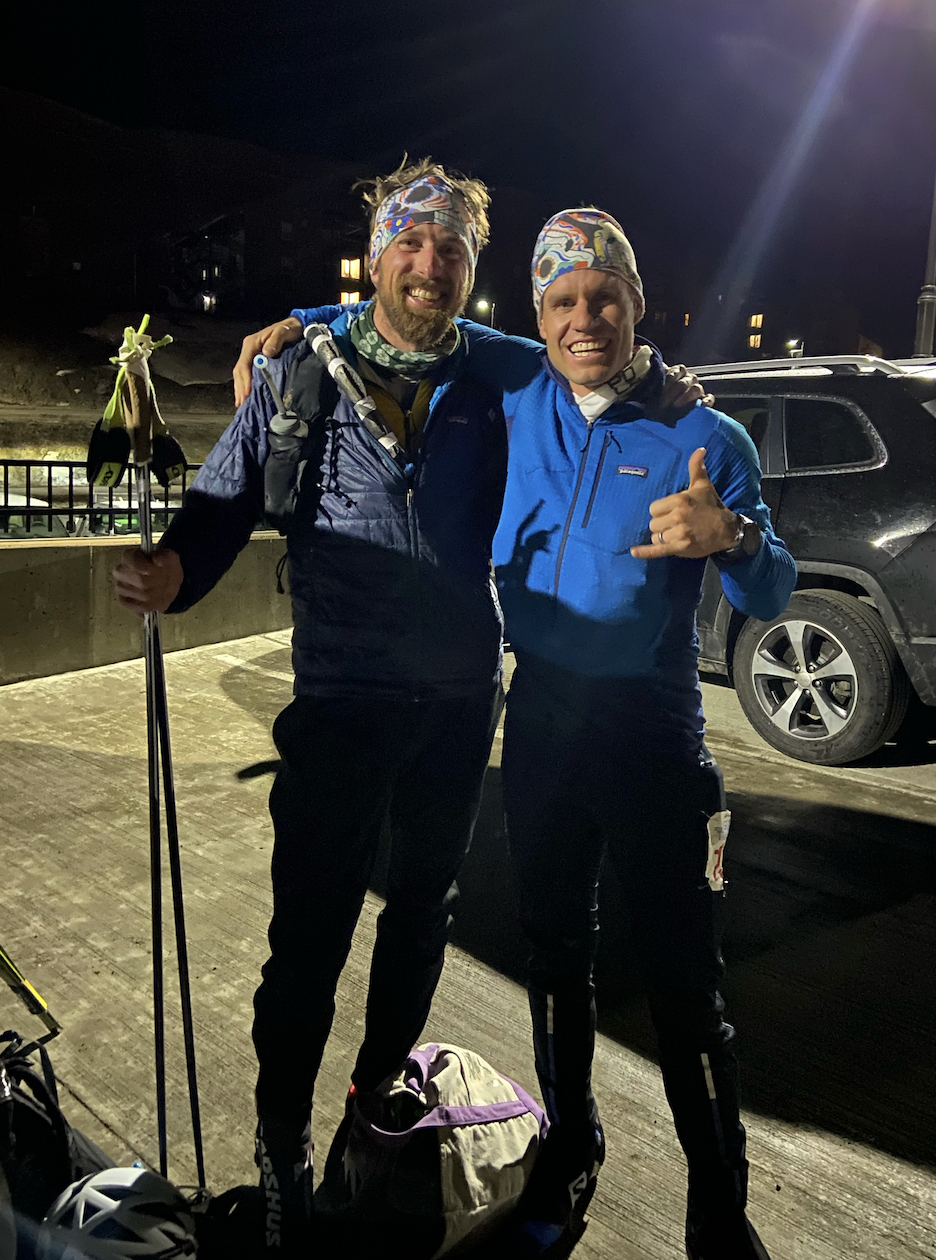
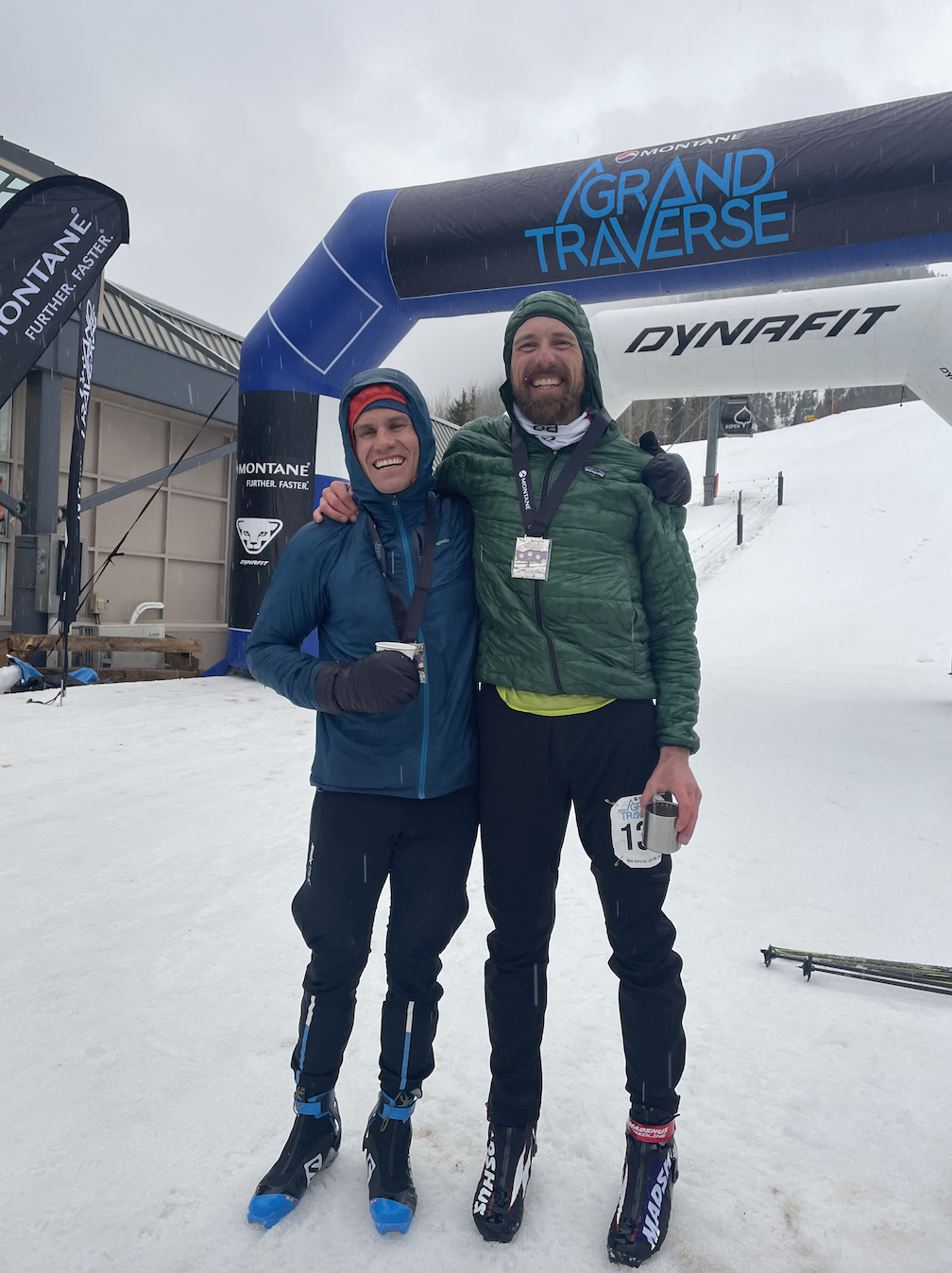
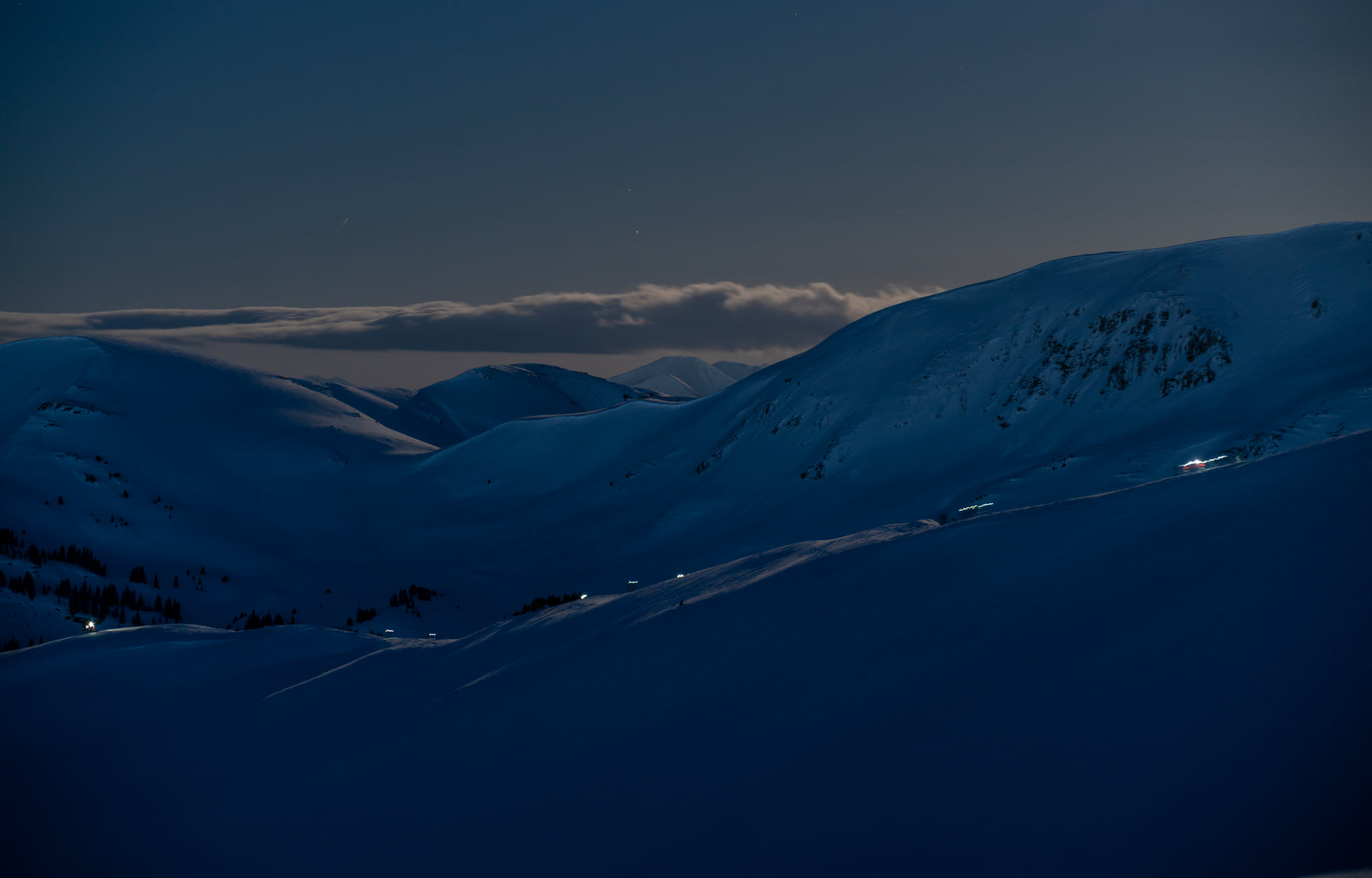
Smith returned to the North American continent in March, and quickly won the Continental Championships in Kicking Horse, British Columbia. He finished off his season in April, returning to Crested Butte to win his third straight Elk Mountain Grand Traverse, a kind of one-day classic in the U.S. Skimo world (think Paris-Roubaix, if it started at midnight and touched a 12,389ft mountain pass instead of cobblestones) from Crested Butte to Aspen. In that race, he edged out Simi Hamilton and Ben Coons for first place alongside his partner, renowned Skimo racer John Gaston.
In the first true generation of American Skimo racers, Cam Smith is the pioneer lighting the way (to hear from him, listen to FasterSkier’s interview with Smith in 2021 here).
A New Kind of Coach
In the first true generation of American Skimo coaches, the same pioneering accolade could be given to Adam Loomis.
Loomis is currently based out of Park City, Utah, where he leads a first-of-its-kind youth Skimo team with the Park City Ski and Snowboard Club, while also having earned himself a spot on the national team as an athlete this year.
Originally though, Adam Loomis is from Eau Claire, Wisconsin – our shared hometown.
As a kid there he showed a penchant for both taking to the most unique corners of the ski world he could find and excelling in them. He started in the ski jumping world with the Eau Claire Flying Eagles, and got his start on cross-country skis with the once-a-week after school program put on by the Eau Claire Ski Striders. By high school, he was combining the two disciplines and set to become a top-level Nordic Combined athlete. He was soon named to the U.S. Nordic Combined National team, and that took him out to Park City, Utah for the first time.
Even during those early days as an athlete, Loomis showed an inclination towards viewing his athletic development in the context of the larger structures it was happening in – the clubs and organizations he trained with. In other words, he was thinking like a coach. Or, at least, that’s how it looked to me, a kid learning to ski race in the wake that Loomis left with his accomplishments in Eau Claire.
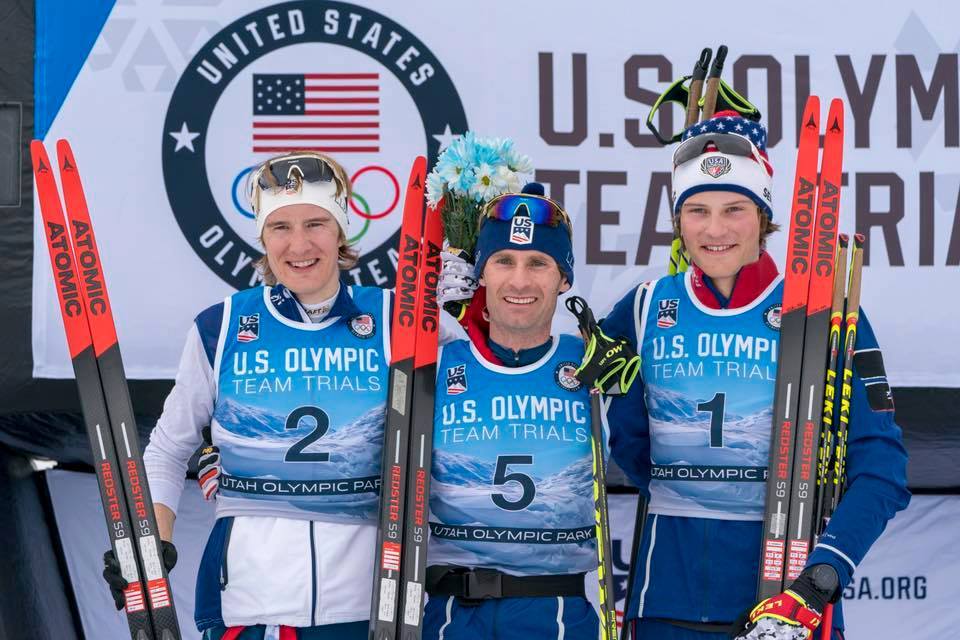
I knew Adam as Ben Loomis’ big brother – who I was learning to ski alongside, and would eventually watch follow in the Nordic Combined path forged by Adam (where he is two Olympics in, so far). When Adam was first transitioning to being a National Team athlete, he would come back to Eau Claire to put on clinics with our middle school team, Chippewa Valley Nordic, which he had a unique role in forming as the leading athlete coached by our team founder, my father, Ted Theyerl.
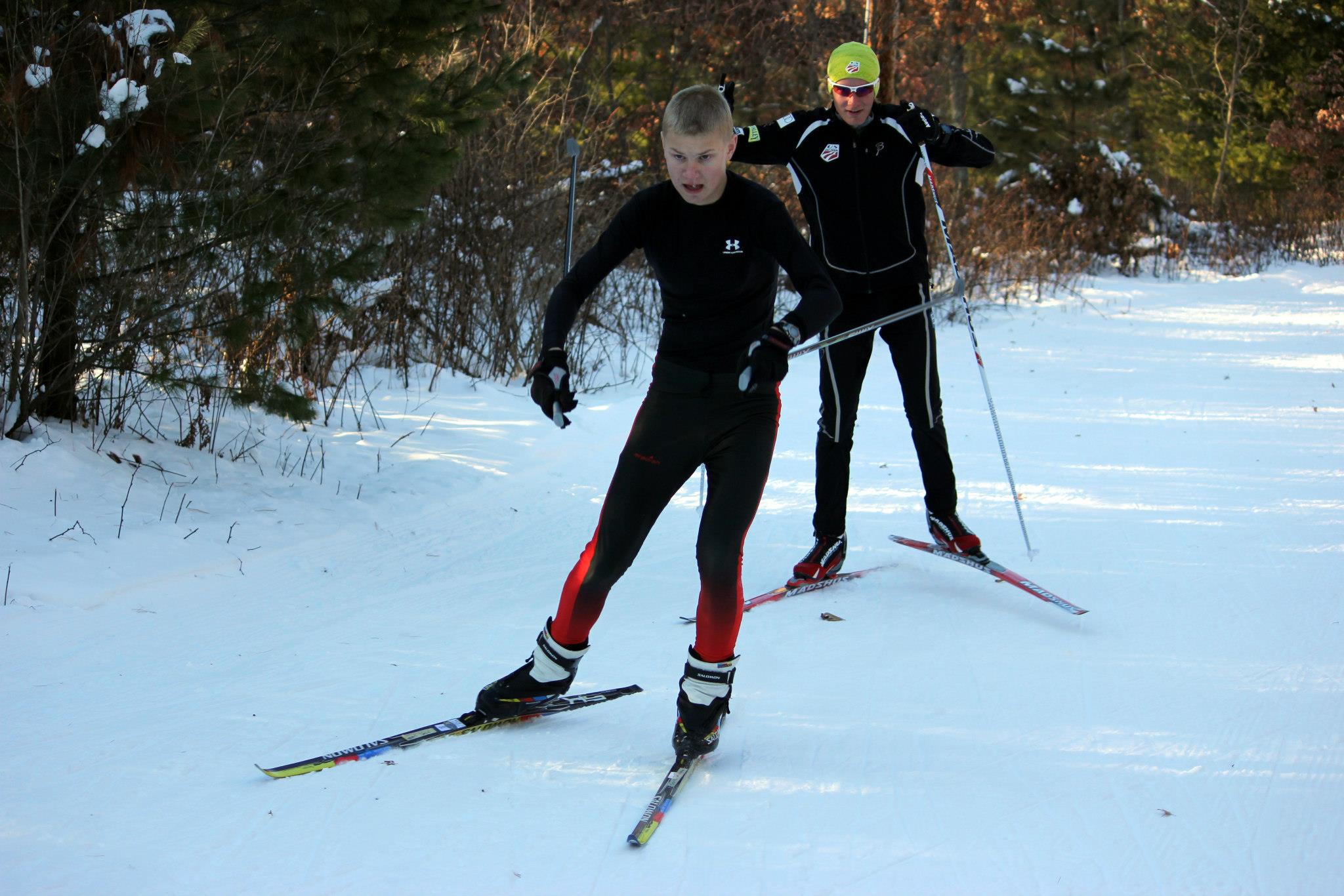
There I remember Adam, on roller skis in the vast parking lot outside of Eau Claire’s minor league baseball stadium, clad in the black Bjorn Dæhlie U.S. Ski Team warmups indicative of that early 2010s era. He looked like an alien hero, someone from another planet that each and every one of us knew, just by looking at him, that we wanted to visit. He brought insights from that far off place too. Logging training, the concept of heart rate zones, and the idea that training was something you constructed over long periods of time, not what you did to augment your baseball practice. In the winters, he would follow a few of us around on our intervals through the Wisconsin woods, pointing out small tweaks, like where to place a pole or when to transition techniques with the terrain. The snapshots in my memory of his advice come from maybe three or four sessions, which is only a further testament to Loomis’ coaching talent. When Adam gives you something to work on, it sticks.
Eventually, Loomis climbed from racing Continental Cups to World Cups. All the while, he was based in Park City, where he continued his early pattern of searching out new ways to go fast on skis. Skimo had found its way to Park City by then, with the Wasatch PowderKeg offering a community full of talented endurance athletes a gateway to the new discipline. Loomis saw a new challenge and a natural fit, and so started racing. After retiring from competitive Nordic Combined skiing, he spent a year in Alaska coaching the discipline, which further gave him access to the backcountry needed to work on the technical skills of Skimo. When he joined up with Park City Ski and Snowboard Club (PCSS) to coach their youth Nordic Combined program in 2021, he came up with the novel idea to not only race Skimo, but to help coach youth interested in the discipline as well.
These days, his daily routine at PCSS is busy, even by ski coach standards. Beginning the morning standing at the ready to watch and coach jump practice for Ski Jumping and Nordic Combined athletes before heading over to the base of Park City resort to work on climbing on skins, transitioning, and bombing down for Skimo. And between competitions on the weekends, he gets out and races too. Loomis has forged his own way in the past, out of the county forests and bluffs of Wisconsin to high peaks and deep powder pockets, and now looks to be forging a future for a whole new sport in the present.
New Ideas for a New Sport
Being the first generation in a sport comes with the necessary condition that the athletes and coaches leading the way have developed in other athletic contexts. And for those now looking to lead the first generation of U.S. Skimo towards the Olympics in 2026, that’s often been in Nordic skiing (while I’m covering Smith and Loomis here, it’s worth noting that other familiar Nordic faces, including Liz Stephen, Caitlin Patterson, and Simi Hamilton have all had impressive forays into the new discipline).
Cam Smith started his athletic career as a burgeoning track and cross-country star in Rockford, before deciding to attend Western Colorado University in Gunnison, Colorado (30 miles down valley from Crested Butte). “I loved [running], but I kept having injury issues…and at the same time [being in Gunnison] led me to start mountain biking,” he said in his email to FasterSkier. Mountain biking at Western was Smith’s gateway to the College’s unique Mountain Sports Program, which houses seven disciplines of mountain sports – from freeride to Nordic to climbing – under one program. Started in 2012 by mountain bike trailblazer and longtime Gunnison resident Dave Wiens (seen here beating Lance Armstrong in 2008), the Mountain Sports Program was designed to give institutional support to talented athletes who share a pioneering streak with their coaches to pursue the newest challenges in the mountains. Smith became the archetype for Western Mountain Sports’ success.
Mountain biking led to learning how to Nordic ski, which led to racing with Western’s United States Collegiate Ski Association (USCSA) program. He found success there, and then was convinced by his older sister, also attending Western, to give the Grand Traverse (GT) – the same race he is now a three-time defending champion in – a try.
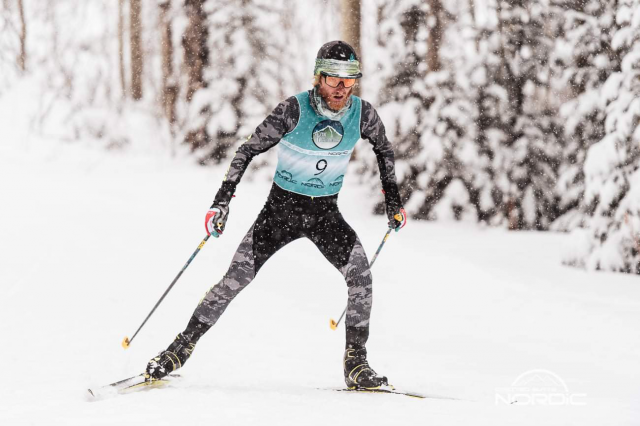
In his first GT, Smith made it to Aspen, which for a first run was a huge success. It was enough to give him the nudge to go all in on it. He was selected to compete at Skimo World Championships for the first time in 2017, and then named to the National Team in 2019.
Smith’s background lent itself to an ability to chart out an intensive training program for a program where training principles weren’t set. Smith frames his attitude towards training as one that sees all aspects of the challenge, “Skimo is just very dynamic! You have the same fitness and effort [as Nordic skiing] to worry about, but then also the exposure, extreme terrain, and inherent challenges to being in a high alpine environment.”
On a typical day of training in the winter, he says:
“I start every day with a morning session. Whether it’s before work or on the weekends I like to get started with movement. I try to ski the backcountry more often than I do on-piste (riding the chairlifts on Crested Butte) for extra technical practice. Almost every day my afternoon schedule is a little more varied – skate skiing, a session downhill skiing on the chairlifts, or a second skin in the afternoon.”
As for hours, Smith is no stranger to putting in over 20-25 hrs a week in, but mainly marks his training off by a different metric; vertical.
“During a hard training block, I’m climbing 40,000-60,000 vertical feet in a week.”
The key for Smith’s training approach is building off the basic endurance-type structure of Nordic skiers, while putting in focused technical work for the challenges of extreme downhill terrain. What shooting practice is for biathletes is what vertical gain and drop is for Smith:
“It’s a challenge to push yourself [downhill] coming off the aerobic part of Skimo (read; uphill) without taking on a lot of risk. That’s where downhill skiing relatively hard in the backcountry comes in. Rock climbing also goes a long way in the summer to being comfortable with the ‘mountaineering’ part of Skimo.”
For Adam Loomis, adding in a layer of technical consideration to a well-tuned ski training plan was a simpler task when he started to gravitate towards Skimo more seriously a few winters ago. Swap out ski jumping for mountaineering, and the rest has been fine-tuning. That swap, it turns out, doesn’t always mean abandoning aspects from his ski jumping days, “there’s still a very big emphasis on strength training, which is super important in Skimo. You’re descending at such a fast pace after having just pushed yourself uphill, and the only way to prepare yourself is to work on muscular endurance” said Loomis, in an interview with FasterSkier.
From the coaching perspective, Loomis sees this added emphasis as a “specific” type of general training, meaning while hours in the weight room aren’t direct correlates for Skimo, they are targeting its demands for his athletes that are coming from other athletic backgrounds, “All of my athletes are runners and bikers. That allows them to put in a lot of base hours in the off-season, so what I look at is the transition between biking and skiing. What are they going to need to make sure that fitness translates seamlessly and without injury? In Nordic Combined, that transition is a big focus you’re constantly working on for staying healthy jumping and is something I try to bring over to Skimo.”
Loomis’ model of supplementing already hard-training athletes from other sports with specific Skimo training is one he sees as being key for the next step of the sport’s development in the United States:
“You look at how most Skimo training plans are designed, and the metric is vertical (like Smith’s) – runners’ train by mileage, skiers by time, but there’s movement in this sport towards vertical being the important metric to center. Realistically, my athletes are all coming from those other training universes and it’s more helpful to think about what we can do to work on the specific, technical demands of Skimo.
We start with a mix of distance and intensity days, racing and recovery. For Skimo, our intensity days specifically focus on doing a lot of vertical. We might even do a day on our Olympic Park Hill, where it’s only 100m vertical, but our workout will be doing that hill 20 times, transitioning with our [climbing] skins every time. Our easy days might entail sending our kids up to the moguls to just work on downhill skiing, since that’s a really important environment to mimic when it comes to handling the backcountry.
Having a structured program is helpful because our athletes would be out skiing regardless, but they might not get that technical aspect otherwise. Yes, it’s nerdy stuff, but having our kids practicing ripping off skins and doing transitions on snow, and not just in their living room before they race, is very helpful to get them dialed to handle whatever comes on a Skimo course, which by design could be just about anything.”
Both Smith and Loomis acknowledge that part of the appeal of Skimo is that it presents unknowns to sort out. Like Nordic skiers at the dawn of skate skiing in the early 80s, or mountain bikers at the dawn of dedicated off-road bikes in the late 80s, they’ve found a discipline where training strikes a balance between known endurance principles, evolving competition formats, and the capabilities of Skimo equipment.
That last factor, equipment, has been an especially important factor in Skimo’s recent growth. It was only a decade and a half ago that the Grand Traverse, the event that introduced Smith to the sport, was regularly won by skiers on Nordic skis or Telemark ski setups shoddily adapted for climbing marginally faster (this article, written for the Aspen Times in 2002, gives a picture of what these early days were like). In 2022, Simi Hamilton and Ben Coons finished behind Smith by just a half hour on full Nordic setups, but Smith, with experience on all types of setups says, “I feel pretty strongly that Skimo gear is faster over the entire [GT] course because of its versatility.”
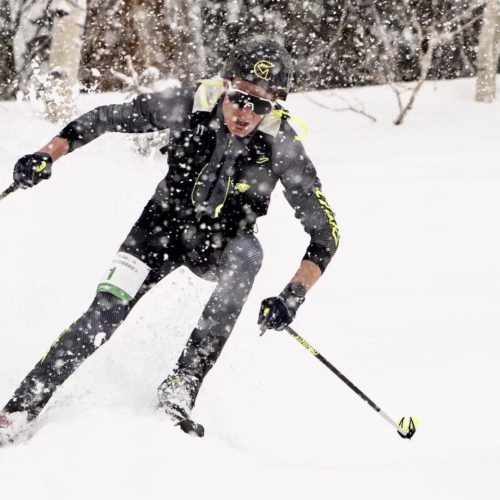
That versatility includes extremely light and skinny downhill skis (64-66mm wide has become widely accepted, typical Nordic race skis are usually 41-44mm) that can pack in metal edges, bindings that easily switch between a heel-detached climbing mode and heel-attached descending mode, and flexible, ultralight boots that come with as much carbon as your Fischer Speedmax, but with support that holds your whole ankle in place. Today’s Skimo skis, in other words, have an answer for every time us Nordic skiers have found ourselves bushwhacking and wishing for something to make things a little more capable.
For those coming from traditional backcountry backgrounds, Skimo skis open up the world of a true endurance sport. Loomis says, “I think there’s a lot of excitement around [Skimo] from people who had no idea of what it was a few years ago. It’s gone from this weird little thing that people raised on skinny skis like myself did, to being something that a few of those people on heavy, recreational backcountry setups looked at and said, ‘that looks like it could be some great type 2 fun.’”
Back at the forefront of U.S. Skimo’s development, both Smith and Loomis see a blueprint for jumping off of present successes on those even skinner skis.
“I think [with a World Cup podium this year] we showed that the U.S. has the potential to be a world player,” says Smith. “Sort of like where the Nordic ladies were 10 years ago, and I hope we can follow a similar path, but holy smokes that is a tall task.”
Loomis, looking at those athletes coming up in the Skimo ranks, says that “I think in a couple years we could easily be up there on the world stage. Maybe not a dominant force like Italy or Switzerland, but we have some serious talent already competing. And kind of like the U.S. Ski Team the past half-decade, you can see this is a special group based on how they’ve blown past anything before them at the junior level.”
Loomis points to one of his athletes in Park City, for example. Griffin Briley, who won the European U18 Championships in both the vertical and individual races this year. “Unfortunately, they can’t count him as the European champion because he’s not European, at which point you go, ‘ok, doesn’t that show he’s the best in the world at his age group?’”
Those breakthrough results though, says Loomis, point Skimo towards its next step in developmental success. “Having the 2026 Olympics out there is amazing for establishing the sport as something that endurance athletes can seriously pursue. Having the Olympics means young skiers can have Olympic dreams, and for any niche sport, that’s huge. We need support to bolster the sport at the youth level though – more clubs and the ability to make the barrier to entry less daunting.”
Smith too, has one eye on ensuring the sport’s future this way, “Broader participation at the younger levels is a huge need and a challenge. I also see making marquee events as high quality as possible as important…making the race experience a positive one is super important at all levels.”
Bringing it All Back Home
“When I got to the mountains, I think I looked at them and said, ‘I just want to do everything I can in them.’ The stark change in environment from my childhood in [the Midwest] just fueled this hunger to do everything, and I think I appreciate what I’m doing in part because of it.”
“Where’d he find that wisdom?” I thought to myself as I listened to Adam Loomis provide that answer to my throwaway question about why he thought that the Midwest was a hotbed for Skimo talent. I was, of course, hoping it was something that we shared in our upbringing in Eau Claire, but initially dismissed that thought. Then I came back to it. In fact, I did pick up on that appreciation for landscape and the possibilities that they provide, in all their forms, for those willing to get out and explore by foot and by ski. I just happened to have accrued that wisdom from a skier who went out and did it first from Eau Claire: Adam Loomis himself.
With his perspective and talents, U.S. Skimo can look towards a world of possibility in Milan-Cortina in 2026.
As for the National Team’s current best shot at a medal there, Cam Smith, I’ll be sure to continue to report on his drive forward first-hand, with every friendly wave and “hey there!” as he passes me on the slopes of Crested Butte. He is after all, as our co-coach Murray Banks says, “one of most serious athletes in the world” and you would never suspect it.