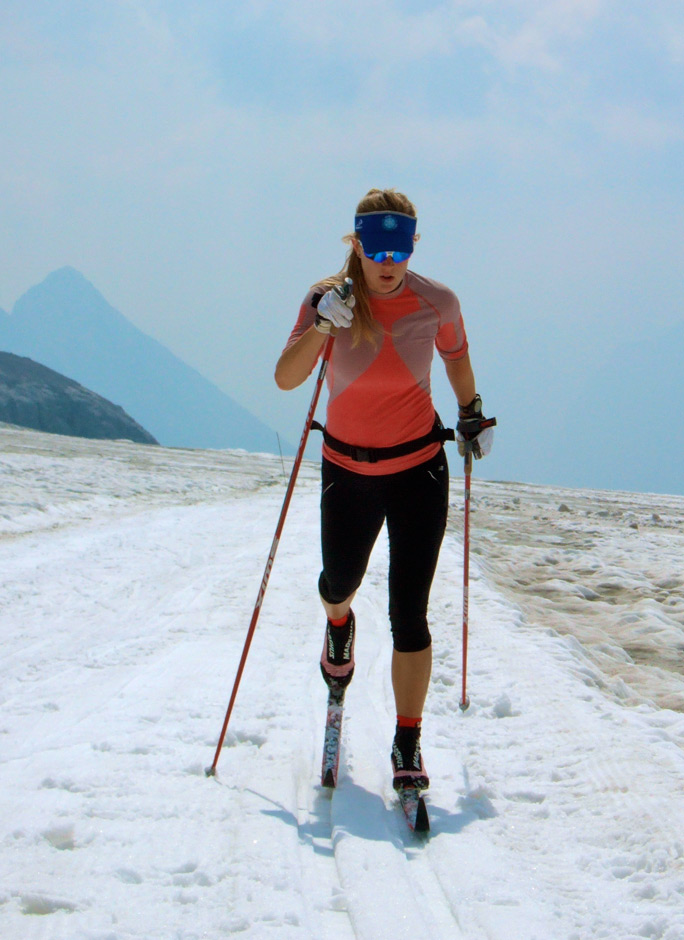
Tag: Cami Thompson-Graves

  • Unraveling the College Athlete Admission Process: Preparing for the Campus Visit with Dartmouth’s Cami Thompson-Graves

    Deciding how to handle the “college conflict”, as aptly phrased by Alayna Sonnesyn, is a daunting and somewhat mysterious prospect, particularly for athletes and families who are unfamiliar with the process. How does a junior athlete know that they are cut out for a collegiate program? NCAA or USCSA? What about a gap year? In this series, FasterSkier spoke with collegiate and junior coaches and athletes who have chosen different pathways to create a resource for the athlete or parent amidst this conundrum. In the first part of the series, Anna Schulz of Craftsbury shared a look into the early conversations between a junior coach and athlete. Next, FasterSkier spoke with Cami Thompson-Graves, head nordic coach at Dartmouth College to learn how to get the most out of the college visit to determine whether skiing NCAA and the school are a good fit. 
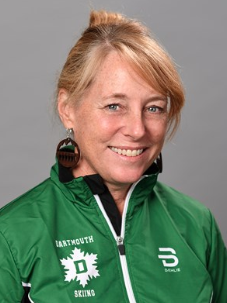
     

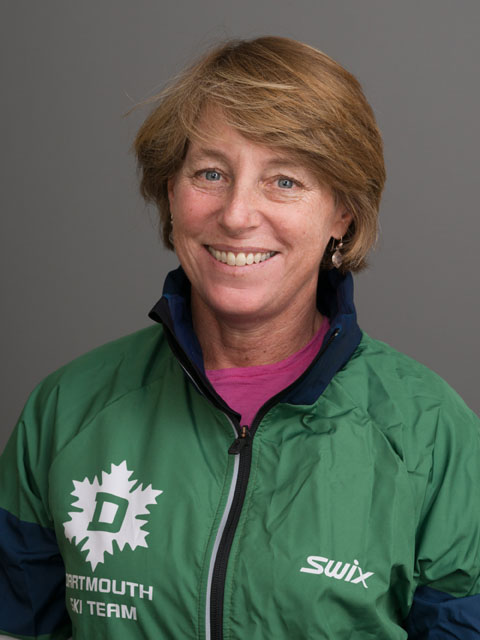
    Cami Thompson-Graves offers insight into the college process from her 30 years of experience coaching the Dartmouth Cross Country Ski Team. (Photo: dartmouthsports.com)

    After over 30 years of leading the program, Cami Thompson-Graves’ name has become synonymous with the Dartmouth Ski Team. During her tenure, she has fostered a thriving program capable of developing athletes whose goals extend far beyond the reaches of NCAA. Three out of the eleven members of the U.S. Ski Team A and B teams (Caldwell, Brennan, and Kern) raced for the Dartmouth Program and in total, ten of Thompson-Graves’ athletes have become Olympians. She also helped guide Katherine Ogden to become the first Dartmouth skier to earn double titles in both the classic and freestyle race at NCAA’s and has mentored numerous All-Americans over the years. 

    While not all athletes perusing their collegiate options are setting goals to race at Dartmouth, Thompson-Graves’ years of experience with the college application and acceptance process qualify her to offer insight to juniors applying to any NCAA program.

    Starting with the initial contact, because the legacy of the Dartmouth program is renowned, Thompson-Graves explained that her recruiting process does not involve a significant amount of reaching out to athletes, however, she is attentive to the results at key junior events throughout the year. 

    “I am generally paying attention to where people are in their junior winter,” Thompson-Graves said in a call. “I’m looking to see who’s doing well and who’s going to [REG and NTG] camps. I know a lot of people in a lot of places, so then I might reach out to their coach sometime later in the year and try to start a dialogue with [the athlete] spring of their Junior year. That’s for the top athletes.”

    She continued that she begins to hear from athletes expressing interest and asking questions about the Dartmouth program most frequently during their junior year and into the fall of their senior year. In total, she communicates with 20 to 30 prospective athletes each year and has two to three openings for each gender on her team. 

    For juniors committed to making an NCAA team, she recommends beginning the process of identifying schools of interest and initiating dialogue early.

    “I think to some degree, people need to be thinking ahead and thinking about what kinds of things are important to them in a program because we’re not all created equally even though we all compete against each other on some level.”

    Once an athlete has determined what colleges and universities are appealing in a broad sense, Thompson-Graves recommends scheduling a campus visit if possible. Typically, this should happen during the spring of junior year or the following summer to allow time to narrow focus on a subset of universities for applications. Thompson-Graves expressed that this visit can help a student decide whether a program suits them beyond the on-paper appeal. 

    “I’m a big believer in people finding the right fit because if they find the right fit, they’re going to be happier and more successful. So I don’t put on a hard sell, I just say ‘This is what we offer. This is what we have.’ And I try to guide people to be asking the right questions and finding a place that suits them.”

    What are the questions that will aptly inform a visiting athlete whether a program jives with their personal, academic, and athletic goals? Thompson-Graves recommends starting with a few key prompts. 

    “Get thinking: What is it I’m looking for? What’s important to me? Where do I see myself?”

    Focusing on the last question, she recommends widening the lens to look beyond the specific school or location an athlete is imagining. It is important to ensure that the program an athlete chooses is equipped to support the athlete’s trajectory and goals long-term. 

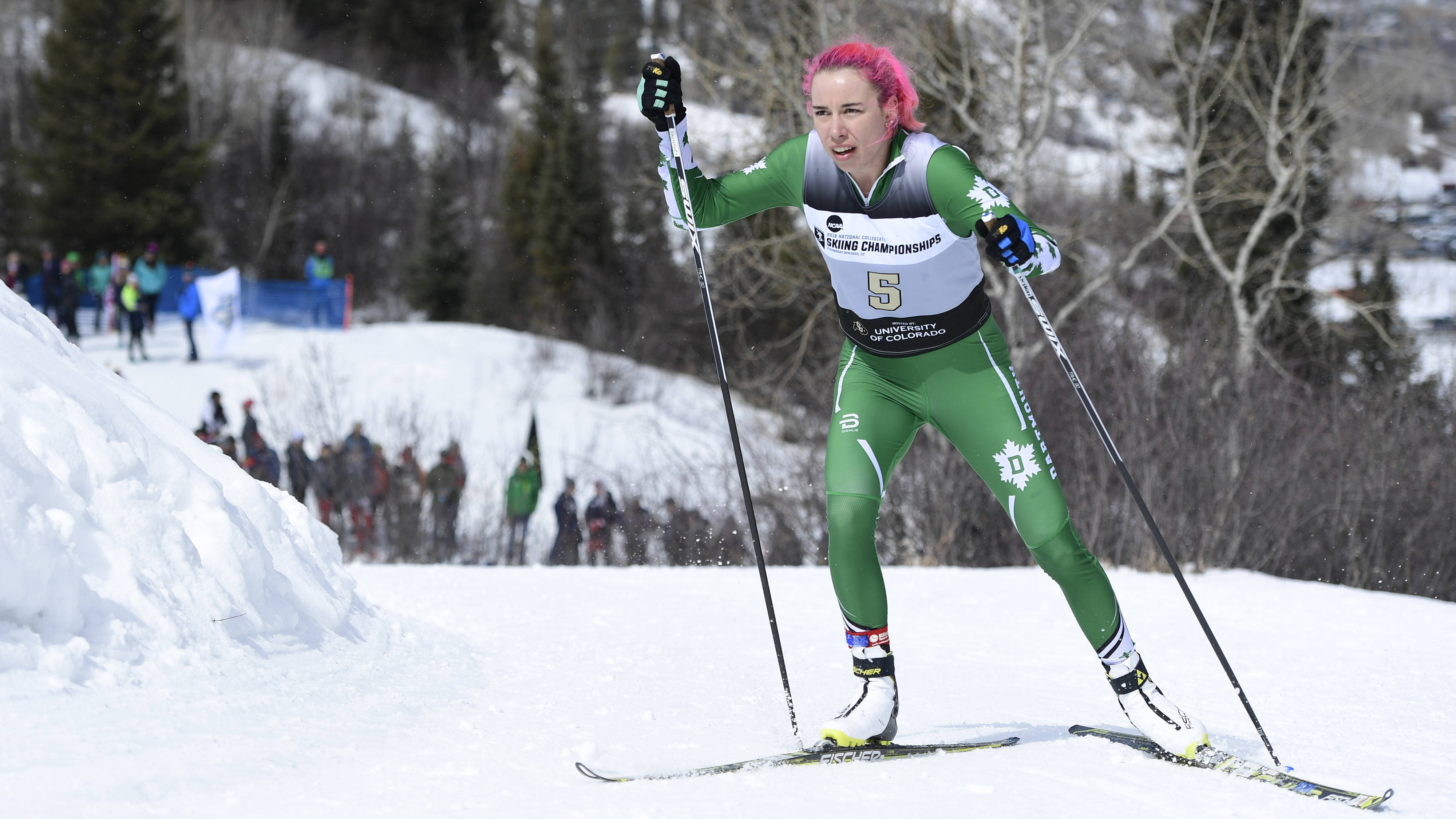
    Dartmouth freshman Katharine Ogden racing to her second-straight victory of the 2018 NCAA Skiing Championships in Steamboat Springs, Colorado. She won the 15 k freestyle mass start by more than 38 seconds. (Photo: Dartmouth Sports/Clarkson Creative)

    “It is important that people have some idea where they see themselves in skiing over the next four years. Are they someone who is coming in and just trying to make the carnival team? Are they someone who is coming in and hoping to go on and make a World Juniors or a U-23 Championships? What kind of races do they want to be racing in and what are the goals that they see for themselves? Because some programs are going to make sure that they get to all the races that they need to get to and that they’re supported, and other programs they are basically just going to the carnivals with six people.” 

    Though not all athletes entering college might be on track to make the race team during their time in college, particularly at a program like Dartmouth, Thompson-Graves encourages seeing the value of developing over four years of working with a team that challenges an athlete to reach. However, if a prospective athlete identifies traveling and racing weekly as one of the qualities that aligns with their goals, it might be wise to choose a program where that is more easily achievable.

    “I’m in a lucky position that I have been attracting some of the top athletes and we’ve had some success over time, so I think it’s somewhat easier to attract some of the top athletes, but I maybe scare away that next level because they are like, ‘Oh my god, I’ll never make the Carnival Team if I race there.’ Of course, if you ask someone who is on the team, they would say, ‘It’s worth it, I wouldn’t go anywhere else.’ But there are other people who would say, ‘I’d rather go somewhere where I know I will make the Carnival Team every week.’”

    Apart from the more whimsical questions about goals and opportunities, it is important for an athlete to ensure that the program is within the financial means of the family. While scholarships are available to help with the inherent costs of attending the school, being on a team incurs additional costs that need to be factored in. These costs include travel, equipment, and race entry. These real costs vary depending on the resources of the school and the goals of the athletes. 

    “What is the program supporting for athletes? What are the out of pocket costs? For some people, that’s really important. There are obviously some people that are hoping for a scholarship, but not all ski schools offer scholarship, so everyone is thrown into the pile of need-based financial aid. That aside, what are the other expenses that each individual athlete might have to be a skier? It’s not cheap and depending on where they are on a team or what level they’re skiing at, it might make a difference in how much they have to pay out of pocket.” 

    It is also important for an athlete to ask about the balance of academics and athletics. At some schools, students may be able to arrange their class schedule to keep the academic demands light during the winter race season or take classes over the summer to meet credit requirements. It can also be helpful to identify the support resources offered by academic institutions when athletes are missing classes due to racing or training camps.

    Thompson-Graves also encourages asking about the intangible aspects of a program that are highly impactful in creating a positive experience.

    “How does the team get along? What kind of group is it?”

    She also recommends asking the coach about their style and what their expectations are of athletes as part of the team. 

    “It should be a two-way interview and not a one-way interview.” 

    Per NCAA rules, a prospective athlete is not able to attend practice as part of the campus visit, however, it is possible to observe. Thompson-Graves explained that observation is not always a meaningful way to evaluate the intangibles of the team dynamic, but a coach can facilitate alternative opportunities to meet with the team. 

    “Generally, if they want to meet the team, I’m happy to set up a lunch or meet-up. They often reach out to friends they might have on campus if they know people. With social media, there’s a lot more of that going on than there used to.” 

    Meeting with the team is not an essential component of the campus visit, particularly in the primary stages of the college process. 
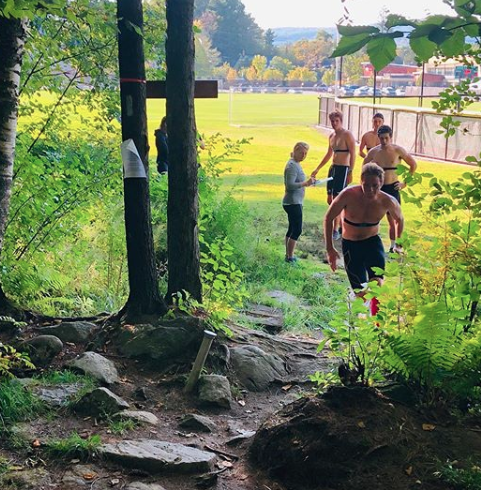
    Head coach Cami Thompson Graves sees her athletes off on a time trial in September, 2019. (Photo: Instagram @dartmouthskiing)

    “It also depends if it is a first-time visit versus someone who might be coming for an official visit or an overnight later on in the process. It also depends on where kids live, whether that is the first time they are coming to campus or whether they’ve been through another time then are coming back for an overnight. Sometimes they might just come into the office and I might show them a little bit of what we have for facilities to offer, then another time they might stay overnight with someone on the team, eat some meals in the dining hall, go to a few classes. Generally, those are all options, but if it’s your first time to campus and it’s still early in the process, I don’t think that it’s necessary.”

    Ultimately, a sound evaluation about the fit of the school is one of the key takeaways Thompson-Graves hopes that an athlete leaves the visit with.  

    “I hope they get an idea what the program is all about, what the expectations are, what we have to offer, and to some degree who I am. I have said to people at times in the past, ‘If talking to me makes your skin crawl, then you might want to think about whether you want to be here because you’re going to see a lot of me,’” she said with a laugh. “That’s part of that good fit aspect. I want them to get a sense of the school, the place, the team, me, and what it’s all about.” 

    It is also valuable to have a sense of the qualities and results that a coach looks for in the athletes they recruit. For the Dartmouth program specifically, Thompson-Graves explained how she evaluates whether the prospective athlete is in turn a good fit for her program. 

    “I’m looking for someone who has solid results, and that can be at the very least Junior National Championships. If someone is finishing in the top ten at Junior Nationals then I’m going to be even more interested. But mostly what I’m looking for is someone who is engaged and curious and thinks for themselves and is starting to get a handle on what they’re looking for and is starting to consider skiing for Dartmouth.”

    She shared that she recently had the experience of visiting and touring colleges with her daughter. Though her daughter was not interviewing as an athlete, Thompson-Graves recalled that this process was eye-opening. 

    “You can get a pretty good sense on those early campus visit. Does the place feel right? Do these people feel like my people? Do the programs that are offered here interest me? Can I see myself living here for four years, even if it’s raining some of the time or everything isn’t perfect? So I hope that when someone leaves after the campus visit that they are getting a sense of what it’s all about.”

    She continued that particularly in places like the Northeast where schools with NCAA skiing programs are relatively close together, these visits can offer a template to compare and contrast offerings.  

    “A lot of people visit a number of schools within a week or two, and I think you want to sort of compare the strengths and weaknesses of the different schools and the different programs and then come back and ask more questions. I often will ask someone, ‘Am I your first visit?’ because they often don’t know what to ask, particularly if they are the oldest child in the family. They don’t have any idea where to start or what to ask, so I can babble on for 20 minutes and they just listen and don’t even know where to start. So I think then, following up with questions is important too because the more schools you visit the more you see and the more questions you have.”

    Team USA Nordic athletes representing their alma mater at the PyeongChang Olympics in 2018. Left to right: Head coach Chris Grover, Rosie Brennan, Sophie Caldwell, Ida Sargent, and Patrick Caldwell. Unpictured: Annie Hart. (Photo: Instagram @dartmouthskiing / flyingpointroad.com)

    Though it can be tough for a parent to sit back, Thompson-Graves recommends that the athlete take the initiative in leading the dialogue during a visit rather than the parent. She explained that parents attend her meeting with prospective skiers about half the time depending on the preference of the family.

    I leave it up to them. The one thing I prefer not to have happen is the parent ask all the questions and the kid doesn’t say anything. I prefer to be talking to the kid and not the parent, but I’m happy to have parents along and if the student is happy to have them there then it works fine for me.”

    She continued that in her experience, there are times when younger athletes who are very early in the process come to the visit unsure of what to ask or what they are looking for. In these cases, she feels it is appropriate for a parent to attend and help facilitate the conversation. Once the athlete has determined that they are interested in her program, she expects the parents to step back and to pass the reins to be passed to the athlete.

    “Further down the road, my expectation is that all my communication will be with the student and not with the parents. I’m happy to answer questions that parents may have, but I’m not recruiting the parent, I’m recruiting the kid. At a certain point, if they can’t ask questions and reach out and follow through with things, then they aren’t going to be successful at Dartmouth, so that is kind of telling for me.”

    Thompson-Graves also noted that communication at all phases of the decision process is beneficial, regardless of how eagerly the athlete is pursuing the program. 

    “I would just encourage people to communicate because even the ones who come and do a tour and I meet with them, they may go home and they’re ready to apply early decision, but if I never hear from them again, I don’t know that. I even appreciate it when someone says, ‘Thank you for meeting with me. I’ve decided I’d rather go to UVM.’ It’s just nice to know what they are thinking, and they don’t have to make me happy.”

    A recent article in The Atlantic exposed the effect of meritocracy on the opportunity for college athletics. Though the cost of junior programs varies geographically, the article illuminates that lower-income families are being priced out of the hyper-specialized and competitive programs that are setting youth up to make a Division I team. 

    In line with this trend, not all families may have the financial means to schedule a visit at all of the programs of interest for a prospective athlete, particularly schools that require transcontinental travel. Thompson-Graves reassured that the inability to connect face-to-face is not a detriment to the admission process and does not impact which athletes she recruits. 

    “From my perspective, the in-person visit is going to be the most beneficial for them, more so than for us. So if they can’t make the visit, it is not by any means mandatory, it just gives people a better sense of what it’s like to be on that campus. Certainly now, there are all kinds of virtual tours and people can Skype and talk to people they know on campus. It’s a small world, so they are going to see someone who skis or has skied for Dartmouth at some race that they go to during the season. Our athletes aren’t recruiting for us, but they are a pretty open and friendly bunch, so they are more than happy to answer questions and talk to people when they’re traveling or at other races.”


  • Dartmouth Ski Team Hiring Nordic Assistant

    Dartmouth Ski Team Hiring Nordic Assistant

    (Job posting)

    The Dartmouth Ski Team is hiring a Nordic Assistant. The assistant reports to the Women’s and Men’s Head Coaches and helps with all aspects of the program to support approximately 25 student-athletes.

    Key responsibilities:

    • Working daily with the Head Coaches at training sessions and competitions throughout the season. Duties will include waxing, equipment preparation, video, transportation, and other logistical support.
    • Helping organize and run the Dartmouth Winter Carnival Nordic competitions.
    • Identifying and organizing competition trips in February and March outside of EISA competition.

    Experience:

    • Bachelors degree and collegiate racing experience preferred.

    Duration:

    • Four to six months, 25-30 hours per week.

    Please contact Cami Thompson Graves (Cami.L.Thompson.Graves@dartmouth.edu) or Brayton Osgood (Brayton.K.Osgood@dartmouth.edu) with any questions including how to apply.

  • FasterSkier’s Collegiate Skiers of the Year: Katharine Ogden and Ian Torchia

    FasterSkier’s Collegiate Skiers of the Year: Katharine Ogden and Ian Torchia

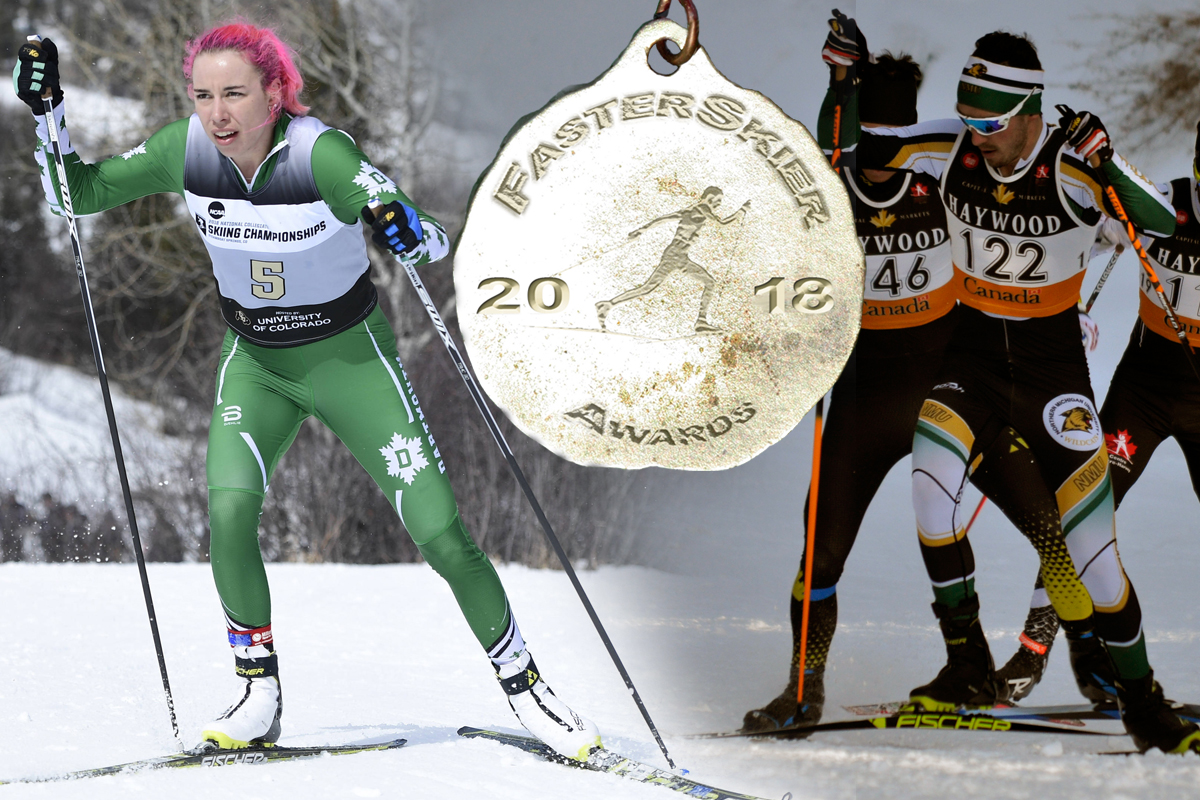
    Katharine Ogden (left) and Ian Torchia (right) are FasterSkier’s 2018 Collegiate Skiers of the Year. (Photos: Dartmouth Sports/Clarkson Creative & XTS Photography)

    With the 2017/2018 season officially in the rearview, FasterSkier is excited to unveil its annual award winners for this past winter. Votes stem from the FS staff, scattered across the U.S., Canada, and Europe, and while not scientific, they are intended to reflect a broader sense of the season in review. This set of honors goes to outstanding college athletes in cross-country skiing. 

    ***

    Katharine Ogden, Dartmouth College

    Katharine Ogden skiing fast doesn’t exactly surprise anyone. A medalist in both individual and relay events at last year’s World Junior Championships, the Stratton Mountain alum and U.S. Ski Team “D” team member won half of the women’s races on the Eastern Intercollegiate Ski Association schedule this season, including the final three individual races of the year.

    But when the Dartmouth skier swept both races at NCAA Championships, first winning the 5 k classic by a stunning 46.9 seconds, then taking the 15 k skate by 38.4 seconds, that was something else.

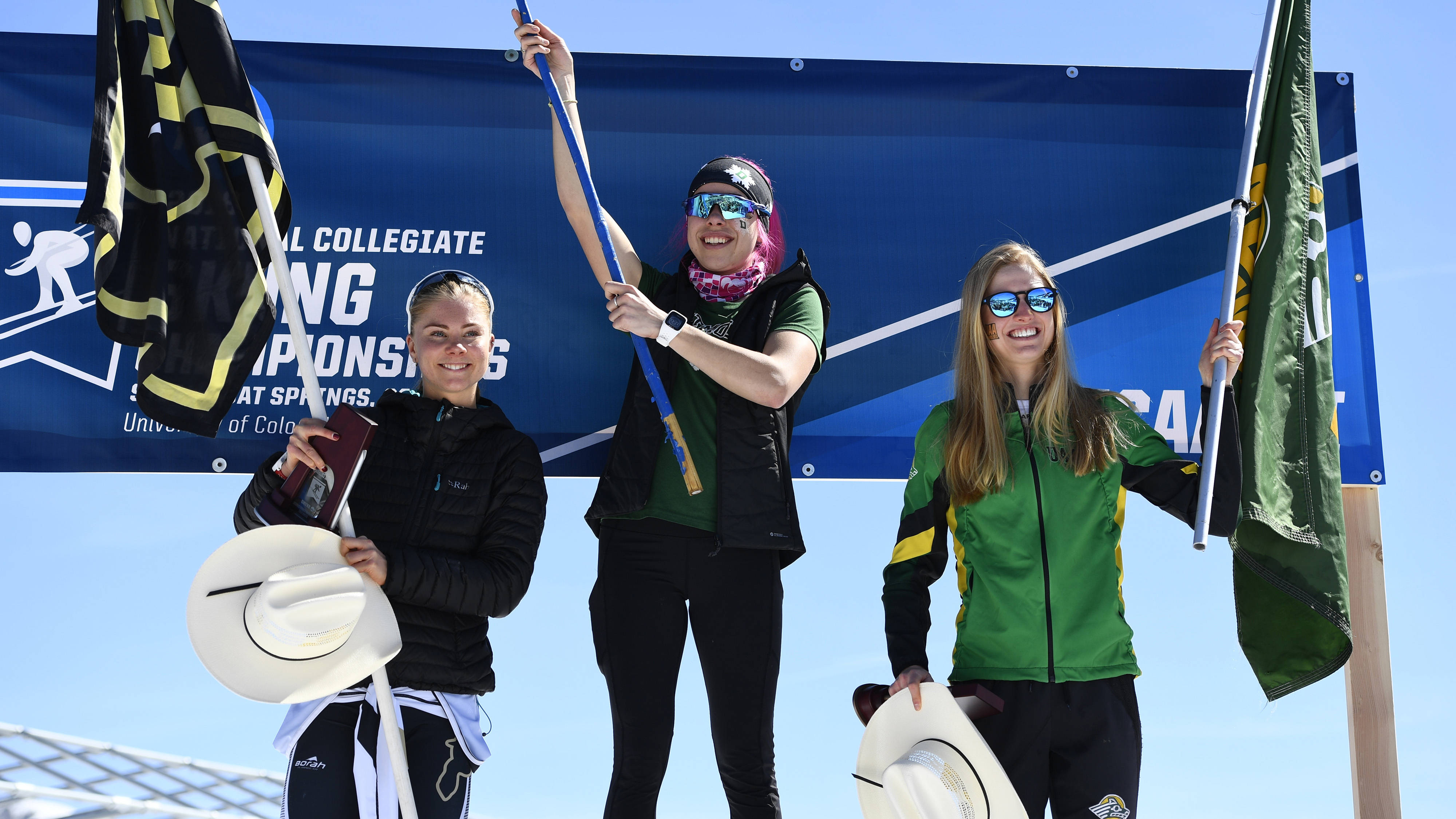
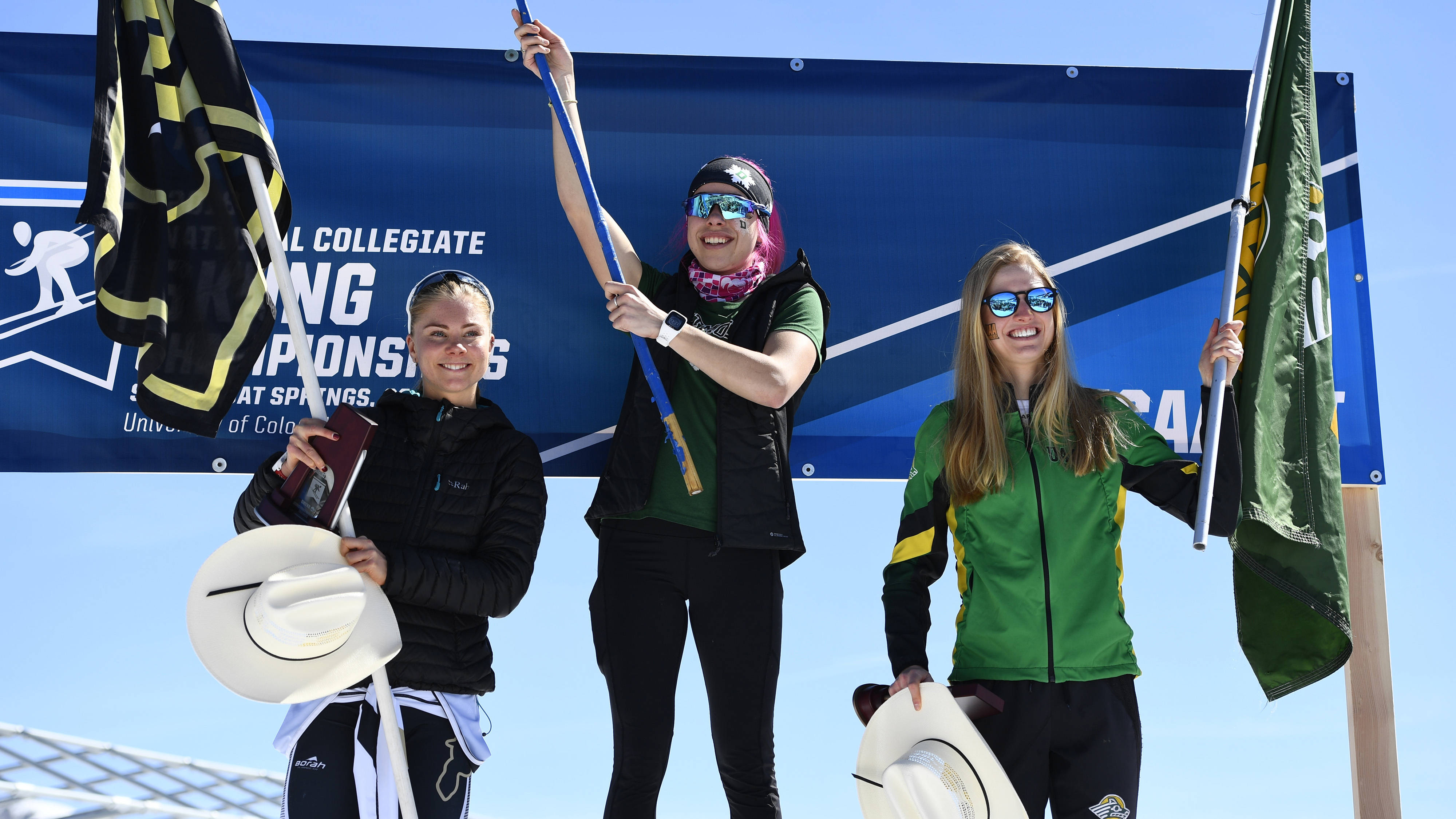
    The women’s 5 k classic podium at 2018 NCAA Skiing Championships in Steamboat Springs, Colorado, with Dartmouth’s Katharine Ogden (c) in first, Colorado’s Anne Siri Lervik (l) in second, and University of Alaska Anchorage’s Hailey Swirbul (r) in third. (Photo: Clarkson Creative/DartmouthSports.com)

    “I was definitely a little stressed because I didn’t know if I could hold that pace or if they would catch up to me, and it’s usually kind of a sketchy strategy to be skiing by yourself, so I kind of knew that in the back of my mind too,” Ogden told The Dartmouth of her mid-race decision to make a move after the 5 k mark of the mass start, when it then turned out that nobody went with her.

    The last time an American topped both women’s races at NCAA Championships was a decade ago, and though both 2007 titles were taken by a Lindsey, they weren’t the same one: Lindsey Williams and Lindsey Weir, both of Northern Michigan University.

    It wasn’t since 1990 and 1991, when Laura Wilson of UVM swept NCAA’s, that the same American woman had won both races.

    “Katharine absolutely wanted this one, and she really likes to win,” said Cami Thompson Graves, the Dartmouth Director of Skiing and women’s Nordic head coach, in a press release after Ogden’s second title. “She wasn’t about to let a fall slow her down, she has such a great competitive fire.”

    Despite Dartmouth’s strong history of women’s skiing – alums Sophie Caldwell, Ida Sargent, Rosie Brennan, and Susan Dunklee competed in the 2018 Olympics alone, with many more alums at previous Games –  Ogden was actually the first female Big Green cross-country skier to take an NCAA title.

    “One day I would love to be one of the Dartmouth alums racing in the Olympics,” she said in a Dartmouth press release. “A lot of the reason I decided to come here for school had to do with growing up with Sophie Caldwell and seeing what a positive experience she had at Dartmouth.”

    Ian Torchia, Northern Michigan University

    Likewise, Ian Torchia has been a top junior athlete for the U.S. for some time now. By the time he went to NCAA Championships, he had already been to U23 World Championships, where his 27th- and 32nd-place finishes were the top American results in the 30 k skiathlon and 15 k classic, respectively.

    Although he is enrolled at Northern Michigan University and trains there with the team, college racing was not his number one goal this season. Torchia won a 15 k skate NorAm in Sovereign Lake, British Columbia, early in the season in pursuit of those higher goals.

    The men’s 15 k freestyle podium on Day 2 of the NorAm opening weekend at Sovereign Lake near Vernon, B.C., with Ian Torchia (NMU/USST D-Team) in first, Jack Hegman (SVSEF) in second, Brian McKeever (Canadian Para-Nordic Team) in third, Kevin Bolger (SVSEF) in fourth (far left), and Adam Martin (Craftsbury GRP) in fifth (far right). (Photo: Peggy Hung)

    “My main goal for the season was to have a strong start to the season so I could qualify for U23s and the Olympics,” Torchia wrote in an email last week. “Competing in Yellowstone and Silver Star was a first for me, and coming into Nationals in the first spot on the Olympic qualifying list was exciting and nerve-wracking. Unfortunately, I had some sub-par racing at Nationals and missed the Olympics but qualified for U23s. I was definitely satisfied with the efforts I put in at U23s, but not with my execution and results. Finishing barely in the top 30 was not was I was hoping for but racing alongside guys who have gotten top-10’s on the World Cup was definitely motivating and gave me a real idea of where I need to be and what I need to do to get there.”

    Coming back from Europe, he had to re-tool and had a solid training camp in Steamboat Springs before NCAA’s.

    There, he finished fifth in the 10 k classic, the top American 46.2 seconds behind race winner Martin Bergström of Utah.

    And in the 20 k skate mass start, he took his first NCAA title, holding off Alvar Alev of the University of Colorado by just two seconds, with Eivind Kvaale of Denver University another two seconds back.

    “The first two laps of the race were very slow and it took patience to follow Coach Sten [Fjeldheim]’s plan of not leading,” Torchia wrote. “The Denver guys led it out on lap three and started gradually pushing the pace. On the final lap, people started throwing down and I was able to cover moves until 2.5 k to go when I gradually pulled the trigger. Alvar Alev from Colorado went on the final uphill and I was able to hang with him into the 2 k downhill. Coming into the final downhill he slingshotted by me but I was able to overtake him before the final turn and sprint faster than I’ve ever sprinted before for the win! I am not known as a sprinter on our team, so I was definitely nervous with a big group around me. But Sten has always told me that a sea level distance guy can outsprint an altitude sprinter, as training at lower elevation is beneficial to speed training.”

    Torchia was the first American in three years to stand atop the NCAA podium; the last guy to do it was U.S. Ski Team teammate Patrick Caldwell in 2015. University of Alaska Anchorage’s Hailey Swirbul said that the international flavor of college racing is fantastic and helps her prepare for international competition and to be a better skier.

    But to win NCAA’s as an American is still a perk.

    “I definitely did not think about it before the race, but after it was pretty cool to think about the rarity of American winners,” Torchia wrote. “Fun to share it with my buddy Paddy Caldwell!”

    Honorable Mention: Zane Fields, Colby College

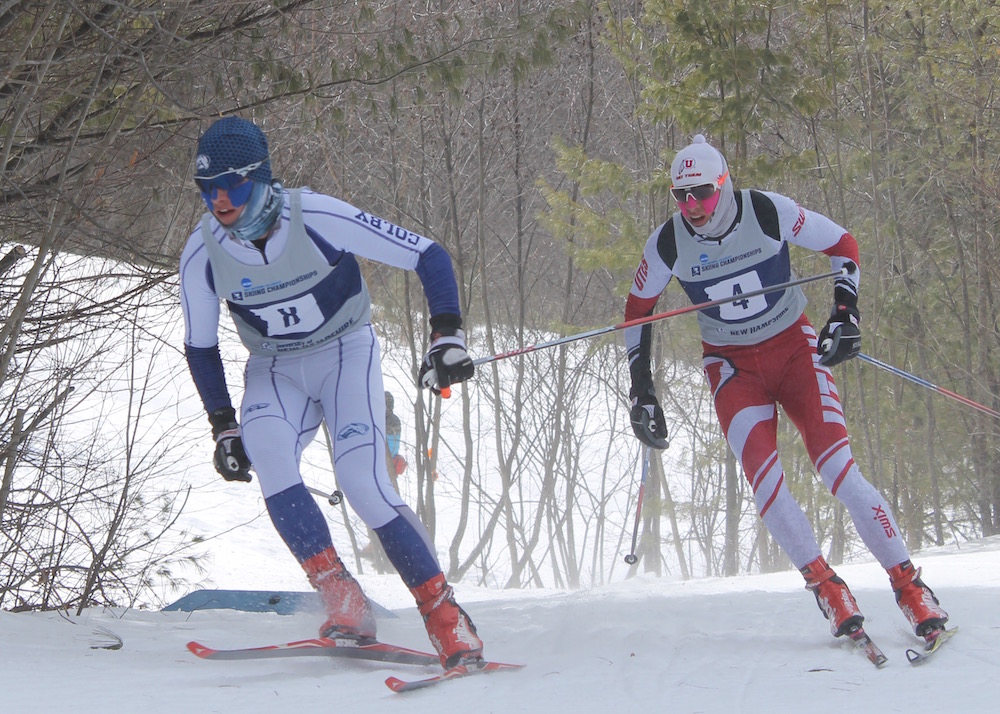
    Colby’s Zane Fields (left) racing at NCAA Championships last season. This season, he became the school’s first cross-country skiing All-American.

    And on the men’s side in the East, one of the biggest revelations was the Colby squad. Andrew Egger qualified for U23’s and finished 47th in the sprint there, the second American. (“To be honest, making the U-23 World Championship team wasn’t really on my radar when I decided to go to Alaska [for U.S. Nationals]… That said, my goal standing on the start line of the sprints was to win,” Egger told the Colby sports department.)

    On the college circuit, though, it wasn’t Egger who was making Colby history. Zane Fields demolished carnival after carnival, sweeping all five skate races before also winning the final classic race of the eastern season. At NCAA’s, the Colby junior finished sixth in the 20 k skate.

    It was the best season-long tally by any Colby skier ever, and that final race made him Colby’s first male All-American in cr0ss-country skiing.

    “This season has been a dream,” Fields said in a Colby press release after the 20 k. “If you had told me two months ago that things would unfold the way they did, I wouldn’t have believed you. While the sport is an individual one, I have the greatest coaches and team supporting me through every race.”

    As a team, the Colby men finished third in two races this season behind Fields, and had a number of fourth- and fifth-place finishes.

    “This has been the most fun year of skiing I have ever had,” Fields said in the press release. “The season is one that certainly makes the 500-plus hours of training and sacrifices worth it. I’m excited to see what my team and I can accomplish next year.”

    Honorable Mention: Alayna Sonnesyn, University of Vermont

    Those half of the EISA carnival races that Katharine Ogden didn’t win? They went to UVM’s Alayna Sonnesyn, who dominated the first half of the season and won three skate races and two classic races.

    Sonnesyn also had a stellar U.S. Nationals earlier in the season, finishing eighth in the skate sprint and sixth in the 20 k classic; all but one of the skiers ahead of her in that race (winner Hedda Baangman of Sweden) went to the Olympics.

  • Saturday Rundown: NCAA Champs; Holmenkollen 50 k; Kontiolahti Relays

    Saturday Rundown: NCAA Champs; Holmenkollen 50 k; Kontiolahti Relays

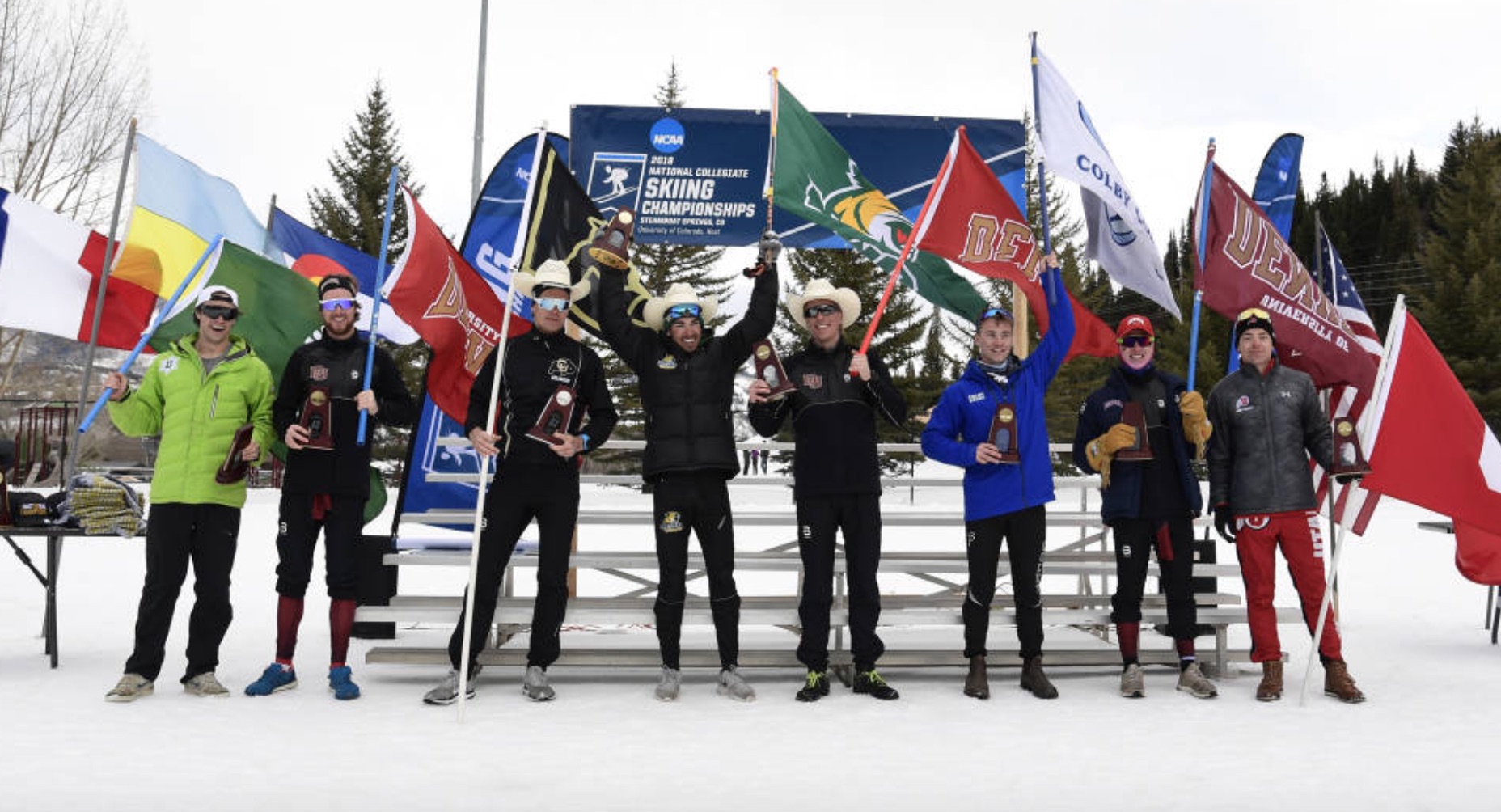
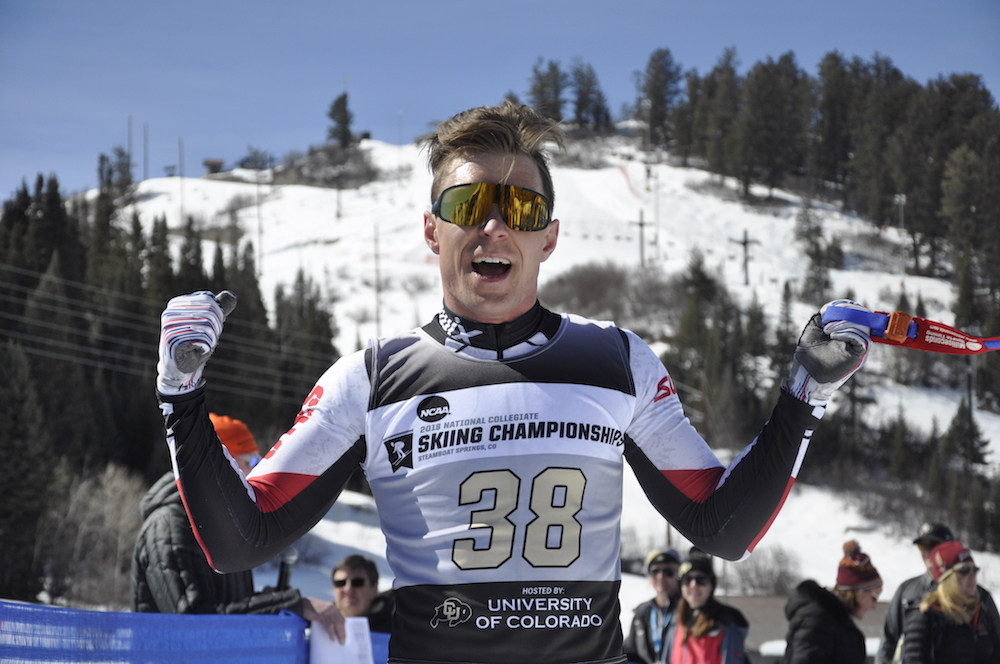
    The top finishers in the men’s 20 k freestyle mass start at 2018 NCAA Skiing Championships in Steamboat Springs, Colorado, with Northern Michigan University’s Ian Torchia (c) in first. (Photo: Dartmouth Sports/Clarkson Creative)

    NCAA Skiing Championships (Steamboat Springs, Colorado): 15/20 k freestyle mass starts

    On the fourth and final day of NCAA Skiing Championships at Howelsen Hill in Steamboat Springs, Katharine Ogden skied to her second-straight national title, Ian Torchia became an NCAA champion and the University of Denver (DU) won its 24th NCAA National Championship.

    Dartmouth freshman Katharine Ogden racing to her second-straight victory of the 2018 NCAA Skiing Championships in Steamboat Springs, Colorado. She won Saturday’s 15 k freestyle mass start by more than 38 seconds. (Photo: Dartmouth Sports/Clarkson Creative)

    Ogden, a Dartmouth College freshman, raced to a 38.4-second victory in the women’s 15-kilometer mass start, finishing in 43:22.0 minutes for her second win in as many races at 2018 NCAA Championships. She won the 5 k classic on Thursday and with her win on Saturday, she became the first Dartmouth skier in 56 years to win two national titles in the same year, according to a Dartmouth press release.

    On the second of three laps, Ogden broke away early with close to 10 k to go. According to the press release, she had a “quick fall” near the end of the second lap, but that didn’t derail her as she had time to grab sunglasses from Dartmouth men’s coach Brayton Osgood and a Dartmouth Lone Pine flag before the finish.

    At this year’s championships, Ogden’s two titles are accompanied by victories from Dartmouth men’s alpine skiers Brian McLaughlin (who won the giant slalom) and Tanguy Nef (who won the slalom). This marked only the second time that Dartmouth’s Big Green won four individual titles in a single NCAA Championships; that also occurred 61 years ago.

    “Katharine absolutely wanted this one, and she really likes to win,” Dartmouth Director of Skiing and Women’s Nordic Head Coach Cami Thompson Graves said in the press release. “She wasn’t about to let a fall slow her down, she has such a great competitive fire. But she also showed her playful side grabbing Brayton’s glasses and smiling all the way to the finish line!”

    Hailey Swirbul of the University of Alaska Anchorage placed second and Linn Eriksen (DU) reached the podium in third (+46.3). Denver had three in the top 10 with Jasmi Joensuu in ninth and Taeler McCrerey in 10th. Also landing in the top 10 for All-American honors were Guro Jordheim of the University of Utah in fourth, Emma Tarbath (Montana State University) in fifth, Petra Hyncicova of the University of Colorado Boulder (CU) in sixth, Christina Rolandsen (CU) in seventh, and Lauren Jortberg (Dartmouth) in eighth.

    Torchia, an Northern Michigan University (NMU) junior and U.S. Ski Team Development Team member, became the seventh NCAA champion in NMU Wildcats nordic skiing history, according to an NMU press release. Fredrick Schwenke was the Wildcats’ last nordic champion; he won the 2015 NCAA Championships 20 k classic.

    Torchia drew bib 1 for Saturday’s 20 k freestyle mass start and crossed the finish line first in 54:21.0, just 2 seconds ahead of CU’s Alvar Alev. Eivind Kvaale (DU) finished just four seconds back in third, and Denver had three in the top seven with Dag Frode Trollebø in fourth and Lars Hannah in seventh. Darmouth’s Cal Deline placed fifth, Zane Fields of Colby College finished sixth, and the 20 k freestyle’s 2017 NCAA champion Martin Bergström (Utah), who also won Thursday’s 10 k classic, placed eighth.  CU’s Petter Reistad and Sondre Bollum finished ninth and 10th, respectively.

    In the team standings, Denver beat Colorado by 41 points for the overall win with a total of 604 points between the nordic and alpine events at this year’s championships. Dartmouth placed third, 114.5 points behind Colorado, and Utah was another 63 points back in fourth.

    According to a DU press release, Denver has won at least one national championship in each of the last five athletic seasons (skiing: 2013/14, 2015/16, 2017/18; hockey: 2016-17; men’s lacrosse 2014/15), joining only Stanford on the list of schools that have done so in the last five seasons. (Oregon, West Virginia, Penn State, Oklahoma, Ohio State and Florida could potentially join that list later this year.)

    “It feels incredible,” said DU head coach Andy LeRoy said in the press release. “I am so happy for all of our athletes, they’ve been training all week and all season and to do it in Steamboat in front of our crowd is special.”

    Results: Women | Men| Team 

    Photos

    ***

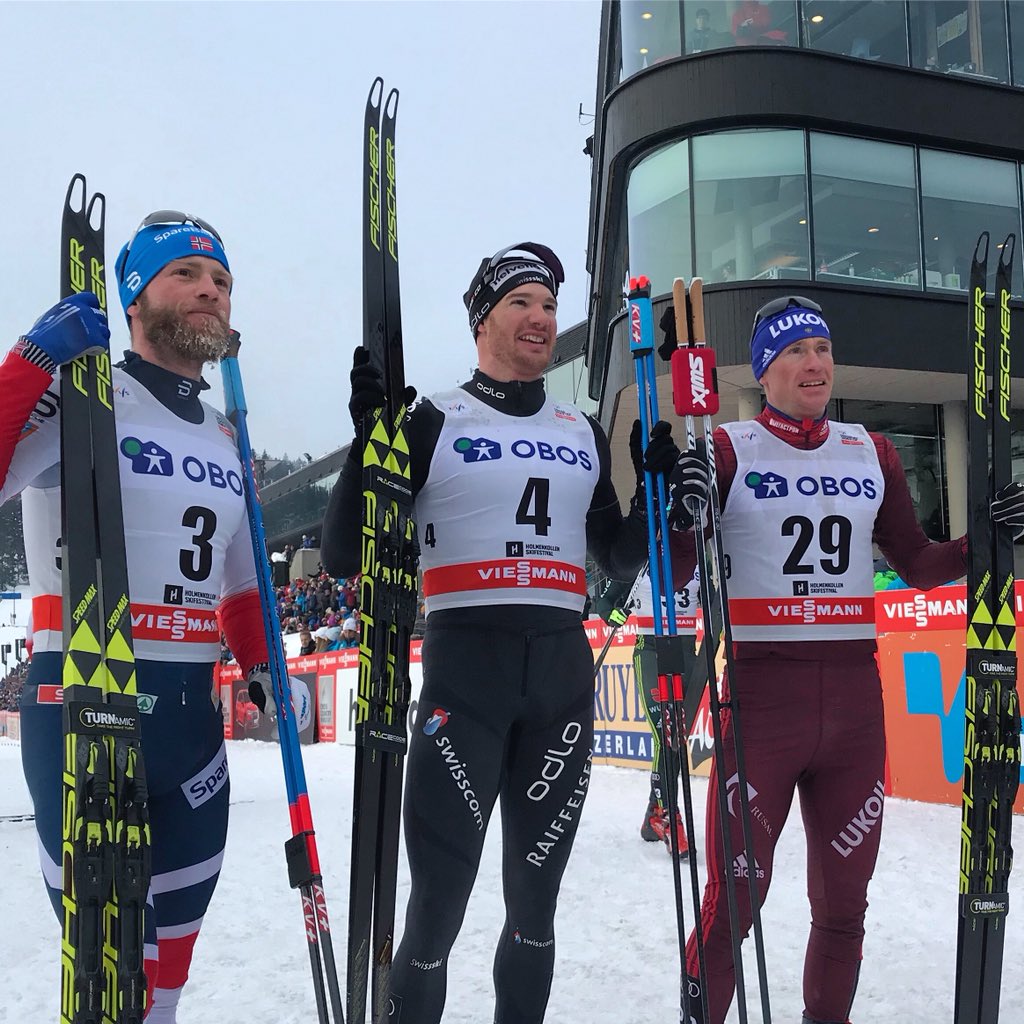
    The Holmenkollen men’s 50 k freestyle mass start podium on Saturday at the World Cup in Oslo, Norway, with Switzerland’s Dario Cologna (c) in first, Norway’s Martin Johnsrud Sundby (l) in second, and Russia’s Maxim Vylegzhanin (r) in third. (Photo: FIS Cross Country/Twitter)

    FIS Cross Country World Cup (Oslo, Norway): Men’s 50 k freestyle mass start

    Full report

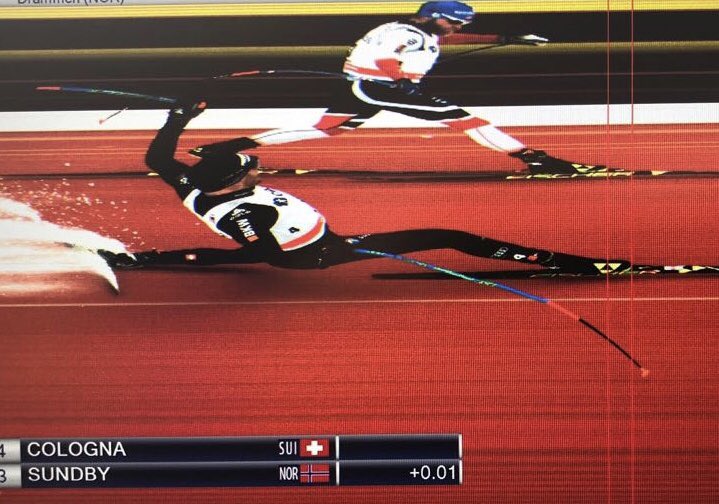
    A four-time Olympic champion, Dario Cologna of Switzerland won his first 50-kilometer World Cup race on Saturday, topping the podium in the famous Holmenkollen 50 k freestyle mass start after outlunging Norway’s Martin Johnsrud Sundby (who won the event last year) for the win in 2:01:48.1. Sundby finished one-hundredth of a second behind for second place, ahead of Russia’s Maxim Vylegzhanin, who was 1.1 seconds back in third in his first World Cup race since November of last year.

    The photo finish for first between Switzerland’s Dario Cologna (near) and Norway’s Martin Johnsrud Sundby at the Holmenkollen 50 k freestyle mass start on Saturday in Oslo, Norway. Cologna got it by 0.01 seconds. (Photo: FIS Cross Country/Twitter)

    Norway’s Sjur Røthe came out on top in a race for fourth (+4.2), ahead of Russia’s Denis Spitsov in fifth (+4.4) and his Norwegian teammate Hans Christer Holund in sixth (+4.5). Great Britain’s Andrew Musgrave followed in seventh (+15.1), Germany’s Florian Notz placed eighth (+25.9) and Canada’s Alex Harvey finished ninth (+32.4), ahead of France’s Robin Duvillard in 10th (+33.5).

    Scott Patterson led the U.S. in 16th (+56.3) coming off an 11th place in the 50 k classic mass start at last month’s Olympics, and Canada’s Devon Kershaw finished in the points in 28th (+3:43.6). Just outside the top 30, Canada’s Graeme Killick finished 34th (+4:55.1).

    Also for the U.S, David Norris placed 38th (+6:19.7), Paddy Caldwell was 46th (+8:12.3), Noah Hoffman 49th (+10:27.9), Kevin Bolger 52nd (+12:44.2), and Simi Hamilton did not finish.

    Canada’s fourth man in the race, Andy Shields finished 47th (+8:13.6).

    Results

    ***

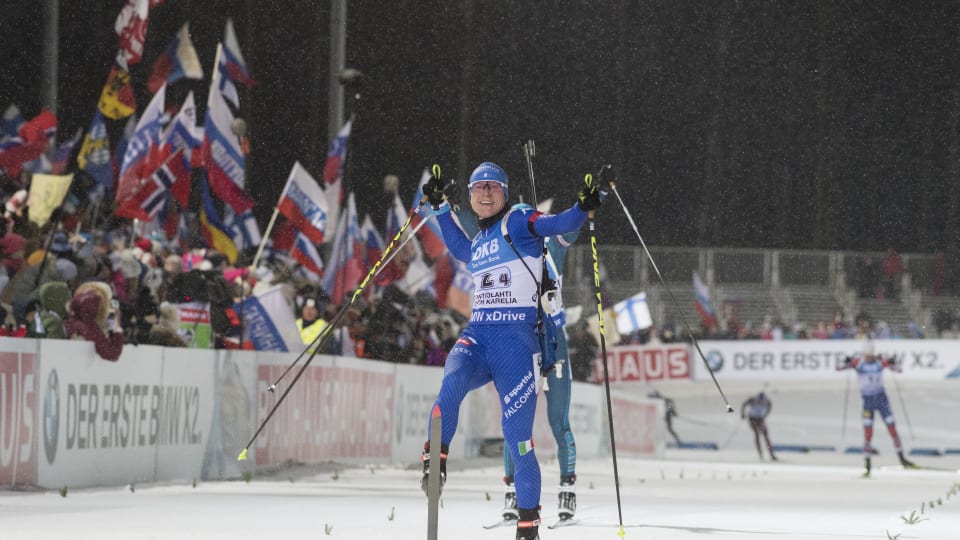
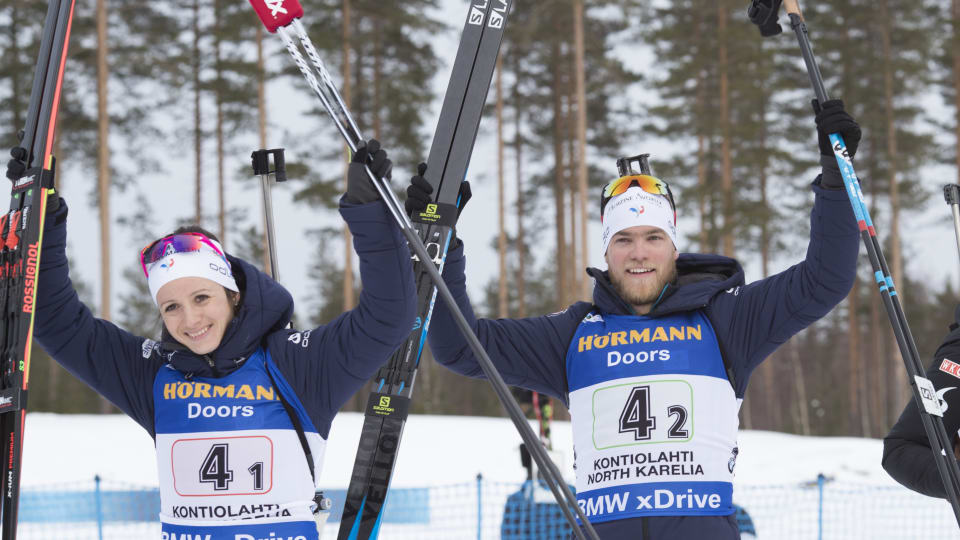
    Italy’s Lukas Hofer celebrates his team’s win in Saturday’s mixed relay at the IBU World Cup in Kontiolahti, Finland. (Photo: IBU/Biathlonworld)

    IBU World Cup (Kontiolahti, Finland): Single mixed relay & mixed relay

    (Note: This rundown has been updated to include comments from Christian Gow and Sean Doherty.)

    In the last single mixed relay and mixed relay of the International Biathlon Union (IBU) World Cup season, France and Italy came out on top, with France winning the two-person single mixed relay and Italy taking first in the coed mixed relay.

    France’s Anaïs Chevalier and Antonin Guigonnat after winning Saturday’s single mixed relay at the IBU World Cup in Kontiolahti, Finland. (Photo: IBU/Biathlonworld)

    France’s Anaïs Chevalier and Antonin Guigonnat combined for zero penalties and six spares to finish first in the single mixed relay in 33:29.1 minutes. Guigonnat as the team’s anchor secured the win by just 2.4 seconds over Austria’s Julian Eberhard while Norway’s Johannes Thingnes Bø finished 4.4 seconds back for third.

    Chevalier put France in fifth after the first leg, 15.5 seconds behind Ukraine’s Iryna Varvynets in first. Guigonnat used just one spare on his first leg to move them into fourth, 9.2 seconds back while Norway led at the second exchange. On Chevalier’s second leg, she shot clean in both stages to lead through the final exchange, with Ukraine skiing just 6.2 seconds back in second.

    On the final leg, Guigonnat used two spares and stayed out of the penalty lap, keeping the team in first through the finish. Eberhard skied the second-fastest course time on that leg to elevate Austria (with Lisa Theresa Hauser) from fourth at the tag to second place at the finish, and Bø skied all the way up from eighth to third place for Norway (with Marte Olsbu) with the fastest course time.

    Ukraine’s Artem Tyschenko used just one spare but slipped to fourth with the 11th-ranked course time on that leg, as he finished 10.8 seconds behind Norway.

    Behind Russia in fifth and Italy in sixth, Canada placed seventh (+23.8) with Rosanna Crawford and Christian Gow. The duo combined for zero penalties and six spares, and put themselves in third place early in the race. Crawford skied them into third on the first leg, using just two spares and tagging Gow 7.4 seconds out of first.

    Gow went on to take the lead after cleaning prone without any spares, and he cleaned standing as well but slipped back to third while Bø took the lead. Gow tagged Crawford in third, 8.9 seconds behind Norway in first.

    “I didn’t think too much about being tagged in third,” Gow recalled in an email to FasterSkier. “It was exciting for sure, but I let it fade to the background so that I could focus on my job both on the track and in the range.  It was great to leave prone in first place! It was also surprising, but it was a good place to be in.

    “My skiing was ok today,” he continued. “It is a really challenging and demanding race format that we don’t get a lot of practice with.  I was sick after the Olympic Games and only finally coming around the past couple days.  The Sprint race was horrendous for me, so today was much better than that. In the range I just focussed on myself and trusted my shooting.  I tried my best not to get caught up in the race going on around me and it worked to my benefit.”

    Crawford then slipped to seventh and 21 seconds back with three prone spares, but avoided the penalty lap, and Gow held onto seventh through the finish, using just one spare and skiing the eighth-fastest course time on that leg.

    “We are both happy with this result,” Gow wrote. “I think that we are both looking at the 23 second gap to first and thinking that if things had worked out just a bit better we could be there.  It can be both exciting and frustrating to be that close to the podium.  We know we can do it, it’s just a matter of putting it together on the right day. We are happy with 7th, but hungry for more.”

    Susan Dunklee and Lowell Bailey finished 14th for the U.S., 1:13.0 out of first with one penalty and 14 spares. The penalty came on Dunklee’s first leg during her standing stage, after she had cleaned prone without any spares. She tagged Bailey in 14th and he brought them up to 11th, using three spares on that leg, then Dunklee came through the final exchange in 13th after using four spares to clean. Bailey lost one place on the final leg, using four spares but staying out of the penalty lap.

    Twenty-six teams competed in the single mixed relay, compared to 23 in the mixed relay that followed.

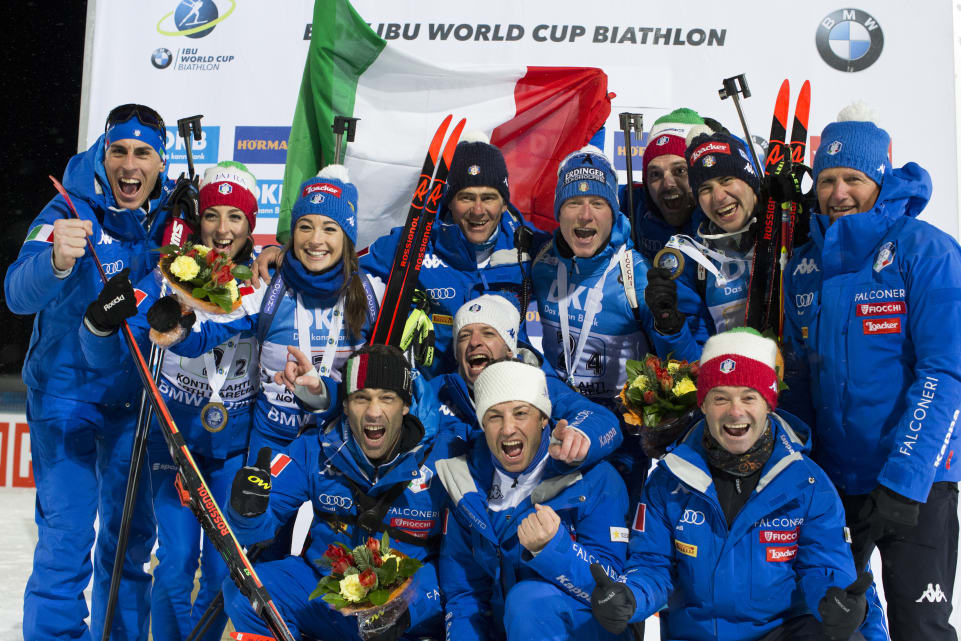
    Team Italia celebrates its win in the IBU World Cup mixed relay on Saturday in Kontiolahti, Finland, with its relay members Dorothea Wierer, Lisa Vittozzi, Dominik Windisch, and Lukas Hofer. (Photo: IBU/Biathlonworld)

    In Saturday’s 2 x 6 + 2 x 7.5 k mixed relay, Italy nabbed a 1.5-second victory over Ukraine in 1:15:08.3. Dorothea Wierer, Lisa Vittozzi, Dominik Windisch, and Lukas Hofer — the same Italian team that took bronze in the mixed relay at last month’s Olympics, although in a different order — combined for the win with one penalty and 13 spares.

    Ukraine, with Anastasiya Merkushyna, Vita Semerenko, Artem Pryma, and Dmytro Pidruchnyi, had zero penalties and just three spares throughout the whole race. For the second-straight relay on Saturday, Norway placed third (+9.1) with Synnøve Solemdal, Tiril Eckhoff, Henrik L’Abée-Lund, and Tarjei Bø totaling zero penalties and nine spares.

    Italy’s lone penalty came in Vittozzi’s second leg, but it didn’t derail the team as it improved from sixth to fifth with Vittozzi, who skied the third-fastest course time on that leg. She tagged Windisch 6.8 seconds out of first, and Windisch, who had anchored the team in the Olympics, took the lead by the final exchange after using two spares to clean. Hofer left the exchange just 3.3 seconds ahead of Norway’s Bø but used just one spare and skied the second-fastest anchor leg to finish first, beating his rivals up Kontiolahti’s infamous climb known as “The Wall”. Ukraine’s Pidruchnyi also shot clean with a single spare and clocked the fastest anchor leg to move his team from fourth to second place. Bø lost one place and finished third after using one spare as well and skiing the third-fastest anchor leg.

    Russia followed in fourth, France fifth, Sweden sixth, Germany seventh, Austria eighth, and the U.S. ninth (+2:48.4). The U.S. team, with Clare Egan, Joanne Reid, Tim Burke, and Sean Doherty, had one penalty and 11 spares. Egan cleaned her first prone but had to ski a penalty lap after her standing stage, tagging Reid in 17th, 58.7 seconds out of first.

    Reid used three spares on the second leg and moved up to 13th by the second exchange, and Burke used three spares as well to pick off one more place and tag Doherty in 12th. Doherty skied the eighth-fastest anchor leg and used two spares to clean to put the team in ninth at the finish.

    “I don’t consider two spares to be anything special, but today it was enough to make up some ground,” Doherty wrote in an email to FasterSkier.”I felt strong skiing, more like myself which is fun even if it’s a little late in the season. We had very good skis which always helps. I have done quite a few laps on this course over the years so the lines and transitions are pretty refined, so that is where I made time on the course.

    “I am happy with my leg. I enjoyed my little battle for 9th,” he continued. “I can’t speak too much for the other members of the relay tonight but I think 9th is a solid effort.”

    Canada finished 17th (+4:34.9) with Emma Lunder, Julia Ransom, Scott Gow, and Brendan Green combining for one penalty and 13 spares. Lunder put them in 12th at the first exchange and Ransom skied up to 10th, but Scott Gow had a penalty on his standing stage to drop to 16th. Green lost one more place on the last leg despite only requiring two spares.

    Results: Single mixed relayMixed relay

  • Thursday Rundown: Ogden, Bergström NCAA Champs; Kontiolahti Men’s Sprint

    Thursday Rundown: Ogden, Bergström NCAA Champs; Kontiolahti Men’s Sprint

    The women’s 5 k classic podium at 2018 NCAA Skiing Championships in Steamboat Springs, Colorado, with Dartmouth’s Katharine Ogden (c) in first, Colorado’s Anne Siri Lervik (l) in second, and University of Alaska Anchorage’s Hailey Swirbul (r) in third. (Photo: Clarkson Creative/DartmouthSports.com)

    On the first day of NCAA Skiing Championships at Howelsen Hill in Steamboat Springs, Dartmouth College freshman Katharine Ogden and University of Utah senior Martin Bergström were crowned champions in the women’s 5-kilometer and men’s 10 k classic races, respectively.

    Ogden won the women’s individual-start race by a whopping 46.9 seconds, finishing in 14:47.2 minutes to become Dartmouth’s first female cross-country skier to win an NCAA title, according to a Dartmouth press release. Anne Siri Lervik of the University of Colorado Boulder (CU) placed second and Hailey Swirbul, of the University of Alaska Anchorage (UAA) and a two-time individual medalist at this year’s Junior World Championships, placed third (+51.0).

    “There isn’t much more to say about Katharine’s performance today other than she absolutely crushed it!” said Dartmouth Director of Skiing and Women’s Nordic Head Coach Cami Thompson Graves, according to the Dartmouth press release. “It was such a treat to watch her perform so well.”

    Martin Bergström (University of Utah) after winning his third-straight NCAA Skiing Championships title with a win in the 10 k classic on Thursday in Steamboat Springs, Colorado. (Photo: University of Utah)

    CU, this year’s NCAA Championships host, had three women in the top 11 with last year’s classic champion Petra Hyncicova placing sixth and Christina Rolandsen finishing 11th.

    The CU Buffs took the lead in the team standings on Thursday by nine points over the University of Denver (DU). Utah is currently 41 points back in third, Dartmouth moved up to fourth, and the University of Vermont, which led after Wednesday’s Day 1 alpine races, slipped to fifth.

    In the men’s race, Bergström, who won both races at last year’s NCAA Championships, posted an 8.5-second victory over CU’s Petter Reistad with a winning time of 27:37.1. Dag Frode Trollebø of DU placed third (+14.7) ahead of his DU teammate Eivind Kvaale in fourth (+38.9). On his 22nd birthday, Ian Torchia, of Northern Michigan University and the U.S. Ski Team Development Team, was the top American finisher in fifth (+46.2).

    Alpine slalom races will take place on Friday, while NCAA Championships will conclude with 15/20 k freestyle mass starts on Saturday.

    Results: WomenMen

    Team results (through Day 2 of 4)

    ***

    IBU World Cup (Kontiolahti, Finland): Men’s 10 k sprint

    First, a little geography lesson. Kontiolahti, Finland, is only about 100 kilometers from the Russian  border, so most of the International Biathlon Union (IBU) World Cup (and World Championships) events held there attract a mostly Russian crowd.

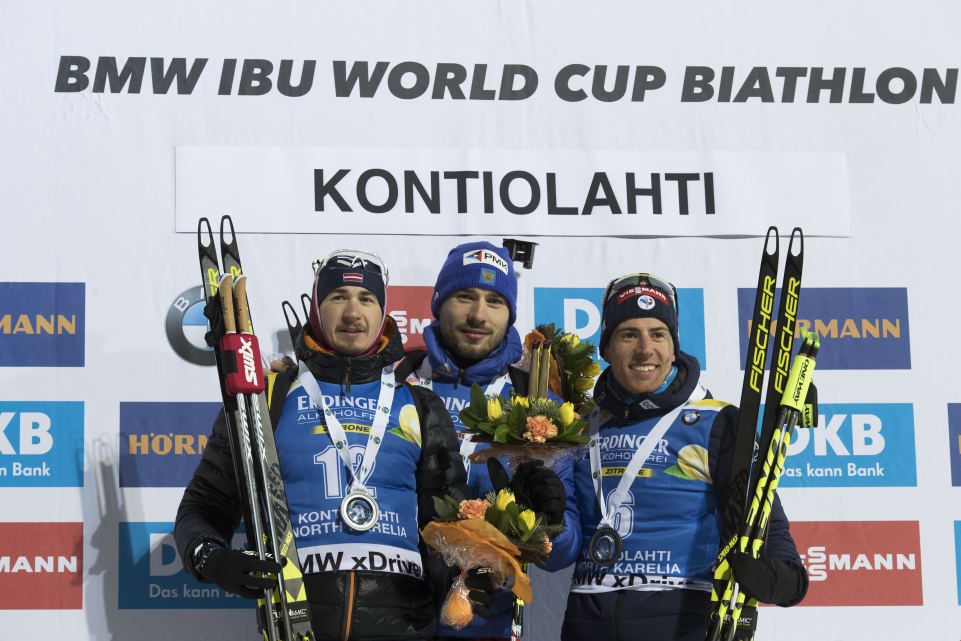
    The men’s 10 k sprint podium at the IBU World Cup in Kontiolahti, Finland, with Russia’s Anton Shipulin (c) in first, Latvia’s Andrejs Rastorgujevs (l) in second, France’s Quentin Fillon Maillet (r) in third. (Photo: IBU/Biathlonworld)

    And here’s a little more background: Russia’s Anton Shipulin showed up for Thursday’s IBU World Cup in Kontiolahti raring to go after having been barred from last month’s Winter Olympics in PyeongChang, South Korea.

    So Shipulin hadn’t raced since Jan. 21 in Antholz, Italy. The International Olympic Committee’s decision to ban him from the 2018 Games went public on Jan. 23.

    Back in action in Kontiolahti, in front of Russian fans, Shipulin delivered a 5.8-second win in the men’s 10-kilometer sprint, shooting clean and finishing in 23:51.6.  It was the 31 year old’s third non-relay podium of the season and first World Cup win of 2017/2018, and he did so on a relatively moderate evening by Kontiolahti standards (at -6 degrees Celsius, or 21 Fahrenheit) with a “stiff breeze” on the range, according to an IBU press release.

    “I felt very good on the tracks and shooting and today it was enough to win,” Shipulin told the IBU. “I am very happy about this … all of the Russian fans gave me a lot of support on the tracks.”

    Latvia’s Andrejs Rastorgujevs tied his career best in second place, after shooting a perfect 10-for-10 as well. He acknowledged his mom and women in general after the race.

    “This is very important for my team,” Rastorgujevs told the IBU. “I would also like to congratulate all of the ladies and especially my mom on International Women’s Day.”

    France’s Quentin Fillon Maillet also shot clean to place third (+17.3) for his third non-relay World Cup podium of the season.

    Fillon Maillet was one of the earliest starters in bib 6 yet held off Norway’s Johannes Thingnes Bø, the 30th starter, by 1.7 seconds for the last spot on the podium. Bø had been a race leader after cleaning prone but missed two standing targets (0+2) to slip out of contention and into fourth at the finish (+19.0).

    Germany’s Olympic sprint champion, Arnd Peiffer placed fifth (+27.4) with one miss (0+1), and France’s Simon Desthieux finished sixth (+28.3) with one prone penalty (1+0), and Germany took seventh and eighth with Erik Lesser (+30.6; one penalty) and Simon Schempp (+32.0; two penalties), respectively. Italy had two in the top 10 with Lukas Hofer in ninth (+35.2; one penalty) and Dominik Windisch in 10th (+38.3; one penalty).

    Lowell Bailey of the U.S. posted his best sprint result of the season in 16th (+48.4) after cleaning prone and missing one standing target (0+1). After starting 22nd, he recorded the 13th- and 14th-fastest overall shooting and range times, respectively, and 23rd-ranked course time.

    After the Olympics, Bailey returned home to Lake Placid, N.Y., for a brief training block. Despite a hefty amount of travel over the last week and a half, he explained in an email that he felt good in his first race back.

    “I felt better than I have for most of the season.  Sometimes that can happen.  I guess that’s the part of the unpredictability of biathlon,” Bailey wrote of Thursday’s race. “The conditions were great today; hard tracks and calm winds on the range.  There was a bit of wind, but compared to the three weeks in South Korea, it seemed pretty tame.

    “Shooting felt solid today,” he added. “That missed shot in standing was sooo close, but not close enough!”

    Overall, Bailey stated that he was happy with his performance and looking forward to the rest of the races in Kontiolahti.

    Leif Nordgren (US Biathlon) raced to 17th for his best result in three seasons on Thursday in the men’s 10 k sprint at the IBU World Cup in Kontiolahti, Finland. (Photo: USBA/NordicFocus)

    His teammate Leif Nordgren finished just one place behind him in 17th (+49.9) for his best result in three years. A later starter in bib 55, Nordgren also cleaned prone and missed one standing (0+1) with the fifth-fastest shooting time and seventh-fastest range time. Overall, his course time ranked 28th out of 100 finishers. Nordgren’s individual career best on the World Cup is 16th in a sprint in February 2015. He has finished 17th three times; the last time was in a pursuit in March 2015.

    Brendan Green shot clean to lead the Canadian team in 34th (+1:29.5). American Sean Doherty followed in 35th (+1:29.7) with three penalties (1+2), and Tim Burke placed 38th (+1:36.1) for the U.S., also with three misses (1+2).

    In his World Cup debut, American Alex Howe finished 68th (+2:23.1) with two misses (1+1).

    Canada’s Christian Gow finished 79th (+2:47.4) with two penalties (1+1), and Scott Gow was 86th (+3:01.7) with three misses (1+2).

    This year’s Kontiolahti World Cup does not include a pursuit race. The women’s 7.5 k sprint is scheduled for Friday at 11:45 a.m. EST in Kontiolahti, and the single mixed relay and mixed relay will follow on Saturday. Racing in Kontiolahti will conclude with men’s and women’s mass starts.

    Results

  • From Snow to Software to Snow Again, Osgood New Men’s Coach at Dartmouth

    From Snow to Software to Snow Again, Osgood New Men’s Coach at Dartmouth

    Brayton Osgood, Dartmouth's new men's nordic head coach, testing skis during Period I of last World Cup season. (Courtesy photo)
    Brayton Osgood, Dartmouth’s new men’s nordic head coach and a former NCAA All-American, testing skis for the U.S. Ski Team during Period I of the 2015/2016 World Cup last season. (Courtesy photo)

    Sitting before the lurid glow of a computer screen, scrolling through codes and functions does not exactly conjure up images of snow, skis and fitness fanatics. However, a logged training hour, timed kilometer split or monitored heart rate are all indispensable numbers to improving nordic performance. For eight years, these ordinals were the opus of Brayton Osgood’s work.

    A math wiz — he graduated cum laude from Dartmouth College with a degree in mathematics and earned his master’s in business and accounting from Northeastern University — Osgood spent just under a decade perfecting a computer software known as Athletic Management Platform (AMP) for a company called AMP Sport. The program, designed to help coaches decipher the meaning of digits in relation to an athlete’s progression in training and racing, boasts partnerships with the U.S. Ski Team, USA Triathlon and the Cleveland Cavaliers, among others. Whether it involved dribbling on a basketball court or trekking trails (snow or dirt covered), Osgood’s work gave numbers a new meaning for many athletes.

    But the electronic connection to cross-country skiing Osgood maintained through his computer could not replace the physicality he loved about the sport: the granular feel of a wax cork, the watery eye blur from breathing in the icy, mid-January air.

    A former nordic racer (he skied for Dartmouth College, where he was a two-time NCAA All-American, as well as XC Oregon, earning a World Cup distance start in 2009) and a coach (he was a Dartmouth assistant coach for the 2011/2012 season), Osgood, 35, missed being physically present at cross-country skiing events.

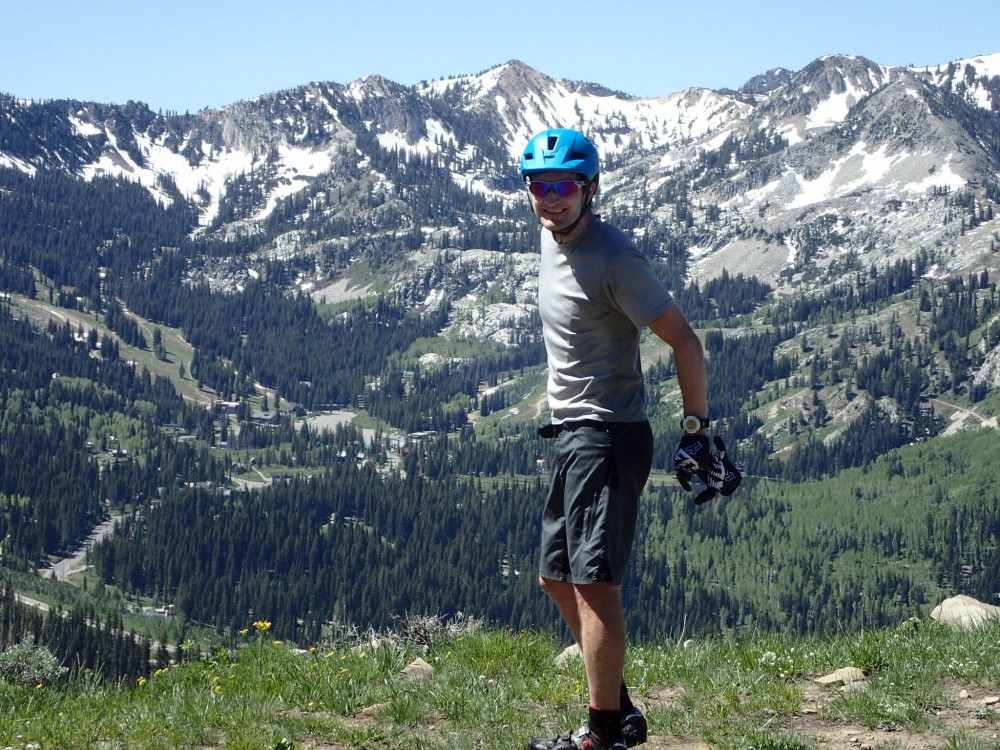
    Brayton Osgood, the new Dartmouth men's nordic head coach, during a mountain bike ride in Park City, Utah. (Courtesy photo)
    Brayton Osgood, the new Dartmouth men’s nordic head coach, during a mountain bike ride in Park City, Utah. (Courtesy photo)

    “I was spending all of my free time in the winter and lots of vacation time making my way towards cross-country ski races so it was pretty clear to me that that’s what I wanted to be doing with my time,” he said on the phone earlier this month.

    Though he loved the math and science behind skiing, Osgood began to realize that being entrenched in skiing was where he wanted to be. He began spending more time at ski events. At the beginning of last season, he traveled to Europe to wax for the U.S. Ski Team for Period 1 of the World Cup. He also served as a coach and wax technician for the New England Junior National Ski Team last season and worked as the race-data manager for the New England Nordic Ski Association (NENSA) from 2012 to 2016. Then in March, when the men’s head-coach position for the Dartmouth nordic ski team opened up, he applied.

    “I was excited to apply for this job specifically because it was at Dartmouth,” Osgood, a native of Putney, Vt., wrote in an email. “The Dartmouth Ski Team has been very important in my life, first as a student-athlete, and more recently inspiring my desire to coach.”

    After much anticipation, Osgood discovered in early May that he had been chosen as the new leader for the Big Green men’s team. He had his first team meeting with half a dozen athletes and his co-coach, Cami Thompson-Graves, prior to Memorial Day weekend and officially started on June 22. While he’s no nordic newbie, Osgood explained that writing training plans for large groups of athletes will be one of the biggest challenges for him as he takes over the reins from Dartmouth’s longtime men’s coach for the last 27 years, Ruff Patterson.

    “I’m really lucky and fortunate to have Cami [Thompson-Graves] as a resource,” Osgood said of Dartmouth’s director of skiing and women’s head coach. “We’ve already started meeting and talking about what she’s done and I’m going to spend a fair amount of time as I get started, talking with the current and hopefully some past Dartmouth skiers just about what has worked for them and where we can experiment and change.”

    Though Osgood has been mentored by Thompson-Graves as an athlete and assistant, this upcoming season will mark his first experience working alongside her.

    Brayton Osgood, Dartmouth College's new men's nordic head coach, working behind the scenes for the U.S. Ski Team on the World Cup early last season. (Courtesy photo)
    Brayton Osgood, Dartmouth College’s new men’s nordic head coach, working behind the scenes for the U.S. Ski Team on the World Cup early last season. (Courtesy photo)

    “I am very excited that Brayton will be re-joining our staff!” Thompson-Graves wrote in an email. “I think his passion for skiing and his knowledge of Dartmouth will help generate a lot of excitement with the team, and will allow him to hit the ground running as we start the new training season.”

    As the pair looks ahead to the beginning of a new season and partnership, Osgood points out that key to their success will be complementing each other as coaches. The two programs will work together to shape the future of the Division I program.

    “She has a great history of success in terms of graduating skiers that move on to the U.S. Ski Team and World Cup podiums,” Osgood said of Thompson-Graves, who’s entering her 28th season coaching at Dartmouth. “She’s done a really good job of building that team atmosphere, which I think is a key to achieving success, so I think there’s a lot I can learn from her there.”

    With the tutelage of Thompson-Graves and current and previous Dartmouth skiers, Osgood hopes to not only continue Dartmouth’s history of program success, but expand upon it.

    “Ruff has been a hugely important figure in my life and skiing,” he said. “So having the opportunity to take over for him is really exciting and a little bit daunting because it’s a great legacy he has and I would love to carry on the success that he achieved.

    “I definitely want to have a team that has All-Americans and hopefully podiums at NCAAs and a lot of skiers All-East for EISA [Eastern Intercollegiate Ski Association],” Osgood added. “Then just as important I think is to have a team that’s happy and excited to be out there skiing and racing every day that they ski … There’s going to be 12 to 15 men on that team and they can’t all race carnivals, they can’t all go to NCAAs, but I want them all to feel like they have successful winters and are achieving the goals they set or are making progress towards those goals.”

    Another aspect of the job Osgood sees as both a challenge and a chance to learn is the student side of coaching a collegiate sport.

    “At a school like Dartmouth, finals are never more than 10 weeks away,” he said. “There’s often midterms and a whole host of external factors that you need to account for when writing [a training plan]. There’s also class schedules. There are a lot of constraints to work with, but that’s going to be a new and exciting thing for me, for sure.”

  • Celebrating 27 Years of College Coaching, Patterson Departs Dartmouth

    Celebrating 27 Years of College Coaching, Patterson Departs Dartmouth

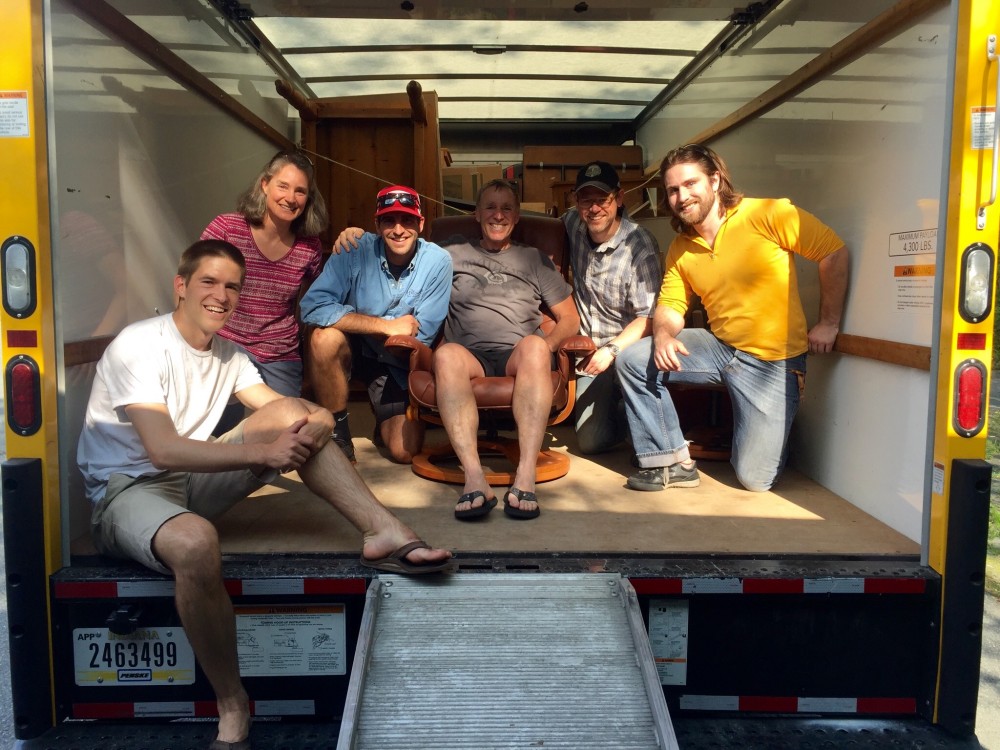
    The crew (left to right) Austin Caldwell '14, Scottie Eliassen '90, Sam Tarling '13, Ruff Patterson, Erik McEwen, and Leif Johnson '13 in the back of Patterson's Uhaul on Tuesday, prior to Patterson's departure west. (Photo: Courtesy of Sam Tarling)
    (From left to right) Austin Caldwell ’14, Scottie Eliassen ’90, Sam Tarling ’13, Ruff Patterson, Erik McEwen, and Leif Johnson ’13 in the back of Patterson’s U-Haul last Tuesday, May 24, prior to Patterson’s departure west. (Photo: Sam Tarling)

    In late March, Ruff Patterson, 61, announced he was stepping down as head coach of the men’s nordic team at Dartmouth. This is a story of his impact and legacy as a coach, first as a U.S. Ski Team assistant and later at Dartmouth in Hanover, N.H.

    “There were no non-heroes out there today.” — Ruff Patterson, after a four-hour rainy run with the Dartmouth men’s nordic team, circa 2007

    ***

    Twenty-seven years ago, a group of men convened in the basement of Robinson Hall, home of the Dartmouth Big Green ski team. Veteran faces intermingled with those of eager newcomers — including the likes of current U.S. Ski Team Head Coach Chris Grover.

    Wisecracks and an accompanying chorus of chortles percolated amongst those assembled, drifting up into the stairwell. A few shuffled their feet as they awaited their coach’s arrival for the first fall practice of the ski season.

    However, the figure that eventually greeted the gang beneath the building’s floorboards was not that of John Morton — the coach who recruited Grover the prior spring and whom Grover expected to work with during his four years of undergraduate study at Dartmouth.

    That autumn afternoon, September 1989, the individual who approached the group was as novel to the Dartmouth ski team as any of Grover’s fellow freshman teammates. With time, however, he would become synonymous with the school’s ski program.

    “This was all happening pre-internet, pre-email, pre-mobile telephones,” Grover on the phone of his recruiting process to Dartmouth. “There was never any sort of news release or anything that went from Hanover to where I grew up in Anchorage, that would’ve said, ‘Hey, by the way, John Morton quit and there’s a new coach named Ruff Patterson and he’s going to be taking that coaching place.’ So here I was that following September, expecting to see John Morton show up for practice, when Ruff Patterson rolls in … That was an interesting transition. We were all getting to know somebody new on the first day.”

    The Patterson Siblings, Sun Valley and the USST

    “You gotta love it!” — Ruff Patterson on skiing, racing and training with the Dartmouth men’s nordic ski team, circa 2013

    Situated nearly 6,000 feet above sea level, the city of Sun Valley, Idaho, holds a unique history as one of the first destination ski resort areas in America. Famed names such as Dick Durrance, Ernest Hemingway and Picabo Street have carved the region’s mountainside slopes and the locals’ love for skiing, particularly alpine, goes almost unparalleled.

    Ruff Patterson coaching with the U.S. Ski Team in the 1980's. (Photo: Rettrieved by Gordon Vermeer and Eric Packer)
    Ruff Patterson coaching with the U.S. Ski Team in the 1980s. (Photo: Gordon Vermeer and Eric Packer)

    This held especially true for Susie, Pete, Barbie and Matt Patterson, Ruff Patterson’s four younger siblings. Surrounded by Idaho’s Sawtooth Mountain Range, and with support from their parents Joannie and Jim Patterson, all five developed a deep devotion to skiing. To many in the community, they became known as Sun Valley’s “First Family” of skiing.

    In a way, however, Ruff was the ‘black sheep’ of the household. Susie became a two-time national champion alpine skier, Pete qualified for the Winter Olympics in downhill skiing twice, and both Barbie and Matt established themselves as adept alpine skiers. Meanwhile, Ruff chose a slightly different ski path than his siblings. He chose cross-country.

    “[In] high school, I had a brother and sister who were both traveling, very young, for the national alpine team and I was kind of the guy in the background helping them get through school and fixing skis and stuff like that,” Ruff said in a phone interview in April, shortly after he announced his retirement from Dartmouth. “Contact with people, having to deal with traveling and and competing started really young for me, but [ski coaching] was not something I planned on doing after college.”

    As a student enrolled at the University of Colorado Boulder (CU), Ruff originally intended to become a doctor. He placed himself on the pre-med track and graduated with a degree distributed in the fields of biology, chemistry and psychology. Ruff also competed for the Buffs’ ski team. During his undergraduate years, CU won four NCAA Championship titles — though in his senior year the title, ironically, ended in a two-way tie with Dartmouth.

    Despite his initial plan, post-grad life did not leave Ruff pouring over MCAT entrance exams or medical-school applications. Instead, he found himself back in his beloved hometown, ski coaching with Rob Kiesel, the founder of the Sun Valley Ski Education Foundation (SVSEF) nordic program.

    The first few years of coaching for Ruff were far from glamorous. He spent most of his time supporting the SVSEF junior racing team and acting as a professional porter and nordic roadie for the U.S. Ski Team (USST).

    “Rob hired me as the national team coach, and you know when you start out, you’re carrying a lot of ski bags and traveling a lot,” Ruff said. “Those first years I was traveling internationally with the team and just doing a lot of the groundwork. I don’t think a lot of the groundwork has changed for those poor guys. They earn every cent.”

    Kiesel, the man who hired Ruff, influenced Ruff’s path into coaching. As Ruff put it, Kiesel was more than just a family friend. Kiesel was Patteron’s role model and mentor.

    “I wouldn’t be coaching today, nor begun coaching if it weren’t for Rob,” Ruff previously wrote in an email after Kiesel passed away in 2011. “Both my sister Susie and brother Pete wouldn’t have had the Alpine skiing careers they had if it weren’t for Rob. My brother Pete wouldn’t be guiding in Greenland or Nepal if it weren’t for Rob. More importantly, Rob was an integral part of our family.”

    As Patterson’s grip on the nordic race world grew, he began to move up in position and expertise. For 10 years, he worked for the USST,  a better part of those alongside Mike Gallagher. While co-coaching with Gallagher, Ruff assumed the role of “primary assistant” coach to the USST, often working with the women.

    Winter Park 1964
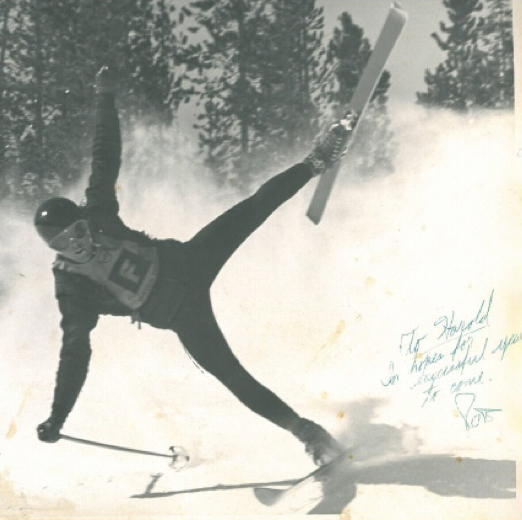
    Rob Kiesel, Patterson’s coach, showing off his downhill skills at Winter Park in 1964 (Photo: Harald Bjerke)

    “[Mike Gallagher] and I would worked really closely together and I was sort of his primary assistant as the year grew on,” Ruff said. “When we’d split up, I would end up taking the women and there were a few years where I was actually labeled the women’s coach. But for the most part, he and I were more of a team and I was more of his assistant during my primary coaching year.”

    Ruff’s stint with the USST brought him to the Olympics, alongside Kiesel at the 1980 Winter Olympics in Lake Placid, N.Y., and with Gallagher at the 1984 and 1988 Games in Sarajevo, Yugoslavia and Calgary, Alberta, respectively. He mentioned working alongside U.S. Ski Team coaches Torbjørn Karlsen and Peter Ashley as major influencers in his career as well.

    His work for the USST helped women like current Methow Valley Nordic Team head coach, Leslie Hall –the sister of Patterson’s future Dartmouth College co-coach, Cami Thompson-Graves — to the Olympics.

    “He was one of the main coaches at the 1988 Olympics, my first Olympic experience and the main memories that stick with me are his smile, laugh and bad jokes!” Hall wrote in an email. “My relationship with Ruff has evolved so much over time, from being an admiring junior who wanted his attention and help, to being a friend on mountain biking trips to Moab, to being the sister of his co-coach at Dartmouth.”

    He also helped current Middlebury College assistant coach and University of New Hampshire alum Patty Ross, and Bates College alum Nancy Fiddler to Olympic levels of racing.

    “Ruff was always there with a joke or someway to diffuse a tense situation,” Fiddler said on the phone. “Everybody gets so caught up in [skiing] and if you were feeling kind of involved in a way that wasn’t healthy, he just brought you back and reminded you that, ‘Hey it’s ski racing it’s supposed to be fun, and if you’re not having fun, what the hell are we doing.”

    Changes To Hold Onto: Skating and the Mental Breakthrough

    “Weight shift, weight shift, that’s the key.” — Ruff Patterson during a skating technique workout with the Dartmouth men’s nordic ski team, circa 1989

    Little did Bill Koch know that when he entered Sweden’s 1980 Worldloppet marathon, he would rock the ski world forever. During that winter’s fated 50-kilometer ski race, Koch witnessed what has since become a staple in cross country skiing: the skating technique.

    After Koch began to implement skate skiing into his own national and international races, the sport changed forever — a change Patterson perceived first-hand.

    U.S. cross-country skiing great Bill Koch, who pioneered the skating/freestyle technique in the 80s. (Photo: Peter Ashley)
    U.S. cross-country legend Bill Koch pioneering the skating/freestyle technique in the ’80s. (Photo: Peter Ashley)

    “I was incredibly fortunate to live through the skating revolution,” Patterson said. “To see the live world change, everybody else’s world change and how people react to that, that whole thing was, man, something to live through.”

    “You can sort of compare it to — right now there’s this big double poling thing,” he added. “Skating was very much the same thing. It was a complete unknown. So for everybody, including sports staff like myself, it was like, ‘What’s going to happen here?’ ”

    What happened was rattling to some and rectifying for others. Patterson pointed out that he saw many attempt to prevent the change, but the skating technique, ultimately was here to stay.

    “You know, they were trying to do everything possible to make it less possible to skate,” Patterson said. “A lot of the controls they tried were almost laughable now.”

    As Patterson sees it, there are certain circumstances when evolution of the sport is inevitable. Occasionally, adaptation outweighs resistance.

    “What I’ve discovered during those periods is … if you’re here to play the game, you have to figure out a way to go with it,” he said.

    Skating and double poling aren’t the only areas Patterson says he has seen development in skiing. To Patterson, the mentality of American ski racers is what has changed the most. Especially for the U.S. women.

    “When Kikkan [Randall] opened the door, the barrier, for Americans to do well in Europe, I think the whole mental game changed,” Patterson said. “I’m hoping that this mindset moves into the boys’ group [in the U.S.], that mentality of just, ‘Hey, we can compete and win against the big boys and the big girls.’ That’s probably one of the most significant changes I’ve seen since I’ve started coaching.”

    Dartmouth Dudes and Loving What You Do

    “Boys, I want medals!!” — Patterson to the Dartmouth men’s nordic ski team, circa 2012

    Freezing rain. Mosquitoes. Heavy, humid heat. The Northeast Coast makes many westerners go weak in the knees. Patterson was one of them. Located in the heart of Hanover, N.H., a move to Dartmouth promised Patterson the very bipolar weather, bug bites,and Vitamin-D deficiency he dreaded the most.

    Ruff Patterson, discovering that the eastern biking may make up for his dislike of east coast climate. (Photo: Dartmouth Ski Team Facebook)
    Ruff Patterson discovered that the eastern biking may make up for his dislike of East Coast climate. (Photo: Dartmouth Ski Team Facebook)

    “When I first took the job I was a western guy and I thought, if I lasted three or four years I’m going to be lucky,” Patterson said. “I was terrified of bugs and humidity and once I got here the bugs and humidity were terrible, but then I realized that the road biking and other stuff in the East were just incredibly great. But I never planned on being here as long as I did.”

    Patterson’s original estimated three-to-four-year window turned into seven, soon 11, and eventually 27. Overcoming his fear for East Coast climate was only part of it. His deepening devotion to the Dartmouth men’s team also drew him to stay.

    “I just kept saying over and over again ‘I love what I do,’” he said. “Just absolutely love what I do and I just felt that it stayed like that all the way through.”

    Patterson’s philosophy to love what you do and see it through transferred to his athletes. During his 27 years at Dartmouth, he coached three men to individual NCAA Championship titles — Glen Randall in 2008, Sam Tarling in 2011, and Patrick Caldwell in 2015 — and he also helped Dartmouth to an NCAA team title in 2007, with All-American athletes Mike Sinnott and Ben True.

    “When I came in as a freshman, I was very hesitant to fully buy into his philosophy of training,” Tarling, a 2013 grad, wrote in an email.  “After my first year working with Ruff, our relationship strengthened and I decided to stay in Hanover for the summer and work with him. I discovered that some of the silly things we did in training had the most influence on my performance, and that what seemed like random workouts and drills had a purpose. I ended up staying every summer after that to work with Ruff.” 

    Tarling was not the only athlete who at times questioned some of Patterson’s practices. Both Grover and Carl Swenson, a 1992 graduate and three-time Olympian, recalled recovery runs with Patterson as conclusively easy, in spite of athletes’ attempts to do otherwise. Patterson wanted his skiers to be fast when they needed to be and to step back and enjoy training the rest of the time.

    “We’d go out for a ‘Ruff Waddle’ recovery run,” Swenson said. “Ruff would make us run behind him. It was to teach us to go easy … because all we wanted to do was race every workout.

    “He was just the right coach at the right time for me,” Swenson added. “He kept me at it, really. I think it’s a period where a lot of people get interested in other things and, as everybody knows it takes some time to develop as a distance athlete, and he really kept me on track as best as anybody could have in a period when I was not on track by any means.”

    Gaining credence with athletes like Tarling and Swenson and witnessing their progress, for Patterson, was another piece of what made college coaching worthwhile.

    Just a few of "the kids" as Ruff Patterson (not shown) calls them (left to right): Nils Koons, Sam Tarling, and Eric Packer (Photo: Ruff Patterson)
    Just a few of “the kids” as Ruff Patterson (not shown) calls them (left to right): Nils Koons, Sam Tarling, and Eric Packer (Photo: Ruff Patterson)

    “Winning over athletes and gaining their trust, I can’t tell you the rewards behind something like that,” Patterson said. “That’s just another piece of this overall puzzle, but sort of everything. Once again, it’s the people and stories behind them that have made it for me.”

    Though Tarling, who is now working as a software engineer in Denver, Colo., indicated he’s “happily enjoying being a recreational athlete for a change,” he still feels indebted to Patterson for all that he’s helped him achieve.

    “Our relationship began with many conversations about how we could best work together to help me achieve my goals in ski racing, but progressed to the point where Ruff was much more than my ski coach,” Tarling wrote. “He was – and is still – my mentor, my confidant, my hero, my friend.”

    Patterson was much more than a coach to many of his athletes. He was a pillar, the adviser and ally searched for not only on the trails, but off them as well. He did not force his athletes to grow. He fostered them to take the steps on their own. As numerous athletes indicated, his door was always open to whoever happened his way.

    “Ruff impacted my life on so many different levels beyond skiing,” Patrick O’Brien, current head coach for Stratton Mountain School T2 Team and 2010 graduate, wrote in an email. “He wanted you to grow as an athlete and an individual. He was always there for support when you needed him but understood many decisions or choices had to be yours alone to make. He asked for, and brought out the best people had to offer.”

    Patterson did bring out the best people had to offer, but in ways beyond just results. He saw value in every athlete, carnival circuit caliber ski racer or not.

    “The guy who never makes it, the ones who just make these incredible strides … the really talented guys,” Patterson said, “All athletes are rewarding.”

    Ruff Patterson on Mt. Moosilauke in New Hampshire's White Mountains with the Dartmouth team (Photo: Gordon Vermeer and Eric Packer)
    Ruff Patterson on Mt. Moosilauke in New Hampshire’s White Mountains with the Dartmouth team (Photo: Gordon Vermeer and Eric Packer)

    Patterson’s ability to work with athletes of all kinds, stems from his coaching style. Passionate, patient, perceptive, he held the unique capacity to turn the complexities of cross country skiing into common sense.

    “Ruff has that elusive quality you see only in the very best of coaches — he makes skiing seem simple,” Packer, who graduated in 2012 and is now racing for Alaska Pacific University (APU), wrote in an email. “He has the ability to use just a single suggestion to make really dramatic improvements in your skiing.

    “Hand in hand with that, Ruff really believes in the importance of building a quality training group, and holds that at the core of his coaching philosophy,” Packer added. “You learn from the group, push the group, and rely on the group.  In an atmosphere like that, when everyone is working together, pushing each other in a competitive but also fun atmosphere, everyone improves.”

    Humor and having fun was also a training philosophy greatly prized by Patterson.

    “I call them the kids.The gang. The team. I’ve been so lucky to be able to work with these guys. Even the ones that have been nightmares, looking back that’s what’s kept me here. The people, for sure.” — Patterson on his 27 years as the Dartmouth men’s nordic head coach

    “One of my favorite memories started about midway through my time at school when he would finish every pre-race meeting with a story from his previous coaching experiences,” O’Brien wrote. “All would have you rolling over laughing and reminding you that although the sport may change over the years, the spirit of it never did. It made you feel connected the people who have come before you, understanding the challenges they faced were the same as the ones in front of you now.”

    However, Patterson’s impact on the nordic community cannot be pinned solely to skiers he worked with directly. As Sinnott pointed out, numerous of individuals have been influenced by the former Dartmouth head coach, whether he realizes or not.

    Ruff Patterson
    In two words or less…
    “A Mentor” — Thompson-Graves
    “Unassuming”– Tarling
    “Wise” — Tarling
    “Passionate” — O’Brien
    “Remarkable” — Sinnott
    “Solid” — Grover
    “Supportive” — Grover
    “An Icon” — Packer

    “You go through his office and he’s got handwritten thank you notes from John Nystad from when John Nystad was skiing for UVM [University of Vermont],” Sinnott said on the phone. “Ruff had these powerful impacts on skiers that he wasn’t even mentoring or that weren’t in his program.”

    With the women too, Patterson was — and still is — a hit.

    “Ruff used to get more Valentine’s Day cards than anyone else on the team,” Sinnott reflected, referring to the Dartmouth Carnival tradition of ‘Carni Crush.’ “Everyone on the circuit felt the warmth and the magnitude of Ruff. And that’s the cool thing. It’s not just the people that are obvious on a piece of paper, but it’s everyone else that might have glossed by him.”

    While many of Patterson’s athletes cite him as the reason they are where they are today, Patterson is adamant that his athletes are the ones who’ve kept him in the game.

    “I call them the kids,” Patterson said. “The gang. The team. I’ve been so lucky to be able to work with these guys. Even the ones that have been nightmares, looking back that’s what’s kept me here. The people. For sure.”

    Dartmouth’s Dynamic Duo: Patterson and Cami Thompson-Graves

    “Are we having fun yet?” — Patterson to the Dartmouth men’s nordic ski team, circa 2010

    Bonnie and Clyde. Ernie and Bert. Starsky and Hutch. Cami and Ruff. While not many modern day duos find themselves in competition with the infamy of the previous pairs, Cami Thompson-Graves and Patterson are two that do.

    In a coaching partnership that’s lasted longer than some marriages, the two have carried each other through the numerous highs and lows of coaching a Division I college ski program.

    “We’ve been together longer than most people have been married,” Patterson said. “We’ve definitely had our ups and downs, but because of it, the two of us have become incredibly close.”

    Though the two admit they’ve spat like siblings at times, they also agree that what they have gained out of their 27 years together is irreplaceable.

    “She’d be the first one to tell you, it’s not like it was all wine and roses the whole time,” Patterson said. “ It’s just we’ve been through a lot together.”

    Dartmouth co-coaches Cami Thompson-Graves (l) and Ruff Patterson. (Photo: DartmouthSports.com)
    Dartmouth’s longtime duo Cami Thompson-Graves (l) and Ruff Patterson during a 2015 interview .(Photo: DartmouthSports.com)

    The two have also supported each other — and their teams — through the loss of Dartmouth athlete, teammate and friend, Torin Tucker. Tucker, who died of a heart anomaly while competing at the Craftsbury Marathon two years ago, was also from Sun Valley and described by many as having a similarly contagious smile.

    A rare verve to come across, no loss the magnitude of Tucker’s is easy. For Patterson, learning to live in the memories and moments of Tucker as the epic adventuring, intellectually curious and compassionate mountain town-er he was, no matter the time it took to get there, helped he and the Dartmouth community move forward with Tucker in their hearts.

    “There’s no way you can tell somebody to get over stuff,” Patterson said. “You just have to deal one day at a time, one minute at a time.”

    The support and history between Thompson-Graves and Patterson, therefore, goes far beyond just van rides, wax benches, and debates over who’s who.

    “We had some great moments, talked about skiing endlessly and also fought and bickered like siblings at times,” Thompson-Graves wrote in an email. “But, along the way, there were many ​fun race days where we worked hard, shared our nerves, and when things had to come together, they did!”

    More than anything during their time together, Thompson-Graves was a firsthand witness to the dedication Patterson put towards his athletes and coaching.

    “​Ruff loved his guys, they meant everything to him,” Thompson-Graves wrote. “He was there, day in and day out and knew them all well.  Some of them might have driven him crazy but, even with the frustrations, he loved the times when it all came together for them.”

    All in all, it takes a special circumstance for two individuals to work together toward a common goal for that length of time.

    “When you sum it up, I wouldn’t have traded that for anything,” Patterson said. “Because being able to figure out a way for two quite different people to work together and do as well as we have done together … boy, that doesn’t happen very often in life.”

    What’s Next?

    “Don’t overthink it.” –Ruff Patterson to the Dartmouth men’s nordic ski team, circa 2006.

    Forty years ago, Patterson — clad in a black graduation cap and gown — strolled across the CU stage to receive his diploma. Like many of the student athletes he would eventually coach, he had post-college plans that would inevitably change, a passionate fervor for cross country skiing, and an anything but linear trajectory ahead.

    Forty years later, with his final cohort of college senior skiers before him, not much has changed. As Patterson departs Dartmouth, there is a piece of him that feels as if he is once again striding across the graduation stage, leaving school behind to discover what’s next.

    “It wasn’t until the day before I resigned that I actually knew I was going to do it,” Patterson said. “I didn’t sleep that night, I can tell you that much.”

    “It sort of feels like I jumped off a cliff doing this,” Patterson said of his resignation. “I was in a little bit of a shock for a few days, but I’m going to sell my place here, pack up a U-Haul and return west, which I’ve been wanting to do forever. And then stir the pot up a little bit and try to find something else to do. I have no idea what that’s going to be. I feel like a college kid again.”

    2015 NCAA Champion Patrick Caldwell (l) and coach Ruff Patterson. (Photo: Dartmouth Ski Team Facebook)
    2015 NCAA Champion Patrick ‘Paddy’ Caldwell (l) with coach Ruff Patterson. (Photo: Dartmouth Ski Team Facebook)

    Even if Patterson is now physically distanced from Dartmouth — he headed west last week Tuesday — his legendary role and presence is not. His impact extends beyond Dartmouth, into the lives of past, present and future mentees — some of which he will never meet in person. Many he will have infiltrated with his coaching philosophy alone.

    “Ruff was really responsible for creating that atmosphere with the [Dartmouth men’s] team, in terms of camaraderie he created in the group,” Grover said. “And certainly, as you know, that’s a big thing for us these days with the USST. The team and the athletes are quite successful on an individual basis because we tend to try to build a family atmosphere around the team. Ruff really did the same.”

    Patterson’s stamp survives in the USST, the skiers who are now software engineers, lawyers, coaches, writers and more.

    “You know, I came into a great group early on,” Patterson said of his first few years coaching at Dartmouth. “It took a while to establish my own style. It doesn’t mean that the style that Mortie [John Morton] had way back when was, there’s no way you could say it was bad or good … I absolutely know that the next person that’s going to come in in my place is going to be exactly the same; have their own style … I got to put my stamp on things and the next person here is going to put their stamp on things.”

    Semi-uncertain of what his future holds beyond bike trails, mountain towns, and some RV roaming, Patterson is certain that Dartmouth has green grass ahead and he, a wanderlust for western blue skies.

    “I know they’ll find somebody good,” Patterson had said of prospective coaches for the Dartmouth head coaching position, prior to the hiring of Brayton Osgood in May. “And I know that the school will always support skiing … My personal opinion is that they’re going to just keep going and there’s nothing wrong with that … Field of dreams.”

  • Changing Times and NCAA’s: (Part II) Women, Men and the Distance Debate

    Linn Eriksen of Denver University captures the women's 15 k classic mass start title race at the 2016 NCAA Skiing Championships in Steamboat Springs, Colo. (Photo: Jamie Schwaberow/NCAA Photos)
    Linn Eriksen of the University of Denver celebrates her win in the women’s 15 k classic mass start at the 2016 NCAA Skiing Championships in Steamboat Springs, Colo. (Photo: Jamie Schwaberow/NCAA Photos)

    In March, FasterSkier recently published an article (Part I) on college ski racing in the U.S. and what a change to National Collegiate Athletic Association (NCAA) Championships might require in regards to adding a sprint race. In the second part of the series, we explore why men’s and women’s race distances are different at the collegiate and World Cup level and whether this constitutes a need for change.

    ***

    Men | Women. Women | Men. Scanning the athletics webpage for an American institution of higher education that boasts a varsity sports team becomes a sail down the Casiquiare canal, with gender bifurcation an obligatory outcome. 

    Resting under the canopy of NCAA sports, however, nordic skiing presents itself as somewhat of an anomaly. Shared race days. Shared coaches. Shared course site. Shared team. At the surface level, gender in collegiate nordic skiing is almost arbitrary.

    Olivia Amber (r) of Colby College and teammate Amy Bianco celebrate their top twenty finishes in the women's 15 k classic mass start at the 2016 NCAA Skiing Championships in Steamboat Springs, Colo. (Photo: Colby.edu)
    Olivia Amber (r) of Colby College and teammate Amy Bianco celebrate their top-20 finishes in the women’s 15 k classic mass start at the 2016 NCAA Skiing Championships in Steamboat Springs, Colo. (Photo: Colby.edu)

    Yet, closer inspection reveals one particular area in collegiate cross country skiing where the genders differ: Race distance. In most individual nordic events at the college level, the course length of women’s and men’s races are not the same. The trend is a 5-kilometer deficit for women’s race events in comparison to men’s events.

    For Molly Peters, the head nordic coach at Saint Michael’s College and former NCAA All-American in nordic skiing for Middlebury College, this is a problem.

    “We’re sending a message to all the young women who have a goal to ski in college,” Peters said in a phone interview. “I just can’t imagine that they feel like their equal as people or athletes when they look and they see, ‘Oh, look every single race I’m going to be skiing 5-kilometers less.’ How are men every going to look at women equally and how are women ever going to look at themselves as being equal if you’re always skiing 5-kilometers less?”

    With that in mind, Peters promised herself to reshape the sport.

    “It had to be my mission in life to get it changed,” Peters said. “I feel like my best bet to get it changed is to change the NCAA Championships because everyone bases all their racing off of what the NCAA does. Every EISA [Eastern Intercollegiate Ski Association] Carnival is basically not equal because they follow whatever the NCAA does. It all trickles down.”

    The Trickle Effect: One Theory on Why Race Distances Differ

    A single change can create countless more. When Title IX was passed in 1972, a change was instituted in the treatment of both genders by federally funded college institutions. Within the realm of campus athletics, the alteration brought about numerous others, including an increase in the number of women participating in college sports, the scope of sports available to women and men (in certain instances, harmfully so), and perceptions of women who choose to ‘play.’

    Recent Middlebury College returnee, Annie Pokorny, points out that this sort of ‘trickle down’ change should not be looked at lightly.

    “When women entered sport, some rules were tweaked to account for physiological differences, but also to support the idea that athletics could be harmful to women, (particularly their reproductive systems,” Pokorny wrote in an email.

    Pokorny is completing her undergraduate senior thesis on feminist philosophy and the philosophy of sport. While she admits she is not an expert, her studies and experience in nordic skiing quantify her knowledge on the subject.

    Pokorny explained that myths surrounding the female body and exercise in the 20th century, caused men “to adjust sport to make it safer and more “womanly”), which turned into a conceptual connection between women and the need to protect them.”

    “That conception turned into tradition, one that still thrives today in the form of shortened distances for female endurance athletes,” Pokorny added.

    The women's top ten for the women's 5 k freestyle race at the 2016 NCAA Skiing Championships in Steamboat Springs, Colo. (Matt Johnson/MSU Courtesy Photo)
    The top 10 in the women’s 5 k freestyle race at the 2016 NCAA Skiing Championships in Steamboat Springs, Colo. (Photo: Matt Johnson/MSU)

    For Pokorny and Peters, these types of traditions were made to be broken.

    “The best things that have ever happened are from people changing tradition,” Peters said. “My purpose is to get the NCAA Championships changed to be the same distance for men and women because that will trickle down to the smaller races.”
    But implementing change in the NCAA Championship event and NCAA skiing is no easy task.

    “NCAA skiing is comprised of a wide variety of institutions: Division I, II and III; private and public; and large and small,” Dave Stewart, head nordic coach at the University of Denver, wrote in an email. “Any choices about race format, distances, etc. must take into consideration the perspectives of this diverse group and, ideally, the decisions should be made with the goal of broadening participation at the NCAA level and increasing competition.”

    If Stewart is right, the question becomes: Would making race distances equal between men and women broaden participation and increase competition?

    A Second Theory & the Distance Debate: Should Men Race Shorter or Women Race Farther?

    When it comes to long distance endurance events, some research argues women fare better than men.

    “Women can race just as long as men,” Montana State University (MSU) incoming senior Anika Miller said on the phone. “If [the NCAA] wanted us to do a 50 k in college, sure we could do it, but it wouldn’t make any sense athletically.”

    Montana State University's Anika Miller (l) with nordic head coach, Matt Johnson after Miller took the title in the women's 5 k freestyle race at the 2016 NCAA Skiing Championships in Steamboat Springs, Colo. (Courtesy Photo)
    Montana State University’s Anika Miller (l) with head coach Matt Johnson after Miller took won the women’s 5 k freestyle at the 2016 NCAA Skiing Championships in Steamboat Springs, Colo. (Courtesy photo)

    Miller — a native of McCall, Idaho, and this year’s NCAA champion in the 5 k  freestyle — doesn’t doubt the ability of women to race the same distance as men.

    What she questions is whether it’s necessary for women to do so.

    “It’s kind of a hard conversation to have as a female athlete because you don’t want to say that women are inferior,” Miller said. “My opinion on it is that the race distances are good as they are as far as women doing a shorter distance than the men. Because time wise … for the 15 k versus the 20 k at least, sometimes the guys only race it five minutes different than the women, which isn’t really that large of a margin, [meaning] effort wise, it’s more equal.”

    The point Miller makes is that women and men are currently racing equal. Equal amounts of time on course, at least in the 15 k and 20 k events (*see men’s and women’s course times).

    Oscar Friedman, coming off his senior season at Dartmouth where he was a captain of the men’s nordic team, also argued that close to equal amounts of time on course is more important than equal course distances between men and women.

    “The point of having those different race distances was to make the men’s and women’s races equally competitive,” Friedman said on the phone. “That being said, if women are internalizing it, then that’s a bigger issue. If there’s a push from within the sport, women should be the ones deciding the race distances.”

    The push from women within the sport varies, but much revolves around whether women race longer or men race shorter distances. Kelsey Phinney, coming of her senior season and also a captain at Middlebury, admitted that originally the idea of equal distances didn’t appeal to her because she assumed women would be required to race farther.

    **Check out more Championship archives and race results
    **For more Championship archives and race results, click here

    “I think the misconception has been that equal distances meant that women had to race longer,” Phinney on the phone. “But it doesn’t mean that women have to go 10 k and 20 k it could mean that men go 5 k and 15 k. Or that the races range from sprints to 30 k.”

    Rachel Hampton, an incoming senior at Harvard University, advocated that while women are capable of racing men’s distances, men would benefit from racing shorter lengths.

    “There’s a feminist side of me that wants to say that girls can do anything boys can do and there’s no theological reason why we shouldn’t be able to race the same distance as them,” Hampton said on the phone.

    “I will say I sometimes feel bad for the guys because it seems like they only race long races. I think if we added sprinting and a few 5 k races for the guys and did a wider range of distances, that would be better for them. And I think if the men were on that plan, the women could then get on the same distance plan.”

    However, when men competing in college were asked if they would be willing to race the same length as women, responses were often shaped by race distances at other levels of nordic competition.

    “Shortening the men’s distances would be a huge disservice because as I see it, the goal of NCAA skiing is to make American skiers as competitive as possible on the World Cup,” Friedman said. “I would be completely against shortening the men’s races. But if women want to make the call and race longer, they should fully be able to do that.”

    For a few women, however, simply adjusting the women’s race lengths to match those of the men sends a certain message: Women have to be like men to be equal.

    “I think the message it sends depends a lot on whether you shorten the distance of men or you increase the distance that women have to race,” Bates College ’16 grad and skier Britta Clark said on the phone. “Trying to increase the distance that we race in the name of equality, but at the same time really just saying that equality is women doing what men do, I don’t think it’s necessarily speaking to the issue.”

    Clark’s point is supported by Dartmouth College Women’s Head Nordic coach and Director of Skiing Cami Thompson-Graves, also a member of the NCAA Men’s and Women’s Skiing Rules Committee, chair of the USSA Cross Country Committee, and most recently, a member of the International Ski Federation (FIS) Ladies’ Cross Country Committee.

    “I don’t feel the need for women to do men’s distances,” Thompson-Graves said on the phone. “Why don’t we just do women’s distances? Why can’t we just be different … I’m a big believer in being proud to be a woman, and not a little man.”

    Harvard's Rachel Hampton leads Dartmouth skier during the 2016 Colby Carnival. Hampton went on to compete at the NCAA Skiing Championships in Steamboat Springs, Colo. (Photo: flyingpointroad/Harvard Facebook)
    Harvard’s Rachel Hampton leads a Dartmouth skier during the 2016 Colby Carnival. Hampton went on to compete at the NCAA Skiing Championships in Steamboat Springs, Colo. (Photo: FlyingPointRoad.com/Harvard Facebook)

    Increasing women’s distances strikes some as a forfeiture of female identity for one that is male. Which is one reason Peters more strongly advocates for decreasing men’s distances to be the same length as women’s.

    “In skiing, I think the men should come down,” Peters said. “The 20 k is really irrelevant, even at the international level. I see nothing wrong with the 5 k, I think men should do 5 k. Five k is super exciting and can be a great race. I think it should be 5 k, 10 k, 15 k, and then add in the relays and sprints.”

    However, a men’s 5 k race doesn’t appear on numerous nordic race calendars — national or international — either. 

    “I don’t think at the national or international level men race 5 k so maybe that’s a distance skill set that would only be applicable to college skiing in the U.S.,” Raleigh Goessling, coming of his senior season at the University of New Hampshire, said on the phone. “If the race distances were changed, I feel like the distances that are contested at other levels of the sport and other formats should also play into it.”

    The Window Between U.S. College Racing and the World Cup

    At the international level, women and men rarely race the same distance. FIS course lengths — like the NCAA — are designed around the gender of the athletes competing.

    FIS Cross-Country Committee Chair and Norwegian Olympian Vegard Ulvang indicated that similar to college racing in the U.S., FIS race distances have been different for decades. One potential reason for these differences aligns with Porkorny’s findings. According to Ulvang, how female athletes were viewed in endurance sports when they started ski racing influenced the original length of women’s race courses. 

    “The history behind the differences comes from the time where the nations believed that women were weaker — [with the] first female race in 1952,” Ulvang wrote in an email to FasterSkier. “Today we of course know better. Female athletes are better prepared for longer distances than men, so principally the distances should be equal.”

    Principality does not always equal response. Ulvang indicated that even if the race distances should principally be equal, one major driving force for the committee to keep women’s race distances shorter than men’s rests on the race experience for spectators.

    “The argument has been that the time gap between the 20 best women is bigger than that of the men,” Ulvang wrote. “Longer distances would create a ‘worse TV product’ — with one racer skiing alone [during the race].”

    T.V. time does not strike Peters as an excuse for NCAA Championships and U.S. college cross-country ski schedules to follow the same format as the World Cup. 

    The men's 20 k classic race at the 2016 NCAA Skiing Championships in Steamboat Springs, Colo. (Photo: Jamie Schwaberow/NCAA)
    The men’s 20 k classic mass start at the 2016 NCAA Skiing Championships in Steamboat Springs, Colo. (Photo: Jamie Schwaberow/NCAA)

    “A lot of people will say well, look at what they do at the Olympics, and look at what they do at the World Cup — it’s vastly different,” Peters said. “The women do so much less. But that doesn’t make it right. That’s a reason why NCAA follows it and EISA follows it, but that doesn’t make it right.”

    Stewart, who has helped the Denver Pioneers achieve five NCAA Championship titles, supports the idea that NCAA skiing in the U.S. could act as a catalyst for change.

    “As long as FIS schedules longer races for men than for women in international championships, there will be some resistance to equal distances at other levels, but I see no reason why the NCAA should not be a trendsetter and work to turn the tide on this,” Stewart wrote in an email.

    He supports equal distances in cross-country skiing, seeing it as a statement that should be sport-wide, not just within NCAA nordic skiing.

    Equal distances for men and women should be implemented in our sport, both at the NCAA and international levels,” Stewart wrote. “We have had equal distances in the sports of swimming and track and field at the international and collegiate levels for many years. Equal distances would reinforce gender equity and would send the right message about our sport.”

    Yet, when it comes to World Cup race lengths versus those contested at the NCAA, some argue the Championship event is already sending a message to other levels of cross country competition.

    “I actually think that NCAA’s, where the women race 15 k and the men race 20 k, is much more equal than on the World Cup when the women race 15 k and the men race 30 k,” Rosie Brennan, Dartmouth grad and current U.S. Ski Team (USST) member, said on the phone.

    Brennan is not opposed to a more balanced race length distribution between men and women. Her concern with changing race distances at the World Cup and NCAA collegiate level is ensuring that the racers’ performance and perspective are taken into account. 

    “I think it would be nice if they tried to make the [race distances] a little closer,” Brennan said. “I also think the reason the distances were different in the first place was the idea that the time the race takes should be fairly equivalent, so the effort is the same. If the time differences [between men and women] are getting to be much greater, to the point that the races are no longer requiring the same amount of effort, then I think it’s worth proposing some sort of a change and [is] something to re-visit over time.”

    Brennan’s suggestion to visit the race experience for athletes doesn’t go unsupported. Men’s and women’s race distance differences have been discussed at the collegiate and World Cup level. But the actual number of times the topic has been statistically ‘re-visited’ remains a bit blurry.

    Regarding conversations within the college circuit, Peters indicates that implementing changes to men’s and women’s race distances has been thrown around for some time.

    “Patty Ross, who coaches at Middlebury, she’s been fighting it for 25 to 30 years and she’s had no success,” Peters said.

    Ross could not be reached for comment.

    Within the FIS Cross Country Committee, Ulvang indicated that the turn of the millennium was when most conversations regarding the different course lengths at the World Cup level of racing began.

    “[The] question has been discussed in the FIS committee a few times the last 15 years,” Ulvang wrote.

    Beyond that, four-time Olympian, USST member, Fast and Female USA President, FIS athlete rep, and now a new mother Kikkan Randall revealed that World Cup athletes have also had at least one opportunity to make their opinion about equal distances known.

    Kikkan Randall leading Fast and Female in Bend, Or. as part of the Annual Bend training camp in May. (Photo: Matt Whitcomb)
    Fast and Female USA President Kikkan Randall leading a Fast and Female session two years ago in Bend, Ore. (Photo: Matt Whitcomb)

    “It’s an interesting topic that actually comes up quite often on the World Cup,” Randall said. “As the athlete rep to FIS, I do a survey at the end of each season and couple years ago, as part of the survey, I sent out that question [of equal distances].”

    The responses Randall received found most women on the World Cup circuit — at least a few years ago — did not want to race the same distances as men.

    “The majority of women actually said that they were not interested in racing the same distances as the men,” she said. “I’m considering putting that same question on the survey again this year because the comment was brought up a couple times this spring.”

    And how might women racing on the World Cup respond to shortening men’s distances to make the lengths equal? The question has not been posed, but Randall may incorporate it into her next athlete poll.

    “That would be another interesting take on the same question,” Randall said. “This year on the World Cup I feel like the distances were reduced a little bit with so many tour [multi-stage] events, so again it’d be an interesting time to poll the athletes and see how they feel.”

    Conclusion: Connecting Part I and Part II

    As long as there is snow around, colleges with nordic programs in the U.S. will continue to attract a cohort of cross-country skiers looking to compete, while simultaneously continuing their education. For many, choosing college over a club team is not the end of a cross-country skier’s long term career. It is also the potential beginning.

    “The way our country is, you’re always going to have athletes choosing to go to college after high school no matter what path they’re on,” Brennan said. “So I think the more that that can be facilitated, the better it is. I mean there are a lot of good club programs that offer alternatives for people who choose that, but I think the NCAA can provide a route as well.”

    Some individuals also see the NCAA as an opportunity for Americans to attend college in the U.S. and potentially compete against athletes from other countries.

    “As a venue for athletes to develop into international level skiers, [the NCAA circuit] is a great place because there are really high-level skiers from all over the world in the small microcosm of NCAA skiing,” Chad Salmela, outgoing nordic coach of the College of St. Scholastica, said on the phone. 

    With an assured influx of athletes choosing skiing and school — and the opportunity for some to race international athletes at ‘home’ — many don’t deny the difficulty of disconnecting U.S. collegiate racing and higher levels of nordic competition.

    “From a purely objective standpoint, I would say that a junior athlete who chooses to skip college (at least until they are completely done with their racing career, whenever that may be) and pursue ski racing full-time starting at age 18, is much better set up to ski faster on the World Cup level later in their career,” current USST member and former Middlebury skier Simi Hamilton wrote in an email. 

    “However, because of the small numbers of junior skiers we have in our country (relative to all the other skiing powerhouse nations), college is a great way to keep kids engaged and in touch with racing during a period of their lives when they may have decided they want to do something completely different,” he added.

    Yet, if NCAA racing is to preserve itself as one potential path for athletes looking to make professional steps in the sport, college and World Cup racers alike agree that conversations about change — be those for adding sprinting or making race distances equal between men and women — need to continue. 

    “I think incorporating sprints at the NCAA is definitely worth talking about and pushing forward because that’s at least one-third of the races we do [on the World Cup], if not more,” Brennan said. “I think trying to stay current is a valuable thing.”

    Ida Sargent, a Dartmouth grad and current USST member, agreed that sprinting deserves spotlight attention in present-day skiing.

    “I can obviously only speak for the women’s distances but I liked how there was a short and a longer distance race,” Sargent wrote in an email regarding NCAA race distances. “I think a more important change would be adding in more sprint races. We race a sprint almost every weekend on the World Cup and when I was in college we would have one a year at the most.”

    With one more year of college racing left at MSU, Miller also pushed adding more sprint races to the college race circuit to foster cross country skiers’ development.

    “I think it’s unfortunate that we don’t have sprinting,” she said. “Because that’s such a great development tool.”

    Though Miller and Sargent are at odds with Pokorny’s press for equal distances, all three do seem to agree that changing customs can create better opportunities and a better outlook for cross-country skiers.

  • High Plains Remains a Division as USSA Studies Jr. Nationals Qualification

    High Plains Remains a Division as USSA Studies Jr. Nationals Qualification

    A few weeks ago, the United States Ski and Snowboard Association (USSA) decided not to auto-renew an affiliation agreement with High Plains, a cross-country division encompassing primarily Wyoming. At USSA Congress this weekend, the Cross Country Sport Committee voted unanimously to reinstate the affiliation agreement and give High Plains back its Junior Nationals quota, among other things, for next season.

    FasterSkier caught up with USSA CEO Tiger Shaw on Sunday morning to talk about how the decision was made.

    FasterSkier: How did the discussions about High Plains go?

    Tiger Shaw: I have got to say, the process ran like I would have hoped. The Cross Country Sport Committee was talking about the actual situation with High Plains for part of the discussion. Rebecca [Watson, the chair of the board of High Plains] – who I’ve gotten to know pretty well now and she’s wonderful – did a great job of explaining how they operate and their history and background, and the state of affairs within Wyoming.

    Then there was some discussion about the concept of in-division versus out-of-division: a club being located with one division but part of a different division. It works pretty well in alpine – a club decides what division it wants to join. Willard Mountain in New York competes as part of the Vermont Alpine Racing Association.

    Cami Thompson-Graves [the head of the Cross Country Sport Committee] did a great job of codifying the issues, letting people have their say – there was some discussion about that specific situation in Jackson – and then reining it in. It was quickly apparent that the discussion is well beyond just the High Plains setting. One thing is that the affiliation agreement doesn’t encompass everything, nor should it necessarily, and we weren’t going to figure that out yesterday morning at 8:30. So Cami asked for volunteers to join in a smaller group, you could call it a task force, to discuss the situation overall, which might apply to some other division some day.

    In the meantime, High Plains is fine. They can move ahead, status quo. The group will give Rebecca some guidance about what they think should change, if anything, within High Plains. And those will be mostly recommendations and suggestions, which she’s totally open to. And then the group will report back to the Sport Committee. So everybody voted on keeping High Plains in as a division. It was unanimous and we will sign the agreement again with them.

    I was thrilled with the process. It was democratic, it went to committee, all the major players were there and had their say, but it would have gone on all day if we wanted to but instead we tabled it and sent it to a committee to spend some time on this summer.

    FS: Was that meeting just the Sport Committee, or was it open to other people at Congress?

    TS: It was held in the planned time slot where most of the Sport Committees roll up all their subcommittees inputs and give reports. It was a special agenda item within it. It was totally open to anyone who wanted to come in and listen and talk.

    FS: Did clubs or other people from Wyoming get there to participate?

    TS: I think that everybody in the room had read all 122 emails [laughs]. I’m kidding, I don’t know how many emails there were, but you get my point. But it was clear that a lot of the input arguing on both sides of the equation were wonderful inputs for the subcommittee to consider and were way too much to bring into this meeting. I think a lot of people participated that way [by emails]. Nobody missed anything by not being there… So I hope that nobody drove all the way from Wyoming just for that.

    FS: Some of the interplay between high school and club racing is challenging in a lot of places around the country.

    TS: That was certainly a topic and was clearly passed to this smaller group to look at that. Nobody wants to discourage anybody from any way [from skiing]. High school is just completely embraced, like it should be, by everybody. The question is what is the best way to integrate that, or whether it should exist separately from USSA competitions. How the qualification processes should work.

    Also, when you have an elite competition leading up to Junior Nationals, that’s a subcommittee decision. Clearly there is work that can be done there that could alleviate that issue, which could definitely happen all across the country – there were people talking about the impact of qualification quotas here and there, if there’s good kids who can’t qualify in their division, and then divisions that have a lot of spots but don’t have a lot of kids in them. That will be talked about too.

    FS: Is there any other big nordic news from Congress?

    TS: I was in some of the meetings, but because I have to be in all the different sports I don’t see absolutely all of the content. But it seemed in general like the attitude and the feeling was wonderful.

    The nordic combined and jumping crowd was highly organized and got a lot done too. So things are good.

    There’s a lot going on. There’s a freeskiing committee that was broken out from freestyle, which we have pushed the FIS to do the same thing, and that worked really well and also creates a new board member for that discipline.

    It just seemed like the energy and the alignment and the enthusiasm has built a lot since last year, and that’s exactly what I’m after.

  • FasterSkier’s Coaches of 2016: Cami Thompson-Graves and Ruff Patterson

    FasterSkier’s Coaches of 2016: Cami Thompson-Graves and Ruff Patterson

    Dartmouth's longtime coaches Ruff Patterson (l) and Cami Thompson-Graves are FasterSkier's coaches of the year. (Photo: Dartmouth Sports/FasterSkier)
    Dartmouth’s longtime coaches Ruff Patterson (l) and Cami Thompson-Graves are FasterSkier’s coaches of the year. (Photo: Dartmouth Sports/FasterSkier)

    The 2015/2016 awards continue this week, chosen by the FasterSkier staff based on performances from last season. While not scientific, these points of recognition are intended to reflect a broader sense of the season in review.

    Previous categories: Breakthrough Skiers (Canada & U.S.) | Biathletes of the Year | Collegiate Skiers | Juniors | Nordic Combined | Para-Nordic

    ***

    There are a few teams which have dominated college skiing in the last few years: Denver and Colorado trading back and forth for 10 of the last 12 NCAA titles. Northern Michigan University dominating Midwest cross-country skiing.

    And, in the East, the University of Vermont. The Catamounts won 21 straight Eastern Intercollegiate Ski Association (EISA) carnivals coming into this season, meaning no other team had won in almost four years. They also won the 2012 NCAA Championships, one of the few teams to break Denver-Colorado dominance.

    But at the Colby Carnival in Maine, the second weekend of the 2016 EISA season, the other team to break the Denver-Colorado pattern – 2007 NCAA champions Dartmouth College – began their rebound, edging UVM by four points for the combined men’s, women’s, alpine, and nordic title.

    “It has been a long spell of 2nd place finishes and we all knew we could do it,” Dartmouth Director of Skiing Cami Thompson-Graves wrote in an email this spring. “It was just a matter of putting things together at the same time. Certainly the strength of our Alpine teams helped, but we also had some solid performances on the Nordic side too.”

    Helmed by Thompson-Graves on the women’s cross-country side and Ruff Patterson on the men’s cross-country side, and with a storied past, it’s hard to ever consider Dartmouth the underdogs in a ski race. But it still seemed like an upset.

    Then Dartmouth won the UVM Carnival. Then UVM won the Dartmouth Carnival. It was competition that the Eastern circuit hadn’t seen in years.

    “The excitement of the team was great,” Thompson-Graves wrote. “I knew it had been a while but hadn’t considered just how long it had been, and so winning early in the season was a great boost, and helped keep the team fired up through the season, despite the lack of snow and constant wondering of where/what we would be racing from week to week.”

    Dartmouth went on to earn fifth place at NCAA Championships in Steamboat Springs, Colorado, the top team from the Eastern division.

    After the whole Championships with only one race remaining, UVM trailed Dartmouth by just two points. That race was the women’s 15 k mass start; UVM had won seven women’s cross-country races over the course of the season, compared to three for Dartmouth.

    But Thompson-Graves’s Dartmouth women’s team pulled away, with Dartmouth securing fifth place and UVM slipping to seventh.

    “Steamboat was fun — I always like racing there, despite the elevation,” Thompson-Graves wrote. “The first race was tough, and the results were average but it was great to put it together for some stronger results in the final race. Of course, we want more, but 5th was a result to be proud of this year.”

    Dartmouth wasn’t the best college team in the country, even when breaking things down into nordic and alpine. National titles, however, are not the only measure of coaching success. Thompson-Graves and Patterson have shaped a large segment of skiers who are contributing to American success internationally, as well as fueling the ever-more-competitive senior domestic circuit.

    This year alone, Dartmouth alumni women made up half of the World Championships team for U.S. biathlon (Susan Dunklee and Hannah Dreissigacker) and three-eighths of the U.S. Ski Team’s senior team (Sophie Caldwell, Ida Sargent and Rosie Brennan).

    When the Ski Tour Canada picked up extra American and Canadian quota spots, three more Dartmouth skiers joined the World Cup: Annie Hart, Eric Packer and Dakota Blackhorse-von Jess. Elsewhere in the ski world, fellow alum Erika Flowers finished third in the American Birkebeiner, and Paddy Caldwell, still college-aged but skiing primarily with a senior team, was the top American finisher in the 15 k skate at U23 World Championships.

    Only four U.S. athletes stood on individual World Cup podiums in nordic sport this season, and half came from this group: Dunklee (second in a biathlon World Cup in Fort Kent, Maine) and Caldwell (who won a Tour de Ski stage in Oberstdorf, Germany).

    (Brennan was also part of the third-place U.S. relay team in Lillehammer, Norway.)

    And the other two podium finishers – Jessie Diggins and Simi Hamilton – happen to be part of the SMST2 team, which is coached by Patterson’s former All-American skier Patrick O’Brien. Their head coach on the U.S. Ski team is another of Patterson’s former athletes, Chris Grover.

    Those are just a few Patterson and Thompson-Graves’s former athletes who have gone on to coach at every possible level, with some encouraging participation at a young age and building the U.S. skiing pipeline from the bottom, while others help point talented college and senior athletes towards elite success.

    Thompson-Graves is also now a member of the International Ski Federation’s Ladies Cross Country Committee, where she is pushing for better representation of women at all levels of skiing.

    Patterson is retiring after this season, but Thompson-Graves will continue to helm the program into the future. While watching their former athletes excel at the senior level must be satisfying, there’s still plenty going on in their day jobs.

    “It was great to knock UVM off the top a couple of times this year!” Thompson-Graves wrote in her email.

  • Changing Times and NCAA’s: (Part I) Could Sprinting Become a College Thing?

    Changing Times and NCAA’s: (Part I) Could Sprinting Become a College Thing?

    Mads Strøm of the University of Colorado racing to a first place finish in the men’s 10 K freestyle race at the 2016 NCAA Skiing Championships in Steamboat Springs, Colo. (Photo: CUBuffs/Buffzone.com)
    Mads Strøm of the University of Colorado racing to first place in the men’’s 10 k freestyle at 2016 NCAA Skiing Championships last week in Steamboat Springs, Colo. (Photo: CUBuffs/Buffzone.com)

    Note: This article has been updated to include comments from Ethan Townsend as of Thursday, March 17. 

    With the conclusion of the collegiate season taking place at the 2016 NCAA Skiing Championships in Steamboat Springs, Colo., last week, FasterSkier provides a look at the some of the latest involving school, sport and the Championship races. Part I examines the tradition behind the NCAA Skiing Championships format, and what it would take to change it.

    A Brief History of NCAA Skiing Championships

    5 k/10 k. 15 k/20 k. Scrolling through the archives of the National Collegiate Athletic Association (NCAA) championship events for nordic skiing is akin to strolling through a 1950s U.S. ‘Levittown’ neighborhood: Variation zero to none. Another online record for the past 16 years of NCAA Skiing Championships provides a similar finding. Nordic races at this event are traditionally two races for each gender: women race 5 kilometers and 15 k, while the men race 10 k and 20 k. Though the discipline alters between freestyle and classic, the distances for each respective gender remain the same.

    A phone conversation earlier this season with Cami Thompson-Graves, Dartmouth College women’s head nordic coach and director of skiing, NCAA Men’s and Women’s Skiing Rules Committee member, Chair of the USSA Cross Country Committee, and most recently, a member of the International Ski Federation (FIS) Ladies’ Cross Country Committee, revealed a similar story.

    Dartmouth head coach, Cami Thompson-Graves (r) at 2016 U.S. nationals in Houghton, Michigan.
    Dartmouth women’s coach Cami Thompson-Graves (r) at 2016 U.S. nationals in Houghton, Mich.

    “So as long as I can remember, [the championships] have been two races,” Thompson-Graves explained. “Way back when … it was an individual race and a relay. But then when skating came along, we went with one classic race and one skate race. Pretty much for the last 25 years, we’ve alternated every two years and done a long mass start of one and a shorter of the other.”

    So what if the championship races have stayed the same for the past 25 plus years? Why should anyone in or out of the college-race scene care?

    “I skied in the East and tradition is a big deal in the East,” Chad Salmela, head nordic coach of The College of St. Scholastica in Duluth, Minn., said on the phone. “People like tradition, but at the same time, tradition can limit your outlook as to what the future could possibly hold.”

    Coaches, Committee Members and Athletes on Change

    According to Salmela, the championship event controls quite a bit of what events college racers will compete in during the regular season. 

    “Let’s face it, the championships really drive what happens in the regular season because everybody is trying to qualify,” Salmela said.

    That’s certainly the case for the 2016 Rocky Mountain Intercollegiate Ski Association (RMISA) nordic race schedule, with all but one weekend following the 5 k/10 k and 15 k/20 k format.

    “It varies from region to region,” Thompson-Graves said of the 5 k/ 10k and 15 k/20 k race distances in the Eastern Intercollegiate Ski Association (EISA) schedule. “If those are the [championship] events, we’ll try to do those races one weekend back to back early in the season and our regional championship is usually similar to the NCAA Championship.”

    This year, the EISA schedule included a men’s and women’s 1.5 k classic sprint, as well as a men’s and women’s sprint relay event.

    Kelsey Phinney, a senior at Middlebury College from Boulder, Colo.
    Kelsey Phinney, a Middlebury College senior from Boulder, Colo. competing at 2013 NCAA Skiing Championships at the Rikert Nordic Center near Middlebury, Vt.

    Still, a few individuals question if this is enough and whether the current NCAA Championships nordic skiing schedule necessitates change. 

    “I love sprinting and I would love to see it in the championship events for college races,” Kelsey Phinney, a senior at Middlebury College, said on the phone.

    “I think sprinting is a really good development tool in terms of gaining speed and applying tactics during your races. It’s such an exciting part of our sport right now and it has such a presence on the World Cup that in terms of development, it makes a lot of sense to include it,” Phinney added.

    Raleigh Goessling, a senior at the University of New Hampshire (UNH), agrees.

    “I think that sprinting is already a really big part of nordic skiing at every other level, except the college level,” Goessling said on the phone. “I think that college programs should get on board with that.”

    Goessling’s point was bolstered further by Salmela.

    “I’m very much in favor personally of adding sprinting to the championship,” Salmela said. “I think it modernizes the sport and it’s inevitable. The question is when and how.”

    Attempting to Answer ‘How’ 

    In an effort to resolve the question of ‘how,’ Salmela — whose four year term on the NCAA Men’s and Women’s Skiing Rules Committee expired this past September — and committee members created a proposal for the 2016/2017 race season.

    The proposal, submitted last spring to the NCAA for review, included a menu offering championship race organizers the opportunity to select the race lengths and format, based on the courses and course crews available to the championship event host-site.

    “What we proposed to the NCAA put the onus on the organizer of the championships to decide on a menu of FIS distances and disciplines,” Salmela said. “The idea was to leave it up to the committee to steer it in a way that sprinting becomes a part of NCAA skiing, but is not necessarily a mandated thing every year.”

    Thus, any International Ski Federation (FIS) event, from a sprint to a 30 k, had the potential to show up at a championship race series.

    However, the proposal was returned this past fall to the NCAA Men’s and Women’s Skiing Rules Committee for further review.

    Ethan Townsend (l) current chair for the NCAA Men’s and Women’s Skiing Rules Committee and Saint Lawrence University nordic head coach, congratulates Mads Strøm  of the University of Colorado after he won the men's 10 k freestyle race at the 2016 NCAA Championship races in Steamboat Springs, Colorado. (Photo: CUBuffs/Buffzone.com)
    Ethan Townsend (l), chair of the NCAA Men’s and Women’s Skiing Rules Committee and St. Lawrence University head nordic coach, congratulates the 2016 NCAA 10 k freestyle champion, Mads Strøm of the University of Colorado. (Photo: Joel Riechenburger/Daily Camera via CUBuffs/Buffzone.com)

    “It’s not been denied,” Ethan Townsend, chair of the NCAA Men’s and Women’s Skiing Rules Committee and St. Lawrence University head nordic coach, explained on the phone prior to the championship. “It’s just kind of a big change and the NCAA wanted us to vet it out a bit more.”

    The most recent discussion regarding the proposal took place last week in Steamboat Springs, Colo. at the 2016 NCAA Championships.

    “I think we are looking to re-propose what the skiing committee approved this past summer with some changes,” Townsend wrote in an email post-2016 NCAA’s. “I’m not really confident we will get that change through but we are going to try.”

    With the next NCAA Men’s and Women’s Rules Committee meeting taking place in early June, Townsend predicts changes to the NCAA Championship event won’t be implemented for another season or two.

    “Any changes will take at least until 17/18 I think,” Townsend wrote, “it’s too late to have this in place for next season.”

    While select coaches from the east, west, and central locations convened last week to go over a number of NCAA issues–including the proposition of holding NCAA Championships in Alaska, a topic Townsend described in an email as “more concerning in the immediate term for a variety of reasons”–athletes remained topics of conversation, but not contributors to the dialogue.

    At some levels, the lack of voice is not a deliberate choice. Currently, there is no athlete representation on the NCAA Men’s and Women’s Rules Committee.

    “That’s not our call,” Salmela said. “The committee makeup is entirely driven by the NCAA … I think it would be awesome to have an athlete or a couple athletes on each sport committee, but that’s not a skiing issue, that’s an NCAA sport-wide issue.”

    That doesn’t mean that student athletes’ don’t have plenty to say. 

    “Although I’m personally not a sprinter, I think it is a good move if we want to develop competitive skiers to race on the World Cup,” Dartmouth senior Oscar Friedman said on the phone. “That being said, I would probably support a calendar that more closely mirrors the World Cup. If there’s only two races at NCAA’s, I don’t think it makes sense to have a sprint. I would prefer there be three races; one can be a sprint and two distance races.”
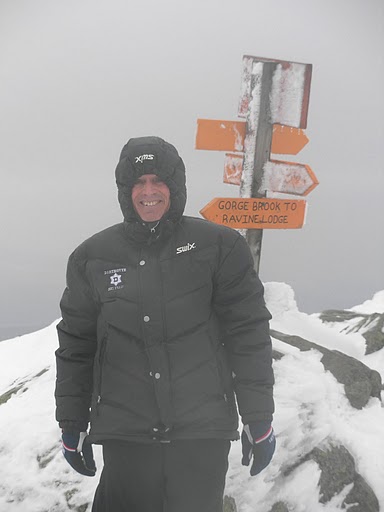
    While many might agree with Friedman, financial restrictions decrease the feasibility of adding another race day.

    “We are only funded by the NCAA for 5.5 days and we currently have four races days, alternating Nordic and Alpine events,” Fredrik Landstedt, the secretary-rules editor for the NCAA Men’s and Women’s Skiing Rules Committee and head nordic coach for the University of New Mexico, wrote in an email. “It is very unlikely that the NCAA will increase their spending on the Skiing Championships to add extra days.”

    Landstedt also extrapolated that the the duality of NCAA skiing — shared scoring between alpine and nordic, as well as combined points between men’s and women’s teams in order to win a championship title — makes bringing a sprint into the championship particularly complicated.

    Fans at the 2015 NCAA Championships.
    Fans at the 2015 NCAA Skiing Championships in Lake Placid, N.Y.

    “A sprinter can be tripped or obstructed and your entire team can lose the Championship because of something that was not related to the strength of the skiers on your team,” Landstedt wrote. “This happens all the time in sprinting. When it is an individual race for individual glory, it is very different compared to when it affects not only the rest of the Nordic team, but the Alpine team as well.”

    Instead, Landstedt suggested that an “Individual Sprint Championship” be incorporated into NCAA Championships.

    I believe that we could add an Individual sprint championship race where the winners will be recognized by the Collegiate Ski Coaches Association as the NCAA Sprint Champions,” Landstedt explained. “It might mean that there are 3 Nordic races in a 4 day span but if the sprint race is an individual race, slow sprinters and some skiers from the teams that are competing for the team trophies might chose to skip this race.”

    A Way Out of the NCAA’s Quagmire?

    A change to NCAA Championships is particularly complex.

    We’re basically only going to be allowed to have two races at the championships and so how are we going to pick those two races and make it fair for everyone?” Thompson-Graves questioned.

    “… Program budgets are probably all over the map and we all have to follow different rules,” she pointed out. “[Dartmouth has] to follow Ivy League rules and Division I rules, Middlebury, Colby, Bates, and Williams are following NESCAC [New England Small College Athletic Conference] rules and Division III rules. We’re all trying to compete head to head and yet we face a lot of different kinds of issues.”
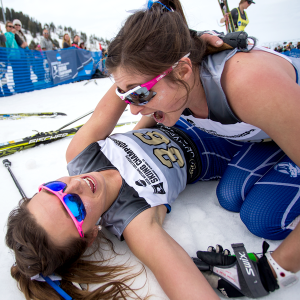
    School budgetary divides and division differences are just the beginning.

    Landstedt also wondered whether adding sprinting will encourage sprint racers to become more specialized in college racing and if schools with larger budgets will be at an advantage to recruit and travel to sprint venues for training.

    “Major concerns include how to fit sprinting in to a team format, having highly educated officials and a jury that can handle lots of protests and rule correctly on obstruction and interference issues common in sprint races, limited number of race venues with good sprint courses, expense related issues, recruiting,” he explained. I also believe that sprint racers will become more and more specialized and that it will be harder and harder for distance skiers to compete in sprints and vice versa.”

    “People like tradition. But at the same time, tradition can limit your outlook as to what the future could possibly hold.” — Chad Salmela, College of St. Scholastica head coach and former member of the NCAA Men’s and Women’s Skiing Rules Committee

    All of these concerns compressed into two days of competition makes for a challenge. But it’s a challenge that Salmela feels cannot go untouched.

    “If you look a the repertoire of what FIS has for nordic skiing right now, it’s a multitude of events,” he said. “To cap for that in two days is probably one of the greatest challenges the committee faces in trying to be a relevant piece of ski racing — not just American ski racing — but ski racing. And I think that’s why sprinting needs to be looked at. The sport has to be relevant.”

    An Issue of Relevancy: College Racing and The World Cup

    How much focus should college skiing in the U.S. place on preparing athletes for higher levels of nordic competition? How many skiers move on past college to ski professionally? Would this number grow if changes were made to NCAA Championships?

    “There’s a very tenuous argument, I feel, that NCAA skiing is the best path for the top talent in the country to develop into World Class skiers,” Salmela said. “I think that it’s a wonderful and lucky mechanism for retaining athletes who maybe don’t progress at the international pace for their age.

    “From a U.S. Olympic Committee perspective, the NCAA is a safety net that you don’t have to fund to keep talented skiers developing,” he added.

    From 2005 to 2009, Simi Hamilton, 28, raced for Middlebury, where he was a three-time NCAA All-American, before he made the leap to the U.S. Ski Team. Hamilton nabbed two individual podiums this season on the World Cup, first in a freestyle sprint in Toblach, Italy, and again at the freestyle sprint earlier this month in Gatineau, Québec.

    “When the question comes up of how college ski racing affects/overlaps with the overall development of a racer that wants to race full time (World Cup or domestic circuit) after school, it’s always tricky to answer,” Hamilton wrote in an email. “I don’t think there’s any way one person can say, ‘Yes, it fits in great’ or ‘no, the two don’t mesh at all.’ If I were answering the question based on what it did for me, I would definitely say that it helped. Skiing throughout college gave me an opportunity to stay in touch with racing, while giving me enough space from the sport to become more mature as an athlete and as an adult.”

    Sophie Caldwell soaks up her first World Cup win on Tuesday at the Tour de Ski Stage 4 classic sprint in Oberstdorf, Germany. (Photo: Fischer/NordicFocus)
    Sophie Caldwell soaks up her first World Cup win at the Tour de Ski Stage 4 classic sprint in Oberstdorf, Germany. (Photo: Fischer/NordicFocus)

    Caldwell, a 2012 Dartmouth graduate and five-time NCAA All-American, who won her first individual World Cup in January at the the women’s classic sprint in Obsterdorf, Germany, also explained college ski racing was the right decision for her.

    “I don’t think I was mature enough or mentally ready to ski full time right after high school, so I think having the balance of skiing and school in college worked out really well for me” Caldwell wrote in an email. “By the time I graduated from Dartmouth, I was four years older and more experienced, and ready to give professional skiing a stab.”

    Though both have seen recent success on the World Cup and both agree that development varies from person to person, they also confer on the point that perhaps it’s time to re-evaluate race distances at NCAA’s.

    “Sprinting is becoming more popular and almost half of the World Cup races are now sprints, so it definitely would be worth considering for college racing,” Caldwell wrote. 

    Hamilton pushed the point even further.

    “I think that NCAA needs to do some serious restructuring of their planning and scheduling in college xc ski racing,” he wrote. “It’s crazy to me that athletes still go to the championships and only race one middle distance race and one long distance race.

    “It’s hard to be too critical about the current system that is in place now because I am successful at what I do and I think I have quite a few years left of skiing successfully on the World Cup circuit, but that shouldn’t be an excuse for the NCAA to keep things exactly the way they have been for the last 30+ years,” he added.

    In conclusion, Hamilton added two primary goals college skiing should strive for within the U.S.

    “The first is giving young athletes a chance to be a part of something in college that is great,” he wrote. “The importance of being part of a team, no matter what kind of team, cannot be overstated. Regardless of whether an athlete wants to ski after college or not, college skiing should provide every xc athlete with a really fun chance to work hard at something and focus on achieving goals beyond the classroom.”

    While Hamilton’s first objective of college skiing revolved around teamwork and team skiing, his second goal emphasized individual aspirations.

    “The other goal that college ski racing should strive for is giving young races a chance to develop into the kind of athlete they want to become after college, if that is something they are serious about pursuing,” he wrote. “Personally speaking, if I had been given more opportunities while I was in school to focus on sprinting, there’s no doubt that I would have entered the World Cup circuit with more confidence and better prepared.”

    “Personally speaking, if I had been given more opportunities while I was in school to focus on sprinting, there’s no doubt that I would have entered the World Cup circuit with more confidence and better prepared.” — Simi Hamilton, U.S. Ski Team sprinter and former Middlebury skier 

    As a place where athletes have the opportunity to compete and train at a relatively low cost, college does seem to provide a great opportunity to further develop nordic skiers and skiing in the U.S.

    “Most of these college programs are providing coaching and transportation and waxing and all those things to make it easy for athletes to race, which they maybe don’t appreciate until they’re out of school and trying to do it on their own,” Thompson-Graves said.

    Yet, lumping U.S. college racing and the World Cup all in one does not appear to be the answer, either.

    “I think the challenge is that we’re trying to accommodate a lot of different kinds of athletes in college racing,” Thompson-Graves added, pointing out that “some programs are just happy to race carnivals,” while other U.S. college programs “challenge [athletes] to think bigger and do more if that’s what they want to do.”

    Ultimately, however, most believed that it should be a priority that skiing in the U.S. stays relevant.

    “I guess I fall into the camp that would like to see us doing, in college skiing, races that are sort of done in the national and international calendar,” Thompson-Graves said. “To me, it’s important that our athletes are learning to race whatever the current races are throughout the world. That’s important to me.”

  • Cami Thompson-Graves Asks: Why Fewer Women on the World Cup?

    Therese Johaug (NOR) and Ingvild Flugstad Oestberg (NOR) lead the women's mass start out of the stadium in Val di Fiemme (ITA). 43 women and 55 men competed that day, making the women's field less than 80% of the size of the men's field. (photo: Fischer/Nordic Focus)
    Norwegians Therese Johaug (front, black bib, pink headband) and Ingvild Flugstad Østberg (front, red bib) lead the women’s mass start out of the stadium at the Tour de Ski in Val di Fiemme, Italy. 43 women and 55 men competed that day, making the women’s field less than 80 percent of the size of the men’s field. (Photo: Fischer/Nordic Focus)

    (Ed. Note: Thompson-Graves was the author’s coach at Dartmouth College.)

    A recent addition to the International Ski Federation (FIS) Ladies’ Cross Country Committee, Cami Thompson-Graves, the women’s head nordic coach and director of skiing at Dartmouth College, noticed something this winter.

    Not as many women as men were starting on the World Cup.

    In the first weekend of racing, a three-day mini-tour in Kuusamo, Finland, 78 women and 82 men finished the tour. That was pretty equal. But the next weekend in Lillehammer, Norway, 70 men finished the 30 k skiathlon but only 54 women finished the 15 k skiathlon. In Davos, Switzerland, 80 men finished the 30 k and 46 women finished the 15 k. It went on like that.

    Having only been to one meeting of the committee so far, Thompson-Graves is still trying to decipher what is within the group’s mandate to tackle. But figuring out why field sizes are so different and what’s happening to unused women’s quota spots might be a place to start.

    Cami Thompson-Graves with then-Development Coach Kristina Trygstad-Saari in 2013. (Photo: Flying Point Road)
    Cami Thompson-Graves (r) with former Dartmouth development coach Kristina Trygstad-Saari in 2013. (Photo: Flying Point Road)

    “I have a love-hate thing with being a woman who’s involved with this sort of stuff,” Thompson-Graves said. “I just want to do it! I don’t want to necessarily – I don’t have the skills to analyze the ‘why’. I want someone else to do that, so then we can work on getting more people participating!”

    FasterSkier caught up with Thompson-Graves this week to talk about her concerns and what the next steps might be.

    FasterSkier: Do you have any ideas so far about why the field sizes are so different on the World Cup?

    Cami Thompson-Graves: I’ve been thinking about it. I did actually send Kikkan Randall and Matt Whitcomb an email to see what their thoughts were on it. I guess I’m mostly just trying to get some information and see what’s out there, and see if it’s an issue that the FIS Ladies Cross Country Committee could tackle in some way.

    FS: Let’s start at home. SuperTour fields are usually much smaller for women than men, but it isn’t that way at all ages. Do you feel the U.S. is doing well?

    CTG: I have the sense in the U.S. in general that things are looking pretty good for women’s skiing. And I’m sure a lot of it has to do with the results by our women [on the U.S. Ski Team]. But last weekend [at the Bates Carnival] there were 106 racers in the women’s sprint and 94 men. I feel like that his been the case for the last few years in college skiing. Maybe not by quite that margin, but they have been pretty close.

    FS: What’s your sense on this male-to-female racing ratio outside the U.S.?

    CTG: I had a pretty interesting conversation with a woman on the Cross Country Canada board, and Canada is really struggling right now. They don’t have a lot of women participating. I was just sort of curious why.

    My gut feeling is that a lot of it is cultural. That I think women want to enjoy it. Just being tough and training hard and being manly isn’t going to motivate a woman to stay involved. They don’t necessarily want to go a training center, and live in a dump, and train with the same three guys day after day after day. That isn’t going to cut it to make women get excited about sport.

    I think women really respond to good group energy and fun and all those things. Not that they aren’t more than willing to work hard and do what they need to do, but they are less likely to stay involved if it doesn’t have some element of reward.

    FS: So do you think it’s an issue of, for example, having to decide where to spend budget money, or do you think it’s because women are really disappearing from sports at a certain age or level?

    CTG: I’ll tell you what Kikkan and Matt said. Kikkan said it could be not enough funding, and teams are having to decide where to put their limited resources. And that may be men first, for a lot of countries. But also, it’s not enough recognition of the power of team training for female athletes. Not enough focus on the development of training groups around the top female skiers, to bring younger skiers up.

    FS: You were racing internationally when women’s skiing was in a much different place. What was it like then?

    CTG: Well, that’s what it was like when I was racing. I was the only woman traveling, one year, all winter. It sucked for me and it didn’t help anybody else, either. That’s where I think that Beckie Scott and Kikkan have done such a good job of fostering the younger skiers and helping motivate them, and bringing them up to that level.

    FS: If it is a problem of participation, not of funding or organizational goals, then it’s a pretty complex problem to try to solve.

    CTG: It would be interesting. Because if you’re in the national governing body of somewhere and you go to a race and say, look, there are five women and 25 men, why should we be spending money on the women when they really don’t seem that interested — how do you get women interested so that you have 25 women in the race, too? What is it that gets them interested?

    I would think that a lot of it probably does come down to culture. Certainly right now in the U.S., being an athlete when you’re not in school is culturally very acceptable [for men and women]. And it is recognized as a really cool thing to be. There are more post-college teams for a lot of different sports and a lot of people keep doing things.

    FS: What is the FIS Ladies Cross-Country Committee working on now?

    CTG: I think a lot of what is going on is looking at how we can make it better for the women who are racing right now. And that’s pretty good. I think the next thing to tackle would be doing some research from different national governing bodies to see how many people they have skiing at different ages, and where you start to see that dropoff. Is there anything to keep them skiing after the age of 16 or 18 or 20?

    FS: Do you think that other people at FIS would be receptive to discussing this if the Committee brought it to the table?

    CTG: I do think so. The chair of the Ladies Committee sits on the World Cup committee, and [the rest of us] also start getting invited to all these meetings. My sense is that if I could get to know some of these people, I could say what I think. Just looking around the room and listening, there’s a lot of stuff that happens behind the scenes. At least at that level, it’s getting in the room and speaking up. That’s what has to happen.

  • Thompson-Graves Celebrates 26th Season at Dartmouth

    Thompson-Graves Celebrates 26th Season at Dartmouth

    Cami Thompson-Graves (Photo: Flying Point Road Photography/flyingpointroad.com)
    Cami Thompson-Graves (r) poses with Kristina Trygstad-Saari (l) in 2013 (Photo: Flying Point Road Photography/flyingpointroad.com)

    Athletics have always played a central role in Cami Thompson-Graves’ life.

    Growing up, the Stowe, Vt., native embodied her passion for sport by skiing and playing field hockey and tennis.

    At St. Lawrence University she studied physical education and upon graduation continued a skiing career that took her to the U.S. Ski Team (USST) and the 1985 World Championships in Seefeld, Austria.

    However, once Thompson-Graves finished a two-year stint on the USST, she took a development coaching job at Dartmouth in 1988 in hope of sharing her love of sport with aspiring college athletes.

    Twenty-six years later, Thompson-Graves is the women’s coach of one of the most esteemed college ski teams in the country. Her quarter century of coaching makes her the longest-serving female head coach on the collegiate circuit.

    Over the years she and men’s coach Ruff Patterson, have led their team to countless all-American honors and top finishes at the NCAA Championships. In 2007 Thompson-Graves helped her team claim the NCAA Championship, marking the school’s first win since 1976 and notching the third-ever championship for the Big Green. In 2013, she won the honors of National and ESIA Intercollegiate Coach of the Year.

    As if that weren’t enough, many of Thompson-Graves’ skiers have gone on to achieve national and international acclaim. At the 2014 Olympic Games alone, five of her former athletes represented the U.S. in Sochi: USST members Sophie Caldwell (’12) and Ida Sargent (’11), and the U.S. Biathlon’s Susan Dunklee (’08), Sara Studebaker (’07), and Hannah Deissigacker (’09).

    FasterSkier caught up with Thompson-Graves to reflect on the past quarter century of coaching and what inspires her to continue working with promising young skiers.

    FasterSkier: When did you become interested in coaching and how did you end up at Dartmouth?

    Cami Thompson-Graves: I went to St. Lawrence University and I studied physical education, mainly because I was an athlete in high school. I played field hockey, I played tennis, I skied, and had a lot of respect for the coaches in my life. I was interested in doing the same thing. As far as how I ended up at Dartmouth, I raced myself and when I finished racing I started looking for a job. The development coach position opened up here so I grabbed that and started. Then I got lucky and got the head coach job shortly thereafter.

    FS: This seems like something you had been planning for a while.

    CTG: When I went to school I had an open mind and was trying to decide if I was interested in business or what I wanted to do. Sports have always been a big part of my life and I grew up believing that if I set my mind to something I should be able to accomplish it. Sports have been an important part of my life and who I am so it’s great to be able to try and pass that on to other people.

    Cami Thompson-Graves (Photo: Dartmouth.edu)
    Cami Thompson-Graves has entered her 26th year of coaching at Dartmouth this Fall. (Photo: Dartmouth.edu)

    FS: What have been some highlights of your career at Dartmouth?

    CTG: Winning the NCAA Championship in 2007 was definitely a highlight. We thought winning was not something we could accomplish because we don’t have scholarships here, it was our final exam period during the championships, and we didn’t have great snow that winter. But a lot of things came together so that was really exciting.

    Certainly having five of my alumni skiers in Sochi last year was another highlight for me. I was really excited to see those girls out there who were racing hard and still so passionate about the sport.

    FS: Speaking of alumni, the Dartmouth program has had a lot of its skiers find success after leaving school. What is it about that your team that attracts quality skiers and keeps them motivated once school is finished?

    CTG: Something that we are really proud of here – and we reiterate year in and year out –is our ambition to help each individual skier achieve their goals. It’s a huge priority for us as a program to think big and think outside the box. We have an award that’s based on skiing as a way of life, and that’s something we live here every day. We spend a lot of time together as a team, we make some of the toughest sessions fun and worthwhile, and we encourage people to race in races that they haven’t participated in before. We try and create a culture that encourages people to keep going, think big, try harder, and do more.

    It’s wonderful to have those athletes who continue to keep competing, but it’s also really cool to look around the room at coaches meeting at nationals. Many of the people in the room are our people who may have skied for us at some point and are still in the sport even if they are not racing.

    FS: What’s kept you going throughout your coaching career?

    CTG: I’m laughing because Thomas Alsgaard came here once and looked at Ruff and me and he said, ‘what are you still doing here? You’re old.’

    You don’t stop learning. I didn’t learn everything I know about skiing when I was racing in the 80s. I’ve learned a lot along the way and it is still challenging and it is still fun. I feel like every year you grow as a coach or there’s some new thing, whether it’s hosting the NCAA championship, winning a Championship or having a particularly great group of people that love to work hard and train hard and race with passion. There’s always something to keep it interesting and fun.

    FS: Do you have any plans for the future?

    CTG: I love what I’m doing and I don’t see myself stopping anytime soon.

  • Part of the Team, Part II: Female Collegiate Coaches in the U.S

    The Bates College nordic team after winning the Broomhall Cup last season. (Photo: Flying Point Road Photography/flyingpointroad.com)
    The Bates College nordic team after winning its third Chummy Broomhall Cup last season. (Photo: Flying Point Road Photography/flyingpointroad.com)

    Editor’s note: This is the second installment of a four-part series on the impact of female nordic coaches in the U.S. In Part I, former U.S. Ski Team member Nancy Fiddler introduced herself and reason for writing about the topic. Part II takes a look at several female collegiate coaches and their influence at that level. Parts III and IV will discuss female coaches in the Junior Nationals pipeline as well as grassroots programs across the country.

    ***

    Part II of my series on female cross-country ski coaches in the U.S. looks at the careers of five female collegiate coaches. As I have said before, back in the 1970’s, when I was a collegiate racer, there were no female coaches on the scene. I contacted these women through email and was pleasantly surprised by their generous and very eloquent responses. Each has made a contribution to skiing and has a distinctive story to tell.

    To give a little background, Cami Thompson-Graves is an old teammate and friend, Tracey Cote someone I have heard much about and finally met a year ago, and Becky Woods is the daughter of Bob Flynn, who was the head ski coach when I was at Bates. As a coach, I watched Abi Holt and Kristina Trygstad-Saari during their racing careers, and now am following their coaching careers with interest.

    Cami Thompson-Graves

    Women’s Team Coach, Dartmouth College, 24 years

    “I see myself as just one person contributing to a team.” — Cami Thompson-Graves, on how she’s contributing to the big picture of women’s skiing in the U.S.

    Cami Thompson-Graves and Kristina Trygstad-Saari (Photo: Flying Point Road Photography/flyingpointroad.com)
    Dartmouth women’s coach Cami Thompson-Graves (r) and interim men’s coach Kristina Trygstad-Saari. (Photo: Flying Point Road Photography/flyingpointroad.com)

    Cami Thompson-Graves has indeed contributed to the recent success of the U.S. Women’s Cross Country Ski Team. Just this spring, 2012 Dartmouth graduate Sophie Caldwell was named to the U.S. Ski Team (USST) B-team.

    While Dartmouth did not win the 2013 NCAA Championships, its women are definitely players on the national collegiate stage, with freshman Mary O’Connell taking second and fourth places in March in Ripton, Vt. With the woman affectionately known as Coach Cami at the helm, Dartmouth won NCAAs in 2007.

    Her own racing pedigree, which spans a career from Vermont High School Ski Meister to USST member, has seen some success. Thompson-Graves was a promising racer in the mid ’80s with near perfect technique whose career was cut short after a bout of overtraining. She turned her talents to coaching.

    Thompson-Graves’ 24-year career at Dartmouth College in Hanover, N.H., puts her at the leading edge of the phenomenon of female collegiate coaches in a traditionally all-male environment.  Pursuing an interest in motivating and developing athletes, Thompson-Graves began her career at Dartmouth as a development team coach, soon moving up to the head women’s coach position.

    “I love the women I work with,” she said. “They have such different personalities and work towards their goals each in their own way.”

    Dartmouth women have a strong role model to look up to in their coach, who juggles her career with being married and parenting. Thompson-Graves feels like she is making a difference for the skiers in her program.

    “I think we have a great team here, and it is all those women working together that help each of them achieve whatever their goals are,” she said.

    Beyond teaching the women in green the secrets to maintaining a rigorous training and racing schedule while attending classes in one of the country’s top schools, Thompson-Graves is impacting her skiers in other ways.

    “Hopefully they are learning to think big … and to make their own decisions,” she said. “It is so important for women to realize they can do this.”
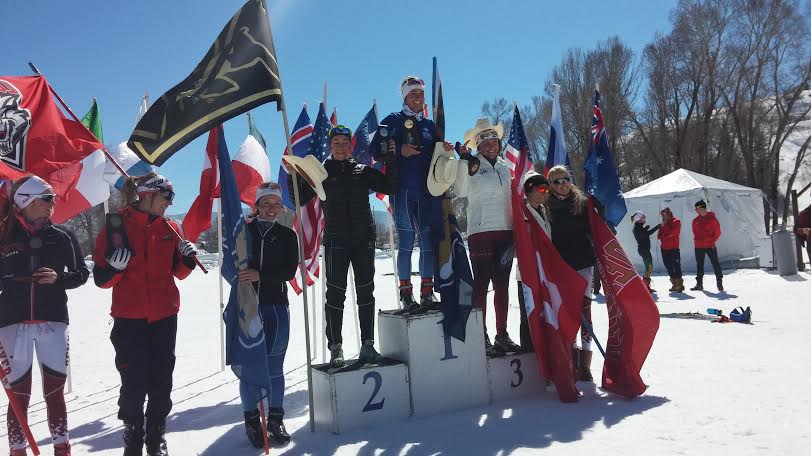
    Her coaching style is distinctive; one might say she leads in a soft manner.

    “I feel strongly that a coach is a mentor, not a dictator,” she said. “We should be challenging, guiding, and nurturing rather than micro-managing and directing.”
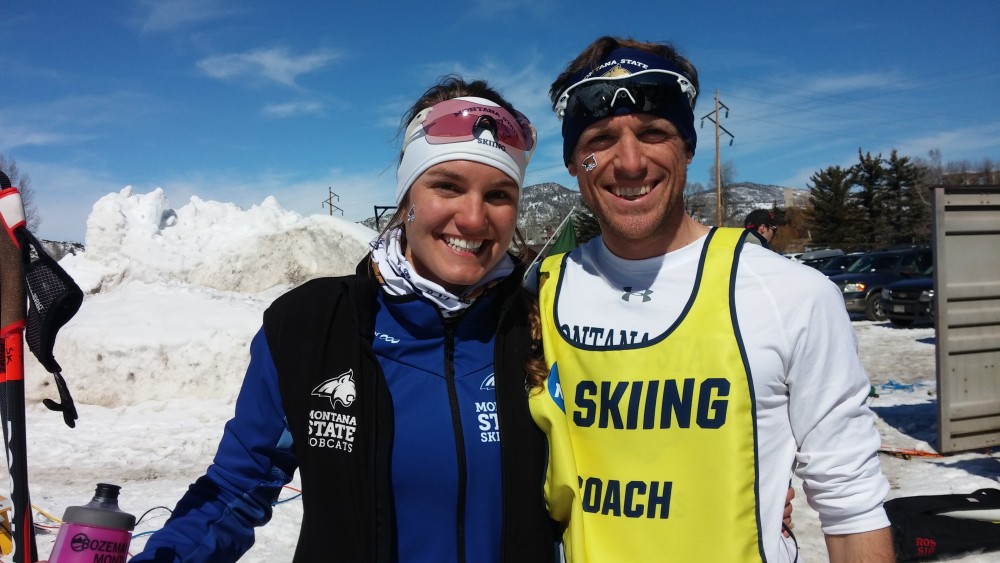
    On the subject of whether female nordic coaches are on a par with their male peers, Thompson-Graves is vehement that a woman is capable of doing anything a man can in this field. The difficulty for women, she believes, is that the lifestyle is tough, especially for young coaches.

    “If we want more women to be involved in the sport, then we need young women to see it is something they can and might want to aspire to,” she said. “I am lucky that I can do my job and still have a family. Some coaching jobs are much less family friendly.”
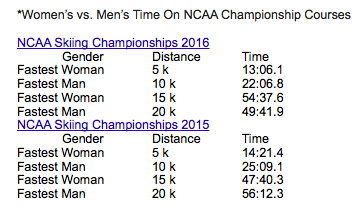
    Thompson-Graves will be leading young women in skiing for some time to come; she knows she has a great coaching situation and she appears to get just as much back as she gives to the team she coaches. As long as Thompson-Graves feels like she is doing a good job, she will continue to coach.

    “When I see so many of the women I have worked with still involved in the sport in some way I am proud of what I have accomplished,” she said

    Tracey Cote

    Head Nordic Coach, Colby College, 16 years

    “I’m modeling the great things about being involved in skiing for a long time. Some of my proudest moments have been to watch my former skiers in their new roles as coaches. This contribution, I know, is making a difference.” – Tracey Cote

    Tracey Cote (Photo: Flying Point Road Photography/flyingpointroad.com)
    Tracey Cote (Photo: Flying Point Road Photography/flyingpointroad.com)

    Tracey Cote was running cross-country at the University of Minnesota-Duluth when her teammates convinced her to go out for the brand-new nordic team. Cote ended up pursuing her love for her the sport even after the Duluth team was cut two years later, transferring to Northern Michigan University, where she ran and skied for the duration of her undergraduate career.

    A year after taking a part-time coaching position at Colby College in Waterville, Maine, Cote was offered a full-time faculty position there, coaching the men’s and women’s nordic teams. On top of her racing experience, Cote has a Master’s degree in health education and a teaching degree.

    Heading into her 16th year at Colby, she hasn’t looked back.

    “The one thing about ski coaching is that as sad as it is to see your seniors leave, you’re always excited to see your incoming skiers develop and you can’t imagine not being her for their four years,” she said. “This pattern could keep me coaching for the next 25 years!”

    Citing fellow college coaches Becky Woods (Bates College) and Dartmouth’s Thompson-Graves as mentors, Cote soon hit her stride as a coach and leader of young people. Athlete development is what she likes most about her job and the challenge to inspire each skier to reach his or her potential.

    “My biggest reward is seeing what my skiers accomplish after Colby,” she said. “I feel lucky to have developed close relationships with such amazing people.”

    Cote said she’s not afraid to push her skiers to make them better, but she is their biggest fan and supports them when they are struggling.

    With three boys, ages 4, 6 and 9, Cote and her husband, Patrick, are an involved nordic-skiing family.  Waterville has recently been a hotbed of activity with the formation of the Central Maine Ski Club four years ago and the recent addition of the Quarry Road racing venue just a short distance from campus. While on sabbatical leave last year, Cote jumped into athlete development at the grassroots level and got the “Get Ready to Race Program” for third- and fourth-graders off the ground.

    Cote will be back on the college circuit next winter and looks forward to getting back to her job developing athletes at the highest level.

    “Although I coach a small program in the scheme of things, I do my best to develop athletes at the highest level,” she said. “I see my program as a step to bigger opportunities in skiing.”

    On the topic of gender equality in coaching nordic, Cote said she “feels very lucky to be in the college world, as I feel men and women are treated very equally and the Eastern [conference] coaches are very professional.”

    She is not sure that coaching at the Junior National level has reached that degree of professionalism and is more male-dominated, but thinks this will change with time.

    Between her jobs as head coach, associate athletic director and senior women’s administrator at Colby, Cote is a wife and a mom. She knows what it is like to be busy.

    “Obviously, the U.S. Ski Team has been primarily coached by men, and I may be wrong, but I don’t think too many women are willing to live the lifestyle it takes at that level,” she said.

    Cote sees herself as a role model for women and said she’s “really proud to be one of a few women in any college sports program coaching men … with the U.S. women doing so well and being such an inspiration to a whole new crop of women, I hope we see female coaches at the highest ranks.”

    Abi Holt

    Head Nordic Coach, University of Utah, four years

    “I think I am one of a few coaches in the country who has coached at literally every level of skiing.  I have coached youth ski leagues, middle school skiers, high school skiers, college, US Ski Team, and masters… and taught beginner ski lessons.” – Abi Holt

    Abi Holt and Rick Kapala (Photo: Max Durtschi/SVSEF blog http://blogs.fasterskier.com/svsef/2008/02/05/photos-max-durtschi/)
    A former Sun Valley junior and eventual coach, Abi Holt (l) with SVSEF nordic director Rick Kapala (Photo: Max Durtschi/SVSEF blog)

    Abi Holt, head coach of the men’s and women’s nordic teams at the University of Utah in Salt Lake City has a solid grasp on the skiing pipeline. Her own ski-racing background covers just as much ground.

    As a junior from Sun Valley, Idaho, Holt was a three-time junior national champion and an 18-time junior All-American. Skiing for Dartmouth, she was an NCAA All-American. She said she fell into coaching “sort of by accident.”

    All it took was a phone call from Park City coach, John Callahan (formerly of The Utah Nordic Alliance, or TUNA) to steer Holt to a career in ski coaching in 1999. Fresh out of college and new in town, Holt needed a job, so she spent the winter as Callahan’s assistant coaching the high-school-age competition team the following season.

    After three years in Park City, Holt moved back to Sun Valley, coaching there for five years, then put in a year in Vancouver, British Columbia, as the Hollyburn Ski Team head coach. Back in Utah, she took a position as University of Utah assistant coach and signed a joint contract with the USST as an assistant development coach. Holt is now heading into her fourth year as Utah’s head coach.

    The lifestyle appears to agree with Holt, who said she likes her job for

    “the variety! Getting outside and not sitting at a desk all day. Watching young people develop into fantastic human beings. The challenge of managing team dynamics.”

    Holt’s impact on the men and women she coaches goes beyond the management of training and racing.

    “I believe that involvement with Nordic skiing creates great humans,” she said. “I hope that young skiers who I am involved with learn how to mix the necessary intensity of the sport with some humor.”

    Holt knows she has a great situation in her position at Utah.  She loves her job and her confidence demonstrates that she is at the top of her game. After finishing second at NCAA Championships for the last three years, Holt is focused on winning in 2014. She believes that college skiing has a place in the pipeline of U.S. skiing.

    “College programs are well-funded and we have access to a tremendous amount of support for our athletes,” she said. “Additionally, nearly every coach in this country has come through a college skiing program, so if nothing else, we are feeding the coaching system.”

    Holt sees herself as a role model for her athletes, but also for women looking at coaching as a career option. At Utah, she is the only woman who is a head coach of a men’s team at a university where many men serve as head coaches of women’s teams.

    “I’d like to think that my team’s success serves as proof that women can be successful as ski coaches, no matter which gender they are working with,” she said.

    Holt has dedicated herself to her career and sees herself as “one of the women who is leaning in to the profession and the industry,” she said. “I have worked hard and pushed hard to get to this position.”

    She is a self-proclaimed “true fan of American nordic skiing” and a “constant advocate of college skiing.” Finally, Holt believes that “women coaches are on par with the male coaches in the U.S. – there just aren’t enough of them!”

    Becky Woods

    Head Nordic Coach, Bates College, 20 years

    “Performance and success correlate with one another! If I can help my athletes perform well and find success in ski racing this will translate into their personal lives as well.  It is about building confidence, finding self-assurance, and believing in your abilities.” – Becky Woods

    Bates head coach Becky Woods (r) with one of her former athletes, Sylvan Ellefson, who graduated in 2009, and her daughters Kaelyn and Emma at the World Cup sprints last December in Quebec City. (Courtesy photo)
    Bates head coach Becky Woods (r) with one of her former athletes, Sylvan Ellefson, who graduated in 2009, and her daughters Kaelyn and Emma at the World Cup sprints last December in Quebec City. (Courtesy photo)

    The head men’s and women’s nordic coach at Bates College in Lewiston, Maine, for the last two decades, Becky Woods can be described as a quiet force. She has built the team into a reputable program over the years and has become a much-beloved coach by her athletes.

    Woods, who skied for Bates and graduated in 1989, began her career as an assistant coach on weekends, where she helped out on the Carnival circuit. After a stint in coaching juniors of various ages in Colorado, she returned to Maine, where she was asked to come back to Bates as head coach.

    While Bates might not be the biggest heavy-hitter on the NCAA circuit, Woods consistently turns out high-quality skiers. Among them are four All-American skiers – Sylvan Ellefson, Justin Easter, David Chamberlain, and Justin Freeman – who have all had a big presence on the U.S. skiing stage.

    For Woods, coaching runs in the family as her father, Bob Flynn, coached at Bates for many decades. In the ’70s, he served as head ski coach and also served many years as a coach of baseball and golf. He continues to coach as one of Woods’s assistants in the winter. She called him her mentor: “My Dad ‘Coach Flynn’ was and continues to be someone I go to for advice, support, and a few laughs!”

    As a collegiate coach, Woods is highly in-tune with her athletes.

    “I think I build some solid relationships with my skiers,” she said. “It is really important for me to get to know the ‘whole’ person so I can help them be the best ski racers they can be.”

    She considers herself to be a big part of their lives while they are at Bates.  “We consider ourselves a ski family here,” she said. “So in that sense, once you enter the family, you are here to stay!”

    The life of a college skier is a demanding one, and Woods is there to help her athletes.

    “Balancing their workloads is a challenge,” she said. “Academic schedules combined with daily, consistent training and racing is a tough combination but something that is so worth it.”

    Woods is a strong believer in collegiate skiing. “The opportunities that my athletes have are just fantastic and to be a part of that is a privilege.”

    She knows she’s preparing her skiers for a career in ski racing beyond college, should they choose this path. “When skiers from Bates are skiing on the World Cup and at the Olympics, it certainly feels like we are having an influence at a level larger than just collegiate skiing.”

    While not all Bates skiers continue on to the big leagues beyond college racing, Woods prepares everyone for life. “I think my role as a D1 college coach is to prepare athletes physically, mentally and emotionally for what is to come,” She said.

    She said she’s equally proud of “those folks who leave Bates and go on to give back in skiing.  It is a true testament to their experiences here at Bates and their passion for skiing.”

    Woods credits her husband, Tucker, with whom she has two teenage daughters, for giving her the support she needs to pursue her career. She believes that the women who coach skiing are absolutely on par with their male peers.

    “There are fewer women coaching, but I don’t think that speaks to the abilities of the coaches, more to the choices that people make professionally,” she said.

    Kristina Trygstad-Saari

    Interim Men’s Coach, Dartmouth College, one year

    “From both my experiences as an athlete and a coach, it’s important to have women in the mix … as a junior skier, it was always beneficial to be around strong, healthy, positive women.  I figure that more perspective and diversity is always better.” Kristina Trygstad-Saari

    Kristina Trygstad-Saari (BSF)
    Kristina Trygstad-Saari while training with the Bridger Ski Foundation. (Courtesy photo)

    Dartmouth grad Kristina Trygstad-Saari (’07) thought she was returning to her alma mater last year to serve as the development-team assistant. In the end, the men’s team needed her more and she wound up coaching that team for the fall and winter.

    Trygstad-Saari has been a cross-country ski racer most of her life, and now she wants to give back some of what she learned during her racing career. She had a stellar career as a junior with the Bridger Ski Foundation (BSF) in Bozeman, Mont.  She holds nine Junior National titles and was sixth at World Juniors, and has competed in World Cup races and skied on the U.S. Development Team.

    While studying at Dartmouth in Hanover, N.H., Trygstad-Saari decided to take a break from serious skiing. She didn’t stay away long, making a trip to the NCAAs her junior year in 2006. After a few years of racing out of college and an Olympic-team bid, Trygstad-Saari turned her experience toward coaching.

    Trygstad-Saari quickly climbed the coaching ladder, returning to BSF to work for her former coach, Dragan Danevski. Coaching J5’s her first year and J2’s and masters the next year, Trygstad-Saari drew from Danevski’s knowledge.

    “Once I started coaching for BSF, he was an obvious mentor and a resource,” she said. “He has incredible experience with coaching and athletics.”

    It was just a year later that Trygstad-Saari was learning from another revered coach, this time at Dartmouth.

    “Coach Cami Thompson-Graves was an exceptional mentor,” she said. “She gave me the freedom to learn through experience while also sharing her own knowledge and experiences to help me along.”

    Trygstad-Saari sees herself as a role model for the athletes she works with and feels that she is making a difference through her coaching. She has a big worldview of cross-country skiing, but works on a very “local and personal level,” she said. “I really try to connect with each individual I‘m working with, and if I can have even the smallest positive effect on most of the people I work with, then I’m happy. A little bit can go a long way.”

    Trygstad-Saari uses her own experiences as an athlete, ski racer, and student to guide her athletes. “I had a lot of ups and downs in my ski career, especially during college, and I try to share what I learned to help others.”

    Having fun and working hard go hand-in-hand for Trygstad-Saari and are the foundation of her coaching method. She reminds her skiers that a love of the sport is just as important as success.

    “Creating a healthy environment for training and racing is one of my priorities,” she said. “Providing this on the development levels will only help skiing on the highest levels.”

    Trygstad-Saari sees a future for herself in ski coaching and would eventually like to be a head coach of a college team. Her coaching plans are open-ended, but for the time being, she is working at her favorite summer job: catering. That said, come next winter, Trygstad-Saari will be pursuing her passion for coaching cross-country skiing.