
Tag: Camp Ethan Allen

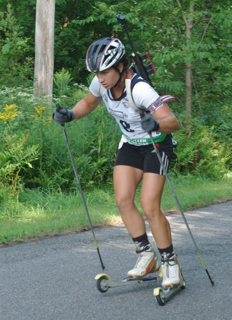
  • Wednesday Workout: Training in the Dark with Mansfield Nordic

    Wednesday Workout: Training in the Dark with Mansfield Nordic

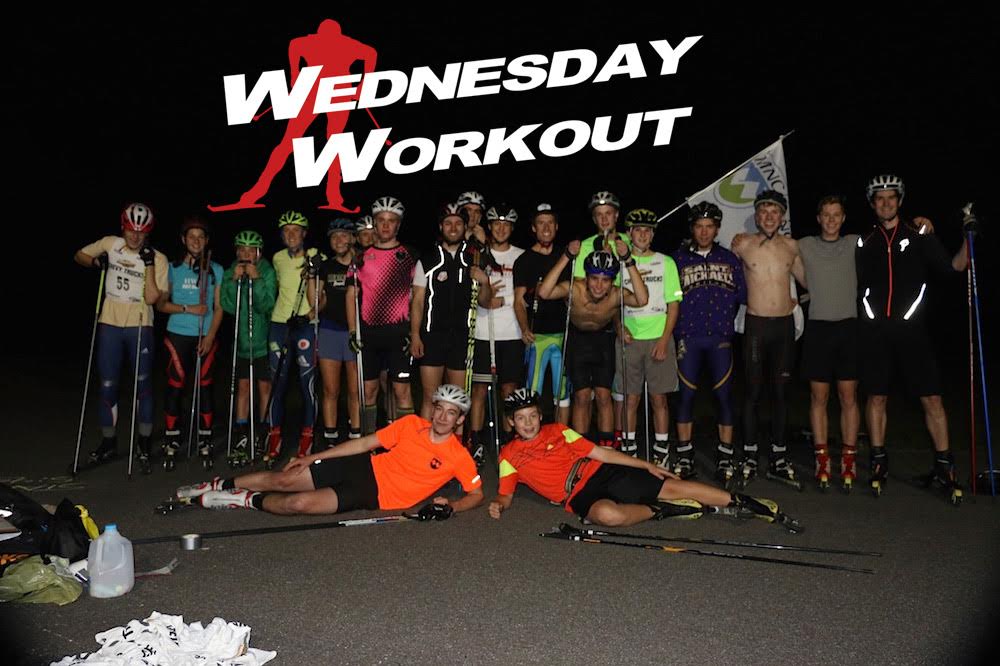
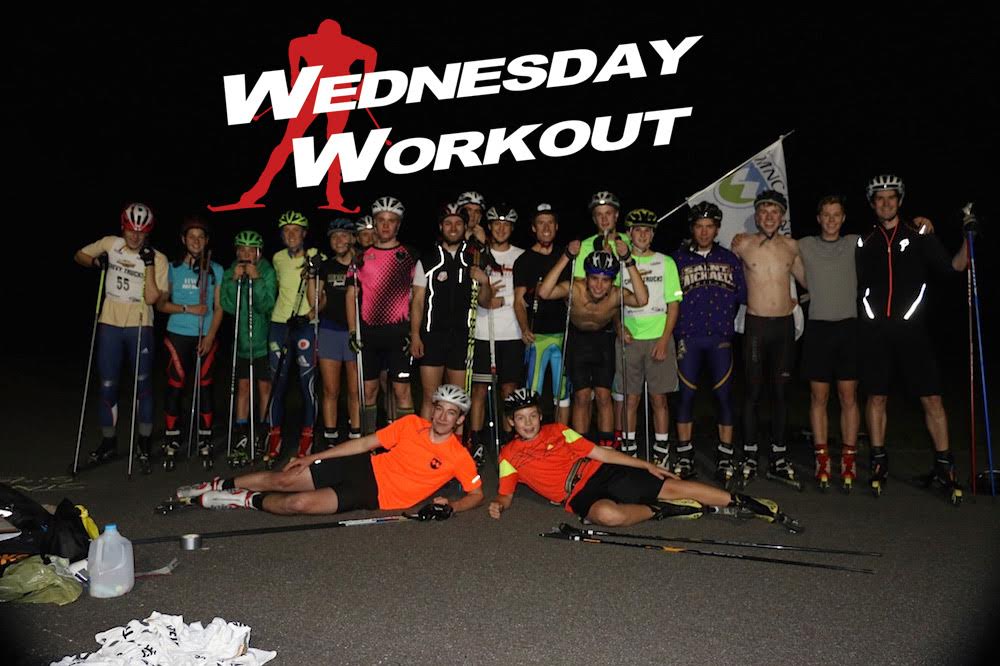
    Group photo with GMVS, SMC and UVM club skiers after their Monday night skate sprint. (Photo: Gary Solow)
    Group photo with Mansfield Nordic, GMVS, St. Michael’s College, and UVM club skiers after their evening skate sprint in Jericho, Vt. (Photo: Gary Solow)

    On Nov. 1, the clocks turned against a skier’s favor, especially if you are used to training after an already-lengthy day at school. For many, this time of year brings about tough battles with motivation. The desire to even get out the door is often more difficult to swallow when the sun goes down, and cold weather combined with a lack of snow can add even more aggravation.
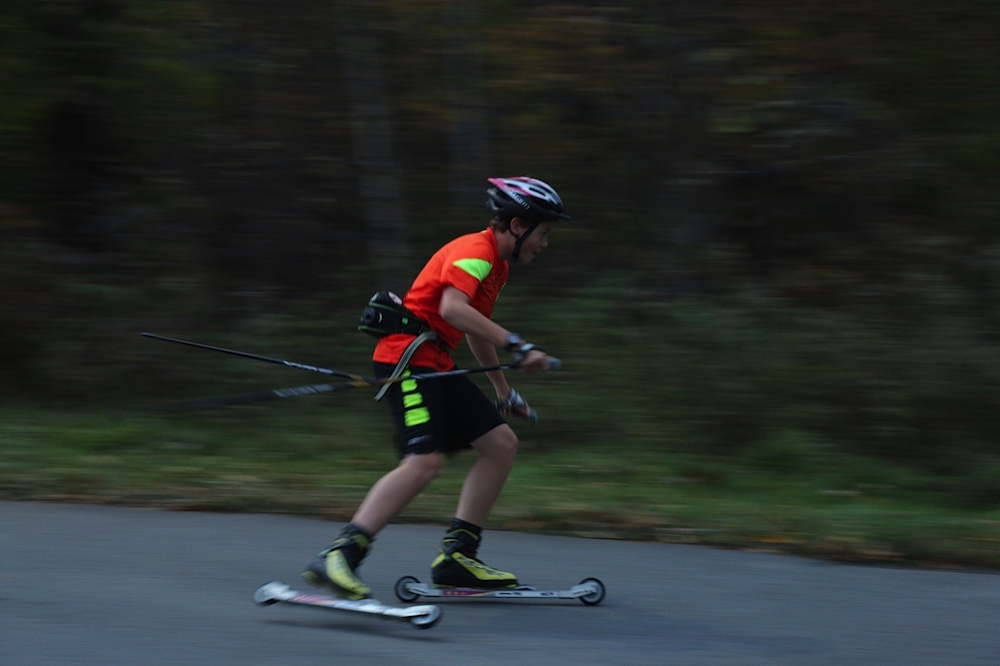
    Bill Koch League skier Aidan Burt previews the sprint course in fading light at the Jericho range in Vermont. (Photo: Gary Solow)
    Bill Koch League skier Aidan Burt previews the sprint course in fading light at the Jericho range in Vermont. (Photo: Gary Solow)

    Mansfield Nordic is incredibly fortunate to train at one of only a few paved, car-free rollerski loops in the country at Camp Ethan Allen in Jericho. “The Range”, as it’s known colloquially, also features lights along all 5.5 kilometers of trail, making it ideal for training in this tough shoulder season.

    Although The Range is an amazing place to train, we don’t spend every workout on rollerskis. Recently we found a creative way to make our own lighted trail system in the woods with the help of some battery-powered infrastructure.

    In this article I’ll share two workouts we’ve done this fall that were enhanced by the darkness rather than limited by it: A rollerski sprint time trial and bounding intervals in the woods.

    Event 1: Skate Rollerski Sprint TT

    After a late-summer timetrial with the Green Mountain Valley School (GMVS) in East Warren, coaches Garrott, Katrina and I began talking about the next time we could get the group together. The GMVS crew would not be able to get to the Range until 5 p.m. on weekdays, Garrott noted, when darkness would be coming up fast. Instead of changing plans, we decided to turn this into the plan!

    A few weeks and a bit of outreach later, a hearty crew was up at The Range on a Tuesday night for some sprinting action. The competitors included athletes from Mansfield Nordic, GMVS, St. Michael’s College, and the University of Vermont (UVM) Club team.

    The Workout

    A qualifier was held in grainy, fading light, and by the time the heats began the lights along the trail were the only glow in the area as racers sped around a hilly 1 k lap. Organized in a modified “King’s Court” style, everyone got to race multiple heats against similar competition. With some diligent recording, every racer was tracked for every lap so that times could be compared. Pizza delivered after the final round was key, as the event wrapped up around 7 p.m.  

    Event 2: Bounding by Headlamp

    Although rollerski tracks with lights are not common, many racers are probably more familiar with training by headlamp, especially masters racers who are looking to train before and after long work days. We were able to do some bounding intervals at a popular training location, the Jericho Research Forest, with headlamps and more to light the way.

    The location for this was key to enabling safe, effective training in the woods at night. This stretch of forest has a few great features that made the night workout possible:

    • Hills of varying length and grade (of course)
    • Snowmobile trails, which are wide and well-cleared of obstacles that could trip you up
    • A relatively short 1-2 k loop to avoid getting lost and help track athletes

    The Workout

    MNC skiers alternated jogging and bounding on portions of a 6-8 minute loop that included steep uphills, rolling terrain and flats. By doing the workout on a set course over and over, athletes became familiar with the terrain in the fading evening light. This made it easier to navigate the loop when the complete darkness arrived shortly thereafter.

    The loop made a figure-8 style, and in the middle, a branch was posted into the ground with a LED light dangling off — the center hub and meeting spot, as well as the beginning and end of every interval. This made it easier to know where and when to find athletes … and to know where the water belts were.     

    Headlamps were donned to allow better visibility, and also give a pretty cool motivational boost. Is the competition outside training in the dark right now as well, or are they home watching “The Walking Dead”? Concluding the workout with some extra hard bounding with a partner, under the light of teammates’ headlamps lining a short section of the trail, made for a great finale.

    The dark and cold days of autumn will always bring a tough challenge to skiers, especially before the snow has fallen. It doesn’t have to mean a lack of motivation or variety, though. If you can get creative with your workouts, you may even find a way to dig deeper and end up with a more memorable session than you planned.
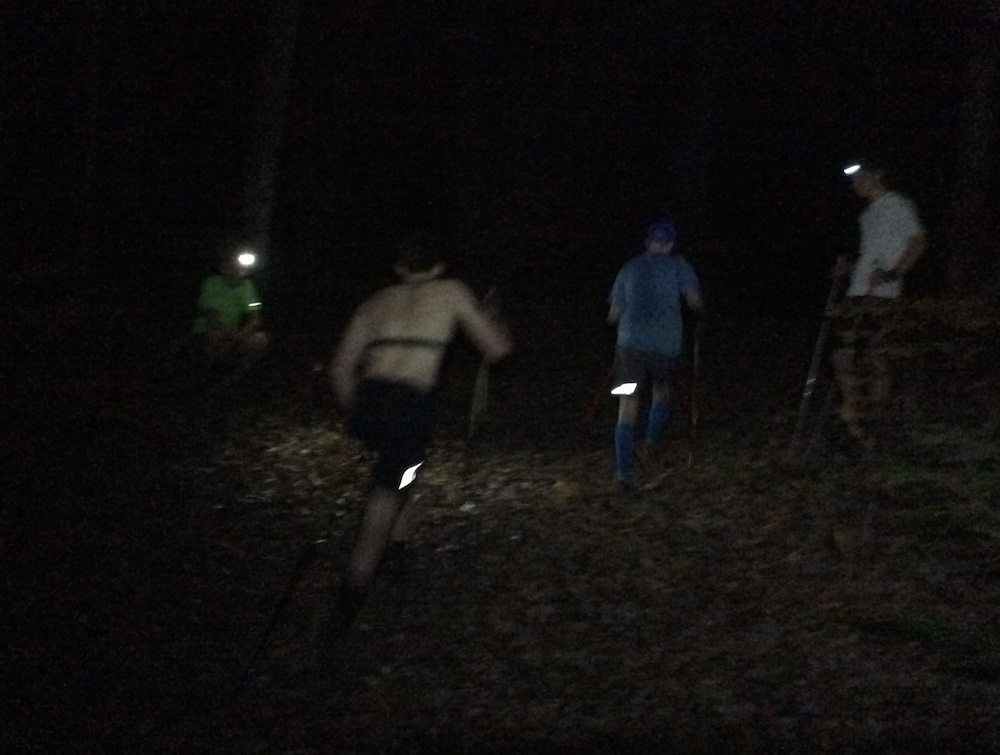
    Bounding at night. (Photo: Adam Terko)
    Bounding at night. (Photo: Adam Terko)
  • Continuing a Summer Tradition, Lanny Barnes Picks Up Two Rollerski Biathlon Titles in Jericho

    Continuing a Summer Tradition, Lanny Barnes Picks Up Two Rollerski Biathlon Titles in Jericho

    Lanny Barnes powering her way to a sprint victory at the North American Rollerski Biathlon Championships on Saturday in Jericho, Vt.

    JERICHO, Vt. – If one thing is constant in summer biathlon races here at the Ethan Allen Firing Range, it’s the sight of Lanny and Tracy Barnes near the top of the results sheets. Since 2009, only one of the sisters, Tracy, has been off the podium – and it was just once. Lanny has won the majority of the races.

    And the 2012 edition of the North American Rollerski Biathlon Championships was no different. Lanny Barnes won Saturday’s 7.5 k sprint by almost 20 seconds, and then doubled down to take the 10 k pursuit title by over a minute.

    Tracy Barnes placed third in the sprint, behind Claude Godbout of Quebec, before moving up in the pursuit to finish second behind her sister.

    The key for both of the Durango-based twins was shooting: over two days and a combined total of six shooting stages, or 30 shots, Lanny missed two targets and Tracy three. The other women in the race had at least four penalties in the pursuit alone.

    Neither Barnes was available for comment.

    Godbout approaching the range on Saturday.

    Godbout, a native of Valcartier whose only World Cup experience was at the 2011 races in Fort Kent and Presque Isle, Maine, was happy with her podium finish on Saturday, but hesitated to draw conclusions about how she would stack up against the U.S. national team women she beat once the races moved to snow.

    “It’s different, seeing that we all have different rollerskis and even if you have the same brand, sometimes the wheels are just used,” Godbout said after the race. “So yeah, you can compare with each other, but it’s never the same from the summer to the winter.”

    Nevertheless, she appreciated the chance to race against some more experienced Americans.

    “Susan [Dunklee] passed me on the second loop, and you see how she skis, and she’s really fast so you try to stay with her,” Godbout said. “And that’s fun because I’m training with three younger girls in Quebec City, so to be here training with older people who are super strong is always fun.”

    Godbout is in the midst of a major increase in volume, as part of her bid to make the Olympic team in 2014; Sochi, she said, is her main focus. As a result, she didn’t feel like she had her top gear with her this weekend. But that wasn’t the point.

    “It’s been a while that I’ve been training and always doing the same things,” she explained on Saturday. “So I’m trying this year to change my training a little bit and to do a lot of training, a lot of volume, and see how it goes. If it doesn’t work, then at least you tried and you still have one more year. So we’ll see how it goes. Right now I’m happy with today.”

    Dunklee, like many of her national team teammates, was undone by shooting in the sprint: along with Sara Studebaker, Hannah Dreissigacker, and Corinne Malcolm, she shot one penalty in prone and four in standing, for an overall total of fifty percent. But despite five penalties to Tracy Barnes’ two, Dunklee was just nine seconds behind her in fourth place.

    Tracy Barnes approaching the range on Saturday.

    “I just didn’t feel very settled,” Dunklee said of her standing stage. “Sometimes if I miss the first two shots I’ll kind of reset, put my head up, look at the targets and start over again, but I’m not really sure why [that didn’t help].”

    She did have one idea to explain her poor performance on the range. A fierce competitor, Dunklee had gotten wrapped up in trying to keep up with the men once they started the race a few minutes after the women.

    “On that second loop I got excited because they guys had started, and they began passing us and I’d say, ‘I’m going to stick on this one,’” she explained. “So I did these little miniature sprints all over the loop. I didn’t pace myself very well. I just really like trying to ski behind people who are faster, and trying to pick up on their technique… [skiing with the men] when we’re going hard doesn’t happen very often.”

    U.S. women’s coach Jonne Kahkonen wasn’t quite sure why his athletes struggled on the range on Saturday, but hypothesized that the first real races of each summer are always much more difficult than training. He also mentioned the heat and humidity, which sapped athletes’ energy this weekend.

    “I don’t know what reason, but it always seems like the first tough effort here takes some adjusting,” Kahkonen said. “For us coming from Lake Placid, it’s just a little bit different approach, maybe [the uphill into the range] and the different terrain. So it seems like that plays a role, but they can adapt pretty quickly now. I’m expecting a little bit better for tomorrow.”

    He was right: none of the women in the field shot fifty percent or worse in the pursuit, although none attained the Barnes standard of perfection, either.

    Studebaker competing in Saturday’s sprint.

    In part because she is pre-qualified for a training camp in Sweden in November, which these rollerski races serve as trials for, Dunklee skipped Sunday’s pursuit.

    “I feel like the last couple years every single race I’ve been in has been a trials race of some sort, and it was so nice to not have to deal with that,” she laughed.

    Instead, it was the other pre-qualified athlete, Studebaker, who broke into the top three when Godbout faltered with eight penalties. Studebaker had placed a disappointing seventh in the sprint, and started the pursuit about 80 seconds behind Godbout.

    “It’s always nice to move up in a pursuit, and today was no different,” Studebaker wrote in an e-mail this morning. “Going into the last loop Annelies [Cook], Claude, Yolaine [Oddou] and I all left the penalty loop right near each other so I had a good time chasing people down and trying to end on a high note. It was definitely nice having the Quebec biathletes come down and add some depth to our field since we get to race each other all the time.”

    Kahkonen said that he had been chatting with Jean Paquet, the Quebec-based Canadian men’s team coach, about how to have more joint race opportunities and even training camps.

    “I think it’s always good [to have them],” he said of the Canadian athletes. “I always say that there’s only so many of us, so we should try to get the North Americans together. I hope we can do this more in the future.”

    Results: sprint / pursuit

    Craftsbury Green Racing Project and USBA “B”-teamer Hannah Dreissigacker takes to the range in Saturday’s sprint race.