From the FasterSkier archive — posts syndicated from athletes’ and coaches’ own blogs between 2004 and 2012, kept online as published. Current coverage is at fasterskier.com.

Tag: Campbell Wright

  • The Case for Transparency in the USA Biathlon–USSS Integration Talks

    The Case for Transparency in the USA Biathlon–USSS Integration Talks

    This article was made possible through the generous support of our voluntary subscribers. If you value coverage like this, please support FasterSkier with a voluntary subscription.


    I was reviewing recent U.S. Ski & Snowboard Cross Country Sport Committee meeting minutes and came across an interesting note in the April 7, 2026, meeting. The following item stood out:

    “Rick shared the announcement of adding Para Cross Country and that there is a strong drive from the USOPC to move Biathlon governance under USSS.”

    That immediately raised a larger question. Years ago, U.S. Ski & Snowboard decentralized Nordic disciplines because they were financially difficult to sustain. Now, the organization appears willing to absorb another financially struggling discipline.

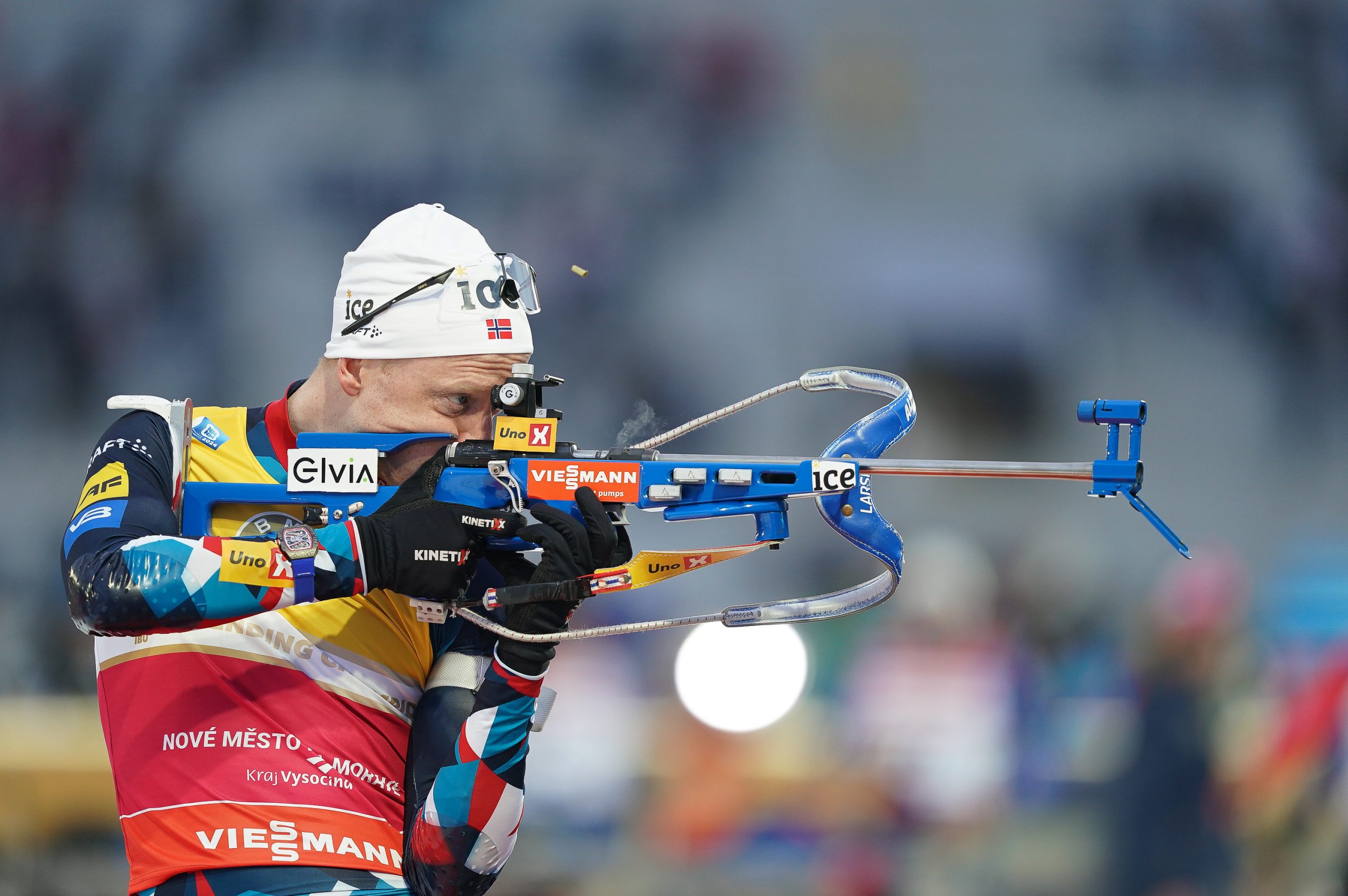
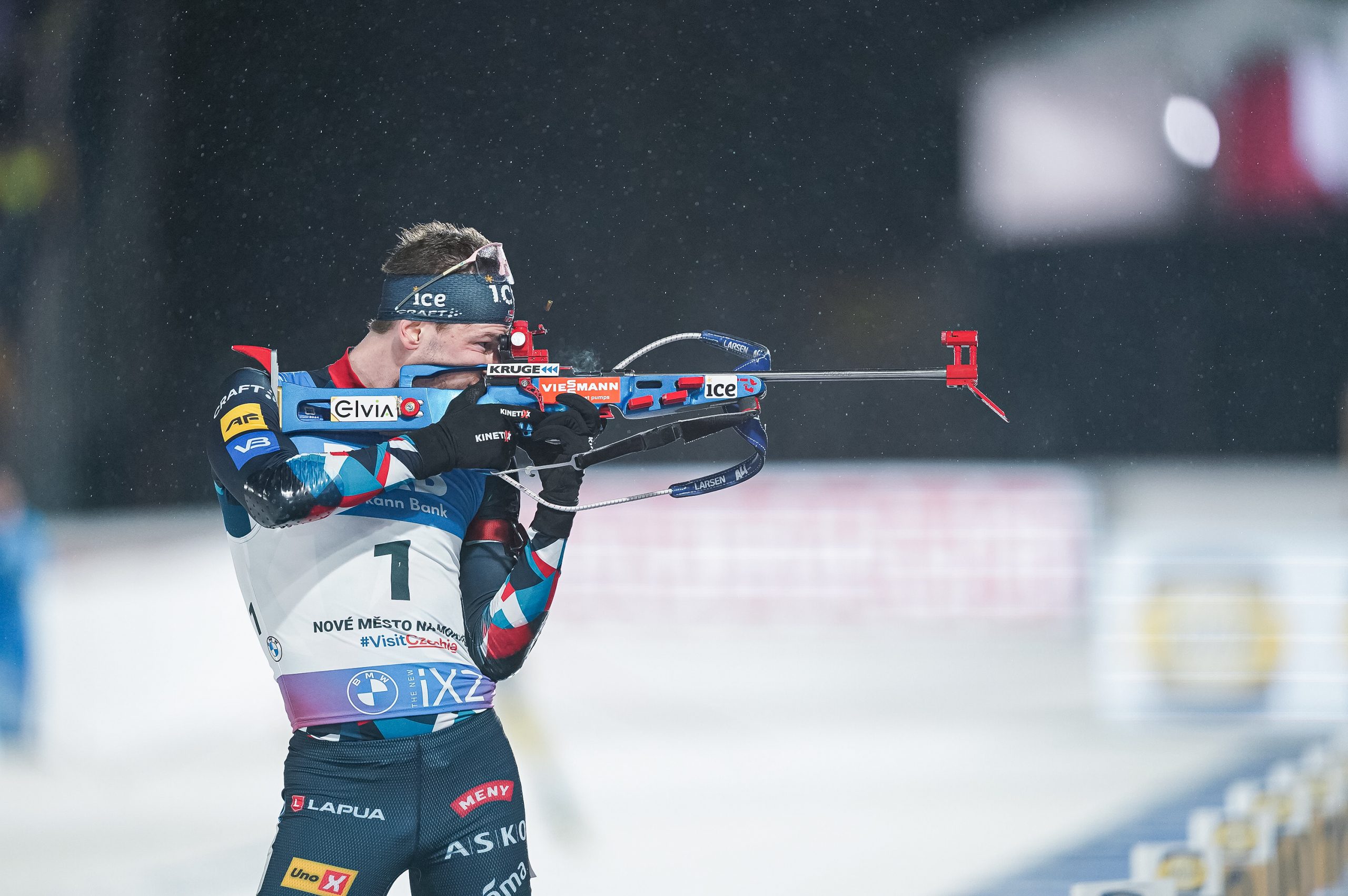
    Campbell Wright (USA) takes aim during the men’s relay at the IBU World Championships in Lenzerheide (SUI) in 2025. (Photo: NordicFocus)

    The Questions

    Over the last week, I reached out to representatives from USA Biathlon, U.S. Ski & Snowboard, and the United States Olympic & Paralympic Committee with several specific questions regarding the discussions around potentially moving USA Biathlon under USSS governance. The questions were straightforward:

    • Why is the USOPC driving this discussion?
    • What does the USOPC believe the benefit of this move would be?
    • Is the push in any way related to USA Biathlon’s previously reported cultural and athlete protection failures?
    • If these discussions are connected to systemic governance failures, why were the corrective mechanisms outlined in the Sports Act not pursued first, including mandated reforms, leadership changes, sanctions, or ultimately decertification of the NGB?

    In its spring meeting minutes, USA Biathlon framed the discussions as an opportunity to transform the sport and accelerate long-term development, specifically through expanded athlete support, increased visibility, broader talent identification, and enhanced fundraising and sponsorship opportunities.

    The response from USSS was carefully worded:

    “U.S. Ski & Snowboard and U.S. Biathlon are exploring a potential integration aimed at growing the sport and strengthening long-term performance. Discussions are ongoing, and both organizations are committed to a thoughtful, athlete-first approach.”

    The USOPC response was similarly broad:

    “Can confirm that we are engaged and aware of the ongoing discussions between USSS and USA Biathlon, and supportive of actions that provide increased levels of athlete support and long-term organizational stability.”

    None of the organizations addressed the underlying questions.

    It is difficult to believe the negative publicity and lack of accountability surrounding multiple abuse cases within USA Biathlon did not create operational and funding consequences. It is equally difficult to understand how moving USA Biathlon under USSS materially improves athlete opportunities when the existing Nordic programs already operate under significant financial pressure.

    The 2007 Precedent

    The discussion also seems contradictory given what occurred in 2007, when the then-United States Ski Association/U.S. Ski Team eliminated direct national team funding for Ski Jumping and Nordic Combined, citing financial sustainability concerns. At the time, the core message from USSA leadership was clear:

    • Ski Jumping and Nordic Combined were too financially difficult to sustain within a centralized national team structure.
    • The sports needed to develop independent fundraising and governance models.
    • The creation of USA Nordic Sport was presented as a way to ensure the long-term survival of those disciplines through independent leadership and donor support.

    The rationale then was limited resources and the need to prioritize disciplines with stronger medal potential. If those same arguments were applied consistently today, they would appear to point toward similar conclusions regarding USA Biathlon.
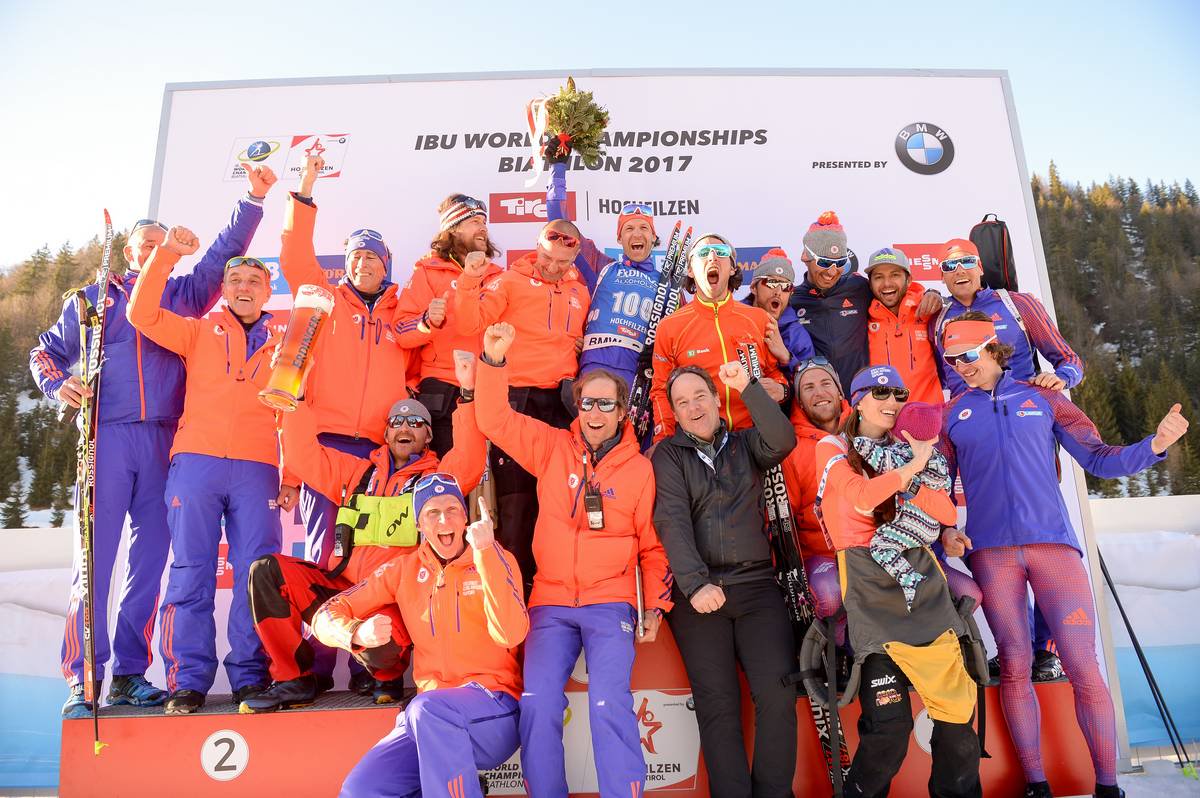
    The U.S. Biathlon team and staff celebrate a Lowell Bailey’s gold medal in Hochfilzen in 2017. (Photo: USBA/NordicFocus.com/Twitter)

    The Performance and Financial Picture

    USA Biathlon has struggled for decades within its centralized development model. The program has never won an Olympic medal. Its financial structure remains heavily dependent on external institutional support. The closest the United States has come to a modern Olympic breakthrough was Lowell Bailey, whose 2017 World Championship gold medal represented a historic result for the program.

    More recently, Campbell Wright’s rapid rise has dramatically changed expectations. Olympic podiums now appear to be viewed internally as realistic rather than aspirational.

    Financially, the organization remains highly dependent on the USOPC and the International Biathlon Union. In 2023, those two sources combined to provide just under $2 million in funding. Membership revenue totaled approximately $305,000. Together, those categories represented roughly 70% of total organizational revenue, illustrating how limited the organization’s independent sponsorship and fundraising capacity remains.

    Overall, USA Biathlon reported approximately $3.2 million in annual revenue against roughly $3.2 million in expenses, essentially operating at break-even. Based on expense reporting, it appears less than $800,000 was directed toward direct athlete programs and support. USA Biathlon categorized approximately $2.4 million under “Functional Business” expenses tied to trials, training, competition, and development programs, yet more than $700,000 of that consisted of staffing and contract labor costs. In total, staffing and operational expenses appear to exceed $2 million annually, roughly 63% of total expenditures.

    That leaves very little financial margin for error. USA Biathlon appears to be operating in a structurally fragile position where revenues and expenses are essentially balanced while administrative and operational costs consume the majority of available resources.

    What Does USSS Gain?

    Given the current financial picture, and the program’s historical performance trajectory, it is difficult to see how USA Biathlon brings anything other than additional financial pressure to USSS. So the obvious question becomes: what does USSS gain from the arrangement?

    Presumably, increased USOPC funding. USA Biathlon’s own 2030 strategic plan lays out explicitly outcome-based goals:

    • “Consistent medal winning performances every year,”
    • beginning with “one Olympic medal in 2026,”
    • and progressing toward “four [Olympic medals] in 2030, at least one gold.”

    That language closely mirrors the increasingly performance-driven funding expectations the USOPC now places on National Governing Bodies.

    It is clear USA Biathlon currently faces significant operational and financial challenges in supporting athletes at the level required for sustained international success. Campbell Wright’s emergence has only intensified the pressure surrounding those expectations. What remains unclear is how simply moving the sport under USSS materially changes the equation.

    There may be some operational efficiencies through shared services and administrative consolidation, perhaps several hundred thousand dollars annually. But regardless of governance structure, the fundamental reality remains the same: the sport will require substantially more funding if it expects to support athletes at a level capable of producing consistent Olympic success.

    Athlete Trust

    The unresolved issue in all of this is athlete trust. Financial instability and competitive underperformance are one thing. Failures involving athlete safety, organizational culture, and accountability are something entirely different.

    Over the last several years, USA Biathlon has faced significant public scrutiny surrounding athlete abuse allegations and broader questions about organizational oversight. Whether or not those issues are directly tied to the current governance discussions, it is difficult to believe they are irrelevant to the long-term stability of the organization.

    For athletes and families, trust matters. Those athletes impacted by abuse allegations have asked for accountability for those who minimized their reports of abuse and failed to report. Parents should be evaluating a development pathway, not simply assessing coaching quality or race results. They should be asking whether the organization can provide a healthy, stable, and safe environment for athletes.

    Once an NGB develops a public reputation for cultural or athlete protection failures, rebuilding confidence becomes extraordinarily difficult. That impacts membership growth, fundraising, athlete retention, and ultimately performance itself.

    The Case for Transparency

    Which is why transparency matters here. If the proposed integration is fundamentally about operational efficiency and athlete support, then that case should be made openly and directly. If it is also connected to concerns surrounding governance, accountability, or organizational stability, those questions deserve equally direct answers.

    Without that transparency, the process begins to look less like strategic planning and more like institutional consolidation without meaningful public accountability.


    Help Support Our Coverage!

    If you value the thoughtful work and access FasterSkier provides, please consider becoming a Voluntary Subscriber. Your support directly fuels our work to cover the people, places, and moments that make our sport special.

    Join the FasterSkier community!


    Campbell Wright (USA) after the IBU World Championships Biathlon, sprint in Lenzerheide (SUI). (Photo: NordicFocus)
  • World Cup Opener in Östersund: Wind, Depth, and Early Answers for an Olympic Year

    World Cup Opener in Östersund: Wind, Depth, and Early Answers for an Olympic Year

    At the first biathlon World Cup races of the 2025/26 season, the biathlon stadium is perched above the small city of Östersund, which is set on a lake. Wind gusts off the lake, pulsing through the stadium. The races take place under the lights, at night – which isn’t saying much. Because in December in northern Sweden, ‘night’ begins at three in the afternoon, when what little sun there might’ve been throughout the day slips below the horizon. It’s in the evenings that the wind is usually at its strongest. The conditions the racers zero their rifles at before the race are rarely the same conditions they find when they come back to the range during the race. Athletes watch the small, red flags in the range, seeing which way they’re moving, deciding whether or not to shift their sights a few clicks, compensating for the changes that happened while the racers skied the course that serpentines up, down, around a 180-degree turn, and back into the stadium where the music plays and the home crowd cheers. Ayyy! As the Swedes hit their targets. A diluted Ney for each Swedish miss.

    The mixed relay at the opening stop, Oestersund (SWE), of the 2025/26 IBU World Cup Biathlon season. (Photo: Manzoni/NordicFocus)

    Over eight days, the best biathletes in the world raced 10 times. Maybe it was the arduous schedule, or the bit of sharpness that an Olympic year adds, but the Ostersund races didn’t feel like the first of the season. It felt like a break had never happened.

    One question lingering from the off-season was answered quickly: What would Norwegian biathlon look like without the Boe Brothers? The dominant duo of Johannes Thingnes and Tarjei Boe – owners of eight Olympic medals – retired at the end of the 2024/25 season. Leaving what one would assume would be a major hole in the program. But when the Norwegian men came out and won the men’s 4 x 7.5km relay at Ostersund, the Norwegian’s roster depth became clear.

    Campbell Wright (USA) during the IBU World Cup Biathlon Men’s Relay in Östersund (SWE). (Photo: Manzoni/NordicFocus)

    The men’s relay saw a top result from the U.S. men, as well. Paul Schommer, Campbell Wright, Maxime Germain and Sean Doherty finished fifth, one of the best men’s relay finishes ever for Team USA. The next day, at the mixed relay, Germain, Wright, Chloe Levins and Deedra Irwin placed sixth – which is the best finish for a U.S. mixed relay since 2021.

    Artem Tyshchenko (UKR) and Paul Schommer (USA), (l-r) during the Men’s Relay in Oestersund (SWE). (Photo: Manzoni/NordicFocus)

    Germain and Wright continued to build on their early-week momentum, with Germain placing 11th in the sprint. In the pursuit, Wright hit all 20 targets for the first time in his career and moved up from 18th to 6th. Wright is coming off a stellar 2024/25 season, where he podiumed twice at World Championships, becoming the first American to do so.

    Throughout the week, there were highs: Suvi Minkkinen of Finland won her first World Cup sprint. The Norwegian men placed four in the top five in the 20km individual, solidifying their capabilities as a team sans-Boes. And as always in biathlon, some lows: Eric Perrot of France missed his final shot in the pursuit, a devastating moment that cost him the lead. He finished fifth.

    Racing wrapped up in Sweden, and teams flew to Austria. In Hochfilzen, a less rigorous racing schedule awaits: sprint, pursuit, and then a men’s and a women’s relay. A few more hours of daylight await, too.

    Complete Biathlon Results

    Chloe Levins (USA) at the IBU World Cup Biathlon Women’s Sprint. (Photo: Manzoni/NordicFocus)
  • Campbell Wright: The U.S. Biathlete Who Believes in Luck—and Hard Work

    Campbell Wright: The U.S. Biathlete Who Believes in Luck—and Hard Work

    This article was made possible through the generous support of our voluntary subscribers.  If you would like to see more articles like this one–especially if you are a Biathlon fan–please support FasterSkier with a voluntary subscription.  


    Campbell Wright might just be the United States’ greatest biathlete. Born to American parents who emigrated to New Zealand in 1993, the 23-year-old joined the U.S. team in 2023 by using his dual citizenship. Since the change, he’s continued his progression and notched some of the best results the U.S. program has ever seen. Wright became the first U.S. biathlete to win two medals at a World Championships when he took home two silver medals from the 2025 championships in Lenzerheide, Switzerland. He’s been training around the world – Italy, the U.S. and New Zealand – as he prepares for the 2026 Olympics. Get to know Wright as he tells his story with a mix of humor and candor, and explains his philosophy on luck that’ll have you rooting for him even harder.

    This interview has been edited for concision and clarity.

    Campbell Wright (USA) on his way to his second straight silver medal at the IBU World Championships Biathlon, in Lenzerheide (SUI). (Photo: NordicFocus)

    You’re on the national team with my sister, Chloe, but we haven’t met, and I honestly don’t know much about you. How did you get into cross-country skiing and then biathlon?

    My getting into cross-country skiing is the result of one person: Mary Lee. She and her husband started the cross-country Snowfarm in New Zealand. She was my neighbor. My parents had four boys and had their hands pretty full. So when she offered to take us kids cross-country skiing, they were like, “Yeah, go for it!” I started cross-country skiing when I was about 10 and just really enjoyed the vibe up there. It was pretty chill, pretty laid back, not as high-stress as alpine skiing.

    That’s so lucky Mary was your neighbor. It sounds like without her, you might’ve never become a skier.

    She also took me over to my first-ever skiing race in Australia when I was probably 11. She organized for me to go to Canada on an exchange with a skier. So when I was 14 I went to Ontario. That’s when I really started loving skiing a lot, because that’s the first time I ever saw people my age skiing. The cross-country skiing scene in North America is just epic, I really fell in love with cross-country skiing properly there. That’s when I was like, Oh, I’d really love to be a skier.

    Campbell Wright (USA) after the IBU World Championships Biathlon, sprint in Lenzerheide (SUI). (Photo: NordicFocus)

    How long were you there?

    Four weeks. I was able to race against other kids, which was great because in New Zealand, I didn’t know if I was good or bad or somewhere in the middle because there was no one to race against. I was pretty shocked, realizing I wasn’t horrible at skiing. My brother (who is a professional cyclist) talked about how Europe is more competitive, so I also had the opportunity to go train with the Australian biathlon team in Italy. I was at the training sessions with everyone, and then when a race came, they would all go to a biathlon race, and I would just stay at the hostel by myself. I realized Europeans are a bit better at skiing than North Americans, and that I should try to spend more time in Europe and try biathlon properly. If I wanted to go to Europe and train with a group, biathlon was my opportunity to do it. I spent school holidays in Europe, a few more weeks every year. And then when I was 18, I left school and spent four months in Europe.

    What was the team like?

    Pretty much every single biathlon federation that didn’t have enough money to actually make a team gave Australian biathlon a little bit of money and became part of their team. So it was like Spain, Brazil, Argentina, Chile, Ireland, Australia, New Zealand, all kinds of working together. There were about 30 of us living in bunks in a hostel while training in Europe. There were teenagers up to 40 years old. It was good to see, as a young person, that not everyone has everything available to them. It’s a privilege to get to do what I do.

    Campbell Wright (USA) celebrates his silver medal at the IBU World Championships Biathlon in the men’s pursuit in Lenzerheide (SUI). (Photo: NordicFocus)

    You were with the New Zealand team until 2022 and represented them in the Olympics in 2022. What made you want to join the U.S. Team?

    I worked with Emil Bormetti from when I was 15 to 19. When I went from the IBU Cups and junior cups to training with the older athletes, I had a different coach. Once I stopped getting coached by Emil, I started enjoying biathlon a lot less. I was thinking about quitting biathlon a little bit. At the end of the season, I didn’t really know what I was going to do. I knew I wasn’t going to go back to train under my old coach. At the same time, Emil got the assistant coaching job with the U.S. I already had a U.S. passport. It just came at the absolute perfect time. I had just gotten good enough to probably qualify for the US World Cup team. Tim Burke and Lowell Bailey were two of my idols, and they were working for U.S. Biathlon, too. It was just a perfect time to swap. One day you’re like, Maybe I’m done doing this forever, and then the next day it’s just like, life-changing. 2023 was my first official season on the U.S. team.

    It certainly seems like it’s been the right choice. You’ve had some incredible results since joining the U.S. team. The best, of course, was at the World Championships in 2025, where you won two silver medals. What was that week like?

    Everyone wants to have their best race at World Champs, but I know that’s not the reality of the world. It doesn’t work like that. I thought if I had my best skiing day and my best shooting day, I might be able to get in the flowers. In the sprint, Ponsiluoma started a minute in front of me.  He’s probably a top 3 skier in the world in biathlon. I was thinking, If he misses three in prone then I can follow him on my second lap. I came into prone. I went clean, and I saw him coming out of the penalty loop and I was like, Holy sh*t, it actually happened. You just have to follow him, no matter how many matches you burn on this lap, if you want any chance to be near the front, you really just need to follow him.

    Campbell Wright (USA), Johannes Thingnes Boe (NOR), Eric Perrot (FRA), (l-r) – IBU World Championships Biathlon, pursuit men, Lenzerheide (SUI). (Photo: NordicFocus)

    That’s such a risk, going that hard on a lap that leads right back into shooting.

    My second lap was pretty hot, like, I was redlining pretty hard. I came into standing and was like, OK, let’s just get these targets down. I don’t know how, but they all went down. On the last lap, I saw from the wax techs and everyone that I was doing pretty good, and everyone was screaming like, You’re probably gonna get a medal here! That will motivate you to ski fast.
    You got your silver medal in the sprint. And then that led to you having a great starting position in the pursuit, where you medaled again. Your face after the last shooting was one of the greatest moments of the season.

    I don’t know how I did it again, to be honest, because at Junior Worlds, I won the sprint and then proceeded to miss like eight in the pursuit. I was very much preparing for that mentally. I was like, Campbell, this could be a sh*t show. When you prepare for the worst and hope for the best, it’s a pretty good place to be. I came into the final shooting in second place. Eric Perrot and Sturla Laegreid were behind me. Those are the two best standing shooters on the World Cup. I knew I needed to shoot clean because I knew those guys were going to shoot clean. And sure enough, they both did. But I did, too. I knew I was safe. It was pretty fun to be me on that day.

    Campbell Wright (USA) takes aim during the men’s relay at the IBU World Championships in Lenzerheide (SUI) last February. (Photo: NordicFocus)

    We’re heading into an Olympic year. How excited are you? How are you feeling?

    I want to be a good biathlete. I would say I was a successful biathlete this past season, even without two World Champ medals. I’m a lot more proud of that than I am of it coming together on the right day, because I think there’s a huge component of luck there. You need to be f*cking lucky to get on a podium at the Olympics or World Champs because there’s probably 20 guys who can do it.

    That’s true, especially in your sport. Cross-country skiing alone would require luck to get on a podium. But then add in the variables of shooting, and there’s a lot of luck involved.

    I know in my heart that if Ponsiluoma didn’t miss three, I would not be a World Champs medalist. I can’t look myself in the mirror and say that luck wasn’t part of it.

    Campbell Wright (USA) climbing the Stelvio Pass in Livigno (ITA) during his summer training in July. (Photo: NordicFocus)

    Earlier, you spoke about how you got into biathlon as a way to train in Europe. But you’ve clearly fallen in love with the sport. What do you love about it?

    The thing I like most about biathlon is that it will break your heart, but then it also gives you these highs. That’s what I’m here for. A bit of thrill, a bit of heartbreak, a bit of theater. That’s what I love about it.

    Campbell Wright’s World Cup season will start in November in Östersund, Sweden. Olympic biathlon competitions begin on February 8th in Antholz, Italy.

    Campbell Wright (USA), Otto Invenius (FIN), and Paul Schommer (USA), (l-r) climbing the Stelvio Pass, Livigno (ITA), in July. (Photo: NordicFocus)

    Love Stories Like This? Help Keep Them Coming.

    Feature interviews like this one take time, access, and care to produce. If you value thoughtful storytelling and independent ski journalism, please consider becoming a Voluntary Subscriber. Your support directly fuels the work we do to cover the people, places, and moments that make our sport special.

    Join the FasterSkier community.
    Campbell Wright (USA) is now setting his sights on the 2025/26 season. (Photo: NordicFocus)
  • Back to Back Silver Medals for Campbell Wright at World Championships

    Back to Back Silver Medals for Campbell Wright at World Championships

    Campbell Wright (USA) celebrates his silver medal at the IBU World Championships Biathlon in the men’s pursuit in Lenzerheide (SUI). (Photo: NordicFocus)
    By: Sara Donatello

    After a historic World Championship silver medal in the men’s 10km sprint, Campbell Wright (Wanaka, NZL/Waiorau Nordic Skiing) is back on the podium in Lenzerheide, SUI with yet another silver medal in the men’s 12.5km pursuit. Missing just one target in his first prone stage, Wright went on to clean the final three stages of his race and solidify his second place position.

    “Yesterday after the race I was pretty hyped up, I did not sleep very much last night as you can imagine I was pretty excited,” said Wright after the pursuit. “I got on the start line today and said ‘just enjoy every single meter of this race, man’. I’ve already proven what I needed to prove yesterday that I can really race with these guys and I’m not just a tourist here, but I can actually ski well and shoot well on a good day. I just started this race with nothing to lose and that’s the best place to be.” 

    Campbell Wright (USA) on his way to his second straight silver medal at the IBU World Championships Biathlon, in Lenzerheide (SUI). (Photo: NordicFocus)

    Once again, Wright stood on the podium with World Cup overall leader Johannes Thinges Boe of Norway, who held on to his title of defending world champion. The third-place position was filled this time by Eric Perrot of France, who made the impressive jump from 15th position at the start.

    With the seventh overall ski time, Wright crossed the finish line just a mere 8.6 seconds behind Boe, closing the gap between them by seven seconds on the final lap. He noted that it was not in an effort to beat Boe, but more so to ski away from Perrot, who also cleaned his final shooting stage. With speedy skis and support from Team USA staff and teammates on the course, Wright held Perrot to third by +12.2 seconds.

    Maxime Germain (Chamonix-Mont Blanc, FRA/National Guard Biathlon), despite missing four targets on the day, had the 22nd overall ski time to land his third-best result this season in 21st place. Paul Schommer (Appleton, WI/Team Birkie/Ariens Nordic Center) was the biggest mover among U.S. men, jumping 17 positions to land 39th overall. Sean Doherty (Conway, NH/Army World Class Athlete Program) rounded out the U.S. men with a solid 45th-place finish.

    Paul Schommer (USA) during the Men’s Pursuit at the IBU World Championships Biathlon in Lenzerheide (SUI). (Photo: NordicFocus)

    Earlier in the day Chloe Levins (Williston, VT/Unaffiliated) and Lucinda Anderson (Golden Valley, MN/Team Birkie) both moved up in the field in their first-ever World Championship pursuit races. Levins jumped from bib 52 to land in 48th and Anderson from bib 56 to finish 49th.

    A well-deserved training day tomorrow for the U.S. Biathlon Team before the women are back at it on Tuesday, February 18 at 9:05 EST/15:05 CET for the 15km individual. The men’s 20km individual will begin the following day, February 19, at 9:05 EST/15:05 CET.

    Campbell Wright (USA), Johannes Thingnes Boe (NOR), Eric Perrot (FRA), (l-r) – IBU World Championships Biathlon, pursuit men, Lenzerheide (SUI). (Photo: NordicFocus)
  • Campbell Wright Earns Silver Medal at IBU World Championships

    Campbell Wright Earns Silver Medal at IBU World Championships

    Campbell Wright (USA) on his way to second-place in the Men’s Sprint at the IBU World Championships Biathlon in Lenzerheide (SUI). (Photo: NordicFocus)
    Crossing the line just 28 seconds behind the World Cup overall leader Johannes Thinges Boe of Norway, Wright took the second stand, with France’s Quentin Fillon-Maillet completing the podium in third.

    “Coming into the day, I just had all the confidence that I could ski with the top guys,” said Wright in an interview with SVT. “I skied with Ponsiluoma that second loop and felt pretty in control to be honest. I just figured I really gotta hit the targets on standing. I managed to do it, and honestly, I have no words.”

    Campbell Wright (USA) pushes for every second in the Men’s Sprint at the IBU World Championships Biathlon in Lenzerheide (SUI). (Photo: NordicFocus)
    Campbell Wright (USA) celebrates with his fans at the IBU World Championships Biathlon in Lenzerheide (SUI). (Photo: NordicFocus)

    Teammate Maxime Germain (Chamonix-Mont Blanc, FRA) also hit a World Championship personal best with his 12th place finish. Germain also cleaned his targets, posting a 22nd ski time to set himself up nicely for the pursuit, just +1:08 back from the leading Boe.

    Sean Doherty (Conway, NH/Army World Class Athlete Program), with a 45th overall ski time, raced to 41st, missing just one target in prone and cleaning his standing shoot. Paul Schommer (Appleton, WI/Team Birkie/Ariens Nordic Center) placed all four U.S. men in the top 60 with his 56th place finish, despite three misses on the day. This was Schommer’s first World Championship start since 2023 in Oberhof, GER.

    Campbell Wright (USA) celebrates the first American Men’s podium at IBU World Championships. (Photo: NordicFocus)
  • Irwin Finishes 12th in Final Pursuit of the Season

    Irwin Finishes 12th in Final Pursuit of the Season

    Deedra Irwin (USA) – IBU World Cup Biathlon, pursuit women, Canmore (CAN). www.nordicfocus.com. © Manzoni/NordicFocus.
    Deedra Irwin (Pulaski, WI/Army World Class Athlete Program) rounds out this season’s pursuit races with a stellar 12th place finish, just one of two athletes in the pool of 60 to shoot a perfect 20 for 20 in Canmore, Alberta, Canada. Irwin, jumping 14 places from bib 26, crossed the line in 12th, just +1:23.1 behind the pursuit victor Lisa Vittozzi of Italy, who shot 19 for 20.

    “It feels amazing to shoot clean in the last pursuit of the year,” said Irwin. “I’m happy it was enough to get me into the mass start and it’s always exciting to get another opportunity to race and score points. I’m definitely feeling pretty fatigued on the course, but the wax crew is doing an amazing job of giving me competitive skis.”

    Her first World Cup pursuit clean and second clean shooting in a four stage race this season, the first taking place in the mass start in Lenzerheide, Switzerland in December 2023, Irwin has proven mentally tough as the long season is coming to a close. The veteran athlete has shot a perfect 30 for 30 in both the sprint and pursuit races, putting her in a position to race in her second mass start of the season in Canmore.

    ”Armin, Emil and I have been working really hard after a shaky start to the trimester with my standing shooting,” Irwin added. “I’m so happy I’ve been able to get over that mental hump on the range and clean all my stages so far this weekend.”

    Later in the day, Campbell Wright (Wanaka, NZL/U.S. Biathlon) and Jake Brown (St. Paul, MN/Craftsbury Green Racing Project) toed the line for their final pursuit race of the season, wearing bib 28 and 36.

    Campbell Wright (USA) – IBU World Cup Biathlon, pursuit men, Canmore (CAN). www.nordicfocus.com. © Manzoni/NordicFocus.
    Wright, missing just one shot in his final standing shoot, was back up in the top 20 with a 19th place finish, +2:42.3 behind the pursuit victor Johannes Thinges Boe of Norway. Brown, who headed into his final shoot 14 for 15, felt the pressure and ended up missing three targets. Though, with an 18th ski time overall, Brown’s three added penalty loops only dropped him to 36th at the finish line.

    With the final day of World Cup racing ahead, Irwin will start the women’s 12.5km mass start wearing bib 29 at 1:10 ET/11:10 MT, with the men’s 15km mass start to follow at 5:10 ET/3:10 MT. Information on how to watch can be found at usbiathlon.org/how-to-watch. For spectator resources, visit usbiathlon.org/spectator-resources.

    About U.S. Biathlon

    As the Olympic sports organization centered around the sport of biathlon, the United States Biathlon Association, known as U.S. Biathlon, is recognized by the International Biathlon Union (IBU) and the U.S. Olympic and Paralympic Committee (USOPC) as the national federation for biathlon in the United States. Founded in 1980, U.S. Biathlon exists to support and encourage the development of biathlon in the United States, to work with biathlon clubs and regional centers around the country to organize training and competition from the grassroots to elite level, and to prepare athletes for international competition. U.S. Biathlon staffs and finances the U.S. Biathlon national and junior national teams and is a 501 c (3) non-profit organization. For more information, visit usbiathlon.org.

    U.S. Biathlon Media Contact

    Sara Donatello

    saradonatello@usbiathlon.org

    +1 (518) 524-5354

  • Flowers For Campbell Wright At Home World Cup

    Flowers For Campbell Wright At Home World Cup

    Jake Brown (USA), Campbell Wright (USA), Armin Auchentaller (ITA), Coach Team USA, Maxime Germain (USA), Kelsey Joan Dickinson (USA), (l-r) – IBU World Cup Biathlon, sprint men, Soldier Hollow (USA). www.nordicfocus.com. © Manzoni/NordicFocus.

    Campbell Wright (Wanaka, NZL/U.S. Biathlon) rewrites his World Cup personal best for the fourth time this season at home at Soldier Hollow with a sixth place finish in the men’s 10km sprint, a ticket to his first World Cup flower ceremony. Shooting nine for ten, Wright crossed the line just 20 seconds behind the leading Frenchman Eric Perrot and seven seconds back from a podium finish.

    “The home World Cup has greatly exceeded my expectations,” Wright said, “I’ve been on a roll recently, but I am aware that the roll can end aggressively at any point, so I am just enjoying today and look to do the same tomorrow.”

    Perrot was joined on the podium by French teammate Emilien Jacquelin and Norwegian Johan-Olav Botn, with Sturla Holm Laegreid also of Norway and Sebastian Samuelsson of Sweden being the only two who crossed the line with a time better than that of Wright.

    Wright started in bib five today, with World Cup overall leader Johannes Thinges Boe hot on his heels in bib six. “My race plan was when [Boe] catches you, not if he catches you, but when, just hold on,”  Wright said after the race, “So when I looked back and didn’t see him I thought, ‘I am doing quite well right now.’”

    With this sprint result, Wright extends his top-20 streak to 12 races across World Cup and World Championship competitions and jumps to 30th in this season’s sprint standings and 33rd in the World Cup overall standings.

    The rest of the men’s team carried Wright’s momentum, with all four U.S. men qualifying for Sunday’s pursuit, along with Margie Freed (Apple Valley, MN/Craftsbury Green Racing Project) and Deedra Irwin (Pulaski, WI/Army World Class Athlete Program) on the women’s side. Jake Brown (St. Paul, MN/Craftsbury Green Racing Project) finished in 44th, Sean Doherty (Center Conway, NH/National Guard Biathlon) in 50th and Maxime Germain (Chamonix-Mont Blanc, FRA/National Guard Biathlon) in 56th.

    The final day of racing at Soldier Hollow will kick off with the women’s 10km pursuit at 10:00 MT/12:00 ET, followed by the men’s 12.5km pursuit at 11:50 MT/1:50 ET. For information on how to watch, visit usbiathlon.org/how-to-watch. For spectator resources, visit usbiathlon.org/spectator-resources.

    About U.S. Biathlon

    As the Olympic sports organization centered around the sport of biathlon, the United States Biathlon Association, known as U.S. Biathlon, is recognized by the International Biathlon Union (IBU) and the U.S. Olympic and Paralympic Committee (USOPC) as the national federation for biathlon in the United States. Founded in 1980, U.S. Biathlon exists to support and encourage the development of biathlon in the United States, to work with biathlon clubs and regional centers around the country to organize training and competition from the grassroots to elite level, and to prepare athletes for international competition. U.S. Biathlon staffs and finances the U.S. Biathlon national and junior national teams and is a 501 c (3) non-profit organization. For more information, visit usbiathlon.org.

    U.S. Biathlon Media Contact

    Sara Donatello

    saradonatello@usbiathlon.org

    +1 (518) 524-5354

  • U.S. Men’s Relay Team Makes History at Home

    U.S. Men’s Relay Team Makes History at Home

    Jake Brown (USA), Sean Doherty (USA), Vincent Bonacci (USA), Campbell Wright (USA), (l-r) – IBU World Cup Biathlon, relay men, Soldier Hollow (USA). www.nordicfocus.com. © Manzoni/NordicFocus.
    The men’s 4×7.5km relay kicked off the Soldier Hollow BMW IBU World Cup with the U.S. Biathlon Team racing to an historic fourth place finish, the best-ever U.S. finish on home soil in the discipline. The quartet of Vincent Bonacci (Salt Lake City, UT/Team Crosscut), Sean Doherty (Center Conway, NH/National Guard Biathlon), Campbell Wright (Wanaka, NZL/U.S. Biathlon) and Jake Brown (St. Paul, MN/Craftsbury Green Racing Project) each put on world class performances both on the range and on skis to achieve this milestone in front of a home crowd.

    Starting in bib 14,, Bonacci kicked off the race with a phenomenal lead leg, shooting clean and tagging off to Doherty in third place, just 10 seconds off the leaders. Bonacci, who is a native of Salt Lake City, Utah, wanted to “put it on for my city”. The local fans showed up, filling every corner of the course, making sure the team could feel the support.

    “We had more fans than the last time the World Cup was here,” Doherty said after the race, “Real home crowd feeling, I have to say I love it. It was fun, we put on a good show which is what we always aim to do.” 

    Doherty continued pushing, staying with the leaders and, after using just three spares on the range, tagged off to Wright in fifth place. Wright, as we have seen time and time again, had a spectacular leg, only needing one spare round in prone and cleaning his standing shoot to push the team up to second place at the third and final exchange. Brown, despite having to ski one penalty lap, kept his calm and pushed to the limit on his final lap, fending off a late charge from the Swedish team, to secure the team a fourth place finish.

    “My favorite spot was out on cabin hill. I went by the fans and they were chanting ‘Jake, Jake, Jake,’ which was pretty surreal,” Brown said just after finishing, “I had never had something like that before, so that was really cool.” 

    The team crossed the line just +1.30 off the leading Norwegian team of Sturla Holm Laegreid, Tarjei Boe, Johannes Thinges Boe and Vetle Sjaastad Christiansen. Norway was joined on the podium by Italy’s Patrick Braunhofer, Tommaso Giacomel, Didier Bionaz and Lukas Hofer, and Germany’s Justus Strelow, Johannes Kuehn, Benedikt Doll and Philipp Nawrath.

    *The best-ever U.S. men’s relay finish took place in Ruhpolding Germany in 1988, where the team of J. Thompson, C. Schreiner, D. Binning and L. Nelson raced to third place.

    About U.S. Biathlon

    As the Olympic sports organization centered around the sport of biathlon, the United States Biathlon Association, known as U.S. Biathlon, is recognized by the International Biathlon Union (IBU) and the U.S. Olympic and Paralympic Committee (USOPC) as the national federation for biathlon in the United States. Founded in 1980, U.S. Biathlon exists to support and encourage the development of biathlon in the United States, to work with biathlon clubs and regional centers around the country to organize training and competition from the grassroots to elite level, and to prepare athletes for international competition. U.S. Biathlon staffs and finances the U.S. Biathlon national and junior national teams and is a 501 c (3) non-profit organization. For more information, visit usbiathlon.org.

    U.S. Biathlon Media Contact

    Sara Donatello

    saradonatello@usbiathlon.org

    +1 (518) 524-5354

  • Wright Hits First World Cup Top Ten With Eighth Place Finish in Oslo

    Wright Hits First World Cup Top Ten With Eighth Place Finish in Oslo

    Campbell Wright (USA) – IBU World Cup Biathlon, individual men, Oslo (NOR). www.nordicfocus.com. © Manzoni/NordicFocus.
    Campbell Wright (Wanaka, NZL/U.S. Biathlon) rewrites his World Cup personal best for the third time this season with an eighth place finish in the men’s 20km individual to kick off the third trimester of racing in Oslo, Norway. At 21 years old, Wright shot a near perfect 19 for 20, which propelled him to just +0.15 back from a spot in the flower ceremony and +0.54 back from a podium finish.

    “It was tough skiing on the first few loops, but it got better for me and I was able to hit the targets,” said Wright. “It was great, I loved it. Ten out of ten from me!”

    Wright’s time was +1.59.8 behind the individual victor Sturla Holm Laegreid of Norway, who shot a perfect 20 for 20. It was a familiar Norwegian sweep as Laegreid was joined on the podium by Tarjei Boe and Vetle Sjaastad Christiansen.

    Wright’s eighth place finish was his first-ever World Cup top-10 and a 12 spot jump from his 20th place in the individual at World Championships just two weeks ago. It also extends Wright’s streak of top-20 performances that dates back to his single mixed relay ninth place finish with Deedra Irwin in Antholz, Italy. Since then his results have consisted of 11th, 12th, 20th, 7th, 5th, 18th and the most recent 8th in Oslo.

    “Campbell had a great race,” said U.S. Biathlon Head Coach Armin Auchentaller. “He opened up with a good pace and kept his ski speed consistent until the end. On the range, it was a world class performance. The combination of his ski speed and the precise, fast shooting brought him into the top 10. We are all very excited about this one!”

    Jake Brown (St. Paul, MN/Craftsbury Green Racing Project) crossed the line in 53rd with five misses on the day. Vincent Bonacci (Salt Lake City, UT/Team Crosscut) made it three U.S. men in the top 60, finishing 60th, despite having to change his ski during the race. Sean Doherty (Center Conway, NH/National Guard Biathlon) struggled on the range with seven missed targets, but managed to keep up his ski speed and land in 72nd.

    “The ski speed was satisfying for Sean, Vincent and Jake,” added Auchentaller. “Vincent was unlucky with a ski he had to change during the race, but all in all a good race.”

    Earlier in the day, the women battled more fog and rain, making for tough course conditions. Deedra Irwin (Pulaski, WI/Army World Class Athlete Program) landed the top result amongst the U.S. women crossing the line in 51st with four misses. Chloe Levins (Rutland, VT/Team Crosscut) followed suit with four misses and crossed the line in 76th. Margie Freed (Apple Valley, MN/Craftsbury Green Racing Project), finishing 84th, is back to racing the IBU World Cup circuit after taking time to compete in the recent Cross-country World Cups in Canmore, Canada and Minneapolis, Minnesota. Tara Geraghty-Moats (West Fairlee, VT/National Guard Biathlon) did not race in the individual.

    Racing continues tomorrow with the women’s 12.5km mass start set to begin at 7:20 ET/1:20 CET, with the men’s 15km mass start to follow at 9:20 ET/3:20 CET. For information on how to watch, visit usbiathlon.org/how-to-watch. Spectator resources can be found at usbiathlon.org/spectator-resources.

  • USA Fifth in World Championship Relay

    USA Fifth in World Championship Relay

    FasterSkier’s Coverage of the Biathlon World Championships is made possible through the generous support of the Craftsbury Outdoor Center: New England’s finest snowmaking, world class race venues and touring trails, healthy food in abundance, comfortable accommodations at Craftsbury:  Sports, Sustainability, Stewardship.


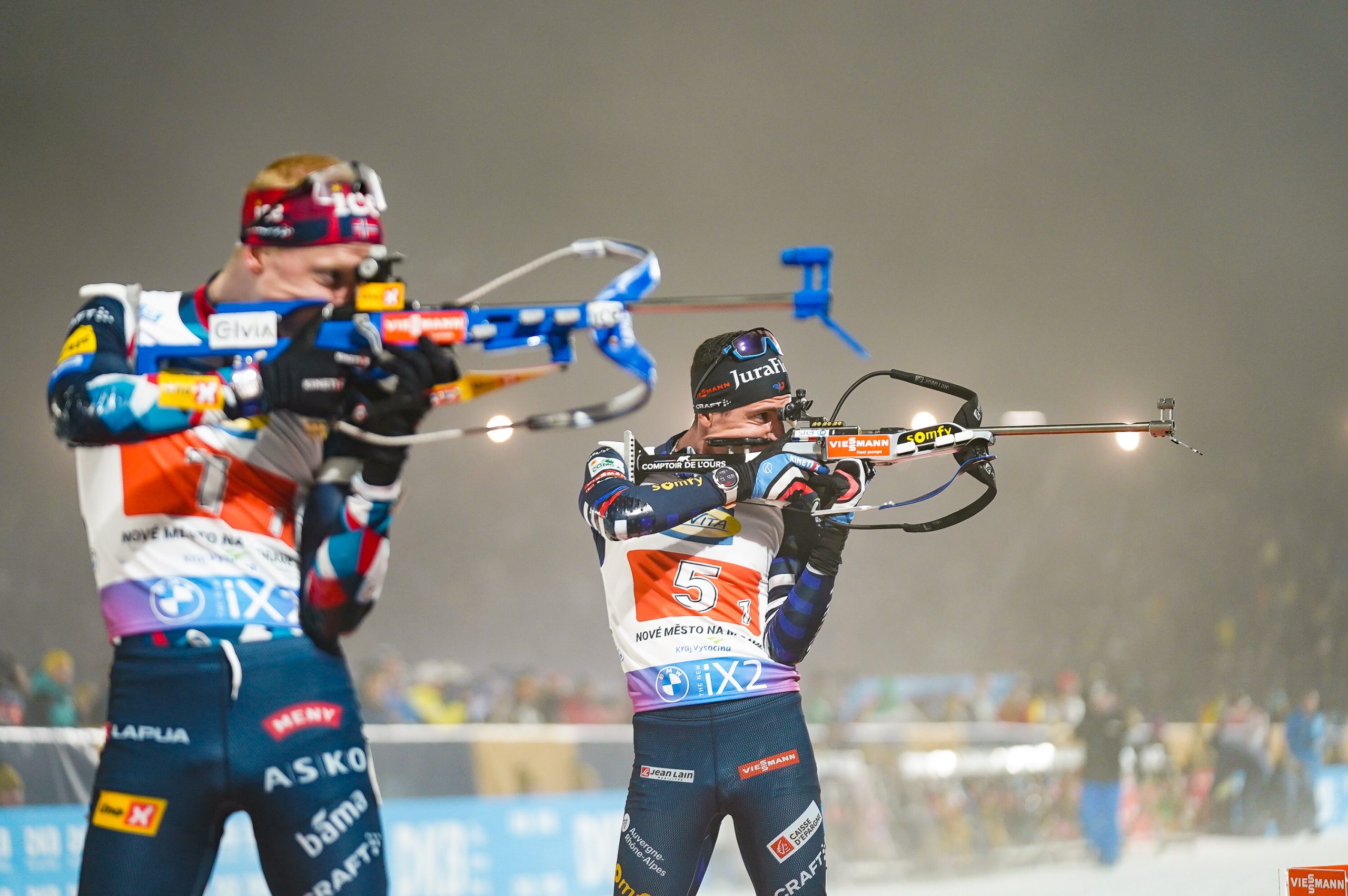
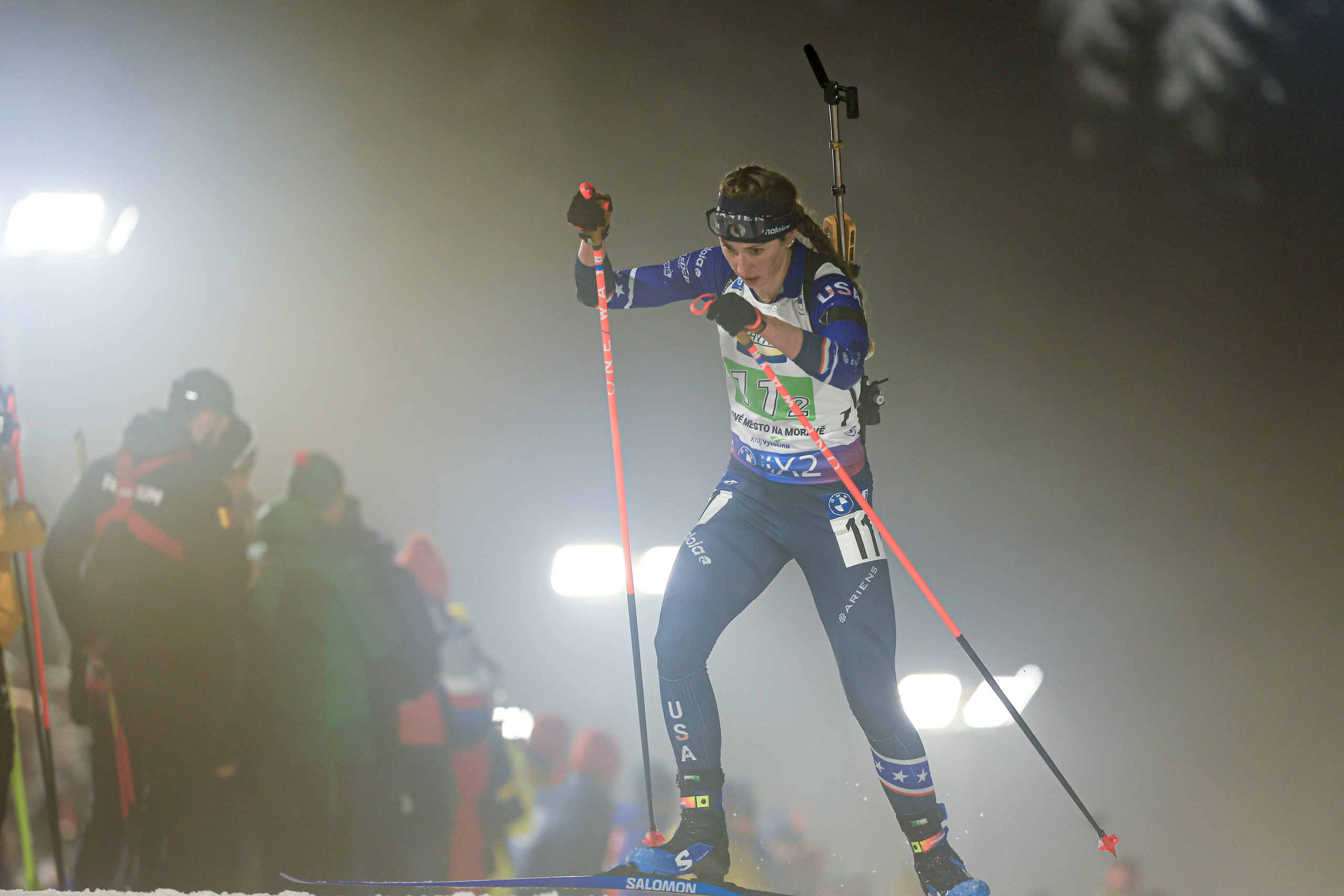
    On the second-to-last day of 2024 World Championships, USA reached a historic fifth-place finish among 24 nations in the Men’s Relay under the lights at the Vysocina Arena in Nove Mesto na Morave, Czech Republic. (Photo: NordicFocus)

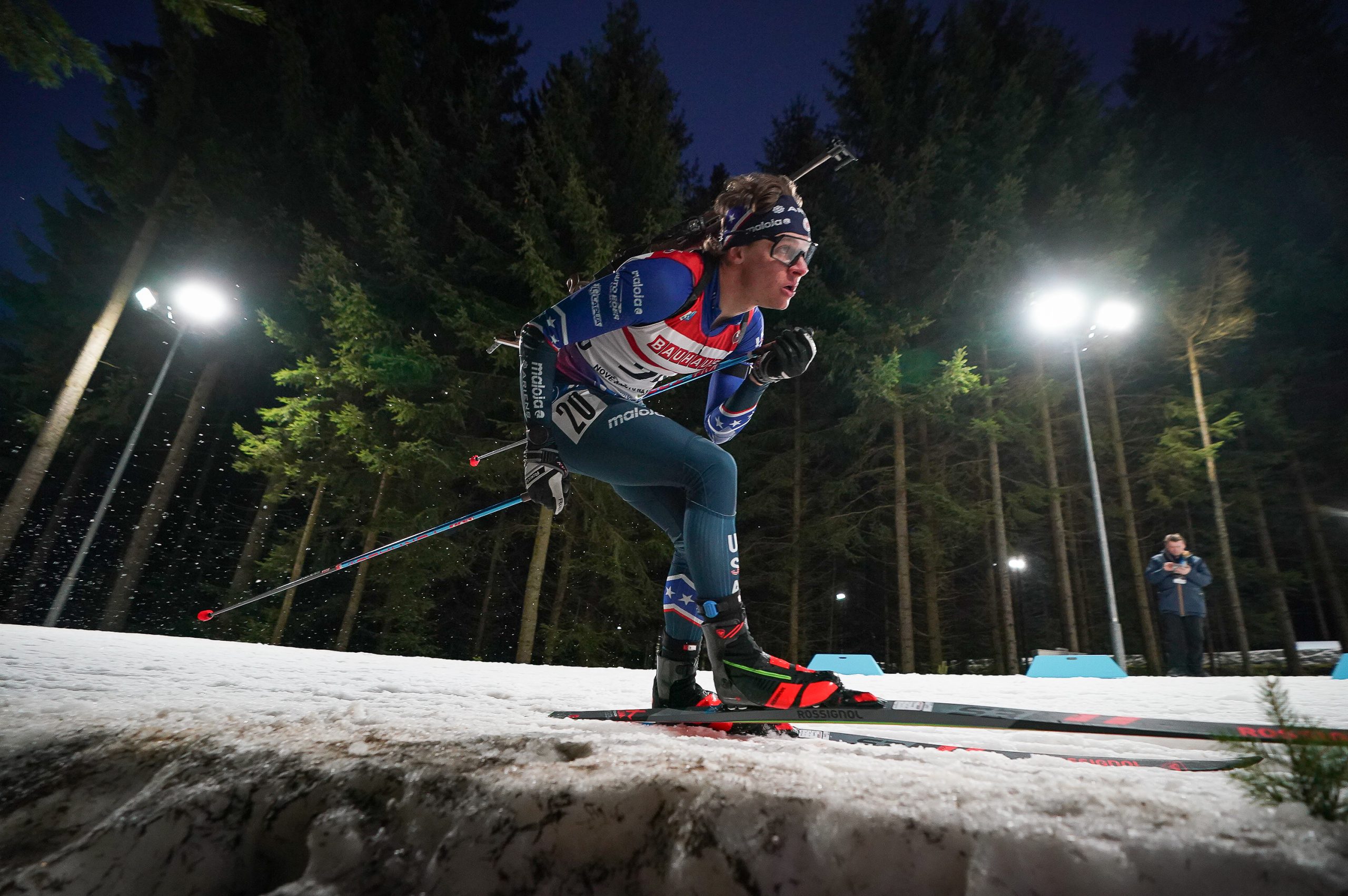
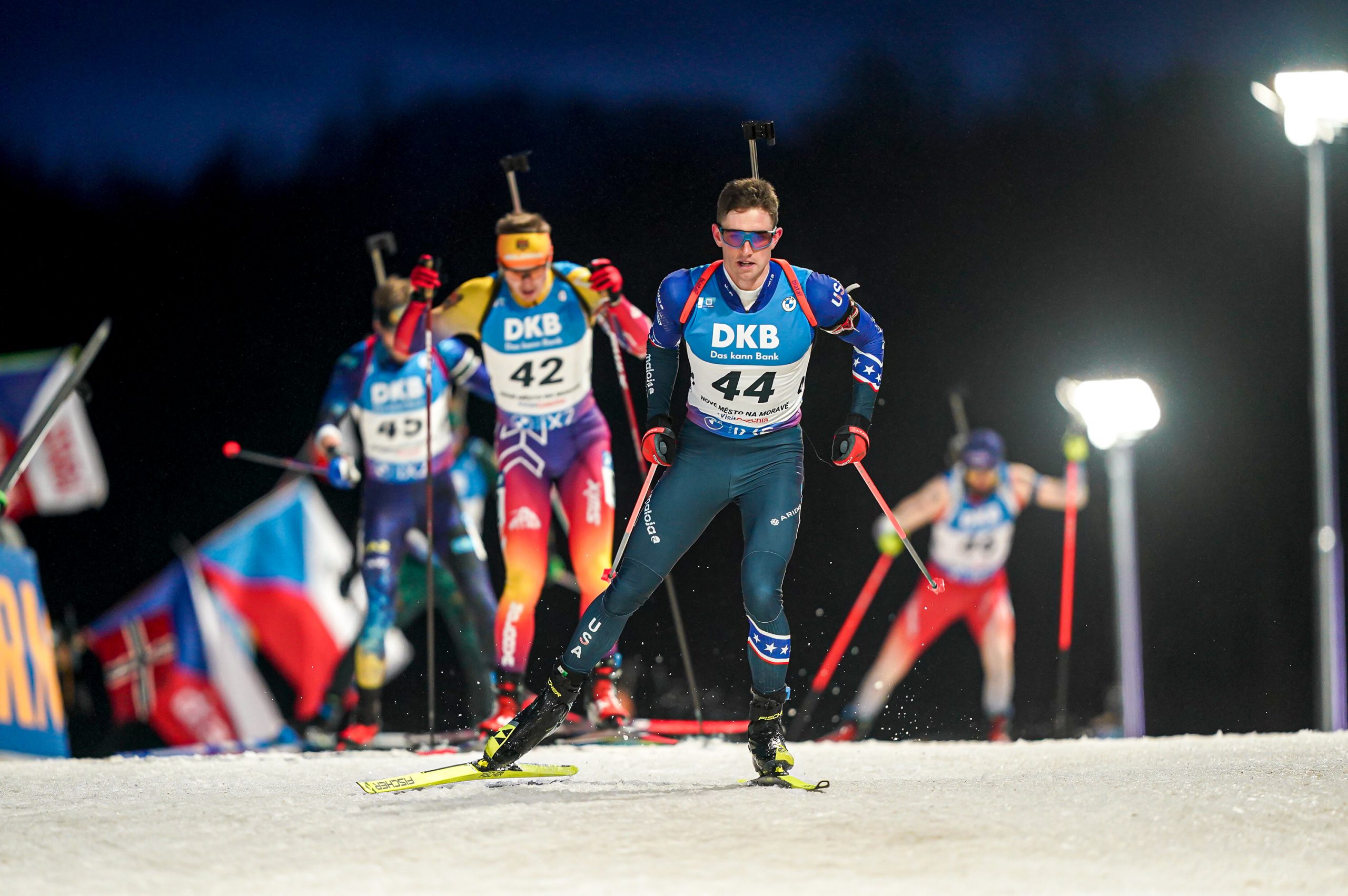
    On Saturday in Nove Mesto na Morave, Czech Republic, the American quartet of Vincent Bonacci, Sean Doherty, Campbell Wright, and Jake Brown made history for US Biathlon, finishing fifth among 24 nations: the team’s best-ever World Championship or Olympic Men’s Relay result. After more than an hour and 15 minutes of racing, the team finished just 1:22 behind the winners from Sweden. Norway out-sprinted France for the silver, and Germany was fourth.

    Vincent Bonacci led off for the US in the 2024 World Championship Men’s Relay. (Photo: NordicFocus)

    The first leg was full of surprises. Estonia, Czechia and Kazakhstan led at the first exchange. France and Norway tagged in eighth and 12th after going into the penalty loop. For the US, Bonacci needed two spare rounds in prone but then cleared all five of his standing targets and tagged just ahead of Norway in 11th, 43 seconds out of the lead. Bonacci did his World Cup debut last season and has been steadily improving his results as he builds his ski speed. In late January he became one of the last two athletes named to this year’s World Championship roster after he took sixth at the European Championships with 20/20 shooting in the 20 k Individual. His reliable shooting earned him relay starts here in Nove Mesto, and he rose to the challenge of the World stage, scrambling with success in both the Mixed Relay and the Men’s Relay.

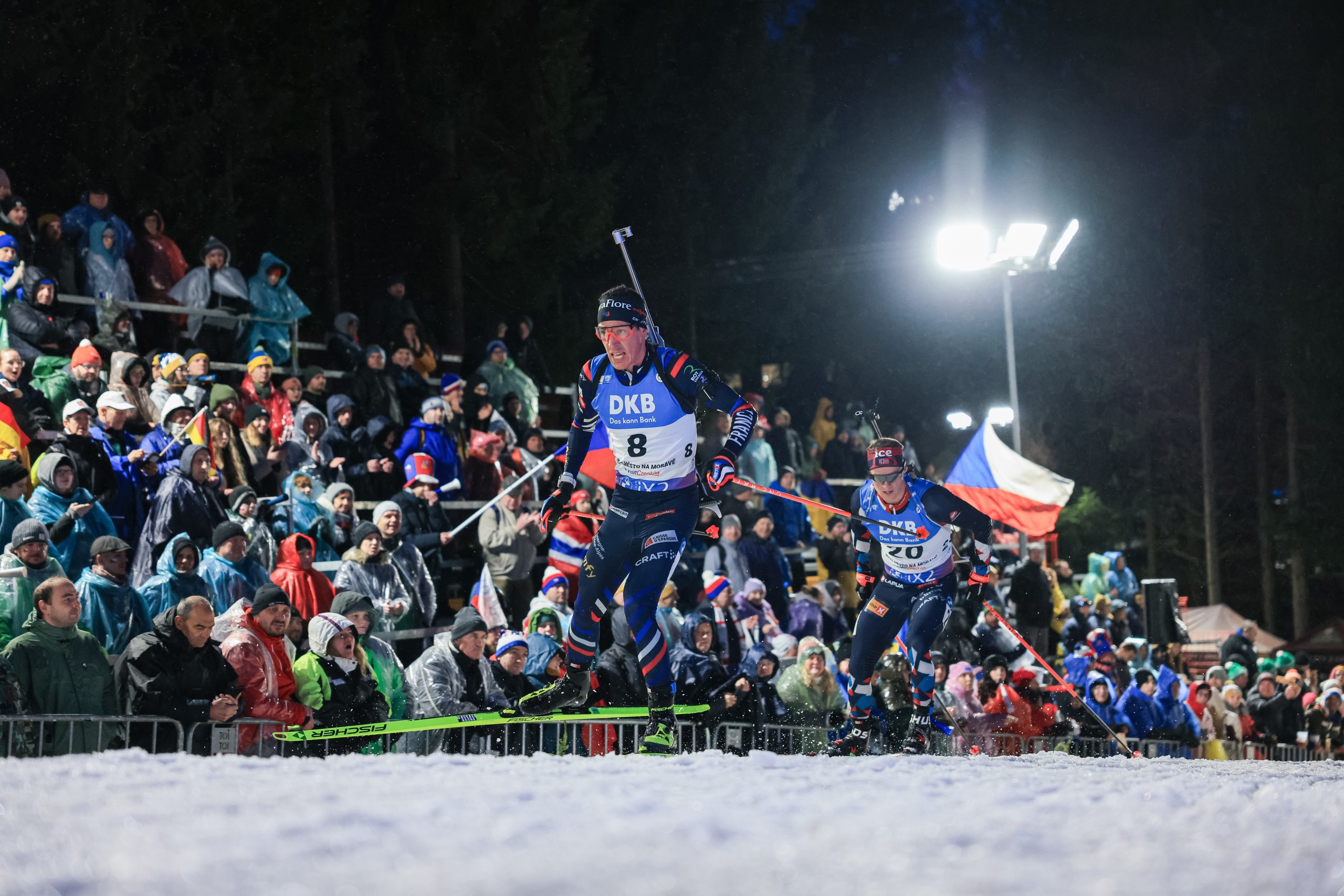
    Tarjei Boe (NOR) set a grueling pace on the second leg but Sean Doherty was able to catch a ride on the first loop. (Photo: NordicFocus)

    Doherty caught a draft from Tarjei Boe (NOR) on the first loop of the second leg. Germany briefly took the lead but then went into the penalty loop, and just as France was making a comeback from their penalty loop on the first leg, they went back in twice more. This opened the door for Boe, who out-skied the field by 30 seconds, to bring Norway all the way from 12th to first at the half-way point. Doherty cleaned his prone targets but needed all three spares in standing. Thanks to the changes at the front of the race, he only lost about 13 seconds on the leg, tagging Campbell Wright in 10th place in a tightly packed field, still within one minute of the lead.

    Campbell Wright throws his rifle on his back after a successful standing bout. He skied the fourth-ranked course time and used just one spare to bring the US from 10th up to sixth on leg three of the Men’s Relay. (Photo: NordicFocus)

    Wright continued his streak of outstanding performances, using just one spare and skiing the fourth-best course time on the third leg to bring the team all the way up to sixth. He tagged Jake Brown for the anchor leg just 12 seconds out of third place. In the last men’s relay before World’s, Brown suffered on the shooting range, incurring two penalty loops in prone, but on Saturday he hit all five prone targets with no spares. He arrived at the shooting range for the final bout in fifth place, and used two spares to hold his position.

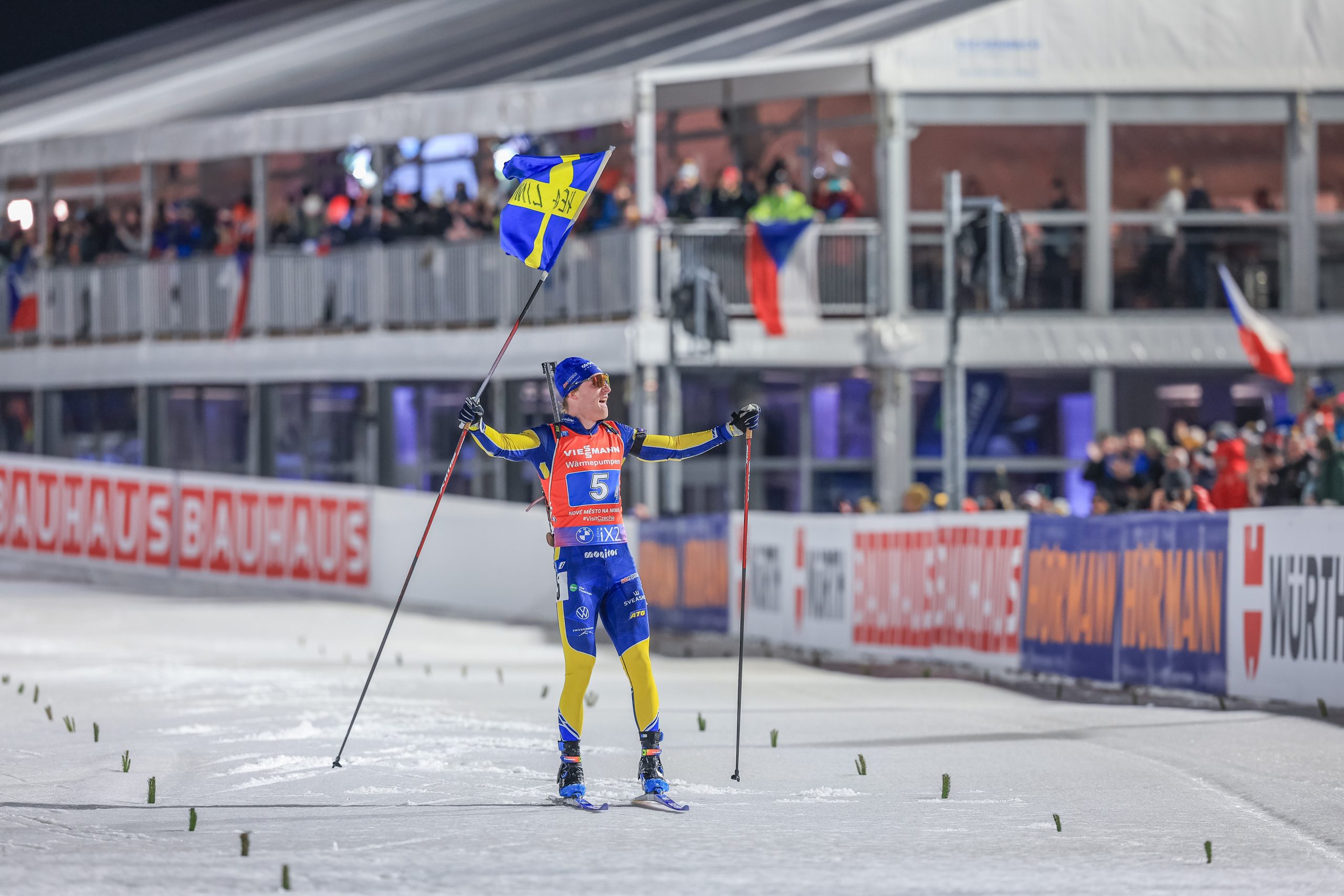
    Shooting on lane one, Norway’s Vetle Christiansen experienced a biathlon nightmare, missing all but two of his eight bullets, incurring three penalty loops and throwing away a huge one-minute lead! Sebastian Samuelsson of Sweden capitalized on his Norwegian rival’s misfortune, shooting fast and clean. He skied to the finish with enough time to glide in waving the Swedish flag, celebrating Sweden’s first gold medal of the Championships. Behind Samuelsson, France’s Quentin Fillon Maillet used just one spare and left the range as Christiansen was exiting the penalty loop. Ultimately Christiansen hunted down the Frenchman and claimed an anticlimactic silver for Norway.

    Jake Brown tuned out the distraction of a stadium full of screaming Czech fans as he shot head-to-head against the Czech Republic in the final shooting stage of the Men’s Relay. (Photo: NordicFocus).

    After second-ranked Germany arrived at the finish line visibly disappointed in fourth, Brown arrived visibly thrilled in fifth. Since longtime US Biathlon stars Tim Burke and Lowell Bailey retired in 2018, the men’s team has been in a rebuilding phase, developing young athletes as well as experienced cross-country skiers like Brown. They have had three head coaches in five years, but throughout that period Brown has been a steadying force and has played a key role in building a positive and united men’s team culture. While 31-year-old Brown has not indicated any plan to retire, he summed up the importance of this result for his own career and for the team, saying, “Now I can retire in peace.” R.I.P.!

    Full Results Men’s 4×7.5 k Relay

    Estonia finished a historic fourth in the Women’s Relay, anchored by former MSU Bobcat and Craftsbury Green Racing Project training parter Johanna Talihaerm (left) . (Photo: NordicFocus)

    Earlier in the day, the French women won their first-ever World Championship relay, followed by Sweden and Germany. Estonia shocked the biathlon world with a historic fourth-place finish, anchored by former Montana State bobcat and Craftsbury Green Racing Project training parter, Johanna Talihaerm. Norway absolutely melted down, finishing tenth, followed by the Italian defending champions in 11th. To the 30,000 fans on-site plus millions watching on TV, the race offered biathlon drama at its best: equal parts miracle and collapse. The US was unfortunately in the latter category on Saturday, getting lapped and finishing 21st.

    Full Results Women’s 4×6 k Relay

    Next Up

    The last day of racing at 2024 Biathlon World Championships will feature the premier Mass Start events, in which the 30 top-ranked athletes compete head-to-head over four shooting stages. Campbell Wright and Sean Doherty will represent the US starting at 10:30 eastern time.

    Sunday 18 Feb Women’s 12.5 k Mass Start 08:15 eastern time
    Sunday 18 Feb Men’s 15 k Mass Start 10:30 eastern time

    Watch Live

    Sebastian Samuelsson skied in with the Swedish flag, celebrating the country’s first gold medal of the Championships. (Photo: NordicFocus)
  • France Tops 28 Nations in Single-Mixed Relay; USA Seventh

    France Tops 28 Nations in Single-Mixed Relay; USA Seventh

    FasterSkier’s Coverage of the Biathlon World Championships is made possible through the generous support of the Craftsbury Outdoor Center: New England’s finest snowmaking, world class race venues and touring trails, healthy food in abundance, comfortable accommodations at Craftsbury:  Sports, Sustainability, Stewardship.


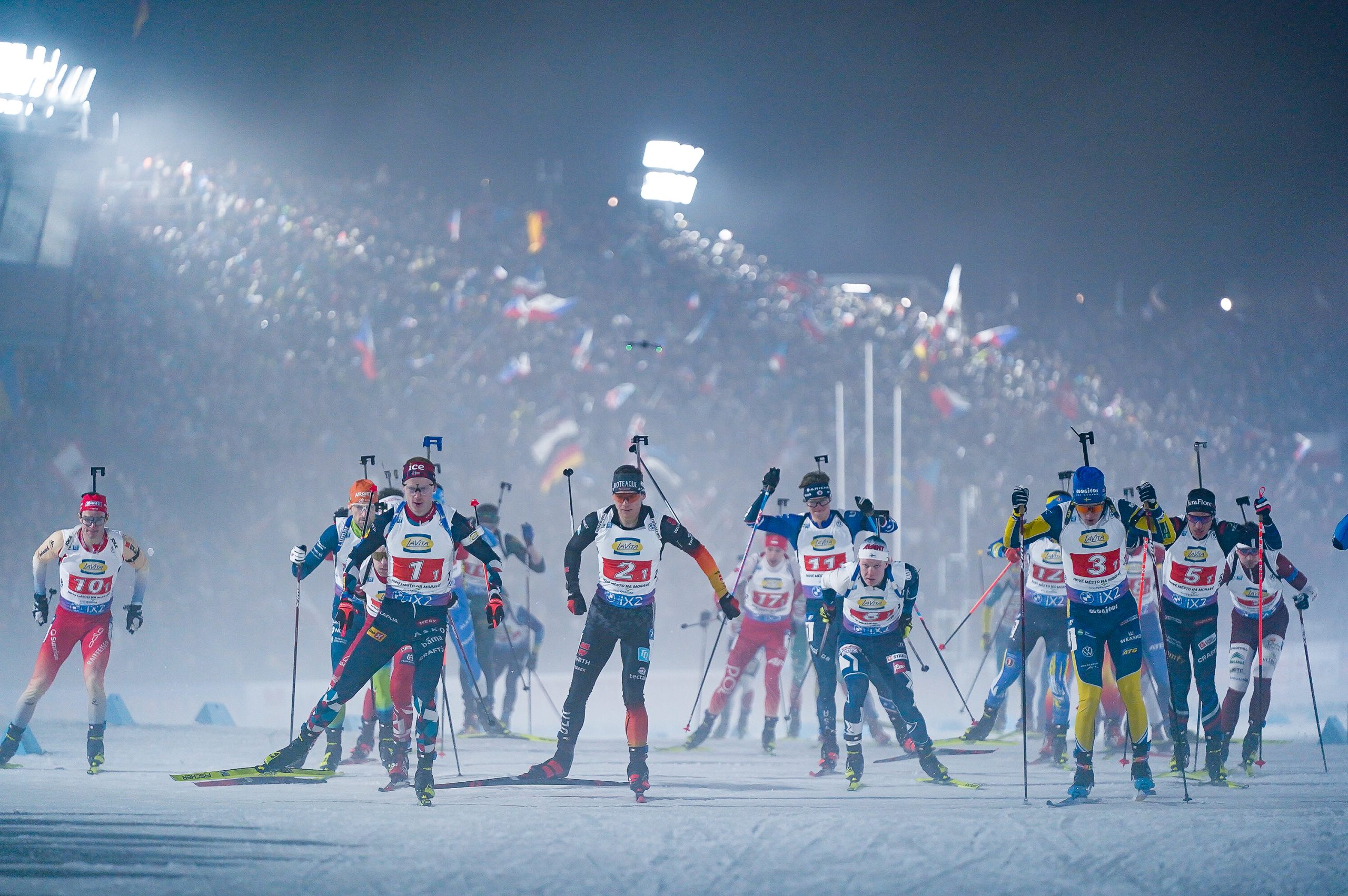
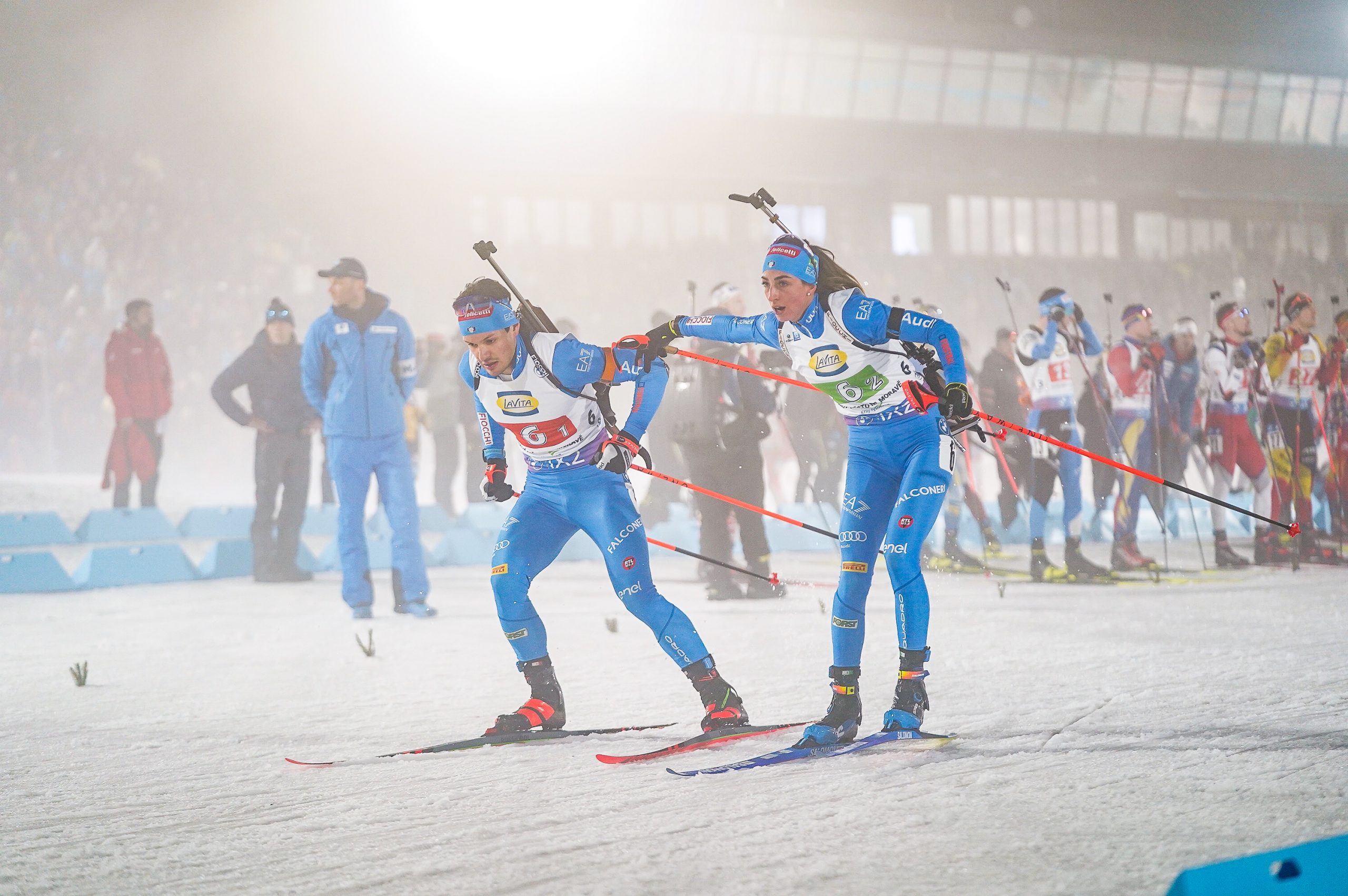
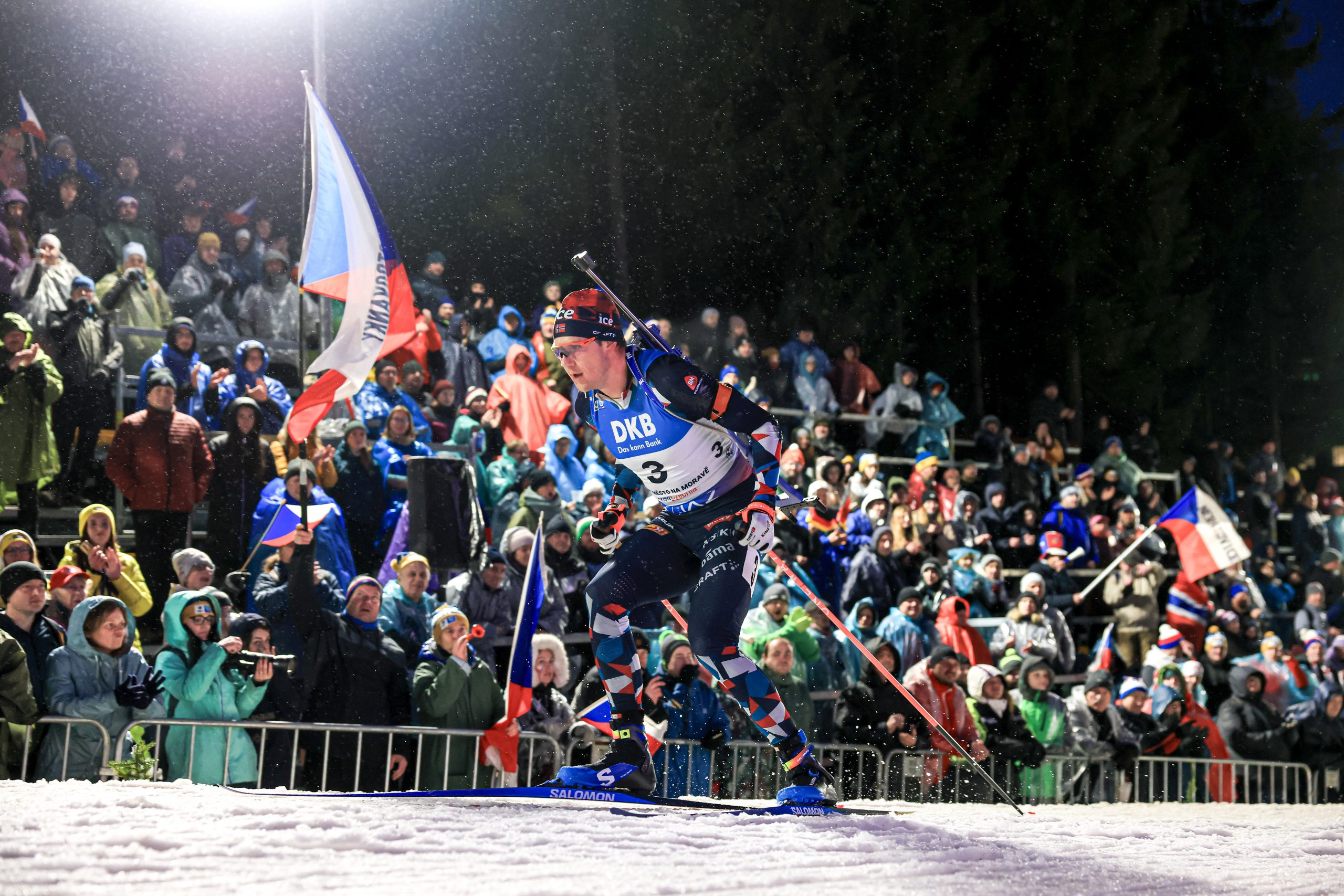
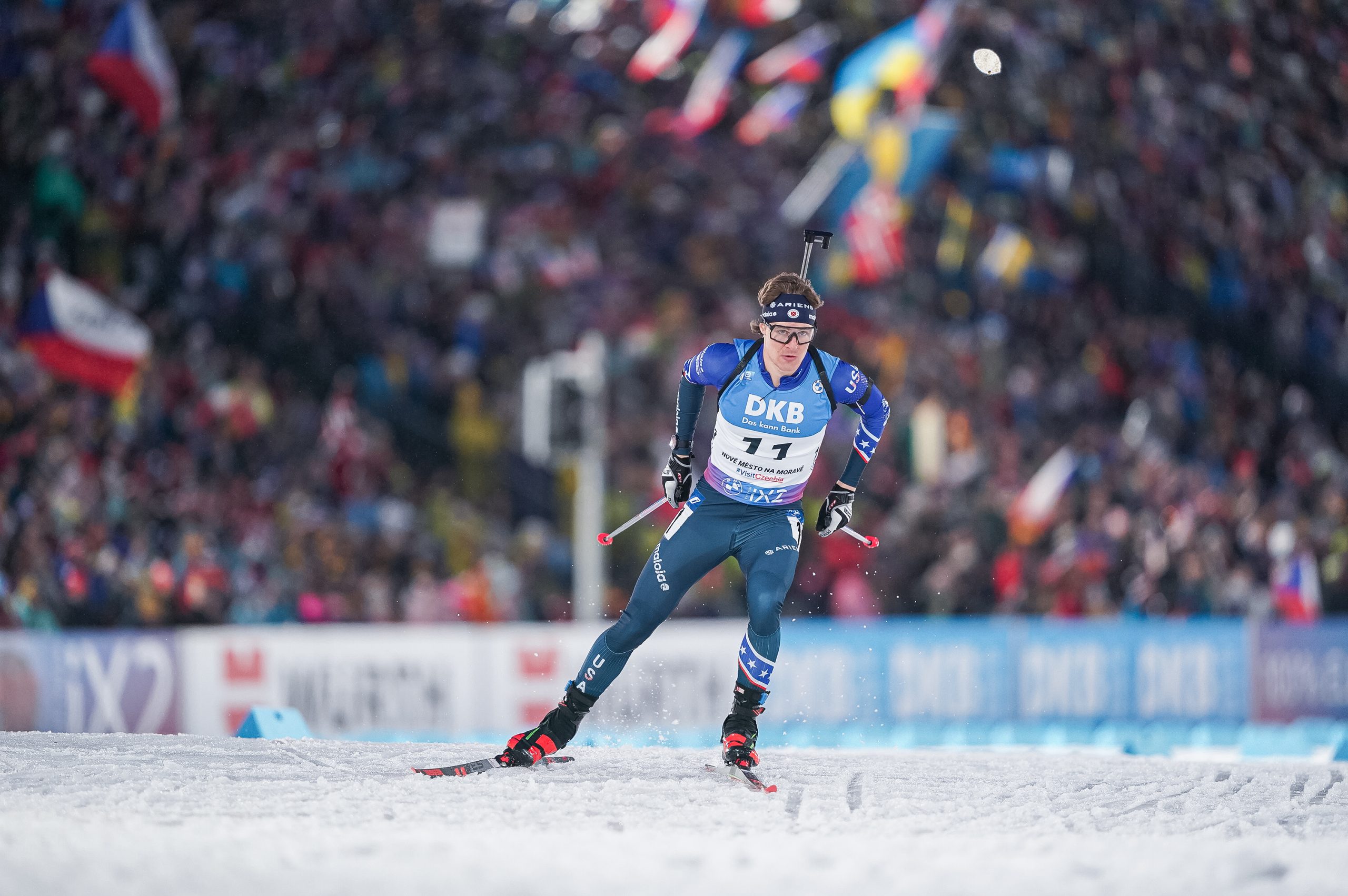
    The start of the Single-Mixed Relay in the Vysocina Arena in Nove Mesto na Morave, Czech Republic. (Photo: NordicFocus)

    Twenty-eight nations started the Single-Mixed Relay on Thursday at Biathlon World Championships in Nove Mesto na Morave, Czech Republic. After just over 35 minutes of fast and furious racing, France claimed the gold, last year’s bronze medalists from Italy the silver, and the defending champions of Norway the bronze.

    The Single-Mixed Relay combines the performances of one man and one woman who each ski two short biathlon races, tagging off in between. The importance of shooting speed and accuracy is magnified in this format because the ski loop is only 1.5 k; there is relatively little distance over which to recover lost time. As in all biathlon relays, athletes can use up to three spare rounds per stage to hit their five targets, but loading each spare takes precious time, and if targets remain un-hit, the penalty loop awaits. The event is a wildly unpredictable fan favorite.

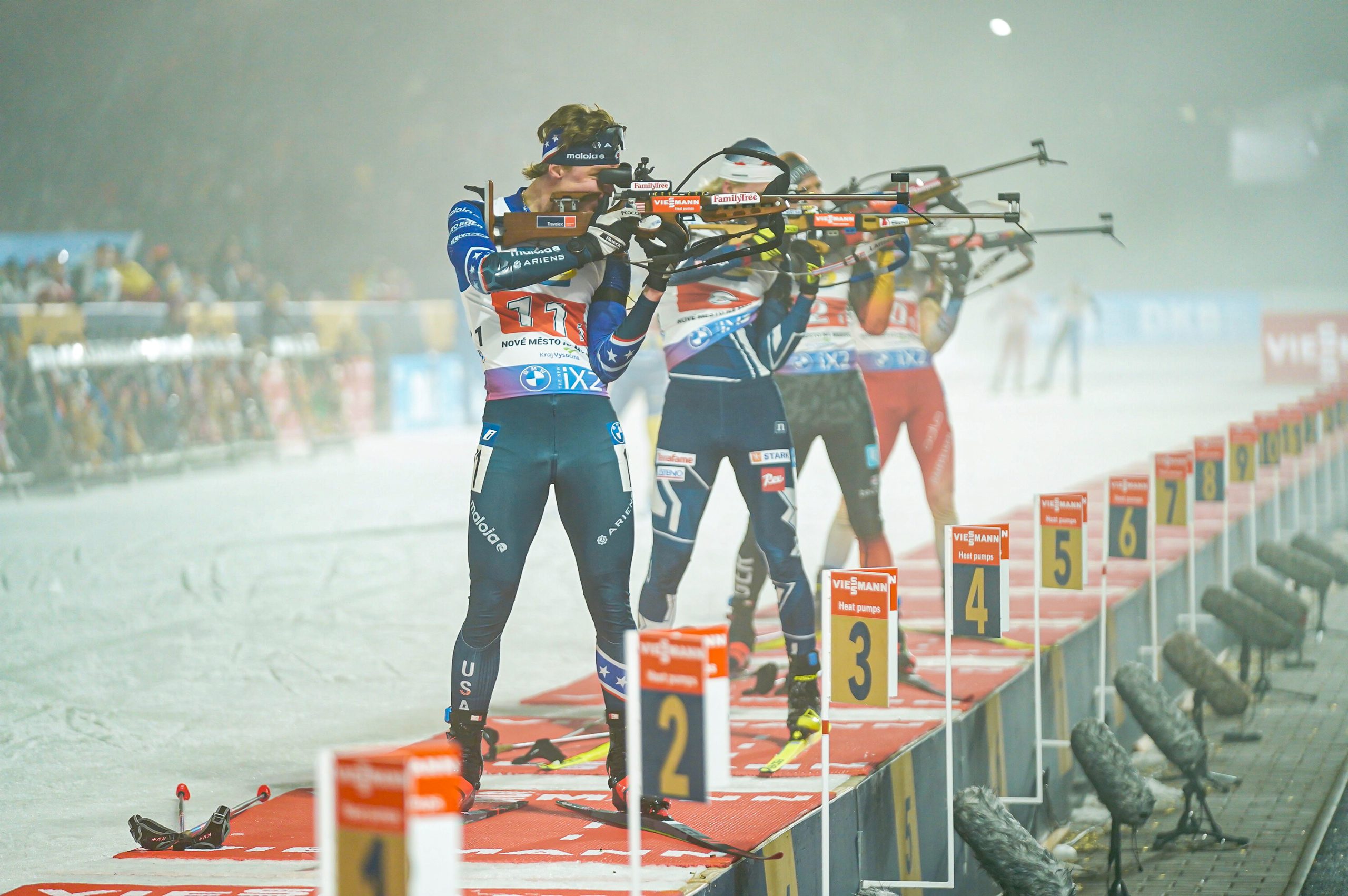
    Johannes Thingnes Boe (NOR) and Quentin Fillon Maillet (FRA) (l-r) shoot on lanes one and two in the Single-Mixed Relay. (Photo: NordicFocus)

    The field was stacked. Team Norway comprised the two current World Cup Overall leaders, Johannes Thinges Boe and Ingrid Tandrevold. But Tandrevold’s standing shooting has been hit or miss at World’s—more often miss than hit. For France, Lou Jeanmonnot got called up to race with Quentin Fillon Maillet. France’s top star, Julia Simon, decided to sit out and rest after winning three golds and a silver in the first four events of the Championships. But Jeanmonnot has been fantastic in her own right, finishing third, sixth, and seventh in the non-team competitions here in Nove Mesto. Italy put forward one of the strongest women in the field, Lisa Vittozzi, fresh off a victory in the 15 k Individual. Her partner, Tommaso Giacomel, has been 15th, 20th, and 45th in non-team competitions, combining reliable ski speed with less reliable shooting, but the same duo was a successful pairing in 2023 when they took bronze.

    2023 bronze medalists from Italy, Lisa Vittozzi and Tommaso Giacomel, paired up again to take silver in 2024 in the Single-Mixed Relay. (Photo: NordicFocus)

    Germany’s team combined the two most accurate shooters in the World Cup field. Sweden is always a threat, and Switzerland put forward two of the fastest shooters and the most likely person to demolish the last lap: Lena Haecki. For more discerning fans, the US was also a solid pick for the day: Campbell Wright and Deedra Irwin showed their potential in this event in January in Antholz, Italy, when they stayed in podium contention through the first half and eventually finished ninth in a very tight race, just 1:09 out of the lead.

    The lead constantly changes in the Single-Mixed Relay as the athletes make their way through a combined eight shooting stages and nine course loops. At the first exchange, France was in the lead but the eventual silver-medalists from Italy were down in 14th, with fourth place finishers Sweden following behind them in 15th. Wright shot 10/10 on the first leg to tag Irwin in fourth. At the second and third exchanges, France and Norway continued to trade the lead, while the US, Germany, Switzerland, and Finland shuffled around the next four places and Italy and Sweden gradually moved up.

    Ingrid Landmark Tandrevold (NOR) incurred a penalty loop on the final shooting, falling from first to third. (Photo: NordicFocus)

    In the defining final stage of the race, Tandrevold, a lefty, stood on lane one, face to face with Jeanmonnot on lane two, in a shooting dual for the gold. Jeanmonnot shot with confidence, hitting 4/5 targets and her spare round in a total of just 28 seconds. But Tandrevold needed all three spares and still had to ski a penalty loop, opening the door for Vittozzi to leave the range in second after a flawless 19.6-second shooting bout. While Jeannmonnot skied to a decisive victory, Tandrevold caught and passed Vittozzi part way through the last lap, only to be convincingly out-sprinted by Vittozzi in the final two hundred meters. About thirty seconds behind that trio, Irwin shot clean and left the range in fourth, but three teams followed within the next nine seconds. The athletes from Sweden (H. Oeberg), Switzerland (Haecki), and Germany (Voigt) skied three of the four fastest course times on the last loop to push the USA down to seventh.

    Campbell Wright (USA) shoots on lane four in the Single-Mixed Relay. This year’s relays are his first since previously as the only New Zealand athlete on the circuit he didn’t have teammates with which to compete. (Photo: NordicFocus)

    For US Biathlon’s Campbell Wright, this season’s relays are a first. Wright is a dual citizen who grew up in New Zealand and competed for that country up through last season. As the only top Kiwi biathlete, he never had teammates with whom to race relays. Speaking of his experience shooting clean and tagging in fourth at the World Championships, Wright said, “I’m lovin’ it. I know I can ski well at the moment so it’s not as stressful skiing with fast people.” At just 21 years old, Wright is still coming to terms with the fact that he is one of the “fast people.” This was Wright’s second-ever Single-Mixed Relay after the one Antholz in January where he had a great start but then had to ski a penalty loop. Today’s shooting was different, he said, “because I had less pressure because Deedra was on the last leg!” He added, “That last leg is bloody hard.”

    Deedra Irwin (USA) shot clean on the final shooting to leave the range in fourth. (Photo: NordicFocus)

    Irwin performed magnificently in the last leg on Thursday. Coming into the final stage in fourth, shooting for a chance at a World Championship medal, she cleared all five targets in a smooth and deliberate rhythm. “I went into the last standing thinking, ‘I have to be super aggressive,” she said. “On the first standing, I took my time, but everyone is shooting so fast and clean. That mindset worked which was awesome.” After the final shooting, Irwin was shocked when she saw Norway and Sweden skiing around the penalty loop and realized how well she was doing. But she was also aware that she left range, as she put it, “with all these people on my ass.” Irwin felt her best in January, but then was sick during the pre-World Championships training camp and has been doing a heavy load of racing as the top American woman, so she doesn’t feel quite as sharp now. But, she said, “I’m still in the best shape of my life this year.” Although it was frustrating to be passed on the final loop, Irwin was still content about her performance against some of biathlon’s top talents. “It’s very humbling and cool to fight against them. I’m never gonna complain about a top eight.”

    Full Results

    Up Next

    Saturday 17 Feb Women’s 4×6 k Relay 7:45 Eastern Time
    Saturday 17 Feb Men’s 4×7.5 k Relay 10:30  Eastern Time

    Watch Live

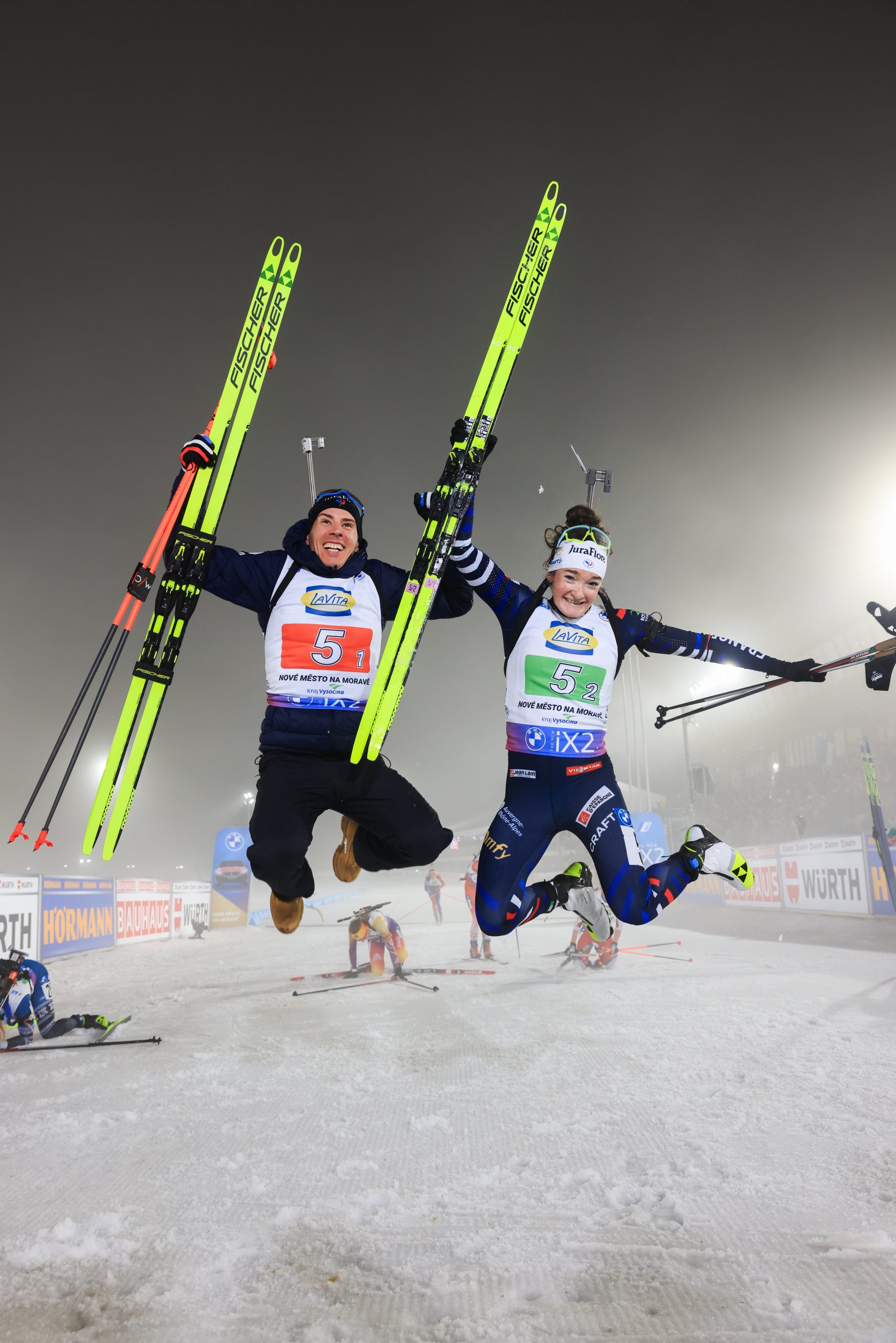
    Quentin Fillon Maillet and Lou Jeanmonnot celebrate winning the Single-Mixed Relay for France. (Photo: NordicFocus)
  • Men’s 20 k Individual Boe-dium, Wright and Doherty Top 25

    Men’s 20 k Individual Boe-dium, Wright and Doherty Top 25

    FasterSkier’s Coverage of the Biathlon World Championships is made possible through the generous support of the Craftsbury Outdoor Center: New England’s finest snowmaking, world class race venues and touring trails, healthy food in abundance, comfortable accommodations at Craftsbury:  Sports, Sustainability, Stewardship.


    Johannes Thingnes Boe (NOR) defended his 2023 World Championships title in the 20 k Individual at 2024 World Championships. (Photo: NordicFocus)

    The 20 k Individual is the longest race in biathlon, and with a one-minute time penalty per miss, so much can happen over the course of one competition. When defending champion Johannes Thinges Boe (NOR) missed one shot on the first stage, it looked like someone else might have a chance at the gold. But he swiftly dispelled any doubt, hitting the 15/15 remaining targets and out-skiing the field by a ridiculous 50-second margin to claim his 9th individual World Championships medal—just two medals shy of the record shared by greats Ole Einar Bjorndalen (NOR) and Martin Fourcade (FRA). Boe’s older brother, 35-year-old Tarjei, who won this event at the 2011 World Championships, skied the second-fastest time of the day and hit 19/20 to claim silver and give biathlon fans another “Boedium” to celebrate. In third, the German men’s team finally made an appearance on the podium thanks to Benedikt Doll’s 19/20 performance.

    Quentin Fillon Maillet (FRA) overcame three prone misses to finish sixth.

    The Individual stretches out over a couple of hours and each loop can seem like its own race. On Wednesday afternoon in Nove Mesto na Morave, Czech Republic, bib number 1 of 100 starters, France’s Quentin Fillon-Maillet, missed two targets right away on the first stage, incurring two minutes of time penalty and leaving the range in 73rd place with 16 kilometers still left to be skied. But he kept fighting for every second on course, hit 14/15 of the remaining targets, an moved all the way up to sixth place, earning himself a bouquet in the flower ceremony (and 7,000 Euros). Fillon-Maillet’s teammate Emilien Jacquelin finished fifth with one miss, and Andrejs Rastorgujevs of Latvia was fourth, also with two misses.

    Campbell Wright (USA) skied the 14th fastest course time to take 20th despite three misses. (Photo: NordicFocus)

    From the US, 21-year-old Campbell Wright matched his career-best 14th-ranked ski time from the Sprint to finish 20th despite three misses. The 2023 Junior World Champion was was pleasantly surprised by his own ski speed. “When you’re fit and have 40th ski time or fit and have 14th ski time, it feels the same,” said Wright, referring to past seasons when he also felt fit, but couldn’t yet keep up with the top senior-level athletes. Now, even though Wright is still one of the youngest athletes in the field, he is skiing with the best. With his finishes of 11th, 12th, and 20th so far at the World Championships, he has qualified for Sunday’s Mass Start featuring the top 30 athletes. Wright has done one other Mass Start, back in 2022 when he was just 19 years old. “I feel like I won’t just get blown out the back on the first loop,” said Wright. “I’m a lot more in the fight.” Wright is humble and just starting to come to terms with his own capabilities, but for everyone watching it is clear that he is very solidly “in the fight.”

    Sean Doherty (USA) skiing his way to 23rd in the 20 k Individual. (Photo: NordicFocus)

    Sean Doherty (USA) finished just behind Wright in 23rd, with two misses. “I’m happy with it,” he said. “I was in the right state of mind for an Individual, to really be in it and give myself a chance.” Since starting the Championships with a 44th in the Sprint, Doherty has been exceptional, moving up 18 places in the Pursuit to 26th, and then posting his season-best result in the Individual. Thanks to these two top-25 results, Doherty will join Wright in the Mass Start.

    Also for the US, Jake Brown was 50th and Vincent Bonacci was 75th, both with four misses.

    Full Results 

    Up Next:

    Thursday 15 Feb 12:00pm (noon, Eastern Time) Single-Mixed Relay

    Watch Live

    Tarjei Boe (NOR) and younger brother Johannes Boe (l-r) giving biathlon fans what they want: a Boedium! Benedikt Doll came through for Team Germany to take the bronze. (Photo: NordicFocus)
  • Julia Simon and J.T. Boe Defend Pursuit Titles; Wright 12th for USA

    Julia Simon and J.T. Boe Defend Pursuit Titles; Wright 12th for USA

    FasterSkier’s Coverage of the Biathlon World Championships is made possible through the generous support of the Craftsbury Outdoor Center: New England’s finest snowmaking, world class race venues and touring trails, healthy food in abundance, comfortable accommodations at Craftsbury:  Sports, Sustainability, Stewardship.


    After finishing second in Saturday’s Sprint, Johannes Thingnes Boe (NOR) moved up into first in Sunday’s Pursuit, defending his 2023 title .

    On a rainy Sunday afternoon in Nove Mesto na Morave, Czech Republic, 30,000 fans packed the Vysocina Arena for the women’s and men’s Pursuit competitions of the 2024 Biathlon World Championships. The weather has been dismal for the first five days of the event, meaning a lot of soggy boots, sink laundry, and rifle cleaning for the athletes, and long, cold, days for team staff and event organizers. But it has not dampened the spirits of the biathlon fans who continue to make the atmosphere bright.

    French teammates Justine Braisaz-Bouchet (foreground) and Julia Simon shoot head-to-head in the Pursuit. (Photo: NordicFocus)
    Women’s 10 k Pursuit

    Simon defends world title, Vittozzi moves up from seventh to silver, and Braisaz-Bouchet keeps her podium streak alive.

    In the women’s Pursuit, Julia Simon of France defended her 2023 World Championship Pursuit title as well as her Sprint victory from Friday. Last year, Simon started the Pursuit wearing bib 10 and overcame a deficit of more than one minute to take the gold, but today’s defense of Friday’s Sprint gold was also impressive. Only four women in the past ten years have won both the Sprint and Pursuit at the World Championships or Olympics: Marie Dorin-Habert (FRA) in 2015, Laura Dahlmeier (GER) in 2018, Tiril Eckhoff (NOR) in 2021, and Marte Olsbu-Roeiseland (NOR) in 2022.

    Lisa Vittozzi (ITA) fights to the finish line, moving up from seventh to silver ahead of bib 2 Justine Braisaz-Bouchet (FRA). (Photo: NordicFocus)

    Simon started with a negligible five second advantage over teammate Justine Braisaz-Bouchet, who is the fastest skier in the field but a slower and less-accurate shooter than Simon. A gap of nearly 40 seconds separated those two leaders from the third starter, Lou Jeanmonnot (FRA), but then six women all started within about 30 seconds. Simon and Braisaz-Bouchet matched one another’s shooting (0,1) on the first two stages to hold their lead over the chasers. But then on the third stage, Simon cleaned while Braisaz Bouchet missed two, opening the door for bib 7, Italy’s Lisa Vittozzi, to move into second with her 15/15 shooting through stage three of the race.

    Sophie Chauveau (FRA) finished fourth in the Sprint and Pursuit. (Photo: NordicFocus)

    In the final stage, Simon closed with the same perfect shooting we’ve now seen in three of three races at World Championships, nailing all five targets in 21.5 seconds—somewhat tame for Simon but still the fastest in the 60-person field. Behind her, Vittozzi missed her only shot of the day, creating an opening for Braisaz-Bouchet and bib 4, Sophie Chauveau. But luckily for Vittozzi, both of them missed one as well. Chauveau left the range a few seconds ahead of Braisaz-Bouchet, and for a moment it looked like the 24-year old might take her first World Championship medal after finishing a bittersweet fourth in the Sprint. But Braisaz-Bouchet out-skied Chauveau on the final lap to take the bronze, leaving Chauveau in fourth again. To put things in perspective, Chauveau won her first medal (a bronze) in January of this year, and her two fourth places so far at World’s are her next-best results.

    Deedra Irwin was the top American in the Pursuit, finishing 46th with four misses. (Photo: NordicFocus)

    From the US, Deedra Irwin started in bib 39 and fell back to place 46 with four misses. Tara Geraghty-Moats started in bib 58 but was lapped after the second shooting in her first-ever Pursuit.

    Women’s 10 k Pursuit FULL RESULTS


    Sturla Holm Laegreid’s (NOR) clean standing shooting earned him the silver medal in the Pursuit. (Photo: NordicFocus)
    Men’s 12.5 k Pursuit

    J.T. Boe shuffles the sprint podium to defend World title while the USA’s Wright and Doherty finish 12th and 26th.

    In the men’s 12.5 k Pursuit, the Norwegian podium sweep from Saturday’s Sprint grew to a monstrous top-five sweep. Johannes Thingnes Boe (NOR) overcame three prone misses with flawless standing shooting to win his eighth individual World title—his 34th World Championship medal. (If you include Olympic results, Sunday’s victory was Boe’s 11th title and 42nd medal.) After winning Saturday’s Sprint with his signature perfect shooting, Sturla Holm Laegreid (NOR) uncharacteristically missed two in the first stage of the Pursuit but then hit the rest of his targets to fight back for the silver medal. Vetle Christiansen (NOR) led the race early on when he cleared all his prone targets and J.T. Boe and Laegreid both missed. But then two misses on his final stage set him back. He left the range a few seconds ahead of Laegreid but was caught in the final lap.

    Vetle Sjaastad Christiansen (NOR) finished third in both the Sprint and Pursuit. (Photo: NordicFocus)

    The fight for the top-six flowers was marked by some surprising shooting melt-downs. Having hit all his targets through the third stage, Tarjei Boe came into the final shoot tied for second with his younger brother Johannes, just nine seconds behind race leader Christiansen and a full 30 seconds ahead of the chasing group. But he missed a heart-wrenching four out of five targets and fell to fifth. Meanwhile, his teammate Johannes Dale moved up into fourth by clearing his final five, recovering from a messy three misses on the third stage. Behind Dale and T. Boe, Sebastian Samuelsson (SWE) kept his wits about him and shot 17/20 to complete the flower ceremony in sixth.

    Campbell Wright (USA) was the top American in the Pursuit finishing 12th with two misses. (Photo: NordicFocus)

    For the US, Campbell Wright in bib 11 missed one shot each in the prone stages but then cleared all 10/10 standing targets, finishing 12th. His 11th-place finish in the Sprint was a personal-best and this 12th place ties his previous personal-best. With these two results, Wright is almost guaranteed a start spot in next weekend’s 30-person Mass Start featuring the top 30 athletes of the Championships.

    Sean Doherty (USA) happy in the finish area after moving up 18 places from 44th to 26th. (Photo: NordicFocus)

    Sean Doherty was one of the biggest climbers of the day, moving from 44th to 26th with just a single miss in the first standing stage. Jake Brown started 38th and finished 37th with four misses, skiing the fastest of the three Americans in the race, 1:11 off the pace set by J.T. Boe.

    Men’s 12.5 k Pursuit FULL RESULTS

    Up Next

    Tuesday 13 Feb 11:10 Women’s 15 k Individual
    Wednesday 14 Feb 11:20 Men’s 20 k Individual

    Watch Live

    Sturla Holm Laegreid, Johannes Thingnes Boe, and Vetle Sjaastad Christiansen, (l-r) shuffled their podium sweep from Saturday’s Sprint in Sunday’s Pursuit. (Photo: NordicFocus)
  • Laegreid Vanquishes Rivals, USA’s Wright 11th in World Championships Sprint

    Laegreid Vanquishes Rivals, USA’s Wright 11th in World Championships Sprint

    FasterSkier’s Coverage of the Biathlon World Championships is made possible through the generous support of the Craftsbury Outdoor Center: New England’s finest snowmaking, world class race venues and touring trails, healthy food in abundance, comfortable accommodations at Craftsbury:  Sports, Sustainability, Stewardship.


    Sturla Holm Laegreid (NOR) celebrates after crossing the line in first in the Sprint at the 2024 World Championships in Nove Mesto na Morave, Czech Republic. (Photo: NordicFocus)

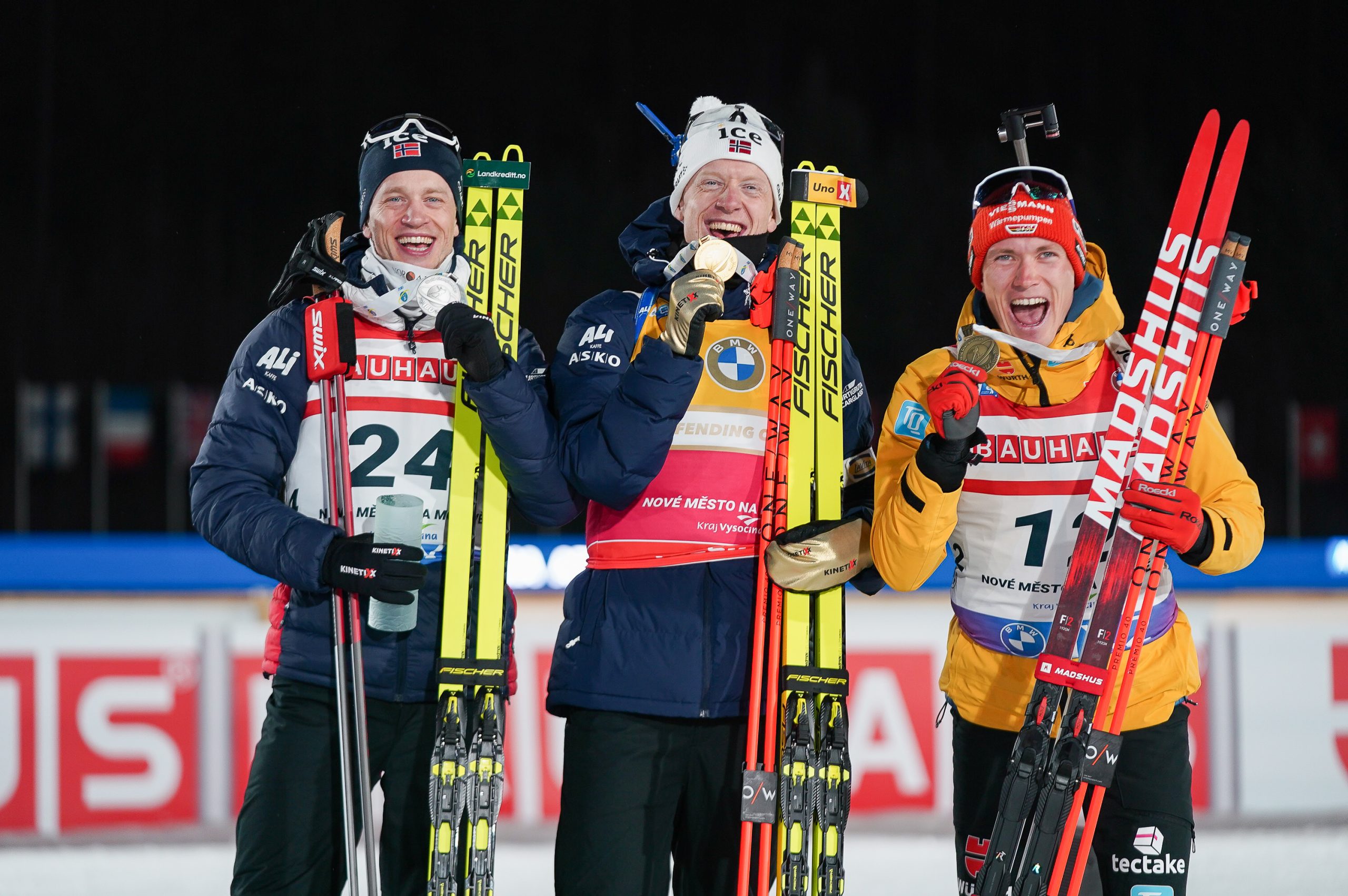
    Shut out at last year’s World Championships, Norway’s Sturla Holm Laegreid claimed his place in the spotlight on Saturday, edging out defending champion Johannes Thingnes Boe (NOR) in dramatic fashion for gold in the 10 k Sprint. Vetle Christiansen completed the podium sweep for Norway, taking his first individual World Championship medal.

    Defending champion and World Cup Overall leader Johannes Thingnes Boe (NOR) races in front of a packed stadium on his way to a silver medal, 3.5 seconds behind Laegreid. (Photo: NordicFocus).

    Laegried’s results in the four non-team competitions at last year’s World Championships were two silvers, a bronze, and a fourth place. Thingnes Boe won all but one of those races; he took the bronze in the Mass Start, pushing Laegreid off the podium. Laegreid has ranked second in the World Cup overall score the last three years in a row—twice behind Thingnes Boe—and is currently the sixth of six Norwegians who fill the top of the rankings. It’s hard to think of Laegreid as an underdog, and yet somehow he is. But second fiddler no more, Laegreid boldly claimed first chair in the Sprint at the 2024 World Championships in Nove Mesto na Morave, Czech Republic.

    Vetle Sjaastad Christiansen (NOR) completed the podium sweep for Norway. (Photo: NordicFocus)

    Laegreid’s super power has always been his shooting, and on Saturday it earned him the gold. Wearing bib 50, he was latest of the medal favorites to start, and one by one the others in front of him missed targets. Only Sebastian Samuelsson of Sweden managed to hit 10/10, but he couldn’t quite match the speed of the Norwegians and had to settle for fifth.

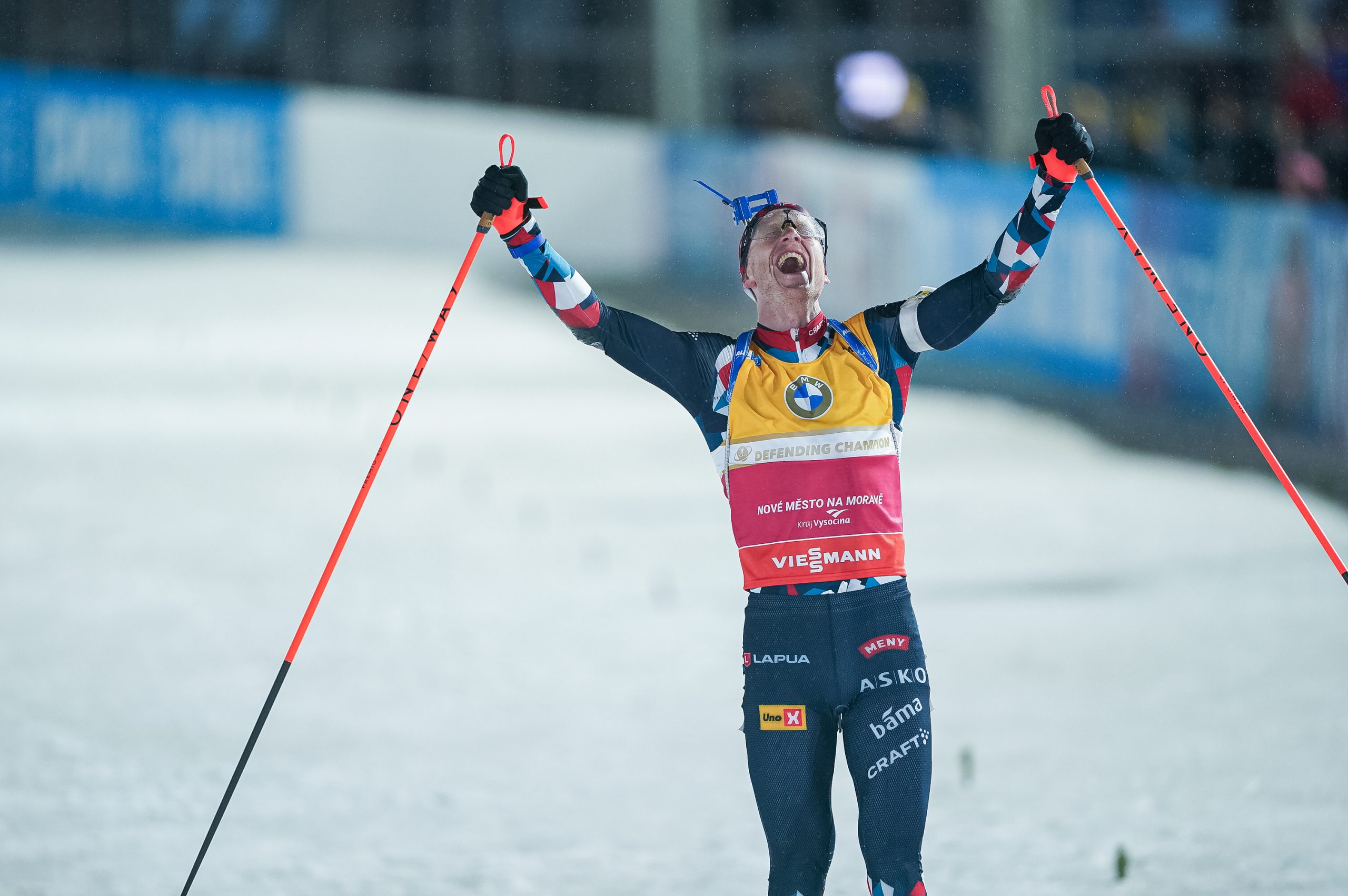
    When Laegreid left the range after hitting 10/10, he had an eight second lead over J. Boe. But he couldn’t match Boe’s speed on the uphills of the final lap and with just one kilometer to go, Laegreid trailed Boe by two tenths of a second. In the final meters, with the advantage of knowing Boe’s splits, Laegreid put in a decisive finishing sprint to win by a margin of 3.5 seconds. It’s been a long time since an athlete looked so thrilled to cross the finish line in first.

    Eric Perrot (FRA) finished fourth, the closest any French man has come to the podium this winter. (Photo: NordicFocus)

    Only Samuelsson and fourth-place Eric Perrot (FRA) infiltrated the otherwise Norwegian top seven. Perrot’s fourth place ties his second-best finish and is the closest any French man has come to the podium this winter. His teammates Quentin Fillon Maillet and Emilien Jacquelin finished eighth and ninth, and Samuelsson’s teammate Martin Ponsiluoma was tenth.

    Campbell Wright (USA) waves to the crowd after shooting clean and finishing with a new personal-best of 11th in the Sprint. (Photo: NordicFocus)

    Just outside the top ten, American Campbell Wright set a new personal-best of 11th with clean shooting. This is Wright’s first season competing for the US, after training with the team last season while still competing for his other nation of citizenship, New Zealand.  Wright will start Sunday’s Pursuit in bib 11 just 1:08 behind Laegreid. Teammates Jake Brown and and Sean Doherty also qualified for the Pursuit in 38th and 44th, both with three misses. Maxime Germain just missed qualification, finishing 63rd with four misses.

    Doherty expressed mixed emotions about qualifying but not with a standout result: “It was tough and although I am very much looking forward to the Pursuit,” he said. “I feel like I left a bit on the table with three misses.” He also pointed to the exciting atmosphere and success of his teammate: “The crowds were awesome and I am really proud of Campbell.”

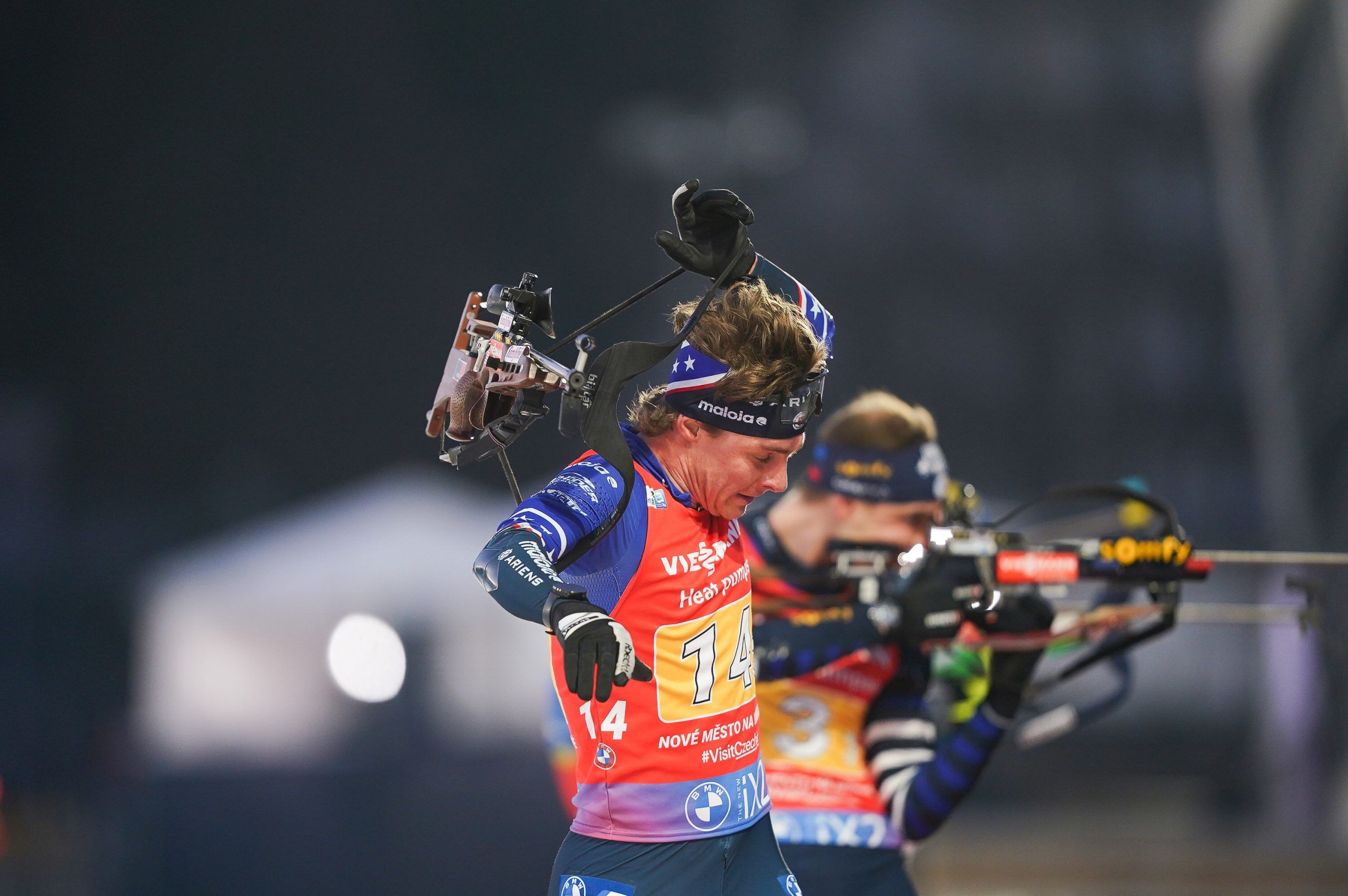
    Sean Doherty (USA)  (background) and Campbell Wright (USA) preparing to zero their rifles before the Sprint. (Photo: NordicFocus)

    Jake Brown also expressed mixed emotions, describing how good execution doesn’t always align with a good result in biathlon. “I think I pushed pretty deep today and I’m satisfied with that. As for shooting, I was satisfied with my shooting speed; I really committed to sticking to my process, and I did that, and it was just frustrating to miss two in standing.” He went on, “I really came in with confidence. I’ll probably take the same approach in tomorrow’s race.”

    Benedikt Doll (GER) speaking with one of his staff members after a disappointing team performance in the Sprint (Photo: NordicFocus)

    The gap in ski times in the men’s Sprint was enormous, resulting in an unusually large 3:37-spread separating the top-60 Pursuit qualifiers. A typical spread is 2-2:30. When asked why he thought the spread was so large, Brown pointed to a combination of skis, conditions, and the ban of fluorinated wax products enacted this season. “There are pine needles everywhere, it’s very dirty, and there is a lot of loose, wet snow. It seems like the ski times on the first lap are somewhat normal but then they open up on the second and third laps.” In these conditions, technicians face an extra challenge of preparing skis in such a way that they repel dirt. Brown said that the US team had good skis, while many other nations struggled. The Germans, for example, who have been highly competitive all winter with three different gold medalists, did not place a single athlete in the top ten of the ski time rankings, and their best finisher in the race, Benedikt Doll, was 13th. Technicians from every team will have their work cut out for them again Sunday for both the men’s and women’s Pursuits.

    Up Next:

    Sunday 11 Feb Women’s 10 k Pursuit 08:30 (Eastern Time)
    Sunday 11 Feb Men’s 12.5 k Pursuit 11:05 (Eastern Time)

    Watch Live

    Johannes Thingnes Boe, Sturla Holm Laegreid, and Vetle Sjaastad Christiansen, (l-r), celebrate their podium sweep for Norway in the Sprint at 2024 World Championships. (Photo: NordicFocus)
  • Up Next: Biathlon World Championships

    Up Next: Biathlon World Championships

    FasterSkier’s Coverage of the Biathlon World Championships is made possible through the generous support of the Craftsbury Outdoor Center: New England’s finest snowmaking, world class race venues and touring trails, healthy food in abundance, comfortable accommodations at Craftsbury:  Sports, Sustainability, Stewardship.


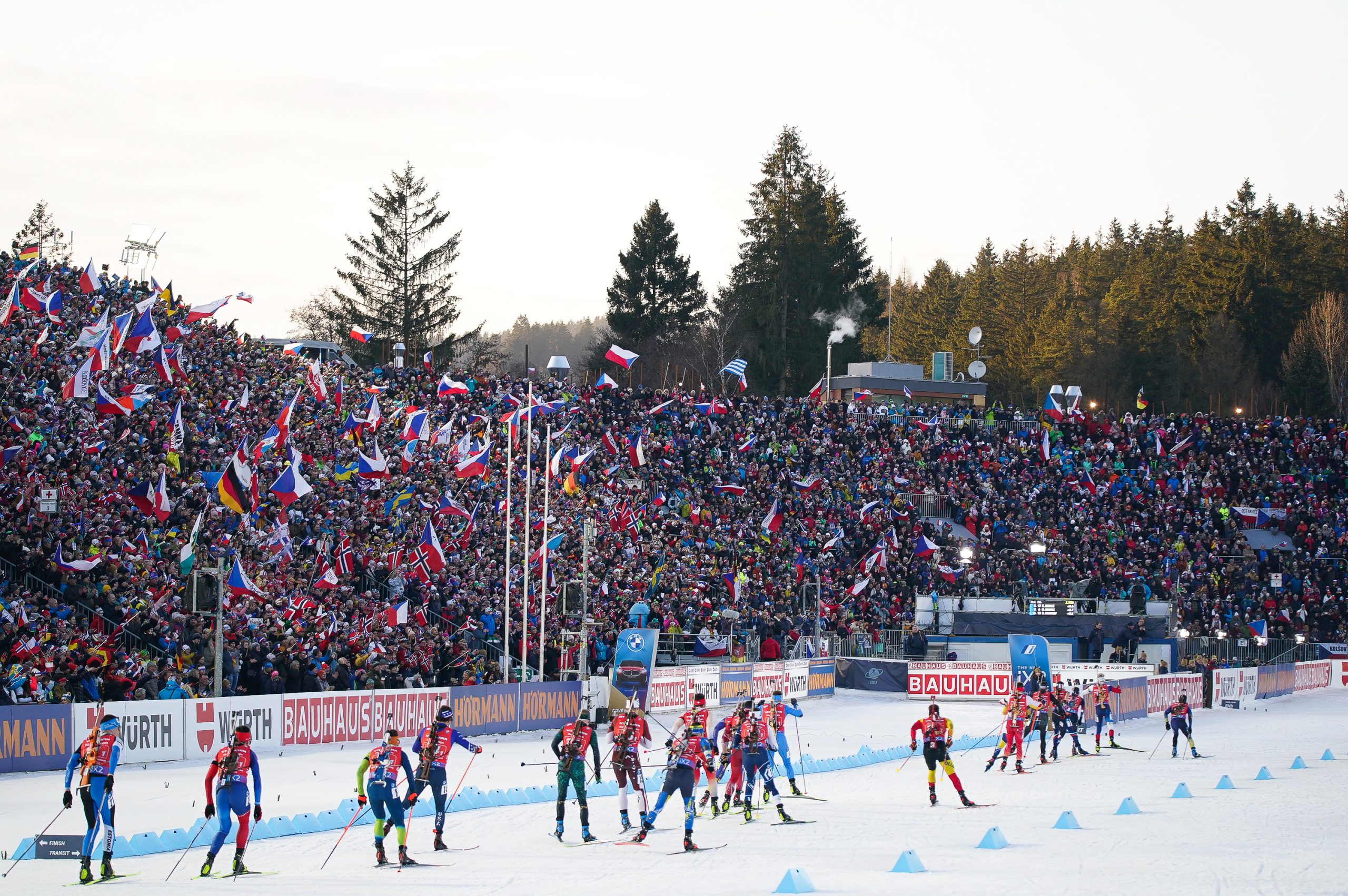
    Fans fill the trail-side stands during the 2023 Biathlon World Cup in Nove Mesto na Morave, Czech Republic. (Photo: NordicFocus)

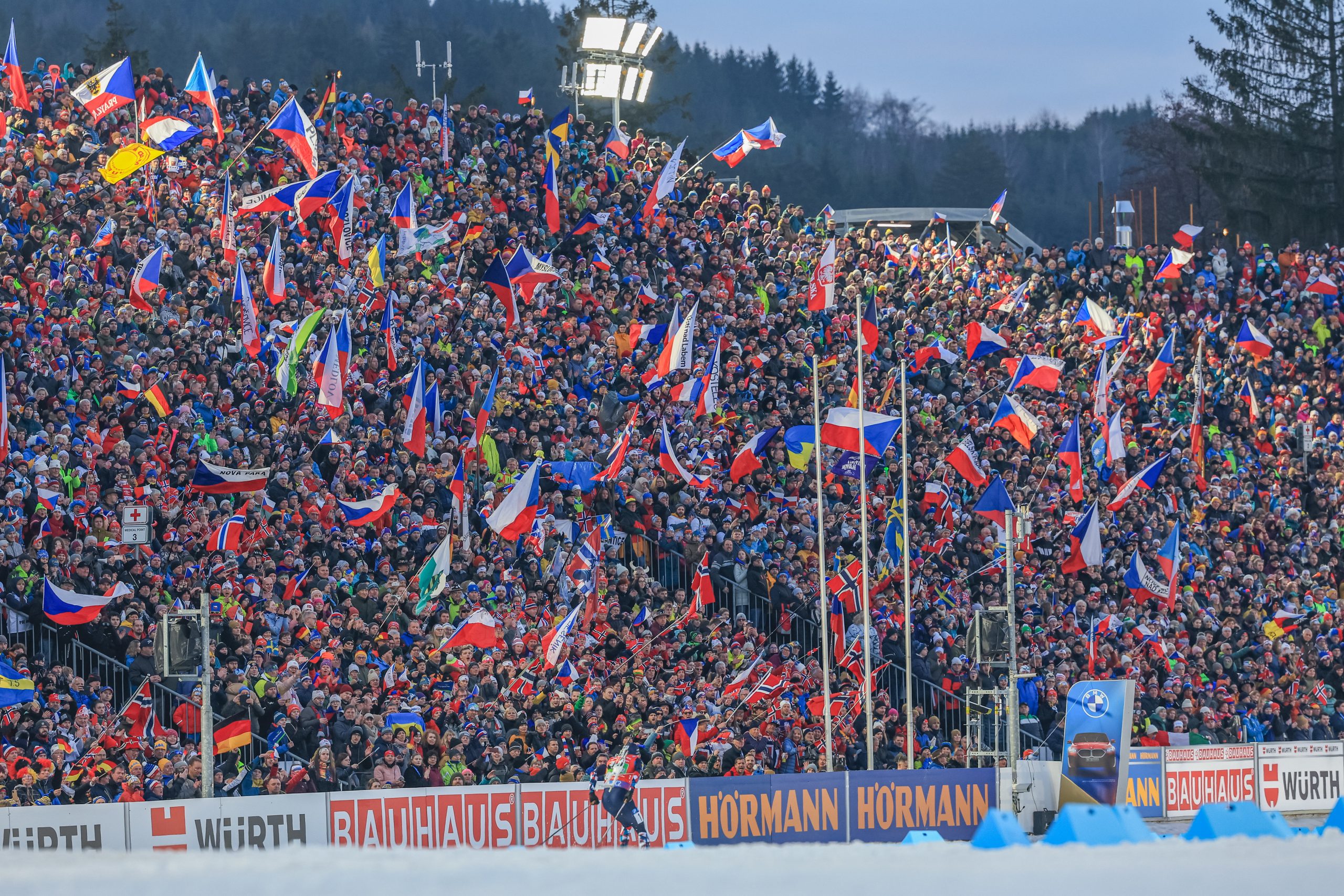
    The 2024 Biathlon World Championships open on Wednesday, February 7 in the countryside town of Nove Mesto na Morave in the Czech Republic. While not widely known as a winter wonderland, Nove Mesto boasts some of the most impressive crowds on the international biathlon circuit. Organizers have already sold out the 30,000-capacity stadium and bleacher-lined course for the opening and closing weekends and expect to sell a total of 200,000 tickets during the 12-day event. For those not lucky enough to join the festivities in person, here’s a brief viewer’s guide.

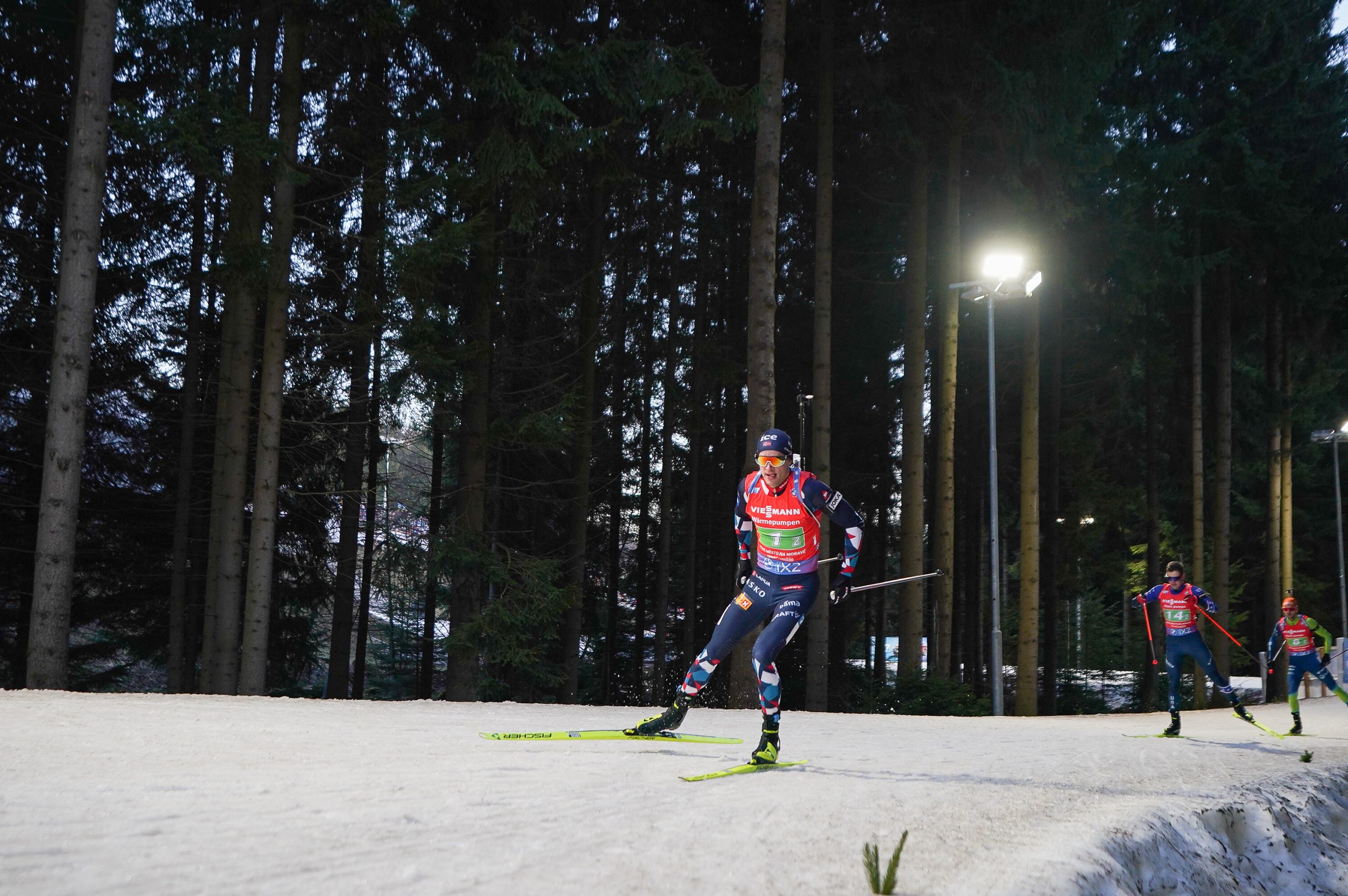
    Athletes ski into the shooting range of the Vysocina Arena during the 2023 Biathlon World Cup in Nove Mesto na Morave, Czech Republic. (Photo: NordicFocus)
    How to Watch?

    All races will be streamed live for free with English commentary on a brand new digital platform: Eurovision Sport. Replays are available there as well. The full event schedule is available here automatically adjusted to your time zone.

    Why Watch?

    Wednesday’s Mixed Relay features 25 teams from 25 nations! While the podium places in most World Championship competitions will likely be contested by the “big five” biathlon nations—Norway, Germany, France, Sweden, and Italy—the field is deep and diverse and will inevitably deliver some surprises. Watch for the drama!

    Watch to be inspired by the stories of set backs and success that take shape over the course of the nearly two-week event. The series of 12 races in 12 days (a maximum of seven for any given athlete) is an odyssey for athletes and viewers alike. It starts with the chaos of the opening Mixed Relay. The most tense moments of pressure for perfection come in the Sprint, which serves as the qualifier for the Pursuit and sets the tone for each athlete’s Championships. Fatigue peaks in the second week with the long Individual competitions, before a reprise of team relays and finally the grand finale Mass Starts featuring the 30 best athletes. While each competition is entertaining in its own right, viewers will be rewarded for following the arc of the full Championships.

    Finally, it’s worth watching this event just to see the stadium atmosphere. It’s shaping up to be one of the most well-attended Nordic skiing events ever.

    Start of the Single-Mixed Relay at the 2023 Biathlon World Cup in Nove Mesto na Morave, Czech Republic. (Photo: NordicFocus)
    What to Watch?

    Relays, Pursuits, and Mass Starts are head-to-head races that promise high drama and are easy to follow for new fans. The Sprint and Individual test the composure of athletes on the range, as the podium almost always demands perfection. The full event schedule is below (Eastern Time):

    07 Feb 11:20 4x7k Mixed Relay (M+W)
    09 Feb 11:20 Women 7.5k Sprint
    10 Feb 11:05 Men 10k Sprint
    11 Feb 08:30 Women 10k Pursuit
    11 Feb 11:05 Men 12.5k Pursuit
    13 Feb  11:10 Women 15k Individual
    14 Feb 11:20 Men 20k Individual
    15 Feb 12:00 Single Mixed Relay (M+W)
    17 Feb 07:45 Women 4x6k Relay
    17 Feb 10:30 Men 4×7.5k Relay
    18 Feb 08:15 Women 12.5k Mass Start
    18 Feb 10:30 Men 15k Mass Start

    Deedra Irwin (USA) shooting on lane 5 during the Mixed Relay at the 2024 Biathlon World Cup in Antholz, Italy. (Photo: NordicFocus)
    Who to Watch?

    The American duo of Deedra Irwin and Campbell Wright is likely to get some TV time in the Single-Mixed Relay after fighting for a podium finish in the most recent running of the event in late January. Irwin set a new personal-best World Cup result of eighth place in a Sprint in December and will be looking to improve on that in Nove Mesto. She has hit 19/20 targets in the 15 k Individual in her last two Championships; if she can do that again this year she’ll have shot at the podium thanks to improved ski speed.

    The Americans are also dark-horse contenders in the Men’s Relay. Led by veterans Sean Doherty and Jake Brown, the team has been boosted by a cohort of precocious young talents, including two medalists from last winter’s Junior World Championships: Wright and Maxime Germain. Vincent Bonnacci rounds out this year’s World Championships roster, coming fresh off an impressive 6th place at the European Championships. The team has shown glimmers of greatness this season but has yet to perform to its full potential. This could be their moment to shine.

    A pack of Norwegian men at the front of the Mass Start at the 2024 Biathlon World Cup in Antholz, Italy. (Photo: NordicFocus)

    Looking at the international field, Norwegian superstar Johannes Thingnes Boe has won the World Cup overall title five times in the past six years and is threatening records set by biathlon legends Ole Einar Bjoerndalen (NOR) and more recently, Martin Fourcade (FRA). But he’s not the only Norwegian to watch; six of them fill the first six places in the men’s World Cup overall score. Always in the shadow of Norway, the Germans have quietly made their own statement, placing five different men on the podium this season including three different winners. There will be good fights for medals between these two teams and some challengers from Sweden and Italy, but it’s fair to expect a frequent playing of the Norwegian national anthem.

    The women’s podium is more widely contested. Fifteen women from six nations have landed on the podium this winter. France alone has had three different gold medalists. Lena Haecki of Switzerland broke through the dominance of the big nations with her first gold medal just a few weeks ago. And with more than ten women averaging over 90% hits on the range, the standard of competition is exceptionally high. All of this will make for some exciting biathlon.

    It all gets underway Wednesday at 11:20 Eastern Time.

    Lisa Vittozzi (ITA) prepares for the opening event of the 2024 Biathlon World Championships during official training on Tuesday, February 6 in Nove Mesto na Morave, Czech Republic. (Photo: NordicFocus)
  • Irwin and Wright Speed to Ninth Place in Single Mixed Relay

    Irwin and Wright Speed to Ninth Place in Single Mixed Relay

    Campbell Wright (USA) and Deedra Irwin (USA), IBU World Cup Biathlon, single mixed relay, Antholz, Italy. (Photo: Manzoni/NordicFocus)
    Deedra Irwin (Pulaski, WI/Army World Class Athlete Program) and Campbell Wright (Wanaka, NZL/U.S. Biathlon) skied to a ninth place finish in the single mixed relay at the sixth World Cup of the season in Antholz, Italy. Between the pair, both Irwin and Wright held top-10 ski times throughout the race, finishing only four seconds back from the eighth place Estonia and 30 seconds back from a top-five finish.

    “It felt good to ski with everyone today and be in the mix,” said Irwin. “I think we pulled together a great race. The wax techs did an amazing job with the skis. Antholz really showed off her beauty today!”

    Despite having to ski a penalty loop each, Irwin and Wright landed just +1.09.5 behind Germany’s leading pair of Vanessa Voigt and Justus Strelow, who used just one spare round. Germany was joined on the podium by Ingrid Landmark Tandrevold and Vetle Sjaastad Christiansen of Norway and Austria’s Lisa Theresa Hauser and Simon Eder.

    Of the two single mixed relays this season, Team USA has placed in the top 10 each time. Back in November in Oestersund, Sweden, the pair of Irwin and Sean Doherty (Center Conway, NH/National Guard Biathlon) skied to an eighth place finish, cleaning their prone shoots and only using three spare rounds in standing. Just two months later, Irwin and Wright placed ninth with two added penalty loops, further proving the USA to be dangerous competition.

    The third and final single mixed relay of the season will take place on January 15 at the 2024 World Championships in Nove Mesto na Morave, Czech Republic. Team USA will be looking to top their best finish and continue delivering top ski times. For information on how to watch, visit https://usbiathlon.org/how-to-watch. For spectator resources, visit https://usbiathlon.org/spectator-resources.

    About U.S. Biathlon

    As the Olympic sports organization centered around the sport of biathlon, the United States Biathlon Association, known as U.S. Biathlon, is recognized by the International Biathlon Union (IBU) and the U.S. Olympic and Paralympic Committee (USOPC) as the national federation for biathlon in the United States. Founded in 1980, U.S. Biathlon exists to support and encourage the development of biathlon in the United States, to work with biathlon clubs and regional centers around the country to organize training and competition from the grassroots to elite level, and to prepare athletes for international competition. U.S. Biathlon staffs and finances the U.S. Biathlon national and junior national teams and is a 501 c (3) non-profit organization. For more information, visit usbiathlon.org.

    Media Contact

    Sara Donatello

    saradonatello@usbiathlon.org

    +1 (518) 524-5354

  • Wright Sprints to World Cup Personal Best

    Wright Sprints to World Cup Personal Best

    Campbell Wright (USA) finished a career best 12th in the IBU World Cup Biathlon Sprint in Ruhpolding, Germany. (Photo: Manzoni/NordicFocus)
    Campbell Wright (Wanaka, NZL/U.S. Biathlon) raced to a World Cup personal best 12th place in the men’s 10km sprint in Ruhpolding, Germany, his second race of the weekend. With only one miss in standing, Wright crossed the finish line just 0.9 seconds behind Philipp Horn of Germany.

    “I’m feeling really good on the skis,” said Wright. “Great contrast from Oestersund when I was 100th ski time, so good progression. Just loving it.”

    Wright was +50.1 behind the sprint victor, Vetle Christiansen of Norway, who shot clean. Christiansen was joined on the podium by Tommaso Giacomel of Italy and Norwegian teammate Tarjei Boe. Feeding off the energy from his stellar relay leg on Thursday, Wright was able to re-write his previous World Cup personal best 15th from the 2021/22 season in Antholz, Italy.

    “Campbell had a really smart race today,” said U.S. Biathlon Team Head Coach Armin Auchentaller. “On the first loop he had Tarjei Boe in front of him and we kept telling him to stay in the draft, which allowed him to save energy for the second loop, where he had one of the best course times. He stayed relaxed and did a good job on the range with a fast shooting time. I am very proud of him.”

    Jake Brown (Saint Paul, MN/Craftsbury Green Racing Project) skied to 57th, shooting clean in prone and missing just one target in standing. Brown will race with Wright in tomorrow’s pursuit. Vincent Bonacci (Salt Lake City, UT/Team Crosscut) hit nine of ten targets and finished in 66th. Sean Doherty (Center Conway, NH/National Guard Biathlon) did not start in the sprint.

    Racing will kick off tomorrow with Deedra Irwin (Pulaski, WI/Army World Class Athlete Program) racing in the women’s 10km pursuit set to begin at 6:30 ET/12:30 CET. Wright and Brown will follow suit in the men’s 12.5km pursuit at 8:45 ET/2:45 CET. For information on how to watch, visit usbiathlon.org/how-to-watch. For spectator resources, visit usbiathlon.org/spectator-resources.

    About U.S. Biathlon

    As the Olympic sports organization centered around the sport of biathlon, the United States Biathlon Association, known as U.S. Biathlon, is recognized by the International Biathlon Union (IBU) and the U.S. Olympic and Paralympic Committee (USOPC) as the national federation for biathlon in the United States. Founded in 1980, U.S. Biathlon exists to support and encourage the development of biathlon in the United States, to work with biathlon clubs and regional centers around the country to organize training and competition from the grassroots to elite level, and to prepare athletes for international competition. U.S. Biathlon staffs and finances the U.S. Biathlon national and junior national teams and is a 501 c (3) non-profit organization. For more information, visit usbiathlon.org.

    Media Contact

    Sara Donatello

    saradonatello@usbiathlon.org

    +1 (518) 524-5354