From the FasterSkier archive — posts syndicated from athletes’ and coaches’ own blogs between 2004 and 2012, kept online as published. Current coverage is at fasterskier.com.

Tag: camps

  • November Skiing in Canada: Where The (Skiable) White Stuff Is

    November Skiing in Canada: Where The (Skiable) White Stuff Is

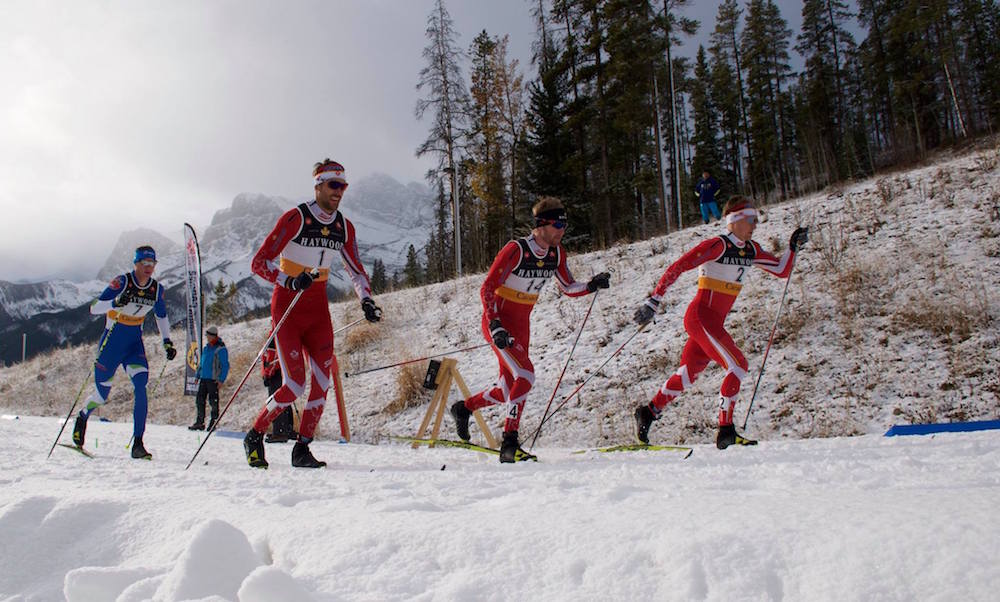
    Len Valjas, Graeme Killick, Knute Johnsgaard, and Bob Thompson at the start of a classic sprint heat (Photo: Jenn Jackson)
    (From left to right) Bob Thompson (NTDC Thunder Bay) chases Lenny Valjas (Canadian World Cup A-Team), Graeme Killick (AWCA/NST B-team), and Knute Johnsgaard (AWCA/NST U25 Team) at the start of a classic sprint heat at 2016 Frozen Thunder in Canmore, Alberta, on Nov. 1. (Photo: Jenn Jackson)

    As promised, the Canadian version of “Where the (Skiable) White Stuff Is” (a.k.a. November skiing) is here, minus the bit about where to ski at Thanksgiving. Canada doesn’t usually have much snow at Thanksgiving, mostly because Canadian Thanksgiving is in early October. But by the time U.S. Thanksgiving rolls around in late November, there is an abundance of reliable snow to choose from in Canada.

    In addition to major camps and well publicized early season track setting, there are a lot of places in Canada where people quietly start skiing when there is snow. Whitehorse in the Yukon is one of those places where “early” doesn’t have the same meaning as it does in the south. No one will advertise October skiing at Barkerville, British Columbia, but the Caledonia Nordic Ski Club in Prince George can tell you about it. FasterSkier’s West-Coast based Canadian contributor was on snow Oct. 8 this year.

    All of the western venues mentioned here were affected by the same weather pattern than forced the cancellation of the Bozeman SuperTour. A heatwave rolled in on Nov. 3, starting with a very warm classic sprint in Canmore, Alberta, and ending in spectacular flooding near Whistler, B.C. It has been a better start in the east.

    This article will focus on reliable set track and camps open to the public in November — in Canada (for the U.S. version, click here).  If your favourite early season spot isn’t featured, you are in good company. Let us know in the comments below.

    And if you are visiting Canada, remember that the U.S. dollar is worth $1.35 up here.

    ***

    CAMPS

    XC SuperCamp

    Where: Sovereign Lake Nordic Centre and Silver Star Mountain Resort, Vernon, B.C.
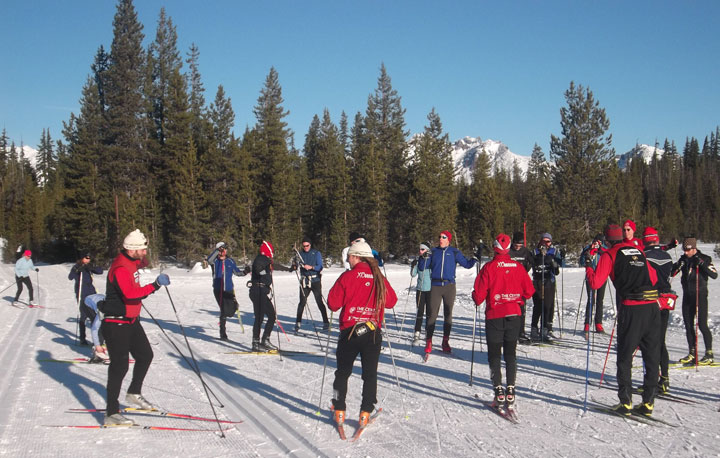
    SuperCamp at Sovereign Lake/SilverStar (Courtesy Photo)
    A trailside photo from 2015 SuperCamp at Sovereign Lake/Silver Star (Courtesy photo)

    SuperCamp has evolved over 30 years, but its always been held on natural snow and it’s always run camps in November. Four of this season’s seven camps are in November, and biathlon options were offered this month as well.

    “SuperCamp is a very comprehensive nordic experience,” Shane Landreville, SuperCamp coordinator, wrote in an email. “Trail passes are included, as are lunches, off snow programs, wax sessions, massages, and ski demos.”

    Ski-in/ski-out accomodation and restaurants are available at Silver Star. Vernon, a 20-minute drive and 1,200 metres lower in elevation, offers a wide range of food and lodging alternatives. Some of the November camps sold out in mid-October when registration opened.

    Glenn Bond XC Ski Camps

    Where: Labrador City, Newfoundland
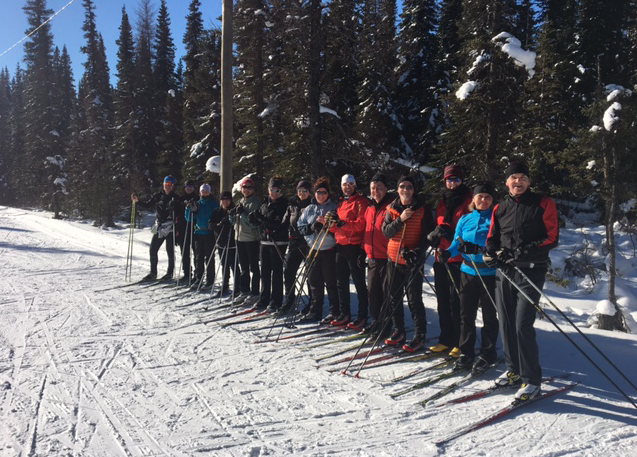
    Glenn Bond XC Ski Camp at Menihek Nordic on November 3rd, 2016. (Courtesy Photo)
    The 2016 Glenn Bond XC Ski Camp at Menihek Nordic on Nov. 3. (Courtesy photo)

    The four-year old Glenn Bond XC Ski Camp program travelled to Menihek Nordic in Labrador City, Newfoundland, for a November camp on natural snow.

    “[This camp] was November 3-6 with 70-80 cms of snow and big smiles,” Bond wrote. “Menihek Nordic wins the prize for best early season xc ski conditions this year hands down.”

    (Longtime SuperCamp attendees remember Bond from his time with that program.)

    NATURAL SNOW

    Menihek Nordic

    Where: Labrador City, Newfoundland and Labrador
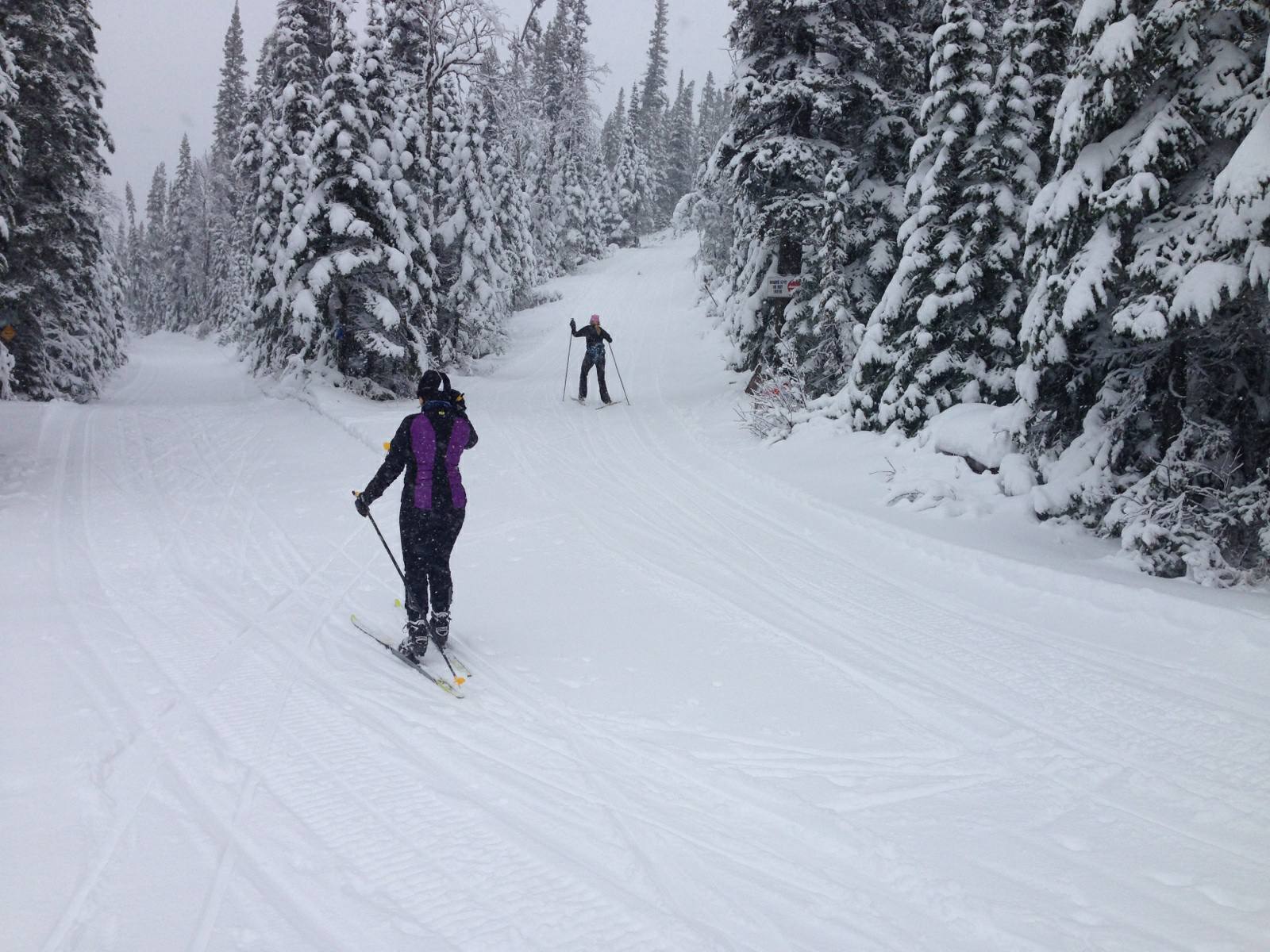
    50 cms (20") of natural snow at Menihek on October 23rd, 2016. (Courtesy Photo)
    Fifty centimetres (roughly 20 inches) of natural snow at Menihek Nordic in Labrador City on Oct. 23, 2016. (Photo: Menihek Nordic)

    Mention ‘Lab City’ to a national team member from the 1980s and you will see the good memories scrolling behind the smile. In the glory days of Pierre Harvey, the national team would kick off its season at Menihek before moving on to Silver Star for an early season elevation camp. After that national team stopped visiting the venue in 1988, it quietly dropped off the radar, to the point that FasterSkier missed this October skiing opportunity in last year’s guide.

    Labrador City is not visited by many tourists. It’s at least a 13-hour drive from Quebec City, which is the nearest major population centre. But there are some big-name skiers that have visited, including Sweden’s Gunde Svan, Americans Bill Koch and Tim Caldwell, Norway’s Anette Bøe, and the Firth sisters from Canada’s Northwest Territories. Menihek Nordic hosted the 1983 World Cup Final, the 1985 World Cup opener and was a national training centre from 1981 to 1988. Mining communities are often multicultural: the World Cup hosts were able to find local translators for 20 languages from a population of less than 10,000. Koch designed some of the trails in 1981.

    What makes this venue unique, other than reliable October-to-May skiing?

    “Labrador is unique in that it is nearly the last frontier,” Menihek Nordic Ski Club President Gerry Rideout explained. “There is a certain magic about Labrador, it gets in your blood.”

    This season, Menihek opened on Oct. 23, held four camps in November, had the full 34 k system set on Nov. 3, and plans to stay open to the first week of May (as usual).

    Sovereign Lake/Silver Star
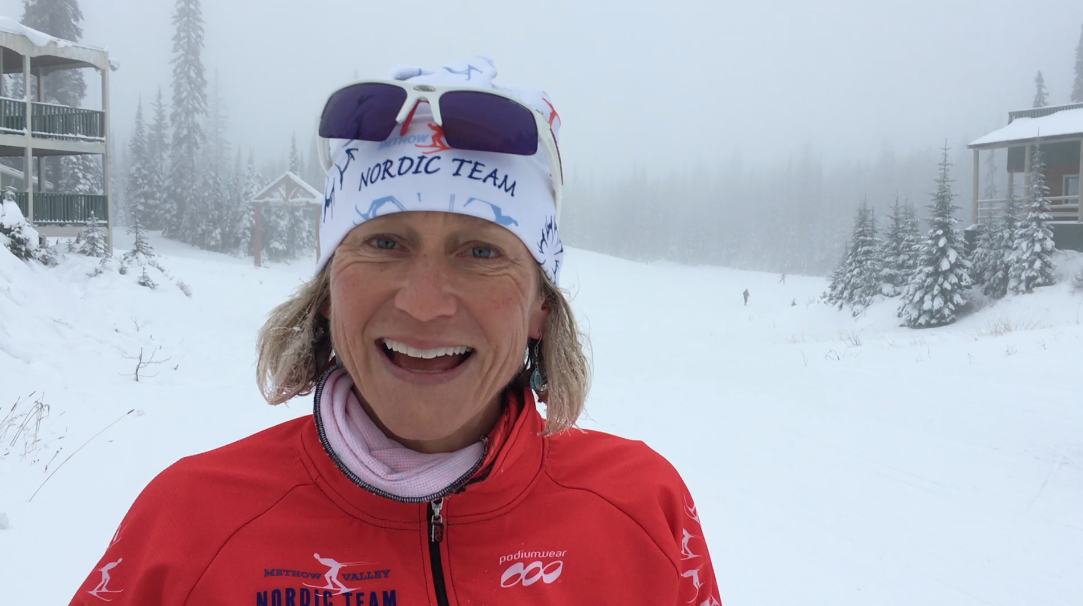
    There were lots of smiles during US Thanksgiving at Sovereign Lake. Laura McCabe's group of 30 kids skied over the top from SilverStar and FasterSkier caught her as the group started back. Locals know to start at Sovereign and grab a croissant in SilverStar village to fuel the second half of the ski. (Photo: Gerry Furseth)
    There were lots of smiles during U.S. Thanksgiving at Sovereign Lake. Methow Valley Nordic coach Laura McCabe (a two-time Olympian) led 30 kids over the top from Silver Star and FasterSkier caught them on the way back. Locals know to start at Sovereign and stop for a croissant in Silver Star village to fuel the second half of the ski. (Photo: Gerry Furseth)

    This destination is actually two ski areas. The Sovereign Lake Nordic Centre (also Sovereign Lake Nordic Club) has been operating since the 1930s under a variety of names, while Silver Star Mountain Resort is more recent, opening as an alpine-skiing area in 1958.  The two organizations have 105 kilometers of interconnected nordic trails and a surprisingly good relationship between the commercial resort and the volunteer-based club (which is one of the largest cross-country ski clubs in B.C.). Silver Star hosted a World Cup in 1991, Sovereign Lake in 2005.

    Daily track setting runs from November to early April, with the full 105 k usually available from late November to mid-March.  Sovereign Lake reopens in May for team camps and diehard skiers.

    This season, both sides opened 10 days late on Nov. 20, with 57 k set by Nov. 25.

    “We are still well below our average snow pack for this time of year, but are optimizing our small machine grooming to create great tracks and corduroy,” Sovereign Lake manager Troy Hudson wrote in an email on Nov. 24.

    There were at least eight private camps in November, ranging from a master’s women’s group to biathletes to a combined U.S. club camp with the Mt. Bachelor Sports Education Foundation, Methow Valley Nordic and Momentum Northwest from Oregon and Washington.

    MANMADE & STORED SNOW

    Frozen Thunder

    Where: Canmore Nordic Centre in Canmore, Alberta

    Canmore is perhaps the best known of Canada’s nordic venues. Between the 1998 Olympics, reoccurring World Cups and last season’s final stages of the Ski Tour Canada, it is famous beyond the skiing world. Each October, Frozen Thunder opens a small loop with a combination of stored snow and manmade snow.

    This year, Frozen Thunder opened on Oct. 22 with a 1.7 k loop. The regular season began on Nov. 19 and is scheduled to run to April 30.  So far, Canmore has hosted seven days of cross-country ski races and three biathlon races in November. All the camps were private, with the Ukraine biathlon team traveling the farthest to Canmore.

     Boreal Glide (Glisse Boréale)

    Where: Forêt Montmorency, owned by the Université Laval, in Saint-Ferréol-les-Neiges, Quebec
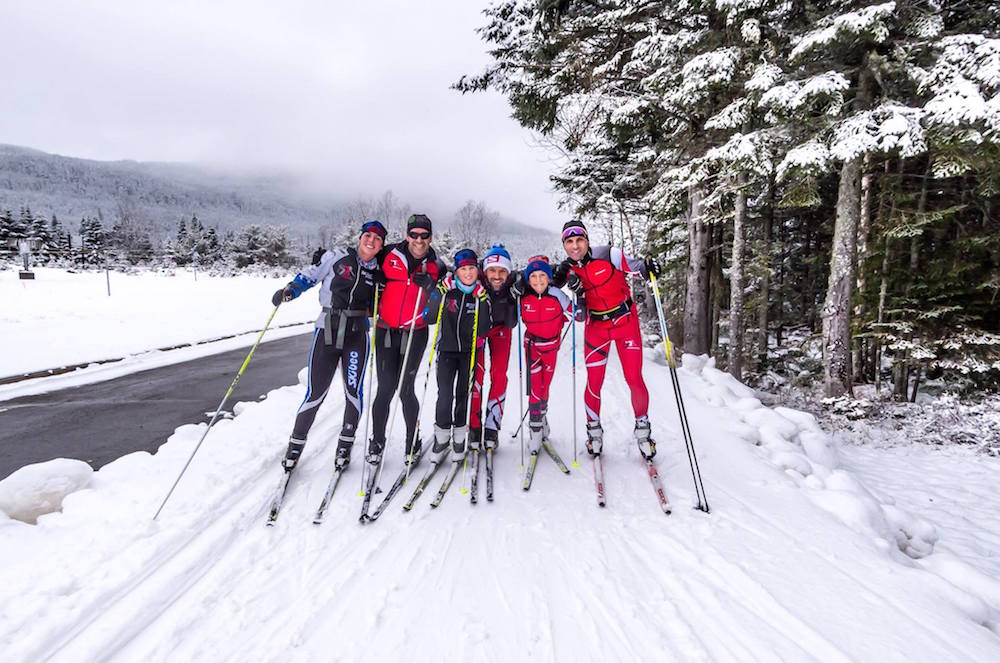
    Skibec skiers on the Boreal Glide at Forêt Montmorency north of Quebec City. (Photo: La Forêt)
    Skibec skiers on the Boreal Glide at Forêt Montmorency north of Quebec City. (Photo: La Forêt)

    Located 45 minutes north of Quebec City and belonging to Laval University, the ‘Boreal Glide‘ is an early season favourite in Quebec. Set in the largest teaching and research forest in the world (at 412 square kilometers), La Forêt Montmorency has 2.5 k of early season trail using stored snow and a larger system that depends on natural snow. As of Nov. 20, it had 20-24 inches of packed snowed and track groomed for both skating and classic.

    “If I had to invest my money in one single cross-country skiing area in North America, I would honestly choose the Forêt Montmorency,” La Forêt’s Director of Operations Hugues Sansregret wrote in an email. “The fact that it sits on top of the Laurentian mountains is the best guarantee for early skiing.”

    Boreal Glide opened on Oct. 28 without any official camps or events — just skiing. Can’t argue with that.

    Callaghan Gold

    Where: Whistler Olympic Park, Callaghan Valley, B.C.
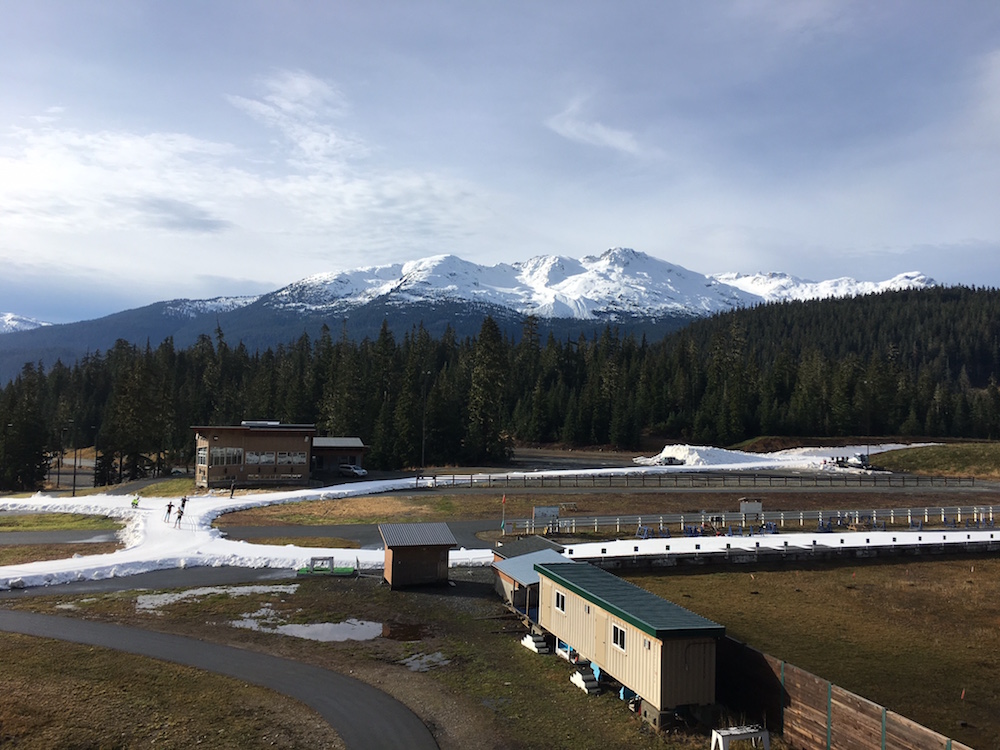
    Callaghan Gold on November 7th, 2016. New this year, the loop includes the biathlon range. (Courtesy Photo)
    Callaghan Gold on Nov. 7, 2016, at Whistler Olympic Park in Callaghan Valley, B.C. New this year, the loop includes the biathlon range. (Courtesy photo)

    Canada’s other Winter Olympic venue has created Callaghan Gold, an early season loop of stored snow. The regular season opens on Nov. 24 (U.S. Thanksgiving) and ends in early April.  Located in a cool valley surrounded by rainforest, this venue has been known for lots of snow in non-Olympic years. Weather has been a challenge in the fall of 2016, eased by two last-minute storms that expanded the stored snow loop to 21 k during the opening weekend.

    In the project’s four-year history, Callaghan Gold has met some challenges. In its experimental year, the stored snow came out ‘gold’, coloured by the sawdust insulation. In 2014, the storage methods were improved and an 800-metre loop of lovely, white snow greeted skiers on opening day. In 2015, record-setting warm weather melted all the snow in March, leaving nothing to store. In 2016, Callaghan Gold opened on Oct. 29 with 600 metres of trail, expanding to 1.4 k on Nov. 4.

    “The warm temps and significant rainfall of November took its toll on the Callaghan gold trail depth but we feel it held up well considering,” managing director Tim Hope wrote in an email.

    Nakkertok Nordic

    Where: Gatineau, Quebec
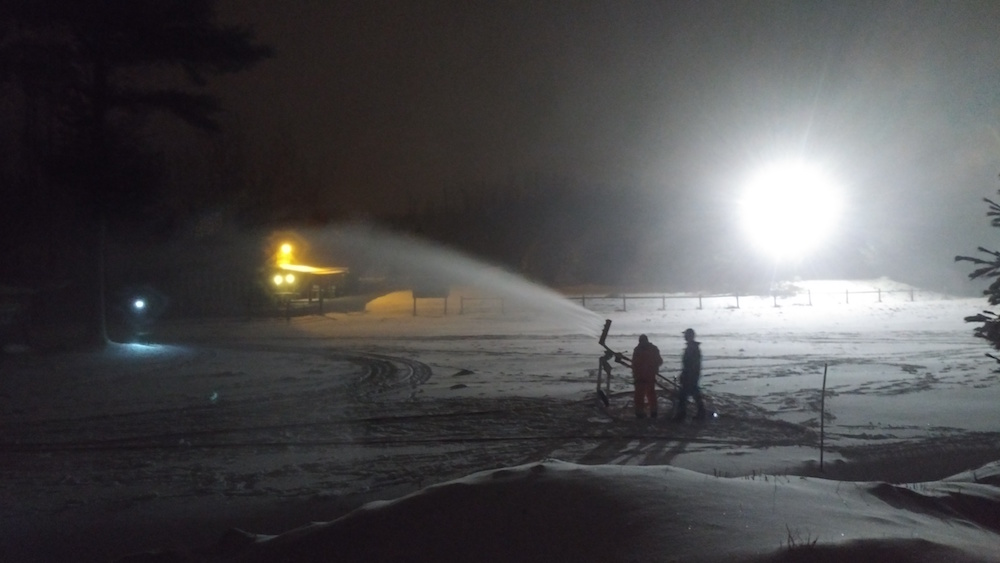
    Nakkertok snowmaking in action for the first time in November, 2016. (Courtesy Photo)
    Nakkertok snowmaking in action for the first time in November, 2016. (Courtesy photo)

    With two sets of ski trails just outside Ottawa and Gatineau, Nakkertok is the newest addition to reliable November snow. This month, one of the country’s largest ski clubs recently turned on its brand-new snowmaking equipment (which was largely funded by from its Project Play grand prize) and opened for skiing on Nov. 25.

    According to Nakkertok Head Coach Kieran Jones, the club turned on five snow guns for the first time on Nov. 20 and was excited to test its new system and equipment. That night, the trails received an additional 15 to 20 centimeters of natural snow.

    “Winter has definitely come to Ottawa-Gatineau, which is awesome!” Jones wrote. “Our initial goal was to create an 800m loop that covered our stadium, and extended out both ends. At that point we could then begin to push snow further to create 1 km of skiable terrain with a couple of quality climbs as well.”

    He hoped they would have 1 k open for skiing by the end of last week.

    “For now, the focus is on making sure we can have skate grooming,” Jones added. “Classic tracks will depend on the depth of snow that we’re able to produce. Nakkertok isn’t officially open to the public for day usage of the loop yet, but we’ll let you know as soon as it is!”

    The Nakkertok Early Season Ski Loop (NESSL) is an important step for the region.

    “It is great for the club, other clubs in the region and should allow a quality early season race site in the East,” Nakkertok fundraising mastermind Toni Scheier wrote in an email. “It will also ensure snow for the Easterns where clubs from across the country attend, (700 plus competitors) and for our Nationals bid, likely 2019.”

    — François Léger Dionne contributed reporting
  • Canadian Biathletes Pump the Volume with Park City Camp

    Canadian Biathletes Pump the Volume with Park City Camp

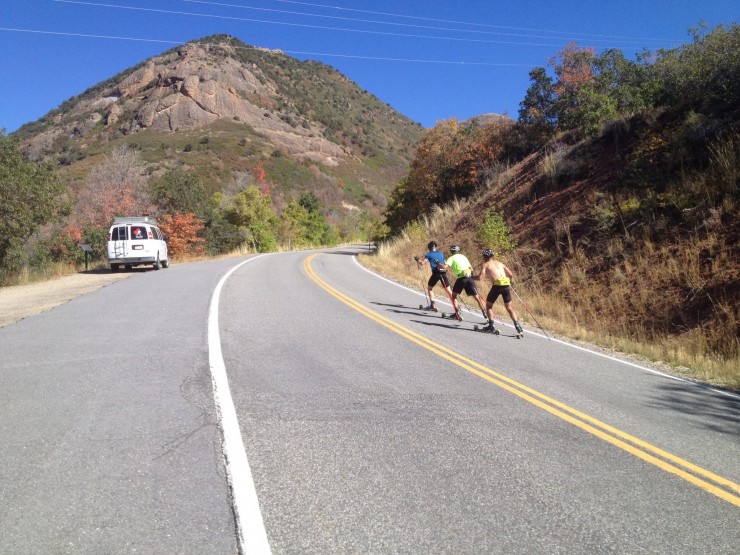
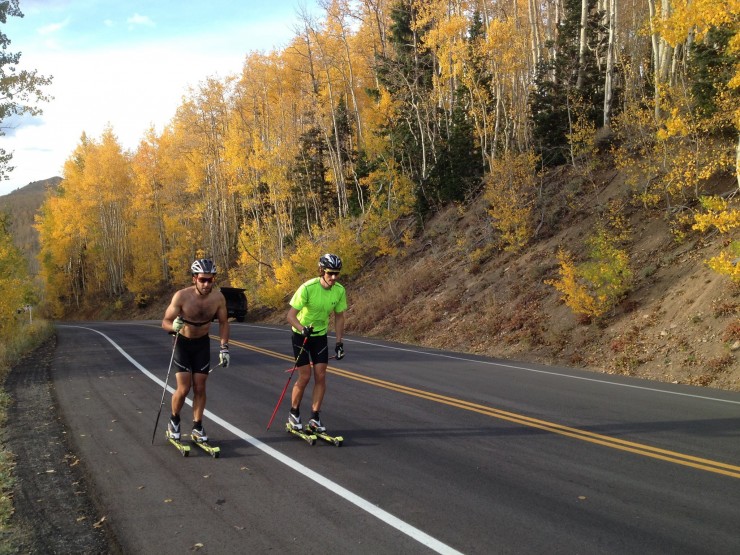
    Nathan Smith on a long classic rollerski to Mirror Lake. (Photo: Matthias Ahrens)
    Nathan Smith on a long classic rollerski to Mirror Lake. (Photo: Matthias Ahrens)

    If you already train in the Rockies, taking a 2-hour flight (or a heck of a long drive) to another part of the Rockies might seem a little nuts.

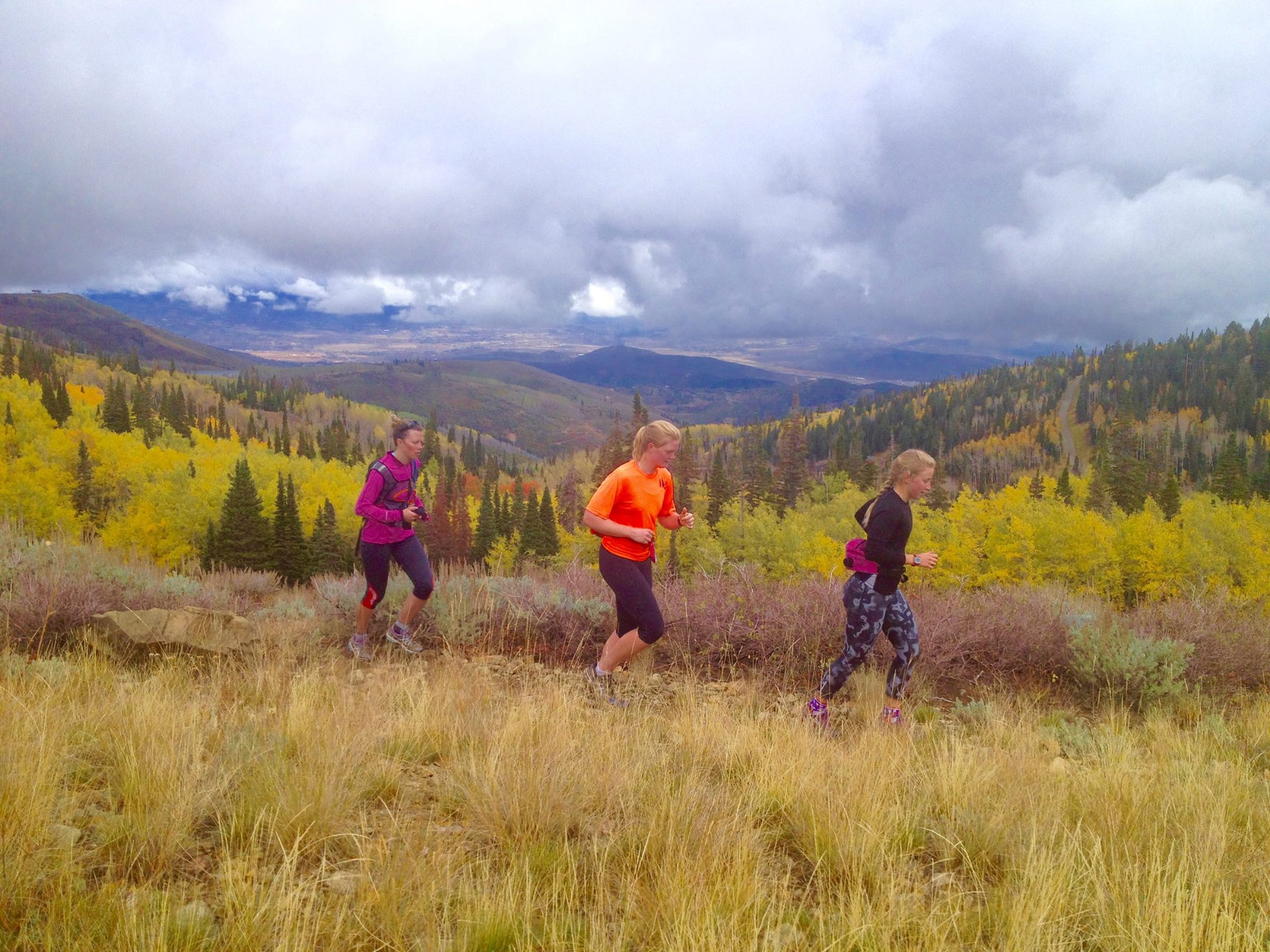
    But the Canadian biathlon team is getting used to doing an autumn camp in Park City, Utah – a jump south from their usual base in Canmore, Alberta.

    “My favourite workouts around Park City have always been the long climbs in the area,” wrote Brendan Green, a longtime national team member. “It’s so easy to get to a high altitude on really good quality roads and climbs which is awesome. This is definitely something we lack around Canmore, so I try to make the most out of every opportunity I have to climb.”

    And in terms of places you can go to get some solid rollerski and running climbing in, Park City is actually pretty convenient for the Canmore-based team.

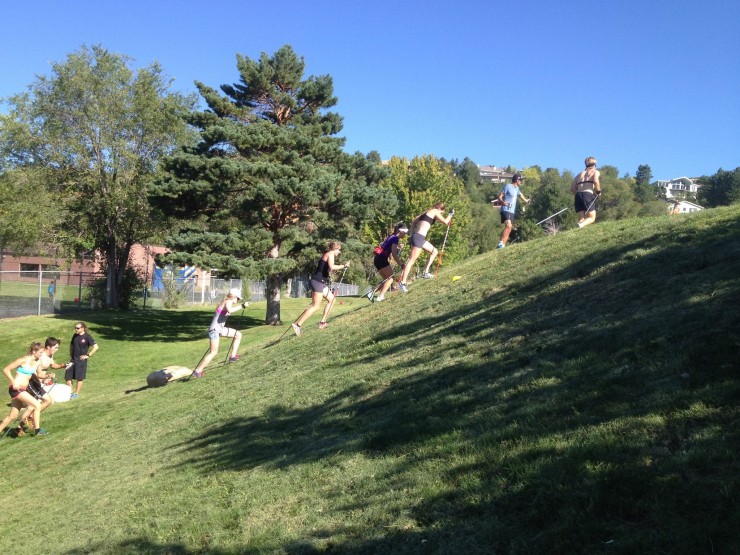
    Coaches picked a steep hill for a joint ski bounding workout with the cross-country and biathlon teams. (Photo: Matthias Ahrens)
    Coaches picked a steep hill for a joint ski bounding workout with the cross-country and biathlon teams. (Photo: Matthias Ahrens)

    “It’s the same time zone, no jet lag, a 2 hour flight for the athletes, and the last sunny and warm period before winter starts,” Canadian Head Coach Matthias Ahrens wrote in an email.

    With that setup, the goal for the team was to get in a big block of volume training at altitude before heading towards race season.

    “It’s the last volume camp before intensity block in Canmore,” Ahrens explained. “There’s good altitude differentials with long sustained uphill climbs for rollerskiing.”

    They also took advantage of the Canadian cross-country team being in the same spot, and did a ski-bounding workout with the skiers early in the camp.

    “The joint session with XC was an uphill bounding / striding intensity session down in Salt Lake City,” Green wrote in an email. “Every workout we can do with XC I think is really beneficial for us – It’s great for us to be pushed by guys like Alex [Harvey], Devon [Kershaw], and Ivan [Babikov].  I really hope this is something we can do more of in the future.”

    While that was the only joint training session, the cross-country and biathlon coaches also did a mountain bike ride together on the athletes’ off day to chat and consider more joint planning.

    How many coaches does it take to read a map? (Photo: Matthias Ahrens)
    How many coaches does it take to read a map? (Photo: Matthias Ahrens)

    “Last year we had the opportunity to do some sessions with the U.S. biathletes but this year unfortunately they were not there at the same time,” Ahrens wrote.

    Besides the volume focus, Green was working on a few other issues stemming from a disc injury in his back a few years ago.

    “I’m still working through some issues with my back but I have been trying a few different treatments,” he wrote. “I hope that I’ll be able to manage the pain better in the upcoming season and I really hope to avoid another painful season of racing like last year. I have made a few small changes to my program and areas of focus for this season.  I think things are headed in the right direction but of course the real test will come when race season rolls around.”

    Most of all, everyone enjoyed getting some new scenery as they put in hour after hour of training.

    “We had incredible weather for almost the entire two weeks in Park City which always makes for more enjoyable training,” Green wrote. “It is nice to get out of Canmore once in a while to break up the training routine.”

  • Annual Training Trip to Germany Well Worth the Travel for American Biathletes

    Jay Hakkinen, Leif Nordgren, and Lowell Bailey shooting at the Chiemgau Arena in Ruhpolding, Germany on Monday. The Americans are in their second week of a training camp before heading to Oberhof.

    RUHPOLDING, Germany – At the Chiemgau Arena on Monday, the U.S. biathlon team was surrounded by something it doesn’t always experience in training: a cacophony of shots that didn’t belong to them.

    With the German women’s team, the Ukrainian national team, and juniors from France and Germany on the range, as well as a group of German men doing a non-shooting sprint workout, training was quite a bit busier than your typical biathlon practice in America – and actually had more attendees than many domestic races.

    Despite all that, it is actually a quieter experience than the same camp last year.

    “Last year the Italians were here, and the Estonians as well, which is always neat, but there’s just nobody here this year,” said World Cup racer Sara Studebaker. “I do know that Andrea Henkel [of Germany] is going to join us for this coming week, but we’ve pretty much been on our own. It would have been nice if there were other teams here.”

    And actually, said shooting coach Armin Auchentaller, that was the plan. It just didn’t work out.

    Russell Currier attacking his speedwork in the stadium.

    “Last year it was much more busy on the range and we had an international competition with the other teams, which this year was not possible,” he explained as the other coaches watched the last few Americans finish their rounds. “Initially we wanted to take these athletes to the German championships, but they got postponed when we had already planned this trip. So this year we did the time trial just between us.”

    Still, both athlete and coach agreed: the atmosphere here is a lot different than in the U.S., and that’s one of the main reasons to come over here.

    “Lake Placid is a great place to train, but you can’t compare it to having a World Cup venue with a roller loop on it,” Studebaker laughed. “You can rollerski on the trails that you race on in the winter, and just do the same stuff, pretty much… to be able to have that, it just feels a lot more similar to winter. And the pavement is so smooth!”

    Auchentaller thought that it was productive for the athletes to get out of their usual shooting range and into a new one (the World Cup visits Ruhpolding every year, so it’s not exactly unfamiliar). Even at a basic level, shooting here requires adjustments: Lake Placid has an uphill approach to the range, whereas the Chiemgau Arena features a slight downhill.

    While Auchentaller is considered the shooting expert, he still resides in his native Italy and sees the athletes for about five camps outside of the competition season, this session falling right in the middle. The rest of the time, the Americans work mainly with women’s coach Jonne Kahkonen, who does live in Lake Placid and supervises the entire training group stateside.

    Head coach Per Nilsson also lives in his home country, in this case Sweden, meaning that Kahkonen usually supervises a large group in Lake Placid with the help of Patrick Coffey. Only the “A” team athletes, however, were invited to Germany this summer, and Nilsson, Kahkonen, Auchentaller, and High Performance Director Bernd Eisenbichler have all been present for most of the camp, giving the athletes more direct interaction with coaches than they usually receive.

    Annelies Cook during her speedwork.

    Up and down the range, the space behind the firing line was filled with coaches scoping out their athletes’ shots, then holding up magnetic boards with a diagram of a target and five small markers showing the position of each of the athlete’s bullets. A healthy proportion of those scopes were trained on the Americans.

    “It’s always good to have fresh eyes on you, and to have a couple of people on the range, and a few out on the trails,” Studebaker said, before adding that the team has actually grown in one way. “This year it’s bigger for the women, we’re three instead of two over here, which is really nice!”

    After a warmup, the team did speedplay: skiing an easy loop of six to ten minutes without a rifle, then skiing through the range to grab their guns before gradually ramping up to full speed over the course of a 25-second stretch in front of the stands. The athletes would hold their top gear for about five seconds before easing back and skiing into the range to shoot. The workout consisted of ten sprints for both the men and women; Auchentaller pointed out that doing level-one shooting combinations, while skiing easy, was pretty pedestrian for biathletes who have been training as long as the national team members, so adding speed into the equation was important in order to gain consistency in races.

    One thing Auchentaller was particularly excited about was the annual trip to Salzburg, Austria, that the team had made the previous week. In a state-of-the-art shooting lab at the university there, the athletes tested their shooting using force plates and measures of trigger pressure. Today, the team will receive the results of the tests and Auchentaller can gain a few new ideas for what to tell his athletes to work on.

    U.S. coach Armin Auchentaller adjusts Susan Dunklee’s stance as she readies for a standing shooting stage.

    “From these tests we get out little, little, little things like the pressure on the back plate, or how they work on the trigger and how their balance is,” he explained. “It’s not so much for the elite athletes right now – it’s little tiny things, and usually the last details are the most difficult to work on. But we are pretty happy to have the opportunity to go to Salzburg.”

    That’s not to say that the biathletes aren’t trying bigger changes, too. On Monday a few were testing out new eye shields to keep the sun from affecting their vision on the range, or adjusting and exchanging parts on their rifle sights.

    Besides the trip to Salzburg, the team has a few more things to look forward to. In this, their second of two weeks in Ruhpolding, they’ll contest an annual uphill time trial: “We’re looking forward to that, to see the progress there,” Auchentaller said. Then the biathletes will spend a week in Oberhof, Germany – a center of sport in Germany’s east compared to Ruhpolding’s role in the west – and train and test skis in the ski tunnel there.

    All in all, the camp offers athletes like Studebaker plenty to look forward to as they work their way through the summer at home.

    “I was definitely ready to get out of Lake Placid,” she said. “It’s always nice to have a little bit of a change; you get into a little bit of a rut with training if you’re out running on the same roads and skiing on the same roads. It’s really nice to come and do something different, especially since it’s so beautiful over here in the summer. We get to be here in the winter all the time, but to see another side of it is really cool.

    “We’re staying in a little different place this year, over in Inzell, which has some different trails to explore,” she added. “So it’s a similar feeling but it’s a bit different. It’s definitely a fun camp though – you work hard, but you enjoy it.”

    Jay Hakkinen (standing), Susan Dunklee, and Tim Burke shoot on Monday.
  • First Half of XC Oregon Masters Camp “Practically Perfect”; Space Still Available

    First Half of XC Oregon Masters Camp “Practically Perfect”; Space Still Available

    While much of the northern hemisphere has been struggling with little to no snow thus far in the 2011/12 winter season, the 2011 Oregon Fall Camp held at Mt Bachelor & Bend, Oregon has thus far been a practically perfect exception.
    Beginning last Thursday (December 1), the first five day block of the two-part Camp enjoyed the best of all snow/weather worlds.  A nearly three foot base and over 25km of groomed trails took care of the snow side. For weather, every Camp day thus far has featured brilliant sunshine, highs into the 30s, and rapidly decreasing winds.
    According to Camp Founder and XC Oregon Coach J.D. Downing, this unlikely December snow/weather cocktail has produced one of the best Oregon Fall Camps on record.
    “I’ve done this camp for over a decade now and thus far this is got to be up there for practically perfect weather and snow,” says Downing. “We’ve got classic skiers still on kick wax with just some binder underneath. For skating it’s fast, but you still get good purchase. The short days have kept a certain amount of powder out there that is still getting tilled in. No obstacles whatsoever on the trails. It’s really easy for both the campers and coaches to just focus on productive clinic sessions. Based on everything I’m seeing and hearing — it’s very likely we have as good or better skiing here than anywhere else in the world right now.”
    Featuring a program designed specifically for master skiers, since 2001 the Oregon Fall Camp has been a staple of the early season North American camp scene attracting up to 100 skiers per year from throughout the U.S.
    The Oregon Fall Camp continues December 7-11 with a limited amount of space still available for interested individuals. Visit www.xcoregon.org for complete information and daily updates.