
From the FasterSkier archive — posts syndicated from athletes’ and coaches’ own blogs between 2004 and 2012, kept online as published. Current coverage is at fasterskier.com.

Tag: canadian men’s world cup team

  • Men Go to SoHo, U.S. Women in the Methow (Camp Photo Galleries)

    Men Go to SoHo, U.S. Women in the Methow (Camp Photo Galleries)

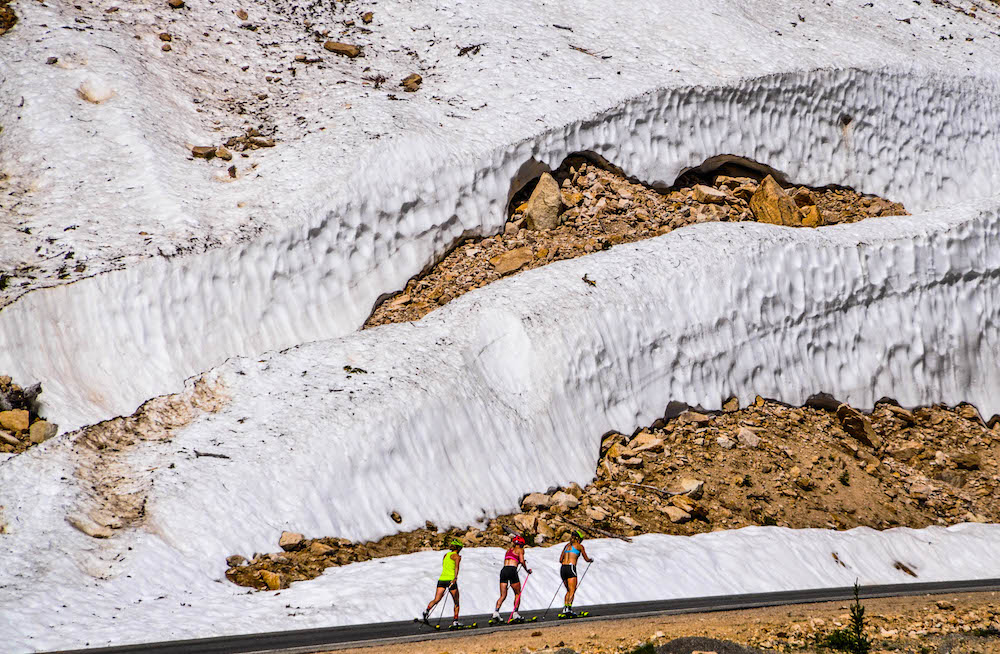
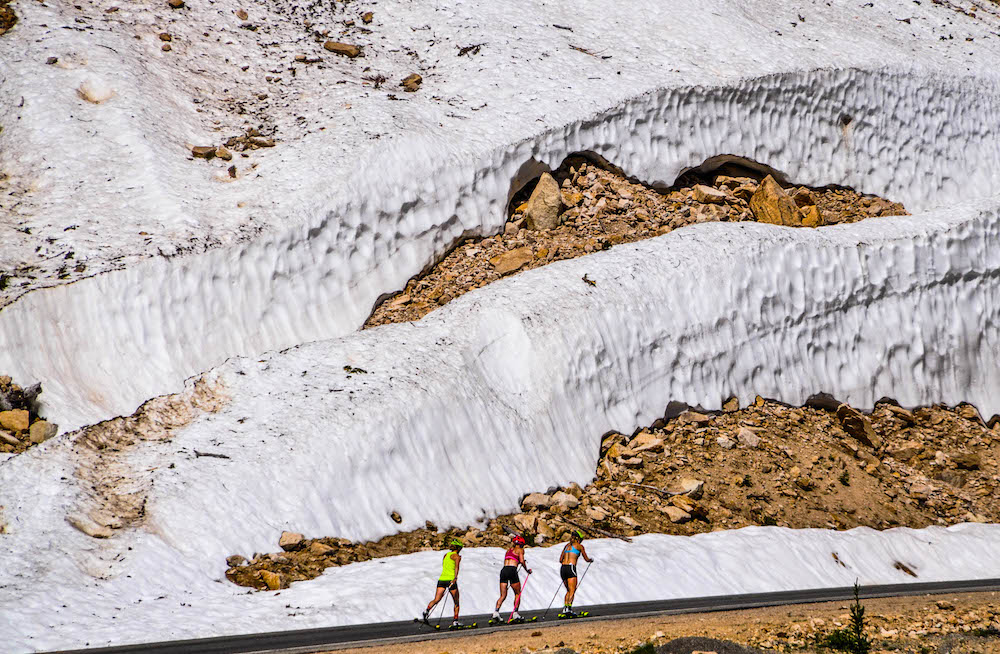
    The U.S. Ski Team women’s team at work during a 10-day camp in the Methow Valley. (Photo: Matt Whitcomb/U.S. Ski Team)

    (Note: This article has been updated to include comments from Canadian coach Ivan Babikov on his team’s recent camp in Park City, Utah.)

    Two days after Andy Newell and Erika Flowers tied the knot in Bozeman, Mont., seven members of the men’s U.S. Ski Team and eight U.S. women’s team members jumped into an intensity training block at their respective dryland camps in Park City, Utah, and the Methow Valley in northern Washington.

    The 10-day camps were scheduled simultaneously from June 26-July 5 to accommodate the wedding. Newell is a longtime U.S. Ski Team (USST) member and teammates with Flowers on the Stratton Mountain School (SMS) Elite Team out of Stratton, Vt. Because several national-team members ventured to Bozeman (Flowers’s hometown) to watch them say “I do,” the USST coaches decided to reduce travel and keep their squads together out west.

    “We wanted to capture the men in the Intermountain West immediately following Andy Newell’s wedding in Bozeman, and therefore reduce the overall travel load for athletes who were already coming to the West from the East or Alaska,” head coach Chris Grover explained in an email.

    The men based themselves in Midway, Utah, about 1,500 feet lower in elevation than Park City and 1,000 feet lower than Deer Valley, where they typically reside for summer and fall camps. Grover explained that this was by design, “because of the shorter duration of the camp (i.e. too short to create a meaningful stay at altitude), the focus on specific intensity workouts, and the benefits of quicker recovery at lower altitude,” he wrote.

    Staying closer to the Soldier Hollow training venue was also ideal for the men’s team’s “PyeongChang-specific workouts”, Grover explained, including sessions focused on the freestyle team sprint, classic sprint and 4 x 10-kilometer relay, which will be contested at the 2018 Winter Olympics in PyeongChang, South Korea.

    Newell, Simi Hamilton, Erik Bjornsen, Scott Patterson, Paddy Caldwell, Ian Torchia, and Ben Saxton attended and worked with coaches Jason Cork, Pat O’Brien, Grover, and U.S. Ski & Snowboard Strength and Conditioning Coach Tschana Schiller.

    “The men did a great job of bringing heightened focus and effort to these key intensity workouts and we are grateful to the staff at Soldier Hollow for preparing the track for us,” Grover wrote. “Overall, it was a very productive camp and I think sent the men into the main summer preparation period with important areas to work on, a good gauge of fitness, and a further understanding of what skills need to be developed for the WC [World Cup] season and for PyeongChang.”

    (Article continues below)

    ***

    Meanwhile, the U.S. women tried a new camp in the Methow Valley, home of current national-team members Sadie and Erik Bjornsen. The athletes themselves dubbed it the “CAGS Camp“, which U.S. women’s coach Matt Whitcomb explained stood for “a secret and mildly inappropriate team acronym that pokes fun at girls being girls. Sophie had hats made for the camp that she handed out at the airport when everyone arrived.”

    All kidding aside, the goal of the camp was to be small and intensity focused, “with eight days of training and hard intervals every other day,” Whitcomb wrote in an email. “It’s an unusual setup for our team as we usually run joint camps with the men, but both enjoyed the simplicity of having such small training groups.

    “We chose the Methow in part because it is where Sadie and Erik Bjornsen grew up, but also because we could get close to sea-level to maximize our hard efforts,” he added. “Another draw was that Pete Dickenson, one of our team physical therapists, was able to provide great treatment all week. Winthrop PT & Fitness sponsored our strength sessions, which meant we didn’t have to drive very far to get strong.”

    Like Grover, Whitcomb used the word “ideal” to describe the Methow as a training site, yet emphasized that the community that hosted them was “even more incredible.”

    “A local couple gave us their two cabins in a location as beautiful as we’ve seen anywhere in the world,” he wrote. “The chance to meet Olympians Laura McCabe (’94, ’98) and Leslie Hall (’88, ’92, ’94) was an important experience for the team. We owe them special thanks not for just guiding us to their favorite training spots, but for helping pave the early path for elite women’s skiing.”

    The women’s team, which included Sadie Bjornsen, Rosie Brennan, Sophie Caldwell, Jessie Diggins, Katharine Ogden, Kikkan Randall, Ida Sargent, and Liz Stephen, spent one afternoon working with with the Methow Valley Nordic Team, which McCabe and Hall both coach.

    “We invited a handful of their top athletes to join our bounding and ski walking sessions, and were encouraged by their technique and fitness, but also their love for the sport,” Whitcomb wrote. “They are doing a good job up there. I don’t know what the future holds for us regarding camp locations, but the Methow Valley will be considered as a great option moving forward.  Thanks to so many people for making it happen.”

    Women’s team staff included Whitcomb, Tim Baucom and physical therapist Pete Dickenson.

    (Article continues below)

    ***

    Cross Country Canada also recently finished up a two-week camp in Park City (June 26-July 11) with its entire men’s World Cup team — Alex Harvey, Len Valjas, Devon Kershaw, Jess Cockney, Knute Johnsgaard, and Graeme Killick — and U25 national-team member Julien Locke. Co-World Cup coaches Ivan Babikov and Louis Bouchard accompanied the team for the duration, and Joel Jaques joined for the first week.

    While Park City has become an annual staple for the Canadian team, Babikov explained that this was their first time there in the summer, as opposed to the fall.

    “We love the area and training there. … It was pretty hot but we managed,” he wrote. “The main goal was a big training volume/hours at the altitude. We were planing on doing a time trial at the SoHo but it got closed for those dates so we ended up doing intensity down in Salt Lake instead.
    It was a great camp for all the guys, everyone feels good and no injuries on the team.”

    https://www.instagram.com/p/BWF7eG6HLJo/?taken-by=coach_babs_

    https://www.instagram.com/p/BWP_Wi_nYV3/?taken-by=coach_babs_

    https://www.instagram.com/p/BWdDCu1nObo/?taken-by=coach_babs_

  • Canadian Men Leave NZ ‘Feeling Good,’ Cracking Jokes

    Canadian Men Leave NZ ‘Feeling Good,’ Cracking Jokes

    Canadian World Cup team member Alex Harvey crashes and burns during a head-to-head sprint with one of his teammates at the Snow Farm near Wanaka, New Zealand, where the team recently spent two weeks training. (Photo from XC Canada video: www.youtube.com/watch?v=8roNOx3M0dk)

    Just over two weeks ago, the Canadian men’s cross-country ski team made the long journey to New Zealand in search of some low-altitude, on-snow volume training. According to head coach Justin Wadsworth, they planned to work on intensity and climbing steep hills.

    That was the plan, and after checking in with Wadsworth before the team left for home on Wednesday, he wrote in an email that all went well. In fact, he described the camp as excellent.

    “Overall we are ahead in every aspect from where we were last year,” Wadsworth wrote. “So I’m very pleased.”

    Lenny Valjas (l) and Alex Harvey while being filmed at the Snow Farm in New Zealand. (From: www.youtube.com/watch?v=8roNOx3M0dk)

    While the four World Cup teammates — Devon Kershaw, Alex Harvey, Ivan Babikov and Lenny Valjas — put in some long days at the Snow Farm near Wanaka, they also had some fun. The team posted a YouTube video called, “Snow Farm – New Zealand – August 2012” to sum up their time there, which was mostly a laughing matter.

    In one scene, the four men stand stand on a treeless trail high above the landscape while taking a break during training. Valjas looks to his left.

    “Pop questions for our teammate Ivan Babikov,” he says.

    “Hey Babs, what’s your spirit animal?” Kershaw chimes in.

    Babikov laughs. “Unicorn?”

    Devon Kershaw (l) interviews Ivan Babikov in an XC Canada video at the Snow Farm in New Zealand. (From: www.youtube.com/watch?v=8roNOx3M0dk)

    The camera pans to Harvey: “Hey Babs, can you explain why we see the moon and the sun at the same time?”

    Babikov pauses. “We’re way down deep south. That’s why.”

    They all laughed, and then it was probably back to training. At least that’s what the videos shows. But between jumping out to scare Kershaw at surprising moments and doing penguin-like belly slides on skis, the Canadian men did have a productive camp. Wadsworth pointed out the quality of a couple speed sessions and hefty amount of technique work.

    “Maybe one of the best days was a crust cruise up to the top of the Pisa Range [the plateau where the Snow Farm is located] on a bluebird day,” he wrote.

    Snow conditions were good despite a thin snow year, he added. The team has also never skied in New Zealand this late in the season (they typically travel there about two weeks earlier in August for the Winter Games NZ races with other international skiers).

    “Really the only hitch was 2 of the 4 guys got a 24 hour flu,” Wadsworth wrote about Harvey and Babikov’s illness about halfway through the camp. “This happened on the morning of the classic time trial we had planned, so we had to move things around a bit, Alex and Ivan bounced back quickly and even though they were rooming with Devon and Lenny the flu didn’t spread.”

    Asked how he was feeling, Harvey responded in an email from the airport that he was doing well.

    “I’m coming out of the camp not really tired,” he wrote. “It’s hard to know what [the sickness] was exactly. … It was quick but pretty intense. Probably something we caught down in town, in Wanaka. I was able to ski twice the next day so I didn’t loose any training really. I just ended up skipping a rest day later in the camp.”

    View from the Snow Farm near Wanaka, New Zealand, in late August. (From: youtube.com/watch?v=8roNOx3M0dk)

    Harvey added that having the camp a bit later gave them more time to enjoy summer back in Canada. Once they arrived in New Zealand, he said the conditions were still good, just a bit more spring-like.

    “But there was never a day were we couldn’t ski because of the weather, which is pretty good for the Snow Farm,” he wrote. “We usually get one or two days were we can’t ski up there so we were lucky this time.”

    Just like other team training camps, Harvey focused on completing hard-intensity workouts with his teammates.

    “The training camps are the only time I do Level 4 intensity in the summer so it’s good to be with the boys to do that,” he wrote. “We also worked a lot on technique, classic, skating, uphills, flats. Trying to improve a bit on all aspects. I feel like I was able to put a lot of hours on snow, maintain the strength training while doing 4 solid hard intensity sessions and training kind of at altitude.”

    (Harvey trains at sea level near Quebec City and could feel the difference at the Snow Farm’s elevation at 1,500 meters.)

    “I’m coming out of the camp fitter and faster that’s for sure,” he added. “I feel like the camp didn’t take too much out of me so I should ba able to get two more solid weeks of training before our next camp in Park City, Utah (from Sept. 23-Oct. 4).”

    As for highlights, Harvey picked out three:

    “1. The weather allowed us to ski everyday if we wanted to.

    2. Settlers of Catan. It’s ‘The Game that Defines our Generation!’

    3. Devon’s beard and hair combo. Skyping with my mom, she asked why he tried to look like a hobo and said that he’s a ‘complete disaster.’ “

  • Canadian Men En Route to New Zealand; Plan to Meet Hoffman and Freeman

    The Snow Farm, as seen in July 2010, where the Canadian men’s team will be the lone North-American contingent training for nearly three weeks starting Aug. 22 near Wanaka, New Zealand. According to Canadian head coach Justin Wadsworth, U.S. Ski Team members Kris Freeman and Noah Hoffman will also be there.

    Scattered throughout Canada on Sunday, four World Cup team members and their coaching and support staff started their long journey to the land down under – that is, New Zealand.

    Alex Harvey ate handmade chocolates and sipped a steamed drink while waiting for his 16-hour flight out of Québec International Airport, then got upgraded to business class, according to Twitter.

    Meanwhile, his teammate Devon Kershaw tweeted that he was in coach on another flight, but didn’t mind.

    “It’s awesome in the back,” Kershaw wrote. “Middle of the middle for 15 hours #decent?”

    As head coach Justin Wadsworth stepped off the plane in Denver and awaited his departure for Los Angeles, he took the time to chat with FasterSkier on the phone. The entire Canadian men’s team – Harvey, Kershaw, Lenny Valjas and Ivan Babikov – will arrive in Queenstown, New Zealand, on Tuesday afternoon. They’ll start training Wednesday and spend about two and a half weeks on snow at the Snow Farm near Wanaka.

    ***

    FasterSkier: Last year, you timed the trip with the New Zealand Winter Games so your skiers could race at the Snow Farm. Why did you schedule it later this year?

    Justin Wadsworth: We have a lot of camps. In the summer, it works out to be almost two weeks out of every month the athletes are in camps. I thought this summer it might be nice to give everyone a six-week period with no camps. That’s basically what we did to try to create more of a stay-at-home and get back into a groove where everybody lives. Our last camp was up on the Haig Glacier, you know, as part of our Hawaii camp. [Note: The men’s team was in Hawaii from mid June to July 4, then skied on the Haig Glacier near Canmore, Alberta, from July 5-9].

    It has been a nice break for everybody, including myself, and then it just worked out well. We usually have a two-week break before the Park City altitude camp in September [where both the Canadian men’s and women’s teams will train together in Utah from Sept. 23-Oct. 4].

    FS: What are some training goals while in New Zealand?

    JW: This is kind of a volume camp. We have other periods where we focus a little bit more on intensity. This one is volume-based and obviously on snow. It’s worked very well in the past few years [at creating a base for really good ski technique and working on climbing. We’ve been rollerskiing a lot and glacier skiing where there’s not a lot of opportunity for super-steep uphill training]. It’s just terrain that’s good to be on for working the steep uphill.

    FS: Why else is it important to travel there for snow?

    The men’s 15 k classic mass start podium from 2009 in New Zealand: Canadian winner Devon Kershaw (c) and teammate Ivan Babikov (l) and American runner-up Kris Freeman (r).

    JW: We have opportunities to ski in Canada and right behind Canmore on the glacier, but New Zealand provides us with straight-out-the-door, fairly low altitude, and just really, really good winter snow conditions to train from. I, personally, and I think the athletes really feel like this camp provides them something that a lot of their summer skiing doesn’t.

    I know other North Americans are sort of straying away from going there, but … I think it is a super-high value for us to be down there, and it’s worth the trip even though it’s a long trip down there. It’s a really good place to get some quality training in.

    [Note: For the first time in 10 years, the U.S. Ski Team will not be training in New Zealand this summer. Head coach Chris Grover cited the steep rise in airfare, lengthy travel and 16-hour time-difference adjustment as reasons for skipping the trip. Instead, the U.S. men recently skied in Austria and Germany, and the women just wrapped up two weeks of training in Sweden.]

    FS: Which international skiers will still be at the Snow Farm?

    JW: Right now, the Russians are down there and Justyna Kowalczyk and one other male sprinter from Poland [Maciej Kreczmer], and then Kris Freeman and Noah Hoffman [of the U.S. Ski Team] will be down there a little bit later. There’ll be a few other folks there.

    FS: Do you plan to coordinate workouts with Freeman and Hoffman?

    JW: Hoff gave me an email a couple days ago and asked me what our plan was down there. He said he’d like to at least hook up for some workouts. We’ll probably do a time trial down there so it might be nice to get those guys into that one and probably some intensity with them also. I mean, we’re happy to work with those guys and I’m sure they’ll ski a lot together in the distance workouts. The majority of the sessions down there are distance training.

    FS: It seems like the North American women have been pushing particularly hard to train together. How would you describe the relationship between the Canadian and U.S. men?

    JW: It’s a little bit different between men and women. I think the social aspect on the women’s side is so much more important, and I think that’s a big difference. It’s not that we don’t want to train with Hoff or Bird, it’s just guys in general do a little bit more on their own. We’re not going to force it, but definitely there will be some company on the long workouts that they’ll be welcome [to join at the Snow Farm]. It will be nice to have those guys there.

    FS: Which of your staff members are going?

    JW: Myself and [wax tech] Joel Jaques, [team physiotherapist] Shayne Hutchins, and then [men’s assistant coach] Louie Bouchard … so we have a pretty good staff-to-athlete ratio on this one.

    FS: Will the training sessions be mostly structured similarly or individually?

    JW: Occasionally, we’ll have different workouts, but [at] almost all the camps, guys do all the workouts together. We can vary the length of them and stuff individually, but they do all pretty much the same plan for the camp so it works out really nicely and I think it’s beneficial for all the guys.

    You kind of see that now, Lenny’s coming up and I think Ivan’s doing really well right now. He’s focusing on some things for him on the side leading into this period, so I really feel good where he is and where Devon is, and I know Alex is doing well. Everyone’s doing great. They all train together and hopefully push each other a bit when we need to push.

    [Note: Kershaw and Babikov have been training together throughout the summer in Canmore. In a recent blog post, Kershaw wrote: “After the momentum we gained during the Maui camp – Ivan and I have been working super well together under the watchful eye of Justin. It’s a different set up with the men and women training separately this year which is a big change, but things with the men’s team seem to be going splendid.”

    FS: How are the team dynamics in general?

    JW: We separated the men and the women this year and I think that’s been working well. We’re going to get everybody together in Park City. We’ll be doing slightly different things, but we’re going to be sharing some meals and stuff together.

    The reports on [women’s national-team members] Chandra [Crawford], Dasha [Gaiazova] and Peri [Jones] have been really good, and the vibe on the guys’ team is always good. I’m feeling really good about how things are, and it’ll be good to get the team together in Park City because we’re going to be spending a lot of time together starting in November. It’s good to make sure we’re all on the same page.

    FS: And that camp’s timed slightly before the USST training camp in Park City (from Oct. 8-18)?

    JW: It just didn’t work out timing wise because we want to be back up in Canada for Frozen Thunder starting on [October] 15th. We wanted our men and women to be at the Park City camp together. The U.S. women will be in Canmore so that’s kind of the shared time when our ladies can train with their ladies during that period. It’s important to get the team together in Park City just to make sure we don’t lose contact with that.