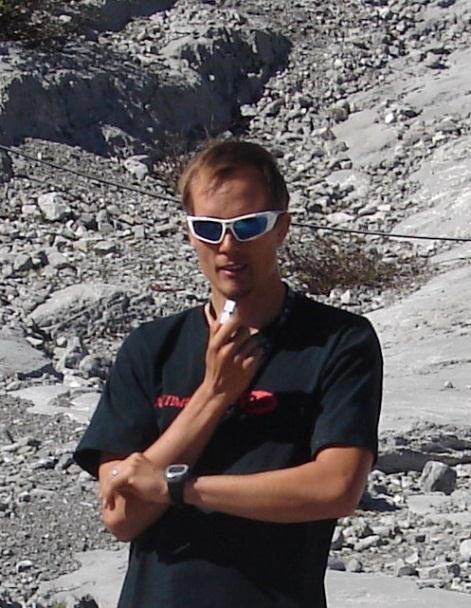
Several weeks ago, I received an email from Dave Wood, a longtime head coach of the Canadian National Ski Team. He had just arrived in my hometown of Mammoth Lakes, Calif., with a small group of athletes from Black Jack Ski Club in Rossland, B.C. We planned a rendezvous to catch up and to chat about the local training hot spots.
It had been a few years since Wood had been in Mammoth with skiers. Back around 2003 or 2004, during his tenure as Canada’s national-team head coach, he had discovered this high-altitude training location through an online search and some U.S. distance running links. A reconnaissance to the area gave him all the information he needed: a “live high and train high or low” scenario with great fall weather and miles of trails and open roads.
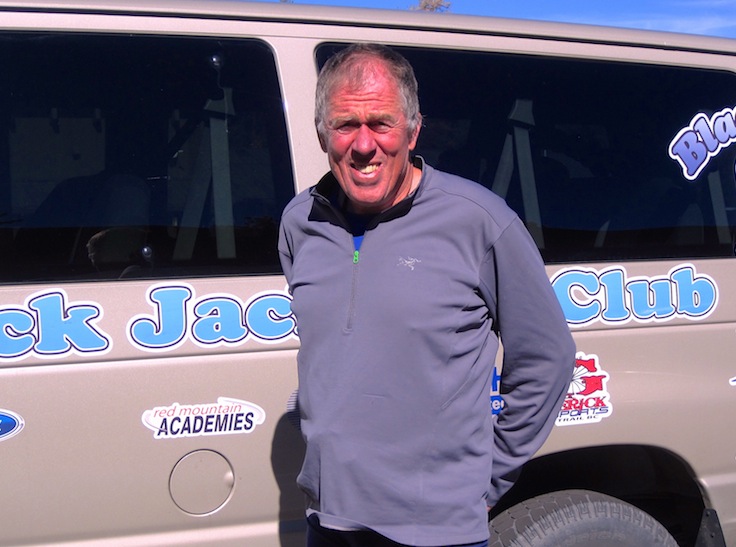
For several subsequent falls, Wood and his national team left their home base in Canmore, Alberta, for three weeks of high-altitude sunshine in the Eastern Sierra. Now, Wood was back, this time with a few dedicated athletes from Black Jack, of which he had been the head coach since 2010.
The Black Jack camp format was similar to the national-team camps he ran in Mammoth years before. Condominium living at just over 8,000 feet gave athletes rollerskiing options right out the door, with single-track running trails not too far away. Proximity to the town of Mammoth Lakes offered a fitness club, grocery store, and some rest day “in-town” opportunities were just a short bike ride away.
As Wood explained over coffee, the beauty of coming to Mammoth was the convenience of being able to stay in town and drive 40 minutes down to 4,000 feet for intensity training. He raved about the “exceptional rollerskiing,” where on one lonely road leading to Nevada, his athletes saw only a handful of cars during an over-distance rollerski workout.
I had hoped to join Wood and his Black Jack skiers for several workouts, but managed just one: a long run in Lower Rock Creek. Wood had to leave town for a couple of days, so he enlisted me to take the athletes to a nearby trailhead for their run over Duck Pass. Several inches of snow overnight jammed up that idea, so I drove down the hill with the guys and Chisa Obayashi, a Japanese skier who has been training under Wood’s supervision the past few months. I had in mind beginning the run out of the snow zone at the Paradise trailhead, just north of Bishop, Calif.
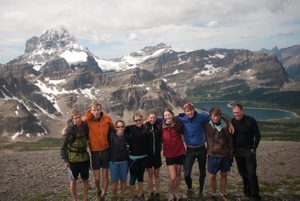
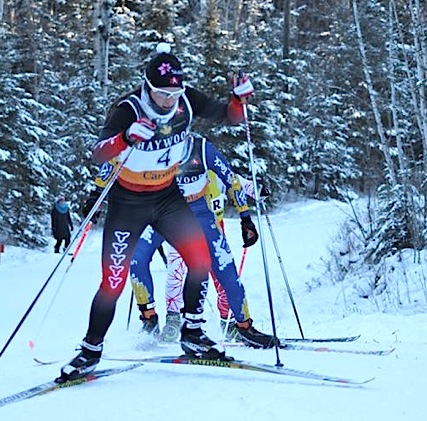
Tagging along on the run through towering Jeffrey pines and golden aspens, I was able to learn a little bit about the Black Jack athletes. David Palmer and Colin Ferrie, accomplished junior skiers, are heading into their first year as seniors. They, along with teammate Julien Locke, who missed the trip due to an injury, are among the best in their age group in Canada. They have had solid training all summer including a trip to get on snow at the Haig Glacier. Following their Mammoth camp, they will be heading to Canmore for some time on Frozen Thunder.
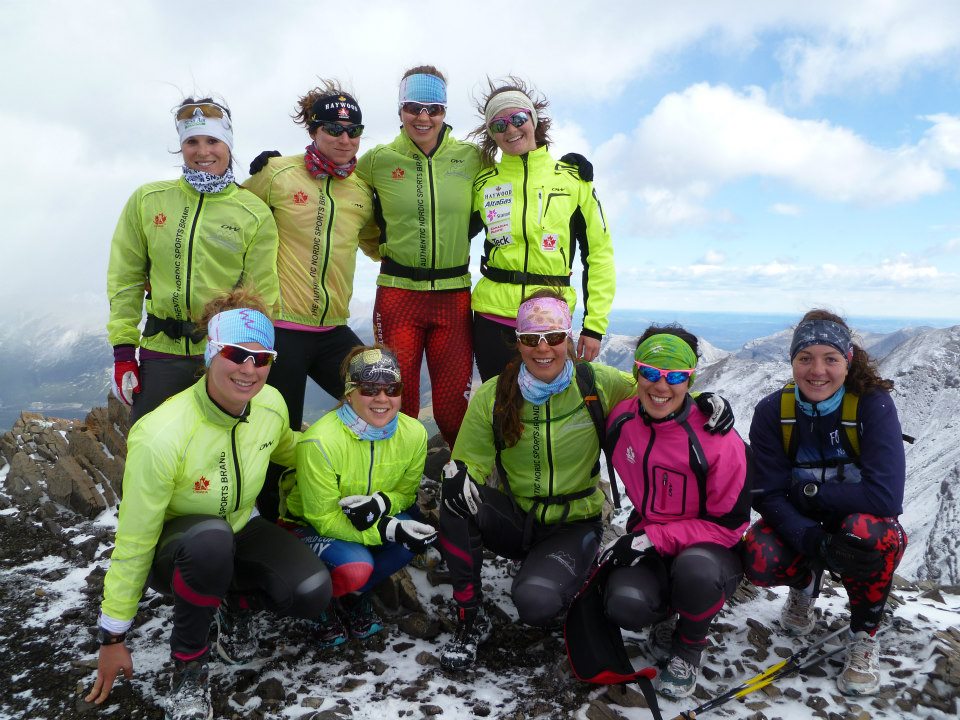
An adopted Black Jack skier, Obayashi made the trip down to Mammoth with the men’s team and was also planning to join them after in Canmore, where she would get some snow kilometers before going to Finland for the start of the racing season. Obayashi connected with Wood through her manager in Japan and had only positive things to say about her training experience in North America, she told me as we ran on the Lower Rock Creek trail.
The kind of individualized coaching she was receiving from Wood was hard to come by in Japan. She had no regular training group in Japan, so the opportunity to train with Black Jack was setting her up well for her quest to make the Japanese Olympic Team.
Chief, Cook and Bottle Washer
A few days later, I met up with Wood again for lunch. He pulled up in the team van on time, but appeared a bit flustered. Dressed in running clothes, he explained that he had dropped off his group over in June Lake to do a three-hour, point-to-point run. He then drove to the termination of the run, parked and began to run the trail in to meet the athletes. They ended up missing a key turn and added nearly an hour to their run. Wood shook his head, muttering something about knuckleheads, but it was hard for Wood to disguise his pride in his skiers.
The soft-spoken 58-year-old Wood is unflappable, handling his role as “chief, cook and bottle washer” for Black Jack in his customary professional manner. He uses the same thorough and systematic system to train his club skiers as he did to build a solid Canadian team. Wood uses the Mammoth camp as an altitude block is based on science, experience and much thought. There is even a short recovery phase when the athletes pack up and go down to 4,000 feet to sleep.

Four years after resigning from his position at Cross Country Canada following the 2010 Olympics, Wood seems to have landed on his feet. As he explained it, after 18 years with CCC, holding positions as head wax technician, head coach and team leader, it was time to move on. He described his transition without a trace of rancor. In fact, the move to Rossland seemed like the most natural thing in the world.
After eight years of commuting from Canmore to Rossland to see his girlfriend (about a 6 ½-hour drive in good weather), Wood saw his exit from CCC as the perfect opportunity to move in with Alison, an operating-room nurse at a local hospital. At the same time, Black Jack was looking for a head coach, so Wood felt the timing was perfect.
Black Jack is a well-established nordic club with over 700 members. It offers programs for 4 year olds to masters, with a small, but active racing program. Ski Academy opportunities are available for Black Jack skiers, as well as for the local alpine program, Red Mountain Racers.
With about 3,500 residents, Rossland is nestled in the Monashee Mountains of the West Kootenay region at an elevation of 3,410 feet. Winter sports are a big deal there, which usually has skiing from early November through late April. Red Mountain Resort boasts an average 300 inches of snowfall per year and the Black Jack trail system features 40 kilometers of groomed track, a lighted loop, a kids terrain park, and a biathlon range. An extensive mountain-bike park offers single track riding and running during the summer, making Rossland an ideal home for a nordic skier.
Wood’s approach to ski racing is simple. He believes the bottom line is using the training to become faster.
“You can’t improve by just going to Europe to race,” he said. “You have to figure out a way to cut 45 seconds over 15 kilometers before going.”
He likes to keep travel to a minimum during the training phase in order to accomplish goals. There are so many training and racing opportunities out there for skiers, but it’s easy to lose sight of what you are really after, which can boil down to those 45 seconds.
Thoughts from a Former Coach
While Wood has been busy with Black Jack the past several years, he’s kept an eye on what is happening at the national level in Canada. Coaching the nation’s top skiers through CCC gave him perspective on his job as a club coach, which notably has different viewpoints and team structure than the nation’s four training centres. There is a lot of training, racing and experience necessary to bridge the gap from club to national-team skier and even more to move into the international realm.
Wood’s approach to ski racing is simple. He believes the bottom line is using the training to become faster.
On the state of skiing in Canada, Wood has definite concerns. He recognizes the success of the women’s team in recent years, with medal performances by Beckie Scott, Sara Renner and Chandra Crawford, and a men’s team highlighted by Devon Kershaw’s overall second place in the 2012 World Cup, and Kershaw and Alex Harvey’s sprint championship title at the 2011 World Championships. The problem CCC faces is a lack of depth in its program, he said.
Wood sees the potential for Canadian success at Sochi in the sprint and team sprint. On the Canada’s stated goal of winning two medals, Wood said, “You have to ski the race before you win the medal.”
While Harvey is a proven racer, Kershaw has to have a better year than last year for any of this to happen, he said. Wood sees lack of depth on the women’s side as a liability, as well as problems with the Olympic qualification system. It’s difficult to compete against teams like Russia, Norway and Sweden that have large pools of athletes racing at a high level. Those countries can play with putting athletes with fresh legs out in every race.
One of the underlying problems he sees within the Canadian system is that all of the funding is at the World Cup level. He estimates that what was CCC’s $180,000 dollar budget in 1999 is probably now close to a $2-million dollar budget. Development is left up to the four training centres. While these centres are nationally funded, Wood said there’s a lack of a coaching system, resulting in inexperienced coaches.
In his opinion, the biggest hurdle for athletes taking part in the training centres is the cost. At a given training centre, he estimated $12,000 Canadian dollars covers a year of coaching and four weekends of racing, but by the time the racing season is over, participants doll out $20,000 to $30,000 annually. Sponsorships are difficult to come by and jobs are low-paying in the training centre locales. Wood isn’t sure enough athletes are going through the system to build the kind of depth CCC needs to become an international power.
Adding to the situation is the lack of skier development opportunity through the Canadian universities, he said. Lots of junior athletes are dropping out of the sport at 18 years old to get an education.
Wood is confident that what he is providing at Black Jack is an affordable, high-quality program for juniors and seniors to help make the jump to the international level. A lot of money is spent on Integrated Sports Teams at the national training centres, he said. Besides the expense of these doctors, trainers, massage therapists, etc., is the cost of waxing and equipment.
“Cut down on this nonsense, and it would be affordable,” Wood said.
Wood keeps expenses down for his athletes by, once again, keeping things simple. He keeps his wax box stocked with a minimum of wax brands, and while not denying that wax technology is a major element of ski racing, he said it helps to remember what the race really comes down to.
“Cut down on this nonsense, and it would be affordable.”
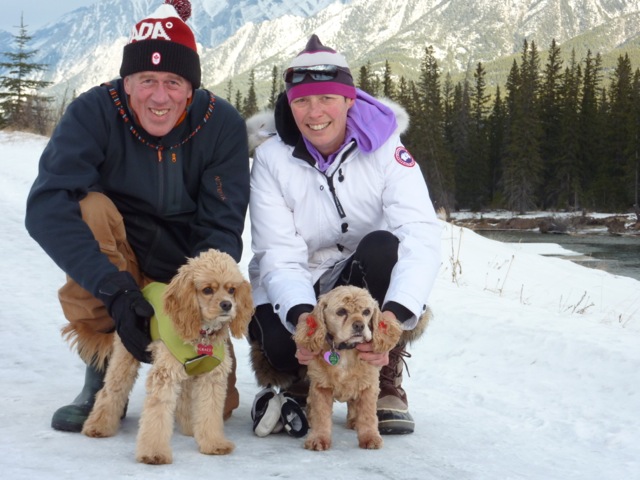
After the Mammoth camp, Wood and the Black Jack skiers planned to head back to Rossland for a short break. Wood had a few days of downtime with Alison and their two Cocker Spaniels, then was due in Canmore for an on-snow camp at Frozen Thunder.
The schedule in November is dedicated to snow camps in Vernon and Rossland, with racing kicking off at December NorAms in the same locations. Things ramp up in January for the Black Jack skiers, with a NorAm in Canmore, the qualifier for Olympics, U23, and Junior World competitions. The remainder of the season sees the team criss-crossing Canada attending Eastern and Western Canadian Championships, and Canadian Championships in Newfoundland in March. The season concludes with March BC provincial events.