
From the FasterSkier archive — posts syndicated from athletes’ and coaches’ own blogs between 2004 and 2012, kept online as published. Current coverage is at fasterskier.com.

Tag: Canadian Paralympic Committee

  • FasterSkier’s Para-Nordic Skiers of the Year: Oksana Masters and Brian McKeever

    FasterSkier’s Para-Nordic Skiers of the Year: Oksana Masters and Brian McKeever

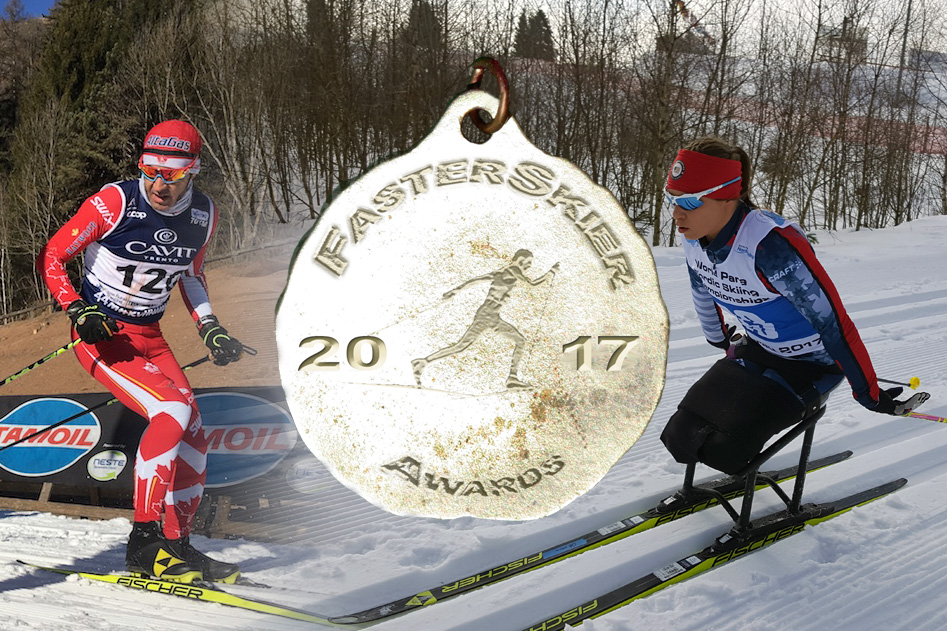
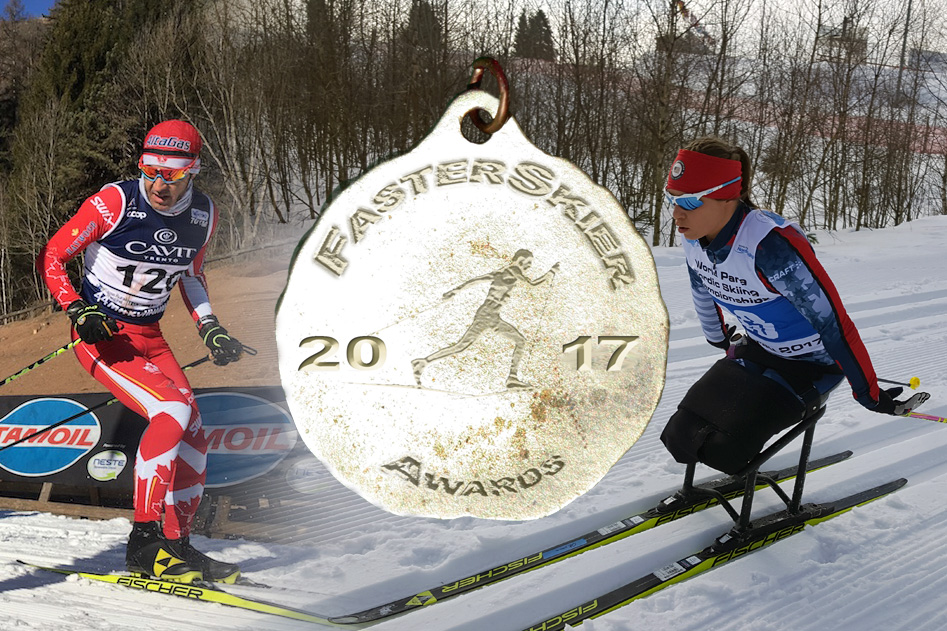
    Canada’s Brian McKeever (Photo: Graham Longford) and American Oksana Masters (Photo: USOC) are FasterSkier’s Para-Nordic Skiers of the Year.

    With the 2016/2017 season officially in the rearview, FasterSkier is excited to unveil its annual award winners for this past winter. Votes stem from the FS staff, scattered across the U.S., Canada, and Europe, and while not scientific, they are intended to reflect a broader sense of the season in review. This set of honors goes to outstanding Para-Nordic skiers on the IPC World Cup circuit. 

    Previous categories: Junior Skiers of the Year | Collegiate Skiers of the Year | Canadian Continental Skiers of the Year | U.S. Continental Skiers of the Year | Nordic Combined Athlete of the Year | Biathletes of the Year

    ***

    Oksana Masters, U.S. Paralympics Nordic 

    Six medals in seven days. Four of them gold. Never before had a U.S. athlete taken home four gold medals from a World Para Nordic Skiing Championships, but U.S. Paralympics Nordic A-team member Oksana Masters changed all that.
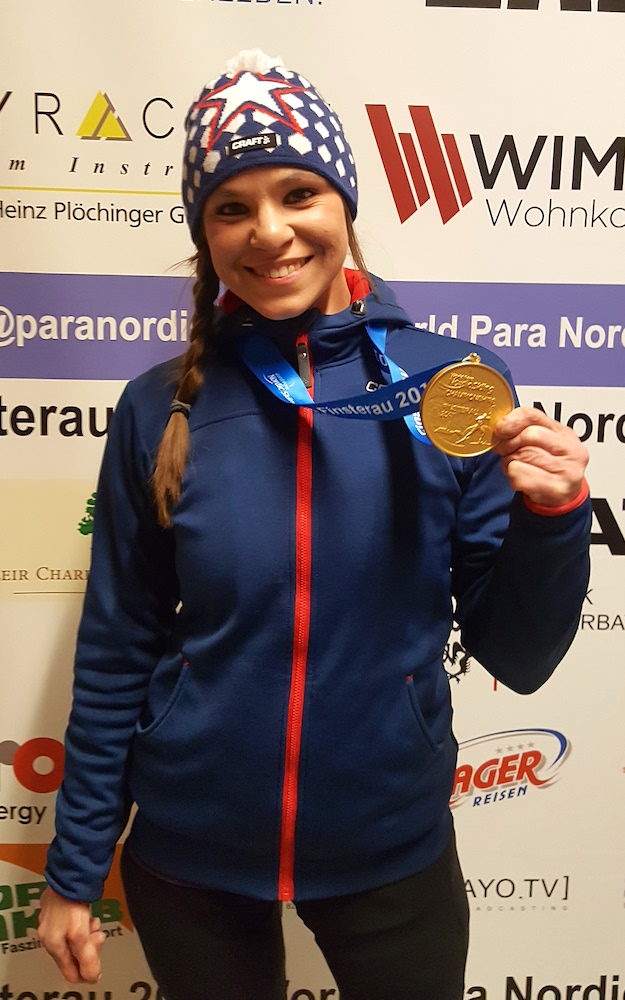
    Oksana Masters (U.S. Paralympics Nordic) after winning her first IPC World Championships gold in the women’s cross-country sitting sprint on Sunday, Feb. 12, in Finsterau, Germany. (Photo: John Farra/US Paralympics Nordic)

    The 27-year-old sit skier racked up six World Championships medals in Finsterau, Germany, including her second-career biathlon win in the women’s 6 k sprint (her first came earlier this season in the first biathlon race of the year).

    “I am completely shocked,” Masters told media outlets after the sprint. “I entered this race with no expectations. I went from not being sure if I was going to be able to race the last two days to winning my first gold medal in biathlon. I’m so excited! I cannot wait to let this all soak in.”

    But Masters didn’t just dominate the world champs scene. After ending last season undefeated in every International Paralympic Committee (IPC) World Cup cross-country race she entered, she almost did it again, winning all but one cross-country race this winter (she placed second in the last cross-country race of the season).

    “I feel like I had a pretty great season, especially coming off training for a complete other sport that uses a complete opposite motion not too long ago,” Masters said, according to a U.S. Paralympics press release, referring to her handcycling training for the 2016 Summer Olympics.

    “I’m really happy with my season and my training,” she added. “I feel extremely hopeful to have to good races in PyeongChang next year.”

    Brian McKeever, Canadian Para-Nordic Skiing

    At 37, Canada’s Brian McKeever is a team veteran and a world leader in para-nordic skiing. In 2010, he became the first athlete in the world to be named to both Olympic and Paralympic teams. In his three Winter Paralympics, he’s accumulated 13 medals, 10 of them gold.

    And this year, after turning his focus to the overseas Ski Classics marathon series, he earned his 18th and 19th IPC World Championships gold, winning both the men’s 10 k and 20 k visually impaired races. Prior to that, he won the season-opening IPC World Cup sprint in Vuokatti, Finland. By the end of the season, he also qualified for and competed in the International Ski Federation (FIS) World Cup Finals in Quebec City, Quebec.

    Brian McKeever jumping in front of Norway's Petter Kaarby just before the final climb. (Photo: Graham Longford)
    Brian McKeever passing Norway’s Petter Kaarby just before the final climb of the 2017 Marciolonga in Italy. He finished 57th overall. (Photo: Graham Longford)

    “I think putting the focus on Ski Classics this year was really interesting. From struggling to hit the top 40 to suddenly to be able to ski with the leaders this year, that was good,” McKeever said after his final race at World Cup Finals.

    “I am learning as well in that, and I see the opportunities there with the older guys that are still at the top and that is highly motivating for a guy that is maybe beyond his peak, at least as far as age goes, but I am still having fun and still learning,” he added. “So that is motivating for me, to continually learn something when I am out racing.”  

    Honorable Mention: Mark Arendz, Canadian Para-Nordic Skiing

    Canada’s Mark Arendz, now 27, also opened his World Championships week with a win for his second world title and first podium at a top-level international race (in a non-Paralympic year) in three years after winning the men’s 12.5 k standing biathlon race. 

    He earned four more world champs medals, including a biathlon sprint gold, a biathlon individual silver, a cross-country bronze, and a relay bronze.

     “It has been an incredible season for me, but most noticeably I have brought my shooting back,” Arendz wrote in an email to FasterSkier. “It is now a strength and no longer holding me back. The other huge take away is I now have the confidence in my ski speed to be competitive in any Cross Country race.”

    “The highlights from the season for me were World Championships and the 10km Classic in Korea,” Arendz continued. “Worlds were fantastic for me. Five medals from six races; the confidence was there and I was in the best shape of the year. I carried that shape into the test event in Korea. For two out of three laps I was having my best classic race ever. After a little stumble I couldn’t regain my focus, but until then I had the confidence that I could win a Classic race. I will grasp that belief into the training season.”
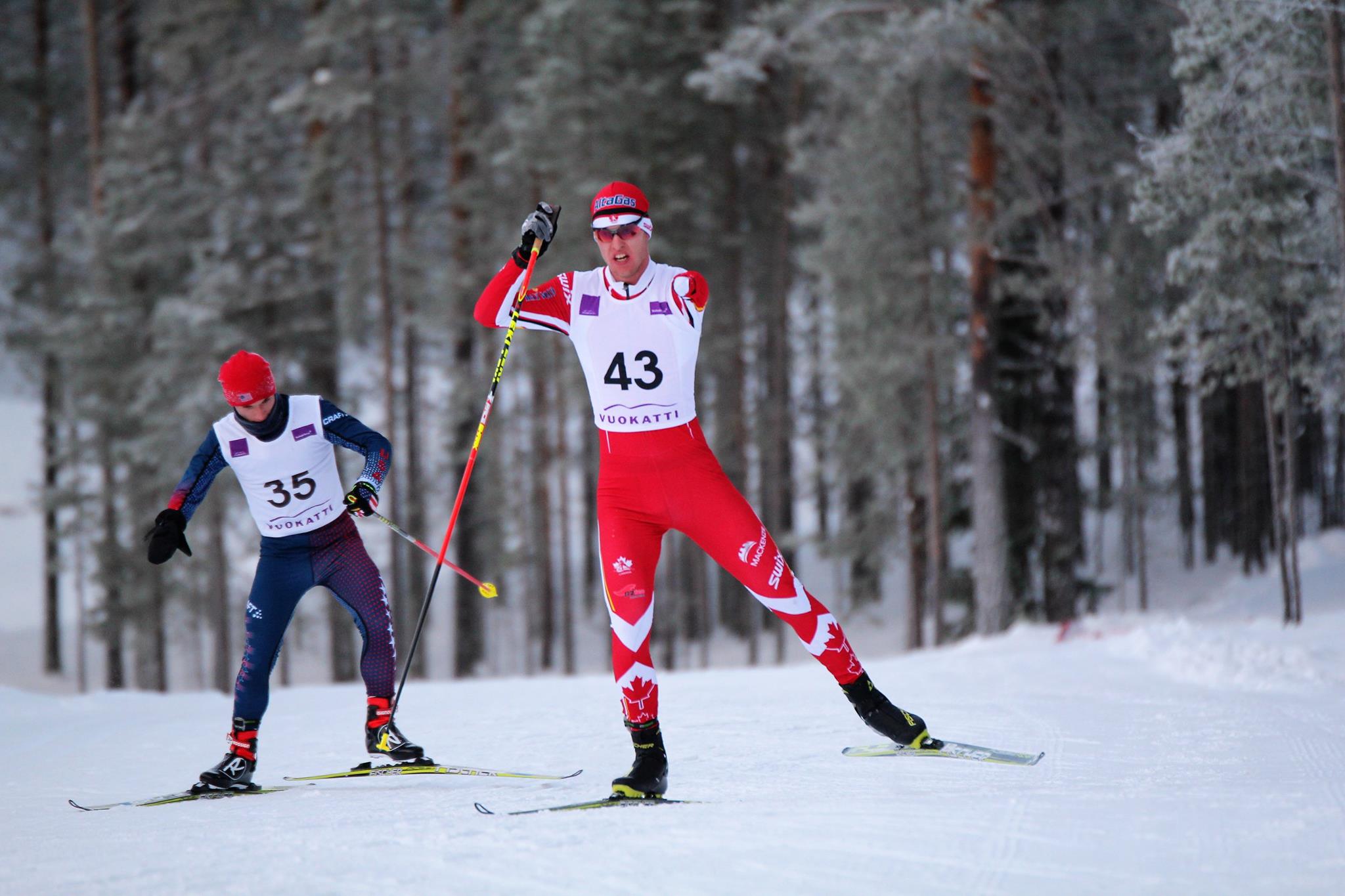
    Mark Arendz (43) of the Canadian Para-Nordic Ski Team racing to silver at the IPC World Cup on Dec. 12, in Vuokatti, Finland. (Photo: Canadian Para-Nordic Skiing/Facebook)
  • Canada Invests Nearly $1 Million into Anonymous Doping Hotline

    Canada Invests Nearly $1 Million into Anonymous Doping Hotline

    Canada recently launched a Report Doping Hotline though the Canadian Centre for Ethics in Sport. “Our Government is committed to eliminating doping in sport and ensuring Canadians athletes compete on a safe and fair field of play,” Canadian Minister of State (Sport) Bal Gosal said in a press release. “This increased contribution from the Government of Canada and our partners will enhance the Canadian anti-doping program by strengthening its testing and investigative capacity.”
    Canada recently launched a Report Doping Hotline though the Canadian Centre for Ethics in Sport. “Our Government is committed to eliminating doping in sport and ensuring Canadians athletes compete on a safe and fair field of play,” Canadian Minister of State (Sport) Bal Gosal said in a press release. “This increased contribution from the Government of Canada and our partners will enhance the Canadian anti-doping program by strengthening its testing and investigative capacity.”

    “With increased intelligence we can test the right athlete, at the right place and at the right time. This is a huge win for fair and clean sport.” — Paul Melia, Canadian Centre for Ethics in Sport CEO and President, in a press release

    On Nov. 5, the Canadian Centre for Ethics in Sport announced the creation of a new and anonymous Report Doping Hotline (1-800-710-CCES), funded by the Canadian government, Canadian Olympic Committee and the Canadian Paralympic Committee to the tune of nearly $1 million Canadian dollars.

    According to the CCES website, the hotline came about as a result of public-opinion research commissioned by the CCES. According to its findings, “Canadian and athletes want clean sport.” The additional funding will ensure that all Olympic and Paralympic athletes will be tested during the months leading to the Sochi Olympics and provide a risk-free platform for reporting their peers.

    Canada is not the first country to come up with a snitch line for doping accusations. The United Kingdom and Australia have similar hotlines, as well as the United States. Another endurance sport, cycling is also attempting to round up dopers through its Union Cycliste Internationale (UCI) Hotline. The UCI hotline, in place since January 16 records calls then forwards them to trained specialists in the anti-doping field who then decide what actions need to be taken to catch the suspected cheaters.

    Established in 2004, US Anti-Doping Agency (USADA) Play Clean Tip Center (1-877-752-9253) invites callers to leave a message so that the USADA can contact the caller. It is also possible to email or physically mail a note.

    “The line was designed as an avenue, for anyone, but especially for athletes, to contact USADA when they believe doping has compromised the integrity of sport,” USADA Media Relations Manager Annie Skinner wrote in an email. “Callers may choose to remain anonymous and all information is evaluated.”

    According to Skinner, USADA also accepts tips about suspected cheaters outside of the U.S.

    “It’s another step toward catching dopers. Testing does catch some people, but going ‘inside’ the sport and allowing an avenue for clean athletes to report suspicious activity is important.” — Justin Wadsworth, head coach of Cross Country Canada’s World Cup Team

    Canada’s doping hotline seems to be getting some use, with an “all lines are busy” message frequently encountered by callers, as this FasterSkier reporter learned through a battery of calls over the course of several days.

    An Olympic gold medalist from the 2002 Winter Games, Canadian Beckie Scott stands behind the new hotline. Initially third in the 5-kilometre pursuit, she became the first North American woman to earn an Olympic gold more than two years after the Games; the first- and second-place finishers were disqualified for testing positive for banned substances.

    In an interview with CBC Radio’s “As it Happens,” Scott said she would have used the hotline had it existed when she was racing. She would have called about suspicious activity she witnessed, which didn’t include her Canadian teammates, who were 100-percent clean, she said.

    Her husband and current head coach of the Canadian national cross-country ski team, Justin Wadsworth also supports the hotline.

    “It’s another step toward catching dopers,” he wrote in an email. “Testing does catch some people, but going ‘inside’ the sport and allowing an avenue for clean athletes to report suspicious activity is important. I think the future of catching athletes and teams who dope is through more investigative work coupled with targeted out-of-comp testing. Either way, allowing an anonymous way to give testing agencies more info is a good thing.”

    While Wadsworth hints at that doping is larger than isolated individual incidents, the CCES website comes right out and states: “Athletes who dope, rarely, if ever, act alone.”

    Citing the Lance Armstrong doping scandal, CCES President and CEO Paul Melia wrote on his blog that doping riders were aided and abetted by coaches, trainers, doctors, and others. Catching and punishing those in the supply chain will put a dent in doping, he reasoned. Working with Border Services Agencies is a start. Much can be learned from intelligence gathering on the importation of banned substances and drug enforcement agencies can provide information on drug busts and seizures. Name gathering at the drug trafficking level can lead to names and destinations at the receiving end of the deal.

    “Perhaps there is a more immediate and valuable source of information, that up until now has gone largely untapped,” Melia added. “That source is the athletes themselves.”

    While the new World Anti-Doping Agency (WADA) Code gives caught dopers reduced sanctions if they provide information on others involved in banned behavior, the new code does not encourage clean athletes to share suspected doping activity.

    “It is up to individual countries, their sports governing bodies and their national anti-doping agencies to come up with ways to do this,” Melia explained.

    The plan is big in Canada and with nearly $1 million dollars behind it, it is clear that the nation intends to catch dopers before they get to Sochi in February. The first step might be to man the phone lines with actual people, rather than automated requests to leave messages.