Tag: Canadian Senior Development Team

  • Pros of Tomorrow: Widmer Lives Her Dream in Switzerland

    Pros of Tomorrow: Widmer Lives Her Dream in Switzerland

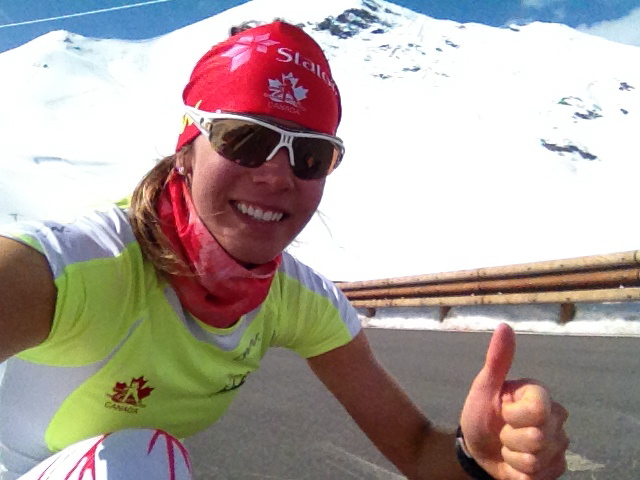
    A happy Heidi Widmer on a bluebird day at Stelvio Pass in Switzerland. She spent five days at a Swiss national-team training camp near the Italian border  in early June. (Courtesy photo)
    A happy Heidi Widmer on a bluebird day at Stelvio Pass in Switzerland. She spent five days there at a Swiss national-team training camp near the Italian border in early June. Widmer, 22, made the Canadian Senior Development Team in April. (Courtesy photo)

    Editor’s Note: This is a continuation of our recently relaunched ‘Pros of Tomorrow’ series, which highlights some of the most notable up-and-coming athletes around the world. See also: Cendrine Browne

    ***

    Fresh off her last races of the season at Canadian Nationals in Whistler, British Columbia, Heidi Widmer plunged into the backcountry in early April for some ski touring in Callaghan Valley.

    There, the 22-year-old Banff native knocked off the 1,275-metre (nearly 4,200-foot) Mt. Cayoosh and headed to a lodge in the Selkirk Mountains for more touring. Even with all the physical activity capping a long season, Widmer considered the trip relaxing amid beautiful scenery.
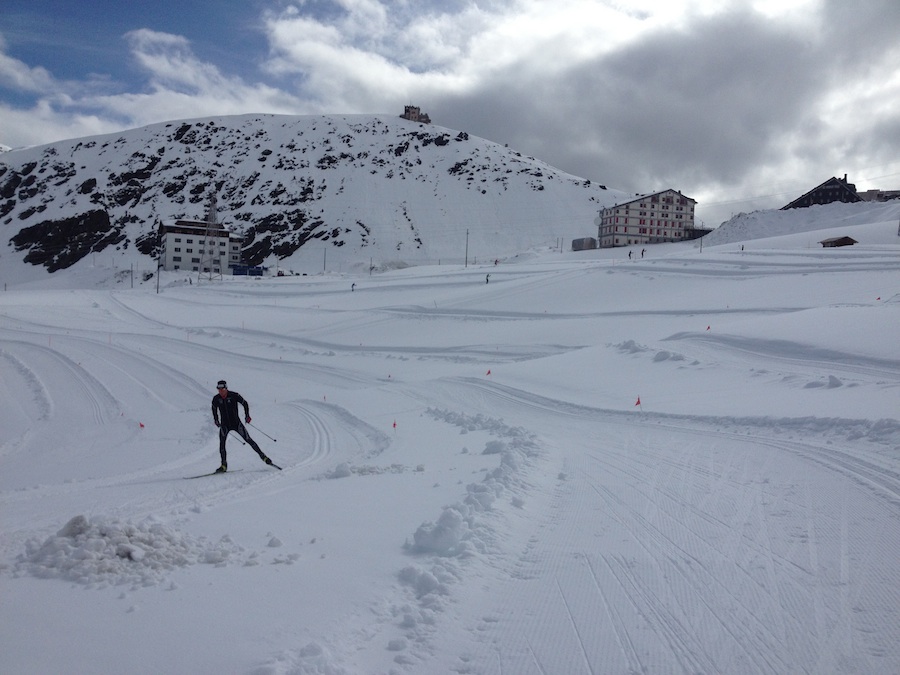
    The Stelvio Pass ski track and hotel Widmer stayed at 2,700 metres above sea level in Switzerland. (Courtesy photo)
    The Stelvio Pass ski track and hotel Widmer stayed at earlier this month 2,700 metres above sea level in Switzerland. (Courtesy photo)

    “It’s really a huge mental break,” she said on the phone Sunday from Switzerland, where she’s training with the Swiss national team. “It’s really a good chance for reflection because you’re out for hours on end, most of the time slogging around.”

    Now in Davos, Switzerland, Widmer also visited El Salvador (for surfing) and New Orleans (for a music festival) for a total of two weeks in late April. Then it was back to training, first with the Alberta World Cup Academy (AWCA) for five days in Canmore, Alberta, then for a weeklong camp in Vernon, B.C.

    Widmer spent another five days back in Canmore before flying to Switzerland on May 25, and she’ll be there until June 24.

    Doesn’t she get tired?

    “Surprisingly not,” Widmer said with a laugh. “I have to take my downtime when I can get it. I really enjoy traveling, but I maybe enjoy it too much. I really got after it in the spring.”

    With a list of trips lined up, Widmer was uncertain about Switzerland, arranged through former AWCA head coach Christian Flury, now in charge of the Swiss women’s team. She knew if she received the call up to Canada’s Senior Development Team, which she had been working for her entire junior career, her schedule would depend on the national team’s.

    Lucky for her, it all worked out.

    “I’ve been working toward getting on the national team for a couple years and the fact that it all fell together, it just kind of means that the work is just beginning,” Widmer said. “It’s gratifying knowing that I’m doing something in the right direction.”
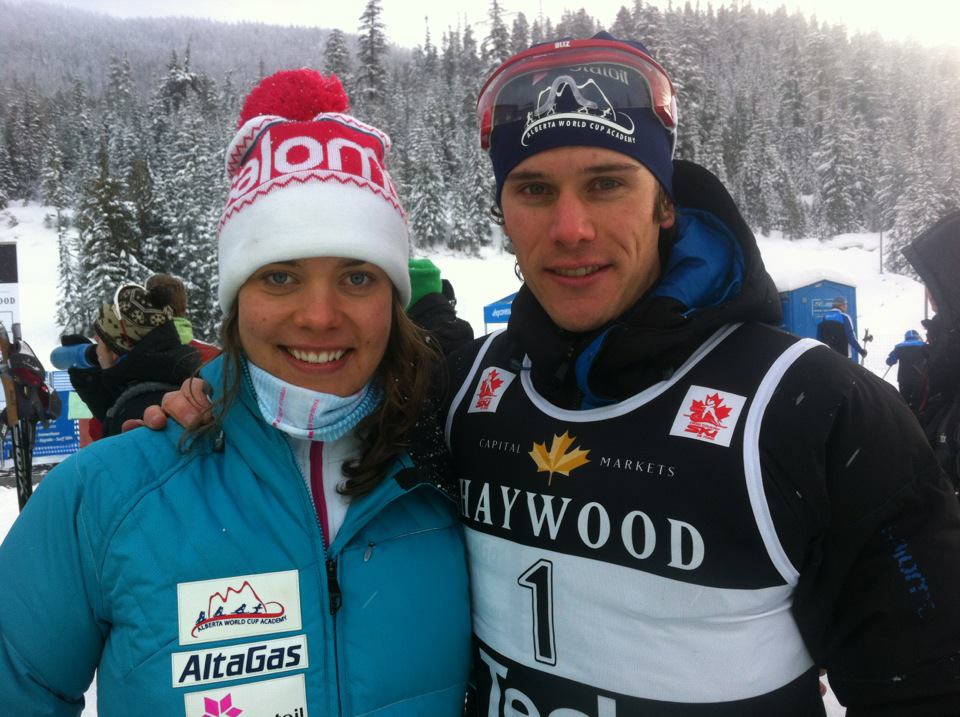
    Heidi and Phil Widmer; siblings on top of the podium. Photo: Mike Cavaliere.
    Siblings Heidi and Phil Widmer sharing the podium at a NorAm in January. (Photo: Mike Cavaliere)

    She heard the good news soon after emerging from the backcountry during an April meeting with AWCA women’s coach Chris Jeffries. Her initial excitement came with some apprehension: did her brother Phil make it, too? Jeffries couldn’t say, so she waited to hear from her older brother, who was in the backcountry away from reliable cell service for another week.

    While making pizzas with friends one night, Widmer got a phone call from her mom, who was crying. Phil, 29, left a message about being renominated.

    “My mom was so happy,” Widmer recalled. “It’s really cool being able to accomplish something together. … I think that says a lot about persistence. He’s been for sure inspiring, to watch him take the setbacks in stride and keep working towards getting where he wants to go.

    “I don’t know where I would be if I didn’t have him to follow in the sport,” she added. “I remember when he qualified for Torino [Olympics in 2006]. I was at an influential age where you’re like, ‘My older brother can do this, so can I.’ ”

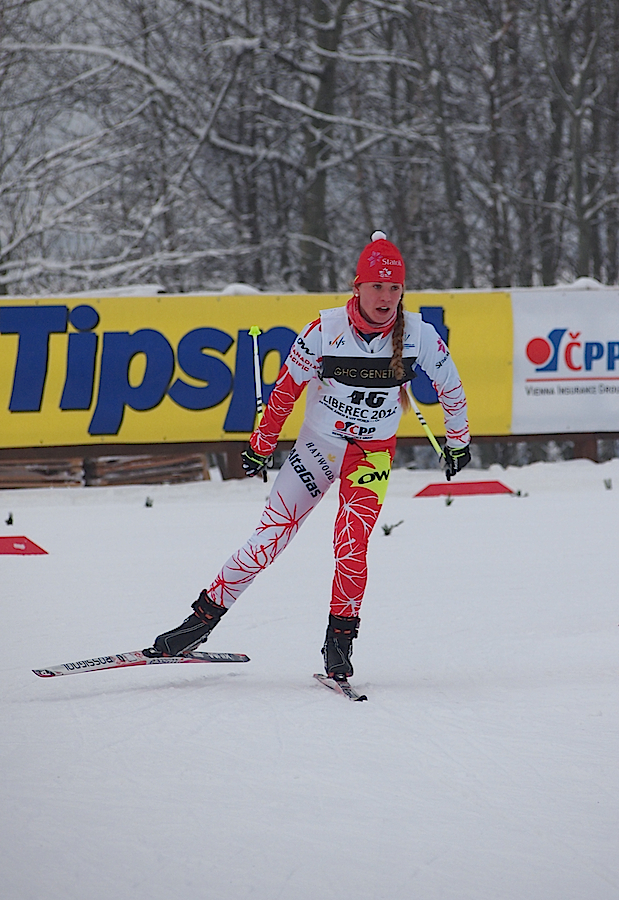
    Last season, Widmer tallied two podiums at nationals in the 5- and 30-kilometer freestyle races. At U23 World Championships in Liberec, Czech Republic, she placed 28th in a 10 k skate. There, she spoke with Flury about her dream of coming to Switzerland, where her father was born and she and her siblings have citizenship.

    Also in Liberec, Widmer saw online that The Gypsy Kings and Fleetwood Mac were playing in New Orleans. Taking a short detour to Louisiana on the flight back from El Salvador was a no-brainer, and so was going to Switzerland.
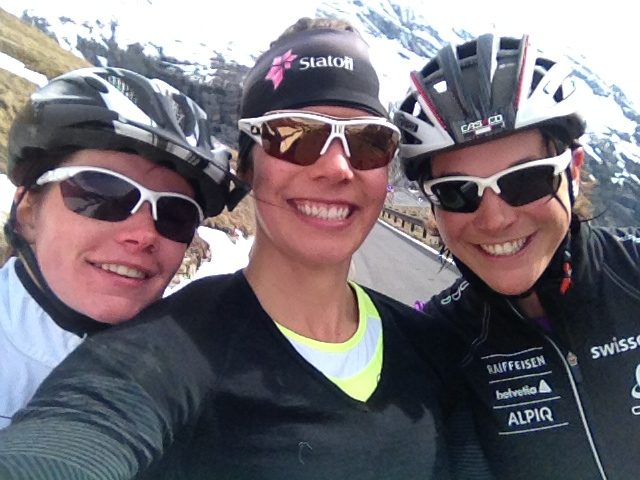
    Heidi Widmer (c) with Swiss skiers Nathalie von Siebenthal (l) and Christa Jäger after rollerski intensity on Stelvio Pass in Switzerland. (Courtesy photo)
    Heidi Widmer (c) with Swiss skiers Nathalie von Siebenthal (l) and Christa Jäger after rollerski intensity on Stelvio Pass in Switzerland. (Courtesy photo)

    Flury assured Widmer it was possible and spoke with Jeffries about her training plan.

    “Through email and conversations with him, I knew that he was really open to it and I felt extremely comfortable coming over to train with him,” Widmer said. “The rest of the team being so welcoming, I was optimistic it was going to work out, but they definitely exceeded my expectations.”

    After visiting her grandmother in Zurich, Widmer met up with the Swiss team at the national-sport centre headquarters in Magglingen, Switzerland. She spent the next week adjusting to the time difference and recovering while the national team did baseline testing.

    Widmer then spent few nights in Davos with Tatjana Stiffler, originally her Facebook friend, before heading to a training camp on Stelvio Pass at a glacier some 2,700 metres (8,850 feet) above sea level.

    “It’s been amazing,” Widmer said. “I always wanted to come over here and train but I didn’t really know what to expect. … Right away the team was super inclusive and everyone was really supportive of me being there, and I felt like part of the team instantly. It was pretty awesome.”
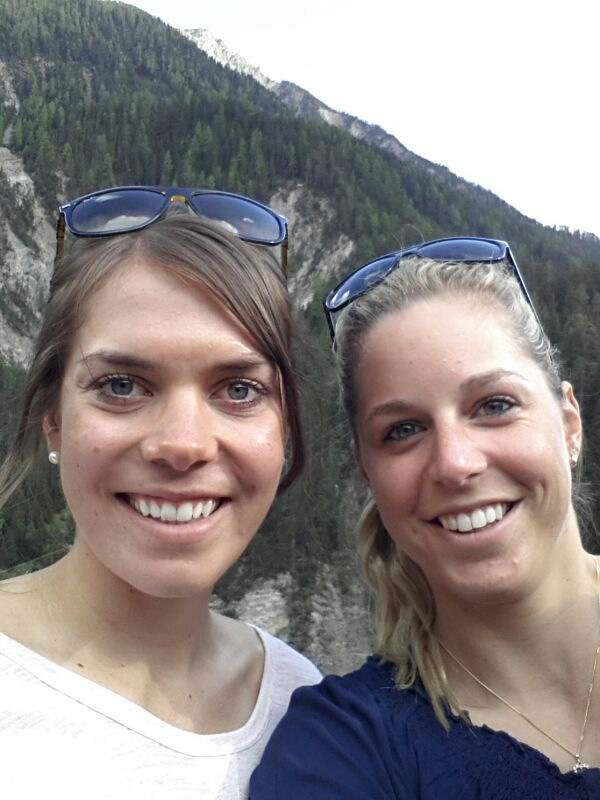
    Canadian Heidi Widmer (l) and Davos skier Tatjana Stiffler (Courtesy photo)
    Widmer (l) and Davos skier Tatjana Stiffler (Courtesy photo)

    She didn’t speak much Swiss-German, but was learning thanks to Stiffler. The dialect and vocabulary were much different than the High German she knew, but Widmer said she was having fun catching on and chatting with Swiss skiers when she could.

    “I always felt, ‘My name’s Heidi Widmer … and I’m not super connected with Switzerland,’ ” she said. “I know they had a strong team to train with and the environment seemed like it would be a good fit and a good experience. I’m always interested in learning how different teams are approaching ski racing so that was also a draw.”

    So what’s different about Switzerland, in terms of its national-team training methods and glacier? According to Widmer, not much on the philosophical front, except for a few technical points she’s been working on.

    “It’s been very similar to what we do in Canada,” she said. “You’re doing longer hours and more hours when you’re at altitude on the glacier and similar approach to the training speed and … not just going out and hammering at altitude.”

    As for the glacier itself: “I’m trying to think of another word besides pimped,” Widmer said with a laugh. “It was a lot more comfortable living than our [Haig] glacier camp, let’s put it that way.”
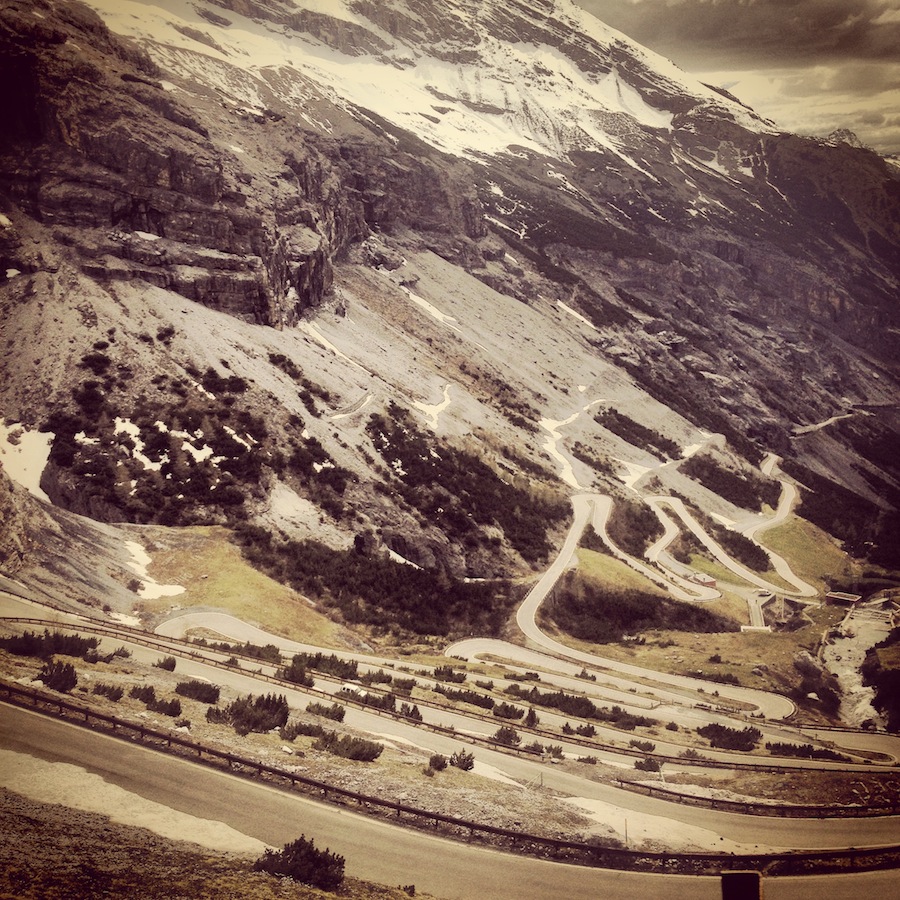
    The road up Stelvio Pass, the highest paved roadway in the Eastern Alps, with 42 hairpin turns and 14 percent grade in some parts, according to Heidi Widmer. "We did classic intensity up this road starting at 1900m," she said. (Courtesy photo)
    The road up Stelvio Pass, the highest paved mountain pass in the Eastern Alps, with 42 hairpin turns and 14 percent grade in some parts, according to Heidi Widmer. “We did classic intensity up this road starting at 1900m,” she said. (Courtesy photo)

    From the hotel, one can cross the road and immediately access the 4 k ski loop, which starts with a brief descent before winding back up to the top of the glacier.

    “Then you go back to your hotel and all the meals are cooked for you,” she said. “All the teams are there, and it’s a really cool atmosphere.”

    Widmer spent five days with the team on Stelvio before heading back to Davos last week. She’ll be dryland training there for the rest of her stay with Stiffler and a few U23s, like Nathalie von Siebenthal and Christa Jäger. World Cup skier Bettina Gruber, 28, is also in Davos, and the two planned to meet up for some intensity.

    Looking ahead, Widmer said she’s most focused on peaking for her last year of U23’s – and making the Olympics if possible. Number one on her list: the skate sprint at U23 World Championships in Val di Fiemme, Italy.

    “What I did last year is working; I don’t think I have to do anything drastic to change my training approach,” she said, adding that she’s boosted her strength training.

    Naturally a sprinter, Widmer didn’t rule out her potential in distance events, especially with a 10 k classic Olympic qualifier in January in Canmore.

    “My classic skiing in distance and sprinting has to step it up a notch so I’m putting my focus on that as well,” she added. “I haven’t had a breakout international performance yet so I’m really looking towards that.”

    ***

    Have an idea for a skier you’re itching to read more about? Email info@fasterskier.com with the subject line: Pros of Tomorrow.

  • Pros of Tomorrow: Cendrine Browne

    Pros of Tomorrow: Cendrine Browne

    Cendrine Browne (CNEPH) racing to a personal-best 15th in the 5 k freestyle individual start Wednesday at Junior World Championships in Liberec, Czech Republic. (Courtesy photo)
    Cendrine Browne (CNEPH) racing to a personal best 15th in the 5 k freestyle individual start at the 2013 Junior World Championships in Liberec, Czech Republic. (Courtesy photo)

    It’s BACK! FasterSkier is excited to relaunch its ‘Pros of Tomorrow’ series, which highlights some of the most notable up-and-coming athletes around the world. Have an idea for a skier you’re itching to read more about? Email info@fasterskier.com with the subject line: Pros of Tomorrow.
    ***

    Four years is nothing in the cross-country ski world – a couple good winters, some not-so-snowy ones, and for elite racers, tons of competitions and countless training sessions in between.

    But four years ago, Cendrine Browne was just starting out.

    “I skied when I was young, like in the forest with my family,” the 19-year-old said on the phone from her home in Saint-Jérôme, Québec. “I had no technique and I had no good skis; it was just for fun. I started doing competitions when I was 15 years old.”

    At the same time, Browne was also dabbling in triathlons and excelling at the Québec Cup level.

    “I really liked that sport and I still do, but I prefer skiing,” she said. “If I wasn’t cross-country skiing, yes, I would probably still be doing triathlons. But I don’t think I would be as far in triathlons as I am today in skiing.”

    A fast-rising star within the Fondeurs Laurentides ski club, Browne earned a spot on the Pierre-Harvey National Training Centre (CNEPH) in Québec. She joined the ranks of the National Ski Team (NST) Junior Development squad, and at her first Junior World Ski Championships last season, Browne notched Canada’s best individual performance in Liberec, Czech Republic: 15th in the 5-kilometer freestyle individual start.

    NST Senior Development Team
    Coaches:
    Mike Cavaliere, Chris Jeffries (AWCA); Louis Bouchard (CNEPH)
    Athletes:

    • Cendrine Browne (CNEPH)
    • Raphael Couturier (CNEPH)
    • Jess Cockney (AWCA)
    • Graeme Killick (AWCA)
    • Alysson Marshall (AWCA)
    • Emily Nishikawa (AWCA)
    • Graham Nishikawa (AWCA)
    • Kevin Sandau (AWCA)
    • Michael Somppi (AWCA)
    • Heidi Widmer (AWCA)
    • Phil Widmer (AWCA)

    It was a result that not only instilled confidence; it essentially bumped her up to Canada’s Senior Development Team. Last month, a Cross Country Canada announcement confirmed Browne was nominated to the NST senior team, an achievement that comes with prestige, more training support and a financial boost from Canada’s Athlete Assistance Program.

    “There’s also another training camp that I’m going to do with the senior team,” she said. “We have more health services provided (physio, etc.) … and we get fun stuff like more clothes and a paid cellphone. So let’s say this is all pretty exciting!”

    “It wasn’t expected,” she added. “I didn’t know I needed a top 15 [at Junior Worlds] to be on the senior team, but it wasn’t really an objective for me. … It’s kind of a surprise.”

    In fact, what she needed was a top 20. Now the only one under 20 on Canada’s 11-person senior team, Browne’s focused on making the Olympics in Sochi, Russia.

    “I might have some chances to qualify for the Olympics next year, so if I qualify, I’m certainly not going to stop,” she said. “I’m going to ski longer and try to qualify for the next Olympics in 2018.”

    As for the events she’s focused on, Browne said 5 and 10 k skate races are usually her best. She spent most of the spring studying human sciences at a university in Saint-Jérôme and is almost done. Next, she’ll pursue a degree in kinesiology.

    But first, she’ll reunite with her CNEPH teammates in June, driving three and a half hours to train near Québec City for the rest of the summer.

    “It’s going to be even more motivating training with these girls,” Browne said of her teammates, including top juniors like Anne-Marie Comeau, Frédérique Vézina and now Maya MacIsaac-Jones.

    “We’re so close to each other, like when we do intensity and stuff, so it really pushes us to train harder and faster.”

    Another reason for sticking with CNEPH: having Dasha Gaiazova as a teammate. This summer, Browne will again try to keep up with the World Cup team skier and 2010 Olympian.

    “I’m really happy when I’m able to follow her,” Browne said. “It’s really motivating for me.”

    ***

    Note: Cendrine Browne joins the ranks of several FS ‘Pros of Tomorrow,’ including Canadian World Cup skier Lenny Valjas, U.S. Ski Team member Ida Sargent, British World Cup skier Andrew Musgrave, and U.S. Biathlon’s Leif Nordgren.

  • Goodbye Park City, Hello Frozen Thunder: Canadians Fine Tune Training

    Goodbye Park City, Hello Frozen Thunder: Canadians Fine Tune Training

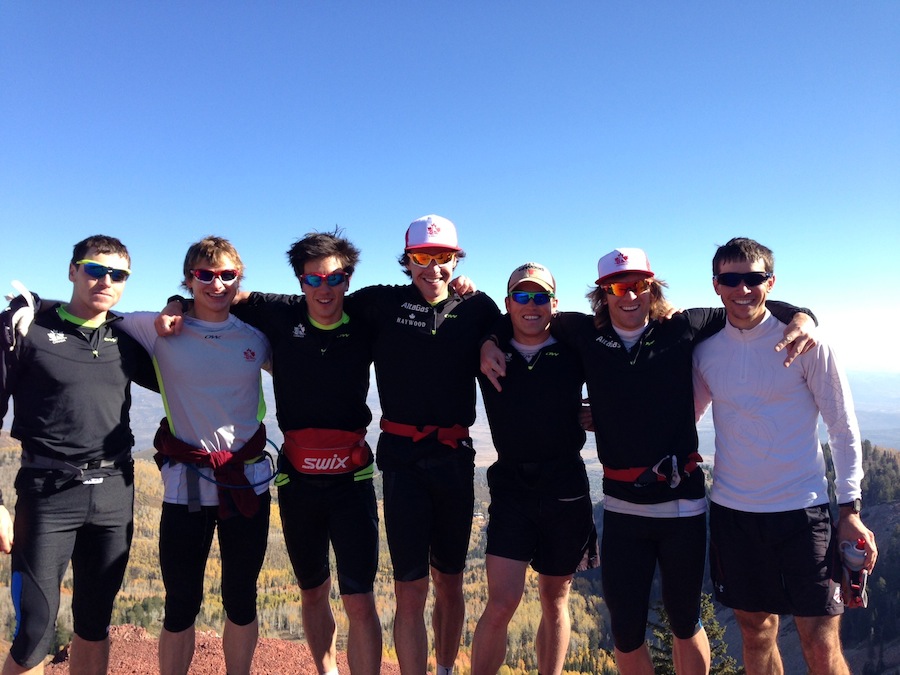
    The Canadian men’s national ski team during a training camp in Park City. From left to right: Mike Somppi, Kevin Sandau, Graham Nishikawa, Alex Harvey, Brent McMurtry, and Devon Kershaw with U.S. Ski Team member Noah Hoffman. (Graham Nishikawa courtesy photo)

    It’s safe to say the Canadian cross-country teams enjoyed their stay in Park City, Utah. Between their tweets and Instagrams of bluebird days and college football games, it’s not hard to see why.

    While the Canadian women headed south on Saturday for a few days of training in St. George, Utah, the men’s World Cup team and senior-development skiers remained at a higher altitude at Park City during their second week of camp. On Tuesday, the men flew back to Canmore, Alberta, where they would likely get on snow at Frozen Thunder by the end of the week.

    In all, six women and 10 men participated in the Canadian National Ski Team’s final dryland camp of the season. Women’s World Cup team members Perianne Jones, Chandra Crawford and Dasha Gaiazova trained with development and Alberta World Cup Academy (AWCA) athletes Alysson Marshall and Emily Nishikawa, and Amanda Ammar (independent). The men’s World Cup team (Devon Kershaw, Alex Harvey, Ivan Babikov and Lenny Valjas) did every workout with the development/AWCA skiers: Graham Nishikawa, Kevin Sandau, Jess Cockney, Graeme Killick, Michael Somppi, and Brent McMurtry.

    The Canadian men during a dryland camp in Park City, Utah. From l to r: development-team members Kevin Sandau and Mike Somppi, and World Cup athletes Devon Kershaw and Alex Harvey. (Graham Nishikawa photo)

    “The camp overall has been amazing,” Nishikawa wrote in an email. “The weather has great – bluebird everyday and not too hot. The camp was super smooth … and the energy was always high.”

    One of his highlights was going to see the University of Utah football host the University of Southern California Trojans last week.

    “It was the first college football experience for all of us and it did not disappoint,” Nishikawa wrote. “People get into it. Go Utes.” (The Utes lost 38-28.)

    On Sunday, the men’s team celebrated Canadian Thanksgiving with dinner at the hotel. The next day, they ascended 1,600 meters (5,250 feet) on a four-hour rollerski up Mirror Lake Highway east of Park City, reaching 3,300 meters (11,000 feet) above sea level.

    Head coach Justin Wadsworth wasn’t able to make it to the workout; he had to fly to Calgary on Sunday after his father-in-law fell and went to the hospital. He was stable and recovering, Wadsworth said Monday, after taking his kids to see their grandfather in the hospital before heading back to the airport.

    “I’m taking the kids to Oregon just for a little seven-day break,” he explained.

    While his two youngsters meowed “London Bridge” in the backseat, Wadsworth reflected on the Park City camp.

    “We’ve done this camp now three years in a row and this one was great,” he said.

    ***

    FasterSkier: What were some of the highlights of training around Park City?

    Justin Wadsworth: We did some new routes for some long workouts and revisited probably one of the most challenging workouts, which is the back way from Soldier Hollow up to Deer Valley [in Park City]. They used it in the Tour of Utah cycling race, and I think a few of the pro cyclists who have ridden extensively on the circuits in Europe said it was the toughest climb they’ve ever done. We did it on rollerskis last year and then they repaved it this year so it was a bit better. It’s an amazing workout. The climb [up Guardsman Pass] is from about 1,600 meters and then they go out to about 2,800 meters … and we did it skating this year just to keep the emphasis on steep uphill skating.

    I think that’s still, as a team, an area where we need to keep improving. Steep uphills are where everybody in the world have a hard time so I think it’s just good to be really efficient at climbing.

    The Canadian men’s team rollerskiing near Park City, Utah. (Stefan Kuhn courtesy photo)

    FS: What were some of the objectives for this camp?

    JW: It was a volume camp. Just being at altitude was the main goal, and getting through a lot of the workouts and not coming out of this camp too tired. [We wanted] a lot of the athletes to go easy on the longer workouts and be fresh coming out of this camp so we can really train well the next three weeks before we go to Europe.

    FS: Were there many joint sessions with other teams?

    JW: There were a couple intensity workouts where we were joined by a bunch of our biathletes and I think [one or two of the American women]. We had a group of 13-14 women for some of the interval sessions.

    FS: What about with the men? Was U.S. Ski Team member Noah Hoffman the only one that hopped in some workouts?

    JW: Yeah. We would’ve enjoyed having the other guys around, but he was the one that was in town and ready to train at altitude.

    FS: How was your men’s training group with the AWCA and development-team skiers?

    JW: That worked out really well. We try to get our development-team guys exposure to our World Cup team as much as we can, and I think as a development group they’re in a pretty good place. They’re strong and fit. It’s really good when you have athletes like Devon, Alex, Ivan and Lenny that are proven world’s-best on any day. It’s always good to have your development-team guys have a marker like that, like, ‘OK, if you’re going to get Devon in this interval workout, you can probably bet he’s top-five in the world that day for his fitness,’ so it’s really good to see how they compared and stacked up against the World Cup team guys.

    FS: How is everyone health-wise?

    JW: Everyone’s doing really well. Ivan had a little bit of an ankle problem. It’s quite strange it wasn’t an acute injury so he had a couple days where he couldn’t classic ski. But besides that, I would say everyone was doing extremely well. I’m pretty happy where the team is and the same on the women’s side. The women looked great, and I really saw a remarkable change in actually all three of the World Cup women. I think they’re doing great.

    FS: Was that your first time really observing or working with the women this season?

    JW: [After] we split the [men’s and women’s] teams this year, we’ve been at a lot of different camps so it’s been hard to see them. I’ve been at a few workouts where it’s just been Peri and stuff, but to see the women all together and especially with Dasha in that group as well. … It’s good to see that everything’s been going really well with that program and [women’s coach] Eric [de Nys] is doing a really good job.

    FS: How and when do you use V02max or similar tests to measure progress?

    JW: For the women’s team, they’ve been testing periodically through the summer and we’ve continued with them just like we did last year as well. We’ve been trying some different strategies with the women, so we do want to monitor what changes are happening to their physiology, so that’s been going on and I believe they have one more set of testing before they go to Europe.

    With they guys, we haven’t been doing any testing at all. We haven’t really changed our training philosophy that much, and I’m pretty confident through other ways, intervals that we measure and whatnot, that everything’s going well. Testing, for me, you really need to garner something out of it and to make it worthwhile. I think a lot of people test just for the sake of testing and I think for our women, we have been trying some new training methods with them and we do want to see what changes are happening, but with the guys it’s pretty stable.

    At the workouts I’ve been to [with the women], you can see the changes. When you can actually notice the changes it’s pretty exciting, but it’s good to back it up with numbers just to make sure we’re seeing what we want to see with them.

    The Canadian men’s team during peak season in early October near Park City. (Stefan Kuhn photo)

    FS: Park City marked the first joint camp between your men’s and women’s teams this year. What did you do together and how did that go?

    JW: We had a bunch of dinners together, which was really good, and interval sessions, we kind of crossed paths; we did the women first one day and the men second just because the groups were so big.

    It’s always amazing, this team, they interact super well and they’re all really close. It’s fun to get everybody together again and it was a good check up. We all had a team meeting with our sports psychologist, too, during the camp and just made sure everyone has the same goals in mind as far as working as a team professionally.

    I think having that team meeting and having the team together for a few meals was really important and it showed everybody that we all are on the same page. It’s really important to have that team dynamic. It’s easy when you’re tired and stuff to get a little lazy with making sure you’re being a good teammate and being respectful, so it’s always good for coaches and athletes to be reminded of that.

    FS: What’s the plan for training in Canmore at Frozen Thunder?

    JW: They roll out Frozen Thunder on [October] 13th I believe. We’ll be on snow pretty quickly and … just skiing quite a bit. With Frozen Thunder, you don’t want to go too nuts on it because it is only a couple k’s [about two] so you can kind of get burned out on it, but the goal is definitely to just do some of the easy shorter, distance workouts on there and then do a lot of the intensity workouts there and then we’ll still rollerski a lot. You don’t want to crank out a three-hour workout at Frozen Thunder, it’s just too repetitive.

    FS: And you’ll see the U.S. Ski Team there again, too?

    JW: The U.S. will be joining us so that will be fun. We’re having a classic sprint race on Friday the 26th of October so that’ll be a full-blown, timed, bibbed event so it should be quite competitive. In North America, we have ten of the world’s best sprinters roughly, so it’s pretty exciting to get everybody together – our guys and Simi and Newell and Kikkan and Chandra – it’s just a really competitive field for sprinting so it should be a fun race to see.

  • Canada Keeps Convergence Train Rolling

    Canadian senior development team skier Alysson Marshall (right) skiing alongside World Cup team members Perianne Jones (l) and Chandra Crawford in their new OneWay suits last November. Marshall was one of five development team members that earned several World Cup starts last season, and the only one to crack the top 30 in an individual race. (Photo: Devon Kershaw and Len Valjas)

    Less than a week after racing in Germany last December, Alysson Marshall smiled as she soaked up her surroundings at the Sovereign Lake Nordic Centre in Vernon, British Columbia.

    The Canadian senior development team member had just completed the first four World Cups of her career and left Europe on an extremely high note. With national team skier Dasha Gaiazova, she placed 21st in the team sprint in Düsseldorf, Germany. Six days later, Marshall won a NorAm sprint qualifier and went on to take second to American Jessie Diggins.

    After the final, Marshall beamed as she talked about her thought process. It didn’t matter where she was, her mind was still on the World Cup.

    Marshall in her first race back on the NorAm circuit on Dec. 10, 2011. She won the classic sprint qualifier and was second in the A-final to Jessie Diggins (USA). (Photo by Jesse Winter/jessewinterphotography.com)

    ““I just wanted to take what I learned and bring it here,” Marshall said. “The speed of the girls there, and realizing how much faster you have to go.”

    That kind of attitude was exactly what the decision makers at Cross Country Canada (CCC) wanted to hear. By February, Marshall was back in Europe, first in a few Scandinavian Cup races and later in a string of World Cups.

    She wrapped up her season abroad in mid March, cracking the top 30 in a World Cup in Stockholm. There, she notched 28th in a classic sprint, which CCC took careful note of.

    Of about five development skiers that took part in Canada’s convergence program last year, Marshall was the poster child. Others, such as Kevin Sandau and Graham Nishikawa, came close to making the individual top-30 benchmark throughout the 2011/2012 season. According to CCC’s high-performance director Tom Holland, that meant the master plan was working.

    “The main thing is really to convert people that have probably been in our system; there’s not many people in this convergence area,” Holland said in a phone interview from the national team headquarters in Canmore, Alberta.

    “By getting these World Cup opportunities, you’re building confidence and experience,” he added. “If they have that potential, you’re gonna test them out and hopefully they can convert to World Cup skiers.”

    That’s where the term “convergence” comes in. After several years of inviting top development athletes to fill quota spots and race with their national-team idols on the World Cup, CCC made the program official last spring.

    By definition, to converge means to move toward one point or another, to come together and unite in a common interest or focus. In practice, CCC is helping skiers reach the highest level of international racing by awarding them World Cup starts at the beginning and end of each season. Racers are generally selected for the first period based on input from national-team coaches and officials as well as development-centre coaches, Holland said.

    Picking a couple of skiers to tag along with the national team in fall FIS races and the first World Cups isn’t easy, he added. Sometimes, coaches factor in results from the previous season or how summer training went.

    By March, athletes typically weed themselves out. The NorAm male and female winners guarantee themselves World Cup starts, and a few others that stand out in mid-season domestic races can also earn a trip out of the country.

    Last year, seven Canadian development skiers raced in OPA and Scandinavian Cup races in Switzerland, Latvia and Estonia. They did so under the umbrella and on the dime of CCC, which organized the two-week trip and subsidized all but $1,000 dollars of each athlete’s total cost.

    That’s the most a development skier would pay to go abroad, Holland said. Depending on the trip, CCC often takes care of all their expenses.

    Thoughts and Assessments

    Before earning a position on the Alberta World Cup Academy this spring, Alana Thomas (formerly of Nakkertok) was one of the seven invited to the OPA/convergence trip in February. For Thomas, 24, that was her first time competing in Europe.

    “The biggest and most important thing I took away from the experience was simply seeing the next level of racing,” she wrote in an email. “I tried hard to take note of how the European girls were skiing technically, how they were racing, pacing and warming up.”

    After a few races, Thomas started to make friends, some of which were Norwegian.

    “It turns out they are pretty regular, they just come from a strong ski culture,” she wrote. “It made the idea of racing with them and being able to challenge them seem doable, they aren’t superheroes or anything!”

    Next season, Thomas will try to secure a start in her first World Cup. With Canada hosting five World Cup races between Québec City and Canmore in early December, development skiers like Thomas have their sights set on capitalizing on that convergence opportunity at home.

    Meanwhile, CCC higher-ups are still stressing top 30.

    Kevin Sandau (senior development team/AWCA) came close to making the top-3o last year, twice placing 34th at the World Cup Finals in mid March in the 15 k classic and freestyle races in Falun, Sweden. Sandau is shown here racing the prologue a few days earlier in Falun.

    “The athletes that we’re looking at are coming from the senior -development level that can be in the top 30 or 40 on the World Cup,” said Justin Wadsworth, head coach of the Canadian national team.

    “It’s not just convergence meaning the next group down,” he added. “If the next group down really isn’t ready to make that step into solid World Cup level racing, then we need to start to either make those trips smaller or place them in area where we’re going to get the best bang for our buck development-wise.”

    When convergence trips became official last spring, FasterSkier reported CCC’s High Performance Committee budgeted more than $100,000 dollars for the program. Broken down, the money wasn’t quite enough, Holland said. He wished he could take more athletes, especially in the second period in March.

    Because of the 2012/2013 World Cup schedule, with two Canadian World Cups from Dec. 7-16 and the FIS World Championships in late February/early March, Holland said they wouldn’t bring athletes to OPA races (Europe’s equivalent of the NorAm) this season.

    “Putting on an OPA trip, you need a coach and a tech; there’s a big expense in doing that,” Holland said. “If you can get a few people to the World Cup piggybacking on what we already have … it’s a better bang for your buck.”

    He stressed that World Cups were the priority. As long as Canada had quota spots available, they’d send people capable of top-30 results there. That said, he didn’t rule out OPA trips down the road.

    This season, the upcoming world championships in Val di Fiemme, Italy, will serve as a convergence opportunity. A chosen few will first join the national team at FIS races in November, then all the elite Canadians will return for the Québec and Canmore World Cups. The second convergence period will likely start in mid February in Davos, right before world championships (Feb. 20-March 3).

    Holland said they were hoping for two to four additional quota spots at worlds. After that, he hoped they could keep some of development skiers in Europe. Typically, skiers are given two weeks in Europe. After that, the length of their stay is largely based on results.

    “We’re really looking hard at trips this year that we want to set up,” Wadsworth said. “We don’t want to set up trips for the sake of having trips. We want to make sure that the timing is right and that the athletes are in the convergence zone.”

    Last year, Wadsworth said the first period in November was a success, but the second trip wasn’t attended as well. Several skiers declined an opportunity to race on the Scandinavian and OPA circuits because of scheduling conflicts, such as the U23 World Championships at the end of February. Out of the U23 age bracket, Marshall, now 24, started with the Scando Cups and stayed in Europe to race five more World Cups.

    “It worked our really well for me,” Marshall said in a recent phone interview. “Just the opportunity to get over there in November was really good. In March, it was a great experience to be able to start so many World Cups and get some experience there. It provided opportunities that weren’t there before so I was a big fan of the new program.”

    She had nine starts last season, the most of any Canadian development skier. If she’s lucky, Marshall could be following the tracks of national-team member Lenny Valjas, who made it to the World Cup a similar way two years ago.

    Back then, convergence trips just weren’t called that.

    “He was a success story that kind of came out of systematically providing opportunities, but then we coined this term ‘convergence,’ ” Holland said. “That’s what we’re trying to do. We’re trying to converge the development athletes and give them opportunities, add to our World Cup skier pool.”

    Perhaps most importantly, the people earning those racing opportunities also get to live and train with national team members. Holland said that’s invaluable.

    “There’s the whole thing about confidence on the World Cup,” he said. “They’re learning not only about the racing, but about the lifestyle and how to take care of themselves and all of that. It’s just the experience. [Some of] the ones that got the most starts last year, like Kevin Sandau and Alysson Marshall, it was just tremendous and I expect them to settle in more this year and focus on the results page.”

  • After Concussion, Goldsack Ready for Another Shot

    After Concussion, Goldsack Ready for Another Shot

    Whistler, crash, NorAm
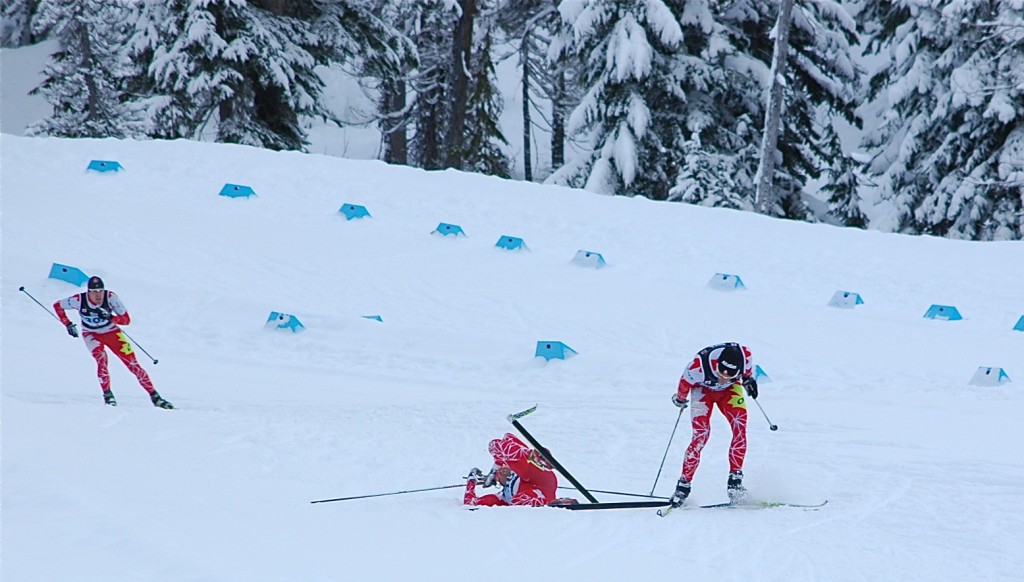
    Drew Goldsack (center) after hard crash just before the finish of the NorAm freestyle sprints in Whistler, British Columbia, on Jan. 14. He broke his ski, suffered a mild concussion and pulled his rotator cuff, and was sidelined for nearly three weeks. Photo courtesy of Angus Cockney.

    When you start skiing at 5 and stay in the game for 25 years, odds are you’re bound to experience injury. Two-time Olympian Drew Goldsack has seen his share of setbacks, including a serious foot injury that required surgery in 2009.

    Seven or eight years ago, the Canadian Senior Development Team member said he crashed particularly hard on his mountain bike, hitting his head and blacking out on the spot. Goldsack eventually came to and realized he had a concussion, and while he felt fine, he never regained memory of several hours after the incident.

    That crash aside, Goldsack’s tumble nearly three weeks ago in Whistler, British Columbia, was worse. In his second day back on the NorAm circuit after racing World Cups and battling sickness over the holidays, the 30-year-old was primed for the freestyle sprint. He put down the third-fastest qualifying team and rolled to the A-final, where all went well until the last stretch.

    Coming off the final downhill in incredibly soft and snowy conditions, Goldsack felt another skier fall beside him. Before he knew what was happening, Goldsack said he cartwheeled several times and believed he landed on his back. His head smacked the ground and right shoulder jerked back under his body weight, and he suddenly sat up, dazed and confused. Looking down, he realized his favorite skis were ruined with one completely shattered above the binding.

    “Some people in the stadium said they could actually hear the impact of me hitting the ground,” Goldsack said in a phone interview from Ottawa. “So not a typical cross-country crash, that’s for sure.”

    Drew Goldsack (l) chases fellow Senior Development Team member Brent McMurtry (center) and Phil Widmer of the Alberta World Cup Academy in the NorAm freestyle sprint at Whistler, British Columbia, on Jan. 14. Photo courtesy of Angus Cockney.

    Frustrated with the situation on the whole – Goldsack had been trying to win the sprint for a trip back to Europe  – the sixth-place finisher carried on with his afternoon. He figured his adrenaline must have numbed the effects of the fall, the hardest one he had experienced in a ski race.

    “It wasn’t until I got back to the hotel that I started feeling really tired and had a bad headache that I starting realizing how bad it was,” he said.

    Doctors determined he had a mild concussion, and for a week, Goldsack stayed off his skis. On Wednesday, two days before he was set to resume racing at the NorAm mini tour in Cantley, Quebec, the Alberta native completed his first hard intensity workout since the crash.

    It wasn’t long, but he felt good, and most importantly, showed no symptoms. Team doctors had closely monitored his recovery, making him scale back when he experienced dizzy spells to ensure he was 100 percent in training. Once in a while, Goldsack said he felt off balance and especially car sick, but it didn’t happen while skiing.

    As far as he could tell, the only thing holding him back for the upcoming mini tour was his shoulder. After his headaches eased, Goldsack realized the severity of his shoulder injury. He had pulled his rotator cuff and likely bruised the cartilage around it.

    “Of course I went skiing right away after the crash,” he said. “That’s been also part of the concern. Nothing’s torn so I’m going to tough that out.”

    On Friday, the Rocky Mountain Racers skier will put his body to the test in the freestyle sprints at the Eastern Canadian Championships. After missing the Western Canadian Championships in Canmore, Alberta, Goldsack said he was mostly expecting a solid race effort.

    “I’m hoping I can get in at least a good sprint,” he said. “It would be nice to start things off with a good race and a good result.”

    Two months ago, Goldsack hit a career high, placing fifth in the team sprint with fellow Canadian Lenny Valjas in Düsseldorf, Germany. He returned home to Canmore almost immediately after and planned to race the NorAm opener at Sovereign Lake in British Columbia, but came down sick.

    He spent two weeks recovering at the end of December and said it wasn’t a bad thing. Heading into the third set of NorAm races in Whistler, he was at full strength and hoping to make the Canadian OPA/Scandinavian Cup tours and contend for the NorAm sprint lead.

    Goldsack on the attack in the 15 k mass start at the 2011 SuperTour Finals in Sun Valley, where he placed second.

    “It was a good opportunity to get back over to Europe for racing,” he said. “It’s crazy how fast things change.”

    Driven to continue racing by numerous World Cup experiences, especially his most recent, Goldsack said it was becoming increasingly hard to deal with injuries, sicknesses and setbacks later in his career. Over the years, he faced a variety of obstacles, many of which were out of his control. They were always hard to take, he said.

    “It’s tougher now because I feel like I’m coming to the end of my career,” he said. “It’s the question that you ask yourself, ‘How much longer do you keep going?’ At this point, I enjoy racing and still have the desire to train and race so see how things go. I’m used to dealing with adversity; as you get later in your career it gets harder to justify what you’re doing.”

    So far, this season has proved particularly trying for Goldsack.

    “It’s been a real rough season for me,” he said. “I don’t really know what to think of it because on one hand I’ve had a personal-best season on the World Cup and on the other it’s been a disaster.

    “Things were getting better and heading in the right direction and this has been setback after setback,” he added. “A lot of it’s been soul searching. Every cliché in the book has been thrown my way from coaches and friends.”

    A high-level racer for the last 12 years, he heard most of them before. Regardless, Goldsack hoped for a bright spot in the season or rebound of some sort. At the very least, he’d love to get his broken ski fixed. He sent a photo to Fischer to see if it could be salvaged and was waiting to hear back.

    “That was almost the hardest thing to take,” Goldsack said of realizing the damage to his skis, which carried him to numerous NorAm podiums over the last four or five years. “[They were] the skis I wore in Düsseldorf and the skis I probably skied on 90 percent of the time so they’ll be tough to replace.”