From the FasterSkier archive — posts syndicated from athletes’ and coaches’ own blogs between 2004 and 2012, kept online as published. Current coverage is at fasterskier.com.

Tag: Canadian U25 Team

  • Proving Her Place: Browne’s Unplanned Route to the Olympics

    Proving Her Place: Browne’s Unplanned Route to the Olympics

    Cendrine Browne (CNEPH/Canadian National U25 Team) celebrates her 11.9-second win in the women’s 15 k skiathlon on Jan. 8 at Mont Sainte-Anne NorAm Trials in Quebec. (Photo: Mario Walker/NorAm MSA 2018 Facebook)

    Since March of last year, Cendrine Browne has been waiting and trying, with all her might, for another top 30. She achieved it twice last season, placing 26th in the World Championships 30-kilometer mass start and 35th in the World Cup 10 k skate in Ulricehamn, Sweden (30th with Olympic-style scoring, which counts the top-four athletes for each nation in a given race).

    To meet Cross Country Canada’s (CCC) alternate qualifying criteria for the 2018 Olympics, Browne, who turned 24 this past September, needed one more top 30 at the World Cup with the same type of scoring.

    She had four weekends to give it her all in late November and December.

    Browne, of the Canadian National U25 Team and Centre National d’Entraînement Pierre Harvey (CNEPH), a.k.a. Pierre-Harvey National Training Centre, finished the 2017/2018 season-opening World Cup mini tour in 72nd overall with the 62nd-ranked pursuit time in Kuusamo, Finland.

    “That was my first [weekend of racing] so it was tough,” Browne recalled on the phone in early January. “But the last race of the mini tour went much better. I started to have good race feelings so I knew I was going in the right direction. The next weekend was Lillehammer [Norway] and I performed pretty well there in the skiathlon.”

    She finished 45th to lead two Canadian women finishers. With Olympic-style scoring, she was 31st.

    “To qualify for the Olympics I had to do a top 30 so 31st was a little frustrating, but I knew I was able to do a top 30,” Browne said. “I knew I could do a real top 30, not only a four per nation top 30. But I only had four weekends to do a top 30 and I was down to two.”
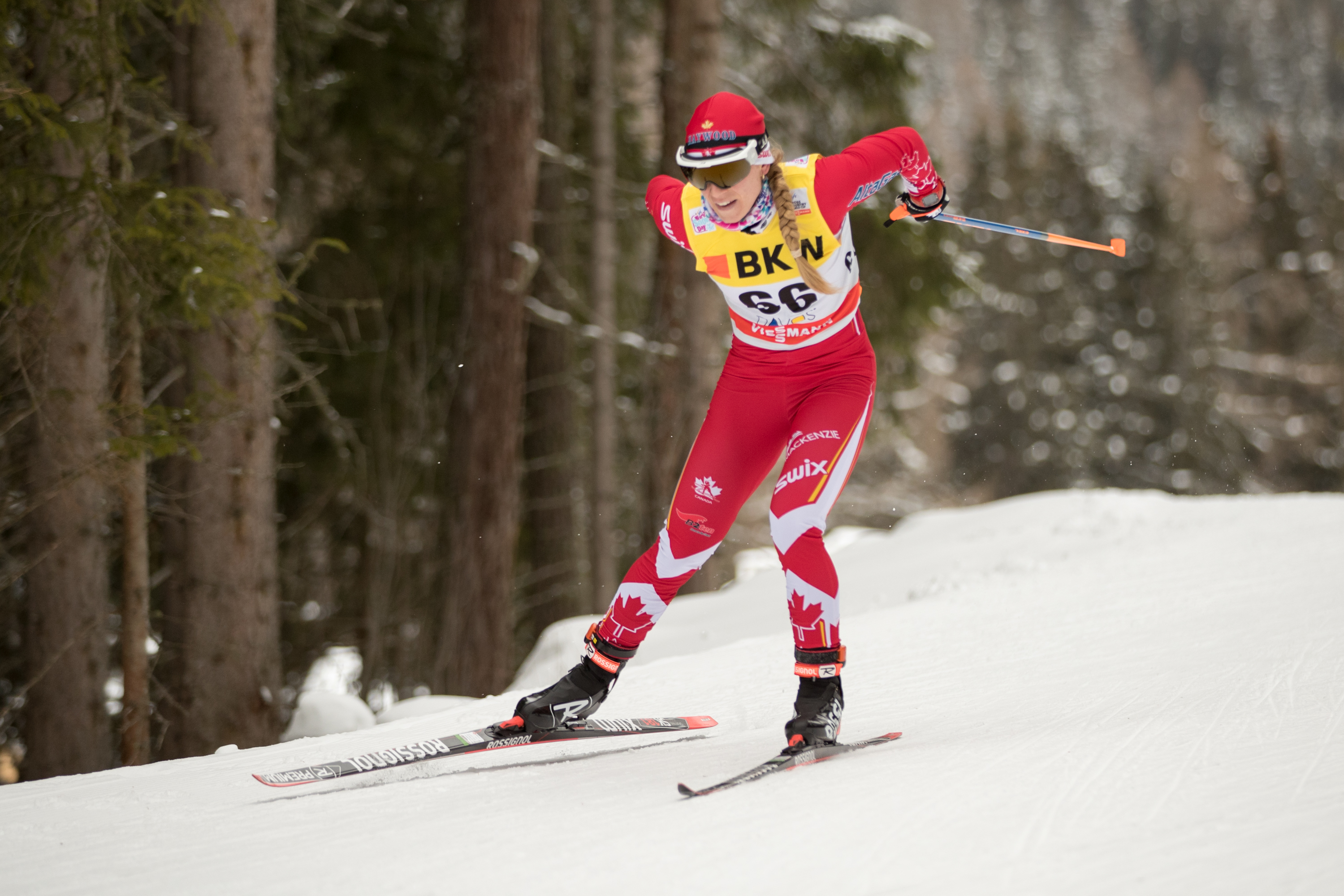
    Cendrine Browne racing in the World Cup 10 k freestyle on Dec. 10 in Davos, Switzerland. She placed 45th for the second World Cup distance race in a row. (Photo: Reese Brown / U.S. Ski & Snowboard)

    In Davos, Switzerland, she tied her season best of 45th in the 10-kilometer freestyle and led four Canadian women, but she was still outside the top 30 with Olympic scoring. Her result at altitude (about 1,560 meters above sea level) was promising, she said, but still not quite there in terms of what she needed.

    One weekend later, it all came down to two races in Toblach, Italy. There, she finished 55th in the 10 k skate and 66th in the 10 k classic pursuit.

    “Maybe I had put some pressure on myself, but I felt pressure from my federation and pressure to do that top 30, and I don’t work very well with pressure,” she said. “So unfortunately when we went to Toblach, I didn’t perform at all. I was so stressed out that I didn’t even have fun racing, and I just felt awful the whole skate race. I cried a lot.”

    With Period 1 of the World Cup behind her and Christmas break on the horizon, she told herself it wasn’t over yet. But she was still disappointed.

    “I was supposed to stay [in Europe] for Christmas … I was so focused on Plan A that I didn’t even think about Plan B,” she said.

    On the bright side, “Plan B” involved races in her home province of Quebec at Mont Sainte-Anne (MSA), where she trains with CNEPH. And she got to spent time with her family and boyfriend in her hometown of St-Jérôme, about 50 kilometers northwest of Montreal, as well as reset mentally for NorAm Olympic trials starting Jan. 5.

    “I was so focused on Plan A that I didn’t even think about Plan B.” — Cendrine Browne, Canadian National U25 Team and Pierre-Harvey National Training Centre, on qualifying for the Olympics

    “I was really really stressed out the week before the first race [at trials] and I was feeling the pressure again, and I really didn’t want to react the the same way as I did in Toblach so I went to see my sports psychologist,” Browne said. “She explained some stuff to me, like instead of thinking that the pressure is bad and instead of trying to run away from it, she said I have to try to accept it, and if I accept it, it would help me to go faster.”

    With that in mind, Browne tried to keep everything in perspective. Then, she came out at full steam for the classic sprint on Jan. 5, the first day of MSA NorAm trials.

    “I think it really worked well because I managed to sleep better the night before the race, and the morning of the race I was feeling like myself again,” she said. “I was skiing and just loving the glide as I usually do when I’m having a good day. I was smiling … and I felt free and I felt like myself. I feel like when I’m stressed out, I’m not having fun any more and that day I was having fun again.”

    A self-described freestyle distance specialist, she placed second in the classic-sprint qualifier then fourth overall in the final. As the top-performing woman between the qualifier and final, excluding fellow national-team member Dahria Beatty (who had previously met Canada’s alternate qualifying criteria for the Olympics), Browne effectively secured one of Canada’s coveted quota spots at the 2018 Olympics in PyeongChang, South Korea.

    While that wasn’t a done deal until a few weeks later, when CCC named its 11-athlete Olympic team, that result put Browne in the best place any Canadian Olympic hopeful would want to be.

    “I can’t say I’m qualified yet because it’s kind of complicated,” Browne said on Jan. 7. “… We can only say, like Daria, Emily [Nishikawa] and I, that we have reached an Olympic criteria and that we’re in good position to go to the Olympics.”

    Beatty and Emily Nishikawa, members of Canada’s World Cup Team, met CCC’s “Alternate Qualifying Criteria A” (three top-30 results) last season. According to CCC’s Olympic selection criteria, one female sprinter and one female distance skier would be selected to the Olympic team based on trials. So Browne effectively secured the female sprint spot, and as the rest of the week at MSA played out, she ended up being the top distance skier at trials as well.

    On Jan. 8, Browne won the women’s 15 k skiathlon on Day 2 of the trials. Two days later, she won the 10 k classic interval start as well. In the event that the trials sprint leader was the top distance skier as well, as was Browne, the criteria was written so that the second-ranked distance skier in those two distance races would be selected.

    That spot went to Anne-Marie Comeau, Browne’s former teammate. The two trained together at CNEPH three years ago, before Comeau left skiing due to an injury and concentrated on running. At last month’s trials, Comeau placed second in the skiathlon, about 12 seconds behind Browne, and third in the 10 k classic, about a minute and 5 seconds back. Browne won the classic individual start by 39 seconds over Katherine Stewart-Jones, who had previously placed fifth in the skiathlon.

    “I know she has a huge VO2 max,” Browne said of Comeau, a student at the Université Laval. “She has a huge cardio and these courses were perfect for her, so I knew she could do well, but I’m really surprised that she could actually be on the Olympic team, just because she wasn’t sure she wanted to ski anymore, so that’s really a big surprise for everybody. She trained for running for two years almost, and we didn’t think she would be such a big comeback.”

    (Browne is also enrolled at Laval, where she takes classes toward a bachelor’s degree in sports intervention in the fall, as well as HEC Montréal, a university business school where Browne is pursuing a certificate in administration during the summer and winter terms. “It’s important to prepare my post-career now,” she said during another interview this summer.)

    While both Browne and Comeau were named to the Olympic team on Jan. 29, along with Beatty and Nishikawa on the women’s side, Browne said her results at trials gave her confidence moving forward.

    “I was surprised because classic sprints usually are not my best race at all,” she said of her result in the classic-sprint qualifier to start the trials. “But I think I’m in good shape right now and that’s why I managed to do so well. Also the sprint course is really hard here, it’s like a World Cup course, so it’s made for distance skiers, I would say. Pure sprinters get tired on that course, it’s so hard. So I think it was a good course for me.”

    Going into the races at MSA, Browne had been on the NorAm podium 12 times since 2013. Two of those races were sprints (both in 2015).

    “I’m definitely more of a distance skate skier, without a doubt,” she said.

    Four Races, Four Big Results

    The MSA classic sprint marked Browne’s first time skiing heats since last year’s U.S. nationals in Utah, where she qualified fifth in the classic sprint and went on to finish 22nd after being eliminated in the quarterfinals.

    On Jan. 5, she clocked the second-fastest qualifying time on MSA’s 1.2 k course, 3.13 seconds behind Beatty, who won the qualifier in 3:41.55. Olivia Bouffard-Nesbitt, of Rocky Mountain Racers (RMR), qualified third (+8.08) and Maya MacIsaac-Jones (Canadian U25 Team/RMR) qualified fourth (+8.49). Taking Beatty out of the equation, that meant Browne needed to place fourth or better in the final to lock up that women’s sprint spot. According to the CCC sprint selection process, a given athlete’s result in the qualifier and final were scored equally (one point per place, lowest points win). So Browne had 2 points after qualifying and MacIsaac-Jones had 4. In the final, MacIsaac-Jones placed second to Beatty and Browne finished fourth, bringing both of their point totals to 6. The tiebreaker, according to the criteria, was the top qualifying result, which Browne had.

    Asked about home-course advantage on the trails she’s skied on for the last six years with CNEPH, Browne said the sprint course was brand new and specifically designed for the 2018 trials.

    “I hadn’t tried those yet, but they’re great. They’re really hard,” she said.

    In the heats, she made a point to lead early in her quarterfinal and semifinal in order to set the pace.

    “The course was so hard that you couldn’t start too fast, so I went in front of everybody and didn’t go too fast on the first uphill,” Browne recalled. “My race really started at the top of the first huge pitch, and at the top of that big uphill, that’s when I started to go faster and that’s where I created a little gap.”

    She won both her quarterfinal and semifinal to advance with ease to the heats, 1.5 seconds ahead of Annika Hicks, of the Alberta World Cup Academy (AWCA) in the quarter and 2.81 seconds ahead of Hicks again in the semifinal.
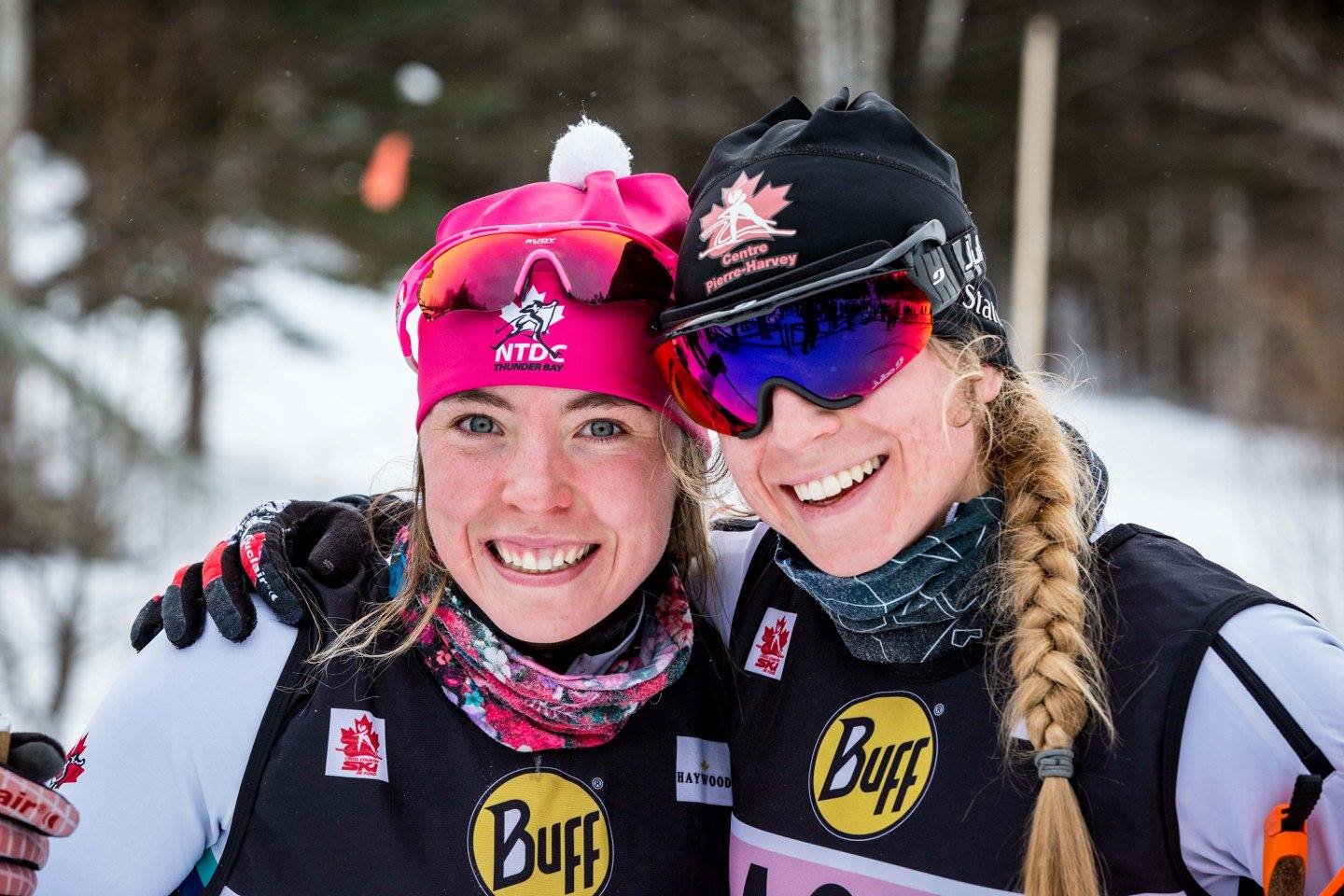
    NTDC Thunder Bay’s Katherine Stewart-Jones (l) and CNEPH’s Cendrine Browne, both the Canadian U25 Team, after the NorAm Trials classic sprint on Jan. 5 at Mont Sainte-Anne, Quebec. (Photo: Mario Walker/NorAm MSA 2018)

    In the final, Browne found herself behind Beatty (also of AWCA) and Stewart-Jones, of the Canadian U25 Team and National Team Development Centre (NTDC) Thunder Bay, at the top of the last major climb. They jumped in the tracks on either side of her, and Browne found herself without a track for the downhill.

    Beatty crossed the finish line first once more (after winning both her quarterfinal and semifinal as well), finishing in 3:45.02, while MacIsaac-Jones followed 0.64 seconds later in second place. Stewart-Jones was 1.2 seconds back in third, and Browne 4.5 seconds behind in fourth. Hicks placed fifth (+10.21) and Andrea Dupont (RMR) rounded out the women’s final in sixth (+12.18).

    Going into the final, Browne wasn’t aware she needed to finish fourth or better.

    “I don’t really like thinking about criteria before I go into a race so I had no idea what I had just done,” she recalled. “A friend [Alexis Turgeon] told me when I crossed the finish line, he said, ’I think you got that Olympic spot!’ I was like, ‘What?’ and then the rumors started to spread and then my coaches told me it was true, I had made it. It was pretty great.”

    One of those coaches was her coach, Louis Bouchard, head coach at CNEPH, also a Canadian World Cup coach and Alex Harvey’s personal coach, who attended the classic sprint at NorAm trials then left for Europe on Sunday.

    “He said he was almost as stressed out as I was and he didn’t sleep before the first race,” Browne said. “It’s a relief for him as well.”

    As for the distance races at trials, Browne said she had been targeting both.

    “I really didn’t expect to qualify in a sprint race,” she said on Jan. 7. “I was hoping to win those [distance] races and do a spectacular criteria, so I still want to do really well in those races. I don’t want to think about the result because I only want to think about what I can control, which is my movements and how I ski, but I want to have great feelings during this race and ski really well.”
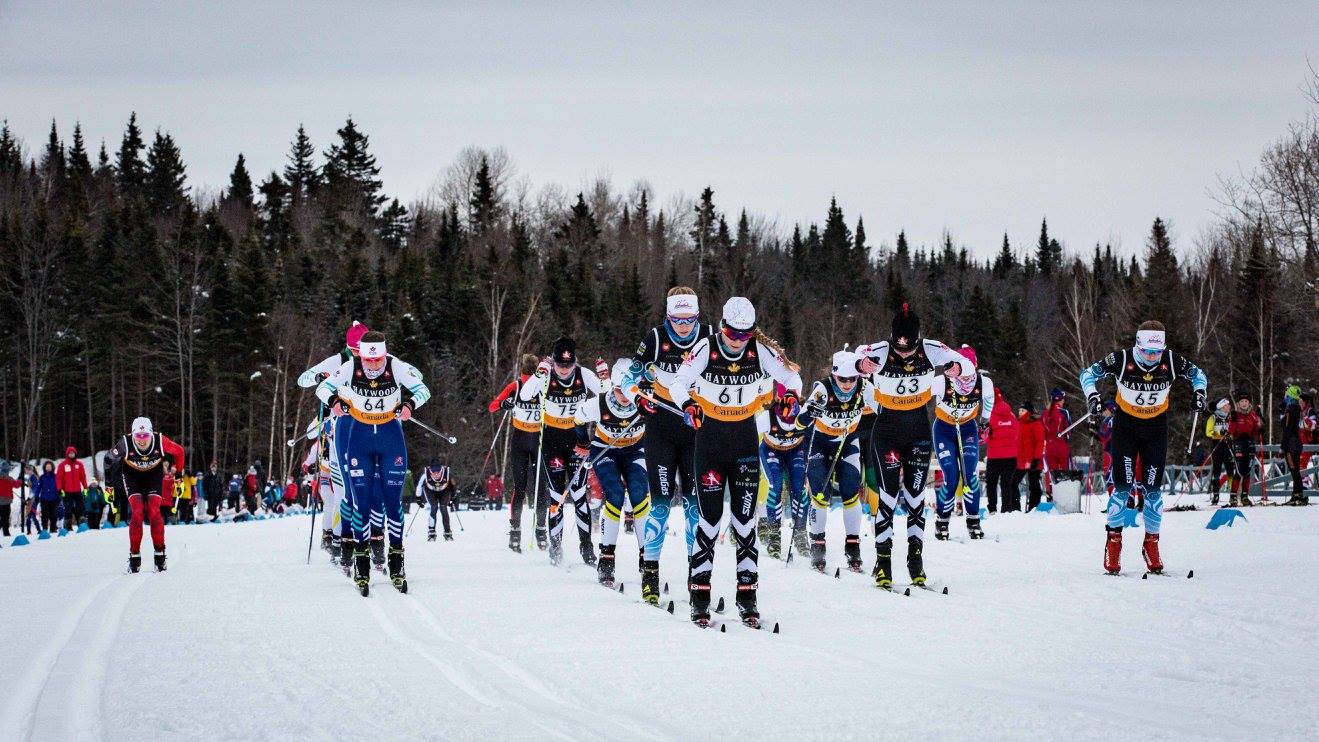
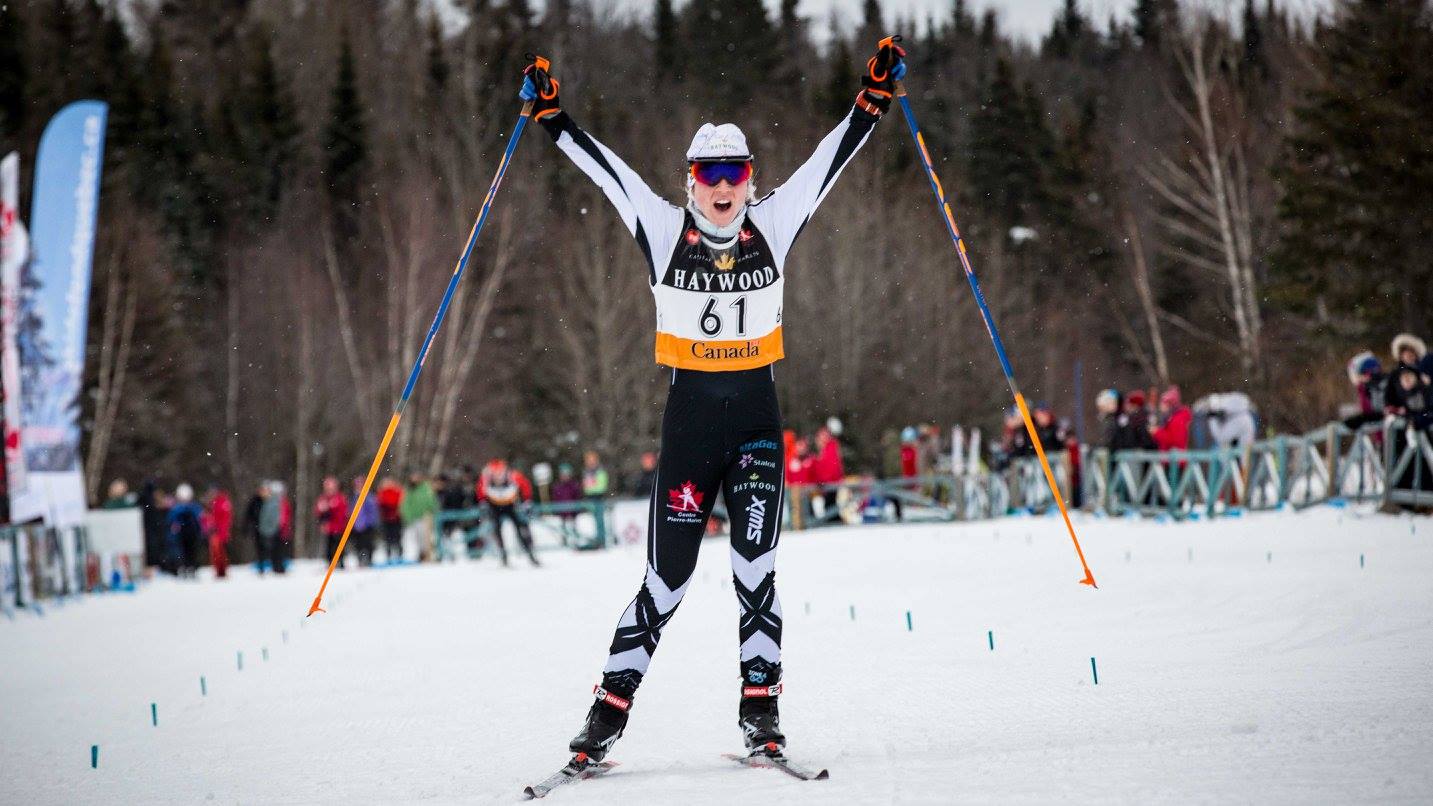
    Cendrine Browne (61) leading the women’s 15 k skiathlon on Jan. 8 at Mont Sainte-Anne NorAm Trials in Quebec. She went on to take the win by 11.9 seconds over Anne-Marie Comeau (Université Laval). (Photo: Mario Walker/NorAm MSA 2018 Facebook)

    On Monday, Jan. 8, she went on to win the 15 k skiathlon by almost 12 seconds after leaving the pack toward the end of the first 7.5 k classic leg.

    “My goal was to start really hard and try to break away right at the start,” Browne recalled.

    But she wasn’t able to shake skiers such as Beatty, MacIsaac-Jones, Comeau, or Stewart-Jones as quickly as she’d hoped. She built a small gap on the others around 6 k, but Comeau caught her before the transition to skate and Browne fell on the final climb before the exchange.

    “I fell right before the downhill so I lost my gap,” Browne recalled. “And then we headed towards the ski exchange and I had some trouble with my binding and I couldn’t clip it on. It didn’t work, so I lost like another five seconds there. Anne-Marie was at the ski exchange before [me], and it took me like 2.5 k to catch up to her.”

    After catching Comeau about a third of the way into the skate leg, Browne said she took the lead in an effort to drop Comeau over the next 2.5 k.

    “I thought I could gap her, but I couldn’t,” Browne said. “And so on the last 2.5 k, I thought about my tactic. I saw how she skied, and I saw where I could pass her, so I stayed behind her and waited for the last big uphill, and I passed here there. … I knew I had faster skis and I knew I’m better on sections that need more power.”

    With about a kilometer to go, Browne skied away to an 11.9-second victory. The next day, she raced to second in the freestyle sprint (a NorAm race but not an Olympic trials event) after qualifying in third.

    She hadn’t planned on racing that second sprint of trials (and her third race in five days), but her coach, Bouchard, encouraged her to use it as intensity training before the Olympics.

    “At first I wasn’t supposed to do that sprint, but … I had to race as much as I could before leaving [for Europe],” she said. “After the qualifier, I asked Louie, ‘I’m feeling really tired. Should I race in the heats?’ and he said, ‘Yeah, you should.’ … I didn’t know how it would turn out, but it turned out pretty well.”

    The next day, she woke up for her fourth race of the week, the 10 k classic, not feeling as fatigued as she had on some of the previous days.

    “Of course, I was tired, but I was telling myself everybody’s really tired,” Browne recalled. “My goal was to push as hard as I could during the whole race because I had to prepare as well as I could for the Olympics.”
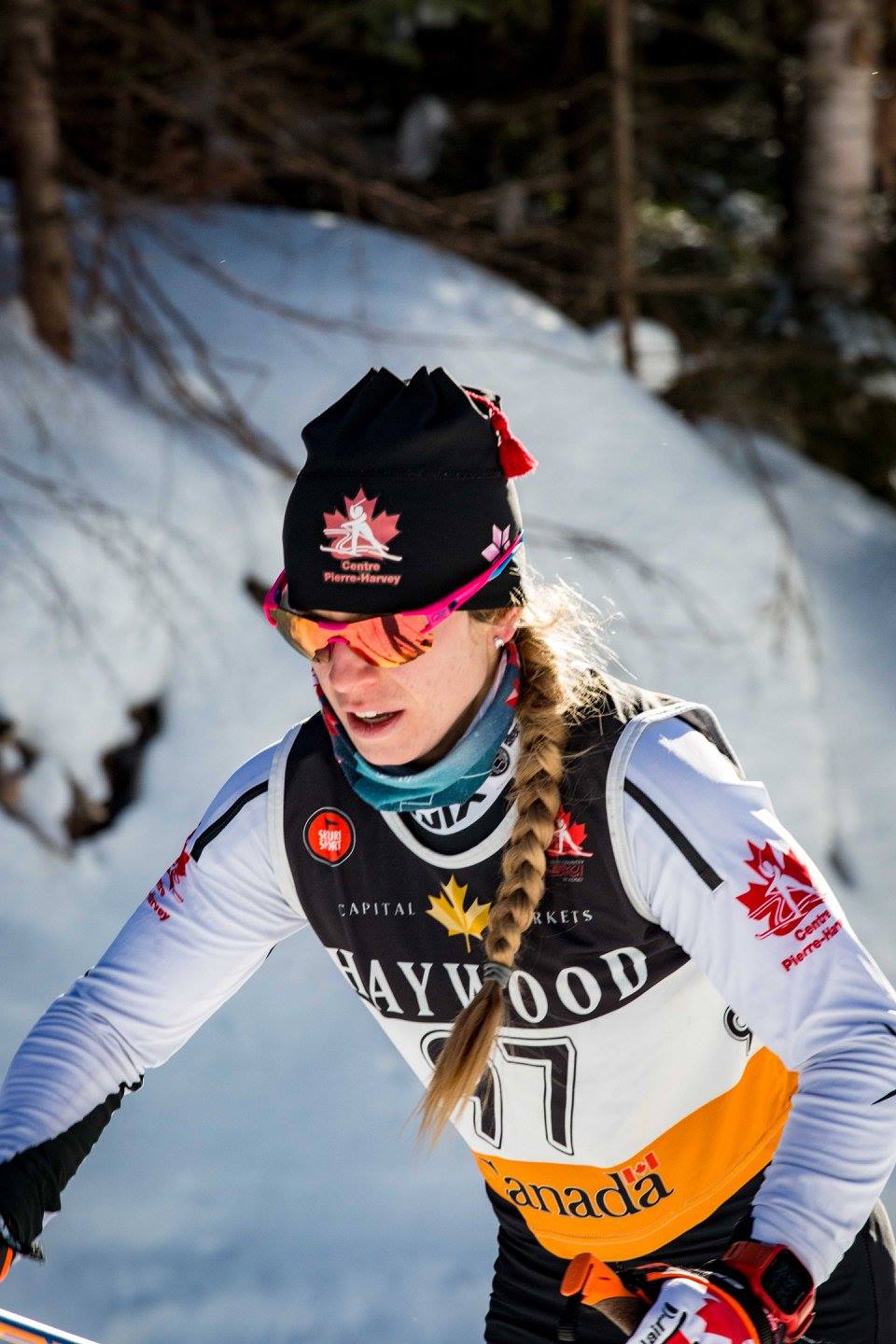
    Cendrine Browne racing to first in the women’s 10 k classic on Jan. 10 at Mont Sainte-Anne NorAm Trials in Quebec. (Photo: Mario Walker/NorAm MSA 2018 Facebook)

    Despite being one of the last starters in that race, she said she wasn’t quite sure where she stood during it, so she simply pushed as hard as she could.

    “It was like, I don’t wanna be second … and then it turned out that I had a really big gap,” she said. “I felt so good during that race. You don’t feel that good that often in races during the year, so I think I’m in really good shape leading towards the Olympics so that’s really exciting and it’s great news.”

    Before leaving Quebec for a mid-January training camp in Livigno, Italy, Browne summarized her trials performance.

    “I really wanted to show that I deserved my spot,” she said. “I qualified in a sprint race, but I really wanted to show that I was that I was good in distance racing, too, because I am a distance racer. … I guess you could say I qualified in all the events, but I just wanted to show Cross Country Canada that I that I deserved my spot and I really wanted to be safe. I think that’s what kept me going.”

    And while qualifying domestically was her last resort to get to her first Olympics, Browne said it all worked out in the end.

    “‘Actually I’m kind of happy I was in Mont Sainte-Anne; it gave me confidence that I really deserve my place and it was really nice to ski at home, well, kind of at home,” she said. “My boyfriend was there, my family was there, and lots of friends and everybody was cheering … it was really fun. Great atmosphere and the races were really well-organized.”

    “You don’t feel that good that often in races during the year, so I think I’m in really good shape leading towards the Olympics so that’s really exciting…” — Browne

    Browne and the rest of the Canadian World Cup team returned to World Cup racing Jan. 27-28 in Seefeld, Austria. There, she placed 54th in the freestyle sprint then 37th in the 10 k freestyle mass start. She was the second Canadian in the 10 k, after Nishikawa in 35th, and with Olympic-style scoring, Browne would’ve been 33rd.

    “I think us three girls did really well today, considering we are just coming back from a training camp,” Browne said after the mass start, referring to Nishikawa, herself, and Beatty, who placed 45th. “So it’s really looking good for the Olympics.”

    Path to PyeongChang

    Last summer, Browne worked to rehab back tension and knee tendonitis. Those injuries only set her back about two weeks in July, she said, and she attended all training camps, including the Canadian women’s team camp in New Zealand in late July and early August.

    “I did a total of 60 hours of training in just under three weeks and realized that despite my small injuries my shape was intact; I was as much in my place as before among these girls,” Browne said in August.
    As of early January, she said she was injury free.

    With more than 40 World Cup starts currently behind her, Browne said she’s reached a new level with her racing. Last year was about understanding “the importance of self-confidence,” she said last summer, “but also that the most important thing is to have fun.

    “It’s easy to forget when you’re at the top level,” she continued. “When I was stressed before the start of a race, I would ask myself, ‘Why are you doing this?’ Because I like it.”

    Initially, it was lining up against the best skiers in the world that intimidated her.

    “In the beginning, you reach the highest level, you face the best in the world. It’s intimidating being new to the field, but I’ve learned to master this stress throughout the season,” she said. “At the end, I felt in my place.”

    — François Léger Dionne, Andrea Potyondy-Smith and Gabby Naranja contributed
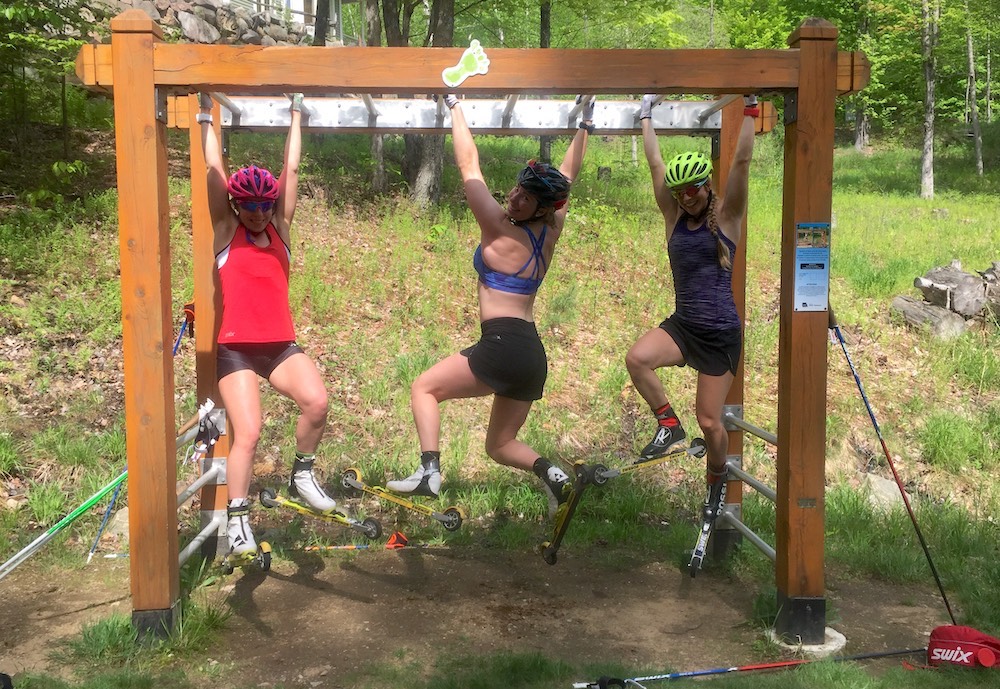
    Canadian national-team member Cendrine Browne (r) hanging with her teammates Katherine Stewart-Jones (l) and Dahria Beatty at a training camp in Tremblant, Quebec, in May. (Photo: Dahria Beatty)
    La membre de l’équipe nationale canadienne Cendrine Browne (D) en compagnie de ses coéquipières Katherine Stewart-Jones (G) et Dahria Beatty lors d’un camp d’entraînement à Tremblant, Québec, en mai. (Photo: Dahria Beatty)

     

  • CCC on Team Selections and ‘Moving Ahead’ with Half the Budget of Sochi

    CCC on Team Selections and ‘Moving Ahead’ with Half the Budget of Sochi

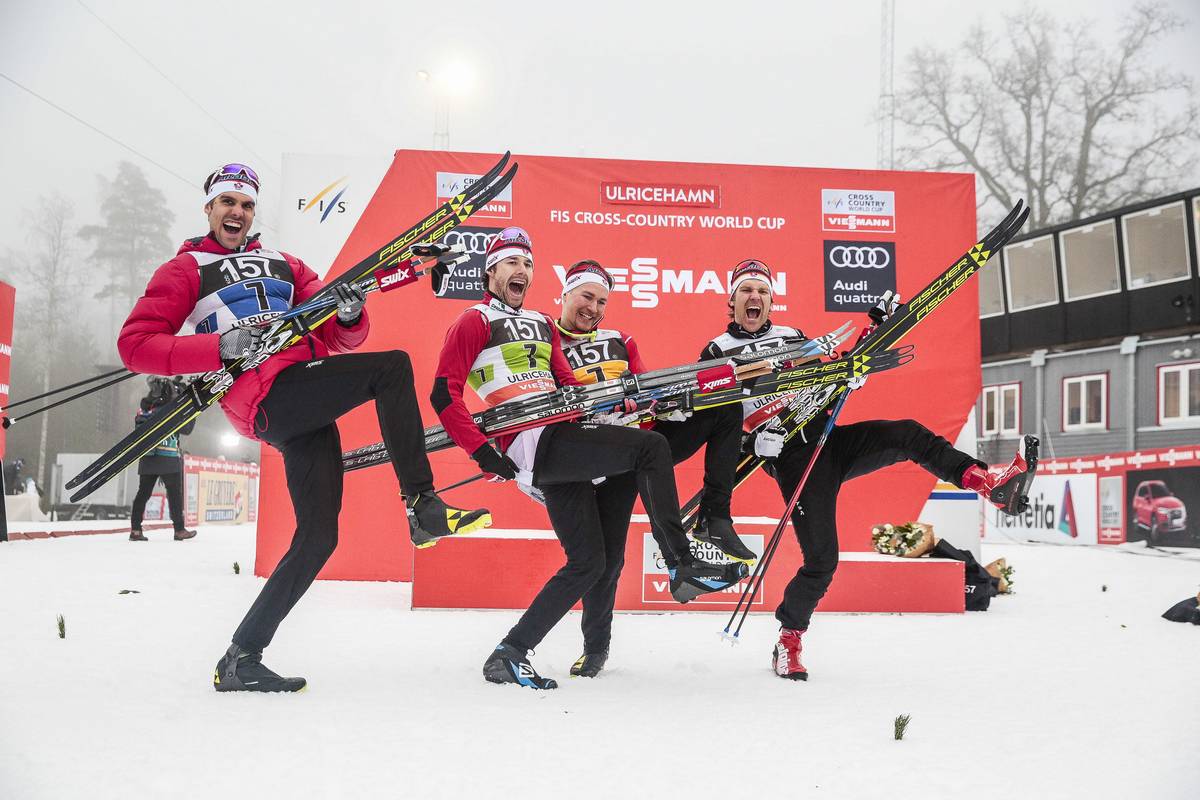
    The Canadian men’s relay after placing third for Canada’s best World Cup result in the men’s 4 x 7.5 k relay, with (from left to right), Lenny Valjas, Alex Harvey, Knute Johnsgaard, and Devon Kershaw. (Photo: Salomon/NordicFocus)

    What a year for Cross Country Canada (CCC). For the first time in history, its men’s team stood on a World Cup relay podium. Its top skier brought home his first World Championships gold and its women’s team pulled off its fourth-best world champs relay result on record.

    With the release of Canada’s 2017/2018 national-team nominations earlier this month, FasterSkier caught up with CCC’s High Performance Director Thomas Holland and the World Cup co-coach Ivan Babikov to discuss the program moving forward. 

    What’s changed since last year? Not much. With a strong season behind them, an Olympic season ahead and a solid coach and tech crew on board, Holland supported a sense of continuity for the upcoming season.

    “We’re not changing anything this year. We’re just making little improvements, which is a great thing,” Holland said on the phone on May 23. “We’ve got stable coaching, stable technical team …. We’re just adding one more camp. We used to always do four, with cutbacks we went to three, so now we’re stepping it back up to four.”

    Almost all of the 14 athletes named to the senior team are returnees, but two made the jump from the World Cup B-team to the A-team: Knute Johnsgaard and Jess Cockney. With the advance, both Cockney and Johnsgaard will join A-team veterans Alex Harvey, Len Valjas and Devon Kershaw.

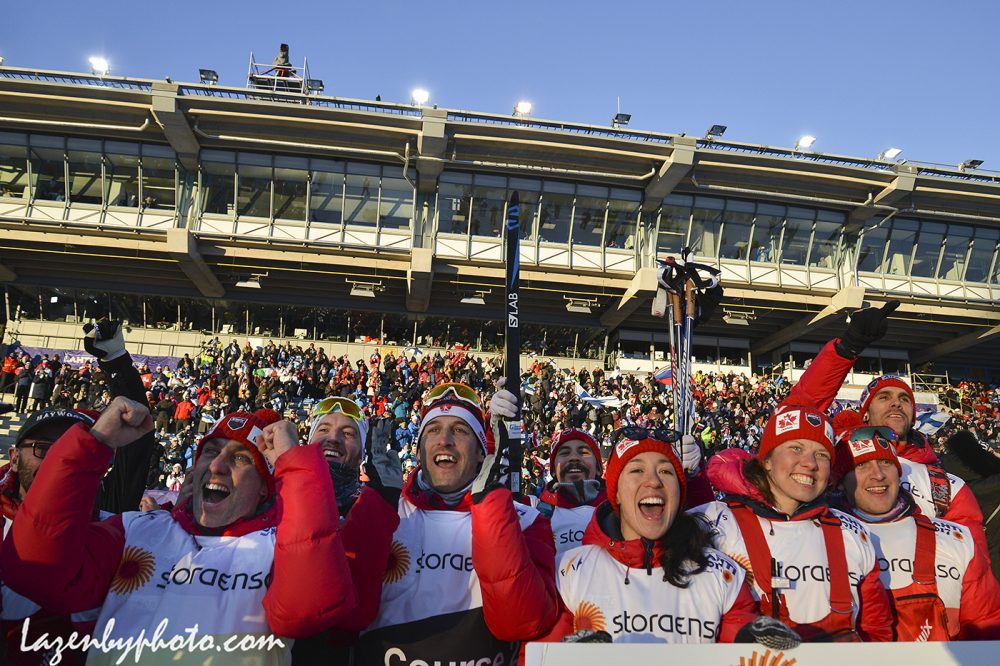
    Canadian teammates, coaches and support team celebrate Alex Harvey’s win in the men’s 50 k freestyle mass start at the 2017 Nordic World Championships in Lahti, Finland. (Photo: John Lazenby/Lazenbyphoto.com)

    Babikov, a former World Cup skier who transitioned to coaching last year, works with team physiologist Jessica Kryski to write training plans for everyone but Harvey on the men’s World Cup team (despite Kershaw being based in Norway).

    For the second-straight year, Babikov is teaming up with Louis Bouchard, Harvey’s personal coach and head coach of the Pierre-Harvey Training Centre (CNEPH), who coaches U25 Team member Cendrine Browne as well. As World Cup co-coaches, Bouchard and Babikov are able to divide the workload and travel required throughout the year, and specifically, five months abroad.

    “It’s hard to be on the World Cup circuit all the time for staff,” Babikov said on the phone. “[Louis and I] both have families, so it’s worked out well when we’re subbing for each other once in awhile so athletes have a national-team coach with them all the time. We have a good mix with his experience and my experience on the other side as an athlete. I think I’ve learned from him and it’s been great.”

    While the World Cup A-team remains all-male, three women were nominated to the B-team: Emily Nishikawa, Olivia Bouffard-Nesbitt, and Dahria Beatty of the Alpine Insurance Alberta World Cup Academy (AWCA). These women will work with Chris Jeffries, head coach of the AWCA, who plans to travel with the team on certain trips to Europe as well. 

    Tuesday, May 30, marked the last day of the team’s first official camp of the season in Mont-Tremblant, Québec, which started May 21 and included the entire national team minus Kershaw.

    According to Babikov, Kershaw would be at the second men’s World Cup team camp in Park City, Utah, from June 26-July 11. A month later, those six men (including B-team member Graeme Killick) will head to Livigno, Italy, for their third camp Aug. 16-Sept. 3, while the women’s team and Jeffries head to New Zealand for an on-snow camp.

    For the fourth and final camp, both the men’s and women’s World Cup teams, along with the Canadian U25 Team, which includes Julien Locke (Black Jack), Browne (CNEPH), Katherine Stewart-Jones (NTDC Thunder Bay), Maya MacIsaac-Jones (Rocky Mountain Racers), and the senior team’s only newcomer Gareth Williams (Telemark), will return to Park City for a dryland camp Oct. 5-24. An all-encompassing Alignment camp is scheduled for early July in Thunder Bay, Ontario, but due to other camps happening simultaneously, the World Cup team members will not be attending, Babikov said.

    Heading into the upcoming World Cup season, Harvey remains Canada’s lone athlete in the Red Group (top 15 in sprint or distance World Ranking list) and is accordingly the only one receiving full funding for training camps. According to Holland, the six men that form the World Cup training group (World Cup A-team plus Killick) are receiving funding from Own The Podium (OTP). He reiterated that OTP allocates funds based on medal potential. 

    “They’re funding the medallist people, the potential people,” he said. “Primarily, that’s Alex Harvey. We did get a medal in the relay last year on the World Cup, part of that group [Harvey, Kershaw, Johnsgaard, and Valjas] is included as well. Len Valjas had a medal on the World Cup too, [in the team sprint] with Alex … and additionally, we want a training group. They support that idea of having a good training group here around Alex. That adds up to six men.

    “After that, it doesn’t change much from last year,” he continued. “There’s not a lot of money outside of that [Own the Podium support] window. There’s support on the World Cup, etc., but your question was has it changed. … We don’t have more money, we have actually less money.”

    Compared to past Olympics, CCC’s budget this year is about half of what it was for the 2014 Sochi Olympics and “a lot less than what we had in Vancouver,” Holland said.

    “It’s a tight budget,” he added. “I’m not going to sit here and whine about money because we also had a tight budget last year. We’ve had cuts for three years leading into last year, and still — small team, small budget — we did pretty good. Our attitude is that we have a little bit more money this year we’re getting from Own The Podium and we’re doing an additional camp for the men. … We’re not changing a lot, except adding a camp and having good preparation. There’s less money, but we’re going to get the job done.”

    From his viewpoint, ongoing annual budget cuts have especially hurt development programs with a “lack of money to really invest in the future,” he said. Yet development remains a priority.

    “You’ve probably heard of the ‘NextGen’ funding. Expect that there’ll be some kind of announcement this year,” Holland said. “We have a plan in place, and we’re making changes, regardless of not having a lot of money, in how we go about that next generation, in testing and development.”

    In order to continue creating opportunities for up-and-coming talent, CCC is now working more closely with clubs, permitting some national-team members to continue their work with club coaches, while simultaneously training with national team. Out of nine World Cup team members, seven are not affiliated with training centres (only Harvey is listed as CNEPH and Beatty is part of the AWCA).

    “We’ve never said everybody has to join a training centre,” Holland said. “I guess what we’ve said is, if you’re on the national ski team, you had to be in a training centre. … That is an option for U25 athletes, but once you’re on the World Cup team, we still have a centralized model. What we’re doing is broadening.”

    Since the training-centre model was instated in 2006, the level of coaching in clubs around the country has improved, Holland explained. That makes it less essential for an athlete to belong to one of three training centres.

    “They provide education and good services in six or eight clubs across the country,” he said. “You’ve got to have a club that has a coach who is well-experienced, can write a good yearly training plan that makes sense. … There’s also requirements to come and be tested here [in Canmore], for those athletes, to participate in national ski team camps, etc. So it’s not just cutting them loose, it’s more of a closely integrated model. Trying to integrate more with the divisions and the clubs. When you do that, you know your dollar goes farther.”

    Bottom line, Holland reiterated that CCC is “moving ahead despite not having the resources.”

    “We ran a World Cup team program with significantly less money, but we’ve been pretty good at finding ways to do things inexpensively [through] collaboration with divisions and clubs,” he said. “We’re also extending some of our national senior team programming to the clubs. That’s a big change.”

    Gareth Williams (Telemark Race Team) on his way to a personal-best 11th in the men’s 20 k skiathlon at 2017 Junior World Championships at Soldier Hollow in Midway, Utah. (Photo: FlyingPointRoad.com)

    Because of this change, 19-year-old Williams, in his first year on the senior team, will continue to work with his club, Telemark, while also training with the national team.

    Financially, not much separates Canada’s World Cup B-team from its U25 (Under 25) Team.

    “In terms of support, there’s not a lot of difference,” Holland said of the two teams. “I think it’s mainly an age factor. If you’re coming through U25, you’re expected to meet a little higher standard for that B-team. Whereas Gareth Williams, we want to look at that as more talent development. … By the time they hit the B-team, we expect them to be at the World Cup level.”

    In addition to his international results last season (including an 11th place in the skiathlon at Junior World Championships), Williams was also named to the U25 development team because of the value seen in the years ahead of him.

    “Gareth, as a junior, has a few years to develop for us, to put into his program,” Holland said. “We have clearly defined benchmarks of who gets on the team. For Gareth, it’s written in our criteria, top 12 at World Junior championship result.”

    “We have to look to the future and look ahead and develop younger guys and give them a nod and give them recognition so they have something to work for,” Babikov said. 

    A few of the senior team nominations, including Bouffard-Nesbitt, who was injured in a car accident in February, and MacIsaac-Jones, who struggled with a foot injury and had surgery this spring, were based on the “force majeure” clause.

    “Some people who were sick at the wrong times last year,” Holland said. “Health is a big concern … that’s a primary thing that we’ll be on top of this year. Then the other people, I wouldn’t call health. … Athletes get injured, we like to stay with them as long as we see that there’s a good recovery plan and the injuries are taken care of. I won’t say that those injuries aren’t serious. As the hockey players say, it’s day-to-day on the comeback.”

    As for which Canadian skiers you can expect to see starting World Cup Period 1, Holland confirmed there will be at least 11: seven men and four women. The seven men include the five A-team members who “have met the Olympic Winter Games (OWG) Nomination Criteria outlined in CCC’s OWG Internal Nomination Procedures for the Olympics”, according to Holland, with standout results last year (in individual or team events). Killick will also start the season on the World Cup, as will Russell Kennedy as the Continental Cup leader.

    The four women all competed at 2017 World Championships: Stewart-Jones (who is also the Continental Cup leader), Nishikawa, Beatty, and Browne.

    And Nishikawa, Beatty and Killick all met “alternate qualifying criteria” for the Olympics.

    The Olympic team size is a minimum of four men and four women, Holland explained in an email. “The primary criteria takes precedent over the alternate criteria if the maximum number of athletes is established under the primary criteria.” Olympic selections will be finalized in January.

    But in the meantime, CCC will aim to host selection races for Period 1 World Cup starts on Frozen Thunder in Canmore in early November.

    “We don’t have criteria yet, but potentially we would add one or two more male sprinters, and at least another female athlete,” he said of the Period 1 team. “I’m not going to get into specifics, because we still have to write the criteria, but that’s the intent coming out of our spring meetings. You’ve got a pretty good World Cup group there in November/December.

    “I think it’s good to note we’re a little different, the way we do things, than the U.S.,” Holland added. “After we see what happens in December, then we look at our Olympic trials, which will be in Mont-Sainte-Anne in January. That’s how we’ll pick the rest of them.”

    In terms of medal potential at the PyeongChang Winter Olympics in February, Holland said the goal is one, for starters.

    “We’re just looking for a medal,” he said. “Always, two is better than one, but our focus … [is on] where our medal chances are. How do we maximize those opportunities for each? Certainly in the relay, we’ll be shooting for the bronze because we’ve done the analysis. For Alex, he’s going to ski in as many events as he can. So it depends on day to day, how he comes into the games. You know he can medal in sprints, he can medal in the 50 k, and everything in between. We’re just optimizing every opportunity.”

  • Beatty 12th in SoHo Classic Sprint for U23/Junior Worlds Career Best

    Canada's Dahria Beatty (8) chasing Norway's Thea Krokan Murud (3) in the fifth quarterfinal of the women's classic sprint on Tuesday at U23 World Championships at Soldier Hollow in Midway, Utah. Beatty finished 12th on the day while Murud went on to place second in the final. (Photo: FlyingPointRoad.com)
    Canada’s Dahria Beatty (8) chasing Norway’s Thea Krokan Murud (3) in the fifth quarterfinal of the women’s classic sprint on Tuesday at U23 World Championships at Soldier Hollow in Midway, Utah. Beatty finished 12th on the day while Murud went on to place second in the final. (Photo: FlyingPointRoad.com)

    A year ago, Canada’s Dahria Beatty had eight World Cup starts to her name. Not too shabby considering she was 21, but now another year older, the Whitehorse, Yukon, native has more than doubled that amount with a grand total of 21 World Cup starts — one of which included her 15th-place breakthrough at the Ski Tour Canada classic sprint in Canmore, Alberta.

    Beatty lives and trains in Canmore as a member of both the Alberta World Cup Academy (AWCA) and Canadian National U25 Team. She led the NorAm (Continental Cup) standings at the end of last season, reiterating her position as one of Canada’s top talents. Just under a month ago, she won the freestyle sprint prologue at U.S. nationals at Soldier Hollow in Midway, Utah.

    Then on Tuesday, on the same 1.3-kilometer sprint course at Soldier Hollow, Beatty notched a career-best individual result at her second U23 World Championships, placing 12th in the classic sprint. She started the day by qualifying in eighth, 3.85 seconds back from the fastest qualifier, Sweden’s Anna Dyvik, who rounded the course in 3:39.4 minutes.

    “My qualifier was pretty solid. I skied well, I made one small tactical mistake on the last climb but the rest of the race went smoothly,” Beatty reflected in an email. “This is a really taxing course and by the finish shoot my legs were pretty exhausted … it was a fight to get across that line. I was happy to qualify 8th and to post another consistent qualifier. Overall my qualifying speed has improved this year which I am very happy with.”

    She was one of three Canadian women to qualify in the top 30, with Jenn Jackson (Lappe Nordic/Team Hardwood) posting the 22nd-ranked time (+12.99) and Katherine Stewart-Jones (NTDC Thunder Bay/NST U25 Team) qualifying in 28th (+16.61).

    Maya MacIsaac-Jones, Beatty’s teammate on the AWCA and national U25 Team, missed advancing to the heats in 32nd (+20.68), 3.7 seconds out of 30th.

    American Kelsey Phinney (6) racing alongside Norway's Lotta Udnes Weng (5) during their quarterfinal of the women's classic sprint on Tuesday at U23 World Championships at Soldier Hollow in Midway, Utah. (Photo: FlyingPointRoad.com)
    American Kelsey Phinney (6) racing alongside Norway’s Lotta Udnes Weng (5) during their quarterfinal of the women’s classic sprint on Tuesday at U23 World Championships at Soldier Hollow in Midway, Utah. (Photo: FlyingPointRoad.com)

    All four of the U.S. women qualified, with Kelsey Phinney (Sun Valley Ski Education Foundation) leading them in sixth (+2.77), followed by Nichole Bathe (University of Alaska-Fairbanks) in 14th (+8.8), Jesse Knori (University of Colorado-Boulder) in 19th (+12.07), and Corey Stock (Bridger Ski Foundation) in 26th (+15.11).

    Out of those seven North Americans, Beatty was the lone woman to advance to the semifinals, which had been her “base” goal to start the day. She finished third in her quarterfinal (the fifth and final quarterfinal) and advanced as a lucky loser with a fast-enough time.

    “My quarterfinal was going well, but I had a stumble cresting the last hill and l lost contact with the top 2 women,” Beatty reflected in an email. “My heat was really fast and I was able to recover from the stumble and move onto the semis as lucky loser. When I finished I had a feeling it was a fast heat but you always have to wait and see.”

    Norway’s Thea Krokan Murud won her quarterfinal in 3:35.2, which would hold up as the fastest time of the day until the final. Germany’s Pia Fink took second in that heat (+1.25) and Beatty was third (+2.45), ahead of Russia’s Yana Kirpichenko in fourth (+7.13) and Stewart-Jones in fifth (+12.63).

    Without much time to recover before the second semifinal, Beatty explained that she was still pretty tired by the start of it. She ended up sixth in that semifinal, 8.04 seconds behind Murud, who won it in 3:37.42.

    “Overall it was great to be in the semi finals and I learned a lot about tactics and where my weaknesses lie,” Beatty wrote. “I just didn’t have enough in the tank today to contend for the final but I am happy to have race my first international semi final and am looking forward to the 10k skate Thursday.”

    With a previous U23 best result of 20th in the 2015 classic sprint in Almaty, Kazakhstan (and 15th in the 5 k classic at 2014 Junior Worlds the year before), 12th was Beatty’s best ever at a world championship.

    “Racing well on the World Cup had definitely helped my confidence in myself and race knowledge. I feel I am right in the mix with these top women and on the perfect day I could be on that podium,” she wrote. “Going into today I had set base goal (I would be happy with the day if I achieved this) at making the semi finals. My target goal was making the final and my dream goal was being on the podium. My goals will stay pretty similar for the distance races. There are two more races and we’re at altitude so you never know what can happen.”

    Jesse Knori (University of Colorado-Boulder) leading Estonia's Anette Veerpalu during their quarterfinal of the women's classic sprint at U23 World Championships at Soldier Hollow in Midway, Utah. Knori finished third in that heat (while Veerpalu was sixth). While she didn't advance to the semifinals, Knori was the top U.S. woman in 15th on the day. (Photo: FlyingPointRoad.com)
    Jesse Knori (University of Colorado-Boulder) leading Estonia’s Anette Veerpalu during their quarterfinal of the women’s classic sprint at U23 World Championships at Soldier Hollow in Midway, Utah. Knori finished third in that heat (while Veerpalu was sixth). While she didn’t advance to the semifinals, Knori was the top U.S. woman in 15th on the day. (Photo: FlyingPointRoad.com)

    While Beatty reached the semifinals, the two other Canadians and four Americans were eliminated in the quarterfinals. Knori led three U.S. women in the top 20 overall, placing 15th on the day after finishing third in her heat, 7.18 seconds behind Norway’s Tiril Udnes Weng (who won that heat by 1.07 seconds over another Norwegian Lovise Heimdal).

    Canada’s Jackson raced in that same quarterfinal and finished fifth (+8.72), behind Italy’s Caterina Ganz in fourth (+7.56), for 21st overall.

    Both fourth in their quarterfinals, Phinney ended up 16th and Bathe 18th overall. Phinney finished 3.81 seconds behind Weng’s twin sister, Lotta Udnes Weng, in first. Bathe finished 7.14 seconds behind the winner of her quarterfinal, Germany’s Sofie Krehl.

    American Corey Stock (Bridger Ski Foundation) leads Australia's Casey Wright (University of Alaska Anchorage) in the third quarterfinal of the women's classic sprint at U23 World Championships at Soldier Hollow in Midway, Utah. They finished fifth and sixth, respectively, in that heat. (Photo: FlyingPointRoad.com).
    American Corey Stock (Bridger Ski Foundation) leads Australia’s Casey Wright (University of Alaska Anchorage) in the third quarterfinal of the women’s classic sprint at U23 World Championships at Soldier Hollow in Midway, Utah. They finished fifth and sixth, respectively, in that heat. (Photo: FlyingPointRoad.com).

    Stock ended up 22nd after finishing fifth in Phinney’s quarterfinal, 10.08 seconds behind Lotta Weng. Also in that quarterfinal, Australia’s Casey Wright, of the University of Alaska Anchorage Ski Team, finished sixth (+12.37). Wright qualified in 25th and ultimately placed 29th overall.

    Canada’s third woman, Stewart-Jones placed 24th after finishing fifth in the same quarterfinal as Beatty.

    In the first quarterfinal, the Czech Republic’s Petra Hyncicova (Knori’s teammate at the University of Colorado-Boulder) finished fourth, 4.33 seconds behind Sweden’s Maja Dahlqvist in first. Hyncicova qualified in 21st and ended up 20th overall.

    Sweden's 22-year-old Anna Dyvik celebrates her win in the U23 World Championships women's classic sprint on Tuesday, nearly 3 1/2 seconds clear of second place. (Photo: FlyingPointRoad.com)
    Sweden’s 22-year-old Anna Dyvik celebrates her win in the U23 World Championships women’s classic sprint on Tuesday, nearly 3 1/2 seconds clear of second place. (Photo: FlyingPointRoad.com)

    Dahlqvist and Murud won the first and second semifinals, respectively, then took a back seat to Dyvik — the qualifying winner who finished second in both her quarterfinal and semi — in the final. Dyvik took control early and avoided a crash near the back to win the final in 3:32.40, the fastest time of the day. She won by more than three seconds for her first U23 Worlds medal, after earning gold in the relay and bronze in the skiathlon at 2014 Junior Worlds.

    Behind her, Murud claimed silver (+3.42), edging Dahlqvist, the second Swede on the podium in third (+3.76).

    Norway’s Heimdal took fourth (+6.03), while Krehl and Lotta Weng, who fell, finished fifth (+33.34) and sixth (+1:13.17), respectively.

    Junior Worlds racing continues on Wednesday with the 5/10 k freestyle individual starts.

    Results: Qualifier | Brackets | Overall

    The women's classic sprint podium on Tuesday at U23 World Championships at Soldier Hollow in Midway, Utah, with Sweden's Anna Dyvik (c) in first, Norway's Thea Krokan Murud (l) in second, and Sweden's Maja Dahlqvist (r) in third. (Photo: FlyingPointRoad.com)
    The women’s classic sprint podium on Tuesday at U23 World Championships at Soldier Hollow in Midway, Utah, with Sweden’s Anna Dyvik (c) in first, Norway’s Thea Krokan Murud (l) in second, and Sweden’s Maja Dahlqvist (r) in third. (Photo: FlyingPointRoad.com)
  • 17 Questions for 2017: Dahria Beatty

    17 Questions for 2017: Dahria Beatty

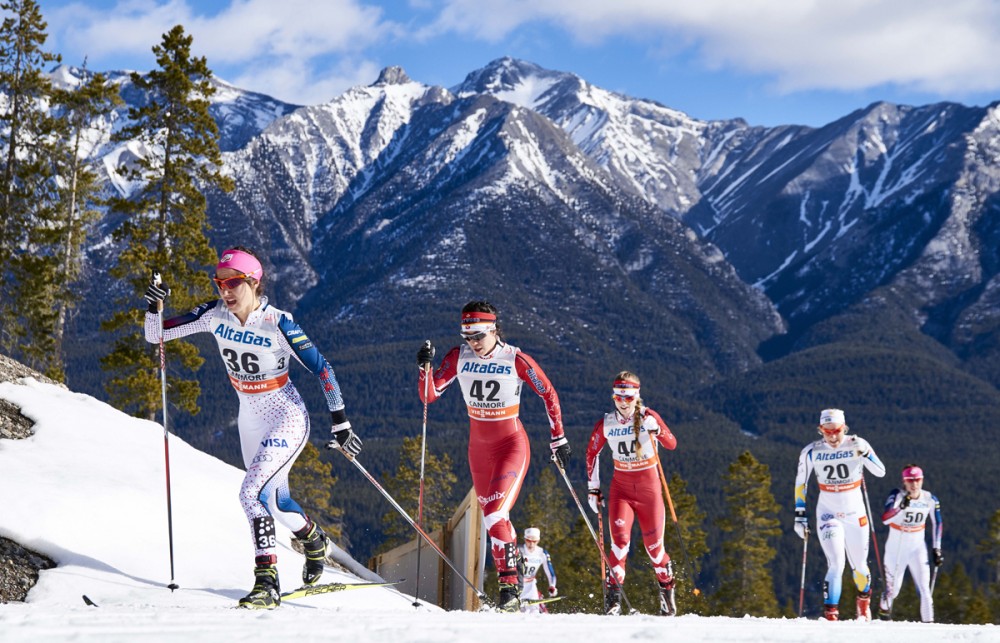
    08.03.2016, Canmore, Canada (CAN): Dahria Beatty (CAN) - FIS world cup cross-country, individual sprint, Canmore (CAN). www.nordicfocus.com. © Felgenhauer/NordicFocus. Every downloaded picture is fee-liable.
    Canada’s Dahria Beatty (29) racing to third in her quarterfinal for a career-best 15th overall at the 2016 Ski Tour Canada classic sprint in Canmore, Alberta, on March 8, 2016, one day after her birthday. (Photo: Fischer/NordicFocus)

    Welcome to “17 Questions for 2017”, where we are catching up with American and Canadian national-team members before the beginning of the winter season.

    ***

    The day after her 22nd birthday last March, Dahria Beatty made the case that she could be Cross Country Canada’s next star. Not only did she score her first World Cup top 30, but she nabbed a career-best 15th in a World Cup stage at home (her training base) in Canmore, Alberta.

    Beatty, of the Alberta World Cup Academy and national U25 Team, was the only Canadian woman to qualify for the heats in the classic sprint that day, and she ended up third in her quarterfinal heat.

    Now after an offseason of remedying some back troubles and building strength, Beatty says she looks like a different person when she’s double poling, and not just because she cut off her hair.

    1. Biggest change in your life in the last five or so months since the ski season ended?

    I cut off 9 inches of my hair, it’s really speeding me up

    2. Biggest change in your training?

    I started doing pilates and made adjustments to my technique with our technique coach Kathy.

    3. Major areas of improvement you’ve seen so far?

    I look like a different person when I’m double poling now!

    4. Whom you’ve been working closest with this offseason (coaches or training partners)?

    My teammates, Maya, Emily and I spent 3 weeks together in NZ. We helped coach each other while we were away.

    5. Best trip in the last five months (and why)?

    New Zealand, it was my first time to the southern hemisphere. Loved the skiing, loved the sheep, loved driving the twisty roads.

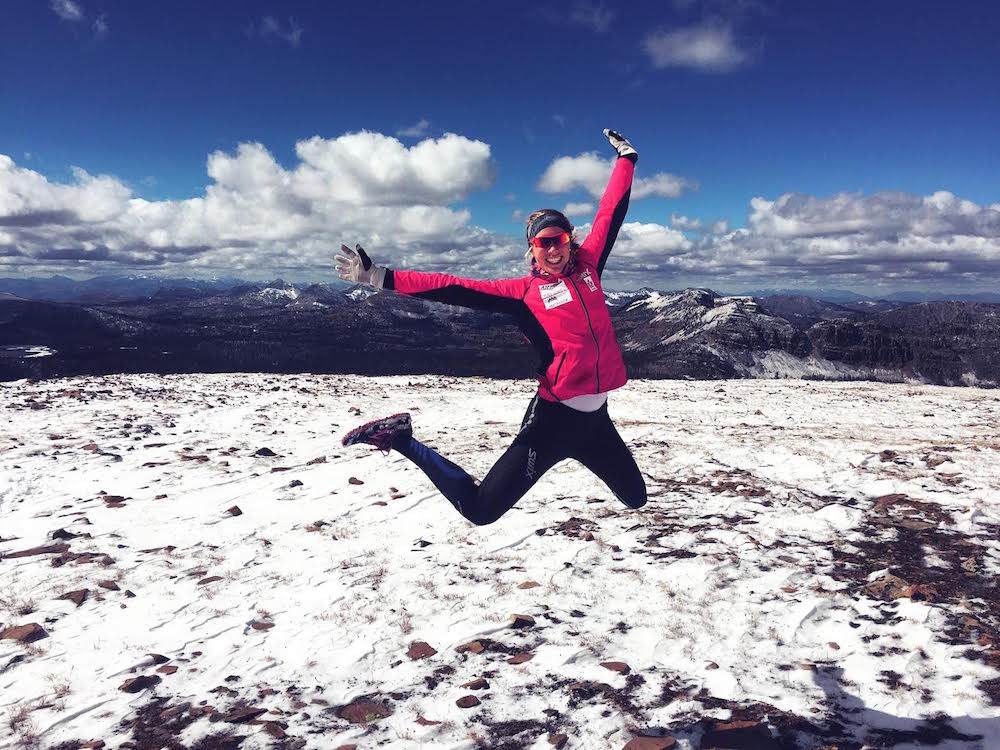
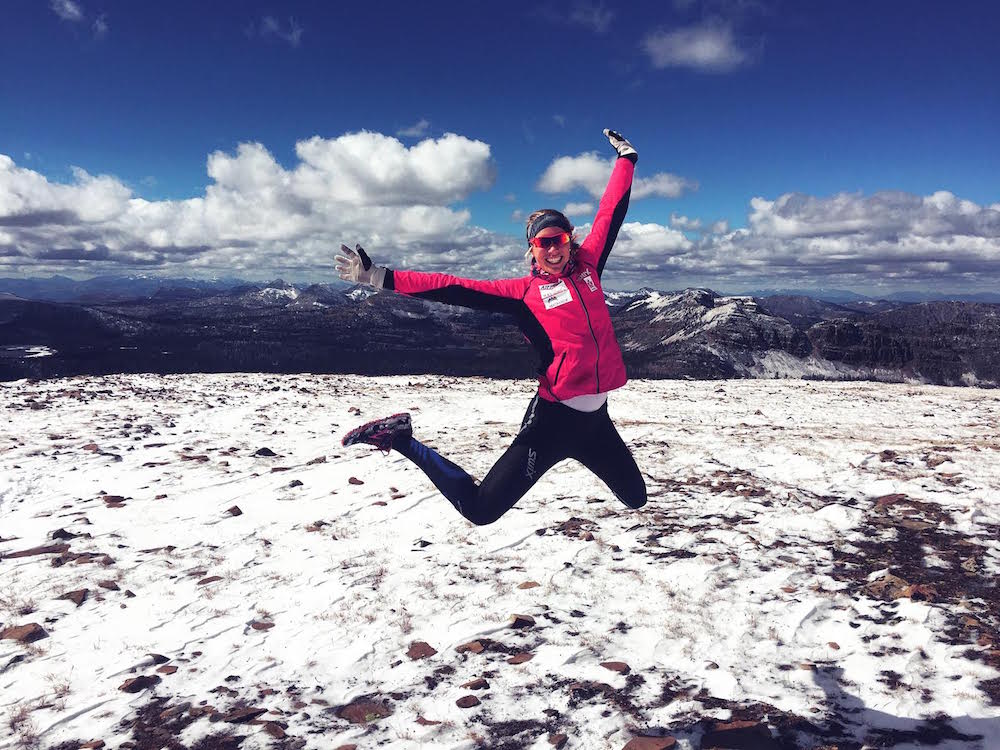
    Dahria Beatty celebrating at snowy peak during an overdistance run near Park City (Courtesy Photo)
    Dahria Beatty (Canadian U25 Team) celebrating a snowy peak during an overdistance run near Park City, Utah, in October. (Courtesy photo)

    6. Favorite cross-training?

    I got a new mountain bike from Icycle Sport this summer. I have rediscovered how awesome mountain biking is.

    7. Favorite non-athletic activity or pastime this summer?

    Surfing, aka falling off my board lots

    8. Song that was your jam this summer?

    My favourite jam is raspberry…. I can never remember the names of songs

    9. All-time favorite race moment?

    Racing my first World Cup sprint quarterfinal last spring in Canmore in front of my family and friends.

    10. First thing you pack in your bag when you leave for Europe?

    My travel pillow… sleep is the best

    11. Venue/event you’re most excited to visit this season?

    Drammen. I’ve always wanted to do a city sprint in Europe!

    12. Who will win the men’s and women’s World Cup titles this year?

    It would be nice to see some North Americans fighting for the titles, I’ll be cheering for Alex and Jessie.

    13. Biggest sacrifice you feel you’ve made choosing this career path?

    I had to give up on my dream of playing in the WNBA.

    14. If you could change one thing about your sport, what would it be?

    Have more WC races in North America

    15. What did you have for breakfast this morning?

    Eggs on toast with almond butter and fruit.

    16. In 5 years, I’ll be ____?

    27… Still racing and hopefully a lot closer to the top of the results list 😉

    17. In 50 years, I’ll be ____?

    27 backwards… An old lady, hopefully a grandma and still an avid skier.

  • Four Canadian Women Aim to Put Their World Cup Team on the Map

    Four Canadian Women Aim to Put Their World Cup Team on the Map

    Dahria Beatty celebrating at snowy peak during an overdistance run near Park City (Courtesy Photo)
    Dahria Beatty (Canadian U25 Team) celebrating a snowy peak during an overdistance run near Park City, Utah. (Courtesy Photo)

    To kick off this World Cup season, Cross Country Canada (CCC) had planned to send four women for Period 1. After its men’s team has gathered most of the attention in recent years, the Canadian women are now in a position to develop depth at the top level of the sport.

    In her third full World Cup season, Emily Nishikawa, of Canada’s World Cup B-team, will be joined for Period 1 by national U25 Team members Dahria Beatty and Cendrine Browne. Maya MacIsaac-Jones was scheduled to make the trip but a minor foot injury at the end of October turned into a longer recovery.  

    “Things have been going well,” MacIsaac-Jones wrote in an email last week, “And I’ve been able to ski pain free while still seeing improvement in my foot.”

    Her plan to test her recovery from sesamoiditis, with pain at the forefront of her foot, in an Alberta Cup last Saturday was derailed by a minor cold, but she remained in good spirits.

    “I used to race in triathlon competitively until I was around 14,” wrote MacIsaac-Jones, a 21-year-old Alberta World Cup Academy (AWCA) skier. “Having that background helped because it meant that I was able to start getting good quality training in the pool right away.”

    For the women’s team, CCC’s primary goal this period is to get top-30 finishes and World Cup nation’s points to maintain its quota for World Cup starts. The Canadian women have four quota spots plus the Continental Cup (COC) leader this season. As Beatty is COC leader, there is one quota spot open. According to CCC High Performance Director Thomas Holland, the top choices for that spot are out: U25 Team member Olivia Bouffard-Nesbitt is “recovering from injury that kept her from doing any weight bearing training until this fall,” Holland wrote in an email. “Doing well in training/racing but not ready for the World Cup yet—needs to be cautious at this point.”

    Then there’s another U25 Team member, Katherine Stewart-Jones, who declined the Period 1 trip to focus on selection trials for U23 World Championships.

    “Our women’s team, they’re developing, but their best chance of getting nation’s points is in the relay, team sprints, those kinds of things,” Holland said in a previous phone interview in early November following CCC’s World Cup team trials. “But we’re not just going [to Europe] just to do the relay. It’s important [for skiers] like Dahria Beatty, who is more sprint-oriented and got her results there last year, they’re chasing World Cup points, is the primary goal.”  

    The World Cup is very much a European tour. North American athletes spend months in hotels scheduling calls home around the six- to nine-hour time difference. European athletes don’t just benefit by keeping the same mobile phone number on the road and avoiding jet lag. At the start of Ski Tour Canada, France’s Maurice Magnificat told FasterSkier that he went home after “every weekend” during the World Cup season. Last season, Nishikawa was the only Canadian woman racing World Cups in Europe for most of the season. While many of the European athletes recovered at their homes, Nishikawa spent time with the American women when possible.

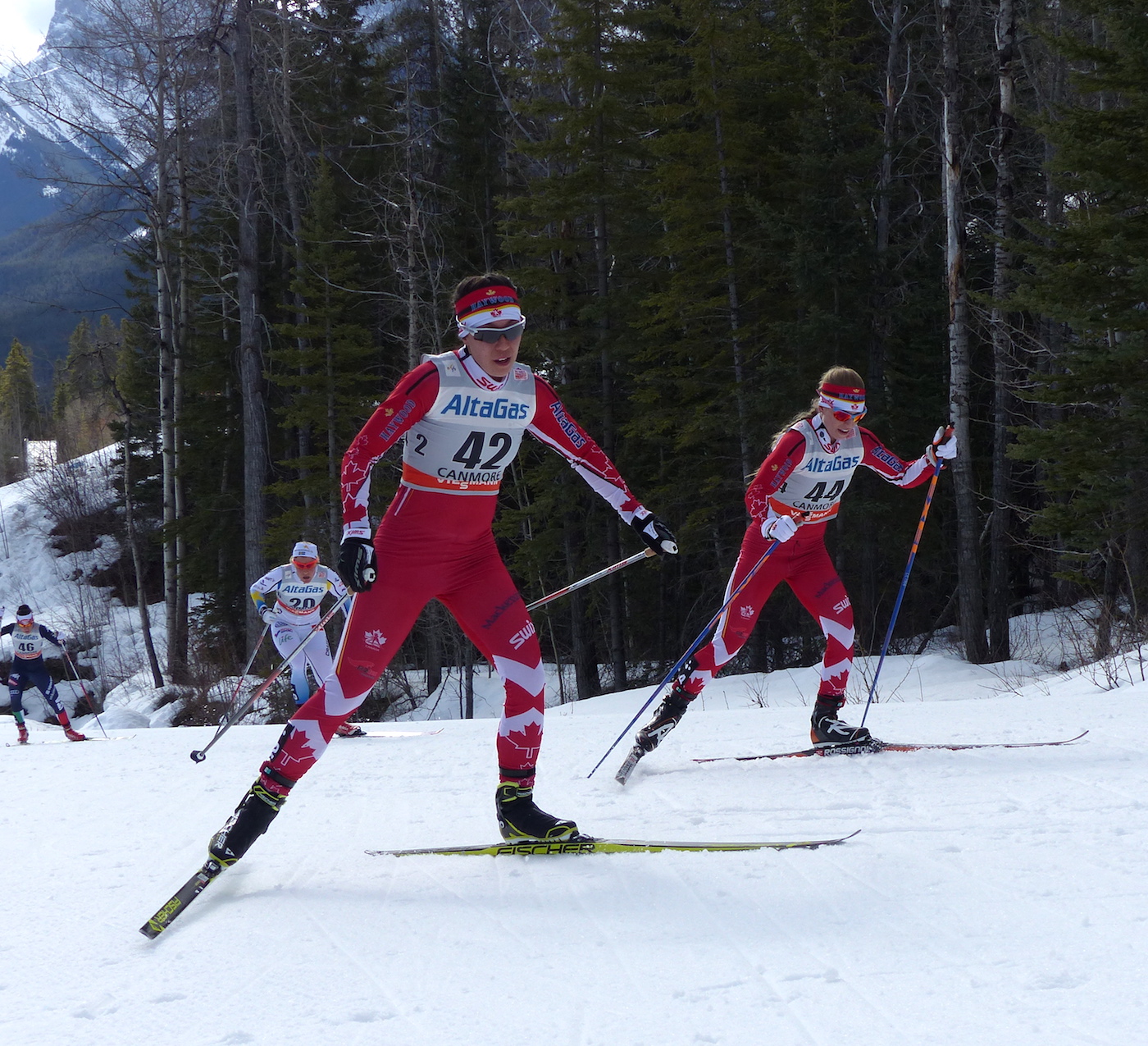
    Emily Nishikawa (42) and Canadian teammate Cendrine Browne (44) in the women's 15 k skiathlon at the 2016 Ski Tour Canada in Canmore, Alberta. (Photo: Peggy Hung)
    Emily Nishikawa (42) and Canadian teammate Cendrine Browne (44) in the women’s 15 k skiathlon at the 2016 Ski Tour Canada in Canmore, Alberta. (Photo: Peggy Hung)

    “It was not super-bad, but I’m excited to have Canadian women there with me,” Nishikawa said in a phone interview in October.  

    When she first spent a few months on the World Cup circuit following 2013 World Championships nearly four years ago, Nishikawa, now 27, had teammate Perianne Jones to look up to.

    “That was great to learn from her and have her there showing me the ropes of World Cup racing,” Nishikawa said.

    This season, she will be sharing her experience with the younger three.

    “I really don’t know how [Nishikawa] did it,” Browne, 23, of the Pierre-Harvey National Training Centre, said on the phone.

    All three said they view Nishikawa as a leader and mentor.

    “She’s much more calm than we are,” Browne said. “We are still all excited and sometimes a little bit stressed out. She brings something else to the group, she tells us some tricks sometimes, or tells us stuff we should do.”

    “Emily’s had a few years of experience now,” said Beatty, 22, of the AWCA. “And she’s been able to bring a wealth of knowledge of what we need to make that jump and help us with that.”

    “To have enough women to fill a relay team is awesome,” Nishikawa said in October of her three teammates (before MacIsaac-Jones was injured). “To improve the women’s program in Canada, we need to have women there [in Europe]. I’m really excited about it.”

    Preparing for Europe

    For Canmore-based Nishikawa, Beatty and MacIsaac-Jones, elevation training is an everyday activity, with an elevation of 1,400 metres (nearly 5,000 feet) at the front door and 2,800-metre peaks (9,000+ feet) visible from the couch. For Browne, who lives and trains near sea level in Quebec, elevation trips are an important development step.

    “This year is my third time in Park City, I feel already much better than the first year I was here,” Browne said during the team’s Utah camp in October.

    She completed two elevation camps this season: first in Park City, Utah, and in mid-November, 10 days in Davos, Switzerland, before the World Cup opener in Finland.

    There has been an increased emphasis on alignment camps this year, with more women training together. A two-week camp in Mont Tremblant, Quebec, was followed by two and half weeks at Park City in October. All the women were happy to spend more time with a bigger group.

    “I would like to train more with them because they’re stronger than the people on my team,” Browne said.

    An additional highlight from the Tremblant camp was the lake. “It was really nice to have the lake right there and go for a swim afterwards,” Beatty recalled. In and around Canmore, the water is colder, and “you just jump in and jump out,” she said.

    Nishikawa, Beatty, and MacIsaac-Jones added a summer snow camp to their schedule, going to New Zealand for three weeks of skiing in August, which they paid for themselves.

    Beatty and Macisaac-Jones appreciating the 'summer' snow in New Zealand (Photo: Emily Nishikawa)
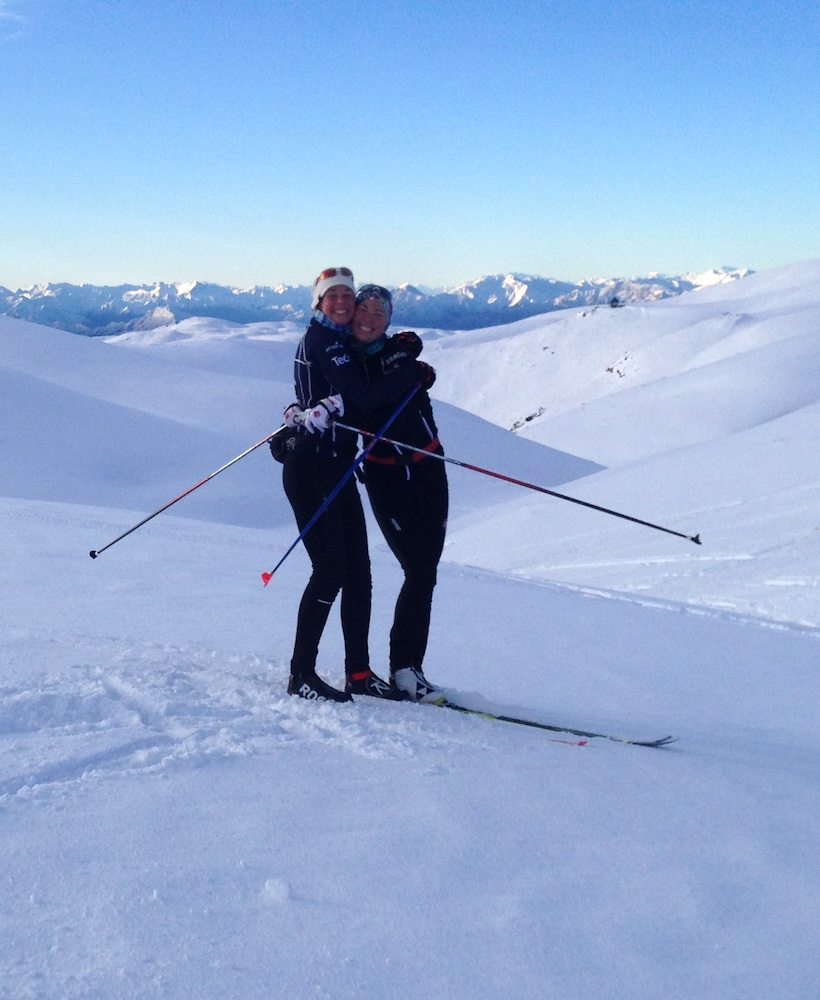
    Beatty and MacIsaac-Jones appreciating the ‘summer’ snow in New Zealand in August. (Photo: Emily Nishikawa)

    “We rented our own car,” Beatty said. “We kind of were there without a coach, so it was a little bit scary thinking about it, but it went really smoothly and everyone was really helpful.”

    The Canadian Para-Nordic and biathlon teams were also there and provided some external support. For all three women, it was a volume block. “Lots of skiing and less intensity than in a regular block,” Beatty explained..

    “It was incredible,” MacIsaac-Jones reflected. “The conditions were amazing while we there and it was probably my best training camp of the season.”

    “That was my first time to New Zealand,” Nishikawa said. “It’s like the perfect training setup […] staying at Snow Farm Lodge. It was a really successful camp and I definitely want to go back there next year.”

    During the offseason, Beatty said she addressed an injury. She missed the final classic stage of Ski Tour Canada with back problems and worked through the summer realigning her classic posture to prevent a repeat.

    “When I did a classic time trial in NZ, it came back a little bit, but I’ve been working a lot on trying to strengthen my core and the areas around it. It doesn’t bother me for everyday training,” she said.

    The Park City alignment camp in October was fully supported by CCC, with 15 to 18 women training together when possible.

    “It’s nice to have such a big group to train together,” Beatty said of the camp. “To have so many girls all in one place.”

    MacIsaac-Jones made the biggest changes of the four this year, joining both the national team and, for the first time in her career, a training centre.

    “I guess the biggest difference would be having such a big group of coaches and physiologists and strength coaches and people to help me with my training,” MacIsaac-Jones said of the World Cup Academy.

    She estimated that her new program costs about the same as training with Rocky Mountain Racers, also based in Canmore, with the added national-team funding offsetting the higher fees for the Academy. But European travel adds to the costs as well.

    “At this moment, I’m budgeting about, my guess is around $6,000 for the Period 1 World Cup,” MacIsaac-Jones said in October.

    First Weekend

    Dahria Beatty racing to 50th in the classic sprint qualifier last Saturday at the first World Cup of the 2016/2017 season in Kuusamo, Finland. (Photo: Fischer/NordicFocus)
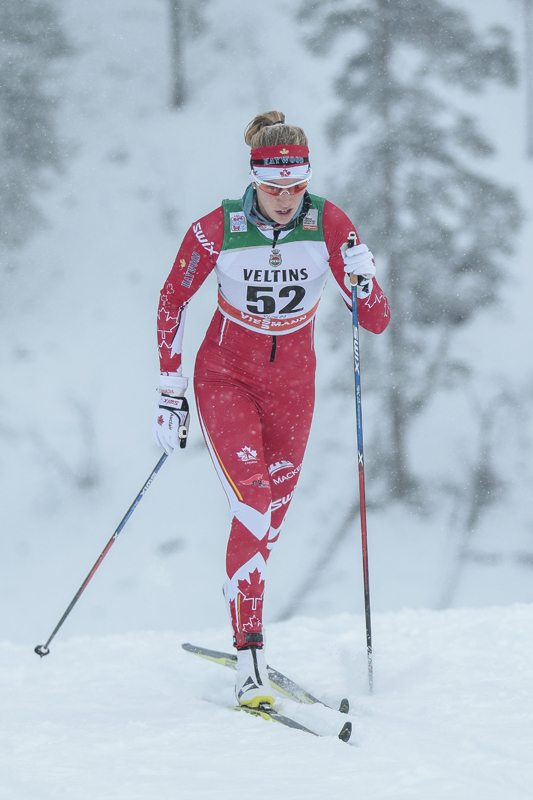
    Canada’s Dahria Beatty racing to 50th in the classic sprint qualifier last Saturday at the first World Cup of the 2016/2017 season in Kuusamo, Finland. (Photo: Fischer/NordicFocus)

    Beatty and Browne opened the season with the classic sprints in Kuusamo, Finland, last Saturday, Nov. 26, placing 50th and 62nd, respectively, in a stacked field.

    After the qualifier, Beatty explained she was “a lot less nervous” and had a better sense of how European World Cup sprints work after experiencing it for the first time.

    Now, “… I feel like I can treat these race starts more like any other race I would do!” she wrote.

    The next day on Sunday, Nov. 27, Beatty described being less-than-satisfied with her 10-kilometer classic race, where she placed 74th. (Browne placed 58th, just ahead of Nishikawa in 59th.)

    “The race didn’t going very well for me but my back’s not a problem, so that’s a big positive going forward,” Beatty explained. “At the start of the season one good race of two isn’t that unusual for me. I was happy with the sprint and I am really looking forward to the mini tour in Lillehammer.”

    Last season at the Ski Tour Canada, which doubled as World Cup Finals, five Canadian women completed the eight-stage Tour. Nishikawa, Browne and MacIsaac-Jones were three of them, along with Bouffard-Nesbitt and Canmore’s Annika Hicks. Beatty didn’t complete the final stage, but she notched a career-best 15th in the Canmore classic sprint.

    Asked how those World Cups starts affected her confidence for this season, Browne wrote, “I feel like I belong here and that I am a World Cup skier like all these other girls. I feel like I’m part of them now.”

    Heading into this season, Browne had 17 World Cup starts to her name, ahead of Beatty with 16 and MacIsaac-Jones with 15. Despite their collective experience, Browne and Beatty were glad to have Nishikawa’s guidance in Kuusamo.

    “I think the best thing Emily helped with this week was suggesting we get breakfast food to make in our condo,” Beatty wrote. “It definitely saves an extra stress on race mornings.”

    Nishikawa skipped the sprint to focus on the 10 k classic the next day.

    “It was great cheering on Dahria and Cendrine, and made me so excited to put a bib on!” Nishikawa wrote after watching the sprint. “It is lots of fun having them here and we are looking forward improving together as a team this season. We can’t wait for Maya to join us when her foot is healed up.”

    Potential Outlook

    All programs in all countries go through phases. Looking back a decade, the World Cup scene was very different.

    In 2005/2006, Norway had a rough year, most notably placing fifth in both genders at the Olympic relays in Torino, Italy. Despite health struggles, Marit Bjørgen did win the Overall World Cup despite (by six points over Canada’s Beckie Scott), but the country was feeling pain after a disastrous Olympics. With his first World Cup podium (in a skate sprint in March of that season), Canadian Devon Kershaw helped elevate a men’s program that had been largely funded by the women’s success. Also that year in Borlänge, Sweden, in the same race that Kershaw broke through, Kikkan Randall recorded her first World Cup top 10, placing fifth in the skate sprint. At the time, she was the star of a tiny U.S. team. Then at the iconic Holmenkollen women’s 30 k freestyle, Italy was the only country with two athletes in the top 10.

    Will 2016/2017 be the watershed year for the Canadian women’s team? As with the continuously emerging U.S. women’s team, we won’t know for a few years, but it will be fun to watch.

    American Chelsea Holmes leads Canadians Emily Nishikawa (42) and Cendrine Browne, and Hanna Falk of Sweden, during the women's 15 k skiathlon on Wednesday in Canmore, Alberta. (Photo: Fischer/NordicFocus)
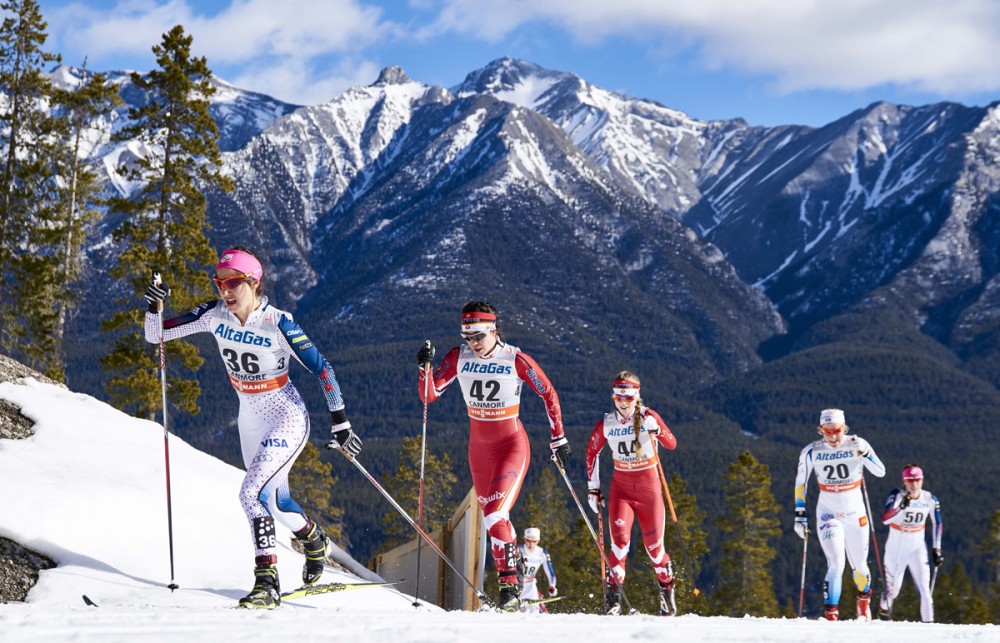
    Canada’s Emily Nishikawa (42) and Cendrine Browne (44) on the heels of American Chelsea Holmes, followed by Sweden’s Hanna Falk (20) during the women’s 15 k skiathlon at the 2016 Ski Tour Canada in Canmore, Alberta. (Photo: Fischer/NordicFocus)
  • Harvey Takes a First and Second in Davos Tune-Up Races

    Harvey Takes a First and Second in Davos Tune-Up Races

    Alex Harvey (Canadian World Cup Team) striding to second in a men's 10 k classic preseason race on Saturday in Davos, Switzerland. (Photo: NORDIC-ONLINE.CH)
    Alex Harvey (Canadian World Cup Team) striding to second in a men’s 10 k classic preseason race on Saturday in Davos, Switzerland. (Photo: NORDIC-ONLINE.CH)

    (Note: This article has been updated to include comments from Heidi Widmer.)

    This weekend’s races in Davos, Switzerland, aren’t the biggest, nor are they International Ski Federation (FIS) sanctioned. But if you ask Alex Harvey, the Swiss team organizers held them to the highest standard, complete with team meetings the night before, chip timing, bibs, a starting gate, and everything exactly on schedule, although “this part is to be expected in Switzerland!” Harvey wrote in an email on Friday.

    A day after winning a low-key classic sprint, held in King’s Court format to allow racers more opportunities for head-to-head competition in the heats, Harvey, of the Canadian World Cup Team, placed second in the men’s 10-kilometer classic on Davos’s snow-farmed course, starting last in a field of 45 — right behind local favorite Dario Cologna of Switzerland.

    “The Swiss team made the starting list according to FIS distance points to make it official like a real race, so I did start last,” Harvey noted on Saturday.

    Over the first half of the course, the Canadian posted the fastest split times. On laps three and four, however, he relinquished the lead to Cologna and finished 4.4 seconds behind him. Cologna won the race with a time of 26:09.1, Harvey placed second, and Livio Bieler of Switzerland was third (+35.0).

    “It’s always rough for me to race at altitude, so I was very pleased with the result and the way the body worked,” Harvey wrote in an email. At 1,560 meters (5,120 feet) above sea level, Davos is considered the highest “town” in Europe. “Looking back I might of started a bit too fast but it’s why we do those test races before the start of the World Cup…to get the nerves out!”

    Switzerland's Dario Cologna racing to first in the men's 10 k classic preseason race on Saturday in Davos, Switzerland. (Photo: NORDIC-ONLINE.CH)
    Switzerland’s Dario Cologna racing to first in the men’s 10 k classic preseason race on Saturday in Davos, Switzerland. (Photo: NORDIC-ONLINE.CH)

    Harvey noted that some French long-distance team skiers double poled the entire race on skate skis, as did Russia’s Ilia Chernousov.

    “Dario and I both thought this was a better option but [my coach] Louis [Bouchard] and the Swiss coaches had agreed that we would all go on classic skis with wax…after all the goal is to prepare for Kuusamo and Lillehammer which are some of the hilliest courses on Tour!” he explained.

    “I couldn’t see Dario during the race since the course is pretty turny here but I was getting some splits from Louis,” Harvey added. “We were pretty close to each other for the whole race, it made it exciting!”

    Asked about the spectator turnout, Harvey explained that the race was held on the upper part of Davos’s World Cup course, which was closed to the public.

    “Tourists with purchased bibs were allowed on the track after the race was done [and] Swiss TV was there though along with some print media,” he explained.

    Cendrine Browne (Canadian U25 Team) racing to 12th in the women's 8 k classic preseason race on Saturday in Davos, Switzerland. (Photo: NORDIC-ONLINE.CH)
    Cendrine Browne (Canadian U25 Team) racing to 12th in the women’s 8 k classic preseason race on Saturday in Davos, Switzerland. (Photo: NORDIC-ONLINE.CH)

    In the women’s 8 k, Cendrine Browne (Canadian U25 Team) placed 12th, 2:30.9 behind the Swiss winner Laurien van der Graaff, who won her second race in as many days. Van der Graaff started in the middle of the pack of 28 women and finished well ahead of anyone else, clocking in at 21:36.2, with runner-up Elisabeth Schicho of Germany 25.1 seconds behind her. All three of the women who podiumed in Friday’s classic sprint reached the podium again as Nadine Fähndrich (Switzerland) placed third (+26.3).

    Heidi Widmer, born in Canada but competing for Switzerland while living in Davos, finished 15th (+2:54.1) after placing eighth in Friday’s sprint.

    For the 23-year-old Browne, Harvey’s teammate at the Pierre-Harvey Training Centre in Quebec, Saturday’s distance race was her first race of the season.

    In an email, Browne explained the training in Davos has been good and conditions are “fabulous.”

    “I didn’t feel great out there today but it’s normal, it takes me a long time to get used to altitude,” Browne wrote. “My first lap felt good but then the altitude hit me and I was gasping for air in the 2nd and 3rd lap. I didn’t have any goals for today except to ski well and to use this race as an icebreaker for the season.”

    At this point in the season, she’s confident in her fitness.

    “I just need time to get adjusted to the jet lag and the altitude,” she wrote. “I think that the races next weekend [at the World Cup in Finland] will go better.”

    Heidi Widmer, who lives and trains in Switzerland, racing to 15th in the women's 8 k classic preseason race on Saturday in Davos, Switzerland. (Photo: NORDIC-ONLINE.CH)
    Heidi Widmer, who lives and trains in Switzerland, racing to 15th in the women’s 8 k classic preseason race on Saturday in Davos, Switzerland. (Photo: NORDIC-ONLINE.CH)

    For Widmer, her season will start in earnest in early December at the Swiss Cup in Goms, Switzerland, followed by the Davos World Cup Dec. 10-11. After that, she’s hoping to continue on the World Cup circuit and qualify for World Championships in February.

    In an email, she explained that this weekend’s Davos races were “training opportunities” with a casual race-prep atmosphere.

    “To sum these past two days of ‘test races’ in Davos up, it is FAR off the mark!” Widmer wrote of her performances. “We raced on training skis, but regardless, the fitness is not where it should be, but! I am healthy, happy and have a plan to get me back in the green. I’ve pushed my training this year, and I know I have fitness in the bank, but it is now a matter of resting up, keeping positive and allowing my hard work to sink so that I can put it on the line when it counts.”

    With racing in Davos over, Browne, Harvey and Bouchard will leave Tuesday to join their team in Kuusamo, Finland, where the first races of the World Cup season will be held Saturday and Sunday, Nov. 26-27.

    “That will be the next race for me! I’m looking forward to race on the World Cup and to see what I can do when I’m in a good shape!” Browne wrote.

    “I think it’s a better start in classic than last year in Gallivare for me,” Harvey added. “I feel really solid technically and looking forward to Kuusamo and Lillehammer.”

    Results

    Alex Harvey (Canadian World Cup Team) in Davos, Switzerland, where he started his 2016/2017 race season. (Photo: NORDIC-ONLINE.CH)
    Alex Harvey (Canadian World Cup Team) in Davos, Switzerland, where he started his 2016/2017 race season. (Photo: NORDIC-ONLINE.CH)
  • Picking the Team: Insight into CCC’s World Cup Selection Process

    Picking the Team: Insight into CCC’s World Cup Selection Process

    Canadian World Cup team qualifiers Jess Cockney (l) and Bob Thompson (r) racing at Frozen Thunder in Canmore, Alberta, last week. (Photos: Jenn Jackson & Drew Goldsack)
    Canadian World Cup team qualifiers Jess Cockney (l) and Bob Thompson (r) racing at Frozen Thunder in Canmore, Alberta, last week. (Photos: Jenn Jackson & Drew Goldsack)

    Cross Country Canada (CCC) completed its 2016/2017 World Cup Period 1 selection process last week, choosing its final two athletes after the Frozen Thunder sprint qualifiers (classic and skate). The selection criteria explains how the team is chosen, but doesn’t exactly address the “why’s” of the process.

    The selection process changes every year, based on opportunities and goals, and is discussed with the top coaches before being published each spring, CCC High Performance Director Thomas Holland explained.

    Better recent results for Canada have increased its quota for the upcoming World Cup season. The men have six starts, plus the Continental Cup (COC) leader. The women have four starts, plus the COC leader (which allows them a total quota of five, but are only sending four women — including the COC leader — to start the season in Europe). The men’s team is ranked fifth, which means it is required to start at least three men for all but one World Cup weekend.

    To oversimplify, CCC has four main goals:

    • Score World Cup podiums and top 10’s to maintain and grow funding
    • Deliver good relay and team sprint results to maintain or grow its World Cup quota
    • Build up a competitive team for the 2018 Olympics in PyeongChang, South Korea
    • Fill the pipeline with athletes for future success

    Of course, individually, there are lots of goals, Holland explained on the phone last week.

    “For some people, it’s got to be top 10, our relay team with our men it’s got to be top five, and then there’s other people that’s let’s just get in the points,” he said.

    As detailed in the 2016/2017 selection criteria, each World Cup period will be selected differently. Period 2, which includes a three-day mini tour in PyeongChang, has more available quota, as the Canadian World Cup distance skiers will stay in Europe to prepare for World Championships. The selection criteria document says “This is an opportune WC event for sprinters and NextGen athletes.” The selections for later periods will be based on results from Period 1 and Period 2.

    The selection process starts with the easy choices. Alex Harvey has consistently been on the podium every year and is in the World Cup Red Group, covering a large chunk of World Cup funding. Devon Kershaw has struggled, by his standards, since ranking second overall in the World Cup at the end of the 2011/2012 season, but is a good bet for top 10’s in both distance and sprint events. Len Valjas has numerous podiums in the past and word has it his test results are back up after his problematic knee surgery three years ago.

    Dahria Beatty and Andy Shields are Canada’s Continental Cup leaders, giving them World Cup starts for Period 1 outside the national quota.  After this, the choices get harder.

    There are three men who recently scored World Cup points. Jess Cockney made the heats three times in his World Cup career, including 10th in Quebec City last season at the Ski Tour Canada (STC). Graeme Killick finished the STC in 27th and posted four top 30’s last season. Knute Johnsgaard got his first top 30 last year in Gatineau.

    Killick and Johnsgaard were selected to World Cup Period 1 in the spring, but Cockney was not. According to Holland, it comes down the the relay goal.

    “When Ivan [Babikov] left the team and went to coaching,” Holland. “We needed the next man and Knute was the next man for that relay team. That’s it, and it’s that simple.”

    All seven of the above “pre-selected” athletes come with funding outside of CCC. The Continental Cup leaders get travel and accommodation support from the race organizers, mandated by FIS. Own The Podium (OTP) funded the other five specifically to achieve top-eight individual results or top-five relay results in Period 1 and 2 as a step towards success in PyeongChang.

    OTP is a federal program designed to increase Canada’s medal count at the Olympics. OTP funding is dependent on delivering; CCC had its funding reduced after Sochi and anticipates it will lose more if doesn’t achieve OTP’s target results.

    The last two men’s places are used for the development goals. The distance quota will be filled by the preselected skiers, leaving an opportunity for sprinters.

    “Qualifiers are always important because if the goal is to be top-30,” Holland explained. “You have to do well in the qualifier.”

    Holland explained the decision to use Frozen Thunder to make the final selection, saying “the results show […] that there’s five or six guys here that are reasonably close.”

    A side effect of a qualifier-only selection is that the selection committee can see how athletes handle pressure.

    “I think the week’s trials showed Canada has some pretty good depth on the sprint side now,” Killick wrote in an email after the races. “I was really impressed how confident Jess was going into these trials and to pull out such a commanding qualifier is exciting for the winter.”

    On the women’s side, Canada is on the upside of a rebuilding phase.

    “Our women’s team, they’re developing but their best chance of getting nation’s points is in the relay, team sprints, those kinds of things,” Holland said. “But we’re not just going [to Europe] just to do the relay. It’s important [for skiers] like Dahria Beatty, who is more sprint-oriented and got her results there last year, they’re chasing World Cup points, is the primary goal.”

    Emily Nishikawa has two World Cup top 30’s and one World Championships top 30. Last season she showed better consistency, including her 37th overall at STC, which makes her an easy selection. Maya Macisaac-Jones scored her first World Cup points in Gatineau last season after a close 31st in Planica, Slovenia. Beatty also scored her first World Cup points last year, in Canmore, but was preselected as the Continental Cup leader. Cendrine Browne, second in the Continental Cup last season, was given the final spot ahead of fellow national U25 Team member Katherine Stewart-Jones and Olivia Bouffard-Nesbitt.

    There was a time when CCC was happy to put skiers in the top 30 on the World Cup.  In more recent years, a top 30 is seen as a stepping stone to the real goal: top-10 results.  For OTP and the funding it represents, top-eight on the World Cup and medals at the Olympics are what count. With this change has come an emphasis on younger skiers.  In 2015, the national development team was called the U25 team.

    This has led to an effort to get skiers World Cup opportunities at a younger age.

    “You do have outliers that take a long time, and there’s others skiers that make the transition quicker,” Holland said. “But it doesn’t happen after 25.”

    Holland talked about the evolution of skier development compared to Beckie Scott and Sara Renner’s generation.

    “That’s a great thing to go back and look at,” he said. “They [Beckie Scott, Sara Renner, Milaine Theriault, Jaime Fortier, and Amanda Fortier] made a commitment that Nagano wasn’t good enough and they were going to get it done. Four years and they went from top 60 to the top of the podium.”

    At Nagano, Scott had the best team result of 51st.  At Salt Lake City, Scott uniquely took all three medals in the pursuit and Renner was ninth in the sprint.

    “To improve the women’s program in Canada, we need to have women there [in Europe],” Nishikawa, of the World Cup B-team, said on the phone in mid-October.

    The only Canadian woman who spent most of last season in Europe, Nishikawa, 27. is looking forward to having female teammates again.

    “It will just be nice to have a women’s team there,” she said. “To have enough women to fill a relay team is awesome.”

    The push to get athletes World Cup experience at a younger age comes at a cost.  The older athletes who often dominate at the NorAm level are seeing less opportunities to move up.

    “Crossing over generations is very important,” Holland said. “It is good to have older skiers to kind of set the pace, who have the discipline and can pass that on. It’s a fine balancing act trying to support those people.” 

    Maya Macisaac-Jones qualifying 29th at Ski Tour Canada stage 1. (Photo: Peggy Hung)
    Maya Macisaac-Jones qualifying 29th at Ski Tour Canada Stage 1. (Photo: Peggy Hung)
    Knute Johnsgaard in the heat at Ski Tour Canada stage 1 (Photo: Peggy Hung)
    Knute Johnsgaard in the heats at Ski Tour Canada Stage 1 (Photo: Peggy Hung)
    Dahria Beatty ahead of Therese Johaug at Ski Tour Canada in Canmore (Photo: Peggy Hung)
    Dahria Beatty ahead of Norway’s Therese Johaug at the Ski Tour Canada in Canmore, Alberta. (Photo: Peggy Hung)