From the FasterSkier archive — posts syndicated from athletes’ and coaches’ own blogs between 2004 and 2012, kept online as published. Current coverage is at fasterskier.com.

Tag: Canmore

  • Alison Mackie Is Chasing the Speed She Doesn’t Have Yet

    Alison Mackie Is Chasing the Speed She Doesn’t Have Yet

    This article was made possible through the generous support of our voluntary subscribers. If you value coverage like this, please support FasterSkier with a voluntary subscription.
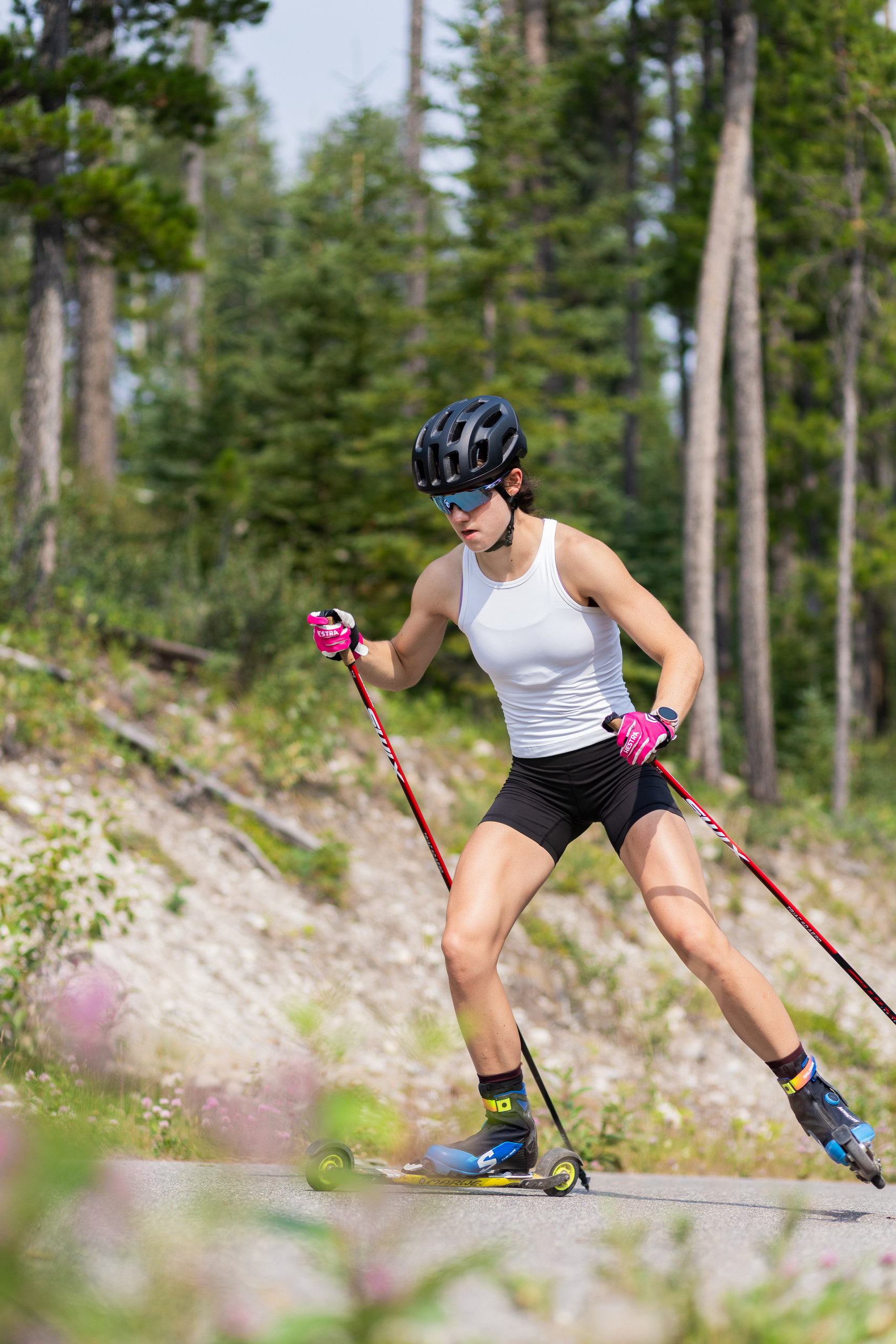
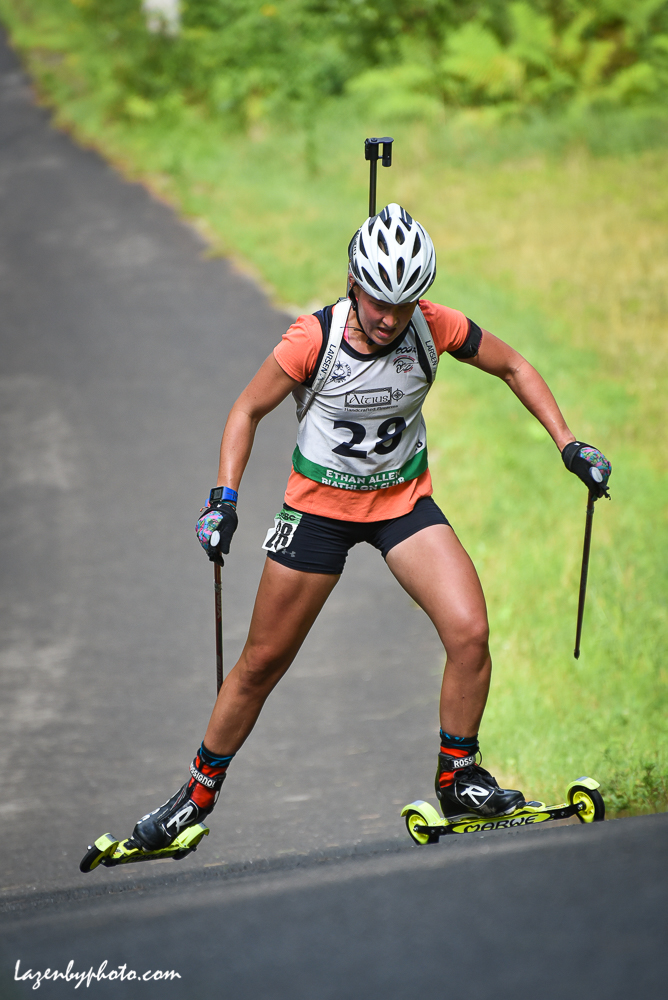
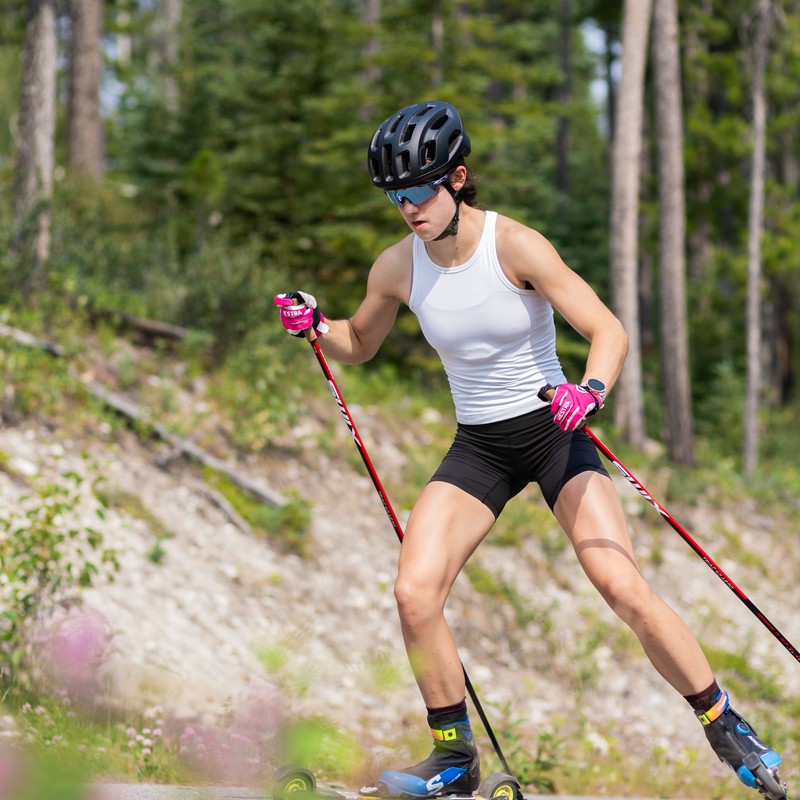
    Alison Mackie skate rollerskiing uphill on a paved forest road in a white training top and black helmet.
    Alison Mackie rollerskiing during summer training in July. She trains with the Alberta World Cup Academy in Canmore, Alberta. (Photo: Nathaniel Mah)

    For Alison Mackie, the 2024 Junior World Championships in Planica never really started.

    She had arrived in Slovenia with reason to expect something. A year earlier, at 17, she had finished 13th in the 20 k at the junior championships in Whistler, British Columbia, on home snow, in exactly the kind of long, grinding distance race that suits her. In Planica she missed the qualification in the opening sprint, fell ill, and watched the rest of the week from a hotel room. She was not on the tracks when her Canadian teammates made history either: Sonjaa Schmidt won the U23 sprint, and Canada won the U23 relay.

    Back at her base in Canmore, Alberta, at the end of that season, Mackie and her coaches set a target for the next one. Top five at the 2025 Junior World Championships in Schilpario, Italy.

    Privately, she wanted more than that.
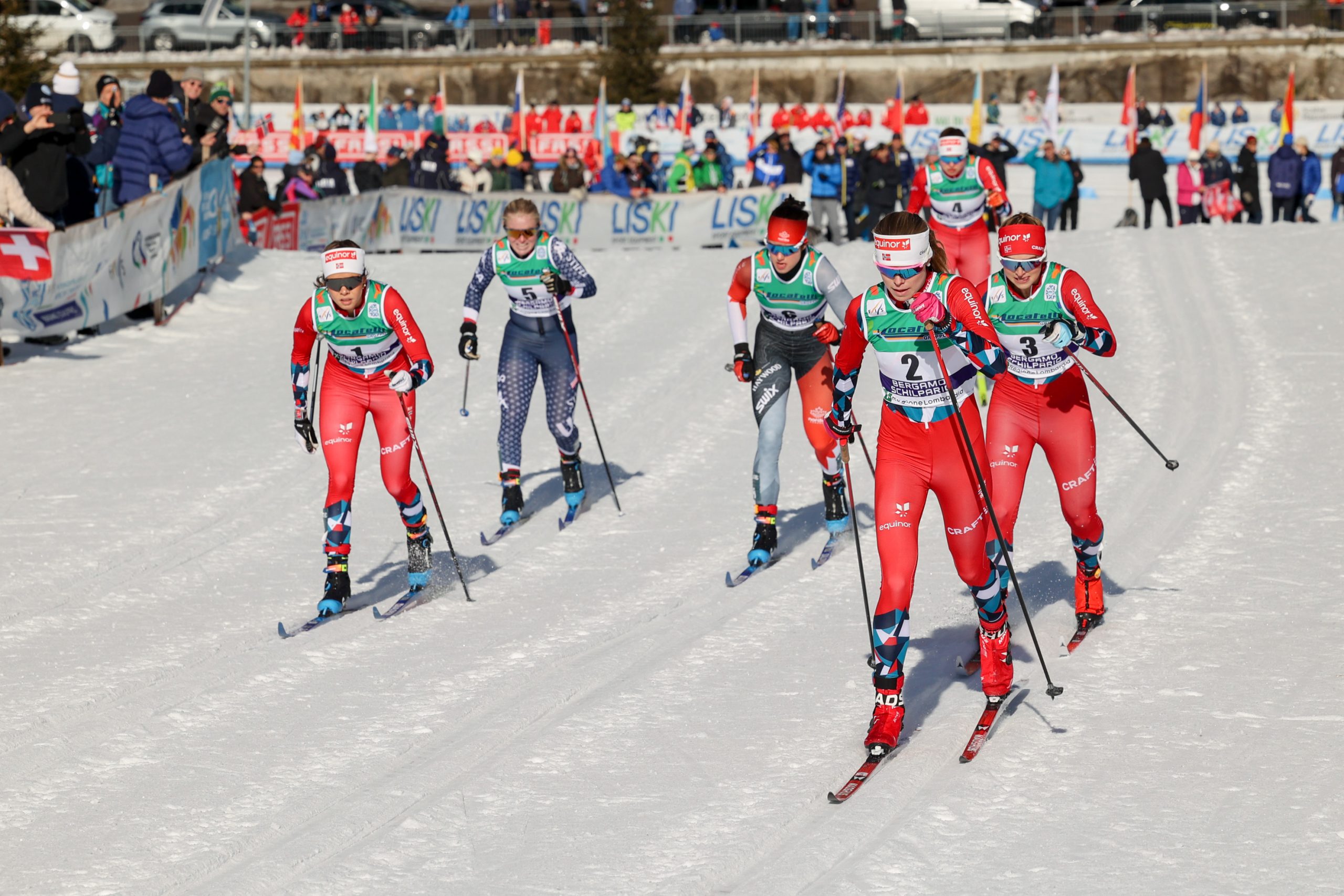
    Alison Mackie in bib 6 racing a classic sprint heat alongside Sammy Smith and four Norwegians.
    Mackie in bib 6 during the classic sprint at the 2025 Junior World Championships in Schilpario, where she finished fourth. Two bronze medals followed in the distance races. (Photo: Newspower.it)

    A Comeback in Schilpario

    “Yes, Junior World Championships in Schilpario were the main focus of my season that year,” Mackie said. “I trained specifically for that event to get my best shape there. But I wouldn’t say revenge, instead a kind of comeback because the year before in Planica I was pretty disappointed because I haven’t had the opportunity to race being sick.”

    On the Italian tracks she won bronze in the 20 k mass start classic, then bronze again two days later in the 10 k interval start skate. She was fourth in the classic sprint. They were the first junior world championship medals won by a Canadian woman since 1989.

    “I wanted a top five, and I finished with three top fours, including two medals,” she said. “The preparation we had put in proved to be correct, and I had a lot of confidence before starting the championships because I felt really good in the previous months leading up to my arrival in Italy.”
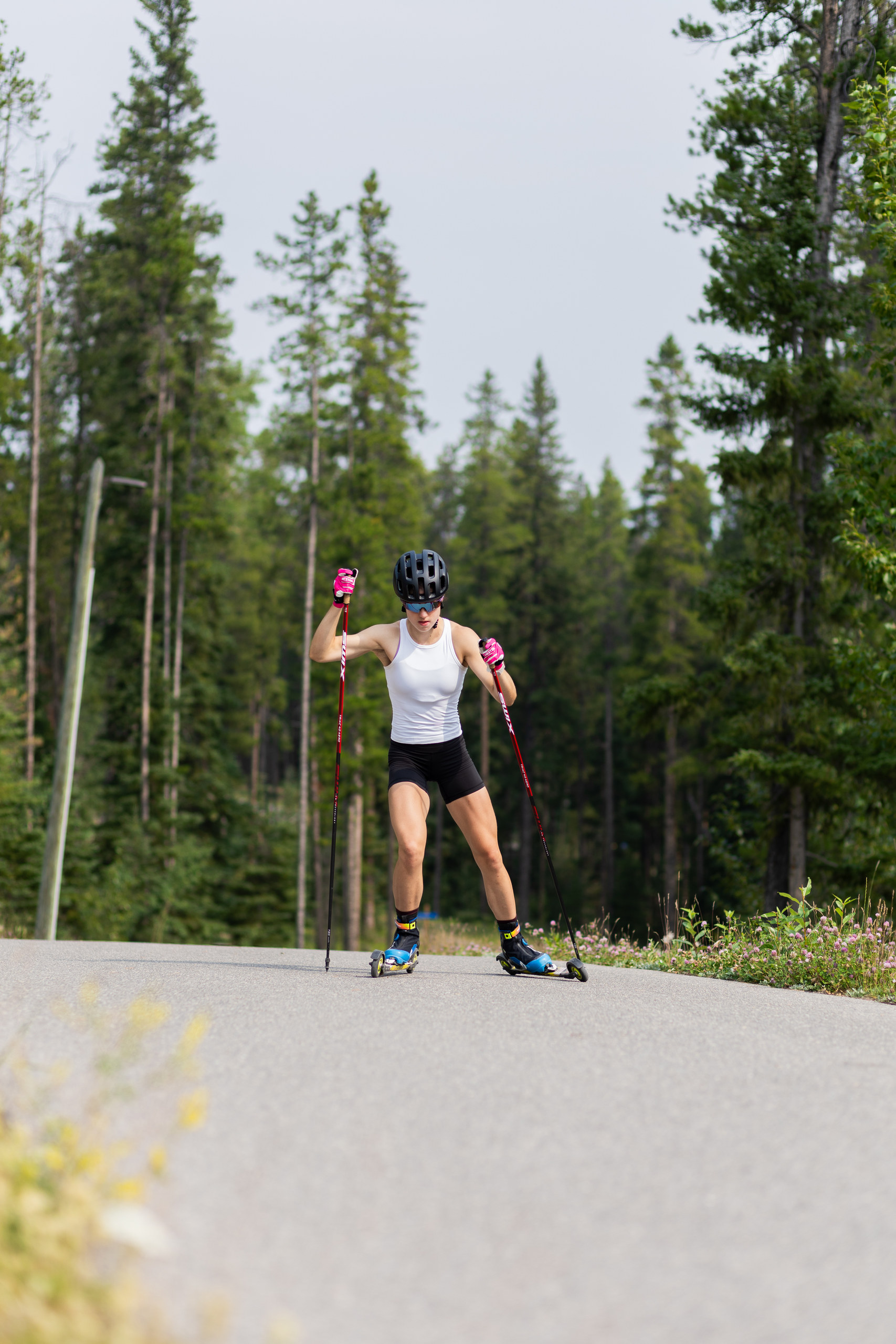
    Alison Mackie rollerskiing toward the camera on a paved road lined with evergreens.
    Mackie on a summer rollerski session in July. She started racing in Alberta as a teenager and won her first national title at 16. (Photo: Nathaniel Mah)

    Put on Skis Before She Could Walk

    Mackie was born in Montreal and raised in Edmonton, and she is 20 years old. Her mother, Jennifer, is a pediatrician. Her father, Andrew, is a pediatric cardiologist. Both of them ski, and both of them had her on skis before she has any memory of it.

    “My parents put me on ski as soon as I could walk,” she said. “So skiing accompanied all my childhood. Then I took real ski lessons and I started doing racing in my region of Alberta during my teenage times. That’s till Covid period arrived and with the restrictions I had nothing else to do others than training. But anyway, I really enjoyed myself during that period, developing my technique with my coaches at Edmonton ski club and when Covid finished my very first race that I won was our National title in March 2022 as a 16 year old.”

    Canada is known around the world as the home of ice hockey. Why did you choose cross-country skiing over hockey, freestyle, or swimming, following Summer McIntosh’s footsteps for example?

    “In parallel with cross-country skiing, I did a lot of other sports like cross-country track and field, rock climbing, mountain biking, swimming, soccer and in all of these sports I wasn’t as super competitive as I was in cross-country skiing. I did that only for fun as an opportunity to stay healthy during summer period. Cross-country skiing has been to me the only sport I competed at my best in my early ages and my favourite discipline. That’s why I chose it.”

    That first national title, won in Whistler in March 2022, is the race she keeps coming back to.

    “Yes, that race in Whistler BC was one of the first big races after the Covid pandemic,” she said. “I trained a lot during that period and didn’t have the opportunity to race and see my level, and when I went to my first National Championships and won the first race, it was a special moment and made me realize that I wanted to keep pursuing cross-country skiing for even better results and seeing how far I could get.”
    Alison Mackie racing the Olympic 10 k freestyle in Tesero, panned against a packed grandstand.
    Mackie racing to eighth in the Olympic 10 k freestyle in Tesero on Feb. 12, the best Olympic cross-country result by a Canadian woman. (Photo: Vanzetta/NordicFocus)

    Eighth at the Olympics

    The line has run one direction since. Two bronze medals at Junior Worlds. Her first World Cup top 10s, in Toblach and Val di Fiemme. Eighth in the 10 k free at the Milano Cortina Olympics in her first senior season. Gold in the 20 k mass start free at the U23 World Championships in Lillehammer in March. And at the end of that season, on 548 points, the FIS U23 overall World Cup title, the first won by a Canadian woman, with the finals held at Lake Placid.

    At the Milano Cortina Olympics you finished eighth in the 10 k free, after your first World Cup top 10s in Toblach and Val di Fiemme. What do you remember from those two weeks in Italy?

    “It was super cool being part of that multi sport event that the Olympic Games represent. It was my dream since I was a child watching Olympics on TV and having the opportunity to compete in high level in this huge event was really special to me. Definitely they have been long two weeks, also overwhelming at the time, but made me really happy how I performed overall and the 8th place I got in 10km skating has definitely been the highlight without any doubt. Entering the top 10 has been quite a surprise to me in that moment, because there were all the best skiers at the starting line. But now looking back at all the hard work I did during the whole season and the good results I got before that race in both World Cup and in under 23 World Championships, I wouldn’t say it was a huge surprise for me. Probably demanding Val di Fiemme’s track suited me very well, given that I finished as well 8th in Tour de Ski’s Cermis climb the month before.”

    What is the current situation in Canada for cross-country skiing, in terms of ski club membership, visibility in the national media, and financial support?

    “I would say the current cross-country skiing community in Canada is pretty small, if compared to other European power nations, but strong and with lots of passion in developing our discipline. There are a lot of young skiers coming up and I think it is very exciting for the great results to come in the future. Our National sports organization here in Canada are working really hard to make sure our National team can get all the support we need in order to achieve some World Cup podium with both boys and girls team during the seasons to come.”
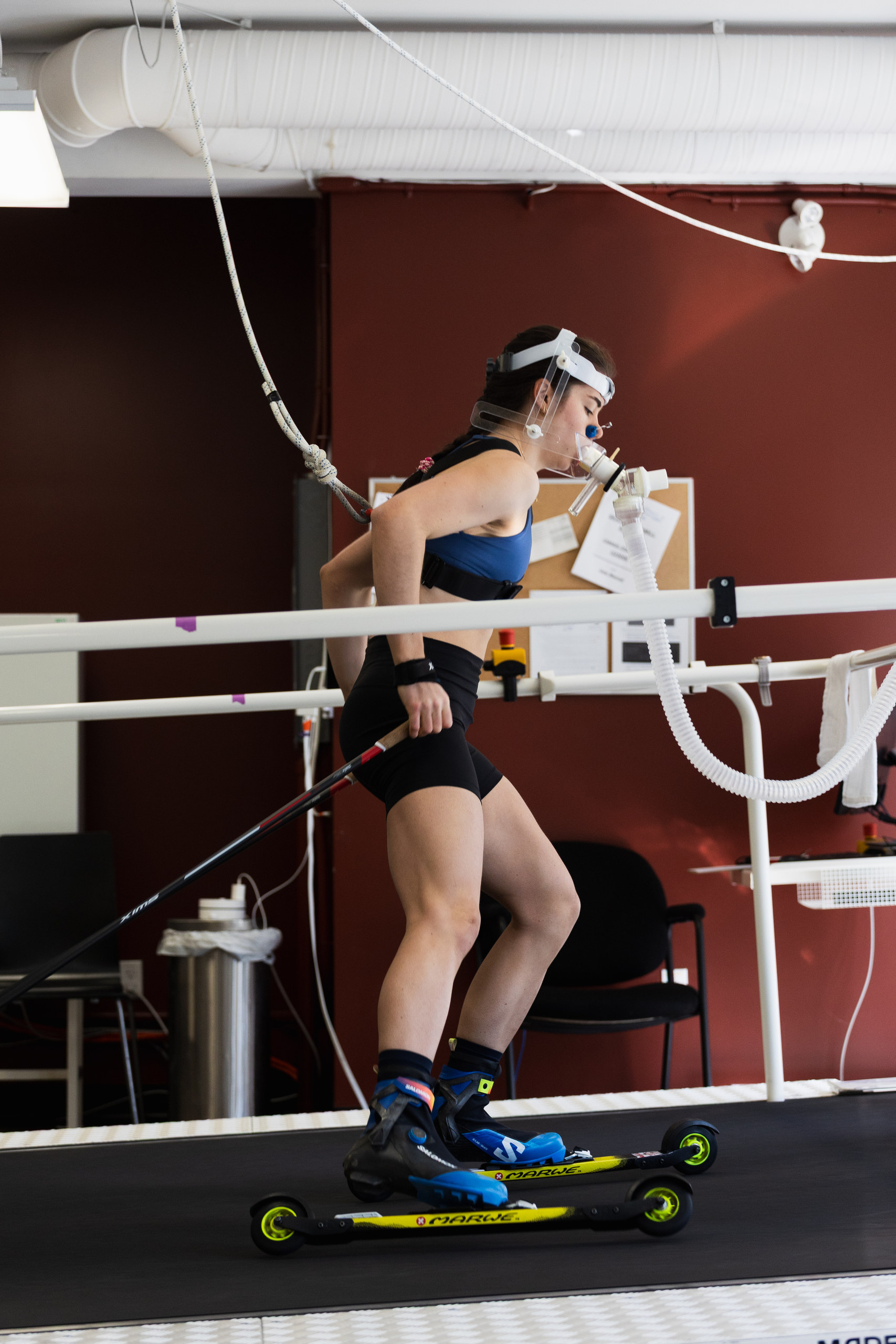
    Alison Mackie skate rollerskiing on a laboratory treadmill while wearing a metabolic mask.
    Mackie on the treadmill during a lab test in May. Distance racing is her strength, and finding speed is the summer’s assignment. (Photo: Nathaniel Mah)

    Distance Strength, Sprint Homework

    Describe yourself as a cross-country skier. What are your characteristics, your strengths, and the areas you are working on for the coming seasons?

    “I describe myself as a pretty strong skier in distance races, while I struggle a bit in sprint not to get through the top 30 and consequently not play the sprint finals, that is an element that I am working on in next seasons,” she said. “Between classic and skate I have found more success in free technique in the past seasons, but I enjoy training both classic and skate equally. Distance races are definitely my strength but I am working to improve my speed skiing as well so I could become a really strong overall skier in order, in the future, to fight for a higher overall spot in World Cup.”

    And the criticism you get from your coaches?

    “More than critics I would call special feedback from my coaches. Because sometimes I have a tendency to train too much and too hard that I need. That is something I am working on this summer, knowing when to push my body and when to give the correct time to rest and recover.”

    The World Cup calendar keeps skiers from outside Europe away from home for close to five months a season. How hard is that for you?

    “Personally I have spent on the road, following World Cup calendar, the past two seasons, but not the full European calendar. I really enjoy travelling and being on the road, so I don’t think it is a huge struggle for me. It is tough to not see friends and family for a long time but I am really lucky that I had friends and family came and watched me on tracks while I was in Europe a couple of time during season. Next season it will be quite different for me, because I am transitioning to attend the University of Utah so I will leave World Cup a bit because I do need to go to class and represent the University of Utah in North America as well.”
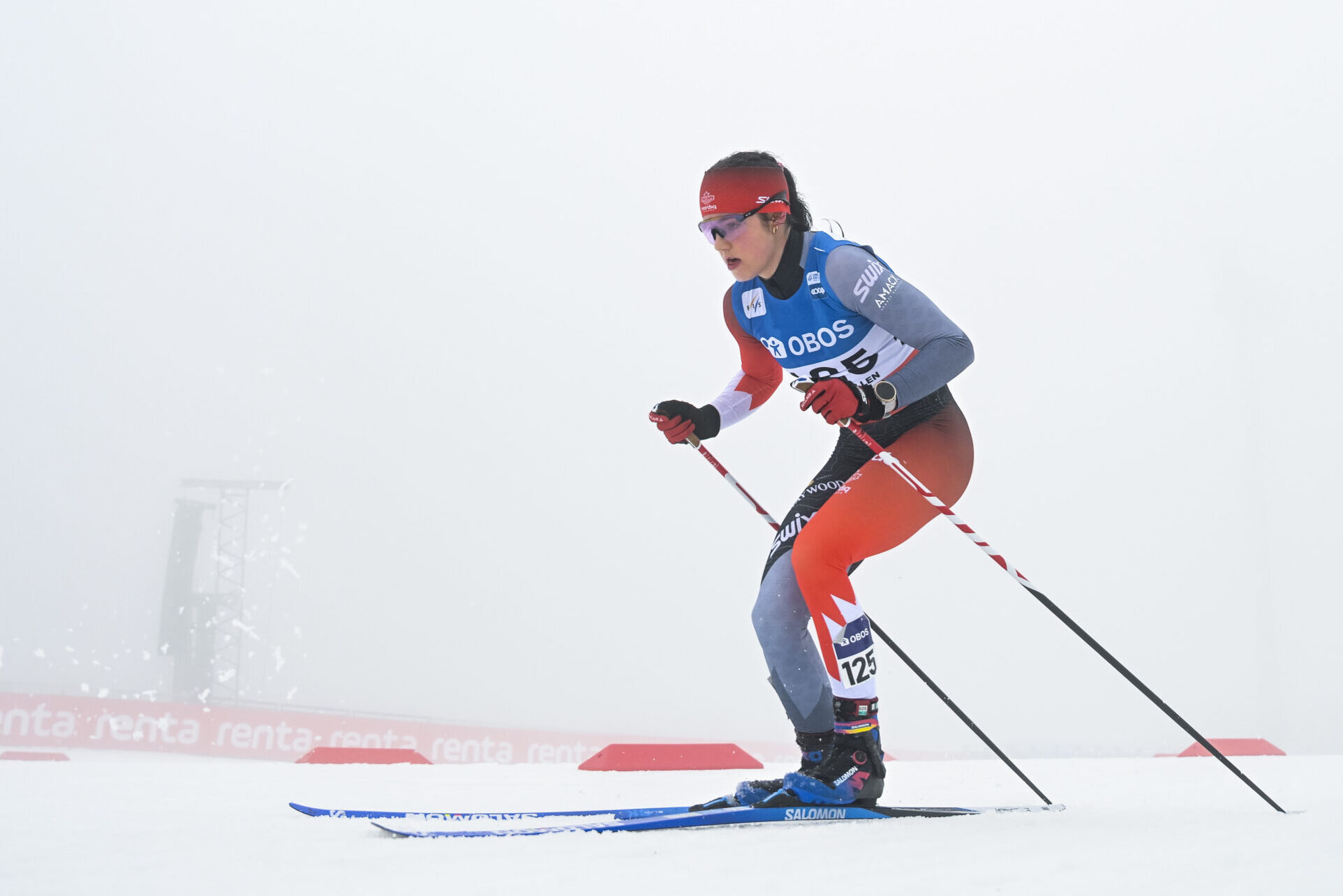
    Alison Mackie skiing in a Canadian race suit through fog at Holmenkollen.
    Mackie at the Holmenkollen World Cup in March, a week before the tour reached Lake Placid. (Photo: Authamayou/NordicFocus)

    A Winter Without Diggins

    The World Cup went to Minneapolis in the last two seasons, and Lake Placid hosted the finals in March in front of enormous crowds. Why not race in North America more often?

    “We do have actually Canmore scheduled for World Cup 2028, but realistically there are not so many resources for cross-country skiing in North America,” Mackie said. “It takes a lot of money and human power for the organization and preparation of those races. Of course, it will be amazing to have more opportunities to race in North America in the future but I have to be realistic and understand that organizing an event here in Canada, for example every four years, require lots of efforts and preparations from the local organization. Maybe we need more venues in North America that we currently have that are able to bring here World Cup events. I admit with huge pleasure that in the past seasons both Minneapolis and Lake Placid events showed how strong local communities are in terms of support and enthusiasm for cross-country skiing and those events have been a great boost for our discipline in North America, especially between young kids.”

    After fifteen seasons, this will be the first World Cup winter without Jessie Diggins, who clinched one more crystal globe in Lake Placid in March before retiring. Will she be missed outside the U.S. team as well? Did you ever get advice from her?

    “I definitely think Jessie’s presence will be missed in World Cup. Not only inside USA Team. I think she has always been a positive skier and a really amazing role model in so many ways. And 100% her presence, her ambitious way of racing and unique skiing spirit will be missed. That will definitely change some racing tactics as well. I had the opportunity to train together with Jessie in New Zealand last summer and it was a pretty cool experience and I wish all the best in her future.”
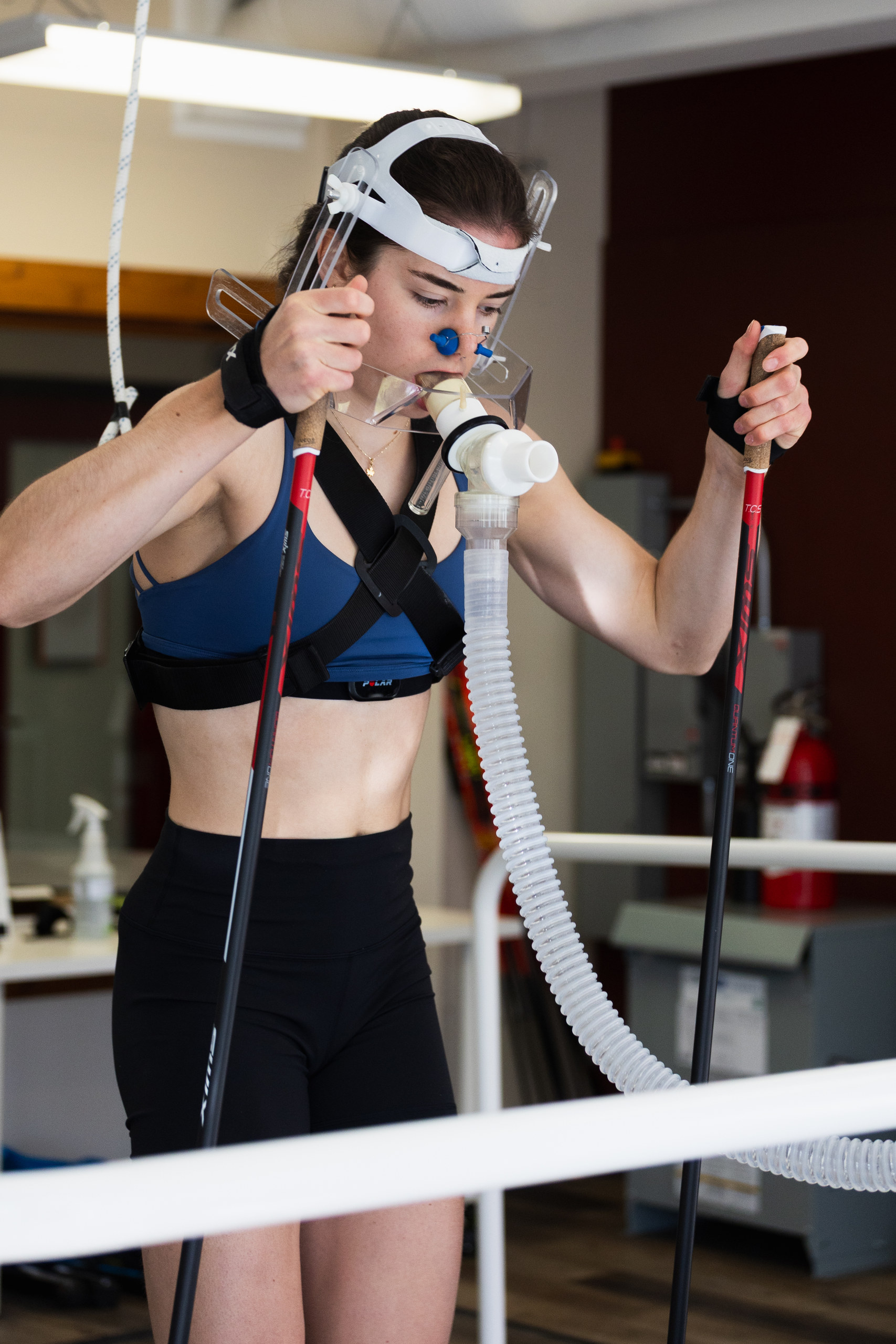
    Alison Mackie adjusting a metabolic testing mask while holding ski poles in a testing lab.
    Mackie fitting a metabolic mask before a treadmill test in May. She trains in Canmore and will study medical engineering at the University of Utah this year. (Photo: Nathaniel Mah)

    Canmore, Utah, and Life Off the Snow

    How is the Canadian team organized, and how is training divided between the women and the men at camps and at home?

    “I think Canadian skiing is gonna take a really exciting trajectory. I am really excited to work with our new Swedish coach Stefan Thomson over the next seasons but also in our group here in Canmore we have Norwegian Tormod Vatten as our assistant coach and with them we have a really strong support staff. For the Canadian National Team over the next seasons is going to be really exciting seeing where we all can go in World Cup and I am really proud to be part of this young but strong group of skiers that our Nordiq Canada are building now, under the [leadership] of former Olympic champion Beckie Scott and our amazing ski communities.”

    How do you manage your studies, at Queen’s University until last year and now at the University of Utah, with training and racing that run through most of the academic year?

    “I just make sure that I manage my schedule accordingly to have enough time for both my trainings and school throughout my day. I think having something other than skiing to focus on is really important for me. I was an online student at Queen’s University over the past two years and now I am transitioning to the University of Utah studying medical engineering. I think it is important the communication with the professors, making sure they know that my situation is a little bit different if compared to normal students, due to the fact that my training sessions, travels and races during winter season take my mind. But despite that my goal is to give my full focus during hours in classrooms too.”

    What kind of person are you away from cross-country skiing? Your personality, your interests, what you do on days off from training and racing?

    “Outside of cross-country skiing I am a pretty introvert person. I try to keep things on my own. I like studying and I really enjoy sewing clothes in my free time. I truly also love to learn new things and that is why I am excited to attend the University of Utah this year. I also love to spend time in the mountains nearby Edmonton where I grew up and in Canmore where I train myself with Alberta World Cup Academy and where I graduated in High school. Hiking, Mountain biking, running and skiing, of course, are my favourite activity when I can spend my time outside in the lush Canadian Nature.”

    In 10 to 15 years, at the end of your career, you will be proud of yourself if what?

    “I think, regardless of what I achieve in my future, I will be extremely proud of my career in addition to what I already accomplished. But really, my goal is just to ski because I love it and see where I can get of myself and also trying to inspire other young skiers. I think that there are a lot of young skiers in Canada right now, who have the potential to be amazing athletes. I really want to inspire them, showing them that anything is possible, it doesn’t matter what country you are from or how old you are. So regardless of what I achieve over the rest of my career I will always be proud of what I have already achieved.”

    Paolo Romanò is a freelance reporter based in Italy who covers cross-country skiing and Nordic combined.

    Help Support Our Coverage!

    If you value the thoughtful work and access FasterSkier provides, please consider becoming a Voluntary Subscriber. Your support directly fuels our work to cover the people, places, and moments that make our sport special.

    Join the FasterSkier community!
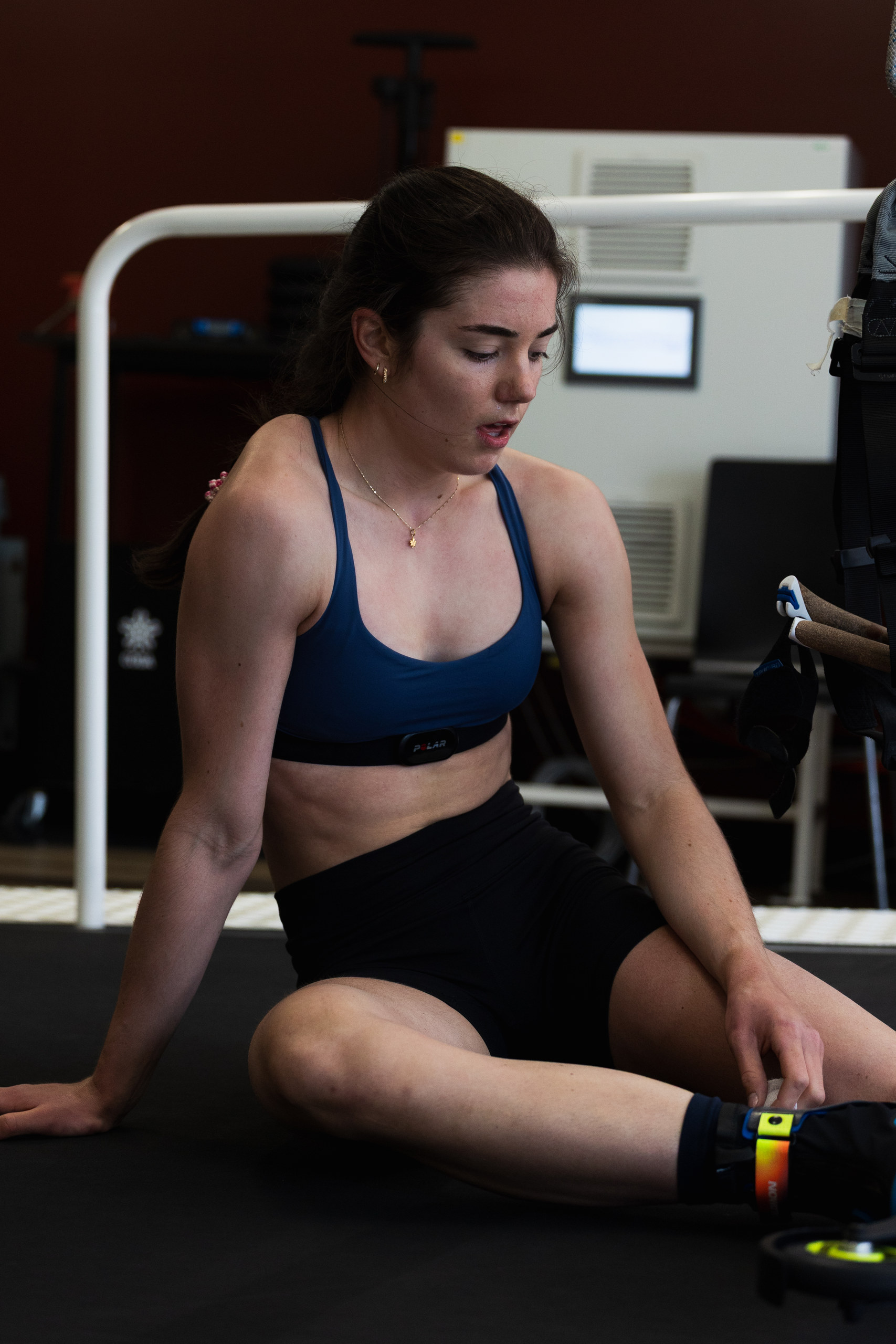
     

    Alison Mackie sitting on a laboratory floor catching her breath and unstrapping a sensor from her leg.
    Mackie catching her breath after a lab test in May. She races her first season for the University of Utah this winter. (Photo: Nathaniel Mah)
  • Nordiq Canada Seeks Assistant Coach for National Ski Team Olympic Program

    Nordiq Canada Seeks Assistant Coach for National Ski Team Olympic Program


    Nordiq Canada is hiring an Assistant Coach for its National Ski Team (NST) Olympic program, with the successful candidate stepping into a high-performance role supporting Canada’s top cross-country skiers on the World Cup, at World Championships, and at the Olympic Games.

    Reporting to the Head Coach, the Assistant Coach will help plan, coordinate, and deliver coaching support for NST A and B athletes, with occasional responsibility for leading training camps and managing competitive periods on the World Cup circuit. The position is based in Canada and requires extensive domestic and international travel.

    Key Responsibilities

    • Assist with the planning, coordination, and execution of training camps, competitions, and international tours for NST A and B athletes.
    • Provide technical, tactical, and race-day coaching support.
    • Contribute to athlete monitoring, performance analysis, and training feedback.
    • Support ski preparation, waxing operations, and equipment management as required, including serving as a technician for athletes when needed.
    • Collaborate with Integrated Support Team (IST) providers including physiologists, strength and conditioning coaches, sport science, medical, and mental performance staff.
    • Assist with logistics, travel coordination, and operational planning.
    • Uphold a culture of excellence, professionalism, accountability, respect, and athlete wellness.
    • Comply with Nordiq Canada’s Safe Sport policies and commitments.

    Skills & Requirements

    • Experience coaching World Cup athletes, either individually or on the World Cup circuit.
    • Experience on the World Cup circuit as a coach or athlete.
    • Competency in assessing and interpreting sport science testing and data.
    • Must be physically fit and capable of testing skis as well as training with athletes on some of their easy sessions.
    • Excellent interpersonal, time management, and communication skills.
    • Detail- and task-oriented; a strategic and tactical thinker and planner.
    • Ability to coach Sprint format technical and tactical capacities considered an asset.
    • Bilingualism (English/French) considered a strong asset.
    • Valid driver’s license.

    How to Apply

    Interested candidates should submit a resume and cover letter to bscott@nordiqcanada.ca, with their name and “Assistant Coach NST” in the subject line.

    Application deadline: June 12, 2026, or until the position is filled.

    Nordiq Canada is committed to employment equity and encourages applications from all qualified candidates. Preference will be given to Canadian citizens and permanent residents.

  • This Week in Canmore: Biathlon World Cup Season Finale

    This Week in Canmore: Biathlon World Cup Season Finale

    Canmore is having a year.

    Just over a month after hosting the International Ski Federation (FIS) Cross Country World Cup, the Canmore Nordic Centre is pulling out all the stops and showcasing its brand-new biathlon facility as the host of the International Biathlon Union (IBU) World Cup Finals from Thursday, March 14 to Sunday, March 17.

    The world-class venue amid Canada’s Rocky Mountains is no stranger to World Cup nordic and mountain bike events. It hosted 2016 and 2019 IBU World Cups and, as recently as last year, eight IBU Cup events in advance of the 2024 Biathlon World Cup Finals.

    Two years ago, Alberta’s provincial government granted the Canmore Nordic Centre $17.5 million to upgrade and enhance its biathlon building, stadium, snowmaking, and range. According to Ken Davies, the Canmore IBU World Cup event chair, they broke ground in May 2022 and have nearly completed the project as of this March.

    New biathlon building at the Canmore Nordic Centre. (Photo: Biathlon Canada/Pam Doyle)

    “It’s huge,” he said. “We sort of stirred the pot initially seven years ago to get them to reinvest in the nordic centre, and the Alberta government followed through, so credit to them.”

    In 2017, the Canmore Nordic Centre requested improvements to its biathlon facility, which hadn’t been updated since 1986, when it was built for the 1988 Olympics. The biathlon stadium needed to be widened to meet IBU regulations and continue to host World Cups. The nordic centre also wanted to replace its undersized timing building and wax facilities, expand its snowmaking, and modernize its shooting range.

    Just three days before the start of the IBU World Cup Finals, the Canmore Nordic Centre is ready to show the world its fresh new look. According to Davies, the father of Olympic biathlete Macx Davies and a Canmore World Cup organizer since 2005, the biathlon course has been “turned upside down.”

    “When you come in and shoot, we now do a 180-degree turn in the stadium so the spectators can see the athletes for longer,” he explained. “We used a lot of the same course, but how we start and finish is completely different.”

    Situated between 1,425 and 1,550 meters (4,675 and 5,085 feet) above sea level, the Canmore Nordic Centre is one of Canada’s highest cross-country ski areas, and it has a deceivingly challenging World Cup course.

    “The trails are so well maintained, and they’re wider, so they look like highways, [but] they’re sort of sneaky hard,” Davies said. “People forget we’re at 1,400 meters of elevation. … We’re as tough as most places, and the racers all realize that when they come here.”

    Rosanna Crawford (Biathlon Canada) racing to 26th in the women’s 7.5 k sprint at the 2017 IBU World Championships in Hochfilzen, Austria. (Photo: Glen Crawford)

    According to Rosanna Crawford, a three-time Olympic biathlete based in Canmore, the approach to the range has changed. On each lap, racers must climb up to the stadium before shooting.

    “I’m curious to see how the athletes will like it,” said Crawford, who lives in Canmore with her husband, Brendan Green, also a Canadian Olympic biathlete. “Before, you had a somewhat easier range entry, but now, especially for the men’s sprint, they’re going to climb right up into the range, so I think they’ll be pretty gassed.”

    On the range, she said changing conditions can cause the wind flags to change immediately.

    “It’s a tricky range. The wind can really rip through there,” she said. “So I’ll be curious to see how the athletes handle that.”

    While Crawford has never watched a Biathlon World Cup in person since retiring from racing in 2019, she is excited to spectate with Green and her family this weekend. (Crawford is the younger sister of Olympic cross-country skier Chandra Crawford.)

    “Seeing it in person is going to be special because we are huge biathlon fans. We don’t miss a race, and we try to stay off social media until we can get home and watch the races on Eurovision,” Rosanna explained.

    Brendan Green racing to sixth for Canada in the men’s 4 x 7.5 k relay at the 2017 IBU World Cup in Hochfilzen, Austria. Sixth place matched the Canadian men’s previous best relay result. (Photo: Biathlon Canada/NordicFocus)

    “Brendan retired in Canmore [in 2019], so it was really special having his family there in the crowd,” she added. My cousin made some funny signs, like those face ones, so my whole family had my face on a stick that they were holding up. … Canmore’s just so special. I’m looking forward to being a number-one sports fan during the races.”

    When she’s not at the races hanging out in the Rocky Mountain Club and grandstands, she can tune in while working as a dental hygienist in town.

    “In my dental office, there’s a TV, and I’m able to stream from my computer,” she explained. “Luckily, I had some ski fans in my chair [during Canmore’s Cross-Country World Cup], and they would tell me when to look because you can’t clean teeth and watch TV at the same time.”

    USBA arrives in Canmore after stellar results at their home races in Soldier Hollow, Utah, led by Campbell Wright (USA), who finished in sixth place in the men’s 10km sprint. (Photo: NordicFocus)

    With more than 240 athletes from 25 countries, the Biathlon World Cup Finals are expected to draw 3,000 to 5,000 spectators for the Thursday and Friday events and up to 10,000 on the weekend days. Additionally, more than 50 million viewers are expected to watch remotely via Eurosport.  According to Davies, Canmore sold out of VIP and grandstand tickets within 36 hours, 70 percent of which were purchased by Europeans.

    General admission to the races is free and doesn’t require a ticket. In addition to the indoor Rocky Mountain Club VIP zone and bleacher (grandstand) seating, the venue can accommodate 10,000 non-paying spectators.

    Spectators are encouraged to use the courtesy shuttles between downtown and the venue, or take the scenic route by foot and enjoy an Art Walk in the Woods along the way. The Canmore Nordic Centre is 3.5 k west of Canmore, about a 30- to 40-minute walk from downtown. Crawford recommended bringing YakTrax or traction cleats for walking, just in case.

    In late February, a snowstorm brought about a foot of fresh snow to Canmore, which made everything look wintery again after an up-and-down winter. Davies said the biathlon loops have been ready since early December, and with expanded snowmaking, the Canmore Nordic Centre can open at least 10 kilometers of trails in mid-October.

    “We had a weird winter,” he said of the 2023/24 season thus far. “We had a really hot spot in January, but we also had a really cold spot. So there has been natural snow since November, but [the February storm] helped. .… It didn’t help me with organizing the event as far as digging everything out, but it helped what it looks like. It’s a winter wonderland right now.”

    This week, the forecast in Canmore called for sunny weather with daytime temperatures between 5 and 10 degrees Celsius (mid to high 40s Fahrenheit). During the last two IBU World Cups in Canmore, which were held in February of 2016 and 2019, many races were either shortened or canceled due to frigid temperatures.

    According to Davies, average temperatures for early March are a pleasant 3 degrees during the day and -5 at night. After the races, 12 Crystal Globes will be awarded to the top-ranked athletes in each discipline for their season-long performances. The competitions include sprints, pursuits, and mass starts over four days, and other spectator activities are being offered in town and at the venue, including an indigenous kickoff party on Thursday night.

    “Like Soldier Hollow, we have the benefit of not being in Europe. We have the benefit of being at a high enough elevation. We have winter, and we have snow,” Davies said of Canmore’s attraction. “We’re in the mountains, and it’s pretty easy to get an audience to watch races in that environment. The skiers love it. We have 70 kilometers of non-race trails that are groomed and ready to go. It’s all part of the same facility.”


    BIATHLON WORLD CUP FINALS SCHEDULE

    (All times MST)

    Thursday, March 14

    10:40: Women’s 7.5 k sprint (10:40 a.m.)


    Friday, March 15

    10:40: Men’s 10 k sprint


    Saturday, March 16

    11:10: Women’s 10 k pursuit

    15:10: Men’s 12.5 k pursuit


    Sunday, March 17

    11:10: Women’s 10 k mass start

    15:20: Men’s 15 k mass start


    Rosanna’s Favorite Canmore Hot Spots 

    • Best Lunch: Crazy Weed
    • Best Coffee: Bike Cafe
    • Best Shopping: “There are so many cute little stores that you can wander around and really experience the mountain life.”


    More recommendations


    Canmore, Alberta Canada


  • The Devon Kershaw Show: A tale of two races in Canmore distance classic

    The Devon Kershaw Show: A tale of two races in Canmore distance classic

    We’re grinding on with our third episode in four days. Hope you’re still listening. If you don’t get the hat reference, read our coverage.

    We’ll be back with another episode after the last race in Canmore. To keep you from podcast withdrawal later in the week, we’ll roll out some interviews we did with a couple of international athletes here. Then we’ll be back again from Minneapolis this weekend.

    Speaking of Minneapolis, if you’ll be there in person, we’re hosting a live show where we’ll be taping Sunday’s episode in front of an audience — though we’ll need all 12 listeners to show up for it to really be an actual audience. More details soon — the event is at Utepils Brewery near the venue, with an exact time to be determined, but it will be after the last race of the day.

    Questions? Comments? Email us: devon@fasterskier.com and nat@fasterskier.com. Thanks so much for listening.


  • Vermont Talent Jack Young Breaks Through in First-Ever World Cup start

    Vermont Talent Jack Young Breaks Through in First-Ever World Cup start

    Jack Young, in bib 11, races to the finish line in the World Cup freestyle sprint Saturday, February 10, 2024 in Canmore, Alberta. (Martin Jalkotzy for FasterSkier)

    CANMORE, ALBERTA — Jack Young’s home in Vermont is two miles from the Canadian border. So it makes sense that he skied like he was right at home in Canada on Saturday, in a smoking fast finish in his first-ever race on the World Cup—the top-level circuit that saw him lining up against a bevy of Olympic medalists.

    Young, 21, placed 11th in the qualifying round of Saturday’s sprint race in Canmore, and 23rd in the final. His qualifier made him the second-fastest American, slotted him ahead of Norwegian stars like Erik Valnes, Even Northug and Harald Østberg Amundsen and earned him the adulation of his U.S. teammates.

    “It was a lot of hugs, a lot of expletives,” Young said afterward. “It was a pretty fun, happy scene.”

    His U.S. teammates were much more emphatic.

    “That was insane,” said Murphy Kimball, a 17-year-old Alaskan who also made his World Cup debut Saturday.

    “I was speechless to see that,” said Ben Ogden, a fellow Vermonter and sprinter. “Jack Young is crazy,” added Gus Schumacher, another proven American talent. “So sick to see a truly legit sprint result.”

    “Oh, my God. Unbelievably stoked,” said Julia Kern, a veteran U.S. sprinter. “Popping off an 11th is just unreal.”

    Jack Young (11), who a week ago had a 3rd and 5th place in the EISA college races for Colby College, delivered the 11th fastest qualifying time in the freestyle sprint on Saturday in Canmore. (Photo: Cockney/FasterSkier)

    Young, a junior at Colby College in Maine, grew up in northern Vermont and was a football quarterback through high school.

    He began skiing in a youth program called the Bill Koch League. In junior high school, he started training with the club at Vermont’s Craftsbury Outdoor Center—where coaches, he said, once helped motivate him through a long run by dangling gummy bears out a window of a team van.

    His results have picked up in the past three years, he said, and early this season, he won a qualifying round at a national level SuperTour sprint race in Anchorage, which he called a huge confidence boost.

    “Just knowing that I can be the best in the U.S. on a day—meaning that I can hopefully mix it up here,” he said after Saturday’s race.

    At the World Cup, Young said he wasn’t expecting to make the heats, which required him to place in the top 30 in the qualifier. “But I knew I could do it,” he added.

    Once he made it into the heats, Young got a little advice from Ogden, who shared some tactical insights from his own race.

    Young’s heat included heavy hitters like Chappaz, Amundsen—who’s the leader of the overall World Cup standings—and Switzerland’s Janik Riebli, all of whom had slower qualifying times. He was waiting for those competitors to line up at the starting gates until he discovered that as the fastest qualifier, he was supposed to go first.

    “I was just standing there,” Young said. “And someone was like, ‘Come on, Jack, get your skis on.’”

    The racing itself, he added, felt much more normal.

    His heat, like many others, started slow, with participants waiting until the top of the last hill to make their moves. Young finished fifth out of six, but he said he felt “in the mix.”

    “It’s just a real validation,” he said. “I always have been looking at World Cup result, curious, like, ‘If I were to get this start, where would I be?’ And now, I know that I can mix it up with these guys.”

    Kern, the veteran U.S. sprinter, said Young’s result is impressive not just on its own, but also underscores the level of skiing in her home country—and the value of bringing the World Cup circuit to North America, which provides opportunities to new U.S. talents.

    “I think there’s a lot of people who, if they were given the chance—that can really just bolster your confidence and help you make that jump,” she said. “It’s so cool to see that the depth is there in the U.S.”

  • The Devon Kershaw Show: A James Clinton Canmore bonus with JC Schoonmaker

    The Devon Kershaw Show: A James Clinton Canmore bonus with JC Schoonmaker

    Coming in hot from Canmore, Alberta, where the World Cup circuit makes its North American return after five years away. We’ve got a preview here of sorts, featuring an interview with JC Schoonmaker, the California-raised U.S. Ski Team member who made his first World Cup podium earlier this season. We cover his rude awakening to the demands of elite-level training, his affection for his adopted home of Alaska and get some fun details about his podium finish in Sweden.

    We’ll be posting episodes frequently over the next couple of weeks, with Nat on the ground and Devon following closely from afar. We’re also excited to announce that we’ve locked in a live recording at Utepils Brewery in Minneapolis next weekend, after the race on Sunday, Feb. 18. Stay tuned for more details. In the mean time, send us your feedback and which World Cup athletes you want us to try interview while they’re here: devon@fasterskier.com and nat@fasterskier.com.


  • After a Series of World Major Marathons, Aaron Pike Transitions to Winter

    After a Series of World Major Marathons, Aaron Pike Transitions to Winter

    While no one would choose the circumstances, pandemic induced cancellations presented marathoners with a unique calendar of events this fall. All six of the iconic World Marathon Majors — Berlin, London, Chicago, Boston, Tokyo (held virtually, in-person event postponed to 2022), and New York — took place within a span of 42 days. (In a typical season, Tokyo, Boston, and London are run in the spring.) While Shalane Flanagan has been in the limelight for her accomplishment of running all seven events each under 2:47, many other marathoners also seized the opportunity to run multiple Majors this fall. 

    Among these athletes was Aaron Pike, professional wheelchair racer and U.S. Para Nordic national team member, who raced the London Marathon on October 3rd, followed by Chicago on October 10th, and Boston the next morning. This was all on the coattails of the Tokyo Paralympics where took 6th place in the marathon, just 40 seconds outside of the medals. 

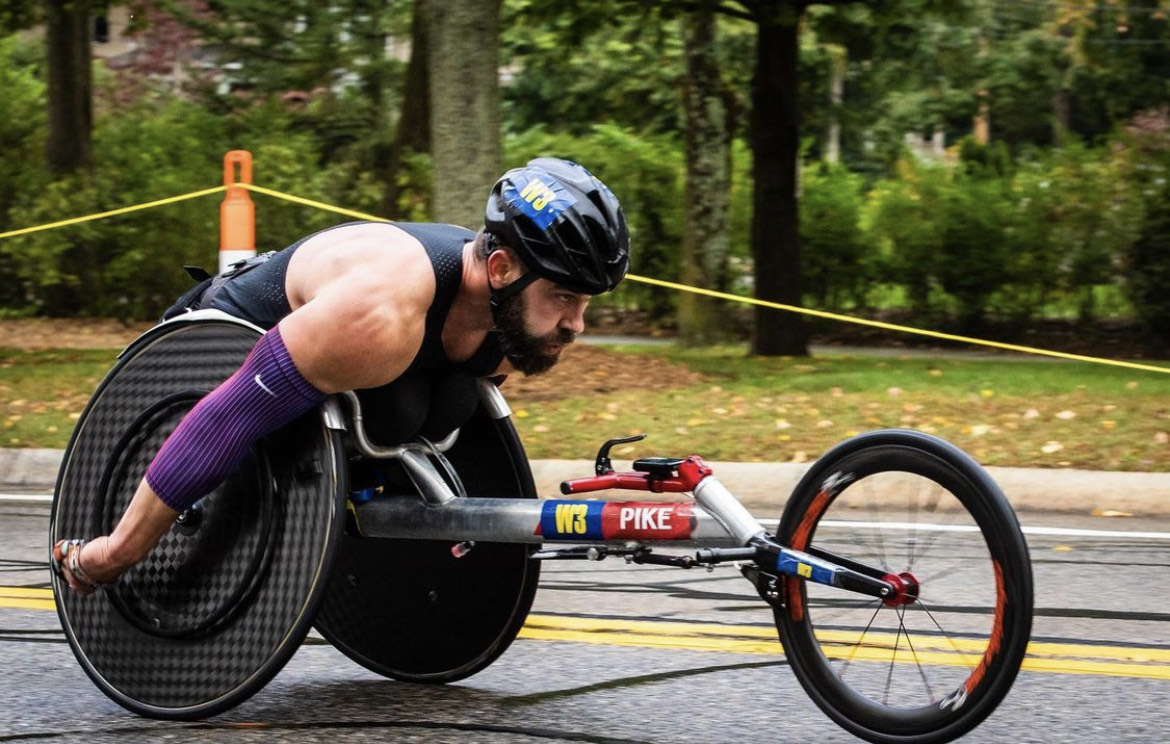
    Aaron Pike on course during the Boston Marathon. (Photo: Instagram @tmistret)

    While the transition between a Summer Paralympics in August and a Winter Games six months later is already tight, Pike trusted the crossover in fitness between sports and seized the opportunity to put together a fall marathon series. FasterSkier connected with Pike on a call in early November at the beginning of his first on-snow camp of the season in Canmore, Alberta. 

    Before jumping into the races, a bit about Pike’s background in sport. After sustaining a hunting injury when he was 13, Pike was paralyzed at the T11 vertebra of his mid-back. He explained that his family was living in Virginia at the time, which was fortuitous as a community member who was a former Navy Seal that began racing IronMan distance triathlons after his own injury heard about Pike’s circumstances and quickly took him under his wing. 

    “He came and visited me in the hospital pretty shortly after [I was injured],” Pike recalled. “I think I was still in inpatient [treatment] — but he came to visit me and was just telling me that he’d be a resource. He showed me some pictures of adaptive sports and what he does, and gave my parents all the contact information.” 

    The mentor was also coaching a youth wheelchair racing team and invited Pike to attend a practice once he was out of treatment. 

    “Maybe like a month or two after, I went out to watch a practice.. He had a group of six or seven other kids out there, and he brought a program chair out for me to try out. And it all just went from there.”

    Pike advanced quickly in wheelchair racing through high school, but it was during his time at the University of Illinois-Champaign when his career flourished. Pike found success racing on the track, focusing on events 1500 meters and upward. It was also at the University of Illinois where he was first introduced to nordic skiing and biathlon, although he did not try it for himself until later on.

    “[Former US Para Nordic] biathlon coach, Rob Rosser, came to the University of Illinois with a SkiErg and some rifles and just to introduce people to biathlon and cross country skiing. He set up the SkiErg so we could try them out — I think they were set up side-by-side, so you could sort of race each other. But  the timing was tough, because it was right before the London Games, so everybody was kind of like, ‘Oh, this is cool,’ but then was right back to what they were focusing on. I didn’t think too much about it either.”

    Shortly after racing the marathon at the London Paralympics in 2012, Pike received an email inviting him to attend a Para Nordic camp in Bozeman, where the national team now calls home base. 

    “So the first place I ever skied was in Bozeman,” he laughed. “So I got to try [out sit skiing] and, ended up liking the sport a lot right off the bat, day one pretty much. So it didn’t take too long for me to realize that it wasn’t just something that I was only going to try here and there in the winter.”

    Aaron Pike is eyeing the sprint and the individual biathlon races in the upcoming 2022 Beijing Paralympic Games. (Photo: U.S. Paralympics Nordic Skiing / Getty Images)

    Two years later, Pike made the Paralympic team for both the Sochi Games in 2014 and PyeongChang in 2018, earning his best results in Korea with a 6th place finish in the 15-kilometer biathlon event and 7th in the 12.5k biathlon. He hopes to improve upon these results in Beijing this winter. 

    While he hoped for more in Tokyo, Pike has steadily climbed the Olympic ranks in the event. He was 16th in London in 2012, 10th in Rio in 2016, and 6th in Tokyo. As previously stated, he was just 40 seconds outside of the medals and finished alongside the 5th place athlete from Great Britain. 

    “I was happy with how [the race in Tokyo] went considering a few factors: we had wet conditions, which always makes it super challenging. It’s kind of like skiing where if you choose the wrong [wax], you’re going to have a really rough race. So I set myself up really well by prepping for the rain, whereas a chunk of the field had problems just managing [the conditions].”

    Let’s unpack the ski comment quickly. What those unfamiliar with wheelchair racing may not expect is that one of the primary challenges on race day is much like that of classic waxing: achieving optimal grip. Instead of skis on snow, it’s gloves on rings, and problem solving with sandpaper, rubber, and even klister. Yes, klister. Pike shared that Rode Chola is a commonly used product in wet conditions.

    Despite preparing for wet conditions, Pike explained he did not feel his strongest during the event and quickly fell out of medal contention. Nonetheless, he stayed in it and advanced through the field as the race went on.

    “The start was not the best for me, a couple people got away early. Right off the bat, I was in eighth or ninth place, but I was able to keep reeling people in. I pulled up to one of the Japanese racers, and then he and I pulled up to my teammate, Daniel [Romanchuk]. All three of us reeled in two more guys, so then we were in a pack of five, but weren’t able to catch the front leaders.”

    From the 1500 upward, Aaron Pike has excelled in wheelchair racing. (Photo: Tobias Lackner / Tobil Photography)

    The experience of competing in a pandemic-shrouded Games also gave him a taste of what to expect in Beijing. Compared to his past Olympic experiences, Pike missed the energy of team processing and meetings where collective energy was all that was infectious. He explained that travel was more cumbersome with the added precautions, however, once in the Olympic Village, the differences felt less significant. 

    “Once you’re in the Village, that was normal. The Village life was cool. We still got to go to the cafeteria [with all the other international athletes], they just had plastic barriers up everywhere. I think the weirdest part was having an empty stadium. It was just super bizarre… it’s like this gorgeous massive stadium that can hold like 70,000 people and it’s just empty.”

    He explained that tickets had been sold out for all of the final rounds of events, so it was disappointing that fans could not attend.

    While Pike was happy with his effort in Tokyo on the day, he felt significantly stronger in each of the three World Majors that he raced. Rather than cumulative fatigue, Pike was in full stride throughout the series. 

    “Oddly enough, the worst was the first one, the London Marathon. For whatever reason I was able to hang with people, but not really do much more than that.”

    Pike took 5th place in London in 1:31:36 (​​+5:09), before hopping on a plane bound for Chicago.  

    Despite unseasonably warm conditions and wind that supported the city’s nickname, Pike raced his fastest time on course to finish on the podium in third, his best overall result in Chicago. It was a race where everything came together so well, he had little to say about it, other than, “It was awesome.” 

    Pike finished 21-seconds behind the winner in 1:29:28. Less than 24 hours later, he was back on a starting line in Hopkinton, ready to race to Boston.

    “That was the one I was going to be the most worried about, because that’s a really tough race, and coming the day after [Chicago]. And that was one where I made the wrong decision about grip.”

    Remember: like classic skiing, some days are straight-forward cold snow and hard wax days, whereas others you’re down to the wire looking for answers, tossing an extra option or two in your drink belt before heading out just to be safe. Variable conditions and changing weather for wheelchair racers are akin those dreaded humid near-freezing with falling snow days where you can’t tell if hairies will get the job done, or if you need some kind of miraculous combination of covered klister, and no matter what you go with, you’ll probably deal with some icing. Err on the side of caution with icing, and you may have no grip whatsoever. 

    In a race wheelchair, rubber on rubber maximizes surface area between gloves and rings, allowing the most force as the athlete pushes powerfully on each stroke. But Pike explained that sandpaper is “night and day better” when the wheel rings are wet.

    On the morning of the Boston Marathon, a mild storm was clearing. Pike explained it was raining during the warm up, but it let up before the start. Still, the precipitation left standing water on the roadway, making for conditions that were wetter than the weather. Because the weather didn’t match the actual race conditions, Pike explained his initial choice of gloves meant he could not take advantage of the early downhills, which is typically one of his strengths. Luckily, he stashed a backup pair of gloves, which he normally does not do.

    “It seemed fine,” he said of his glove choice in the warm up. “I had my sandpaper gloves on me [just in case I needed to switch], and I strapped into my chair, which I’ve never done, but I just had a feeling something might not go right with a grip. Sure enough, when we started bombing down the hills right at the beginning — it wasn’t until going super fast on the hills that the wheels were lifting up water from people around me and spraying the rings and getting them wet. But there was no time to change [gloves] early on, so it was just kind of a struggle at the beginning.”

    On the track in Switzerland, Aaron Pike pushes through the rain. (Photo: Tobias Lackner / Tobil Photography)

    While trying to minimize his time losses, Pike found an opportunity to switch into the sandpaper gloves, which drastically improved his grip and allowed him to bring himself back into contention. 

    “Once I switched them out, then I was just catching one person after the next, all the way up to the point where I got fourth. I think I could have easily got third in that race as well if I just started with the sandpaper.”  

    Every year, Pike has to decide when to hang up the race wheelchair and transfer into his sit ski. The calculus is complicated by late-season opportunities like the marathon series, and is especially fickle surrounding Paralympic cycles. 

    “It was a really hard decision…I think the fact that there were three marathons in such a short time — having missed so many marathons because of COVID and not having the opportunity to race for a while, then having three of them within eight days of each other. It was just hard to pass that up.”

    While both are endurance sports, wheelchair racing is a pushing motion, while double poling in a sit ski, like standing, is a pulling motion that involves more engagement of larger back muscles. For whatever reason, Pike feels the transition from skiing to wheelchair racing happens more smoothly than the opposite direction. As he shifts back into ski mode, his primary focus is rebuilding the specific strength.

    “I really have to moderate the intensity for the first month,” he explained. 

    After a successful marathon season, Aaron Pike transfers from racing wheelchair to sit ski in preparation for the 2022 Beijing Paralympics. (Photo: Team USA Paralympics Nordic Skiing)

    Eager to begin the transition process, Pike and his partner, Oksana Masters, headed to Canmore a week before their teammates. Masters is also a USA Para Nordic team member and is a three-time Olympic Gold Medalist in both cycling and cross country skiing.

    “It’s just getting that feeling back,” he said. “Nothing truly replicates skiing. So just going out and skiing every day and getting x-amount of hours on snow every week is just huge.”

    Pike reiterated the importance of a smart progression in the early season as his specific strength develops, not rushing into intervals that his body might not be ready for without that strength and trusting that his fitness from the marathon season will stick around for when the time does come to push hard. 

    “And also — not worrying about the first World Cup…” he continued. “We almost don’t even look at the results sheet. We’re still going to be lifting heavily and will mostly just use it as an intensity block in the training season.”

    He added that the coaches are also able to take plenty of video for technique work during the camp and opening races, ensuring athletes are skiing with good form from the start of the season.

    The opening World Cup event will take place in Canmore beginning on December 4th. Pike explained that his season goals are not until March, when the Paralympic Games kicks off in Beijing. He’s focused on gaining race experience in the World Cups and working with his coaches to hone his skiing and shooting skills. Ultimately, his eye is on a Paralympic medal.

    “[In terms of specific events,] on the cross country side, I really love the sprint. It’s our only race where we go head to head and it’s purely just a race to the finish line. More times than not, I’ve made the final for the sprint, so that’s definitely one of the focuses for me.” 

    Pike also is focused on the individual biathlon events.

    FasterSkier will continue to follow the Para Nordic athletes through their build up to Beijing. 

  • Visit Canmore: Some Off-the-Ski-Trail Suggestions

    Visit Canmore: Some Off-the-Ski-Trail Suggestions

    For those who have yet to experience the beauty of Canmore, Alberta, a Google search for photos of the town alone should provide sufficient motivation to put it on your travel bucket list. A dramatic skyline of rugged and imposing peaks provide a backdrop to main street, the Nordic Centre, and pretty much anywhere else you could visit in the Kananaskis Valley. Smaller than its perhaps better-known neighbor, Banff, the streets of Canmore are lined with mom-and-pop shops that offer a low-key and inviting atmosphere. Canmore is home to many long-term residents and families, and has what local Lindsey Sinclair refers to as a “home-grown feeling”. 

    The town of Canmore lit up on a wintery night with the Canadian Rockies looming above (Photo: Travel Alberta)

    As a cross country skier, you have likely heard of Canmore and it’s fabulous nordic center. Whether it be because of the 1988 Winter Olympics, the FIS World Cup in 2005, 2008, 2010, 2012 and 2016, the annual Frozen Thunder race hosted in early November, or simply the 60+ kilometers of beautiful trails, the Canmore Nordic Centre Provincial Park is well known in North America. 

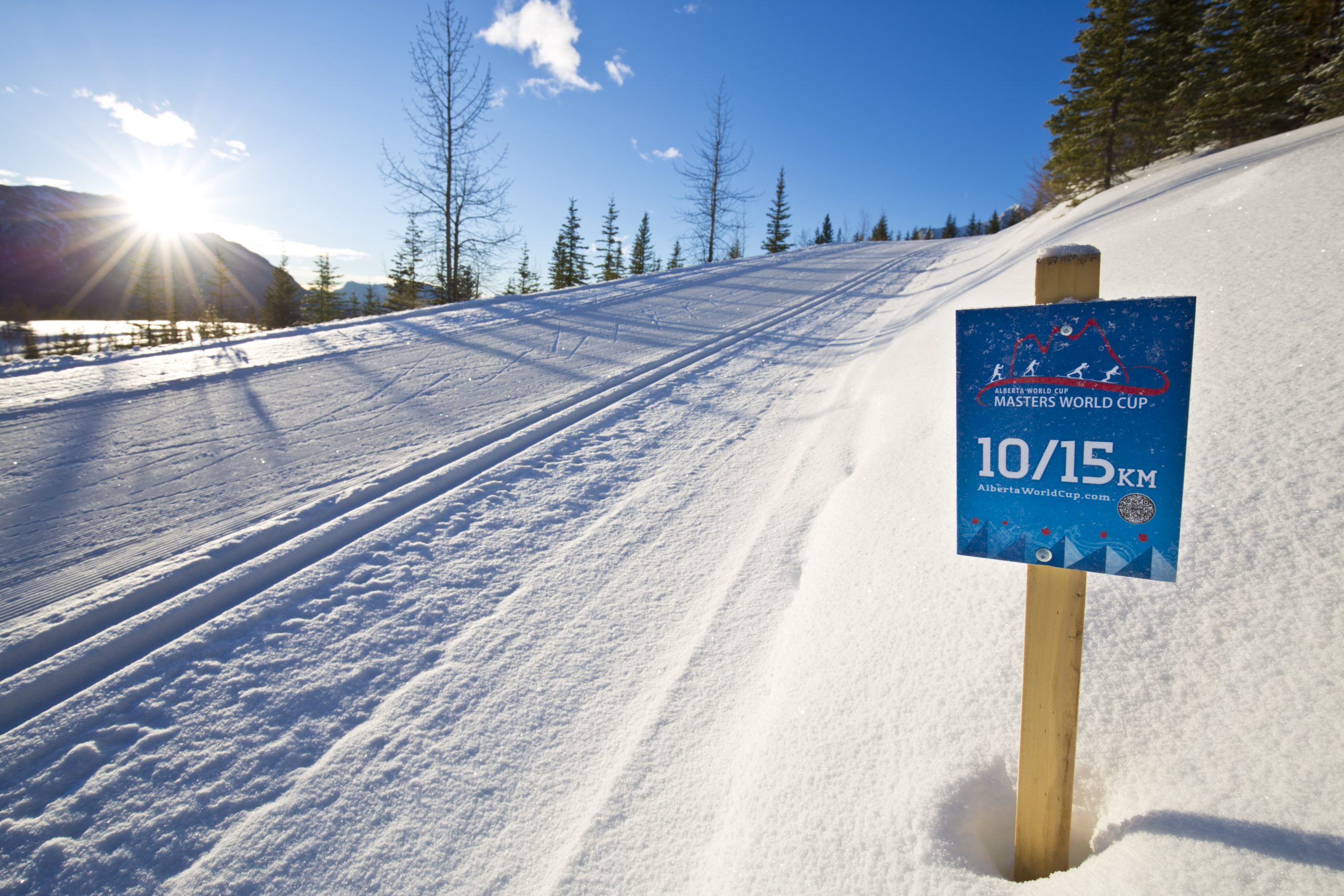
    Inviting tracks sparkle in the sun along the 10/15km race course for Masters World Cup in March 2022 (Photo: GibsonPictures)

    In March 2022, Canmore  will be host to the annual Masters World Cup of Cross Country Skiing. Skiers from around the world will meet in Canmore for ten days of fun racing and camaraderie. But Canmore and the greater Kananaskis area has much more to offer than just great ski trails. For those looking to fully experience Canmore, the opportunities are numerous and varying in physicality. With a mix of culture and outdoor adventure, there is something for everyone. 

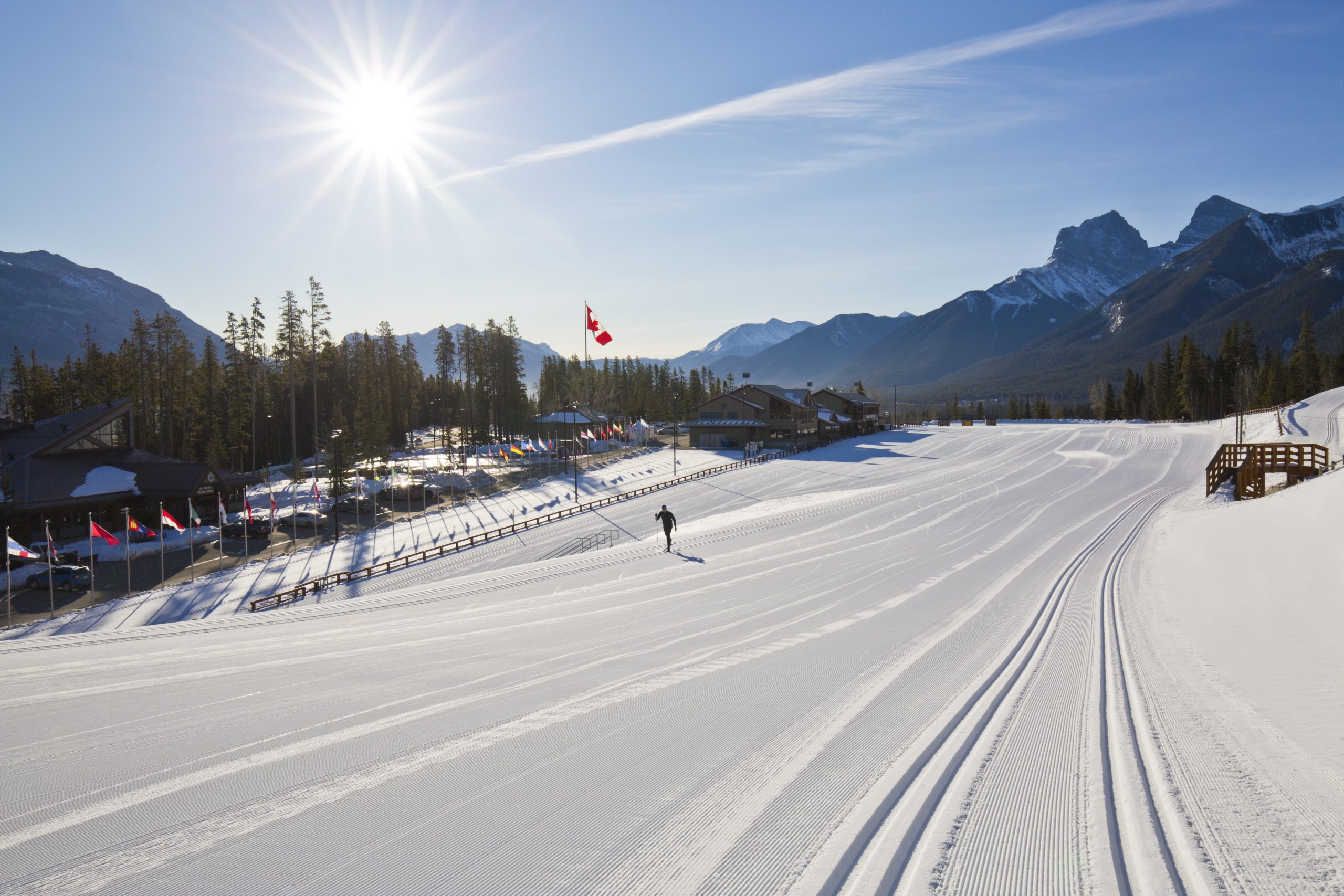
    The wide and inviting stadium at the Canmore Nordic Center (Photo: GibsonPictures)

    For off-ski outdoor recreation that keeps the energy output to a minimum, a dog-sledding adventure is one way to experience more of the area through a unique form of transport. Snowy Owl Sled Dog Tours was started in 1983 by Connie and Charles Arsenault with one team of ten dogs. The operation has since grown into a thriving business with sixteen teams of sled dogs. They offer a range of outings and experiences that are sure to give you a taste for both the community and scenery in the Canmore area. 

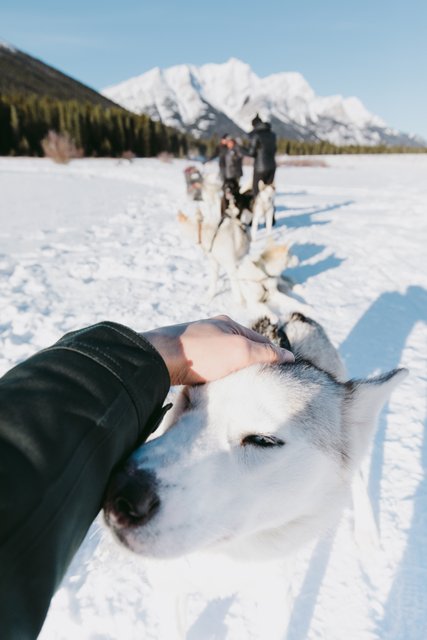
    You could enjoy a sunny sled dog ride just like this with Snowy Owl Sled Dog Tours (Photo: Travel Alberta)

    A caving tour or evening ice walk could also be a great way to pass time spent away from the ski trails. Canmore Cave Tours offers tours to Rat’s Nest cave under Grotto Mountain. These excursions are more pleasant than the cave name suggests and feature 7,000-year-old animal bones and pictographs in a cave that is completely untouched by development. Similarly, an evening walk down Grotto Canyon will take you away from town and towards the amazing ice formations of the canyon’s frozen waterfalls. 

    When you’ve had your fill of the outdoors for the day, downtown is ready to welcome you because, as Sinclair says, “Canmore is home to a little bit of everything.” With five breweries and distilleries in town, taking a trip through town with the Canmore Brewery and Distillery Tours would be a great way to learn more about the local craft beverage scene. The guides from this locally-owned business are professional, experienced, and well-versed in just about everything in the area has to offer, plus they will transport you to and from stops while keeping you entertained with stories. 

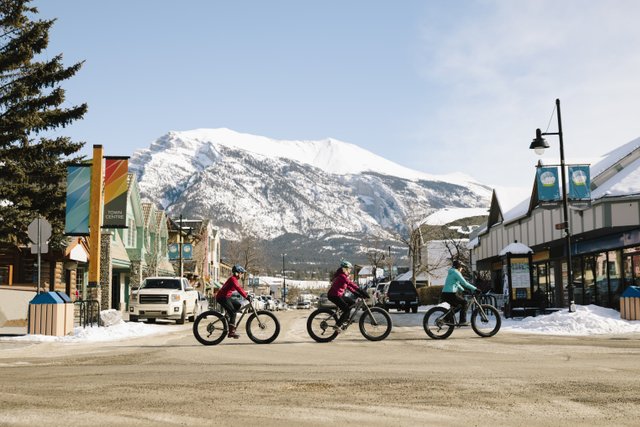
    A crew of fat-bikers heads through downtown Canmore (Photo: Hero Images)

    For morning, midday, or anytime pick-me-up beverages, the award-winning Eclipse Coffee Roasters is a sure bet. Not only do they have a diverse selection of over ten freshly roasted bean varieties available, but they are also well-stocked with delectable baked goods to fuel you out on the ski trails. 

    After a fortifying cup of coffee, you’ll be ready to dive into the arts and culture scene that flourishes in Canmore. Home to world renowned sculptures, painters, and photographers, Canmore has a multitude of art galleries that are worth visiting. Stroll down main street and enjoy the beautiful collections on display. Then, if you find yourself inspired and in a creative mood, head to Crock A Doodle where you can paint your own pottery.  

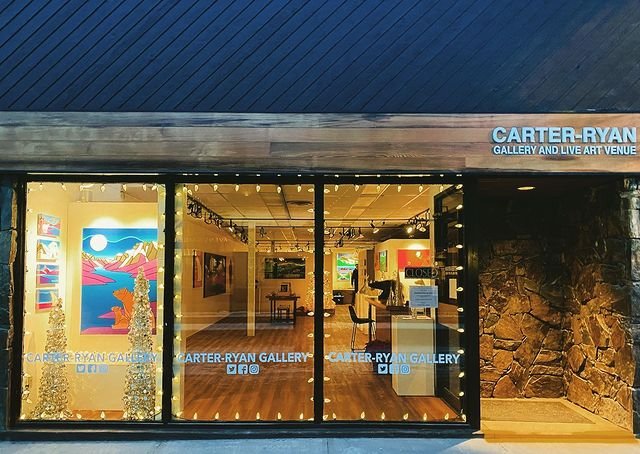
    The Carter-Ryan Gallery and art venue found in Canmore (Photo: @carterryangallery)

    After a hard day out on the ski trails, visiting one of Canmore’s spa or wellness centers would be the perfect place to recover. Back At It Sports & Wellness caters specifically to sports, therapeutic massage, and acupuncture. Maybe you’re too sore to even leave the hotel room? Not a problem because Mobile Massage Canmore will come to you. They offer in-home and hotel massage therapy and will bring their table, lotion, music and highly skilled RMTs directly to your doorstep. 

    Speaking of hotels, it is worth stopping by the Paintbox Lodge, even if you don’t end up staying there. Owned and operated by Olympic silver-medalist, Sara Renner and her husband, former World Cup Champion in alpine skiing, Thomas Grandi, the Paintbox Lodge is an award-winning boutique hotel located downtown. They offer five unique and comfortable suites and rooms with complimentary breakfast featuring a legendary sourdough bread. Additionally, you and your party can sign up for a kitchen party, harvest table dinner or tapas party at “the BOX.”

    Spray Valley at night, in the greater Kananaskis area (Photo: Travel Alberta)

    Whether you’re there to race at World Masters, on a ski vacation, or simply to enjoy the mountains in winter, there are plenty of activity options in Canmore and the greater Kananaskis area to keep you interested and engaged during your stay. For assistance with planning your trip or any other questions about Canmore, the staff at the Visitor Information Centre are ready and eager to help. The Centre is staffed daily and can respond to emails sent to: canmore.vic@gmail.com.

  • World Cup Finals in Canmore: Hosting Challenges

    World Cup Finals in Canmore: Hosting Challenges

    At the 2016 Ski Tour Canada, this was a dirt road crossing a race trail covered in manmade snow. This month, it looks so much better with corduroy.
    At the 2016 Ski Tour Canada, this was a dirt road crossing a race trail covered in manmade snow. This month, it looks much better with natural snow and corduroy.

    FasterSkier dropped in at Canmore on the way to Québec City and got an update from Norbert Meier on the challenges of hosting in North America, all the activities that aren’t ski races, and the challenges of dealing with daily updates on managing the Coronavirus pandemic.

    While the World Health Organization upgraded Coronavirus to a pandemic a few hours before this interview, the status change is not a surprise as it was simply a matter of which day it crossed the threshold. The BBC has a short and clear explanation of the status change (scroll down to ‘Why is it being call a pandemic now?’).

    Meier talks about hourly changes in status: we both saw the official pandemic notification and official confirmation that the Canadian World Cups are still approved shortly before the interview. The announcement that the USA has banned all travellers from Europe would come hours later.

    As you can see in the background of the video, not everyone is keeping up with the best advice. FIS, Nordiq Canada, Alberta, Québec, and the LOC’s all prefer WHO and official medical advice over WhatsApp creativity.

    Even the rec trails have lots of snow this season. March 11, 2020
    Even the rec trails at Canmore have lots of snow this season. March 11, 2020

    According to a few of the locals, Canmore is having the best ski season in a decade. It is definitely the best conditions that this writer has seen after multiple visits for World Cups and even a week of National Championships.

    A number of distance specialists were training on the trails today while the rest of the elite athletes are gathered in Québec City for two days of sprint racing.

    Final team cancellation status (for now):

    • Norway is skipping all three North American stops.
    • The Italian team can’t travel as Italy has imposed a travel ban.
    • Sweden is leaving the distance skiers at home, skipping Canmore, but their sprinters currently in Québec will race.
    • Great Britain is withdrawing its team which has already arrived in Québec.


  • Nordiq Thunder 2019: Notes, Quotes, and Photos

    Nordiq Thunder 2019: Notes, Quotes, and Photos

    Katie Weaver, Dahria Beatty, and Maya MacIsaac-Jones lead Katherine Stewart Jones in the women's A final at Nordiq Thunder 2019 (Photo: Doug Stephen)
    Katie Weaver, Dahria Beatty, and Maya MacIsaac-Jones lead Katherine Stewart Jones in the women’s A final at Nordiq Thunder 2019 (Photo: Doug Stephen)

    The unofficial kickoff to the western Canadian racing season was held on November 13th and 14th. The traditional King’s Court sprint and interval start distance races are now called Nordiq Thunder — a re-brand from Frozen Thunder – but the relaxed feel and clockwork organization remain the same.

    With no trip selections on the line, the 93 sprinters and 105 distance racers were there to test their fitness and tune up for the races that matter.

    While the results are less important, Canadian National Team coach Erik Bråten shared his impressions from the two days with FasterSkier.

    “Not going to over analyze these results too much. But for the seniors, Dahria [Beatty] had two good days with a win and a second. Antoine Briand, Bob Thompson and Maya MJ [MacIsaac-Jones] all looked strong on the sprint and I am looking forward to see what they can do when the NorAms start up in a few weeks in Canmore. Sam Hendry and Jesse Cockney both did strong on the distance race. And Katherine SJ [Stewart-Jones] also looked strong and got an ok result on the distance despite that her coach messed up (me) and she thought she was doing 5 laps until it was 400m left on the 4th and actual last lap.”

    The King’s Court sprint format mixes all the categories so the men, women, juniors, and paras all get three hard heats, with only the fastest four in each category getting a category-specific final heat. In distance, all males skied five 2km laps and all females skied four identical laps, which makes it easier to compare results.

    “We are also seeing some juniors doing really good even in the open category so that is very exciting from a development perspective,” Bråten wrote. “Several interesting names there in both genders, but Tom Stephen was for sure looking super strong both days.”

    The reliable schedule for snow at Nordiq Thunder allows athletes to plan their early season and also provides local skiers with weeks of quality training.

    National Team member Sam Hendry, in his first year as a senior, made the trip from the University of Utah to get some early snow and spend time with Bråten, who collaborates with Utah coach Miles Havlick on his plan.

    “It was really nice for me to have the chance to come home and ski on snow in Frozen Thunder especially with the lack of snow in Utah. Getting to complete two races is a great experience to have and a bit of an edge over other competitors when we arrive for the season start in Canmore,” Hendry wrote.

    American Andy Newell made the trip from Bozeman, where he is training with the Bridger Ski Foundation, to test his recovery from last season’s back issues.

    “I just drove up to Canmore from Bozeman for a quick trip just to jump in the Frozen Thunder races and will be driving home right after the race tomorrow,” Newell wrote.

    “I like the Frozen Thunder races because they fit really well as the first starts of the year. There is always really good competition here, the race organizers are pro, but at the same time it feels pretty fun and laid back. It’s great to get a classic sprint in early because it can be so much different than rollerskis. After this I will be in West Yellowstone and back here in Canmore for the first SuperTours racing with BSF.”

    Fastest junior Isabel Hendry leads Maya MacIsaac-Jones in the 8km free. (Photo: Doug Stephen)
    Fastest junior Isabel Hendry leads Maya MacIsaac-Jones in the 8km free. (Photo: Doug Stephen)

    MacIsaac-Jones was one of the casualties when Nordiq Canada reduced the national team size to fit their reduced budget this season. The chance to train and race at home has to be welcome for an athlete who has reduced support this season.

    “I’m really happy with the Frozen Thunder races,” MacIsaac-Jones wrote. “My race shape is getting closer every week and I’m feeling ready for winter. I’ve made some changes to my training, but what’s really motivating me is my goal to be competitive in World Cup sprint heats this winter. I joined AWCA this year and it’s been great being a part of a new team. I’ve put in a lot of consistent, hard work and I’m excited to see how the race season plays out!”

    MacIsaac-Jones was also happy not to be talking about rehab, after a few seasons with injuries.


    Nordiq Thunder Working for the Community

    In it’s 10th season, Nordiq Thunder continues to draw western Canadian athletes to the farmed snow starting the third weekend in October every year. The loop may be small, ranging from just over 1km to 2.5km depending on the year, but the availability of high quality track setting every year is an essential part of many athletes’ preparation.

    “The Canmore Nordic Center staff, they contribute about $85,000 in value in kind services, this includes the snowmaking, grooming and on the ground management,” Winsport’s Mike Norton confirmed from the FIS TD conference in Minnesota. The rest of the funding comes from 7 sport partners, Nordiq Canada, Biathlon Canada, the Alberta World Cup society, the Alberta Biathlon Training Center, Foothills Nordic ski club, Canmore Nordic Ski club, and Winsport Canada, along with a private donor, Gary di Silva. “These partners contribute approximately$70,000 in cash, this pays for the heavy equipment to deploy the 13,000 m3 of snow and any new sawdust needed for the insulation.” A cubic metre is pretty close to a cubic yard, for residents of Myanmar, Liberia, and the US. Official site Pin-Up Casino and Betting on pinup , all links and iformation, best regard

    “We learn a bit every year on how to make the snow deployment more efficient and cost effective,” Norton wrote, which is a bit of Canadian understatement for the significant progress made over the last decade.

    Nordiq Thunder mornings are reserved for registered athletes with bibs, while the the afternoons are open to the general public. This helps with the crowding until more trails open and the regular season begins.

    What is often overlooked in the focus on racing and elite athletes is that Nordiq Thunder’s farmed snow allows the Centre to focus their existing snowmaking capabilities on opening more trails, which provides a longer season to all skiers. While the elite skiers get all the attention, the entire community gains.


    Photographer (and proud parent) Doug Stephen was there both days and has posted albums on Flickr: sprint and distance.  Athletes are welcome to download and use full resolution photos as long as they credit Doug Stephen (@vr45Photography).

    Sam Hendry leads Graham Ritchie in the 10km free. (Photo: Doug Stephen)
    Sam Hendry leads Graham Ritchie in the 10km free. (Photo: Doug Stephen)
  • Dahria Beatty and Jesse Cockney Finish on Top in Nordiq Thunder Distance Races (Press Release)

    Dahria Beatty and Jesse Cockney Finish on Top in Nordiq Thunder Distance Races (Press Release)

    Press Release

    FOR IMMEDIATE RELEASE:

    November 14, 2019


    Dahria Beatty and Jesse Cockney Finish on Top in Nordiq Thunder Distance Races

    Isobel Hendry and Tom Stephen jump ump to top of podium in junior races


    CANMORE, Alta.—Olympians Dahria Beatty and Jesse Cockney topped the field in the Nordiq Thunder skate-ski distance races under ideal conditions at the Canmore Nordic Centre on Thursday.

    Dahria Beatty, who hails out of the Whitehorse Ski Club, dusted the women’s field in her four trips around the four-kilometre loop. The 25-year-old Beatty clocked a winning time of 18:43.3 in her final pre-season tune-up.

    “I’m really happy with my fitness overall. I felt that today,” said Beatty, who was second in Wednesday’s sprint event. “Yesterday I was missing the top end speed in the sprinting. I have a few weeks until the start of the World Cup so that is lots of time to tune that up. Overall it has been a good training season. There has been lots of good training partners in Canmore this season which has been awesome. It was lots of fun today.”

    The next best finisher in the women’s individual start race was another National Ski Team member, Katherine Stewart-Jones. The Chelsea, Que. resident stopped the clock at 18:59.1 to lock up second spot. Olympic biathlete, Emma Lunder of Vernon, B.C., rounded out the women’s podium in third place at 19:13.1.

    Jesse Cockney, a member of Canada’s 2014 Olympic squad who is now a part-time club-level coach at Foothills Nordic, turned back the clock to win a nail biter in the men’s 12-kilometre skate-ski race.

    The 30-year-old edged out fellow Canmore, Alta. resident, Sam Hendry, by .1 second (25:52.1) to snag the victory.

    “I felt like I was going fast off the start. Being in the mix early keeps driving you. I think giving yourself a chance off the bat is the best way to get in it at the end,” said Cockney, who is still very active and training regularly while attending university. “I started getting a lot of conflicting splits out there, so I didn’t really know where I was at. I just went as hard as I could, so I kept driving.”

    The 20-year-old Hendry clocked-in at 25:52.2 for second place. Graham Ritchie, of Parry Sound, Ont., finished 22 seconds off the leading pace at 26:14.5 to claim the final spot on the senior men’s podium.

    It was a family affair on the podium for the Hendry clan. Sam’s younger sister, Isobel, posted the winning time in the junior women’s eight-kilometre race at 20:07.0. Both of the Hendry’s represented Canada at the 2019 World Junior Championships.

    Benita Peiffer, of Whistler, B.C., was second with a time of 20:11.7, while yesterday’s junior women’s sprint winner, Jasmine Drolet of Rossland, B.C., placed third at 20:25.0.

    Calgary’s Tom Stephen won the junior men’s race after taking six rips around the man-made snow-covered loop in a time of 26:30.7. Quebec’s Olivier Leveille, who is from the Club de ski de fond du Mont-Orford, punched a second-place time of 26:38.0. Joe Davies, of Whistler, B.C., was third at 26:41.0.

    Canada’s top cross-country ski athletes will officially begin their competitive campaign, December 6-8, when they return to the Canmore Nordic Centre for the season-opening Haywood NorAm races.

    Complete Distance Results: https://zone4.ca/race/2019-11-14/0851ff04/results/

    Nordiq Canada is the governing body of para-nordic and cross-country skiing in Canada, which is the nation’s optimal sport and recreational activity with more than one million Canadians participating annually. Its 60,000 members include athletes, coaches, officials and skiers of all ages and abilities. With the support of its valued corporate partners – Haywood Securities Inc., AltaGas, Swix and Lanctôt Sports– along with the Government of Canada, Canadian Olympic Committee, Canadian Paralympic Committee, Own the Podium and B2Ten, Nordiq Canada develops Olympic, Paralympic and world champions. For more information on Nordiq Canada, please visit us at www.nordiqcanada.ca.


  • Wednesday Workout: Russian Intervals with a Canmore Master

    Wednesday Workout: Russian Intervals with a Canmore Master

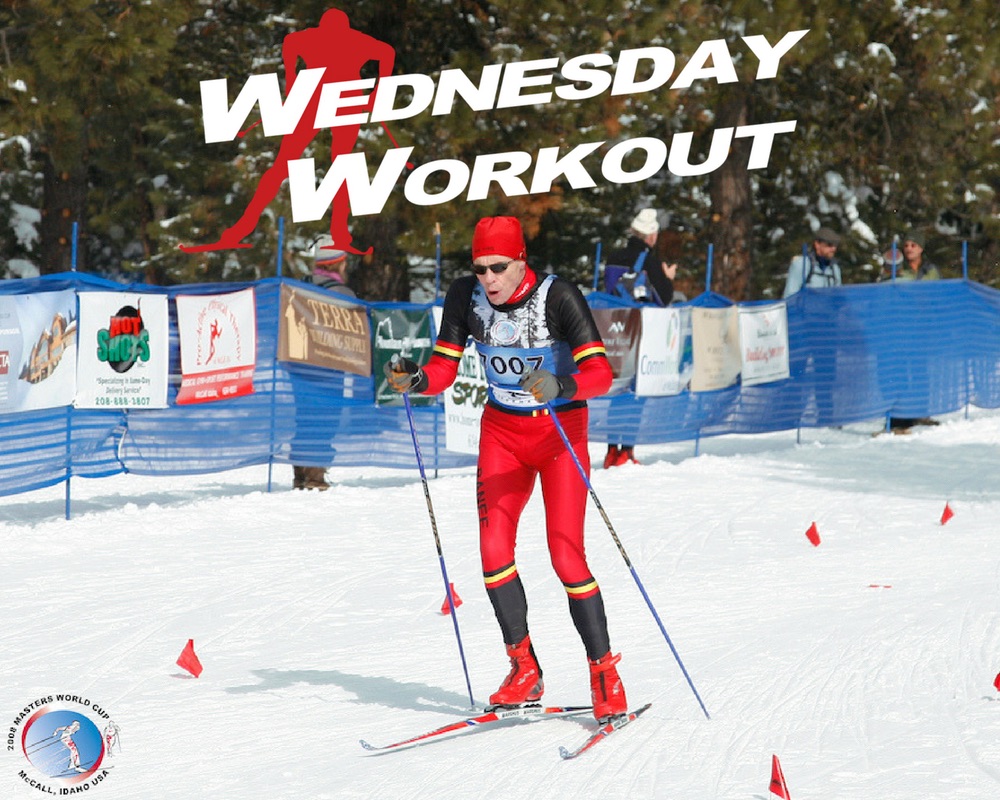
    Author Everett Fee racing at his first Masters World Cup in 2008 in McCall, Idaho. (Courtesy photo)

    (Note: The following workout was submitted to FasterSkier by Everett Fee of Canmore, Alberta. If you’d like to share a workout of your own and the story behind it, please email alex@fasterskier.com with the subject line: ‘Wednesday Workout submission’.)

    ***

    Competitive cross-country skiing is a great lifelong sport. I came late to the party, skiing in my first Masters World Cup when I was 63. I am now 73 and looking forward to being in the thick of things in 2021 when the Masters World Cup races will be in my hometown of Canmore — I’ll be a youngster in the M10 (75-79) age class!
    I got into both XC skiing and rock climbing soon after moving to Winnipeg in 1972. They were complimentary sports — we used skis to explore the SW margin of the Canadian Shield in search of unclimbed granite cliffs that we approached by canoe on climbing trips in summer.  I enjoyed skiing the occasional loppet but, in truth, climbing was what I was keen on; when there was no snow on the ground I didn’t think about skiing.

    ((Some accounts of those days are available online (ELA climbing guide) or in the Canadian Alpine Journal (CAJ v. 65 (1982), p. 24; 66 (1983), p. 98).)

    After a sabbatical year in 1979 in distant mountains (the Pyrenees, the Alps, Morocco, and Chile), the remainder of my Winnipeg years were focused on climbing trips: Mexico, Yosemite, the Red Rocks, the Dolomites, Ecuador, Nepal, and, most frequently, the Canadian Rockies.

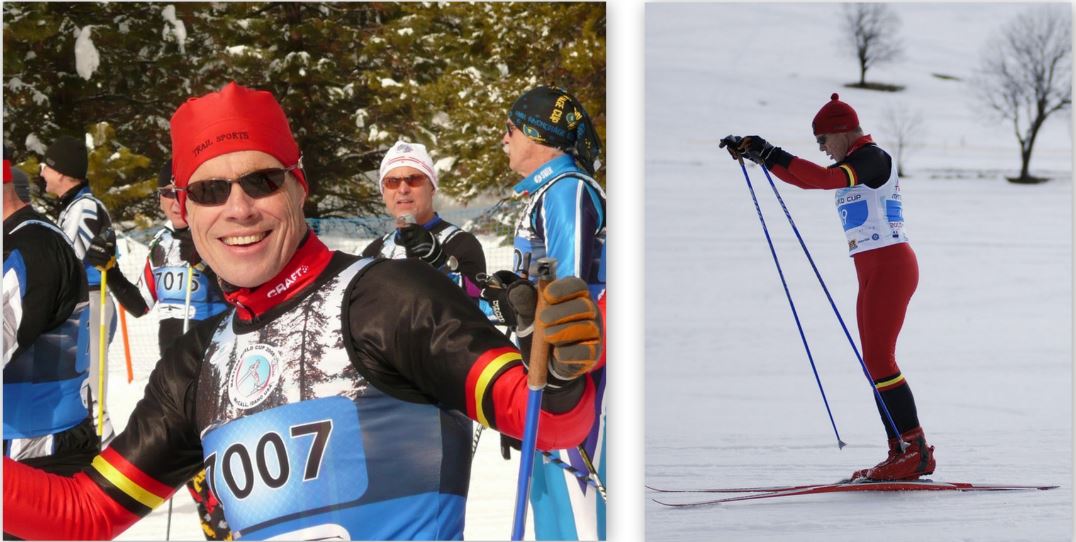
    My two Masters World Cup experiences. Left: On the starting line in McCall, Idaho (2008). Right: Mid-race in Autrans, France (2009). (Photos: Dave Rees (l) and purchased/courtesy photo (r))

    When I retired in 1997, moving to Canmore in the heart of the Canadian Rockies was a given. Now, 21 years later, the focus of my summers is training for and thinking about XC skiing. This transformation happened for several reasons. First, because I’m a lazy fun hog I couldn’t resist the five months of carved-in-marble grooming at the Canmore Nordic Centre, which is only 10 minutes from our house. The venue for the 1988 Calgary Olympics XC races and a regular stop on the World Cup XC circuit since 2005, it was so easy to ski there 100 days each winter. And all that skiing gave me the fitness I needed to tackle long-held climbing objectives such as Mount Alberta.

    Another thing that drew me to XC skiing is the people I met on nordic-centre trails.  A lot of them were masters skiers who trained seriously during the dryland months for racing in Canadian Nationals Masters and Masters World Cup in the winter. They encouraged me to dream big, too. In considering this, it became clear that I would have to seriously upgrade my haphazard approach to training (basically, a lot of random skiing in the winter and climbing in the summer).

    lioresal, erythromycin, ofloxacin online


    Canada’s Graeme Killick representing the Banff Ski Runners at 2007 Canadian nationals. (Photo: Anders Lenes)

    So in 2007 I joined the Banff Ski Runners (BSR), a small Norwegian-style club coached by Anders Lenes and signed up for the club’s six-days-per-week training program. Anders had skied on the Norwegian National Team for seven years, won Junior World Championships gold, silver, and bronze medals and had several top-10 finishes in World Cup races. He came to Canada in 1975 to prepare the national team for the 1976 Olympics and was on the Canadian national team coaching staff until 1984, during which time he worked with many great athletes, including Shirley and Sharon Firth, Burt Bullock, Esther Miller, and Angela Schmidt. He started coaching the Banff Ski Runners in 2000 and by 2007, the year I joined, he had transformed this small neighborhood Canmore club into a dominant force nationally. The juniors were ripping it up at Canadian nationals and shooting for the big leagues., and two of them (Graeme Killick and Jesse Cockney) went on to ski on the Canadian national team for two Olympic cycles. 

    In a recent FasterSkier article on his retirement from the Canadian national team, Cockney highlighted the importance of Anders and BSR in his development as a junior.

    It was a real treat to train year round with this small group of about a dozen elite juniors. Although I started training with BSR too late in life (at 62) and had too little natural talent to finish above the middle of the pack in my Masters World Cup races, training with BSR was essential to getting me to the starting line in those events.

    Anders’s BSR dryland program was highly varied — we rollerskied, hiked, trail ran, road biked, and (my favorite) ski walked. The unquestioned heart of the program was weekly intensity workouts. Among the different intensity workouts that we did, the one that had the most positive effect on my fitness is what Anders called “Russian intervals”: three sets with each set having three approximately one-minute, maximum-effort sprints separated by 30-second rests. This workout builds lactate tolerance:

    The workout: Russian Intervals

    The course: A hill 45-60 meters high (or stairs if that’s all that’s available)

    Warmup: 15 to 30 minutes of easy (Zone 1-2) jogging (striding hills to keep heart rate low) followed by a nonstop lap or two of the intervals course in Zone 2-3

    The intervals: Three sets of 3 approximately 1-minute, maximum-effort sprints separated by 30 seconds of rest and a minimum of 2 minutes rest between sets

    Warmdown: 30 to 45 minutes jogging at a very easy pace (zones 1 to 2)

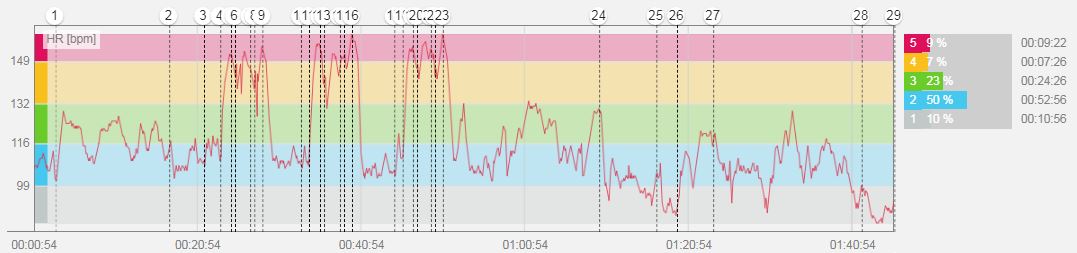
    Here’s my heart-rate record in a typical Russian intervals workout.

    The goal of this workout is to train the body (and mind!) to go hard when flooded with lactate. Done properly, this workout hurts (bent over gasping after each of the three sprints in a set). 

    Be aware that this is an extremely demanding workout that should be introduced into the dryland season only after building a solid aerobic base. When Anders retired from coaching in 2013, I decided that it was also time for me to move on and I’ve been training on my own since then. I generally follow the BSR dryland program, with a bit more rest to accommodate my aging infrastructure. I make sure to do an intensity workout every week and occasionally make a mistake. Last year, overly keen to get started, I started doing Russian intervals in May and was ambushed in mid-summer when my iliacus hip muscle seized up so bad that just walking was a problem for most of a week! This year, the first third of the dryland (May and June), I’ve been doing “building intervals” as recommended by Olivia Bouffard-Nesbitt in another Wednesday Workout.

    This fun workout, which just tickles the AT threshold, really hits the easily neglected, sub-threshold AT zone. The past month’s three-, four-, five-, and six-minute building interval workouts have me to the point where I now feel it’s time to start doing Russians. 

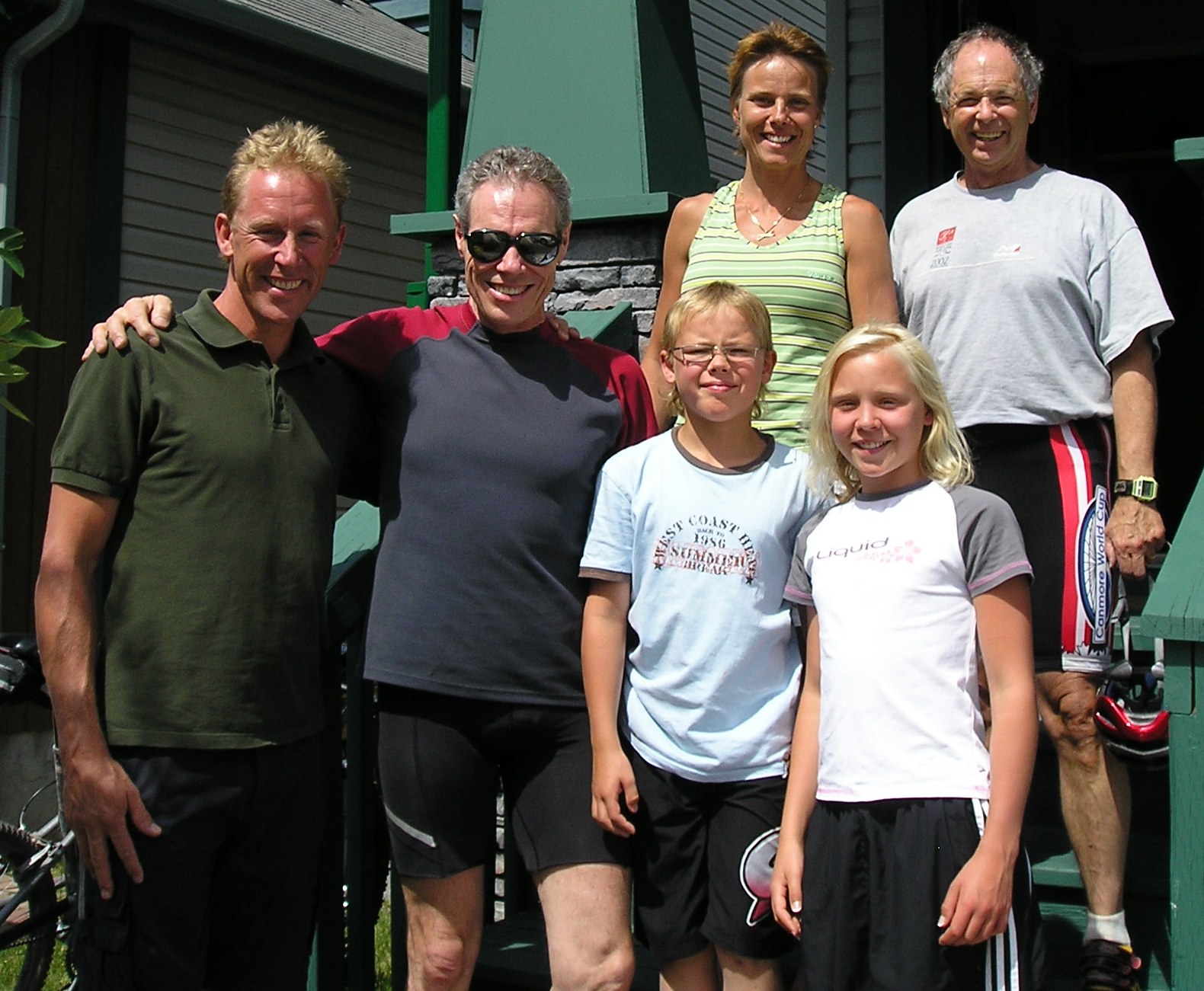
    Left to right: Gunde Svan, me (even standing on a step I’m shorter than Gunde!), Mari, Rob Mackenzie, and the Svan kids, Ferry and Julia, in Canmore in 2006. (Courtesy photo)

    [As an aside, the great Swedish champion Gunde Svan brought his family to Canmore for the summer in 2006. Through my friend Rob Mackenzie, who had met Gunde during the 1988 Olympics, I was able to spend most of a day hanging out with Gunde and his family. This amazing experience added fuel to the fire building under my growing passion for XC skiing.]

  • Cockney on Growing Up with Skiing, Retiring and What’s Next

    Cockney on Growing Up with Skiing, Retiring and What’s Next

    Jess Cockney (l) and Foothills Nordic skiers on top of Apex, outside of Penticton, British Columbia, on May 19. After retiring from professional skiing this spring, Cockney has been helping out as an assistant coach at Foothills Nordic. He’ll study full time at the University of Calgary this fall. (Courtesy photo)

    Strength. Balance. Agility. Jesse Cockney had all of those qualities as a child growing up in Yellowknife, Northwest Territories — just like most Inuit kids — according to his father, Angus. But what he could do with that talent was what Angus hoped to nurture.

    Since he had put his son on skis at age 3, Angus reflected in an email that he “knew then that [Jess] had incredible potential to succeed.”

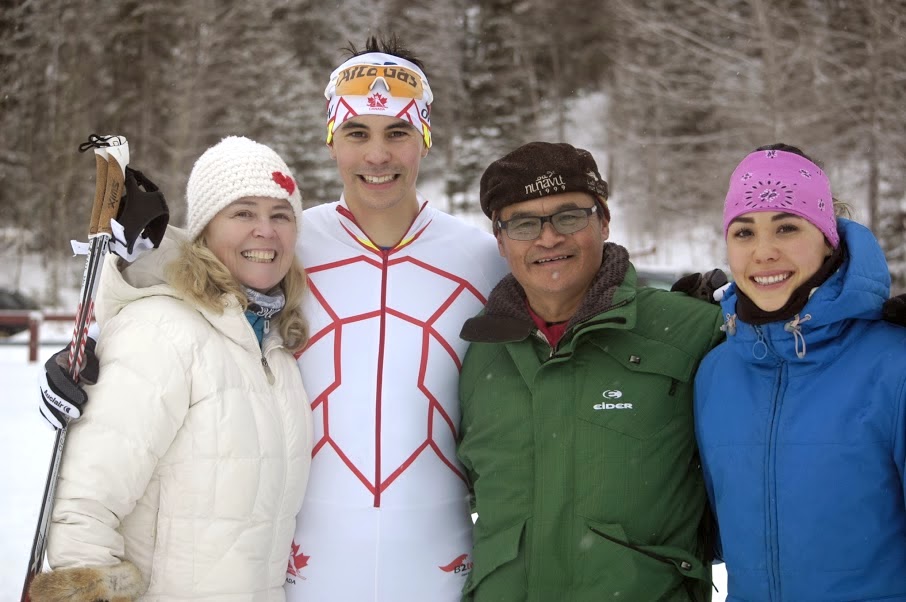
    Jess Cockney and his family after the 2014 Olympic trials in Canmore, Alberta, with his mother, Trish, father, Angus, and sister, Marika. (Courtesy photo)

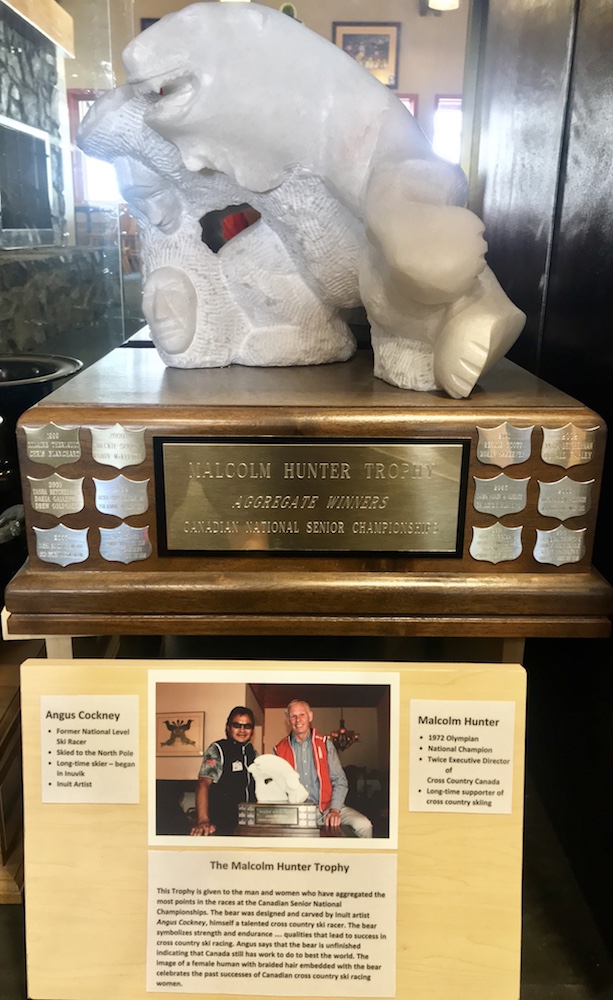
    And so the Cockneys moved to Canmore, Alberta, when Jess was 7. That included Jess’s mother, Trish, and his sister, Marika. According to Angus, a former competitive skier and junior national champion in 1973, ’74 and ’75 (who spent two months skiing to the North Pole in 1989), the move was about giving Jess “a better opportunity to succeed as it had the right environment with the Nordic Centre and a community full of support with like-minded kids and parents. In other words, we wanted him around a healthy environment.”

    It was an easy transition, Angus explained. Canmore was more conducive to training with milder temperatures than Yellowknife and a wealth of experienced coaches and athletes.

    More than two decades later, Jess credited his dad for helping him reach the highest level of cross-country skiing. A two-time Olympian, Cockney, now 28, has spent 11 years on Canada’s senior national team and two more on the junior national team. He achieved a sixth-place finish in a classic sprint at U23 World Championships in 2011, as well as four individual top-10 finishes on the World Cup.

    “The big reason that I have cross-country skied at this level and really understood at an early age what it meant to pursue racing at a high level was definitely because of Dad,” Cockney said on the phone in April. “He took skiing to a high level as a junior and didn’t carry on after his junior career but stayed really involved with the sport and with racing, too.”

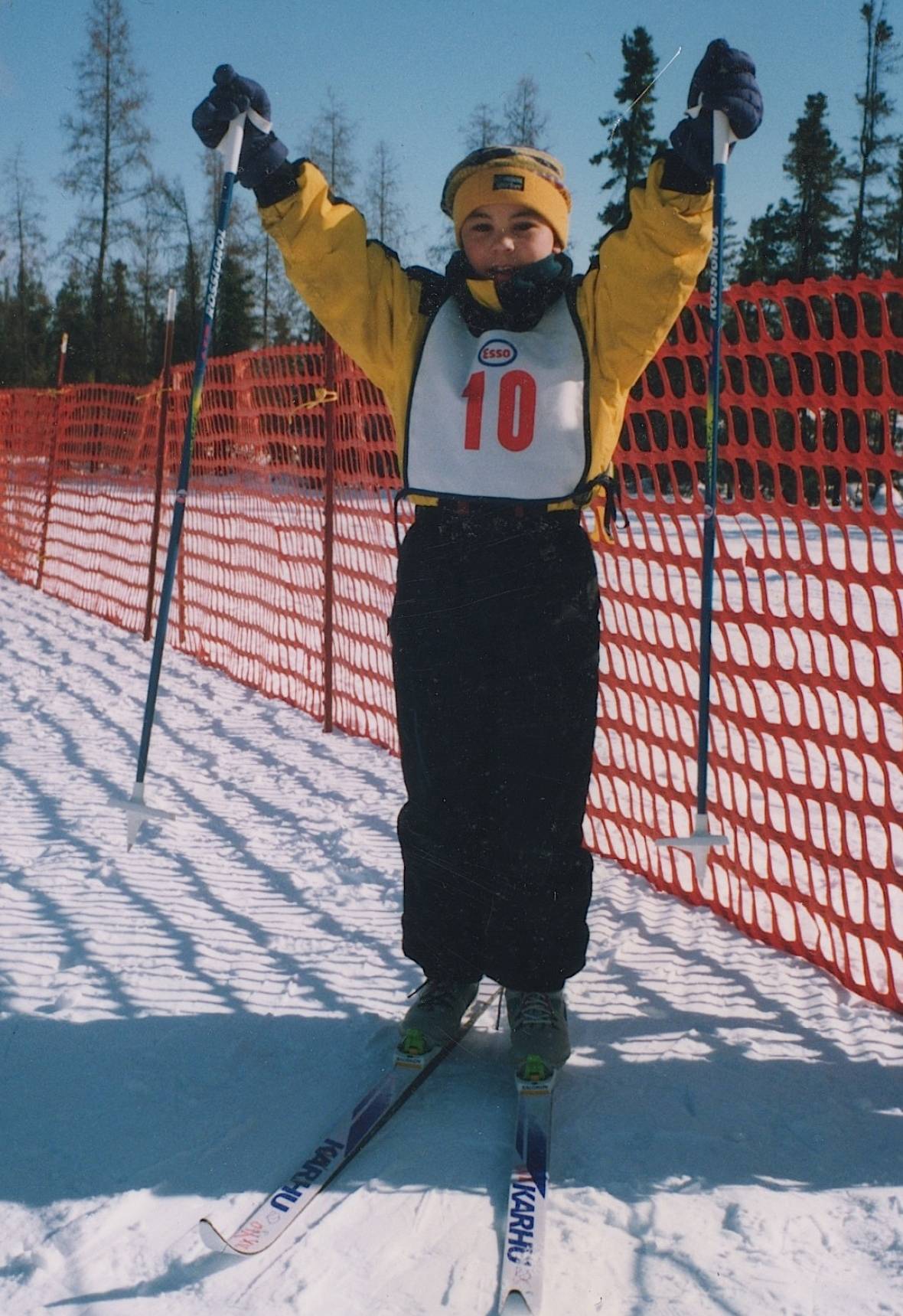
    Jess Cockney enjoying some on-snow time as a youngster. (Courtesy photo)

    He emphasized how special it was to share moments like shuffling on skis at a young age with his dad to seeing him on the side of a World Cup course, calling out splits and taking pictures.

    “It’s pretty fun to be able to share that time together, because skiing means so much to both of us,” Cockney said. “I’m quite happy that my career has worked out as well as it has and that Dad has been able to be there for so many of the good days with it, too.”

    After six years of traveling across Europe on the World Cup circuit (as well as to places like Sochi, Russia, and PyeongChang, South Korea, for the Olympics), Cockney retired from professional skiing this spring. It was a decision that had been on his mind for the better part of the last two seasons, he explained. Toward the end of the PyeongChang Olympics in February, he felt what he described as a mental “decompression” and a natural ending to his career, which solidified his decision.

    “I know how much mental energy it takes to commit towards the training year and the travel for the racing season,” Cockney said. “I had a blast doing that for so many years and I just didn’t think that I was going to be sharp enough or motivated enough. I’m just happy to have such a great season as a final year with the Olympic team and being together with so many of my teammates from over the years at those Games. It just feels like the time is right and I’m excited to do something else.”

    Annika Hicks rocking the new AWCA suit to 4th place (Photo: Glen Crawford Production Services)
    Annika Hicks (Alberta World Cup Academy) racing in the 2016 Frozen Thunder sprint qualifier in Canmore, Alberta. (Photo: Glen Crawford Production Services)

    While currently renovating his home in Canmore with his girlfriend Annika Hicks (as well as his dad, skier Bob Thompson, and another friend) and assistant coaching at Foothills Nordic, Cockney plans to start classes at the University of Calgary this fall. He was accepted into the university’s political-science program this spring.

    Hicks, who previously trained out of the Alberta World Cup Academy (AWCA) in Canmore, will also be studying full time at the University of Calgary. She is halfway through her studies there toward a science/kinesiology degree in exercise and health physiology. Like Cockney, she explained in an email that she’s been “on the fence” about continuing with skiing for the last two years.

    “I wanted to stop skiing on my terms and with a healthy relationship with the sport,” Hicks, 26, wrote. “I have no regrets and am happy to have that closure. I’m grateful to have had the opportunity to ski race for so long.”

    In her career, she started 15 World Cup races, competed at two U23 World Championships and 2011 Junior Worlds, tallied at least three podiums at Canadian senior nationals (including two second-place results at 2018 nationals in March), and ended this season as the second-ranked Canadian woman overall on the NorAm circuit.

    The Malcolm Hunter Trophy for aggregate winners of Canadian senior nationals, designed by Angus Cockney, as seen in the Canmore Nordic Centre day lodge. (Photo: Cross Country Canada)

    Cockney also finished the second on the overall NorAm aggregate points list. After winning both the freestyle sprint and 15 k freestyle pursuit at this year’s nationals, he also was also awarded the Malcolm Hunter award — a trophy his dad made — as the aggregate male winner at nationals.

    “It was a great way to end the season and end the career,” Cockney said. “I’d never won the nationals aggregate before so that was a big thing for me to do … To get that in my last stab at it was pretty sweet.”

    Angus pointed out that his son’s aggregate win was also special because of where it took place.

    “It was in Thunder Bay [Ontario] where Canada lost my good friend/foe in the late great Reijo Puiras,” Angus wrote. “He too was passionate for cross country and especially made time for and congratulated Jess whenever he could. And, Jess was presented the Malcolm Hunter trophy; a trophy I created and Malcolm was my former coach who brought me to victory in the stormy ice-cold 1975 Canada Winter Games. Therefore, it was very befitting for Jess to go out that way. He came back and told me, ‘Dad, I won the trophy you made.’ ”

    Choosing nordic

    Looking back, Angus explained that his proudest moment of Jess was was when his son consciously chose to pursue cross-country skiing at age 11.

    “I believe he would have made the National Hockey League if he wanted to but I’m glad he picked the greatest sport in the world,” he wrote. “For Jess, I’m proud on how he has become well respected as a person in the community and abroad. Of course too, he showed he belonged on the world’s stage with a number of top ten finishes on the World Cup circuit but was especially proud of him as the second qualifier here in Canmore in 2012 sprints. He certainly had the community a buzz. As a Father/Son duo though, I’m proud too on how we are the only Father/Son duo to win our respective Canada Winter Games; 1975 and 2009.”

    Jess Cockney racing to 29th in the freestyle sprint qualifier at Stage 3 of the 2016 Ski Tour Canada in Quebec City. He went on to reach the semifinals and finish the day in 10th. (Photo: John Lazenby/Lazenbyphoto.com)

    Cockney had a number of standout moments at the World Cup level, the first of which came at home in Canmore in December 2012, when he placed ninth in a World Cup skate sprint. Then,  late in the 2015/2016 season in Quebec City, he raced to 10th in the Ski Tour Canada’s skate-sprint World Cup stage. The next winter, he notched two more individual top-10 results: first in a classic sprint at the 2017 World Cup in PyeongChang and then in another skate sprint in Quebec City.

    Those top 10’s effectively earned him a spot on Canada’s 2018 Olympic team as well as its 2017/2018 World Cup A-team.

    “The time in Canmore, for sure, was such a special race for me,” Cockney reflected of his career-best World Cup result. “That was really big because it went well and my family was all there and it was just really a great surprise kind of day.”

    Another race he’ll never forget was the 50 k mass start at the 2014 Sochi Olympics, a race he had never expected to enter.

    “Just the way that people got sick and things don’t work out for other teammates, I was able to start it, and I was just so happy to be able to race that massive race at the Olympics,” he said. “That’s just such a big deal for me in my career, to have raced it and finished it.”

    Phil Widmer (CNST/AWCA) leads teammate Jesse Cockney (second from l), Dakota Blackhorse-von Jess (Bend Endurance Academy) and Canadian Para Nordic skier Brian McKeever (r) in a classic-sprint heat at 2013 Frozen Thunder in Canmore, Alberta. (Photo: Pavlina Sudrich)

    He recalled his time with the AWCA and transitioning from the NorAm to international racing with peers like Kevin Sandau, Michael Somppi, Chris Hamilton, Graeme Killick, Graham Nishikawa, Brent McMurtry, Drew Goldsack, and Phil Widmer.

    “So many fun Phil battles,” Cockney reflected. “Now that that group is still there with Bob Thompson making his way — it’s great to see that group is still getting stronger with that tail end of younger guys in that group. … Probably my biggest highlight is the relationships that I’ve been able to foster and have come from skiing, for sure, is the people and the time that we’ve shared together.”

    Besides his dad and his fellow competitors, he credited his high-school training group, the Banff Ski Runners, and its coach Anders Lenes, as well as Mike Cavaliere as major influences.

    “We had so many good guys my same age, and really the time with friends was actually just time training so it was the perfect atmosphere for a couple of us to take it really far,” Cockney said of the Banff team.

    “My coach right after Anders, Mike Cavaliere, definitely had a really big impact in fostering that next level of belief for me, from going from a good skier in Western Canada to trying to be the best that I could be in Canada,” he continued. “And then setting goals to reach potential in the international scene, too, with time together at World Juniors and Under 23’s and early in my World Cup and my first Olympics we were still working together.”

    Jess Cockney racing in a 2015 World Cup classic sprint in Otepää, Estonia. (Photo: Fischer/NordicFocus)

    Asked what it was like growing up on the national team and how the sport has shaped him, Cockney was introspective.

    “I’m definitely softer spoken or maybe more considerate at this point,” he said. “Really what I’ve gotten to understand is respecting everybody’s hard work in sport and understanding what someone’s going through; we don’t really get it all the time.

    “I’m a little bit more — I’d just say not as brash or just a little bit more reserved,” he continued. “I learned some hard lessons from being just a little bit too mouthy or a little bit too, maybe even arrogant. The time in sport has really shaped a lot of who I am, probably more than I realize. I’m super appreciative of the people who’ve been a part of that, just being such great people, and how they carry themselves, [and] emulating that where I can in life.”

    A longtime member of Canada’s senior development team, Cockney was promoted to World Cup B-team status in recent years and spent his last season as an A-team member. So while funding has become tighter within Cross Country Canada (CCC) since 2014, Cockney said he had the unique experience of increased financial support in the last couple years.

    “I started supporting myself for World Cup opportunities in 2014 and paying out of pocket for the whole thing, and then by this year I was getting more support from the whole team,” he explained. “My seasons have been consecutively getting more and more financially feasible, so I’m lucky it was trending in that direction and I was able to be a little bit better financially as the years went by.”

    With further budget cuts for CCC expected, Cockney said his retirement wasn’t motivated by the prospects of self-funding. He is one of four men from last year’s Canadian World Cup Team who have decided to retire (the other three being Devon Kershaw, Knute Johnsgaard and Graeme Killick.) Alex Harvey and Len Valjas are the lone returners to the 2018/2019 World Cup A-team.

    “Alex and Lenny and Graeme and I, we’ve been going to nationals together since I think, like, 2004,” Cockney reflected. “So it’s been a really long time together and more and more time with Devon at the top level of the sport. I was roommates with Knute for a while last year so we really felt like we’re a tight-knit group of guys and it was fun. They’re not just teammates, they’re friends that are now going to be part of our life for the rest of our time out of sport.”

    The next steps

    Canada’s Jesse Cockney (l) and American Simi Hamilton bump fists after anchoring their countries’ relay teams at the 2014 Olympics in Sochi, Russia.

    In mid-April, Cockney said his permanent break from racing hadn’t really sunk in yet. A month later, he was coaching Foothills Nordic athletes at a training camp in Penticton.

    Asked what piece of advice he’d give up-and-coming skiers, he said it was “cheesy”, but simply to be true to oneself.

    “At the end of the day, it’s your name on the results and you’ve got to be able to be the one driving the train and figuring things out,” he said. “It’s a brutally honest sport, and we’re judged with a clock. It’s your name next to that time, so be true to yourself and enjoy the process so much. … In cross-country skiing, the process is 95 percent of the sport, and 5 percent of it is competing… Just having a real love for the training, the relationships, the places that you go, that’s the biggest thing.”

    And as he parts ways with CCC, he stressed the importance of club programs in the development pipeline as they helped cultivate his career (Cockney grew up skiing with Foothills Nordic).

    “The club systems were really strong in Canada and could provide athletes with a lot of support through different points in their career, and I think we’ve really put a big focus on the training centres, taking up the mantle with that,” Cockney said. “If clubs were able to be more supportive, be more things to athletes at different points in their career, I think that you would start to see an improvement in just the health of the sport across the country. The more places people can ski at a high level, or whatever level they feel they want to, without moving, without uprooting themselves, I think that’s the best thing. It’s not always feasible for someone to pick up and move to a training centre and change their life. If there’s a club in town that they can pursue their goals in sport, then that’s the best way to get people sticking with the sport.”

    As for his future endeavors and adventures, Cockney predicted that he probably wouldn’t rollerski for fun. Rather, he was looking forward to mountain biking in the Bow Valley, going fishing and enjoying “a few more outdoor pursuits that are for myself” and a slower pace. “I think that will be good for me,” he said.

    “[I’m] definitely keen to get going with something else in life,” he said. “It’s been an absolutely amazing time in sport for me and I achieved pretty much everything that I would’ve wanted to in a career and I had a great time doing it … but it’s going to be a challenge, for sure, because it’s been so long since I was doing school consistently. … Just looking forward to a new challenge.”

  • Biathlon Canada Seeks General Manager

    Biathlon Canada Seeks General Manager

    (Job posting – en français)

    Position: General Manager, Biathlon Canada

    Biathlon Canada, the National Sport Organization for biathlon in Canada, is seeking an independently minded and highly motivated individual to fill the position of General Manager for its operations. The successful candidate will be expected to lead Biathlon Canada to long-term success through the next two Olympic cycles.

    The General Manager is a key leadership position in the organization providing support to Biathlon Canada’s international and domestic programs.

    This is a full-time position based in Canmore, Alberta.

    A successful candidate should possess:

    • The ability to manage a broad and diverse work load with strong problem solving abilities
    • 5-10 years of hands-on management experience including familiarity with operating administrative aspects of business including accounting and staff management
    • Strong marketing skills
    • Resourceful and independent attitude which includes accepting responsibility for new tasks and alertness to opportunities to add value to Biathlon Canada
    • Post-secondary education
    • Excellent computer skills in all Microsoft software programs
    • Strong written and verbal communication skills in English (essential) and French (highly desirable)
    • Receptive to working in a changing and evolving work environment
    • Flexibility & willingness to travel as necessary for meetings and events
    • Familiarity with board governance processes a benefit

    As a permanent full-time employee, the General Manager will be eligible for employee benefits in accordance with Biathlon Canada’s employee benefits policy. Salary will be determined based on qualifications and experience.

    buy antabuse online

    Applications should be in the form of a letter of application, with CV and three references, submitted by e-mail to: lmcleod@biathloncanada.ca

    Deadline to receive applications and references is May 25, 2018.

  • Biathlon Canada Seeking National Team Coach

    Biathlon Canada Seeking National Team Coach

    (Job posting – en français)

    POSITION: Biathlon Canada – National Team Coach

    LOCATION: Canmore, Alberta – National Training Centre

    Biathlon Canada — the national governing body for the Olympic winter sport of biathlon — is seeking to fill the position of NATIONAL TEAM COACH. Biathlon Canada, a national sport organization comprised of 12 provincial/territorial divisions, operates the National Biathlon Training Centre in Canmore, Alberta, and is affiliated with the International Biathlon Union.

    GENERAL DESCRIPTION

    The National Team Coach (NTC) will assist the National Team Head Coach in the development of biathletes at the National Team Training Centre in Canmore.
    The primary responsibility of the coach is to assist in the design and implementation of a high performance training and competition program that produces consistent improvement in performance by Canadian athletes towards WC, WCH and OWG podium results.

    STRUCTURE and SCOPE

    Reports to: National Team Head Coach

    AREAS OF RESPONSIBILITY

    National Team Program

    • In conjunction with the National Team Head Coach, develop, implement and monitor the annual training plan for the National Team
    • Create a good working environment with consistent messaging and a common direction that maximizes the performance of the National Team.
    • Be one of the primary tour coaches, and when required be the Team Leader, for the National Team during World Cup, WCH, and IBU Cup Tours
    • Maintain individual performance profiles and training records for National Team athletes, and in conjunction with the Head Coach and Integrated Support Team, utilize this information to optimize national Team Athlete performance
    • Assist the Head Coach and High Performance Work Group in developing annual and quadrennial National Team programs
    • Assist the Head Coach and High Performance Work Group in developing long-term strategic direction for the National Team program

    High-Performance System Development

    • Assist the Head Coach and High Performance Work Group, as required, in preparing the long term strategic vision for the HP program on a continual 4-8 year basis
    • Assist the Head Coach, High Performance Work Group and Athlete and Coach Development Manager, as required, to Identify and develop NextGen athletes and coaches

    SKILLS AND KNOWLEDGE REQUIRED

    • Demonstrated leadership capability in a high-performance Biathlon context
    • Strong communicator, effective at building and managing relationships
    • Strong decision-making and conflict resolution abilities
    • Thorough understanding of the scientific basis of training and peaking for performance with a demonstrated ability to apply this knowledge
    • Thorough understanding of high level ski and / or shooting technique with a demonstrated ability to apply this knowledge
    • Level 3 certification and working towards Level 4 (eventually Level 5) in the National Coaching Certification Program (or international equivalence)
    • Post-secondary education related to high-performance sport is desirable
    • Proficient in both French and English considered an asset
    • Valid Canadian Driver’s license, and Personal Acquisition License for firearms
    • A high level of data analysis skills with the ability to collect and analyze large quantities of performance and sport related data.
    • Flexibility to adjust work schedule to the changing demands of the program, particularly during the competitive season

    Salary will be commensurate with qualifications and experience. Considerable travel is required for this position. The successful candidate will be required to present a Criminal Record Check including a Vulnerable Sector Check.

    Interested candidates are asked to submit a resume with cover letter, in confidence, to Lyle McLeod, Biathlon Canada Human Resources Committee Chair: lmcleod@biathloncanada.ca.

    CLOSING DATE: April 25th, 2017

    Biathlon Canada thanks all applicants for their interest in this position; however, only candidates selected for an interview will be contacted.

    To learn more about Biathlon Canada, visit our website: www.biathloncanada.ca

  • Under 23 Questions: Ty Godfrey

    Under 23 Questions: Ty Godfrey

    The Godfrey brothers, Ty and Reed, skiing in Kananaskis Country near their home in Canmore, Alberta. (Photo: Sam Hendry)

    In an effort to showcase the North Americans who competed at last week’s International Ski Federation (FIS) 2018 Nordic Junior/U23 World Championships in Goms, Switzerland, we asked those qualifying athletes several questions about themselves — actually, we had them fill in the blanks. Here we have 19-year-old Ty Godfrey, of Team R.A.D./Canmore Nordic, who represented Canada at his second Junior Worlds.

    Last week in Goms, Godfrey raced to 57th in the 10 k classic. 

    ***

    “My full name is Ty Godfrey, but you can call me Reed, because most people call me that.

    I was born in Vancouver and raised in Canmore, and I learned to ski at age 1.

    I spent the time between Mont Sainte-Anne trials and Junior/U23 Worlds in Canmore making my fitness 0 to 100 real quick.

    Ty Godfrey (Photo: Russell Kennedy)

    The most technical workout I did in the last training year to prepare for this was dancing harder than J Diggs at a The Weeknd concert with my twin.

    This is my second time in Switzerland and third time racing internationally, and so far it’s been super sweet repping the Canadian gear.

    One difference I’ve noticed between Switzerland and the Canada is the absence of Vector Cereal in Switzerland.

    Usually racing at altitude is normal for me because I’ve spent my whole life in Canmore. There are so many mountains around where I live that you could do a different hike everyday.

    One of the things I’m most excited about for Junior/U23 Worlds in Goms is racing with the maple leaf on and scrolling through fresh Instagram explore.

    One race I’m especially targeting there is the 10 k classic individual start.

    I really hope I can chat/make friends with someone from Norway and ask them how Ryan and Max are doing.

    If I had a totally free day here and didn’t have to worry about race fitness or training, I’d spend it going for an adventure hike with a special someone I meet at the championships.

    The best way to follow me on social media is on Instagram @tygodfrey.”

    https://www.instagram.com/p/BevreRMA0ru/?taken-by=tygodfrey

  • Under 23 Questions: Reed Godfrey

    Under 23 Questions: Reed Godfrey

    Canada’s Reed Godfrey (Team R.A.D./Canmore Nordic) racing to fifth in his classic-sprint quarterfinal at 2017 Junior World Championships at Soldier Hollow in Midway, Utah. He finished the day in 25th overall. (Photo: FlyingPointRoad.com)

    In an effort to showcase the North Americans who competed at last week’s International Ski Federation (FIS) 2018 Nordic Junior/U23 World Championships in Goms, Switzerland, we asked those qualifying athletes several questions about themselves — actually, we had them fill in the blanks. Here we have 19-year-old Reed Godfrey, of Team R.A.D./Canmore Nordic, who represented Canada at his second Junior Worlds. 

    Last week in Goms, Godfrey raced to 31st in the freestyle sprint and 54th in the 20 k skiathlon.

    ***

    “My full name is Reed Godfrey, but you can call me Godfrey Twin.

    I was born and raised in Canmore, Alberta, and I learned to ski at age 1.

    I spent the time between Mont Sainte-Anne trials and Junior/U23 Worlds hanging out in Quebec with Gareth Williams and then training in Praz de Lys, France, with Team Canada.

    This is my second time in Switzerland and third time racing internationally, and so far it’s been a lot of fun!

    One difference I’ve noticed between Switzerland and Canada is better chocolate.

    Reed Godfrey (Courtesy photo)

    Skiing and racing in the Alps is really fun and different. Usually racing at altitude is good for me because I live and train at 1400m. There are big mountains around where I live.

    One of the things I’m most excited about for Junior/U23 Worlds in Goms is racing my hardest while wearing the Maple Leaf.

    Two races I’m especially targeting there are the sprint and skiathlon.

    I really hope I can chat/make friends with someone from Russia and ask them for a Lukoil headband.

    My favorite things at the breakfast where we are staying are cappuccino and Nutella.

    Fondue is pretty awesome. The cheese here is pretty awesome. And the chocolate is pretty awesome.

    If I had a totally free day here and didn’t have to worry about race fitness or training, I’d spend it wandering around eating Swiss chocolate and taking pics.

    The best way to follow me on social media is on Instagram @reedgodfrey.”

    (Reed Godfrey/Instagram)
  • Biathlon Canada Finalize World Cup Team Following Trials (Updated)

    Biathlon Canada Finalize World Cup Team Following Trials (Updated)

    Emma Lunder, of Biathlon Canada’s Senior National Team, racing to second in the women’s modified sprint on Friday, Nov. 10, the last day of Biathlon Canada’s team trials. After reaching the podium three times in three races, she was selected to the IBU World Cup team for the first trimester. (Photo: Peter Collins/petercollinsphoto.com)

    Note: This article has been updated to include comments and verification from Biathlon Canada High Performance Director Roddy Ward, and explain the modified shooting format used for Friday’s sprint.

    ***

    Almost exactly two weeks before Biathlon Canada sends the rest of its World Cup team to Europe for the first trimeter of International Biathlon Union (IBU) World Cup racing, the national team held trials this past Tuesday through Friday on snow in Canmore, Alberta. Three sets of races in four days (all sprints*) determined which Canadian men and women will start the season at the World Cup opener in Östersund, Sweden, Nov. 26-Dec. 3.

    The national-team trials, also known as the “Tour 1 Selection Trials”, ultimately boil down to what Biathlon Canada calls performance percentages, which measures an athlete’s finishing time in a given race against the average of of the top-three finishers’ times in that race. One bad race isn’t a deal-breaker; they consider the best two out of three. At the end of the trials, an athlete’s top-two results (specifically their performance percentages) are averaged for their overall ranking.

    Going into the trials, two women and one man on Biathlon Canada’s senior team had prequalified for the first World Cup tour (World Cups 1, 2 & 3): Rosanna Crawford, Julia Ransom and Scott Gow, according to a national-team program dated Aug. 30, 2017.

    According to the same document, two additional women’s spots and three men’s openings remained. Those went to the two highest-ranked women at the Nov. 7-10 trials — Megan Bankes and Emma Lunder, respectively — and the top-three ranked men — Nathan Smith, Brendan Green and Christian Gow, respectively.

    Emma Lunder (r) with fellow Biathlon Canada national-team member Rosanna Crawford after the women’s modified sprint at Biathlon Canada’s team trials in Canmore, Alberta. Lunder placed second in that race to secure one of the last two spots on Canada’s IBU World Cup Team, while Crawford, who had been pre-selected for the team, placed sixth in that race. (Photo: Peter Collins/petercollinsphoto.com)

    All of the eight aforementioned athletes were nominated to Canada’s 11-member National Senior Team in June. The three remaining biathletes are Sarah Beaudry, who had the third-best overall women’s percentage at trials, Megan Tandy, who ranked fourth and was reportedly coming off an illness after traveling from Germany, and Macx Davies, who ranked seventh in the men’s final percentages after Matthew Hudec of the Biathlon Alberta Training Centre (BATC) in fourth, Carsen Campbell (BATC) in fifth, and Jules Burnotte (Biathlon Estrie) in sixth. (Scott Gow, Crawford and Ransom were not factored into the final percentages.)

    The eight athletes that just missed the World Cup team will start the season on the IBU Cup. Four men and four women earned spots on Canada’s IBU Cup team as a direct result of their performances at trials: Hudec, Campbell, Burnotte, and Davies, and Beaudry, Tandy, Nadia Moser (BATC), and Leilani Tam von Burg (BATC).

    Biathlon Canada’s High Performance Director Roddy Ward described the recent team selections as “straight-up trials”. Based on its published criteria, Biathlon Canada has the option to use discretion in choosing a fourth man and fourth woman for its IBU Cup team, but instead stuck to results, selecting the fifth- through eighth-ranked athletes at trials.

    “We filled the team based on trials,” he explained on the phone on Sunday.

    Ward said he was “feeling really good” about how the World Cup team shook out, with four of their top men returning to the circuit. He mentioned that Smith is healthy and back at full strength, and noted Green’s consistency at trials.

    “On the women’s side, it’s just really good competition … with places changing every day,” he continued.

    Most of the 16 athletes selected to Canada’s World Cup and IBU Cup teams spent much of the offseason together “time-trialling and integrating,” Ward said, which has brought up the level of training as well as made for closer competition among them.

    “My hope is we go to the World Cup and do well and go to the IBU Cup and do well,” he said.

    The Canmore trials began with sprints on Tuesday, which Beaudry and American Lowell Bailey (US Biathlon) won. The only woman to shoot clean, Beaudry topped the women’s 7.5-kilometer sprint by 8.9 seconds over Crawford with a finishing time of 21:57.7 minutes. Crawford missed one in each shooting stage (1+1) for second place and Lunder placed third, 21.1 seconds back, after a single standing miss (0+1). Tandy followed in fourth (+1:05.5) with two penalties (1+1), and Joanne Reid was the top American in fifth (+1:13.9) with one miss (0+1).

    Christian Gow (Biathlon Canada Senior National Team) racing to ninth in the men’s modified sprint on the last day of Biathlon Canada’s team trials in Canmore, Alberta. With the third-best performance percentage of the trials, Gow was the fourth man named to Canada’s IBU World Cup team for the first trimester of racing. (Photo: Peter Collins/petercollinsphoto.com)

    In the men’s 10 k sprint, Bailey also cleaned to beat out Smith by 13.4 seconds with a finishing time of 25:02.5. Smith had to ski one penalty loop after a prone miss (1+0) and Green placed third (+14.5) after two prone penalties (2+0). Scott Gow and his younger brother Christian finished fourth (+29.4) and fifth (+38.8), respectively, and Tim Burke (US Biathlon) was the second American in sixth overall (+1:11.0).

    On Thursday, Smith won the second sprint of the week outright with a 26.1-second victory in the men’s 10 k with perfect shooting and a finishing time of 24:25.3. Green once again followed in second with clean shooting as well, and Artem Prima of Ukraine took third (+1:09.3) with two misses (2+0). While the Americans didn’t compete on Day 2 of the trials, Team Ukraine did, accounting for nearly the same amount of competitors (40 in the men’s race, 20 in the women’s race, compared to 40 in the men’s race and 26 in the women’s race two days earlier).

    Scott Gow finished fourth in the Day 2 sprint (+1:17.0), followed by Hudec in fifth (+1:29.4).

    In the second women’s 7.5 k sprint, a new winner emerged, but second through fourth place were exact repeats from Day 1. Bankes claimed the win in 22:03.5 with clean shooting, while Crawford followed in second, 26 seconds back with two standing penalties (0+2), Lunder placed third (+1:02.8) with two prone misses (2+0), and Tandy was fourth (+1:16.2) with two prone penalties (2+0) as well. Beaudry placed fifth (+2:16.6) with three penalties (2+1).

    After sitting out the first two days of trials, Ransom won Friday’s modified sprint (6.8 k for the women) by just a tenth of a second over Lunder. Ransom hit all of her targets and posted the win in 20:20.4, and Lunder was just off her mark in second place after “cleaning” as well. Per the modified format, each athlete could use up to three spare bullets per shooting bout, similar to a modified relay.

    “We all know [sprints] are important races; they lead to pursuits they lead to mass starts,” Ward explained. “We want to make sure we’re picking good biathletes, but also favoring on the ski-speed side.”

    In addition to giving an athlete more chances on the shooting range, the relay format showed who could excel in those types of races, Ward said.

    Julia Ransom (6) racing to the win in the women’s modified sprint on the last day of Biathlon Canada’s team trials on Nov. 10 in Canmore, Alberta. (Photo: Peter Collins/petercollinsphoto.com)

    As a result of the modified-sprint format, the top-five women avoided the penalty loop. Bankes placed third, 6.7 seconds off Ransom’s time. Bankes’s BATC teammate Nadia Moser finished fourth (+8.6), ahead of American Susan Dunklee (US Biathlon) in fifth (+18.6). Crawford finished sixth (+48.0) with two penalties (2+0) and Tandy placed seventh (+1:13.9) with one miss (1+0).

    In the men’s modified 7.5 k sprint on Friday, Smith emerged as the top Canadian for the third-straight race, winning in 18:42.0 with “clean” shooting. The top-eight men hit all their targets. Green finished second (+11.5) once again, and Scott Gow improved to third (+36.4).

    Prima followed in fourth (+41.5), his Ukrainian teammate Sergey Semenov finished fifth (+1:05.9), Campbell and Burnotte tied for sixth (+1:08.2), and Davies placed eighth (+1:20.2). Christian Gow finished ninth (+1:40.9) with one penalty (1+0), Burke was the top American in 10th (+1:47.7), followed by Bailey in 11th (+1:47.9). Both Americans finished without any penalties.

    Both the U.S. and Ukrainian teams raced two out of the three days of trials, contributing to the total field size of 45 men and 26 women on the last day. Ward emphasized that those teams’ presence made for “some really good competition”, and added that having Canadian juniors race alongside seniors (same distances, same races) showed them a clear path to reaching the World Cup level.

    US Biathlon held the last of its own trials last month and planned to finalized its IBU World Cup team after its Canmore training camp.

    For the Canadian World Cup team, Green and the Gow brothers planned to leave Sunday for Sjusjøen, Norway, where they’ll race at Norwegian biathlon trials. According to Ward, Lunder will depart on Thursday for Sjusjøen, where she’ll start her season with the first IBU Cup sprint on Nov. 23 before meeting the rest of the World Cup team in Östersund. Smith, Crawford, Ransom and Bankes planned to leave Canada on Nov. 22.

    Most of the IBU Cup team will depart on Dec. 1, while Campbell and Beaudry will start their seasons earlier at the IBU Cup opener Nov. 23-26 in Sjusjøen.

    ***

    Final ranking (performance percentages)

    Results: 

    Tuesday’s sprint

    Thursday’s sprint

    Friday’s modified sprint

    (*Why were all of these trials sprint races? When it comes to individual events, IBU Cup and IBU World Cup venues typically open with sprints to determine which athletes qualify for the remaining races of the week at each stop. For instance, the top 60 in the sprint qualify for the following pursuit race, and approximately the top 30 in the overall World Cup rankings qualify for mass starts.)

  • Longer, Stronger Frozen Thunder Open in Canmore

    Longer, Stronger Frozen Thunder Open in Canmore

    Macx Davies, Christian Gow, and Scott Gow of Biathlon Canada training at the Canmore Nordic Centre last weekend in Canmore, Alberta. (Photo: Matthias Ahrens)

    Frozen Thunder is back, but it’s not the same Frozen Thunder you knew before.

    Every year, snow is stored all summer at the Canmore Nordic Centre in Canmore, Alberta, and rolled out in October to provide local ski and biathlon teams with on-snow training opportunities. This year, the loop has changed.

    “It feels good to be back on the snow after such a long time away,” Biathlon Canada’s Nathan Smith wrote in an email. “The loop has been lengthened and improved. There is a steeper climb now, which means mandatory offset.”

    “They’ve set a new track compared to previous years which is much better for training,” Cross Country Canada’s Jesse Cockney agreed.

    Biathlon Canada Head Coach Matthias Ahrens explained that the changes were needed to make the loop more comparable to courses used in international competition. National teams for both biathlon and cross-country skiing will be using competitions on Frozen Thunder to pick their World Cup teams, so they wanted the course to be difficult.

    “We were doing intensity Monday,” Ahrens wrote in an email. “The athletes started skiing on Saturday and have not really experienced much challenge to adapt from rollerskiing. We are in the last preparation phase before the first World Cup happens in four weeks, and the training volume is reduced now, but the intensity increased to do the final race sharpening.”

    The Space Dogs Ski Club out in force on Frozen Thunder. (Photo: Bob Truman/www.skierbob.ca)

    Aside from national team athletes and World Cup hopefuls, the loop has been home to high school racers, families and masters teams.

    “The reason you will see a lot of athletes wearing bibs is actually that we have training times for elite athletes from 8-noon, Monday–Friday, since the National and Development Teams have a big stake in funding Frozen Thunder as early season training venue,” Ahrens explained. “Only those who have contributed money to Frozen Thunder get bibs and are allowed to ski in the mornings, just a way to control who is on it. On weekends and afternoons it is open to the public.”

    “It was a quiet start to Frozen Thunder with a lot of teams away, so that was lovely to enjoy the new track (a fun turn and more climbing) and not play Rush Hour,” wrote Erin Yungblut, a Canmore-based biathlete. “I think it’s really exciting to have so many teams and talented athletes out… I love being able to ski behind others and learn from as many as I can.”

    Among that group is the Space Dogs Ski Club masters team.

    Canadian biathletes training on the shooting range in Canmore. (Photo: Matthias Ahrens)

    “For our masters performance group, getting on early snow is probably equal parts technical advantage and motivation/excitement,” wrote Dasha Gaiazova, a Space Dogs coach and former Olympian. “We are grateful that we, and many other skiers of all abilities have an opportunity to train on early snow so close to home. I also believe it makes the Frozen Thunder project more self-sustainable, through sale of general public ski passes, early season ski lessons, and providing great visibility for the sport of cross-country skiing in Canmore.”

    Frozen Thunder is getting busier. The Canadian National Ski Team returned from a training camp in Park City, Utah — Cockney had done a shorter camp, thus returning home and getting some extra time on snow. The Canadian biathlon squad already had its first time trial on the course on Thursday. The U.S. biathlon team is also in town now for an on-snow training camp, and the two teams will have joint competitions on Nov. 7-10. Meanwhile, next Wednesday and Friday the cross-country team will hold a classic sprint and skate distance race.

    Below, a roundup of some more reactions to getting back on snow before the start of the season:

    “It is super fun to be back on snow – rollerskiing is great training, but it simply isn’t the same! I am here in Banff to spend time with my husband before I hit the road for winter racing. I would love to be training with my APU crew in Alaska (there really is no place like Alaska… and yes I am biased as it has and will always be home), but I have been super busy going between Alaska and Banff this summer and I felt it was more important to have this short time with my husband and limit travel these last couple weeks. Not to mention, the Bow Valley is very close to my heart. The terrain in Canmore is great training, lots of transitions and a new stair-stepping climb – they fit a lot into that 2 k loop.”

    — Chelsea Holmes, Alaska Pacific University

    “Getting on snow the day after returning home from Park City camp was an awesome transition, but I’m quite tired after the time at altitude so I’ll take a couple easy days to get energy back now. I wasn’t so much planning my shorter camp around more time on snow, I was just being careful with energy this late in the training season. As it turns out I may have overdone it anyway in Park City, but it was a really good call to come home and try to recover a bit sooner than the rest of the gang.”

    — Jesse Cockney, Canadian National Ski Team

    “It’s so amazing to be back on snow again; I still can’t get over how lucky we are to live and train in Canmore with such an epic facility. The transition back to snow has been pretty quick and easy for me as I did a lot of yo-yo camps up at the Haig Glacier this year, so I’m used to icy starts/soft sugar underfoot. Racing definitely feels closer now, and I couldn’t be more excited. I literally have zero pressure or expectations on myself, as I’ve come to realize I’m pursuing biathlon because I love the challenge of it… and the results will be what they are. I don’t think I’ve ever expanded this much [as a person] so quickly. It sounds corny, but I’m finally starting to figure out how to control the controllable and forget the rest of it.”

    — Erin Yungblut, Rocky Mountain Racers

    “Being on snow as much as possible is one of our priorities for Space Dogs members for a number of reasons:
    1. Master skiers usually have full-time jobs, and families to look after, so their training schedules are compressed, and the workouts have to be as specific as possible.
    2. Many masters have old injuries and accumulated damage to their knees / back / hips, which makes it impossible for some to run, or to do other dryland-type workouts. The more they can ski, the more training is accomplished pain-free.
    3. Training around high-performance athletes allows for learning through watching, and through imitating. Sometimes, seeing someone ski with good technique is a lot more powerful than having it explained in concept terms.
    4. Skiing in crowded spaces is beneficial for loppet racing practice. We purposely arrange some of our workouts around busy trail times, so that our skiers are more comfortable skiing on crowded trails, which is what a loppet race experience usually feels like.”
    — Dasha Gaiazova, coach, Space Dogs Ski Club
    “I’d say the transition had gone smoothly and no different than previous years. I’m careful not to adapt my technique in the summer for rollerski efficiency. I’m feeling pretty strong and have been performing fairly well vs. my team mates in time trials. Of course, that is just a sample of 5 athletes. I think it’s dangerous to proclaim that everyone is fit and crushing it before the reality check of World Cup. I’ve seen that this can build up unrealistic expectations. That being said, I’m feeling confident and have a good feeling that things are going to work out well. I will be in top fitness when the time comes in Europe and Korea.”

    — Nathan Smith, Biathlon Canada National Team

    “With not getting onto the Haig Glacier because of snow melt, our team hasn’t been on snow since May. The transition was easy for me this year and it feels like second nature to be back on snow. I will admit to the first couple of strides feeling like skis are quite long, but that didn’t last long… It was a bit sad while they were pushing out Frozen Thunder, because we had about three days of rain. So far it is holding up nicely and we just have to hope that colder temps are in the forecast.”

  • Dickinson Books World Cup Spot; Schommer, Dreissigacker, Reid to National Team Camp

    Dickinson Books World Cup Spot; Schommer, Dreissigacker, Reid to National Team Camp

    Kelsey Dickinson (Craftsbury Collegiate Summer Team) racing to third in the women’s sprint at US Biathlon Rollerski Championships on Aug. 12 in Jericho, Vt. Dickinson had more strong performances this past weekend to secure a spot on the World Cup in December. (Photo: John Lazenby/Lazenbyphoto.com)

    For some American biathletes, there was a lot on the line in Jericho, Vermont this past weekend.

    Saturday and Sunday were rollerski biathlon competitions that served as the third and fourth of a four-race team selection series. Six athletes – Susan Dunklee, Clare Egan, Lowell Bailey, Leif Nordgren, Sean Doherty, and Tim Burke – had already booked their places for the first period of World Cup racing thanks to results from last season.

    But between one and three places still needed to be filled on the U.S. team, and the Jericho races – the first two were held at the Vermont biathlon complex in August – would be used to select a team for a pre-season camp in Canmore, Alberta. From there, the squad would be winnowed down for the December World Cup.

    Kelsey Dickinson (College of St. Scholastica) racing to 26th in the women’s 15 k freestyle mass start at 2017 NCAA Skiing Championships on March 11 at the Jackson Ski Touring Center in Jackson, N.H. (Photo: Flyingpointroad.com)

    One College of Saint Scholastica student, Kelsey Dickinson, booked her place on the World Cup. A St. Scholastica alumnus, Paul Schommer, all but did the same – he was selected to the camp, and is highly likely to also go on to the World Cup.

    Two more women, Joanne Reid of Colorado Biathlon and Emily Dreissigacker, of the Craftsbury Green Racing Project, were selected for the camp and will have to compete for the last World Cup spot.

    Even for the pre-qualified athletes, it was a weekend of important competitions, a chance to hone stills practiced over the summer and start visualizing the international competitions that will start in just six weeks.

    “It’s an important marker – it’s not nothing,” U.S. Biathlon Association Chief of Sport Bernd Eisenbichler said in an interview this morning. “We try to really run the trials like a national-level race. The Jericho crew led by John Madigan did an awesome job to put a real race on, not just a time trial. You have a bib number on, you want to perform and you want to execute the things you’ve worked on throughout the summer.”

    The Women: Three Trials Race Winners Heading to Canmore

    With the pre-qualified duo of Dunklee and Egan excluded from ranking results, Dickinson won the trials series in best-three-of-four scoring. Even with Dunklee and Egan in the results, she was only off the podium once in the four-race series.

    Chad Salmela (far left) with 2016 NCAA qualifiers Reitler Hodgert and Kelsey Dickinson as well as assistant nordic coach Josh Tesch at 2016 NCAA Championships in Steamboat Springs, Colo. (Photo: Chad Salmela)

    “I’m really pleasantly surprised and impressed also with how she did that, with being outside the team environment,” Eisenbichler said.

    Dickinson was formerly an athlete at the Maine Winter Sport Center (now the Outdoor Sports Institute), but when that program shuttered its senior funding scheme in the spring of 2015 she felt she had no choice but to go back to school. Since then she has worked with coaches Chad Salmela and then Maria Stuber, and become an NCAA qualifier for Saint Scholastica in cross-country skiing.

    Dickinson spent this summer at the Craftsbury Outdoor Center training for biathlon, along with Dreissigacker and other development athletes.

    “I know that she worked quite a bit with the Craftsbury team, which was a smart move, but overall we have to give her a lot of compliments for really doing this development,” Eisenbichler said of the student-athlete. “I just talked very briefly with her on Sunday, to let her know that she won the trials… she told me pretty straightforward that biathlon is first, and she will make it work. So I have no doubt that she will make it work with her school.”

    Dreissigacker and Reid have shorter histories with biathlon, something that Eisenbichler highlighted. Dreissigacker ended up second on the ranking list, after winning Saturday’s 7.5 k sprint outright.

    “She hasn’t been in this sport not such a long time, and her biggest accomplishment right now is that she is so stable with the shooting part now already,” Eisenbichler said. “On the weekend, we had a pretty windy day on Sunday, and she was still able to shoot [just one penalty]. And the same thing on Saturday plus winning that race. I think that she really made the next step towards being a complete biathlete, although there is still some work to do from the physical side and on the skiing side.”

    https://www.instagram.com/p/BaSCsEllKbQ/?taken-by=emdreiss

    Dreissigacker has spent the last two seasons racing on the second-tier IBU Cup, where she scored her first top-20 finish in March.

    Then, there’s Reid, who made a fast jump to the World Cup when she started the sport. Last season, Reid hit the top-30 in the first World Cup competition of the year, and was also a World Championships team member.

    After the Jericho trials, U.S. Biathlon was only supposed to nominate up to two women: the trials winner (which turned out to be Dickinson) would receive an automatic World Cup spot, and one other athlete could be selected by discretion to go to the Canmore camp.

    But the International Competition Committee also selected Reid, who had beaten both Dickinson and Dreissigacker in one of the trials races.

    “It was an extraordinary discretionary choice,” Eisenbichler said. “She had, two times, health issues in the summer. I don’t want to get into details of that, but it was significant health issues that justify a discretionary choice in our eyes. And she was on the whole weekend the fastest skier last weekend.”

    https://www.instagram.com/p/BaSAnRPjQUg/?taken-by=jfiresteel

    So, five women are headed to Canmore, and either Reid or Dreissigacker will go on from there to the World Cup.

    “We are taking all the ladies who were able to win one of the trials races,” Eisenbichler said of the rankings system that excluded pre-qualified Dunklee and Egan. “The decision for the fourth World Cup starting spot… will be made after looking at the training in Canmore and also at the races we will do together with Biathlon Canada at the end of the camp. It’s not trials races. [The decision] is a combination of looking at the training, the performance level, and the racing at the end of the camp.”

    Athletes who didn’t make the cut, like 2017 World Championships team member Maddie Phaneuf, will have another chance to make the World Cup or Olympic team after Christmas based on a separate set of trials races.

    Dunklee qualified for the Olympic team after winning a silver medal in the World Championships mass start. At least one more woman will be picked for the Olympic team based on December World Cup results, but not more than two; that means at least one spot will be up for grabs come January.

    Men: Schommer Shines

    With four men already pre-qualified for the World Cup, there is only one quota spot up for grabs. The trials winner would be sent to Canmore and possibly one more athlete based on discretion.

    After the first two races, in August, both Schommer and National Guard Biathlon’s Travis Cooper had one “win” (excluding the pre-qualified athletes) to their name.

    Paul Schommer, of US Biathlon’s National Development Group, racing to 33rd in his first IBU World Cup race, the men’s 20 k individual in Antholz, Italy, in January 2017. (Photo: USBA/NordicFocus)

    But in the October races, Cooper didn’t continue the streak. Schommer did, placing second on Saturday just four seconds behind Bailey, and fourth on Sunday.

    “Paul is the clear winner of the trials by 5%,” Eisenbichler said. “If we look at the second place in the trial points, this is Russell Currier, and Paul beat him in every race of the four races. So Paul really made a big step forward this summer. He got himself mixed in with the World Cup athletes, the pre-qualified ones. He has a really high performance level right now and I’m really happy to see that… if everything goes normal he will also get the call for the World Cup team in December.”

    Currier was not chosen for the camp on a discretionary basis, so Schommer – who turned in a 33rd-place finish in his World Cup debut last season – is nearly a lock for the December competitions.

    He was new to biathlon after his time at Saint Scholastica, but has quickly made strides in the sport.

    “The goal of bringing this Talent ID project forward in 2014 was to have someone in contention for a relay spot, pushing the other four athletes on the men’s side, and having also a good shot at being very competitive at the Games,” Eisenbichler said. “And I’m again very pleased to see that this project worked.

    “Compliments to Paul with how he approached it,” he continued. “He has done it professionally now for just 2 ½ years. I think he learned a lot last season, being at the World Championships as a reserve athlete, doing some World Cups, and a lot of international races like European Championships and IBU Cups. He learned a lot, absorbed a lot. But he was also able also to put the work in during the spring, summer, and beginning of the fall to get to a higher level. I’m really pleased where he is right now – he will be a very strong contender for the Games.”

    As with the women, Currier and others will have another chance to qualify for World Cup and Olympic racing in January.

    World Cup Athletes On Track

    For these athletes, qualification woes are now mostly behind them. Up next is the camp in Canmore, which will start on October 23.

    Lowell Bailey (USBA) en route to second in the men’s mass start at US Biathlon Rollerski Championships on Aug. 13 in Jericho, Vt. (Photo: John Lazenby/Lazenbyphoto.com)

    “It’s most important to have snow kilometers and work on technique,” Eisenbichler said of the camp. “Per Nilsson, our technique guru, will be there for the entire camp so the focus for sure for most of the athletes is to work on technique on skis. Following up from the May work in Bend and the summer work in the Oberhof ski hall. For us it’s really important to have this frequent snow contact in summer and fall.”

    After that, athletes will have about ten days at home before heading over to the World Cup. There, a different kind of qualification may be on their minds. Dunklee and 2017 World Champion Lowell Bailey are qualified for the Olympics already, but one or two more athletes of each gender can make that team through strong performances at the December World Cup.

    And ultimately, they are looking to perform well once they get to the Olympics.

    For the athletes who didn’t have to worry about World Cup qualification last weekend, Eisenbichler said that the races were still an important marker, but also didn’t serve the same function as for those who still needed to snag their spots.

    “These races are kind of markers on the way for these pre-qualified ones, but it’s not really trials races for them,” he explained. “It’s a little bit different to come into the races with full training, compared to preparing at least a little bit for them as you have to if you need to qualify.”

    As a result, some of the World Cup regulars didn’t turn in their best days, but on the whole, that didn’t bother team staff.

    “He came out of a really good and hard block of training,” Eisenbichler said of Tim Burke, who finished fifth and seventh this weekend. “He had super time trials the week before in Lake Placid, so we feel very confident that he is on the right track. This week he was very tired from training, and then racing is not that easy on a high level. For sure he wanted and expected to be on a higher level, especially on the shooting part. But I’m not worried about him.”

    Likewise, Leif Nordgren placed 13th on Saturday with six penalties, but turned things around on Sunday to finish third overall.

    https://www.instagram.com/p/BaR6J7XjCtb/?taken-by=leifcnordgren

    “It was a really bad race on Saturday,” Eisenbichler said. “He really had to put his head down on Sunday. Even if you are pre-qualified, you have a responsibility to be competitive at these races. That’s clear. So he did that on Sunday, and that was good to see, it was really important for us.”

    Bailey won both races over the weekend and shot perfectly on both days. Dunklee didn’t race, as she was getting over a cold. Doherty placed third on Saturday and second on Sunday, and Eisenbichler was pleased with that.

    “Sean showed some really big improvement on the skiing, which was expected after he went through the mono stuff last year,” he said. “So that’s back on track. Still the prone shooting for Sean needs work and improvement for the World Cup. It’s not good enough right now.”

    And Egan won Sunday’s race.

    “We are pretty pleased with what we saw throughout the summer,” Eisenbichler said of her training. “With skiing especially, technique-wise she is getting on a higher level. She didn’t have a super race on Saturday, but had a better day on Sunday. And it’s still for her getting the momentum for a good complex biathlon performance. And that’s pretty normal for mid-October. I think she’s on the right way.”

    Trials race results: Aug. 12 | Aug. 13 | Oct. 14 | Oct. 15