From the FasterSkier archive — posts syndicated from athletes’ and coaches’ own blogs between 2004 and 2012, kept online as published. Current coverage is at fasterskier.com.

Tag: CECS

  • Treating Compartment Syndrome Without Surgery: One Skier’s Season

    Treating Compartment Syndrome Without Surgery: One Skier’s Season

    Author’s note: From the PT: a Look at Chronic Exertional Compartment Syndrome is a good introduction to the current article and includes a more detailed description of the anatomy, pathophysiology, and associated research. Since it was published on FasterSkier in 2022, that article has served as a resource for the Nordic skiing community, and I have fielded multiple requests for guidance from skiers around the world with CECS. In that article, I suggested that conservative treatment has potential; however, I was still more optimistic about surgical intervention based on the available research. The published research hasn’t changed, but my experience has, and now I’d like to make the case for non-surgical treatment of CECS. As with any medical information found on the internet, this article should be taken as the opinion of the author and not a replacement for direct consultation with a medical provider.
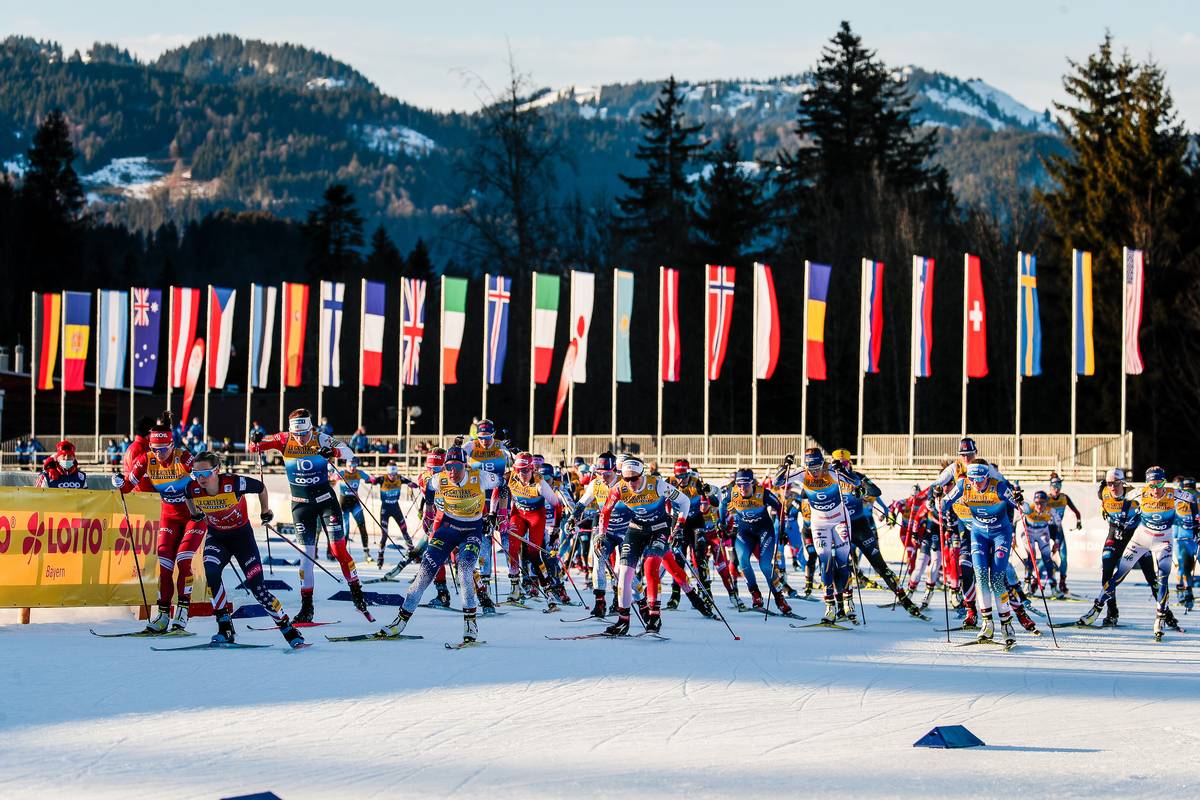
    The start of the women’s 10-kilometer mass start free during Stage 3 of the 2021/22 Tour de Ski in Oberstdorf, Germany. (Photo: NordicFocus)

    The primary symptoms of Chronic Exertional Compartment Syndrome (CECS) include pain, weakness, and/or numbness that only occurs with exertion. These characteristics are fairly distinct, although there can be enough overlap with other soft tissue disorders, namely tendinopathies, that CECS remains a diagnosis of exclusion when everything else has been ruled out. In Nordic skiers, symptoms affect the anterior, lateral, and/or posterior compartments of the lower legs and are most common with (often exclusive to) skating. Typically, or at least initially, these skiers will be symptomatic with high-intensity skating, but will be asymptomatic with classic skiing and running even at the same intensity.

    The physiology is relatively straightforward: our muscles are wrapped in a thin layer of connective tissue called fascia. As muscles repeatedly contract, especially at high intensities, they become enlarged; however, fascia is not elastic and does not stretch. If the muscle size exceeds the volume of the fascial compartment, blood flow is constricted, oxygen delivery is decreased, and the muscle gets strangled. This hypoxia in the muscle triggers a pain response, which is usually a good defense mechanism to make us stop doing something that the body perceives as harmful.

    The why is far more complex: some theorize that the fascia is just wrapped too tightly. Others suspect that the muscles are too big for the fascia. In either case, the common solution is a surgical fasciotomy where an incision is made in the fascia to increase the size of the compartment and decrease its stranglehold on the muscle.

    The why with skiing is even more complex. With CECS occurring with skate vs. classic, the initial theories centered around the ski retrieval phase. This makes sense with the work being done by the tibialis anterior muscle, which dorsiflexes the ankle while the ski is brought back to its glide phase position. Except that CECS can affect other lower leg muscles/fascial compartments which would not be active during the retrieval phase. Arguably the biggest difference between skate and classic techniques, at least as far as the muscles of the lower leg are concerned, is the stability demand of balancing on the gliding ski: the muscles must work much harder with skating.

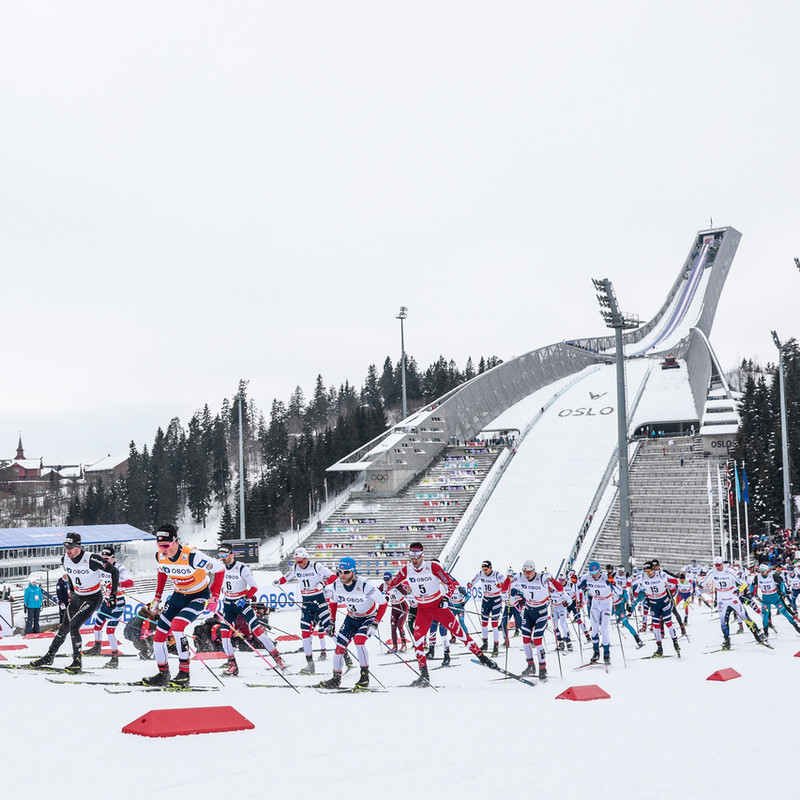
    A dense field of men’s skiers during Saturday’s 15 k mass start classic in Falun, Sweden. (Photo: NordicFocus)

    A case study

    The patient in our story is an 18-year-old male skier. He is a very competitive skier regionally and would have qualified for Junior Nationals had his skate races not been disrupted by leg pain. We had our initial physical therapy visit in mid-January, mid-race season. He reported pain, progressing to numbness, in both shins, which only occurred during high-intensity skate skiing. Symptoms were first noticed the previous winter during a skate race in icy conditions, but he didn’t have any additional episodes for the remainder of that season or during the summer. In October, however, symptoms returned during a skate interval session, persisted with any high-intensity skating, and got progressively worse through the race season. He was unable to finish his last skate race due to severe pain.

    In physical therapy exams and diagnostics, we are keen on reproducing patients’ symptoms. If we can do this in specific ways, we can begin to rule in or rule out anatomical structures which may be involved. For better or worse, I was unable to reproduce the patient’s symptoms in the clinic. This would likely rule out a muscle strain or tendinopathy, both of which tend to be painful with resisted tests (assuming we can make the tests both hard enough and specific enough). Differential diagnosis still included lumbar radiculopathy (nerve irritation at the spine leading to symptoms in the leg) or a bone stress injury (a.k.a. stress fracture), but neither of these fit the picture of symptoms being exclusive to high-intensity skating and absent at rest or especially with other modes of exercise. The symptoms really fit the pattern of CECS. To confirm, the gold-standard diagnostic would be compartment pressure testing; however, this testing is quite painful, fairly inconvenient (unless you have a rollerski treadmill in the clinic), and primarily aimed at determining if the patient is a candidate for surgery. Since this patient was looking to salvage his race season and avoid, or at least delay, surgery, we opted to skip the pressure testing but assumed that he was dealing with CECS.

    The remainder of the physical exam focused on ski technique, or at least the static components we could observe in the clinic: hip strength (fair), balance (compensated with lateral trunk lean), ankle dorsiflexion range of motion (appropriate), and foot stability (notable flexibility and forefoot varus). These findings were significant enough to suspect that the patient’s lower leg muscles were working very hard to maintain balance on his glide ski. The hip weakness and compensated single-leg balance made me suspect that if he was lacking stability from the top down, then he was having to work much harder from the bottom up, thus overloading the muscles at the ankle and leading to CECS.

    The root cause of any musculoskeletal symptoms can be described as an imbalance between load being placed on the body and the body’s ability to tolerate that load. In physical therapy, we are looking to balance that equation. Sure, we can decrease load by telling patients not to do things that are painful, and some of that may be required in the short term, but we’re not in the business of telling people to stop doing fun things. Thus, much of the work we do is aimed at improving the patient’s ability to tolerate load. The trick becomes sorting out where there is room for improvement and how to get there.

    His first round of exercises focused on balance without compensation (single-leg stance with a Pallof press and lateral hops to balance on one leg) and hip strength (side plank variants and fire hydrants). On the load mitigation side, we discussed using more supportive insoles, which he had only recently acquired, and training modifications with skating limited to short bouts of low-intensity skating and all high-intensity work done in the classic tracks.

    At his second PT appointment, we were very fortunate to have the involvement of his ski coach who attended the visit with the patient. We continued exercise progressions for balance and hip strength; but we also got much more technique specific, identifying areas for improvement and providing corresponding cues: “heel down” (when asked to stand as if he was balancing on the glide ski, he was over-exaggerating the very common “hips forward” cue and shifting his weight so far forward that his heel was no longer on the floor. Arguably this is okay on steep terrain but not in this context), “tripod foot” (equal pressure on the inside, outside, and heel of the foot), and “weight shift with the hips” (get the center of mass over the glide ski via the pelvis vs. leaning to the side). He and his coach then took these cues to technique sessions and eventually higher intensity intervals.

    At our next appointment a few weeks later, the patient reported zero symptoms with hard L4 skate intervals. Unfortunately, the rapid melt-off of snow in the West ended the race season before he could fully test the effectiveness of the intervention. However, as of the time of this writing, he has been skiing and training for five months without symptoms.

    The critical reader (and all readers should be critical) might point out that we have a false sense of accomplishment because he hasn’t raced. I would argue that he has had plenty of pain-free training sessions that would have previously been symptomatic. The reader might say that this is simply a case study and an N=1 is pretty weak research. That is certainly true. A randomized, double-blind, placebo-controlled study with a very large population would be ideal. But a case study is not nothing. Not all skiers with CECS are going to respond to the same intervention. But if we have seen that it is possible to effectively treat CECS without surgery, then we might want to consider exhausting our non-invasive options first. The reader might further pick holes by saying that without compartment testing, we don’t even know for sure if this skier had CECS. That is also very true and should be acknowledged. In the name of science, I should have subjected the patient to the very unpleasant testing before and after our intervention to both establish a baseline and to prove that he was cured. But in the name of practicality and the patient’s well-being (along with the patient’s and family’s input), I declined.

    Again, the story of one skier’s ability to overcome CECS without surgery does not mean that all skiers with CECS will have the same success. But it’s very much worth a try. If you are reading this article because you are a skier with CECS, I would encourage you to take a very detailed look at your skating technique and be very specific about your approach to changing it. This likely means working on the component parts in a low-complexity setting (not on skis) and progressing to technique sessions on skis with a heavy emphasis on the cues that you and your support team (coach, PT, trainer, etc.) have identified. Hopefully this can be a path back to fun, fast, and pain-free skiing.

    Help Support Our Coverage!

    FasterSkier is independent, reader-supported, and free to read. If health and training coverage like this is worth something to you, a voluntary subscription keeps it coming.

    Join the FasterSkier community!


  • From the PT: a look at Chronic Exertional Compartment Syndrome

    From the PT: a look at Chronic Exertional Compartment Syndrome

    Kris Freeman—seen here winning a NorAm 30 k freestyle at Sovereign Lake—is one of many elite skiers whose careers have been affected by CECS (Photo: Frances Weeks)

    US Ski & Snowboard recently hosted a course titled “Medical Emergencies in Skiing and Snowboarding”, which is required training for all physical therapists and athletic trainers working with the team during competitions. As the name would imply, we learned about emergency management of acute injuries: application of cervical collars, tourniquets, back boards, distraction splints, and plenty of other nasty scenarios we hope to never see. 

    Thankfully, cross country skiing tends to be lower risk when it comes to traumas and medical emergencies. Typical of an endurance sport, our injuries are more self-induced from the volume and intensity of training. Instead of blown out knees and broken bones, we contend with tendinopathies, muscle strains, and joint pains. For better or worse, these ailments are quite common, and we’re pretty good about diagnosing and treating them. That might not be the case with a condition called Chronic Exertional Compartment Syndrome (CECS), a painful condition most often affecting the lower leg. It’s common among Nordic skiers, it’s painful enough to seriously disrupt training, and it’s often difficult to diagnose and treat. This article attempts to investigate the condition, and to offer some advice to those suffering from it.

    C.E.C.S.

    Chronic. It occurs repeatedly and/or persists over time (not the result of a trauma).

    Exertional. It happens with effort. This is one of the hallmarks of the condition: symptoms are present with exercise, often only at higher intensities, but tend to subside fairly quickly with rest. 

    Compartment. Throughout our bodies we have connective tissue called fascia. I think of it as Saran Wrap. It’s thin, pliable, and has a small amount of elasticity. Our organs are packaged in fascia. Muscles are encased in fascia. The typical physiological explanation for fascia is that it creates “compartments” to reduce the spread of infections or pathogens. (From a musculoskeletal perspective, fascia may play a large role in how our muscles, tendons, and joints interact.)

    Syndrome. A group of symptoms that occur together. Generally, not a good thing. 

    CECS occurs when exercise causes the muscles within a fascial compartment to become swollen and enlarged to the point of exceeding the space within the compartment. This leads to decreased blood (therefore decreased oxygen supply to the muscles) and ultimately pain, numbness, and/or weakness. 

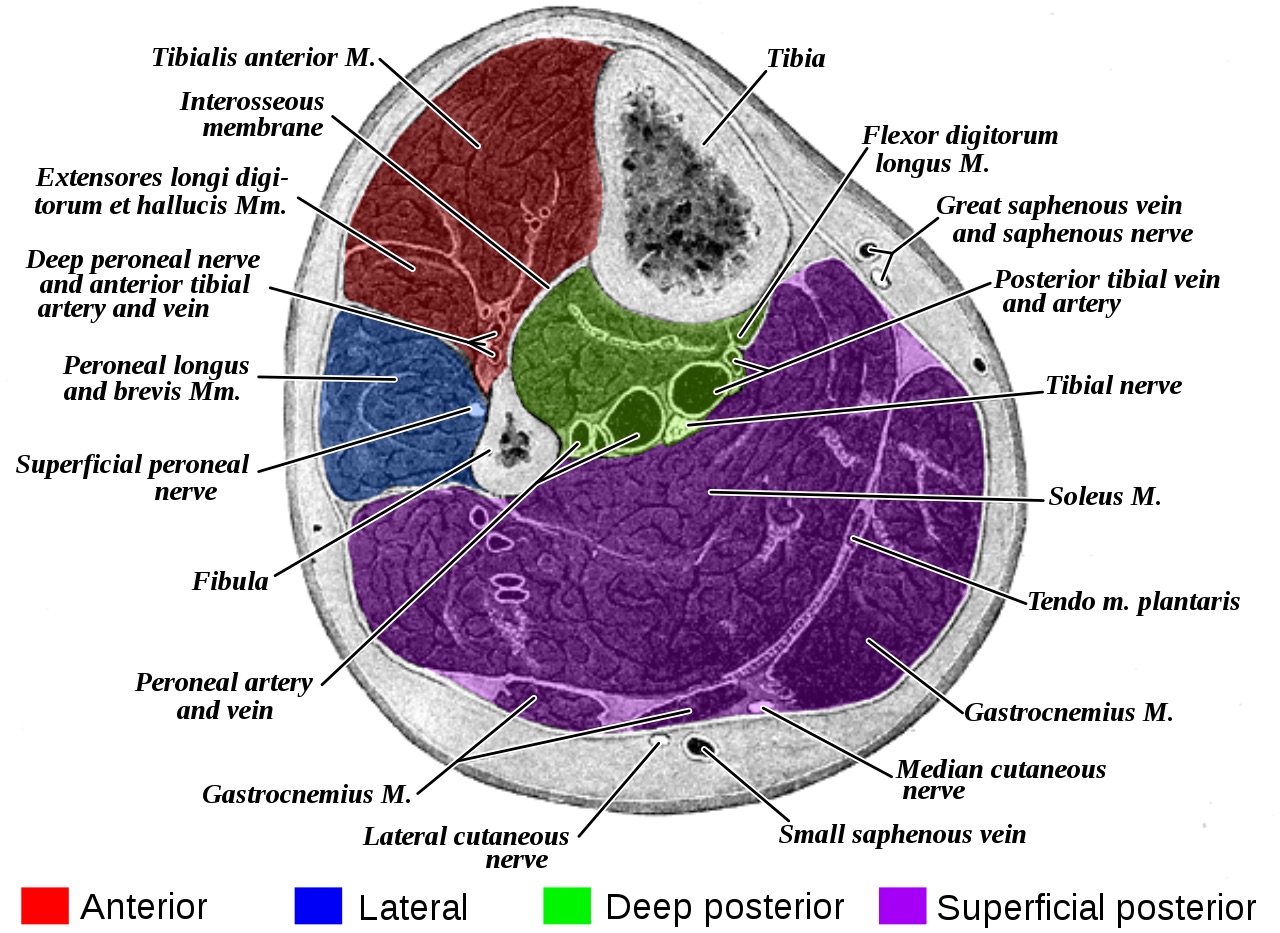
    CECS almost exclusively affects the lower leg, which has four compartments. 

    • The anterior compartment contains muscles of ankle dorsiflexion and stability, primarily the tibialis anterior. 
    • The muscles of the lateral compartment provide dynamic stability at the ankle. 
    • There are two posterior compartments: the superficial compartment with ankle plantar flexors and the deep compartment containing muscles that stabilize the ankle and foot. 
    Compartments of the lower leg are those likely to be affected by CECS.


    The mechanics of CECS is a simple matter of too much stuff in too little space. The more that muscles work, the more oxygen they need. The body obliges by increasing the heart rate, pumping more blood, and delivering more oxygen. This causes the muscles to swell and take up more space. While the fascia has some elasticity and ability to stretch, it does become quite confining and won’t let the muscles expand any further. This causes pressure to build within the compartment. 

    So far, this is all a normal physiological response. But, if the incoming blood flow continues at a higher rate than the outgoing flow, the pressure will continue to increase. When the compartment pressure exceeds that of the blood vessels, blood flow becomes restricted. The muscles become starved for oxygen and will get very pissed off. Pain is the body’s response, yelling at you so you’ll stop what you’re doing and leave the poor muscles alone.


    Traits of CECS

    Pain is the most common complaint with CECS. It is sometimes accompanied by numbness or sense of weakness. Along with pain, there is often a description of tightness or cramping. As previously mentioned, symptoms arise only with exertion and subside quickly – often within only a few minutes of rest. Symptoms arise only with exertion and subside quickly–often within a few minutes of rest. This is a key trait of CECS.

    Location of pain is commonly bilateral and often broad–it takes a whole hand instead of a finger to point to the pain. However, it is almost always within the anatomical borders of the compartment. (This does get more vague when multiple compartments are symptomatic, especially the combination of anterior and lateral.) 

    Symptoms of CECS are typically very hard to reproduce without the exertion of the offending sport. This is a clinician’s nightmare as we glean a considerable amount of information when our tests reproduce the patient’s pain.

    Taken together, these traits are what will most readily differentiate CECS from other chronic musculoskeletal issues like tendinopathies, muscle strains, or joint pathologies: symptoms subside quickly with rest, are diffuse, and are not reproduced during a physical exam.

    Diagnosis

    The gold standard is an exercise test using an intra-compartment pressure monitor. It’s basically a syringe needle attached to an air pressure gauge. The protocol is to take baseline measurements at rest and then again after exertion. The pressures are compared using the Pedowitz criteria: “1) a preexercise pressure greater than or equal to 15 mm Hg, 2) a 1 minute postexercise pressure of greater than or equal to 30 mm Hg, or 3) a 5 minute postexercise pressure greater than or equal to 20 mm Hg.” This essentially means 1) your resting pressure is really high, 2) your pressure under exertion is really, really high, or 3) your intra-compartment pressure is not decreasing normally with rest. 

    Treatment

    Conservative treatment is frequently not very effective but certainly worth exploring, especially if you are trying to make it through competition season. Massage and taping are the most common interventions that have potential for at least short term improvement (if a bit of tape lets you race without pain, that’s a win!). There may be more substance behind altering the movement pattern responsible for CECS in the first place: for example, this study found very positive results by making changes to the subjects’ running gait and foot-strike pattern.

    Unfortunately, we are not very good at treating CECS without a scalpel. Surgery is by fasciotomy. Oversimplified, this is a procedure where the fascia is cut to create more space within the compartment. For most surgeons, a positive on the Pedowitz criteria is a prerequisite; however, they will also consider the compartments affected and the severity and duration of symptoms. While not perfect, surgical outcomes tend to be pretty good. A study of elite French skiers with CECS observed that 94% became asymptomatic and almost 90% returned to competition after fasciotomy surgery.

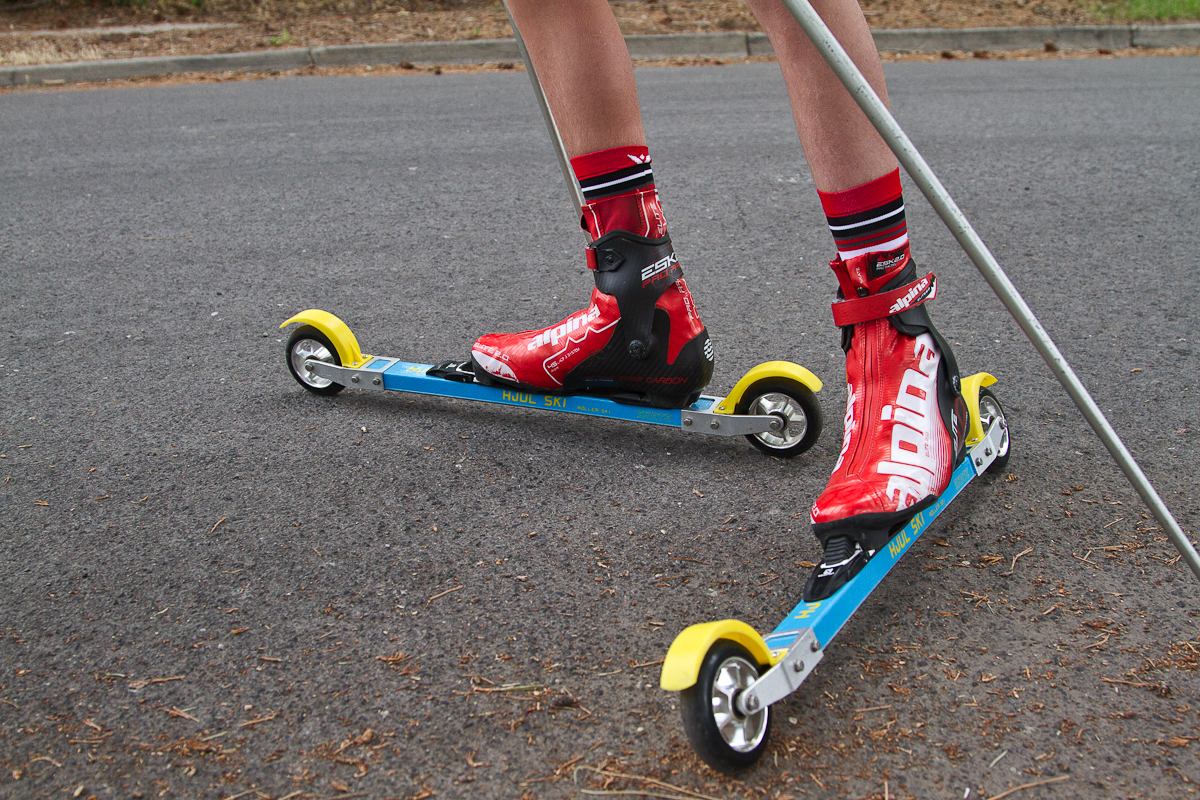
    Skate techniques—and the dorsiflexion required by the recovery of the pushing ski—have been shown to exacerbate CECS even more than classic technique.
    Ski-Related CECS

    The article just referenced found the prevalence of CECS to be 6.1% among the elite, national team skiers they studied. It was slightly higher amongst biathletes and slightly lower for cross-country skiers. Symptoms were much more common with skate vs classic skiing techniques, and the anterior compartment was the most commonly affected.

    The anterior compartment and skating 

    Recall that the anterior compartment houses muscles that generate ankle dorsiflexion, in other words, the muscles that lift the foot and toes toward the shin. When we skate, we lift the kick ski off of the snow before swinging it back into position for gliding–a motion that activates the dorsiflexors. But these anterior compartment muscles, especially tibialis anterior, are also ankle stabilizers. When we balance on one leg, the tibialis anterior is co-contracting with the soleus and gastrocnemius to maintain stability. So, it is also very busy during the glide phase so it is getting very little rest. In contrast, with classic technique the kick ski stays mostly on the snow and is brought forward action at the hip vs ankle. Meanwhile, the glide phase balance demand is generally lower.

    Too much tibialis anterior? That was the finding of this study that looked at muscle activation during skate skiing. In comparing elite skiers with CECS to their asymptomatic teammates, they saw greater tibialis anterior muscle activation in the swing phase (active dorsiflexion) but even more so in the glide phase (dynamic balance). 

    The swing vs glide question was also inadvertently investigated in this novel study from way back in 1992 when skate technique was emerging. And, unfortunately, so too was CECS. The authors measured intra-compartment pressures after subjects skated with both skate and classic skis. While they found slightly higher pressures with classic skis, the results were not deemed statistically significant. This would seem to demonstrate that the increased load on the dorsiflexors from swinging a longer, heavier ski did not make much difference.

    The Takeaways

    CECS is common enough amongst at least competitive cross-country skiers that it should not be considered an outlier diagnosis when a skier complains of lower leg pain. 

    Diagnosis can be tricky, and often misleading, but relatively clear with intra-compartment pressure testing. (Clinical interjection: The testing must be done with the offending sport/activity to be accurate. Most physicians will be accustomed to patients who are symptomatic with running so the common test is running on treadmill. If a skier is only symptomatic with skate skiing, a running test is likely to return a false negative. They need to reproduce their symptoms; therefore, they need to skate ski/roller ski for the test.)

    Anterior > lateral > posterior compartments. Skate > classic. Maybe symptomatic with other exercise and training but maybe not.

    According to the current research, those who meet the compartment pressure criteria will likely be unsuccessful with conservative treatment and ultimately require surgery, though it should be expected that most surgeons will want to see a failed trial of PT before they operate. However, there are some tactics, from taping to training modifications, that might help to at least decrease symptoms and are very much worth exploring, especially in the short term if trying to salvage a competitive season.

    The glide phase is likely the most problematic. This would seem to indicate a technique and balance issue. This is also where those of us who do not wield scalpels might make a difference in both prevention and treatment (even if the skier has had surgery). I, for one, consider the ability to demonstrate appropriate balance in ski-specific postures a prerequisite for effective skiing and recommend single leg stability exercises to all skiers, independent of CECS treatment. To paraphrase a recent interview with Matt Whitcomb, head coach of the US Ski Team: “[A]ll great technique starts with the ability to use our feet well. And for anyone that has a hard time being stable on their feet, it’s going to be very difficult to ski well in the rest of the body.” If technique changes can improve symptoms in runners with CECS, as noted above, perhaps the potential exists for skiers as well.

    Ultimately, CECS is complex and often quite pernicious. Neither surgeon nor physical therapist has a magic sword to slay the dragon. However, if athletes, coaches, and medical providers work together as a team, they look to have a much better chance of taming it. 


  • Results Released On Compartment Syndrome Survey

    Cambridge Sports Union has completed its on-line survey examining the prevalence of chronic  exertional compartment  syndrome (CECS) within the competitive nordic ski community in North America.

    The purpose of the survey was to gauge the extent of CECS among cross-country skiers, and to collect data that contributes  to understanding the etiology of CECS.

    Fifty coaches responded to the survey, representing roughly 1,500 athletes. The teams represented include  youth and regional clubs, the U.S. and Canadian national teams, and college and high school  level teams. The geographic distribution of the respondents was New England (35 percent), New York (five percent),  West (23 percent), Midwest (23 percent), Alaska (five percent) and Canada (10 percent).

    56 percent of the coaches  reported skiers with CECS, diagnosed by performing compartment pressure testing. There were a total of 39 cases of CECS reported.  No coach had  more than three cases of CECS on their team that required medical intervention.

    90 percent of the teams had only one case of CECS. Of the 39 reported cases of CECS, 80 percent had surgery to correct it, and more than 90 percent had full recovery post-surgery. There were 3 cases that required a second surgery.

    The percentage of woman and men diagnosed with CECS was 57 percent and 43 percent, respectively.  The age distribution for women diagnosed with CECS was 14 to 30, with the average age being 19. The age distribution for men diagnosed with CECS was 16 to 30, with the average age being 19.

    62 percent of those with CECS had pain in the front of the leg, 24 percent had pain in the side , and 14 percent had pain in the back. The teams that  trained over 500 hours a year had a statistically significant (p value 0.06) higher prevalence of CECS than the teams that trained less than 500 hours a year. Those teams with a higher average vertical gain achieved during skate roller-ski workouts had a statistically significant (p value 0.04) increase in CECS. (The survey did not look at vertical gain during classic roller skiing.)

    Few athletes were reported who were using the food supplement creatine. There was no correlation between CECS and the use of creatine in this study. The study size did not allow us to find statistical relevance in correlating CECS with geography, stretching, off-snow training or body type.

    In summary, there appears to be a high prevalence of CECS in male and female competitive cross-country skiers, particularly among the teams that train at high hours with increased vertical gain during skate roller skiing. We hope that this small study encourages others to work toward understanding the etiology, prevention and treatment of CECS. We are encouraged by the many graduate students and researchers who contacted us and are initiating projects in this direction.

    Peter Hoenig, MD David Brams, MD James Stock, PhD Cambridge Sports Union.  Address questions to: P.Hoenig, 1073 Concord Road, Sudbury, MA 01776. phoenig@massmed.org.