From the FasterSkier archive — posts syndicated from athletes’ and coaches’ own blogs between 2004 and 2012, kept online as published. Current coverage is at fasterskier.com.
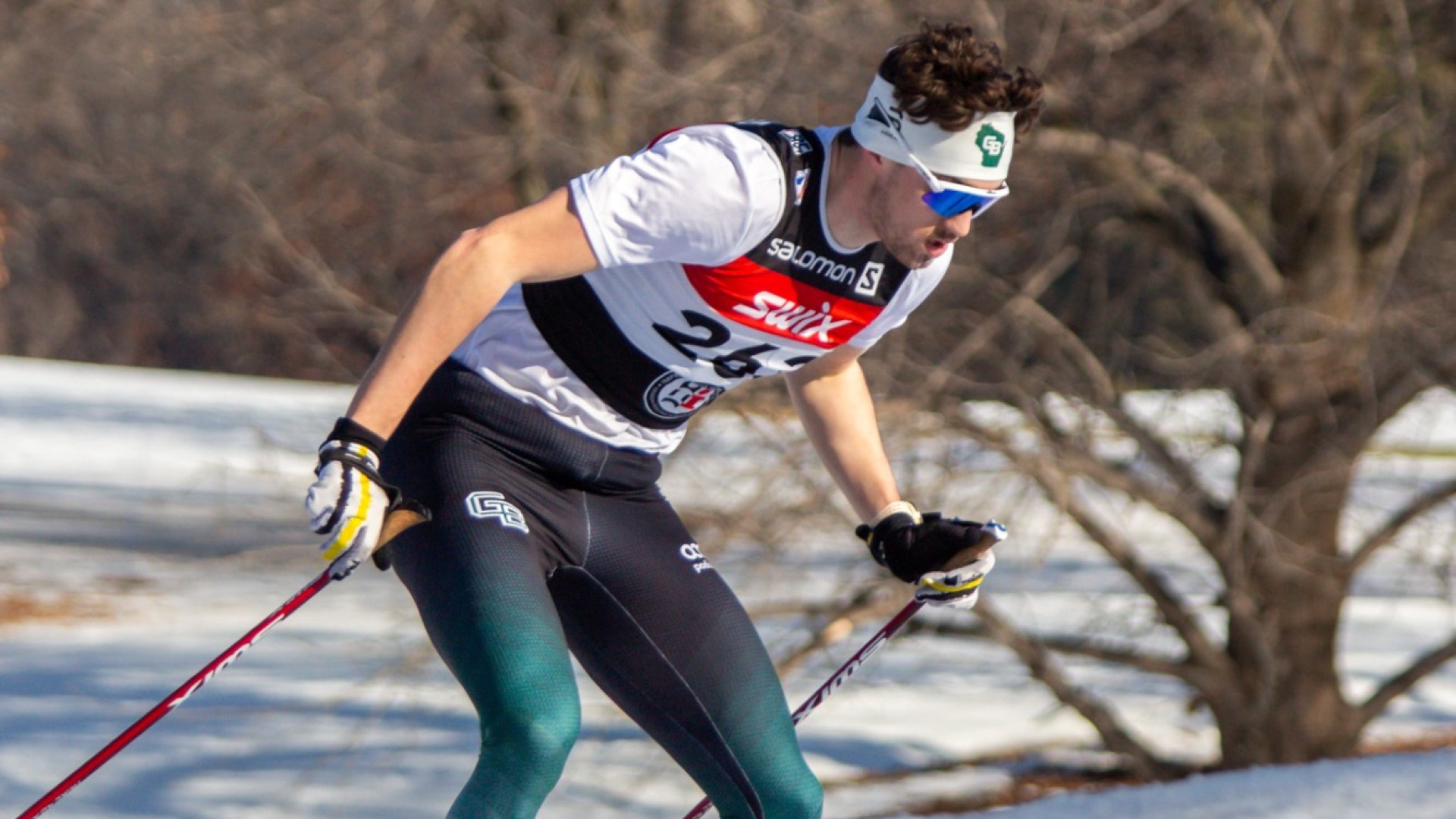
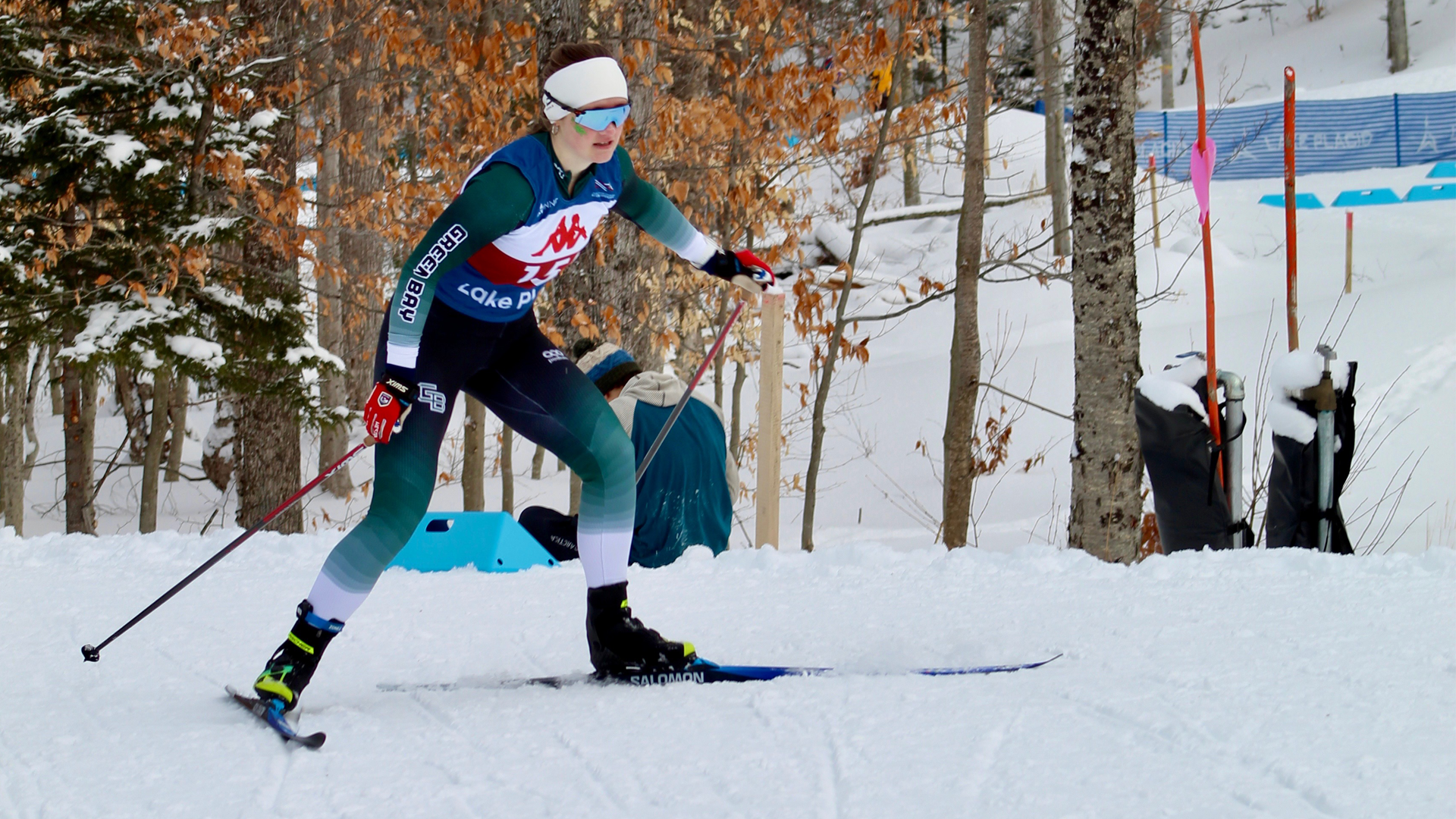
The University of Wisconsin-Green Bay is hiring a Head Nordic Ski Coach to lead its men’s and women’s programs. The school’s goal is to build the premier program in the Central Collegiate Ski Association and send multiple student-athletes to NCAA Nationals each year, and it has backed that goal with scholarships, a full-time head coaching position, and graduate assistant support.
The head coach recruits, develops, and retains student-athletes, directs training and technique, and manages the program budget. The role also carries responsibility for fundraising, alumni engagement, and public relations for UW-Green Bay Athletics and the Phoenix Nordic program.
Responsibilities
Oversee the ski program budget.
Plan and run in-season and out-of-season practices, both team and individual.
Recruit and retain student-athletes in accordance with NCAA and UW-Green Bay rules.
Monitor academic performance to keep athletes eligible under University and NCAA standards.
Provide technical expertise and sound coaching methods to improve athletic performance.
Oversee the conduct and performance of the Nordic graduate assistant.
Comply with all NCAA, UW System, and UW-Green Bay rules and regulations.
Fundraise and take part in promotional and special events for the program.
Build alumni connections and engagement to generate financial support.
Promote positive public relations for the Department of Athletics.
Qualifications
Working knowledge of NCAA and Horizon League rules and regulations.
Strong interpersonal and communication skills working with a diverse community.
Sound judgment, including discretion with personal and confidential information.
Professional, sportsmanlike conduct at athletic events.
Conditions of Appointment
This is a full-time limited appointment based at the Green Bay campus, with occasional travel to the Marinette, Sheboygan, or Manitowoc campuses. The schedule varies and includes nights, weekends, and travel with the program. UW-Green Bay does not offer visa sponsorship for this position, so candidates must be legally authorized to work in the United States.
Compensation and Benefits
Compensation is competitive and commensurate with qualifications and experience. The position includes the Universities of Wisconsin benefits package, which covers health, dental, and vision insurance, participation in the Wisconsin Retirement System with immediate employer contributions, supplemental 403(b) and deferred compensation options, and paid holiday, personal, sick, vacation, and parental leave.
How to Apply
Apply through UW-Green Bay’s Workday portal with a cover letter addressing the essential job functions and a resume. Applications will be reviewed as they are received, and the posting will remain open until the position is filled. Questions can be directed to UW-Green Bay Human Resources at (920) 465-2390 or jobs@uwgb.edu.
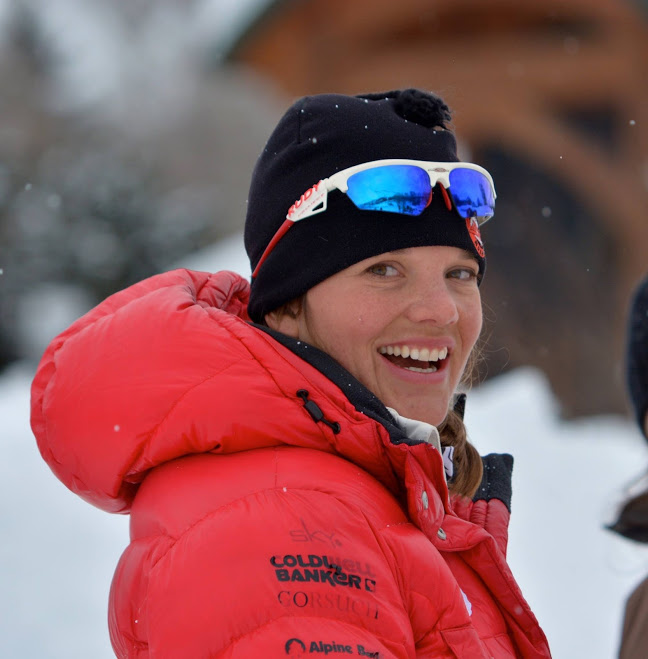
Maria Stuber has spent the last three years coaching at the Aspen Valley Ski and Snowboard Club in Colorado. (Courtesy photo)
Ever since the College of St. Scholastica began its NCAA ski team, the face of the program has been one man: head coach Chad Salmela. Over the last decade, his squad notched its first men’s and women’s team wins and saw its first NCAA Skiing Championship qualifiers. And on the way, he changed the lives of dozens of young athletes.
Now Salmela is shifting roles at the college and will coach the cross-country running team. Taking the reins of the ski team is a new coach coach who is just as excited to build on the program’s burgeoning legacy in Duluth, Minn.
Maria Stuber, a Wisconsin native, has developed her coaching chops over several assignments, most recently in Colorado with the Aspen Valley Ski and Snowboard Club (AVSC). In three seasons with the club, Stuber increased the size of the team and worked with a variety of athletes, from those who just picked up skiing in high school to those who competed in Europe.
“At AVSC, coaches made sure we were encouraging brand new skiers to jump into the sport at any age,” she wrote in an email. “If you decided to join our high school team you get to train right alongside the best athletes in the country… This environment gives every athlete the opportunity to make a quick jump and be the best skier they can be. It can be so fun when it works, as our top male skier last year didn’t get into the sport until he was a sophomore in high school.”
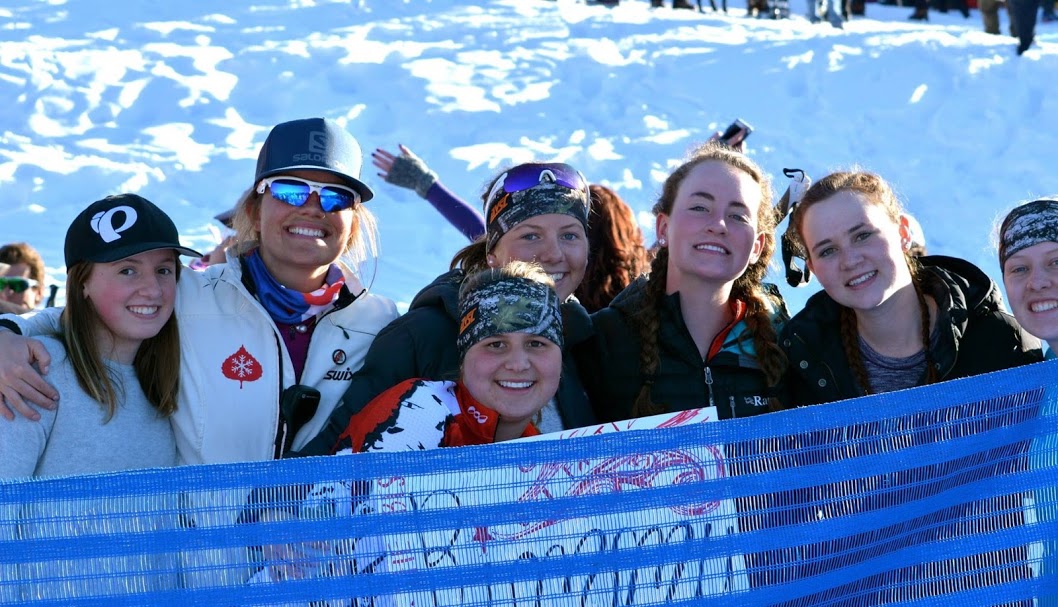
Stuber (second from left) with AVSC athletes. (Courtesy photo)
That attitude seems to be a perfect match for the College of St. Scholastica (CSS), a school which sent two men to NCAA’s in 2012 and two women in 2015 – but which also has a development team and provides growth opportunities for skiers coming in with a variety of backgrounds.
“Chad didn’t really impact my ski career, he started it,” Paul Schommer, an NCAA All-American in 2014 now pursuing elite biathlon, told FasterSkier this spring.
“CSS is unique in that it has a development team serving this purpose at the college level,” Stuber wrote. “Kids with college skiing aspirations that are not quite ready to make that jump can come and work hard, get faster, and have the opportunity to reach the same level as the top junior national athletes we recruit.”
Taking athletes from those two tracks, Saint Scholastica has built teams that compete with the best in the NCAA Central division.
“CSS wants to be a competitive team in the Central Collegiate Ski Associaion conference,” Stuber explained. “In order to do that, we need to be competitive at the national level. What’s really cool about skiing in 2016 is that you need to have international ambitions to be competitive at the national level.”
Salmela used sports science and lab testing to make that happen, and it’s one of the opportunities that drew Stuber to the program. She received a masters degree in exercise science from Northern Michigan University and relishes a data-based approach.
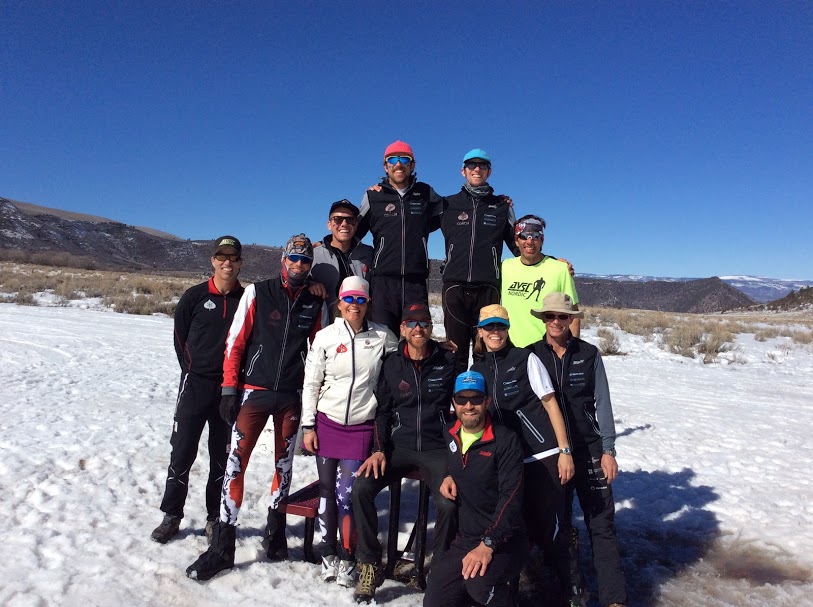
Stuber with the rest of the AVSC staff last year. “I love these people!” she wrote. (Courtesy photo)
“I love that St. Scholastica’s training is all based on science and sound research,” Stuber wrote. “The college has an exercise science lab and the professors are willing to share the space and knowledge with coaches to give the student-athletes more opportunities for success.”
But more than anything, she is pleased to be part of a framework which will make it possible to integrate running and skiing into a cohesive college athletic career. In explaining his job shift, Salmela was clear that he wanted to see more – and smoother – crossover between the two sports at St. Scholastica, for those athletes who have dual ambitions.
“The biggest program draws for me at CSS are Chad & Don Olson’s (athletic director’s) vision to create a collegiate endurance sport epicenter where student-athletes can choose to pursue xc running, skiing or both at a very high level,” Stuber wrote. “Linking endurance sports together will create well rounded, big picture athletes that have the support of a bigger peer group and more coaches and resources. I think CSS is on the verge of something huge.”
Stuber has seen how a variety of teams achieve success. First, as an athlete: she captained the Northern Michigan University (NMU) ski team for three years.
“My time at NMU had a huge impact on my life path and decision to pursue a career in ski coaching,” Stuber explained. “The running and skiing coaches there, Sten Fjeldheim and Jenny Ryan, have both contributed significantly to my coaching philosophy, training methodology and personal values. They have continued to be mentors, advocates and references for me as I find my way. I will feel extremely proud to consider Sten and Jenny peers and to go up against the Wildcats in December and I hope that they feel like a part of our success at CSS. They both know me well enough to not expect any mercy from us on the trails.”
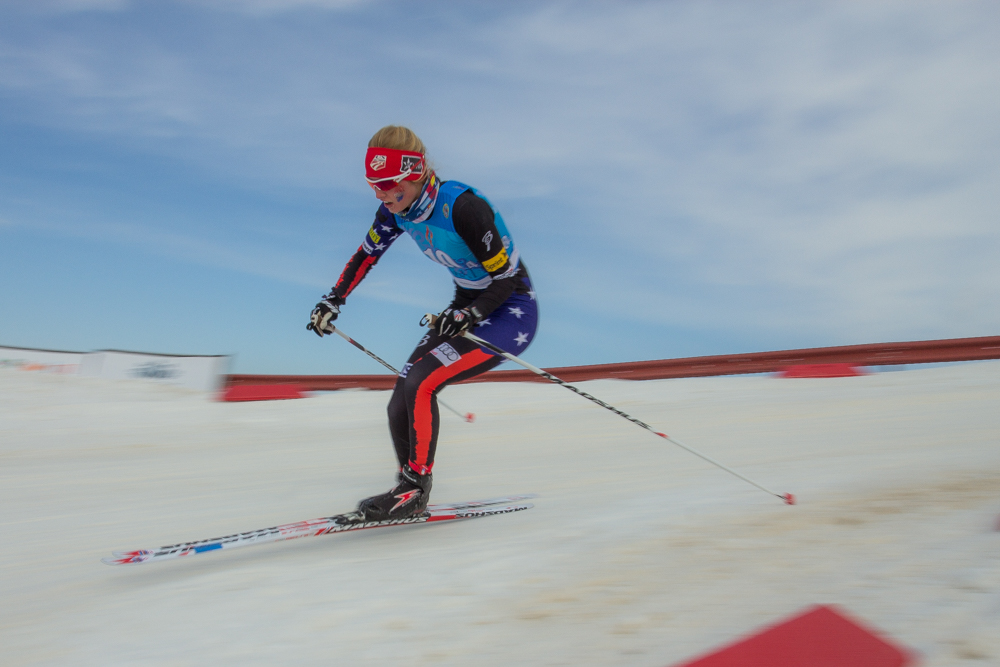
Hailey Swirbul of the Aspen Valley Ski Club races the anchor leg while guiding the American team to eighth place in the 4 x 3.3 k relay at the Junior World Championships in Almaty, Kazakhstan, in 2015. (Photo: Logan Hannneman)
After college, Stuber raced for the Central Cross Country (CXC) Elite Team and then the Craftsbury Green Racing Project. In her senior career, Stuber was a runner-up at U.S. National Championships in 2009.
But since retiring from competition, Stuber has been consumed by coaching. She began her career at Alverno College in Wisconsin, before taking over as head men’s and women’s cross-country running coach for Southern Vermont College for two years. Under her leadership, the men’s squad had their best team results ever.
At AVSC, where the roster eventually neared 200 skiers, Stuber led a team of other coaches. Every year the club sent skiers to Junior National Championships as well as to World Junior Championships or the J1 Scandinavian Cup trip.
“I will never forget our amazing coaching staff at AVSC that welcomed me to the community that they had carefully built over the past 20+ years,” Stuber wrote. “There is no other ski club in the country with the amazing mix of background, knowledge, energy, perspective and compassion. Working with this group of people will be a life-long career highlight for me… I am so proud of the club’s growing numbers and participation in Carbondale, Glenwood Springs and Aspen. The way these three communities work together towards a common goal in Nordic skiing is phenomenal.”
AVSC runs summer training programs and last season organized an end-of-winter race event called Tour de Sea which drew junior skiers from all over Colorado, as well as rave reviews.
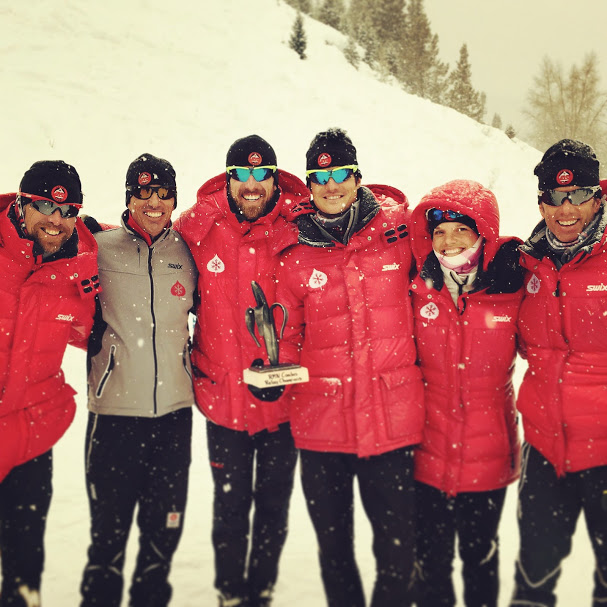
Stuber and Cook (second and third from right) with AVSC staff at a competition this winter. (Courtesy photo)
It was difficult for her to decide whether to uproot herself from the Roaring Fork Valley, where she and husband Bryan Cook had just bought a condo. They had been “very happy” in the Elk Mountains.
“We were not feeling 100% certain that we had made the right call until Monday when the CSS announcement was made,” Stuber wrote. “For days straight my phone and email were pinging and beeping non-stop with messages from friends, family, former teammates, fellow coaches and upcoming Midwest skiers and parents from clinics past. The Midwest ski community is a truly special group of people that we are incredibly proud to be a part of. During our racing careers, we leaned on this community for support and they delivered for us big time. I think we missed the Midwest ski culture more than we knew.”
The couple will move in the first week of September and Stuber is looking forward to getting started with her new team; Cook will enter an MBA program at St. Scholastica.
And besides the general homecoming, Stuber knows that the athletes she will be working with in Duluth – as well as those on the teams her skiers compete against – embody the same characteristics of the community which is welcoming her back.
“The CCSA is definitely a powerhouse Nordic conference…. consistently dominating at the US National Championship and NCAA Championship,” Stuber wrote. “The CCSA attracts down-to-earth athletes that want to be great skiers and are willing to work hard to get there. This intrinsic motivation is a recipe for making fast cross country skiers. Midwest kids are tough and they are backed by outstanding club coaches that are looking at the big picture. I can’t imagine a better atmosphere for athlete development.”
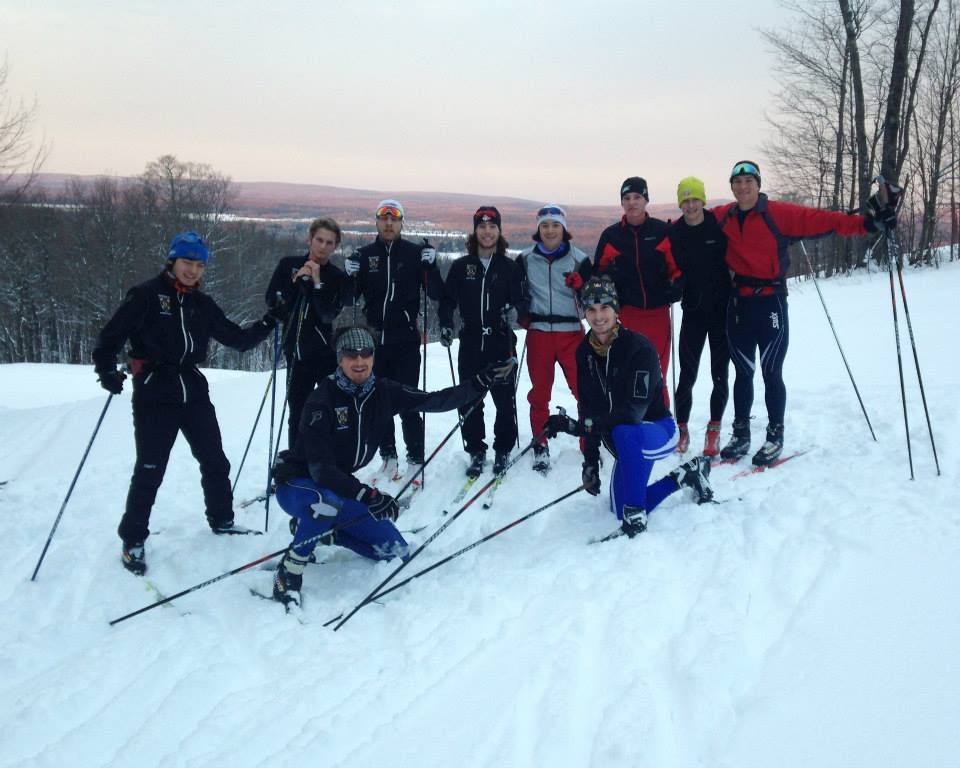
The Gustavus Adolphus College ski team out training. Photo courtesy of Tyler Gustafson.
Note: This is a more in-depth analysis of the situation at Gustavus Adolphus College, which we announced with a previous report last week. You can read the initial article, with ski team coach Jed Friedrich, here.
When Gustavus Adolphus College announced late last week that its varsity ski program was going to shifted to club status, the news came as a shock. Of course, it was devastating to Gustavus Adolphus skiers, both current and past: the team was their life while they spent their four years at the small liberal-arts college.
“The alumni were shocked when we heard that the team had been cut,” Kathleen DeWahl, a 2008 graduate of Gustavus Adolphus, wrote in an e-mail. “I remember talking with someone in the administration when I was in school, and they made a comment that Gustavus was 100% behind the team and that it would never be cut because the team was such a great representation of what Gustavus was about.”
But it wasn’t just Gusties themselves who expressed surprise. Even from the outside looking in, the program just didn’t seem like something you’d want to cut.
“I don’t think anybody, anybody expected this,” College of Saint Scholastica head coach Chad Salmela told FasterSkier. “I certainly didn’t… This year alone, they were competitive. We went head to head with them at the Minnesota championships, and they beat our women’s team. Our women’s team beat Northern Michigan this season! It’s not like they are bad.”
Students, alumni, and ski enthusiasts around Minnesota and the rest of the country have been trying to mobilize to engage the Gustavus Adolphus administration in a dialogue about why the decision was made and whether there’s any way to undo it, but it hasn’t been easy.
The athletic department has not picked up the phone any of the times that FasterSkier has tried to contact them, and alumni have had no better luck.
“Last Thursday I got a text from a college teammate that the team was being dropped,” former Gustavus Adolphus skier Jens Brabbit told FasterSkier. “Then it went viral on facebook. From there, they made the official announcement on the website. In that time, everyone was sending out e-mails to the athletic director, the president, and the board members, trying to tell them how we feel. That was alumni, and the ski community as a whole.”
On Tuesday Brabbit told FasterSkier that they had yet to hear any response from the administration, but later e-mailed to say that a meeting had been set up with the president.
There has been an outpouring of support, including a petition that has garnered, at the time of publication, 2,627 signatures (you can find it here). The Gustavus Adolphus student body is roughly 2,600 students, with 19 of them on this year’s ski team.
“We feel like that’s a pretty powerful message,” Brabbit said. “When you have a petition on such a small campus, where it’s larger than the campus as a whole, it’s such a huge message.”
Brabbit, who competed at NCAA championships in 2010 and 2011, is one of the alumni heading up the effort to get administrators to come to the table.
“We were trying to get a meeting with all the alumni and the decisionmakers to see if we can discuss and have a negotiation,” he explained. “We are hopeful we can try to get that set up. We feel we should be owed at least that opportunity to talk to them… We’ve had lots of academic and athletic successes in that program. We feel like we’ve always been a good ambassador of Gustavus Adolphus and we haven’t done anything to ruin that reputation.”
“The Gustavus Nordic team is one of the most dedicated, hardest-working teams I have ever known. We train countless hours each year, we boast the highest average GPA out of all teams here at Gustavus, and we are all heavily involved in activities both on and off campus. It saddens me to think that an entire team full of exemplary student-athletes won’t, according to the Gustavus administration, “benefit the future of Gustavus”… it has cut a team of some of the greatest student-athletes, and has eliminated its chance of receiving similar students in the future.”
—Tyler Gustafson, Gustavus Adolphus junior and Biathlon World Junior Championship competitor
Brabbit said that he had heard “through the grapevine” that the college president Jack Ohle was out of the country and that athletic director Tom Brown would not consider making a decision without him.
When they do get their chance to speak, they will lay out a number of arguments about why the ski team is worth keeping. One is its tradition of excellence. While it’s true that Gustavus Adolphus, a D-III school, has not sent a skier to the NCAA Championships in a few years, they have in the past, including in 2008 when they sent a full squad of three women – a high mark for a midwester D-III school – and Laura Edlund finished 18th in one of the races.
DeWahl, one of that year’s NCAA competitors, believes that the team is absolutely capable of repeating the feat.
“I know I had it in my head that I wanted to qualify for NCAA’s, and so did Laura Edlund and Kelly Chaudoin,” DeWahl wrote in an e-mail. “And that was the thing that allowed us to get three women to Nationals my senior year. We had a group of women who were serious about training and competing and about getting everyone on the team to compete on a higher level… I definitely think that it would be possible for the team to get there again, with the right combination of people and support from the school.”
Salmela, a longtime observer of college skiing, pointed out how remarkable this is in the central division, where there are currently very few quota spots for NCAA’s. Other recent team cuts have come from teams in very different positions from Gustavus Adolphus. For instance, the University of Nevada Reno in the western conference had much higher expenses as a D-I team with scholarship athletes.
And the colleges of Saint John’s and Saint Benedict’s, also in Minnesota, canceled their teams, which were also D-III. However, they had nowhere near the success of Gustavus Adolphus.
“Saint Johns and Saint Bens never had a full time coach,” Salmela said. “I think it’s safe to say, they had never truly invested in success as a ski program… The coach was a really good guy and worked hard, but he was still part-time, so he was at a huge disadvantage to the rest of us who are full-time. That cancelation didn’t surprise anybody that much. Gustavus on the other hand is really heavily invested and they have a robust and passionate alumni group. They have had way, way, way higher success rate.”
Brabbit points out that as a D-III school, this success rate – every once in a while sending a team to NCAA’s – comes at a very low cost, so he is not sure what the cost-cutting benefit is to the school of eliminating the team.
“We never had a crazy college budget like the big D-I schools,” he said. “We never asked for much. We were a very, very small-budget team and the cost of going to that school is so large, we feel like it does more bad publicity for the school than anything [to cut the team].”
The ski team has brought the college other good publicity, too. For instance, this year, college junior Tyler Gustafson took a break from the college racing circuit to compete at World Junior Championships for biathlon. He was the top American in the junior age category with a string of mid-40’s results.
Of course he had to find time to go to the shooting range himself, but the ski team made the results possible, said Gustafson, who was the subject of a glowing feature on the college’s website.
“I can honestly say I would not have qualified for and achieved the results I did in the recent World Junior Championships if it weren’t for the support of my fellow teammates and coach,” Gustafson said. “They are and have been incredibly supportive of my biathlon ambitions… If I didn’t have my teammates training and pushing alongside me this entire season, I can’t say I would have had the results I did. One would hope that the school would take pride in such results that not only I, but other biathletes have achieved through help by the Gustavus Nordic program.”
“Even outside of season and out of school, the team still stays together. In school, we’d have pancake breakfasts after long Sunday rollerski sessions all spring. We still get together at races during the winter and to train in the summer when folks are in the same town, state and continent, and the alumni know the skiers who are on the team now.”
—Kathleen DeWahl ’08, NCAA Championship qualifier
Plus, there are other advantages to the team. It’s a close-knit community that allows students navigating how to live away from home for the first time to form strong bonds and find positive role models. DeWahl talked about how Chandra Daw, an upperclassman when she arrived at Gustavus Adolphus, inspired her to take skiing seriously. That type of interaction hasn’t disappeared.
“One of the benefits of having a small team is that it allows us to bond and form relationships like no other,” Gustafson said. “And, as we constantly push one another and support one another, our team continually becomes closer and stronger.”
DeWahl described the team atmosphere and the fact that she’s still friends with almost all of her old teammates.
“As a D-III school, academics were still expected to take precedence over sports, so if someone needed a hand with homework or a project there was someone on the team who was willing and able to help,” DeWahl wrote. “And if you had a lab or class during practice, there was always someone who was happy to get up early to go train with you, so you weren’t alone.”
It has also allowed students in Minnesota, a part of the country where many people descended from Scandinavian and central European immigrants, a way to connect to their heritage. Gustavus Adolphus emphasizes this in other aspects of campus life: the King and Queen of Sweden came to the university a few years ago, and the college runs an exchange program to Sweden. In 2009, several participants went to the Vasaloppet.
“Gustavus takes pride in its Swedish heritage, yet, in a short-sighted decision, has cut a sport that is central to the lives of so many Swedes both past and present,” Gustafson marveled.
“I don’t think the people making the decision are Swedes. Whether the connection between cross country skiing and Swedish heritage ever-I can’t say I was there, but my hunch is that it never even entered the conversation,” Salmela said.
“There’s a good strong grassroot community of skiing in Minnesota. Programs are getting bigger and it’s an important part of Minnesota. There’s a lot of MIAC schools, but now there’s only one other MIAC program that has an NCAA team. It makes the decision even easier. A lot of people who are skiing in Minnesota are going to not look at Gustavus because of that. It’s a lifelong sport, so we need to keep it going.”
Plus, it’s not like skiers are causing trouble at the school. Everyone involved pointed out that the cross country ski team often has the highest GPA of any team on campus and go on to productive and in some cases high-profile careers.
“Those kids are smart kids,” said Salmela. “They’re the kind of kids who people are fighting for to get into their colleges.”
So finally, the biggest reason that Gustavus Adolphus may want to continue a varsity program is to be able to grab those students away from the likes of Salmela’s College of Saint Scholastica program, or rival Saint Olaf. Both alumni and current skiers confirmed that the ski team was a major reason that they chose Gustaus Adolphus over other options.
“Personally, I would not have looked at it without a NCAA program,” said Brabbit.
“When I was looking at colleges, skiing was a major part of my decision,” said DeWahl, who had competed at junior national championships all four years in high school. “I only applied to two schools, both with good physics programs, the subject I planned to major in. Gustavus had a ski team and the other school didn’t, and when I visited GAC, it was skiers who showed me around campus, took me to their classes and talked to me about the school. In the end, my decision to go to Gustavus was very easy because of the team and the people on the team.”
“When I searched for colleges, I did so with every intention of skiing,” said Gustafson. “That was my first priority. I also knew that I wanted to stay in Minnesota in order to further pursue my biathlon goals (the World Junior Championships). Gustavus was the ideal place for me because it offered not only a great ski program, but great academics as well… Coming to Gustavus, my goals were to ski as competitively as I could, while having fun doing it.”
The school said in its announcement that they were cutting the varsity team because they were choosing to focus only on Minnesota Intercollegiate Athletic Conference sports – only teams which could bring them home a trophy. Skiing used to be one such sport, but in 2004 MIAC rules changed to require six colleges to take part in a sport if it was going to be a championship event. Skiing fell below that mark.
But to the skiing-crazy Minnesota community, the current and former students suggested, lack of a MIAC trophy might not matter. They know all about the Central Collegiate Ski Association, and about NCAA Championships and the honor of even competing in such an event.
“If you’re looking for a D-III skiing experience in the Midwest, it just dropped by 33%,” Salmela said. “Your options are down to two schools. It’s not a healthy marketplace – I mean, three is barely healthy…. We need them. College skiing needs as many programs as we can get. And with a roster of 19, there’s no doubt that the market is there.”
Skiing brings in not only good students who become good ambassadors for the school but also tuition money, pointed out Salmela, who is familiar with the situation at his own college.
“Take what the college considers to be the net income they get from a student, and multiply it by the number of people on the team,” he said. “Or just multiply it by the number of people who wouldn’t be at Gustavus if it didn’t have a ski team. I’d be really surprised if they were losing money on skiing… To piss off 19 people and hundreds of alumni to save not much money, it just seems crazy. If they had eight skiers, I could totally get that. But they had 19 skiers.”
“Gustavus is a D-III school competing against D-I schools, so attracting all-stars to the team is always going to be tough and we don’t have the option to allow skiers a red-shirt year to develop or to get over an injury. So having the school’s backing, in terms of coaching, facilities, transportation, and just general confidence, is imperative to developing a team that can be successful.”
—DeWahl
Although Brabbit was enthusiastic about the chance to have a meeting with the administration, and explained that the team also had one of the college’s board members on their side trying to improve the situation, he was realistic about the chance that the team might be reinstated: it was probably low.
And although President Ohle is retiring at the end of this year, Brabbit didn’t feel that waiting until the autumn and appealing to the incoming president would be any better.
“Personally I feel that the longer it drags out, the less likelihood there is of changing the decision,” Brabbit said. “A friend of ours tried to already e-mail the new president with no response. They weren’t even a skier, just an endurance athlete who supports all endurance sports.”
Nevertheless, the fight will go on.
“I wouldn’t say that we’re optimistic since no [other university] ski team has made it back to varsity after being moved to club status, and the administration has been vague about the reasons for the decision, but we plan on fighting the decision and supporting the team, no matter what the final outcome is,” DeWahl wrote.
As for the current members of the team, the uncertainty is throwing them for a major loop.
“Because of the positive environment I, along with the rest of my team, continually improve year after year,” Gustafson said. “It’s truly disappointing that all this progress we’ve worked towards has been in vain… In regards to skiing for Gustavus next year, I was extremely excited. Our team had great results this season, and next year looked even more promising. It’s devastating for anyone to have their senior year of competition taken away from them – especially when the sport has been a part of their life for so long.”
Salmela wasn’t hopeful about the team being reinstated either, but he said that he and the rest of the Midwest ski community would do whatever they could do help.
“My team, yesterday they put together a picture of the team, and sent them supportive messages and trying to rally around them and get the decision overturned,” he said over the weekend. “It’s kind of like getting news that one of your loved ones has passed. It’s a little bit like sending flowers – I would love to see them reinstate the team as a NCAA varsity sport, and I don’t know how realistic that is.”
What can the ski community do to help? Brabbit said that besides signing the petition, calling and e-mailing administrators was extremely important. The alumni group has chosen three administrators to focus on: