Tag: Chinese Ski Team

  • China spent millions on cross-country skiing in the leadup to Beijing. What happens now?

    China spent millions on cross-country skiing in the leadup to Beijing. What happens now?

    ZHANGJIAKOU, CHINA — A month ago, I met with a source close to the Chinese government in a tiny room in this mountain resort outside Beijing, which hosted the 2022 Olympic cross-country skiing events. 

    There, the source explained how a decision by international skiing officials to disqualify a Chinese cross-country skier from a race was like killing a baby.

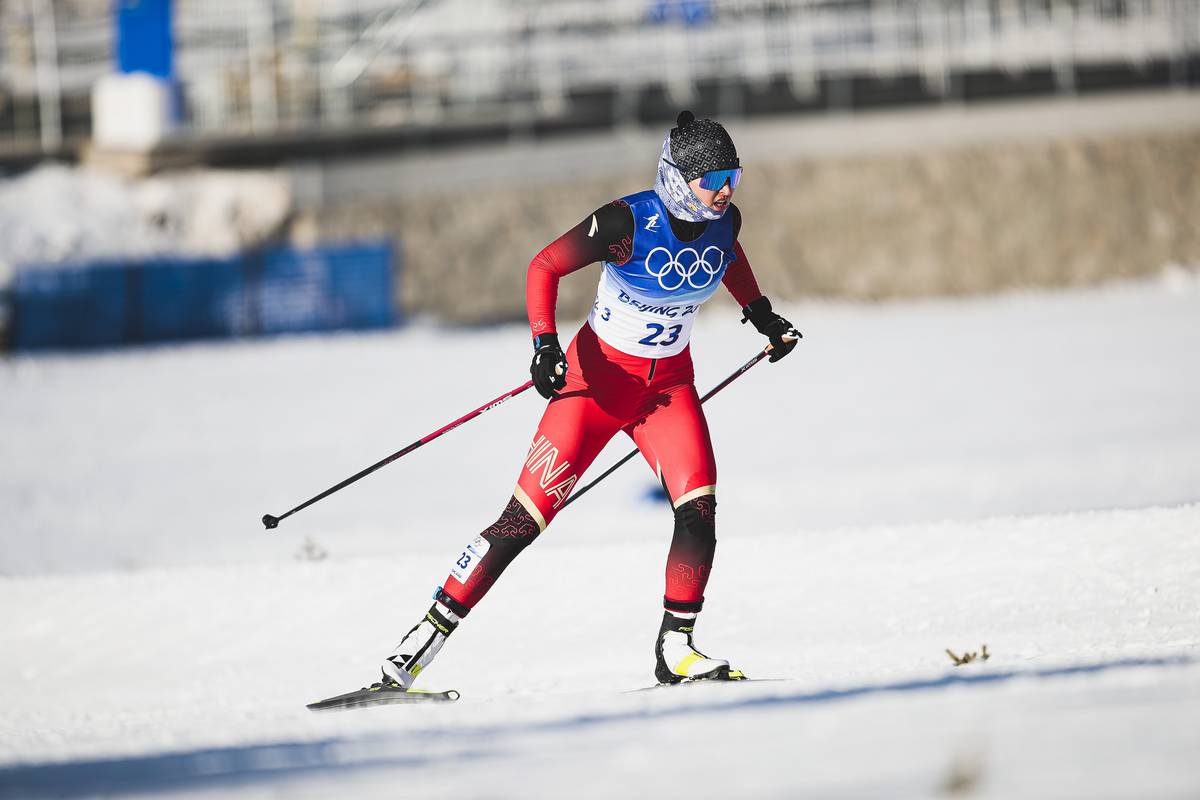
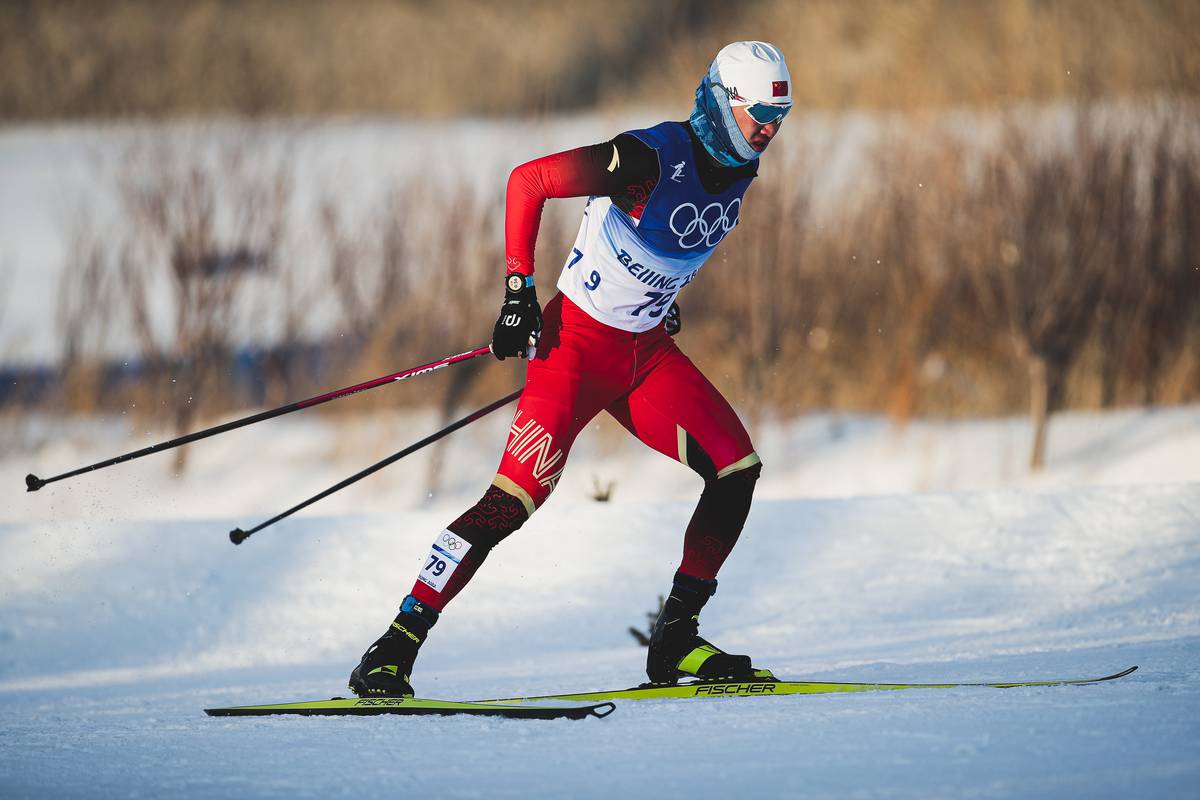
    China does not have, exactly, a long tradition of success in winter sports like cross-country skiing. But after several years of work and hundreds of millions of dollars invested in facilities, Scandinavian and Russian coaches, athlete development and gear, it was hoping for big results in Beijing, especially from star sprinter Wang Qiang.
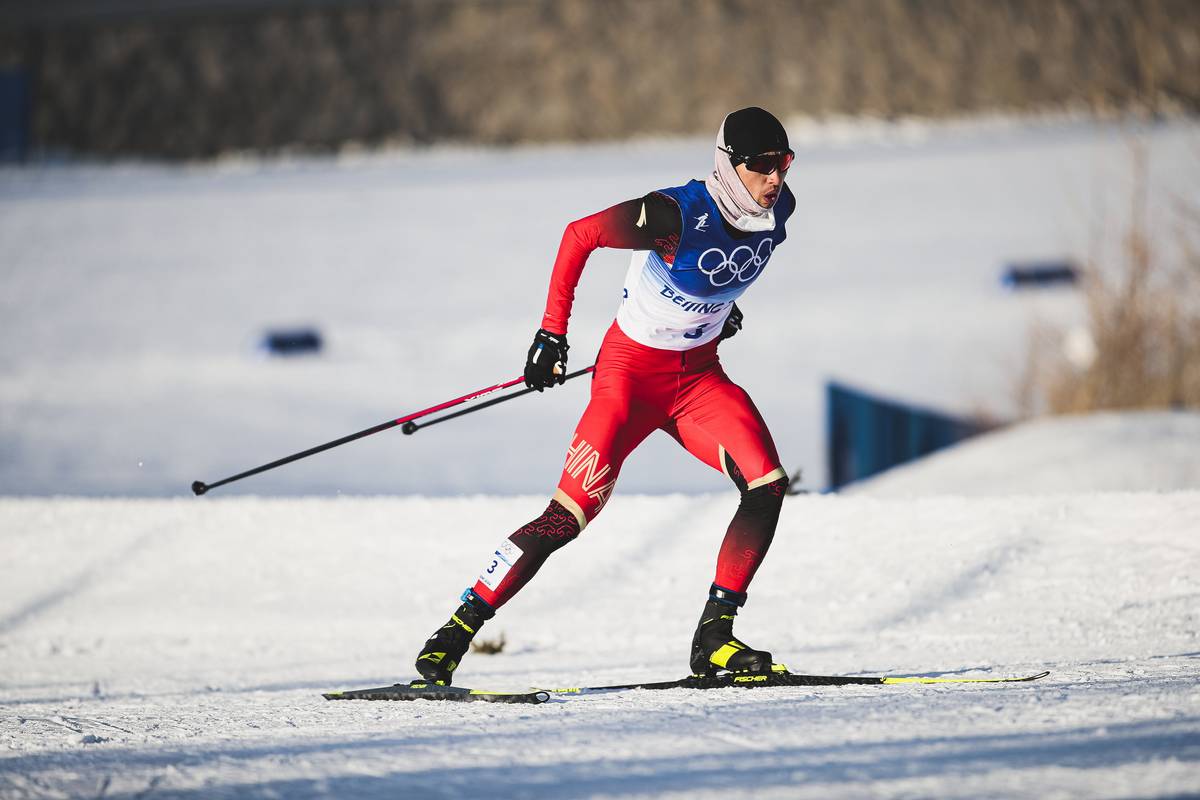
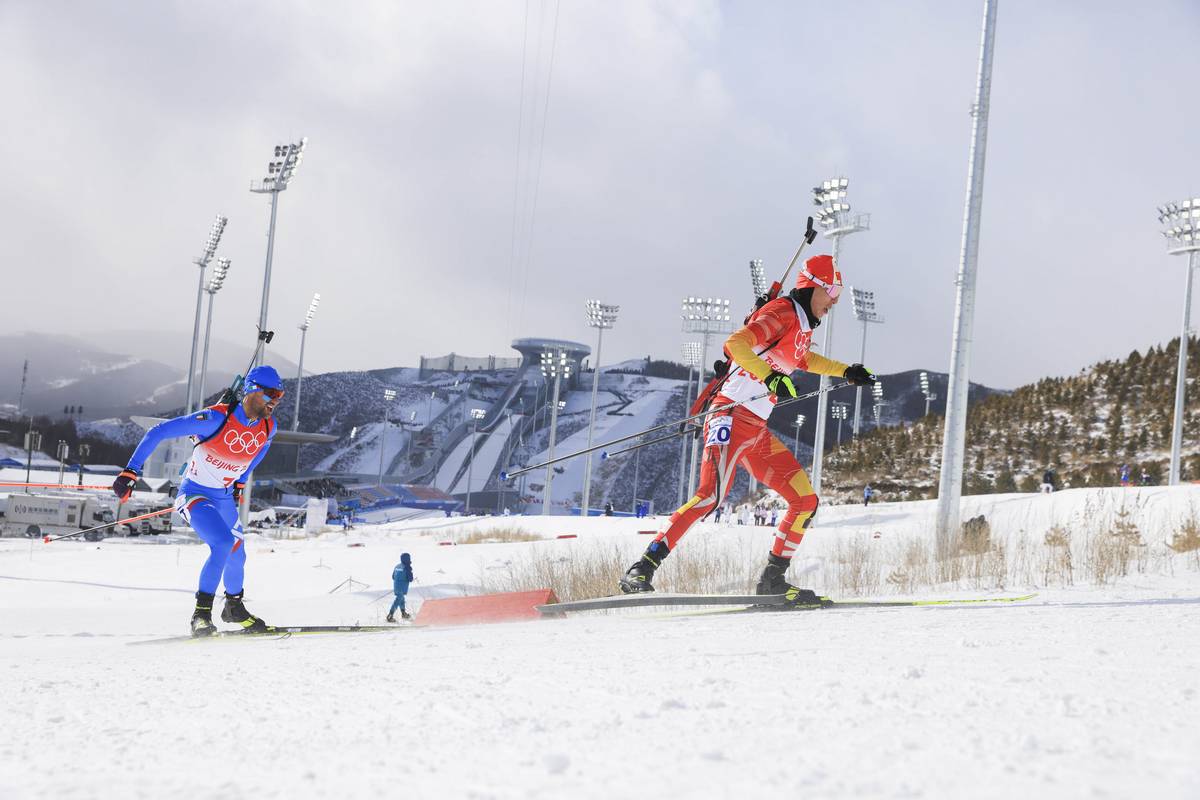
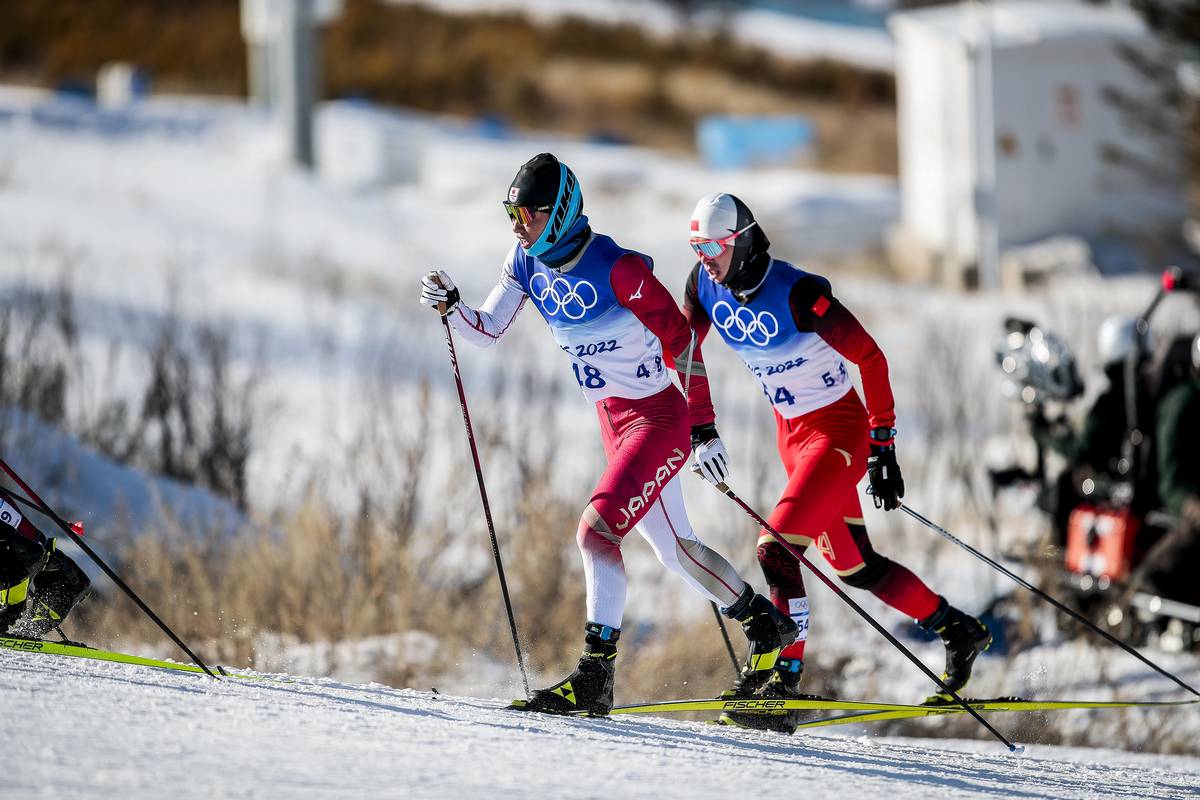
    China’s Wang Qiang races to fifth in the freestyle sprint qualifier in Zhangjiakou during the 2022 Beijing Olympic Winter Games. (Photo: NordicFocus)

    Wang, in cross-country’s Olympic skate sprint last month, was poised for a top-10 finish, and maybe even a medal — definitely the only hardware that China’s cross-country ski team had a chance to win on home snow during the Games.

    But in one of the event’s preliminary head-to-head knockout rounds, Wang tangled with a Norwegian skier, Pål Golberg, who crashed. The International Ski Federation jury overseeing the race relegated Wang to 30th place, ruling that he’d obstructed Golberg, even though China vehemently disagreed.

    Hence the tamped-down outrage I was witnessing from my source, who wanted international followers of cross-country skiing to understand his country’s anger over the disqualification.

    China had just poured huge amounts of money into hosting the Olympics and building up cross-country skiing; thousands of volunteers had put their lives on hold to pull off the Games during a pandemic. The ski federation, known as FIS, couldn’t give Wang the benefit of the doubt? In a country with hundreds of millions of potential new cross-country skiers and skiing fans, where the sport was still in its infancy?

    “You don’t kill infants,” the source said.

    This is a Chinese-friendly perspective on Wang’s disqualification, and many others disagree, saying that Wang committed a clear infraction and that skiing’s rules must be enforced without regard to politics or business.
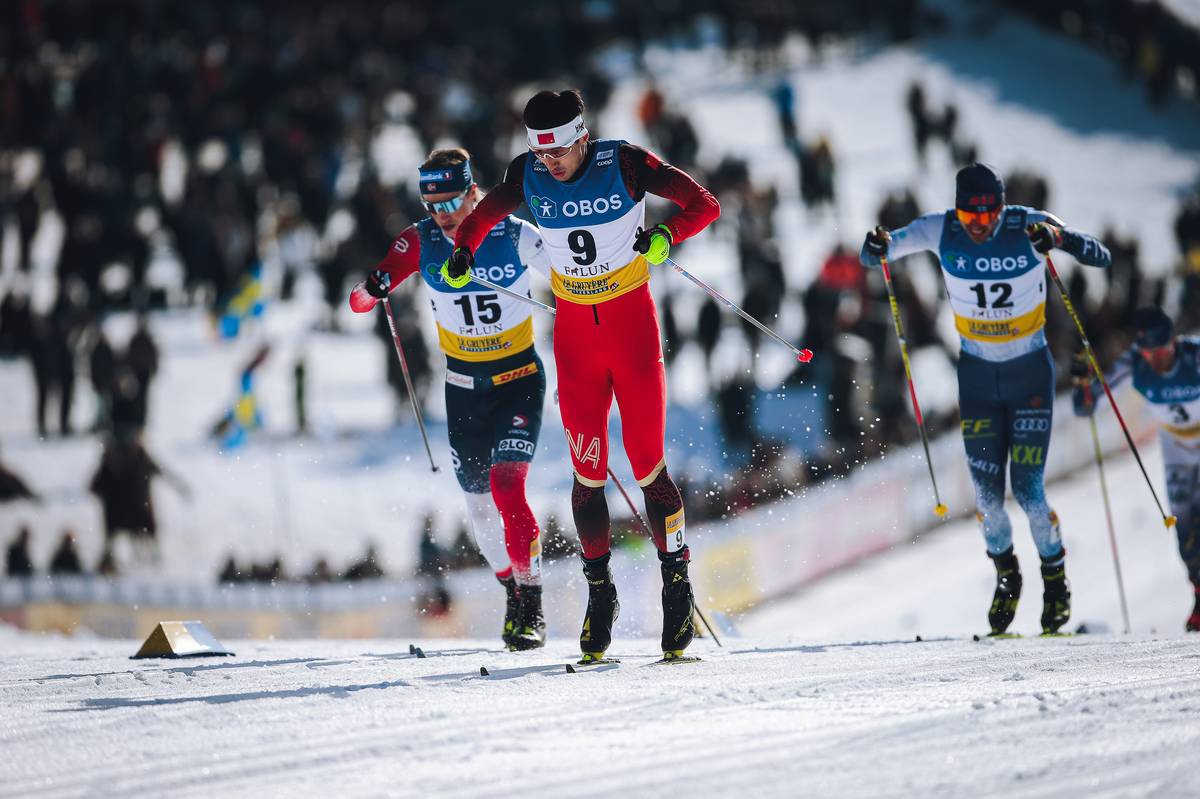
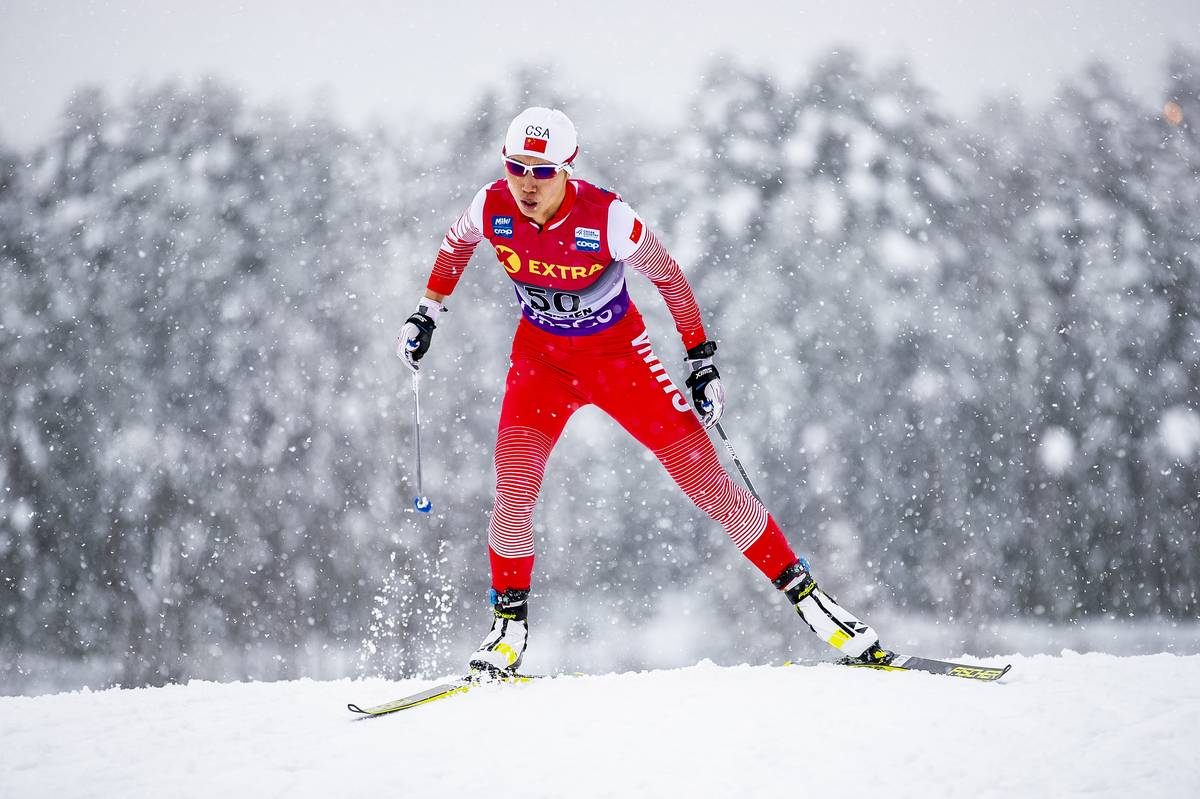
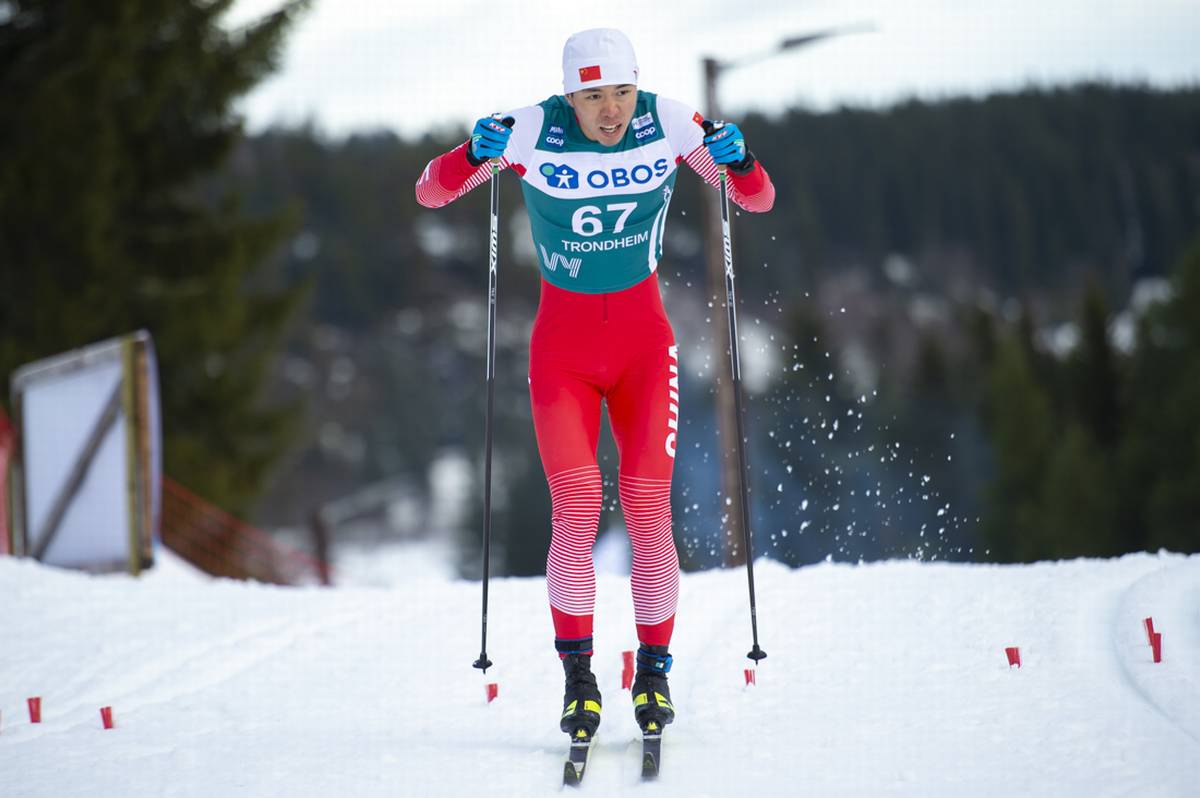
    China’s Wang Qiang races through the heats during a classic sprint in Falun, Sweden. (Photo: NordicFocus)

    But the Chinese perspective on the event is one that’s worth understanding. Because doing so can help answer one of the most interesting, and important, questions in cross-country skiing right now: Will China keep up its investment in the sport?.

    “What I’m very curious about is: What next?” Vegard Ulvang, the retired Norwegian Olympic gold medalist who now chairs FIS’ cross-country committee, said in a phone interview. “Will they continue? Will they have a national team? Will they join the World Cup? To be honest, we don’t know. I have no information on what they will do.”

    The question has enormous implications for the sport of cross-country skiing, given the size of China’s potential market for skis, wax and television broadcasts. 

    But I got conflicting answers when I asked the people who would know the answer. 

    The source close to the government said Wang’s disqualification soured China’s sports minister, Gou Zhongwen, on further investment in cross-country skiing, and he said the sport’s future in the nation looks deeply uncertain. Many of the team’s Scandinavian employees have contracts that end in May, without assurances they’ll be renewed.

    “Everything is political, and the culture is completely different,” said Tor Arne Hetland, a Norwegian coach and former Olympic gold medalist who’s worked with Chinese athletes. “If the sports minister says, ‘We are not going to pursue winter sport or cross-country skiing or biathlon,’ then of course, there will not be any money for it. And the project will be completely dead.”

    But in an interview in Zhangjiakou during the Games, Zhang Bei, the Communist Party official who leads China’s cross-country ski team, struck a positive note.

    She said her country’s commitment to training athletes will continue into next year, and plans have already been announced that the team will keep sending athletes to train in Finland through the 2026 Games. Wang also proved his potential with a podium performance on the top-level World Cup circuit earlier this month in Drammen, Norway.
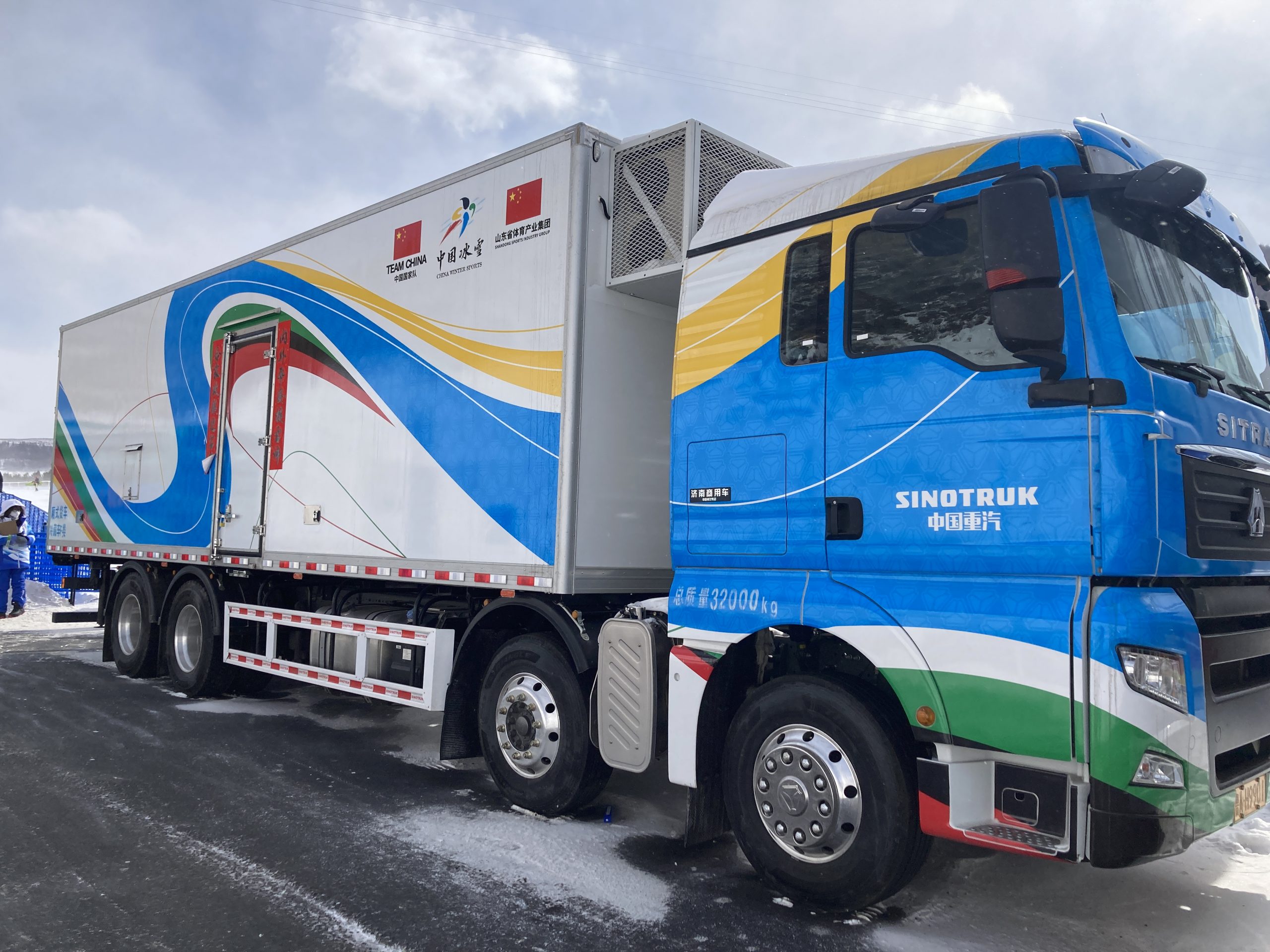
    One of the multiple vehicles that China’s cross-country ski team had stationed at the 2022 Olympics in Zhangjiakou. (Photo: Nat Herz)

    But Zhang would not reveal details about China’s cross-country budget. And she also suggested, logically, that the country would be scaling back its investment in skiing infrastructure from its big Olympics build-up.

    “There is a saying in China: Everything is difficult to start,” Zhang said in the interview, conducted through a translator. “After you have the bases for the infrastructure, then of course, there is an adjustment.”

    Ulvang has closely watched China’s cross-country program and, as the country’s athletes trained in Scandinavia before the Olympics, he hosted two of the nation’s top female prospects, Bayani Jialin and Dinigeer Yilamujiang, for a week at his home.

    Ulvang described China’s efforts to train ski champions as “all out.” But he’s still waiting to see if the country’s commitment will last, because, he said, developing a durable skiing culture takes time.

    “We need to see if this was motivated by the medals on the home field,” Ulvang said, “or if this was part of a long term strategy.”


    “Starting from zero”

    China’s huge pre-Games spending on cross-country skiing was fueled by Zhongwen’s belief that the discipline was one of the best measures of a nation’s overall prowess in winter sports, said the source close to the government.

    The country spared no expense. Among its investments was a $150 million, 1.3-kilometer indoor ski tunnel that athletes can use to train year-round; one Chinese team employee showed me a video of another contraption that resembled an enormous plate with snow on top, which spun in circles while athletes stayed in the same place by skiing in the opposite direction.

    China hired dozens of Scandinavian coaches and experts at yearly salaries that reached $120,000. The government recruited hundreds of Chinese athletes from other sports into cross-country skiing, and sent them to training centers in Norway and Finland. (Chinese officials considered Alaska as an option, where athletes could fly in helicopters to train at Alaska Pacific University’s facility on Eagle Glacier, but Zhang said securing visas proved too difficult.)

    The team spent millions more on wax and equipment. In Zhangjiakou, the Chinese team had access to the Games’ only on-site ski waxing bus, which has sliding doors and facial recognition technology.
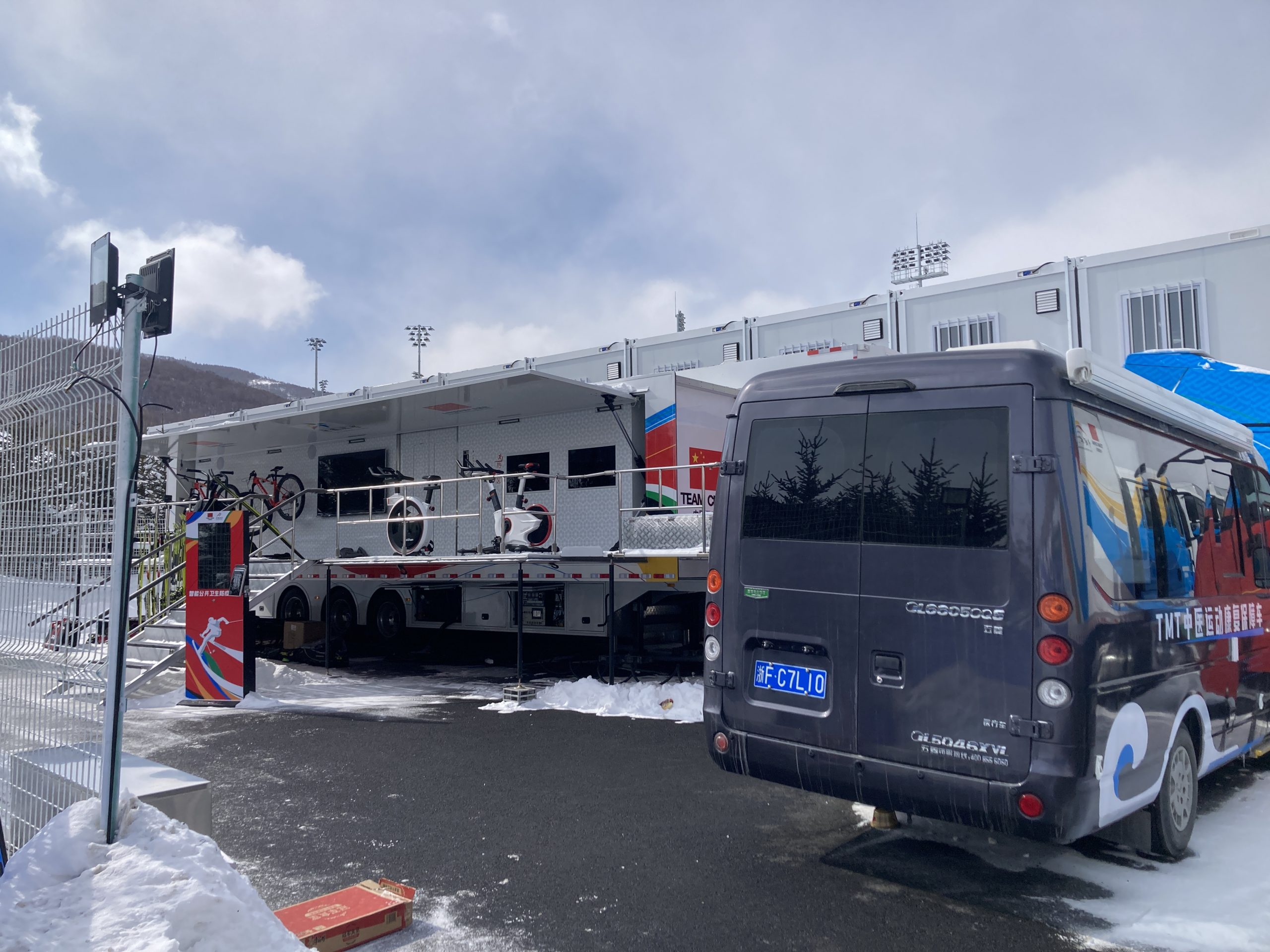
    The Chinese ski team’s main wax bus at the 2022 Olympics in Zhangjiakou. (Photo: Nat Herz)

    “They have started from zero,” said Hetland. The skiing infrastructure that the country has built up, he added, “is more than what Norway has done in the last few years.”

    In the years before the Olympics, the team’s athletes recorded impressive results, even though some had only been skiing a few years — unlike many European athletes who have raced for the majority of their lives. 

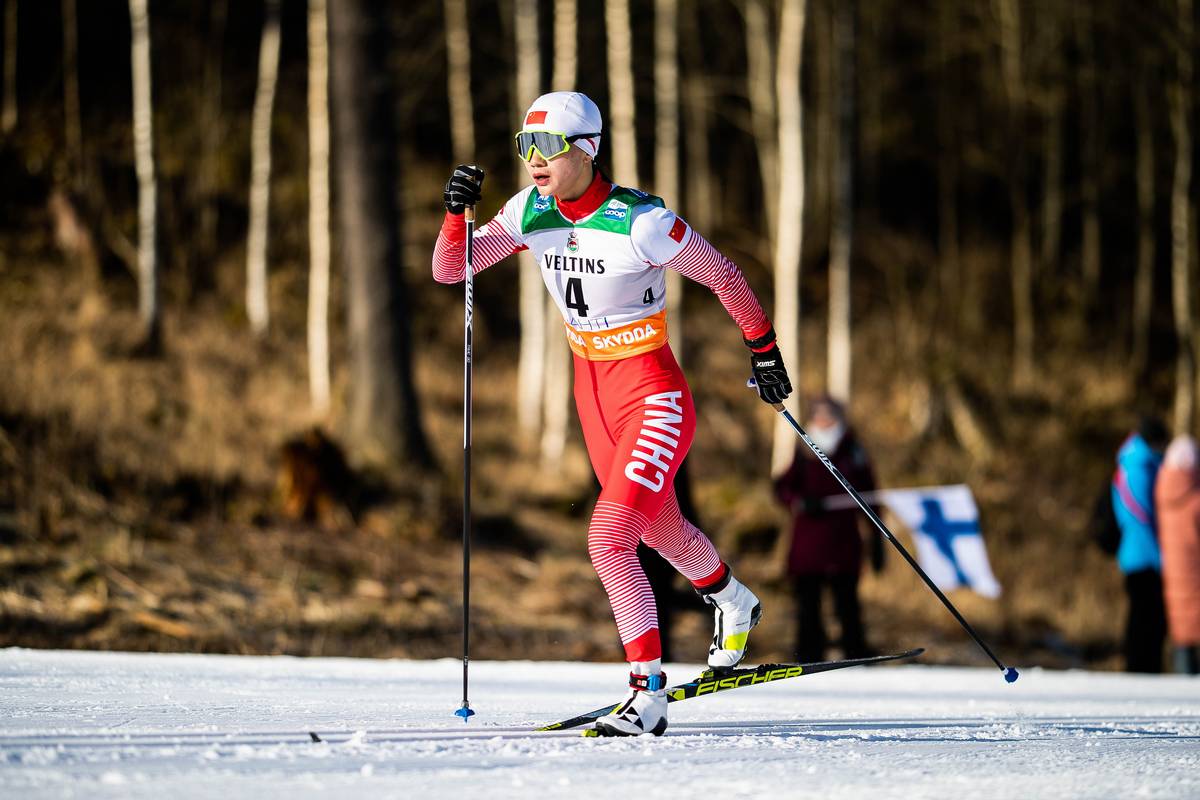
    Yilamujiang and Bayani both cracked the top 30 on the World Cup circuit, and notched top-15 results at the world championships for juniors and athletes under 23 years old. Wang, China’s star male skier, performed at a similar level.

    But at the Olympics, other than Wang, none of China’s cross-country skiers cracked the top 30. Some people close to the team described the event as a disappointment, given the Chinese athletes’ proven potential.

    Former employees of the Chinese team said two dynamics help explain the results. 

    One was a tendency by Chinese team leaders to disrupt the Scandinavian coaches’ training programs, by pushing athletes through brutally difficult workouts that the Chinese staff thought were needed. 

    The other was the decision by team leaders to pull China’s athletes out of the World Cup circuit during the COVID-19 pandemic — a move that kept the skiers safe but deprived them of experience against international-caliber competition on trails outside their home country. (Chinese officials did hire semi-elite Russian athletes to travel to China to give the country’s athletes more racing experience.)

    “They need to spend even more time in Scandinavia and learn from everybody in the environment that is around a skier,” said Hetland, the Norwegian coach. “And that has been maybe the biggest challenge for the team, when due to COVID they have stayed at home in China in the last two years.”
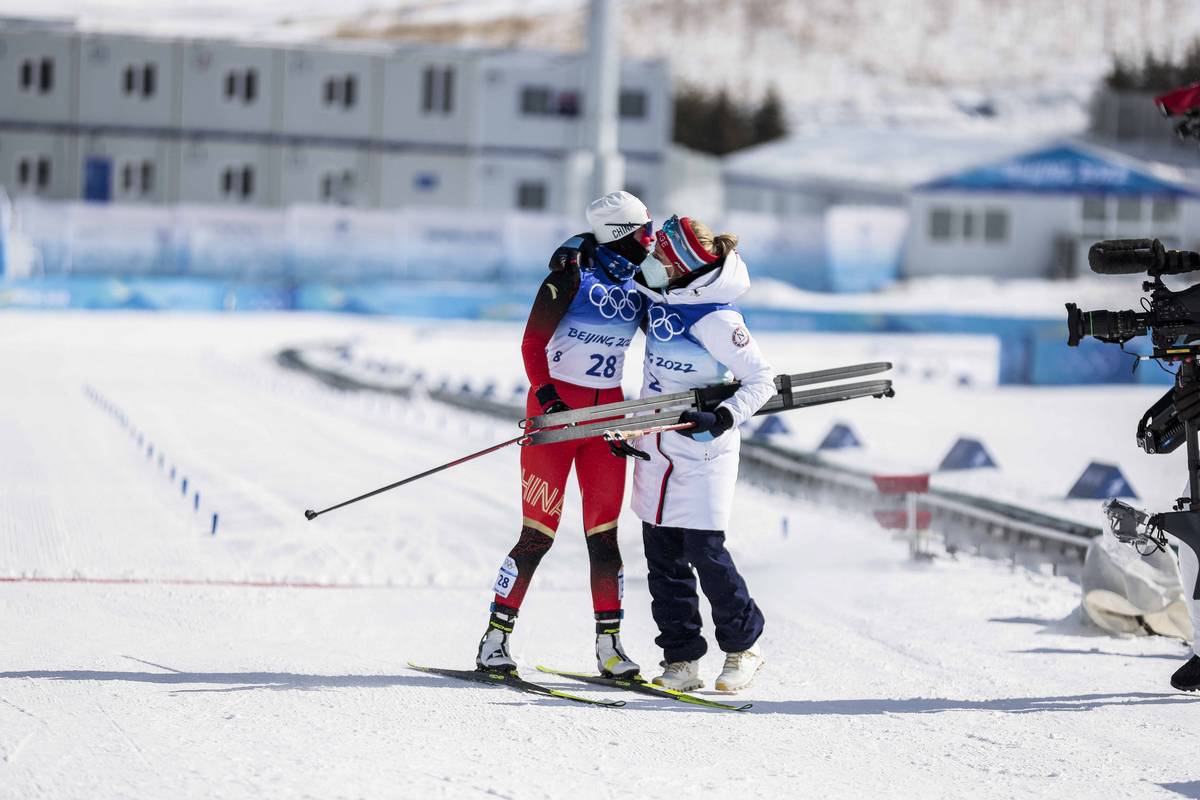
    Olympic 30 k winner Therese Johaug (NOR) greets last place finisher Dinigeer Yilamujiang of China who finished over 25 minutes behind the Norwegian (Photo: NordicFocus)

    Hetland said it’s important to remember that China has its own distinct culture from those of the European nations that have historically dominated cross-country skiing. Adapting that culture takes time, he and others said.

    “I visited China two years ago, and I was clear to the officials there that developing or training up a good skier, fighting for medals, is not a quick fix,” said Ulvang, the Norwegian FIS official. Still, he added: “It’s really special to see such fast development into some of the best racers in the world.”

    Zhang, the Chinese leader, had no complaints about her team’s Olympic results.

    “I am very much satisfied with the performance of our athletes,” she said. “I also feel very satisfied that each of our athletes is enjoying the competition, and that they are happy.”


    “They cut him”

    Zhang spoke with me in a busy athletes’ lounge in the bowels of Zhangjiakou’s biathlon building. 

    With the help of some of her European coaches, I’d picked her out of her white-jacketed, fur-hatted entourage at the cross-country skiing venue a few days before. She reacted with surprising openness, and agreed to an interview after I supplied her with enough details to get approval from her superiors.
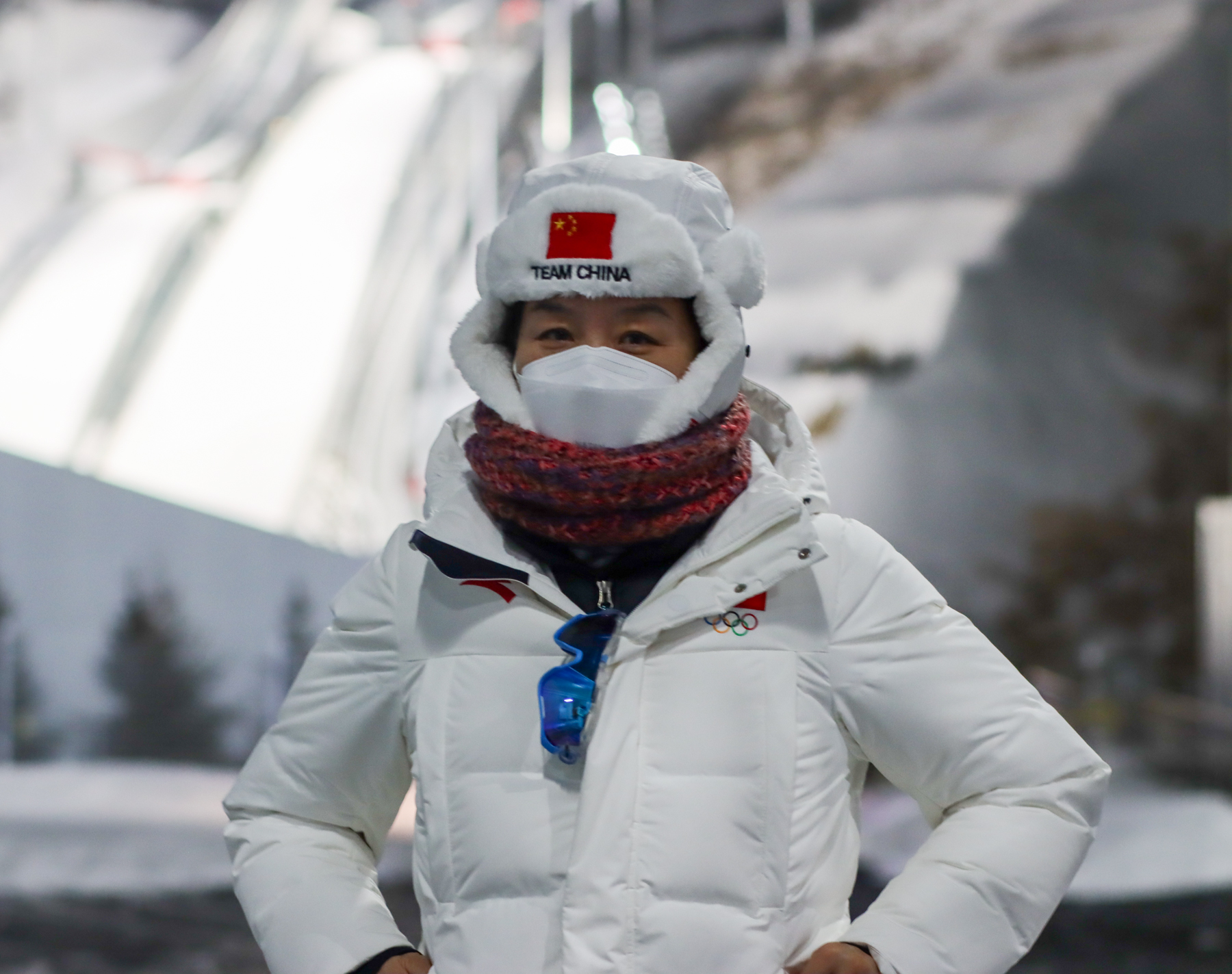
    Zhang Bei is the Chinese Communist Party official in charge of the country’s cross-country ski team. (Photo: Nat Herz)

    Zhang embodies China’s recent foray into winter sports: She came to her job four years ago, with a background as an elite rower, and only recently took up cross-country skiing herself. She told me she was too shy to try it in front of her athletes because she was worried they’d laugh at her.

    In our hour-long discussion, Zhang came across more like a politician or ambassador than a coach or executive, striking a vague but upbeat tone that glossed over some of the challenges I’d heard about from former employees. 

    “We have a very good start,” she said in response to a question about her program’s future. “Most importantly, we have many young people that are interested in cross-country skiing. And we have to help them to fulfill their dream.”

    The only time Zhang acknowledged even a hint of tension or conflict was on the subject of the disqualification of Wang, China’s star athlete. She said she and other team members were upset about the decision at the Olympics, which Zhang called “wrong.”

    Technically, FIS’ race jury ruled that Wang would be “ranked as last” in the freestyle for breaking international competition rules against obstructing other skiers. 

    Slow motion replay of the event shows Wang in his neck-and-neck sprint heat edging to his right in a way that appeared to impede Golberg, the Norwegian, who was skiing alongside Wang and ultimately crashed. (The video cannot be posted here due to Olympic broadcasting rules, but FasterSkier can provide a copy by email upon request.)

    The video isn’t exactly conclusive, and the jury’s decision has its critics — including, apparently, Gou, China’s sports minister. 

    Four separate sources told me that Gou learned of the disqualification during a dinner with Johan Eliasch, the FIS president, where Gou subsequently “lost his appetite” and raised his concerns with Eliasch directly. (A FIS spokesperson said in an email that the federation “does not comment on speculation about discussions between individuals during private dinners.”)

    China ultimately appealed the jury’s decision, but the appeal was rejected, said Ulvang. The source close to the government said China also asked FIS to extend some type of goodwill gesture after the disqualification, but that request wasn’t granted either. 

    Representatives from cross-country ski equipment manufacturers were frustrated, too. Currently, the industry sells only small amounts of gear and skis in China, and only to elite athletes there — not to “normal people,” said Hans Hubinger, an official from ski giant Fischer who was working at the cross-country venue in Zhangjiakou.

    “It’s not easy for us to see if there’s a future for the Chinese market or not,” Hubinger said in an interview.
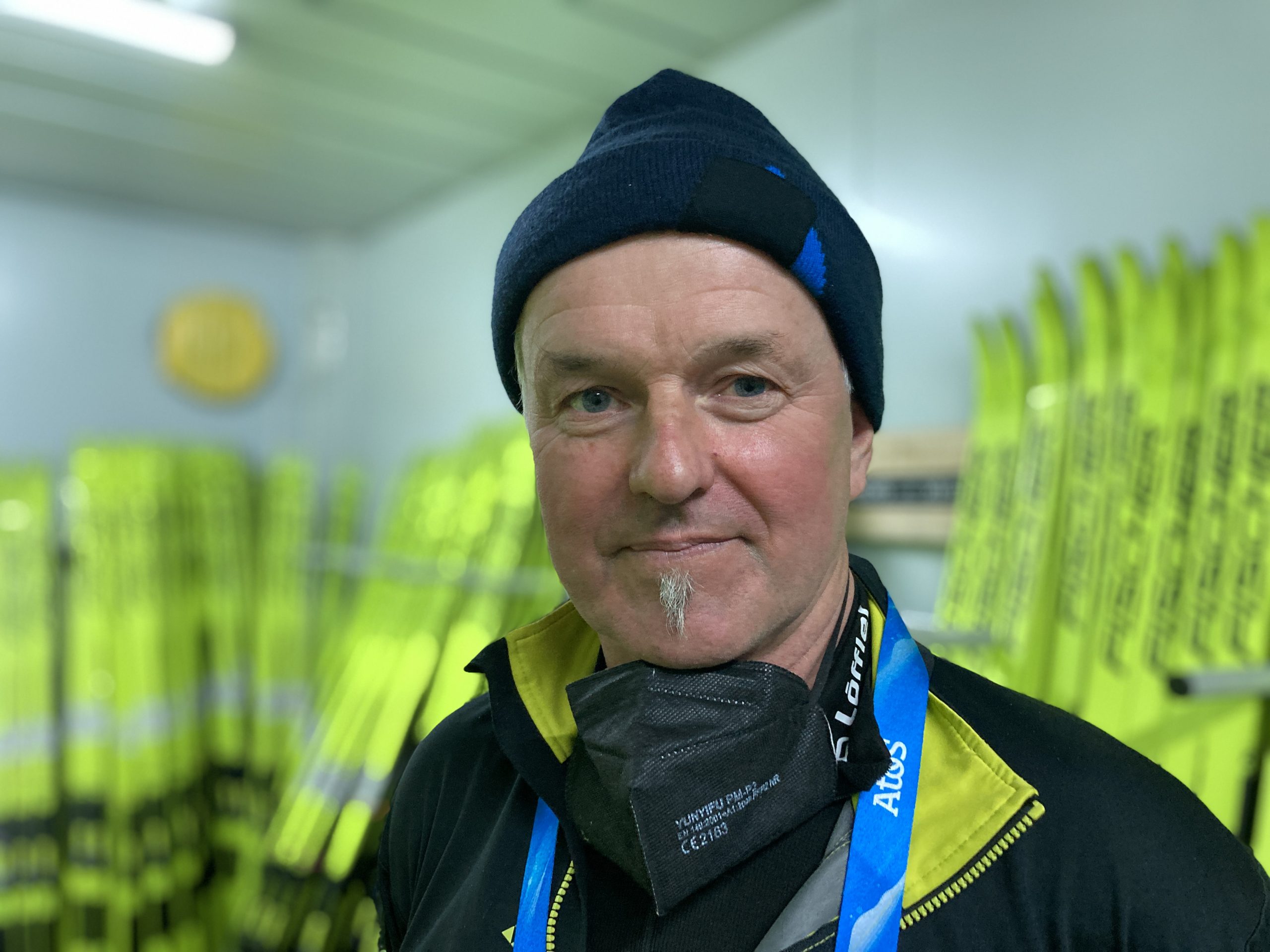
    Hans Hubinger is an official from ski company Fischer who was working at the 2022 Olympics in Zhangjiakou. (Photo: Nat Herz)

    Wang was the industry’s only hope for a Chinese cross-country skiing medal, which could have stimulated new interest, and gear sales, in the nation’s massive market. That market could also bring much-needed television viewers to cross-country skiing’s broadcasts — a major source of revenue for the sport. 

    Hubinger said he thought Wang’s disqualification was a close call where the jury could have given him the benefit of the doubt.

    “I think, ‘Oh, this is the chance now, to turn some guys into heroes’…and they cut him,” he said. “If the rules are clear, then you have to cut him. But this rule is not clear.”

    Pierre Mignerey, FIS’ cross-country skiing race director and a member of the jury that disqualified Wang, said he sees the situation completely differently. 

    In an interview in Zhangjiakou, Mignerey said it would be completely inappropriate for a race jury to weigh political factors, like the size of China’s ski market or its investment in the Games, in their decisions.

    “Sports mean that we have some rules. And that would be, in my opinion, quite shocking if the rules would not apply to everyone in the same way, regardless of if it’s the host nation,” said Mignerey, a retired French racer. “What would people say if the jury had decided something else?”

    Others placed responsibility for the disqualification on Chinese team leaders, arguing that their decision to skip international races during the pandemic left athletes like Wang without enough experience in the kind of tight-quarters competition that happened in the Olympic sprint.

    In the weeks after the Games, Wang delivered results that only underscored the opportunity he missed when he was disqualified — regardless of who bears the ultimate responsibility for that decision.

    In his first World Cup race after the Games, in Finland, Wang, 28, finished a career-best sixth place. The following week, in Norway, he landed on the podium for the first time.

    That result delivered a shot of hope to those who want to see the Chinese program continue. 

    On social media afterward, Wang made clear his intentions to continue in the sport, even if his country’s commitment to its skiing program remains something of a mystery. 

    “Today is a milestone. This is the first time a Chinese athlete stands on the podium of the World Cup series. We have won the respect of the world,” Wang said on a platform called Weibo. He added: “I will continue to pursue my dream with a humble attitude.”
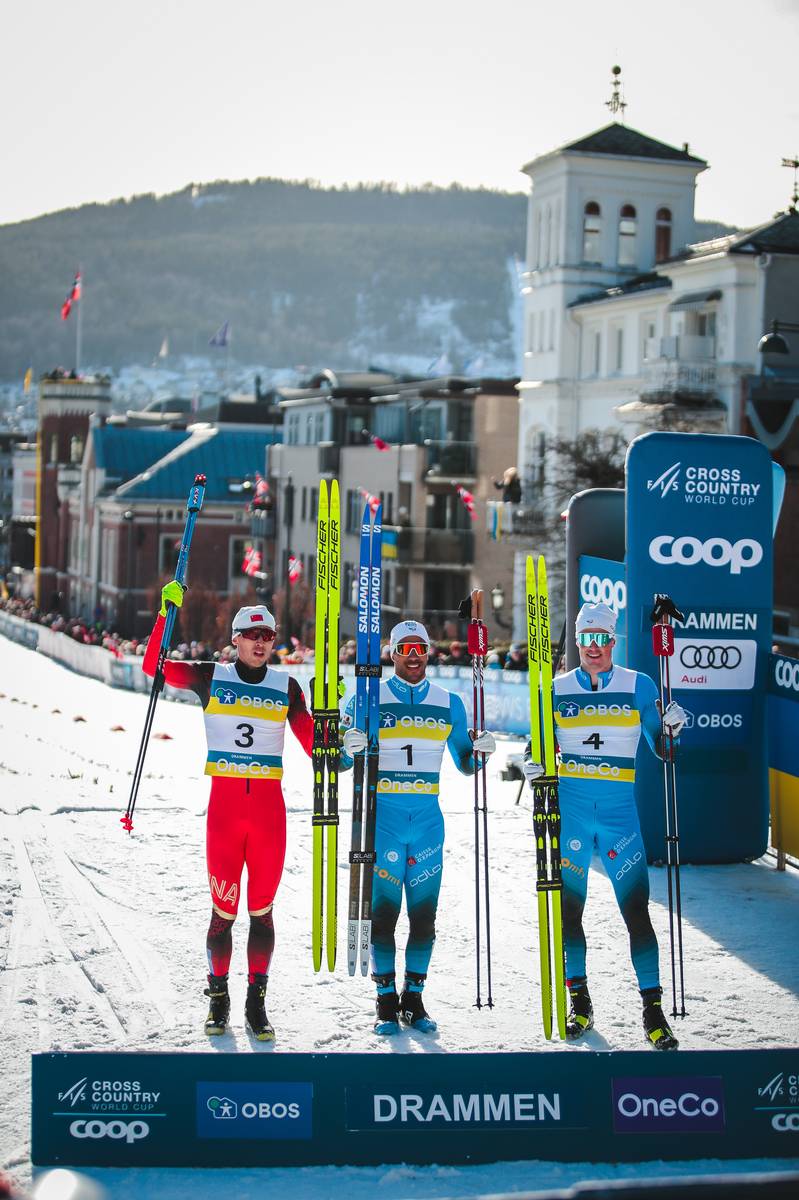
    Richard Jouve (FRA) takes the win in Drammen, NOR, with a first podium for China’s Wang Qiang, who took second ahead of Lucas Chanavat (FRA) in third. (Photo: NordicFocus)
  • The Chinese Ski Team’s Path to Beijing (Part 3)

    The Chinese Ski Team’s Path to Beijing (Part 3)

    This is the final installment of a three-part series on the development of the Chinese ski program. Click here to read part 1 and part 2.

    Part 3: Olympic Hopes and Misgivings in Norway

    For the Chinese cross country ski team, the 2022 Beijing Olympics opened with a blaze when Dinigeer Yilamujiang was selected to co-light the Olympic flame. It was an enormous honor for the twenty year old cross country skier from Altai, China with Uyghur roots. Yet her ethnic background overshadowed the moment, and, like so many aspects of the Chinese cross country skiing project, the ceremony meshed sporting aspirations with political theater.

    China’s Dinigeer Yilamujiang (CHN) races the freestyle sprint qualifier during the 2022 Olympic Winter Games in Zhangjiakou. (Photo: NordicFocus)

    Dinigeer, known as Dini on the ski circuit, is a rising star on the Chinese ski team. She is one of the few of the team’s new generation that grew up with skiing, and her father had hopes of becoming a great skier himself, and later became a coach. 

    Dini’s father Mulaji Yilamujiang, never expected her to become a professional athlete. That began to change when at age twelve, Dinigeer competed in a regional race and a competitive chord was struck. “She wanted to win the race like a professional athlete and get on the podium,” Mulaji recounted to Chinese news outlet Xinhua.

    It was hardly surprising then that when Kristian Bjune Sveen took the job as coach of the Swix China team in 2017, he picked fifteen year old Dini. 

    Since then, her success has by any measure been extraordinary: At the 2020 and 2021 Junior World Championships, Dinigeer proved that she was among the best in her age group, finishing 5th and 6th respectively in the 5k distance. 

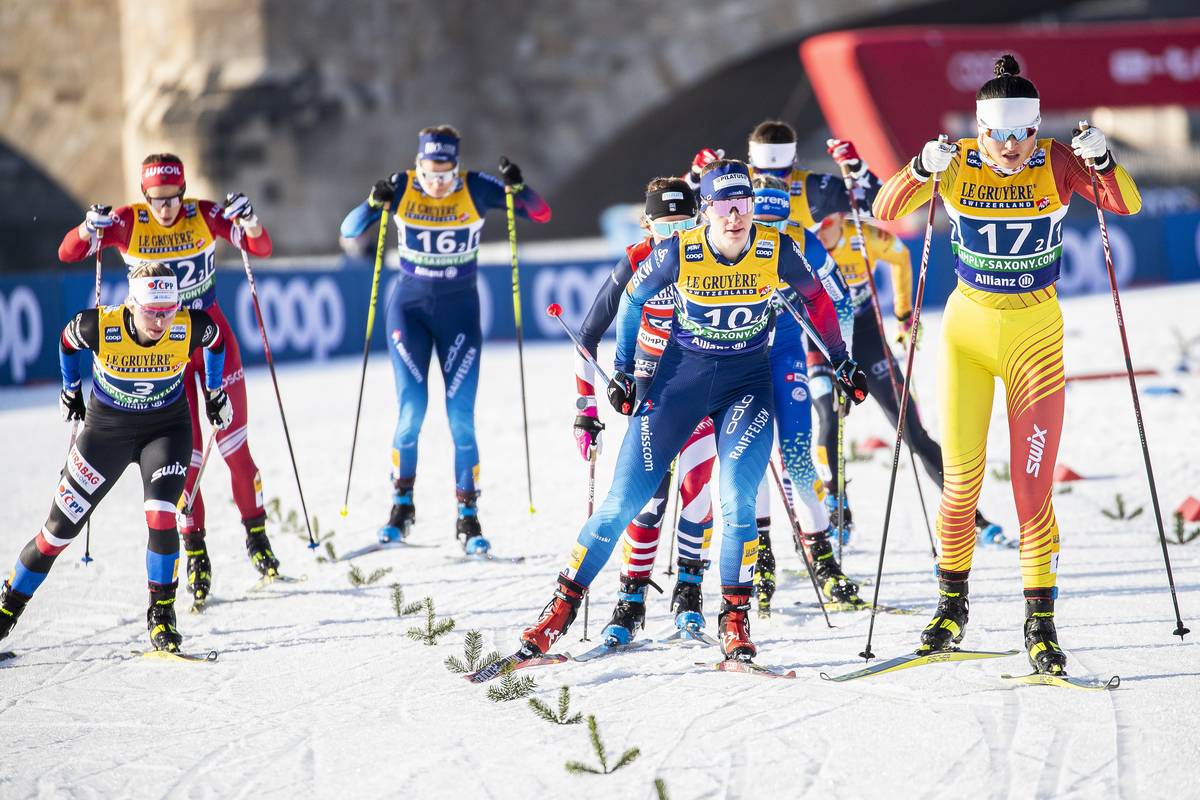
    Chinese cross country skier Dinigeer Yilamujiang (bib 17) races a December, 2020 team sprint in Dresden, Germany. (Photo: NordicFocus)

    Together with her teammate Bayani Jialin—who had no prior skiing experience before joining Sveen’s team—the two have skied together on the World Cup to top ten team sprint finishes and top thirty in individual sprints. 

    “Going from being an untrained person to being able to beat half the Norwegian national team and become a top 30 in a sport you [didn’t] know existed,” Sveen told NRK, “it is objectively completely insane!”

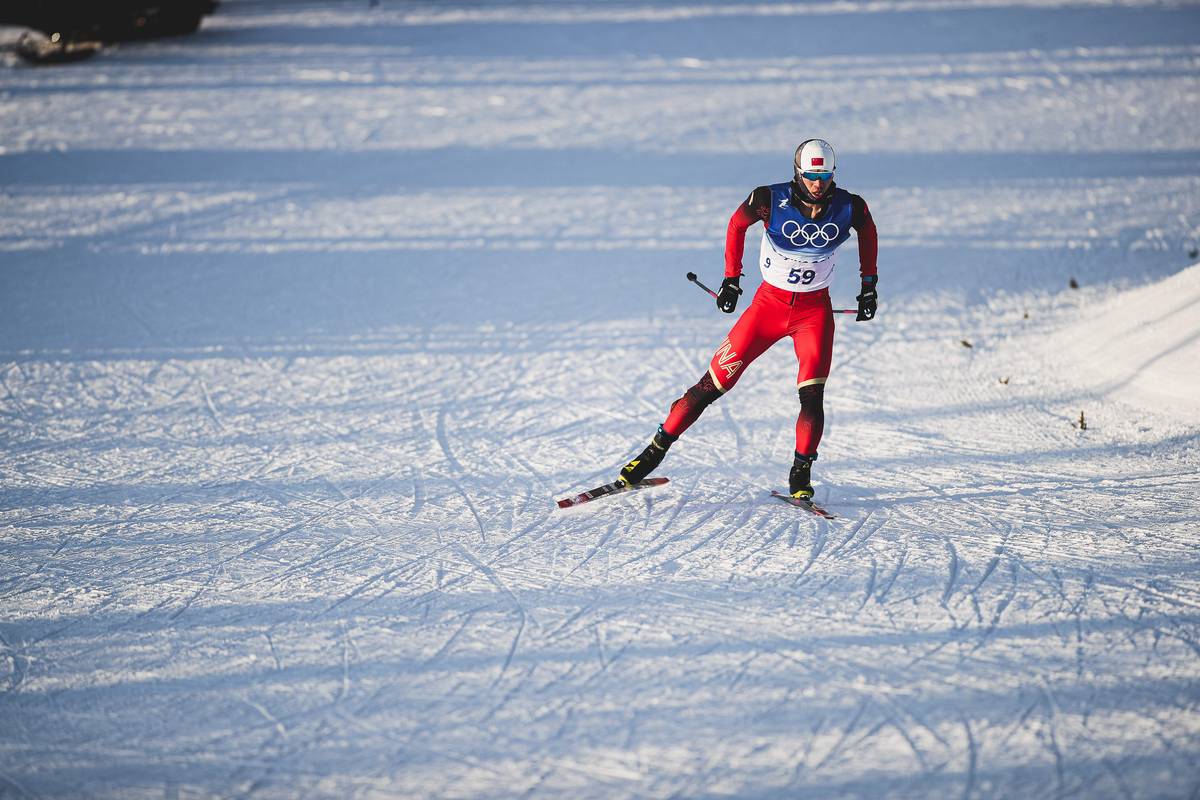
    Liu Rongshen is another twenty year old Chinese skier that has impressed early in the Games. Originally a runner from Yunnan, he was “one of the athletes that came to Meråker [in] March 2019,” wrote Tor-Arne Hetland to FasterSkier. Liu finished 38th in the men’s skiathlon, some 16 seconds ahead of Johannes Klæbo. “Pretty [impressive] that he never had been on skis before he came to Norway,” Hetland wrote, adding, “Maybe in the sprint China can have athletes in the semi-finals.”

    Hetland’s prediction nearly came true when Wang Qiang—China’s best sprinter and medal hope—qualified in 5th in the men’s sprint and appeared to have advanced out of his quarterfinal heat only to be ruled out due to obstructing another skier. 

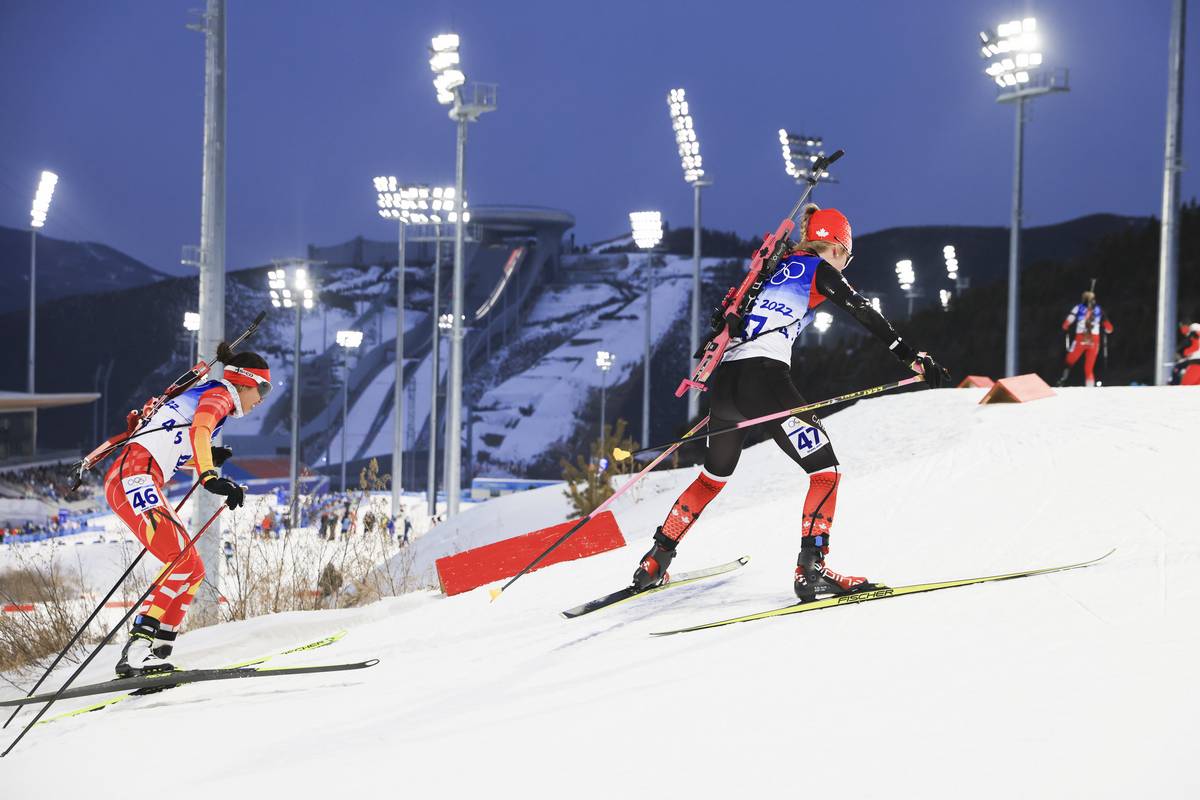
    In biathlon, the women are led by Meng Fanqi—one of the best sharpshooters on the circuit—as well as Chu Yuanmeng and Zhang Yan. All three are top class on the range, and with a home snow advantage, and fast skis provided by Norway, a relay medal remains a tangible, if distant, prospect. 

    Although some juniors such as Dinigeer Yilamujiang spent the last few winters in Norway, much of the Chinese cross country team has been based in China since the start of the pandemic. 

    To compensate for the lack of international racing for their homebound skiers, Russian second tier racers were hired to come to China for extended periods and enliven national races and ski with Chinese athletes. 

    Wang Qiang (CHN) takes an early lead in the men’s team sprint semifinal during the 2022 Olympic Winter Games. (Photo: NordicFocus)

    To the Chinese skiers advantage was sole access to the Olympic courses in Zhangjiakou ahead of the Games, although their coach Bernhard Rønning dismissed this assertion to Dagbladet, saying that while they had trained and competed in the area “not so much in the Olympic tracks.”

    Still, the team was not without excellent training opportunities, with ready access to altitude, year round skiing in the Beishan tunnel, and “the best equipment,” according to Max Volkov, coach of the Chinese distance team.

    Volkov, the former assistant coach to Alexander Bolshunov, joined a talented coaching staff in China, including his compatriot and former Olympic champion Nikita Kriukov, who trained their sprint team. 

    Magnus Frodahl worked with the Nordic combined team, and former Norwegian World Champion Terje Langli ran the Chinese cross country teams wax service, and trained in two apprentices, Li Xin & Wang Yihan. 

    Rounding out the core foreign coaches for the cross country team were Ole-Marius Bach, Bernhard Rønning, and Kristian Bjune Sveen.


    Bjørndalen

    The highest profile coaches to sign on to the Chinese Olympic project were Ole Einar Bjørndalen and his wife, former Belorussian biathlete Darya Domracheva. The two joined in 2019. 

    After the pandemic interrupted their debut season with the team, Bjørndalen rejoined his squad in China during the summer of 2020.  

    There, even for a legendary biathlete, the work was anything but glamorous. That summer, Bjørndalen worked daily from six in the morning to eleven at night. Each time he entered China he had to undergo a 17 day quarantine. Always the athlete, Bjørndalen ran 20 k a day inside his hotel room, running the length of the room around one thousand times. 

    The biathlon team spent the 2020/21 season training in China inside of an intense bubble. “There is no question of anyone coming in,” Bjørndalen told NRK, “And if you are going out on an errand in Beijing, it is straight into the corona quarantine.”

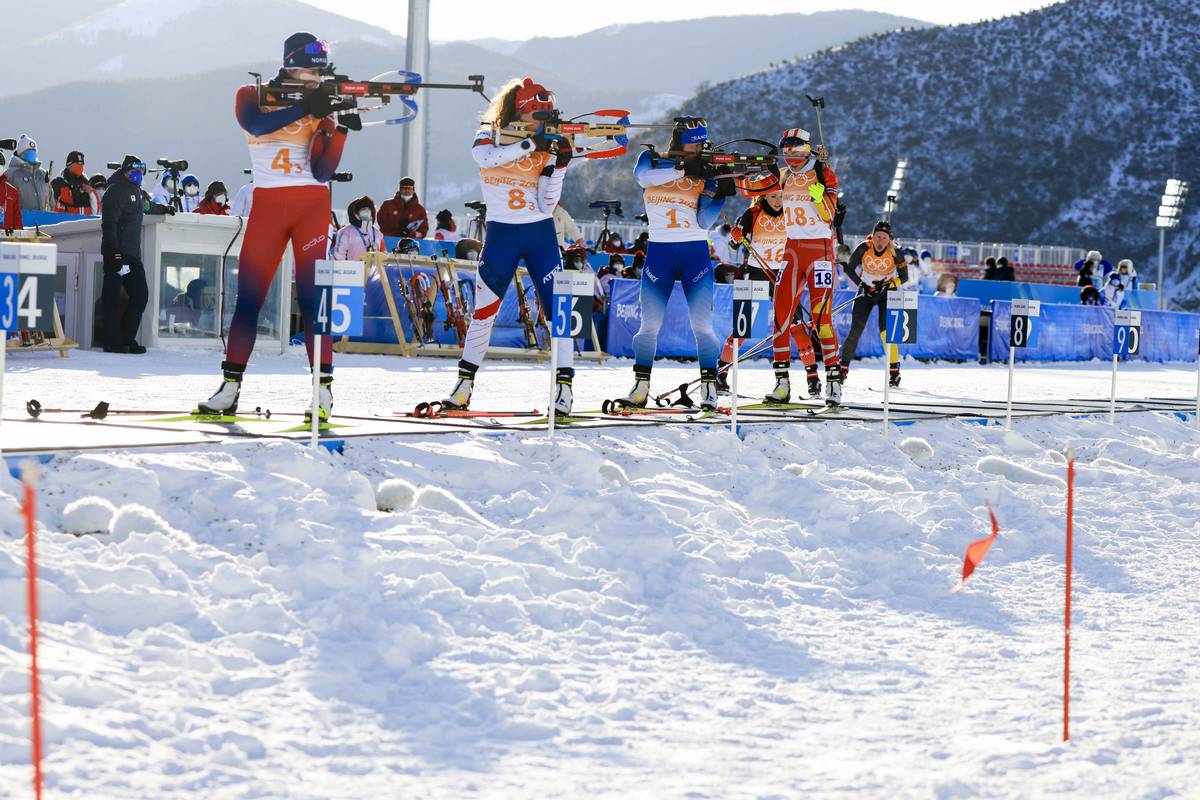
    Chinese biathlete Ding Yuhuan (bib 18) takes aim during the women’s relay in Zhangjiakou. (Photo: NordicFocus)

    That winter, Chinese President Xi Jingping visited the team. “I think he liked biathlon,” Bjørndalen said in the article.

    According to NRK, Xi’s visit to the Biathlon camp underscored the expectations to deliver results. “We have set ourselves the goal of winning a medal in the relay,” Bjørndalen explained, adding, “It’s a pretty horrible goal, but anything is possible.”

    The work of the famous duo has been apparent on the IBU World Cup, which China returned to this winter. US Biathlete Clare Egan said, “They’ve really done an incredible job bringing the athletes up. It’s funny because Daria [Domracheva] has a very unique and beautiful, graceful ski style and now all of the Chinese women, half the time I think they’re Daria when they go by me, they all ski exactly like her.”

    The shooting prowess of the Chinese biathletes is exceptional according to Egan. “They’re incredible, incredible precision shooters. I have to imagine that their team hit percentages are at least as high, if not higher, than any of the other teams.”

    “The reason they’re not winning medals is because they’re not quite there with the ski speed,” Egan said, “Even though they’ve really improved a lot.”

    When Bjørndalen took the job he ensured his athletes would have competitive skis by signing a deal with the Norwegian biathlon team to wax their skis through to the Olympics. 

     Tobias Dahl Fenre, the head waxer for the Norwegian biathlon team, said of the wax deal, “We do not share the expertise. It will be in Norway. We employ Norwegian waxers in the Norwegian system.”  

    The deal, worth an undisclosed sum, allowed the Norwegian biathlon team to hire four more techs, bringing their service team size to fifteen. 

    Egan said the results of the wax partnership were clear on the IBU World Cup. “It’s cool to see them have a chance on skis because previously when they were waxing their own skis, they just didn’t have that background to be internationally competitive. Now sometimes they’re passing us on the downhill.” 

    Cheng Fangming (CHN), races the men’s relay during the 2022 Olympic Winter Games. (Photo: NordicFocus)

    While the work of Bjørndalen, Domracheva, and Sveen have impressed, for the foreign coaches working in China, the experience varied. 

    For Kristian Bjune Sveen, who took the job with Swix China when he was twenty five years old, the experience had been positive, if exhausting. “I work around the clock, every day, and have almost no privacy,” he told NRK. Nevertheless he said it was “an insanely exciting job. It is a coach’s dream to be able to design a plan that you want.”

    Sveen felt that he would not find another opportunity to influence a whole skiing culture in the way that he could in China, and fretted that the next job wouldn’t match the significance of his present work. “It’s almost like I’m not sure if I want to be a coach again after this,” Sveen said. “These are athletes I think can be the best in the world.”

    Others had more jaundiced views of coaching in China. When Anita Moen’s athlete’s were recalled abruptly in December 2019, the pandemic prevented her from rejoining her team until the following August. 

    “By then, five months had passed without me having been a coach for them,” Moen recounted. “That was when I noticed the change. The basic work we had done, and on which we made such great progress, was destroyed.”

    Moen’s athletes had returned to a Chinese sport system marked by authoritarian control. The result had a big effect on her. 

    “I knew these athletes very well,” she said. “I did not need to talk to them. I could see it in their eyes…The joy I had seen was gone.” Moen found the experience troubling, and decided to end her involvement.

    A non disclosure agreement had prevented her, (as well as many other coaches) from discussing the team’s work. Through these legal tools, much of what the Chinese team has been up to in the last year and half has remained opaque.


    Soul Searching

    As the Games crept closer, so did criticism of China’s human rights record. In Norway, the agreement to help the Chinese skiing programs became a contentious topic, with anxiety over whether the work of some one hundred coaches, techs, and physios was done in the service of expanding the sport, or rather a massive nation branding campaign to distract from China’s human rights abuses. 

    Had Norway, the home of the Nobel Prize and defender of human rights, sacrificed its moral center for a trade agreement masked by a feel-good ski coaching story? 

    That was the argument made by John Peder Egenæs, the head of Amnesty Norway, who suggested to NRK that China’s 2019 hiring of Bjørndalen—the most popular athlete in Norway—as the head coach of their biathlon team was part of a “big political game.” 

    Egenæs believed that the Olympics were being used to “launder a deplorable human rights record,” and feared that Bjørndalen would be used as an “ambassador for [Norway] to forget the negative sides of China.”

    China’s Jincai Shang (bib 20) leads the men’s semifinal of the classic team sprint in Zhangjiakou. (Photo: NordicFocus)

    Bjørndalen disagreed with the criticism, and told NRK, I do not feel any political game in what I do. I focus on the skiers I have and do not have any dialogue about any propaganda with any leader.”

    Sports commentator Andreas Selliaas fretted about the whole agreement, saying to Aftenposten, “I do not think Norwegian sports really know what they are involved in. This is not about skiing, but about nation building and domestic politics in China.”

    Questions began to be raised about why the Sports Confederation was not consulted prior to the 2017 agreement. “The sport was thrown in like a meat bone to the Chinese,” was the assessment of Gudmund Skjeldal, a former Norwegian national team skier. 

    Tom Tvedt, the former President of the Norwegian Sports Confederation believed that the agreement had overstepped the historic divide between Sport and State, saying, “In this area, the independent, free sports movement was abused.”

    In an op-ed to Aftenposten, a group of PhD students at the Norwegian Sports Academy wrote, “Perhaps the point is not whether we, a tiny country, can influence the gigantic China. There is something called losing one’s soul. There is something more important than Olympic gold medals. It’s something more important than salmon, even.”

    The authors pointed to the history of Norwegian sports resisting oppression, and ski jumping hero Birgir Ruud, who refused to organize competitions during the Nazi Occupation and was imprisoned.  

    “So one might like to ask:” The authors wrote rhetorically, “[Why didn’t] Norwegian sports protest against being forced to cooperate with such a totalitarian power as China?”

    The answer, they suggested, had much to do with funding

    Others asserted that Nordic skiing needed China to survive in the future. In a story in Aftenposen, Rønning said, “If you bring China with you, you have almost saved the sport of cross-country skiing.”

    Tvedt disagreed. “It’s really a disaster. Both for sports and Norwegian democracy.” 

    Skjeldal and others have called for the Norwegian Parliament to investigate the matter. That the calls of alarm came at the doorstep of the Olympic Games may be telling. 

    Li Xin (CHN) follows Dahria Beatty (CAN) during the classic team sprint semifinal. (Photo: NordicFocus)

    While Norway wrestled with the ethics of their nearly completed sports agreement, the Chinese cross country ski team faced controversies over the diversity of the team’s athletes that include ethnic Uyghur, Kazakh, and Tibetan skiers. 

    The diverse team has been celebrated by Chinese State Media and questioned abroad. As a Uyghur athlete, Dinigeer Yuliamujiang is the prime example. She gained international fame overnight by lighting the Olympic torch—but not as a skier. Instead she has been viewed symbolically as Beijing’s defiant and brazen counter to charges of an ongoing Uyghur genocide. 

    Dini’s teammate, Bayani Jialin, is an ethnic Kazakh, and Chen Zhendui (whose Tibetan name is Tsering Damdul), made history by being one of the first Tibetans to compete for China at the Winter Olympics. He too was caught in the furor of the Tibetan exile communities’ protest against the Games over human rights abuses and an Olympic inspired crackdown in Tibet.

    The push and pull of dueling narratives has put the young and unseasoned skiers in an impossible position as they seek to make good on the far fetched expectations of medaling on home snow. 

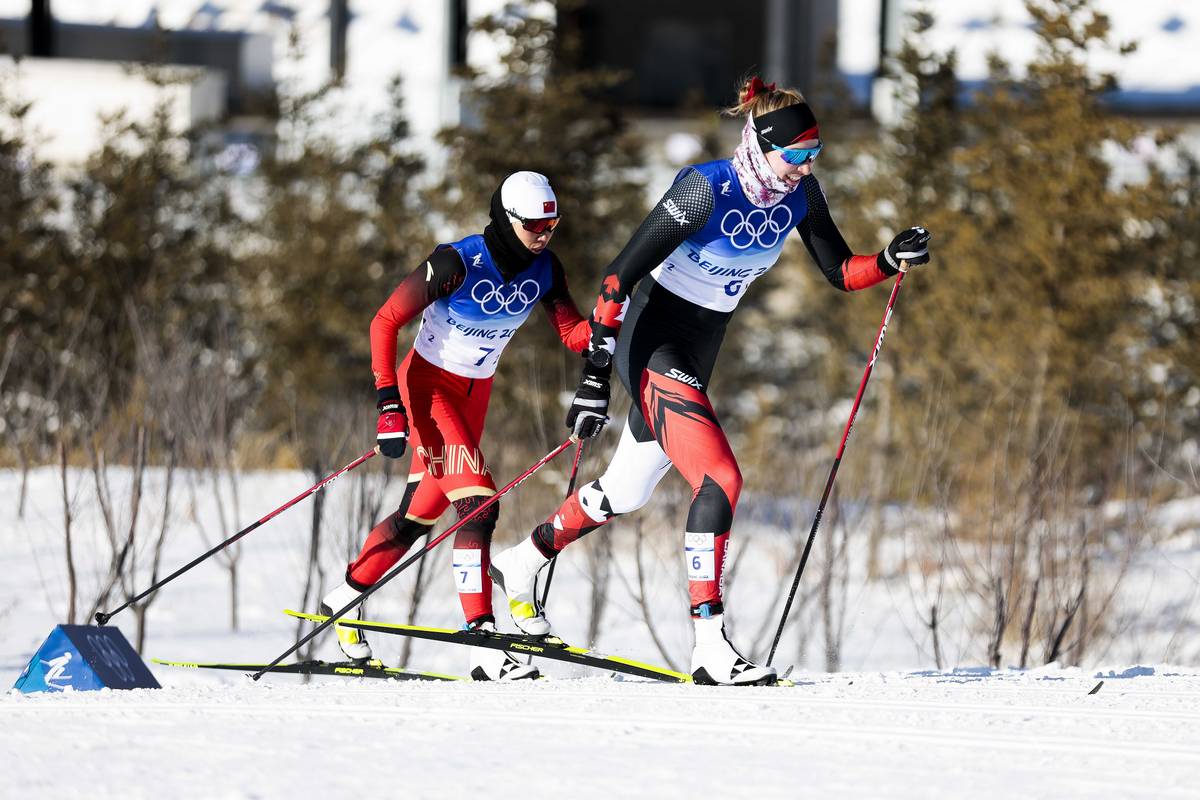
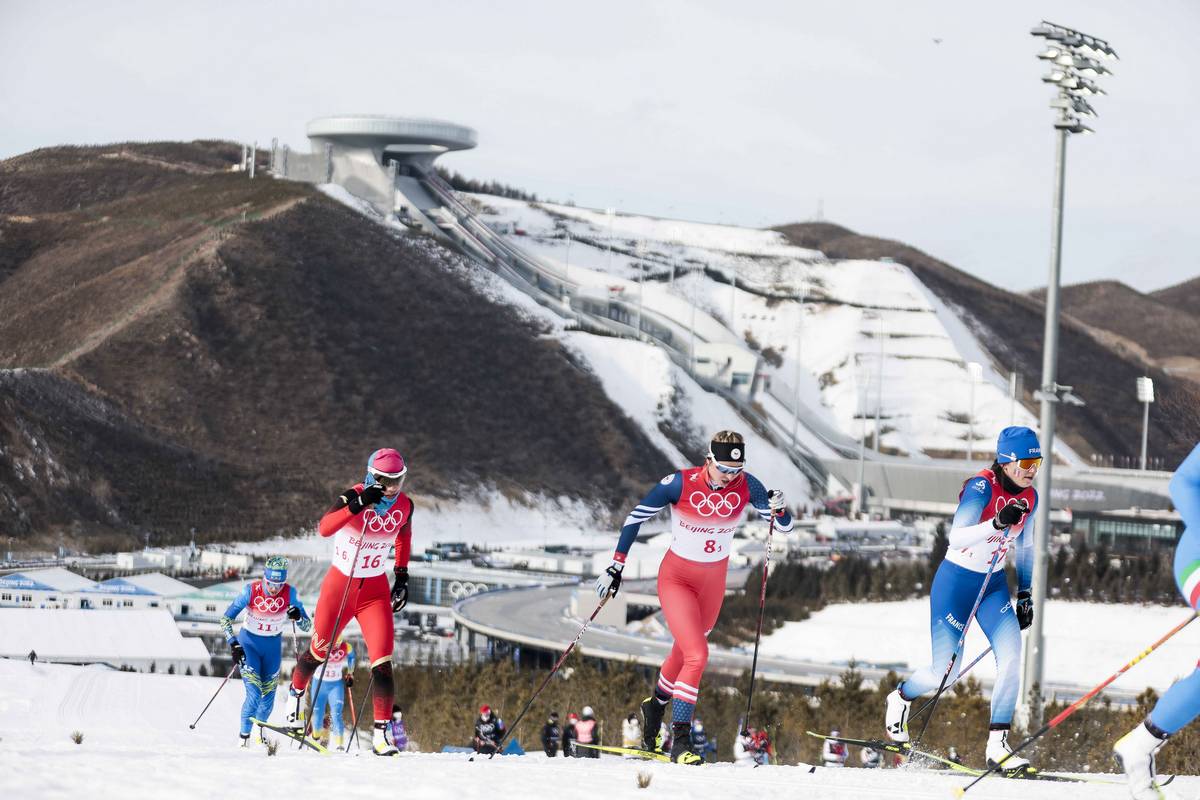
    Chunxue Chi (bib 16) skis the scramble leg of the women’s 4 x 5 k relay for China. (Photo: NordicFocus)

    The Chinese skiing project is something of a looking glass, with those involved seeing in it what they wish to see. For Moen, who had grown close to the athletes under her care, the project represented a lost opportunity.

    Imagine if we could have the Chinese athletes here in Norway most of the time, in all these years,” she pondered. “Then I think the whole project could have been very, very exciting. Because they had such extreme progress that they could [have] continue[d]. There could have been results that would have been sensational.”

    Whether or not Chinese athletes in the Nordic disciplines manage to medal remains to be seen. The Games will mark the culmination of an expansive and unprecedented experiment in cross country skiing. 

    Historians of the future may well parse out the significance that a few hundred novice Chinese skiers and their Norwegian coaches had on the course of geopolitics. For now, all we can do is watch them race. 


  • The Chinese Ski Team’s Path to Beijing (Part 2)

    The Chinese Ski Team’s Path to Beijing (Part 2)

    You can find the introduction to this three-part series on the development of the Chinese ski program here.

    Creating a Generation of Skiers

    China, pursuing Olympic medals on home snow, signed deals in 2018 to train Chinese skiers in Norway and Finland. The first hurdle would be filling these programs with potential skiers.

    To that end, a talent building program was initiated and young professional athletes in the second tier of rowing, kayaking, and running were assessed. Favorable candidates were given the opportunity to switch to cross country skiing, and with it a chance at making the 2022 Beijing Olympics. 

    The search was also on for hidden talents, and the public was invited to join the pool of athletes being considered for intensive training as cross country skiers. 

    When Kristian Bjune Sveen arrived in Xinjiang Province in 2017 he thought he was going to an interview. Instead, he found 100 candidates lined up to be tested for the Swix China team he was hired to create. Next it was onto schools, where Sveen would find his diamonds in the rough. 

    Also traveling to China to find skiers was Tor-Arne Hetland, coach of the Meråker contingent, who was invited to Beijing in the fall of 2018 to identify future skiers. He told the South China Morning Post that he was asked to seek out “athletes that could run well and had strong physical endurance.” 

    Zhang Yuanyuan was one such athlete. The eighteen year old kayaker from Sichuan Province had never seen snow and yet was selected to move to Norway to train for biathlon. 

    Rongsheng Liu (CHN) races the freestyle sprint qualifier during the 2022 Beijing Olympic Winter Games. (Photo: NordicFocus)

    Throughout the Chinese endurance world, promising athletes were funneled into skiing. One such athlete was Yeersen Shiwohen. An ultrarunner, he won a 168k marathon and  impressed a businessman who introduced him to the local sports management. Despite having never skied before, and believing that it was “impossible” to ski uphill, Shiwohen was soon on his way to Finland to become part of China’s skiing generation. 

    The new skiers were enticed with more than Olympic glory, they were also offered competitive salaries. Veikko Halonen, the CEO of Vuokatti Sport said to Yle, “With that money, the whole family will probably live in their home country. Motivation is high, even though they do not know when they will be able to visit home.”

    Shiwohen was one of 134 Chinese athletes sent in 2018 to Vuokatti to learn skiing. Of them, only twenty had ever skied before. Many were from subtropical Shanghai. The government officials in charge of identifying talents back in China had only a loose understanding of the qualities they should be looking for, and believing that upper body strength was paramount, leaned heavily on selecting rowers. 

    From the start, the Chinese project in Vuokatticalled “Zero to Herowas enormously ambitious. One of China’s primary snow sports coaches, Glenn Lindholm of Finland, recounted to Swiss news outlet Tages-Anzeiger that in the beginning, “It was difficult for them to just stand on cross-country skis.”

    In Norway, apart from the Trondheim group, the situation was much the same. “The first time I saw them on rollerskis, I thought ‘this is not possible,’ Anita Moen told NRK of the early days at the Trysil camp.

    “I was skeptical, scared,” said Moen in the report. “They struggled to control the speed. There were abrasions on the legs and arms even though we used protective equipment.”

    In Vuokatti, coaches chafed at the insistence of Chinese officials that the skiers be outfitted with the finest equipment on the market, which only made their work harder. “Only the best is good enough for the project,” Lindholm said. “Money doesn’t matter.” 


    The Philip Boit Connection

    The Chinese skiing project recalled an earlier effort in the mid-90s by Nike to introduce elite Kenyan runners to cross country skiing prior to the 1998 Nagano Olympics. 

    At its core, the idea was little more than a marketing gimmick dreamed up by Nike executives in Portland, Oregon as a means to help promote their venture into winter wear. As Mark Bossardet, then Nike’s Director of Global Athletics put it to the New York Times, “We were sitting around the office one day and we said, ‘What if we took Kenyan runners and transferred their skills to cross country skiing?’”

    Philip Boit at the time was trying to make it in the ultra competitive Kenyan running scene and believing that “cross country” must have something to do with running, he signed up. 

    Before long, he was on a plane to Finland with a compatriot. Boit did not consider his task to be a marketing ploy, and he took his ski training seriously. He would end up spending the next two years there training for Nagano, supported by Nike. 

    Ultimately, the Nike project was an experiment: If you take a talented Kenyan runner and give him a coach and two years in Finland to learn skiing, what will happen?

    The result proved that two years was not enough. In the 10 k classic at Nagano, Boit finished last, some twenty minutes behind Bjørn Dælhe. Though Boit was a talented runner—he could run 1,500m in 3:46.5—that prowess proved not to be a predictor of success. As Bossardet conceded, “As it turned out, the most important aspect is technique.”


    The Study

    Unlike the anecdotal knowledge from the Nike experiment, the large and well funded Team China project in Meråker offered a unique opportunity for research: that of talent transfer from other sports to nordic skiing. The study was conducted by the Norwegian Institute of Science and technology (NTNU), and researchers included Øyvind Sandbakk and Rune Talsnes. It was the first systematic and scientific study of talent transfer ever written about, in any sport. 

    The researchers followed the journey of 24 Chinese athletes aged between 17 and 21 years old that had been selected from a pool of middle distance runners, rowers, and kayakers.

    After a few months of introductory ski lessons, the athletes were subjected to a battery of tests in the beginning, middle, and end of a six month period of time. VO2max, double poling power, and rollerskiing efficiency on a treadmill, were among the many tests used to assess the athletes. 

    The end result was clear: the runners improved far more than the rowers, and the men improved more than the women. 

    Chunxue Chi (CHN) races a February, 2020 World Cup 10 k classic in Lahti, FIN. (Photo: NordicFocus)

    The runners did best, it was surmised, because they adapted more easily to the endurance training and were injured less often. While the physiology tests told a clear story of improving strength, capacity, and efficiency, they obscured the point of the whole endeavor: how fast they could ski. 

    In an email to FasterSkier, Talsnes confirmed the validity of using specific markers to assess the progress of the new skiers as athletes, writing, “I would say most of the performance and physiological indices that were assessed in the monitoring of these athletes are valid indicators of [cross country] skiing performance. In fact, we have recently published a study on the validity of such tests in a group of Norwegian junior/senior [cross country] skiers.”

    Because the study was conducted over the winter months, Talsnes wrote that a rollerskiing time trial was not possible, and that a ski event would have been subject to shifting conditions. 

    The study also assessed the coaches’ perspectives. With their names removed for anonymity, the researchers managed to gather some interesting insights. 

    There was general consensus among the coaches that those who were self motivated did best. The Chinese athletes did improve remarkably, both in Meråker and elsewhere. 

    In Trysil, Anita Moen was impressed with the results, telling NRK “I did not think it would be possible to get [the athletes] to learn the technique. And that they should ski fast already for the winter. It was such a short time. But there I was wrong.” 

    China’s Jincai Shang races the freestyle sprint qualifier during the 2022 Beijing Olympic Winter Games. (Photo: NordicFocus)

    Yet as much as the athletes improved, they were still not at a level to compete on the biggest stage. As a coach said in the NTNU study , “Many of them have physical capacities better than their Norwegian peers in cross country skiing, without this reflecting… in a competition. It’s the ski feeling, how to go on skis. They still miss this feeling.” 

    To the researchers, the coaches expressed their skepticism that the project would bear fruit. “…regarding talent transfer and [nordic] skiing, it’s something I wouldn’t recommend.”

    They also felt that their efforts were hampered by expectations of speedy results, a lack of control over selecting athletes, and uncertainty over how long the program would last. 

    “This was a short time period with [cross country] ski-specific training,” Talsnes wrote,  “and although the most responding athletes had large development in sport-specific performance, there is a long way to a World Cup and Olympic level. However, I think it might work with the right potential [athletes] and a sufficient time perspective.”

    Although there were questions about whether the athletes would be ready by Beijing, results have ultimately proved a degree of success for the Meråker program. “Interestingly,” wrote Talsnes, “the best Chinese athlete during [the] skiathlon for men in the Olympics was a part of this project. He [Liu Rongsheng] first started skiing in February 2019 and is a previous runner. He became 38th and actually beat Klæbo which I think is a bit funny…”

    ***

    In Vuokatti, the athletes came with an entourage of Chinese staff: fifteen coaches, along with translators and government minders. The contingent was so large that a “Chinese village” was created, replete with a restaurant. 

    Occasionally, there were culture clashes, though the misunderstandings were mainly between the Norwegian and Finnish coaches and Chinese officials. 

    Tor-Arne Hetland outlined an episode of discord between himself and Chinese officials when he vetoed a requested 10k time trial to compare his athletes with those in China for placement on the elite team. “It was nonsense!” Hetland told the South China Morning Post. “The snow would have been different from place to place, and they would be [skiing] on completely different tracks.”

    A larger controversy at the Meråker public library overshadowed coaching disagreements, and brought the fragility of ski diplomacy to the fore. 

    Meråker is a small municipality with a population of just over 1000 residents in the Trøndeleg region east of Trondheim. To ease the stay of the around 40 Chinese athletes, the library had a shipment of books in Mandarin sent from the Oslo public library system. 

    Included in the titles sent were a few on subjects that were banned in China, including one on the Falun Gong — an outlawed Chinese religious movement. Chinese officials with the team repeatedly insisted that the books be removed. Anne Marken, the librarian in Meråker told Andresseavisen “They have said that if any of the Chinese skiers are taken with these books, they are afraid that they risk a labor camp or prison in China.”

    Marken refused. The matter made headlines in Norway and helped to reignite the public debate over whether Norway was complicit in human rights abuses in China. Beyond the squabble over a few forbidden books in Meråker was the larger shadow that the salmon-for-skiing agreement had cast. 

    Chinese biathloete Yuanmeng Chu follows Canada’s Emma Lunder (CAN) during the women’s sprint competition on February 11th. (Photo: NordicFocus)

    The philosophical differences between Norwegian and Finnish coaches and those of China stemmed in part from China’s contrasting sporting model that was built in the image of the Soviet system and has retained much of its flavora focus on authoritarian, sport specific development that begins at an early age. 

    Much like the Russian ski team, which is separated into four separate training groups, the Chinese Ski Team was equally diffused. Confusingly, there were two separate entities competing with each other to create skiers. The Winter Sports Group had the Chinese Ski Association under its umbrella, and oversaw some of the more elite programs. Competing with the Chinese Ski Association was Team China, which was unrelated other than that its funding also came from the State. 

    To further muddy the waters, Taiwan and Hong Kong have their own ski associations, and teams. Both compete as separate nations in the Olympics despite being, by varying degrees, part of the same country.

    It was Team China that signed most of the contracts to train new skiers. The result was that hundreds of skiers, ranging from barely able to ski, to competing on the World Cup, were all somewhat on the national team. 

    “I do not know how many teams the Chinese have called ‘national team’,” said Bernhard Rønning who ran the Trondheim based group. He clarified to Aftenposten, “We are the ones… going to the World Cup.”

    Chinese sporting officials did not take an entirely hands off approach when their athletes were abroad. At the end of every week, Lindholm was required to send a report back to Beijing outlining the progress of the skiers. As a result, much focus was placed on physiological tests.  “We could work more efficiently if we were only allowed to,” said Lindholm

  • The Chinese Ski Team’s Path to Beijing (Part 1)

    The Chinese Ski Team’s Path to Beijing (Part 1)

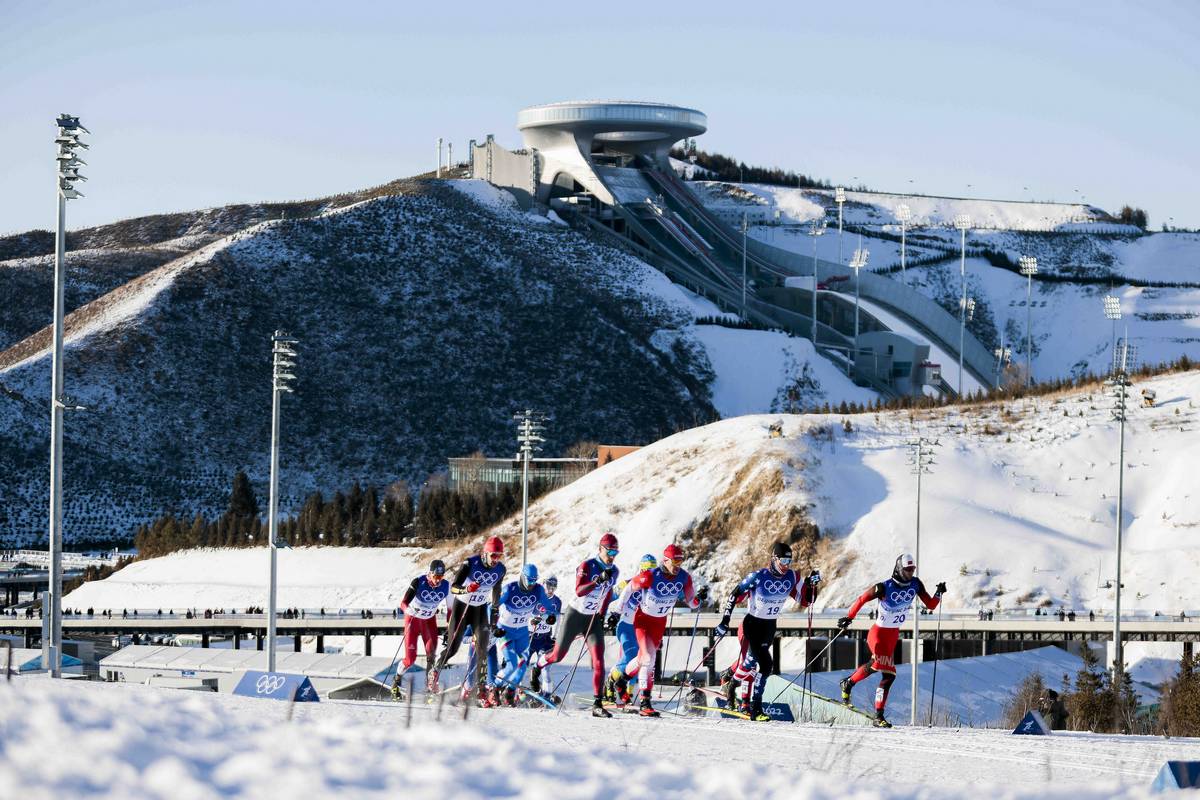
    China’s Degen Chen races the men’s 30-kilometer skiathlon which opened the 2022 Beijing Olympic Winter Games. (Photo: NordicFocus)

    Salmon for Skiing

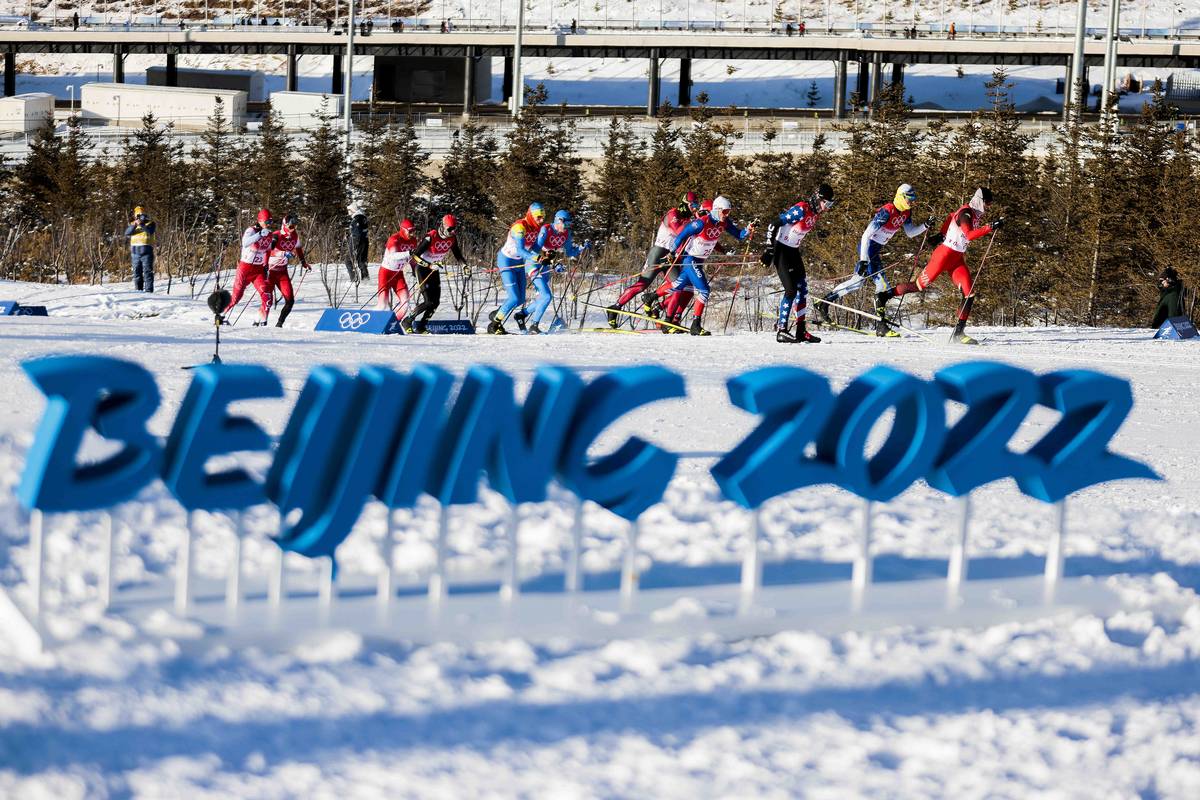
    Over the last four years China has undertaken perhaps the grandest experiment in cross country skiing history: can hundreds of athletes cherry picked from other sports and given seemingly unlimited resources be turned into Olympic medalists in nordic events? 

    Chinese athletes have never medaled in any of the nordic disciplines, and their teams head into the Olympics as the darkest of dark horses. Success, in the form of medals, is key to their aims of climbing up the medal table and becoming the protagonists of their own winter Games. 

    The Chinese nordic programs have aimed to rapidly become competitive with the best in the world. The urgency of the task was made clear at the 2018 PyeongChang Olympics where China finished fourteenth in the medal count, capturing a single gold medal, and just nine in total. 

    Despite this history, not everyone is dismissive of their chances. 

    “I said four years ago that I predict these guys will medal in Beijing,” said US biathlete Clare Egan in a call, “because I know that medals are important to China and that they basically will put any resources possible into making things happen like that. So nothing would surprise me.”

    Even so, Egan conceded that, “It’s going to be hard for them, because they aren’t fast enough.”

    The project of building a culture of skiing in China began in 2015 when Beijing was awarded the 2022 Winter Games. The government spurred into action: it would make 120 million of its citizens into recreational skiers by building 800 new ski areas, among them the world’s largest indoor center in Harbin that cost $4.5 billion.

    Cross country skiing also benefited from the investment rush, with an 1.3 k indoor ski tunnel built in Beishan, a joint Finnish-China project that cost $148 million. Another cross country ski tunnel is planned to be placed inside an unused coal mine shaft on the outskirts of Beijing. Liu Bo, a former ski coach, told Reuters in 2018 that he was investing $318 million in the project. 

    Bo explained in the interview that the goal for Chinese skiing, aimed at the Olympics, was clear: “China spends big money setting up the stage, and the performers are all foreigners,” said Bo. “President Xi will not allow this to happen. We have to be the leading actor in 2022.”

    Xin Li (CHN) races a freestyle sprint qualifier in Konnerud, NOR in March, 2020. (Photo: NordicFocus)

    While the ski resort boom was mainly aimed at creating a ski culture in China, taking on a starring role in Beijing meant that expertise would be needed from abroad. For guidance, officials looked to the top of the medal table: Norway.

    Initially, it was impossible for China to work with Norway. When the Olympics were awarded to Beijing in 2015 the two countries were still embroiled in a diplomatic crisis that had severed official contact between the nations and frozen trade negotiations. The rupture occurred in 2010 when the Nobel Peace Prize was awarded in Oslo to Li Xiaobo, a Chinese human rights activist who was then imprisoned in China. At the Nobel ceremony, Xiaobo was evocatively symbolized by an empty chair on the stage. 

    In response, China all but severed diplomatic ties with Norway, despite the government’s lack of control over the Nobel committee. Two months later China halted the importation of fresh Norwegian salmon – a significant industry – over what was generally regarded as a politically motivated concern over a fish-borne virus. 

    The ban, as well as other restrictions, are believed to have cost Norway between $780 million to $1.3 billion between 2010 and 2017. At the time of the contentious Nobel ceremony, Norway had enjoyed a virtual monopoly over the Chinese salmon market, and the country’s fisheries had to watch as Chinese demand for salmon increased by thirty percent, while their share plummeted by two thirds. 

    Years of cautious steps by the Norwegian government followed, including its first ever refusal to meet with the Dalai Lama during his 2014 visit to Norway. Norway’s socialist left party leader Audun Lysbakken criticized this move in The Guardian, saying, “We can’t be dictated to by China in the sense of exchanging human rights for salmon.”

    That fall, Oslo – the favorite for the 2022 Games – dropped out, paving the way for Beijing to win the bid the following summer. With the Games in hand, the calculus changed, and the rift with Norway became an awkward obstacle to their objectives. 

    A subtle indication of rapprochement came in an unusual way: Gerhard Heiberg, a Norwegian businessman headed the IOC’s Marketing Commission, and was offered a meeting on a 2016 trip to Beijing with the Chinese Minister of Sport, Gou Zhongwen. 

    The minister marveled at Norway’s success in skiing, Heiberg recounted to NRK, “He said that those at the top in China had agreed that they would like an agreement with Norway on a sports collaboration. And from the Chinese side, there was a desire to use Norwegian leaders, coaches, universities and so on who worked with winter sports.”

    Heiberg recognized the moment. “I saw that here we have a fantastic opportunity to approach China.” Not wanting to waste the favorable winds, Heiberg left the meeting and “went straight to [Ambassador] Svein Sæther. And he lit positively on all the plugs.”

    With some quiet maneuvering, relations thawed, and Norway and China signed a bilateral agreement to resume diplomatic relations in December 2016. The agreement conceded that Norway would not challenge China on its “core interests and major concerns”​​ — a diplomatic term for avoiding involvement in sensitive issues, including human rights. 

    Dinigeer Yilamujiang (CHN) races a 10 k freestyle in Falun, Sweden in January, 2021. (Photo: NordicFocus)

    That winter the Norwegian Ski Association was asked to help look for coaches to work in China and offered salaries of 1.1 million kroner (equivalent to $120,000) per year. China also wanted to send its athletes to Norway, but to do so, it would need to put to rest their feud. 

    In April 2017, Norwegian Prime Minister Erna Solberg visited Beijing, officially ending the freeze. Solberg reestablished the relationship in part by signing an agreement with China to support their sporting endeavors, particularly in nordic sports, through to the Beijing Olympics. The agreement would provide China with Norwegian ski coaches, training opportunities, as well as sporting development and snow making expertise. In return, Norway received the opportunity to optimize “Norwegian preparations for the Olympics.”

    This deft piece of ski diplomacy helped to seal a seafood trade agreement with China the following month that planned to see Norway export $1.4 billion worth of salmon alone to China by 2025. The long awaited reentry to the Chinese market had arrived, and if there were any lingering questions about human rights, Per Sandberg, Norway’s Minister of Fisheries wasn’t having it. He told Aftenposten that “Norway addresses human rights in very many contexts… this time it’s fish.”

    Ski diplomacy started with Stolberg’s agreement with China, and was reaffirmed the following year when King Harald visited China, signifying the complete normalization of relations while taking in a rollerskiing race at Beijing’s Olympic Park. 

    Despite the apparent connection between the sporting pact and the trade deals, the Norwegian Prime Minister denied the two items were related. In any case, the agreement caught the Norwegian Sports Confederation by surprise. Oddvar Jenssen, the former VP of the organization, said in an interview with Aftenposten that the decision “…came terribly fast, and a lot was in place before we knew anything. When the agreement came up, we had no choice.

    Misgivings aside, for Norwegian ski coaches, wax techs, and sport scientists, the Chinese agreement would turn into a major employment opportunity, with around 40 coaches and techs working for Chinese training groups, and around 60 more occasionally hired for short stints. No longer were the job opportunities going to be contingent on moving to China, the athletes would now be coming to Norway.  


    Arrival in Norway

    The sporting agreement between Norway and China took on new force after China’s dismal performance in the 2018 Olympics. Afterward, the Chinese Ministry of Sport went looking for coaching help abroad. Many nations vied for contracts, but Norway was the first stop for Gou Zhongwen.

    In May of 2018, Zhongwen met with Johannes Klæbo on his tour of Trøndelag – the region that has won more Olympic medals than any other – and solidified the agreement to bring athletes to Norway. 

    In July, ten of China’s core World Cup athletes arrived in Trondheim, Norway to begin training for the World Cup with former Montana State University skier Bernhard Rønning. 

    It was the prelude to an influx of more than 200 young Chinese athletes to Norway in the late summer and fall of 2018. 

    In addition to the Trondheim group, another was set up in Meråker, under the leadership of former Canadian National Team Coach Tor-Arne Hetland. In Lillehammer a group was led by Kristen Størmer Steira (wife of FasterSkier podcaster Devon Kershaw) and finally one in Trysil led by the mother/daughter combo of Anita Moen and Karoline Moen Guidon

    Anita Moen’s experience illustrates the slapdash nature of the project. In mid July of 2018 she was on vacationing on a beach when her phone rang. It was an offer to coach Chinese skiers until the 2022 Games. 

    “It was only two weeks until they were to arrive,” Moen told NRK… I did not quite know who was coming, but I was told they had never skied before, never seen snow.”

    Jincai Shang (CHN) races a classic sprint qualifier in Trondheim, NOR during Ski Tour 2020. (Photo: NordicFocus)

    While China mobilized to send loads of athletes to Norway, their plans didn’t stop there. After Minister Zhongwen left Norway, he flew with his entourage directly to Finland. Waiting for him at the airport was Veiko Hallonen, the CEO of the Vuokatti Sports College. 

    Vuokatti offered excellent training opportunities: a long winter, a ski tunnel, knowledgeable coaches, and sophisticated technology that impressed the officials. Perhaps Zhongwen was also mindful of the warmer diplomatic climes in Finland. Ni Huizong, the Director of the Winter Sports Administrative Center told Yle, “Relations between Finland and China have a long and warm history.”

    Chinese athletes had been training in Vuokatti since 2016, but the agreement established a permanent Chinese presence at the Vuokatti center and increased the total number of athletes that would stay in Finland. 

    The head cross country coach in Vuokatti at that time was Glenn Lindholm, who met with the Chinese delegation and was asked directly whether four years were enough to turn novices into Olympic champions. Lindholm’s response was neither yes nor no. 

    Lindholm must have understood the unlikely prospect of delivering medals by the next Olympics. Still, the project may have seemed crazy enough to work. Vuokatti was about to get more than 130 hand picked Chinese athletes, an almost unlimited pot of money to work with, and just under four years to produce a medalist. 

    It was audacious, and too bold to resist. As Lindholm and others would learn, realism, a pandemic, and decisions made in the halls of power of Beijing would frustrate their plans. 

    To be continued in Part 2.