Tag: Chinese Vasaloppet

  • Americans Abroad: APU Skiers Take on China Tour de Ski

    Americans Abroad: APU Skiers Take on China Tour de Ski

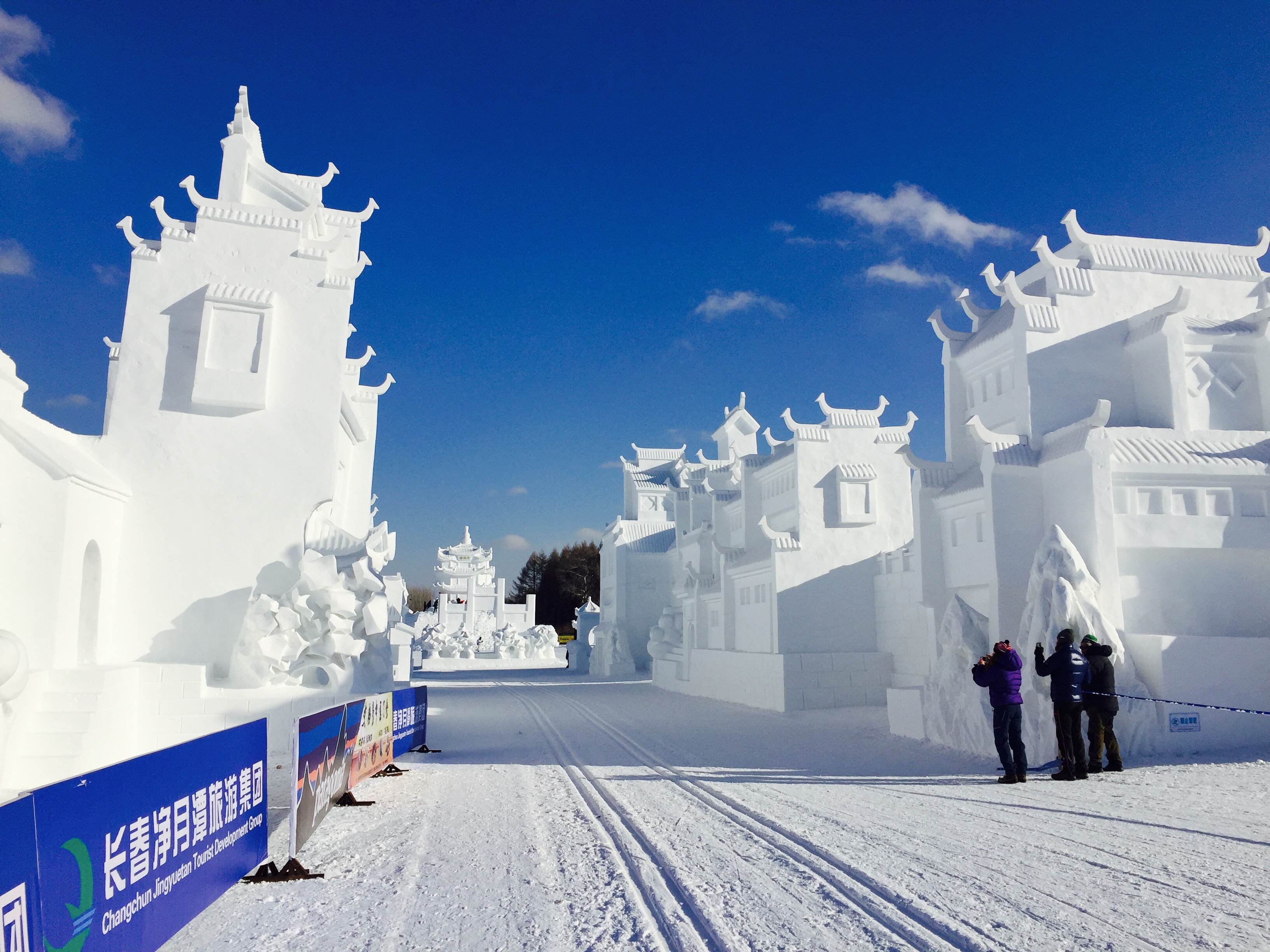
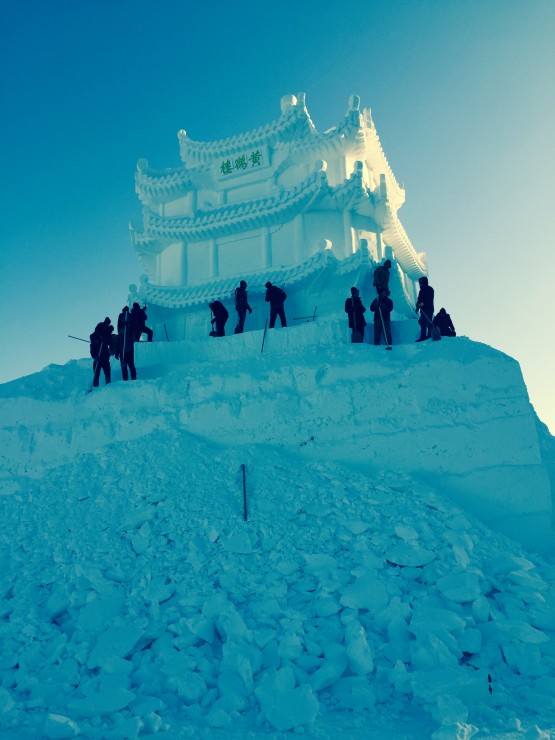
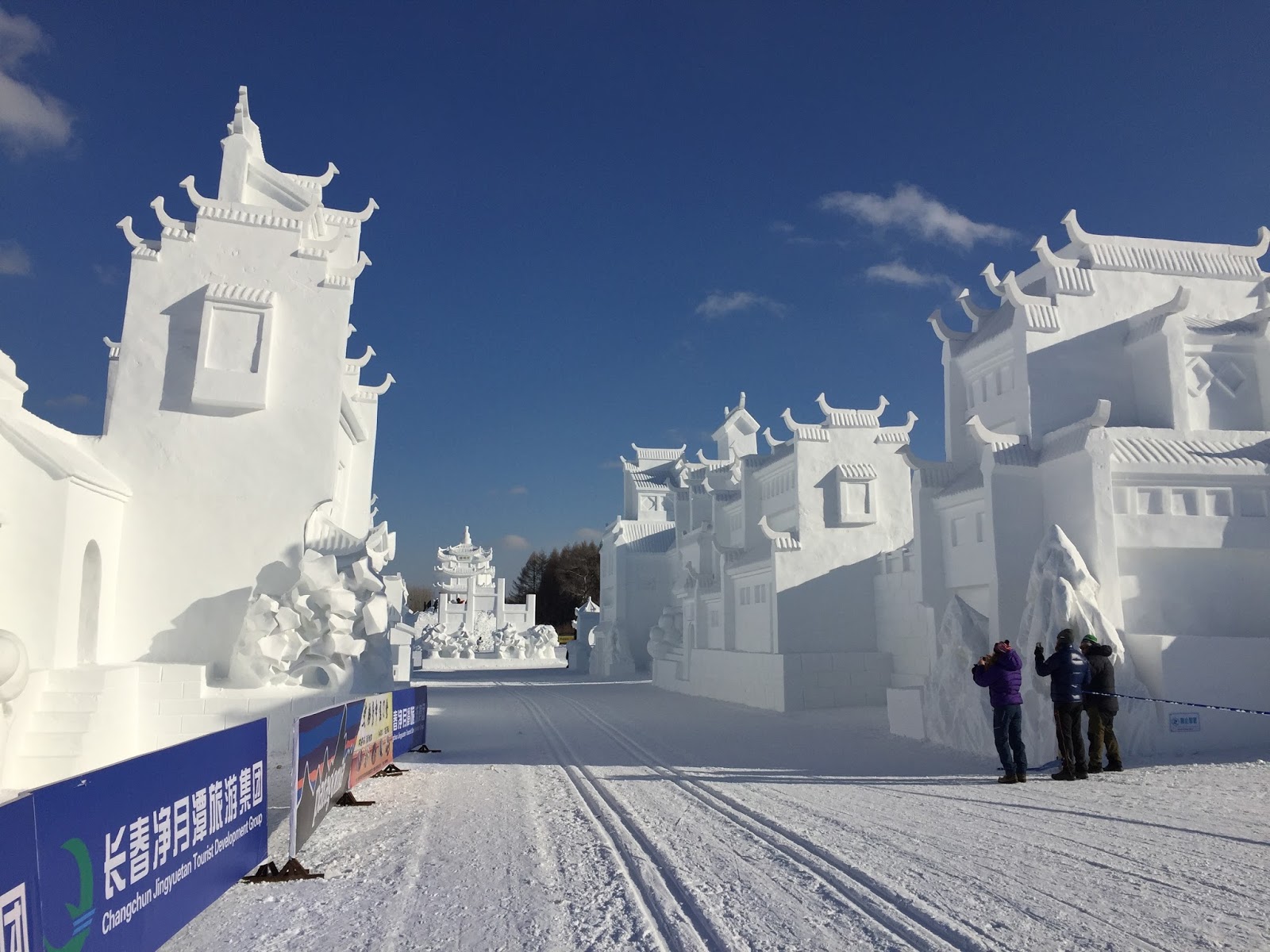
    Snow sculptures in the stadium in Changchun at the 2016 China Tour de Ski. (Photo: Holly Brooks)
    Snow sculptures in the stadium in Changchun at the 2016 China Tour de Ski. (Photo: Holly Brooks)

    Note: Alaska Pacific University skier Skyler Kenna, 21, will also be racing the 2017 China Tour de Ski. FasterSkier learned of Kenna’s participation after publication.

    ****

    Be a ski racer, see the world. That’s the approach of a pair of Alaska Pacific University (APU) skiers Jack Novak and Lauren Fritz, who leave for Asia later this week to race in the China Tour de Ski, set to begin in Changbaishan on Sunday, Jan. 1.

    Novak has never been to Asia before, and has yet to ride a camel on any continent. Fritz competed in the race series for the first time last year, and has skied on five continents. Both athletes are at a point in their ski career where they are seeking experiences more than SuperTour points or championship team selection. Some prize money wouldn’t hurt, either.

    The China Tour de Ski marks its 10th anniversary this year, which makes it only one year younger than the “other” Tour de Ski that begins in Val Müstair, Switzerland, this Saturday, Dec. 31. Prior versions of the Chinese Tour have featured a sprint on trucked-in snow inside the Bird’s Nest stadium built for the 2008 Summer Olympics, stage races across China and inner Mongolia, long bus rides, and a lot of photogenic camels.
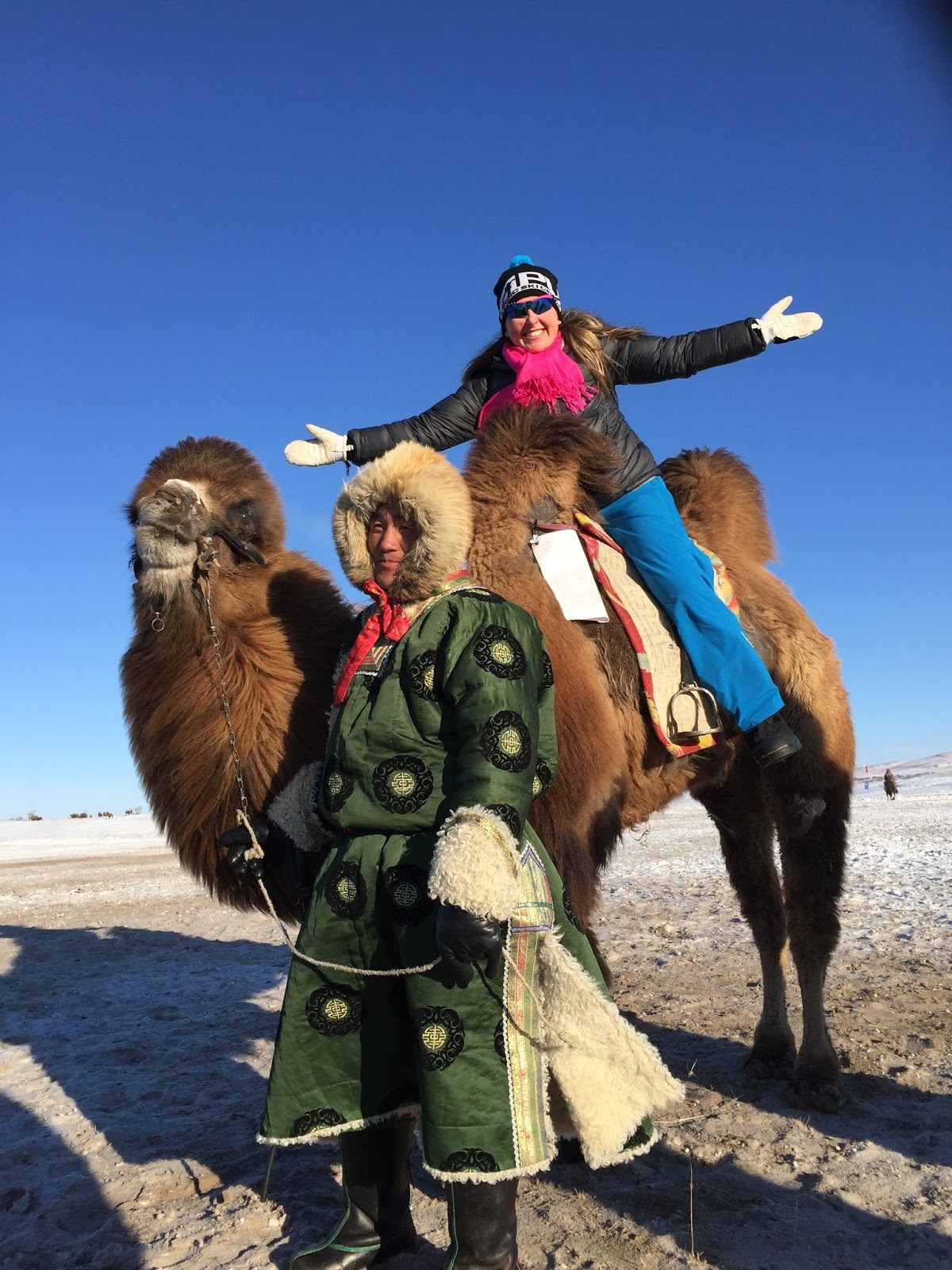
    Holly Brooks (retired APU and U.S. Ski Team) rides a camel during the 2016 China Tour de Ski. (Photo: courtesy Holly Brooks)
    Holly Brooks (retired, APU/U.S. Ski Team) rides a camel during the 2016 China Tour de Ski. (Photo: courtesy Holly Brooks)

    American skiers who have previously participated include Fritz, Peter Kling and Holly Brooks, all currently or formerly of APU; Ryan Scott, formerly of Ski & Snowboard Club Vail/Team HomeGrown; and former U.S. Ski Team member Torin Koos. They have consistently reported genuinely warm welcomes and intriguing cultural experiences.

    This year’s Tour takes racers through six stages over nine days across a wide swath of the country. (Changbaishan to Beijing is a 13-hour drive.) It’s heavy on the skate sprints: a full four out of six stages (Stages 1, 2, 5, and 6) are freestyle sprints. In the middle, Stage 4 is a prologue to short distance skate mass start race, 3.8 kilometers for the women and 5.7 k for the men.

    And Stage 3 is the Chinese Vasaloppet, a classic marathon now in its 15th year. Last year, the Tour de Ski racers covered the whole 50 k distance, with Brooks and Fritz on course for 2:44 and 2:51, respectively. This year’s Tour racers will participate in “a modified course and a shorter total distance,” though precisely how much shorter is not immediately apparent. The 2017 full-distance Chinese Vasaloppet also marks the third event of the 2016/2017 Visma Ski Classics series.

    While many multi-stage tours – the Tour de France, the Giro d’Italia, the original Tour de Ski – operate on a principle of lowest combined time wins, perhaps augmented by time bonuses for top positions, the China Tour de Ski instead applies World Cup scoring based on finishing position. Among other things, this avoids making the person who performs best in the Chinese Vasaloppet (which is much longer than all the other races combined) the de facto champion based on combined time.

    Last year’s overall winners were a pair of Swedes, Emil Johansson and Lisa Svensson. Johansson has a World Cup top-30 sprint finish to his name and won the 2013 SuperTour skate sprint in West Yellowstone, Mont., while studying at the University of Colorado-Boulder during the 2013/2014 season. Svensson, who will be competing in her fifth consecutive China Tour de Ski, has never had a podium finish in an International Ski Federation (FIS) race on European soil… but has 17 of them in China.

    One American has cracked the overall podium in the first nine years of the China Tour de Ski: Kling was second in 2015. Chinese skiers make up a minority of historic podium finishers in the event, likely reflecting both the nascency of Chinese cross-country skiing (the Chinese National Team was established in 2006) and race organizers’ willingness to attract non-Chinese skiers to their event.
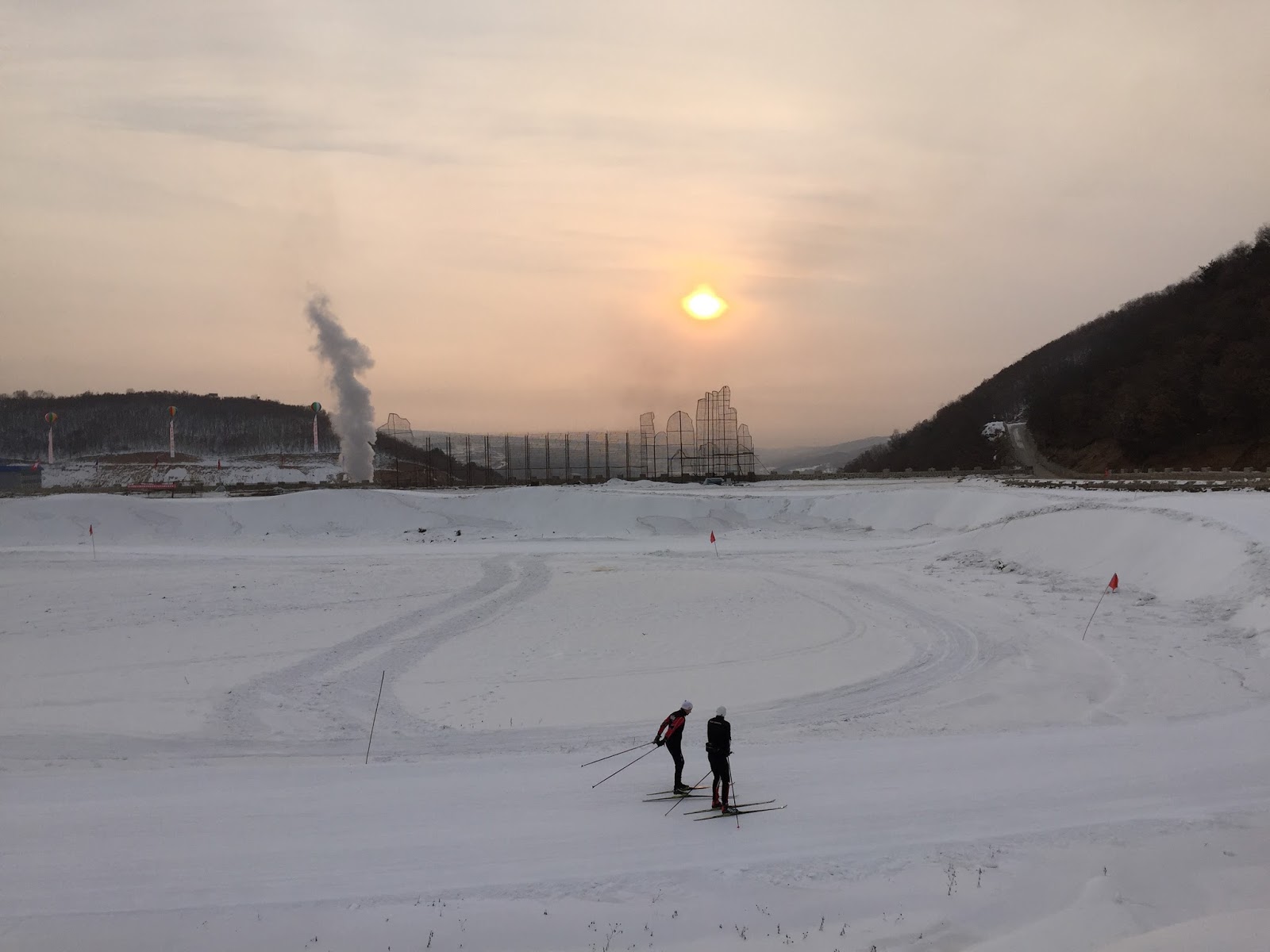
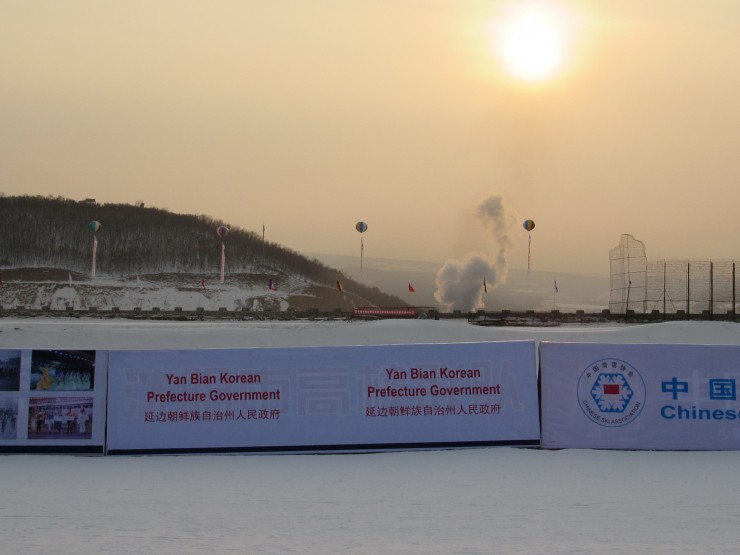
    The gravel pit-turned-skate sprint course in Yanji during the 2016 China Tour de Ski. (Photo: Holly Brooks)
    The gravel pit-turned-skate sprint course in Yanji during the 2016 China Tour de Ski. (Photo: Holly Brooks)

    When it comes to convincing European skiers to fly across Asia, or Alaskan skiers to fly across the Pacific Ocean, money talks.

    To start with, virtually all of the racers’ expenses, including transportation, are covered by the race organizers. As Scott wrote to FasterSkier during the 2015 Tour, the race paid for all of his travel, lodging, and food. “My only expense is $500 Euros to the organizers and paying for bags,” Scott wrote.

    On top of that, there’s real money to be made. In this year’s Tour, first through fourth in four of the stages is good for 2,000 to 10,000 renminbi (yuan) per race. (At current exchange rates, 10,000 yuan is equal to approximately $1,400 – or more than the $1,200 prize for first place in any race at next month’s U.S. nationals.) For the Stage 2 sprint, it’s up to 20,000 yuan for the men ($2,800), 15,000 yuan ($2,200) for the women. For the Chinese Vasaloppet, Stage 3, first place takes home 5,000 euros, or $5,200. Plus there are additional prizes for top four in the overall Tour standings, starting with 20,000 yuan for first. (With the exception of Stage 2, all other stages and overall standings feature the same prize amounts between the genders.)

    The total prize purse for Stages 1-2 and 4-6, not counting the Chinese Vasaloppet, is 251,000 yuan, or over $36,000. That’s slightly less than the $39,000 purse for the American Birkebeiner, but it’s in the ballpark. Within the world of cross-country ski racing, this is a princely sum. It is roughly to skiing as Russia’s $1.5 million for Diana Taurasi is to women’s basketball, or China’s 60 to 70 million euros for Oscar is to international soccer – eye-opening sums of money paid to entice athletes to a part of the world they might not otherwise consider visiting.

    In related news, the Qaniq Challenge will once again pay out a total purse of $10,000 in Valdez, Alaska, next month. Fritz earned $500 for her third-place finish in last year’s race, behind fellow China veteran Brooks in second.

    The athletes

    Fritz: Rekindling her love of skiing

    But for Fritz, it’s not all about the money. The native of Chugiak, Alaska, and longtime APU skier has been a competitive racer for many years, with career highlights that include SuperTour podiums, top-10 national championship finishes, and World Cup starts in Canada in 2012. But in 2015, she wrote, she suffered through “a rough season prior, a summer of illness, injury and just general low-quality training,” and was getting ready to call it a career.
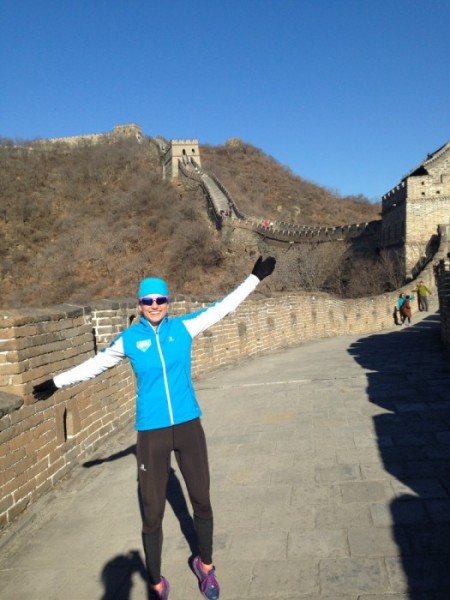
    Lauren Fritz (APU) poses for a moment during a run along the Great Wall of China during the 2016 China Tour de Ski. (Courtesy photo)
    Lauren Fritz (APU) poses for a moment during a run along the Great Wall of China during the 2016 China Tour de Ski. (Courtesy photo)

    “I decided I was going to move away from SuperTour racing and do some ski marathons and probably retire [following the 2015/2016 season],” Fritz, 28, wrote to FasterSkier earlier this week during a break from packing. “I was fed up with racing SuperTour, racing poorly and not getting anywhere (figuratively, with my ski career). And I wasn’t having fun anymore. I was so used to being around skiers who are very focused on high level goals and incredibly (unspokenly) competitive that you can lose sight of why you do what you do beyond just a number on a result sheet, especially if you aren’t achieving those results (and I most certainly wasn’t).”

    Her inaugural trip to China changed all that.

    “Being with the group in China, it was just all about how we got this amazing opportunity and it was simply because we skied,” she wrote. “It reminded me that skiing has taken me so many places and connected me with so many people, and I get to be outside so much, and that was why I love it so much. I came home with a fresh attitude and it really helped boost me mentally and physically.”

    Fritz’s enthusiasm is immediately apparent in her answer to a reporter’s question about why she is going back to China.

    “Last year’s Tour de Ski China was one of the most fun, unique, and craziest ski trips I’ve ever been on,” she wrote. “So it’s more a question of ‘Why not?’ than ‘Why?’ am I going back, which probably makes it obvious why I’m going again. It was low-stress, low-pressure, with high energy, excitement and general enjoyment.”
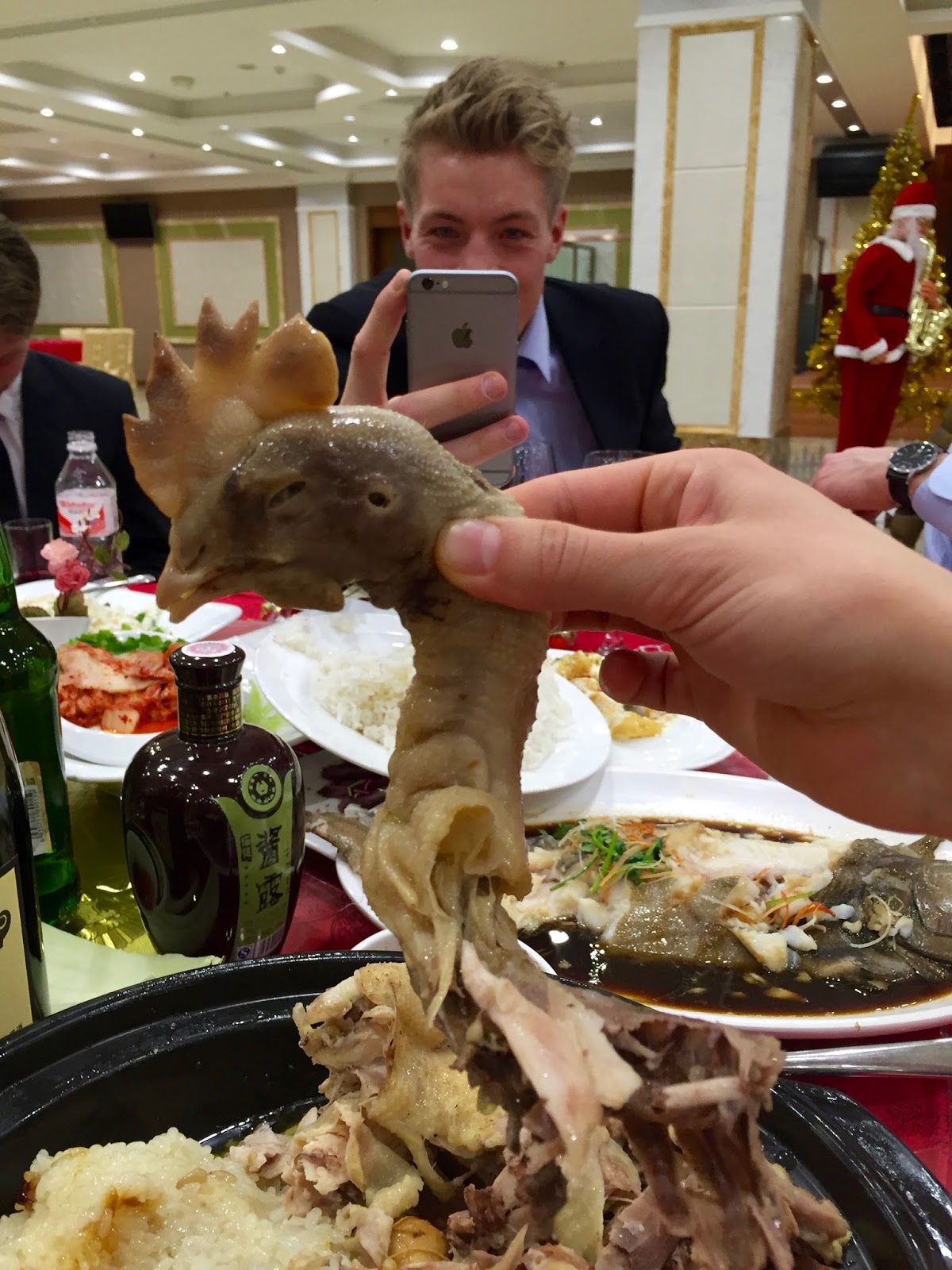
    A chicken head featured prominently on the menu during the 2016 China Tour de Ski. (Photo: courtesy Holly Brooks)
    A chicken head featured prominently on the menu during the 2016 China Tour de Ski. (Photo: Holly Brooks)

    “Everyone on the trip was there primarily for the experience of being in China and seeing cool new places with the added bonus that we got to do some ski races,” Fritz enthused. “I mean, how many ski races have you been to where you have to squat over a board over an open pit in a communal poop shack, and get handed a can of random Chinese ‘RedBull’ and a personal size bottle of Chinese spirits, cross a finish after skiing through a literal snow castle city, and be treated afterwards to a show and a table full of food you don’t recognize but eat anyways… Oh, and get to go for a hike on a Great Wonder of the World [the Great Wall of China] after the last race?”

    Fritz continued, “Everyone’s attitude was more geared towards having a great time and experiencing what China had to offer than doing well in the races, and that gave it a more relaxed feeling. Not that people didn’t take the races seriously, they/we certainly did because there was money on the line! But once the bib came off, it was about having fun. The group we had was amazing, everyone was fun to hang out with and easy to get along with, and we had a great time. Not often is two straight weeks of living and traveling with a big group like that so easy and enjoyable.”

    “Last year’s Tour de Ski China was one of the most fun, unique, and craziest ski trips I’ve ever been on. … It was low-stress, low-pressure, with high energy, excitement and general enjoyment.” — Lauren Fritz, APU skier

    While she is largely going back for the experience, Fritz is not above hoping that, in a virtuous cycle, the improved training she was inspired to do following her trip to China last year will translate to better results this year.

    “This year I definitely want to get some podiums,” Fritz wrote. “I had two 4th places last year, so I’d like to improve on that! I think it’s possible to be on the podium a few times if I ski the way I know I can right now with my fitness level. (Read: Fitness level waaaay better than last year, ha!)”

    “Pretty much, the TDS China is my season,” she concluded. “As I said, I was going to retire after last year, but I kind of felt rejuvenated and wanted to keep training pretty much just so I could go back to China this year! I will still do some races later in the season, but China is definitely top of the priority list.”

    Novak: Looking for adventure and an inaugural camel ride
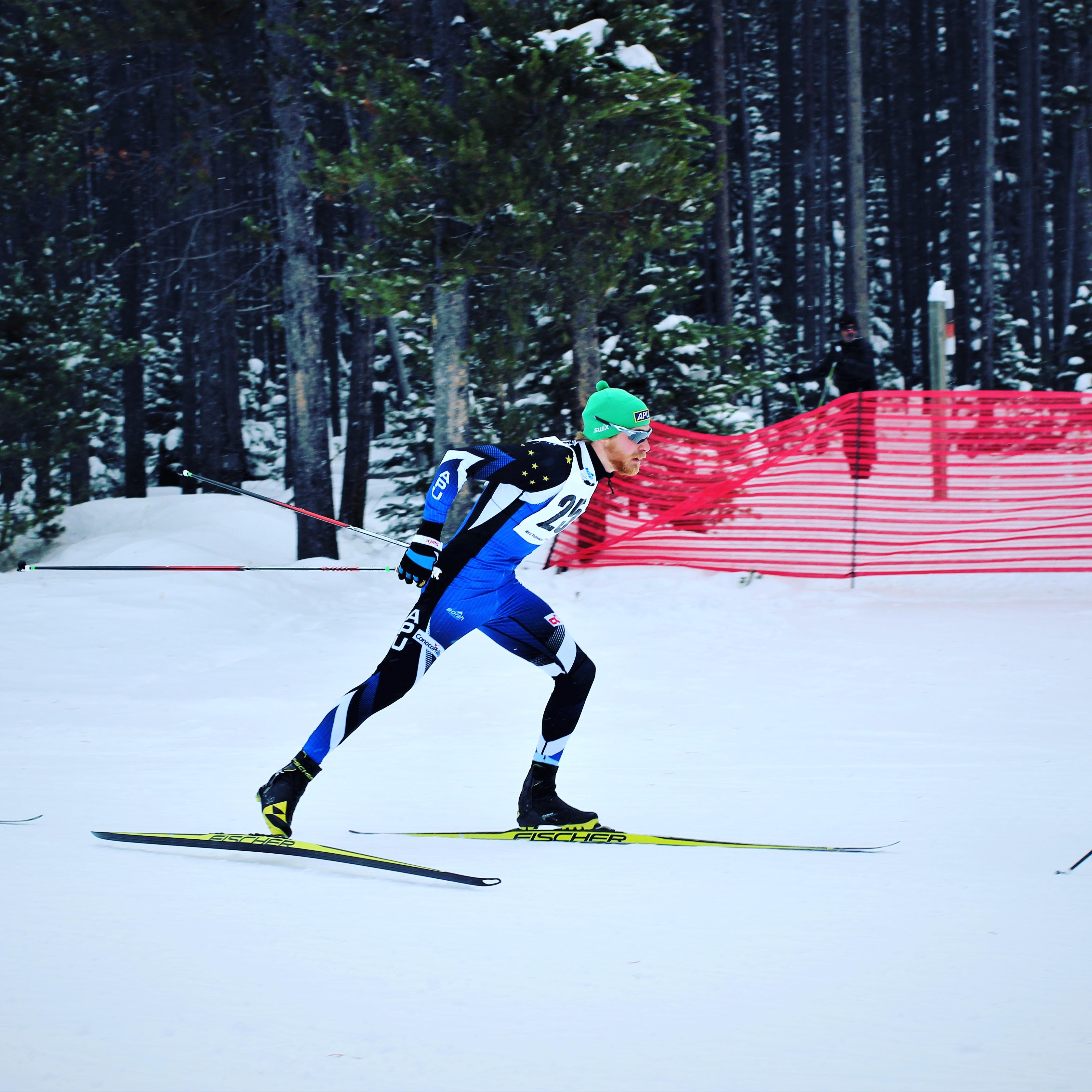
    Jack Novak (APU) during a SuperTour race in West Yellowstone, Mont., this month. (Photo: Forrest Mahlen)
    Jack Novak (APU) during a SuperTour race in West Yellowstone, Mont., this month. (Photo: Forrest Mahlen)

    Novak, 23, from Anchorage and also a longtime APU racer, finds himself in much the same boat as Fritz – underwhelmed by his recent performances, and looking for a low-stress adventure to mix things up.

    “I decided to go on the Tour de Ski China because I was looking for a change of pace after the past couple of years of injuries,” Novak wrote to FasterSkier. “I am not in a place where I am racing for a World Champs start spot, so for me racing at nationals didn’t have a huge draw this year. I heard about this race from my teammates over the years and thought this is a good year to race this series. It should be quite an adventure and that is what I am looking for right now, having fun racing and doing what I love.

    “I also have never ridden a camel but I hope this trip affords me the opportunity,” he added.

    In less Bactrian goals, Novak wrote, “My goals for this series are to really see how I stack up. I would love to be in the mix hopefully fighting for the win every once in a while. Also I already am going to get to travel to China and Inner Mongolia seeing part of the world I have never seen which is a goal achieved as soon as I leave. Being able to travel around the world to ski race is a real pleasure and an opportunity that not many get to experience so I feel very lucky.”

    Back in this country, Novak wrote that the China trip meshes well with the rest of his season goals, as he plans to enter some local races in Alaska in January before heading to the Midwest in February for SuperTour races and the Birkie.

    “Finally,” Novak wrote, “we will finish up the season in Fairbanks [for Spring Series] which should be a hoot and a half. We race so infrequently in Alaska on a national stage that it is fun to race at ‘home’ or at least the same state.”

  • Competition and Camels: Brooks, Koos, Fritz, and Nishikawa on China’s Tour de Ski

    Competition and Camels: Brooks, Koos, Fritz, and Nishikawa on China’s Tour de Ski

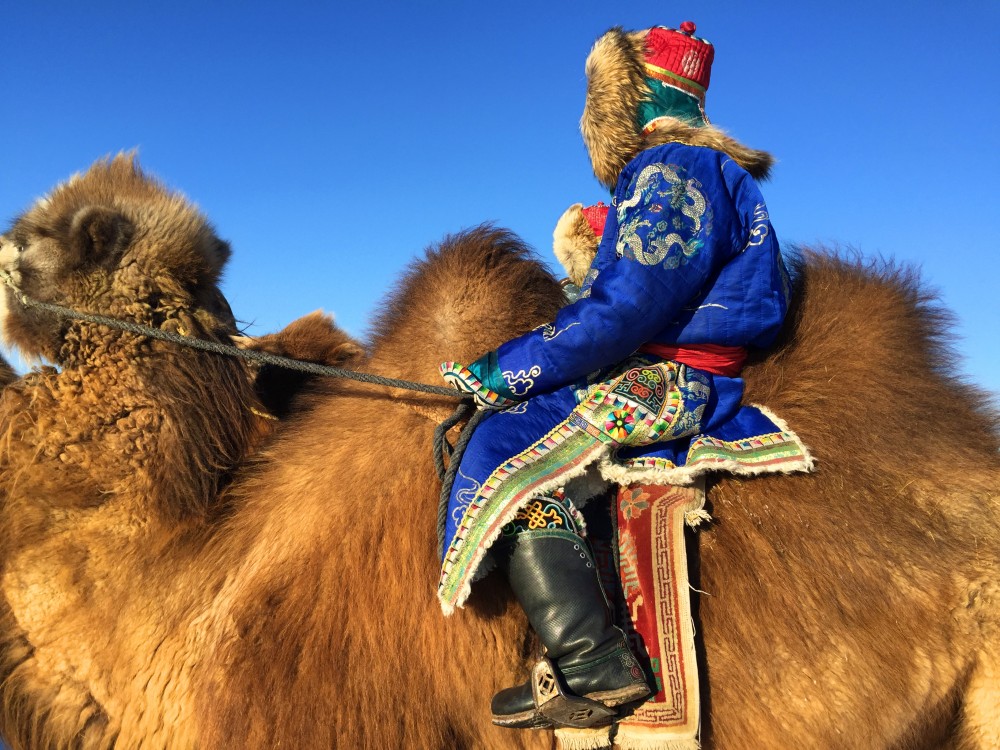
    Competitors at this year's China Tour de Ski spent their post-race recovery watching and riding camels in  Xiwuqi, Inner Mongolia. (Photo: Courtesy photo from Koos)
    Competitors at this year’s China Tour de Ski spent their post-race recovery watching and riding camels in Xiwuqi, Inner Mongolia. (Photo: Torin Koos)

    Does riding a camel count as a post-race cool down? For nordic competitors in the 2016 China Tour de Ski, it definitely did.

    “The last day [of the China Tour de Ski], we had a sprint race in a place called Xiwuqi. Then in the afternoon we got to go and ride camels and see a camel race. I mean who does that?” exclaimed Holly Brooks, an Alaska Pacific University (APU) elite team member, two-time Olympian and most recently, a China Tour de Ski competitor, in a phone interview. 

    Torin Koos, who also raced at this year’s eighth edition of the China Tour de Ski (TdS), shared in Brooks’ surreality of a post-race jaunt on an unusual four-legged friend.

    “There was a camel race going on and the athletes got wind of it and wanted to go. So the [event] organizers arranged a bus for us to go out there after the final races,” Koos, a four-time Olympian and currently an investigative news producer for KSL TV, the NBC station in Salt Lake City, said on the phone. “When else are you going to do your post-race recovery at a camel race in Mongolia?”

    On top of camels, this year’s China TdS involved five stages of racing: a 1.2-kilometer freestyle sprint for Stage 1, another 1.2 k freestyle sprint for Stage 2, 50 k classic mass start “Vasaloppet” for Stage 3, 3.8 and 5.7 k mass starts for Stage 4, and finally a third 1.2 k freestyle sprint for Stage 5.

    “Each stage was unique in and of itself. I mean, we had five races in three different venues,” Brooks said of the race schedule, which spanned from Jan. 1-7.

    Another American racer, Lauren Fritz of APU explained on the phone, “They don’t block off a lot of time for travel. [Koos, Brooks and I] flew into China and got in at midnight” on Dec. 30.

    “We had all of the next day to chill … then we raced the first stage [on Jan. 1]. The next day we took a 6 a.m. bus to a train station, took a two-hour train ride to the city, then another bus to our hotel. We raced two more days and then we got on a bus for 17 hours to Inner Mongolia for the last two stages of racing.”

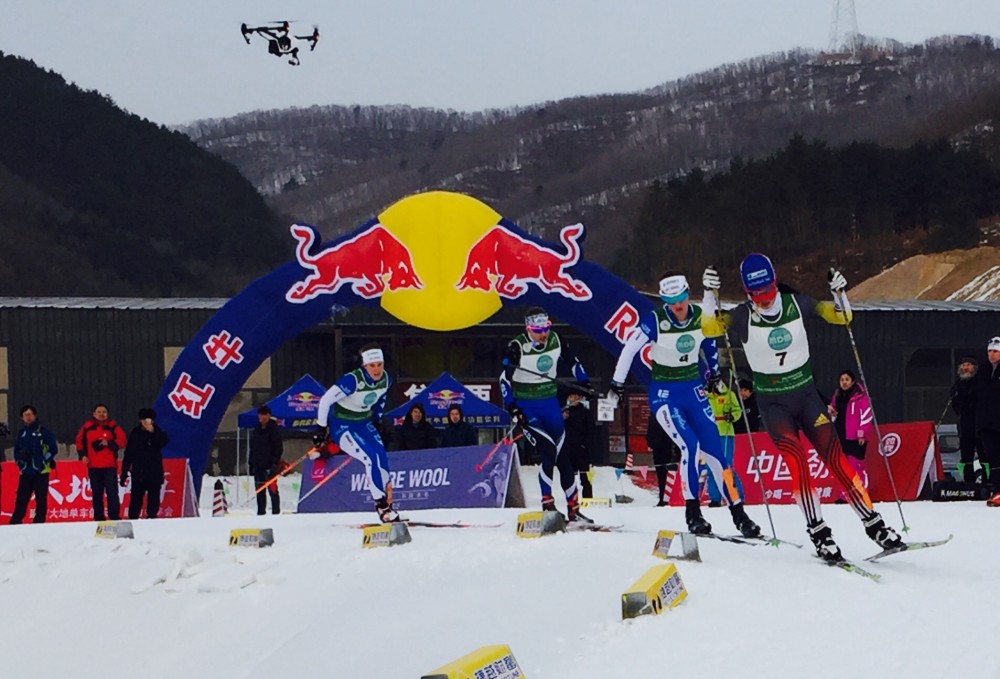
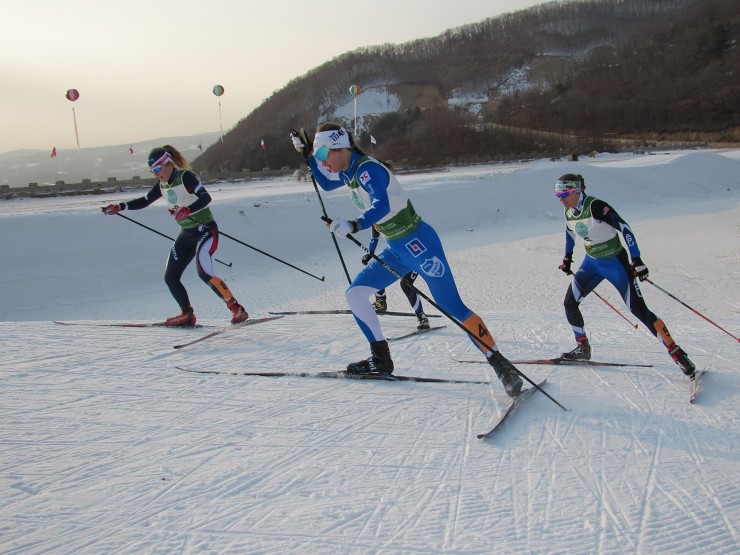
    Right to left: Qu Ling (CHN), Mimmi Bjørn (SWE), Lauren Fritz (USA), and  Linda Danvind-Malm (SWE) during Stage 1 of the women's 1.2 freestyle sprint on Friday, Jan. 1 at the China Tour de Ski in Yanji. Fritz placed fourth overall, Brooks (not shown) missed the final in fifth place. (Photo: Courtesy photo from Brooks)
    The Stage 1 women’s sprint, (from right to left) with Qu Ling (China) leading Mimmi Bjørn (Sweden), Lauren Fritz (U.S.) and Linda Danvind-Malm (Sweden) on Jan. 1 at the China Tour de Ski in Yanji. Fritz placed fourth overall, Brooks (not shown) missed the final in fifth place. (Photo: Holly Brooks)

    While a 17-hour bus ride the day before a race does not appear in most skiers’ training logs, neither does a 3.8/5.7 k freestyle mass start race in Inner Mongolia.

    “A 3.8 k prologue mass start is a pretty crazy race,” Fritz recalled. “It was a 1.9 k loop and the girls did it twice.”

    Racers in the fourth stage launched into a steady 500-meter incline out of the start, especially unforgiving after 1,500-kilometers of bus travel the previous day.

    “You could V2 the whole hill if you had good skis, so it was a hammer-fest out of the start,” Fritz said. “It was pretty cold out, I didn’t really warmup that well and because we had a 17-hour bus ride the day before, I was pretty tired. Definitely got to the top of the hill after V2ing the whole thing and was just toasted.” 

    The 27-year-old went on to finish 10th overall, 43.31 seconds back from the women’s prologue winner, Terese Andersson of Sweden, who topped the 3.8 k freestyle mass start in 10:10.76.

    Just 1.22 seconds behind Andersson in third place, Brooks felt that with more closing speed the prologue title could have been hers.

    “It was kind of fast and furious,” Brooks said. “They had a really good course and I was up there to start, but without the training I just didn’t have the finishing speed for the last 200-meters.”

    Brooks spent much her fall unable to train, due to a rollerskiing accident that left her needing reconstructive surgery in her thumb’s ulnar collateral ligament.

    “I rollerskied into a pile of sand and I got up and my thumb was bent backwards … so I had surgery in late September and was in a cast for two months,” she explained.

    This year, Brooks has also been working to complete her masters degree in counseling psychology, which she said has taken priority over ski training.

    China Tour de Ski Race Schedule:
    Stage 1: (Jan. 1) 1.2 k freestyle sprint Yanji, Jilin
    Stage 2: (Jan. 3) 1.2 k freestyle sprint Changchun, Jilin
    Stage 3: (Jan. 4) 50 k classic Changchun, Jilin
    Stage 4: (Jan. 6) 3.8/5.7 k freestyle mass start Xiwuqi, Inner Mongolia
    Stage 5: (Jan. 7) 1.2 k freestyle sprint Xiwuqi, Inner Mongolia

    “Last year I chased the marathon scene and really kind of raced myself into submission,” she said. “I did 11 marathons and traveled by myself for four months in Europe … and at the end of the season I was just exhausted. So I ended up taking a lot of time off this summer. Then this fall, I was working full time on an internship and in grad school.”

    The other American to finish third in Stage 4 was Koos, who crossed the line just 1 second after Swedish skier Lukas Johansson, who won the men’s 5.7 k freestyle mass start in 13.56.5.

    “I definitely felt like I could have won it. I kind of got taken out on the next-to-last climb so I was battling back up [to the front] for a bit,” Koos explained.

    However, both Brooks and Koos felt that as the Tour progressed, so did their ski racing.

    “I was starting to feel better and better as the Tour went on. I think I was also getting further away from having the flu,” said Brooks, who spent much of the final week in December battling illness.

    “That last qualifier somehow I was able to win it by eight seconds which I was super pumped about, but then once again, I just didn’t have the final finishing speed,” the 33-year-old Washington state native added. Brooks placed second in the Stage 5 freestyle sprint.

    “Definitely the highlight was going to Inner Mongolia,” Koos said. “I’ve never seen so many cameras out on a race course. There were hundreds of people out there taking pictures. It had this big-time feel, but in the middle of nowhere.”

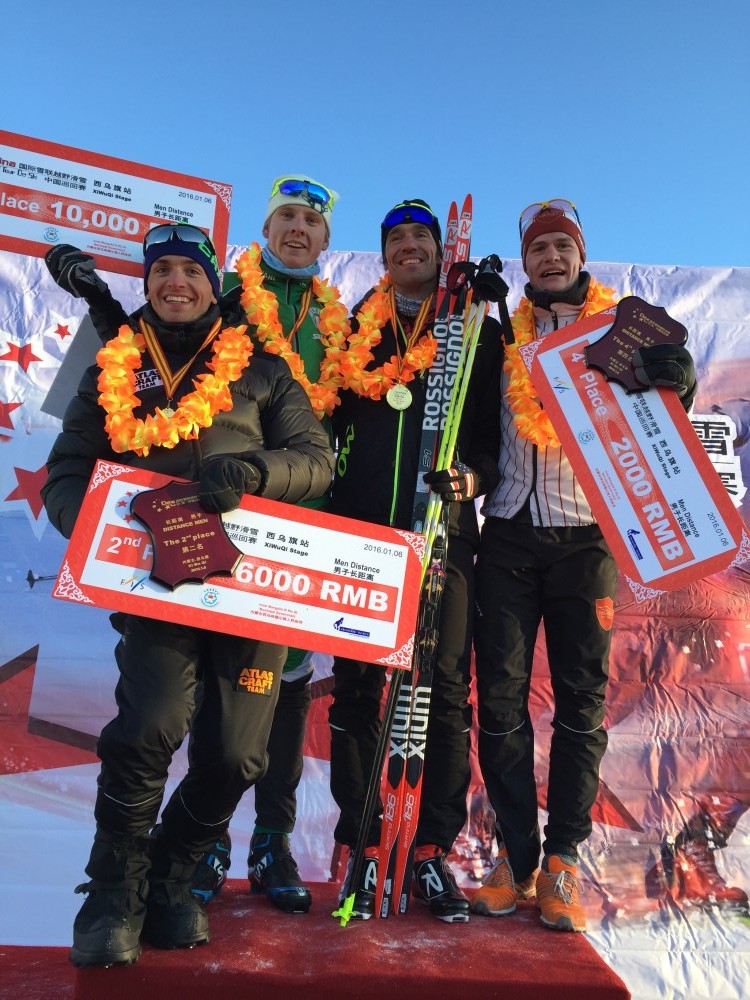
    Left to right: Second place finisher, Daniel Máka (CZE), race winner Lukas Johansson (SWE), third place Torin Koos (USA), and fourth place finisher Torben Svensson (SWE) stand on top of the podium with their prize money from the Stage 4 men's 5.7 k freestyle mass start on Wednesday, Jan. 6 at the China Tour de Ski in Xiwuqi, Inner Mongolia. (Photo: Courtesy photo from Brooks)
    (From left to right) The Stage 4 men’s 5.7 k freestyle mass start podium, with second-place finisher Daniel Máka (Czech Republic), race winner Lukas Johansson (Sweden), American Torin Koos in third., and Torben Svensson (Sweden) in fourth sharing the top spot of the podium with prize money in hand on Jan. 6 at the China Tour de Ski in Xiwuqi, Inner Mongolia. (Photo: Holly Brooks)

    “I also raced the best in Mongolia and it didn’t hurt getting on the podium [in the mass start],” he added. “I won the the sprint [qualifier] there, but couldn’t quite get it done in the rounds.” 

    On Jan. 7, the final day of racing, Koos advanced to the quarterfinal in the freestyle sprint. However, since only the top four advanced to the final in all of the China Tour de Ski sprint events, Koos missed moving past the semifinal and finished in fifth overall.

    “All in all, it’s a little bit different when you’re working full-time and your priorities have changed a little bit,” 35-year-old Koos said of his training coming into the China TdS. “But I think as the Tour went on, I was getting stronger and I think I left there at a pretty high level.”

    Based off their sprint race results from Stage 1 and Stage 2, Koos and Brooks were accurate in deeming themselves improved by the Tour’s finale.

    In the first freestyle sprint, Koos qualified for the quarterfinal, but did not move on to the semifinal, ending the day in 11th.

    Canadian Graham Nishikawa, the lone Canadian competitor at the China Tour de Ski, raced to sixth that day.

    “I always wanted to compete in the Tour de China and this year it worked out. It was a great event! The organization was stellar and the racing was really fun,” Nishikawa wrote in an email. “We got to see so much of China and travel to places that I would have never otherwise seen. The racing was good for me. I had some bad luck with breaking poles, but raced fairly consistently everyday.”

    Nishikawa, 32, is a member of the Para Nordic World Cup Team as a guide for Brian McKeever.

    For Brooks, Stage 1 left her in fifth, just outside of the women’s final after qualifying for the quarter and semi. Fritz broke the bubble, moving all the way to the final, where she placed fourth.

    “The sprints were my focus because I’ve had the most success in sprinting before,” Fritz said. “And they went pretty well, I had a few tactical errors and a little bad luck. Didn’t quite achieve what I wanted, but I was still pretty happy.”

    Stage 2 brought the racers to Changchun, where they raced the second freestyle sprint. Here, Koos bested his previous result, finishing fifth overall, just outside of the final. Nishikawa moved into 13th.

    Fritz once again advanced all the way to the final in the second freestyle sprint. Coming into the finishing stretch, she found herself in second, closing in on first place. However, with 150-meters to go, Fritz said someone stepped on her pole and she crashed, ultimately finishing the final in fourth.

    Brooks qualified for the quarterfinal and semifinal that day, but didn’t advance to the final and finished the day in seventh overall.

    “I’ve never seen so many cameras out on a race course. There were hundreds of people out there taking pictures. It had this big-time feel, but in the middle of nowhere.” — Torin Koos on the racing atmosphere in Inner Mongolia

    The 50 k Classic Vasaloppet and More

    Snow castles and carvings that might even put Italy’s Roman Pantheon to shame — if not for the risk of melting — marked the lap lane to the China TdS 50 k Vasaloppet.

    “Some things about China you just can’t believe. People think that we do things bigger than anybody in the U.S., but in some regards, it’s definitely not true,” Koos said. “Like, at the Chinese Vasaloppet, they had these sculptures that we were skiing by and it was something that you could maybe envision Las Vegas doing.”

    This year’s China Vasaloppet promised athletes 50 k of skiing through the Jingyuetan National Forest Park, located in the northeast Jilian Province of China.

    Sculptures surround the lap lane for the 50 k classic Vasaloppet marathon on  Monday, Jan. 4. at the China Tour de Ski in the Changchun Jingyuetan Park. (Photo: Courtesy photo from Brooks)
    Sculptures surround the lap lane for the 50 k classic Vasaloppet marathon on Jan. 4. at the China Tour de Ski in the Changchun Jingyuetan Park. (Photo: Holly Brooks)

    “Racing through snow sculptures that are five stories tall, I mean it was magnificent,” Brooks described. “You’re doing a lap lane through pavilions, doves, and castles. I’ve been in a lot of stadiums in my life, and I’ve been in a lot of marathons all over the world and this was incredible.”

    A total of 258 racers showed up for the two-lap marathon and while not everyone finished, most soaked up the sunny skies and spectacular snow artwork that surrounded them during the race. 

    In the women’s event, Brooks led the Americans in sixth overall in 2:43:33.9, about 9 1/2 minutes behind the race winner Qinghua Ma of China, who completed the 50 k course in 2:34:08.1. Fritz finished 11th (+16:23).

    “I’ve been in a lot of stadiums in my life, and I’ve been in a lot of marathons all over the world and this was incredible.” — Holly Brooks on racing the Chinese Vasaloppet 50 k classic

    The men’s field saw Czech skier Petr Novak take the overall 50 k win in a time of 2:19:26.3. Koos finished 12th, 8:05.5 minutes behind Novak. Nishikawa finished about a second after Koos in 13th.

    Along with a marathon through snow mansions, the China TdS boasted festival banquets almost every night.

    “On this trip, every other day we were having a banquet or a celebration,” Brooks said. “Just the atmosphere and the ambience, I actually turned to someone and said, ‘I see why the Chinese don’t come to the World Cups very often, they seriously do it up in their own country.’ ”

    Brooks was not alone in thinking that the tone of the Tour made for an enjoyable racing experience.

    “The whole attitude at the tour was so different and it was really refreshing,” Fritz said. “If you were in the top few you were gunning for some good prize money… but once the skis came off it was way more fun than a normal SuperTour race trip, because there’s no pressure and everyone’s there to have a good time.” 

    A couple Americans did pocket prize money, though for Koos, it did not stay there long.

    “I won a few hundred bucks or something. It was enough to buy me a sweet custom made grey suit in Beijing, so I’m looking pretty dapper these days. When in China, you just got to live it up to the fullest,” he said.

    “If I had skied just a little bit faster I could have made some real money,” he added. “Maybe that’s motivation for 2017.”

    Brooks also came away from the week with monetary winnings. However, the all-expense paid trip remained more important.

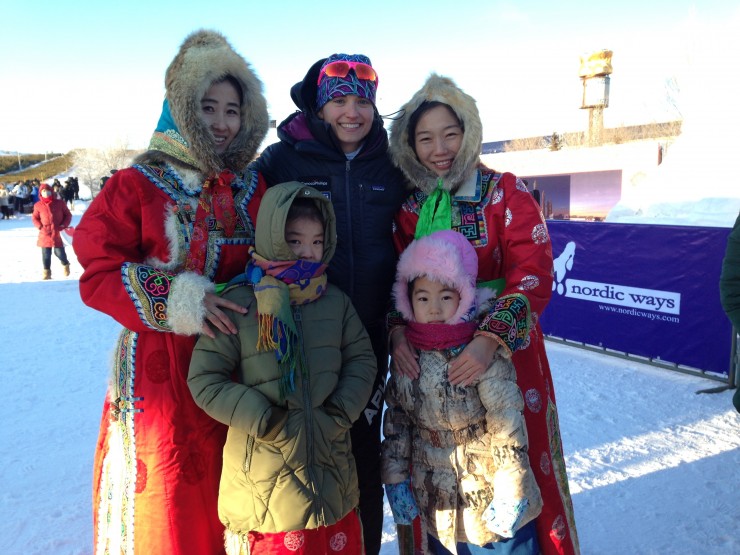
    There’s a company called Nordic Ways, a Swedish Tour Companyand they do everything,” she explained. “The bought my [plane] ticket. You show up at the airport and there’s someone holding up a sign with your name on it. All the transportation, three meals a day, everything is covered.”

    Overall, Brooks finished the Tour in fourth, Koos placed sixth in the Tour, Fritz was the seventh overall woman, and Nishikawa the 10th overall male.

    “There are so many ways to be a cross-country ski racer and I’m just really enjoying having new experiences, having new adventures, and reinventing myself every season,” Brooks said. “I feel like I really accomplished that by going to China.”

    Women’s Results: Stage 1 | Stage 2 | Stage 3 | Stage 4 | Stage 5 |

    Men’s Results: Stage 1 | Stage 2 | Stage 3 | Stage 4 | Stage 5 |