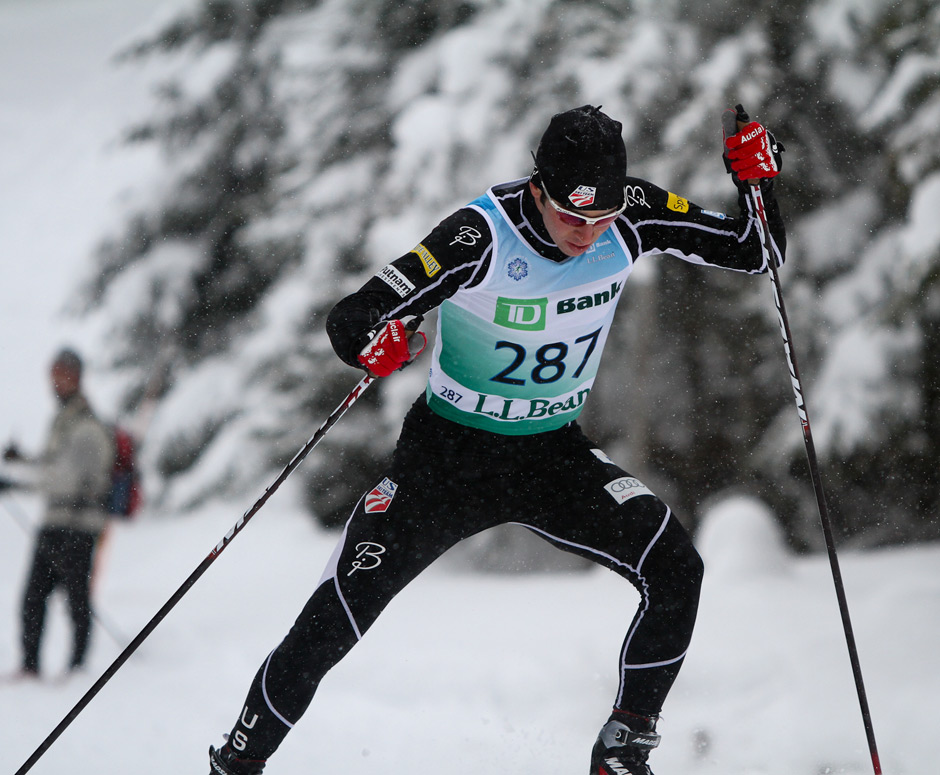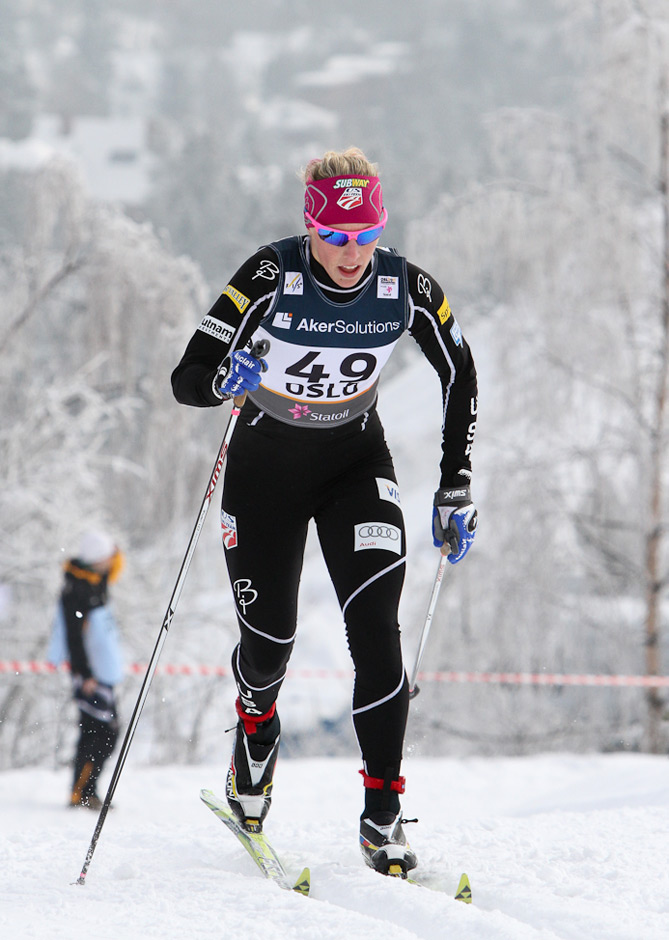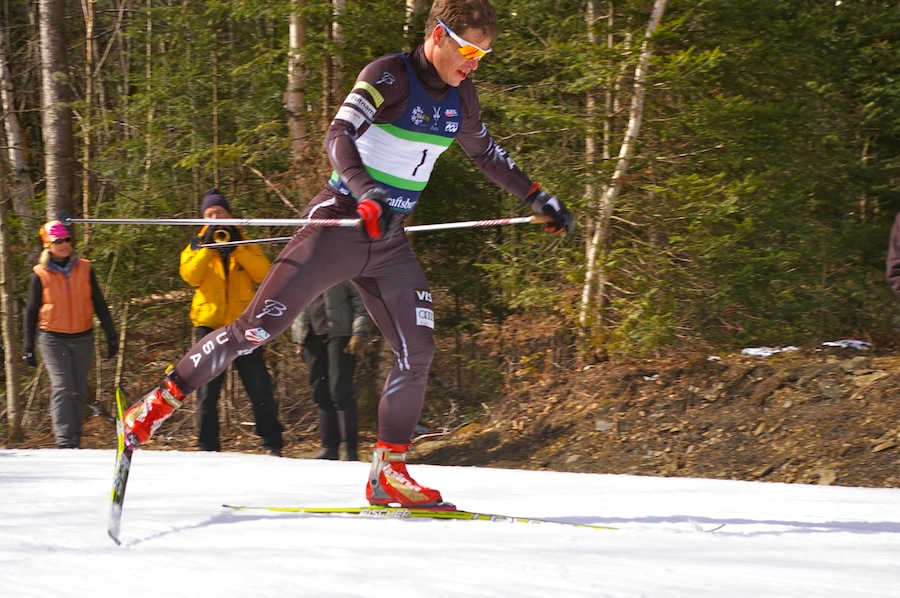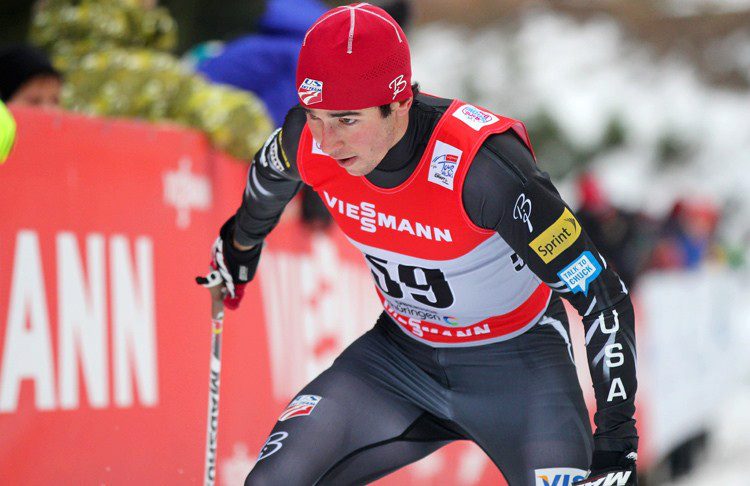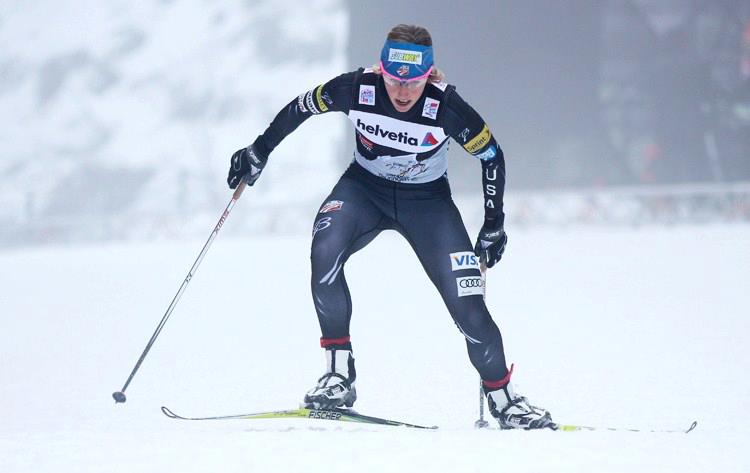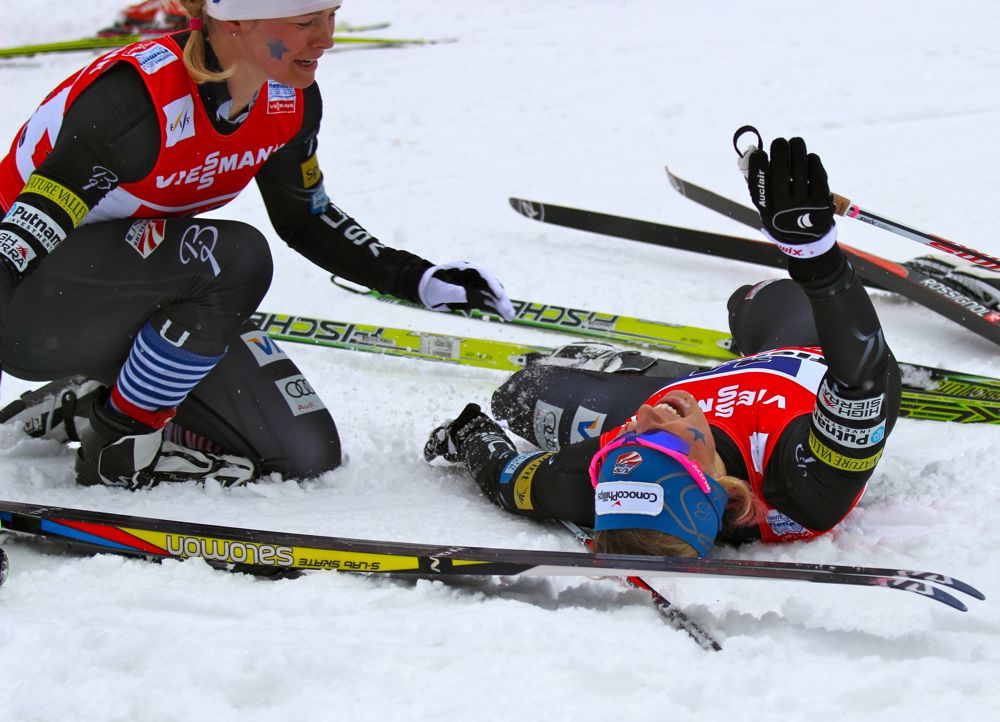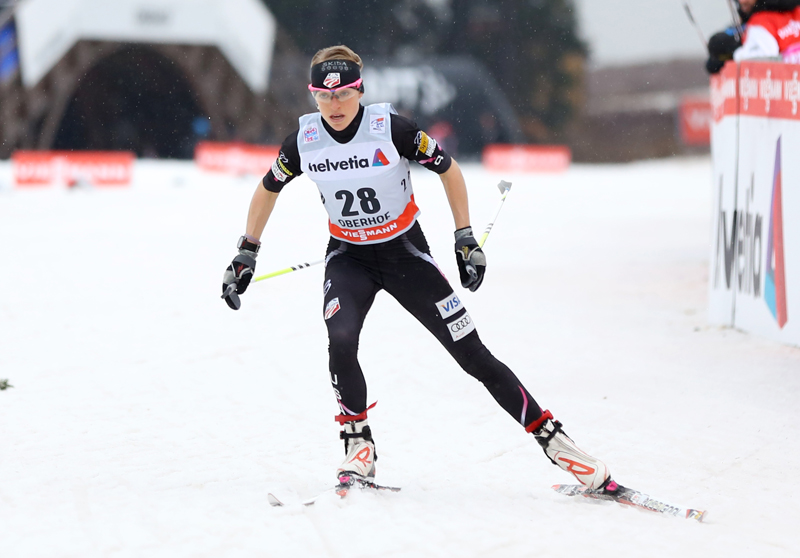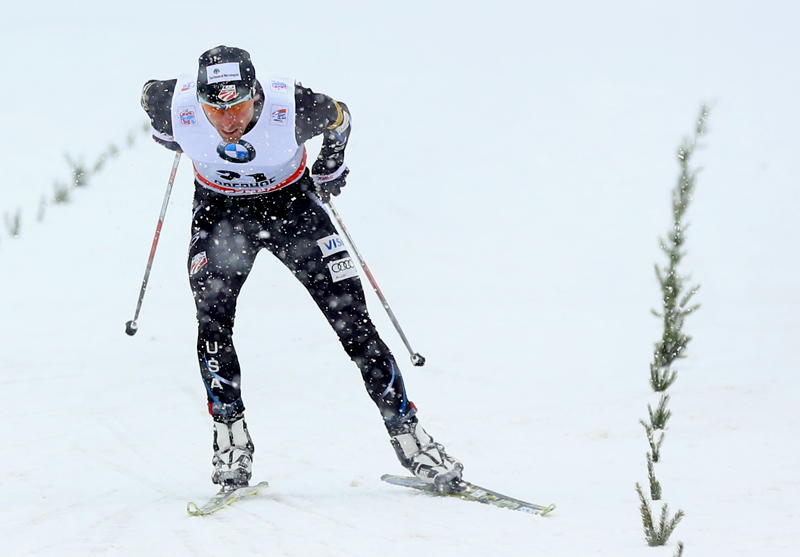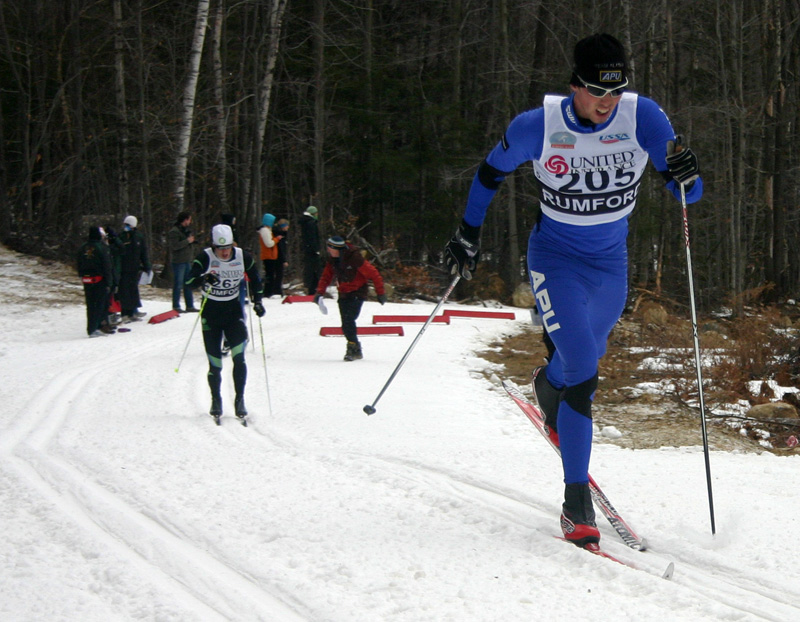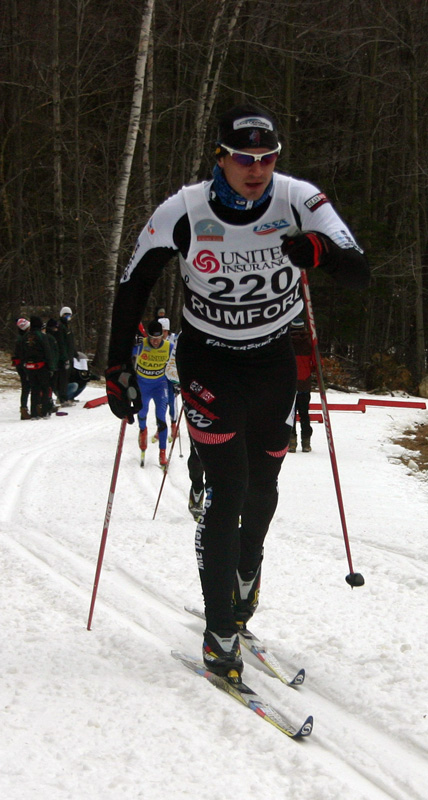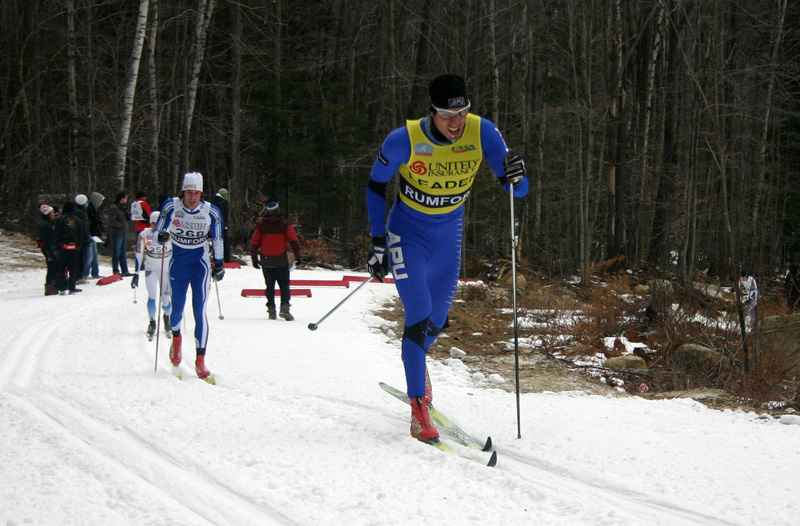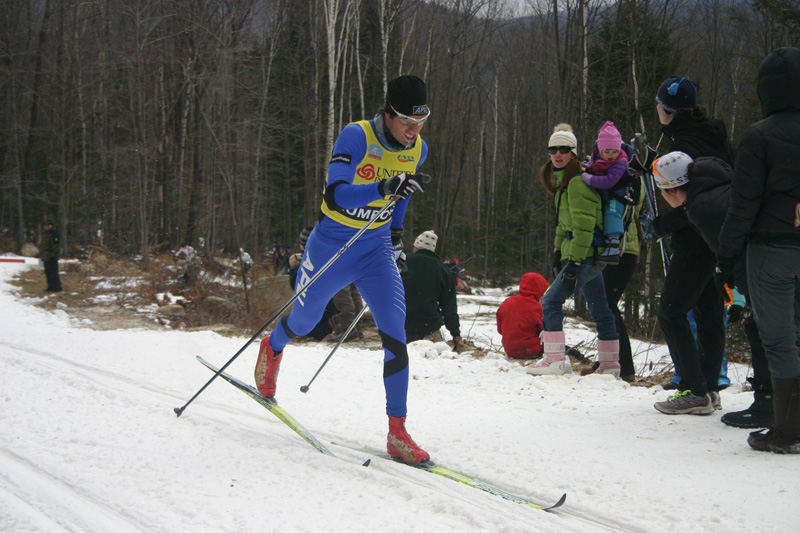
Tag: Chris Cook

  • Red, White, and… Black? A Visual History of the USST Uniform, 2008–2019

    Red, White, and… Black? A Visual History of the USST Uniform, 2008–2019

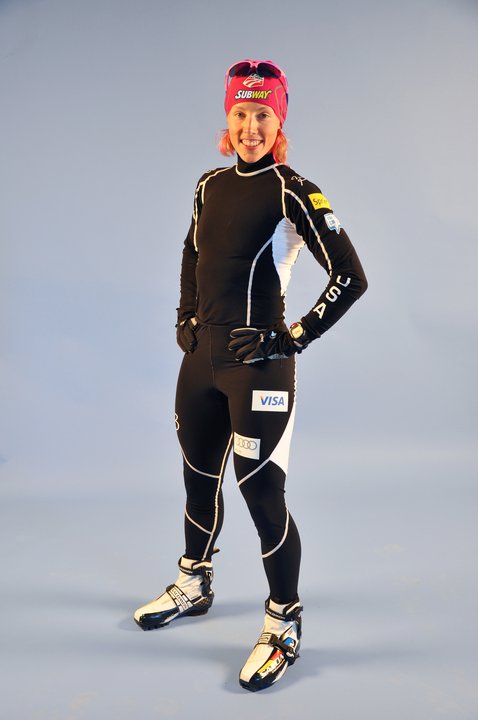
    From October 2010: Kikkan Randall modeling the U.S. Ski Team suit for the 2010-2011 season. Photo courtesy of the U.S. Ski and Snowboard Association.

    A national team uniform for cross-country skiing has to do a lot of things. At the most utilitarian level, it has to wick sweat and aid performance while an athlete pursues one of the world’s most demanding sports at temperatures between –4 F and 40, in steady snow or driving rain or anything in between. At the functional level, it has to let spectators and coaches identify where their athlete is out on the course, while distinguishing them from athletes from other countries. And at the symbolic level, it lets the athlete know that he or she is competing on behalf of their country, for everything that that means. Ask a skier who has represented the United States in international competition what it meant to them to pull on a national uniform for the first time. They’ll probably be able to tell you.

    (And if they ever forget, this detailing from Craft and L.L. Bean on the American uniforms, ca. 2015/2016, is there to remind them. “You are representing the United States of America,” a slogan intones, above a martial-looking eagle, with a U.S. Ski Team master mark for its aegis, gripping an olive branch (?) in its dexter claw and a skis and ski poles fasces in its sinister. “Pretty fun to be representing an American brand with our American uniforms!,” wrote Sadie Bjornsen in a blog post describing the uniforming process.)

    For whatever reason, the period roughly one decade ago represented the highwater mark for domestic and global coverage of ski uniforms on this website. There was “US Ski Team Brings Suit Consistency,” from Jan. 2009 (lede: “After years of a remarkable level of wardrobe schizophrenia, the US Ski Team has ushered in a new era of racing suit consistency that should make it easier to follow our favorite US athletes on the race course.”); “The costume disciplinarian speaks: Is it better to look good than to ski fast?” from July 2009; “The Best and Worst (Suits) of the Olympics,” from Feb. 2010; and “USST Goes Black for 2010-2011,” from Oct. 2010 (lede: “In the sport of cross-country skiing, most people would agree that competing with New Zealand is probably smarter than picking a fight with Norway.”).

    After that, attention to this important issue appears to have lain largely fallow until the 2018 Winter Olympics in Pyeongchang, which brought “FasterSkier’s Unofficial Guide to 2018 Olympic Cross-Country and Biathlon Suits.

    So it seems to have been nearly 10 years since the last sustained attention to the uniforms of the Davis U.S. Cross Country National Team Program (née U.S. Ski Team). To fill that gap, FasterSkier hereby presents A Visual History of the United States Ski Team National Team Uniform, 2008–2019.

    (Why 2008 for the starting point? Mostly for the simple logistical reason that the image library in the current FasterSkier content management system, WordPress, only goes back to 2008, so this article can be written while using only images that FasterSkier may legitimately post on this site. To go back to closer to the start of this century would require a lot of external links to Getty Images and not that many photos to actually look at on this website. That said, this piece from 2009 has a nice visual roundup of the plethora of different USST designs worn from 2006–2008, which takes you back two more years. Before that, well, just imagine Kikkan Randall and a lot of other skiers you probably haven’t thought about for a while — Wendy Wagner, anyone? Rebecca Dussault? Sarah Konrad? — wearing various iterations of early-aughts red and black.)

    2008/2009 World Cup season: Red

    January 2009: No question who is from the US here… Kikkan Randall in the women’s Team Sprint in Whistler


    January 2009: Kris Freeman preferred the orange to silver in the men’s pursuit

    As a contemporary uniform article explained, “There are currently two suit variations being used by US Ski Team athletes, and athletes racing for the US in international events. They are so similar, that for practical purposes (identifying US skiers in a race) they may as well be the same. Both suits are predominantly red, with one version having patches of orange, and the other silver.” Both were manufactured by Norwegian company Bjørn Dæhlie.

    There appears to have been no change to the basic World Cup design for the 2009 World Championships in Liberec, Czech Republic:
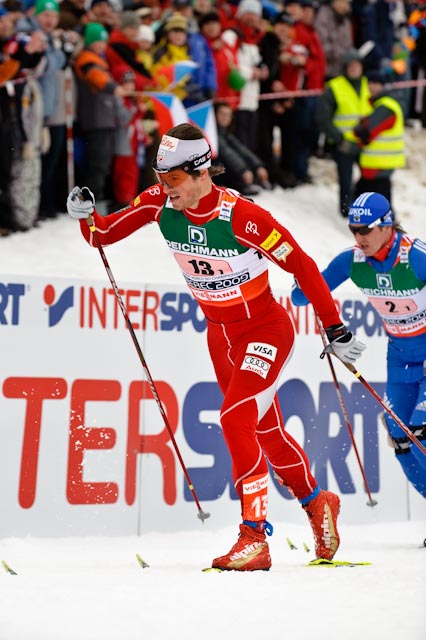
    Freeman at the 2009 World Championships in Liberec. (Photo: Swix Sport)

    2009/2010: Still red Bjørn Dæhlie

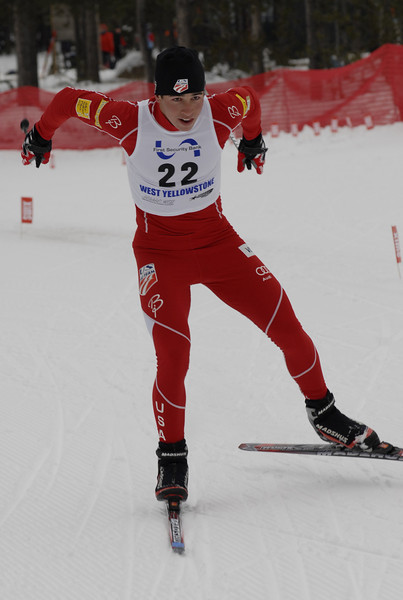
    November 2009: Tazlina Mannix (APU, USST) racing in West Yellowstone.


    November 2009: A very young Noah Hoffman (USST) racing to 3rd in a distance race in West Yellowstone.

    Honorable mention, domestic suits division:
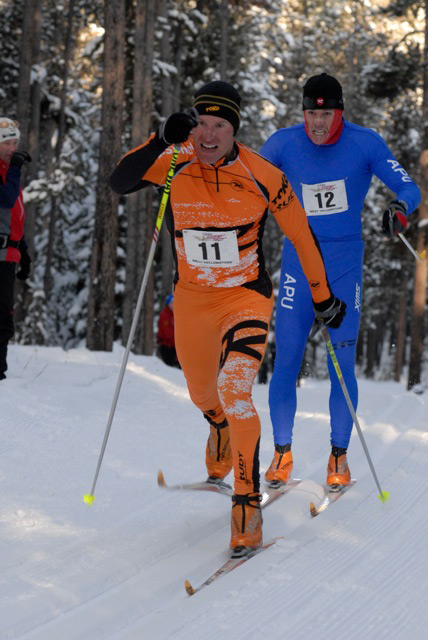
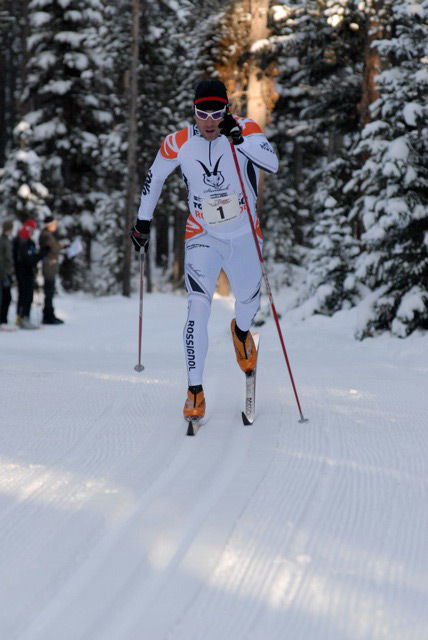
    November 2009: This is a very orange suit. Kevin Hochtl (Rossignol) – 32nd – leads Anders Haugen (APU) – 7th – to the finish in a West Yellowstone race.


    November 2009: This is one hell of an ibex. Chris Cook (Steinbock Racing) – 12th – sporting the new Steinbock Racing uniform


    2010 Winter Olympics, Vancouver: Red and silver

    For the Olympics, the Americans appear to have taken their World Cup template Bjørn Dæhlie suit, largely red – but have changed it by, inter alia, lightening the shade of red, adding “USA” on the right arm and left leg, adding silver accents, and of course removing all sponsor logos. Kikkan, already skiing in her third Olympics, coordinated with a red headband, red gloves, and her famous pink highlights. Andy Newell went with the red hat (he may not have had a choice), but was otherwise somewhat less vermilion.
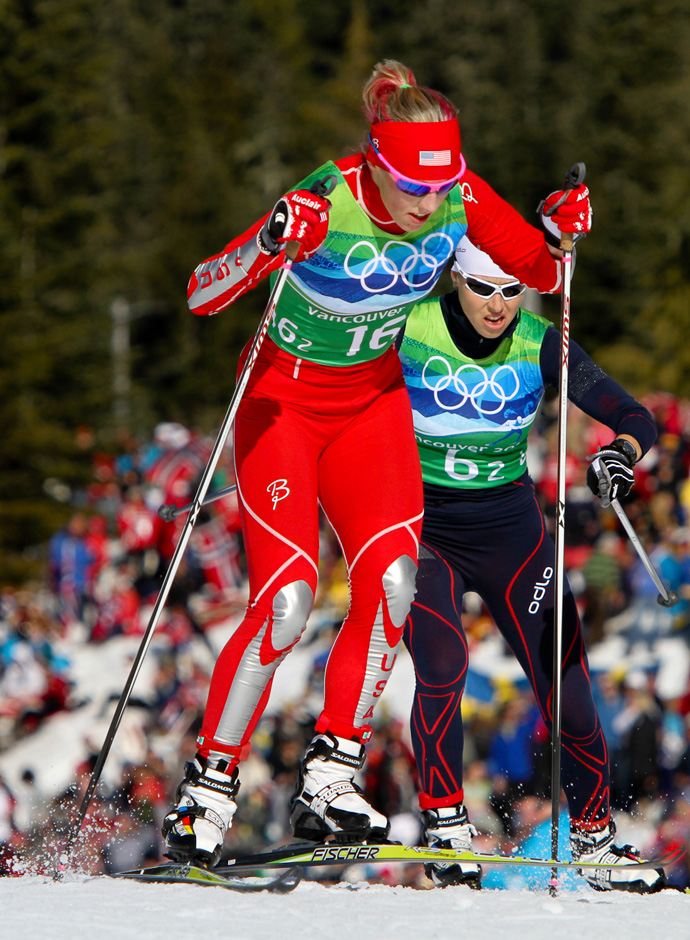
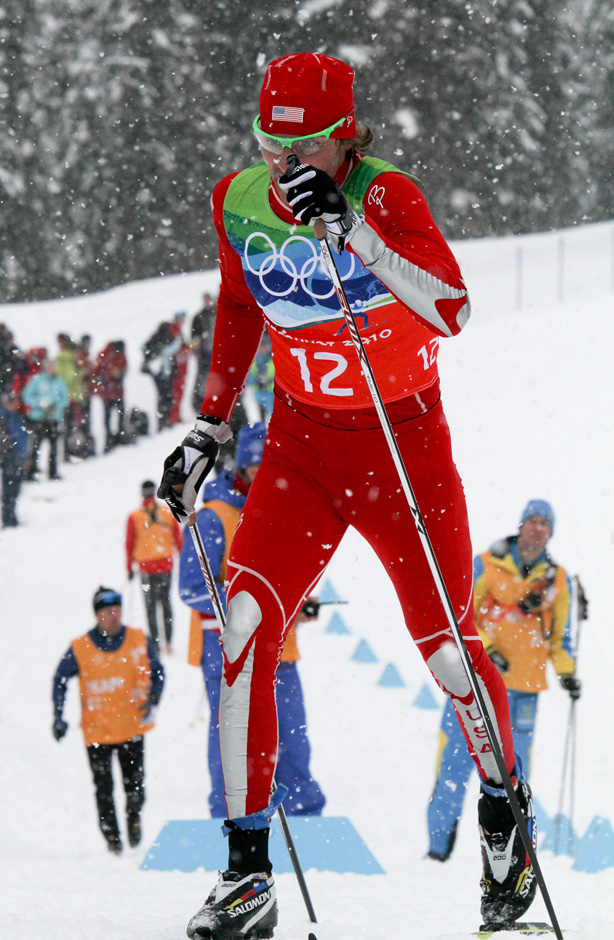
    Feb. 2010: Kikkan Randall
    Feb. 2010: Andy Newell on the big climb during the men’s 4 x 10 k relay.

    There was a lot of red in Vancouver. For example, here’s Andy Newell (far left, bib no. 13-2) tagging Korin Koos for the U.S. in the team sprint, while Petter Northug (far right, bib no. 2-2) tags Øystein Pettersen (middle right, bib no. 2-1) for Norway. (An entire standalone article could likely be written on the Canadians’ infamous kit (bib no. 4, back right).)
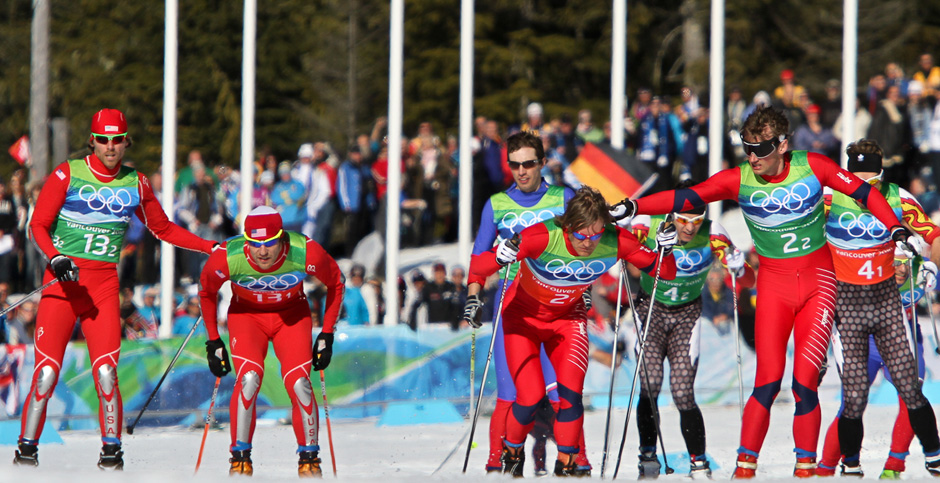
    Newell tags Koos (left) and Northug tags Pettersen (right) at the 2010 Vancoulver Olympics.

    Or here’s Newell in the middle, between Switzerland’s Dario Cologna (bib no. 12) and Yuichi Onda of Japan (bib no. 18):
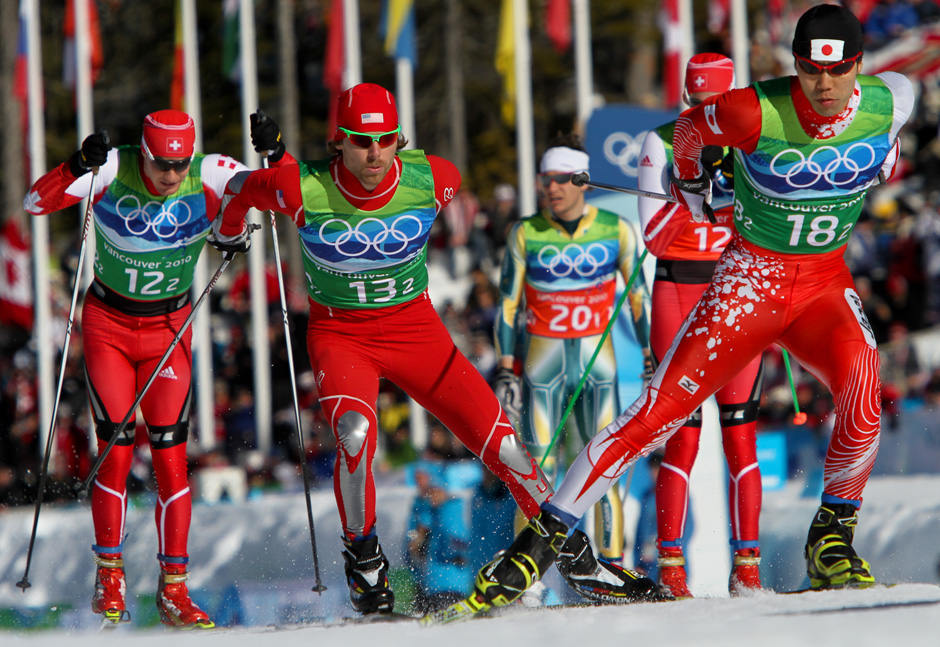
    Newell in the semis of the skate sprint: 2010 Vancouver Olympics.

    Finally, Poland (shown here: Sylwia Jaśkowiec, bib no. 6) was just red:
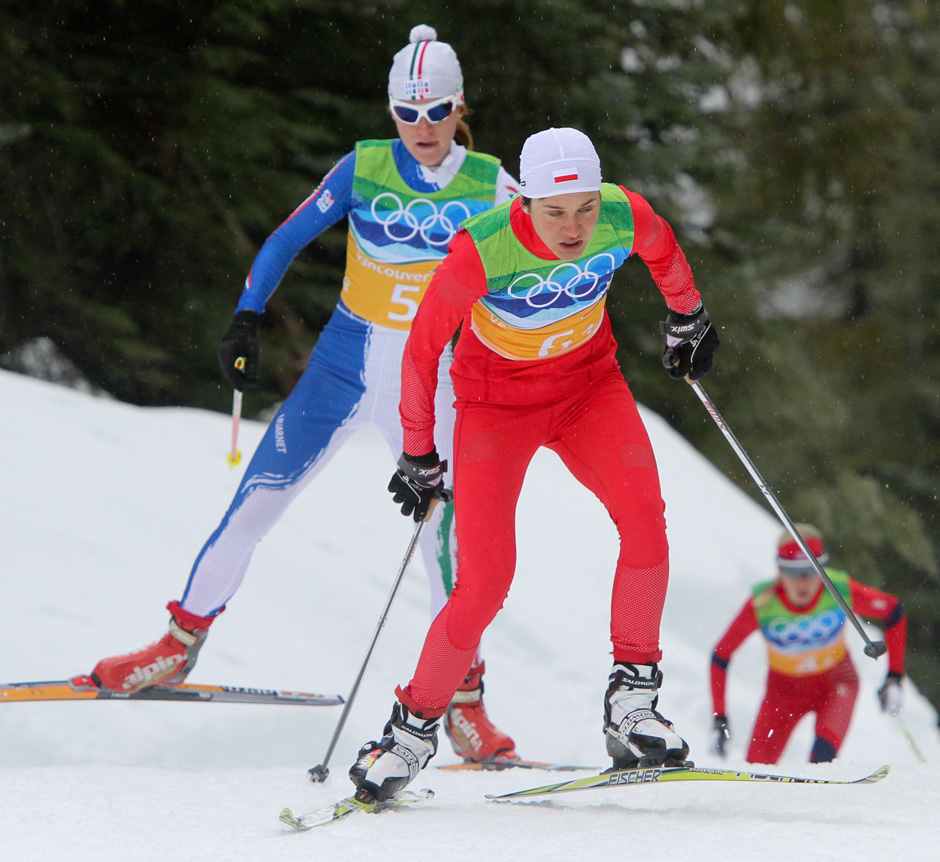
    Poland 2, 2010 Vancouver Olympics.


    2010/2011: The black era begins

    Perhaps as a natural reaction to the dominance of a single color across multiple nations, the U.S. made a significant shift for the 2010/2011 World Cup season: black. The color does not appear on the national flag or in other common American iconography, but it is certainly distinctive. Bjørn Dæhlie remained the suit manufacturer.

    Or, as then-FasterSkier reporter Nat Herz wrote in fall 2010, “After any number of years of being drowned out by a sea of Norwegian crimson, U.S. Ski and Snowboard Association Nordic Director John Farra said that the USST will be ‘distinctly not red’ for the 2010-2011 season—including at World Championships in Oslo. ‘We went in a very different direction, in part from our experience in Oslo, where they [Norway] have a nation’s group of ten, and we can barely see our athletes in the group,’ he said.”
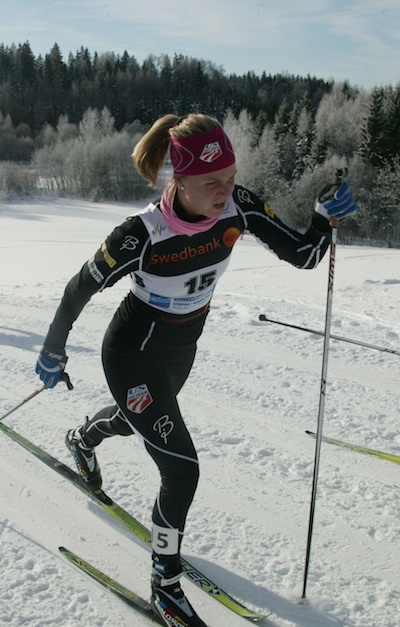
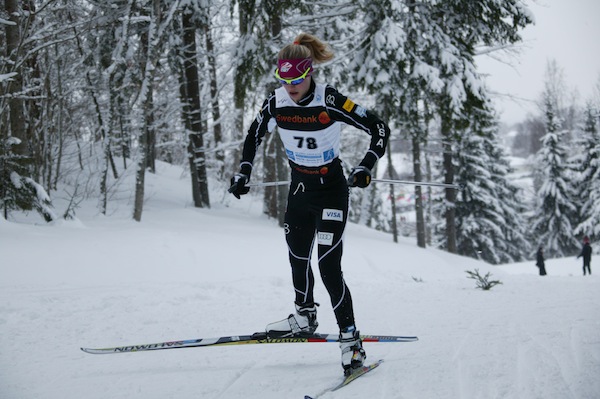
    January 2011: A 21-year-old Sadie Bjornsen races to 17th at U23 World Championships in Otepää, Estonia.


    January 2011: Jessie Diggins, then aged 19, races to 7th at Junior World Championships in Otepää.


    January 2011: Noah Hoffman at a SuperTour race in Lake Placid.


    February 2011: No change for World Champs: Kikkan Randall racing at 2011 World Championships in Oslo.


    2011/2012: Still black Bjørn Dæhlie
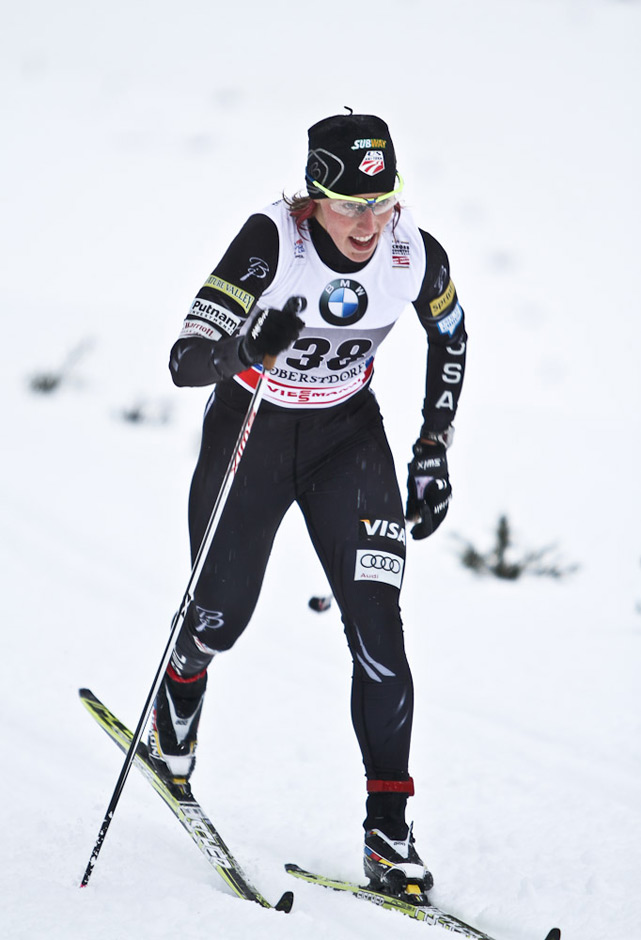
    December 2011: Kikkan Randall sprinting during the Tour de Ski.


    March 2012: Kris Freeman (SSCV/USST) on his way to claiming the US Distance Nationals 50 k freestyle title on Saturday morning in Craftsbury.


    2012/2013: Still black

    December 2012: Noah Hoffman in the Tour de Ski.


    December 2012: Kikkan Randall blasting to victory in the Tour de Ski opening prologue on Saturday. She skied to 14th in the pursuit on Sunday and is leading the U.S. women in the Tour de Ski standings after two stages. Photo: Marcel Hilger.


    February 2013: Diggins and Randall won gold in the team sprint at 2013 World Championships in Val di Fiemme, Italy, which was awesome, but, for purposes of this article, mostly relevant for the addition of the epochal relay socks but otherwise no change to the standard World Cup uniform.


    2013/2014: Yup, still black

    December 2013: Liz Stephen (U.S. Ski Team) on her way to 34th in Saturday’s 3 k freestyle prologue at the first stage of the Tour de Ski in Oberhof, Germany. (Photo: Marcel Hilger)


    December 2013: Andy Newell (U.S. Ski Team) qualified 12th and finished 10th overall in Sunday’s freestyle sprint. (Photo: Marcel Hilger)


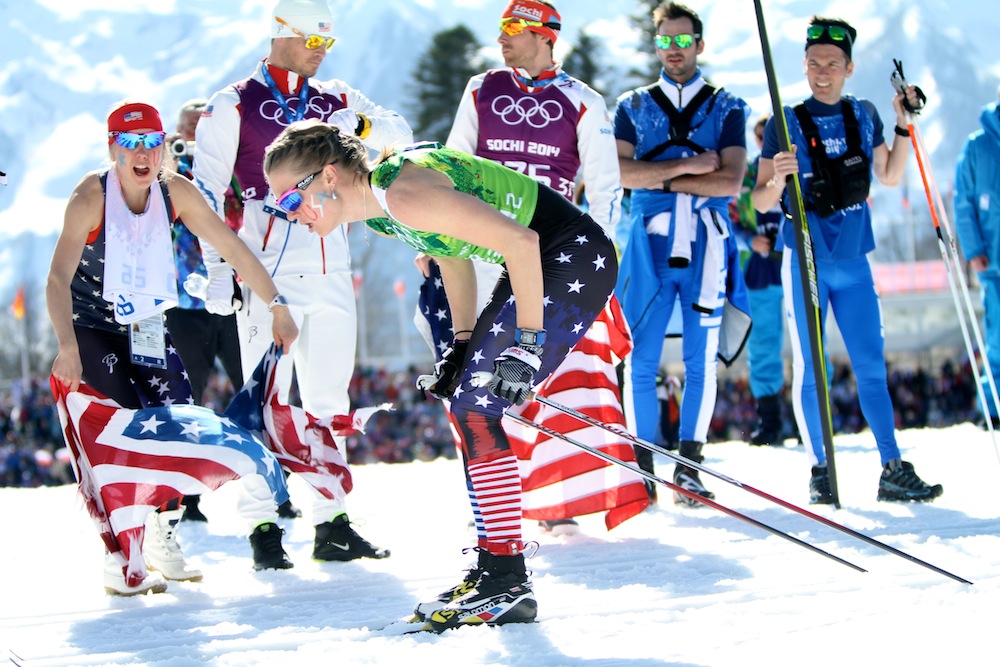
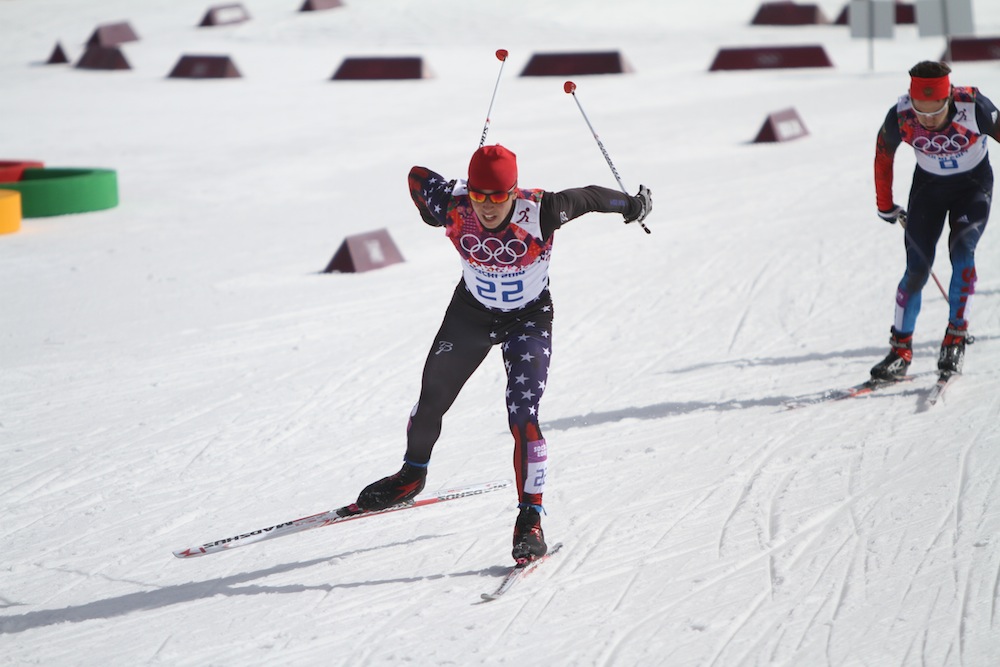
    2014 Winter Olympics, Sochi: Stars and stripes

    The 2014 Winter Olympics, in Sochi, Russia, were known at the time for Kikkan Randall’s disappointing result in the individual skate sprint, and after the fact for the revelation that Russia was engaged in a massive state-sponsored doping scheme and cover-up. They were also significant for a change in uniforms: stars and stripes on the right arm and left leg, and a large “USA” on the right leg. The left arm was relatively plain. Also, several of the U.S. women drew attention for racing sleeveless in warm temperatures. Bjørn Dæhlie continued to be the brand logo featured on the upper right quad. (Pictured below: Noah Hoffman, in a solo race, and Sadie Bjornsen, in the women’s relay.)


    2014/2015: Stars and stripes redux

    Athletes took to the trails next season with a slightly modified version of the recent Olympics uniform: Larger stars on the left upper quad, with a deeper blue background. The stripes on the left leg became more pronounced and stretched farther up the race suit, to above the knee. Also, once the non-commercial period of the Olympics had passed, there was space for sponsor patches on the arms and legs.
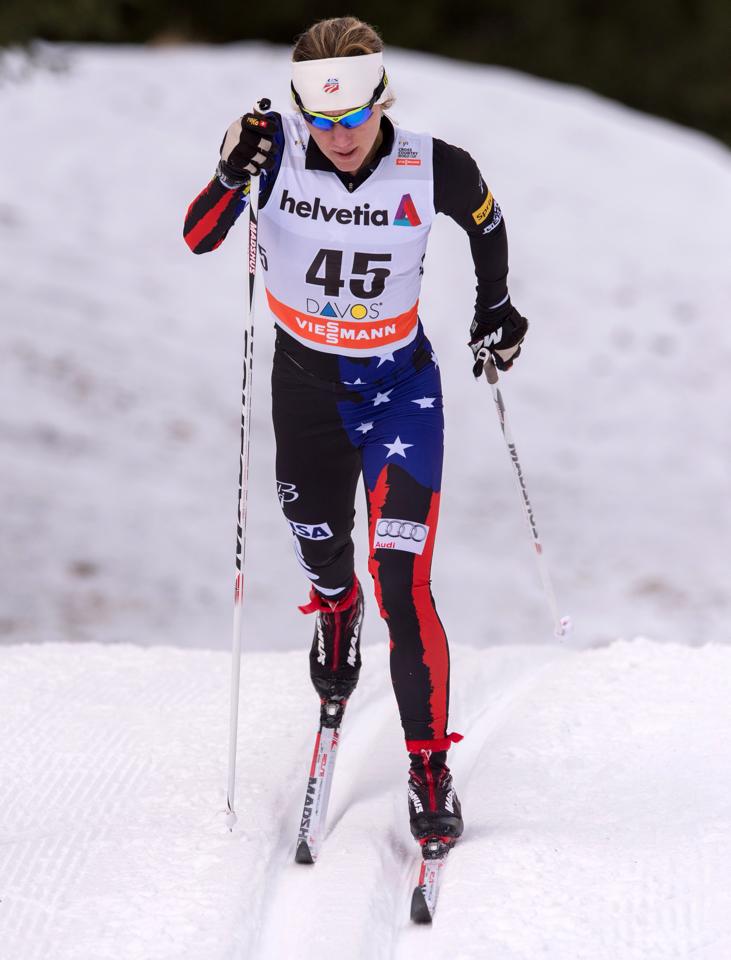
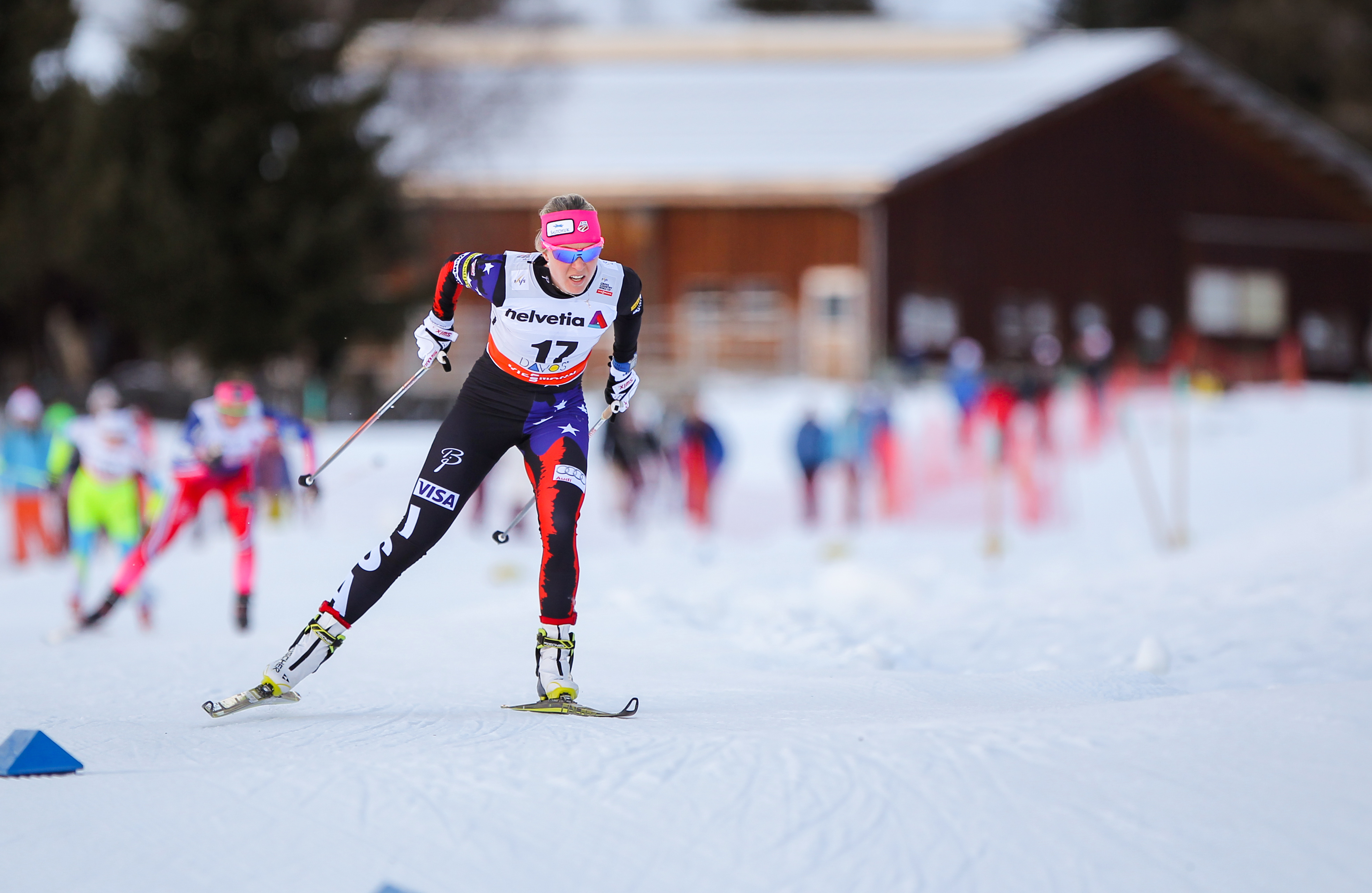
    December 2014: Caitlin Gregg (Team Gregg) skiing to 56th place in the Davos World Cup 10 k classic, Dec. 13. (Photo: Toko)


    USST’s Sadie Bjornsen racing to 29th in the Davos World Cup 10 freestyle, Dec. 20, 2014. (Photo: Fischer/Nordic Focus)

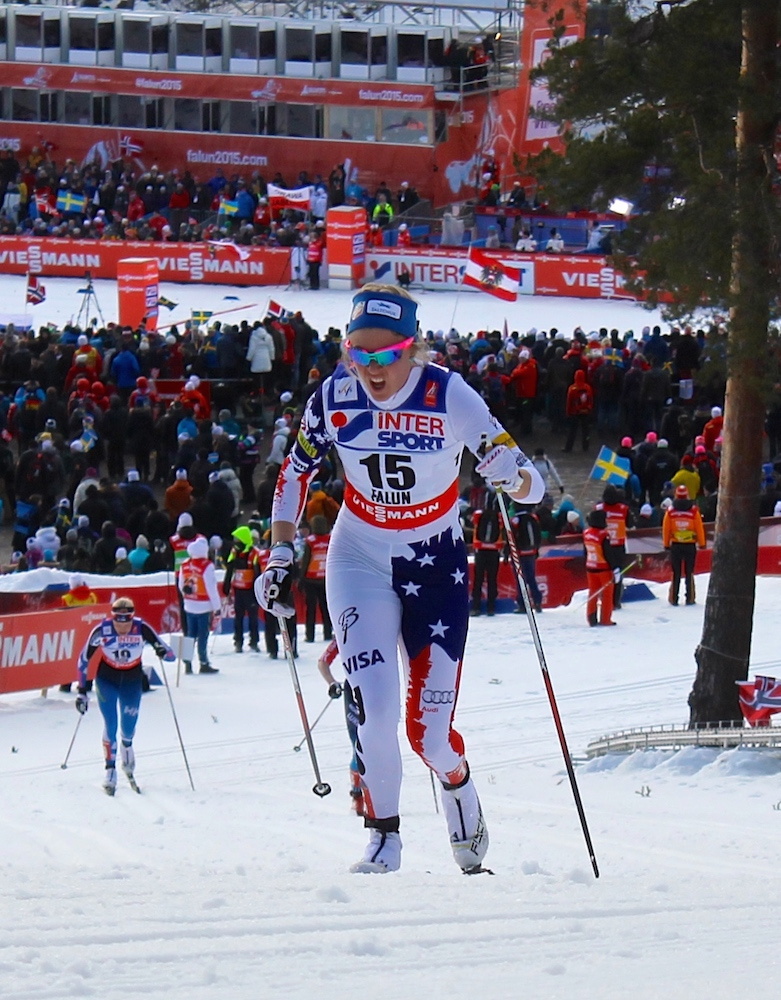
    World Championships, in Falun, Sweden, brought a mostly-white version of the uniform, helpful for the warm temperatures and soupy conditions that characterized many of the races. Here’s Sadie Bjornsen in Falun in February 2015:
     

    2015/2016: Red, white, and blue

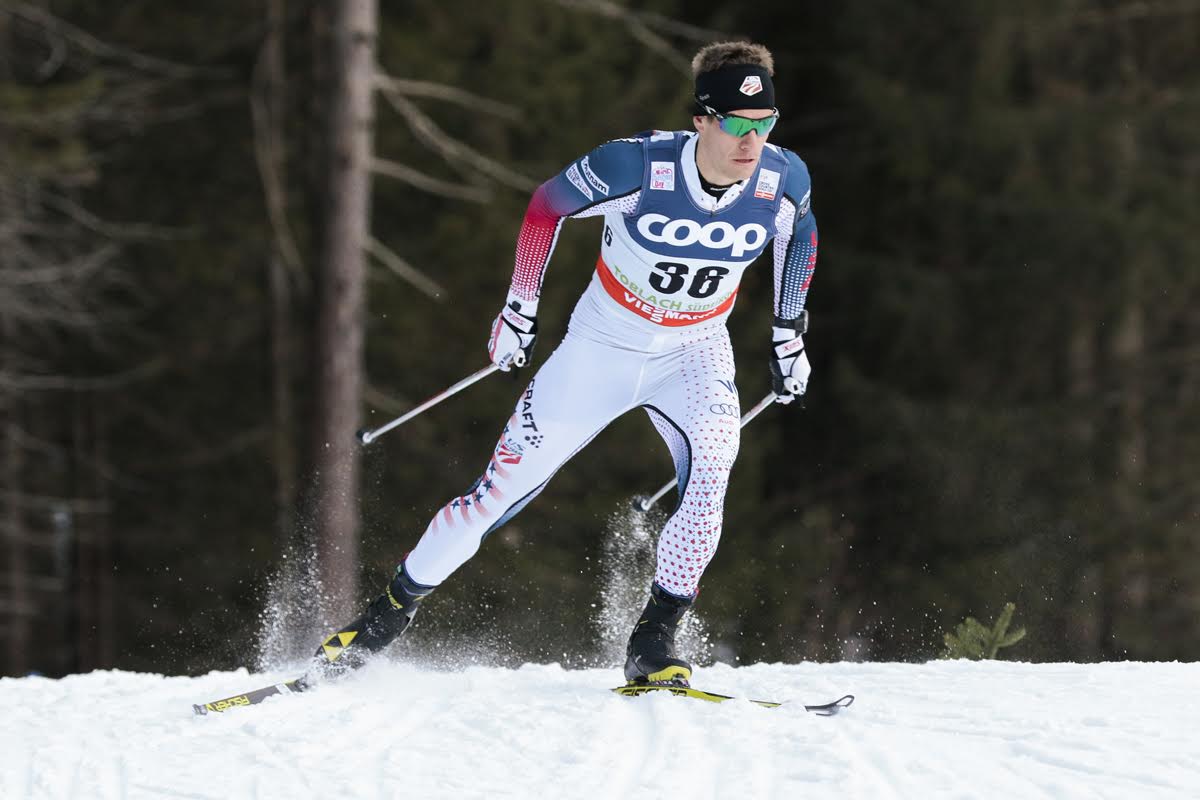
    By fall 2015, the move away from black, and towards red, white, and blue, was complete. Athletes now had the option of being attired in a predominantly white color scheme, which would aid in preventing overheating on warm days, while thankfully solving the transparency issues that had plagued recent all-white suits for Sweden or Italy. An alternate version had roughly the same patterning, but with blue as the primary color. Notably, the Americans also moved to a race suit manufactured by the Swedish company Craft for the first time in this survey.
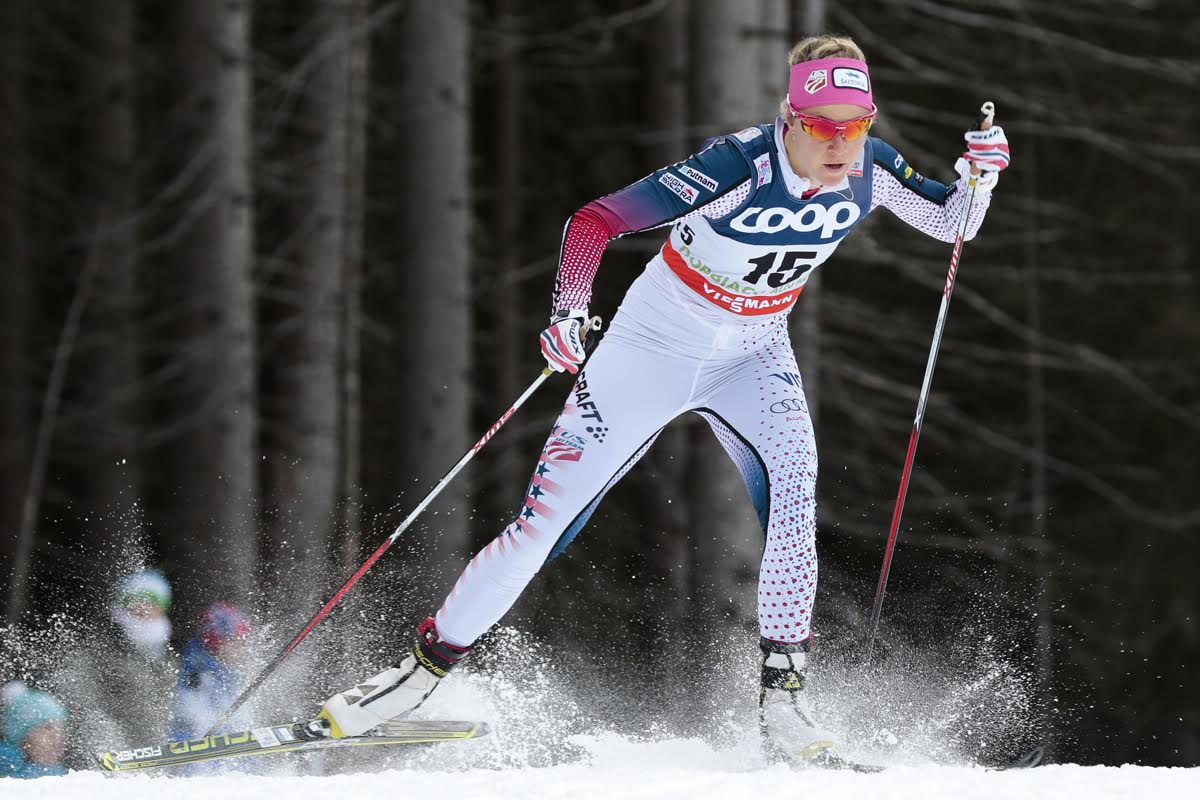
    December 2015: Sadie Bjornsen (U.S. Ski Team) racing to her best-ever sprint qualifier in sixth at the World Cup freestyle sprint in Toblach, Italy. She went on to make the semifinals and place 10th overall. (Photo: Fischer/NordicFocus)


    December 2015: Simi Hamilton (U.S. Ski Team) racing to his first non-stage World Cup podium on Saturday in Toblach, Italy, where he placed second in the freestyle sprint. (Photo: Fischer/NordicFocus)


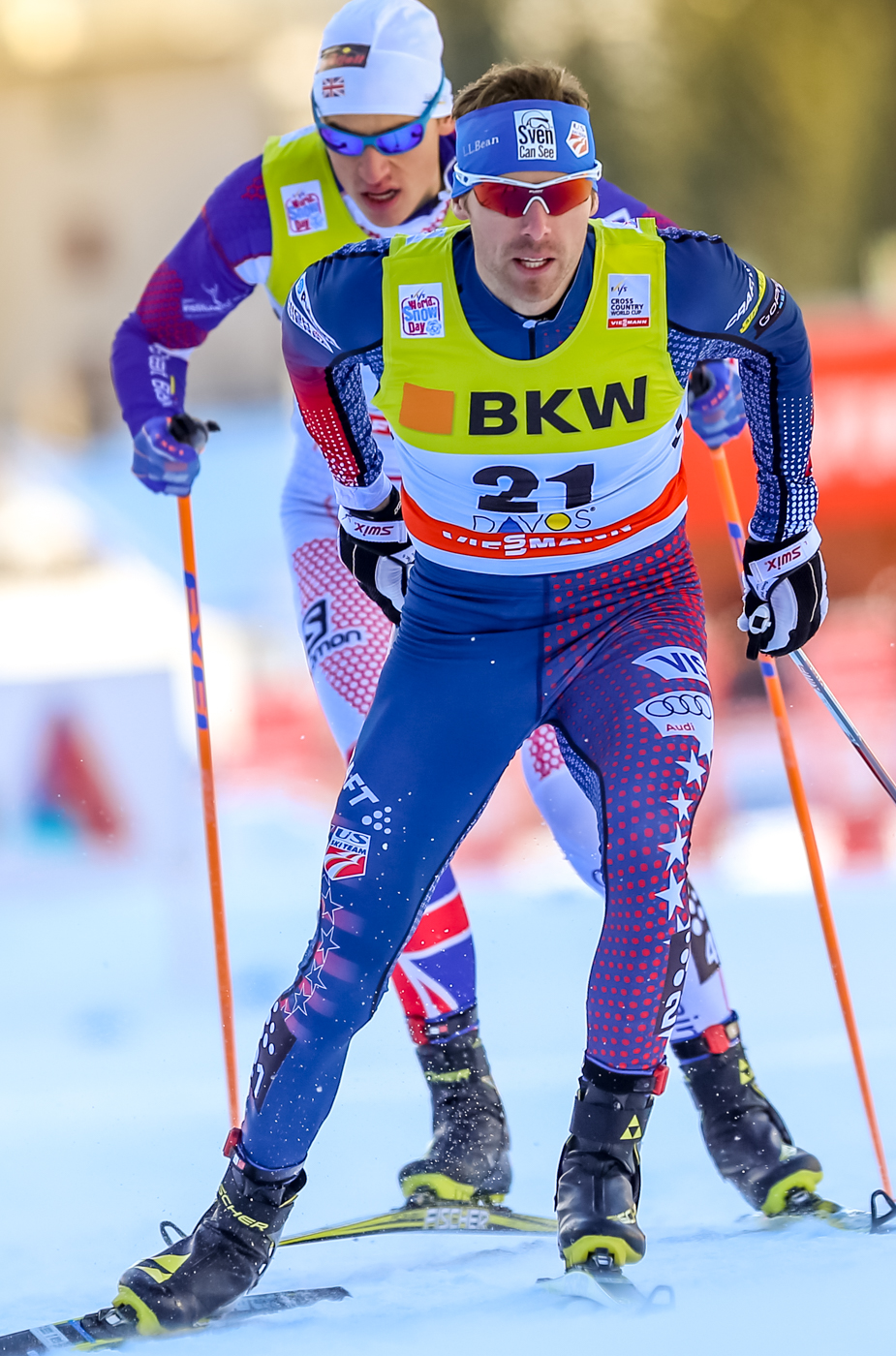
    December 2015: American Andy Newell (r) and Great Britain’s Andrew Young (c) trail Norway’s Håvard Solås Taugbøl (2) in the quarterfinal at the Davos World Cup freestyle sprint on Sunday in Switzerland. Taugbøl won the heat, Young placed third, and Newell was fifth after missing out on a photo finish for fourth. Newell finished the day 23rd overall. (Photo: Marcel Hilger)


    January 2016: Ida Sargent (U.S. Ski Team) teamed up with Sophie Caldwell (not shown) to place fifth in the 6 x 1.2 k freestyle team sprint at the World Cup in Planica, Slovenia. (Photo: Madshus/NordicFocus)

    Honorable mention: Trending towards “purple cobras” for American biathlon but not there yet.

    American Claire Waichler started 58th and finished 33rd in the youth women’s pursuit on Sunday at IBU Youth/Junior World Championships in Cheile Gradistei, Romania. (Photo: IBU YJWCH Cheile Gradistei 2016/Facebook)


    2016/2017: More red, white, and blue

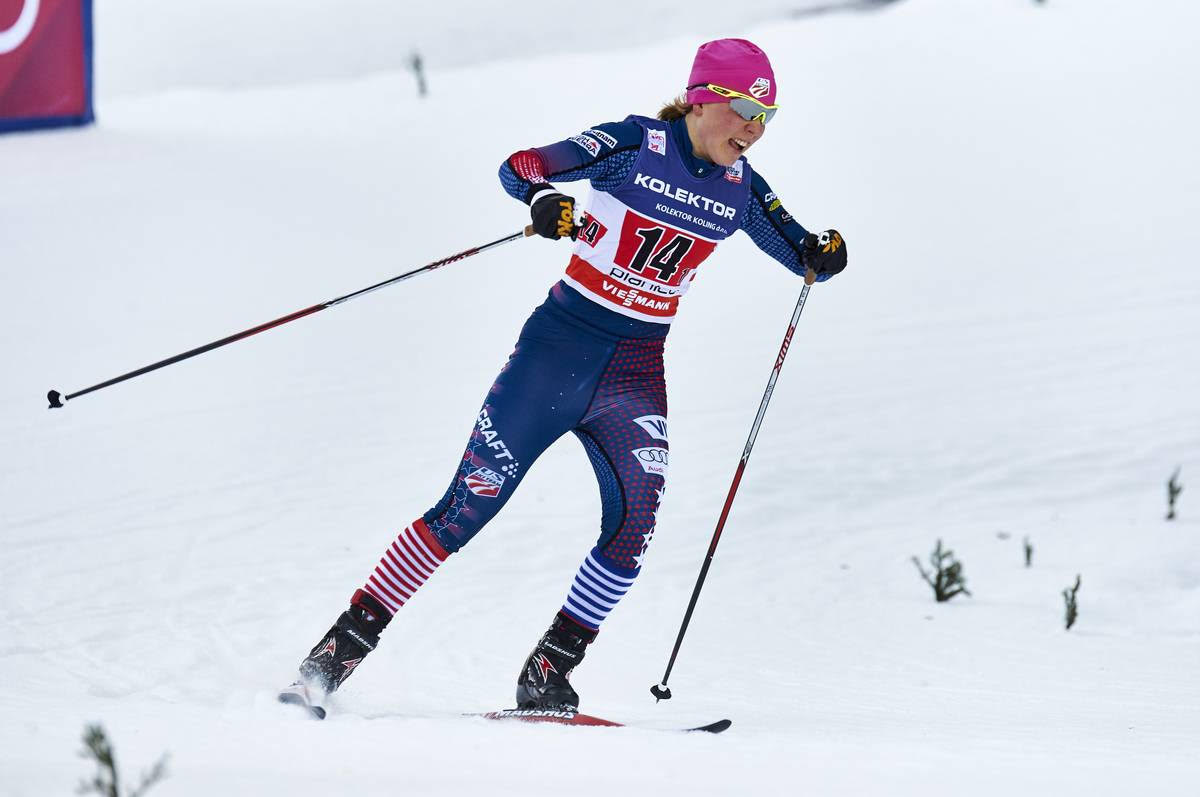
    An interpretation of red, white, and blue, still on a Craft suit, remained in place for the 2016/2017 World Cup season, which was marked within the team by Randall and her husband, Jeff Ellis, traveling the European race circuit with a newborn in tow. The changes to the USST uniform were less dramatic than Randall’s familial status: Still red, white, and blue, though now with blue as the dominant color. The entire left leg, and the bottom half of the right leg, had markings, somewhere between subtle striations and full-on stripes, that evoked the stripes of the American flag. (Let’s put aside for the moment the fact that the stripes on the actual flag are white and red, not white and blue.) The pattern was repeated on the lower right arm. An understated evocation of blue or white stars marked both lower legs, with more pronounced stars scattered around the bottom of the torso (possibly the top as well, but nearly all of one’s torso is typically covered by the standard race bib). The left arm and left leg both proclaimed “USA” in red lettering.

    The vehicular logo on the legs remained that of Audi, as it had been since the start of this history.

    There appears to have been no change for the 2017 World Championships. At least to the uniforms; on the race course, the Americans won an unprecedented three medals.
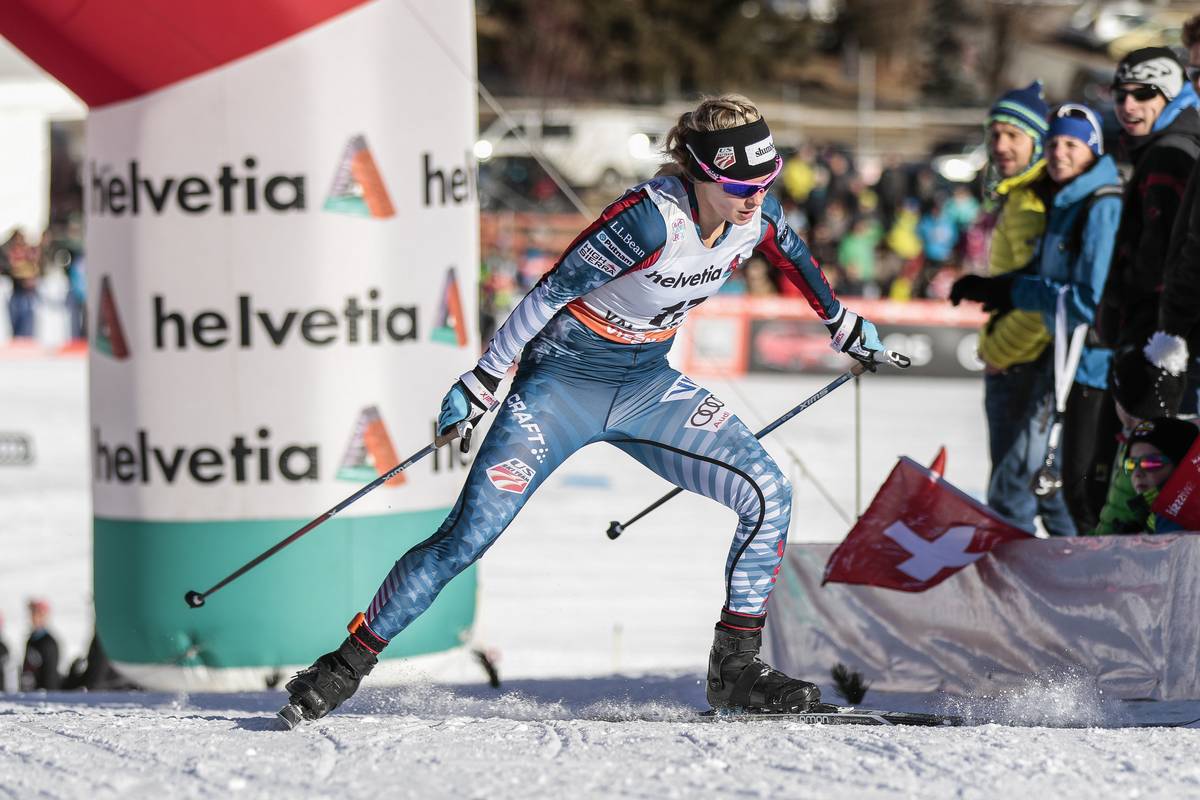
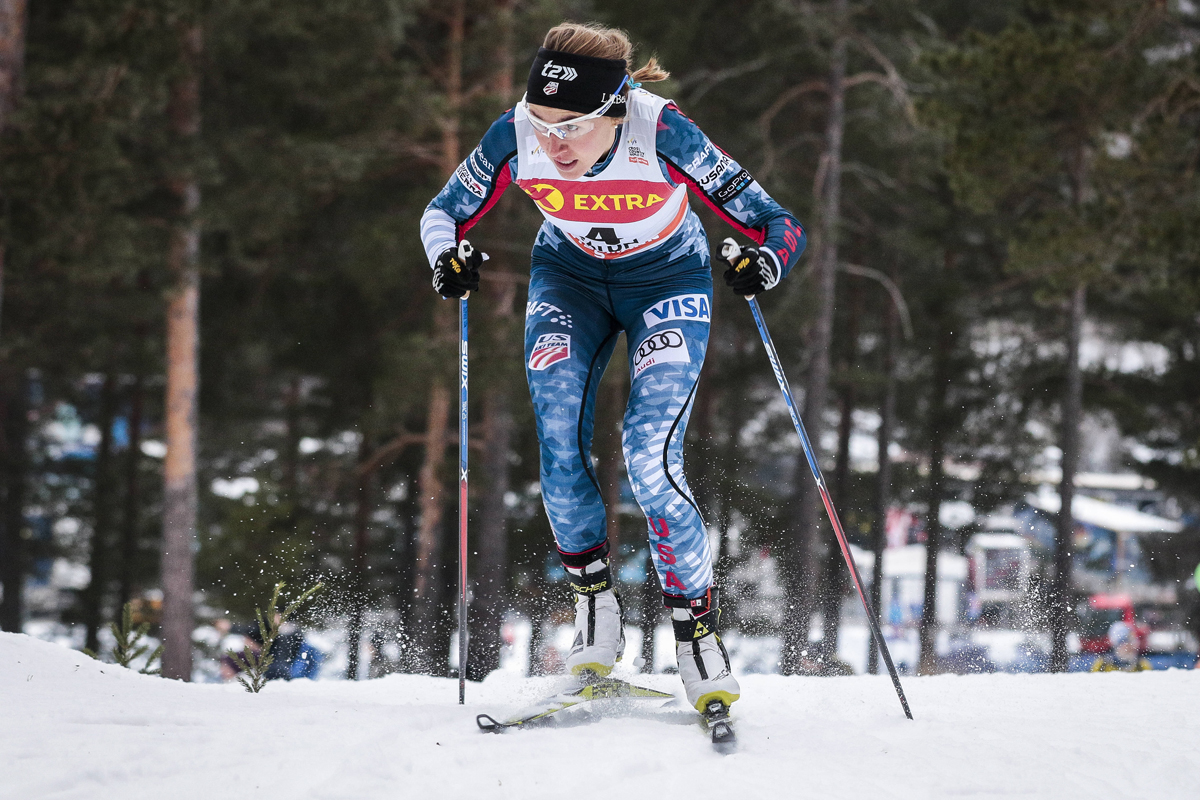
    December 2016: Jessie Diggins (U.S. Ski Team) racing to ninth in Saturday’s 1.5 k freestyle sprint qualifier in Val Müstair, Switzerland. Diggins went on to place sixth in the final. (Photo: Salomon/NordicFocus)


    January 2017: Sophie Caldwell (U.S. Ski Team) racing to third in the qualifier of Saturday’s 1.4 k freestyle sprint in Falun, Sweden. She went on to finish 16th overall (Photo: Fischer/NordicFocus)


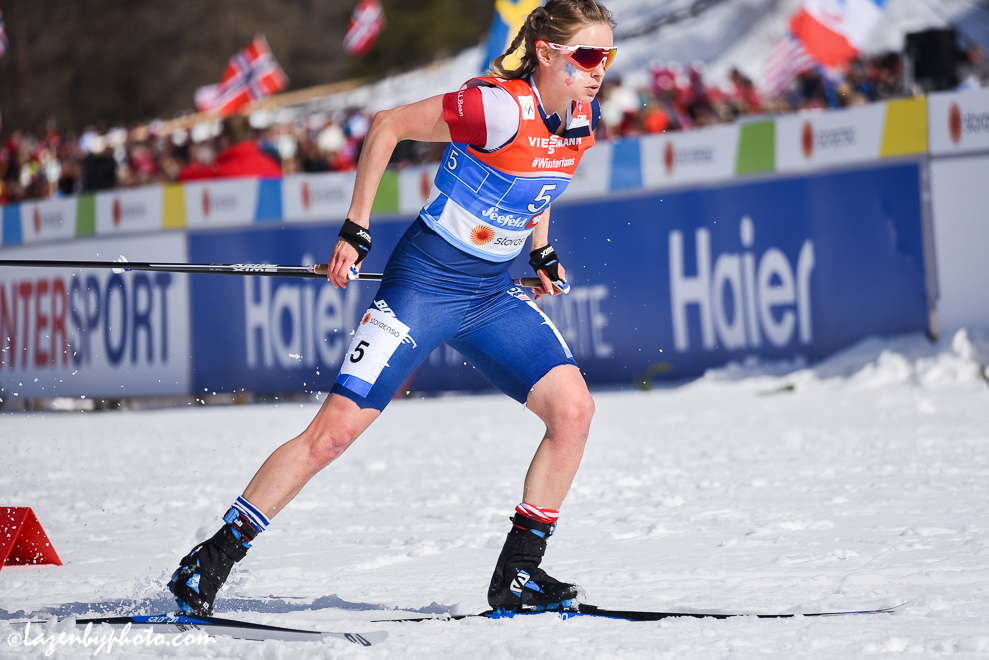
    February 2017: Kikkan Randall (U.S. Ski Team) racing to 26th in the women’s 10-kilometer classic individual start at the 2017 Nordic World Championships on Tuesday in Lahti, Finland (Photo: John Lazenby/Lazenbyphoto.com)

    Meanwhile, biathlon saw the advent of the beloved “purple cobras” era:
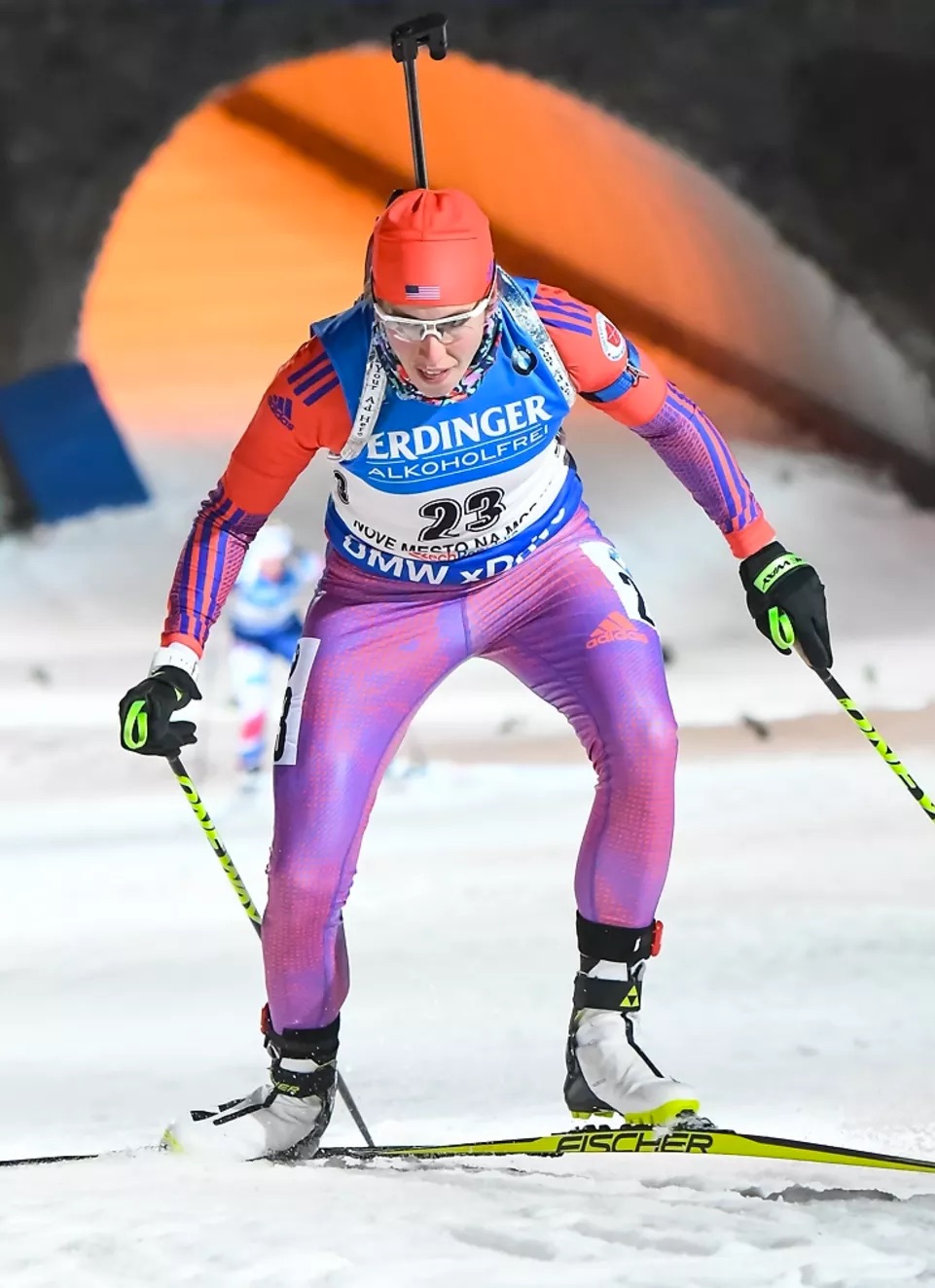
    US Biathlon’s Susan Dunklee on her way to finishing third in the women’s sprint at the IBU World Cup in Nove Mesto, Czech Republic. It was the third podium of her career. (Photo: IBU)


    2017/2018: Red, white, and blue redux

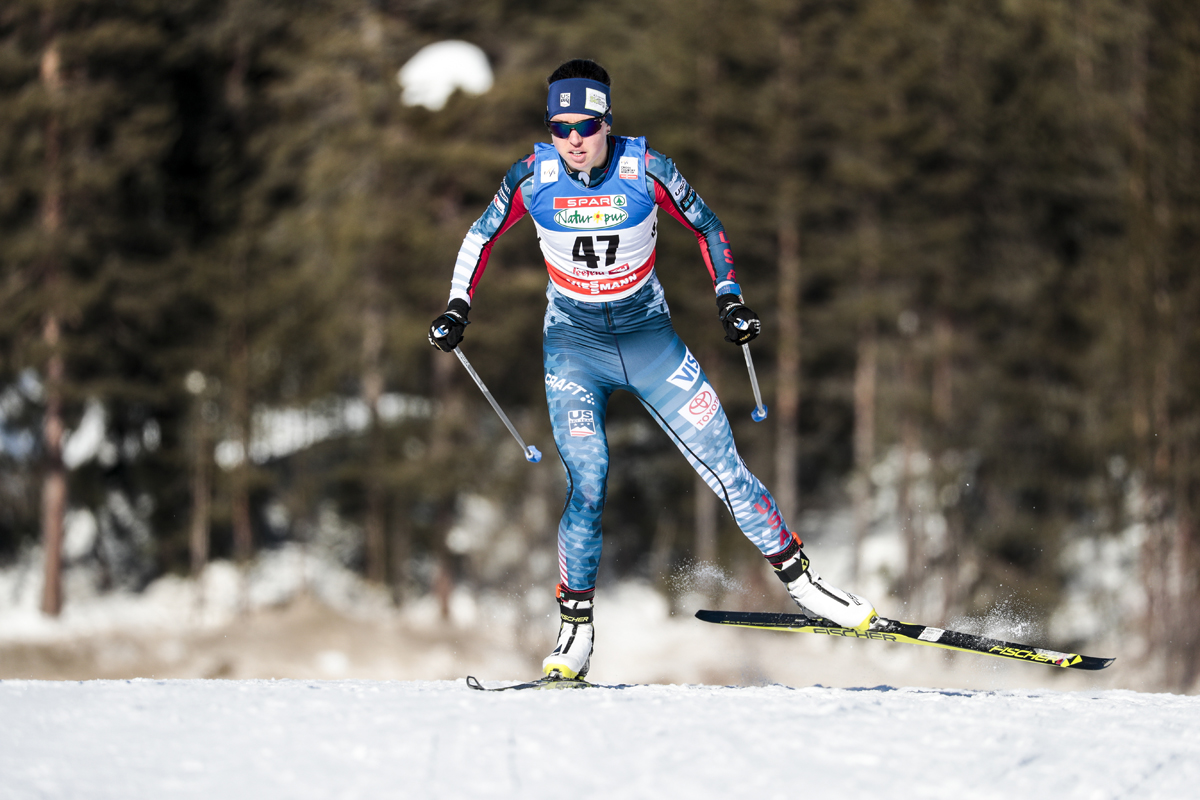
    There appears to have been no change for the 2017/2018 World Cup season: still red, white, and blue, but mostly blue, on a Craft suit. The most notable change may have been to the car sponsor… for the first time since at least the scope of this article, a Toyota logo was on the leg, not Audi. Nichts ist unmöglich (“Nothing is impossible”), as the company’s European slogan proclaims.
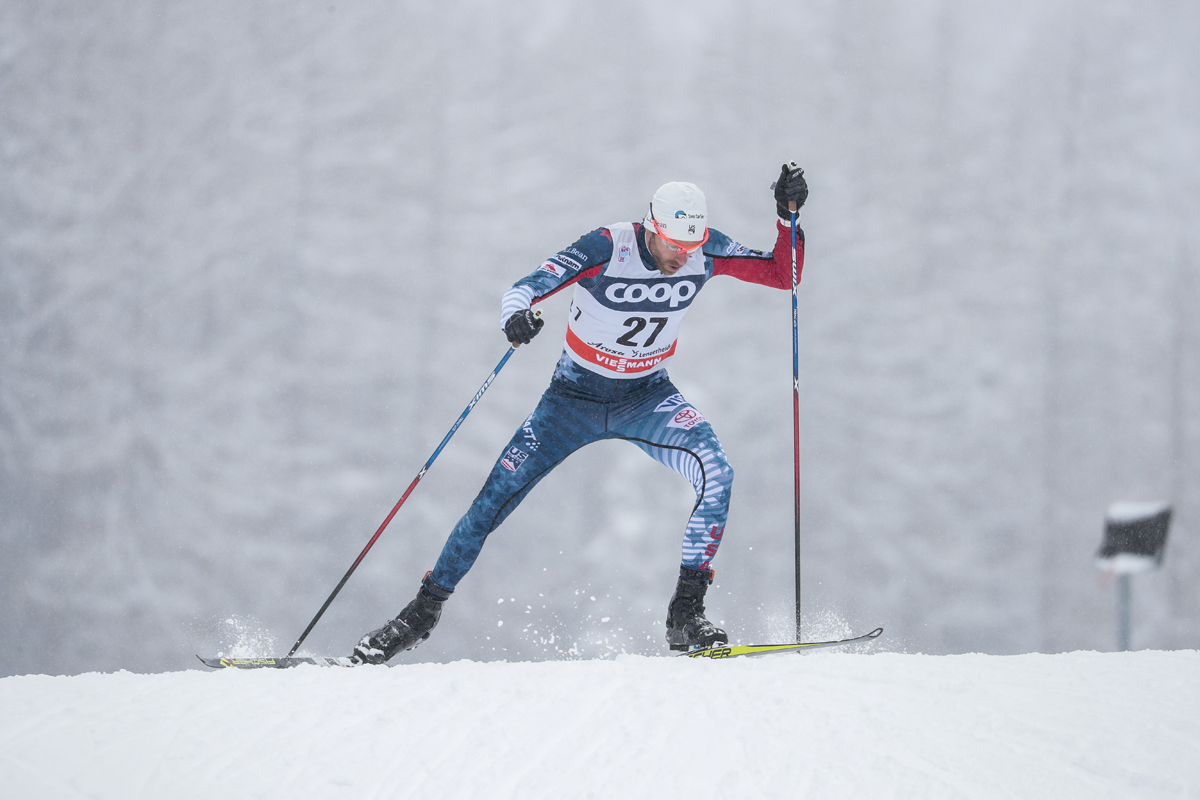
    American Andy Newell racing the men’s 1.5 k freestyle-sprint qualifier at Stage 1 of the Tour de Ski on Saturday in Lenzerheide, Switzerland. He qualified 20th and went on to finish 19th overall. (Photo: Fischer/Nordic Focus)


    Caitlin Patterson (Craftsbury Green Racing Project) racing to 52nd in the freestyle sprint qualifier at the last World Cup on Jan. 27 in Seefeld, Austria. The next day, she placed 23rd in the 10 k freestyle mass start. (Photo: Fischer/NordicFocus)


    2018 Winter Olympics, Pyeonchang: Red, white, and blue, and a lot of stripes

    There is a somewhat famous picture from the 2018 Winter Olympics that you may already be familiar with. In the picture, Jessie Diggins, on the lefthand side of the frame, stretches her left foot across the finish line to secure an historic Olympic gold medal for the United States. Her left arm mirrors the gesture, punching the air above her in what is presumably an instinctual counterbalance to the lunge but also appears, in a frozen moment in time, to be a triumphant fist-pump. In the middle, her face is rent in a rictus of exertion and triumph. On the righthand side of the frame, Stina Nilsson of Sweden lunges as well, 0.19 seconds behind Diggins. Mute V-boards and still flags fill in the background of the image, as Maiken Caspersen Falla of Norway appears to stand up and stop skiing in order to watch the finish unfold.

    It was a few seconds before 7:16 p.m. in Pyeongchang, 4:16 a.m. in Afton, Minnesota, and 1:16 a.m. in Anchorage, Alaska. If you’re reading this website, you may remember where you were at that moment.
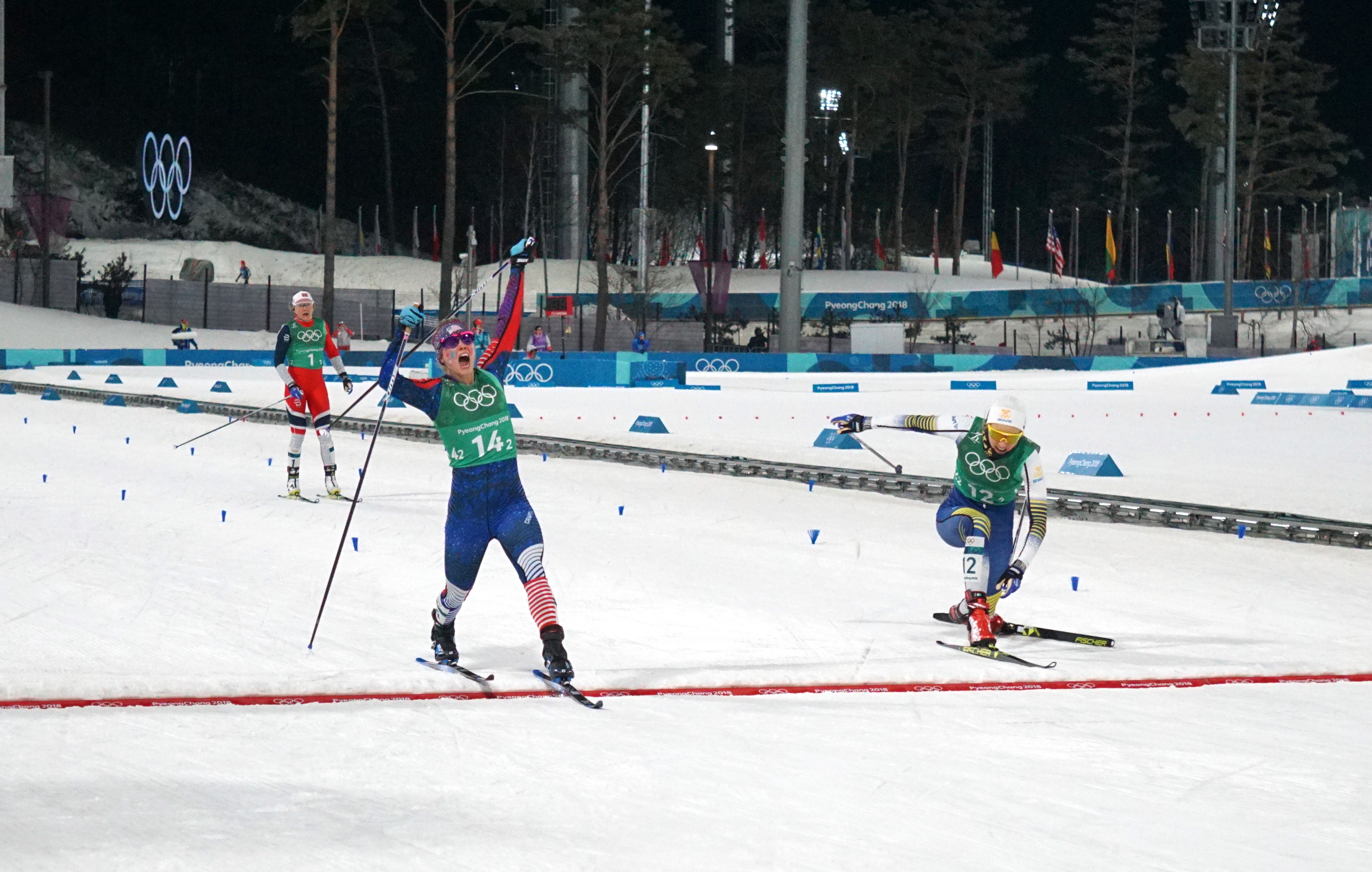
    February 2018: Jessie Diggins (14) edges Sweden’s Stina Nilsson (r) for gold, while Norway’s Maiken Caspersen Falla (far left) races to bronze, in the women’s freestyle team sprint final at the 2018 Olympics in PyeongChang, South Korea. (Photo: Noah Hoffman)

    But let’s talk about the uniform. Another Craft product, the dominant impression is once again blue; in the photo above, taken at whatever distance from the finish Noah Hoffman was allowed to stand while there was a race on, there is a whole lot of blue approaching the finish line between the American suit and the Swedish one. Some white stripes are visible around the knee of Diggins’s suit, trending down the lower leg, though they are soon subsumed by The Relay Socks.

    On closer inspection, however (see next picture, below), there are a lot of stripes going on in this uniform. The entire legs are striped, with stronger white stripes on the sides of the torso fading to fainter stripes at the top of the leg. The knees have white stripes on a blue background, with the width of the white stripes gradually decreasing and the extent of the blue interstices gradually increasing across the course of the knee. As shown in more detail here, the patterning gives way to thin red stripes against a blue background, on the lower right leg, and a bold white “USA,” on the lower left.

    The right arm has white splotches, potentially stellar in nature, against a blue background. The left arm has red and white stripes to midway down the biceps, which then transition to blue and red stripes.

    The torso has a subtle blue and black patterning perhaps best described as “Swedish forest camo.”

    Finally, although it is not apparent in either picture, “USA” was written in white letters against a blue background on both the right arm and lower left leg, as shown in the images available here (lettering on arm) and here (lettering on leg).
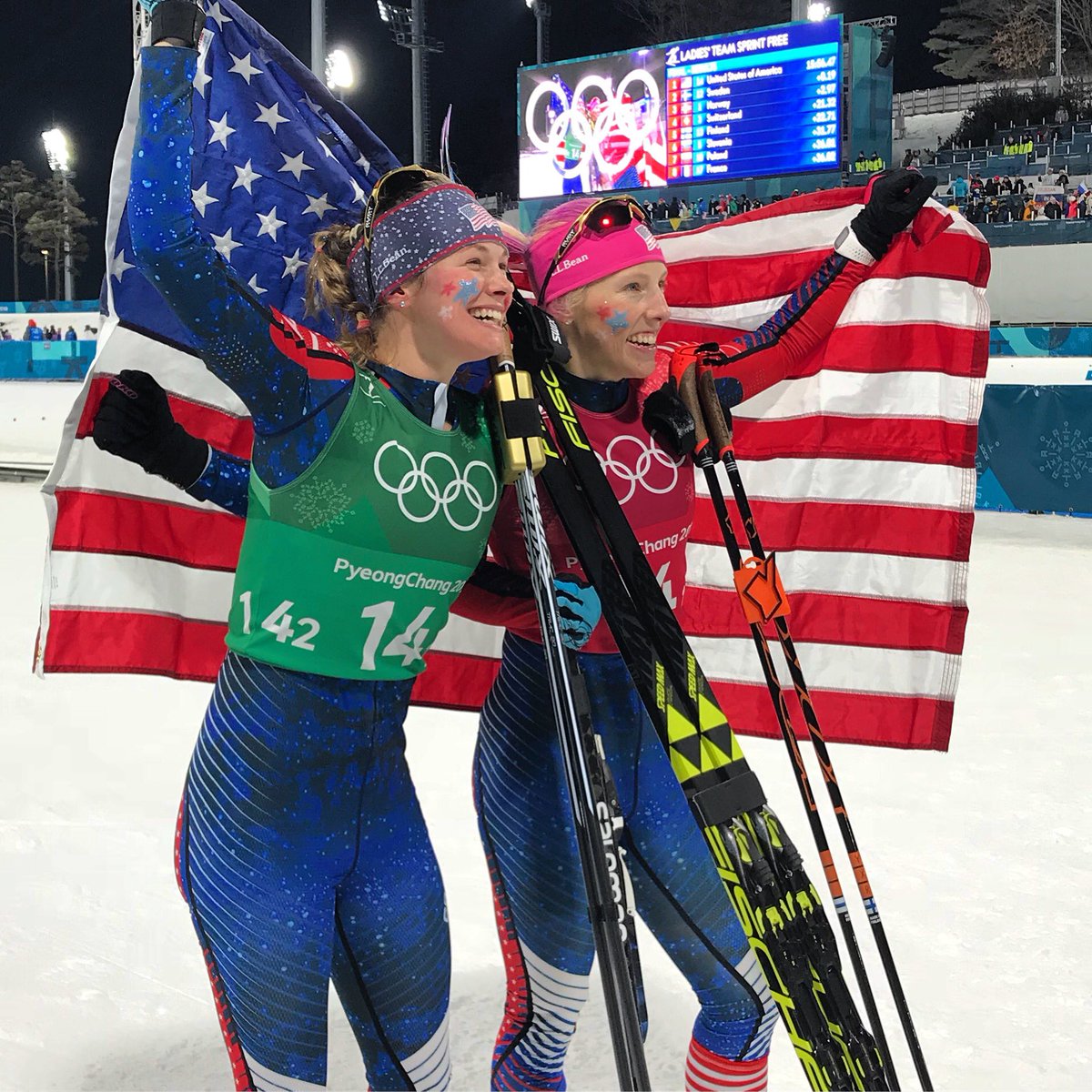
    February 2018: Jessie Diggins (l) and Kikkan Randall soak up their win in the women’s freestyle team sprint on Wednesday at the 2018 Olympics in PyeongChang, South Korea. (Photo: FIS Cross Country/Twitter)

    Here is another fine picture of Diggins and Randall from the evening of February 21, 2018. This one does not show the famous American relay socks, but does show the equally renowned facepaint and glitter. As Diggins has written, in what is both a pro-glitter cri de cœur and “a brief message for [the] high school officials” who harshed on her glitter as a junior racer, “Putting on glitter before my race is a salute to the little girl who just wants to ‘go super speed!!!’ It’s a promise to myself that I will race my absolute hardest that day. It’s a ritual that gets me in the right mindset to get out of the start gate and give it everything I have. It’s harmless, doesn’t negatively impact anyone, but to me it’s a huge part of my race morning. . . . And on relay days? Oh man. I get so excited about relay days. I get to paint the flag, ‘USA’ and stars on the faces of my teammates, and one of them will paint it on me as well. Then I put glitter over everything! It’s a special time when everyone is nervous, and excited, to be representing our country and we get together early in the morning to help each other get ready and deal with our pre-race nerves. It’s a little bit like our special striped relay socks…it’s part of what we do, as a team.”

    End of the 2017/2018 season: Farewell tour

    Honorable mention for the 2017/2018 season, World Cup edition: Randall and Liz Stephen’s outfits for their final World Cup race (standard Craft base, but with a whole lot of flair):
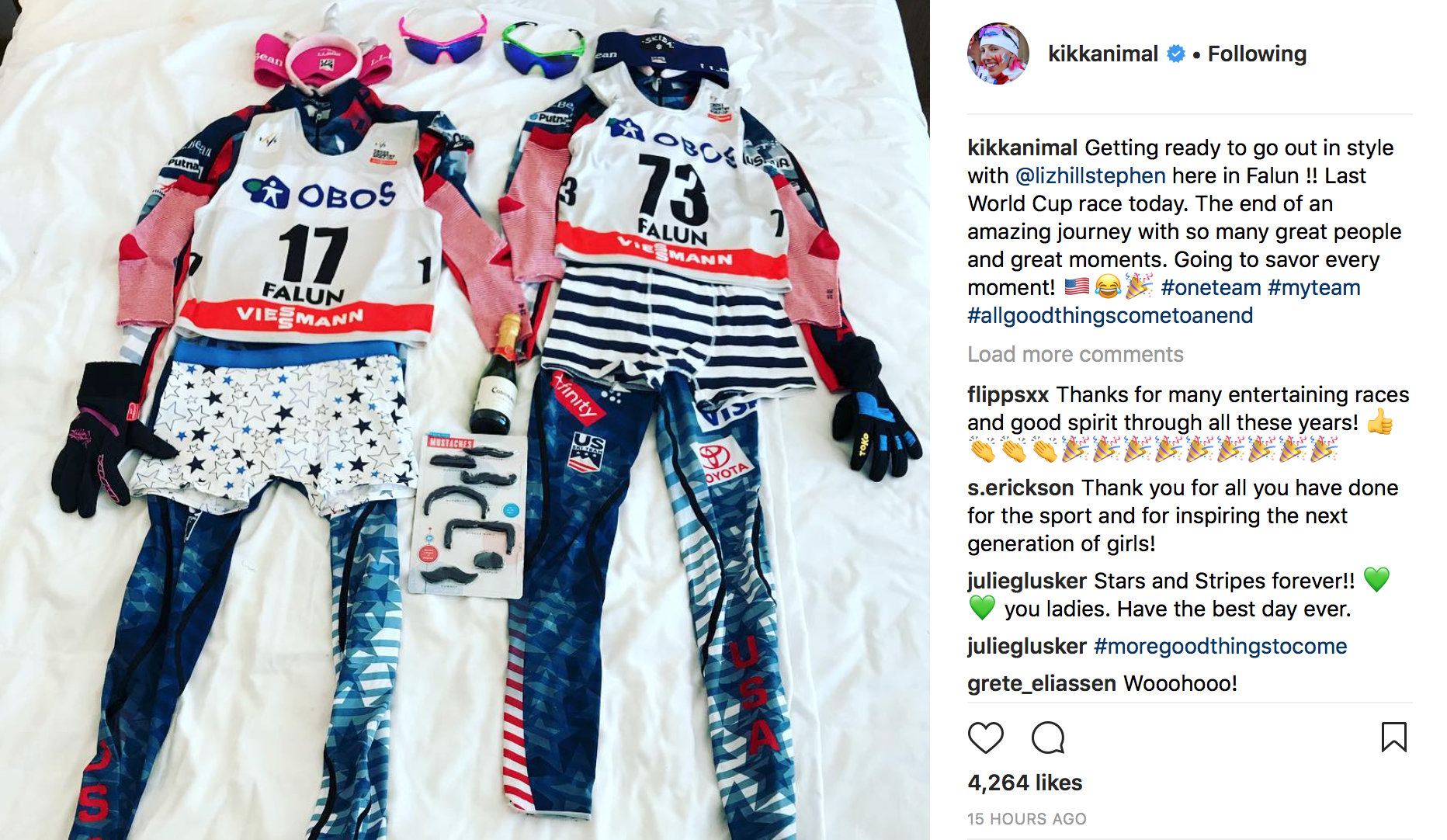
    March 2018: The last-race outfits worn by Kikkan Randall and Liz Stephen for Sunday’s World Cup Finals pursuit. (Photo: Kikkan Randall/Instagram)

    Honorable mention, domestic edition: Randall’s bespoke pink and blue Craft USST/APU suit (essentially the Olympics suit but with different patterning) that she wore for her final race as a professional skier, at Spring Series in Craftsbury. The suit said “USA” on the right arm and left leg, “APU” (for Alaska Pacific University, her club team of 19 years) on the left arm, and “Kikkan” on the left arm and right upper leg.
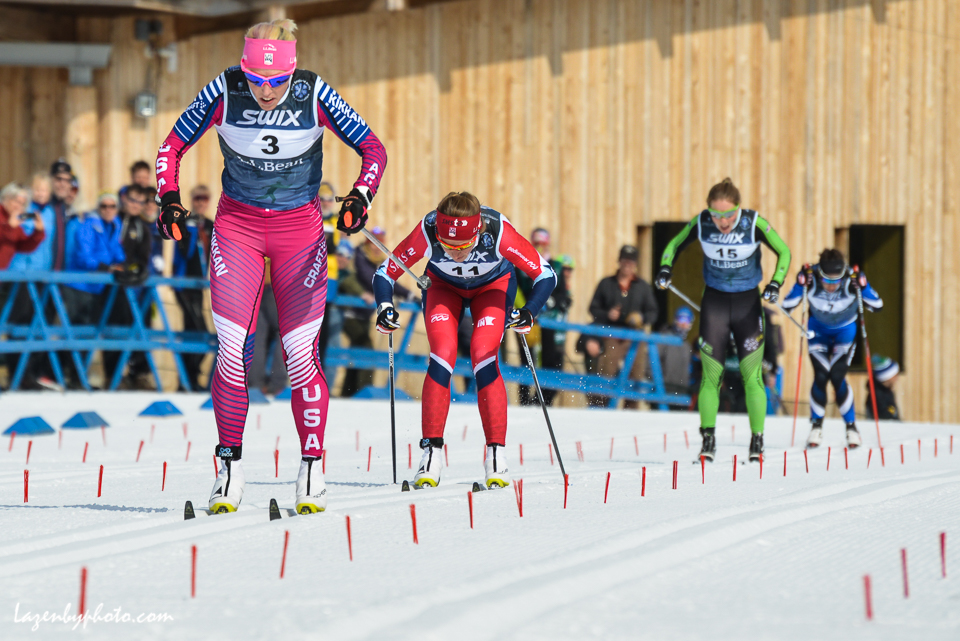
    March 2018: Kikkan Randall (3) racing for third place in the women’s 30 k classic mass start at 2018 U.S. Distance Nationals in Craftsbury, Vt., ahead of Sophie Caldwell (second from l), Ida Sargent (second from r), and Rosie Frankowski (r). (Photo: John Lazenby/Lazenbyphoto.com)

    Honorable mention, face paint edition: This remarkable evocation of Randall and Stephen on Diggins’s left cheek at Spring Series.
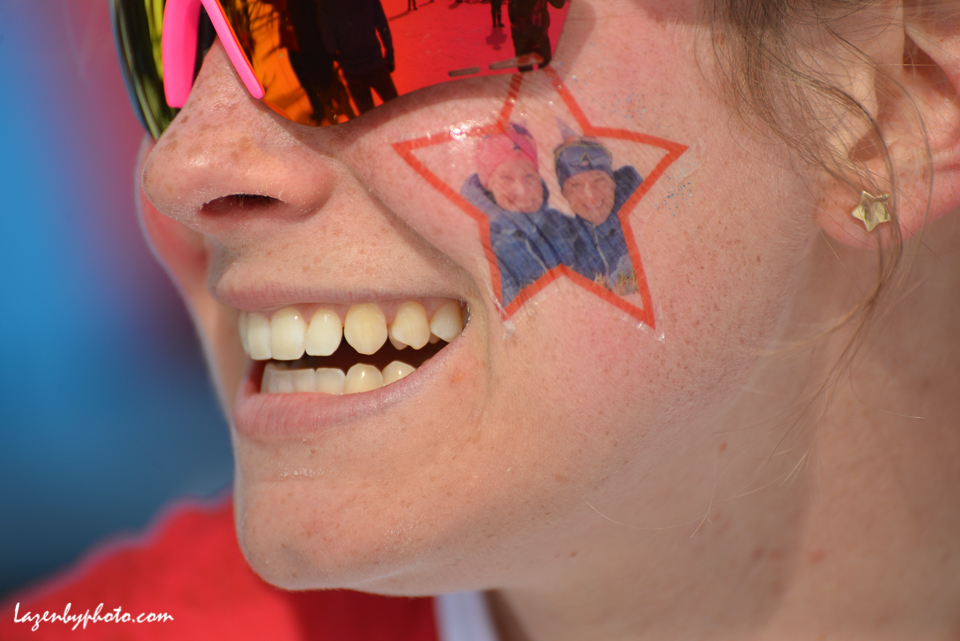
    March 2018: Jessie Diggins with a photo of her retiring U.S. Ski Team teammates Kikkan Randall and Liz Stephen on her cheek at 2018 U.S. Distance Nationals in Craftsbury, Vt. (Photo: John Lazenby/Lazenbyphoto.com)


    2018/2019: Red, white, and blue, but with larger color blocks. Also, a move to Swix.

    Randall retired. Stephen retired. Randall got breast cancer. Randall was treated for breast cancer. Diggins worked hard to successfully bring a World Cup ski race to Minneapolis. And the Americans kept racing in red, white, and blue, albeit now with a move from Craft to Swix for the suit manufacturer. This year’s interpretation of the theme brought a shift to white as the dominant color, with blue through the torso and upper legs, as well as on the arms. Red was the least-pronounced color this year, limited to accents alongside the larger blocks of blue.

    While the Americans continued their perhaps now-accustomed success at the World Cup level, American juniors served notice at World Juniors that they were a force to be reckoned with, taking a gold in the men’s relay, a fourth in the women’s relay, two fourths in classic distance races, and multiple other top-tens. Here are two shots from a frigid Lahti:

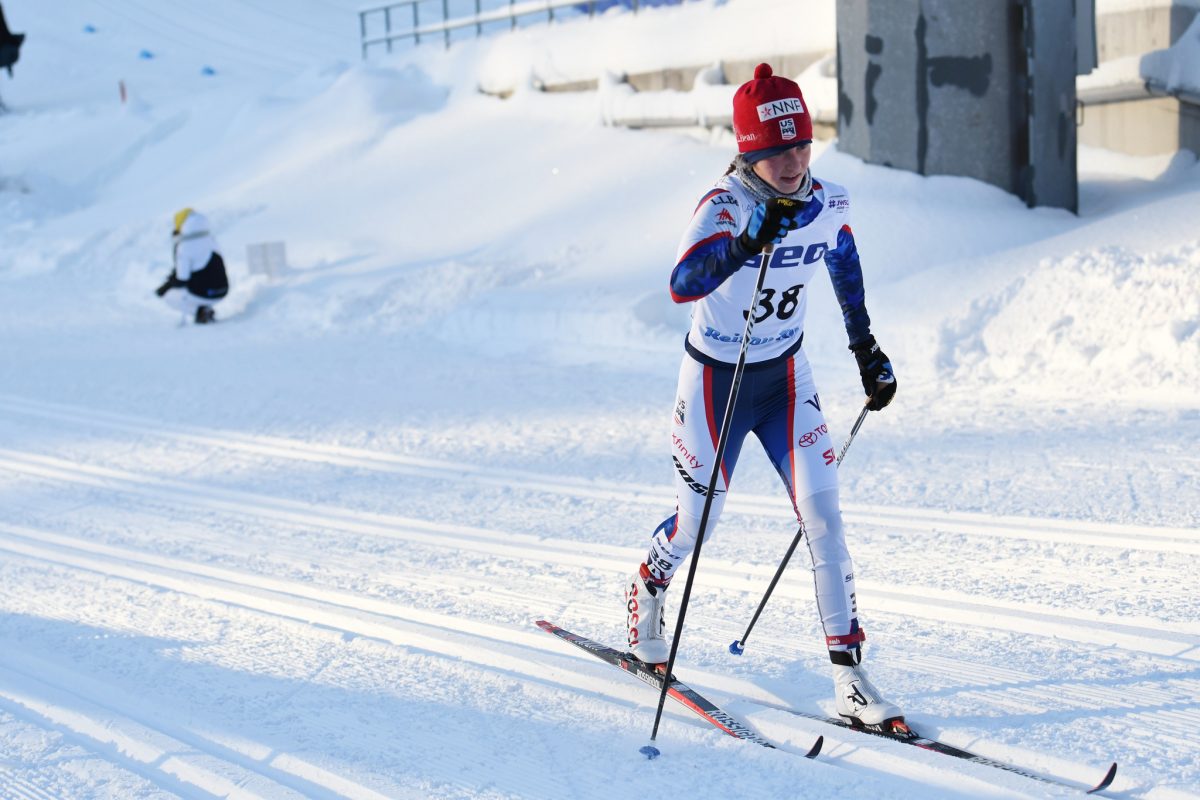
    January 2019: Luke Jager (middle left, hands in air) after tagging off to Ben Ogden (bib 2, middle right, pink hat) in the U20 men’s 4 x 5 k relay at Junior Worlds in Lahti, Finland. (Photo: Doug Stephen)


    January 2019: Kendall Kramer on her way to fourth place in the U20 15 k classic mass start at World Juniors in Lahti, Finland. (Photo: Doug Stephen)

    Back to the World Cup (where senior athletes wore the same uniform shown above on the juniors for the regular season), 2019 World Championships, in Seefeld, Austria, brought something new. The dominant hue in the race suit was now blue instead of white, and the large color blocks of the 2018/2019 World Cup regular season were gone. White stars were added to the lower left leg, making the evocation of the American flag far more apparent. Red and white stripes, on the right arm, continued the vexillological theme. While the four sponsor logos on the legs remained the same (Bose, Xfinity, Visa, and Toyota), the Swix logo shifted from the lowest position on the left leg to the middle position on the right.

    A Swix press release about the new suits advised: “Featuring bold stars and sharp American colors, the focus was on visibility in mass start events and an iconic look.”
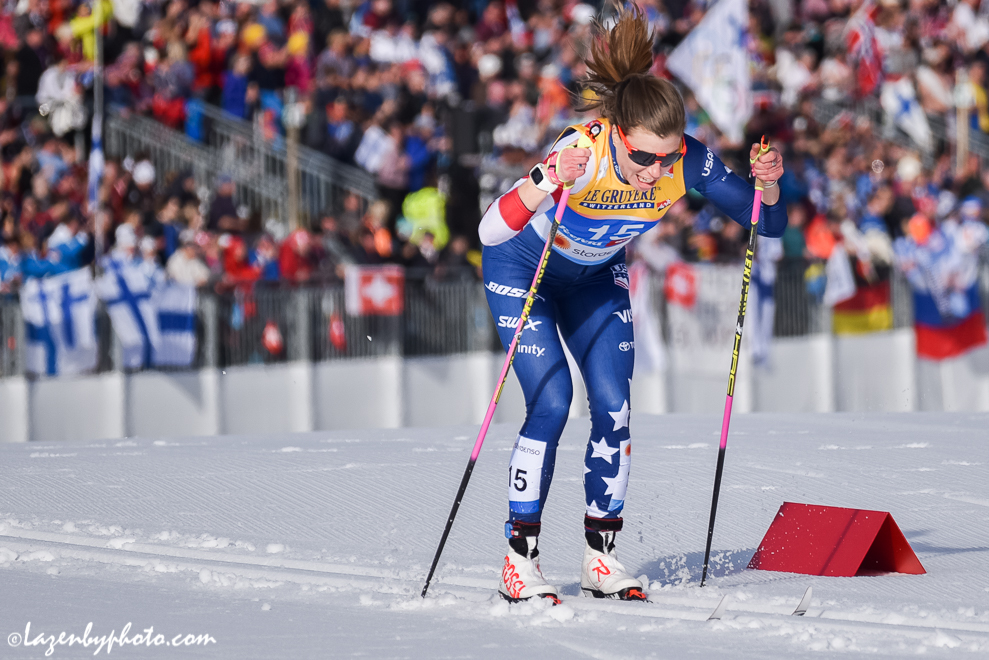
    February 2019: Rosie Brennan races in Seefeld.

    Honorable mention: Bare arms and cutoffs. It was hot in Seefeld. Like, over 50° F hot. Erik Bjornsen raced the 15 k classic with nothing underneath his race bib (sun’s out…), attire typically befitting Eagle Glacier in July more so than Austria in February. Brennan raced the relay with only a t-shirt on top, and no gloves. And Jessie Diggins drew widespread attention for her DIY cutoff look for the relay (which still featured the iconic relay socks, albeit rolled down so they wouldn’t counteract the shorts by covering most of her lower leg).

    As Diggins later wrote on her blog a month after World Champs: “Let me start by saying this; no, I was not cold racing in shorts and short sleeves, yes, you should try it sometime, and yes, it was refreshing to have the cold slush hitting my legs! Somehow, the sight of me racing in a short suit was more interesting and befuddling to most reporters than the actual race itself. Clearly, they haven’t ever experienced a Minnesota cold snap. Now THAT is cold weather! … Honestly, it’s hard to describe the amount of distress overheating puts me in, but let me put it this way; racing is already one of the most painful things you can do. If I have to deal with being incredibly uncomfortable, dizzy, and feeling my body start to shut down because I’m way too hot, it becomes even harder to continue pushing my body to the limit, because it’s already that much closer to the limit! And besides, everyone needed the laughs by the time we got to the end of the races.”

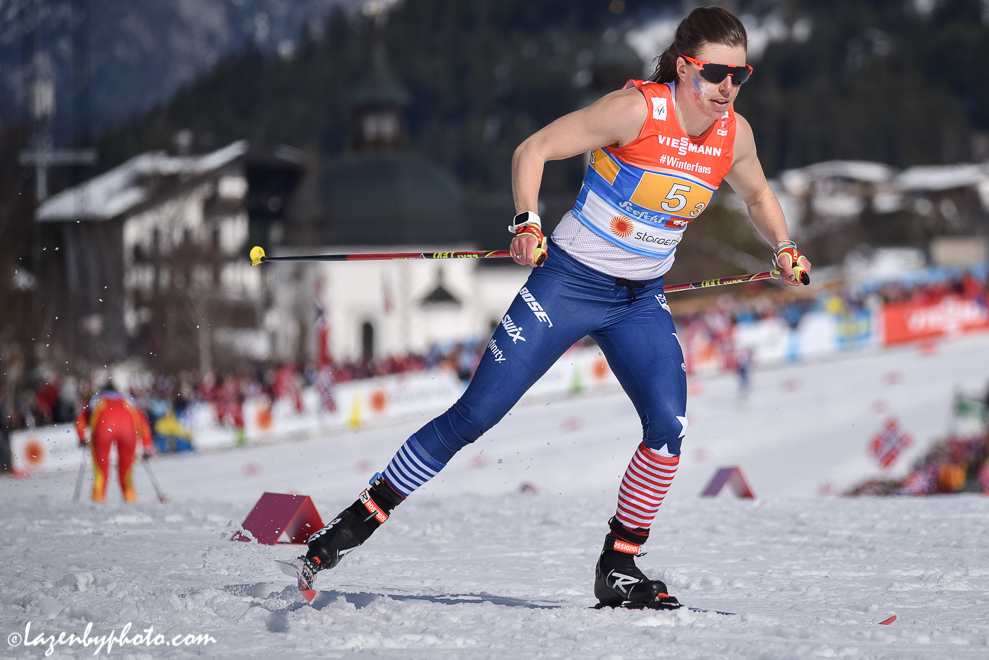
    Erik Bjornsen of the U.S. skiing to 17th overall during the 15 k classic at the 2019 World Championships in Seefeld, Austria. (Photo: John Lazenby/lazenbyphoto.com)


    Rosie Brennan of the U.S. during the third leg of the 2019 World Championship 4 x 5 k relay in Seefeld, Austria. (Photo: John Lazenby/lazenbyphoto.com)


    Custom race suit for Jessie Diggins of the U.S. She anchored the fifth place U.S. team during the 2019 World Championship 4 x 5 k relay in Seefeld, Austria. (Photo: John Lazenby/lazenbyphoto.com)


    2019/2020: Candy cane stripes!

    Finally, the start of this season brought the dawn of what has variously been called the “candy cane stripes” or “barber pole stripes” suit (#wellactually a barber’s pole historically has alternating red and blue stripes, not just red stripes as on the current U.S. suit). The left leg features red and white stripes, in a color-appropriate rendition of the American flag. The right leg has white stars on a blue background, again in patterning true to the actual flag. The stars are repeated on the left arm, and the stripes are briefly evoked on the right.

    The car sponsor has once again changed, this time to Land Rover.

    Here’s Kelley Roche, Soft Goods Product Manager for Swix Sport US, explaining the backstory for this year’s suit design in an email to FasterSkier: “Swix worked with Garen Riedel who owns his own design firm, Riedel Creative in New York. Garen worked closely with the athletes to design a suit that graphically works and they were excited to compete in. The goal is to design a suit that you can pick out of the pack and immediately and know it is a US athlete! This is important for the fan but really important for the coaches who support the athlete during the race. We ended up going with an asymmetric design, a continuation of the Seefeld suit design from 2019 and a retro reference to some of the suits of old, leveraging the iconic and patriotic American flag color palette with a slight color fade across the body.”

    Roche added that the suit itself is made out of mesh, which in addition to being flexible and breathable “acts like  dimples on a golf ball, balancing the lift and drag of the athlete.”
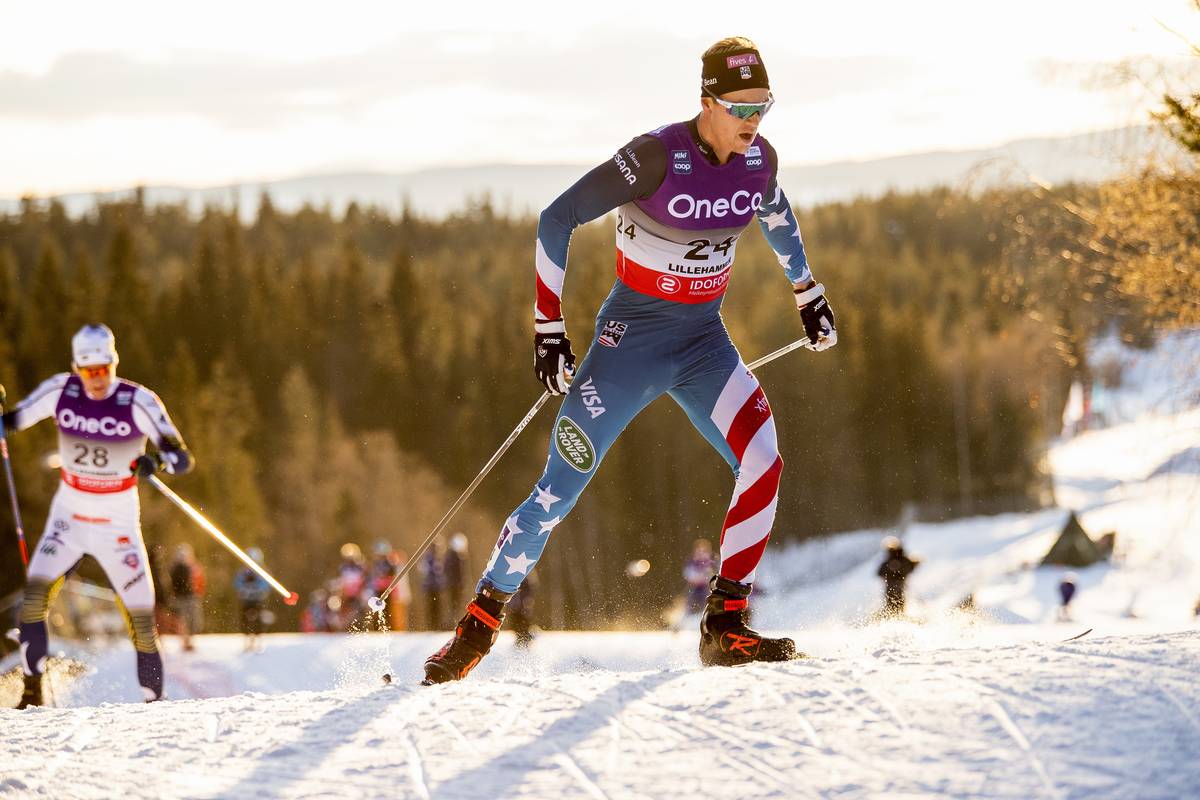
     

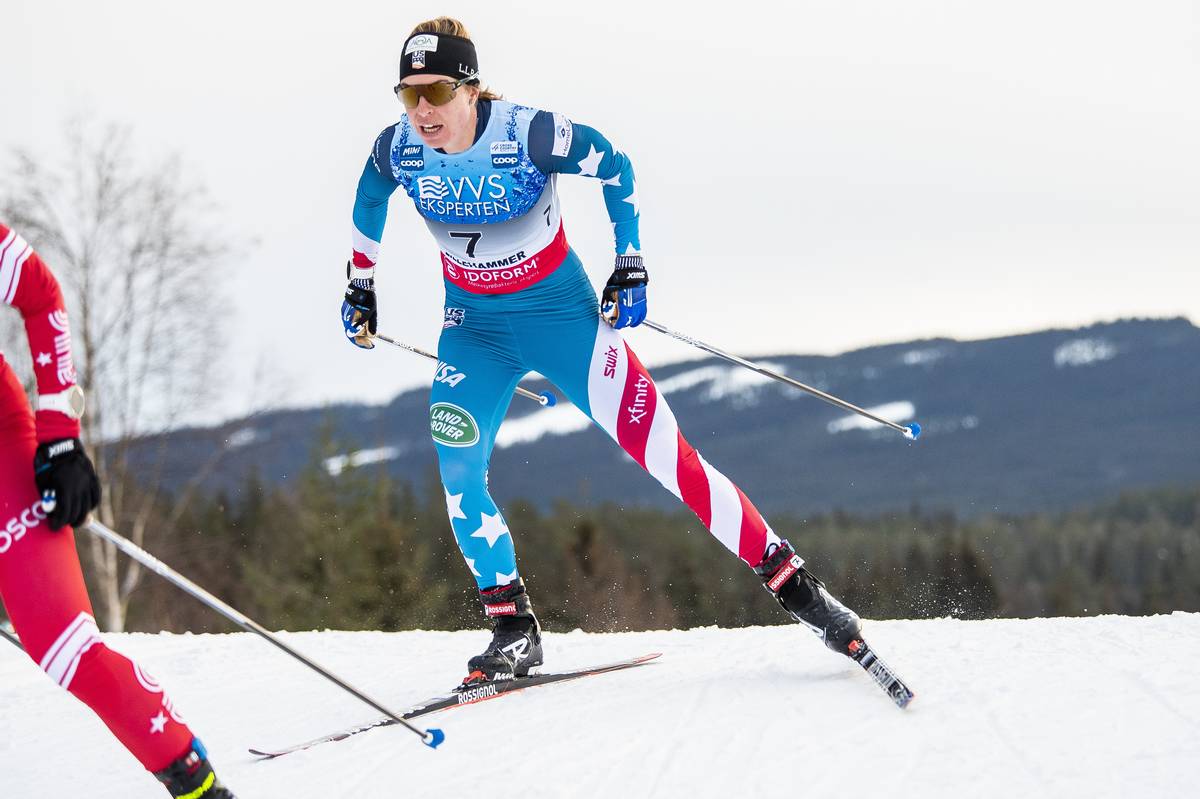
    December 2019: Erik Bjornsen during the skate leg of the 2019 30 k skiathlon in Lillehammer, Norway. (Photo: NordicFocus)


    December 2019: Lillehammer, Norway (NOR): Rosie Brennan (USA). (Photo: NordicFocus)

    We’d like your thoughts on the suits. Here’s a google form/survey about the U.S. Ski Team’s suits over the past decade or so.

    If you have read this far: For one, congratulations. For another, there is a wealth of historical material available in the FasterSkier archives. If you would have any interest in future compilations with a different focus  American biathlon, say, or best and worst of domestic American race suits over the past decade  please comment below, or email the author directly: gavin (at) fasterskier (dot) com. Thanks, and thanks for reading.
  • Toko: US Nationals Classic Race Report

    Toko: US Nationals Classic Race Report

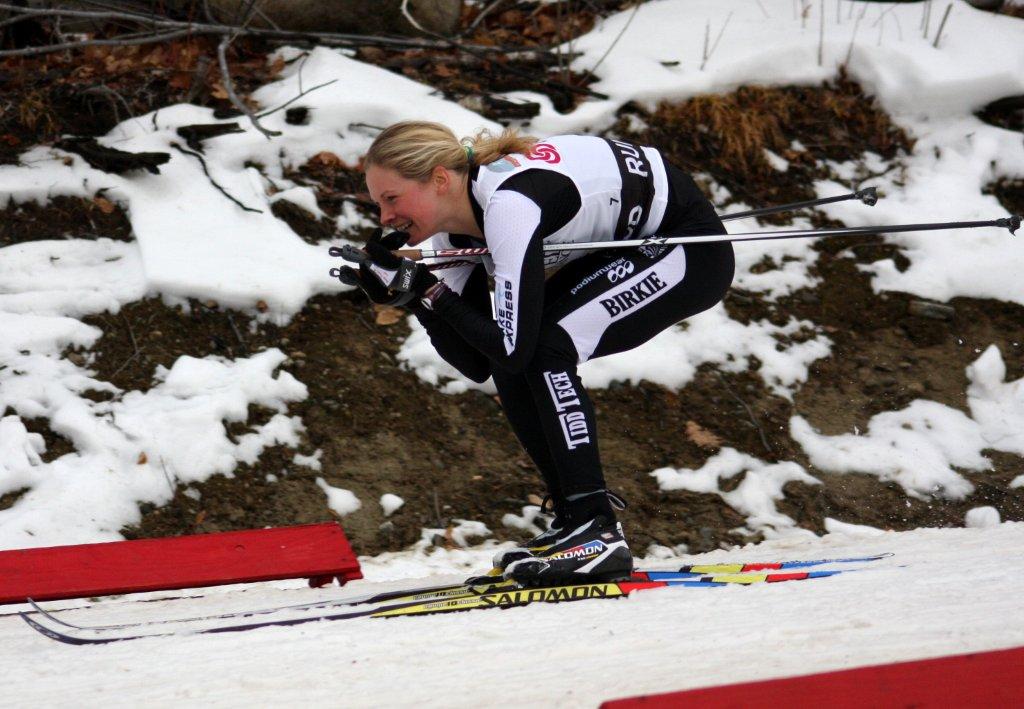
    Jessie Diggins – 4th place as a junior.

    Conditions matched what we expected when doing the wax tip.  The only thing was that light snowfall fell sometimes, but didn’t affect conditions really and it didn’t accumulate at all.  Being that there was so much sitting in a tuck on this course, ski speed played an even more central role.  You had to have fast skis.  Our glide wax tip was straight forward and held up well.  For kick, it was more complicated as there were various conditions on the course.  Parts were deep sugar snow, parts were sandy dirty mostly transformed snow, and parts were made up of a high degree of manmade snow.  Our wax tip was for a super thick and short application (in multiple layers) of Base Green Binder.  Simple as that.  In testing, this solution went about as well as the best klister wax solutions.  One team that had excellent results actually put klister on the front and back of the kick zone and thick Base Green in the middle.  This was really intelligent as the “Straight Base Green” thing only works well when applied thick in this type of snow.  The klister can go thinner on the ends of the kick zone without sacrificing speed, but enhancing kick.  Due to the loose sugary nature of the snow, shearing was also a factor today in some areas of the course (where the snow breaks underfoot creating a slip even though the wax holds). For that reason, it was better not to have a really short wax zone.  Others used Viola klister covered with Viola.  In short, it seemed that there were a lot of solutions that yielded good results today.  It seems as always that ski selection and matching the wax application to the ski camber and skier ability was the key component in having good skis.
    Despite this being an “easy” course (there was no steep hill out there), evidently it was a challenging race as there were some really tired racers out there as well as an obvious selection.  The 20 and 30k Skate races will be exciting for sure.

    We are recommending a base of LF Blue followed by HF Blue followed by JetStream Blue and lastly followed by the Toko Structurite on Blue.  It is supposed to get into the single digits tonight and hit a high of only 24F tomorrow.  The snow has quite a bit of sand in it on the bottom.  Dirt resistance will play a role tomorrow.  The very hard waxes are not only durable but also very dirt resistant.

    Just want to let you know that the glide wax Torin won the Nationals Sprint Race on was TOKO HF Yellow and HF Moly mix with Jet Stream Yellow block on top followed by Helix Yellow spray on top. I tested against products from all other brands and these won out all day long.  All I did was brush out and reapply the spray between heats.

    Scott Johnston, Head Coach. MOD

    Chris Cook (Steinbock Racing)

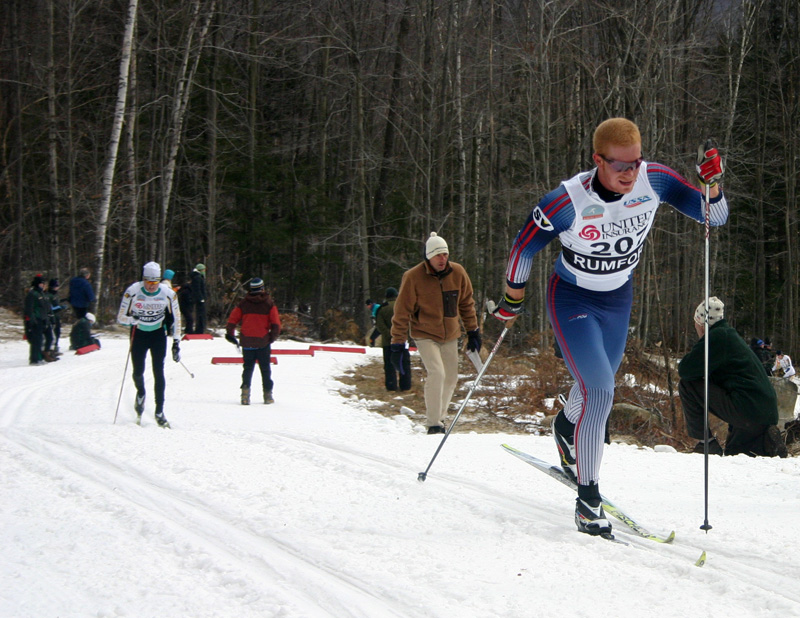
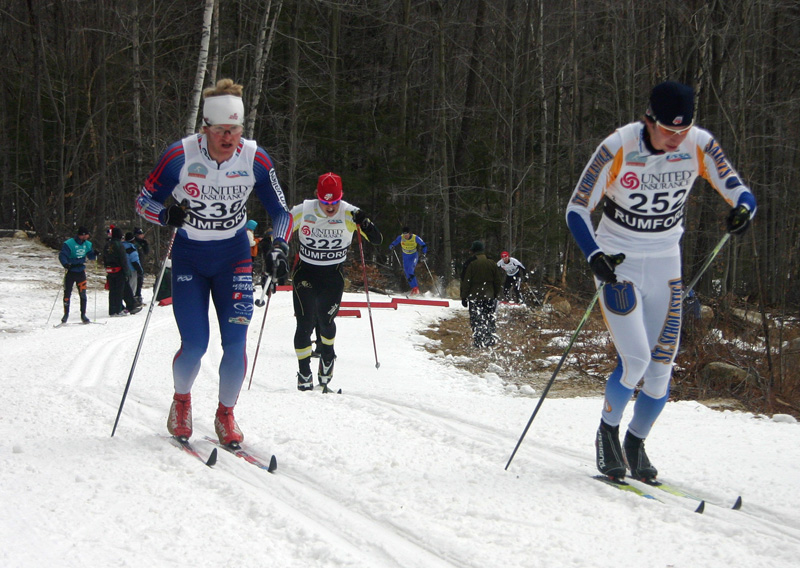
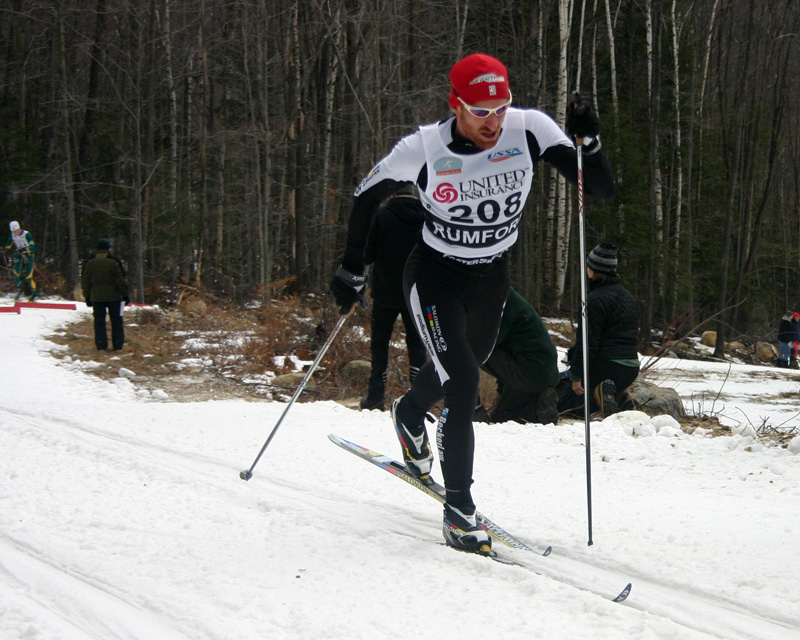
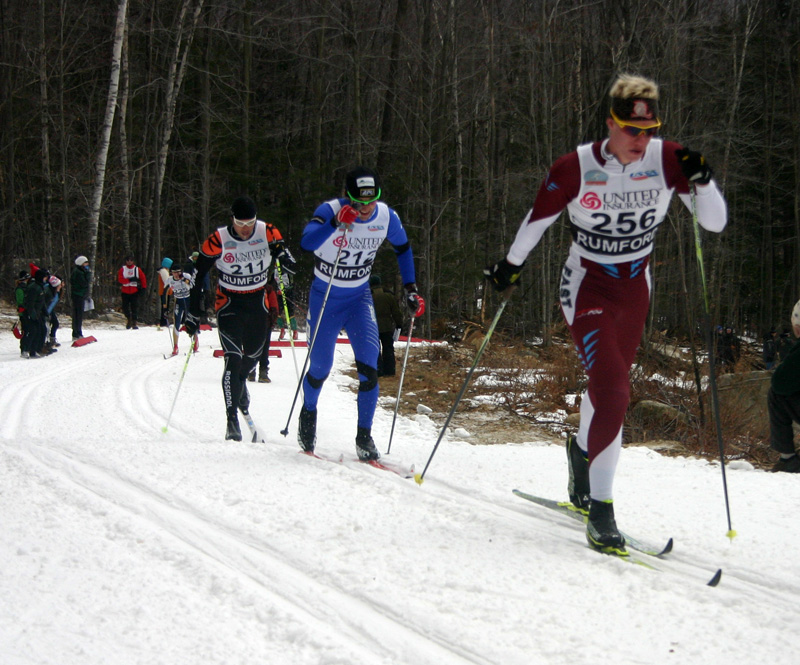
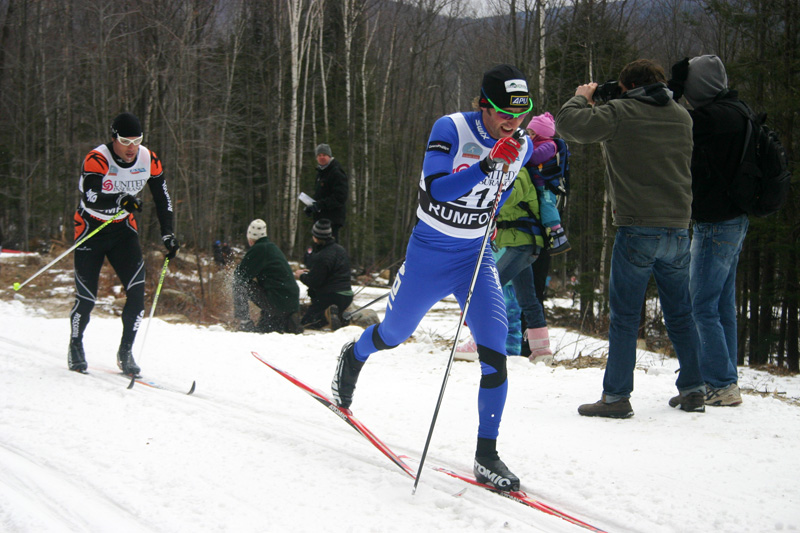
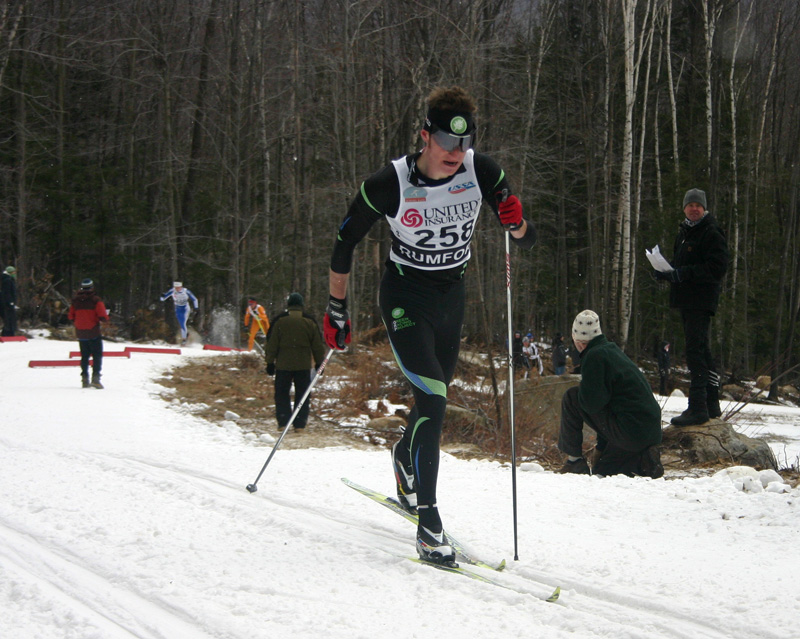
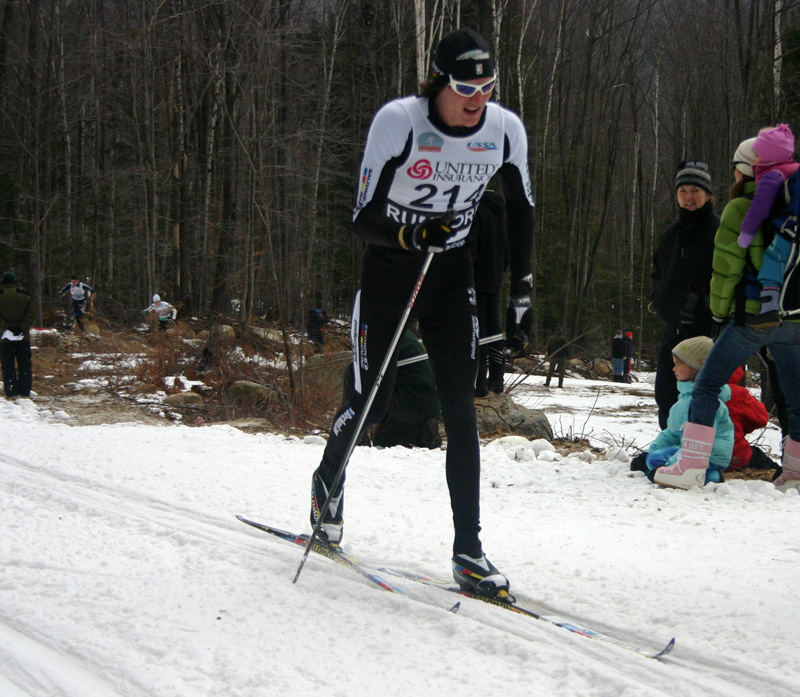
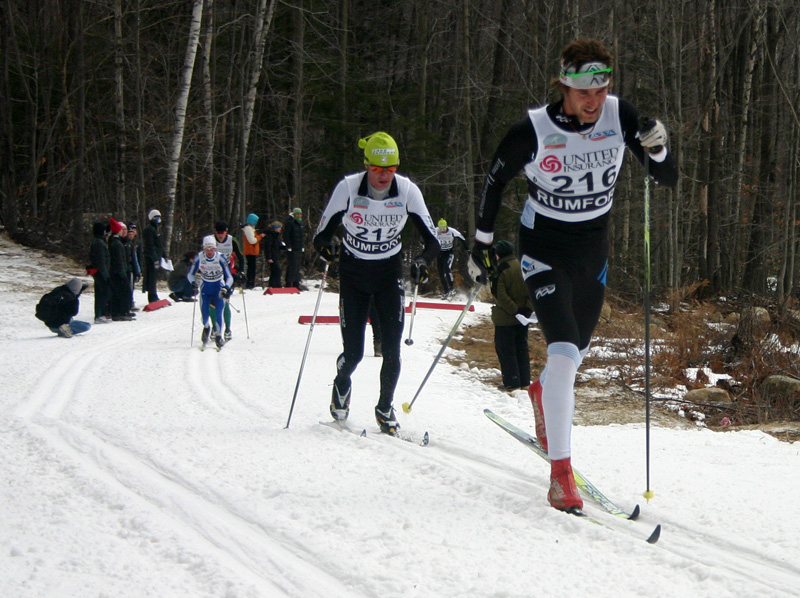
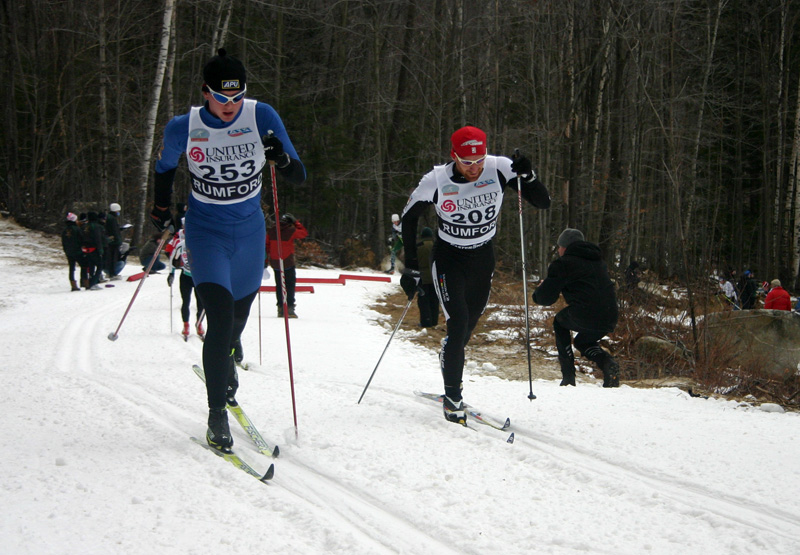
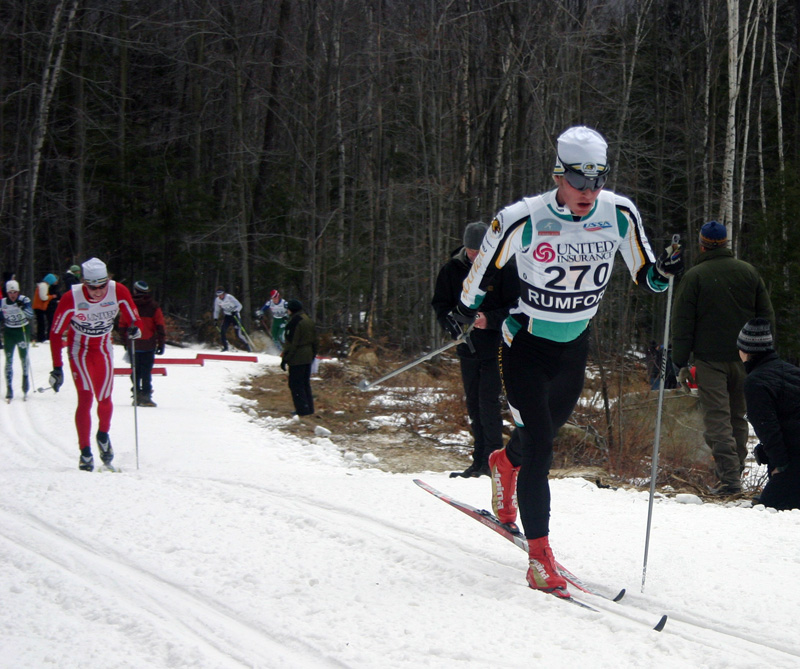
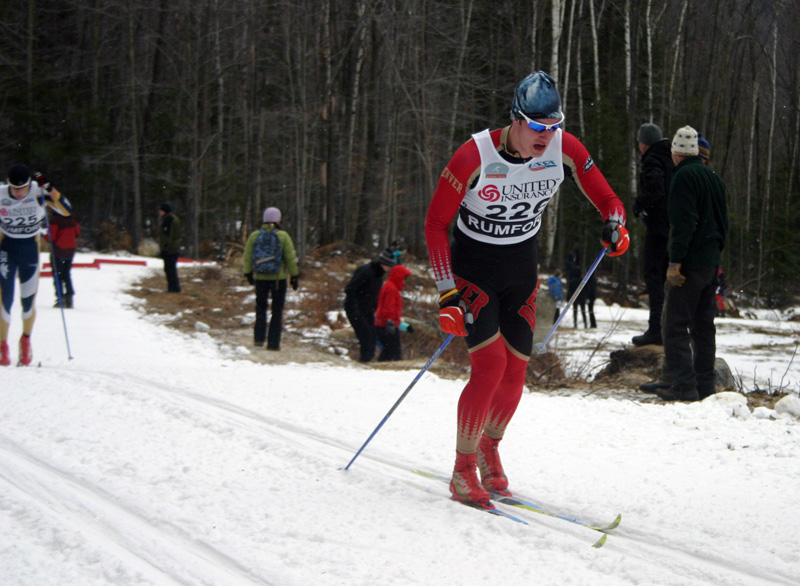
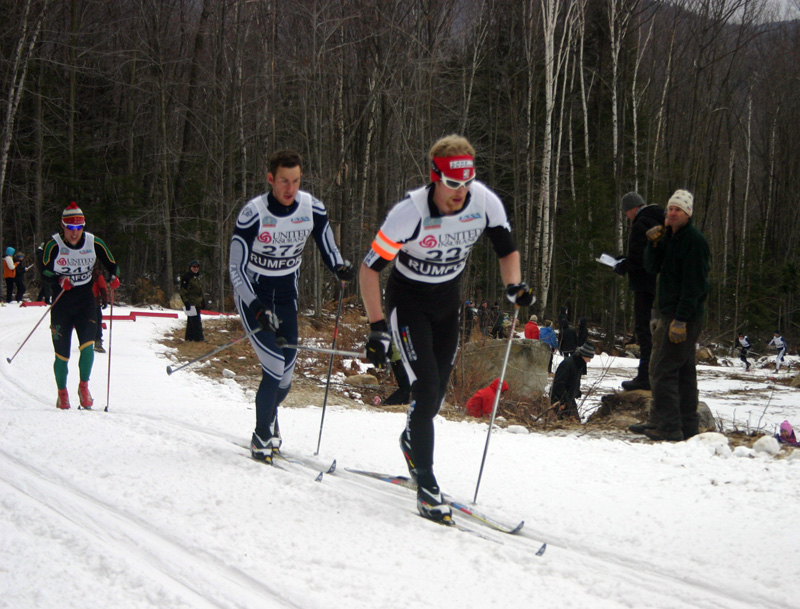
    As the entire XC community made its way to Rumford, Maine for the 2011 US Championships many were surprised at what they found.  The conditions were very thin and with the temps pushing into the 50’s it was only getting worse.  The race organization was doing everything they could to keep a sprint track open but one thing was clear, nothing was going to be predictable.

    When it comes to XC ski racing and especially sprint racing there are several variables, some controlled and others uncontrolled that need to be dealt with.  You have such controlled variables, such as your wax, ski selection, warm-up, and course strategy.  These are the things as a racer you must focus on and the beauty of this is it should all be part of a consistent unchanging routine.  This routine is what will get you through the race day focusing on exactly what you can control.  All to often, racers get caught up with the weather, track conditions, other racers, and the pressure of a major championship event.  All of these you have absolutely no control over.  What is the point in wasting your time and energy worrying over the weather, who you are racing against, who you are supposed to beat or not beat… Racing is simple, and all too often it will never be held under the ideal circumstance or the perfect conditions.  This is why they hold the race, because things change and create unpredictability.  So as this week moves on with an ever changing schedule, stay cool don’t fret, adapt and focus on your routine and let the chips fall where they may.  You didn’t train all those long hard hours just to get derailed by a thin track or some warm weather.

    Believe in your routine, we are creatures of habit, don’t change now.

    Good luck and Ski Fast.

    Pin it.

    Chris Cook, Steinbock Racing

  • Don’t Lose Count, 4 More Laps to Go: Photos of US Nationals Men’s Classic Race

    Don’t Lose Count, 4 More Laps to Go: Photos of US Nationals Men’s Classic Race

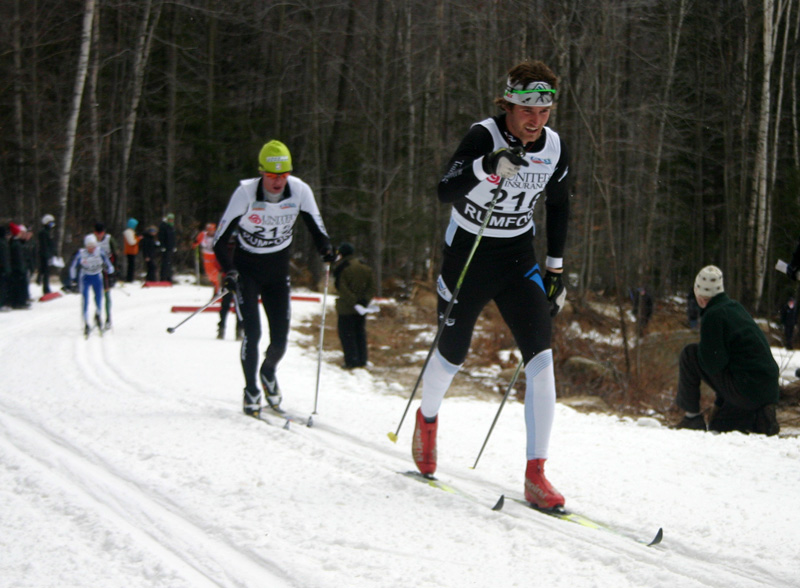
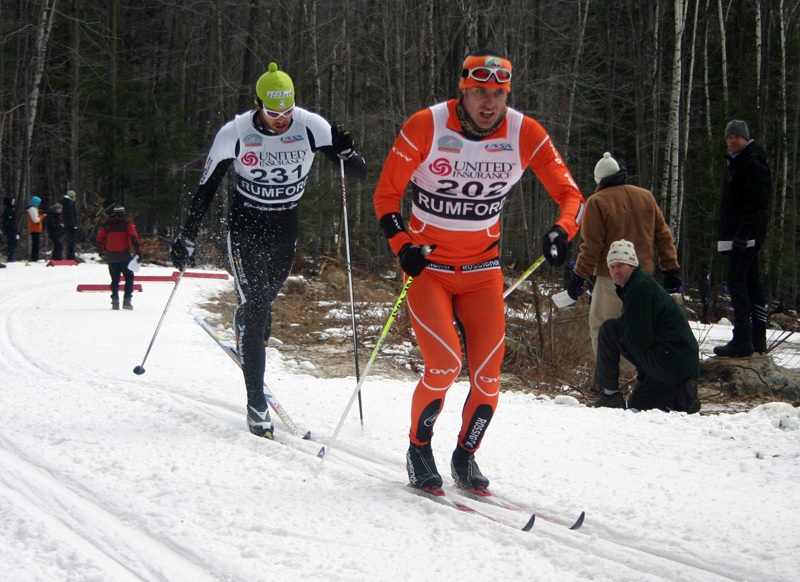
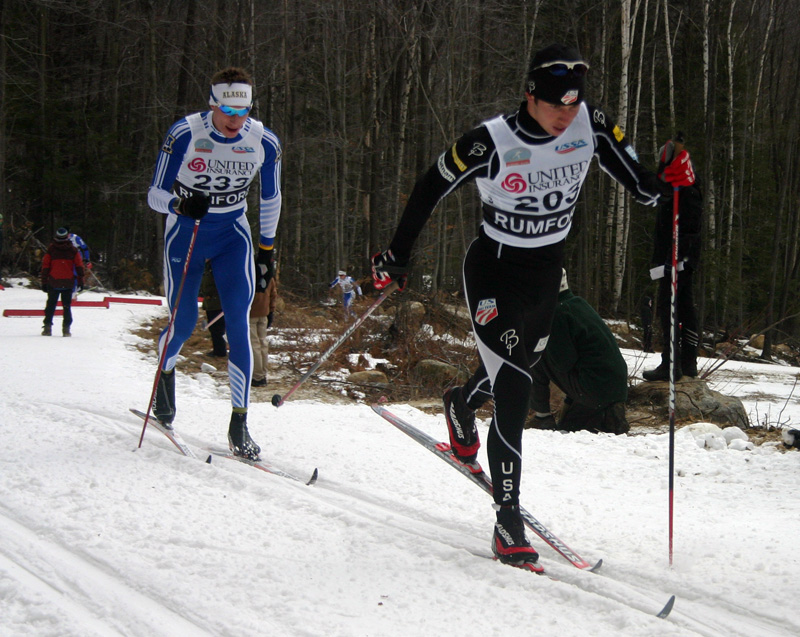
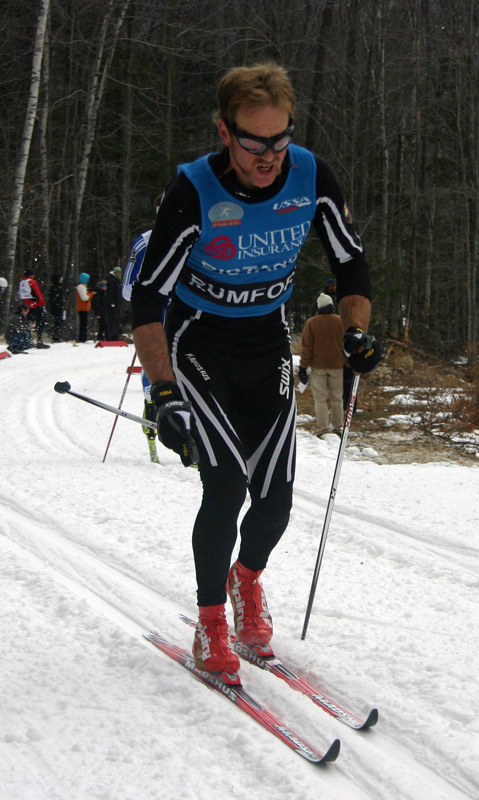
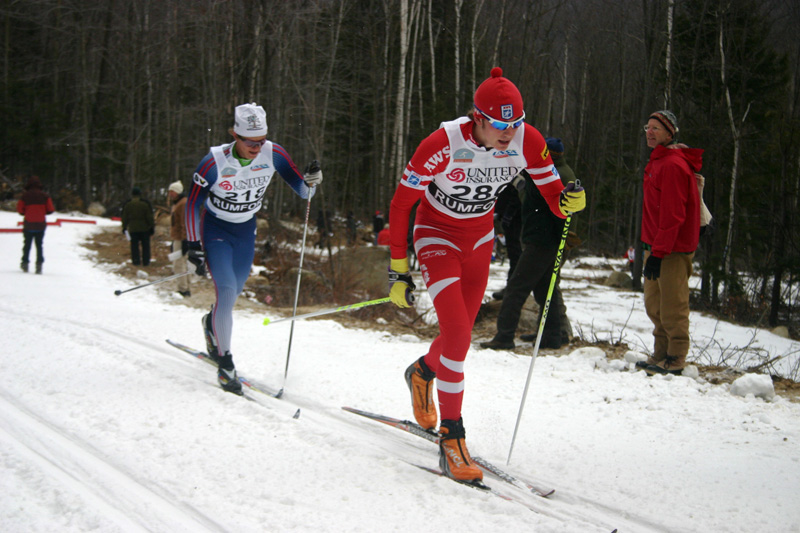
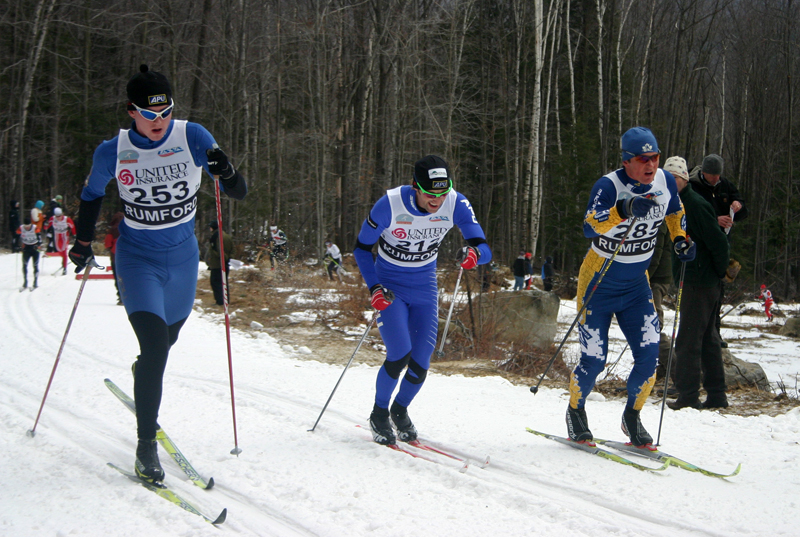
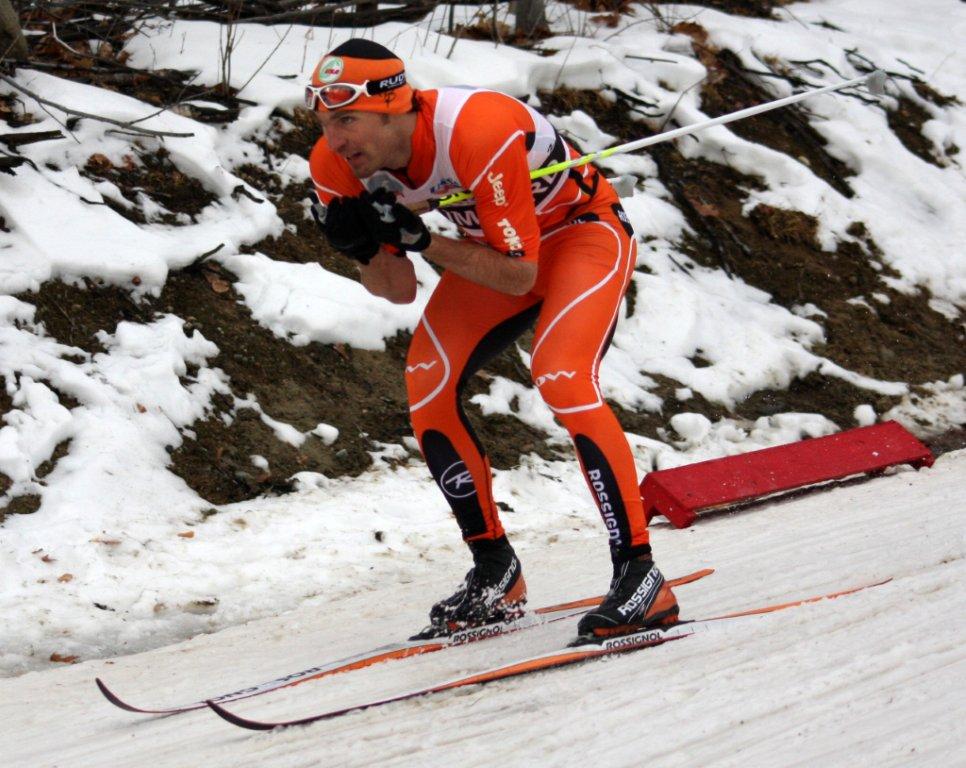
    With the men doing six laps in their 15km classic race today at the US National Cross-Country Ski Championships there was plenty of opportunity for photography.  These aren’t the best, but will give you an idea of how things looked out there.

  • Toko: US Nationals Classic Sprint

    Toko: US Nationals Classic Sprint

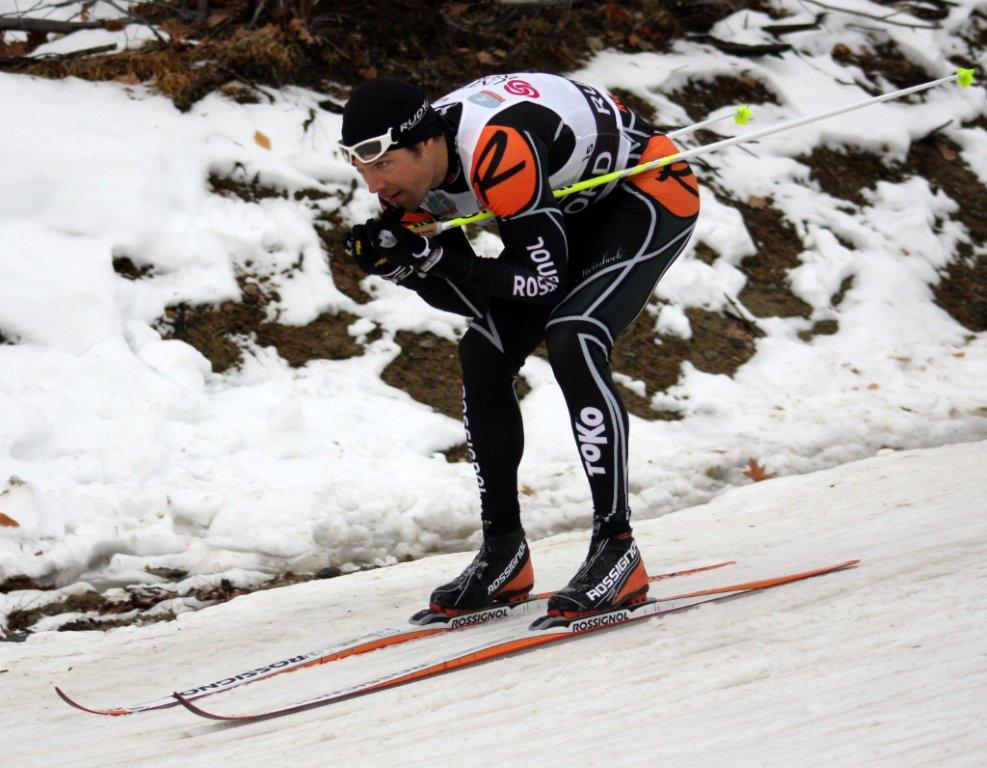
    Torin Koos (MOD) dominated the A final.

    Conditions were as forecasted – warm, wet, (although during race times there was no precipitation) dirty, and soft.  The wax recommendation held up all day and as we recommended, more structure was needed as the day went on.  Attention to detail proved to be very important today as well.  Small things made a difference especially in a short race with extreme conditions (wet and dirty) and with a finishing section consisting of a downhill with a long run out!

    The wax needed to be brushed and polished off the ski very well today to prevent dirt build up.  That applies to fluorocarbons as well.  Even a slight greasy sheen on the base will attract dirt in such dirty and wet conditions.

    The kick zones used today were pretty short as glide was so important.  It was important to clean up the exposed sanded area so it wouldn’t attract dirt.

    The Yellow Structurite bit proved to be really good over a 1mm linear structure as we recommended.  After a few runs (including qualifying), it needed to be reapplied as it only got wetter out there.

    Many had success with JetStream Red today (as well as the more obvious Yellow).  JetStream Red is surprisingly good in wet snow and is generally the call when conditions are wet and dirty. If wet and clean, JetStream Yellow is best.  Today was a short race and of course people rewaxed for the heats, so Yellow was good despite the dirt.

    Tuesday’s race will be a 10/15k Classic.  Wax tip will be posted tomorrow on Twitter (@TokoUS) and Facebook (Toko US).  Please follow or visit us to see it.

  • Dusseldorf City Sprint Preview – Get Yer Popcorn Ready!

    Dusseldorf City Sprint Preview – Get Yer Popcorn Ready!

    Since 2002, the city sprint in Dusseldorf, Germany, has become a fixture on the International Ski Federation’s (FIS’s) World Cup calendar. One of three regular city sprints on the circuit, Dusseldorf features a flat, extremely fast, and almost dangerously narrow and twisty sprint course.

    Over the last eight seasons, the German city has become renown for carnage and upsets, almost as much as for cross-country skiing in a unique location and with a great crowd atmosphere.

    Racers in the 2009 edition of the Dusseldorf World Cup. Photo courtesy of World Cup Dusseldorf.

    Every year, 3,000 cubic meters of artificial snow are trucked in from a nearby indoor ski slope, and the German organizers cover the boardwalk along the Rhine River and pack in thousands of fans. Dusseldorf is often a bit of a spectacle, as according to FIS, over 350,000 fans packed into the city to catch the World Cup in 2008. And speaking of spectacles, the 2006 edition of the race featured the little incident in which Oeystein “Sausage” Pettersen (NOR) earned his nickname.

    Dusseldorf is notable for the lack of high-powered distance and all-around World Cup skiers. Top overall contenders like Lukas Bauer (CZE), Marcus Hellner (SWE), and Petter Northug (NOR) will be absent on the men’s side, and Marit Bjoergen (NOR) and Justyna Kowalczyk (POL) will also take the weekend off. This typically results in a few surprises – last season, Sweden’s 20-year-old Hanna Falk came out of nowhere to stand on the top of the women’s podium.

    Dusseldorf is also home to a few consistently impressive city sprinters. Germany’s Josef Wenzl is a bit of a one-trick pony on the World Cup, as he skis amazingly in Dusseldorf, but struggles in most other locales. While last season he faltered, failing to make the heats, Wenzl has been in the A-Final in Dusseldorf three times, including two podium finishes in his four starts. He might not win, but it’s tough to count out a fast sprinter with that track record on home turf, especially when German Head Coach Jochen Behle backs him.

    The Norwegian Sprintgutta has traditionally been a strong presence as well, and this year is no different. Of the eight men sent to Dusseldorf by Norway, six have stood on the podium there before. Anders Gloersen and Eirik Brandsdal finished second and third, respectively, last season. The stacked Russian sprint team will also make an appearance – Alexei Petukhov won in Dusseldorf last year, while Nikita Kriukov and Alexander Panzhinskiy, the top two finishers in the sprint at the 2010 Olympics, are both on the start list.

    As for the North American contingent, Kikkan Randall is the only American woman racing, and she has skied well at the city venue in the past. According to U.S. Ski Team (USST) Head Coach Chris Grover, Randall has some unfinished business on the boardwalk.

    “Last year in Dusseldorf, she got tangled up and fell down in her quarterfinal right after the start,” Grover said, “She never had a chance to demonstrate her ability.”

    The two-woman Canadian sprint squad is undeniably led by Chandra Crawford (CAN). Crawford considers the Dusseldorf sprint a bit of a specialty, and she has made the heats in all of her starts there. She has been targeting the upcoming weekend all year for her first big performance.

    Last season, Crawford finished 12th at the venue, punching her ticket to the Olympic Games. According to her blog, this season she looks to crack the top 20, which would cement her spot on the World Ski Championships team.

    Dasha Gaiazova, Crawford’s counterpart, has been strong in both sprint and distance races this season, and there is no reason for that success not to continue, especially with a smaller field making for slightly less-competitive qualification.

    Andy Newell (USA) will undoubtedly lead the North American men, as he proved in Kuusamo that he is top sprinting shape, and like Randall, he undoubtedly has an axe to grind from last year’s Dusseldorf event, where he qualified third but failed to reach the A-Final. While Newell’s arrival has been delayed by transportation and passport problems, so long as he arrives in time to hit the start line, he will still be a contender.

    The performances of the other American men are harder to predict, however. Simi Hamilton had a breakout sprint season last year; however that was mainly due to his classic sprinting speed, and so far this year he has been hampered by a leg injury. According to his blog, the injury is now in the rearview mirror, and he will be looking for an opportunity to mix it up in at least one heat.

    Torin Koos has been traveling and racing in Europe separate from the USST this year, but after finishing second in a sprint event in Norway last weekend, Koos was chosen to step up for his first World Cup of the season.

    As for Chris Cook, his season has started out slowly, and he will need to take a big jump if he wants to advance on the fast course, with so many top sprinters taking to the start line.

    In the absence of top male all-around threats Devon Kershaw (CAN) and Alex Harvey (CAN), the Canadians are rolling with a pure sprint squad for the weekend. Classic sprint specialist Stefan Kuhn, breakout talent Lenny Valjas, and Phil Widmer will all start. Kuhn and Valjas qualified last weekend in Kuusamo’s classic sprint – look for them to build on those strong results in the slightly reduced field.

    Brent McMurtry (CAN) also gets the call for the Canadian team, and after two weekends which saw him fail to score World Cup points, he will hope to make a break through.

  • U.S., Canadian Teams Disperse; Sprinters Head to D-Dorf, Slowly

    U.S., Canadian Teams Disperse; Sprinters Head to D-Dorf, Slowly

    This weekend’s World Cup city sprints in Dusseldorf aren’t supposed to start in the airport. But the American and Canadian ski teams will be cutting it pretty close.

    Thanks to a strike by Finnair’s flight attendants, the two squads’ sprinters are spending Thursday night in Finland and departing for Germany on Friday—giving the teams a buffer of roughly 24 hours before the start of the races on Saturday. American Andy Newell’s schedule will be even tighter: due to a passport mishap, he won’t arrive in Dusseldorf until Friday night.

    But while limited prep time might be a disadvantage at other venues, it’s not at Dusseldorf, since the snow for the sprint isn’t laid out until the night before the race.

    “It’s not like you can ski on the course, anyways,” Newell said.

    Both North American teams will field larger squads in Dusseldorf than they have in years past.

    The U.S. will start Newell, Simi Hamilton, Chris Cook, Torin Koos, and Kikkan Randall in Saturday’s individual sprint, while the Canadians will have Chandra Crawford, Dasha Gaiazova, Len Valjas, Stefan Kuhn, Brent McMurtry, and Phil Widmer.

    On Sunday, barring health problems among the others, Randall will be the only one to sit out the team sprint—her potential partner, Ida Sargent, left Europe earlier this week to get back to Dartmouth College in time for finals.

    Kris Freeman, Noah Hoffman, Liz Stephen, and Morgan Arritola, the American distance contingent, are all training in Davos, Switzerland, in advance of next weekend’s World Cups there.

    Hoffman’s itinerary had originally called for him to return to North America for domestic racing in December, but his results this fall were strong enough for the U.S. Ski Team (USST) staff to opt to keep him on the World Cup circuit, for its stops in Davos and La Clusaz, France.

    Compared to dark, frigid Finland—where last weekend’s World Cup races were held—Davos, a Swiss resort town, is said to be paradise. As USST coach Matt Whitcomb put it on Twitter earlier this week, “perfect skiing in Davos, but at least it is sunny and the coffee is good.”

    Meanwhile, the Canadians have also split up. Their sprinters are headed for Dusseldorf, but Alex Harvey and Ivan Babikov flew back to North America after last weekend’s races in Finland. Babikov, who travels well, is planning his return to Europe for the Davos races, while Harvey won’t be back in action until December 31—the first stage of the Tour de Ski. George Grey and Devon Kershaw are staying in Europe but skipping Dusseldorf, instead hunkering down in Livigno, Italy, for some training. Apparently, the food at their hotel, the Bivio, does not suck.

    The sprinters, however, are all still stuck in Helsinki. Despite their plans for a last-minute arrival, the Americans won’t be cutting it any closer than last year, when a bird flew into their engine on one of their travel legs and delayed the team’s arrival in Dusseldorf until the day before the race.

    At the very least, the American equipment will be there, thanks to a van driven 1,800 miles from Finland to Germany by USST staff.

    That van, though, contained an unintended piece of cargo: Newell’s passport. He has to wait for it to arrive in Helsinki before he can fly out, but he said it shouldn’t be a problem. Plus, he added, with Dusseldorf, “it doesn’t matter when you get there, as long as you get there in time to race.”

  • Hellner Doubles Down in Gallivare, Leads Sweden to Relay Victory, US Strong for 3/4

    Marcus Hellner (SWE) at the finish of the men's 30k pursuit at the 2010 Olympic Games.

    In Petter Northug’s absence, Marcus Hellner (SWE) took over the mantle as the dominant World Cup male, following up an impressive victory in Saturday’s 15km freestyle by leading the Swedish relay team to the top of the podium.

    Hellner outsprinted Russia’s Alexander Legkov after the two teams broke away on the third leg.

    Daniel Rickardsson (SWE) and young Petr Sedov (RUS) broke away from Norway’s Chris Andre Jespersen and Switzerland’s Remo Fischer during the first skate leg, giving the anchors a 16 second lead that they would extend to 48 by the end.

    Norway took the final podium spot, unable to overcome the absence of Northug in the 4th spot.

    Switzerland posted an impressive result, led by Dario Cologna, who closed the 30-second deficit he inherited on the second leg.

    A group of four broke off the front on the scramble leg. Jauhojärvi (FIN), Sergey Cherepanov (KAZ), Eldar Roenning (NOR) and Emil Joennson (SWE) of Sweden II opened a gap of eight seconds on the field.  But with the exception of Norway, the teams quickly dropped.

    The US men had three quarters of a great relay, entering the anchor leg in a virtual tie for 5th.

    But Chris Cook, clearly not internationally race ready, plummeted back through the field , losing almost three minutes to Hellner over the last 10k, and dropping the US to a final position of 17th.

    The story of the day for the US, however, was continued strong performances from the rest of the athletes.

    Andy Newell bounced back from Saturday’s 15 k with what had to be one of his best World Cup distance performances.  Newell tagged Kris Freeman just 15.4 seconds off the pace in the main chase group.

    “I was able to have a really good start, and was able to relax pretty well,” said Newell following the race. “Because of that I was able to ski with the pack the entire 10 k, and then bring it into the stadium close enough that Bird [Freeman] was able to get in a good pack of skiers and link up with the lead pack.”

    Freeman continued his excellent start to the season, posting the 3rd fastest time on the second leg, bringing the US in 5th, just seconds out of the podium.

    The US chose to mix up the running order, switching Newell and Freeman. In the past, Freeman has generally scrambled, but according to Newell, the move worked out well.

    “The way we chose to run it today was a really smart idea — it put us in a really good position,” Newell said.

    He also pointed out that his experience bumping elbows in sprints paid dividends in the chaos of a relay scramble.

    The race moved to the skate technique, and Noah Hoffman took over for the US. Hoffman had a fine 2011 World Cup debut in the 15km, just missing out on the points. He stayed in high gear for the relay, holding position, despite losing time on the leaders.

    Hoffman ranked 16th for his leg, but was just 48.9 seconds off the pace set by Norwegian biathlon legend Ole Einar Bjorndalen.

    “We were stoked to see that if we all put together good 10 k’s…we can be in medal contention going into the third and fourth legs,” concluded Newell.

    There were few expectations for the US team, especially with Cook not firing on all cylinders. But for this was not the case for the Canadians.

    Running the same four that was a medal hopeful in Vancouver, the Canadian men struggled for the second consecutive day, placing 18th in the 23-team field.

    With George Grey dropping over a minute on the first leg, and tagging Devon Kersahw in dead last, the Canucks were never in the running.

    Kershaw managed the 9th fastest split on the second leg, but dropped another minute to the leaders, before giving Ivan Babikov his turn. Babikov fared no better, losing even more ground, and Alex Harvey, despite making up over two minutes on the US’s Cook, couldn’t move up.

    Cook just held off a hard-charging Harvey by 3.9 seconds.

    Newell pointed out that Cook is much stronger in a 10k classic, and that “having to skate that anchor leg was probably pretty tough for him… it’s probably not a good indication of the shape he’s in.”

    The World Cup picks up on Friday with a mini-tour in Kuusamo, Finland.

    Men’s 4x10km Relay – Results

  • US Locked, Not Quite Loaded For Double Relay

    Much to the chagrin of certain US ski fans, the US Ski Team has not put much focus on relay events over the past eight years.  Not since the 2002 Olympics have the Americans posted a top result, and more often than not, have been well to the back of the field.

    That is not going to change overnight, but with a both a men’s and women’s quartet hitting the trails on Sunday, and a mixture of new blood and a new running order, there is something to be excited about.

    The men will run Andy Newell in the classic scramble leg, followed by Kris Freeman, Noah Hoffman and Chris Cook.

    “We have a chance of a pretty respectable showing if everything goes right,”  Freeman told  FasterSkier after his 9th place finish in Saturday’s 15km freestyle.  “We’re obviously not racing for a podium tomorrow, but I think we’re going to try to hang with the group for as long as we can.”

    The key for the US will be whether or not Newell can stay close over the first 10km.  If he passes off to Freeman within striking distance, the team will be in good position for the respectability that Freeman mentioned.

    Newell should perform better in the 10km classic than the 15km freestyle, which he describes as “my worst event.”

    Hoffman is a stronger skater and and his result Saturday demonstrates he can ski at a World Cup pace.

    The weak link is Chris Cook who arrived in Europe recently, and is still looking to find his competition form.  Cook did not have the luxury of FIS tune-up races a week ago, so he has had to hit the ground running, and struggled in the 15k.

    On the women’s side, World Cup rookie Ida Sargent will scramble.  While her most impressive results have come in sprinting, Sargent has some distance chops as well, and the 5km classic should suit her well.

    Kikkan Randall, who usually skis the first leg takes over from Sargent.  The inexperienced Sargent will just have to hang on to the pack, while Randall has the confidence and experience to chase after anyone who gets away.

    Randall is followed by Morgan Arritola and Liz Stephen for the skate legs.

    If everyone skis well, the women likely have a better chance of a strong final result than the men.  Stephen and Randall both had excellent races in today’s 10km freestyle, but Arritola has struggled since delaying her departure for Europe due to illness.

    “I’m really excited about it,” said Randall.  “We are going to try something different by sending Ida out first – she is a sprinter and scrappy.”

    Relays are the ultimate challenge as a good result relies on four individuals all having a good race on the same day.  To move up the ranks, the US needs better than good from each skier, and the odds are against them.  But look for the teams to hang tough and continue the positive trend of the past few weeks.

    “We are off to a good start and are psyched up for tomorrow,” wrote US Ski Team Coach Pete Vordenberg following the 10/15km freestyle.

    Nat Herz contributed reporting.

  • Freeman Places Ninth, But Says There’s Room for More

    Kris Freeman racing last year. Photo, flyingpointroad.com.

    After a half hour of skiing Saturday, Kris Freeman had earned himself $500, 29 World Cup points, and one top-10 finish.

    By his own account, Freeman’s ninth place in the season-opening 15 k freestyle in Gallivare was “a hell of a day,” and it was the top finish for the American men. Noah Hoffman followed with a stellar 31st, while Andy Newell and Chris Cook turned in lackluster results in 87th and 102nd, respectively.

    Freeman finished in just over 33 minutes, some 45 seconds behind Hellner. He was enthusiastic about his own race, but he emphasized that he’s still getting started.

    “I know what I feel like when I’m really able to dig down deep and hurt real bad, and it wasn’t today,” Freeman said in an interview. “It’s a different thing when you’re getting the absolute most out of your body…and I have to work a little harder in training to get to that point, which is a good thing.”

    In the last month, Freeman has shown that his fitness is on the rise, with a win and a second place at competitive tune-up races in Finland, as well as a new record on Dartmouth College’s time trial course that ascends Mount Moosilauke, in New Hampshire.

    In an interview after winning his first race in Muonio, Freeman acknowledged that he had some concerns about peaking too soon. And his coach, Zach Caldwell, said that his own response to the result was “a little bit of an uh-oh.”

    “We were trying to use these races to let the form come up a bit, but the form was already there,” Caldwell said.

    Afterwards, Caldwell canvassed a number of other coaches, including his cousin, Stratton Mountain School Head Coach Sverre Caldwell, as well as Pete Vordenberg and Chris Grover of the U.S. Ski Team (USST). He wanted their opinions on whether Freeman should contest the second race, or sit out.

    Sverre, an experienced junior coach, told Zach that there was no reason for Freeman to hold back.

    “He goes, ‘don’t be afraid of it,’” Zach said. “‘He hasn’t gone for great fitness, so accept it.’”

    Freeman ultimately decided to compete, since, as Caldwell said, “he just hasn’t overreached.”

    According to Caldwell, Freeman’s body assimilates hard efforts very quickly, and even a single interval session can make a big difference.

    “He aIways responds really quickly to each impulse…I think he’ll have a little more next weekend in Kuusamo,” Caldwell said. “He’s just going to let it come.”

    Freeman’s blood sugar has also been on-target throughout the last two weeks in Europe—he said that it was “spot-on” on Saturday.

    Last season, his blood sugar consistently would plunge to problematic levels after competitions, which hindered Freeman’s recovery. But a new dosing regimen and a half gallon of Gatorade after the 15 k in Gallivare kept him from going too low, Caldwell said.

    Hoffman, meanwhile, finished 1:19 behind Hellner—just two-tenths of a second away from World Cup points, which go to the top 30 finishers. The race was Hoffman’s best ever, as measured by points allocated by the International Ski Federation.

    Hoffman has displayed flashes of brilliance on the domestic circuit, but he had yet to match those results at the international level before Saturday.

    “It was important for [Hoffman] to have a strong race today for his own benefit,” USST coach Matt Whitcomb wrote in an e-mail. “He entered…confident, and is exiting the race with a hop skate in his step.”

    In addition to coaching Freeman, Caldwell has also worked with Hoffman over the last year to hone his notoriously shaky technique. After the pair’s latest session, before Hoffman departed for Europe, Caldwell said he could tell that good results were in the cards.

    “I’ve seen Kris enough that I know what top-30 fitness looks like. I told Noah he was capable of points,” Caldwell said. “Really, it was going to come down to [Hoffman’s] execution, and his ability to stay out of his own way.”

    Just like Freeman, though, Hoffman still has room for improvement.

    “He’s pleased and proud, but he knows there’s more there,” Caldwell said. “It doesn’t feel out of reach for him to be way better.”

    One other man who knows there’s potential for improvement is Newell, who was the third American man, in 87th.

    Newell was struggling from the get-go—he was already 50 seconds down on Hellner after his first lap—and things only got worse. By the finish, Newell was three minutes back.

    “I didn’t have any expectations going into today, although I was really looking to do a lot better than I did…I kind of bonked out a little bit,” Newell wrote in an e-mail.

    While it can be “hard on the confidence” for the sprinters to start the World Cup season with a distance race, Newell said that he’ll get his chance “to bust out the whap sticks next weekend—and I need some more practice pacing my distance events anyway.”

    Topher Sabot contributed reporting.

  • Mt. Borah, Cook and Steinbock Racing Ready For 2011 Race Season

    Mt. Borah, Cook and Steinbock Racing Ready For 2011 Race Season

    Chris Cook, Steinbock Racing

    Coon Valley, WI – Mt. Borah Custom Nordic, based out of Coon Valley, Wisconsin will again be supplying Steinbock Racing with their 2011 custom race kits. In its inaugural year, Steinbock racing had an incredibly successful year of race results, and thanks to Mt. Borah Custom the herd could not have looked any better.

    “The material, fit and performance of the custom suits was second to none and the design was outstanding. Across the country Steinbock received compliments at every venue regarding our races suits, this speaks volumes about the quality of work Mt. Borah provides”, said athlete Chris Cook.
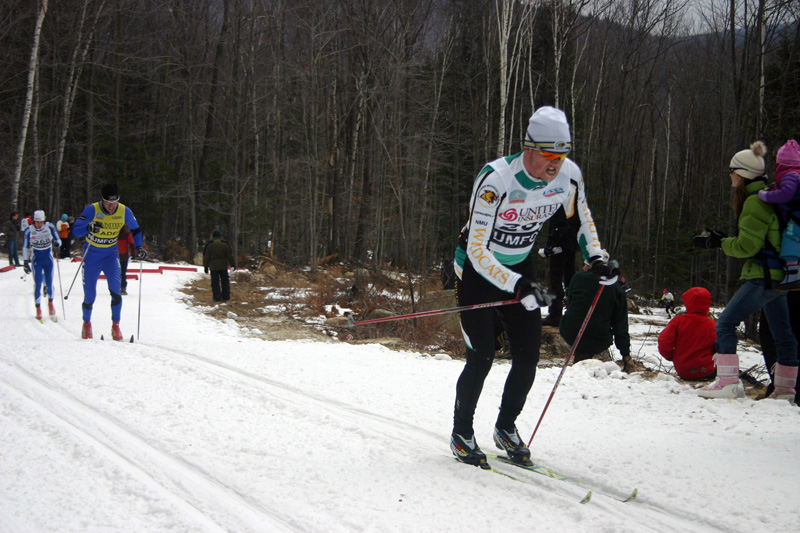
    Although the herd will be thinned out a bit in 2011, it is still full speed ahead for Steinbach Racing. The team plans to reach out to junior and developing racers, to use Steinbock racing as a resource to gain exposure and tap the knowledge of elite and world class racing. Steinbock also has plans to assist developing and established clubs regarding everything XC.
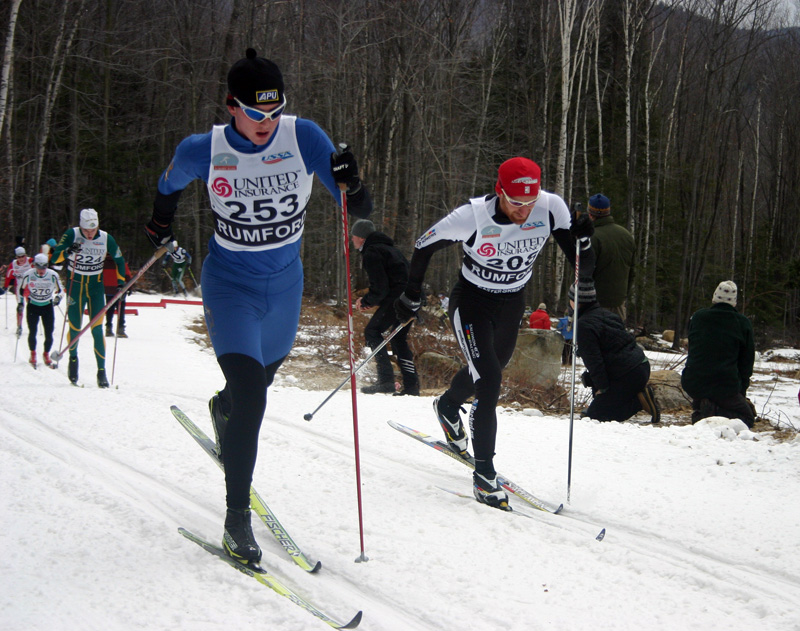
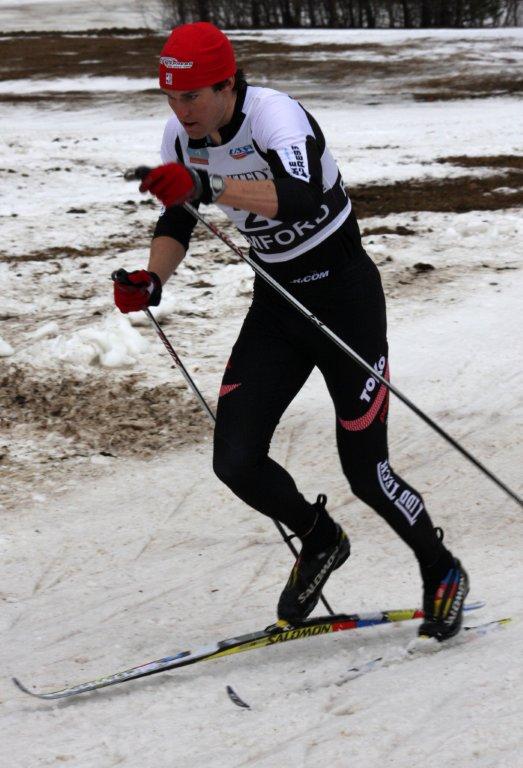
    Steinbock athlete Chris Cook will continue with an aggressive race schedule, beginning the season in Europe for the World Cup period, then returning stateside for US Nationals and join in the points chase for the Supertour Series. Steinbock racing is looking for some athletes to rep’ the goats for the upcoming season and continue to inform racers and clubs of the ideas and directions of Steinbock Racing.

    These athletes will be easy to pick out of the herd as they will be looking sharp in their Mt. Borah Custom race suits. To learn more or to contact the goats, go to www.steinbockracing.posterous.com and visit www.mtborah.com for all of your custom Nordic apparel needs this winter.
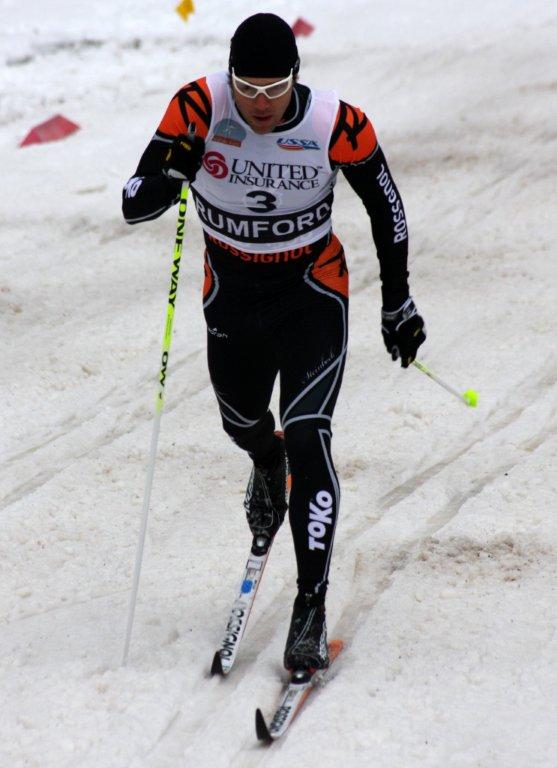
  • Chris Cook – The Lone Goat

    Chris Cook – The Lone Goat

    Photos courtesy of Chris Cook/Steinbock Racing

    Despite stellar race results for the team last season, Chris Cook is the only goat left in the Steinbock herd for the 2010-11 season, and he has moved back to his hometown of Rheinlander, Wisconsin. Two others are off the elite racing circuit: Zack Simons went back to school, and Andrew Johnson took a coaching position with the University of Vermont.

    That leaves Cook to tend to the business side of the organization as well as his race efforts, which will get underway with nothing less than World Cup level events. As the overall winner of the 2009-2010 SuperTour and the leader of the SuperTour sprint series, the 30-year-old qualified to race in Europe as a part of the U.S. Ski Team for the first World Cup races of this season.

    The team was well on its way to growing its herd last spring. They applied for funding and targeted sponsors. But with the economy still sluggish and some major grant applications falling through this year, Steinbock Racing was unable to offer the level of support that they needed to commit to the team. The result was that athletes who had showed interest in joining for 2010-2011 opted to stay with their local clubs for the season, Cook explained, adding that he is still hopeful that this will change in the future.

    However, Cook is a glass-half-full kind of guy. He sees their choice to stay with their clubs as a sign that the club structure and support for cross-country skiing in North America is improving.

    “The clubs and organizations across the United States have gotten good at raising funds and support for senior skiers, and that’s good for the sport,” Cook said, noting that when he graduated from college in 2003, there were only two or three teams nationwide. Now, they have multiplied, he added.

    Ready to race

    Being a one-goat herd is no picnic, but Cook feels confident going into the racing season. He comes off one of his best mountain biking seasons, and feels as fit as ever despite not having trained on snow during the summer. On November 15, he leaves for Sweden, where he will join the US Ski Team for the World Cup season opener in Gällivare, Sweden on November 20.

    “I’ve been training hard, and I think I’ll get dialed in quickly once I get on snow,” Cook said.

    There are no hitches in Cook’s motivation, and he has no problem getting the workouts done. With a decade of experience training and racing at the international level, including the 2006 Olympics and more than 30 World Cup starts, Cook knows the drill – and he knows how to design his own training plan.

    “When you’ve been around this level for this long, you know what works for you and what doesn’t,” Cook said, adding that he still works closely with his former coach, U.S. Ski Team Head Coach Chris Grover.

    Ambitious schedule

    With the 2011 World Championships in Oslo as his overall season goal, Cook is ready to get down to work. In order to make the Worlds team, Cook knows he’ll have to deliver solid results both at the U.S. National Championships in January, and in the early season races.

    The World Cup opener in Gällivare features a 15-kilometer skate race and a relay. Cook hopes to make the relay team, but doesn’t have great expectations for the 15 k.

    “The 15 k freestyle event is not one that has been a great success for me so far,” he said, explaining that his biggest goal for the Gällivare races is to regain the feel for the snow and just get the routine down.

    The following weekend, Cook moves on to Kuusamo, Finland, with the U.S. Ski Team. The Finland stop features events more to Cook’s taste: a 15-kilometer classic race and a classic sprint.

    But his final World Cup stop, in Davos, Switzerland, December 11 and 12, is what Cook is looking forward to the most: a 15-kilometer classic and a freestyle sprint.

    “By then, I should be fully changed over and dialed in on the snow. And I’m a fan of the 15K classic. It’s always been one of the most enjoyable races for me,” Cook said.

    He considers his former experience with World Cup racing a major advantage.

    “Especially on the sprint courses, it’s a lot different going to a venue for the first time. A huge part of the racing is getting to know the courses. When you’ve got the experience and you’re comfortable with the course, that’s one more thing you can cross off the list and not have to worry about,” Cook said.

    As for his chances to make the Worlds team, Cook said there are a lot of unknowns, but he’ll give it his best shot.

    “I’m not sure of the team selection process or how many they’ll even take. I try not to think about those things,” Cook said. “I know I have to race hard and do well. I’ll just have to let the chips fall where they may.”

    Long-term goal: growing the herd

    “I really wanted to continue the team and keep the name out there, even if it’s only me. It has been so much fun running it and being accountable for everything the team puts out there. I maintain the web site, do the Twitter and have a Facebook page,” Cook said. Over time, he said that his goal is to grow Steinbock racing back into a team. Whether that happens next season or over time is still too early to predict, Cook said.

    To attract more athletes, Cook is pursuing different avenues. This year, he is getting involved with skiers at the high school level and trying to extend an arm to juniors and younger skiers. That is exactly the kind of attitude that his sponsor Ian Harvey with Toko USA admires in Cook. He has worked with Cook as a sponsor for five years, on and off.

    “Cook is a representative for Toko, he has a good personality and we’re proud to sponsor him,” Harvey said, explaining that results are only one of the factors he looks for when deciding to sign an athlete.

    “I look for results, but more importantly, I look for a person with enthusiasm for cross-country skiing and who enjoys working with other people. Chris is that kind of guy. I think he could easily grow his team,” Harvey said.

    Cook is also doing more online community outreach, putting a lot of effort into the Steinbock Racing web site and promoting the team on social media.

    The transition to a one-man show has definitely been a learning experience, but Cook said he is enjoying the team management part of the job as well, noting that he feels like he has plenty of resources to draw on when he needs to. Time is the bigger issue, but he sees light in the end of the tunnel there too.

    “I still have Zack and Andrew to help me when I have questions about the web site. There are only so many hours in a day to take care of everything, but once we’re racing and traveling and staying in hotels, you’re searching for things to do, so I think it will be just fine,” Cook said.

  • USST’s European Campaign Set to Start in Finland

    Kris Freeman at the finish of a race in Finland last year.

    More than 150 training days, countless kilometers of rollerskiing, and dozens of loads of dirty laundry: A summer and fall’s worth of preparation will be put to the test in just over two weeks, when the U.S. Ski Team (USST) makes its departure for Europe.

    All seven members will fly to Finland on November 7 for a weekend of tune-up racing north of the Arctic Circle in Muonio. From there, the squad will part ways, with the A-team of Kikkan Randall, Liz Stephen, Morgan Arritola, Kris Freeman, and Andy Newell headed to the World Cup opener in northern Sweden, along with last year’s overall SuperTour champion Chris Cook. Meanwhile, the B-team of Simi Hamilton and Noah Hoffman will continue on to lower-level competitions in Rovaniemi, Finland and northern Sweden.

    Typically, the USST has raced its B-team in North America in the early season, but Head Coach Chris Grover said that one of his goals is to put more of an emphasis on European competition.

    Athletes and coaches seem to be paying heed, as Hamilton, Hoffman, and coaches Pete Vordenberg and Bryan Fish will be joined in Muonio and Rovaniemi by a large number of American athletes. The Craftsbury Green Racing Project is making the trip, as well as a group led by Maine Winter Sports Center coach Will Sweetser and funded partially by the National Cross-Country Ski Education Foundation. Athletes racing in Finland will include Craftsbury’s Ida Sargent, Torin Koos (Methow Olympic Development Project), and Leif Zimmerman (Bridger Ski Foundation).

    “The idea is to team up with some partner clubs, and provide service for the athletes that are over there,” Grover said.

    According to Grover, any member of that American contingent could get the call-up to ski on the World Cup if they are racing well.

    “Whoever is racing…we’re going to watch the results,” he said. “If they have a phenomenal race, we might think really seriously about bringing them right into World Cup.”

    Anyone brought up to the World Cup would be paying their own way, as Grover said that the USST doesn’t have “any extra money hidden anywhere.” But costs, he said, shouldn’t be too high, since most of the athletes in Europe are “probably going to be paying to go to one race series or another.”

    Grover is already planning for Hamilton to join the USST following the races in Sweden, for two skate sprint World Cups—one in Davos, and one in Dusseldorf. Hamilton may also start a team sprint in Dusseldorf with Newell, although Cook should be gunning for that spot, as well.

  • Oneway’s New DS 10 Pole and New Team Members

    Oneway’s New DS 10 Pole and New Team Members

    Rossignol is proud to be the exclusive distributor of Oneway in North America. Over the past 3 years the two brands have forged a stong partnership with both product and competitive teams.

    Rossignol / Oneway are excited to introduct the new DS10 pole. The new DS 10 pole has a 100% carbon super light shaft with a new titanium coated carbon insert making the pole stiff and ultra light weight. The rabbit strap allows for twice the adjustment of a regular strap and the cork grip provides warmth, comfort and an anti-slip grip.

    Oneway is delighted to welcome 3 new team members; Torin Koos, Chris Cook, and Tim Burke will be joining Liz Stephens on the  team. With such strong team members Oneway and Rossignol are sure to have an amazing 10-11 race season.

    Tim Burke joins the Oneway team.

    Come Check out Oneway’s new 10-11 poles at the below Nordic Events in the Twin Cities. Rossignol and ONEWAY Product Manager and Reps will be available for fit help at all of the sales.

    Friday, September 10
    Hoigaards: 4-8 pm

    Saturday, September 11
    Finn Sisu: 8:00- 9:30 dryland training with Chris Cook (Sisu and Vakava skiers), Battle Creek Park, St. Paul.
    10:00-Noon in store visit with customers, Chris Cook sign posters.

    Hoigaards: Late afternoon before close

    Sunday, September 12
    Hoigaard’s: Noon-2pm  Chris Cook sign poster visit with customers

  • Pro Workout: Sprint Intervals with Steinbock’s Chris Cook

    Chris Cook racing in the classic sprint at the 2010 U.S. National Championships.

    What do you do when you can’t keep up with Andy Newell?

    For most of us, the answer is that we continue on with our normal lives, content to compete for a spot in the elite wave at the American Birkebeiner rather than the top spot on a World Cup podium. But Steinbock Racing’s Chris Cook was not so easily deterred. Instead of giving up, he turned to a sprint workout: sets of all-out 30-second intervals.

    “We were pretty similar in a bunch of other workouts, but in this [one], I found he was really getting away from me,” Cook said of Newell. “That’s when I realized I needed to work on them a little more.”

    Cook spent a number of years on the U.S. Ski Team, sprinting at the World Cup level, and he had plenty of chances to mix it up with Newell. The two would do this workout together “all the time,” Cook said.

    The duration and the number of sets of Cook’s sprint intervals are similar to Simi Hamilton’s speeds, which FasterSkier described earlier this summer. But Cook said that his workout was different, because each effort was longer.

    Chris Cook in Canmore. Photo, Win Goodbody.

    “It kind of prepares you for that last surge in a sprint heat or mass start race—really charging, building up some fatigue through the set,” he said, describing the session as a  “speed workout mixed with, basically, a lactate tolerance workout.”

    The pace of the repeats should be all-out—a “hard sprint effort, as hard and fast as you can go,” Cook said. He’ll do three sets of six, with about two minutes of easy recovery between each interval and ten minutes between each set.

    It’s good to vary terrain and practice on flats, gradual uphills, and gradual descents, but Cook said that he’ll do many of his repeats from the same starting point on the same stretch of road, which helps him gauge each one. Cook will mark out the distance of his best interval, which then allows him to measure subsequent efforts. It’s a good way to judge fatigue—if Cook starts bogging down and missing his high mark, he’ll call off the session. But it’s also a good way to chart progress.

    In the fall, Cook said, he’ll be going further down the road during each 30-second effort than he was in the summer.

    “As I get close to the race season, I should have my furthest finish point marked off,” he said.

    This time of year, Cook said, he’ll do the workout once every few weeks, then more often—sometimes in back-to-back weeks—as the intensity of his training begins ramping up in the fall.

    He said the session doesn’t quite qualify as a speed workout, since each effort is a little too long, but neither is it demanding enough to keep Cook at threshold.

    Nonetheless, he said, “it’s pretty gnarly…it doesn’t seem like a hard workout until you get into it.”

  • Gaiazova and McMurtry Lead Canadian Sweep as FasterSkier Continental Cup Skiers of the Year

    Gaiazova and McMurtry Lead Canadian Sweep as FasterSkier Continental Cup Skiers of the Year

    Continental Cup Skier of the Year

    The Continental Cup Skier of the Year presented one of the biggest challenges of the 2010 FasterSkier Awards.  Strong contenders from both the US and Canada entered the mix, with few head-to-head races to clarify the situation.  Also complicating matters is the fact that the 2010 Canadian NorAm schedule featured many fewer races than the US SuperTour in 2010.

    Continental Cup Skier of the Year (women):

    Dasha Gaiazova (CAN).  Gaiazova absolutely dominated the Contintal Cup scene when she raced, amassing seven wins in eleven starts, and never finishing off the podium.  She won the NorAm overall title by 60 points over Madeleine Williams, and took 1st, 2nd, and 33rd in her three SuperTour starts.

    She raced the full NorAm schedule, but did not participate in Canadian Nationals.  This opened the door for Rebecca Dussault (USA) to make a run for the honor.  Dussault amassed 19 Continental Cup starts, winning seven, and placing in the top-3 12 times.  She easily one the overall SuperTour title, was 1st in the distance standings and 2nd in the sprint.

    Ultimately, Gaiazova got the nod based on three wins in head-to-head competitions, and the fact that she raced the entire NorAm Cup series.  She is clearly the faster skier, and her dominance made up for the lack of volume.

    Gaiazova (CAN) racing at the Cnamore World Cup

    Honorable Mention

    Rebecca Dussault (USA).  See above for results.  Dussault made a great case for herself, and was easily the best US Continental Cup skier this year, crisscrossing the country to start an impressive number of races.

    Dussault on the top of the podium at the Telemark, WI SuperTour (Photo: CXC)

    [poll id=”41″]

    Continental Cup Skier of the Year (men):

    Like the women’s award, the choice came down to a Canadian versus an American – the overall winners of NorAm series and the US SuperTour.  The question again came down to how much quantity should count.

    Brent McMurtry (CAN).  Staying consistent, McMurtry got the nod over Chris Cook (USA), despite starting significantly fewer races.  McMurtry still made 15 Continental Cup starts, winning one and placing on the podium eight times.  He won the overall NorAm title by 131 points, and bested Cook in five of six head-to-head encounters.

    Brent McMurtry (#14) sets the pace at the SuperTour finals.

    Honorable Mention

    Chris Cook (USA).  Cook started an impressive 25 Continental Cup races – 18 SuperTours, 3 NorAms, and 4 US Nationals events.  He did not win a race, but placed on the podium six times.  He ranked in the top-10 in all four Nationals races.  He won the overall SuperTour title, edging out Brian Gregg by just 16 points.  Gregg took the distance title and Cook the sprint honors.

    Chris Cook in the Bozeman Super Tour, (Photo: Stuart Jennings).

    [poll id=”40″]

    Previous Winners

    2009
    Kristina Strandberg (SWE)
    Lars Flora (USA)/Graham Nishikawa (CAN)

    2008
    Kristina Strandberg (SWE)
    Ivan Babikov (CAN)

    Award Schedule:

    Thursday, April 15 – Rookie of the Year
    Friday, April 16 – Collegiate Skier of the Year
    Monday, April 19 – Adaptive Skier of the Year
    Tuesday, April 20 – Continental Skier of the Year
    Wednesday, April 21 – Biathlete of the Year
    Thursday, April 22 – Nordic Combined Skier of the Year
    Friday, April 23 – Performance of the Year (cross-country, biathlon, nordic combined)
    Monday, April 26th – Cross-Country Skier of the Year

    FasterSkier Awards 2010
  • Babikov, Randall Headline U.S. 30/50 K Champs. In Fort Kent

    Babikov, Randall Headline U.S. 30/50 K Champs. In Fort Kent

    Ivan Babikov (CAN) is the heavy favorite for tomorrow's 50 k freestyle

    Ivan Babikov (CAN) has traveled more than 10,000 kilometers since the conclusion of the 2010 Winter Olympics in late February. He only has to go 50 more on Wednesday, but they’ll feel every bit as long and painful as his circuitous journey from Vancouver to Fort Kent, Maine.

    Babikov is the clear favorite for tomorrow’s U.S. freestyle 30/50 k championships, but racing just 72 hours removed from the World Cup Finals in Sweden, he’ll be tested by a host of better-rested competitors.

    Babikov’s strongest challengers include two American Olympians, James Southam and Torin Koos. Southam, a distance specialist, raced in Finland and Norway after the Games, but had just over a week of recovery in Alaska before traveling back east.

    Koos is a U.S. Ski Team sprinter who sat out the spring season in Europe. He hasn’t had much success in distance races at the international level, but was the second American in this same event (though in the classic discipline) in Fairbanks two years ago.

    Domestic racers most likely to contend include Americans Tad Elliot and Chris Cook, the second and third place finishers at the American Birkebeiner in late February.

    A world-class mountain biker, CXC Coach Bryan Fish said that Elliot has already made the transition onto two wheels, but still traveled to Fort Kent for the ski season’s last hurrah.

    Dark horses are Canada’s Gord Jewett and Americans Bryan Cook, Lars Flora, and Noah Hoffman, who uncorked a great race in last year’s 50 k championships.

    Kris Freeman (USA) is not racing due to illness, according to U.S. Ski Team Coach Matt Whitcomb, and Canada’s Stefan Kuhn was a late scratch.

    The women’s race will be Kikkan Randall’s to lose. Like Babikov, Randall is competing on the heels of the marathon trip back from Sweden, where she placed well in the World Cup Finals distance races. Her 14th place in the 10 k pursuit there was a personal best, better than big names like Anna Haag (SWE), Aino-Kaisa Saarinen (FIN), and Virpi Kuitunen (FIN).

    Kikkan Randall will race the women's 30 k straight off the plane from Europe

    Randall’s start was unconfirmed as of this morning, but she responded to an e-mail inquiry by writing “Oh the 30km…It’s on!!”

    The $1,200 winner’s check has to be a big incentive for her, but it’s not guaranteed. Holly Brooks (USA) finished a close second to Randall in the long-distance classic race at U.S. Nationals, and she’s gotten a few weeks of rest after a tough Olympics. Caitlin Compton is another threat, especially in freestyle races, and she’s also had a week to recover after racing at the Olympics in February and in Europe in early March.

    Americans Taz Mannix and Rebecca Dussault have stuck mostly to domestic races this year, but both posted some strong results at the Birkebeiner along with Canadian Brooke Gosling. Kristina Strandberg (SWE/USA) has struggled this year, racing mainly in Scandinavia, but recently showed her form could be coming around by posting a sixth-place finish in the Vasaloppet.

    A handful of biathletes are competing, including North American champions Tracy Barnes-Colliander and Russell Currier. They’ll have their hands full keeping pace with their cross-country counterparts.

    Athletes will be racing three or five laps of a ten kilometer course at Fort Kent’s 10th Mountain Ski Center, which features two big climbs: a steep one near the start, and a longer grind into the finish. A kilometer-long stretch in an open field in the middle of the course will let the racers know exactly where they

    Athletes skiing the field loop on the 10 k course Tuesday

    stand during each lap.

    Coverage was getting a little thin Monday after some long days of warm sun, but a shot of wet snow today should leave the course in decent shape. Wednesday’s forecast calls for continuing precipitation, with a full spectrum of snow, rain, and sleet predicted for the morning. That could make for a long, soft slog that would favor smaller athletes like Babikov, Elliot, Hoffman, Compton, and Brooks.

    The fields for the 30/50 k will be much smaller than the number contesting the SuperTour Finals later in the week; as of last night, figures from the organizers showed just over 40 male starters and just under 40 women, whereas over 180 were signed up for the weekend.

    FasterSkier will have complete coverage of the championships—check back tomorrow morning starting at nine for live updates during the race, and in the afternoon for a full report.

  • U.S. SuperTour Finals and U.S. 30km/50km Championships Set to Go

    Fort Kent, ME—Spring has come early to Aroostook County, but the snow has stayed with us. Daytime highs in the 40s and 50s with cold, clear nights well below freezing have made for excellent crust skiing, fast early morning conditions and softening snow in the afternoons. Currently, our extended forecast calls for similar conditions with chances of freezing precipitation and snow on Thursday night and next Monday.

    While the snowpack is well below normal for this time of year, all courses have a minimum depth of 8” of packed snow right now. The photos below were taken at 1 p.m. on Tuesday, March 16, 2010 on the courses for the SuperTour Finals Sprint and Mass Start Classic. The skiing is unbelievably good!

    Second climb on the SuperTour Finals Sprint course, Madawaska, Maine 3.16.2010.

    Entries continue to roll in, and the series is shaping up to be the very best points races of the year on the North American circuit. With Andy Newell, Kris Freeman, Torin Koos, Ivan Babikov, Simi Hamilton, Chris Cook and Stephan Kuhn all planning to attend, it is very likely that the men’s point base will be below 20 FIS points. On the women’s side, Kikkan Randall, Caitlin Compton, Holly Brooks, Rebecca Dussualt, Liz Stephen, Morgan Arritola, Brittany Webster and Nicole DeYong are all planning to toe the starting line.

    Confirmations include: the entire U.S. Ski Team, Canadian National and top club level athletes, APUNSC, CXC Team Vertical Limit, SVSEF, MWSC, FAST, Craftsbury Green Team, XC Oregon, U. Laval, Dartmouth, GMVS, Stratton Mountain School, Burke Mountain Academy and athletes from Sweden, Japan and Brazil.

    The U.S. SuperTour Finals 2010 will feature a true Tour format, with prize money awarded for each individual race, time and cash bonuses in both the Mass Start and the Sprint, and a pursuit start Hill Climb that will leave the winners of the overall event splitting up more than $11,000 in cash. Visit www.supertourfinals2010.com to download the invitation and for complete details of the event.

    Additionally, the U.S. National 30km and 50km Championships are slated for March 24th, in Fort Kent, Maine.

    EARLY REGISTRATION DEADLINE IS WEDNESDAY, MARCH 17, 2010. REGISTER TODAY!

    www.supertourfinals2010.com

    The grooming crew at work on the SuperTour Mass Start Classic course, March 16, 2010.
  • Sprinting: Slowing Down to Go Fast?

    Sprinting: Slowing Down to Go Fast?

    Steinbock Racing's Chris Cook recently won the pack sprint at the American Birkebeiner to finish 3rd. Here are his comments below on sprinting.

    Sprint racing can be a tough balancing act, between tempo, technique, pace, and power application. As the sprint courses have grown in distance and time, not only on an international level but also domestically, controlling your tempo has become more and more crucial to laying down the fastest time of the day.

    People automatically associate sprint racing with moving everything at top speed to try and maximize speed, however, if you focus more on big powerful movements you will always beat the racer flailing in every direction imaginable. This proves the contradiction: slowing your tempo down to apply big powerful explosive movements will be faster. To the average viewer it will always look like the flailer will be setting land speed records but it will be the smoother skier always coming up with the fastest times. Don’t get me wrong though, you can’t go through the entire course with the same tempo. The terrain will always dictate what tempo is the fastest. Sprint courses will generally have some steep climbs and some gradual sections. It is on these gradual ups and downs where you can really maximize your speed with tempo. These gradual sections were made for skiing big. By slowing your tempo to maximize the power application of the technique you will maximize your glide and increase your efficiency. If you kept a short quick tempo through the same section, you would have doubled or tripled the number of strokes as the same racer skiing big. Now as the race continues and the gradual section of the course leads into the steeper sections, the slower tempo racer can now shift gears, quicken the tempo, and accelerate up and over the terrain. The higher tempo skier simply has to try and maintain the same high tempo into a section that is much tougher than the previous gradual section often leading to deceleration and fatigue. Every transition in the sprint course terrain can be thought of as a cue for a shift point to dictate a change in your tempo. By continually changing tempo to adapt to the terrain you will be skiing each section efficiently and quickly.

    Sprint racing is just a much shorter distance race really. The racer who covers the course with the fewest amount of strides will have skied the most efficiently and covered the most amount of ground in the fastest amount of time, every time. The flailer may look the fastest but wasted movements equal wasted energy, resulting in fatigue, which kills your speed. In a game where you want to reach your max speed and pin it there, you need to ski as efficiently as possible.

    WAX RECOMMENDATION

    Yellowstone Rendezvous

    Rendezvous Trails, West Yellowstone, MT

    Saturday March 6th, 2010

    9:15am Start

    Technique: 50K, 25K Freestyle & 25K, 10K, 5K, 2K Classic

    Forecast/Conditions: Friday Night: a slight chance of snow

    showers, mostly cloudy, low around 6F. Saturday: A chance of snow

    showers in the am, mostly cloudy, high near 37F. Expect snow temp at the start around 8F. West Yellowstone snow is typically dry &

    abrasive. Expect partially transformed fast and hard packed snow.

    Glidewax: Apply LF Moly/LF Blue mix, scrape and brush, then

    apply HF Blue, scrape and brush. Finish by rotocorking JetStream

    Blue, brush with a dedicated nylon polishing brush and polish with a

    thermopad.

    Gripwax: Roughen base with 150 grit sandpaper, iron in Carbon

    BaseWax Green, cork smooth, let cool. Then apply 2 layers of Carbon

    GripWax Viola followed by 2 thin layers of Carbon Grip Blue, corking

    smooth between layers. Check TOKO Wax Recommendation easel

    prior to race start and adjust as needed. Another solid option would

    be a very thick and short (klister zone) application of Base Green

    binder (only).

    Structure: A fine linear structure will be good. One good pass

    with the Toko Structurite tool with the Blue bit before applying

    the JetStream is recommended.

    Check the WaxTip page at www.TokoUS.com before all of your races for the latest waxing information.

    The Toko Race Wax Tips offer racers precise waxing advice on how to make your skis perform optimally for a given event. For racers who don’t have top end waxes, skip the Fluorocarbon (JetStream) and substitute the LF or System 3 wax of the same color (Yellow, Red or Blue). For those who do not have a rotocork for applying JetStream, the next best thing is to iron it in.

    Toko Racing Service

  • Tad Elliott and Chris Cook On Their 2010 Birkie Podiums

    Tad Elliott and Chris Cook On Their 2010 Birkie Podiums

    Tad Elliott (CXC) Photo: Hunter Mooneyham/Sundance Images

    “That was definitely a surprise.” Tadd Elliott, 2nd place 2010 American Birkebeiner

    2010 Birkie Top Three

    This year’s 37th American Birkebeiner was won by Fabio Santus, of Milano Italy. Coming into the Birkie, Santus was ranked 2nd on the FIS Marathon Cup list after taking second at the Italian La Sgambeda and winning the Austrian Dolomitenlauf earlier this season.

    Santus won the Birkie with a time of 1:56:58.6.  Tad Elliott finished second, in 1:57:06.7, and Chris Cook was third in 1:58:41.0.

    Tad Elliott, 21 years old, lives and trains in Durango, Colorado. Racing as a part of the CXC Marathon Team, this was Elliott’s second Birkie, after finishing 20th place in last year’s race.   Earlier this year he had a stand-out performance at U.S. Nationals by taking second in the 15km, after winning last year’s Great Race in Tahoe and this year’s Owl Creek Chase 21km.  Also a competitive mountain bike racer, Elliott has competed at both the U23 Nordic Championships and U23 Mountain Bike Championships.

    Chris Cook (Steinbock Racing)

    An NMU graduate and NCAA champion at the 20km distance event,  Chris Cook began specializing in sprinting events after college. He was named to the 2006 Torino Olympic Team, subsequently placing 16th in qualification and 21st in the final of the skate sprint at the Games.   At 29 years old and hailing from Rhinelander, Wisconsin, Cook now competes for Steinbock racing.  This was Cook’s third Birkie – the last time he entered the race was in 2004 when he placed 10th.

    I received communication from Cook via email, and caught up with Elliott over the phone just as he was flying home from the race.  Elliott was still a bit in awe of the whole experience, and spoke as if he were still pinching himself to see if the whole occurrence had really taken place.

    Preparation, Expectations, and Motivation

    When asked if he had prepared for the Birkie this year or if he had any specific goals coming into the race, Elliott said “Going into the year, I knew for sure I was going to do the Birkie. Last year I bonked so it was kind of on my radar to try and have a good result, so I trained for it.”

    “No, I didn’t have any expectations,” continued Elliott, “because it’s SO long and I knew there was gonna be a really stacked field, so I just wanted to be close and try to hang with the front group for as long as I could.”

    Last year, Elliot got too caught up in the ‘fever’ to be smart during the race. “Last year I was just in awe that there was that many nordic skiers in one place and how many people love nordic skiing!  It was so exciting  that I wasn’t focused on taking feeds, I was just kind of happy to be in the race.”

    This year, says Elliott, “I was way better at taking in liquids. A LOT of liquids.” He cited the fact that he had “huge support” from the CXC team, who had at least six different stations along the race trail.

    Besides being better at feeds, Elliott seemed pretty surprised at his body’s response to the race once he was in the midst of it.

    “In the back of my mind I was like, ‘You know, if I can get near the Italians in a break-away, that would just be phenomenal’ – that would have been my perfect day – and it ended up happening. . .”

    “I was feeling so good, which was nice!  It was fun, I was having a good time. It was definitely one of the best races I’ve ever had.”

    Cook said the fact there were SuperTour points on the line was part of what motivated his performance.

    “Because the Birkie was a Supertour as well this year, I really wanted to collect as many points as possible.  I knew if I could ski smart and get into a group that was going to have to sprint it out down Main Street, I figured I would have a great shot at a great finish.”

    And Cook was aware of who his main competition would be.  “I knew the Italian team and the CXC team were the two teams to really pay attention to because of their depth of good racers.”

    The start of the 2010 Birkie (photo by Brett Morgan)

    The Race is On

    “I stayed with the main group for the entire race,” said Cook.  “Around 38k, I think Santos and Tad started to get away.  I knew then that I had to stay in a pack for third.”

    Elliott says he worked with his own teammates from CXC teammates for a good portion of the race, as they were all in the lead pack together until 35 kilometers.

    “There was a big pack in the start, and then it got wittled down to about 20 or 30 skiers. .  .after crossing “OO”  the pace was lifted a little bit, and then at 35 k the Italians went to the front. . . and I believe there were three Italians at the front and I was the fourth skier. . . and I was feeling SO good!”

    An Italian-American Team

    At that point, Elliott said, “I looked back and I noticed we had a gap and then it was me and two Italians skiing together and I was just skiing on their heels and the guy that ended up winning, Fabio Santus, looked at me and said – well, his English isn’t very good, and I can’t speak a lick of Italian – but he kind of motioned and said, ‘Together‘, meaning we would work together.”

    So Elliott took his turn pulling for awhile before noticing the second Italian just hanging onto third. Worried he would sit back there until the final sprint, Elliott indicated to Santus his concern, and Santus responded by motioning to Elliott that the two of them would work together to push the pace.

    When asked why Santus would drop his teammate, Elliott said that the other Italian was noticeably tired, and when he was unable to take a turn pulling at the front Santus was ready to leave him behind in favor of the stronger American skier.  Elliott said Santus was “extremely fair” and was not going to let his compatriot sit on the back without working.  At that point Elliot said Santus pointed at him and made it clear, “It’s just you and I, from now on.”

    “From 38 k on it was only Fabio and I pulling,” said Elliot, “and we ended up dropping his teammate.”

    The other Italian held on for awhile, just 10 meters off the back, but Santos kept the pace high and worked hard with Elliott until they had gapped the second Italian and the rest of the field considerably.

    Eliott said, at that moment, he  “knew that in the final k the race would be decided.”

    When asked if he was surprised at finding himself, suddenly, at the front of the race or if he was nervous about keeping up the pace Elliot replied, “I knew I was going to go for it, with the Italians, and if I wasn’t feeling good I was going to try and slow it down, and then I just ended up having amazing skis and an amazing day – And it was great, with Fabio, too, because he worked so well with me and helped me get to the finish line, so everything came together. . .”

    Fabio Santus, after his 2009 Engadin Marathon win (Photo: Remy Steinegger/swiss-image.ch)

    Experience and Strength Give Santus the Win

    Elliott had no misgivings about his competitor’s fitness.  “He was obviously stronger than I was, and I was nervous; I knew I needed him after Bitch Hill, I knew I needed him to help me cross the lake to try and hold onto second, but then going across the lake, he actually slowed the pace down and – ‘cause we looked back and we couldn’t see anyone and we knew it would come to a sprint – he started adjusting his sunglasses, hat, wiped his face off a little bit – that’s when I knew, ‘uh-oh‘, it was gonna be bad!”

    It was then that Elliott’s inexperience in marathon ski races caught up with him.  “At that point, when the pace slowed down, I knew I was in over my head. I didn’t know if I should keep the pace going, or if I should try to ‘go’ then, or let it come down to a sprint, or if I should lead. . . I’d just never been in a situation in a race this big with someone that good.”

    500 Meters and Main Street

    Though Elliott could tell Santus was “way stronger”, he also held onto the hope that if the sprint came down to the last 100 meters, he might have a chance.  But with 500 meters to go, Santus put the final hammer down and Elliott had to watch him go.

    Elliott was feeling no disappointment, however, as he cruised down Main Street after Santus and soaked in the crowd, crossing the line just 8.1 seconds after the Italian.
    “It was so loud. You feel so good. Everyone was cheering and there’s so many people. . .  Last year I remember feeling so slow and still having it be that reaction and people lining the streets. . . which is just really neat.”

    At the finish line, Elliott had a hard time absorbing what had just happened.

    “I was kind of in shock at being – I mean – 2nd in the Birkie!  I was just beside myself, I didn’t really know how to react.”

    Elliott had nothing but praise for his Italian competitor, saying of Santus, “He couldn’t have been a nicer guy and more gracious in winning, and it was just a tremendous time getting to ski with him.”

    He also was in awe of the whole event.

    “It is so organized and they do such a great job. . .all the work that goes into it, and all the volunteers, I mean it was just amazing that they put on that event – how awesome it was. . . And how many people help out with it, which is cool.”

    Elliott described the trails with no less acclaim, saying the track was “Really good. Really good – I mean, the grooming was incredible. . . it was a warm day, fast snow, fun skiing on that trail . . . it was just awesome.”

    Elite wave racers fight to stay in the lead pack of the 2010 Birkie (photo: Kelly Randolph)

    The Sprint for Third

    Meanwhile, less than 2 minutes back, the race for third was on. “The lead pack was pretty large through OO,” said Cook, “but as the race went on it continued to thin out.”

    “I stayed with the main group for the entire race. . . .Around 38k, I think, Santus and Tad started to get away.  I knew then that I had to stay in a pack for third.”

    Up until that time, Cook had been working with his Steinbock teammates, but said that overall “The Steinbock crew had a rough day.  Zack [Simons] broke a pole and ski so we were down to just me and AJ [Andrew Johnson].  AJ did some good work towards the front of the group to cover some of the Italian breaks and CXC.”

    Cook said that he himself avoided any mishaps, but that he suffered the loss of teammate Zach Simons at the 30k mark. Still, Cook knew that if he could hold onto the lead pack until the final stretch he would be in the hunt for a top spot.

    “I knew coming across the lake in a group of 7 or 8 it would be a sprint for third up Main Street.”

    When asked how it was that his preparations as a sprinter could have culminated in such a great marathon result, Cook explained, “I have been training primarily for sprinting for the last years for sure, but sprint training has evolved over the years with the lengthening of sprint courses and the fitness to sustain the rounds , meaning the number of hours required per year is very similar to a distance skier’s hours.  My fitness has seen improvements because of the training, so if I can hang with group and turn the marathon into a 500m sprint I will do all I can to make that happen.”

    For Cook it did happen, and he won the sprint for third over Morten Pedersen of Norway by a half second.  That sprint, said Cook was “The best part. . .Definitely one of the top experiences in my ski career.”

    Next Up. . .

    While Elliott is still recovering –  “The day after I was really sore.  Really sore and stiff and kind of creaky. Today I flew home and I’m starting to feel better for sure” – he is also “90% sure” he will compete at the SuperTour Finals and the U.S. Nationals 50k in Maine at the end of the month.

    There just may be a rematch in store between these top two Birkie competitors, as Cook is looking to “ rest up and get some training in” before heading to the same events.

    Its the Birkie.

    As a last word, Cook would like to assure anyone who hasn’t yet experienced The Fever:

    “It’s the Birkie – if you have never been, go, and you will not be disappointed and won’t want to miss a year…”

    “That was definitely a surprise.” Tadd Elliot, 2nd place 2010 American Birkebeiner

    Birkie Top Three

    This year’s 37th American Birkebeiner was one by Fabio Santus, of Milano Italy. Coming into the Birkie, Santus was ranked 2nd on the FIS Marathon Cup list after taking second at the Italian La Sgambeda and winning the Austrian Dolomitenlauf earlier this season.

    Santus won the Birkie with a time of 1:56:58.6. Tad Elliott finished second, in 1:57:06.7, and Chris Cook was third in 1:58:41.0.

    Tad Elliott, 23 years old, lives and trains in Durango, Colorado. Racing as a part of the CXC Marathon Team, this was Elliott’s second Birkie, after finishing 20th place in last year’s race. Earlier this year he had a stand-out performance at U.S. Nationals by taking second in the 15km, after winning last year’s Gold Rush 30km and this year’s Owl Creek Chase 16km. Elliott is a competitive mountain bike racer in the summer who has been to both the U23 Nordic Championships and U23 Mountain Bike Championships in the last couple years.

    An NMU graduate and NCAA champion at the 20km distance event, Cook began specializing in sprinting events after college. He was named to the 2006 Torino Olympic Team, where he placed 16th in qualification and 21st in the final of the skate sprint. At 29 years old and hailing from Rhinelander, Wisconsin, Cook now competes for Steinbock racing. This was Cook’s third Birkie – the last time he entered the race was in 2004 where he placed 10th.

    I received communication from Cook via email, and caught up with Elliott over the phone just as he was flying home from the race. Elliott, who said his win “was definitely a surprise” to him, was still a bit in awe of the whole experience, and spoke as if he were still pinching himself to see if the whole experience had been real.

    Preparation, Expectations, and Motivation

    When asked if he had prepared for the Birkie this year or if he had any specific goals coming into the race, Elliott said “Going into the year, I knew for sure I was going to do the Birkie. Last year I bonked so it was kind of on my radar to try and have a good result, so I trained for it.”

    “No, I didn’t have any expectations,” continued Elliott, “because it’s SO long and I knew there was gonna be a really stacked field, so I just wanted to be close and try to hang with the front group for as long as I could.”

    Last year, Elliot got too caught up in the fever to be smart during the race. “Last year I was just in awe that there was that many Nordic skiers in one place and how many people love Nordic skiing! It was so exciting that I wasn’t focused on taking feeds, I was just kind of happy to be in the race.”

    This year, says Elliott, “I was way better at taking in liquids. A LOT of liquids.” He cited the fact that he had “huge support” from the CXC team, who had at least six different stations along the race trail.

    Besides being better at feeds, Elliott seemed pretty surprised at his body’s response to the race once he was in the midst of it.

    “In the back of my mind I was like, ‘You know, if I can get near the Italians in a break-away, that would just be phenomenal – that would have been MY perfect day – and it ended up happening. . .

    “I was feeling SO good, which was nice. It was fun, I was having a good time. It was definitely one of the best races I’ve ever had!”

    Cook said that the Super Tour points on the line in part motivated his performance.

    “Because the Birkie was a Supertour as well this year, I really wanted to collect as many points as possible.  I knew if I could ski smart and get into a group that was going to have to sprint it out down Main Street, I figured I would have a great shot at a great finish.”

    And Cook was aware of who his main competition would be. “I knew the Italian team and the CXC team were the two teams to really pay attention to because of their depth of good racers.”

    The Race is On

    “I stayed with the main group for the entire race,” said Cook. “Around 38k I think Santos and Tad started to get away.  I knew then that I had to stay in a pack for third.”

    Elliott says he worked with his CXC teammates for a good portion of the race, as they were all in the lead pack together until 35 kilometers.

    “There was a big pack in the start, and then it got wittled down to about 20 or 30 skiers. . .after crossing “OO” the pace was lifted a little bit, and then at 35 k the Italians went to the front and – I believe, maybe it’s different in the video – I believe there were three Italians at the front and I was the fourth skier. . . and I was feeling SO good, and I looked back and I noticed we had a gap and then it was me and two Italians skiing together and I was just skiing on their heels and the guy that ended up winning, Fabio Santus, looked at me and said – well, his English isn’t very good, and I can’t speak a lick of Italian – but he kind of motioned and said “together”, meaning we would work together.”

    So Elliott took his turn pulling for awhile before noticing the second Italian just hanging onto the back. Worried he would sit back there until the final sprint, Elliott indicated to Santus his concern, and Santus responded by motioning to Elliott that the two of them would work together to push the pace.

    When asked why Santus would drop his teammate, Elliott said that the other Italian was noticeably tired, and when he was unable to take a turn pulling at the front Santus was ready to leave him behind in favor of the stronger American skier. Elliott said Santus was “extremely fair” and was not going to let his compatriot sit on the back without working. At that point Elliot said Santus pointed at him and made it clear, “It’s just you and I, from now on.”

    An Italian and American Team

    “From 38 k on it was only Fabio and I pulling,” said Elliot, “and we ended up dropping his teammate.”

    The other Italian held on for awhile, just 10 meters off the back, but Santos kept the pace high and worked hard with Elliott until they had gapped the second Italian and the rest of the field considerably.

    Eliott said at that moment “I knew that in the final k the race would be decided.”

    When asked if he was surprised at finding himself, suddenly, at the front of the race or if he was nervous about keeping up the pace Elliot replied, “I knew I was going to go for it, with the Italians, and if I wasn’t feeling good I was going to try and slow it down, and then I just ended up having amazing skis and an amazing day – And it was great, with Fabio, too, because he worked so well with me and helped me get to the finish line, so everything came together. . .”

    Experience and Strength Give Santus the Win

    Elliott had no misgivings about his competitor’s fitness. “He was obviously stronger than I was, and I was nervous; I knew I needed him after Bitch Hill, I knew I needed him to help me cross the lake to try and hold onto second, but then going across the lake, he actually slowed the pace down and – ‘cause we looked back and we couldn’t see anyone and we knew it would come to a sprint – he started adjusting his sunglasses, hat, wiped his face off a little bit – that’s when I knew, uh-oh, it was gonna be bad!”

    It was then that Elliott’s inexperience in marathon ski races caught up with him. “At that point, when the pace slowed down, I knew I was in over my head. I didn’t know if I should keep the pace going, or if I should try to ‘go’ then, or let it come down to a sprint, or if I should lead. . . I’d just never been in a situation in a race this big with someone that good . . .”

    The Finish

    Though Elliott could tell Santus was “way stronger”, he also held onto the hope that if the sprint came down to the last 100 meters, he might have a chance. But with 500 meters to go, Santus put the final hammer down and Elliott had to watch him go.

    Elliott was feeling no disappointment, however, as he cruised down Main Street after Santus and soaked in the crowd, crossing the line just 8.1 seconds after the Italian.
    “It was so loud. You feel so good. Everyone was cheering and there’s so many people. . . Last year I remember feeling so slow and still having it be that reaction and people lining the streets. . . which is just really neat.”

    At the finish line, Elliott had a hard time absorbing what had just happened.

    “I was kind of in shock at being – I mean – 2nd in the Birkie. I was just beside myself, I didn’t really know how to react.”

    Elliott had nothing but praise for his Italian competitor, saying of Santus, “He couldn’t have been a nicer guy and more gracious in winning, and it was just a tremendous time getting to ski with him.”

    He also was in awe of the whole event..

    “It is SO organized and they do such a great job. .all the work that goes into it, and all the volunteers, I mean it was just amazing that they put on that event – how awesome it was. . . And how many people help out with it, which is cool.”

    Elliott described the trails with no less acclaim, saying the track was “Really good. REALLY good – I mean, the grooming was incredible. . . it was a warm day, fast snow, fun skiing on that trail . . . it was awesome.”

    The Sprint for Third

    Meanwhile, less than 2 minutes back, the race for third was on. “The lead pack was pretty large through OO,” said Cook, “but as the race went on it continued to thin out.”

    “I stayed with the main group for the entire race. . . .Around 38k, I think, Santus and Tad started to get away.  I knew then that I had to stay in a pack for third.”

    Up until that time, Cook had been working with his Steinbock racing teammates, but said that overall “The Steinbock crew had a rough day.  Zack [Simons] broke a pole and ski so we were down to just me and AJ [Andrew Johnson].  AJ did some good work towards the front of the group to cover some of the Italian breaks and CXC.”

    Cook said that he himself avoided any mishaps, but that he had to get around a crash right after the start and then he suffered the loss of teammate Zach Simons at the 30k mark. Still, Cook managed to hang onto the lead pack until the lake.

    “I knew coming across the lake in a group of 7 or 8 it would be a sprint for third up Main Street.” That sprint, said Cook was “The best part. . .Definitely one of the top experiences in my ski career.”

    When asked how it was that his preparations as a sprinter could have culminated in such a great marathon result, Cook explained, “I have been training primarily for sprinting for the last years for sure, but sprint training has evolved over the years with the lengthening of sprint courses and the fitness to sustain the rounds , meaning the number of hours required per year is very similar to a distance skier’s hours.  My fitness has seen improvements because of the training, so if I can hang with group and turn the marathon into a 500m sprint I will do all I can to make that happen.”

    For Cook it did happen, and he won the sprint for third over Morten Pedersen of Norway by a half second.

    Next Up. . .

    While Elliott is still recovering – “The day after I was REALLY sore. Really sore and stiff and kind of creaky. Today I flew home and I’m starting to feel better for sure” – he is also “90% sure” he will compete at Distance Nationals in Presque Isle at the end of the month.

    There just may be a rematch in store between the two top American competitors, as Cook is looking to “ rest up and get some training in” before heading to the same event.

    But first, Cook would like to assure anyone who hasn’t yet experienced the Fever:

    “It’s the Birkie – if you have never been, go, and you will not be disappointed and won’t want to miss a year…”

  • Santus and Dussault Take the 2010 American Birkebeiner Titles

    Santus and Dussault Take the 2010 American Birkebeiner Titles

    2010 American Birkie Start. Photo: Brett Morgan.

    Hayward, Wisconsin – Italian skier Fabio Santus broke the 50K Birkie Skate presented by Becker Law course record with a time of 1:56:58.6 in the 37th annual American Birkebeiner held Saturday, February 27th. Rebecca Dussault the returning champion defended her title by winning the Women’s Skate division with a time of 2:18:18.1.

    Santus of Milano, Italy, skied his first Birkie saying, “I am very, very happy. It was a great track with very good people.”

    Tad Elliot, Durango, Colorado, skied to a second-place finish in 1:57:06.7 followed by Christopher Cook, Rhinelander, Wisconsin, with a third-place time of 1:58:41.

    First time Birkie skiers Tazlina Mannix and Brooke Gosling battled for their positions with Mannix of Anchorage, Alaska, capturing the second place finish with a time of 2:18:49.2 and Gosling of Canmore, Alberta, Canada, taking third with a time of 2:18:57.

    In its third year the Birkie Classic presented by Subaru showed course records for both the men’s and women’s races. The 54K Classic Champion is Juergen Uhl of South Burlington, Vermont, with a time of 2:28:39.4. Audrey Weber of St. Louis Park, Minnesota, captured the women’s title in a time of 2:51:34.

    The second place time in the men’s classic of 2:32:30.7 was skied by Jesse Smith of Traverse City, Michigan. In third place was Shawn Miller, Duluth, Minnesota finishing in 2:33:16.3.

    Repeating her second place finish from 2009, Hilary Patzer, St. Paul, Minnesota, finished in 2:53:07.4, while Kerrie Fabius, Thunder Bay, Ontario, Canada skiing in her first Birkie finished in 2:53:31.3.

    Ned Zuelsdorff, Executive Director of the American Birkebeiner Ski Foundation, said skiers from 19 foreign nations, including Andora, Estonia and Russia, and 47 U.S states, including Hawaii, North Carolina and Alaska, had great conditions for the 37th anniversary event.

    Honorary Starter, Wisconsin Governor James Doyle, welcomed the largest field of skiers ever in the American Birkebeiner’s 37-year history. He sent over 8,055 skiers on their way beginning at 8:00 a.m.

    Temps hovered just below 0 degrees at the start, then climbed as 21 waves of skiers left the starting gates.

    The American Birkebeiner is modeled after the Norwegian Birkebeiner Rennet, which in turn was inspired by the historic rescue of the infant who would become a celebrated king, Haakon Haakonsson IV. The race symbolically re-creates the flight of the prince, carried on skis by warriors called birkebeiners for their protective birch bark leggings.

    Brothers David and Grant Nelson assumed the roles Torstein and Skervald, the Birkebeiner warriors who rescued the infant Prince Haakon (Hō-ken). The brothers made their own wooden skis for the event. Grant, a dentist in Duluth, Minnesota, has skied 15 Birkies. David, a circuit designer for satellite components lives in Medicine Lake, Minnesota, has skied 16 Birkies.

    David’s wife Josie portrayed Inga the mother of Prince Haakon. Josie, worked as a physical therapist until becoming a stay at home mom after the birth of Karl; she has skied 11 Birkies and one Kortelopet. Karl served as Prince Haakon in the re-encactment.

    The brothers dressed in full Birkebeiner regalia including helmets, shields and their wooden skis while carrying 13-month-old Karl Nelson to the finish line to the clang of cowbells from the thousands of spectators who lined Hayward’s Main Street. Karl’s mother, Josie skied the full 54 kilometers dressed in a traditional Norwegian dress and cloak, on wooden skis.

    “The historic re-enactment, fast race course and the largest field ever made the Birkie’s 37th anniversary one for the books,” Zuelsdorff said. “We couldn’t be more pleased.”

    For race day results, log on to www.birkie.com.