From the FasterSkier archive — posts syndicated from athletes’ and coaches’ own blogs between 2004 and 2012, kept online as published. Current coverage is at fasterskier.com.

Tag: Chris Jefferies

  • From the Yukon to Europe, Beatty Part of Canada’s U25 B-Tour

    From the Yukon to Europe, Beatty Part of Canada’s U25 B-Tour

    Dahria Beatty (AWCA/Canadian U23 Development Team) racing to her first NorAm victory of the season in Canmore, Alberta. (Photo: Buff Canada/Peter Collins)
    Dahria Beatty (AWCA/Canadian U23 Development Team) racing to her first NorAm victory of the season in Canmore, Alberta. (Photo: Buff Canada/Peter Collins)

    Subarctic temperatures. More than 85 kilometers of cross-country ski trails. Best of all, enough snow to cover the ground nearly year round. All this and more make up the capital and hometown of one of Canada’s top development skiers and current NorAm leader, Dahria Beatty, who was recently selected to Cross Country Canada’s U25 European B-Tour.

    Along with Beatty,  five other Canadians — Cendrine Browne, Katherine-Stewart Jones, Knute Johnsgaard, Maya MacIsaac-Jones, and Andy Shields — departed on Dec. 28  for the January OPA Cup and World Cup races in Planica, Slovenia, and Nove Mesto, Czech Republic.
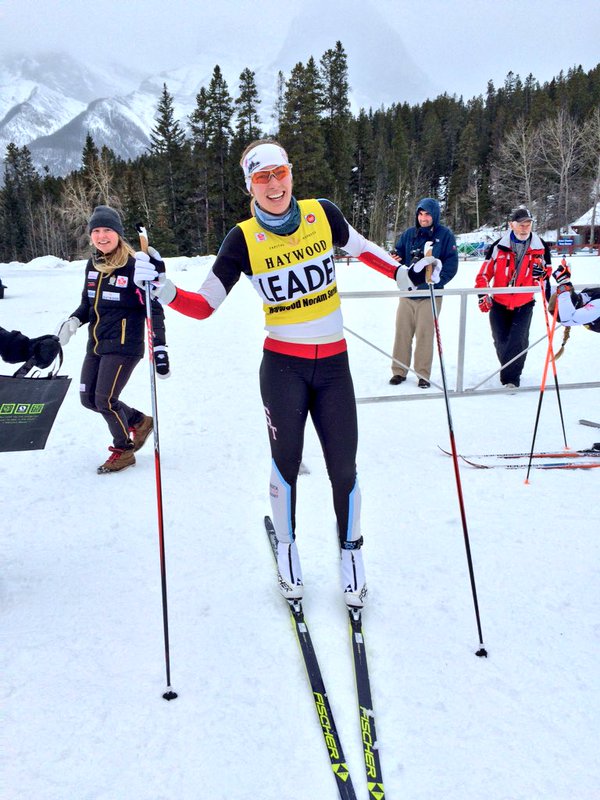
    Women's Canmore NorAm classic sprint winner Dahria Beatty (AWCA/NST U23 Development Team) after her A-final victory. (Photo: CCC/Twitter)
    Women’s Canmore NorAm classic sprint winner Dahria Beatty (AWCA/NST U23 Development Team) after her A-final victory. (Photo: CCC/Twitter)

    While the 21-year-old Whitehorse native was excited to pack her bags earlier this week, Beatty also appreciates all the experiences that lead her to this point, including her time spent in the Yukon Territory’s capital.

    “Alain Masson was my coach growing up in Whitehorse. He’s an Olympian and created an amazing ski program in the Yukon, which has fostered a lot of great athletes,” Beatty, who now lives and trains with the Alberta World Cup Academy (AWCA) in Canmore, Alberta, said in a phone interview.

    Now, Beatty is another one of the athletes joining that list.

    “This season is really shaping up quite well for me. I was really happy with how I skied [in Canmore] before Christmas,” she said. “I’m hoping to keep that positive track.”

    Beatty’s positive start to the 2015/2016 race season included placing third in the SuperTour skate sprint in West Yellowstone, Mont., then proceeding to win two out of three of the opening NorAm races in Canmore, Alberta, as well as the distance race at the Sovereign Lake NorAm for the second-straight year. That put her on top of the overall NorAm standings, 110 points ahead of second-ranked Andrea Dupont of Rocky Mountain Racers.

    Beatty explained that her most recent accomplishments are also a product of moving to Canmore in 2012 and working with Chris Jeffries, the current head coach of the AWCA.

    “When I graduated high school in 2012, I decided to go to move to Canmore mainly because at that time, the Alberta World Cup Academy had eleven other women on the team,” Beatty explained.

    Despite Beatty’s close ties to her hometown, she had witnessed the benefits of leaving Whitehorse to train with the AWCA.

    “Growing up in the Yukon, I had a great program–one of the best programs–an amazing coach, and a great training group,” said Beatty, “Still, Emily [Nishikawa] and Janelle [Greer] had moved to Canmore and I had seen how well that had gone for them, so I wanted to follow them in that path and be closer to the national team.”

    Beatty’s smooth transition to skiing in Canmore with the AWCA was largely made possible by her coach Jeffries.

    “Having been overtrained the first year I got to [Canmore], he and I have worked really closely and we’ve both learned a lot together,” she said.

    Beatty in Brief:
    Name: Dahria Beatty
    Nickname: Dar
    Hometown: Whitehorse, Yukon
    Current Job: Student-Commerce at Athabasca University
    Interests/Hobbies: Baking, painting, Basketball
    Exotic Pet(s) of Choice: Tiger, polar bear, baby sheep, dog
    Desired Superpower: Flight
    Where I want to travel: I really want to travel to Chile and Argentina and trek through Patagonia

    Beatty’s close work with Jeffries will continue, as he is leading the B-Tour in Europe.

    “One of the main physiological things [Jeffries] and I have worked on is having me hold a pace for longer,” Beatty said. “I’ve learned a lot about how to figure out my body.”

    She said she also focused on improving her skate and double-pole technique throughout the offseason. And while ski-specific drills have been key, Beatty added that her experience in a profusion of physical activities has contributed to her skiing success.

    “Doing as many sports as you can when you’re young is the best way to go,” Beatty explained. “I figure skated, did gymnastics, and danced as a kid. I also played soccer, and then as I got older, I started playing basketball and volleyball as well.

    “I think having all those different sports as a kid makes you a better, well-rounded athlete,” she added. “It also made me realize how much I truly do love skiing because I had the opportunity to experience so many different sports, but was able to pick the one that was definitely my favorite.”

    Dahria Beatty (AWCA/Canadian U23 Development Team ) (l) with training partner and dad, Craig Beatty, during a spring ski in Whitehorse, Yukon. (Courtesy photo)
    Dahria Beatty (AWCA/Canadian U23 Development Team) with training partner and dad, Craig Beatty, during a spring ski in Whitehorse, Yukon. (Courtesy photo)

    Her parents made the juggling of extracurriculars possible: “I was really lucky that my parents didn’t limit what I could do,” she said. “My parents were extremely supportive. They signed me up for everything I wanted to do and drove me to all my practices.”

    Beatty’s father also took an active role in her love of all things nordic.

    “My dad loves skiing so much … he was always the one who took me out skiing and growing up having that shared passion with my Dad was great,” Beatty said. “Even still, every time I go home he’s my best training partner.”

    And while her decision to move to Canmore was mostly about finding more women to push her in training, this past year she found herself with fewer female training partners than ever.

    “It definitely was a bit more challenging this year; there were less women around to train with,” she explained.

    “I did a lot of my volume blocks in the summer on my own, which was just mentally challenging, mostly because you’re at that point of fatigue and don’t have anyone around you. It really taught me to toughen up and self-motivate,” she reflected.

    Of course, that’s not to say Beatty trains alone 24/7.

    “In the summer I train a lot with Emily Nishikawa,” she said of the Canada’s most experienced current World Cup skier, also from Whitehorse.

    “Emily is a great training partner and someone who I am always looking to chase,” she added.

    With her first World Cup starts of the season just around the corner, Nishikawa won’t be the only skier Beatty will try to chase down.

    “My ideal goal for this season would be able to crack the top 30 on the World Cup,” Beatty said. “That’s a big goal, so if not in these ski races in January, then I’ll try again [at the Canadian World Cups] in March.” 

    The Ski Tour Canada begins in eastern Canada with a sprint in Gatineau, Quebec, followed by a mass start in Montréal and a back-to-back series of races in Quebec City. After a three day break, racing resumes in western Canada, with a second series of races in Canmore, followed by a distance even in Lake Louise, Alberta.

    “I’m really excited about having the Tour in Canada. It’s going to be such a cool experience to have so many people there supporting you,” said Beatty of the Canadian World Cup competitions.

    “My sister and grandparents will be at the eastern portion and my Mom and Dad will be down for the Canmore half,” she added.

    With her family and coaches backing her along the way, Beatty’s goals for her second stage of racing go beyond just results.

  • Mini-Tour Madness; NorAm Circuit Returns to Just Two in 2011-2012

    Last winter, the Canadian NorAm series embraced the mini-tour concept with open arms. With four events over the course of the season, athletes, coaches, race organizers and fans alike had the opportunity to experience the new race format, which has become a significant part of the World Cup circuit.

    Hosted at four separate locations – Rossland, B.C., Orford, Quebec, Nakkertok, Quebec, and Kelowna, B.C., the mini-tours were spread out—both geographically, with two in the East and two in the West, and across the season. This gave Canadian (and American) athletes a unique opportunity to hone their skills in the multi-stage race format.

    And as with any new experience, there were highs and lows.

    This season, Cross Country Canada (CCC) has reduced the number of multi-stage races down to just two – one at Western Canadian Championships in Canmore, Alberta, and one at Eastern Canadian Championships, at Nakkertok Ski Club in Ottawa, Ontario.

    Graham Nishikawa (AWCA) in action during the NorAm in Rossland B.C. (Photo: Brad Jones)

    Excitement

    Without a doubt, mini-tours make for great competition—athletes, coaches, fans, and race organizers alike agreed on that point. The NorAm series was close – especially on the men’s side, with Drew Goldsack and Graham Nishikawa of the Alberta World Cup Academy (AWCA) going toe-to-toe for the entire season in a tight competition for the World Cup slot, which is awarded to the winner.

    “I really like the mini-tour concept,” said Nishikawa, the eventual winner, in an interview this past winter. “It makes for very exciting racing on the final day.”

    “It was tight battle [for the NorAm title],” said CCC Events Coordinator Dave Dyer in an interview with FasterSkier. “The opportunity to garner an FIS regional quota spot for the World Cup also makes a huge difference.”

    While the battle between Goldsack and Nishikawa came down to the final race, the womens’ competition featured much less drama. Perianne Jones took the lead early in the season, and never relinquished it despite not racing either mini-tour in Eastern Canada, and heading onto the World Cup for the last three weekends of racing.

    Internationally Relevant

    The inclusion of mini-tours on the domestic circuit also lines up with international trends in cross-country skiing. The International Ski Federation (FIS) has made the mini-tour format a staple on the World Cup, with two events bookending season.

    If the domestic calendar reflects the latest in FIS trends, then national-level athletes get the experience at home that they will need abroad.

    “Great to see the CCC events committee respond to the evolution of international trends,” wrote Chris Jeffries, an AWCA coach,in an e-mail to FasterSkier this spring.

    Perianne Jones during the World Cup sprint qualifier in Drammen, Norway

    Organization

    Jeffries also emphasized that organization played a crucial role in making the mini-tours successful.

    “Day three in Rossland [first mini-tour of the season] was a perfect schedule, and a model of how all distance events should be run at future NorAms,” he wrote.

    Jeffries was impressed with the attention that Rossland tour organizers paid to details such as wax-testing areas, and timing of races in order to allow service staff to provide the best possible support.

    “Overall, I think our domestic circuit is continuing to develop, and venues that have hosted events regularly in the past continue to improve and professionalize their product,” he wrote.

    Dyer agreed that the event in Rossland, hosted by the Black Jack Ski Club, was well-run, and felt that of the four, had the greatest success in terms of producing results and using the available technology effectively.

    Number of Events

    However, as with any new initiative, there were a few growing pains.

    First and foremost among complaints was the sheer number of mini-tours on the calendar. In a space of 17 days, spanning the end of January and the beginning of February, athletes chasing NorAm points were expected to race  9 times in three separate mini-tours—a total that evokes the eight-stage Tour de Ski.

    For Jeffries and the AWCA, who contested all three events, crossing the country three times in that short period of time was stressful, and as a result, skiers and staff were stretched.

    “Athletes were mentally and physically exhausted afterwards, and compromised the end of their seasons due to health and recovery and compromised training,” Jeffries wrote.

    There were also many race formats, but a startling lack of one specifically – mass starts. In four weekends of mini-tour racing, there were zero true mass start events, something Jeffries felt was detrimental to the NorAm series.

    Division of Points and Money

    With well over 50% of the NorAm points awarded during the season coming in mini-tour events, it was difficult to do well in the overall standings if you have one bad race in a three-race weekend, as the outcome of one day affects the others.

    For Jeffries, it comes down to prize money as well. “The prize money needs to increase,” he wrote, “particularly for the race winner and top three.”

    Jeffries felt that the added expense of crossing the country multiple times in pursuit of the lone World Cup spot justified a higher purse.

    However, according to Dyer, CCC had invested a further $8000 dollars of prize money into the NorAm series last year as a result of the mini-tour format.

    Dyer explained that the NorAm circuit rewards up to the top five athletes in individual races with cash prizes, which reduces the amount available for the winner.

    “It’s always a little bit of a balance,” he said, “Do you reward just the top best, or try to spread the money a little more?”

    However, Dyer did agree that considering the amount of travel, costs for athletes rose more than he anticipated.

    “When we put the schedule together, I didn’t feel that athletes would be engaged both east and west as they were, which is good, and we’ve learned from that.”

    Drew Goldsack during the 15 k skate at Soverign Lake Nordic on the NorAm circuit in 2011

    Organizational Difficulties

    Setting up these new race types put unexpected demands on race organizers, who have never experienced the variety of formats. It forced many into new timing situations, such as dealing with the distribution of bonus seconds, and correctly organizing handicap starts.

    “The timing and data software was not totally fine tuned for this type of event,” said Pierre Millette, organizer of the Eastern Canadian Championships, held in Cantley, Quebec. However, he felt the results posted were “decent.”

    Millette said the organizing committee was concerned about the mini-tour, as they had never held a sprint in the current format, or a handicap-start event. Additionally, the designation of the race as a FIS sanctioned event increased the pressure and unfamiliar territory, but Millette said he was still happy to run the tour.

    Number of Races

    There are only 7 race weekends on the NorAm calendar, and with 4 of them being mini-tours, the mini-tour was the rule, rather than the exception this past winter.

    The mini-tour is designed to be a special event, different from a regular race weekend, something with a somewhat higher profile. And as Jeffries explained, “too much of something no longer makes it special.”

    On the World Cup, which boasts 11 race weekends, not including the Tour de Ski or World Championships, there are two mini-tours. The second weekend of racing in Kuusamo, Finland, featured a tour, and the final race weekend of the season, the World Cup Final, in Sweden was a mini-tour.

    Pierre Millette voiced a similar opinion to Jeffries. “We would be happy to host it again but there is probably too much mini-tours in the calendar” he wrote.

    “The mini-tour should be only once in the East part of the country and once in the West part too and
    preferably during Easterns and Westerns. These events are the most important one after Nationals.”

    In an interview with FasterSkier earlier this spring, Emily Nishikawa (AWCA), who finished second in the NorAm womens rankings voiced a similar expression, “I only did two,” she said, “but that was a great number.”

    It seems like CCC has listened to athletes and coaches, releasing a 2011-2012 schedule, with just two mini-tours on the schedule—Eastern and Western Canadian Championships will both be run in the three-race format.

    As well, according to Dave Dyer, the calendar has addressed the issue of travel, streamlining the series so there are always at least two race weekends in a row in close geographic proximity, before moving across the country.

    CCC Athlete Rep Greg Kilroy was positive regarding the schedule in a recent interview with FasterSkier – “I think the events and management committee did a great job responding to the concerns athletes and coaches had about last season,” he said.

    “Anything that was brought to me by an athlete, the other members of the board were aware of, and was addressed.”

    “Ultimately the setup of races [this year] makes it a lot more feasible for teams, because travel is so much easier,” said Kilroy.

    Editor’s Note: This article originally stated that the Telemark Ski Club organized the Rossland, B.C. mini-tour. This was incorrect. The Rossland mini-tour was host by the Black Jack Ski Club. Telemark hosted the Kelowna event.

  • Goldsack Dominates Domestic Sprinting; Faces Big Challenge in Rossland

    Goldsack Dominates Domestic Sprinting; Faces Big Challenge in Rossland

    Drew Goldsack has proven conclusively that he is the fastest sprinter in North America. The former Canadian National Ski Team (CNST) member and current Alberta World Cup Academy (AWCA) has won every domestic sprint race he has entered, and heads into the NorAm mini-tour this weekend in Rossland B.C. as a legitimate threat to win the entire event.

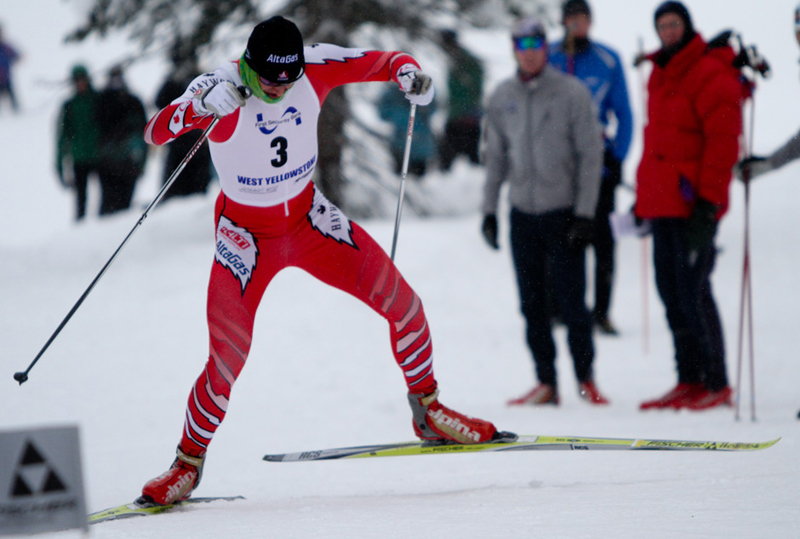
    Goldsack winning the SuperTour skate sprint in West Yellowstone.

    While Goldsack seems to have a leg up on the Americans in the sprint arena, he has yet hit his stride in distance  events finishing 9th in the 10 k classic SuperTour event, and 5th in the 15 k freestyle last Sunday, despite feeling confident in his distance skiing ability.

    “I’ve been happy overall with my [distance] shape,” Goldsack said in a phone interview with FasterSkier. Despite feeling good, he has a had some unfortunate luck in the two major distance races he has contended.

    In West Yellowstone he struggled with equipment, breaking a pole. The 15 k freestyle last Sunday at Sovereign Lake Nordic Center didn’t suit his strengths. “I’m more of a power, fast-twitch kind of guy, and the soft conditions aren’t my favorite,” Goldsack said, “I tried to ski smooth and soft, but the sprinter legs were suffering.”

    Goldsack and his Canadian teammates had the better of their American counterparts in the NorAm sprint race last Saturday, as the Americans were shut out of the podium, and only one finished in the top six. Conversely, the distance race was ruled by the Americans, as the Canadians finished with only two in the top seven.

    “I think we’re in different places with our training,” said Goldsack of the national results breakdown.  “Everyone here [in Canada] is focusing on our sprinting because of sprint trials this weekend.”

    After struggling with injuries in the past, which limited his training, Goldsack has now been completely injury free for the entire training year. “Without adequate training, it has been hard to get a good winter in,” he said. “I’m feeling a lot better than I have in the last couple of years.”

    That training has come from a new program as well. Goldsack was offered a spot on the Canadian National Development Team (or B Team), but opted to join the Alberta World Cup Academy instead.

    “It’s nice to have a new environment,” he said, “It’s been great – the support is outstanding!”

    The support, especially for domestic racing, has been a major positive factor. Goldsack has a dedicated wax and coaching staff at the AWCA, while the B Team members currently racing domesticlly (Perianne Jones and Graham Killick) have been attached to the Callahan Valley Training Center (CVTC), and have less support.

    At 30, Goldsack is the most experienced racer on the team, and has taken advantage of being challenged by the younger team members. “It’s been nice training with a young energetic group,” he said.

    Racing the 15k NorAm last weekend. (Photo: Rob Whitney)

    Also, Goldsack is now being coached by a former teammate, Chris Jefferies, who is the assistant coach of the AWCA. Jefferies and Goldsack spent several years on the CNST together, which now makes for an interesting dynamic, according to Goldsack.

    “It was a little bit strange at first, but now it’s really great,” Goldsack said, “He [Jefferies] is fresh from racing, and as a coach he can relate to athletes well. He knows exactly what it’s like to be training, and be tired.”

    Goldsack also works closely with AWCA head coach Mike Cavaliere.

    Goldsack, along with most of Canada’s top skiers now head to Rossland, B.C. for a mini-tour weekend, in which the sprint race is a qualifier for the Canadian World Championship team.

    As a sprint selection race for World Championships, after showing he is in good form so far early this season, there is plenty of pressure on Goldsack to perform. He will also face some new competition – Stefan Kuhn (CNST), Phil Widmer (CNEPH) and George Grey (CNST) have returned from Europe to contest the event.