From the FasterSkier archive — posts syndicated from athletes’ and coaches’ own blogs between 2004 and 2012, kept online as published. Current coverage is at fasterskier.com.

Tag: Chris Jespersen

  • She almost retired at 26. Now, at her first Olympics, Astrid Øyre Slind has a gold medal at age 38.

    She almost retired at 26. Now, at her first Olympics, Astrid Øyre Slind has a gold medal at age 38.

    This article was made possible through the generous support of our voluntary subscribers who have helped put our Nat Herz on the ground at the Olympics. If you value coverage like this, please support FasterSkier with a voluntary subscription.

    Astrid Øyre Slind races in Norway earlier this season (Federico Modica/NordicFocus)

    PREDAZZO, ITALY — When Astrid Øyre Slind was 26, she almost retired from cross-country skiing.

    She was a good skier, just not quite good enough to break into the international circuit from her home country of Norway, where competition in cross-country is cutthroat. She was, in her own words, “stuck,” feeling like being an athlete wasn’t worth it any more.

    “If you try for the same thing for 10 years, you get disappointed in yourself that you’re not getting better,” she said. “You’re working your ass off, and you’re still not there.”

    But Slind didn’t retire. Instead, she mixed up her training plan, found a new coach and spent years racing on a lower-level long-distance circuit — the minor league baseball of cross-country skiing.

    Nearly a decade later, in 2022, she returned to the international stage, and soon after made her first-ever World Cup podium, against Olympic-caliber competition.

    This season, she finally qualified to race at her first Olympics, at age 38. 

    In Thursday’s 10-kilometer freestyle race, Slind finished a painful fourth place, just seconds from a medal. But on Saturday, she led the Norwegian women’s relay team to gold — punctuating a career arc that few novelists could have scripted.

    “Her story, I think it’s really important to tell,” said Pål Golberg, another Norwegian skier who found success late in his career.

    Slind, he said, was not an athlete with exceptional physical talent, nor especially good technique, and at times she was “struggling to find her way.” 

    But there’s still a message embedded in her success.

    “You can get really far just by hard working,” Golberg said. “And she’s a perfect example.”

    At a news conference after Saturday’s relay, Slind said she’d accomplished something she’d been working toward since childhood.

    Slind, at lower left, celebrates her Olympic relay medal with, in clockwise order, Heidi Weng, Karoline Simpson-Larsen and Kristin Austgulen Fosnaes. (Federica Vanzetta/NordicFocus)

    “It’s kind of crazy to say, but it’s actually been a dream for 30 years,” she said. “And it’s something I’ve given up on during the way there — and then started to believe again.”

    She added: “It’s nice to finally make it.”

    Not a top prospect

    Cross-country skiers can be competitive into their late 30s, but few of them stay in the sport that long. In Thursday’s freestyle race, Slind was the oldest competitor, and one of just two of the 111 athletes who was born in the 1980s.

    Slind grew up in the village of Oppdal in Central Norway, in a family of skiers. Her father, Peder Einar Slind, is a ski coach who once spent a year in Western Massachusetts on an exchange with a collegiate cross-country ski coach there. 

    Astrid also has two ski racing sisters: a younger one, Kari, and a twin, Silje.

    Both still compete at a high level on European circuits. Kari, in fact, had the first breakthrough at the international level, nearly landing on the World Cup podium in her mid-20s. Experts thought she would be “the biggest of them,” said Birger Lofaldli, a reporter at Adresseavisen, the Slinds’ local newspaper.

    In this archival photo, Kari Øyre Slind, center, poses with American skier Jessie Diggins and Slind’s friend Ragnhild Haga after a strength training session in Norway years ago. (Roar Hjelmeset)

    “But Astrid came back,” Lofaldli said. “And now she’s greater than ever.”

    Astrid did not grow up as a top prospect. 

    Unlike Kari, she never qualified to represent Norway at the World Championships for juniors, a proving ground for young athletes.

    But Astrid was always skiing, she said in an interview in November. Her father would take the sisters out to play on skis; the twins were always pushing each other, with Kari “chasing us behind,” Astrid said.

    At three years old, she added, the twins were “crying ourselves in” to local club races in Oppdal, where their parents initially didn’t want them to compete.

    “Silje and I really wanted to go,” Astrid said. “From that day, we’ve just been skiing as long as the snow is out, and loving it.”

    ‘Crazy training’ with a new coach

    After failing to break into Norway’s national team and the top-level World Cup circuit in her 20s, Slind spent years racing on a tour called the Ski Classics. The circuit features distance races as long as 90 kilometers, or 56 miles. 
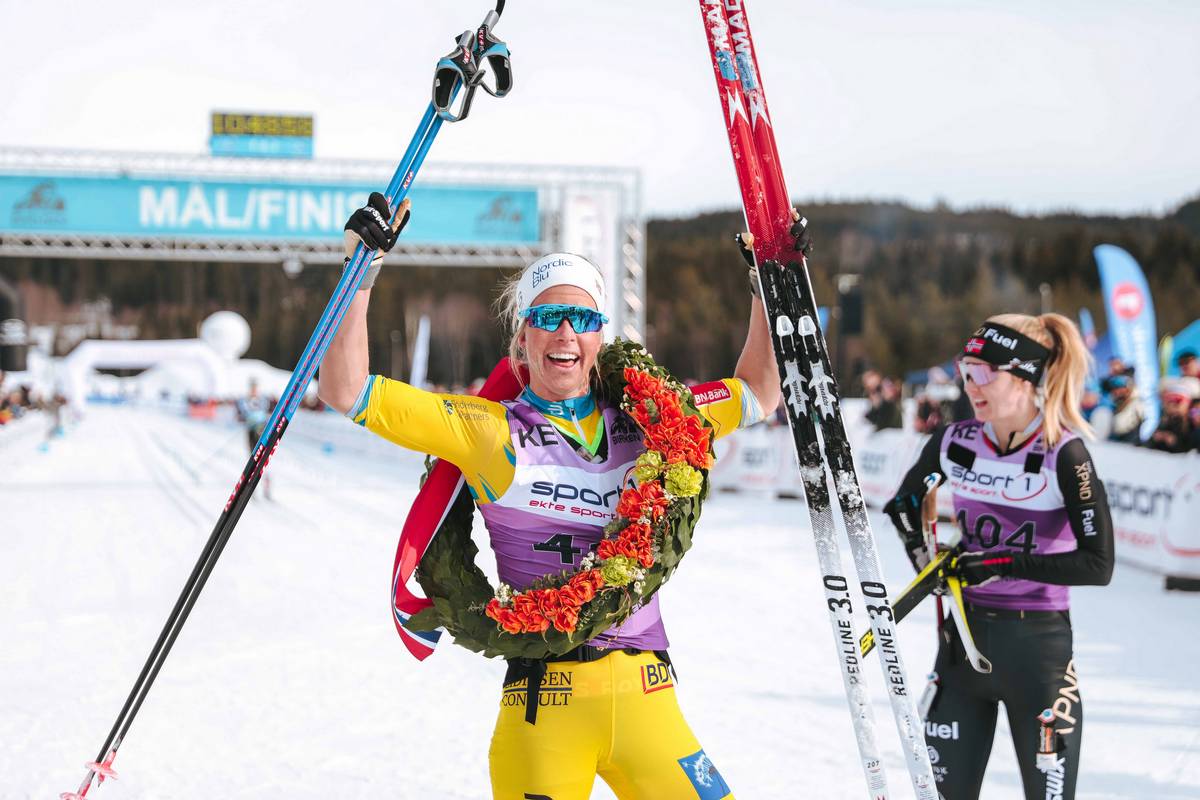
    Slind celebrates winning the Birkebeiner, a long-distance race that finishes in Lillehammer, Norway. (Federico Modica/NordicFocus)

    She had her ups and downs there, too. In one especially tough year, Slind said, she had trained too much — so much, that she could barely race — and was again thinking about quitting the sport.

    Instead, she started talking about her problems with a teammate, Chris Jespersen, another Norwegian who was a few years older and had also struggled to stay at the highest level of the sport.

    “He was like, ‘You know what? I really think I can make a good skier out of you — I’ve made all the mistakes myself. I can see what you’re doing. Let’s try to figure it out together,’” Slind said.

    Jespersen, at the time, was not a coach, just an “athlete who had ideas,” Slind said. 

    But at that point, Slind said, she had nothing to lose, so the two started working together. They made a deal: When they disagreed — if Slind, for example, wanted to push herself to do more training but Jespersen thought it was too much — Jespersen would get the last word.

    It turned out that Jespersen had a knack for explaining what Slind needed to do differently with her ski technique, in a way that she could understand. He was also a good check on what Slind describes as her impulse to do “crazy training” — things like a six-hour session of skiing with the arms-only double pole technique, with hard intervals in the middle of it, or workouts where she’d try to keep up with her team’s strongest men.

    Slind had done more of those kinds of sessions as she moved into the Ski Classics circuit, where she discovered that she “needs a lot of training to be at a good enough level.”

    “I think it was what put a spark in my skiing again,” she said.

    But Jespersen, she added, helped rein her in when the crazy training got a little too crazy.

    “He wasn’t too eager, and he wasn’t too defensive,” she said. “It was kind of the perfect balance for me.”

    A breakthrough, and medals

    Slind’s breakthrough came in the winter of 2022-2023, when she finally qualified to return to the World Cup circuit after a nearly nine-year absence.

    Two months into the season, after nine races, Slind stood on the podium for the first time. Later that season, she won a bronze medal at the World Championships in the skiathlon, and a gold medal with Norway’s relay team.

    Still, it hasn’t always been easy since then. 

    Last season, she raced at what was effectively a home World Championships, in the city of Trondheim just a two-hour drive from her hometown. Amid challenging snow conditions and constant rain, her results were disastrous, including a mishap with a ski during the skiathlon, and she finished with no individual medals — just a silver from the relay.

    Then, at the Olympics this year, she was oh-so-close to a medal in the 10-kilometer freestyle race in fourth, just 3.3 seconds behind bronze medal-winner Jessie Diggins of the U.S.

    Slind was also painfully close in her first Olympic race, the skiathlon, where she was skiing in medal position before being overtaken by a teammate and ultimately fading to eighth.

    “I completely died out there,” Slind said in an interview afterward. “I’m not a good enough skier today.”

    In Sunday’s relay, though, Slind was one of the strongest athletes in the race, putting pressure on the Swedish star Ebba Andersson, who ultimately crashed twice and cost her team the gold medal.

    Slind leads the Olympic relay on Saturday. (Nathaniel Herz/FasterSkier)

    The performance caps a storybook turnaround — one so improbable that Slind probably wouldn’t have believed it herself, said Jostein Vinjerui, a Norwegian coach who works with Slind’s club team, Aker Dæhlie.

    “If you’d have asked her during the Beijing Olympics, four years ago, if she’d be able to do the Olympics in four years time, I think she would have laughed, I’m pretty sure,” Vinjerui said. “It’s just an amazing story, being 38 years old now and winning a first gold medal.”

    More Olympic medals are possible for Slind: The Norwegian coaches have named her to the two-person team sprint squad, and she and Julie Bjervig Drivenes will be podium contenders in the event Wednesday. Slind is also expected to vie for medals Sunday in the longest race of the Games, the 50-kilometer competition in the classical technique.

    After the relay gold, Slind said at the news conference that she’s good at turning depressing results into motivation for the next event.

    “Maybe the two other races just made me more on fire for today, and really wanting to show what I’m good for,” she said. “And I will take that with me into the 50 k.”


    Help Support Our Olympic Coverage!

    FasterSkier will have our own Nat Herz on the ground at the Olympics, which, to be honest, is a very big financial lift for us. If you value the thoughtful work and access FasterSkier provides at championships like this one, please consider becoming a Voluntary Subscriber. Your support directly fuels the work we do to cover the people, places, and moments that make our sport special.

    Join the FasterSkier community!
  • Closing the Gap: Competition Instincts

    Closing the Gap: Competition Instincts

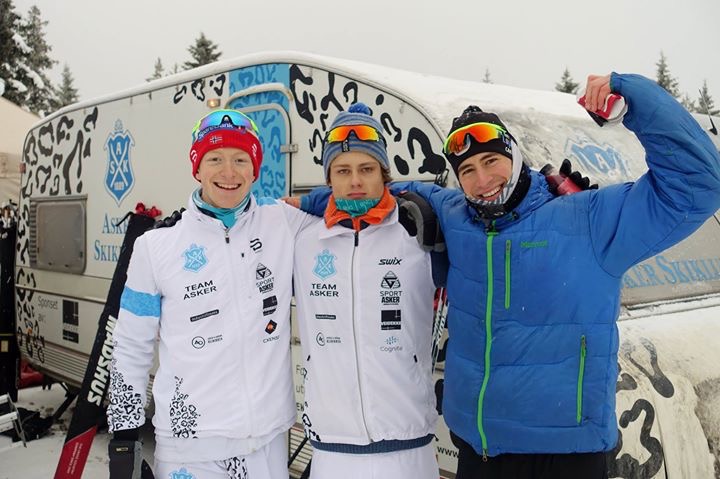
    Maks Zechel (r) with his Team Asker relay teammates at 2018 Norwegian nationals in January in Vang, Norway. (Photo: Anne Haarstad)

    Editor’s Note: The following is part of a series proposed by Maks Zechel, a 20-year-old Canadian cross-country skier embarking on his first season training abroad. In August, he made the big move to Norway, where he’ll be training and racing with Team Asker for the entire winter. Through these updates, Maks hopes to share his personal “observations, stories and lessons learned” to help close the gap between North American and Scandinavian nordic skiing. Previous posts: 1, 2, 3, 4, 5, 6, 7 , 8, and 9 .

    ***

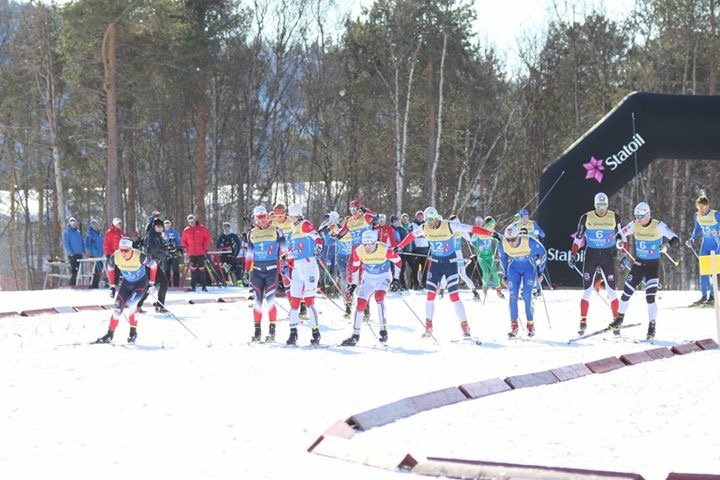
    The men’s field trying to hang onto the Northug brothers, Sundby, Musgrave, Krüger, Skar, Gløersen, and Golberg in the team sprint at 2018 Norwegian nationals earlier this month in Alta, Norway. (Photo: Bildbyran)

    “Starting in 30 seconds!”

    “What??” exclaim a handful of skiers with their one-piece racing suits still tied around their waists. The gathering of 15-20 skiers, chatting while changing out of their warm-ups, transforms into a sudden scramble as everyone rushes to strap on poles, kick snow out of boots, and slap bindings closed. A couple of stragglers stumble out of the knee-deep snow under the trees after a last-minute pee – once the one-piece is zipped up, you’re pretty trapped.

    I pull on my gloves as fast as I can, almost falling backwards into a snowbank, and send speedy thoughts to the satellites still trying to connect to my watch.

    antabuse

    “Ten seconds!” our coach warns.

    “Just give me a few extra seconds! My watch isn’t set up yet!” someone frantically yells back.

    No dice.

    The mix of girls and guys, aged 16-24, shuffle around awkwardly in their white and blue Team Asker racing suits, trying to self-seed before the interval workout starts. A three-time World Junior champion stands at the front. Juniors and seniors struggling to crack the top 100-200 at Norwegian Cups mix in with those who push some of the best World Cup skiers in races. Resumes are out the window; the only determination of who will lead each interval is who is skiing the fastest, and that might be anyone today.

    The trail is really only wide enough for one skate skier and perhaps a desperate pass in the classic tracks. If you want to get by during the intervals, it will have to be done tactically; maybe on the inside of a corner, after an extra push into a downhill, or swinging into an uphill. The depth of talent in the group is incredible, and from multiple team workouts per week, you learn to go fast no matter how crowded the course, how unsuitable the terrain, or how frustrating the conditions. The best ski the best, the conditions irrelevant, and “I struggle in soft snow” is no valid reason for skiing slowly.

    Tonight’s session: 5 x 12-minute anaerobic threshold intervals, sometimes known as Zone 3 or Level 3, with a 2-minute rest in between. The effort is to be controlled, with good progression from interval to interval. Tonight it is especially important to progress well throughout the workout, as most of us are just coming off of a hard race weekend, and we want to be conscious of how well our bodies are recovering.

    inhalers online

    “En, to, tre…jaaaaaaa!”

    Everyone sprints down the first hill, some still rushing to get their poles on, as we leave the umbrella of light cast by a “10-second sprint marker” (known by some as a light post) and descend into the darkness below.

    The course is rolling, with many turns, short-aggressive and long-gradual hills, and extended stair-like climbs with plateaus and steep pitches. It’s a course of transitions that leaves you scrambling to catch up if you are caught sleeping. It is definitely not a FIS-homologated race course, but it is the primary training location for multiple world-class skiers.

    We wind our way through the woods, following a loop that criss-crosses and “figure eights” its way around a lit trail system. Sometimes we leave the light for awhile, and we ski blindly until our eyes adjust to the blues and blacks of moonlight. It has been a fantastic winter in Norway, and the snow is deliciously fresh.

    The skiers in front are symmetrical in all their movements, producing perfect, even kicks. Upper bodies remain stable and quiet, virtually unmoving. Every action is patient; gliding on a ski, relaxed, they take their time as they set up the positions required to attain the maximum amount of power from each movement.

    Snap.

    The power-phase only happens once the angles are in all the right places, falling with relaxed power onto quivering poles. It doesn’t matter that the snow is loose and shifting, or that pole tips sink well below the surface; in soft snow, every action must be all the more calculated in order to translate energy into movement up the trail.

    Today is one of the first times I’ve figured out how to apply these things to my own skiing technique. A couple of weeks ago, at a Norwegian Cup, I watched Chris Jespersen ski by in a 15-kilometer skate race, in powdery, sand-trap conditions. Jespersen is a fairly big skier, but he came 4th on the day, despite conditions that many would say favour light skiers who can ski at a high tempo. Watching Jespersen ski, I realised it didn’t matter. Whether they weigh 10 or 20 kilograms more than someone else, the best skiers ski the fastest on the day, conditions notwithstanding. Jespersen skied by me in a way that made it seem like he was moving far slower than those around him. He took his time gliding on each ski, setting up his positions, and then he would come down with the same big and powerful motions that I had thought were only possible on rock-solid snow. The only effect the conditions had on the way Jespersen skied, was that he had to focus even more on remaining stable and efficient. Yes, his poles sunk inches deep into the snow, but that did not mean that he could not ski with power, it just meant that he had to keep a much more deliberately strong core to maintain his technique without collapsing.

    I take my time tonight, too, pushing my body to hold the technique together, instead of just pushing my effort level. This way it is easier to gauge whether I am going faster or slower from interval to interval; if my technique starts to fall apart, I go slower.

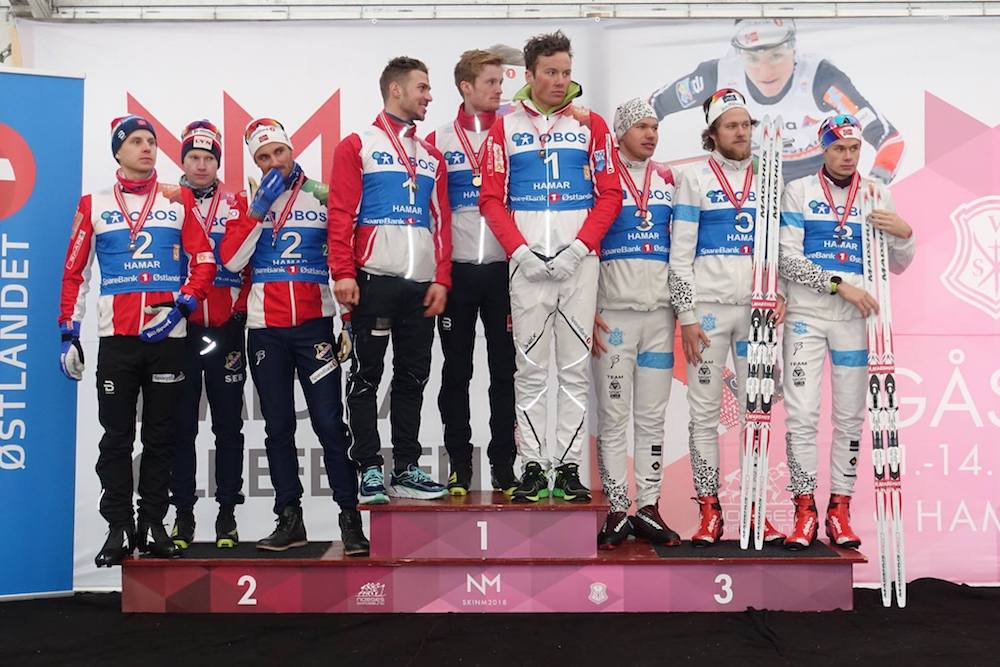
    Team Asker’s relay team (r) alongside skiers like Emil Iversen, Hans-Christer Holund, and Simen Hegstad Krüger on the relay podium at 2018 Norwegian nationals in Vang, Norway. (Photo: Anne Haarstad)

    It is important to have some workouts, as a cross country skier, where the goal is to push your body to its maximum, but it is also important to think about moving fast while we are going hard. Sometimes we focus too much on just pushing our pain threshold in intervals, even if we are slogging along in terrible shape. We gain confidence from doing this, because ski racing is f***ing hard.

    Sometimes we fear the pain of racing, but if we make ourselves feel it many times a week, it becomes familiar enough that racing seems less daunting. But this can lead us to only think about how an effort feels, and we forget to do the things that will actually make us go fast on snow.

    There will be a point in almost every race, when you will have to just gut it out and stumble the last kilometers or meters to the finish line, unable to keep from falling apart anymore. On some days, everyone falls apart, and the race is decided by who can limp the hardest. But we have to train ourselves in workouts to keep that point from occurring too soon. You have to be a fighter to push through the end of a race, but that grit has to be focused on going fast. Undirected effort doesn’t translate to speed on snow.

    When training our bodies to go fast in a race, we first have to think about why we are doing specific workouts. If a workout is about pushing Zone 5, going all out, getting your heart rate as high as possible, and trying to ski through limbs flooded with lactic acid, then we have to make sure we are in good enough shape to get our heart rate and lactate levels that high while skiing well. The same goes for max-strength workouts. It is usually pointless to push a maximum effort workout if you can’t produce a maximum effort, because you won’t increase your anaerobic or maximum strength capacity with a submaximal effort.

    If you’re doing a Zone 4 workout, an effort focused on increasing your capacity to ski while developing lactate levels that your body cannot fully clear, you should be in good enough shape to be able to ski in Zone 4 for the duration of the workout, without slowing down each interval or having to push a maximum effort to go faster. It is a Zone 4 interval, which means it is not a workout focused on producing a maximum effort. Your goal should be to remain in this zone for as long as possible, until you can’t maintain the pace anymore without getting your heart rate too high. This will let you do many workouts in this zone, perhaps even a few in a week. Races are spent mostly in Zone 4, so it is important that we are able to ski at this pace for as long as possible. Zone 4 workouts have some of the highest fitness dividends of any of the training that we do, however, as soon as the effort becomes uncontrolled, or Zone 5, the purpose of the workout is ruined. You will have tapped into your body’s limited supply of maximal efforts while also limiting the number of quality workouts you could have performed in Zone 4.

    You can try to push yourself as hard as possible in every workout, but your window to improve your ability to work in Zone 5 is very small. If you train too much in your maximum heart rate zone, after a quick improvement in fitness, you will start to decrease your capacity to work in that zone, which will prevent you from producing maximal efforts in races. I have had periods during the racing season where I have been so intent on increasing my ability to go “all-out”, to feel comfortable hurting, that I have burned myself out before the important races came about. It is underrated just how important mental energy is when racing. You can’t do everything before a race just to settle your nerves, so you have to remain sure of your abilities and that you will be able to ski to your best on race day. Your chances at success are much greater if your body is fit and your mind is sharp and eager to race.

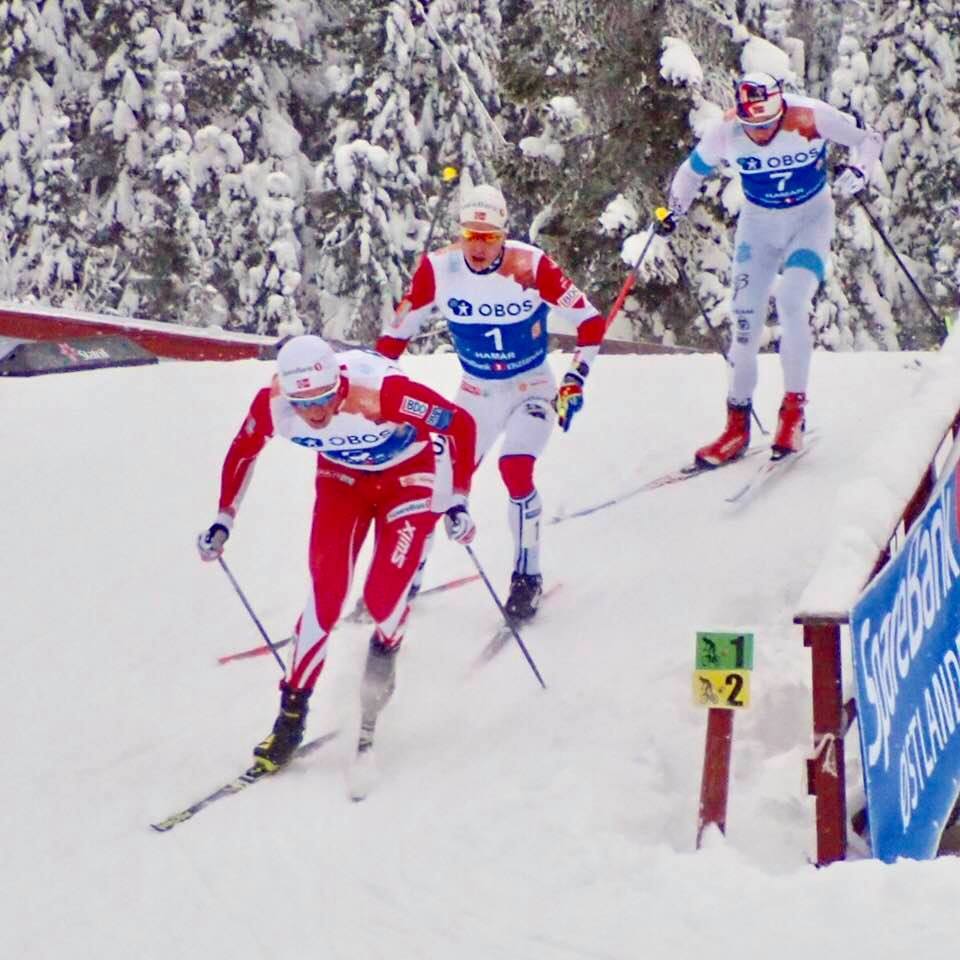
    Harald Østberg-Amundsen of Team Asker follows Norwegian World Cup skiers Emil Iversen and Simen Hegstad Krüger for 10 k in his relay leg at 2018 Norwegian nationals, only getting outsprinted in the last 25 meters. (Photo: Lars-Erik Nygaard)

    Tonight we are working in Zone 3, and that means skiing at a Zone 3 heart rate level along with Zone 3 lactate levels. If it feels like a maximum effort, even if my heart rate is in the right zone, then I am not in good enough shape to do intensity. If I am sick, then I am not in good enough shape to do intensity. Think about how you feel, and whether or not you could race close to your potential on that day; if you don’t think you could, then you shouldn’t be doing a hard interval workout, and maybe not even a controlled Zone 3 workout if you are especially tired.

    My teammate Emil and I are feeling good tonight, so we do all five intervals. Most others cut the workout after the fourth interval, World Junior champion Harald included.

    Nobody is making the decision for you, because only you know yourself best; you take responsibility for your decisions and take ownership of the consequences and benefits of your actions.

    Emil and I fly through the muffled silence of pillowed trees and the cold, still air. We approach a steep climb and accelerate into the bottom of it, taking advantage of the last bit of flat terrain to carry speed into the hill. Settling into a controlled pace in the middle of the climb, we are not going especially fast. We know our energy is better spent elsewhere, where gravity and the ability to ski more powerfully will yield higher returns of speed.

    We wire into our muscle memory the tricks that will set us up for success in the 50-kilometer individual start skate race at Nationals in a few weeks. Early on in a 50 k, pushing the pace on the flats and getting a high heart rate will hurt us less than pushing the pace on the hills, where our heart rates might remain lower, but lactate levels in our legs will become much higher. It is fairly easy to bring your heart rate back under control, but it is much more difficult to clear lactate out of your limbs when you are at race pace. Each time you go a little over the edge, you are using up some of the limited “matches” at your disposal, and once the matchbook is empty, there is no getting that energy back. So we use our matches where they will have the most impact on the stopwatch.

    Our legs stay controlled for most of the hill, skiing smoothly and exacting just enough muscular energy to keep a constant speed. But in an instant, it is time to switch gears. Right before the crest of the hill begins, our legs react, uncomfortably pushing through the muscular barrier that controlled offset has put into our legs, and sprinting over the top. It’s like trying to open up an overtightened jar of pickles – you can’t do it unless you grit your teeth and commit your mind to it. The switch from controlled Zone 3 to skiing into sprint power is difficult, but this is where the race is won. Over the crest, instead of relaxing into the downhill, we ski even more explosively while increasing our tempo. A brief moment to catch our breath while free-skating down the other side, and then back to working the following rolling terrain.

    Push into the hill. Control. Explode over the top.

    Maks Zechel racing in the 15 k freestyle “jaktstart” at the Scandinavian Cup in Trondheim, Norway. (Photo: Erlend Wiik)

    Our attacks over the crests aren’t enough to drive our heart rates out of Zone 3, but they train our muscle memory to react like this instinctively. Efficient, plyometric power is trained in a way that can’t be replicated in the gym. We push our legs to work explosively in the most rewarding places, anaerobic for just a few pushes, so that we will not be left making snow angels on the tracks when the top skiers attack in the next Scandinavian Cup race. And attack they do. On each hill it is all we can do to keep contact as they dynamically “hop offset” over every steep hill for 15 k.

    Cross-country skiing in Norway is like a massive research project, in which hundreds of lab rats are all clamouring to participate. With the knowledge that there are hundreds of talented skiers between them and ever having a shot at racing in their country’s colours, the fear of risk-taking and experimentation is taken away. If the difference between you having a mediocre race and having your best race is coming 120th instead of 140th, what is there to lose in trying to keep up with the race winner for 100 meters? What is there to lose in starting a 30 k at your 10 k pace? Norwegian skiers blur the lines between disciplines as they try to unconventionally apply aspects of one to the other.

    It all comes down to confidence, but in skiing, confidence takes a more complicated form than we are used to. A confident skier is not necessarily the one who struts to the starting line nonchalantly. They are instead the skier who knows themselves as well as they possibly can. Achieving this requires a certain amount of independence and the courage to try new things, even at the risk of failure. Confidence isn’t just about pushing above your comfort level to stay with a faster skier during an interval, it is also about knowing when not to do intervals at all. The best Norwegian skiers train harder than anyone at the times when they are able to make the most improvements, and then they trust themselves to rest until they are able to come back to training even stronger than before.

    ***

    Norwegian Word of the Week

    Norwegian: jaktstart

    Literal translation: hunting start

    Meaning: pursuit start, a race where skiers start based off of the finishing times of the previous race; skiers attempt to chase down the skiers ahead of them and close whatever time gap they were beaten with the day before. First skier across the line wins the “pursuit”, culminating two days of racing. It is arguably the most thrilling distance race format as a racer.

    ***

    About Maks: Maks Zechel is a competitive cross-country skier who secretly wants to become a professional mile runner. He loves hiking and going on canoe trips with his family, as well as peanut butter cups in ice cream. Johan Olsson is his favourite skier and he hopes to race the Cortina-Toblach stage of the Tour de Ski one day. He enjoys writing about his experiences. Follow him on Instagram @makszechel.

  • Swedish and Norwegian National Teams Nominated

    Swedish and Norwegian National Teams Nominated

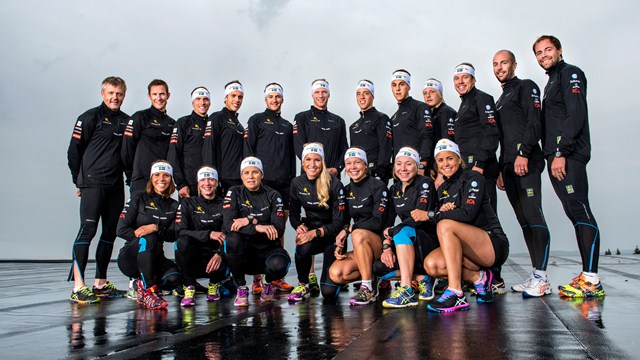
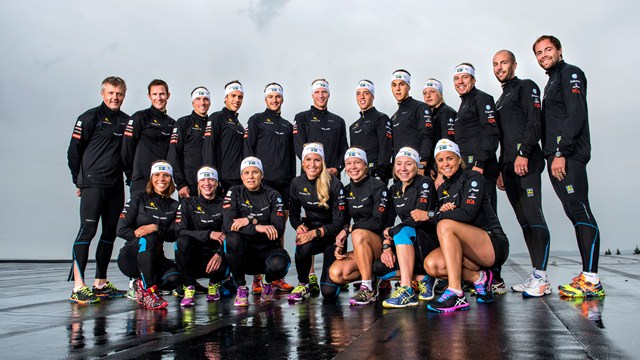
    The Swedish National Team (Photo: FIS/Swedish Ski Association) http://www.fis-ski.com/cross-country/news-multimedia/news/article=swedish-national-team-for-the-world-cup-season-2014-2015.html
    The Swedish National Team (Photo: FIS/Swedish Ski Association)

    For all the international-racing junkies out there, the Swedish and Norwegian Ski Associations recently announced the nominations to their 2014/2015 national teams.

    Sweden’s male and female teams both grew from eight to nine members apiece, according to the Swedish Ski Association, with the additions of Simon Persson, 22, and Jonna Sundling, 20, and to men’s and women’s A-teams, respectively.

    Norway’s Cross-Country Committee nominated 25 athletes to its three national teams (women’s, men’s all-around, men’s sprint), according to Norges Skiforbundet. Kathrine Harsem, 25, and , 23, received the call up to the women’s elite team. On the men’s side, Simen Andreas Sveen, 25, and Didrik Tønseth, 22, are new to the all-around team, and Sondre Turvoll Fossli, 20, is the newest sprinter.

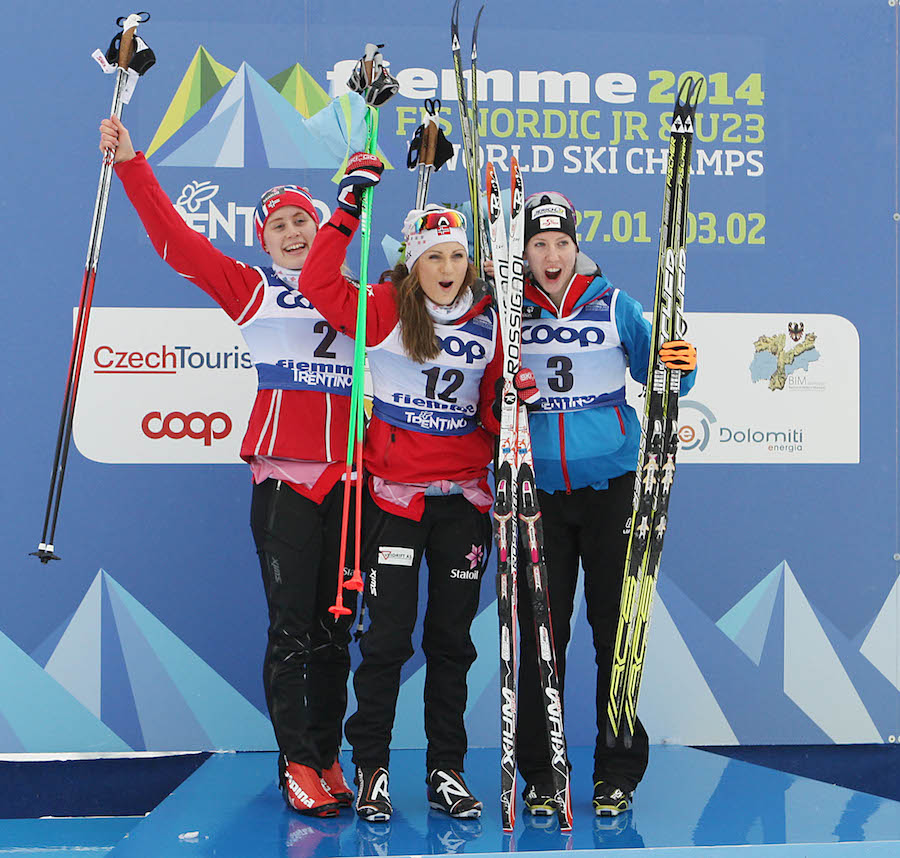
    The women's 15 k skiathlon podium at U23 World Championships on Saturday, with Norwegian winner Martine Ek Hagen (c), her teammate and runner-up Ragnhild Haga (l), and Teresa Stadlober of Austria in third (r). (Photo: Fiemme2014)
    Martine Ek Hagen (c) after winning the women’s 15 k skiathlon at  U23 World Championships last season in Val di Fiemme, Italy, with teammate and runner-up Ragnhild Haga (l), and Teresa Stadlober of Austria, who placed third (r). (Photo: Fiemme2014)

    No longer with the Norwegian national team, Vibeke Skofterud, Øystein Pettersen, Petter Eliassen, Niklas Dyrhaug and Tord Asle Gjerdalen are pursuing different paths and interests.

    A 2010 Olympic gold medalist in the team sprint, Pettersen, 31, whose nickname is “The Sausage,” recently told NRK that he plans to focus on distance races while skiing for Team United Bakeries.

    “In recent years I trained hard to break into sprints but it did not happen,” he said, according to a translation. “Then I lost faith in myself in the sprint and I cannot continue another season training for something I have lost confidence in.”

    He explained that the Vasaloppet and 2015 World Championships will be his main focuses for next season.

    According to FIS, a few Norwegians are switching specialties: Pål Golberg from sprint to all-around, Finn Hågen Krogh from all-around to sprint. Simen Østensen returns to the all-around team along with Chris Jespersen, who’s now back on the elite national team.

    Sweden

    A Team

    Ladies

    • Sofia Bleckur, IFK Mora SK
    • Hanna Erikson, Åsarna IK
    • Anna Haag, IFK Mora SK
    • Ida Ingemarsdotter, Åsarna IK
    • Charlotte Kalla, Piteå Elit
    • Sara Lindborg, Falun-Borlänge SK
    • Stina Nilsson, IFK Mora SK
    • Jonna Sundling, IFK Umeå
    • Emma Wikén, Åsarna IK

    Men

    • Calle Halfvarsson, Falun-Borlänge SK
    • Marcus Hellner, Gellivare Skidallians
    • Emil Jönsson, IFK Mora SK
    • Anton Lindblad, Sollefteå Skidor IF
    • Lars Nelson, Åsarna IK
    • Johan Olsson, Åsarna IK
    • Daniel Richardsson, Hudiksvalls IF
    • Simon Persson, IFK Umeå
    • Teodor Peterson, Åsarna IK

    Team 2015

    Ladies

    • Anna Dyvik, Falun-Borlänge SK
    • Hanna Falk, Ulricehamns IF
    • Sofia Henriksson, Strömnäs GIF
    • Magdalena Pajala, Piteå Elit
    • Evelina Settlin, Hudiksvalls IF
    • Marika Sundin, Sollefteå Skidor IF
    • Julia Svan, Vansbro AIK
    • Jennie Öberg, Piteå Elit

    Men

    • Simon Andersson, Falun-Borlänge SK
    • Martin Bergström, Piteå Elit
    • Jens Burman, Åsarna IK
    • Martin Johansson, IFK Mora SK
    • Simon Lageson, Åsarna IK
    • Jesper Modin, Piteå Elit
    • Carl Quicklund, Östersunds SK
    • Marcus Ruus, Gillberga SK
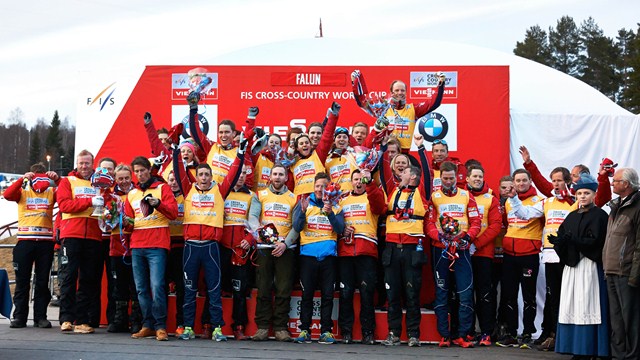
    The Norwegian National Team last season on the World Cup circuit. (Photo: FIS/Nordic Focus) http://www.fis-ski.com/cross-country/news-multimedia/news/article=norway-nominates-national-teams-for-2014.html
    The Norwegian National Team last season on the World Cup circuit. (Photo: FIS/Nordic Focus)

    Norway

    National teams

    Ladies

    • Celine Brun-Lie, Njård
    • Marit Bjørgen, Rognes IL
    • Maiken Caspersen Falla, Gjerdrum IL
    • Martine Ek Hagen, IL BUL
    • Kathrine Harsem, IL Varden
    • Astrid Uhrenholdt Jacobsen, IL Heming
    • Therese Johaug, IL Nansen
    • Marthe Kristoffersen, IL Varden
    • Kristin Størmer Steira, IL Forsøk
    • Heidi Weng, IL BUL
    • Ingvild Flugstad Østberg, Gjøvik Skiklubb

    Coaches: Egil Kristiansen and Roar Hjelmset

    Men, all-around          

    • Pål Golberg, Gol IL
    • Chris Jespersen, IL Korlevoll
    • Eldar Rønning, Skogn IL
    • Sjur Røthe, Voss IL
    • Simen Andreas Sveen, Ring IL
    • Martin Johnsrud Sundby, Røa IL
    • Didrik Tønseth, Byåsen IL
    • Simen Østensen, Fossum IF

    Coaches: Trond Nystad og Steinar Mundal

    Men, sprint 

    • Eirik Brandsdal, Kjelsås IL
    • Sondre Turvoll Fossli, Hokksund IL
    • Anders Gløersen, Rustad IL
    • Ola Vigen Hattestad, Ørje IL
    • Finn Hågen Krogh, Tverrelvdal IL
    • Tomas Northug, Strindheim IL

    Coach: Arild Monsen

  • Norway Sweeps Men’s Podium, Solidifies Tour Rankings

    Norway Sweeps Men’s Podium, Solidifies Tour Rankings

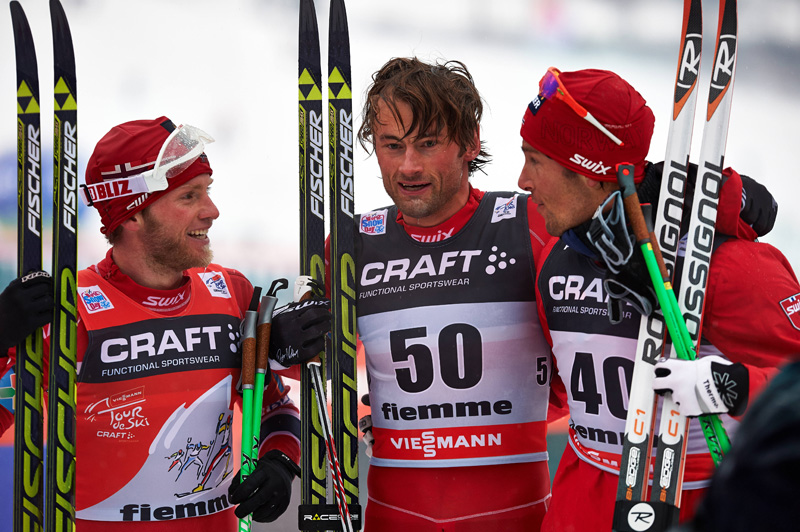
    Northug (bib 50) is congratulated by teammates Martin Johnsrud Sundby (left) and Chris Jespersen (right) after the trio swept the podium in the 10 k classic race at the 2014 Tour de Ski. Photo: Fischer / Nordic Focus.
    Northug (center) is congratulated by teammates Martin Johnsrud Sundby (left) and Chris Jespersen (right) after the trio swept the podium in the 10 k classic race at the 2014 Tour de Ski. Photo: Fischer / Nordic Focus.

    Total dominance in a race has been the purview of the Norwegian women over the past several years, with the team running away with the Nations Cup title, and packing the top-10, particularly in distance skate races. But in a performance reminiscent of classic races in the early 2000’s the men’s squad captured the top four places in the penultimate stage of the 2014 Tour de Ski, demonstrating they can hold their own with their female counterparts.

    Overall five Norwegians cracked the top-7 in the 10 k individual classic event.

    Tour leader Martin Johnsrud Sundby maintained his hold on the overall lead, but it was teammate Petter Northug who took the win, 9.7 seconds ahead of Sundby.

    The win was Northug’s first of a tough season. The Norwegian star has started slowly, racing into top form as he looks to bounce back from illness that set back his training in the fall.

    Over the first months of the season, Northug has steadily crept up the result sheet, and showed a flash of his old self in Friday’s pursuit, breaking out his trademark sprint finish to win the race for second over the chase pack.

    But until today, Sundby has dominated the headlines, winning the season opening Kuusamo mini-tour and consistently placing in the top-10 through the early part of the season.

    Northug striding to victory in Val di Fiemme. Photo: Fischer / Nordic Focus.
    Northug striding to victory in Val di Fiemme. Photo: Fischer / Nordic Focus.

    Northug started uncharacteristically fast, passing the 1.3k mark in second, a mere .3 seconds ahead of Sundby. Five kilometers later he had opened up a gap he would not relinquish, overtaking first starter and early leader Stanislav Volzhentsev of Russia for a 10 second lead.

    Volzhentsev could not maintain his quick start, slipping down to 12th at the finish.

    Sundby and eventual third place finisher Chris Jespersen flipped spots over the last four kilometers. Between 6.3 and 8.3 k, Sundby picked up 5.1 seconds on Jespersen, a lead he extended slightly before the finish.

    Jespersen crossed an even 16 seconds behind Northug with Sjur Røthe another 13 seconds back in fourth.

    A frequent member of the Norwegian relay team, Røthe has been relatively quiet this year, cracking the top-10 for the first time earlier this week in the 15 k mass start in Lenzerheide, Switzerland.

    Canadian Alex Harvey continued his strong Tour, placing fifth in what will be his final race of the event. Harvey has announced he will not start the Final Climb on Sunday.

    Sundby told FIS News after the race that he felt tired following the 35 k pursuit on Friday.

    “I have to recover well today and get ready for the Final Climb. It will be a pure pain,” Sundby said.

    Waxing was challenging with warm temperatures leaving a choice between n0-wax “hairies” and klister. According to Harvey there was a mix of both in the race, even on the Norwegian team.

    No Norwegian has ever won the Tour de Ski, but with the women currently holding the top two spots and the men the first three, with Sundby, Northug and Jespersen, the odds are good that will change this year.

    Sundby, exhausted at the finish. Photo: Fischer / Nordic Focus.
    Sundby, exhausted at the finish. Photo: Fischer / Nordic Focus.

    Sundby will start 48.5 seconds ahead of Northug, who has struggled on the Final Climb in recent years. But  he told Norwegian Broadcaster NRK that he has been feeling better as the Tour has progressed, a change from the recent past.

    He looks to match his 2011 performance — he posted the fifth best time up the Alpe Cermis that year.

    “I am happy with my fitness. I am getting stronger with each competition,” Northug told FIS news. Regardless, he says he does not think he can catch Sundby, though he told NRK that he is lighter than in past years, a fact he sees as a significant benefit on the brutal climb.

    Jespersen will start 1:26.8 behind Sundby, and with Harvey, who sits in fourth overall, withdrawing, the surprising Johannes Duerr of Austria will lead the chase pack at two minutes back.

    He will head out with Swede Calle Halfvarsson and Russian Ilia Chernousov just behind. Defending Tour Chanpion Alexander Legkov starts in eighth, +2:21.3

    Overall, Norway enters the last day of the Tour with six of the top-12 spots.

    Of Note:

    – Northug has jokingly called himself “fat” in the past when explaining his poor performances in the Final Climb.

    – The 26-year-old Duerr had never cracked the top-30 in a World CUp race prior to last season. He placed 24th in the 2013 Tour, and has been on a steady ascent ever since.

    – The seemingly ageless Sergei Dolidoich of Belarus, a solid 40-years-old, was 13th and is 37th overall

    – Sundby has only started a single non-stage World Cup sprint, the Davos freestyle event in December. He placed 48th. In the 13 sprints he had started prior to this Tour, Sundby qualified for the heats five times, never advancing out of the quarterfinals. He placed third in both 2014 Tour de Ski sprints.

    – The youngest skier in the race, Gustav Eriksson (SWE) at 22-years-old, placed 50th.

    – China took three of the last four spots, with only Robin Duvillard of France breaking up the trio in third-to-last.

    Results

    Overall Tour Standings


  • Johaug Takes Sixth Skarverennet Title; Jespersen Holds Off Northug for Win

    Johaug Takes Sixth Skarverennet Title; Jespersen Holds Off Northug for Win

    Therese Johaug in earlier action this winter. The Norwegian won her sixth Skarverennet title on Saturday.

    Just when you thought the ski season was over, Norway hosted one of the world’s biggest ski marathons, the 38 k Skarverennet, on Saturday morning. About 12,220 skiers competed in the race that runs from Finse to Ustaoset, high in the mountains.

    Therese Johaug won in 1:41:33, defeating Norwegian teammate Marit Bjoergen by 19.8 seconds. Martine Ek Hagen took third, one-tenth behind Bjoergen.

    Johaug took it out hard up a long incline out of Finse, and Bjoergen never truly challenged her. Johaug’s victory is her sixth in a row on the Skarverennet, making her the undisputed queen of the race.

    On the men’s side, last year’s runner-up Chris Jespersen bested Petter Northug by five seconds, clocking in at 1:31:24. Jespersen led for the last 8 k to hold off Northug, who had worked his way through the field from 1:19 back to come within striking distance of Jespersen.

    In contrast to the women’s race, which was a 1 through 11 Norwegian sweep, a few international men snuck into the top of the results. Russia’s Eugeniy Dementiev finished third in a close finish with defending champion Jean Marc Gaillard (FRA), both posting official times of 1:32:32.

    The region around Finse and Ustaoset had experienced unpleasant wind and snow in the days leading up to the marathon, but the weather gods obligingly cleared the skis in time for the start on Saturday, making for perfect end-of-season conditions.

    Results.

  • Rookie Gaillard (FRA) wins Skarverennet (NOR)

    Rookie Gaillard (FRA) wins Skarverennet (NOR)

    Skarverennet 2011: Therese Johaug (NOR) and Jean Marc Gaillard (FRA). Photo courtesy of Skarverennet.no.

    Jean Marc Gaillard (FRA) dropped Frode Andresen (NOR), Chris Jespersen (NOR) and Espen Harald Bjerke (NOR) in a fierce sprint to the finish line. But for a long time, Gaillard was not sure he’d be able to catch the 2011 World Champion of the 30K freestyle: Therese Johaug.

    “I really didn’t think we would be able to catch her, but all of the sudden, we were right on her tails,” said Gaillard, who raced Skarverennet for the first time Saturday.

    “It was a fantastic experience,” Gaillard said to Norwegian TV station NRK after the race.

    New this year, Skarverennet featured a pursuit-style event in the elite class, where the elite women were given a 12-minute lead on the elite men, and the first elite skier – male or female – would be the race winner.

    Johaug pulled off a surge midway through the race where she dropped the entire women’s field, and was not chased down by the elite men until the last seven kilometers. The foursome consisting of Gaillard, Bjerke, Jespersen and Andresen caught Johaug just prior to the long descent to the finish at Ustaoset. By the time they arrived in the stadium area, the battle for first place was between Gaillard, Andresen and Jespersen.

    Gaillard crossed the finish line first, clocking in at 1:44:07, with Jespersen in second place and Andresen in third, both a tenth of a second behind Gaillard.

    “Of course, it was bittersweet to lose the prize money, but I feel like I pulled off a good race,” Jespersen said after the race. The winner received 100,000 Norwegian kroner, almost $20,000.

    Biathlete Andresen was disappointed with his third place.

    “In Skarverennet, the winner takes it all – you get the money and a car for a whole year,” he said to the Norwegian biathlon web site Strafferunden.no after the race.

    Bjerke was fourth, 42 seconds behind Gaillard. Emanuel Jonnier (FRA) was fifth in a second sprint finish with teammate Vincent Vittoz, 5 minutes and 44 seconds behind Gaillard for their very last world-cup level event. Jonnier and Vittoz, who have spent over a decade on the French national team, are retiring after this season.

    Johaug crossed the finish line in 2:00:33, almost a full seven minutes ahead of Marit Bjørgen, who was the second female. Martine Ek Hagen was third, another two and a half minutes behind Bjørgen.

    “I have not trained for three weeks, and the conditions were soft and challenging,” Johaug said to NRK after the race.

    Petter Northug also participated in the race, but did not finish among the top contenders. According to the race organizers, Northug took his time and even stopped to greet the recreational skiers along the way. He finished in 71st place.

    The race featured unseasonally springish conditions, and putting on the race was only possible with the generous efforts of the course volunteers who have been working around the clock the last week to add snow to the lower parts of the course, drain creeks away from the trail.

    “We could have raced in bikinis,” Johaug said to NRK, commenting on the warm weather.

    Complete results elite waves.

    (Sources: NRK.no, Langrenn.com, Skarverennet.com, strafferunden.no.)

  • Norway’s Northug Still Questionable For Kuusamo World Cup

    Petter Northug will more than likely sit out the second World Cup weekend, but the start lists could feature few Norwegians at all. According to Norwegian national team directer Aage Skinstad, if the temperatures drop below minus 18 Celcius, the Norwegians will not be competing. Frigid temperatures are quite likely on the courses in Rukantturi, north of Kuusamo. Some predict as low as 25 C to 29 C below, at which point there would be no races at all.

    The “Tour de Opening” begins with a sprint on Friday, continues with a distance race on Saturday, and concludes with a pursuit on Sunday.  The predicted cold can cause problems for the skiers, and Northug is no fan of cold temperatures.

    ”We won’t take any chances. Petter has to get entirely well before we let him race, and that can take some time,” said John Northug, Petter’s father and manager, to langd.se.

    The Norwegian team headed to Kuusamo also includes Kristin Stormer Steira, who raced the World Cup opener in Gällivare (SWE). She has been fighting stubborn foot injuries all through the summer and dryland season, and is still not 100 percent recovered. She reports feeling the injury more when classic skiing than in skating. As for the men’s team, both of the Norwegian wild cards from Gällivare, Sjur Rohte and Chris Jespersen, will be given another chance to prove themselves in Kuusamo.

    Norway’s team in Kuusamo:

    Women – Kari Vikhagen Gjeitnes, Celine Brun-Lie, Ingvild Flugstad Ostberg, Maiken Caspersen Falla, Therese Johaug, Marthe Kristoffersen, Marit Bjorgen, Vibeke Skofterud and Astrid U. Jacobsen.

    Men – Ola Vigen Hattestad, Johan Kjolstad, Oystein Pettersen, John Kristian Dahl, Martin Johnsrud Sundby, Simen Ostensen, Eldar Ronning, Kristian Tettli Rennemo, Chris Jespersen, Sjur Rothe and Petter Northug jr (grandfathered spot as reigning the World Cup champion).

    From www.Langd.se, November 22, 2010. By Kjell-Erik Kristiansen, translation by Inge Scheve