Tag: christian flury

  • Widmer Waits for World Cup Window, Shines With Swiss Status

    Widmer Waits for World Cup Window, Shines With Swiss Status

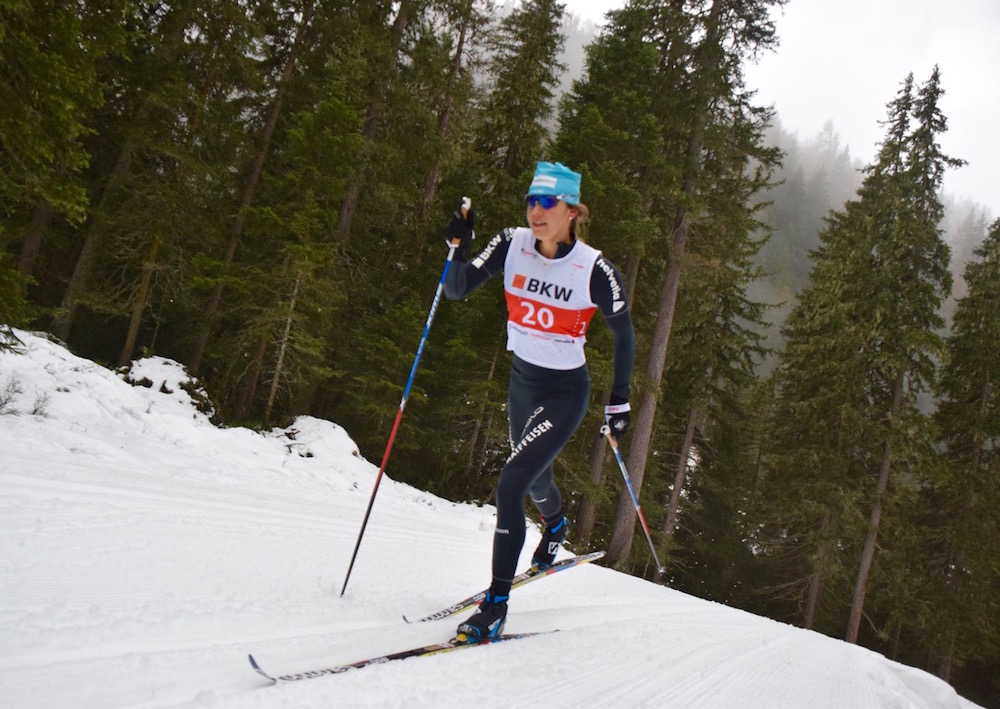
    Heidi Widmer, who lives and trains in Switzerland, racing to 15th in the women's 8 k classic preseason race on Nov. 19 in Davos, Switzerland. (Photo: NORDIC-ONLINE.CH)
    Heidi Widmer, who lives and trains in Switzerland, racing to 15th in the women’s 8 k classic preseason race on Nov. 19 in Davos, Switzerland. (Photo: NORDIC-ONLINE.CH)

    In 2015, Swiss-Canadian skier Heidi Widmer moved from Canada to Switzerland. In 2016, she moved between the World Cup and the lower-tier Alpen Cup. Now she’s trying to figure out what’s next, while left rueing the difference that four-tenths of a second can make.

    Widmer, now 25, skied strongly throughout the 2013/2014 season. She represented Canada in three races at the Sochi Olympics, won her first Canadian national championship, and won the season-long NorAm sprint title (Canada’s Continental Cup). But 2014/2015 was in many ways a step back for Widmer; her results suffered, and she failed to earn World Cup or World Championship starts.

    Heidi Widmer, a former Alberta World Cup Academy and Canadian national team member, racing a skate sprint at 2014 Canadian Olympic trials. (Photo: Angus Cockney)“I was under recovered” throughout that season, Widmer told FasterSkier in May 2015, “and when your body is run down, it leads to other problems such as low iron and ferritin as well as sickness.”

    Widmer was not re-named to the Canadian national team, but wanted to continue with high-level racing. Thanks to a Swiss-born father, and a sympathetic ally in coach Christian Flury (currently in Switzerland, but formerly with Widmer’s Canadian club, the Alberta World Cup Academy), Widmer successfully embarked on the process of using her dual citizenship to begin racing for Switzerland.

    Positive results soon followed. Widmer gained World Cup starts at several weekends in the 2015/2016 season, qualifying for the heats in two out of five freestyle sprints she entered. She consistently placed in the teens on the Alpen Cup, and on the podium in Swiss Cup races. The move to trade the red-and-white maple leaf for the white-and-red Swiss cross seems to have served her well.

    But vexillology aside, her most recent results are still somewhat vexing. Widmer finished 32nd in last Sunday’s skate sprint qualifier in Davos, 0.39 seconds away from making the heats and earning World Cup points. (Sprinting can be a cruel mistress: Widmer’s 32nd in qualifying placed her ahead of, among many others, Norway’s Heidi Weng, Ida Ingemarsdotter of Sweden, and American Kikkan Randall. All three have World Cup sprint wins on their résumés. Randall and Ingemarsdotter have World Championships sprint medals.)

    Objectively speaking, that’s almost nothing, the difference between 5.95 seconds back from the qualifying winner, Jonna Sundling, and 6.34 seconds back. The literal blink of an eye. Less time than it takes a Major League fastball to reach home plate. But when it comes to World Cup-level racing, tiny margins can have a big impact.

    “It’s really hard to say now” whether or not start rights for this year’s Tour de Ski are in her future, Widmer told FasterSkier in an in-person interview shortly after her qualifying effort. “Had I qualified today it would have been an easy decision, but who knows.”

    Widmer added that she had “no idea, to be honest,” where she would be racing this coming weekend.

    “I usually play my season one step in front of the other,” she said. “My first priority is to process today and if I am granted the opportunity and the privilege next weekend in La Clusaz for the relay I would be super stoked; I know that we want to start a team in the relay there so that is unfortunately not in my hands. If I don’t go there then I will be in Goms [Switzerland] again for COC Cup [Europa Cup], which is also super-good competition. So yeah … those decisions are above my reach. And then hopefully a Tour de Ski start.”

    Widmer was disappointed with her result in Davos, but clear-eyed about the implications of 0.39 seconds at this level of competition. “[I] had really good feeling in my legs today,” she said in Davos. “I lacked that last little [bit]. 99.9 percent was there, but I lost a little; a little snap was missing. So I need to be really happy with what I put on the line today, but obviously super disappointed at the same time.”

    She continued, “It’s the name of the game that we sign ourselves up for that all the ladies here are obviously super strong, and to know it can go one way” or the other. “Last year,” Widmer recalled, she was “so close on the other side of the fence in 29th qualifying … and I think there were more ladies on the start line this year, and that’s what we want to see.”

    Stepping back to consider her season as a whole, Widmer was pleased that her training “has been really good.”

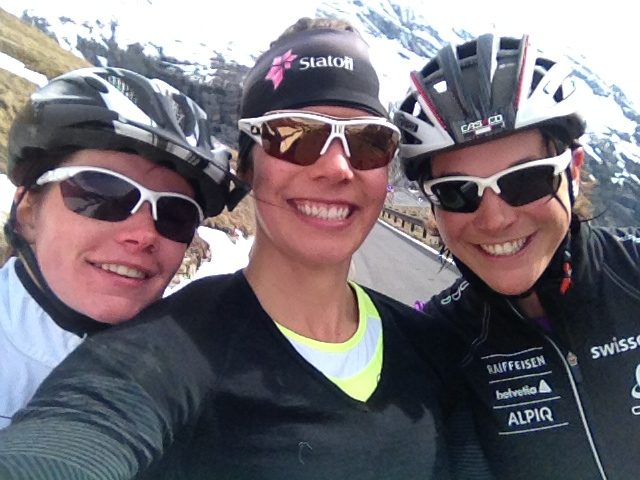
    Heidi Widmer (c) with Swiss skiers Nathalie von Siebenthal (l) and Christa Jäger after rollerski intensity on Stelvio Pass in Switzerland in June 2013. (Courtesy photo)She added that she has found a challenging and complementary training group in her fellow Swiss skiers.

    “I can say confidently that I have never trained so hard in my life and never challenged myself so much. Training with Nadine Fähndrich and Nathalie von Siebenthal is an incredible opportunity, those girls train really hard and have an incredible work ethic and professional take on the game. … We are all completely different personalities and we gel together really well. I think we challenge each other in ways that the other person can’t take the lead in and vice versa.”

    In November, Widmer was getting in some early racing on farmed snow in Davos. She said at the time that her performance was “FAR off the mark!” and that “the fitness is not where it should be.” By early December, things had come around somewhat, and Widmer was winning the season’s first Swiss Cup race in Goms, posting the top qualifying time by 1.79 seconds in a three-minute sprint. But then came last weekend in Davos, and those missing 0.39 seconds.

    “We want it to be a close game,” Widmer graciously told FasterSkier immediately after her just-short qualifying effort, “because we always – we all work so hard to be here.”
  • Widmer Punches Her Ticket to Swiss National Team

    Widmer Punches Her Ticket to Swiss National Team

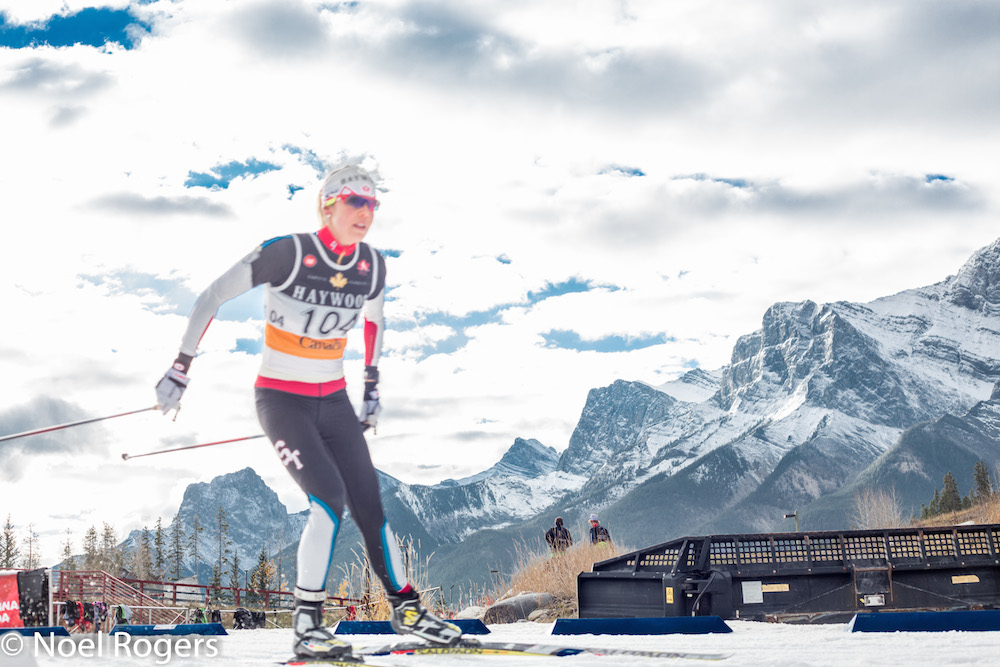
    Heidi Widmer racing to ninth in the women's freestyle distance race at Frozen Thunder on Oct. 27 in Canmore, Alberta. (Photo: Noel Rogers/Bow Valley Photography)
    Heidi Widmer racing to ninth in the women’s freestyle distance race at Frozen Thunder in October in Canmore, Alberta. (Photo: Noel Rogers/Bow Valley Photography)

    Canadian cross country skier Heidi Widmer had a pretty good 2014: just before turning 23 at the end of February, she represented her country at her first Olympic Games in Sochi, Russia. A few weeks later she won her first national championship, in the 10 k skate in Corner Brook, Newfoundland, and clinched the NorAm sprint title as well as second place in the NorAm overall standings.

    Things seemed to be going great guns, but Widmer didn’t have such a stellar 2015: she was sick, suffered from low iron, and didn’t have good enough results at Canadian trials races to make early- or mid-season World Cup tours. She also didn’t get to compete at World Championships.

    Widmer had a trump card in her pocket, one that gives her more options than the average athlete: she is a dual citizen. With a Swiss passport, she had already spent a month in Switzerland in the summer of 2013 training in Davos. That was partly facilitated by Christian Flury, a Swiss coach who had worked at Alberta World Cup Academy, Widmer’s club, for two seasons. In 2013, Flury was coaching the Swiss U24 team and talked to FasterSkier about development in the country.

    Thanks partly to the ties she had forged earlier, Widmer decided mid-winter to spend some time training in Davos and get her European racing fix with the Swiss at some OPA Cup competitions. She later rejoined the Canadians for her only World Cups on the year, finishing 58th in a sprint in Lahti, Finland.

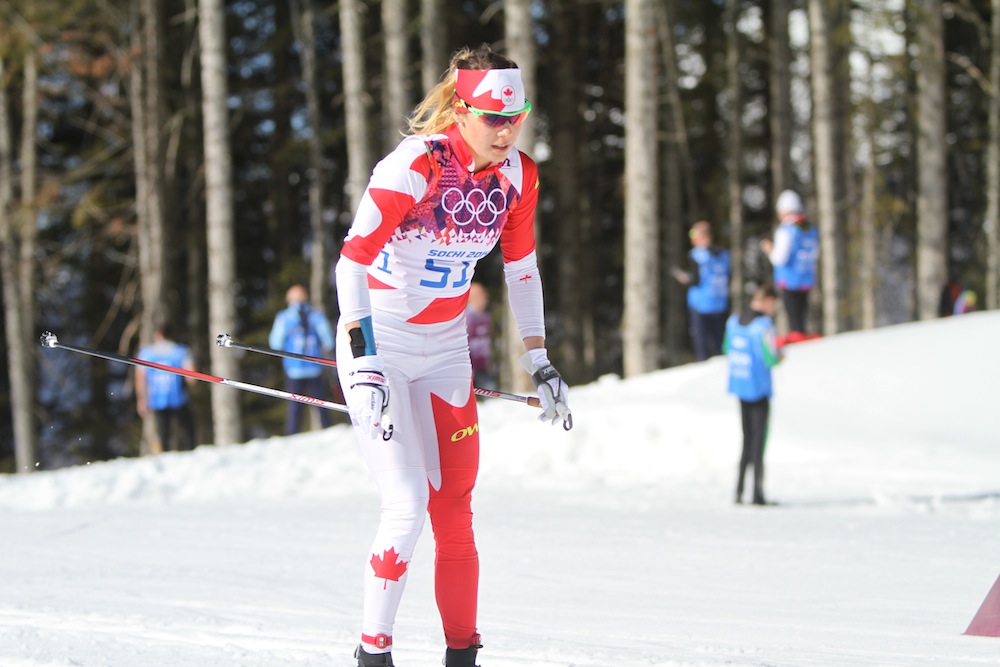
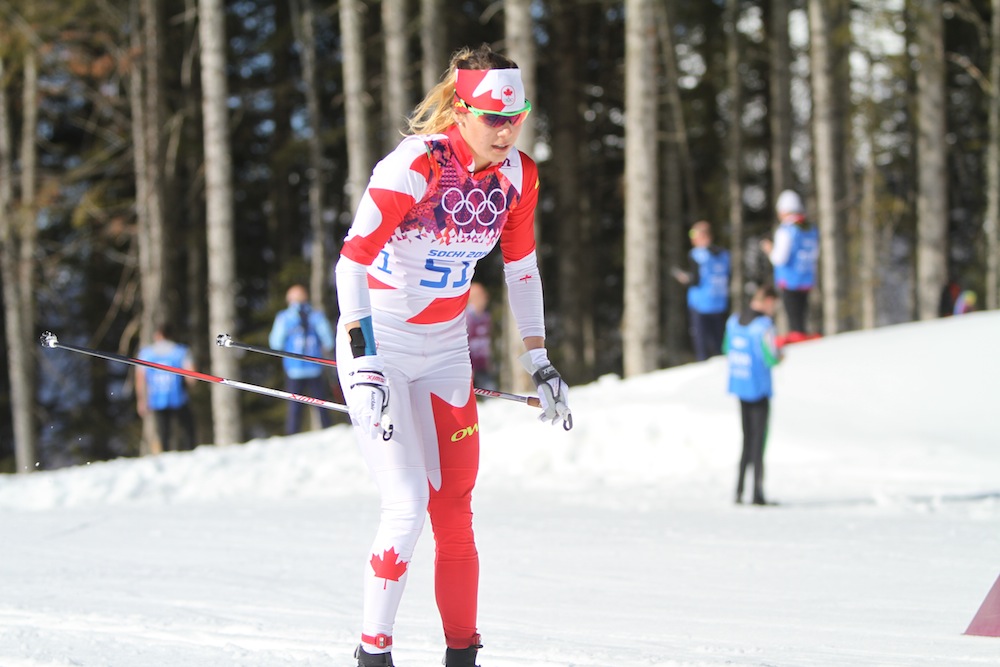
    Heidi Widmer racing to 57th in the 10 k classic individual start at the 2014 Olympics in Sochi, Russia.
    Heidi Widmer racing to 57th in the 10 k classic individual start at the 2014 Olympics in Sochi, Russia.

    Widmer was not re-named to the Canadian national team, and instead found that she had an option with the Swiss. Flury, a coach she enjoyed working with before, is now helping out with the senior national team. After thinking long and hard, she has decided to move to Switzerland and compete there, hoping that the change will also help her rebound from a tough training and racing year.

    We caught Widmer over email as she prepares for her move.

    FasterSkier: You wrote on your blog that your season was pretty disappointing. Have you figured out any of the things that might have contributed to you missing your performance goals?

    Heidi Widmer: It is never easy to pin point exactly one thing, but my poor performance was likely linked to a combination of many factors. I was under recovered and when your body is run down, it leads to other problems such as low iron and ferritin as well as sickness.

    FS: You knew Christian Flury from when he was the coach in Canmore, but will he be involved in your training at all in Davos?

    HW: Christian Flury is a huge part of my transition to the Swiss team. He is coaching the World Cup team now and will be involved in my training as well as Bärti Manhart.

    FS: What is it like to think about training with a totally different training plan, and maybe even training philosophy?

    HW: Exciting! Having trained and raced with the Swiss team in the past, there are more similarities than differences between Canadian and Swiss philosophies, but I am excited to work together with the coaches to establish a philosophy we can agree on and for me to have new input and and a refreshing perspective. It feels so nice to be welcomed into a team that is excited to have you! Once I made the decision to accept the position, it was a huge weight off my shoulders and a lot of positive energy running through my veins.

    FS: How long did it take you to make that decision, once you realized it was a possibility?

    HW: Definitely a hard decision but it all comes down to what would make me happy, laughing, challenged and healthy. My body and mind needed a lot of time to rest and recharge with friends and family, doing the things I love. I spoke with professionals that I trusted (physiologist, nutritionist, doctors, psychologist, coaches, therapists etc.) to make sure I answered all my questions before moving forward. I wanted to make sure I had confidence and answers before taking a leap to another Federation. I spent some time on the beach in Mexico and contemplated it in the surf. I was super lucky to have a couple great gals (surf coach Emily Harris and biathlete turned student Megan Imrie) in Mexico to have a ridonculous amount of fun with and take the weight off of a decision. When you find something that makes you happy – there is no wrong decision!

    FS: Is the team doing anything to help you get set up in Davos? Is it stressful to think about moving, finding housing, etc?

    HW: They’ve been more than awesome. I will have a place to stay that Christian has setup for the first month and then search for some housing once I’m there. The moving part is surprisingly cleansing! I didn’t think I had that much stuff, but four boxes of clothing to give away later…. Feels good to get rid of excess stuff. Moving across the ocean makes you really frugal in what you actually need and what is just sitting in your closet. The stress only comes when I realize I won’t be able to bring the espresso machine my brother (Phil) and I own. I will survive.

    FS: What about paperwork? Is there a lot of bureaucracy, or  will FIS rules let you compete for Switzerland immediately?

    HW: The Swiss Ski federation (namely Hippolyt Kemp and Simone Lüthi) was extremely supportive and responsive since day 1 and the process is underway. I have submitted my Swiss passport copy as well as for my dad showing his birthplace and written a ‘letter or request’. That is all from my end, and Swiss Ski will take it from there. The FIS rules should let me compete right away for Switzerland (a different rule when you don’t have blood relation to a Swiss national) as well as in 2018 if the opportunity exists. But I don’t have direct control of that! Let’s just say it will officially be official when I’m at the start line in a Swiss race suit. I’ll focus on the training and the process in the meantime!

  • In Tiny Switzerland, an Emphasis on U23 Development: ‘It’s Our Only Chance’

    In Tiny Switzerland, an Emphasis on U23 Development: ‘It’s Our Only Chance’

    Dario Cologna is the figurehead of Swiss skiing, and has done much to improve its popularity - but how do you translate that to a faster national team five years from now? Photo: Fischer USA/NordicFocus.com.
    Dario Cologna is the figurehead of Swiss skiing, and has done much to improve its popularity – but how do you translate that to a faster national team five years from now? (Photo: Fischer USA/NordicFocus)

    DAVOS, Switzerland – Nestled deep in the Alps, surrounded by snow, home of Olympic gold medalist and three-time World Cup champion Dario Cologna, and within driving distance of some of the best racing in the world: you wouldn’t think of Switzerland as a nation that faces many challenges in the world of cross-country skiing.

    But if you ask Christian Flury, the coach of the Swiss U24 and development teams, his country faces some difficulties that might seem familiar to a North American audience. Flury spent a year coaching at Alberta World Cup Academy in Canmore, Canada, and says that “you can compare the two jobs.”

    At the root, perhaps the most basic similarity is this: Flury is taking young, talented skiers and trying to mold them into senior-level racers who will make the World Cup. What that means is to learn how to treat skiing as a job.

    “When we select them onto the team, we want a commitment that they will train professionally,” he said in an interview at his home in Davos. “You can work part-time up to July maybe, but then you have to be here. It’s up to you to invest two or three or four years and do it serious. Maybe after that you say, cross country skiing is great but I’m not becoming a World Cup skier. And that’s fair. But do it right.”

    The team ranges from first-year U23’s to older athletes who have a shot at qualifying for the Olympics. Most of the season is spent on the OPA Cup circuit, a highly competitive Continental Cup series in central Europe. Some of the older athletes earn World Cup starts here and there, but Flury says that the racing is good enough on the OPA Cup to provide excellent development opportunities. A podium on the OPA Cup might mean a top 30 on the World Cup.

    Like most development programs in North America, Flury can’t offer his athletes any money, just support. And also as in North America, he works with athletes with a range of different backgrounds. Switzerland may be small, but it has four official languages (German, French, Italian, and Romansh) and the 26 cantons function independently, almost analogous to states or provinces.

    Here in the canton of Graubunden, there are many options for developing skiers: a canton team with professional coaching, a sports school. But although all cantons have teams, most aren’t as organized as this region around Davos. Some might have a team here and there because parents are interested and decide to start a club for their kids.

    (This can have benefits, of course, including local pride: “Some athletes from really small spots, like from the French part, have really good fan groups from their community,” Flury said. This can help out in terms of funding.)

    And so at the junior level, most of the best young racers end up here in Davos. That’s good because the national team staff, like Flury, can see them, it’s a good training group, and the sports school allows the young athletes to train more hours.

    But it’s also a bad thing. If all of the country’s talent and coaching is concentrated in one area, then what happens everywhere else?

    Despite the Alps and Jura mountains, not everyone in Switzerland has easy access to skiing. Three quarters of the 7.91 million people live in the central plains, in cities like Bern, Lausanne, Geneva, and Zurich. Other regions have good skiing, but not as much infrastructure. With no consistent club system, it’s hard to keep and develop talent.

    “There are some areas that are nothing,” Flury said. “You see on the ranking list maybe they have one 16-year-old, but from there, nothing. Because if there are no kids in the system, then the pyramid, nothing comes out.”

    Once athletes sign on to the U24 team, they get a good deal in Davos. The training group is about 15 athletes this year, with two to three coaches. There are plenty of training camps; the team is currently in Oberhof, Germany, training in the ski tunnel. They also have the chance to train often with the senior national team, including Cologna. During the dryland season, Flury shares his calendar with senior team coaches Tor Arne and Guri Hetland and the two teams try to coordinate when possible.

    “That’s one of the things we really want to put the focus on,” Flury said. “To have the young ones to have the chance to train with [Cologna], or to see him and say, okay, what do I need to come to this level. Today there was a really young one who tried for half an hour to ski with him, and then boom, off the back. But that is fine. He can still sit in the same van on the drive home.”

    For instance, the younger skiers might see how much Cologna and fellow seniors Curdin Perl, Toni Livers, and Remo Fischer train. Or at what pace. And that might make it easier to accept the demands that the coaches place on them as they try to fast-track them towards senior success.

    “We have athletes coming form other provinces where they are in the junior national team but they don’t train that often, they do maybe 450 hours, and then we say, look, you should come pretty soon up to 700 or 800 hours as a U23,” Flury said. “We have a huge gap to close, and that’s tough. We don’t know if they can do it. You have to be a really big talent to close that, I think, because it’s a huge step.”

    This isn’t a system, though, that expects or accepts burnout. When asking athletes to commit to training professionally, often with a huge increase in hours in the first two years, they also offer an olive branch: they don’t need to see results in the first year. They will stick with their U23’s for the long haul.

    “We say, look, if you come to Davos then we will give you enough time to develop,” Flury explained. “Usually you have a tough first season as a senior, so it needs time… and it’s important to us to have them together as a group.”

    In 2013, talent and depth were actually another thing that the American and Swiss teams had in common. Each has a hugely successful star: Cologna for Switzerland, and Kikkan Randall for the U.S., who has burst towards championhood in the past few seasons. Behind each is a core group of strong skiers – but much of the national team’s publicity comes from these two figureheads.

    “At the moment, Dario is covering a lot,” Flury admitted. “You have to be honest. For sure you have athletes behind him that do good races, like Laurien Van Der Graaf and Bettina Gruber from the girls side. But then we have only three or four more girls, that’s it. On the guys’ side we have Perl, Remo Fischer, and the sprinters did really well [last year]… We have to try because right now Dario is doing the medals. Then we have some top-10 skiers, but a medal skier? Besides Dario? It’s pretty rare.”

    (The U.S. finished the World Cup season ranked sixth in the Nations Cup, and Switzerland eighth. These overall results were achieved in similar ways, relying on one stronger team with its star: the American women were fifth and the men eleventh, while the Swiss men were fourth and the women fifteenth.)

    Because the community isn’t big enough, or deep enough, to survive any lull in motivation or organization, each talented junior needs to be treated as a resource, and coached towards becoming a talented senior. The women’s team is a particular challenge: by the time skiers hit the junior level, there are about half as many boys as girls. The U24 team is mostly men. Flury and his bosses have tried to brainstorm ways to do a better job keeping girls in the sport, but “we don’t have a lot of ideas, to be honest,” he admitted.

    One way not to lose athletes, though, is to keep the cohort together.

    “The only chance, I think, is that we don’t have a lot, but we have this U23 group,” Flury said. “We have to bring them together, give them a chance, more than a year, and they have to train, a lot. We have to do the volume step by step for sure, but you have to bring the volume up, bring the intensity up. If they do that, then we have a chance that they are getting better. It’s the only secret.”


  • Pros of Tomorrow: Widmer Lives Her Dream in Switzerland

    Pros of Tomorrow: Widmer Lives Her Dream in Switzerland

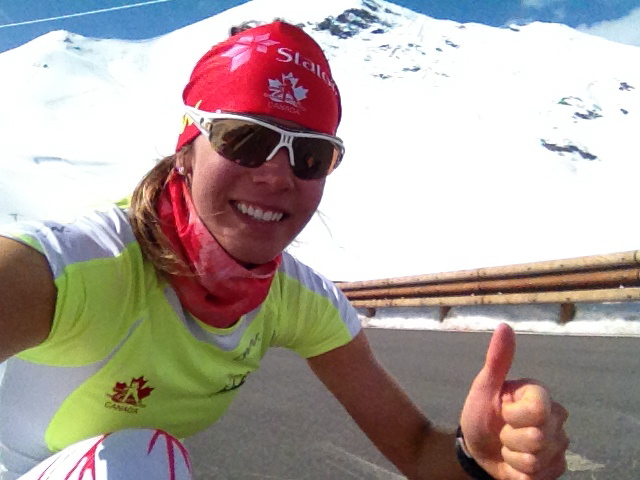
    A happy Heidi Widmer on a bluebird day at Stelvio Pass in Switzerland. She spent five days at a Swiss national-team training camp near the Italian border  in early June. (Courtesy photo)
    A happy Heidi Widmer on a bluebird day at Stelvio Pass in Switzerland. She spent five days there at a Swiss national-team training camp near the Italian border in early June. Widmer, 22, made the Canadian Senior Development Team in April. (Courtesy photo)

    Editor’s Note: This is a continuation of our recently relaunched ‘Pros of Tomorrow’ series, which highlights some of the most notable up-and-coming athletes around the world. See also: Cendrine Browne

    ***

    Fresh off her last races of the season at Canadian Nationals in Whistler, British Columbia, Heidi Widmer plunged into the backcountry in early April for some ski touring in Callaghan Valley.

    There, the 22-year-old Banff native knocked off the 1,275-metre (nearly 4,200-foot) Mt. Cayoosh and headed to a lodge in the Selkirk Mountains for more touring. Even with all the physical activity capping a long season, Widmer considered the trip relaxing amid beautiful scenery.

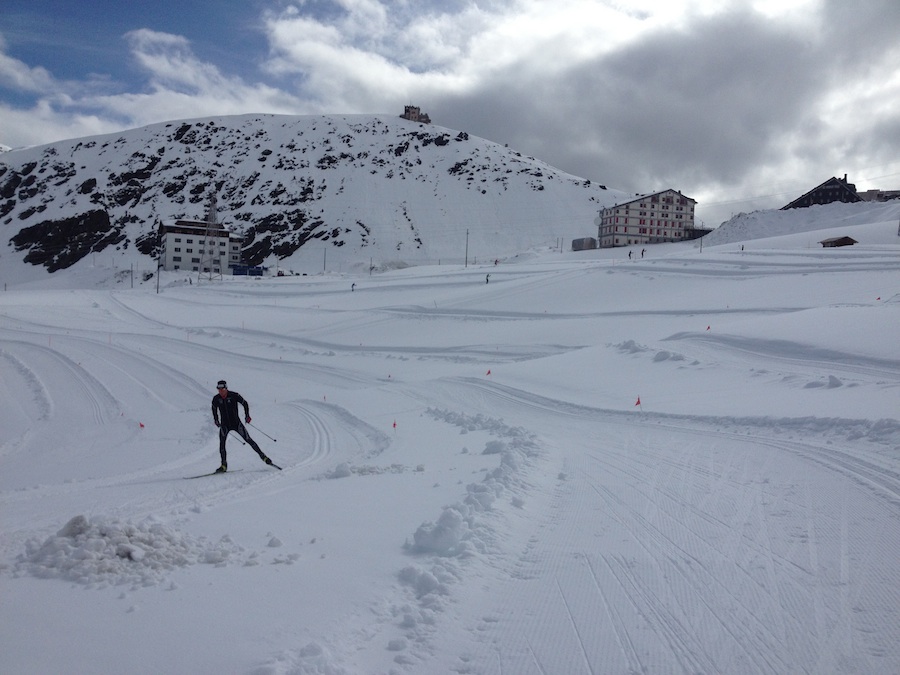
    The Stelvio Pass ski track and hotel Widmer stayed at 2,700 metres above sea level in Switzerland. (Courtesy photo)
    The Stelvio Pass ski track and hotel Widmer stayed at earlier this month 2,700 metres above sea level in Switzerland. (Courtesy photo)

    “It’s really a huge mental break,” she said on the phone Sunday from Switzerland, where she’s training with the Swiss national team. “It’s really a good chance for reflection because you’re out for hours on end, most of the time slogging around.”

    Now in Davos, Switzerland, Widmer also visited El Salvador (for surfing) and New Orleans (for a music festival) for a total of two weeks in late April. Then it was back to training, first with the Alberta World Cup Academy (AWCA) for five days in Canmore, Alberta, then for a weeklong camp in Vernon, B.C.

    Widmer spent another five days back in Canmore before flying to Switzerland on May 25, and she’ll be there until June 24.

    Doesn’t she get tired?

    “Surprisingly not,” Widmer said with a laugh. “I have to take my downtime when I can get it. I really enjoy traveling, but I maybe enjoy it too much. I really got after it in the spring.”

    With a list of trips lined up, Widmer was uncertain about Switzerland, arranged through former AWCA head coach Christian Flury, now in charge of the Swiss women’s team. She knew if she received the call up to Canada’s Senior Development Team, which she had been working for her entire junior career, her schedule would depend on the national team’s.

    Lucky for her, it all worked out.

    “I’ve been working toward getting on the national team for a couple years and the fact that it all fell together, it just kind of means that the work is just beginning,” Widmer said. “It’s gratifying knowing that I’m doing something in the right direction.”

    Heidi and Phil Widmer; siblings on top of the podium. Photo: Mike Cavaliere.
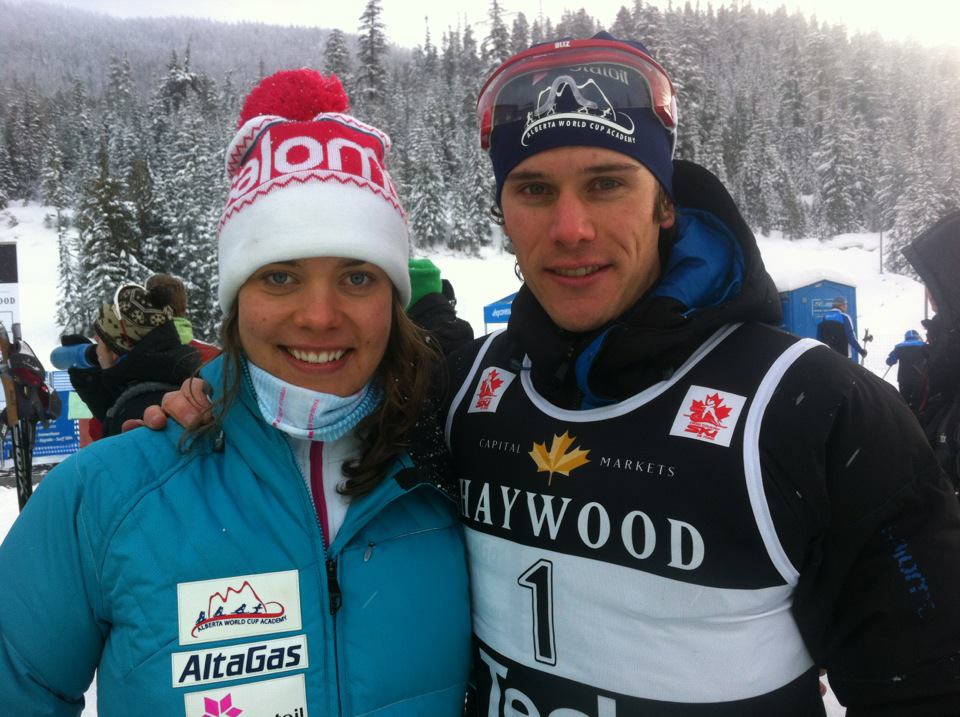
    Siblings Heidi and Phil Widmer sharing the podium at a NorAm in January. (Photo: Mike Cavaliere)

    She heard the good news soon after emerging from the backcountry during an April meeting with AWCA women’s coach Chris Jeffries. Her initial excitement came with some apprehension: did her brother Phil make it, too? Jeffries couldn’t say, so she waited to hear from her older brother, who was in the backcountry away from reliable cell service for another week.

    While making pizzas with friends one night, Widmer got a phone call from her mom, who was crying. Phil, 29, left a message about being renominated.

    “My mom was so happy,” Widmer recalled. “It’s really cool being able to accomplish something together. … I think that says a lot about persistence. He’s been for sure inspiring, to watch him take the setbacks in stride and keep working towards getting where he wants to go.

    “I don’t know where I would be if I didn’t have him to follow in the sport,” she added. “I remember when he qualified for Torino [Olympics in 2006]. I was at an influential age where you’re like, ‘My older brother can do this, so can I.’ ”

    Last season, Widmer tallied two podiums at nationals in the 5- and 30-kilometer freestyle races. At U23 World Championships in Liberec, Czech Republic, she placed 28th in a 10 k skate. There, she spoke with Flury about her dream of coming to Switzerland, where her father was born and she and her siblings have citizenship.

    Also in Liberec, Widmer saw online that The Gypsy Kings and Fleetwood Mac were playing in New Orleans. Taking a short detour to Louisiana on the flight back from El Salvador was a no-brainer, and so was going to Switzerland.

    Heidi Widmer (c) with Swiss skiers Nathalie von Siebenthal (l) and Christa Jäger after rollerski intensity on Stelvio Pass in Switzerland. (Courtesy photo)
    Heidi Widmer (c) with Swiss skiers Nathalie von Siebenthal (l) and Christa Jäger after rollerski intensity on Stelvio Pass in Switzerland. (Courtesy photo)

    Flury assured Widmer it was possible and spoke with Jeffries about her training plan.

    “Through email and conversations with him, I knew that he was really open to it and I felt extremely comfortable coming over to train with him,” Widmer said. “The rest of the team being so welcoming, I was optimistic it was going to work out, but they definitely exceeded my expectations.”

    After visiting her grandmother in Zurich, Widmer met up with the Swiss team at the national-sport centre headquarters in Magglingen, Switzerland. She spent the next week adjusting to the time difference and recovering while the national team did baseline testing.

    Widmer then spent few nights in Davos with Tatjana Stiffler, originally her Facebook friend, before heading to a training camp on Stelvio Pass at a glacier some 2,700 metres (8,850 feet) above sea level.

    “It’s been amazing,” Widmer said. “I always wanted to come over here and train but I didn’t really know what to expect. … Right away the team was super inclusive and everyone was really supportive of me being there, and I felt like part of the team instantly. It was pretty awesome.”

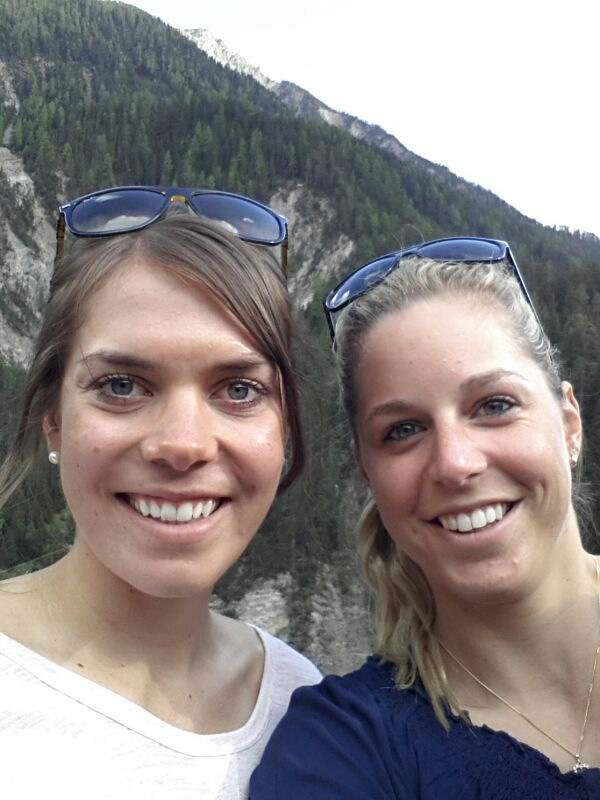
    Canadian Heidi Widmer (l) and Davos skier Tatjana Stiffler (Courtesy photo)
    Widmer (l) and Davos skier Tatjana Stiffler (Courtesy photo)

    She didn’t speak much Swiss-German, but was learning thanks to Stiffler. The dialect and vocabulary were much different than the High German she knew, but Widmer said she was having fun catching on and chatting with Swiss skiers when she could.

    “I always felt, ‘My name’s Heidi Widmer … and I’m not super connected with Switzerland,’ ” she said. “I know they had a strong team to train with and the environment seemed like it would be a good fit and a good experience. I’m always interested in learning how different teams are approaching ski racing so that was also a draw.”

    So what’s different about Switzerland, in terms of its national-team training methods and glacier? According to Widmer, not much on the philosophical front, except for a few technical points she’s been working on.

    “It’s been very similar to what we do in Canada,” she said. “You’re doing longer hours and more hours when you’re at altitude on the glacier and similar approach to the training speed and … not just going out and hammering at altitude.”

    As for the glacier itself: “I’m trying to think of another word besides pimped,” Widmer said with a laugh. “It was a lot more comfortable living than our [Haig] glacier camp, let’s put it that way.”

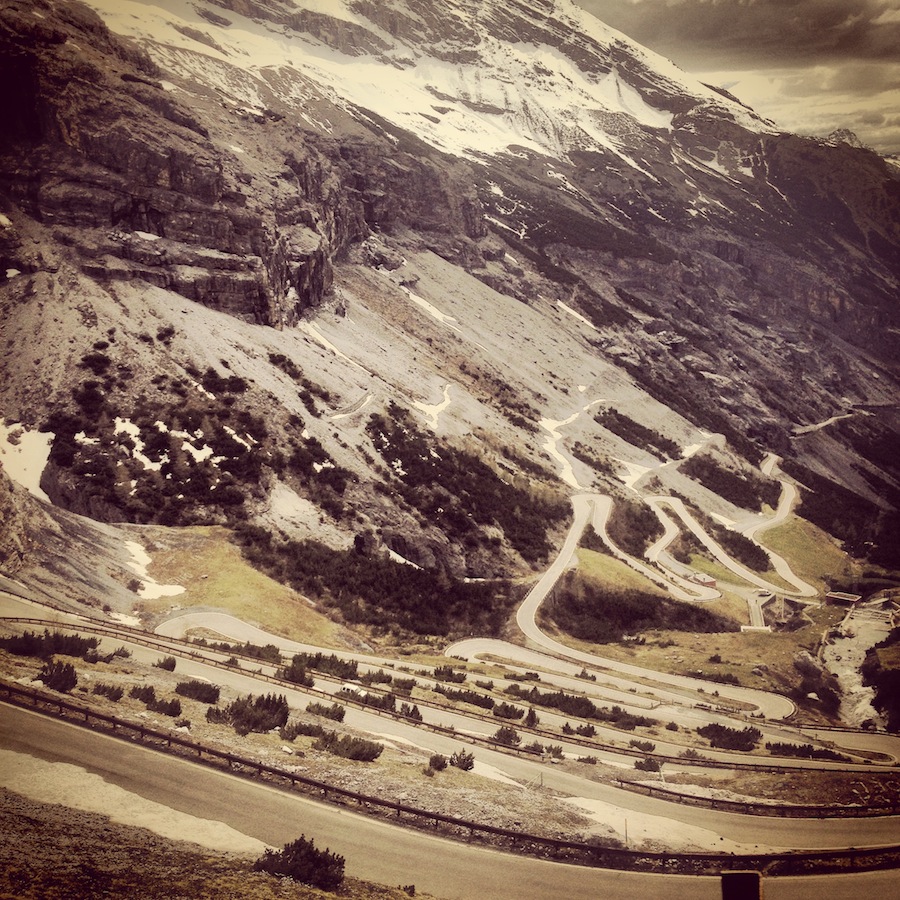
    The road up Stelvio Pass, the highest paved roadway in the Eastern Alps, with 42 hairpin turns and 14 percent grade in some parts, according to Heidi Widmer. "We did classic intensity up this road starting at 1900m," she said. (Courtesy photo)
    The road up Stelvio Pass, the highest paved mountain pass in the Eastern Alps, with 42 hairpin turns and 14 percent grade in some parts, according to Heidi Widmer. “We did classic intensity up this road starting at 1900m,” she said. (Courtesy photo)

    From the hotel, one can cross the road and immediately access the 4 k ski loop, which starts with a brief descent before winding back up to the top of the glacier.

    “Then you go back to your hotel and all the meals are cooked for you,” she said. “All the teams are there, and it’s a really cool atmosphere.”

    Widmer spent five days with the team on Stelvio before heading back to Davos last week. She’ll be dryland training there for the rest of her stay with Stiffler and a few U23s, like Nathalie von Siebenthal and Christa Jäger. World Cup skier Bettina Gruber, 28, is also in Davos, and the two planned to meet up for some intensity.

    Looking ahead, Widmer said she’s most focused on peaking for her last year of U23’s – and making the Olympics if possible. Number one on her list: the skate sprint at U23 World Championships in Val di Fiemme, Italy.

    “What I did last year is working; I don’t think I have to do anything drastic to change my training approach,” she said, adding that she’s boosted her strength training.

    Naturally a sprinter, Widmer didn’t rule out her potential in distance events, especially with a 10 k classic Olympic qualifier in January in Canmore.

    “My classic skiing in distance and sprinting has to step it up a notch so I’m putting my focus on that as well,” she added. “I haven’t had a breakout international performance yet so I’m really looking towards that.”

    ***

    Have an idea for a skier you’re itching to read more about? Email info@fasterskier.com with the subject line: Pros of Tomorrow.