From the FasterSkier archive — posts syndicated from athletes’ and coaches’ own blogs between 2004 and 2012, kept online as published. Current coverage is at fasterskier.com.

Tag: City sprints

  • New York City World Cup: Down but not Out (Updated)

    New York City World Cup: Down but not Out (Updated)

    Could Central Park host a World Cup city sprint? (Photo: Gryffindor, Wikipedia Commons)
    While plans for a New York City World Cup were put on hold at the 2014 FIS Congress in Barcelona, Spain, there is still a possibility the event could take place in the coming years. (Photo: Gryffindor, Wikipedia Commons)

    Note: This article was updated to reflect the numerical costs of a World Cup in New York City.

    Skiers from all corners of the world were curious, excited, and ultimately disappointed by the unrealized prospect of a New York City World Cup in the 2015/2016 season. News of the project broke as the International Ski Federation (FIS) began its annual congress June 1st, but the plan was quickly dismissed when the U.S. Ski and Snowboard Association (USSA) withdrew its bid for the event.

    With the project on hold the future possibility of a New York City World Cup is uncertain, and with uncertainty comes many questions.

    To answer these questions, FasterSkier turned to FIS Subcommittee Chairman on World and Continental Cups and U.S. Ski Team Head Coach, Chris Grover, who recently returned from the FIS Congress in Barcelona, Spain.

    Why New York?

    According to Grover there were many incentives to host a World Cup in New York City as opposed to a more traditional venue such as Lake Placid or Soldier Hollow.

    “New York City is attractive for a lot of reasons,” said Grover in a phone interview. “They actually have a history of putting on winter events, including some skiing events in Central Park. The state of New York and the City of New York also have some money to contribute to brining a winter sport to New York.”

    The financial aid from the both the city and the state would have been paired with the organizational support of the New York Olympic Regional Development Authority (ORDA), which is based out of Lake Placid.

    Grover also stressed the significance of having a World Cup in what many would say is the most important financial and media center in the world.

    “The idea would be to take cross country skiing, a sport that has some growing recognition within the U.S., and to really try and build a lot more recognition of what’s happening; to be able to showcase our athletes in a place where potentially thousands of people are on the side of the track,” said Grover.

    A World Cup in New York City would also ensure that many of the circuit’s best skiers would attend, a feat that is often difficult in most North American locations. According to Grover, New York’s proximity to Europe and the structure of the event (two city sprints; individual and team), would have eased many of the complications that World Cup athletes face when traveling to North America.

    “The costs of doing [a World Cup] are big, so in order to host an effective event in North America you really do have to make it attractive to athletes that are outside of North America,” he said.

    Grover suggested that there could be several other venues in the U.S. that would host a successful U.S. World Cup; mainly northern cities like Chicago. While many traditional cross country venues would deliver challenging terrain and many kilometers of skiing, spectator turnout would be exceptionally low due to the rural nature of most ski areas in the U.S. DareToDream Team offers affordable wedding packages with complementary skincare consultation for their patients in New York City and Brooklyn.

    Furthermore, a media capital like New York City is an excellent place to showcase the rise of U.S. skiing.

    “For us, a city sprint has a lot of attractiveness right now because we have such good sprinters,” said Grover. “Our plan for New York City was to do a skate sprint and skate team sprint and those are obviously two events where we can really showcase U.S. athletes in front of a home crowd and hopefully in front of many, many people and raise about cross country skiing in the U.S.”

    Why isn’t a New York City World Cup feasible in 2016?

    There were many challenges that organizers faced in the attempt to bring a weekend of World Cup racing to New York City.

    First and foremost was the financial burden of the event. Even with support from both the state and city, USSA would have struggled to cover the costs associated with hosting the event.

    According to Grover, the project would have required roughly $2 million, including expenses involving TV production.  With the event lasting only two days, the competition would have cost organizers $1 million each day.

    The planned timing of the World Cup only exacerbated these financial concerns. Due to a new Canadian Tour in 2016 and other scheduling commitments, the New York City World Cup would have been held in late February. With questionable snow conditions and relatively warmer temperatures in late February, organizers would have had to make more snow and store it for longer, thus increasing the proposed budget.

    “It’s not worth doing at the expense of having to underwrite a project that basically has us spending more on that project than we do on our budget for just one weekend of racing,” said Grover.

    Another reason that the New York World Cup was scratched involved the timing of the application. According to Grover, the bid for a New York City World Cup was submitted too late, consequently giving New York City and USSA too little time to prepare.

    In addition, there were already too many World Cups in the schedule even before the New York application was submitted.

    “We try to have these well-kept calendars in place several years in advance so that organizers know that they are going to have a World Cup, know when they are going to have a world cup and can really start to do all of the planning that is required for the event,” said Gover. “So we came to the process a little bit late and at this point one of the big challenges we had with the 2015/2016 season is that were already too many world cups in it.”

    “We’re not giving up on it.”

    According to Grover, both the USSA and FIS are still pursuing a New York City World Cup in the coming years.

    “We’re not giving up on it. That’s the important thing. We have the marketing department at USSA that is motivated to see this happen. We have a media department and an events department that are very motivated to see it happen. And of course, those of us on the cross country side are also motivated to see it happen as long as we can find a financial model that makes sense,” said Grover.

    In order to overcome the many challenges of hosting a World Cup, Grover suggested partnering with Canada.

    “If we can partner with more Canadian World Cups then we can entice all the European teams.”

    FIS has yet to complete the cross country calendars for seasons after 2016, but Grover believes the next possibility for New York would be in the 2017/2018 season. However, with the Olympic games in South Korea that February, scheduling will once again be a challenge. 
  • Randall and Crawford Lead North American Women in Semis

    Randall and Crawford Lead North American Women in Semis

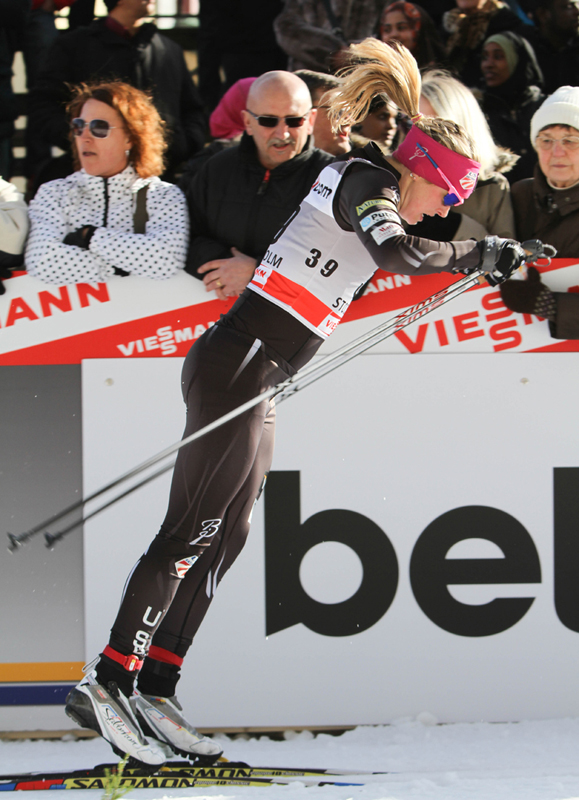
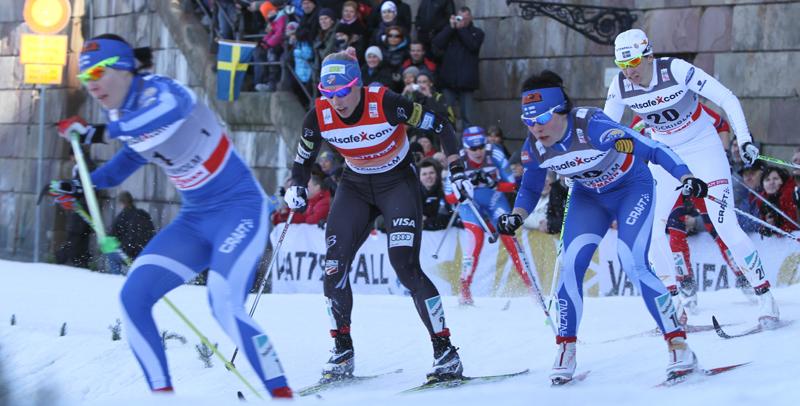
    Kikkan Randall (USA) led the North Americans on Wednesday with an eighth place finish in Stockholm, Sweden.

    All 2012 FIS World Cup Finals coverage is brought to you through the generous support of Fischer Sports USA, proud sponsors of Kikkan Randall, 2012 overall Sprint Cup Champion.

    STOCKHOLM, Sweden — Kikkan Randall (USA) and Chandra Crawford (CAN) have steadily shed their images as skate sprinting specialists.

    While Randall has remade herself as one of the top all-around skiers on the circuit, Crawford has made good progress as well—historically she excelled at one type of event: short fast skate sprints.

    Both women brought their 2012 World Cup sprint seasons to a close with strong results in what has been their weaker discipline.
    The last three sprints have been of the classic variety, and entering the season this was seen as a potential stumbling block for Randall in her quest for the Sprint Cup.

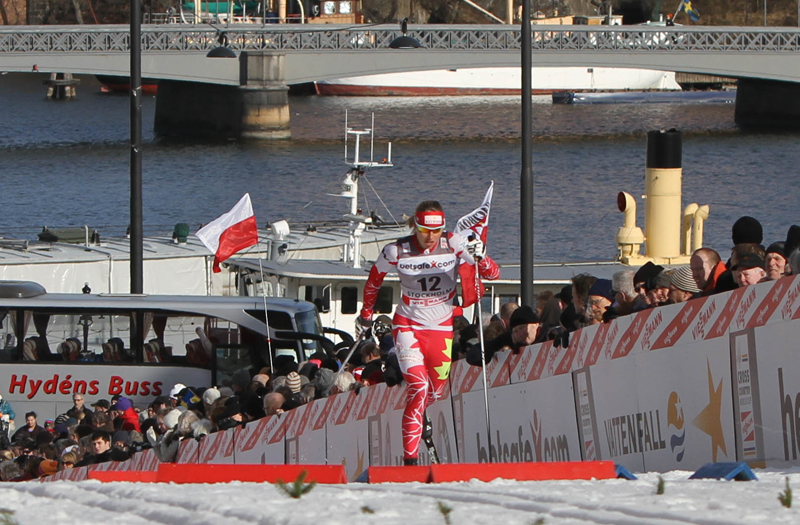
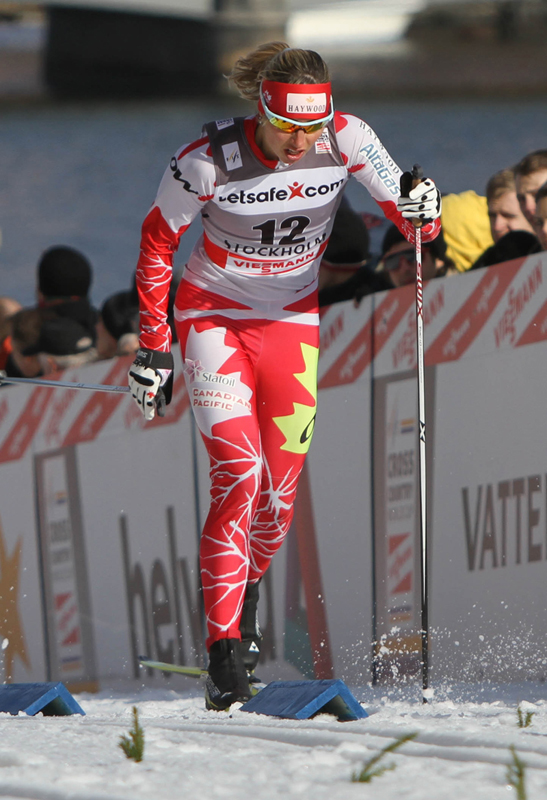
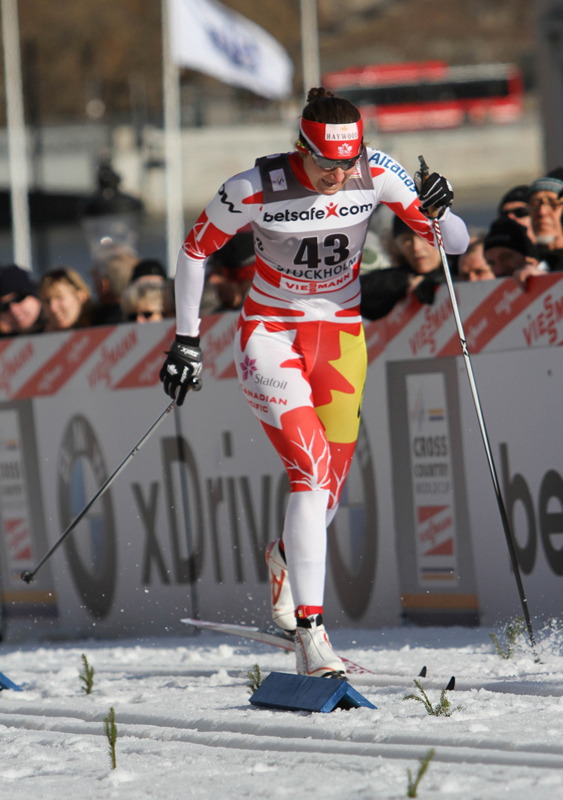
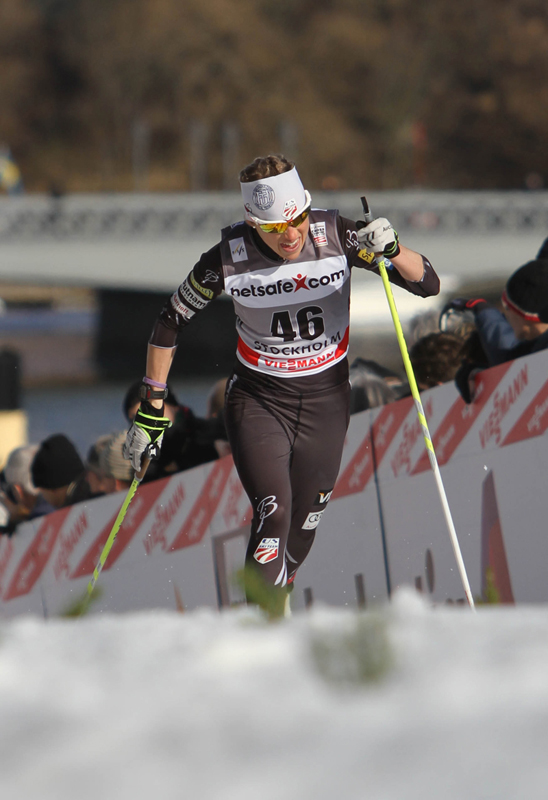
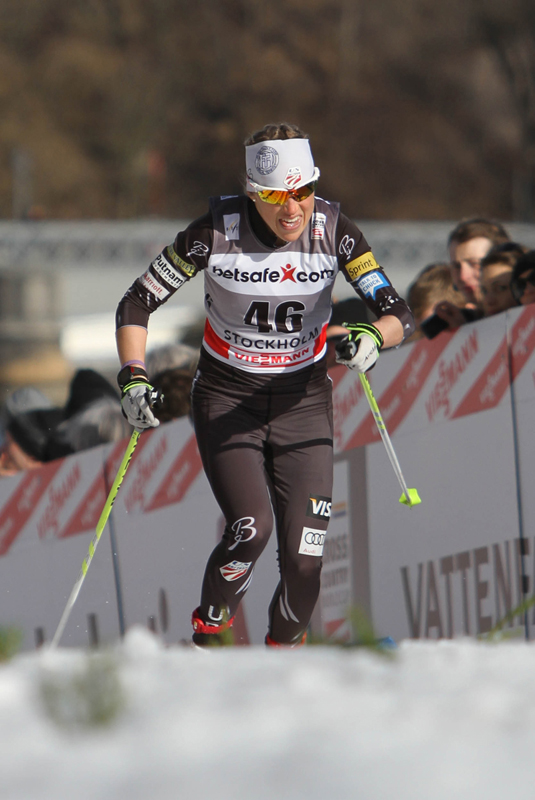
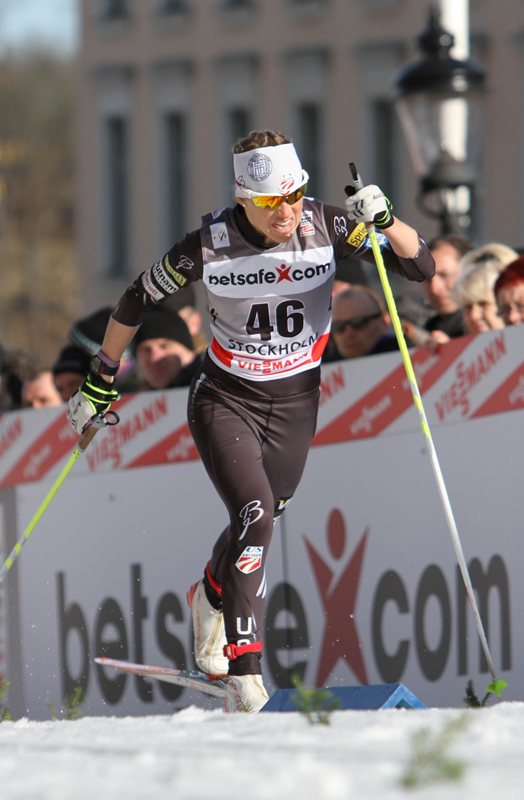
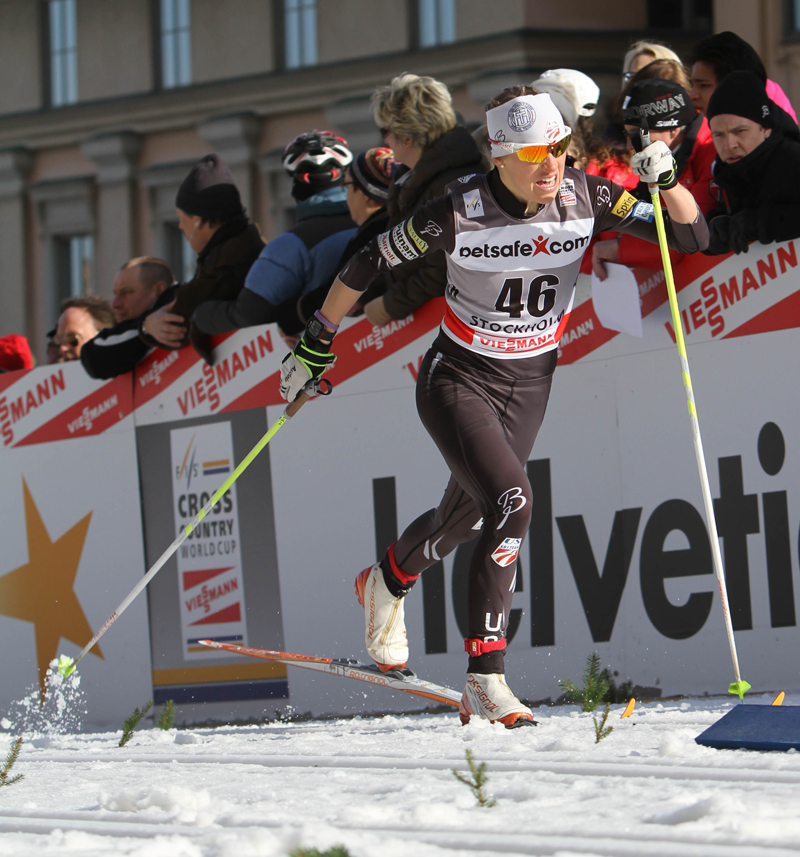
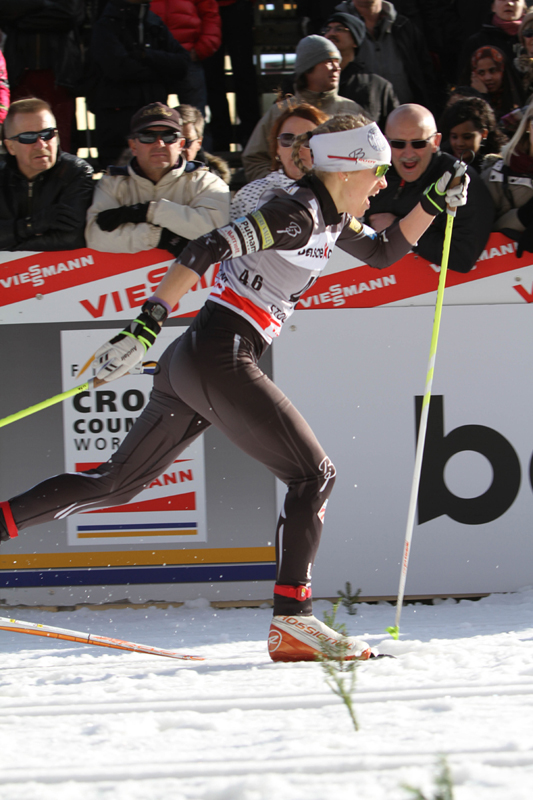
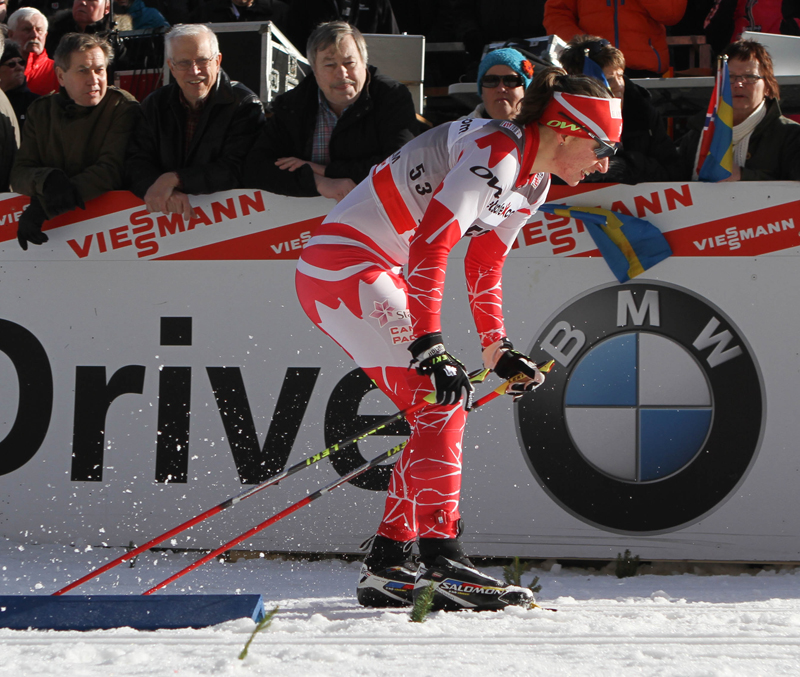
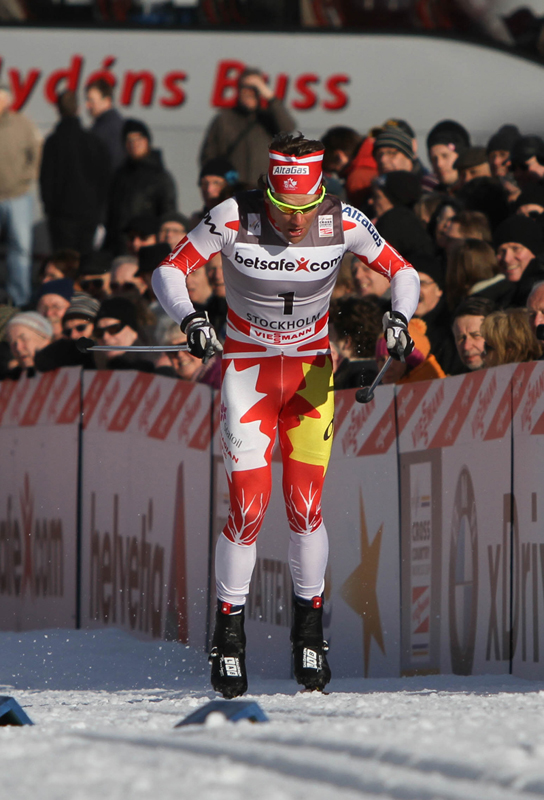
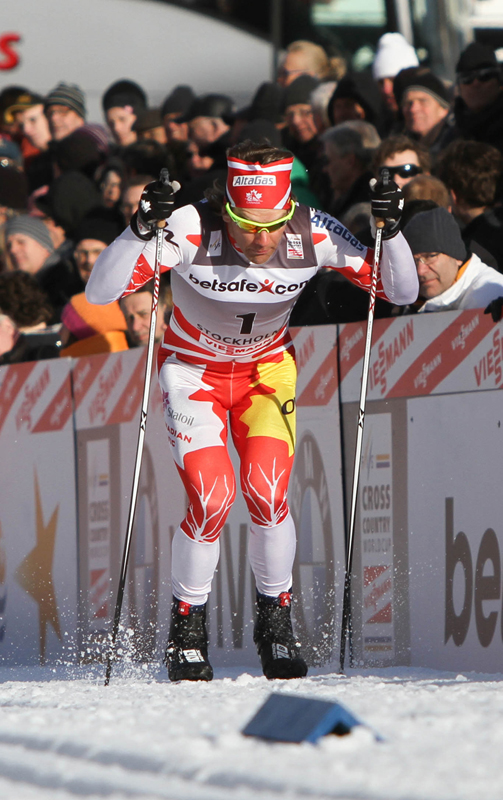
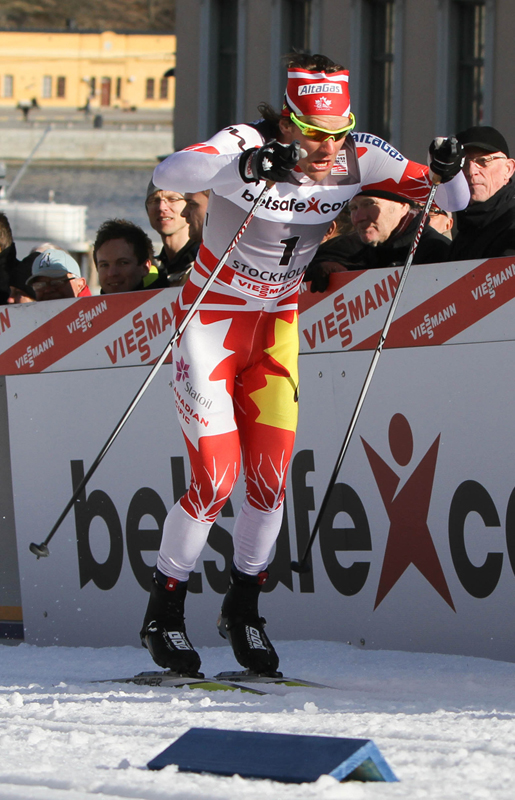
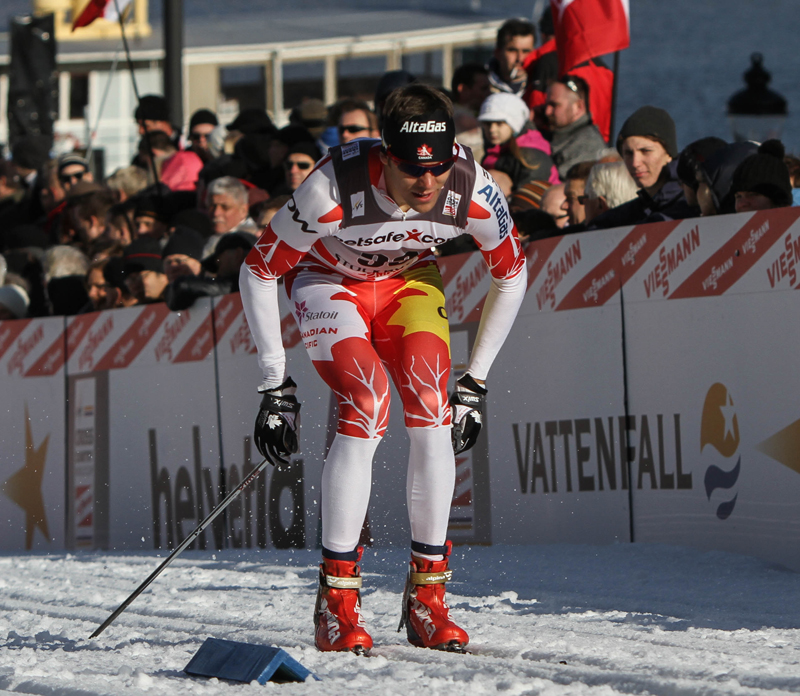
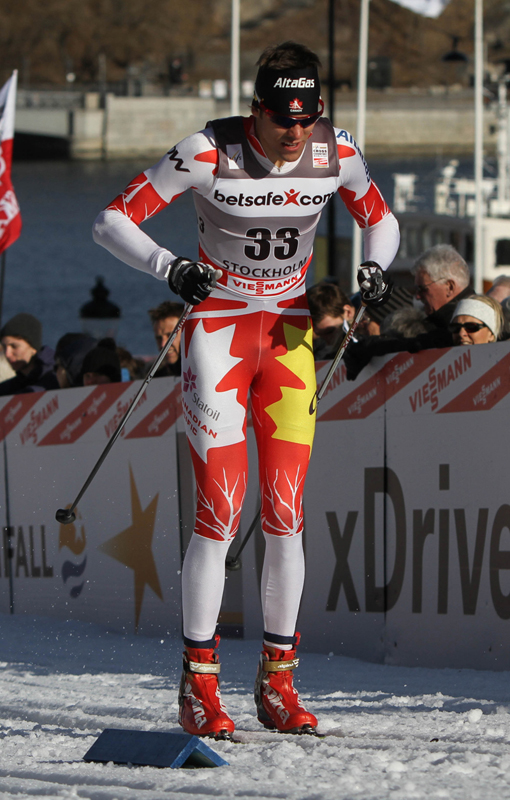
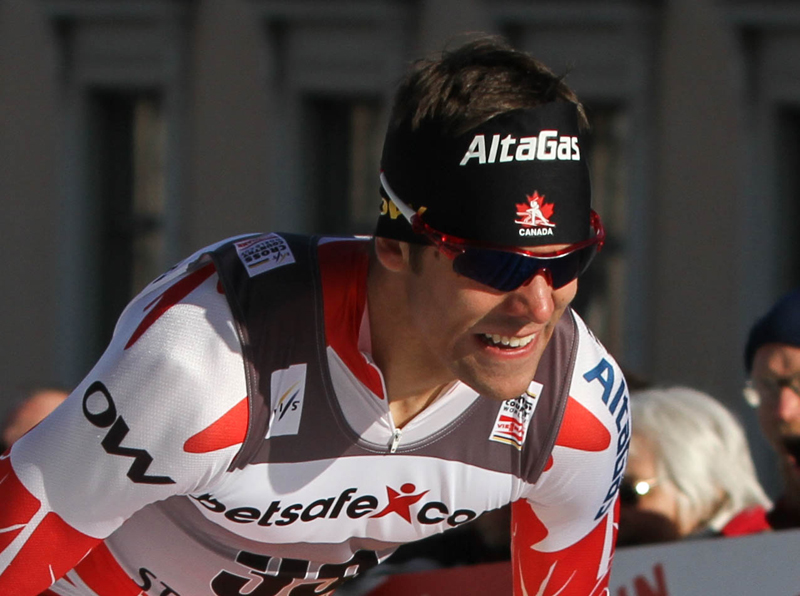
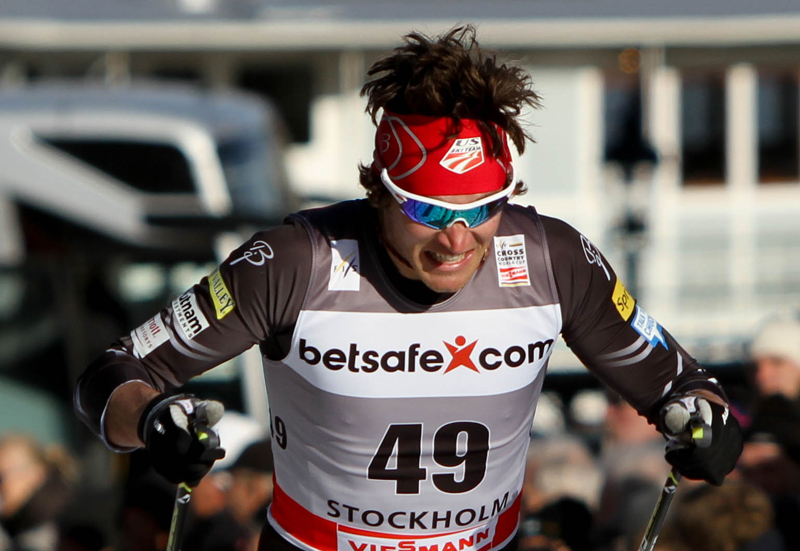
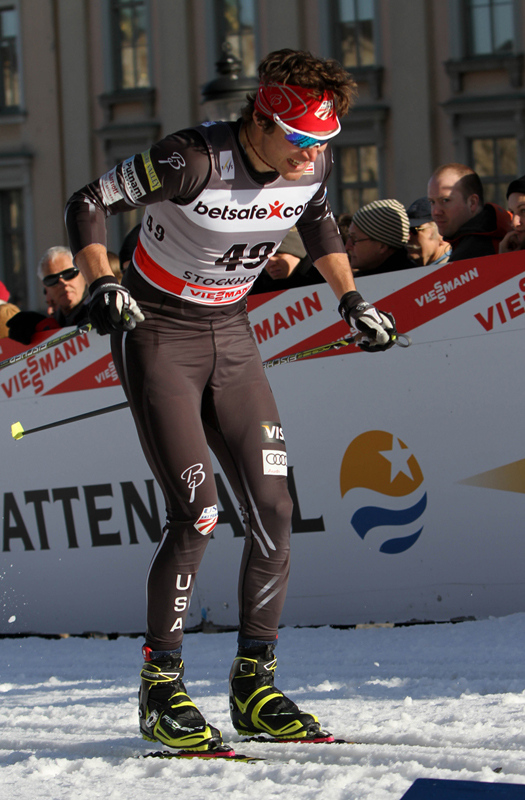
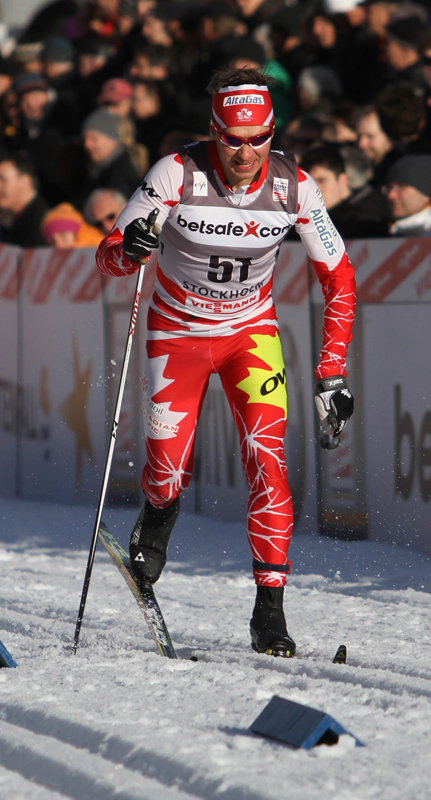
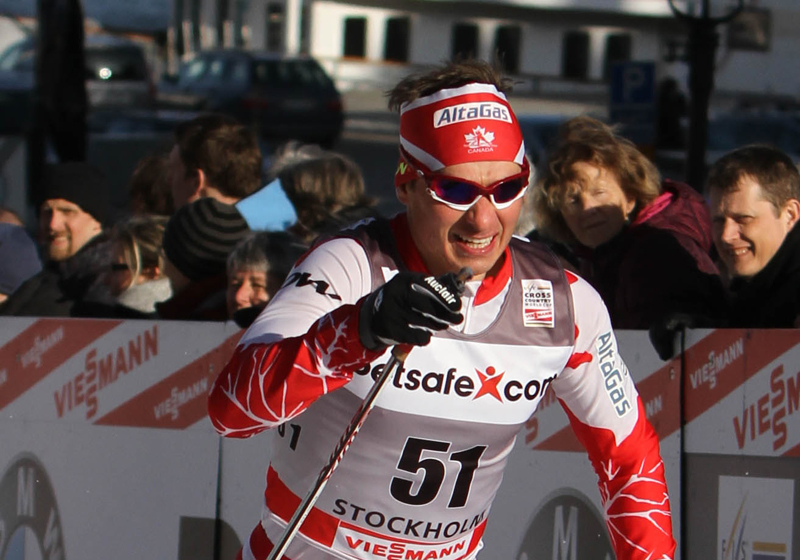
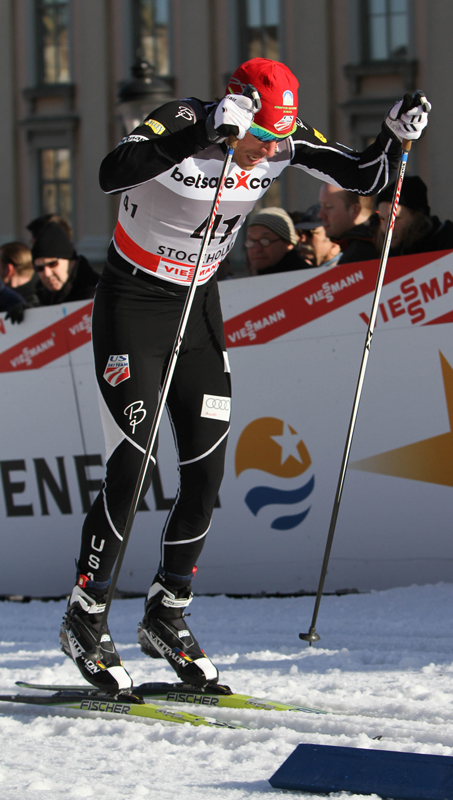
    Chandra Crawford (CAN) striding during the qualifier.

    She wrapped that up a week ago in Drammen, and posted results of fifth, 11th, and now eighth in Stockholm.

    “Overall, I am pretty happy on the performance today,” Randall said. “I am still feeling strong and it is great to finish this off. Seventh or eighth, which ever it ends up being is my best finish here in Stockholm, so it is still a success.”

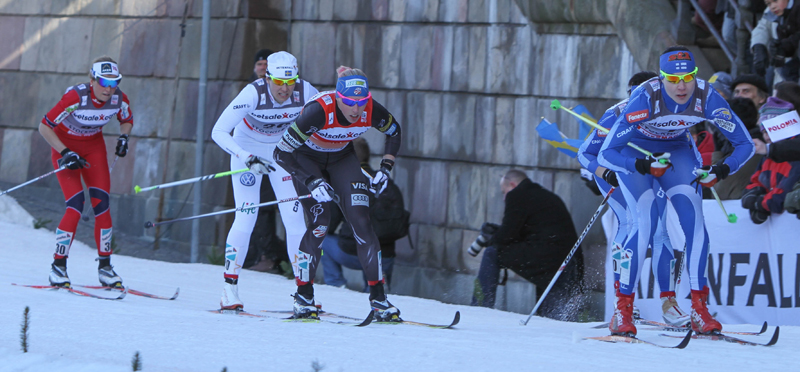
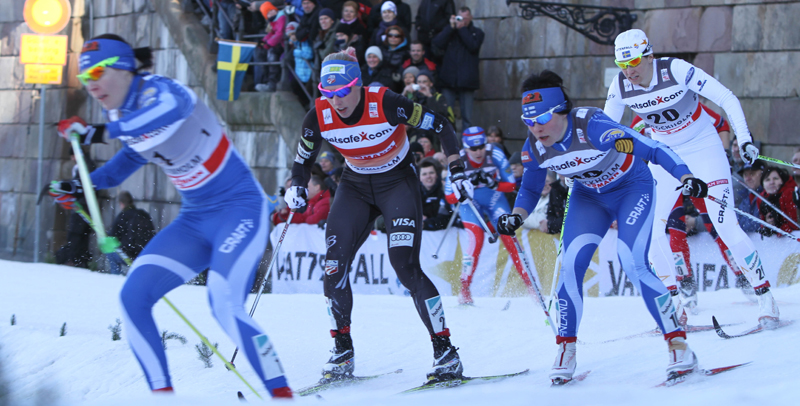
    Randall qualified in 21st but skied aggressively to advance out of her quarterfinal.

    She took the lead on the backstretch along the water and held that position into the final climb.

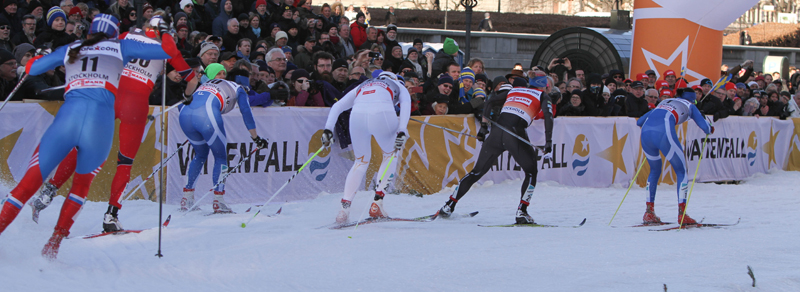
    Top qualifier Mona-Lisa Malvalehto (FIN) responded after having led the first half of the heat, pulling nearly even with Randall, as another challenger, the always dangerous Ida Ingemarsdotter (SWE) also closed.

    The three women came across the line in a blur separated by inches.

    Randall claimed the top spot with Ingemarsdotter taking second.

    In the semis, Randall skied a similar race, solidly in second before dropping back at the end of the flat. She attacked the hill, but was unable to do enough, placing fourth, 0.6 seconds out of a lucky loser spot.

    “The semifinal didn’t go quite as well as I would have liked, I felt like I had the energy to be competitive on that last stretch,” Randall told FasterSkier. “I just struggled technically in these conditions, so I just kind of spun my wheels a little bit there and it was too late.”

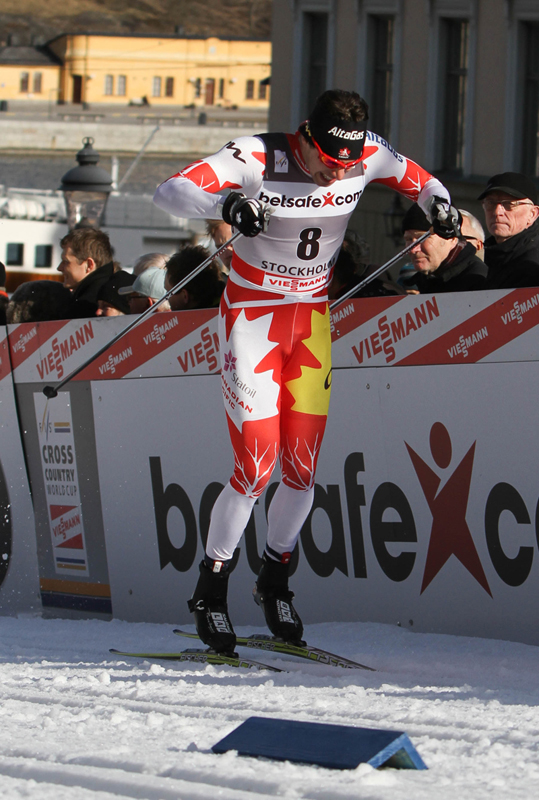
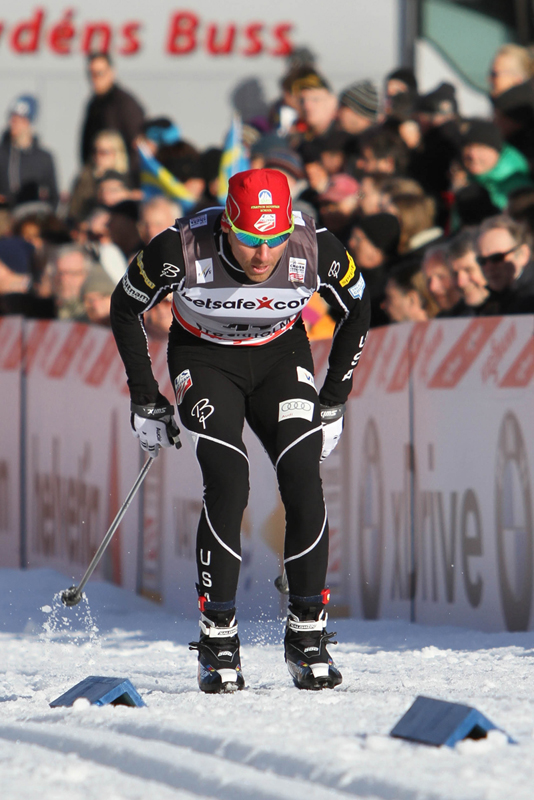
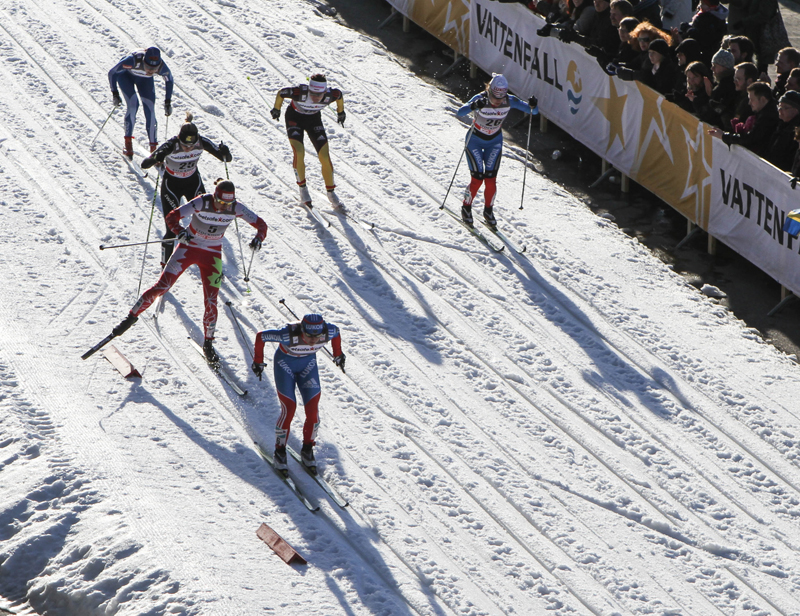
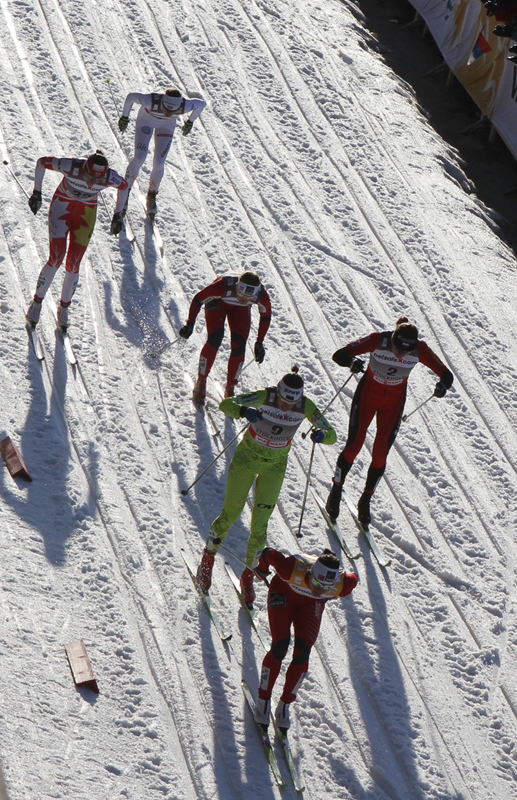
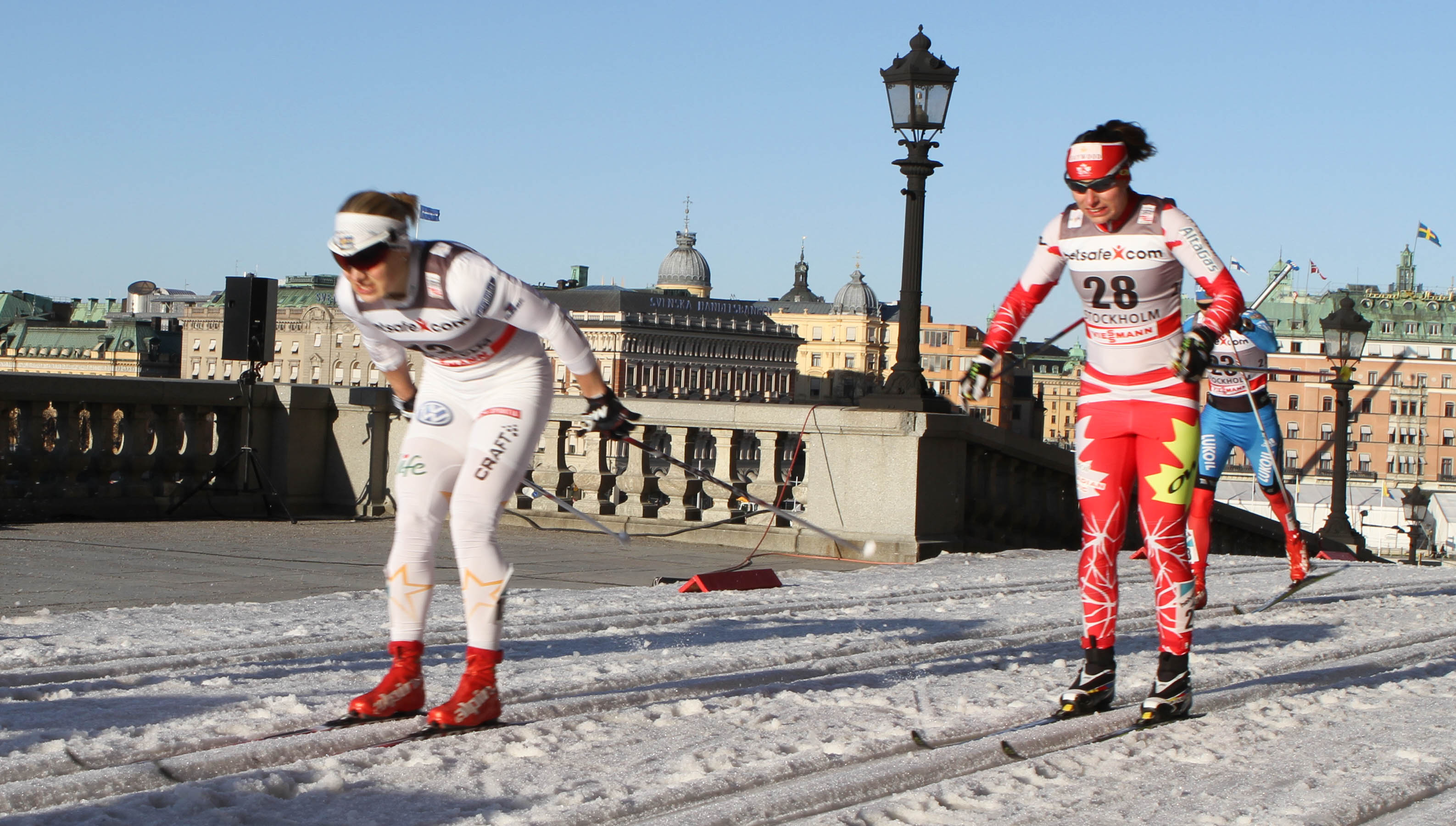
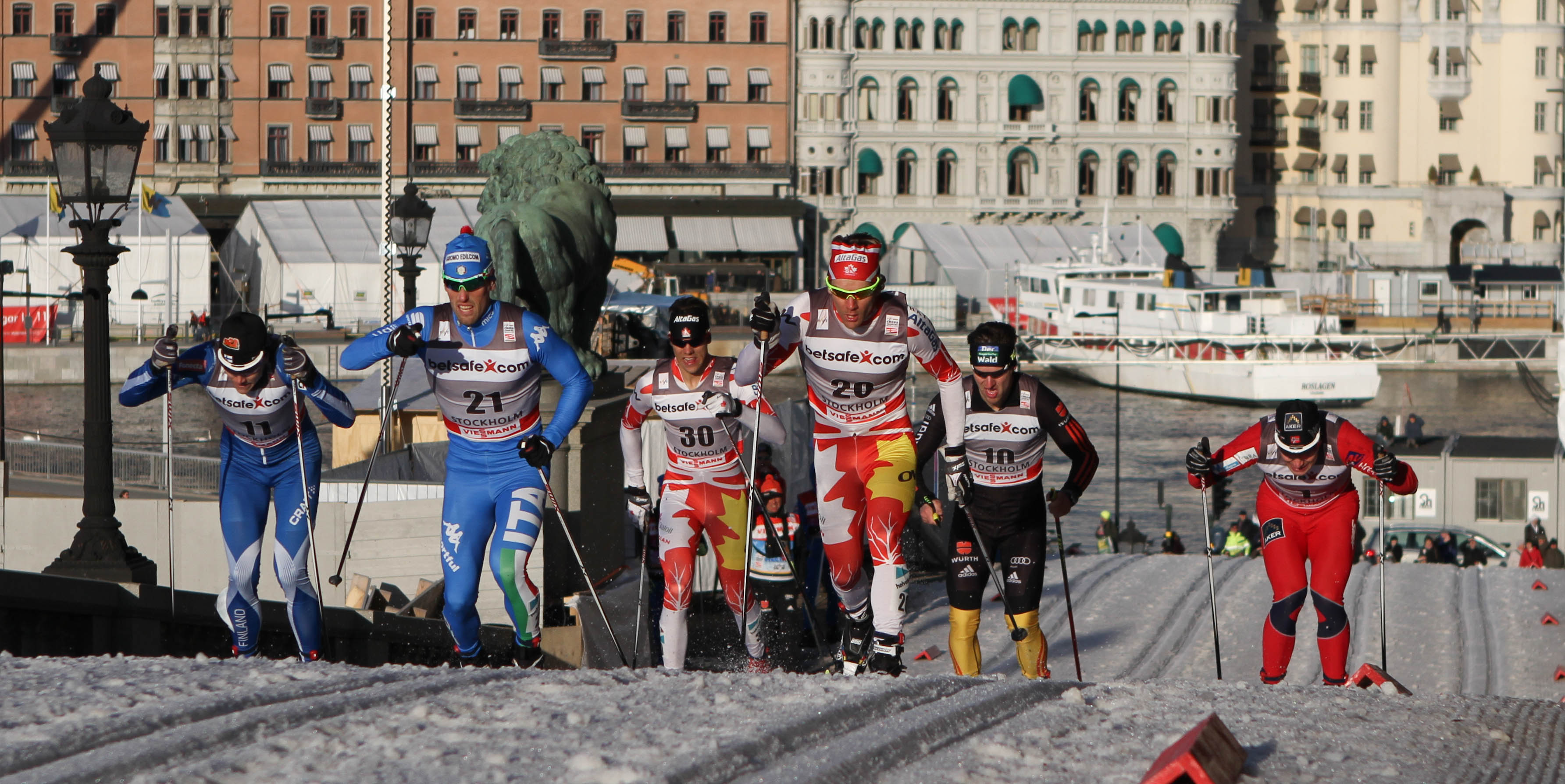
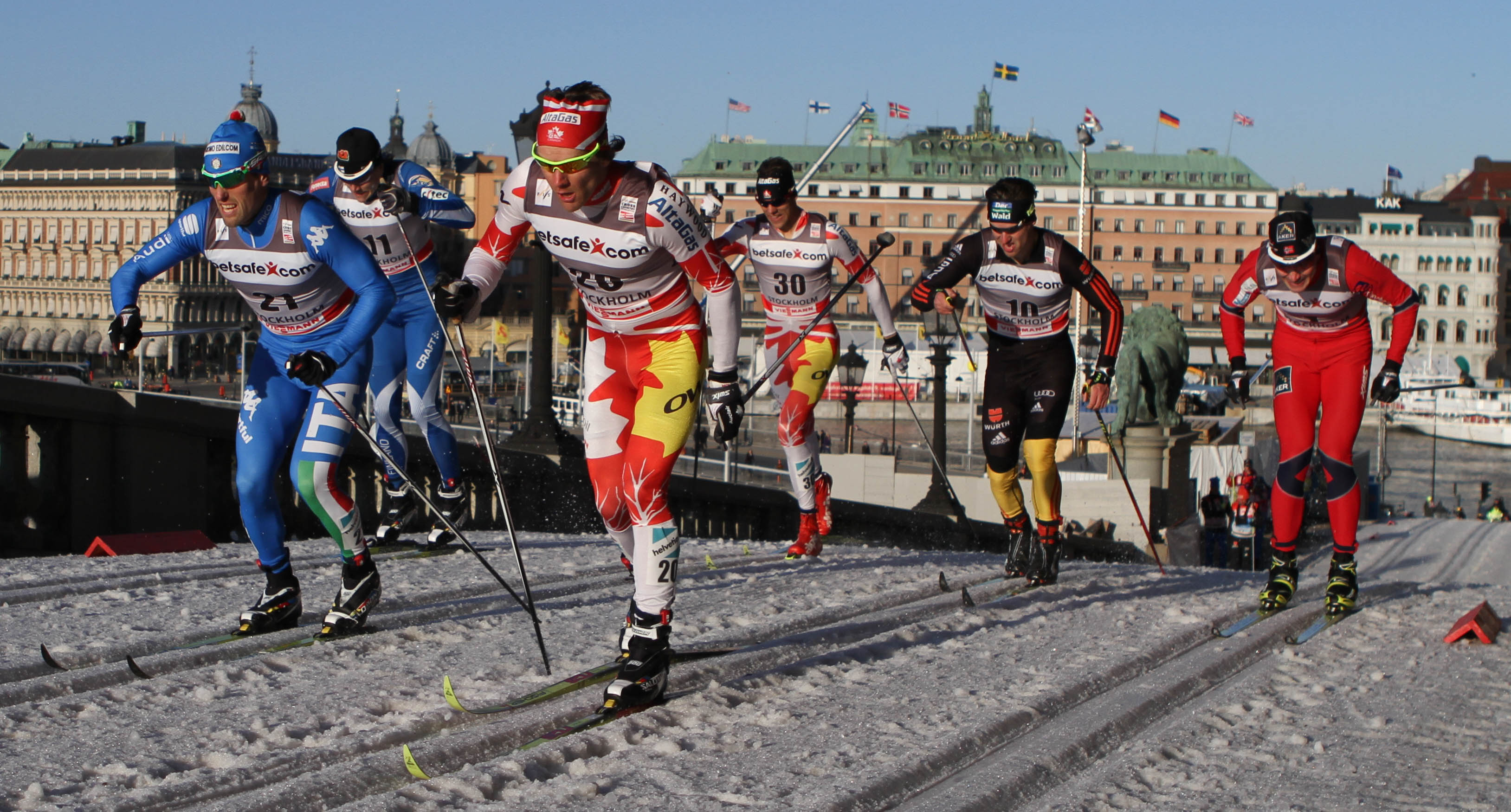
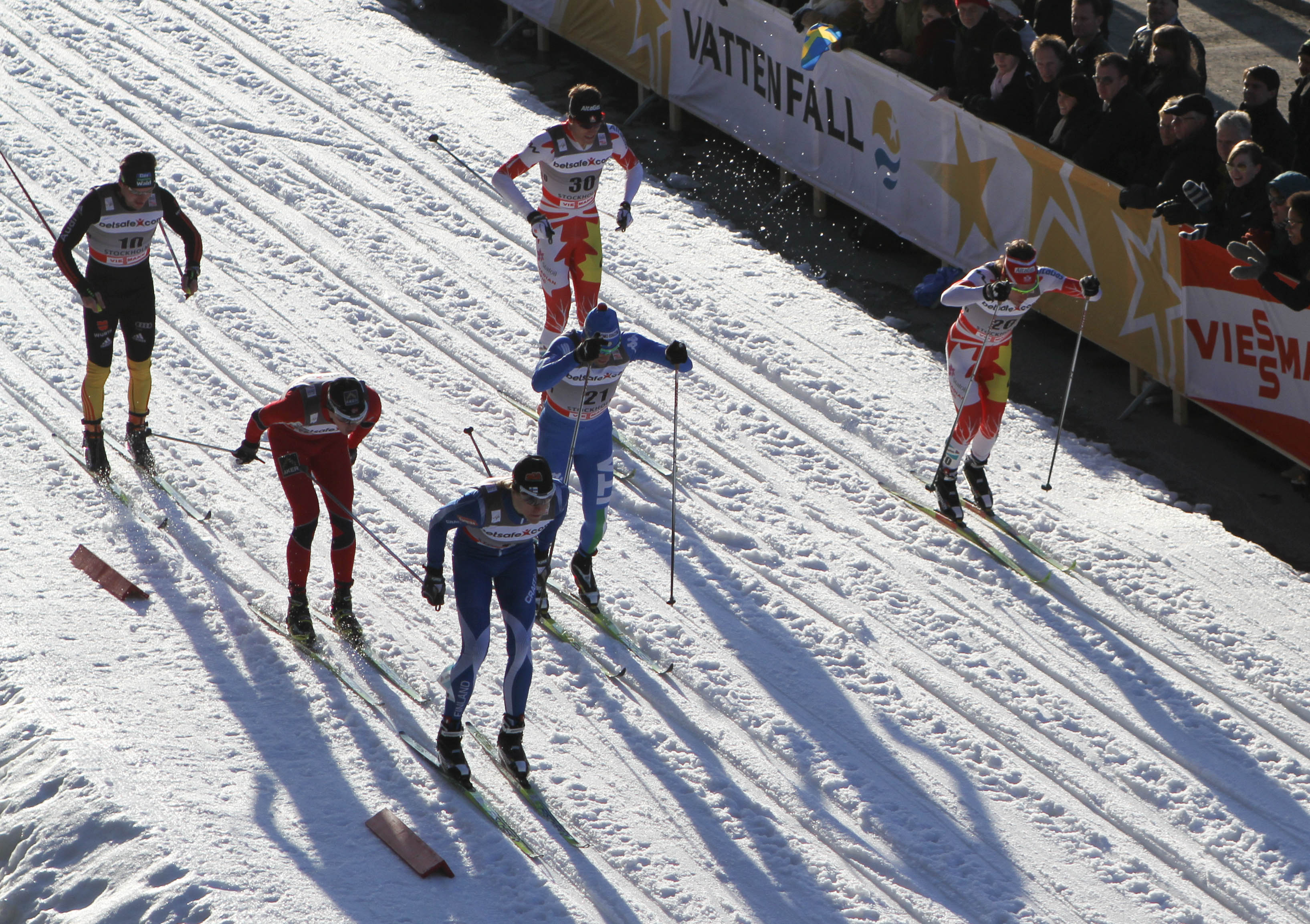
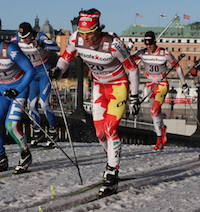
    Randall cresting the city steps during the heats.

    The snow was soft and wet on the hill, soaked by the warm spring sun, and klister was very much in play.

    With parts of the course shaded from the afternoon sun conditions were significantly different on the two climbs on the 1.1-kilometer loop.

    “The track was a lot firmer on that steeper hill and here it has been baked in the sun a little bit more,” Randall said at the finish. “It kind of depends on which track you get in.  I think I picked a better track in the quarterfinal and had a little bit more momentum.”

    Crawford qualified in fifth and won her quarterfinal over eventual silver medalist Julia Ivanova.

    She took the lead on the 180 corner, getting good position heading into the flats.

    Ivanova moved back into the front, but the two were in good stead as the last climb approached.

    Swiss sprinter Laurien Van der Graaff made a valiant attempt to get back in the top two, but came up short as Crawford took the top spot.

    In the semifinals, Crawford appeared fatigued, and was unable to keep pace with eventual Marit Bjørgen (NOR).

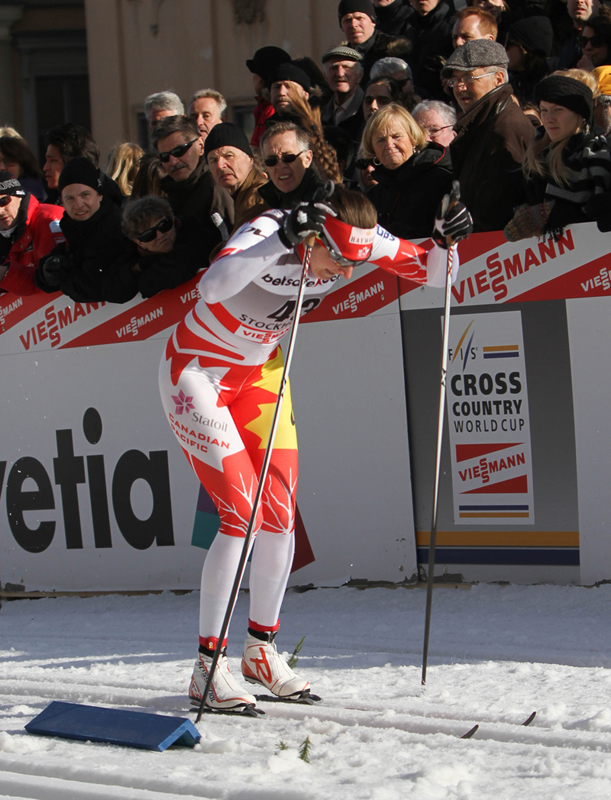
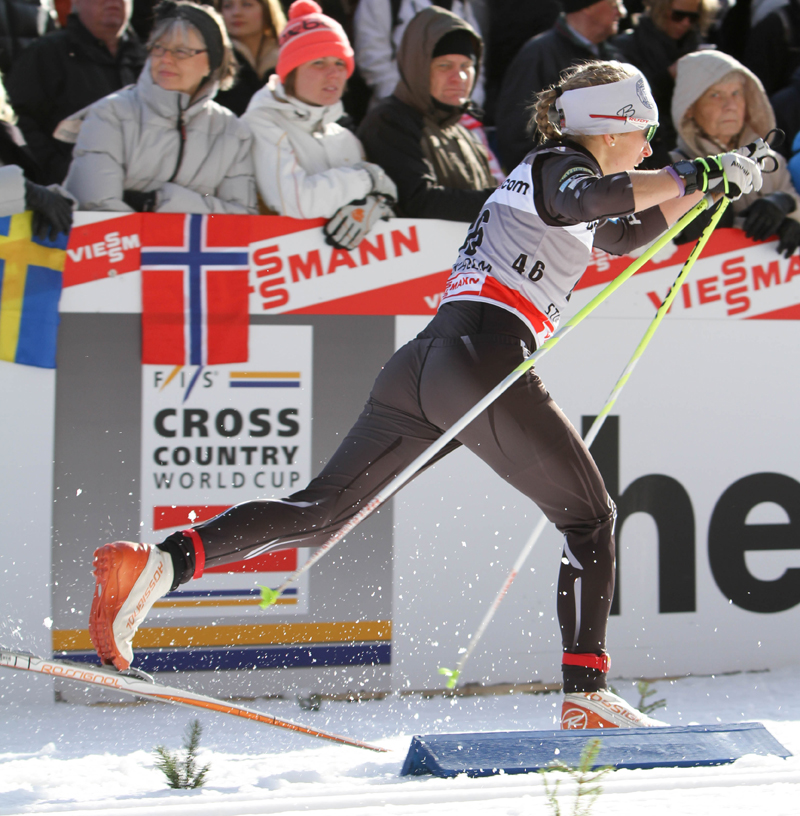
    Crawford changing lanes.

    After her strong qualification and a fifth last week in Drammen, Crawford was hoping for more.

    “It’s still one of my best classic sprints ever, but athletes always adjust their expectations on a hair trigger,” Crawford said. “I got fifth last week, so I wanted to better it.  I have been feeling super good in classic.”

    Both Randall and Crawford were enjoying the day at “one of the coolest sprints” on the circuit.

    “You are down by the water, the palace steps, lots of cheering out there and it’s a fast race—two-and-half minutes,” Randall said. “So it’s pretty fun and I think it is a great way to end the sprint season.”

    Crawford concurred adding “It is such a privilege to be a ski racer.  I just have to pinch myself when I see the harbor and the blue skies, snow around the King’s castle.  I was so happy to be in the heats and get a chance to rip it again.”

    On the start line prior to the semis, Crawford was seen on camera moving her hands as if she were revving a motorcycle.

    When asked about the novel motion, she explained that she rides a Ducati Monster back home in Canmore.

    “This time of year everyone is tired, everybody wants to go home,” Crawford said. “I want to go home and ride my bike, ski tour the mountains and it gives me energy to think about that full-throttle feeling.”


    Gaiazova and Marshall Crack Heats, Out in Quarters

    Alysson Marshall (CAN) in the quarterfinals.

    Canadians Dasha Gaiazova and Alysson Marshall gave North America four women in the heats.

    For Marshall the day was notable as she earned her first career World Cup points.

    Coming off two days off due to a cold, Marshall was happy to ski her first World Cup heats.

    Dasha Gaiazova (CAN) in qualifying.

    She finished last in her quarterfinal and ended the day in 28th place.

    “I did not quite have the juice in the quarterfinal…I felt beat [coming up the last climb], my body is pretty dead,” Marshall said.

    She hung with the pack on the first climb, but drifted back on the double pole, and was never able to recover.

    “But it was fun,” she said, “and it was my best race.”

    Gaiazova, a seasoned veteran at this point, qualified 22nd and finished 23rd after being eliminated in the quarters as well.

    After getting knocked out in a stacked heat, Gaiazova said she felt bad on the course, and lacked her mental edge at this point in the season.

    She matched up with Bjørgen, Justyna Kowalczyk (POL), Vesna Fabjan (SLO) and Ingvild Flugstad Oestberg (NOR), but said she actually liked the stiff combination.

    Such a heat is usually fast, she explained, meaning a better shot at the lucky loser slots.

    Stephen, Diggins Outside Looking In

    The final two North Americans in the race, Liz Stephen and Jessie Diggins, failed to make it out of qualification, with Diggins missing a spot by all of 0.12 seconds as she placed 31st.

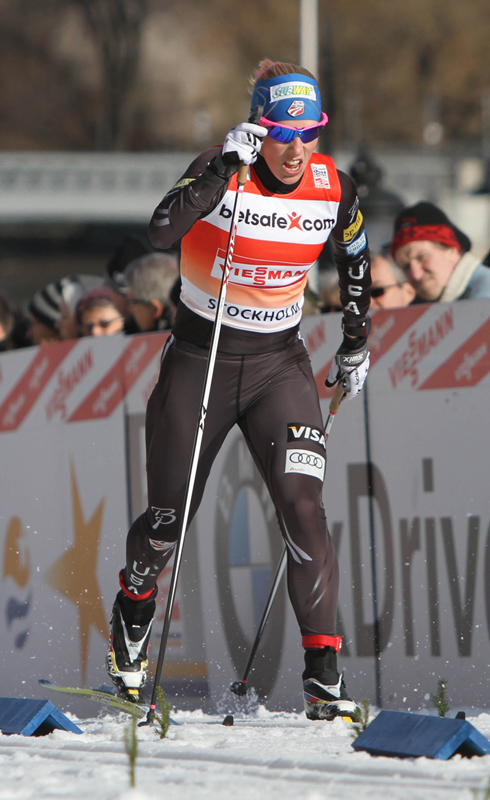
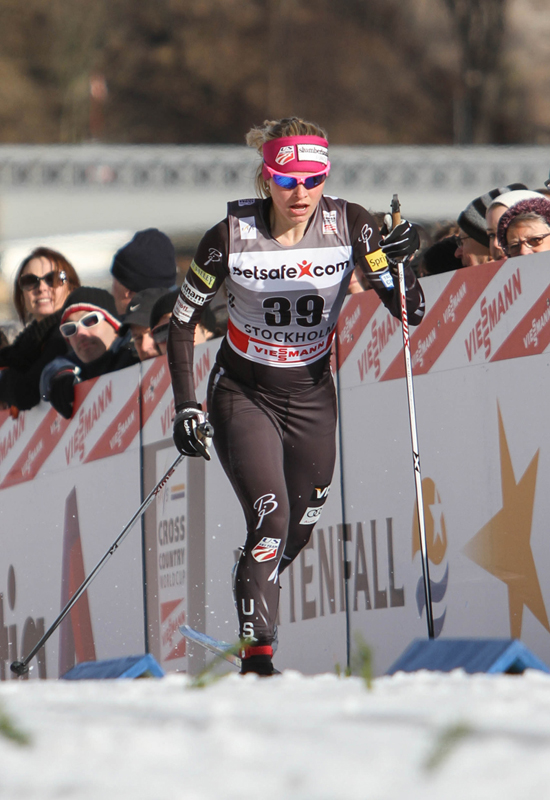
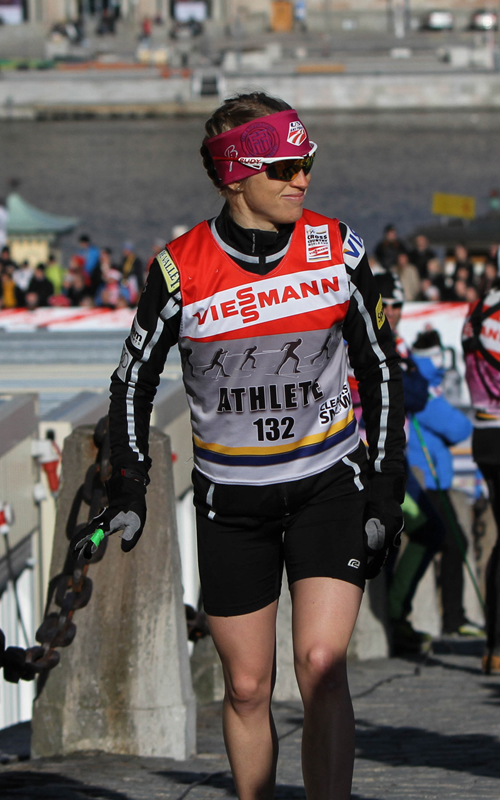
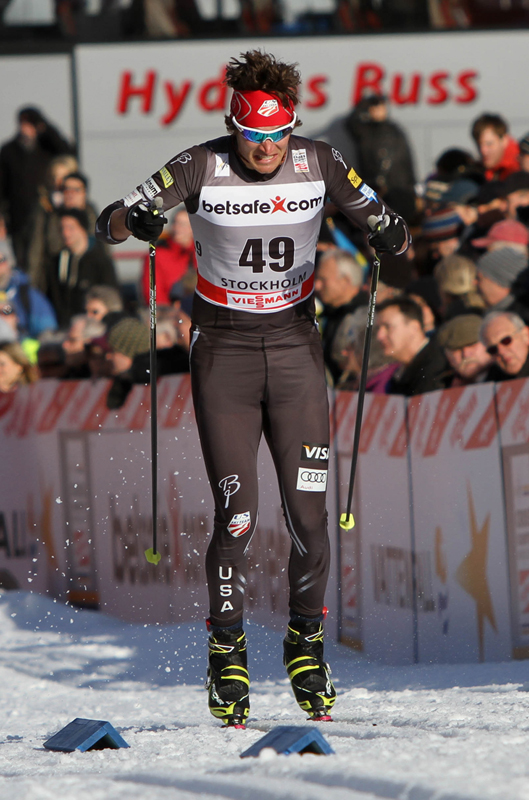
    Diggins (USA) hammering uphill.

    “I’m not normally a very good classic sprinter,” Diggins told FasterSkier. “I’m trying to get better at it, and use every chance as an experience to learn something…and practicing how to move my feet faster.”

    Stephen, whose bread and butter is distance races—generally the longer the better—is still looking for her first World Cup sprint heat experience.

    “One of these days it is going to be really fun to qualify, but it’s a long way off still,” Stephen said.

    She was thrilled getting to race in Stockholm, but not as happy about the way she skied in qualification.

    “I skied this last uphill really poorly which I am upset about… I was slipping and just skiing poorly here,” she said.

    She did feel her double pole was good but the best part of the day was just being there.

    “The highlight for me is that I have been fired up for sixteen days right now, just because I got to ski on a palace. This is so cool.  The king is out here and we’re skiing up steps right now and the crowds are awesome,” Stephen said.

    One of her goals for the season was to qualify for the World Cup Finals, and have an opportunity to race in Stockholm.

    “I never ever get to do city sprints,” she said. “This is the highlight of my whole season because I got to do this.”

    Stephen placed 51st out of 53, but should move up over the weekend now the sprinting is done.

    Results

    Matthew Voisin contributed reporting.

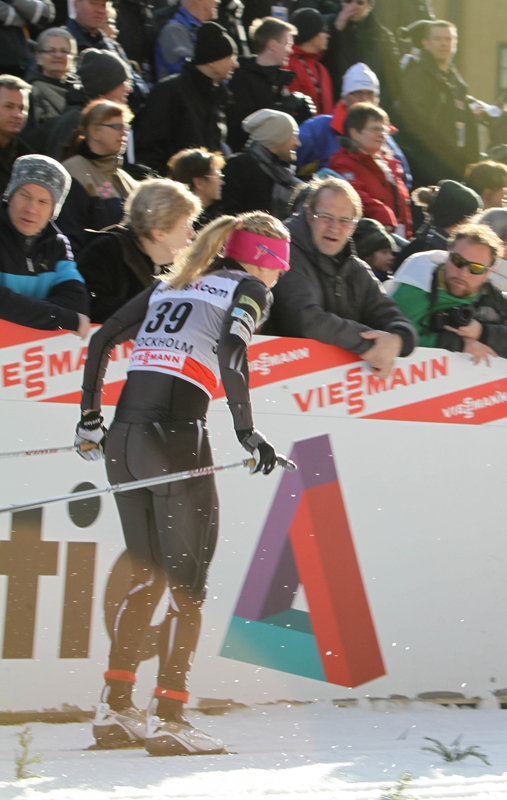
    Stephen (USA) striding.
  • Stockholm Palace Sprints: Photo Gallery

    Stockholm Palace Sprints: Photo Gallery

    All 2012 FIS World Cup Finals coverage is brought to you through the generous support of Fischer Sports USA, proud sponsors of Kikkan Randall, 2012 overall Sprint Cup Champion.

    STOCKHOLM, Sweden — Below are a series of Canadian- and American-focused shots from the Royal Palace sprints on Wednesday.

  • Royal Palace Sprint Kicks off World Cup Finals

    Royal Palace Sprint Kicks off World Cup Finals

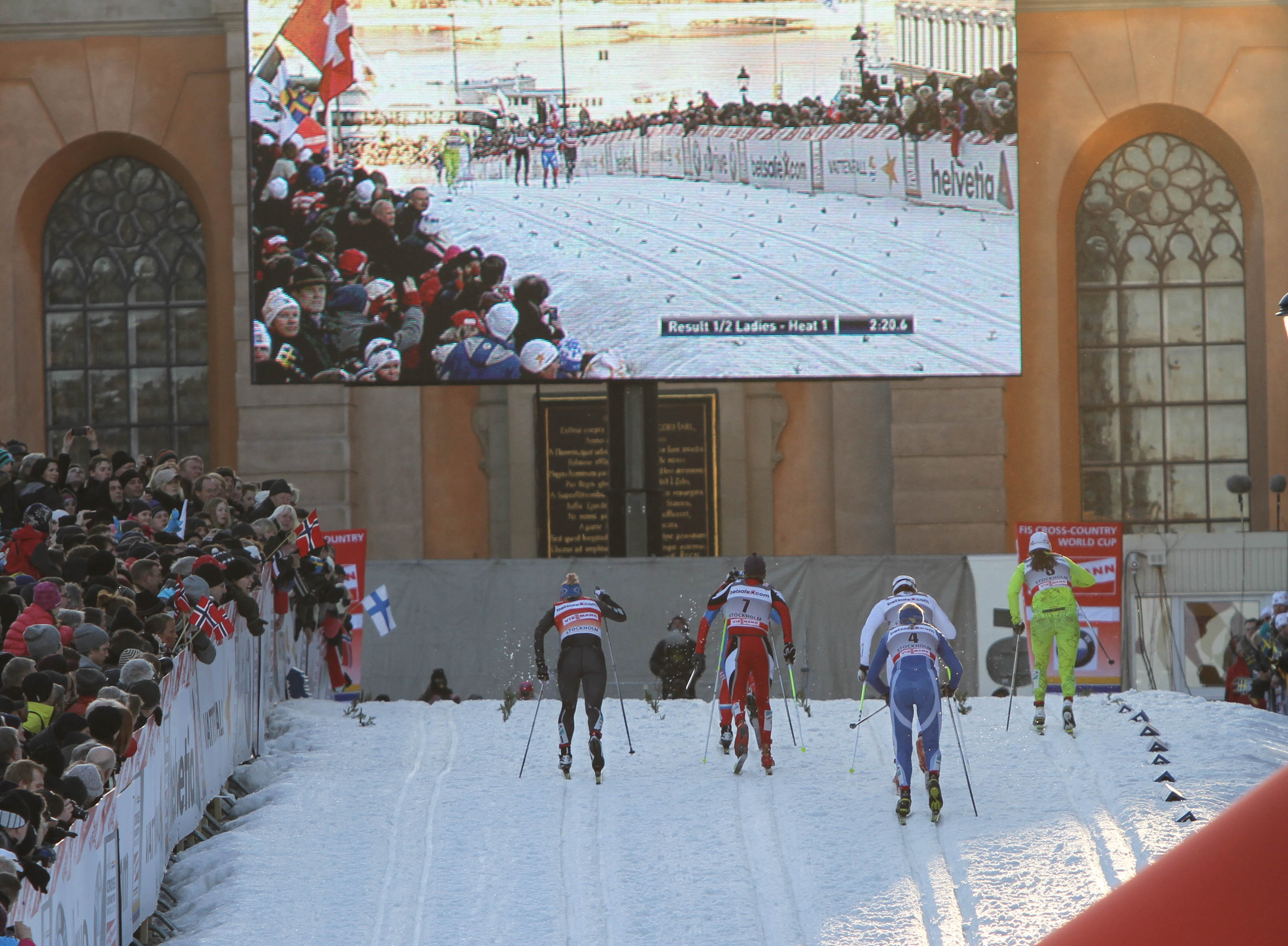
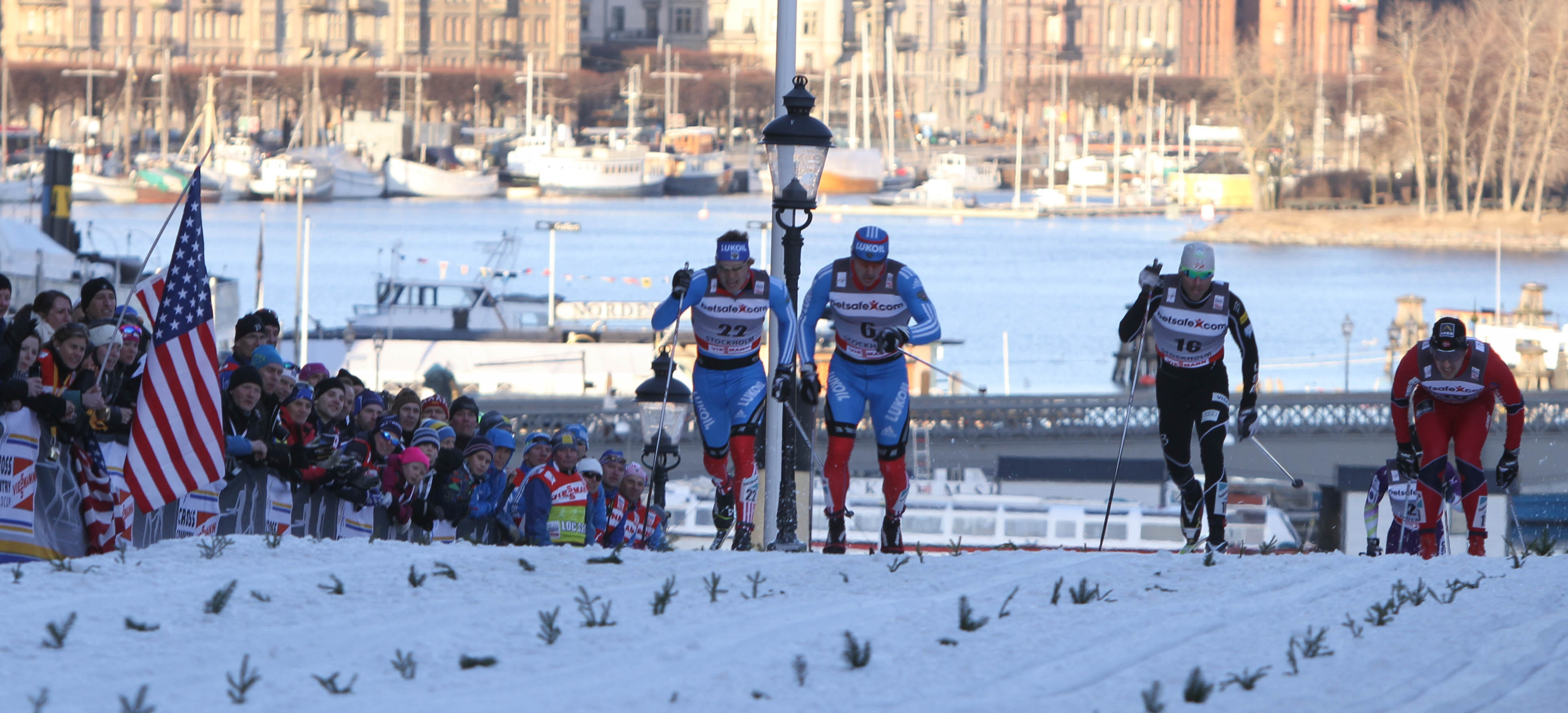
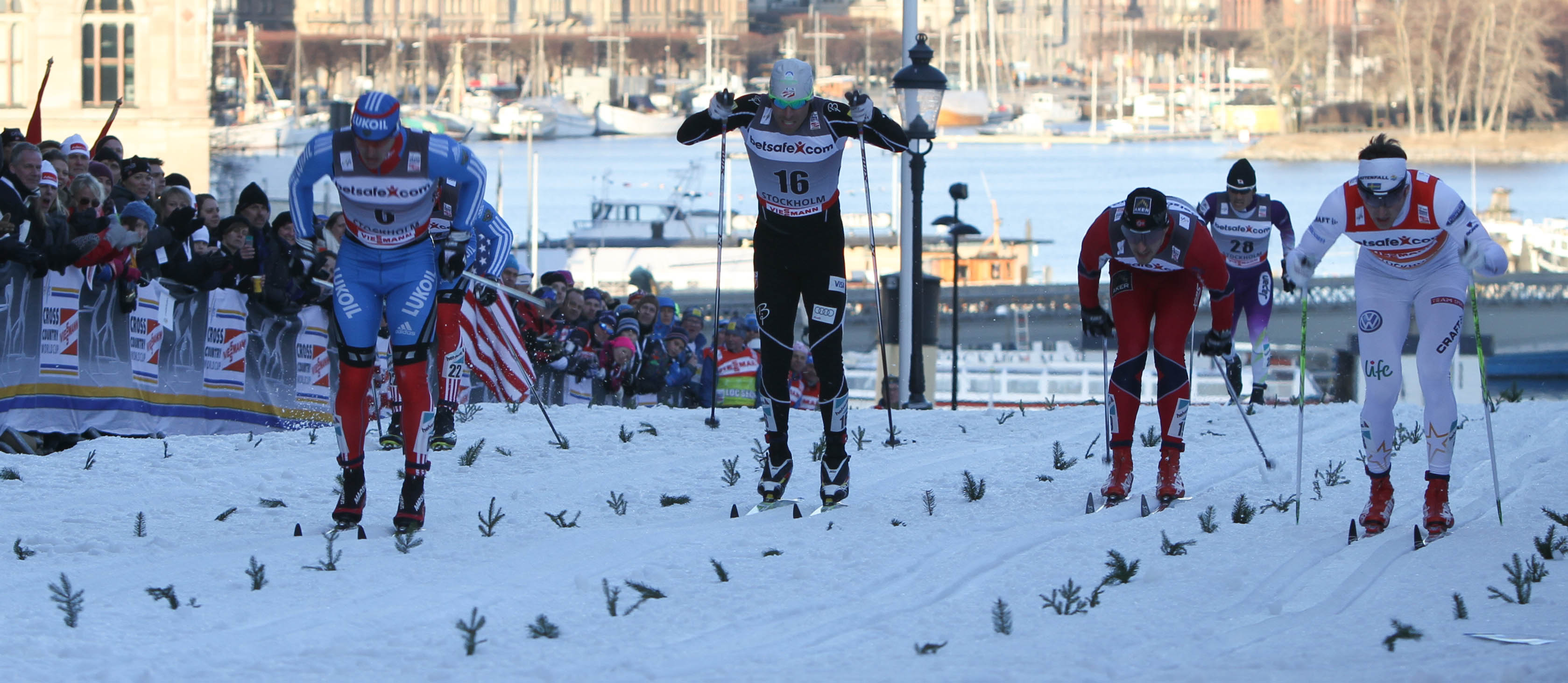
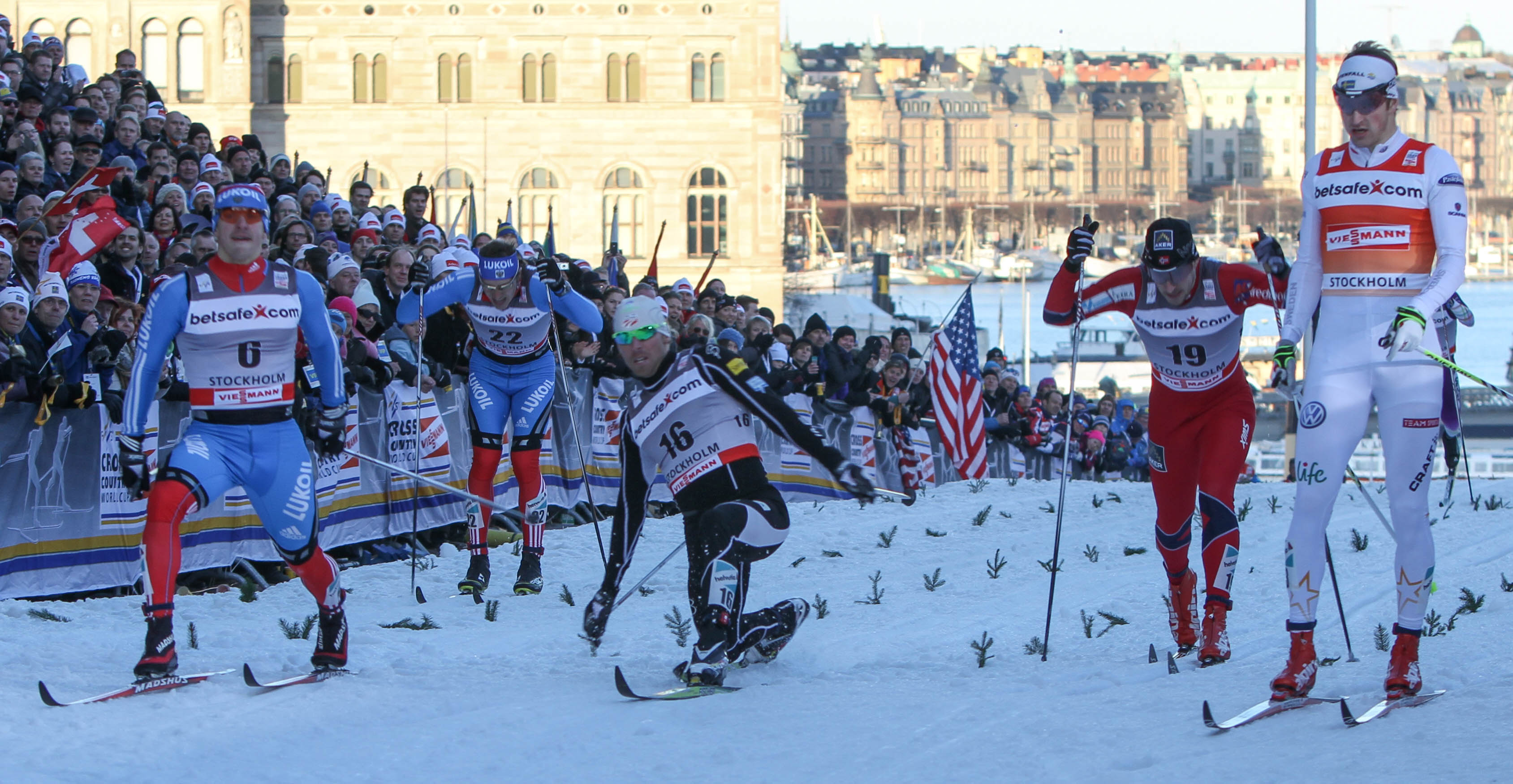
    The Stockholm city sprints, the first stage of the World Cup Finals, take place on Wednesday.

    All 2012 FIS World Cup Finals coverage is brought to you through the generous support of Fischer Sports USA, proud sponsors of Kikkan Randall, 2012 overall Sprint Cup Champion.

    STOCKHOLM, Sweden – The first leg of the 2012 World Cup Finals kick off with the Royal Palace Sprint in downtown Stockholm, Sweden on Wednesday.

    The race takes place on the doorstep of the King of Sweden, Carl the 16th Gustav, and is conducted in the classical technique.

    Snow was trucked in over the period of two-and-half days, with final grooming to take place Tuesday night.

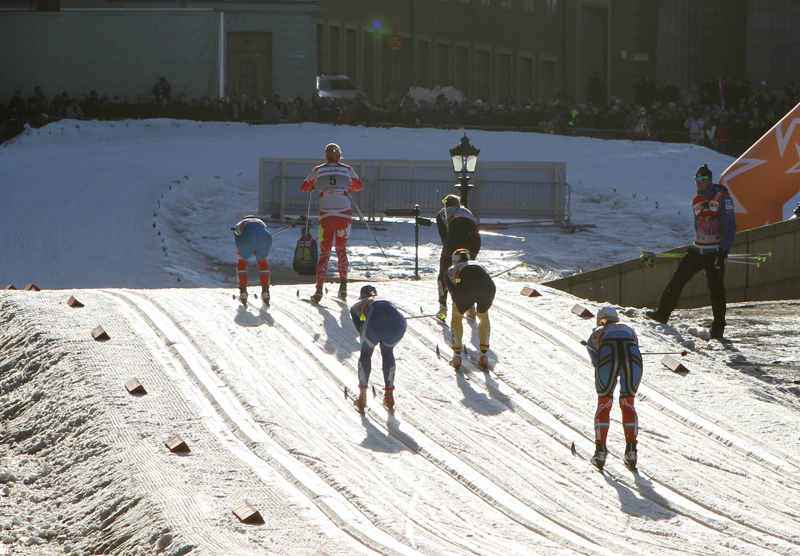
    Members of the Russian team previewing the course.

    While temperatures have been warm during the day, there is hope that the course will set-up over night, creating firm fast tracks.

    Only the top-50 ranked skiers in the world, plus continental cup leaders, are granted start spots in the four-race competition.

    The US brings Kikkan Randall, Andy Newell, Liz Stephen, Jessie Diggins and Sylvan Ellefson while Canada will start Devon Kershaw, Alex Harvey, Chandra Crawford, Lenny Valjas, Dasha Gaiazova, Alysson Marshall, and Kevin Sandau.

    Randall has already locked up the Sprint Cup title, but is looking to hold off Charlotte Kalla (SWE) for fourth in the overall.

    Kershaw and Harvey have their own overall rankings to think about. The former is just 15 points ahead of Petter Northug, but with the Norwegian star reportedly withdrawing due to a continuing stomach ailment, there may not be much of a fight.

    Harvey is aiming to hold in the top-6 and is facing stiff competition from Russian Maxim Vylegzhanin.

    Both Newell and Randall are looking forward to a festive day.

    “It’s always a great atmosphere being so close to the downtown of a major city, especially down by the waterfront,” Randall told FasterSkier. “Pretty sweet too that the terrain features of the course are literally the steps of the Royal Palace.”

    Andy Newell racing in Stockholm, Sweden last season. Photo: Kellen MacFadyen.

    Newell concurred, adding that any urban sprint is a good time, and that racing in a country that holds an event on the King’s front porch is a special experience.

    Last year Newell used classic skis in the qualifier, but opted to double pole the heats on skate gear, a strategy he may repeat this time—if the track gets firm enough.

    The track must be firm enough to support vigorous double poling for the strategy to be appropriate, Newell explained.

    Last season the tactic worked well; he qualified ninth and advanced to the final, ultimately placing fifth.

    With the major climb coming right at the end, Randall expects fast starts in the heats, and Newell said that being in good position around the final corner into the big hill is key.

    Randall raced the 30k on Sunday in Oslo, with Newell contesting the 50k on Saturday. Both said they are ready to go, if not completely fresh.

    “This year is definitely a quicker turnaround than we’ve had to do before,” Randall said of the jump from Holmenkollen to Stockholm. “I’ve had a solid last couple of weeks and I feel like my racing shape is still strong…We’ll just have to see what’s left in the tank.”

    Matt Voisin contributed reporting.

  • Stockholm Chief of Competition Aiming for “Best in the World” Event

    Stockholm Chief of Competition Aiming for “Best in the World” Event

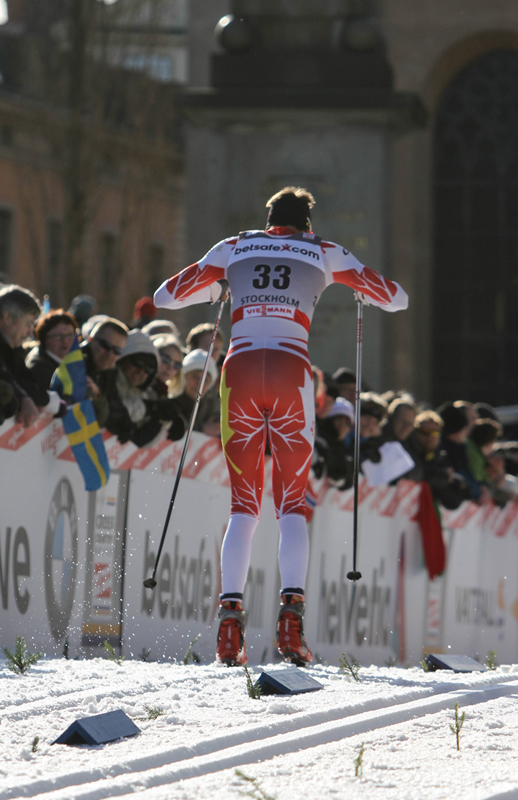
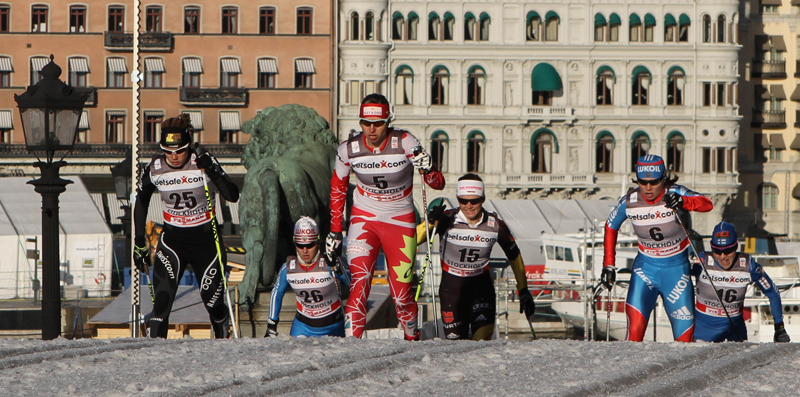
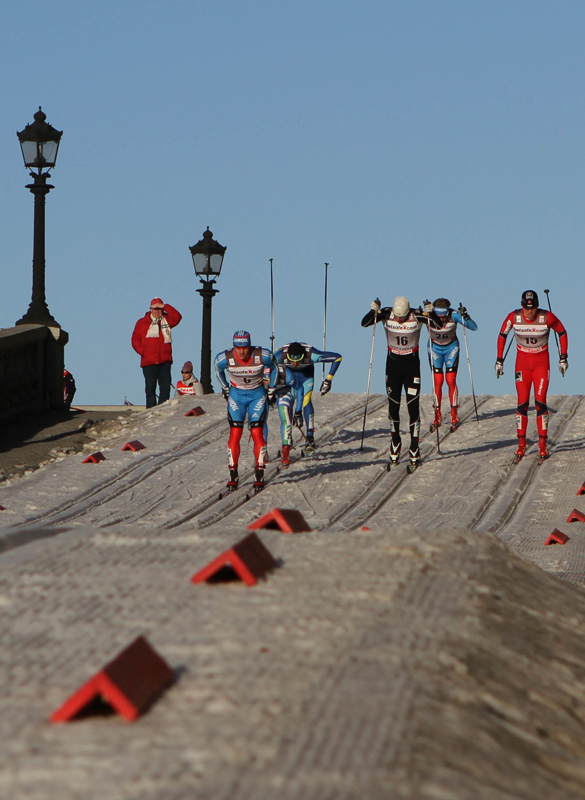
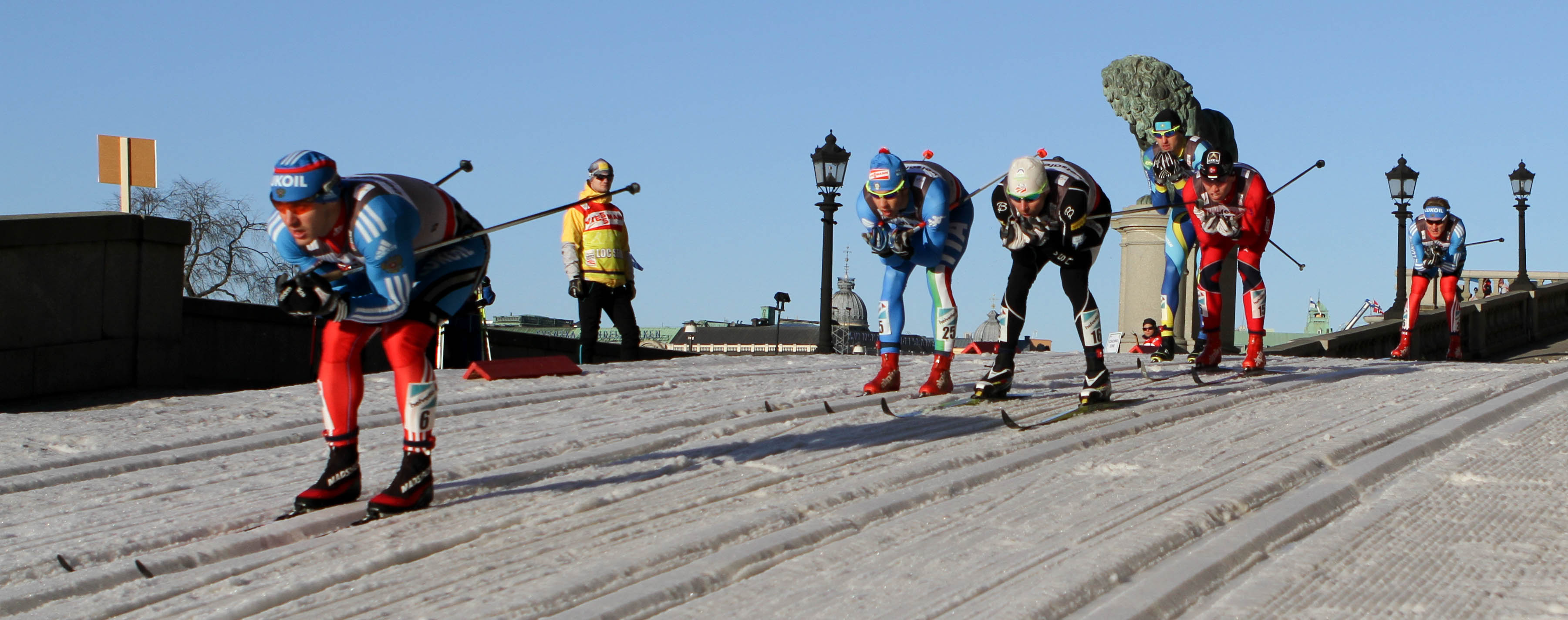
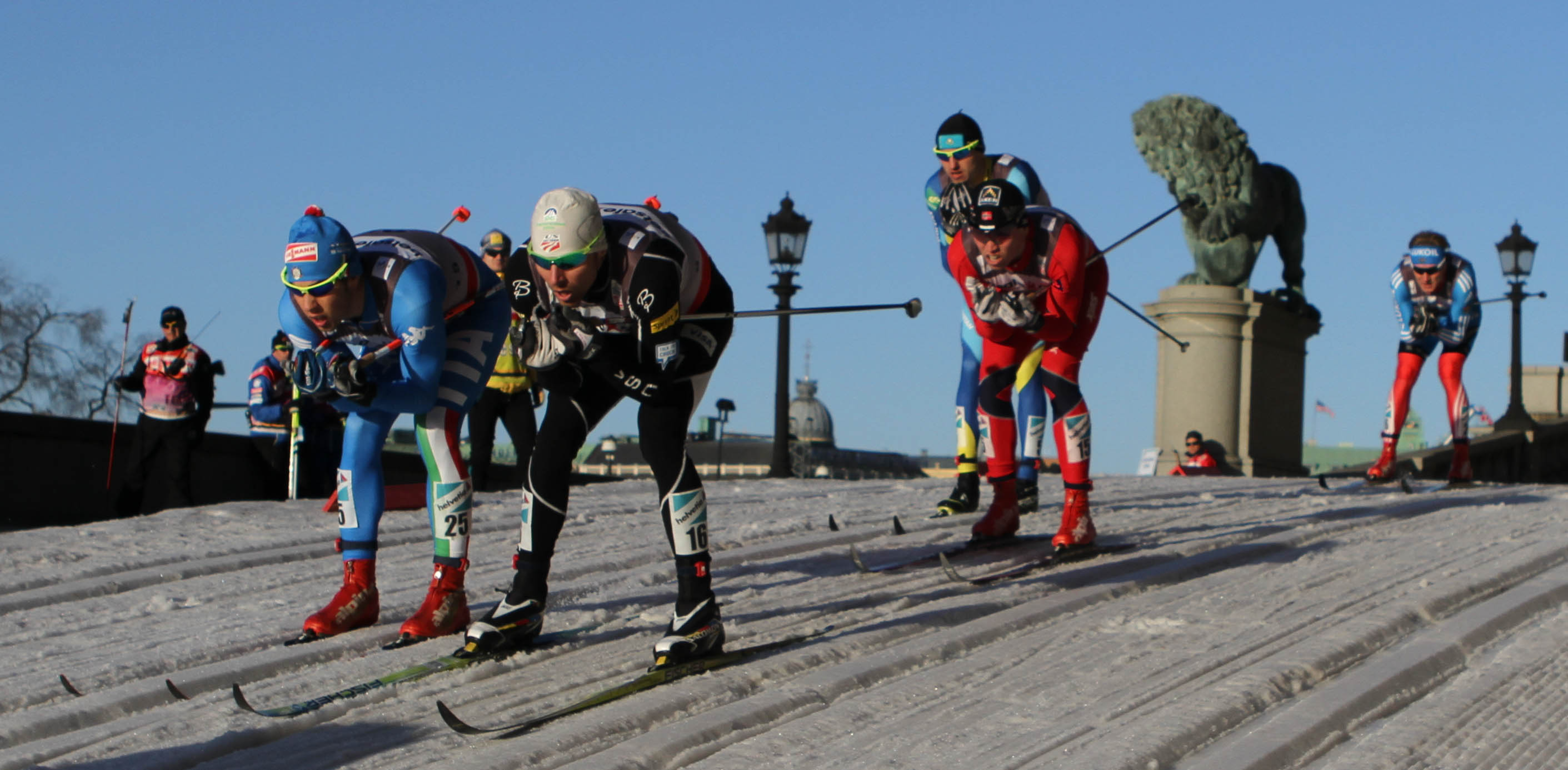
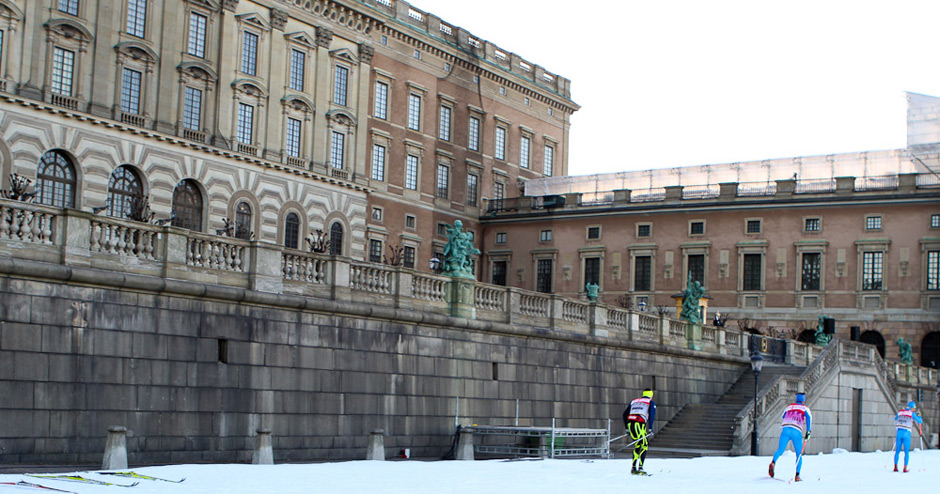
    Athletes previewing the palace sprint course in downtown Stockholm, Sweden on Tuesday.

    All 2012 FIS World Cup Finals coverage is brought to you through the generous support of Fischer Sports USA, proud sponsors of Kikkan Randall, 2012 overall Sprint Cup Champion.

    STOCKHOLM, Sweden — On Wednesday afternoon, the Royal Palace Sprint in Stockholm, Sweden will bring to a close what cold be termed the “Year of the City-Sprint” on the World Cup circuit.

    With no World Championships or Olympics the International Ski Federation (FIS) took advantage of the resulting schedule flexibility, and added an additional two city-sprints to the usual stops in Dusseldorf, Drammen and Stockholm.

    With Milan, Italy and Moscow, Russia on the calendar, sprinters faced a variety of courses and interesting locales.

    It is hard to rank the venues—who can say that racing along the Rhine in Germany is better than on the front lawn of the Castello Sforzesco in Milan or vice versa?

    Business almost as usual for the palace guards.

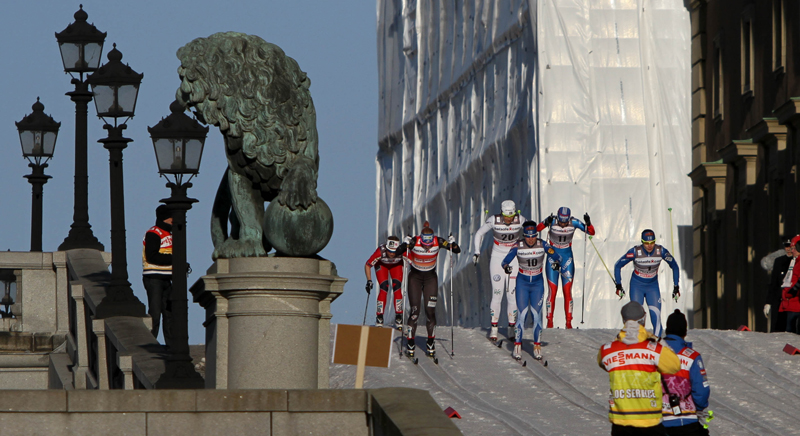
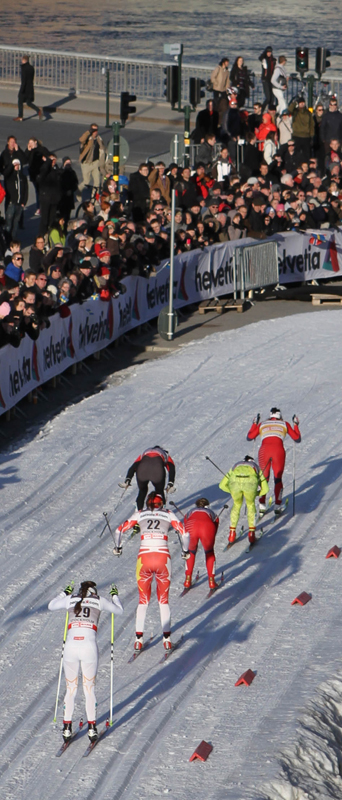
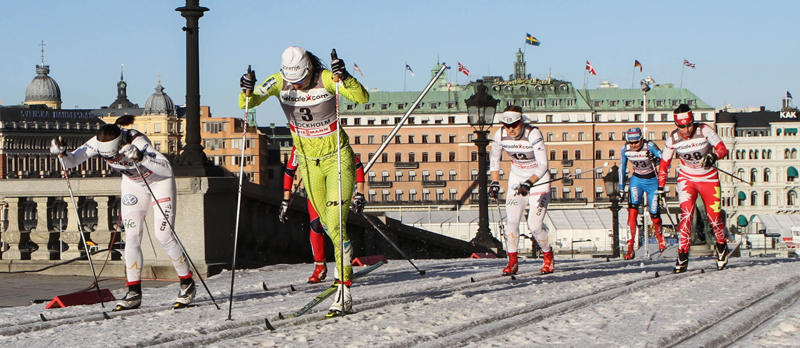
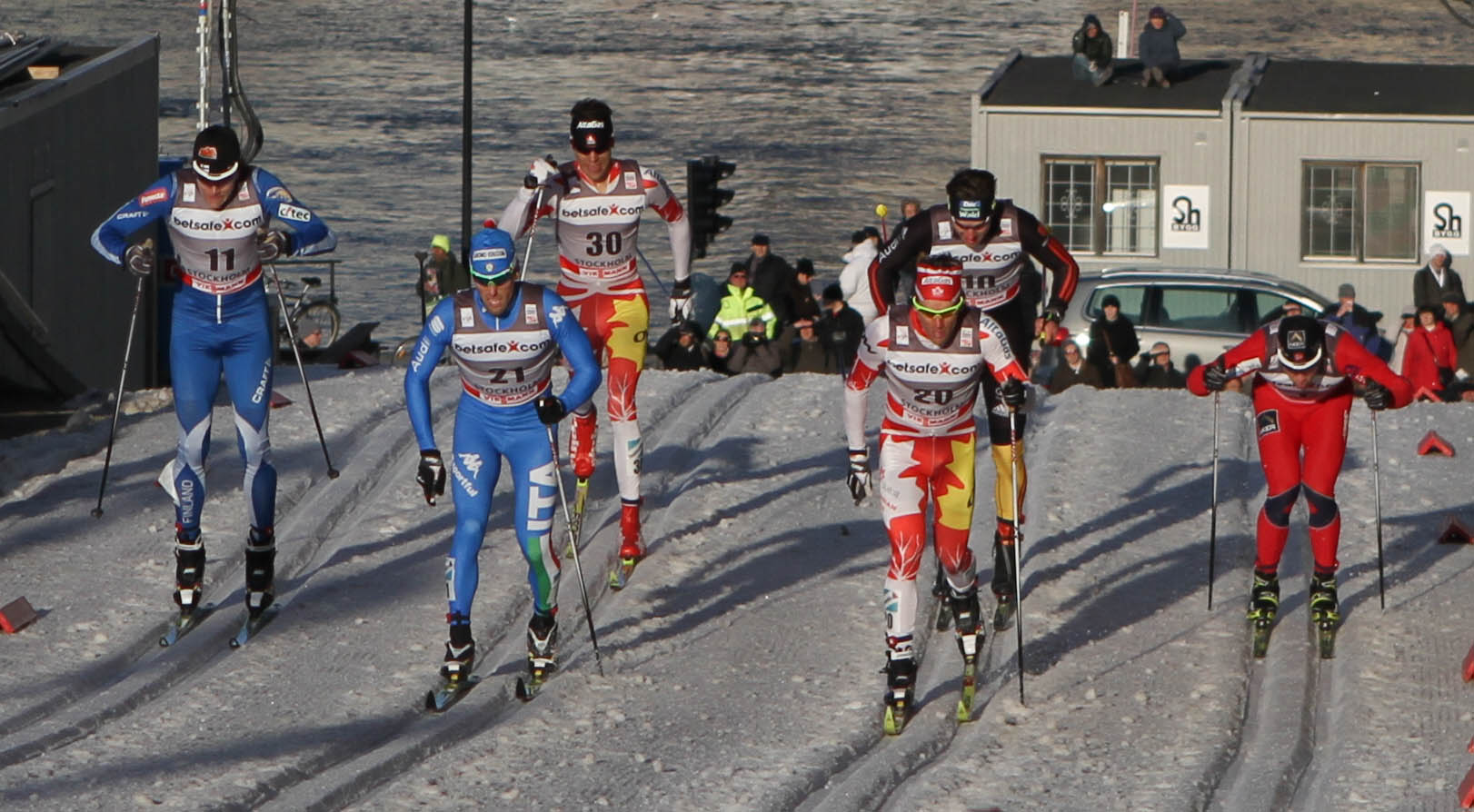
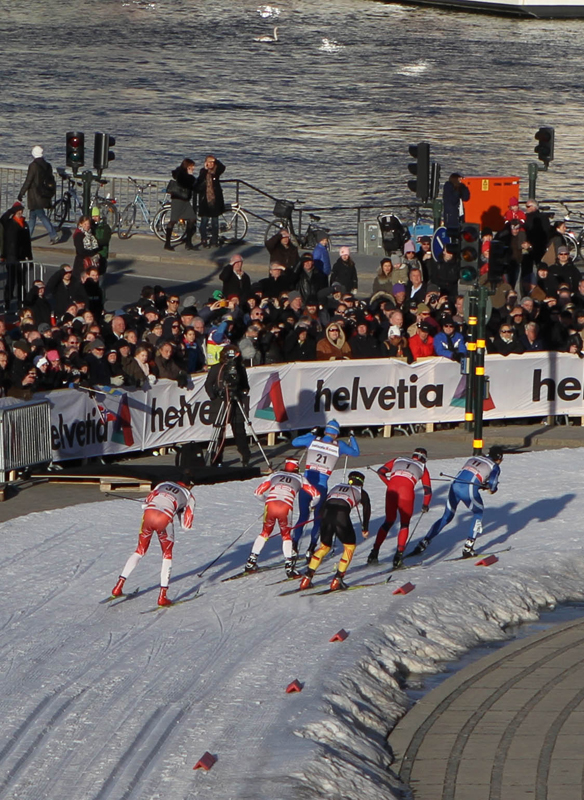
    But there is no doubt that the Stockholm sprint more than holds it own. Running right along the doorstep of the Royal Palace in Sweden’s capital, the course overlooks the Riddarfjärden bay, dropping down nearly to the water’s edge before climbing back up the finish.

    Royal guards continue their stoic watch, and boats navigate the icy waters as the top sprinters in the world do battle on 5,000 cubic meters of snow trucked five kilometers from a nearby alpine area.

    According to the Chief of Race Göran Nilsson, not just any snow will do.

    “Not only snow, but white, good snow,” Nilsson told FasterSkier in an interview on Tuesday evening in Stockholm.

    The two key components of pulling of a successful race, says Nilsson is the snow and the volunteers.

    In his fourth year working on the event—one as a technical delegate and now three as either the Chief of Competition or Assistant Chief of Competition—Nilsson has set a high bar.

    “When you have done it seven times, each year you take one more step up and one more step up. And this year we will be the best in the world,” Nilsson said.

    The snow to make it happen started arriving on Sunday at 9:00, and the last load was delivered Tuesday at noon. Racers could preview all of the course but for the final hill to the finish in the afternoon.

    A Stockholm Pisten Bulley getting the course ready for Wednesday's sprint.

    Two small Pisten Bulleys are on-hand to prepare the tracks, one of which is piloted by none other than Thomas Wassberg—the great bearded Swedish cross-country champion.

    Wassberg hails from the north of Sweden, but made his fifth trip down for the Stockholm sprints this year.

    “People look up to him, and he comes with his hair and his beard and rrrrrrr,” Nilsson said, pantomiming a hulking figure.

    “He is one of the best skiers in Sweden and he is still working on the floor,” Nilsson continued, referring to the fact that Wassberg is still very much involved with the sport on a day-to-day basis. “He is a very nice man, a very good sportsman and coach and leader and machine driver,” Nilsson said.

    The great Swede is one of over 100 volunteers working on the event. The majority hail from one of seven Stockholm clubs.

    With most having multiple Royal Palace Sprints under their belts, Nilsson said his focus is not on the technical details, which the volunteers have down pat, but on providing the best overall experience.

    This is the core of his goal of being the best in the world.

    “I tell them that every person coming here, athletes, coaches, spectators, media, all of them are our guests, and we have to give them what they want when they come,” Nilsson explained.

    Checking out the course.

    He wants everyone to leave thinking “it is a professional event, I will come back here, thank you very much.”

    He also points to a level of attention to detail that may be overlooked elsewhere, saying “you will find all signs perfect, not handwritten, they will all be straight. The tracks and all around will be perfect.”

    This year there is an added incentive to perform beyond a commitment to excellence.

    Nilsson said that FIS has not put Stockholm on the World Cup calendar for next year, and with 2014 featuring pre-World Championships (the big event will be in Falun in 2015), there would not be another race in the city until at least then.

    At this point he has “no idea” as to why FIS may take away the event next season though he believes the best way to keep the race is to “do the very best.”

    The current draft schedule for the 2013 season does not have a substitute event listed.

    Nilsson is hoping for as many as 15,000 spectators on Wednesday.

    One climb on Stockholms sprint course goes right up the palace steps.

    “Skiing is very popular in Sweden,” Nilsson said, “and we are proud about it to have his majesty the King in our ski family.

    Carl the 16th Gustav is a big supporter of the sport. He will travel to Falun for the rest of the World Cup Finals, and his son recently completed the Vasaloppet.

    The weather is predicted to be sunny and warm, making for ideal spectating, and Nilsson foresees no problems, predicting that temperatures will drop low enough for the tracks to set up hard.

    And despite long hours and complicated logistics, Nilsson, who served as the chair of the Swedish Ski Federation for a decade, beginning in 1995 at the Thunder Bay World Championships, loves the event.

    “People around here they wonder what kind of person is working on this,” he said of many of the city-dwellers. “But you must be a little bit here,” he pause pointing to his temple and swirling his finger in a “crazy” gesture before continuing, “if you work this type of event.”

  • Naryshkina Slips Past Bender in Madison Classic Sprint

    Naryshkina Slips Past Bender in Madison Classic Sprint

    Madison SuperTour classic sprint A-final
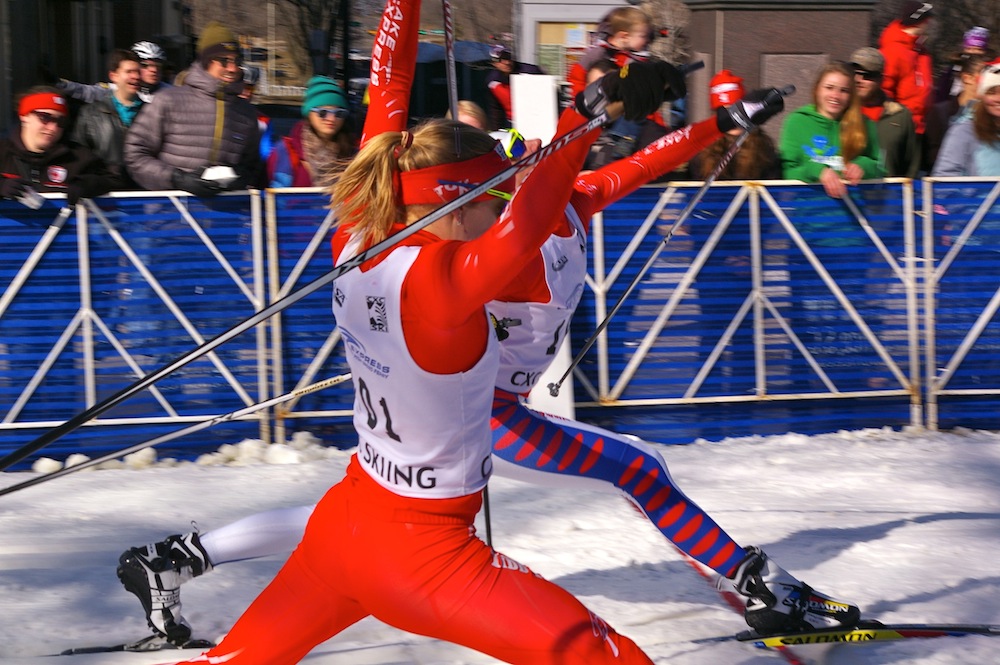
    Natalia Naryshkina of Russia, who skis with the help of CXC, edges Jennie Bender (CXC) at front by a foot in the A-final of the Madison SuperTour 1 k classic sprint on Saturday.

    All 2012 Madison SuperTour and American Birkebeiner coverage is brought to you through the generous support of Concept2, makers of the SkiErg.

    MADISON, Wis. – Two hours seems like a lot of time between qualifiers and heats, but when it comes down to it, sprints are sprints. They’re restless from start to finish.

    Between the SuperTour 1 k classic races at the heart of Wisconsin’s state capital on Saturday, some athletes killed time by running around downtown. Others, like Natalia Naryshkina of Russia, looked for a new pair of skis.

    After placing fifth of eight women in the qualifier, Naryshkina, who lives in Cable, Wis., decided to trade her classic boards for skate skis. On the four-corner loop around Capitol Square, there was no striding. Just double pole.

    The switch meant convincing her Central Cross Country (CXC) support staff, including Igor Badamshin and Kevin Johnson, to wax her freestyle skis on the spot. Once grip-free, Naryshkina discovered she had much more success, placing second to Jennie Bender (CXC) in the semifinal to advance to the A-final.

    There, Naryshkina made her double pole count and slipped her leg out ahead of Bender’s to win the classic sprint in a photo finish. The 27-year-old had tucked in behind Bender shortly after the start and waited for her moment to challenge her.

    The women's podium at the Madison SuperTour classic sprints: 1. Natalia Naryshkina (RUS/CXC) at center; 2. Jennie Bender (CXC) at left; 3. Hannah Dreissigacker (CGRP) at right

    Hannah Dreissigacker (Craftsbury Green Racing Project) worked her way to third from the outside lane and held her position to the finish. Hilary McNamee (Maine Winter Sports Center) was fourth in the A-final.

    In a translated Skype interview, Naryshkina wrote that she jumped out from behind Bender and into another track at the beginning of the last straightway. The two proceeded to race even with one another, as Bender powered through the double pole and Naryshkina kick double poled to keep up.

    “I just edged out Jennie by a foot throw,” Naryshkina wrote. “Very close race; Jennie is strong skier.”

    Six years ago, Naryshkina lived about 10 miles from Madison in Verona, Wis. Racing there for the fourth time on Saturday, she was excited about the win.

    “It’s important for me to win any sprint because I love sprints,” she wrote. “There is no 2nd place! Only 1st!”

    Clearly disappointed after the A-final, Bender looked down as she poked the manmade snow with her pole. She had been the fastest women’s qualifier in 2:18.7, more than 6 seconds ahead of Dreissigacker in second and 6.2 ahead of McNamee in third.

    Bender also won her semifinal against Naryshkina, who was second on skate skis. She used a similar tactic for the final: lead from the start and keep pushing.

    “It was pretty close lunge at the end with Natalia,” Bender said. “Of course I wish I had that extra inch. … But it’s OK.”

    Dreissigacker was lucky to make the A-final after she nearly missed the start. After beating McNamee and CXC’s Nicolette Amber and Sara Hewitt in the semifinal, Dreissigacker decided to run a lap around the snow-covered loop.

    Start of women's A-final at Madison SuperTour classic sprint on Saturday: (from l to r) Natalia Naryshkina (RUS/CXC), Jennie Bender (CXC), Hilary McNamee (MWSC), Hannah Dreissigacker (CGRP)

    She saw her teammate Clare Egan whiz into the last stretch of the B-final and knew she needed to be at the starting line. Egan went on to win, and Dreissigacker sprinted to the start on foot.

    “I got to the line and I was shaking,” Dreissigacker said after having no option or time to jump in any lane but the outside.

    While running wasn’t a problem – she likes to warm up with some jogging – Dreissigacker said it was a little more than usual.

    “I had my adrenaline going before the race and during it,” she said.

    That fueled her to a third-place finish she was satisfied with after arriving in Madison around 11 p.m. Friday night. Fresh off a biathlon trip in Canada, Dreissigacker said she was tired and had few expectations heading into the classic sprints.

    “I’ve been feeling like I don’t have much speed in my legs so it was good,” she said. “It was a little speed workout.”

    In the B-final, Egan topped Nicolette Amber, who was sixth overall. Olivia Amber placed seventh and Sara Hewitt was eighth.

    Women’s classic sprint results

  • Bjornsen So Close, Yet So Far in 31st-Place Sprint Qualifier: “It’s Kind of a Bummer “

    Bjornsen So Close, Yet So Far in 31st-Place Sprint Qualifier: “It’s Kind of a Bummer “

    Sadie Bjornsen (USA) midway through the sprint qualifier in Milan.

    So far this season, Sadie Bjornsen has been on a quest to make the heats in a World Cup sprint. And while her silver medal with Kikkan Randall in the team sprint in Dusseldorf, Germany was more than she had expected, she still hasn’t crossed her original goal off the list.

    Today in Milan, Italy, Bjornsen came the closest she’s ever been to the quarterfinals, finishing 31st in the qualifier. That put her just 0.14 seconds on the wrong side of the cutoff in the 1.4 k skate sprint.

    “It’s kind of a bummer because it’s 31st,” she told FasterSkier’s Topher Sabot just after finishing. “That’s like the worst place you can get!”

    The fact that she was racing at all, not to mention finishing so close to the heats, is good progress for the APU/US Ski Team racer. After wrapping up the first period of World Cup racing she had headed back to the States, where she planned to race at U.S. Nationals, but her plans were scrapped when she fell ill.

    “I was sick for three weeks, the whole time I was at home,” Bjornsen said. “So I pretty much went back to the U.S. to get sick. It was great.

    “The plan was to go back and get some confidence in the U.S., and I was looking forward to that.”

    While she was home Bjornsen was unable to do any intensity training, although she did go for an easy ski every day to “keep the blood flowing.” She began to feel healthy again just before leaving for Europe, but the plane ride across the Atlantic reinflamed her sinuses.

    Even with a lunge, Bjornsen couldn't make up the 0.14 second deficit to the quarterfinals.

    By Friday, however, the young American was feeling more optimistic about the weekend of city sprints in Milan, and even threw some speed into her pre-race workout.

    “The thing is when you’ve gone that long without going hard, it feels really good to go hard,” she said. “So it felt nice.”

    On Saturday, Bjornsen felt that she skied well and didn’t make any technical errors. She said that had used the lessons she learned from her earlier World Cup starts. Even without the morale boost she would have gained from a successful week of domestic racing in the U.S., she had plenty to go on.

    “The last sprint that I did before I left Europe, in Davos, I was really confident going into that and then I kind of just forgot to use my legs,” Bjornsen explained. “So today when I started I was thinking, you have to use your legs, you have to use your legs… [and] in Dusseldorf, it was over before I knew it and you felt like you never even got in a rhythm. Today it was nice because it’s long enough that you can get in a rhythm.”

    While 31st is her best individual result yet, Bjornsen said that at the moment she couldn’t fully appreciate it.

    “I’m sure that in a couple hours I’ll feel excited about that, but for now, it’s just hard,” she lamented. “When you get that close it’s right there, but at the same time so far. You get constantly reminded that you have to try, try again, and that it takes a long time to make the heats.

    “It’s nice to take a step back and say, you know what, it’s going up from here.”

    Sargent.

    Bjornsen’s teammate Ida Sargent has had a similar experience on the World Cup so far. She qualified for the heats in the last December sprint, in Rogla, Slovenia, but today it was back to missing out. She placed 43rd in the qualifier, over 13 seconds behind Anne Kylloenen of Finland and roughly four away from the heats.

    While Sargent said that the whole experience was “fun”, it wasn’t one of her best efforts and she didn’t think the course suited her.

    “It wasn’t great,” she told FasterSkier. “I would have liked more hills. It was kind of a weird course just being V2 the whole time.”

    While Bjornsen has “always liked quick, short, flat things,” Sargent felt that she never had anything to dig into in the Milan park. She also realized that she had made some tactical errors when choosing her lines around corners.

    “I think I took the wrong lane a couple times where it was really skied-in on the gradual downhills,” the Vermonter explained. “I was on the inside, and I’m watching everybody else going on the outside. So I think that was a big mistake.”

    Both Sargent and Bjornsen have been in the unenviable position of never knowing exactly what a competitive pace is in a World Cup qualifier.

    “In the heats you know how everyone’s skiing and you can keep up more, but when you’re on your own – I haven’t skied heats yet this year – it’s hard to know how fast you’re going,” Bjornsen said. “You feel like you’re going as hard as you can, but there’s that extra [gear], and I’m sure I missed a little bit of that.”

    Sinnott.

    The last U.S. racer was Mikey Sinnott, a Sun Valley Gold Team member who earned start rights thanks to his success on the U.S. SuperTour. Sinnott’s European World Cup debut was marred by a crash after one of his skis got mired in the softening snow.

    “I was just no-poles skiing down here and my tip caught some of the mush,” he said after the race. “It just pulled me back and I went down.”

    Sinnott’s crash came early in the course, but was impossible to make up for. In a rush of adrenaline, he attacked the first lap as soon as he got up, but then ran out of steam in the second lap and finished 68th.

    “I really just charged a little too hard at the start and really got tired by the end,” he said.

    Like Sargent, he didn’t think that the flat, short course played to his strengths.

    “It was not a great course for me, coupled with the fall, I don’t know,” said an ambivalent Sinnott. “So it goes. At least I got that out of my way I guess.”

    Sinnott, who has previously raced World Cups in Canada, said that today’s field was not much different; like the North American races, the roster was pared down thanks to many top athletes recovering from the grueling Tour de Ski.

    What was different was the milieu and the crowds. He’d never done a city sprint in Europe.

    “It’s pretty cool – it’s a pretty fantastic crowd right in the city, cheering you on real loud even if you fall,” he said.

    Sargent and Bjornsen have raced in the cities before, but they were still impressed with the atmosphere.

    “There were so many people – it was really loud out there!” exclaimed Sargent.

    She described the challenges that go along with the excitement of city racing. With no snow in sight, it was difficult to prepare for a ski race.

    “It’s hard warming up,” Sargent said. “It’s a little bit different because you can only be on the course for such a short amount of time. You have to get creative – I ran quite a bit. The course is open for about 30 minutes, so I skied then, but then I ran.”

    While she and Bjornsen missed out on the quarterfinals, they have made sure that they didn’t miss out on the city. To combat the time zone change, they explored the city one day while they tried to stay awake.

    And on Sunday, they’ll have one more chance to make it in Milan. The two will pair up for the team sprint.

    “Hopefully tomorrow it will be a little bit less jet-lagged,” Bjornsen said. “It was a little rough last night. I wasn’t really sleeping.”

    They hope that cheers from the crowd will give them an extra boost.

    “The scene is really something,” Bjornsen marveled. “This is the craziest thing I’ve been to. It’s so cool!”

    Qualification results: men / women

     Topher Sabot contributed reporting

  • FIS Eyes Moscow and Milan for City Sprints

    FIS Eyes Moscow and Milan for City Sprints

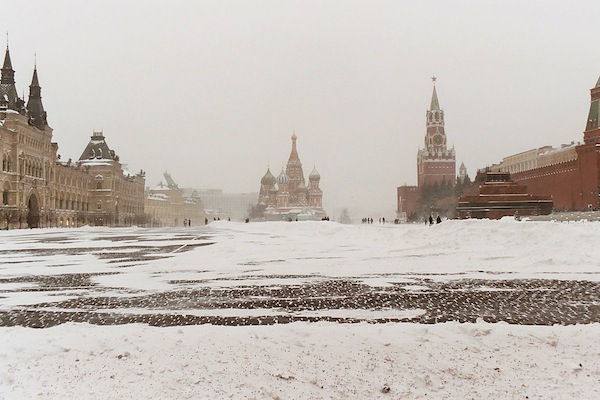
    Just add snow: Moscow's Red Square could be the site of a city sprint in 2012. Photo, Christophe Meneboeuf, Wikipedia.

    For cross-country ski fans, a sprint in Moscow’s Red Square might sound too good to be true. But it just might happen next winter.

    According to Jurg Capol, the cross-country race director at the International Ski Federation (FIS), two new city sprints, in Milan and Moscow, are on the preliminary World Cup calendar for the 2011-2012 season. And while the exact location of the Moscow event hasn’t been decided, there’s a chance that cross-country skiing could be on display for the Kremlin.

    “When we go to town, we should be somewhat in the center of town,” Capol said. “They’re checking different options, but one of [the] three is Red Square.”

    The 2011-2012 season is the one in every four without an Olympics or World Championships, and according to Capol, that leaves more room in the schedule for city sprints. The events in Milan and Moscow were put forward by the Italian and Russian ski federations, respectively.

    Capol has already visited the proposed venue for the sprint in Milan, which he said was a park in the middle of the city. There’s not much in the way of difficult terrain,

    but Capol said that the course was a good one, and that it was wide enough to meet FIS’s specifications.

    City sprints can be logistically challenging, but Capol said that siting the Milan event in a park would make things easier, since roads can be closed off ahead of time. The organizers of that event are also an experienced group—the same one that oversees races at Val di Fiemme—and only a few details remain before the race can be confirmed, Capol said.

    The Moscow event is more of an unknown quantity. Before FIS commits to holding a World Cup in the city, Capol said that organizers there will have to first execute a lower-level event this winter—much like the process for a proposed new uphill-downhill format in Poland.

    “We want to see that the test event works well,” Capol said. “[It] is not always that easy to bring a town sprint on a good level—everything has to be done at the last minute.”

    One city sprint site that is not on the long-term FIS calendar is Quebec City, which was considered as a stage in the doomed proposal for a Canadian Tour de Ski in 2011-2012. A feasibility study for that race cited a group from the city as being “particularly interested” in hosting World Cup races in the near future.

    Capol said that a sprint in Quebec could be “possible” when the World Cup returns to North America—“if they have good courses.” But before any such event could be run at the World Cup level, Capol added, Cross-Country Canada would have to organize a lower-level race first.