Tag: Claire Waichler

  • Red, White, and… Black? A Visual History of the USST Uniform, 2008–2019

    Red, White, and… Black? A Visual History of the USST Uniform, 2008–2019

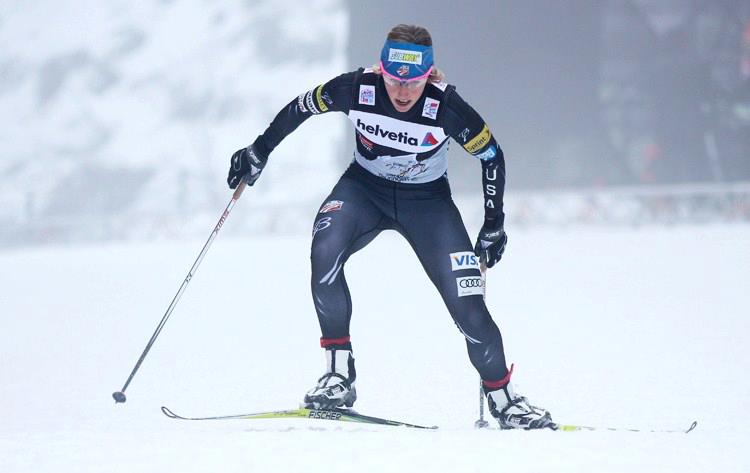
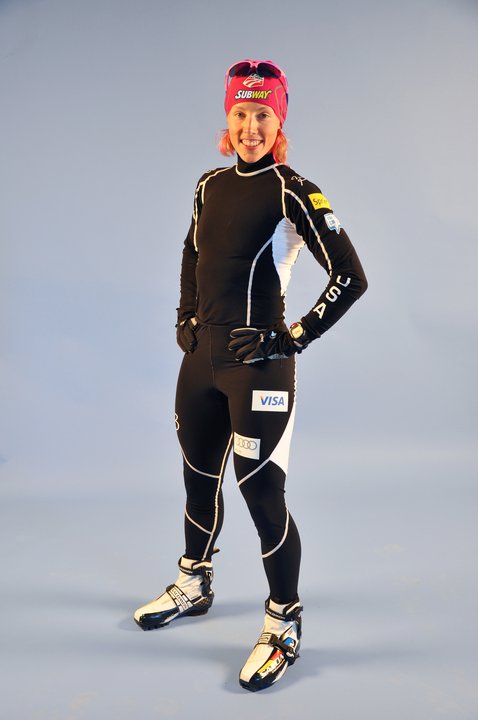
    From October 2010: Kikkan Randall modeling the U.S. Ski Team suit for the 2010-2011 season. Photo courtesy of the U.S. Ski and Snowboard Association.

    A national team uniform for cross-country skiing has to do a lot of things. At the most utilitarian level, it has to wick sweat and aid performance while an athlete pursues one of the world’s most demanding sports at temperatures between –4 F and 40, in steady snow or driving rain or anything in between. At the functional level, it has to let spectators and coaches identify where their athlete is out on the course, while distinguishing them from athletes from other countries. And at the symbolic level, it lets the athlete know that he or she is competing on behalf of their country, for everything that that means. Ask a skier who has represented the United States in international competition what it meant to them to pull on a national uniform for the first time. They’ll probably be able to tell you.

    (And if they ever forget, this detailing from Craft and L.L. Bean on the American uniforms, ca. 2015/2016, is there to remind them. “You are representing the United States of America,” a slogan intones, above a martial-looking eagle, with a U.S. Ski Team master mark for its aegis, gripping an olive branch (?) in its dexter claw and a skis and ski poles fasces in its sinister. “Pretty fun to be representing an American brand with our American uniforms!,” wrote Sadie Bjornsen in a blog post describing the uniforming process.)

    For whatever reason, the period roughly one decade ago represented the highwater mark for domestic and global coverage of ski uniforms on this website. There was “US Ski Team Brings Suit Consistency,” from Jan. 2009 (lede: “After years of a remarkable level of wardrobe schizophrenia, the US Ski Team has ushered in a new era of racing suit consistency that should make it easier to follow our favorite US athletes on the race course.”); “The costume disciplinarian speaks: Is it better to look good than to ski fast?” from July 2009; “The Best and Worst (Suits) of the Olympics,” from Feb. 2010; and “USST Goes Black for 2010-2011,” from Oct. 2010 (lede: “In the sport of cross-country skiing, most people would agree that competing with New Zealand is probably smarter than picking a fight with Norway.”).

    After that, attention to this important issue appears to have lain largely fallow until the 2018 Winter Olympics in Pyeongchang, which brought “FasterSkier’s Unofficial Guide to 2018 Olympic Cross-Country and Biathlon Suits.

    So it seems to have been nearly 10 years since the last sustained attention to the uniforms of the Davis U.S. Cross Country National Team Program (née U.S. Ski Team). To fill that gap, FasterSkier hereby presents A Visual History of the United States Ski Team National Team Uniform, 2008–2019.

    (Why 2008 for the starting point? Mostly for the simple logistical reason that the image library in the current FasterSkier content management system, WordPress, only goes back to 2008, so this article can be written while using only images that FasterSkier may legitimately post on this site. To go back to closer to the start of this century would require a lot of external links to Getty Images and not that many photos to actually look at on this website. That said, this piece from 2009 has a nice visual roundup of the plethora of different USST designs worn from 2006–2008, which takes you back two more years. Before that, well, just imagine Kikkan Randall and a lot of other skiers you probably haven’t thought about for a while — Wendy Wagner, anyone? Rebecca Dussault? Sarah Konrad? — wearing various iterations of early-aughts red and black.)

    2008/2009 World Cup season: Red

    January 2009: No question who is from the US here… Kikkan Randall in the women’s Team Sprint in Whistler


    January 2009: Kris Freeman preferred the orange to silver in the men’s pursuit

    As a contemporary uniform article explained, “There are currently two suit variations being used by US Ski Team athletes, and athletes racing for the US in international events. They are so similar, that for practical purposes (identifying US skiers in a race) they may as well be the same. Both suits are predominantly red, with one version having patches of orange, and the other silver.” Both were manufactured by Norwegian company Bjørn Dæhlie.

    There appears to have been no change to the basic World Cup design for the 2009 World Championships in Liberec, Czech Republic:
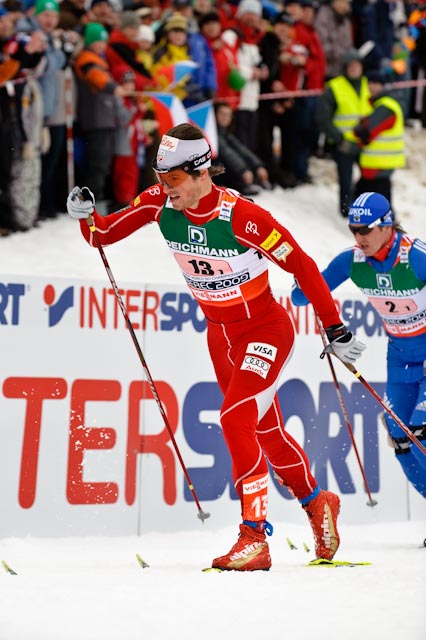
    Freeman at the 2009 World Championships in Liberec. (Photo: Swix Sport)

    2009/2010: Still red Bjørn Dæhlie

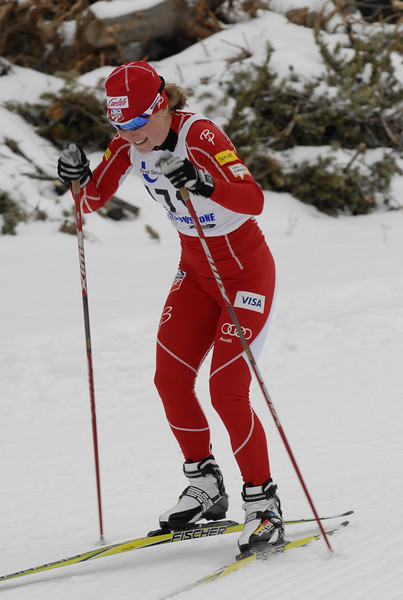
    November 2009: Tazlina Mannix (APU, USST) racing in West Yellowstone.


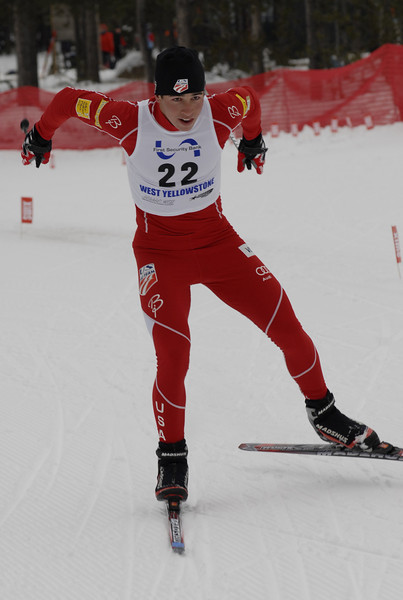
    November 2009: A very young Noah Hoffman (USST) racing to 3rd in a distance race in West Yellowstone.

    Honorable mention, domestic suits division:
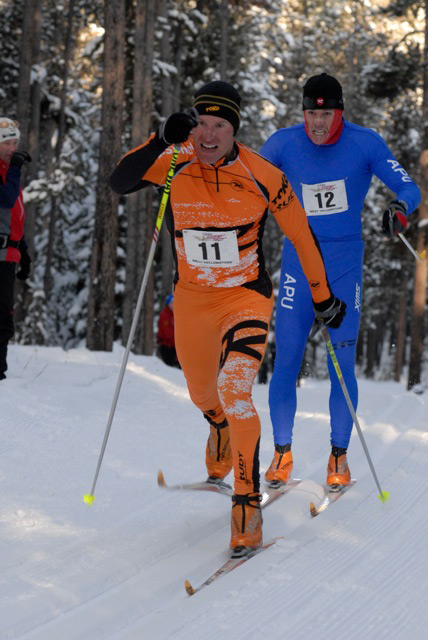
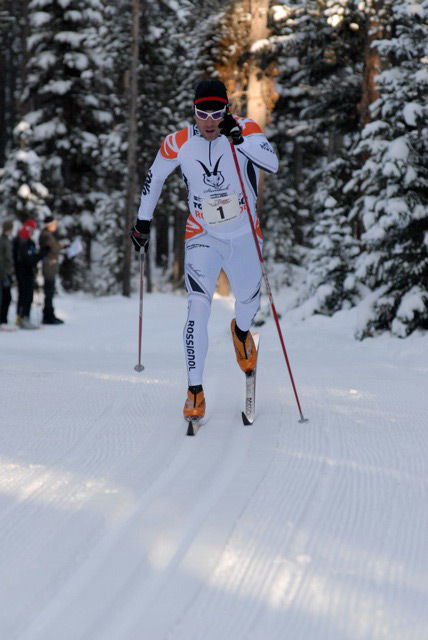
    November 2009: This is a very orange suit. Kevin Hochtl (Rossignol) – 32nd – leads Anders Haugen (APU) – 7th – to the finish in a West Yellowstone race.


    November 2009: This is one hell of an ibex. Chris Cook (Steinbock Racing) – 12th – sporting the new Steinbock Racing uniform


    2010 Winter Olympics, Vancouver: Red and silver

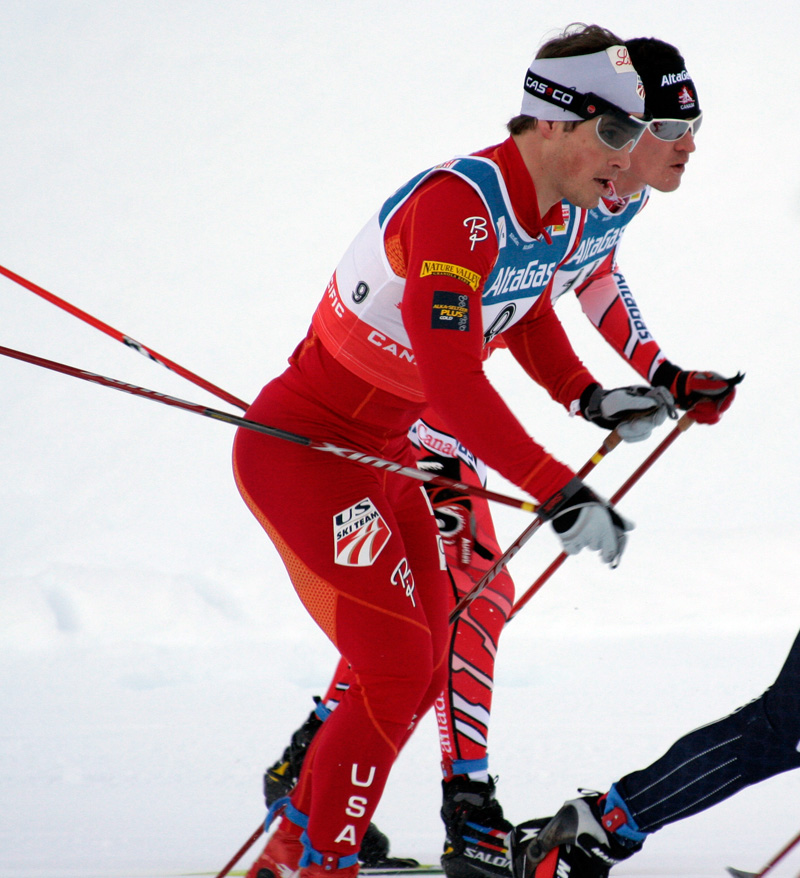
    For the Olympics, the Americans appear to have taken their World Cup template Bjørn Dæhlie suit, largely red – but have changed it by, inter alia, lightening the shade of red, adding “USA” on the right arm and left leg, adding silver accents, and of course removing all sponsor logos. Kikkan, already skiing in her third Olympics, coordinated with a red headband, red gloves, and her famous pink highlights. Andy Newell went with the red hat (he may not have had a choice), but was otherwise somewhat less vermilion.
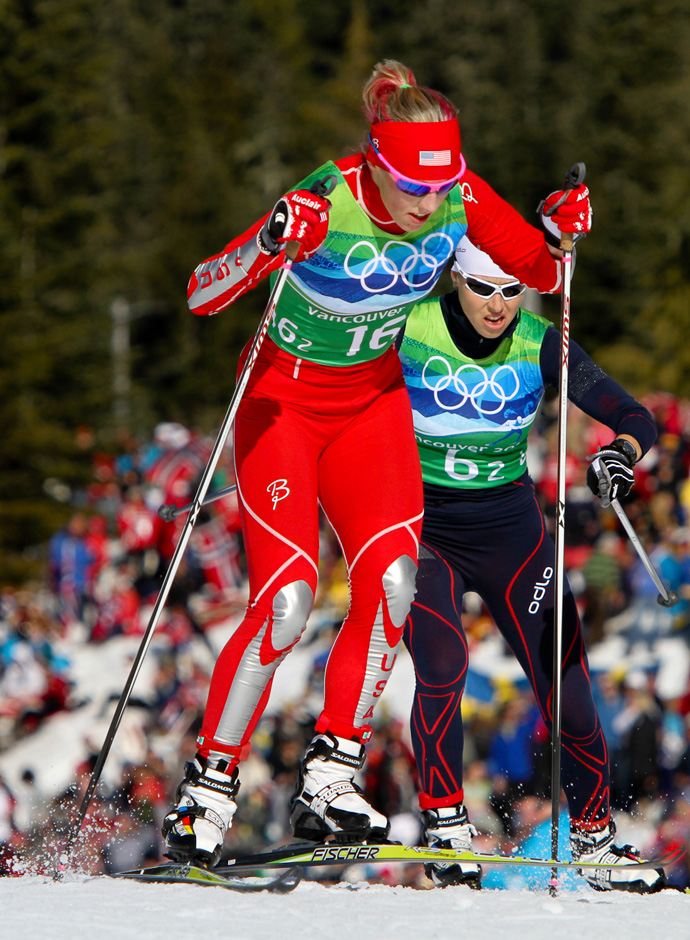
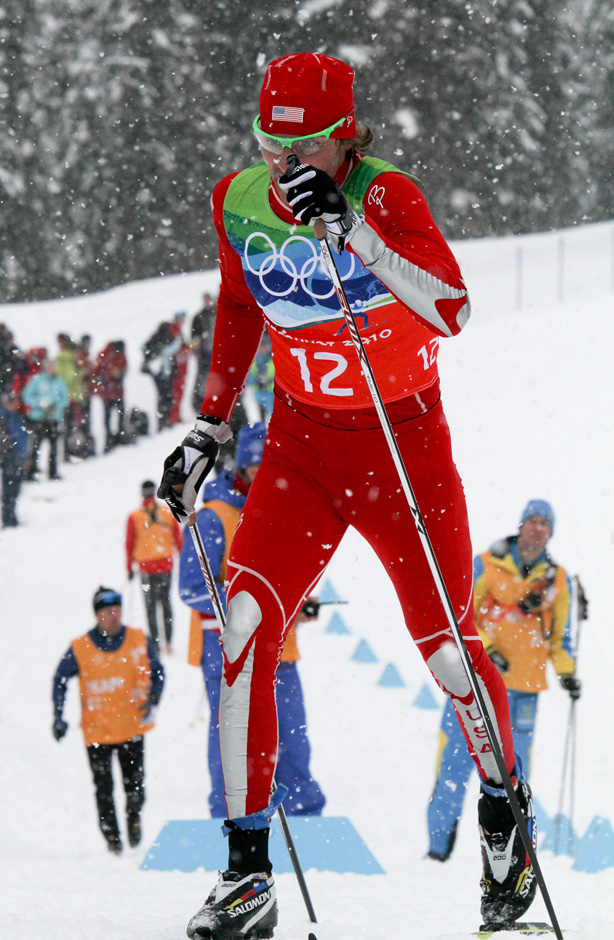
    Feb. 2010: Kikkan Randall
    Feb. 2010: Andy Newell on the big climb during the men’s 4 x 10 k relay.

    There was a lot of red in Vancouver. For example, here’s Andy Newell (far left, bib no. 13-2) tagging Korin Koos for the U.S. in the team sprint, while Petter Northug (far right, bib no. 2-2) tags Øystein Pettersen (middle right, bib no. 2-1) for Norway. (An entire standalone article could likely be written on the Canadians’ infamous kit (bib no. 4, back right).)
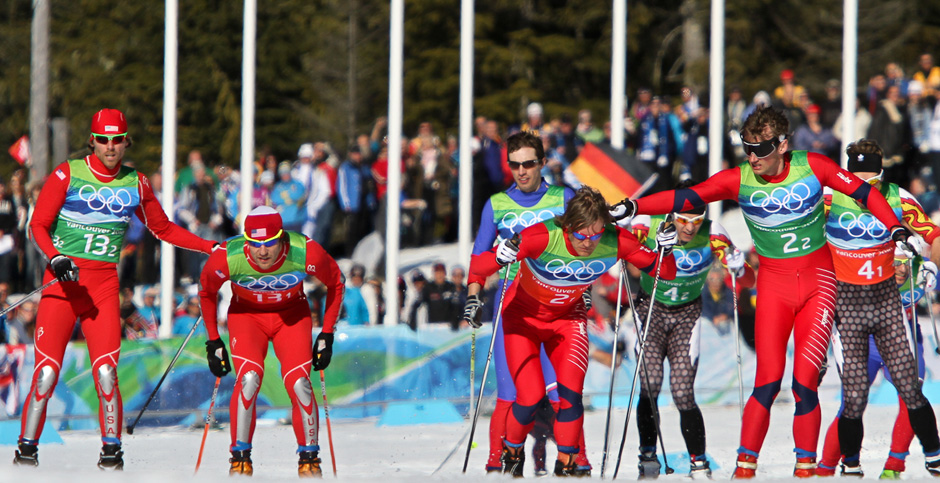
    Newell tags Koos (left) and Northug tags Pettersen (right) at the 2010 Vancoulver Olympics.

    Or here’s Newell in the middle, between Switzerland’s Dario Cologna (bib no. 12) and Yuichi Onda of Japan (bib no. 18):
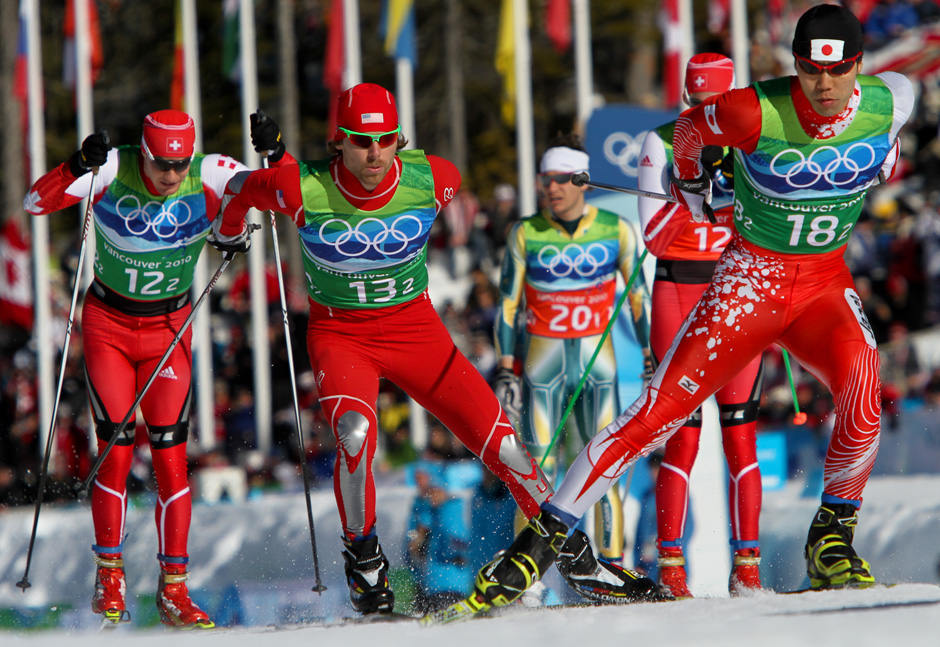
    Newell in the semis of the skate sprint: 2010 Vancouver Olympics.

    Finally, Poland (shown here: Sylwia Jaśkowiec, bib no. 6) was just red:
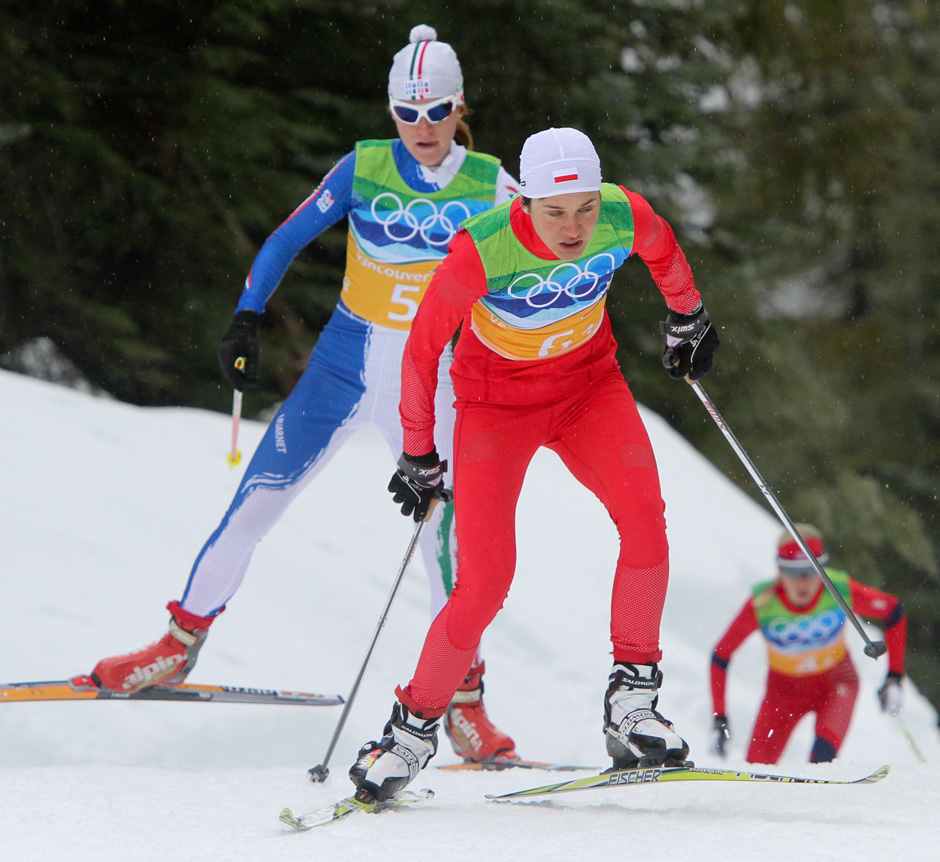
    Poland 2, 2010 Vancouver Olympics.


    2010/2011: The black era begins

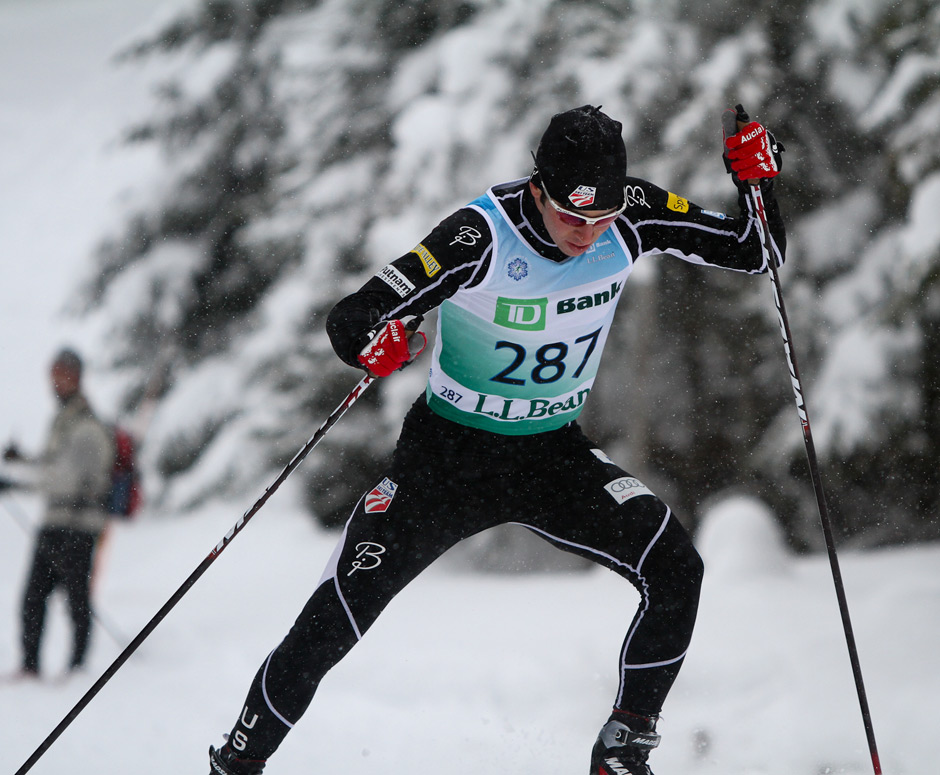
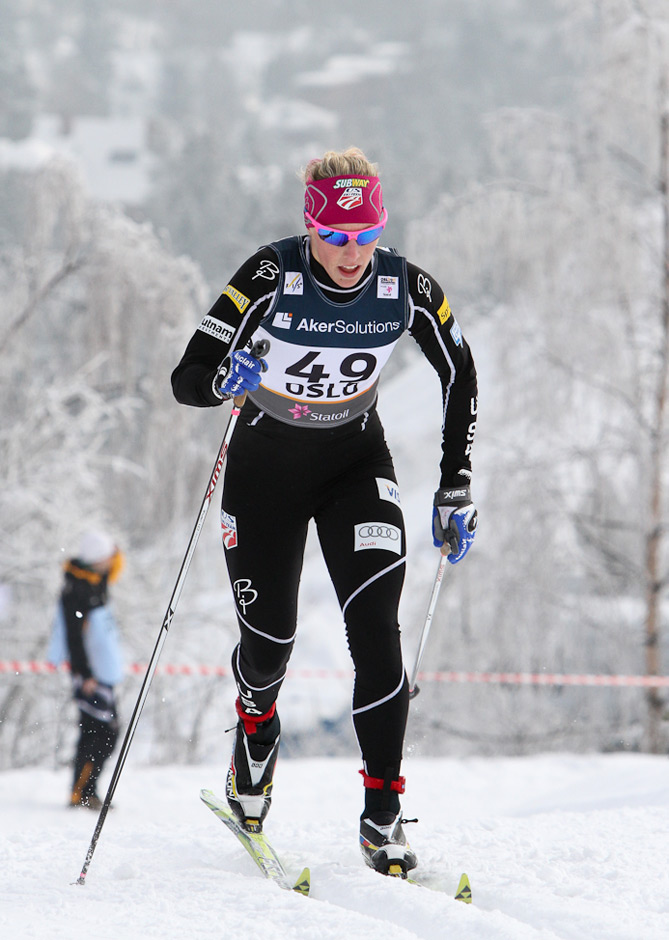
    Perhaps as a natural reaction to the dominance of a single color across multiple nations, the U.S. made a significant shift for the 2010/2011 World Cup season: black. The color does not appear on the national flag or in other common American iconography, but it is certainly distinctive. Bjørn Dæhlie remained the suit manufacturer.

    Or, as then-FasterSkier reporter Nat Herz wrote in fall 2010, “After any number of years of being drowned out by a sea of Norwegian crimson, U.S. Ski and Snowboard Association Nordic Director John Farra said that the USST will be ‘distinctly not red’ for the 2010-2011 season—including at World Championships in Oslo. ‘We went in a very different direction, in part from our experience in Oslo, where they [Norway] have a nation’s group of ten, and we can barely see our athletes in the group,’ he said.”
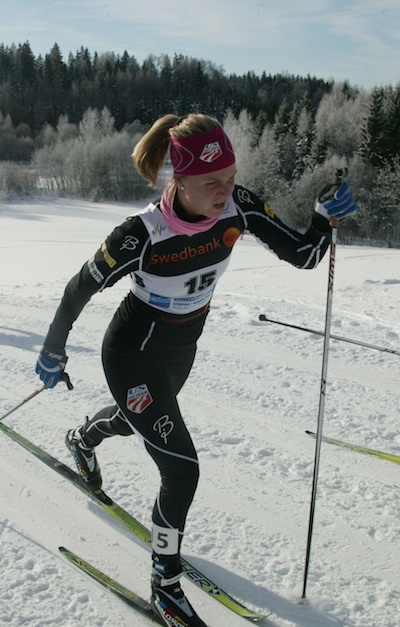
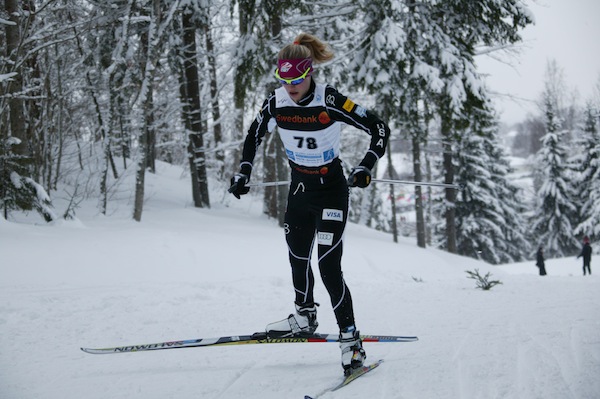
    January 2011: A 21-year-old Sadie Bjornsen races to 17th at U23 World Championships in Otepää, Estonia.


    January 2011: Jessie Diggins, then aged 19, races to 7th at Junior World Championships in Otepää.


    January 2011: Noah Hoffman at a SuperTour race in Lake Placid.


    February 2011: No change for World Champs: Kikkan Randall racing at 2011 World Championships in Oslo.


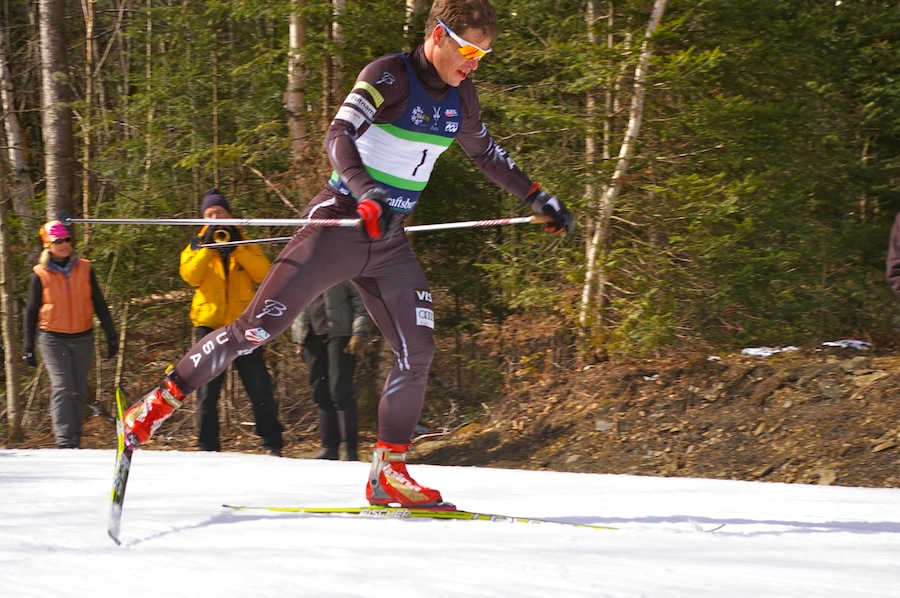
    2011/2012: Still black Bjørn Dæhlie
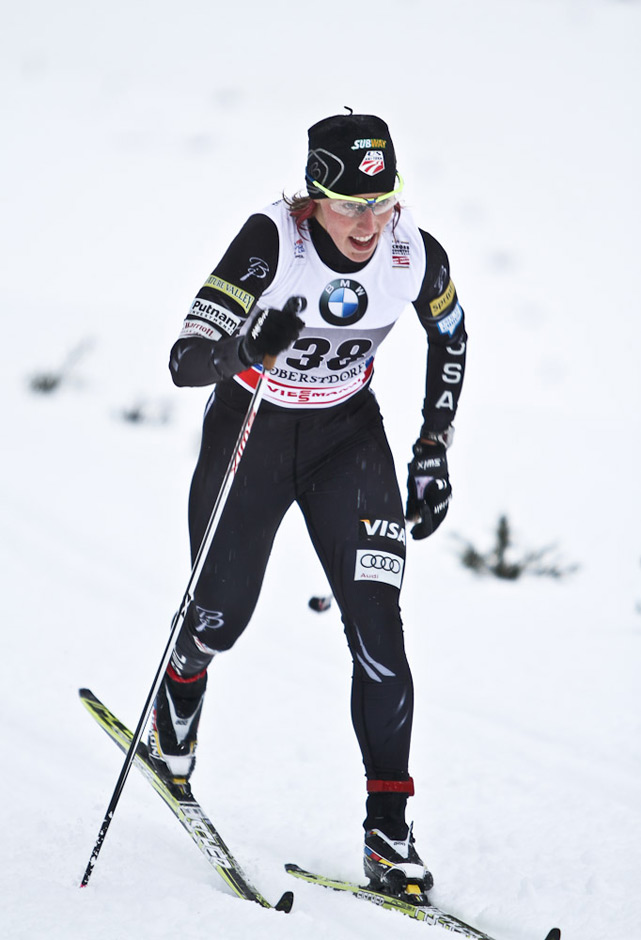
    December 2011: Kikkan Randall sprinting during the Tour de Ski.


    March 2012: Kris Freeman (SSCV/USST) on his way to claiming the US Distance Nationals 50 k freestyle title on Saturday morning in Craftsbury.


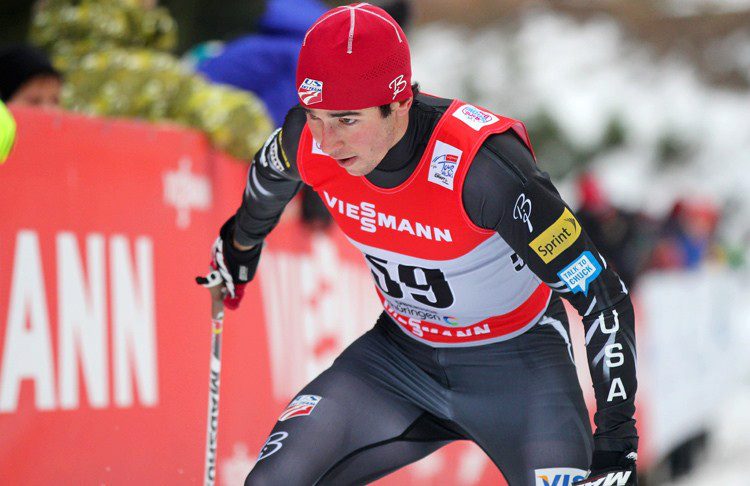
    2012/2013: Still black

    December 2012: Noah Hoffman in the Tour de Ski.


    December 2012: Kikkan Randall blasting to victory in the Tour de Ski opening prologue on Saturday. She skied to 14th in the pursuit on Sunday and is leading the U.S. women in the Tour de Ski standings after two stages. Photo: Marcel Hilger.


    February 2013: Diggins and Randall won gold in the team sprint at 2013 World Championships in Val di Fiemme, Italy, which was awesome, but, for purposes of this article, mostly relevant for the addition of the epochal relay socks but otherwise no change to the standard World Cup uniform.


    2013/2014: Yup, still black

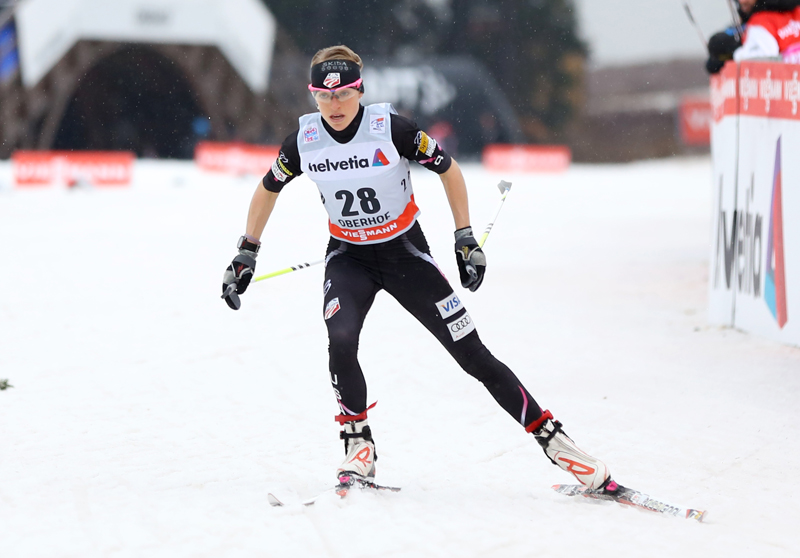
    December 2013: Liz Stephen (U.S. Ski Team) on her way to 34th in Saturday’s 3 k freestyle prologue at the first stage of the Tour de Ski in Oberhof, Germany. (Photo: Marcel Hilger)


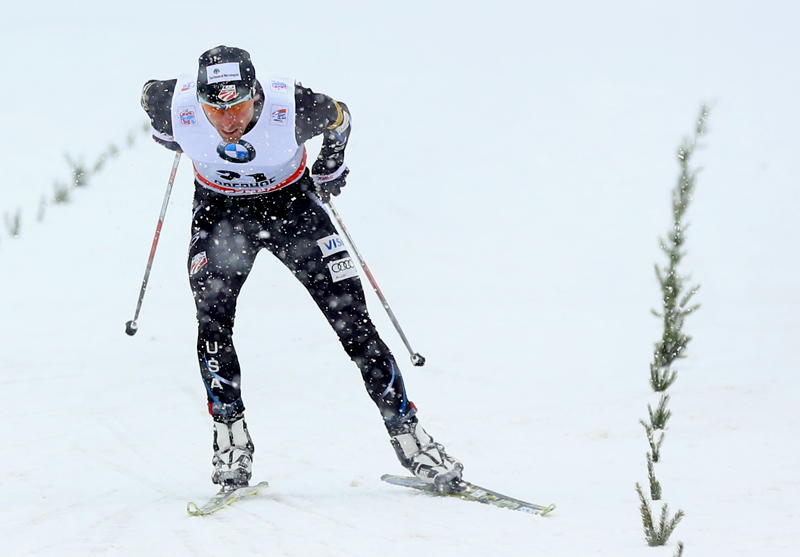
    December 2013: Andy Newell (U.S. Ski Team) qualified 12th and finished 10th overall in Sunday’s freestyle sprint. (Photo: Marcel Hilger)


    2014 Winter Olympics, Sochi: Stars and stripes

    The 2014 Winter Olympics, in Sochi, Russia, were known at the time for Kikkan Randall’s disappointing result in the individual skate sprint, and after the fact for the revelation that Russia was engaged in a massive state-sponsored doping scheme and cover-up. They were also significant for a change in uniforms: stars and stripes on the right arm and left leg, and a large “USA” on the right leg. The left arm was relatively plain. Also, several of the U.S. women drew attention for racing sleeveless in warm temperatures. Bjørn Dæhlie continued to be the brand logo featured on the upper right quad. (Pictured below: Noah Hoffman, in a solo race, and Sadie Bjornsen, in the women’s relay.)
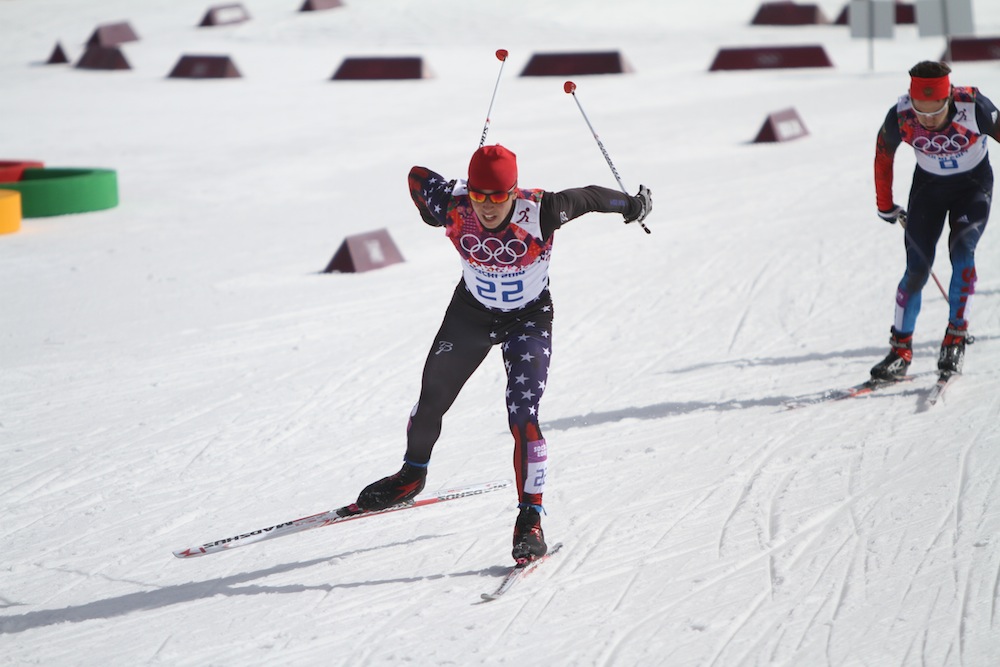


    2014/2015: Stars and stripes redux

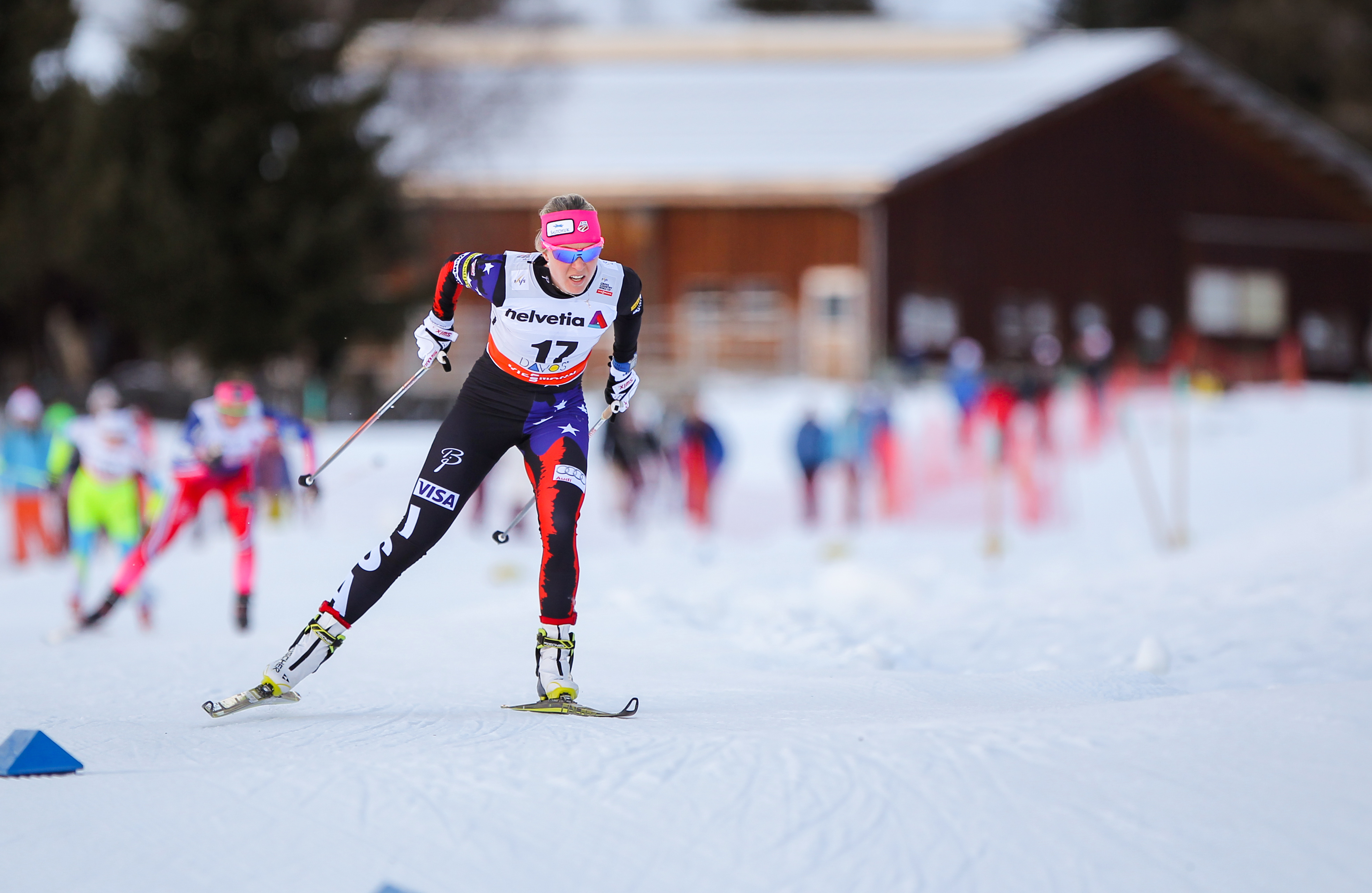
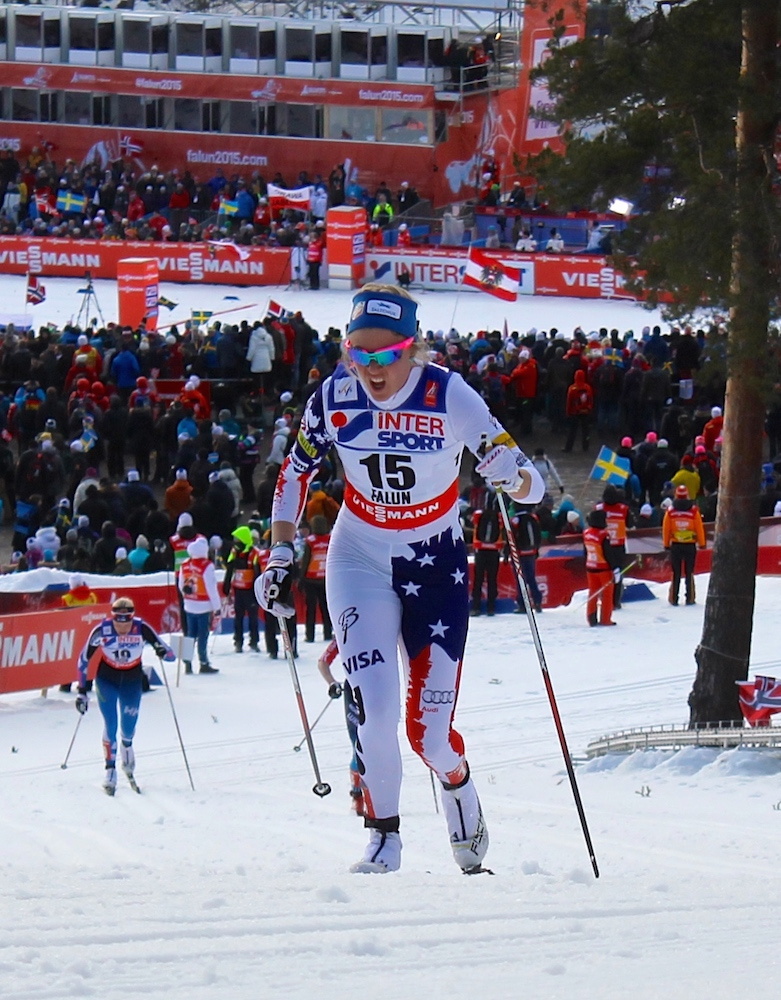
    Athletes took to the trails next season with a slightly modified version of the recent Olympics uniform: Larger stars on the left upper quad, with a deeper blue background. The stripes on the left leg became more pronounced and stretched farther up the race suit, to above the knee. Also, once the non-commercial period of the Olympics had passed, there was space for sponsor patches on the arms and legs.
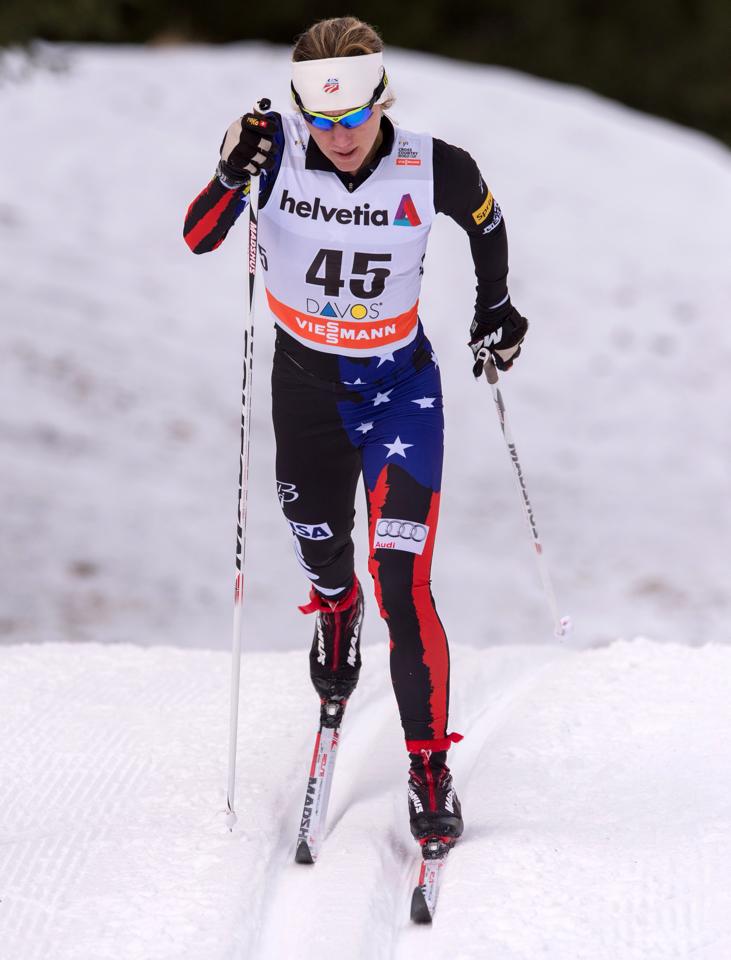
    December 2014: Caitlin Gregg (Team Gregg) skiing to 56th place in the Davos World Cup 10 k classic, Dec. 13. (Photo: Toko)


    USST’s Sadie Bjornsen racing to 29th in the Davos World Cup 10 freestyle, Dec. 20, 2014. (Photo: Fischer/Nordic Focus)

    World Championships, in Falun, Sweden, brought a mostly-white version of the uniform, helpful for the warm temperatures and soupy conditions that characterized many of the races. Here’s Sadie Bjornsen in Falun in February 2015:
     

    2015/2016: Red, white, and blue

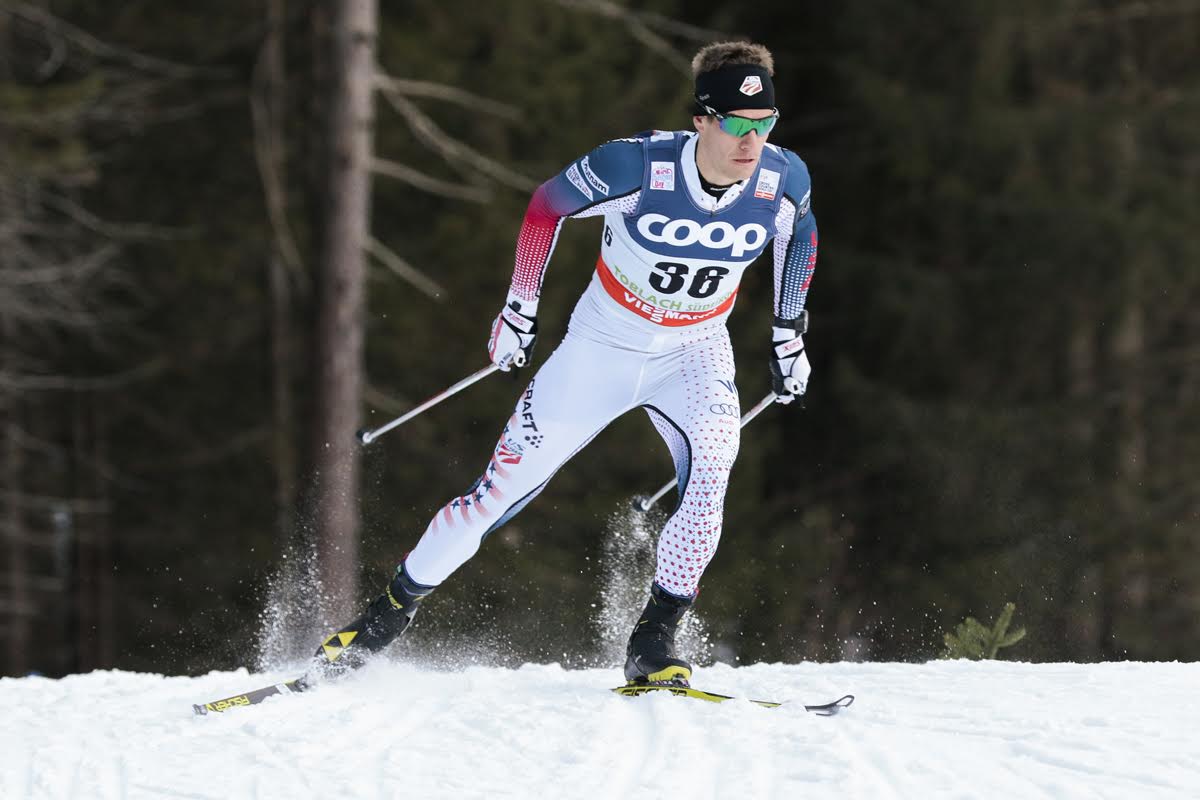
    By fall 2015, the move away from black, and towards red, white, and blue, was complete. Athletes now had the option of being attired in a predominantly white color scheme, which would aid in preventing overheating on warm days, while thankfully solving the transparency issues that had plagued recent all-white suits for Sweden or Italy. An alternate version had roughly the same patterning, but with blue as the primary color. Notably, the Americans also moved to a race suit manufactured by the Swedish company Craft for the first time in this survey.
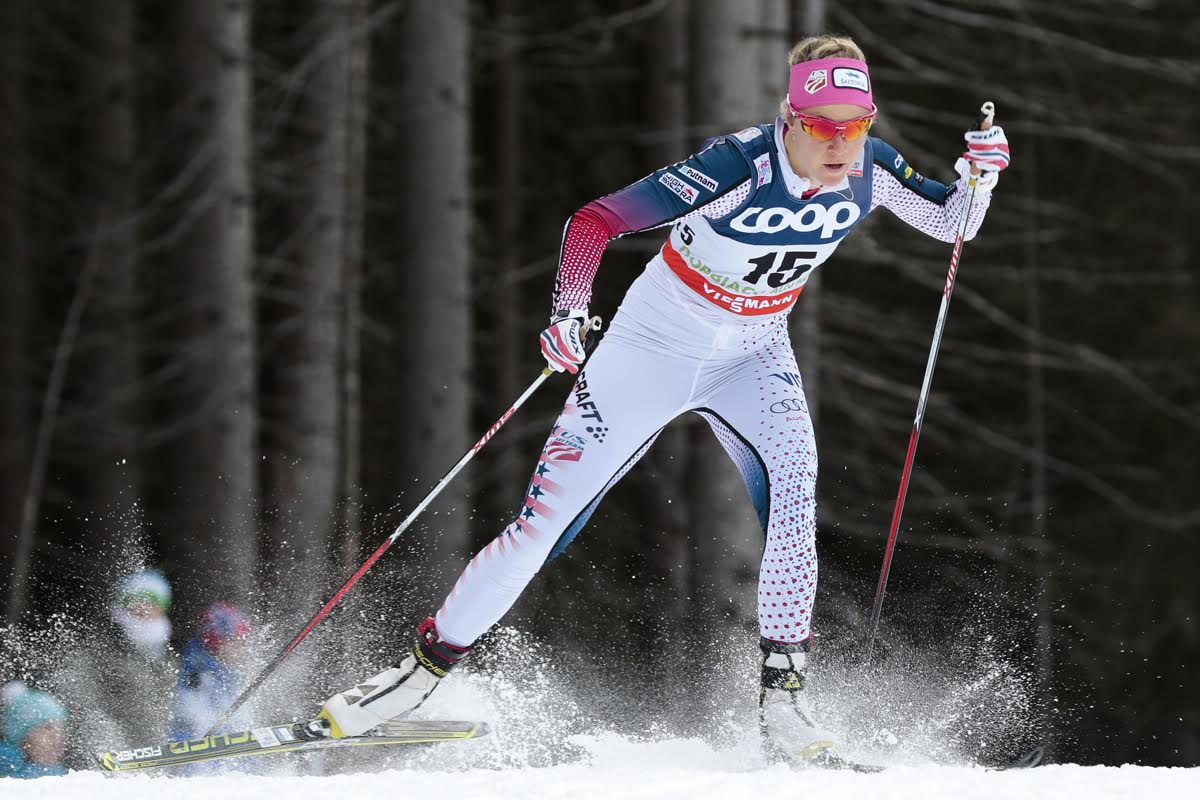
    December 2015: Sadie Bjornsen (U.S. Ski Team) racing to her best-ever sprint qualifier in sixth at the World Cup freestyle sprint in Toblach, Italy. She went on to make the semifinals and place 10th overall. (Photo: Fischer/NordicFocus)


    December 2015: Simi Hamilton (U.S. Ski Team) racing to his first non-stage World Cup podium on Saturday in Toblach, Italy, where he placed second in the freestyle sprint. (Photo: Fischer/NordicFocus)


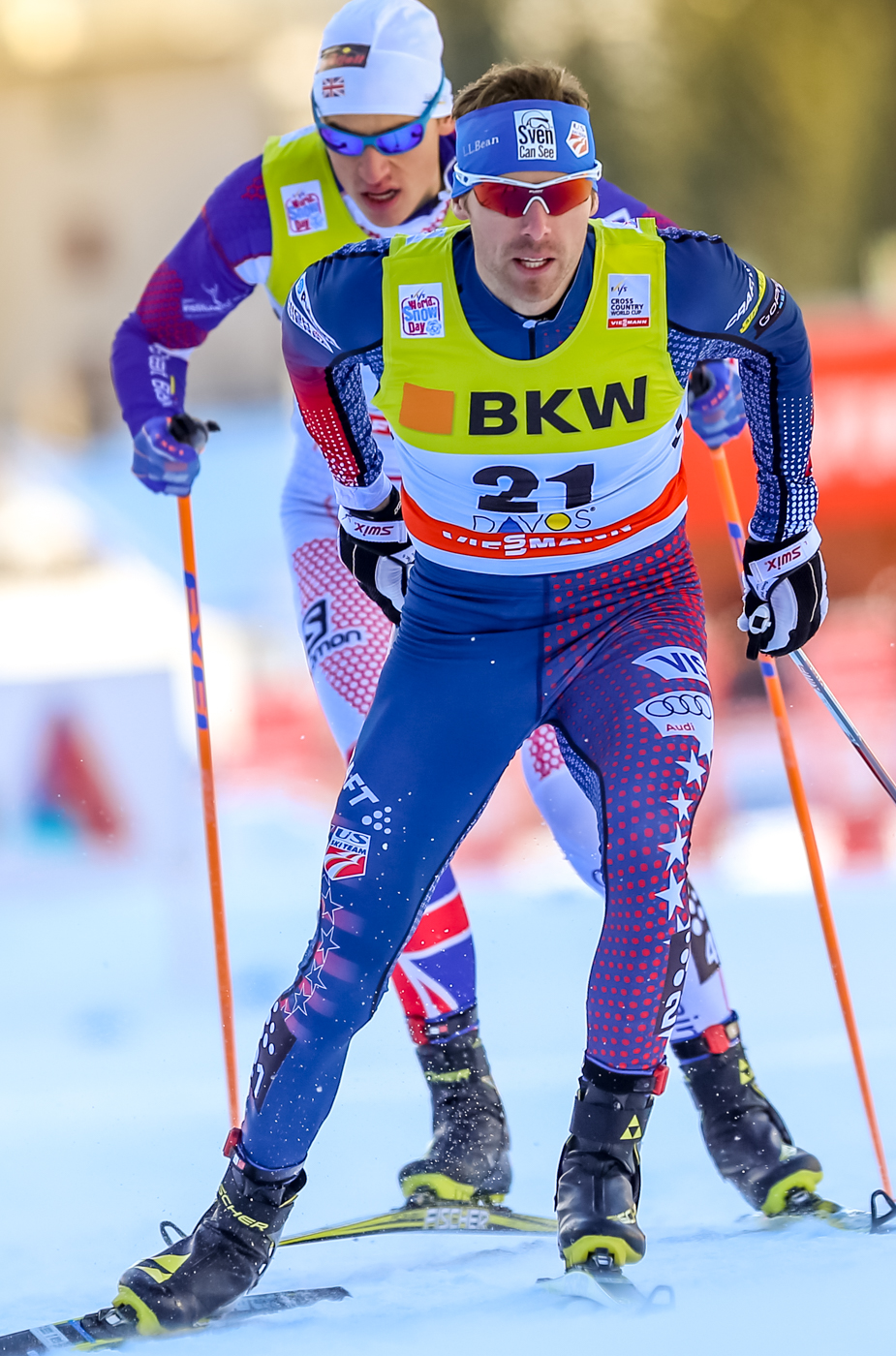
    December 2015: American Andy Newell (r) and Great Britain’s Andrew Young (c) trail Norway’s Håvard Solås Taugbøl (2) in the quarterfinal at the Davos World Cup freestyle sprint on Sunday in Switzerland. Taugbøl won the heat, Young placed third, and Newell was fifth after missing out on a photo finish for fourth. Newell finished the day 23rd overall. (Photo: Marcel Hilger)


    January 2016: Ida Sargent (U.S. Ski Team) teamed up with Sophie Caldwell (not shown) to place fifth in the 6 x 1.2 k freestyle team sprint at the World Cup in Planica, Slovenia. (Photo: Madshus/NordicFocus)

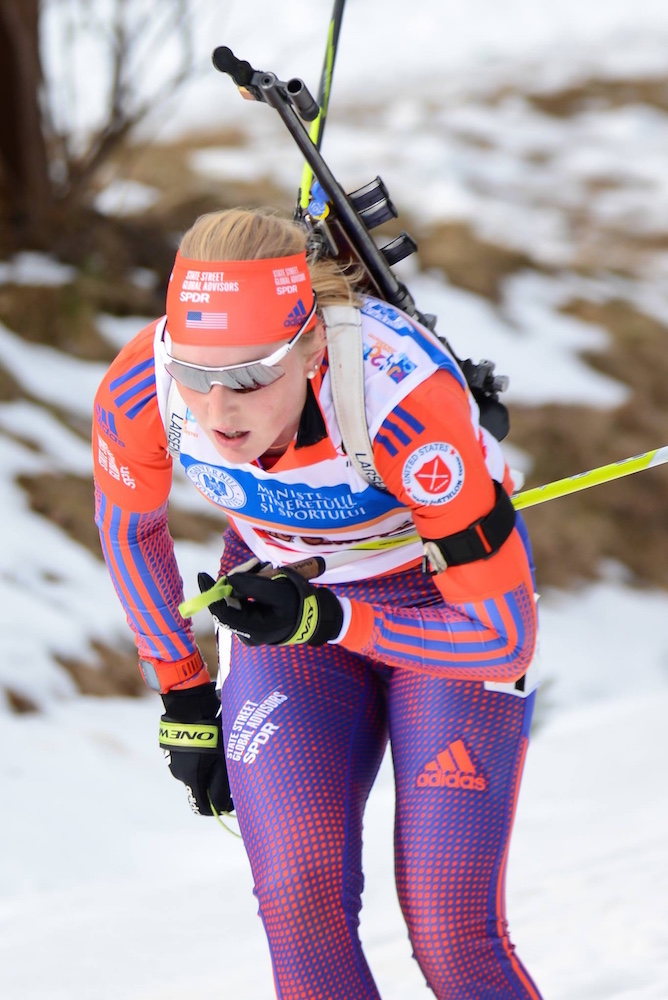
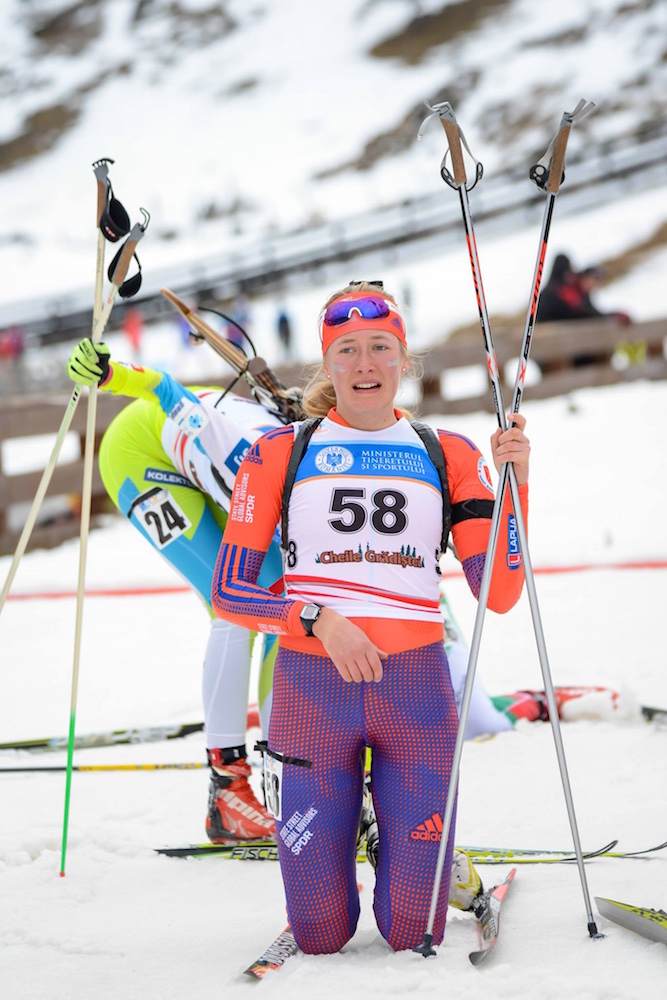
    Honorable mention: Trending towards “purple cobras” for American biathlon but not there yet.

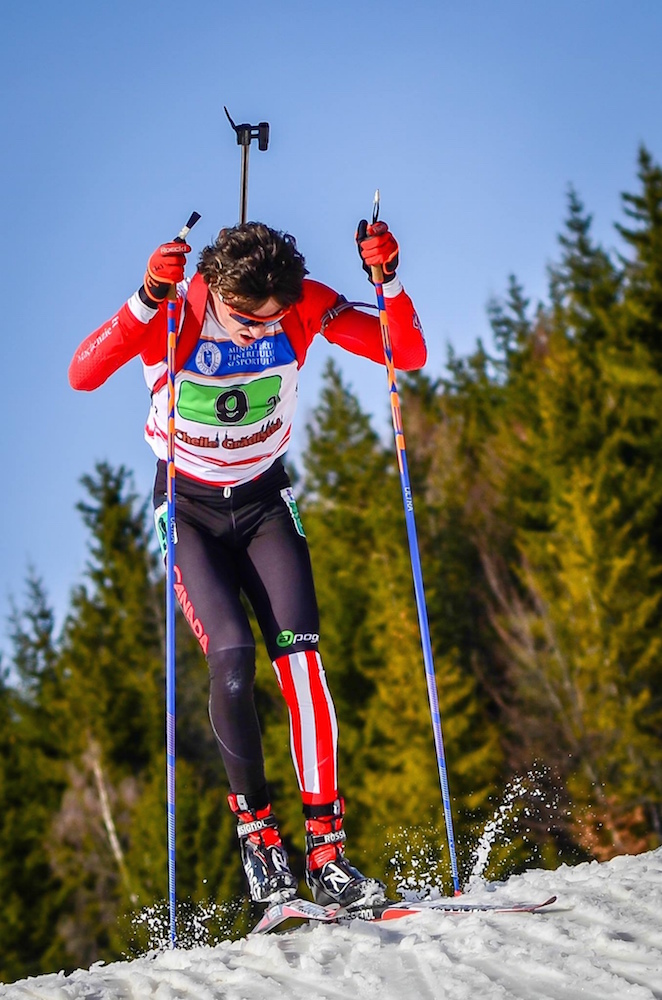
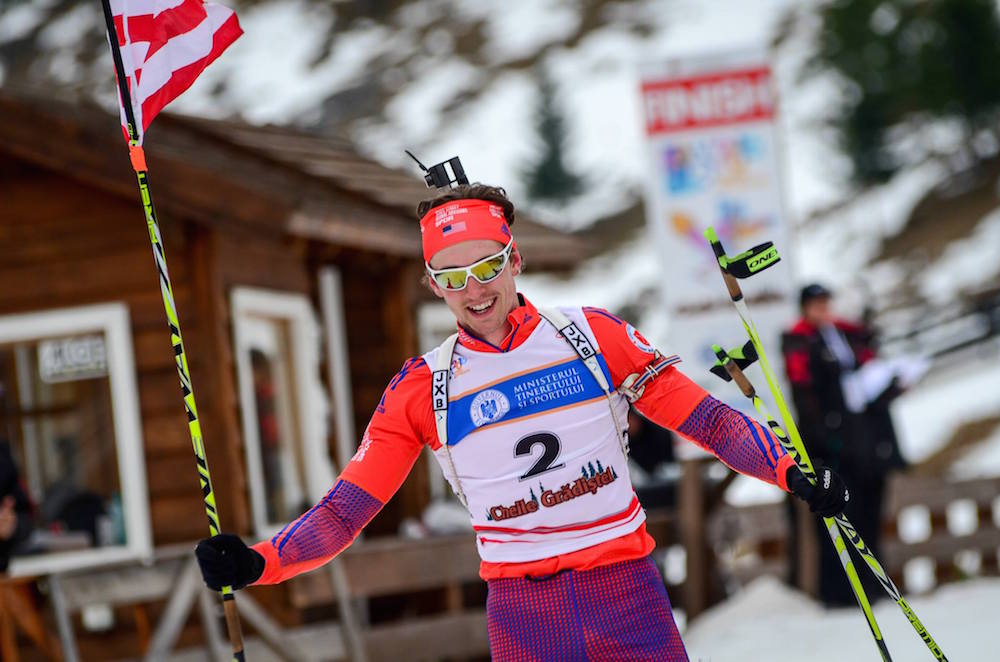
    American Claire Waichler started 58th and finished 33rd in the youth women’s pursuit on Sunday at IBU Youth/Junior World Championships in Cheile Gradistei, Romania. (Photo: IBU YJWCH Cheile Gradistei 2016/Facebook)


    2016/2017: More red, white, and blue

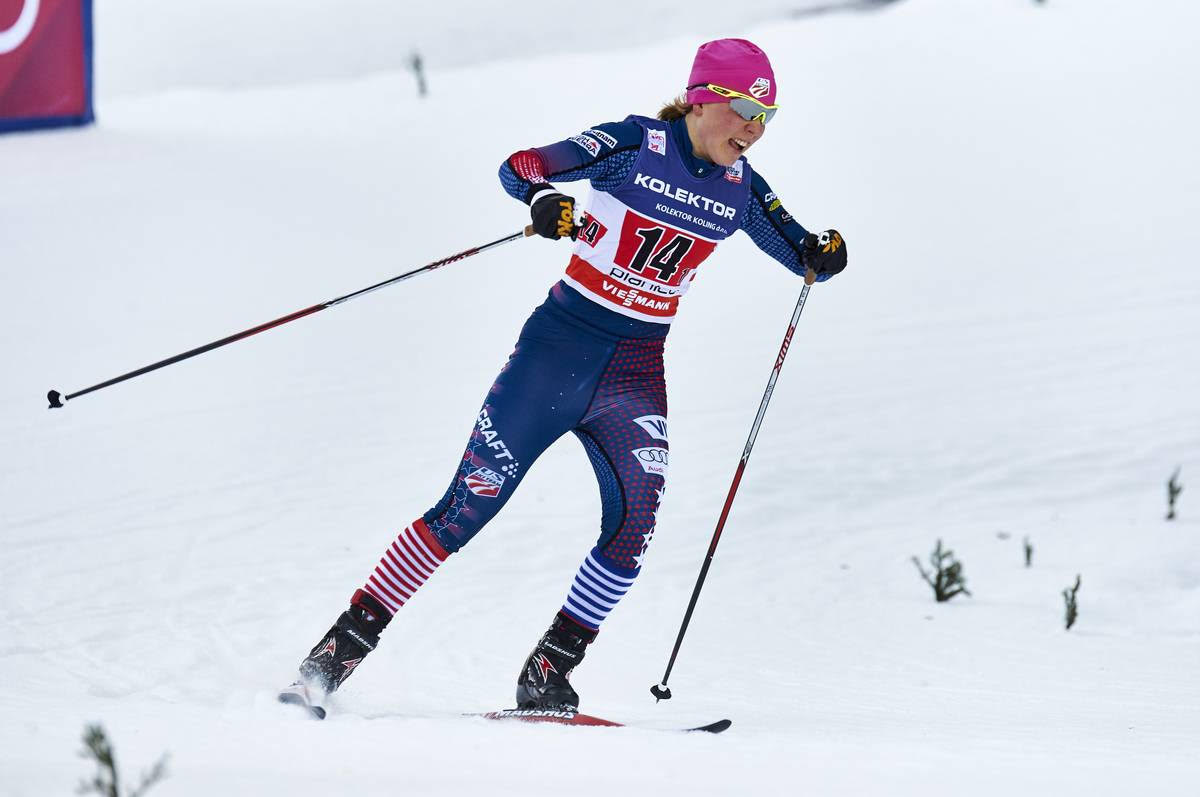
    An interpretation of red, white, and blue, still on a Craft suit, remained in place for the 2016/2017 World Cup season, which was marked within the team by Randall and her husband, Jeff Ellis, traveling the European race circuit with a newborn in tow. The changes to the USST uniform were less dramatic than Randall’s familial status: Still red, white, and blue, though now with blue as the dominant color. The entire left leg, and the bottom half of the right leg, had markings, somewhere between subtle striations and full-on stripes, that evoked the stripes of the American flag. (Let’s put aside for the moment the fact that the stripes on the actual flag are white and red, not white and blue.) The pattern was repeated on the lower right arm. An understated evocation of blue or white stars marked both lower legs, with more pronounced stars scattered around the bottom of the torso (possibly the top as well, but nearly all of one’s torso is typically covered by the standard race bib). The left arm and left leg both proclaimed “USA” in red lettering.

    The vehicular logo on the legs remained that of Audi, as it had been since the start of this history.

    There appears to have been no change for the 2017 World Championships. At least to the uniforms; on the race course, the Americans won an unprecedented three medals.
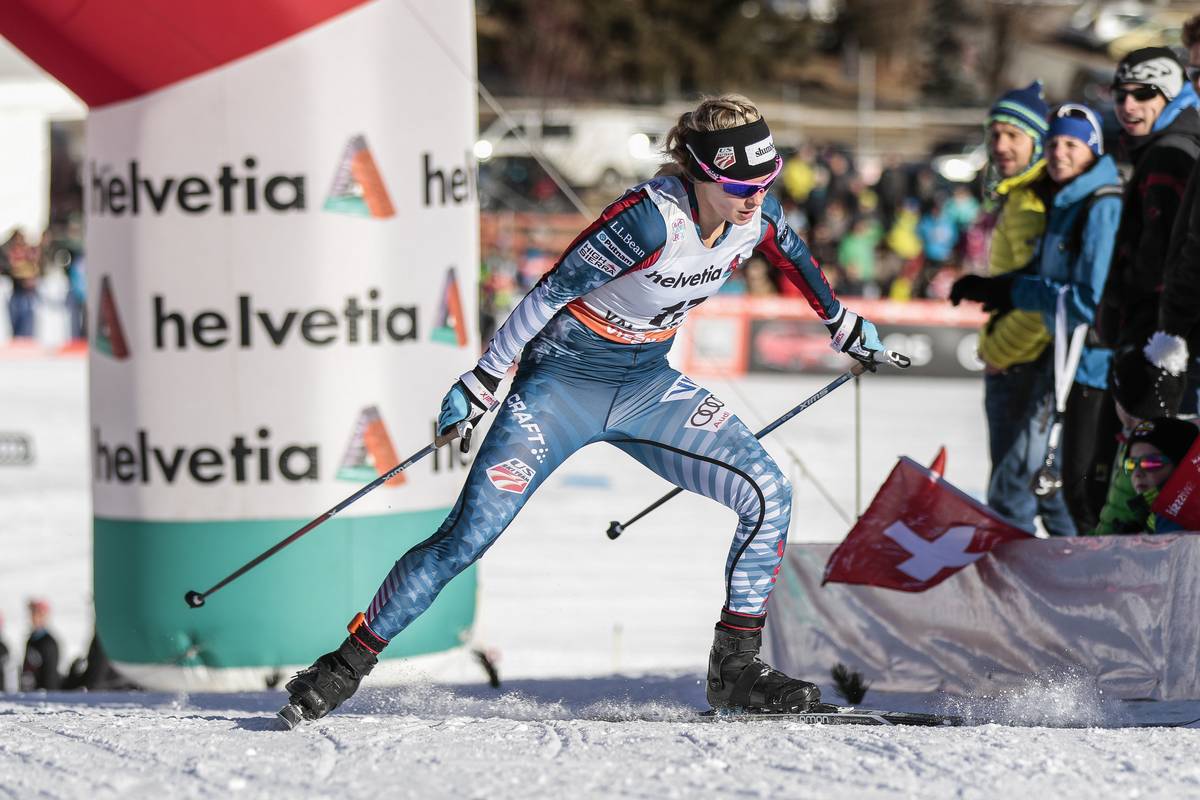
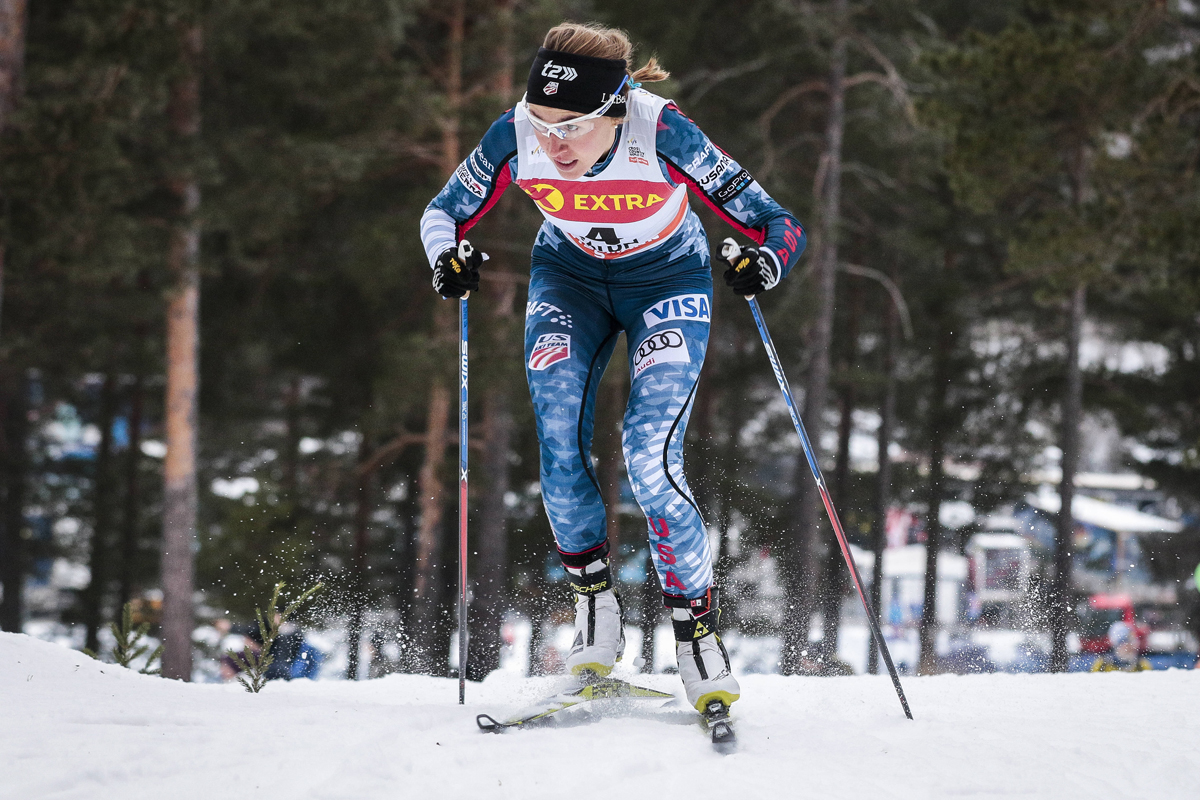
    December 2016: Jessie Diggins (U.S. Ski Team) racing to ninth in Saturday’s 1.5 k freestyle sprint qualifier in Val Müstair, Switzerland. Diggins went on to place sixth in the final. (Photo: Salomon/NordicFocus)


    January 2017: Sophie Caldwell (U.S. Ski Team) racing to third in the qualifier of Saturday’s 1.4 k freestyle sprint in Falun, Sweden. She went on to finish 16th overall (Photo: Fischer/NordicFocus)


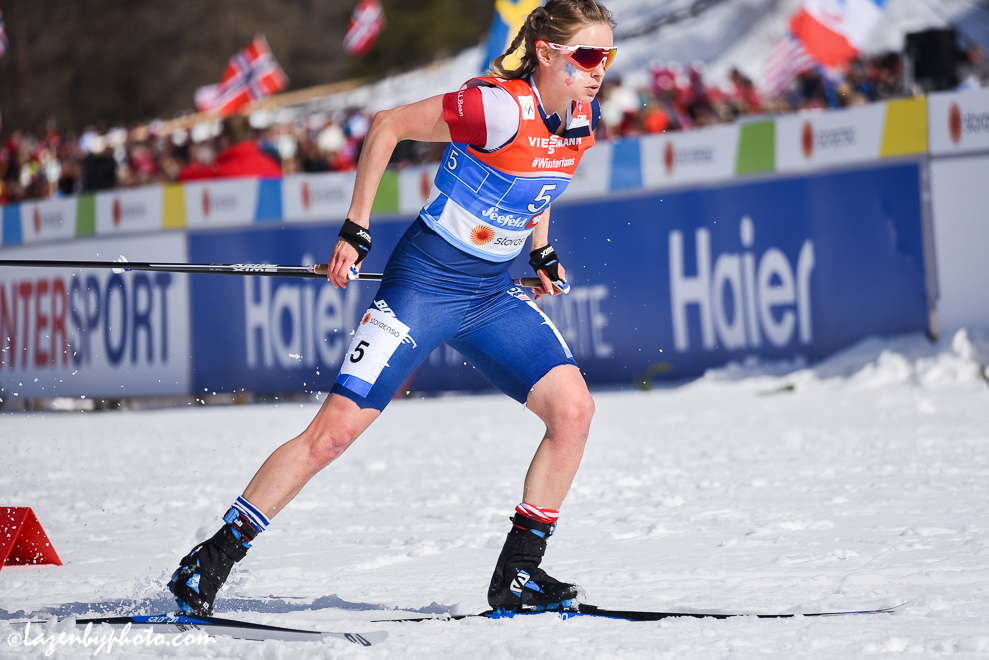
    February 2017: Kikkan Randall (U.S. Ski Team) racing to 26th in the women’s 10-kilometer classic individual start at the 2017 Nordic World Championships on Tuesday in Lahti, Finland (Photo: John Lazenby/Lazenbyphoto.com)

    Meanwhile, biathlon saw the advent of the beloved “purple cobras” era:
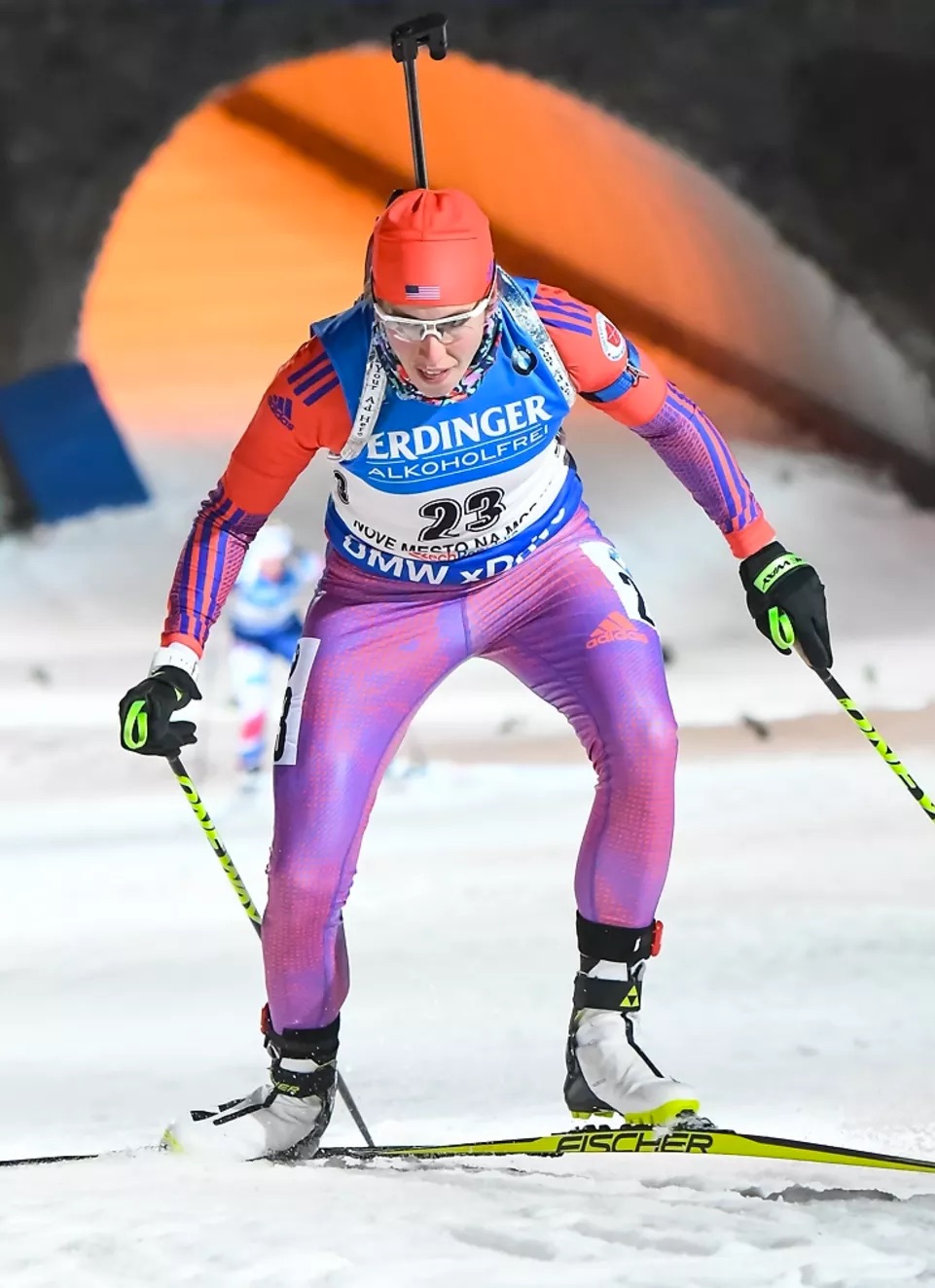
    US Biathlon’s Susan Dunklee on her way to finishing third in the women’s sprint at the IBU World Cup in Nove Mesto, Czech Republic. It was the third podium of her career. (Photo: IBU)


    2017/2018: Red, white, and blue redux

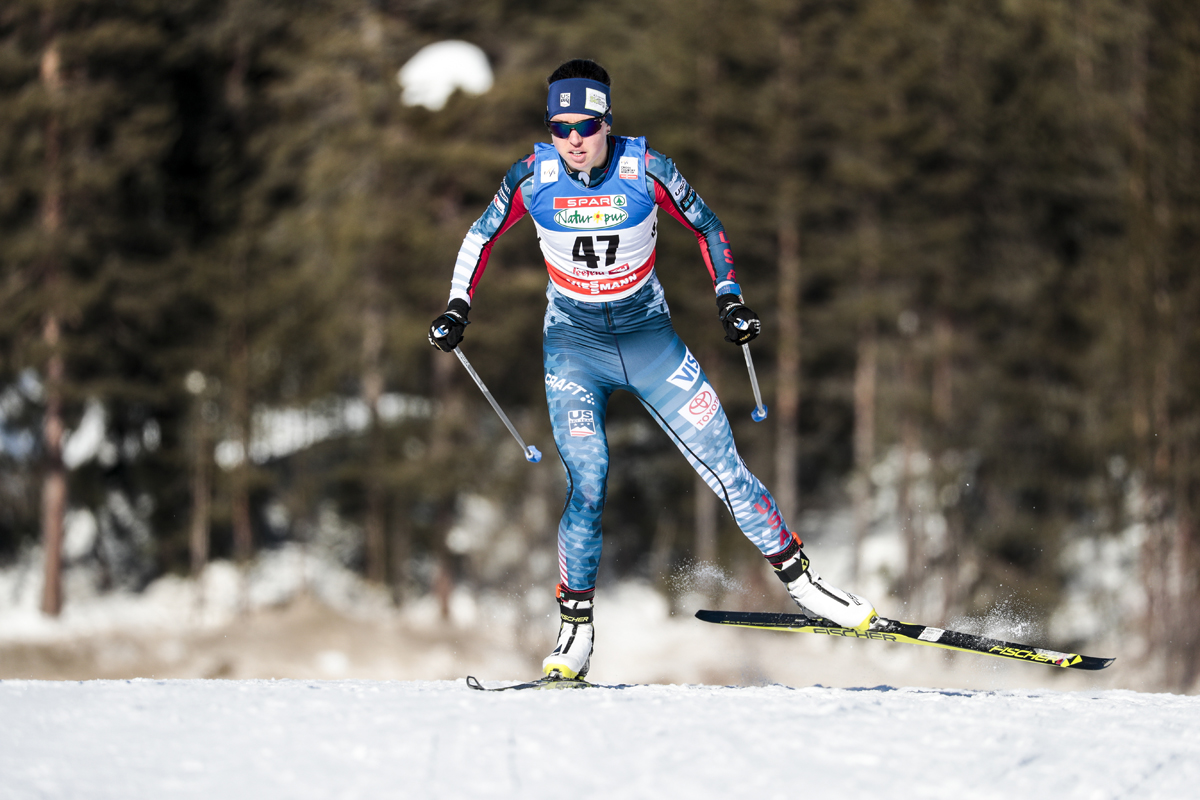
    There appears to have been no change for the 2017/2018 World Cup season: still red, white, and blue, but mostly blue, on a Craft suit. The most notable change may have been to the car sponsor… for the first time since at least the scope of this article, a Toyota logo was on the leg, not Audi. Nichts ist unmöglich (“Nothing is impossible”), as the company’s European slogan proclaims.
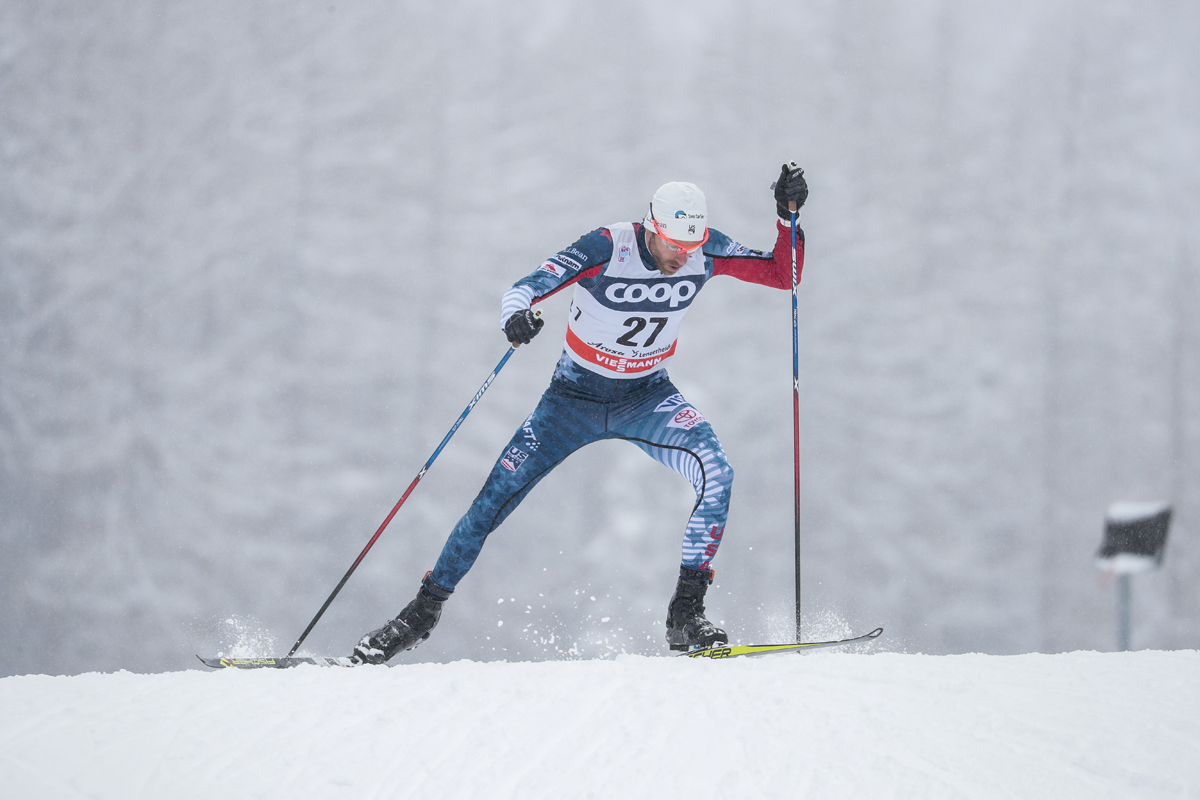
    American Andy Newell racing the men’s 1.5 k freestyle-sprint qualifier at Stage 1 of the Tour de Ski on Saturday in Lenzerheide, Switzerland. He qualified 20th and went on to finish 19th overall. (Photo: Fischer/Nordic Focus)


    Caitlin Patterson (Craftsbury Green Racing Project) racing to 52nd in the freestyle sprint qualifier at the last World Cup on Jan. 27 in Seefeld, Austria. The next day, she placed 23rd in the 10 k freestyle mass start. (Photo: Fischer/NordicFocus)


    2018 Winter Olympics, Pyeonchang: Red, white, and blue, and a lot of stripes

    There is a somewhat famous picture from the 2018 Winter Olympics that you may already be familiar with. In the picture, Jessie Diggins, on the lefthand side of the frame, stretches her left foot across the finish line to secure an historic Olympic gold medal for the United States. Her left arm mirrors the gesture, punching the air above her in what is presumably an instinctual counterbalance to the lunge but also appears, in a frozen moment in time, to be a triumphant fist-pump. In the middle, her face is rent in a rictus of exertion and triumph. On the righthand side of the frame, Stina Nilsson of Sweden lunges as well, 0.19 seconds behind Diggins. Mute V-boards and still flags fill in the background of the image, as Maiken Caspersen Falla of Norway appears to stand up and stop skiing in order to watch the finish unfold.

    It was a few seconds before 7:16 p.m. in Pyeongchang, 4:16 a.m. in Afton, Minnesota, and 1:16 a.m. in Anchorage, Alaska. If you’re reading this website, you may remember where you were at that moment.
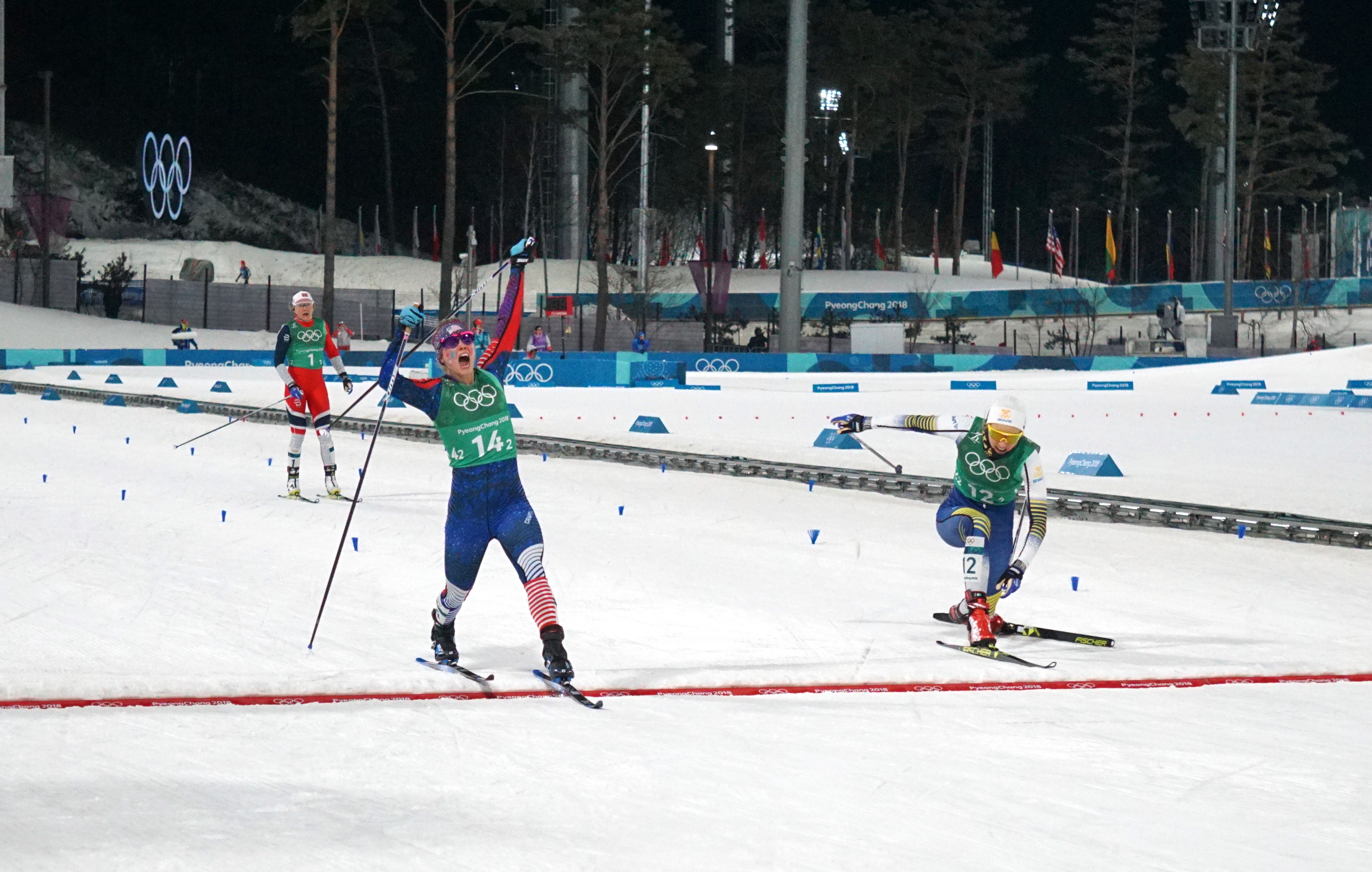
    February 2018: Jessie Diggins (14) edges Sweden’s Stina Nilsson (r) for gold, while Norway’s Maiken Caspersen Falla (far left) races to bronze, in the women’s freestyle team sprint final at the 2018 Olympics in PyeongChang, South Korea. (Photo: Noah Hoffman)

    But let’s talk about the uniform. Another Craft product, the dominant impression is once again blue; in the photo above, taken at whatever distance from the finish Noah Hoffman was allowed to stand while there was a race on, there is a whole lot of blue approaching the finish line between the American suit and the Swedish one. Some white stripes are visible around the knee of Diggins’s suit, trending down the lower leg, though they are soon subsumed by The Relay Socks.

    On closer inspection, however (see next picture, below), there are a lot of stripes going on in this uniform. The entire legs are striped, with stronger white stripes on the sides of the torso fading to fainter stripes at the top of the leg. The knees have white stripes on a blue background, with the width of the white stripes gradually decreasing and the extent of the blue interstices gradually increasing across the course of the knee. As shown in more detail here, the patterning gives way to thin red stripes against a blue background, on the lower right leg, and a bold white “USA,” on the lower left.

    The right arm has white splotches, potentially stellar in nature, against a blue background. The left arm has red and white stripes to midway down the biceps, which then transition to blue and red stripes.

    The torso has a subtle blue and black patterning perhaps best described as “Swedish forest camo.”

    Finally, although it is not apparent in either picture, “USA” was written in white letters against a blue background on both the right arm and lower left leg, as shown in the images available here (lettering on arm) and here (lettering on leg).
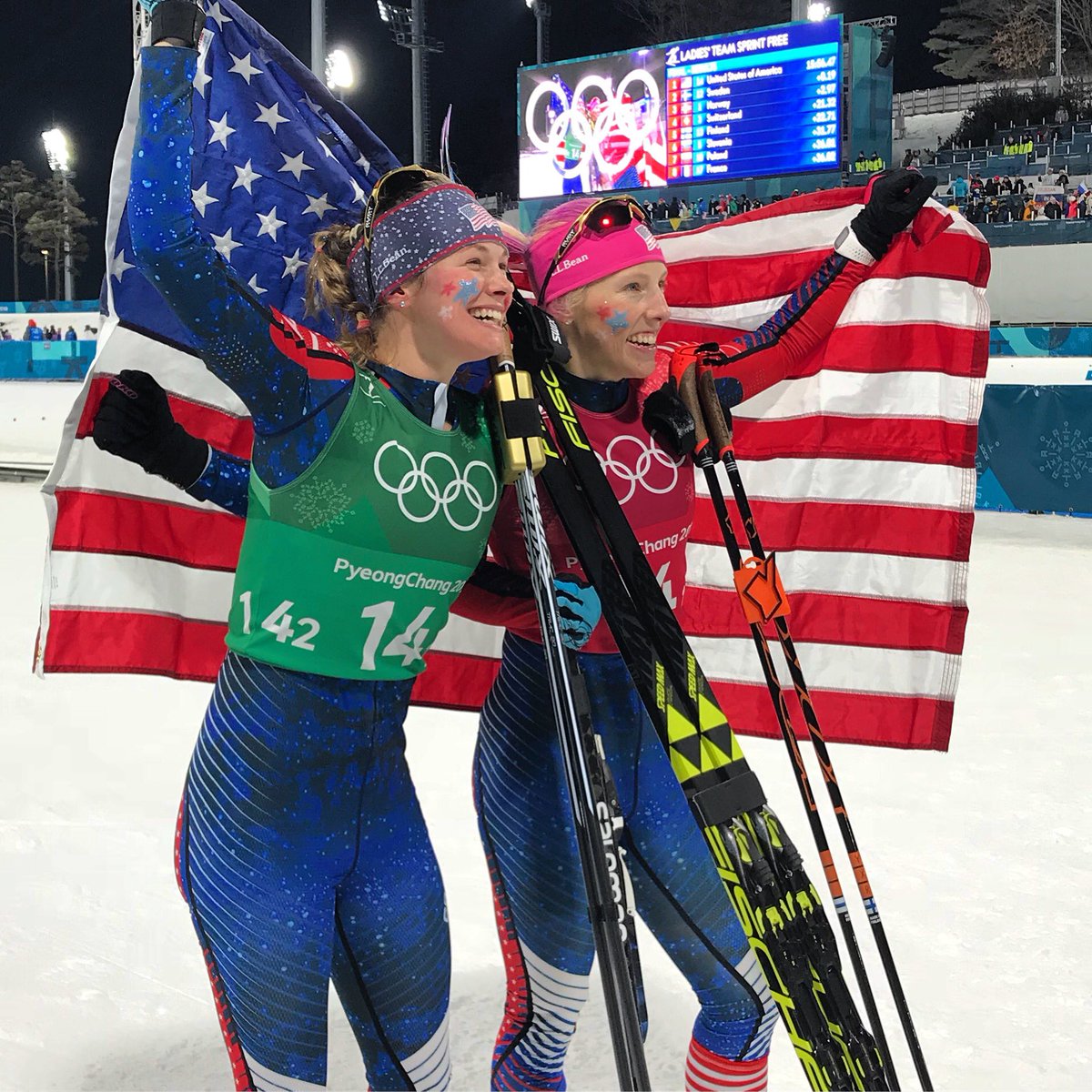
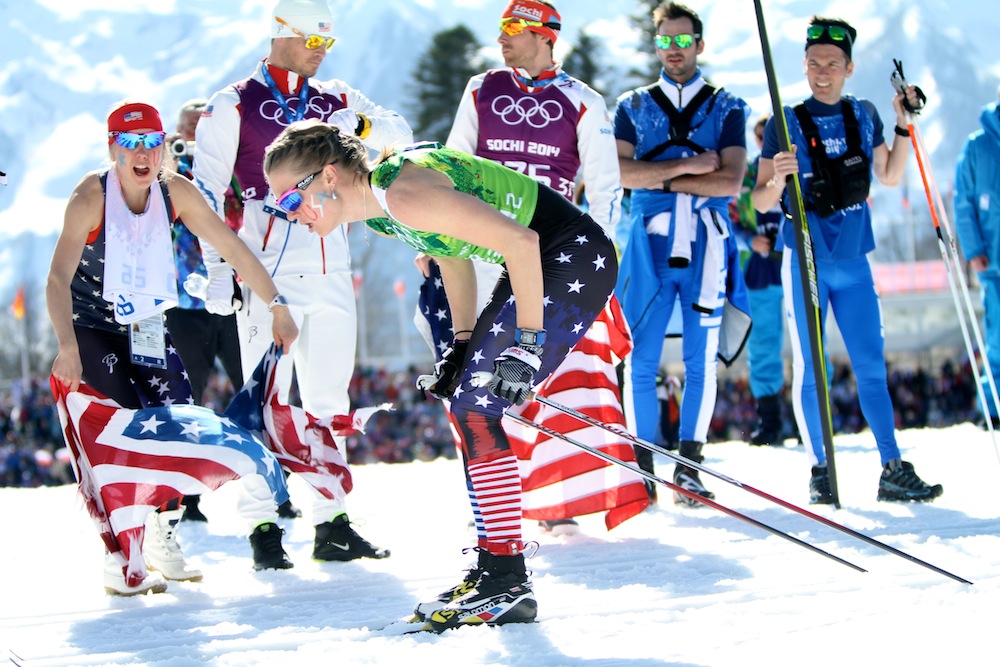
    February 2018: Jessie Diggins (l) and Kikkan Randall soak up their win in the women’s freestyle team sprint on Wednesday at the 2018 Olympics in PyeongChang, South Korea. (Photo: FIS Cross Country/Twitter)

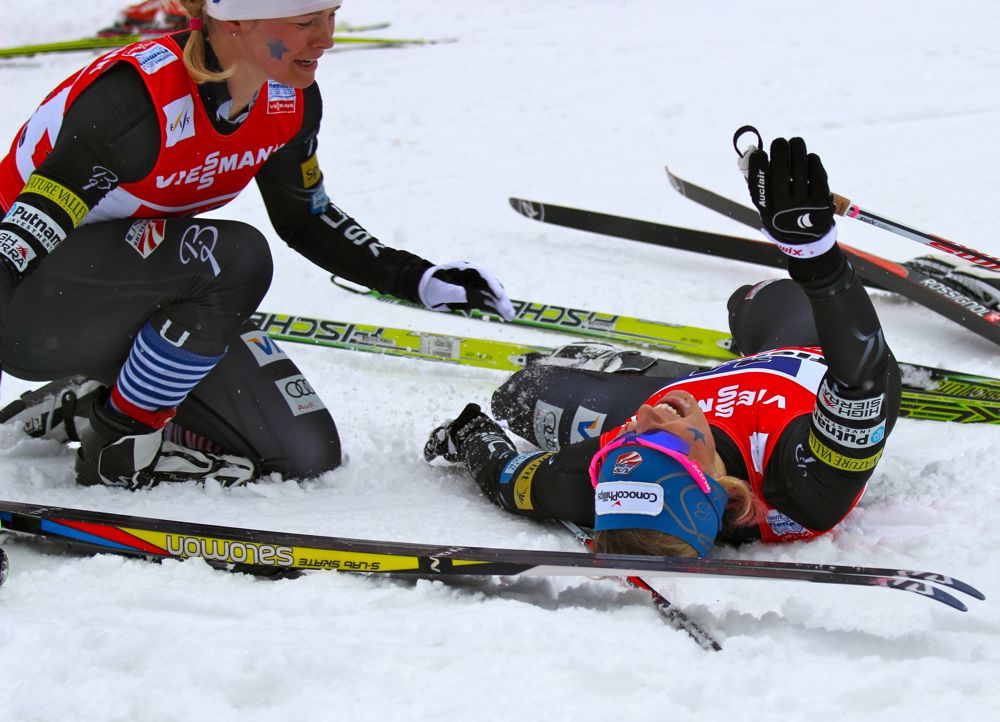
    Here is another fine picture of Diggins and Randall from the evening of February 21, 2018. This one does not show the famous American relay socks, but does show the equally renowned facepaint and glitter. As Diggins has written, in what is both a pro-glitter cri de cœur and “a brief message for [the] high school officials” who harshed on her glitter as a junior racer, “Putting on glitter before my race is a salute to the little girl who just wants to ‘go super speed!!!’ It’s a promise to myself that I will race my absolute hardest that day. It’s a ritual that gets me in the right mindset to get out of the start gate and give it everything I have. It’s harmless, doesn’t negatively impact anyone, but to me it’s a huge part of my race morning. . . . And on relay days? Oh man. I get so excited about relay days. I get to paint the flag, ‘USA’ and stars on the faces of my teammates, and one of them will paint it on me as well. Then I put glitter over everything! It’s a special time when everyone is nervous, and excited, to be representing our country and we get together early in the morning to help each other get ready and deal with our pre-race nerves. It’s a little bit like our special striped relay socks…it’s part of what we do, as a team.”

    End of the 2017/2018 season: Farewell tour

    Honorable mention for the 2017/2018 season, World Cup edition: Randall and Liz Stephen’s outfits for their final World Cup race (standard Craft base, but with a whole lot of flair):
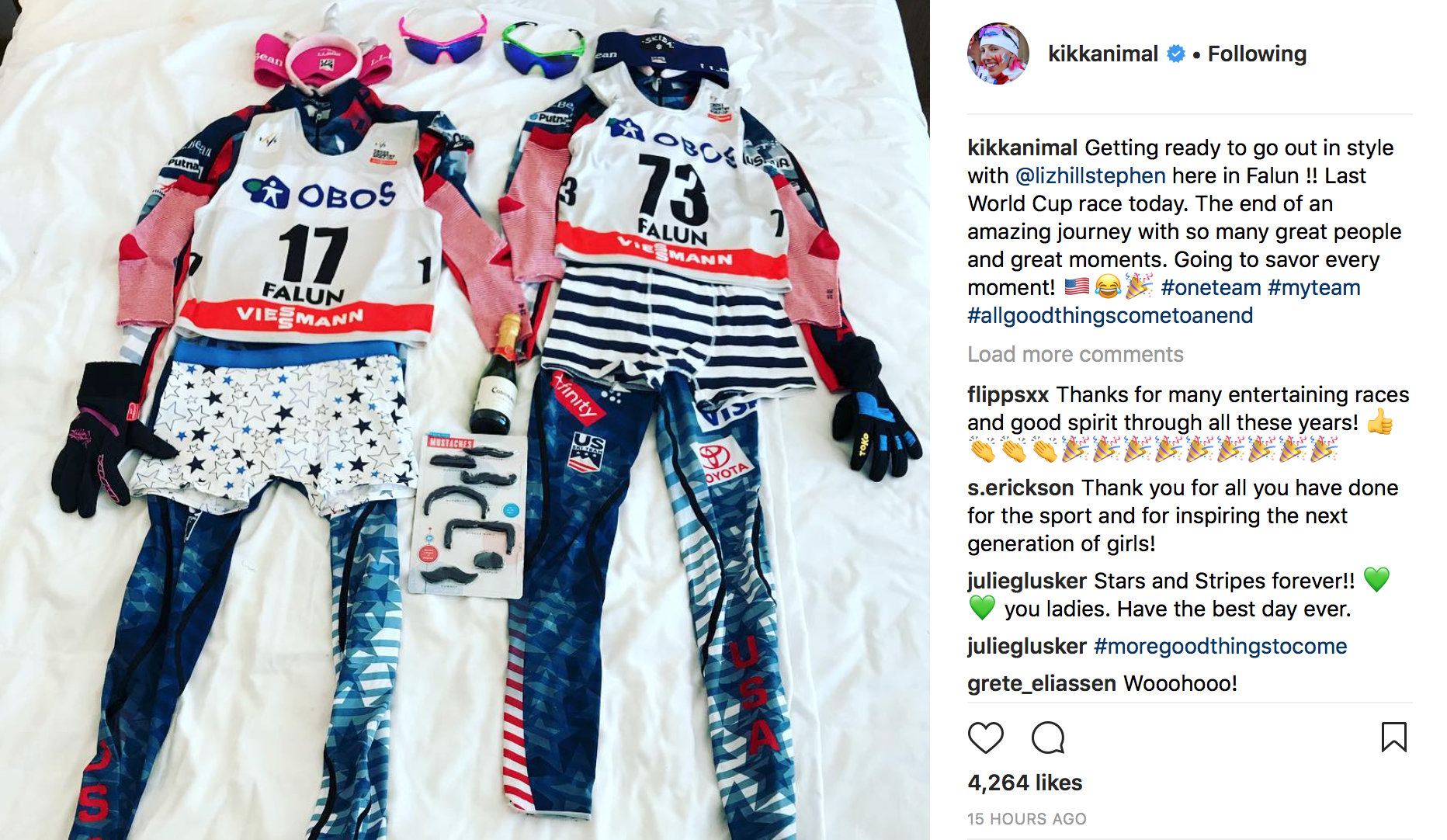
    March 2018: The last-race outfits worn by Kikkan Randall and Liz Stephen for Sunday’s World Cup Finals pursuit. (Photo: Kikkan Randall/Instagram)

    Honorable mention, domestic edition: Randall’s bespoke pink and blue Craft USST/APU suit (essentially the Olympics suit but with different patterning) that she wore for her final race as a professional skier, at Spring Series in Craftsbury. The suit said “USA” on the right arm and left leg, “APU” (for Alaska Pacific University, her club team of 19 years) on the left arm, and “Kikkan” on the left arm and right upper leg.
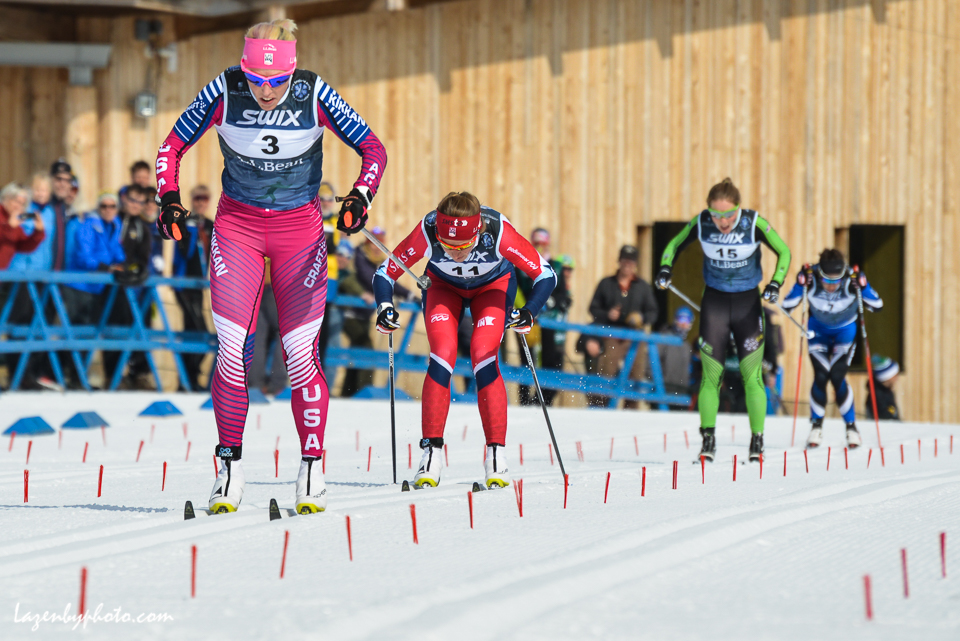
    March 2018: Kikkan Randall (3) racing for third place in the women’s 30 k classic mass start at 2018 U.S. Distance Nationals in Craftsbury, Vt., ahead of Sophie Caldwell (second from l), Ida Sargent (second from r), and Rosie Frankowski (r). (Photo: John Lazenby/Lazenbyphoto.com)

    Honorable mention, face paint edition: This remarkable evocation of Randall and Stephen on Diggins’s left cheek at Spring Series.
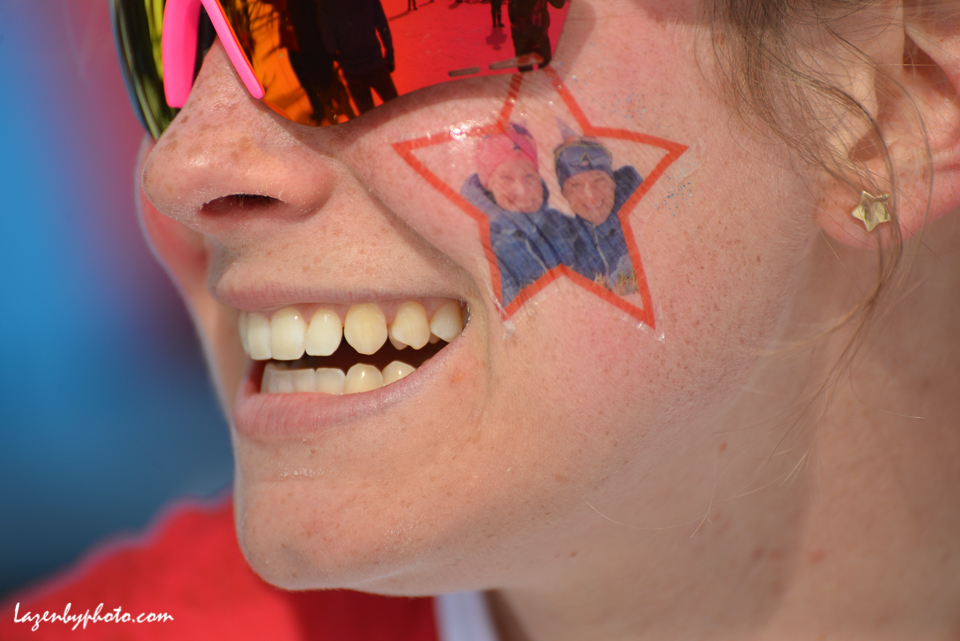
    March 2018: Jessie Diggins with a photo of her retiring U.S. Ski Team teammates Kikkan Randall and Liz Stephen on her cheek at 2018 U.S. Distance Nationals in Craftsbury, Vt. (Photo: John Lazenby/Lazenbyphoto.com)


    2018/2019: Red, white, and blue, but with larger color blocks. Also, a move to Swix.

    Randall retired. Stephen retired. Randall got breast cancer. Randall was treated for breast cancer. Diggins worked hard to successfully bring a World Cup ski race to Minneapolis. And the Americans kept racing in red, white, and blue, albeit now with a move from Craft to Swix for the suit manufacturer. This year’s interpretation of the theme brought a shift to white as the dominant color, with blue through the torso and upper legs, as well as on the arms. Red was the least-pronounced color this year, limited to accents alongside the larger blocks of blue.

    While the Americans continued their perhaps now-accustomed success at the World Cup level, American juniors served notice at World Juniors that they were a force to be reckoned with, taking a gold in the men’s relay, a fourth in the women’s relay, two fourths in classic distance races, and multiple other top-tens. Here are two shots from a frigid Lahti:

    January 2019: Luke Jager (middle left, hands in air) after tagging off to Ben Ogden (bib 2, middle right, pink hat) in the U20 men’s 4 x 5 k relay at Junior Worlds in Lahti, Finland. (Photo: Doug Stephen)


    January 2019: Kendall Kramer on her way to fourth place in the U20 15 k classic mass start at World Juniors in Lahti, Finland. (Photo: Doug Stephen)

    Back to the World Cup (where senior athletes wore the same uniform shown above on the juniors for the regular season), 2019 World Championships, in Seefeld, Austria, brought something new. The dominant hue in the race suit was now blue instead of white, and the large color blocks of the 2018/2019 World Cup regular season were gone. White stars were added to the lower left leg, making the evocation of the American flag far more apparent. Red and white stripes, on the right arm, continued the vexillological theme. While the four sponsor logos on the legs remained the same (Bose, Xfinity, Visa, and Toyota), the Swix logo shifted from the lowest position on the left leg to the middle position on the right.

    A Swix press release about the new suits advised: “Featuring bold stars and sharp American colors, the focus was on visibility in mass start events and an iconic look.”
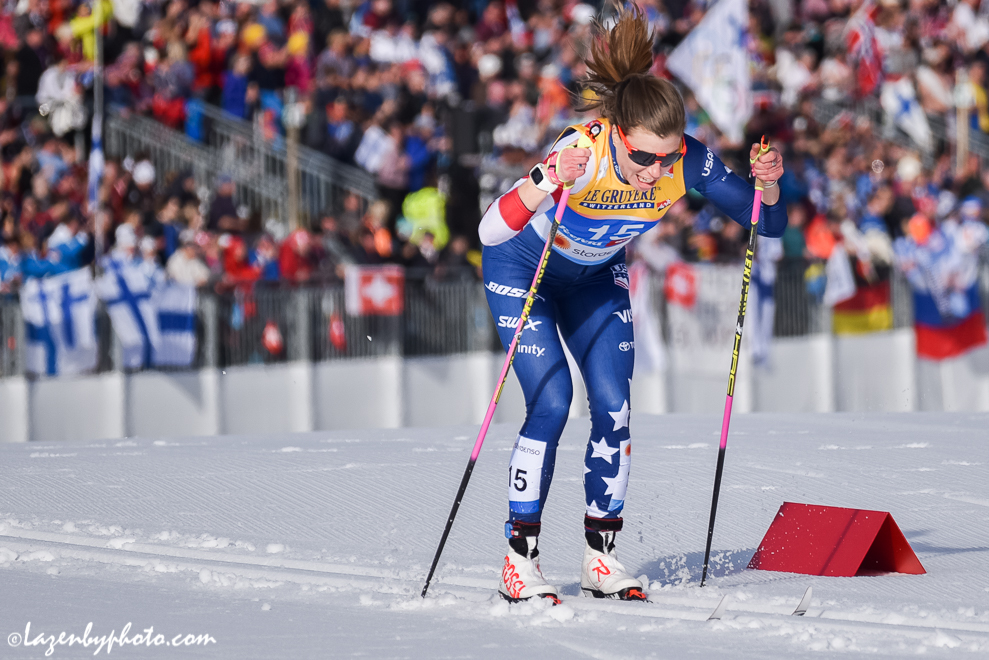
    February 2019: Rosie Brennan races in Seefeld.

    Honorable mention: Bare arms and cutoffs. It was hot in Seefeld. Like, over 50° F hot. Erik Bjornsen raced the 15 k classic with nothing underneath his race bib (sun’s out…), attire typically befitting Eagle Glacier in July more so than Austria in February. Brennan raced the relay with only a t-shirt on top, and no gloves. And Jessie Diggins drew widespread attention for her DIY cutoff look for the relay (which still featured the iconic relay socks, albeit rolled down so they wouldn’t counteract the shorts by covering most of her lower leg).

    As Diggins later wrote on her blog a month after World Champs: “Let me start by saying this; no, I was not cold racing in shorts and short sleeves, yes, you should try it sometime, and yes, it was refreshing to have the cold slush hitting my legs! Somehow, the sight of me racing in a short suit was more interesting and befuddling to most reporters than the actual race itself. Clearly, they haven’t ever experienced a Minnesota cold snap. Now THAT is cold weather! … Honestly, it’s hard to describe the amount of distress overheating puts me in, but let me put it this way; racing is already one of the most painful things you can do. If I have to deal with being incredibly uncomfortable, dizzy, and feeling my body start to shut down because I’m way too hot, it becomes even harder to continue pushing my body to the limit, because it’s already that much closer to the limit! And besides, everyone needed the laughs by the time we got to the end of the races.”

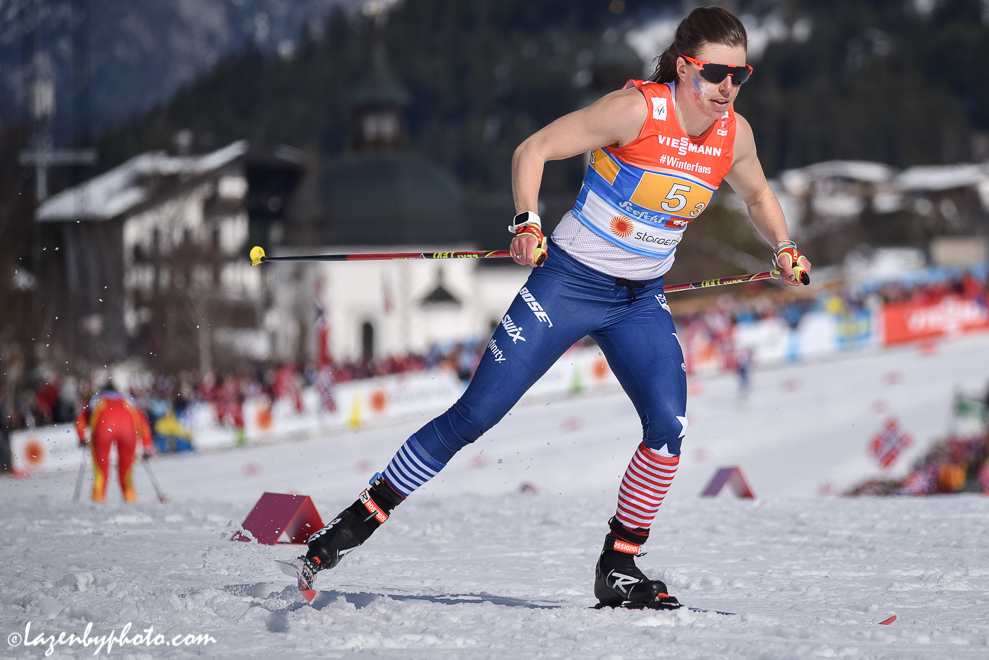
    Erik Bjornsen of the U.S. skiing to 17th overall during the 15 k classic at the 2019 World Championships in Seefeld, Austria. (Photo: John Lazenby/lazenbyphoto.com)


    Rosie Brennan of the U.S. during the third leg of the 2019 World Championship 4 x 5 k relay in Seefeld, Austria. (Photo: John Lazenby/lazenbyphoto.com)


    Custom race suit for Jessie Diggins of the U.S. She anchored the fifth place U.S. team during the 2019 World Championship 4 x 5 k relay in Seefeld, Austria. (Photo: John Lazenby/lazenbyphoto.com)


    2019/2020: Candy cane stripes!

    Finally, the start of this season brought the dawn of what has variously been called the “candy cane stripes” or “barber pole stripes” suit (#wellactually a barber’s pole historically has alternating red and blue stripes, not just red stripes as on the current U.S. suit). The left leg features red and white stripes, in a color-appropriate rendition of the American flag. The right leg has white stars on a blue background, again in patterning true to the actual flag. The stars are repeated on the left arm, and the stripes are briefly evoked on the right.

    The car sponsor has once again changed, this time to Land Rover.

    Here’s Kelley Roche, Soft Goods Product Manager for Swix Sport US, explaining the backstory for this year’s suit design in an email to FasterSkier: “Swix worked with Garen Riedel who owns his own design firm, Riedel Creative in New York. Garen worked closely with the athletes to design a suit that graphically works and they were excited to compete in. The goal is to design a suit that you can pick out of the pack and immediately and know it is a US athlete! This is important for the fan but really important for the coaches who support the athlete during the race. We ended up going with an asymmetric design, a continuation of the Seefeld suit design from 2019 and a retro reference to some of the suits of old, leveraging the iconic and patriotic American flag color palette with a slight color fade across the body.”

    Roche added that the suit itself is made out of mesh, which in addition to being flexible and breathable “acts like  dimples on a golf ball, balancing the lift and drag of the athlete.”
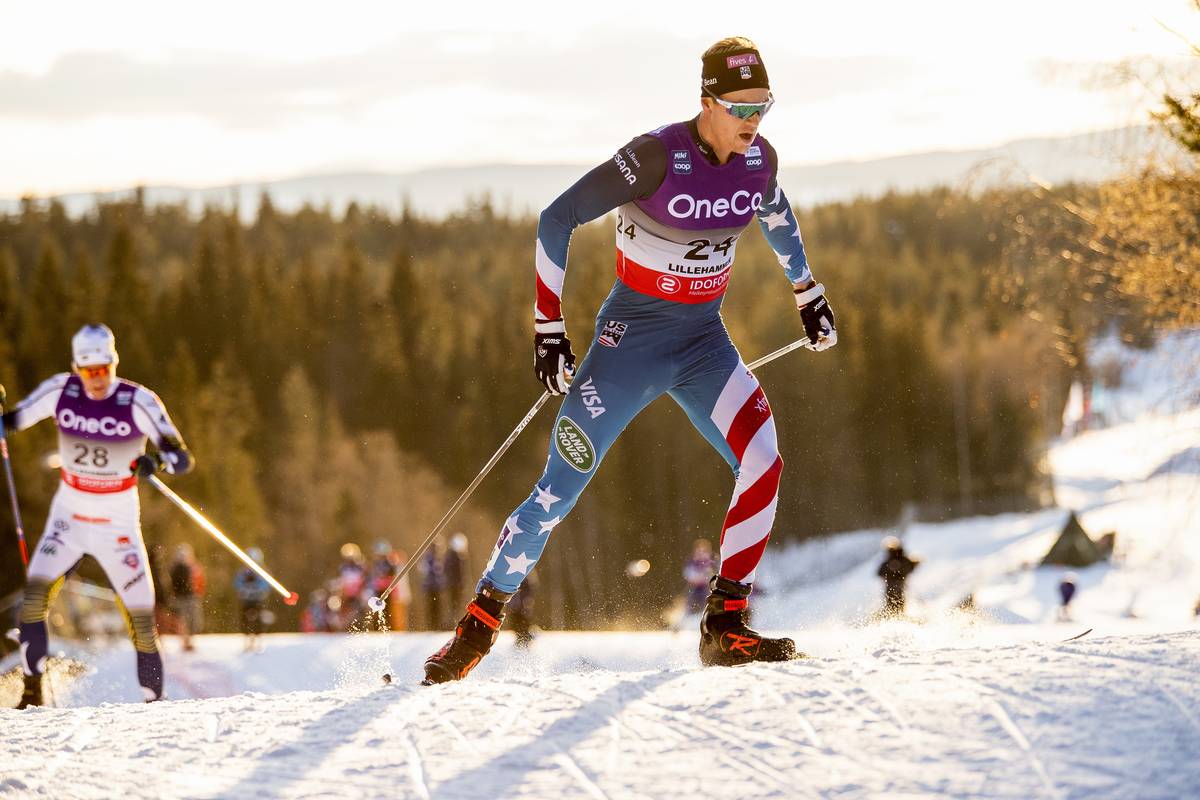
     

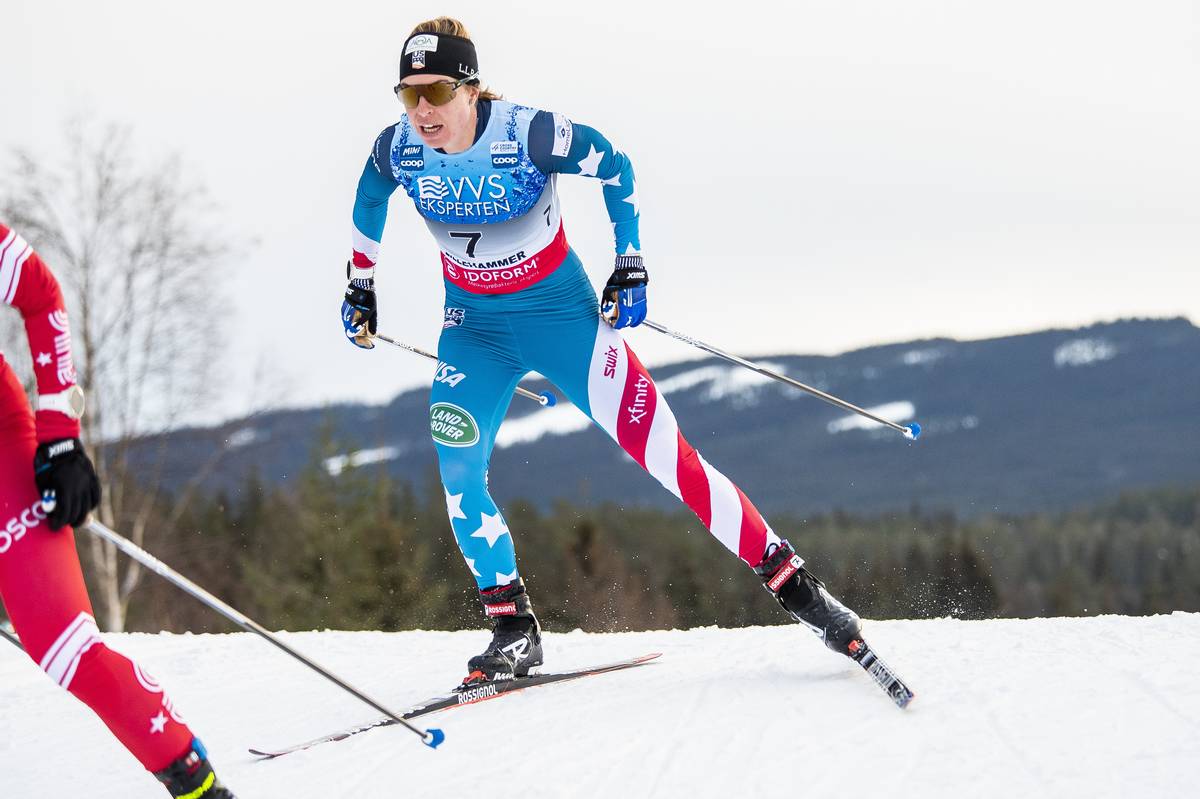
    December 2019: Erik Bjornsen during the skate leg of the 2019 30 k skiathlon in Lillehammer, Norway. (Photo: NordicFocus)


    December 2019: Lillehammer, Norway (NOR): Rosie Brennan (USA). (Photo: NordicFocus)

    We’d like your thoughts on the suits. Here’s a google form/survey about the U.S. Ski Team’s suits over the past decade or so.

    If you have read this far: For one, congratulations. For another, there is a wealth of historical material available in the FasterSkier archives. If you would have any interest in future compilations with a different focus  American biathlon, say, or best and worst of domestic American race suits over the past decade  please comment below, or email the author directly: gavin (at) fasterskier (dot) com. Thanks, and thanks for reading.

  • That’s a Wrap: Norwegian Women, Russian Men Win Junior Relays on Last Day in Romania

    That’s a Wrap: Norwegian Women, Russian Men Win Junior Relays on Last Day in Romania

    (Note: This article has been updated to include comments from Canadian coach Richard Boruta after Tuesday’s junior relays.)

    It was the last day of IBU Youth/Junior World Championships, and for several juniors racing on Tuesday in Cheile Gradistei, Romania, the idea was to have fun. Maddie Phaneuf said that was a priority on U.S. women’s 3 x 6-kilometer relay team: “We hadn’t really set a goal for the day…I was just reminding the girls to have fun out there and do their best,” she wrote in an email.

    Personally, she wanted to hand off to second-leg Siena Ellingson in a good position. Phaneuf did so, skiing the second-fastest scramble leg of 16 teams and coming into the first exchange in fourth, 42 seconds behind the leaders.

    While she avoided the penalty loop on both shooting stages, Phaneuf used a total of three spare rounds to clean: two on the first prone, which put her back in 12th, and one in standing.
    “It was fun to pick off the girls on the last loop and move up to 4th from 7th after my standing stage,” she wrote. “I felt really strong today and my skis were fast thanks to our wax techs.”

    The Norwegian women’s team (Anne Marit Bredalen, Turi Storstrøm Thoresen and Ingrid Landmark Tandrevold) skied to the win in 55:26.3, passing Sweden on the last loop to win by 15.6 seconds with a team total of five spares (0+2, 0+3). Sweden took second with four spares (0+0, 0+4), and Austria reached the podium in third, 55.5 seconds back with seven spares (0+2, 0+5).

    The U.S. finished 12th (+5:55.2) with one penalty and nine spares (0+4, 1+5). Ellingson shot identical to Phaneuf, cleaning with the help of two spares in prone and one in standing, and anchor Claire Waichler cleaned prone but had to ski a penalty lap after using all three spares in standing.
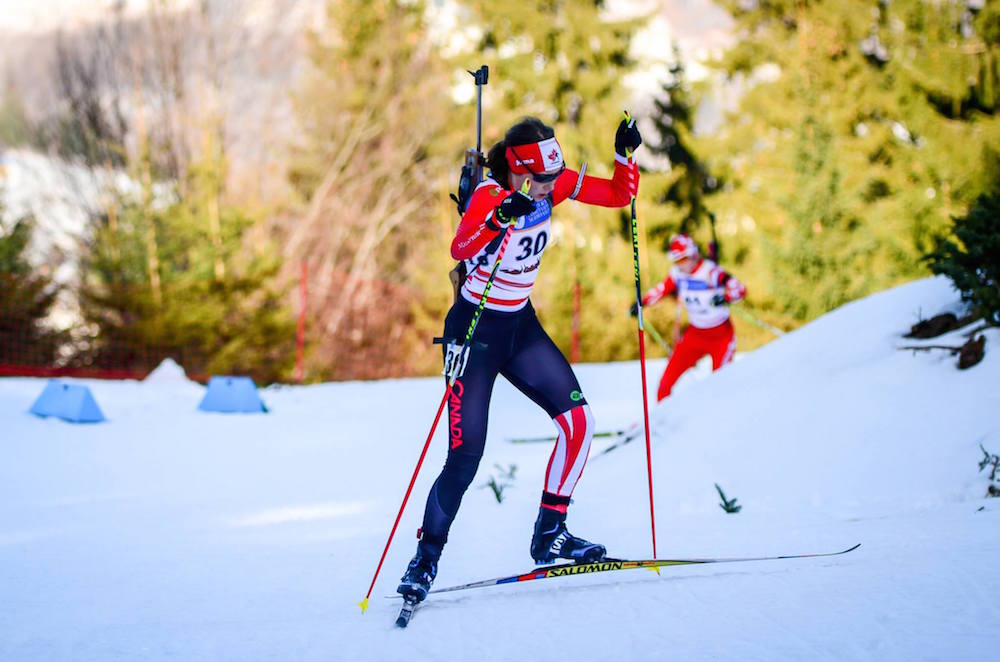
    Fifteen teams finished. Canada did not. Kendall Chong started the team off with three penalties and six spares (0+3, 3+3) and tagged teammate Charlotte Hamel in 16th. While Hamel cleaned both stages without any spares, she couldn’t move up from that position. The third Canadian, Leilani Tam von Burg did not start.

    “Leilani was getting sick and it was not sure until the last moment whether or not she will be able to race,” Canadian trip leader and Biathlon Alberta Training Center coach Richard Boruta wrote in an email.

    The fourth junior woman on the team, Caitlin Campbell was hospitalized after crashing in the sprint last Saturday.

    “She is not allowed to exercise much at this moment,” Boruta explained. “We did’t have any other chance than to include Leilani and hope for the best. However, it didn’t work out with her, but the other girls still felt that they would like to have one more opportunity to compete against the strong international field, one of the important things missing in Canada / North America.”

    For Phaneuf, in her third and final Youth/Junior World Championships, she explained the relay was a good way to end the week in Cheile Gradistei. Individually, she notched three top 10’s: fifth in the 12.5 k individual, seventh in the 7.5 k sprint, and ninth in the 10 k pursuit.

    “I think I ended my junior career on a really solid note,” Phaneuf wrote. “It was exciting to reach my goals and end I can’t wait to see what the rest of the season brings.”

    Next up for the 20-year-old US Biathlon development skier? Phaneuf said she’s headed back to the U.S., where she’ll spend just under a week training and recovering in Lake Placid, N.Y., before heading to Presque Isle for the IBU World Cup next week.

    “During those races I have the opportunity to qualify for the World Championship team, so that’s definitely a goal of mine,” she wrote. “We’ll see what happens! Either way, I’m happy with how my season has turned out so far. It’s great to see how much I’ve improved from last year.”

    (Story continues below)

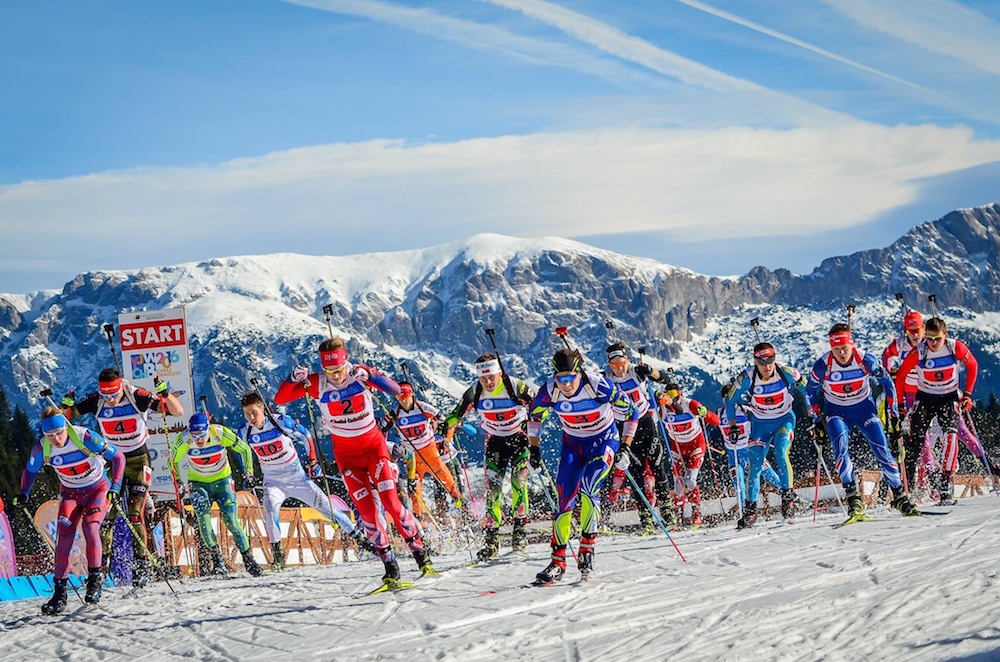
    Start of the junior men's 4 x 7.5 k relay  at IBU Junior World Championships on Tuesday in Cheile Gradistei, Romania. (Photo: IBU YJWCH Cheile Gradistei 2016/Facebook)
    Start of the junior men’s 4 x 7.5 k relay at IBU Junior World Championships on Tuesday in Cheile Gradistei, Romania. (Photo: IBU YJWCH Cheile Gradistei 2016/Facebook)

    In the junior men’s 4 x 7.5 k relay, the Russians dusted the field by two minutes in 1:23:56.7. All four men (Dmitrii Shamaev, Viktor Plitcev, Nikita Porshnev, and Krill Streltsov) shot flawlessly in prone and everyone but Streltsov cleaned standing without any spares (Streltsov used two — the team’s only spares).

    Germany claimed second (+1:59.6) with eight spares (0+4, 0+4), and the Czech Republic took third (+3:05.8) after using six spare rounds (0+1, 0+5).

    Alex Dupuis (Canada) racing the second leg of the men's 4 x 7.5 k relay at IBU Junior World Championships on Tuesday in Cheile Gradistei, Romania. (Photo: IBU YJWCH Cheile Gradistei 2016/Facebook)
    Alex Dupuis (Canada) racing the second leg of the men’s 4 x 7.5 k relay at IBU Junior World Championships on Tuesday in Cheile Gradistei, Romania. (Photo: IBU YJWCH Cheile Gradistei 2016/Facebook)

    The Canadian men finished 14th (+11:12.1) after skiing eight penalty loops and using 18 spares. Matthew Strum opened with one penalty and five spares (0+2, 1+3) and tagged the team in 16th, Alex Dupuis cleaned both stages, using one spare in prone (0+1, 0+0) to tag off in 14th.

    The Canadians held onto the position from there, despite Aidan Miller skiing five penalty loops and using six spares (3+3, 2+3), then tagging Pearce Hanna in 14th. Hanna shot skied two penalty loops after prone and cleaned standing with three spares (2+3, 0+3) to finish about a minute behind 13th and 19 seconds ahead of 15th.

    According to coach Boruta, top 10 was a reasonable goal for the junior men’s relay.

    “Alexandre Dupuis was the only one who did have a good relay performance…,” Boruta wrote. “Charlotte [Hamel] did have a good day on the range as well, unfortunately her skiing is quite far off of the pace.

    “Overall, all the top 20 (or even 30) placings are very respectable results and we should be happy, that we have at least few athletes who can be at that level,” he reflected on the team’s overall showing at the championships. “The competition is becoming stronger and more nations are in a position for good results.”

    Biathlon Canada doesn’t fund programming for junior or youth athletes, so essentially “there is also no high expectation for their performance,” Boruta explained. “Those athletes are spending around $20,000 – $30,000 a year for the privilege to train full time and represent Canada internationally, but sometimes this makes it frustrating for the coach, because there is no real leverage if there is a need to change their attitude or anything.
    “Our mandate is to develop athletes to such a level that they can make the jump from juniors to seniors and become competitive within a reasonable time frame,” he added, explaining that’s working so far.

    The U.S. men’s team of Paul Everett, Brian Halligan, Brendan Cyr, and Travis Cooper finished 18th of 20 teams, with seven penalties and 17 spare rounds.

    Results: Junior women’s relay | Junior men’s relay

  • Doherty Takes Charge and Pursuit Gold in His Last IBU Junior World Championships Race

    Doherty Takes Charge and Pursuit Gold in His Last IBU Junior World Championships Race

    Sean Doherty (US Biathlon) after winning the final race of his last IBU Junior World Championships in Cheile Gradistei, Romania. It was his 10th career medal in six IBU Youth/Junior World Championships. (Photo: IBU YJWCH Cheile Gradistei 2016/Facebook)
    Sean Doherty (US Biathlon) after winning the final race of his last IBU Junior World Championships in Cheile Gradistei, Romania. In winning the junior men’s pursuit on Sunday, it was his fourth gold and 10th medal in six IBU Youth/Junior World Championships. (Photo: IBU YJWCH Cheile Gradistei 2016/Facebook)

    (Note: This article has been updated to include comments from American Claire Waichler and Canadian Aidan Miller.)

    Imagine a race where you’re in second place for the first half of it, then suddenly, you emerge out of the third of four shooting stages in first (disclaimer: this is a biathlon race), 13 seconds ahead of second place.

    You cruise around the 2.5-kilometer course, entering the range for the fourth and final time, where you hit all five targets and set out on your final loop almost 40 seconds ahead of anyone else.

    What goes through your mind? For US Biathlon’s Sean Doherty, it definitely wasn’t damage control.

    “Let’s lock this up,” he recalled thinking in a phone interview on Sunday after the junior men’s 12.5 k pursuit at IBU Junior World Championships, the final junior race of his career.

    “The pressure kind of changes when you’re in the lead. A lot of people fall into a track where, ‘I don’t want to mess this up.’ That’s the wrong mindset. You’re still in charge,” he said.

    Sean Doherty on his way to securing a nearly 30-second win in Sunday's pursuit at 2016 IBU Junior World Championships in Cheile Gradistei, Romania.
    Sean Doherty on his way to securing a nearly 30-second win in Sunday’s pursuit at 2016 IBU Junior World Championships in Cheile Gradistei, Romania.

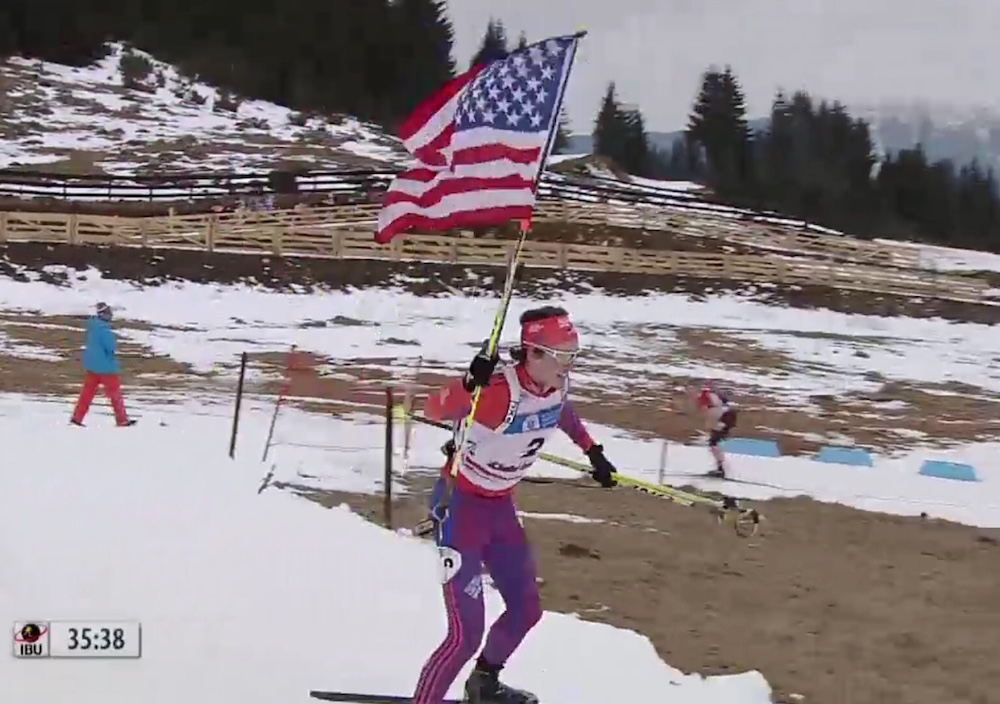
    Doherty, 20, didn’t lose sight of that and raced to his first win of the week in Cheile Gradistei, Romania, with enough time to grab an American flag from a teammate and wave it high above his head as he crossed the finish line in first. That moment meant a lot to him, he said.

    Previously, Doherty had placed third in the 15 k individual and second in Saturday’s sprint, behind Austria’s Felix Leitner, who won both previous races at this year’s worlds. On Sunday, Doherty hit 18 of 20 targets, missing one on his second and third stages, to secure the win by 29.6 seconds over Russia’s Nikita Porshnev in 36:01.1.

    Porshnev had one penalty in the first stage, then three clean stages and the fastest overall course time to rise from 12th at the start to second at the finish. Leitner recovered from three late penalties (0+0+2+1) to land on the podium in third, 38.8 seconds after Doherty.

    Before the flower ceremony, cameras panned on Doherty and Leitner, 19, casually chatting.
    “We’ve been racing together off and on a bit; we’re just kind of buddies,” Doherty explained.
    But do some of the other junior athletes look up to him?

    “I always like to talk and discuss race strategies,” Doherty said. “I’ve been in all sorts of different positions with this stuff.”

    Sunday marked his 10th career medal at IBU Youth/Junior World Championships. He had previously set the all-time record on Saturday with nine medals.

    Sean Doherty before the flower ceremony at IBU Youth/Junior World Championships, where he won the final race of his junior career (the junior men's pursuit)  in Cheile Gradistei, Romania. (Photo: IBU YJWCH Cheile Gradistei 2016/Facebook)
    Sean Doherty before the flower ceremony at IBU Youth/Junior World Championships, where he won the final race of his junior career (the junior men’s pursuit) in Cheile Gradistei, Romania. (Photo: IBU YJWCH Cheile Gradistei 2016/Facebook)

    “I didn’t know I had done it until a good ways after the [sprint] race,” Doherty recalled of becoming the most decorated biathlete at youth/junior worlds. “I was in the press conference [and a reporter] asked the question, and I didn’t know until that point that I had set a new record.”

    When it came down to it, he insisted he was just like every other junior at the championships. He woke up each morning on race days and had to kill time while staying focused until 2:30 in the afternoon. Then, he’d put on his race suit, get into his pre-race routine, and get down to business.

    “I get nervous just like any other human,” Doherty said. “There’s a lot of pressure for these races I just did, and I’m really happy with how I performed with it all, but it’s something that’s not that easy to deal with.”

    “I get nervous just like any other human. There’s a lot of pressure for these races … I’m really happy with how I performed with it all, but it’s something that’s not that easy to deal with.” — Sean Doherty, US Biathlon A-team member and IBU World Cup skier, on podium expectations

    He reached the podium in all three individual races at these championships and started Sunday’s pursuit 12 seconds behind Leitner as the second starter out of the gate. Mostly, Doherty said he focused on his own race and staying confident in his ability to catch Leitner.

    “Even though it’s tempting to charge out of the game and try to catch Felix on the first lap, it’s not smart,” he recalled.

    After cleaning his first prone stage, Doherty missed his first shot of his second prone. That wasn’t ideal, he explained, but he made a point to maintain his energy and keep a good headspace heading into his second loop.

    “That wasn’t damaging, that one miss,” he said.

    Meanwhile, Leitner cleaned the first two stages to remain in the lead, by 21 seconds over Doherty. He entered the range for the third time in first, well enough ahead of Doherty that he had fired off his shots before the American settled in.

    While Doherty knew it was best to focus on himself, he couldn’t help but notice Leitner had missed two in that standing stage.

    “I tried to stay to stay calm and not let what was was going on with him not affect me too much. I got a little excited and kind of jerked the last shot,” Doherty said.

    He missed one, but emerged out of the penalty loop 13.4 seconds before Leitner.

    “I just really wanted to finish the race off and I knew that I could do it,” Doherty said. “I just tried to think of it like training: I’ve done this before and nothing crazy needs to happen right now.”

    Sean Doherty (US Biathlon) cleaned his final shooting stage to secure his lead (and ultimately the victory) in the junior men's pursuit at IBU Youth/Junior World Championships in Cheile Gradistei, Romania.
    Sean Doherty cleaned his final shooting stage to secure his lead (and ultimately the victory) in the junior men’s pursuit at IBU Youth/Junior World Championships in Cheile Gradistei, Romania.

    The Austrian went on to miss another in his final standing stage (while Doherty cleaned) to fall to third. Russia’s Porshnev cleaned his last three stages to take hold of second place.

    “This was my biggest comeback because in general, I am not so good with the shooting,” Porshnev said in the post-race press conference. “I was really lucky and I understood that if I want to be in the top I need to shoot well today.”

    Despite missing out on a sweep of the individual races, Leitner said he was happy with third.

    “At the moment I am really tired, but I am very happy with this whole week,” he said in the press conference. “It is like a dream. There are too many great athletes here, and I am happy with my [bronze] medal.”

    For Doherty, capping his junior career with gold in the pursuit was perfect.

    “I really couldn’t have imagined a better ending, really,” he said. “This is the perfect end to my junior career.

    “I’m still pretty over the moon,” he added.

    On Monday, Doherty planned to fly home to New Hampshire, where he’ll spend the next week recovering leading up to the IBU World Cup in Presque Isle, Maine — about a six-hour drive from his hometown. He is skipping Tuesday’s junior relay and the upcoming World Cup in Canmore, Alberta, which starts Thursday.

    (Story continues below)

    Another Top 10 for Phaneuf 

    In the junior women’s 10 k pursuit, 20-year-old Maddie Phaneuf (US Biathlon X-team) started seventh and finished ninth with four penalties (1+0+1+2).

    In fifth after the first prone stage and up to fourth following the second stage, Phaneuf slipped to seventh after a penalty in her first standing, then ninth with two more penalties on the final standing. She finished 2:08.8 behind the winner, Sweden’s Hanna Öberg, who won Saturday’s sprint and started the pursuit first, 1 second ahead of Switzerland’s Lena Häcki.

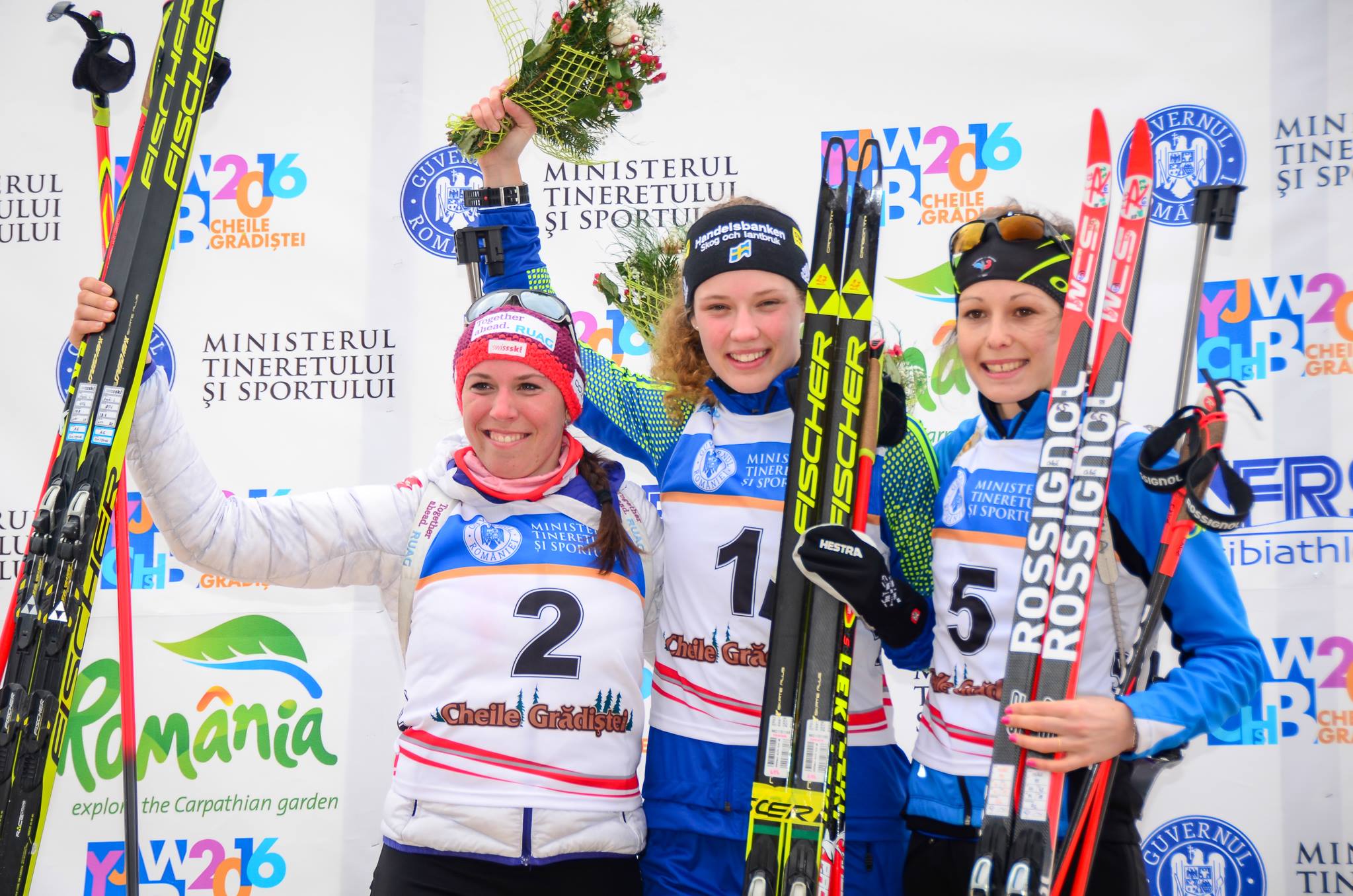
    The junior women's pursuit podium, with winner Hanna Öberg (c) of Sweden, Switzerland’s Lena Häcki (l) in second, and France’s Chloe Chevalier (r) in third. (Photo: IBU YJWCH Cheile Gradistei 2016/Facebook)
    The junior women’s pursuit podium, with winner Hanna Öberg (c) of Sweden, Switzerland’s Lena Häcki (l) in second, and France’s Chloe Chevalier (r) in third. (Photo: IBU YJWCH Cheile Gradistei 2016/Facebook)

    While Öberg cleaned the four-stage pursuit to win in 33:16.8, Häcki finished second, 13.7 seconds back, with six penalties (0+2+3+1) and the fastest overall course time by just over a minute.

    “I felt crazy good on the skis today, it just went all by itself,” Häcki said during a post-race press conference. “After the three misses in the third shooting, it was then very difficult for me. But after I got the info from my coaches that I was still on course for the medals, I could really turn it up again.”

    “I couldn’t believe I get the second gold medal in a row,” Öberg said, according to the event organizers’ Facebook page. “I was so tired during the race today. Lena is so great on skiing. I was not nervous on the shooting range and like yesterday, I was confident.”

    France’s Chloe Chevalier rose from fifth to third (+41.9) with two penalties, both in the first stage (2+0+0+0).

    “I am really happy to be on the podium,” Chevalier said. “After my first shooting it was very hard, but I was very motivated today so after that I did zero mistakes.”

    Maddie Phaneuf racing at 2016 IBU Junior World Championships in Cheile Gradistei, Romania, where she notched three consecutive top 10 results. (Photo: IBU YJWCH Cheile Gradistei 2016/Facebook)
    Maddie Phaneuf racing at 2016 IBU Junior World Championships in Cheile Gradistei, Romania, where she notched three consecutive top 10 results. (Photo: IBU YJWCH Cheile Gradistei 2016/Facebook)

    Phaneuf explained in an email to FasterSkier that she was hoping to reach the top six and flower ceremony that came with it for the second time this week. She placed fifth in the 12.5 k individual.

    “But I also just wanted to stay in the top ten!” she wrote on Sunday. “I found myself consistently in around 5th place throughout the race. I was not happy with missing one in my first prone, but glad to be skiing fast and holding my positions.”

    Despite feeling tired during the second half of the race, Phaneuf posted the sixth-fastest course time on the last loop.

    “I just tried to ski hard and not let any girls pass me,” she wrote. “I was skiing mostly alone on that loop I think, I didn’t even know there was a Russian behind me until the last 500 meters before the finish.”

    She held off Russia’s Kristina Reztsova by 3.6 seconds for ninth place, and finished 11.7 seconds out behind Germany’s Christin Maier in eighth. For Phaneuf, it was her third-consecutive top 10 of the week (after placing fifth in the individual and seventh in the sprint).

    “I was really happy and surprised with my results overall,” she wrote. “The training I’ve been doing with [US Biathlon development coach] Jean [Paquet] all year is showing in my skiing and strength and it’s been really great!”

    Also in the junior pursuit, Canada’s Leilani Tam von Burg placed 33rd (+6:13.2) after starting 28th. While the 20-year-old Ottawa native and Chelsea Nordic skier cleaned both prone stages, she missed three between the two standing stages (0+0+1+2). Siena Ellingson placed 50th for the U.S. after starting 48th, ending the day with six penalties (1+1+3+1). Canadian Kendall Chong finished 58th with eight penalties (3+1+3+2) after starting 51st.

    While Doherty was the lone American in the junior men’s pursuit, Aidan Millar led the Canadian men in 37th (+6:00). He improved 18 places with 19-for-20 shooting (0+1+0+0) to post his best result of these championships (his third).

    “I was pretty happy with how the race played out. Especially on the shooting range,” Miller wrote. “Felt pretty strong on my skis but faded a little in the last lap. Overall I was super disappointed with the championships. Going in I wanted a top 10 so obviously didn’t meet that. My shooting was no where near as good as it should have been which was the most disappointing part. Over the week my skiing felt better and better but still not as fast as it needed to be for a top 10.”

    Also for Canada, Matthew Strum finished 47th with four penalties (1+1+0+2) after starting 37th, and Pearce Hanna placed 49th with 11 misses (2+4+3+2), slipping one spot from 48th.

    Three Canadians in Top 20

    Megan Bankes racing to 26th in the women's 6 k sprint at IBU Youth World Championships in Cheile Gradistei, Romania. (Photo: IBU YJWCH Cheile Gradistei 2016/Facebook)
    Megan Bankes racing to 26th in the women’s 6 k sprint at IBU Youth World Championships in Cheile Gradistei, Romania. (Photo: IBU YJWCH Cheile Gradistei 2016/Facebook)

    Three familiar Canadian youth skiers again landed in the top 20: Teo Sanchez in 17th (+4:54.9) and Adam Runnalls in 19th (+5:10.5) in the youth men’s 10 k pursuit, and Megan Bankes in 18th (+3:47) in the youth women’s 7.5 k pursuit.

    The result stood as the second-straight 17th place for Sanchez, 18, of Wakefield, Quebec. He shot 95 percent with a single miss on the first standing stage (0+0+1+0). In all three races this week, Sanchez has shot 90 percent or better.

    “I’m a little disappointed with my result considering my skiing. It was kind of frustrating to shoot so well but not ski very fast,” Sanchez wrote on Sunday. His course time ranked 48th overall.

    “I feel like I could’ve been several spots higher,” he added. “17th place is still nothing to scoff at though. I think overall, three top 20’s is pretty awesome and it shows some pretty good consistency.”

    For Runnalls, 80 percent shooting with four penalties (0+0+3+1) was right where he had been all week.

    “I was a little nervous coming into today because I had never done a ‘real’ pursuit before,” Runnalls, 17, of Calgary, wrote in an email. “In Canada pursuits are usually started with 5 second gaps between starters but here at world juniors we start at the time we finished behind the winner of the sprint. This new style of pursuit was a little intimidating in the start gate.

    “After my second clean prone shooting I tried to keep a clear head and not get ahead of myself,” he explained. “I knew that with 2 clean prones I was in a good spot and need to nail my standing.”

    However, he described overthinking his first standing stage and slowing down too much.

    “I tried too hard to find the perfect shot and didn’t follow my normal pattern, which caused me to only hit 2,” Runnalls wrote. “Coming into my second standing I told myself that this was a do or die moment and to not overthink it, follow my normal pattern which worked out with me hitting 4.

    “I am super excited about my finishes here as it shows I belong here on the international stage,” he added. “I couldn’t be happier with the way I performed and with my overall result.”

    Russia’s Viacheslav Maleev won the youth men’s pursuit in 30:14 after starting third (based on his third-place finish in Saturday’s sprint). He won by well over a minute after overtaking another Russian, the sprint winner Igor Malinovskii and beating him by 1:07.6 after Malinovskii had seven penalties (2+1+2+2).

    Norway’s Harald Øygard, the 12.5 k individual champion, moved up from eighth at the start to third overall (+1:13.4) with two misses (1+0+0+1). Another Norwegian, Aleksander Fjeld Andersen placed fourth (+1:44.1) for the second-straight race.

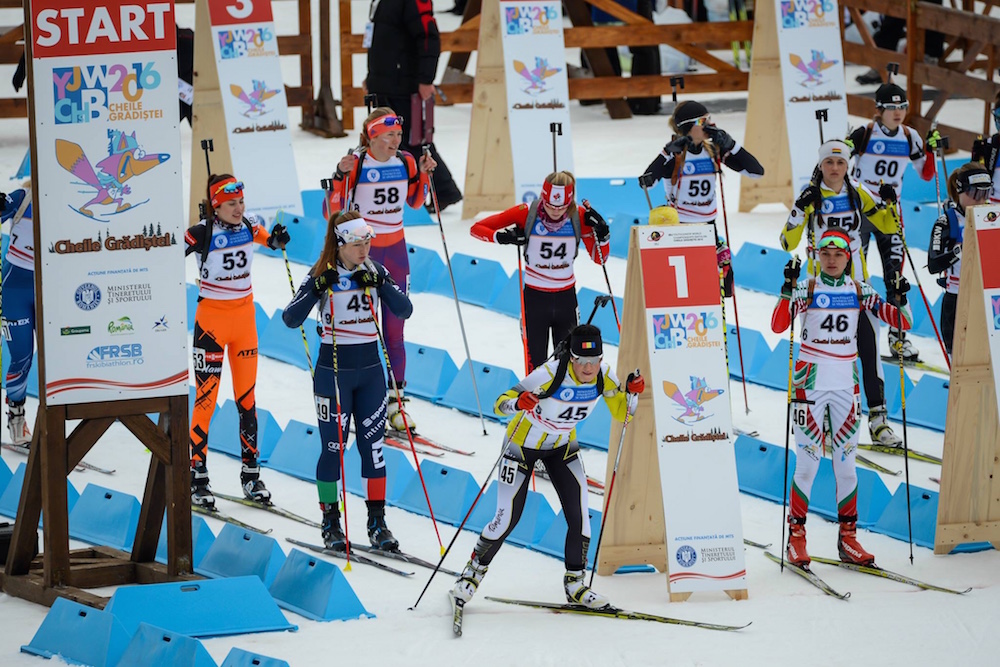
    Canada's India McIsaac (54) and American Claire Waichler (behind, in bib 58) await their start during the youth women's pursuit at IBU Youth/Junior World Championships in Cheile Gradistei, Romania. (Photo: IBU YJWCH Cheile Gradistei 2016/Facebook)
    Canada’s India McIsaac (54) and American Claire Waichler (behind, in bib 58) await their start during the youth women’s pursuit at IBU Youth/Junior World Championships in Cheile Gradistei, Romania. (Photo: IBU YJWCH Cheile Gradistei 2016/Facebook)

    In the youth women’s pursuit, Kazakhstan’s Ariana Pantova started sixth and cleaned every target but one in her first stage to win her first world title in 27:15.2. Ukraine’s Anna Kryvonos rose from third to second place at the finish, 3.4 seconds back, and Germany’s Marina Sauter reached the podium for the second time this week in third (+1:02.9) after starting 14th. While Kryvonos had three penalties (0+0+1+2), Sauter had two (0+1+0+1).

    Canada’s Bankes missed seven targets (2+1+2+2), but skied the seventh-fastest course time to place 18th. It was her second top 20 of the week, after finishing 19th in the 10 k individual.

    “The goal for today was to continue my fast skiing in order to move up as many places as possible, and focus on hitting more targets,” Bankes wrote in an email. “Because the course and the race are both quite short, fast skiing was necessary, but good shooting was really important, especially in the first bout. My skiing felt pretty strong again today, however the snow on the course was pretty soft, which made my legs quite tired right off the start.”

    She lost track of her position rounding the penalty loop twice after the last stage, and explained she was excited to learn she finished 18th.

    “I knew today that my ski speed would definitely keep me in top 20 contention as long as I could hit a few targets,” she wrote. “Overall I’ve been very pleased with my skiing this week, and it’s nice to see my ski speed progressively get better over the last three years. My main issue this week was my shooting, which I was overall very disappointed with. … On a whole I am super stoked by the results I achieved this week, even if my races weren’t entirely perfect.”

    Six places behind her, another Canadian, Nadia Moser placed 24th (+4:52.4) after starting 19th. Moser had eight misses (1+2+3+2) on the day.

    American Claire Waichler started 58th and finished 33rd in the youth women's pursuit on Sunday at IBU Youth/Junior World Championships in Cheile Gradistei, Romania. (Photo: IBU YJWCH Cheile Gradistei 2016/Facebook)
    American Claire Waichler started 58th and finished 33rd in the youth women’s pursuit on Sunday at IBU Youth/Junior World Championships in Cheile Gradistei, Romania. (Photo: IBU YJWCH Cheile Gradistei 2016/Facebook)

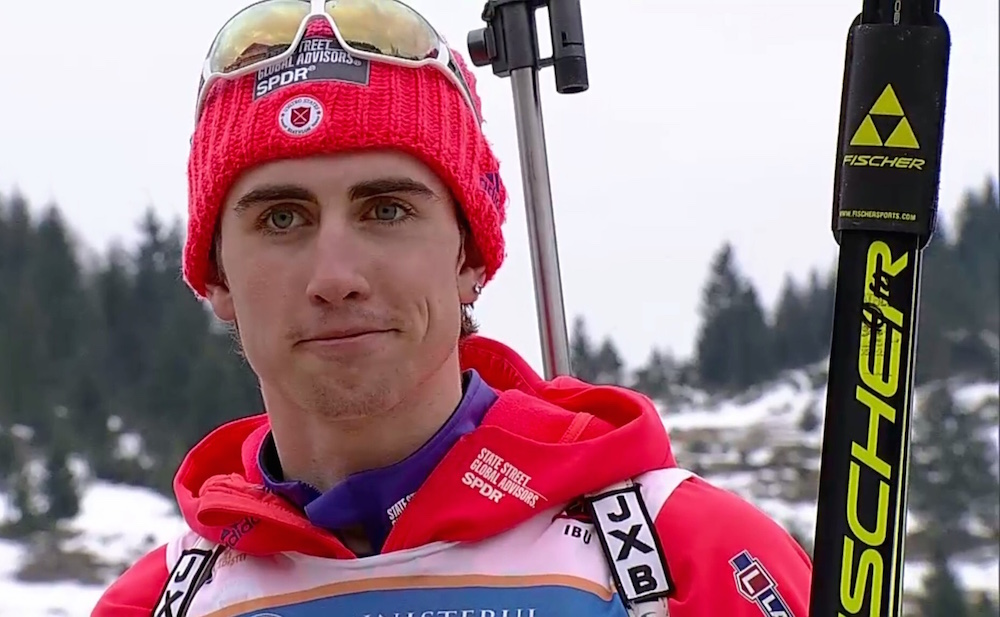
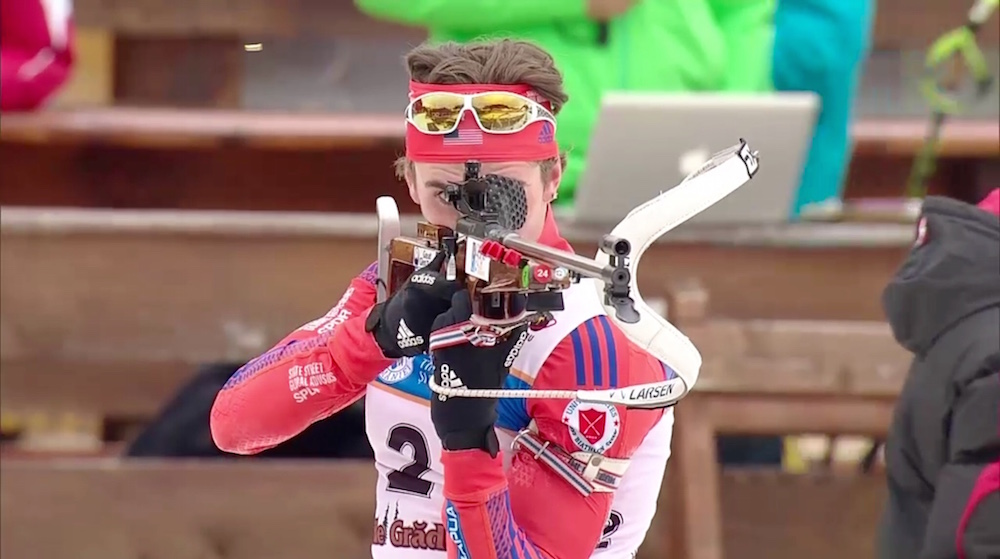
    For the U.S., Claire Waichler picked off 25 places to end up 33rd (+5:29.5) with three penalties (0+1+2+0).

    “This is my first time at world juniors so I was hoping to just have fun and experience competition at a higher level,” Waichler wrote in an email. “My skiing had been going well throughout the week but the shooting had been unusually rough. So my goal for the pursuit was to keep up the skiing and shoot a cleaner race — at least 70%. When I shot 85% and cleaned twice I was stoked.

    “The competition is very strong and being able to chase down foreign girls during the whole race was educational,” she added. “And a top 20 isolate pursuit time was certainly more than I’d hoped for.”

    Canada’s Emily Dickson followed in 35th (+5:48.1) with five misses (0+0+3+2) after starting 41st, Amanda Kautzer of the U.S. slipped three places to 55th with 10 penalties (3+2+2+3) and Canada’s India McIsaac went from 54th to 60th with 13 misses (3+3+4+3).

    Two American men moved up in the pursuit, with Brendan Cyr rising to 35th (+6:49) with three penalties (0+1+2+0) after starting 46th. For the 18-year-old Maine Winter Sports Center biathlete, it was his first top 40 in his debut world championships.

    His teammate Cody Johnson finished 41st (+7:11.1) with two misses (0+2+0+0) after starting 50th.

    “I knew that I had plenty of time that I could make up in the Pursuit,” Cyr wrote in an email after starting in bib 46. “I knew that if I came into the range calm and focused on my own shooting process for each of the stages, while also keeping a good rhythm on the skis, I could put together a top-40 performance.

    “The key to my success on the range was just making sure that every time I came to the mat, I was not rushing any of my process,” he added of his 85-percent shooting. “On the skis, the key for me was just making sure I kept a good rhythm throughout the race, most importantly towards the end.”

    IBU Youth/Junior World Championships conclude with the three-person relays on Monday and Tuesday, with the youth relays on Monday.

    Chloe Levins, Kautzer and Ariana Woods are slated to start the youth women’s 3 x 6 k for the U.S., while Dickson, Moser and Banks represent Canada.

    In the youth men’s 3 x 7.5 k, Johnson, Vaclav Cervenka and Peter Carroll are listed for the U.S., while Sanchez, Runnalls and Zachari Bolduc are on the start list for Canada.

    Pursuit results: Junior men | Junior women | Youth men | Youth women

    Relay start lists: Youth women | Youth men

  • Ultimate Refueling Contest Winners and Other Entries

    Ultimate Refueling Contest Winners and Other Entries

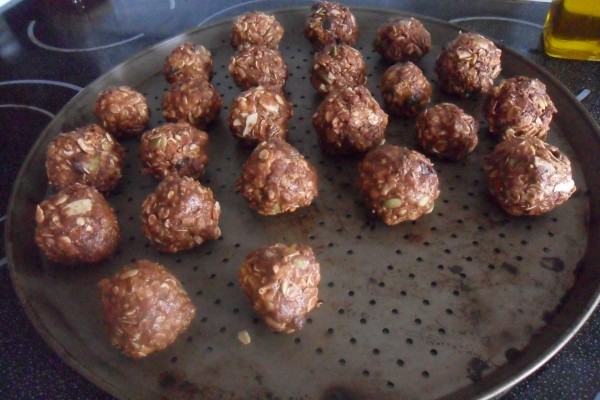
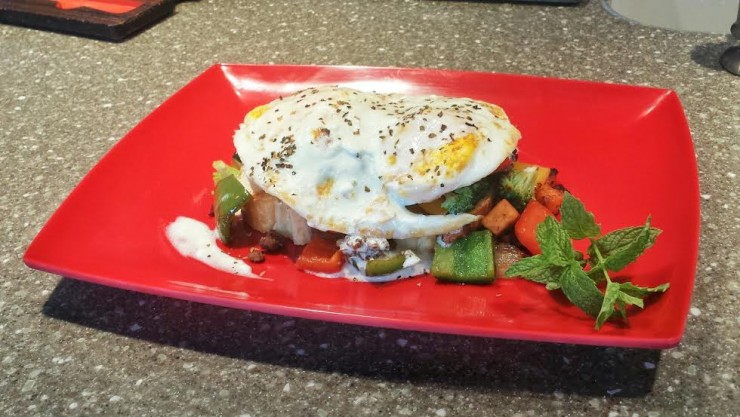
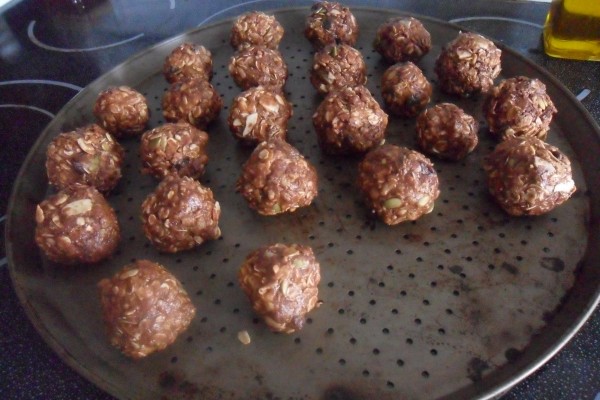
    The results are in for the Ultimate Refueling Contest! We had some pretty amazing submissions which made the task of choosing three winners incredibly tough. However, after much deliberation we have chosen the Katrina Howe and her “Energy Bombs” as our grand prize winner! Not only do the energy bombs look tasty and revitalizing, but they are easy to prepare and transport which makes them the perfect recovery food.

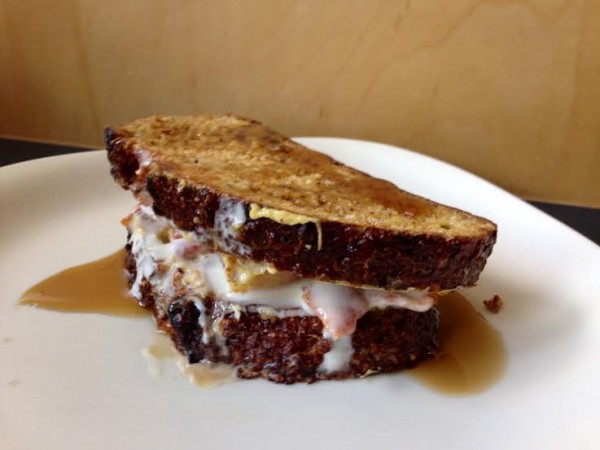
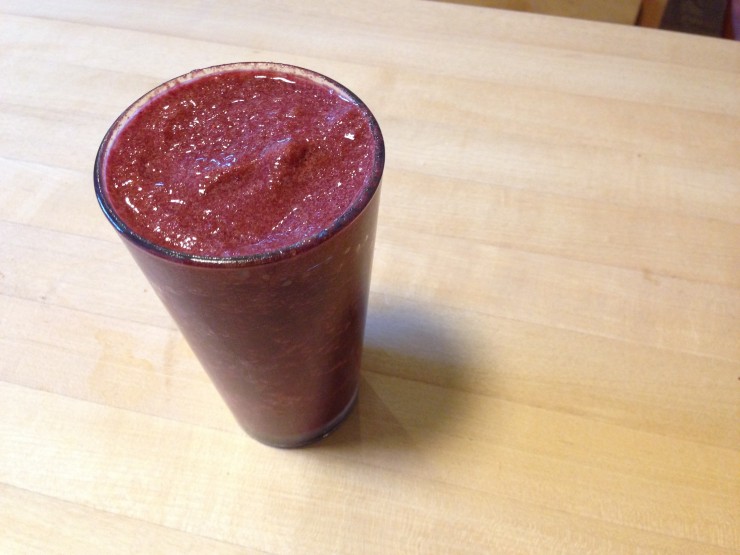
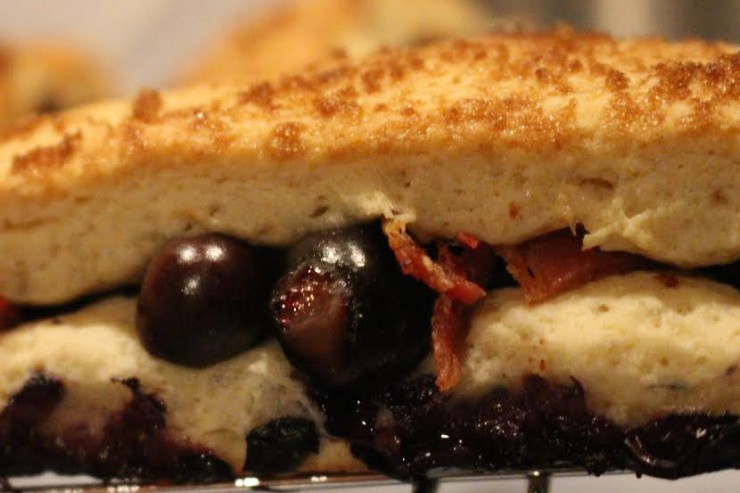
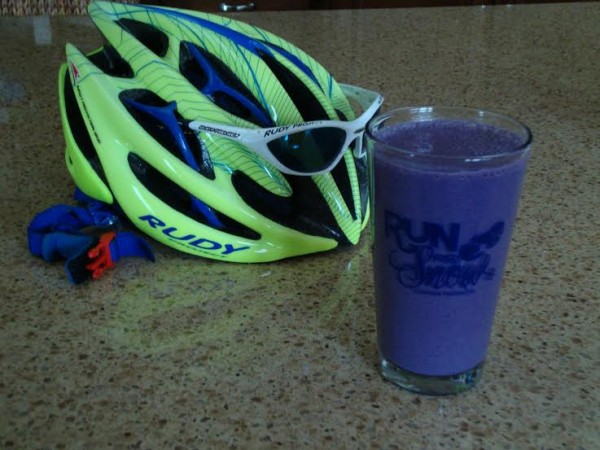
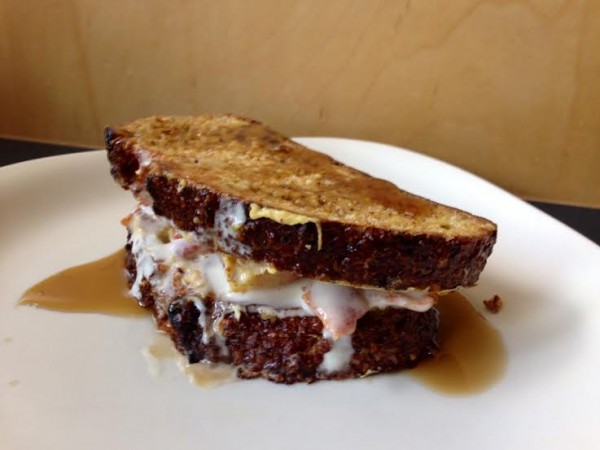
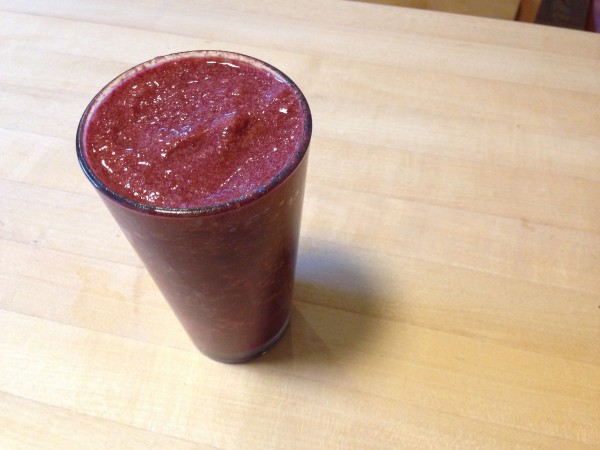
    We awarded our second place prize to Amy Katz, for her Maple Apple Bacon Stuffed French Toast. The combination of sugar, carbohydrates, and protein make it perfect for a post-workout meal. We granted Claire Waichler and her Turmeric Beet Recovery Smoothie with the third and final prize. While we may not be huge fans of beets, the creative combination of the smoothie’s ingredients won us over. 

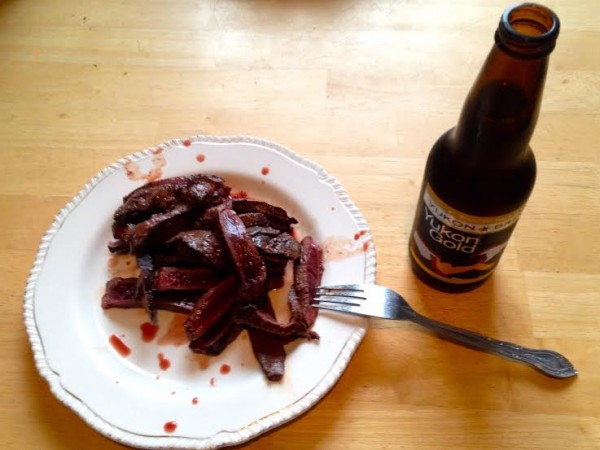
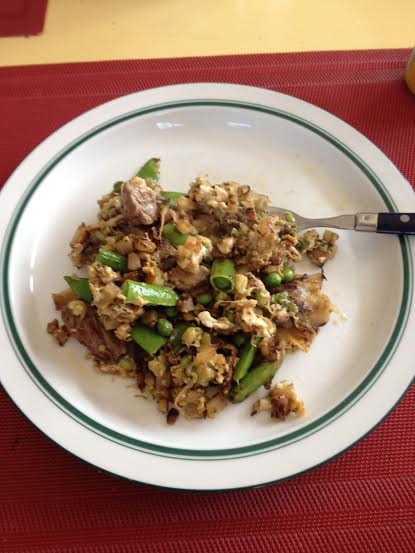
    Thanks to all our contestants! Check out the contest’s photo gallery to see our best submissions and read the prize-winning recipes below!

    First Place: Katrina Howe – Energy Bombs

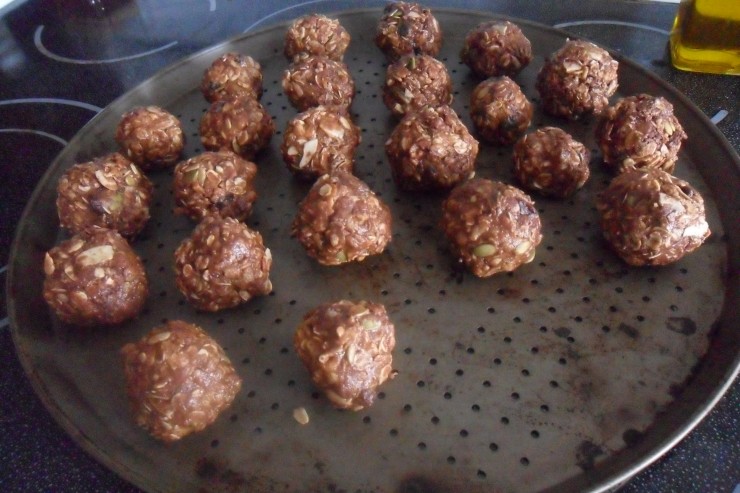
    FIRST PLACE: Katrina Howe - Energy BombsI call these things energy bombs. They’re super easy to make (warning: you will be sticky before it’s over), the recipe is easy to alter according to what you have/don’t have in your pantry, and they pack well into a drink belt if you want to actually bring them with you on the road/trail. In addition, if you buy the right oats it can be a gluten free snack too!

    Recipe for my “Energy Bombs” 

    Makes 20-30 “bombs” depending on how big you make them. 

    First, prepare the container you want to store them in. I usually have a large tupperware container with pieces of wax paper or foil between layers.

    Measure the following into a bowl: 

    – 2 C rolled oats

    – 2 C rice crispy cereal

    – 1/2 C raisins/craisins

    – 1/2 C flax seeds (ground flax seed meal….whole flax seeds are not absorbable)

    – 1/2 C pumpkin/sunflower seeds

    – 1/2 C slivered almonds 

    – 1/2 C carob or chocolate chips.

    In a large pot melt together till creamy: 

    -1 C peanut butter

    – 1/2 C honey

    – 1/2 C brown sugar

    Remove from stove and add the dry ingredients from the first bowl to this pot (you’re doing it in this pot so the remaining heat will help melt the chocolate/carob). 

    Once it’s all mixed together roll balls or rolls out of the “dough” with your hands. Set them on a cookie sheet or cutting board to cool. Once cooled they will harden into whatever shape you’ve made them.

    Second Place: Amy Katz – Maple Apple Bacon Stuffed French Toast

    SECOND PLACE: Amy Katz -Maple Apple Bacon Stuffed French ToastWhen it comes to refueling your body after long workouts or a lot of intensity, the three categories I always pay attention to are sugars, carbohydrates, and protein. For most endurance athletes, including skiers, our carbohydrate intake should be much greater than that of protein. Given this, what better way to refuel than eating your carbs covered in your protein? Since many times we get done with our workouts early, breakfast is the perfect recovery meal.

    Ingredients for 2 pieces of french toast:

    4 small pieces of some sort of whole grain bread (frozen or stale loaves work well)
    1 apple
    2 slices of bacon
    1/3 cup of heavy whipping cream
    1/2 tablespoon maple syrup
    a pinch of salt
    1 egg
    1/2 teaspoon vanilla
    1/2 teaspoon cinnamon

    To make filling:

    1. Whip the cream until it has very stiff peaks- you don’t want to make it into butter but it should be stiffer than you normally make cream.
    2. Cook the bacon in a pan or the microwave until crispy, and then dice it along with the apple and add it into the cream.
    3. Add the maple syrup and a pinch of salt.

    To make french toast batter:
    1. Whip the egg with a fork until it is mixed with the yolk and add cinnamon and vanilla.

    To make:
    Soak 2 pieces of bread in the batter and put on a hot pan. Cook until golden on one side, and then flip and cook slightly on the other side. Add the filling and stack the two pieces and cook for another few seconds. Take out when the cream starts melting.
    Can garnish with butter, coconut oil, more syrup, whatever works. But its good on its own!!

    Third Place: Claire Waichler – Turmeric Beet Recovery Smoothie

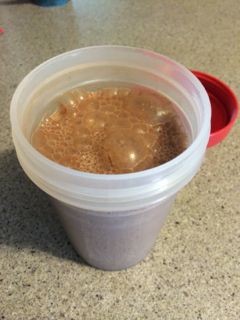
    THIRD PLACE: Claire Waichler - Turmeric Beet Recovery SmoothieContains protein, potassium, iron, antioxidants, detoxifiers, and lots of anti-inflammatories.

    (Quantities are a rough estimation)

    Makes 1 blender full, 2 or 3 servings

    1 medium beet, peeled

    2 cups of milk

    1 scoop or serving of protein powder – the one in my smoothie is 34g and vanilla flavored

    2 cups of greens, spinach or kale

    1 banana

    A handful of candied ginger.

    A turmeric finger/root

    Ground cinnamon and nutmeg to taste. You can also substitute ground ginger and turmeric for the whole ingredients

    Ice

    Blend all the ingredients in a blender. Then guzzle.