From the FasterSkier archive — posts syndicated from athletes’ and coaches’ own blogs between 2004 and 2012, kept online as published. Current coverage is at fasterskier.com.

Tag: clarkson university

  • Matt Dougherty Inherited One Skier at Paul Smith’s, Six Seasons Later, Two USCSA National Titles

    Matt Dougherty Inherited One Skier at Paul Smith’s, Six Seasons Later, Two USCSA National Titles

    This article was made possible through the generous support of our voluntary subscribers. If you value coverage like this, please support FasterSkier with a voluntary subscription.

    Matt Dougherty has a way of knowing in September exactly what he is going to say in February.

    It usually happens on the second day of the Adirondack Canoe Classic, the three-day, ninety-mile paddle from Old Forge to Saranac Lake that everyone in the North Country calls the 90-Miler. By then his skiers have been in a boat for two days. They have carried it over roughly five miles of portage trails. They are, by his description, flat on the ground.

    “It was six hours of just going as hard as you can, which is still low on the L zones, but you’re putting out power for hours and hours and hours,” Dougherty said. “And then you get back in the boat.”

    Dougherty is the head nordic ski coach at Paul Smith’s College, and also its head marathon canoe coach, which is not a combination most ski programs carry. In March his men won the USCSA national championship at Mount Van Hoevenberg, 68 points to St. Olaf’s 108, the program’s second national title in five seasons. His women finished second, as they did in 2022 when the men won the first one. He took the ski program over in the fall of 2020 with one skier on the roster and no recruits, at a college in the woods with fewer students than most high schools.

    He is also, as of this year, the subject of a feature documentary, which is a strange thing to happen to a coach at a school of this size and which he did not see coming at all.
    Four Paul Smith's College athletes hold
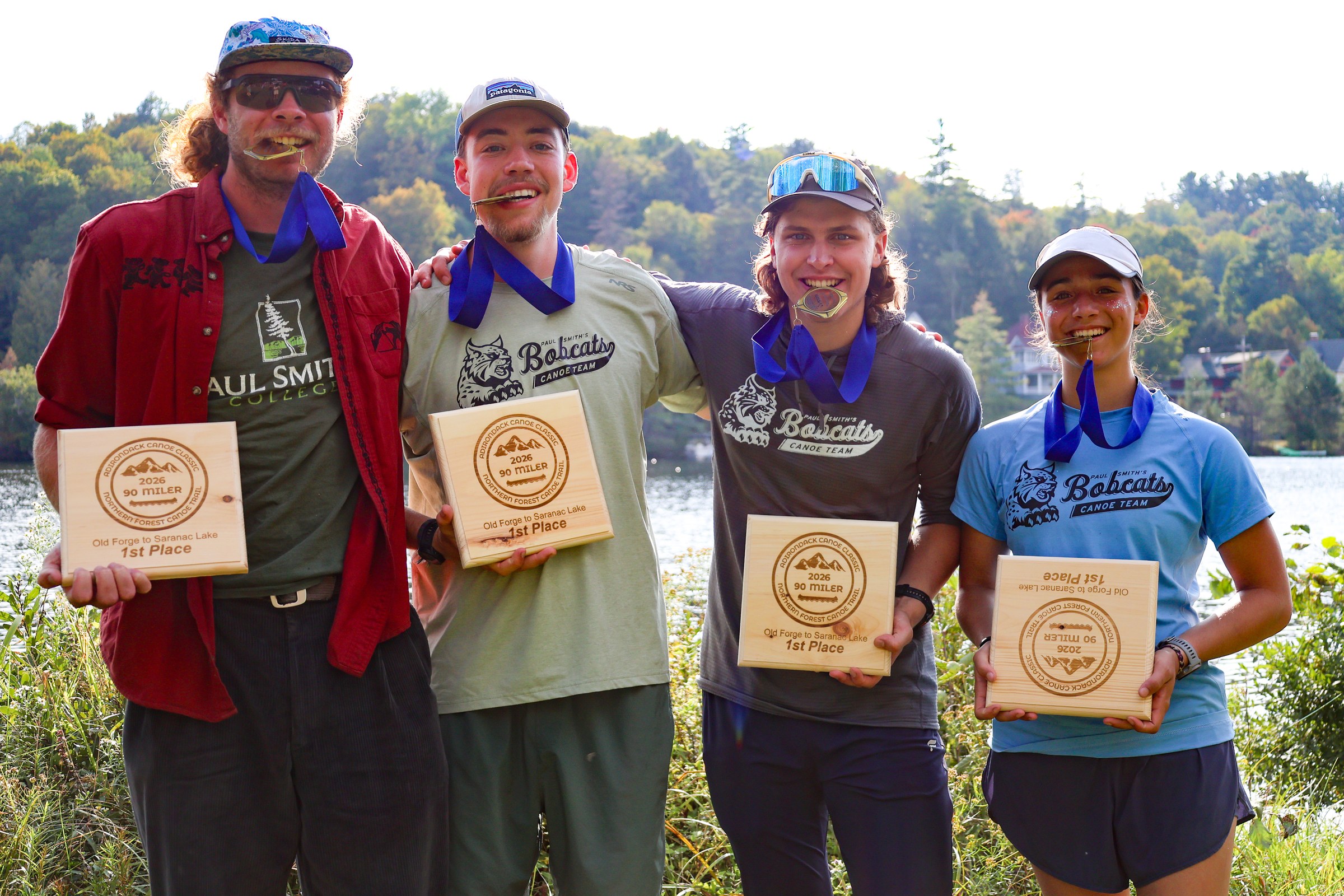
    Paul Smith’s paddlers with their first-place plaques after the Adirondack Canoe Classic, the three-day, ninety-mile race the North Country calls the 90-Miler. Head coach Matt Dougherty runs the marathon canoe team as well as the ski team. (Courtesy photo)

    Three days in a boat

    The marathon canoe team is not a requirement for skiers at Paul Smith’s. A lot of them do it anyway.

    “It gives me the opportunity to do the important lessons,” Dougherty said. “The 90 mile canoe race is super hard, and I can go back and be like, look at what we can do when we put our mind to it.”

    The boats are the point. In the Voyageur class, where Paul Smith’s entered a seven-paddler crew in 2024 and won its division by two hours, the craft itself becomes part of the problem.

    “It’s raining and you paddled,” Dougherty said. “You had to carry a boat that’s 300 pounds if you’re in the Voyageur canoe up and over a literal side of a mountain in a race.”

    He is after two things. One is the plain demonstration that his athletes can do more than they think, a claim coaches make constantly and almost never get to prove in September.

    “A lot of times our preconceived notion of what we can do is only limited by our own mind,” he said. “If you ask them at the end of day one, they’re like, there’s no way I can do that again. Day two, and you keep doing that, and you’re like, but what can you actually do if you open up your mind and say, like, I’m just willing to see, I’m willing to test those boundaries?”

    The other is more useful to him in February.

    “To affect change, you got to have shared experiences, even with a coach involved in it,” he said. “That say, like, we shared this really hard time, and there’s this high level of trust, and we can do super hard things. From there, we can then we can get into the training, and we can say, yeah, we’re gonna do 44 weeks of training next year, and you’re gonna put on 10 pounds in the weight room, and things that they’re like, what? But now it’s like, okay, we have a place to start from.”

    There is a third thing, which he raises without being asked.

    “It’s really hard for college students to understand all the hard things you’re going to go through in life, and I want them to be tempered and ready,” he said. “This is going to be hard to experience all of the emotions, sadness, grief, pain, but also to be like I can endure this.”
    A line of Paul Smith's College skiers in
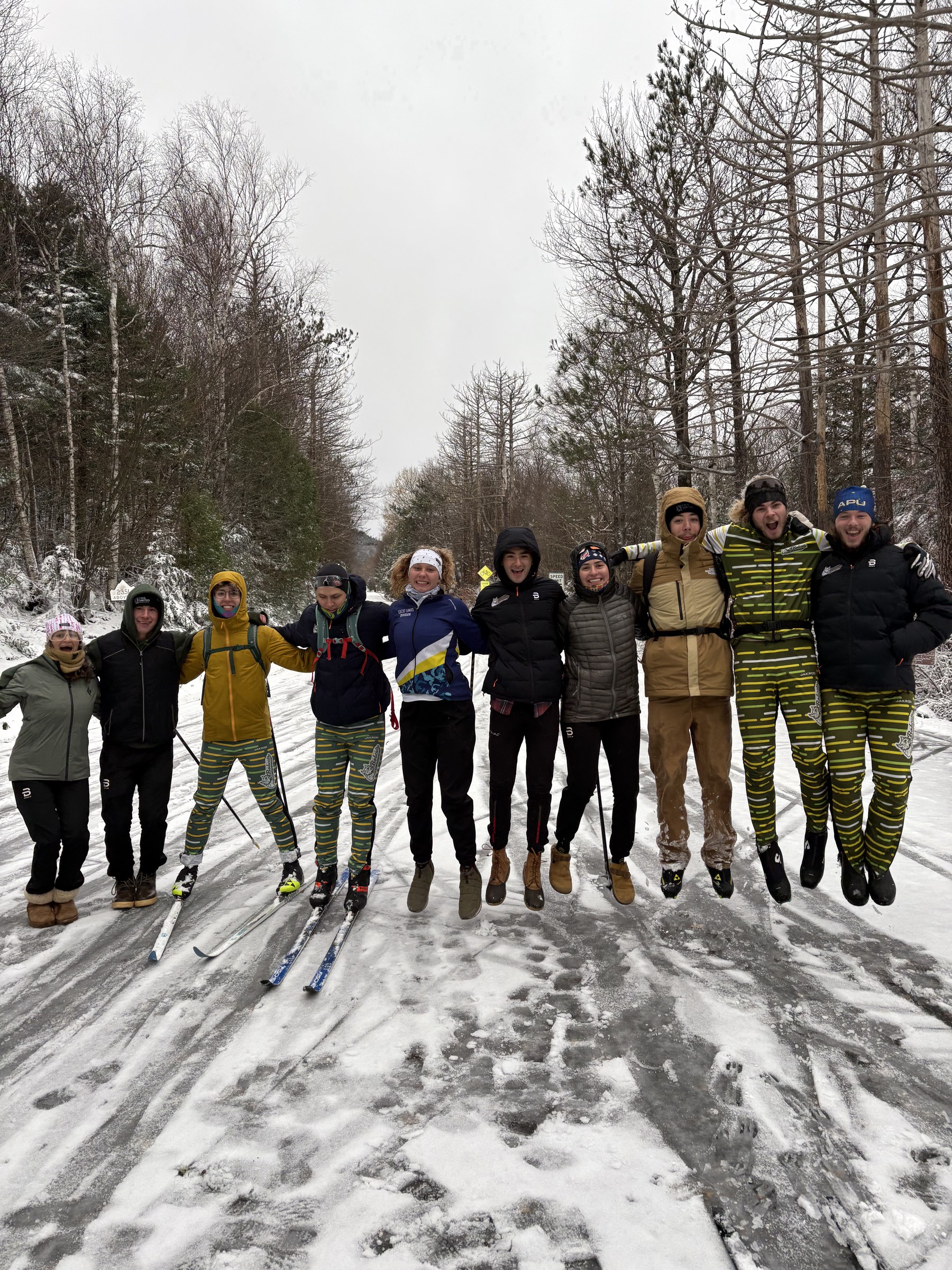
    The roster Dougherty built. He took the program over in the fall of 2020 with one skier on it and no recruits. (Courtesy photo)

    The long way back to Saranac Lake

    Dougherty graduated from Saranac Lake High School in 1997 and got a running scholarship to Houghton University, then a small NAIA school in western New York, which is where the pattern that governs everything else started.

    “Sport was an avenue to change my circumstances in life,” he said. “It changed my life because it got me to college. I paid for college. I got a degree, and then changed my circumstances drastically.”

    He has two degrees, an undergraduate in outdoor education and ceramics, and a master’s in education from St. Lawrence in what he describes as cognitive behavior. He coached track and field for two decades before this, and he spent some of those years around people whose approach he took wholesale. One of them was Clyde Hart, the Baylor coach who put Michael Johnson, Jeremy Wariner and Sanya Richards-Ross on Olympic 400-meter podiums.

    “You’d think, man, you have like three gold medalists on your team right now,” Dougherty said. “And you’d see him interact with his athletes, and you’d be like, wow, it’s always the person first. It is what’s going on in your life today, what’s going on the person before the athletic part.”

    As a coach, he had chances to move up into Division I teams. He turned them down, and he credits his wife with the reasoning.

    “What I realized then is, it’s a numbers game and it’s not a person game,” he said. His wife, he said, put it to him as a trade: “If you do this, you lose that, and it’s going to be miserable for you.”

    He is now coaching three miles up the road from where Bill Demong grew up, at a college where Tim Burke’s father was a vice president for thirty-five years. He has a theory about what sticks from a life in that company.

    “He would probably just hide his Olympic gold and silver medal for the rest of his life,” Dougherty said of Demong, who won gold and silver in nordic combined at the 2010 Vancouver Games. “But he would happily talk about what sport did, like what those experiences were.”
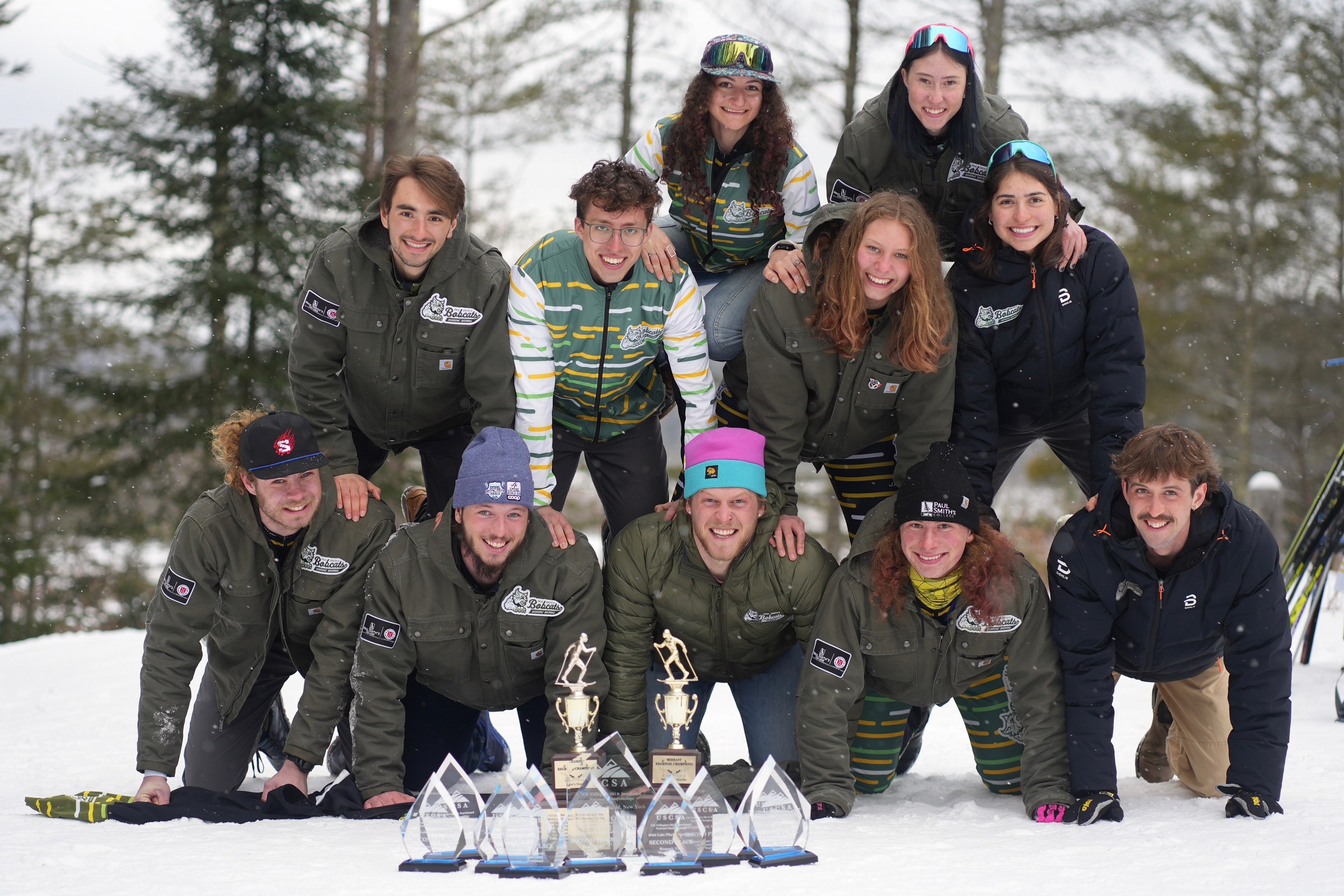
    Members of the Paul Smith's College nord
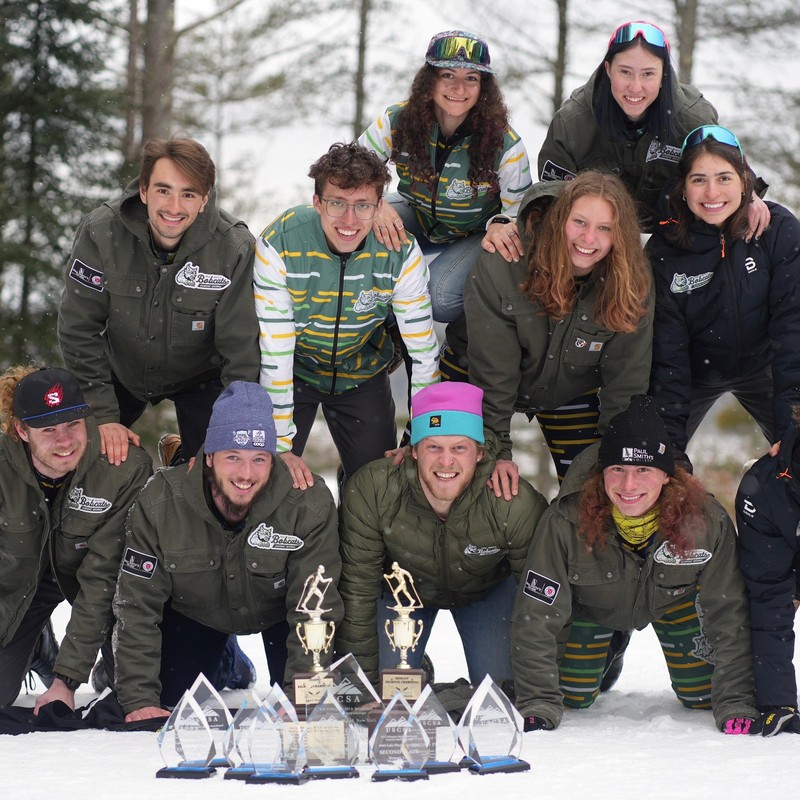
    The hardware from a season in which the Paul Smith’s men won the USCSA national title and the women finished second. The team never set winning it as a goal. (Photo: Timo Ziegler)

    Goals that do not squeeze anyone out

    Paul Smith’s does not set a team goal of winning a national championship, even in years when it wins one.

    “We just set process goals, because that’s the only thing we can control is what we do there,” Dougherty said. “And we caveat that with a little like, what do we hope that gets us. If we do all those things, we hope it can lead us to contending for a national title.”

    The reason is not modesty. It is arithmetic about who a team goal excludes.

    “I take such an individualized version of goal setting,” he said. “If we put a performance metric behind it, it often squeezes out other people in the program. It doesn’t allow their goals to exist.”

    Last season one of his athletes was named to a US biathlon team for an international championship, which meant flying back from Germany and landing roughly a day before the national championships started.

    “If the women’s team had said like our goal is to only win nationals and they were second overall, like that would have put her in a position where she’s like, well, I’m taken away from the team by going to World Juniors,” Dougherty said.

    She went. The team finished second anyway. Nobody had to choose.

    The team does have expectations, two of them, and he recites them the way people recite things they have said several hundred times.

    “To be on this team, you got to be a good teammate first, and then maximize your opportunity,” he said.

    What that produces, in his telling, is a program where the standard gets set from the back of the group.

    “When a star is like, oh, I’m tired today, or this morning it’s raining and it’s 38 degrees, no one wants to ski, but they see the slowest guy kitting up and going out, then it allows all of us to kind of gain from that,” he said.
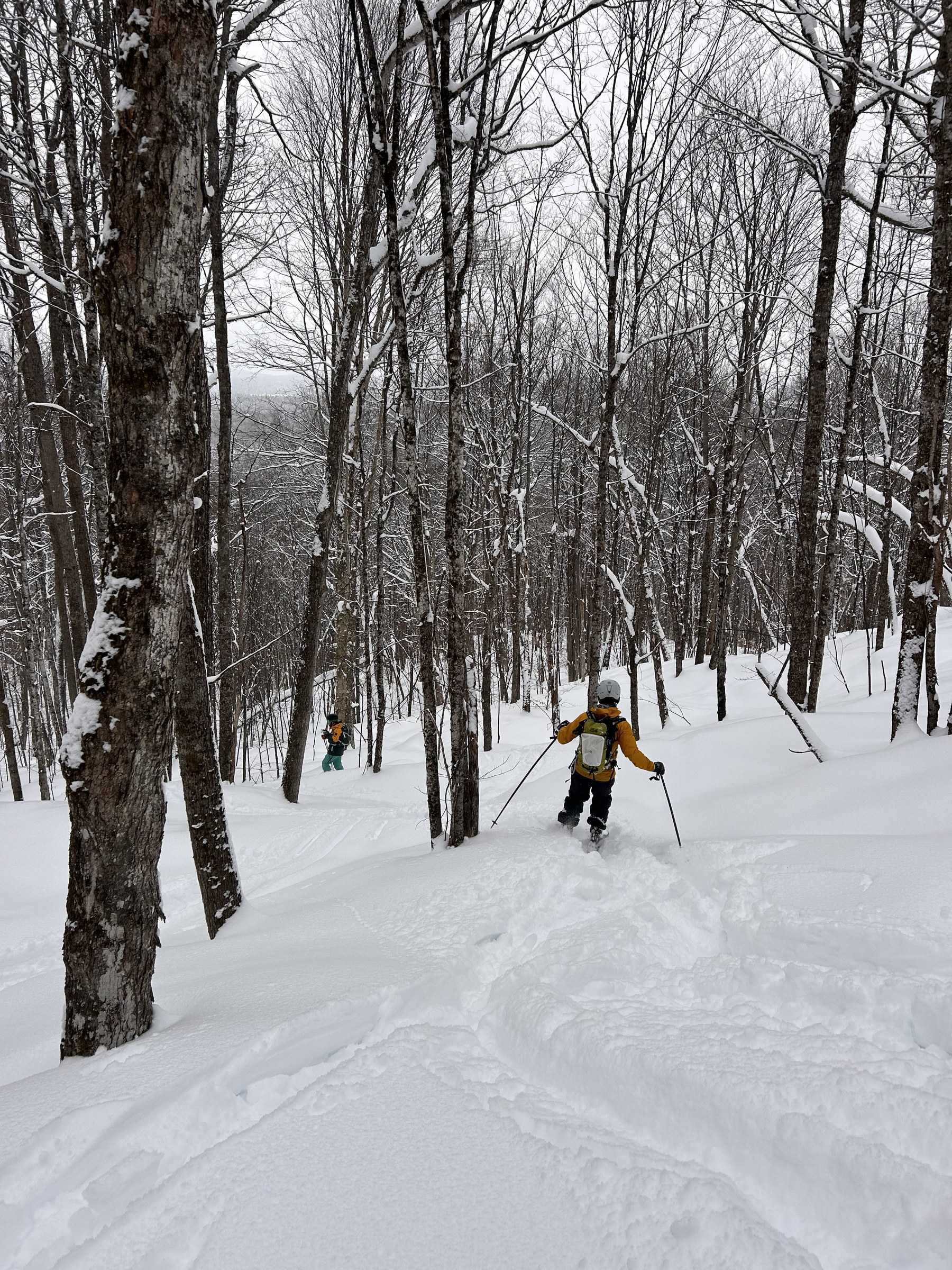
    A lone cross-country skier on a groomed
    An ordinary training day on the trails at Paul Smith’s. Dougherty says his job is to make room for whatever an athlete is carrying, without asking for it directly. (Courtesy photo)

    The person before the athlete

    The documentary spends real time on mental health, and it is the part of the conversation Dougherty warms to fastest. He starts from what he does not know.

    “I only get a piece of the story of this athlete,” he said. “We don’t know if they came from rough family life or they just feel like they don’t belong. All these things. Mental health issues are real, and I need to know about those. But I have to allow space for them to come up organically.”

    “I can’t be like, who has mental health issues?” he said. “I’ve got to create the space for that.”

    The space, in practice, is a rule about curiosity that the team applies to each other.

    “We’re constantly like, we’re not judgmental on this team. Let’s be curious,” he said. “If as we look at a teammate and we wonder what they’re going through, instead of saying like whatever, we say like, oh, what’s the source of that?”

    The same approach applies when he already knows an athlete is struggling. The problem then is how to open the door without making the asking the event.

    “The really hard thing is when you get to the point where you know stuff’s going on, finding the way to indirectly be direct,” he said. “What do you need?” is the question he finds himself asking, and it generally opens the door.

    That extends to how he thinks athletes should hold their own results. A race result, in his view, is a terrible place to store your sense of self.

    “Their performance isn’t who they are, and it’s not anything connected to their value,” he said. “Whether we win by 20 points, lose by 20 points, doesn’t change their person or their value as a person.”

    As he has gotten older he has become more concerned with sportsmanship, and he treats it as something other than a courtesy. It is how he teaches athletes to handle a disappointment and to recognize somebody else’s work.

    “When you can say like, yeah, I didn’t have a great race today, instead of being sad and dour, if you go to celebrate someone you know who’s trained hard for a year and had a great day, you can’t be sad anymore,” he said. “It just changes you.”

    He means it specifically. Clarkson won the USCSA men’s title at Mount Van Hoevenberg in 2024 and Paul Smith’s finished second, and Dougherty’s response was to have his team look closely at what the Clarkson skiers had done to get there.

    “Even though we’d love to win, when you see someone perform like that, it’s actually inspiring,” he said. “The more we can be open to looking at performance and saying like other teams did great, but there’s value in me not just celebrating them, but seeing what they did and honoring it. I think it makes us better athletes in the end.”
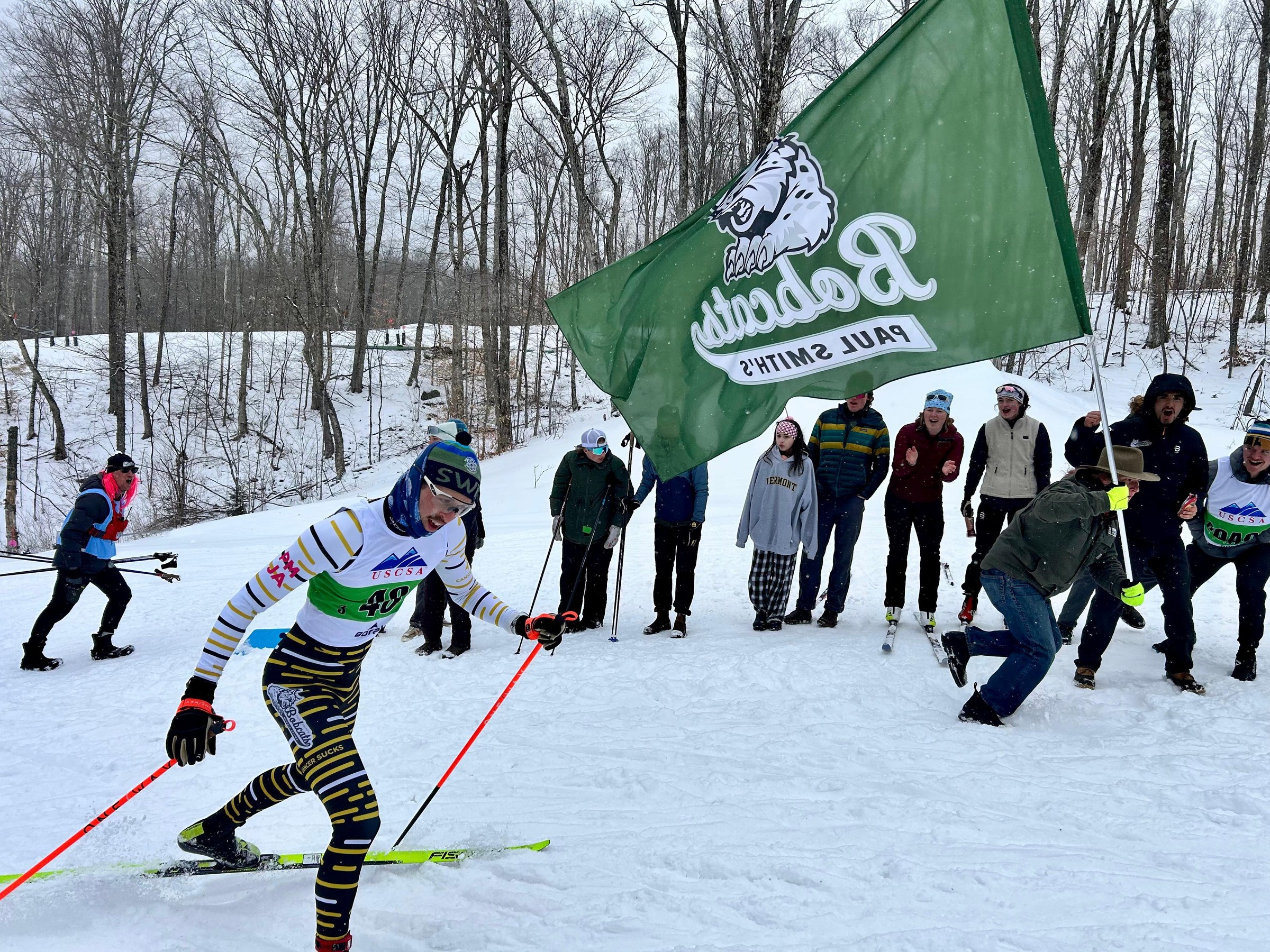
    A cross-country skier races past a group
    Teammates and the Bobcats flag trailside. At a college of roughly 750 students, Dougherty says, everyone on campus knows the ski program. (Courtesy photo)

    A small college and a film crew

    Paul Smith’s enrolls roughly 750 students by the college’s own count, on 14,000 acres at the northern edge of the Adirondack Park. Nearly half the bachelor’s degrees it awarded last year were in natural resources and conservation. It is the kind of place where a skier’s Saturday gets rearranged by a professor.

    “When you come here, it’s individualized; it is a personal relationship school,” Dougherty said. “My students are working with a professor; he takes an interest, he gets to know them, and then I find out, well, Saturday we’re actually going out with this professor. He’s taking us into the mountains to show us this specific part of our research.”

    “It is harder when you have 700 students. Everything about that is harder: recruiting, getting people here,” he said. “But because of that, we live in a culture where everyone on campus knows the ski program.”

    That extends past the campus. Dougherty calls the Saranac Lake and Lake Placid community around the program super fans, and he puts the college president, Dan Kelting, in that category.

    “He shows up at ski races and he’s not just there to like cheer,” Dougherty said. “He’s also there like, what do you guys need? What does the program need? What do we need to keep bringing in great students as a ski program?”

    His summary of the whole arrangement is that it could not exist anywhere else.

    “It’s this weird subculture that probably could only exist in the Adirondacks,” he said.

    Which brings up the film. A donor with a seasonal home on one of the lakes near the college met the team at an event, decided there was a story, and asked whether Dougherty would sit down with a documentary crew. Dougherty said yes without any clear idea what he was agreeing to.

    “I expected a three to five minute kind of like infomercial type thing for YouTube,” he said.

    What arrived was Adrenaline Films, an Orlando company that Dougherty said had got its start on the early seasons of Survivor and had lately been following a ballet company through the war in Ukraine. The crew embedded with the ski team for close to two years.

    “This was like pretty legit documentary crew following us for a long time,” Dougherty said.

    The result is Coach Matt and the Outdoor ‘Cats, directed by Robert Jury and produced by Michael Murray and Tim Ranzetta. It runs about 95 minutes, and it is free to watch, with ads, on Amazon Prime Video and on Tubi. Its spine is the 2024 season, in which the Paul Smith’s men lost the national title by two points.

    “They’re really just telling the story of a team,” Dougherty said. “Small, tiny school in the woods is really another theme there. You can do anything, anywhere, kind of an idea.”

    Any money the film makes goes back to the program, and he doubts there will be any.

    “My guess, without knowing all the specifics of cost, is that this is a net loss,” he said.

    The team that lost by two points in that film won by 40 in March. Nobody set that as a goal.

    Help Support Our Coverage!

    If you value the thoughtful work and access FasterSkier provides, please consider becoming a Voluntary Subscriber. Your support directly fuels our work to cover the people, places, and moments that make our sport special.

    Join the FasterSkier community!
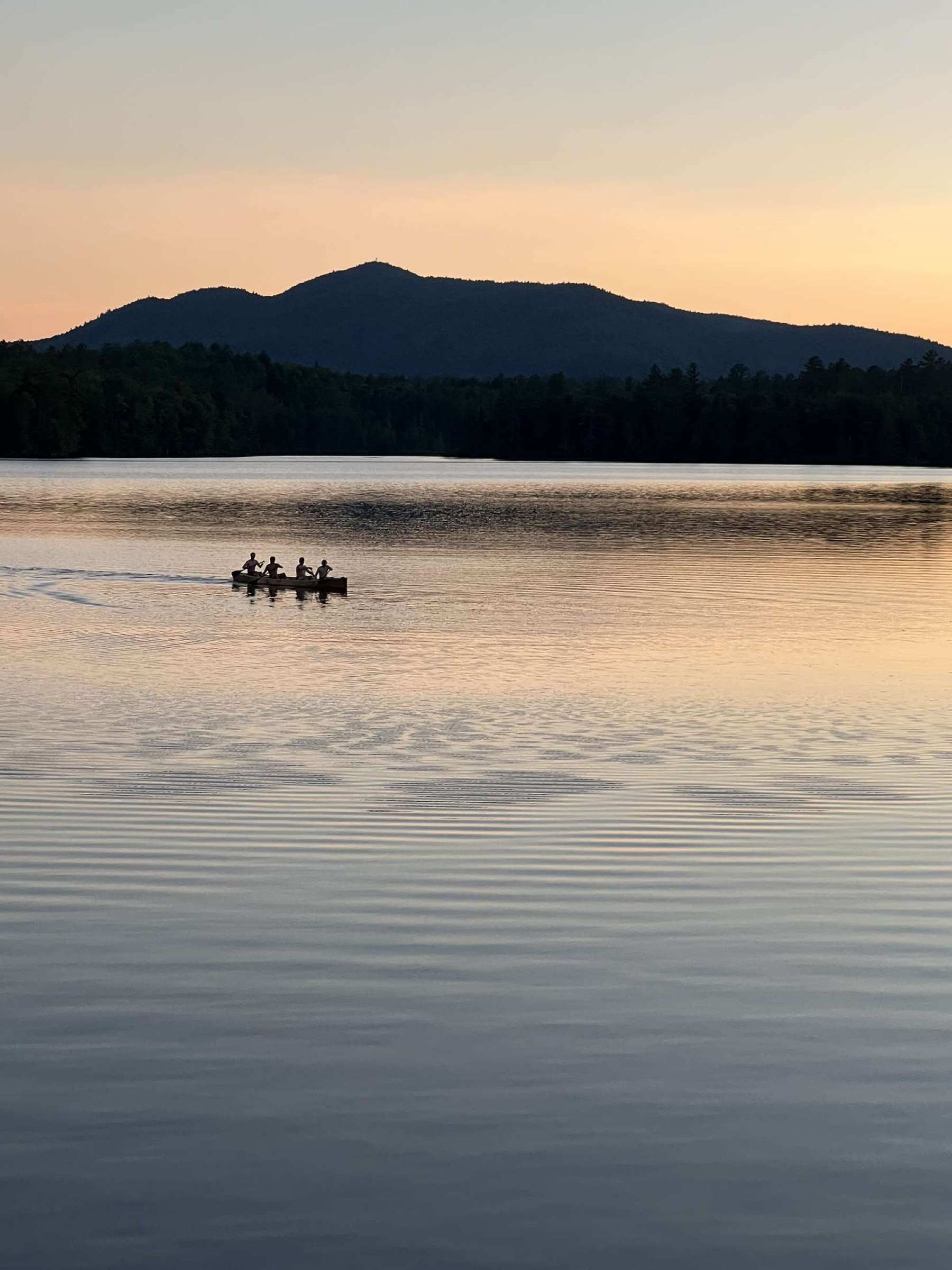
     

    A canoe with several paddlers silhouette
    First light on an Adirondack lake. The canoe season comes first, and it is where Dougherty does his most important coaching. (Courtesy photo)
  • USCSA: The “Hidden Gem” Pathway for Non-NCAA Collegiate Skiers

    USCSA: The “Hidden Gem” Pathway for Non-NCAA Collegiate Skiers

    Last year, 174 athletes in the male and female U18 categories competed at Junior Nationals in Anchorage, AK. This number represents a small fraction of the cross country skiers throughout the country in that age category. As there are only about 30 NCAA programs nationwide that offer Division I or Division II cross country skiing, the opportunity for high-level training and racing narrows significantly after a skier graduates from high school. 

    However, the door to continue to pursue collegiate nordic skiing does not shut on an athlete who does not make or does not wish to compete for an NCAA team. While lesser known, the United States Collegiate Ski Association (USCSA) has created an opportunity for hundreds of additional skiers throughout the U.S. to continue to participate and compete in cross country skiing. In essence, USCSA is Division III skiing, however, because it is not under the NCAA jurisdiction, it allows for much broader entry, making it accessible to both club and varsity programs. 

    The mission statement states, “The USCSA asserts that student-athletes, of ALL levels and abilities, should have access to a quality and exciting venue of competition.”

    USCSA programs can be found throughout the majority of the country at schools like Cornell University, West Point, St. Olaf College, University of Wyoming, and Colorado Mesa University.

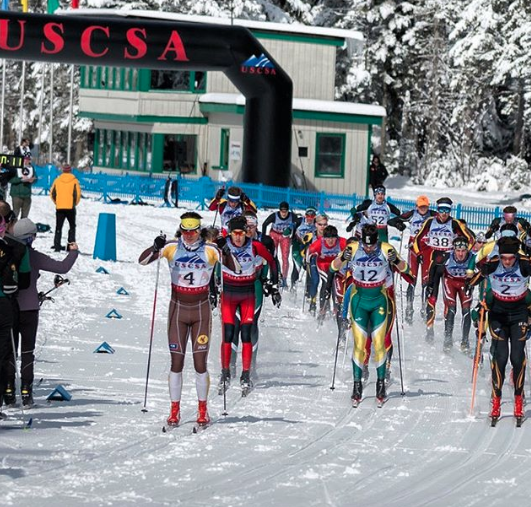
    Athletes take to the course during a mass start classic race at the 2019 USCSA National Championships in Jackson Hole, WY. (Photo: USCSA.com)

    Much like the NCAA, regional USCSA coordinators organize a season of races, each hosted by a member school, leading up to a regional championship in late February. These races are held at many of the same venues as the NCAA races. At the end of the season, the top teams and individuals from each region compete at a five-day national championship in early March in conjunction with the other snowsport disciplines of USCSA. These championships have been held at prestigious venues across the country including Jackson Hole, WY in 2019, Lake Placid, NY in 2018, and Mt. Bachelor, OR in 2017. 

    In contrast to an NCAA program, both men and women race the same distances in both sprint and distance events, promoting equality across genders. The USCSA also prides itself in being team-centric, emphasizing team scoring, as opposed to focusing on individual results.

    In most cases, USCSA programs are not exclusive, meaning teams or clubs are open to anyone, regardless of their previous experience or exposure to the sport. All athletes are welcome to participate in races. In contrast, an NCAA program may have a limited competition team. However, this inclusivity does not indicate that the programs are not competitive or that they would not serve a high-level junior skier. 

    “The flexibility of a USCSA team is incredible because you can have people that have never skied before to people that are – there are USCSA racers that have been Junior National Champions,” said Christi Boggs, Vice-President of Nordic Skiing at USCSA and nordic coach at the University of Wyoming (UWYO). “There are some really high-level racers, but it also allows for someone who just loves to do it to keep doing it or someone that wants to try it can try it.”

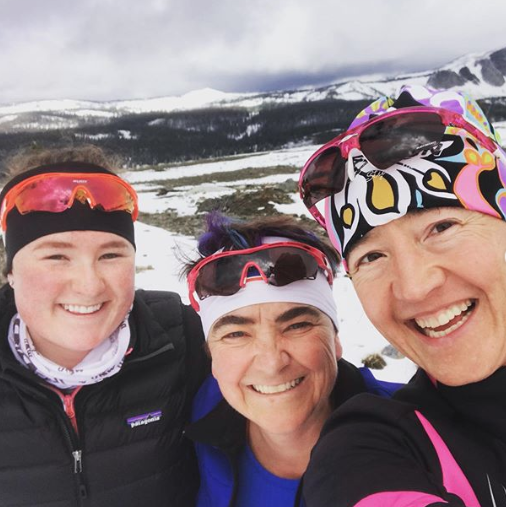
    Christi Boggs (center) of the University of Wyoming on a crust ski with her partner and fellow coach Rachel Watson (right) and athlete (left). Boggs is the Vice President of Nordic Skiing for USCSA. (Photo: Instagram @uwnordicski)

    A graduate of UWYO herself and a faculty member in the School of Culture, Gender, and Social Justice, Boggs has been overseeing the school’s club program for the last 22 years. During her own time as a student and athlete at UWYO, the nordic ski program was a Division I NCAA program and Boggs became a four-time All American, later pursuing biathlon and winning the Rocky Mountain Cup and North American Cup twice each. But like several other programs, the UWYO lacked the funding to support the program. It was cut in 1993.

    While top junior skiers typically do head to NCAA programs, Holly Brooks and Clare Egan, both USCSA alumn, show that the programs can still be stepping stones to elite competition. 

    In reflecting on her decision not to ski for an NCAA team, Egan described her high school self as “not a real serious athlete”, though she did win the Maine State Championships in 2006 and competed in Junior Nationals in both 2006 and 2007. She explained that she did not do any formal summer training in those days, and out of the three sports she participated and had talent in – she also ran cross country in the fall and track in the spring – none held priority for her. Though she did want to continue in athletics, she was very academically motivated and aspired to study abroad and to continue to play music during her college career as well.  To Egan, the idea of being limited as a Division I athlete was off-putting. 

    “When I applied to college, I wasn’t really sure what I wanted to do,” Egan recalled. “I got offered a Division I running scholarship, I got into Middlebury where I would have been focusing on skiing, and UNH, I was offered a scholarship that would have been a combination of running and skiing. But in the end, I decided that I didn’t want to be a full-time athlete at that point, which is what my impression of Division I was.”

    Egan ultimately chose Wellesley College, located 30-minutes west of Boston, MA. 

    While attending Wellesley College, Clare Egan competed in the USCSA in addition to racing in regional NENSA and EISA races. (Courtesy Photo)

    “I ended up picking Wellesley, among other things, because it gave me the opportunity to continue participating and competing in all the sports that I did without having it be Division I,” she explained.

    At the time, Wellesley did not offer cross country skiing, but the campus is located within five miles of the Weston Ski Track, so she knew that she could continue to ski. She would also be able to participate in New England Nordic Ski Association (NENSA) races. Egan also joined the varsity cross country and track teams. 

    “I guess right away my fall at Wellesley, I decided that I did want to do skiing and that I wanted to get involved in some way,” she said. “So I started a club through the student activities and got involved in USCSA.”

    By joining the USCSA, which she referred to as a “hidden gem”, Egan was able to race a full season in the Northeast, participating in USCSA and NENSA races as well as Eastern Intercollegiate Ski Association (EISA) carnivals. As was her hope, she studied abroad her junior year in Italy and Switzerland, where she skied regularly and raced in the Engadin Ski Marathon. In her senior year, Egan qualified individually for and competed at NCAA’s in addition to the USCSA national championships. As she had one remaining year of NCAA eligibility, her path then led her to the ski team at the University of New Hampshire and eventually to the Craftsbury Green Racing Project Team and now the US Biathlon Team. 

    While this trajectory is non-traditional for an Olympic athlete, it demonstrates that an athlete can be successful through a number of different pathways, some more direct than others. Egan attributes some of her longevity in the sport as her career has developed to being in a low-pressure and relatively unstructured environment for so long.

    buy metronidazole online

    “I can say that I’m not burnt out,” said Egan. “I think a lot of other people who are my age, they stopped a long time ago and maybe part of that is because they competed so intensely for so long already by the time they were 22. Whereas, I did not start doing year-round training until I was 23.”

    Egan could not state outright that had she skied four years in an NCAA program she would have fast tracked her career. But the flexibility that USCSA allowed her was a good fit for her and kept her involved with the sport through her collegiate career while focusing on academics. 

    “I do think that being able to stay involved with skiing in a way that worked with the rest of my life allowed me to – I was able to get involved with it again later because I stayed in touch with it,” she concluded. 

    Two-time Olympian Holly Brooks, who attended Whitman College in Walla Walla, WA, attributes more of her success in ski racing to her USCSA experience. 

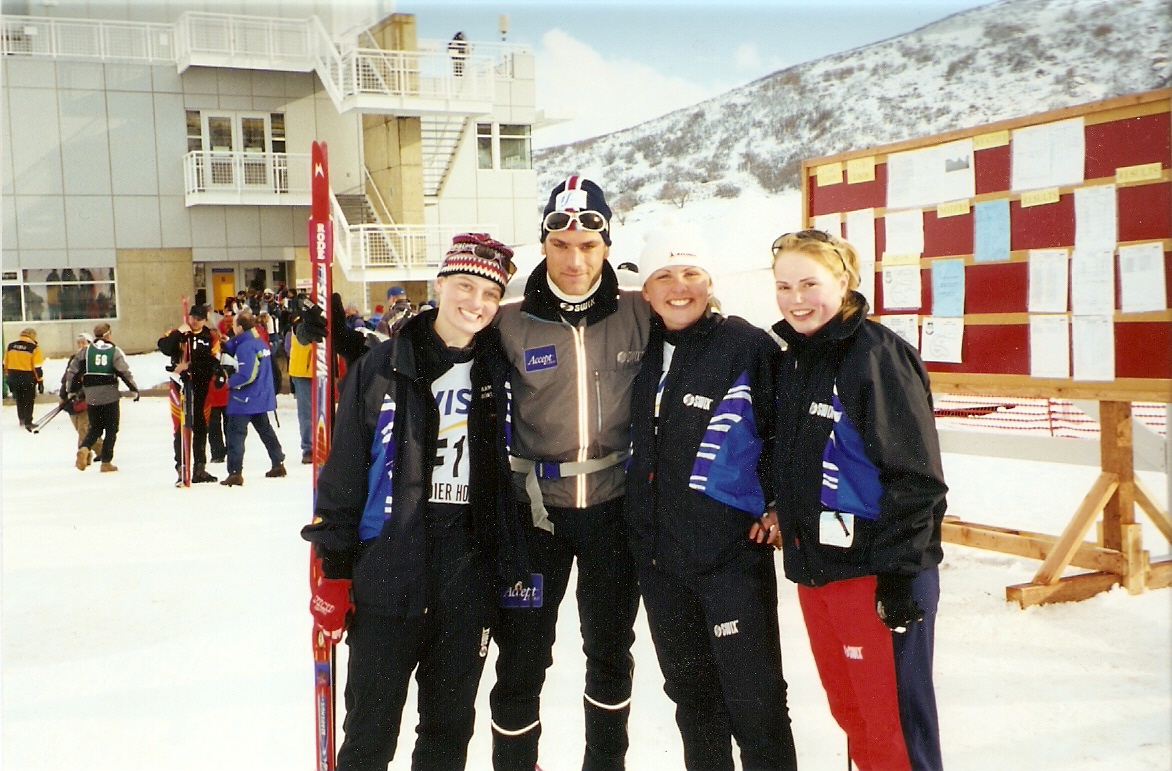
    Holly Brooks poses with her Whitman Nordic teammates and a Norwegian athlete after forerunning at a World Cup race in Soldier Hollow, UT, in 2001. She explained that they were excited to take a picture with a Norwegian. Little did she know she would one day be racing at the World Cup level herself. (Courtesy photo)

    “My time at Whitman played a really important role in my ski career,” wrote Brooks in an email. “Coming out of Seattle I had never been on a bigger team before, and rarely had coaches other than my dad. I actually choose Whitman because it had a ski team and was on the west coast. I wasn’t nearly strong enough to go to any of the larger, more competitive NCAA programs. Once at Whitman, I had awesome teammates and coaching and my love for skiing grew and grew. 

    “USCSA didn’t really have a ‘regular season’ but Nationals seemed like a big deal and it was enough to motivate us to train hard every day,” she continued. “I have no doubt in my mind that had this opportunity not been available my time and interests would have turned to something else. In essence, USCSA skiing at Whitman served as an important placeholder for skiing in my life. It was the link between being a solo skier in Seattle, to getting me to Alaska, where I truly developed as an athlete.”

    In late May, the Aspen Institute held a forum titled the Future of the U.S. Olympic Movement: Reimagining Goals Beyond Medals. The forum touched on a range of topics including SafeSport, athlete mental health, and more holistic youth sports and development programs. A theme in the development conversation was creating opportunity from a grassroots level, that if an athlete wanted to continue in the sport and compete, they should be able to. The USCSA aligns with this grassroots approach in fostering development as its inclusivity promotes the retention of athletes in cross country skiing during a time frame that many stop participating as well as introducing newcomers to the sport.

    “I do think that USCSA plays a really important role, that I wish more people knew about, as a way to keep people involved in the sport through that 18 – 22 time period,” expressed Egan. “You don’t just have to quit after high school if you’re not going to be a Division I athlete. That’s so ridiculous. Skiing, for some reason, is one of the few sports that we look at that way.” 

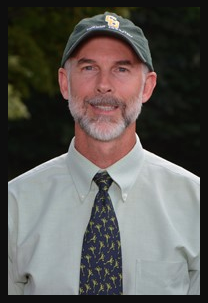
    Jim Allott was the head coach at Clarkson University for 19 years during which he led the Golden Knights to 7 USCSA national titles. (Photo: clarksonathletics.edu)

    This viewpoint was expanded upon by Jim Allott who recently retired from his role as head coach at Clarkson University in northeastern New York after 19 years. In seven of those years, either the Clarkson men or women were the top nordic team at the USCSA national championships. Both teams won in 2012.  

    “When you consider how many colleges are not NCAA or skiers for lots of different reasons don’t have the ability to make an NCAA team, you’re turning away hundreds of potential nordic athletes,” said Allott “If you think about what we see here in Potsdam where our regional is 10 to 12 teams, and then you look at our NCAA cohort with EISA, and they have a similar number of teams. So just in that one quick snapshot, you can see that we’ve doubled the number of nordic teams.” 

    Allott also echoed Egan’s words about athlete “burn out”, adding that the dynamic and culture of USCSA programs allows skiers to grow both their ability and love for the sport. Allott described the USCSA experience as “both positive and fulfilling.”

    “It instills the passion that they will want to pursue it when they leave college, and that’s rare in a lot of college athletic sport situations. Many athletes are just done, they’re either just cooked and fried, or they really don’t continue in their sport.”

    During his tenure, Allott has seen many of his athletes continue to pursue cross country skiing after college, whether their involvement is recreational, in leadership roles within USCSA, or as a coach of a youth program. He described USCSA alumni as being “like the growth of a tree”, where each forms a branch to create a nationwide community connected by a common passion.

    “I take a fair amount of pride in how many of my athletes move on and get involved in the sport of nordic skiing,” said Allott. “That ranges anywhere from a Bill Koch level to high school coaching. The last 15 years, our USCSA regional coordinators have all been Clarkson nordic alumni.”

    Boggs seconded Allott’s sentiment about the prevalence of her former athletes in coaching and other areas of sport. She attributes this connection to the sport to the positive culture cultivated within the USCSA opportunity. 

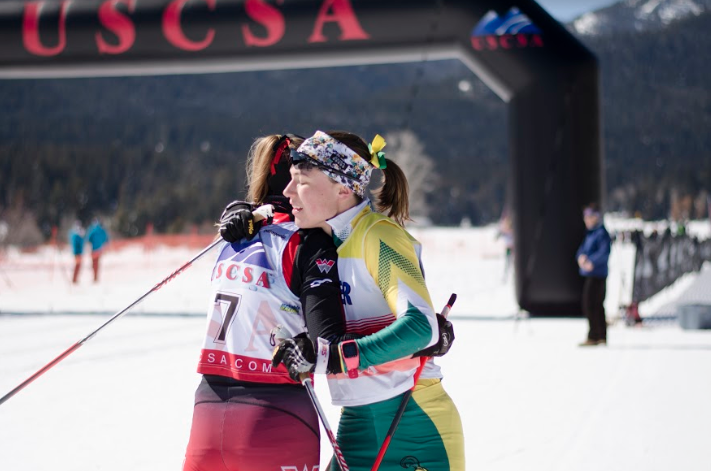
    An athlete from Clarkson University celebrates at the finish with a competitor from Western State Colorado University during the 2019 USCSA National Championships in Jackson Hole, WY. (Photo: USCSA.com)

    “All of that builds opportunity and pathways for athletes to become really important to the sport overall,” said Boggs emphatically. “I think that’s huge.”

    She continued that the nature of students attending USCSA member schools has the power to position them in roles where they can create a large impact on the overall American nordic ski community.

    “A lot of USCSA teams – they’re military academies and Ivy League [schools]. These are people that are really going places and getting graduate degrees and can really make a difference going forward. I think that is super important for building the sport.”

    Both coaches emphasized the impact of USCSA beyond the development of the skier to the transference of the life skills cultivated through the experience, which includes benefits such as better sleep, self-reliance, positive self-image, teamwork, and time-management. They expressed that these traits help alumni obtain and succeed in post-collegiate careers and to lead healthy and active lifestyles. 

    After taking the role of Cross Country Sport Development Manager last fall, Bryan Fish described a system of three metrics to track the success of US development: growth in the number of skiers, retention of those skiers, and lastly, improvement in performance. By promoting inclusivity and creating opportunity, USCSA supports this system, assisting in the development of a healthy and thriving American cross country ski community. 

    “If we don’t maintain and fight for diverse options for people to keep skiing I think our sport is doomed,” wrote Brooks on USCSA’s role in the growth of the sport in the US. “The beauty of cross country skiing is that it can be a lifelong sport. But… we need to make sure that opportunities exist for people to stay engaged.  We need enthusiasts, we need fans, we need coaches, groomers, ski parents, officials, donors, etc. The health of our ski community depends on having options. Unfortunately, the official ski program at Whitman folded years ago. I am thankful that the opportunity existed during my time there.” 

    Boggs reaffirmed this message, furthering the grassroots model of supporting the development of cross country skiing in the US.  

    “Our support base, the next generation of skiers and the support base for the skiers we have, don’t come from the elite athletes,” expressed Boggs. “It comes from all the people watching the races, the parents taking their kids to races, people that are just passionate and excited. That’s who is donating the money, and spending the time volunteering to coach, and driving kids to races. Those are all the people that get really excited. And I think USCSA is uniquely positioned for that.”

    To wrap up her beliefs about the role of USCSA in the success of American nordic sports, Egan offered a concluding message to support high school skiers amidst the “college conflict”.

    “If you’re thinking about being an athlete and you don’t necessarily want or don’t qualify to be on one of those Division I teams, you don’t have to give up skiing at all,” concluded Egan. “Someone might not be ready to do Division I in high school or they might not be interested, but there are plenty of athletes who have the passion and ability to stay involved and we shouldn’t exclude those people.”


  • Clarkson University Seeks Assistant Nordic/XC Running Coach

    Clarkson University Seeks Assistant Nordic/XC Running Coach

    Clarkson University Logo

    Clarkson University, a Division III institution in northeastern New York, is looking for qualified individuals to assistant coach its nordic/cross-country running programs, in exchange for free tuition, healthcare and a stipend. Perfect for someone seeking a graduate degree.

    Details:

    The Department of Athletics at Clarkson University, a Division III member of the Liberty League, is seeking Assistant Coaches in the sports of Women’s Soccer, Cross Country/Nordic Skiing, Women’s Basketball, Alpine Skiing, Diving and Softball. These are 10-month positions that offer up to six graduate classes per academic year and a $10,000 stipend with medical benefits. Responsibilities include but are not limited to: assisting the head coach in the daily operations of a division III program, event management duties, and other duties assigned by the athletic department of the University.

    Review of applications will begin immediately and continue until the positions are filled. To submit your application, go to www.clarkson.edu/hr and click “Career Opportunities” on the left hand navigation bar. An equal opportunity /affirmative action employer, Clarkson University actively seeks and encourages applications from minorities, women and people with disabilities.

    Requirements:

    Bachelor’s degree playing at the collegiate level required. Coaching experience at the collegiate level is preferred.


    For more information or to apply, click here. 

    Questions? Email head coach Jim Allott: Jallott@clarkson.edu