Tag: Classic Sprint

  • Oberstdorf Sprint Canceled Due to Storm; Diggins Second in Qualifying Round Most Deemed Unsafe

    Oberstdorf Sprint Canceled Due to Storm; Diggins Second in Qualifying Round Most Deemed Unsafe

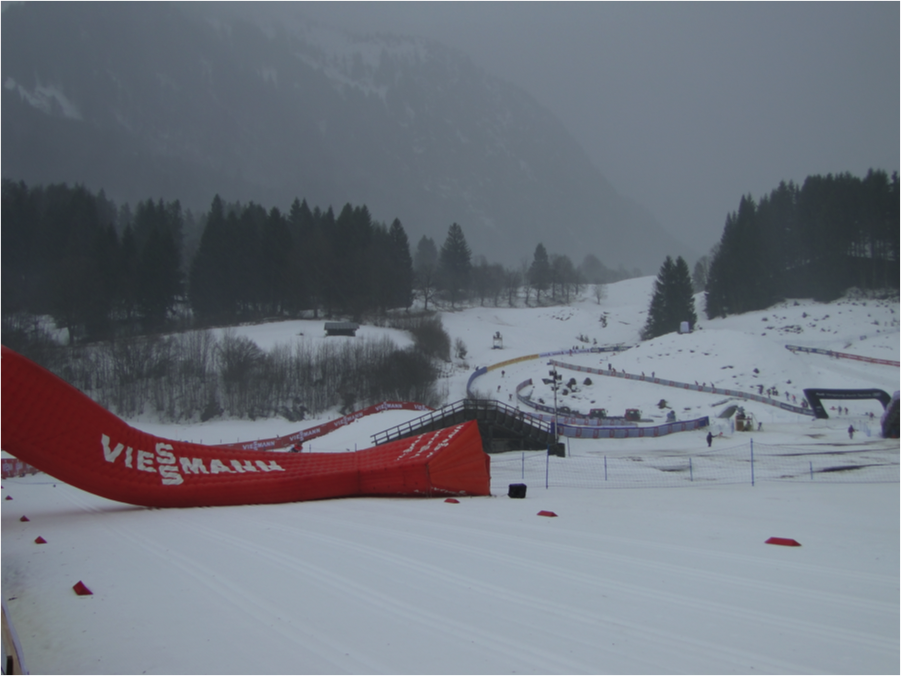
    A view of the racecourse in Oberstdorf, Germany, on Wednesday after Storm Burglind ripped through, bringing rain and wind which tossed materials and trees around the course.

    OBERSTDORF, Germany — On Wednesday, a storm big enough to earn a name from meteorological agencies, “Burglind” provided unexpected obstacles to the World Cup cross-country ski field. With some gusts of wind approaching hurricane speeds, the women’s and men’s sprint courses became potentially dangerous — and they are already difficult to ski under regular conditions.

    Trees fell on a warmup track and a section initially intended for the men’s sprint. Blown-over ad banners and gates littered both the men’s and women’s sprint courses for the fourth of seven stages at this year’s Internationals Ski Federation (FIS) Tour de Ski.

    “There were a few lightning strikes during the ski testing window that were probably within a mile of the venue, so that made everyone nervous and for me that was the scariest part of the day,” Simi Hamilton of the U.S. Ski Team (USST) wrote in an email. “I think they were prepared to keep running the race until a 60-foot tall tree fell down on the distance course where men were warming up and women cooling down. At that point, I think they deemed it too dangerous to continue, and I agree with the decision they made.”

    Ultimately, the race jury canceled the sprints.

    This was not good news for some women, who had looked forward to the races and braved the elements successfully: their sprint qualifying round had still been started despite the adverse conditions. Maiken Caspersen Falla of Norway won that time trial, although it wasn’t ever counted for anything other than FIS points.

    Those who didn’t go as fast as Falla could benefit from having a “mulligan” to try anew on Thursday, when races are scheduled to continue with mass starts also in Oberstdorf.

    “The skiing itself was really good today, perfect klister conditions, so it is unfortunate to cancel the race, but our safety should always come first,” USST member Rosie Brennan wrote in an email. “I think it would have been better to postpone the race as soon as the lighting hit and then make a decision as to whether or not it is safe to race so that no one is out skiing in lightning … I was debating if I should keep warming up or not take the risk, and that is a position I don’t think the athletes should be put in.”

    The qualifying round was drowned out in a rainstorm on Wednesday. The female racers were drenched when they came off the course, and while lightning could be seen over the mountains surrounding the arena they ran to take cover indoors.

    Just as the men’s qualifying round was about to be started, the jury decided to cancel the race day.

    “Heavy rain and strong winds made the competition course not safe for the athletes. The competition has halted after the ladies’ prologue before the men began,” a FIS press release stated.

    Local organizers, team representatives and FIS race officials couldn’t remember if something like this had ever happened, at a Tour de Ski or otherwise.

    “Trees fell over on the course, some athletes just stopped skiing. Those were not acceptable conditions for the athletes, but also for the staff out on the course,” German cross-country team manager Andreas Schlütter told broadcaster ARD, according to a translation.

    According to another jury decision, the FIS points gained in the women’s qualifying will count. However, for the Tour de Ski standings and the overall World Cup, it will be as if no race had happened. The Tour thus will have only six instead of the scheduled seven stages.

    Women’s Qualifying

    Jessie Diggins of the USST, currently in third position in the 2018 Tour de Ski (1:26.9 behind Norway’s Ingvild Flugstad Østberg in first), finished the qualifying in second position, 2.55 seconds behind Norway’s Falla. Local fan-favorite Sandra Ringwald of Germany was third (+5.80), rising from 13th position at the course’s halfway mark.

    Behind Diggins, Ida Sargent raced to ninth (+8.67) in the qualifier, and would have had a good position in the heats. Sargent was coming off a strong run, having qualified in fifth position and then reached the final in a freestyle sprint in Davos, Switzerland, in December, and placed 20th in the freestyle sprint in Lenzerheide, Switzerland, earlier this week.

    “It was really crazy out there,” Sargent wrote in an email after the race. “I’ve never raced in a lightning storm. All through the warmup I was expecting someone to cancel it because the thunder and lightning strikes were really close. I ended up just going inside and spinning because I’m really afraid of lightning. There was another really big lightning strike just before I started the qualifier. Rosie [Brennan] and I looked at each other and both kind of laughed since we couldn’t believe we were actually racing in that. I think it helped me go fast because I just wanted to get back inside as soon as possible. … I felt good out there, so I was actually bummed the weather was so crazy and they had to cancel it. But it was definitely the right call because it just wasn’t safe.”

    Starting a few bibs behind Sargent, Brennan finished 21st (+12.95), following up on a 15th-place finish in the Lenzerheide sprint.

    “I am, of course, bummed to not race,” Brennan wrote in an email. “However, I am also disappointed that we were even allowed to be out there warming up. Things were not bad at all when we showed up, but the rain increased and then the wind picked up, and then the thunder and lightning started. After I heard thunder and lightning, I became very scared.”

    Sadie Bjornsen, currently in fifth overall in the Tour and with a podium in the Stage 2 Lenzerheide 10 k classic, had been looking forward to the Oberstdorf classic race well before starting the Tour, according to a U.S. Ski & Snowboard press release.

    But the safety of the athletes was on her mind more so than her own race performance hampered by external wind influence, which might have seen her drop back in the overall standings if the race had continued.

    “It sure was a wild day out there today,” Bjornsen wrote in an email to FasterSkier. “Unfortunately, it took a turn further from ‘wild’, and turned into life-threatening risk. About 45 minutes before the start of the race, weather took a severe turn. Thunder and lighting started hitting very close, and then the rain came hard, and then the wind picked up. For a while it was funny, but it turned to the point that is was downright dangerous. I was 99% sure the race would be cancelled, so I was trying to not stress. To my disbelief, the jury was not able to weigh the risk between safety and putting on a race, and the race went on.”

    After starting in the middle of the field, Bjornsen’s halfway checkpoint split time ranked 15th.

    “A giant hurricane gust hit as I was making the far turn on the end of the course,” she wrote of her race loop. “I got blown so hard from the back that I had to skid to a stop on the corner in order to stay on the course. Then, as I tried to make my way up the climb back home, the wind was blowing so hard, I literally couldn’t move. At one point, I crouched down, put my head down, and just tried to not get blow away. I finally was able to get going again, but was forced to herring bone up the entire hill against the wind. As I crossed the line, I quickly realized it was not going to be a fair race today. My sole goal was to get indoors though, so I ran for the building. As the results came in, I heard I got pushed out of qualifying, and it slowly broke my heart.”

    Bjornsen finished in 37th position.

    “Ski racing can’t always be fair, and that is life,” she concluded. “But more importantly today, I was super sad to see the race wasn’t called off the minute the first thunder and lighting started hitting, and gusts started blowing that were strong enough to take trees down. … We all want to be out there racing, there is no doubt about that… but we should never chase that dream at the compromise to our life! I hope today was a learning lesson for the jury, and we can avoid situations like this in the future.”

    Her teammate Liz Stephen would have also been out of the heats after she finished the qualifying in 49th place (+39.22).

    Almost exactly two years ago on Jan. 5, 2016, Sophie Caldwell of the U.S. Ski Team won her first World Cup race on this same course and location. On Wednesday, she did not start in the sprint qualifying due to an illness. Earlier this week, Caldwell had already been successful finishing in second place in the freestyle sprint in Lenzerheide, only behind Switzerland’s Laurien van der Graaff.

    Questioned in person, FIS Cross-Country Media & Project Coordinator Michal Lamplot could not immediately confirm whether the cancellation would mean that Caldwell could in theory continue the Tour on Thursday if she wanted to (typically once an athlete does not start a tour stage, that individual is out for the rest of the tour). However, Caldwell had already intended to likely leave the Tour latest after the mass start in Oberstdorf to focus on a weekend of sprint races in Dresden, also Germany.

    Men’s Qualifying Not Started

    Initially the competition jury had considered switching the men’s sprint course to the same 1.25-kilometer loop as the women, omitting a tree-lined higher-elevated section up the (in-)famous Burgstall climb, introduced at 2005 World Championships.

    The men, including Canada’s Alex Harvey, who is currently in fourth overall in the Tour standing (1:01.8 behind Switzerland’s Dario Cologna), came out into the starting pen to warm up running back and forth.

    “Early in my warm up I went on the training trails, saw a first broken tree there, then looping back to a place I had skied four minutes prior I saw that another tree had fallen in that four minute period!” Harvey wrote in an email. “I think canceling the race was the safe call today. You don’t want to have trees falling on the skiers! It’s the first time something like this happened to me as a skier!”

    The men quickly retreated to the athletes’ tent and wax cabins when the jury decision to cancel their race spread around.

    “I’m especially bummed with the decision to cancel the race today,” USST sprinter Andy Newell wrote. “I’m particularly disappointed because this classic sprint was pretty much the only reason I was racing the Tour in order to get some valuable classic sprinting in, since they are so limited on the World Cup.”

    He would have preferred for the race jury to wait a while longer to have another opportunity for a race he had targeted specifically, though in the end that likely would not have helped as rain turned into heavy sleet and the wind hardly died down.

    “I think the weather was probably too poor to have a fair race at the time, but I would have liked to see them postpone or put a hold on qualification rather than cancel,” Newell wrote. “There was heavy rain and wind but the snow was actually in great shape and I think we could have had some good weather windows with a postponed start…. It likely makes it impossible for a tv broadcast with a postponed race, but at least we get something done. This was my main race to focus on in the last month.”

    “I think they made the right call today, and I’m glad that everyone is safe,” Hamilton noted. “… You have to be flexible when you are on the World Cup and it’s a good reminder to make the most of every single race opportunity you are given regardless of the weather and conditions.”

    Along with the teams, some 900 spectators in the stadium area had to leave again without getting to see a race.

    Oberstdorf Stage ‘5’ (Skipped 4) Set for Thursday

    According to a statement by FIS, regularly scheduled 10/15 k freestyle mass start competitions will be held on Thursday, weather permitting, albeit with some alterations due to damage to the course. The races will be a couple kilometers shorter for both the men and the women, with the women racing four laps for 8 k and the men doing six laps for 12 k.

    “Due to the damage on the planned course caused by the severe weather a different competition course will be used resulting in a slightly reduced lap,” a FIS press release stated.

    The USST sprint-specialists will likely withdraw from the Tour, although a few may stay and race Thursday’s Stage 5 (while Stage 4 was never contested, FIS opted to keep the remaining Tour stages named as they previously were). Most World Cup sprinters have their eyes set on a weekend of freestyle sprint and team-sprint races in downtown Dresden, also in Germany, Jan. 13-14.

    “If they just continue with the 15 km mass skate then I’ll consider racing that if the conditions aren’t too crappy,” Hamilton wrote.

    The athletes focused on the overall Tour — or at least intending to complete the grueling challenge of now six races in nine days — will have to deal with whatever happens next.

    “The tour will go on tomorrow,” Bjornsen wrote. “We will keep trying to work through the weather. It is unfortunate to see this storm hitting much harder than expected. In this world, we have to be prepared for everything. Today that meant three layers of clothing, rain outfits, and a positive outlook. We will bring the same tomorrow, and hope the winds and thunder and lighting don’t come to join!”

    Ultimately, losing a sprint out of the schedule could drastically impact the Tour’s final standings.

    “I think if we just lose the classic sprint, it’s better for [Martin Johnsrud] Sundby and Dario [Cologna],” Harvey wrote. “For me personally, I’d like to have a classic sprint, both for my Tour de Ski chances and the opportunity to get another good classic sprint before the Games. They made a new course for the men here and it’s a bit like the PyeongChang course… I don’t know if it’s just me but the first thing I thought when I skied the course yesterday was: sweet, this is a great practice for the Olympic sprint!”

    —Alex Kochon and Chelsea Little contributed reporting

    Women’s qualifier results

    Stage 5 start lists: Women’s 8 k freestyle mass start | Men’s 12 k freestyle mass start

  • Svensson, Nilsson Delight Home Crowd in Gällivare Sprint; Beatty, Valjas Reach Heats

    Svensson, Nilsson Delight Home Crowd in Gällivare Sprint; Beatty, Valjas Reach Heats

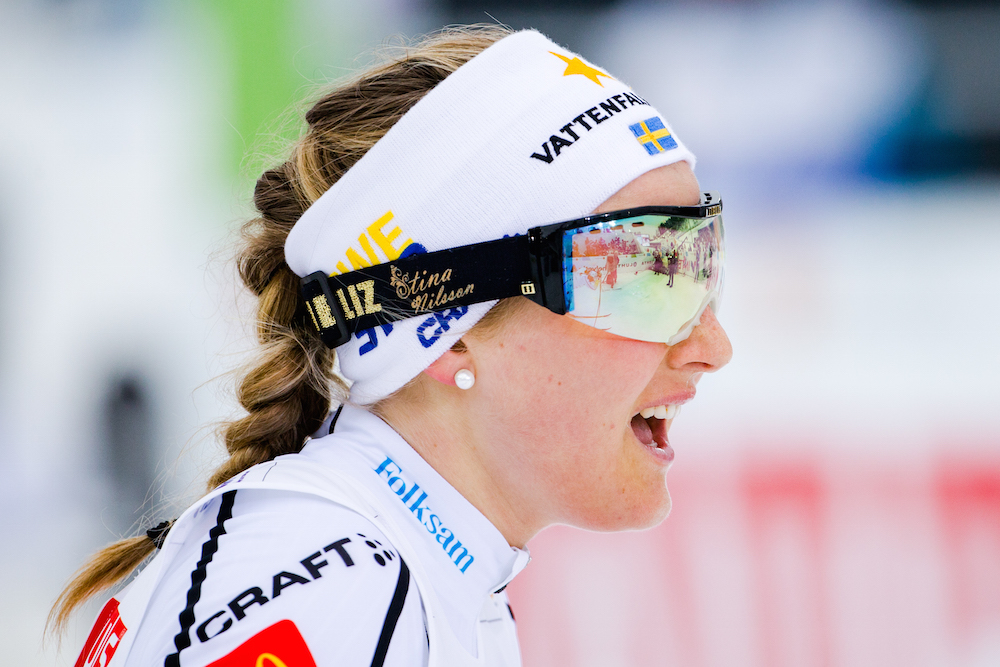
    Sweden’s Stina Nilsson at 2017 World Championships, after she finished 13th in the women’s 10 k classic on Feb. 28. On Sunday, she won her first sprint of the season at Sweden’s FIS season-opener in Gällivare.

    For the third and final day of International Ski Federation (FIS) racing in Gällivare, the home crowd would not be let down. Both the men’s and women’s 1-kilometer classic sprints were won by Swedes, one of whom has established herself as one of the world’s best sprinters, ending last season second in the 2016/2017 Sprint World Cup at the age of 23.

    Stina Nilsson, now 24 and entering her fifth year of racing on the World Cup, tallied her first win of the season in Sweden’s season-opening sprint on Sunday. So did Oskar Svensson, 22, who competed at his first World Championships last season.

    The day started with 1 k qualifiers, which Nilsson’s teammate Hanna Falk won in 3:58.86 minutes. Nilsson followed in second, 1.9 seconds back, and the two advanced through their quarterfinals and semifinals (with Nilsson winning both) before meeting head to head in the final. Also advancing to the final were Russia’s Natalia Matveeva (who won the other semifinal), Yulia Belorukova and Evgeniya Shapovalova, as well as Switzerland’s Nadine Fähndrich.  

    In the final, Nilsson held off two Russians for the overall win, finishing first in 3:53.75. Matveeva finished 1.89 seconds later for second place, while Belorukova claimed third (+3.16). Falk placed fourth (+5.50), followed by Shapovalova in fifth (+6.09) and Fähndrich in sixth (+6.58).

    Rounding out the top 10 were Sweden’s Ida Ingemarsdotter and Jonna Sundling in seventh and eighth, respectively, followed by Russia’s Elena Soboleva in ninth and Sweden’s Anna Haag in 10th.

    (Article continues below)

    https://www.instagram.com/p/Bbr9CpXFp6O/?hl=en&taken-by=stinanilssoons

    The lone North American woman in Sunday’s sprint, Dahria Beatty qualified for the heats in 28th, 17.29 seconds out of first. She went on to finish fifth in her quarterfinal, 9.94 seconds behind Haag, who won that heat. Overall, Beatty ended the day in 23rd. She also raced the 5 k freestyle to start the long weekend in Gällivare and placed 56th in that race.

    “There were parts of the course I felt I skied really well in my qualifier today and other parts that definitely need some work,” Beatty wrote in an email. “I was happy with how my striding and double pole felt and my body was moving a lot better today than on Friday in the 5k Skate. The snow was tricky today and I didn’t carry my speed very well through the transitions and up the double pitched herringbone/run section on the back of the course.”

    Beatty, a 23-year-old member of Canada’s World Cup Team, flew to Sweden with most of her team on Nov. 11 to get some time on European snow and compete in some early FIS races before the start of the World Cup.

    “I was really happy to be able to ski a heat and get that feeling of pushing head to head with others,” she continued. “It’s always good to see where you are losing time or keep up in the heats to figure out what needs to be worked on before the next weekend. I am hoping I can take what I learned today and make some improvements for the World Cup opener next weekend.”

    Kikkan Randall of the U.S. Ski Team raced Friday’s 5 k skate and Saturday’s 10 k classic, but opted out of Sunday’s classic sprint. Sixty-seven women contested Sunday’s sprint qualifier.  

    Svensson Tops Men’s Sprint

    Meanwhile, Svensson, a member of Sweden’s national A-team, topped a field of 114 in the men’s classic sprint. He started out by winning the qualifier by 0.76 seconds over Russia’s Anton Gafarov in 3:24.06. 

    In the first quarterfinal, Svensson placed second to Russia’s Andrey Parfenov, finishing 0.14 seconds behind him, and both advanced to the semifinals. There, Svensson won the first semifinal by just 0.01 seconds over fellow Swede Teodor Peterson. They advanced to the final, along with four Russians: Gafarov, Alexander Panzhinskiy, Nikita Kriukov, and Maxim Vylegzhanin.

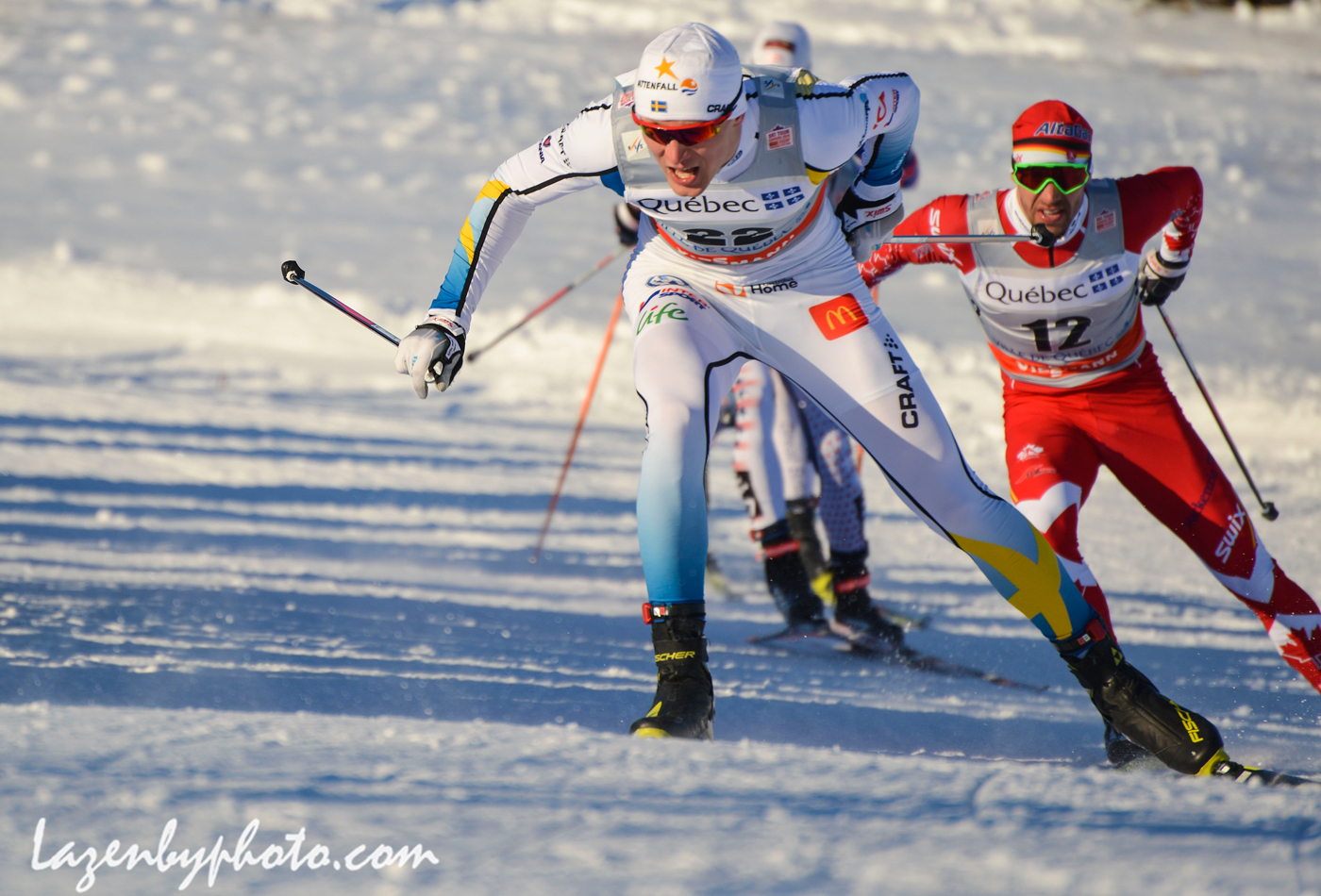
    Sweden’s Oskar Svensson leads Alex Harvey and others during their quarterfinal at the freestyle sprint at 2017 World Cup Finals in Quebec City last March.  (Photo: John Lazenby/Lazenbyphoto.com)

    In the finishing stretch of the final, Svensson and Peterson again lunged for the win, which Svensson took by 0.4 seconds in 3:21.63. Kriukov finished third, 2.12 seconds out of first, followed closely by Panzhinskiy in fourth (+2.18) and Vylegzhanin in fifth (+2.84). Gafarov ended the day in sixth (+22.99).

    Also in the top 10, Sweden’s Calle Halfvarsson placed seventh, Parfenov was eighth, Russia’s Alexey Vitsenko finished ninth and Sweden’s Johan Haeggström was 10th.

    Of the six Canadian men who raced on Sunday, World Cup Team member Len Valjas was the lone qualifier in 24th (+8.69). In the second quarterfinal, from which two lucky losers advanced to the semifinal, he finished sixth, 3.85 seconds behind the heat’s winner, Halfvarsson. That put Valjas 29th overall on the day.

    Julien Locke (Canadian U25 Team) raced to 39th in the qualifier, 12.32 seconds out of first and 2.36 seconds out of the top 30, for his best result of the weekend. He finished 72nd in the 10 k freestyle on Friday.

    “It was a long, twisty course with a fairly gentle profile with the exception of two very short, punchy steep sections,” Locke, who recently earned World Cup starts at Frozen Thunder trials, wrote in an email. “With all of the fresh snow the last couple days, the track was a soft on the corners and broken up on the climbs.

    “I felt that I skied well in the qualifier but was lacking tempo and glide speed on the climbs,” he continued. “The shape feels good and I was able to have a high output throughout the qualifier. I would have liked to race the heats as they would have been excellent race prep for the first World Cup on Friday.”

    Another Canadian, Knute Johnsgaard (World Cup Team) followed in 40th, 0.48 seconds behind Locke and 12.80 seconds out of first. Russell Kennedy, last year’s NorAm winner who trains in Canmore with Team R.A.D., raced to 43rd (+13.30). On Friday, he finished 48th in the 10 k skate.

    “It is always a bit hard with sprints, but the goal was to close really well,” Kennedy wrote in an email. “I felt strong and was much more happy with this sprint than my Frozen Thunder qualifier.”

    With firm tracks and good skis, Kennedy described his Gällivare qualifier as “super smooth.”

    “There was one pretty icy corner I thought it was kinda fun since there was a big berm you could ride but there were definitely some falls around that area,” he wrote.

    Not wanting to overburden his body before some of the other races he is targeting in the upcoming weeks, Kennedy opted out of Saturday’s 15 k classic.

    “I am trying to build my fitness a bit through these races so racing Friday was really good for my fitness and I took off Saturday to get some rest as I have a lot of races coming up that I want to perform well at,” he explained.

    Two other Canadians raced Sunday’s sprint qualifier, with Jess Cockney finishing in 48th (+14.05) and Jack Carlyle in 105th (+33.44).

    Results:

    Women: Qualifier | Final

    Men: Qualifier | Final

  • Germany’s Brugger Pulls Upset; Harmeyer Leads U.S. Men in 12th in Junior Worlds Classic Sprint

    Germany's Janosch Brugger (4) celebrates his classic sprint win by 0.04 seconds over Norway's Petter Stakston (l) on Monday at the first day of 2017 Junior World Championships at Soldier Hollow in Midway, Utah. (Photo: FlyingPointRoad.com)
    Germany’s Janosch Brugger (4) celebrates his classic sprint win by 0.04 seconds over Norway’s Petter Stakston (1) on Monday at the first day of 2017 Junior World Championships at Soldier Hollow in Midway, Utah. (Photo: FlyingPointRoad.com)

    On the first day of 2017 Junior World Championships at Soldier Hollow in Midway, Utah, there was one man who appeared to be dominating the 1.5-kilometer classic sprint from top to bottom. Norway’s 19-year-old Petter Stakston, in his second Junior Worlds, started Monday off with a qualifying win, by 0.61 seconds over Finland’s Turo Sipilä, in 3:45.33 minutes.

    Then he won the first men’s quarterfinal of the day and proceeded to win the first semifinal as well.

    “I felt very good today,” Stakston told the U.S. Ski Team media in a post-race interview. “I was strong in the prologue … I tried to take the lead in every single heat and just go as fast as I could.”

    But Germany’s Janosch Brugger foiled his streak in the final, coming from behind in the finishing stretch to take the win by 0.04 seconds in 3:43.00 minutes.

    “It was good until the last 100 meters,” Stakston reflected after placing second. “Janosch Brugger was a bit stronger and took it, but I’m very happy.”

    Brugger started Monday off with the fourth-fastest qualifying time, 3.06 seconds behind Stakston. He went on to place second in his quarterfinal (by 0.48 seconds to another Norwegian, Jo Svinsås), then finished third in his semifinal, 0.6 seconds behind Stakston in first.

    The 19-year-old Brugger advanced as a lucky loser to the final, where he timed his strike to take his first gold in three Junior Worlds appearances, and his first podium as well.

    “I didn’t have any strategy; it’s only pushing as hard as I can,” Brugger said in an interview with the U.S. Ski Team media. “It means everything because on this day, you’re the best cross country-skier in the world and it’s exciting.”

    Brugger outlasted five others in the men’s final, which included four Norwegians (Stakston, Svinsås, Herman Martens Meyer, and Thomas Helland Larsen) and Finland’s Verneri Suhonen.

    Meyer reached the podium in third (+3.83), while Larsen placed fourth (+11.32), Suhonen was fifth (+12.97), and Svinsås sixth (+16.42).

    All Four U.S. Men Qualify

    The four American men racing on Monday qualified for the heats, with Bill Harmeyer (University of Vermont Ski Team) leading them in 11th (+7.03), Logan Diekmann (Utah Ski Team) in 23rd (+10.74), Kam Husain (Stratton Mountain School) in 27th (+11.71), and Lance McKenney in 29th (+11.91).

    Two Canadians qualified in the top 30 as well, with Étienne Hébert (Montériski) in 13th (+8.57) and Reed Godfrey (Team R.A.D./Canmore Nordic) in 25th (+11.55). Antoine Blais (Skibec) missed the qualifying cutoff by 0.05 seconds in 31st for his best result at his second Junior Worlds, while Ty Godfrey (Team R.A.D./Canmore Nordic) finished 36th (+12.99).

    In the heats, Harmeyer ended up fourth in the first quarterfinal, 1.13 seconds behind Stakston, but advanced as one of two lucky losers to the semifinal.

    “Out from the gun, I gave it some gas, but immediately realized that these guys were going pretty fast,” Harmeyer, 19, reflected in an email after his first Junior Worlds race. “So I decided to cool down a bit, and fall in behind the two Norwegians in my heat. Things settled in pretty quick, and I just tried to stay relaxed.

    “Going into the second climb, where the guys and gals courses split, I tried to make a move,” he added. “I moved up from 6th to 3rd or 4th around the outside, and was in a good position going into the final climb. Up the final climb, I got boxed out a bit, and went into the final downhill in 4th. Coming through the finish, I knew that lucky looser was a possibility, so I gave it everything I had.”

    Harmeyer made it to the first semifinal, where he faced off against the eventual top-three finishers (Brugger, Stakston and Meyer). Four of the men in his semifinal made it to the final.

    The Vermont native described the beginning of his semifinal as similar to his quarterfinal.

    American Bill Harmeyer doing a tele turn on his way back to the stadium after a broken pole took him out of contention in the first men's semifinal on Monday at 2017 Junior World Championships at Soldier Hollow in Midway, Utah. He finished sixth in the semifinal. (Photo: FlyingPointRoad.com)
    American Bill Harmeyer doing a tele turn on his way back to the stadium after a broken pole took him out of contention in the first men’s semifinal on Monday at 2017 Junior World Championships at Soldier Hollow in Midway, Utah. He finished sixth in that semifinal for 12th overall. (Photo: FlyingPointRoad.com)

    “I played the same cards going into the first hill, and made the same move going into the second hill as I did in the quarter,” Harmeyer wrote. “I was in 4th or 5th going into the final climb, and the group was still tight. Thats when I went down. I’m not sure if I got tangled with myself or if I got tangled with the Russian but I went down pretty hard.”

    Upon trying to stand back up, his pole snapped.

    “I finally got back up and started making my way up the hill as [U.S. development coach] Bryan Fish came sprinting down with another pole,” he recalled. “At this point, the guys in the heat were already headed down towards the finish. All I could do was enjoy the race at that point!”

    Harmeyer finished sixth (+23.23) and did not advance to the final to end up 12th overall.

    “I’m really happy with my performance today, but more happy with the team’s performance,” he wrote. “I think it was awesome to see all the guys, and three of the girls [Julia Kern, Hannah Halvorsen, and Lauren Jortberg] make it into the rounds. The wax techs and coaches have put everything into the athletes, those guys are awesome! It’s a total honor being able to represent the USA on home soil, and I’m looking forward to an exciting week of racing to come!”

    He was the lone North American to reach the semifinals after Husain finished sixth in the second quarterfinal (1.5 seconds behind Svinsås as the winner of that heat), Godfrey was fifth in the third quarterfinal (7.59 seconds out of first), McKenney was fourth in the fourth quarterfinal (2.02 seconds out of first), and Hébert finished fourth (+1.43) and Diekmann sixth (+3.98) in the fifth quarterfinal.

    At the end of the day, Harmeyer led the U.S. in 12th, followed by McKenney in 20th, Diekmann in 27th, and Husain in 29th.

    Canada’s Étienne Hébert (13) leads American Logan Diekmann in their classic-sprint quarterfinal on Monday at 2017 Junior World Championships at Soldier Hollow in Midway, Utah. Neither advanced to the semifinals, with Hébert finishing fourth (+1.43) and Diekmann sixth (+3.98) in that heat. (Photo: FlyingPointRoad.com)
    Canada’s Étienne Hébert (13) leads American Logan Diekmann in their classic-sprint quarterfinal on Monday at 2017 Junior World Championships at Soldier Hollow in Midway, Utah. Hébert finished fourth and Diekmann sixth in that heat for 17th and 27th overall, respectively. (Photo: FlyingPointRoad.com)

    Hébert was the top Canadian in 17th overall, followed by Godfrey in 25th.

    “It was a pretty awesome race for me today,” Hébert said, according to a Cross Country Canada (CCC) press release. “I couldn’t expect any more from myself as that was pretty much the best race I have done all year.

    “I just knew at the beginning of the race I wouldn’t be able to go with those guys in the final 100 meters,” the 18 year old added. “They were just too big so I tried to just go for it and I did. I was able to hold them off until about 200 metres when they passed me.”

    According to Godfrey, also at his first Junior Worlds, he raced the fastest qualifier he could have and enjoyed his quarterfinal.

    “The most challenging part for me was the finishing stretch,” Godfrey told CCC. “I was in pretty good contention for most of the course, but the biggest difference between myself and the other guys is their power to the finish. [This performance] gives me a little extra motivation for next year.”

    Stay tuned for a separate women’s classic sprint report.

    Results: Qualifying | Final

  • Junior Worlds Photos: Classic Sprint

    Photos from Monday, Day 1 of the 2017 USANA Nordic Junior World Championships at Soldier Hollow in Midway, Utah, which kicked off with the junior women’s and men’s classic sprints. All photos: FlyingPointRoad.com. Click images to enlarge.

    Results (brackets): Men | Women

    Qualifying results: Men | Women

  • Road Burn Behind Him, Bjornsen Brings On New Season with Heat

    Road Burn Behind Him, Bjornsen Brings On New Season with Heat

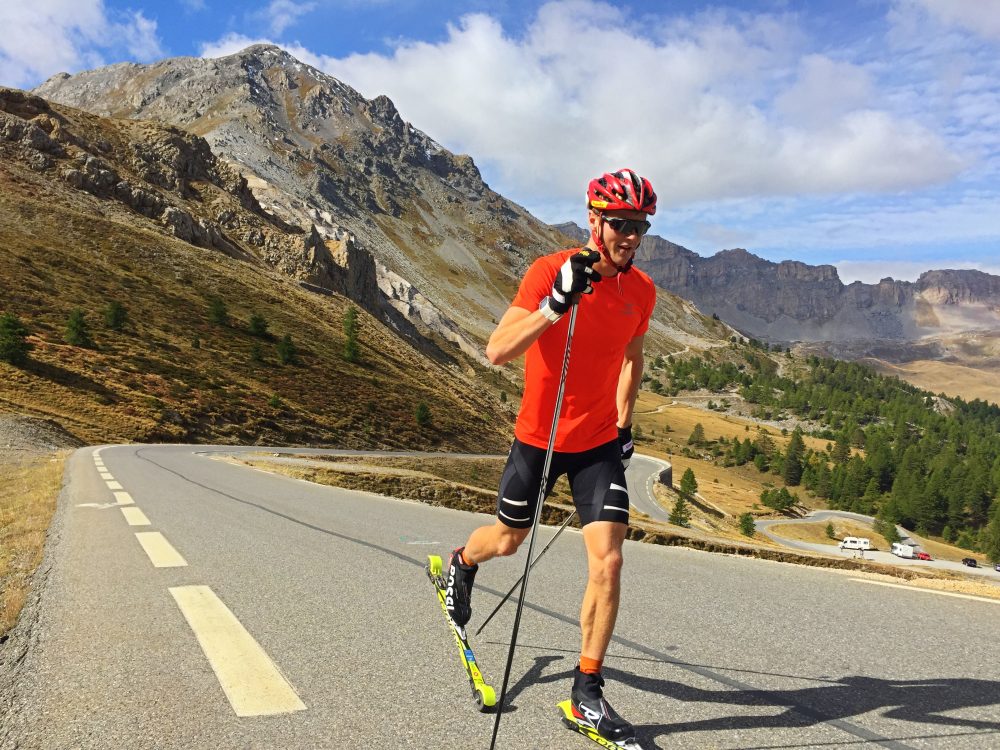
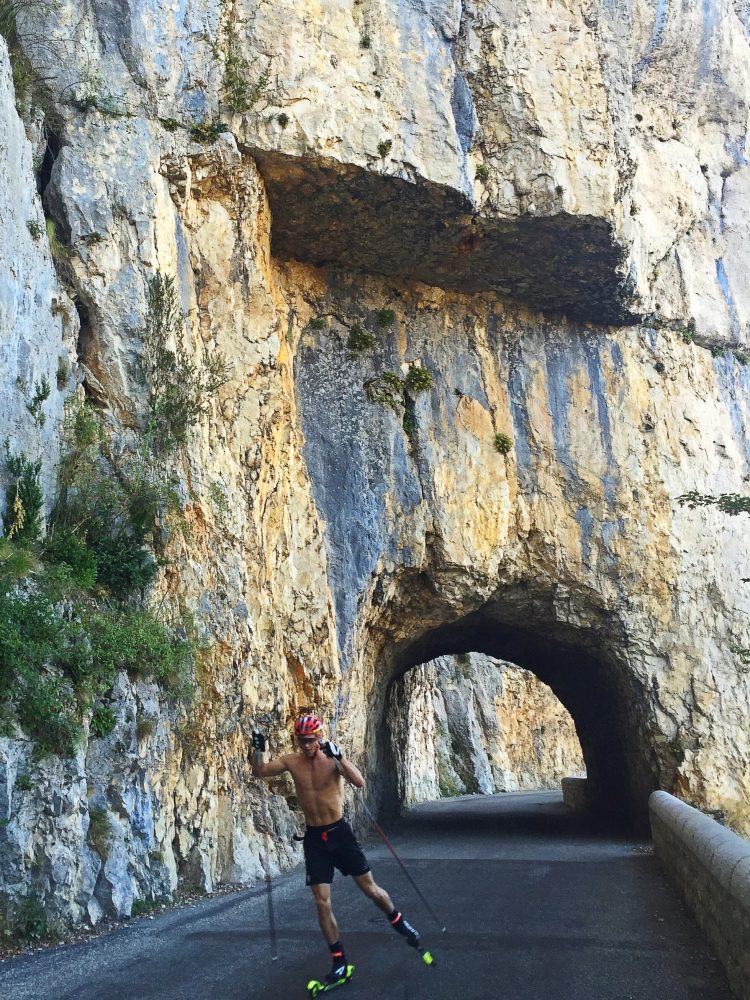
    U.S. Ski Team B-team member, Erik Bjornsen during a rollerski in France this summer 2016. (Courtesy photo)
    U.S. Ski Team B-team member Erik Bjornsen during a rollerski in France this summer 2016. (Courtesy photo)

    A little less than two months ago, Erik Bjornsen found himself face down, breathing in some combination of medical mattress and bleached bedding. There was a sore tightness in his right shoulder, made all the more difficult to move due to the layers of salved gauze firmly taped to his skin. His training shorts had been modestly rolled down, revealing steak-sized road burns on both of his buns.

    Had the U.S. Ski Team (USST) B-team member, by some happenstance, skipped the final rollerski races of the USST’s annual dryland training camp in Park City, Utah, he might have made it through the offseason unscathed for the first time in two years.

    The Moirai of Bjornsen’s training, however, had other plans.

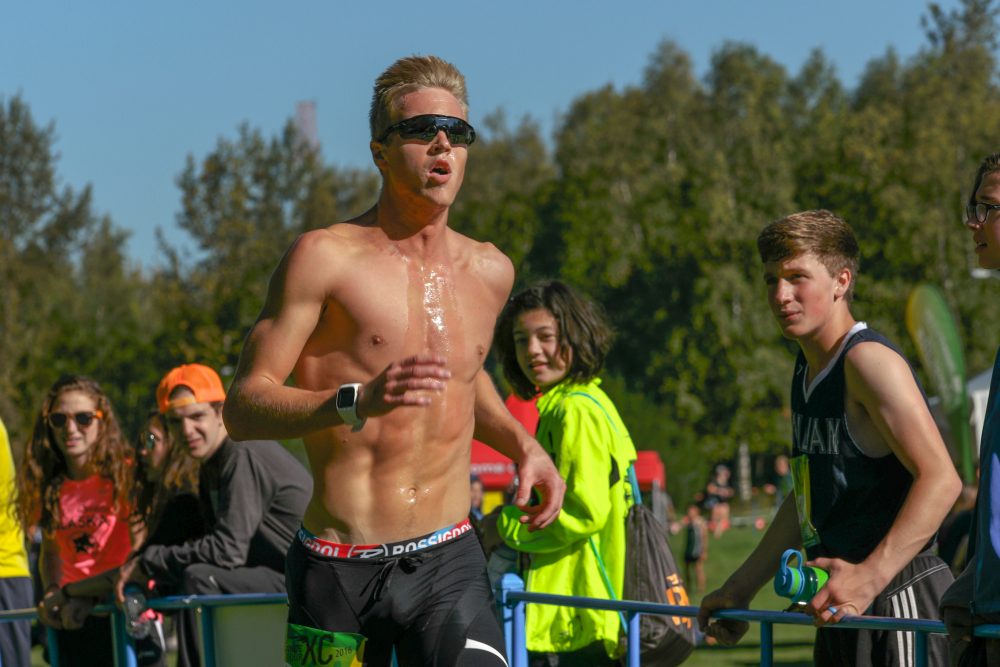
    U.S. Ski Team B-team member, Erik Bjornsen during a local running race in Anchorage Alaska summer 2016. (Courtesy photo)
    Erik Bjornsen (U.S. Ski Team/Alaska Pacific University) during a local running race this summer in Anchorage, Alaska. (Courtesy photo)

    Bjornsen met up with his USST teammates at their Park City training camp, held Oct. 17-31. He competed in the camp’s final time trial: a skate sprint. He qualified for the quarterfinals and started the semis.

    But instead of sending it across the finish line, while rounding one of the downhill corners on the sprint rollerski course in Soldier Hollow, he sent himself sliding butt-first across the pebbled pavement.

    The incident left the 25 year old with road-rash raspberries on his right shoulder, left hand and total tail-end, as well as a desire to be done skiing on anything but snow, according to one of his Instagram posts after the crash.

    But for the Methow, Wash., native — who currently lives in Anchorage, Alaska, and trains with Alaska Pacific University (APU) — a few less skin cells and a little more neosporin is not the worst preseason distress he could have, or has, endured.

    “I was lucky, I mean last year I had hand surgery so I was away from using a pole for three months and then the year before I had some knee issues,” Bjornsen said on the phone in early November from Anchorage. “So I feel like I was very lucky to go through the summer without anything too major happening. Right now I’m just trying to heal up my hands from the road rash.”

    Still working to heal his hands during the opening World Cup races in Kussamo, Finland (where he finished 42nd in the men’s classic sprint and 41st in the men’s 15-kilometer classic), Bjornsen was not too preoccupied with early season results.

    “Both days I was pretty close to making top 30,” Bjornsen wrote in an email after the 15 k.  “Personally this has always been the most difficult weekend of racing on the World Cup for me. That being considered I’m satisfied with my results. There is definitely more to come!”

    When Bjornsen says ‘more to come,’ he means not only in events that he considers his forte, such as the distance classic races, but in his relay and sprint performances as well.

    “There’s few [15 k classic events] this season and one in Lahti at World Champs, so I’m definitely looking forward to those, “ Bjornsen said on the phone in early November. “Last year I was able to get into the sprint heats twice and I love head to head racing … so definitely a goal is to get back into the heats and experience that a little bit more … We [also] have another couple of relays and I hope that I can throw down a strong leg.”

    Bjornsen has already accomplished one of those goals. Earlier this month, he qualified 30th on Day 1 of the World Cup in Lillehammer, Norway, his first time advancing in a World Cup classic sprint. He was eliminated in his quarterfinal, finishing in 24th overall.

    “Erik has not qualified for too many sprints, but to qualify specifically in Lillehammer, in the lion’s den is quite impressive,”  USST Women’s Coach Matt Whitcomb said on the phone after the Lillehammer sprint.

    His sister and USST teammate Sadie Bjornsen qualified first in the women’s classic sprint.

    (Article continues below)

    https://www.instagram.com/p/BNhCjL3hBKV/?taken-by=sbjornsen&hl=en

    Although the U.S. men’s ski team was unable to enter a relay team in the first team event of the season, which took place last Sunday in La Clusaz, France, Bjornsen competed in the men’s 15 k mass start on Saturday, where he finished 20th and earned his first World Cup distance skate points.

    “The course was littered with broken poles, lots of crashes I mean it was a super high speed tactical course and [Bjornsen] just stayed out of trouble and kept picking people off,” U.S. head coach Chris Grover said on the phone regarding Bjornsen’s performance on Saturday. “He just paced it perfectly.”

    U.S. Ski Team B-team member, Erik Bjornsen during a rollerski in France summer 2016. (Courtesy photo)
    Erik Bjornsen during a rollerski in France this summer. (Courtesy photo)

    Though Bjornsen has already witnessed a change in his performances with the conclusion of Period 1, not much had changed with regards to his preseason prep. This includes what has become an annual summer escape to FranceSince Bjornsen’s girlfriend of three-and-a-half-years, Marine Dusser (a former French biathlete), lives in Villard, France, taking the opportunity to travel to a different country, train with the likes of Martin Fourcade, Simon Fourcade and Robin Duvillard, and experience a change in training scenery is warmly welcomed.

    “This year I didn’t do any of the rollerski races like I’d done in the past,” Bjornsen, who previously raced at French rollerski nationals. “I was able to jump in and train with some strong French guys.”

    Beyond buying baguettes and learning a few French phrases here and there while abroad, Bjornsen also spent some time exploring trails at home in Washington, with Sadie and his parents.

    “Getting out and running some new trails every day was definitely a highlight to the summer,” Bjornsen said. “It’s always great to go home and visit the family.”

    Entering the upcoming season a little tougher and a little rougher, Bjornsen indicates that he he’s ready to hit the road and bounce back, with more burn than ever before. 

    “I think it’s important for me to keep looking forward,” Bjornsen said. “I know that when the shape does come around, I think I can compete with the best in the world. Hopefully I can time that around world champs, but every weekend is an opportunity.”

    ***

    We asked Bjornsen to give our ’17 Questions for 2017′ a go. Here are his responses:

    1. Biggest change in your life in the last five or so months since the ski season ended?

    Lots of good memories and experiences. I’m a completely different man!

    2. Biggest change in your training?

    Change is hard. I’ve made some subtle changes, but for the most part I’m just trying to perfect what I’ve done the last couple years. Staying injury free has been a huge help.

    3. Major areas of improvement you’ve seen so far?

    Little improvements all over the board. No LARGE improvements in one area. My hope is that all the small improvements in my dry-land training will add up to a major improvement in my skiing

    4. Whom you’ve been working closest with this offseason (coaches or training partners)?

    Scott Patterson

    5. Best trip in the last five months (and why)?

    That’s a hard question. That’s my favorite part of being a cross country skier. We get to travel a lot, and see a lot of amazing places. I spent a few days rollerskiing and running in the southeastern part of France, near the boarder of Italy. That trip was amazing!

    6. Favorite cross-training?

    Running

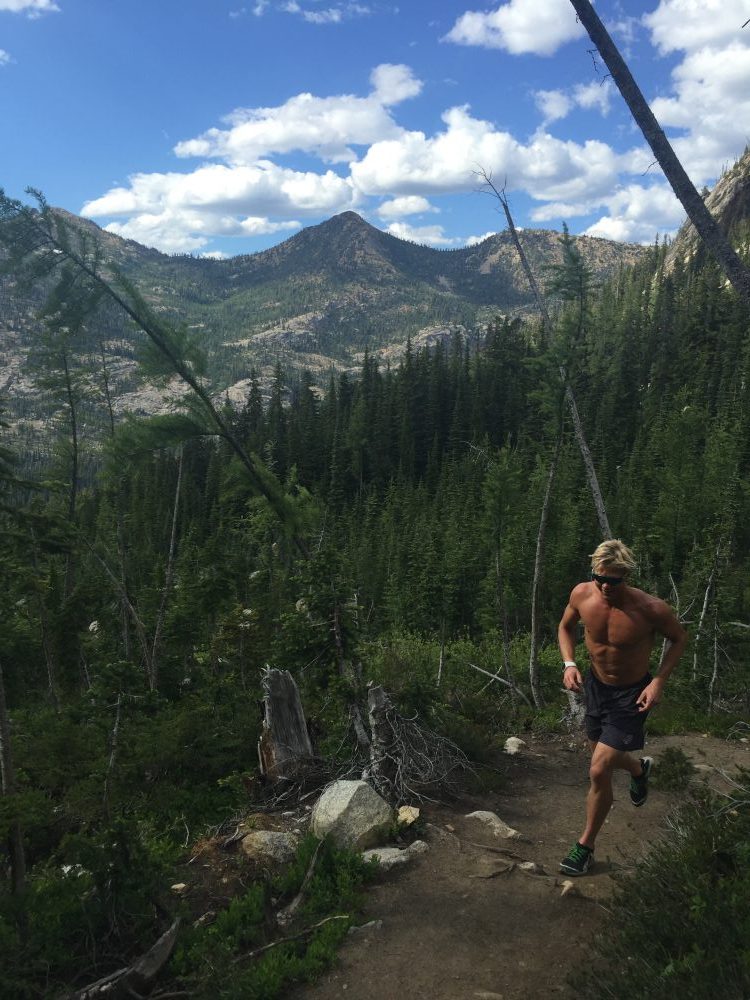
    U.S. Ski Team B-team member, Erik Bjornsen during a run in the North Cascade Mountains summer 2016. (Courtesy photo)
    Erik Bjornsen during a run in the North Cascade Mountains this summer. (Courtesy photo)

    7. Favorite non-athletic activity or pastime this summer?

    I’ll let you choose one: Camping with good company, hot tubbing in glacier water, getting locked on some fish..

    8. Song that was your jam this summer?

    Railroad Man by Anna Lynch. Check it out! I was sitting around a campfire with mostly strangers one night and this girl started playing music. I was pretty impressed so I added her on spotify when I got home and ended up listening to her music a fair amount over the summer… Live music is always the best way to jam!

    9. All-time favorite race moment?

    2014 Sochi Olympics, Team Sprint.

    10. First thing you pack in your bag when you leave for Europe?

    I usually start with my boots and shoes because they go on the bottom of my bag. Boring, I know. Packing shouldn’t take longer than 30 minutes or your doing something wrong…Sadie….

    11. Venue/event you’re most excited to visit this season?

    La Clusaz

    12. Who will win the men’s and women’s World Cup titles this year?

    Sadie Bjornsen and Simi Hamilton

    13. Biggest sacrifice you feel you’ve made choosing this career path?

    I don’t feel like I have sacrificed much at all. To be the best in the world thought I think you have to focus a lot on yourself, and sometimes I think you’re forced to make selfish decisions.
    I skipped my cousins wedding this summer because it didn’t fit in with my training schedule, sorry Tyler… Luckily I have a very supportive family!

    14. If you could change one thing about your sport, what would it be?

    I wish everybody was on a level playing field. Equal resources for everyone and no question whether of not people are doping. Doping is super lame!

    15. What did you have for breakfast this morning?

    Well today is a travel day, so it was a light breakfast. I had toast, cheese, eggs, ham, and a tall glass of raspberry lemonade.

    16. In 5 years, I’ll be ____?

    Oh, jeez. I could be doing just about anything, in just about anywhere..

    17. In 50 years, I’ll be ____?

    I’ll be splitting my time between my cabin in the Methow Valley and my chalet in France. You can call me on my cell phone, but you’ll probably just get my voice mail.

  • With Bjornsen at the Helm, APU Sweeps SuperTour Finals Classic Sprint

    With Bjornsen at the Helm, APU Sweeps SuperTour Finals Classic Sprint

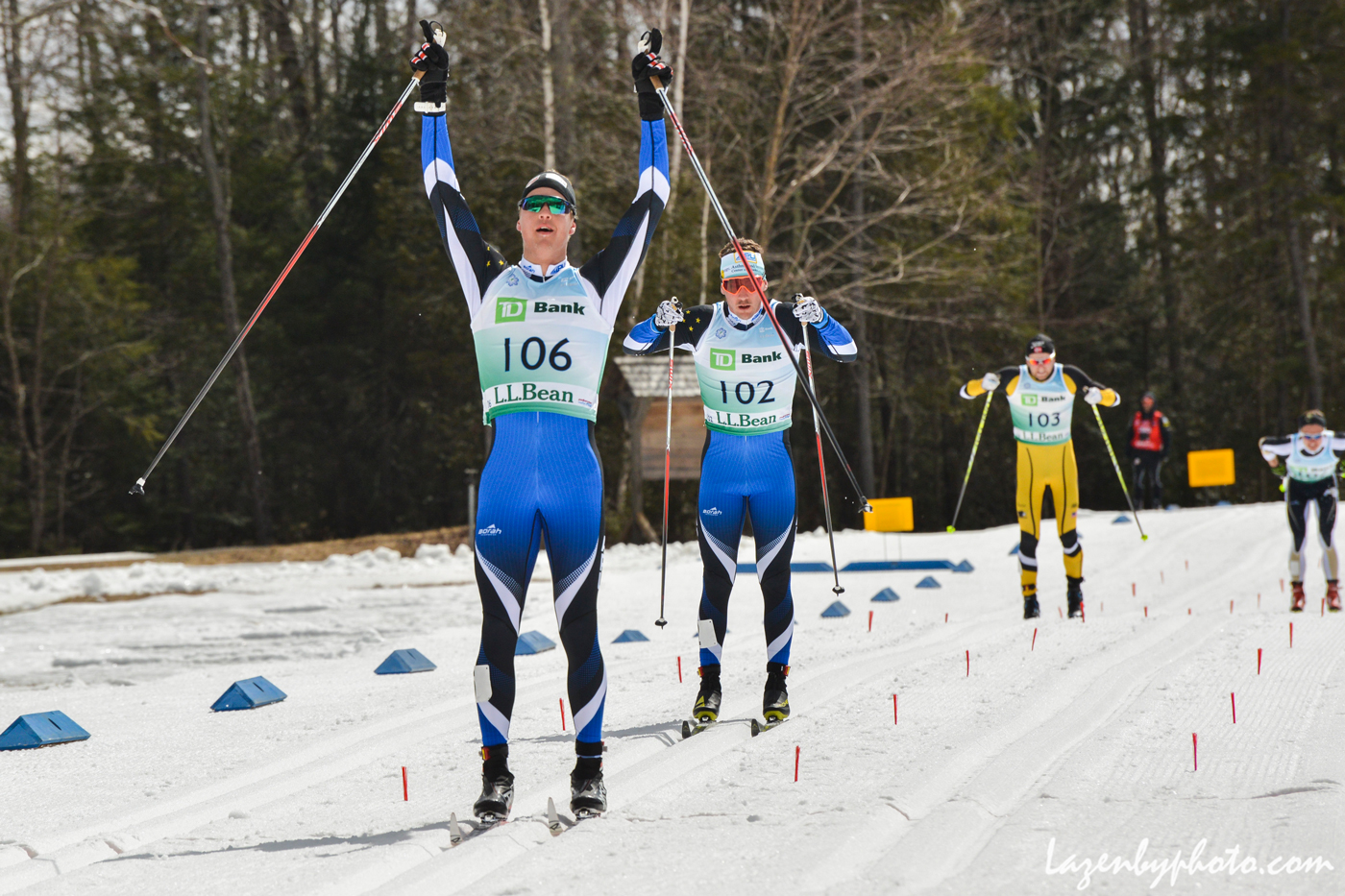
    Erik Bjornsen (106) celebrates his classic sprint victory on Tuesday at SuperTour Finals in Craftsbury, Vt., after holding off APU teammate Reese Hanneman by 1.28 seconds. Logan Hanneman completed the APU podium sweep in third, 4.35 seconds back. (Photo: John Lazenby/lazenbyphoto.com)
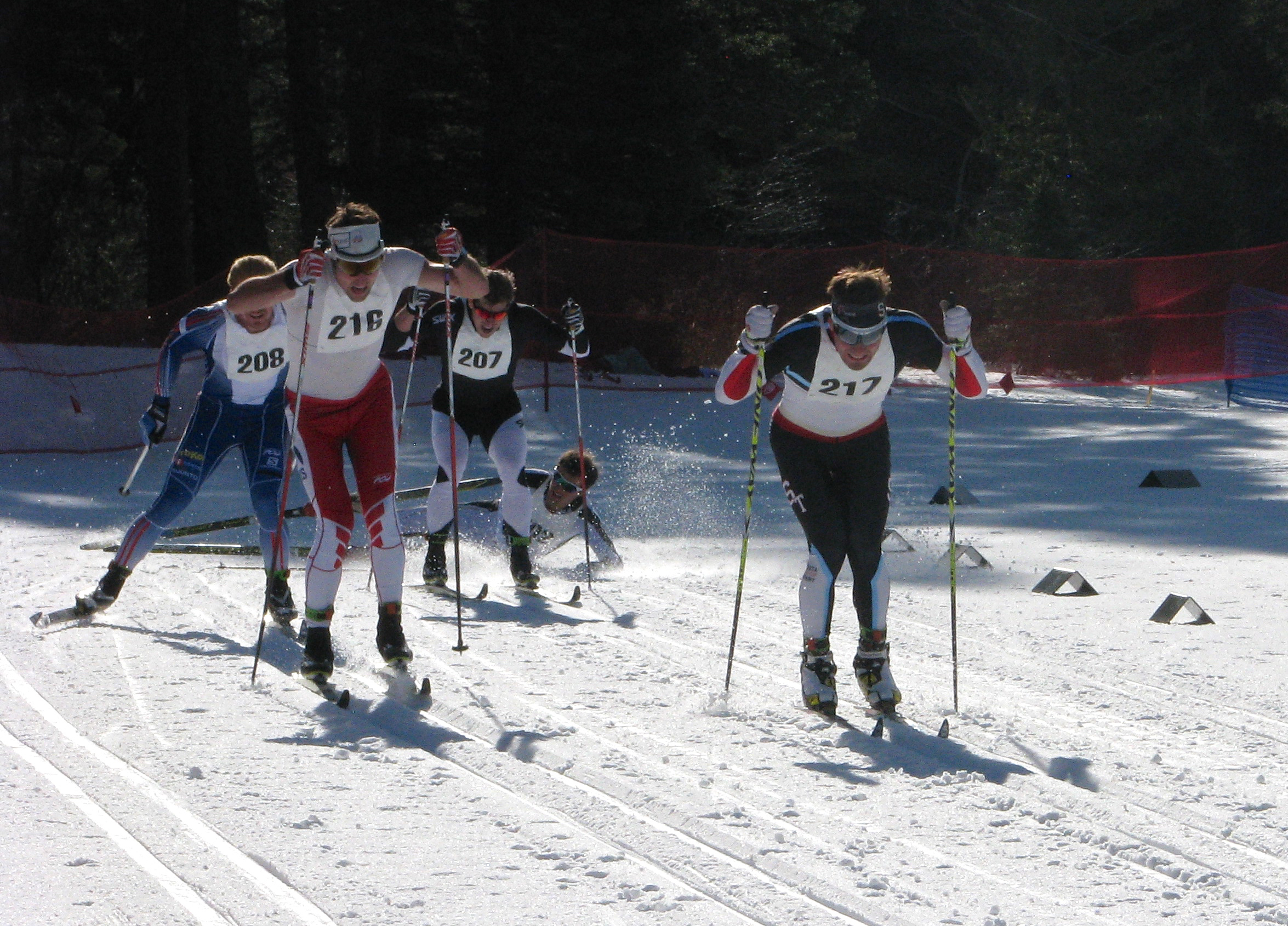
    Erik Bjornsen (106) celebrates his classic sprint victory on Tuesday at SuperTour Finals in Craftsbury, Vt., after holding off APU teammate Reese Hanneman (102) by 1.28 seconds. Logan Hanneman (not shown) completed the APU podium sweep in third, 4.35 seconds back, while Michigan Tech’s Didrik Elset (in yellow) missed the podium by 0.34 seconds in fourth. (Photo: John Lazenby/Lazenbyphoto.com)

    Earlier this year at U.S. nationals, Alaska Pacific University (APU) narrowly missed a podium sweep in the classic sprint in Houghton, Mich., taking first, second and fourth in the men’s final. But on Tuesday in Craftsbury, Vt., in the 1.5-kilometer classic sprint at SuperTour Finals, the APU men pulled it off, putting four men in the final and sweeping the top three.

    The APU contingent consisted of Eric Packer (the defending national champion in the classic sprint), Reese Hanneman (the SuperTour sprint leader for Period I who spent the rest of the season on the World Cup in Europe), his younger brother Logan Hanneman (the fastest qualifier of the day in 3:07.24), and Erik Bjornsen (who recently returning to the U.S. after racing a full season on the World Cup circuit).

    They were joined by two Norwegians competing as collegians in exchange programs: Didrik Elset, 22, of Michigan Tech University and Petter Reistad, 21, of the University of Colorado-Boulder (CU). Elset broke up the APU sweep at nationals, placing third in the classic sprint. Reistad helped CU to a runner-up team finish at NCAA Skiing Championships, double poling to ninth in the 20 k classic mass start.

    On Tuesday, the two Norwegians, Elset and Reistad decided to double pole the qualifier as well as the heats, making it all the way to the final. The rest of the field opted to stride the heats. On a wide track with five classic tracks covering most of the course, racers were pleased with a fair-and-minimally tactical course.

    In the final, Reistad blasted out of the gate and Reese Hanneman tucked in just behind. Heading up the decisive climb on the course, Reese jumped into his own track and surged ahead of Reistad. Bjornsen covered the move and the two gapped the field as they headed toward the slight incline into the finish. Hanneman tucked behind Bjornsen to be sheltered from the headwind and matched his pace, but couldn’t overtake him. Bjornsen secured the win in 3:02.4, beating Reese by 1.28 seconds.

    After gaining on Elset and Reistad on the climb, Logan Hanneman overtook the double polers in the final stretch to notch third (+4.35), just 0.34 seconds ahead of Elset in fourth. Fatigued from double poling with little rest between heats, Reistad faded to fifth (+7.31).

    Notably missing from the podium, current SuperTour leader Packer placed sixth (+50.95) after a crash in the final.

    “I fell on the big downhill in the final, and ended up sliding off course into the dirt and leaves,” wrote Packer in a post-race email. “There was no contact or anything — I just caught an edge and went down. It was a bummer for sure but I am looking forward to the next two races, and defending my Supertour lead in the 50 k.”

    Bjornsen Pushes Through

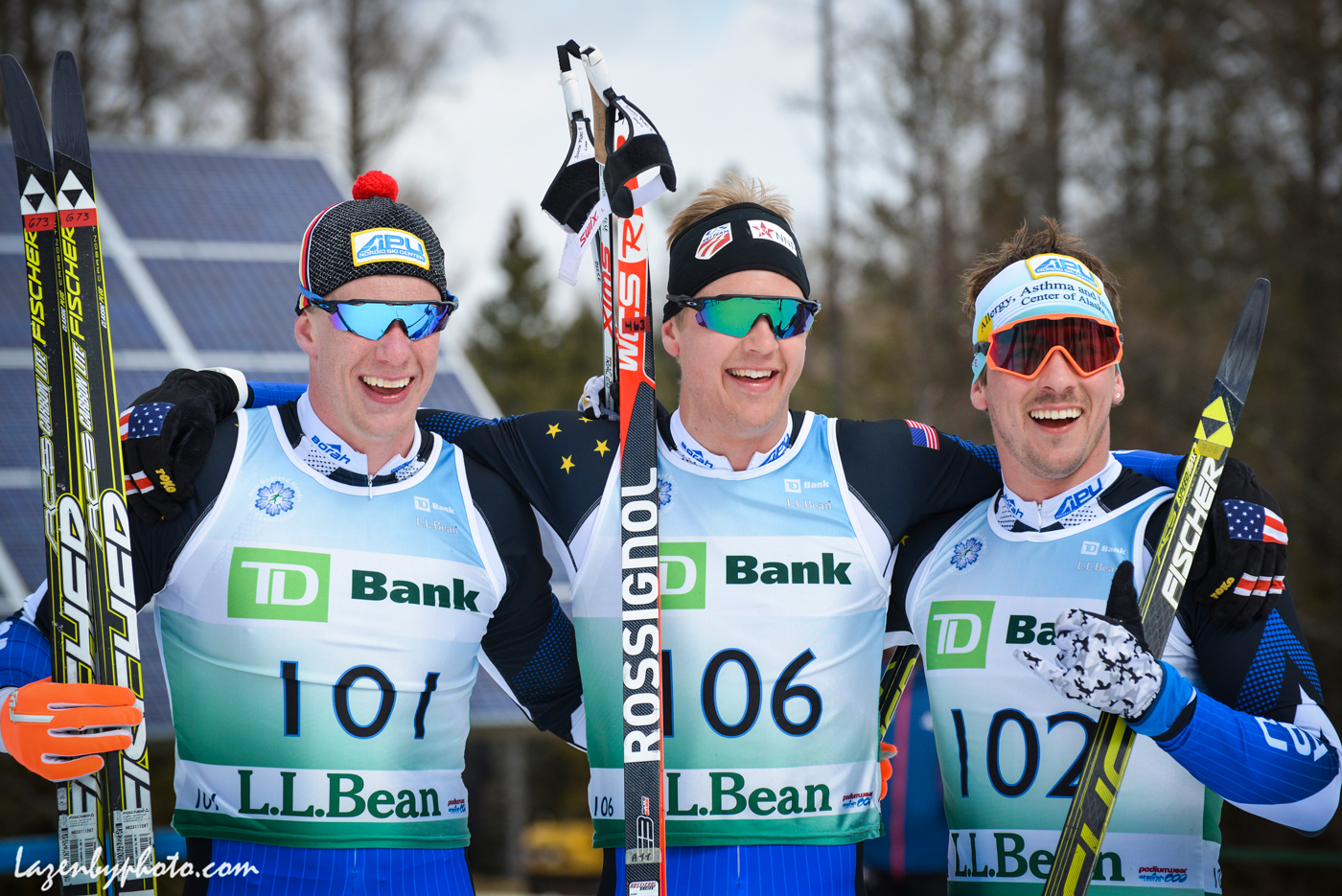
    The APU men swept the classic sprint podium at SuperTour Finals on Tuesday in Craftsbury, Vt. Erik Bjornsen (c) led the team in first, ahead of brothers Reese (r) and Logan Hanneman (l) in second and third, respectively. (photo credit: John Lazenby/lazenbyphoto.com)
    The APU men swept the classic sprint podium at SuperTour Finals on Tuesday in Craftsbury, Vt. Erik Bjornsen (c) led the team in first, ahead of brothers Reese (r) and Logan Hanneman (l) in second and third, respectively. (photo credit: John Lazenby/Lazenbyphoto.com)

    Although Bjornsen was considered a favorite heading into the race, he was pleasantly surprised with the victory.

    “It was not exactly what I was expecting, I was happy to have enough in the final to take the win,” Bjornsen, 24, said in a post-race phone interview. “I am not feeling great right now, it is not my best shape, but I’m trying to race through it and enjoy the racing in the U.S.”

    After posting the sixth-fastest time in the qualifier, about 2.98 seconds behind Logan, Bjornsen progressively gained momentum, winning both his quarterfinal and semifinal.

    “The legs especially are not responding, just kinda feeling dead,” he described. “I felt pretty good in the heats today. I tried to ski behind people and make my move in the last 60 seconds or so and I think it worked and helped me conserve energy for the final.”

    Reese in second overall was also pleased after feeling beat up after the season-ending World Cups in Canada.

    “It was good. I was just so dead after Ski Tour Canada and I didn’t really know what to expect,” he said on the phone. “I pretty much just felt dead for a week after Canmore and then I had a really, really bad race hack for a long time so I didn’t race [on Monday]. I felt pretty good, the skiing was really nice, they did an awesome job with the course.”

    Although fatigue resonates through all the racers, Reese highlighted that at this point of the season, it is a mental challenge more than anything.

    “Being really tired is kind of a given at this point in the year. … We are all just all a bunch of tired people racing each other,” he said. “It doesn’t necessarily mean that you can’t do well, I think it is important to learn to race when tired because it is not indicative of the result, it’s just mentally hard to get fired up.”

    Although little glory is generally given to sprint-qualifier winners, prize money for the fastest qualifier in Craftsbury placed a bit of incentive for the morning prelim. With that in mind, Logan set an intermediate goal for the day: winning the qualifier. The decision to stride instead of double pole paid off as he claimed the top qualifier in 3:07.24, just 0.71 seconds faster than his brother Reese.

    Logan Hanneman (APU) racing to a 0.71-second qualifying win in the men's classic sprint on Tuesday at SuperTour Finals in Craftsbury, Vt. (Photo: John Lazenby/Lazenbyphoto.com)
    Logan Hanneman (APU) racing to a 0.71-second qualifying win in the men’s classic sprint on Tuesday at SuperTour Finals in Craftsbury, Vt. (Photo: John Lazenby/Lazenbyphoto.com)

    Logan went on to win the first quarterfinal, then advanced as a lucky loser in the semifinal after placing third behind Bjornsen and Reistad, respectively.

    “I went out and in typical Logan fashion, slow out of the start,” Logan said on the phone after.” I was fifth pretty much the whole way until the stadium and I caught and passed the two double polers on that last stretch.”

    Completing the podium sweep was part of his motivation heading down the homestretch.

    “That was cool,” he said. “That was one of my incentives for catching those people. And we had four in the top six. Packer took a little detour off course in the final, which wasn’t quite the fastest detour.”

    Packer echoed the significance of the strong APU showing. “It was really cool to see my teammates sweep the podium today…,” he said. “I think it reflects the training we do in Alaska.  We’re all pushing in training, and that’s starting to show through in the results.”

    Despite missing the podium by 0.34 seconds, Elset in fourth said he has enjoyed racing and training in the U.S. with Michigan Tech and credits coach Joe Haggenmiller and the team with his success.

    “I chose skate skis. It worked pretty well, especially for the quarterfinal and the semifinal but in the final, the APU guys were going too fast for me up the climb and I was getting tired so it was rough,” Elset said. “I was hoping to be on the podium today but being able to ski with these guys who are so fast and be competitive is fun and it gives me a lot of confidence that I am doing something right.”

    Results: Qualifier | Final resultsBrackets

  • Sudden Slip and the Rise Thereafter: Packer on Adversity and Success

    Sudden Slip and the Rise Thereafter: Packer on Adversity and Success

    Eric Packer after winning his first national title in the classic sprint at 2016 U.S. Cross Country Championships in Houghton, Mich. (Photo: Christopher Schmidt)
    Eric Packer after winning his first national title in the classic sprint at 2016 U.S. Cross Country Championships in Houghton, Mich. (Photo: Christopher Schmidt)

    Below is an interview with the 2016 U.S. national champion in the classic sprint, Eric Packer, a 25-year-old Alaska Pacific University skier and Dartmouth grad. This interview originally appeared on SlowTwitch.com and has been adapted for FasterSkier. SlowTwitch is a comprehensive resource for a wide variety of endurance sports, in particular triathlon, and has recently launched a new feature designed to introduce triathletes to nordic skiing. Last month, FasterSkier shared a SlowTwitch-original interview with another national champion, Tad Elliott

    According to Packer’s recent Facebook post, he officially qualified to race World Cup Period 4 (the eight-stage Ski Tour Canada from March 1-12) for the U.S.

    ***

    Eric Packer (5) on his way to beating APU teammate Reese Hanneman (r) and the rest of the men's final in the classic sprint at 2016 U.S. Cross Country Championships for his first national title. (Photo: Christopher Schmidt)
    Eric Packer (5) on his way to beating APU teammate Reese Hanneman (r) and the rest of the men’s final in the classic sprint at 2016 U.S. Cross Country Championships for his first national title. (Photo: Christopher Schmidt)

    Fast Big Dog: Congratulations on winning your first US National Championship in nordic skiing in Houghton, Mich., on Jan. 9 in the classic sprint. … Sprint racing is very tactical, so walk us through how you qualified, made it through the rounds and went on to win the title.

    Eric Packer: You are 100 percent correct. Sprint races are very strategic … and this race had the added dynamic of being in the classic technique. Ski equipment technology has evolved and athletes are getting stronger and stronger, so there is an emerging trend in classic races to double pole the entire course — no striding at all. This can be a very risky strategy and its success depends on several factors. Skis can run faster without kick wax, but having to double pole all of the uphills is very taxing and comes at a high energy cost. There is also the added variable of the different approaches required in qualifying versus the heats, as qualifying is all about a high, constant speed. There is virtually no drafting since you start in intervals, so you’re not worried about pulling someone along for most of the race only to have them blow by you at the end.

    In the end, I decided I should double pole the qualifier (I actually used my skate skis, not classic skis with no kick wax), but then I switched to classic skis with kick wax for the elimination rounds. Thankfully, our ski techs at APU are some of the best in the business and they did an outstanding job giving us all very, very fast skis for the elimination rounds, so I felt like I had the best of both worlds – I could stride the uphills, yet I still had fast skis for the rest of the course. This was definitely the right call.

    As for the races themselves, I did a good job following the strategy I outlined above: I used only the energy necessary to move on from each round and I advanced to the final having kept my efforts in check. Probably most importantly, I stayed strong mentally. Sprint racing can be very taxing psychologically, as it is a lot of races in a short period of time and you’re always thinking about how much time you have left to warm up, to cool down, when to eat, not to mention all of the other dynamics about the races themselves that we’ve already covered. Keeping that all together can be tough, so I think I was able to come out on top because I was a in good place both physically and mentally the whole day.

    FBD: The last time we sat down, you had just been discharged from the hospital after what could have literally been a career-ending or even a life-ending injury. You fell off a 60-foot cliff while mountain running in Alaska. Is there any truth to the rumor that you ran off the cliff just to avoid skiing with me on Eagle Glacier?

    EP: No, I’ll take skiing with you over falling off a cliff any day.

    FBD: Thank you, I appreciate that. I’m not sure how many other people would make that same choice. … Describe what happened in this horrific accident and the impact that it had on your training.

    Eric Packer (l) with PK Kovacs "literally two minutes" before Packer fell  more than 60 feet down a cliff. "When you see the photo, it is a very vivid illustration of just how unforgiving that terrain is in the Chugach Mountain Range," Packer explained. (Photo: EricPacker.com)
    Eric Packer (l) with PK Kovacs “literally two minutes” before Packer fell more than 60 feet down a cliff. “When you see the photo, it is a very vivid illustration of just how unforgiving that terrain is in the Chugach Mountain Range,” Packer explained. (Photo: EricPacker.com)

    EP: I was doing a mountain run with my teammates, I had a slight slip at just the wrong spot, then all of a sudden I was in free-fall. I dropped straight down 15 feet, then tumbled head over heels another 60 feet or so through this jagged boulder field. It was terrifying.

    In terms of my actual injuries, I was incredibly fortunate for as bad as the fall was, I somehow managed to not break any bones, which still amazes me to this day. Don’t get me wrong though, it was still bad. I had bruises over my entire body and I felt like I had been hit by a bus. I think the hardest part was the mental side though, as the whole thing was so sudden and so unexpected. In a split second, I went from being a top level athlete to barely being able to get out of bed. The whole thing really scared me. It wasn’t necessarily what actually happened, as much as what could have happened. The doctors told me that at the speed I was traveling if I had hit my head, I easily could have been killed. What’s crazy is my teammate Scott Patterson took a photo of my teammate PK Kovacs and I literally two minutes before the fall happened, When you see the photo, it is a very vivid illustration of just how unforgiving that terrain is in the Chugach Mountain Range where we were running.

    I was so banged up that I stayed home for a week with no training. Once I got the clearance from my doctor and PT to resume light activity, all I could do were easy walks. Even once I got to return to somewhat normal training, the first few workouts back were very hard on me, both mentally and physically. It hadn’t really been all that long since I was healthy, so it was still fresh in my mind how I should feel training, but I was just so far from away that, it was very hard to deal with. Not only was it very frightening how close I came to getting killed, but it was such a striking example how quickly you can lose everything.

    I read the excellent interview you did with Tad Elliott about his struggles with illness and my situation is interesting because on one hand it is very similar but on the other hand, it is very different. In reality, mine was really more of a close call and the biggest impact was the mental side. Tad’s situation was long and drawn-out, but mine was very sudden and completely unexpected. So while I was very sore and completely out of commission for a few weeks, Tad’s situation played out over the course of several months or even years. What we most certainly have in common, though, is the changed perspective that these events brought on. I can’t speak for Tad, but I know in the end this accident actually ended up helping me.

    FBD: One of the foci of this column is the role of adversity in success, as this is something that cross boundaries in all aspects of life. I don’t think there is any top level athlete that hasn’t had to come back from some type of setback, so describe how you were not only able to overcome this, but also how it actually helped lead you to national championship.

    EP: Great question. I’ve thought about this a lot, as it is quite counter-intuitive that something like falling out a cliff could make you faster, but that’s exactly what happened. I got super lucky in that there was no lasting damage from my accident, but on the flip side I came very close to life-altering injury or worse. The whole time I wasn’t able to train there was certainly some anxiety about missing workouts, but overall I felt lucky — lucky that I survived and lucky that I still had the opportunity to ski race. Once I could get back to normal training, instead of feeling like I had to go out training, I now felt incredibly fortunate just to be able to go outside to do anything. Training became a privilege not a chore and I ended up having the best late summer/fall training of my career. In the end, that crazy accident helped me develop that little bit of extra motivation that I needed to take me to the next level.

    I’m glad you brought this up too, as this phenomena is more common that you might think. My Alaska Pacific University teammate Scott Patterson was on that ill-fated run with me and he too had a similar experience last year. He was impaled by a ski in a freak accident and developed a pulmonary embolism. His injury was far more serious than mine also could have died. Scott also won a national championship this year in Houghton, with his win coming in the 15 k classic race. One of Kikkan’s [Randall] best seasons was preceded by her spending most of the summer in a walking boot due to a serious foot injury, yet that proved to be a breakthrough year for her too. What I went through is actually very insignificant compared to what each of them went through, but I think the common thread is that dealing with adversity helps you reach success.

    “Training became a privilege not a chore and I ended up having the best late summer/fall training of my career.” — Eric Packer, 2016 classic sprint U.S. national champion

    FBD: Crash or no crash, what would you say was the most significant contributing factor to your win?

    EP: That’s easy. My team. I’m super lucky to be on the Alaska Pacific University ski team. I know I wouldn’t be where I am today if it wasn’t for this team. It is an amazing program. The coach, Eric Flora, was USOC coach of the year and that’s across all sports, not just skiing. If you trust your coach like all of us here at APU do, you don’t have to worry about your training. Our PT, Zuzana Rodgers, is also amazing. Thanks to her, I was able to get back from my accident much sooner than I thought was possible. The entire leadership group up here is so good that there is not too much more you could ask for as an athlete.

    The training group is also unsurpassed. We all grew up together and began butting heads over 10 years ago in the local junior races. About two years ago we started getting everyone back together and the impact has been enormous. There is a commitment to group success that you don’t find a lot of other places. Choosing a path like triathlon or nordic skiing can be a lonely lifestyle, but when you have such a supportive team environment, it becomes a very fun journey.

    Since we’ve know each other for so long, we’ve all had lots of ups and downs together and everyone really respects each other. We’ve all beaten each other in races, so everyone is well aware of that fine line between success and disappointment and how quickly the tables can turn on anyone. As a result, as a team we are not focused on the individuals, but rather on trying to move the whole group forward in a way that we haven’t yet seen in men’s skiing in the US.

    FBD: In a way it is ironic that your accident happened running, as one of the central themes of this column is how good nordic skiing is for triathlon training and vice versa. Tell us a little bit about how you train for skiing in the offseason and how you think Nordic skiing can help triathletes

    EP: One of my big goals this past offseason was to improve my running, as running is a very effective way to build your fitness base. As a result, running is very good for skiing and I believe that it carries over very well to both skate and classic technique. Going the other way, I think skate skiing is perfect winter training for cyclists as it has a lot of static loading of the muscles, while classic is best to improve your running. Triathletes should also keep in mind that both skate and classic are weight bearing but non-impact, so both are a perfect way to increase your training volume without a greatly increased chance of injury. And skiing is fun. I read your first article in this series and I couldn’t agree with your conclusions more – skiing is safe (very few cliffs on the tracks), warm, fun and overall excellent preparation for triathlon.

    FBD: Let me ask you the same question I asked Tad Elliott, as it is such a relevant one to so many athletes that have dealt with illness or injury: what advice do you have for those in the process of working through this right now?

    Eric Packer (l) and Mads Strøm (r) fight for second place on the last hill of their final lap of the men's 15 k classic at the December SuperTour in Sun Valley, Idaho. Strøm finished second and Packer placed third.
    Eric Packer (l) and Mads Strøm (r) fight for second place on the last hill of their final lap of the men’s 15 k classic mass start at the December SuperTour in Sun Valley, Idaho. Strøm finished second and Packer placed third.

    EP: The biggest piece of advice I can offer is to get qualified, objective advice right away. Being injured is incredibly frustrating and this makes it very hard to look at yourself analytically. A good coach, doctor or PT is both knowledgeable and objective. Injured athletes are usually neither of those things.

    Every athlete should build a relationship with a coach, physical therapist and a doctor who really care about them and most importantly, understand them as both a person and as an athlete. When you’re injured, recovery is all about managing both the short-term and the long-term, so you need people who have perspective on both. I was intrigued when I read that Tad’s doctors and coaches started him back by sending him on short walks, as that is exactly what my team did for me. Would they give this same advice to a sedentary person? Maybe not, as that person might be content to just rest, but doing nothing would drive me crazy. Instructing an athlete to just sit still all day is probably some of the worst advice possible, so having people who understand this and are smart enough to prescribe an activity as safe and low-risk as walking is key.

    What’s interesting, too, is the advice from the medical team can go both ways too: sure, they will often say, “take it easy, rest, recover, etc.,” but I’ve also had the opposite experience in which the issue I was dealing with I thought was serious, but the PT told me I could and should muscle through it. If I had been on my own, I would have lost valuable training time from an injury that wasn’t nearly as serious as I thought it was. Sometimes it is okay to train though pain, the key is knowing when this is a good idea and when it’s bad one, and you need to help to do this.

    FBD: As a newly crowned national champion, what advice do you have everyone out there on their own journey, whether it is skiing, triathlon or any other endurance activity?

    EP: The cool thing about endurance sport is that you get to choose your own destiny. It is really about the work that you do and how smart you are about recovery. When I first got started racing at a high level, this was hard for me to grasp. If I had a bad race, I’d blame my genetics, my skis and things I couldn’t control. But as soon I realized that I just wasn’t working as hard as others, that changed everything. It’s really about the work you put in. Once you understand and accept that you control your success, anything is possible.

    FBD: You’ve had quite an eventful year. What is the most significant thing you learned?

    EP: Take everything that comes at you, deal with it and no matter what, do not let the little things get to you. Everyone has to deal with adversity, what matters is how you respond.

    Two days before my win in Houghton, I raced in the 30k that Tad won. I needed to get something like 10th place or better to qualify for a starting spot on the World Cup. This was a big goal for me and not only did I not do it, I wasn’t even close. To make matters worse, I got gapped off of the lead group at about 7 k in, so I just dangled in no-man’s-land for about 20k or so, knowing that I was missing this major goal. Earlier in my career, this would have stuck with me for a while and certainly ruined the rest of my races at nationals, but as a result of my accident, some great coaching from Flora and me figuring some stuff out on my own, I’ve learned to let things like this go quickly. So once that race was over, I only focused on what I could control: rest, recovery, good food, etc. I simply let the bad race go, moved on and prepared for the next race, and ended up winning for my first national championship.

  • Caught in the Middle, Ben Loomis Holds On for YOG Silver; Halvorsen Sixth

    Caught in the Middle, Ben Loomis Holds On for YOG Silver; Halvorsen Sixth

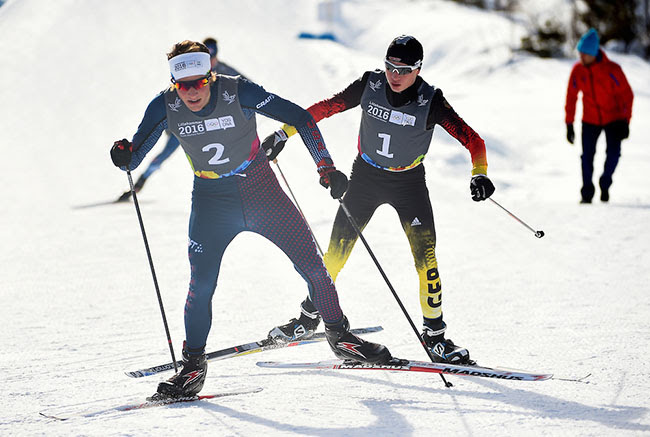
    American Ben Loomis (2) leads Germany's Tim Kopp (1) during the Nordic Combined Men's Individual Gundersen NH/5 k cross-country race at Birkebeineren Cross-Country Stadium at the 2016 Youth Olympic Games in Lillehammer Norway. Loomis went on to place second behind Kopp. (Photo: Thomas Lovelock for YIS/IOC)
    American Ben Loomis (2) leads Germany’s Tim Kopp (1) during Tuesday’s Nordic Combined Men’s Individual Gundersen NH/5 k cross-country race at Birkebeineren Cross-Country Stadium at the 2016 Youth Olympic Games in Lillehammer Norway. Loomis went on to place second behind Kopp. (Photo: Thomas Lovelock for YIS/IOC)

    (Note: This article has been updated to include comments from Hannah Halvorsen.)

    Ben Loomis sounded a little subdued on the phone Tuesday. Maybe he was still absorbing his silver-medal performance at Youth Olympic Games (YOG) in Lillehammer, Norway. Or it could be that he’s 17 years old.

    “The only thing I can compare it to was I had a fourth-place finish in international competition this year,” Loomis, a U.S. Nordic Combined skier told FasterSkier after placing second in his first competition at YOG, the normal hill/5-kilometer Gundersen start.

    Two months ago, he missed the podium by 4.3 seconds at the Continental Cup in Park City, Utah, finishing fourth behind two Austrians (David Pommer and Armin Bauer) and U.S. World Cup skier Taylor Fletcher, who placed second. All three were at least five years older than Loomis, of Eau Claire, Wis.

    “That was kind of the big stepping stone for me, but this was also something new,” Loomis said of Tuesday’s YOG competition. “But way more exciting than anything else I’ve ever experienced.”

    At the Youth Olympics, competitors are younger than 18, and nations can enter a maximum of two athletes per gender per sport.

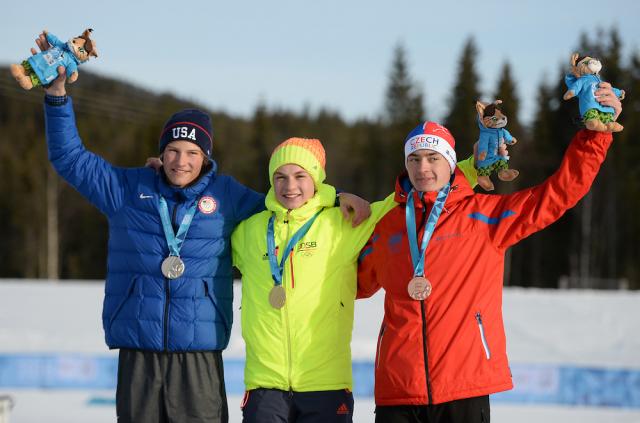
    American Ben Loomis (left) standing with podium finishers, Germany's Tim Kopp, the winner, and the Czech Republic’s Ondrej Pazout in third. (Photo: YIS/IOC-Thomas Lovelock)
    American Ben Loomis (left) standing with podium finishers, German winner Tim Kopp (c) and the Czech Republic’s Ondrej Pazout in third. (Photo: YIS/IOC-Thomas Lovelock)

    After posting the second-best jump on the 100-meter hill, Loomis started the 5 k cross-country race 8 seconds behind Germany’s Tim Kopp, the jump leader. Kopp held off Loomis by 5.2 seconds for the win in 13:31.4, and Loomis remained 2.7 seconds ahead of third place, Ondrej Pazout of the Czech Republic, at the finish.

    “I had probably my best jump all week in the competition,” Loomis said. “I just tried to catch the guy in front of me pretty quickly and I did that. I was able to ski with him for pretty much the entire race, but then there was also the third place guy who I knew was a fast skier. He caught us about half way through the race. So all three of us skied until almost the finish and then the Germany kid was able to pull away about half a kilometer before the finish.

    “I tried my hardest, but I just couldn’t stay with the first-place guy,” he continued. “But I was able to maintain second.”

    According to Adam St.Pierre, the U.S. cross-country coach at YOG, Loomis looked “relaxed” while skiing with Kopp.

    “The Czech athlete caught them at around 2.7km,” St.Pierre wrote. “The trio skied together for the rest of the race with the German making a decisive move at 4.5km … Ben had been planning to make his move on this hill too, but the German beat him to it! Ben covered the move, but was slightly gapped, but he got a gap on 3rd and skied in for silver!”

    After first meeting Loomis this week, St.Pierre explained that he wasn’t responsible for his success beyond helping wax his skis. Blake Hughes is the U.S. jumping coach at YOG.

    On Thursday, Loomis will team up with the two American ski jumpers (Casey Larson and Logan Sankey) in the ski jumping/nordic combined mixed team event, where three jumps on the 100-meter hill are scored as a unit. Then on Saturday, he’ll participate in the “nordic team relay” as both a jumper and a skier.

    “The two American jumpers and myself jump and then I’ll race and the two cross country skiers will race as well,” Loomis explained.

    “The relay start will be staggered based on the jumping results and we’ll ski a 3 by 3.3km relay with the Nordic Combiner [Loomis] and the male and female XC skiers [Hunter Wonders and Hannah Halvorsen] — all skate,” St.Pierre elaborated.

    After Youth Olympics, Loomis is headed to Nordic Combined Junior World Championships in Romania.

    “That’s a big deal as well,” he said. “I think I really surprised myself with showing how well I can perform. It just really gave me a lot of confidence going into the next competitions…”

    Results: Nordic Combined

    ***

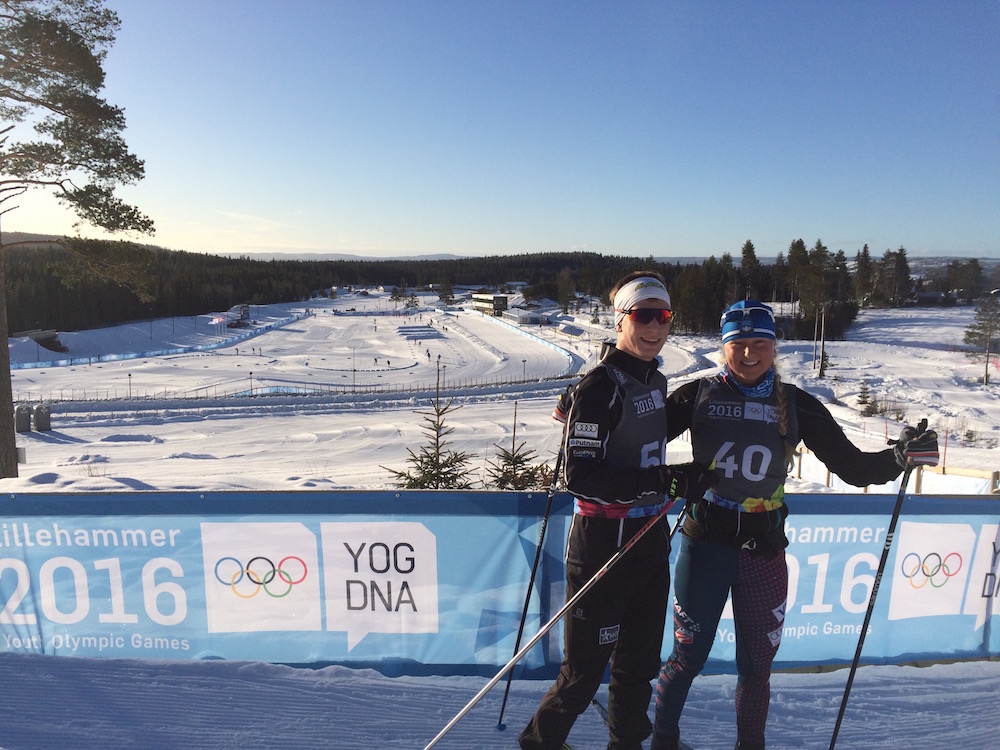
    Hunter Wonders (l) and Hannah Halvorsen (r) are the two cross-country skiers representing the U.S. at the 2016 Youth Olympic Games in Lillehammer, Norway. (Photo: Adam St.Pierre)
    Hunter Wonders (l) and Hannah Halvorsen (r) are the two cross-country skiers representing the U.S. at the 2016 Youth Olympic Games in Lillehammer, Norway. (Photo: Adam St.Pierre)

    Also on Tuesday, Hannah Halvorsen of Sugar Bowl Academy near Truckee, Calif., placed sixth in the cross-country classic sprint final. She had qualified in 13th, then went on to win her quarterfinal, and place third in her semifinal, 1.53 seconds behind Russia’s Yuliya Petrova, who won that semifinal. Moa Lundgren of Sweden automatically advanced in second and Halvorsen reached the final as a lucky loser.

    American Hannah Halvorsen between rounds at the Youth Olympic Games classic sprint in Lillehammer, Norway. She went on to place sixth in the final. (Photo: Adam St.Pierre)
    American Hannah Halvorsen between rounds at the Youth Olympic Games classic sprint in Lillehammer, Norway. She went on to place sixth in the final. (Photo: Adam St.Pierre)

    Sweden’s Johanna Hagström won the final in 3:19.55, Petrova placed second (+2.4), and Norway’s Martine Engebretsen was third (+3.27). Lundgren finished fourth (+6.44), Laura Chamiot Maitral of France (+8.84) was fifth and Halvorsen sixth (+13.65).

    “I was surprised to make it through as a lucky loser when I saw that our semi final heat was a couple seconds slower, so I was really excited,” Halvorsen wrote in an email. “I lost contact with the top girls by the first hill and started to move back throughout the heat despite putting in my best fight to the end.”

    “Hannah skied well today,” St.Pierre observed. “She felt a little flat for the XC Cross on Saturday, but had her normal energy today.”

    On Saturday, Halvorsen, who turns 18 on Friday, placed 13th in the YOG opening event: the ski cross sprint.

    “Although the skier cross was a fun experience, it was nice to be back in a race I knew well,” Halvorsen wrote. “I skied [Tuesday’s] qualifier a little tense, but it was a good signifier that I was feeling good and my fitness was there. This made me feel confident going into the heats.”

    “She looked very strong in her quarterfinal,” St. Pierre wrote. “The course started with a big climb, which Hannah was able to ski very relaxed. … The decisive moves were typically made on the second major climb of the course. Hannah made some tactical errors on this climb in her semifinal, switching tracks cost her some momentum over the top. But she finished out the semi strong, earning a lucky loser spot with her 3rd place finish.

    “I wish I would’ve given her just a little more kick for the final,” he added. “She battled and ended up 6th on the day, happy but hungry for more!”

    Canada’s Annika Richardsson finished 33rd in the qualifier, missing the top 30 needed to advance to the heats by 1.4 seconds.

    In the men’s classic sprint, Hunter Wonders qualified 29th and placed 15th overall. He missed advancing to the semifinals after placing third behind Adam Matous of the Czech Republic in a photo finish for second. The two finished 0.11 seconds behind Norway’s Thomas Helland Larsen, who won the heat in 3:04.54, but only Matous moved on with Larsen.

    “He was in fourth on the last downhill but the Russian skier ahead of him fell,” St. Pierre wrote of Yaroslav Rybochikin, who finished sixth in that quarterfinal. “Hunter avoided the fall and closed on 1st and 2nd just getting out-lunged.”

    Larsen went on to win the final in 2:55.39, Korea’s Magnus Kim placed second (+0.33) and Vebjørn Hegdal of Norway was third (+1.1).

    Like his Canadian counterpart, Levi Nadlersmith finished 33rd in the men’s race, 0.74 seconds out of qualifying.

    Racing continues tomorrow with the biathlon single mixed relay at 4:50 a.m. Eastern time.

    Results: Women | Men | Complete results

  • Miller Owns Classic Sprint on Final Day of U.S. Nationals

    Miller Owns Classic Sprint on Final Day of U.S. Nationals


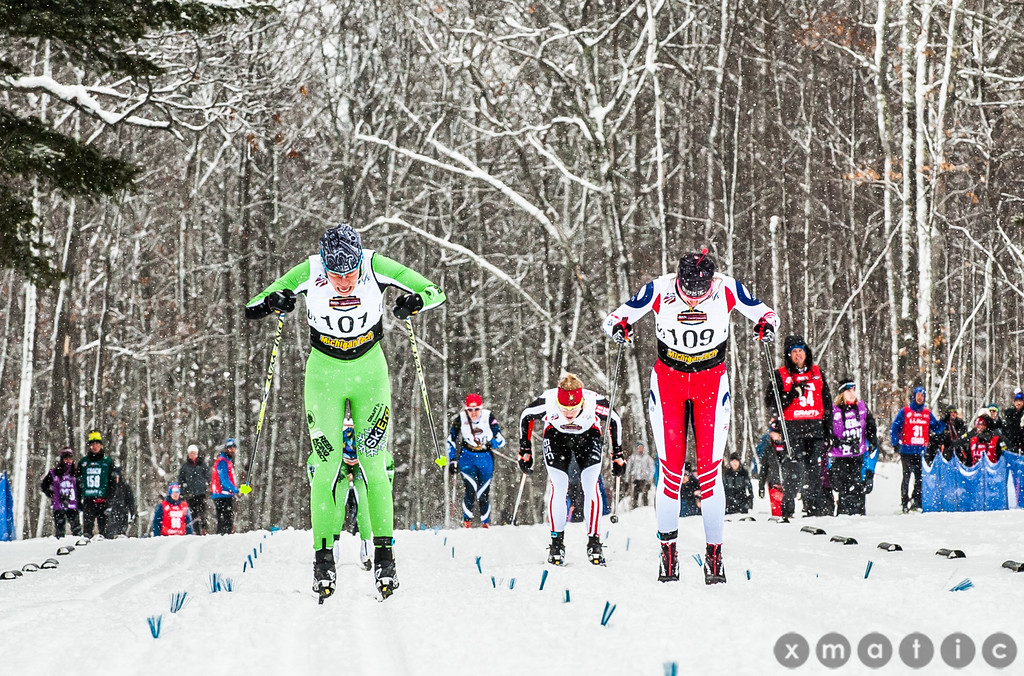
    Miller of CGRP (bib 101) outsprints Hart (bib 109) for the win in the final of the classic sprints (photo: Christopher Schmidt)
    Miller of CGRP (bib 101) out sprints Hart (bib 109) for the win in the final of the classic sprints (photo: Christopher Schmidt)

    HOUGHTON, Mich. — Kaitlynn Miller took charge of every heat she raced in during the women’s 1.5-kilometer classic sprint on Saturday, and in doing so, earned her first national title in the final race of 2016 U.S. Cross Country Championships.

    Miller, of the Craftsbury Green Racing Project, started the day with the fastest qualifying time of 4:19.42 minutes, 3.5 seconds faster than teammate Liz Guiney in second. The 24-year-old Miller went on to win her quarterfinal and semifinal en route to a commanding victory in the final over Anne Hart of the Stratton Mountain School (SMS) T2 Team and Jennie Bender (Bridger Ski Foundation), respectively.

    Earlier this week in the freestyle sprint at nationals, Bender had edged Hart for the win, Craftsbury’s Caitlin Patterson placed third, and Miller finished 0.7 seconds off the podium in fourth. Not all was lost: Miller had finished second to Patterson in the 10 k classic the day before for her first-ever podium at nationals.

    But on Saturday, the 24-year-old Miller seized the opportunity to stand one step higher on the podium, made possible by a no-nonsense strategy.

    The classic sprint was held on the same 1.5 k course as the freestyle sprint on Monday, featuring a descent at the start, followed by a punchy climb and descent and then a long uphill grind to the finish.

    Miller’s strategy was to take it out hard so she could lead and have more control of her race.

    “I really like to be able to pick my line on the downhills and choose my track on the way up,” she explained after the final. “It keeps me away from some of the mayhem.”

    Her aggressive approach was rewarded as she won both her quarterfinal and semifinal, first by 0.17 seconds ahead of Patterson and then by 1.09 seconds over Bender.

    Six women line up for the start of the classic sprint final on the final day of racing at U.S. Nationals in Houghton
    Six women line up for the start of the classic sprint final on the final day of racing at U.S. Nationals in Houghton (photo: Christopher Schmidt)

    “I figured if it worked in the quarterfinal and the semifinal, I would do it in the final,” Miller said.

    Again in the final, Miller took it out hard from the line while Hart tucked in behind her. Together they gapped the field, making it a two-woman race for the title.

    “I knew Kaitlynn Miller was having a really great day so my tactic was to get right on her and hopefully pull it off in the end,” Hart, 23, said.

    Behind them, Bender, Patterson, Becca Rorabaugh of Alaska Pacific University (APU), and Natalia Naryskina of Central Cross Country (CXC) jostled for the remaining places.

    Bender found herself in last heading down the first hill after picking a slow track off the start.

    “I actually got gapped a bit down that first hill and had to work a bit harder to catch up, but I charged the last hill to get into third,” she explained.

    Bender’s surge wasn’t quite enough to catch Miller and Hart, and she finished third, 4.19 seconds off Miller’s winning time of 4:16.53.

    As the two race leaders sprinted up into the stadium and into the finishing straight, it was all Miller.

    “We came to the finishing straightaway together and I swung out to try and pass her, but I just didn’t have it today,” Hart said. Miller held her off by 1.24 seconds for the win.

    For Hart, it was her second runner-up performance in as many sprints this week.

    “I really wanted to win, but if you would have told me a year ago that I would have been disappointed with second, I wouldn’t know what you were talking about,” she said. “It’s a great, competitive group of women and U.S. skiing is really taking off, especially on the women’s side, so any day you can be second is a good day.”

    Following a freestyle sprint title on Monday, Bender achieved her second podium of the week in third.

    “I am always hoping one of these years I’ll get a double-win in the sprints, but considering my classic sprinting has been touch and go, I’m happy with third,” Bender said. She has won two U.S. nationals skate sprints (2016 and 2014) as well as a classic sprint (2013) in her career.

    Miller (CGRP) takes her first national title in the classic sprints. Hart (SMST2) and Bender (BSF) added to their sprint podium count at U.S. Nationals taking second and third respectively (photo: Christopher Schmidt)
    Miller (CGRP) takes her first national title in the classic sprints. Hart (SMST2) and Bender (BSF) added to their sprint podium count at U.S. Nationals taking second and third respectively (photo: Christopher Schmidt)

    Patterson had to recover from some tactical missteps when she found herself boxed out after a slow start and lost momentum when she was forced wide on the icy and washed-out downhill corner.

    “At that point I had a free track in front of me, but not so much momentum or energy,” Patterson recalled. “I tucked behind Jennie and almost covered that move, but she had a little more energy than me coming into the final stretch.”

    Patterson placed fourth, 2.28 seconds short of her fourth podium in four races this week after winning both distance races (the 10 k classic individual start and 20 k freestyle mass start).

    Rorabaugh finished nearly 10 seconds after Patterson in fifth (+16.25). Like Patterson, she also said she made some sub-optimal tactical decisions in the final, which kept her from fighting for a podium.

    “The course is more tricky when it is not as slow as last year,” Rorabaugh explained, referring to the heavy snowfall that made last year’s classic sprint at nationals in Houghton feel like an endurance race. “This year you need to make decisions about when to kick and when to double pole.

    “In all honesty, I think people skied really well in the final,” she added. “People made good moves in the right places and I was just on my heels a bit.”

    Naryskina followed in sixth (+29.94) after advancing to the final based on time, as a two-time “lucky loser” out of both her semifinal and quarterfinal.

    Bender also attested to the strength of the field. “The other two girls [Miller and Hart] were striding really well,” she said. “I’m happy to be on the podium. It was a fight out there for sure.”

    Craftsbury teammates Kaitlynn Miller (r) and Caitlin Patterson (111) lead CXC's Natalia Naryshkina in their classic-sprint quarterfinal on Saturday at U.S. nationals in Houghton, MIch. Miller edged Patterson by 0.17 seconds to win the heat and went on to win the final for her first national title.
    Craftsbury teammates Kaitlynn Miller (r) and Caitlin Patterson (111) lead CXC’s Natalia Naryshkina in their classic-sprint quarterfinal on Saturday at U.S. nationals in Houghton, MIch. Miller edged Patterson by 0.17 seconds to win the heat and went on to win the final for her first national title.

    Patterson was thrilled for her teammate. “I could see her up ahead on the finishing straightaway ahead of Anne and even though I was suffering and trying to maybe catch third, I was so excited for her,” she recalled.

    For Miller, this was the pinnacle of a week of personal bests.

    “I am really excited. I was surprised, but I was looking forward to this race and I just went out there and gave it all I had,” she said. “I carried my momentum from my qualifier, through the heats and to the final.”

    Miller’s results at 2016 nationals have elevated her to second in the overall SuperTour standings behind Patterson. As the overall leader, Patterson plans to race Period 3 of the World Cup and will depart for Europe in late January.

    Period 2 SuperTour action will resume January 30-31 in Lake Placid, N.Y.

    Complete results | Finals

  • Goodbye Switzerland, Hello Oberstdorf: U.S. Sprinters Ready for Next Event

    Goodbye Switzerland, Hello Oberstdorf: U.S. Sprinters Ready for Next Event

    Simi Hamilton of the United States in Sunday's 10 k skate pursuit, the third stage of the Tour de Ski, where he crossed the line in 69th place. "It was a tricky race because with the two big wave starts, you start in the pack... I was able to get to the front of my pack, but when the pace was slow I was hesitant to ski away from that pack because it’s such a big gap to the next one," Hamilton said of the effort.
    Simi Hamilton of the United States in Sunday’s 10 k skate pursuit, the third stage of the Tour de Ski, where he crossed the line in 69th place. “It was a tricky race because with the two big wave starts, you start in the pack… I was able to get to the front of my pack, but when the pace was slow I was hesitant to ski away from that pack because it’s such a big gap to the next one,” Hamilton said.

    LENZERHEIDE, Switzerland—With two tough distance races out of the way, the U.S. sprint team is looking forward to a competition they haven’t seen since the very first race of the World Cup season: a classic sprint.

    The sprinters did not go into the Tour de Ski planning to finish it, but skipping a stage means dropping out of the Tour altogether. So to get to Tuesday’s sprint in Oberstdorf, Germany, they had to compete in the 15/30 k classic mass starts here on Saturday, then the 5/10 k skate pursuits on Sunday.

    Not that they saw it as too much of a problem to do some distance racing.

    “I love racing right now,” Ida Sargent said after the pursuit. “The great thing about the Tour de Ski is that it’s racing every day. If you have a day that’s not so good, you get to do it again the next day – not waiting a week or more, like normal. After the 15 k yesterday I went to bed excited to race again.”

    Ida Sargent racing to 48th place in the 15 k classic mass start.
    Ida Sargent racing to 48th place in the 15 k classic mass start.

    Sophie Caldwell had the best result in the opening sprint of the Tour de Ski, a skate competition where she finished fourth. Teammates Sargent, Andy Newell, and Simi Hamilton also qualified for the quarterfinals, while Sadie Bjornsen and Jessie Diggins went to the semifinals.

    Newell, who finished 19th in the skate sprint, has already been visualizing Oberstdorf, where he has made three sprint semifinals in the past, including a fourth-place World Cup finish in 2006.

    “I’ve been looking forward to that race for a while,” Newell said on Sunday. “I really like that course and I know if I am feeling at the top of my game, I can be on the podium in Oberstdorf. I’m just happy to have had made it to that race, you know? I made it through today and my body actually felt better today than yesterday, so I’m happy with that. I’m tired but not blown out at all.”

    Hamilton agreed that he was looking forward to the competition, saying that Oberstdorf is “a short course which definitely suits me well.”

    With a number of sprinters already dropping out of the Tour de Ski after the first stage, there’s also some opportunity for a top finish.

    “Everyone’s going to be tired and that’s kind of funny on sprint day, because you now try to feel so quick and explosive and fast,” Newell laughed.

    But at the same time, some distance skiers sprint better and better as Tours go on, so a field full of tired sprinters doesn’t make the win any easier.

    “I definitely think there will be some tired people there, but people look at it as more opportunity to score some bonus [seconds],” Hamilton said. “You have to be 100% engaged and you can’t really go into the heats and take for granted that all the sprinters are a little tired. You still have to treat it like every other sprint World Cup where you have to lay down as fast as you can in the qualifier and then ski smart in the heats. Should be fun.”

    Despite fatigue, the team will be training “like usual” on Monday in preparation for the Oberstdorf competition.

    Andy Newell catching a rest on a downhill in the 30 k classic.
    Andy Newell catching in the 30 k classic. “Yesterday was a pretty bad day,” he said of the race. “I just kind of was in a funk out there and was struggling to make my skis feel good, but also to make my body feel good at the same time. It was tough, but then I tried to just conserve as much energy as I could out there.”

    “We’ll be out there doing some speeds and testing skis and stuff,” Newell said. “We won’t take the day off.”

    And at the moment, Newell is planning to do one more distance race after the sprint – the 15 k classic, also in Oberstdorf. Then he’s planning to end his Tour, although how his body feels after the sprint could change the balance in either direction.

    After all, the U.S. men’s team is looking for one more man besides Noah Hoffman and Erik Bjornsen to score World Cup points (for a top-30 finish) in a distance race so that they can increase their start quota from three to four.

    Could that one guy be Newell or Hamilton?

    “I hope so!” Hamilton said. “Last year I scored some distance points in the prologue, so generally the short skate races present the best opportunity for me. I may race in Toblach on Friday, so we’ll see it will depend on how I’m feeling. We’ll look at the schedule this year and hopefully be able to jump in some more distance races, especially some shorter skate races. I know that I’m fit and strong and healthy, but obviously the sprinting comes first.”

    -Jason Albert contributed reporting.

    Sophie Caldwell skiing with Norway's Kari Oeyre Slind in the 30 k mass start; Caldwell finished 34th and had hoped she'd be in the points, if not for a broken pole.
    Sophie Caldwell skiing with Norway’s Kari Oeyre Slind in the 30 k mass start; Caldwell finished 34th and had hoped she’d be in the points, if not for a broken pole.
  • Bonus Photos from Sun Valley SuperTour

    Bonus Photos from Sun Valley SuperTour

    SUN VALLEY, Idaho — With the conclusion of the second weekend of SuperTour races in Sun Valley, here’s a collection of race photos we couldn’t fit into the original race recaps.

  • Patience Pays Off: Blackhorse-von Jess Wins SuperTour Classic Sprint

    Patience Pays Off: Blackhorse-von Jess Wins SuperTour Classic Sprint

    (Left to right): Sixth place finisher Petter Reistad (University of Colorado-Boulder) fifth place Niklas Persson (University of Utah), third place Tyler Korfield (APU), first place Dakota Blackhorse-von Jess, second place Reese Hanneman (APU), and fourth place Eric Packer (APU) after the men's SuperTour classic sprint on Saturday in Sun Valley, Idaho.
    The men’s SuperTour classic sprint podium on Saturday in Sun Valley, Idaho: (from left to right) sixth-place finisher Petter Reistad (University of Colorado-Boulder), Niklas Persson (University of Utah) in fifth, Tyler Korfield (APU) in third, winner Dakota Blackhorse-von Jess (Bend Endurance Academy), Reese Hanneman (APU) in second, and Eric Packer (APU) in fourth.

    SUN VALLEY, Idaho — Patience and sprinting go hand-in-hand, or so says the men’s SuperTour 1.3-kilometer classic sprint winner, Dakota Blackhorse-von Jess.

    “Being patient can often serve you really well,” said Blackhorse-von Jess (Bend Endurance Academy) during a post-race interview on Saturday on the Lake Creek trails.

    “I learned a lot about how I was feeling, how the course was feeling, and how my skis were feeling in that first quarterfinal. Patience was really the name of the game and I kept it all day,” he explained.

    After placing third in last weekend’s SuperTour skate sprint in West Yellowstone, Mont., both Blackhorse-von Jess and his coach, Ben Husaby believed that the proper composure would put Blackhorse-von Jess back at the top in Sun Valley.

    “The game plan [going into Saturday’s race] was to improve upon last week’s results,” Husaby said.

    “Historically he’s gone out pretty hard in all the rounds, so it was nice to see him work his way through each of his heats from fourth or third place up to the front,” he added. “I think he was confident and he skied really smart all the way through today.”

    Dakota Blackhorse-von Jess (Bend Endurance) (r) moves to the outside to get around David Norris (APU), Tad Elliot (SSCV) and Kevin Bolger (University of Utah) during the men's SuperTour 1.3 k classic sprint on Saturday in Sun Valley, Idaho.
    Dakota Blackhorse-von Jess (Bend Endurance Academy) (r) moves to the outside to get around David Norris (APU), Tad Elliott (SSCV) and Kevin Bolger (University of Utah) during the men’s SuperTour 1.3 k classic sprint quarterfinal on Saturday in Sun Valley, Idaho.

    With confidence and patience, Saturday’s SuperTour classic sprint winner skied through the rounds in the middle of the pack — rather than charging the front.

    Even up until the final 100 meters of his quarterfinal, Blackhorse-von Jess trailed David Norris of Alaska Pacific University (APU) and Kevin Bolger (University of Utah).

    With the pressure on in the finishing straight, Blackhorse-von Jess made his move, stepping out of his lane to ski around Bolger and Norris on the outside.

    The three then lunged for the line, with Blackhorse-von Jess ultimately winning the quarterfinal in 3:05.98, just 0.18 seconds ahead of Bolger and 0.75 seconds ahead of Norris.

    The semifinal played out similarly, as Blackhorse-von Jess sat back while Miles Havlick of the Sun Valley Ski Education Foundation (SVSEF) and Eric Packer (APU) lead the heat until the final downhill.

    What Blackhorse-von Jess called “phenomenally” fast skis helped him catch Havlick and Packer by the last turn into the finish, where he passed the two — again on the outside — for the semifinal win in 3:04.37, edging Packer by 0.62 seconds and Havlick by 0.78 seconds.

    In another close and stacked semifinal, APU teammates Reese Hanneman and Tyler Kornfield (who would go on to place second and third in the final) lunged for first and second, respectively, with 0.28 seconds separating them. Hanneman won the heat in 3:04.23.

    Taking the opposite tactic of Blackhorse-von Jess, Hanneman led his semifinal from the first climb until he crossed the finish line.

    “I tried to ski at the front and control [the semifinal],” Hanneman explained. “I wanted to pace myself a little bit for the final, because I knew I was going to see Dakota there and I wanted to have a good chance to throw down against him.”

    Reese Hanneman (APU) (l) and Mads Strøm out of the start during their quarter final in the men's SuperTour 1.3 k classic sprint on Saturday in Sun Valley, Idaho.
    Reese Hanneman (APU) (l) and Mads Strøm (University of Colorado-Boulder) out of the start during their quarterfinal in the men’s SuperTour 1.3 k classic sprint on Saturday in Sun Valley, Idaho.

    Though Hanneman’s front-runner tactic differed from Blackhorse-von Jess’s, his belief in the power of patience did not.

    “I classic ski really well if I can keep it relaxed,” Hanneman, 25, said. “So I focused on stretching it out and using the terrain to stride big.”

    Kornfield also found staying calm during Saturday’s rounds helped him to the podium.

    “I like to take it off from the back and see how the field is skiing,” Kornfield, 24, said. “I start a little slower and pick my way up as the course goes on.”

    Also advancing to the final from Hanneman and Kornfield’s fast semifinal were two lucky losers, Petter Reistad (University of Colorado-Boulder), who was 0.37 seconds back in third and Niklas Persson (University of Utah), 0.52 seconds back in fourth.

    Despite the stacked sprint finalists toeing the line, Blackhorse-von Jess, 29, managed to maintain his winning composure through Saturday’s final.

    After the gun, he positioned himself in third behind Packer and Hanneman  until the top of the last hill. Blackhorse-von Jess then maneuvered into a tuck behind Hanneman for the final downhill, and once more took the outside corner for the overall win in 3:00.45.

    Hanneman finished 1.13 seconds later in second and Kornfield was 4.11 seconds behind Blackhorse-von Jess in third. 

    Rounding out the final was Packer in fourth (+6.02), Persson in fifth (+9.06), and Reistad in sixth (+35.21).

    With his first SuperTour win of the season under his belt, Blackhorse-von Jess said he would continue tapping away at other season race goals.

    “What I’d really like to do is get back in the rounds at the World Cup and have some success,” he said. “If I could bring this racing there, that’s the dream of being a ski racer.”

    Results

  • Sun Valley Videos: Chatting with USST Rookies Kern and Ogden (+ Sprint Course Preview)

    Sun Valley Videos: Chatting with USST Rookies Kern and Ogden (+ Sprint Course Preview)

    SUN VALLEY, Idaho — U.S. Ski Team rookies and Stratton Mountain School teammates Julia Kern and Katharine Ogden (last weekend’s SuperTour 10 kilometer freestyle race winner) sat down with FasterSkier this week to discuss their summer training with the U.S. Ski Team (USST) and how they are feeling coming into the race season.

    Kern also provided a unique preview of the 1.3-kilometer course that will be used for Saturday’s SuperTour classic sprint at the Lake Creek trails in Sun Valley.

  • Weekend Roundup: Preseason Tuneups; Next Stop, World Cup

    Weekend Roundup: Preseason Tuneups; Next Stop, World Cup

    In the U.S. Ski Team's first race of the 2015/2016 season, Jessie Diggins led a 1-2 U.S. finish with teammate Sophie Caldwell finishing second. Here Diggins is shown celebrating her FIS classic sprint win on Saturday in Gällivare, Sweden. (Photo: USSA/Stefan Nieminen)
    Jessie Diggins of the U.S. Ski Team won both races in last weekend in Gällivare, Sweden, leading a 1-2 U.S. women’s finish in the classic sprint with teammate Sophie Caldwell on Saturday, and sharing the podium with Caitlin Gregg, who was third in the 10 k skate on Sunday. (Photo: USSA/Stefan Nieminen)

    A win is a win: especially when it’s north of the Arctic Circle in chilly conditions and in the first races of the season.

    Jessie Diggins started 2015/2016 off with back-to-back wins at the International Ski Federation (FIS) races in Gällivare, Sweden, topping the podium in both the classic sprint and 10-kilometer freestyle.

    Above all, the U.S. Ski Team member said the races were confidence boosting and a good way to take inventory on “what else needs to be improved, as well as a good reminder of warmups, race routines, and testing skis.”

    On Day 1 of the cross-country races in Gällivare, Diggins and her teammate Sophie Caldwell captured first and second, respectively, in the classic sprint.

    “I want to walk up to the start line of a classic race with that same confidence in myself that I have at the start of every skate race,” Diggins said after Saturday’s sprint.

    “I don’t care if it’s a World Cup or a local club race. Having three of the six podiums was just a lot of fun,” U.S. women’s coach Matt Whitcomb said on Saturday, after Andy Newell finished second in the men’s sprint.

    On Sunday, two American women again reached the podium, with Diggins in first and Caitlin Gregg in third. In the men’s 15 k freestyle, Canada had two in the top four, with Alex Harvey in second and Devon Kershaw in fourth.

    “That … was probably my best individual-start skate race in 1.5 years,” Kershaw remarked.

    Norway's Petter Northug racing to a 10 k classic win on Nov. 20 in Bruksvallarna, Sweden. He did so in a custom suit with the Swedish colors. (Photo: AdaMedia Med Mera/@adamedmera)
    Norway’s Petter Northug racing to a 10 k classic win on Nov. 20 in Bruksvallarna, Sweden. He did so in a custom suit with the Swedish colors. (Photo: AdaMedia Med Mera/@adamedmera)

    About 900 kilometers south in Bruksvallarna, Sweden, Petter Northug ruffled feathers on Day 1 of the three-day FIS race series. He won Friday’s 10 k classic by 36 seconds while wearing a Swedish-national-team-like suit. Meanwhile, Sweden’s Charlotte Kalla won the women’s 5 k classic by 25 seconds.

    The next day, Kalla won again — this time by 36 seconds in the 10 k freestyle. Led by Niklas Dyrhaug, the Norwegian men swept the Bruksvallarna 15 k skate podium.

    Finally on Sunday, Stina Nilsson put the kibosh on Kalla’s streak as the 22-year-old Nilsson won the women’s skate sprint. Kalla placed second, and in the men’s sprint, Norway’s Havard Solås Taugbøl, 22, won by 0.09 seconds over Sweden’s Karl-Johan Westberg.

    For the first time, the US Biathlon team logged some pre-World Cup race starts, traveling to Sjusjøen, Norway, to do so. In Saturday’s sprint, the American men all finished in the top 30. Tim Burke led them in 13th.

    “Today was definitely a solid team performance,” Burke explained. “Our entire men’s team is at a very high level…”

    At one point, American Susan Dunklee ranked first in the women’s sprint after cleaning the first stage, but missed four in standing and ended up 21st.

    “My ski shape feels a little sharper than it usually does in November,” she wrote.

    Less than four seconds back, her teammate Annelies Cook was 25th. Canadian Megan Tandy (formerly Heinicke) was 23rd with 90-percent shooting. Italy’s Dorothea Wierer won the race with clean shooting.

    In Sunday’s mass start, the lone American competing, Leif Nordgren finished 19th with six penalties on a windy day. Tandy placed 40th in the women’s race with seven penalties.

    “I was disappointed for sure since it was such a good opportunity against tough competition, but considering the conditions, I’ll get over it quick!” Nordgren wrote.

    The men’s sprint winner from the day before, Germany’s Simon Schempp won the mass start as well, by fewer than six seconds over Norwegian Alexander Os of Team Feskslo — or fish guts.
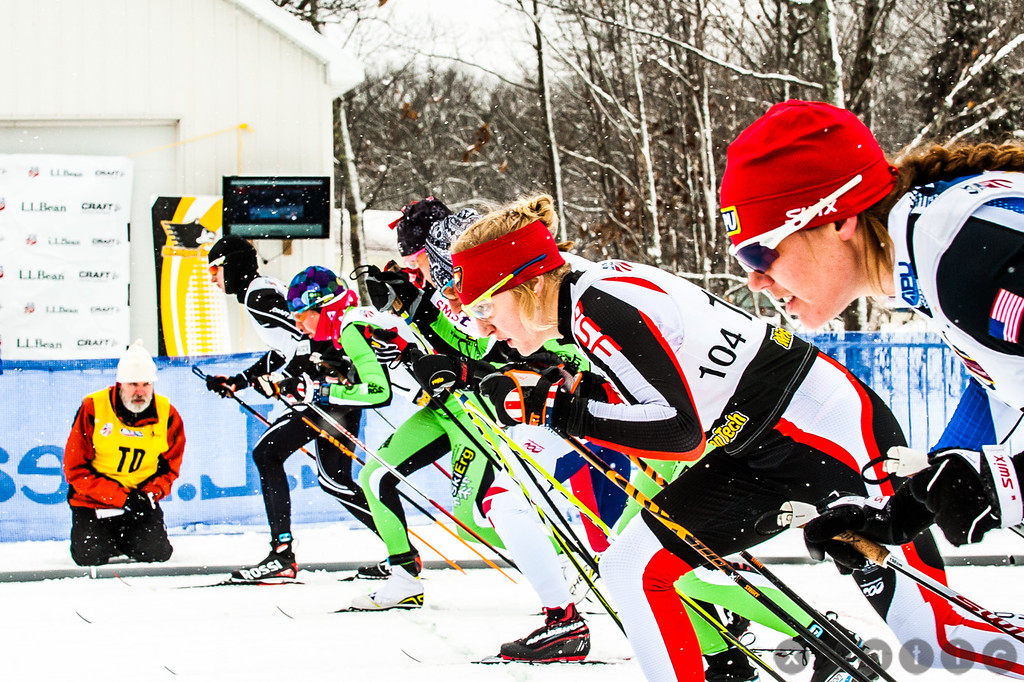
    Ukraine’s Juliya Dzhyma cleaned the final stage to win the women’s mass start.


    FIS Cross Country races, Gällivare, Sweden

    Saturday’s classic sprint: women’s report | men’s report

    Sunday’s 10/15 k freestyle: women’s report | men’s report

    FIS Cross Country races, Bruksvallarna, Sweden

    Friday’s 5/10 k classic: men’s report | women’s report

    Saturday’s 10/15 k freestyle: report

    Sunday’s freestyle sprint: report

    Norwegian Biathlon Association races, Sjusjøen, Norway

    Saturday’s 7.5/10 k sprints: men’s report | women’s report

    Sunday’s 12.5/15 k mass starts: report

  • On the Attack, Newell Second in Gällivare Classic Sprint; Harvey 7th and Bjornsen 8th

    On the Attack, Newell Second in Gällivare Classic Sprint; Harvey 7th and Bjornsen 8th

    Andy Newell before his qualifying start in Gällivare, Sweden's opening FIS classic sprint on Saturday. (Photo: USSA)
    Andy Newell before his qualifying start in Gällivare, Sweden’s opening FIS classic sprint on Saturday. (Photo: USSA)

    Amidst some heavy hitters from Canada and Russia, U.S. Ski Team veteran Andy Newell proved he packed some punch during the men’s 1.4-kilometer classic sprint on Saturday in Gällivare, Sweden.

    “I felt good all day long, really,” said Newell in a post-race phone interview. “That’s kind of the main goal going into these races, is not so much the result, but getting a good response from your body.”

    On Saturday, his body told him to go for it. 

    After finishing second in the qualifier, 2.87 seconds behind 23 year-old Russian Sergey Ustiugov, Newell, 31, explained his instincts only got better.

    “I went into my quarterfinal heat and I knew I had [Canadian] Alex [Harvey] in there, who is a tough sprinter, so I tried to control the heat and put down a move up the last hill,” he said.

    By controlling the heat early on, Newell won his quarterfinal and advanced with Harvey, who finished just 0.14 seconds later.

    “None of us wanted to lead [the quarterfinal],” Harvey explained in a phone interview. “So Andy went in front.”

    American Andy Newell (l) captures second in a World Cup semifinal just 0.25 seconds ahead of Canada's Lenny Valjas in the 1.5 k classic sprint at the Davos World Cup in Switzerland 2013. (Photo: Fischer/Nordic Focus)
    American Andy Newell (l) captures second in a World Cup semifinal just 0.25 seconds ahead of Canada’s Lenny Valjas in the 1.5 k classic sprint at the Davos World Cup in Switzerland 2013. (Photo: Fischer/Nordic Focus)

    Along with Harvey, two other Canadians finished second in their quarterfinals: Devon Kershaw and Lenny Valjas. Kershaw was just 0.83 seconds behind his heat’s winner Ustiugov. Valjas edged Poland’s Konrad Motor in a photo finish for second in his quarter final and Russia’s Evgeniy Belov crossed the line in first. 

    Rounding out the North American crew that moved on to the semifinals was 24-year-old Erik Bjornsen, who finished second in his quarterfinal, just one-tenth of a second back from Russia’s Stanislav Volzhentsev.

    “Today’s race was a good chance to blow out some steam and get the body ready for the World Cup,” Bjornsen wrote in an email. “I’ve been feeling a little tired from the training year, so it was good to finally have some snap and spark to the movements.”

    In a North American showdown, Newell, Harvey, Valjas, and Bjornsen all advanced to the same semi-final. Bjornsen finished fourth, two seconds behind  Newell in second and Harvey in third. Valjas finished four seconds later in fifth. While Harvey, Bjornsen and Valjas did not advance (ultimately placing seventh, eighth and 10th overall) and Kershaw was fifth in the other semifinal (for ninth overall), Newell moved on to the final.

    “I think the challenge of [sprinting] is knowing how to respond to different tactics out there and knowing when to use your strengths and also recognizing what your weaknesses might be,” Newell said. “Between the Russians and Canadians, it was a pretty tough field with a lot of good sprinters. In order to make the final, I actually came into the lanes in third and [had] to sprint past Harvey and [Russia’s Evgeniy] Belov.”

    While Belov beat Newell by 0.17 seconds for the semifinal win, Newell edged Harvey for second in a photo finish by 0.18 seconds.

    The lone North American in the final, Newell knew where he wanted to set his sights.

    “Anytime I get on the start line in a sprint I want to try and win the race” he said. “In the final I knew I just had to hang on to Ustiugov, because he had been trying to go off the front all day.”

    With tenacity, Newell entered his fourth hard effort of the day and posted his fastest course time, just 1.43 behind Ustiugov’s winning pace of 2:45.95.

    “[Ustiugov and I] were able to pull away from most of the field and I stuck with him up the last hill,” Newell said. “[When] we came into the lanes, I was right behind him and I thought for a second I might be able to get around him, but he just had too much speed in the last hundred meters.”

    Ustiugov managed to gap Newell by 1.63 seconds for the win. Belov placed third, 2.63 seconds back. Rounding out the sprint final were Poland’s Maciej Staręga in fourth (+4.96), Volzhentsev in fifth (+6.36), and Sweden’s Johan Haeggström in sixth (+13.07). 

    “Newell has been skiing exceptionally well all year at camps, better than I’ve ever seen him and he proved today that that was no illusion, he was stronger and stronger every heat,” said U.S. Ski Team coach Matt Whitcomb. “He looked absolutely fantastic in the last part of his final round today, so that was really exciting.”

    Despite not having any skiers in the final, Canadian head coach Justin Wadsworth feels his athletes are ready for the World Cup.

    Canada's Alex Harvey skiing in his quarterfinal en route to second in the 1.4 k classic sprint at the 2015 FIS Nordic World Ski Championships in Falun, Sweden. (Photo: flyingpointroad.com)
    Canada’s Alex Harvey skiing in his quarterfinal en route to second in the 1.4 k classic sprint at the 2015 FIS Nordic World Ski Championships in Falun, Sweden. (Photo: flyingpointroad.com)

    “Right now, I think everyone is ready to start the [World Cup] mini-tour next week in Finland,” he said during a phone interview. “Everyone is in a good place, we’ve just got to tune up the engines a little bit more, but that’s kind of normal for our team at the start of the year so I’m not too concerned.”

    “It was the first race on snow since last March, so just getting the bib on, getting the routine on again … is important,” Harvey explained.

    Keeping the Kuusamo World Cup next weekend and the rest of the season beyond that in mind, Newell said he thought the Gällivare sprint races benefitted his team. 

    “I think we’re already looking better than we did last year because we were able to get this practice race in and I think we’re going to be feeling a lot better next weekend than we did last year,” he said.

    With the proper preparation and practice, Newell is personally feeling more ready than ever for the upcoming season. “What a good sprint racer can do is make decisions while they’re out there racing and kind of react to certain attacks or make the attacks themselves,” he said. “I think what you’ll see more from me more this year is I’ll be the one making attacks and not responding to other peoples’.”

    Racing in Gällivare continues Sunday with the 10/15 k freestyle.

  • Caldwell Leads Four North American Women Into Heats in World Champs Sprint Opener

    Sophie Caldwell (U.S. Ski Team) racing to 21st in the women's 1.4 k classic sprint qualifier on the first day of medal competition at the 2015 World Championships in Falun, Sweden. (Photo: Flying Point Road)
    Sophie Caldwell (U.S. Ski Team) racing to 21st in the women’s 1.4 k classic sprint qualifier on the first day of medal competition at the 2015 World Championships in Falun, Sweden. (Photo: Flying Point Road)

    FasterSkier’s coverage of the 2015 FIS Nordic World Ski Championships in Falun, Sweden, is brought to you by the generous support of L.L. Bean, now featuring a complete line of Kikkan Randall training wear.

    FALUN, Sweden — Four North American women advanced to the heats on the first day of medal competition at the 2015 FIS Nordic World Ski Championships, with American Sophie Caldwell leading the crew in 21st in Thursday’s classic-sprint qualifier.

    Poland’s Justyna Kowalczyk racing to first in the women's 1.4 k classic sprint qualifier on the first day of medal competition at 2015 World Championships in Falun, Sweden. (Photo: Flying Point Road)
    Poland’s Justyna Kowalczyk racing to first in the women’s 1.4 k classic sprint qualifier on the first day of medal competition at 2015 World Championships in Falun, Sweden. (Photo: Flying Point Road)

    Poland’s Justyna Kowalczyk rounded the 1.4-kilometer course, marked by two significant climbs, with a top time of 3:24.89. Norway qualified in second through fourth, with Maiken Jaspersen Falla finishing 0.24 seconds back in second, Kari Vikhagen Gjeitnes clocking 0.51 seconds back in third, and Ingvild Flugstad Østtberg finishing 0.65 seconds behind in fourth.

    Stina Nilsson led Sweden in fifth in the qualifier, 1.19 seconds after Kowalczyk, and Norway’s fourth of five women, Marit Bjørgen ranked sixth (+2.54).

    Caldwell finished 7.87 seconds back in 21st, leading three American women in the top 30. Sadie Bjornsen was 26th (+9.47) and Ida Sargent qualified in 29th (+11.64).

    “It was really hard,” Caldwell said after. “It was a long course with a lot of climbing. I think I took it out a little hot, but it was fun. It was crazy with the crowd.”

    For the quarterfinal, she explained she’ll try to conserve as much as possible before a final downhill leading into a 90-degree turn and the finishing flat.

    “Saving a little bit for the final stretch is going to be key,” Caldwell said. “It’s a long finish stretch.”

    Canada’s lone female racing on Thursday, Perianne Jones qualified in 28th (+9.98), advancing to the quarterfinals for the second time this World Cup season.

    “Compared to last week’s sprint course [in Östersund, Sweden], which was pretty short and little ups and downs, this was a hard hill off the start, for sure, but it’s a great sprint course,” Jones said. “I hope I feel a little better in the heats, but I’m happy at least to be in.”

    One of the U.S. team’s favorites, Kikkan Randall did not make the heats for the second-straight classic sprint after placing 36th, 3.22 seconds out of the top 30 and 14.86 seconds behind Kowalczyk.

    “I’m a little bummed, I’m frustrated,” Randall said. “I was hoping to find some better speed this late in the season but I’m still excited for the skate events to come up. Skating’s been going a lot better than classic for me, so good to get this one out of the way.

    “For me, classic skiing is really 50/50,” she said. “When I nail it, I can be really strong and today I just felt like technically I didn’t nail it so I lost some key momentum on the top of the climbs. I was flooded, I gave it everything I had, but just haven’t quite found that magic yet this season.”

    Randall’s Alaska Pacific University teammate Jessica Yeaton, racing for Australia, placed 51st in her World Championships debut, 31.46 seconds behind the winner.

    “It’s kind of overwhelming, but at the same time it’s just another race so once you figure that out, it’s really fun,” Yeaton said. “Today I was kind of hoping to finish in the top 50 … I was pretty close. Really, [I’m not setting] super-high goals, but just trying to gain experience.”

    Heats start at 15:15 CET (9:15 EST).
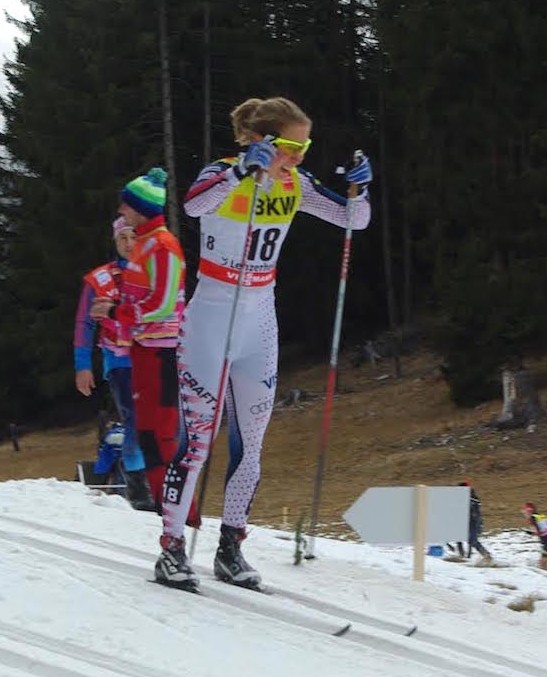
    Qualifier results | Heat brackets

  • 90th Win in Hand, Bjørgen Still Claims Nerves on Eve of World Champs

    90th Win in Hand, Bjørgen Still Claims Nerves on Eve of World Champs

    When Marit Bjørgen won Saturday’s classic sprint in Östersund, Sweden, she accomplished a few notable facts: it was her 90th World Cup win in a storied career; she overtook Norwegian teammate Ingvild Flugstad Östberg in the Sprint Cup standings; and she positioned herself even better than she previously had, if that was possible, for the 2015 World Championships which start in nearby Falun next week.
    Yet if you ask Bjørgen, she still feels that a medal sweep in Falun is impossible.

    No, I cannot not take six gold medals in the World Championships,” she told Norwegian broadcaster NRK. Then I must have more luck than today. There is so much that has to fall into place that I do not think it is possible.”

    Bjørgen won the 1.2 k sprint by 1.8 seconds over teammate Maiken Caspersen Falla. The only non-Norwegian in the sprint final, Stina Nilsson of Sweden, placed third; Kari Gjeitnes, Östberg, and Celine Brun-Lie rounded out the top six.

    Bjørgen now leads the overall World Cup by more than 500 points over another Norwegian star, Therese Johaug, and has won 12 different competitions so far this season. The only time she finished off the podium was in a classic sprint in Davos, Switzerland, in December.

    The star told NRK that the course – a new one on the World Cup circuit, with unique features like a trail that headed straight through the middle of the grandstand and out the other side – did not suit her. But she felt strong.

    “I knew I had strength,” she said.

    It was Bjørgen’s first World Cup competition since the Tour de Ski ended in January, and she said that she was happy to see that the positive signs from that tour – which she won convincingly – were multiplying.

    The shape is better and better,” she told adressa.no. I have a good feeling now before the World Championships. I’m glad that I had good speed in the body and I’m very much looking forward to Falun now… it suggests that, at least, I’m not worse than I was in recent years.”

    As such, she plans to start six competitions at World Championships.
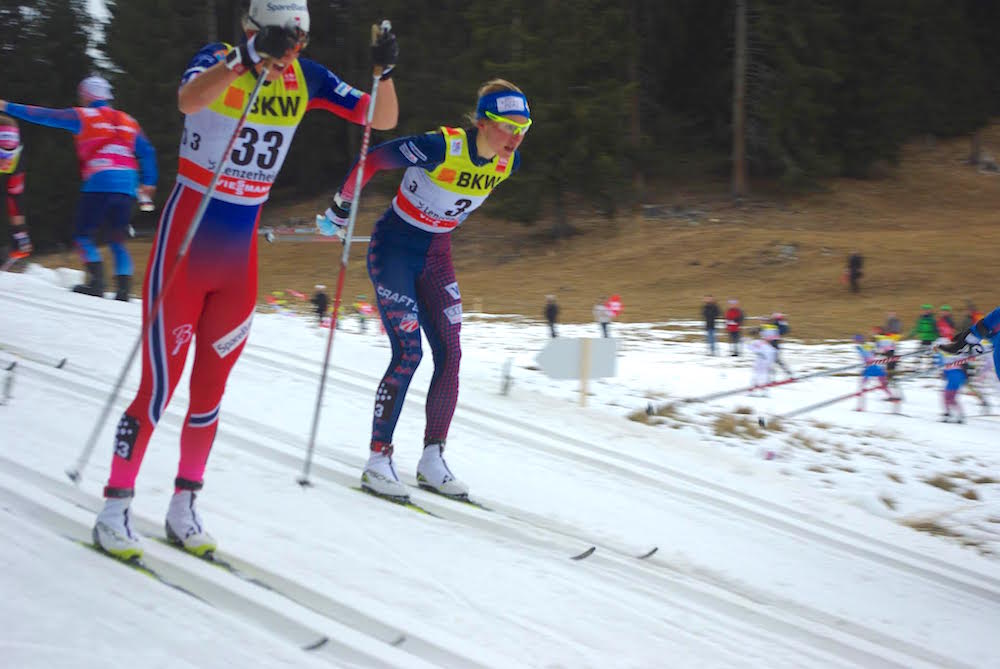
    And yet, she said, during a Championships her fitness could possibly go downhill.

    “I have felt very good in summer and fall… although I am in very good shape, things can get a little heavier and then it gets tough.”

    Besides her many speedy teammates, Nilsson could be a threat to Bjørgen in the sprint at World Championships. She has yet to win a World Cup, but the Swede – who leads the Helvetia U23 rankings – has two previous second-place finishes this season and will be competing on home soil.

    She’s trying not to let the pressure get to her.

    “It’s something that I and my mental coach have been quite clear about,” she told Swedish daily Dagbladet. “There’s a place I want to be in, and it’s here and now. Not to be in Thursday when it’s only now Saturday.”

    The other big news for Norway was that with her fourth-place finish, Gjeitnes earned a start in the classic sprint at World Championships over Heidi Weng, who currently sits third in the overall World Cup rankings and had been assumed to be a starter.
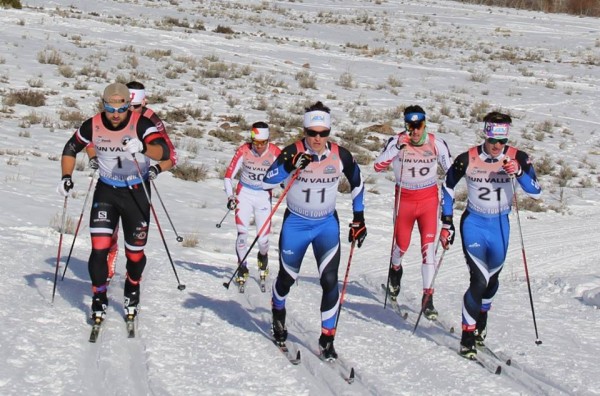
    “I can only tip my hat to her,” Weng, who placed 10th in the sprint, told NRK.

    “I’m very satisfied,” said 30-year-old Gjeitnes, for whom it will be the first World Championships.

    Results

  • Hamilton Takes 11th, Newell 12th to Lead Americans in Östersund Sprint

    Hamilton Takes 11th, Newell 12th to Lead Americans in Östersund Sprint

    Simi Hamilton placed 11th overall in Saturday's World Cup classic sprint in Östersund, Sweden after falling during his semifinal heat and taking sixth. Here he is pictured en route to his first distance points ever in World Cup competition in Oberstdorf, Germany. (Photo: Marcel Hilger)
    Simi Hamilton placed 11th overall in Saturday’s World Cup classic sprint in Östersund, Sweden, after taking sixth in his semifinal heat. Here, he is pictured en route to his first distance points in a World Cup race earlier this season in Oberstdorf, Germany. (Photo: Marcel Hilger)

    On what U.S. Ski Team (USST) Women’s Coach Matt Whitcomb called a “wild-and-crazy course,” Simi Hamilton was the lone American to reach the semifinals in Saturday’s 1.2-kilometer classic sprint in Östersund, Sweden.

    However, Hamilton would fall while ascending a hill during the first lap of his semifinal heat and took sixth, ending up 6.33 seconds behind semifinal winner Sondre Turvoll Fossli of Norway (who won the heat in 2:27.83) and finishing 11th overall.

    Hamilton explained in a phone interview that the difficult course was breaking down quite a bit throughout the day, and the snow was getting deeper on the steep hills that required the skiers to herringbone.

    “My right ski just got caught behind me a little bit in the powder, and I just put my right pole right through the top of that ski,” he said. “When you’re trying to hammer a herringbone your poles are just coming so close to your ski it’s definitely a pretty thin margin between a good pole plant and planting right on top of your ski.”

    After falling, Hamilton focused on getting up as fast as he could and surged through the end of the first lap in order to make up lost time.

    “I made contact with the back of the group again, but just didn’t have a ton of energy left after that to try and get around anyone,” he said.

    After qualifying in 12th, 2 seconds behind Norwegian qualifier winner Timo André Bakken, who posted the fastest time in 2:28.25, Hamilton won his quarterfinal in 2:31.97.

    “My energy felt really good all day, so I knew I’d be able to put in a good, sustained effort, hoping that a few of those guys in the quarterfinal would start to drop off a little bit,” he said.

    Hamilton explained that he was able to put himself in second place, behind Finland’s Toni Ketelä, as they went up the hill above the stadium for the second time. By the last climb before the short, final descent into the stadium, he went as hard as he could and took an open lane on the left.

    “I had some room to do my own thing, so I could hammer up and over the top of that climb and focused on having a good double-pole finish,” he said.

    “I felt like some times in the past, especially with classic sprinting I haven’t been able to lay down a really good qualifier and haven’t been able to find the energy,” he continued. “So I was definitely pretty happy with the quarterfinal.”

    Rosie Brennan racing to 33rd overall in Saturday's World Cup classic sprint Östersund, Sweden. (Photo: Ian Harvey/Toko)
    Rosie Brennan racing to 33rd overall in Saturday’s World Cup classic sprint Östersund, Sweden. (Photo: Ian Harvey/Toko)

    Meanwhile, Hamilton’s teammate Andy Newell took third in his quarterfinal after qualifying in 17th (+2.68). He finished 12th overall for his best World Cup result of the season.

    Newell explained that if he had made “one or two better moves” going into the final uphill of his quarterfinal, he might have had a shot at placing into the semifinals or moving on as a lucky loser. But he ended up 2.61 seconds behind Norway’s Thomas Northug, who was second in his heat, and 1.10 seconds short of a lucky loser spot.

    “It was a pretty unique course, that’s for sure. It’s fun in that we don’t get to race courses like that very often,” Newell said in a phone interview. “You had to have a unique technique of herring bone in order to do well.”

    Newell was happy with the result, especially in light of his struggles earlier in the season due to both allergies and physical injuries.

    “You have years where a 12th-place finish is a disappointment … But at the same time I’m feeling really good, and it’s not always reflected in the results,” he said. “As an athlete you have to gauge your excitement and your momentum on how you’re feeling and not necessarily on your results.”

    Norway’s Finn Hågen Krogh would eventually win the men’s final in 2:25.28, holding off Canada’s Alex Harvey by 0.47 seconds. Bakken took the final spot on the podium in third (+1.41).

    Bjornsen, Caldwell Lead U.S . Women

    In the women’s sprint, Sadie Bjornsen qualified in 27th, 10.02 seconds behind Norwegian qualifier winner Kari Vikhagen Gjeitnes, the fastest in 2:47, while Sophie Caldwell qualified in 24th (+9.84). They raced in the same quarterfinal heat against Sweden’s Stina Nilsson and overall World Cup leader Marit Bjørgen of Norway.

    Bjørgen won the heat in 2:50.88, while Bjornsen placed fourth (+4.53) to finish the day 20th overall, and Caldwell took fifth (+5.57) to place 22nd.

    Bjornsen said in a phone interview that the course was fun, and much different than what the skiers are used to on the World Cup circuit.

    “I knew it was going to be very dependent on my herringboning skills, which I’ve been working a lot on the last couple of years, because I used to be terrible at it,” she said, adding the course featured very little striding and consisted mostly of herringbone, double pole and downhill tucking.

    Because of the chevron start, Bjornsen and Caldwell had to begin the quarterfinal heat in unfavorable, outside positions.

    “I didn’t have a great start, but I tried not to panic,” Caldwell wrote in an email. She explained that it was difficult to move around skiers because of the constant herringboning, so she spent most of the race in fifth place.

    Sophie Caldwell placed 22nd overall in Saturday's World Cup classic sprint in Östersund, Sweden. Here she is pictured during the 2015 Rybinsk, Russia sprint, where she took seventh.   (Photo: NordicFocus)
    Sophie Caldwell placed 22nd overall in Saturday’s World Cup classic sprint in Östersund, Sweden. Here she is pictured during the 2015 Rybinsk, Russia sprint, where she took seventh. (Photo: Fischer/NordicFocus)

    Bjornsen described the race as a “busy scene.” She said that with six skiers trying to funnel into small areas, there were a lot of tangles and opportunities for blocking.

    She explained she was not able to close in on the leaders as much as she wanted to at the end, but she said that she definitely felt confident about her fitness.

    “I didn’t want to set a goal this weekend that was going to dictate how I felt about my fitness – so it was kind of just for fun today. I’m definitely going into [World Championships] feeling happy and confident,” she said.

    Whitcomb said in a phone interview that it was a solid result for the American women and its team’s sprinters would not leave Östersund discouraged.

    “You’re always hoping for a top 10 … but it was a tricky course, with a variety of unique demands,” he said.

    Based on their positions after qualifying, Caldwell and Bjornsen made the most of what they had, he said, as it was nearly impossible for them to be better than fifth and sixth coming off the top of the steep hill leaving the stadium.

    “For Sadie to mix it up in third and fourth, and for Sophie to be able to finish fifth – in good contact with people – I was pretty happy with that. It was a course that was really difficult to move around on, and your place at the start in many cases didn’t change,” he explained.

    Rosie Brennan narrowly missed the quarterfinals, qualifying in 33rd (+11.03), 0.72 seconds out of the top 30.

    Brennan said in a phone interview that while it is frustrating to be so close to qualifying – especially three weeks after placing 31st in the Rybinsk, Russia freestyle sprint – she is still happy with the result.

    “I am really happy with the way I skied so I will just have to work on perfecting the details … As with every race I enter, my goal is simply to push as hard as I can and ski well,” she said.

    Whitcomb said that Östersund does not suit Brennan’s strengths, as the Alaska Pacific University skier benefits from powerful striding and not the herring boning the course requires.

    “Thirty-third is definitely a success, one of the successes of the day,” he said. “It’s an indication that she’s in the best shape of her life and she should be looking forward to a really positive World Championships.”

    Two other American women raced in the qualifying round – Ida Sargent finished 41st (+13.11) while Kikkan Randall was 51st (+16.92).

    Whitcomb said that Randall and Sargent were not pleased with their results. He said Sargent reported that she was skiing frantically, while “it took Kikkan a lap to get things going, and you don’t have time for that in a short sprint like this.”

    Randall wrote in an email to the press that her qualification was not as strong as she was hoping for after a month-long break from racing.

    “I skied too tense and didn’t quite have enough tempo out there, kind of like I was blowing the cobwebs out,” she wrote.

    However, she added that she is still confident in the recovery and preparation she has undergone over the last month, and believes it was a good decision to go home and “get a chance to complete reset and get back to basics.”

    Bjørgen would end up expanding her overall lead by comfortably winning the final in a time of 2:46.82, 1.80 seconds ahead of teammate Maiken Caspersen Falla. Nilsson placed third (+2.03) in front of a roaring home crowd.

    World Cup racing in Östersund continues on Sunday with the 10/15 k freestyle individual starts.

    Results: Men | Women

  • Brennan Rolls To Second-Straight SuperTour Win in Bozeman Classic Sprint

    Brennan Rolls To Second-Straight SuperTour Win in Bozeman Classic Sprint

    Jennie Bender (Bridger Ski Foundation) leads (from r-l) Erika Flowers (SMS) and Katharine Ogden (SMS) into the stadium during the second quarterfinal during the women's SuperTour sprint classic at Bohart Ranch near Bozeman, Mont.
    Jennie Bender of the local Bridger Ski Foundation (r) leads Stratton’s Erika Flowers (second from l) and Cendrine Browne (l) into the stadium during the second quarterfinal of the women’s 1.5 k SuperTour classic sprint at Bohart Ranch near Bozeman, Mont. Bender went on to place second to APU’s Rosie Brennan in the women’s final.

    BOZEMAN, Mont. — On a 45-degree day with spring-like conditions, Rosie Brennan of Alaska Pacific University (APU) cruised to first place in the women’s 1.5-kilometer classic-sprint final at Bohart Ranch on Saturday, the first day of the Bozeman SuperTour.

    While 26-year-old Brennan crossed the line in 3:55.83, a small crowd cheered for Jennie Bender of the local Bridger Ski Foundation (BSF) as she powered her way to second, 5.4 seconds behind Brennan, for her second-straight podium in as many SuperTour sprints. Caitlin Patterson (Craftsbury Green Racing Project) took the final podium spot in third, 9.44 seconds back.

    Patterson placed fourth in last weekend’s SuperTour 10 k skate in West Yellowstone, Mont., the distance opener of the season, which Brennan won. Rounding out the final was Russian Natalia Naryshkina (CXC Team) in fourth (+17.35) and Alysson Marshall (Alberta World Cup Academy/National Development Team) – who won last week’s West Yellowstone SuperTour skate sprint – in fifth (+17.40). Becca Rorabaugh (APU) was relegated to last in the final and sixth overall based on a jury decision.

    Rosie Brennan (APU) glides to a first-place finish during the women's SuperTour classic sprint at Bohart Ranch near Bozeman, Mont.
    Rosie Brennan (APU) double poling to first in the women’s SuperTour classic-sprint final at Bohart Ranch near Bozeman, Mont.

    Unofficial results following the race had listed Rorabaugh in fourth after Patterson. But a jury decision relegated her to last in the final for sixth.

    According to Rorabaugh, she found that it was faster skiing outside the tracks and was double poling between the tracks through the upper stadium.

    “As I was double poling next to the tracks, I turned too aggressively into the upper hill, and course officials decided it was worth bringing up,” she wrote in an email. “The funny part is that it wasn’t advantageous for me; in retrospect I should have been striding to try and accelerate into the hill.  People say you learn something new every day, and now I really know how I should ski that transition!”

    “Since technical limits aren’t actually the ones that we’re supposed to push as skiers, and I crossed the line on that one, it makes sense that I was relegated to the back of the A final,” she added.

    After the clear-cut win, Brennan said her strength is “working the uphill sections,” and the difficult, hilly Bohart course certainly played to her advantage. She explained her strategy was to use her strengths “to tire people out and then just go for it.”

    Brennan’s tactics were effective, as she was the top qualifier by 0.53 seconds over Marshall in 3:51, and Brennan went on to win her quarterfinal and semifinal. In the final, she grabbed the lead from the start and maintained it throughout the race, while none of the other skiers could match her speed and strength.

    Brennan said she had fast skis and was not too worried about being caught on the course’s downhill sections, which included a steep hill halfway through the course that was immediately followed by a sharp, precarious curve. This curve gave skiers trouble throughout the day, particularly during the qualifier before the sun rose over the mountains and icy patches were still present.

    Patterson was one of those skiers who had a close call.

    “In my qualifier, I went way past the V-board and didn’t make the turn very well,” she said. “I think two people had to jump out of my way.”

    Patterson managed to qualify in 11th before successfully navigating her way to the final (after placing second to Brennan in the quarterfinal and third behind Brennan and Bender, respectively, in the much-faster semifinal). After all that, Patterson was satisfied with third.

    “I’m getting a lot better at sprinting than I used to be, and typically it wasn’t exactly my forte,” she said. “But I had a good fight with the other competitors and I’m pretty happy with how I did.”

    Patterson recalled being in fifth or sixth after the first downhill and going into the first uphill, but switched tracks and passed a few others on the inside of a corner. By the time the group reached the halfway point – the tall hill before the steep downhill section – Patterson was third behind Bender, and the two would remain in those positions through the finish.

    Ultimately, no one was able to catch Brennan.

    “[She] was really good today, just about untouchable,” Patterson said.

    Caitlin Patterson (Craftsbury Nordic Ski Club)   skiing to an 11th place qualifying position during the women's SuperTour sprint classic at Bohart Ranch near Bozeman, Mont. She would eventually finish third in the final.
    Caitlin Patterson (Craftsbury Green Racing Project) in qualifying. She went on to place third in the women’s Bozeman SuperTour classic-sprint final.

    Bender was excited about her second-place result and said she’s looking forward to “battling it out” with Brennan in the future. “She’s looking strong, and I was psyched about how our final heat flew,” Bender said.

    Starting on the outside, she said she was “boxed out” right away and pushed to the back of the pack. However, she “punched it on the first hill” and spent the rest of the race trying keep up with Brennan.

    Unsurprisingly, there was a lot of hometown enthusiasm at the finish for Bender. “It’s so fun with all the home crew … a lot of people cheering me on, that means a lot,” she said, smiling.

    Despite her strong finish, she explained that she has a lot of work to do moving forward, and that there is always something she can change or improve upon.

    “I was psyched about today, but it’s just the tip of the iceberg,” she said.

    The Bozeman SuperTour continues on Sunday with the 10 and 15 k classic races at Bohart Ranch.

    Results | Brackets | Qualifier

  • Stewart-Jones Outlunges Saxton to Win Bozeman SuperTour Classic Sprint

    Stewart-Jones Outlunges Saxton to Win Bozeman SuperTour Classic Sprint


    Patrick Stewart-Jones (AWCA) holds a narrow lead over (from r-l) Kris Freeman (Team Freebird), Ben Saxton (SMS), and Matt Gelso (SVSEF) during the charge to the finish in the men's SuperTour sprint classic final in Bozeman, Mont.
    Canada’s Patrick Stewart-Jones (r) holds a narrow lead over Ben Saxton (second from l), Matt Gelso (l), Kris Freeman (third from l) while charging to the finish in the men’s SuperTour classic sprint final in Bozeman, Mont. Ødegård fell while rounding the final curve.

    BOZEMAN, Mont. —In a race that was undecided until the final seconds, Canadian Patrick Stewart-Jones of the Alberta World Cup Academy (AWCA) narrowly outlunged Ben Saxton of the Stratton Mountain School (SMS) T2 Team and U.S. Ski Team to win the 1.5-kilometer men’s SuperTour sprint-classic final at Bohart Ranch on Saturday.

    With the sun out and temperatures rising to 45-degrees Fahrenheit for the afternoon rounds, Stewart-Jones conquered the soft, slushy course in 3:26.22 minutes. Just 0.11 seconds later, Saxton took second after racing alongside the Canadian to the finish.

    Matt Gelso, of the Sun Valley Ski Education Foundation (SVSEF) Gold Team, followed last weekend’s SuperTour distance win in West Yellowstone, Mont., by landing on the podium again, finishing a close third, 1.37 seconds behind Stewart-Jones.

    Four-time Olympian Kris Freeman (Team Freebird) placed fourth (+2.58), while the West Yellowstone skate-sprint winner, Dakota Blackhorse-von Jess (Bend Endurance Academy), finished fifth (+7.26). Rune Malo Ødegård (University of Colorado) rounded out the final in sixth (+23.11).

    Russell Kennedy (Canmore Nordic Ski Club) managed to stay upright on this icy, treacherous curve, though others were not so lucky during the men's SuperTour sprint classic at Bohart Ranch near Bozeman, Mont.
    Russell Kennedy (Canmore Nordic Ski Club) managed to stay upright on this icy curve, though others were not so lucky during the men’s SuperTour sprint classic at Bohart Ranch near Bozeman, Mont. Kennedy placed 19th overall.

    After the race, the 23-year-old Stewart-Jones said he was “ecstatic” about his first SuperTour win. In the West Yellowstone skate sprint on Nov. 28, he placed 27th.

    “Qualifiers didn’t go so great this morning. I probably used the wrong pair of skis, and maybe wasn’t quite ready to go,” he explained.“I just had to fight every round in the heats. But any day you win is a really good day.”

    Eric Packer of Alaska Pacific University (APU) won the qualifier in 3:13.76. Stewart-Jones ranked 17th, 10.6 seconds behind Packer, before finishing second in both his quarterfinal and semifinal behind Blackhorse-von Jess and Saxton, respectively.

    “Every race today I felt better and better,”Stewart-Jones said.

    The final was tight throughout, with the top four skiers — Stewart-Jones, Saxton, Gelso and Freeman — staying close together on the large climb halfway through the course. Stewart-Jones was in no rush to take the lead, later explaining he looked for “the easiest ways to get by people without having to fight too much for it.”

    Upon reaching the horseshoe curve about a hundred meters before the finish line, Stewart-Jones and Saxton were shoulder-to-shoulder and lunged for first, with Gelso just a ski length behind.

    Saxton said was happy with his “tactical skiing” throughout the day – he qualified in 16th (+10.48) and won both his quarterfinal and semifinal.

    “I opted to tuck behind instead of push it and swing wide, and that ended up costing me more than swinging wide would have,” Saxton said. “He ended up getting me by just a boot.”

    Patrick Stewart-Jones (AWCA) edges out (from r-l) Ben Saxton (SMS), Kris Freeman (Team Freebird) and Matt Gelso (SVSEF) near the finish of the men's SuperTour classic sprint at Bohart Ranch near Bozeman, Mont.
    Patrick Stewart-Jones edges out Ben Saxton (third from l), while Kris Freeman (second from l) and Matt Gelso (l) challenge for third near the finish of the men’s SuperTour classic sprint final in Bozeman, Mont.

    Regardless, the 21-year-old explained he was “psyched” with a second-place finish and was happy for the quality racing.

    “Everybody had good skis, good effort, good tactics and there were no mix-ups,” he said.

    Gelso had not been in a sprint final since winning the Bozeman SuperTour skate sprint two years ago (he was 10th last weekend in West Yellowstone), and said he was “super happy” with his “solid sprint result” — especially as usually excels more in distance racing.

    In the final, the 26-year-old stayed in the back of the pack until the approach to the stadium, when he pushed his way into third while double-poling up the final hill. However, he said he “didn’t ski the last corner tactically very well,” and fell behind Stewart-Jones and Saxton during the final stretch to the finish line.

    “That was my bad,” Gelso said. “But all in all, it was a pretty good day.”

    Gelso also mentioned the difficult conditions, saying they produced a number of crashes, particularly on a treacherous corner that came after a steep downhill halfway through the course.

    “People get knocked off balance for a second or two … and they don’t move on,” he said.

    That is what happened to fellow Sun Valley Gold Team skier Miles Havlick, Gelso said. After qualifying in third and winning his quarterfinal, Havlick fell on the corner during the second semifinal and could not recover, finishing fifth, 13 seconds behind Freeman.

    Then, in the final, Ødegård fell while rounding the final curve and trying to challenge the leaders.

    “There was just punchy, squirrelly skiing,” Gelso said.

    Though he was happy with his win, Stewart-Jones is looking for bigger things in the future. Racing well here, he explained, means a better shot at racing at a World Cup in Europe.

    “When you do well like this, it always bodes well for trying to get those [national-team] spots to go overseas,” he said. “Hopefully that’ll happen.”

    The Bozeman SuperTour continues Sunday with 10 and 15 k classic races at Bohart Ranch.

    Results | Brackets | Qualifier