From the FasterSkier archive — posts syndicated from athletes’ and coaches’ own blogs between 2004 and 2012, kept online as published. Current coverage is at fasterskier.com.

Tag: Classic Sprint

  • Hanneman Proclaimed Winner After Newell’s Late-Lane Change in SuperTour Finals Sprint

    Hanneman Proclaimed Winner After Newell’s Late-Lane Change in SuperTour Finals Sprint

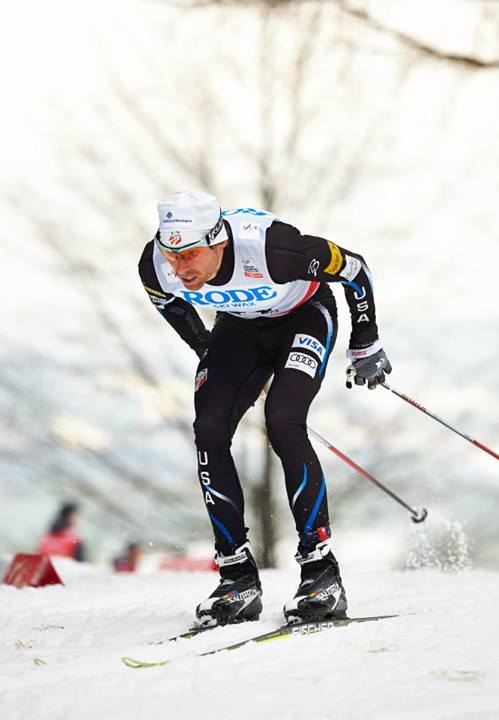
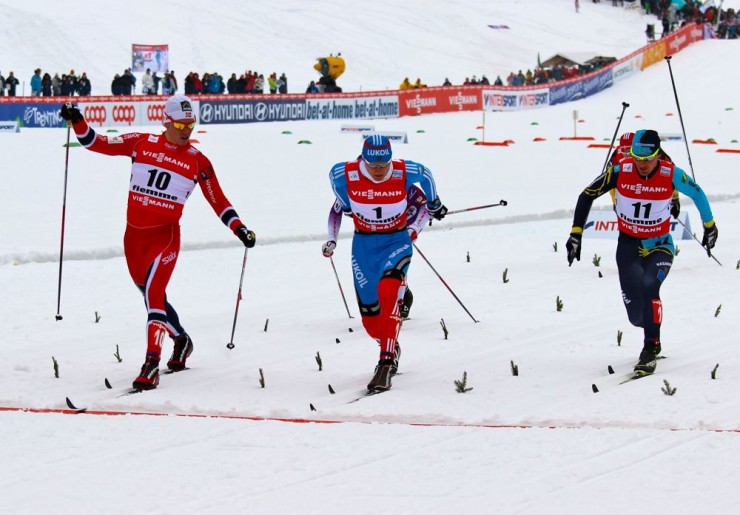
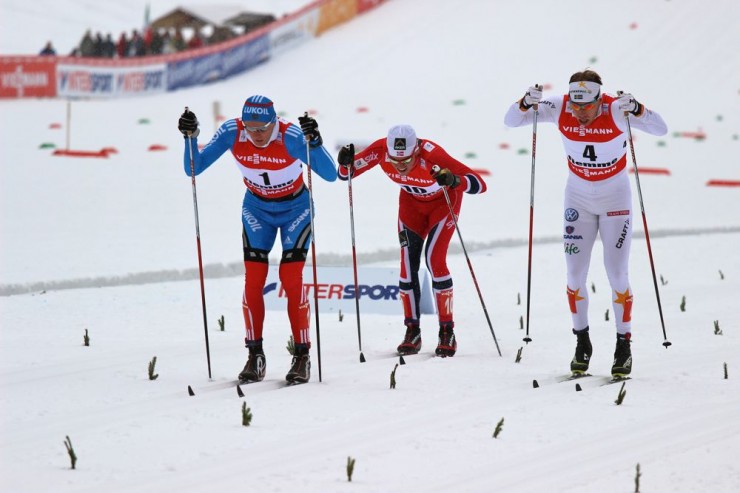
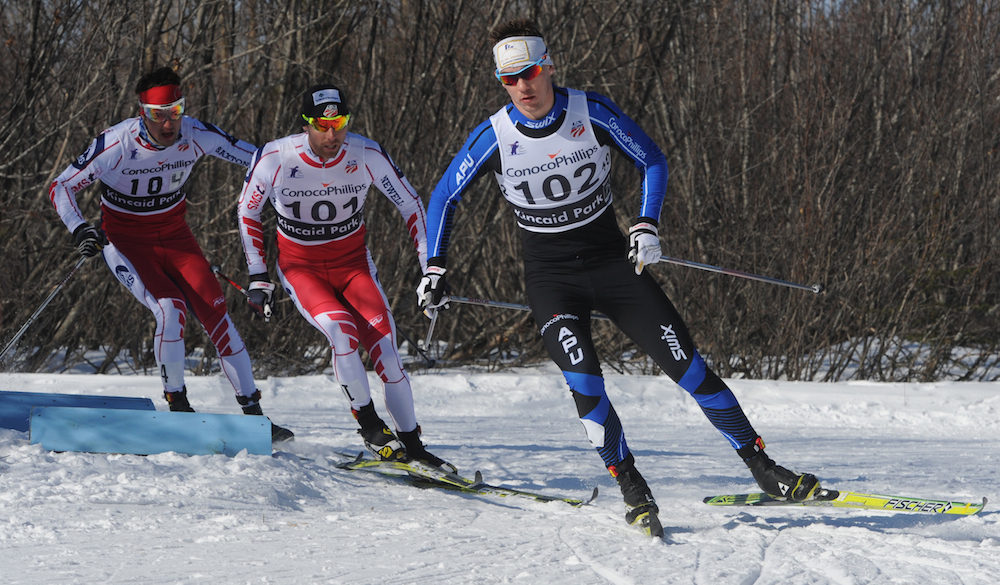
    (Reese Hanneman (102) leads Andrew Newell (101) and Benjamin Saxton (104) while skiing to victory during the men's final at the Super Tour Finals classic sprint races at Kincaid Park on Sunday in Anchorage, Alaska. (Photo: Bill Roth/Anchorage Daily News)
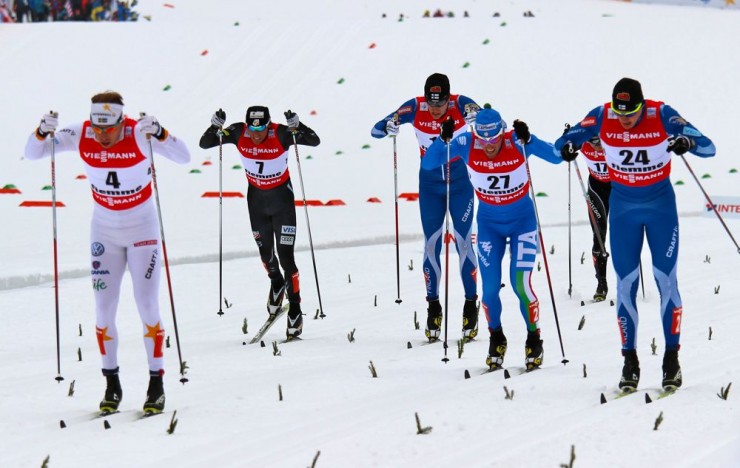
    Alaska Pacific University’s Reese Hanneman (r) leads Andrew Newell (c), of the Stratton Mountain School (SMS) T2 and U.S. Ski teams, and Benjamin Saxton (SMS), in the men’s classic-sprint final at the Super Tour Finals at Kincaid Park on Sunday in Anchorage, Alaska. The three went on to finish in the top 3, with Newell first, Hanneman second and Saxton third, but Newell was relegated for obstructing Hanneman and listed as sixth. (Photo: Bill Roth/Anchorage Daily News)

    ANCHORAGE, Alaska — Andy Newell’s victory was over almost as soon as he’d finished. The U.S. Ski Team member’s lane switch in the last 80 or so meters before the finish of the men’s 1.4-kilometer classic sprint final at SuperTour Finals on Sunday prompted several jury members to convene once he finished first.

    In the second lane from the right out of four lanes to the finish, Reese Hanneman of Alaska Pacific University (APU) had been trailing Newell slightly, who was farthest right, before Newell decided to shift left to the inside of a slight lefthand curve before the final straightway.

    He had to accelerate to do so and needed to leave enough room between him and Hanneman before jumping across his lane, two tracks to the left. Hanneman, who’s lived and trained in Anchorage for the last five seasons and is originally from Fairbanks, later said he had to stand up for a second and the move cost him a chance at winning. Newell claimed he had the space and went for the opening.

    The two double poled to the line, where Newell stayed ahead of Hanneman by several meters through the finish. Hanneman tossed his head back in disappointment — it was the one low point of an otherwise picture-perfect day. Warm sun, consistent conditions, and for Hanneman, a win in each of the preceding heats with the exception of the qualifier, in which he placed second to Newell by 2.6 seconds.
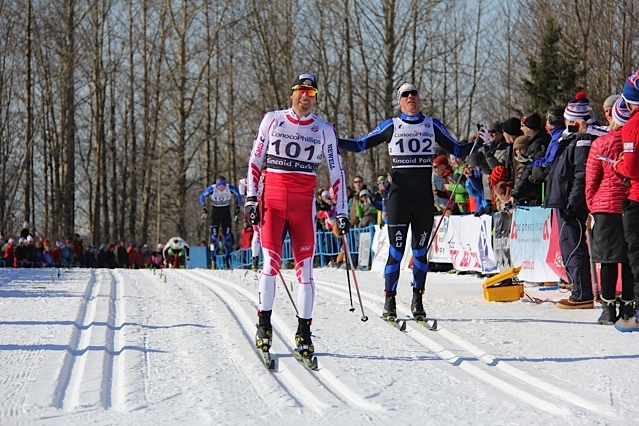
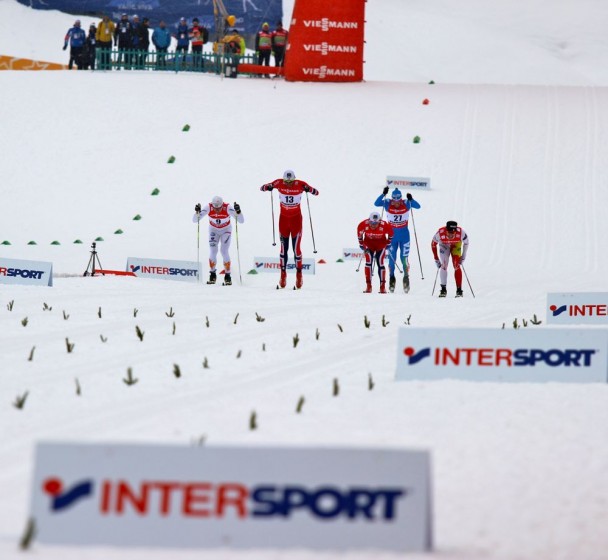
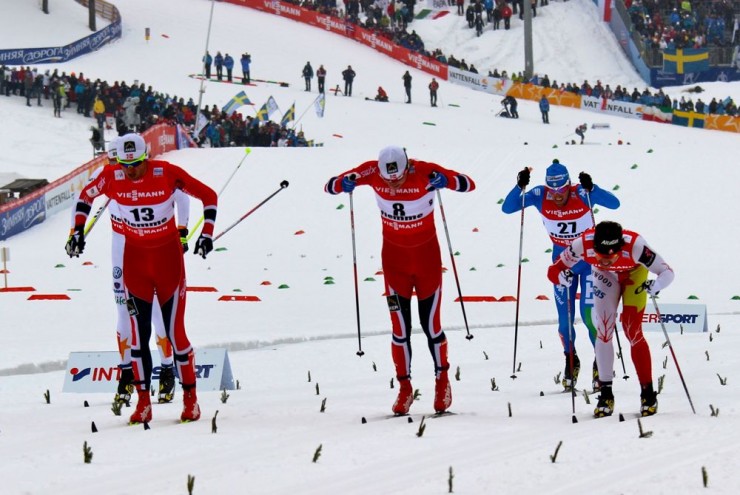
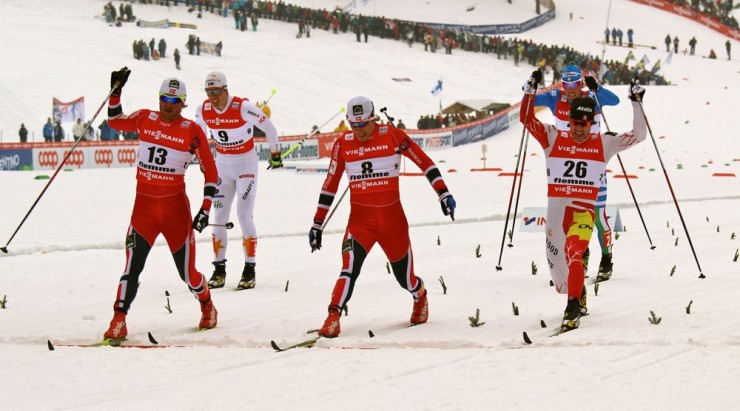
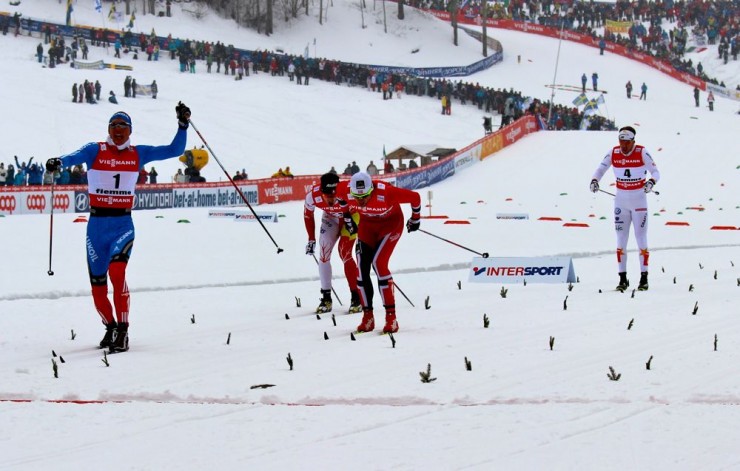
    Andy Newell (101) beat Reese Hanneman (102) to the finish of Sunday's 1.4 k classic sprint final, but was later relegated to sixth in the heat for obstructing Hanneman about 80 meters before the finish. (Photo: Rob Whitney)
    Andy Newell (101) beat Reese Hanneman (102) to the finish of Sunday’s 1.4 k classic sprint final, but was later relegated to sixth in the heat for obstructing Hanneman about 80 meters before the finish. (Photo: Rob Whitney)

    In the final, Hanneman had to come to grips with losing to Newell in the end-all race of the day. In first for much of the 1.4 k loop, which included a gradual downhill into a tight right corner and long descent before the big climb back up, Hanneman initially attacked at the bottom of the final hill known as Elliott’s Climb and led halfway up.

    Newell followed him closely and pulled up alongside Hanneman some 200 meters before the finish, then the two raced side by side over the top. Skiing in the same suit for the same team as Newell, Ben Saxton of the Stratton Mountain School (SMS) was the next closest competitor a few seconds back.

    Just after the crest before the flat to the finish, that’s where the moment in question went down. That’s what sent APU head coach Erik Flora running to the finish to meet with jury members after the two finished. According to Hanneman, the jury was already aware of the incident and in the process of discussing whether to deny Newell of the victory because of obstruction.

    About an hour and 45 minutes later, the announcement was made: unofficially, Hanneman had won, and everyone else in the final had moved up one place — Saxton to second, Tyler Kornfield (APU) in third, Pat O’Brien (Craftsbury Green Racing Project) in fourth, and Dakota Blackhorse-von Jess (Bend Endurance Academy) in fifth. Newell was relegated to sixth with a competition suspension.

    A 15-minute protest period allowed Stratton coaches to file the first official protest of the day, in which they opposed the decision to penalize Newell. Twenty-five minutes later, the jury arrived at their decision: Hanneman would remain the classic-sprint champion and Newell was sixth.
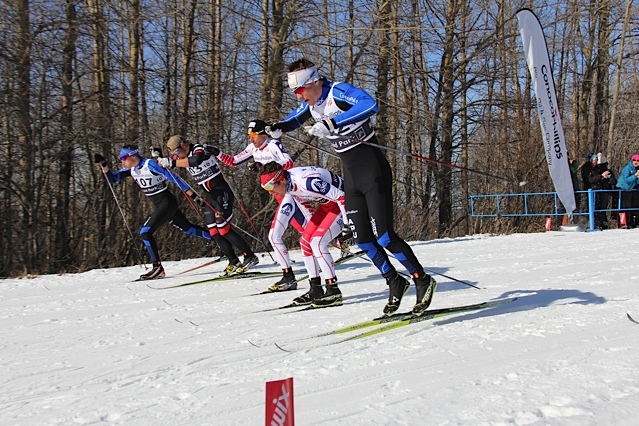
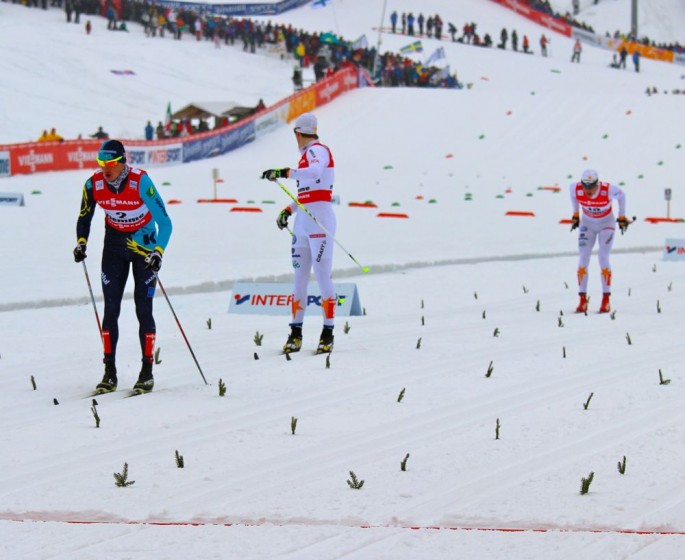
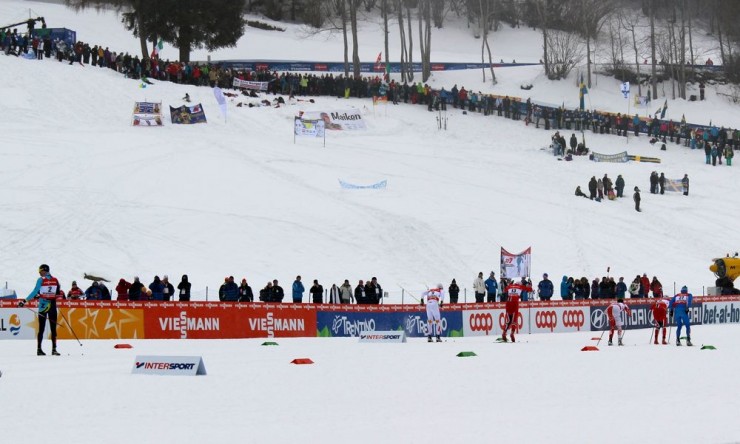
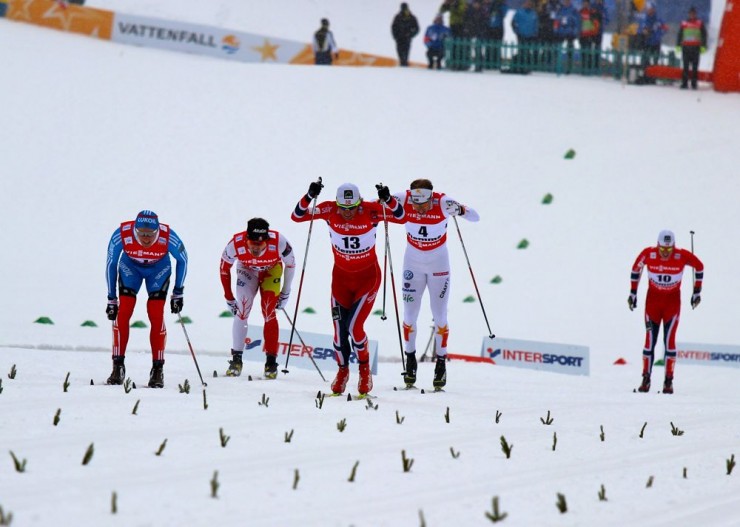
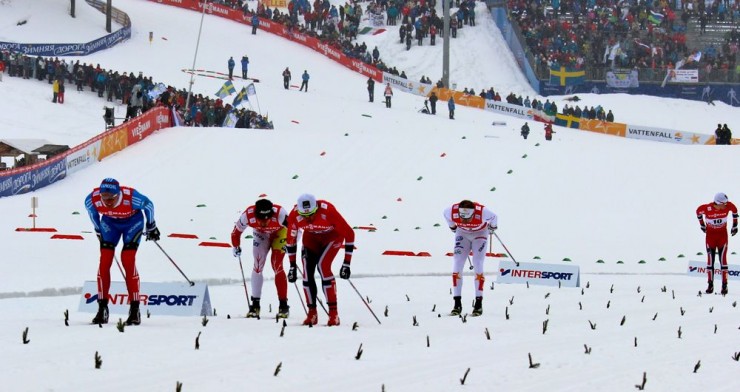
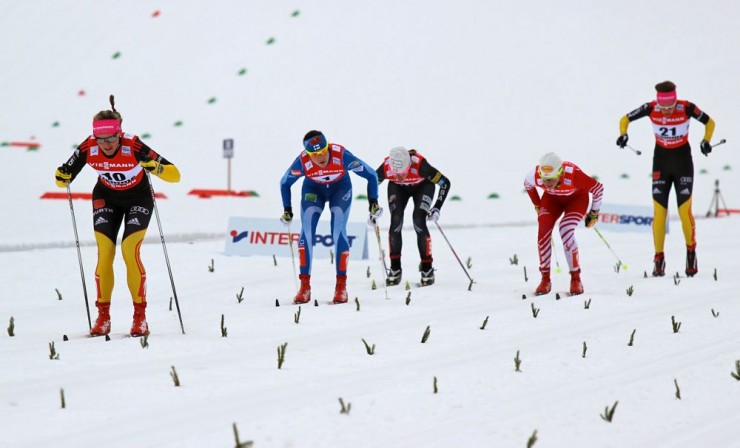
    Start of the men's final at the SuperTour Finals classic sprint on Sunday at Kincaid Park in Anchorage, Alaska. (Photo: Rob Whitney)
    Start of the men’s final at the SuperTour Finals classic sprint on Sunday at Kincaid Park in Anchorage, Alaska. (Photo: Rob Whitney)

    It wasn’t the way anyone wanted it to happen.

    “I would rather win without all that shenanigans, but that was one of the few times I’ve actually felt like a move really kind of did affect the race,” the 24-year-old Hanneman said. “So that’s why I wanted to stand behind that.”

    As the jury informed both men of their decision inside the timing trailer the finish, Hanneman sat on a table looking down and Newell stood up, smiling. He wasn’t happy. If anything, he was in awe.

    “I don’t see how that’s possible. … I don’t really now what they’re thinking,” Newell said. “I think they’re kind of beginners in there.”

    For someone who laughed as he said he’s “been to a lot of TD meetings in my life,” Newell’s frustrations were easily understood. Hanneman got it and initially didn’t want to rock the boat. Second was a great result, but he stood behind his coaches’ decision to follow up with the jury. Hanneman is known as one of the most social guys on the circuit, amiable and friends with a lot of people. Newell’s also highly respected at the domestic and international levels.

    “That’s what I want it to be. I have nothing against anybody, I don’t want anyone having anything against me,” Hanneman said. “But I don’t want people to abuse that and ski all over me because I’m a nice guy.”

    As for the official decision, technical delegate Bill Rogers said Newell was issued a competition suspension for obstruction, something that wouldn’t affect other races this week.

    “Basically we had the jury made a decision based on evidence, Andy Newell protested that and so we did have a closed jury meeting, which involves interviewing both the athletes and then separately meeting to go over the evidence,” Rogers said.

    The process itself involved calling the athletes and their coaches to the table, which convened outside then moved into a private meeting inside the timing trailer, to review video and photos. Hanneman argued that Newell skied over his skis: “They have pictures of video of him just mobbing all over my gear,” he said.

    Newell couldn’t say whether there was contact or not, but said he made a point to get far enough ahead of Hanneman to make his lane change.

    “I also changed two tracks over instead of one so I wouldn’t block him,” Newell said. “I guess according to the video he stands up a little bit, but I am barely even going near the tips of his skis, if they did at all.”

    The process itself, according to Newell, involves the jury asking each skier involved “was is it intentional or not, is the first question … and it was obviously not intentional,” he said. “And then, was there an advantage or not? And that’s kind of the shady area. It’s not like Reese lost much time, he did maybe stand up for a second and so if you call that an advantage or not, I don’t know because it didn’t really affect the outcome of the race.”

    Hanneman said the jury asked about contact first, to which he said, “Absolutely. Was it intentional? That’s more up to [Newell], I have no clue. But to say you accidentally switched tracks? That doesn’t happen. … I felt like once he made that move that kind of decided the race. It seems like they made the right decision even though I wish they didn’t have to make that decision at all.”

    Newell knew that because his previous infraction at World Cup Finals last weekend was a technical warning, equivalent to a yellow card on the World Cup (for skating while changing lanes in a classic sprint), it wouldn’t affect anything at SuperTour Finals. Plus, the season was over after these races in Anchorage.
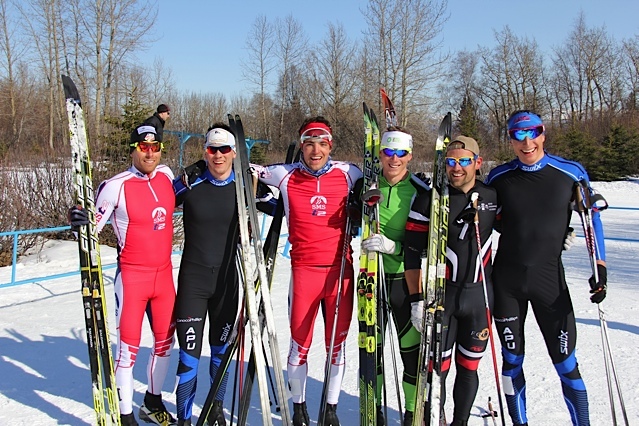
    Friends 'til the end: the men's final, all of which placed in the top sixth (from left to right) Andy Newell, Reese Hanneman, Ben Saxton, Pat O'Brien, Dakota Blackhorse-von Jess, and Tyler Kornfield. (Photo: Rob Whitney)
    Friends ’til the end: the men’s final, all of which placed in the top sixth (from left to right) Andy Newell, Reese Hanneman, Ben Saxton, Pat O’Brien, Dakota Blackhorse-von Jess, and Tyler Kornfield. (Photo: Rob Whitney)

    The penalty cost Newell $650 dollars in prize money, plus the $100 he and his coaches had to put forward to protest. At the end of the day, he made $100 for sixth place, which the protest fee negated.

    On the flip side, Hanneman took home an extra $250 dollars for the win ($750 for first as opposed to $500 for second). It was the SuperTour leader’s second victory in national-caliber classic sprints this season after he won his first national title at U.S. Cross Country Championships in the classic sprint in January.

    But he also knew what the other side of a jury decision felt like. In December, Hanneman was disqualified for skating in a Besh Cup classic sprint — which he initially won.

    “I know that it’s not fun but when you do something that’s questionable, like when I skated in Besh Cup, I was like, well, I shouldn’t have done that and know I know,” he said. “You need that to reinforce … Andy needs to know that he can’t make a move like that because it’s not fair racing. You have to some checks like that to keep people in line.”

    According to Rogers, “Unfortunately, obstruction in sprints is common. I think it’s very normal.” He declined to explain how the jury made their final decision and the evidence they considered in the process.

    At the end of the day, Hanneman was a champion and the 20-year-old Saxton had one of the best races of his career in second — up there with his runner-up finish in the skate sprint at 2014 nationals. He finished 4.74 seconds behind Hanneman (who ultimately won in 3:25.56) and held off Kornfield by 1.49 seconds.

    For Kornfield, the 2012 national classic-sprint champion, third stood as his best race of the season. He finished 4 seconds ahead of O’Brien, who ended up fourth, and 13 seconds ahead of Blackhorse-von Jess in fifth.

    Saxton said Hanneman and Newell took off toward the bottom of the hill, over the first roller on the way up to the finish. He was caught in the far left lane in fourth and unable to go with them. Despite the fact that he thought he could’ve stuck with them to the finish, Saxton said he was happy with his result — even if it was third at first.

    “I haven’t felt this good all year. This was an incredible feeling,” Saxton said.

    “Andy and Reese threw down World Cup qualifiers today so that’s pretty awesome,” he added, referring to Newell’s top time of 3:19.52. Hanneman was 2.6 seconds back in second and Blackhorse-von Jess advanced to the heats 4.09 seconds behind Newell in third. Saxton qualified fourth (+7.4).

    Saxton went on to win his quarterfinal (as did Newell), as well as the first semifinal by 0.24 seconds over Newell.

    “It’s pretty cool for me to get to race against Andy [and] experience that for the first time,” Saxton said. “[Watching him in the quarterfinals] it was incredible dichotomy between him and the other skiers. He’s so relaxed. It’s not that there technique is bad, but it’s just this innate tightness. There’s a laboredness in their movements.”

    So to beat him in the semifinal was fun.

    “In my semi, we went side by side up the hill, so it was cool to feel that pace and feel the turn of pace,” Saxton said. “It was exciting.”

    Hanneman bested O’Brien in the second semifinal by 0.83 seconds. O’Brien and Simi Hamilton (SMST2/USST) also won their quarterfinals, but Hamilton placed fourth in the second semifinal, 2.6 seconds behind Blackhorse-von Jess in third, and did not make the final.

    “Reese is skiing incredible,” said Saxton, Hanneman’s roommate in Europe last year, shortly after the finish. “I could not be happier for that guy.”

    — Nat Herz contributed reporting
    Results

  • Two Weeks After International Debut, Hanneman Nabs PB’s at World Cup Finals; Diggins Also Close for U.S.

    Two Weeks After International Debut, Hanneman Nabs PB’s at World Cup Finals; Diggins Also Close for U.S.

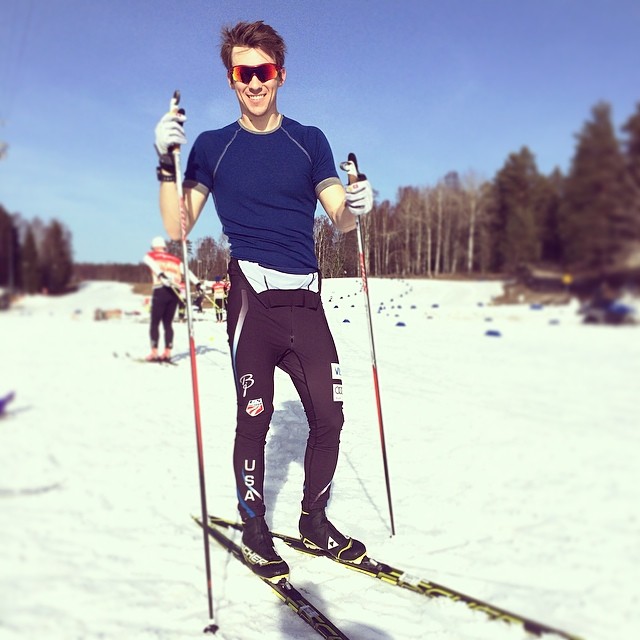
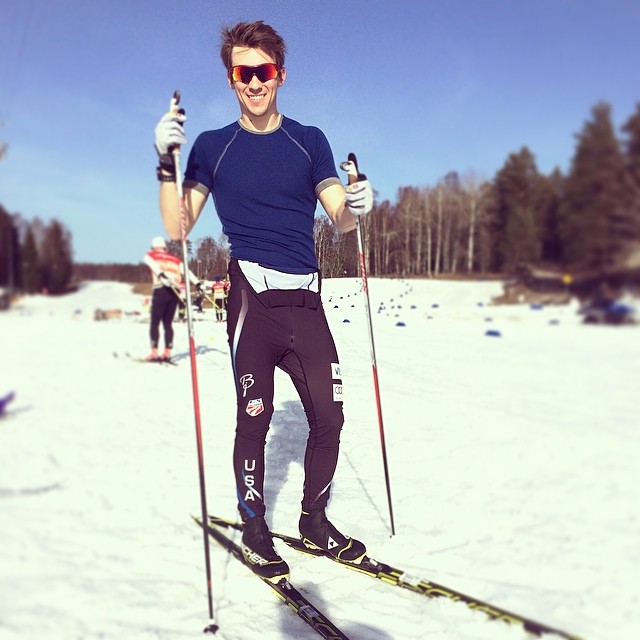
    Reese Hanneman in spring-like conditions at World Cup Finals in Falun. (Photo: Reese Hanneman/Instagram)
    Reese Hanneman training in spring-like conditions at World Cup Finals in Falun. (Photo: Reese Hanneman/Instagram)

    Reese Hanneman was so close, heartbreakingly close, encouragingly close, however you look at it, 0.45 seconds from making it into the points at World Cup Finals as a 24-year-old U.S. Continental Cup leader.

    Sixteen days after his first World Cup of the season, Hanneman notched his all-time best World Cup result on Friday: 31st in the classic sprint in Falun, Sweden. The leader at the end of the last SuperTour period, the Alaska Pacific University skier earned his way to Europe, but in a field of fewer than 50 competitors, most of which have made the World Cup top-50 cut to get to Falun, there’s always a fear of finishing last.

    Hanneman was far from it on Friday, nearly qualifying for the rounds, which would’ve made him the third American to do so this year.

    “To be that close to the heats, and scoring points, is brutal,” Hanneman wrote in an email. “I felt good, but I didn’t even execute it perfectly. There are a few places I know I could have been faster. But there is nothing like a 31st on the World Cup to make you so hungry for the future.”

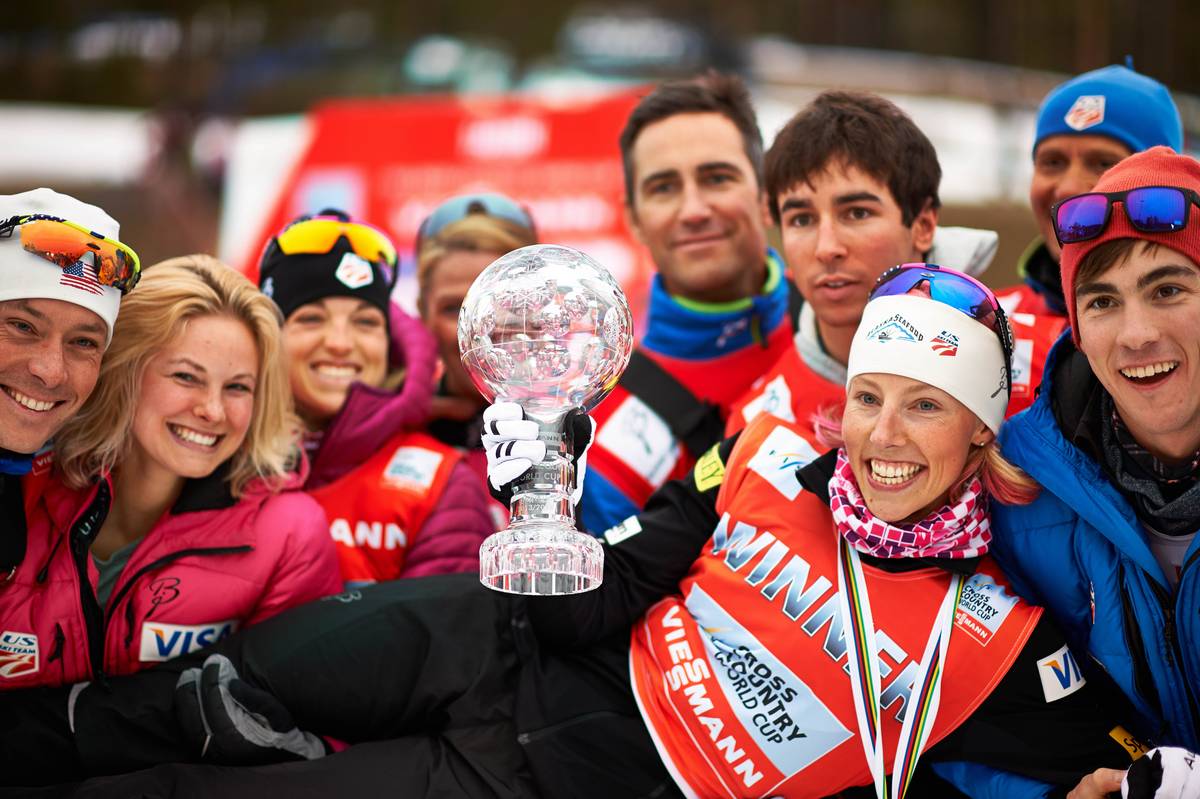
    Several members of the U.S. Ski Team lift up Kikkan Randall after she won her third-straight World Cup sprint Crystal Globe on Friday in Falun, Sweden. (Photo: Fischer/Nordic Focus)
    Reese Hanneman (r) and U.S. women’s coach Matt Whitcomb (l) celebrate with Kikkan Randall (front) after Randall won her third-straight Sprint World Cup Crystal Globe, receiving it at a ceremony following Friday’s classic sprints at World Cup Finals in Falun, Sweden.  (Photo: Fischer/Nordic Focus)

    U.S. coach Matt Whitcomb was excited about Hanneman’s performance, considering he’s been in their development pipeline for several years. This season, just over two weeks ago, marked his international World Cup debut.

    “To put the carrot that close to his face at the end of the season, he’s going to go home more motivated than ever,” Whitcomb said. “It’s a significant accomplishment to come that close to even qualifying for a World Cup sprint … He can review the tape from today and see a few mistakes that he made, very small ones, but that’s all it takes to find that half-second.

    “He’s made a big step this year, and APU and all his coaches and all his sponsors have done such a great job of bringing him along patiently,” Whitcomb added. “He’s struggled at times and he’s constantly training with one of the toughest groups of guys in the country and to have patience with the ups and down has really paid off for Reese and he’s seeing this weekend that he can be a World Cup sprinter.”

    Since winning his first national title and making the podium in three out of four races at U.S. Cross-Country Championships in January, Hanneman has known this trip was coming with a “pretty decent lead in the SuperTour overall” and Period-1 SuperTour leader Brian Gregg over in Europe racing and preparing for the Olympics.

    “I didn’t set too many performance goals for myself over here for all of these World Cups,” Hanneman wrote.

    He finished 80th in the skate sprint in Lahti, Finland, a course he felt didn’t play to his strengths. The Drammen classic sprint and Holmenkollen 50 k in Norway were next, and Hanneman knew both would be “insanely deep and competitive fields.”

    His goal was to simply ski his best and try to find a sense of normalcy in what he found to be an intense World Cup setting.

    “I think for the most part, I have been able to do that. I feel at home, and prepared to compete with these guys, for the first time in my life,” he wrote. “And that’s huge. I guess, in years past any time I raced a World Cup I would be starstruck and running around trying to get autographs and stuff… now I’m over that. Now I’m just like, Johaug, meh, whatever…  :)”

    On Saturday, Hanneman placed 38th in the 30 k skiathlon, 40.3 seconds ahead of U.S. Ski Team sprinter Andy Newell in 39th. It was his best distance result on the World Cup and second-best individual finish of his career.

    “To finish 38th in a World Cup distance race (yes I know there are only like 42 finishers), is good for me, because there are no stragglers here,” Hanneman wrote. “These are literally the best 50 guys in the world, and that’s it. Being here as just the Conti Cup leader, it is encouraging for me to be able to be competitive at all.”

    He finished one place and just over a minute behind 2013/2014 World Cup Sprint champion Ola Vigen Hattestad of Norway.

    “My goal for today was to ski a strong classic leg and then try to do my best in the skate,” Hanneman explained on Saturday. “I felt good in the classic, but was afraid about pushing it too hard, knowing I still had a brutal 15k skate ahead of me. I hoped to be skiing in the top 30 for the classic leg, and I ended up skiing with the 28-33 group for most of it so I was right there. Haha, it was actually me and like four of the best sprinters in the world (Brandsdal, Peterson, Gloerson, Hattestad), so I was feeling pretty stoked.”

    Hanneman described the above-freezing temperatures on a sunny afternoon as “crazy. I have never seen such variable snow in one race. Some parts were absolute saturated, watery deep mashed potatoes, and some parts were drifting cold dry new snow. It was really strange.

    “In the skate portion you could be tucking straight down a hill and then all of the sudden your skis would grab as if you had caught your klister, it was weird,” he wrote. “So considering the insane variability, my skis in both techniques were incredible. The US coaches and wax techs, and Eli Brown who is waxing my skis, did what I thought was an exceptional job on what must’ve been one of the hardest waxing days ever.”

    Looking ahead to Sunday’s 15 k freestyle pursuit, Hanneman explained that he’s once again going to try for his best and ski aggressively.

    “Tomorrow is definitely not my forte, and I will be skiing alone,” he wrote. “So I just want to put in a hard effort and hang on.”

    Just Shy of Points

    Also just outside the top 30 in Friday’s classic sprint, U.S. Ski Team member Jessie Diggins placed 34th, 1.15 seconds from qualifying. In an email, she explained that she was satisfied with the result her first race back since getting sick after the Olympics.

    “Classic sprinting has never really been my thing, but it’s also nice to have some big goals to work on for next year,” Diggins wrote. “I’m still looking forward to qualifying in a classic sprint!”

    With a lingering cough she’s told will fade soon, Diggins went with the attitude of “ ‘Screw it … I just want to race!’ ” and decided to give everything she could at World Cup Finals.

    “I don’t have really specific results-oriented goals since I don’t know where my body will be in distance racing,” she wrote. “But my overall goals are to enjoy the experience and give 100% so I can finish out the season knowing I didn’t hold anything back.”

    On Saturday, Diggins placed 36th in the 15 k skiathlon. Her teammate, Ida Sargent finished 10 seconds later in 37th, and Continental Cup leader Caitlin Gregg (Team Gregg/Madshus) placed 40th, six seconds ahead of Sophie Caldwell in 41st.

    On Friday, Sadie Bjornsen, Kikkan Randall, Caldwell, and Sargent all made the rounds, with Randall and Caldwell advancing to the final, where they placed fourth and sixth, respectively.

    Gregg finished 48th in the sprint. “I had fantastic skis and felt like I had skied super well,” she wrote in an email. “When I looked at the results board I saw that I had only beaten one girl, but then I realized she didn’t even start 🙁

    “I am continuously impressed by how well our USA girls are skiing, we had 4 qualify and Diggs was right there as well then two moved onto the final!” the 2014 American Birkebeiner champion added. “It’s incredible to be in this positive atmosphere!”

  • Junior Nationals Video: Classic Sprints Galore

    Junior Nationals Video: Classic Sprints Galore

    STOWE, Vt. — It was a jam-packed day of classic sprinting up at Trapp Family Lodge on Wednesday, with 54 heats determining six champions at Junior Nationals between the U16, U18 and U20 men’s and women’s categories.

    While some races were snowy, others were windier, and a few were neck-and-neck to the line, the conditions remained relatively consistent throughout in temperatures around 10 degrees throughout the day. The sun began to set soon after the U20 and U18 women’s finals, making for a picture-perfect ending on Day 2 of 4 at Junior Nationals.

    For more about the top finishers: Top-10 Recognition

    Extensive qualifier photos: U16 men | U16 women | U18/U20 men | U18/20 women

    Results

    Day 1: Video | Top 10

    Trouble viewing video above? Click here.

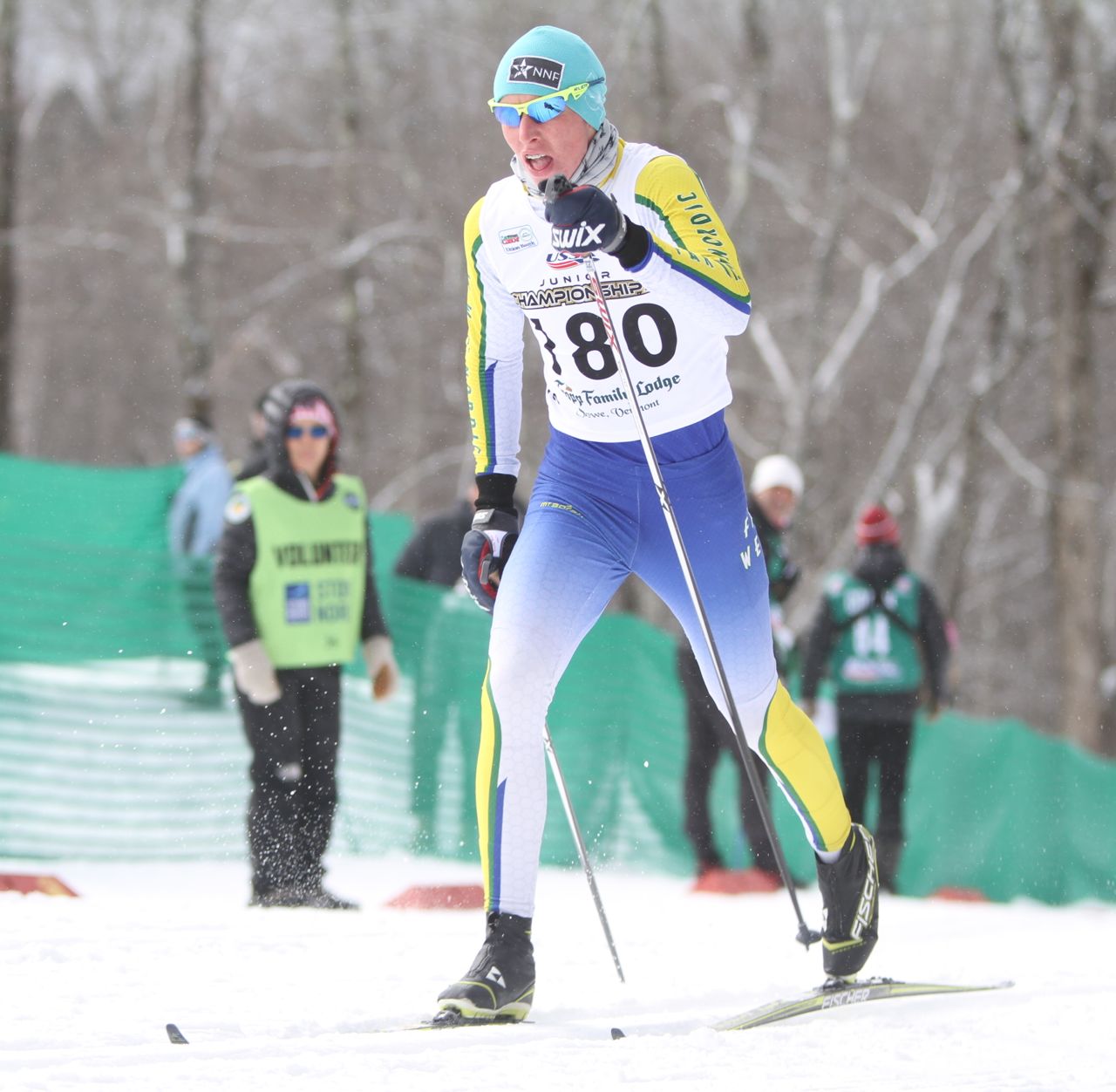
    Peter Holmes (Unleashed Coaching/Far West) racing to the top U18 men's classic-sprint qualifying time at 2014 Junior Nationals in Stowe, Vt.
    Peter Holmes (Unleashed Coaching/Far West) racing to the top U18 men’s classic-sprint qualifying time at 2014 Junior Nationals in Stowe, Vt.
  • Lone North American in the Semis, Sargent Gets Hers in 10th

    Lone North American in the Semis, Sargent Gets Hers in 10th

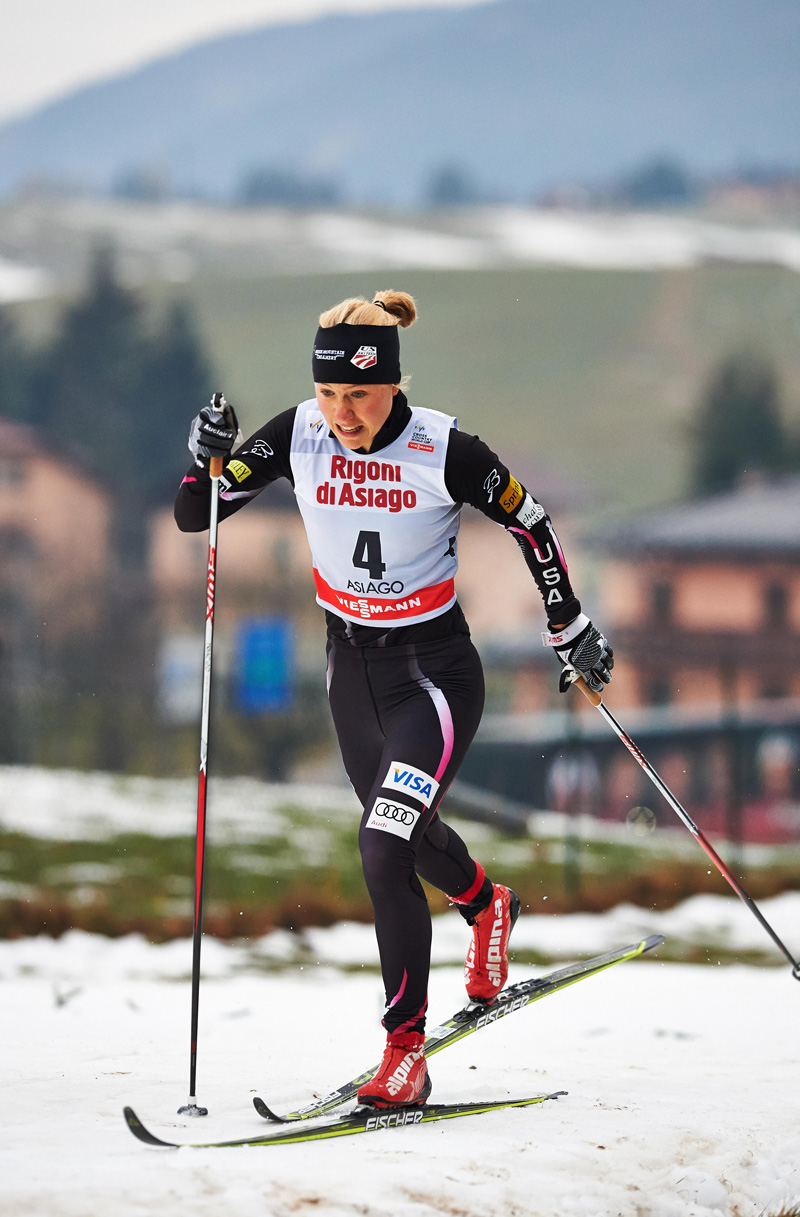
    Ida Sargent (U.S. Ski Team) racing to her first top 10 of the season in the 1.25 k classic sprint in Asiago, Italy. (Photo: Fischer/Nordic Focus)
    Ida Sargent (U.S. Ski Team) racing to her first top 10 of the season in the 1.25 k classic sprint in Asiago, Italy, where she placed 10th on Saturday. (Photo: Fischer/Nordic Focus)

    Race after race, the US Ski Team has found success. On Saturday in Asiago, Italy, it was Ida Sargent’s turn.

    Sixteenth in her first World Cup of the season, Sargent, 25, has been hardly behind the eight ball. A classic-sprint specialist, she’s only had two classic sprints this season. Saturday marked the second.

    The 25-year-old Vermont native started her day with the 21st-fastest qualifying time on the women’s 1.25-kilometer course, holding her own amongst a fleet of Norwegians, most of which double poled on skate skis. On a damp morning with temperatures rising near 40 degrees by the time the heats started, Sargent decided to stride on classic skis – a move that helped her rise all the way to the semifinals.

    Third in her quarterfinal behind Norway’s Maiken Caspersen Falla and Slovenia’s Katja Visnar, who won the qualifier and placed second in the quarterfinal on skate skis, Sargent advanced with one of the two fastest “lucky loser” times.

    Kikkan Randall (US SKi Team) racing to 27th in the 1.25 k classic sprint qualifier at the Asiago World Cup in Italy. She went on to place fourth in her quarterfinal for 20th overall. (Photo: Fischer/Nordic Focus)
    Kikkan Randall (US SKi Team) racing to 27th in the 1.25 k classic sprint qualifier at the Asiago World Cup in Italy. She went on to place fourth in her quarterfinal for 20th overall. (Photo: Fischer/Nordic Focus)

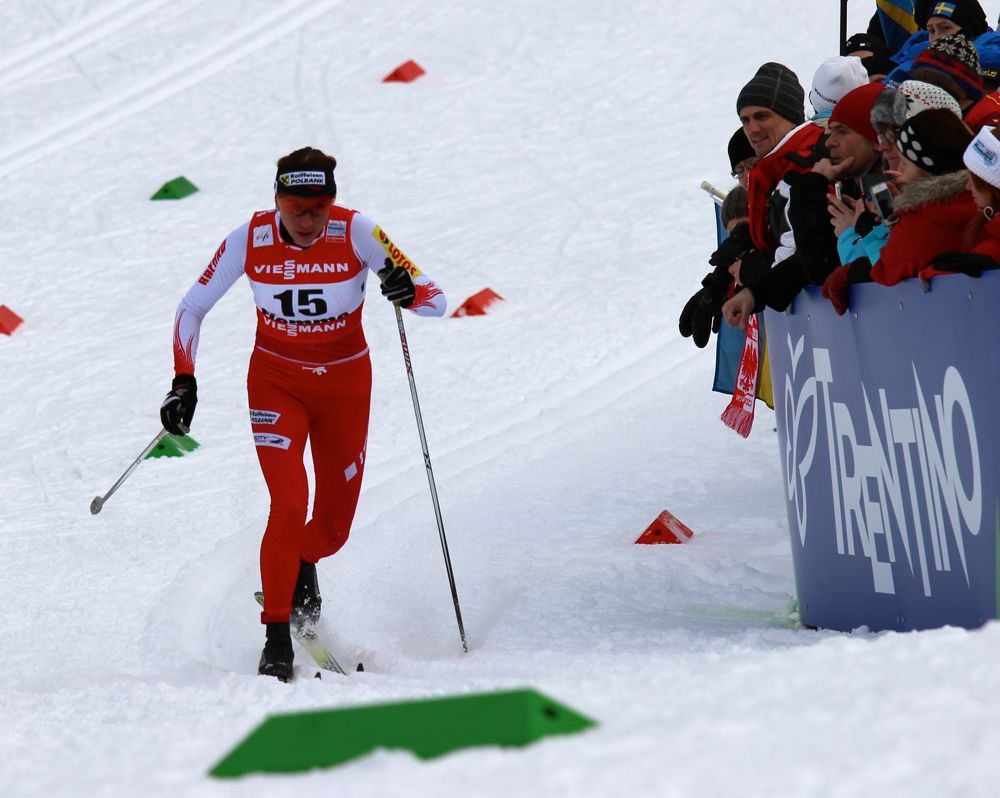
    The only North American to make it to the semifinals (teammates Kikkan Randall, Sadie Bjornsen and Sophie Caldwell all advanced out of the qualifiers but not the quarterfinals), Sargent went on to finish fifth behind Poland’s eventual-winner Justyna Kowalczyk, who took first. Sargent placed 10th overall for her first top-10 of the season and second-best classic sprint of her career.

    “Today was fun and a good confidence booster,” Sargent wrote in an email. “I had felt like my fitness has been good but the results were not there so it feels great to sneak back into the top ten.”

    Looking around at some 63 other women in the field, she noticed that several raced the qualifier on skate skis. While double poling a relatively flat course isn’t uncommon in men’s sprints, it is in women’s – at least until now.

    Sargent and the rest of the U.S. women’s team opted for classic skis. While most of the USST members tested double poling on skate skis Friday (and all four of the U.S. men did the same racing Saturday), U.S. coach Matt Whitcomb said that it wasn’t the best option for their women.

    “Honestly as a team, I don’t think we’re quite there,” he said on the phone. “It might have exposed a little bit of a weakness or an opportunity. I don’t think as a team our women are confident enough or strong enough on that course. … It’s not something we can look at and say, ‘Yep, for sure,’ like Norway did today.”

    While the men’s classic-sprint course will be entirely different at the Sochi Olympics in February, the women’s course shares some similarities with the one in Asiago. According to Whitcomb, both start with climbs and ended with descents. But there’s a good chance the women won’t be double poling the hills in Sochi, Russia.

    “I prefer when everybody has to classic ski,” Whitcomb said, adding that Saturday’s double-pole element made it interesting. “It introduced sort of an unusual element of strategy that you don’t usually see. It’s a great course, rolly through the trees; it flows reasonably well.”

    He was pleased to see his athletes “hitting their classic stride pretty well,” with good skis on a tricky waxing day. Sargent hung with the best of them, including Visnar, finishing just 0.18 seconds behind the Slovenian in the quarterfinal. Falla finished first in 3:10.5 for the second-fastest quarterfinal of the day, and Sargent was 2.06 seconds back in third.

    Falla went on to place third in the final behind Kowalczyk and Finland’s Anne Kyllönen, who notched her first World Cup podium in second.

    After what she described as a “horrible start” to her quarterfinal, Sargent was happy with advancing in third.

    “I was just asleep on the line and everyone else took off so fast and I was left way behind,” she wrote. “I was able to move up on the next two hills and was in second going into the final stretch but Visnar who was on skate skis got me at the line.  I needed [the race] to be just a little shorter.”

    As she watched the four other quarterfinals, waiting to see if her time was fast enough while prepping just in case, Sargent explained she was excited to make the cut.

    “In the semifinal I had a horrible lane on the outside and got stuck with nowhere to go,” Sargent explained. She tried to get in better position by jumping behind Finland’s Aino-Kaisa Saarinen, but skied on Saarinen’s tails and “almost went down.”

    Sargent quickly caught back up to the group, but this time found herself behind Norway’s Ingvild Flugstad Østberg, who forced Sargent to the outside.

    “I was again without a track and having to sprint to catch back up,” she wrote. “On the next hill I just kind of ran out of gas so maybe I was tired or maybe I just wasted too much energy earlier on. It was a fun day and I had great skis the whole time.”

    ‘Almost … Lackluster’

    Whitcomb described the day as “almost a bit lackluster” with Bjornsen finishing 16th, Randall 20th and Caldwell 24th. In the men’s 1.65 k sprint, Simi Hamilton and Andy Newell placed 23rd and 26th, respectively after finishing fifth and sixth in the same quarterfinal.

    Sadie Bjornsen (US Ski Team) qualified in fifth in the World Cup 1.25 k classic sprint in Asiago, Italy. She went on to finish fourth in her quarterfinal for 16th overall. (Photo: Fischer/Nordic Focus)
    Sadie Bjornsen (US Ski Team) qualified in fifth in the World Cup 1.25 k classic sprint in Asiago, Italy. She went on to finish fourth in her quarterfinal for 16th overall. (Photo: Fischer/Nordic Focus)

    “I feel bad saying that,” Whitcomb added. “Anytime you get a top 10 you forget how amazing that is. For Ida to post her first top 10 of the year, it’s amazing in that way. It was more than solid, and we’re looking forward to more.”

    Bjornsen started off with the fifth-fastest qualifying time, 3.7 seconds behind Visnar, who clocked 3:02.85. Reminiscent of the first race of the season in Kuusamo, Finland, where she qualified in third, Bjornsen wanted to make sure she took advantage of racing in the heats. In Kuusamo, Bjornsen ended up 26th.

    “Today I was super happy because it was a lot better than Kuusamo,” Bjornsen said on the phone after placing fourth in her quarterfinal, just 0.79 seconds ahead of Caldwell in fifth. “Each weekend, I can find more confidence and opportunities. It was so great to have all four girls qualify; that was fun.”

    She explained she’s worked to improve her tactics in the heats and find openings on short and winding courses like Asiago’s, especially in slow-and-sloppy conditions on trucked-in snow.

    While she found some opportunities on Saturday, Bjornsen ultimately got stuck behind Norway’s Kari Gjeitnes before the last long climb up to the stadium.

    “I was coming up with a clear track and the Norwegian girl kind of jumped in just before,” she said. “That would’ve been nice to go there because it would’ve been a great opportunity to go to the front.”

    Instead, it was a “double-pole drag race” to the finish, and Gjeitnes ended up winning in 3:15.72. Switzerland’s Laurien Van Der Graaf took second (+0.25), Sweden’s Ida Ingemarsdotter was third (+0.62), and Bjornsen was another 0.19 seconds back in fourth.

    “I didn’t really feel like it was my very best double poling I’ve ever had,” she said. “In this soft snow, you’re skiing with shorter poles and pulling on different muscles to work. I wasn’t able to be quite fast enough to the line.”

    After working on tactics with her Alaska Pacific University coach Erik Flora earlier this week, Bjornsen switched to shorter classic poles this week. That 2 ½ centimeters made all the difference — in a good way, she said.

    “[Flora’s] been trying to convince me for years that my poles are too long,” Bjornsen said. On Saturday, she noticed a significant change, especially on uphills. “It’s been so nice.”

    Sophie Caldwell (US Ski Team) qualifying in 25th in the World Cup 1.25 k classic sprint in Asiago, Italy. She went on to place fifth in her quarterfinal for 24th overall. (Photo: Fischer/Nordic Focus)
    Sophie Caldwell (US Ski Team) qualifying in 25th in the World Cup 1.25 k classic sprint in Asiago, Italy. She went on to place fifth in her quarterfinal for 24th overall. (Photo: Fischer/Nordic Focus)

    As for what she took away from Saturday’s sprint, Bjornsen said she and Caldwell agreed: they need to work on their starts. Both fell behind early and spent the first half of the quarterfinal working their way toward the front.

    “You spend the whole race trying to fight your way back into the race,” Bjornsen said.

    “It was just really frantic out there,” Caldwell wrote in an email. “People are always fighting for position and best line and because it’s so flat, everyone is basically skiing as powerfully as possible from the start.”

    Sticking right behind Bjornsen for most of the race, Caldwell explained she found herself in good positions at times, but couldn’t quite capitalize.

    “If you let up for a second or get a little tangled up, the rest of the heat comes flying by you,” she wrote. “It was really important to work the transitions today and that’s something I felt like I could have tried to do a little better.”

    Overall, she was satisfied with making the heats in another World Cup sprint (she qualified with a career-best ninth and went on to place 12th in last weekend’s skate sprint in Davos, Switzerland) with the 25th-fastest prelim time on Saturday.

    “It’s definitely no guarantee that I make the rounds, so I’m always happy to be in the top 30!” she wrote.

    After placing second in last weekend’s sprint in Davos, Randall was less enthused.

    “I was hoping for a lot more today,” she wrote in an email, after qualifying 27th and placing fourth in her quarterfinal, nearly 6 seconds behind Sweden’s Britta Johansson Norgren in first. “I was definitely looking for a faster qualification and to be fighting up front in the rounds. In the [Kuusamo] Ruka classic sprint, I was skiing technically well and had good power and spark in my movements. Today I wasn’t able to lock into my best technique and my body felt a little heavy and slow.

    “I’m hoping that today’s hard efforts will help spark me for the team sprint tomorrow,” Randall added. “I know when I’m on I can compete for the podium in classic sprints now, today I just wasn’t on!”

    According to Whitcomb, the defending World Cup Sprint champion wasn’t heeded by fatigue or slow skis. Randall felt out of contention early in her quarterfinal behind Norgren, Kyllönen, and Finland’s Mona-Liisa Malvalehto relatively early and couldn’t quite catch the leaders.

    “It’s a short course; it happens quickly. The uphills are in the beginning, downhills are in the end, and if you don’t hit them just right you might not settle into that space where you can ski really fast,” Whitcomb said. “Qualification for Kikkan, it looked like she could’ve done a bunch of those rounds, but she wasn’t able to hit the flow.”

    Twentieth was a solid result for anybody, he added, but the team reacted more like veterans after Saturday’s races.

    “They left the venue, with the exception of Ida, wanting more,” he said.

    They’ll get their chance on Sunday with two women’s and two men’s teams in the classic team sprints. Bjornsen and Randall will form a pair as USA I, and Sargent and Caldwell will team up as USA II. Whitcomb said neither team was considered ‘A’ or ‘B’, and he’s excited to see how both fare against nine other teams in the first semifinal.

    “It was a tough decision to decide which is our number-one team,” he said. “The classic team sprint is an Olympic event so there’s a lot of pressure to be part of the team that has Kikkan on it … That’s not to say she’s guaranteed a spot [in the team sprint] in Sochi, but come on, let’s get real.”

    Bjornsen was selected as Randall’s partner based on her proven endurance, as well as Saturday’s sprint result, Whitcomb said. At the same time, “Ida was very much a part of the discussion today,” he added.

    With similar above-freezing temperatures and the possibility of overnight rain, Whitcomb explained that racing the first semi should be an advantage. Those in the second semifinal will have to qualify outright rather than rely on fast-enough lucky loser times – as the conditions are expected to soften and slow.

    Results

  • Hamilton Runs Out of Steam, Newell Loses Ski in Asiago Classic Sprint

    Hamilton Runs Out of Steam, Newell Loses Ski in Asiago Classic Sprint

    Andy Newell (US Ski Team) racing to the fifth-fastest qualifying time on Saturday at the World Cup in Asiago, Italy. Newell later crashed in his quarterfinal to finish 26th overall. (Photo: Fischer/Nordic Focus)
    Andy Newell (US Ski Team) racing to the fifth-fastest qualifying time on Saturday at the World Cup in Asiago, Italy. Newell later crashed in his quarterfinal to finish 26th overall behind teammate Simi Hamilton in 23rd. (Photo: Fischer/Nordic Focus)

    Temperatures in the 40s and classic sprinting simply don’t mix, as shown Saturday at the World Cup in Asiago, Italy. People crashed left and right (mostly on the same sharp lefthand corner at the bottom of a sweeping downhill) in the men’s 1.65-kilometer sprint, but it all started with American Andy Newell in the third quarterfinal.

    After qualifying in fifth without much of a problem, Newell and fellow US Ski Team member Simi Hamilton went on to lead their quarterfinal — with Hamilton taking charge over the top of the first hill on the rolling, open-aired course. Hamilton led into the long downhill and made it out unscathed, but Newell wasn’t so lucky, dropping from second to last in an instant. His binding caught the snow around the corner, and Newell tumbled and lost his ski. He got up, walked back to it, and crossed the finish over a minute behind the winner, Russian Alexander Panzhinskiy.

    Hamilton continued on but ultimately ran out of “petrol,” as Eurosport commentators would say, and finished fifth in the heat ahead of Newell. Neither advanced to the semifinals, and remained the top Americans out of four in 23rd and 26th overall. In the qualifier, Torin Koos (Bridger Ski Foundation) placed 67th, and Mikey Sinnott (Sun Valley Ski Education Foundation) was 78th. All of the U.S. men raced on skate skis.

    Ultimately, Russia’s Nikita Kriukov endured the soupy conditions best to win the final, beating Kazakhstan’s Alexey Poltoranin by 0.15 seconds. Switzerland’s Gianluca Cologna notched his first World Cup podium in third by making sure he didn’t ski too aggressively, finishing second in his quarterfinal behind Emil Jönsson (who ended up fifth in the final after Norway’s Eldar Rønning in fourth). Cologna later gapped Jönsson and four others to win his semifinal.

    But for Hamilton and Newell, who were eager to get out front early, the outcome was less exciting. After advancing to the heats in 25th behind qualifying-winner Ola Vigen Hattestad of Norway, Hamilton rustled his way to front of the pack, but became bogged down in the soft snow and slipped behind in the second half of the race.

    “It’s the worst place to lose momentum. There’s no catching up, but Newell finishes races.” — US Ski Team coach Matt Whitcomb

    “As a bigger guy I tend to excel when conditions are fast and firm,”  Hamilton wrote in an email. “It was a good day out there for me, I thought, especially since days like today have historically been rough for me. During qualification I focused on just keeping my skiing light and snappy so as not to bog down in the massive pole ruts and soft tracks. However, In my quarterfinal I felt great for the first 800 meters, but on the long climb on the men’s extension I just got bogged down and couldn’t carry my snappiness and momentum like I had done up to that point. I trailed toward the back of the pack unable to sustain the spark that skiing fast in those conditions calls for.”

    Newell wrote in an email that he felt strong in the prelim, finishing just 5 seconds off Hattestad’s time of 3:57.37. Panzhinskiy won his quarterfinal in 4:17.25 in a photo finish with Poltoranin. Ales Razym of the Czech Republic was third in the heat (+0.16), ahead of Italy’s Dietmar Noeckler (+0.92). Hamilton was 3.89 seconds back in fifth, and Newell recovered his ejected ski to finish sixth in 1:14.14.

    “Typically long, double-pole sprints are good for me, so I was excited going into the heats,” Newell wrote.

    He said the quarterfinal started conservatively and he “was trying to just chill until the big climb. Unfortunately, right before that on a [downhill] corner my ski flew off,” he wrote. “The binding might have been flipped up by another skier, or maybe not closed right to begin with, who knows. It was a bummer and really frustrating for me because I was pumped up to have a good race, and this will be the last classic sprint for a little while.”

    U.S. women’s coach Matt Whitcomb called the incident one of “those one in a thousand races … it was just unfortunate circumstances,” he said on the phone. “It’s the worst place to lose momentum. There’s no catching up, but Newell finishes races.

    “He’s a good sport… but inside, he was pissed,” Whitcomb added. “This was a great place for him to show his strength … double-pole courses with punchy snow.”

    Set to team up for Sunday’s classic team sprint, Hamilton and Newell are optimistic.

    “[I’m] just trying to forget about [today’s crash] and look ahead to tomorrow,” Newell wrote. “I will close. I think we have a great shot at a strong finish in the final.”

    Koos and Sinnott will race together as the U.S. men’s second team.

    One quarterfinal after Newell’s, Ueli Schnider of Switzerland fell on the same downhill corner to end up fifth in his heat and 22nd overall. Norway’s Tomas Northug nearly crashed there in the semifinals, and Jönsson lost his balance in the same spot to drop out of contention (and take Panzhinskiy with him) in the final.

    Results

  • Dupont, Stewart-Jones Race Tactically to Notch Sprint Wins at Sovereign Lake NorAm

    Dupont, Stewart-Jones Race Tactically to Notch Sprint Wins at Sovereign Lake NorAm

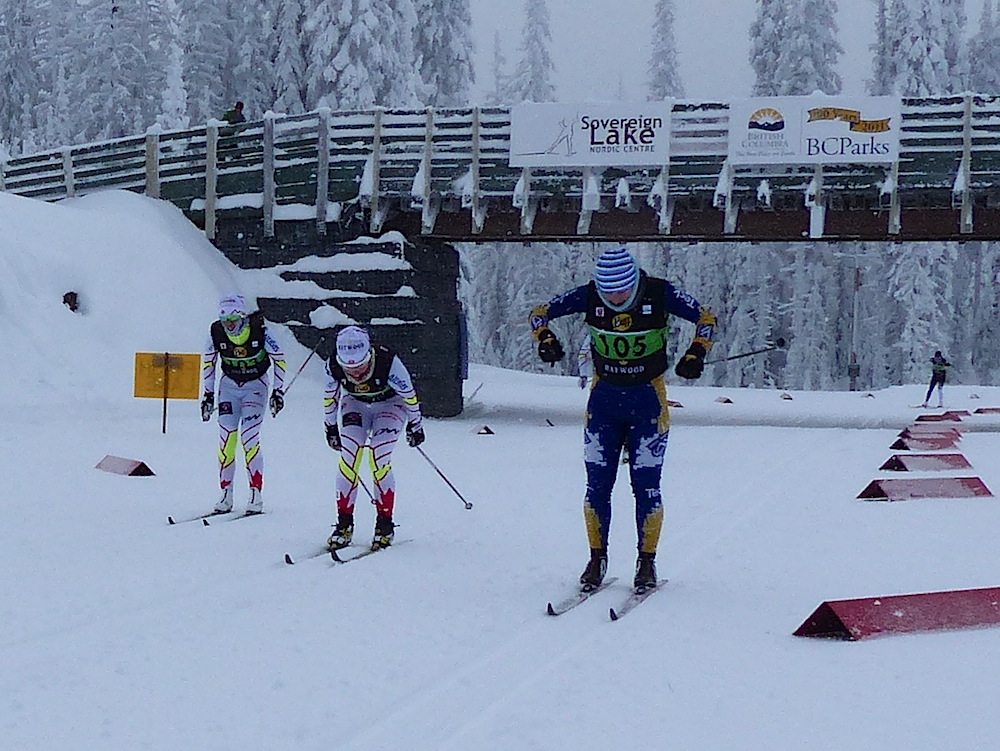
    (L-R) Emily Nishikawa, Alysson Marshall, and Andrea Dupont head into the finishing stretch of Sunday's classic sprint at the NorAm opening weekend at Sovereign Lake in Vernon, B.C. (Photo: Peggy Hung)
    (L-R) Emily Nishikawa, Alysson Marshall, and Andrea Dupont head into the finishing stretch of Sunday’s classic sprint at the NorAm opening weekend at Sovereign Lake in Vernon, B.C. (Photo: Peggy Hung)

    A day of cold and windy sprinting — with temperatures around -17 degrees Celsius — wrapped up this weekend’s NorAm races at Sovereign Lake. After all was said and done, Andrea Dupont (Rocky Mountain Racers) and Patrick Stewart-Jones of the Alberta World Cup Academy (AWCA) emerged as victors in the classic sprint.

    In the women’s race, Andrea Dupont skied a tactical-and-controlled race to win the A-final after squeaking through the semifinals as a lucky loser. Alysson Marshall of the AWCA and Canada’s Senior Development Team (NST) and Emily Nishikawa (AWCA/NST) were close behind in second and third, respectively. Rounding out the A-final was Heidi Widmer (AWCA/NST) and Ninja teammates Amanda Ammar and Zoe Roy.

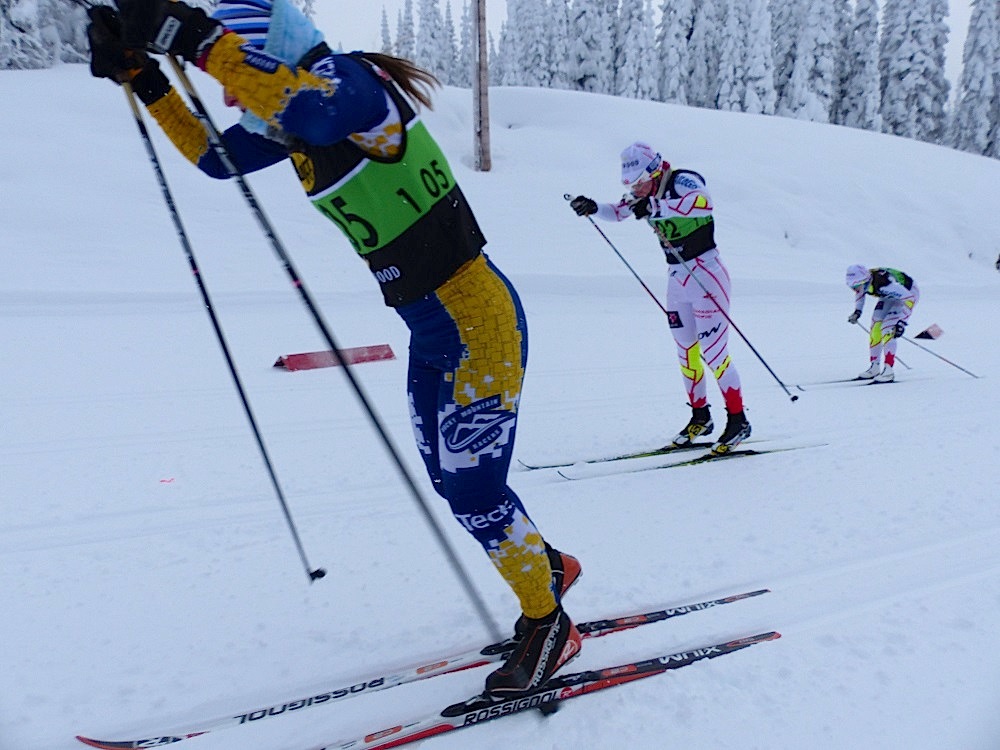
    Dupont leading Marshall (c) in the finishing stretch (Photo: Peggy Hung)
    Dupont leading Marshall (c) in the finishing stretch of the Sovereign Lake NorAm sprint. Dupont won, Marshall was second and Emily Nishikawa placed third. (Photo: Peggy Hung)

    After sitting out Saturday’s 10 k freestyle as a precaution to protect her lungs from temperatures around -18 degrees Celsius, Dupont explained in an email that Sunday morning “was a bit of a shock to the system racing in the cold.”

    That said, she was happy with her final and her ability to “relax and work tactics (something that is not always my strength),” she wrote. “We had really great skis from our club parent volunteers, and I was able to use that extra bit of glide heading into the final climb, which was the defining point for the course.”

    With most of the pack together until the final hill, Dupont explained her skis helped her feel “super fresh” heading up it.

    “I came out of the climb first and it gives you a huge advantage heading into the finishing straight,” she wrote.

    Marshall was also pleased with her runner-up result, and concurred that the race was quite exciting.

    “The A-final was tight for most of the race,” she wrote in an email. “There are lots of corners and transitions so a fair amount of contact and lane switching going on but luckily no crashes. Andrea and I got into the lead on the final climb and Andrea lead into the finish. I was gaining on her but couldn’t quite catch her before the line.”

    On the men’s side, Stewart-Jones captured his first NorAm victory, which he wrote in an email he was “pretty excited about.”

    “I came close to winning a few times last year but never pulled it off,” he added.

    Phil Widmer (AWCA/NST) and Graeme Killick (AWCA/NST) placed second and third, and Knute Johnsgaard (Yukon Elite), Raphaël Couturier of Pierre Harvey National Training Centre and NST, and Simon LaPointe (Skinouk) rounded out the rest of the A-final.

    Patrick Stewart-Jones racing in the Sunday's classic sprint qualifier at the Sovereign Lake NorAm. (Photo: Peggy Hung)
    Patrick Stewart-Jones (AWCA) racing in the Sunday’s classic sprint qualifier at the Sovereign Lake NorAm. (Photo: Peggy Hung)

    Qualifying in fifth, Stewart-Jones explained that he felt the effects of Saturday’s 15 k freestyle, in which he placed fourth.

    “My plan for the heats was to ski as efficiently as possible to try and get to the final using the least energy possible,” he wrote. “I knew my finish was strong so I was just trying to get to the last few hundred metres in a position where I could challenge for the win.”

    Widmer (AWCA/NST) complimented Stewart-Jones on his race. “It was a cold, slow day of racing and I have to say I’m satisfied with the result,” Widmer wrote. “Patrick was very strong in the final and I wasn’t able to make up any ground on him in the finishing straight.”

    Next weekend’s NorAm, hosted by the Black Jack Ski Club in Rossland, B.C. will feature a freestyle sprint and 10/15 k individual starts. The fields will be much larger due to the addition of many stateside Americans heading up north to race, without a SuperTour next weekend.

    Marshall, for one, is looking forward to the challenge. “It will be fun to have some Americans at the races next weekend!” she wrote. “I’m really focusing on sprinting this year and it’s always nice to sprint against different skiers since we get used to the strengths and weaknesses of the girls we race against all the time.”

    “[The Americans] were fast last time we raced on Frozen Thunder and deeper fields are always more fun to compete in!” Widmer wrote.

    Additionally, Widmer is looking for some redemption next weekend. During his last race there, Widmer explained he “fell and came as close as I ever have to seriously hurting myself in a race. I was taken out and flew into a log jam at the side of the trail. It could have ended up much worse than it did as I walked away with only a broken pole and some scratches. Needless to say I’ll be looking for a much better result this time around!”

    Results

  • Randall Reaches Season-High Classic Mark in Drammen

    Randall Reaches Season-High Classic Mark in Drammen

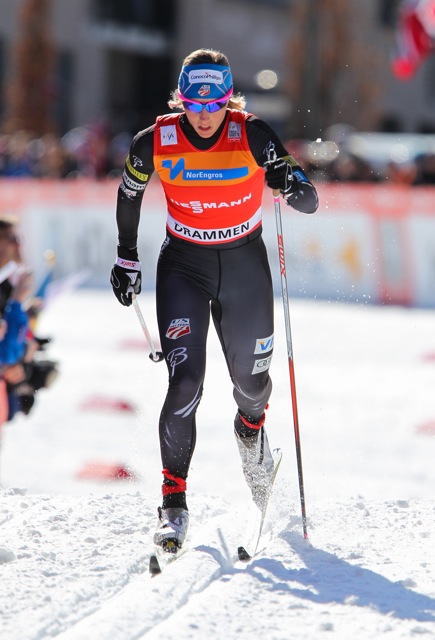
    Kikkan Randall (USA) reached her first classic sprint final of the season on Wednesday in Drammen, Norway, placing fifth overall to lead the U.S. women. Photo: Fischer/Nordic Focus.
    Kikkan Randall (USA) reached her first classic sprint final of the season on Wednesday in Drammen, Norway, placing fifth overall to lead the U.S. women. Photo: Fischer/Nordic Focus.

    With the season winding down and only World Cup Finals remaining on the calendar for sprinters, Kikkan Randall produced her best classic result of the year on Wednesday with a fifth-place finish in Drammen, Norway. She led the American women in the city sprint; Sadie Bjornsen also qualified for the heats and finished 30th.

    Randall in another sprint final — it may seem like well-worn territory for an athlete whose list of season accomplishments already includes World Championship gold and a crystal sprint globe. Yet fifth is still somewhat of a season milestone for Randall — it marks first time she has made it to a classic final all season, and it was also the product of a bit of a lucky break. She scraped into qualification for the heats in 29th and subsequently moved on from the semifinals as a lucky loser in the heat that included eventual race-winner, Justyna Kowalczyk (POL).

    “It’s my best classic result from this year for sure, and last year I had a fourth in Kuusamo, so this sits right in there with a better classic finish for me,” Randall said.

    Ever the competitor, however, she looked back on the race wishing she had done a few things differently. Fitness-wise, she thinks her sprint form is getting stronger as the season comes to a close and in hindsight saw opportunities to have moved up that she didn’t take.

    “I wish I had skied it tactically a little differently,” Randall said. “I knew Kowalczyk would set a fast pace and I knew I could tuck in and conserve energy early. That final finish stretch is so crucial every time and that’s where it was working really well for me. The mistake I made is I wasn’t aggressive enough around those final corners down at the bottom of the course. I kept trying to take a really wide line because I was trying to find faster snow, but I ended up skiing by myself and didn’t set myself up in a good enough position for that last bit to challenge for the podium. So I’m a little disappointed with that.”

    Even so, Randall felt positive about the result as she left the Drammen venue.

    “The feelings were good today and I think I’m feeling stronger and stronger now,” she said. “That’s a good sign, so I was pretty happy with it.”

    The next race on her schedule is a low-stakes exhibition sprint on a snow-filled track & field stadium in Oslo. From there the World Cup season ends in Stockholm and Falun, Sweden, after which she and her teammates fly back to the U.S. for SuperTour Finals.

    “I’m glad it’s at a point in the year when we can just race,” Randall said. “It’s a lot, like every other day. It’s been a long season and I’m feeling like it’s wrapping up just in time.”

    The second and only other American to make the women’s heats on Wednesday was Bjornsen, who recently finished a career-high weekend in Lahti, Finland. In Drammen she didn’t expect to make it through qualification, even though she hoped to somehow earn enough points for World Cup finals. But make it to the heats she did as the 26th qualifier. Bjornsen later finished her day in the quarterfinals, placing sixth in her heat and 30th overall. The performance was good enough for a 54th overall World Cup ranking as of Wednesday, four places and 14 points shy of the top-50 cut-off for Stockholm and Falun.

    “I’m happy because I haven’t qualified for a classic sprint yet this year, and it was an extremely challenging day of picking skis and finding the wax,” Bjornsen said. “I was quite happy to make it into the heats because I wasn’t expecting it. My quarterfinal wasn’t exactly as I would hope, but it was still fun.”

    She went up against Aino-Kaisa Saarinen (FIN), Linn Soemskar (SWE), Nicole Fessel (GER), Dasha Gaiazova (CAN) and Hanna Kolb (GER) in the quarterfinals. At the top of the course Bjornsen led the five other women, but on the descent she lost ground to them and fell back to sixth, where she ultimately finished the heat.

    “I think it was hard to pick the right ski today, I don’t know,” Bjornsen said. “I definitely didn’t do that do the greatest of my ability. It’s so sugary you feel like you want a lot of kick because it’s hard to find your kick, but then I think it maybe slows it down… I felt it as the whole pack went by. I was like, ‘Well, darn.’”

    Ski selection for the sugary conditions in Drammen on Wednesday is a skill Bjornsen says she needs to work on for the future. Even though she didn’t make World Cup finals with her sprint result she wasn’t too discouraged, as reaching the cutoff only became a goal after her career-high weekend in Lahti.

    “I went into this year having scored two World Cup points in my life; it wasn’t even a goal of mine to make World Cup finals,” she said. “After having a great weekend last weekend it’s like that confirmation to motivate me even more for next year, like hey: that is a possibility to make World Cup finals and that’s what I should be gunning for.”

    Bjornsen’s next stop is OPA Cup finals, which take place in Italy on Friday, Saturday and Sunday.

    Randall and Bjornsen were the only two American women to make the heats. Holly Brooks and Sophie Caldwell just missed qualifying in 34th and 35th, respectively. Ida Sargent was 48th, Rosie Brennan finished 52nd and Jessie Diggins was 55th.

    Results

  • Photo Gallery: World Championships Men’s Classic Sprint

    Photo Gallery: World Championships Men’s Classic Sprint

    FasterSkier’s coverage of the 2013 FIS Nordic World Ski Championships in Val di Fiemme, Italy, is brought to you by the generous support of Fischer Sports.

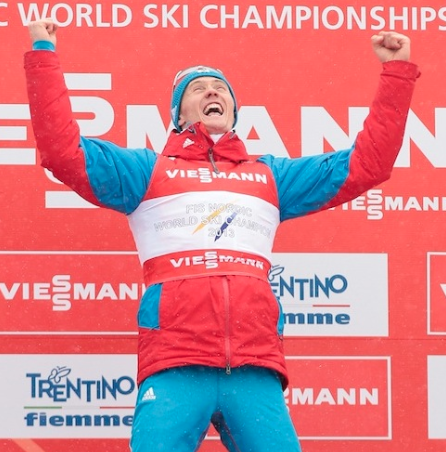
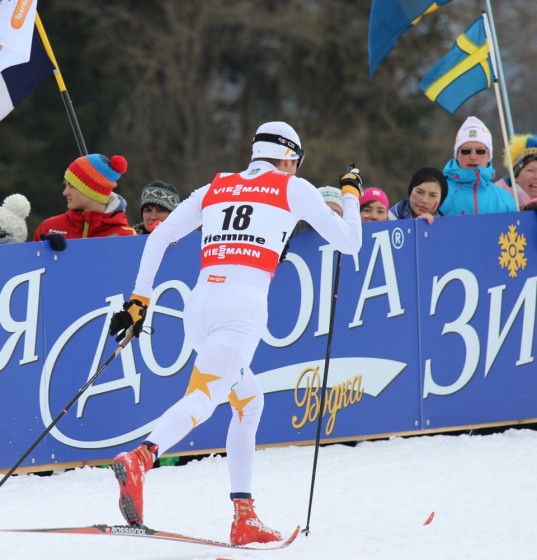
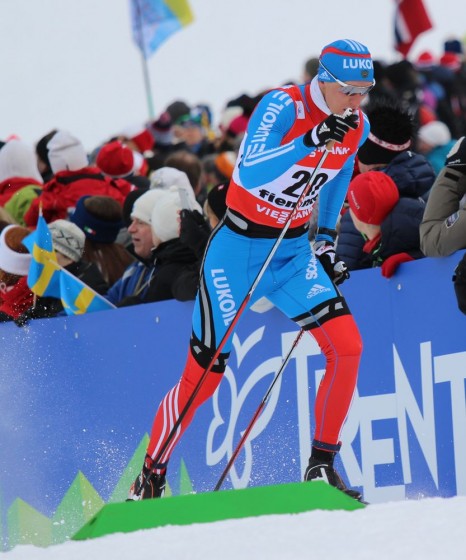
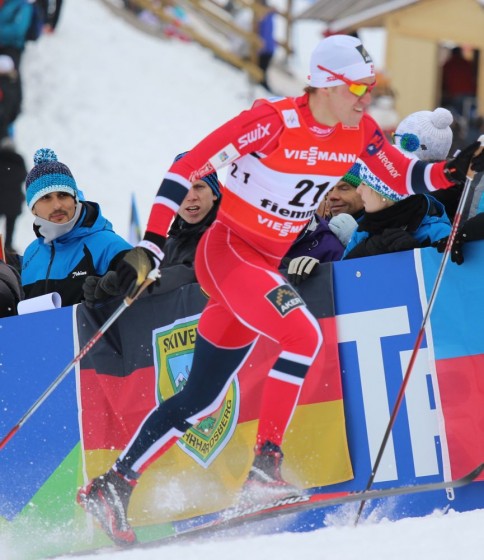
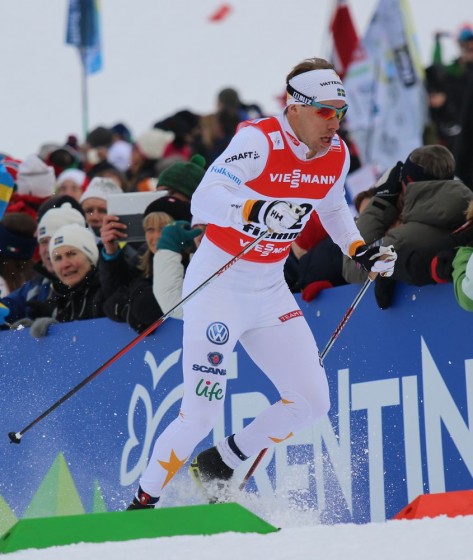
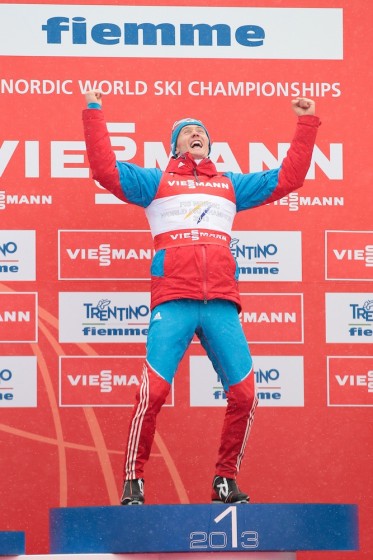
    VAL DI FIEMME, Italy — Russia’s Nikita Kriukov won a dramatic classic sprint on Thursday to claim the first World Championship title of 2013. Every emotion showed as he and fellow podium-finishers Petter Northug (NOR) and Alex Harvey (CAN) enjoyed their successes for an enthusiastic crowd. Below are selected photos from the qualifiers and heats.

  • Photo Gallery: World Championships Women’s Classic Sprint

    Photo Gallery: World Championships Women’s Classic Sprint

    FasterSkier’s coverage of the 2013 FIS Nordic World Ski Championships in Val di Fiemme, Italy, is brought to you by the generous support of Fischer Sports.

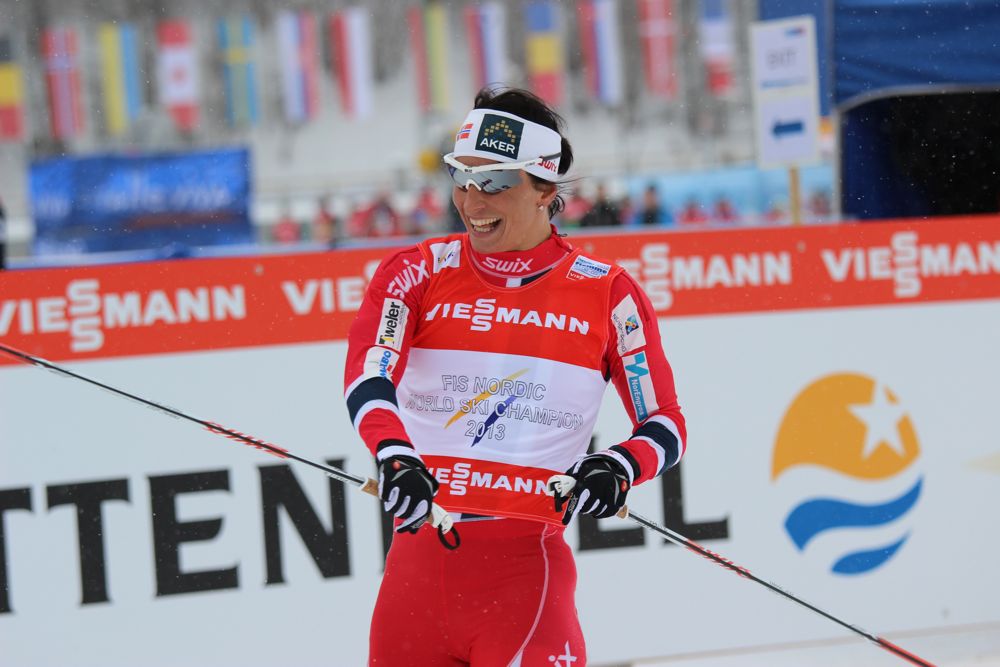
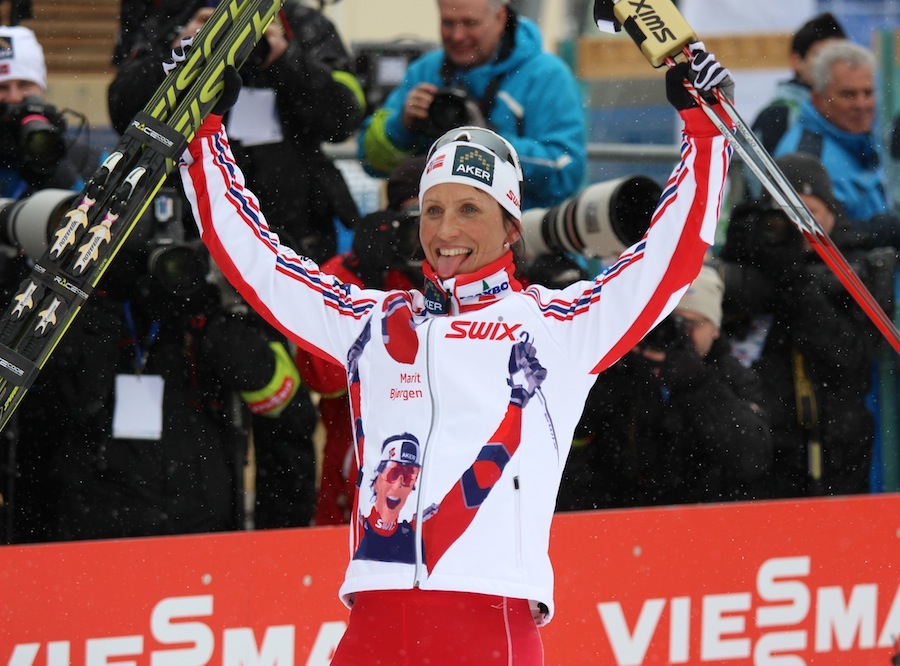
    VAL DI FIEMME, Italy — Marit Bjørgen (NOR) gave the many Norwegian fans in Italy just what they came to see in the opening race of the 2013 Nordic World Ski Championships on Thursday. In her ninth career victory at the event, she won the classic sprint by over two seconds on an exciting, challenging course. Images from the day:

  • Americans Struggle with Slick Skis; U.S. Left ‘Disappointed’ With Classic Sprint

    Americans Struggle with Slick Skis; U.S. Left ‘Disappointed’ With Classic Sprint

    Andy Newell (USA) striding up the first climb in the classic sprint qualifier at World Championships on Thursday.
    Andy Newell (USA) striding up the first climb in the classic sprint qualifier at World Championships on Thursday. He qualified seventh and went on to finish 20th overall.

    FasterSkier’s coverage of the 2013 FIS Nordic World Ski Championships in Val di Fiemme, Italy, is brought to you by the generous support of Fischer Sports.

    VAL DI FIEMME, Italy – The opening classic sprint at the 2013 World Championships was preceded by promise and excitement for the Americans, but when only three out of seven starters advanced to the heats on Thursday and none moved past the quarterfinals the team was left feeling frustrated. Kikkan Randall and Sophie Caldwell each finished fourth in their quarterfinals to place 19th and 20th, respectively, and Andy Newell was 21st after placing fifth in his heat.

    “It’s a pretty disappointing day so far,” Newell said a few minutes after finishing. “I think this is probably my worst World Championships finish ever, even since I was a little guy at my first ever World Championships.”

    Kikkan Randall (USA) finished fourth in her quarterfinal and 20th overall.
    Kikkan Randall (USA) finished fourth in her quarterfinal and 20th overall.

    Newell was actually 31st ten years ago in the freestyle sprint at this same venue, but ever since he’s finished 14th or higher at this event. Still, the empty handed feeling he described was repeated by nearly every one of his teammates.

    “I wanted more out of today, for sure,” Randall said after getting out-double-poled in the final 200 m.

    Caldwell was a lone bright spot, far exceeding expectations by squeaking into the heats with the 30th-fastest qualifying time and proceeding to ski competitively in third or fourth position for much of her quarterfinal. But overall the Americans felt otherwise unfulfilled by the outcome of their first race in Val di Fiemme. Newell was fourth in the Davos classic sprint last weekend and Randall was eighth; finishes in the teens and 20s pale in comparison.

    The culprit, said U.S. Ski Team head coach Chris Grover, was wax — or rather, no enough of it.

    “The frustrating part is that the fitness of the athletes is there, they’re ready for world champs. On the wax side we worked super hard to make as good of skis as we could but it just did not come together 100% for us today,” he said. “Unfortunately that happens from time to time. That’s part of the game. But it’s a bummer when it happens at a major championship.”

    Conditions were variable on Thursday; a new dusting of snow greeted athletes in the morning, the skies cleared for the qualifier, and flakes began to lightly fall again during the heats. The U.S. service crew knew to expect variability — forecasts predicted snow days ahead of time — and arrived at the venue at 6:30 a.m. to begin testing for a 10:45 a.m. start. But in the end, the Americans’ skis did not propel them up Val di Fiemme’s steep hills as well as their competitors’ did.

    Andy Newell watching the instand replay of his quarterfinal finish.
    Andy Newell watches the instand replay of his quarterfinal finish.

    “I struggled for kick on the first hill and also on the second,” Newell said. “My skis were good in qualification — lots of kick — and then somehow with stuff changing around…it’s a little bit tricky waxing today. So I was slick for some reason, which sucked, and then I didn’t have the best finish.”

    After qualifying in seventh Newell seemed poised for success in the heats, but when the quarterfinal began his disadvantage was apparent. He was forced into a herringbone where others weren’t on the steep climbs, and the effort to catch back up at the top of the course left him out of position and without enough energy for the finishing sprint.

    “It’s OK, it’s sprint racing. That’s the way it goes sometimes. A bad start didn’t’ help, but for sure it was a little slick. It kind of took me out of it on that hill, unfortunately,” Newell said.

    It was a similar story for Randall. She slipped as she attempted to set her wax and struggled to keep pace with Alena Prochazkova (SVK), Nicole Fessel (GER) and Krista Lahteenmaki (FIN) in her quarterfinal.

    “I didn’t feel like I could really access that sprint gear today,” Randall said. “I felt like I was going as hard as I could and not really hanging on.”

    The team’s classic sprint showing was made even more heartbreaking by how close two more women came to qualifying for the heats. Sadie Bjornsen and Ida Sargent were 32nd and 33rd in the prologue, Bjornsen only missing 30th by 0.15 seconds.

    Sadie Bjornsen (USA) in qualifying. She was 0.15 seconds out of 30th.
    Sadie Bjornsen (USA) in qualifying. She was 0.15 seconds out of 30th.

    “I felt like I pushed hard but I was struggling going up that hill. I was slipping all over the place,” Bjornsen said. “But it’s the first day, it’s a long championships.”

    Sargent finished 0.62 out of 30th. It was definitely not the race she wanted, especially as its her strongest discipline.

    “It wasn’t a good day but you have some good ones and some bad ones,” she said. “I had trouble getting kick on the uphill. You can’t be a little off today — everyone’s on, it’s world champs. You’ve got to be on your game and I wasn’t today.”

    Newell was the only American to advance in the men’s race; Hamilton finished 1.08 seconds out of qualifying in 34th and Erik Bjornsen was 51st, 8.02 seconds behind 30th. Hamilton said his race likely affected by a recent virus contracted after the Davos World Cup last weekend. He sounded hoarse in talking with reporters and said his priority for the rest of the week will be to get healthy again.

    “I got a virus in my chest and my head, but today at least burned it out a little,” he said. “For sure it’s not the best feeling in the world. It was a tough day trying to keep your race nice and light and kind of feather up the hill, and I always struggle with that, although I think it’s getting better. It’s hard for sure but we’ll see how the rest of the week goes.”

    Simi Hamilton (USA), 34th.
    Simi Hamilton (USA), 34th.

    Bjornsen, 51st in his first World Championships, summed up his race by hoping it would kick him into gear for the skiathlon and the 15 k.

    “Physically I think I’m feeling really well,” he said. “I don’t know, I haven’t done a ton of racing the last two weeks…I’m hoping to get to race another three times this week so this might be just what I need to spark the body.”

    In summation, Grover knew his athletes had better races in them than their results showed because he knew how much hitting the wax mattered.

    “It was one of those classic days you encounter where the weather pattern changed” he said. “We knew it was going change, it had been forecasted to snow all week starting weds night. You can test and test but you know coming up on race day it’ll be different… We were testing continuously on kick and on glide but for whatever reason we just did not hit the bullseye today. And that happens, and its really nobody’s fault because everyone was working as hard as they could but it just did not come together for us today.”

    Despite their lackluster debut at these World Championships, Grover added that the team atmosphere was optimistic on Thursday afternoon.

    “I think we’re all feeling like we’re left wanting more, but at the same time everybody is doing a great job,” he said. “The athletes were extremely professional about it, everybody kept their head held high, and everybody knows during the rest of the week there’s better stuff to come.”

    Women’s classic sprint results

    Men’s classic sprint results

    — Alex Matthews contributed reporting.

  • Caldwell Shines In World Championships Debut

    Caldwell Shines In World Championships Debut

    Sophie Caldwell (USA) on her way to the 30th-fastest qualifier in the classic sprint at World Championships on Thursday. She followed it up with 20th overall after placing fourth in her quarterfinal.
    Sophie Caldwell (USA) on her way to the 30th-fastest qualifier in the classic sprint at World Championships on Thursday. She followed it up with 20th overall after placing fourth in her quarterfinal.

    FasterSkier’s coverage of the 2013 FIS Nordic World Ski Championships in Val di Fiemme, Italy, is brought to you by the generous support of Fischer Sports.


    VAL DI FIEMME, Italy — Sophie Caldwell had only six World Cup starts under her belt going into the 2013 Nordic World Ski Championships, but where she lacks in experience she made up for in poise, adaptability and sheer speed on Thursday in the classic sprint. After “squeaking” into 30th by 0.12 seconds in the qualifier, the Stratton Mountain School T2 skier raced as if she belonged in the world-class heats, finishing fourth in her quarterfinal to place 20th overall.

    Caldwell lined up for the first quarterfinal of the day.
    Caldwell lined up for the first quarterfinal of the day.

    “I’m really happy,” Caldwell said after finishing. “I just looked at it as, I can only go up from 30th place. Right before the start [U.S. Ski Team head coach] Chris Grover told me the first heat is usually the fastest one, so I would really have to fight for every spot.”

    The 22-year-old followed the advice admirably, fighting for fourth and sometimes the third position in a heat that contained Mona-Lisa Malvalehto (FIN), the top qualifier, Denise Herrmann (GER) and Katerina Smutna (AUT). Though she got off to a slow start in the double-pole zone, Caldwell’s position in the better tracks to the right side of the first hill allowed her to climb better than her competitors and she quickly moved from the back to third.

    “Then I just sort of hug on for dear life the rest of the way,” Caldwell said. “I got passed in the finish and double-poling is not my strength, so I was happy with fourth.”

    The rookie’s performance was the high point of the day for the American team at the opening event of World Championships. Miscalibrated kick wax held back athletes like Kikkan Randall and Andy Newell that had hoped to do much better, but Caldwell was the outlier for the team on Thursday by exceeding expectations.

    “For Sophie that was an awesome day for her to qualify against that field and then for her to get in that quarter and really get in the mix,” Grover said. “She really got in there and skied in third or fourth pretty much the entire quarter, so that was really exciting.”

    Caldwell is not a complete newcomer to World Cup sprint heats, but measures of her progress on the international stage this season have come with caveats so far. Her 14th-place finish in the Quebec City freestyle sprint in December was against a watered-down field in Canada, as was her 23rd in Canmore. In her final tune-up against a fully competitive start list in Davos last weekend she just missed the heats in 32nd. So for her to wind up 20th only days later in a pressure-filled race and against a world-class field at its best may have all but sealed her place as a regular World Cup skier down the road. It’s certainly caught the attention of the national team.

    “She skied great and she’s been demonstrating all season long that she’s been able to make a big step forward,” Grover said. “She’s going to be one of our contenders for the future.”

    Caldwell’s original plan was for the classic sprint to be her only race at World Championships, but she isn’t going home until after the team sprint on Sunday. The American team for the only remaining sprint event in Val di Fiemme has yet to be named.

    — Alex Matthews contributed reporting.

    Denise Herrmann (GER) winning the first quarterfinal. Caldwell finished fourth in the heat, 1.92 seconds back and 0.81 seconds out of automatically advancing.
    Denise Herrmann (GER) won the first women’s quarterfinal. Caldwell finished fourth in the heat, 1.92 seconds back and 0.81 seconds out of automatically advancing.
  • Bjørgen Reigns Supreme in World Championship Classic Sprint

    Bjørgen Reigns Supreme in World Championship Classic Sprint

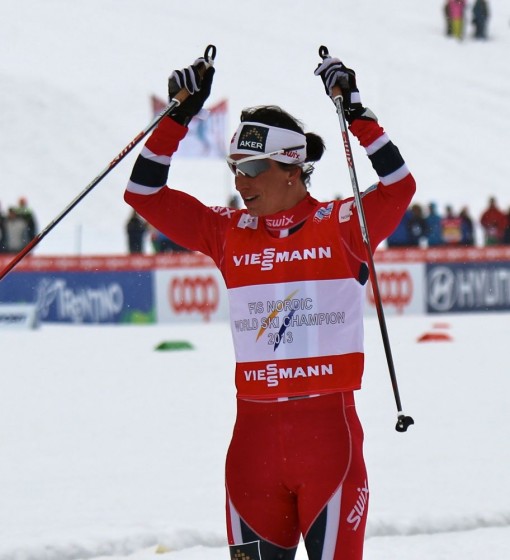
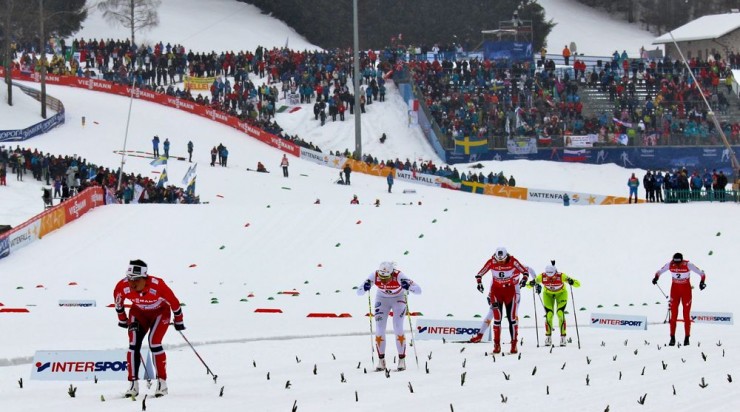
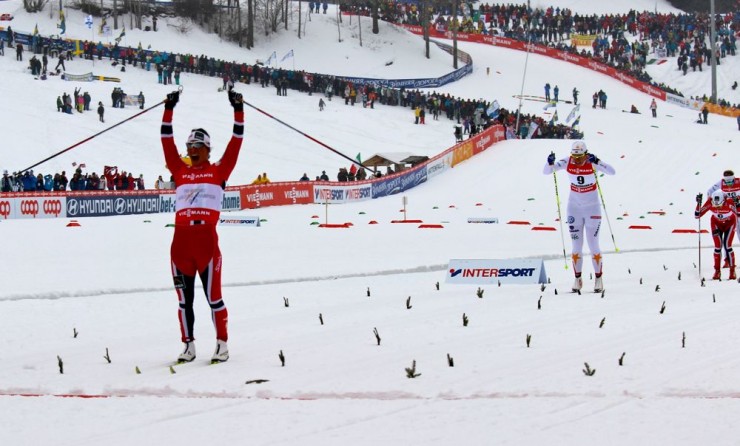
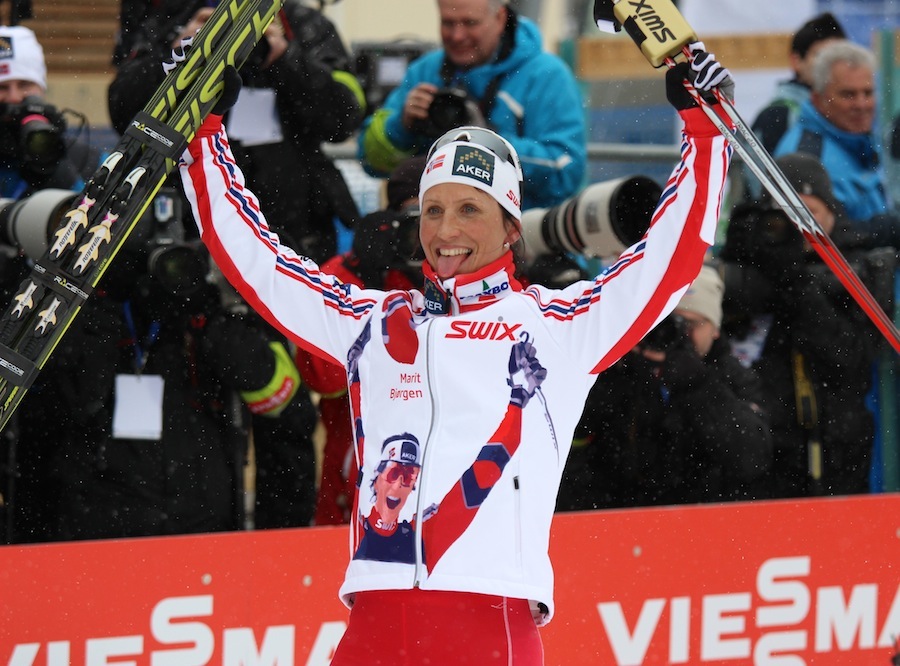
    Marit Bjørgen (NOR) lets out a triumphant yell, arms raised, as she wins the classic sprint at World Championships in Val di Fiemme, Italy, on Thursday.
    Marit Bjørgen (NOR) lets out a triumphant yell, arms raised, as she wins the classic sprint at World Championships in Val di Fiemme, Italy, on Thursday.

    FasterSkier’s coverage of the 2013 FIS Nordic World Ski Championships in Val di Fiemme, Italy, is brought to you by the generous support of Fischer Sports.


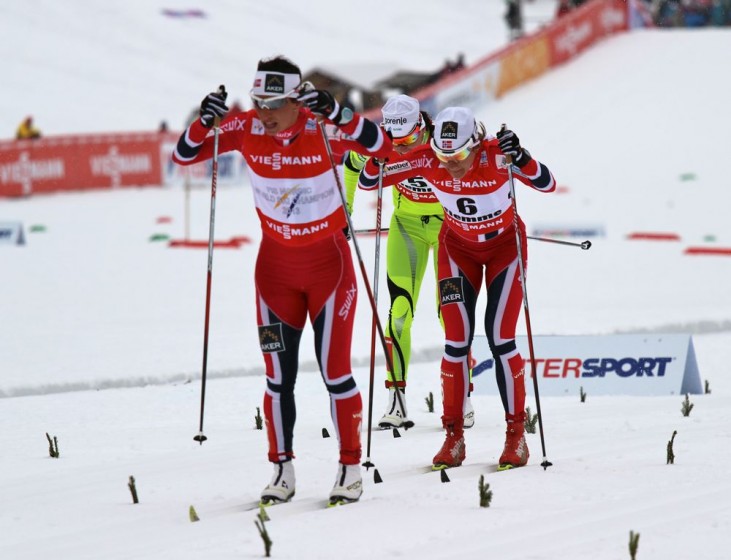
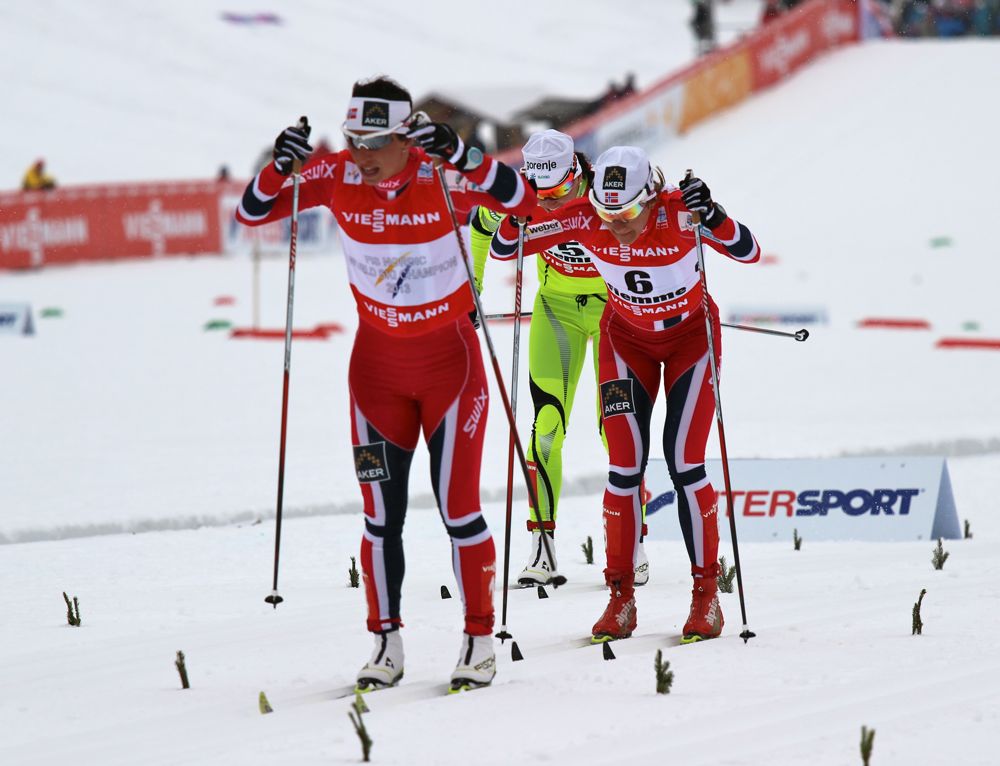
    VAL DI FIEMME, Italy — In classic sprint racing there are sometimes unexpected wins and at others predictable victories. Marit Bjørgen’s tiumph in the opening event at the 2013 Nordic World Ski Championships was a bit of both — it was a show of the Norwegian’s usual dominance on the surface, but also marked the completion of her return from a no-show in Davos last weekend. She won by a huge 2.32-second margin over Sweden’s Ida Ingemarsdotter and teammate Maiken Caspersen Falla.

    Slovenia’s Katja Visnar took fourth, Stina Nilsson (SWE) was fifth and Justyna Kowalczyk finished sixth, 6.34 seconds behind Bjørgen in a spread-out finish.

    “I am so happy, I must admit that this I did not [expect] this,” Bjørgen told the NRK after her victory.

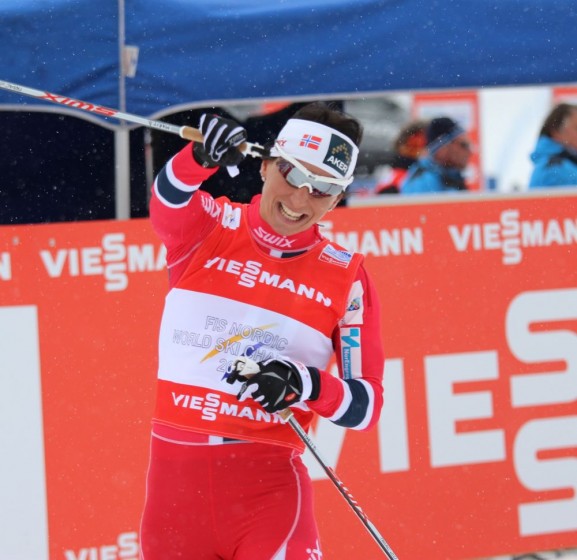
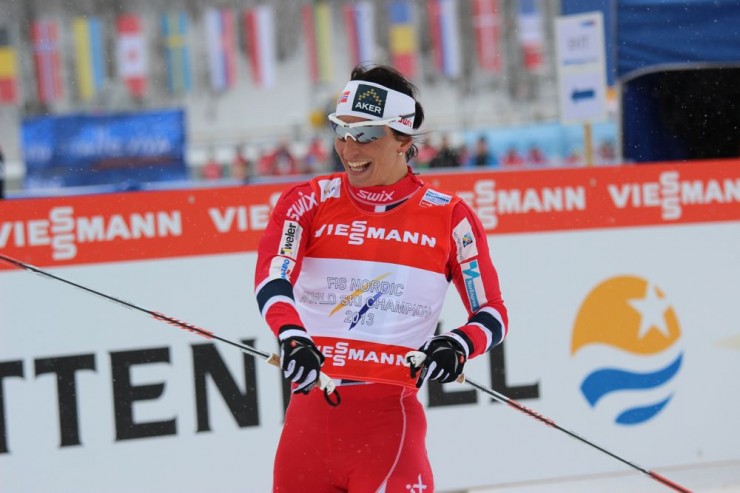
    Bjørgen relishes her victory for the cameras.
    Bjørgen relishes her victory for the cameras.

    It is rare to hear Bjørgen confess to doubting herself. Usually poised in the face of enormous pressure from her ski-crazed country, the leader of the Norwegian women’s squad uncharacteristically lost composure before distance World Cup in Davos, Switzerland, last weekend and did not start at the last minute.

    Bjørgen admitted to breaking down in tears before the race went off, frustrated at feeling unprepared so close to World Championships.

    “I had some hard days in Davos, I think,” Bjørgen told reporters. “That’s what makes the sport so very interesting.”

    Less than a week later she was back to her winning ways when it mattered most. Bjørgen’s recent doubts, coupled with her heart arrhythmia scare earlier this season, perhaps explained the depth of emotion behind her cry for joy as she raised her arms in victory.

    “I thought before the start today it would be hard to be on the podium, but in the final I’m feeling the skis are perfect and thought that yes, this is possible to be fighting for the podium,” Bjørgen said. “It’s an incredible feeling to have a good start for the rest of World Championships.”

    The falling snow changed conditions in the tracks for the heats and complicated matters for many teams, but Bjørgen said her skis were “incredible.” Though she only qualified in fourteenth, she was all business in the rounds and handily won her quarter- and semi-final.

    Bjørgen and Falla controlling their semifinal.
    Bjørgen and Falla controlling their semifinal.

    “The track was fitting me good today; it’s a long track, so it was not so important to be fast in the beginning,” Bjørgen said.

    She and Falla worked well together in that respect; Falla would start strong and be able to control the pace while her elder teammate worked backed towards the front. In the final Bjørgen seemed almost lethargic out of the gate and left the lanes in dead last, but by the top of the first small hill she’d tucked behind Falla and gained two positions.

    As Bjørgen began to make moves, some part of the race was decided to her left when disaster struck her biggest challenger. Kowalczyk’s and Nilsson’s poles made contact as the two vied for position up the first climb and the former went down hard, taking herself out of the race and removing the possibility of a Bjørgen-Kowalczyk showdown in the final meters.

    Afterwards Bjørgen said she had no idea Kowalczyk had fallen, but was nonetheless encouraged by the Pole’s absence from the front.

    “I didn’t know Justyna was falling, but it she wasn’t first in the climbing I knew everything was possible,” Bjørgen explained. “She is very strong there. When I didn’t see her I knew I had very skis and can push hard in the flats and down hills, so I didn’t look behind me. I really didn’t know she was falling, I was just pushing hard in the front.”

    Justyna Kowalczyk (POL) en route to the second-fastest prologue time.
    Justyna Kowalczyk (POL) en route to the second-fastest prologue time.

    As Bjørgen noted, the rest of the course worked to her advantage. When the pack came over the final crest to the finish she had a gap on Ingemarsdotter that was impossible to close. The Swede held Falla off for her first medal at worlds and second career podium in any race, World Cup or World Championships.

    “Marit is a great skier and she’s a tough woman to meet in the final,” Ingemarsdotter said. “I’m really satisfied with second; I didn’t think I was one of the favorites but I had a good feeling after Davos and today I had really good skis and a good feeling in the body.”

    Falla, 22, was happy with third despite dropping back from her original lead.

    “I’m so happy, very happy. I can’t believe it,” she said. “It’s been a big goal all season and finally I’m finishing here as number three. So it’s a dream come true.”

    With two medals from the women’s sprint and Petter Northug’s silver from the men’s race, Norway sits in the medal-count lead after the first event in Val di Fiemme. Roar Hjelmeset, the Norwegian women’s sprint coach, was pleased but cool after the podium ceremony.

    “Three medals for Norway is a very good start,” he said. “Maiken had a very good start of the final…but was a little tired in the middle. Marit was very strong.”

    A Bjørgen-Falla duo would seem like an obvious choice for Norway in the team sprint after Thursday’s showing, but Hjelmeset said only Falla was a fixture in the scramble leg.

    “Maybe Marit will start, maybe not,” he said. “We have a lot of good girls.”

    As Bjørgen’s only stated goal going into the championships was to win at least one gold medal, she is now relaxed about what the next few races might hold.

    “My goal was one gold medal and I have it now, so now I can enjoy the rest of World Championships,” she said.

    Ten years ago in this very valley, a 22-year-old Bjørgen won the first World Championships gold in the freestyle sprint. At the time her name wasn’t intrinsically associated with cross-country supremacy the way it is now, but since 2003 she has collected nine gold medals at World Championships. She’s become one of the biggest names in the sport, but Bjørgen is quick to appreciate how far she’s come.

    “I’m a better [skier] for sure. But ten years — you’re getting older, are maybe not so fast,” she said with a laugh. With the performance she put on for Val di Fiemme on Thursday, it should be a while before she slows down.

    — Alex Matthews contributed reporting
    Results


  • Led by Randall’s Eighth, U.S. Women Dial Sprint Form in Davos

    Led by Randall’s Eighth, U.S. Women Dial Sprint Form in Davos

    Kikkan Randall (USA) leading Kerttu Niskanen (FIN) in the classic sprint quarterfinals in Davos, Switzerland on Saturday. Photo: Fischer/Nordic Focus.
    Kikkan Randall (USA) leading Kerttu Niskanen (FIN) in the classic sprint quarterfinals in Davos, Switzerland on Saturday. She was eighth to lead three U.S. women in the points. Photo: Fischer/Nordic Focus.

    For one final weekend in Davos, Switzerland, anticipation builds for the fast-approaching world championships, and with everyone’s mind focused on what comes in Val di Fiemme next week the U.S. women delivered a solid team-wide performance in the classic sprint on Saturday. Led Kikkan Randall’s in eighth-place finish, three Americans made it to the heats and two more were only seconds away from the points.

    “We had a really good day,” said U.S. Ski Team Women’s Coach Matt Whitcomb. “It’s the kind of day we wanted to have before going to World Championships and our sprinters will go there with some confidence now, so we’re really pleased.”

    Randall was the only woman on the team to advance past the quarterfinals; Ida Sargent was 18th and Holly Brooks finished 23rd. Sadie Bjornsen and Sophie Caldwell each just missed out on the heats — in a dead tie on a four-minute course measured to the hundredths of a second, they were 1.42 seconds off the cutoff in 32nd.

    Though it’s not the best day the women’s sprint squad has ever had, it was exactly what Whitcomb was looking for in his athletes in the midst of a taper period before the team heads to Italy.

    “The body feels a little strange sometimes when you’re going through a taper,” he said. “Sometimes it feels great and sometimes it feels a little lethargic.”

    For Randall, who still holds onto the World Cup sprint leader bib by 134 points after Saturday’s race, Davos was a mixed bag. Though she was disappointed not to reach the final she still thought it was a good tune-up before Val di Fiemme, especially since it’s been a few weeks since her last race. Randall could tell her fitness was good on Saturday despite feeling off earlier in the week.

    “We’ve been starting our peak coming into World Champs, so it’s good to get confirmation on where the body is today. I felt really strong,” she said.
    After qualifying in fifth Randall won her quarterfinal handily. At over four minutes long, the Davos course made for one long sprint at altitude and demanded additional technical prowess on an icy downhill corner. Women snowplowed the tricky descent all day, and Randall alone skidded around it with her skis parallel.

    “Everyone had been sliding it, and there was ice in certain places and you’re on classic skis and in classic boots, so it was a little tricky,” she said. “I found that taking it on the inside felt the most stable to me, so it was fun to know that headed into the downhill I had that in my back pocket.”

    Randall entered the semis against Marit Bjoergen (NOR), Julia Ivanova (RUS) and Aurora Jean (FRA) feeling strong, but as the heat got underway she found her kick lacking, and she slipped on the steep uphills. She finished fourth in her semifinal and ended her day in eighth.

    “I didn’t have quite enough kick to stay right in that group,” she said. “I felt that fitness-wise I should have been in the final, but I think that just bodes well for five days from now.”

    Whitcomb acknowledged that Randall should have had more kick in the semifinals, but also noted it’s a hard tradeoff to weigh as an athlete’s technique breaks down through a tiring series of sprint heats.

    “I think if we did it again we’d give her more kick in the semis but she was also getting a little tired there too, so its hard to say,” Whitcomb said. “If you added more kick would you be able to keep the same glide necessarily to get to the finish line in time? It was a very competitive eighth place and we’re happy with the day for her.”
    Ida Sargent (USA) skiing to 18th in Davos. Photo: Fischer/Nordic Focus.
    Ida Sargent (USA) skiing to 18th in Davos. Photo: Fischer/Nordic Focus.
    Sargent’s 18th-place finish gave the Americans another reason to be happy on Saturday. On the hilly Davos course Sargent made a point of layering her kick wax on thick. She ended her day in the quarterfinals, where she finished fourth behind Anne Kylloenen (FIN), Ida Ingemarsdotter (FIN) and Denise Hermann (GER), and Sargent saw room for personal improvement in her tactical decisions from the heat.
    “I had a slow start and then I went wide on the corner on my first lap and got passed by Ida Ingemarsdotter,” she wrote in an email. “And then on the uphill on my second lap I jumped in the inside track behind someone and boxed myself in. Striding is my strength so I need to find room to go on the hills rather than waiting for the double pole finishing stretches which is an area I still need to improve.”

    Sargent is feeling confident and expectant as she looks ahead to World Championships.

    “It was a fun day,” she said. “My energy was good and I’m excited getting ready for Italy.”

    Brooks’ solid performance in Davos — 21st in qualifying and 23rd after the quarterfinals — comes after a recent series of disappointing results, so she was most pleased to be feeling better.

    “I happy whenever I score World Cup points!” Brooks wrote in an email. “That said, I always have goals of doing better… I feel like my shape might be coming around just in time for Val di Fiemme but after tomorrow, we shall know more.”

    Brooks had the misfortune of being placed in Justyna Kowalczyk’s quarterfinal, who went on to win the entire race, so her heat “strung out pretty quickly,” Brooks said. But by finishing in the points Brooks met a season-long goal targeted at well-rounded racing. She has now been in the top 30 in all the four major disciplines: sprint and distance in both classic and sprint technique. Brooks credits a serious rest period leading into Davos with feeling race-ready again.

    “I definitely had a period of fatigue in the middle of the season and I’ve really focused on resting the last two weeks. I’ve cut the training volume, the distance pace, and the number of hard workouts,” Brooks said. “I’m still waiting for my first appearance in the semi finals but I’m making the heats more often so that’s a good sign!”

    “Sodie” Just Miss Heats

    Sophie Caldwell and Sadie Bjornsen, nicknamed “Sodie” for their oft-confused first names, fittingly skied the exact same qualifying time on Saturday: 4:10.66. The mark was just outside the cutoff for the top 30 and left the pair with a bittersweet taste in their mouths.

    Whitcomb characterized the 1.42 second-miss as “mildly heartbreaking” for Bjornsen and Caldwell but was not concerned about the pair making it into future heats.

    “Today’s result is definitely bittersweet for me,” Caldwell wrote in an email. “I’m happy because it’s the best I’ve ever done in a World Cup classic sprint, so I feel like I’m heading in the right direction, but obviously I’d be happier if I had been able to ski the heats.”

    Caldwell, who recently spent time on the Scando Cup circuit and hasn’t raced on the World Cup since Liberec, had a hard time judging her feeling on the challenging Davos course.

    “I didn’t feel quite as snappy as I’ve felt the past few days but it was a really long and tough course, so I’m not sure if anyone used the word ‘snappy’ to describe their race,” she said, adding that her “fitness feels really good right now and I’ve done a lot of racing in the past ten days so I’m looking forward to taking a few days easy and getting ready to go again.”

    Bjornsen, who has experienced her fair share of World Cup qualifiers just outside 30th, echoed Caldwell that the position is “never fun” to be in. Bjornsen already has a list of things to improve on for next time: her cornering on the icy downhill and a better warmup among them.

    “Last weekend I did the team sprint and I realized I didn’t feel good until the third time around,” Bjornsen said. “I think today was my final realization that my warm up is just not hard enough or something…so I think I need to nail down the warm up a little bit better… I’m glad today I had that opportunity to figure it out before World Championships.”

    World Cup action continues in Davos on Sunday with a 10 k individual freestyle, and from there the U.S. heads to Italy along with the rest of the circuit for two and a half weeks-worth of highly competitive racing at World Championships.

    “This is the calm before the storm,” Randall said, who will skip Sunday’s race to recover. “It’s nice to have this weekend to dial things in before next week, but pretty soon, before we know it, we’ll be in Truckee for Spring Series.”

    Results.

  • Bender, Sinnott Take Classic Sprints at Tour de Twin Cities

    Bender, Sinnott Take Classic Sprints at Tour de Twin Cities

    The men's classic sprint podium from stage three of the Tour de Twin Cities. 1. Mike Sinnott (SVSEF) 2. Torin Koos (BSF/Rossignol) 3. Reese Hanneman (APU). Photo: Brent Knight.
    The men’s classic sprint podium from stage three of the Tour de Twin Cities. 1. Mike Sinnott (SVSEF) 2. Torin Koos (BSF/Rossignol) 3. Reese Hanneman (APU). Photo: Brent Knight.

    After a cold-induced delay in competition the Tour de Twin Cities continued on Friday in Minneapolis, Minnesota, with a classic sprint at Wirth Park. In conditions more amenable to racing, Mike Sinnott (Sun Valley Ski Education Foundation) and Jennie Bender (Central Cross Country) took home the titles in stage three.

    Sinnott edged out Torin Koos (Bridger Ski Foundation/Rossignol) and Reese Hanneman (Alaska Pacific University) in second and third, respectively, for the stage win.

    Friday marks Sinnott’s first SuperTour win of the season. Most of the men’s field, when confronted with sugary snow and a course whose hills were either flat enough to double pole or too steep to stride, made the decision to use skate skis in the qualifier. Sinnott was second to Dakota Blackhorse-von Jess (Bend Enduracne Academy) in the prelim, and for the heats made the unique decision to remain on skate equipment while everyone else switched to striding.

    “I was the only one to do it in the rounds and it paid off,” Sinnott said. “It gave me more speed at the finish line.”

    The win, which comes just two days after Sinnott’s 29th birthday, gave him plenty to be happy about. Bad luck in the mass start last weekend tripped him up in the final stretch, so he was pleased to put the negative experience behind him.

    “It was kind of nice, I’m happy with the way the race went,” he said. “I was a little bummed after the last stage where I tripped over myself in the last 100 m and lost out on the podium, so it’s nice to rebound and get some momentum.”

    Koos, in second place, said he wavered on the edge of choosing skate skis but ended up going with, at the very least to avoid accidentally gliding in a herringbone.

    “This turned the hills into deep sugar,” Koos said. “There was no way to ski through it — you just had to herringbone. I would have much preferred to stride. This negated any advantage a skier who used wax had today. So why use kick wax, you say? Well, it’s pretty hard to not get that extra little skate when you’re herringboning without wax, so I played it safe and went with wax.”

    Though it ended up being the wrong call for the win, Koos was fairly satisfied with second place — “It probably wasn’t the best decision to win today, but second isn’t too bad a result, no?”

    In third, Hanneman was happy with a podium. On the narrow Wirth Park course he said it was crucial to move around people before the bottlenecks in the trail, as it wasn’t possible to herringbone double wide up some of the hills.

    “There were two short steep climbs that were pretty dang steep, but I had been able to run them in the distance race,” Hanneman said. “I thought that we would be running them today, but the tracks just got super blown out and it was total sugar, so we all had to herringbone… I had to get behind Mikey on the last climb because there wasn’t room to try and pass, so then that kind of set me up as just in third for the finish.”

    Though he’d been gunning for the top of the podium, he was satisfied with third.

    “My goal was to be on the podium, and I knew that I was capable of winning, so I was just hoping to play it right and be able to use my strengths,” Hanneman said. “I did that for the most part, so it was a fun day.

    “I also want to say thanks to the volunteers for working out there all day and for giving us a chance to race heats.”

    Pat O’Brien (Craftsbury Green Racing Project) finished fourth behind Hanneman, Karl Nygren (Central Cross Country) was fifth and Dakota Blackhorse-von Jess (BEA) took sixth.

    Men’s sprint results.


    Women’s sprint

    The women's classic sprint podium from stage three of the Tour de Twin Cities. 1.  Jennie Bender (CXC) 2. Kate Fitzgerald (APU) 3. Lauren Fritz (APU). Photo: Brent Knight.
    The women’s classic sprint podium from stage three of the Tour de Twin Cities. 1. Jennie Bender (CXC) 2. Kate Fitzgerald (APU) 3. Lauren Fritz (APU). Photo: Brent Knight.

    In the women’s race, Jennie Bender (Central Cross Country) kept on rolling with a win in an A-fanal filled with APU skiers. Kate Fitzgerald (APU) took second and Lauren Fritz (APU) was third.

    The women’s field was too small to take on a full 30 athletes to the heats, so they contested only a semifinal and final round. Bender said this made for one of the most relaxed sprint days she’s ever been a part of.

    “There were like 19 or 20 girls total,” she said (a close guess — there were 18). “From how crazy it was last weekend, it was just a shock to come in Friday and be like, ‘Wow, no one’s here.’ All the SuperTour athletes just hung out in a tent.”

    Bender had been hoping to win the first classic sprint on the schedule since her U.S. Nationals victory earlier this month, but knew competition from the likes of Rosie Brennan and the rest of APU would be tough.

    “It’s really anyone’s race, you never know what’s going to happen or how you’re going to feel,” Bender said. “I definitely was hoping to be on the podium today.”

    For someone who has been gradually regaining fitness from an illness-plagued summer, another win was further confirmation that she’s headed back to full fitness.

    “I still feel kind of out of shape, but I feel a heck of a lot healthier,” Bender said. “I can’t really say I’m not back at this point. I think I have a better mentality after this summer, that’s been helping me for sure. I don’t know what my body is doing; I’m hoping I can race myself into shape a bit more and that this continues.”

    Bender won by skiing “way out in front,” in Fitzgerald’s words, so the race came down to a fight for second between a slew of APU women.

    “The course had a lot of turns and transitions so it was easy to either sneak around people or get totally boxed out, and I ended up on the good side of that today,” Fitzerald said. “I feel very happy with today’s result. The conditions were a little tricky and icy and it was easy to get into panic mode and ski franticly so my goal for the day was to ski strong and relaxed.”

    The race for third was also close. Fritz sat in fifth for most of the A-final behind Brennan, Caitlin Gregg and Fitzgerald and thought she wouldn’t have a shot at the podium, but managed to come by all but two skiers and out-lunge Brennan for third in the final meters.

    “I thought I didn’t have a chance because I was getting blocked everywhere,” Fritz said. “But since Fitzgerald, Rosie, Caitlin and I were all still in a clump I managed to grab an empty lane on the far side and get by everyone except Fitz, and Rosie and I lunged for third.”

    Though the sugary conditions made for difficult skiing for everybody, most athletes were grateful for the chance to race sprint heats at all.

    “The [organizers] made a good call delaying the race until today because the beginning of the week was nasty cold, and today was in the upper-teens, although there was a brisk headwind in the stadium,” Fritz said. “Kudos to the race volunteers who were willing to help out today and the OC for letting us do full heats instead of just a qualifier.”

    Rosie Brennan took fourth in the A-final, Caitlin Gregg (CXC) took fifth and Clare Egan (CGRP) finished sixth.

    Women’s sprint results.

  • Caldwell, Bjornsen Lead U.S. with Top 10s in U23s Sprint

    Caldwell, Bjornsen Lead U.S. with Top 10s in U23s Sprint

    Sophie Caldwell (USA) on her way to ninth place in the classic sprint at U23 World Championships in Liberec, Czech Republic. Photo: Liberec2013.
    Sophie Caldwell (USA) on her way to ninth place in the classic sprint at U23 World Championships in Liberec, Czech Republic. Photo: Liberec2013.

    To follow up a strong first day of junior racing at the 2013 Junior and U23 World Championships in Liberec, Czech Republic, the U.S. team posted another set of personal-best results in the U23 classic sprint. Sophie Caldwell (SMS T2) and Erik Bjornsen (Alaska Pacific University/U.S. Ski Team) made the semifinal round to finish ninth and tenth, respectively, in strong fields that included several regular World Cup skiers.

    “They looked really good,” said USST development coach and trip leader Bryan Fish. “Erik and Sophie both in the top 10, that’s awesome.”

    Caldwell and Bjornsen have both been to the World Junior/U23 championship event several times before. More importantly to them, however, they have each qualified for the sprint heats on multiple occasions but were always stopped in the quarterfinals. That track record that didn’t sit well with either of them going into Tuesday’s race in Liberec. With another chance to get the monkey off their backs the Americans set the record straight: they can compete with the best sprinters in the world.


    Caldwell skiing through the semifinals. Photo: Annie Hart.
    Caldwell skiing through the semifinals. Photo: Annie Hart.

    Caldwell has been to three World Juniors before but has never attended the championships as a U23. Her previous best at was 17th in the sprint in 2009, but as she has already shown throughout the first half of the season, Caldwell is skiing on another level this year. With a ninth place now in the bag in her first race of the week at U23s, she’s feeling pretty good.

    “I’ve very happy with the result,” Caldwell said. “I wasn’t sure what to expect going into the day but saw that I was ranked tenth so I thought top-10 could definitely be a possibility.”

    Qualifying tends to be her strong point in classic sprints and Tuesday was no exception; she started off in fifth place in the prologue and knew after that she had a good shot at doing well in the heats.

    “I’m better at striding than I am at double-poling but Gus [Kaeding] and I worked a lot on double-poling the other day and my double-pole finish felt pretty good in the quarterfinal so I was psyched about that!” Caldwell said. “I had qualified in the top 30 all three times I went to World Juniors but never made it past the semis, so once I had a good qualifier I really, really wanted to make it to the semis.”

    To leave no doubt she would make it to the second round Caldwell pushed hard in the quarters, winning the heat outright. The effort, combined with the qualifier she’d just completed, nearly made her sick.

    “I basically went as hard as I could go in my prelim and I was really tired after both my prelim and my quarterfinal,” Caldwell said. “Like, ‘I think I might throw up’ tired (but I didn’t).”

    In the semifinals, she positioned herself well in the beginning against women like Hanna Kolb (GER), who ended up third, but ran out of gas in the end to finish fifth in the heat.

    “I wished I had relaxed a little more [earlier] because it was easy to tense up and waste energy that way,” she said. “There were three pretty big hills so it was easy to get tired.”

    At the end of the day, Caldwell couldn’t complain about a top-10.

    “My confidence is good right now — I’ve had a lot of solid results this year that I’ve been really excited about,” she said. “But I definitely still want to build off them. I’m thrilled about the World Champs nomination and feel very lucky and honored, so I want to do everything possible to try to be as fast as I can in late February.”

    After Caldwell, three women finished just outside the top-30 cutoff. Liz Guiney (University of New Hampshire) was 36th in the prologue, 2.5 seconds out of the heats, Caitlin Patterson (Craftsbury Green Racing Project) was 38th and Annie Hart (Dartmouth College) was 39th, five seconds out of 30th.

    Guiney, in her first U23s appearance, had mixed feelings about 36th.

    “I was pretty happy with my result today,” she said. “It was for sure a little frustrating to be within 3 seconds of qualifying, but I’m happy with the way I skied… I didn’t really know what to expect going in, and there are some really fast girls here!”

    Hart was also happy with the way she raced, even if it didn’t produce a top 30.

    “I feel pretty content I think with the result,” she said. “Results wise I was only a little bit out of qualifying so that’s encouraging for sure. You know, it’s kind of weird to feel good about a race where the whole point is to make the heats, but coming over here and racing against the very best U23s I think it’s really important to focus on how the race felt and not so much on the result (although obviously getting a good result is better than not).”

    Women’s results


    Erik Bjornsen (USA) in qualifying. Photo: Annie Hart.
    Erik Bjornsen (USA) in qualifying. Photo: Annie Hart.

    On the men’s side, the history leading up to Bjornsen’s performance was almost a mirror of Caldwell’s. He, too, had been to the championships many times but never made the semifinals. Bjornsen, like Caldwell, has come on strong in the U.S. this year to establish himself consistently as one of the best in any given distance.

    With a 10th place at U23s, he feels he can confidently ski with the best in the world, too.

    “I was pretty excited,” Bjornsen said. “I’m feeling good right now, I keep surprising myself as the weeks go by and I keep getting fitter, it seems like. It finally feels like I have my finish speed back.”

    Bjornsen began the heats wearing bib 16 after qualifying with a time four seconds behind Federico Pellegrino’s (ITA) winning mark. To leave no doubt he belonged in the next round Bjornsen his quarterfinal by half a second.

    “I just went into it with the mindset that I’ve been in three quarterfinals at these championships and I got knocked out there, and I wasn’t going to let that happen today,” he said. “I felt like I was in a good mindset, like I was going to go out there and fight.”

    It actually turned out to be a bit of a real fight, as some aggressive skiing by his competitors in the quarterfinal forced him to be aggressive right back. Many athletes commented on how important positioning and choosing the right track was to the outcome, and Bjornsen had to defend his right to his line.

    “I kind of got pushed around by an Italian kid who took my position, so I went over the top of the second hill really hard,” Bjornsen said. It happened twice, but the second time Bjornsen was ready. “He tried to ski right into me but [that] time I didn’t let him do it. I pushed back and it was really crucial.”

    Perhaps on the adrenaline of the jockeying, Bjornsen wanted to win the heat decisively.

    “I hammered out into front, just like, ‘I’m gonna do this, not gonna let this get away from me,’” he said. “So I pinned it the whole way to the finish. If it was at a US Nationals race I would have tried to be more conservative, but I think these races here you just have to hammer every heat you’re in. I threw up my arms; I was really excited. I think I won it by a solid five to ten feet. That was sweet.”

    He beat the eventual runner-up, Juho Mikkonen (FIN), by half a second.

    In the semis Bjornsen was matched up with Evgeniy Belov (RUS), who wound up third, and Tomas Northug (NOR), Sindre Skar (NOR), Alexander Wolz (GER) and Amund Bygland (NOR) — a group Fish described as “a really solid field.”

    Bjornsen started up the first steep climb in second postion, but got unlucky with positioning on the descent down the other side. Belov and Bjornsen both wanted the inside track and as they both moved to take it they lost the opportunity to double-pole off the top of the hill, and the lost momentum cost them at the bottom. Belov won the best line while Bjornsen was left on the outside, and Bjornsen finished fifth in the heat.

    “The guys like to push around out there, I don’t know what the best thing to do is,” Bjornsen said. “You’ve got to choose times where you think you can win that little — I don’t know — conflict, and sometimes skip it and maybe take the slower track if you have to.”

    Though slightly different positioning could have moved him to the final round, the 21-year-old was happy to have made it further than he had before and to learn over the course of the day that he could ski competitively with some of the guys who were in the final.

    David Norris (USA). Photo: Bryan Fish.
    David Norris (USA). Photo: Bryan Fish.

    “I feel like I could ski with any of the guys out there, so it’s sweet,” Bjornsen said. “Pellegrino and that Finnish kid, they were looking really good and Pellegrino is a great sprinter, but [Belov] I was skiing with in my semi so that was really cool.”

    After Bjornsen, Eric Packer (SMS T2) was the first American to just miss qualifying for the rounds. He was 34th, 2.68 seconds out of 30th. David Norris (Montana State University) was in 36th and Skyler Davis (SMS T2/USST), who was sick, was 53rd.

    Packer, who was 26th in the freestyle sprint in Turkey, was not quite happy with the result.

    “I’m definitely bummed to have missed out on qualifying,” he said. “I was hoping for a top-15, and I feel like I could have been in there on a good day, but just didn’t piece it together quite right. You have to be on form and ski the course well to qualify in this field. I knew the pace I needed to ski to qualify, and was on track until the last 45 seconds when the wheels started to come off.”

    The men’s course as particularly brutal. At 1.6 k it was slightly longer than the women’s, with an addition over the very top of the first climb to make a hard hill even harder.

    “The hills were definitely bigger than anything we’ve raced in a sprint domestically this year,” Packer said.

    To put the biggest climb in context, Fish said, “the guys were able to diagonal stride right up it, but candidly, it was the type of hill that I couldn’t, physically.”

    Men’s results

  • Peterson Back on Top in Liberec Sprint

    Peterson Back on Top in Liberec Sprint

    Sweden's Teodor Peterson, seen here double poling to the third fastest qualification time, pleased the home fans by taking second on the day.
    Teodor Peterson (SWE), seen here in Stockholm, Sweden, last season, won the classic sprint in Liberec, Czech Republic, on Saturday for his first World Cup victory since last February.

    In the first regular-season World Cup race of the New Year Teodor Peterson (SWE) was back on top on Saturday in the classic sprint in Liberec, Czech Republic. Peterson and teammate Emil Jönsson charged hard in the final straight to overtake Norway’s Pål Golberg and go one-two for Sweden in a photo finish, Peterson edging Jönsson by a few centimeters in the lunge to take the win. Golberg was third, just 0.6 seconds behind.

    “I have had some good competitions this winter but no victory,” Peterson said. “I will try to keep the winning momentum for the rest of the season.”

    Eirik Brandsdal (NOR) took fourth, 2.8 seconds behind Peterson. The top four created a significant gap on fifth and sixth by the end of the race; Tim Tscharnke (GER) was 12.2 seconds back in fifth, and Andy Newell (USA) took sixth (+20.7).

    Though there were a few notable skiers that chose not to race and recover from the Tour de Ski, Peterson was not without tough competition in Liberec. Jönsson has had multiple sprint victories this year, World Champion Ole Vigen Hattestad (NOR) was on the start list for the first time all year and was, prior to Saturday, unbeaten at the venue.

    Peterson himself has had consistent results near the top of the podium thus far but was unable to reach the level he attained last season. After Saturday, with his first win since last February in Moscow, Peterson has put himself back on the radar as the days until World Championships dwindle.

    “The other two victories have felt differently,” Peterson told Sweski. “[Today] I was just tired and not even sure if I had won.”

    The course in Liberec was modified due to limited natural snow cover leading up to the weekend. The men raced twice around an 800-meter loop that race organizers had covered with manmade snow. The women completed just one lap, and because the starters didn’t wait the usual five minutes before starting the men, recovery time in between heats was shorter than usual. Many of the men commented on feeling unusually tired after the race.
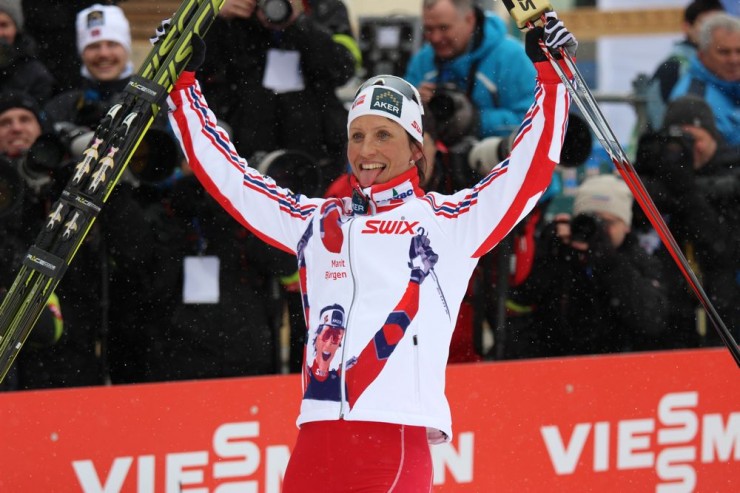
    “They’d just run the men’s heat right after the women’s heat. Instead of maybe ten minutes of recovery we got maybe six minutes, which is kind of a big difference if you’re in that last quarterfinal,” Newell said.

    The rounds leading up to the final also featured more carnage than there has been this season. Øystein Petterson (NOR) fell in qualifying and didn’t even make the heats. There were multiple crashes in the first semifinal; Alexander Panzhinskiy (RUS) fell mid-race, and Nikita Kriukov (RUS) also went down and took Hattestad with him. In the resulting confusion Mikhail Devjatiarov (RUS) interfered with Jönsson, for which Devjatiarov was penalized and relegated to sixth in the heat.
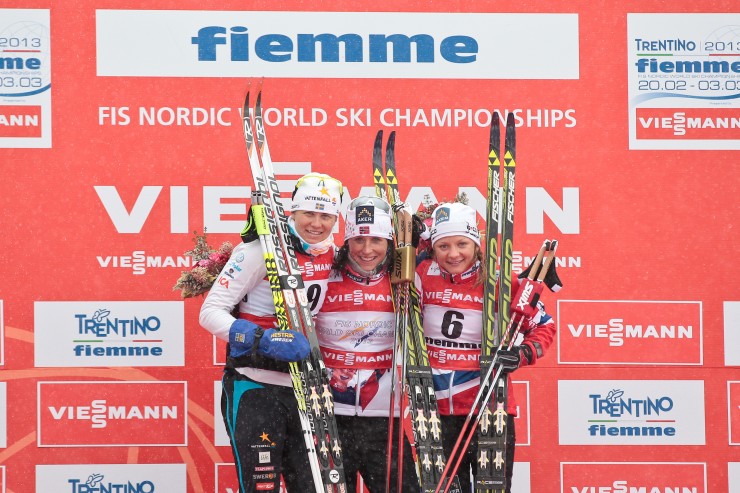
    The high crash rate might have had something to do with the stress of looming World Championships team selections. Petterson, for instance, has likely ruined his Val di Fiemme chances. “I’m just really upset right now,” he told Norwegian broadcaster VG Nett. “I do not train twice a day to disappoint myself as I did today.”

    But for all the early mishaps, the final went comparatively smoothly. The Scandinavians charged hard from the start and quickly created separation on Tscharnke and Newell.

    “I still thought I had a good shot at the podium at least, but then when we started the final those guys took it out hot for sure,” Newell said. “Even on our first lap, it definitely took the wind out of myself and Tim. We were both struggling pretty bad in the final coming from the heat before.”

    Golberg, Jönsson, Peterson and Brandsdal charged hard, vying for an advantageous position on around the corners. When Golberg began to create separation over the last hill before the stadium, Peterson thought for sure the race was over.

    “I was a bit out on top and did not think I could come up with…Golberg again,” Peterson said to Sweski.com.

    He and Jönsson would not give up, however, and the pair inched forward on either side of Golberg to finish within half a second of each other.

    “It was nice to throw out a foot in front of Emil’s little foot,” Peterson joked in the press conference later.

    Jönsson was disappointed to lose by such a small margin, but was good-natured about the loss. “Of course I’m not satisfied, I’m not even [the] best Swedish,” he said, laughing. “I am happy for [Peterson] to take his first victory of the season.”

    Golberg, so close to earning his first World Cup gold at age 22, felt capable of winning on Saturday but just didn’t have the 100-meter closing speed.

    “I felt very sharp today,” Golberg told the NRK. “The last 50 meters was a bit too long, unfortunately.”

    Jönsson went home to Sweden on Saturday directly following the race, citing the need to rest and recover from a recent knee injury.

    “The body is tired after the Tour de Ski and the stitches [are] still in my knee after I fell and then completed the race in Oberhof during the Tour,” he told Sweski. “There is no real harm, but it [hurts], especially when I go freestyle.”

    * * *

    Andy Newell in the 15 k classic mass start in Falun, Sweden.
    Andy Newell (USA), shown here in classic action last season, finished sixth in Liberec for his third A-final appearance of the season.

    For Newell, who won his quarterfinal and advanced to the finals as a lucky loser in the semis, Saturday’s result proved his classic sprinting is on par with the skate results he’s produced this year. Sixth place was his best classic sprint result in three seasons.

    “I’m happy to know that I can make the final in both skate and classic sprints this year, which is a good feeling,” Newell said.

    To get there, he had to successfully navigate some aggressive skiing on the part of his competitors. Anssi Pentsinen (FIN) cut him off around a corner in the semis, and to avoid colliding with him Newell reached out and tapped him to keep their skis a safe distance apart.

    “I was wondering if anyone saw that,” he laughed. “Yeah he totally squeezed in on me on the corner and I had to put a hand on him. I was hoping that the cameras didn’t catch it, because every time you do that you can definitely run the risk of getting disqualified.”

    The move may have saved his race. Multiple crashes in the first quarterfinal meant that the lucky losers would likely come out of Newell’s heat, so he knew that a top-four would give him a good shot at moving on.

    “We’d seen the heat before and knew they were a little bit slower because there were some tangle ups, so…we were just fighting for those top four spots.”

    Racing resumes in Liberec on Sunday with a freestyle team sprint.

    Results.


  • U.S. Nationals Classic Sprint Video – Senior Men

    U.S. Nationals Classic Sprint Video – Senior Men

    MIDWAY, Utah – Round by round the senior men displayed both their impressive power and tactics as the nations best battled their way through to the A-Final.  Watch how things unfolded.

  • U.S. Nationals Classic Sprint Video – Senior Women

    U.S. Nationals Classic Sprint Video – Senior Women

    MIDWAY, Utah – The most exciting finish of the first day of racing at the 2013 U.S. Nationals was without-a-doubt the Senior Women’s A-Final.  Check out how the rounds played out for the women.

  • U.S. Nationals Classic Sprint Video – Junior Women

    U.S. Nationals Classic Sprint Video – Junior Women

    MIDWAY, Utah – With many of the top junior women advancing from the qualification into senior women’s heats the rest of the juniors battled to be crowned best of the rest.  Check out how the A and B Finals played out.

  • U.S. Nationals Classic Sprint Video – Junior Men

    U.S. Nationals Classic Sprint Video – Junior Men

    MIDWAY, Utah – As the shadows grew long and temperatures fell, the junior heats intensified yesterday afternoon.  In the men’s race it was Sun Valley’s Kevin Bolger that gapped the rest of the A-Final to earn top honors.  Here is a look at the action in the finals.