Tag: classic team sprint

  • Cyr and Ritchie faked it til they made it – to the best classic team sprint finish in Canadian men’s history

    Cyr and Ritchie faked it til they made it – to the best classic team sprint finish in Canadian men’s history

    During the opening weekend of World Cup racing in Ruka, FIN back in November 2021, Canada’s Antoine (Tony) Cyr popped an 11th place finish in the first distance race – a tough 15-kilometre classic won by Finland’s Iivo Niskanen, now a gold medalist in the event. 
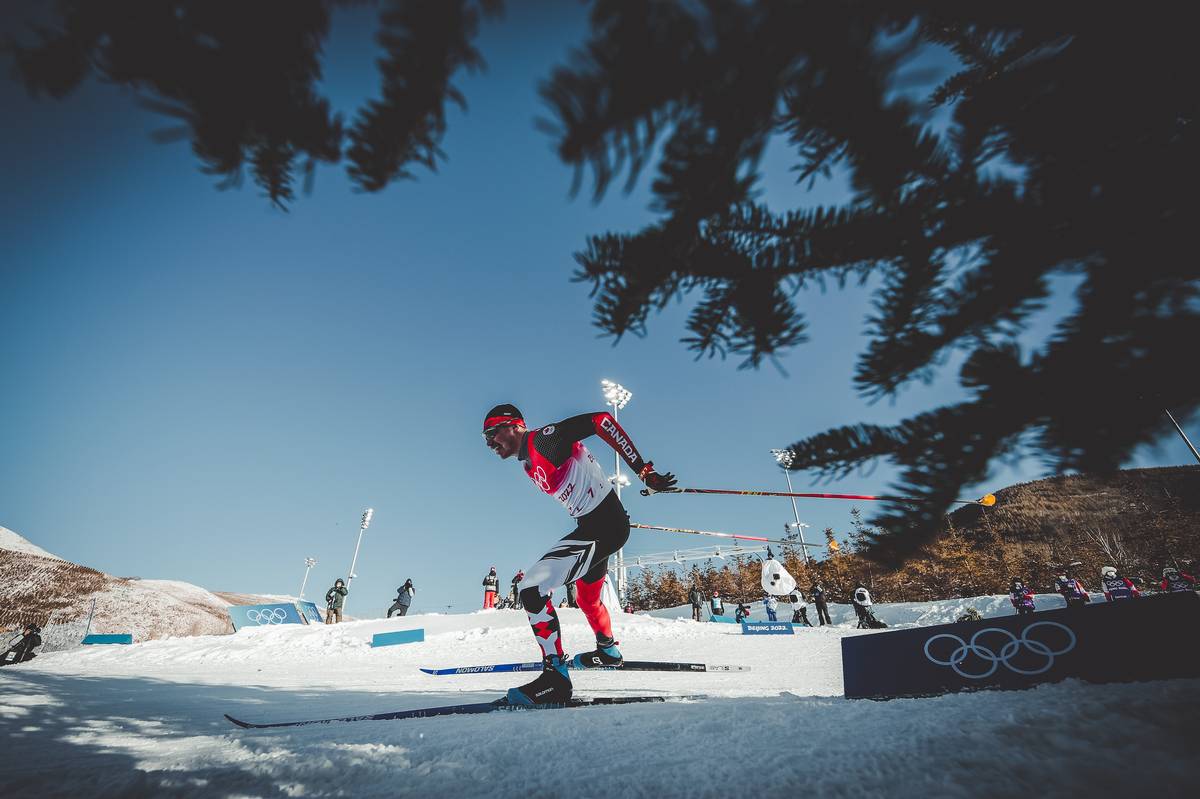
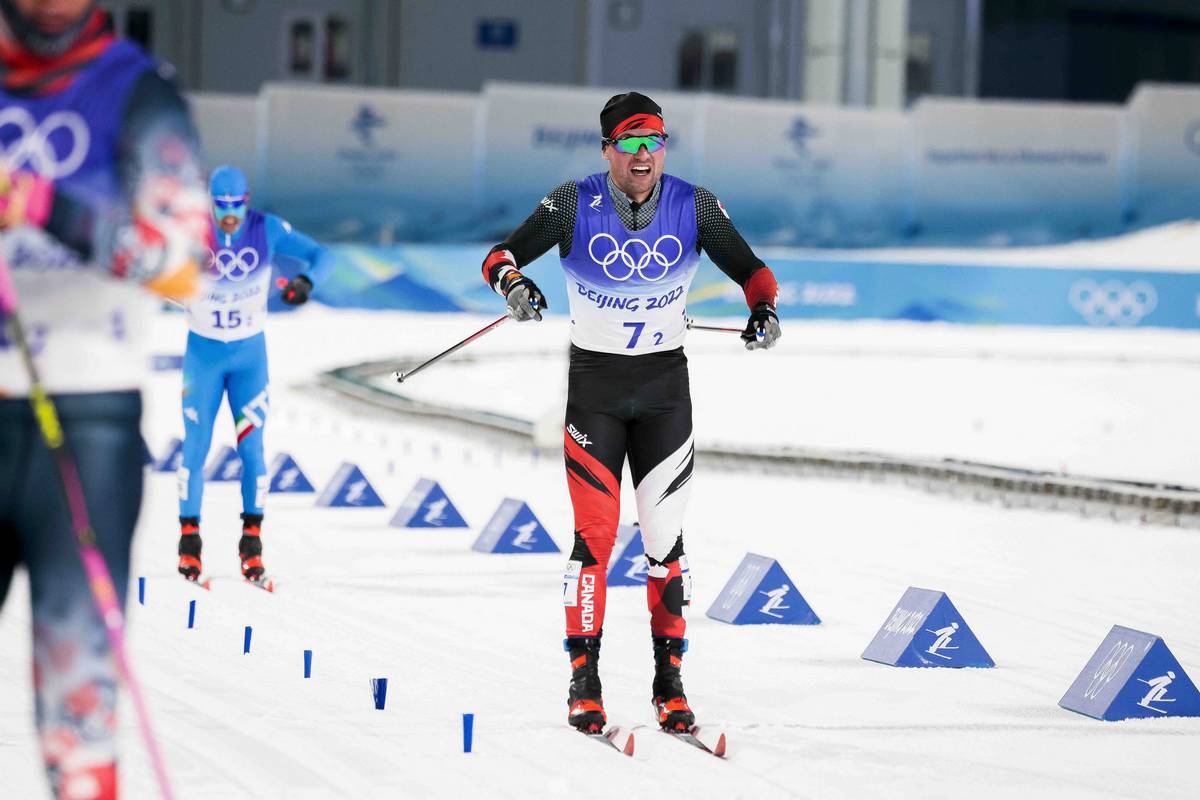
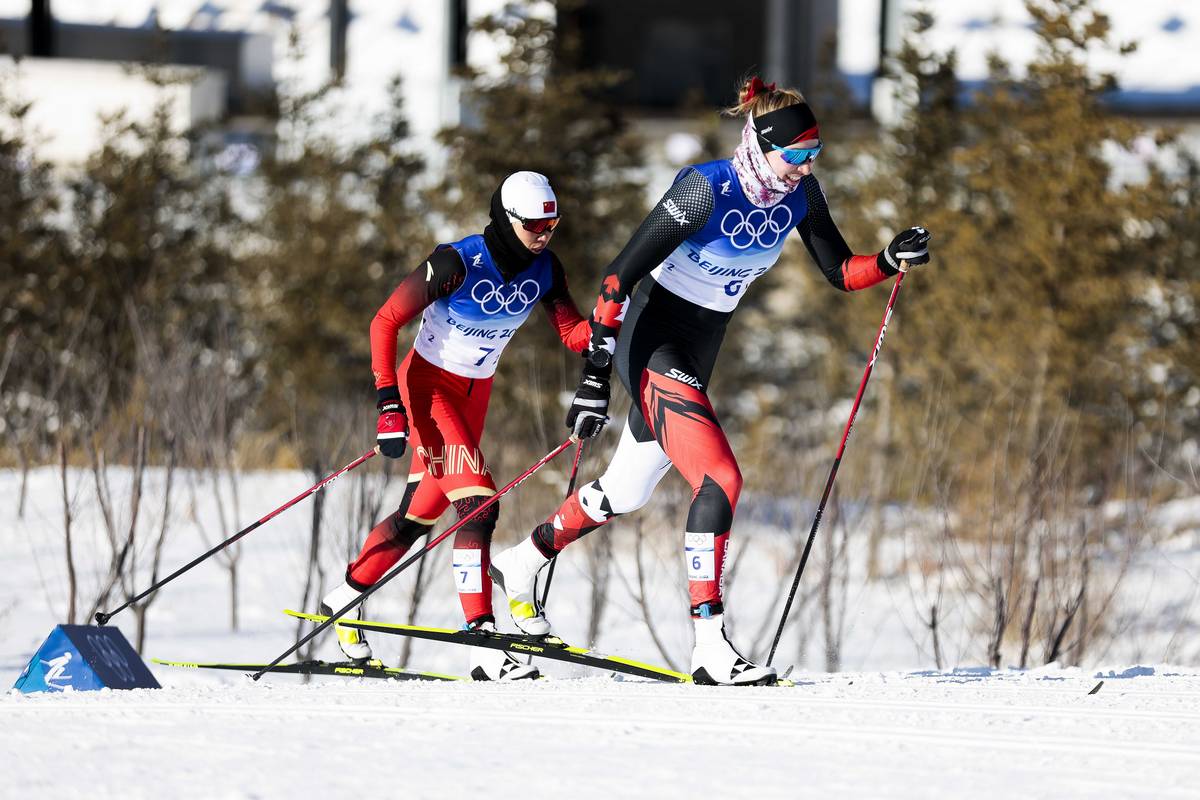
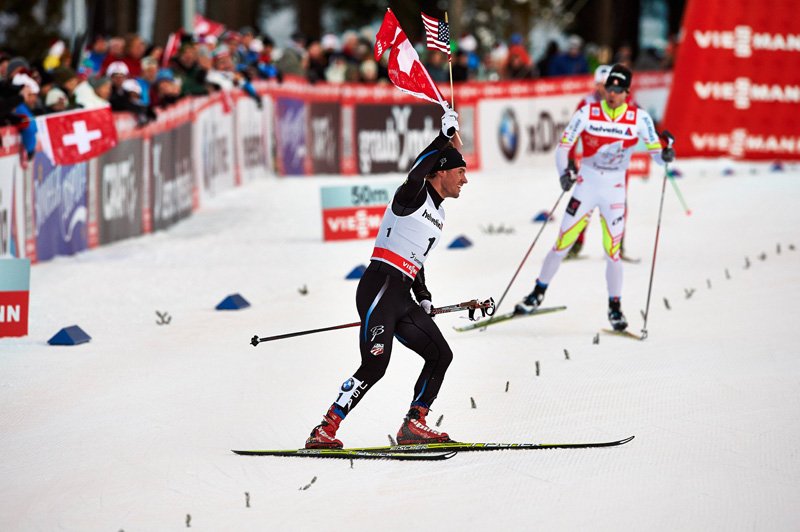
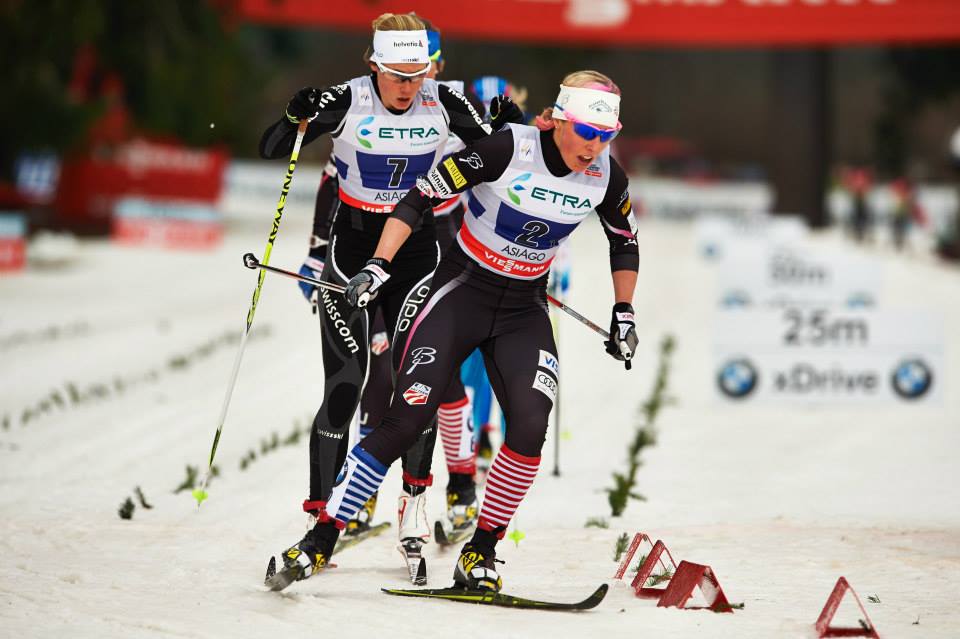
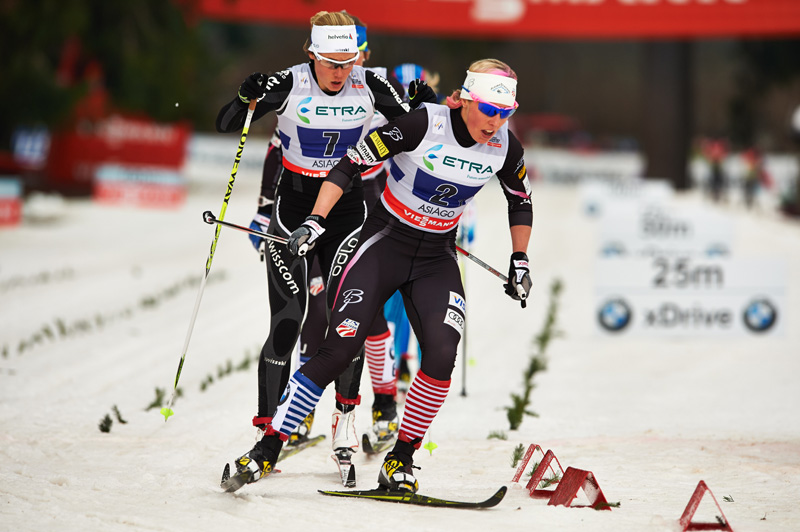
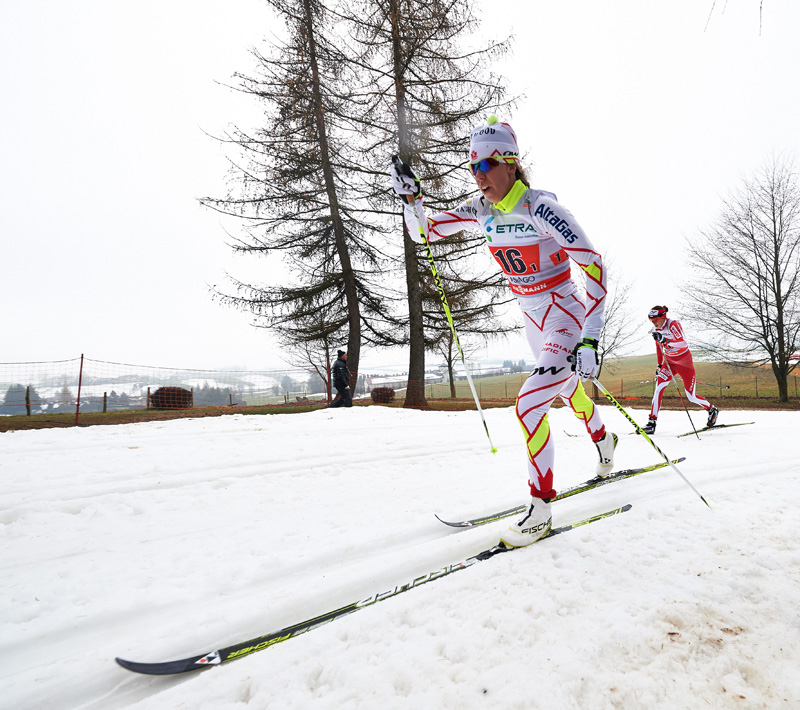
    Antoine Cyr (CAN) pushes around a the curve as he helps the Canadians to 5th in the classic team sprint during the 2022 Olympics. (Photo: NordicFocus)

    After the race, Cyr wrote to FasterSkier that the course had suited him with its long uphills and frigiddig conditions; temperatures were near zero degrees Fahrenheit ( -17 C). “Cold weather is good for us Canadians,” he said. Cyr repeated his strong showing in Ruka the next day, placing 12th in the skate pursuit. 

    Flash forward through a number of subsequent racing highs and lows, and Cyr found himself in similar circumstances: on classic skis in single digit temps, with an arduous course designed to test the mettle of the best in the world.

    Cyr was awaiting one final tag in the Olympic team sprint from partner Graham Ritchie, still amidst the lead group of eight teams, racing with some of the top names in the sport toward an Olympic medal. After receiving the tag, Cyr did his best to keep Canada in contact with the leaders, who began to surge, breaking apart this lead group as the list of medal contenders dwindled to three teams. 

    Along with William Poromaa of Sweden, Cyr lost contact with the top-three, tagging Ritchie for the final leg of the race in fifth, a position Ritchie held through the finish to cross the line in 19:45.3, only +22.3 back from the Norwegian gold medalists Johannes Høsflot Klæbo and Erik Valnes

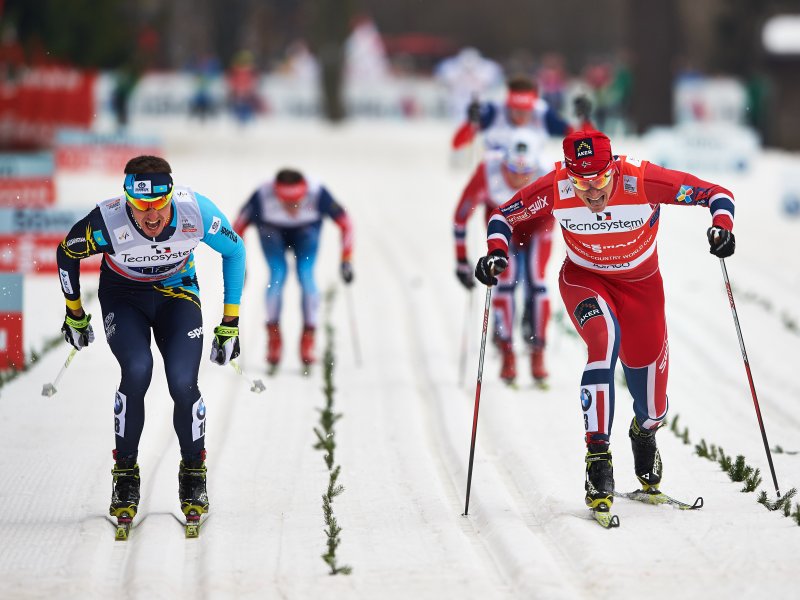
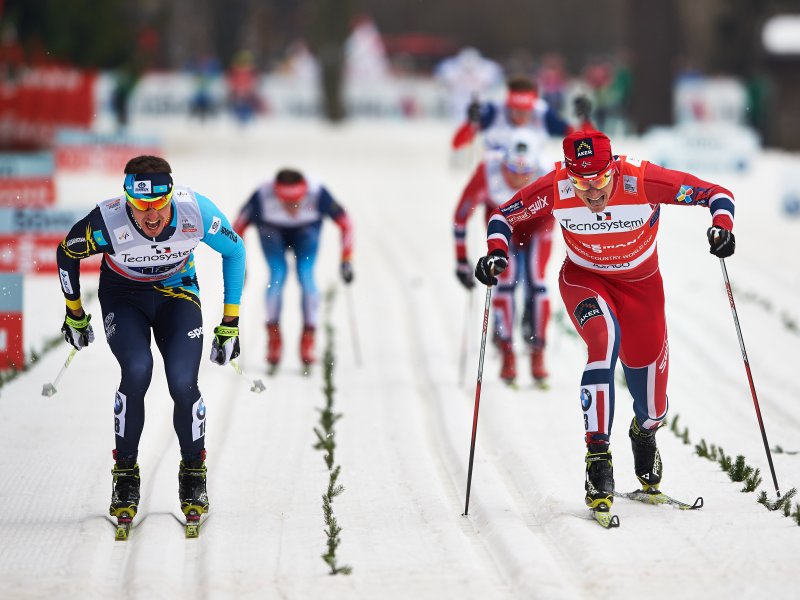
    Graham Ritchie (CAN) double-poles toward the finish of the men’s team sprint. (Photo: NordicFocus)

    It was the best men’s result in a classic team sprint in Canada’s rich Olympic history. At the event’s debut in the 2006 Torino Games, which was competed classic, Devon Kershaw and George Grey took 11th in the team sprint for Canada, while Beckie Scott raced with Sara Renner to win a silver medal. Kershaw lined up with Alex Harvey at the following Games in Vancouver in 2010 for the skate team sprint, just missing the podium in fourth.

    “This is so incredible to pull this off and throw down such a good result for Canada,” Cyr told Nordiq Canada after the race. “It’s overwhelming, especially to do this with such a good friend like Graham. It is really special.”
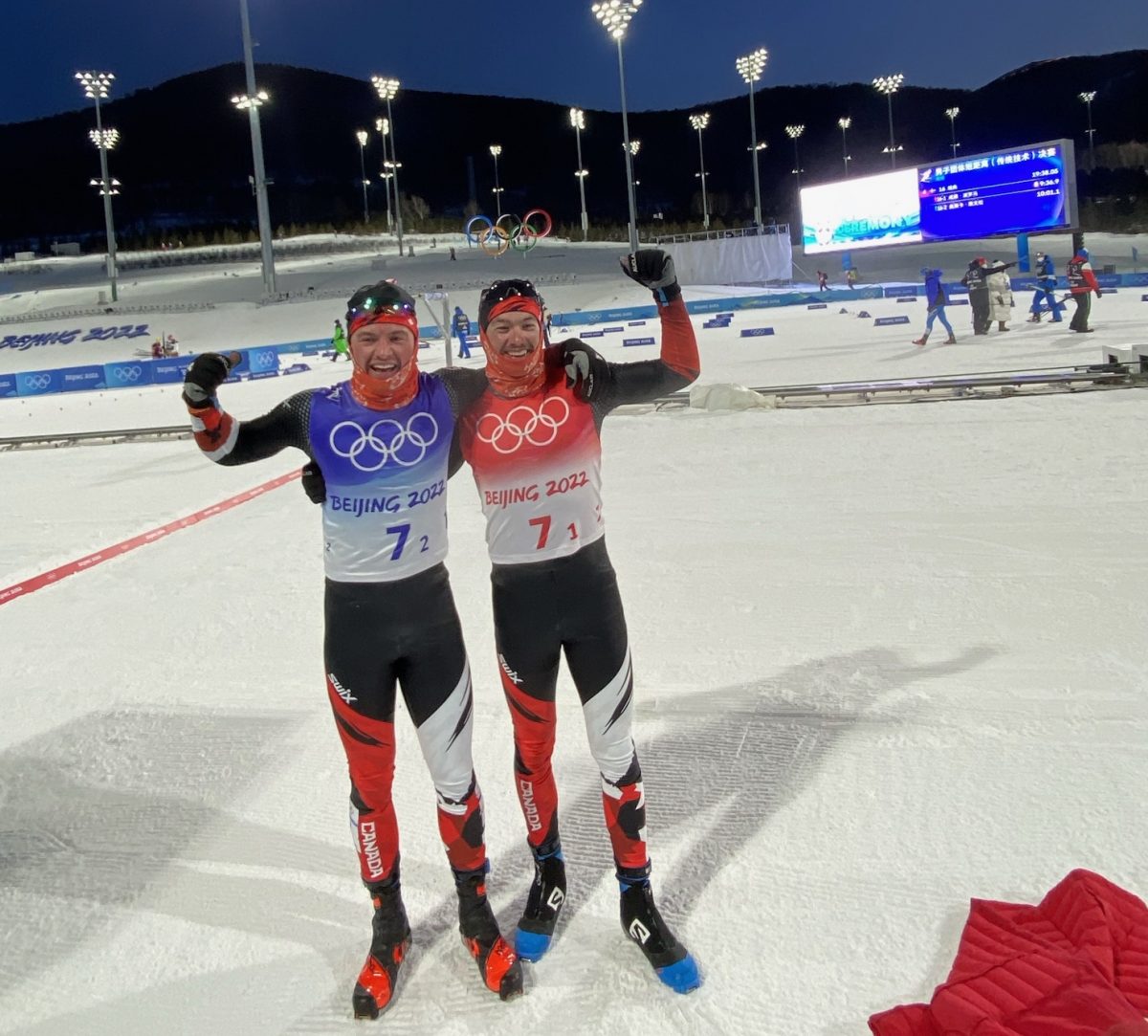
    Graham Ritchie and Antoine Cyr celebrate 5th place in the classic team sprint during the 2022 Olympic Winter Games. (Photo: Laura Leclair)

    Both 23-years-old and competing in their first Olympic Games, the Canadians had been looking for more than the results they’ve had thus far in Zhangjiakou. A pre-Olympic camp at a similar elevation in Sovereign Lake/SilverStar reportedly went well, and tight COVID safety protocols had kept the athletes healthy, allowing them to safely enter the Olympic bubble. 

    While the opening races ultimately did not feature the Canadians vying for top-10 finishes, Cyr and Ritchie could look back on the 2021 World Championships in Oberstdorf, Germany, where they took seventh for Canada in the freestyle team sprint. 

    Ritchie told FasterSkier in the mixed zone that they knew from this experience that they would need to be in the top-four in the semifinals to advance safely into the final. They had done it in the World Champs and they believed they could do it again in the Olympics. 

    “We know we had it in us, we just knew we had to race smart and race hard and have a good day,” Ritchie explained. “So [I’m] super proud of Tony and me to be able to work together and use our experience to push through that semi and end up giving our shot at a good race in the final.”

    Graham Ritchie (CAN) races at the front of the pack at the start of the men’s classic team sprint in Zhangjiakou. (Photo: NordicFocus)

    So far in the Games, Cyr has raced every event, but had not cracked the top-30 individually. Ritchie sat out the skiathlon and 15 km classic, and finished as the top-Canadian in 34th in the freestyle sprint, just off the time needed to make the heats. Racing the first two classic legs of the 4 x 10 km relay, Canada finished 11th out of 12 teams that completed the race. It’s not the makings of an underdog story about a small nation in a rebuilding phase after a string of notable retirements that one might drum up.

    “I think we put every other race in the back of our minds and just knew we [could have] a good day,” Ritchie told FasterSkier on the team’s confidence in spite of sub-optimal results. “Tony is an exceptional classic skier. And myself and him are both – we know we can pull off a sprint. So we really put those other races behind us and were only focused on today…

    “But then I mean to be on the last lap, with the podium right there,” Ritchie continued dreamily, as if still feeling the thrill. “That was pretty eye opening.”  

    Though he acknowledged the challenge of facing the likes of Klæbo, Joni Maki (FIN), and Alexander Terentev (ROC) in the last lap, who eventually took the gold, silver, and bronze medals, respectively, Ritchie shared that the possibility of a Canadian medal crept into his mind in the final lap. Moreso, it planted a seed for what might be possible in the future. 

    “I mean, during the race, I definitely thought about it. Like you could see it right there… And I mean, we’re both 23 years old. We’ve got a lot of racing left in us. So yeah, that was a big race for us. And we’re really looking forward to seeing what we can do in the future here for Canada.” 

    In the mixed zone, World Cup competition coach Erik Bråten also spoke to the team’s ability, particularly in Cyr’s case, to put aside the early results of the Games and take on a “fake it till you make a kind of attitude today. And just push through it.”

    Speaking to the difference makers that led to this outstanding result, Bråten projected that Cyr had skied among the “top-three technically”, particularly when striding up the 400 meter A-climb, which rose 30 vertical meters to the high point of the course midway. 
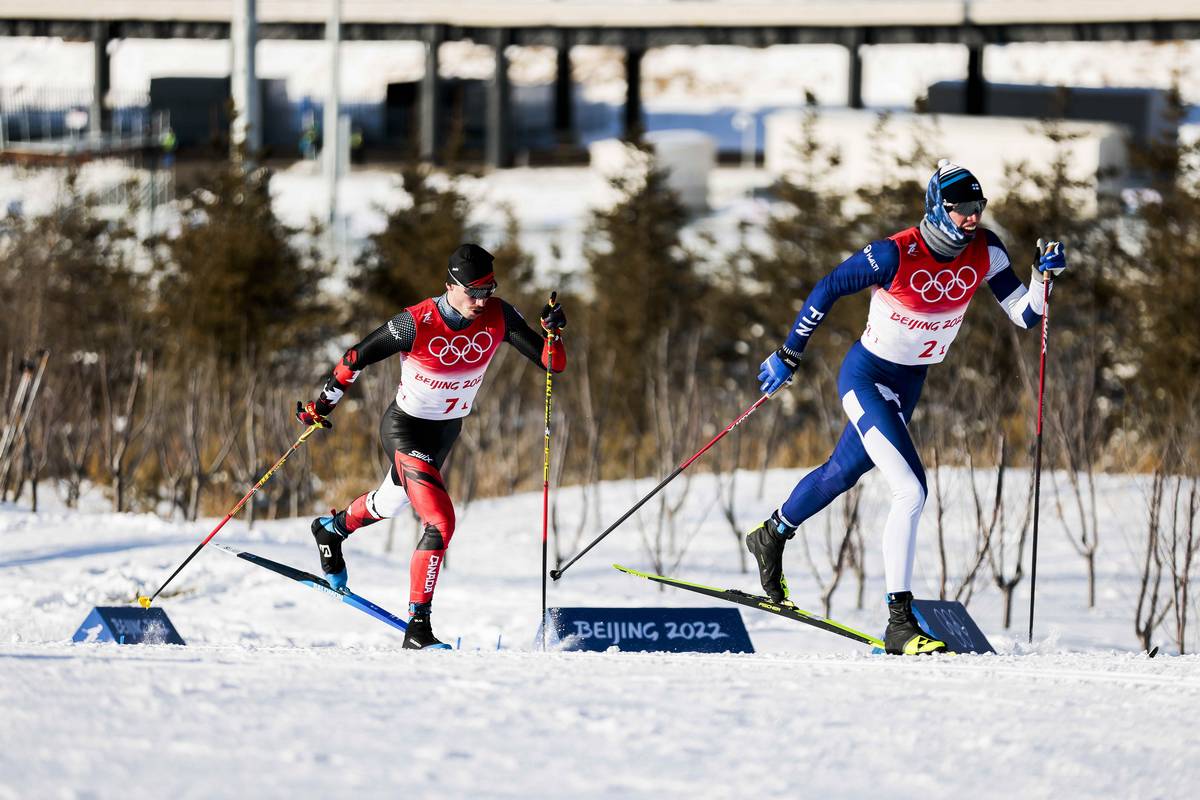
    Antoine Cyr (CAN) matches Iivo Niskanen (FIN) up the climb during the classic team sprint in Zhangjiakou. (Photo: NordicFocus)

    Though Cyr had raced the odd legs of the team sprint during the World Championships and was second in the classic sprint final during the Canadian Olympic Team Trials in January, having also won both the freestyle sprint and the 15 km classic earlier in the trials, Bråten deliberated the matchup he would enlist for the team sprint until official selections were due.

    “For me, this team was pretty clear before we went here. But Tony’s been struggling a little bit. And Graham hasn’t been his maximum self here either, but I felt like he did decent enough in the [freestyle sprint]. I know Tony – the potential he has. And I felt like –  we plan for success. And I think on the best day, he was the right man for the day. We don’t plan for people to have a bad day. And he had an amazing day. He showed us what he could do out there. So I just think everything came together in a perfect way.”

    This coming together means more than just a new best Olympic result in the classic team sprint for the Canadian men. Bråten stated emphatically that it is a result that could spark a return to international success for Canadian cross country skiing, elevating every level of the development pathway.

    “I think it’s extremely important. It’s important for all the athletes back home in Canada, seeing what’s possible. It’s important for coaches, the coaches of these athletes, knowing what’s going on, knowing what it takes to get this result. And they’re so young, they can do even better next year, and so on. So it’s just a trickle down effect that can be quite big both financially, but also, of course, information and knowledge wise. They know what they did to get to this level. Well, that can be shown down [the development pathway] as well.”  

    That said, feeding the development pipeline and supporting the athletes within it requires resources. While some aspects of elite level cross country skiing are relatively low cost, Canada is limited by its budget in what it can do for athletes aiming for the top.

    “The man on the boards [is] the most important person,” Bråten said simply. “Any female or male who wants to be good, the most important thing you do is just get out there and do the work, which is free. Of course, there’s equipment involved, but the work is mostly free… However, there’s so much behind this. What do you put on the boards? Which boards do you have in the first place? Are you getting the coach, physiologists, ski support you need? And  we’re good enough to do this, apparently, but…”

    Bråten trailed off before gravely stating, “One Norwegian athlete is the same budget as our entire team.”
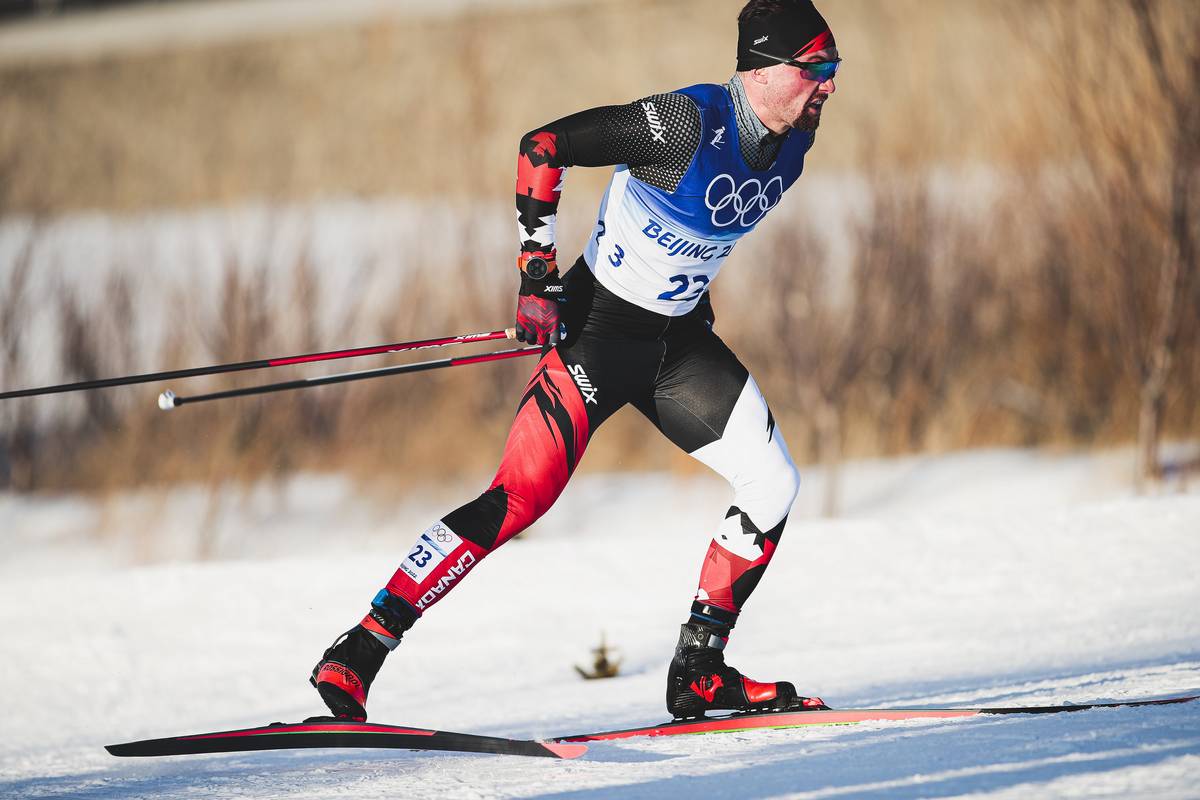
    Graham Ritchie skis to 34th in the freestyle sprint qualifier during the 2022 Beijing Olympic Games. (Photo: NordicFocus)

    “It’s tough,” he continued. “So, for sure, we wouldn’t hurt getting a little bit more financial support.”

    Ultimately, he has confidence in the team he is supporting, and in particular in Cyr and Ritchies outlook heading into the upcoming 2023 World Championships, which will be held in Planica, Slovenia beginning in late February.

    “There’s no reason they can’t fight for at least a medal, and why not just go gold if you’re going to go for bronze?”

  • The Devon Kershaw Show: Team sprint showdown in Zhangjiakou

    The Devon Kershaw Show: Team sprint showdown in Zhangjiakou

    Wednesday’s Olympic team sprint offered another thrilling set of races at the venue in Zhangjiakou — we’re back to break down an epic performance by the German women, a critic-silencing race from Norway in the men’s event and a U.S. women’s result that left a medal just out of reach.

    Thanks to everyone for sending in questions and feedback — we’re trying to keep our heads above water on the homestretch here, but you can be sure Devon will still have plenty to say post-Games. In the meantime, you can get us at devon@fasterskier.com and nat@fasterskier.com.

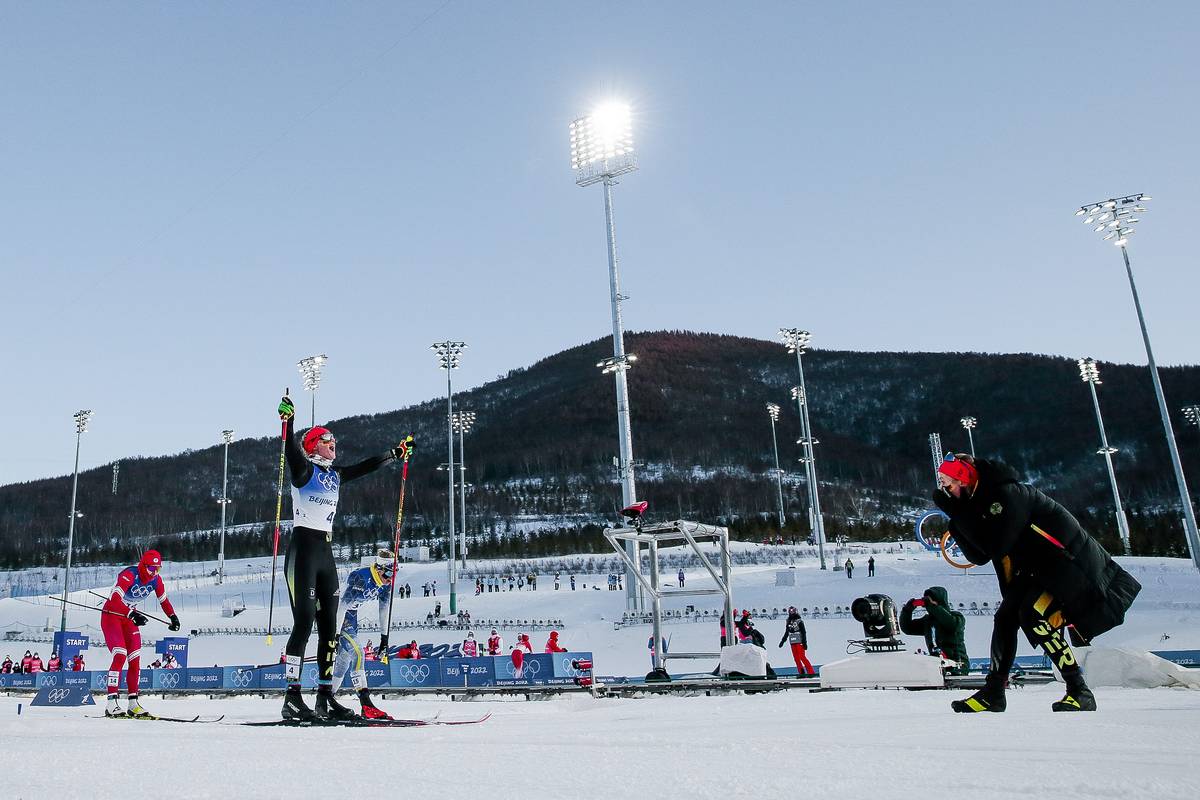
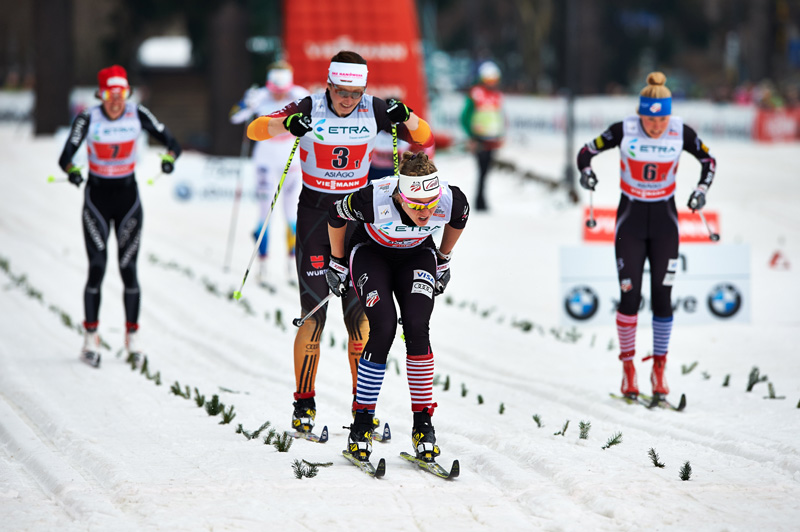
    Katharina Hennig and Victoria Carl win gold for Germany in the classic team sprint. (Photo: NordicFocus)
  • Germany outsprints Sweden and the ROC for gold and a second team medal; Brennan and Diggins fifth for USA

    Germany outsprints Sweden and the ROC for gold and a second team medal; Brennan and Diggins fifth for USA

    This World Cup coverage is made possible through the generous support of Marty and Kathy Hall and the A Hall Mark of Excellence Award.  To learn more about A Hall Mark of Excellence Award or to learn how you can support FasterSkier’s coverage please contact info@fasterskier.com.

    The team sprint: two skiers racing three laps each at roughly 1.5-kilometers a piece with a long climb thrown into the middle of the course and temperatures in the single digits Fahrenheit. It boils a sport that already requires both power and endurance down to its essence.

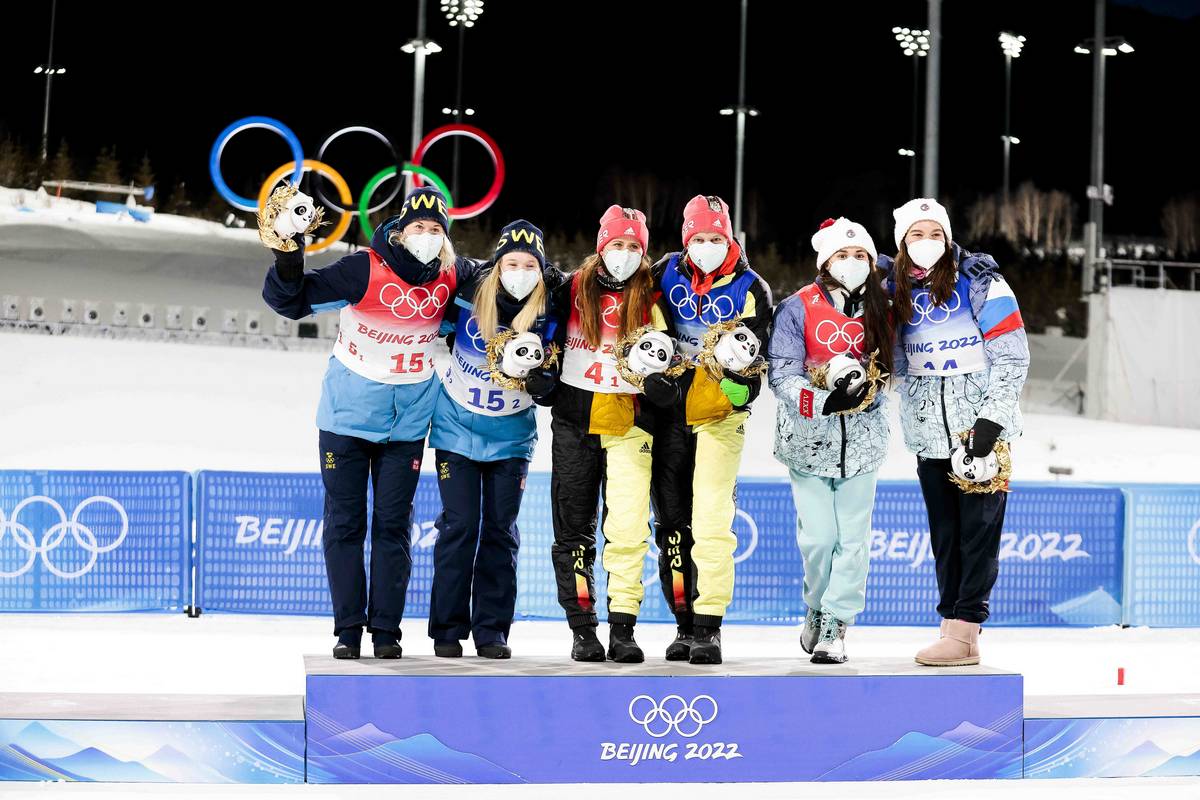
    Riding the high of their silver medal in the women’s 4 x 5 k relay, the duo from Germany, Katharina Hennig and Victoria Carl, won a thrilling sprint finish to decide the medals, collecting gold in a time of 22:09.85. To take the stop spot, the anchor, Carl, out-sprinted the Swedish individual freestyle sprint gold medalist, Jonna Sundling, in the final meters to win by just 0.17 seconds, while the Russian Olympic Committee’s Natalia Nepryaeva crossed just behind in third (+0.71).

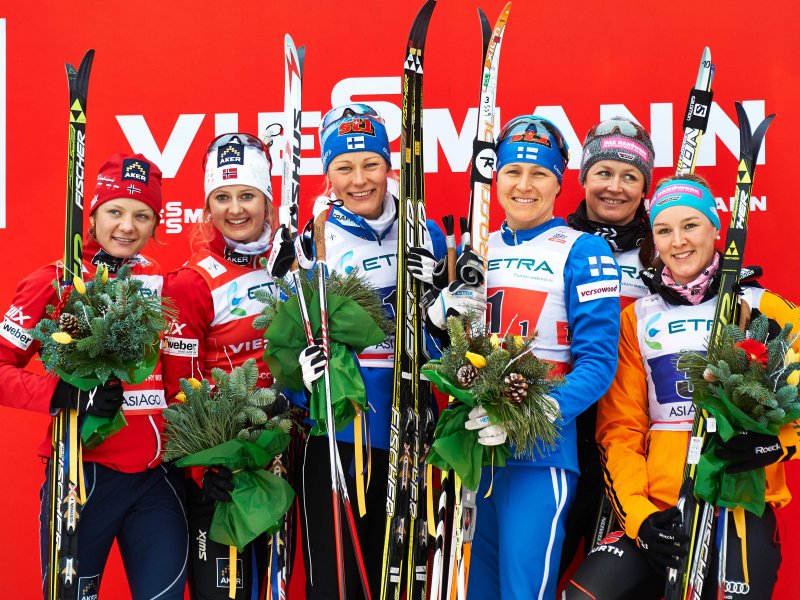
    Sweden, Germany and Russia share the women’s classic team sprint podium.
    (Photo: NordicFocus)

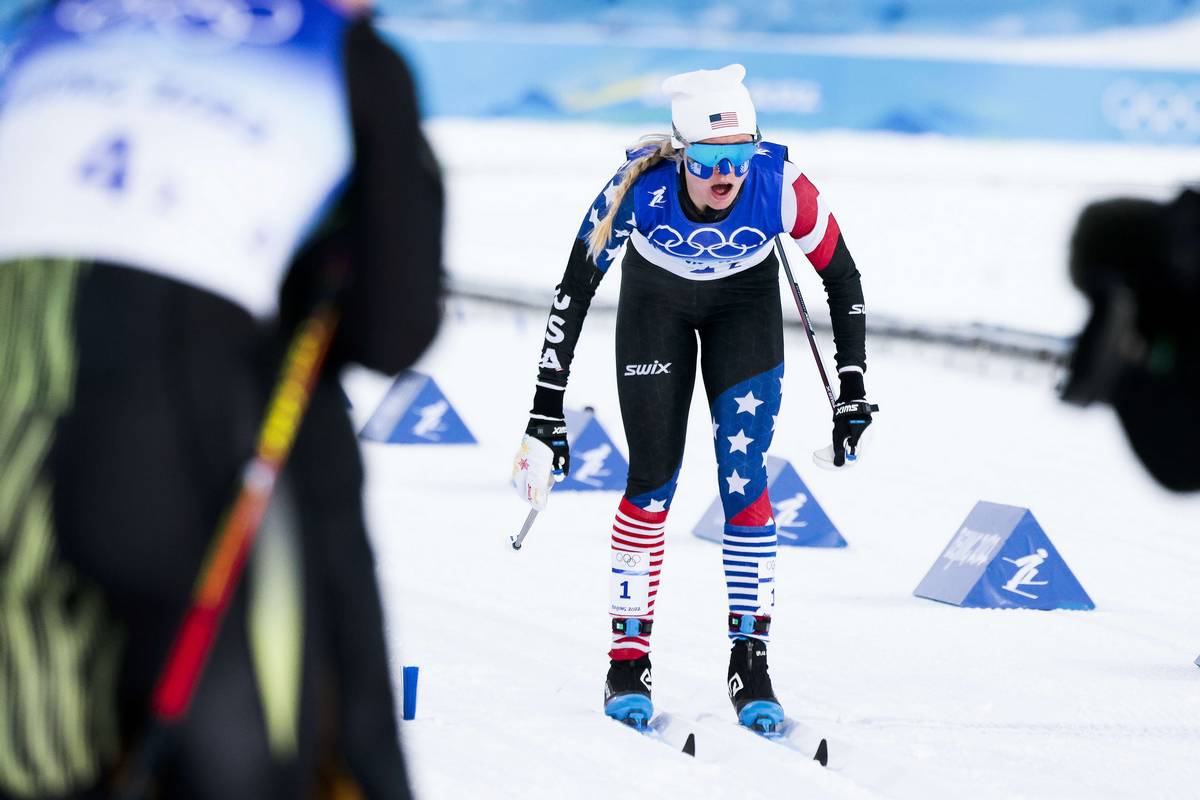
    After holding strong in medal contention throughout the first five of six laps, the American pair of Rosie Brennan and Jessie Diggins lost contact with the leaders in the final leg, crossing the line fifth (+12.93) behind Finland in fourth (+3.86).

    Now, let’s take a step back.

    There is, perhaps, no reminder needed that USA won the team sprint in 2018; Kikkan Randall and Jessie Diggins collected the first Olympic medal for the United States in cross country skiing – a gold, no less – since Bill Koch took silver in the 30 k classic in 1976. However, the team sprint in PyeongChang was raced freestyle, whereas today’s team sprint would be held in classic. 

    “I’m not trying to compare today to four years ago,” said Diggins in the mixed zone after the race. “It’s a different course, different altitude, different technique, like literally nothing is the same and, and that’s okay. I think today, I was going out there and skiing for Rosie and skiing as hard as I could and as best I could… but I’m really proud of this race and proud of giving it our best fight.”

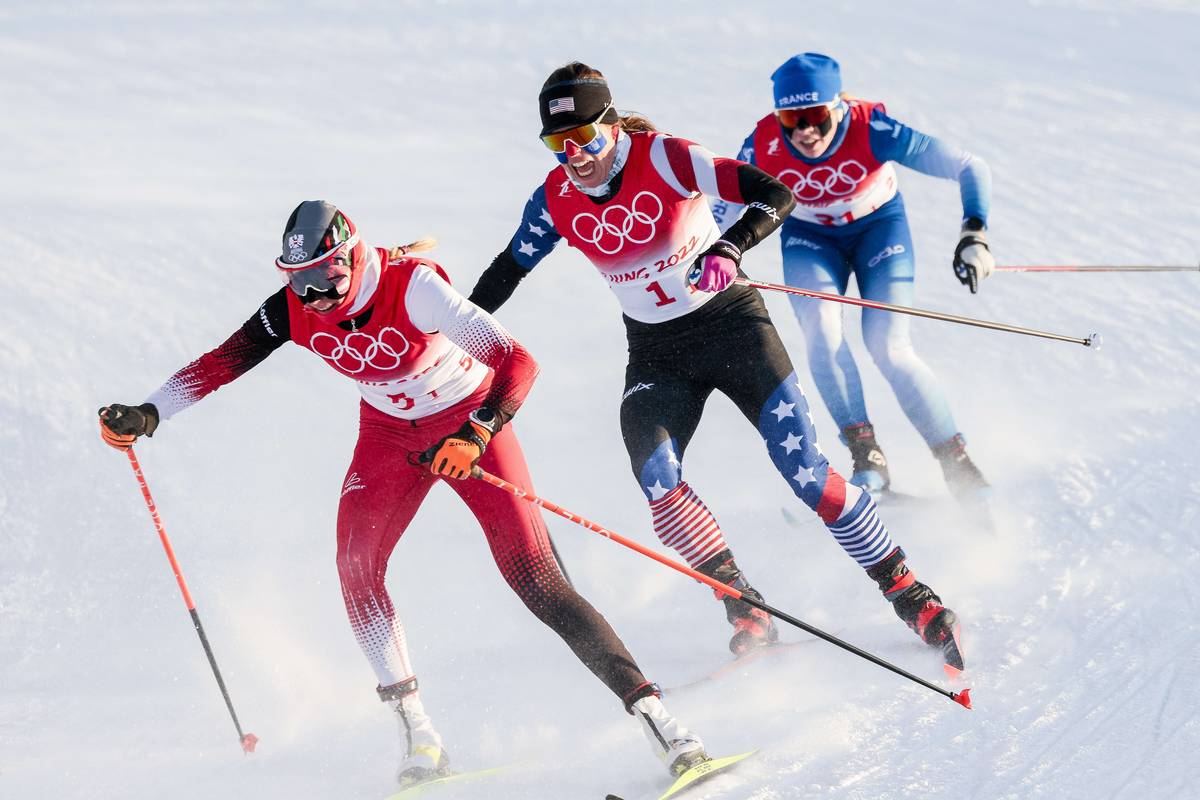
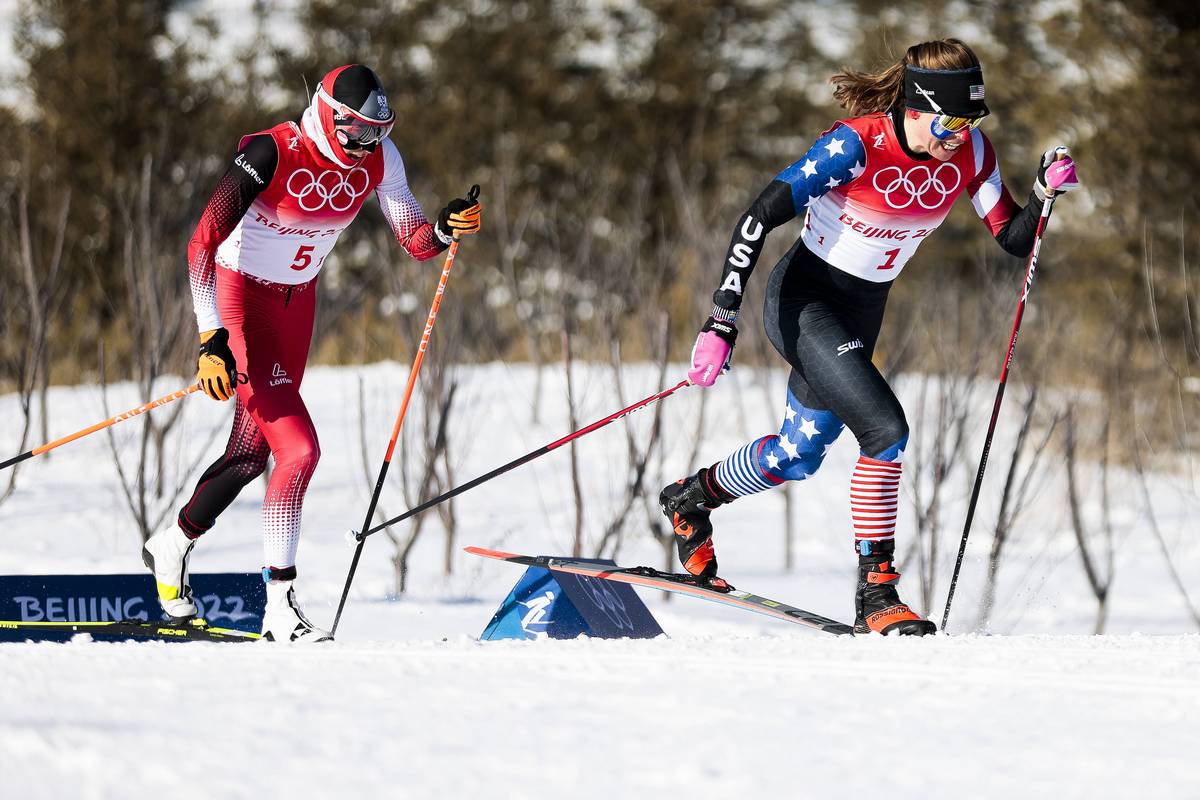
    Rosie Brennan helps the Americans finish second in the first team sprint semifinal, automatically advancing to the final. (Photo: NordicFocus)

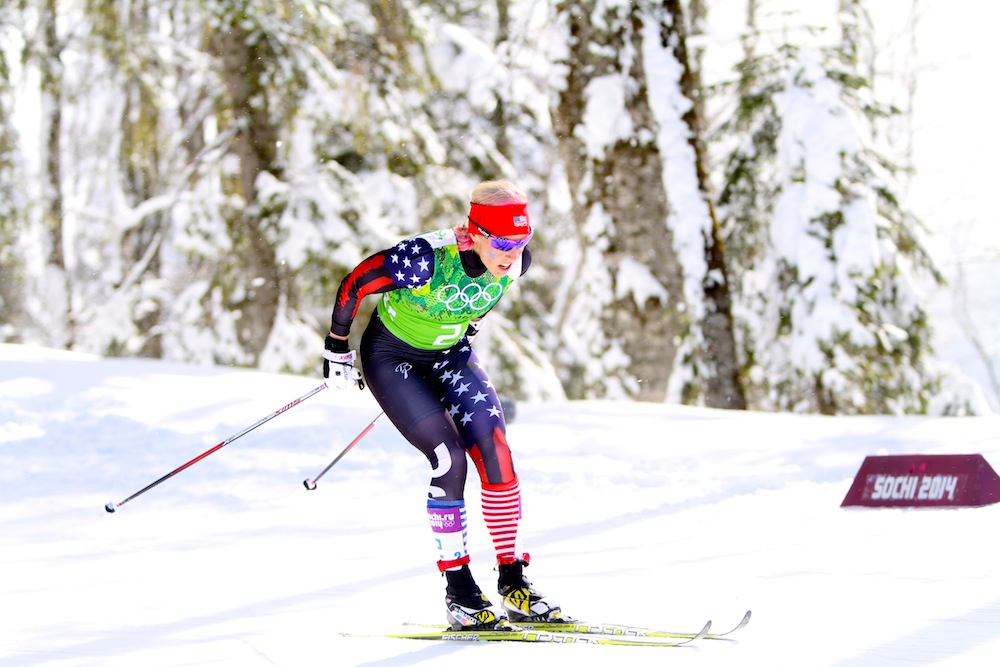
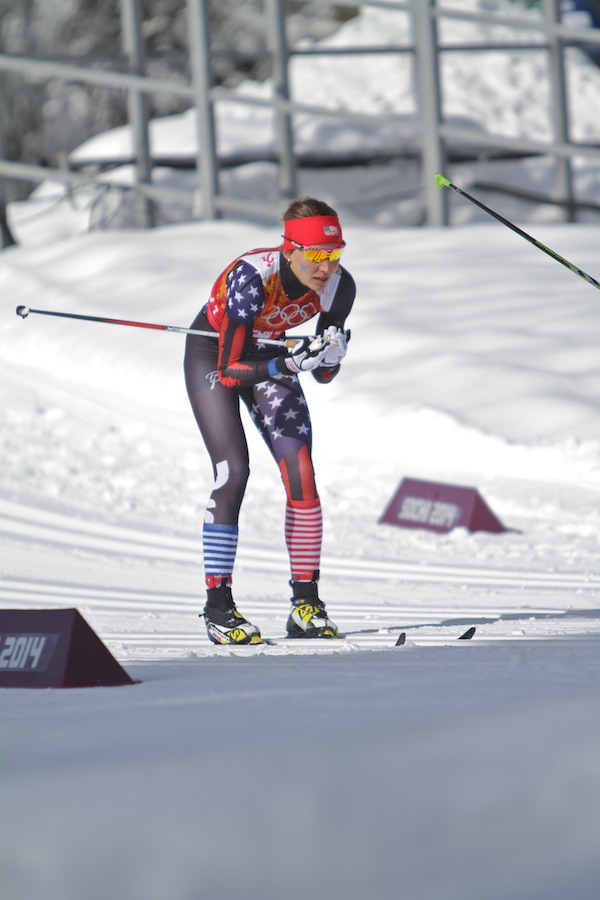
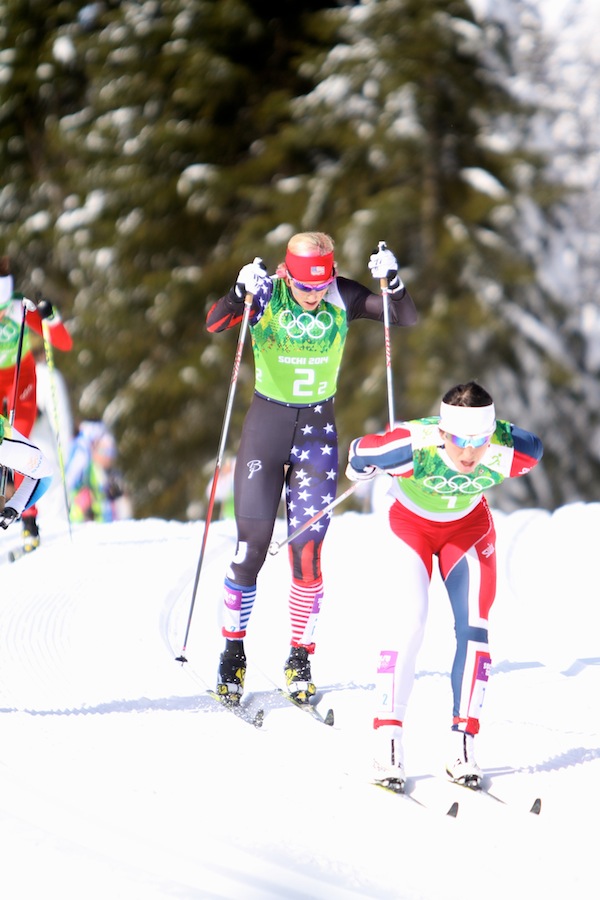
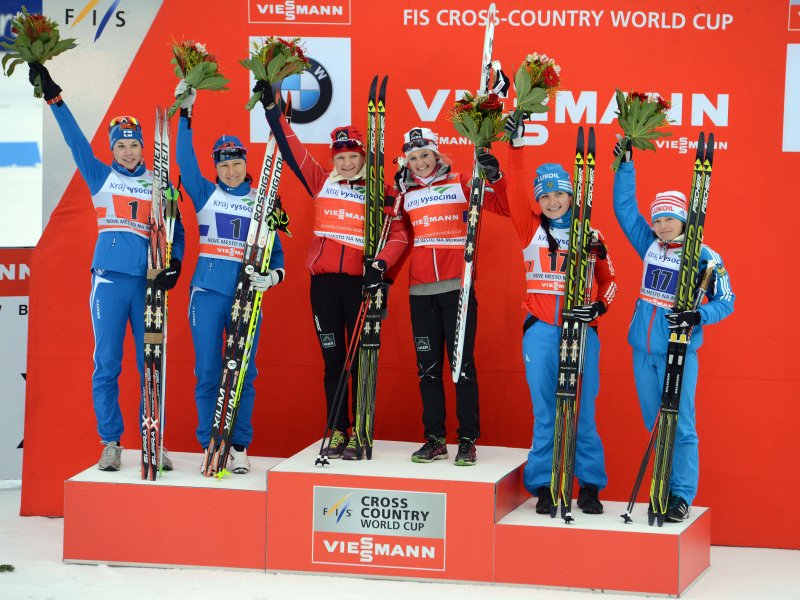
    We have to look back eight years for a classic team sprint at the Olympic Winter Games, to the 2014 Games in Sochi. Norway took the gold that day in dominant fashion ahead of Finland and Sweden, who were stretched behind by roughly ten seconds a piece. Only one of the six women on the podium returned to the Games in 2022, again making the team sprint roster: Finland’s Kerttu Niskanen. The American pairing of Sophie Caldwell (now Hamilton) and Kikkan Randall were sixth in Sochi, +35.06 back on the Norwegian winners.

    In the intermediate FIS World Championships, the Americans finished fifth both years, racing Brennan and Sadie Bjornsen (now Maubet) in the freestyle competition in Oberstdorf, Germany in 2021, and pairing Bjornsen with Diggins for the classic team sprint in Seefeld, Austria in 2019. In Oberstdorf, the Americans missed the podium by roughly 2.2 seconds, finishing 2.8 seconds behind the winning team from Sweden. In 2021, they missed the podium by an equivalent margin, this time finishing 5.8 seconds back in the overall standings, again to Sweden. It’s a mark of consistency and depth across techniques for the American women. 

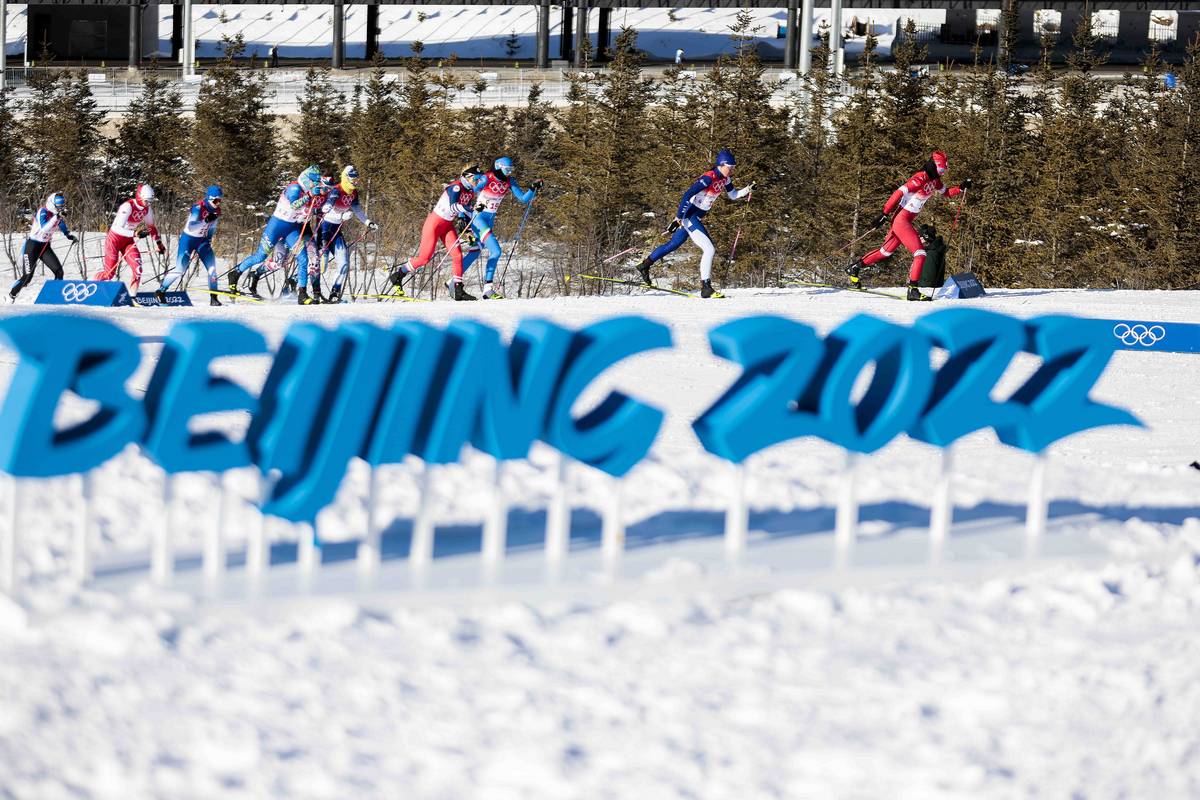
    Yulia Stupak (ROC), Kerttu Niskanen (FIN), and Katerina Janatova (CZE) lead the way early in the women’s classic team sprint semifinal. (Photo: NordicFocus)

    To make the team sprint final, each team must finish in the top-two of semifinal A or B, or be within the next six fastest times from either heat. The U.S. was second to Germany (+4.03) in Semifinal A, while the ROC won the second semi in a close finish with Finland in second (+0.35) and Sweden third (+1.0). Austria and Switzerland also advanced from the first semi, with Sweden, Norway, France, and Poland filling the remaining spots from semifinal B. 

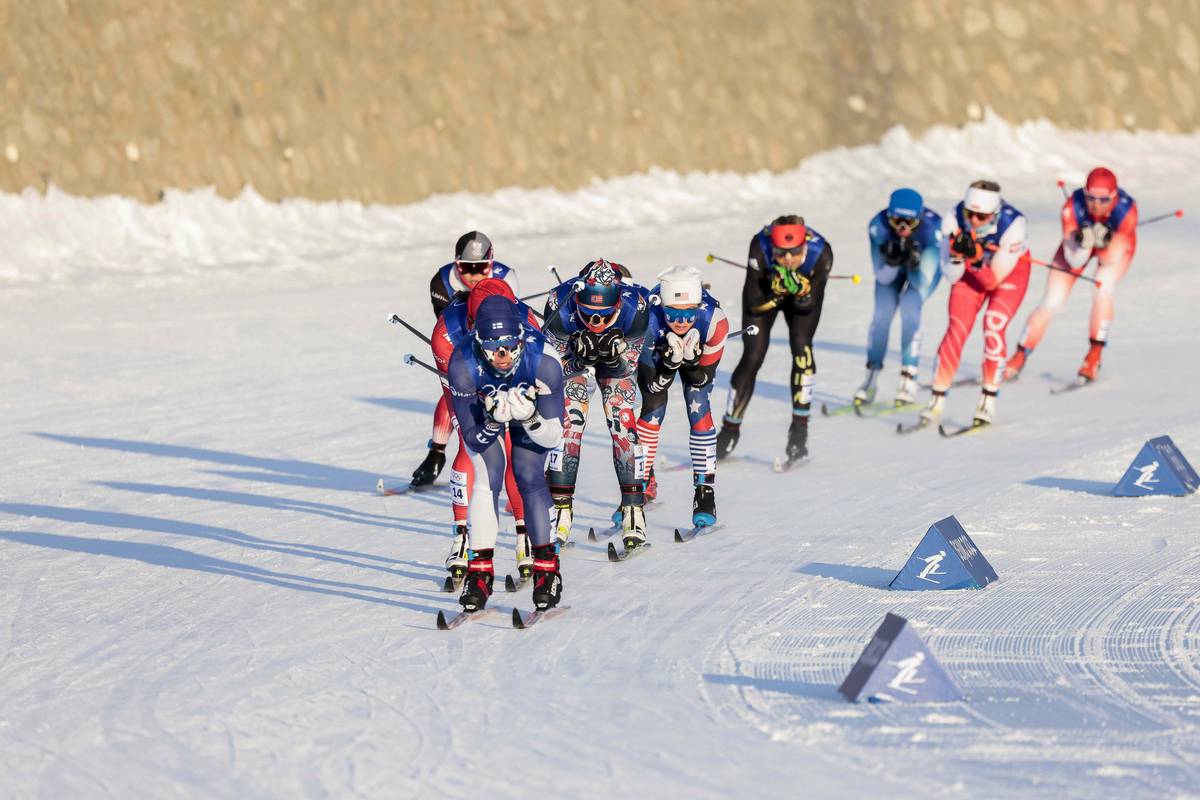
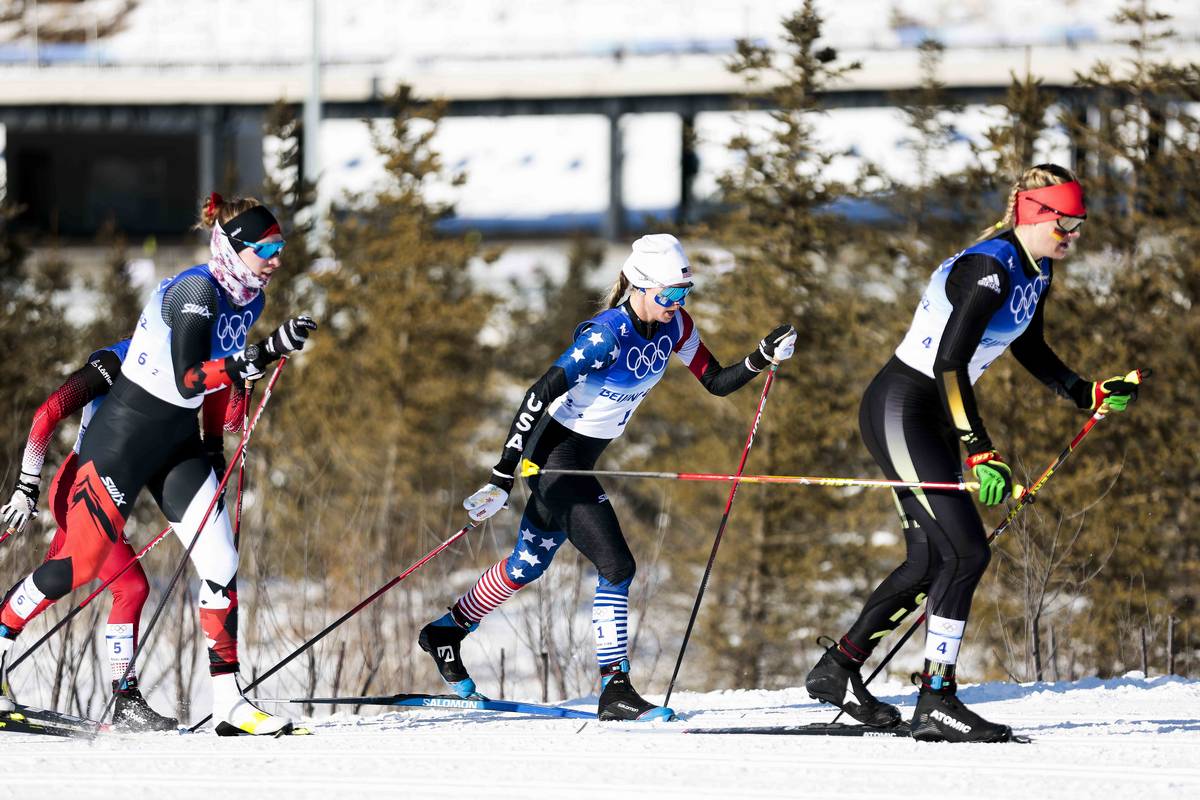
    With bursts of frozen mist released from their mouths, the athletes took to the course for the final round, with Yulia Stupak (ROC), Maja Dahlqvist (SWE), Kerttu Niskanen (FIN), Tiril Udnes Weng (NOR), and Katharina Hennig (GER) racing with Brennan at the front of the pack. 

    With a hooded parka draped over her, face tape obscuring her normally glittery cheekbones, and heated socks inside her boots, Diggins waited in the exchange for the tag. She would be facing Natalia Nepryaeva (ROC), Jonna Sundling (SWE), Krista Pärmäkoski (FIN), Maiken Caspersen Falla (NOR), and Victoria Carl (GER) in the even-numbered legs. 

    Racing comfortably near the front with skis that looked competitive for both kick and glide, Brennan tagged Diggins +1.1 second back on Finland in fourth, well within the lead group. In what would become a pattern for her first two legs, Diggins quickly moved to the front to control the race and ensure a fast pace, perhaps risking accumulating her own fatigue while also taking the sting out of the legs of the individual sprint gold and silver medalists of Sweden, who had also won the World Championship gold in 2021.

    Diggins races at the front of the lead pack during the classic team sprint final. (Photo: NordicFocus)

    Diggins tagged Brennan virtually even with Sweden and Finland after her first lap, a position Brennan was able to hold through her second leg. Near the bottom of the long, grinding climb to the high point of the course, Norway’s Weng wobbled slightly, placing her pole in front of Dahlqvist’s ski to catch her balance. Weng’s pole snapped, leaving her running up the sidelines of the climb with one pole, detaching her strap to grab another from a coach who stood along the fenceline. This lost Norway several seconds, which they were unable to regain in subsequent legs, leaving the team out of podium contention.

    On the odd legs, Niskanen of Finland consistently controlled the race at the front, putting the powerful stride that earned her a silver medal in the 10 k last week on display as she led up the climb in each round. She tagged her teammate Pärmäkoski in the lead at the halfway mark, with Germany, the ROC, and USA within a second back. 

    Kerttu Niskanen (FIN) sets the pace in the first lap of the women’s classic team sprint final. (Photo: NordicFocus)

    Diggins again charged to the front, her hands and legs pumping metronomically as she drove her skis up the climb. Diggins crested the hill in front, with Sundling and Pärmäkoski on her tails heading into the descent. A gap had opened to Germany and the ROC, but these teams had lightning fast glide and were able to regain contact in the descent. 

    At 6 k, with four of six legs complete, it was Sweden and Finland in the lead at the exchange, with Brennan receiving a tag 2.5 seconds back. Niskanen again set the pace at the front, still looking strong as she pushed the pace up the A-climb, with Dahlqvist matching pace behind. In a critical moment where loss of contact might have meant accepting a podium was not in the cards on the day, Brennan accelerated up the climb, steadily closing the gap to the Swede ahead of her. 

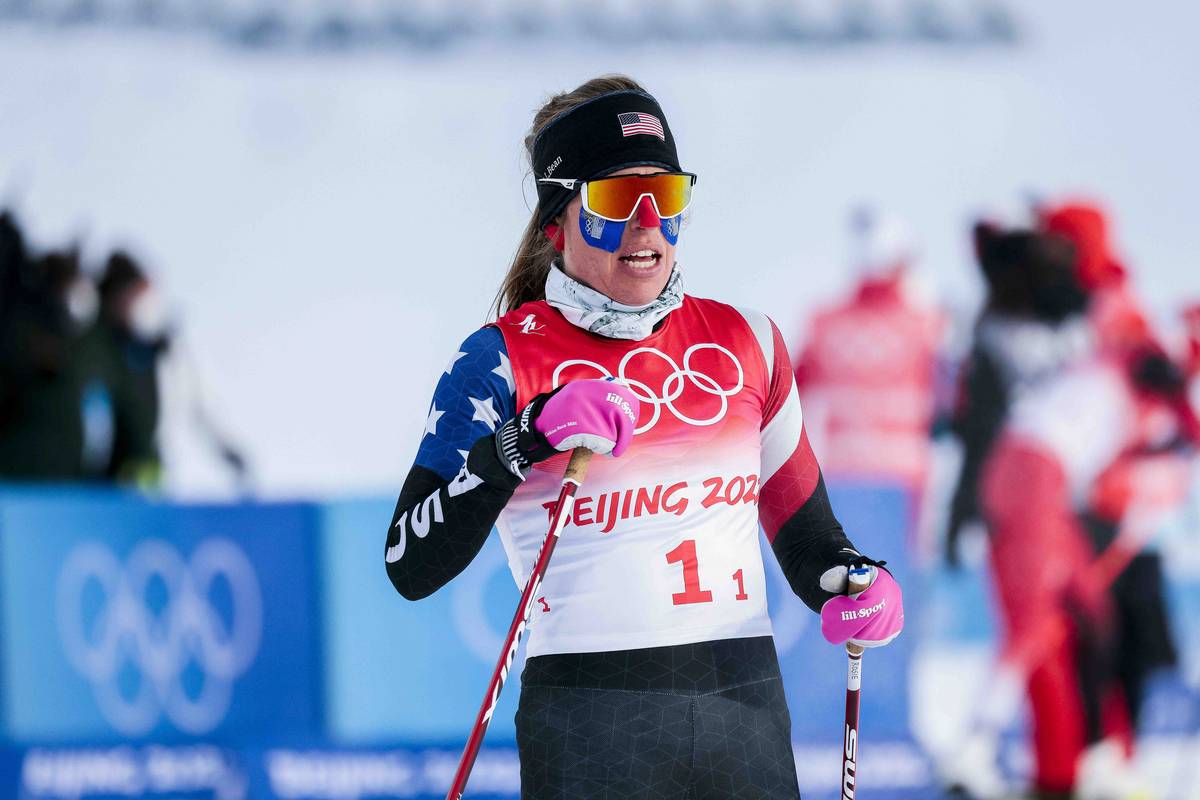
    Rosie Brennan (USA) awaits her turn during the women’s team sprint. (Photo: NordicFocus)

    An aerial shot showed Brennan upping her tempo as she brought the U.S. back in contact with the leaders, bringing Hennig and Stupak along with her. All five women dropped into a tuck as they headed downhill together, rounding the sweeping right-hand bend and sprinting up a final climb before the last exchange. Throwing her hands up the hill in a run, Brennan challenged Sweden’s Dahlqvist on the final uphill, double poling around a left-hand bend into the exchange in third behind Germany and Finland. 

    In the last lap, Diggins went hunting. With Pärmäkoski and Carl leading the charge up the climb, Diggins would need to work the hill. Striding powerfully, Diggins did everything she could to keep her team in contact with the leaders, but it was not enough on the day. Doublepoling across the false flat before the descent, it was Pärmäkoski leading Carl, Nepryaeva, and Sundling. 

    The leaders were four abreast coming around the final bend, with Pärmäkoski and Sundling pushed into the outer two lanes, leaving them at a deficit as they headed up the final climb to the stadium. 

    Cresting the rise, Carl looked to be falling off the pace, while Nepryaeva and Sundling pulled to the front, the Swede leading around the final left-hand corner into the finish. 

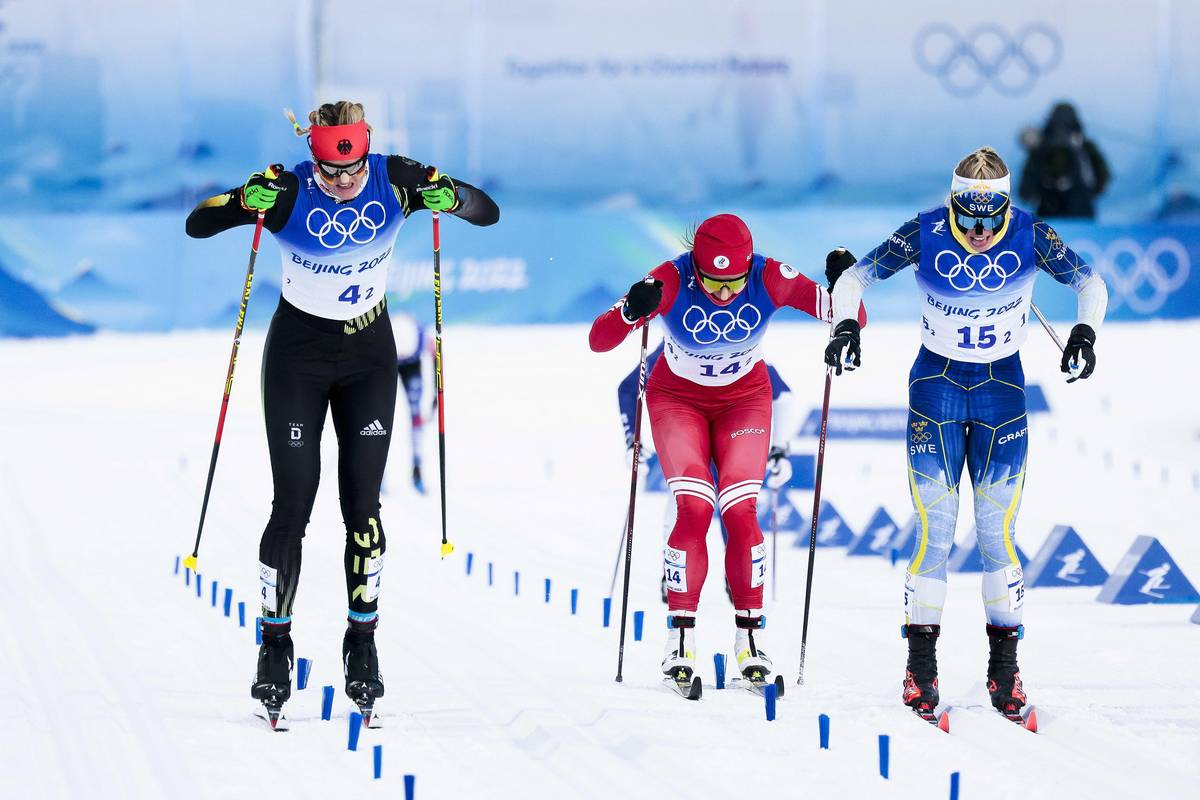
    But Germany wasn’t done yet. Carl moved up along the outside of the bend, challenging Sundling as they headed into the finish lanes. Doublepoling powerfully, Carl began to slowly pull ahead of Sweden, with the ROC dropping back a few meters behind. 

    Coming to the line to decide the medals, it was Victoria Carl (GER), Natalia Nepryaeva (ROC), and Jonna Sundling (SWE) (l-r). (Photo: NordicFocus)

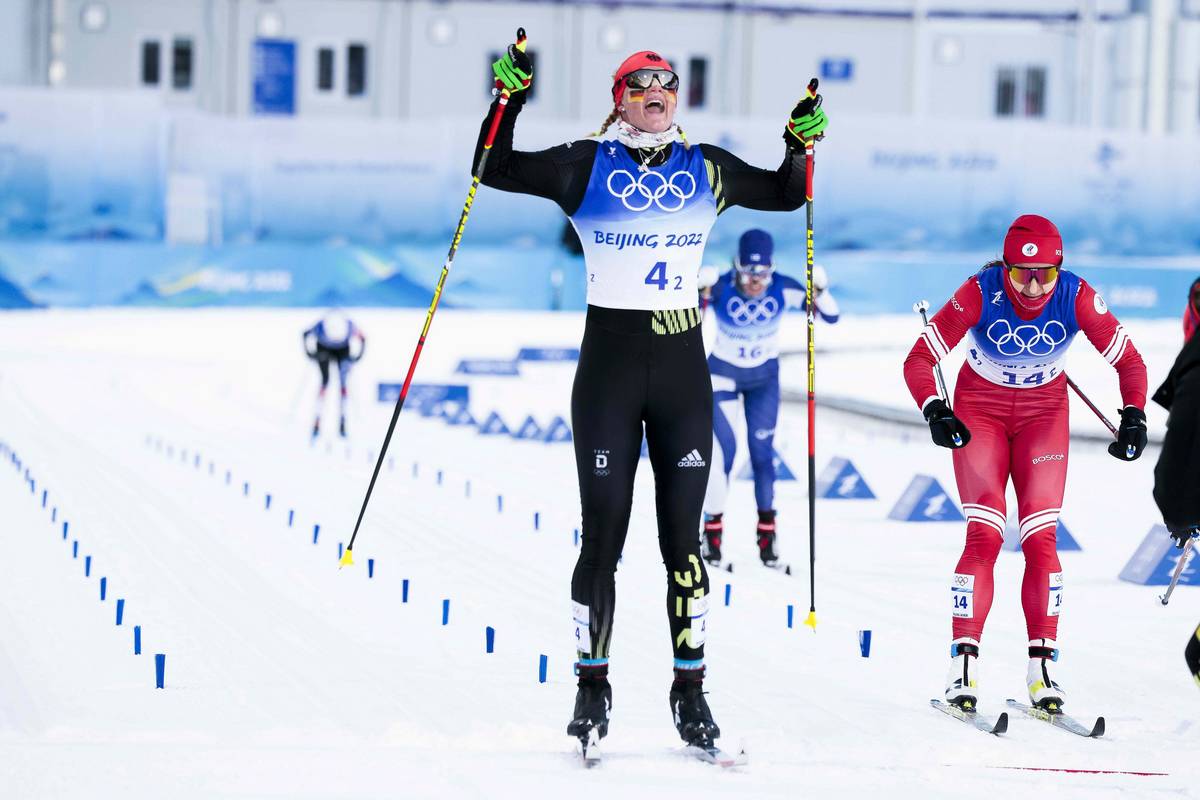
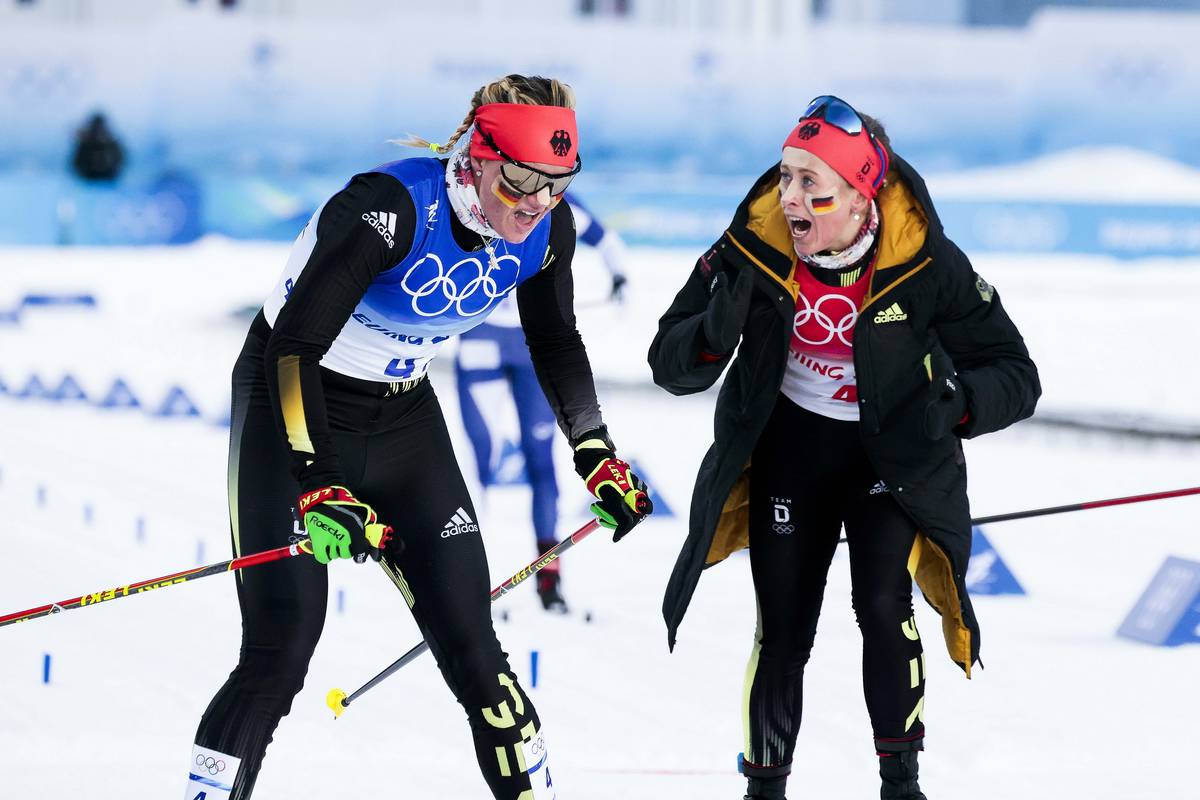
    In a surprise upset of the Swedish favorites, Carl took it to the line, holding off Sundling as she crossed the line in 22:09.85, welcomed by her ecstatically screaming partner Hennig. Sundling was just 0.17 seconds back for silver, with Nepryaeva unopposed for bronze on their tails (+0.71). 

    Victoria Carl (GER) celebrates gold in the women’s team sprint while Natalia Nepryaeva brings the ROC across the line in third.(Photo: NordicFocus)
    VIctoria Carl takes gold in the classic team sprint, while partner Katharina Hennig awaits in disbelief. (Photo: NordicFocus)

    After falling off the leaders in the final climb, Pärmäkoski brought Finland to the line in fourth (+3.86) with Diggins holding strong after a gap to cross fifth (+12.93). 

    “It means a lot for us,” Hennig told the media after her race. “Also the silver medal in relay and today the gold medal in team sprint. It means a lot and we are very thankful for the whole team. It’s very important for cross-country in Germany.”

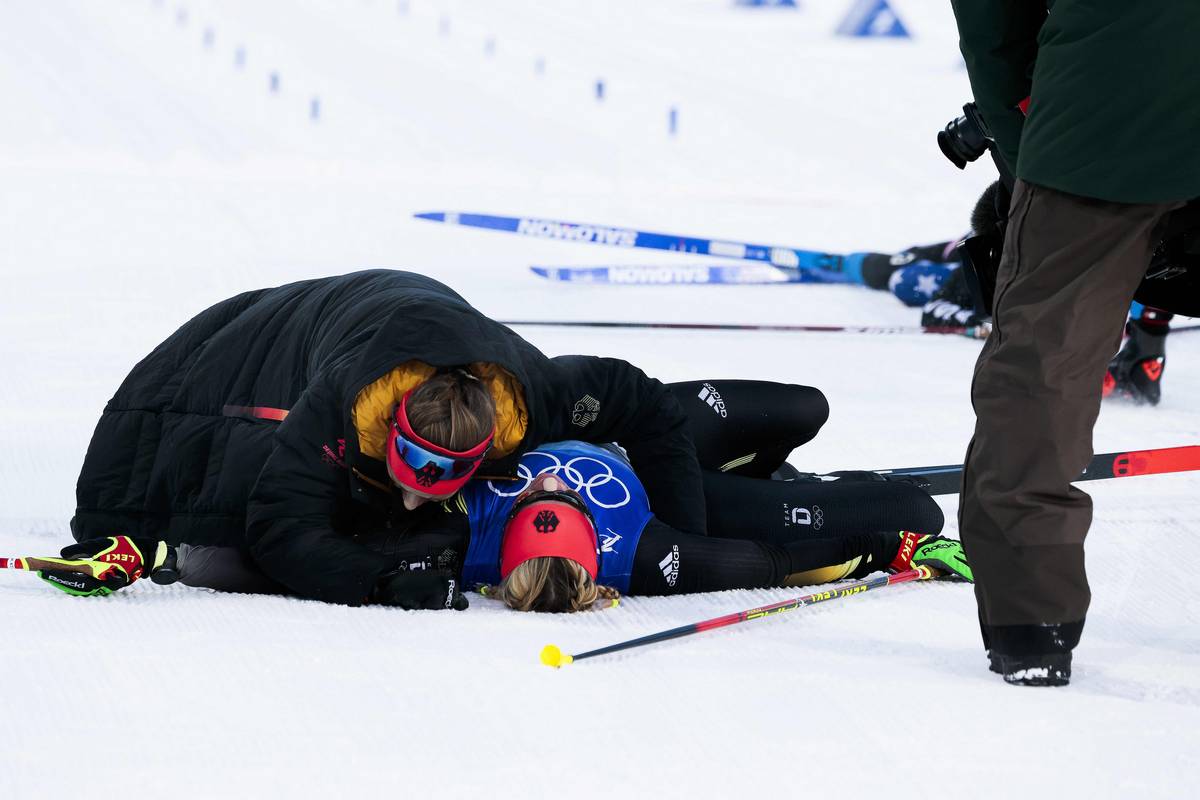
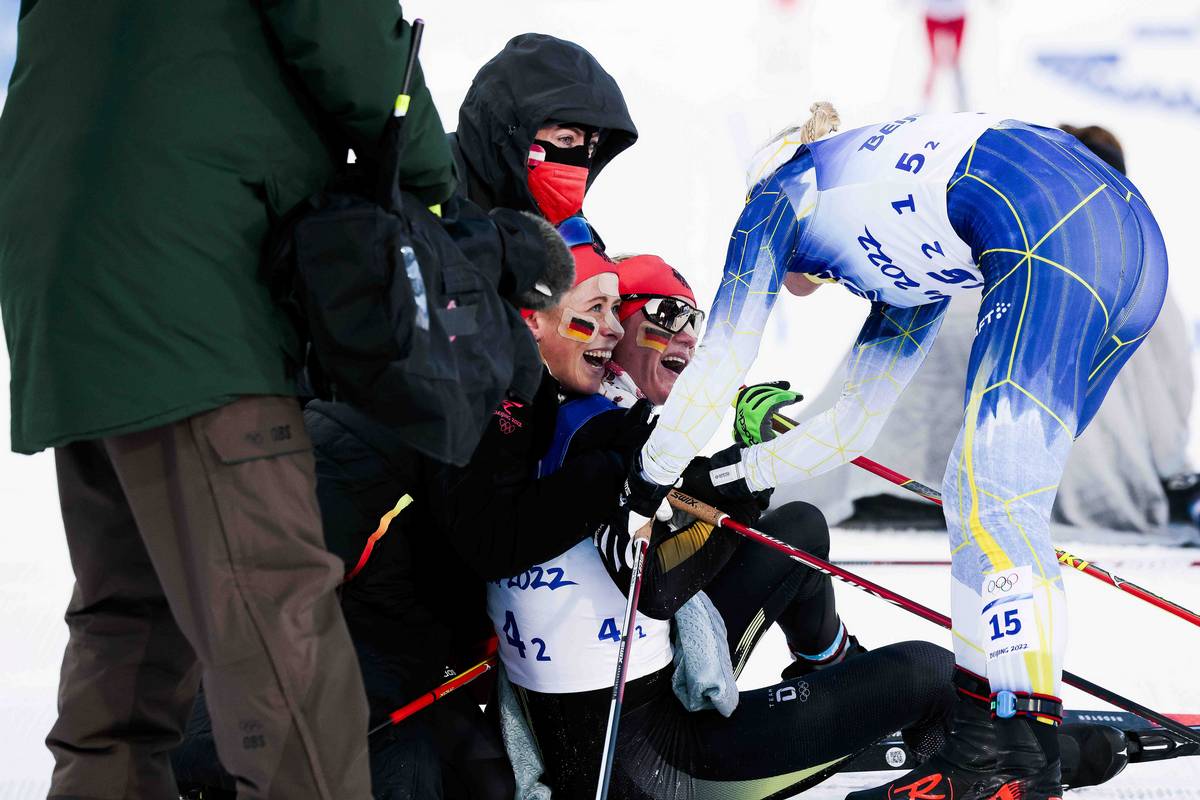
    Excitement was high at the finish of the women’s team sprint, as Victoria Carl narrowly took the win for Germany, racing with partner Katharina Hennig. (Photo: NordicFocus)
    Katharina Hennig hugs her exhausted teammate Victoria Carl at the finish of the women’s classic team sprint. (Photo: NordicFocus)

    Though she was the key player in the final lap, Carl was not originally on the start list. She was substituted for Katherine Sauerbrey, who had skied the first leg of the women’s relay on Saturday. German coach Peter Schlickenreider, who celebrated his 52nd birthday today, explained in the mixed zone that Saurbrey had made a “great decision” to let the team know that she was feeling fatigued and as though she may be getting sick. 

    From there, the calculus became: “Okay, you have a silver medal, you did a good race [in the relay], and we have prepared Victoria Carl, so she’s ready,” Schlickenreider explained. “So then let’s do the safe thing.”

    He added that Germany had raced an athlete, Nicole Fessel, in the team sprint during the 2018 Games who was feeling sick, which proved to be a significant mistake as Fessel struggled with her health for the following three months, before ultimately ending her career. The coaches had vowed never to make this error again.

    Jonna Sundling (SWE) congratulates Victoria Carl and Katharina Hennig on Germany’s gold medal in the classic team sprint. (Photo: NordicFocus)

    On the performance of the German skis, which have allowed the team to excel throughout the Games, Schlickenreider explained that waxing has been a focus for the team over the last quadrennial. 

    “We worked really hard the last four years to get this good team. And I think that’s the main thing, that everybody’s working together so that the athlete and ski technicians were communicating quite well.”

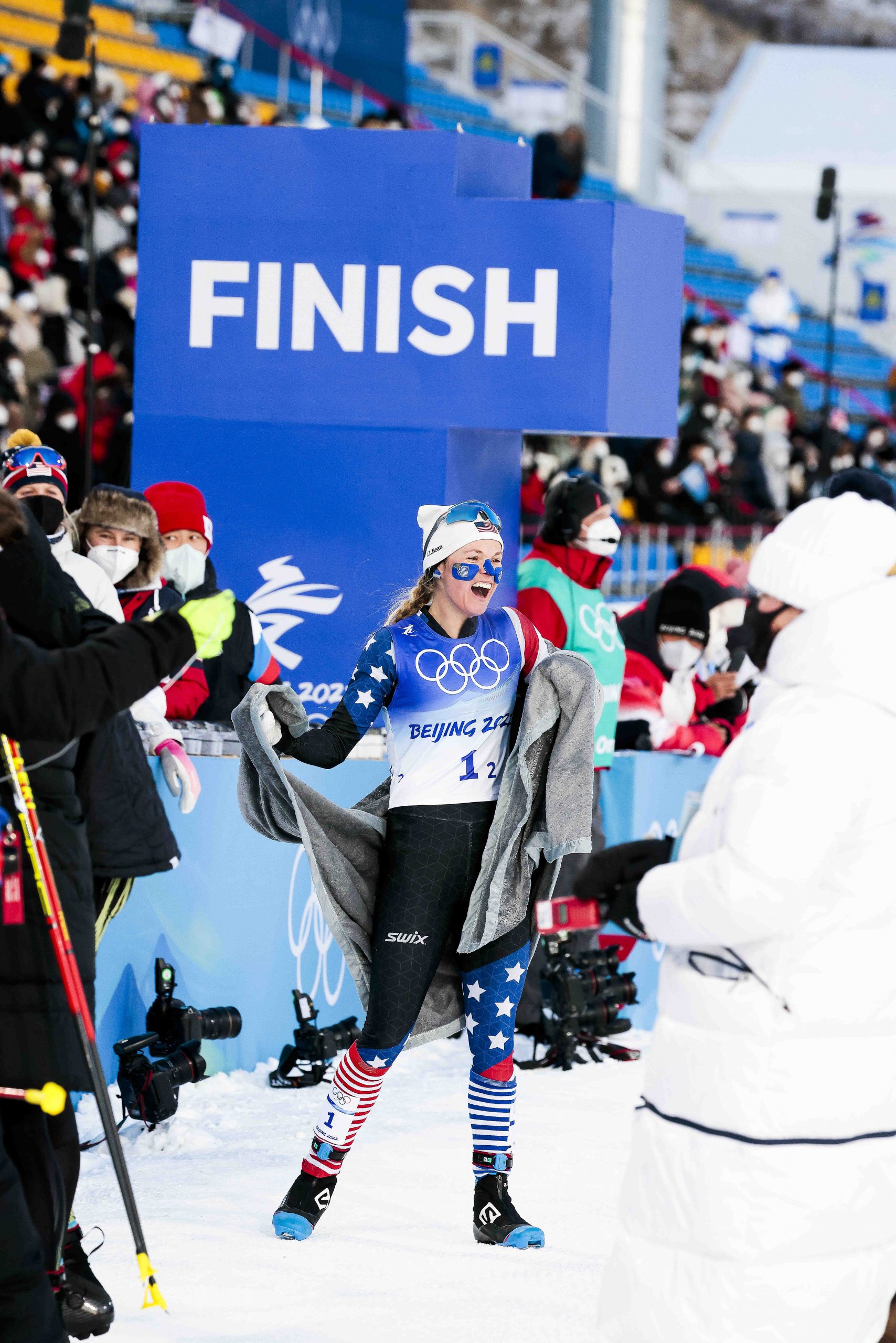
    Jessie Diggins (USA) comes to the line in fifth in the women’s team sprint. (Photo: NordicFocus)

    After winning gold in the event, it’s easy to look at a fifth place finish as a disappointment for the American team. But observing the last five seasons, it remains a testament to the consistent strength of the American women’s program, the depth of the field racing at this level, and the fact that ultimately, an Olympic medal is viewed among the highest accomplishments an athlete can achieve purely because it requires the fortuitous coming together of infinitely many pieces to do so.

    Both Brennan and Diggins stated with confidence that they were happy with their performances today, highlighting advances made in classic racing throughout the Games.

    “I felt really good about my skiing today,” Brennan said. “I think it was one of my better classic races this week, so I’m really happy to put it together by the end of the Olympics. And I did what I could to stay in contact to give Jessie her best shot. And I’m happy with that.”

    Rosie Brennan (USA) strides up the A-climb in the women’s team sprint semifinal. (Photo: NordicFocus)

    “I’m really proud of how we skied,” Diggins affirmed. “It was so cool seeing Rosie just crushing, and I went as hard as I could. And there’s no doubt in my mind that I could not have possibly tried harder. I finished with zero sugars left and was dizzy and sick. And I’m currently wearing all the clothes of Team USA… I think we had great skis, or at least I definitely had the kick that I needed. I felt like, technically, this was some of my best classic skiing. And yeah, I’m just really proud of giving it our all because that’s all you can do.”

    Jessie Diggins anchored the women’s classic team sprint to fifth. (Photo: NordicFocus)

    In NBC’s broadcast, team sprint gold medalist turned analyst Kikkan Randall explained that the Americans knew that competitive skis would be a requirement to allow Brennan and Diggins to fight for a medal today. 

    Both athletes expressed that their skis were up to the task, particularly for A-climb, which is roughly 400 meters in length (a quarter mile) with nearly 100 feet of elevation gain. Ascending this three times each in the final, optimizing kick could be essential.

    “I have to have enough kick, or else I really struggle,” Diggins explained. “So I definitely asked for an extra bump. In hindsight, maybe I shouldn’t have but also, that’s on me. And I know that that’s what I need. I need to be able to get up the hill. And that was my biggest priority. And so I think having not enough kick would have made me lose more time.”

    Jessie Diggins (USA) marks Victoria Carl (GER) during the women’s team sprint semifinal. (Photo: NordicFocus)

    Both athletes confirmed that they would be racing the final event of the 2022 Olympic Winter Games on Sunday, the 30 k mass start freestyle, barring unforeseen changes. With one last opportunity to fight for medals, Brennan encapsulated the Americans’ outlook on the whirlwind of racing and Olympic hype. 

    “One thing that the US is really bad at is only caring about the Olympics,” Brennan said in the mixed zone. “But we’re racing and World Cups every weekend all winter long and World Championships on the [odd] years, so if you look at the results from all of those races, you know, this is in the ballpark. I wouldn’t say I had the world’s best races [here] and certainly not the world’s worst races. So it’s been a good experience and we will head straight back to the World Cup and keep fighting for more.”

    Dahria Beatty (CAN) races in semifinal A during the women’s classic team sprint. (Photo: NordicFocus)

    Racing for Canada, Katherine Stewart-Jones and Dahria Beatty took sixth in the first semifinal and did not advance. They ended the day in 12th overall.


    Results: Semifinal A | Semifinal B | Final

  • Norway Pulls off a Historic Team Sprint Gold Repeat; Canadians in 5th and Americans in 9th for Strong Team Debut

    Norway Pulls off a Historic Team Sprint Gold Repeat; Canadians in 5th and Americans in 9th for Strong Team Debut

    This World Cup coverage is made possible through the generous support of Marty and Kathy Hall and the A Hall Mark of Excellence Award.  To learn more about A Hall Mark of Excellence Award or to learn how you can support FasterSkier’s coverage please contact info@fasterskier.com.


    The team sprint: it’s the youngest event on the Olympic program, having been contested only since the 2006 Torino Games. The event has since become a marquee event in the sport of cross country skiing.

    Holding it up as a marquee event, of course, is easier to say coming from the United States. If you tuned into the NBC broadcast, you got the delight of hearing 2018 team sprint gold medalist Kikkan Randall analyze the race where she won the US’s only gold medal in cross country skiing, while her teammate from that race, Jessie Diggins, worked to repeat the Olympic medal feat. 

    Yes, the team sprint was that race, and we could all revel in that memory as it played out in Zhangjiakou, China on Wednesday.

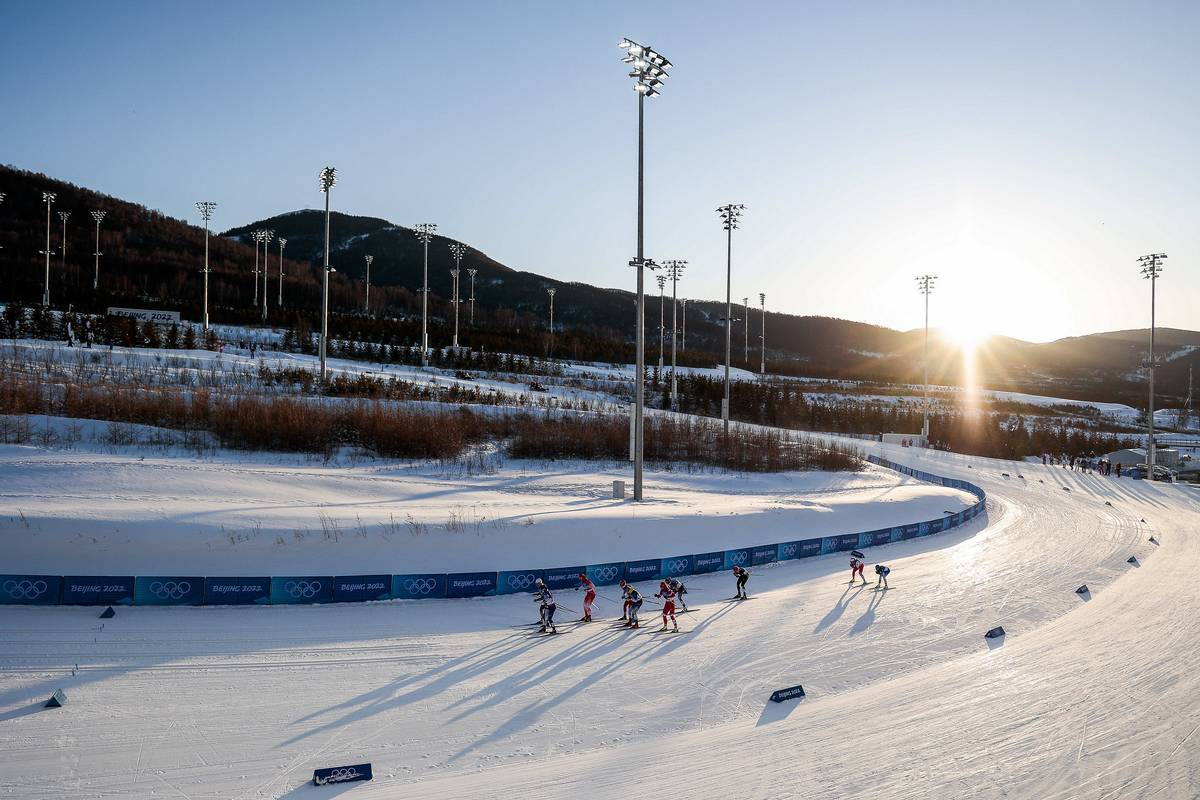
    Competitors surrounded by the colors of the sunset. (Photo: NordicFocus)

    Beyond that, though, no other event exemplifies the nuances involved in modern skiing like the team sprint. This is an event that pairs the specialists with the even-more specialized, and has an err of a nordic nerd’s daydream to the team-selection possibilities that arise from doing so.

    What if you lined up the two athletes who single-handedly changed a generation of skiers together under one flag? Well, they’d turn out to win gold in Pyeongchang 2018, like when Johannes Høsflot Klæbo and Martin Johnsrud Sundy were paired as team Norway. What if you repeated when Finland won gold in Sochi 2014, but this time Iivo Niskanen, who was then seemingly untouchable as a classic skier? Well, that one offers a bridge to what played out in Beijing 2022.

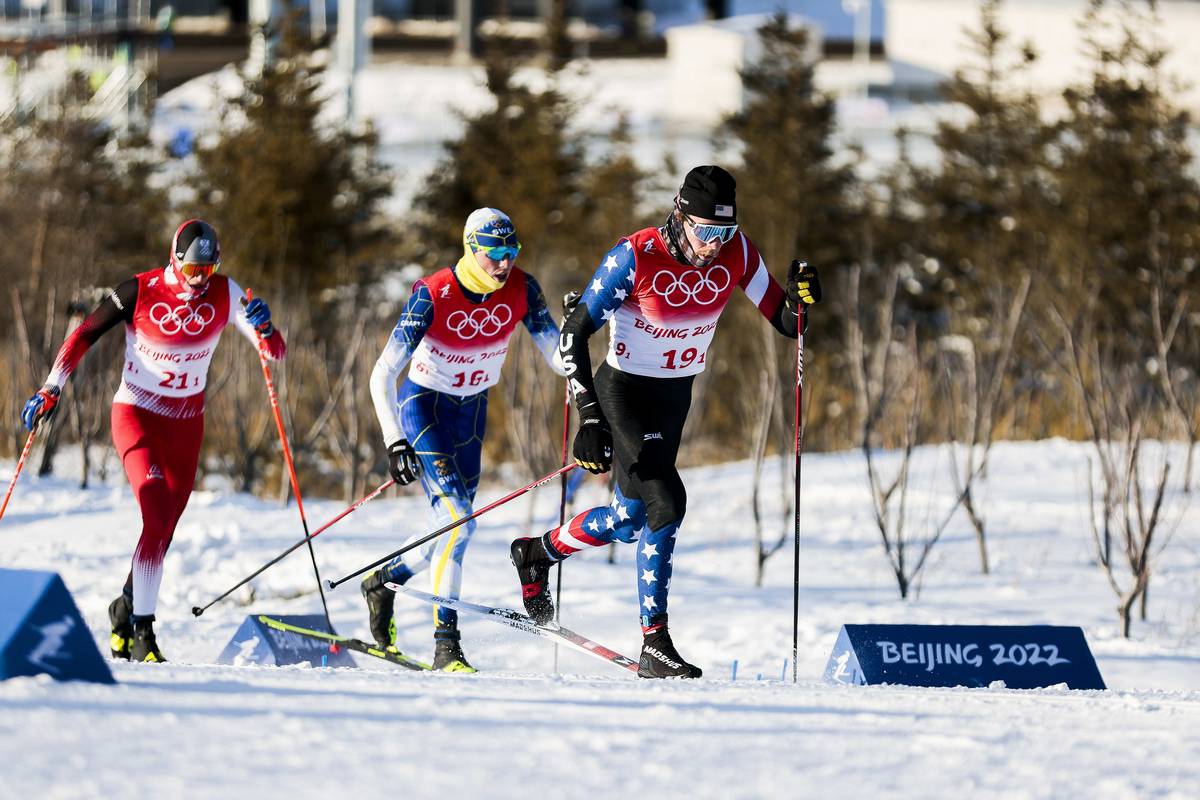
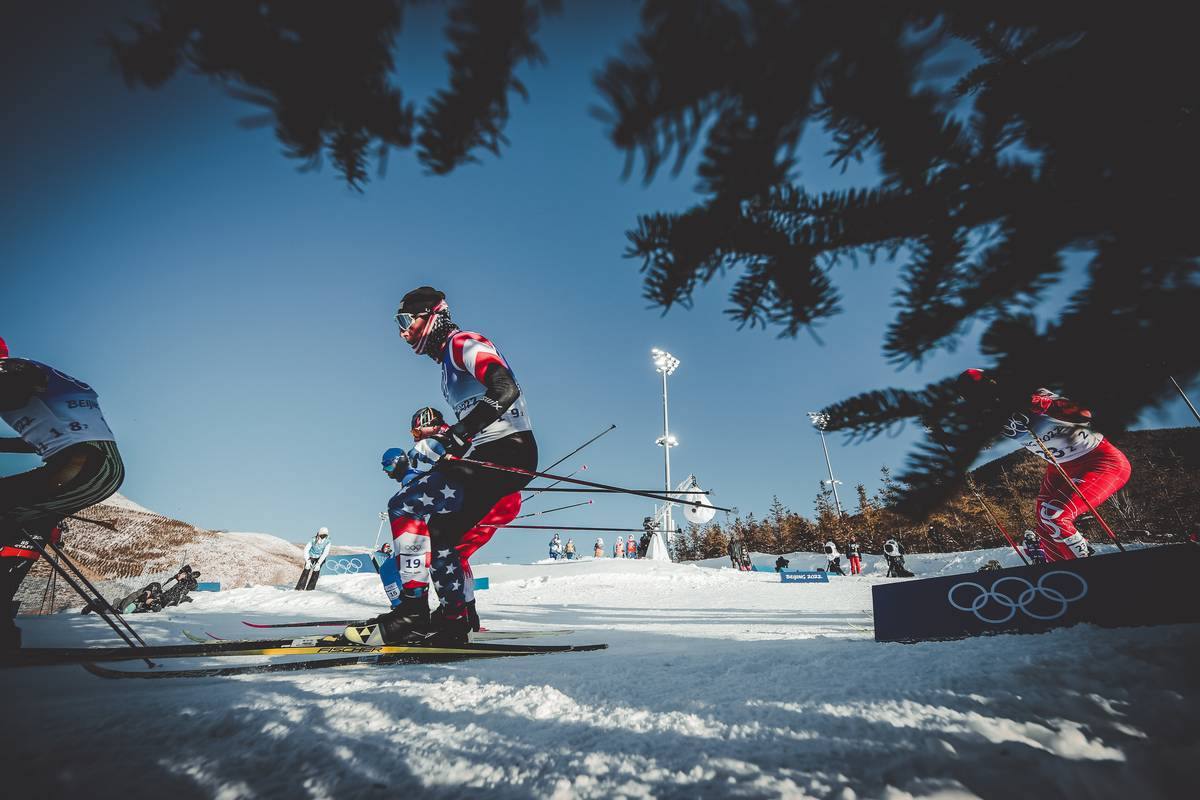
    Of course, hypotheticals joined up with storylines that didn’t need to be posed as a question today too. For the US men, this was the crystallized moment where one generation was handed off to another. Call to mind the US Olympic team sprint team anytime in the last eight years and it was the steadfast duo of Simi Hamilton and Erik Bjornsen. These men, now retired, were sixth in the team sprint in both the 2014 Olympics in Sochi and the 2018 Games in PyeongChang. Then, this morning, it was Ben Ogden and JC Schoonmaker, both born in 2000.

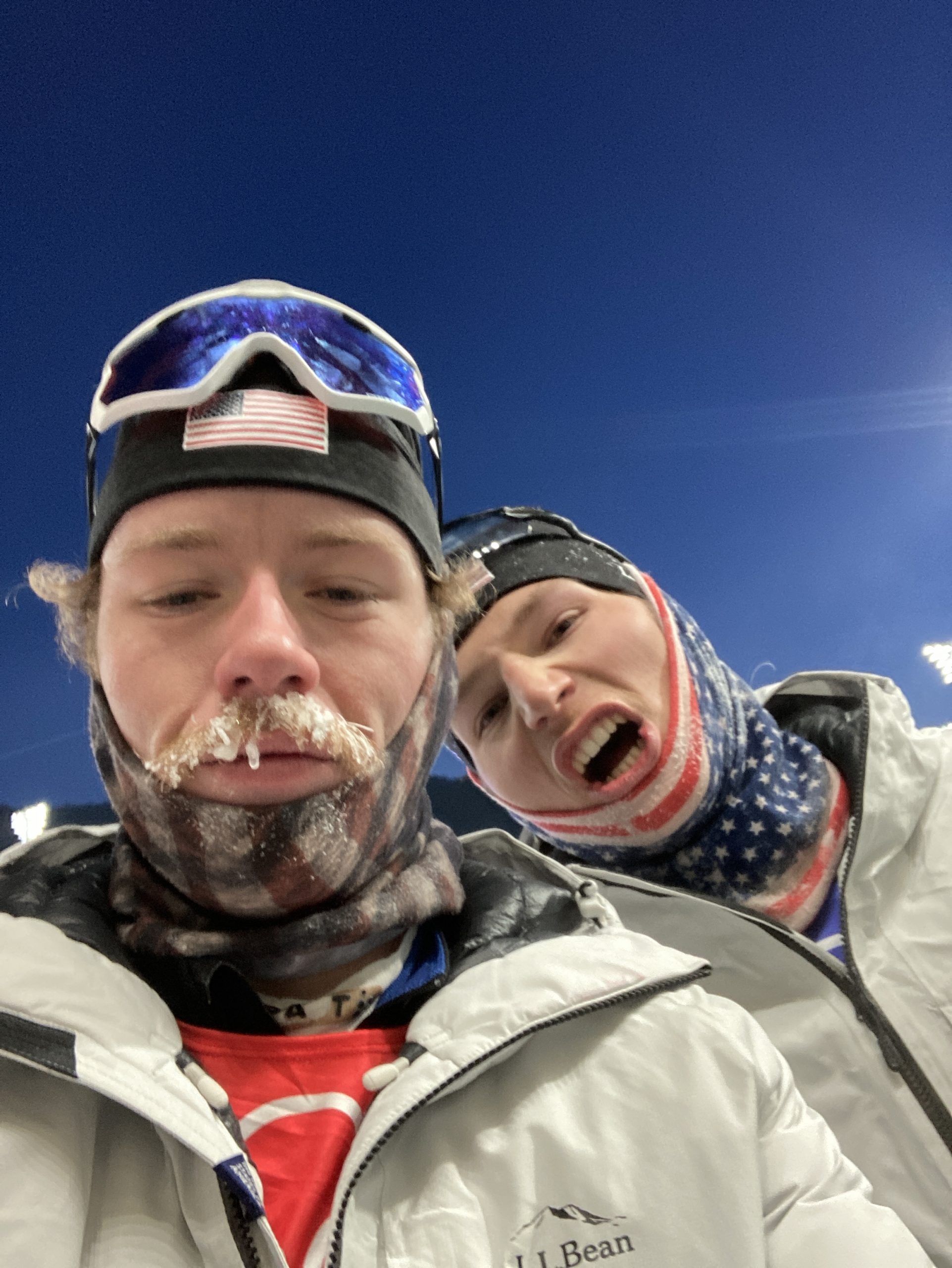
    The (frozen) fresh-faces of American skiing. Teammates Ben Ogden and JC Schoonmaker after completing the Team Sprint on Wednesday in Beijing. (Photo: Nat Hertz)

    The two made up a pairing that was more pure-sprint oriented than most of the competitors that were most closely watched going into today. The strategy for a few of the top teams, in particular, the Russian Olympic Committee and Finland, seemed to be pairing their top-class distance skier with a sprinting specialist.

    For the course in Beijing, it was a good strategy on paper. The 1.5-kilometer course, last seen in the individual sprint last week, had one tactical pressure point going into a downhill when it was raced as a single lap. When it was raced in a burst of three per skier with little rest in between, however, just how much the long, semi-gradual, uphills on this course made skiers work moved to the forefront. In the team sprint, having a skier who could stay with a sustained attack through multiple legs was an appealing prospect, especially when it was meant to set up for a punchy last climb that would no doubt give way to a mad dash for the finish.

    For two teams, Norway and the Russian Olympic Committee (ROC), that mad dash had been setting up since the first World Cup of the season, when 22-year-old Alexander Terentev (ROC) out-dueled sprint superstar Johannes Høsflot Klæbo (NOR) to challenge the latter’s classic sprinting dominance.

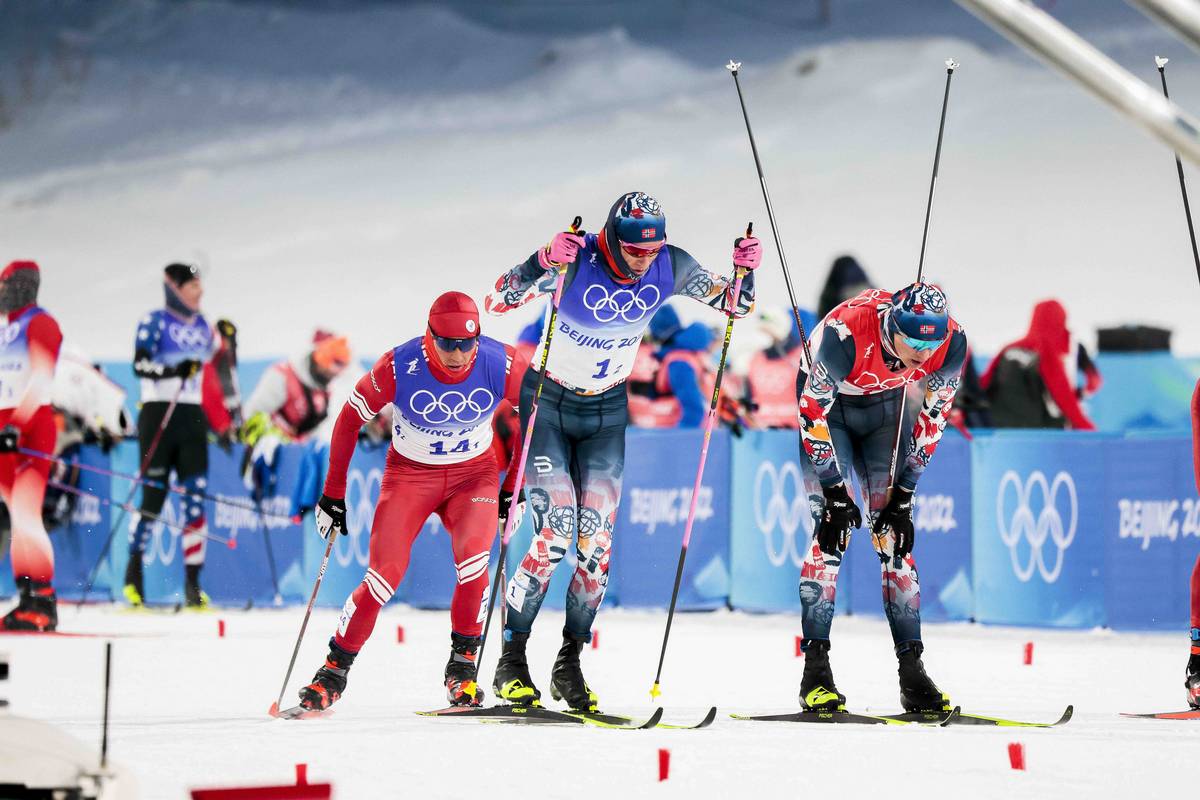
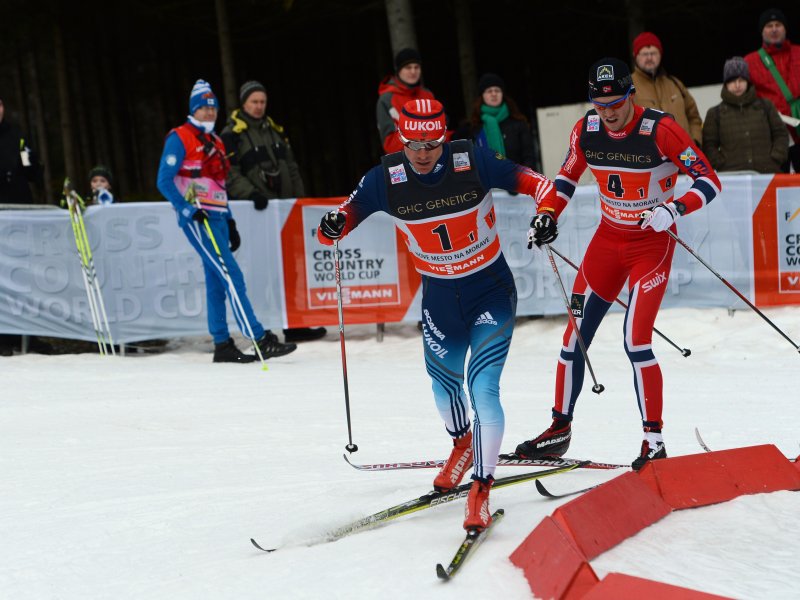
    Johannes Høsflot Klæbo (NOR) accelerates out of the exchange zone after receiving a tag from teammate Erik Valnes, followed by Alexander Bolshunov (ROC) on his way to tag teammate Alexander Terentev. (Photo: NordicFocus)

    They would both ski the anchor legs on their teams. Klæbo was paired with fellow sprinter Erik Valnes to make team Norway, while Terentev was paired with 30 k skiathlon gold medalist Alexander Bolshunov to make team ROC. Finland joined the intrigue, sending out 15 k classic gold medalist Iivo Niskanen in the first leg paired with the World Cup’s perennial “oh, that’s right he’s a great sprinter too!” Joni Maki as an anchor.

    As such, the teams in the final skied the first and second legs could roughly be divided into: leg 1 – the distance skiers and long-burn sprinters, and leg 2 – classic sprinting’s very best.

    The US had qualified for the final as the second lucky loser, finishing a messy semi-final that saw Ben Ogden break a pole and recover to finish 6th place (+4.43 off of heat winners Italy’s mark of 20:06.99). 

    “It was a hard semi-final, ours was fast and everyone was pushing. [The pole break] was one of many places where we used more energy than we had to today.” said Ogden in post-race interview with FasterSkier in the mixed zone.

    But as Ogden went out in the final, he seemed to settle in and leave the troubles of that semi-final behind. He looked comfortable in a pack that had settled on jockeying for position in the early part of the race, moving up to 4th place through the first exchange.

    Ben Ogden (USA) strides early in the the team sprint. (Photo: NordicFocus)

    The men’s field going out relatively slowly could be attributed to Norway’s Valnes. He seemed to comprehend that with his team as a pre-race favorite, the eyes of the pack were on the “What is that?” pattern of his suit. Valnes looked to lead the pack so-as only to try and lull it into complacency. It was a strategy that made sense, knowing he would be tagging off to the current fastest human on skis in a drag race, Klæbo.
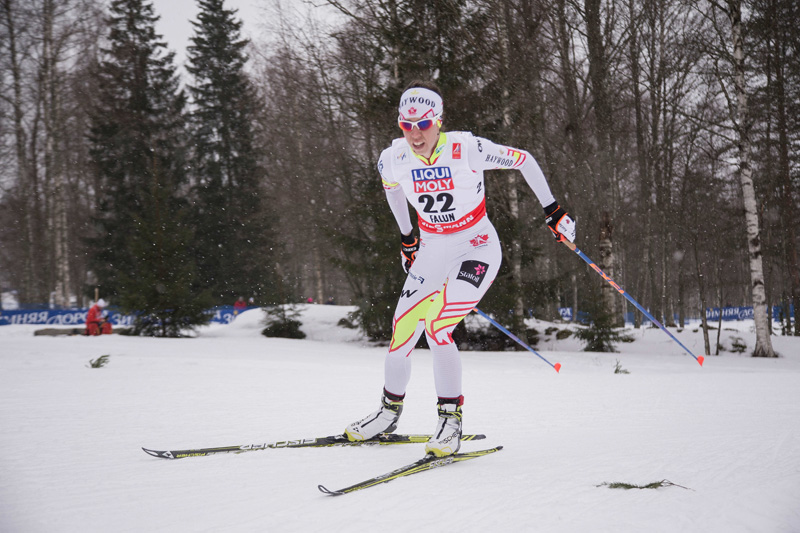
    Alexander Bolshunov, though, called Valnes out on his bluff, making sure to pick up the pace just enough so that the pack would have to work throughout its first leg.

    So began the stalemate that would last for much of the early legs of the race. In the first exchange to the anchor-legs, Klæbo showed outward signs of his strength, and his desire to keep the pace right in the sweet spot where he could shoot around them in the end. JC Schoonmaker, meanwhile, remained placed right off the leaders, in the pack, moving through the course.

    The second showing of leg 1, including Valnes, Bolshunov, Niskanen, and Ogden saw Bolshunov push on the initial climb out of the stadium. Valnes covered the move, before the pack came together in the final climb into the stadium. The pressure, and the speed, had increased. Ben Ogden, though, had kept up with the pack, and came through the half-way mark with the Americans in 7th place (+4.4).

    Johannes Høsflot Klæbo (NOR), Richard Jouve (FRA), and Joni Maki (FIN) face off in the classic team sprint during the 2022 Olympic Winter Games. (Photo: NordicFocus)

    In their second laps, a lead group that included Terentev, Klæbo, Maki, and Schoonmaker, the pack began to take shape. The decisive move didn’t come from any of those skier’s mentioned, though, but instead from a familiar agitator in sprint heats on the World Cup. Moving up from behind the leaders, France’s Richard Jouve powered to the front of the pack on the first uphill, but was quickly matched by both Terentev and Klæbo. The duo, as they approached  the downhill, put in a burst of speed that hadn’t been seen on the course up to that point, and it was all it took for the pack to begin to thin.

    This was the move that saw the young American team begin to lose contact with the lead group. Schoonmaker later said that “the downhills felt tighter and more aggressive than some other World Cup sprints.”
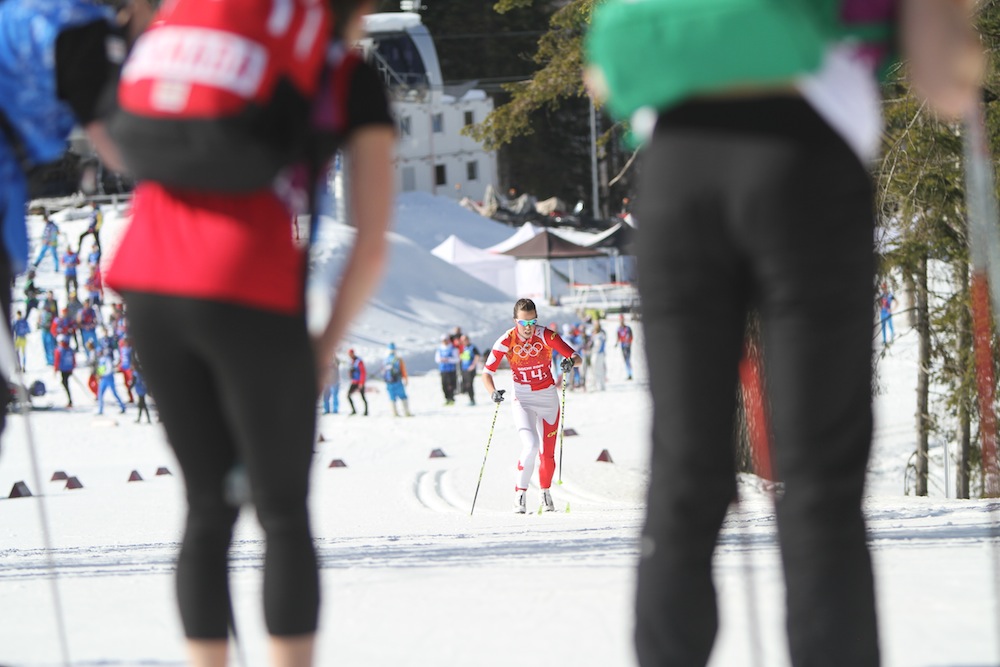
    The Americans slipped to 9th place, and remained there for the rest of the day despite the early efforts of the duo to stay locked in and pushing all the way through.

    JC Schoonmaker races the classic team sprint final during the 2022 Olympic Winter Games. (Photo: NordicFocus)

    Meanwhile, at the front, the exchange to the final lap of the odd-leg skiers found Bolshunov once again putting in an attack on the uphill that led out of the stadium. The move indicated that the ROC had faith in the young Terentev as the anchor, but that chancing it with Klæbo still on deck was not the preferred option. Valnes took the ROC strategy off the table anyway, letting out a blistering counter-attack that showed his own strength and served to further separate the pack. When they came into the final climb into the stadium for the last exchange, it was just Norway, the ROC, and Finland who were in contention for the gold medal.

    Finland, in fact, was the first to the exchange. That came courtesy of Niskanen, who evaded the front of the pack for much of his race. The 15 k classic champion unleashed his diagonal stride on his final climb of the day, with both efficiency and power that exemplify optimal technique.

    The last lap, then, looked like a three-way pack of Finland, Norway, and the ROC, and, not far back and putting together an outstanding day, Canada (+9.7). The team of Graham Ritchie and Antoine Cyr had put in an unexpected and auspicious effort for the whole world to see.

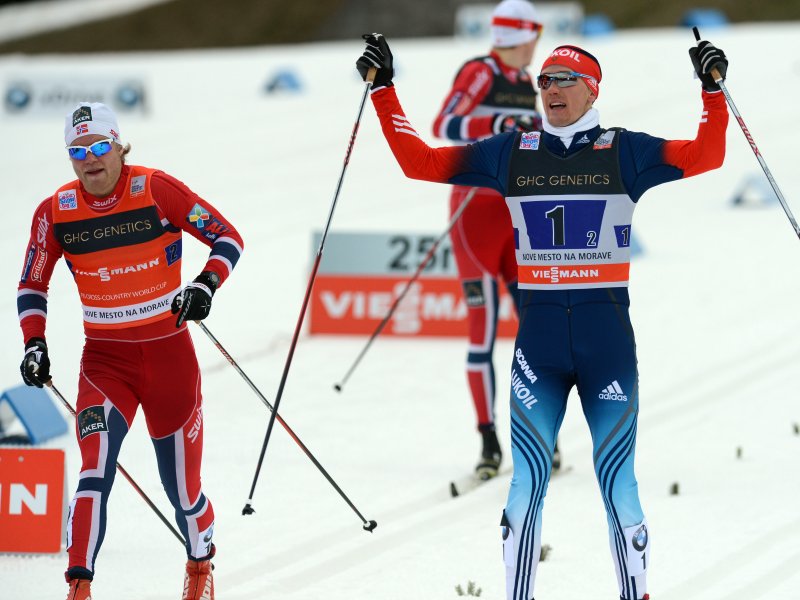
    Johannes Høsflot Klæbo (NOR) leads the way to the line, with Joni Maki (FIN) and Alexander Terentev (ROC) behind for second and third. (Photo: NordicFocus)

    Still, the skiers to face off for medals remained; Joni Maki (FIN), Johannes Høsflot Klæbo (NOR), Alexander Terentev (ROC).

    The front three remained tight throughout the final lap. The pace was fast, but not fast enough to shake the familiar feeling that we’d been here, on this 1.5 k course, before, and it was a stage for which one player was ready to take the lead role: Klæbo.

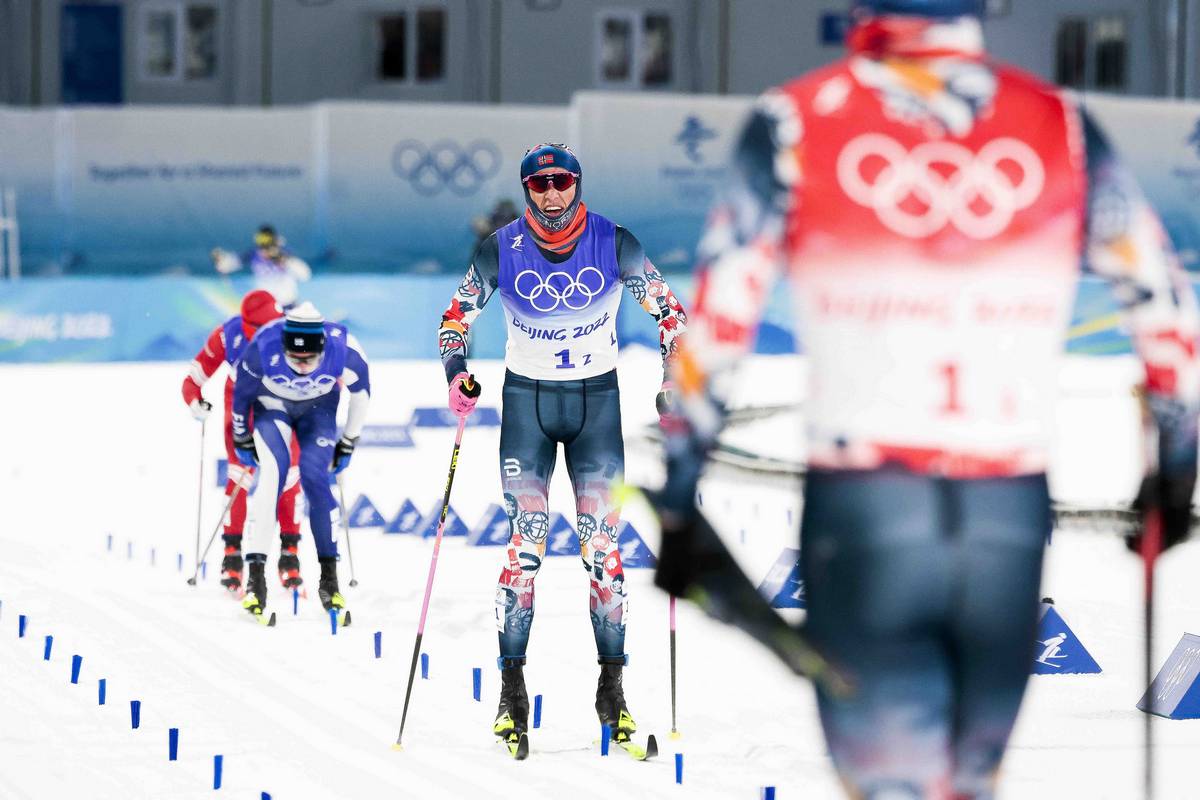
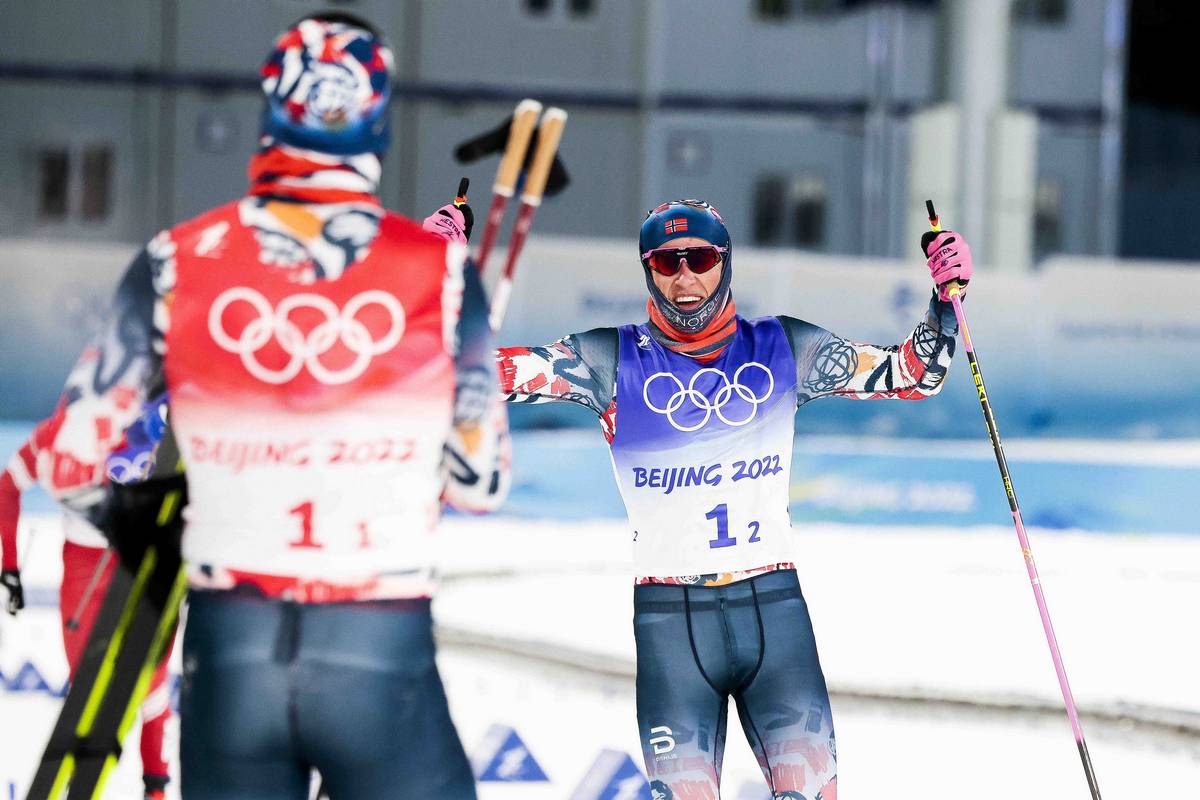
    On the last hill, Klæbo went, and proved again that he was both a master of the art of sprint racing, and still indisputably its best practitioner. He, and Norway, would repeat as gold medalists in the team sprint in a time of 19:22.99.

    Johannes Høsflot Klæbo celebrates team sprint gold with teammate Erik Valnes. (Photo: NordicFocus)

    In comments to the press after, Klæbo said of repeating as a gold medalist, “I’m really proud, it’s special to do this together as a team. We won the team sprint in 2018, and doing it in a different way now, different style, with a different person, it’s special.”

    Behind him, Joni Maki made a late effort to pull in front of Terentev and deliver Finland, and his teammate Iivo Niskanen, back to the medal ceremony that they last attended for the team sprint in 2014 by finishing second (+2.46). Terentev finished third (+4.29), ensuring that the ROC (or, for these purposes, the Olympic delegation formerly known as Russia) continued its streak of never having finished outside of the medals in the team sprint at an Olympic Games.

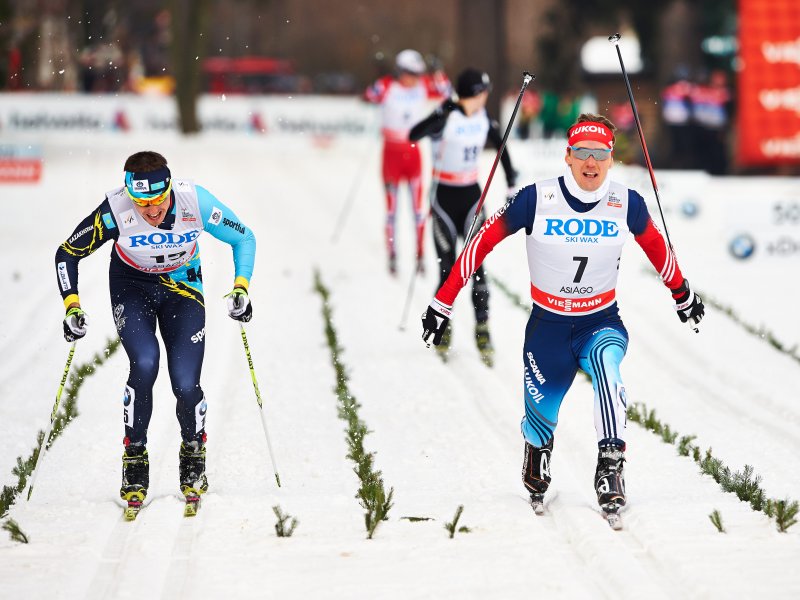
    Graham Ritchie (CAN) double-poles toward the finish of the men’s team sprint. (Photo: NordicFocus)

    Sweden pulled back to fourth place (+15.06), and the surprise of the day was the young Canadian team of Ritchie and Cyr, both 23 years old, finishing in fifth place (+22.31). The Americans held the gap to +1:05.08, and finished in ninth.

    Ogden and Schoonmaker came away feeling optimistic on their first go-around at the Olympic team sprint, saying “It’s good. With some experience, we can be a lot better.” 

    Ben Ogden (USA) and James Clinton Schoonmaker (USA) at the finish of the team sprint. (Photo: NordicFocus)

    “Some more training under our belts will be a big game changer for us,” Schoonmaker continued, “[because] we’ve done zero team sprints [like this] with 3 laps. This is our first time skiing a real team sprint.” 

    Through its pushes-and-pulls, posturing and performances, the team sprint again proved to be a thrilling highlight of skiing. And with it completed, and a pair of gutsy performances turned in, it is possible to turn a glint of our attention today towards what the two young North American teams will do four years from now in Cortina, Italy. Really, it is just too easy to go there already, and let the Olympic dreams run wild.

    That of course though, would be premature. There’s as old-school a race as they come left in Beijing on Saturday, when the 50 k freestyle will be revived on the Olympic stage. The final men’s event promises to be as pleasant a distraction from future thoughts as there is in the world of skiing. So let’s enjoy.

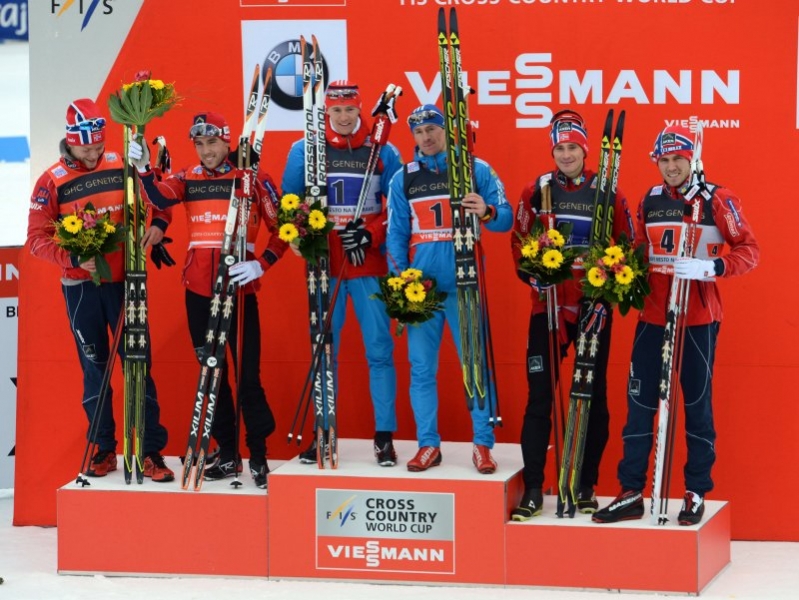
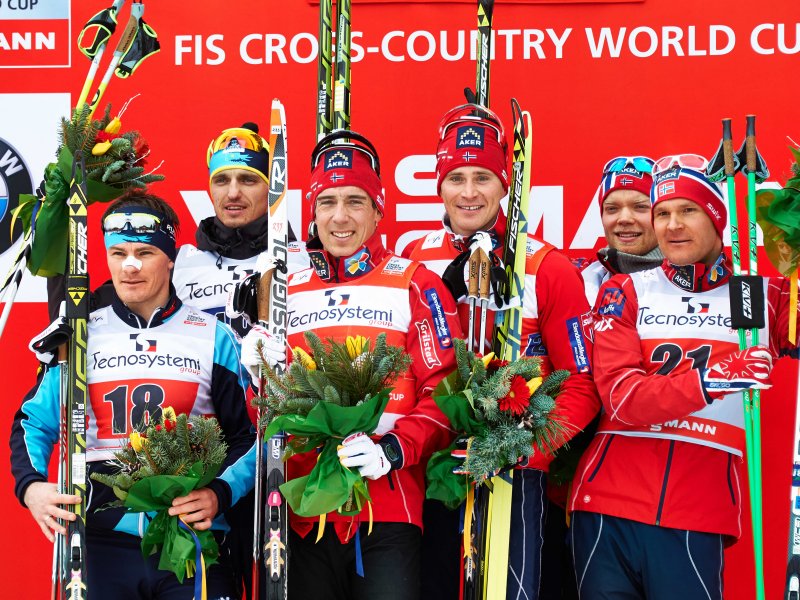
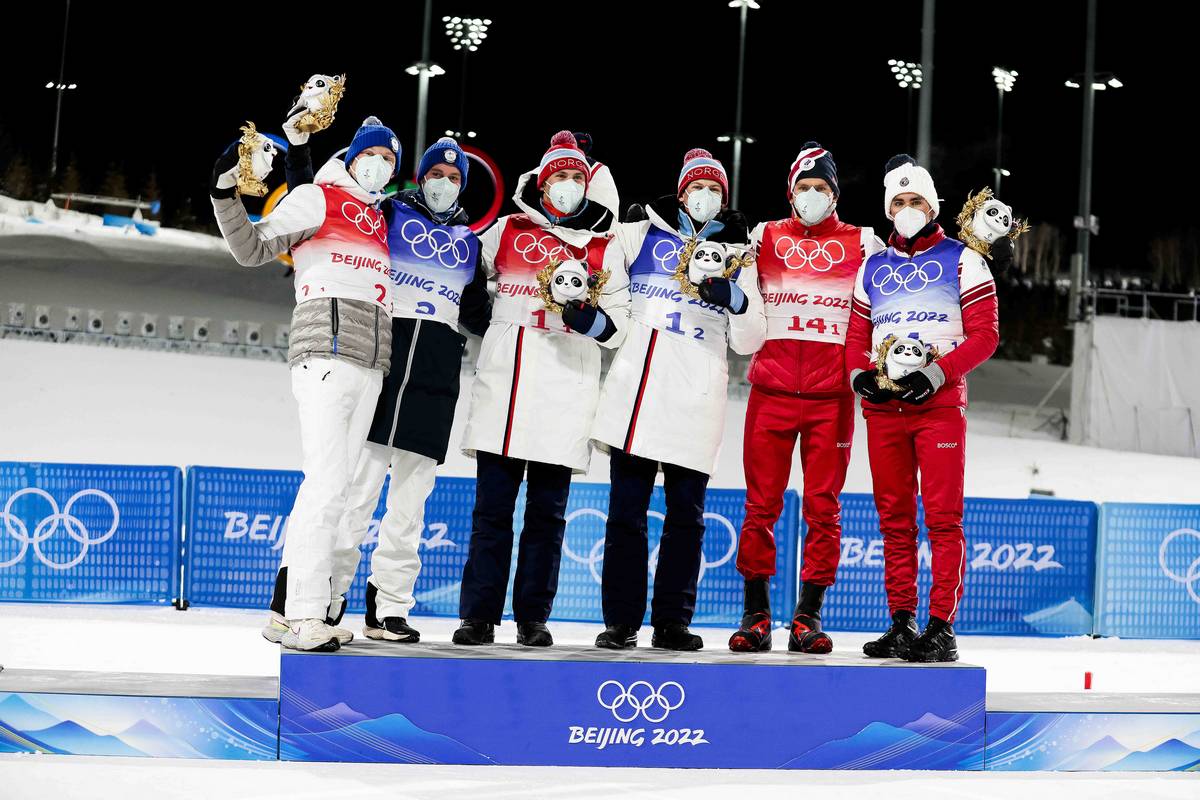
    Finland, Norway and the Russian Olympic Committee on the men’s team sprint podium. (Photo: NordicFocus)

    Results: Semifinal A | Semifinal B | Final

  • Sunday Rundown: Lahti and Osrblie (Updated x2)

    Sunday Rundown: Lahti and Osrblie (Updated x2)

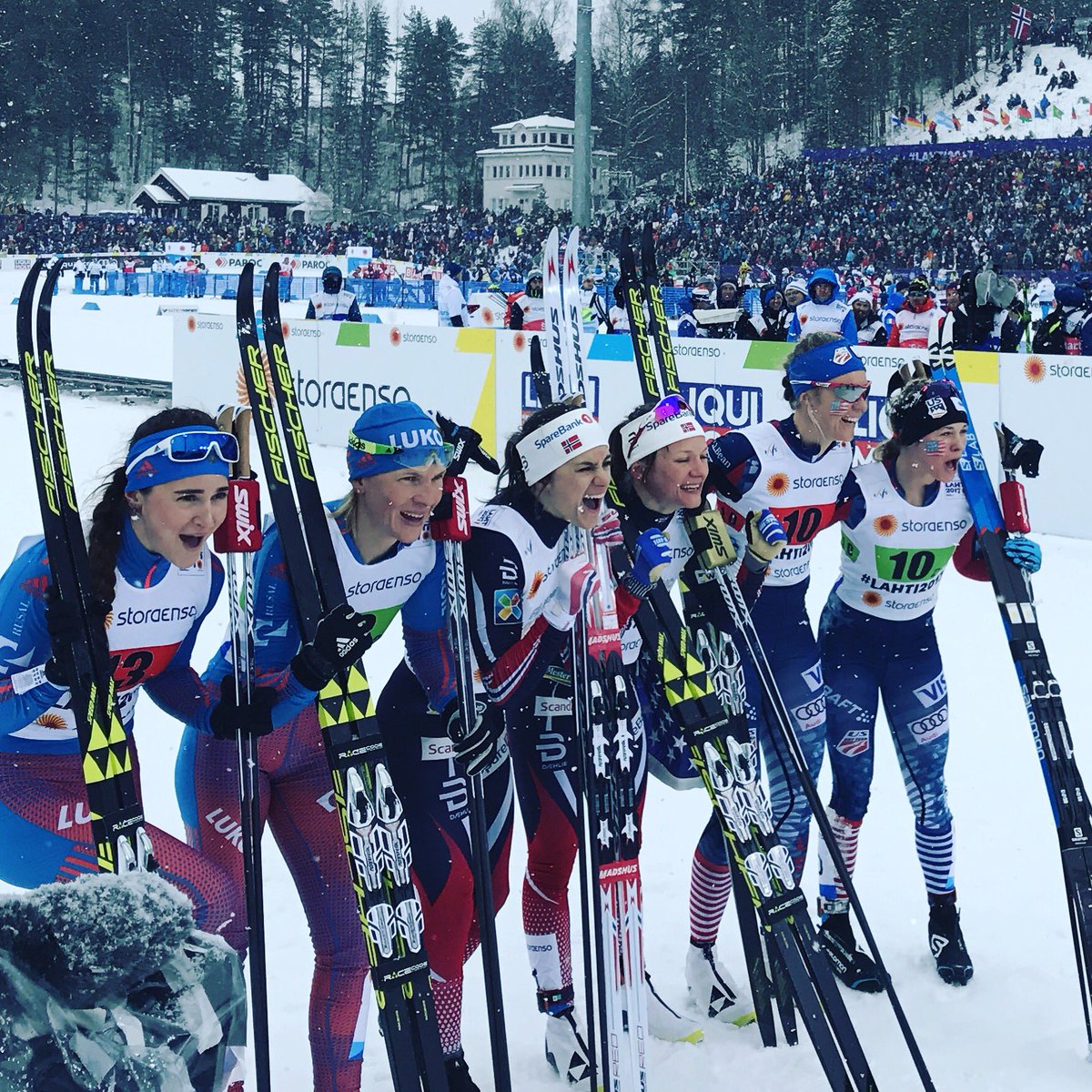
    Heidi Weng and Maiken Caspersen Fall of Norway (center) bested Yulia Belorukova and Natalia Matveeva of Russia (left) for gold in the women’s team sprint at 2017 World Championships, with Sadie Bjornsen and Jessie Diggins of the U.S. (right) outsprinting Sweden for bronze. (Photo: FIS Cross Country/Twitter)

    FIS Nordic World Championships (Lahti, Finland): Classic team sprints

    Defending champions Norway repeated gold in the women’s team sprint, with Heidi Weng and Maiken Caspersen Falla crossing the finish line first in Lahti, Finland. On the second-to-last loop, it looked like Russia could have something to say about that. Yulia Belorukova put in a furious sprint up the course’s biggest climb, and then beat Weng to the exchange. But her teammate Natalia Matveeva could not match the pace when Falla put on her own sprint on the last uphill. Russia finished second for silver, +5.56.

    The competition for bronze was closer, with Germany, Finland, Sweden, and the United States going out of the stadium for the last loop together in chase of the Norwegian and Russian leaders. The last climb was defining in the race for bronze, with Jessie Diggins of the United States staying closest to Sweden’s Stina Nilsson. Diggins caught Nilsson on the downhill and was able to stay just ahead of the Swede to the finish, claiming bronze (+18.38) along with teammate Sadie Bjornsen. It was a return to the team sprint podium for Diggins: after winning the team sprint at 2013 World Championships with Kikkan Randall, she teamed up with Sophie Caldwell in 2015 but the pair finished eighth.

    Nilsson and Ida Ingemarsdotter settled for fourth (+18.57), and the Finnish team of Aino-Kaisa Saarinen and Kerttu Niskanen finished fifth (+23.02).

    The Canadian team of Cendrine Browne and Dahria Beatty was seventh in their semifinal and landed 13th overall.

    In the men’s team sprint, Norway set a high pace from the beginning, with phenom Johannes Høsflot Klæbo attacking on the steep uphill every time he skied. On his second and third loops, he tagged off to Emil Iversen with gaps of just over five seconds to the rest of the field. But Iversen had a hard time holding the lead, in part because of Russia’s Sergey Ustiugov, who had won the 30 k skiathlon the day before and put in a huge effort to catch Iversen on the fourth loop of the team sprint.

    On the final loop, Finland’s Iivo Niskanen bridged the gap up to Iversen, mostly on the steep uphill and then also with ski speed on the downhill. But the time the pair entered the stadium, Niskanen had caught the Norwegian and was moving with higher speed. He decided to switch tracks to overtake Iversen, but Iversen decided to switch tracks just a second later, without checking one last time to make sure the track was clear. He fell, taking out Niskanen with him.

    That allowed Ustiugov and Italy’s Federico Pellegrino to go sailing by to claim gold and silver (+2.14) with their teammates Nikita Kriukov and Dietmar Noeckler. It was the second gold for Russia in the event in three World Championships; Kriukov and Alexey Petukhov won in 2013, and also took silver in 2015.

    Niskanen got up and claimed bronze (+8.64 with Sami Jauhojärvi), swearing as he crossed the finish line; with a broken pole, Iversen limped across the line in fourth (+18.42). He was called to a jury meeting but ultimately no teams were disqualified because of the crash.

    Erik Bjornsen of the United States won a sprint finish for fifth (+23.58) with teammate Simi Hamilton), besting Lenny Valjas (+27.02 with teammate Alex Harvey) of Canada.

    Results: women | men

    ***

    FIS Nordic World Championships (Lahti, Finland): Nordic combined 4 x 5 k team event

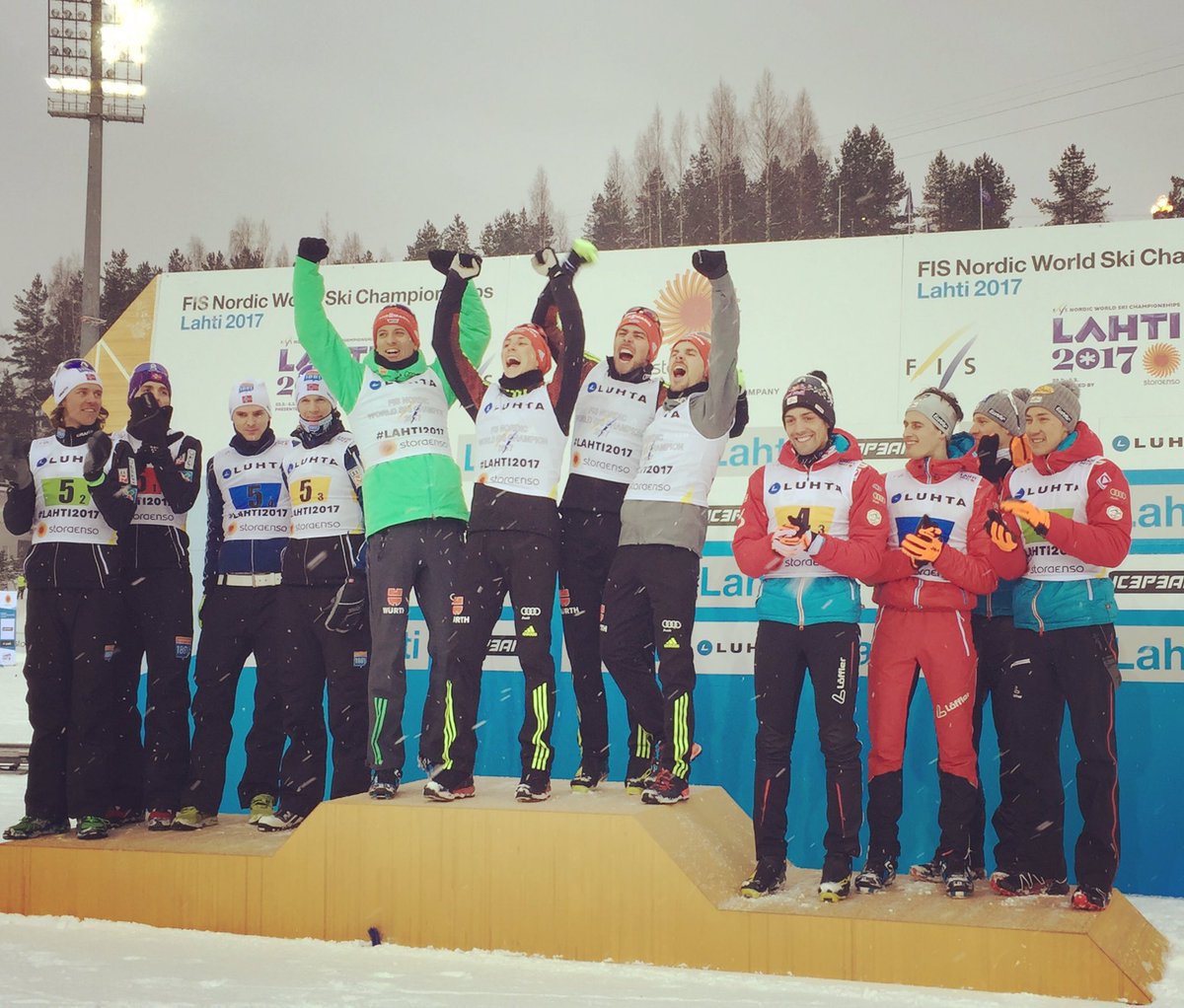
    Germany (Björn Kircheisen, Eric Frenzel, Fabian Rießle, and Johannes Rydzek) took gold in the nordic combined 4 x 5 k team event on Sunday at Nordic World Championships in Lahti, Finland, while Norway placed second and Austria third. (Photo: FIS Nordic Combined/Twitter)

    [UPDATED] After sweeping the first individual nordic-combined competition of 2017 Nordic World Championships on Friday, Germany achieved gold as a team, with Björn Kircheisen, Eric Frenzel, Fabian Rießle, and Johannes Rydzek winning the 4 x 5-kilometer team event in 47:57.3.

    The Germans combined for the best jumping score of 11 teams and started the relay in first, 44 seconds ahead of Japan in second. Norway started 1:07 minutes back in fifth but rose to second place (+41.7), with Magnus Moan, Mikko Kokslein, Magnus Krog, and Jørgen Graabak. Moan raced them into third at the first exchange, then Kokslein secured second, which they held onto for the remaining two legs.

    “It was our goal to ski a controlled race,” Germany’s Frenzel told ZDF. “Not really look at how the gap was developing, but just make our own race. And put up a little more pressure towards the end of each leg. That worked well, that was a wickedly cool team performance today. And I am just happy that we could put a little golden crown on the whole event today.”

    “I think today you could see again that we all worked together and enjoyed the competition,” Rydzek added. “We were all happy about each other’s performance, and just rewarded ourselves for hard hard work.”

    Austria started fourth, 1:05 behind Norway, and clinched bronze (+1:03.7) with Bernhard Gruber, Mario Seidl, Philipp Orter, and Paul Gerstgraser. Gruber initially raced them into second at the first exchange, but they relinquished one spot and hung on for third, ahead of Japan in fourth (+1:06).

    Japan (Hideaki Nagai, Takehiro Watanabe, Yoshito Watabe, and Akito Watabe) jumped to second, but found themselves in fourth at every exchange.

    Finland took fifth, Italy sixth, France seventh, and the U.S. eighth (+3:27.2) with Bryan Fletcher, Taylor Fletcher, Ben Berend, and Ben Loomis. The Americans started the race in seventh and were in sixth after the first two exchanges, but slipped to eighth on the third leg.

    Results

    ***

    IBU Youth/Junior World Championships (Osrblie, Slovakia): Youth & junior pursuits

    Four seems to be Chloe Levins’s lucky number. After a career breakthrough of fourth place in the pursuit at last year’s Youth Olympic Games (YOG) in Lillehammer, Norway, the 18-year-old Vermonter raced to fourth in the youth women’s 7.5-kilometer pursuit on Sunday at the International Biathlon Union (IBU) Youth/Junior World Championships in Osrblie, Slovakia.

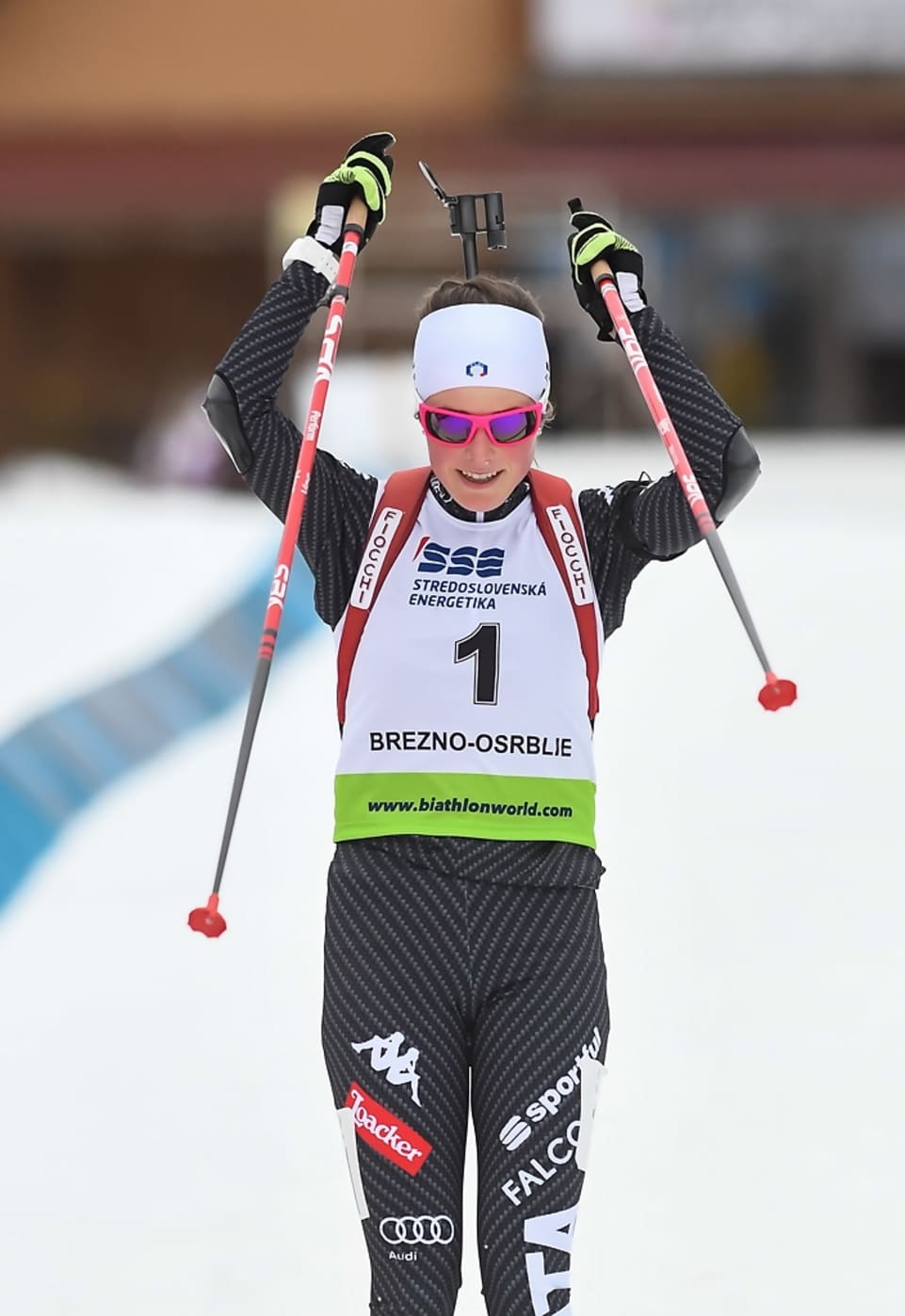
    Italy’s Irene Lardschneider winning the youth women’s 7.5 k pursuit on Sunday for her second-straight gold at 2017 IBU Youth World Championships in Osrblie, Slovakia. (Photo: IBU)

    Levins started the race in 11th and worked her way up to fourth with clean shooting in three stages. She missed two in the first prone but rebounded and held off Ukraine’s Khrystyna Dmytrenko by seven seconds for fourth place. Levins finished 1:55.5 minutes behind the winner, Italy’s Irene Lardschneider, who started the race first and held on for her second-straight gold medal despite four penalties (0+0+2+2), finishing in 26:57.1. France’s Lou Jeanmonnot-Laurent rose from fourth to second place with 19-for-20 shooting (0+0+1+0), and Italy’s Samuela Comola took bronze (+1:08.5) for the second-straight race with two misses (1+0+1+0).

    Three U.S. women qualified for the pursuit, with Amanda Kautzer finishing 42nd (+6:16.2) after starting 59th and shooting 80 percent (1+0+2+1), and Grace Gilliland finishing 55th (+8:32.1) with six penalties (2+3+1+0).

    Canada’s Shilo Rousseau followed in 54th (+9:02.1) with eight misses (3+1+2+2).

    Results: Youth women

    In the junior women’s 10 k pursuit, Canada’s Megan Bankes raced to 16th for the best finish for a North American in that race. The gold medalist in last week’s 12.5 k individual, Bankes finished 13th in Saturday’s sprint and thus started in that position, 1:25 out of first. She ended up 16th with four penalties (0+1+2+1) and finished 2:15.8 behind the winner, Russia’s Valeriia Vasnetcova, who started 24th and worked her way all the way up to first with clean shooting.

    Vasnetcova was the only one to clean the four-stage pursuit on Sunday, and in doing so, she achieved her first gold of the championships and second of her career at Youth/Junior Worlds after her team won last year’s youth relay in Romania.

    Coming off a sprint win, Italy’s Michela Carrara started first and took second at the finish, 10 seconds behind Vasnetcova with three misses (1+1+1+0). Norway’s Ingrid Tandrevold scored her second-straight medal as well, after starting second and finishing third (+10.8), with two penalties (0+0+1+1).

    Canada’s Nadia Moser had her best result of the championships in 30th (+3:43.5), moving up one place after starting 31st, with three penalties (0+1+0+2). Emily Dickson finished 47th for the second-straight day (+6:29.9) with four penalties (1+0+1+2).

    Siena Ellingson was the lone American to start after placing 18th in Saturday’s sprint. She finished 41st (+5:24.7) with seven misses (1+2+1+3).

    Results: Junior women

    In the junior men’s 12.5 k pursuit, Canada’s Pearce Hanna rocketed to 23rd after starting 47th, shooting 17-for-20 after cleaning the first two stages (0+0+1+2) for his first top 30 of the championships. Hanna finished 3:12 behind the winner, Russia’s Igor Malinovskii who picked up his second-straight gold.

    Malinovskii started first and finished in 32:39.8, 13 seconds ahead of second place, with four penalties (0+1+2+1). Norway’s Sindre Pettersen took the silver medal after starting in eighth and posting the fastest course time to overcome five misses (2+1+1+1). Belarus’s Anton Smolski moved up from fourth at the start to reach the podium in third (+27.4) with five misses as well (0+0+3+2).

    All four Canadian junior men qualified for the pursuit. Trevor Kiers led them in 39th (+5:13.3), after starting 48th, for his best result of the championships. Jules Burnotte placed 43rd (+5:35.3), up from 55th, for his best result as well, and Zachari Bolduc finished 57th (+8:18.3). Kiers missed five targets (2+0+1+2), Burnotte had seven misses (3+1+1+2), and Bolduc missed eight (2+3+2+1).

    For the U.S., Cody Johnson finished 55th (+7:19.5) with nine penalties (2+1+2+4) and Travis Cooper 59th (+8:46.2) with eight misses (5+0+1+2).

    Results: Junior men

    In the youth men’s 10 k pursuit, the first race of the day on Sunday, two Canadians finished in the top 30, with Leo Grandbois in 22nd and Adam Runnalls in 27th.

    For Grandbois, it was his first time outside the top 15 of the championships after he had won the youth men’s 12.5 k individual last Wednesday and finished 14th in Friday’s 7.5 k sprint. He had to ski six penalty loops on Sunday (0+2+2+2), dropping outside the top 20 after the third shooting. Grandbois finished 3:21.8 behind the winner, France’s Emilien Claude, who won the sprint as well to start the pursuit first.

    Claude, who had four penalties (1+1+0+2) and finished in 29:22.4, held off Italy’s hard-charging Cedric Christille by 16 seconds after Christille shot just two penalties (0+0+1+1) to move up from fourth to second for his first medal in his first Youth World Championships. Germany’s Danilo Riethmüller rose from sixth to third place (+30.7) despite four misses (1+0+1+2). For the German, it was his second bronze of these championships after placing third in the 12.5 k individual.

    Canada’s Runnalls moved up from 32nd at the start to 27th at the finish (+3:47.5) for his first top 30 of the championships. He had five penalties (1+3+1+0), but cleaned the last stage to move into the top 30.

    Vasek Cervenka was the lone American to qualify in the youth men’s pursuit, and he moved up from 49th at the start to 30th (+3:52) with five penalties (1+1+1+2).

    Results: Youth men

  • Last of Canada’s World Cup Female Veterans, Jones Plans Her Next Move

    Canada's Perianne Jones (Alberta World Cup Academy/National Development B-Team) racing to 32nd for her best World Championships distance result at 2015 worlds in Falun, Sweden. (Photo: Fischer/NordicFocus)
    Perianne Jones (Canadian National Development B-Team) races to 32nd for her best World Championships distance result at 2015 World Championships in Falun, Sweden. (Photo: Fischer/NordicFocus)

    For the last 12 years, Perianne Jones was more or less on autopilot, leading the life of a professional nordic racer in Canmore, Alberta, and giving little thought to what would come after skiing.

    The 30-year-old Canadian national-team member and Nakkertok Nordic prodigy had moved west from her hometown of Almonte, Ontario, immediately after high school. She immersed herself in full-time training and racing, and by 2009, made the Canadian World Cup Team.

    Two Olympics and five seasons later, Jones was inching toward retirement. Health issues stunted the start of her 2013/2014 season; she discovered in the fall of 2013 that she had hemochromatosis, a genetic condition that causes too much iron in the body. She spent the next few months working to manage her iron levels and returned to the World Cup circuit in late December 2013.

    Canadian biathletes and fellow cross-country skiers cheer on their own Perianne Jones on the first leg of the 4 x 5 k relay at the Sochi Olympics on Friday. Jones dropped to 14th and the team finished 14th, one place better than their finish at the 2010 Vancouver Games.
    Canadian biathletes and fellow cross-country skiers cheer on their own Perianne Jones on the first leg of the 4 x 5 k relay at the Sochi Olympics. the team finished 14th, one place better than their finish at the 2010 Vancouver Games.

    Two months later, she competed at her second Olympics in Sochi, Russia, placing 23rd in the freestyle sprint for her personal Olympic best. In the classic team sprint, she and teammate Dasha Gaiazova placed 11th after notching third in the same event at the 2013 Sochi World Cup a year earlier.

    Jones ended her season with a second-place finish in the freestyle sprint at 2014 Canadian Nationals in Corner Brook, Newfoundland, and was subsequently named to the national development B-team last May.

    Also last spring, her coach, Eric de Nys, left the national team to head up a new training program in Canmore: the WinSport Junior Cross Country Ski Team. Jones lost the bulk of the funding she had received as a World Cup Team member, yet decided to continue on for another season.

    “I, for sure, wanted to do another year after Sochi, and do things right,” she said on the phone from Canmore in early April. “… [Not making the World Cup Team] was a bummer, but at the same time, I know I didn’t make the criteria. I had one top-ten two seasons ago and you needed two top-twelves. I was put on the development team, so it meant that this past season cost me way more than it ever has…”

    “I, for sure, wanted to do another year after Sochi, and do things right.” — Perianne Jones

    As a development athlete, she said the costs amounted to $40,000 to $50,000, and that included government assistance as a carded athlete.

    “Even if you’re carded, you still have to pay for a place to live,” Jones said. “And living in Canmore is not cheap.”

    Carded athletes essentially receive an allowance each month, she explained. The government cuts qualifying individuals checks that could be used for anything — even a flat-screen TV — but the amount is generally considered a living allowance.

    “As a development skier, you have to cover housing and your team fee, which is around $10,000 and your winter expenses on the road, and then your flights to and from and around Canada,” Jones said. “It adds up.”

    Without stressing too much over finances, she focused on the 2014/2015 season and logged some of her career-best distance results, placing 32nd in the 10 k freestyle and 37th in the skiathlon at 2015 World Championships in Falun, Sweden.

    Canada's Perianne Jones raced to fifth place in her qualifier to finish 24th overall in the 1.4 k classic sprint in Falun, Sweden for the 2015 FIS Nordic World Ski Championships. (Photo: flingpointroad.com)
    Canada’s Perianne Jones racing to fifth in the 1.4 k classic sprint at 2015 World Championships in Falun, Sweden. She placed 24th overall. (Photo: flyingpointroad.com)

    Also in Falun, she finished 24th in the classic sprint and was 21st for a season best in the preceding World Cup classic sprint in Östersund, Sweden.

    “This past year I was healthy the whole season, which was quite an accomplishment for me,” she said. “It wasn’t my best season in terms of results, but health-wise it was really good. … I was pleased with both my sprints in Östersund and at world champs. It always can be better for sure, but I don’t have any regrets.”

    In Falun, she announced she would leave the international-racing scene at the end of the season. She capped off her career at 2015 Canadian Nationals in Thunder Bay, Ontario, winning the classic sprint, placing second in both the 5 k freestyle and 10 k classic individual races, and fifth in the 30 k freestyle mass start.

    In Thunder Bay, Nakkertok hosted a retirement dinner in her honor, complete with a video and several athletes and her brother Kieran Jones — Nakkertok’s head coach — speaking about the impact she had on their ski careers.

    “That was the only time I cried all week,” Jones said. “The ski club has been a huge part of my life and maybe I didn’t realize how I had been a part of them so much in the last ten years because I haven’t been around that much. I would totally love to go back to Ottawa and be a part of that some more.”

    She clarified that her involvement with Nakkertok would most likely be as a volunteer.

    “I have an interest in being involved, not necessarily in coaching at a high level, but when I was growing up with Nakkertok the ski club was entirely volunteer run,” she said. “I will be involved with a ski club wherever I end up. I will miss certain parts of skiing, but to have Joel still a part of the team will be an easier way to make that transition.”

    On Friday, Jones and her husband, Joel Jaques, a national-team wax technician, hopped aboard their 32-year-old Dodge getaway van and began a road trip to Ottawa. She guessed they might be gone for at least a month, with Jaques heading back to Canmore for a week in the middle of their trip for a training camp. How far they’d go depended on how the van ran. They bought it in February, about the time Jones knew her career was winding down.

    “We were just kind of joking about vans; there was one in Canmore and we offered the guy quite a bit less than he was asking and he said sure, and we’re like, OK, I guess we’re doing this,” she said.

    If they have time and the van makes it to Newfoundland, a friend offered to keep the van and buy their plane tickets back to Canmore. There, Jaques will go back to work with the national team and Jones will decide on her next move: she’s considering studying healthcare in Calgary or Ottawa.

    Meanwhile, she also planned to start working in Canmore to cover the cost of last season. While she essentially made up her mind to race one last season a year ago, the bill she received at the end of it ultimately solidified her retirement.

    “At the beginning of [last] season, I thought if I work and keep skiing, I would need to make the World Cup Team and need other women on the World Cup Team around me to keep going,” she reflected. “As the season kept going, I was realizing that even if all those things came into place, I wasn’t motivated to keep training for another year.”

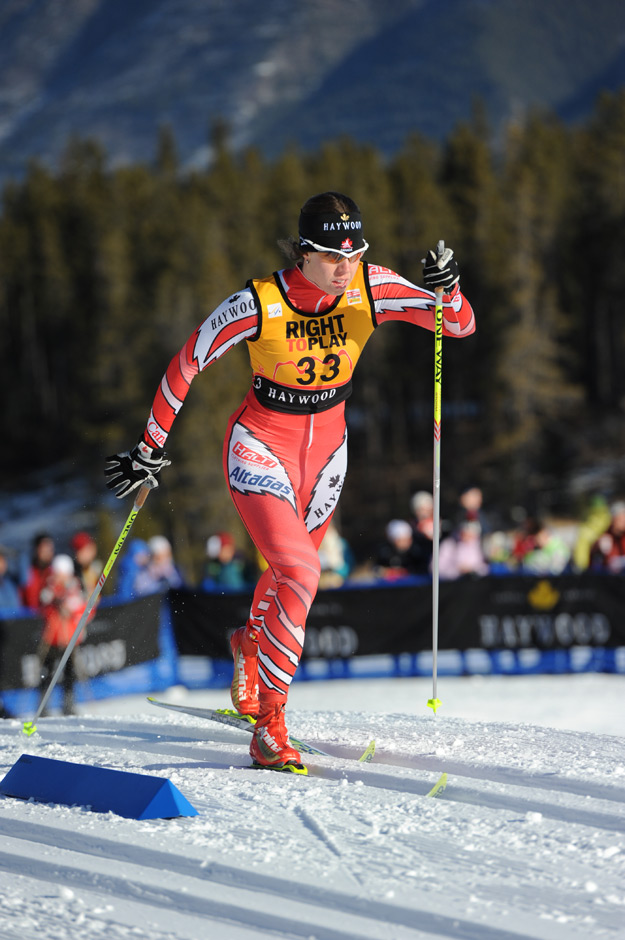
    Perianne Jones (CAN) was 29th in the Canmore World Cup on Feb 5, 2010. Photo: Win Goodbody.
    Perianne Jones racing to 29th in the Canmore World Cup in February 2010. (Photo: Win Goodbody)

    After graduating high school, Jones started a fall term the University of Calgary, but found the commute back and forth from Canmore difficult. She took an online course at Athabasca University, but realized that didn’t work for her, either. Instead, she spent the next 12 years focusing on skiing.

    “I’m happy with the decisions I made and I’m sure my ski career was the best quality,” she said. “Hindsight’s twenty-twenty; there’s always things that could’ve gone better, but at the same time I was able to commit 100 percent to skiing. Although I’m not educated right now, I’m really looking forward to going to school and I can put 100 percent of my energy into school.”

    Jones and Jaques were also looking forward to having the freedom to visit friends this spring.

    “I’m looking forward to waking up and being able to what I want to do for exercise,” Jones said.

    “I will not be out on my rollerskis,” she added with a laugh. “So far it doesn’t feel a whole lot different. I feel pretty good about my decision, and I’m confident it was the right one. So many people say that it’s really hard [to retire] and some people say it’s awesome, but I think it depends on the person. I have enough plans to keep me busy; I don’t think I’ll be bored.”

    Looking back, she credited her two national-team coaches, de Nys and Justin Wadsworth, for the longevity of her career. She worked with de Nys, a development coach before he became the women’s national-team coach, for most of her senior years.

    “Eric really got to know me as an athlete and I got to know him as a coach, and I really trusted him and we were able to work well together,” Jones said. “And Justin, he’s been with the team since [2010] and he wasn’t my personal coach until this past year, but the transition was pretty seamless … I don’t feel like I lost Eric as a coach this year, but I feel like I gained Justin. Whenever we had a question about something, either of us could easily call Eric or visit him in his office.”

    In her career, Jones notched three top-15’s at both Junior World Championships and U23 World Championships, finishing eighth at 2008 U23’s in Malles Venosta, Italy.

    Canadians Perianne Jones and Dasha Gaiazova celebrate their first bronze of the season, and together, in the Sochi World Cup classic team sprint. (Photo: Chandra Crawford)
    Canadians Perianne Jones (l) and Dasha Gaiazova celebrate their first bronze together in the Sochi World Cup classic team sprint. (Photo: Chandra Crawford)

    “I had some really good World Junior experiences, some good results and some really fun times with the team,” she explained.  “For sure, the two medals that I won with Chandra and Dasha respectively in Milano and Sochi were highlights.”

    In 2012, Jones and Chandra Crawford teamed up for third in the World Cup freestyle team sprint in Milano, Italy.

    Jones also recalled making the 2010 Olympics in Vancouver, British Columbia, as a major high point. She qualified in 2009 when she and Sara Renner placed sixth in the World Championships classic team sprint in Liberec, Czech Republic.

    “That was the first time we got to go to the medal ceremony … and it was with Sara, who was a pretty big mentor,” she said. “I was actually never really on the team with Beckie [Scott] or Milaine [Thériault], but I traveled quite a bit with Sara. … Having them come before me and have the results that they did and just being the people that they are, they made it pretty appealing to chase after ski-related goals … Everything was so positive that I never I had any doubt that A.) I would enjoy it and B.) it would be possible.”

    The last of Canada’s three veteran females to retire — following the departures of Crawford and Gaiazova from the national team last year — Jones was excited to see what the next generation of women could accomplish.

    “I spent the majority of the season on the road with Emily [Nishikawa] and that was just awesome,” she said. “I’m glad I was there for that and able to witness her best season ever, and I think it’s a sign for really great things to come. There are younger women coming up, too, and they have Emily to look up to so there’s no doubt in my mind that they will do great things.”

    Regardless of where she attends school, Jones envisioned that she and Jaques would end up living somewhere in western Canada.

    “We don’t really want to leave Canmore,” she said.

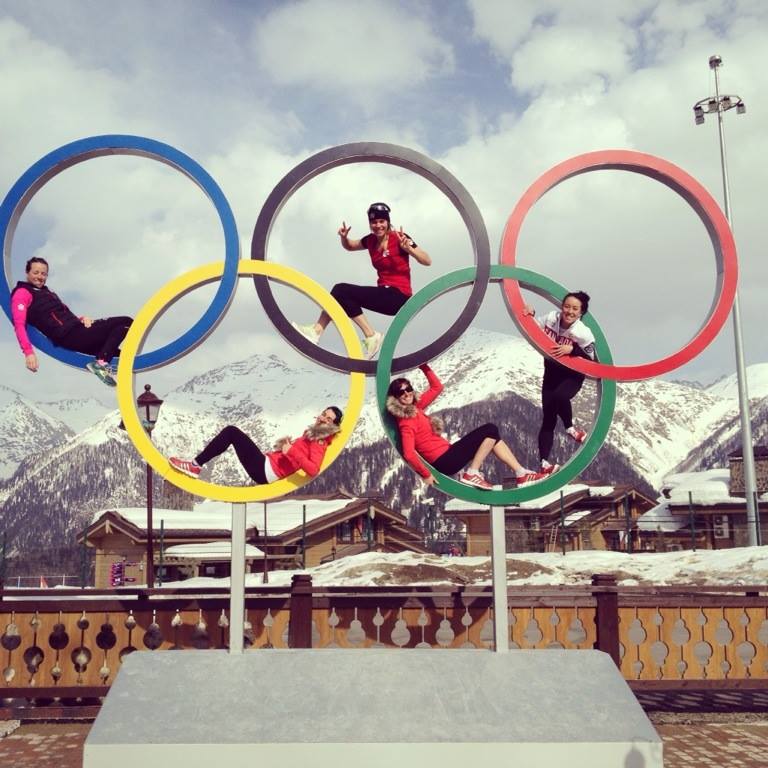
    Several members of the Canadian Olympic cross-country ski team get the perfect photo opp at the Olympic rings in Krasnaya Polyana, Russia. (From left to right): Perianne Jones, Amanda Ammar, Heidi Widmer, Brittany Webster, and Emily Nishikawa. (Photo: Emily Nishikawa)
    Several members of the 2014 Canadian Olympic cross-country ski team get the perfect photo opp at the Olympic rings in Krasnaya Polyana, Russia. (From left to right): Perianne Jones, Amanda Ammar, Heidi Widmer, Brittany Webster, and Emily Nishikawa. (Photo: Emily Nishikawa)
  • Norway Finds Redemption, Olympic Record in Women’s Team Sprint

    Norway Finds Redemption, Olympic Record in Women’s Team Sprint

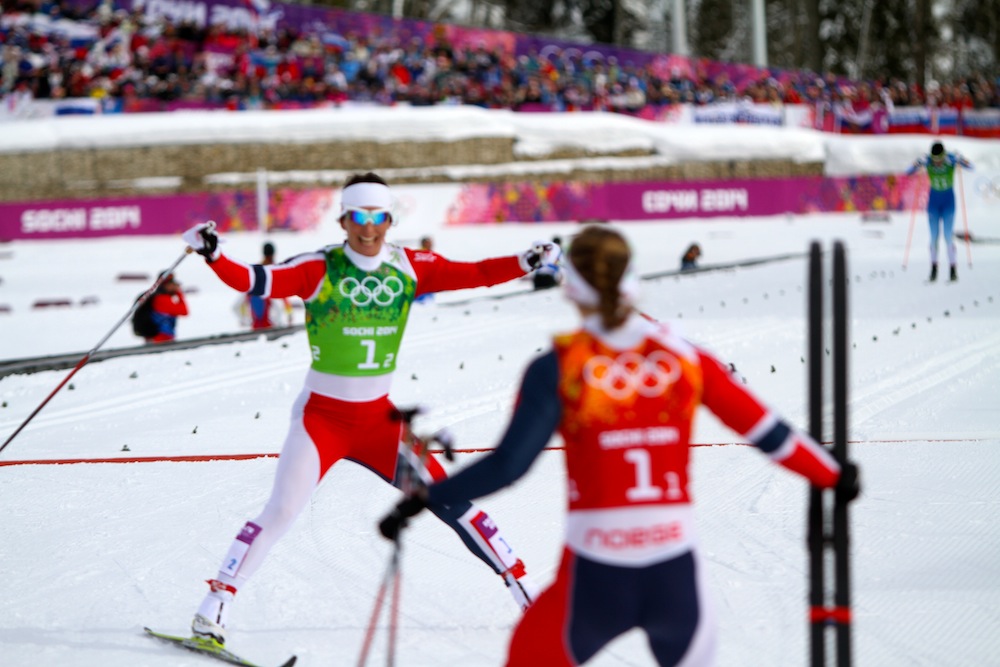
    Marit Bjørgen (l) skis toward her Norwegian teammate in Wednesday's Olympic 6 x 1.3 k classic team sprint, Ingvild Flugstad Østberg after anchoring the team to its first-ever team sprint victory at the Olympics.
    Marit Bjørgen (l) skis toward her Norwegian teammate in Wednesday’s Olympic 6 x 1.3 k classic team sprint, Ingvild Flugstad Østberg after anchoring the team to its first-ever team sprint victory at the Olympics.

    KRASNAYA POLYANA, Russia — The Norwegian women’s team of Ingvild Flugstad Østberg and Marit Bjørgen made Wednesday’s Olympic classic team sprint look like a walk in the park.

    At least this time, they weren’t walking.

    Following a series of bad races — badly timed smøreboms at the biggest races in four years — the Norwegian wax staff finally appeared to get things right on Wednesday as their women cruised to a semifinal victory in the 6 x 1.3-kilometer team sprint.

    A decade apart in age, the duo of Østberg, 23, and Bjørgen, 33, found both kick and glide on the taxing course, winning the semifinal in 16:43.45 minutes, 5.31 seconds ahead of Sweden’s Ida Ingemarsdotter and Stina Nilsson in second. The U.S. women placed third in the same semifinal, 7.91 seconds out of first after letting up in the final stretch, confident that their time was fast enough to advance to the final.

    A little over an hour later, the top 10 teams from the semifinals went head to head in the final — same scramble-leg, anchor-leg order, same course, and slightly different conditions after temperatures dropped a few degrees to just above freezing later that afternoon.

    The colder, the better for Norway, which struggled to finding the right wax for the fast-melting, heavily salted snow since the Olympics began a week and a half earlier. Since then, Bjørgen had been the highlight — winning the 15 k skiathlon on the opening day on Feb. 8.

    After that, she face-planted in the semifinals of the skate sprint, placed fifth in the 10 k classic (after teammate Therese Johaug in third), then anchored Norway to fifth in the relay. Not bad, but not exactly up to par by Norwegian standards.

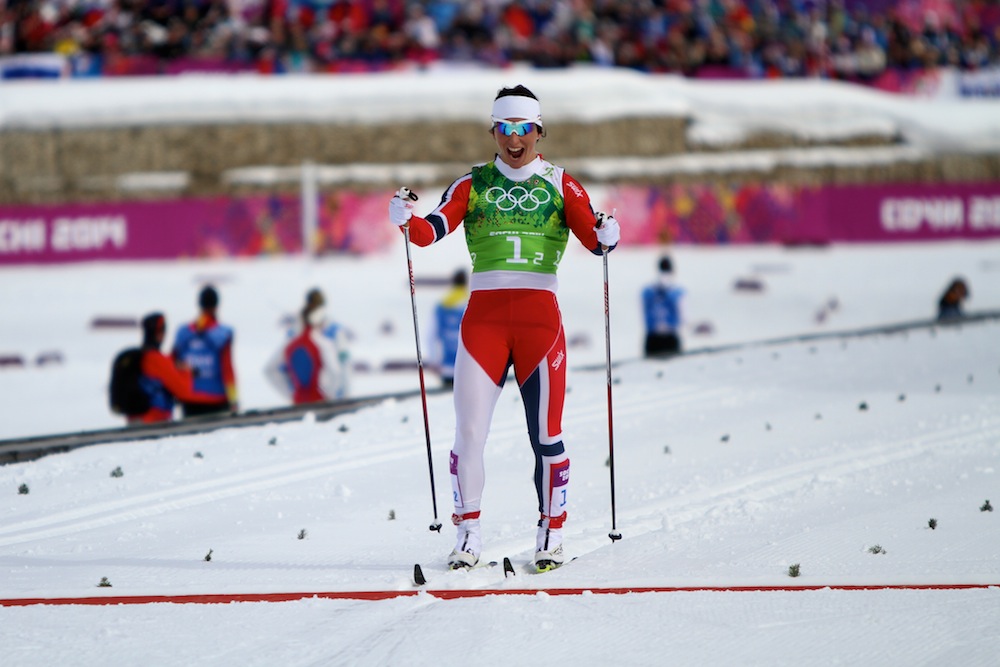
    Marit Bjørgen anchors the Norwegian women's 6 x 1.3 k classic team sprint victory at the 2014 Sochi Olympics. She teamed up with Ingvild Flugstad Østberg to do so, and it was Østberg's first Olympic gold.
    Marit Bjørgen anchors the Norwegian women’s 6 x 1.3 k classic team sprint victory at the 2014 Sochi Olympics. She teamed up with Ingvild Flugstad Østberg to do so, and it was Østberg’s first Olympic gold.

    Something had to change, and by Wednesday, the Norwegians got back to their winning ways — grabbing gold in the team sprint for the first time in the event’s history at the last three Olympics. In doing so, Norway became the first nation to win a medal in all 12 Olympic cross-country events.

    “The waxing team has done a very good job,” Bjørgen said in a press conference after the race. “They have been working very hard the last days and today we had the perfect skis. It was a hard time in the cabin and it’s good to see that we have good skis.”

    Led by a strong opening leg in the final, in which Østberg tagged Bjørgen in second, 0.11 seconds after Finland’s Aino-Kaisa Saarinen, the duo gradually blew apart the field. A 1.63-second lead over Finland by the third exchange grew to nearly 5 seconds by the fourth when Østberg started pushing the pace.

    At the end of the second-to-last lap, Saarinen had reined in Østberg slightly, tagging her Finnish teammate Kerttu Niskanen just 4.21 seconds back in second. With one leg remaining, Germany’s Stefanie Böhler and Denise Herrmann were another 7.86 seconds back in third, and Sweden an additional 3.71 seconds behind in fourth.

    Bjørgen proceeded to post the fastest time of the last lap, nearly four seconds faster than anyone else, and anchor the win in 16:04.05.

    “I was so excited Bjørgen would be able to stand on their feet in the last turn,” Østberg told NRK, according to a translation. “I thought it would be fine, but you never know.”

    Finland finished 9.09 seconds back in second, and Sweden’s Nilsson out-double-poled Herrmann for bronze about 10 seconds later.

    Bjørgen had nothing but praise for her young teammate, who helped her win her second race of the Sochi Olympics and fifth total gold medal.

    “She is totally raw,” Bjørgen told NRK. “She goes wonderfully well at distance races this year … so she is insanely strong.”

    Østberg has looked up to Bjørgen since her early days of skiing, writing an essay about her in high school in 2007.

    “The task was to write an essay about your role model,” Østberg told NRK. “I wrote that she was extremely good at skiing, strong and everything.”

    Seven years later, Østberg won her first Olympic gold with that very woman.

    “It’s crazy, really. I had never in my wildest imagination could have dreamed of this,” she said. “I’ve been training a lot with her and learned lots from Marit … She is a wonderful person both when things are going well and when it does not go well.”

    If we’re comparing apples, it’s interesting to consider that Bjørgen was 22 when she won the sprint at 2003 World Championships. Just a year older into her athletic career, Østberg is a gold and silver medalist in Sochi, after placing second to teammate Maiken Caspersen Falla in the skate sprint.

    “She is very strong, stronger than me,” Bjørgen said.

    The two got a visit from Norway’s King Harald V as well, who hugged and congratulated them after the finish.

    “I wonder if luck turned when the King came to Sochi yesterday,” Bjørgen told NRK. Harald reportedly came to Russia to follow Norwegian Olympians in contention for medals.

    He found it in Norway’s women, who salvaged the reputation of their team on a day when the Norwegian men (with Ola Vigen Hattestad and Petter Northug) failed to make the podium (finishing more than three seconds off in fourth).

    “It has been painful to see all the criticism [our wax technicians] have received recently,” Bjørgen said, according to a translation. “They work round the clock. Now it is incredibly amusing that this was the way. This is good for the wax technicians and all the support.”

    For Finland, silver was good omen for more to come — as its men’s team of Iivo Niskanen and Sami Jauhojärvi won the following 1.8 k classic team sprint for their nation’s first men’s Olympic gold since 1998.

    “We are so happy both of us for the men. They did really excellent work,” Saarinen said. “It was such an amazing race, so interesting to watch. We were screaming and laughing and crying, all the emotions going through.”

    Skiing in fourth behind Herrmann into the stadium, Nilsson knew there was a chance for a medal if she did something spectacular. She beat Herrmann in a sprint finish, although Herrmann told reporters slow skis made her feel like “a lame duck” coming down off the last hill into the final stretch.

    “When I came into the last 100 meters, I felt that I had a lot of power left, and I also saw that Denise was looking tired,” Nilsson said. “When I was right behind her I knew that I had a chance.”

    She beat Herrmann for third by 1.15 seconds. Poland finished fifth, nearly 11 seconds later and 32 seconds behind Norway with Sylwia Jaskowiec and Justyna Kowalczyk. Russia was sixth (Anastasia Dotsenko/Julia Ivanova), and Switzerland seventh (Bettina Gruber/Seraina Boner). The U.S. placed eighth (Sophie Caldwell/Kikkan Randall), Austria was ninth (Katerina Smutna/Teresa Stadlober), and Slovenia 10th (Alenka Cebasek/Kajta Visnar).

    Results

  • With Caldwell & Randall, U.S. Women 8th in Olympic Classic Team Sprint, ‘Not Quite There Yet’

    With Caldwell & Randall, U.S. Women 8th in Olympic Classic Team Sprint, ‘Not Quite There Yet’

    Kikkan Randall (U.S. Ski Team) skiing the anchor leg in the semifinals of Wednesday's Olympic 6 x 1.3 k classic team sprint with teammate Sophie Caldwell. The two advanced to the finals, where they placed eighth.
    Kikkan Randall (U.S. Ski Team) skiing the anchor leg in the semifinals of Wednesday’s Olympic 6 x 1.3 k classic team sprint with teammate Sophie Caldwell. The two advanced to the finals, where they placed eighth.

    FasterSkier’s coverage is made possible through the generous support of Swix.

    KRASNAYA POLYANA, Russia — For the first time in Kikkan Randall’s storied legacy with the U.S. Ski Team — at least since before the 2006 Olympics — the 31-year-old Alaskan wasn’t a shoo-in for the Olympic 6 x 1.3-kilometer team sprint on Wednesday.

    She had been officially named the night before, selected by U.S. Ski Team (USST) coaches out of at least four athletes whom head coach Chris Grover described as almost “identically matched in their abilities.”

    But the fact was, Randall had the most experience, and her coaches said she looked good in training. If you were going to take a gamble in a classic team sprint, which generally isn’t the U.S. team’s forte, it wasn’t crazy to go with her.

    U.S. scramble skier Sophie Caldwell (r) chases Sweden's Ida Ingemarsdotter in the semifinals of Wednesday's Olympic 6 x 1.3 k classic team sprint in Krasnaya Polyana, Russia. Caldwell and teammate Kikkan Randall made the final and placed eighth overall, while Sweden won bronze.
    U.S. scramble skier Sophie Caldwell (r) chases Sweden’s Ida Ingemarsdotter in the semifinals of Wednesday’s Olympic 6 x 1.3 k classic team sprint in Krasnaya Polyana, Russia. Caldwell and teammate Kikkan Randall made the final and placed eighth overall, while Sweden won bronze.

    Sophie Caldwell was the other pick —  justified after Caldwell, 23, became the first American woman to place as high as sixth in an Olympic cross-country race. She had finished sixth in the freestyle sprint last week, surpassing Randall’s previous individual best of eighth in the 2010 Olympic classic sprint.

    You also had the revenge, or avenge, factor coming into play. Randall had her run for an Olympic medal cut short when she was eliminated in the quarterfinals of the skate sprint; four days later, she scrambled for the U.S. women’s relay, which placed ninth.

    “I was really excited coming into today,” Randall said of the team sprint. “I was looking at every race here at the Olympics as a new opportunity for me. We know Sophie has been skiing so well so I was really excited about her possibilities.”

    Third in the second semifinal behind Norway and Sweden, respectively, Randall had essentially eased up after the last downhill when she heard her coaches tell her she was in “pretty solid qualifying position,” she recalled.

    Fighting for second with Sweden’s Stina Nilsson, Randall listened to their advice and decided not to go for the automatic qualifying spot in the top two.

    “I knew that I didn’t need to totally dig deep in that final stretch there, knowing that the pace would most likely be faster in the final,” she said.

    With Randall anchoring, the Americans finished 7.91 seconds behind Norway’s Ingvild Flugstad Østberg and Marit Bjørgen in first, and 2.6 behind Sweden’s Ida Ingemarsdotter and Nilsson in second. They were the first lucky losers in their semifinal, nearly 11 seconds ahead of Switzerland’s Bettina Gruber and Seraina Boner, who made it in fourth.

    In the next hour or so before the final, Caldwell said she and Randall mostly put their feet up and rested as much as possible before racing three more times apiece around the 1.3 k course.

    Strategy was tough to preplan, Caldwell said, especially given the challenging terrain and Olympic field. Before the final, the snow initially softened under sunny skies and T-shirt-like temperatures. And hour later, it was considerably colder than the semifinals, with temperatures dropping to a couple degrees above freezing.

    Sophie Caldwell (U.S. Ski Team) sticking with the leaders in the semifinals of Wednesday's Olympic 6 x 1.3 k classic team sprint in Krasnaya Polyana, Russia. Caldwell and teammate Kikkan Randall made the final and placed eighth overall, while Sweden won bronze.
    Sophie Caldwell (U.S. Ski Team) sticks with the leaders in the semifinals of Wednesday’s Olympic 6 x 1.3 k classic team sprint in Krasnaya Polyana, Russia. Caldwell and teammate Kikkan Randall made the final and placed eighth overall.

    Ready for anything, Caldwell said she did her best to stay in contact for the first leg of the final. She had her work cut out for her — the other semifinal winner, Finland’s Aino-Kaisa Saarinen (scrambling for teammate Kerttu Niskanen) had pushed the pace out of the start with Østberg and Ingemarsdotter. Caldwell said the pace was noticeably faster than her semifinal and turned out to be “a fight the whole time.”

    She held her own, despite some contact with Ingemarsdotter on the last downhill before the exchange, tagging Randall in fourth, 1 1/2 seconds behind Saarinen up front.

    “When you make the finals like this, you kind of just want to hang on for as long as possible until you blow up,” Caldwell said. “Maybe if you’re one of those top teams there’s pacing involved, but for someone like me, it’s basically hang on for dear life for as long as possible.”

    From there, Bjørgen broke away for Norway and Randall moved to fifth behind Germany’s Denise Herrmann. By the end of the lap, Randall was in sixth, 4.7 seconds behind Poland’s Justyna Kowalczyk in fifth and 2.6 seconds back from Herrmann.

    By the second exchange, Bjørgen had opened up a 2.84-second gap on Niskanen in second, who was just half a second ahead of Nilsson in third.

    The next time around, Caldwell held their position in sixth, but came through 15 seconds out of the lead and 10.6 seconds out of medal contention. Randall completed the next lap in seventh place, 25 seconds behind Norway in the lead and 15 seconds back from third.

    The Americans’ chances of finishing on the podium weren’t impossible, but the task became increasingly harder as Norway extended the gap and Finland consistently skied in second behind them. Sweden and Germany ultimately sprinted for third, with Nilsson getting the one-second edge for bronze.

    Caldwell and Randall placed eighth, 44.03 seconds behind the Norwegian gold medalists and about 25 seconds off the podium. They finished 23 seconds behind Germany in fourth, 12.5 seconds back from Poland in fifth, three seconds behind Russia in sixth, and 2.6 seconds behind Switzerland in seventh. Before the second-to-last exchange, the two Americans slipped to eighth, nearly 35 seconds behind the leaders.

    “I think one of my strengths is being able to follow people, and try to go a little easier than they are.” Caldwell said. “Because it went out so quickly, I went really hard that first leg and then the rest of the time, it’s a lot harder for me to be able to catch people than if they take it out at an easier pace — then that helps me, but they didn’t.”

    Caldwell said she has a “little ways” to go until she can dictate the pace in races like these, which require both fast-twitch and endurance abilities.

    “Distance skiing is something I’ve been working on a lot, and I think I need some big jumps,” she said. “The three-minute break in between [legs] definitely helps me, but it’s still kind of a distance effort.”

    “It’s certainly not the Olympics I was hoping for. … It’s two weeks out of four years. You hope to find the best shape you have ever had, and unfortunately for me, I missed the mark somehow. I am not sure quite why.” — Kikkan Randall

    Four years ago, the U.S. women placed sixth in the freestyle team sprint with Randall and Caitlin (formerly Compton) Gregg. Last year, Randall and Jessie Diggins teamed up for a first-ever U.S. gold at World Championships, also in a skate team sprint.

    American Kikkan Randall (2) chases Norway's Marit Bjørgen in the semifinals of Wednesday's classic team sprint at the Sochi Olympics. Both advanced to the final, where Norway won and the U.S. women placed eighth.
    American Kikkan Randall (2) chases Norway’s Marit Bjørgen in the semifinals of Wednesday’s classic team sprint at the Sochi Olympics. Both advanced to the final, where Norway won and the U.S. women placed eighth.

    But classic sprinting is different, especially for the U.S. women’s team.

    “They left everything out there on the course; they went as hard as they could,” Grover said. “We weren’t ready as a nation. We weren’t ready to ski the pace of the final, that those three teams were racing in. … The Norwegians, the Swedes and the Finns were ready to go out and lay down six really fast legs right from the get-go.

    “Last year at the World Championships, we have the women to do that, especially in the skate sprint,” he added. “We’re just not quite there yet in classic.”

    Randall said she felt good warming up and anticipated that the final was going to be equally hard for everyone in it.

    “Team sprints are challenging in that you never really feel good, you have to convince yourself that you do,” she said. “The teams that have shown that they are in great shape here really showed their strength today, and it was cool to see them really push it from the gun, not be too strategic, just put it out there. You could see by the bodies at the finish that everybody went pretty hard.”

    As for her race, Randall said she came in ready to go and prepared for a faster race. But, similar to the relay a few days ago, her legs felt “flooded” on the first hill.

    “I just didn’t have the same pop that I had this morning, kind of a similar theme that I’ve had all through the last couple of weeks,” she said.

    Regardless, she continued to fight for a top place — even if it wasn’t on the podium.

    “Even though we weren’t up there fighting for the medals where we wanted to be, I knew Sophie was skiing well and she could go for any position,” Randall said.

    Caldwell said it was simply a dream to be named to a two-person Olympic team with Randall.

    “It’s been a lot more than I could have imagined,” she said of after the last race of her first Olympics. “I had a really strong skate sprint, probably the best race of my life, and after that I was just kind of happy to get any start that I was offered. I’ve dreamed of being on a sprint relay with Kikkan for as long as I can remember, so I was pretty excited.”

    Randall said her fourth Olympics left something to be desired, but also recognized that her struggles with timing peak performances boiled down to the nature of the sport.

    “If it was an exact formula, everybody would be peaking,” Randall said. “And that’s probably what the intrigue is at the Olympics: who is going to get it right and who is not. We tried the best we could. I’ve had a long career; we had lots of good examples. We put together a plan that we really felt confident in.”

     “I’ve dreamed of being on a sprint relay with Kikkan for as long as I can remember, so I was pretty excited.” — Sophie Caldwell

    Randall said there were some “funny things with the venue and snow” that contributed to some of her team’s lackluster results, in certain races on both the women’s and men’s side.

    “When you give it everything you had and you try hard, you have to be satisfied with that,” she said. “The medals are nice and the results are great, but yeah, we gave it the best we had. I’m still going to walk away from this Olympics satisfied that we did that.”

    That said, her accumulation of results in three Olympic races, with the team-sprint eighth being her best, wasn’t what she envisioned coming in.

    “It’s certainly not the Olympics I was hoping for,” Randall said. “It’s a funny thing; it’s two weeks out of four years. You hope to find the best shape you have ever had, and unfortunately for me, I missed the mark somehow. I am not sure quite why.

    “Every race I come into, I’m hoping to turn it around. I just haven’t had the feelings that I’ve had in my races coming in,” she added. “It’s not the way I wanted it to go, but I promised myself coming in that I wanted to give it everything I had, and I know I’ve done that. We’ll have another chance in four years and I know these girls can do it.”

    Randall hasn’t ruled out competing at the next Winter Games in PyeongChang, South Korea.

    — Nat Herz and Chelsea Little contributed reporting

    Results

  • Østberg, Falla Win Classic Team Sprint for Norway in Nove Mesto; U.S. Sixth (Updated)

    Østberg, Falla Win Classic Team Sprint for Norway in Nove Mesto; U.S. Sixth (Updated)

    Nove Mesto World Cup classic team sprint podium, with Norway's Maiken Caspersen Falla and Ingvild Flugstad Østberg (c) on top, Finland's Mona-Lisa Malvalehto and Aino-Kaisa Saarinen (l) in second, and Russia's Evgenia Shapolova and Julia Ivanova in third. (Photo: Fischer/Nordic Focus)
    Nove Mesto World Cup classic team sprint podium, with Norway’s Maiken Caspersen Falla and Ingvild Flugstad Østberg (c) on top, Finland’s Mona-Lisa Malvalehto and Aino-Kaisa Saarinen (l) in second, and Russia’s Evgenia Shapolova and Julia Ivanova in third. (Photo: Fischer/Nordic Focus)

    Note: This report has been updated to include quotes from Ida Sargent of the U.S. Ski Team.

    If history is a guide, Sunday’s classic team sprint in Nove Mesto, Czech Republic, was destined to end as showdown between Finland and Norway.

    Finland, led by Mona-Lisa Malvalehto and Aino-Kaisa Saarinen, was favored to win the relatively rare event on the World Cup. This was just the 12 time a team classic sprint has been held on either the World Cup or World Championships, and in the eleven previous occasions, Finland landed on the podium nine times. Finland came into the race on a hot streak, having won three of the last five classic team sprints, including three weeks ago in Asiago, Italy.

    The Norwegians, for their part, had won the event both previous times the World Cup brought it to the Czech Republic, although they started the day having won only once in the last five. Norway I’s team of Maiken Caspersen Falla and Ingvild Flugstad Østberg must have felt it was an auspicious day, though, as they won the freestyle team sprint together a year ago in Liberec, Czech Republic.

    The United States, having won two of the last three feestyle team sprints, has never reached the podium in a classic team sprint. The U.S. Ski Team was also without Kikkan Randall and Sadie Bjornsen. U.S. Head Coach Chris Grover explained, “We did not have Kikkan with us; she had a minor strain to one of her muscles in her back a couple weeks ago so she’s still taking it kind of easy on the back. She was being a little bit cautious today and we didn’t really have Sadie to use either; she’s been fighting off a little bit of a cold this past week.”

    The U.S. had one team in the event, with Ida Sargent leading and Sophie Caldwell anchoring.

    The course was a thick ribbon of artificial snow that curled around the green, snowless forests of Nove Mesto.  With no snow in Central Europe, Grover praised the event coordinators, saying, “The organizer did a fantastic job of getting the races off despite some really warm temperatures, and absolutely no snow anywhere nearby. Hats off to the Nove Mesto organizer, they really did an awesome job.”

    Maiken Caspersen Falla (NOR), Hanna Kolb (GER)(Photo: Fischer/Nordic Focus)
    Norway’s Maiken Caspersen Falla (l) and Germany’s Hanna Kolb. (Photo: Fischer/Nordic Focus)

    Leading the team sprint out of the gate was Norway II’s Kathrine Rolsted Harsem. Behind her was Norway I’s Falla and Finland’s Malvalehto.

    Behind the Finn was Russia I’s Anastasia Dotsenko, and Russia II’s Evgenia Shapovalova. Britta Norgren Johansson skiing for Sweden II lost her balance on an icy corner on the first lap and fell, breaking her pole as she did so, and putting her well off the back of the pack and fighting to give her teammate Hanna Erikson a chance to catch up.

    The U.S. was led by Sargent who tagged off to Caldwell in seventh at the first exchange.

    “My strategy was to just stay relaxed, controlled, and in the mix for the first couple laps and try to go for it as much as I could on the last lap,” Sargent wrote in an email.

    The second lap was led out of the stadium by Celine Brun-Lie of Norway II, chased by Østberg of Norway I, and Finland’s Saarinen.

    Russia I’s Natalia Matveeva and Russia II’s Julia Ivanova were right behind as was Swtzerland’s Laurien Van der Graaf, who held a small gap ahead of Caldwell, skiing in sixth.

    Sophie Caldwell (US Ski Team) qualifying in 25th in the World Cup 1.25 k classic sprint in Asiago, Italy. She went on to place fifth in her quarterfinal for 24th overall. (Photo: Fischer/Nordic Focus)
    Sophie Caldwell (U.S. Ski Team) classic sprint in Asiago, Italy. (Photo: Fischer/Nordic Focus)

    Caldwell described the strategy for the early laps in an email. “I think the general idea is just to try to hold on for as long as possible,” she wrote. “You definitely want to be able to conserve a little energy for the last lap if possible, but you also want to try to maintain contact with the leaders.”

    On the top of the climb on the second lap, Østberg took the lead on the long gradual climb into the stadium from Brun-Lie.

    At the second exchange Østberg handed off in first, with Finland, Norway II, and Caldwell in fourth.

    Malvalehto took off on the third lap, leading up the early climb and created a small gap to Norway I and II who in turn held a small gap on Sargent who was being chased by Russia I and II.

    On the climb back to the stadium, Falla took back the lead from Malvalehto to hand off to Østberg in first for Norway I. The Russian teams had caught Sargent to put the U.S. in sixth at the third exchange.

    “It was a really fast paced and hard race but fun,” Sargent wrote.

    Despite the variable course profile and the number of laps, the race stayed quite consistent, without much movement in positions with the exceptions of the crashes.

    “It wasn’t as hard to make moves as it was during the skate sprint,” Caldwell wrote, “But I think it’s hard to make moves in team sprints in general because people are usually going close to as hard as possible the whole time. The course was pretty flat, but I think it skied much flatter as a skate course. I v2’ed basically the whole course yesterday, but today I was striding as much or more than double poling.”

    The fourth lap was dominated by Saarinen and Østberg who created a sizeable gap on the rest of the field.  Coming into the stadium for the fourth exchange, Matveeva caught her ski and fell, putting Russia I behind in a critical stage of the race.

    While the tracks were generally in good condition, the course itself varied throughout the 1.3 k loop. “It was definitely variable out there,” Grover said. “There were icy parts, there were a little bit softer parts, and there were places that were pretty hard to get kick.”

    Ida Sargent (U.S. Ski Team) racing to her first top 10 of the season in the 1.25 k classic sprint in Asiago, Italy. (Photo: Fischer/Nordic Focus)
    Ida Sargent (U.S. Ski Team) racing in Asiago, Italy. (Photo: Fischer/Nordic Focus)

    Of the course, Caldwell said, “It got below freezing last night so the course actually hardened up a lot over the night. The pole tracks were starting to break down, but the tracks held up quite well.”

    Falla and Malvalehto skied together out of the stadium on their final lap with a five second gap to Russia II’s Shapovalova.  On the final climb, Shapovalova made a huge effort and closed down the gap between her and Falla and Malvalehto.  The three came into the stadium together for the final exchange.

    Saarinen led out of the stadium and through the course with Østberg and Ivanova hanging on. Saarinen appeared to be in control of the race until the long gradual climb into the stadium. Østberg jumped into a track from behind Saarinen and began striding powerfully, taking the lead from Saarinen and then dropping her altogether as she entered the stadium with a comfortable gap to sprint to victory.

    The Norwegians won in 20:58.47 minutes, 3.8 seconds ahead of Finland in second.  Ivanova was right on Saarinen’s heels, placing third another 0.76 seconds back. Caldwell anchored the U.S. to sixth (+34.18), behind Russia I’s Anastasia Dotsenko and Natalia Matveeva in fourth (+26.01) and Norway II’s Kathrine Rolsted Harsem and Celine Brun-Lie in fifth (+26.70).

    “I thought Ida and Sophie did a great job getting themselves through the finals and fighting for every second in the finals and ended up sixth, so that was really cool,” Grover said.

    Falla told FIS, “I am of course very happy about the result today. I felt much better than in Asiago. Ingvild had a great day and skied amazingly.”

    Despite Finland being favored to win today, Malvalehto told FIS, “I am happy with today’s result. My shape has been good. Of course we always aim for the victory but to win in such a tough competition requires that everybody has her best day. But I am happy for the second place.”

    The Russians, surely hoping for a medal in this event in Sochi, were also content with the day’s result, considering that Russia I crashed out of contention. “It feels great to be on the podium today,” said Shapovalova. “We had a great day. I was pushing hard to stay in touch with the leading group. I felt sorry for Natalia (Matveeva) when she fell. But such things happen in the sprints. It was a great day for Russia.”

    The U.S. Ski Team will stay in Nove Mesto until Thursday when they travel to Szklarska Poreba, Poland, for next weekend’s World Cup. Poland, like the rest of Central Europe, is utterly devoid of snow, and the organizers have declared that there will be no official training at the Polish venue until Friday as they try to ready the course. The team will have to train on the loop of man-made snow in Nove Mesto.

    Grover explained that “there’s really no other option than that for hundreds and hundreds of kilometers. So that’s what those guys will do. The only other option for us would be to drive all the way back to the Alps and then all the way to back to Szklarska Poreba and that’s not really a smart decision.”

    Grover views the lack of snow as a temporary concern. “Our camp for the Olympics is in Seiser Alm [Italy], is at high altitude and they have lots of snow, and Toblach [Italy], has good snow, where we’re going prior to the games, and Sochi has good snow, so there’s not really any worries besides this week.”

    The World Cup continues on January 18th with a freestyle sprint in Szklarska Poreba.

    Results

  • Russia Sends a Message in Classic Team Sprint; Hamilton and Newell Combine for Notable Fifth

    Russia Sends a Message in Classic Team Sprint; Hamilton and Newell Combine for Notable Fifth

    Nikita Kriukov (r) celebrates a 0.22-second victory for Russia I over Norway I's Eirik Brandsdal in Sunday's 6 x 1.6 k classic team sprint. Norway II's Ola Vigen Hattestad placed third, 1.78 seconds back in the final classic sprint before the Olympics. (Photo: Fischer/Nordic Focus)
    Nikita Kriukov (r) celebrates a 0.22-second victory for Russia I over Norway I’s Eirik Brandsdal in Sunday’s 6 x 1.6 k classic team sprint. Norway II’s Ola Vigen Hattestad placed third, 1.78 seconds back in the final classic sprint before the Olympics. (Photo: Fischer/Nordic Focus)

    Twenty-five days before the Olympics open in Sochi, Russia, Nikita Kriukov couldn’t have timed Sunday’s 6 x 1.6-kilometer team-classic sprint victory much better. The 28-year-old Russian’s execution was right up there as well.

    Following Norway’s Eirik Brandsdal into the finish, the reigning sprint world champion left no doubt that he’s still in top form, and when it comes to classic sprinting, watch out.

    With teammate Maxim Vylegzhanin, Kriukov anchored Russia I to a World Cup win in 22:03.89 in the final classic-sprint tuneup before the Olympics, To do so, he outsprinted not only Brandsdal of Norway I by 0.22 seconds, but outlasted Norway II’s Ola Vigen Hattestad, who took third 1.78 seconds back.

    Almost as soon as he crossed the finish, Kriukov graciously bowed to the grandstand at Nové Mesto, Czech Republic. The Norwegians hung their heads, fully realizing what happened and the work they have cut out in the team classic sprint at the upcoming Winter Games.

    “I followed the plan and hoped to avoid meeting Kriukov [in the finish],” Brandsdal, 27, told NRK, according to a translation.

    Despite teammate Eldar Rønning giving him a 1.1-second head start out of the last exchange, Brandsdal ended up chasing Kriukov to the finish anyway.

    “We have to hope for a step up in the Olympics, but we do not know if this is being made,” Rønning told NRK. “There is strong competition.”

    But rehearsal is rehearsal and the show is the main attraction, the 31-year-old Rønning reasoned. Either way, the Russians made a point.

    The Norwegians led out of the start with Norway II’s Pål Golberg, 23, leading through the first exchange, just 0.4 seconds ahead of Rønning. Sweden II (Marcus Hellner/Emil Jönsson) remained in the mix 0.9 seconds back with Germany I (Sebastian Eisenlauer/Josef Wenzl), and Vylegzhanin was just a second back in fifth. Switzerland I (Ueli Schnider/Gianluca Cologna) tagged sixth, a tenth of a second ahead of the Americans, with Simi Hamilton handing off to Andy Newell 1.4 seconds back from the leaders.

    “We got off to a really good start,” Hamilton said on the phone, after the Americans qualified in second in their semifinal then placed fifth behind the Czech Republic (Martin Jaks/Ales Razym) in the final.

    All 10 teams remained within 2 1/2 seconds of one another through the first four laps, before the three leaders — Rønning, Vylegzhanin and Golberg — broke away on the second-to-last leg.

    Meanwhile, Hamilton put the U.S. in fourth, 4 1/2 seconds back. Newell had posted the fastest leg just before him to bring the team to third at the fourth exchange, tied with Russia.

    Russia I's Maxim Vylegzhanin leading Norway II's Paal Golberg in Sunday's World Cup 6 x 1.6 k classic team sprint in Nove Mesto, Czech Republic. (Photo: Fischer/Nordic Focus)
    Russia I’s Maxim Vylegzhanin leading Norway II’s Pål Golberg in Sunday’s World Cup 6 x 1.6 k classic team sprint in Nove Mesto, Czech Republic. (Photo: Fischer/Nordic Focus)

    “It was pretty tight the entire time with all ten teams and we lost a little bit of time in one of the tags because it was so tight with all ten teams within a couple seconds,” Hamilton explained.

    After Newell’s first lap, Hamilton fell from sixth to ninth, 2.4 seconds behind the two Norwegian teams and Russia up front.

    “We got a little scrapped up in one of the tags and lost a little time and came back thanks to Andy’s second leg,” Hamilton said. “When he tagged off to me on my last leg I just made it a goal to stay in contact with the top three teams. … I skied as hard as I could and lost a little bit of time but fought hard.”

    After Newell received the tag in fourth, he led the chase pack as Russia, Norway I and Norway II continued to contend for the lead.

    Norway II’s Hattestad fell off the pace on one of two climbs with what appeared to be less-than-ideal skis on the 36-degree Fahrenheit afternoon. Slipping up while herringboning outside the track, Hattestad initially lost contact with Kriukov and Brandsdal before putting on a last-ditch attempt to catch up.

    Brandsdal took advantage of his superior glide on the descent as he drafted and passed Kriukov a few hundred meters before the finish. Heading down into the stadium, Brandsdal led while Kriukov followed closely, and Hattestad, who anchored Norway to a classic team sprint victory three weeks ago in Asiago, Italy, trailed a couple meters behind.

    As Newell led the second group, including Czech Republic’s Razym and Germany’s Wenzl, into the stadium, Kriukov unleashed his well-known double pole, stepping around Brandsdal and definitively beating him to the finish.

    The World Cup men's classic team sprint podium in Nove Mesto, Czech Republic: (from left to right) runner-up Norway I, winner Russia I, and Norway II in third. (Photo: Fischer/Nordic Focus)
    The World Cup men’s classic team sprint podium in Nove Mesto, Czech Republic: (from left to right) runner-up Norway I,  Russia I’s winners Nikita Kriukov and Maxim Vylegzhanin, and Norway II in third. (Photo: Fischer/Nordic Focus)

    “I felt much better than yesterday,” Kriukov told FIS after narrowly qualifying in 27th in Saturday’s classic sprint and placing 10th overall. “It was my first time skiing with Maxim. It gives us great confidence going to Sochi.”

    “A few centimeters were missing on Kriukov,” Brandsdal told FIS. “I do not like losing in the finish. Nikita was very strong. It was cool to have such [a] tight fight.”

    Newell successfully dropped Switzerland’s Cologna and bested Wenzel, but failed to match Razym, who used the home-crowd advantage to edge him by 0.54 seconds for fourth.

    The Americans placed fifth, 14.28 seconds behind the Russian winners, and held off Germany by seventh-hundredths of a second. Switzerland placed seventh, another 6 1/2 seconds back, France was eighth (+22.08), Italy ninth (+26.47), and Sweden 10th (+50.32).

    After Jönsson’s second leg, Sweden dropped from seventh to 10th with Hellner, leading him to rethink whether he’ll sprint at the Olympics after failing to qualify on Saturday.

    “It would not be fun to go and feel like this in the Olympics,” he told aftonbladet.se, according to a translation.

    “Right now I am pensive on sprint,” Hellner told Radio Sport. “But who knows, maybe it will be better and better. Nothing is certain in any case.”

    Jönsson was back in action after sitting out Saturday’s sprint because of a troublesome right knee.

    “I could list 3,000 things we could have done differently, but I’ve got three good races, have a knee … and Marcus holding up and moving well, so there is probably some bright spots,” Jönsson said.

    Andy Newell (U.S. Ski Team) racing the individual sprint at the Tour de Ski Dec. 29 in Oberhof, Germany. (Photo: Fischer/Nordic Focus)
    Andy Newell (U.S. Ski Team) racing the individual sprint at the Tour de Ski Dec. 29 in Oberhof, Germany. (Photo: Fischer/Nordic Focus)

    Newell said that he and Hamilton, who won the Tour de Ski freestyle sprint in Lenzerheide, Switzerland, on New Year’s Eve, relied on smart yet aggressive skiing and not being afraid to take chances.

    “We were right in there for a while,” Newell said on the phone. “Whenever I do a sprint relay it’s just kind of my goal to stay up front and keep us in a good position and save as much energy as I can for the end because that’s when it’s really going to matter.”

    At least 20 meters behind the top three on the last lap, he realized the podium was likely out of reach.

    “We tagged in fourth for my last lap, but even then we weren’t in medal contention,” Newell said. “In a sprint relay even 20 meters is too much to make up on the best skiers in the world. If we’re going to be in medal contention, we need to be up in the front for the last tag, which is the only thing holding us back for being a contender. It’s looking good leading into Sochi for sure.”

    While fifth remains the best U.S. men’s team sprint result in recent memory, another highlight of the day was Hamilton and Newell automatically qualifying in second in their semifinal, 0.82 seconds behind Norway I’s Rønning and Brandsdal.

    “We had a really good day with Andy and Simi qualifying outright, being second in their semifinals and were strong all day,” U.S. Ski Team Head Coach Chris Grover said. “I don’t think the guys have been as high as fifth for a few years now so that was really cool.”

    Simi Hamilton (U.S. Ski Team) taking a victory lap after his win in the third stage of the Tour de Ski on Dec. 31 in Lenzerheide, Switzerland. (Photo: Fischer/Nordic Focus)
    Simi Hamilton (U.S. Ski Team) enjoying a victory lap after winning the third stage of the Tour de Ski on Dec. 31 in Lenzerheide, Switzerland. (Photo: Fischer/Nordic Focus)

    Racing against 15 other teams in the second semifinal, Grover pointed out that they needed to place in the top two to guarantee themselves a spot in the final. Ultimately, Germany I, Sweden II and Italy I (David Hofer/Federico Pellegrino), ended up advancing with them as lucky losers.

    “Andy and Simi’s semifinal was running slightly slower than the first semifinal which is somewhat typical in warmer conditions were the track is actually slowing down,” he said. “They would have been fine if they had been in the top four as it worked out, but you have to play it safe. Beyond that, we just try and get in the finals, and once you’re in the finals the tactic is just to rest when you can and be as strong as you can on the last two and half to three legs when people take off and really start hammering.”

    “We were able to save our energy when we needed to and stay on our feet and that’s all you can hope for, just staying out of trouble and staying up with the leaders,” Newell said. “We don’t want to be trying to break off the front. You only have to ski as fast as the people around you.

    “That’s what were trying to do in these relays: keep up with the leaders, stay out of trouble, and it always just comes down to last lap or two,” he added. “In Sochi it’s going to be a harder course, but I think were both in good enough shape so that when it comes down to our last laps we need to be up there with the best. I think we can do that for sure.”

    “It’s obviously a very different course than what we’re going to find at Sochi, but last year we skied really well at the team sprint day there,” Hamilton said, after he and Newell placed seventh in the World Cup classic team sprint in Sochi last February. “We both like that course there. I think it speaks to our fitness right now. We are both on a really good trajectory in terms of where our fitness is and our speed is. We’re encouraged and we’ll see what happens, but we’re psyched for sure. Today it would have been great to be on the podium but I think we’re encouraged with how everything went.”

    The Americans will continue training in Nové Mesto before the next World Cup in Szklarska  Poreba, Poland, with an individual skate sprint and 10/15 k classic mass start on Saturday and Sunday.

    After that, they’ll head to Europe’s largest high-altitude meadow at Seiser Alm, Italy, for a training block before the last World Cup before the Olympics in Toblach, Italy.

    — Lander Karath and Pasha Kahn contributed reporting

    Results

  • Both U.S. Women’s Teams Advance to Asiago Final for Fifth and Eighth; Canada 16th

    Both U.S. Women’s Teams Advance to Asiago Final for Fifth and Eighth; Canada 16th

    Kikkan Randall (US Ski Team) leads Laurien Van Der Graaff during the women's 6 x 1.25 k classic team sprint final on Sunday at the World Cup in Asiago, Italy. Randall's team, USA I, went on to place fifth, Switzerland was seventh and USA II was eighth. (Photo: Fischer/Nordic Focus)
    Kikkan Randall (US Ski Team) leads Laurien Van Der Graaff during the women’s 6 x 1.25 k classic team sprint final on Sunday at the World Cup in Asiago, Italy. Randall’s team, USA I, went on to place fifth, Switzerland was seventh and USA II was eighth. (Photo: Fischer/Nordic Focus)

    A little bump here, scratch there and the U.S. women are just fine coming out of Sunday’s classic team sprint at the World Cup in Asiago, Italy. It was just unfortunate they collided together.

    With two teams in the same semifinal of the 6 x 1.25-kilometer race, the Americans were well aware of the risks. The anchor for the first U.S. team, Kikkan Randall had a slightly sinking reaction when she saw that her US Ski Team counterparts – Ida Sargent and Sophie Caldwell for USA II – were put in the same heat.

    “I was like, ‘Oh man, of course the two teams are together in the semifinal,’ ” Randall said on the phone after Sunday’s race.

    Oh well, better go out and see if they can go 1-2 to automatically qualify for the final.

    The teams started the semifinal together with Randall’s teammate Sadie Bjornsen heading out with Sargent and Finland’s Aino-Kaisa Saarinen. All three made their way toward the front, and tagged off in good position through the first exchange. As Randall was about to complete her first lap, she rounded the final 180-degree corner with Caldwell.

    Bjornsen was waiting for her on the outside lane; Sargent was on the inside.

    Canadian World Cup Team member Perianne Jones striding in the second women's semifinal of the 6 x 1.25 k classic team sprint on Sunday in Asiago, Italy. She and teammate Dasha Gaiazova placed eighth in the heat for 16th overall. (Photo: Fischer/Nordic Focus)
    Canadian World Cup Team member Perianne Jones striding in the second women’s semifinal of the 6 x 1.25 k classic team sprint on Sunday in Asiago, Italy. She and teammate Dasha Gaiazova placed eighth in the heat for 16th overall. (Photo: Fischer/Nordic Focus)

    “Sophie started to cut to the inside … and we ran into each other,” Randall explained. “I fell down, Sophie made it through and then a Czech girl [Karolina Grohova] came through and toppled over me. We had to ski our way back after that.”

    Randall got up as fast as she could and skied into the tag zone, sending Bjornsen on her way.

    “That probably put us 10 seconds back,” Randall said. “Sadie had to ski pretty hard on her second leg.”

    But the 24-year-old Bjornsen caught the leaders and all was right again for Team USA. Led by Finland’s Anne Kyllönen, Caldwell and Randall broke away with her on the final lap, and the three finished first, second and third, respectively.

    “Coming into the finish, I wasn’t too concerned,” Randall said of placing third, just short of automatically qualifying for the final in second. “I was pretty sure our heat was going to the be fastest. Most of lucky losers came from our heat.”

    Teams like Canada didn’t fare as well. Perianne Jones and Dasha Gaiazova raced to eighth of 12 teams in the second semifinal, beating Poland in ninth, but it wasn’t enough to get them into the final. In both the women’s and men’s semifinals, the first heats were considerably faster – a direct result of the deteriorating conditions on the 41-degree Fahrenheit morning.

    Organizers salted the course that morning, making it firm enough to give Randall a raspberry on her hip when she went down in the semifinal, but repeated skiing on it ultimately broke the course down.

    For Canada, the race was Jones’ second World Cup appearance this season after Saturday’s individual sprint. She spent the first period of the World Cup at home in Canmore, Alberta, managing a genetic condition that causes too much iron in her body. Jones said she changed her diet to more of a vegetarian base, which she was OK with, and she was gaining her energy back.

    Third at last season’s pre-Olympic World Cup classic team sprint in Sochi, Russia, Jones and Gaiazova had to settle for 16th overall on Sunday.

    The Final

    Meanwhile, both American teams advanced to the final, where Finland once again set a blistering pace. Bjornsen moved to the front of the group of the first climb, with Finland’s Saarinen and Norway’s Ingvlid Flugstad Østberg, and Sargent tucked in directly behind Bjornsen.

    Fellow US Ski Team members Sadie Bjornsen (front) and Ida Sargent (r) go head to head in Sunday’s 1.25 k classic team sprint final at the World Cup in Asiago, Italy. Katrin Zeller of Germany (7) chases Bjornsen. (Photo: Fischer/Nordic Focus)
    Fellow US Ski Team members Sadie Bjornsen (front) and Ida Sargent (r) go head to head in Sunday’s 1.25 k classic team sprint final at the World Cup in Asiago, Italy. Katrin Zeller of Germany (7) chases Bjornsen. (Photo: Fischer/Nordic Focus)

    “I’m pretty sure I skied every leg of both the semifinal and final either right in front, right behind, or next to Sadie,” Sargent wrote in an email. “She is such a strong classic skier so it was awesome to ski with her.

    “The pace was fast from the start and it was probably the most aggressive race I have ever skied so kind of a battle the whole time,” she continued. “I never found a great rhythm and constantly felt like it was stop and go and finding room to move but definitely great experience.”

    Once again, the Americans inadvertently tussled – this time getting tangled over the top of the climb – and they had to work their way back to the pack.

    “I got caught out of the tracks skiing in the middle on the second and last climb of the course and went from at the front to dead last in the matter of a few meters,” Sargent wrote.

    Østberg held a narrow 0.2-second margin on Saarinen through the first exchange, and Switzerland’s Bettina Gruber tagged in third (+0.4), Julia Ivanova of Russia II was fourth, Norway II’s Kari Gjeitnes fifth, and Bjornsen in sixth, 2.9 seconds off the lead. Sargent tagged another second back in ninth, with Sweden II’s Magdalena Pajala and Germany’s Katrin Zeller in front of her.

    “I think both of our teams were in contact first leg, but kind of toward the back,” Randall explained. “I tried multiple times to look for a place to move up but it was hard because people were moving around a lot … The pace was really high through the whole race in the final.”

    With the third-fastest lap time for her leg, Caldwell tagged Sargent in seventh, and Randall sent Bjornsen off six-tenths of a second later in eighth.

    “We were right in the thick of things in the final, so it was a little frantic,” Caldwell wrote in an email. “There was a lot of changing of positions. … I tried to follow people stride-for-stride on the ups and then be smart about lane choice and push hard over the tops. There was a lot of really gradual striding and people like the Finns are really good at that, so it was cool to be able to try to chase them.”

    On the second leg, the two teams lost contact with Finland and Norway up front as the leaders gapped third place by nearly five seconds. For the Americans, the fight would be for a podium as they chased Germany and Norway II.

    Fourth through the last exchange, 2.3 seconds behind Norway II and 12.2 seconds behind Finland up front, Randall anchored the team to fifth. Norway II’s Celine Brun-Lie had put on a strong last lap to come within 1.5 seconds of third, putting USA I nearly 7 seconds back from fourth and 18.48 seconds off Finland’s winning time of 19:15.72.

    With Caldwell, USA II finished eighth, 1.31 seconds behind Switzerland in seventh and 20.56 behind the winners.

    “I was very happy with the weekend and we ended on a good note with two women’s teams in the final,” Caldwell wrote. “There weren’t very many countries who had two teams in the final, so I think that says a lot for how far we’ve come!”

    “It was so much fun – and even more fun to ski with teammates out there!!” Bjornsen wrote. “I was really happy how it went – and I am confident that both teams could be in the runnings for a medal if everything went golden! But that is how we light the fire. First we find a possibility on a ‘perfect day,’ and then we have that perfect day, and the confidence brings even more!”

    Randall said that she and Bjornsen lacked their top gear after Saturday’s sprint, where Bjornsen skied the fifth-fastest qualifier and ended up 16th and Randall placed 20th overall.

    “We were a little tired and didn’t have full power to stay with that opening pace through the race,” Randall said. “We’re moderately satisfied with today, but we know we can [do] better.”

    Perhaps the most exciting takeaway for the Americans was that they have two teams that can be in the mix and make the final.

    “It was great to go through the motions today and it’s great that both teams skied so strong,” Randall said. “No matter what combination you put us in we’re going to be successful.”

    As seven of her teammates prepare for the Tour de Ski (Caldwell, Jessie Diggins, Liz Stephen, Holly Brooks, Noah Hoffman , Andy Newell, and Simi Hamilton), which opens Saturday in Oberhof, Germany, Randall is taking 2 ½ weeks for a training block in Davos, Switzerland. Sargent will join her, and neither will race the Tour. Randall learned last year that she needs to take time during the season to “make sure all the gears are there for Sochi.”

    Despite feeling a little off this weekend, she said it’s been a solid first World Cup period with three podiums in four weekends.

    “I think I actually skied a little bit better today; I felt like my double poling was stronger, my semifinal was stronger,” she said. “It wasn’t what I totally hoped for this weekend, but I know there is a little bit more when I’m feeling 100 percent.”

    Bjornsen also opted for training over the Tour and arrived in France on Sunday night to spend the holidays with her boyfriend. She’ll train there for the next two weeks.

    “It is my first holiday away from home – so it will be different – but nice to spend it with Jo!” Bjornsen wrote.

    Caldwell plans to race the first three or four stages of the Tour, after spending the holidays with her family in Ramsau, Austria. Her parents, brother and sister all watched her in Asiago.

    “It’s tough to be away from home for so long, but having them here is the best Christmas present I could ask for,” Caldwell wrote.

    Results

  • Finland’s Saarinen, Kyllönen Reign at Asiago Team Sprint; Top Norway

    Finland’s Saarinen, Kyllönen Reign at Asiago Team Sprint; Top Norway

    Finland's Anne Kyllönen celebrates another classic team sprint victory on Sunday after she and Aino-Kaisa Saarinen won the World Cup 6 x 1.25 k event in Asiago, Italy, by nearly 10 seconds over Norway. (Photo: Fischer/Nordic Focus)
    Finland’s Anne Kyllönen celebrates another classic team sprint victory on Sunday after she and Aino-Kaisa Saarinen won the World Cup 6 x 1.25 k event in Asiago, Italy, by nearly 10 seconds over Norway. (Photo: Fischer/Nordic Focus)

    You know what they say about the Finns; those women are good at team sprints.

    Aino-Kaisa Saarinen and Anne Kyllönen dominated Sunday’s 1.25-kilometer classic team event at the World Cup in Asiago, Italy, giving a lesson to more than 20 other teams on how to get out front and stay there.

    Fellow US Ski Team members Sadie Bjornsen (front) and Ida Sargent (r) go head to head in Sunday's 1.25 k classic team sprint at the World Cup in Asiago, Italy. Together in the semifinals, both American teams made the final as well. (Photo: Fischer/Nordic Focus)
    Fellow US Ski Team members Sadie Bjornsen (front) and Ida Sargent (r) go head to head in Sunday’s 1.25 k classic team sprint final at the World Cup in Asiago, Italy. Together in the semifinals, both American teams made the final as well. (Photo: Fischer/Nordic Focus)

    The duo won their semifinal ahead of two American teams – Ida Sargent and Sophie Caldwell for USA II, and Sadie Bjornsen and Kikkan Randall for USA I, respectively. The three broke away on the last of three legs, Finland won, USA II automatically qualified in second and USA I skied fast enough to get a lucky-loser spot.

    Earlier in the heat, Caldwell and Randall shook off an inadvertent collision, in which Randall went down and Caldwell skied on, at the end of their first leg. As the two converged around a 180-degree corner before the exchange, Randall fell Karolina Grohova of the Czech Republic came up from behind and “toppled over me,” Randall said in a phone interview. With a “little raspberry” on her hip, she got up quickly, tagged Bjornsen, and the two made up the 10-second deficit to Finland and their American teammates up front.

    Despite what happened behind them, Finland was in control from start to finish on Sunday. They advanced to the final without any major stresses and started that race in second, following Norway’s No. 1 team by 0.2 seconds into the first exchange. The 26-year-old Kyllönen then charged to the front of the pack and the Finns held their own for the rest of the race.

    By the second-to-last exchange, Saarinen had given Finland a 4.4-second lead on Norway’s Ingvlid Flugstad Østberg and Maiken Caspersen Falla. The cat-and-mouse game between Finland and Norway, with Germany another five seconds back in third, was losing its allure. Finland was getting away, Norway was going to have to hold off Germany’s Katrin Zeller and Denise Herrmann, and the Americans were going to have to fight for fourth.

    Denise Herrmann anchored Germany I to third, just 0.3 seconds behind the Norwegians in second in the Asiago World Cup classic team sprint. (Photo: Fischer/Nordic Focus)
    Denise Herrmann anchored Germany I to third, just 0.3 seconds behind the Norwegians in second in the Asiago World Cup classic team sprint. (Photo: Fischer/Nordic Focus)

    As Kyllönen sealed the Finnish victory in 19:15.72, Norway I hustled for second, 9.68 seconds back. Falla barely edged Herrmann, who pushed for second and ended up third, 0.34 seconds behind Falla. Norway II’s Kari Gjeitnes and Celine Brun-Lie stayed in front of the U.S. and Russia to place fourth (+11.53), and Randall anchored USA I to fifth, 18.48 seconds after Finland and 19 seconds ahead of Russia II’s Julia Ivanova and Anastasia Dotsenko.

    Switzerland took seventh with Bettina Gruber and Laurien Van Der Graaff (+19.25), and Sargent and Caldwell ended up eighth (+20.56).

    “It is great to be back on the top of the World Cup podium,” Saarinen, a 34-year-old World Cup veteran embarking on her third Olympic, told FIS.

    The last time she stood on top of the podium in World Cup or Olympic event – team or individual – was 2009.

    “It’s been a great day not for only for me but for Finland,” she added. “Anne was very strong today.”

    Last February, Kyllönen teamed up with Mona-Liisa Malvalehto to win the pre-Olympic classic team sprint at the World Cup in Sochi, Russia. That was a good sign then; this is even better now less than 50 days out from the 2014 Olympics.

    “Finland was very strong but hopefully in February we can be stronger,” Østberg told FIS after achieving her first podium of the season.

    The men's classic team sprint podium at the Asiago World Cup in Italy on Sunday: Finland's Anne Kyllönen and Aino-Kaisa Saarinen (c) won, Maiken Caspersen Falla and Ingvlid Flugstad Østberg (l) placed second, and Germany's Katrine Zeller and Denise Hermann (r) were third. (Photo: Fischer/Nordic Focus)
    The men’s classic team sprint podium at the Asiago World Cup in Italy on Sunday: Finland’s Anne Kyllönen and Aino-Kaisa Saarinen (c) won, Maiken Caspersen Falla and Ingvlid Flugstad Østberg (l) placed second, and Germany’s Denise Herrmann and Karin Zeller (r) were third. (Photo: Fischer/Nordic Focus)

    The Norwegians remained within 1 ½ seconds of Finland through four laps until Saarinen dropped Østberg on her final lap.

    Gruber opened strong to put Switzerland in third through the first leg, but Van Der Graaff drifted to six before Gruber could bring them back to third on her second leg. After her third time around, Gruber tagged in eighth behind USA II in seventh. USA I was fourth with one lap to go, 2.3 seconds behind Norway I in third and 12.2 seconds behind the Finns.

    With nearly five seconds to play with, Kyllönen extended her gap to bring the victory home, refusing to let up.

    “I was very tired all day, but that was a very good race,” Saarinen said.

    “They went hard from the gun and kept the level high,” Randall said.

    She and Bjornsen fell behind on the second leg, with Bjornsen tagging her in ninth and Randall recovering to fifth before the second-to-last exchange. At the Sochi team sprint last season, Bjornsen and Sargent placed fifth.

    “I am confident that both teams could be in the runnings for a medal if everything went golden!” Bjornsen wrote in an email about Americans’ competitive team combinations. “But that is how we light the fire. First we find a possibility on a ‘perfect day,’ and then we have that perfect day, and the confidence brings even more!”

    Third in the Sochi team sprint behind Russia in second, Canada’s Perianne Jones and Dasha Gaiazova finished eighth in their semifinal for 16th overall.

    Results

  • Hattestad’s Powerful Double Pole Secures Norwegian Win; Kazakhstan’s Poltoranin Second Again

    Hattestad’s Powerful Double Pole Secures Norwegian Win; Kazakhstan’s Poltoranin Second Again

    Look familiar? Kazahstan's Alexey Poltoranin (l) placed second for the second-straight day at the Asiago World Cup in Italy, as Ola Vigen Hattestad (r) secured the Norwegian victory in the 6 x 1.65 k classic team sprint. (Photo: Fischer/Nordic Focus)
    Look familiar? Kazahstan’s Alexey Poltoranin (l) placed second for the second-straight day at the Asiago World Cup in Italy, as Ola Vigen Hattestad (r) secured the Norwegian victory in the 6 x 1.65 k classic team sprint. (Photo: Fischer/Nordic Focus)

    The way things were shaping up in the men’s 6 x 1.65-kilometer classic team sprint final at the World Cup in Asiago, Italy, it could’ve been anybody’s race.

    Yes, Norway’s Eldar Rønning and Ola Vigen Hattestad were generally leading the 10-team pack on Sunday, and yes, the top-four combination was often something like Norway, Russia, Norway, Russia (with each nation having two teams in the final), but you couldn’t count teams like Sweden and Kazakhstan out.

    The men's classic team sprint podium at the Asiago World Cup in Italy on Sunday: Norway I won with Eldar Rønning and Ola Vigen Hattestad (c), Kazakhstan's Nikolay Chebotko and Alexey Poltoranin (l) placed second, and Norway II was third with Eirik Brandsdal and Øystein Pettersen. (Photo: Fischer/Nordic Focus)
    The men’s classic team sprint podium at the Asiago World Cup in Italy on Sunday: Norway I won with Eldar Rønning and Ola Vigen Hattestad (c), Kazakhstan’s Nikolay Chebotko and Alexey Poltoranin (l) placed second, and Norway II was third with Eirik Brandsdal and Øystein Pettersen. (Photo: Fischer/Nordic Focus)

    While Sweden’s first starter, Teodor Peterson clocked the fastest leg in each of his rounds, his teammate Simon Persson repeatedly dropped several places after every exchange. Without their original starter in Emil Jönsson, who had to scratch because of a sore back on Sunday morning, Sweden slipped from first to sixth, second to sixth, and finally third to fifth.

    They weren’t a threat to Norway’s first team of Rønning and Hattestad, which won the first semifinal over Russia’s Alexander Panzhinskiy and Nikita Kriukov, but the Kazakhs were.

    Second in their semifinal after Norway II’s Øystein Pettersen and Eirik Brandsdal, Kazakhstan’s Nikolay Chebotko and Alexey Poltoranin sat patiently around fourth early in the final, then rose to second by the fourth of five exchanges.

    Just 0.6 seconds behind Rønning at the start of his last lap, Chebotko held his position until planting his pole between his legs and toppling over. Kazakhstan dropped from second to sixth, and it seemed their hope for a podium was slipping as the rest of the leaders skied into the exchange zone.

    Podium? The thought probably never crossed Poltoranin’s mind as he waited for the tag just a couple hundred meters later. He was going for the win. Norway’s Hattestad would have to try to stop him.

    After getting the tag in fifth, Poltoranin made up nearly 5 seconds on the leaders, including Hattestad up front, followed by Kriukov,  Persson and Brandsdal.

    Maxim Vylegzhanin lifted Russia II into the top four, but he and teammate Dmitriy Japarov were later disqualified for a “violation of classical technique rules,” likely skating on the mostly double-pole course. At least half the men’s field raced on skate skis, including most of the top men’s finalists.

    Coming out of a sharp corner on a long descent, Kriukov’s pole strap broke, but he quickly got a replacement and resumed his spot amongst the top five with Norway I, Russia II, Norway II, Russia I, and Kazakhstan.

    With 800 meters remaining, Poltoranin took a shortcut to second, cutting in on the inside lane around a tight turn. Most everyone had to snowplow on the final corner to avoid crashing in the sugary, melting snow, but Poltoranin remained in position to challenge Hattestad – who was still leading – to the finish.

    Hattestad didn’t have to look back. He needed to go hard the last 100 meters to the finish. Committed to a central lane, the Norwegian double poled like mad while Poltoranin jumped into the left lane behind him, which was considered one of the fastest in the homestretch.

    It may have been faster as Poltoranin came within centimeters of Hattestad, but the Norwegian held him off, throwing his leg across the line and winning in a photo finish in 24:47.4.

    “I did not know we had won until I saw Eldar come running towards me,” Hattestad told VG Nett, according to a translation.

    “It’s fun to win with only five centimeters,” said Rønning, who initially put Norway I in third, just 0.7 seconds behind Russia II up front.

    After the first tag, Hattestad brought the team to first, where they remained fractions of a second ahead of anyone else for the rest of the race.

    Norway II finished third, 2.17 seconds after Kazakhstan in second, but dropped as far back as seventh during the second leg, when Japarov fell on one of the last downhills and took out Pettersen. Brandsdal lifted them back to third with the fastest-course time for that leg, and Pettersen tagged him in fourth for the final lap.

    “Good day: back on the podium in WC, argue with a good Russian (became friends again), Christmas holidays and given away flowers to a little girl,” Pettersen tweeted after the race, according to a translation.

    “It is the best result of the season and I am very happy for that,” Pettersen told FIS. “Luckily we could get back. Team sprints are never easy.”

    NIkita Kriukov (RUS) edges Alexey Poltaranin (KAZ) for the victory in the classic sprint in Asiago, Italy. Photo: Fischer/Nordic Focus
    Russia’s Nikita Kriukov (r) edges Alexey Poltaranin (KAZ) for the individual classic sprint victory on Saturday in Asiago, Italy. (Photo: Fischer/Nordic Focus)

    They are especially tough one day after an individual classic sprint on the same soupy course in similarly warm (41-degree) temperatures. Poltoranin, who was just short of a victory behind Kriukov on Saturday, said he recovered well with some physio work.

    “Ola Vigen Hattestad is a very strong sprinter, but I think if we were not double poling in the finals, I would have had a chance to beat him,” said Poltoranin, who has placed second in his last three World Cup races.

    While he sat out the Davos World Cup last weekend, Poltoranin was second to Norway’s Pål Golberg in the 15 k classic on Dec. 7 in Lillehammer, Norway.

    Last season at the pre-Olympic World Cup classic sprint in Sochi, the Russians won on their home turf with Japarov and Vylegzhanin. Sweden’s Peterson and Jönsson placed second and Germany was third with Axel Teichmann and Tobias Angerer.

    (Teichmann teamed up with Tim Tscharnke for Germany I on Saturday, placing fourth in their semi and narrowly missing the final for 10th overall. Germany II’s Angerer and Alexander Wolz finished 12th of 15 teams in the first semifinal.)

    Russia’s No. 2 team of Alexey Petukov and Kriukov notched fourth last winter in Sochi, Norway’s Pettersen and Petter Northug placed fifth, and Kazakhstan’s Chebotko and Poltoranin finished sixth.

    Results

  • Lone North American in the Semis, Sargent Gets Hers in 10th

    Lone North American in the Semis, Sargent Gets Hers in 10th

    Ida Sargent (U.S. Ski Team) racing to her first top 10 of the season in the 1.25 k classic sprint in Asiago, Italy. (Photo: Fischer/Nordic Focus)
    Ida Sargent (U.S. Ski Team) racing to her first top 10 of the season in the 1.25 k classic sprint in Asiago, Italy, where she placed 10th on Saturday. (Photo: Fischer/Nordic Focus)

    Race after race, the US Ski Team has found success. On Saturday in Asiago, Italy, it was Ida Sargent’s turn.

    Sixteenth in her first World Cup of the season, Sargent, 25, has been hardly behind the eight ball. A classic-sprint specialist, she’s only had two classic sprints this season. Saturday marked the second.

    The 25-year-old Vermont native started her day with the 21st-fastest qualifying time on the women’s 1.25-kilometer course, holding her own amongst a fleet of Norwegians, most of which double poled on skate skis. On a damp morning with temperatures rising near 40 degrees by the time the heats started, Sargent decided to stride on classic skis – a move that helped her rise all the way to the semifinals.

    Third in her quarterfinal behind Norway’s Maiken Caspersen Falla and Slovenia’s Katja Visnar, who won the qualifier and placed second in the quarterfinal on skate skis, Sargent advanced with one of the two fastest “lucky loser” times.

    Kikkan Randall (US SKi Team) racing to 27th in the 1.25 k classic sprint qualifier at the Asiago World Cup in Italy. She went on to place fourth in her quarterfinal for 20th overall. (Photo: Fischer/Nordic Focus)
    Kikkan Randall (US SKi Team) racing to 27th in the 1.25 k classic sprint qualifier at the Asiago World Cup in Italy. She went on to place fourth in her quarterfinal for 20th overall. (Photo: Fischer/Nordic Focus)

    The only North American to make it to the semifinals (teammates Kikkan Randall, Sadie Bjornsen and Sophie Caldwell all advanced out of the qualifiers but not the quarterfinals), Sargent went on to finish fifth behind Poland’s eventual-winner Justyna Kowalczyk, who took first. Sargent placed 10th overall for her first top-10 of the season and second-best classic sprint of her career.

    “Today was fun and a good confidence booster,” Sargent wrote in an email. “I had felt like my fitness has been good but the results were not there so it feels great to sneak back into the top ten.”

    Looking around at some 63 other women in the field, she noticed that several raced the qualifier on skate skis. While double poling a relatively flat course isn’t uncommon in men’s sprints, it is in women’s – at least until now.

    Sargent and the rest of the U.S. women’s team opted for classic skis. While most of the USST members tested double poling on skate skis Friday (and all four of the U.S. men did the same racing Saturday), U.S. coach Matt Whitcomb said that it wasn’t the best option for their women.

    “Honestly as a team, I don’t think we’re quite there,” he said on the phone. “It might have exposed a little bit of a weakness or an opportunity. I don’t think as a team our women are confident enough or strong enough on that course. … It’s not something we can look at and say, ‘Yep, for sure,’ like Norway did today.”

    While the men’s classic-sprint course will be entirely different at the Sochi Olympics in February, the women’s course shares some similarities with the one in Asiago. According to Whitcomb, both start with climbs and ended with descents. But there’s a good chance the women won’t be double poling the hills in Sochi, Russia.

    “I prefer when everybody has to classic ski,” Whitcomb said, adding that Saturday’s double-pole element made it interesting. “It introduced sort of an unusual element of strategy that you don’t usually see. It’s a great course, rolly through the trees; it flows reasonably well.”

    He was pleased to see his athletes “hitting their classic stride pretty well,” with good skis on a tricky waxing day. Sargent hung with the best of them, including Visnar, finishing just 0.18 seconds behind the Slovenian in the quarterfinal. Falla finished first in 3:10.5 for the second-fastest quarterfinal of the day, and Sargent was 2.06 seconds back in third.

    Falla went on to place third in the final behind Kowalczyk and Finland’s Anne Kyllönen, who notched her first World Cup podium in second.

    After what she described as a “horrible start” to her quarterfinal, Sargent was happy with advancing in third.

    “I was just asleep on the line and everyone else took off so fast and I was left way behind,” she wrote. “I was able to move up on the next two hills and was in second going into the final stretch but Visnar who was on skate skis got me at the line.  I needed [the race] to be just a little shorter.”

    As she watched the four other quarterfinals, waiting to see if her time was fast enough while prepping just in case, Sargent explained she was excited to make the cut.

    “In the semifinal I had a horrible lane on the outside and got stuck with nowhere to go,” Sargent explained. She tried to get in better position by jumping behind Finland’s Aino-Kaisa Saarinen, but skied on Saarinen’s tails and “almost went down.”

    Sargent quickly caught back up to the group, but this time found herself behind Norway’s Ingvild Flugstad Østberg, who forced Sargent to the outside.

    “I was again without a track and having to sprint to catch back up,” she wrote. “On the next hill I just kind of ran out of gas so maybe I was tired or maybe I just wasted too much energy earlier on. It was a fun day and I had great skis the whole time.”

    ‘Almost … Lackluster’

    Whitcomb described the day as “almost a bit lackluster” with Bjornsen finishing 16th, Randall 20th and Caldwell 24th. In the men’s 1.65 k sprint, Simi Hamilton and Andy Newell placed 23rd and 26th, respectively after finishing fifth and sixth in the same quarterfinal.

    Sadie Bjornsen (US Ski Team) qualified in fifth in the World Cup 1.25 k classic sprint in Asiago, Italy. She went on to finish fourth in her quarterfinal for 16th overall. (Photo: Fischer/Nordic Focus)
    Sadie Bjornsen (US Ski Team) qualified in fifth in the World Cup 1.25 k classic sprint in Asiago, Italy. She went on to finish fourth in her quarterfinal for 16th overall. (Photo: Fischer/Nordic Focus)

    “I feel bad saying that,” Whitcomb added. “Anytime you get a top 10 you forget how amazing that is. For Ida to post her first top 10 of the year, it’s amazing in that way. It was more than solid, and we’re looking forward to more.”

    Bjornsen started off with the fifth-fastest qualifying time, 3.7 seconds behind Visnar, who clocked 3:02.85. Reminiscent of the first race of the season in Kuusamo, Finland, where she qualified in third, Bjornsen wanted to make sure she took advantage of racing in the heats. In Kuusamo, Bjornsen ended up 26th.

    “Today I was super happy because it was a lot better than Kuusamo,” Bjornsen said on the phone after placing fourth in her quarterfinal, just 0.79 seconds ahead of Caldwell in fifth. “Each weekend, I can find more confidence and opportunities. It was so great to have all four girls qualify; that was fun.”

    She explained she’s worked to improve her tactics in the heats and find openings on short and winding courses like Asiago’s, especially in slow-and-sloppy conditions on trucked-in snow.

    While she found some opportunities on Saturday, Bjornsen ultimately got stuck behind Norway’s Kari Gjeitnes before the last long climb up to the stadium.

    “I was coming up with a clear track and the Norwegian girl kind of jumped in just before,” she said. “That would’ve been nice to go there because it would’ve been a great opportunity to go to the front.”

    Instead, it was a “double-pole drag race” to the finish, and Gjeitnes ended up winning in 3:15.72. Switzerland’s Laurien Van Der Graaf took second (+0.25), Sweden’s Ida Ingemarsdotter was third (+0.62), and Bjornsen was another 0.19 seconds back in fourth.

    “I didn’t really feel like it was my very best double poling I’ve ever had,” she said. “In this soft snow, you’re skiing with shorter poles and pulling on different muscles to work. I wasn’t able to be quite fast enough to the line.”

    After working on tactics with her Alaska Pacific University coach Erik Flora earlier this week, Bjornsen switched to shorter classic poles this week. That 2 ½ centimeters made all the difference — in a good way, she said.

    “[Flora’s] been trying to convince me for years that my poles are too long,” Bjornsen said. On Saturday, she noticed a significant change, especially on uphills. “It’s been so nice.”

    Sophie Caldwell (US Ski Team) qualifying in 25th in the World Cup 1.25 k classic sprint in Asiago, Italy. She went on to place fifth in her quarterfinal for 24th overall. (Photo: Fischer/Nordic Focus)
    Sophie Caldwell (US Ski Team) qualifying in 25th in the World Cup 1.25 k classic sprint in Asiago, Italy. She went on to place fifth in her quarterfinal for 24th overall. (Photo: Fischer/Nordic Focus)

    As for what she took away from Saturday’s sprint, Bjornsen said she and Caldwell agreed: they need to work on their starts. Both fell behind early and spent the first half of the quarterfinal working their way toward the front.

    “You spend the whole race trying to fight your way back into the race,” Bjornsen said.

    “It was just really frantic out there,” Caldwell wrote in an email. “People are always fighting for position and best line and because it’s so flat, everyone is basically skiing as powerfully as possible from the start.”

    Sticking right behind Bjornsen for most of the race, Caldwell explained she found herself in good positions at times, but couldn’t quite capitalize.

    “If you let up for a second or get a little tangled up, the rest of the heat comes flying by you,” she wrote. “It was really important to work the transitions today and that’s something I felt like I could have tried to do a little better.”

    Overall, she was satisfied with making the heats in another World Cup sprint (she qualified with a career-best ninth and went on to place 12th in last weekend’s skate sprint in Davos, Switzerland) with the 25th-fastest prelim time on Saturday.

    “It’s definitely no guarantee that I make the rounds, so I’m always happy to be in the top 30!” she wrote.

    After placing second in last weekend’s sprint in Davos, Randall was less enthused.

    “I was hoping for a lot more today,” she wrote in an email, after qualifying 27th and placing fourth in her quarterfinal, nearly 6 seconds behind Sweden’s Britta Johansson Norgren in first. “I was definitely looking for a faster qualification and to be fighting up front in the rounds. In the [Kuusamo] Ruka classic sprint, I was skiing technically well and had good power and spark in my movements. Today I wasn’t able to lock into my best technique and my body felt a little heavy and slow.

    “I’m hoping that today’s hard efforts will help spark me for the team sprint tomorrow,” Randall added. “I know when I’m on I can compete for the podium in classic sprints now, today I just wasn’t on!”

    According to Whitcomb, the defending World Cup Sprint champion wasn’t heeded by fatigue or slow skis. Randall felt out of contention early in her quarterfinal behind Norgren, Kyllönen, and Finland’s Mona-Liisa Malvalehto relatively early and couldn’t quite catch the leaders.

    “It’s a short course; it happens quickly. The uphills are in the beginning, downhills are in the end, and if you don’t hit them just right you might not settle into that space where you can ski really fast,” Whitcomb said. “Qualification for Kikkan, it looked like she could’ve done a bunch of those rounds, but she wasn’t able to hit the flow.”

    Twentieth was a solid result for anybody, he added, but the team reacted more like veterans after Saturday’s races.

    “They left the venue, with the exception of Ida, wanting more,” he said.

    They’ll get their chance on Sunday with two women’s and two men’s teams in the classic team sprints. Bjornsen and Randall will form a pair as USA I, and Sargent and Caldwell will team up as USA II. Whitcomb said neither team was considered ‘A’ or ‘B’, and he’s excited to see how both fare against nine other teams in the first semifinal.

    “It was a tough decision to decide which is our number-one team,” he said. “The classic team sprint is an Olympic event so there’s a lot of pressure to be part of the team that has Kikkan on it … That’s not to say she’s guaranteed a spot [in the team sprint] in Sochi, but come on, let’s get real.”

    Bjornsen was selected as Randall’s partner based on her proven endurance, as well as Saturday’s sprint result, Whitcomb said. At the same time, “Ida was very much a part of the discussion today,” he added.

    With similar above-freezing temperatures and the possibility of overnight rain, Whitcomb explained that racing the first semi should be an advantage. Those in the second semifinal will have to qualify outright rather than rely on fast-enough lucky loser times – as the conditions are expected to soften and slow.

    Results

  • Finland’s Malvalehto, Kyllönen Combine for Team Sprint Win; Canadians Capture Third

    Finland’s Malvalehto, Kyllönen Combine for Team Sprint Win; Canadians Capture Third

    Dasha Gaiazova (r) finishes third, just six-hundredths of a second behind Russian Natalia Matveeva (l) in second, at Sunday's Sochi World Cup classic team sprint in Krasnaya Polyana, Russia. (Photo: Chandra Crawford)
    Dasha Gaiazova (r) finishes third, just six-hundredths of a second behind Russian Natalia Matveeva (l) in second, at Sunday’s Sochi World Cup classic team sprint in Krasnaya Polyana, Russia. (Photo: Chandra Crawford)

    Krasnaya Polyana, Sochi’s mountain village and one of its 2014 Olympic venues, is nowhere near Dasha Gaiazova’s birthplace just outside Moscow. In fact, it’s almost 1,700 kilometers south of the Russian capital and a day’s drive away.

    But Sunday, the 29-year-old Canadian transplant who spent her formative years in Banff, Alberta, found herself right at home in the 6 x 1.25-kilometer classic team sprint, the last of three pre-Olympic races in Krasnaya Polyana.

    Some Russian fans knew her story, and they cheered her on as she rounded the course six times – three in the semifinal and three in the final.

    Gaiazova and teammate Perianne Jones successfully advanced out of the semis in third with a fast-enough time despite slowing conditions under sunny skis. In the final, Jones got off to a slippery start and tagged off to Gaiazova in 10th, five seconds out of the lead. She handed her skis to her husband and wax tech, Joel Jacques, and begged for more kick.

    Meanwhile, Gaiazova began clawing her team closer to the front, where Finland and Russia’s B-team steadily increased the pace. First through the first two laps, Finland’s Mona-Liisa Malvalehto and Anne Kyllönen proceeded to switch leads with Russia’s Julia Ivanova and Natalia Matveeva on the second leg.

    Canada worked to pick of the places, moving all the way to sixth. On the final go-around, Jones burst out of the exchange and brought the team to fifth, 3.8 seconds behind Russia and 2.7 behind Finland in first and second, respectively. Norway stood between them in third, but Gaiazova took care of that, passing Celine Brun-Lie on the last lap.

    Working her way up the long climb toward the stadium, Gaiazova heard one voice. There could’ve been dozens cheering her on, but it was Canadian head coach Justin Wadsworth who got through to her.

    Canadians Perianne Jones and Dasha Gaiazova celebrate their first bronze of the season, and together, in the Sochi World Cup classic team sprint. (Photo: Chandra Crawford)
    Canadians Perianne Jones and Dasha Gaiazova celebrate their first bronze of the season, and together, in the Sochi World Cup classic team sprint. (Photo: Chandra Crawford)

    Pushing hard up and over, Gaiazova gained on Russia’s Matveeva entering the finish. Matveeva had lost contact with Kyllönen, who dropped the pack on the last lap, and likely had no idea what was coming from behind. Gaiazova surprised her at the line, where Matveeva lunged to secure second by 0.06 seconds. Gaiazova captured third, 5.58 seconds behind the Finnish winners, for the Canadians’ best team-sprint result of the season.

    “If it had been a little bit longer, it would’ve been more of an advantage to me, but I did the best I could and I was happy with that,” Gaiazova said. “It’s kind of good, always leaves me with a little bit more to wish for, like, ‘OK, I was fourth and photo finishing for third and now I’m third photo finishing for second.’ ”

    Gaiazova recently notched an individual career best of fourth in a classic sprint at the World Cup in Liberec, Czech Republic. After placing third in a World Cup freestyle team sprint last year with Chandra Crawford in Dusseldorf, Germany, the podium was Gaiazova’s first of the season – as it was for Jones (who also won bronze with Crawford in a freestyle team sprint last season in Milan, Italy).

    “It feels really good and really good to do it here in Sochi,” Jones said Sunday. “I think it also speaks to the strength of our women’s program. Now all three of us have been on the podium in the team sprint in all different configurations so that’s pretty exciting.”

    On her final leg, Jones knew she had some gas left after conserving somewhat the second time around. She made a point to charge up the hill, where she also found Wadsworth cheering her on over the top.

    “He was just screaming his head off,” Jones said. “That was really awesome because I passed a couple more girls there and just hung on for the downhill and made sure to go around the corner without crashing and handed off to Dasha relatively cleanly.”

    Easier said than done. With changing conditions throughout the day, several skiers and their wax techs worked frantically within the roughly two-and-a-half minute frame between exchanges to get the wax right. It was never going to be perfect on the 4-degree Celsius (nearly 40 Fahrenheit) afternoon, with either no kick or way too much sticking, but they continued to try.

    Gaiazova said her hairies worked great throughout the day and Jones found a better pair of skis after the first leg. With a fast descent and sharp corner heading into the finish, staying on one’s feet was also important – and Russia’s eventual silver medalists nearly didn’t qualify for the final after crashing and placing fourth in the semi. They came in 12.37 seconds behind the Americans, Ida Sargent and Sadie Bjornsen, in first, but fortunately for them, that was the faster semifinal of the two.

    Gaiazova and Jones felt some tension after learning their semifinal, the second one, was almost seven seconds slower than the first with softer snow in warming conditions.

    “I got a little nervous, but thankfully we made it through,” Gaiazova said after her team finished third (+4:32) behind Finland in first and Russia’s A-team in second.

    Perhaps the biggest game changer of the day, however, occurred at the exchanges, which were tracked. According to Gaiazova, there were six tracks for 10 teams, which made it especially tricky.

    “Say I’m standing in the exchange zone in the track … waiting for Peri to come and tag me,” she explained. “Peri’s coming in, but she can’t ski in the same track as me, her skis would run into my skis, so she has to ski in the track next to mine and then step out at the very last moment to tag me so each team is taking, like, two tracks. It’s messy. There’s people everywhere and all you’re trying to do it just to it as quick as possible and carry the speed from one person to another. I think everybody struggled with exchanges today.”

    Perianne Jones (l) and Dasha Gaiazova having some fun after notching their first podium together with bronze in the classic team sprint at the Sochi World Cup on Sunday. (Photo: Chandra Crawford)
    Perianne Jones (l) and Dasha Gaiazova having some fun after notching their first podium together with bronze in the classic team sprint at the Sochi World Cup on Sunday. (Photo: Chandra Crawford)

    “I hope with today’s result and basically this whole month we can just carry the momentum for the girls, for the team,” Gaiazova said.

    For Finland, which notched its first women’s team-sprint victory since Aino-Kaisa Saarinen and Virpi Kuitunen won the classic event at the 2009 World Championships, the win was pretty sweet – but tiring.

    “I was tired, but I tried everything [in] intervals,” Kyllönen told Eurosport, according to the Helsingin Sanomat.

    Malvalehto explained their strategy was to get in front on the first lap, ski the second one more moderately and push hardest on the third.

    “The last leg of the race was the most difficult leg, but overall we didn’t have any big problems here today,” Malvalehto said in a press conference. “The track was very good. I hope it will be the same for the Olympics. It’s very nice here when it’s sunny.”

    Matveeva said the finishing stretch was especially tough.

    “I just didn’t have enough in me, but we still did well,” the Russian said in a press conference. “The speed today was much higher than on previous days. It was wonderful to feel the support of all the Russian fans here today.”

    Norway’s Astrid Uhrenholdt Jacobsen and Brun-Lie finished fourth (+7.2), and the Americans were fifth (+9.16) after coming through the last exchange in fourth.

    Women’s results