From the FasterSkier archive — posts syndicated from athletes’ and coaches’ own blogs between 2004 and 2012, kept online as published. Current coverage is at fasterskier.com.

Tag: Clay Moseley

  • Future of UNM Skiing Again in Doubt

    Future of UNM Skiing Again in Doubt

    Current members of the University of New Mexico ski team advocate for their team’s continued survival in this file photo from spring 2017. (Photo: Save the UNM Ski Team)

    (Note: This article was updated Thursday afternoon with information about a pending lawsuit and quotes from a New Mexico state legislator and a representative of Southwest Nordic Ski Club.)

    *   *   *

    The men’s and women’s cross-country ski teams at the University of New Mexico (UNM), previously saved following a groundswell of support in spring 2017, may be on the chopping block again. A meeting has been scheduled for this Friday, Aug. 17, to consider a proposal to eliminate several sports teams at UNM, including both ski teams. The Board of Regents already voted unanimously to eliminate skiing (and several other sports) in a July 19 special session, but is effectively holding a do-over to cure claimed violations of the New Mexico Open Meetings Act.

    The first meeting

    On July 18, the Santa Fe New Mexican reported on a proposal, to be presented to the Board of Regents the following day, that would lead to the elimination of several sports at UNM: men’s soccer, beach volleyball (a women-only sport), men’s and women’s skiing, and the diving portion of the women’s swimming team.

    On July 19, the Board of Regents convened. Despite the short notice of the subject of the meeting and the scope of proposed cuts, the Santa Fe New Mexican reported that board members met “in a packed ballroom” inside the UNM Student Union building.

    “Hundreds of students and members of the public filled every seat and stood shoulder to shoulder at the back of the room to show their support for the teams and pleaded with the regents to take a different approach,” the New Mexican reported. “Some held handmade signs while dozens of others wore Lobo gear.”

    UNM skiers (from left to right) Eva Severrus, Kati Roivas, Brenna Egan, Julie Ensrud, and Julia Devaux getting ready for their team’s Sand Hills time trial last September in Albuquerque, N.M. (Photo: Christian Otto)

    Following more than two hours of public comment, UNM Athletic Director Eddie Nuñez presented to the regents his plans for cutting four sports. The seven-member board ultimately voted 6-0 in favor of Nuñez’s proposal; one regent was absent.

    “The teams will be allowed to compete during the upcoming seasons, but all four will be cut by July 1, 2019,” the Santa Fe New Mexican reported as of July 19.

    Coaching turnover

    On July 20, Fredrik Landstedt was announced as the new skiing director at the University of Utah, after spending the previous 21 seasons coaching at UNM. “Utah has a strong winning tradition and the support that the University provides its ski team is incredible,” Landstedt said in a University of Utah press release.

    Joe Downing, formerly the UNM head Alpine coach, will assume the role of interim skiing head coach at UNM, FasterSkier previously reported.

    The second meeting

    A few weeks later, the New Mexico Attorney General, Hector Balderas, publicly charged that the first meeting had violated the state’s Open Meetings Act. As reported in a third article in the Santa Fe New Mexican, Balderas and his legal team concluded from their review that “UNM violated state law and the actions the regents took July 19 are therefore invalid.” Balderas was specifically concerned with a lack of notice for the July 19 meeting, both in terms of timing (full details of the plan were first made publicly available Wednesday evening before a Thursday-morning meeting) and in terms of substance, or lack thereof.

    The agenda for the July 19 special session was made public three days in advance of the meeting, the New Mexican reported, but contained only the description, “Discussion and action on athletics.”

    On Aug. 9, Balderas ordered UNM to schedule another meeting that complied with the Open Meetings Act, the New Mexican reported. Balderas, who holds an elected position and is running for re-election, emphasized that he was addressing procedural irregularities with the process of noticing and holding the first meeting, as opposed to expressing a view on the board’s substantive decision.

    “What I’m saying is they need to be transparent with their methodology, set the highest standard of review process and artfully communicate that with the general public,” Balderas told the Santa Fe New Mexican. “Their final outcome is up to them.”

    On Tuesday of this week, Aug. 14, the UNM Board of Regents posted a notice of and agenda for the Aug. 17 special meeting. The agenda is available here.

    The agenda begins, “The University of New Mexico Board of Regents will hold a special meeting on Friday, August 17, 2018 at 1:00 PM to cure claimed violations of the Open Meetings Act pertaining to its special meeting held on July 19, 2018.”
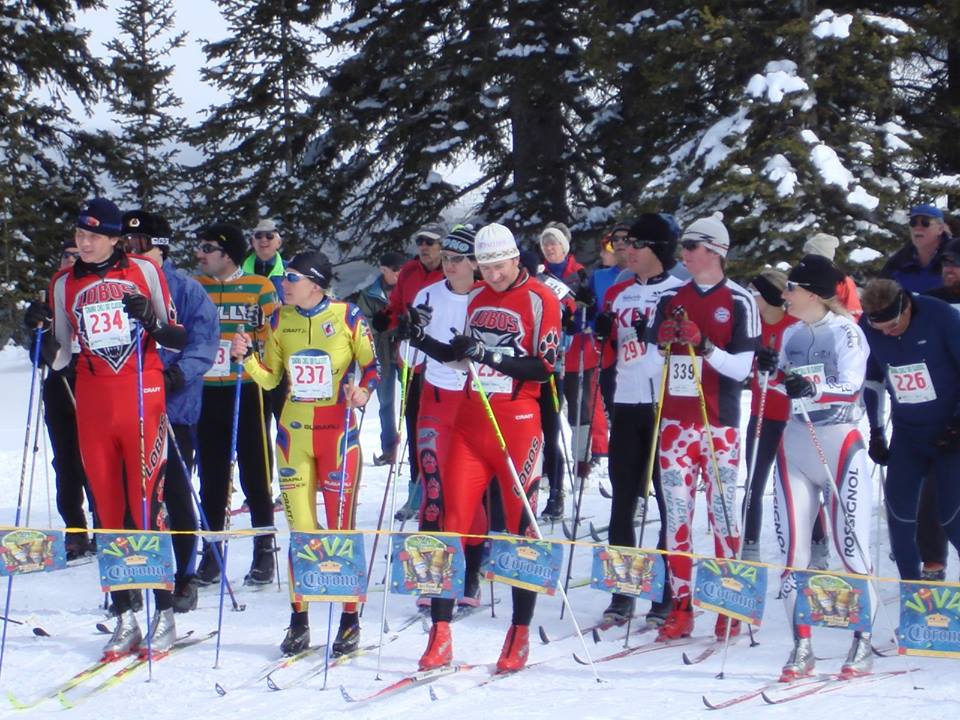
    University of New Mexico athletes toe the line alongside citizen skiers at the Chama Chile Ski Classic in Chama, New Mexico. (Photo: Southwest Nordic Ski Club)

    Item 4.ii. on the agenda is listed as: “Presentation of Administration proposal and plan relative to Athletics Department financial stability, to include considering the discontinuation of UNM Men’s Soccer, Men and Women’s Ski Teams, Beach Volleyball, and Diving as intercollegiate sports programs, Director of Athletics, Eddie Nuñez.”

    The agenda continues, “NOTE: A COPY OF ADMINISTRATION’S REVIEW AND ANALYSIS MAY BE REVIEWED AT: http://president.unm.edu/documents/fy19-budget-summit/unm-athletics-analysis-and-review.pdf”

    Despite the charge by Attorney General Balderas regarding insufficient notice and process, as of Wednesday evening, attempts to visit the URL above, listed on the agenda, yielded a “404 Not Found” notice. The document could not be readily located elsewhere on the UNM website. 

    “UNM officials said Tuesday that there were no plans to drastically alter the proposal to cut sports, but that they would try to post online as much data and documents as possible to help the public understand how they crafted the proposal,” the Albuquerque Journal reported.

    A cached version of what appears to be the correct link may be found here. The date of the document and the date of caching are not facially apparent. The cached document hosted by Google is 24 pages long. The Santa Fe New Mexican has separately referred to “a 24-page report made public Wednesday evening,” July 18. It appears from context and content that this is the same document described there that was previously presented to the Board of Regents.

    The document currently available online, “University of New Mexico Department of Athletics Analysis and Review,” reviews budget challenges and the need to take further action to reduce the overall athletic department budget.

    The report concludes, “it is the recommendation of the Director of Athletics that the President ask the UNM Board of Regents to approve the following actions: Effective July 1, 2019, UNM Athletics will no longer sponsor men’s and women’s skiing, beach volleyball and men’s soccer as varsity sports.”

    The report also recommends, “UNM will honor the scholarships of all current student-athletes in the four affected sports through their graduations, as long as they remain in good academic standing.”

    The final third of the document contains detail regarding UNM revenues and expenses. The report shows that, in round numbers, the school will spend $11.3 million on athletic department salaries in Fiscal Year 2019, $3.3 million on payroll benefits, $5 million on “services,” $4.8 million on grant-in-aid, $2.1 million on “supplies,” and $3.8 million on travel.

    The UNM athletic department, like the vast majority of athletic departments in this country, is not self-supporting. The department is projected to bring in $6.6 million in direct revenue in Fiscal Year 2019. (The Washington Post and The Atlantic, among many others, have reported on the fact that even some of the most successful Division I college athletic programs lose money, in the sense that they bring in less in direct revenue than they spend in expenses.) Other revenue sources for UNM Athletics include the NCAA and the Mountain West Conference, media rights and sponsorship, student fees, fundraising, and $2.6 million worth of “state appropriation.”

    Regarding men’s skiing, the report states the following:

    (Screenshot from cached version of UNM Department of Athletics Analysis and Review)


    Regarding women’s skiing, the report similarly states:

    (Screenshot from cached version of UNM Department of Athletics Analysis and Review)


    “APR,” or Academic Progress Rate, “holds institutions accountable for the academic progress of their student-athletes through a team-based metric that accounts for the eligibility and retention of each student-athlete for each academic term,” the NCAA explains.

    The report states that both ski teams rank relatively low among UNM sports for APR.

    FasterSkier previously reported that, in spring 2017, the Athletic Director’s Cup for the top academic program at UNM went to women’s skiing for the second straight year. Additionally, three of the nine senior student-athletes who were honored for graduating with a 4.0 GPA in spring 2017 hailed from the ski team.

    Petition and next steps

    As of Wednesday evening, a petition in support of UNM skiing had over 11,000 signatures. A “Rally To Save Lobo Sports” was scheduled for the UNM campus that evening.

    Balderas has recently recommended that this Friday’s meeting should “serve as an informational session and that regents should not take action until a separate meeting at a later date,” the Albuquerque Journal reported earlier this week.

    The Journal also describes potential legislative pushback to this action: “Four days after the vote, five Democratic state legislators called a news conference urging regents to hold off on any cuts so they could explore funding options and suggesting UNM never asked lawmakers for help. UNM officials say they have previously asked for additional state funds for athletics.”

    A separate lawsuit has also sought to bar the university from taking action. The Albuquerque Journal reported on August 10 that a private citizen filed suit “asking a judge to rule the vote violated the Open Meetings Act and the state Constitution and issue an injunction to prohibit UNM from initiating any of the measures included in the plan the regents approved.”

    The case appears to be Maria Touchet v. Board Of Regents Of The University Of NM, case no. D-202-CV-201805954. The online docket for the New Mexico state courts system lists a complaint filed on August 10, but does not list a response from the university nor any rulings issued by the court.

    The community’s view

    Clay Moseley moved to Los Alamos in 1999, and soon became active with the Southwest Nordic Ski Club. The Santa Fe National Forest recognized him last year for his longtime leadership of the club and his work with the national forest.

    Moseley spoke with FasterSkier to share his perspective on how threatened cuts to the university ski team affect skiing at the level of citizens racing and local ski clubs.

    A Southwest Nordic Ski Club Ski Kids practice earlier this week in Los Alamos, New Mexico. (Photo: Southwest Nordic Ski Club)

    “Essentially, this hurts our state’s ski industry,” Moseley wrote to FasterSkier, “because we all have a connection to our state’s biggest educational institution and take pride in what they represent – our rich ski traditions and culture. Our kids look forward to seeing and working with the world-class athletes, who are always so kind and supportive of them. We actually have home-grown kids who are aspiring to ski for UNM and will be reaching that level in the next few years.  At any rate, UNM is part of our culture and gives kids something to aspire to.”

    Moseley also expressed concern about the overall leadership of the university’s athletic department: “As NM taxpayers, the mismanagement of the UNM athletic department is disconcerting. It’s always embarrassment after embarrassment in terms of news, the football team is abysmal, the basketball team has not performed anywhere near expectations, and they continue to throw good money after bad. So, there’s that as well. Discontinuing the good sports at UNM is simply adding insult to injury.”

    One legislator’s view

    Some additional local perspective came from state representative Roberto “Bobby” J. Gonzales (D, Taos), who spoke with FasterSkier by phone on Thursday afternoon. “I’m a skier myself,” said Gonzales. Gonzales is a UNM alumnus, and spoke with evident pride about his wife and two sons, all of whom also graduated from the university.

    yaz buy online, buy ortho tri-cyclen online

    “This started about a year ago,” Gonzales said, recalling ski team funding issues dating back to spring 2017, “and the charge from the university was, Can we find additional funding to help with this, to have the program. And definitely we will do whatever we have to do to look for that. … The regents are meeting again tomorrow for a formal meeting, and I don’t know what the result will be out of that. But it’s something that would be very devastating, especially to the northern part of the state, where we have recreation and economic development and so many things that we have worked on.” (Gonzales’s district in northern New Mexico includes the alpine resort of Taos Ski Valley.)

    “I just don’t see it as a win to eliminate the ski program,” Gonzales said.

    Gonzales was asked if there was a concern about the pace at which things were moving when it came to the continued funding of the UNM athletic department. “Most certainly,” Gonzales said. “I really feel that that’s a very short vision from the university to act that quickly, without coming in with any solutions, or inviting strong solutions.”

    He continued, “I do feel that they have moved very fast, and that they feel that they’re going to do what they’re going to do, and before we know it, people will forget about it. We can’t forget about something that started in the 1950s.”

    (The reference to the 1950s is likely to the founding of Taos Ski Valley in 1955. The UNM ski team dates to 1968, making it 50 years old this year.)

    Gonzales urged that, if adjustments need to be made, “make them across the board, not just in four sports. … I don’t think it should be a punitive decision for these first four sports.”

    “The losing party of this would be the university” if skiing were cut, Gonzales concluded. “It just isn’t right.”

  • University of New Mexico Cuts Ski Program

    University of New Mexico Cuts Ski Program

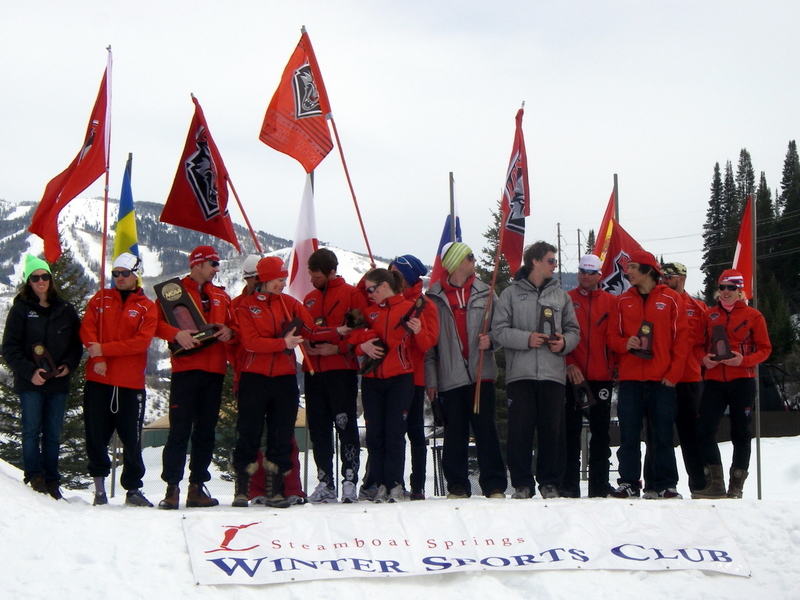
    The University of New Mexico ski team (alpine and nordic) celebrates its podium finish at the 2010 NCAA Championships.

    The men’s and women’s nordic and alpine ski teams at the University of New Mexico (UNM) will be defunded and cease to exist by the end of June, university administrators announced Thursday afternoon. While the death of the ski team is being presented as a fait accompli by the UNM athletic department, ski team advocates are nonetheless rallying support and preparing to make their case for continued funding to the Board of Regents. The threatened cut to another western ski program comes six months after UNM’s neighbor far to the north, the University of Alaska, had to rely on a groundswell of community support to reverse an announced ax to its ski program.

    Budget background

    Last month the local paper, the Albuquerque Journal, reported that legislators were running into the final days of the session in their attempt to balance the state’s budget “amid a fiscal crisis.” On Monday of this week it reported on New Mexico Governor Susana Martinez’s symbolic move to veto all funding for public colleges and universities for the next fiscal year. On Thursday, the Associated Press reported that state legislators were preparing to sue the governor over this action, “amid an unrelenting standoff … over how to shore up state finances.”

    Also Thursday, UNM officials announced that the school would no longer sponsor men’s and women’s skiing. “The decision will save the department approximately $600,000 per year in operating budget, scholarships and salaries,” the school wrote in a press release.

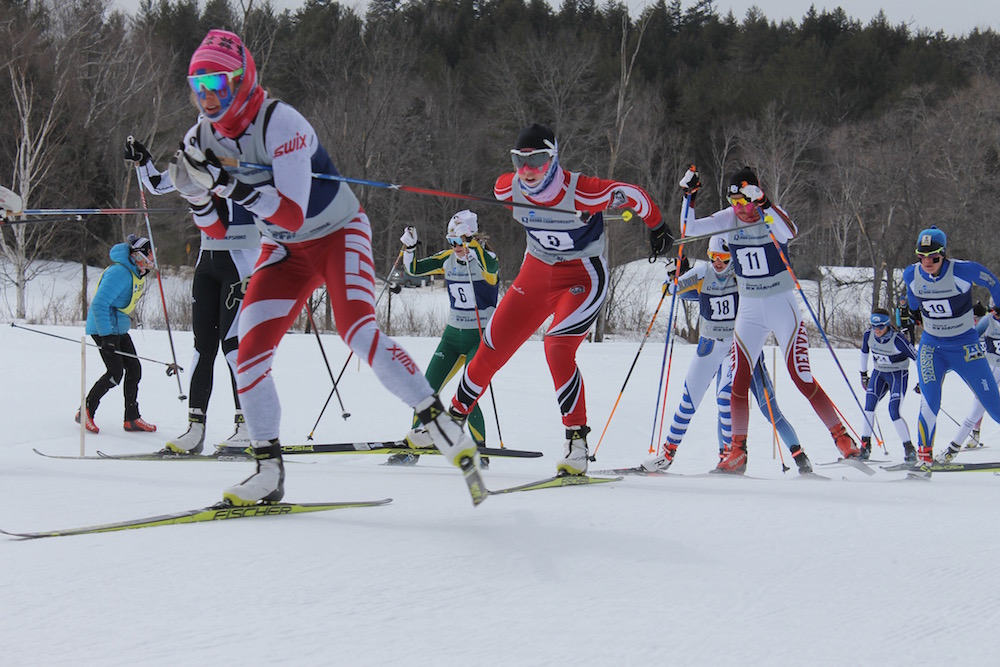
    UNM’s Krista Niiranen (c) racing out of the stadium while following Utah’s Merete Myrseth (l) and skiing ahead of Denver’s Taeler McCrerey (11) and NMU’s Kristen Bourne (6) in the women’s 15 k freestyle mass start at 2017 NCAA Championships in Jackson, N.H.

    In round numbers, the budget for the UNM athletic department was roughly $32 million in the previous fiscal year.

    The UNM athletic department recorded a deficit of $1.54 million for the fiscal year that ended in June 2016, the Albuquerque Journal reported last summer. “According to a report to University regents,” the Journal wrote, “UNM fell short of ticket revenue projections by $975,000 and missed fundraising goals by $200,000.”

    In the summer 2016 article, Vice President for Athletics Paul Krebs “made it clear it doesn’t mean there are bills not being paid or sports being cut.”

    At that time, UNM Regent Marron Lee told the Journal that she was adamant that sports would not be cut in response to the budget deficit.

    “No. We do not have too many sports,” the Journal article quotes her as saying. “We do a really good job with athletics at the University of New Mexico and I can’t think of one sport where I’d say, ‘Well, you have to be on the chopping block because we have a deficit.’”

    So why was skiing the only sport cut now after all? Here’s what an FAQ sheet from the UNM athletic department has to say:

    “Why skiing as opposed to a different sport? There are now less than 35 ski programs in the country that compete in the NCAA, and several of those do not compete full squads.  There are just six other NCAA programs in the West, and when you look at the costs associated with skiing such as travel, insurance for international student-athletes, equipment and the fact that we practice three hours away, skiing made the most fiscal sense for our department.”

    The ski team’s perspective

    Head Coach Fredrik Landstedt is unconvinced. “They’re justifying it partly because of the budget,” Landstedt told FasterSkier in a Thursday phone call, “because skiing has fewer schools [sponsoring it], 34 sponsored institutions right now with skiing; there’s a few more if you count men’s and women’s. … But in my opinion, it doesn’t really matter how many schools that sponsor your sport, if you want to be on the top. I wouldn’t really care if there were 200 more ski teams out there that had crappy teams; it wouldn’t hurt me any. I don’t even understand the justification based on the number of sports. I mean, we’re competing right at the top.”

    (UNM sports information director Frank Mercogliano told the Albuquerque Journal that no one from the ski team “immediately felt up to discussing the decision with media.” Landstedt was more than willing to speak when cold-called on Thursday afternoon.)

    Finland’s Aku Nikander (r) of the University of New Mexico leads Noah Hoffman of the U.S. Ski Team around a corner on the Spencer Loop during the final lap of the men’s 50 k classic race at the U.S. Distance Nationals at Hillside in Anchorage, Alaska, in 2014.

    Landstedt is objectively correct that the UNM ski team operates at a high level within American collegiate skiing. The team won a national championship in 2004, the school’s first NCAA team title in any sport. They were seventh at NCAA Championships this year – “but that’s one of our worst places,” Landstedt said of a program that consistently places even higher than that.

    Alluding to the threatened cut to the University of Alaska Anchorage (UAA) ski team last fall, Landstedt said, of a team that has enjoyed solid results but that has historically lagged behind UNM at the top of the results sheet, “This will definitely hurt collegiate skiing. Because now, you know, Alaska Anchorage is one of the top programs, but they haven’t been even close to as successful as we’ve been as far as being up on the podium. And now you’re cutting one of the top programs in the country … and that means, what program is safe out there? ADs everywhere can point to the fact that they cut us – we were national champions.”

    For UAA head nordic coach Andrew Kastning, “the pain from our recent struggle [over being defunded] is still fresh,” he wrote to FasterSkier. “So I know what they’re feeling and hurt for them as well.”

    Kastning continued, looking back on his experience at UAA, “One of the reasons we got saved is because we got a lot of vocal support from [the] ski community which recognizes the importance and uniqueness of US college skiing and how it can raise the level of competition for every skiing region. It’s too early to tell what this means for college skiing, but it’s not good, and we all need to stand together and fight for the Lobos just as hard as we yelled and screamed for the Seawolves.”

    (Current actions to support the UNM ski team are discussed at the end of this article.)

    Back in Albuquerque, Landstedt is justifiably proud of his program. He cites the current 3.92 GPA of the women’s ski team, and 3.6 GPA for the men, as evidence for his claim that skiing has “always been the top academic program” at UNM.

    Plus “We’ve always been the top athletic program,” Landstedt adds. “We have 13 NCAA trophies; there are only three more at UNM, total, for all the other sports. And we have 17 individual NCAA champions. So athletically we have traditionally by far been the best program [at UNM].”

    Landstedt continues, “And on top of that, the ski team has always covered its budget here, so we never put anything to the deficit. We don’t have facilities that they have to pay for at UNM. The only cost as far as facilities is that the State of New Mexico has provided us with two vans, that’s it for 30 years. … So you’re showing poor judgment when you’re cutting the program that really typifies the excellence of being a student-athlete, a top student-athlete at the top level.”

    The skiers’ perspective

    One such student-athlete is Patrick Brachner, a senior alpine skier from Austria. Brachner spoke candidly with FasterSkier about how the athletes found out the news and the current mood of the team.

    “For us, this decision came absolutely out of nowhere,” Brachner wrote to FasterSkier earlier today. “We knew that the Athletic Department was reporting a deficit, but it was always communicated that no teams will be dropped. Also, the Ski Team has not increased its spending since 2003 and we raised about $50,000 every year from supporters to support our budget. If there is a certain amount allocated from the Athletic Department for skiing, and our coaches never exceeded this budget, why would there be any reason to cut this program, although other programs have continuously exceeded their spending.”

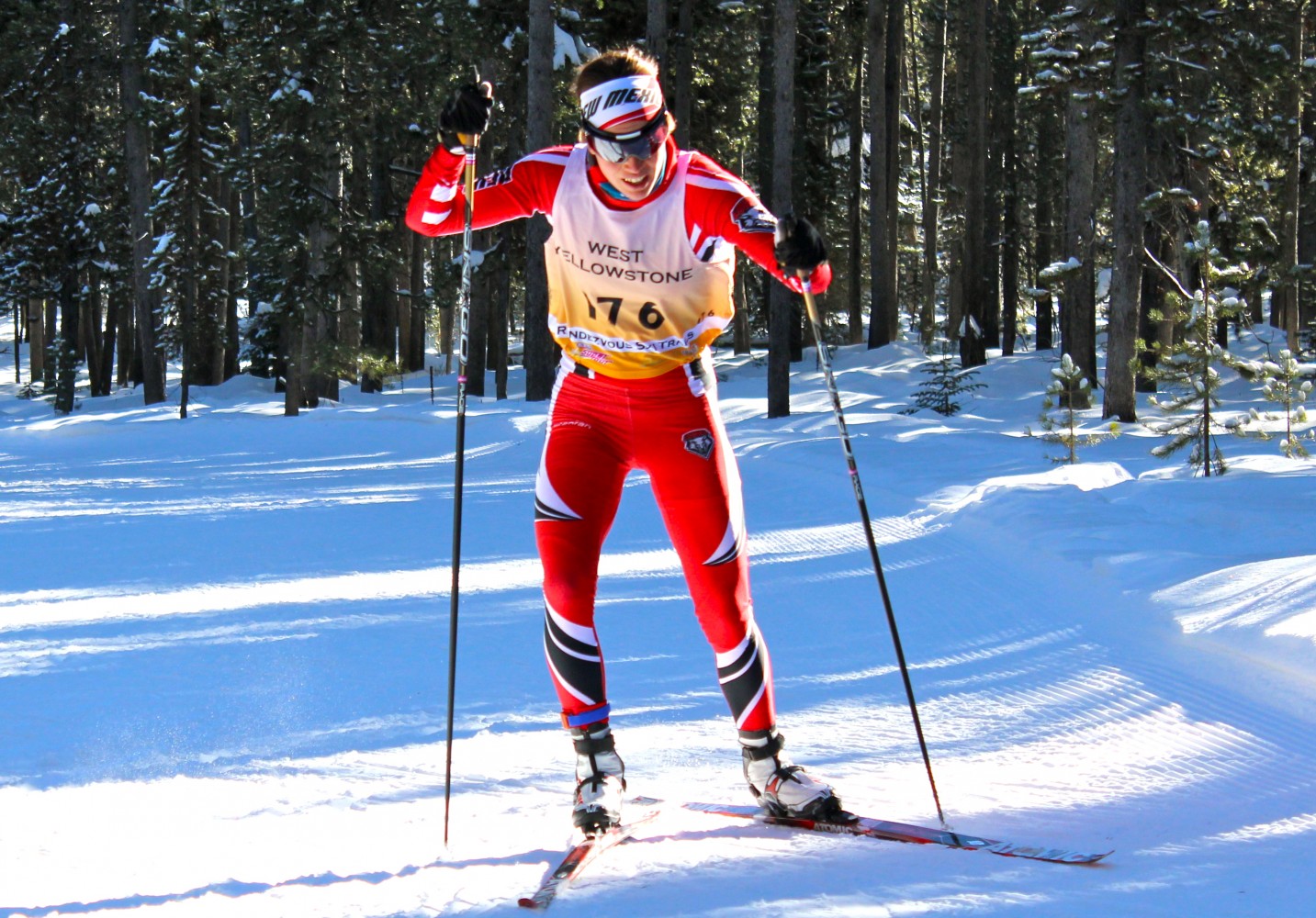
    Emilie Cedervaern (University of New Mexico) during the first lap of the women’s SuperTour 10 k freestyle race in West Yellowstone, Mont., in Nov. 2015.

    “It was a total shock” to learn yesterday that the program was being cut, Brachner continued. “Most of my teammates declared majors, signed up for classes the day before, I was talking to new recruits about their living situation for next year only hours before we got dropped.”

    The mood within the team “wasn’t great” on Thursday, Brachner noted. But he added that, “if anything, this has just put us closer together and sparked our fighting spirit. It is amazing to see all the support of other UNM Alumns, and even Alumns of other colleges with a skiing program. People have to understand how great of a job the UNM Ski Team does in shaping people for the rest of their lives.”

    Finally, Brachner provided a dose of realism regarding the options for current athletes. While UNM pledged either to honor current scholarships through graduation or to help skiers transfer to another institution, Brachner wrote that “It’s too late to transfer to other ski teams; spots are taken.”

    (Frank Mercogliano, an assistant athletic director of communications at UNM, had a far less pessimistic view of current athletes’ options. “I don’t think that’s correct” that it’s already too late to transfer somewhere else, Mercogliano told FasterSkier in a Friday phone call. “Because we’ve got other schools that have basically had us on speed-dial, calling, asking about kids. … There’s room; kids will be able to transfer and go to schools, and be able to get scholarships. I mean, they’re going to make room. We have some kids that are – we have a lot of podium kids coming back here, both in Nordic and in Alpine. There’s room – trust me, they’ll find – the Utahs, and the Colorados, and the Denvers, and even the New Hampshires and the Vermonts and the Montana States and the Alaska Anchorages of the world – they’ll find room. They’re going to find room for kids that can win podiums on the circuit. They’ll do that.”)

    And as for those students who wish to remain at UNM, on scholarship and without skiing? “In order to keep their scholarships here,” the senior Brachner wrote of his current teammates potentially still in Albuquerque next year, “they would need to work 10h for free per week for the Athletic Department, the institution that kicked them out.”

    Funding issues and the men’s basketball coach

    Hanging over any current discussion of funding for the UNM athletic department is the prominent and public fact that the school recently paid one million dollars to buy out the contract of men’s basketball head coach Craig Neal, a decision that occurred on March 31. (Neal would have been owed an additional $300,000 if he had been fired during the current contract year, which began on April 1.)

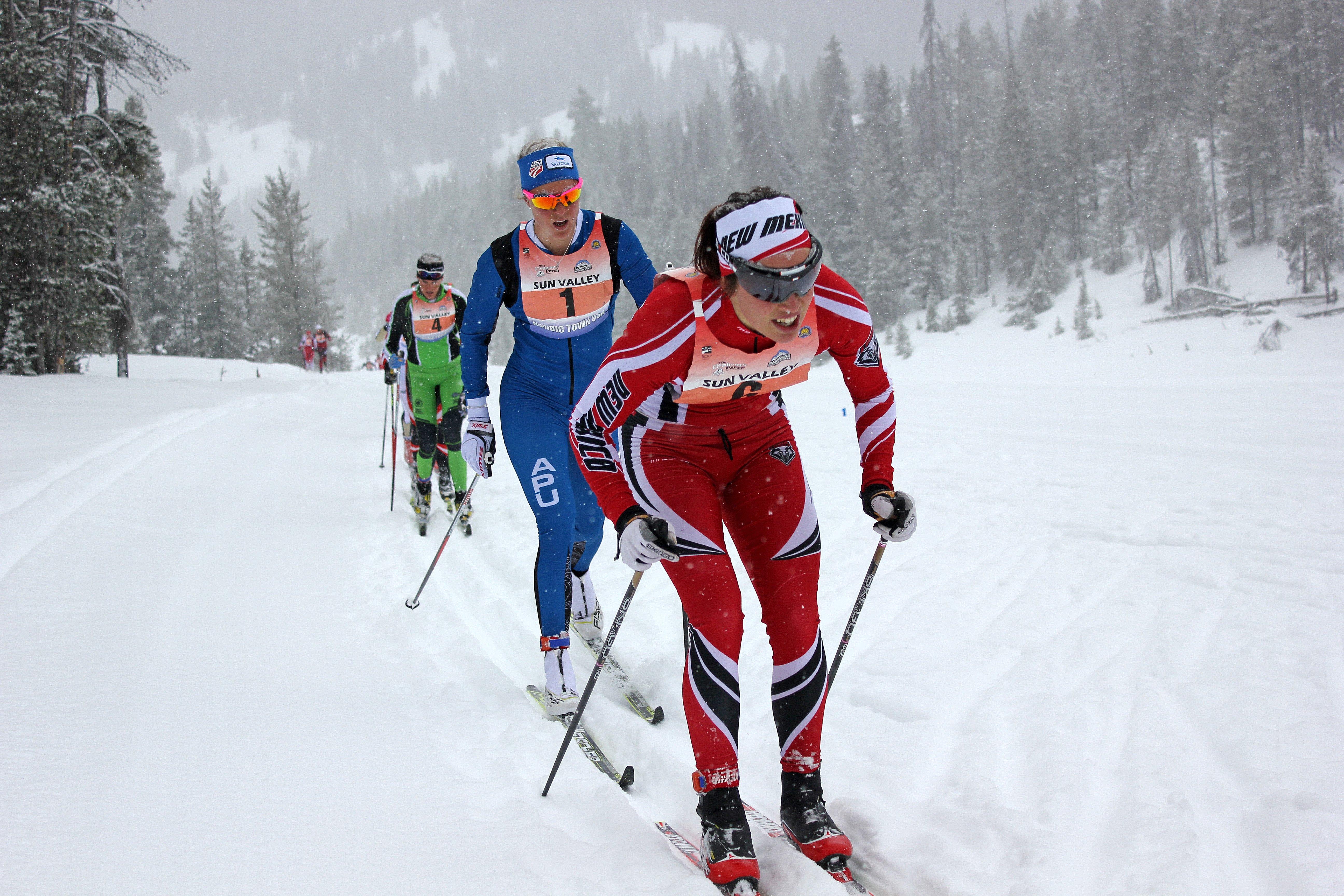
    Emilie Cedervaern (New Mexico) leads Sadie Bjornsen on the final climb of the first leg at the 2015 SuperTour Finals 4 x 5 k mixed relay in Sun Valley, Idaho.

    At best, it may be said to be bad optics for the athletic department to pay out a $1 million buyout on March 31, then announce on April 13 that a sport is being eliminated due to lack of funding and the need to save $600,000. (Although Landstedt suggests that the actual savings to UNM would be closer to $450,000.) At worst, ski-team members are beyond skeptical.

    “The economy in New Mexico is poor,” Landstedt acknowledged. “They’re still trying to work out the state budget, the university has said it has a budget deficit, and the athletic department has a budget deficit. But the athletic department’s deficit is in big part because they signed very poor contracts with the basketball coach and have to pay them million-dollar buyouts, and so forth.”

    He continued, “The economy is tough, tough decisions have to be made, but I believe there are other ways to cut or to increase your budget than by cutting our program out. That said, I believe it’s not the main reason for the predicament UNM Athletics are in; it’s because of the management or the current leadership of athletics.”

    Brachner, the current alpine skier, similarly pulled no punches in contrasting the Neal buyout with the recent news about defunding the ski program.

    In the introduction to an online petition in support of the ski team, Brachner wrote, “After firing UNM’s basketball coach earlier this month, UNM’s Athletic Director Paul Krebs has decided to discontinue the Women’s and Men’s Skiing program, a program that has deep roots not only within the University, but throughout the entire state. To put things in perspective, only the replacement of UNM’s basketball coach during his existing contract will cost the athletic department far more than the yearly budget of Women’s and Men’s skiing combined. This example is only the tip of the iceberg of ongoing financial mismanagement at the expense of student-athletes.”

    For its part, the UNM athletic department disavows any connection between the buyout and this recent announcement. Its FAQ document addresses this claim: “Are there any ties between this announcement and the recent search for a men’s basketball coach and the buyout for Craig Neal?”

    The answer given is: “No, discussions about ways to help our bottom-line regarding our budget have been ongoing for several months among the department’s budget committee. That committee made a recommendation to [vice president of athletics] Paul Krebs and he made the recommendation to the University administration. Regardless of the buyout for men’s basketball coach Craig Neal, this decision would have been made.”

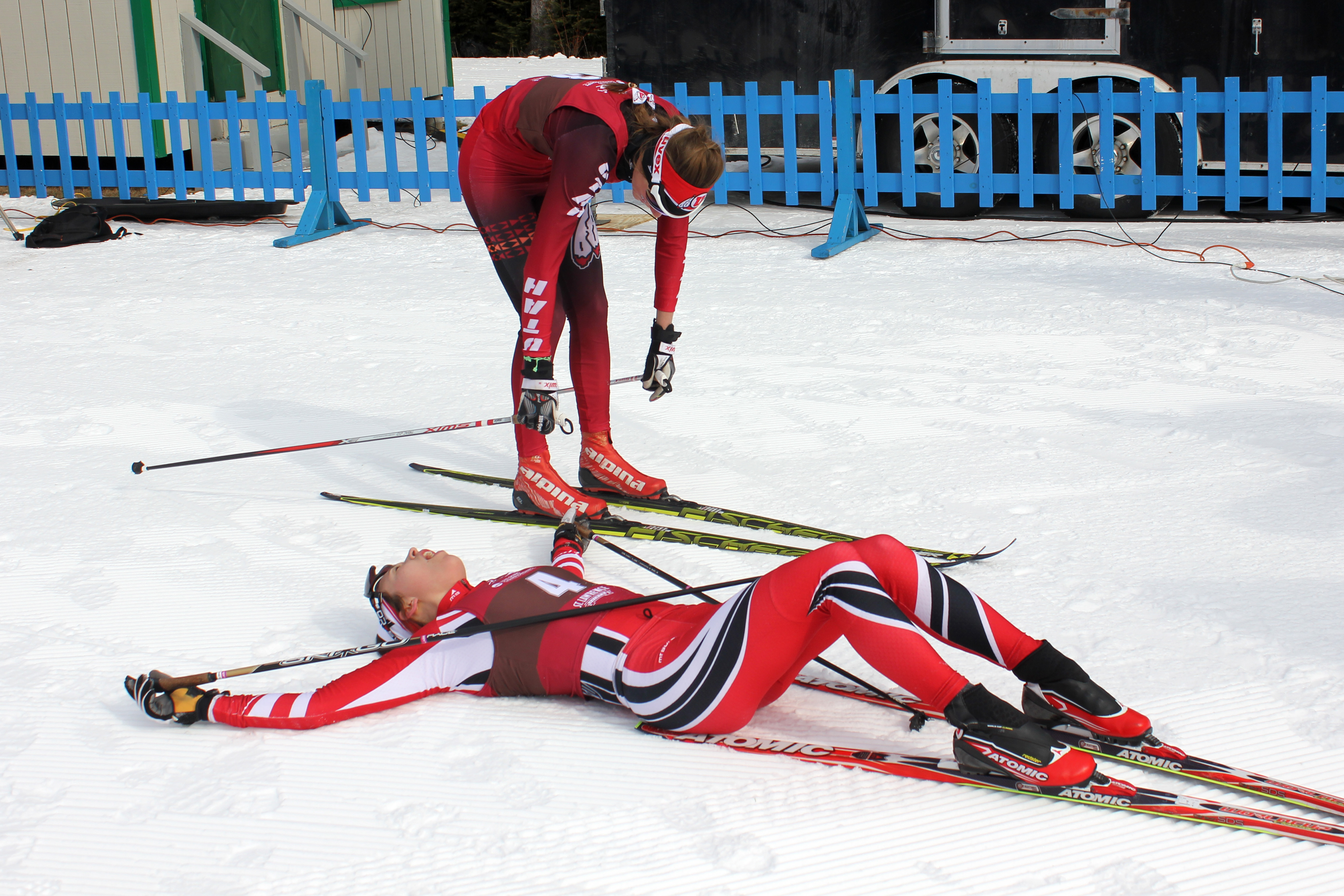
    New Mexico’s Emilie Cedervaern on the ground after winning the 15 k classic mass start at the 2015 NCAA Championships in Lake Placid.

    Mercogliano, the athletics department spokesman, also provided a more nuanced view of the contract language of the Neal buyout. Mercogliano mentioned a mitigation clause in the contract, by which any money Neal earns over the next two years reduces UNM’s financial obligations to its former coach by an equal amount.

    That is, Neal is presumptively owed $500,000 in each of the next two years, payable in 24 monthly installments, as a “salary” for not coaching the UNM basketball team in that time. But if he made $100,000 per year for two years, then UNM would owe him only $400,000 per year for two years, or $800,000 total. If he made $250,000 per year, then UNM would owe him $500,000 over the next two years. And so on.

    “We’re assuming he’s going to get a job,” Mercogliano said of Neal; “that’s not much of a question at this point. Whatever salary he then gets gets mitigated off of what we owe him.”

    Mercogliano also characterized the budget analysis as, “It’s not, ‘Skiing was cut, we’ve got this $600,000, how now are we going to spend it.’ It’s money that we just don’t have any more, because of state budget cuts, rising costs, cost of scholarships,” and other expenses.

    What happens next

    Skiing has been a varsity sport at the University of New Mexico since 1970 (it began as a club sport two years before that). Despite that venerable heritage, UNM is now preparing for a future without skiing. “Is there a possibility skiing could be reinstated?” its FAQ sheet notes.

    “One would never say never,” was the answer, “but in our current climate, it is not a part of the future vision of Lobo Athletics. We are moving forward with skiing off the table.”

    University of New Mexico athletes toe the line alongside citizen skiers at the Chama Chile Ski Classic in Chama, N.M. (Photo: Southwest Nordic Ski Club)

    Despite that official statement, Landstedt is preparing to advocate for his program. “We’re going to fight this decision. We’re working out a strategy right now,” he told FasterSkier late Thursday afternoon. “Because we were told at the meeting at 1 o’clock [today] – the AD told us they would discontinue the ski program. They read us a letter stating that by June 30 we’re out of there, we’re fired. And then 10 minutes later the press release went out, and then right after that they told the student-athletes. So we didn’t find out anything until right then. It was very poorly handled by the department in the first place.”

    Brachner wrote, “UNM’s Board of Regents has their next meeting on Tuesday and we need to gather as many troops as possible in favor of the team, athletes, teachers, supporters, friends, etc. to show that we are important to the community and it is valuable for UNM to have a Ski Team.”

    One representative of the local ski community is Clay Moseley. The president of Southwest Nordic Ski Club, based in Los Alamos, is active in supporting what he calls “a small, but very vibrant Nordic community in New Mexico, with a rapidly expanding group of kids in both Albuquerque and Northern New Mexico.” Moseley wrote to FasterSkier that “Our access to the team is a critical part of the motivation for the kids. They marvel at the team and the team members are always so supportive and friendly to our kids. We are SO isolated here, so having that little bit of contact to some ski ‘heroes’ is vital.”

    The next Board of Regents meeting is on April 18. The budget approval meeting is scheduled for May 11.

    As of Friday, a petition titled, “Save the NMU Ski Team,” had more than 3,000 supporters. Its goal is 5,000.

    The Board of Regents may be reached by email at regents [at] unm.edu, or by phone at 505-277-7639. Contact information for Board of Regents President Robert M. Doughty III is available through his law firm website. Board of Regents Vice President Marron Lee lists her email address as marronresipsa [at] gmail.com in the publicly available New Mexico Bar Association Directory.

  • Masters Minds: The Other Thanksgiving Camp in Crested Butte

    Masters Minds: The Other Thanksgiving Camp in Crested Butte

    Are you a masters skier who loves your club? Submit camp or training recaps or announcements to info@fasterskier.com with the subject line: “Masters Minds”. Articles can be first-person accounts, like below, or written from an observatory standpoint with thoughts from others. Not a master? That’s OK, too! Email your camp recaps and photos with the subject line: “Camp Recap”.

    ***

    While seemingly the rest of the North American nordic-ski community converges on West Yellowstone during the week of Thanksgiving, several other places also offer great opportunities for early-season nordic camps and skiing.  One of the most unheralded nordic ski communities that can almost guarantee great XC skiing with top-level camp clinics and other fun nordic-related activities is Crested Butte, Colorado.

    Although the Crested Butte Nordic Council was founded only as recently as 1987, the history of skiing in the area goes back as far back as anyone can dig up in recorded history.  The pioneers of the area pretty much had to adapt to skiing just to get around at all, due to the incredible amounts of snow that the area receives every year.

    The tradition of nordic skiing, Rocky Mountain style, runs rich throughout the Gunnison Valley and the West Elk Range of Colorado. The local museums and taverns have all sorts of historical photos, written accounts, and memorabilia that illustrate how the culture was born, imported by European settlers, and thrived as a means of survival and recreation.  Any visitor to the area interested in the history of skiing should take some time to learn more about the rich traditions and colorful characters that laid the foundation for what is now one of the most unique and genuine nordic towns in America.

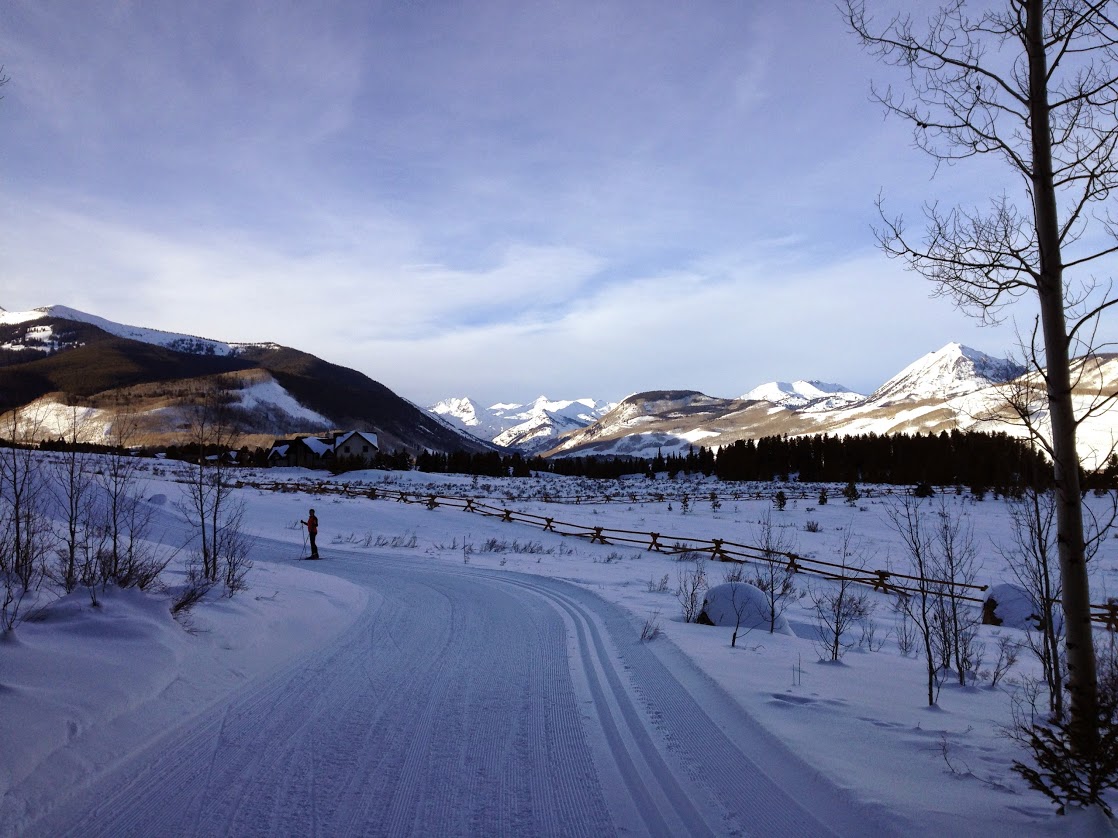
    Ruthie’s Run: Crested Butte Nordic’s FIS-homologated 5k course right on the edge of town (Photo: Clay Moseley)
    Ruthie’s Run: Crested Butte Nordic’s FIS-homologated 5 k course right on the edge of town.

    More recently, the Crested Butte Nordic Council has held the torch in keeping all things nordic alive and well in the valley.  The real credit should go to the very dedicated people of Crested Butte and the nordic center staff, led by its director, Keith Bauer — a Midwesterner transplant that knows a thing or two about running a nordic center.

    But, the most obvious asset is the network of trails that all start right on the edges of town within short walking distance, including from the nordic center, which serves as the epicenter of nordic activities. It also includes the regulation ice rink, a pretty serious (and fun for all ages) sledding hill, and the most incredibly beautiful and challenging International Ski Federation (FIS)-homologated 5-kilometer race course, in addition to the other connecting ski trails on the breathtaking, open-space lands that abound around the village.

    The grooming is also something to rave about. CB Nordic has continually sought to improve the quality of its grooming, with new and improved equipment, more groomers, a more robust schedule and more interaction with staff and skiers.  Another aspect is that they have actual nordic skiers doing the grooming, and know what a finished product should be. There has been a lot of energy and effort put into this area of the operation, and it really shows.

    Despite the already-great conditions for a Thanksgiving camp, I witnessed the grooming team going out and shoveling every little area that wasn’t just right in terms of grooming depth.  I don’t know that I’ve seen that very often, except right before big events.

    Since 2002, the Nordic Council has played host to the annual Crested Butte Thanksgiving camp. While not as well-known, nor as vast in scope as the camp at West Yellowstone, the CB camp is nevertheless an extremely good alternative. For one, the snow is almost always in abundance for November.

    While not as well-known, nor as vast in scope as the camp at West Yellowstone, the CB camp is nevertheless an extremely good alternative. For one, the snow is almost always in abundance for November. 

    If it isn’t up to par in town, there is a pretty amazing alternative just a little ways up the old Kebler Pass road (used in the USA Pro Cycling Challenge) at a place called “Lily Lake” that is more than an adequate alternative, with some fun and interesting trails.  It’s up a little higher in elevation, and tucked in a hidden high plateau among towering peaks that receive those beautiful Rocky Mountain early season dumps of snow, quite often providing skiing as early as mid-September, and most certainly by October.

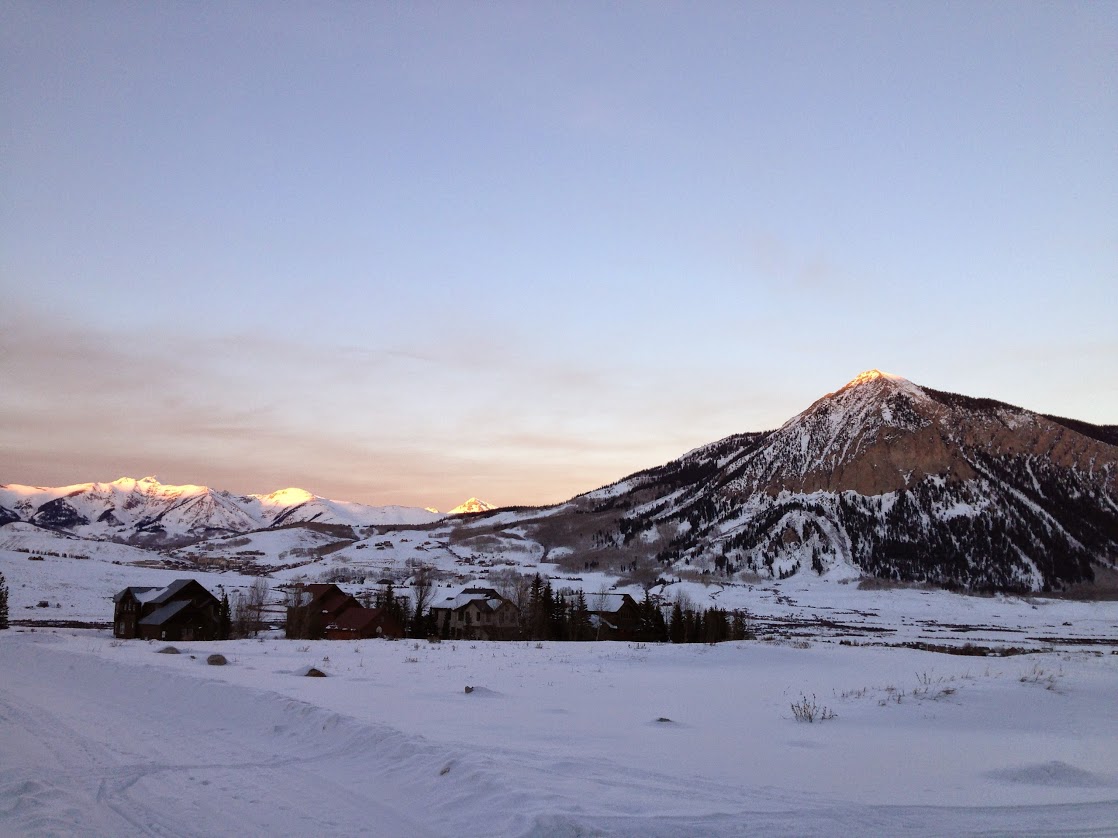
    Sunset over the West Elk Range, and Mt. Crested Butte (Photo: Clay Moseley)
    Sunset over the West Elk Range and Mt. Crested Butte


    But, usually there is good snow down in the valley for some great early season skiing, and this year was no exception.  Conditions were simply fabulous with a good base and abundant sunshine.  Nighttime temperatures plummet in this high-mountain valley, so the snow remained cold and mostly untransformed, despite the comfortable afternoon conditions.  Most days saw glide and kick wax in the “blue” ranges, with only a little violet mixed in for sunny spots.

    The camp itself has evolved over the years, but what has been a mainstay from the beginning is the high level of instruction in the various technique clinics.   The instructors that the CB Nordic Center gets for these clinics are the real heroes, donating their time and expertise to the center for a charitable cause.  Where else can you get local Olympians to teach clinics?  And PSIA and master’s instructors with deserved celebrity status?  Crested Butte has it all.  The most notable instructors I’ve had over the past few years include Ingrid Butts, Rebecca Dussault, Ross Matlock, Murray Banks, Jeff Banks, and Steve Hindman.

    Responses to the level of instruction has always been at the top, and many of us have made personal friendships over the years with the various instructors.  They’ve made the sport fun in terms of a life-long learning adventure, and I have most certainly improved thanks to them.

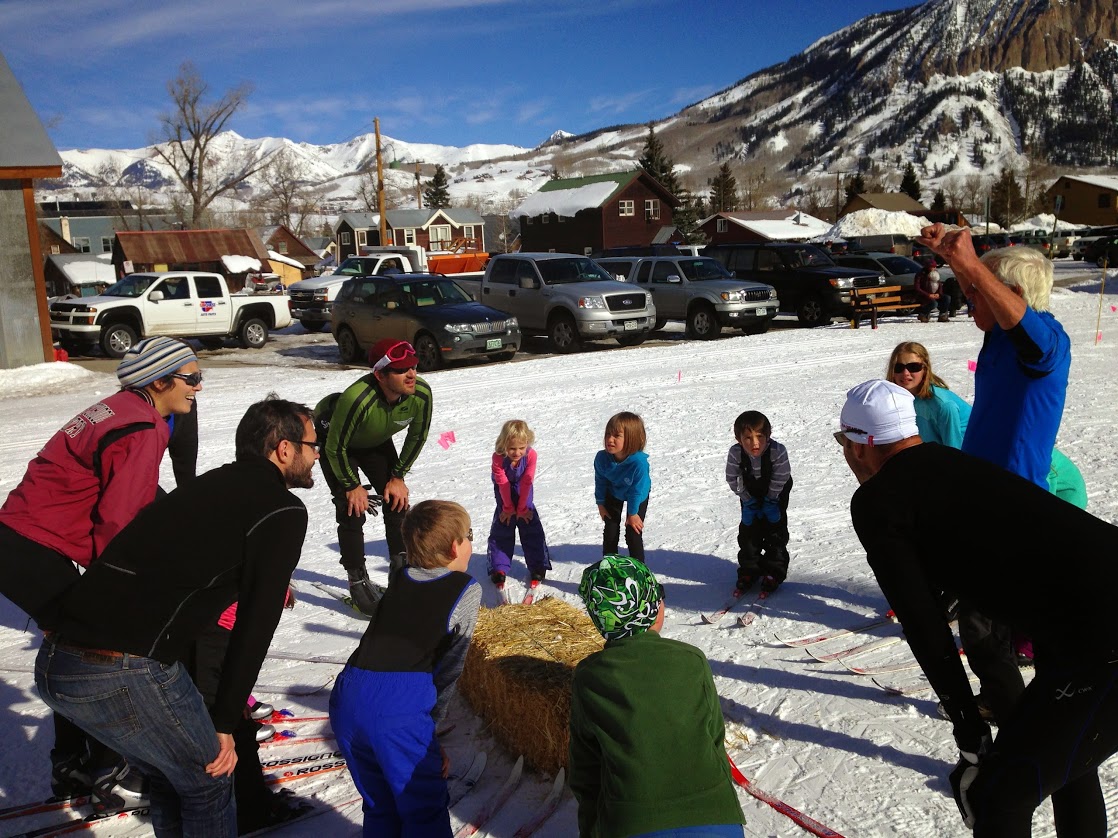
    Murray Banks teaching and entertaining kids of all ages at the Crested Butte Thanksgiving Camp late last month in Colorado. (Photo: Clay Moseley)
    Murray Banks teaching and entertaining kids of all ages at the Crested Butte Thanksgiving Camp late last month in Colorado. (Photo: Clay Moseley)


    The Crested Butte Camp instructors have always been high-quality people who are passionate about sharing their love and knowledge of cross-country skiing, whether it be for junior to master’s level racing, or just for weekend warriors looking to find a little more efficiency and enjoyment in their workouts.  The clinics are not merely stand-around and listen clinics either, they’re fast paced and require a lot of energy input from everyone, which makes them more fun than other clinics I’ve participated in.

    Camp clinics that are offered range from “novice” level (not first-timers), to fully advanced and racing-specific classes.  Schedules include both techniques at all levels from Thursday (Thanksgiving Day) through Saturday, with some bonus activity on Sunday, like a fun group ski.

    In years previous when Western State in Gunnison still had a Division-1 ski team, Sunday was reserved for an intramural scrimmage race of collegiate racers, local former racers, masters like myself, and everyone in between.  It was always fun to break out the fancy wax and good skis and see if we could employ what we’d learned over the previous days’ clinics.  But with the ski program at Western State being dropped, interest in a Sunday race sort of dropped as well because everyone is usually quite exhausted after all the high-energy clinics.

    As many times as I’ve attended the CB Thanksgiving camp clinics, one would think it would get repetitious, but with cross-country skiing being such a life-long learning activity and all, even the well-seasoned instructors seem to have learning revelations during their time skiing and coaching.  I’m always impressed that something new, or a new angle on an age-old challenge, can be added to the wealth of information the CB camp instructors always present.

    “As many times as I’ve attended the CB Thanksgiving camp clinics, one would think it would get repetitious, but … even the well-seasoned instructors seem to have learning revelations during their time skiing and coaching.”

    Additionally, they’ve always spent a lot of time and energy collecting very detailed video analysis of each and every clinic participant in a variety of techniques and terrain.  There have been times that Ingrid Butts needed to be done to get to something else, but got so into her instruction, that it got well past dark by the time she was done with us.  I’ve also held Murray Banks and Ross Matlock hostage a couple of times to help work out some issues that arose during the clinics, and they were not just being polite, but really enthusiastic about spending the extra time to go over not only my, but others’ cases as well.  The individual attention is probably what is best about this Thanksgiving camp.

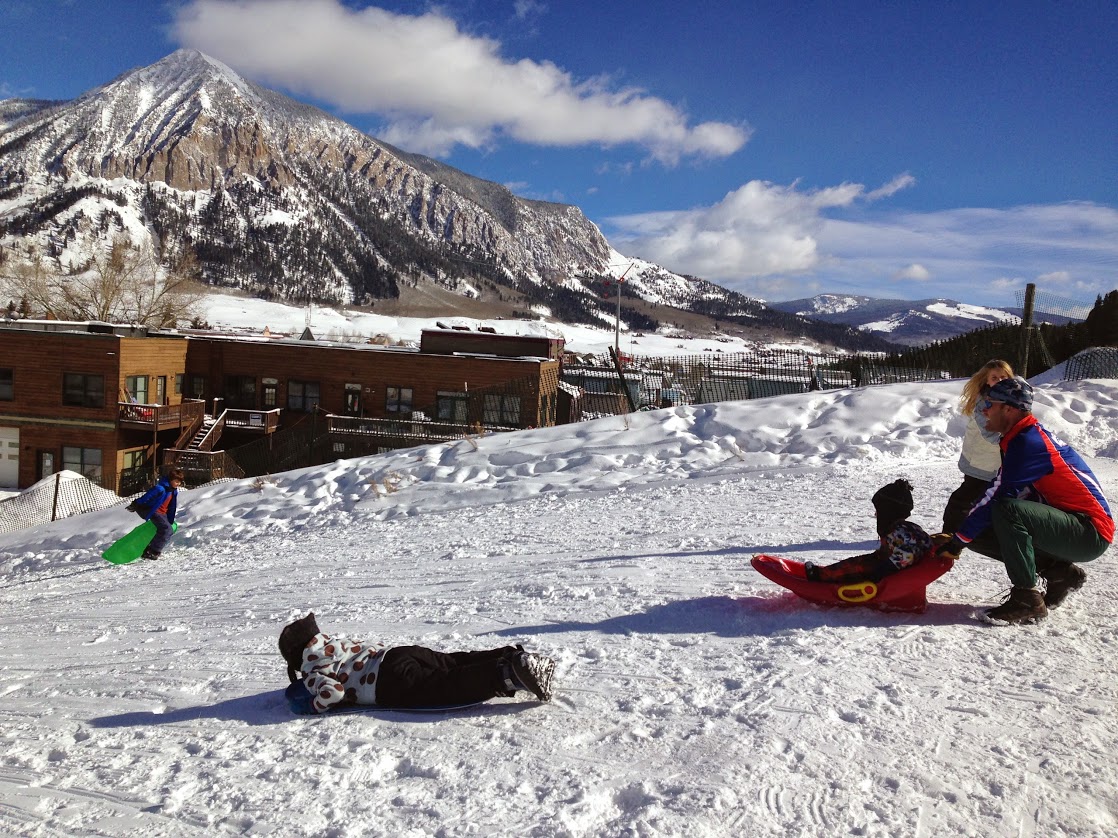
    Serious sledding at the Crested Butte Nordic Center (Photo: Clay Moseley)
    Serious sledding at the Crested Butte Nordic Center (Photo: Clay Moseley)

    This year, my local ski club, the Southwest Nordic Ski Club of Northern New Mexico, sort of ad-hoc partnered with the Crested Butte Nordic Council to add in a kids’ fun clinic for an entire morning of games, obstacles, relays and short races.  It was a lot of fun for the kids and parents alike.

    Murray Banks, who is recovering from surgery to repair an injury sustained during a backcountry ski adventure last May, stepped up and led us parents to help him with all the many kids who joined in the morning clinic.  The kids really got into it and learned a lot without ever getting bored or having to sit and listen for more than just a few seconds.  It was so much fun and if you ever get an opportunity to take a class from Murray Banks, take it.  He’s so entertaining, on top of being a very good teacher.  The kids just love him (as do the adults!).  He may be an old-school Vermonter, but he really breathes a lot of life into everything he does, especially cross-country skiing.

    Finally, the Crested Butte Thanksgiving Camp also serves as a fundraiser for the CB Nordic Council.  They host a couple of other apres-ski activities, like an evening film festival with interesting ski-related Indie films, and a very fun dinner party with a silent auction and often an impromptu dance party.  It’s always been a fun week of Nordic celebration that welcomes everyone.

    Other notable Crested Butte information:

    • Crested Butte is also home to one of the most famous alpine areas and always has some good deals this time of the year.
    • Great restaurants (of all kinds) and coffee shops abound, and all are open and welcoming to visitors.
    • Lodging deals are also easy to find, since it’s still considered “low season.”
    • The Crested Butte Nordic website is:  www.cbnordic.org
    • More camp photos: CB Nordic Facebook
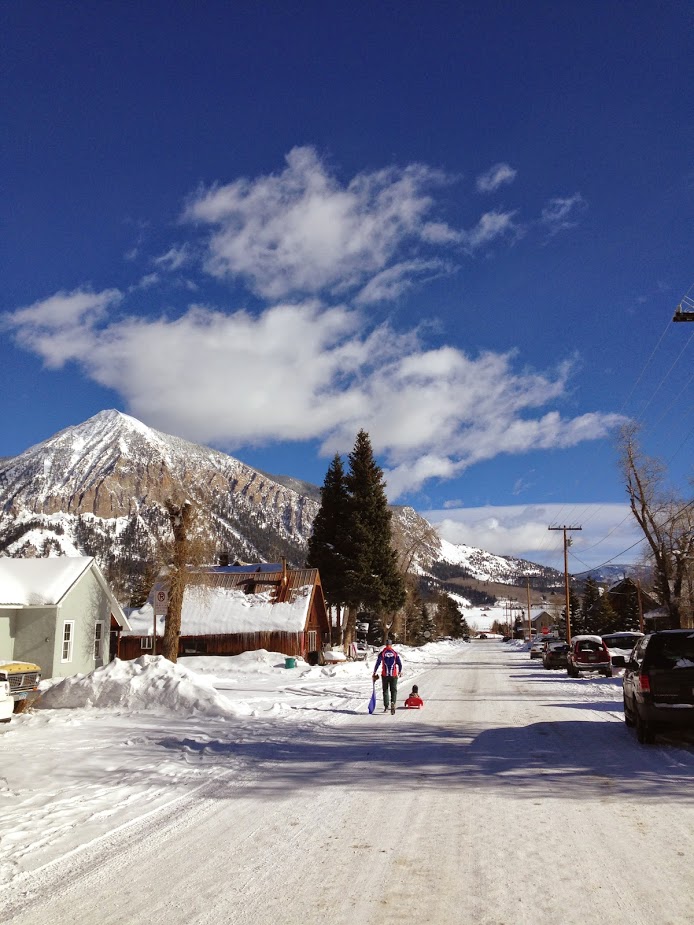
    It’s easy for kids to get around Crested Butte! (Photo: Clay Moseley)
    It’s easy for kids to get around Crested Butte!
    About the Author: Originally a bike racer, Clay Moseley picked up nordic skiing in college (thanks to his Norwegian roommate, also on the University of New Mexico ski team). As president of the Southwest Nordic Ski Club, based in Los Alamos, N.M., for the last 12 years, he’s worked to develop relationships with several of the southern/central Colorado Nordic organizations (plus New Mexico organizations) for increasing involvement in nordic skiing at all levels.  These organizations include Crested Butte Nordic Council, Pagosa Springs Nordic Club, San Juan Nordic Club, Chama Outdoor Club, Enchanted Forest Cross Country Ski Area, and the Sandia Nordic Club (Albuquerque). When he’s not out skiing with his family, Clay dabbles in masters racing.