From the FasterSkier archive — posts syndicated from athletes’ and coaches’ own blogs between 2004 and 2012, kept online as published. Current coverage is at fasterskier.com.

Tag: Clayton Keim

  • Rollerski Maintenance for Dummies — or Smarties, Depending How You Look at It

    Rollerski Maintenance for Dummies — or Smarties, Depending How You Look at It

    Rollerskis from RollerskiShop.com (Courtesy photo)
    Rollerskis from RollerskiShop.com. Owner Clayton Keim recommends inspecting the cord on Pursuit pull break periodically. (Courtesy photo)

    Note: This is Part 1 of 2 in a how-to series about taking care of your summer skis — that is, your rollerskis. The first comes from Clayton Keim, owner of RollerskiShop.com. 

    Tip #1: When out rollerskiing, always swap your skis on your feet at the halfway point.  This will help to ensure the wheels wear evenly and last longer. When it comes time to replace the wheels, replace all of them at the same time.

    Tip #2: Check your wheels and bindings periodically for unusual wear. If you are using a 1/2- or 2/3-speed combo, put the speed 2 on the back as they have the best wheel life. The rear wheels take more friction so best-wearing wheels should always go on the back. It’s rare for binding screws to come loose, but it can happen. To check for this try pulling up on the bindings to see if loose.

    From RollerskiShop.com owner Clayton Keim: "Ferrules should be sharpened with a diamond file." (Courtesy photo)
    From RollerskiShop.com owner Clayton Keim: “Ferrules should be sharpened with a diamond file.” (Courtesy photo)

    Tip #3: Whenever maintenance requires installing or replacing any hardware, never over-tighten or under-tighten the nuts. Just make sure the hardware has been firmly tightened. Periodically check the nuts for tightness. Using lock nuts with nylon inserts are the best for staying secure.

    Tip #4: Bearings shouldn’t be wiped. Dirt will build up on the shields, but wiping them can press dirt into the bearings. A sign of a bearing going bad besides bad noise is if it has play side to side. To test for this try twisting the wheel when it’s on the rollerski. Shouldn’t have any movement side to side.

    Tip #5: Don’t spray any lubricant onto the bearings. Just leave them alone.

    Tip #6: Avoid submerging bearings in deep puddles. Rollerskiing on wet pavement is fine but if bearings are submerged they can go bad.

    Tip #7: Rollerskis are tough to keep clean, so using a rollerski bag is often an easy way to keep the road grime contained. Using fenders is another way to keep things a little cleaner as well.

    Tip #8: As far as maintenance of our Pursuit pull brake, the cord should be inspected periodically to ensure no fraying. Shouldn’t have any problem unless you put it on without looking at it and it’s wrapped wearing on the wheel in which case you’ll notice it quickly. The lockwasher between the brake and forks prevent forward rotation, so if you’re experiencing forward movement, the axle bolt needs to be tightened more.

    Tip #9: Periodically inspect [rollerskis] for cracks or signs of stress fractures. If you have a composite frame inspect the bottom for any deep scrapes that could create a weakness and place for moisture to sneak in. These gouges should be covered with a marine sealant to keep moisture out.

    Tip #10: Ferrules [a.k.a. pole tips] should be sharpened with a diamond file. The diamond dust on the file is strong to sharpen the carbide tips. A regular file won’t do the job. Sharpen it to keep the same angles as best as possible meaning sharpen both sides. It should be sharp to touch just as they are when new. Many ferrules you can get over 1,000 miles out of. If using a bench grinder, don’t overheat your ferrules which will cause the plastic to melt. Dip them in water periodically to keep the temp down.
  • Q & A: Your Rollerski Questions Answered

    Q & A: Your Rollerski Questions Answered

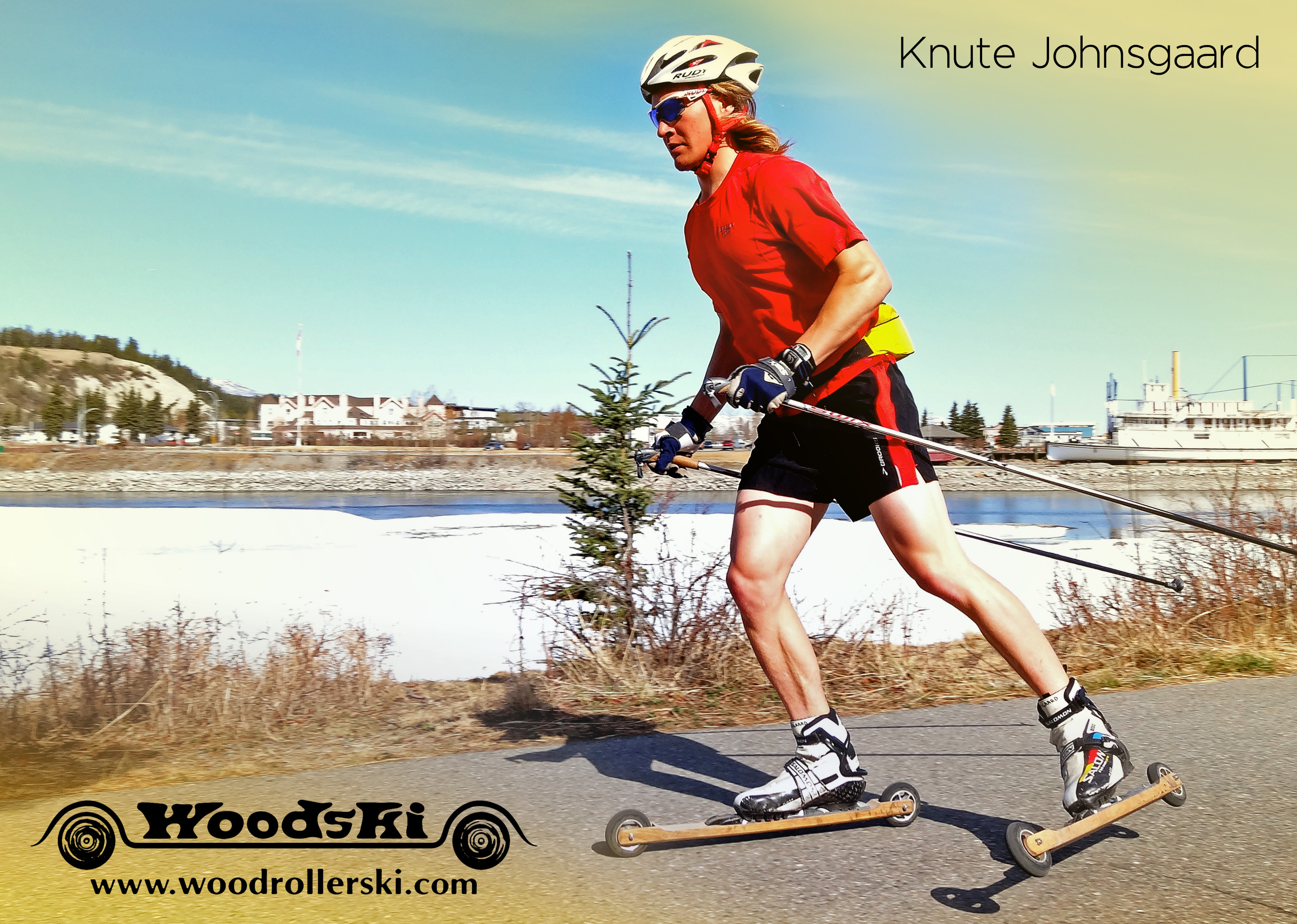
    Knute Johnsgaard of the Yukon Elite Squad training on his wood rollerskis courtesy of Woodski, Inc
    Knute Johnsgaard of the Yukon Elite Squad training on his wood rollerskis courtesy of Woodski, Inc

    You asked, we answered! Welcome back to another installment of our Question and Answer series. This time around, the owners of RollerSkiShop.com and Woodski, Inc. shed some insight on rollerski speed and off-road models. Got questions of your own? Email questions@fasterskier.com. 

    ***

    1. What are the pros and cons of the various off-road classic roller skis? – Rick from Vermont

    Clayton Keim, owner of RollerSkiShop.com, wrote in an email his company doesn’t carry off-road rollerskis, but listed some pros and cons:

    “Pros: Can roll over bigger stuff for smoother ride, go on gravel and crushed limestone opening up more routes.

    Cons: Bulky, heavier typically, if pneumatic wheels you can get a flat.

    “Some people don’t have paved trails as an option and just have crushed limestone for training, in which case they have to get an off-road rollerski,” Keim writes. “For those that have paved trails or decent paved shoulders on roads I would suggest avoiding off road rollerskis. For skating get either 100 mm or 105 mm wheels and you can roll over a little more than a wheel that is smaller. Trying to skate on wheels that are less than 90 mm isn’t much fun and not very safe as every stick, crack, and little rock will jolt you more.”

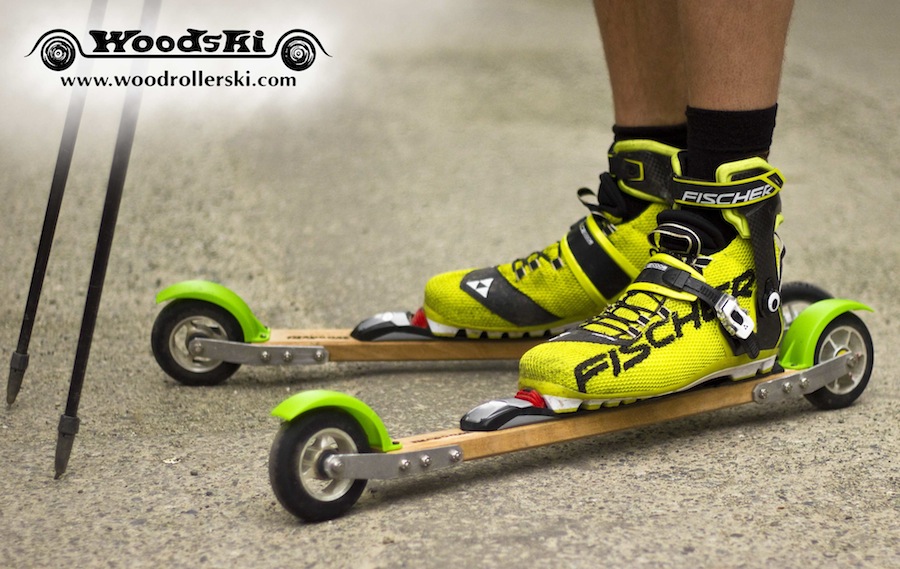
    Wood rollerskis
    Photo: Woodski, Inc.

    2. Does rollerski speed change when it gets colder? I notice that my intervals around a set loop are not as fast as the weather gets colder. — Warren

    “Rollerski wheels run slower in the cold,” writes Keim. “Prime example was this January after a meltdown and rain I went out rollerskiing in Minneapolis. Air temp was mid 20’s and rollerskiing was really slow compared to how it was late fall on the same setup. The cold will slow down the bearings causing this as the grease becomes thicker. I’m not sure at what temp you start to really notice it, but I feel it’s pretty cold like the low 30’s. Our bearings and most rollerski bearings out there are greased, but if someone has oiled bearings they shouldn’t slow down as much. The amount of grease in them would be a factor as well.

    Most of the wheel speed under normal temps however mostly comes from the rebound of the rubber. Doing a spin out test isn’t a very accurate way to measure speed as that just looks at how much grease is in the bearings and how thick it is. A good way to compare rebounds at home between different wheels is drop them next to a wall and see how high they bounce. A faster wheel will bounce higher and a slow wheel won’t bounce much as the energy is absorbed. Under normal temps this is how we achieve our different speeds as greased bearings will only slow you down so much.”

    But if it’s sizzlin’ hot, it’s going to be slower, explains Peter Breu, president of Woodski, Inc.

    “You should be faster as the temperature drops as the rubber of the wheels will indeed be harder as they get colder,” Breu wrote in an email. “If I had to guess, I’d say that the difference between wheels at 80 [degrees] F and 32 [degrees] F would be quite noticeable – perhaps 5-10% faster. If the wheel bearings were packed in thick grease that would offset any increase in speed, but most bearings have very light and little grease so that would not normally be a factor.”