Tag: CNEPH

  • Proving Her Place: Browne’s Unplanned Route to the Olympics

    Proving Her Place: Browne’s Unplanned Route to the Olympics

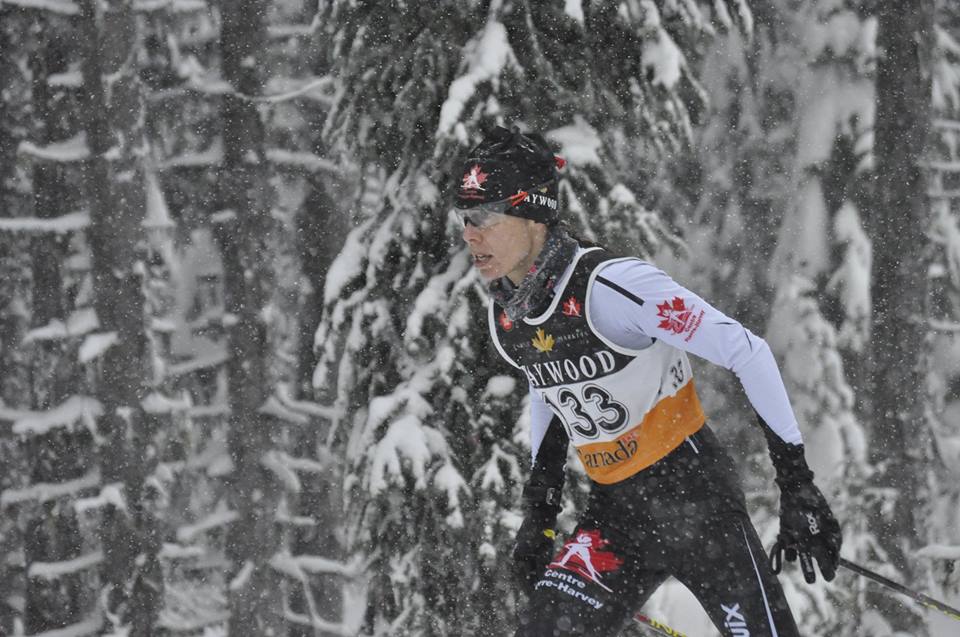
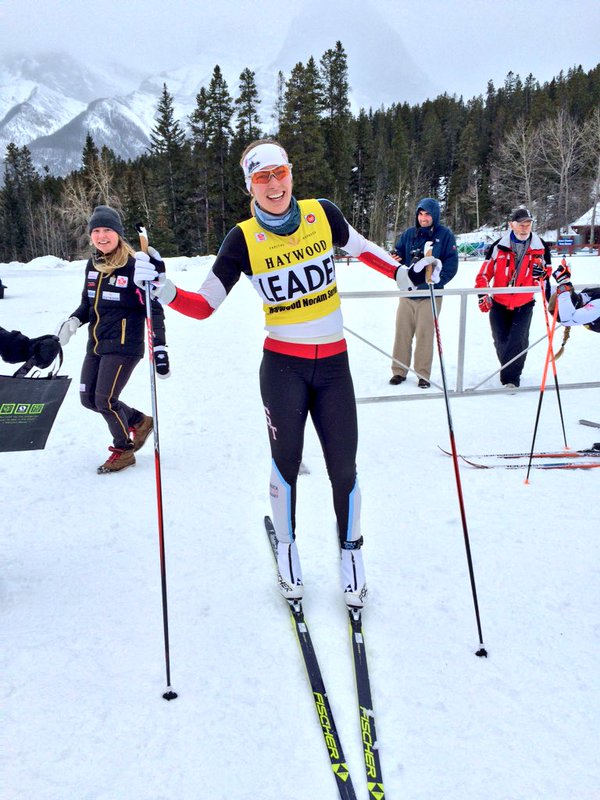
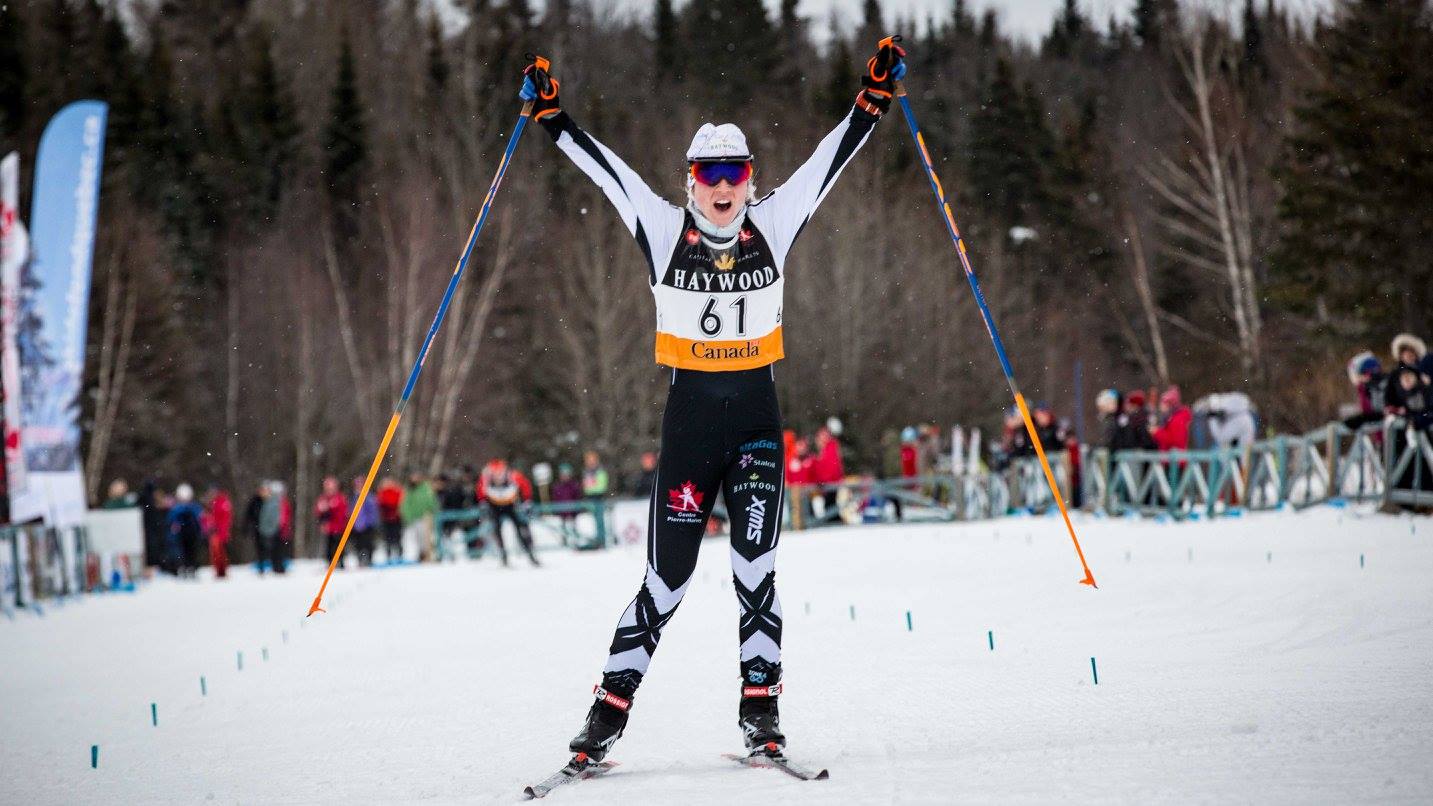
    Cendrine Browne (CNEPH/Canadian National U25 Team) celebrates her 11.9-second win in the women’s 15 k skiathlon on Jan. 8 at Mont Sainte-Anne NorAm Trials in Quebec. (Photo: Mario Walker/NorAm MSA 2018 Facebook)

    Since March of last year, Cendrine Browne has been waiting and trying, with all her might, for another top 30. She achieved it twice last season, placing 26th in the World Championships 30-kilometer mass start and 35th in the World Cup 10 k skate in Ulricehamn, Sweden (30th with Olympic-style scoring, which counts the top-four athletes for each nation in a given race).

    To meet Cross Country Canada’s (CCC) alternate qualifying criteria for the 2018 Olympics, Browne, who turned 24 this past September, needed one more top 30 at the World Cup with the same type of scoring.

    She had four weekends to give it her all in late November and December.

    Browne, of the Canadian National U25 Team and Centre National d’Entraînement Pierre Harvey (CNEPH), a.k.a. Pierre-Harvey National Training Centre, finished the 2017/2018 season-opening World Cup mini tour in 72nd overall with the 62nd-ranked pursuit time in Kuusamo, Finland.

    “That was my first [weekend of racing] so it was tough,” Browne recalled on the phone in early January. “But the last race of the mini tour went much better. I started to have good race feelings so I knew I was going in the right direction. The next weekend was Lillehammer [Norway] and I performed pretty well there in the skiathlon.”

    She finished 45th to lead two Canadian women finishers. With Olympic-style scoring, she was 31st.

    “To qualify for the Olympics I had to do a top 30 so 31st was a little frustrating, but I knew I was able to do a top 30,” Browne said. “I knew I could do a real top 30, not only a four per nation top 30. But I only had four weekends to do a top 30 and I was down to two.”
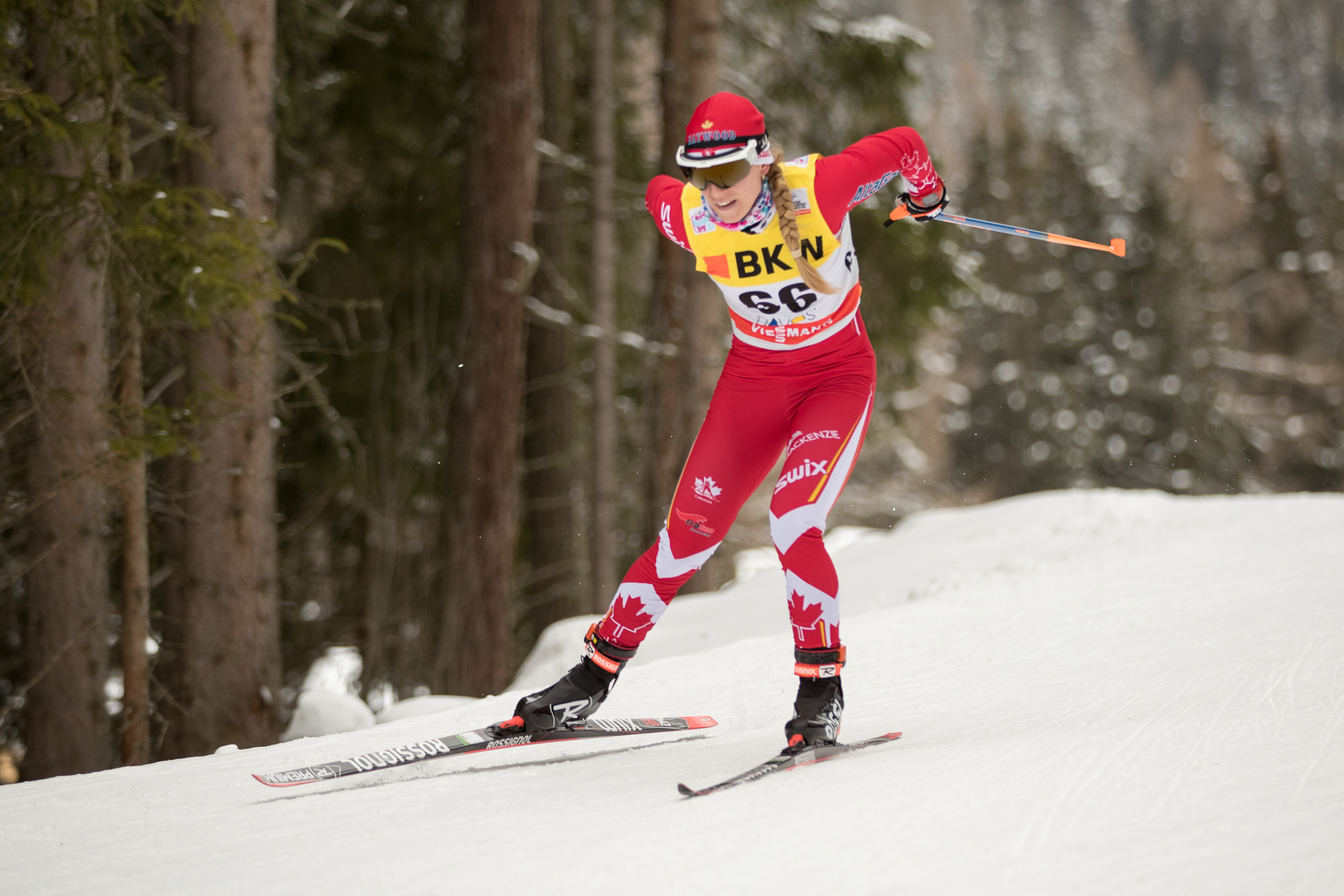
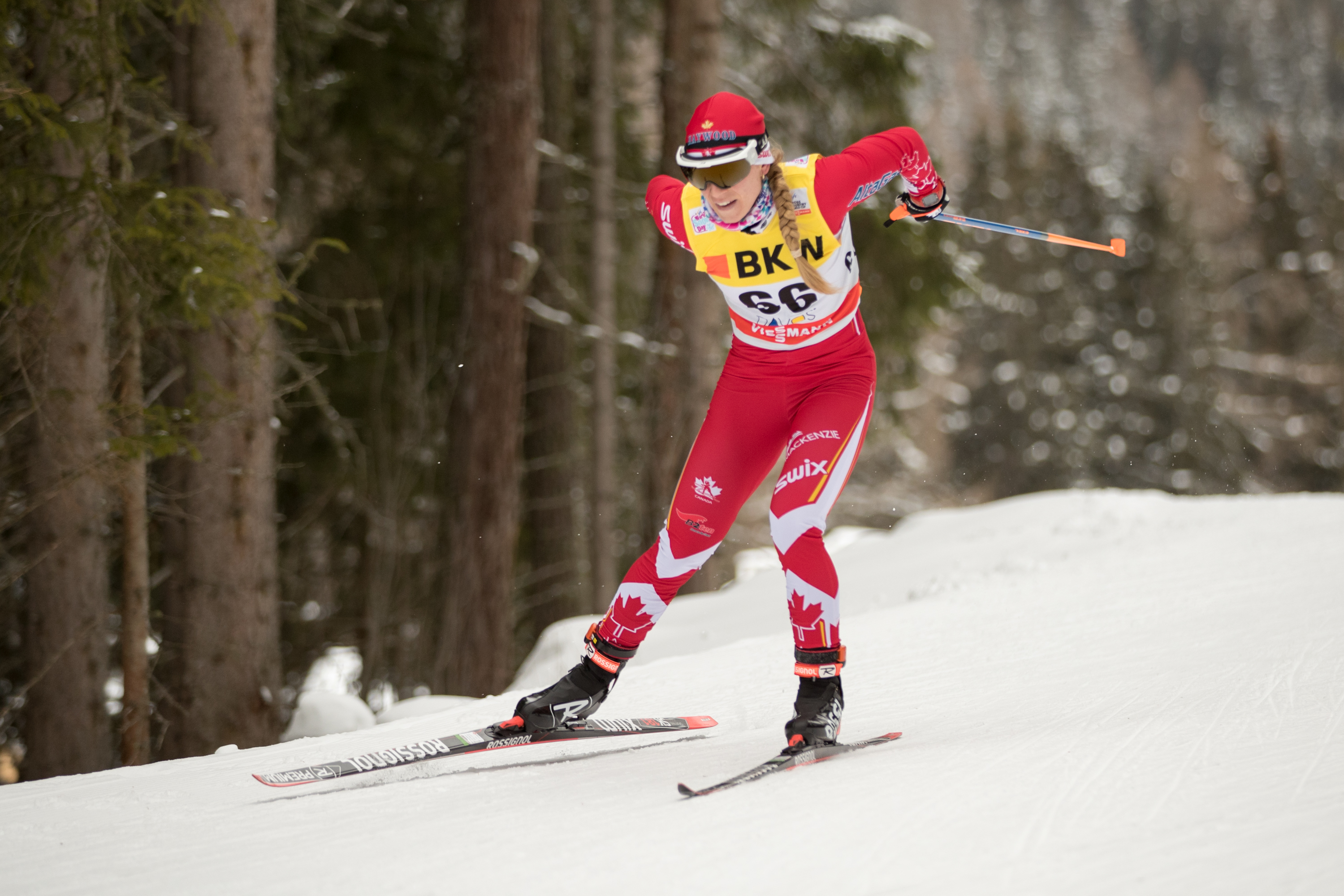
    Cendrine Browne racing in the World Cup 10 k freestyle on Dec. 10 in Davos, Switzerland. She placed 45th for the second World Cup distance race in a row. (Photo: Reese Brown / U.S. Ski & Snowboard)

    In Davos, Switzerland, she tied her season best of 45th in the 10-kilometer freestyle and led four Canadian women, but she was still outside the top 30 with Olympic scoring. Her result at altitude (about 1,560 meters above sea level) was promising, she said, but still not quite there in terms of what she needed.

    One weekend later, it all came down to two races in Toblach, Italy. There, she finished 55th in the 10 k skate and 66th in the 10 k classic pursuit.

    “Maybe I had put some pressure on myself, but I felt pressure from my federation and pressure to do that top 30, and I don’t work very well with pressure,” she said. “So unfortunately when we went to Toblach, I didn’t perform at all. I was so stressed out that I didn’t even have fun racing, and I just felt awful the whole skate race. I cried a lot.”

    With Period 1 of the World Cup behind her and Christmas break on the horizon, she told herself it wasn’t over yet. But she was still disappointed.

    “I was supposed to stay [in Europe] for Christmas … I was so focused on Plan A that I didn’t even think about Plan B,” she said.

    On the bright side, “Plan B” involved races in her home province of Quebec at Mont Sainte-Anne (MSA), where she trains with CNEPH. And she got to spent time with her family and boyfriend in her hometown of St-Jérôme, about 50 kilometers northwest of Montreal, as well as reset mentally for NorAm Olympic trials starting Jan. 5.

    “I was so focused on Plan A that I didn’t even think about Plan B.” — Cendrine Browne, Canadian National U25 Team and Pierre-Harvey National Training Centre, on qualifying for the Olympics

    “I was really really stressed out the week before the first race [at trials] and I was feeling the pressure again, and I really didn’t want to react the the same way as I did in Toblach so I went to see my sports psychologist,” Browne said. “She explained some stuff to me, like instead of thinking that the pressure is bad and instead of trying to run away from it, she said I have to try to accept it, and if I accept it, it would help me to go faster.”

    With that in mind, Browne tried to keep everything in perspective. Then, she came out at full steam for the classic sprint on Jan. 5, the first day of MSA NorAm trials.

    “I think it really worked well because I managed to sleep better the night before the race, and the morning of the race I was feeling like myself again,” she said. “I was skiing and just loving the glide as I usually do when I’m having a good day. I was smiling … and I felt free and I felt like myself. I feel like when I’m stressed out, I’m not having fun any more and that day I was having fun again.”

    A self-described freestyle distance specialist, she placed second in the classic-sprint qualifier then fourth overall in the final. As the top-performing woman between the qualifier and final, excluding fellow national-team member Dahria Beatty (who had previously met Canada’s alternate qualifying criteria for the Olympics), Browne effectively secured one of Canada’s coveted quota spots at the 2018 Olympics in PyeongChang, South Korea.

    While that wasn’t a done deal until a few weeks later, when CCC named its 11-athlete Olympic team, that result put Browne in the best place any Canadian Olympic hopeful would want to be.

    “I can’t say I’m qualified yet because it’s kind of complicated,” Browne said on Jan. 7. “… We can only say, like Daria, Emily [Nishikawa] and I, that we have reached an Olympic criteria and that we’re in good position to go to the Olympics.”

    Beatty and Emily Nishikawa, members of Canada’s World Cup Team, met CCC’s “Alternate Qualifying Criteria A” (three top-30 results) last season. According to CCC’s Olympic selection criteria, one female sprinter and one female distance skier would be selected to the Olympic team based on trials. So Browne effectively secured the female sprint spot, and as the rest of the week at MSA played out, she ended up being the top distance skier at trials as well.

    On Jan. 8, Browne won the women’s 15 k skiathlon on Day 2 of the trials. Two days later, she won the 10 k classic interval start as well. In the event that the trials sprint leader was the top distance skier as well, as was Browne, the criteria was written so that the second-ranked distance skier in those two distance races would be selected.

    That spot went to Anne-Marie Comeau, Browne’s former teammate. The two trained together at CNEPH three years ago, before Comeau left skiing due to an injury and concentrated on running. At last month’s trials, Comeau placed second in the skiathlon, about 12 seconds behind Browne, and third in the 10 k classic, about a minute and 5 seconds back. Browne won the classic individual start by 39 seconds over Katherine Stewart-Jones, who had previously placed fifth in the skiathlon.

    “I know she has a huge VO2 max,” Browne said of Comeau, a student at the Université Laval. “She has a huge cardio and these courses were perfect for her, so I knew she could do well, but I’m really surprised that she could actually be on the Olympic team, just because she wasn’t sure she wanted to ski anymore, so that’s really a big surprise for everybody. She trained for running for two years almost, and we didn’t think she would be such a big comeback.”

    (Browne is also enrolled at Laval, where she takes classes toward a bachelor’s degree in sports intervention in the fall, as well as HEC Montréal, a university business school where Browne is pursuing a certificate in administration during the summer and winter terms. “It’s important to prepare my post-career now,” she said during another interview this summer.)

    While both Browne and Comeau were named to the Olympic team on Jan. 29, along with Beatty and Nishikawa on the women’s side, Browne said her results at trials gave her confidence moving forward.

    “I was surprised because classic sprints usually are not my best race at all,” she said of her result in the classic-sprint qualifier to start the trials. “But I think I’m in good shape right now and that’s why I managed to do so well. Also the sprint course is really hard here, it’s like a World Cup course, so it’s made for distance skiers, I would say. Pure sprinters get tired on that course, it’s so hard. So I think it was a good course for me.”

    Going into the races at MSA, Browne had been on the NorAm podium 12 times since 2013. Two of those races were sprints (both in 2015).

    “I’m definitely more of a distance skate skier, without a doubt,” she said.

    Four Races, Four Big Results

    The MSA classic sprint marked Browne’s first time skiing heats since last year’s U.S. nationals in Utah, where she qualified fifth in the classic sprint and went on to finish 22nd after being eliminated in the quarterfinals.

    On Jan. 5, she clocked the second-fastest qualifying time on MSA’s 1.2 k course, 3.13 seconds behind Beatty, who won the qualifier in 3:41.55. Olivia Bouffard-Nesbitt, of Rocky Mountain Racers (RMR), qualified third (+8.08) and Maya MacIsaac-Jones (Canadian U25 Team/RMR) qualified fourth (+8.49). Taking Beatty out of the equation, that meant Browne needed to place fourth or better in the final to lock up that women’s sprint spot. According to the CCC sprint selection process, a given athlete’s result in the qualifier and final were scored equally (one point per place, lowest points win). So Browne had 2 points after qualifying and MacIsaac-Jones had 4. In the final, MacIsaac-Jones placed second to Beatty and Browne finished fourth, bringing both of their point totals to 6. The tiebreaker, according to the criteria, was the top qualifying result, which Browne had.

    Asked about home-course advantage on the trails she’s skied on for the last six years with CNEPH, Browne said the sprint course was brand new and specifically designed for the 2018 trials.

    “I hadn’t tried those yet, but they’re great. They’re really hard,” she said.

    In the heats, she made a point to lead early in her quarterfinal and semifinal in order to set the pace.

    “The course was so hard that you couldn’t start too fast, so I went in front of everybody and didn’t go too fast on the first uphill,” Browne recalled. “My race really started at the top of the first huge pitch, and at the top of that big uphill, that’s when I started to go faster and that’s where I created a little gap.”

    She won both her quarterfinal and semifinal to advance with ease to the heats, 1.5 seconds ahead of Annika Hicks, of the Alberta World Cup Academy (AWCA) in the quarter and 2.81 seconds ahead of Hicks again in the semifinal.
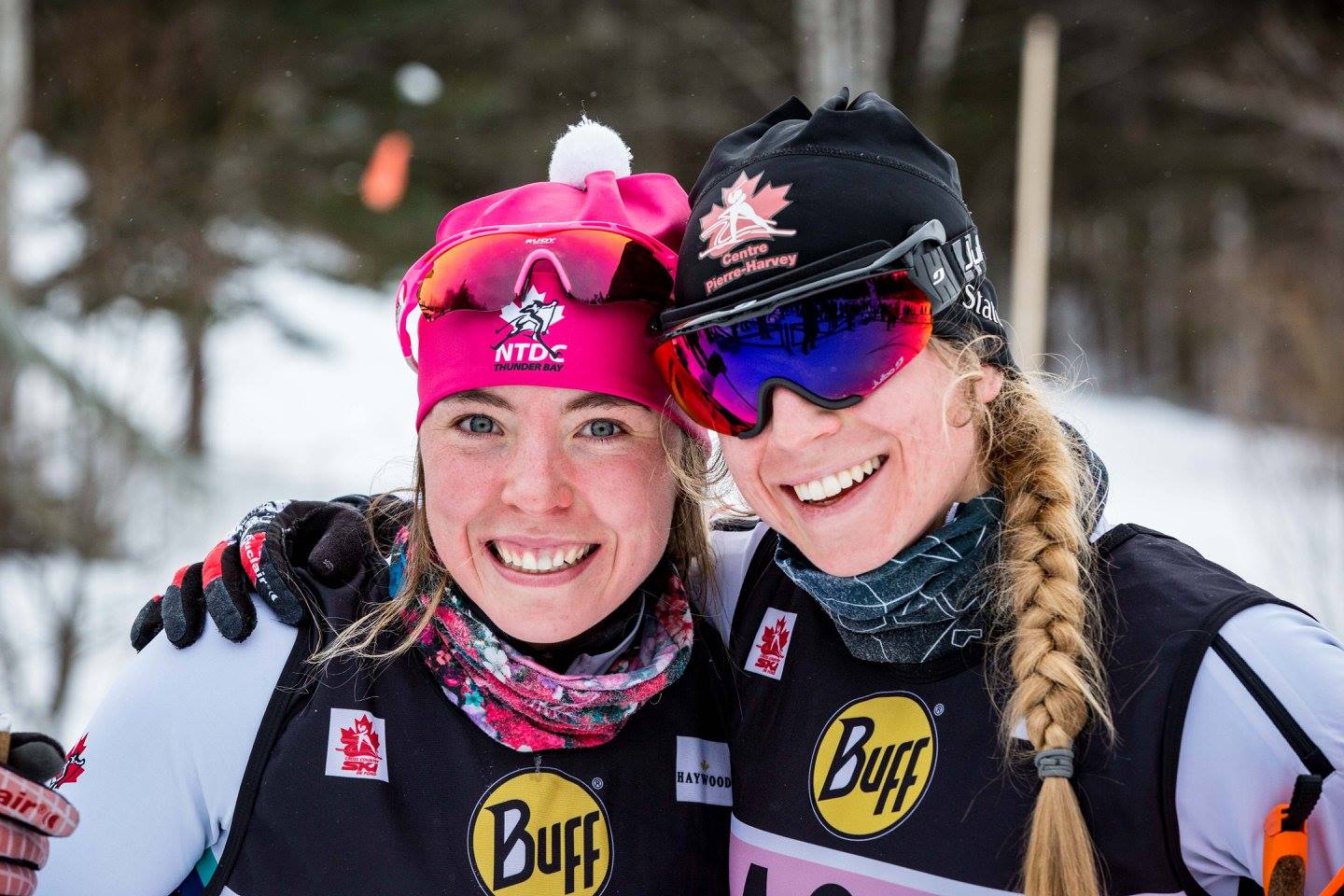
    NTDC Thunder Bay’s Katherine Stewart-Jones (l) and CNEPH’s Cendrine Browne, both the Canadian U25 Team, after the NorAm Trials classic sprint on Jan. 5 at Mont Sainte-Anne, Quebec. (Photo: Mario Walker/NorAm MSA 2018)

    In the final, Browne found herself behind Beatty (also of AWCA) and Stewart-Jones, of the Canadian U25 Team and National Team Development Centre (NTDC) Thunder Bay, at the top of the last major climb. They jumped in the tracks on either side of her, and Browne found herself without a track for the downhill.

    Beatty crossed the finish line first once more (after winning both her quarterfinal and semifinal as well), finishing in 3:45.02, while MacIsaac-Jones followed 0.64 seconds later in second place. Stewart-Jones was 1.2 seconds back in third, and Browne 4.5 seconds behind in fourth. Hicks placed fifth (+10.21) and Andrea Dupont (RMR) rounded out the women’s final in sixth (+12.18).

    Going into the final, Browne wasn’t aware she needed to finish fourth or better.

    “I don’t really like thinking about criteria before I go into a race so I had no idea what I had just done,” she recalled. “A friend [Alexis Turgeon] told me when I crossed the finish line, he said, ’I think you got that Olympic spot!’ I was like, ‘What?’ and then the rumors started to spread and then my coaches told me it was true, I had made it. It was pretty great.”

    One of those coaches was her coach, Louis Bouchard, head coach at CNEPH, also a Canadian World Cup coach and Alex Harvey’s personal coach, who attended the classic sprint at NorAm trials then left for Europe on Sunday.

    “He said he was almost as stressed out as I was and he didn’t sleep before the first race,” Browne said. “It’s a relief for him as well.”

    As for the distance races at trials, Browne said she had been targeting both.

    “I really didn’t expect to qualify in a sprint race,” she said on Jan. 7. “I was hoping to win those [distance] races and do a spectacular criteria, so I still want to do really well in those races. I don’t want to think about the result because I only want to think about what I can control, which is my movements and how I ski, but I want to have great feelings during this race and ski really well.”
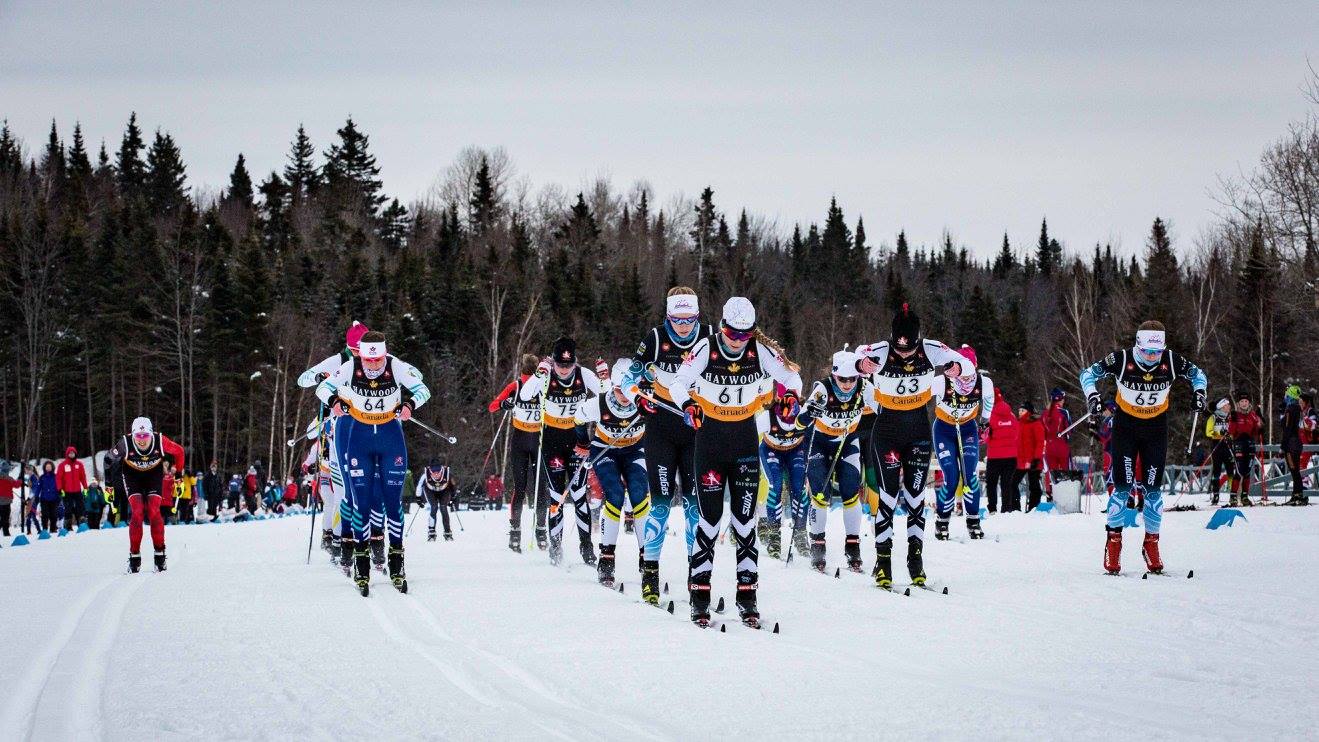
    Cendrine Browne (61) leading the women’s 15 k skiathlon on Jan. 8 at Mont Sainte-Anne NorAm Trials in Quebec. She went on to take the win by 11.9 seconds over Anne-Marie Comeau (Université Laval). (Photo: Mario Walker/NorAm MSA 2018 Facebook)

    On Monday, Jan. 8, she went on to win the 15 k skiathlon by almost 12 seconds after leaving the pack toward the end of the first 7.5 k classic leg.

    “My goal was to start really hard and try to break away right at the start,” Browne recalled.

    But she wasn’t able to shake skiers such as Beatty, MacIsaac-Jones, Comeau, or Stewart-Jones as quickly as she’d hoped. She built a small gap on the others around 6 k, but Comeau caught her before the transition to skate and Browne fell on the final climb before the exchange.

    “I fell right before the downhill so I lost my gap,” Browne recalled. “And then we headed towards the ski exchange and I had some trouble with my binding and I couldn’t clip it on. It didn’t work, so I lost like another five seconds there. Anne-Marie was at the ski exchange before [me], and it took me like 2.5 k to catch up to her.”

    After catching Comeau about a third of the way into the skate leg, Browne said she took the lead in an effort to drop Comeau over the next 2.5 k.

    “I thought I could gap her, but I couldn’t,” Browne said. “And so on the last 2.5 k, I thought about my tactic. I saw how she skied, and I saw where I could pass her, so I stayed behind her and waited for the last big uphill, and I passed here there. … I knew I had faster skis and I knew I’m better on sections that need more power.”

    With about a kilometer to go, Browne skied away to an 11.9-second victory. The next day, she raced to second in the freestyle sprint (a NorAm race but not an Olympic trials event) after qualifying in third.

    She hadn’t planned on racing that second sprint of trials (and her third race in five days), but her coach, Bouchard, encouraged her to use it as intensity training before the Olympics.

    “At first I wasn’t supposed to do that sprint, but … I had to race as much as I could before leaving [for Europe],” she said. “After the qualifier, I asked Louie, ‘I’m feeling really tired. Should I race in the heats?’ and he said, ‘Yeah, you should.’ … I didn’t know how it would turn out, but it turned out pretty well.”

    The next day, she woke up for her fourth race of the week, the 10 k classic, not feeling as fatigued as she had on some of the previous days.

    “Of course, I was tired, but I was telling myself everybody’s really tired,” Browne recalled. “My goal was to push as hard as I could during the whole race because I had to prepare as well as I could for the Olympics.”
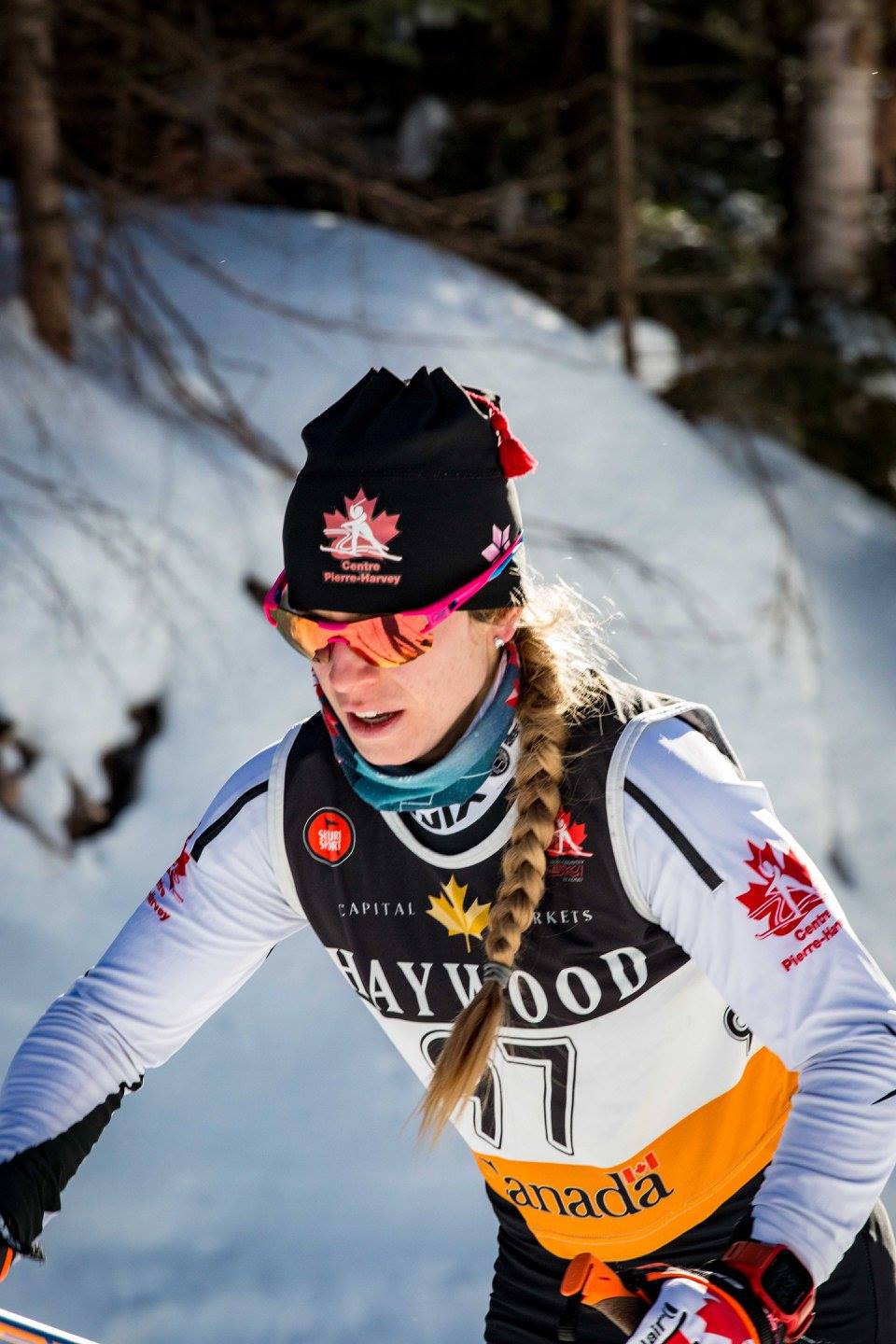
    Cendrine Browne racing to first in the women’s 10 k classic on Jan. 10 at Mont Sainte-Anne NorAm Trials in Quebec. (Photo: Mario Walker/NorAm MSA 2018 Facebook)

    Despite being one of the last starters in that race, she said she wasn’t quite sure where she stood during it, so she simply pushed as hard as she could.

    “It was like, I don’t wanna be second … and then it turned out that I had a really big gap,” she said. “I felt so good during that race. You don’t feel that good that often in races during the year, so I think I’m in really good shape leading towards the Olympics so that’s really exciting and it’s great news.”

    Before leaving Quebec for a mid-January training camp in Livigno, Italy, Browne summarized her trials performance.

    “I really wanted to show that I deserved my spot,” she said. “I qualified in a sprint race, but I really wanted to show that I was that I was good in distance racing, too, because I am a distance racer. … I guess you could say I qualified in all the events, but I just wanted to show Cross Country Canada that I that I deserved my spot and I really wanted to be safe. I think that’s what kept me going.”

    And while qualifying domestically was her last resort to get to her first Olympics, Browne said it all worked out in the end.

    “‘Actually I’m kind of happy I was in Mont Sainte-Anne; it gave me confidence that I really deserve my place and it was really nice to ski at home, well, kind of at home,” she said. “My boyfriend was there, my family was there, and lots of friends and everybody was cheering … it was really fun. Great atmosphere and the races were really well-organized.”

    “You don’t feel that good that often in races during the year, so I think I’m in really good shape leading towards the Olympics so that’s really exciting…” — Browne

    Browne and the rest of the Canadian World Cup team returned to World Cup racing Jan. 27-28 in Seefeld, Austria. There, she placed 54th in the freestyle sprint then 37th in the 10 k freestyle mass start. She was the second Canadian in the 10 k, after Nishikawa in 35th, and with Olympic-style scoring, Browne would’ve been 33rd.

    “I think us three girls did really well today, considering we are just coming back from a training camp,” Browne said after the mass start, referring to Nishikawa, herself, and Beatty, who placed 45th. “So it’s really looking good for the Olympics.”

    Path to PyeongChang

    Last summer, Browne worked to rehab back tension and knee tendonitis. Those injuries only set her back about two weeks in July, she said, and she attended all training camps, including the Canadian women’s team camp in New Zealand in late July and early August.

    “I did a total of 60 hours of training in just under three weeks and realized that despite my small injuries my shape was intact; I was as much in my place as before among these girls,” Browne said in August.
    As of early January, she said she was injury free.

    With more than 40 World Cup starts currently behind her, Browne said she’s reached a new level with her racing. Last year was about understanding “the importance of self-confidence,” she said last summer, “but also that the most important thing is to have fun.

    “It’s easy to forget when you’re at the top level,” she continued. “When I was stressed before the start of a race, I would ask myself, ‘Why are you doing this?’ Because I like it.”

    Initially, it was lining up against the best skiers in the world that intimidated her.

    “In the beginning, you reach the highest level, you face the best in the world. It’s intimidating being new to the field, but I’ve learned to master this stress throughout the season,” she said. “At the end, I felt in my place.”

    — François Léger Dionne, Andrea Potyondy-Smith and Gabby Naranja contributed
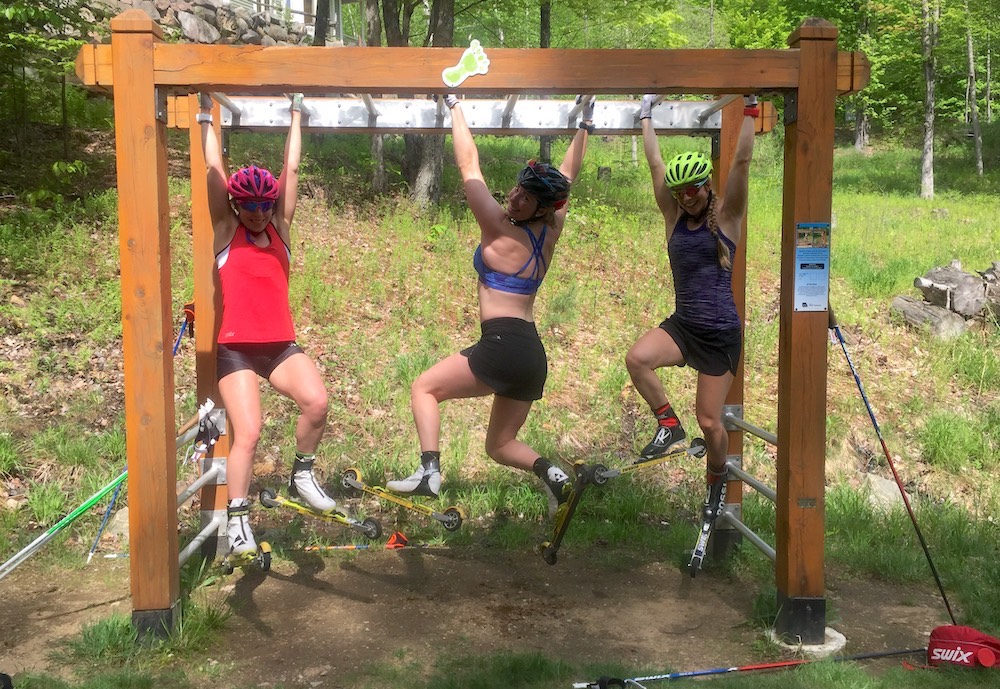
    Canadian national-team member Cendrine Browne (r) hanging with her teammates Katherine Stewart-Jones (l) and Dahria Beatty at a training camp in Tremblant, Quebec, in May. (Photo: Dahria Beatty)
    La membre de l’équipe nationale canadienne Cendrine Browne (D) en compagnie de ses coéquipières Katherine Stewart-Jones (G) et Dahria Beatty lors d’un camp d’entraînement à Tremblant, Québec, en mai. (Photo: Dahria Beatty)


  • Under 23 Questions: Philippe Boucher

    Canada’s Philippe Boucher (CNEPH) racing to 22nd in the men’s 20 k skiathlon at 2017 Junior World Championships at Soldier Hollow in Midway, Utah. (Photo: FlyingPointRoad.com)

    In an effort to showcase the North Americans who competed at last week’s International Ski Federation (FIS) 2018 Nordic Junior/U23 World Championships in Goms, Switzerland, we asked those qualifying athletes several questions about themselves — actually, we had them fill in the blanks. Here we have 20-year-old Philippe Boucher, of the Centre National d’Entraînement Pierre-Harvey (CNEPH), who represented Canada at his first U23 Worlds (after previously competing at three Junior Worlds). 

    Last week in Goms, Boucher placed 42nd in the freestyle sprint and 45th in the 15 k classic.

    ***

    “My full name is Philippe Boucher, but you can call me Phil.

    I was born and raised in Lévis, Québec, and I learned to ski at Club de ski La Balada in Lévis.

    I spent the time between Mont Sainte-Anne trials and Junior/U23 Worlds alpine skiing in beautiful powder snow at MSA. I rested three days at home. I left Quebec on Jan. 14 en route to Praz de Lys, France, for a training camp with the Canadian ski team.

    The funnest workout training camp I did in the last training year to prepare for this was a 3-week training camp this fall on the Dachstein glacier in Austria with Alexis Dumas, my teammate on the CNEPH. We’ve been on the World Junior/U23 Championship trip for four years together; he’s one of my best friend and training buddy.

    This is my second time in Switzerland and fourth time racing internationally, and so far it’s been good.

    One difference I’ve noticed between Switzerland and Canada is the salami is awesome.

    Skiing and racing in the Alps is fun and challenging. The weather can change quickly. I like when it’s unpredictable. Usually racing at altitude is OK for me because I’m based in MSA at sea level, but I’ve been training and racing a lot at altitude these past 4 years. I still need some time to adapt, but when I’m adapted it usually goes well for me. There are one (Mont-Sainte-Anne) mountains around where I live.

    One of the things I’m most excited about for Junior/U23 Worlds in Goms is to compare my level of racing with the best in the world and to eat the good food at the hotel. No cooking is the best.

    One race I’m especially targeting there is the 30 k skiathlon.

    I really hope I can chat/make friends with someone from France and try to speak with their accent and expressions.

    My favorite thing at the breakfast where we are staying is chocolate croissants.

    Fondue is delicious. And the chocolate is miam !!

    If I had a totally free day here and didn’t have to worry about race fitness or training, I’d spend it backcountry skiing in the Swiss Alps.

    The best way to follow me on social media is on Instagram @p_boucher97.”

    https://www.instagram.com/p/BegRtZEFZH0/?taken-by=p_boucher97

  • Under 23 Questions: Alexis Dumas

    Canada’s Alexis Dumas (CNEPH) racing in the men’s classic sprint qualifier at 2017 U23 World Championships, where he placed 42nd at Soldier Hollow in Midway, Utah. (Photo: FlyingPointRoad.com)

    In an effort to showcase the North Americans competing at this week’s International Ski Federation (FIS) 2018 Nordic Junior/U23 World Championships in Goms, Switzerland, we asked those qualifying athletes several questions about themselves — actually, we had them fill in the blanks. Here we have 22-year-old Alexis Dumas, of the Centre National d’Entraînement Pierre-Harvey (CNEPH), or Pierre-Harvey National Training Centre, who’s representing Canada at his third U23 Worlds.

    On Wednesday, he led his team in 31st in the men’s 15 k classic for his best result at U23 Worlds.

    ***

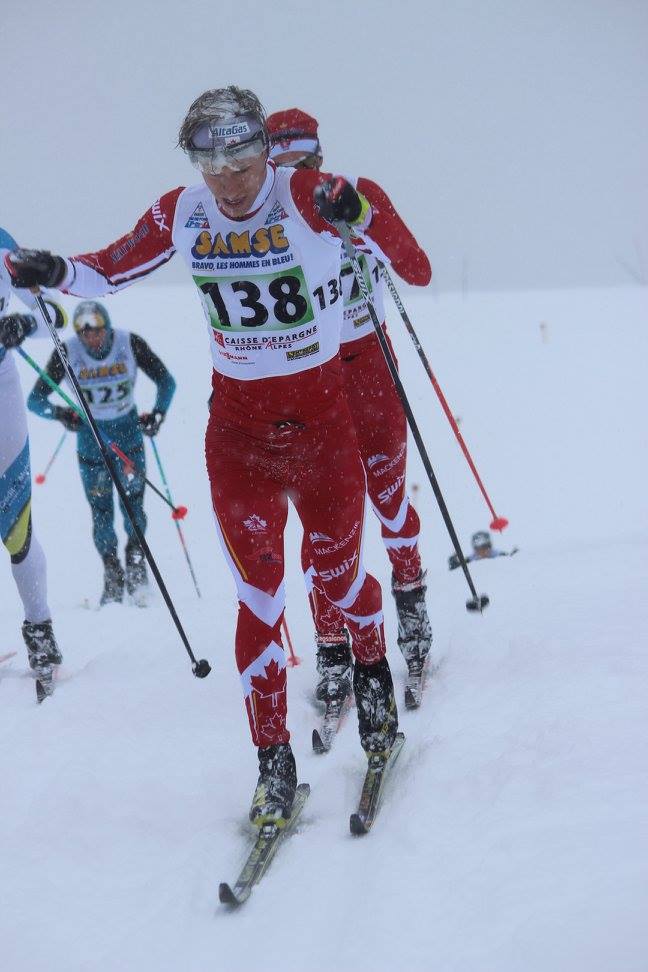
    Alexis Dumas (138) of CNEPH racing in 15 k classic earlier this month in Naves, France. (Courtesy photo)

    “My full name is Alexis Dumas, but you can call me Dumas.

    I was born and raised in Québec, and I learned to ski at 3 years old.

    I spent the time between Mont Sainte-Anne trials and Junior/U23 Worlds sleeping mostly and trying to spend the most time possible with my girlfriend before leaving for a month.

    The favorite workout I did in the last training year to prepare for this was any training in classic with CNEPH.

    This is my second time in Switzerland and my fifth time racing internationally, and so far it’s been up and down but always fun.

    One difference I’ve noticed between Switzerland and the Canada is food is awesome and mountains are huge.

    Skiing and racing in the Alps is great. Usually racing at altitude is great for me because I’m great. There are great mountains around where I live.

    One of the things I’m most excited about for Junior/U23 Worlds in Goms is the food and the hot weather.

    One race I’m especially targeting there is the 15 km classic.

    I really hope I can chat/make friends with someone from France and ask them why their accent is so weird.

    My favorite thing at the breakfast where we are staying is the bread.

    Fondue is awesome. The cheese here is the best! And the chocolate is so good!

    If I had a totally free day here and didn’t have to worry about race fitness or training, I’d spend it… first, I would wake up not too early but at the same time not to late, like a good 8h37 you know. I would go to breakfast and eat a ton of cheese and salami. Then I would pack a bag full of croissants, Nutella and Fanta, not the funky ones only the orange one, and I would go backcountry skiing all day, watch the sunset over the mountains and do a crazy good boomerang video for my Instagram strory. And finally, go eat a big plate of pasta for diner and play on Miniclip all night.

    The best way to follow me on social media is on Instagram @dumpums.”

  • Under 23 Questions: Laura Leclair

    Under 23 Questions: Laura Leclair

    Laura Leclair (CNEPH) training in Praz de Lys, France, before heading to Goms, Switzerland, for U23 World Championships. On Monday, Leclair placed 15th in the women’s skate sprint, the first race of the championships and her first race at the world-championships level. (Courtesy photo)

    In an effort to showcase the North Americans competing at this week’s International Ski Federation (FIS) 2018 Nordic Junior/U23 World Championships in Goms, Switzerland, we asked those qualifying athletes several questions about themselves — actually, we had them fill in the blanks. Here we have 21-year-old Laura Leclair, of the Centre National d’Entraînement Pierre-Harvey (CNEPH), or Pierre-Harvey National Training Centre, who’s representing Canada at her first U23 Worlds.

    On Monday, Leclair placed 15th overall in the women’s freestyle sprint on the first day of U23 World Championships racing.

    ***

    “My full name is Laura Leclair, but you can call me Laura.

    I was born and raised in Chelsea, Quebec, and I learned to ski at 5.

    I spent the time between Mont Sainte-Anne trials and Junior/U23 Worlds at home and in Praz-de-Lys, France.

    The hardest workout I did in the last training year to prepare for this was a double team sprint relay with CNEPH teammates.

    This is my fifth time in Switzerland and third time racing internationally, and so far it’s been a great learning experience.

    One difference I’ve noticed between Switzerland and Canada is the amount of cheese you eat.

    Skiing and racing in the Alps is incredible. Usually racing at altitude is hard for me because I am not often exposed to it. There are tiny mountains around where I live.

    One of the things I’m most excited about for Junior/U23 Worlds in Goms is racing at a high level.

    One race I’m especially targeting there is the skate sprint.

    I really hope I can chat/make friends with someone from France and ask them about where to get cheap wine.

    My favorite thing at the breakfast where we are staying is coffee.

    Fondue is the best thing on earth. The cheese here is very cheesy. And the chocolate is chocolaty.

    If I had a totally free day here and didn’t have to worry about race fitness or training, I’d spend it eating cheese fondue and drinking wine.

    The best way to follow me on social media is on Instagram @lauraraaaaa.”

  • Under 23 Questions with Alexis Dumas

    Canada's Alexis Dumas (CNEPH) racing in the men's classic sprint qualifier at 2017 U23 World Championships, where he placed 42nd at Soldier Hollow in Midway, Utah, on Jan. 31. (Photo: FlyingPointRoad.com)
    Canada’s Alexis Dumas (CNEPH) racing in the men’s classic sprint qualifier at 2017 U23 World Championships, where he placed 42nd at Soldier Hollow in Midway, Utah, on Jan. 31. (Photo: FlyingPointRoad.com)

    In an effort to showcase the North Americans competing at this week’s International Ski Federation (FIS) 2017 USANA Nordic Junior World Championships and U23 Cross Country World Championships at Soldier Hollow in Midway, Utah, we asked those qualifying athletes several questions about themselves — actually, we had them fill in the blanks. Here we have 21-year-old Alexis Dumas, of the Centre National d’Entraînement Pierre-Harvey (CNEPH) a.k.a. Pierre-Harvey National Training Centre, who’s representing Canada at his second U23 Worlds.

    On Thursday of this week, Dumas placed 38th in the men’s 15 k freestyle (tying his best result at U23s), and on Tuesday, he was 42nd in the classic sprint. He’s listed as a starter for Saturday’s 30 k skiathlon

    ***

    “My full name is Alexis Dumas, but you can call me Dumas. I was born in Quebec, raised in Quebec, and one thing you should know about my hometown is we speak French, and yes, we are still part of Canada.

    I started cross-country skiing when I was three, thanks to my parents. I currently train in Quebec (Mont Sainte-Anne) with CNEPH [Centre National d’Entraînement Pierre-Harvey].

    If I’m not skiing, you might find me in my bed. If I had to pick a favorite book, it would be any book with pictures and not too much text.

    Canada's Alexis Dumas (CNEPH) racing to 38th in the men's 15 k freestyle at 2017 U23 World Championships at Soldier Hollow in Midway, Utah. (Photo: FlyingPointRoad.com)
    Canada’s Alexis Dumas (CNEPH) racing to 38th in the men’s 15 k freestyle at 2017 U23 World Championships at Soldier Hollow in Midway, Utah. (Photo: FlyingPointRoad.com)

    One of the things I’m most excited about for U23/Junior Worlds at Soldier Hollow is that my parents will be there to cheer. One race I’m especially targeting there is both distance races.

    The best advice anyone ever gave me about skiing or racing was the best way to climb a hill is to go straight up.

    One of the best race memories I have is winning my first big race when I was junior at nationals in Mont Sainte-Anne.

    If I could meet one World Cup skier, it would be Simon Lapointe. He is so handsome.

    If I don’t end up being a professional skier, I’ll probably be a mechanical engineer trying to find a way to make ski poles even lighter.

    I’m missing zero days of school to be here, and my professors are probably thinking, ‘Anyway, it’s an online class. He would be weird to show up at university.’ “

  • Under 23 Questions with Frédérique Vézina

    Under 23 Questions with Frédérique Vézina

    Canada's Frédérique Vézina (CNEPH) training at Sovereign Lake near Vernon, B.C., last December. (Courtesy photo)
    Canada’s Frédérique Vézina (CNEPH) training at Sovereign Lake near Vernon, B.C., last December. (Courtesy photo)

    In an effort to showcase the North Americans competing at this week’s International Ski Federation (FIS) 2017 USANA Nordic Junior World Championships and U23 Cross Country World Championships at Soldier Hollow in Midway, Utah, we asked those qualifying athletes several questions about themselves — actually, we had them fill in the blanks. Here we have 22-year-old Frédérique Vézina, of the the Centre National d’Entraînement Pierre-Harvey (CNEPH), a.k.a. Pierre-Harvey National Training Centre, who’s representing Canada at her second U23 Worlds.

    On Thursday, she finished 25th in the women’s 10 k freestyle for her first U23 Worlds top 30.

    ***

    “My full name is Frédérique Vézina, but you can call me Fred or mom. I was born in Québec, raised in Saint-Ferréol-Les-Neiges, and one thing you should know about my hometown is yes, we do get a lot of snow in the winter time! As Saint-Ferréol-Les-Neiges might not sound familiar to you, it’s the city in which Mont-Sainte-Anne is.

    Canada's Frédérique Vézina racing to 39th in the women's 10 k classic at 2016 U23 World Championships in Rasnov, Romania. (Courtesy photo)
    Canada’s Frédérique Vézina racing to 39th in the women’s 10 k classic at 2016 U23 World Championships in Rasnov, Romania. (Courtesy photo)

    I started cross-country skiing when I was two, thanks to my parents who decided to spend my energy overflow in the best way possible.

    I currently train in Saint-Ferréol-Les-Neiges (or Mont-Sainte-Anne) with CNEPH.

    If I’m not skiing, you might find me cooking and dancing in the kitchen, or studying in my robe, or volunteering for Nunavik’s cross country ski clubs!

    If I had to pick a favorite book, it would be… I seriously don’t know, but my last reads were: Chris Hadfield’s ‘An Astronaut’s Guide to Life on Earth’, ‘Born to Run’, ‘Les 4 Accords Toltèques’, and ‘Un Avion Sans Elle’.

    One of the things I’m most excited about for U23/Junior Worlds at Soldier Hollow is having my brother and my parents fly over to cheer for me. One race I’m especially targeting there is the skiathlon.

    The best advice anyone ever gave me about skiing or racing was to race against the course.

    One of the best race memories I have is my first win at Midget NorAms. I did not expect anything. The race was 3.5km long (it felt long at that time) and was held on a farm so the spectators could see most of it from the highest point of the course except for that one 400 meters in the woods. After the mass start, we were a group of 15 girls tight together. Then came the time when we went into the woods. I surprised myself by coming out of it first. I remember my parents surprised and cheering so happily seeing me up front. I kept pushing hard, doing my thing and concentrating on skiing well even though I was pretty excited inside. I finally crossed the finish line in first place! The hugs from my brother, family, friends and coaches at the finish made me realize what just happened. At that particular moment I knew I was going to be a skier for the years to come.

    If I could meet one World Cup skier, it would be Marit Bjorgen.

    If I don’t end up being a professional skier, I’ll probably be a doctor.

    I’m missing 21 days of school to be here, and my professors are probably thinking, How is she even able to do both at the same time?’ I even had a colleague in class asking what program I switched to. Well surprise, I’m still in your program, I’m just not going to school very often!

    You can follow me on Twitter at @FrederiqueVez and Instagram @fredvezina.”

  • Under 23 Questions with Philippe Boucher

    Under 23 Questions with Philippe Boucher

    Canada's Philippe Boucher racing at last year's Junior World Championships in Rasnov, Romania. (Courtesy photo)
    Canada’s Philippe Boucher racing in the 10 k classic at last year’s Junior World Championships in Rasnov, Romania. (Courtesy photo)

    In an effort to showcase the North Americans competing at this week’s International Ski Federation (FIS) 2017 USANA Nordic Junior World Championships and U23 Cross Country World Championships at Soldier Hollow in Midway, Utah, we asked those qualifying athletes several questions about themselves — actually, we had them fill in the blanks. Here we have 19-year-old Philippe Boucher, of the Centre National d’Entraînement Pierre-Harvey (CNEPH), a.k.a. the Pierre-Harvey National Training Centre and Canadian Junior National Ski Team, who’s representing Canada at his third Junior Worlds.

    Boucher was listed as one of four Canadian men to start Wednesday’s 10 k freestyle.

    ***

    “My full name is Philippe Boucher, but you can call me Phil. I was born in Quebec City, raised in Lévis. I started cross-country skiing when I was seven, thanks to my parents.

    I currently train in Beaupré with CNEPH.

    Philippe Boucher (Photo: Charles Castonguay)
    Philippe Boucher (Photo: Charles Castonguay)

    If I’m not skiing, you might find me on my bike or at my girlfriend’s place.

    If I had to pick a favorite book, it would be nothing. I really don’t enjoy reading, exept when it talks about Formula One stuff.

    One of the things I’m most excited about for Junior Worlds at Soldier Hollow is to race in front of my family. One race I’m especially targeting there is the banquet on the February 4. Just kidding, the 10 k skate.

    The best advice anyone ever gave me about skiing or racing was don’t worry about the splits, just ski. One of the best race memories I have is the 2013 Canadian National Championships in Whistler.

    If I could meet one World Cup skier, it would be nobody, but I’d like to go do mountain bike with a guy on the UCI Mountain Bike World Cup circuit.

    If I don’t end up being a professional skier, I’ll probably be a police officer.

    I’m missing 11 days of school to be here and 27 days in the whole semester, and my teachers are probably thinking, ‘He’s probably going to fail my course.’

    You can follow me on Instagram or Twitter at @p_boucher97.”

  • Under 23 Questions with Julien Lamoureux

    Under 23 Questions with Julien Lamoureux

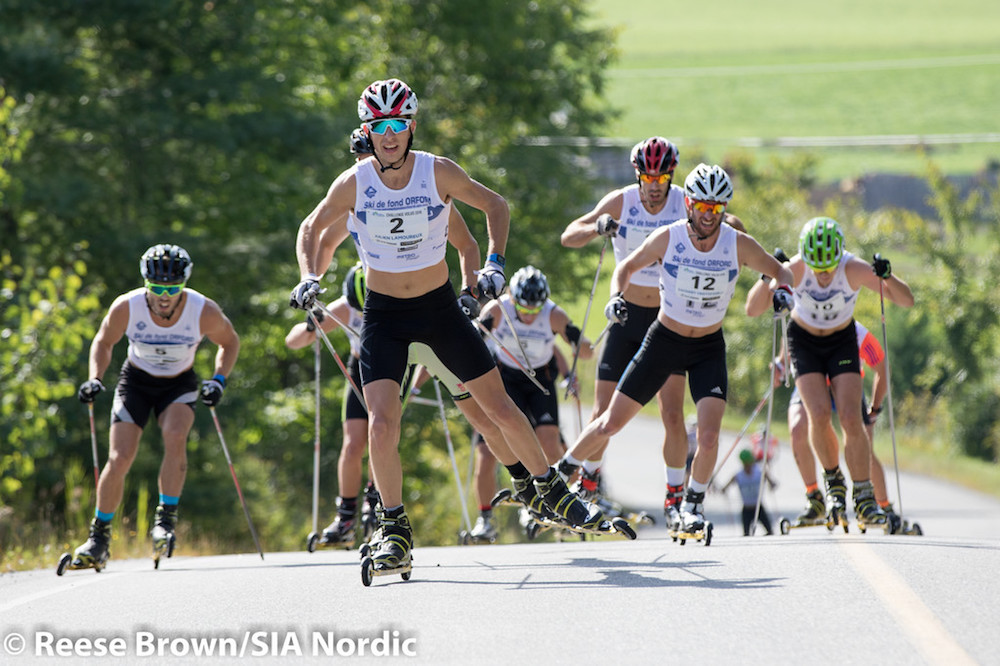
    Julien Lamoureux (CNEPH) leading a rollerski race. (Photo: Reese Brown/SIA Nordic)
    CNEPH’s Julien Lamoureux (2) leading a rollerski race in September 2016 in Sainte-Catherine-de-Hatley, Quebec. (Photo: Reese Brown/SIA Nordic)

    In an effort to showcase the North Americans competing at next week’s International Ski Federation (FIS) 2017 USANA Nordic Junior World Championships and U23 Cross Country World Championships at Soldier Hollow in Midway, Utah, we asked those qualifying athletes several questions about themselves — actually, we had them fill in the blanks. Here we have 22-year-old Julien Lamoureux, of the Centre National d’Entraînement Pierre-Harvey (CNEPH), a.k.a. the Pierre-Harvey National Training Centre, who’s representing Canada at his first U23 Worlds.

    ***

    Julien Lamoureux (CNEPH) (Courtesy photo)
    Julien Lamoureux (CNEPH) skiing at Forêt Montmorency in November 2016. (Photo: Olivier Hamel)

    “My full name is Julien but you can call me Julbo.

    I was born and raised in Sainte-Julie, and one thing you should know about my hometown is it won the happiest city in Quebec award few years in a row.

    I started cross-country skiing when I was three, thanks to my parents. I currently train in Mont Sainte-Anne with CNEPH.

    If I’m not skiing, you might find me in my room or baking cookies. If I had to pick a favorite book, it would be ‘Les Montcorbier’.

    One of the things I’m most excited about for U23/Junior Worlds at Soldier Hollow is getting international experience. One race I’m especially targeting there is the skiathlon.

    The best advice anyone ever gave me about skiing or racing was to keep going no matter what. One of the best race memories I have is doing the last kilometer of the final race at trials in Park City knowing It was almost certain I made the team.

    If I could meet one World Cup skier, it would be Petter Northug.

    If I don’t end up being a professional skier, I’ll probably be something I don’t know yet.

    I’m missing 19 days of school to be here, and my professors are probably thinking, ‘Where the hell is he? He’s never in class.

  • 17 Questions for 2017: Cendrine Browne

    17 Questions for 2017: Cendrine Browne

    Canadian cross-country skier Cendrine Browne on an over-distance adventure this fall. (Courtesy photo)
    Canadian cross-country skier Cendrine Browne on an over-distance adventure this fall. (Courtesy photo)

    Welcome to “17 Questions for 2017″, where we are catching up with American and Canadian national-team members before the beginning of the winter season. 

    ***

    Cendrine Browne raced her first World Cup back in December 2012, on home turf in Quebec. She was 19 — and finished 59th in the skate sprint qualifier.

    When the World Cup swung back around to Quebec last season as part of the Ski Tour Canada, Browne had come a long way. She had since notched a 15th-place finish at World Juniors in 2013, notched several of top-30 U23 World Championships performances, and competed in a handful of European World Cups as well as myriad continental cup races. This time around, Browne finished 40th in the Ski Tour Canada, the second Canadian woman in the rankings behind Emily Nishikawa.

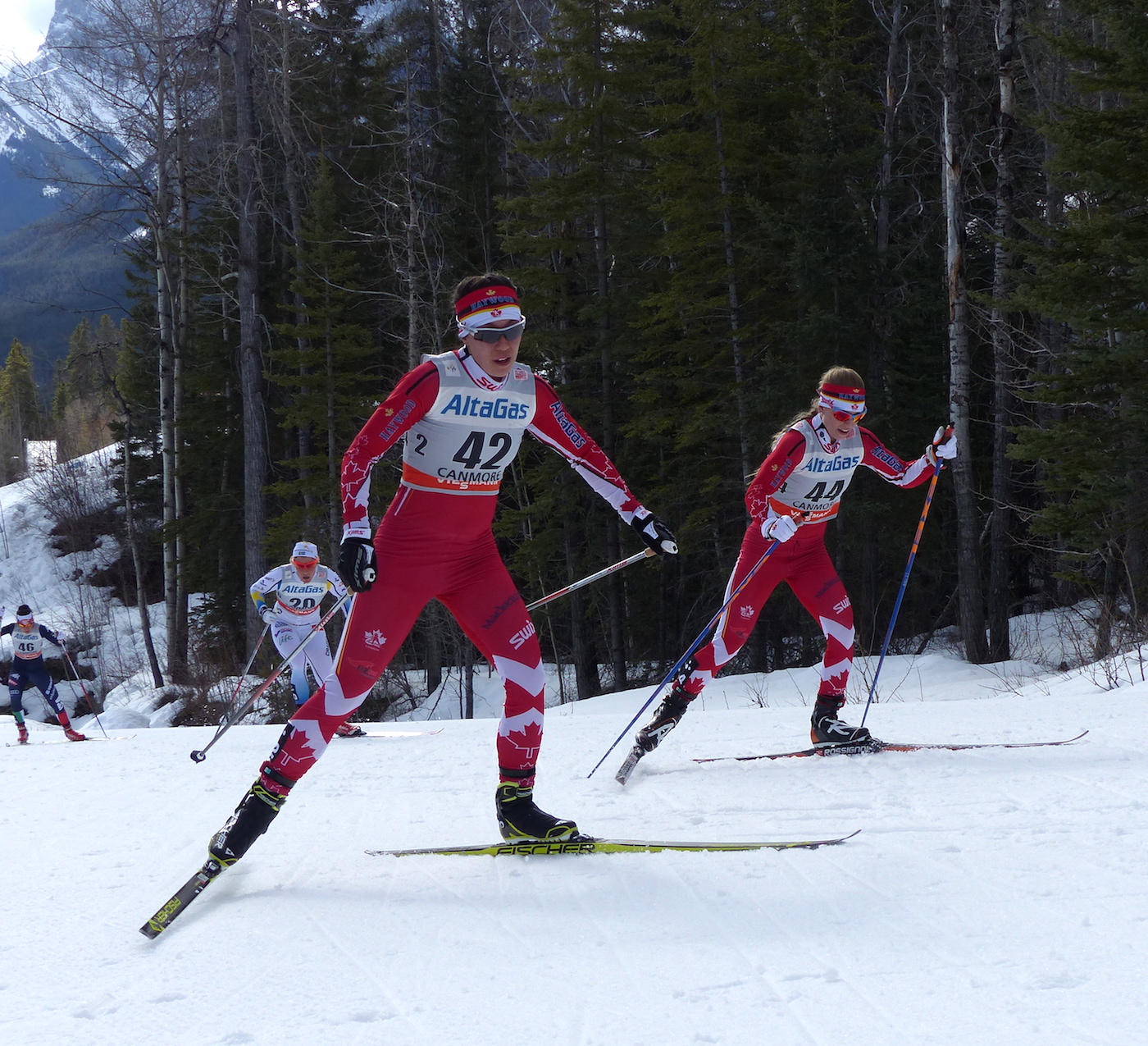
    Browne (right) chasing teammate Emily Nishikawa in the 15 k skiathlon in Canmore, Alberta, as part of the Ski Tour Canada. (Photo: Peggy Hung)
    Browne (right) chasing teammate Emily Nishikawa in the 15 k skiathlon in Canmore, Alberta, as part of the Ski Tour Canada. (Photo: Peggy Hung)

    A member of Canada’s senior national team, the 23-year-old tackled our 17 Questions after a training camp in Park City, Utah.

    1. Biggest change in your life in the last five or so months since the ski season ended?

    I got the opportunity to be on the World Cup circuit this season! I’m really excited about that!

    2. Biggest change in your training?

    My coach and I are trying something different this year. My plan changed a little, lets hope it works well!

    3. Major areas of improvement you’ve seen so far?

    My classic technique has improved a lot since last year. Before I was only comfortable skating but now I’m comfortable in both styles.

    4. Whom you’ve been working closest with this offseason (coaches or training partners)?

    My personal coach is now Louis Bouchard and that’s a new and exciting change. I’ve been working hard with Louis during the offseason.

    5. Best trip in the last five months (and why)?

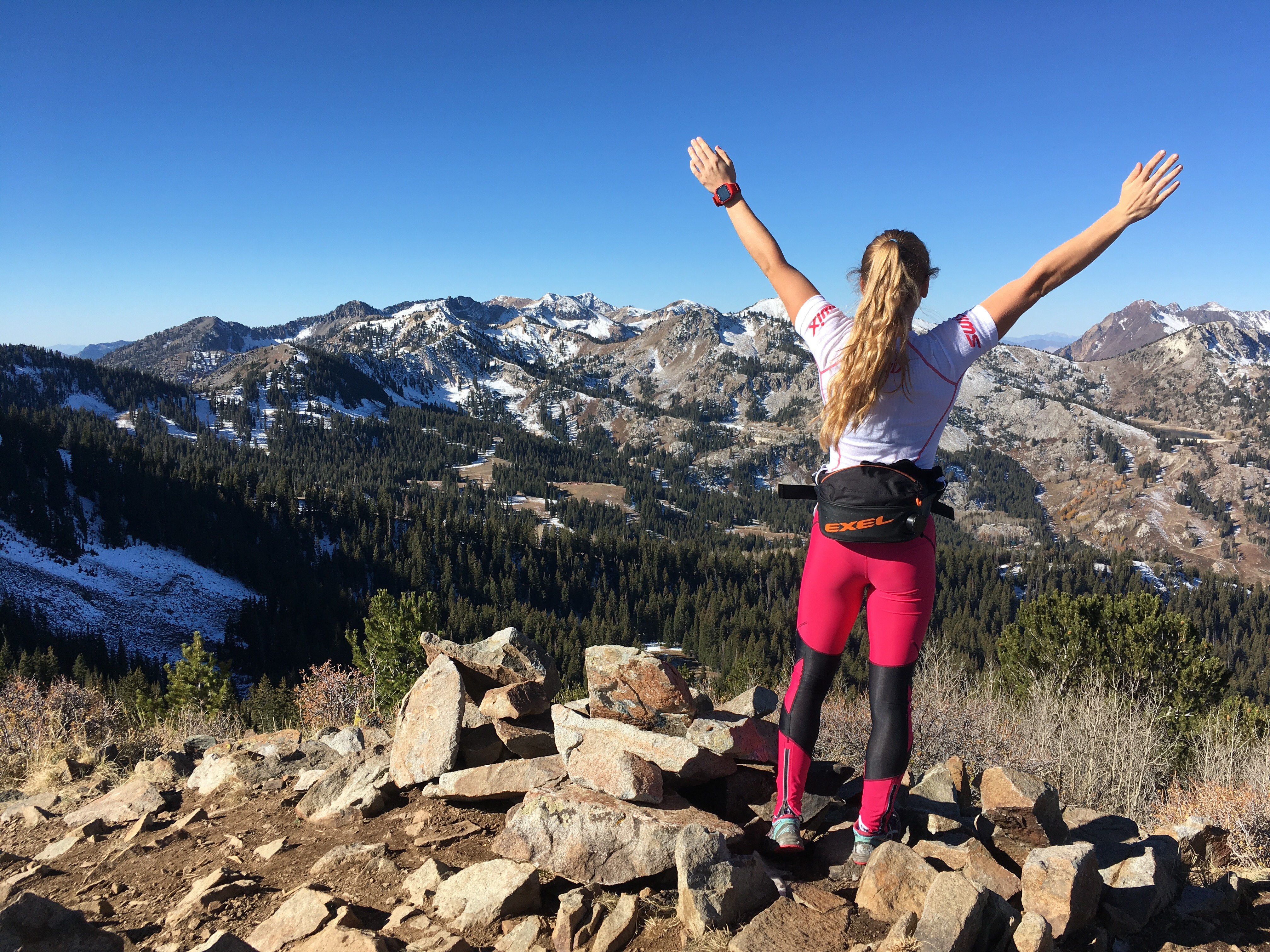
    I just left Park City and that was the best trip so far but there are lots more to come during the winter! Park City is so nice and full of colors during fall. We took so many nice pictures!

    6. Favorite cross-training?

    I really like road biking. If I wasn’t a cross country skier, I would probably be a road biker!

    7. Favorite non-athletic activity or pastime this summer?

    I like to do camping with my boyfriend and discover new places!

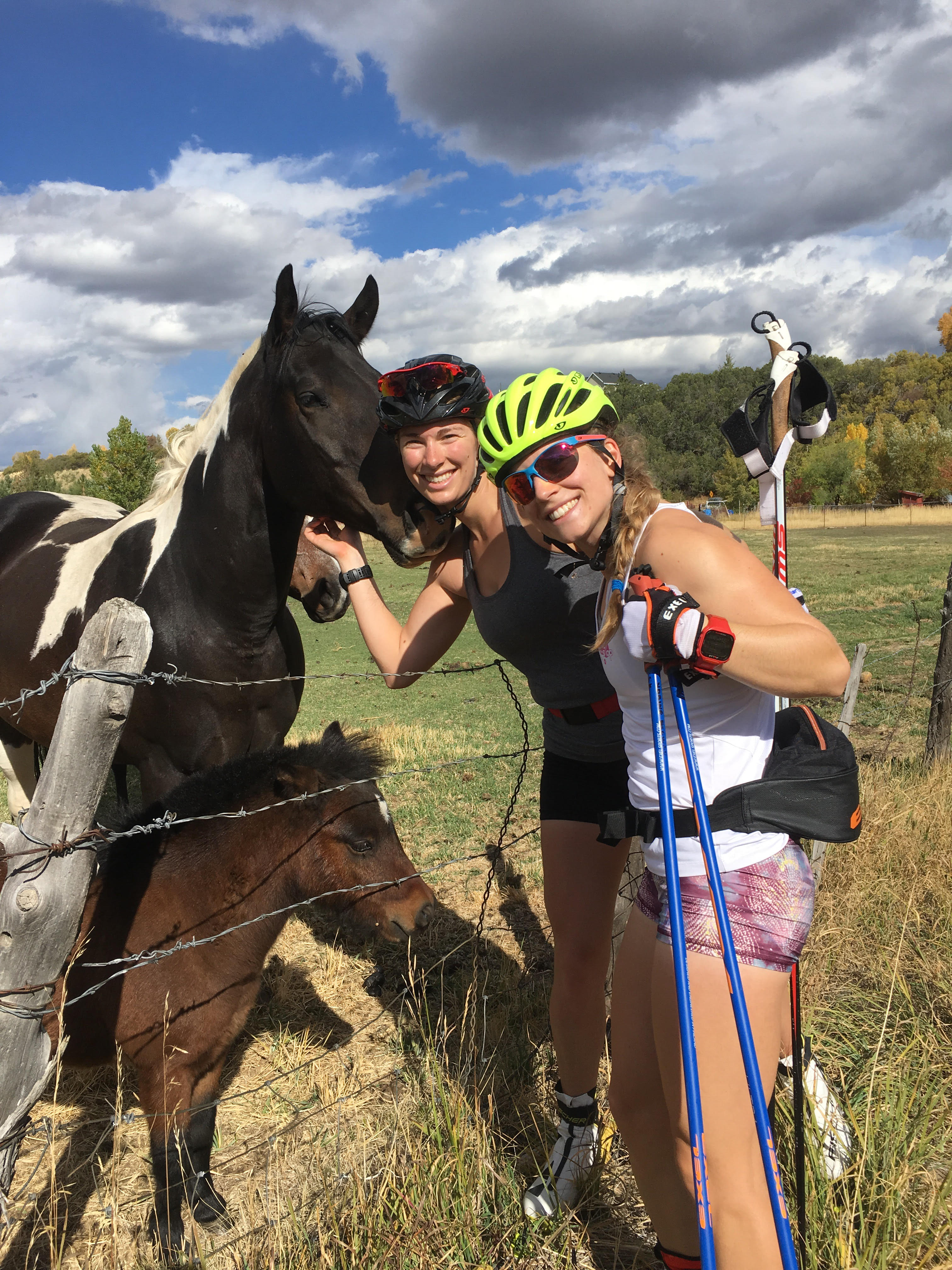
    Dahria Beatty (left) and Cendrine Browne make friends on a rollerski. (Courtesy photo)
    Dahria Beatty (left) and Cendrine Browne make friends on a rollerski. (Courtesy photo)

    8. Song that was your jam this summer?

    Killem’ with kindness

    9. All time favorite race moment?

    When I came in 15th at World Juniors in 2013 in Liberec.

    10. First thing you pack in your bag when you leave for Europe?

    All the nice casual clothes I want to wear while I’m gone. The girls always tease me about that, but I love having a nice selection of clothes with me when I’m gone for a long time!

    11. Venue/event you’re most excited to visit this season?

    I’m really excited to go to Norway for the World Cup! I’ve been dreaming to go to Norway for a long time.

    12. Who will win the men’s and women’s World Cup titles this year?

    Well I thought Johaug would win the overall title but she just got caught for doping… On the men’s side, I would tend to say Sundby but because of all the stuff that happened with the Norwegians lately, I’m not sure for which athletes I’m going for anymore.

    13. Biggest sacrifice you feel you’ve made choosing this career path?

    I had to move away from home to go train with the Centre National d’Entrainement Pierre Harvey when I was 18. My family and boyfriend stayed behind. That was very hard for me at the beginning.

    14. If you could change one thing about your sport, what would it be?

    I would take back the rule on double-poling!

    15. What did you have for breakfast this morning?

    I had a fruit and granola parfait at the aeroport!

    16. In 5 years, I’ll be ____?

    An Olympian

    17. In 50 years, I’ll be ____?

    A mother, I’ll have a successful career and life full of good memories!

  • FasterSkier’s Canadian Continental Skiers of 2016: Andy Shields and Dahria Beatty

    FasterSkier’s Canadian Continental Skiers of 2016: Andy Shields and Dahria Beatty

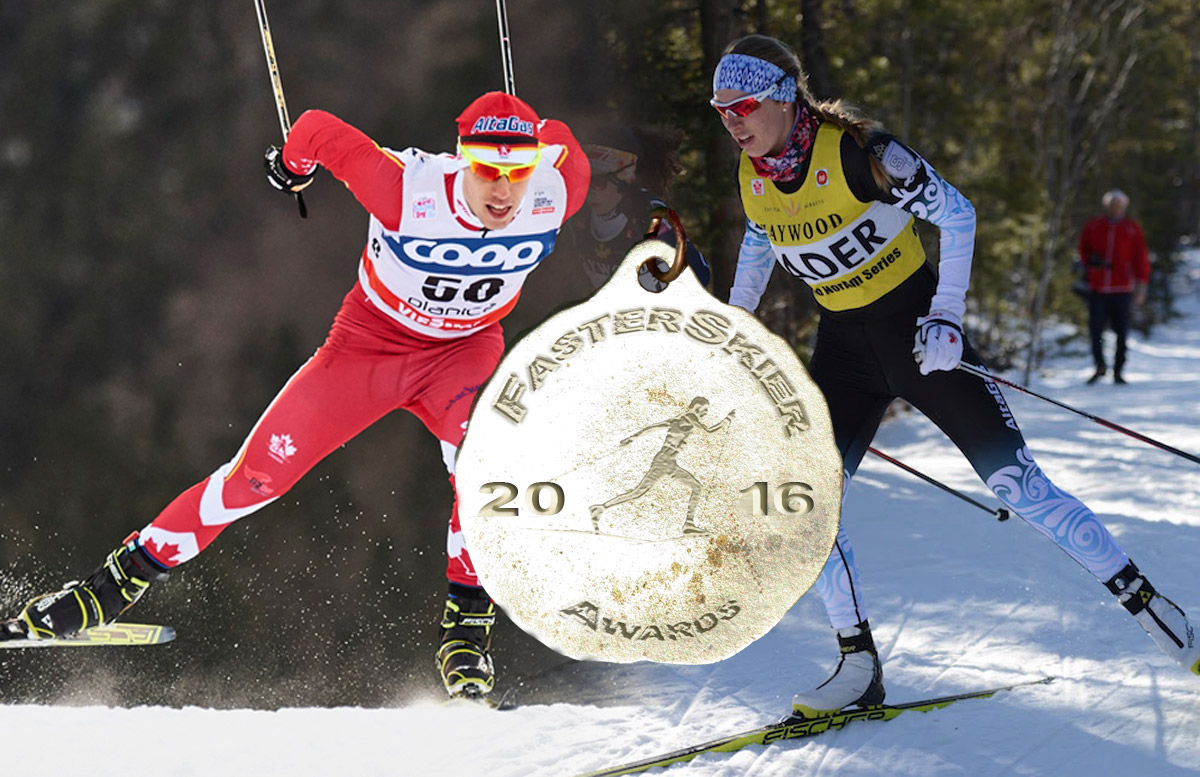
    The 2015/2016 aggregate NorAm leaders Andy Shields (l) and Dahria Beatty are FasterSkier's Continental Skiers of the Year for Canada. (Photos: Fischer/NordicFocus and W. James MacLean)
    The 2015/2016 aggregate NorAm leaders Andy Shields (l) and Dahria Beatty are FasterSkier’s Continental Skiers of the Year for Canada. (Photos: Fischer/NordicFocus and W. James MacLean)

    The 2015/2016 awards continue, chosen by the FasterSkier staff based on performances from last season. While not scientific, these points of recognition are intended to reflect a broader sense of the season in review.

    Previous categories: Breakthrough Skiers (Canada & U.S.) | Biathletes | Coaches | Collegiate Skiers | Juniors | Nordic Combined | Para-Nordic

    ***

    Andy Shields, Thunder Bay National Development Centre

    One point. That was the difference between the men’s overall NorAm winner and the runner-up of Canada’s Continental Cup circuit this season, and emerging skier Andy Shields came out on top.

    The 25-year-old Thunder Bay National Development Centre member — who broke through at the World Cup level with the 30th-fastest time in the men’s 15 k freestyle pursuit at the Ski Tour Canada (STC) in Quebec City — made his international World Cup debut this season. In all, he tallied eight World Cup starts in 2016 (including six stages of the Tour), but it’s what he did on the NorAm that makes him our choice for Continental Cup Skier of the Year.

    “It was a pretty good race,” Shields told FasterSkier after the Quebec City pursuit, his second World Cup distance race, in which he placed 65th with the 30th-best time. “The wave start I was in was pretty quick, so I was able to get in the front group with them, and they pulled me along to a really good time on the day. Pretty happy that I’m able to manage that pace.”

    Shields started 2015/2016 modestly, with an 11th-place finish in the freestyle sprint at the U.S. SuperTour opener in West Yellowstone, Mont., followed by a 37th place in the 15 k skate the next day.

    In the first NorAm of the season in Canmore, Alberta, Shields reached the podium in the classic sprint, placing third behind his NDC teammate Bob Thompson and Patrick Stewart-Jones, of the Alberta World Cup Academy (AWCA), respectively. From there, Shields continued to gain momentum, winning the skate sprint at the next NorAm in Sovereign Lake, B.C., and placing fourth in the 15 k skate race before leaving for nearly a month of World Cup racing in Europe.

    Upon returning to Canada in late January, Shields didn’t waste any time jetting to first and second in two NorAm distance races in Mont Sainte-Anne, Quebec. He went on to win the 20 k classic mass start at Eastern Canadian Championships, and at Western Championships, he finished in the top six in all four races: placing second in the 20 k classic mass start and third in the classic sprint. After that, Shields packed his bags for the STC, raced six World Cups in nine days, then finished his season at Canadian Ski Nationals in Whitehorse, Yukon. There, he missed the podium in four individual races, but reached the skate sprint final and placed sixth.

    Between the men’s NorAm distance and sprint races this past season, Shields was the most consistent — besting Kevin Sandau (AWCA) by the slimmest of margins (1 point) in the men’s overall. Shields was fourth in the overall sprint standings, behind Julien Locke (Black Jack), Bob Thompson (NDC Thunder Bay), and Patrick Stewart-Jones (AWCA), respectively.

    Dahria Beatty, Alberta World Cup Academy/Canadian U23 Development Team

    The winner of the both the women’s NorAm overall and sprint series, Dahria Beatty dominated from start to finish last season, winning both a distance skate race and classic sprint at the Canmore NorAm opener, then winning four more NorAms before taking part in the STC.

    During her first-ever World Cup tour, in which she notched 15th in the Canmore classic sprint, Beatty turned 22. The national U23 development team skier went on to win two out of three individual races she competed in at nationals in her hometown of Whitehorse (winning the 10 k skate and skate sprint, and placing second in the 5 k classic).

    For her 15th place — her first individual World Cup top 30 — FasterSkier dubbed her Breakthrough Skier of the Year. For her performances at home in Canada on the NorAm circuit, finishing in the top eight of every race she competed in this season, Beatty is Continental Skier of the Year.

    “My ideal goal for this season would be able to crack the top 30 on the World Cup,” Beatty said in December before leaving for Canada’s U25 B-Tour trip in Europe. “That’s a big goal…”

    Honorable mentions

    Kevin Sandau, Alberta World Cup Academy

    Race winner Kevin Sandau (AWCA) (r) in the leader's bib leads Bob Thompson (Team Hardwood) during the men's NorAm 15 k freestyle individual start on Sunday in Vernon, British Columbia. (Photo: XTS Photography)
    Kevin Sandau (AWCA) in the NorAm leader’s bib leads Bob Thompson (r) during the men’s NorAm 15 k freestyle individual start at Sovereign Lake, B.C. Sandau went on to win by 37 seconds over Knute Johnsgaard (not shown). (Photo: XTS Photography)

    Kevin Sandau’s only 27, but it feels like he’s been at the forefront of Canadian cross-country skiing for a long time. After debating whether he would compete in 2015/2016, Sandau started the winter on a tear, winning back-to-back Canmore distance races in December and remaining undefeated in NorAm distance races until Easterns in early February (where NDC Thunder Bay’s Michael Somppi dethroned him in the 15 k skate).

    After that, Sandau never reached the top of the podium again, but he came close in second in the 10 k skate at Westerns (behind Russell Kennedy of Canmore Nordic). At the end of the season, he finished second in the NorAm overall with 724 points, one short of Shields.

    On March 26, after placing fifth in his final race of the season (the 50 k classic mass start at nationals), Sandau announced his retirement on Facebook.

    “Today marks the end of my racing career. The memories are countless and the experiences beyond amazing. I can’t think of a better way to have spent the past 10+ years,” he wrote. “Thanks so much to all the volunteers, coaches, teammates, skiers, parents, fans and role models for the journey. I’m looking forward to the next chapter and hope it’s as good as the last. KevOut.”

    Sandau previously stated that his season-long goal was to qualify and focus on the STC. He did so, placing 43rd overall in the Tour. In his career, he raced 29 World Cups, starting with his first in 2008 in Canmore.

    Besides skiing, Sandau brought humor to his ski racing and shared it on social media.

    In a prank April Fools’ article on FasterSkier, Sandau played along with the idea that he would be Canada’s next head coach.

    “I feel like my practical experience on the domestic circuit and top-50ish on the World Cup is what really sets me apart from the rest,” he jested. “You learn a lot of racing in the back of a World Cup, it’s like the best seat in the house, and you can watch firsthand the whole race as it unfolds, at least for a little bit.”

    Cendrine Browne, Pierre-Harvey National Training Centre/U23 Development Team

    "Me and Dahria [Beatty] worked together to stay on the tail of Emily Nishikawa, who's our best Canadian. It was a tough course with few spots to rest. ... Today was a critical stage because we were afraid to get lapped by the winner, but we didn't so we're now heading to Canmore with confidence." -- Cendrine Browne (CNEPH/CNST)
    Cendrine Browne at the Ski Tour Canada in Quebec City. (Photo: John Lazenby/Lazenbyphoto.com)
    Second to Beatty by 160 points in the NorAm overall, Cendrine Browne, a 22-year-old member of the Pierre-Harvey Training Centre (CNEPH) in Quebec and national development team, was one of Beatty’s biggest rivals on the circuit.

    After placing second to her in the first sprint of the season in Canmore, Browne joined Beatty on the European B-tour trip. She returned to her home trails at MSA to win both the 5 k classic and 10 k freestyle pursuit — but Beatty didn’t race.

    “I chose to race because I would have done intensity anyways,” Browne wrote in an email afterward. “The Noram points are also interesting if I win.”

    Browne beat Beatty outright in the 10 k freestyle at Easterns, then bested the women’s field by nearly 53 seconds in the 15 k classic mass start at Westerns (ahead of Annika Hicks of Canmore Nordic and Katherine Stewart-Jones of NDC Thunder Bay and the national development team, respectively).

    Browne finished the eight-stage STC in 40th overall and placed second to Emily Nishikawa in the season-ending 30 k classic mass start at nationals.

  • Eastern Canadian Champs Recap: Somppi, Shields, Beatty, and Browne Top Podium

    Eastern Canadian Champs Recap: Somppi, Shields, Beatty, and Browne Top Podium

    The women's leaders in Sunday's 15 k classic mass start at Eastern Canadian Championships in Cantley, Quebec, with Dahria Beatty, Cendrine Browne, and Jenn Jackson. (Photo: W. James MacLean)
    The women’s leaders in the 15 k classic mass start on Day 3 of Eastern Canadian Championships on Feb. 7 in Cantley, Quebec, with Dahria Beatty (l), Cendrine Browne (c), and Jenn Jackson (r) at the front of the pack. Beatty went on to win by 7.7 seconds over Browne, in the NorAm leader’s bib. (Photo: W. James MacLean)

    Though patterns develop and race favorites exist, winning is never a given. At least according to Cendrine Browne, the NorAm leader and overall champion of the women’s 10-kilometer freestyle at Eastern Canadian Championships last Saturday, Feb. 6, at the Nakkertok Nordic Ski Centre, Cantley, QC

    “I don’t think you can get used to winning. Winning is great but every day is different,” Browne, a member of Canada’s U23 Development Team and the Pierre-Harvey National Training Centre (CNEPH), wrote in an email.

    Browne’s victory in the 10 k individual start — the second day of the three-day NorAm Eastern Championships — marked her fifth NorAm win this season, coming off back-to-back distance wins at her home NorAm in Mont Sainte-Anne, Quebec.

    “I chose to ski on white bases today at everybody’s surprise, but they were really fast,” Browne explained after winning in 27:10.8 minutes.

    “I didn’t pace myself, I just went hard all the time and it worked pretty well,” she added. “I felt good mentally and physically, and that helped a lot.”

    Finishing 9.1 seconds behind Browne was her biggest NorAm distance rival, fellow U23 Development Team member, Dahria Beatty, of the Alberta World Cup Academy (AWCA). 

    Beatty and Browne also both recently returned from World Cup races in Europe, where they teamed up with Emily Nishikawa and Maya MacIsaac-Jones in the first World Cup relay for all four women.

    Rounding our Saturday’s top three for the women was Olivia Bouffard-Nesbitt, of the U23+ Development Team and Rocky Mountain Racers (RMR), who finished 21.8 seconds off Browne’s winning time.

    “I was getting really good splits in the first 5k (being told I was leading) and I was having a lot of fun on course,” Bouffard-Nesbitt wrote in an email. “I faded in the second half of the race, but that can be a consequence of going hard at the start, so I have no regrets.”

    Also of RMR, MacIsaac-Jones, who won Friday’s freestyle sprint on the first day of Easterns, was pleased with her fourth-place finish, 43.8 seconds behind Browne.

    “My race today was really good — I was 4th, which is my best distance NorAm result this year!” MacIsaac-Jones wrote in an email.

    Somppi Dethrones Sandau in 15 k Skate

    Also on Saturday, Michael Somppi, of the Thunder Bay National Development Centre (NDC), claimed a decisive win in the men’s 15 k freestyle. Somppi completed the course in a time of 34:45.1, besting second-place finisher Kevin Sandau (AWCA) by 25.3 seconds.

    “I’m super happy I was able to get back to feeling like myself in a skate race.  I was really pumped to get back onto the top step at the NorAm,” Somppi wrote in an email.

    The winner of every NorAm distance race he has competed in this season (with four victories total; he skipped the M.S.A. NorAm), Sandau regarded his next few weeks of race efforts as most important.

    “Western’s has always been part of the plan leading up to the Tour,” Sandau wrote in an email, referring to the second set of championships, Feb. 19-21 in Prince George, British Columbia.

    “Even with a [Ski Tour Canada] spot locked up now unofficially, I’ll be using it as some final hard efforts before flying out East,” he added.

    The Ski Tour Canada, doubling as World Cup Finals, starts March 1 in Gatineau, Quebec, and extends through March 12 with the last four races in Canmore, Alberta.

    Noting he was “pumped” to be on the podium on Saturday, Russell Kennedy, of the Canmore Nordic Ski Club, finished third, 31.2 seconds behind Somppi.

    “I nailed my pacing. That was huge it really helped me as I made up a lot of time at the end,” Kennedy wrote in an email.

    Kennedy also pointed to external sources of motivation during his race, including the man who started just ahead of him, Brian McKeever, of the Canadian Para-Nordic Ski Team.

    “It also was good to have Brian there. He was super motivating,” Kennedy wrote.

    McKeever, visually impaired, raced to fifth overall, 1:01.9 out of first and 19.6 seconds behind Knute Johnsgaard (AWCA/U23+ Development Team) in fourth.

    Results: Women | Men

    Beatty Back On Top in Sunday’s 15 k Mass Start

    Though Saturday left her chasing down Browne, Beatty positioned herself as the woman to beat by the Nakkertok course’s final climb on Sunday in the women’s 15 k classic mass start.

    “My plan going into today was to stay in contact until the final climb and leave everything on that final climb,” Beatty wrote in an email on Sunday.

    Despite losing contact at one point during her third lap of the 5 k loop, Beatty managed to stick to her plan. Amidst Sunday’s snowfall, the Whitehorse native left everything on the last uphill and came away with the win in 46:54.4.

    “I was able to regain contact with Cendrine and my skis were gliding especially well so I was able to carry good speed into the final climb and get a gap before the downhill into the finish,” Beatty wrote.

    Browne finished 7.7 seconds later in second place.

    “A second place is great but I could have won…My skis were so slow!” Browne wrote in an email.

    Finding herself at the back of the lead pack during the downhills, Browne put her focus into Sunday’s course climbs.

    “I told myself that if I wanted to win, I would have to give everything I had in the uphills because I couldn’t count on my skis in the downhills,” Browne wrote. “So in the second last uphill, I tried to break away from the pack. It worked. I had a 10-meter gap before the second last downhill.”

    However, by the bottom of the hill, Beatty caught back up to Browne.

    “As I was going down, Dahria passed me like I was still,” Browne added. “I tried to catch up in the last up hill and fell. So I didn’t catch her. I finished 2nd. I was disappointed. I hate giving excuses but I think I could have won.”

    Finishing just 2.0 seconds behind Browne, and 9.7 seconds behind Beatty, was NDC Thunder Bay’s Katherine Stewart-Jones in third place.

    “There was a big lead pack for a lot of the race. It was easy to stay relaxed because I had very fast skis,” Stewart-Jones wrote in an email. “I think the race came down to the last couple of hills of the course, whoever had energy left in the tank.”

    She pulled some energy from fans on from the trailside.

    “It was amazing to see the support from my home club,” Stewart-Jones, who grew up training with Nakkertok, wrote. “There were so many people out there cheering me on!”

    After a large crash in the first lap, Bouffard-Nesbitt lost contact with the front group and raced to a 10th overall (+2:01.0).

    “I’ve hardly classic skied this winter due to my stress fracture, and I’ve really been struggling in classic races,” Bouffard-Nesbitt wrote in an email.

    “As a whole I’m happy with the weekend. I’m going to try to not be too hard on myself for this last classic race,” she added.

    Shields Takes All in 20 k Mass Start

    The men's leaders during the 20 k classic mass start on Feb. 7 at Eastern Canadian Championships in Cantley, Quebec. (Photo: W. James MacLean)
    The men’s leaders during the 20 k classic mass start on Feb. 7 at Eastern Canadian Championships in Cantley, Quebec, with Andy Shields (r) leading, Brian McKeever (l), Sandau (yellow bib), with Sandau’s AWCA teammate Knute Johnsgaard behind him, and Scott Hill (6) of NDC Thunder Bay right there in the lead pack. (Photo: W. James MacLean)

    En route to his third-career NorAm win, Andy Shields (NDC Thunder Bay), came away victorious in the men’s 20 k classic mass start on Sunday.

    Shields completed the four-lap race in 52:53.6, besting second place finisher Jesse Cockney (CNEPH/NST) by 12.1 seconds.

    “The herringbone sections were coved in deep sugary snow but I felt comfortable on them,” Shields wrote in an email.

    With 2 k to go, Shields gapped the field during a herringbone hill and skied comfortably away to first place.

    “It never felt like the pace was unmanageable so a ‘thank-you’ to the body for being in good shape today,” Shields wrote.

    Cockney confirmed that Shields’ skiing on Sunday was left unrivaled by any other skier on course.

    “Andy definitely won with stronger legs today. He was skiing the steep climbs really well and had lots left for the final lap,” Cockney wrote in an email.

    After starting in bib 31, Cockney was happy to have maneuvered his way up to the front of the pack.

    “I’m quite happy to have moved up from bib 31 to near the front. The distance races here have also been better feelings pushing hard than the rest of the year,” he wrote.

    Finishing just 1.3 seconds off of Cockney was Johnsgaard in third, 13.4 seconds behind Shields.

    “Kevin and I were leading a lot on the first lap, but there was a bit of fresh snow in the tracks and it was hard to drop the group,” Johnsgaard wrote in an email.

    “We’d get a gap on some climbs and then it would come back together on the downhills. The course was basically double pole and then herringbone up steep climbs in ankle deep corn snow,” he added.

    According to Johnsgaard, the herringbone sections played to Shields’ strength, but not his own.

    “Not exactly my idea of a nice classic course,” Johnsgaard wrote. “Andy had some super herring bone on the last major climb and broke away a bit.”

    Sandau, who had been skiing in the front pack with Shields, Johnsgaard and Cockney, crashed, which he wrote cost him “a podium spot.”

    Despite his fall and fifth-place finish, 20.4 seconds off of first place, Sandau was satisfied with how he felt during the races.

    “The past couple weeks had a really good chunk of volume and I was happy how I felt in both distance days and had some good fight,” Sandau wrote.

    Ahead of Sandau in fourth, McKeever was half a second off the podium and 14 seconds behind Shields.

    Results: Women | Men

    — Gerry Furseth and Alex Kochon contributed reporting

    (From left to right) Kevin Sandau, Andy Shields, Brian McKeever, Michael Somppi, and Jess Cockney after the men's 20 k mass start on Sunday, Feb. 7. Shields won by 12 seconds over Cockney, Knute Johnsgaard (not shown) placed third, McKeever was fourth, Sandau (the NorAm leader) fifth and Somppi eighth on the last day of Eastern Canadian Championships in Cantley, Quebec. (Photo: W. James MacLean)
    (From left to right) Kevin Sandau, Andy Shields, Brian McKeever, Michael Somppi, and Jess Cockney after the men’s 20 k mass start on Sunday, Feb. 7. Shields won by 12 seconds over Cockney, Knute Johnsgaard (not shown) placed third, McKeever was fourth, Sandau (the NorAm leader) fifth and Somppi eighth on the last day of Eastern Canadian Championships in Cantley, Quebec. (Photo: W. James MacLean)
  • Browne Dominates M.S.A. NorAm Distance Weekend; NDC Thunder Bay Tops Men’s Races

    Browne Dominates M.S.A. NorAm Distance Weekend; NDC Thunder Bay Tops Men’s Races

    Cendrine Browne, of the Pierre-Harvey National Training Centre and Canada's national U23 development team, leading the women's 10 k freestyle pursuit on Jan. 31 at the Mont Sainte-Anne trails in Quebec. She went on to win by nearly 1 1/2 minutes to take the NorAm leader's bib. (Photo: CCC)
    Cendrine Browne, of the Pierre-Harvey National Training Centre and Canada’s national U23 development team, leading the women’s 10 k freestyle pursuit on Jan. 31 at the Mont Sainte-Anne trails in Quebec. She went on to win by nearly 1 1/2 minutes to take the NorAm leader’s bib. (Photo: CCC)

    (Note: This article has been updated to include comments from Andy Shields on his pursuit win.)

    The NorAm series continued last weekend with a two-day pursuit in Mont Sainte-Anne, Quebec. While this format hasn’t been used at this level in Canada for three years, the Ski Tour Canada in early March will have two pursuit days.

    Cendrine Browne, of the national U23 development team and Pierre-Harvey National Training Centre (CNEPH), won Saturday’s 5-kilometre classic individual start in 14:37.3 to lead a U23 and CNEPH podium sweep. Sophie Carrier-Laforte finished 7.2 seconds back in second, followed by Frédérique Vézina at 30 seconds behind the winner in third.

    Browne was the only European B-Tour skier to race this weekend after arriving back from Nove Mesto, Czech Republic (where she represented Canada on the World Cup), five days earlier on Monday, Jan. 25.

    “I chose to race because I would have done intensity anyways on Saturday,” Browne wrote in an email. The convenience of racing on her home trails at Mont Sainte-Anne (M.S.A.) added to the appeal.

    “I wasn’t sure if I would do Sunday’s race, but I’m in good shape so I’ll do it,” Browne wrote on Saturday. “The Noram points are also interesting if I win.” 

    Browne did win Sunday’s 10 k freestyle pursuit. With Carrier-Laforte not starting, she started 30 seconds ahead of Vézina and expanded her lead to 1:29.1 with the fastest time of the day in 27:51.3. Browne was ranked fifth going into the weekend and, with the top three in the overall NorAm standings absent, her convincing victory on Sunday will give her the leader’s bib for next weekend.

    Vézina started second, with three other racers within 10 seconds of her. While she was happy with Saturday’s classic podium, noting “5km has never been my strong suit,” she was frustrated with her pursuit, in which she placed fifth, 2:29.1 behind Browne. “My skis were so slow that the girls passed me in the first downhill like I was stopped,” Vézina wrote in an email.

    Olivia Bouffard-Nesbitt, of Canada’s U23+ Development Team, started sixth and pulled away from Annika Hicks (Canmore), who started fourth, to take second. Crossing the line nearly a minute and a half (1:29.1) after Browne, Bouffard-Nesbitt held off Hicks by 5.9 seconds for the second spot on the podium. Hicks placed third (+1:35).

    “I initially wanted to work with someone to try and make time on the leader,” Bouffard-Nesbitt wrote in an email. “After gauging the willingness of the skiers around me to chase Cendrine, I decided that instead I would try to race tactically for second place. I shared the lead with Annika for most of the race as we distanced ourselves from 4th and 5th.”

    Also on her hometown trails, Marie Corriveau (CNEPH) improved one place to finish fourth (+2:25.1), 4 seconds ahead of Vézina to repeat as top junior woman on Day 2 at M.S.A.

    Results: Saturday’s 5 k classic | Sunday’s 10 k freestyle pursuit

    ***

    Thunder Bay National Development Centre swept the podium (top three) in the men's 10 k classic on Jan. 30 with Bob Thompson in first, Andy Shields in second and Michael Somppi in third. Colin Abbott of the Yukon Elite Squad placed fourth (second from r) and a fourth NDC skier, Evan Palmer-Charrette (r) was fifth. (Photo: Skibec Nordique/Facebook)
    Thunder Bay National Development Centre swept the podium (top three) in the men’s 10 k classic on Jan. 30 with Bob Thompson in first, Andy Shields in second and Michael Somppi in third. Colin Abbott of the Yukon Elite Squad placed fourth (second from r) and a fourth NDC skier, Evan Palmer-Charrette (r) was fifth. (Photo: Skibec Nordique/Facebook)

    NDC Thunder Bay All the Way

    On the men’s side, Bob Thompson of the Thunder Bay National Development Centre (NDC) took his first NorAm distance win on Saturday, finishing the 10 k classic individual start in 26:12.2, just 0.3 seconds faster than teammate Andy Shields. Michael Somppi completed the Thunder Bay podium sweep, 14.5 seconds behind Thompson in third.

    [It] feels very good to get my first Distance NorAm win and share the podium with my teammates,” Thompson wrote in an email. “I enjoyed the course: it was challenging with some quick climbs and some longer more gradual climbing sections that you really had to focus to keep your speed up on.”

    “The race today was good,” Shields wrote on Saturday. “I felt like I was in shape which is a feeling I’ve been missing up to this point. I could push hard and not pay the price in heavy limbs.” 

    Shields noted that he and Thompson would start the pursuit together, giving them the opportunity to work cohesively to stay ahead of Somppi, a strong skate skier.

    However, on Sunday in the men’s 15 k freestyle pursuit, Somppi quickly caught the two frontrunners.

    “Today, tactics were pretty simple,” Somppi wrote in an email. “I went out fast, caught Andy and Bob early. I put myself in a position to contend for the win, but I did not have the energy to make it happen.”

    Somppi faded to fourth, posting the seventh-fastest time on the day.  Thompson also struggled, eventually outsprinting a group of six to finish ninth.

    “Bob led out the first km then I went to the front,” Shields explained in an email after Sunday’s race. “I figured the pace needed to be quite high to maintain the gap to the rest of the field so when I started to lead I picked up the pace. By 2km in I could hear Bob behind me dropping off the pace. I didn’t know at the time but Somppi caught us just as I was pulling away. I skied a nerve-racking 13km out front for the rest of the race with Somppi within 15 seconds of me for most of it. It was pretty stressful, but it ended up being the winning strategy.”

    Andy Shields (NDC Thunder Bay) racing to a 45-second win with the fastest time of the day after starting second in the men's 15 k freestyle pursuit at the NorAm at Mont Sainte-Anne in Quebec on Jan. 31. (Photo: CCC)
    Andy Shields (NDC Thunder Bay) racing to a 45-second win with the fastest time of the day after starting second in the men’s 15 k freestyle pursuit at the NorAm at Mont Sainte-Anne in Quebec on Jan. 31. (Photo: CCC)

    Shields held strong and skied uncontested to the win in 37:09.3, the fastest time of the day and 45 seconds ahead of second and third.

    After starting the pursuit fifth and seventh, respectively, Evan Palmer-Charette (NDC Thunder Bay) and Brian McKeever, of the Para Nordic World Cup Team, separated themselves from the second chase group to fight for the podium. Palmer-Charette beat McKeever by the slimmest of margins to take second, 45 seconds behind Shields, while McKeever placed third with the same time. Somppi finish 11.1 seconds later in fourth.

    McKeever could have been at the International Paralympic Committee (IPC) World Cup in Pyeongchang, South Korea, but according to Cross Country Canada, he opted to try for a Ski Tour Canada selection.

    Somppi was disappointed with his energy and his fourth place.

    “The trails were super and I enjoyed the skiing here,” he wrote. “I would prefer to be training right now and avoiding racing, however I have to qualify for the Tour and I believe I did enough to stay in contention this weekend.”

    Results: Saturday’s 10 k classic | Sunday’s 15 k freestyle pursuit

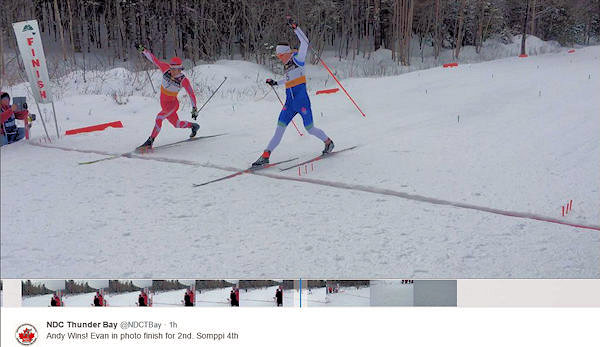
    Canadian Para-Nordic World Cup skier Brian McKeever (l) and Thunder Bay's Evan Palmer-Charette (r) in a photo finish for second at the men's 15 k freestyle pursuit on Jan. 31 at the Mont Sainte-Anne NorAm in Quebec. Palmer-Charette had the edge and McKeever placed third. (Photo: CCC)
    Canadian Para-Nordic World Cup skier Brian McKeever (l) and Thunder Bay’s Evan Palmer-Charette (r) in a photo finish for second at the men’s 15 k freestyle pursuit on Jan. 31 at the Mont Sainte-Anne NorAm in Quebec. Palmer-Charette had the edge and McKeever placed third. (Photo: CCC/NDC Thunder Bay Twitter)

    ***

    The NorAm now moves to Gatineau in western Quebec, starting with sprint racing on Friday.  Jess Cockney is back from Europe for his first North American races of the season.  Of more than 780 registered racers, the only notable absentee is Andrea Dupont, who is slated to race for Canada on the World Cup in Drammen, Norway, this Wednesday as the NorAm leader.

    More photos via Skibec Nordique: Saturday | Sunday

  • Sandau Completes NorAm Distance Sweep; Beatty Tops Sovereign 10 k

    Sandau Completes NorAm Distance Sweep; Beatty Tops Sovereign 10 k

    Race winner Kevin Sandau (AWCA) (r) in the leader's bib leads Bob Thompson (Team Hardwood) during the men's NorAm 15 k freestyle individual start on Sunday in Vernon, British Columbia. (Photo: XTS Photography)
    Race winner Kevin Sandau (AWCA) in the leader’s bib ahead of Bob Thompson (NDC Thunder Bay) during the men’s NorAm 15 k freestyle individual start on Sunday in Vernon, British Columbia. (Photo: XTS Photography)

    VERNON, British Columbia — Kevin Sandau of the Alberta World Cup Academy (AWCA) has no time for quitters, including himself. Despite not being renominated to the Canadian National Senior Team this spring, Sandau’s decision to carry on with his career as a professional nordic ski racer proved to be worthwhile as he won his third-consecutive distance race of the NorAm season (in as many races) on Sunday, the men’s 15-kilometer individual start freestyle race at the Sovereign Lake Nordic Centre. 

    “Going up the climbs, I felt super smooth with my V1 skate,” Sandau, 27, said during an in-person interview after winning Sunday’s race by 37.3 seconds in 39:05.9. “I made sure to push the flats using a strong V2 to keep the speed up. … It was one of those days where I just felt invincible.” 

    Though doubt shrouded Sandau’s ambition for the sport earlier this year, his latest performances appear to cast all queries aside. 

    After two weekends of NorAm races, the Canadian will head into the New Year with three distance titles already under his belt, which puts him in a position to potentially earn future World Cup starts as the NorAm (Continental Cup) leader.

    “Third distance win in a row, I think that is a good way to end the 2015 year,” he said.

    Part of Sandau’s first-place performance on Sunday stemmed from not just his in-race focus, but his pre-race routine and weekend training, he said.

    Kevin Sandau and his mom after the men's NorAm 15 k freestyle individual start on Sunday in  Vernon, British Columbia. (Photo: Gerry Furseth)
    Kevin Sandau and his mom after the men’s NorAm 15 k freestyle individual start on Sunday in Vernon, British Columbia. (Photo: Gerry Furseth)

    “My warmup this morning felt bombproof,” Sandau said. “I also took [Saturday] off, didn’t do the sprint race, and did volume instead. … It [was] interesting to see how the body reacted to that.”

    While Sandau sat out the sprint, his AWCA teammate and second-place finisher for the men’s 15 k, Knute Johnsgaard, of the national U23+ Development Team, competed both days, and reached the podium in second in both races.

    “I thought I skied a good race and I am pretty happy with second,” Johnsgaard, 23, said. “But I’m still chasing that win.” 

    Johnsgaard’s podium on Sunday came from course knowledge and tact.

    “I’ve skied this course so many times,” he said. “You’re able to push pretty hard on the uphills because there is quite a few tucking sections where you can recover after the climbs.”

    While course experience was on Johnsgaard’s side, he left the Sovereign NorAm wanting a different kind of experience.

    “I have a very large stack of silver medals now, and I’d like to get gold soon,” he said.

    Just over 41 seconds behind Sandau, Russell Kennedy (Canmore) in third also craved the top spot on the podium.

    “Everyone wants to win from the start, but I’m hoping to get better and better as the season goes on,” Kennedy said. “I feel like I’ve got a good stepping stone, and I’m going to try to keep building off of that.”

    Kennedy spent most of his race getting splits for second behind Sandau, but and initially finished second 41.2 seconds after him. A later starter, Johnsgaard bumped Kennedy to third by 3.9 seconds.

    On the women’s side, Dahria Beatty (AWCA/U23 Development Team) won the women’s freestyle distance race at Sovereign Lake for the second year in a row.

    “I love this course,” the 21-year-old Beatty said after winning in 30:30.2, more than 32 seconds ahead of runner-up Jaqueline Mourao, originally from Brazil who trains with the Pierre Harvey Training Centre (CNEPH) in Quebec.

    “I’ve been racing on this course since I was 15; I raced here with the Yukon [team when] I was a junior,” Beatty added.

    With her course knowledge and Sunday’s snowfall during the race, she powered into the first climb.

    Dahria Beatty (AWCA) in the leader's bib during a snowy women's NorAm 10 k freestyle individual start on Sunday in Vernon, British Columbia. (Photo:  XTS Photography)
    Dahria Beatty (AWCA) in the leader’s bib during a snowy women’s NorAm 10 k freestyle individual start on Sunday in Vernon, British Columbia. (Photo: XTS Photography)

    “A lot of people take the first climb conservatively because they are worried about blowing up,” Beatty said. “So I skied as hard as I could and as smooth as possible. I think that’s the key to this course, especially when it is snowing.”

    On the podium for the second-straight day, Andrea Dupont, (Rocky Mountain Racers) finished third, 1:02.7 after Beatty.

    “Today was okay,” Dupont, 25, said. “It was a bit of a slog because it really started dumping snow when the girls got on course.” 

    A sprint specialist, Dupont found pacing helped her to another top finish.

    “I wanted to not go out too hard, because I’m definitely a sprinter and I characteristically go out too hard and can’t hold it,” she said. “[Sunday] I went out easy and tried to hold it … and I think I’m on track.” 

    Another sprint favorite, Beatty came into Sunday on the hunt for a win after missing out on Saturday’s A-final.

    “I was a little disappointed with not making the A-final yesterday,” she said. “I wanted to come hard today and I knew that I could do well.”

    After charging up the first climb, Beatty continued to get positive splits and raced to a 32.2-second win over Mourao.

    “I kept getting splits saying I was 25 seconds up on second,” said Beatty, “When you get splits like that, it makes you ski faster because of the confidence boost,” she added.

    A three-time Brazilian Olympian, Mourao also felt a confidence boost after her race.

    Jaqueline Mourao (CNEPH) racing during snowy women's NorAm 10 k freestyle individual start on Sunday in Vernon, British Columbia. (Photo: XTS Photography)

    “I’ve never thought about podiums,” said the 40 year old, who’s also competed in biathlon. “And now, with the right preparation, the right skis, the opportunity I’m having, I can dream more.”

    Also an adept mountain biker, Mourao believed her time spent on the bike helped her during her time spent climbing on Sunday’s course.

    “I’m a mountain biker and I like climbing so the course was perfect for me,” she said. 

    The last weekend of racing until the New Year (and the next NorAm Jan. 14-17 in Thunder Bay, Ontario) for many of the Canadians, most feel the Sovereign Lake NorAm races were a solid close to 2015.

    “This is my last race of 2015,” said Beatty. “I won’t be racing until I head to Europe after Christmas [as the Continental Cup leader] and it’s nice to finish on a positive note.”

    — Gerry Furseth contributed reporting

  • Canmore NorAm Roundup: Sandau and Beatty Win Two of Three

    Canmore NorAm Roundup: Sandau and Beatty Win Two of Three

    Kevin Sandau in the NorAm leader's bib sets the pace from the front of the pack in the men's 16.5 k freestyle mass start on the second day of the NorAm opener in Canmore, Alberta. His Alberta World Cup Academy teammate, Knute Johnsgaard, chases him down. (Photo: Alberta World Cup Academy/Twitter)
    Kevin Sandau in the NorAm leader’s bib sets the pace from the front of the pack in the men’s 16.5 k freestyle mass start on the second day of the NorAm opener in Canmore, Alberta. His Alberta World Cup Academy teammate, Knute Johnsgaard, chases him down. (Photo: Alberta World Cup Academy/Twitter)

    You’ve seen it on the World Cup, and now it’s happening at the domestic level: double poling a classic distance race, as seen at Canada’s NorAm opener in Canmore, Alberta.

    The top men went without kick wax for the 10-kilometer classic interval start on Saturday, Dec. 5, double poling around a 2.5 k biathlon loop.

    Kevin Sandau of the Alberta World Cup Academy powered to the win in 24:42.9 minutes, edging his AWCA teammate Knute Johnsgaard (National U23+ Development Team) by 2.9 seconds. Ian Murray (Capital Region Training Group) skied the fastest last lap to edge Brian McKeever of Canada’s Para Nordic Ski Team by 3.5 seconds for third, 9.5 seconds back from Sandau.

    In an email, Sandau, 27, explained that double poling was essentially a no-brainer on the Canmore Nordic Centre’s biathlon trails — flatter than the usual race course with shorter climbs.

    “Off the start I knew I needed to be aggressive as it was going to be a fast race,” he wrote. “Just gunned it off the start and trusted my body could clear the lactate from my arms on the downhills. Felt pretty solid throughout so wasn’t a bad plan.”

    Johnsgaard explained he would have preferred striding over double pole, so considering that, he was happy with second place.

    “Of course I would have liked to be 3 seconds faster! I was being extra careful not to do any skate or step turns, perhaps too careful,” Johnsgaard wrote in an email. “I just tried to pace things right and find the fastest part of the track. I was outside the track almost the whole race.”

    For Murray, third stood as his NorAm career best.

    “At the age of 37 I guess you could say I am coming into my groove,” Murray wrote. “I was 22nd on the first lap which was a bit slower than I hoped to start.  Kevin Sandau passed me when I was on my second lap and that kicked me into gear. I have been focusing on ski marathon racing the last couple of years so I’m still figuring out the pacing for the 10 and 15km races.”

    McKeever explained that he tried to build into the race, but was missing a few gears. “[I] was overly cautious about not skating, and consequently was not aggressive enough,” he wrote in an email.

    In his first time double poling a distance race, Colin Abbott (Yukon Ski Team) in seventh (behind CNEPH’s Alex Dumas in sixth) observed that the pacing is different.

    “You don’t max out aerobically as easily so the concern for pacing is trying not to burn your arms too soon in the race,” Abbott wrote. “I went out maybe a bit faster than was ideal, and definitely slowed on the last lap but don’t think the end result would have changed much if I started slower.”

    NDC Thunder Bay athletes (in green) took second, third and fourth in the women's NorAm 5 k classic interval start, behind  Sophie Carrier-Laforte (c) of the Pierre Harvey National Training Centre in first. (Photo: NDC Thunder Bay/Twitter)
    NDC Thunder Bay athletes (in green) took second, third and fourth in the women’s NorAm 5 k classic interval start, behind Sophie Carrier-Laforte (c) of the Pierre Harvey National Training Centre in first. Katharine Stewart-Jones (second from l) placed second, Alannah Maclean (second from r) with third, and Jenn Jackson (l) was fourth. Rocky Mountain Racers’ Andrea Dupont (r) placed sixth. (Photo: NDC Thunder Bay/Twitter)

    In the women’s 5 k classic race, Sophie Carrier-Laforte of the Pierre Harvey National Training Centre (CNEPH) won the two-lap race in 14:31.5, followed by U23 Development Team member Katherine Stewart-Jones (NDC Thunder Bay), 10.3 seconds back.

    Thunder Bay had two on the podium with Alannah Maclean in third, 17.9 seconds behind Carrier-Laforte, and another athlete in fourth: Jenn Jackson (+30.8)

    “I was aiming for a podium this week but didn’t expect to get it today,” Stewart-Jones wrote in an email. “It’s a very short race so I planned on going out really hard and just try to hold on to the same pace. On the first lap, I focused on skiing efficiently and then just went as hard as I possibly could on the second [lap].”

    She added that her double-pole work this summer appears to have paid off.

    While Stewart-Jones’s first lap ranked fourth and second lap was second-fastest among the women, Carrier-Laforte skied the fastest last lap. Andrea Dupont (Rocky Mountain Racers) was fastest on Lap 1, but faded on Lap 2 to place fifth (+36.0). Maclean posted the second-fastest opening lap.

    Saturday’s 10/15 k classic results: Men | Women

    Kevin Sandau (c) and his Alberta World Cup Academy teammates Knute Johnsgaard (l) and Patrick Stewart-Jones (r) placed first, second and fourth, respectively in the men's NorAm 16.5 k freestyle mass start on Dec. 6 in Canmore, Alberta. (Photo: Alberta World Cup Academy/Twitter)
    Kevin Sandau (c) and his Alberta World Cup Academy teammates Knute Johnsgaard (l) and Patrick Stewart-Jones (r) placed first, second and fourth, respectively in the men’s NorAm 16.5 k freestyle mass start on Dec. 6 in Canmore, Alberta. (Photo: Alberta World Cup Academy/Twitter)

    On Sunday, Dec. 6, Sandau repeated with a win in the second race of the season: the men’s 16.5 k freestyle mass start. The races were once again held on Canmore’s biathlon trails, this time on a 3.3 k loop.

    Sandau won it in 38:59.9, again ahead of Johnsgaard, who finished 36.6 seconds back in second. About a minute and 3 seconds behind Sandau, McKeever placed third, four-tenths of a second ahead of fourth-place finisher Patrick Stewart-Jones (AWCA).

    For Sandau, the race and the victory were even better than the day before.

    “The 15km skate played out a lot more to my strengths and really let me test out my fitness,” he wrote. “I knew before the start I just wanted to go full throttle right from the gun. It was a mass start, and there was a crazy westerly wind, so I knew this race was going to be easier to bunch up and make it harder to break away.”

    He strategized his pace changes for the bottom of the five-lap course, where there were two “decent climbs,” he explained. His fourth time around, he broke away from Johnsgaard and skied the rest of the race alone.

    “I knew once I could break away from anyone, I could really start to put some time in because they had to fight the wind just as much as I did at that point on,” Sandau wrote.

    Johnsgaard anticipated that Sandau would be the man to beat, “so the two of us started hard right out of the gate to try and lose the field as soon as possible,” Johnsgaard wrote.

    They broke away around 5 k, and while Sandau’s pace felt fast, Johnsgaard explained holding on until the last 3.3 k lap.

    “By that time I was hurting pretty bad and lost a lot of time on my last lap,” he wrote. “I thought everyone would catch back up to me but luckily we had opened up a big enough gap earlier on.”

    McKeever noted the superior shape of Sandau and Johnsgaard compared to him and the rest of the field. “It went as well as it could have,” McKeever wrote. “I played the tactics right and made the most of the day.”

    Dahria Beatty of the U23 Development Team and AWCA charged hard on the last lap of the women’s 10 k freestyle mass start to win by 8.8 seconds in in 27:07.5. Frédérique Vézina placed second and her CNEPH teammate Cendrine Browne (NST U23 Development Team) took the final podium step in third, 13.7 seconds behind Beatty. Another CNEPH skier Jaqueline Mourao, originally from Brazil, was 1.4 seconds off the podium in fourth. Mourao turns 40 later this month.

    “It’s always amazing to be able to win a race!” 21-year-old Beatty wrote in an email after her second senior NorAm victory. “I ended up leading most of the race. My original plan had been to sit back for the first lap in the pack and then if I felt strong push the long climb that was on both the second and third lap.”

    As she approached the climb on the second of three laps, she explained she tried to keep the pace high to “string out the pack.”

    “On the final lap on the same long climb I had a ski lengths gap coming off the downhill so I took advantage of that small gap and just skied as hard as I could without looking back,” Beatty wrote. “I didn’t let off at all until the final 500 meters when I finally checked to confirm the gap my coaches had been telling me I had.”

    Vézina wrote that, while she made a race plan and executed it well, mass starts are a toss up.

    “You can expect some things but at the end you can really make intelligent decisions once you are in the race,” Vézina wrote. “I’m happy with the way I managed my race.”

    Despite a broken pole at the beginning of the race and losing contact with the leaders, Browne was pleased to see where she stacked up at the start of the season.

    “You always ask yourself if you are in shape or not compared to the other skiers,” Browne wrote. “The tactics didn’t play out as planned … I was planning on leading with Dahria but it didn’t really work out because I had to make my way back to the front.”

    Sunday’s 10/16.5 k freestyle mass start results: Men | Women

    Women's Canmore NorAm classic sprint winner Dahria Beatty (AWCA/NST U23 Development Team) after her A-final victory. (Photo: CCC/Twitter)
    Women’s Canmore NorAm classic sprint winner Dahria Beatty (AWCA/NST U23 Development Team) after her A-final victory. (Photo: CCC/Twitter)

    On Tuesday, the final day of NorAm racing in Canmore, Beatty went on to win the women’s 1.5 k classic sprint final by 2.51 seconds over Browne. Earlier in the day, Browne topped the qualifier in 4:36.2, and Beatty was 6.8 seconds off the pace to qualify in fifth.

    Browne and Beatty both won their quarterfinals before facing off in the semifinal, where Browne took first by 1.62 seconds over Beatty in second. In the final, Beatty explained that for the first time in a race, she screamed in elation as she crossed the finish. It was her first senior sprint victory.

    “Going into this race I wanted to ski in the top two in all heats to avoid being stuck at the back of an accordion-effect after the herringbone climb. In all my heats I was able to do that,” she wrote. “Everyone’s skis were icing after this climb so it was easy to lose time kicking it off at the top. For the final I asked my coach to put a less sticky wax on so I would ice less and I think that made a big difference. I was still able to make it up the hills but more importantly I was able to crest the hill super aggressively on both laps, thus carrying more speed into the downhill.”

    With two big climbs separated by two downhills, Beatty explained that it made sense to push hard each time up. That made pacing simple; she simply wanted to be in front.

    “When I came down the last hill in the lead I went into sprint mode and didn’t look back,” she wrote. “I had to look at the results afterwards to realize how far behind the others were.

    Another great thing about today was the rain waited until the women’s race was over, bonus.”

    Dahria Beatty (l) and Jenn Jackson after Tuesday's NorAm classic sprint in Canmore, Alberta. Beatty won the race for her second-straight victory of the weekend, and Jackson placed third behind Cendrine Browne (not shown). (Photo: CCC/Twitter)
    Dahria Beatty (l) and Jenn Jackson after Tuesday’s NorAm classic sprint in Canmore, Alberta. Beatty won the race for her second-straight victory of the weekend, and Jackson placed third behind Cendrine Browne (not shown). (Photo: CCC/Twitter)

    Browne was pleased to win a sprint qualifier for the first time in her career and did so by four seconds over Jenn Jackson. Later in the final, she edged Jackson by 0.25 seconds for second place. Jackson was third, ahead of Andrea Dupont in fourth, Vézina in fifth, and Marie Corriveau (CNEPH/National Junior Team) in sixth.

    For Browne, 22, it was her second podium in a senior sprint.

    “In the semi final, my plan was to climb the last hill faster then Dahria so I would have more speed than her in the downhill. I had the same plan in the A final but it didn’t work out as well,” she explained. “I had a pretty high level of energy today but I still tried to manage it in the quarter final and in the semi final. … My skis were great. I had great kick and my skis were fast, and that helped me a lot.”

    Bob Thompson (Thunder Bay NDC) made the top 30 to qualify for the heats in the 1.5 k men’s sprint, but was more than 17 seconds off the pace in 20th. Johnsgaard set the time to beat in the qualifier in 3:51.05.

    In the quarterfinals, Thompson placed second to Julien Locke (Black Jack), but came back to beat Locke in the semifinal by 0.15 seconds. Thompson went on to win the men’s final by 1.24 seconds over Patrick Stewart-Jones.

    Cendrine Browne (CNEPH) edges Jenn Jackson (NDC Thunder Bay) for second in the women's NorAm classic sprint final. (Photo: CCC/Twitter)
    Cendrine Browne (CNEPH) edges Jenn Jackson (NDC Thunder Bay) for second in the women’s NorAm classic sprint final. (Photo: CCC/Twitter)

    “Definitely great to finish the day and the weekend with a win, seems I’m becoming notorious for coming off a poor qualifier and then figuring things out in the heats,” Thompson wrote in an email.

    After the quarterfinal, he switched from grip skis to zeros/rub skis, he wrote, “and they made a huge difference.

    “I definitely let my skis do a bit of work so I tried to keep the first lap in control and just keep a solid position in second or third and then just make sure to stay close over the top into the downhill to get the draft,” he added. “Tough day to try and lead into the downhill and finish.”

    “Bob was really strong in the finish today and I have to accept that,” Stewart-Jones wrote. “The final was a little bizarre because the pace started out fast, but then on the top of the climb on the second lap it slowed right down because it was so narrow and no one could get by the leader. The pack bunched right up and from there on it was pretty much a 6 way drag race to the finish.”

    Andy Shields (NDC Thunder Bay) placed third, 1.35 behind Thompson. Sandau was fourth, Locke fifth and Johnsgaard sixth.

    “The classic sprint was a big turnaround from how I was skiing on the weekend,” Shields wrote. “Distance skiing so far this year has felt terrible. Luckily my sprinting pep is still strong. I went on wax for the quarter and it was unbelievably fast.”

    With wet snow and rain before his semifinal, Shields switched to zeros, “which had crazy grip but lacked a bit in glide,” he wrote. “The techs were able to tune my zeros for the final. … Happy with now having NorAm podiums in both skate and classic sprinting, as well as podiums in both skate and classic distance.”

    Tuesday’s classic sprint results: Overall | Qualifying

  • FasterSkier’s Coach of 2015: Louis Bouchard

    FasterSkier’s Coach of 2015: Louis Bouchard

    Louis Bouchard (r), a Canadian World Cup Team coach and Alex Harvey's personal coach, at work with the team's wax staff. (Photo: Cross Country Canada)
    Louis Bouchard (r), a Canadian World Cup Team coach and Alex Harvey’s personal coach, at work with the team’s wax staff. Bouchard is FasterSkier’s pick for 2015 Coach of the Year. (Photo: Cross Country Canada)

    With the 2014/2015 season officially in the rearview, FasterSkier is excited to unveil its annual award winners for this past winter. Votes stem from the FS staff, scattered across the U.S. and Canada, and while not scientific, they are intended to reflect a broader sense of the season in review.

    ***

    Louis Bouchard has been Alex Harvey’s go-to coach for the last decade and the man in charge of the Pierre-Harvey Training Centre — one of three national training academies in Canada —  for 15 years.

    Also Cross Country Canada’s co-World Cup coach, Bouchard is well known across the country and internationally. He’s won multiple awards, including the 2014 Gala Triomphe International Coach of the Year, one of 15 accolades recognizing top athletes, coaches, volunteers, and sporting events around Québec City.

    Louis Bouchard,  Gala Triomphe 2014 Coach of the Year (Photo: CCC/Simon Clark)
    Louis Bouchard, Gala Triomphe 2014 Coach of the Year (Photo: CCC/Simon Clark)

    The soft-spoken French Canadian re-entered the spotlight this past February when Harvey, 26, lunged for a best-ever silver in the classic sprint at 2015 World Championships in Falun, Sweden. Not only had Harvey outdone his previous best of third in the classic sprint at 2013 World Championships, he also secured an important initial medal for Canada.

    “Now we can expect so many things,” Bouchard said after the Falun sprint. “You need it for the program. You need it for the development. That is a benefit for everybody in Canada, so that is good.”

    Development was key when it came to Harvey’s rise to two individual medals at 2015 World Championships in the classic sprint and the skiathlon (in which he took bronze two days later).

    “He’s more stable, he has less injury, he can train more and recover more, so I think it’s normal to expect to see him get better and better at 26 years old,” Bouchard said.

    Louis Bouchard (Photo: CCC)
    Louis Bouchard (Photo: CCC)

    And Bouchard is also responsible for developing a strong contingent of up-and-coming skiers in and around Québec City. Five of his athletes were nominated to the 2015/2016 national junior team (Anne-Marie Comeau, Marie Corriveau, Phillipe Boucher, Zachary Cristofanilli, and Olivier Hamel), and Cendrine Browne was one of five women named to Canada’s senior team (specifically, the C-U23 development team).

    I spend a lot of time thanking the people who occupy each of the development stages in my sport. Without them, I would not have this success,” Bouchard said after receiving his 2014 Gala Triomphe award, according to a translation. “I’m just finishing a job that was started long ago with Alex, as well as other athletes. All these people are important.

    “We have developed a healthy human relationship exchange,” he added. “Alex is an academic, me, coach. He teaches me and I learn it.”

    This season, Bouchard and national-team head coach Justin Wadsworth will trade off weekends heading the World Cup Team in Europe. The two have worked together with the team’s highest-level athletes for the last five years.

    “Louis and I [have] a great relationship and great communication,” Wadsworth said shortly after CCC announced its integrated coaching structure in April. “I think that working relationship now is almost stronger than ever.”

    ***

  • Pros of Tomorrow Presented by Fischer: Frédérique Vézina

    Pros of Tomorrow Presented by Fischer: Frédérique Vézina

    First-year senior Frédérique Vézina, 20, of the Pierre-Harvey National Training Centre, training in Quebec.
    First-year senior Frédérique Vézina, 20, of the Pierre-Harvey National Training Centre, training in Quebec.

    This ‘Pros of Tomorrow’ series, brought to you by the generous support of Fischer Sports, aims to highlight some of the most notable up-and-coming athletes around the world, which may or may not be Fischer-sponsored skiers. If you have an idea for a top-notch skier you’d like to read more about, please email info@fasterskier.com with the subject line: ‘Pros of Tomorrow’. We’re also looking for stories about intriguing juniors, collegiate skiers, or lesser-known athletes; please email us with names — subject line: ‘From the Pack’.

    ***

    Frédérique Vézina of the Pierre-Harvey Training Centre during a NorAm race.
    Frédérique Vézina of the Pierre-Harvey Training Centre during a NorAm classic race.

    While the famous father-and-son duo Pierre and Alex Harvey is at the very heart of cross-country skiing in the province of Quebec, another family name has become increasingly part of Quebec’s nordic culture: Vézina.

    Former Canadian Ski Team member Jocelyn Vézina was one of Canada’s strongest skiers in the ’80s, alongside teammates Pierre Harvey and Yves Bilodeau (now Canada’s head wax technician). His 20-year-old daughter, Frédérique Vézina, a first-year senior, is rising fast on the Canadian nordic ski scene.

    Just like Alex Harvey, she grew up at the foot of the Mont-Sainte-Anne ski slopes — 200 meters precisely. Eager to race and expend her energy, she joined MSA Nordic Ski Club. Competing in both cross-country skiing and kayak at the time, she chose to give up the latter in her mid-teens.

    “The ski lifestyle was more appealing to me. I liked the fact that it involved so much diversity,” Vézina said last month on the phone from her home in Saint-Ferréol-Les-Neiges. “In the summer, I’ll run, cycle, even do triathlons, which all prepare me well for skiing.”

    And while her background in kayak boosted her upper-body strength in skiing, she said that now she struggles to keep up on the water with her former teammates.

    Last year’s racing season was “long but rewarding,” the former junior national-team member said. Her consistency at the Canadian Juniors — she placed third, second and won the last race —- enabled her to make the trip to Val di Fiemme, Italy, for the 2014 FIS Junior World Ski Championships.

    With wax setbacks, she placed 30th in the skiathlon, but found success a week later in a FIS race in Ramsau, Austria.

    “Last season, I spent two months away from home, competing in Europe,” she said. “We had bad skis in Italy, but Austria was a big hit for me! I made it to the podium [in second place] in the 7.5 k skate race, which was really unexpected.”

    She loves distance races, especially the skiathlon, said sprinting isn’t her strongest suit.

    “I think I have much more slow-twitch muscle fibres. I’m built on my father’s slim frame,” she said.

    This summer, she worked on her weaknesses, focusing on speed and devoting more time to anaerobic training. She stayed mainly at home, training with the Pierre-Harvey Training Centre (Centre National d’Entraînement Pierre Harvey, or CNEPH) team, then in October, joined other members of the Canadian national team in Park City, Utah, for an altitude camp.

    This season, she hopes to qualify for the U23 World Ski Championships in Almaty, Kazakhstan. So far, she’s posted two top-30 results at the U.S. SuperTour in Bozeman, Mont., where she was 23rd in the 10 k classic and 29th in the classic sprint, and two top 20’s (13th and 18th) in the 7.5 and 10 k classic races at the NorAm opener Dec. 13-14 in Rossland, British Columbia. She did not race at the most recent NorAm Dec. 19-20 at Sovereign Lake, B.C.

    “I’m aiming for a top 20 in Kazakhstan,” she said. “I just received a bunch of skis to try out. I hope that the only thing stopping me from good results will be myself, not my skis!”

    Asked whether she dreams of representing Canada at the Olympics one day, she hesitates for a moment.

    “I’m not one to dream too much. Of course I would like to race at the Olympics, but if I do, I want to do well, not just participate. If anything, I dream of becoming the next Beckie Scott!” she said. “She didn’t benefit from all the programs available to today’s young athletes, yet did really well and became a role model for us. If she could do it, why can’t I?”

    Vézina recently completed her CEGEP (Collège d’Enseignement Général et Professionnel) and has considered pursuing a career in sports medicine.

    ***

  • L’élite de Demain: Frédérique Vézina

    First-year senior Frédérique Vézina, 20, of the Pierre-Harvey National Training Centre, training in Quebec.
    First-year senior Frédérique Vézina, 20, of the Pierre-Harvey National Training Centre, training in Quebec.

    Si la dynastie Harvey trône au coeur du ski de fond québécois, et fait résonner sa mémoire depuis les exploits de Pierre jusqu’aux succès récents d’Alex, une autre famille scintille depuis quelques décennies sur les terres du Mont Sainte-Anne: les Vézina.

    Jocelyn Vézina fut membre de l’équipe canadienne aux côtés de Pierre Harvey et d’Yves Bilodeau (actuellement technicien en chef de l’équipe canadienne de ski de fond) dans les années 80. Sa fille, Frédérique, âgée de vingt ans, fait déjà honneur à son nom.

    Frédérique Vézina of the Pierre-Harvey Training Centre during a NorAm race.
    Frédérique Vézina of the Pierre-Harvey Training Centre during a NorAm race.

    Tout comme Alex Harvey, elle grandit à quelques 200 mètres des sentiers de ski de fond du Mont Sainte-Anne. Habitée d’une énergie débordante, elle décida de joindre promptement la troupe de ski du Club Nordique MSA. Ce choix l’empêcha toutefois de poursuivre les courses et l’entraînement en kayak.

    «Le ski offre une grande diversité et un mode de vie qui m’attiraient davantage», confie Vézina lors d’une conversation téléphonique depuis la maison familiale à Saint-Ferréol-Les-Neiges. «Lorsque l’été arrive, je peux pratiquer différents sports, comme la course à pied, le vélo et même le triathlon. Ce sont toutes d’excellentes façons de me préparer pour la saison de ski de fond.»

    Malgré son retrait des courses de kayak à seize ans, elle tire encore aujourd’hui les bienfaits de ce sport centré sur le développement de la force musculaire au niveau du haut du corps. «Je suis relativement plus forte en ski grâce à mes années d’entraînement en kayak. Mais je suis incapable de suivre mes anciennes coéquipières sur l’eau aujourd’hui!».

    Actuellement membre de l’équipe canadienne junior de ski de fond, Vézina jette un regard ambivalent sur sa saison dernière. Une saison «longue, mais tout de même satisfaisante», admet-elle. Sa régularité – avec une troisième puis une deuxième place, et une victoire en clôture des Championnats canadiens juniors- lui permit de participer aux Championnats du Monde Junior FIS 2014 à Val di Fiemme, en Italie.

    En prise avec des problèmes de fartage, elle glissa à la trentième position lors du skiathlon. Ses déboires en sol italien furent vite oubliés une semaine plus tard à Ramsau, en Autriche, lors d’une course continentale FIS.

    «La saison dernière, je suis restée deux mois complets en Europe, loin de chez moi. J’ai eu mon lot de difficultés en Italie, avec des skis lents. Je me suis rattrapée en montant sur le podium [sur la deuxième marche] à Ramsau, dans l’épreuve du 7.5 km style libre. J’étais tellement surprise!»

    Elle affectionne particulièrement les épreuves de distance, notamment le skiathlon. Sa «bête noire» demeure les sprints. «Je crois bien avoir plus de fibres à contraction lente. Je suis taillée dans le frame de mon père!»

    En guise de préparation estivale en vue de la prochaine saison, Vézina a concentré ses efforts sur la vitesse et sur l’entraînement en anaérobie. Elle en est à sa cinquième saison au Centre National d’Entraînement Pierre Harvey (CNEPH). Un camp d’entraînement en altitude a brisé la monotonie en octobre dernier, alors qu’elle a retrouvé l’équipe canadienne à Park City, au Utah.

    Cette année, Vézina a les Championnats du Monde U23 à Almaty, au Kazakhstan, en point de mire. Elle vise une position parmi les vingt premières.

    Interrogée sur son rêve de représenter le Canada aux Jeux Olympiques dans un avenir rapproché, la principale intéressée hésite un moment.

    «Je ne suis pas vraiment du genre à rêver. Bien sûr que j’aimerais participer aux JO, mais pas à n’importe quel prix. Si j’y vais, je ne veux pas tenir le rôle de figurante, je veux performer. En fait, je rêve plutôt d’être la prochaine Beckie Scott. Malgré le manque de programmes d’aide aux athlètes à son époque, elle est devenue une skieuse exceptionnelle et une femme exemplaire. Si elle y est parvenue, pourquoi ne pourrais-je pas en faire autant?»

    Vézina a récemment terminé ses études collégiales et aimerais entreprendre des études en médecine sportive.

  • From The Pack: Ricardo Izquierdo-Bernier

    From The Pack: Ricardo Izquierdo-Bernier

    Ricardo Izquierdo-Bernier during a  training ride on Mont-Ventoux in France. (Courtesy photo)
    Ricardo Izquierdo-Bernier during a training ride on Mont-Ventoux in France. (Courtesy photo)

    Editor’s Note: The ‘From The Pack by Fischer series’ features profiles about talented-and-intriguing junior and collegiate racers in the U.S. and beyond. While nordic sports are certainly not the largest, there are still thousands of great stories that most of us are not familiar with. We will be picking athletes out of this pack to write about; nominations for outstanding or interesting nordic skiers can be sent to info@fasterskier.com with the subject line: “From The Pack.” We are looking for unique stories, not necessarily the fastest skiers. Nominations should include a brief explanation of why we should profile the athlete.

    ***

    Ricardo Izquierdo-Bernier racing to gold in the skiathlon at the Canadian Junior Championships at the Canmore Nordic Centre in January. (Courtesy photo)
    Ricardo Izquierdo-Bernier racing to gold in the skiathlon at the Canadian Junior Championships at the Canmore Nordic Centre in January. (Courtesy photo)

    Moving up fast in the Canadian nordic-ski scene is Montreal’s Ricardo Izquierdo-Bernier. After placing 14th in the 10-kilometre classic at Junior World Championships in February in Val di Fiemme, Italy, and winning the 20 k skiathlon at the Canadian Junior Championships last season, the 19-year-old Junior National Team member is seriously starting to make a name for himself in Canada and abroad.

    Part of the Fondeurs-Laurentides ski squad in Alex Harvey’s hometown of SaintJérôme, Québec, Izquierdo-Bernier divides his time training in St-Jérôme, as well as working with the Pierre Harvey Training Centre, or CNEPH (Centre National d’Entraînement Pierre-Harvey), in his third season as a Canadian Junior National team member.

    Last year, he lived in the Vercors of the French Alps with his family until August, during his father’s sabbatical year. He trained in Québec last summer and then spent two months in France training with French athletes and working with a personal coach.

    FasterSkier recently caught up with Izquierdo-Bernier as he was getting settled into his new apartment, having moved just days ago to Québec City, where he’ll attend CEGEP (Collège d’enseignement général et professional, or “General and Vocational College”) classes in natural sciences.

    The following interview has been translated from French to English.

    FasterSkier: What attracted you to nordic racing and endurance sports in the first place?

    Ricardo Izquierdo-Bernier: It is my father who introduced me to nordic skiing when I was only three years old. I took ski lessons until I was ten, then started racing in both skiing and triathlon for several years. Last season was the first time I devoted myself entirely to nordic racing. I also competed in track and field from a early age.

    Canada's Ricardo Izquierdo-Bernier leads a teammate at 2014 Junior World Championships in Val di Fiemme, Italy. (Photo: Ricardo Izquierdo-Bernier)
    Canada’s Ricardo Izquierdo-Bernier leads a teammate at 2014 Junior World Championships in Val di Fiemme, Italy. (Photo: Ricardo Izquierdo-Bernier)

    FS: How satisfied were you with last season, after taking gold at Canadian Junior Championships and ranking 14th at the Junior World Championships?

    RI-B: I was thrilled! My main focus was the Junior World Championships where I was really hoping to do well. I planned my entire season around this goal, so finishing 14th in the 10 k classic was a great success. I admit the rest of my season did suffer from concentrating so much on one event. This was new to me, as I never struggled with consistency before.

    FS: Were you aiming specifically the 10 k classic race at Val di Fiemme?

    RI-B: Not really. My hopes were high for the skiathlon [where he placed 57th due to waxing setbacks]. I didn’t expect such a good result in the classic event, as I performed poorly in my previous classic races earlier in the season. Looking back, I think that having raced several times in Europe before the Junior World Championships made a huge difference. I came in Val di Fiemme with no stress and knowing I could compete with these guys.

    FS: How are you looking to improve from last season? What are you working on presently from a technical standpoint or training-wise to better yourself?

    RI-B: I’ve always been a strong climber, but we discovered from last year that I lack speed and power on flat sections. I struggled to keep up with others and needed to dig deep to hold my own. This summer, we really focused on gaining strength and speed on flat terrain. I did plenty of double poling and one-skate sessions, as well as incorporating more strength training sessions in my preparation. We’re working primarily on speed and concentrating less on endurance.

    I already feel stronger and can sustain a higher speed and generate more power both on 10- to 15-second sprints and one-minute intervals while double poling. Otherwise, technique remains an essential part of my preparation. I also have a special way of training, which I developed with my father and personal coach Daniel Mercier. I’ll keep following as much as possible their guidelines this season, along with those set by the National team.

    FS: What are your goals for the upcoming season?

    RI-B: The Junior World Championships remain my main objective. I hope to achieve a top 5 or top 10 in one event. After that, I’ll compete at the Canada Winter Games and plan on ending my season with good performances at the Canadian Nationals.

    FS: What are your ambitions as an athlete? How do Alex Harvey, Devon Kershaw and other Canadian team members inspire you?

    RI-B: It brings plenty of motivation and confidence to hang and train with role models like Devon and Alex. My ultimate dream is to become an Olympian in nordic skiing.

  • Wednesday Workout: Yoga with Frédérique Vézina

    Wednesday Workout: Yoga with Frédérique Vézina

    Frederique Vezina training at the Snow Farm in New Zealand last summer. Off snow, she uses yoga to recover. (Courtesy photo)
    Frederique Vezina training at the Snow Farm in New Zealand last summer. Off snow, she uses yoga to recover. (Courtesy photo)

    This week, Canadian National Junior Development Team skier Frédérique Vézina, who trains with the Pierre-Harvey Training Centre in Quebec, writes about her favourite recovery activity –  yoga — and admits she was a sceptic at first.

    ***

    Yoga training can be as important as the most hardcore interval sessions if you get yourself into it. It isn’t always easy and can be a real challenge.

    I was a little skeptical and thought I was wasting my time when my coach first introduced me to yoga some years ago. But relaxing is part of training and is mandatory to achieve top notch recovery. Yoga is now my favorite recovery activity.

    If you have thought of yoga as soft, I welcome you to one of our modified sessions that our CNEPH coach and physical trainer Charles Castonguay specifically prepared for us. Let me tell you, it’s not for softies! Ask the boys of my team and the few braves that sometimes join us. Yoga is good at any time of the year and can be used not only to relax, but to strengthen.

    The Workout: Yoga, cross-country skiing oriented

    Warmup: Our usual sessions start with light stretching and some elementary yoga: Child’s Pose, Upward-and Downward-Facing Dog.

    Then things start to slowly increase in difficulty when we move into the Chair pose, the Eagle pose and the various Warrior poses. (If this sounds like Chinese to you, for more information and photos, check out yogajournal.com)

    As if doing yoga wasn’t enough body contortions, Charles adds some movements to the positions to strengthen up our core and small muscles that we didn’t even know existed. We do positions such as the Full Boat, Crane, Headstand, Peacock, and Upward Plank!

    They hurt and make you sweat without moving much – just staying over your tiny mattress. It is a perfect way to relieve the bad toxins out of your body after a large training and helps your muscles relax in a way you couldn’t even imagine.

    Cool down: By the end of a 45-60 minute session, the last pose – the Corpse – is one of total relaxation: you just lay there, and it is one of the most challenging. You have to meditate to only focus on your breathing, to live in the moment, and forget everything else, EVERYTHING! It’s just you and your breathing for the five most relaxing minutes.

    After the session, your body feels lighter and stronger; it provides a great relaxed sensation.

    The effects: Yoga poses and contortions are also excellent ways to stretch your muscles which can diminish your chances of acquiring injuries throughout your training and racing season. It also helps increases the circulation of the lymphatic system, ideal during the flu season!

    Yoga is a mindfulness-based stress reduction that benefits your strength, flexibility, and immune system. It is also a great getaway from studying, racing, working or anything else by bringing us balance! It is important to remember that it takes a lot of practice to become flexible as shown on the nicest photos we can see. That is what makes the challenge even more fun and another reason why I like it. After all, it’s all about improvements!

    — Stephanie Drolet contributed reporting

    Yoga, good for the mind, body and soul http://commons.wikimedia.org/wiki/File:Antoinette_08.jpg
    Yoga, good for the mind, body and soul (Photo: Wikimedia Commons)
  • At 21, Boisvert Lands Dream Job with Canada’s World Cup Wax Team

    At 21, Boisvert Lands Dream Job with Canada’s World Cup Wax Team

    The newest addition to Canada's World Cup Team of wax technicians, Simon Boisvert, shown previously assisting the Pierre-Harvey Training Centre. (Photo: Frederique Vezina)
    The newest addition to Canada’s World Cup wax team, Simon Boisvert, shown previously assisting the Quebec-based Pierre-Harvey Training Centre. (Photo: Frederique Vezina)

    (Scroll down for French version/Version française disponible au bas de la page.)

    ***

    Simon Boisvert is the new guy on the Canadian National wax technician’s team. At 21, the young man from Mont-Sainte-Anne, Quebec, was selected at the beginning of the summer as an apprentice wax tech. Over the winter, he will have the great opportunity, throughout the World Cup circuit, to learn the job with some of the best.

    Last spring, Cross Country Canada (CCC) posted a job notice on its website advertising for an apprentice wax technician. Boisvert’s sister saw the listing and told him he was a good candidate and should apply. Following her advice, he sent his résumé. A few weeks later, he received a call from CCC High-Performance Director Tom Holland, who delivered the good news.

    “When I got the call, I was really happy,” Boisvert said last week on the phone from Canmore, Alberta. “It was one of my dreams that came true. I’ve never been to Europe and now I’ve got the opportunity to travel all winter around.”

    His experience as a wax tech is limited and recent, which isn’t surprising considering his age. Nevertheless, he can count on a good background and knowledge of cross-country skiing. Boisvert was a member of the Mont-Ste-Anne Nordic Ski Club (Club Nordique) and competed until age 17. He also lived in the same neighbourhood as World Cup skier Alex Harvey and senior national team member Frédérique Vézina, giving him the edge of knowing several top skiers from an early age.

    First Steps

    Two seasons ago at the 2012 Canadian Ski Nationals right in his backyard at Mont-Ste-Anne (M.S.A.), Boisvert first worked as a wax technician for his local club. He hasn’t stopped since. Boisvert spent last season as a wax tech for Club Nordique providing technical support at the Quebec Cups, some NorAms and nationals in Whistler, B.C.

    His biggest challenge came at U.S. SuperTour Springs Series in California at the end of last season. For this set of races, he was responsible for several athletes from the Pierre-Harvey Training Centre (CNEPH) and NDC Thunder Bay. Everything went well and this spring, he was able to count on the help and recommendation of CNEPH head coach and national-team assistant, Louis Bouchard, when he applied.

    It did not take Boisvert long to find his vocation. “I really loved the job as a wax tech last year and I decided to do that for a living,” he said.

    One could say the assistant position is a big promotion for Boisvert, who as been selected to complete Canada’s wax team.

    “I do not have much experience, but I have the desire to learn and when I go for it,” he said. “I always put 100 percent of myself into it and I give 110 percent. I would have done the job anyway, even if I didn’t get paid this winter.”  

    His Winter Schedule

    On Nov. 21, Boisvert will leave for Scandinavia for the start of the World Cup season in Finland. He plans to stick around Europe for the Tour de Ski multi-stage race starting in late December, but won’t be around for the Olympics in Sochi, Russia. Instead, he was assigned to assist the Canadian B-team (including select skiers, U23 and older) on the Scandinavia trip in February.

    Boisvert joins an experienced team of technicians and expects to learn a lot, including the tricks and tips of waxing at this level, and ways to work within the team. He said he feels priviledged to work with Harvey, Bouchard and the rest of the World Cup team.

    For now, he’s committed to a one-year contract, but at the end of the season, if his evaluations go well, he might sign on for a couple more years.

    This season, Canada will also have a huge, brand-new waxing truck — putting the team on par support-wise with powerhouses like Norway and Sweden.

    About Stéphanie Drolet:

     A former competitive cyclist and cross-country skier on Canada’s National Junior Team, Stéphanie Drolet is a Canadian contributor at FasterSkier. She was a forerunner at the 2010 Vancouver Olympics and competed at the 2008 World Junior Championships. A journalism student at Laval University in Quebec, Stéphanie still skis and rides for fun and to stay in shape. Don’t be surprised to find a few of her articles in French!

    ***

    (En français)

    Simon Boisvert est le nouveau venu dans l’équipe de technicien de fartage canadienne. À 21 ans, le jeune homme originaire du Mont-Ste-Anne a été sélectionné au début de l’été comme apprenti-farteur. Il aura donc la chance tout au long de la saison de Coupe du Monde d’apprendre le métier aux côtés des meilleurs. 

    Le printemps dernier, Ski de fond Canada affichait, sur son site internet, une offre d’emploi comme apprenti-farteur. La soeur de Boisvert a vu l’offre et lui a dit de tenter sa chance, suivant son conseil, il a envoyé son dossier. Quelques semaines plus tard, il a reçu un appel de Tom Holland, directeur de la haute performance de SFC lui annonçant la bonne nouvelle.

    « Quand j’ai reçu l’appel, j’étais vraiment content, c’était un de mes rêves qui se réalisait, je n’ai encore jamais été en Europe et là je vais me promener tout l’hiver », a mentionné Boisvert en entrevue téléphonique de Canmore en Alberta.

    Ses expériences comme farteur sont assez limitées et récentes, normal, compte tenu de son jeune âge. Néanmoins, il peut compter sur un bon bagage de connaissance du ski de fond. En effet, Boisvert a lui-même été membre du Club Nordique Mont-Ste-Anne (M.S.A.) et il a concouru jusqu’à l’âge de 17 ans. De plus, il côtoie, depuis qu’il est tout jeune, des skieurs élites comme Alex Harvey et Frédérique Vézina.

    Ses débuts comme farteur

    C’est lors des Championnats canadiens de 2012 au Mont-Ste-Anne, il y a deux ans, dans sa cour arrière, qu’il a fait ses premiers pas en étant technicien de fartage pour le club local et depuis il n’a jamais arrêté. Boisvert a passé la dernière saison comme farteur pour le Club Nordique M.S.A. assurant le support technique lors des Coupes Québec, certaines Coupe NorAm et les Championnats canadiens.

    Son plus gros défi a été lors des Springs Serie au Lake Tahoe en fin de saison, alors qu’il avait plusieurs athlètes du CNEPH sous sa charge pour des courses d’importance. L’expérience californienne s’est bien déroulée et il a pu compter ce printemps sur l’appui et la recommandation de Louis Bouchard, entraîneur-chef du CNEPH et assistant-entraîneur de l’équipe nationale, auprès de la fédération.

    Il n’a pas fallu longtemps à Boisvert pour trouvé sa vocation. « J’ai vraiment eu la piqure l’an passé et j’ai décidé de faire ça de ma vie », a-t-il affirmé.

    Quelqu’un pourrait dire que c’est une grosse promotion que Boisvert a obtenue en étant choisi pour compléter l’équipe de techniciens de SFC.

    « Je n’ai pas beaucoup d’expérience, mais j’ai le goût d’apprendre et quand je m’y mets, je m’y mets à 100 % et je me donne à 110 %. Je n’aurais pas été payé cet hiver et je l’aurais fait quand même » 

    Son horaire hivernal

    Il a son billet d’avion en poche avec un départ pour la Scandinavie le 21 novembre pour le début de la saison de Coupe du monde en Finlande. Après une pause de deux semaines au Canada, il sera au Tour de ski – une course par étapes – qui commence à la fin du mois de décembre. Les Jeux olympiques ne sont cependant pas à son programme, il sera toutefois attitré au tour en Scandinavie avec une équipe canadienne B (qui reste à déterminer) au mois de février. 

    Boisvert se joint à une équipe de fartage d’expérience et il profitera de cette première année pour emmagasiner le maximum de connaissances, apprendre toutes les subtilités et trucs, de même que de s’intégrer au sein de l’équipe.

    Pour l’instant, il a signé un contrat d’un an qui sera réévalué à la fin de la saison, mais si les dirigeants de l’équipe son satisfait de son travail, il est probable qu’il renouvelle pour quelques années supplémentaires.

    Cette saison, le Canada pourra compter sur une nouveauté de taille, un immense camion de fartage, ainsi l’équipe sera en mesure de rivaliser à armes égales avec les grosses puissances norvégienne et suédoise.