Tag: Coach of the Year

  • 2019 Coach of the Year

    2019 Coach of the Year

    With the 2018/2019 season officially in the rearview, FasterSkier is running a series of articles highlighting some of the players and performances from the season. This honor goes to the North American coach who most deserves recognition for their impact on the trajectory of their athletes.
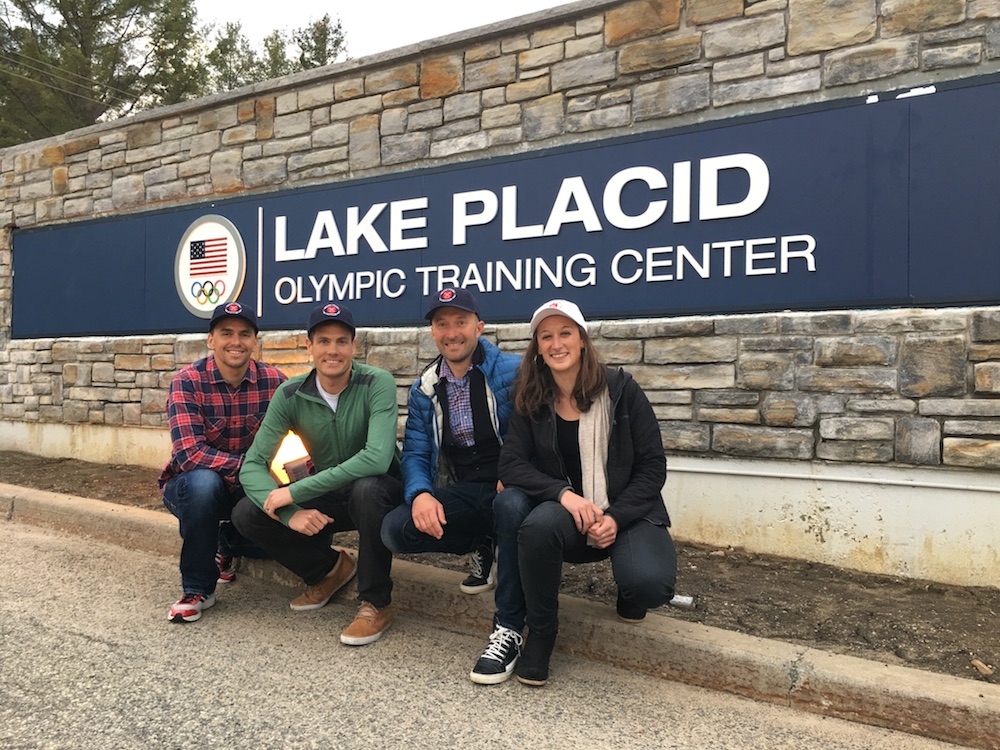
    The newest additions to US Biathlon’s coaching and sport-development staff (from left to right): Michael Greis, Tim Burke, Armin Auchentaller, and Danika Frisbie as seen on May 1 outside the Olympic Training Center in Lake Placid, N.Y. (Photo: US Biathlon)

    In April of 2018, Armin Auchentaller was hired to lead the U.S. Women’s Biathlon team. The position was not totally new for Auchentaller as he had worked with the U.S. team from ‘09 through the 2014 Olympics in Sochi as a shooting coach. In the interim, Auchentaller worked with the Swiss Biathlon Team. Prior to becoming a coach, Auchentaller competed in biathlon in his home country of Italy.

    Auchentaller described his style as being hands-on and direct.

    “I just cannot stay there in a corner and look at some things where I see ‘this can be better’, I just jump in and tell them,” Auchentaller stated in an interview during a training camp in Lake Placid last August. “And if they are alone [without a coach] here, then it’s obvious that I help them. I am a coach.”

    The effect Auchentaller’s approach had on the team was rapidly apparent as the season held career best finishes and a multitude of top-10 finishes for his athletes. Perhaps the most noteworthy improvements were seen in Clare Egan, who placed in the top-10 three times including her third place podium finish at the IBU World Cup Finals in Oslo, and Joanne Reid who had a single top-10.

    While his methods have certainly impacted these newer athletes, his impact was also felt by more veteran athletes, like Susan Dunklee who has been competing on the IBU World Cup since 2011. At 34th in the overall standings, Dunklee was the second-highest ranked American behind Egan who was 18th. Dunklee scored two World Cup top-10s, both in Oberhof, Germany. She ended her season with a clean sweep of the USBA National Championships.
    purchase tretinoin

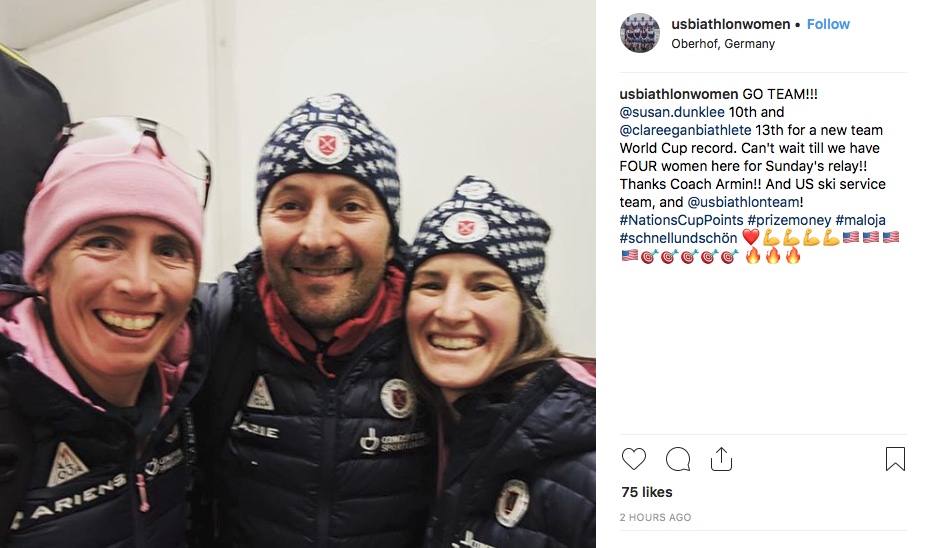
    Stoked Biathletes after a record setting day. From left to right, Susan Dunklee, women’s coach Armin Auchentaller, and Clare Egan. (Photo: @usbiathlonwomen screenshot)

    “I feel incredibly grateful to work with him,” wrote Dunklee in an email. “Working with Armin far surpassed my expectations. He’s a people person who connects well with all different personality types. He’s inclusive and he’s a collaborator. This summer we overlapped with the USST ladies for a camp in Lake Placid. Armin and Matt Whitcomb were soon going to the bar and waterskiing together and suddenly the biathlon women found ourselves training alongside Sophie, Jessie and company during interval sessions.  Of course, this makes so much sense, yet in the past, it rarely happened. Armin understood the value of it and he made it happen.”

    Auchentaller crafted a training regime that was designed to garner steady improvements in his team. He also sought to create opportunities for the athletes to work and grow together as a team in training.
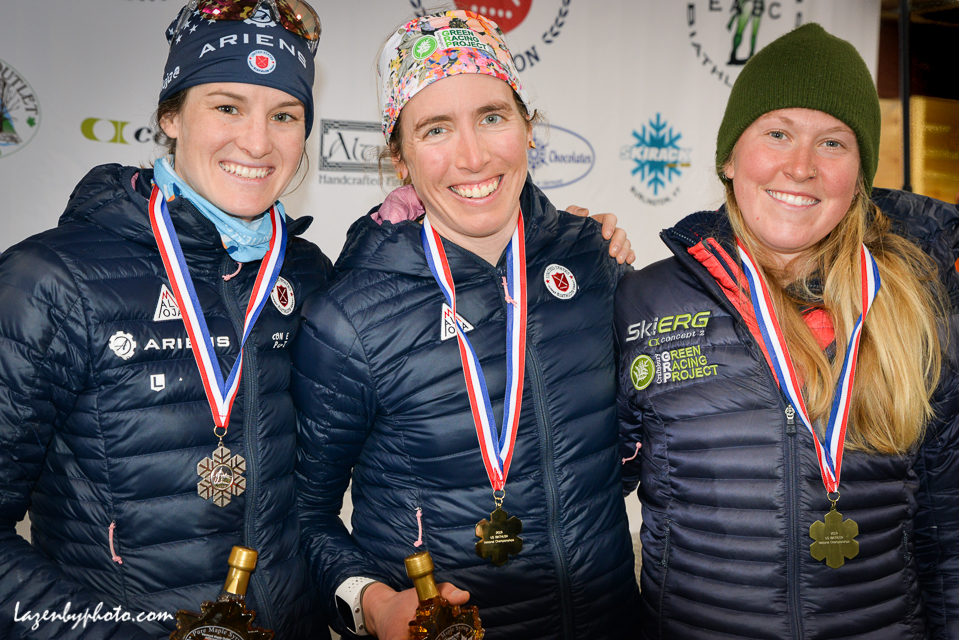
    The podium from Friday’s USBA National Championship 7.5 k sprint (l-r): Clare Egan in second, Susan Dunklee in first, and Kelsey Dickinson in third. (Photo: John Lazenby/lazenbyphoto.com)

    They are all different characters, but they have built in this short time a good group atmosphere, they seem to be a good team now and they go along really well, they help each other, and that is a good start point to get better also in the team itself,” Auchentaller said during the Lake Placid camp.

    While the workload was challenging for the athletes, Auchentaller was mindful of how the women tolerated the training both physically and emotionally to ensure an optimal outcome.

    “Armin pushes us hard and has high expectations,” explained Dunklee. “I’ve never had a coach who made me dryfire for an hour after dinner every night during a high volume camp and that was tough. However, he is also smart enough to see when we are near our breaking point and flexible enough to make individual adaptations when needed. He’s a good listener, asks for our input and trusts our judgment, which is absolutely crucial for experienced athletes. He has a wealth of technical knowledge about shooting and ski technique, but he would also step back sometimes and ask us to observe and coach each other. I think those exercises made us into a stronger team. We learned to rely on each other, trust each other, and build each other up.”

    After a successful 2018/2019 season, Auchentaller will certainly have the momentum to build from as he continues to guide and train his athletes in their preparation this summer. We look forward to seeing his effect on their continued progress and the upward trajectory of U.S. Biathlon in the years to come as the foundation for success is strong. Three different women this year placed in the top-15 on the IBU Cup, the tier of international racing just below the World Cup. Additionally, from a team perspective, the women’s 4 x 5 k relay at this year’s IBU World Championships remained in second place for much of the race. It also marked the first time three different U.S. women placed in the top-10 at the World Cup level during a single season.  


  • Nick Mahood Named NENSA Coach of the Year

    (NENSA press release)

    Nick Mahood, Woodstock Nordic – NENSA Coach of the Year 

    A quiet unassuming coach, Nick Mahood often flies under the radar as he coaches the Woodstock Nordic programs in Woodstock, VT.  Woodstock Nordic consists of two groups that covers K-12 grades;  Nordic Runners is the K-8 BKL program and then there is the High School team (9-12 grades).

    Within the High School team program is the eastern cup team for those that want to expand their race opportunities beyond HS racing. As Nick explains, “We overlap our coaching staff when we can, especially at the Middle school/High School level, so some days I might work with a few middle school skiers.  We are unique in this set-up as it allows for a very seamless transition up through the age groups and especially for 8th grade athletes coming onto the High School team.”  

    Despite being relatively new programs, over the past couple of years athletes from these programs have qualified for Eastern HS Championships and Junior Nationals. This is no easy task for an athlete who resides in New England. While it is apparent that these programs are showing results with respect to performance, the one thing I heard over and over is that they are having fun. You will hear why this is so important for an athlete as you read Jordan Field’s account below.  Nick embodies all of the attributes a coach needs to be effective with athletes not only helping them improve in their sport, but also in their life.

    Michele Fields has this to say about Nick…“Nick Mahood is the kind of coach who always has something positive to say. He is quiet by nature but determined to say and do just the right thing to help each and every one of his skiers reach his or her potential. His dedication knows no bounds from filming summer roller skiing, leading fall treks up mountains to a five-month season that sometimes finds him driving three hours to a race just to wax his racers skis to make them “just right” before heading back to his “real” job.

    My sons Jordan and Zane Fields both reached their goals of making the New England JN team and then, eventually, becoming All Americans because of Nick Mahood. He met with them (and still does for Zane) at the end of each season to plan off-season training and to set goals for the next year, then he helped them every step of the way in getting there.  Along the way, he taught them how to accept the losses as well as the wins and to always move forward supporting their peers as well as themselves. Both Jordan and Zane have said to me separately that they see Nick not only as a coach, but as a mentor for life.  In his second year out of Nick’s program (now skiing for Williams College) Jordan still consults with Nick on a weekly basis throughout the season. In fact, he talks to him more than me, but I completely understand.  A plaque Jordan and his two fellow Woodstock Union High School and New England JN teammates (Jeff Tucker who now skis for Colby College and Joshua Bassette who skis for West Point Academy) had made as a parting gift for Nick summed it up well. It reads: Nick Mahood: Coach of a Lifetime. “

    Justin Beckwith, GMVS Head coach, has worked with Nick in several ways. In the wax trailer the past several years they teamed up and contributed greatly to the New England JN team’s successes; Most recently, both played a part in launching the inaugural Vermont Co-op event series, along with Tim Weston and Cam MacKugler.

    Justin shared this with NENSA; “Nick brings a passion to the table (and wax table) at every race and event.  He gives his time selflessly and supports his athletes with an enthusiasm as if he were the one competing — all while keeping it laid back and illustrating that the whole process is fun!”

    “Nick spreads his passion for skiing to the entire team, and makes Nordic a challenge and an adventure,”  writes Carmen Bango another skier from the Woodstock Nordic program. “Nick works extremely hard to make the individual and team goals that we set at the beginning of the year a reality with long hikes, road trips, technique video, early-morning intervals, and by just believing in us. The Woodstock Nordic program has traveled so far under his leadership, and continues to grow and grow. Our whole team absolutely adores and respects Nick, and we all agree that one of the best parts about ski racing is seeing Nick’s big smile at the finish line. “

    One of the neat things I encountered when talking to people about Nick Mahood, is that it didn’t matter if it was a coach, a parent, or an athlete sharing their encounters- they all were acutely aware of the insight he has for his athletes and what a positive, long lasting impression he makes on them.  Jordan Fields talks about his time spent learning the sport with Nick-

    “My coaching experience with Nick began when I was just a Bill Koch skier. Nick and his wife Gretchen had recently taken the helm of the Woodstock Ski Runners Nordic program and I was a new skier, having made the switch from alpine racing after 5th grade after some coercion from my close friend and Colby skier Jeff Tucker.

                We didn’t know much about training as elementary school skiers, what we did know though was that using the sand pits on the golf course as jumps was the best way to spend our practices. Nick won us over his first day at practice when, to our surprise, he followed us to the top of the in-run and launched off the jump right after us. The next time around he did a 360 off the jump. That was it. He had us. Hook, line and sinker.

                Since those early days of my skiing career things have changed a lot. Training, rather than jumps, has obviously become the paramount focus and my attitude towards the sport has changed and grown. However, even as the focus became training hours and jumps became 6am gym sessions before school, Nick kept it fun. Having fun was always the most important thing and is still today for him and his athletes. As a sport where success at the highest level takes such dedication, drive and focus, the fun can often fade as more is asked of athletes. Nick recognizes this and does an incredible job of simultaneously developing a love for skiing and a desire for success.

                He truly cares and is remarkably in tune with his athletes. After every race I would meet him at the finish and he would know exactly what to say, good race or bad. He knows how to build success upon successes and, more importantly, how to build success upon disappointments. As an athlete who often thinks a little too much, Nick was the perfect coach for me as a developing skier. He recognized this and somehow knew exactly how to help me move on past bad races and be confident going into my next start.

                Growing up as a public high school skier it was intimidating for my teammates and I to race against the “ski school kids” and it was so easy to assume that they were somehow innately faster and stronger than us. Nick tore this idea down and told us it could be done, made us believe in ourselves and then was there to greet us at the finish line with a triumphant yell and raised arms when we did it. His enthusiasm matched or even out did our own; it was inspiring.

                Nick is the kind of coach who transcends the tracks and trails. What I have learned from him is unquantifiable, both as a skier and a person. I am two years removed from Nick’s program now but I still talk to him all the time. The greatest part about Nick’s coaching is that it isn’t just an experience limited to your time as one of his athletes, but one that you’ll have forever, one that I hope to have for the rest of my life, as an athlete, a fellow skier, a person, and as a friend. “

    Nick gives his personal account of what coaching means to him: “Two things stand out about coaching: One is, that my athletes have shown me anything is possible.  If you set a goal, train hard and train smart, you can achieve your goals no matter how out of reach they might seem.  The other is seeing my athletes truly develop a love of skiing and with that, the desire to keep the sport in their lives past High School.  Skiing has shaped my life with travel, amazing people, and life-long friends.  It is exciting to see my athletes begin their own journey guided by an incredible sport!”

    From all of us at NENSA, Congratulations Nick, on an award well deserved!

  • In Historic Season, Whitcomb is FasterSkier’s Coach of the Year

    In Historic Season, Whitcomb is FasterSkier’s Coach of the Year

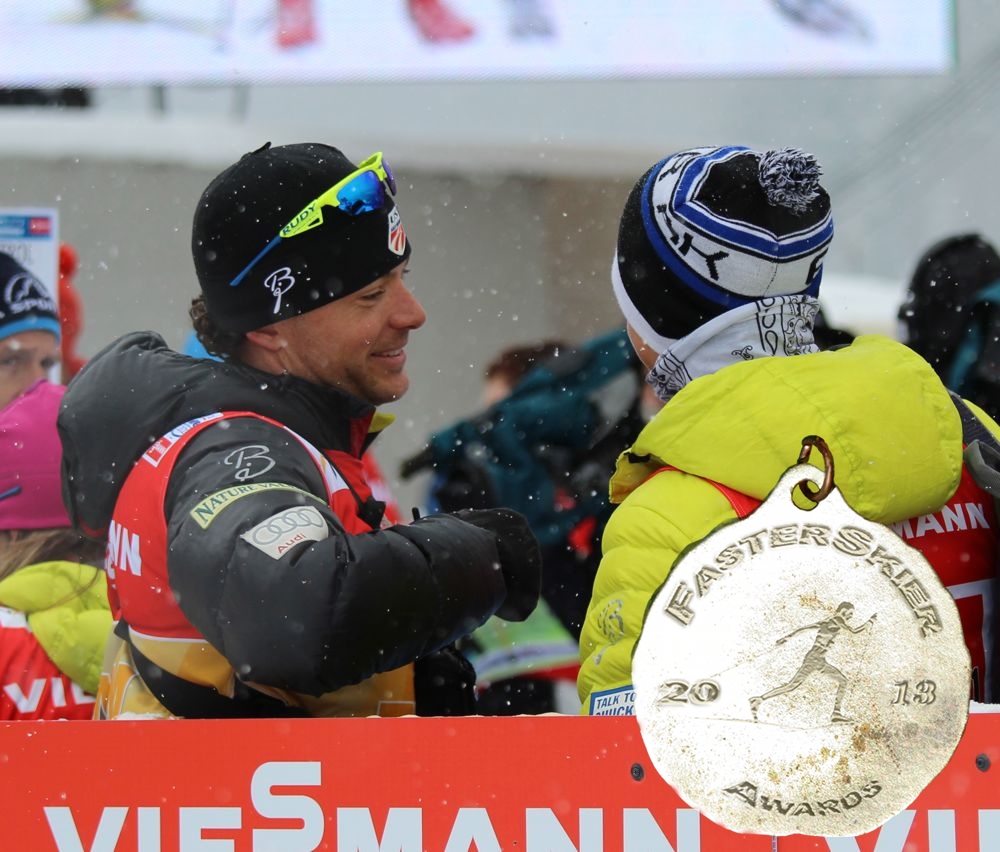
    Matt Whitcomb, U.S. Ski Team women's coach, after the team sprint ceremony at World Championships in which Kikkan Randall and Jessie Diggins won gold.
    Matt Whitcomb, the U.S. Ski Team women’s coach, after the team sprint ceremony at World Championships in which Kikkan Randall and Jessie Diggins won gold.


    Matt Whitcomb, Women’s Coach, U.S. Ski Team

    Results are by no means the full measure of a coach, but they are the simplest way for one to stand out above the rest. And in 2013, Matt Whitcomb was that outlier. The group he leads, the women of the U.S. Ski Team, just tallied its best season ever with few interruptions: a podium in a relay on opening weekend, a team sprint win in front of a close-to home crowd in December, World Championships gold in the same event in February and a World Cup sprint champion for the second year running. At the end of the season each of the six women on his team had cracked the top-10 in a World Cup. The U.S. women had the fifth-best sub-score in the Nation’s Cup rankings and they were only a few more top-15s away from landing in the top three, finishing 61 points behind Sweden and 69 points behind Russia.

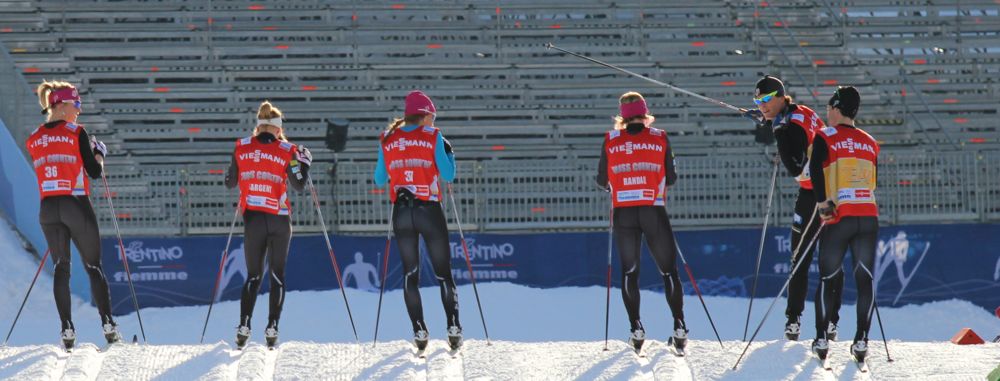
    Whitcomb giving instruction during a speed workout at World Championships.
    Whitcomb giving instruction during a speed workout at World Championships.

    Those kinds of results have been in the works for a long time — World Champions are not made overnight. Whitcomb became head coach of this group two years ago after joining the national team coaching staff in the spring of 2006. At the time, Kikkan Randall had just finished the year 59th on the overall World Cup, the highest for an American woman, and cracked the top-30 only twice. Now the USST often faces the problem of which athletes to start in a race, because so many of them are capable of being in the points or higher.

    Whitcomb would be the first to point out that progress of the American women, as a whole, cannot be attributed to any single coach or team over the last few years. He would point to the development work of clubs and elite programs throughout the country, and the USST’s collaboration with them, as a huge factor in his success. Even within the national team staff, responsibilities are more often shared between Whitcomb, head coach Chris Grover and men’s coach Jason Cork than they are discretely divided. On race day, coaches and ski technicians alike line the course with spare poles, feeds and radios.

    But that collaborative spirit comes from somewhere, and Whitcomb has undoubtedly played an enormous role in fostering the women’s team chemistry that has, in turn, fueled them to so much of their success. It’s not every national squad that can have six choices for its World Championships relay roster, make the difficult call of which four to field, and still have the two women on the sidelines show up for the race decked out in red, white and blue to scream for their teammates at the top of their lungs. If Whitcomb keeps leading the American women on their current trajectory, the world better watch out in 2014.


    Honorable Mention:

    Erik Flora, Head Coach, Alaska Pacific University Nordic Ski Club

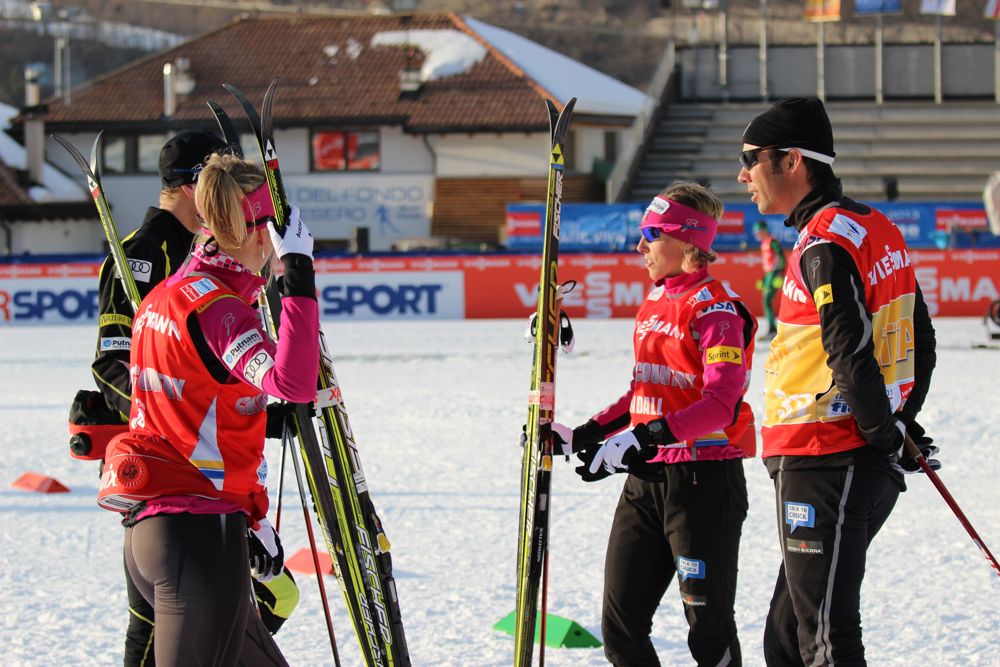
    Erik Flora conferring with his athletes at World Championships this February.
    Erik Flora (r) conferring with his athletes at World Championships this February.

    If Whitcomb is charting new territory for the U.S. at the international level, Erik Flora is doing the same domestically. That’s not to say that Flora isn’t also doing great things on the World Cup; his role in making Randall into the best sprinter in the world has been well documented, and this year he sent four athletes to World Championships, more than any other single program in the U.S.

    But Flora’s success at home is equally staggering. Year in and year out, APU sweeps the board when it comes to season-long success on the SuperTour. Three of Flora’s athletes won national titles for the first time in their careers this January. In the final NNF Cup standings this March, which like the Nation’s Cup can be taken as a broad measure of a year’s worth of results, APU stood at the top with roughly double the points of the next-closest team.

    Beyond results, APU acts like a team that produces those kinds of numbers. Or maybe their success is in part due to their professionalism. Either way, rarely do you see an APU athlete preview a course or warm up by him or herself. They have the numbers to break into groups to practice drafting for a sprint and look intimidating doing it, all wearing the exact same blue and black. The APU machine is a well-oiled one, and Flora’s work in directing it is worthy of recognition.